Winter Outfit Ideas for Women With Clear Layering Logic
Winter dressing gets frustrating when adding one more layer makes a look lose the shape or intention it had a few minutes earlier. A useful fix is to decide which visible line should still read clearly once everything is on, then protect that line instead of trying to make every piece equally noticeable. The strongest winter outfit ideas for women often work this way: coverage increases, but one clear relationship keeps the whole look from feeling accidental.
Another winter-dressing problem is judging every piece in isolation and assuming a good outfit is simply the sum of good individual choices. It is more useful to notice where one shape hands off to the next, where a dark area stops, or where a color quietly returns, because those transitions determine whether the finished look feels connected. Once those meeting points make sense, extra volume can feel deliberate rather than cumbersome.
Let a Long Scarf Draw the Outfit Downward
The olive coat creates a long, muted field, so the striped scarf can carry several bright colors without making the outfit feel chopped into competing pieces. Because the coat itself stays visually steady from shoulder to hem, the scarf reads as a deliberate layer of color rather than a collection of separate accents. The dark jeans continue that calm base beneath it.
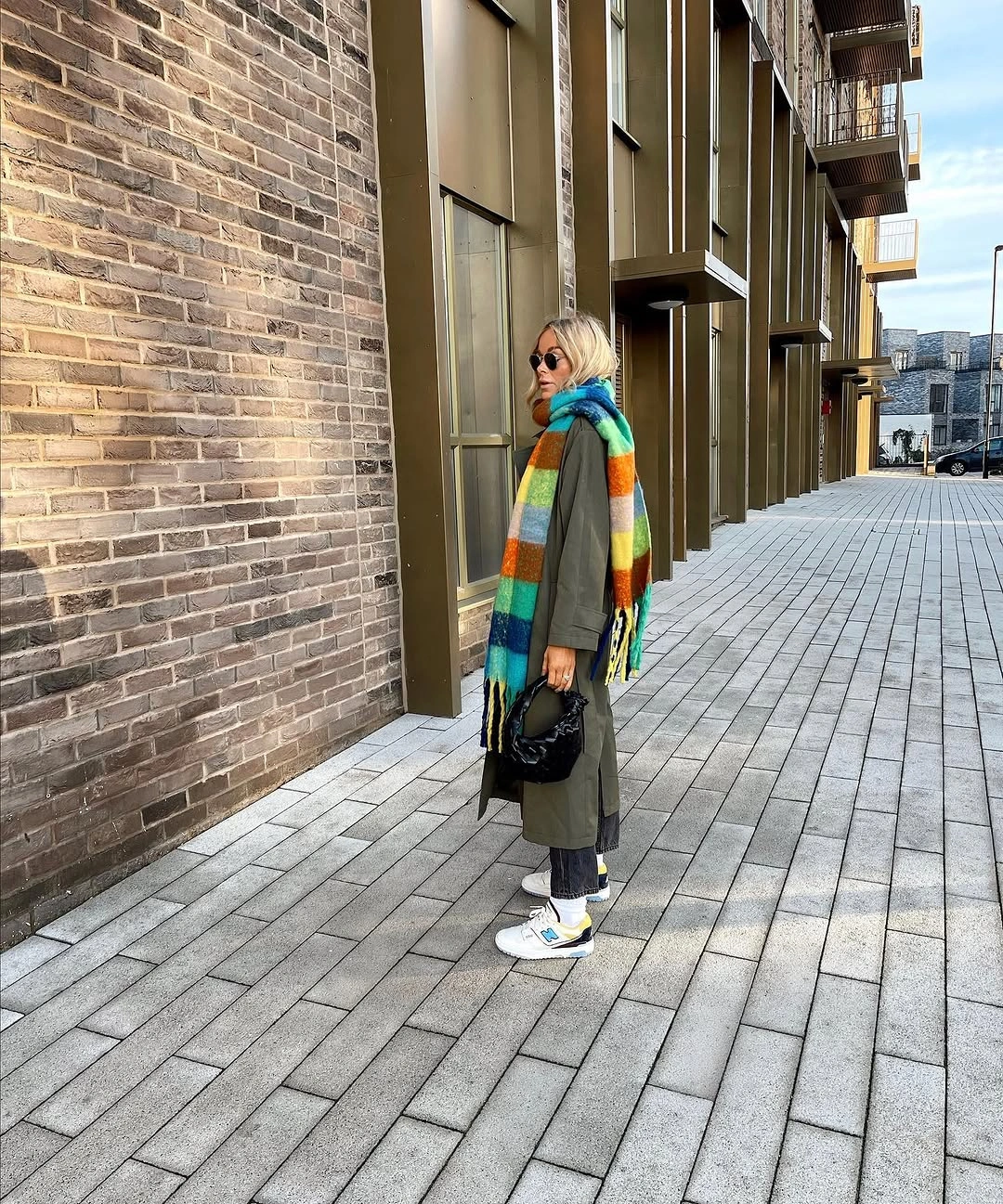
Photo via Instagram
What makes the scarf especially effective is its length. It falls almost as far as the coat, drawing the eye down the front and turning the stripes into a vertical route through the outfit instead of concentrating all of the color around the neck. The fringed ends keep that route visible near the lower half, where the coat and jeans are otherwise much darker.
The white sneakers give that long dark base a light endpoint and keep the bottom of the outfit from feeling visually sealed off. Choosing similarly pale footwear would preserve that lift, while a dark pair would make the coat, jeans and shoes read as a more continuous column.
Build Neutral Depth From Light to Dark
This neutral outfit works because the light beige coat and pale top establish a soft upper range before the dark brown skirt deepens the palette below. The change is gradual rather than abrupt, so the skirt feels like the next step in the same color story instead of a separate dark block. That progression gives the look definition without depending on a bright accent.
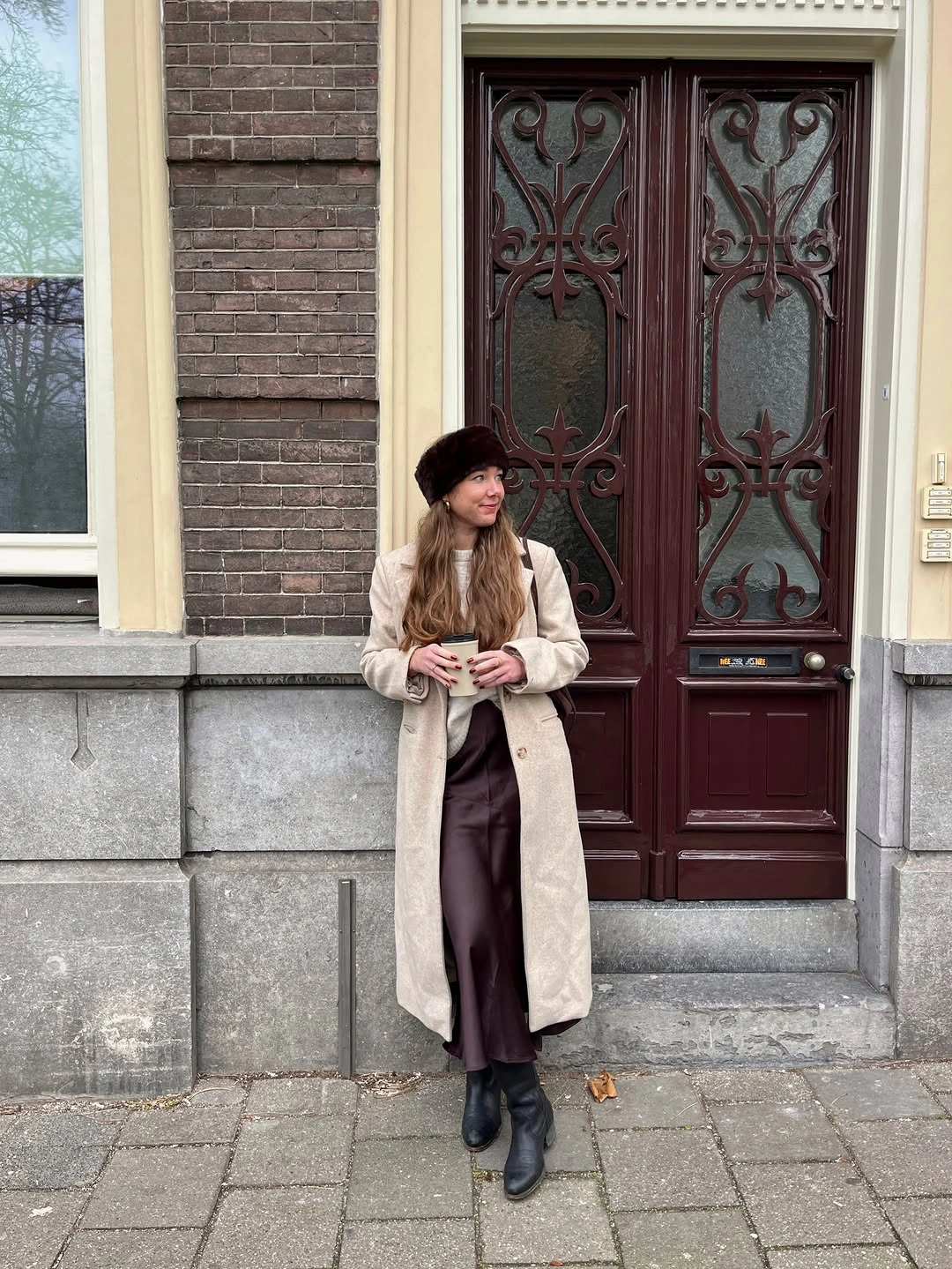
Photo via Instagram
The coat and skirt also share enough length to overlap visually, which keeps the lower half from breaking into several short horizontal bands. The skirt remains visible down the center and below the coat, but neither hem competes to become the main dividing line. That makes the long silhouette feel continuous even though the two pieces are clearly distinct.
The dark plush hat adds a broad, rounded silhouette at the top, creating a compact counterpoint to the coat’s long straight fall. Its substantial width gives the upper body a definite finish, so the outfit does not depend on another contrasting color or accessory near the face to establish that change in proportion.
Use Pattern to Animate a Light Palette
A pale outfit can still carry plenty of visual information when the shapes do different jobs. Here, the cropped plush-textured jacket creates a dense, compact upper section, while the wide striped trousers spread pattern across a much larger area below. The contrast in scale keeps the cream-and-white palette from becoming flat even though the colors stay closely related.
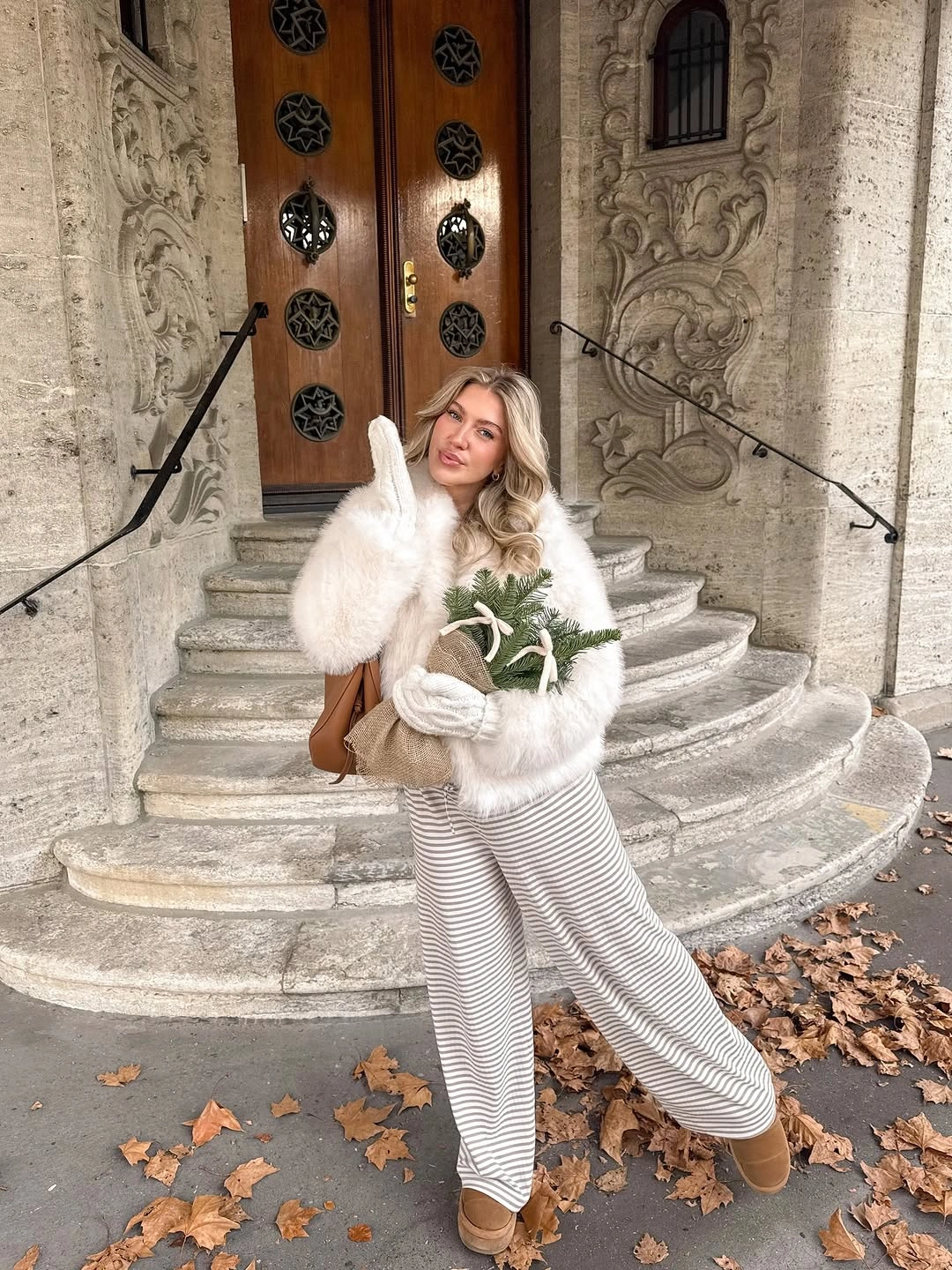
Photo via Instagram
The narrow horizontal stripes give the trousers a repeated rhythm, but the effect stays integrated because the jacket, gloves and trouser base all remain within a light tonal range. That shared brightness lets the pattern add movement without splitting the look into a busy lower half and a disconnected top. The cropped jacket also leaves more of the trouser shape available to do that work.
Tan rounded shoes introduce a softer, earthier endpoint than another bright white element would create. That small shift is useful when a mostly pale outfit already has enough contrast from pattern and texture, because the footwear can ground the look without becoming its strongest feature.
Let White Trousers Break the Neutral Column
The white straight-leg trousers create a clear interval between the taupe coat and the darker brown boots, which is what gives this neutral outfit its most noticeable change in value. Instead of carrying muted brown-gray tones from shoulder to floor, the pale center opens the lower half and makes the long coat feel less visually dense. The effect is crisp without turning into high contrast everywhere.
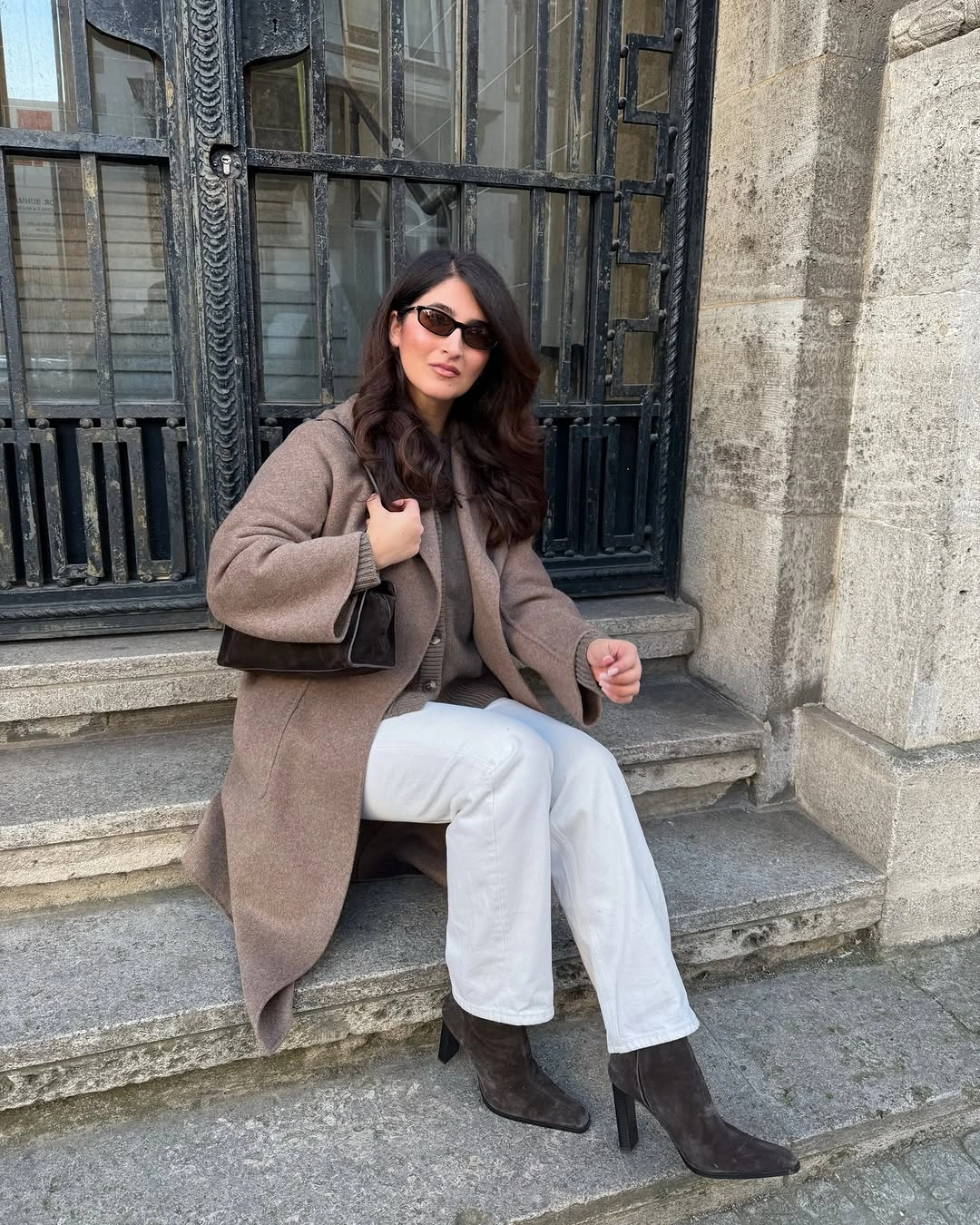
Photo via Instagram
The dark brown ankle boots define the bottom of the white trousers and reconnect the pale section with the warmer tones of the coat and shoulder bag. Their color is deep enough to mark a clear endpoint, but it still belongs to the same neutral family as the outer layers. That relationship keeps the trousers from looking inserted simply for brightness and gives the lower half a deliberate finish.
The trouser hems leave the pointed, heeled boots fully readable, so footwear contributes a sharper shape beneath the softer vertical fall of the coat. A longer hem that covered most of the boots would change that relationship by making the white trousers, rather than the footwear, the final visible line.
Anchor an Oversized Knit With Substantial Boots
The long cream cable-knit sweater supplies most of the volume in this outfit, while the sheer black tights leave the leg line comparatively light and open beneath it. That difference keeps the oversized knit from becoming visually heavy all the way to the floor. The transition from the sweater hem to the exposed tights stays clear, so the knit can remain generous without needing a fitted waist to define the silhouette.
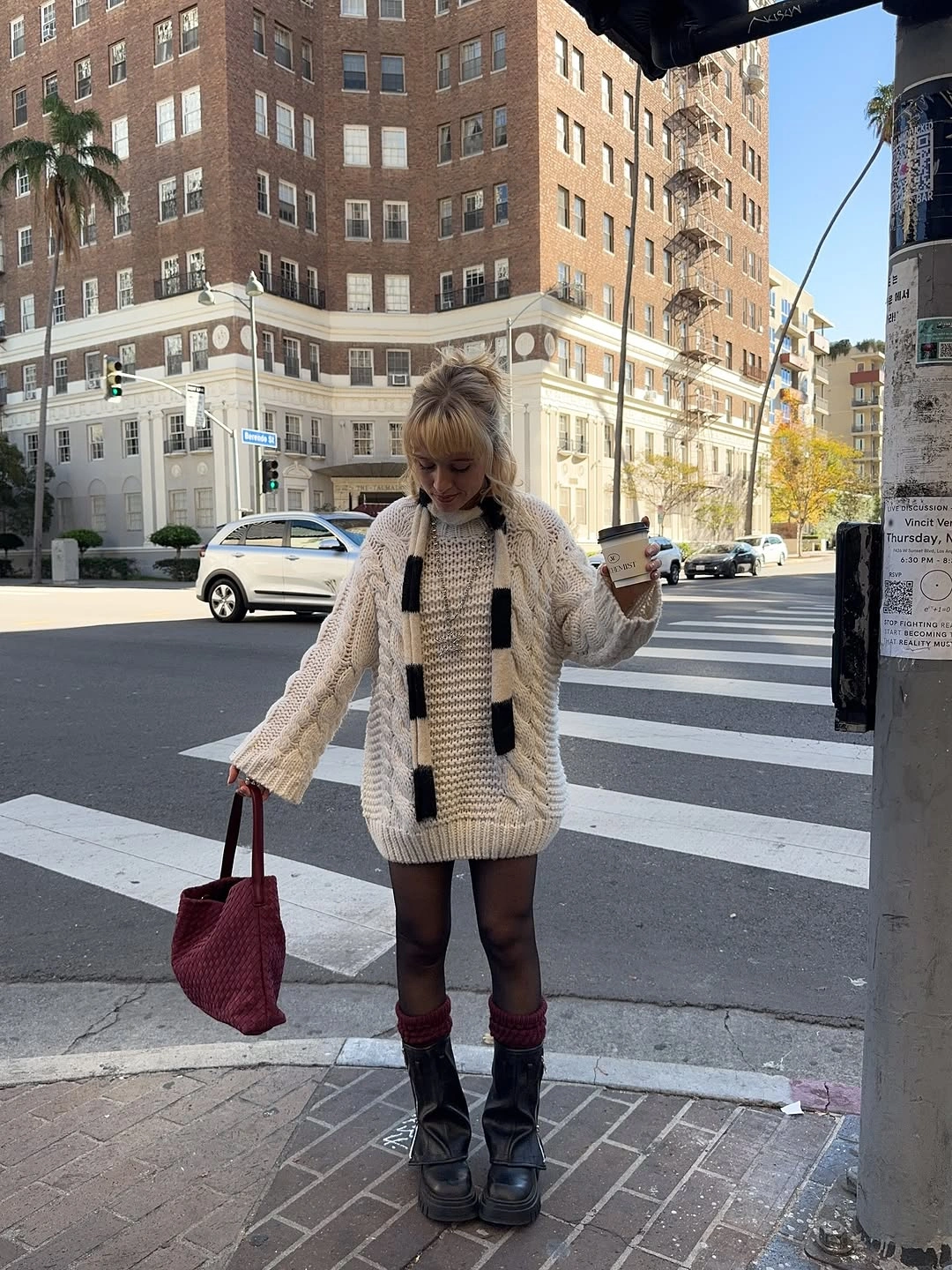
Photo via Instagram
Chunky black mid-calf boots create a firm lower boundary after the sheer tights, giving the outfit a substantial base that answers the scale of the oversized sweater above. Their height also means the dark footwear occupies more visual space than a low shoe would, which makes the shift from soft cream knit to black lower elements feel intentional rather than abrupt.
The burgundy knit visible above the boots and the burgundy tote introduce a second color connection away from the cream-and-black foundation. Repeating that shade in two separated places gives the eye another route through the outfit without asking either burgundy detail to become the main event.
Keep Dark Winter Layers Legible With Tonal Shifts
A long dark brown coat over black wide-leg trousers creates depth without breaking the body into sharply different color blocks. The brown is visibly warmer than the black, but both stay deep enough that the eye reads a nearly continuous vertical line. That makes this a useful example of chic winter outfits for women that rely on tonal shifts rather than a high-contrast palette.
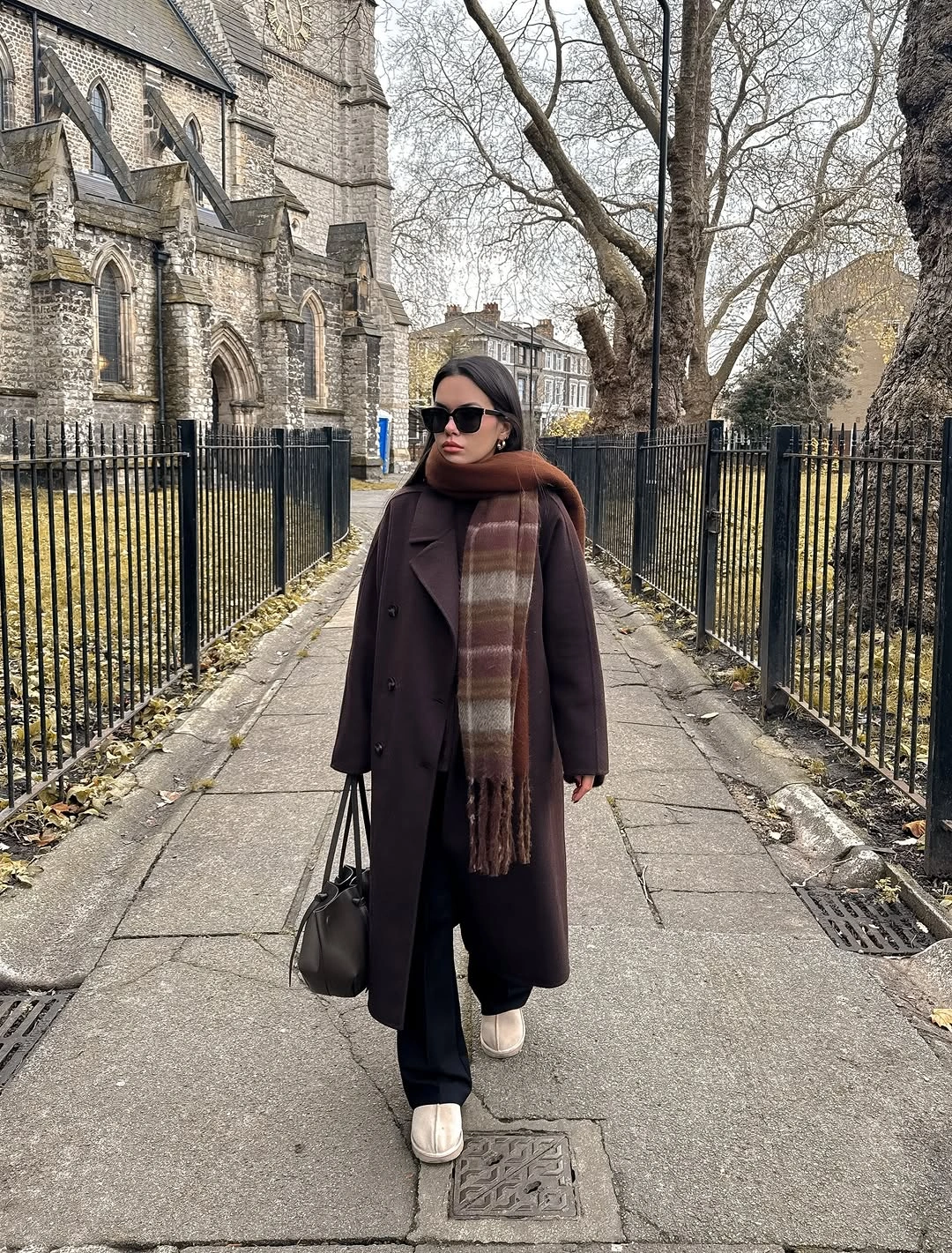
Photo via Instagram
The oversized striped scarf does more than add pattern at the neckline because its brown and taupe bands sit between the coat’s darkness and the lighter area near the face. Its length also extends that middle value down the front, so the upper half has several readable stages instead of one dark mass. The result feels layered without requiring a bright accent to separate each piece.
The pale slip-on shoes change the ending of the silhouette by introducing the lightest note at ground level. Keeping that contrast confined to the feet makes the long dark line feel intentional, while darker footwear would create a more uninterrupted finish.
Make a Winter Hat Part of the Silhouette
The large brown plush hat immediately controls the proportions in this cropped view because it adds visible width and height around the crown. Its scale matters as much as the dark jacket collar below, so the upper silhouette feels deliberately focused around the head rather than simply accessorized. The long straight hair then drops vertically from beneath the hat and gives that volume somewhere to resolve.
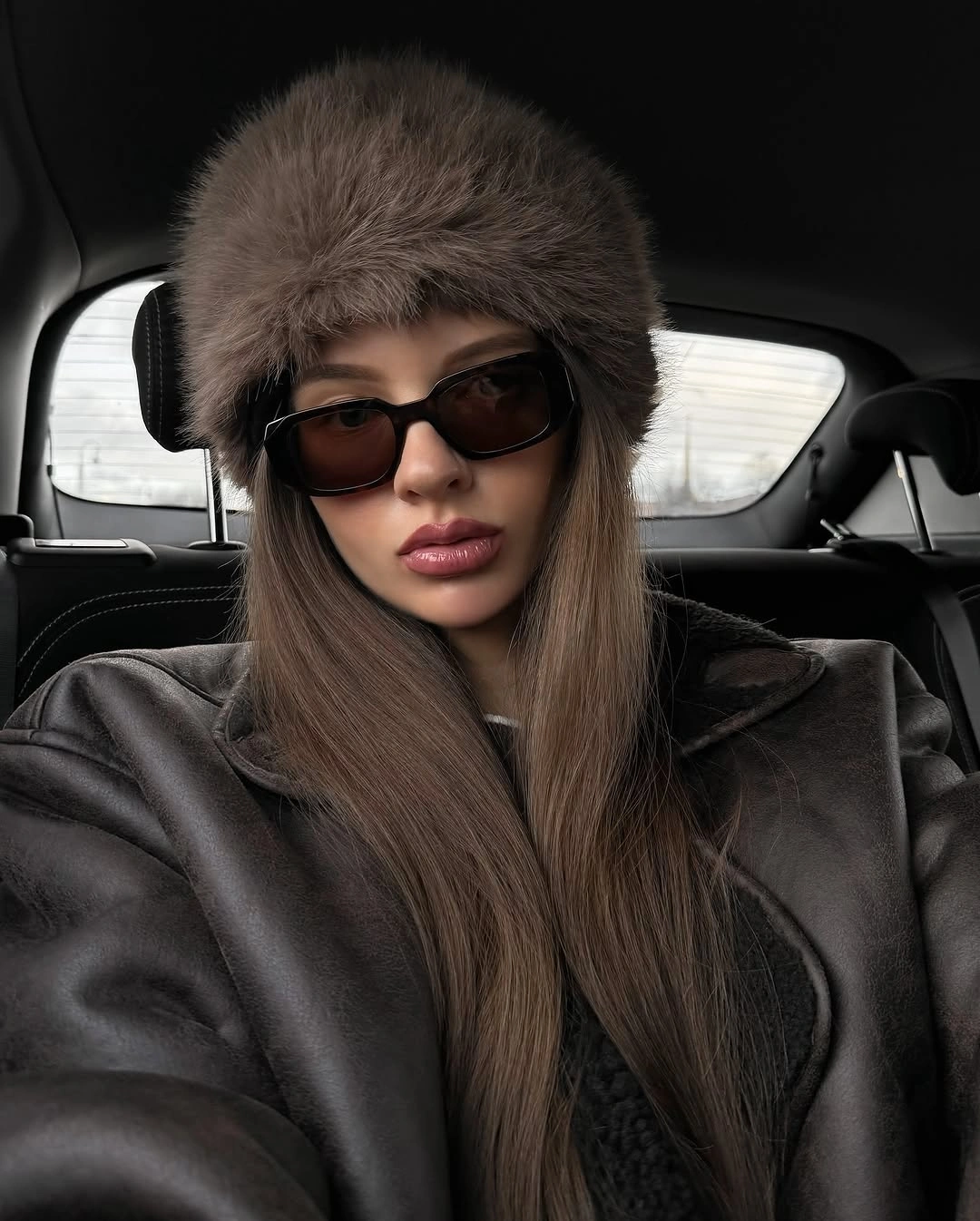
Photo via Instagram
Dark angular sunglasses and the dark structured jacket create a sharper frame around the face, while the rounded hat softens that geometry. Because the view is closely cropped, those relationships do most of the styling work that a full-length outfit might otherwise distribute across trousers or footwear. It is a strong reminder that winter accessory styling can depend on shape as much as color.
Hair placement becomes a real styling choice with a hat this large. Leaving the lengths visible preserves a long vertical line beneath the crown, while tucking more hair away would make the hat and sunglasses feel even more dominant.
Repeat Red at More Than One Height
The oversized red scarf establishes the strongest color near the face, but its long drop prevents the red from staying confined to the neckline. Against the camel coat, that saturated strip remains easy to follow from the upper body toward the hem. The contrast is direct, yet the scarf’s scale makes the color feel integrated with the coat rather than added as a small decorative afterthought.
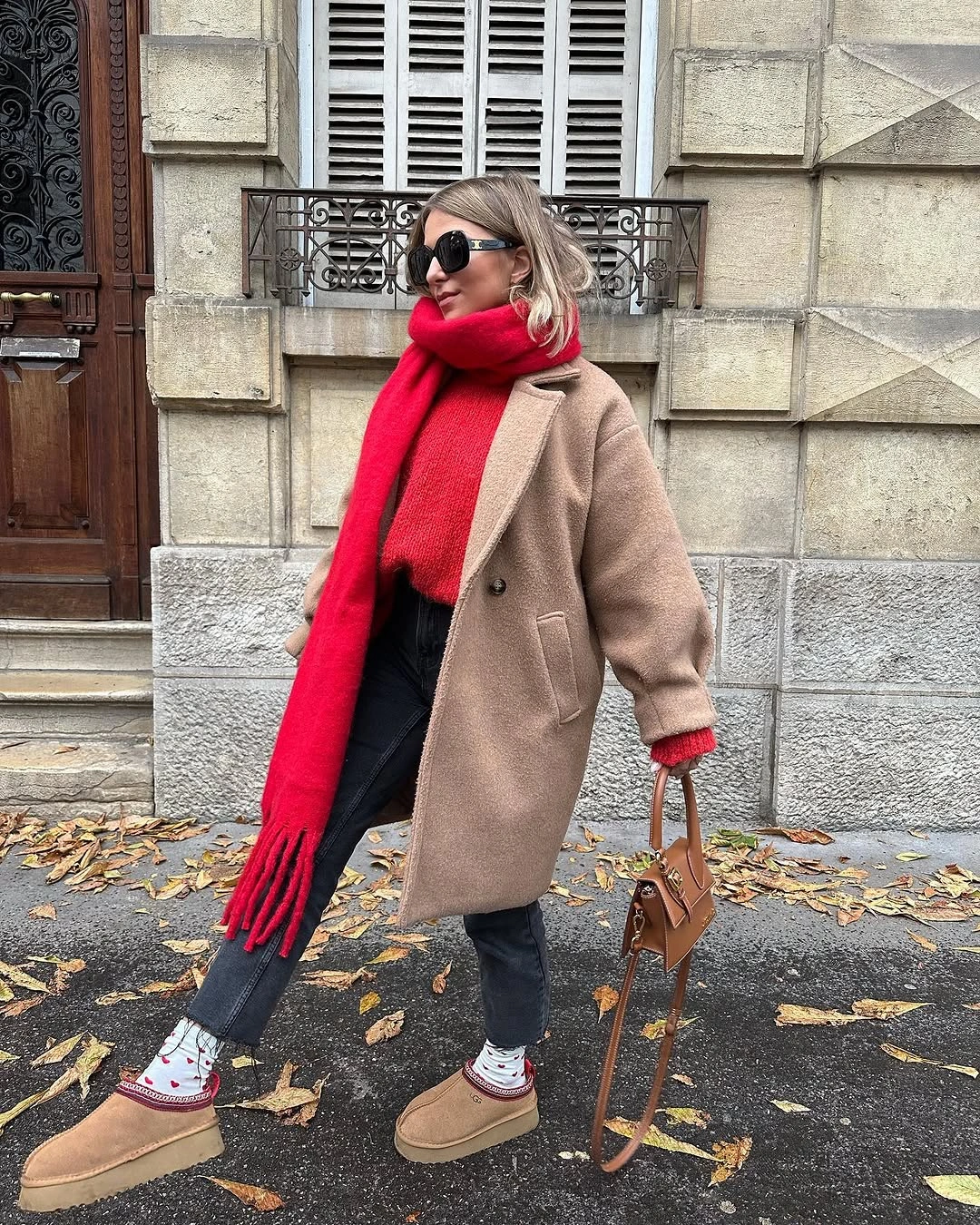
Photo via Instagram
Red appears again at the wrists, where the visible knit layer extends beyond the coat sleeves and creates a second connection to the scarf. That repetition changes how the color is read: the scarf no longer has to carry the entire idea by itself. Dark cropped jeans then leave enough space below for the patterned socks and low tan footwear to register as their own transition.
The patterned socks add a smaller red note close to the ground, extending the color story beyond the coat and scarf. Because the shoes stay low and tan, that detail remains visible instead of disappearing inside taller footwear.
Pair Oversized Outerwear With a Compact Bag
The oversized brown leather-look jacket defines this outfit before the smaller details have much chance to compete with it. Broad sleeves, a raised collar and generous volume create a wide upper silhouette, while the black clothing visible beneath gives the jacket a clean darker boundary. That contrast makes the outer shape easier to read without requiring a fitted layer to control it.
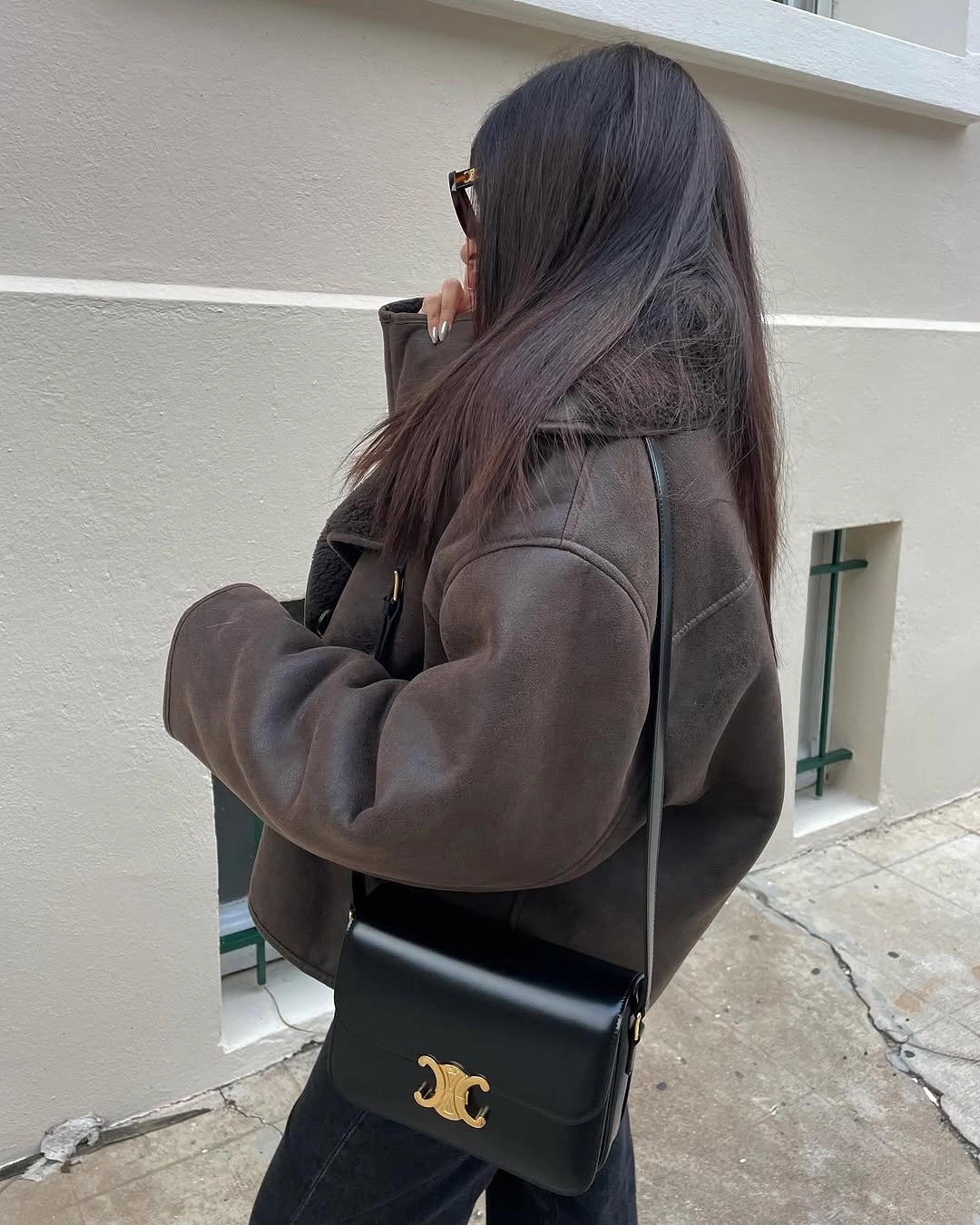
Photo via Instagram
A compact black shoulder bag works differently from the jacket because its rigid rectangular form occupies very little visual space beside those broad sleeves. The gold-toned hardware adds a precise focal point, but the bag does not repeat the jacket’s volume or softness. That scale difference is what keeps the accessory legible instead of letting it disappear against the oversized outer layer.
This is a useful case for choosing bag size according to the outerwear silhouette rather than matching its scale automatically. A much larger soft bag would create another broad shape at the side, while this smaller one keeps the jacket as the clear source of volume.
Counter a Wide Cape With Tall Boots
The cream cape spreads broadly from the shoulders, while the pale plush collar area gives the neckline a softer, more concentrated frame beneath the white beret. Because the short dark hem remains visible below the cape, the upper shape still reads as the main event without turning the neckline into a separate accessory. The contrast between the wide cream form and the compact dark hem keeps the proportions easy to read.
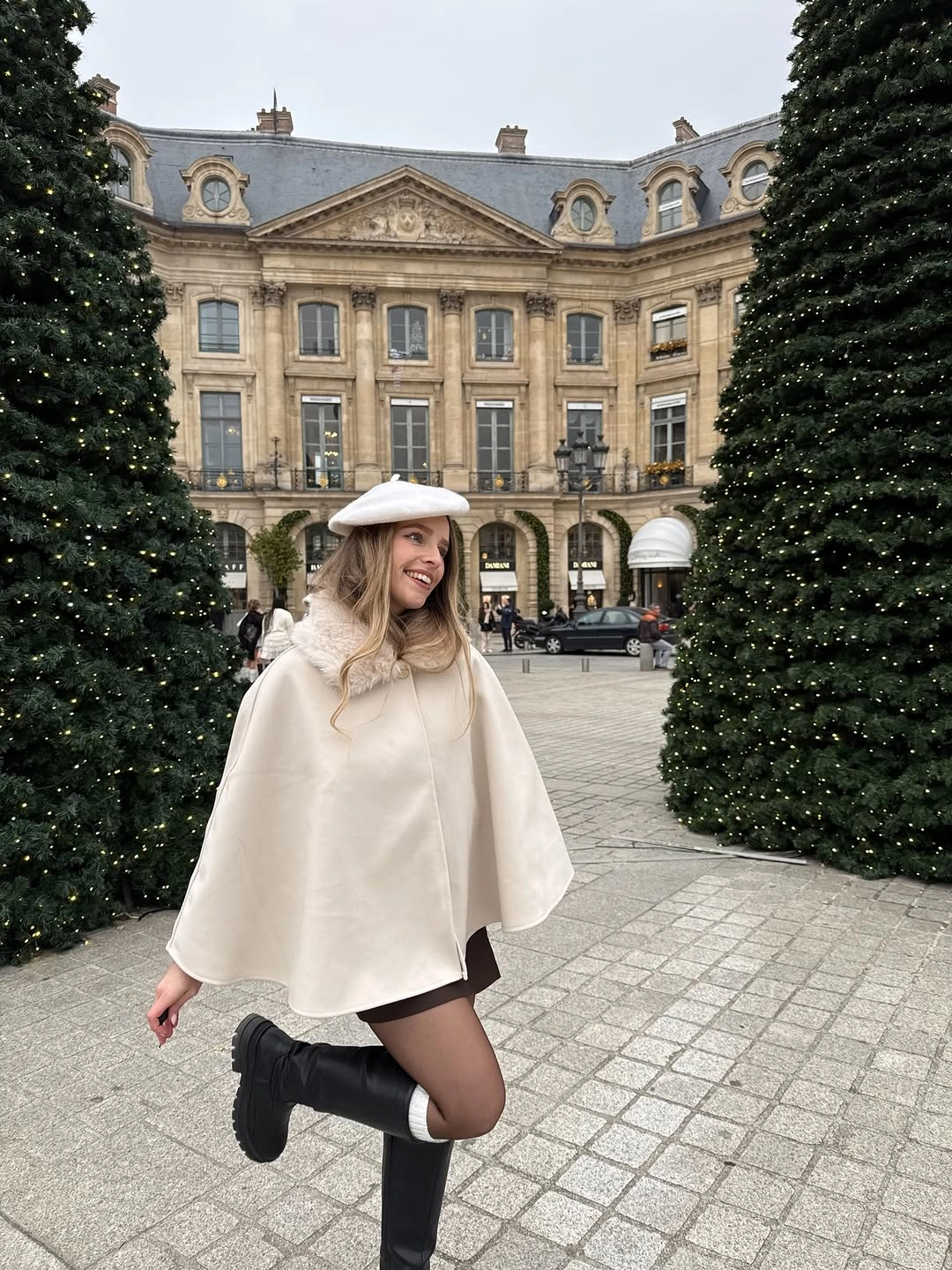
Photo via Instagram
Tall black boots create two narrow vertical lines below the cape, giving the broad upper shape a very different kind of structure underneath. The sheer tights preserve visible space between the short dark hem and the boots, so those elements do not collapse into one continuous dark lower block. That open interval helps the footwear register as an active part of the proportion.
The short visible hem is important because it leaves that band of sheer tights intact between the cape and the boots. A much longer dark layer would shift the emphasis toward stacked hems, while this version keeps the cape’s wide outline and the boots’ vertical pull easy to read.
Let Sneakers Relax a Tailored Long Coat
The long cream double-breasted coat brings a tailored outline through its lapels, straight length and defined shoulders, while the fitted burgundy leggings keep the lower half comparatively narrow. That difference leaves the coat free to supply most of the visible structure instead of competing with another broad shape underneath. The black high-neck top also gives the open front a dark, clearly readable center.
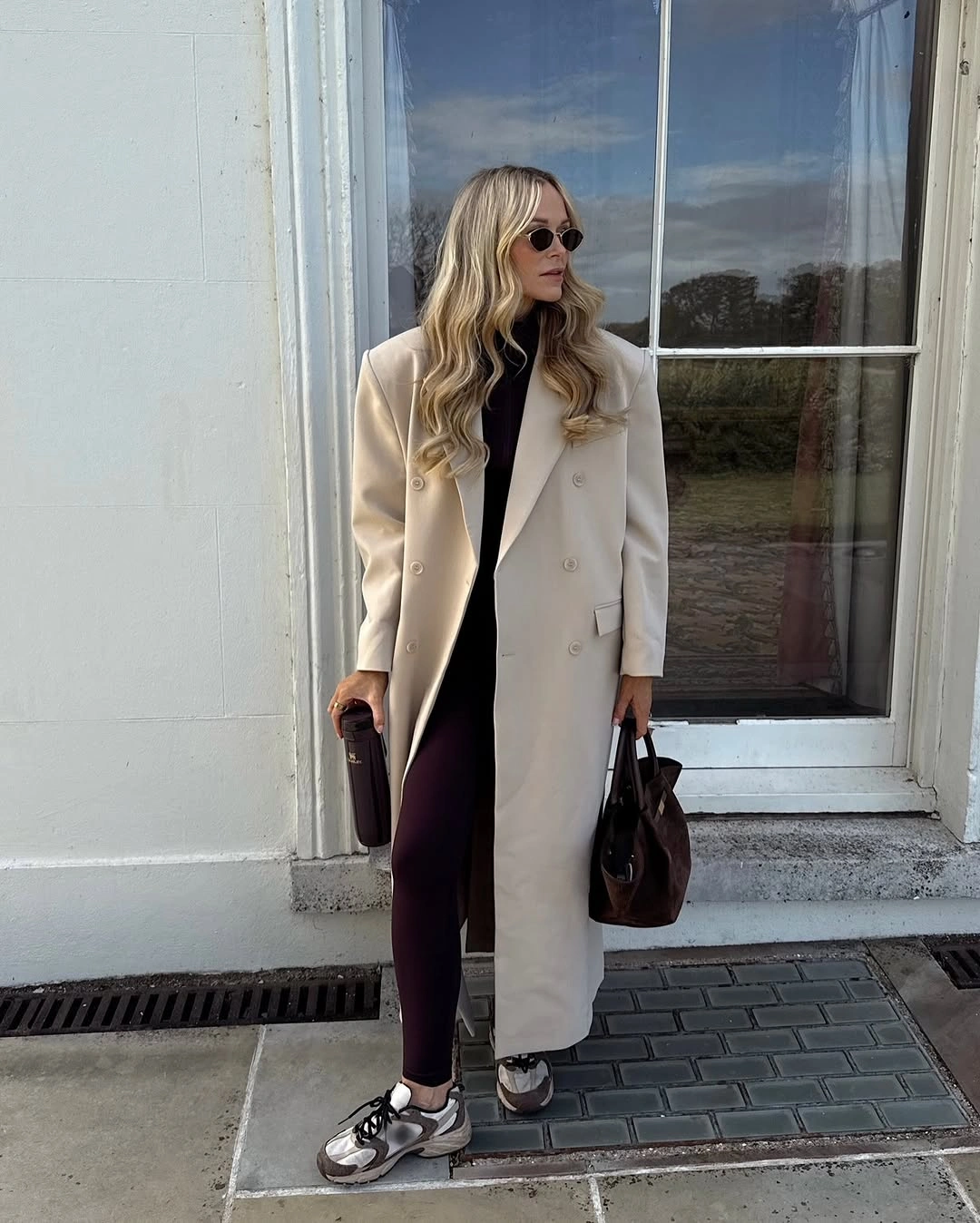
Photo via Instagram
Chunky gray-and-white sneakers pull the outfit away from a strictly formal reading without erasing the coat’s sharper character. Their athletic shape contrasts with the long lapels and clean coat line, which is more interesting than simply extending the same dressy mood into the footwear. The result makes a polished outer layer feel plausible within a casual winter outfit rather than reserved for a more formal combination.
The fitted lower layer matters because it leaves plenty of visual space around the sneakers, allowing their bulk to register clearly. With much wider trousers, the same shoes would interact more with the hem and the outfit would lose some of this deliberate coat-to-sneaker contrast.
Let the Collar Define a Draped Silhouette
The broad dark collar is the strongest shape in this upper-body look, wrapping around the neckline and creating a substantial frame beneath the face. Because the surrounding brown outer layer falls loosely from that point, the collar gives an otherwise fluid silhouette a definite place to begin. It also occupies enough visual space that the neckline feels complete without another visible accessory competing there.
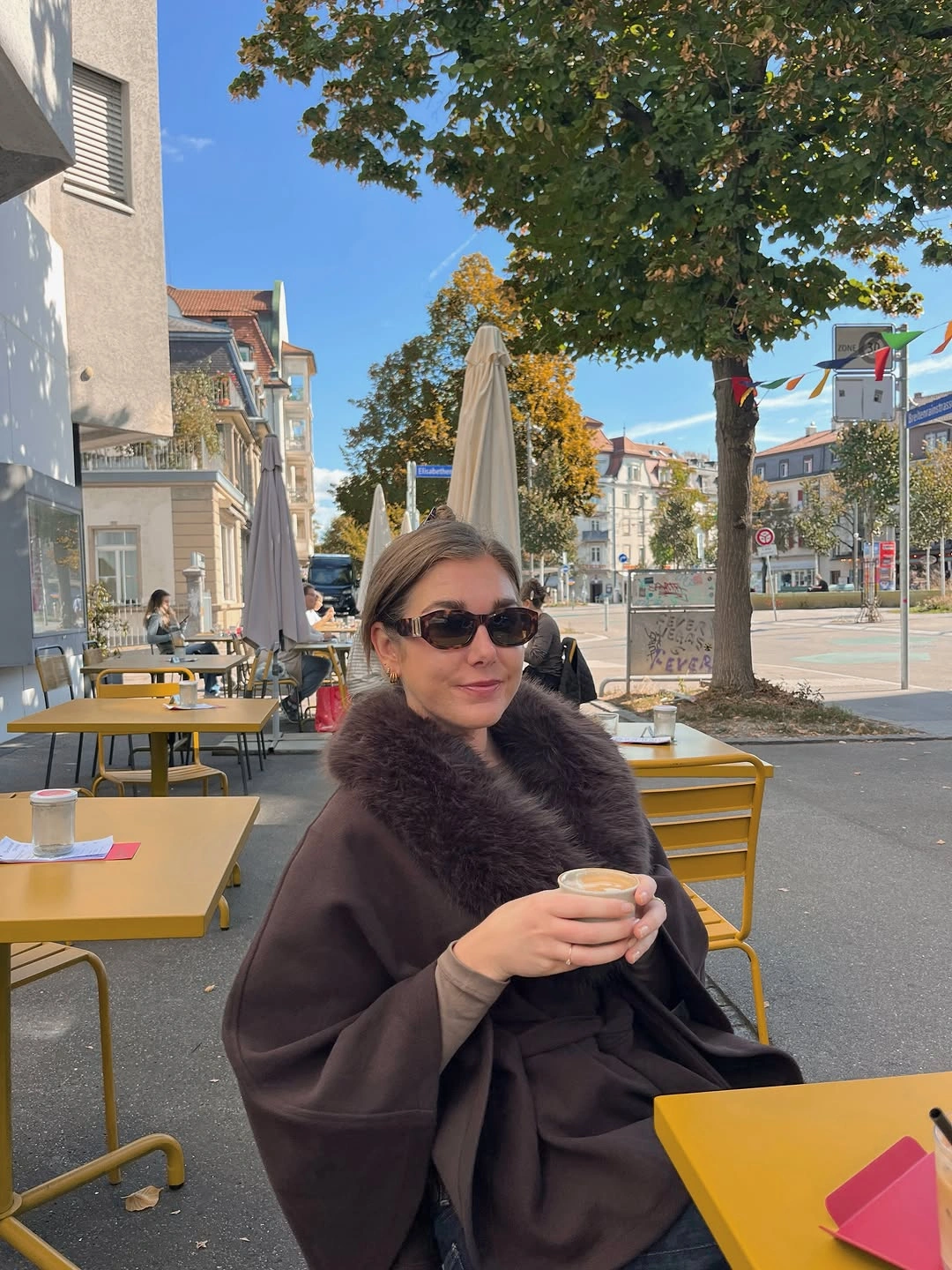
Photo via Instagram
The draped outer layer spreads broadly across the shoulders and body, but a closer-fitting lighter brown sleeve remains visible beneath it. That smaller line is important because it reveals a second scale within the same tonal family rather than allowing the entire upper half to read as one continuous shape. The contrast comes from proportion and placement more than from a dramatic change in color.
This kind of neckline places attention high on the body, so sunglasses become part of the same concentrated upper frame rather than an isolated finishing detail. If the collar were much narrower, the face area would feel less enclosed and the loose outer shape would become more visually dominant.
Use Tall Boots to Bridge Long Shorts
The black knee-length shorts create a wide horizontal break around the knee, but the tall black heeled boots reduce the amount of open leg beneath that hem. Instead of leaving the shorts suspended above low footwear, the boots occupy much of the remaining vertical space and give the lower half a deliberate sequence. The long black coat extends that dark framework upward without hiding the shorts completely.
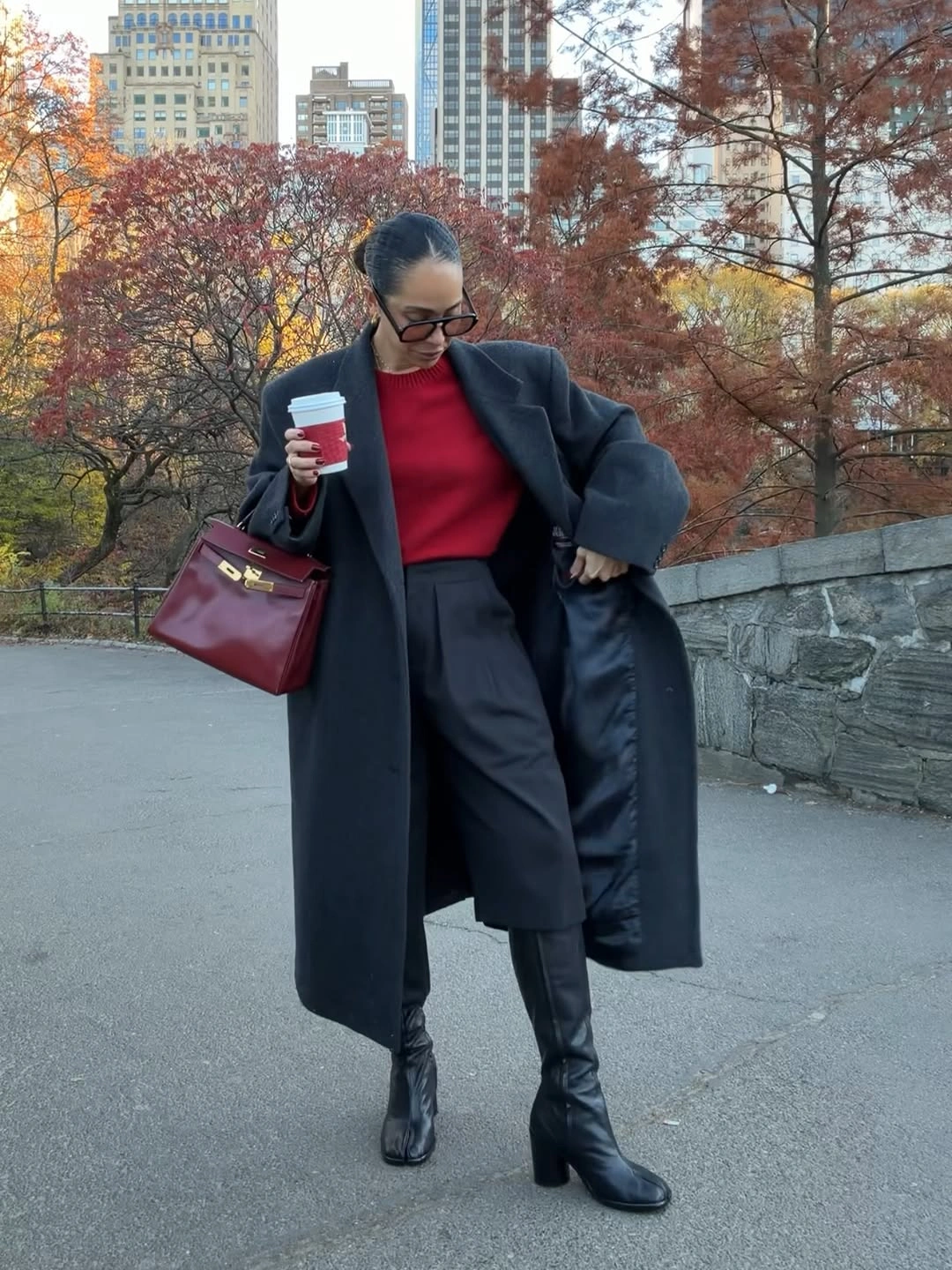
Photo via Instagram
A bright red crewneck sweater sits at the center of the outfit and is surrounded by black from the coat, shorts and boots. That placement makes the color feel concentrated through the torso rather than distributed across several accessories. It also draws attention upward while the black lower pieces handle the more complicated transition between the broad shorts and tall footwear.
The structured burgundy handbag introduces a second red-family tone without exactly duplicating the sweater. That slight shift is useful here because it connects with the central color while still reading as a separate object with its own darker, more restrained presence.
Frame Wide Trousers With an Open Jacket
The olive button-front layer ends around the upper hips and stays open, exposing a fitted brown top through the center. That opening creates a narrow vertical area before the silhouette expands much more dramatically below, so the upper body does not need a sharply cropped jacket to establish definition. The difference between the relaxed outer layer and closer brown center is enough to mark the transition.
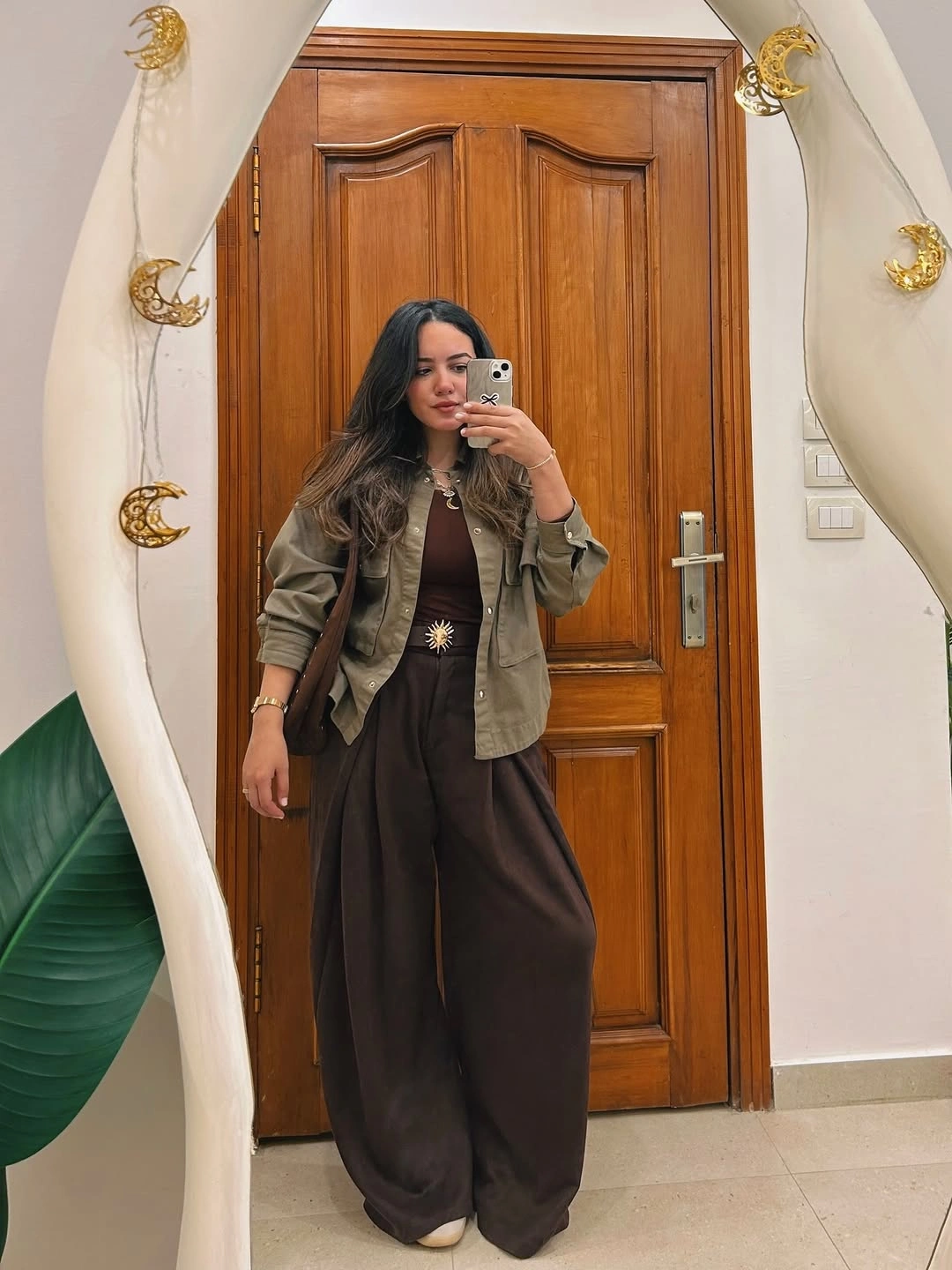
Photo via Instagram
Very wide dark brown trousers carry most of the volume in the lower half, spreading outward well beyond the fitted line of the top. Because the jacket stops above much of that width, the trouser shape remains easy to see rather than being hidden beneath a longer outer layer. The repeated brown tones also let the shift in scale do more of the visual work than a strong color change would.
The decorative detail at the waist gives the eye a specific point to register before the trousers widen toward the floor. That placement is especially useful with this much lower-body volume because it emphasizes where the narrow center ends and the expansive silhouette begins.
Give Loose Layers One Diagonal Direction
The oversized light gray sweater and wide off-white trousers create a deliberately loose silhouette with very little emphasis on the waist. Neither piece tries to narrow the other, so the outfit depends on how their large shapes meet rather than on conventional fitted-to-loose contrast. Gray sneakers continue that relaxed scale at the bottom without introducing a markedly dressier finish.
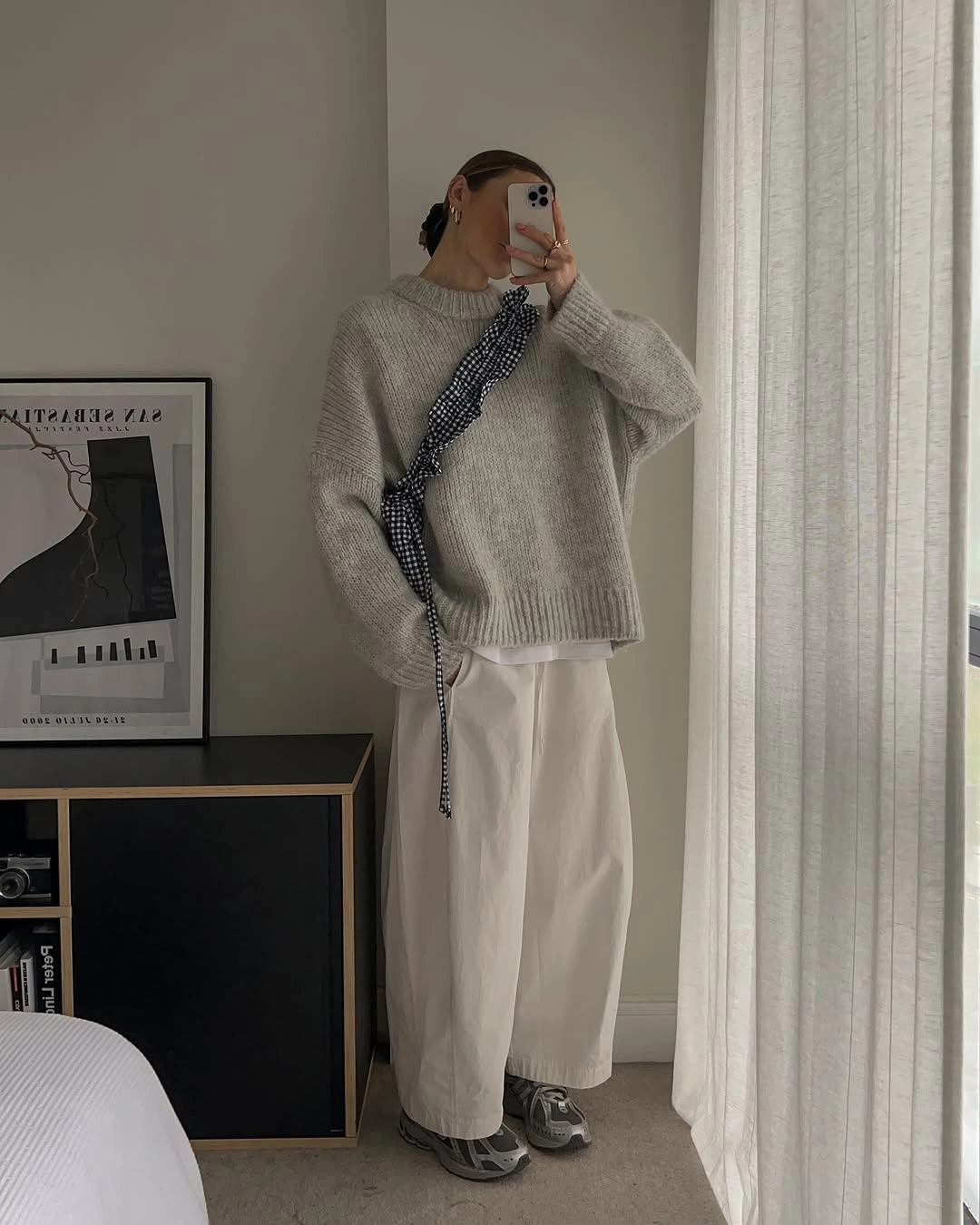
Photo via Instagram
A slim white shirt hem appears between the sweater and trousers, creating a narrow horizontal division inside an otherwise low-contrast palette. That small strip helps distinguish the two broad garments without requiring a darker belt or a sharp change in color. It also gives the sweater a visible endpoint before the wide trousers take over the lower half.
The narrow black-and-white detail runs diagonally across the sweater and then hangs downward, giving the broad front a sharper route for the eye to follow. If you want a similar effect with loose layers, the scale matters: keeping an angled detail relatively narrow preserves the relaxed silhouette while still introducing a clear directional line.
Let Shorter Outerwear Reveal Trouser Flare
The boxy tan jacket stops high enough for the dark trousers to become visible almost immediately below it, so the lower silhouette is not swallowed by outerwear. Its broad shape and dark piping create a compact upper block, while the trousers begin relatively narrow and open toward the hem. That shift gives the outfit movement without depending on a sharply defined waist.
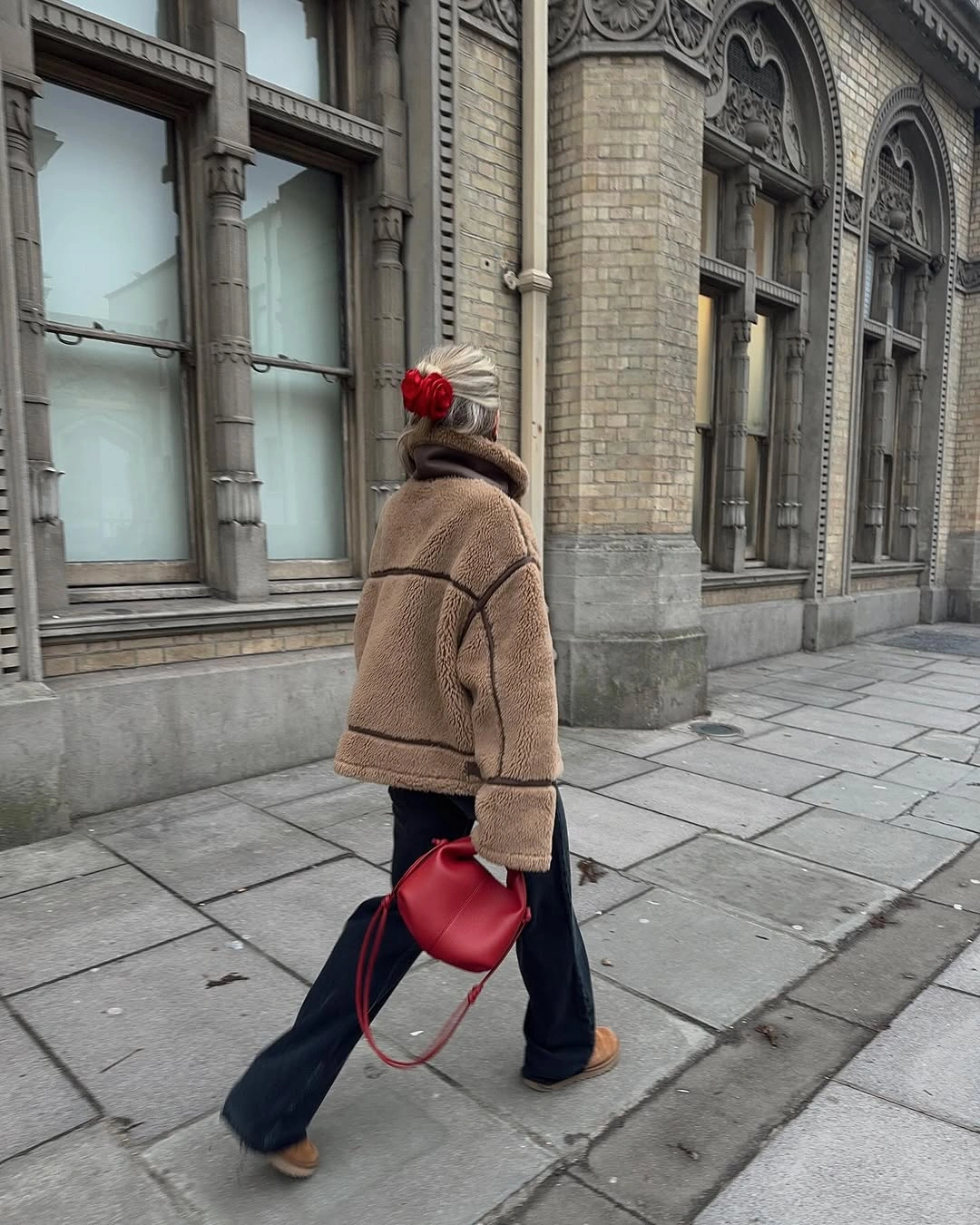
Photo via Instagram
Because the trousers widen as they approach the ground, their shape remains an active part of the outfit instead of serving as a neutral base for the jacket. A longer coat would cover much of that progression, but this shorter outer layer leaves the change in width exposed. The tan flat shoes then finish the line without adding another tall or bulky element.
The rounded red bag introduces a curved form beside the jacket’s boxier outline and the long trouser lines. The matching red hair accessory repeats that color at a distant point, so the side view gains a connection that does not depend on altering the clothing proportions.
Use Rolled Cuffs to Shape Casual Denim
The long dark coat gives the loose light-wash jeans a strong outer frame, but it does not hide the denim’s roomy shape or pale color. That contrast is especially useful in casual winter street style because the coat provides length while the jeans keep the outfit from feeling formal. The striped top showing at the center adds a smaller break inside the larger dark-and-light arrangement.
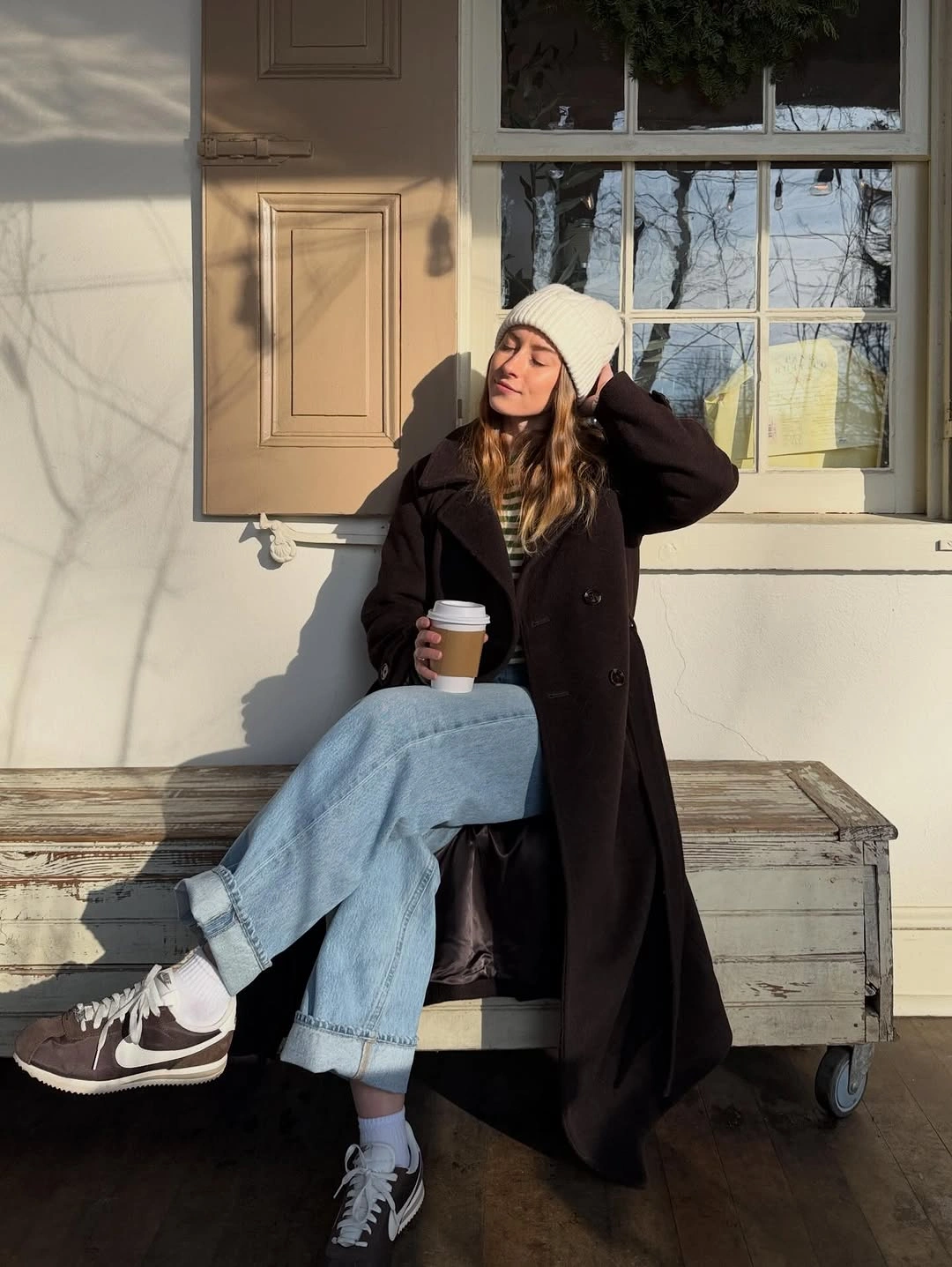
Photo via Instagram
The deep rolled cuffs are more than a finishing detail because they shorten the visible denim line and create a deliberate pause before the footwear. White socks occupy that gap, followed by brown-and-white sneakers, so the transition from wide jeans to shoes happens in several readable stages. The result feels considered even though every element remains casual.
The cream beanie repeats a light note near the top that answers the white socks and lighter parts of the sneakers below. If the cuffs were left unrolled, much of that lower sequence would disappear, changing the outfit from visibly layered at the ankle to a longer, more continuous denim line.
Let the Cardigan Show Inside the Coat
This is the same taupe-and-white outfit seen earlier, but the useful detail here is how the open coat reveals the gray-taupe ribbed cardigan inside it. The cardigan forms a narrower vertical frame within the broader taupe coat opening, so the upper half gains depth from two visible layers rather than from extra color or an invented base piece.
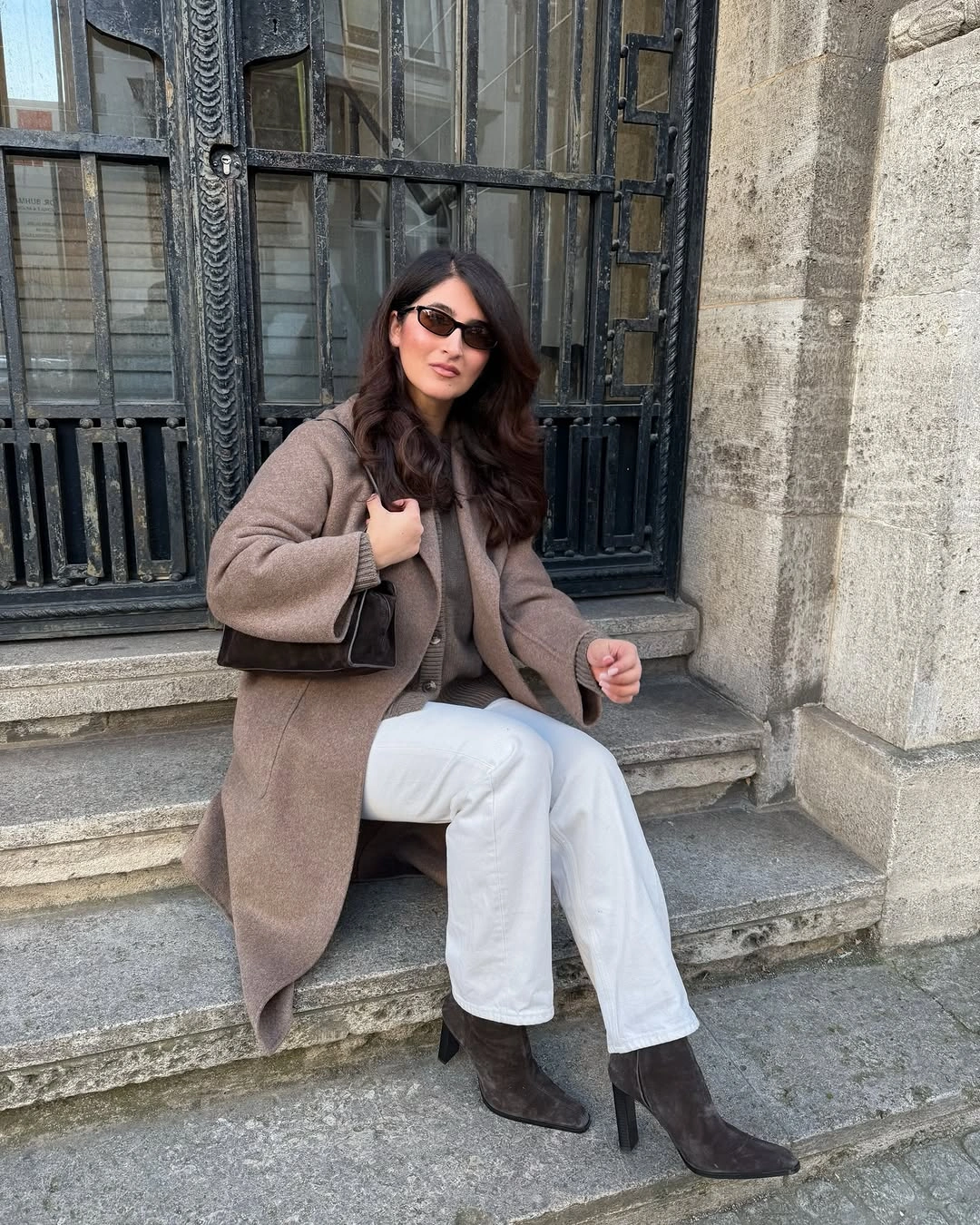
Photo via Instagram
The cardigan stays legible through the center front and also at the wrist, where a ribbed cuff extends beyond the coat sleeve. That repetition gives the inner layer a clear presence without competing with the coat itself, and it shows how a small exposed edge can make layered neutrals feel more deliberate when their colors sit close together.
Leaving the coat open is essential to this particular reading because closing it would remove most of the cardigan’s vertical frame. The visible cuffs would still hint at another layer, but the outfit would shift from an exposed layered composition to a much simpler outerwear-first silhouette.
Let Wide Cream Trousers Soften a Sharp Blazer
The cognac-brown leather-look blazer brings a defined lapel line and a longer, sharper outer shape above cream wide-leg trousers. Those trousers fall generously from the waist and occupy a large pale area below, which keeps the brown jacket from extending into one continuous dark column. The contrast is less about fitted versus loose than about a crisp upper outline meeting an expansive lower shape.
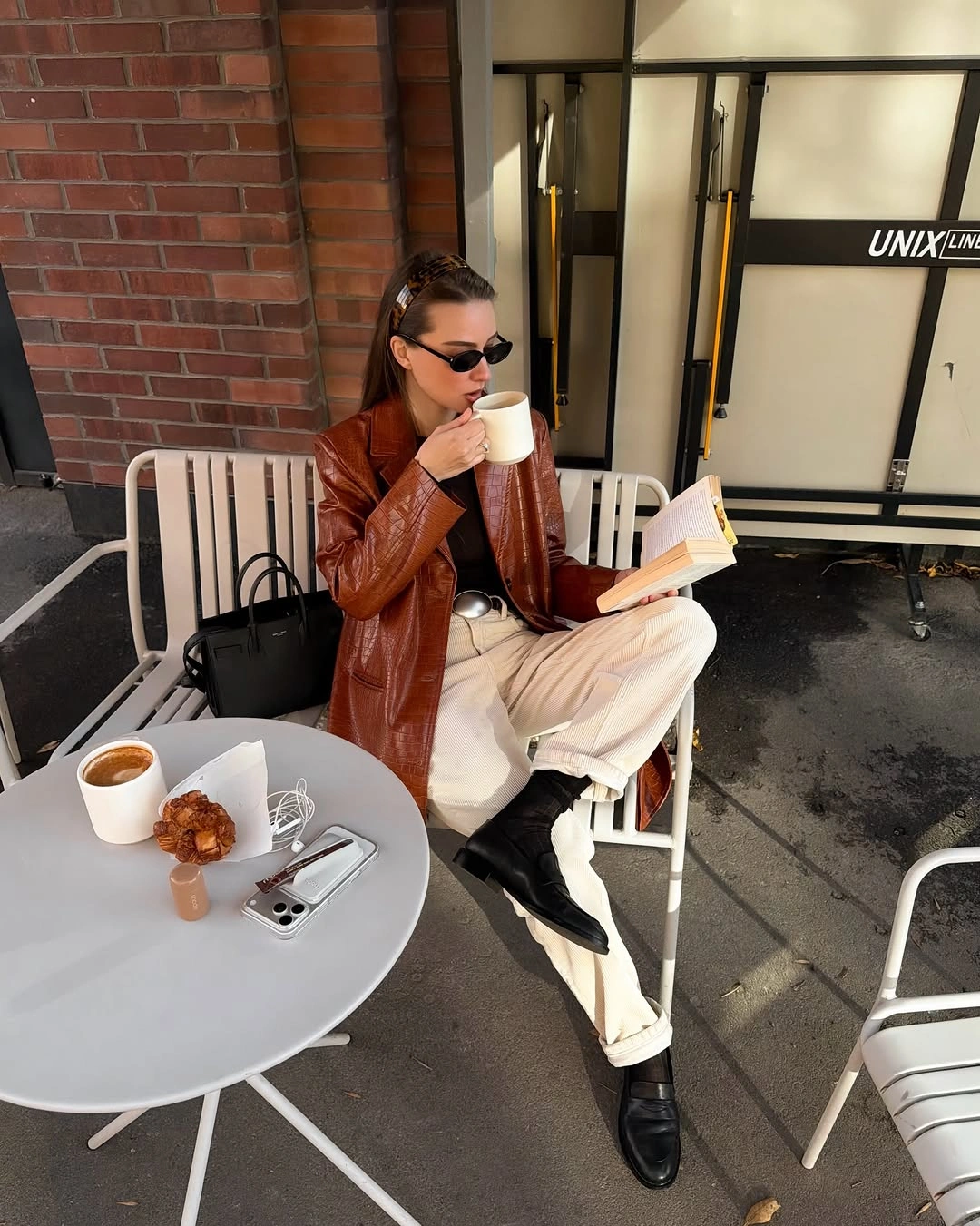
Photo via Instagram
Black appears in smaller areas at the top, structured handbag and loafers, creating separated dark points around the cream trousers instead of one solid block. That distribution helps the wide lower half stay visually open while still connecting it to the upper body and footwear. The brown blazer remains the warmest large element, so it keeps its own identity within the neutral palette.
The loafers keep the finish low and compact beneath trousers that already carry substantial width. A chunkier or taller shoe could compete more directly with the hem, while this lower profile lets the trouser cut remain the dominant shape near the ground.
Use Hosiery to Extend Cropped Glossy Trousers
The soft gray cardigan and simple white top create a subdued upper half, which makes the glossy textured black trousers feel noticeably more assertive below. Their reflective surface catches attention without requiring a bright color change, so the outfit divides its energy by finish rather than by a dramatic palette. That contrast gives a familiar knit layer a dressier counterpart.
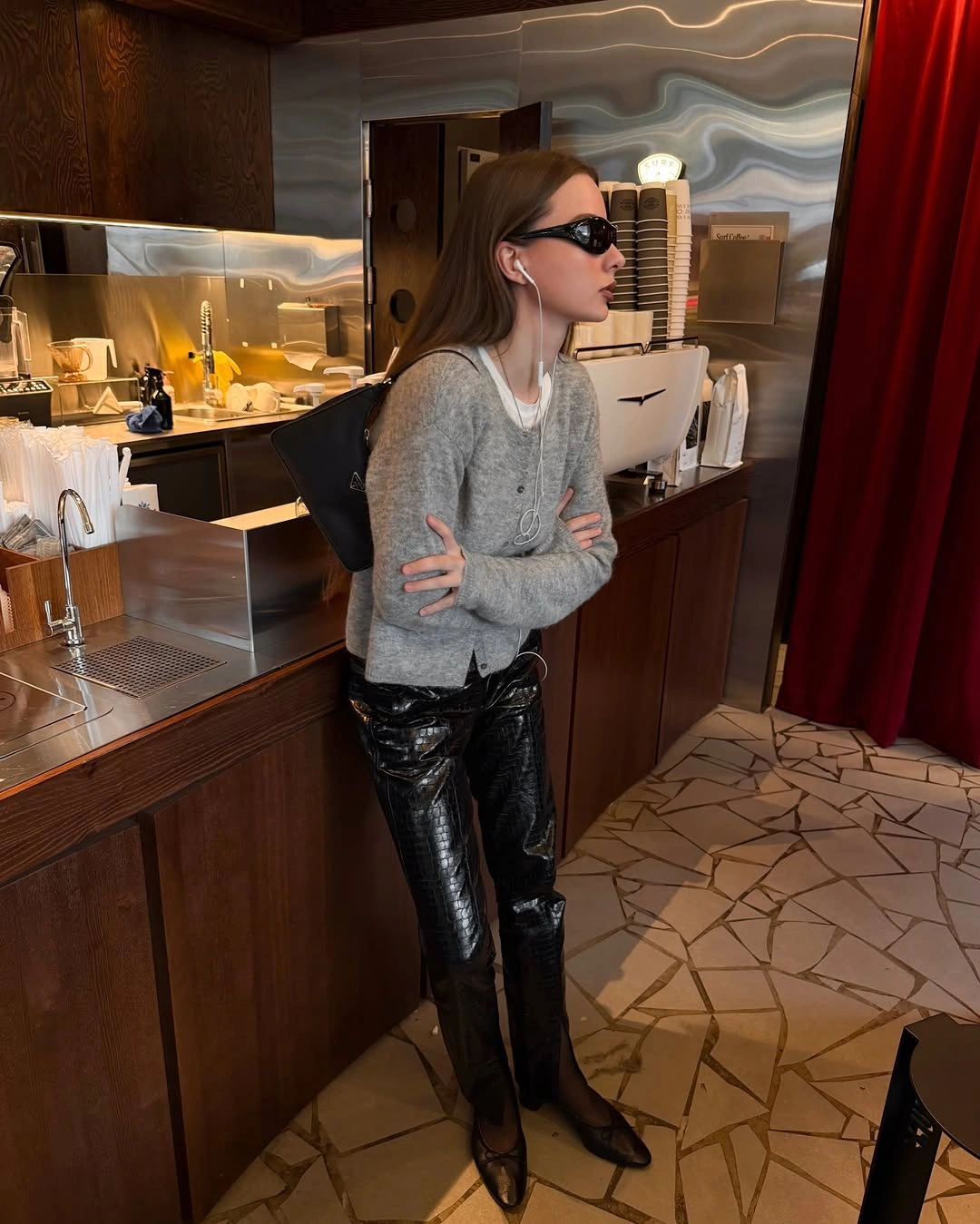
Photo via Instagram
The trousers end above dark hosiery, and that hosiery continues the black lower line toward low dark shoes with rounded-to-almond toes. Because there is no tall boot shaft filling the space, the ankle area remains visually light even though the color stays dark. The transition lets the cropped trouser length stay obvious while keeping the lower half connected from hem to shoe.
For a winter date outfit, this kind of finish contrast can feel more interesting than making every piece equally dressy. The low shoes keep attention on the glossy trousers, while the cardigan preserves an easier upper half that could suit someone who prefers a mixed rather than fully formal mood.
Let Tonal Tailoring Carry More Volume
The oversized gray blazer sets the formal tone through broad shoulders, lapels and a wrap-like double-breasted front, even though its fit is deliberately roomy. Instead of narrowing toward the waist, it keeps substantial volume through the torso, which makes the tailoring feel relaxed rather than conventionally fitted. The wide trousers continue that scale below without turning the outfit into separate oversized pieces.
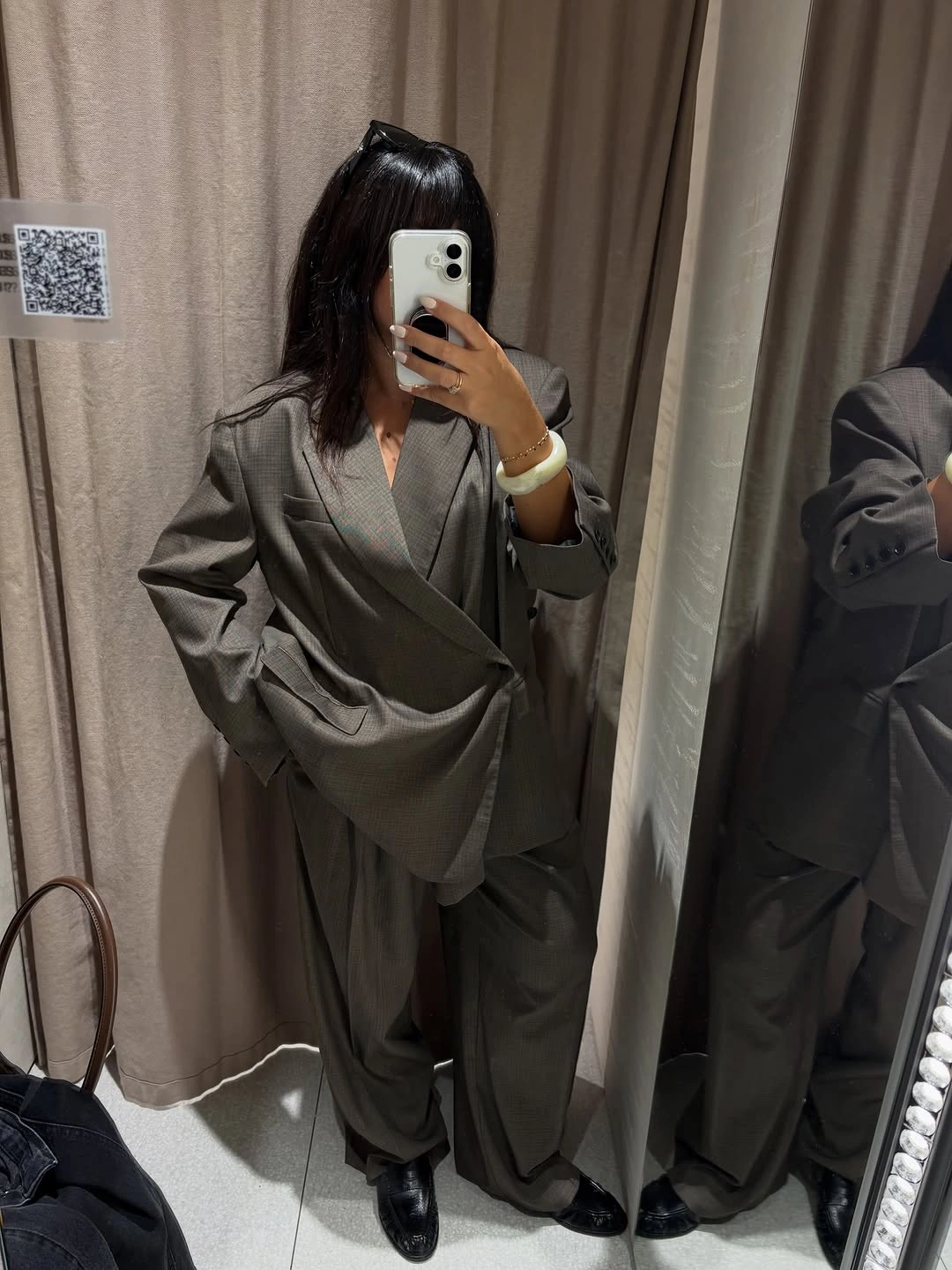
Photo via Instagram
Keeping the blazer and trousers in nearly the same gray tone is what allows all that volume to read as one continuous tailored idea. The eye follows the color from shoulder to hem while the differences in shape – broad shoulders above and very wide trouser legs below – provide enough distinction. For winter office outfits in settings that welcome relaxed tailoring, that tonal continuity can look composed without depending on a narrow silhouette.
Low black loafers give the broad trouser hems a compact endpoint instead of introducing another oversized shape at floor level. Their dark finish also marks where the gray column stops, a small but useful boundary when the trousers carry this much width.
Set a Pleated Mini Above Tall Boots
The dark brown cardigan ends around the waist, leaving the beige-and-brown checked pleated miniskirt fully visible from its top edge into the flare of the pleats. That compact-over-flared relationship gives the outfit an easy, youthful shape, and it is a natural route to a cute winter look when you want the skirt to remain the most animated part of the silhouette without adding more volume above it.
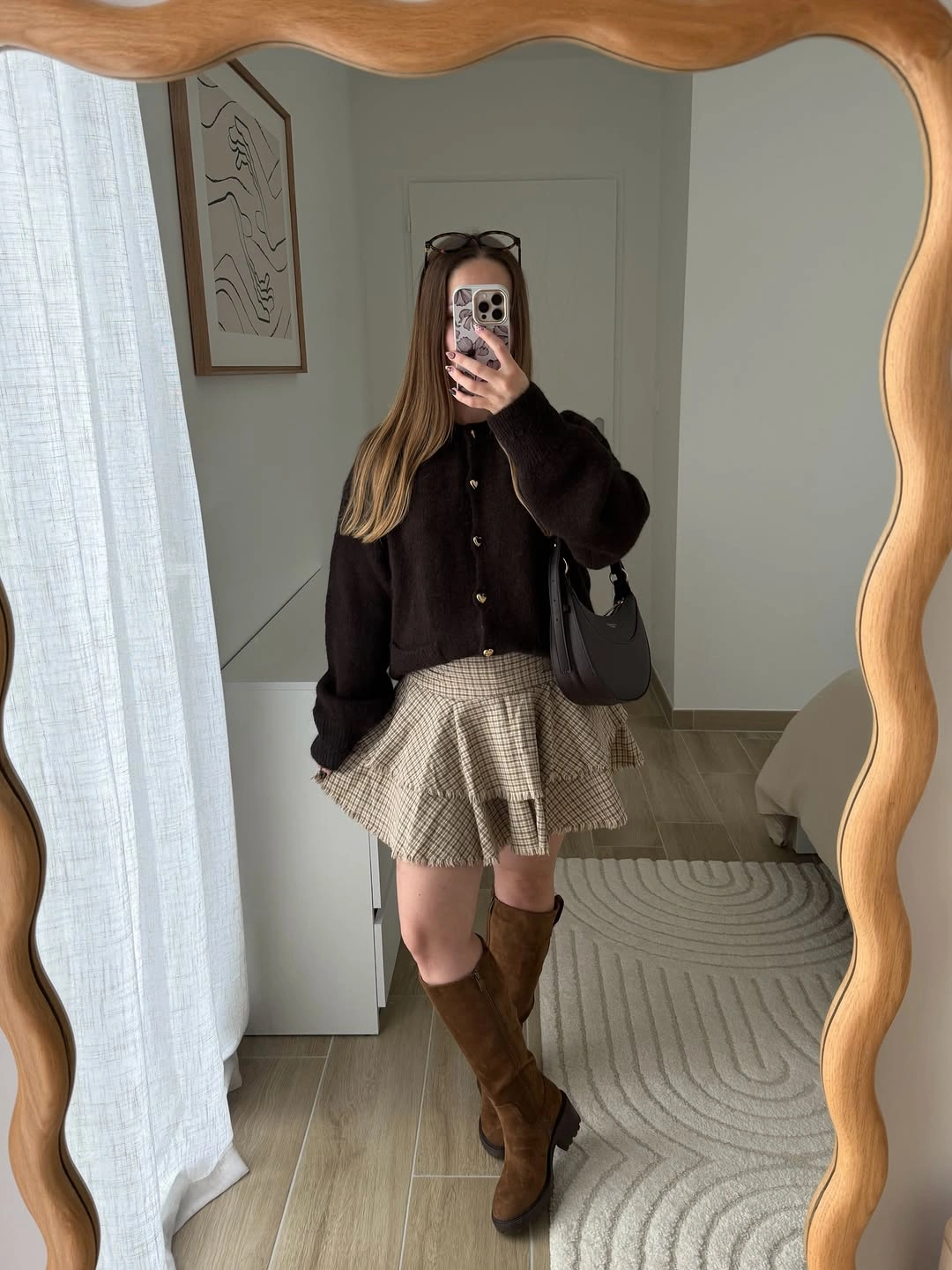
Photo via Instagram
Brown knee-high boots occupy a large portion of the leg beneath the mini skirt, so the space between the short pleated hem and the footwear becomes an intentional part of the proportion. Their height gives the lower half a long vertical element while still leaving a visible band of leg between skirt and boot. An ankle shoe would create a much larger open interval and make the skirt feel more visually isolated.
That exposed band between the skirt and the boot tops is one of the outfit’s most adjustable proportions. Raising or lowering the footwear would change the silhouette more noticeably than swapping the compact black shoulder bag, because it directly alters the distance beneath the pleated hem.