20 Winter Outfits for Women in 2027 That Make Layers Work
Winter outfits become more interesting when every layer has a clear visual purpose. A patterned jacket can give relaxed denim a stronger identity, while a long coat can define the entire silhouette without depending on complicated styling underneath. For winter outfits for women in 2027, I want to explore these relationships rather than treat individual statement pieces as complete solutions. The most useful inspiration comes from noticing how garment lengths interact, where colors appear, and which textures deserve the most attention.
As you explore these 20 combinations, look beyond the obvious colors and notice the smaller decisions that bring each outfit together. A scarf might create a long vertical line, wide trousers might soften a structured coat, or a compact handbag might introduce definition beside generous outerwear. I’ll examine what makes each composition distinctive and how you can adapt those visible choices to your own wardrobe. The goal isn’t to follow one winter dressing formula, but to understand how different proportions, surfaces, and accessories create their own visual rhythm.
A Graphic Jacket Makes Relaxed Denim Feel Deliberate
Large ivory shapes move across the dark oversized jacket, giving this casual winter outfit an unmistakable graphic character. The irregular pattern covers much of the upper silhouette, so the jacket attracts attention through its surface rather than a sharply fitted shape. Dark hanging details at the front add another narrow vertical element without competing with the broad pale markings. I particularly like how the pattern remains the defining feature even though the jacket itself has a loose, uncomplicated outline.
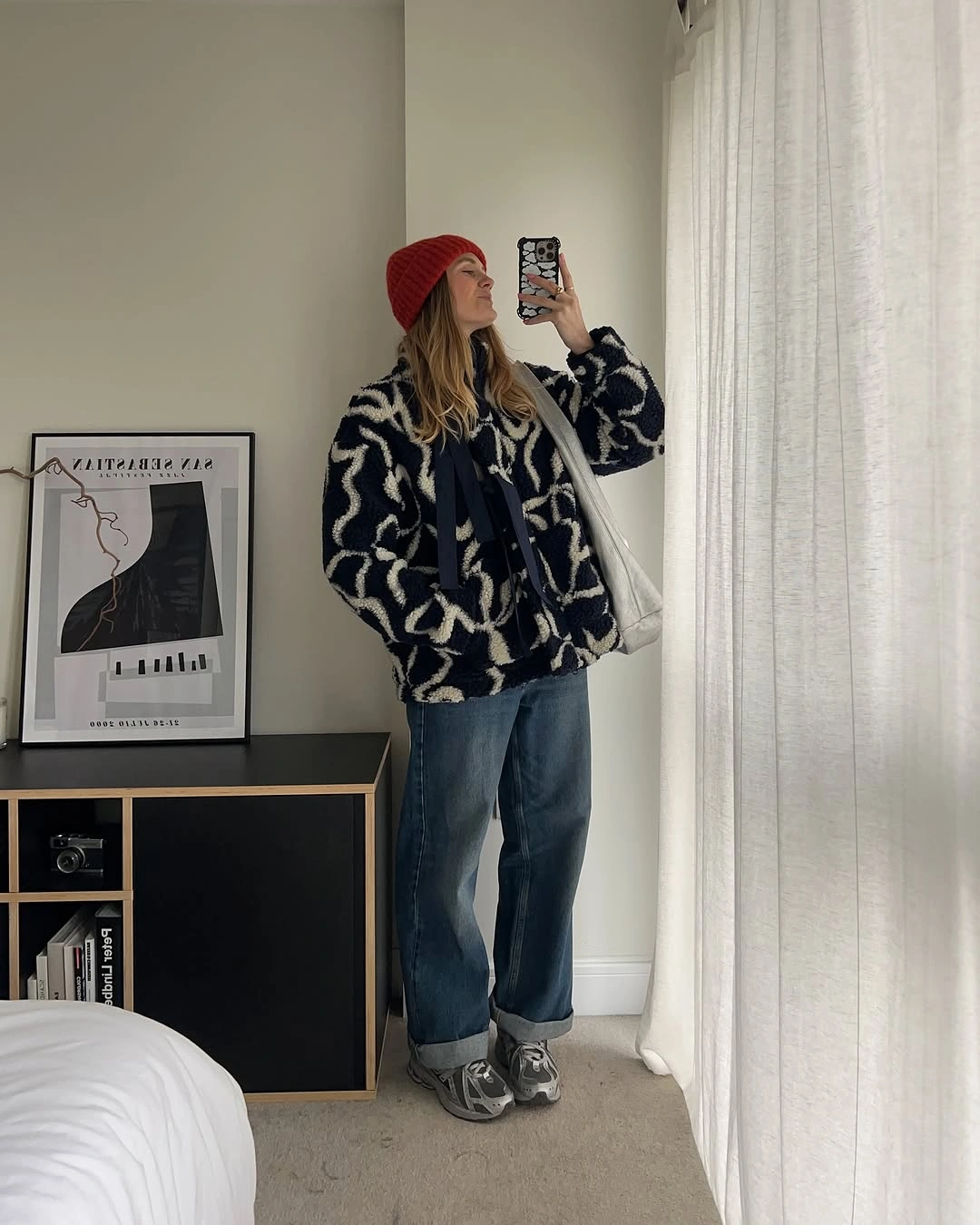
Photo via Instagram
Beneath that expressive upper layer, the loose blue jeans establish a familiar casual foundation that doesn’t compete with the jacket’s graphic surface. Their generous legs continue the relaxed proportions, while the rolled cuffs create a visible break before the gray sneakers. Instead of introducing another pattern or a particularly striking shoe shape, the footwear maintains a quieter appearance alongside the denim. If you’re building casual winter outfits for women around a bold jacket, this combination shows why equally relaxed bottoms can work without making the silhouette visually confusing.
The red ribbed beanie introduces a concentrated accent above the patterned jacket, giving the eye one small area of stronger color. Meanwhile, the light shoulder tote quietly repeats the ivory already present in the outerwear without adding another graphic motif. You can borrow this approach by separating the jobs of your accessories: let one introduce contrast, while another connects to an existing color.
One Bright Red Scarf Changes a Neutral Outfit
The bright red scarf is the defining feature of this camel-colored coat combination, extending well beyond the neckline through long hanging sections and fringed ends. Its vivid color creates a dramatic interruption against the quieter beige and taupe layers, while the extended shape introduces a strong vertical feature across the front of the coat. Part of the scarf stretches outward, making its length especially noticeable rather than allowing it to disappear into the surrounding outerwear. This is a useful example of how an accessory can lead an entire composition.
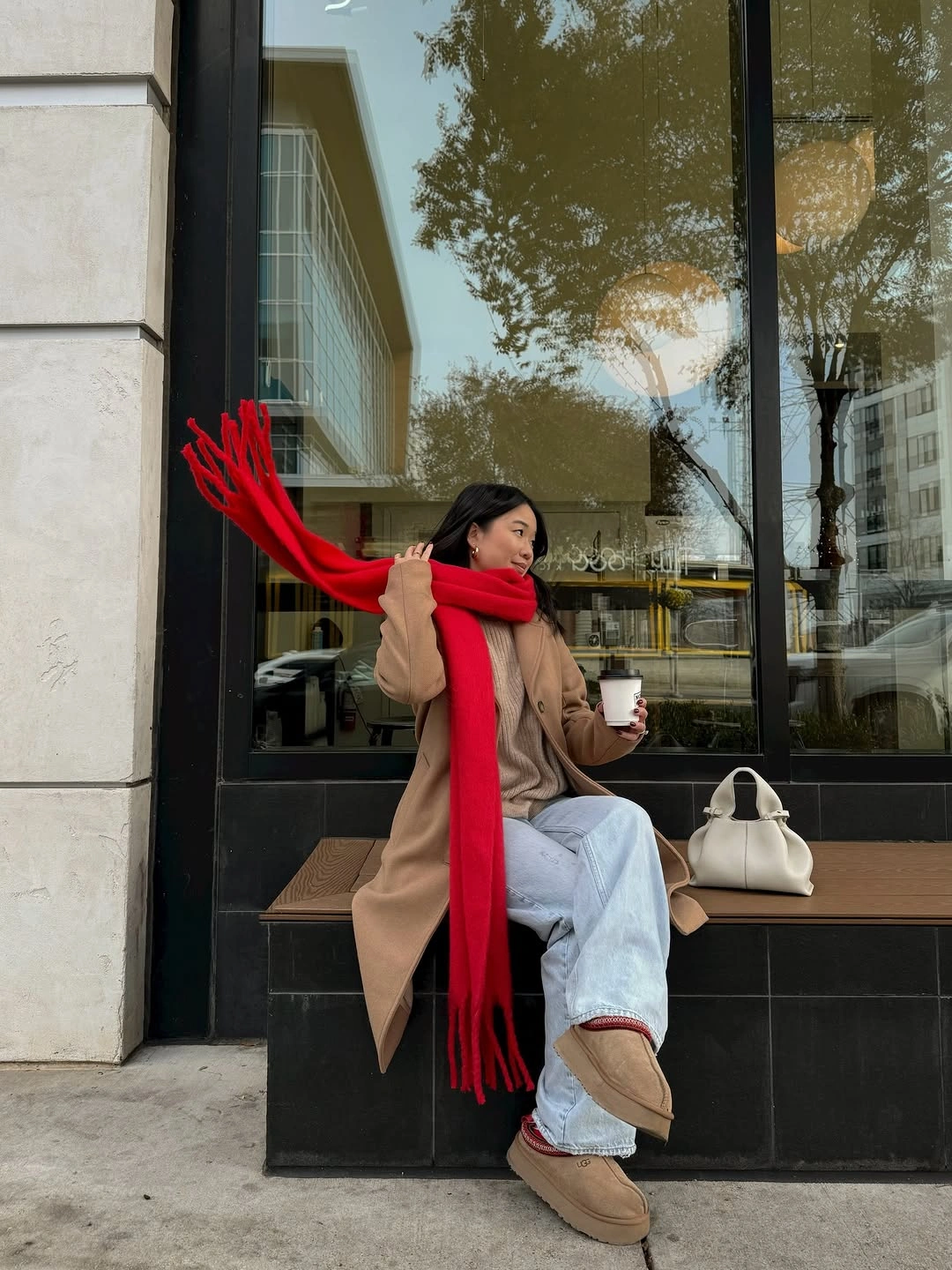
Photo via Instagram
What makes the striking scarf work visually is the restraint of the surrounding garments, particularly the taupe-beige knit layer and softly colored camel coat. The loose pale blue jeans introduce a cooler shade without challenging the red for attention, while the tan thick-soled shoes connect back to the warmer tones above. These familiar colors establish a continuous neutral foundation, allowing the scarf to look intentional rather than disconnected. Among winter outfits with scarves, this combination offers a particularly clear example of using one saturated color across an otherwise subdued palette.
The small off-white handbag adds a compact, pale shape beside the long coat and dramatically oversized scarf. Its restrained color and rounded outline allow the scarf’s extended proportions to remain the main event. If you want to experiment with a substantial colorful accessory, notice how keeping the other accessories quiet gives that one piece enough visual space to make an impression.
A Long Gray Coat Sharpens Soft Tonal Layers
The long taupe-gray coat introduces a beautifully understated approach to layered winter dressing, with broad lapels framing a coordinating gray button-front cardigan. Although the two garments occupy a similar color family, their slightly different tones and visible constructions create separation rather than blending into one indistinct surface. The cardigan finishes considerably higher than the coat, establishing a clear internal boundary beneath the longer outer layer. I like how the outfit develops visual interest through these measured changes in length and shade instead of relying on a bright accent.
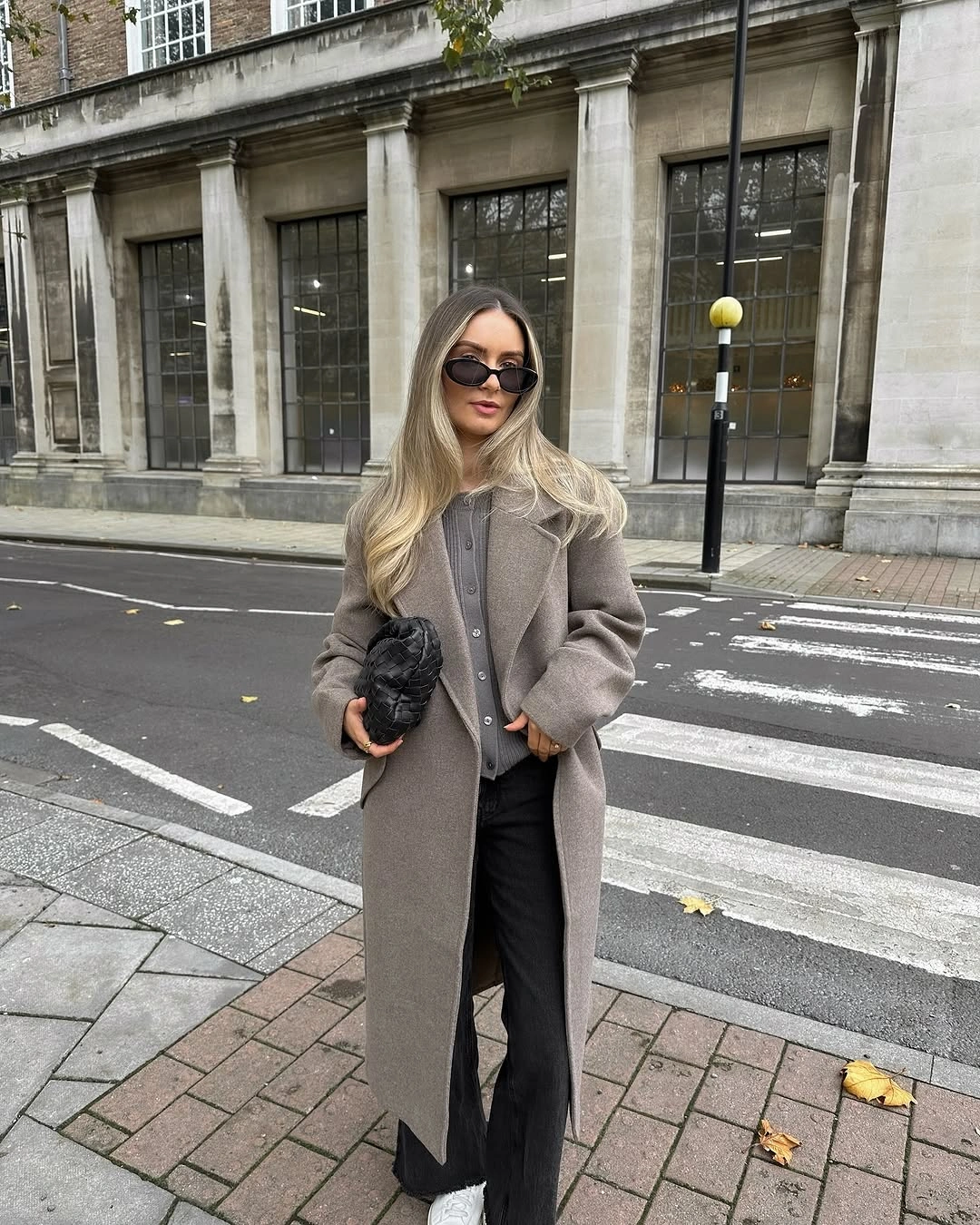
Photo via Instagram
Dark wide-leg trousers give the lower half a stronger color foundation, providing contrast beneath the softer gray layers without interrupting the coat’s long vertical outline. The trousers have enough width to maintain a relaxed silhouette, yet their dark color keeps the transition from the outerwear visually defined. Small glimpses of white footwear introduce a lighter detail near the ground, creating another distinct color boundary at the bottom. For a gray coat winter outfit, this arrangement demonstrates how related midtones, deeper trousers, and minimal pale accents can establish several levels of visual separation.
The gathered black clutch introduces a compact textured detail against the comparatively smooth-looking coat, while narrow dark sunglasses add definition near the face. Neither accessory takes attention away from the long outer silhouette because both remain within the outfit’s restrained color family. The useful styling lesson is to let changes in garment length establish the composition and use smaller accessories to refine it rather than compete with it.
A Plush Brown Coat Meets Cuffed Jeans and Loafers
A long dark brown coat with a dense, fur-like surface dominates this outfit through its generous proportions and pronounced texture. Seen from the side and back, the outerwear creates an expansive silhouette that extends well below the hips, giving it a distinctly dramatic appearance. Instead of surrounding that substantial shape with equally elaborate garments, the outfit allows the coat to carry most of the visual weight. Its deep brown color also provides a continuous background against which the exposed denim and footwear can stand apart.
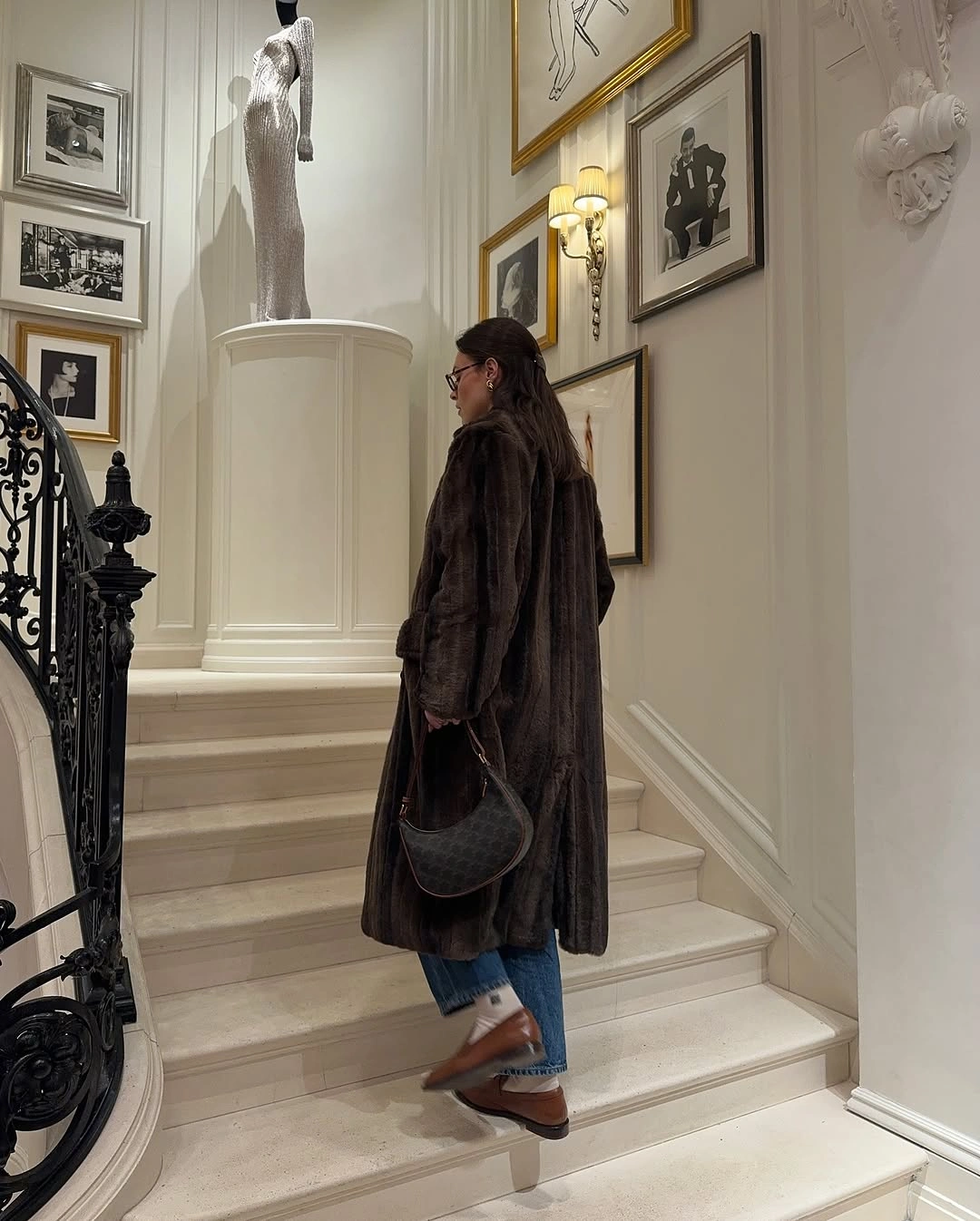
Photo via Instagram
The medium-blue jeans introduce a much more familiar casual element beneath the long coat, especially where their rolled cuffs expose pale socks above the brown loafers. These relatively modest details create a clear contrast with the expansive outerwear, preventing the entire combination from looking uniformly dramatic. The brown footwear also connects to the coat’s darker palette without repeating its distinctive surface texture. If you enjoy winter outfits with jeans, this look demonstrates how denim and uncomplicated shoes can change the character of a statement coat without minimizing its presence.
A small dark curved shoulder bag contributes a restrained finishing detail that follows the coat’s subdued palette, while the sunglasses add another compact accessory near the face. What makes this combination useful is the contrast between the visually substantial outer layer and the ordinary shapes of the jeans and loafers. Rather than matching every garment to the coat’s dramatic appearance, you can let one piece establish the strongest character and keep the rest more casual.
Oversized Ivory Scarf Above a Dark Short Jacket
An oversized ivory scarf takes up a remarkable amount of visual space in this black winter outfit, wrapping high around the neck before extending downward in long, substantial sections. Its broad folds create a pale, voluminous area around the upper body, making the scarf appear almost as prominent as the short dark jacket beneath it. Light textured trim along the jacket adds smaller pale details that connect naturally with the larger scarf. Unlike a colorful scarf used primarily for contrast, this combination depends on the accessory’s physical scale and soft-looking folds to establish its character.
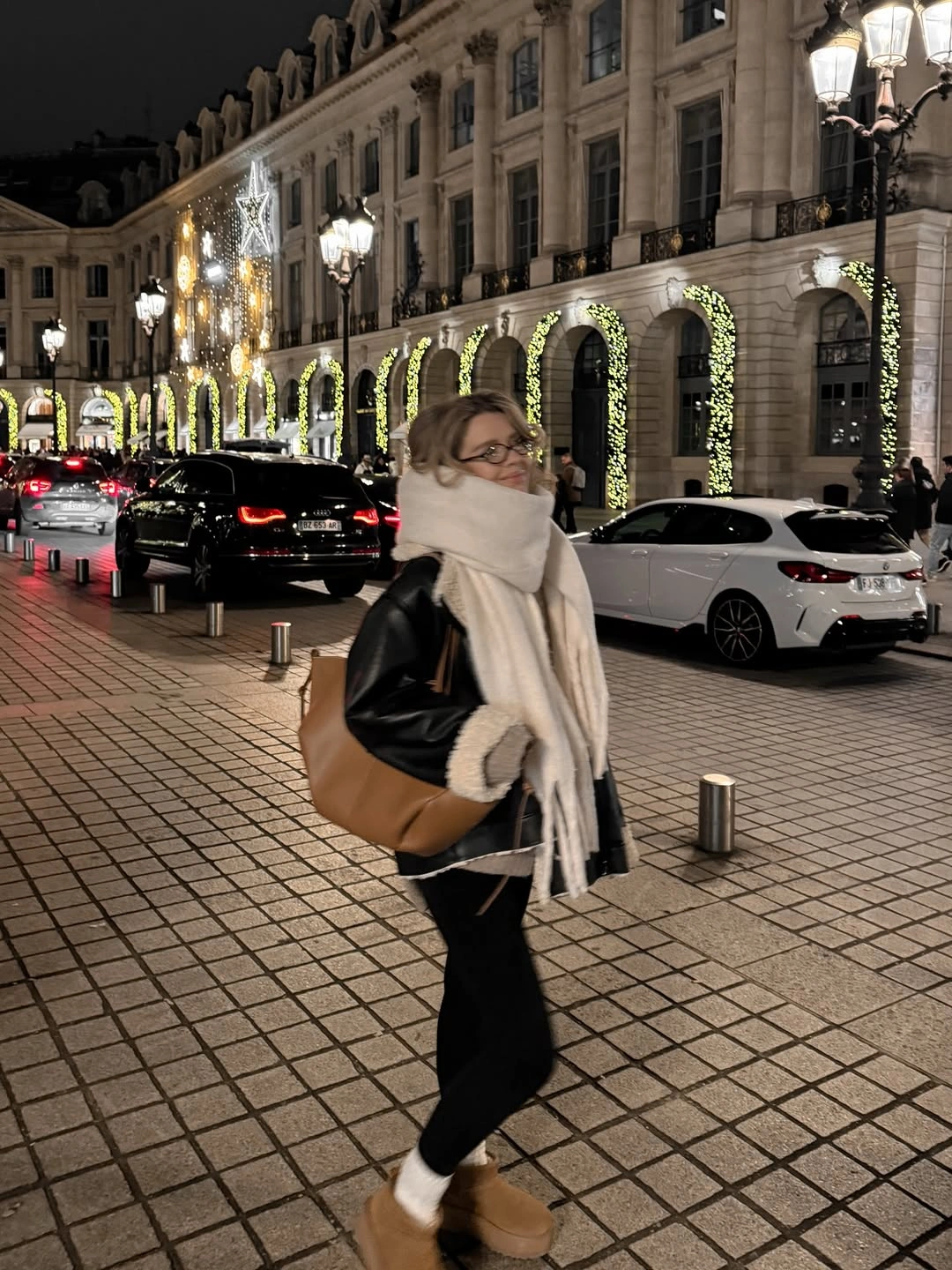
Photo via Instagram
Below the substantial scarf and short dark jacket, the close-fitting black bottoms create a noticeably narrower outline that separates the upper volume from the lower silhouette. The uninterrupted dark section keeps attention on the layers around the shoulders and neckline rather than introducing additional width throughout the outfit. Pale socks provide a distinct transition into tan thick-soled boots, adding a lighter break near the ankles. This relationship between a generously wrapped upper half and a comparatively streamlined lower half gives the outfit its recognizable proportions without requiring additional decorative elements.
The tan shoulder bag creates a warm color connection with the boots, while the pale socks echo the oversized ivory scarf positioned much higher in the outfit. These repeated tones help connect accessories placed at different heights rather than leaving the scarf visually isolated. If you’re considering a black winter outfit with a large scarf, the most useful idea here is to distribute a few related lighter shades around the darker foundation while preserving the strong difference between upper and lower volume.
A Brown Shoulder Drape Breaks Up All Black
A substantial strip of brown, fur-like texture falls from one shoulder of the long black coat, creating an unexpected point of interest within an otherwise dark outfit. Its off-center placement introduces asymmetry, drawing attention along one side rather than dividing the upper silhouette evenly. The textured surface also stands apart from the smoother-looking black outerwear, making the contrast about more than color alone. What I find especially effective is how this single vertical feature changes the character of the entire coat without requiring additional decorative elements.
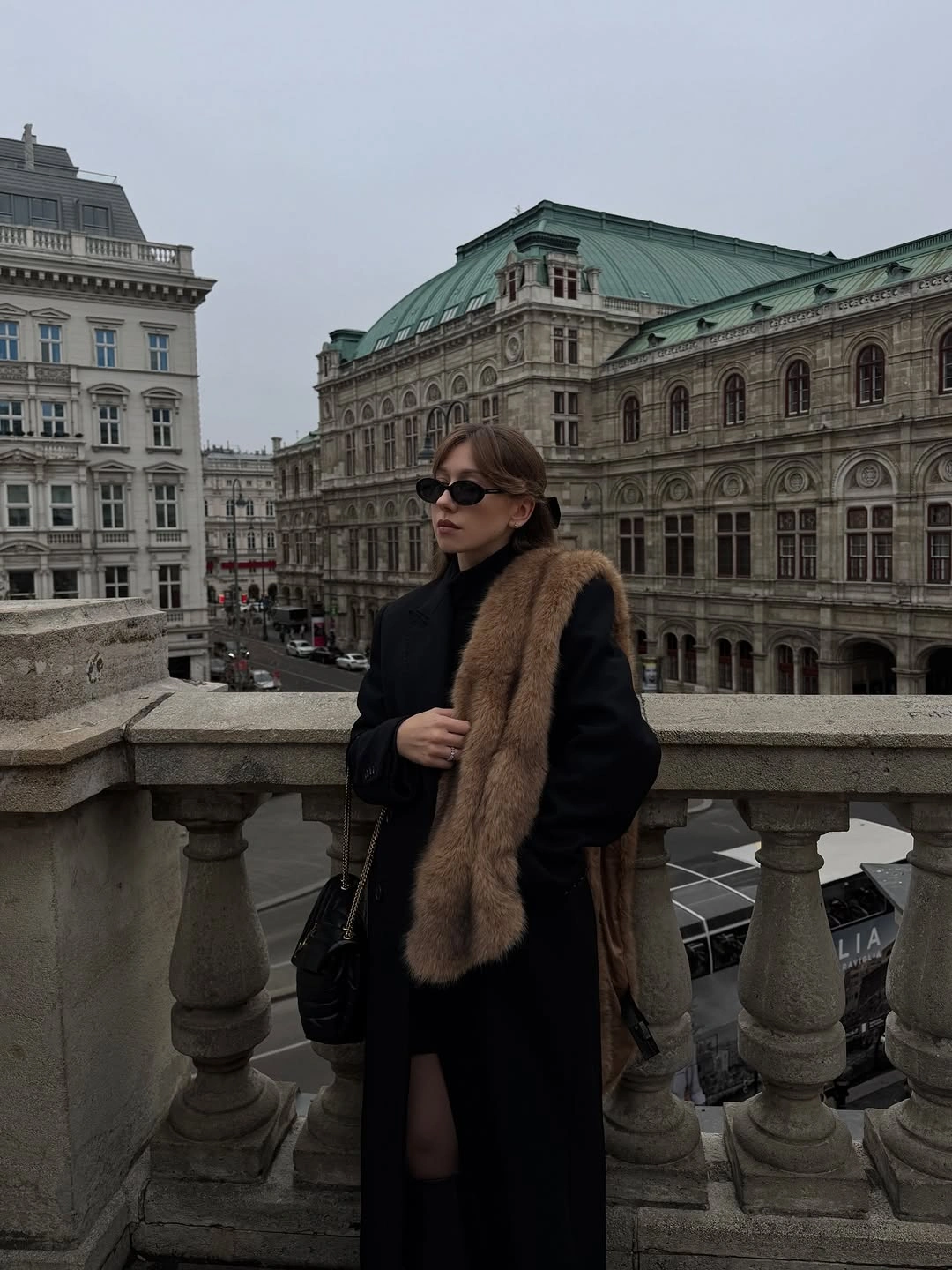
Photo via Instagram
Beneath the long outer layer, a black high-neck section establishes a continuous dark area around the neckline, while a short black lower hem introduces another visible boundary farther down. The sheer-looking dark legwear creates a subtle difference in opacity against the more solid appearance of the coat and inner clothing. These transitions keep the composition from becoming one uninterrupted black shape, even though nearly everything belongs to the same color family. For an all-black winter outfit with a brown accent, this approach demonstrates how changes in length, surface, and transparency can provide definition without relying on multiple colors.
The small black bag and oval sunglasses maintain the restrained palette, allowing the brown shoulder detail to remain the most distinctive feature. Their compact shapes introduce definition without competing with the substantial textured drape. You can apply this idea by concentrating an expressive surface on one side of an otherwise simple outfit, letting its placement create the visual interest rather than adding several competing accessories.
A Cropped Brown Plush Jacket Grounds Wide White Pants
The deep-brown cropped jacket brings a dense, fur-like texture to the upper half of this white pants winter outfit, creating a striking contrast with the pale garments below. Because the jacket finishes relatively high, the wide white trousers remain visible through most of their length rather than disappearing beneath extended outerwear. The combination places the darker, more substantial-looking surface in a compact area around the shoulders and torso, while the lower half develops into a broader light-colored shape. This difference between concentrated upper texture and extended lower volume gives the outfit its distinctive proportions.
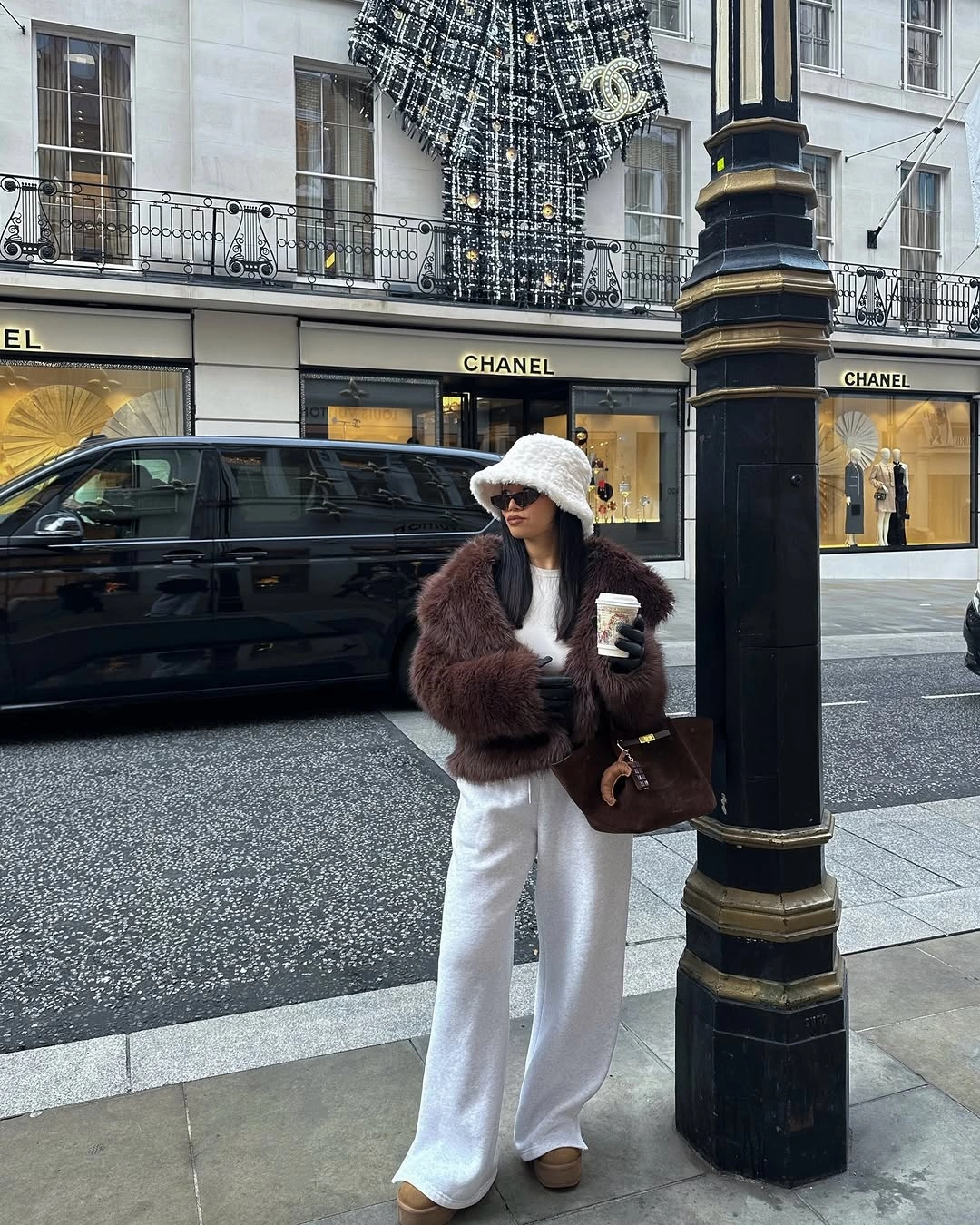
Photo via Instagram
Repeated light tones connect the white bucket-style hat, the pale inner top, and the wide trousers, even though these pieces occupy different parts of the silhouette. The hat’s textured surface introduces detail near the face, while the relatively simple pale top creates a quieter transition between the darker jacket and the trousers. Rather than relying on an exact shade match, the composition uses closely related light colors to make its separated garments feel visually connected. The result is a strong dark-and-light arrangement in which the cropped jacket remains prominent without interrupting the continuity of the wider lower half.
A structured dark-brown handbag extends the jacket’s color into the accessory arrangement, while the tan rounded shoes introduce a softer brown tone near the floor. These details connect the dark upper layer to the pale trousers without reproducing the jacket’s pronounced texture everywhere. If you want to build an outfit around wide white pants and a cropped statement jacket, consider how a darker handbag and subtly related footwear can bring separate parts of the composition together.
Deep Plum Texture Framed by Sleek Black Accessories
This dark winter coat outfit draws its visual character from an expansive, densely textured surface that appears somewhere between deep plum, burgundy, and brown in the available lighting. The coat creates a broad, rounded shape around the shoulders and upper body, with its irregular fur-like surface supplying detail across an otherwise subdued palette. Rather than introducing a vivid contrasting color, the outfit allows small variations in darkness and surface appearance to become noticeable. I like how the substantial outer layer establishes the central silhouette while the surrounding elements remain visually restrained.
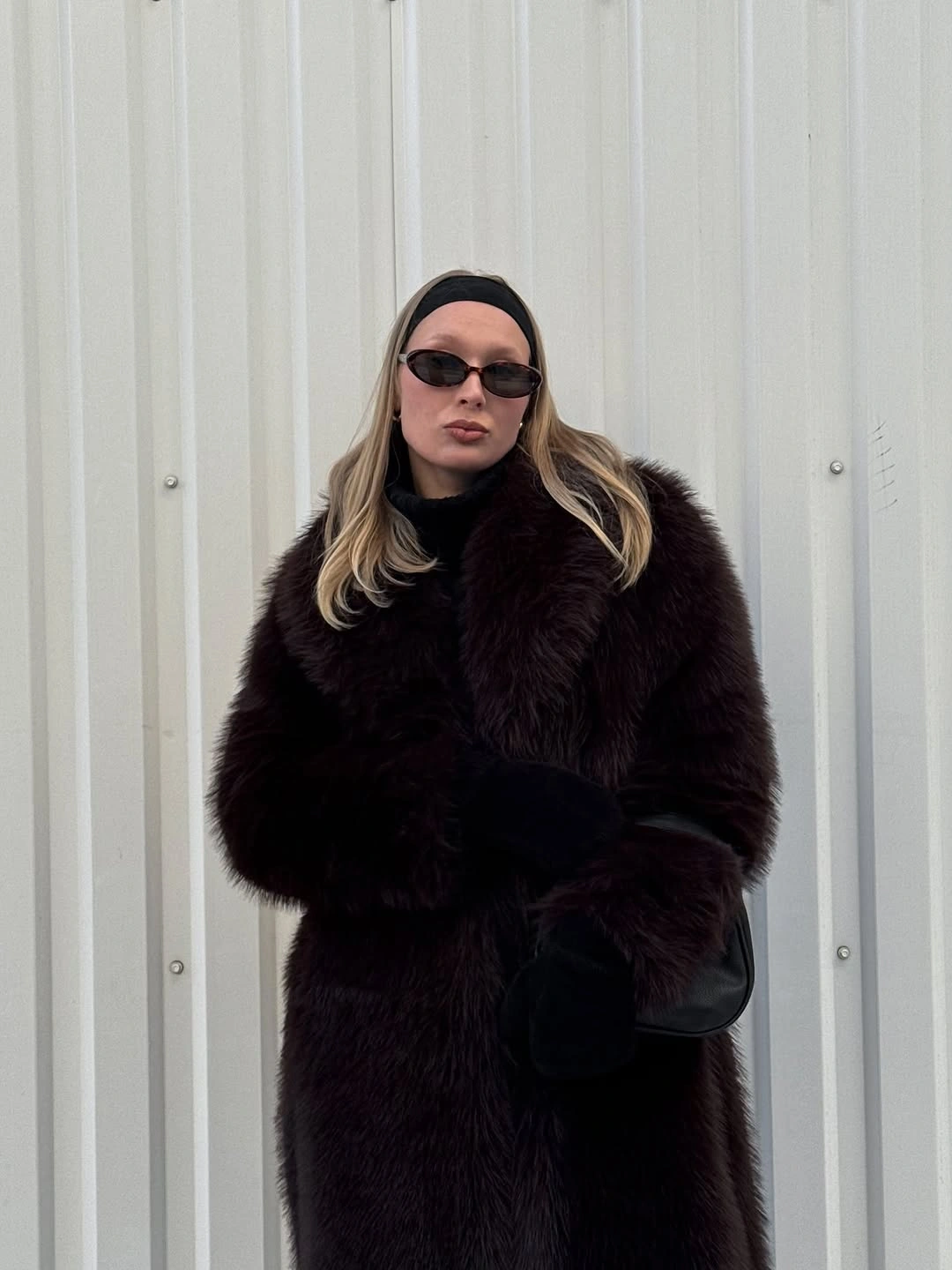
Photo via Instagram
A smooth black headband sits close to the head, establishing a particularly clean line beside the fullness of the textured coat. Narrow dark sunglasses repeat that compact appearance, while the black high-neck layer creates a quiet boundary underneath the prominent outerwear. These accessories are noticeably less expansive than the coat, so their shapes provide definition without introducing another large textured area. The contrast is primarily one of surface and scale: fuller, irregular-looking outerwear surrounds smaller, smoother black details that make the upper composition appear more deliberate.
Black hand coverings continue the subdued styling, and the partially visible dark shoulder bag adds another accessory without drawing attention away from the coat. Because the visible palette remains closely related, the differences between smooth and textured surfaces become particularly important. This is an approach worth studying when you prefer darker winter combinations: a prominent surface can provide enough visual interest that the remaining accessories need very little decoration.
A White Statement Jacket Against a Black Beanie
Long, separated strands spread across this oversized white jacket, creating a dramatically textured surface that defines the upper silhouette. The jacket has a rounded, expansive appearance, with its shaggy edges extending outward rather than following a sharply tailored outline. A pale inner top keeps the central color area light, allowing the white outerwear to remain the strongest visual feature. For a white textured jacket winter outfit, the distinctive lesson comes from giving one garment substantial surface detail while allowing the surrounding visible clothing to establish simpler boundaries.
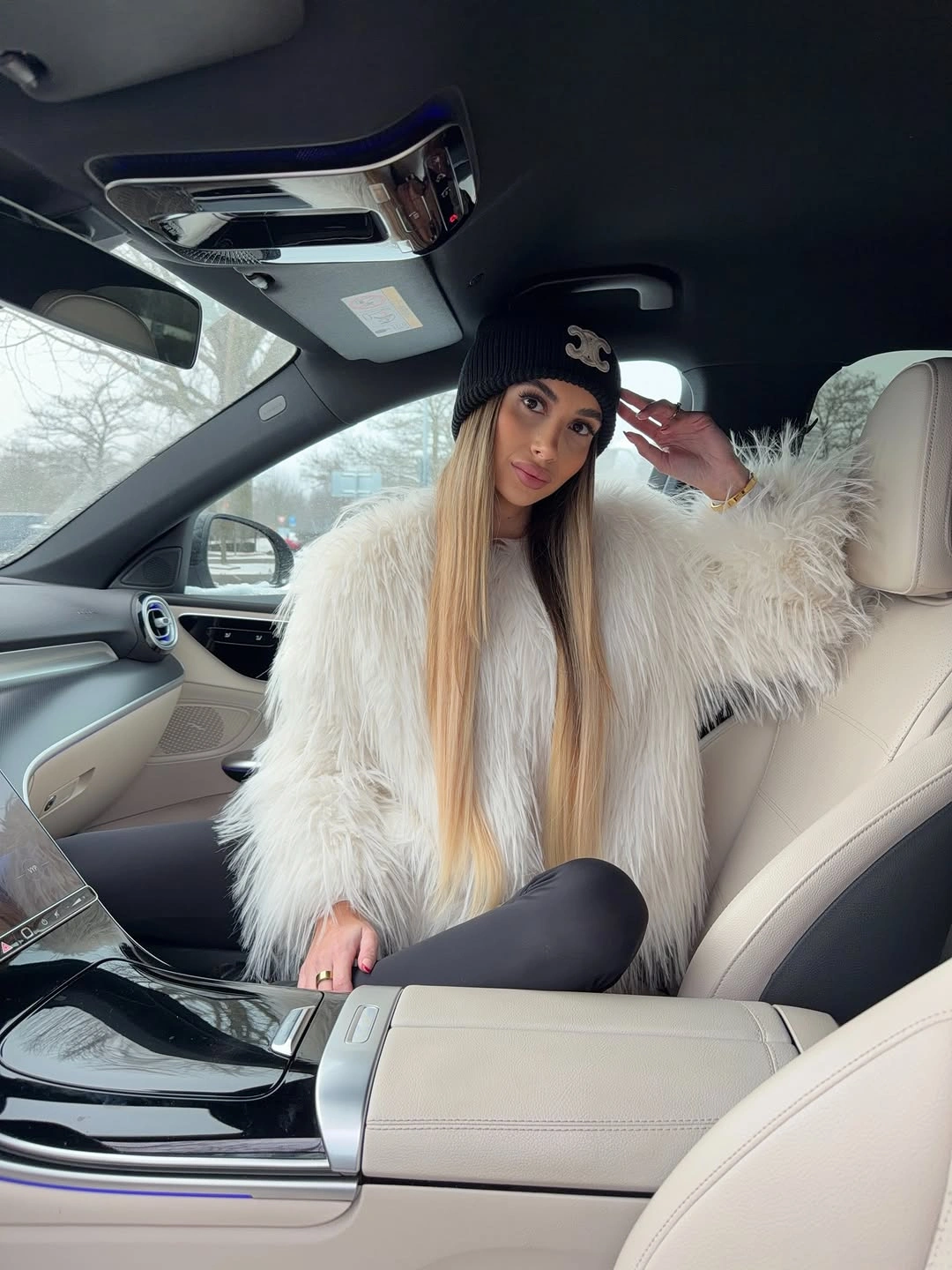
Photo via Instagram
The black ribbed beanie creates a compact dark area directly above the voluminous jacket, making the contrast between the two shapes immediately noticeable. Long straight hair falls over the pale outer layer, adding finer vertical lines against its more irregular texture. The visible dark close-fitting lower section introduces another concentrated black area beneath the broad white upper silhouette, although the photograph does not establish the full construction of that garment. Together, these darker elements frame the textured jacket at different heights rather than spreading additional volume across the entire outfit.
A small light-colored emblem on the beanie introduces a minor detail that does not compete with the much larger shaggy surface below it. What makes this composition useful is the clear distinction between a highly expressive outer layer and the relatively straightforward shapes surrounding it. You can adapt that relationship with a textured oversized jacket and simpler dark pieces, concentrating attention on the difference in scale rather than on any particular hat design.
Black Tall Boots Define a Loose Ivory Base
An open dark olive jacket with substantial dark textured trim frames the simple white upper and lower garments in this distinctive winter combination. The jacket’s broad opening leaves the short-sleeved white top visible, creating a lighter central area against the darker outer layer. Below it, the loose off-white trousers introduce considerable volume without adding a busy pattern or another strong color. I find the contrast between the jacket’s more pronounced edges and the softer trouser outline particularly interesting because the outfit depends on clear boundaries rather than decorative details.
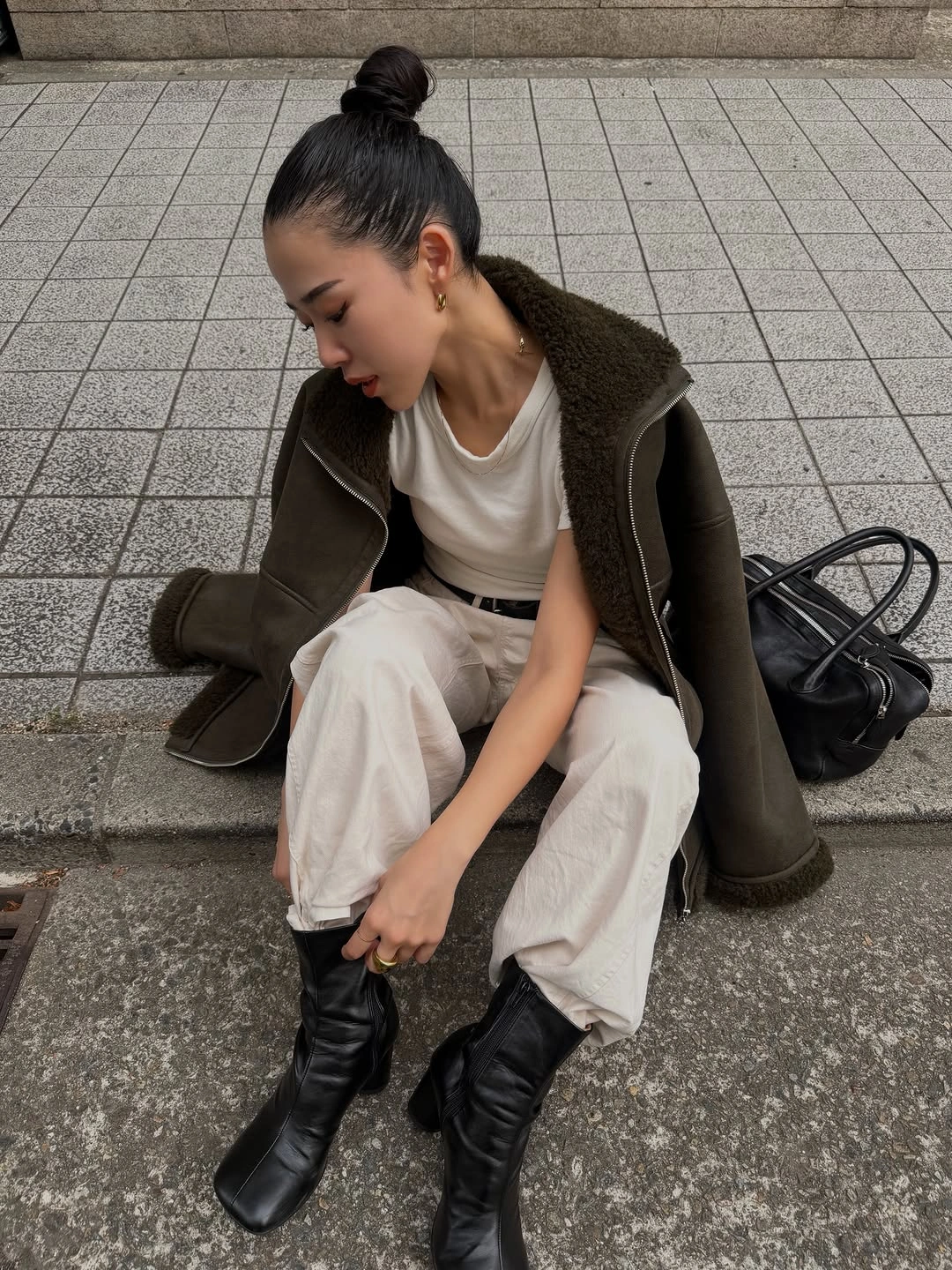
Photo via Instagram
The narrow black belt creates a defined horizontal interruption between the white top and the loose pale trousers, preventing their similar colors from merging into a single uninterrupted section. Farther down, tall black heeled boots introduce a much stronger contrast, with the pale trouser legs gathering and falling around their upper portions. The dark footwear provides a pronounced visual ending to the light lower silhouette while echoing the belt at the waist. As a winter outfit with tall black boots, this combination illustrates how accessories placed at two different heights can organize otherwise generous trouser proportions.
The black handbag adds another dark element beside the olive jacket, repeating the color already established by the belt and boots. Its relatively compact outline contrasts with the loose trousers and substantial outer layer without introducing a separate focal color. The useful idea here is to build definition around a pale, roomy foundation through carefully placed darker elements, allowing the trouser volume to remain expressive while the accessories establish clearer visual boundaries.
Cognac Boots Give a Long Dark Coat Direction
Broad lapels and an extended silhouette give this dark coat a strong presence without relying on visible patterns or elaborate surface details. Its nearly black appearance, with a possible deep navy undertone, creates a continuous column of dark color that reaches well below the knees. The coat’s generous length keeps the clothing underneath largely concealed, making the outer shape itself the foundation of the composition. What interests me here is how such an uninterrupted dark surface creates room for smaller, more defined elements to establish the outfit’s character.
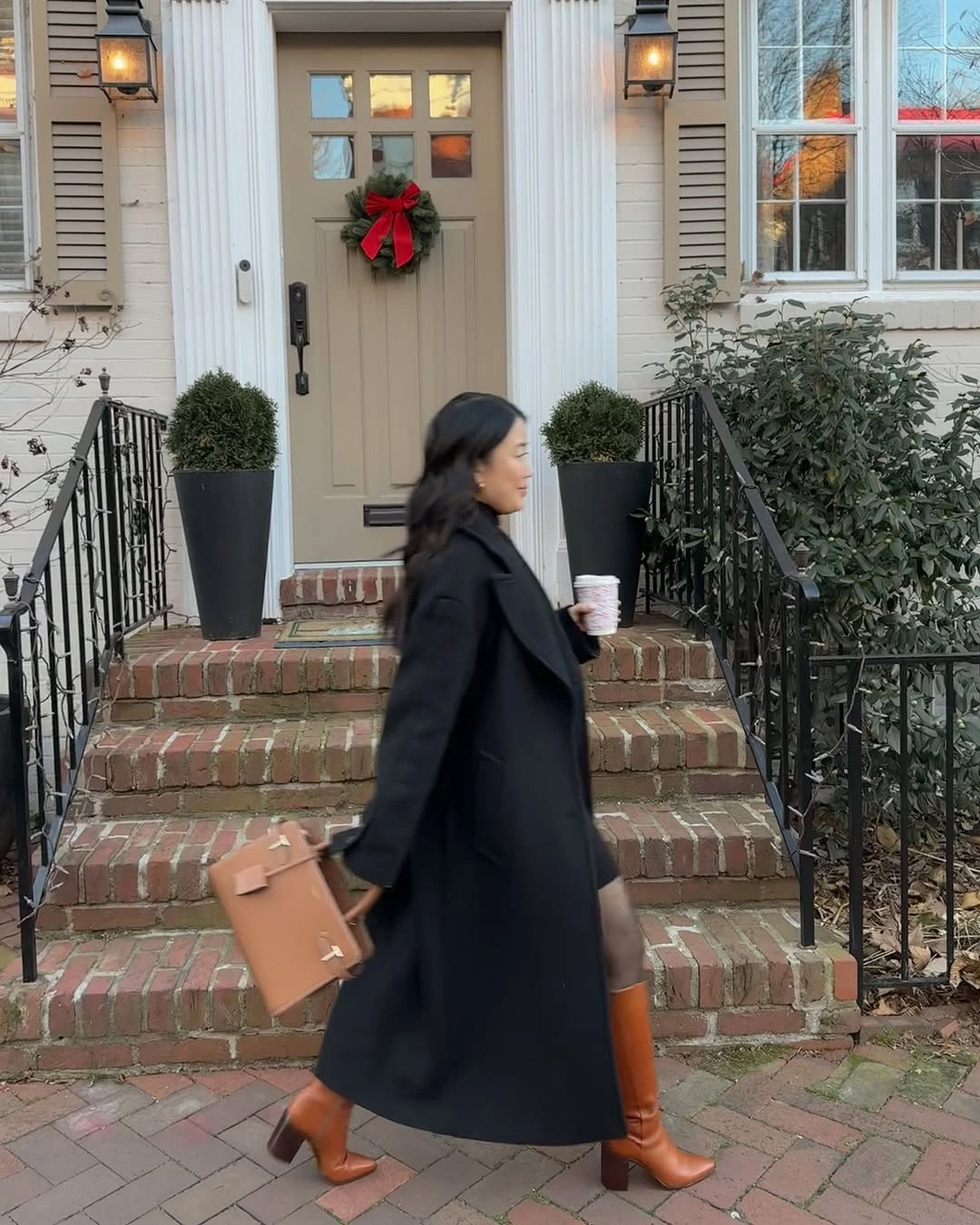
Photo via Instagram
Cognac-brown knee-high boots emerge beneath the long hem, introducing a distinct warm color where the coat’s dark silhouette ends. Their tall shafts and heeled shape create a defined continuation of the legs, while the brown tone remains clearly separated from the much darker outerwear. Rather than disappearing into the coat through another black element, the footwear establishes a visible transition that gives the lower silhouette more direction. For a long coat winter outfit, this placement demonstrates how choosing a contrasting boot color can make the relationship between outerwear length and footwear especially noticeable.
The structured tan handbag repeats the warm color family of the boots, but its short handles and defined rectangular shape introduce a different kind of visual order beside the coat’s long outline. A drink cup remains a casual detail without becoming part of the outfit’s main color arrangement. You can take inspiration from the connection between the boots and handbag, allowing two coordinated accessories to give an otherwise restrained dark coat a more deliberate finish.
A Red Cable Knit Tops Soft Stripes and Checks
Bright red immediately establishes the leading color in this layered outfit, with the cable-textured sweater creating a substantial area of saturated color across the upper body. A blue-and-white small-check shirt appears at the collar and below the sweater’s hem, adding two carefully positioned glimpses of a much finer pattern. These visible shirt details interrupt the red without dividing it into competing sections. I particularly like how the textured sweater remains visually dominant while the checked fabric introduces a smaller rhythm around its edges.
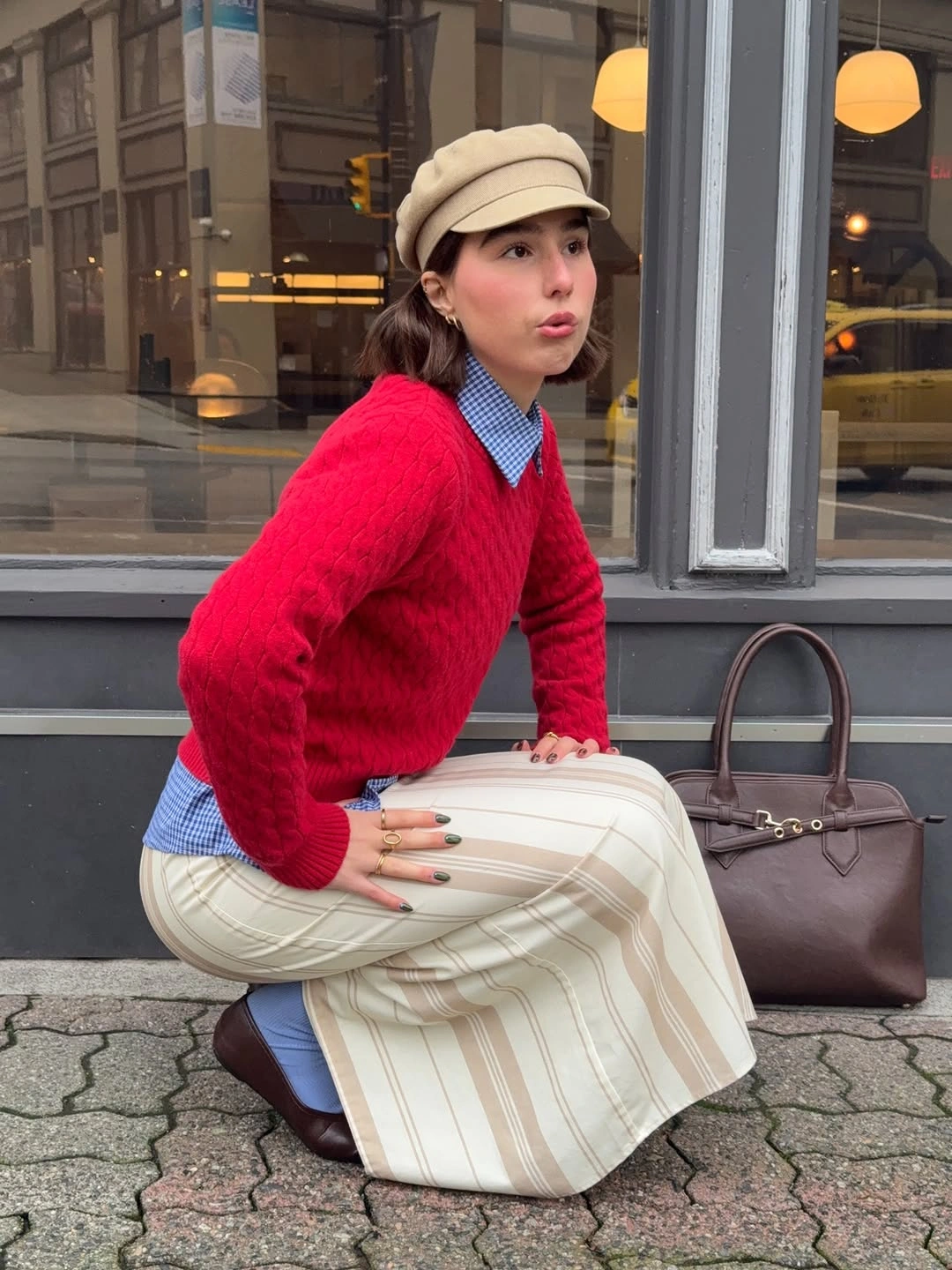
Photo via Instagram
The long cream-colored lower garment introduces another pattern through narrow vertical stripes, creating an interesting relationship with the much smaller checks above. Because the stripes occupy a pale background and extend through a longer section, they establish a different visual scale rather than directly competing with the blue checks. The solid red sweater sits between these patterned areas as the clearest color statement, helping their different directions and proportions remain distinguishable. If you’re considering a red sweater winter outfit, this combination demonstrates how a strong central color can connect more than one pattern without requiring the patterns to match.
A beige newsboy-style cap introduces a quiet neutral shade near the face, while the structured brown handbag adds a darker accessory with a defined shape. The partially visible brown footwear continues that subdued color family below the striped section. Instead of introducing more bright accessories, the combination allows the red knit and two smaller patterns to remain its most expressive elements, offering a useful approach to mixing patterned garments around one dominant solid color.
Chocolate Layers Gain Depth From Ribbing and Weaving
Close shades of chocolate brown form the foundation of this outfit, but the differences between their visible surfaces prevent the layers from blending together. A long deep-brown coat has a relatively smooth, tailored-looking exterior, while the darker brown zip-neck sweater beneath it introduces pronounced vertical ribbing. The sweater’s raised neckline and central fastening add smaller structural details within the coat’s open front. Rather than using contrasting colors to separate these garments, the combination lets their different textures and constructions establish the distinction.
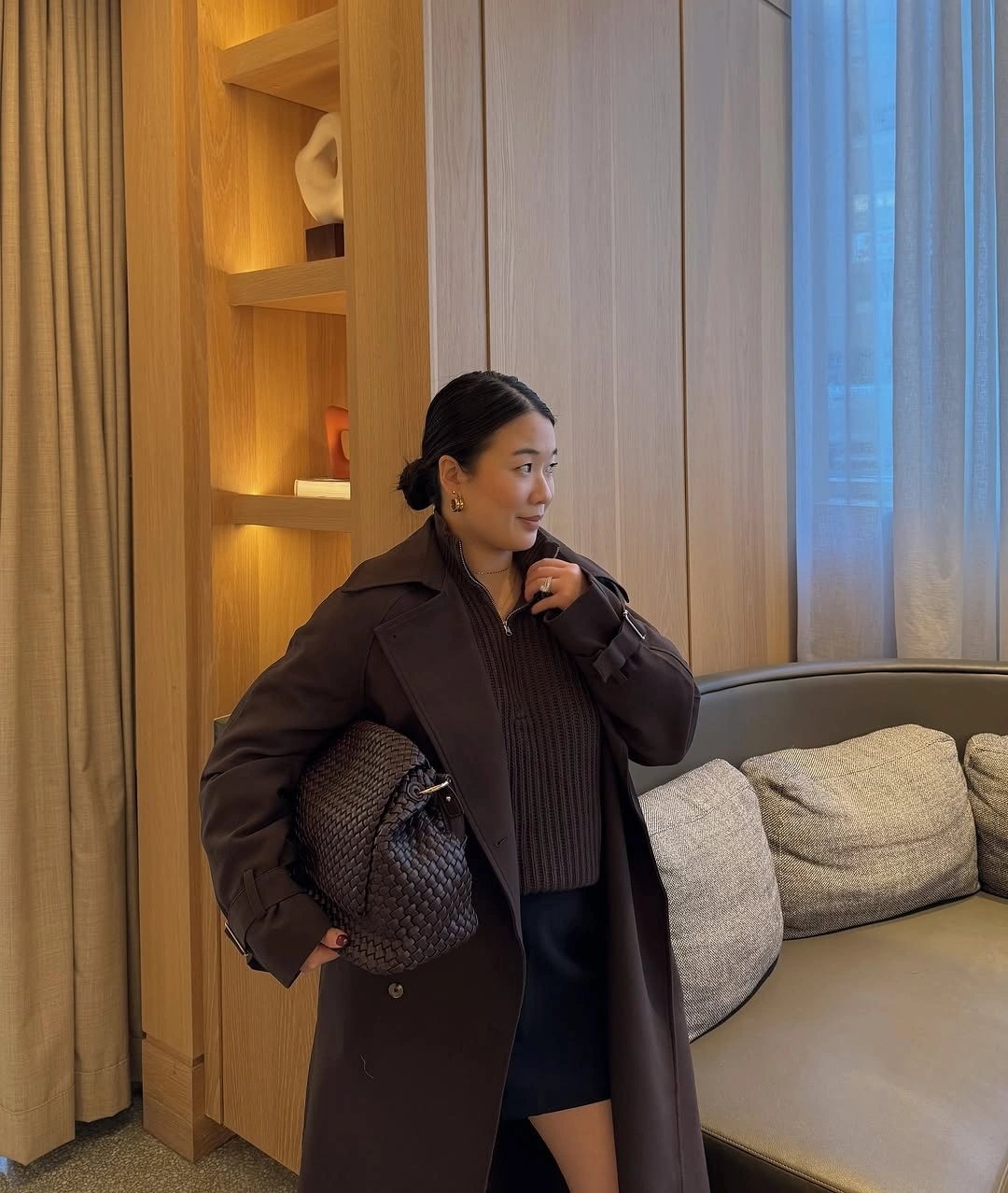
Photo via Instagram
Beneath the ribbed sweater, a short black lower hem creates a concentrated area of deeper color against the surrounding brown layers. Its visible length introduces a clear horizontal boundary, while the much longer coat continues downward on either side, creating a noticeable difference between inner and outer proportions. This arrangement prevents the dark brown winter outfit from reading as one continuous block, even though the dominant shades remain closely related. The smaller black section provides a visual pause between the textured knit and the extended coat without introducing an entirely separate color direction.
The large brown handbag adds another distinctive surface through its irregular woven-looking texture, contrasting with both the ribbed sweater and the smoother coat. Small gold-toned earrings provide a restrained metallic detail without disturbing the predominantly brown palette. What makes this combination especially useful is the way three different surfaces create variety within related colors, allowing texture to carry more of the styling work than strong color contrast.
Quilted Outerwear Meets an Asymmetric Plaid Skirt
A short tan quilted jacket establishes a compact upper silhouette through visible stitched sections and substantial pale textured trim along the collar and front opening. The broad, light-colored edging frames the gray upper layer beneath it, creating several distinct surfaces before the outfit transitions into the patterned lower half. Its cropped proportions are particularly important because they leave the skirt’s asymmetric shape exposed. I like how the jacket’s casual-looking quilting introduces a different visual language from the more structured lines of the garments below.
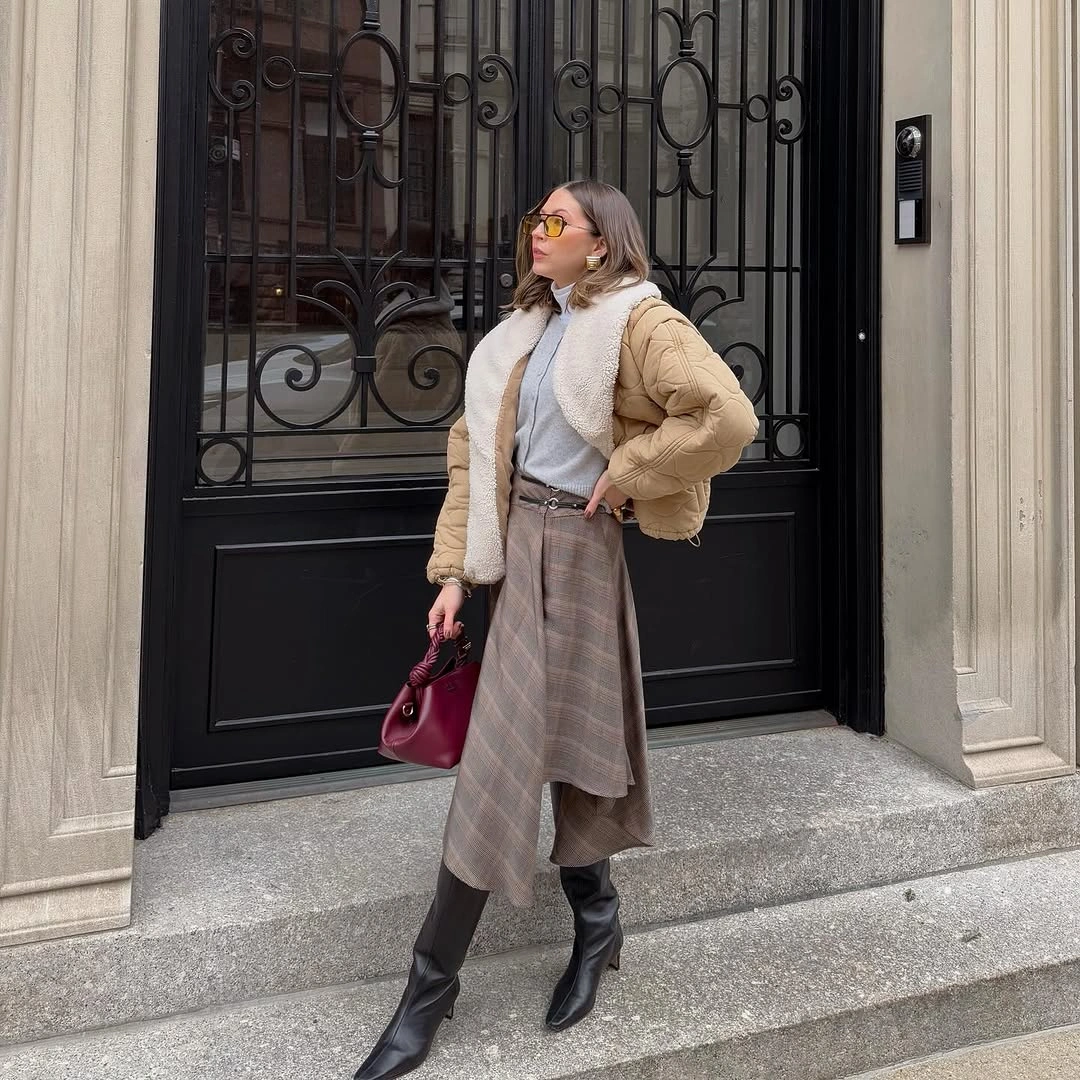
Photo via Instagram
The beige-brown plaid skirt features overlapping panels and uneven diagonal lengths that create movement across the lower silhouette. Its intersecting lines provide a more geometric surface than the jacket’s broad quilting, while the tall black heeled boots establish a strong dark extension beneath the patterned fabric. The boots’ pointed shape also contrasts with the jacket’s fuller textured trim, making the lower half appear more sharply defined. For a winter skirt outfit, this combination offers a distinctive example of how different garment constructions can work together when their proportions remain clearly visible.
A small burgundy handbag introduces a rich accent against the otherwise subdued tan, gray, and brown palette, adding color without distracting from the skirt’s pattern. Yellow-tinted sunglasses contribute another minor detail near the face, but the jacket and asymmetric lower silhouette remain the main features. The styling lesson is to let contrasting constructions create interest, using compact accessories to finish the combination rather than introducing another large patterned element.
A Pale Plush Jacket Above a Narrow Dark Base
Rounded shoulders, substantial sleeves, and a prominent collar give this short cream jacket a distinctly voluminous upper silhouette. Its plush, fur-like surface introduces considerable visual texture, while the pale color makes the jacket stand apart from the much darker garments beneath it. The short length is an important part of the composition because the broad outer layer ends before the lower silhouette develops its narrower outline. Rather than extending the textured volume throughout the outfit, the combination concentrates it around the upper body, making the transition into the darker section particularly noticeable.
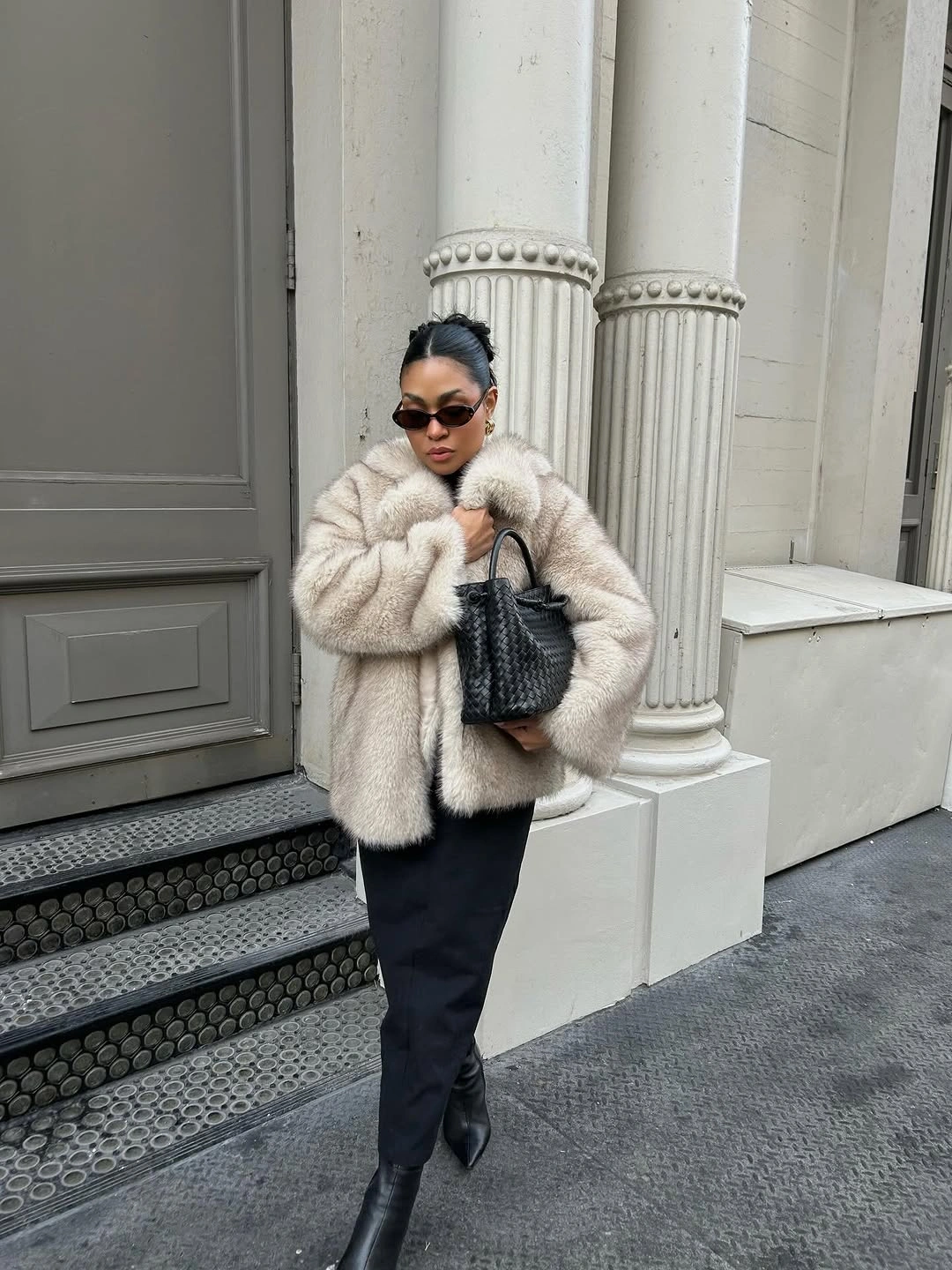
Photo via Instagram
A narrow black lower section creates a clear change in shape beneath the cream jacket, with dark pointed boots continuing the more defined outline toward the ground. The difference is not simply between light and dark colors, but between the jacket’s rounded volume and the comparatively sharp lines established by the lower garments and footwear. Because the black section remains visually restrained, the upper layer retains its strong presence without having to compete with another substantial silhouette. For a cream winter jacket outfit, this relationship shows how contrasting shapes can provide structure when one garment has an especially expansive appearance.
The black handbag introduces a compact woven-looking texture that differs from the jacket’s fuller surface, while narrow dark sunglasses add another sharply defined detail near the face. Together, these accessories create smaller points of structure around the broad cream silhouette. You can adapt the same principle by pairing a rounded statement jacket with more angular accessories and a narrower dark lower outline, allowing the contrast in shapes to become the outfit’s defining feature.
Burgundy Knitwear Balances a Short Black Hem
Deep burgundy gives this sweater a rich visual presence, while its dense-looking knit texture introduces subtle variation across the relaxed upper silhouette. The sweater falls loosely around the torso, creating a fuller outline that stands apart from the simpler dark clothing beneath it. Unlike a brightly colored statement piece that depends on strong contrast, this burgundy sweater outfit uses a subdued, concentrated shade to establish its character. I particularly like how the visible texture gives the sweater enough detail to remain interesting without additional patterns across the main garments.
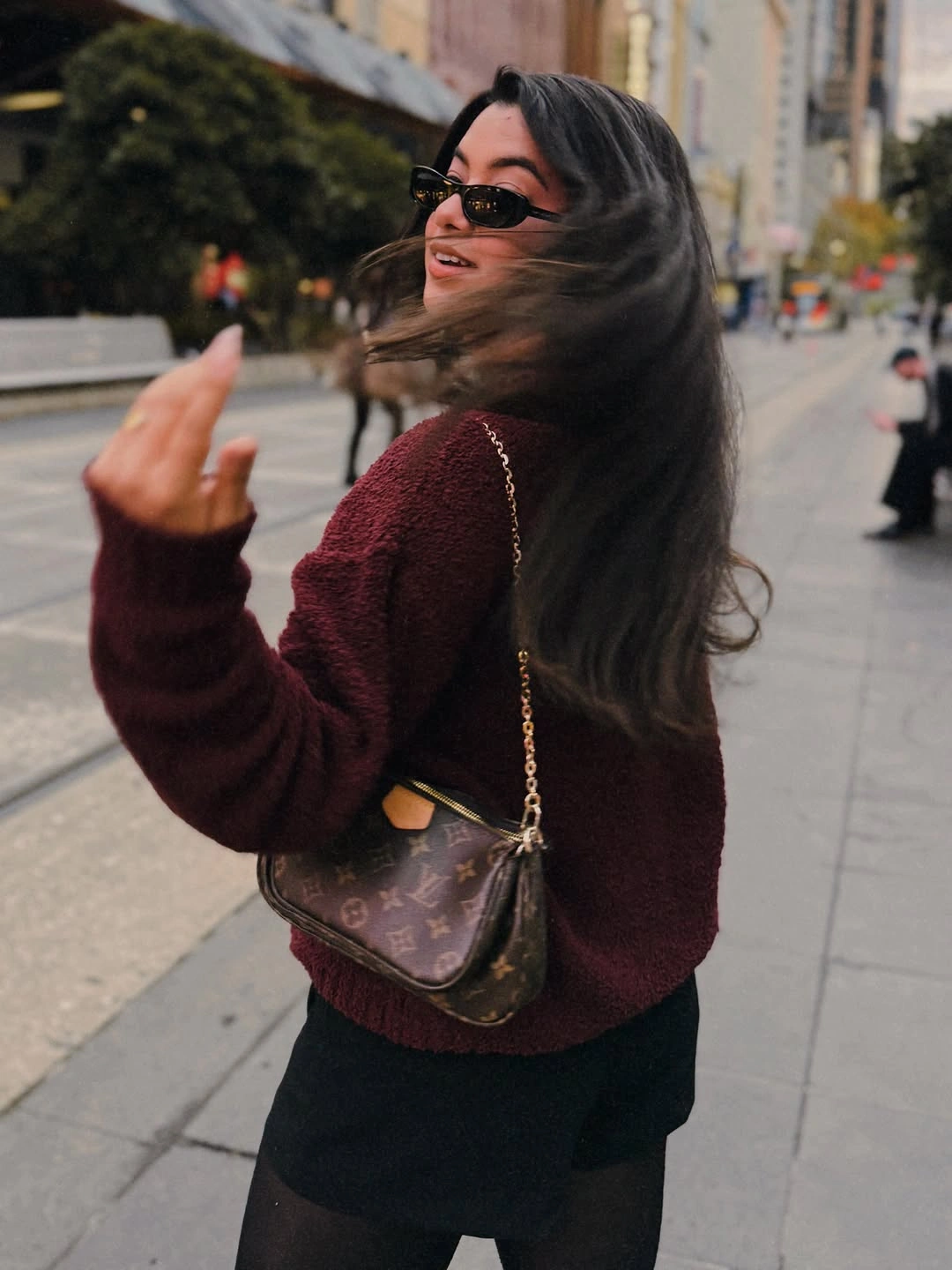
Photo via Instagram
A short black lower hem creates a distinct boundary beneath the sweater, introducing a more compact silhouette before the dark sheer-looking tights continue down the legs. The difference between the opaque appearance of the sweater and lower garment and the lighter transparency of the tights adds another level of visual separation. Because the entire lower section stays within a dark color family, it doesn’t compete with the burgundy upper layer for attention. This arrangement allows the sweater’s relaxed proportions to remain prominent while the shorter hem and subtly translucent surface establish a more defined lower outline.
The compact patterned shoulder bag introduces a finer decorative scale, with its gold-toned chain strap adding a small metallic detail against the burgundy and black clothing. Narrow black sunglasses reinforce the dark accessory palette without introducing another prominent color. You can borrow this approach by keeping the main garments relatively simple and letting one small patterned accessory provide the finishing detail, rather than repeating decoration across every visible layer.
Cream Textures Flow From Long Coat to Wide Pants
A long light-cream coat with a plush, teddy-like surface establishes the dominant silhouette in this softly coordinated outfit, extending well below the hips and framing an ivory sweater beneath its open front. The close relationship between the two pale shades gives the upper half a continuous appearance, but their different surfaces keep the garments distinguishable. Instead of introducing a contrasting color at the neckline or through a patterned inner layer, the combination develops interest through the coat’s substantial texture and extended length. This makes the overall shape particularly important to the way the light tonal palette works.
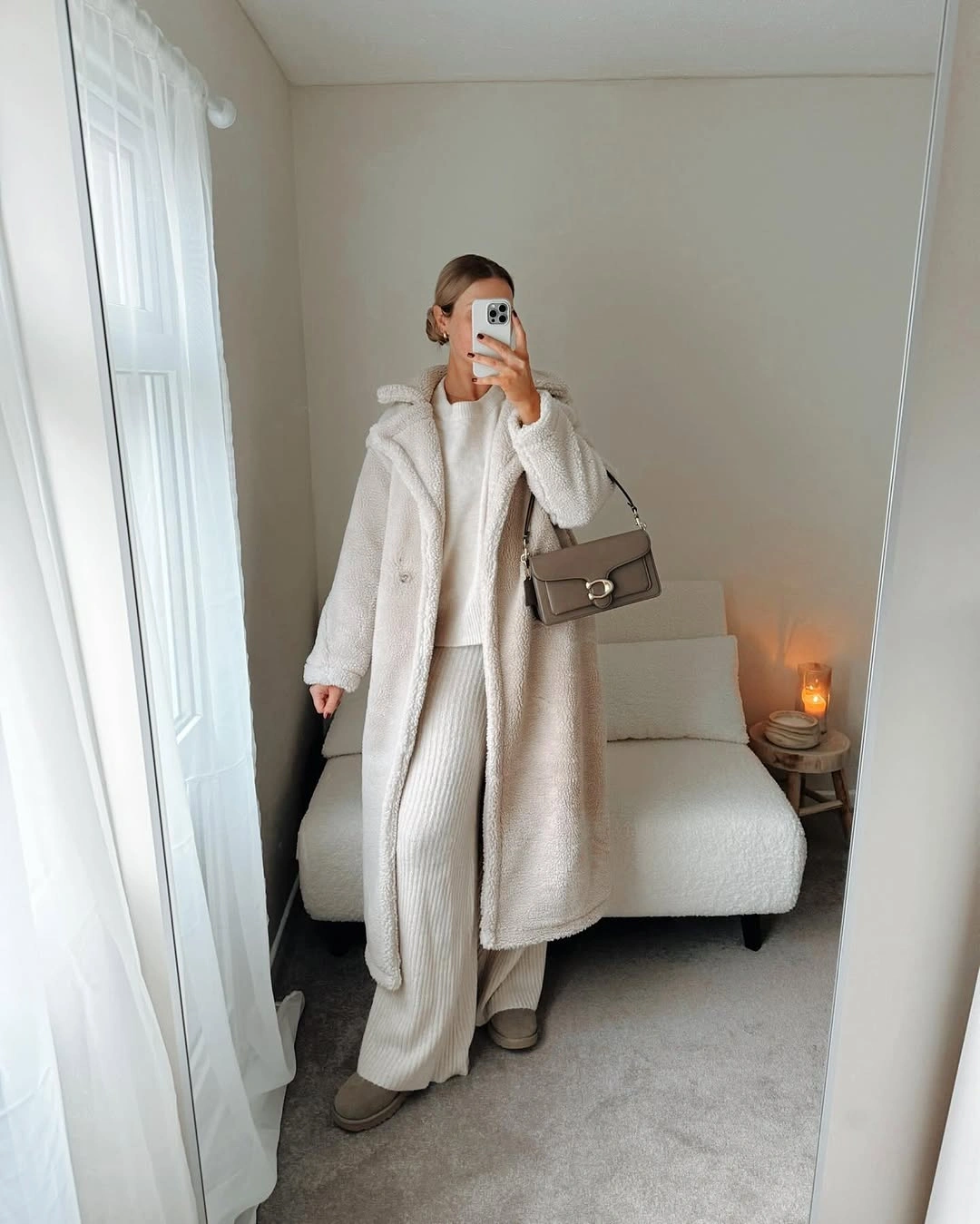
Photo via Instagram
Loose pale trousers continue the cream-based palette beneath the long coat, introducing visible vertical ribbing or channel-like lines that differ from the outerwear’s fuller surface. Their wide shape creates a generous lower silhouette, while the vertical texture gives that expanse a more defined direction. Because the trousers and sweater remain close in color, the outfit doesn’t depend on sharp boundaries between every garment. For neutral winter outfits for women, this is a useful example of how subtle changes in surface, proportion, and garment length can make a nearly monochromatic combination visually varied.
The structured taupe-gray shoulder bag introduces a slightly deeper neutral beside the cream coat, while rounded taupe shoes create a related accent near the ground. Neither accessory interrupts the pale composition with a strong contrasting color, but both establish gentle boundaries against the lighter garments. You can adapt this relationship by combining several nearby neutral shades and allowing their different shapes and textures to provide definition, rather than relying on an exact color match throughout.
A Burgundy Coat Frames Wide White Trousers
A long dark burgundy coat occupies most of the visible silhouette, creating a substantial area of uninterrupted color through its broad lapels and extended hem. The rich shade gives the outerwear a commanding presence without depending on a bold print or elaborate decorative details. Its length also allows the color to remain continuous from the shoulders toward the lower legs, making the coat itself the strongest visual feature. I like how this burgundy coat winter outfit treats a saturated color as the foundation of the entire composition rather than confining it to a small accent.
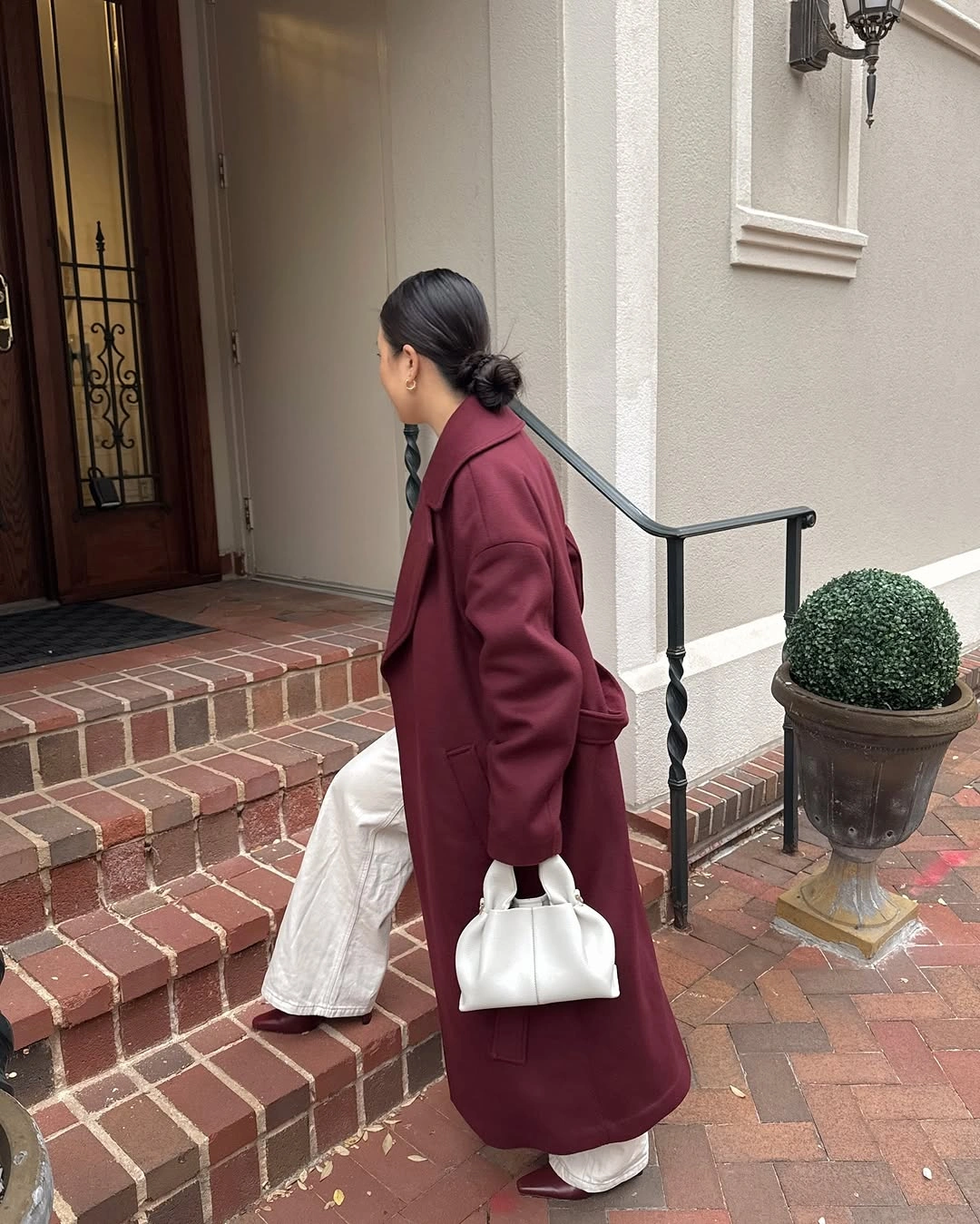
Photo via Instagram
Loose white trousers appear beneath and alongside the long burgundy coat, establishing a clear contrast between the darker outer layer and the pale lower silhouette. Their generous width provides a substantial area of white rather than a narrow line of contrast, which makes the two colors equally easy to distinguish even though the coat occupies more visual space. The coat’s extended edges frame portions of the trousers, creating a layered arrangement in which the darker garment surrounds and defines the lighter one. This relationship shows how broad areas of contrasting color can organize an outfit without adding complicated patterns or multiple accessory shades.
The small structured white top-handle handbag repeats the trousers’ pale color, introducing a compact shape that connects directly to the larger white area below. Small portions of burgundy pointed footwear are also visible, subtly returning to the coat’s dominant shade near the ground. If you’re working with a richly colored long coat, this combination suggests a useful approach: repeat the lighter supporting color in one small accessory while allowing the outerwear to retain most of the visual emphasis.
Earthy Knitwear and a Plush Tote Add Texture
A dark earthy-brown sweater introduces a restrained upper silhouette through its visible ribbed texture and relatively simple outline. Beneath it, a long pale pink-beige lower garment adds a softer color transition, with vertical ribbed or pleated-looking lines creating a different surface rhythm. The two sections remain visually distinct because of their contrasting shades, yet both share an emphasis on elongated texture rather than busy patterns. This brown sweater outfit shows how a familiar combination of dark and pale neutrals can develop more character when the visible surfaces contribute different kinds of detail.
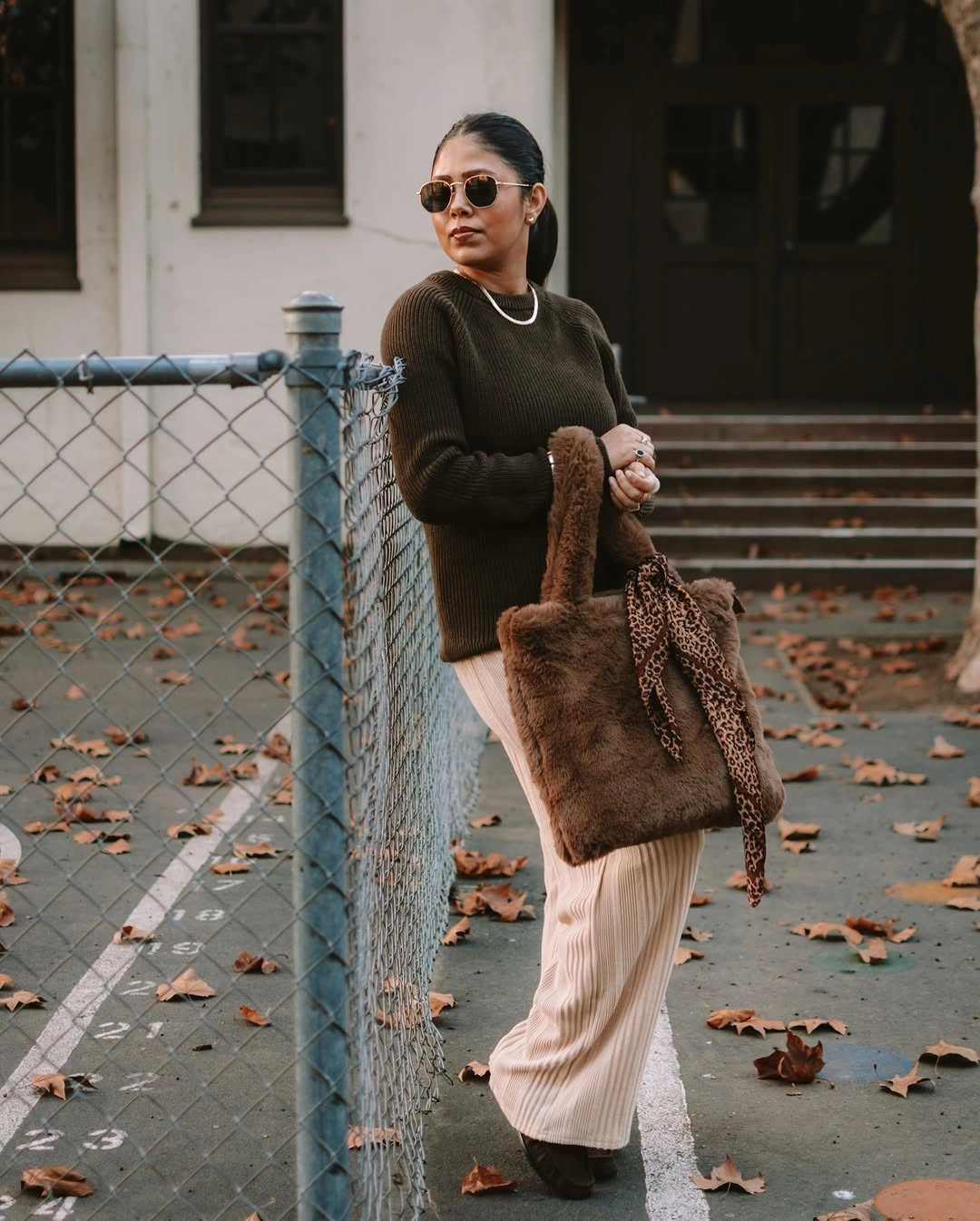
Photo via Instagram
The deeper brown upper layer provides a concentrated area of earthy color, while the lighter lower garment extends that palette into a longer, softer-looking silhouette. The vertical lines below introduce a sense of direction that differs from the sweater’s tighter ribbing, allowing the two textured areas to remain distinguishable. Because the colors belong to a subdued brown and cream-based family, these surface variations can attract attention without making the composition appear overly complicated. The outfit offers a useful alternative to building every winter look around statement outerwear, allowing the clothing’s own texture and an expressive accessory to carry the visual interest.
The oversized brown tote becomes the most distinctive accessory through its fuzzy, plush-looking surface, which introduces a fuller texture than the sweater or pale lower garment. A patterned brown scarf tied to the bag adds smaller decorative details, while the metallic necklace and sunglasses remain comparatively restrained. You can use the same idea by letting a generously sized textured bag become the main statement beside understated knitwear, then adding a small patterned accent directly to the accessory rather than another large garment.
Black Earmuffs Bring Order to a Shaggy White Coat
An oversized white jacket with long, shaggy-looking strands creates the dominant upper silhouette in this black and white winter outfit, drawing attention through its irregular surface and generous volume. The pale high-neck layer underneath continues the light color around the neckline, allowing the textured outerwear to occupy a broad, uninterrupted area. Rather than introducing several competing details across the upper body, the combination lets the jacket’s expressive outline become its most noticeable feature. I especially like how the strongly textured white surface contrasts with the smaller, darker accessories positioned around it.
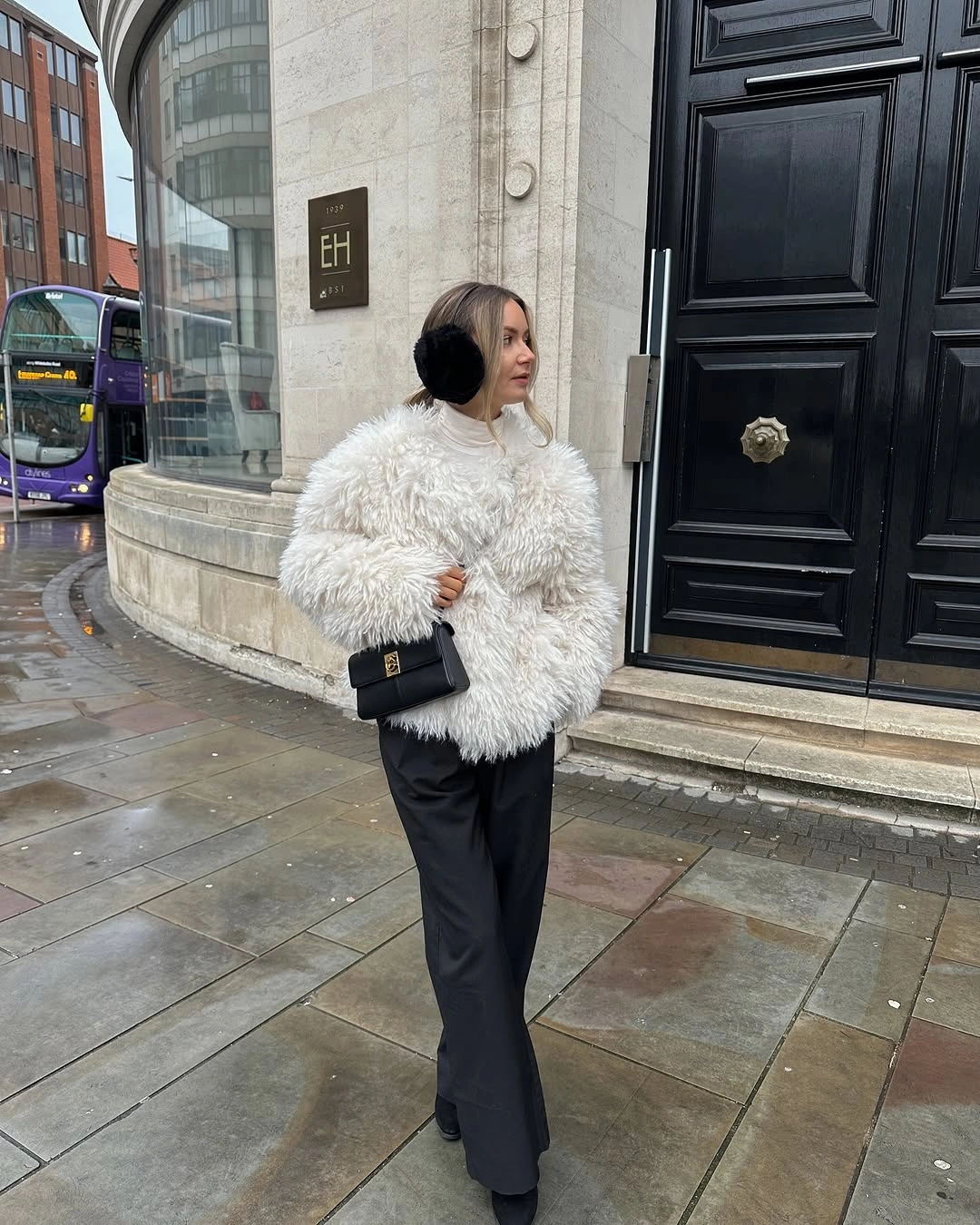
Photo via Instagram
Wide dark trousers extend beneath the white jacket, introducing a much smoother-looking surface and relatively clean vertical lines in the lower half. Their tailored appearance and generous leg width give the outfit a substantial foundation without repeating the jacket’s shaggy texture. Dark pointed footwear continues this more defined lower silhouette, creating a sharper finish beneath the broad trouser legs. The relationship between the expressive white upper layer and the restrained dark garments below is particularly effective because both sections have noticeable volume, yet their different surfaces keep them visually separate.
Black plush earmuffs establish a compact dark accent near the face, while the small structured black handbag repeats that color lower in the composition. The bag’s gold-toned hardware adds a restrained decorative point without changing the overall black-and-white arrangement. What makes this outfit worth adapting is the deliberate placement of its accessories: the earmuffs and handbag establish two recognizable dark anchors around a dramatically textured white jacket, giving the combination definition without diminishing its expressive silhouette.