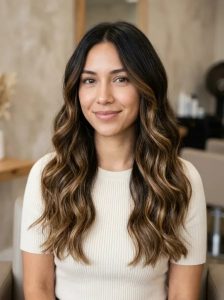
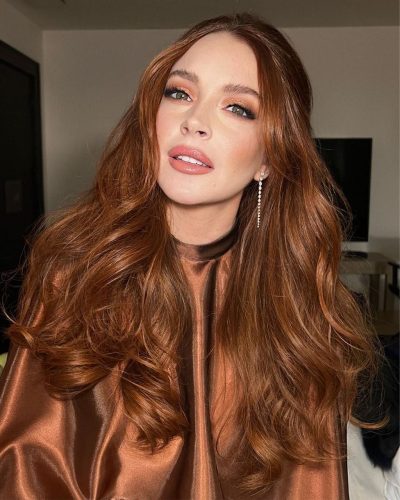
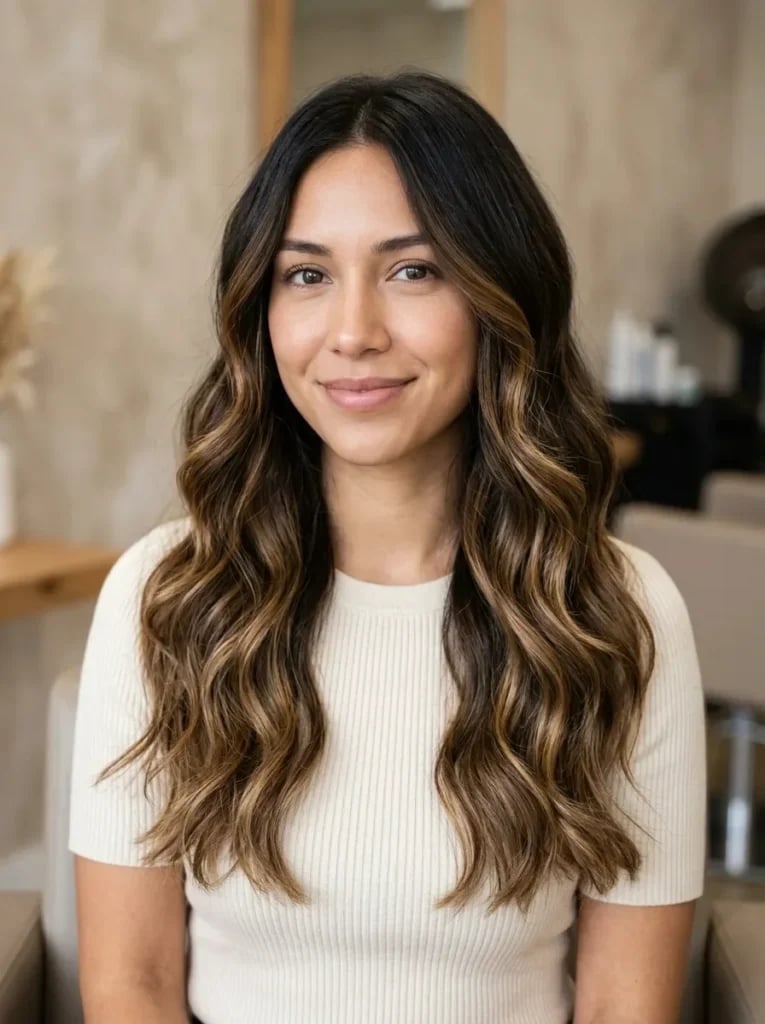
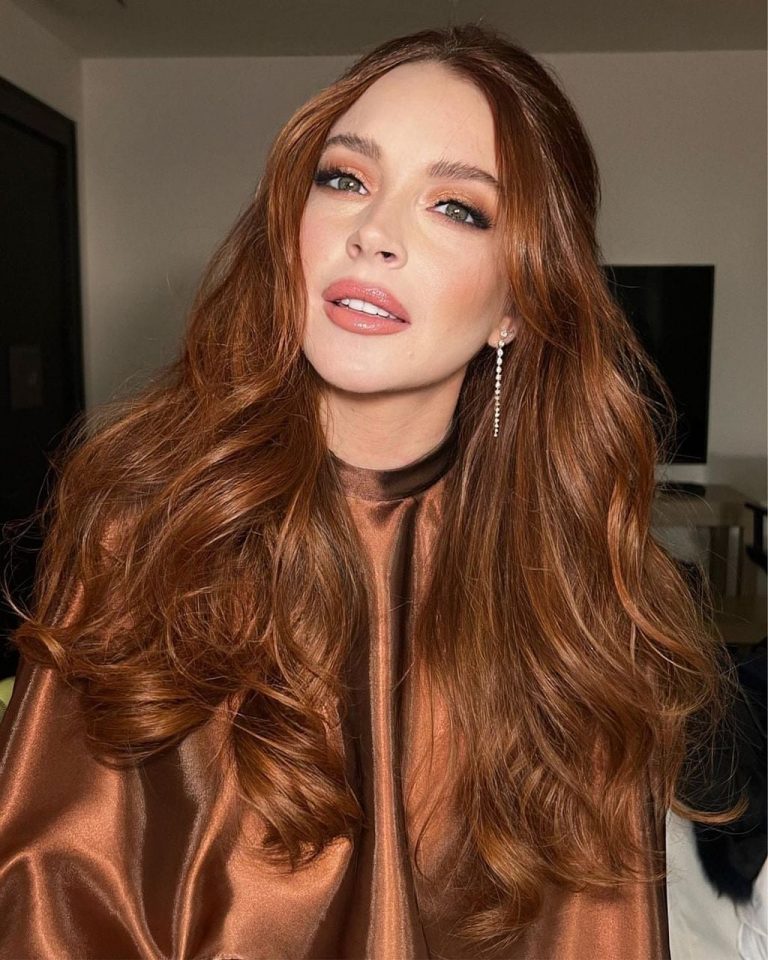
Brown balayage starts with a dark base and adds hand-painted lighter sections, so the root never hits you with a harsh line. Right now, the shift is toward soft, face-framing brightness that stays glossy and natural rather than obvious.
This collection of 18 Brown Balayage Ideas covers every length from a chin bob to mid-back waves, with tones from subtle caramel to blonde contrast. Whether your hair is fine and needs a lift or thick and wants movement without bulk, there is a placement here that works. No more guessing how to ask for dimension that actually shows.
Chin Length Bob With Lighter Brown Balayage
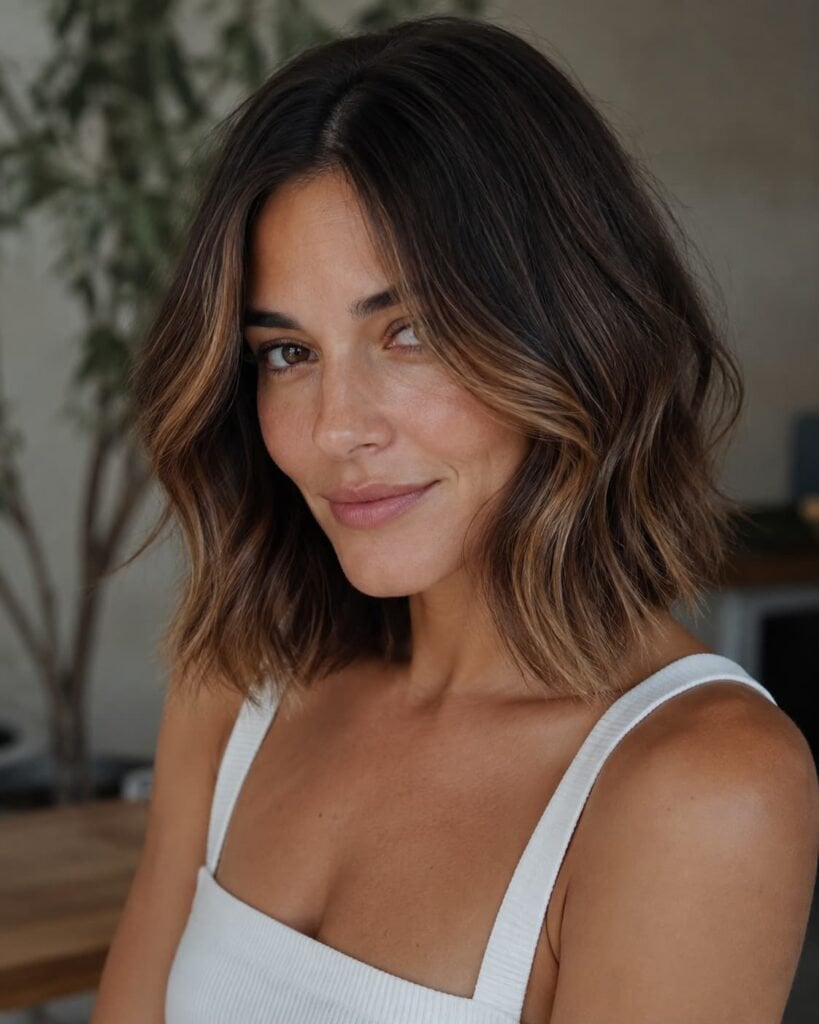
A chin-length bob with wavy texture and curtain bangs uses a dark brown base and lighter brown balayage to keep a short shape from looking heavy. The fine pieces of lighter color hit around the jaw, which is exactly where a bob needs movement most. Fine to medium density hair works best here; the curtain bangs also soften round and square faces. Ask your colorist for: chin length bob, light brown balayage, curtain bangs. A texturizing spray and a trim every six to eight weeks keep the cut precise and the waves piecey.
Shoulder Length Layers With Caramel Balayage
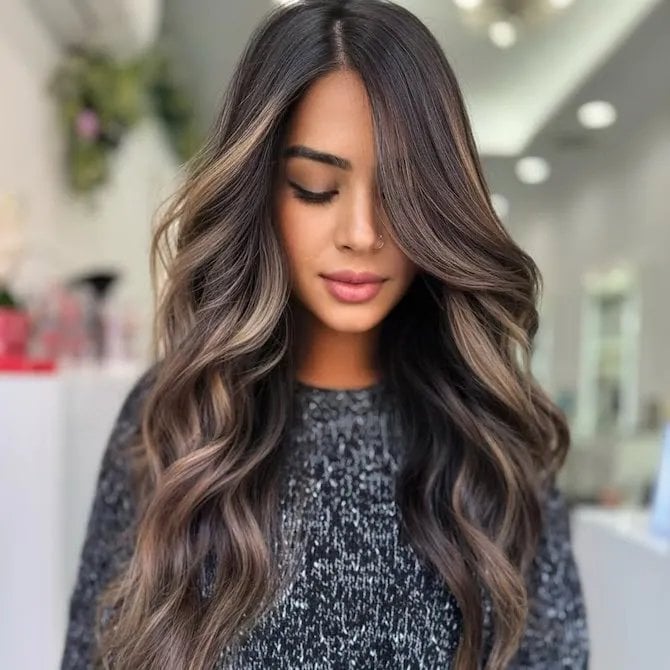
How do you describe caramel balayage so your colorist knows exactly what you want? Think of a dark brown base with caramel-toned highlights placed mainly around the face and through the mid-lengths, avoiding the roots entirely. The effect on shoulder-length layers with curtain bangs is a soft, warm glow that makes the layers look cut for movement rather than weight. Ask your colorist for: shoulder length layers, dark brown with caramel balayage, curtain bangs. Medium density hair starting at shoulder length carries this well, and the curtain bangs are a natural fit for oval and heart faces.
Collarbone Waves With Blonde Balayage

Where caramel balayage reads warm and grounded, blonde balayage on a medium brown base reads sunnier and more contrast-driven. This collarbone-length cut uses side-swept bangs and loose waves to show off the lighter pieces, which hit around the cheekbones and ends. The blonde is blended enough to avoid a stripe effect, which is the main risk with lighter balayage on a shorter length. Fine to medium hair starting at collarbone length takes this well; the side-swept bangs suit round and oval faces. Ask your colorist for: collarbone layers, medium brown with blonde balayage, side swept bangs.
Collarbone Waves With Caramel Balayage
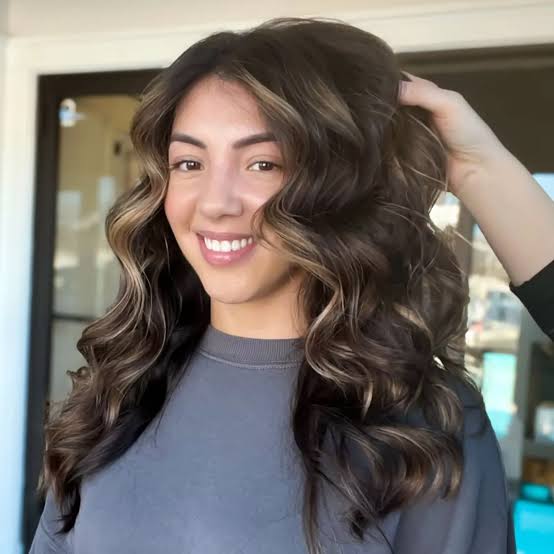
A collarbone-length cut with layers and face-framing pieces relies on caramel balayage to add dimension without a harsh root line. The colorist paints the caramel tone onto sections starting about an inch from the scalp, then blends it through the mid-lengths and ends. On a dark brown base, the result is a warm, sunlit effect that looks natural even as it grows out. Medium density hair starting at collarbone length holds the waves well; the face-framing pieces soften square and angular faces. Ask your colorist for: collarbone layers, dark brown with caramel balayage, face framing pieces. Use a heat protectant before styling, and a silk pillowcase helps preserve waves overnight.
Collarbone Layers With Subtle Caramel Balayage
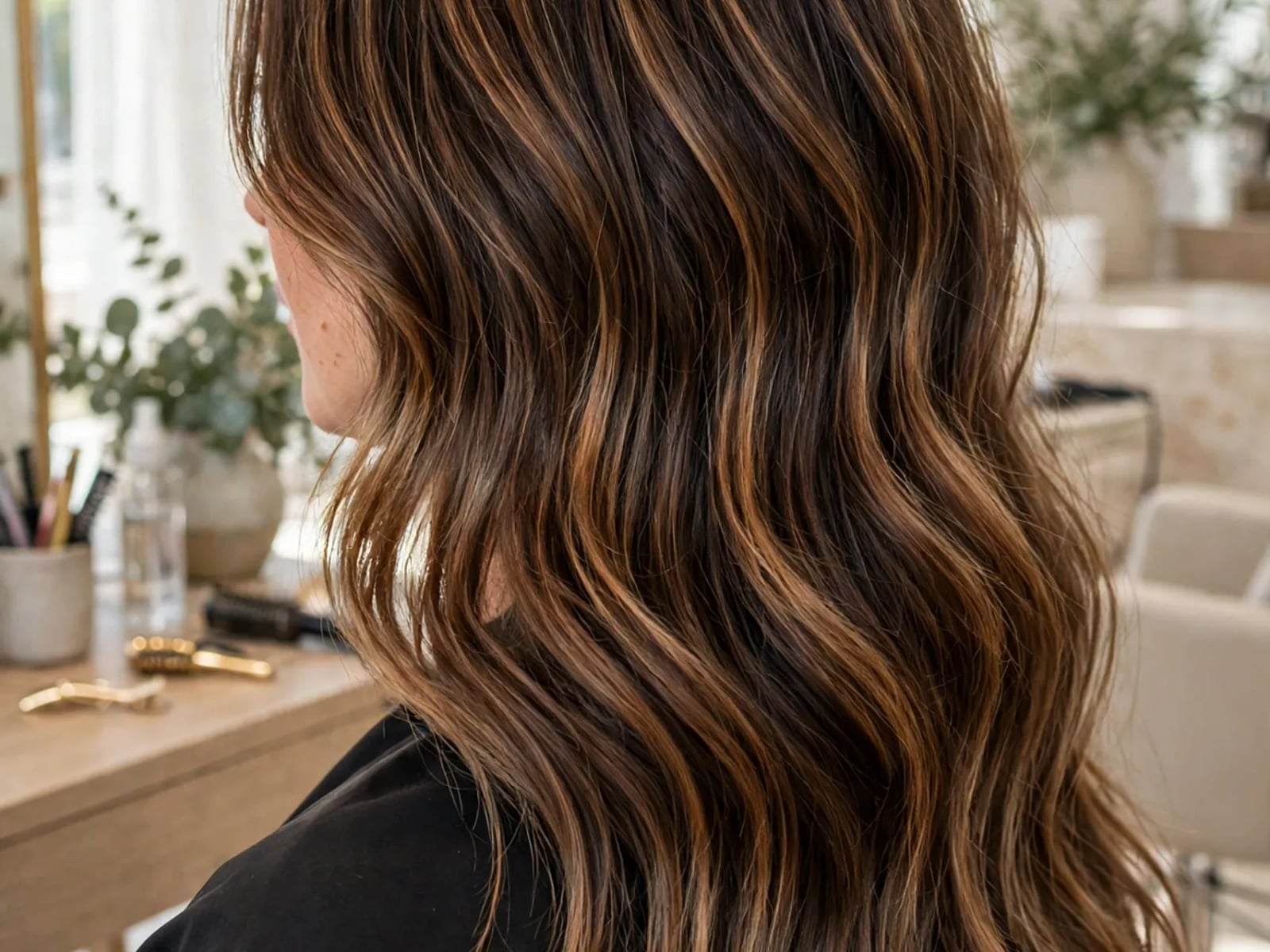
Subtle caramel balayage on a dark brown base is the kind of color that gets called “natural” because it is hard to spot where the brown ends and the caramel begins. On shoulder-length layers with no bangs and a side part, the lightness stays concentrated around the face and the ends, leaving the top and crown mostly untouched. The trade-off is that this look never reads as dramatic from behind, which is fine if you want low-key dimension. Medium density hair starting at collarbone length suits this approach; oval and heart faces benefit from the soft framing. Ask your colorist for: shoulder length layers, dark brown with subtle caramel balayage, side part.
Mid-Back Waves With Lighter Brown Balayage
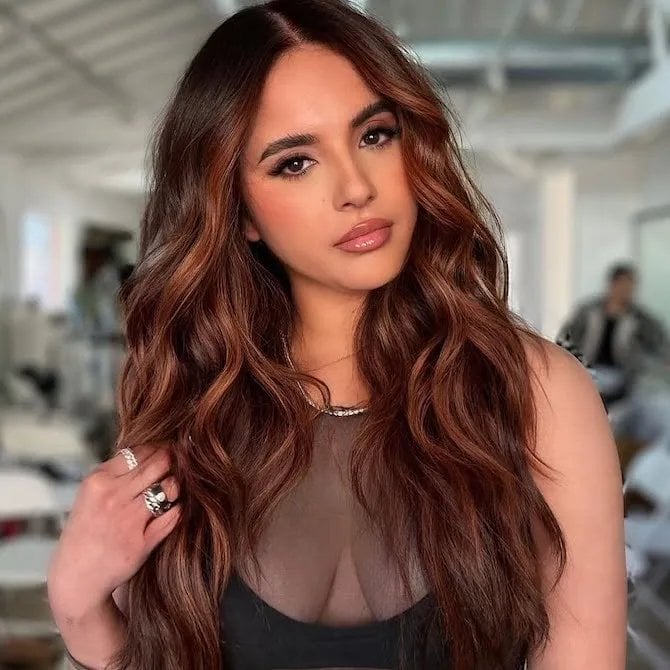
Is there a balayage that actually shows up on thick, wavy hair without turning into one uniform mess? This one. A dark brown base with lighter brown balayage, cut in layers that hit mid-back, with curtain bangs softening the front. The key is the contrast ratio: enough lightness to read as dimensional, not so much that it overpowers the natural wave pattern. Medium to thick textures at this length hold the piecey separation well. Curtain bangs also help round and square faces by breaking up the vertical line. Ask your colorist for: mid back length layers, dark brown with light brown balayage, curtain bangs.
The wavy blowout finish here isn’t accidental. A volumizing mousse at the roots gives the lift, and the balayage refresh comes as a gloss every 10 to 12 weeks. That keeps the lighter pieces from going brassy without a full redo. Thick hair at this length takes well to the technique because the waves scatter the light, making the dimension look more expensive than it is to maintain.
Mid-Back Blowout With Face-Framing Layers
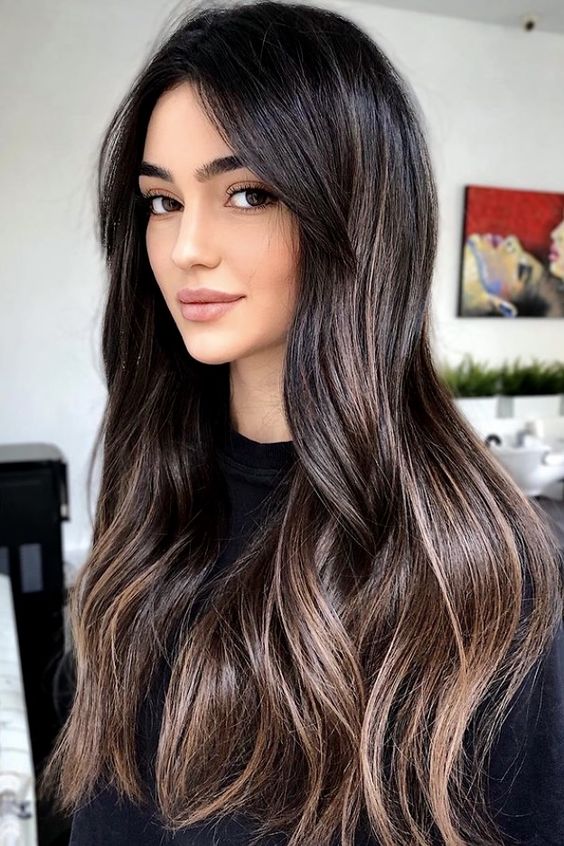
A blowout this polished comes down to one structural choice: face-framing layers that start around the jaw and graduate into the length. The dark brown base with subtle lighter brown balayage means the layers catch light at different points, so the cut doesn’t look flat even when the hair is smoothed out. Thick, mid-back length hair needs that internal shaping or it sits like a heavy curtain. Ask your colorist for: mid back length, dark brown with light brown balayage, face framing layers. A large round brush on medium heat gives the bend at the ends. Trim those face-framing pieces every 10 to 12 weeks because they lose their shape faster than the rest of the length.
Mid-Back Waves With Warm Balayage and Curtain Bangs
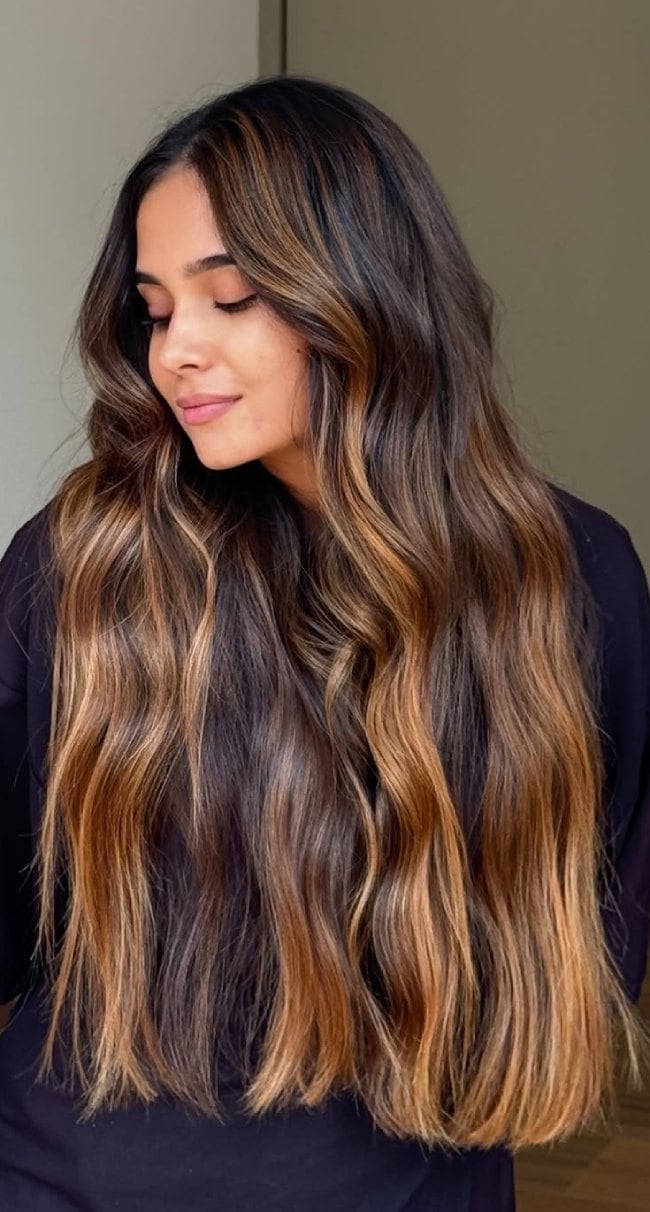
The caramel and warm blonde pieces against a dark brown base mimic the way sun hits hair in late afternoon, which makes this a good choice for the cooler months when you want warmth without going full copper. The curtain bangs and mid-back length keep the color from looking like a single block. Thick, wavy textures hold the separation well, and the middle part lets the lighter pieces fall evenly on both sides. Ask your colorist for: mid back length, dark brown with caramel and blonde balayage, curtain bangs. A heat protectant before the blowout is essential because the warm tones will show damage faster than cooler ones. A smoothing serum on the ends finishes the gloss.
Seasonally, this lands between September and February, when your base tends to be darker and you want the highlights to feel intentional rather than faded. The caramel tones also mean you can stretch the time between root touch-ups because the regrowth blends into the darker base instead of fighting it.
Mid-Back Layers With Caramel Balayage
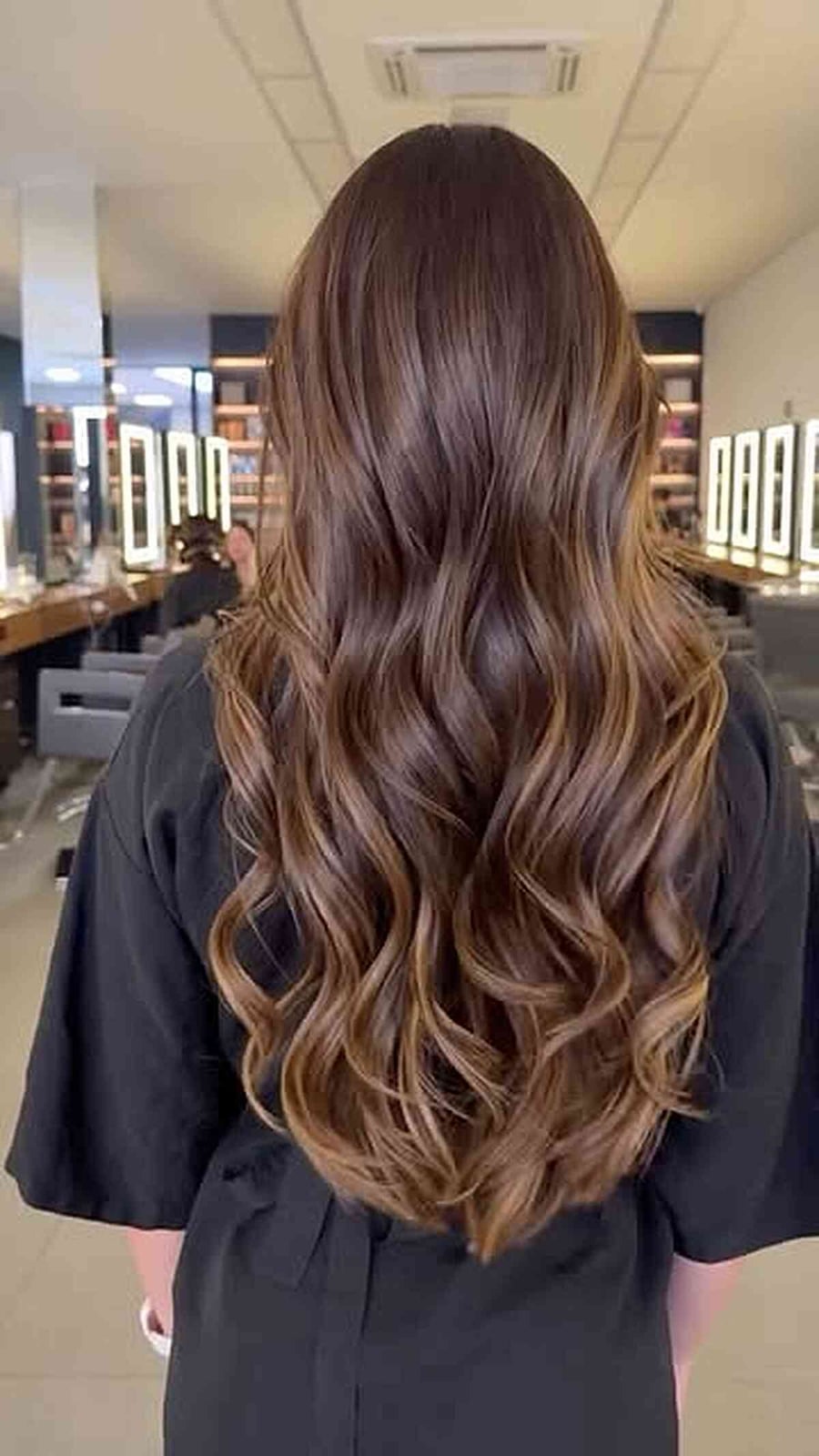
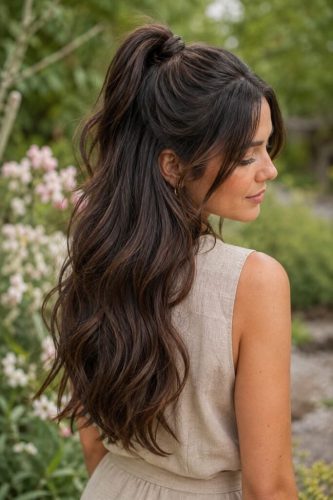
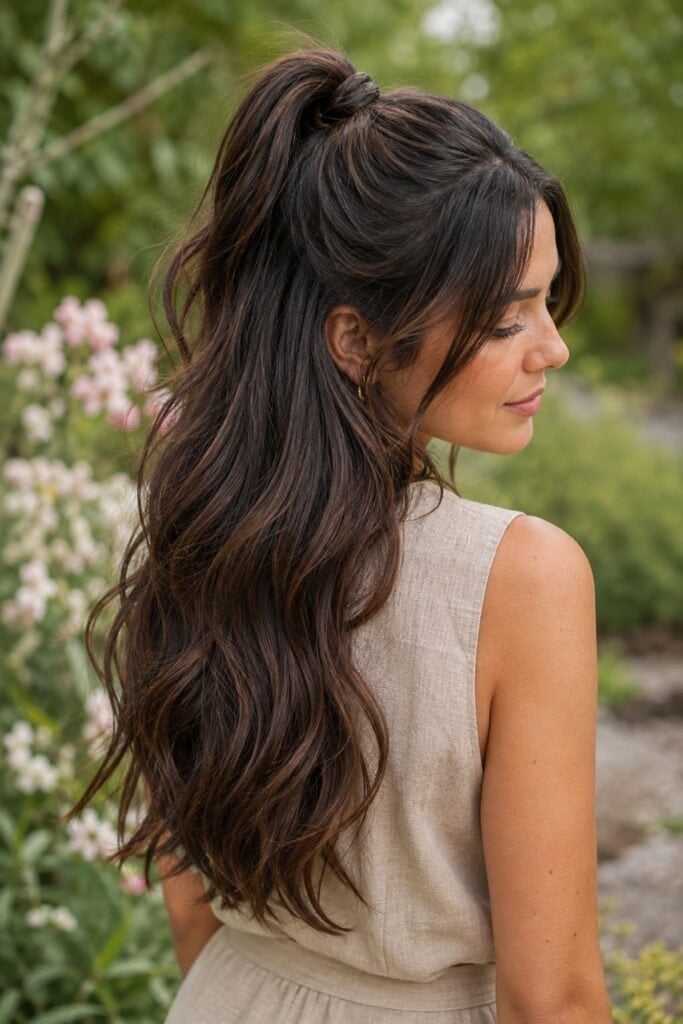
The back view tells the real story here: chocolate brown base with caramel balayage, long layers hitting mid-back, no bangs. From the front, it shows a soft wave pattern. From the back, the caramel pieces sit deeper in the interior layers, not all on the surface, which prevents that dated chunky highlight look. Thick hair benefits from this placement because the lower layers get light without the top looking overworked. Ask your colorist for: mid back long layers, chocolate brown with caramel balayage.
Wear and upkeep are straightforward. Apply a texturizing spray to damp hair, scrunch, air dry or diffuse. The long layers mean the shape holds about 10 to 12 weeks between trims. The caramel tones need a toning shampoo every fourth wash to keep them from pulling orange, especially if you have mineral-heavy water. The trade-off for no bangs is that the front pieces frame the face less aggressively, so this cut works best if you prefer the hair to sweep back instead of curtain forward.
Mid-Back Waves With Subtle Balayage, Wavy
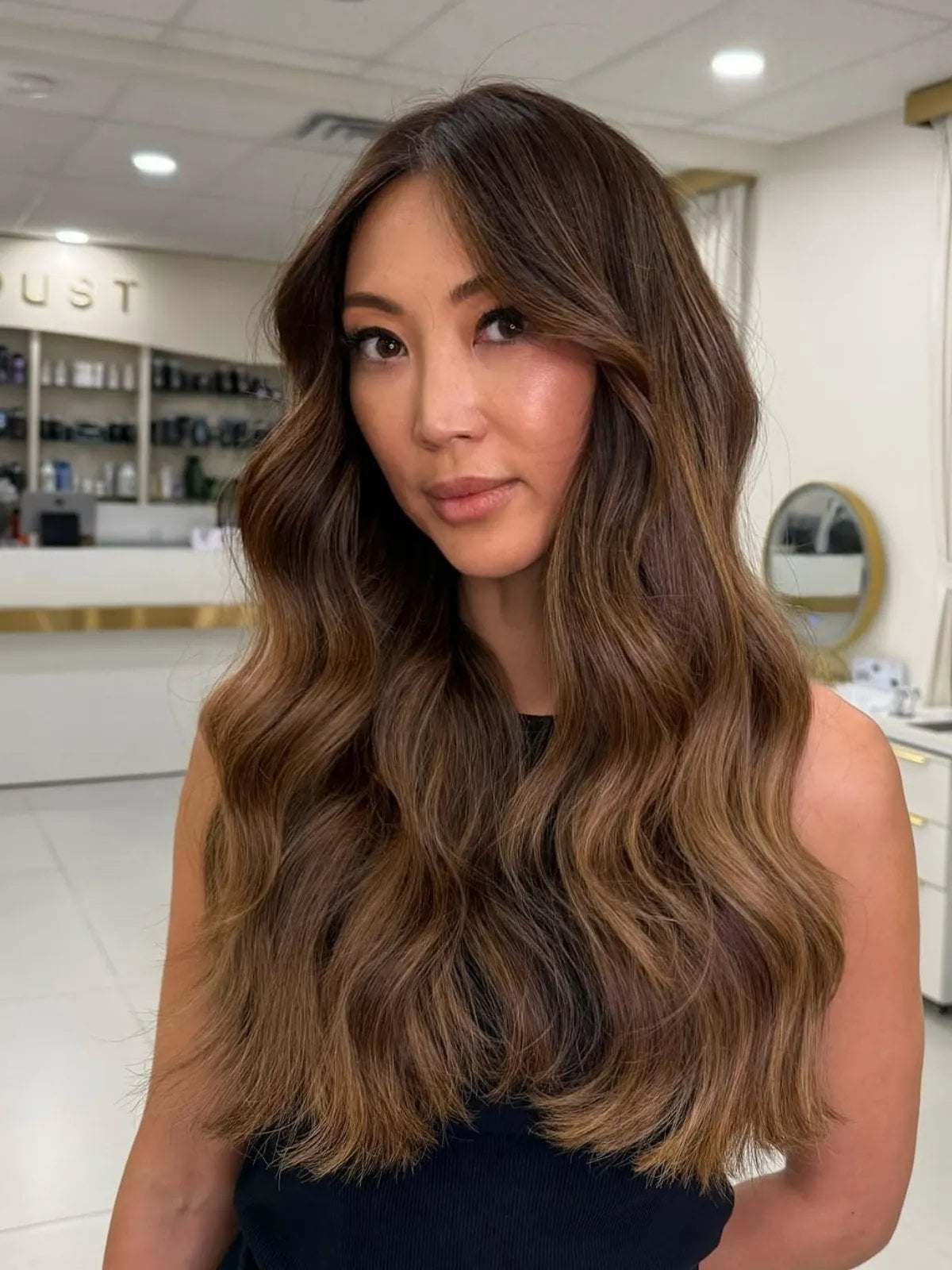
The subtle balayage here is easy to miss at first glance, which is exactly the point. Medium brown base, lighter pieces woven through the ends, no bangs, loose waves. The dimension looks like a natural highlight variation instead of a salon technique. That works well for oval and long faces because the uninterrupted front line does not add width. Ask your colorist for: mid back layers, medium brown with subtle balayage. The one real drawback: this subtlety means the color can look like you just need a trim if the ends get dry. A gloss treatment every 8 weeks keeps the finish from looking faded.
Mid-Back Waves With Dimensional Brown, Layers
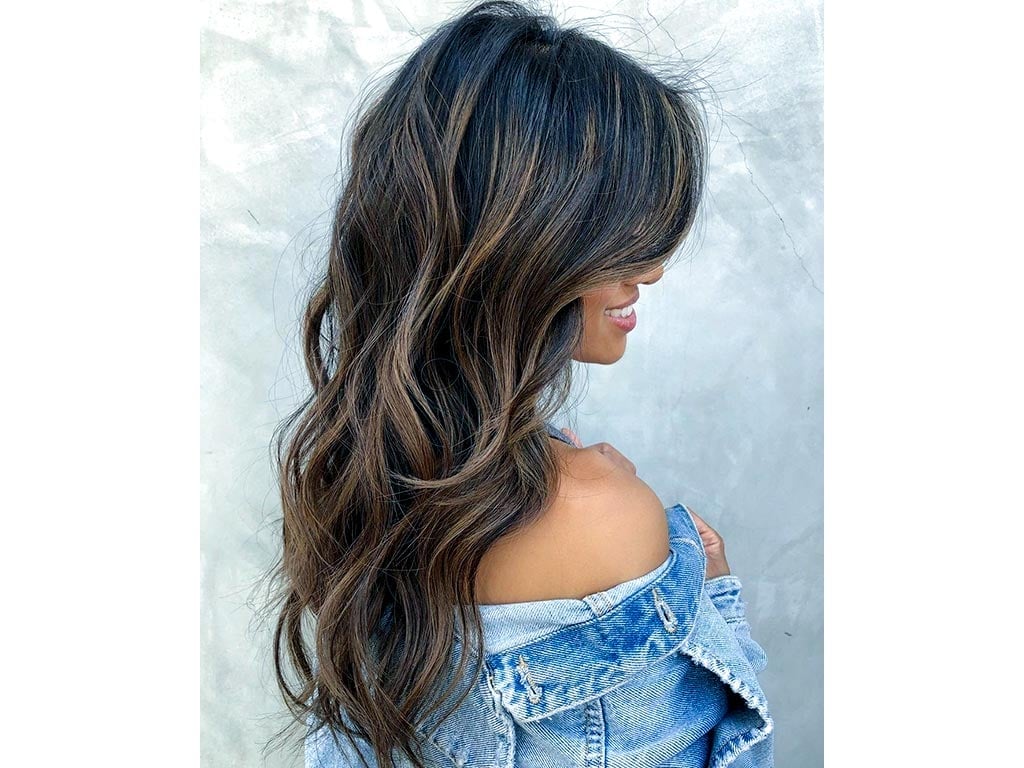
Where a more dramatic balayage goes for contrast, this version stays close to your natural shade, making it a quieter investment. The dark brown base is lifted with subtle brown balayage that adds dimension without a full color change. Thick, wavy hair starting at mid-back length holds the loose waves well, and the side part works for round and square face shapes. Ask your colorist for: mid back, dark brown with subtle brown balayage. A texturizing spray adds movement without weighing the hair down, and a demi-permanent gloss every eight weeks keeps the tone from turning flat.
Side Part Waves With Caramel Balayage
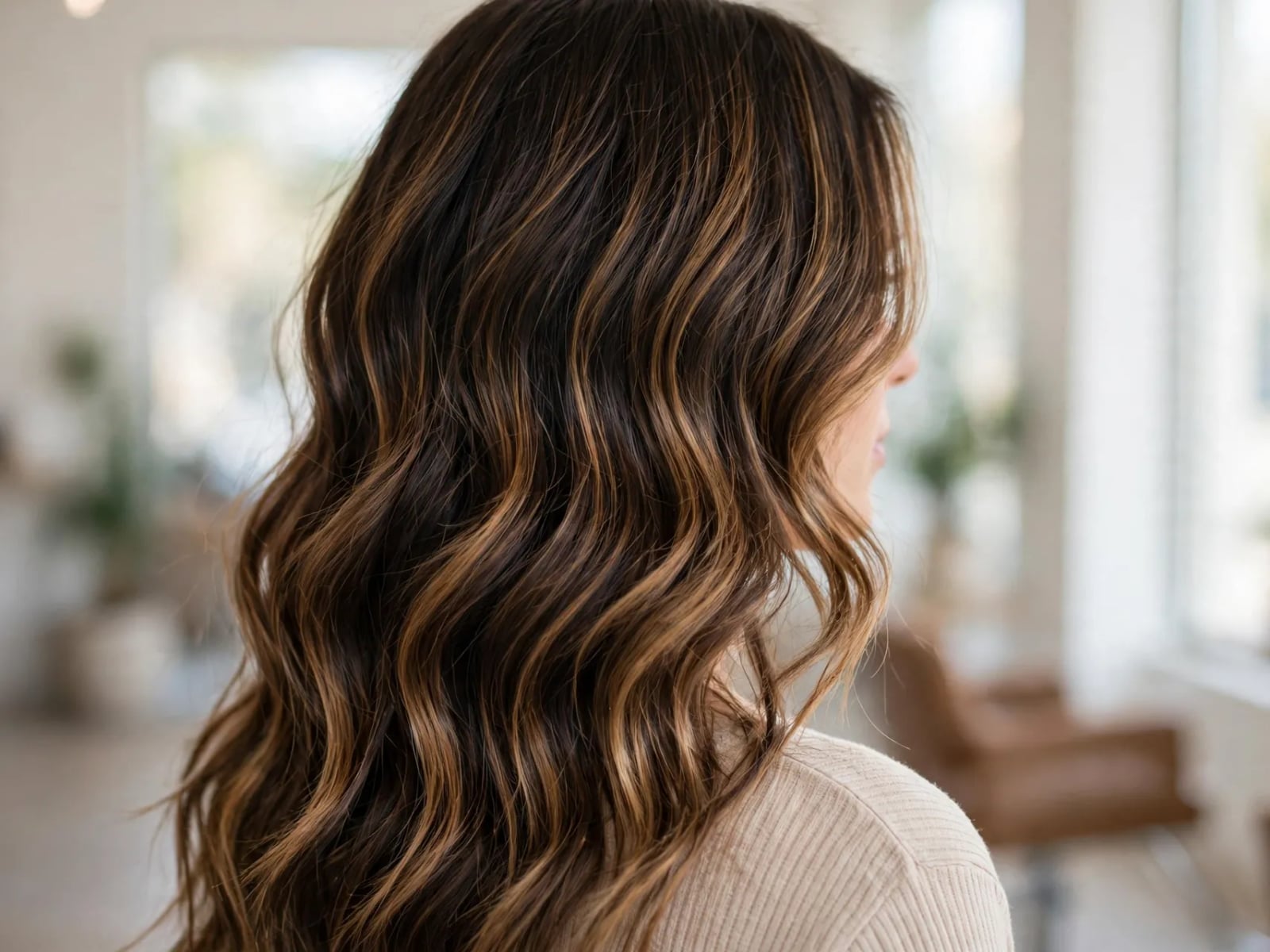
This is a solid choice if you have medium density hair that tends to look flat with solid color. The dark brown base with subtle caramel balayage adds warmth without going full blonde, and the loose waves catch the lighter pieces evenly. The side part helps soften a square jaw and balances a round face. Ask your colorist for: shoulder length, dark brown with subtle caramel balayage, side part. A texturizing spray keeps the wave pattern from falling out by mid-afternoon, and a trim every eight weeks prevents the ends from looking see-through.
Mid-Back Waves With Contrasting Balayage, Middle
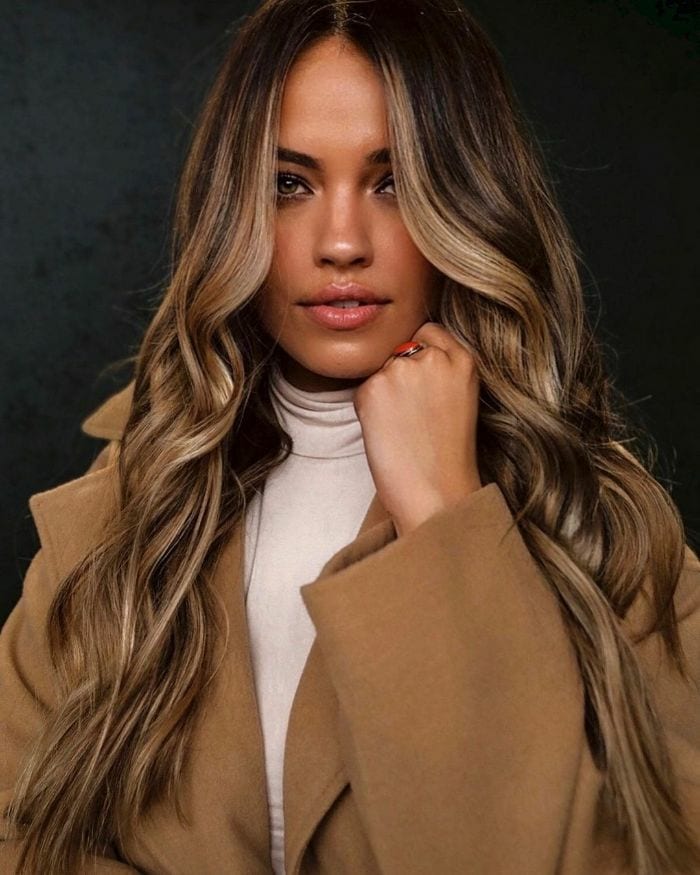
The design here depends on visible separation between the dark brown base and the lighter balayage pieces. That contrast is what gives the waves their depth, especially from the front view where the face-framing strands stand out. Thick hair starting at mid-back length is the ideal canvas since the color needs enough density to show the difference between the shades. Ask your colorist for: mid back, dark brown with contrasting lighter balayage. This is a salon-only process; the lighter sections require a bleach lift that is hard to control at home. Plan for about three hours in the chair for the initial application.
Mid-Back Waves With Striking Balayage, Thick
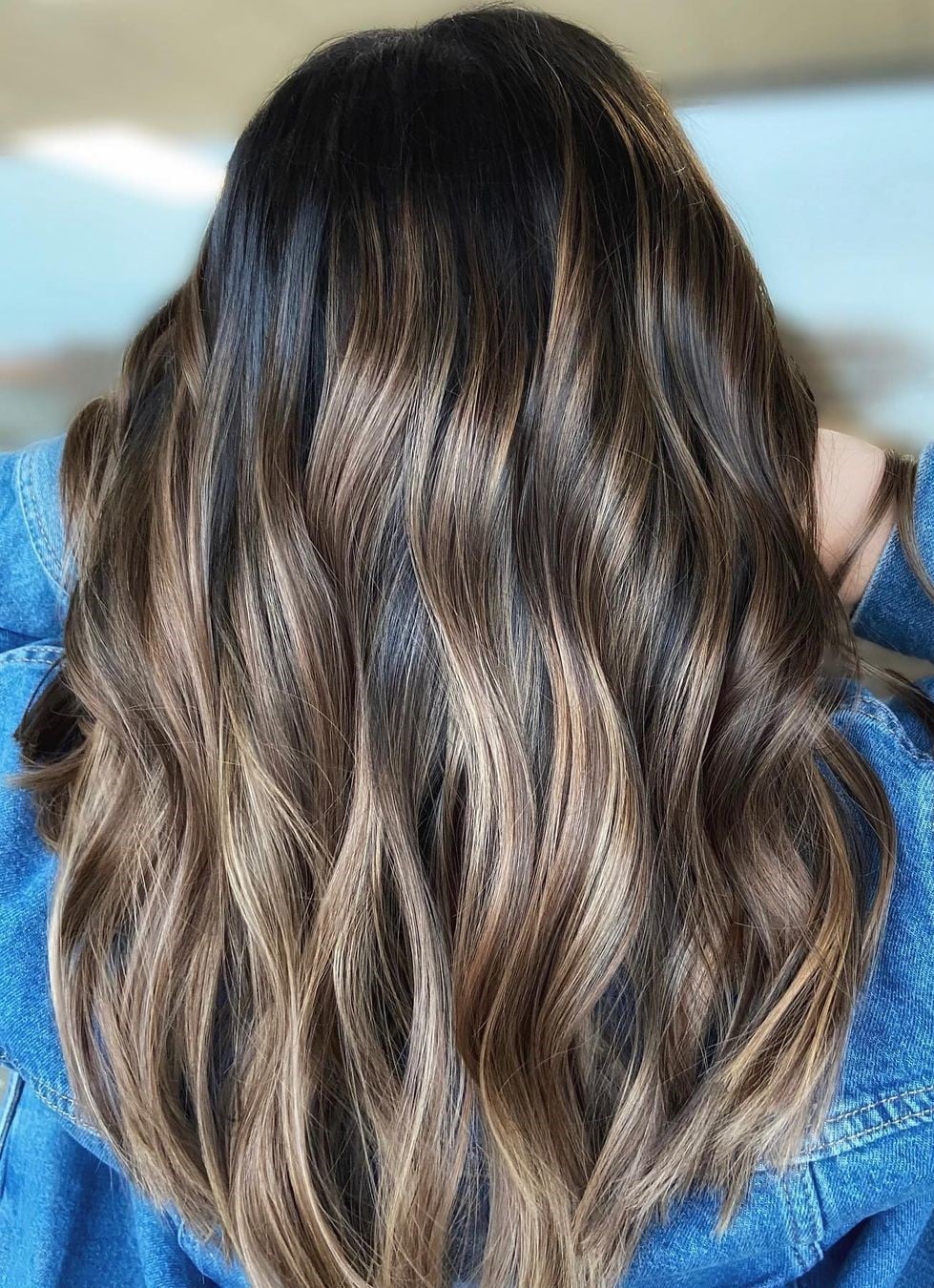
High-contrast balayage needs a trim every ten to twelve weeks because the ends show the most wear. The dark brown base here meets lighter pieces that are concentrated toward the lower half, which means the regrowth is soft. That is the upside. The lighter sections can feel dry faster than the rest of your hair, so conditioning the ends is not optional. Ask your colorist for: mid back, dark brown with striking balayage. A sea salt spray helps the waves hold their shape without turning stiff.
Mid-Back Loose Waves With Caramel Balayage
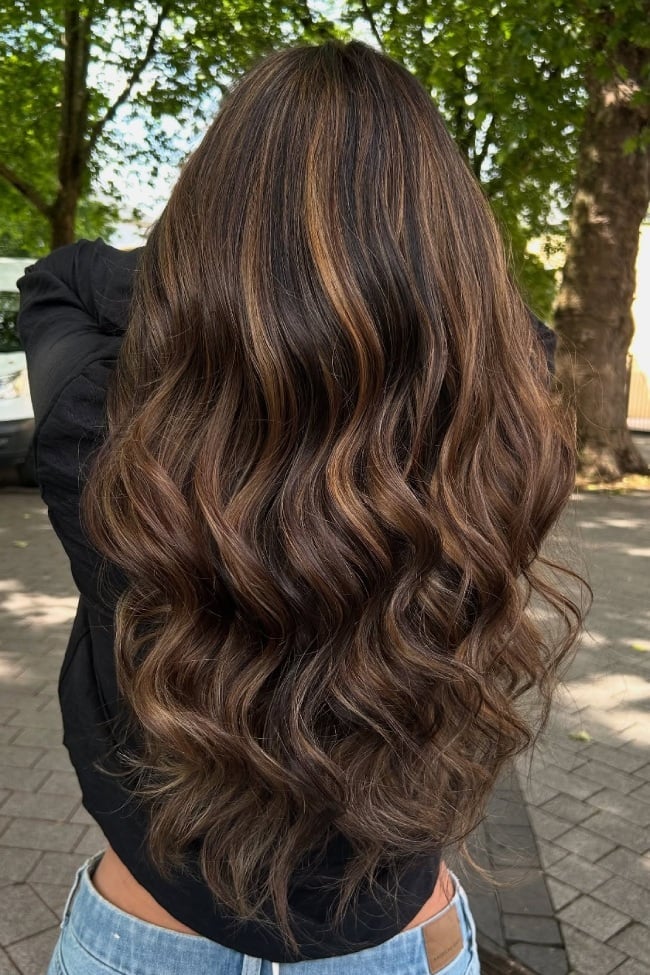
Caramel balayage lands between a warm blonde and a neutral brown, which suits cooler months when you want depth without going dark. The dark brown base with caramel brown balayage creates a glossy, healthy finish. Thick, wavy hair at mid-back length gives the loose waves enough weight to hold their shape. Ask your colorist for: mid back, dark brown with caramel brown balayage, loose waves. This style works for evening events and casual weekends alike, which saves you from needing two different color appointments.
Mid-Back Wavy Blowout With Lighter Brown
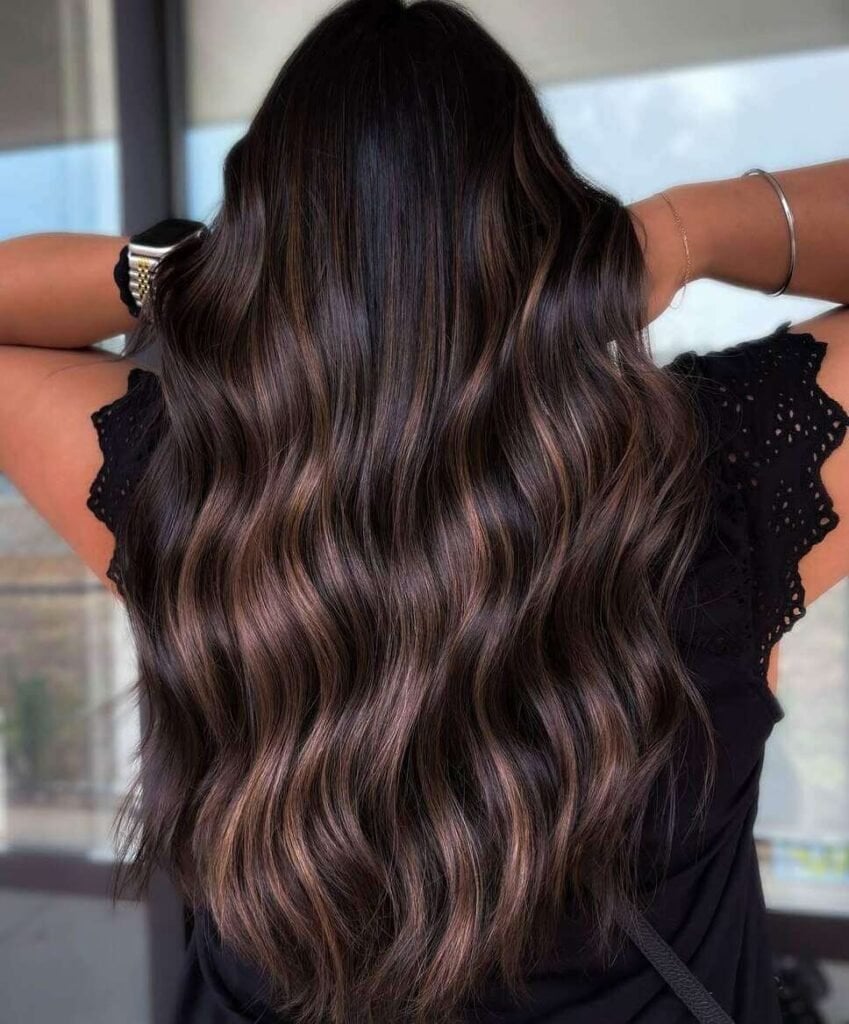
A wavy blowout on a dark brown base with lighter brown balayage is about building contrast through movement. The mid-back length gives the lighter pieces enough vertical space to appear as a gradient instead of a patch of highlights. Thick, wavy texture helps diffuse the transition so it never looks stripey.
Ask your colorist for: mid back, dark brown with lighter brown balayage, wavy blowout. A thermal protectant spray before blow-drying is essential, and the cut needs a trim every 10 to 12 weeks to keep the ends crisp. The technique works best on hair that starts at mid-back, and oval and heart faces get the most from the middle parting.
Mid-Back Waves With Seamless Balayage and Wavy Blowout
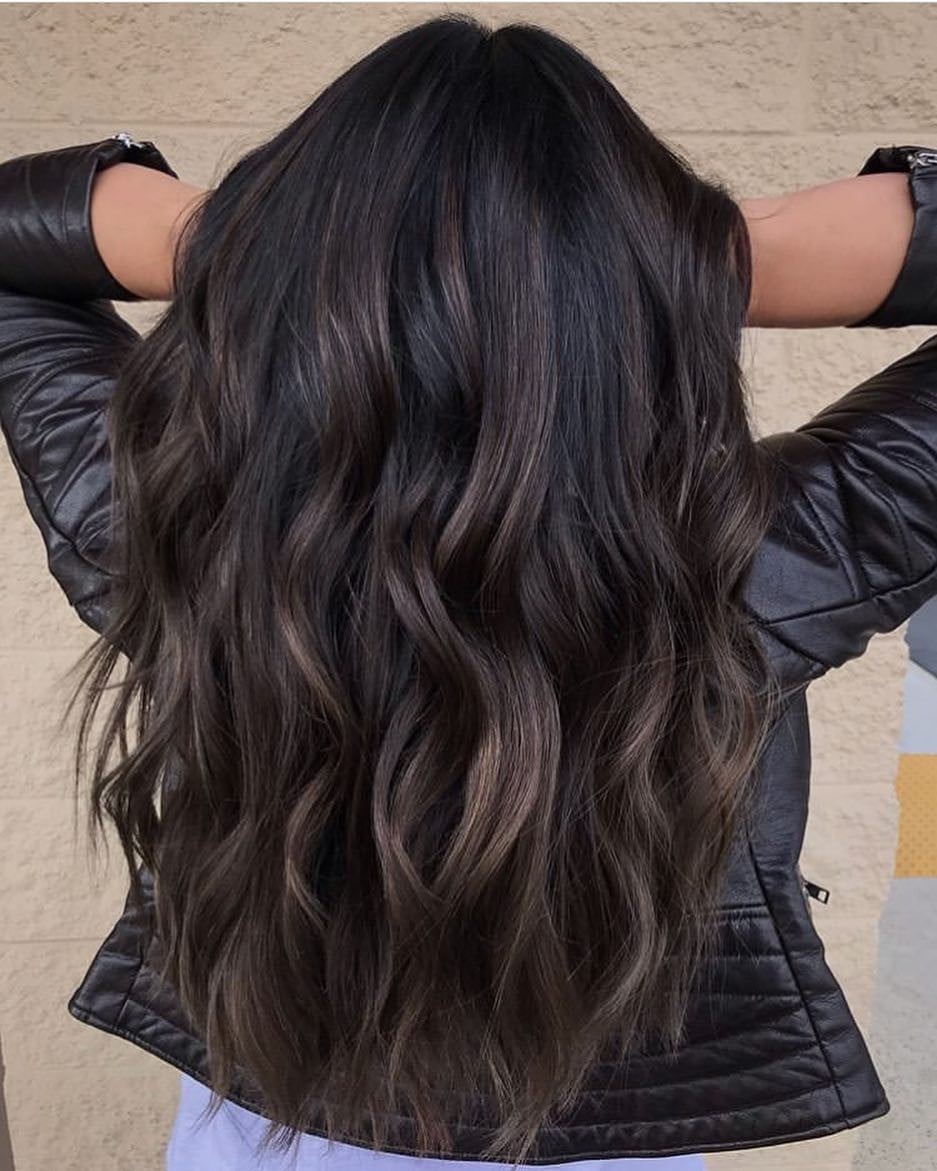
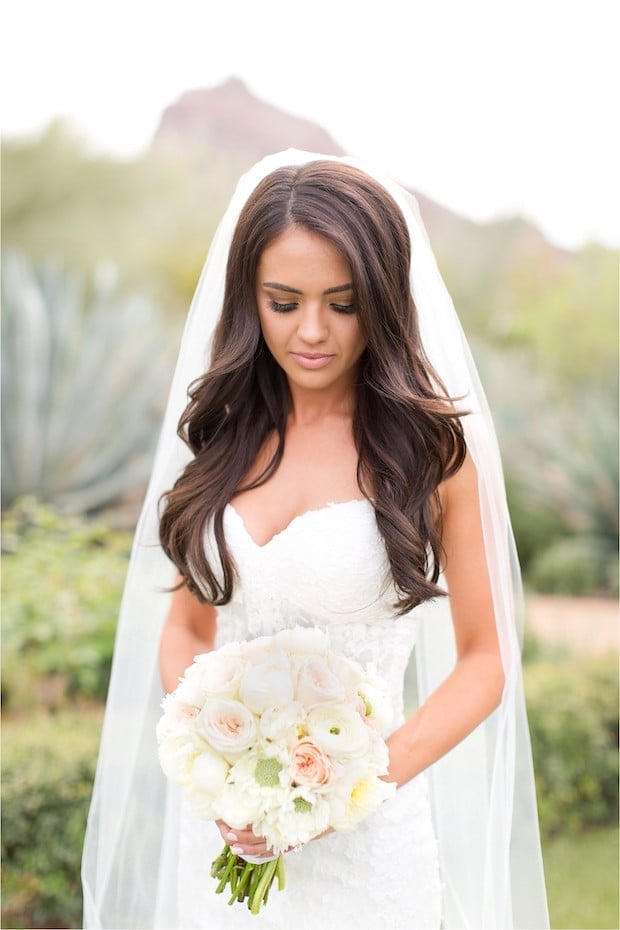
A seamless balayage means the lighter brown highlights melt into the dark brown base with no visible line of demarcation. The trade-off is that this subtle blend can look almost too natural on straight hair, so the soft waves in the back view here are doing the work of showing off the dimension. A middle parting keeps the color distribution even on both sides.
Ask your colorist for: mid back, dark brown with subtle light brown balayage, soft waves. The real drawback is that if your stylist paints too conservatively, the balayage can disappear entirely once the hair is dry and unstyled. Thick texture starting at mid-back gives the best canvas, and oval or heart faces suit the length and part.
Mid-Back Natural Waves With Subtle Balayage, Layers
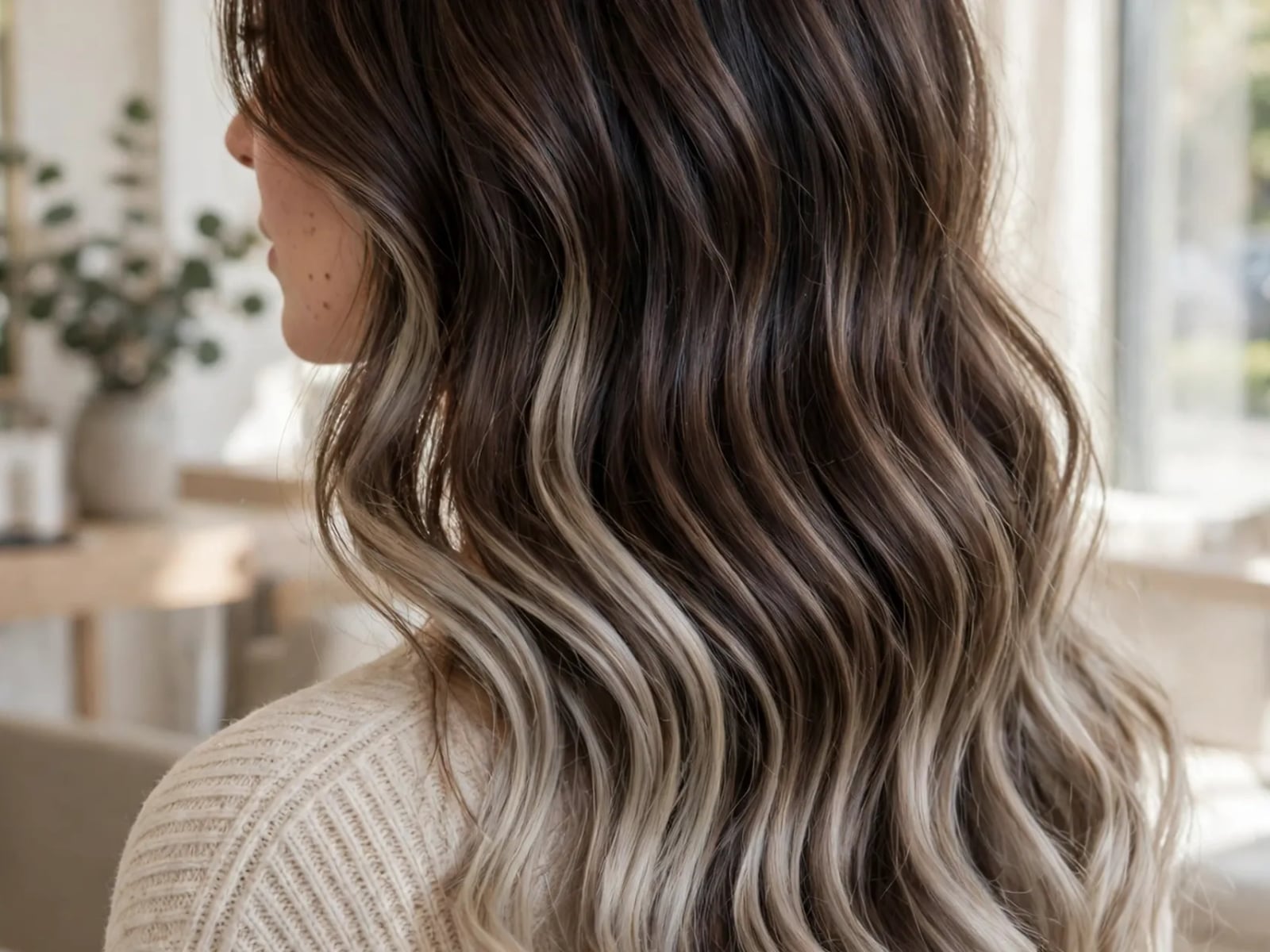
Subtle balayage on a dark brown base and thick, wavy texture is a low-risk combination. The lighter brown highlights create depth without sharp contrast. Soft layers at mid-back length prevent weight from pulling the waves flat at the root. Ask your colorist for: mid back, dark brown with subtle light brown balayage, natural waves. A leave-in conditioner keeps the glossy finish, and a trim every 10 to 12 weeks maintains the layers.
Final Thoughts
If you want a subtle change, keep the balayage one to two shades lighter than your base. For visible contrast, go three or more shades lighter and concentrate the brightness around your face and ends. Balayage offers beautiful, blended dimension for every brown shade.
- Tone every 8 to 10 weeks to keep warmth in and brass out.
- Use color-safe shampoo and conditioner to protect the lighter strands.
- Deep condition weekly, especially on the balayaged sections.
- Always spray a heat protectant before curling or blow-drying.