Pink hair has moved past festival season and into everyday rotation, especially when the shade lands somewhere soft, dusty or metallic. The shift is toward lived-in color with a glossy finish, often on a collarbone-length bob or lob that feels more polished than punk.
These 16 takes on Classy Pink Hair Color span low-maintenance root shadows to all-over pastel, covering fine to thick textures and round to square face shapes. The collection solves the usual pink-hair headaches: a visible grow-out line, brassiness that creeps in by week four, and the cut that might not sit with a choppy fringe.
Pastel Pink Collarbone Bob With Soft Waves
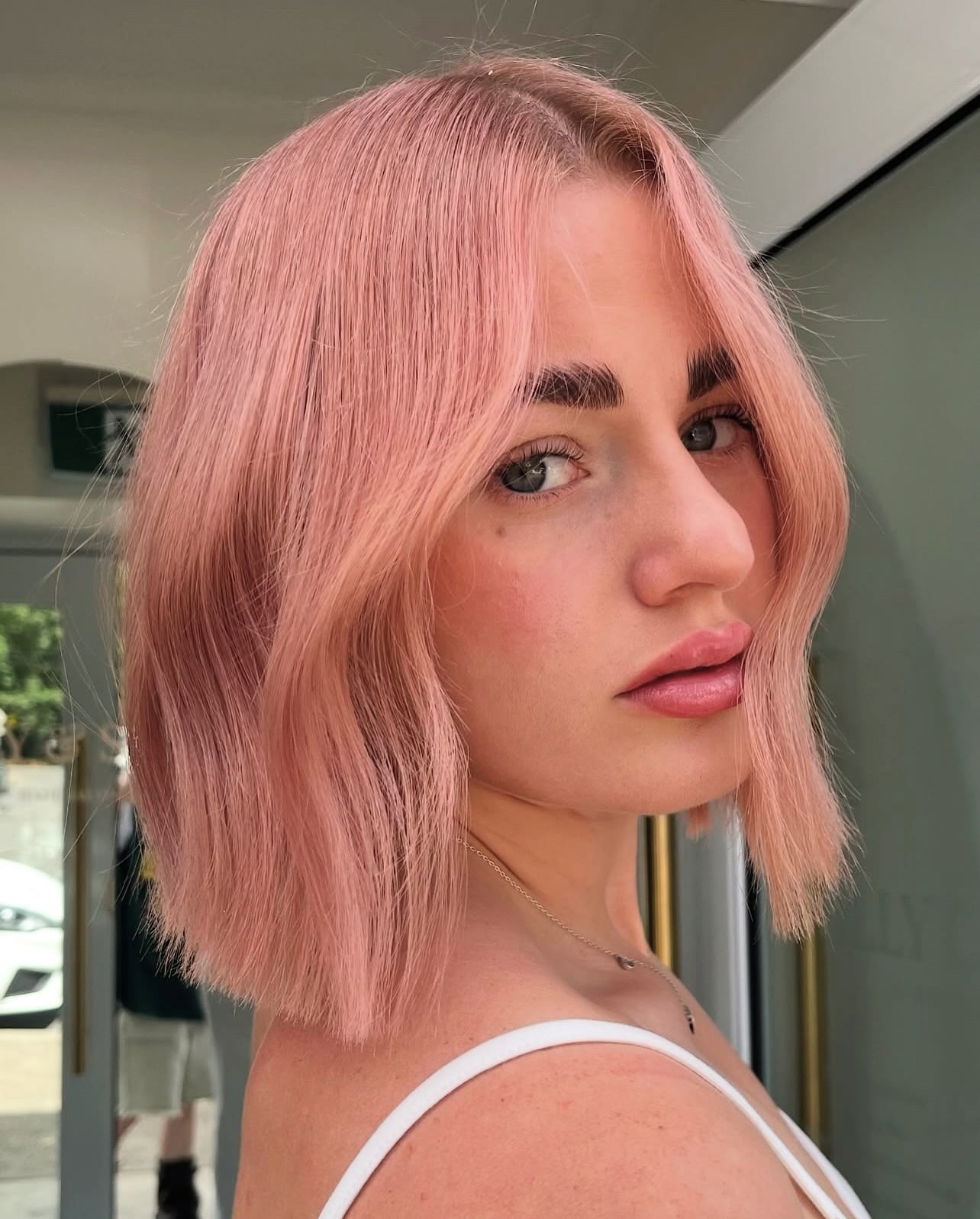
A collarbone bob in pastel pink depends on subtle lighter highlights to keep the color from reading as one flat cotton-candy blob. The middle part and soft waves work best on fine to medium density hair starting at the collarbone; the length below the chin helps elongate a round face. Ask your colorist for: collarbone bob, pastel pink with subtle lighter pink highlights. A wavy blowout holds for two to three days with dry powder between washes, and a trim every six to eight weeks keeps the bob from losing its shape.
Layered Collarbone Cut In Soft Pastel Pink
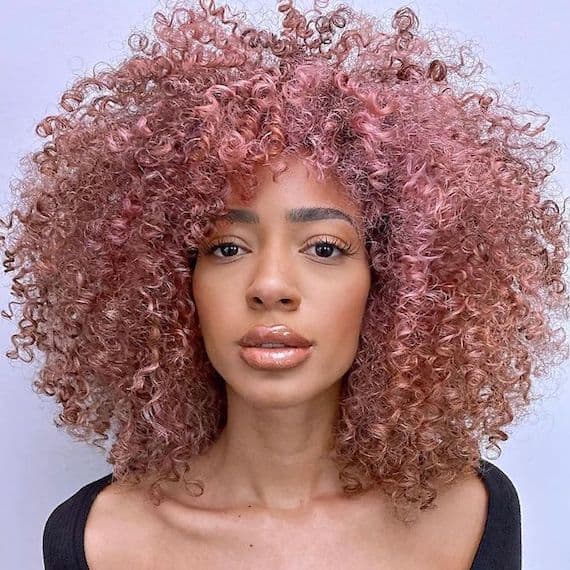
Pastel pink gains texture when the base is not one solid shade. Here, lighter pink highlights are woven through collarbone-length layers, so the color shifts as the waves move. This works well for medium density hair: the layers add movement without removing too much bulk. Ask your colorist for: collarbone length layers, soft pastel pink with subtle highlights. Use a round brush during your blowout to define the waves, and schedule a toning appointment every four to six weeks to keep the pink from turning beige.
Light Pink Collarbone Lob With Curtain Bangs
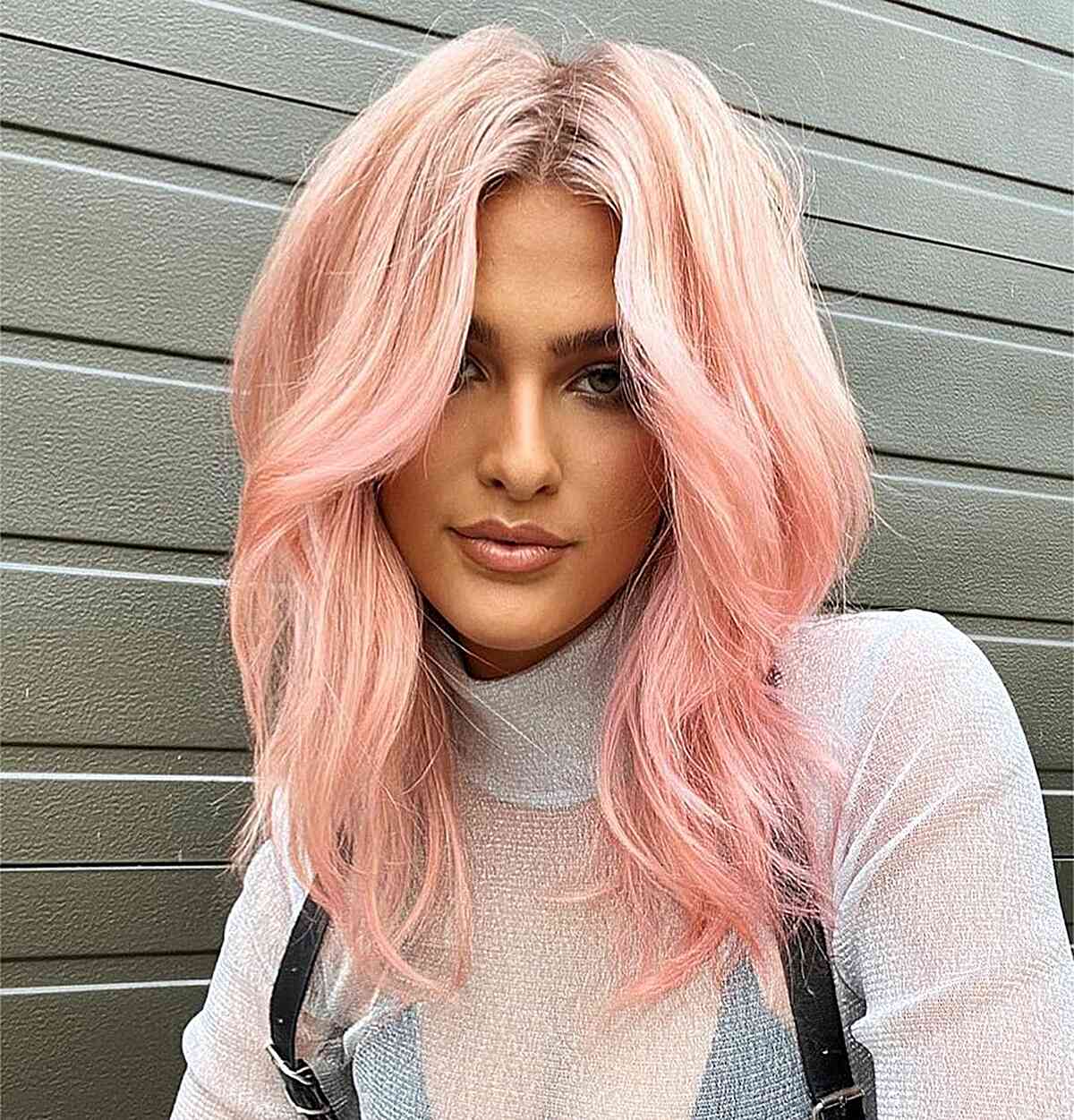
Want a light pink that feels soft and wearable? The trick is in the placement. The base is a delicate light pink, with subtle lighter highlights concentrated around the face. Curtain bangs frame the forehead without covering it fully. Ask your colorist for: collarbone lob, light pink with subtle highlights, curtain bangs. A round brush on the bangs during drying keeps the shape, and a texturizing spray at the ends gives the waves a looser hold.
Rose Gold Pink Lob With Darker Roots
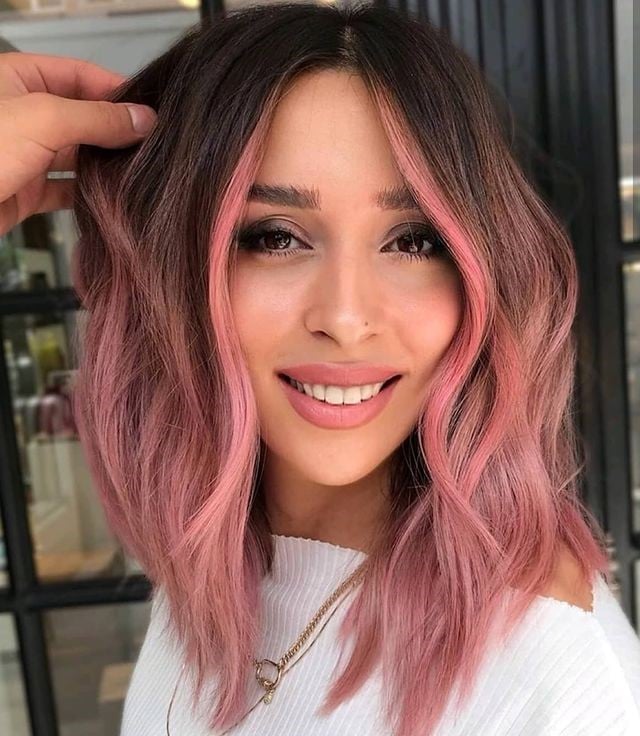
This lob wears a darker root that graduates into rose gold pink ends, which means the grow-out is far less demanding than a solid pastel from root to tip. The middle part and curtain bangs work on fine wavy hair starting at the collarbone, since the darker base adds depth that fine strands can lack. Ask your colorist for: rose gold pink lob, darker roots to lighter ends, curtain bangs. A smoothing serum keeps the gloss on the lighter sections, and a trim every eight weeks prevents the ends from thinning out.
Dimensional Pink Lob With Root Shadow
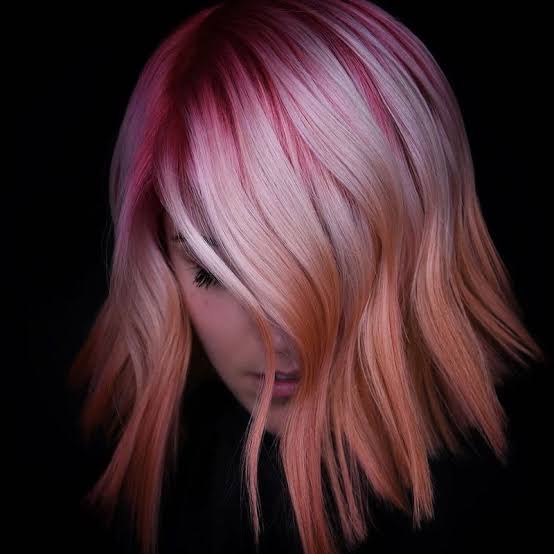
This is a lob where the color does the talking: deep magenta roots melt into lighter rose gold ends, creating a gradient that softens the grow-out line. The thick wavy texture needs the weight of a collarbone lob to keep the shape from getting too fluffy. Ask your colorist for: lob, pink blend from deep roots to rose gold ends, curtain bangs. The honest trade-off is that the vibrant pink tones fade faster than a pastel, so expect a gloss appointment every four weeks to keep the magenta from turning muddy.
Rose Gold Pink Lob With Lighter Highlights
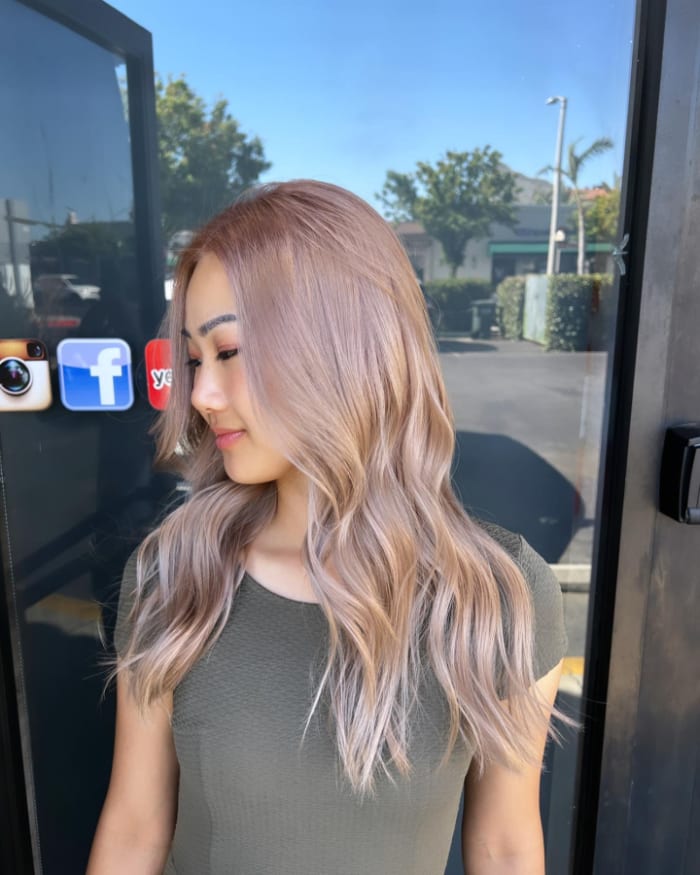
Rose gold pink sits somewhere between a warm blonde and a blush, which makes it one of the more wearable entries in the pink color family. A collarbone lob with curtain bangs and a middle part gets a soft lift from lighter pink highlights that catch the gloss in a blowout. Rose gold reads as warm rather than candy-sweet, so it tends to land well in professional settings where a pastel pink might feel like a statement. Ask your colorist for: collarbone lob, rose gold pink with lighter pink highlights, curtain bangs. Medium-thick wavy hair starting at collarbone length holds the dimension best, and curtain bangs soften square and round faces without losing the lob’s clean line.
Layered Collarbone Cut In Soft Pastel Pink Side View, Wavy
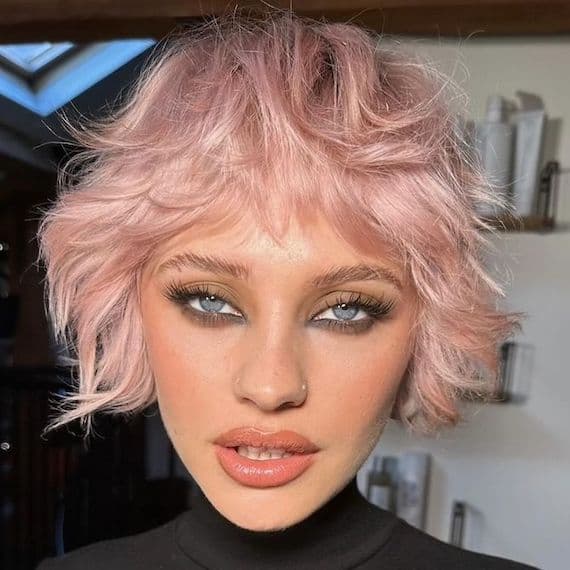
The layers in a collarbone cut do two things at once: they lighten the visual weight of the hair and let a soft pastel pink move through the shape rather than sit flat on top. This side view shows a smooth blowout with gentle waves, a middle part and no bangs, which keeps the focus on the pastel pink base and its subtle lighter pink highlights. Spring and summer are the obvious seasons for this shade, but it also works as an indoor color for fall because the tone stays muted enough not to clash with sweaters. Ask your colorist for: collarbone length layers, soft pastel pink with subtle highlights. Medium density hair starting at collarbone length benefits from the added movement; straight or wavy textures both respond well to the layers.
Multi-Tone Pink Bob With Purple Undertones
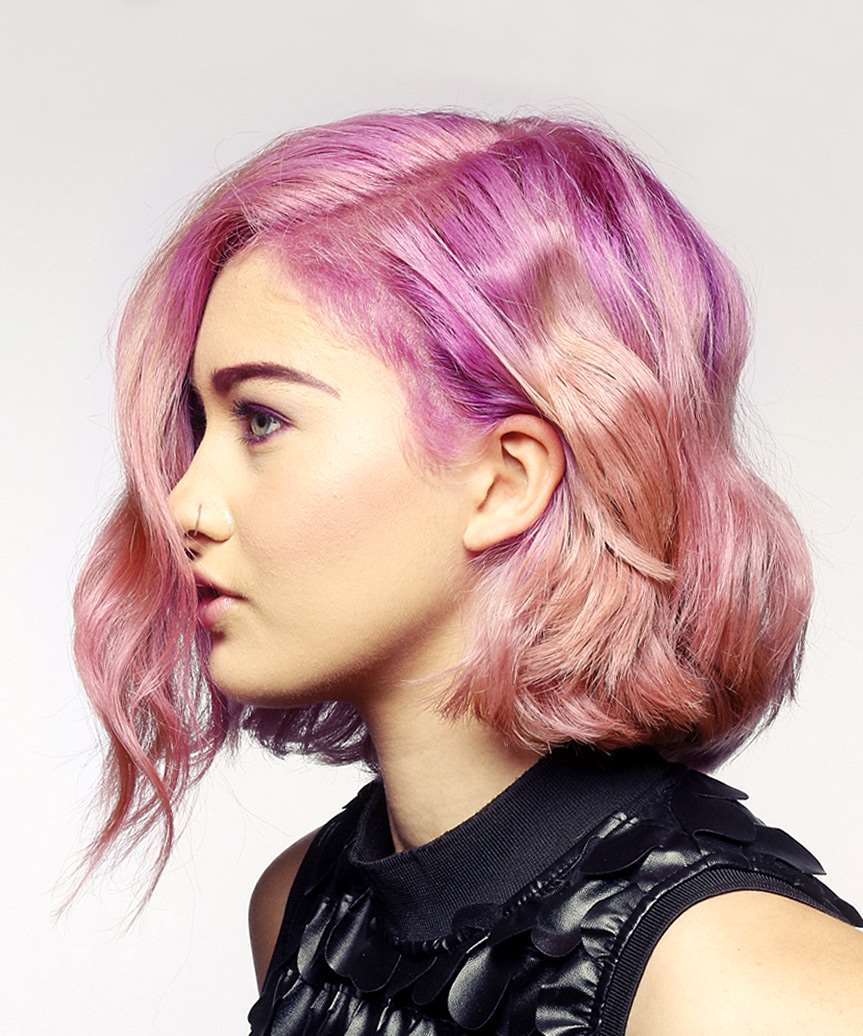
Can a pink bob read as edgy without reading as costume? Yes, when the pink carries a purple undertone and the cut lands at collarbone length with a side part and swept bangs. The balayage placement here creates a multi-tone effect that keeps the color from looking solid or flat, so the eye moves through the waves. Who should try it? Wavy hair with medium density holds the sweep of the bangs naturally, and a side part balances a long or oval face shape by adding asymmetry. Square faces also get a softer line from the swept bangs. Ask your colorist for: collarbone bob, multi-tone pink with purple undertones, swept bangs.
Chin Length Bob With Pink Ombré
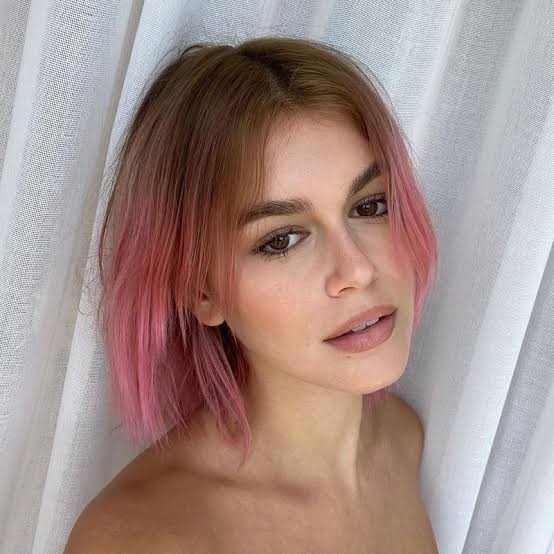
A pink ombré relies on a clean transition from a darker root to a lighter end, and that precision is harder to pull off at home than most DIY tutorials admit. This chin-length bob with side-swept bangs keeps the root at a natural depth while the color graduates into a soft pink at the ends, and the air-dried wavy texture gives the graduation a soft, blurred edge that a flat blowout would erase. A salon handles the bleach gradient more evenly, especially on fine hair that can grab color unevenly. Ask your colorist for: chin length bob, pink ombré with darker roots, side-swept bangs. The darker base also extends the grow-out timeline by several weeks.
Vibrant Pastel Pink Chin Bob With Short Fringe
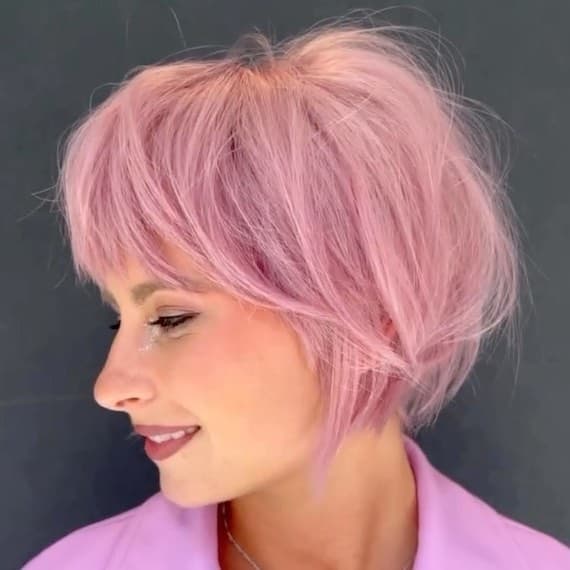
A chin bob with a short fringe is a high-contrast shape, and a vibrant pastel pink amplifies that contrast rather than softening it. The glossy finish on this straight, fine hair makes the color read almost like a lacquer, which is the point: the cut and shade together demand attention. The trade-off arrives at week two, when pastel pink on fine, straight hair starts to show any fading or warmth creeping in. A purple shampoo and a cooler wash routine can extend the vibrancy, but the color is still a commitment. Ask your colorist for: chin length bob with layers, vibrant pastel pink, short fringe. Fine hair starting at chin length carries the shape well; the short fringe adds the statement.
Pink And Rose Gold Collarbone Layers
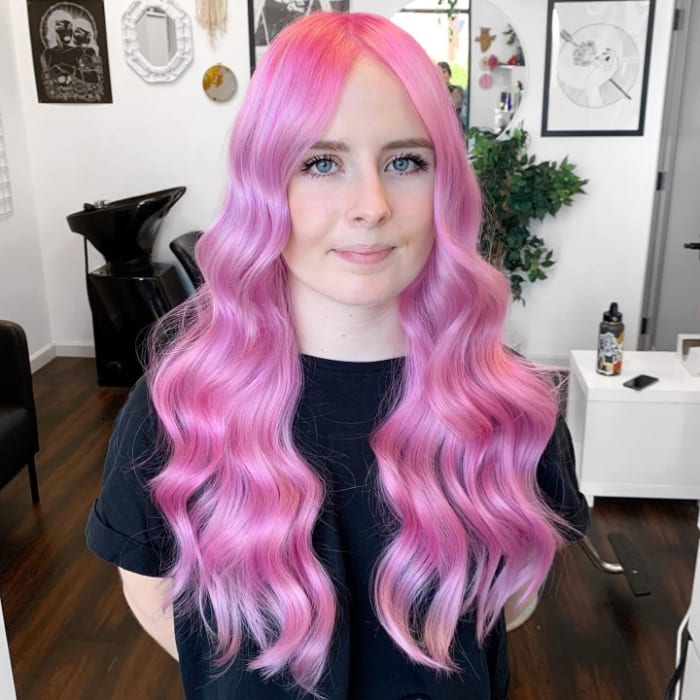
A balayage technique makes this blend of pink and rose gold highlights look like a single wash of color. The colorist paints the lighter pieces freehand, starting a few inches from the root, so the grow-out line stays soft. Medium density wavy hair holds the dimension best, since the highlights need enough hair to reflect through. Ask your colorist for: collarbone length layers, pink and rose gold blend with highlights. A texturizing spray on damp waves adds separation without stiffness.
Pastel Pink And Blonde Balayage Lob
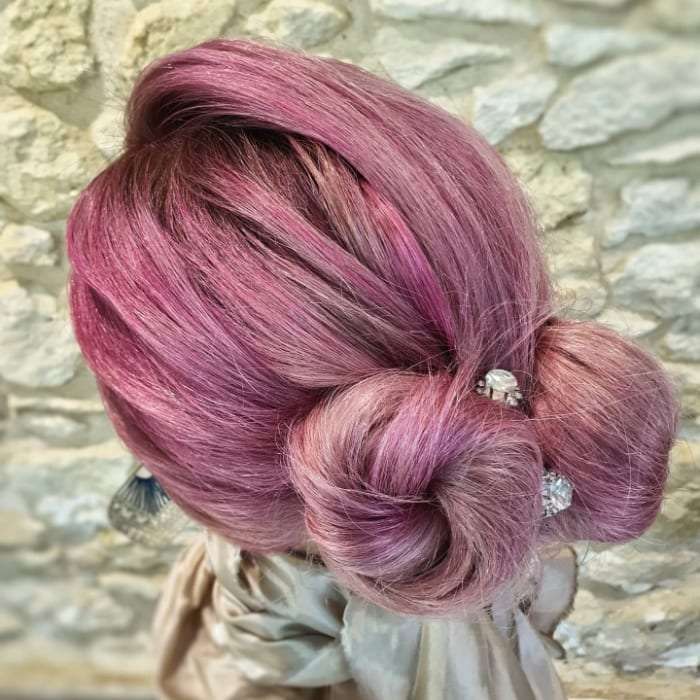
Pastel pink on its own needs a fresh root touch-up every few weeks, but this lob pairs it with a blonde balayage so the two tones fade at different rates. The blonde pieces keep the color from becoming a single flat pastel when the pink starts to wash out. Medium density wavy hair is the starting point, and the collarbone length hits just below the jaw. Ask your colorist for: collarbone lob, pastel pink and blonde balayage. A leave-in conditioner keeps the bleached lengths from feeling dry between trims.
Peachy Pink Collarbone Waves
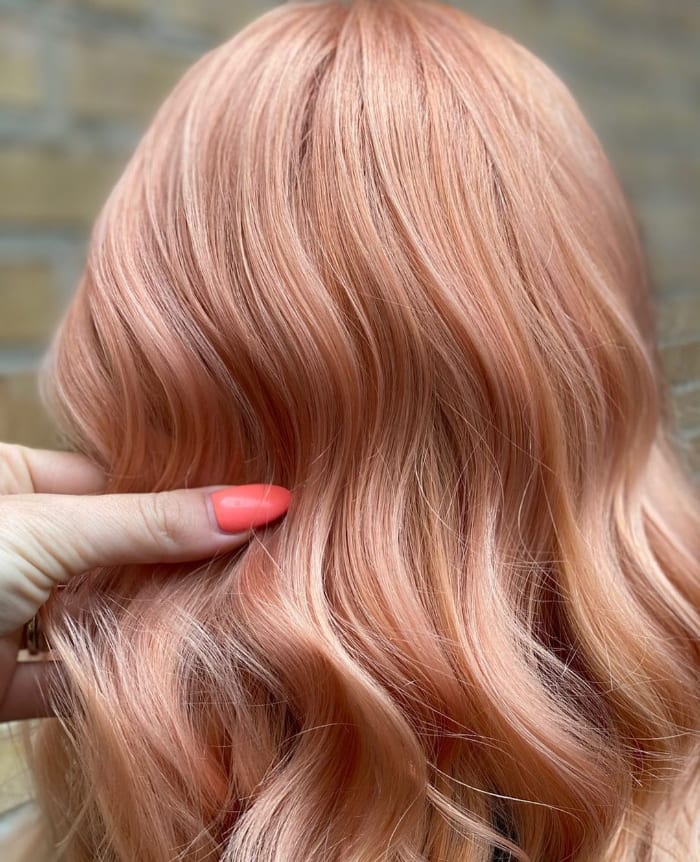
A peachy pink hue sits between a true pastel and a warm rose gold, which means it reads as pink without veering into bubblegum territory. The long layers here are cut to skim the collarbone, so the waves stack in a soft C-shape. Medium wavy hair at that length holds the bend for most of the day. Ask your colorist for: collarbone length layers, loose waves, peachy pink color. A shine serum on dry hair gives the glossy finish that makes the peach tone look deliberate.
Rose Gold Shoulder Length Layers
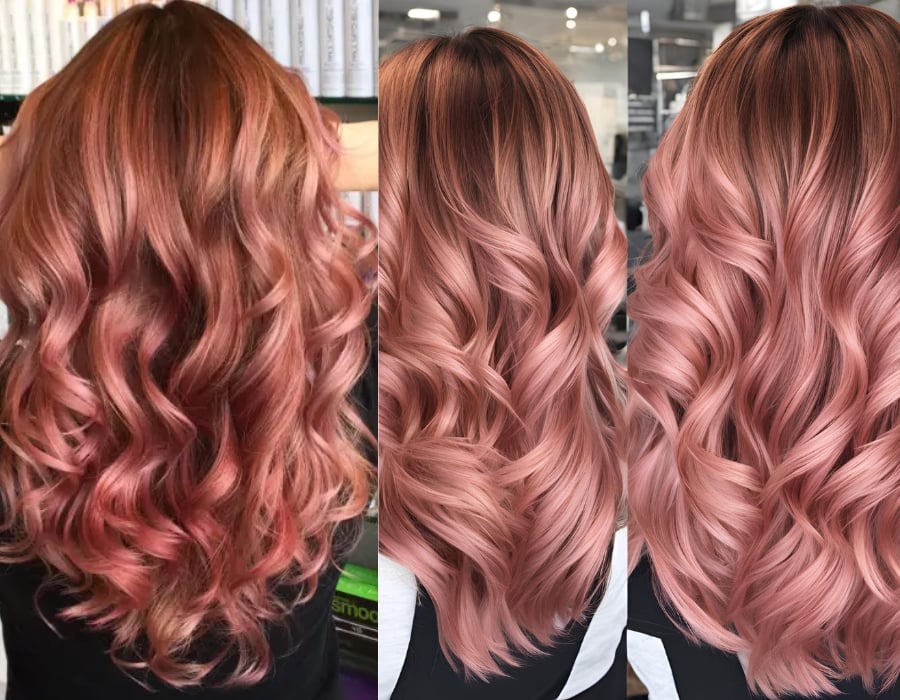
Rose gold works best when the base is a warm copper-pink and the highlights are a few shades lighter, not a separate blonde. The layered cut here sits at the shoulder, which gives the color enough surface area to show both tones. Medium density wavy hair keeps the highlights from looking sparse. Ask your colorist for: shoulder length layers, rose gold with blonde highlights. A volumizing spray at the roots lifts the layers without weighing them down.
Rose Gold With Blonde Highlights Shoulder Cut
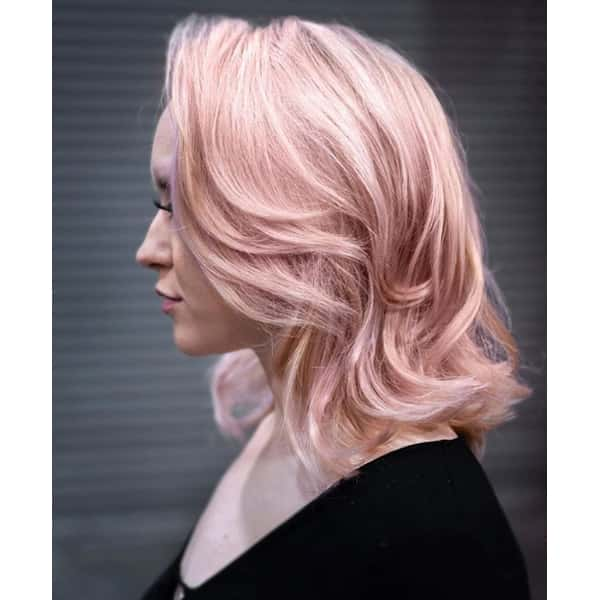
This version of rose gold reads more golden than the cooler pink-based blends, because the blonde highlights are woven through the entire front section rather than concentrated at the ends. The difference from a straight rose gold is subtle: the blonde lifts the tone so it catches light as a warm champagne rather than a solid pink. Shoulder-length layers work for medium density wavy hair that needs movement without losing shape. Ask your colorist for: shoulder length layers, rose gold with blonde highlights.
Medium Brown Base With Pink Highlights
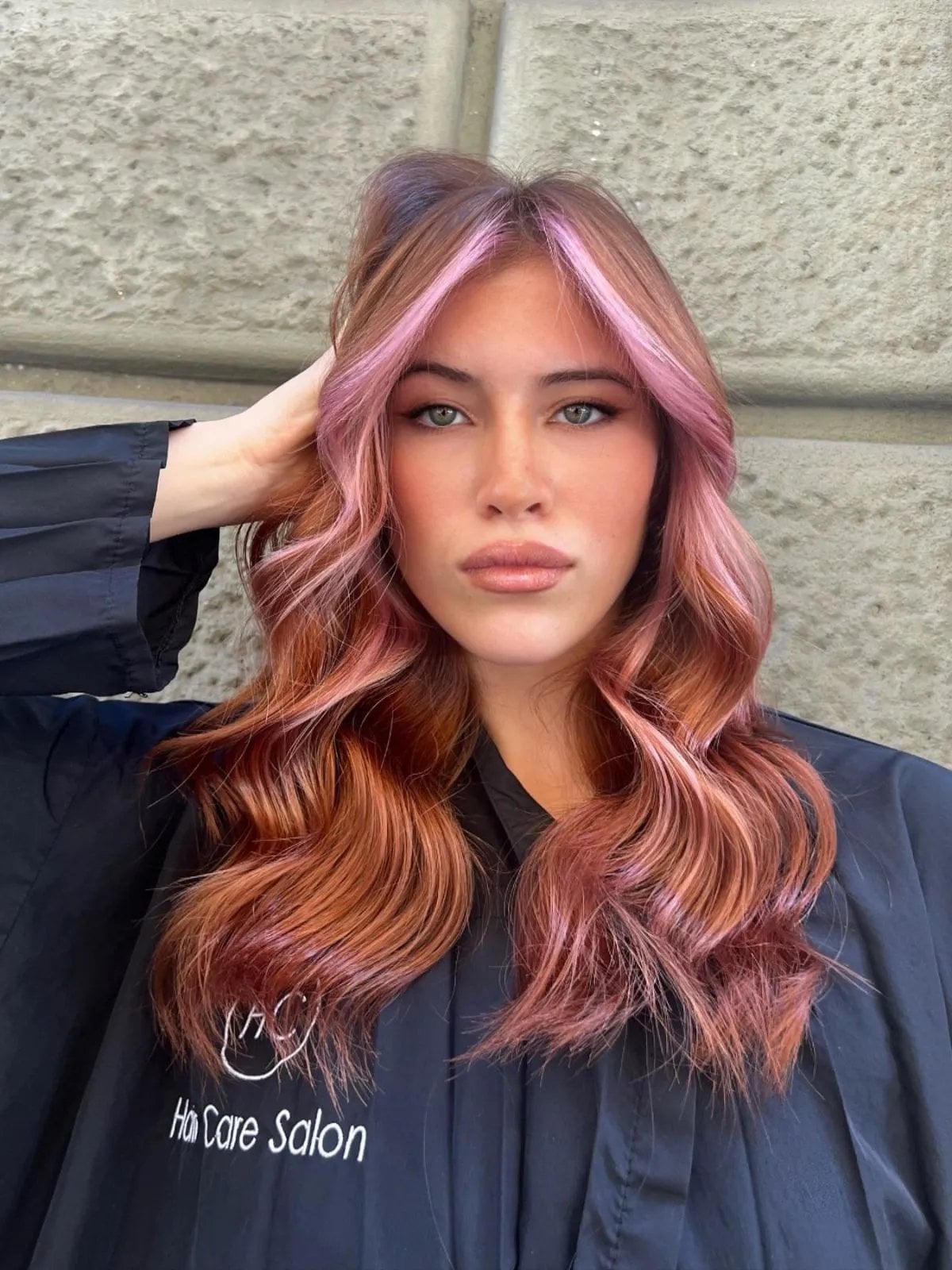
This is the entry point for pink hair without committing to an all-over pastel situation. A medium brown base keeps things grounded, while rose gold and pink highlights are woven through the lengths and concentrated around the face for a soft, dimensional effect. The long layers and curtain bangs with a middle parting frame the face without shortening it, making this a strong option for round and square face shapes that benefit from vertical lines. Thick, wavy texture helps the highlights look like natural placement, not a painted-on stripe.
Ask your colorist for: medium brown base with pink and rose gold highlights, curtain bangs. The waves come from a blowout with a round brush and a texturizing spray at the ends; a curl cream works too if you have natural wave. The base grows out cleanly, so you can push trims to every eight to ten weeks, but the pink pieces will need a toning appointment around week six to keep the rose gold from drifting peachy.
Final Thoughts
Fine hair keeps its weight best with a blunt or one-length baseline, while a round face gains length from a collarbone cut and soft side-swept movement. For a start, choose pink highlights or a balayage on a natural base. For more impact, go for a solid pastel or rose gold on a blunt cut.
- Maintain pastel and rose gold tones with color-depositing conditioners weekly.
- Toning may be needed every 4-6 weeks to keep pink shades vibrant.
- Color-safe shampoo and conditioner are essential for longevity.
- Use heat protectant spray before styling to preserve color and hair health.
Pink hair can be sophisticated and chic.