20 Cute Pigtails Braids 2027 for Voluminous Looks

Pigtail braids have shed their schoolyard reputation for a grown-up reboot that prioritizes texture and volume. This season, the shift is toward looser, more dimensional braids that read as intentional styling rather than a quick pull-back.
These 20 Cute Pigtails Braids span the spectrum from chunky Dutch braids that hold all day to softer bubble and fishtail variations that work on second-day hair. They suit fine hair that needs grip, thick hair that needs control, and anyone tired of braids that unravel by noon. Expect a mix of salon-level intricacy and genuinely doable DIY options, all built around what the braid actually does for your hair.
Chunky Blonde Dutch Braids Mid-Back

Two chunky Dutch braids on thick, wavy blonde hair do not play coy about their volume. The middle parting keeps the structure clean while each braid is wide enough to read as a rope of texture rather than a tight plait. This design suits oval and heart face shapes best because the width at the sides balances a narrow chin. Ask your stylist for: chunky Dutch braids to mid-back. Keep the braids tight during styling, then gently loosen the outer edges for a softer silhouette. A trim every six to eight weeks keeps the ends clean and the braid shape defined.
Voluminous Blonde Dutch Braids with Loose Pigtails
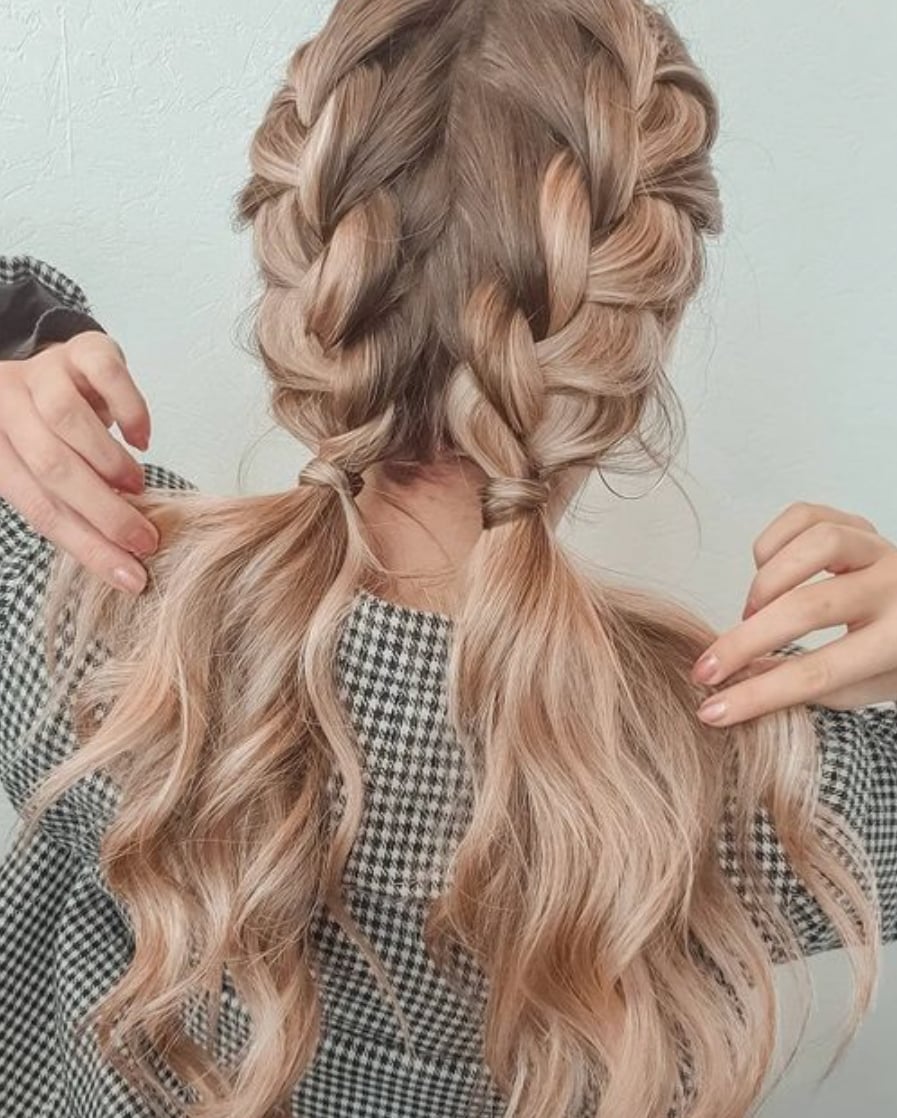
These large Dutch braids are built by crossing sections under the middle strand, which pushes each pass upward and creates the lifted volume thick, wavy hair carries naturally. The subtle highlights add dimension so the braid reads as layered rather than flat. A middle part and length below the chin elongate a round face here. Ask your stylist for: large Dutch braids ending in loose pigtails. Secure the ends with small elastics to keep the pigtail shape intact. A toning appointment every eight to ten weeks maintains the blonde against brassiness.
Large Chunky Dutch Braids Mid-Back, Wavy

Unlike a standard three-strand braid that sits flat against the head, these large, chunky Dutch braids stand away from the scalp and announce their thickness. On thick, wavy hair with highlights, the separation between each pass is visible, which is the point. Ask your stylist for: large, chunky Dutch braids ending in pigtails. Soft layers around the jaw soften a square face here. Let a few strands escape during braiding so the finish looks lived-in. A trim every six to eight weeks preserves the shape.
Voluminous Blonde Dutch Braids Pigtails, Close-Up Take
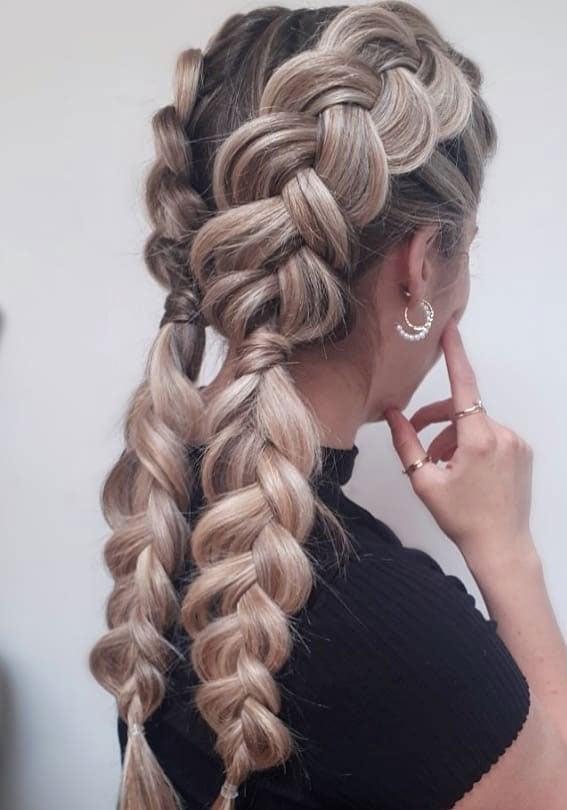
How do you get a stylist to give you braids this full? Start with the right words. Ask your stylist for: voluminous Dutch braids secured as pigtails. The key details are a middle parting that keeps the sections even and a Dutch technique that pushes the braid outward for a lifted look. Thick, wavy hair at mid-back length takes the volume best. A middle part can help elongate round face shapes. Spritz a texture spray onto damp hair before braiding for grip and lasting hold. A toning appointment every eight to ten weeks keeps the highlights bright.
Thick Double Dutch Braids Mid-Back
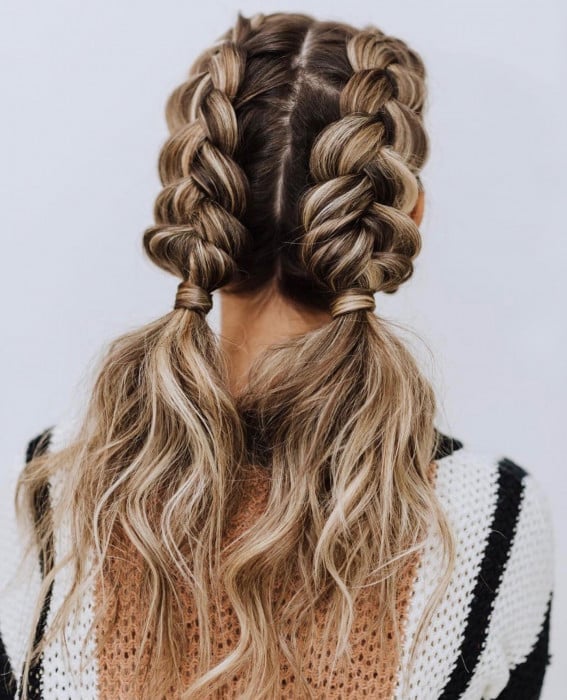
Double Dutch braids on thick, wavy blonde hair with layers hold their shape all day because the texture grips itself. The chunky sections are pulled gently apart after braiding to widen each pass, which keeps the style from looking too neat. This approach suits round and oval faces equally. Ask your stylist for: chunky double Dutch braids to mid-back. The layers in the cut prevent the braid from feeling heavy at the nape. A trim every six to eight weeks removes any split ends that would catch during braiding.
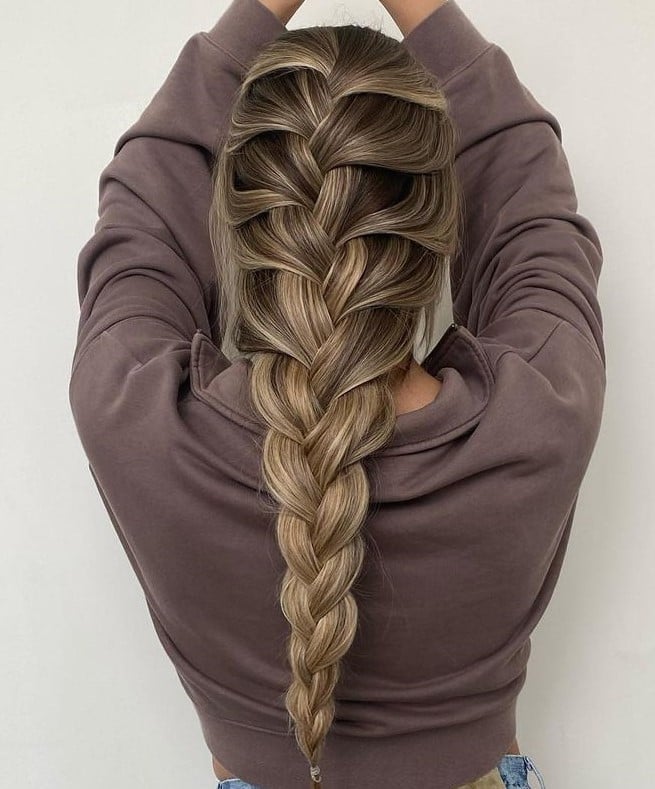
Voluminous Loose French Braids Mid-Back

Two loose French braids in a middle part sound deceptively simple, but the line between relaxed and messy is a fine one. The mistake most people make is not starting with enough grip in the base: wavy, thick hair that reaches mid-back needs a texturizing spray at the roots before you begin, or the braids will slip by lunch. A gentle outward tug on each section after you finish the plait creates that soft, voluminous look without losing the structure. Ask your stylist for voluminous, loose French braids.
Thick Pull-Through Braids Mid-Back
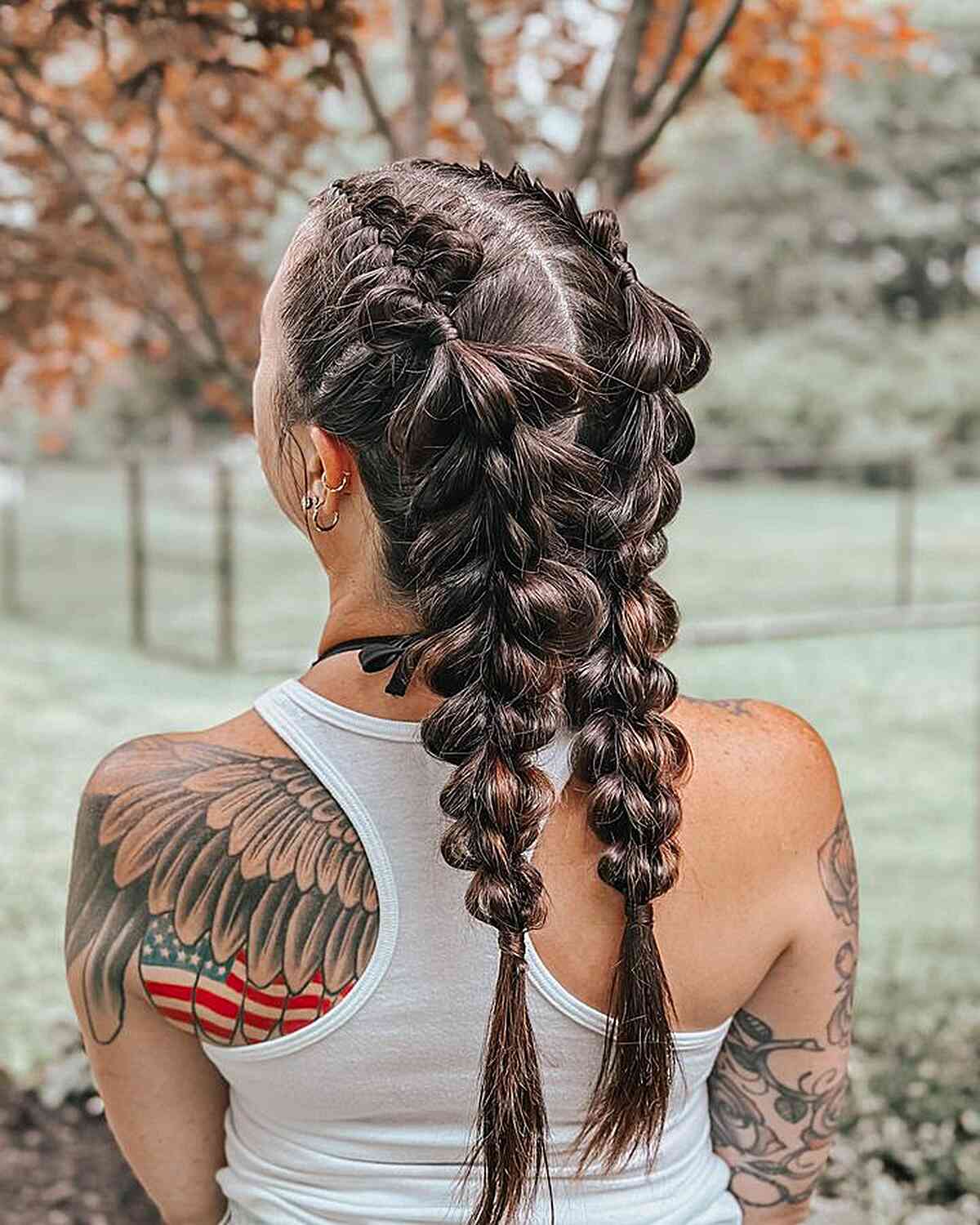
Pull-through braids trade the tight cross-over of a Dutch plait for a series of linked loops, which gives a more polished look. The dark brown base with subtle lighter tones creates dimension, so you can skip the teasing. This is a fall-through-spring length, long enough to tuck into a coat collar without losing the silhouette. A texturizing spray keeps the loops defined. Ask your stylist for thick pull-through braids to mid-back.
Ash Blonde Pull-Through Braids Mid-Back

A pull-through braid is built by tying a low ponytail into sections, then flipping each one through the gap above it. The result looks woven but actually requires no underhand sections, just small, clear elastics and patience. The ash blonde base with platinum highlights benefits from a color-depositing conditioner every second wash to avoid brassiness. A trim every eight to ten weeks keeps the ends clean enough for the loops to sit evenly. Ask your colorist for ash blonde pull-through braids with platinum highlights.
Blonde Bubble Braids Mid-Back
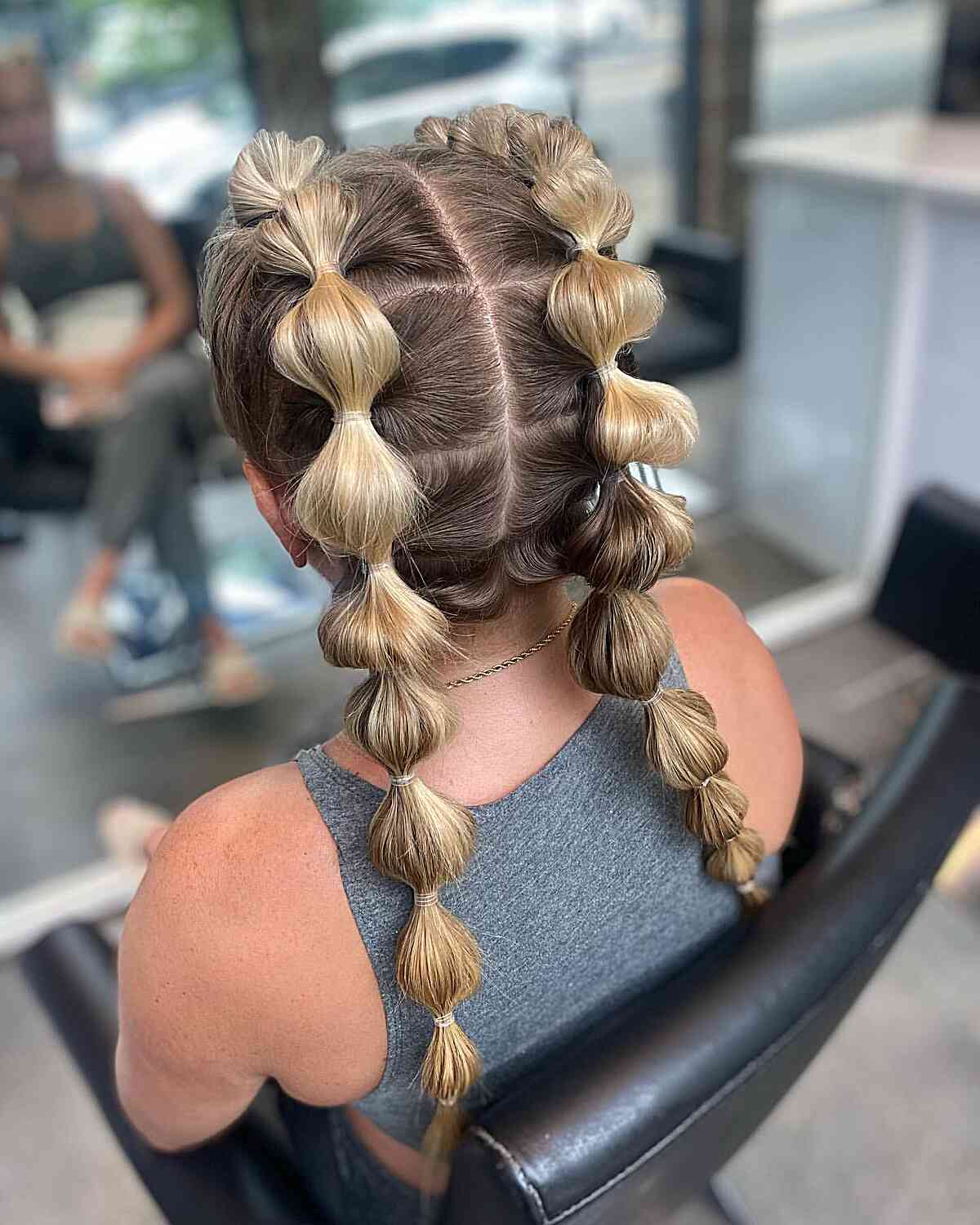
Is your hair thick enough to fill a bubble braid without looking sparse? Wavy texture and a mid-back length are the baseline; finer hair will need a texturizing spray and slightly smaller sections to puff up properly. The blonde base with lighter highlights adds the contrast that makes each bubble distinct, so a single-process blonde might look flat. This style holds best when the hair is second-day clean, not fresh out of the shower. Ask your colorist for blonde bubble braids to mid-back.
Ash Blonde Bubble Braids Mid-Back, Wavy
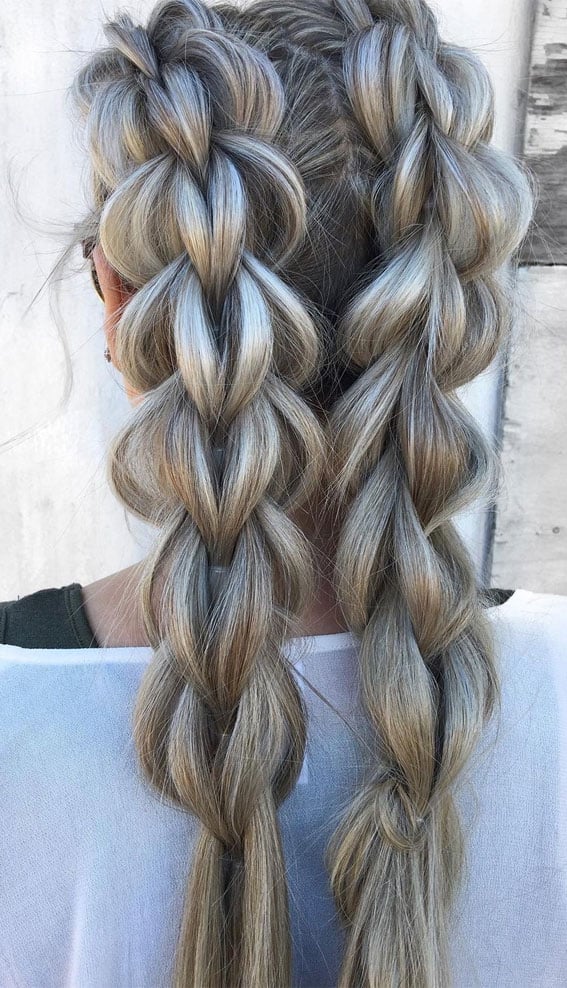
The puffy sections will loosen slightly as they settle, which is the point, but using clear elastics keeps the visual line clean. A toning appointment every six to eight weeks is the real upkeep here, because the highlights will warm up faster than the ash base. Ask your colorist for ash blonde bubble braids with highlights.
Playful Blonde Bubble Braids with Ribbons
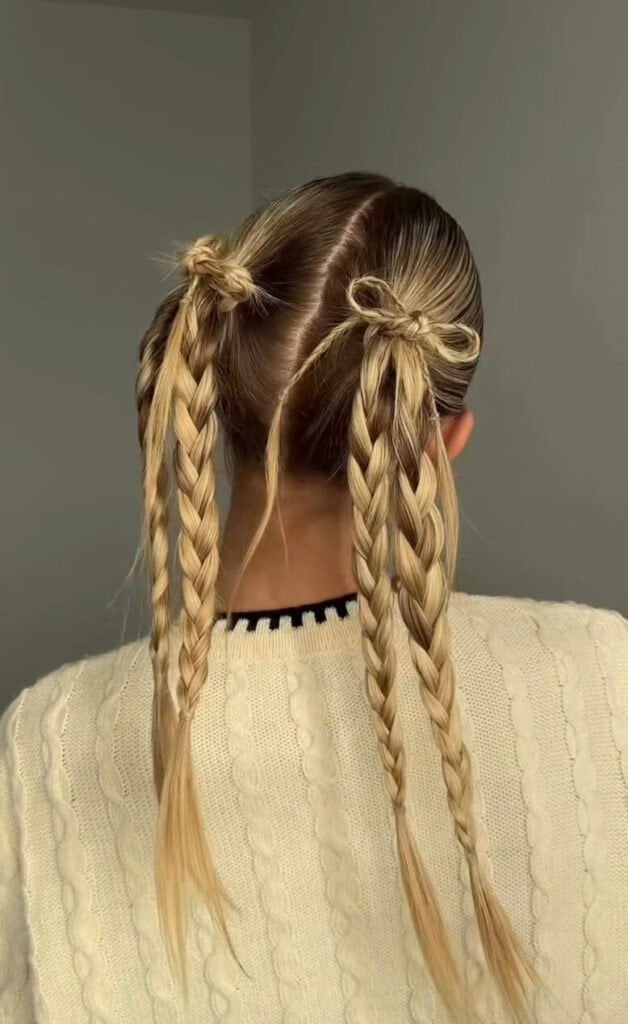
A bubble braid is a ponytail sectioned into segments and gently pulled loose between each elastic, and these are tied with small ribbons at the base of each bubble for a deliberate pop of color. The style suits thick, wavy hair that reaches mid-back, with no bangs. Ask your stylist for: blonde bubble braids with ribbons. The process takes about 30 minutes with a tail comb and small clear elastics, plus a moment to tie the ribbon around each one. To keep the highlights fresh, a toning appointment every eight weeks is enough.
Fishtail Braids Mid-Back Blonde Highlights
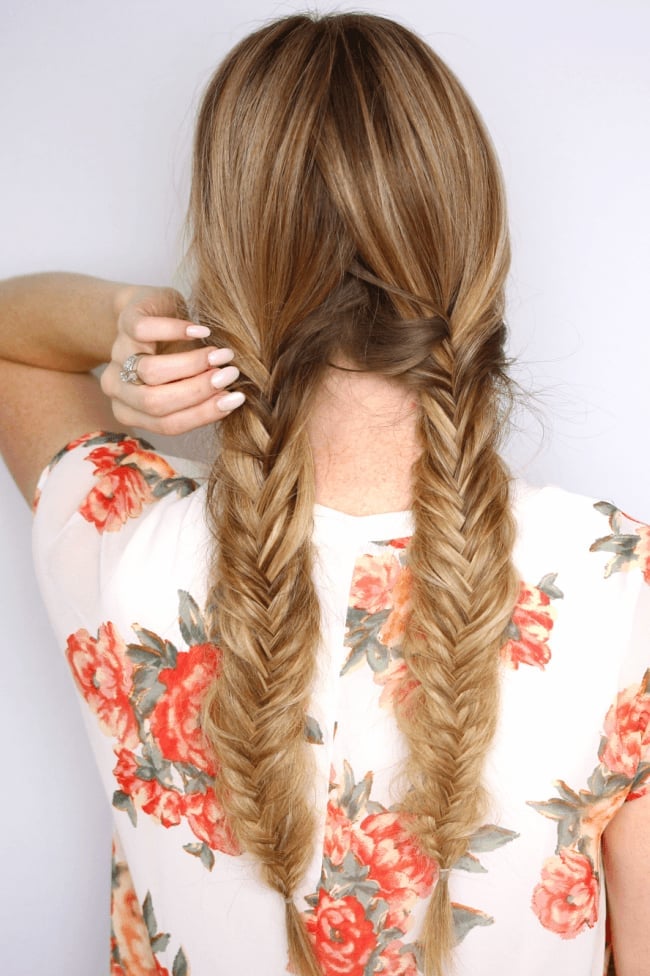
Fishtail braids use only two sections, which gives them a finer, more detailed ridge than a classic three strand braid. They work well on thick, wavy hair of mid back length and can soften a square jaw. Ask your colorist for: fishtail braids with blonde highlights. Gently tug each section outward after braiding for a softer, fuller effect that looks intentionally undone. A trim every six to eight weeks keeps the ends from looking straggly.
Long Classic Red Braids Mid-Back
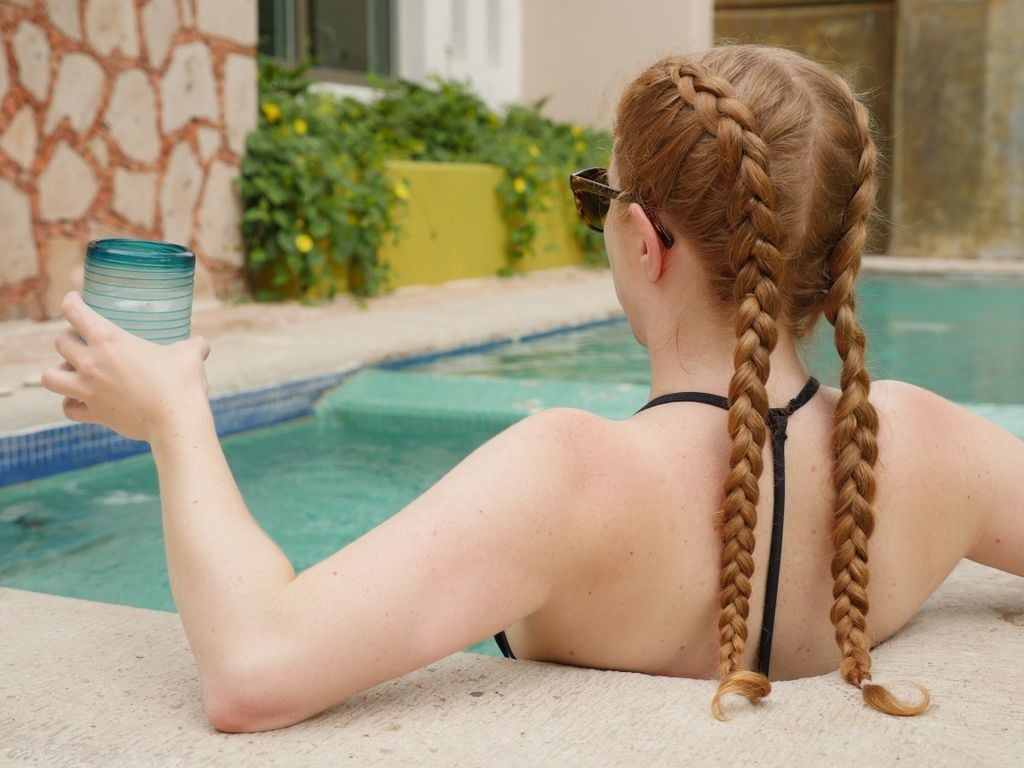
Two thick, evenly plaited braids in a rich red shade are a straight-up classic. This style is best on hair that has natural wave and density, since thin hair won’t create the same visual weight. Ask your colorist for: long classic braids in red hair. The color itself creates the look, so a gloss treatment every six weeks keeps the red from fading into a muddy brown. A light balm on the braid lengths stops flyaways without making the hair look greasy.
Neat Brown Braids Mid-Back Highlights

These neat, symmetrical braids start with a precise middle parting and stay smooth all the way down the back. Straight, thick hair holds the polish best, though a round face benefits from the elongated line. Ask your colorist for: neat classic braids with subtle highlights. The blonde pieces catch light and keep the brown from reading flat. A light-hold hairspray and a trim every eight weeks maintain the clean finish. Without touch-ups, the ends soften and the braids look less deliberate.
Intricate Medium Brown Dutch Braids
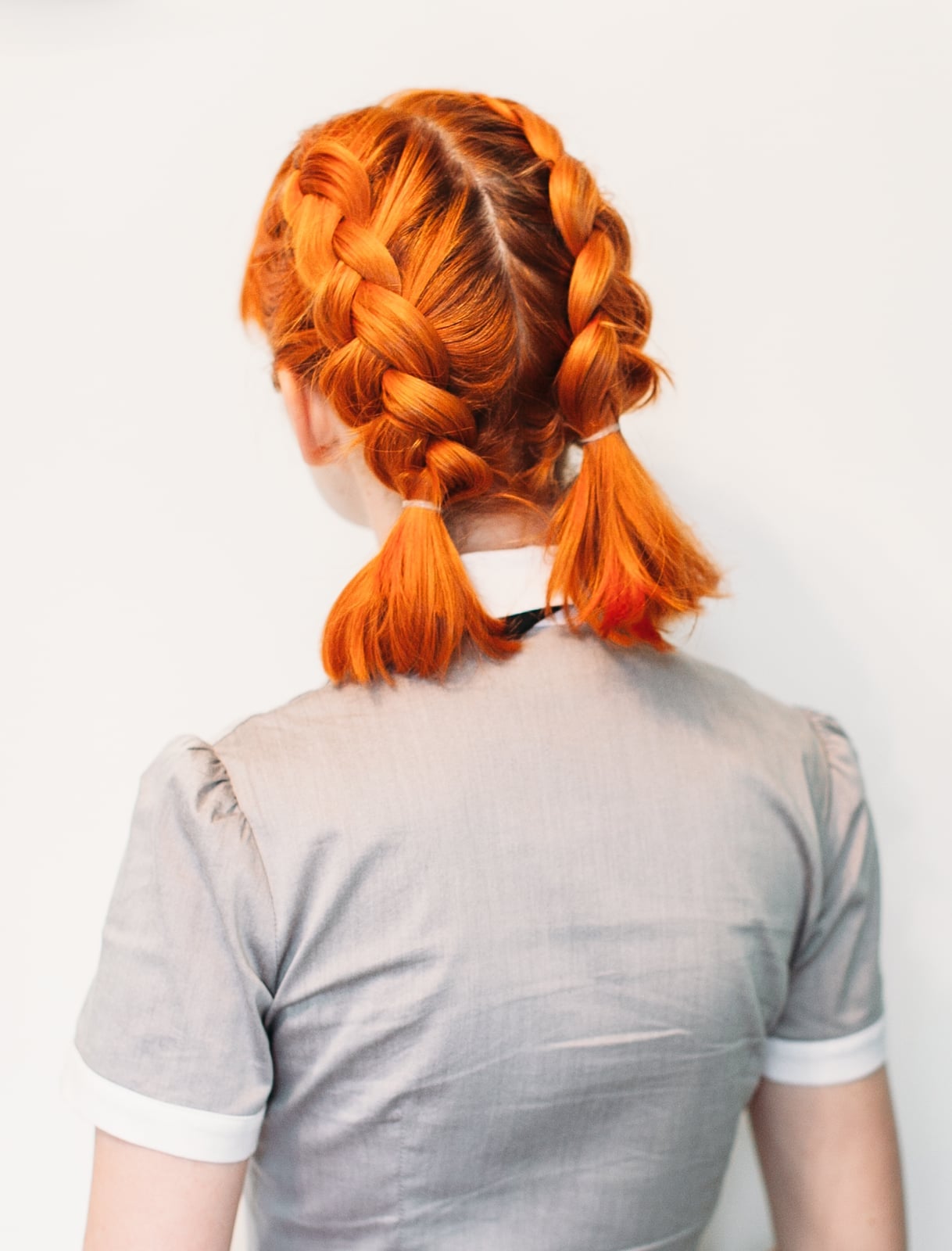
A Dutch braid is built by crossing sections under the middle strand, which makes it pop up off the scalp rather than lie flat. The intricate detail here comes from keeping tension even through thick, wavy hair that reaches mid-back. Ask your colorist for: intricate Dutch braids in medium brown hair. A rat tail comb for the middle parting is the only tool you need, plus about 25 minutes for both sides. The subtle lighter highlights catch the ridges and make the weave visible from across the room.
Neat Dark Brown French Braids Mid-Back
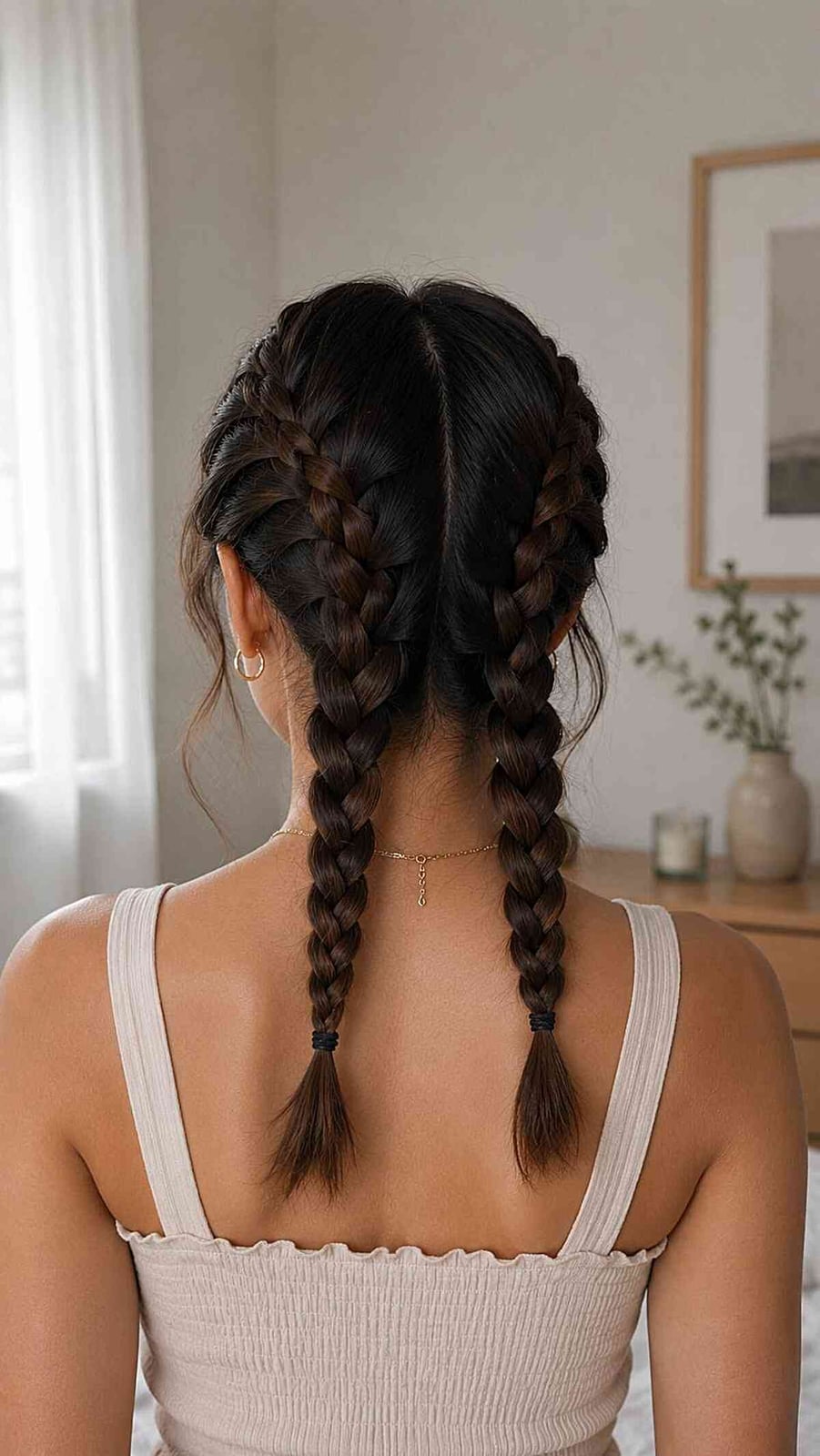
French braids often read as fussy, but these two neat, thick plaits in dark brown straight hair are the opposite of fussy. The middle part and mid-back length give them a tidy, no-nonsense frame that suits thick hair and oval or heart faces. Ask your stylist for: neat French braids to mid-back. You can handle this at home with a simple three-strand braid, though a salon version will be smoother and more even. Keep the ends from looking ragged with a trim every six to eight weeks.
Dark Brown Dutch Braids Looped Around Neck
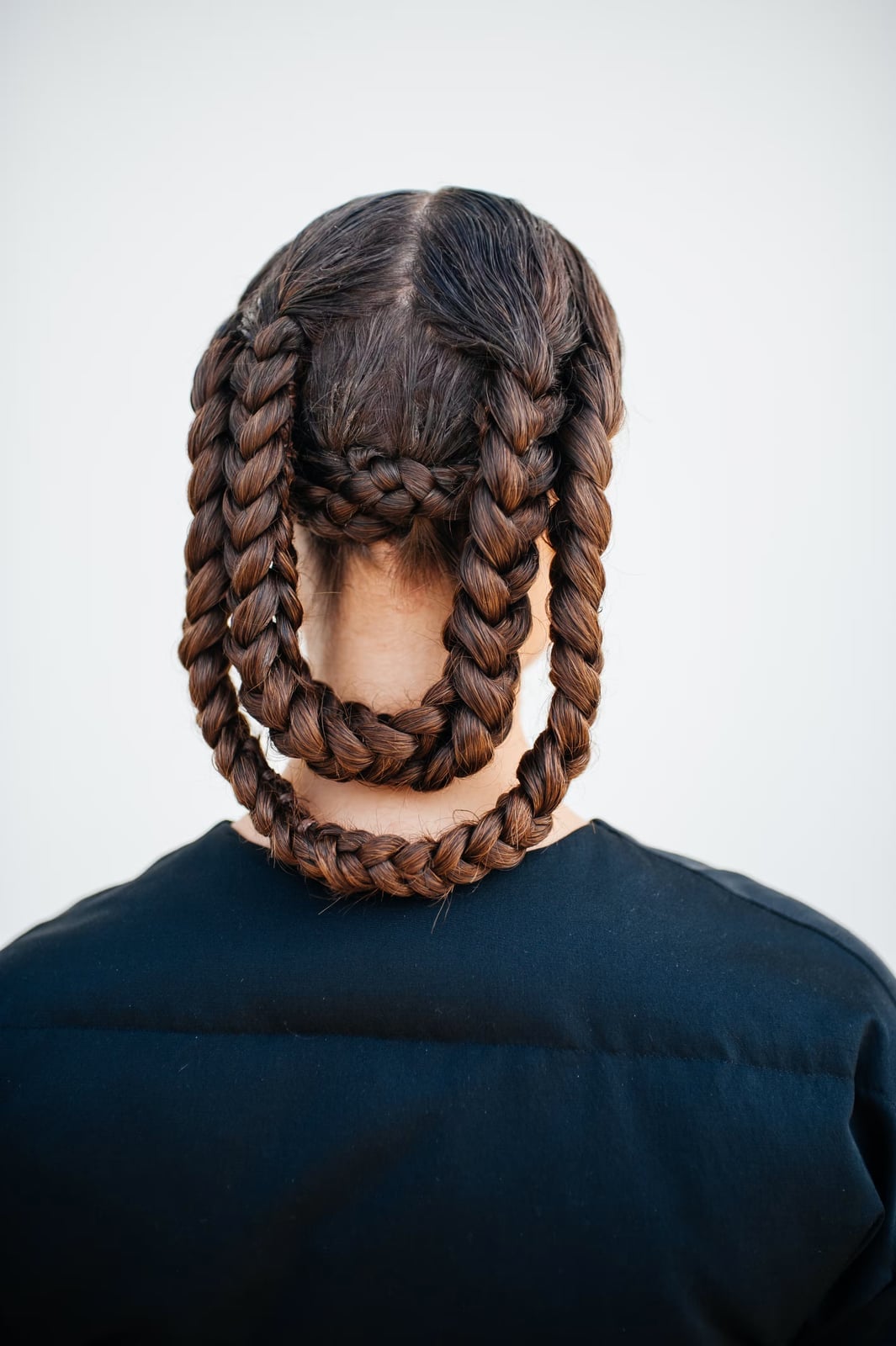
This one is a conversation piece: two thick Dutch braids in dark brown straight hair, started from a middle part and looped around the neck. The silhouette is dramatic, but it is also a commitment. The intricate braiding takes time and precision, so it leans salon-leaning, and the loop can feel heavy by the end of a long event. Ask your stylist for: Dutch braids looped around the neck. Thick, straight hair holds the shape best. Trim every eight to ten weeks to keep the ends clean.
Ash Blonde Dutch Braids with Bows
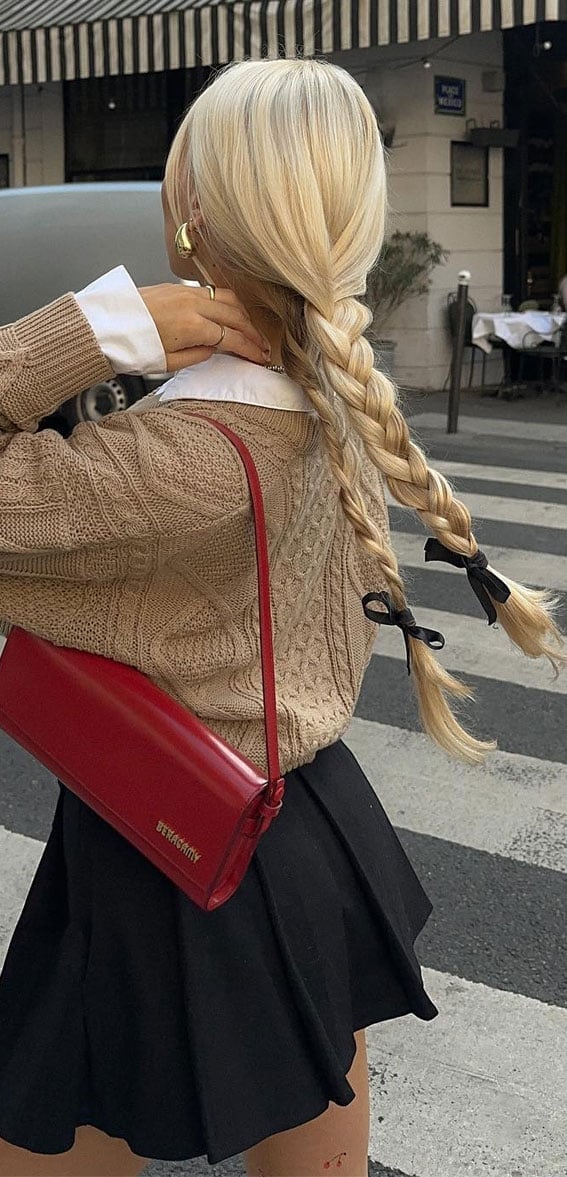
Black bows are the practical rule here: they turn a standard Dutch braid into an occasion piece. Two neat ash blonde braids fall down the back from a middle part, ending in pigtails tied with the bows. The fine, straight texture keeps the look polished rather than heavy. Ask your stylist for: ash blonde Dutch braids with black bows. This is a party-ready style, ideal for birthdays or holiday gatherings. Secure the bows with small elastics underneath so they stay put, and trim every six to eight weeks.
Collarbone Blonde French Braids Side View
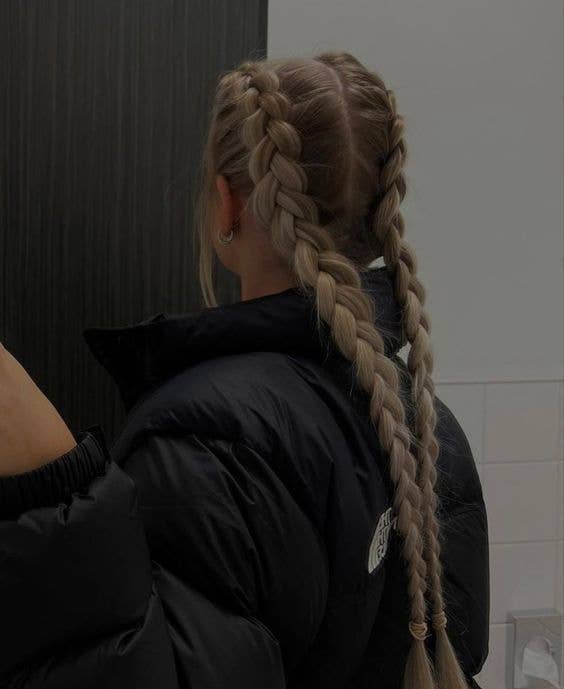
French braids usually read as formal, but stopping at collarbone length shifts them into everyday territory. Two neat braids in thick, straight blonde hair start at the front hairline and end at the collarbone, with a middle part. The shorter length means less weight, so the braids hold their shape without slipping. Ask your stylist for: neat French braids to collarbone. This suits thick hair and works for a workday or a weekend. Keep it tight for a sleek finish, and trim every eight to ten weeks.
Loose Collarbone Braids with Curtain Bangs

Two wavy braids in bright platinum blonde fall over the shoulders to collarbone length, and curtain bangs frame the face. The fine, wavy texture makes this a DIY-friendly style. Ask your stylist for: loose braids to collarbone, curtain bangs. Blow-dry the fringe with a round brush, then spritz a texturizing spray on the braids for grip. This is a festival or casual outing look. Trim every six to eight weeks to keep the bangs in shape.
Final Thoughts
For thick, wavy hair, focus on maintaining braid definition with a smoothing serum and commit to a trim every 8-10 weeks to manage split ends. Fine hair benefits from a texture spray before braiding to add grip and prevent slippage.
- Trim split ends every 8-10 weeks.
- Apply a smoothing serum to tame frizz before braiding.
- Use heat protectant if styling with heat tools.
- Wash hair every 2-3 days to maintain braid structure.
Embrace the playful power of pigtail braids.