20 Simple Chestnut Hairstyles 2027 with Curtain Bangs

Chestnut hair sits in that sweet spot between brown and auburn, warm enough to add depth without screaming for attention. Soft face-framing layers and curtain bangs have pushed out the heavy side-swept fringes of previous seasons, making this shade feel current rather than borrowed.
This collection of 20 looks covers the range from blunt bobs to mid-back waves, with options for fine hair that needs density and thick hair that can handle movement. Whether you are trying to hide a grow-out line or just want a fringe that cooperates, these cuts offer a practical starting point. Simple Chestnut Hair works because it asks for very little and delivers a lot.
Mid-Back Wavy Hair With Curtain Bangs
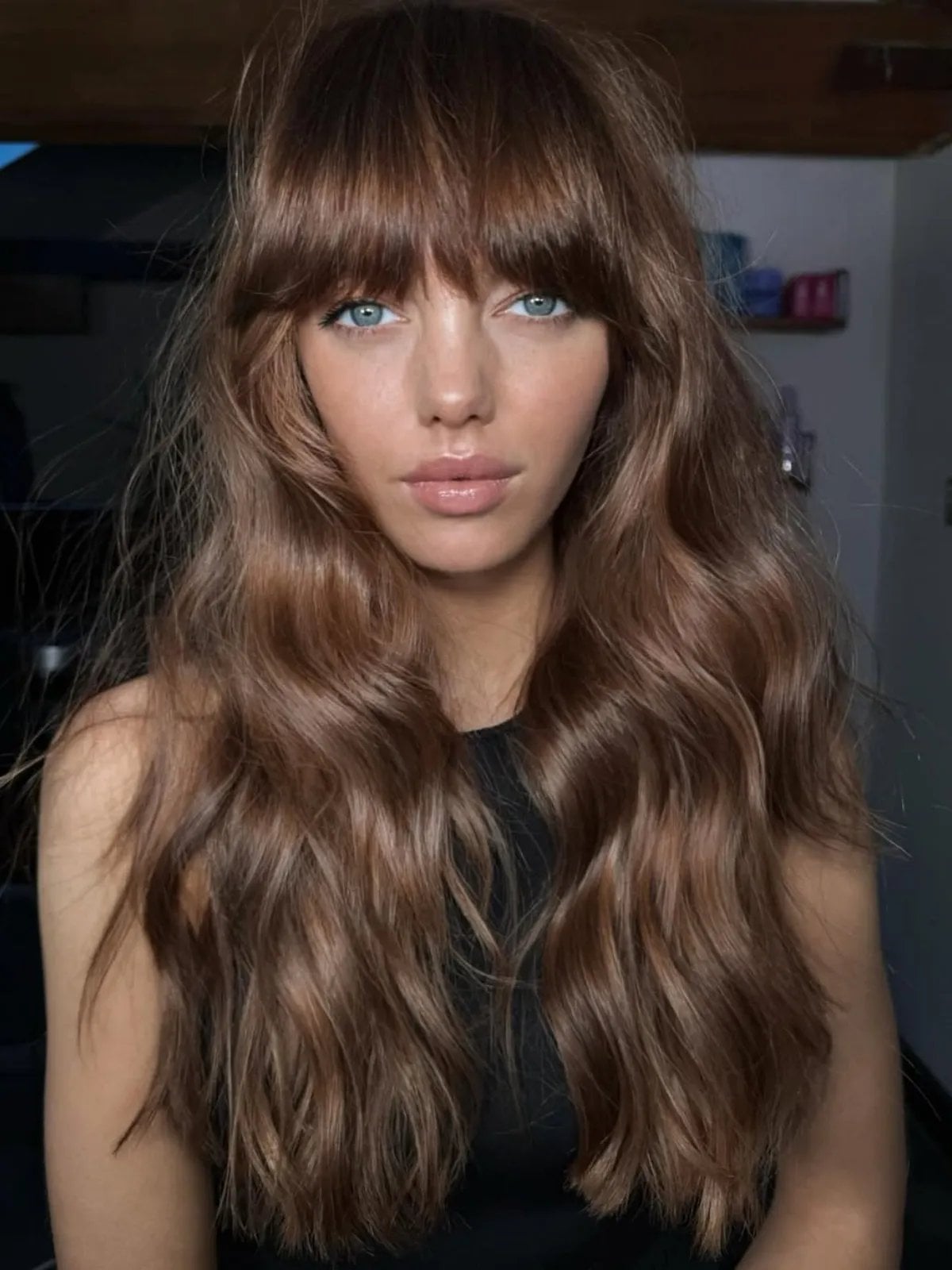
This cut is really just about the curtain bangs while the mid-back length stays in soft layers. It works best on medium to thick wavy hair that already reaches at least the mid-back, anything shorter and the bangs lose their sweeping shape. The air-dried texture is the point here, not a polished blowout, so the layers land naturally around the face instead of falling flat. Ask your stylist for: mid-back length with soft curtain bangs, chestnut color with subtle dimension. Damp hair gets texturizing spray for structure without crunch, and plan on trimming those bangs every four to six weeks to keep them from sliding into your coffee.
The middle part keeps everything symmetrical, which matters more with curtain bangs than with full fringes. If your hair is fine or thin, the mid-back length can pull the bangs flat by midday, a quick dry shampoo at the root solves that. The subtle lighter highlights in the chestnut base add just enough dimension so the waves don’t blur into one solid block of color.
Collarbone Lob With Curtain Bangs
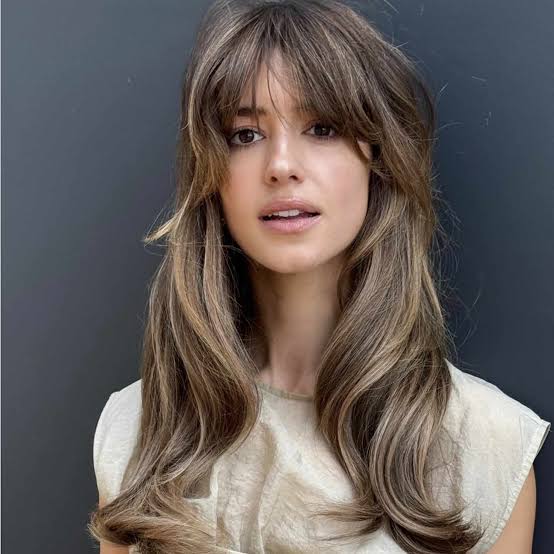
Wondering how to get that collarbone lob that looks like it grew out perfectly on purpose? The trick is in the layering, soft internal layers throughout the length so the hair bends into loose waves without looking chopped. The curtain bangs are cut to graduate from nose length at their longest point, blending into the sides rather than stopping abruptly. Ask your stylist for: collarbone lob, curtain bangs, chestnut with lived-in highlights. The highlights are placed closer to the ends, which means the roots stay dark and the grow-out phase is basically invisible for the first eight weeks.
Long Layers With Wispy Curtain Bangs
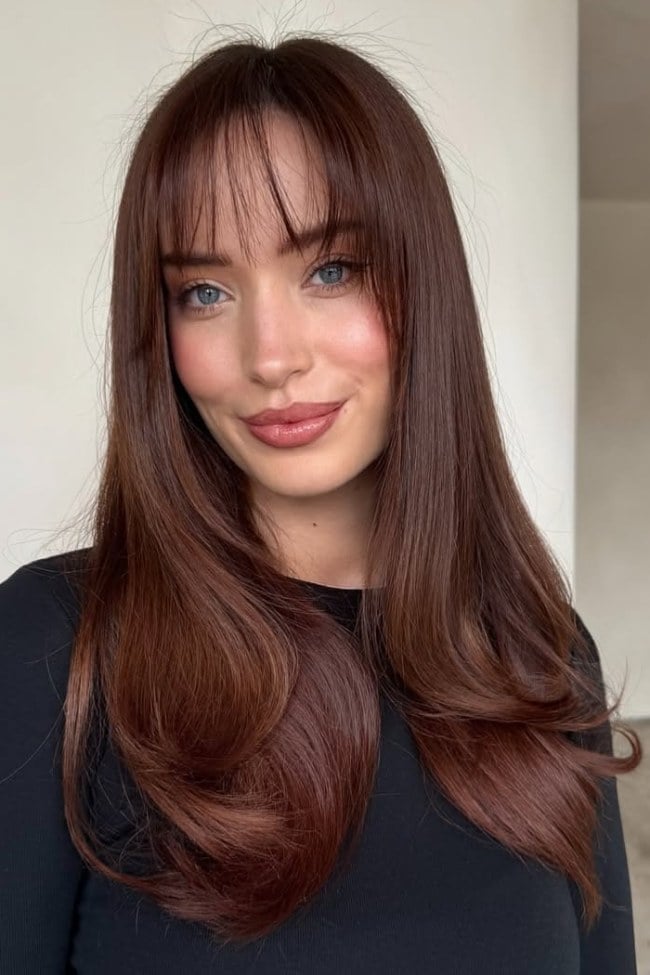
Heavier curtain bangs can feel like too much commitment on long hair, but wispy ones let you keep the length without the weight. Where a full fringe demands weekly trimming, these are cut with a light hand, feathering out at the temples so they blend into the long layers rather than forming a distinct line. The middle part is non-negotiable here; a side part would break the symmetry that makes the wispy ends work. Ask your stylist for: long hair with long layers, wispy curtain bangs, smooth blowout. The chestnut brown color is a single shade with no highlights, which keeps the finish glossy and uniform, contrast this with the dimensional lobs and bobs that rely on lighter pieces for movement.
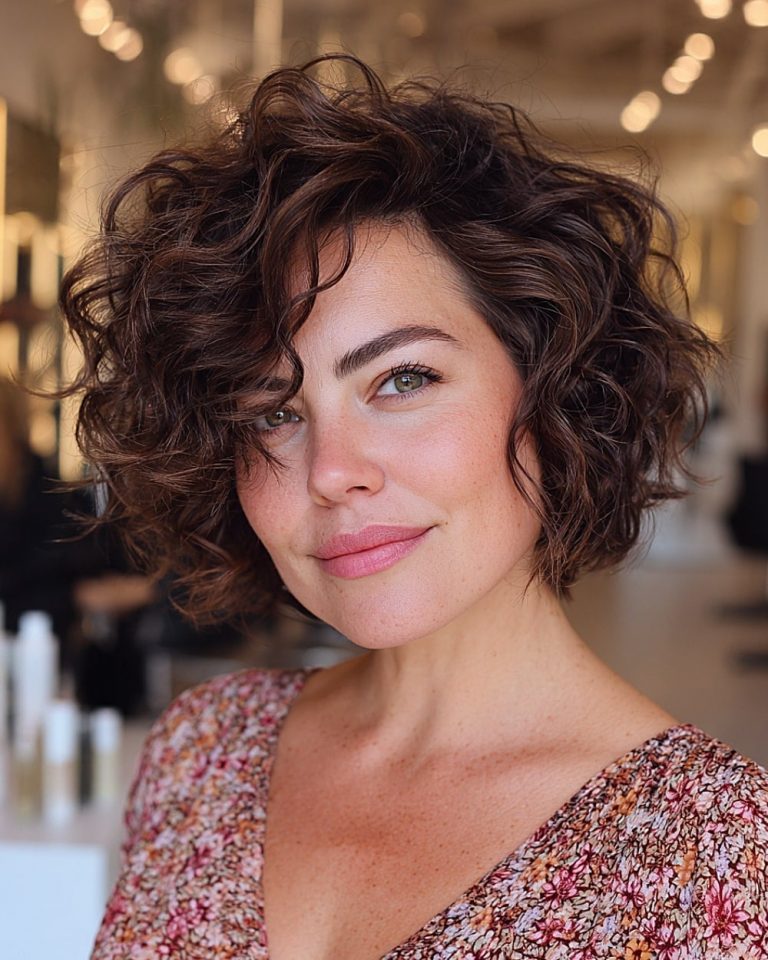
Textured Bob With Face-Framing Bangs
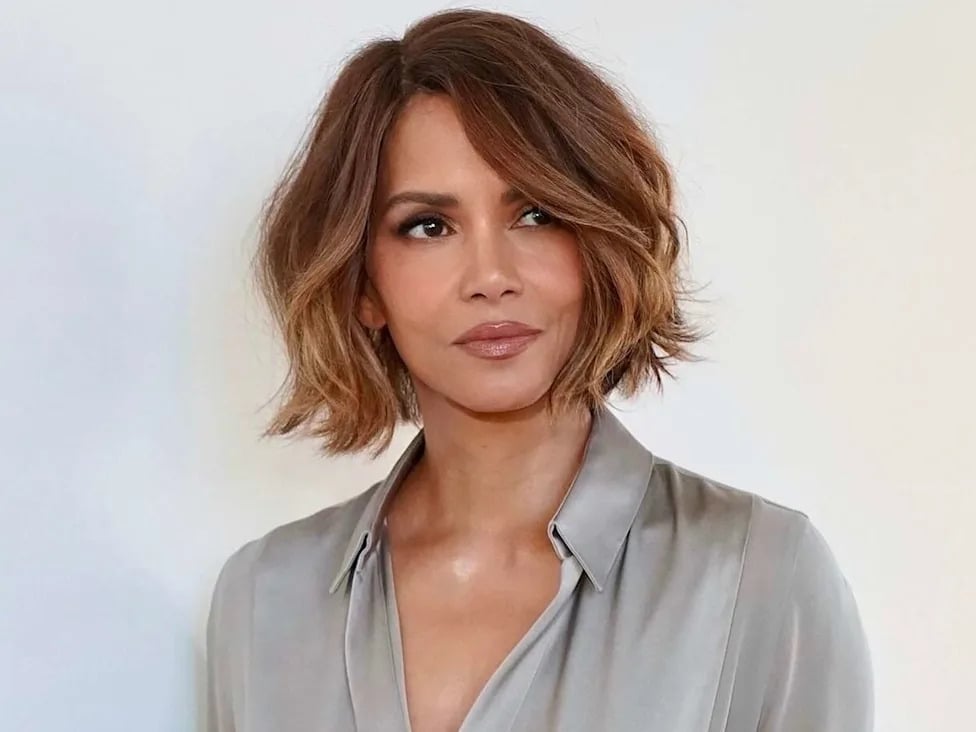
A chin-length bob with face-framing curtain bangs sounds straightforward, but the texture is what gives it shape. The layers are cut into the interior of the bob so the hair bends in soft waves instead of sitting in a solid wedge. The chestnut base has subtle lighter balayage pieces that reflect light around the face, which helps when your hair is on the fine side and needs the illusion of volume. Ask your stylist for: chin-length textured bob, face-framing curtain bangs, chestnut balayage. Fine hair can still look sparse if the layers are cut too aggressively. A good stylist keeps the interior weight while removing just enough to create movement.
Collarbone Layers With Face-Framing Bangs
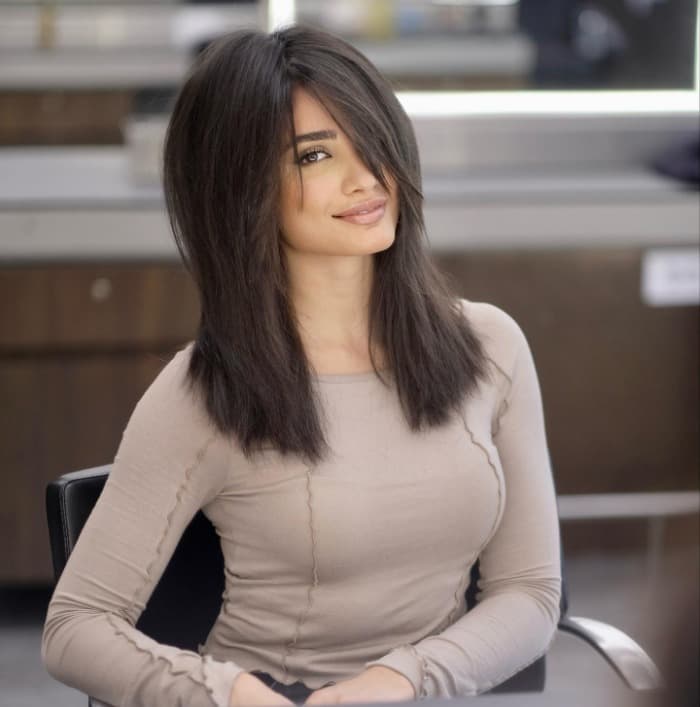
The side part changes everything here. Instead of the usual middle parting that lets curtain bangs fall evenly, this cut uses a deep side part and shorter face-framing pieces on one side, with the rest of the collarbone layers staying longer. The effect is more asymmetric, which works well on thick, straight hair that can hold a polished blowout without frizz. Ask your stylist for: collarbone length layers, face-framing curtain bangs, dark brown. The dark brown color is solid, so the shape and the side part do all the dimensional work. A single-tone cut like this needs precise layering to avoid looking flat, especially on hair that resists a natural bend.
Collarbone Lob With Side Part
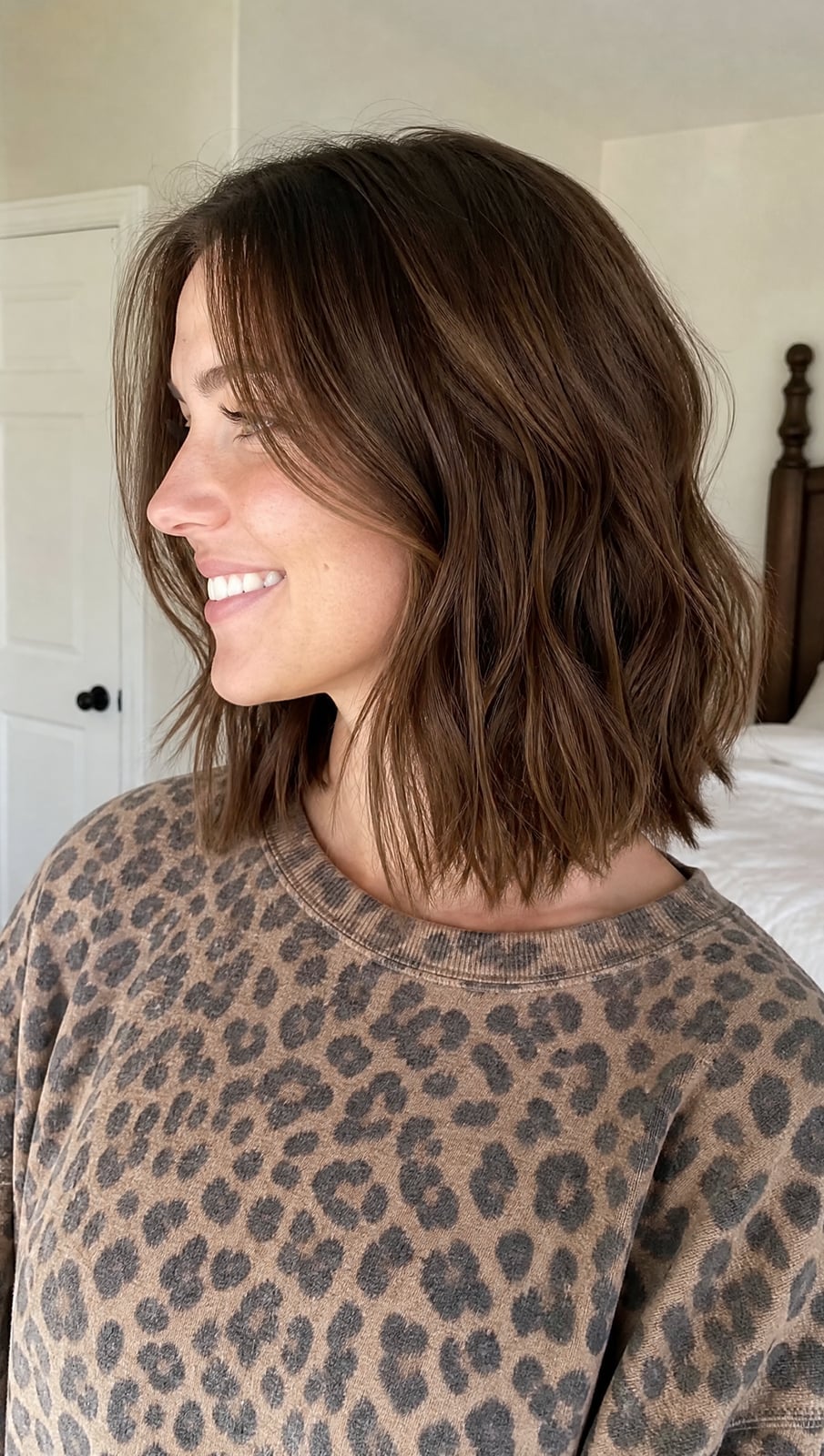
The collarbone lob with a side part is a study in controlled effort: the parting gives the face-framing layers a clear direction, so they sweep rather than just hang there. It suits fine to medium wavy hair, where a side part adds a bit of lift at the root without any backcombing. Ask your stylist for a collarbone lob with soft curtain bangs and a side part. To keep the shape honest, plan a trim every six to eight weeks, since the layers start to lose their angle around then.
Chin Length Bob With Blunt Bangs
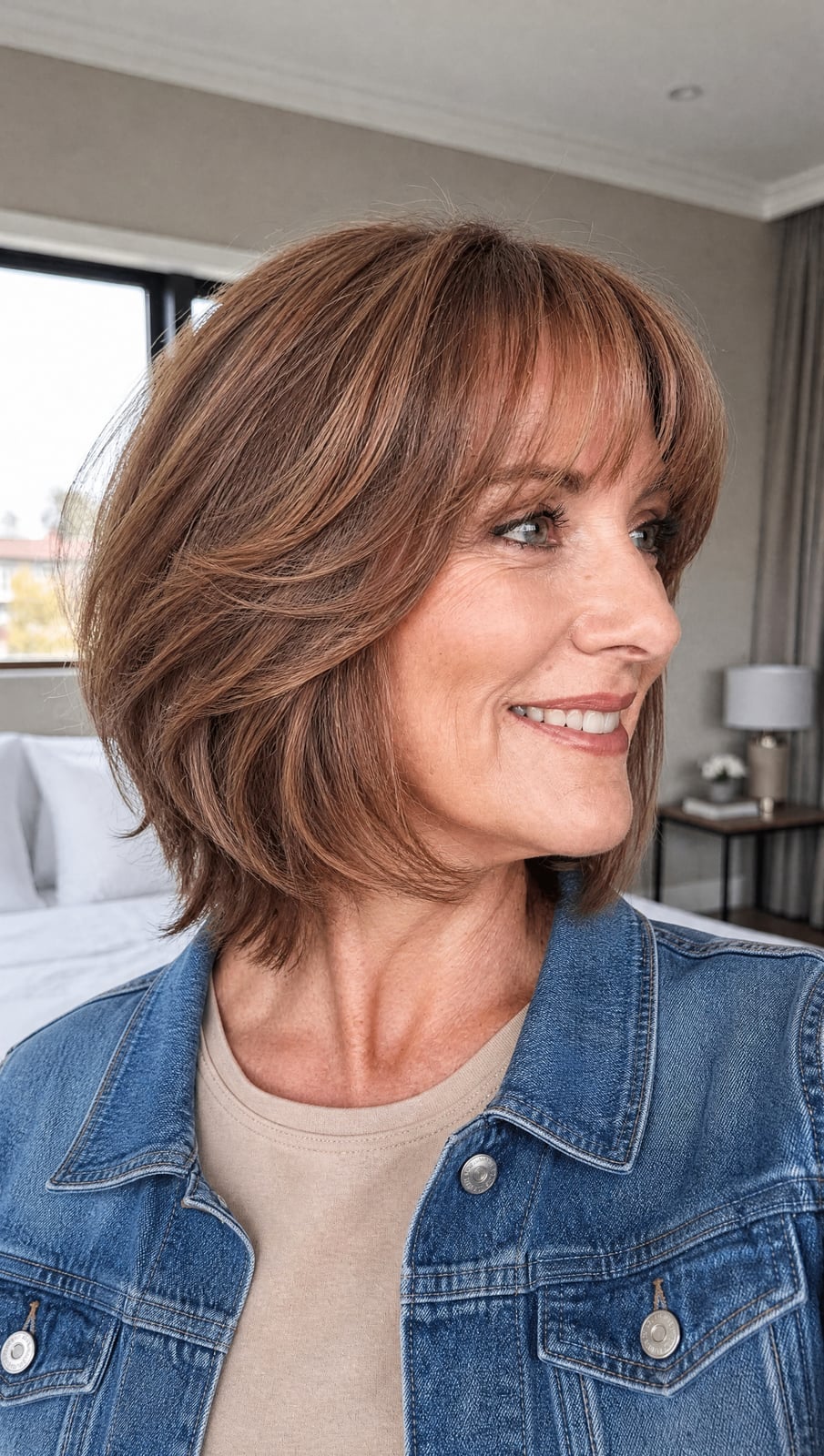
Blunt bangs are a commitment, not a suggestion. The mistake is treating them like any other fringe and letting them grow past the brow, which turns the whole bob into a droopy triangle. This cut suits fine straight hair, where the blunt line adds the illusion of density. Ask your stylist for a chin-length bob with blunt bangs in a warm chestnut color. Keep both the bob and the bangs on a four to six week trim schedule, and use a round brush to coax that inward curl at the ends.
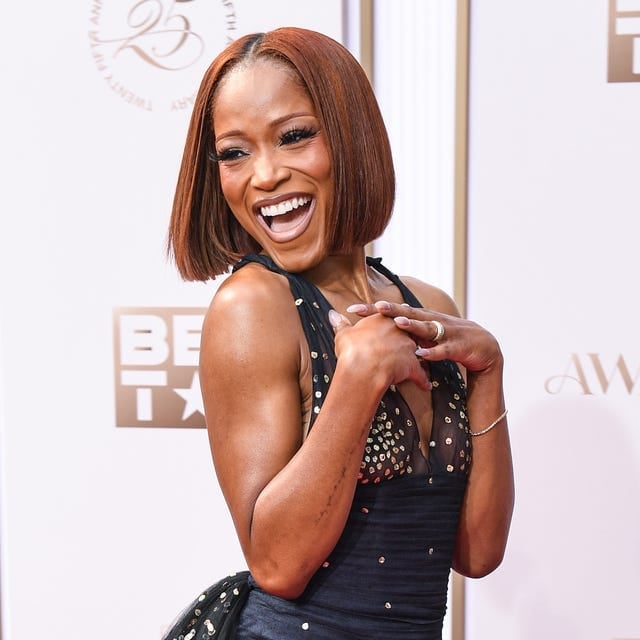
Sleek Chin Length Blunt Bob, Chestnut Brown
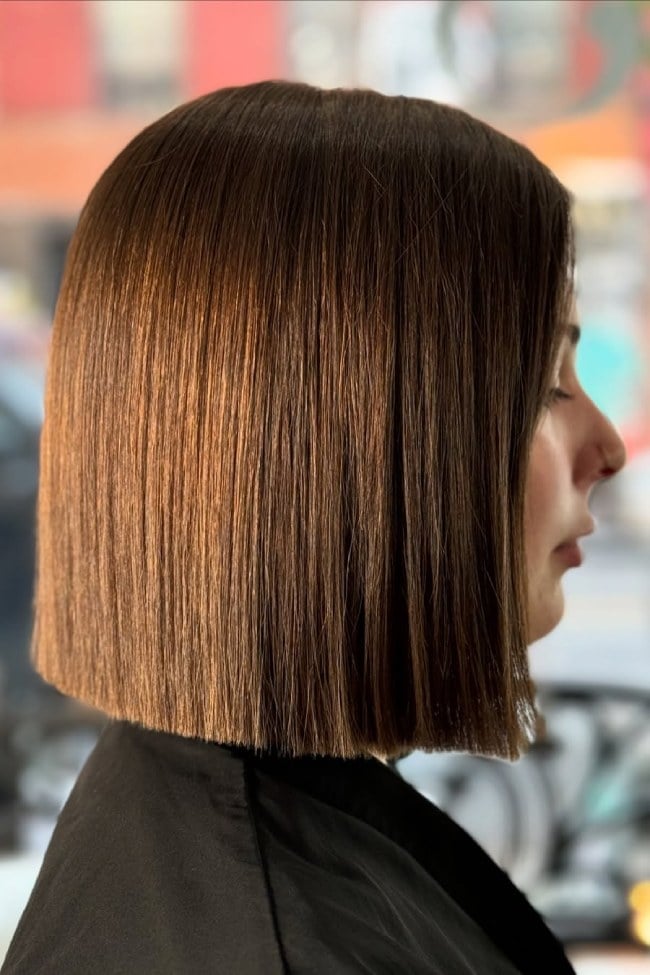
This is the bob for warmer months and any room with a dress code. The sharp, precise cut does the talking, so skip the elaborate styling and let the solid chestnut brown color carry the look. It works best on fine straight hair, where the sleek line appears polished, not flat. Ask your stylist for a chin-length sleek blunt bob in solid chestnut brown. A drop of smoothing serum keeps it polished, but the real upkeep is the trim every four to six weeks; a blunt edge has no patience for growth.
Mid-Back Hair With Wispy Bangs
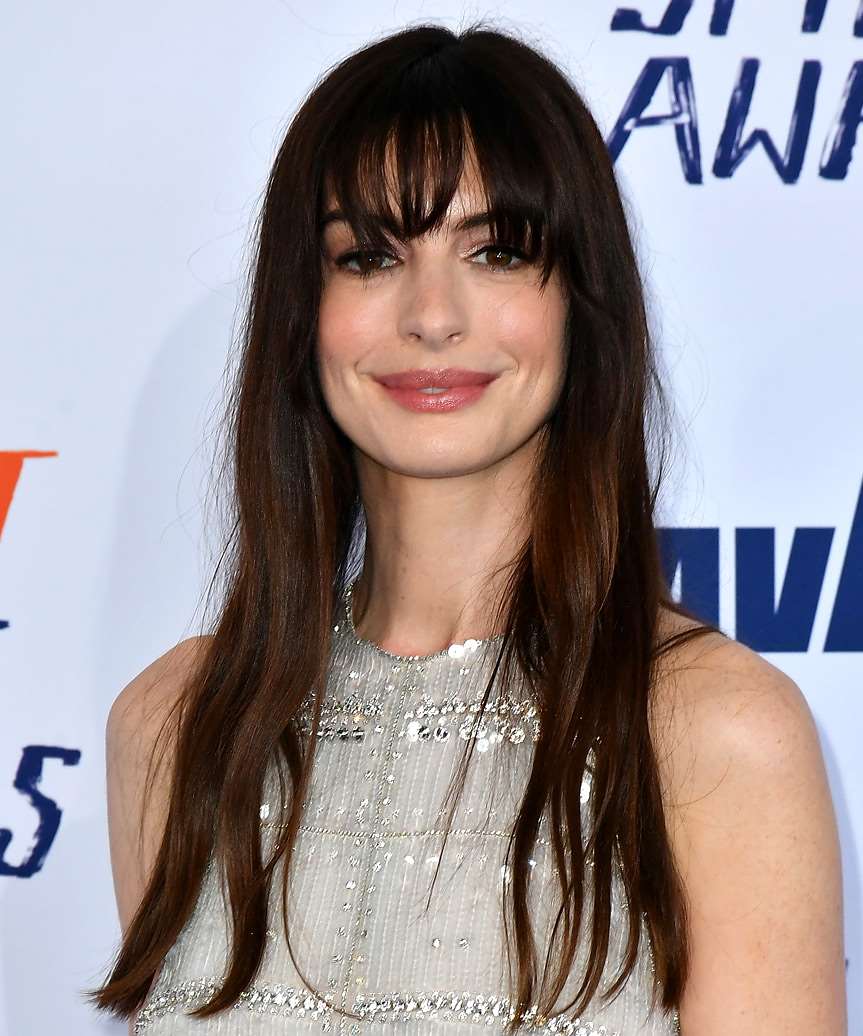
Wispy bangs are a technical feat disguised as a low-key choice. The goal is a fringe so light it disappears into the hair, and that takes a stylist who understands how to point-cut instead of slicing straight across. On medium-density straight hair at mid-back length, the soft layers underneath give the wispy bangs something to blend into. Ask your stylist for mid-back length with soft layers and wispy bangs in a deep chestnut brown. You could try to DIY the bangs at home, but the margin for error is thin; one wrong snip and you are back to blunt. A flat iron keeps the straight finish smooth, and the bangs need a trim every few weeks to stay wispy instead of shaggy.
Mid-Back Waves With Face-Framing Layers
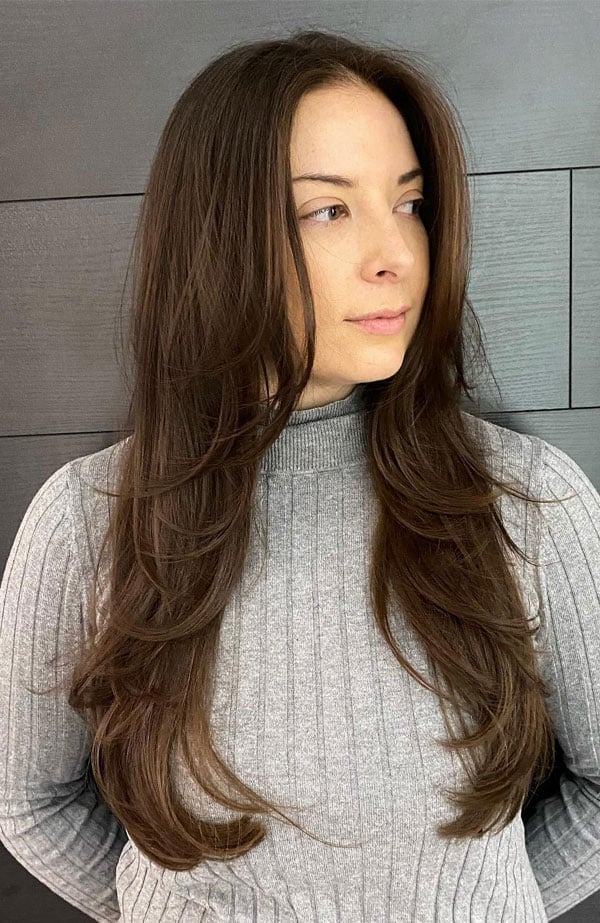
Does face-framing layers actually make fine hair look fuller, or is that just something stylists say? In this case, the answer is yes, but only if the layers start around the chin and stay soft. On fine wavy hair at mid-back length, that placement adds movement and a hint of volume without sacrificing the density you have left. Ask your stylist for mid-back length with face-framing layers starting at the chin in chestnut brown. Air-dry with a curl-enhancing product, or scrunch dry for a more defined wave, and trim every six to eight weeks to keep the layers from growing into one shapeless curtain.
Mid-Back Blowout With Subtle Highlights
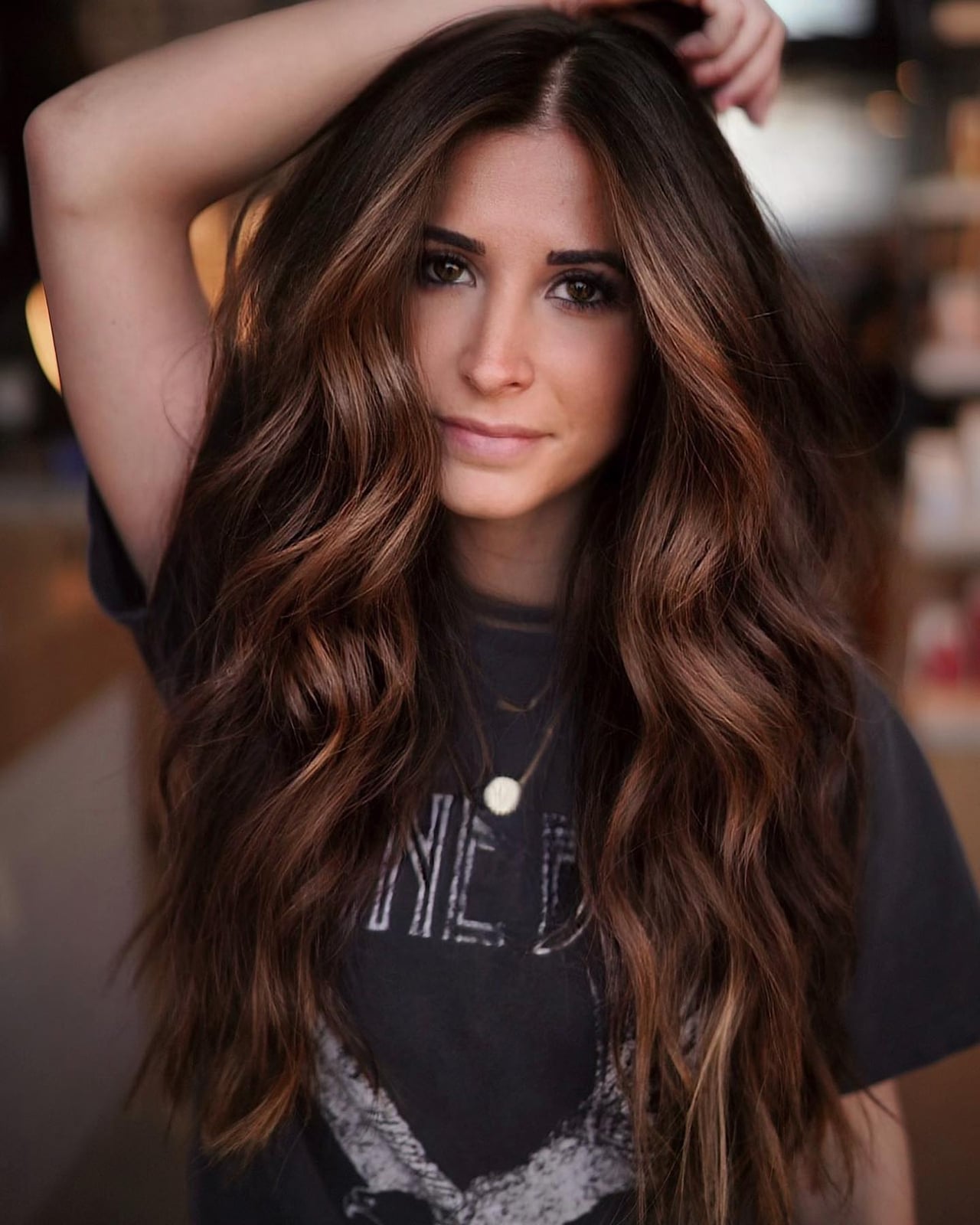
The difference between a solid chestnut and one with subtle highlights is the difference between a flat brown and a color with visible dimension. This mid-back blowout keeps a smooth finish, so the lighter pieces register as depth. Medium wavy hair at this length benefits from the round-brush technique that builds volume at the crown without losing the soft wave pattern.
Ask your stylist for: mid-back length, smooth blowout, subtle highlights in chestnut. The highlights here are fine and spaced close to the base color, which means they fade gently without a harsh grow-out line. A trim every eight to ten weeks keeps the ends healthy enough to hold the blowout shape between washes.
Mid-Back Loose Waves With Warm Tones
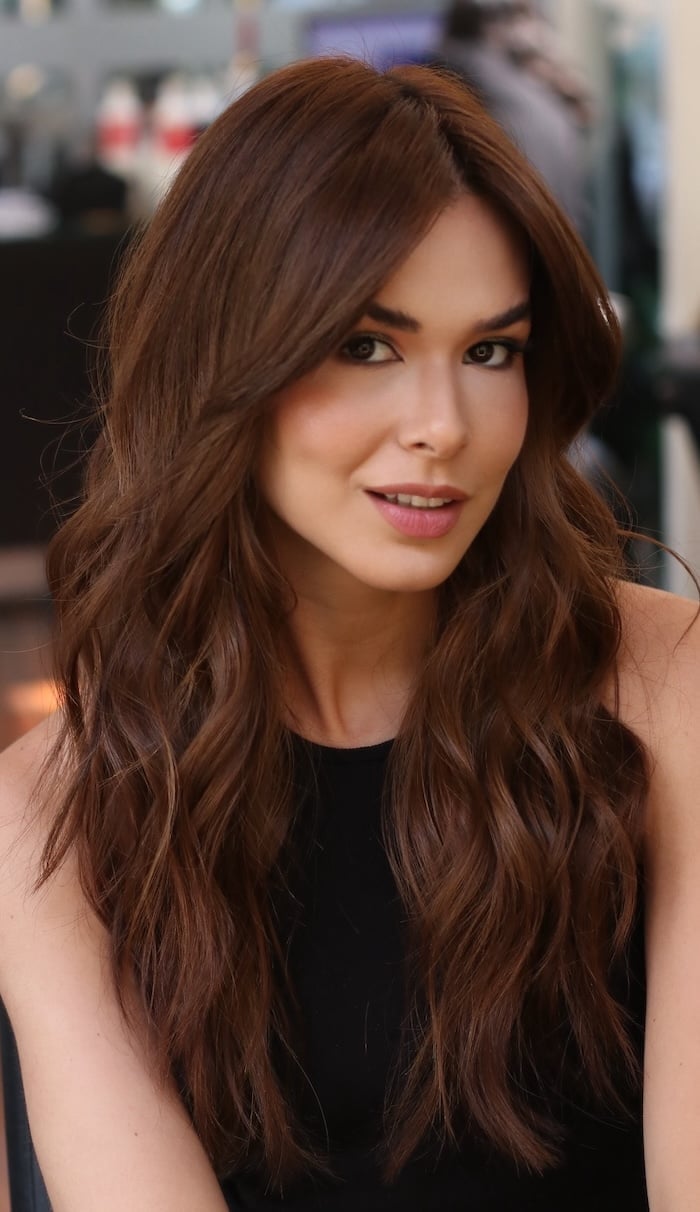
Natural brunette bases can read flat under indoor light, which is where warm chestnut tones earn their keep. This mid-back length uses long layers and a side parting to let the loose waves move freely, and the warmth sits in the mid-lengths. Medium density wavy hair holds this texture with low heat and a scrunch of texturizing cream. The upkeep is minimal: a trim every eight to ten weeks keeps the ends from fraying, and the warm tone needs a gloss treatment every six to eight weeks to stay vibrant.
Mid-Back Waves With Highlighted Chestnut
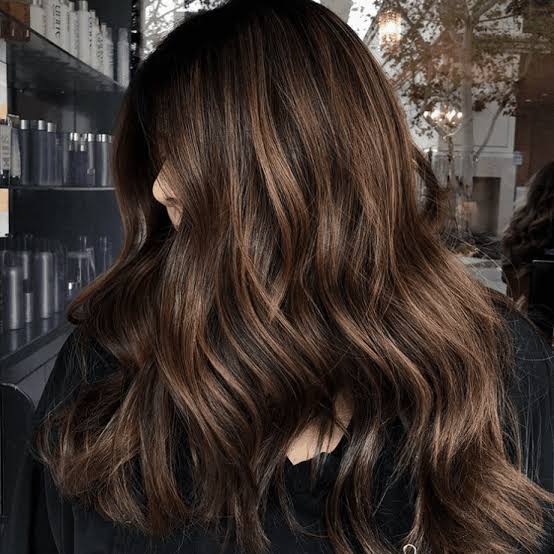
When you ask for lighter pieces in a deep chestnut base, the placement matters more than the tone. The rule: specify face-framing sections and a few scattered pieces through the mid-lengths, nothing woven into the roots. This side-parted, mid-back length uses thick wavy texture to diffuse the highlights so they catch light without looking stripey.
Ask your colorist for: deep chestnut base with subtle lighter pieces. The contrast should be close enough that the highlights look like a sunlit version of your natural color, not a separate shade. For the cut, request long layers that start below the jaw so the wave pattern stays intact. The visual result is dimension without the commitment of a full balayage.
Glossy Mid-Back Waves With Highlights
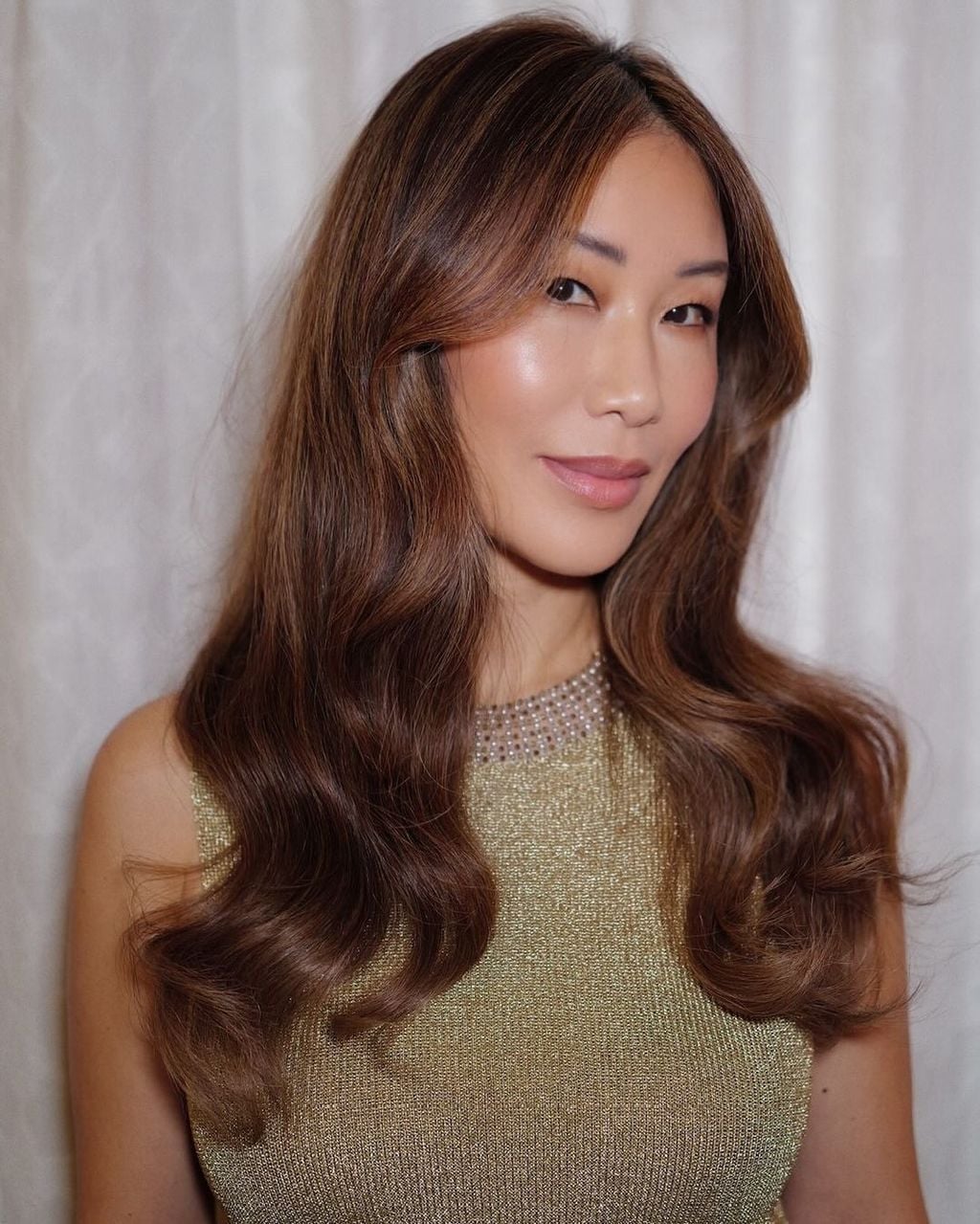
A glossy finish on thick wavy hair requires either a silicone-based serum or a regular gloss treatment, because the cuticle on wavy strands is naturally more lifted than on straight hair. This mid-back length delivers on shine, but the glossy look is a same-day commitment: by the second day, the wave pattern softens and the shine dulls. Thick hair at this length can handle the weight of a heavy gloss product without looking greasy, which is the main reason to skip this finish if your hair is fine. The warm chestnut base with subtle highlights reads richer under the gloss, so the color work earns its keep in the first eight hours after styling.
Collarbone Layers With Dimensional Color
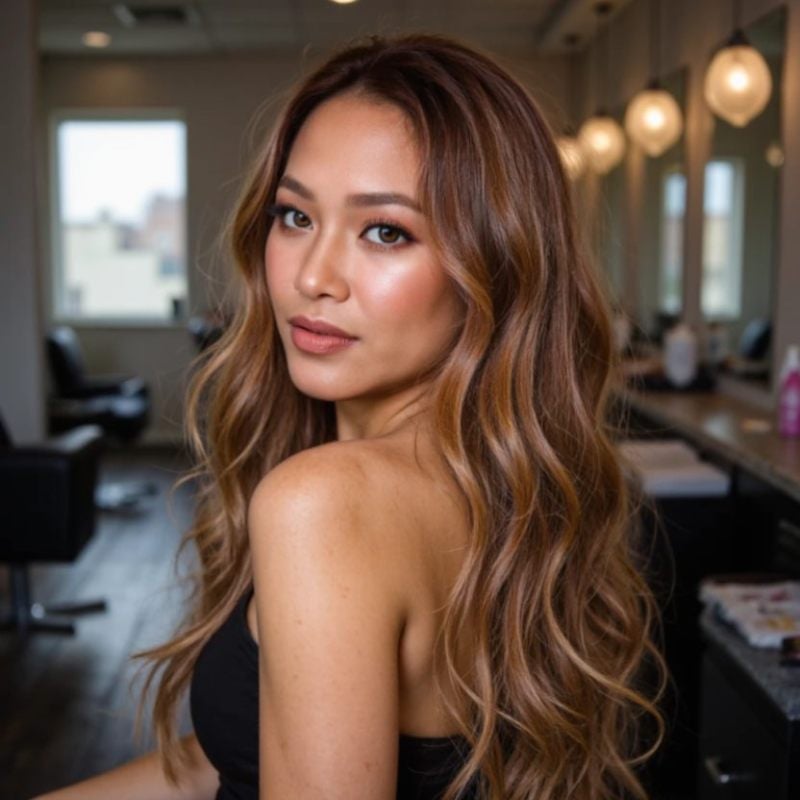
Dimensional chestnut color at collarbone length works because the shorter canvas lets each highlight register clearly. The technique here involves weaving fine lighter pieces through the top layers and keeping the underlayer solid, so the hair has depth when it moves. A side parting and soft waves direct the lighter pieces forward, which is useful for medium density hair that needs visual fullness at the front. Ask your colorist for: collarbone length layers, soft waves, dimensional chestnut color. The layers should be subtle enough that the ends stay blunt, because too much layering at this length can make fine hair look sparse.
Long Thick Hair With Soft Layers
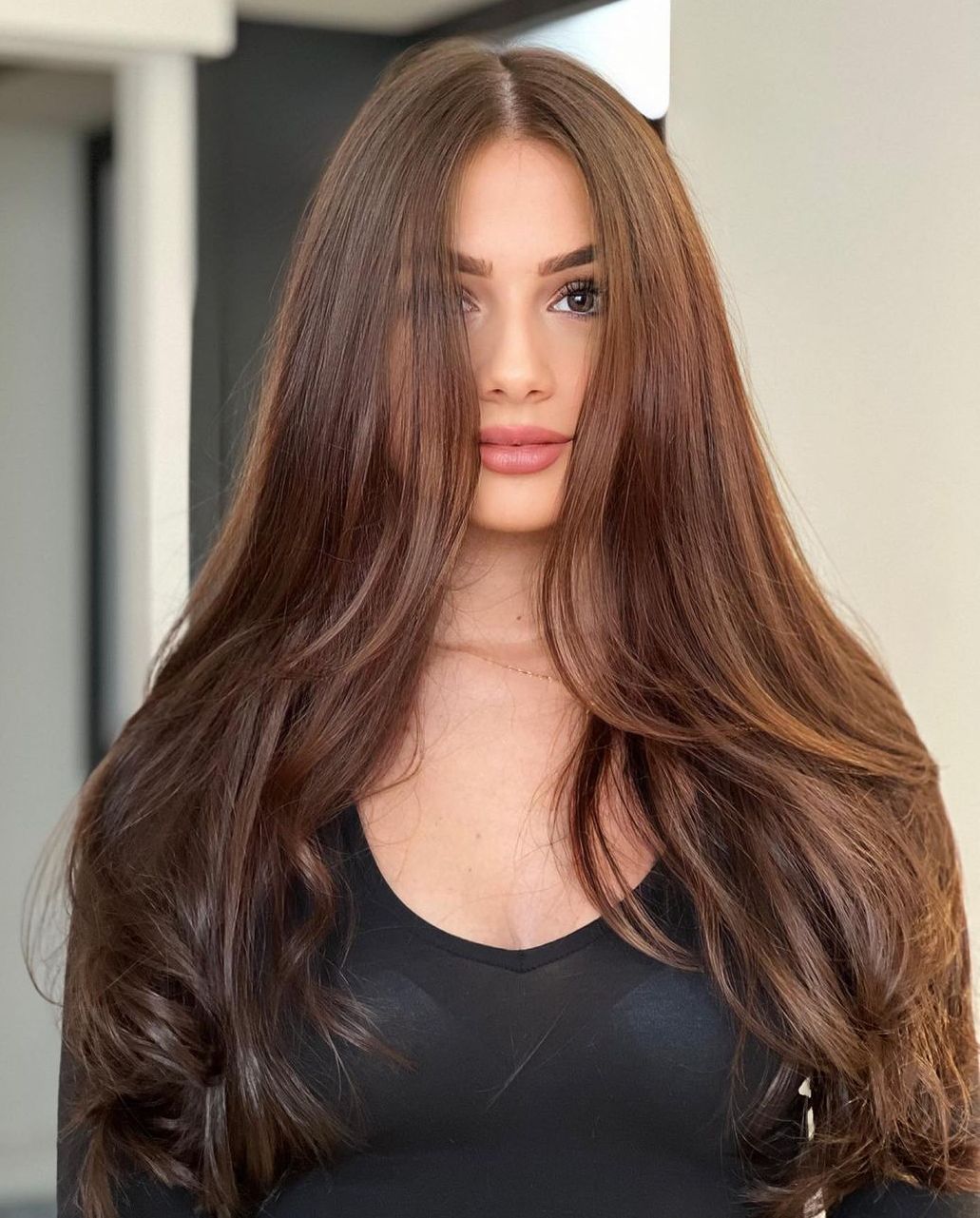
This is not a one-length blanket of hair. The soft long layers here carve out movement without sacrificing the density that thick hair is known for. The chestnut brown reads as solid from a distance, but the subtle shifts in tone along the waves keep it from looking flat.
Thick hair at mid-back length or longer is the obvious candidate. The layers prevent the weight from pulling the shape into a triangle, and a middle part keeps the volume distributed evenly. Ask your stylist for: long thick hair, soft long layers, subtle chestnut brown. A blowout with a large round brush adds smoothness and shape, and a trim every eight to ten weeks prevents the ends from overtaking the layers.
Mid-Back Natural Waves With Rich Color
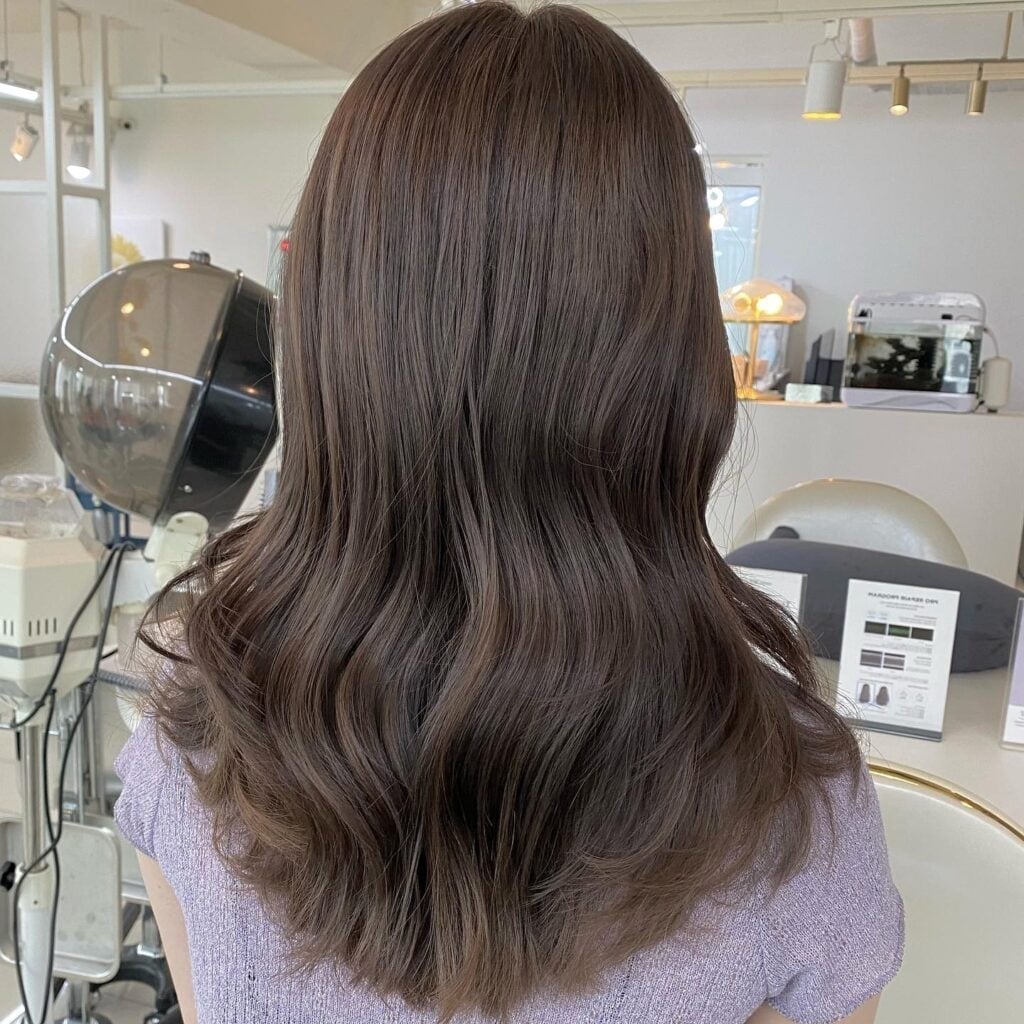
A rich chestnut brown that shows its depth best when the hair is allowed to do its own thing. The long layers and middle parting let the natural wave pattern express itself without interference, and the back view confirms the density is all real.
Thick wavy hair at mid-back length has the weight to hold this shape without product. The waves need room to move, and long layers give them that. Ask your stylist for: mid-back length, natural waves, long layers, rich chestnut brown. Air-drying is the default here, though a diffuser on low heat can speed things up without collapsing the curl. A trim every eight to ten weeks keeps the layers defined.
Voluminous Mid-Back Blowout
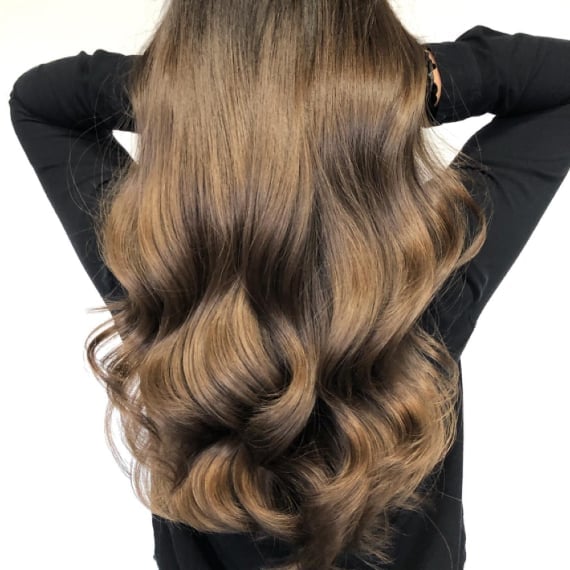
A glossy, uniform chestnut blowout suits a dinner reservation more than a Zoom call. The layers hold volume at the crown, and the back view shows the length working toward a single polished shape. Ask your stylist for: mid-back length, voluminous blowout, rich uniform chestnut. Book this look for cooler weather, when a smooth finish stands out and the shine cuts through the low sun.
Long Layers With Reddish Undertones
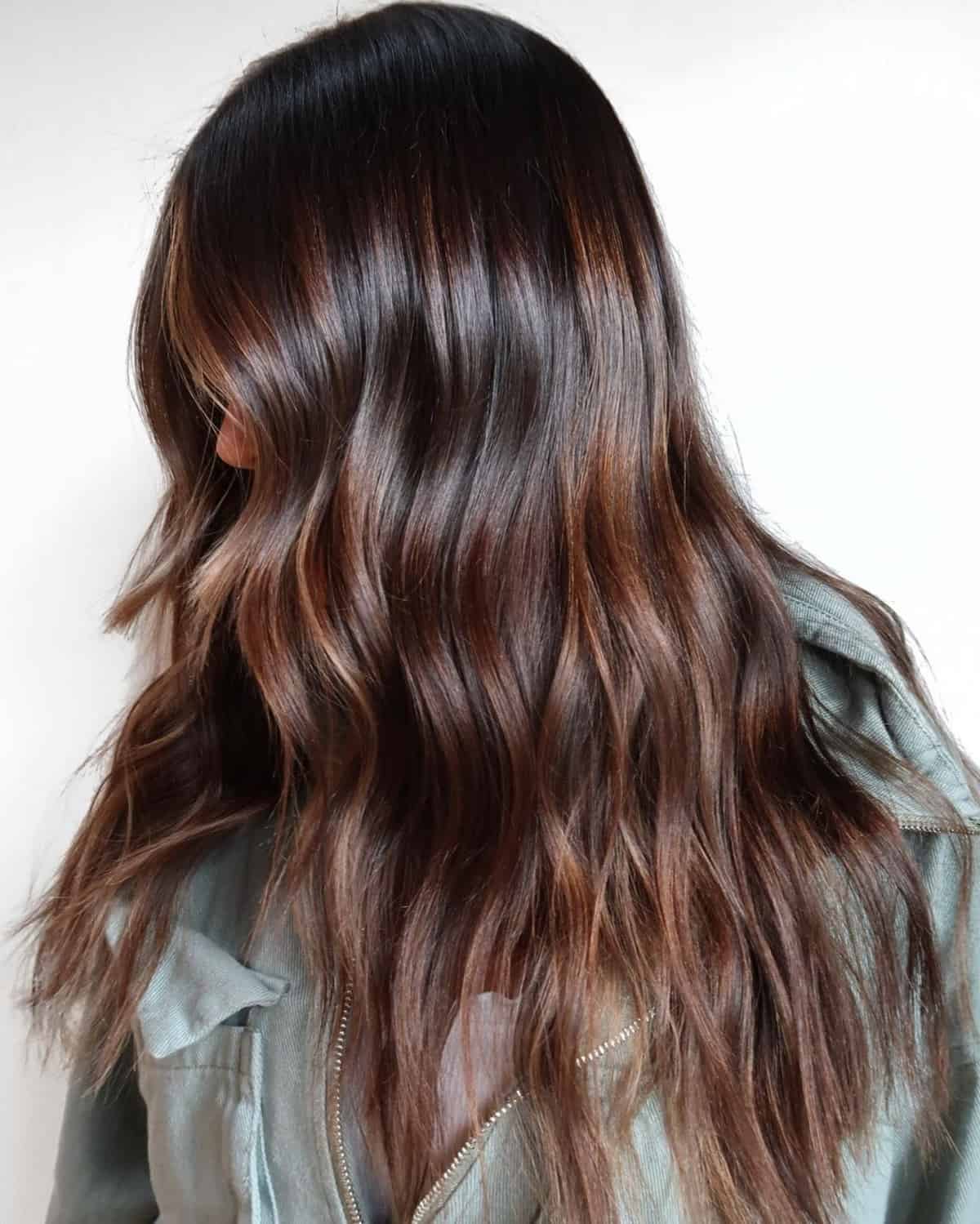
The mistake is assuming reddish undertones stay put without help. This deep chestnut brown catches the light with a warm flicker that disappears if the color is not maintained. The long layers and loose waves give the reddish notes room to reflect, but the fade is real.
Medium-thick hair at mid-back length or longer carries the warmth without looking brassy. The key is asking for the undertone to be built into the base, not painted on top. Ask your colorist for: long layers, loose waves, deep chestnut with subtle red undertones. A color-depositing conditioner used once a week keeps the red from turning orange, and a trim every eight weeks keeps the layers from tangling at the ends.
Mid-Back Curls With Rich Color Depth
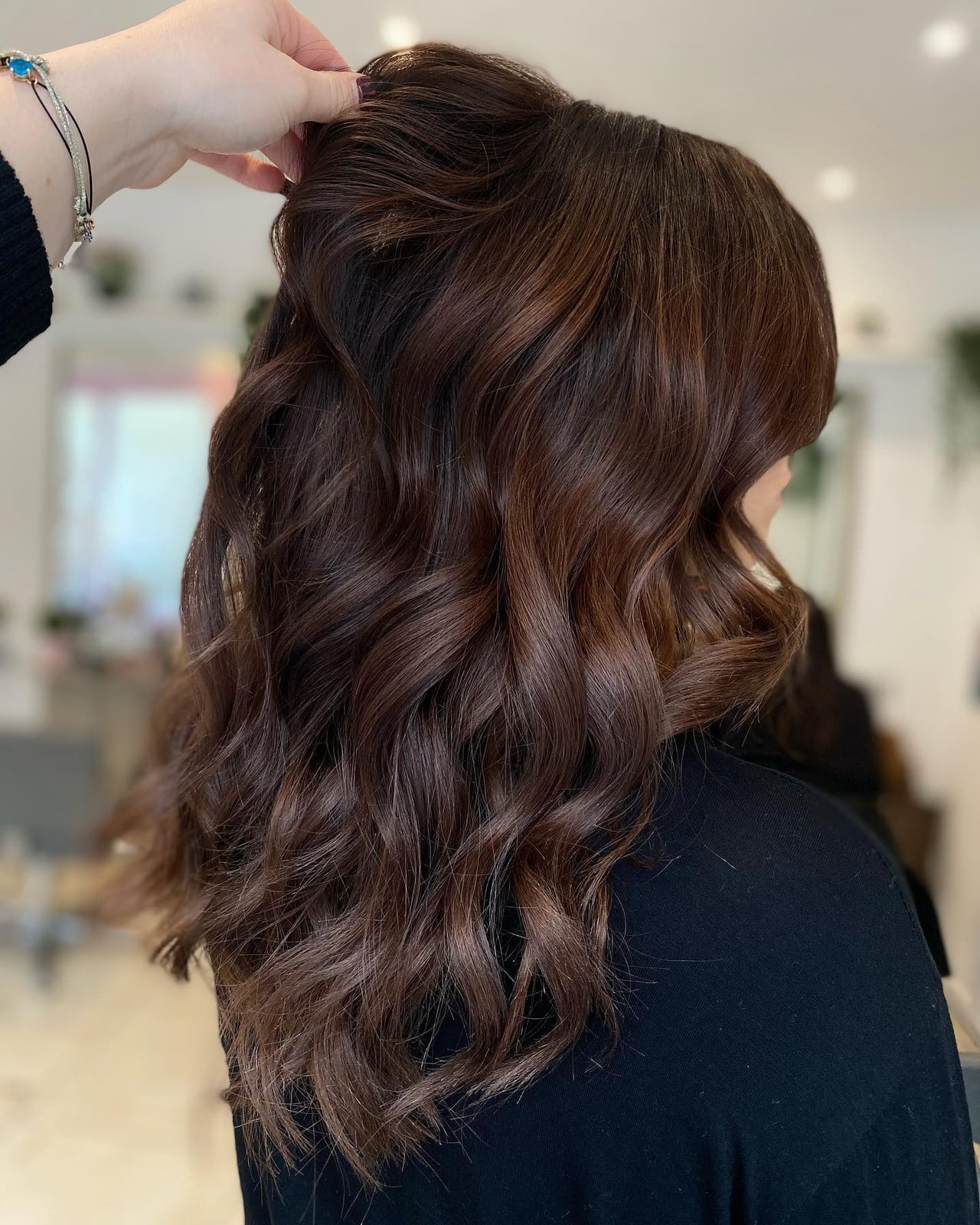
Voluminous curls at mid-back length are not a weekend project. The deep chestnut brown here has subtle variations in tone that only come from a professional color application, and the side part creates asymmetry that stops the volume from looking like a helmet.
Thick wavy hair is the starting point. The curls need density to hold their shape, and layers cut specifically for curl distribution prevent the top from collapsing. Ask your colorist for: mid-back length, voluminous curls, deep chestnut brown color depth. A curl-defining cream and low heat are the DIY tools, but the cut and color are best left to a stylist who understands how curl patterns reflect light.
Final Thoughts
Fine hair benefits from a blunt baseline with minimal layers to keep the weight in. Thicker hair can carry more layers for movement without losing shape. Bangs require commitment to trims every three weeks, but a longer curtain version buys you time. Choose the cut that matches your texture and your schedule.
- Deep chestnut shades may need toning every 8-10 weeks to maintain richness.
- Protect color from sun and heat with UV sprays and heat protectants.
- Wash less frequently with color-safe shampoos to prolong color vibrancy.
- Regular trims every 6-10 weeks are key for maintaining shape and health.
Embrace the understated beauty of chestnut.