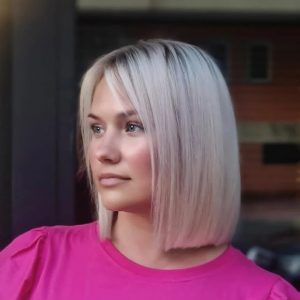
Trendy Winter Hair Color Ideas With Visible Dimension
A color decision becomes more convincing when the change is visible in movement rather than only at the mirror. A darker area near the root, a soft lift at the face, or an end that catches light differently can create a shift that stays connected to the cut. The most satisfying result is rarely the loudest one; it is the one whose contrast still makes sense once the hair is worn in an ordinary way.
Start by choosing the amount of contrast you want to notice before naming a shade. With trendy winter hair color, the useful choice is whether lightness should sit close to the face, travel through the lengths, or remain a quiet shadow at the crown. That decision makes a reference easier to adapt, because it describes what you see rather than promising a particular formula, process, or maintenance schedule.
Caramel Ribbons Through Long Brunette Waves
Long brunette waves are warmed by golden caramel ribbons that become more visible through the mid-lengths and ends. The root remains distinctly deeper, which gives the lighter areas a place to emerge instead of making the whole head look uniformly bright. That gradual shift is why the result feels dimensional even though the overall impression is still firmly brunette.
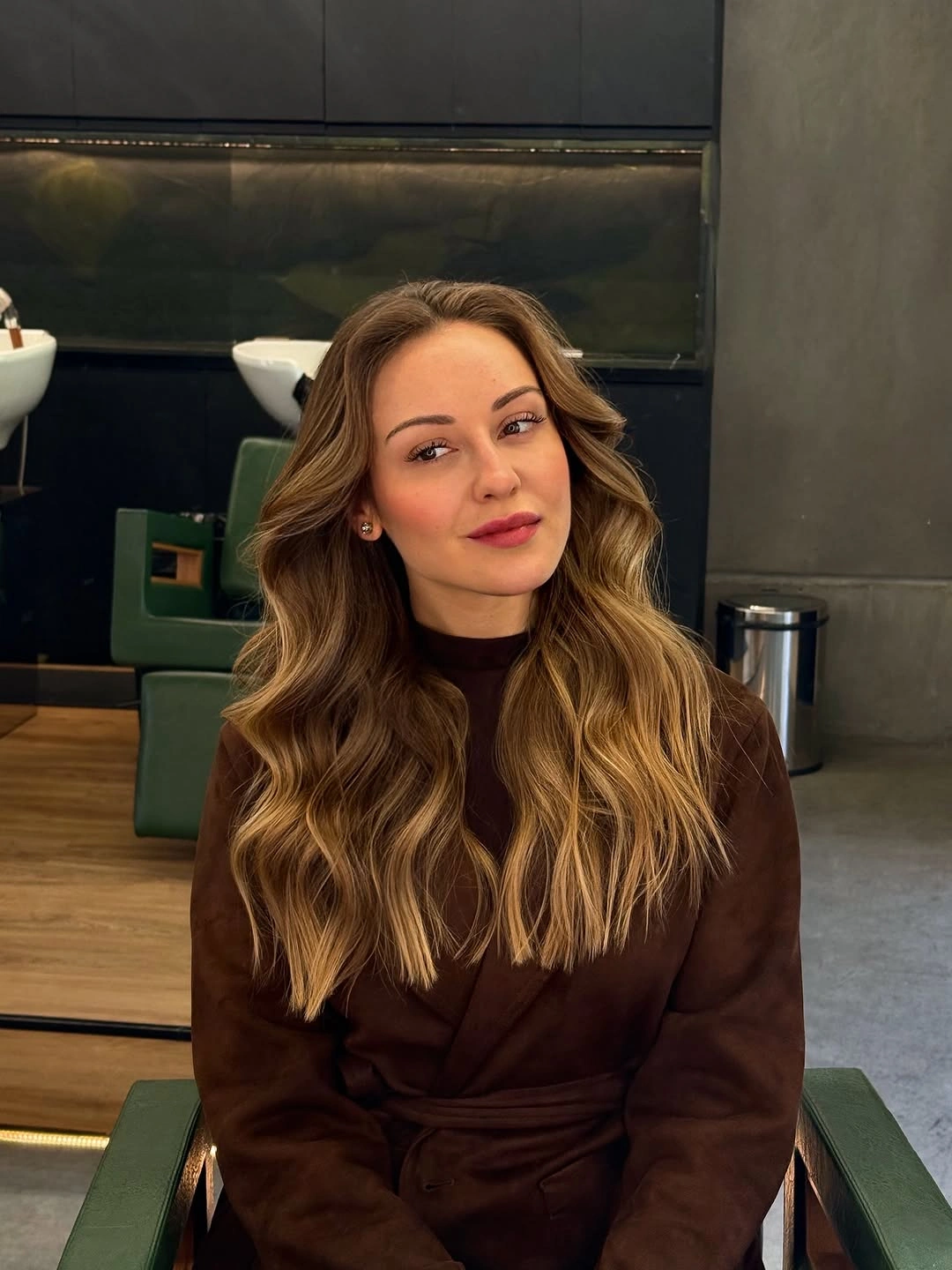
The loose wave pattern helps separate the warm ribbons, revealing small changes in depth as the hair turns. On straighter hair, the same level of contrast would look more linear and possibly sharper, so texture changes the experience of the color. Asking to keep root depth while warming selected lengths is a clearer visual request than asking for a broad seasonal name.
There is an appealing softness here, but it should not be mistaken for a guarantee of effortless upkeep. Lighter ribbons near the face are often the first detail people notice as they grow, and the visible warmth needs to suit the reader’s preferred palette. Someone wanting a gentler result could keep the same wave shape while choosing narrower, more muted pieces.
Near-Black Length With a Quiet Center Part
Near-black hair can carry a strong winter presence without an obvious color shift when the surface is smooth and the center part is clean. The lengths fall with a soft inward bend, giving the deep shade enough movement to catch light at the edges. Rather than relying on highlights, this direction uses density of color and a polished outline to create its effect.
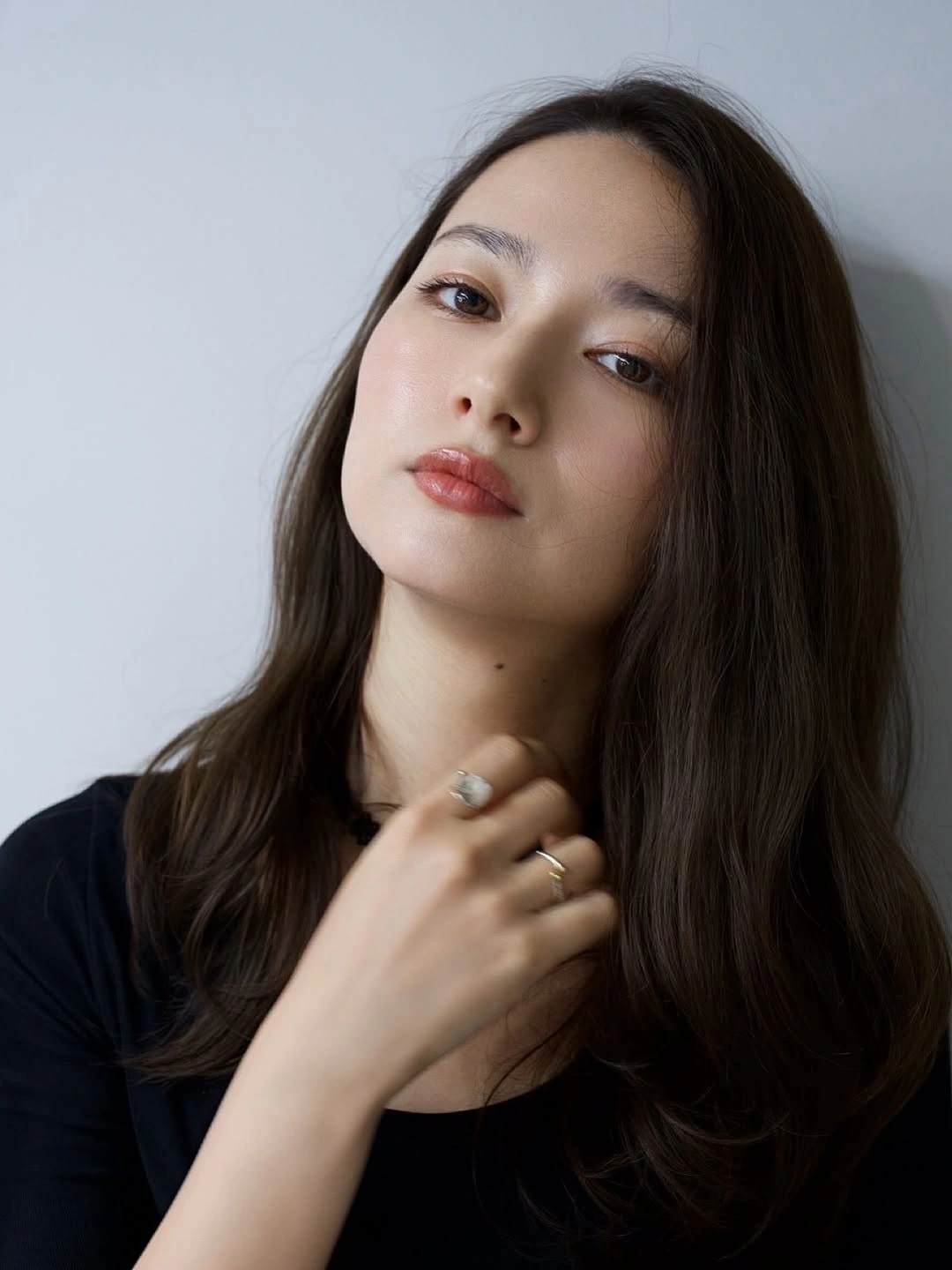
The quietness is what makes the color feel intentional. A central part divides the dark mass evenly, while the subtle bend at the ends keeps the hair from reading as one flat curtain. For a similar result with more visible texture, a loose blowout or a few soft bends through the lower length would retain depth without turning it into a highlighted style.
Sleek dark hair places attention on line and finish, so uneven ends or a disrupted part can become more noticeable than they would in a highly textured style. That is a useful tradeoff, not a warning against the color. Readers who like the depth but want more forgiveness can choose a soft wave while keeping the same low-contrast, dark palette.
Beige Face Framing on Shoulder-Length Brown Waves
Soft brown waves become brighter at the front through beige face-framing pieces, while the rest of the length holds onto a deeper brown base. The placement brings light close to the face without requiring every section of hair to be equally pale. Because the cut sits around the shoulder, the contrast is easy to see and the wave gives it a relaxed, moving edge.
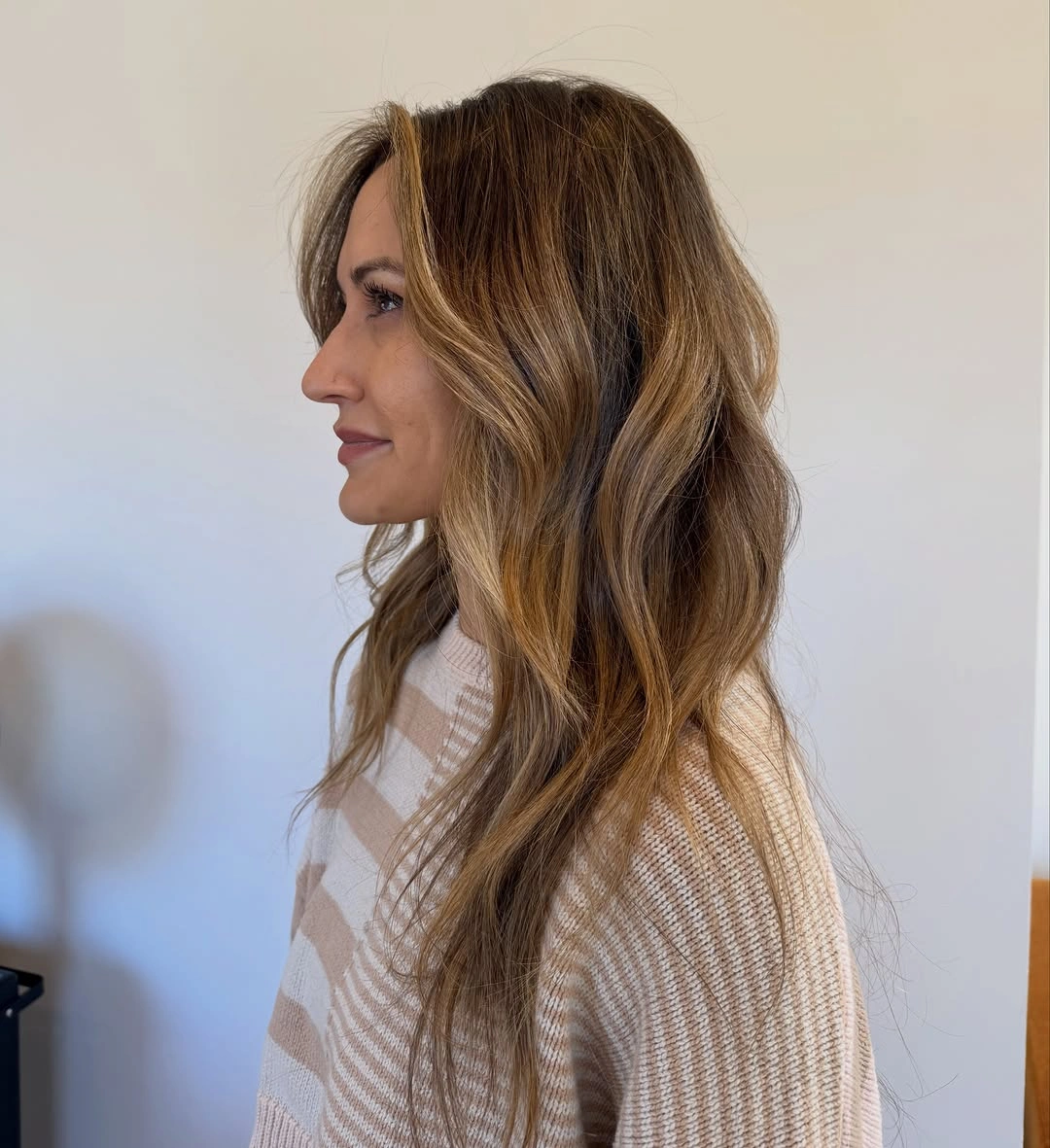
The visible difference between the front and the rest of the hair is the idea to borrow here. It directs attention upward, then lets the deeper lengths make the bright pieces feel more intentional. A reader who wants less contrast could choose a warmer brown front ribbon rather than a beige one, keeping the placement while reducing the change in value.
Face-framing brightness is a useful choice when the goal is a noticeable update without lightening every inch. It also means that the front section becomes the first area to show a shift as it grows or changes tone. For a lower-contrast alternative, blend a few lighter strands farther back into the side rather than concentrating the lightness directly at the hairline.
A Brunette Lob With Fine Warm Highlights
The dark brunette lob is crossed by fine warm highlights that follow the curve of the cut rather than forming heavy blocks. A side-swept front section and softly turned ends keep the color from looking strict, while the shorter length makes every line of brightness easier to read. The result is compact, polished, and more about detail than a dramatic color transformation.
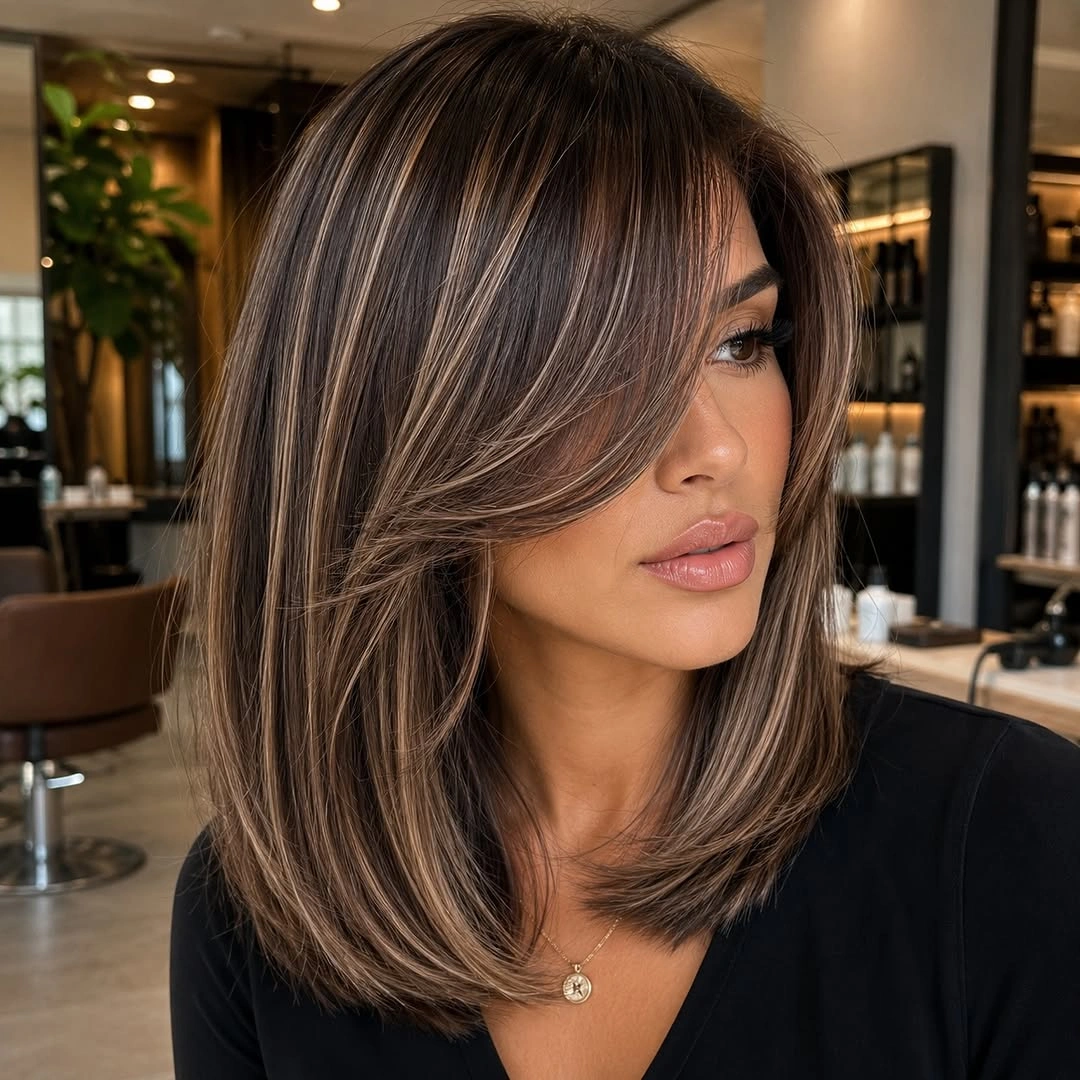
Fine placement works particularly well with a lob because there is less length available for the color to travel through. The narrow highlights add a little visual movement around the face and perimeter without breaking the base into competing sections. For a softer version, ask for fewer visible lines and keep the warmth concentrated where the hair naturally turns outward.
This kind of result rewards precision, because short-to-medium hair does not hide a heavy highlight pattern as easily as long waves can. The good news is that the haircut itself already provides shape, so color does not need to work too hard. A regular trim becomes part of the upkeep conversation because the curved ends are central to how the dimension reads.
Cool Brunette Waves With Muted Light Ribbons
Long brown waves carry muted lighter ribbons that stay close to the base color, creating depth without a sharp blond effect. The root area remains more subdued, then the slightly brighter pieces become visible as the waves turn through the lower length. It is a restrained direction that feels grounded because contrast is present but never loud.
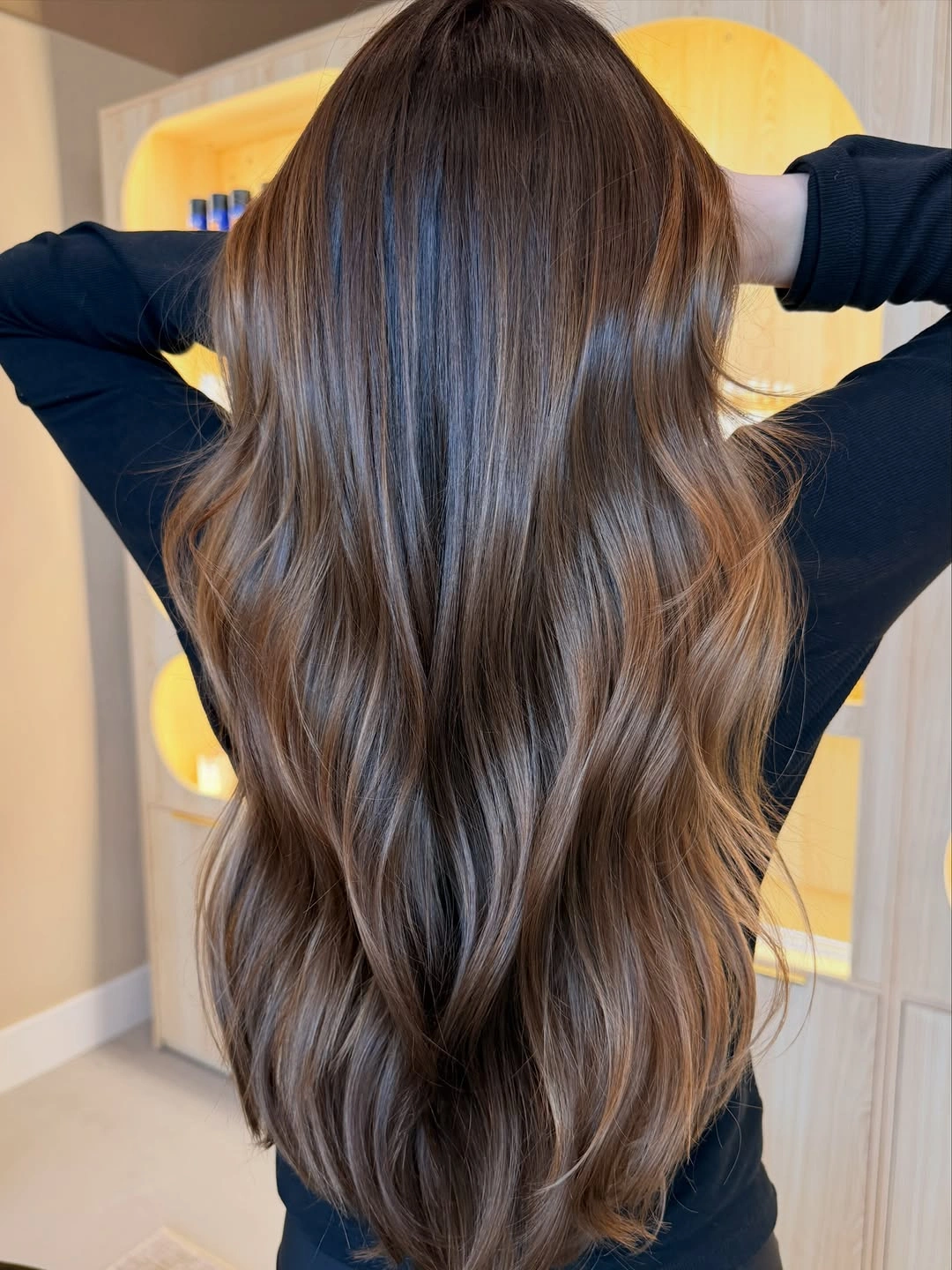
The wave pattern makes the quiet tonal shifts easier to appreciate. Instead of one bright perimeter, the lighter areas appear in small intervals, which keeps the overall finish soft. Readers who prefer brunette color but dislike a flat result can use this as a reference for the amount of difference they want to see, rather than treating it as a fixed shade formula.
Low contrast has a real tradeoff: it can look especially subtle indoors or when the hair is worn very straight. That may be exactly right for someone seeking a quiet update, but it is worth knowing before choosing it. A little more brightness around the front or through the ends would increase visibility while preserving the same cool, blended mood.
A Rounded Brown Bob With Airy Fringe
This short warm-brown bob is defined by rounded volume, curved ends, and an airy side fringe that breaks up the forehead line. The color itself stays relatively even, so the silhouette and finish become the source of interest. That simplicity is effective: the soft brown supports the lifted shape instead of competing with the texture around the crown and cheeks.
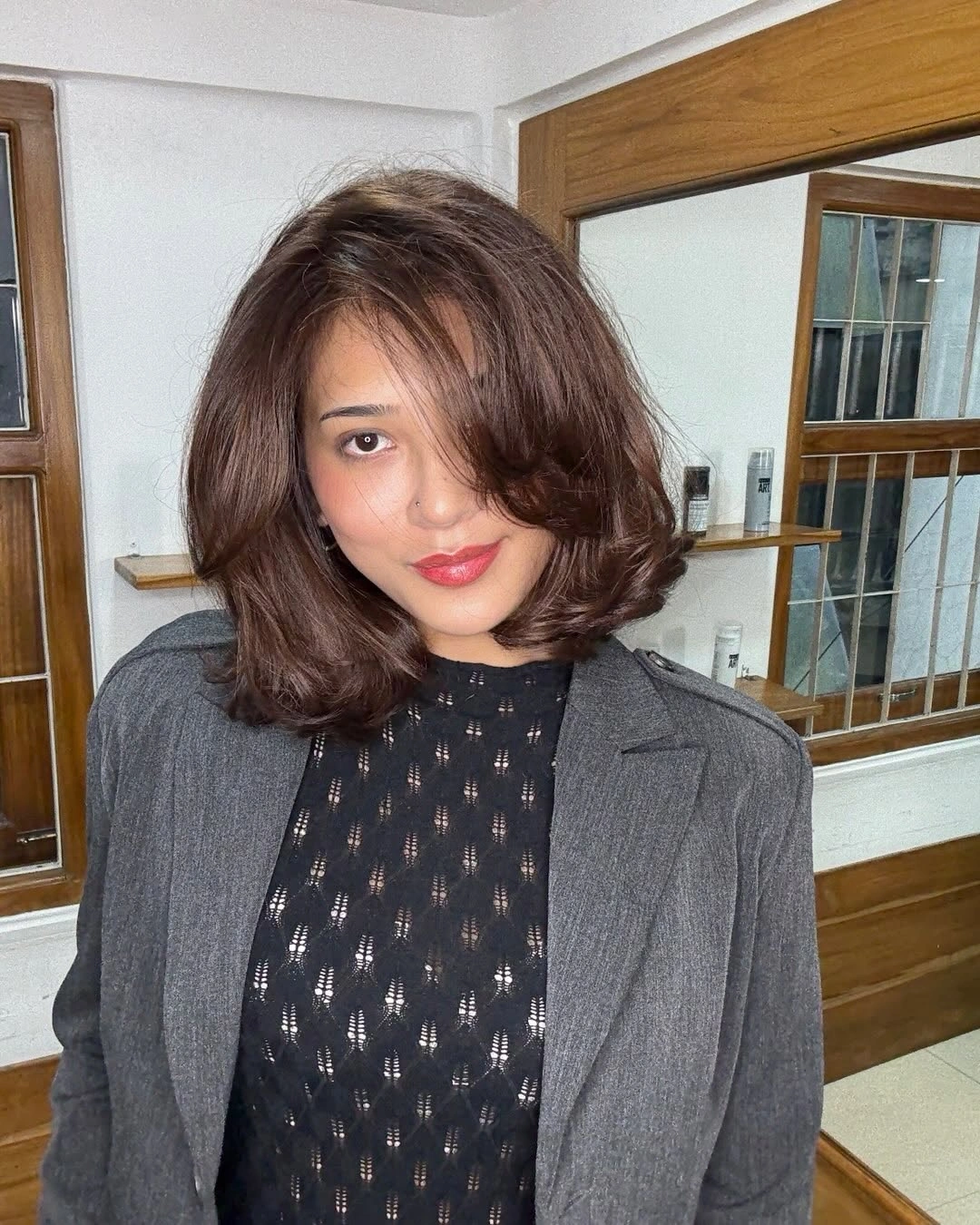
A rounded bob needs no dramatic highlight placement to look dimensional when the ends are visibly curved. The fringe and side volume create small changes in light across the surface, giving the brown color a gentle richness. Someone who wants a more graphic version could deepen the root area slightly, but that would change the soft, continuous quality visible here.
The practical question is styling tolerance. A compact bob with this much lift relies on the bend near the ends and the direction of the fringe, so it may need more day-to-day attention than long, loose waves. In return, the color and cut remain highly legible, which is useful for readers who want shape to be the main event.
Deep Burgundy Length With Curled Ends
Deep burgundy hair keeps a smooth, darker root area before opening into loose curled ends that reveal more of the red-violet depth. The shade is rich but not flat because the curl catches different angles through the lower length. It has a clear color identity, yet the restrained root keeps the overall result from becoming visually one-note.
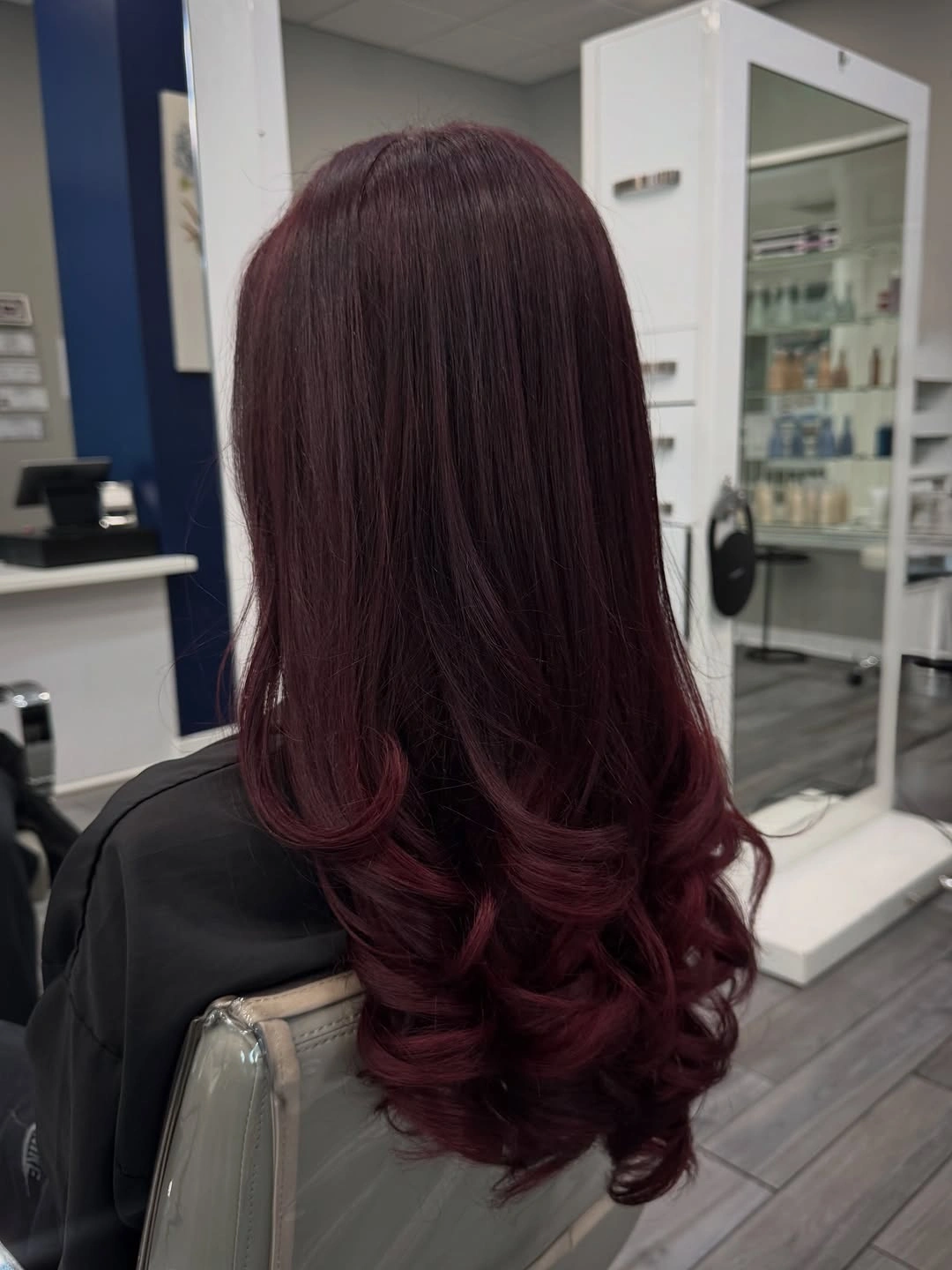
The strongest visual cue is how the color gathers at the ends, where the curve makes the burgundy look more layered. A straighter finish would emphasize the density of the shade, whereas this soft curl gives it movement and a more relaxed edge. If the full depth feels too intense, a darker brunette base with burgundy only through selected lengths would reduce the commitment visually.
Rich fashion shades can read differently in sun, indoor light, and shade, so a reference should communicate depth as well as hue. This is not a claim about permanence or process, only a reason to notice how much saturated color feels comfortable in daily life. The same wave shape could also support a muted wine tone for a quieter interpretation.
Mushroom Brown Waves With Close-Toned Dimension
Medium-brown waves are softened by taupe and beige tones that sit close to the base, creating a mushroom-brown effect rather than a bright highlight pattern. The color appears to shift gently from root to ends, with the wave pattern making the fine differences more visible. It is a subtle approach that favors texture and depth over an obvious before-and-after contrast.
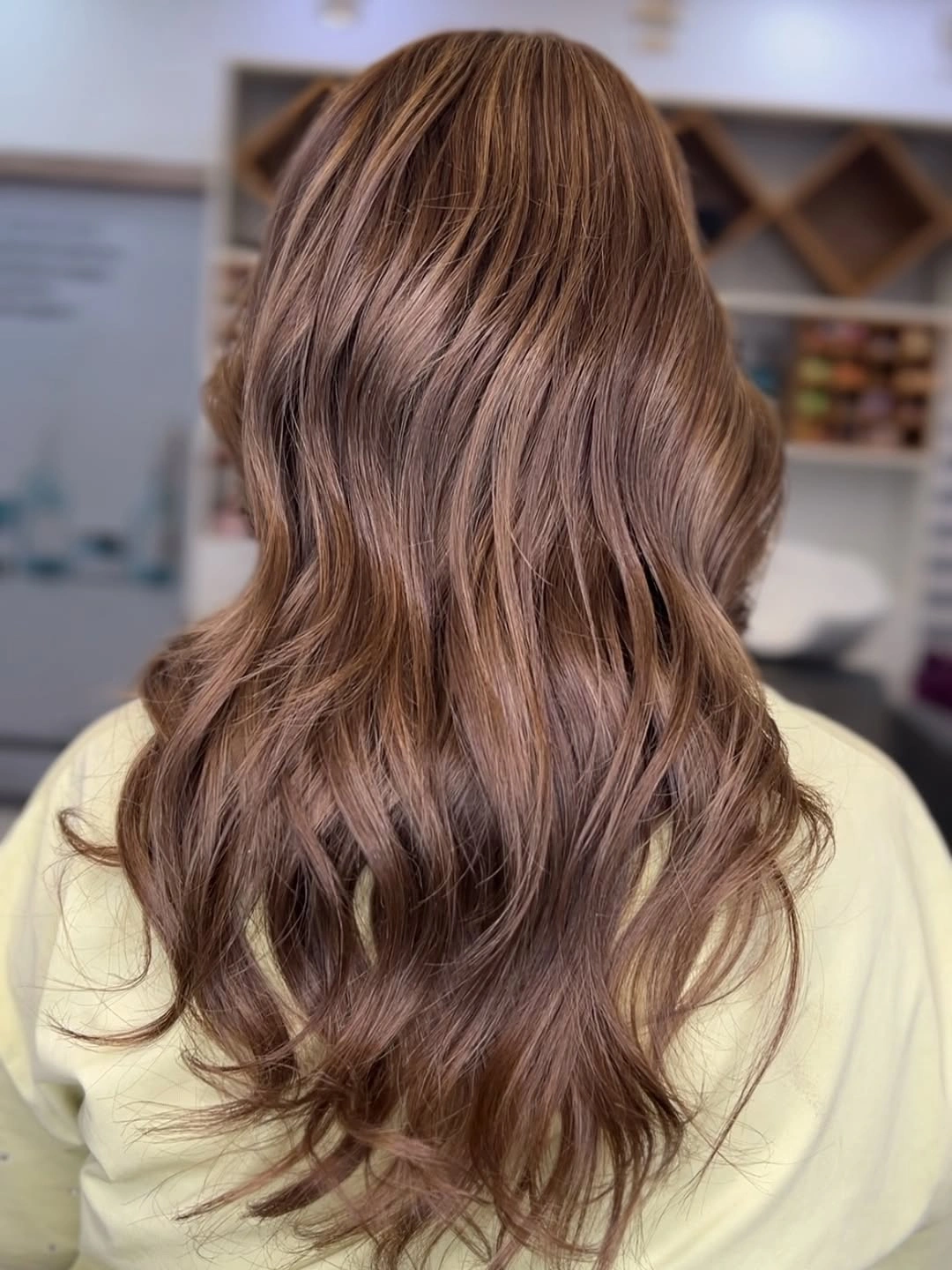
Close-toned dimension is useful when a reader wants the hair to look richer without changing its overall identity. The color remains brown from a distance, but the lengths avoid looking uniform because the wave separates the taupe and beige notes. A larger, smoother wave would make the blend look even softer, while a tighter texture would reveal more individual ribbons.
Because this contrast is intentionally quiet, it may disappear in darker rooms or when the hair is styled very straight. That is the realistic limitation of a low-drama palette, not a problem with it. For a slightly stronger version, keep the same cool-brown family but ask for more brightness around the front perimeter where it can be seen most easily.
Golden Bronde Waves With Root Depth
Dark brown roots move into golden-brown lengths, creating a bronde finish that feels brighter toward the ends without losing all depth at the crown. The long waves separate the warmer pieces and make the color change look gradual rather than stripy. It is a useful middle ground for someone drawn to blonde brightness but not ready to abandon a brunette base.
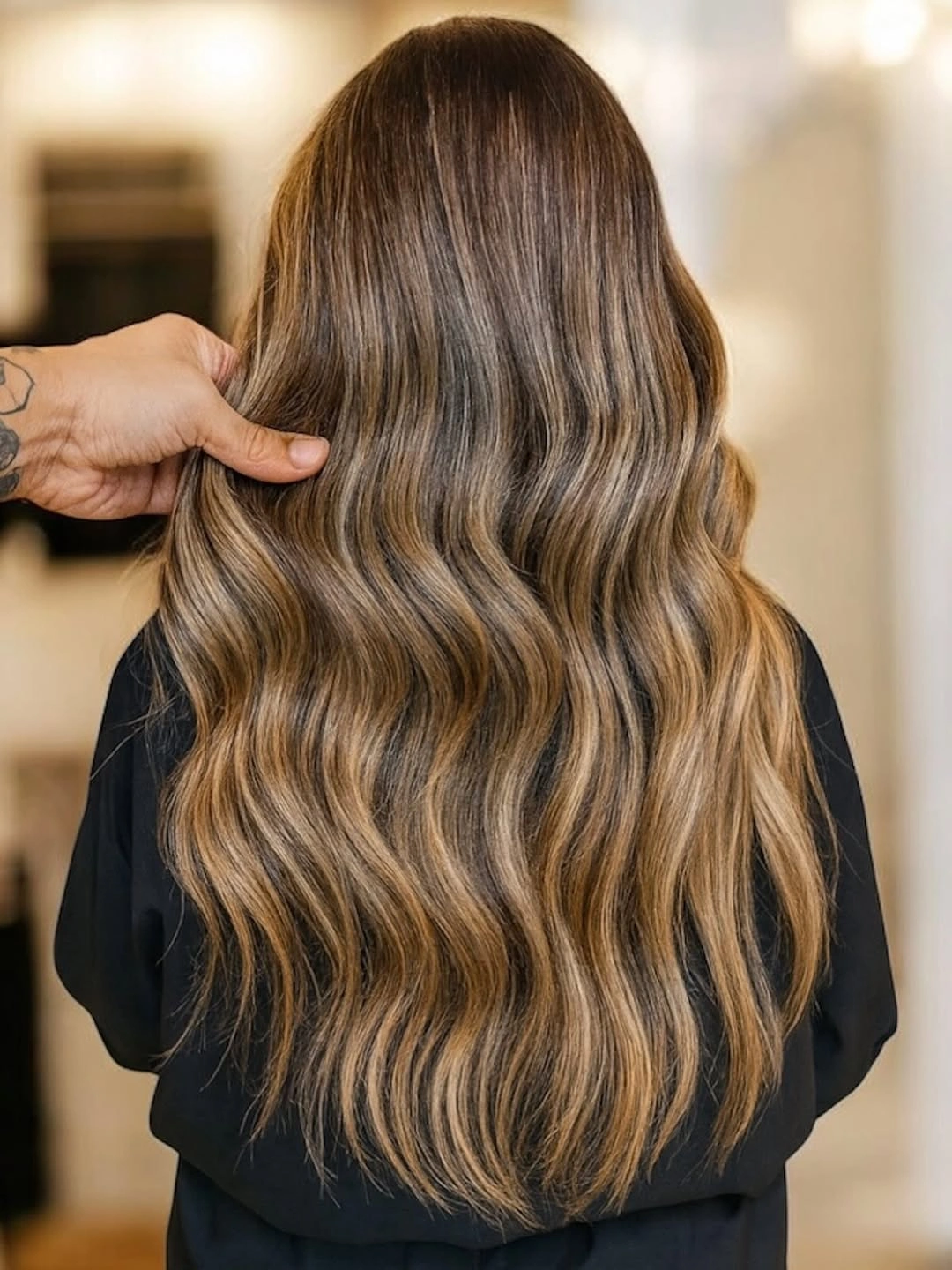
Root depth is doing two visual jobs at once here: it gives the top area substance and makes the golden lengths look more luminous by comparison. The waves carry that transition through several soft turns, which keeps the color from reading as a single horizontal divide. A more subtle version could stop the lightness closer to the mid-lengths instead of taking it as far toward the ends.
This direction offers visible warmth, but it is still worth considering how much golden tone feels right beside your usual clothing and makeup palette. The brighter lengths become a defining feature, especially when the hair is curled. For readers who prefer a cooler result, beige rather than golden pieces would keep the rooted structure while changing the temperature of the finish.
Beige Blonde in a Glossy S-Wave Pattern
Long beige-blonde hair is shaped into a glossy S-wave pattern that makes the blend from a deeper root to lighter lengths especially easy to see. Each curve catches light differently, so the color feels layered even where the tones remain close. The finish is polished and deliberate, with the wave pattern acting almost like a frame for the soft root-to-end transition.
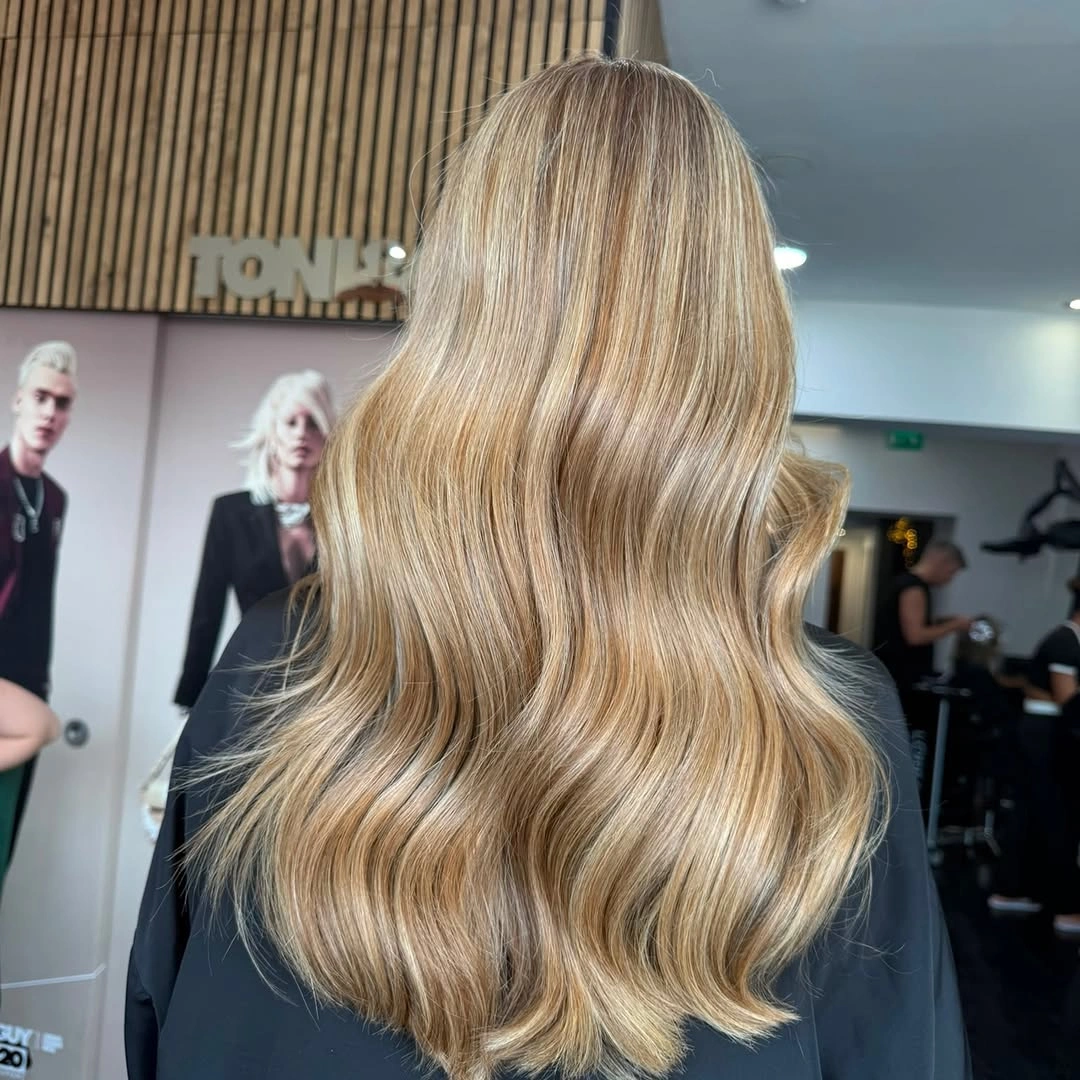
The smooth repeating wave is central to the effect, because it turns a blended blonde into a series of visible light-and-shadow changes. If the hair were worn straight, the root depth would become the main feature; with this bend, the mid-length dimension gets equal attention. A looser brush-out could keep the shine while making the result feel less sculpted.
Polished waves can make any color look more finished, but they also imply a styling routine that may not suit every day. The useful takeaway is not that hair must be heat-styled, but that color and texture should be considered together. A softer natural bend can support the same beige blonde if the blend itself remains gentle and the root stays visibly deeper.
Cool Ash-Beige Waves With a Muted Root
Cool ash-beige waves keep a muted root area before moving into lighter, softly reflective lengths. The tone is quieter than a bright golden blonde, and the loose wave prevents the coolness from looking severe. This is a color direction built around restraint: the shift is visible, but it stays within a narrow family of beige and ash notes.
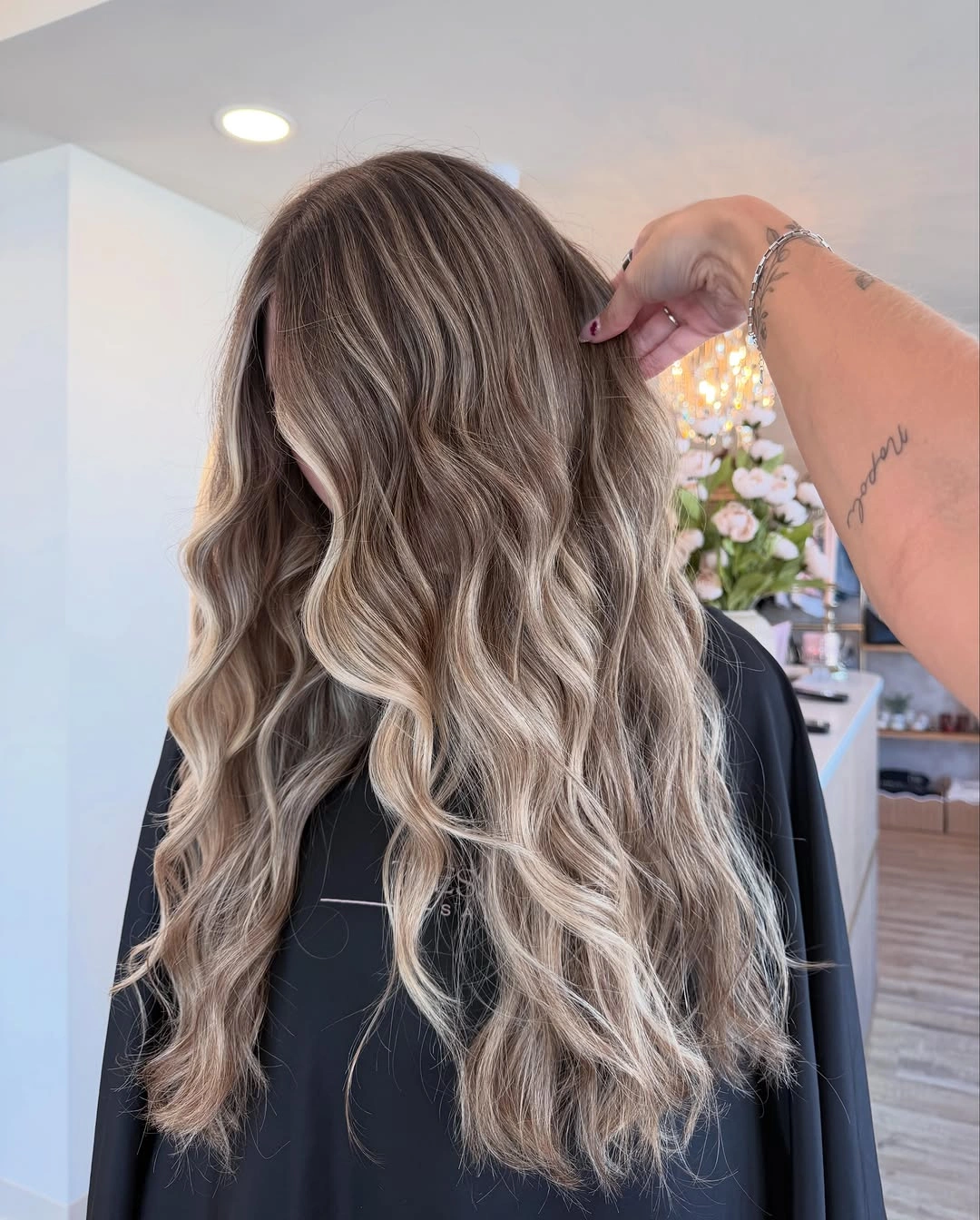
The colder tone becomes most apparent where the waves open through the lower half, not at the scalp. That placement lets the root remain grounded and avoids a harsh contrast between the top and the ends. Readers choosing between warm and cool versions can use this as a reference for the difference in mood, then decide which tone sits more comfortably beside their own preferred colors.
A cool blonde can appear flatter next to very warm clothing or in dim light, even when the blend is carefully done. That is why the visible shine and wave matter here: they add dimension without changing the color family. A few slightly warmer beige pieces around the face would soften the effect if an all-ash finish feels too muted.
A Creamy Blonde Bob With Soft Side Waves
The short creamy-blonde bob has a darker crown area, a soft side part, and loose waves that curve around the cheek and jaw. Because the cut is compact, the transition from depth near the root to pale ends becomes a major part of the silhouette. The result feels bright and polished while still retaining enough shadow at the top to avoid a single flat tone.
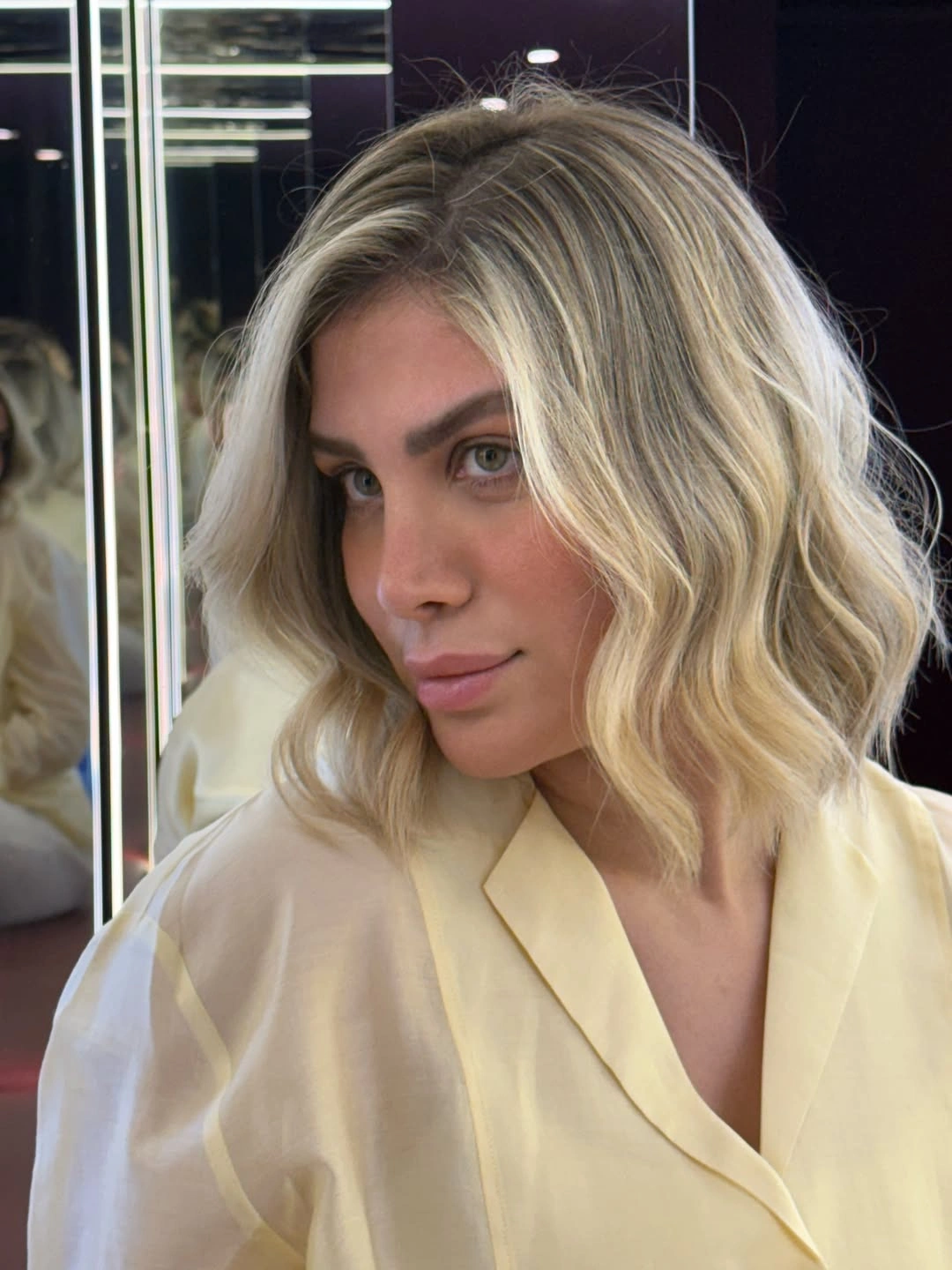
Shorter lengths make color placement feel more immediate, which is why the deeper root is so helpful in this bob. It gives the pale pieces something to work against and makes the soft side waves look more dimensional. Someone who wants the same brightness with a quieter outline could keep the color direction but choose a straighter, blunt bob with less lift.
The tradeoff is that a rounded short style depends on its shape as much as its shade. As the ends grow or lose their bend, the whole result can read differently even if the color remains beautiful. Regular trimming and a styling approach that suits your routine matter more here than chasing an exact blonde name from a reference.
Bold Caramel Panels on a Dark Base
Dark long hair is interrupted by broad warm caramel panels that create a clear graphic pattern through the back lengths. A half-up twist adds another layer of separation, making the brighter pieces appear in distinct bands against the deep base. This is not a whisper of dimension; the contrast is intentional, visible, and centered on the difference between dark and warm light.
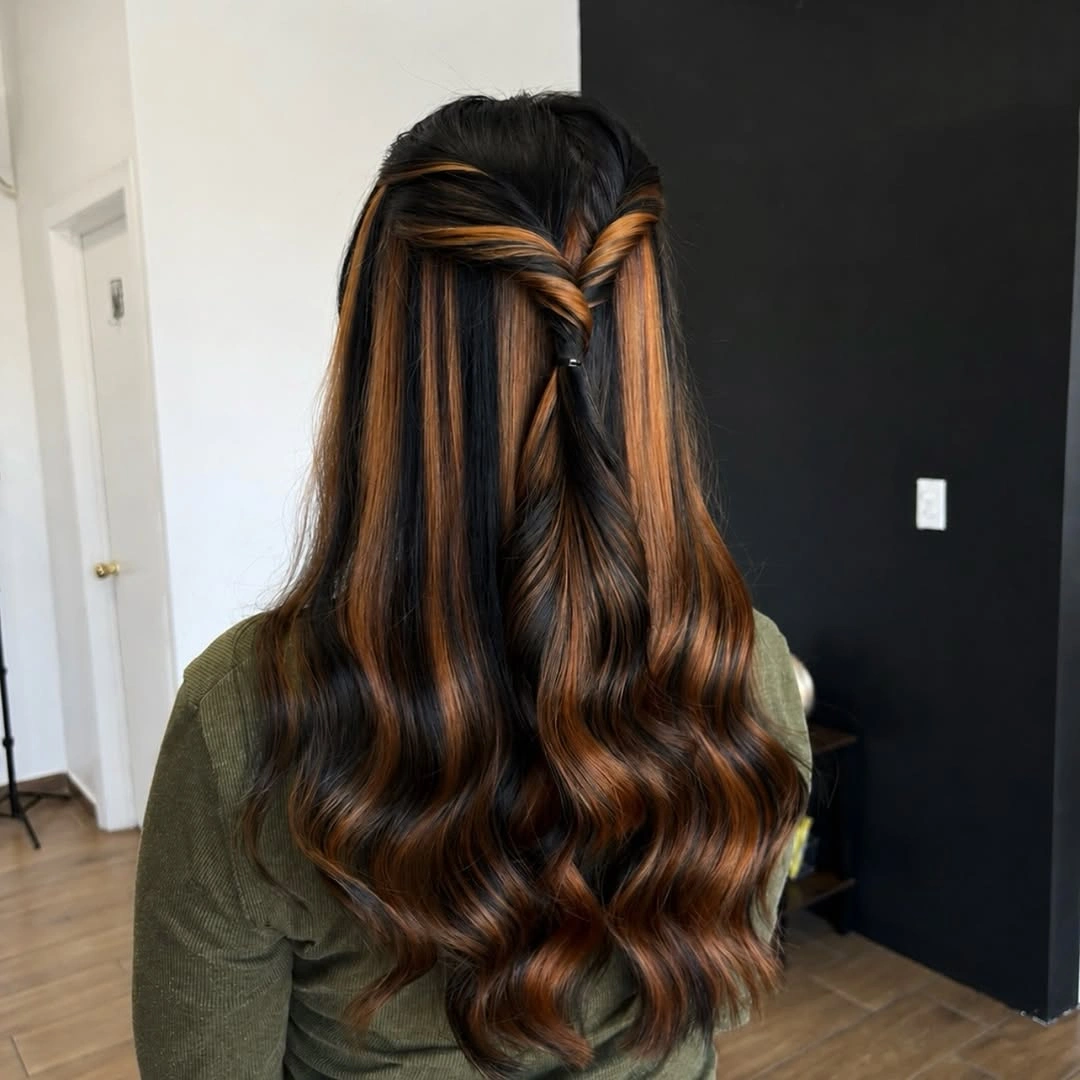
Panel-like placement is useful for readers who want the color story to be obvious from more than one angle. The half-up styling helps reveal the contrast, but the result would remain bold even when worn down because the lighter pieces are wide. For a softer adaptation, narrow the bright sections and blend their edges more closely into the dark surrounding hair.
A higher-contrast pattern needs a clear conversation about how graphic you want the grow-out and maintenance to feel. That does not make it less wearable; it simply makes the visible design choice more important. Anyone looking for a less dramatic path can borrow the warm caramel tone while keeping it near the front rather than carrying broad panels through the back.
Deep Burgundy Flowing Into Dusty Rose Ends
Long waves begin in deep burgundy and move into muted dusty rose through the lower lengths, making the ends the visual focus. The curl gives the color transition a soft, layered rhythm, so the rosy tone appears in folds rather than one blunt line. It is expressive without relying on an extra accessory because the shift in hue already creates the main point of interest.
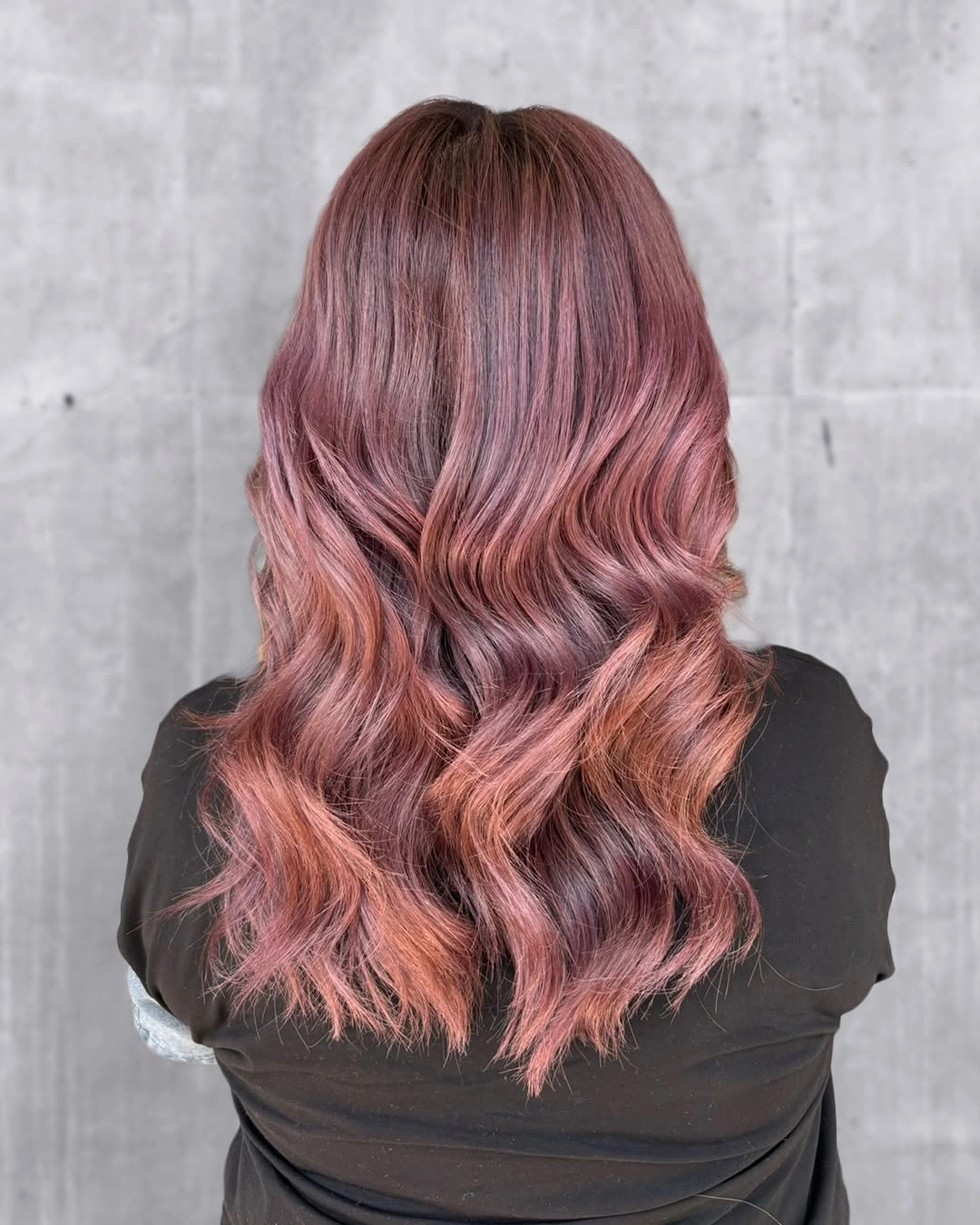
The lower placement of the rose changes how the color reads from a distance. The darker top keeps the overall impression grounded, while the ends provide a lighter, more playful release. A reader who likes the idea but wants less contrast could choose a deeper berry or muted copper at the ends, keeping the transition within a closer color family.
Visible color at the ends often becomes the deciding factor in day-to-day wear because it appears whenever the hair moves or is brought forward. It is worth choosing a depth that still feels right when the hair is straight, curled, or tied back. The loose waves make this version look soft, but the same color placement would feel much bolder on a sleek finish.
Soft Brown Waves With Beige Light Near the Face
Medium-brown waves are threaded with blended beige highlights that brighten the front and continue softly through the length. The lighter areas follow the curve of the hair instead of breaking it into hard bands, which gives the result a naturally flowing rhythm. The overall base remains visible, so this reads as dimensional brown hair rather than a full move into blonde territory.
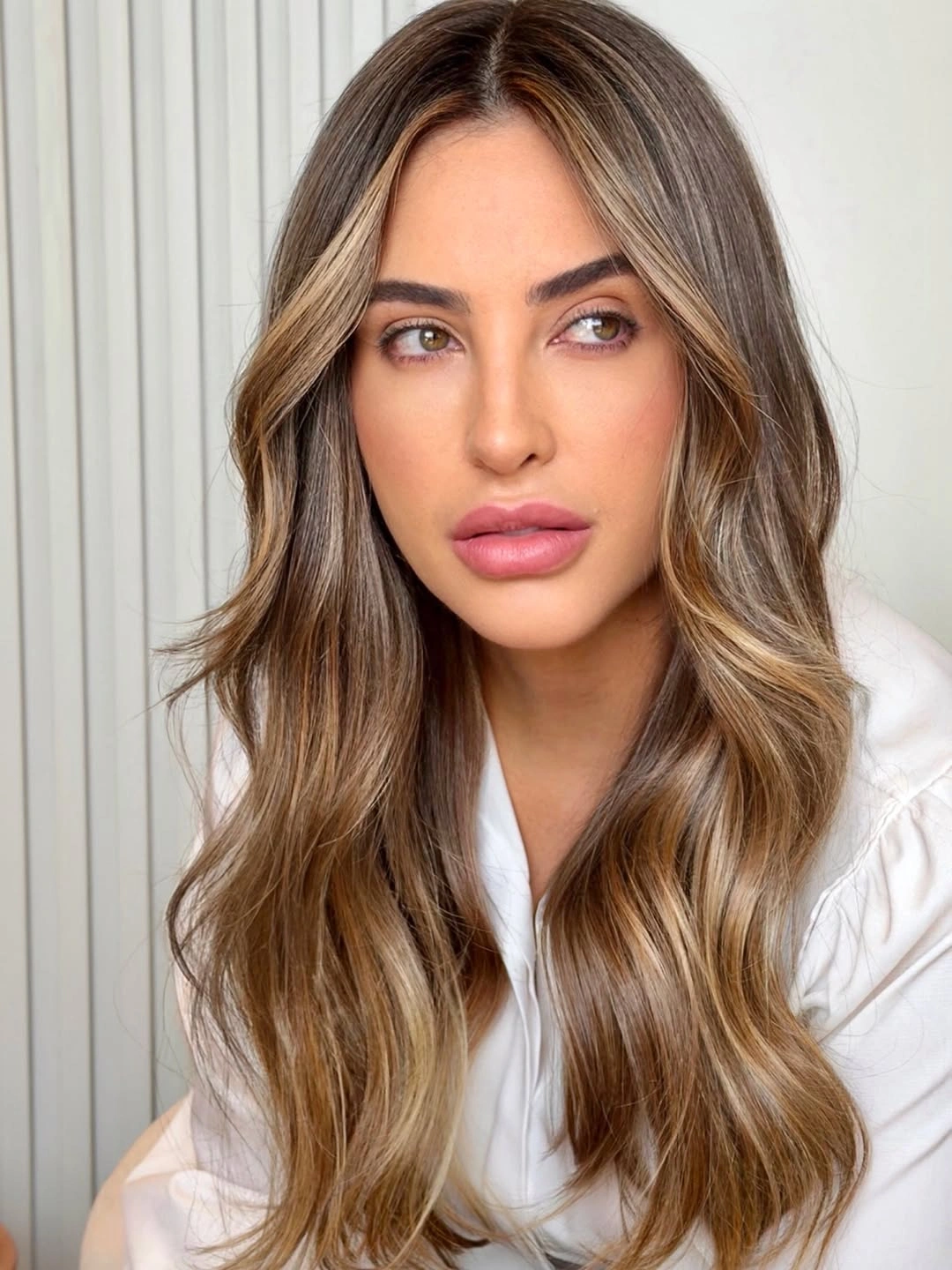
The most useful part of this reference is the relationship between the front brightness and the quieter lengths behind it. The face gets light, but not all attention is concentrated there because fine beige ribbons repeat farther down. Readers who want a similar effect can adjust the amount of front contrast first, then decide whether the rest of the hair needs additional dimension.
There is a soft, approachable quality to this blend, although it should still match the reader’s tolerance for visible lighter pieces at the hairline. If a strong front effect feels like too much, shifting the brightest strands a little farther from the face will keep the movement while lowering the contrast. That small placement choice changes the entire mood.
Honey Face Framing on Deep Brunette Waves
Deep brunette waves are brightened by warm honey-toned pieces around the front, while the rest of the hair stays noticeably dark. The contrast is concentrated enough to frame the face, but it does not erase the brown base that gives the length its depth. Loose waves keep the honey pieces from looking too linear and add a warm, reflective movement through the ends.
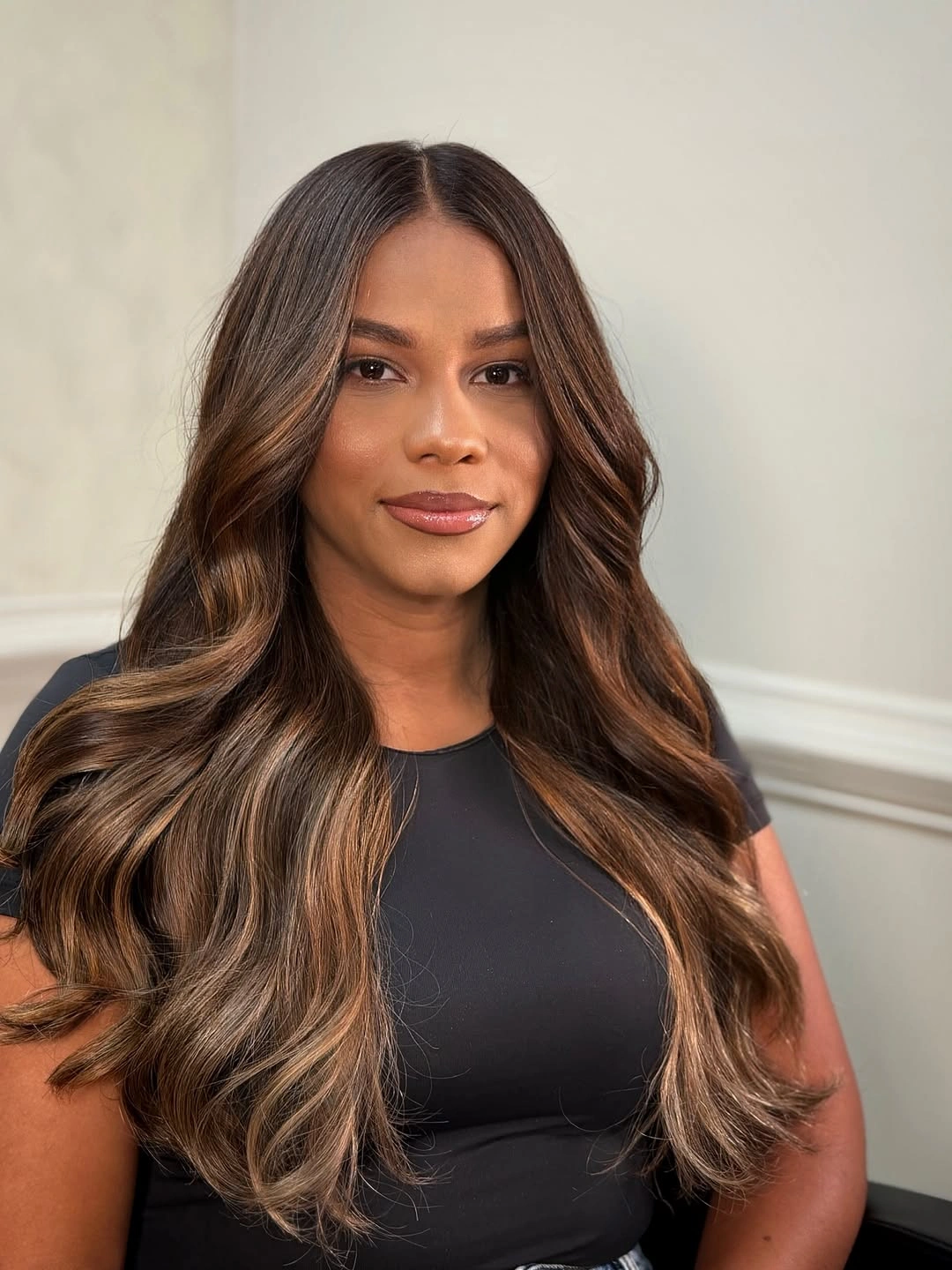
When the base remains this dark, warm face framing becomes a focused decision rather than a general lightening strategy. It can make the hair look more open around the face while leaving the rest of the color identity intact. A lower-contrast variation would use caramel-brown instead of honey, preserving warmth but keeping the value difference smaller.
The front sections will naturally be the most noticed as the color shifts over time, which is the maintenance thought worth carrying from this look. That visibility can be a benefit if you want the brightness to feel intentional. It can also be softened with a less dramatic root blend, especially for readers who prefer the overall brunette depth to stay dominant.
Vivid Red Waves With a Deeper Root
Long red waves hold a deeper root before opening into saturated, flowing lengths with a clear warm-red presence. The color is not confined to a few highlights; it is the main visual statement, and the loose large waves make it feel even more expansive. This is a bold direction for someone who wants hair color to be noticed before any cut detail or accessory.
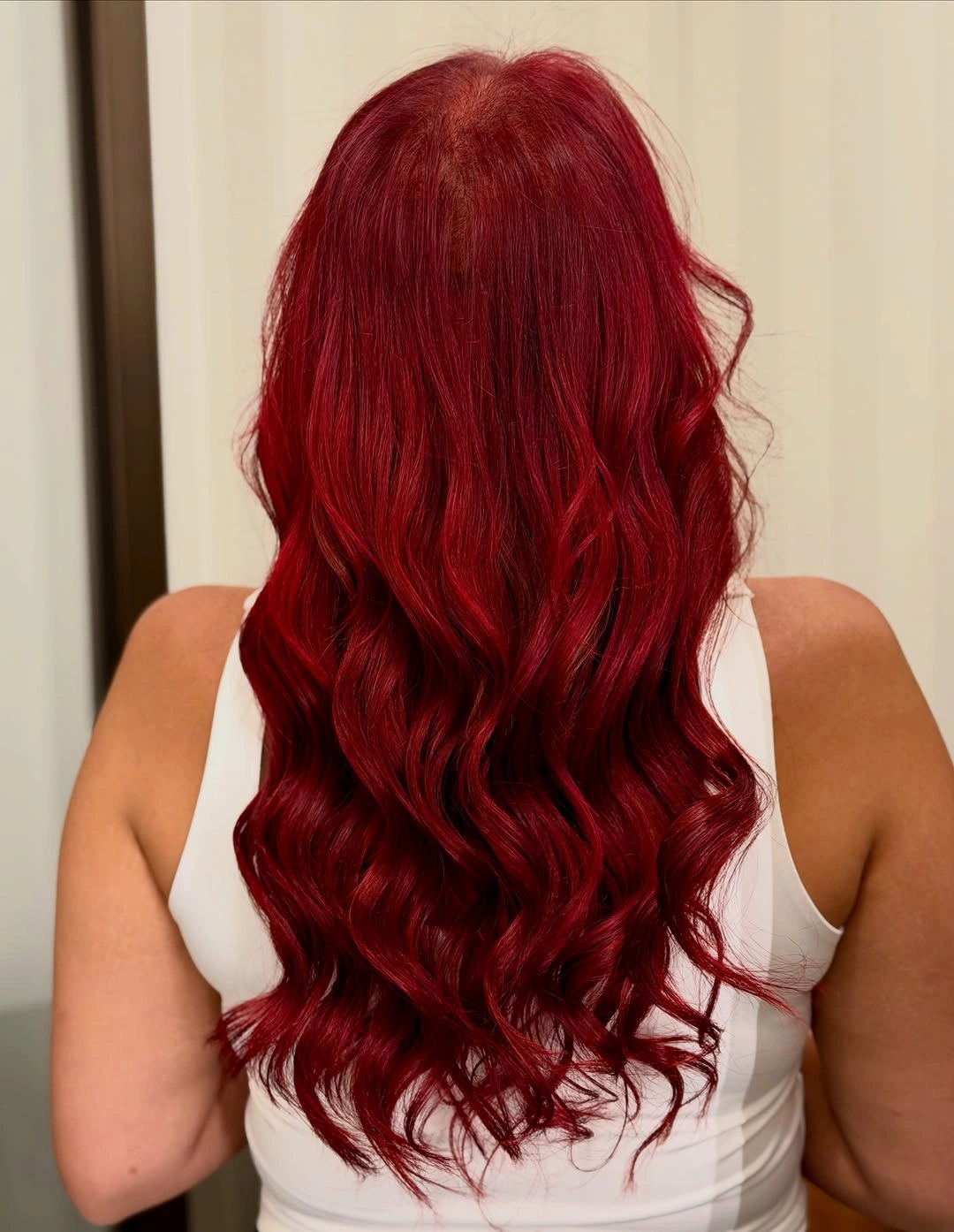
The deeper root gives the red some grounding, yet the vivid lengths still carry most of the visual weight. That balance is useful because it separates the color from the scalp area and lets the waves reveal variations in depth through the ends. A richer, darker wine shade would create a related mood for readers who want the same scale of color with less brightness.
A saturated red asks an honest preference question: do you want the shade to feel present in every setting, or only as a subtle change? This reference clearly chooses the first path. The loose wave softens the intensity, but it does not hide it, so the color works best when that level of visibility feels exciting rather than like a compromise.
Shadow-Rooted Beige Blonde With Airy Lengths
Long beige-blonde waves keep a darker shadow root before becoming light and airy through the middle and ends. The depth at the crown makes the lighter length look more luminous, while the soft wave keeps the transition diffuse rather than sharply divided. It is a polished bright direction that still leaves visible room for the natural-looking darkness near the scalp.
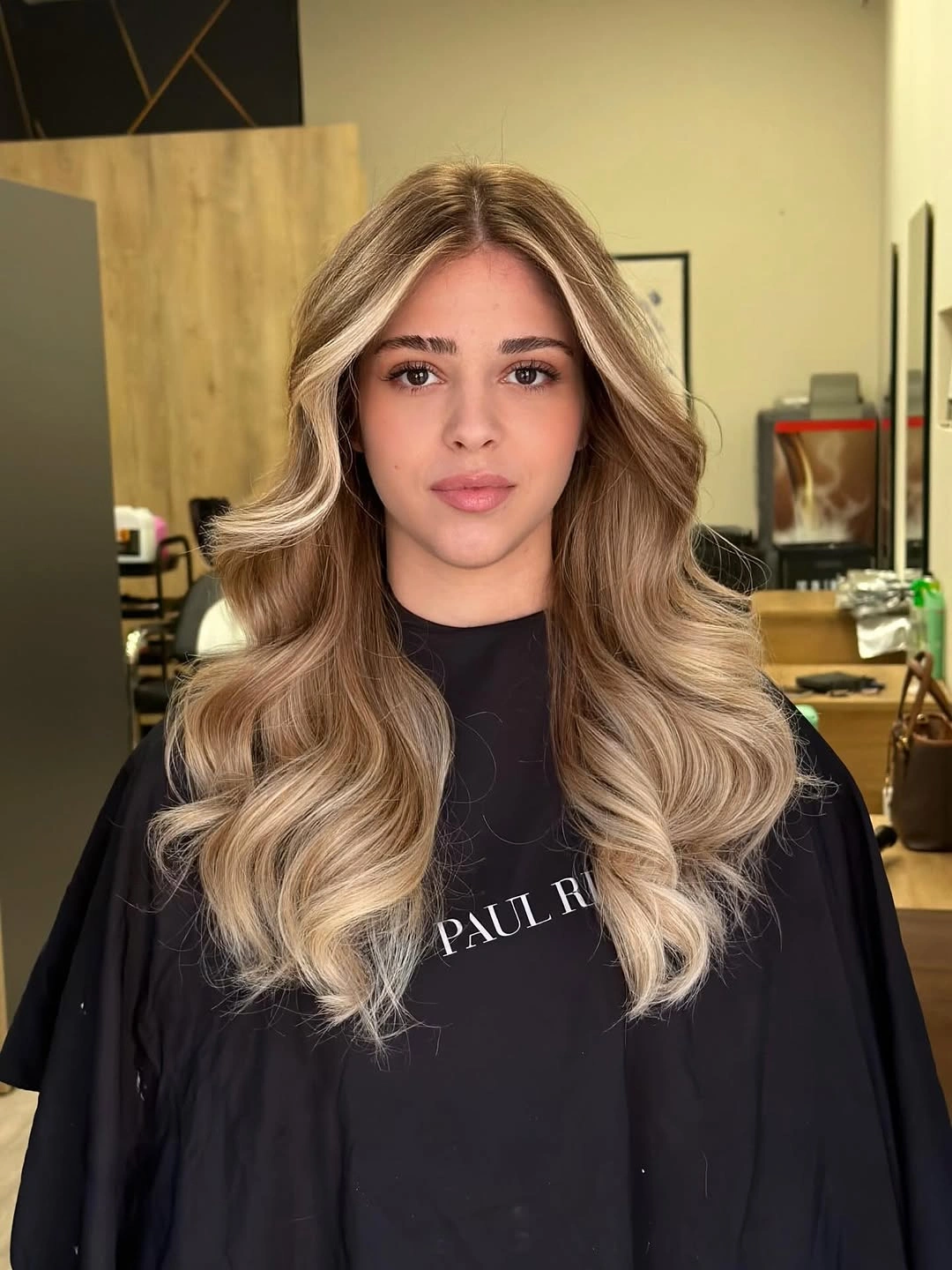
The appeal comes from how the root and ends work together, not from either one in isolation. A dark crown without the light movement would feel heavier, and pale lengths without depth could look flatter. Readers exploring related dirty blonde hair color ideas may find it useful to compare how much root shadow makes a blonde feel softer.
Bright ends can be visually forgiving when the root remains deeper, but no reference can promise the same upkeep for every starting color or routine. The safer takeaway is to decide how light you want the lower half to appear when it is straight as well as curled. A slightly darker beige end would preserve the root-to-length relationship while reducing the contrast.
Copper Layers and a Soft Curtain Fringe
Warm copper hair is shaped into long layered waves with a soft fringe that falls across the front. The color shifts gently through the layers, and the fringe makes the warm tone visible close to the face as well as along the ends. This is a rich color direction where cut and shade support each other, rather than one trying to carry the full result alone.
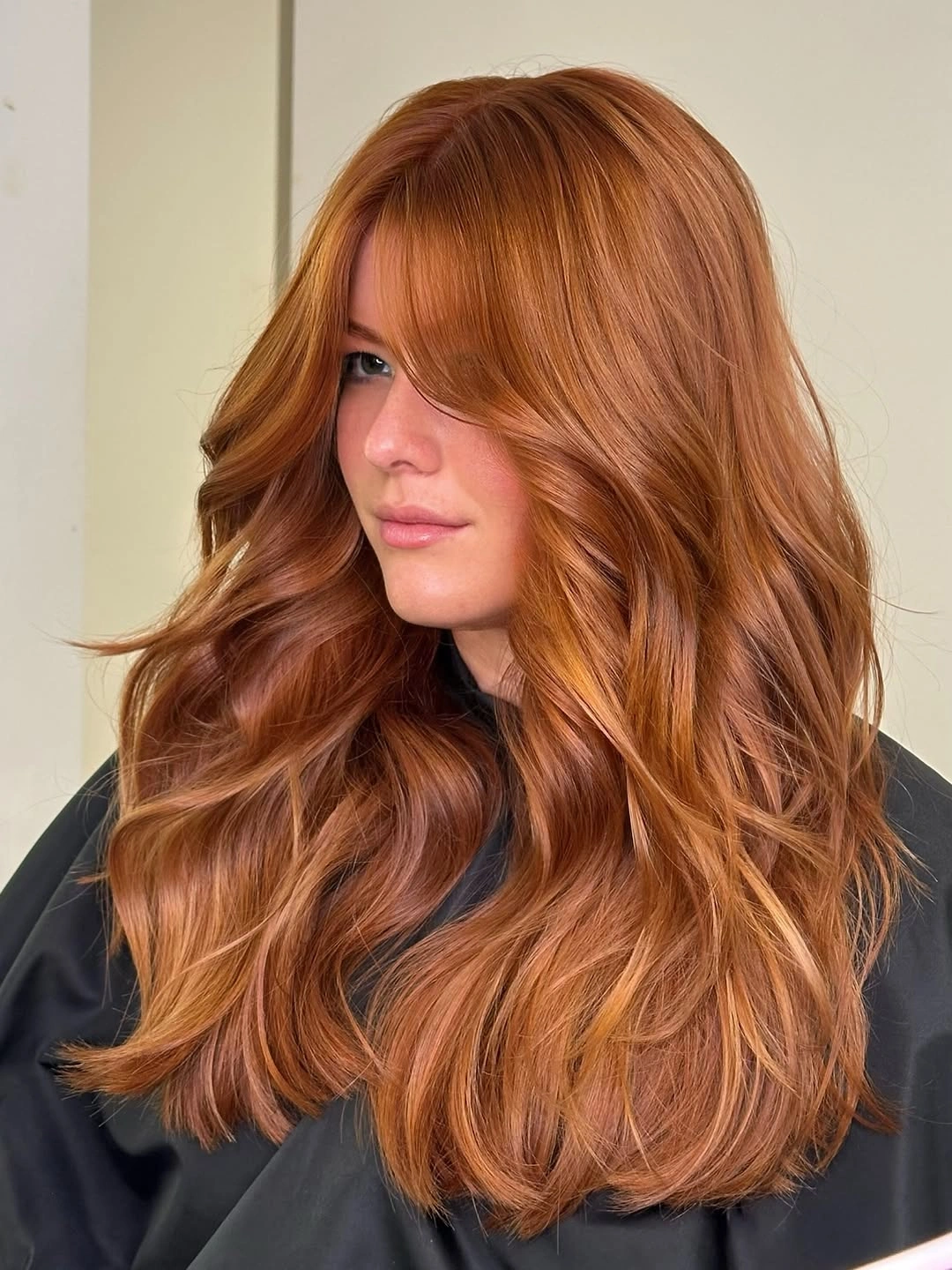
The layers keep the copper from becoming a single broad surface, because each curved end catches a slightly different amount of light. The fringe is equally important: it gives the front a softer edge and makes the color feel integrated with the cut. If fringe styling is not appealing, long face-framing layers can preserve some of that movement without covering the forehead.
Warm copper is a clear palette choice, so it helps to consider whether you want the warmth concentrated in the color or repeated through clothes and makeup. The visible shade will remain a focal point even when the hair is simply worn down. For a quieter direction, a darker auburn base with copper only at the ends would keep the warmth while reducing its overall brightness.
Smoky Brunette With One Pale Front Streak
Medium-length cool brown waves are interrupted by one pale face-framing streak, creating a much more graphic contrast than a blended highlight. The darker base stays smoky and quiet, which makes the lighter section stand out even more clearly at the front. It is a focused color design: one area is deliberately bright while the rest of the hair holds the background role.
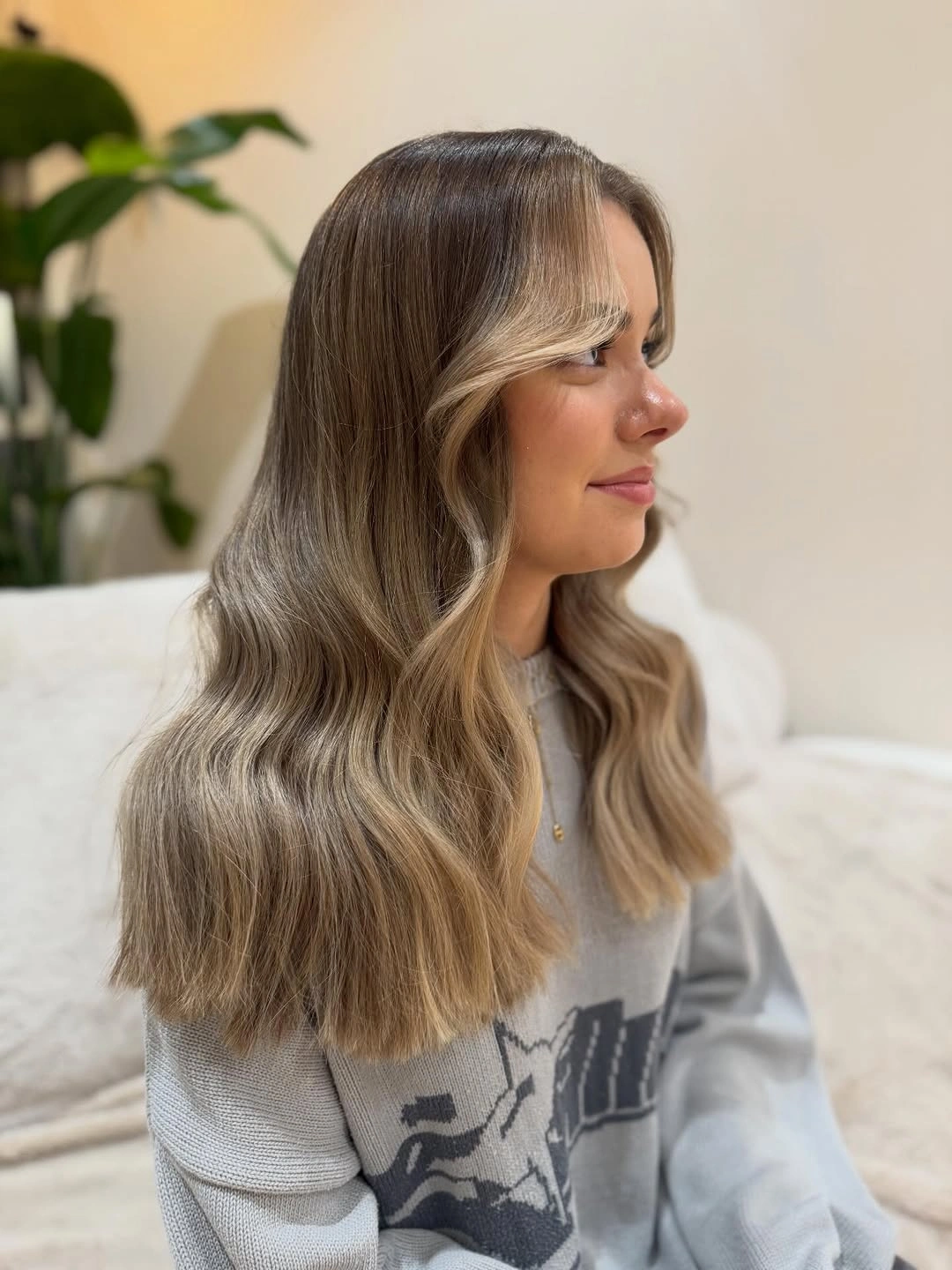
Concentrating contrast in a single front section changes the personality of the whole style. It directs attention immediately to the face, then lets the cool brown lengths feel calmer by comparison. A reader who likes the idea but wants a softer look could split the brightness into two narrower pieces or use beige instead of a very pale tone.
The tradeoff is visibility. A statement streak does not quietly disappear when the hair is pulled back, parted differently, or worn straight; it remains the defining detail. That can be a real advantage when you want a simple cut to feel individual. It simply calls for a clear decision about whether a graphic focal point suits your everyday mood.
A Pearly Blonde Bob With Sculpted Waves
This short pearly blonde bob uses glossy, sculpted S-waves to make the pale color look refined rather than flat. There is a little depth near the crown, but the lightness through the body and ends is what creates the bright, polished impression. The compact shape means every bend is visible, so texture becomes as important as the blonde tone itself.
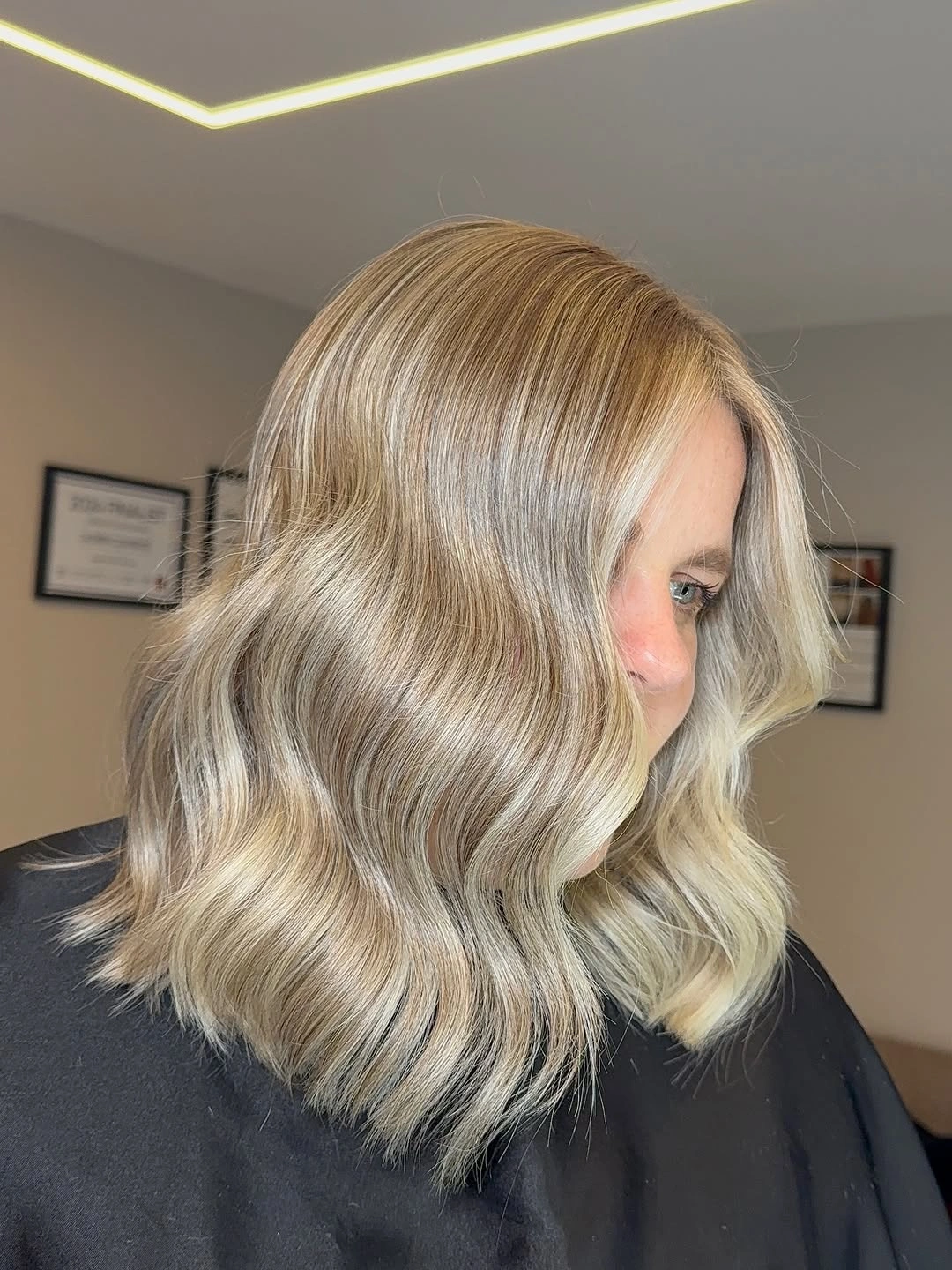
The precise wave pattern separates the color into curves of light and shadow, which gives a pale blonde more dimension than a straight surface would. A softer, less defined wave would make the same color feel more casual, while a blunt straight finish would shift focus to the root depth. The reference is useful for showing how much finish can alter a light blonde result.
Short bright blonde hair can feel high-impact even when the cut is simple, because the color and shape are both immediately visible. That does not require a complicated routine, but it does reward regular attention to the bob’s outline. Readers who want a gentler version can keep the pearly tone and choose a longer, looser shape that makes the brightness less concentrated.
Sandy Blonde Waves With Gentle Crown Depth
Long sandy beige-blonde waves hold slightly deeper dimension near the crown before opening into lighter, relaxed lengths. The effect is soft rather than icy or golden, with enough tonal variation to keep the hair from looking like one solid pale shade. Loose waves reveal the depth in small intervals, making the overall color feel airy and approachable.
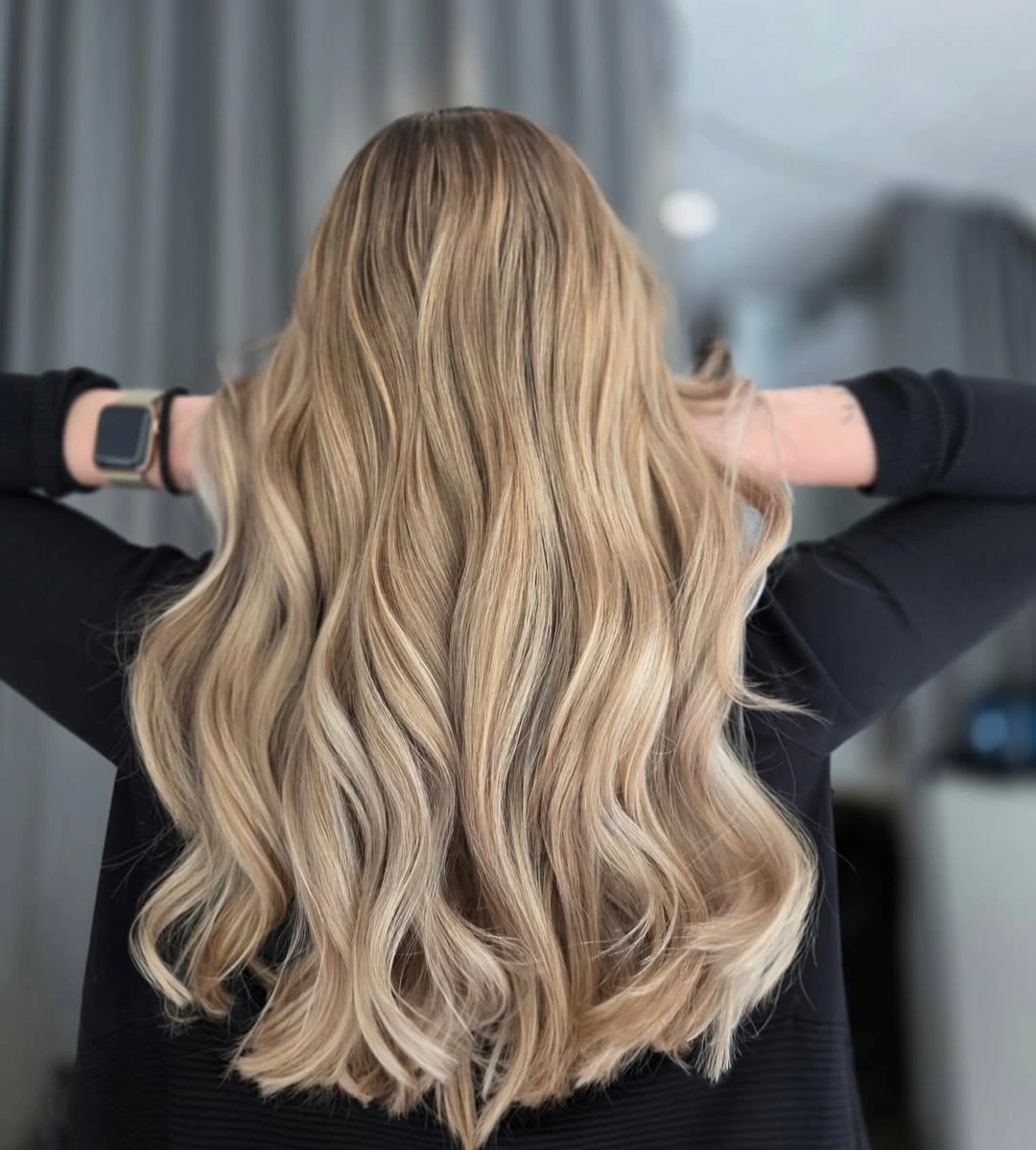
The crown depth is subtle, yet it is what allows the light lengths to retain shape from a distance. Without that quieter top area, the ends would have less contrast and the blend could look flatter when worn loose. For readers comparing brunettes and blondes, this guide to hair lowlights offers a useful way to think about depth as part of the overall design.
Sandy blonde is a flexible visual direction, but its softness can make it easy to overcorrect toward either gray or gold when choosing a reference. The better choice is to identify the amount of contrast you enjoy at the crown and around the face, then keep the rest of the blend close to that decision. The loose length can hide details when straight, so the color should still look satisfying without waves.