
Dark Fall Nails 2026: Deep Color, Shine, and Contrast
Under low light, dark fall nails become more interesting when the depth is readable. Some sets here stay compact and let a glossy purple, green, or black surface carry the mood; others use metallic tips, sharp points, or a single light interruption to keep the darkness from flattening. The useful question is not how dark a manicure can go, but where reflection, shape, and relief should appear.
Short shapes, reflective tips, and pointed silhouettes create a different kind of intensity in every reference. A compact square can feel precise, a burgundy almond can soften black clothing, and a stiletto can turn a narrow red reflection into the entire focal point. Use the strongest visible decision from each section, then reduce the length, detail density, or contrast if the original scale would not suit your everyday routine.
Deep Violet Keeps A Short Shape Controlled
Short rounded-square nails in deep violet open the collection with a quiet kind of depth. The glossy surface catches broad highlights, but the color remains uniform from finger to finger and carries no visible artwork. A pale glove and cool background make the purple feel almost berry-toned, while the compact outline stops the saturated shade from becoming too imposing.
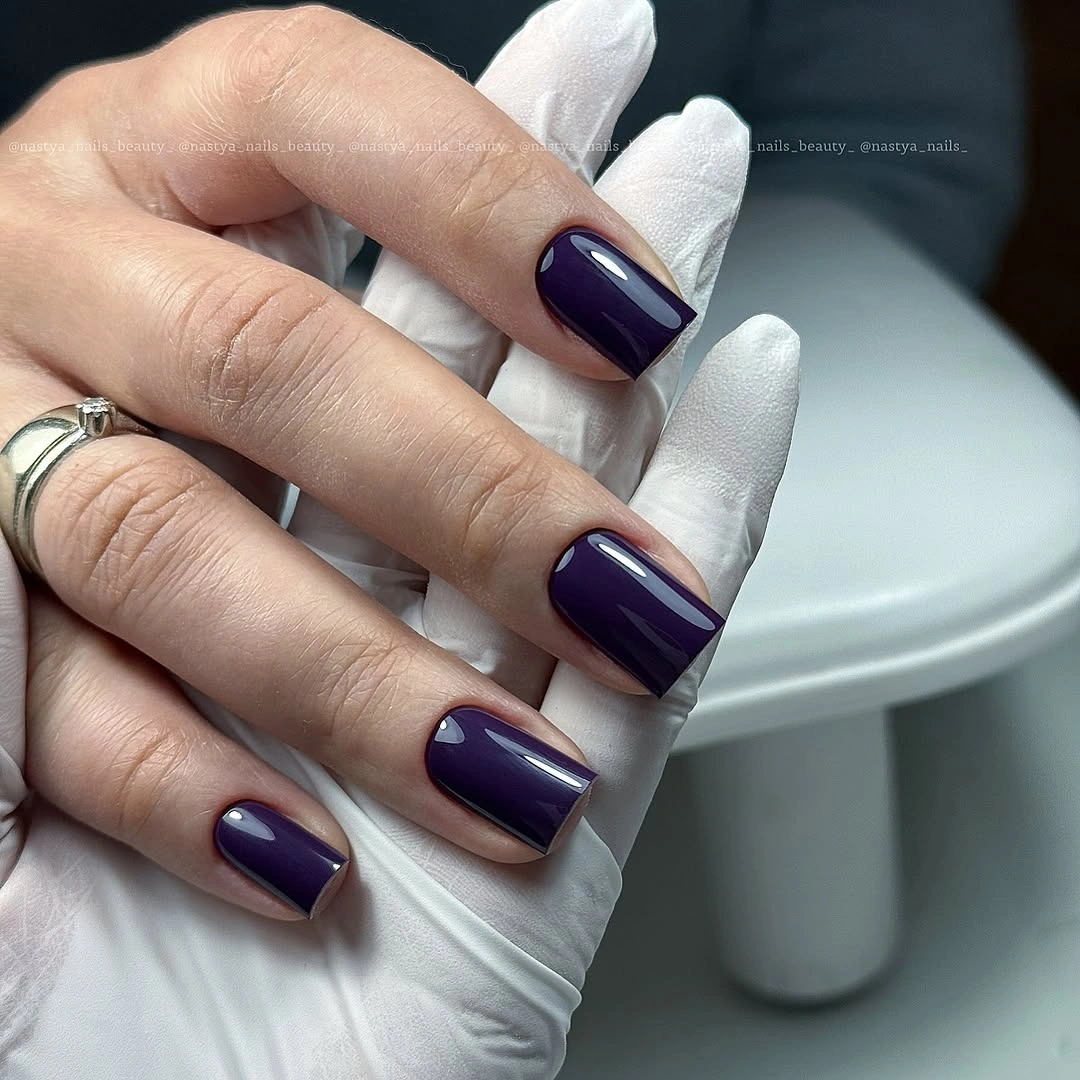
The restraint comes from proportion. Dark color often gains weight when it extends along a long tip, yet this short shape gives the eye a clear boundary and lets the shine provide just enough movement. The result sits between black and red without needing a second shade, which makes it a useful after-dark energy reference for readers who prefer a contained manicure.
Choose plum or aubergine if a slightly warmer direction is wanted, and keep the rounded square for the same controlled effect. Gloss will reveal edge wear, but there is no pattern to preserve or align during a refresh. That simple repair path is part of the appeal: the mood comes from depth, not from details that become fragile at the tip.
Plum-Black Glitter Fills The Long Silhouette
Long tapered nails move from plum into black while fine glitter and small reflective points occupy much of the surface. The tips look especially dense because the sparkle follows the entire length rather than stopping at one accent nail. White cloth and visible tattoos provide contrast around the hand, but the nail design remains the darker field where the eye settles first.
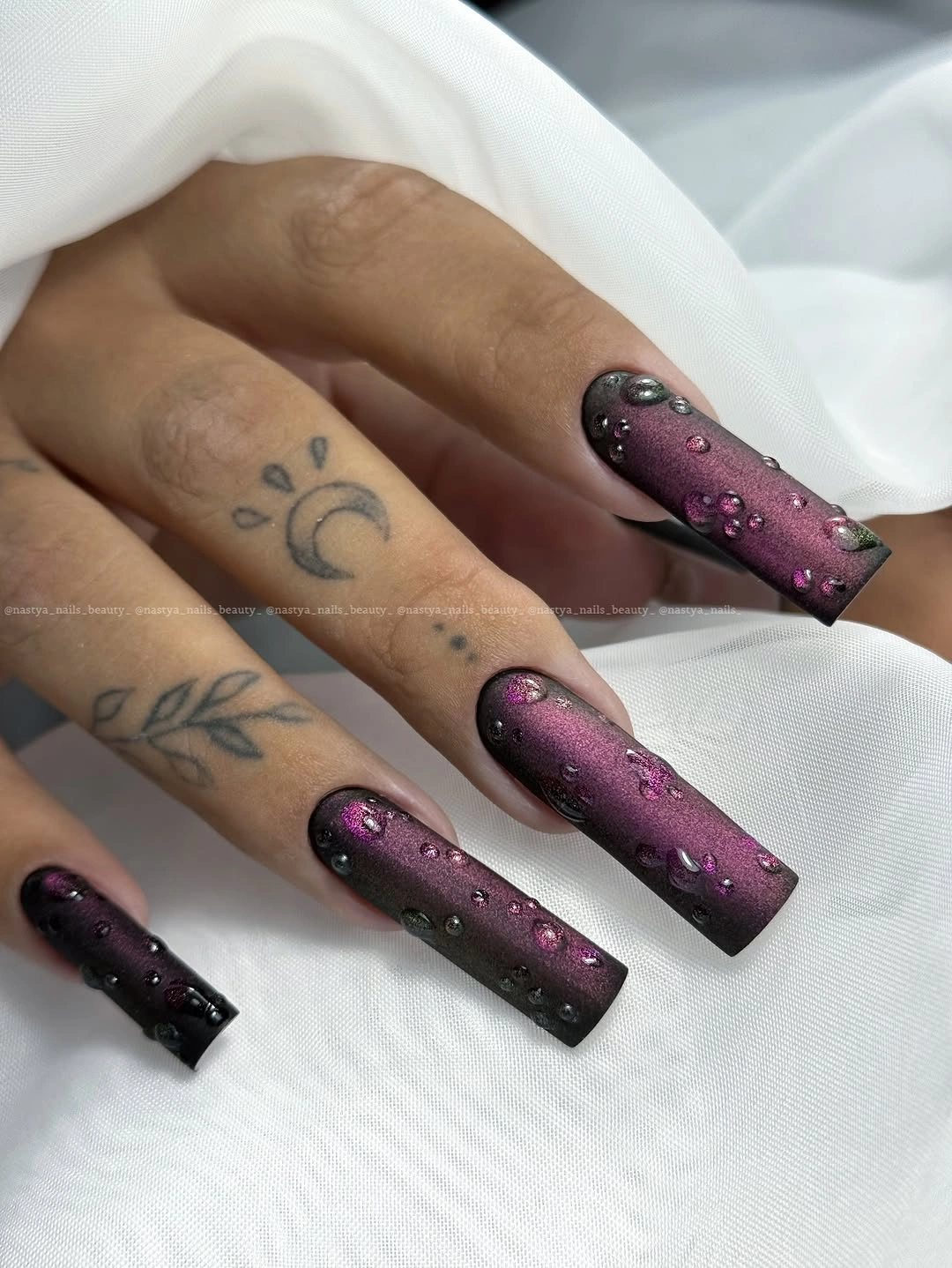
That full-length distribution gives the manicure a cinematic depth. Plum keeps the black from looking flat, while scattered points of light prevent the surface from becoming a single dark block. The tapered shape helps the sparkle travel toward the tips, so the design feels intentionally elongated rather than simply covered in glitter from base to edge.
For a more wearable translation, leave the base dark and concentrate sparkle on the tips or on one accent nail. Shortening the shape also makes the glitter easier to keep visually even as the nails grow. The honest tradeoff is density: a richly reflective surface can hide small color changes, but it also makes new growth and uneven edges more noticeable.
Cobalt Blue Lets Gloss Carry The Mood
Medium rounded-square nails in deep cobalt blue show how a dark direction can stay clear without black. The surface is smooth and glossy, with large white reflections that make the blue look almost lacquered. White fabric around the hand pushes the color forward, while the medium length supplies enough presence to feel intentional without turning the set into a long-form statement.
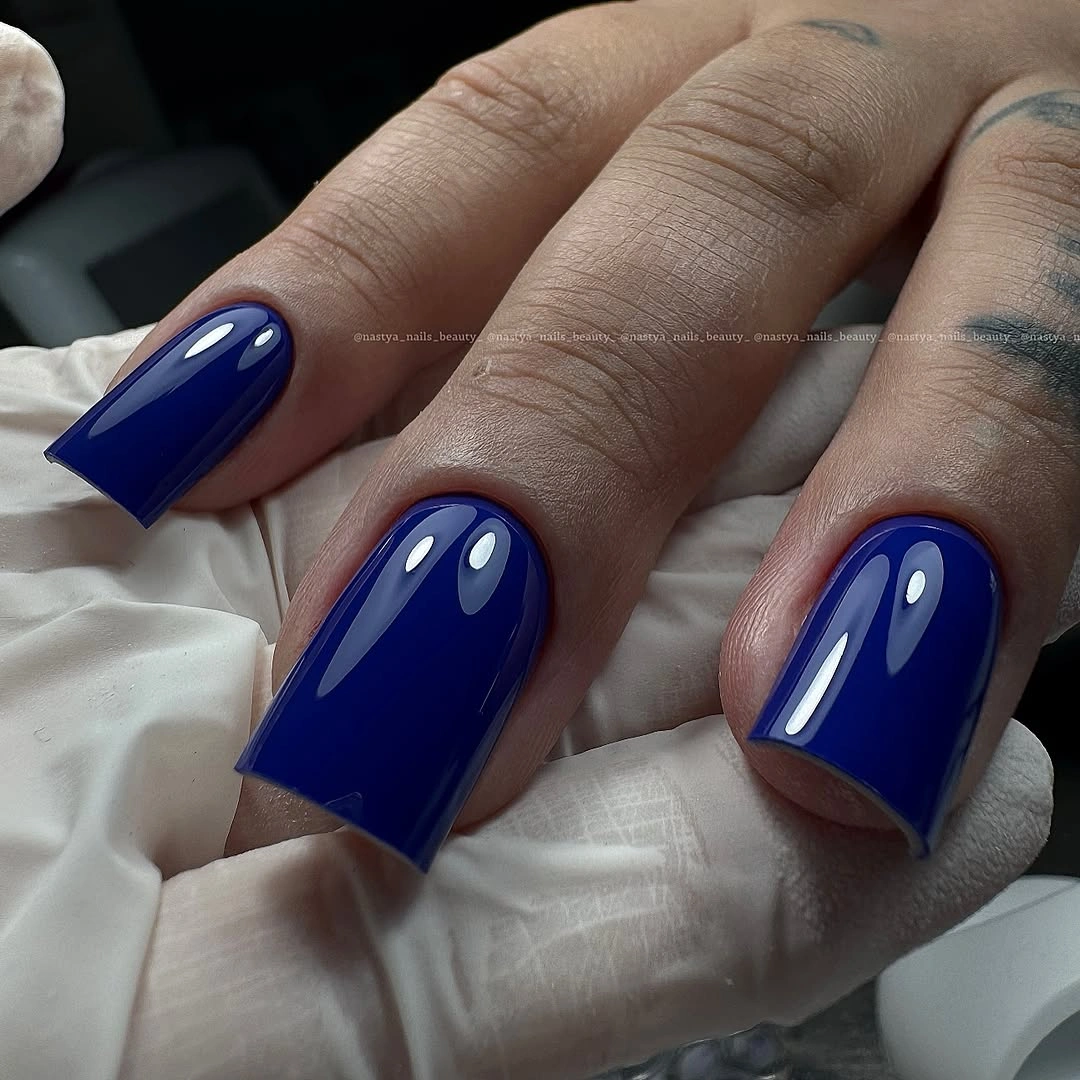
Reflection does the work that artwork might otherwise do. Each highlight breaks the blue surface into a brighter plane and a deeper edge, giving a single shade more visual movement. That is why the manicure reads rich rather than plain. The controlled length also leaves room for the color to lead, so no glitter or motif is needed to keep the eye engaged.
Move toward midnight blue if the set should feel darker, or keep cobalt and use a shorter rounded square for daily wear. A matte accent on one nail would create a new kind of contrast, but the glossy version is more faithful to the visible balance. Chips may show against the saturated blue, although the solid surface makes a refresh uncomplicated.
Matte Navy Finds Light In Two Gold Nails
Most nails here are long, square, and dark navy with a flat-looking surface, while two visible nails carry bright gold-toned decoration. The contrast is immediate: the navy absorbs light and the accents return it. White fabric keeps both parts legible, and the two-and-three rhythm gives the manicure a focal structure instead of allowing the metallic details to spread across every finger.
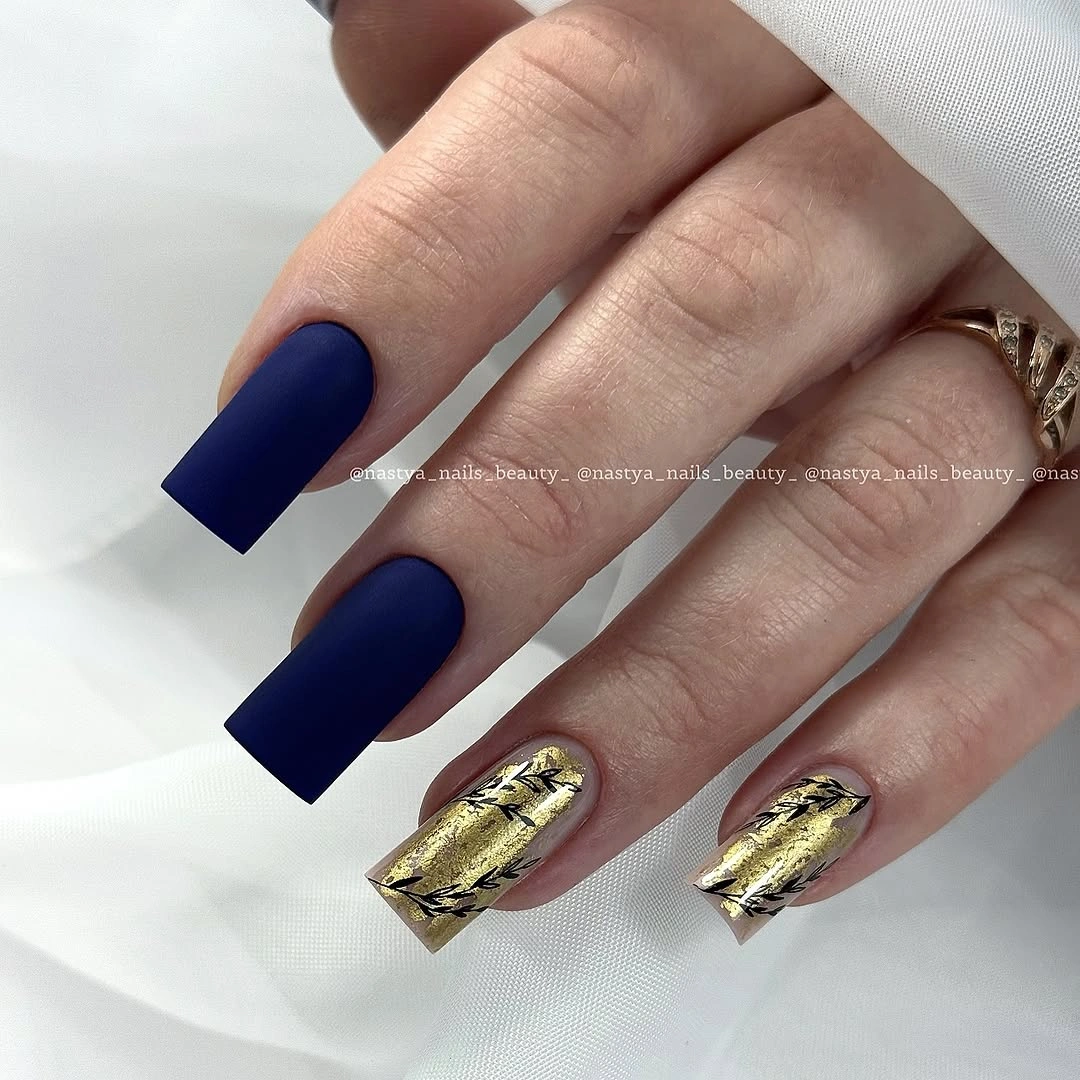
The appeal lies in the change of finish as much as the change of color. Navy supplies a deep continuous field, then the gold breaks through like a small lit panel. Because the reflective accents are limited, they feel deliberate rather than ornamental everywhere. The long square shape adds enough surface for the contrast to read clearly from a distance.
Keep one gold accent if two feels too bright, or replace the warm metal with muted bronze for a softer fall palette. A shorter square would make the matte base easier to wear, while the accent can remain because it is already isolated. The material is not certain from the surface, so copy the matte-and-shine relationship instead of naming the decoration.
Black Almost Disappears Into Its Setting
Short rounded-square nails in glossy black sit against black clothing, so the manicure is visible mainly through shape, shine, and one tiny pale or metallic detail. Red flowers behind the hand create a warm background note, but they do not enter the nail palette. The small accent keeps the solid surface from vanishing completely without turning the set into a graphic design.
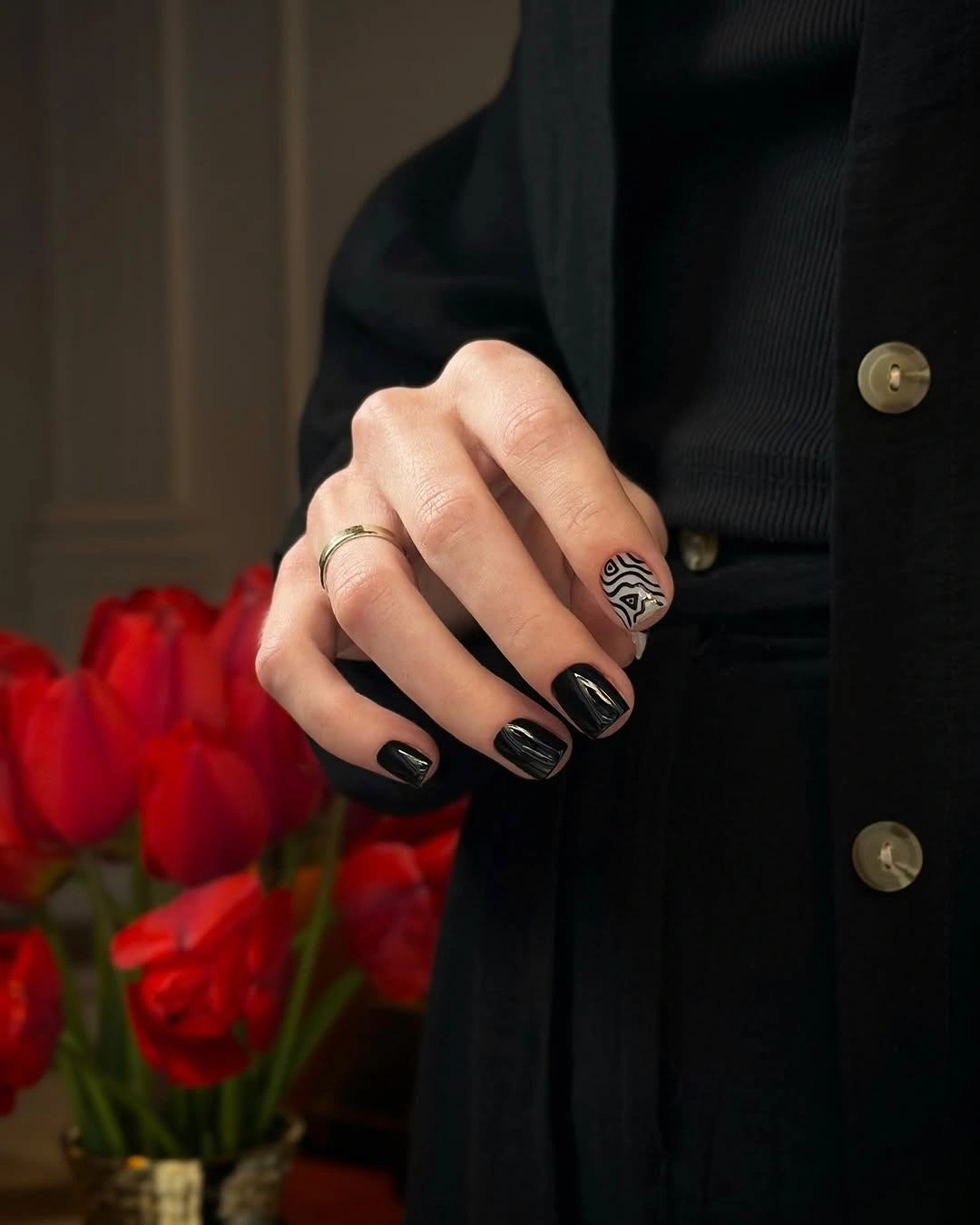
Here darkness is not about adding more decoration. The near-matching clothing makes the outline and reflective points carry the image, while the compact tips keep the black set precise. That restraint gives the manicure a controlled after-dark feeling without inventing a setting around it. The tiny detail matters because it creates one readable stop in an otherwise continuous field.
Use a single silver dot or pale outline if the same idea needs to be recreated, and leave the other nails plain. Short length already reduces the visual weight, so there is no need to compensate with glitter. Any small light detail will show wear quickly, which makes a flat mark more practical than a raised accent if the hand will meet knit fabric or bags.
Black French Edges Give Pink A Shadow
Long square nails begin with pale pink bases, then turn sharply dark at the tips. Selected nails add curved black lines over the light space, creating a graphic architecture that stays connected to the broad black edge. White textile behind the hand clarifies the contrast, so the design reads as a pale field framed by darkness rather than as a full black manicure.
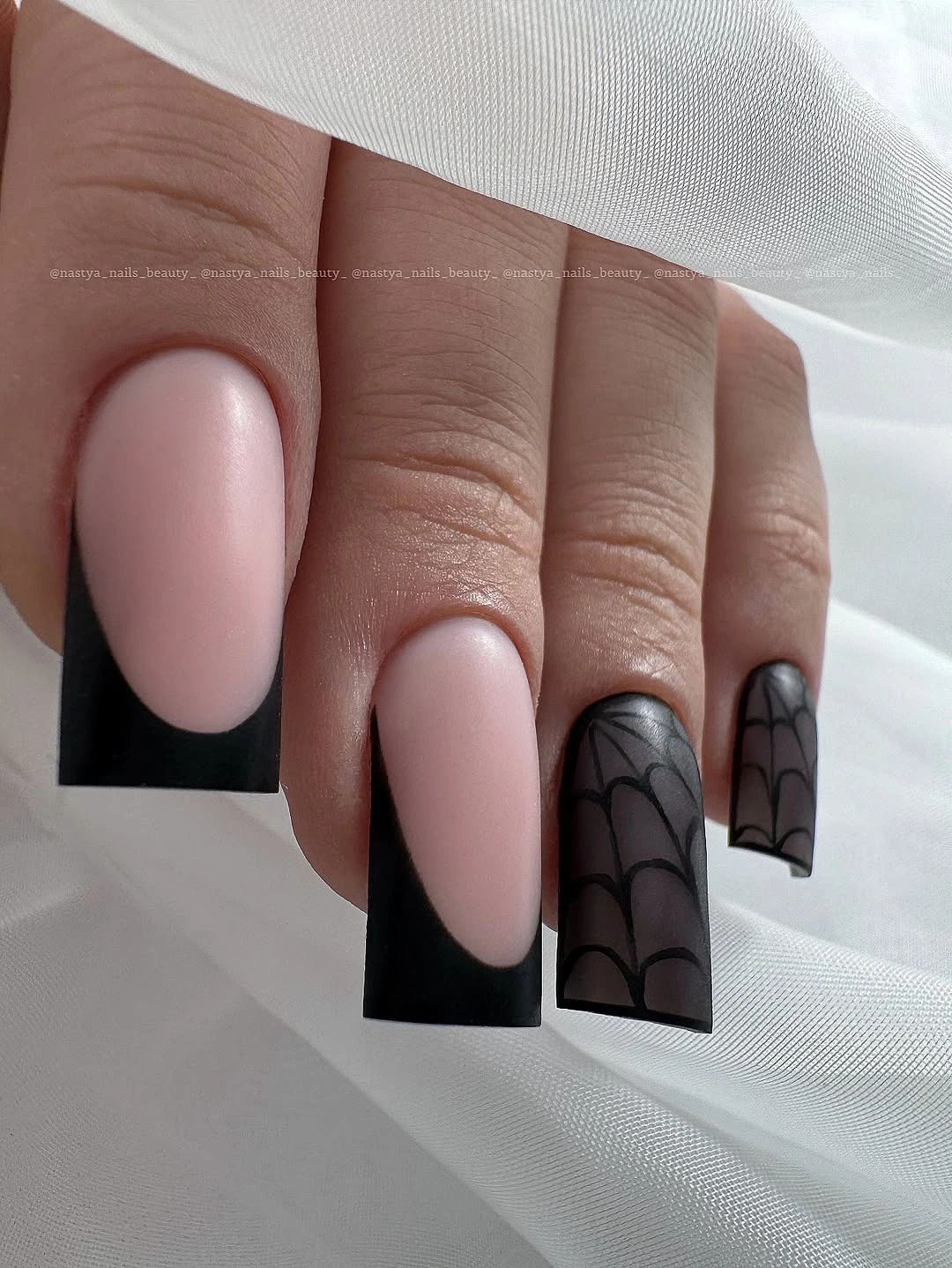
The black tip is wider than a delicate French line, which gives it enough visual weight to balance the long square shape. Pale pink prevents that weight from filling the entire nail, while the arched marks add rhythm without competing with the main edge. The result is sharp but still readable because negative space remains between the base and the darker detail.
Narrow the tip on a shorter squoval, or keep the broad edge on two accent nails and make the others pale. The square corners contribute to the graphic effect but also make the design more demanding in daily movement. A softer rounded edge can preserve the black-and-pink tension while reducing the feeling that every line must remain perfectly straight.
Short Black Nails Pick Up Warm Surrounding Color
Short black nails appear against a bright pink sweater, with only small warm or pale details interrupting the dark surface. The shape is compact and rounded, and the glossy finish lets a few edge marks catch the light without becoming a repeated motif. The clothing supplies the brighter color relationship, making the black look less isolated and more intentionally styled.
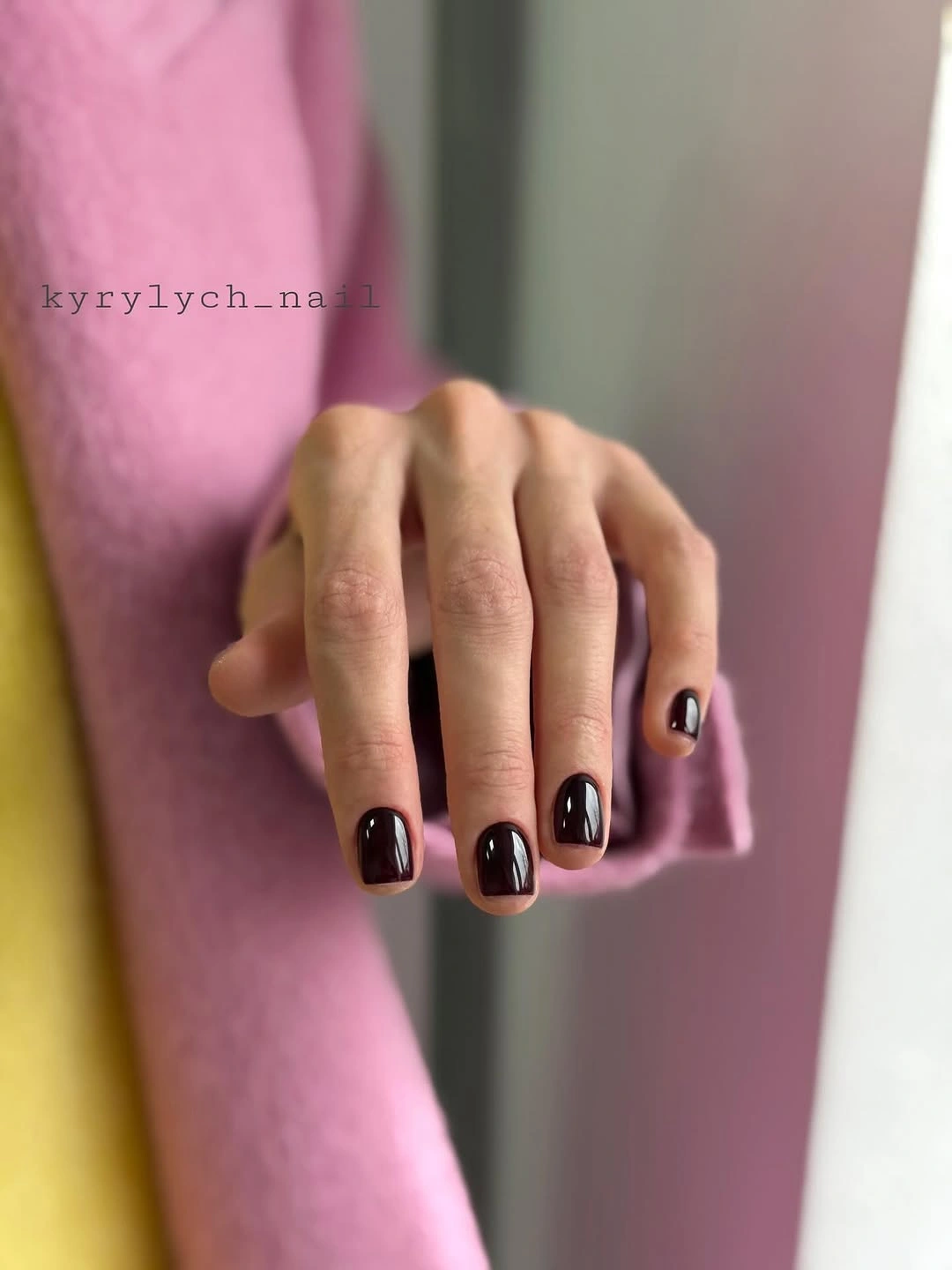
The surrounding pink changes the temperature of the manicure. Black remains the deepest value, but the sweater gives it a softer counterpoint than a fully dark setting would. Because the accents are small, the set still reads as black first, while the hand gains a little relief where a red, gold, or pale point appears near the edge.
Keep one tiny accent if a cleaner version is needed, or pair the black with a berry knit instead of vivid pink. Short length makes the base approachable, so adding more decoration would only blur the central contrast. If the small marks are difficult to read, their exact color can remain flexible; the useful choice is their restrained scale around the dark field.
Dark Cherry Uses One Patterned Pause
Most nails in this medium square set are dark cherry or burgundy, with one visible nail carrying a lighter black-and-white detail. The deep color dominates the hand, while the isolated accent creates a pause rather than a new competing palette. Black clothing and a pale window frame the contrast, letting the red remain readable even in a low-light composition.
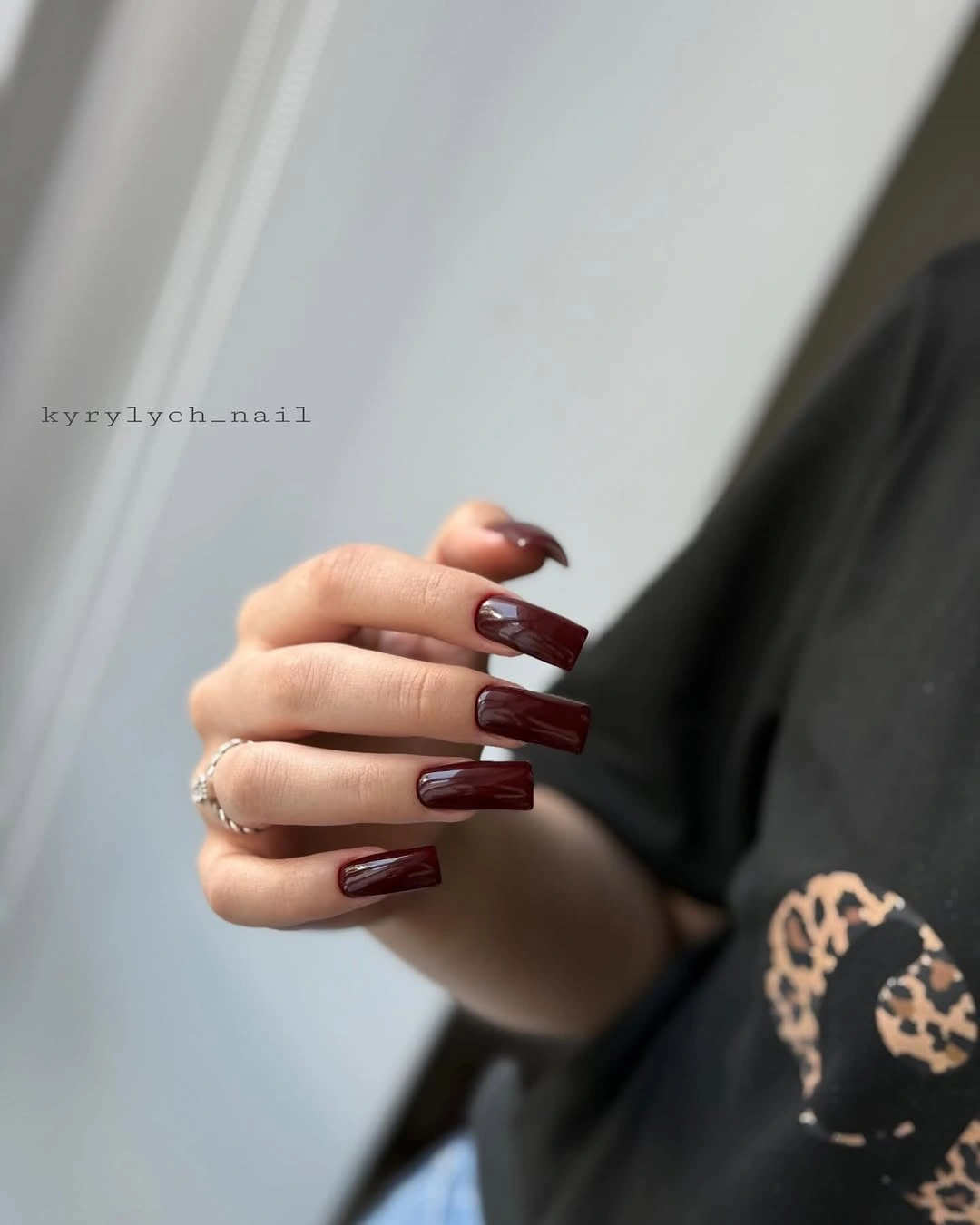
A single interruption works because the surrounding nails repeat the same dark temperature. The accent draws attention, then sends it back to the burgundy surfaces and their squared edges. That sequence keeps the manicure moody without making every nail perform. The design also shows how a small pale area can supply relief when the base shade is nearly black.
Use dark brown or oxblood if a different depth is preferred, and keep the pattern on one shorter nail. The exact small motif is not clear enough to name, so its role matters more than its identity. A simple accent is easier to repair than several detailed nails, especially when the square length makes the dark color look strong on its own.
Dark Brown Softens A Long Almond Point
Long almond nails in a deep brown or burgundy shade reach through a sheer curtain, and the curved point keeps the dark color from feeling blocky. The surface is glossy and solid, while a cream knit sleeve gives the hand a pale frame. Nothing interrupts the base, so the silhouette and the difference between brown and black become the main visual decisions.
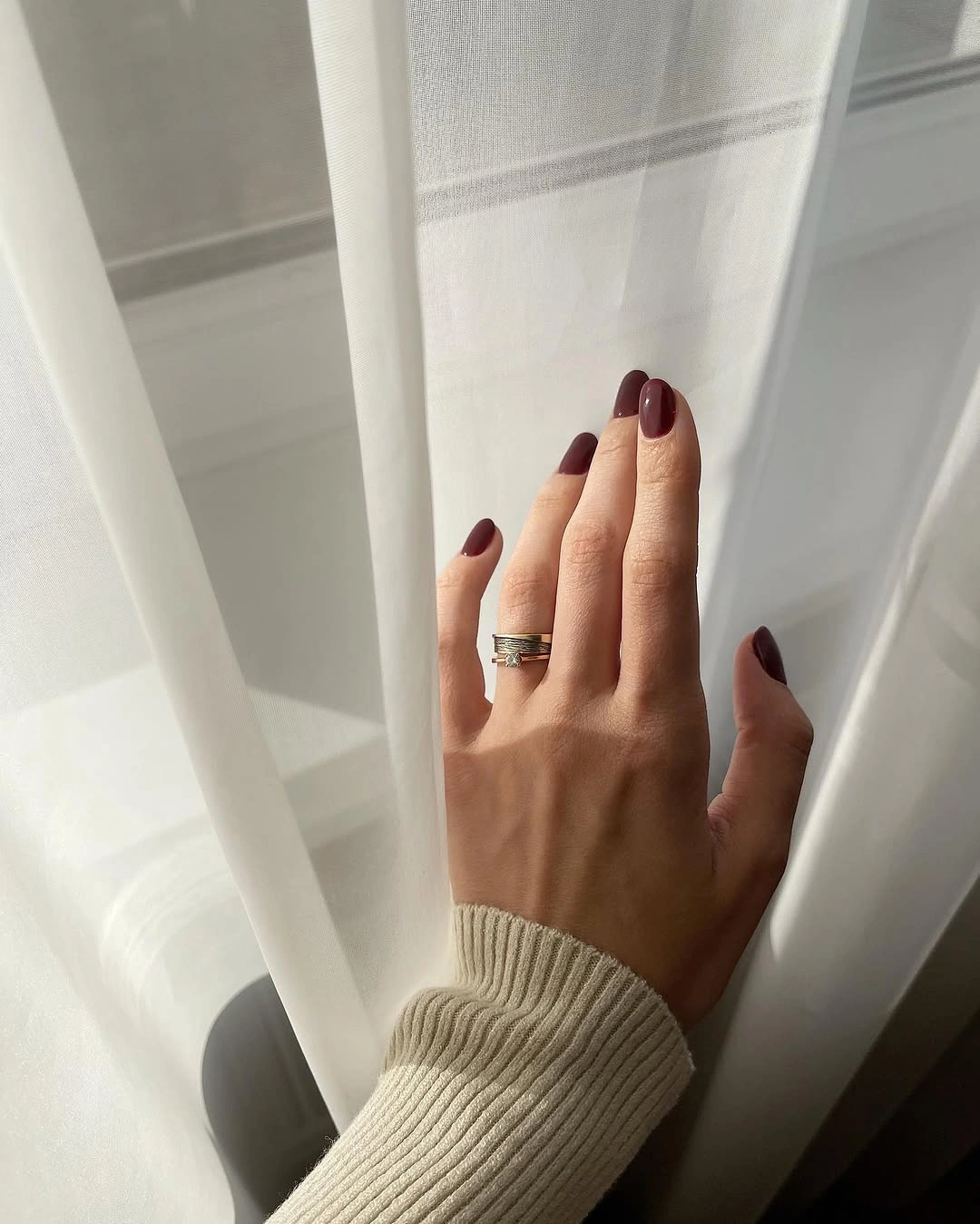
Brown carries less stark contrast than black, and the almond edge adds another softening move. Together they create depth without turning the hand into a hard graphic shape. The cream sleeve makes the shade appear warmer, showing how a dark neutral can change with its surroundings while remaining a simple one-color manicure.
A medium almond would keep the curve and remove some of the daily burden, while chestnut or espresso can shift the undertone. Because the design is solid, color changes are safer than adding art. The long point is the honest limitation: it gives the dark brown a sleek outline, but it also asks for more care around ordinary tasks.
Silver Glitter Traces A Short Black Edge
Short rounded-square nails in black carry bright silver-speckled details close to the tips. The glitter behaves like a narrow border or inset edge rather than a full overlay, so most of the dark surface remains visible. In the low-light setting, the silver points become the main source of relief and create a crisp boundary around a compact, readable shape.
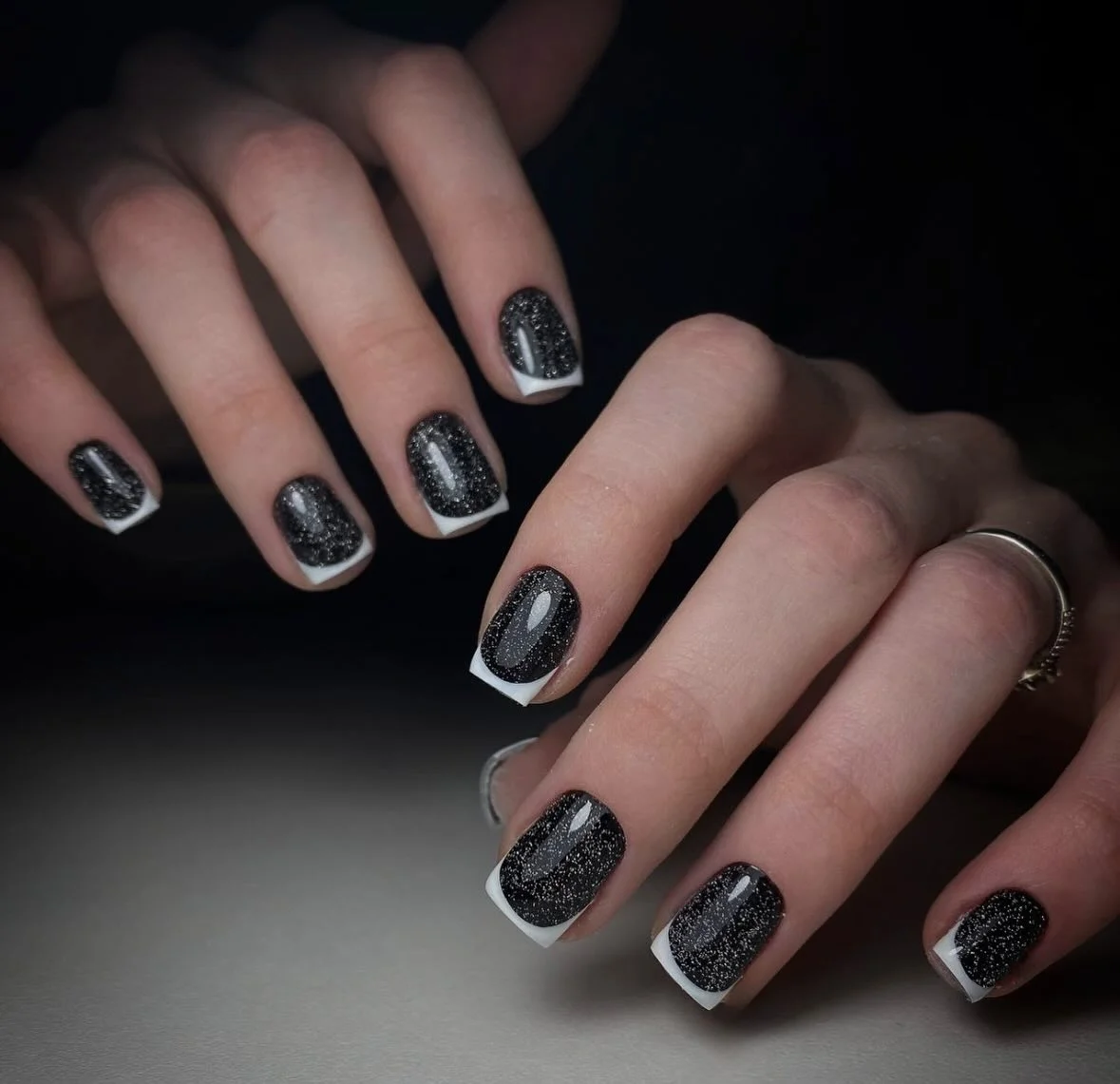
Edge placement keeps sparkle from overwhelming black. The light is concentrated where the nail ends, which gives the set a small flash without changing its after-dark base. Short tips help too: the dark field stays proportionate, and the silver does not need a long surface to make its point. The visual tension comes from a thin line of brightness against depth.
Gunmetal can replace silver if a quieter version is wanted, or glitter can remain on two accents while the other nails stay plain. A narrow border needs clean edges, but it is still easier to maintain than a full decorative surface. If the tip grows out unevenly, simplify it into a small silver mark rather than forcing the original line to remain exact.
Stiletto Sparkle Pushes Into Theatrical Territory
Very long stiletto nails combine dark blue-black sections, dense glitter, and bright jewel-like or metallic points. The decoration follows the sharp length instead of sitting in one small area, so the entire hand becomes a high-impact surface. Black clothing and a deep background allow the reflective details to appear in controlled flashes rather than as a bright all-over field.
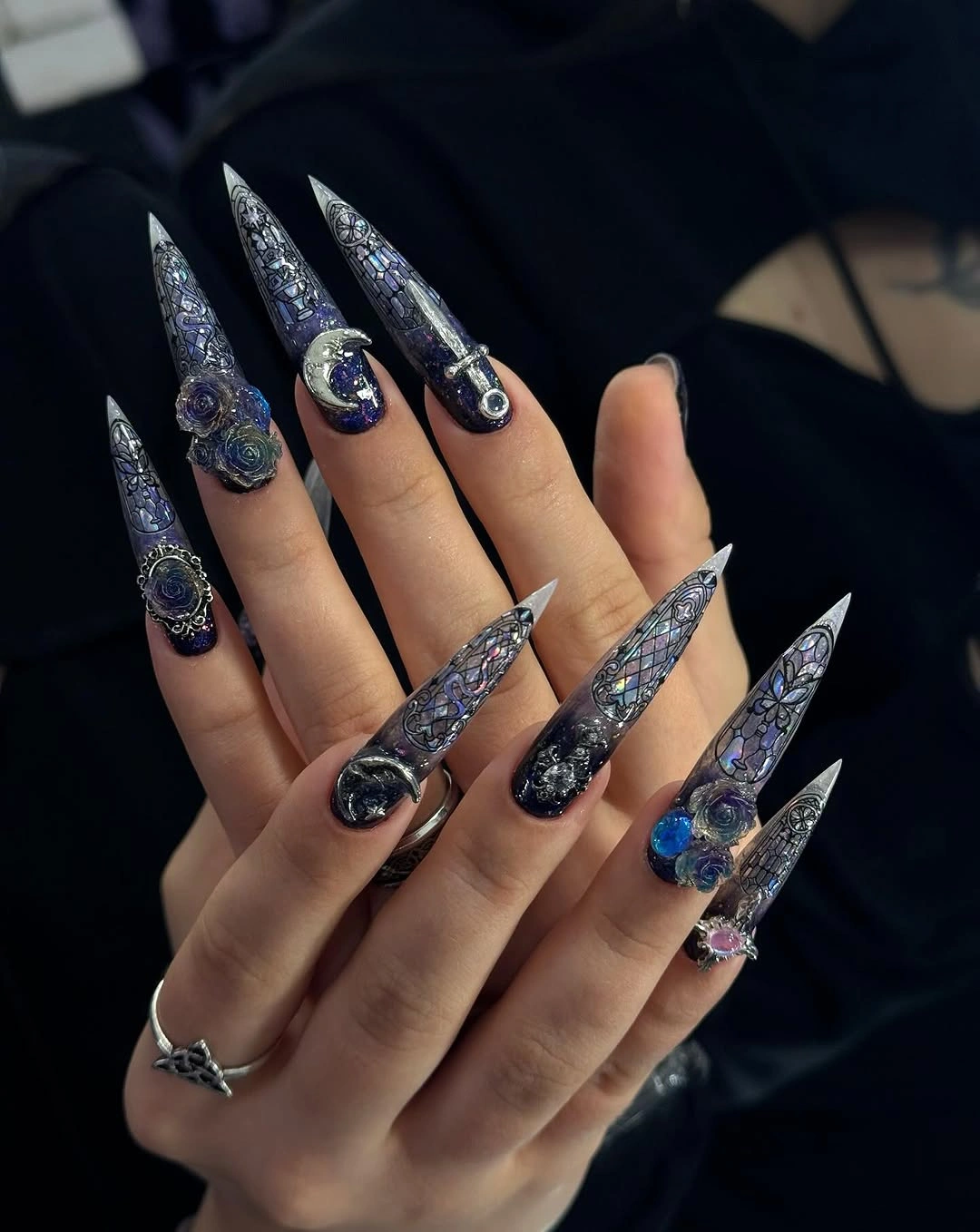
The silhouette and detail density reinforce one another. A short nail could carry the same colors, but it would not create the same narrowing rhythm toward the tips. Here the points direct the eye, while glitter and small reflective forms keep the long dark surface from becoming flat. The result belongs to occasion styling because every decision is intentionally amplified.
Borrow the palette on one accent nail if the full scale would be impractical, or keep the stiletto outline but remove most of the embellishment. The exact materials are not visible enough to name, and the functional limit is clear without that information: very long points and dense raised-looking detail can interfere with clothing and everyday movement.
Deep Green Replaces Black With Gloss
A macro view of short rounded-square nails shows a deep forest green with a smooth, reflective surface. The color is almost black at the edges but reveals green through the broad highlight, giving the manicure more depth than a flat black base would. The simple crop removes background distractions, so surface quality, shape, and undertone become the evidence.
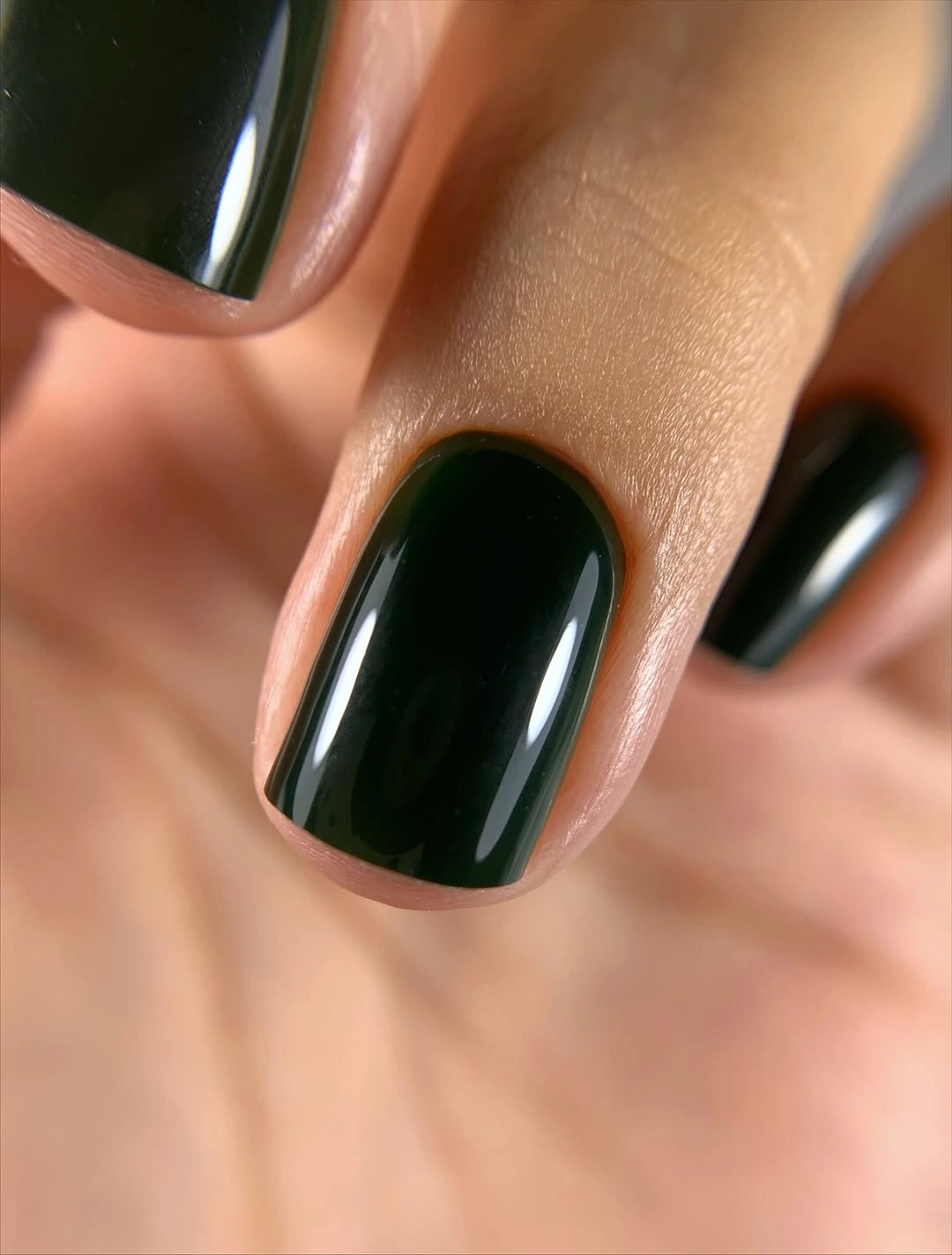
Forest green works as a dark-fall alternative because it keeps the value low while adding a cool botanical note. High shine creates a second plane across the nail, which is why the solid color does not feel empty. The short outline keeps the mood compact and makes the shade suitable for readers who want darkness without committing to black or dramatic length.
Shift toward olive if the green should feel warmer, or keep the forest tone on a short squoval. A glossy surface can reveal texture and edge wear, but it asks for no motif maintenance. The safest adaptation is therefore a change in undertone or outline rather than added decoration, since the strength of this reference comes from one deep color that remains readable.
Raised Silver Detail Sits On Espresso
Short dark nails begin with an espresso or black glossy base, then add small raised-looking silver forms on selected surfaces. The accents appear as loops, beads, or narrow shapes rather than broad flat drawings, so the deep color remains the first read. A dark background keeps the mood close and lets each silver point appear only when it catches light.
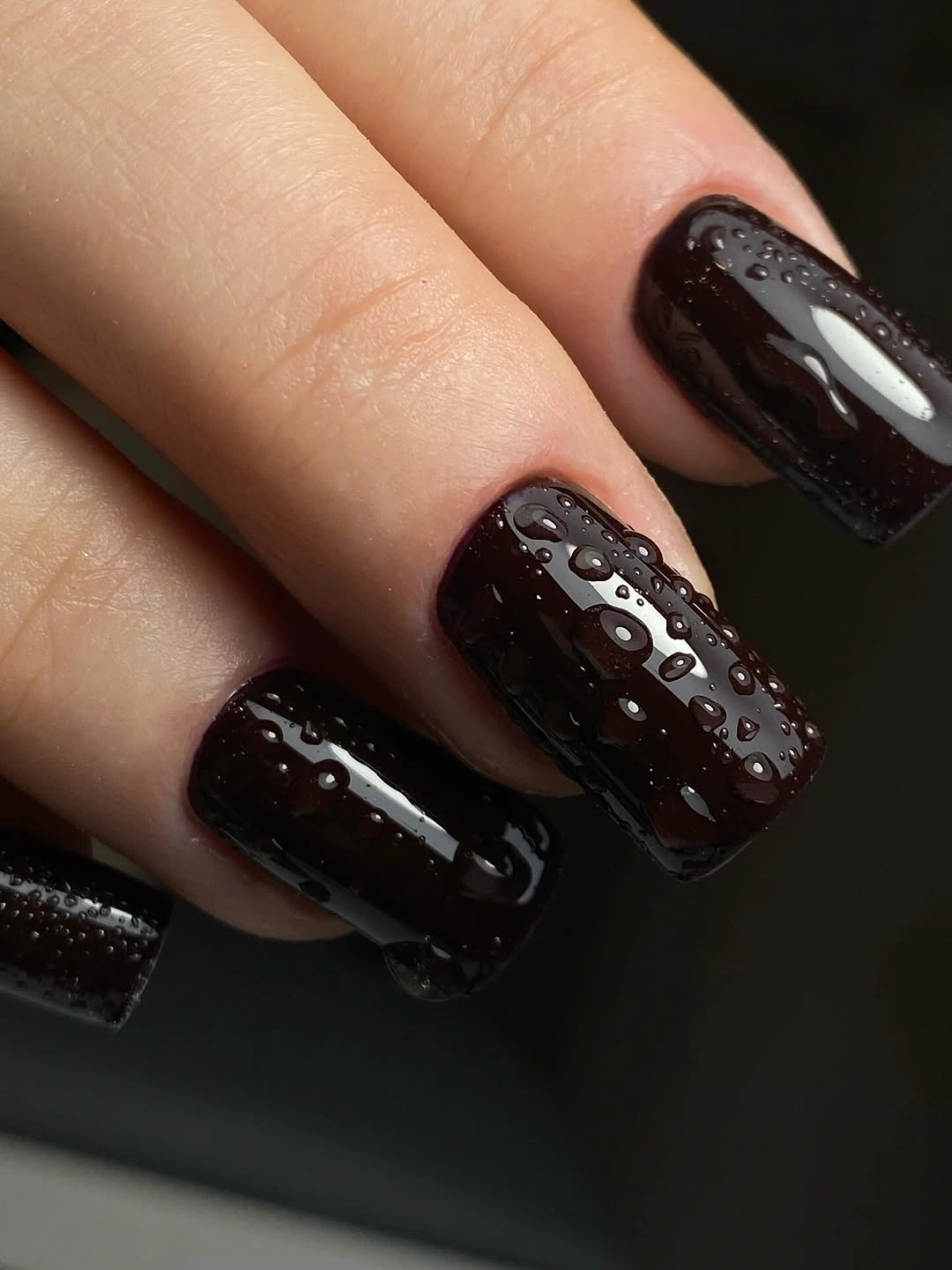
Texture changes the way a solid dark manicure is experienced. Instead of relying on a new color, the design introduces small physical-looking islands that break the glossy surface. The compact shape keeps those accents contained, while the close view shows why a little relief can add depth without requiring a full pattern across every nail.
Use one accent nail and replace the raised forms with a thin silver line if the set needs to survive more daily friction. Dimensional details may catch on fabric and can make edge upkeep more visible. The exact construction should stay unnamed, but the transferable choice is clear: a dark base gains atmosphere when the light has a few small places to land.
Burgundy Almonds Find Relief In White Fabric
Medium-long almond nails in deep burgundy sit against a white sleeve and silver rings. The color is solid and glossy, with the curved contour doing more work than any visible motif. Light fabric outlines the hand, while the jewelry reinforces the cool shine around it. The manicure stays dark, but the surrounding brightness prevents it from becoming visually closed.
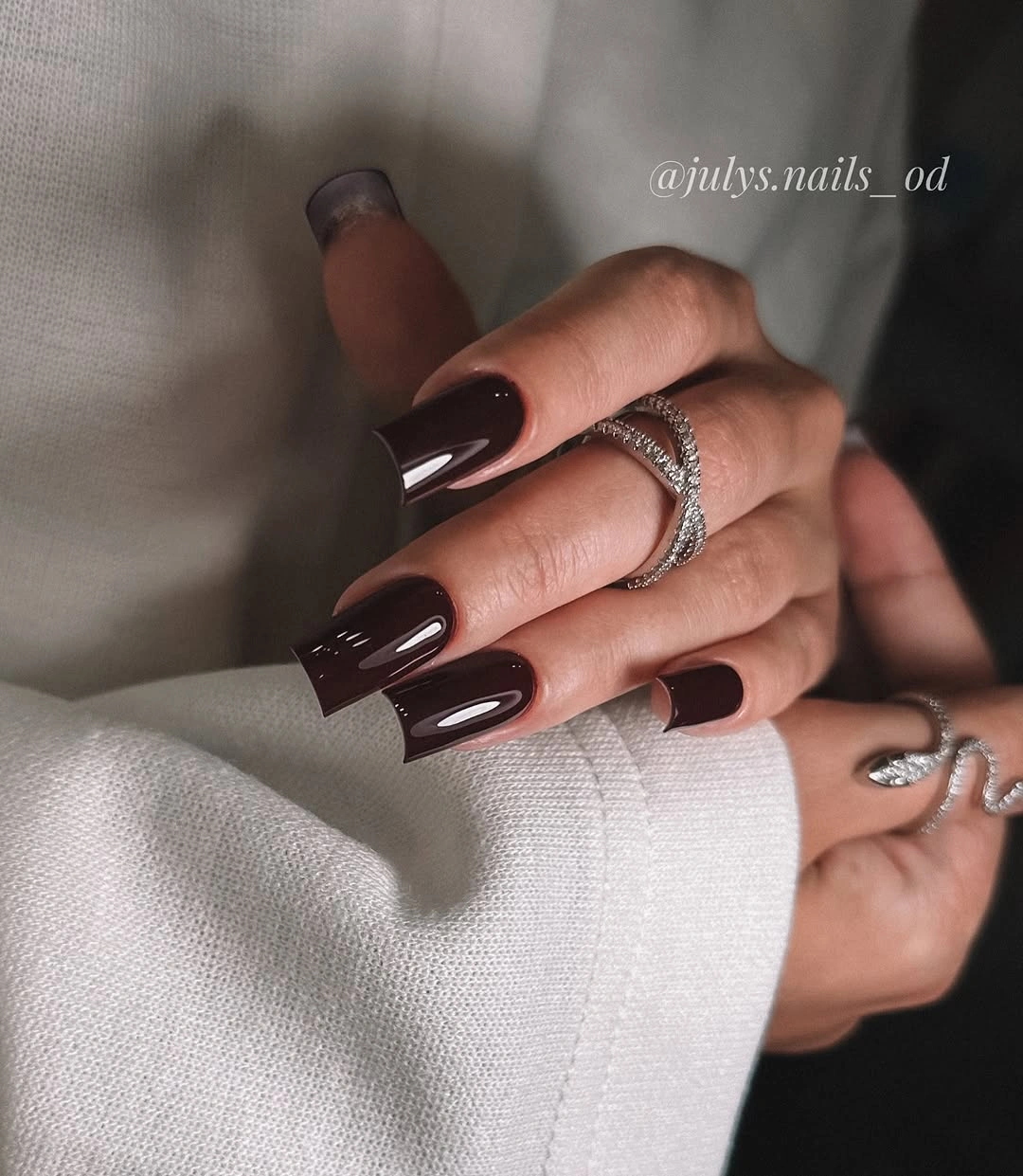
Almond shape softens the depth of burgundy in a way a straight square edge would not. The long curve gives the color room to stretch, yet the medium proportion avoids the extreme effect of pointed or stiletto references. Silver rings add small reflective echoes without entering the nail design, showing how accessories can support a dark palette without crowding it.
Choose dark cherry or oxblood for a slightly warmer result, and shorten the almond if the tip would interfere with routine tasks. Because the base is plain, a change in undertone keeps the structure intact. Gloss may show edge wear, but the absence of artwork makes the refresh simple and keeps the manicure readable while it grows out.
Light Illustration Meets Black Tips
This card presents two visible directions at once: pale nails with fine black illustrations on one hand and darker black-tipped nails on another. The light version feels softer because the line work sits on an open base, while the dark version creates a sharper boundary. Jewelry and a smartwatch surround the hands, but the contrast between the two nail treatments remains central.
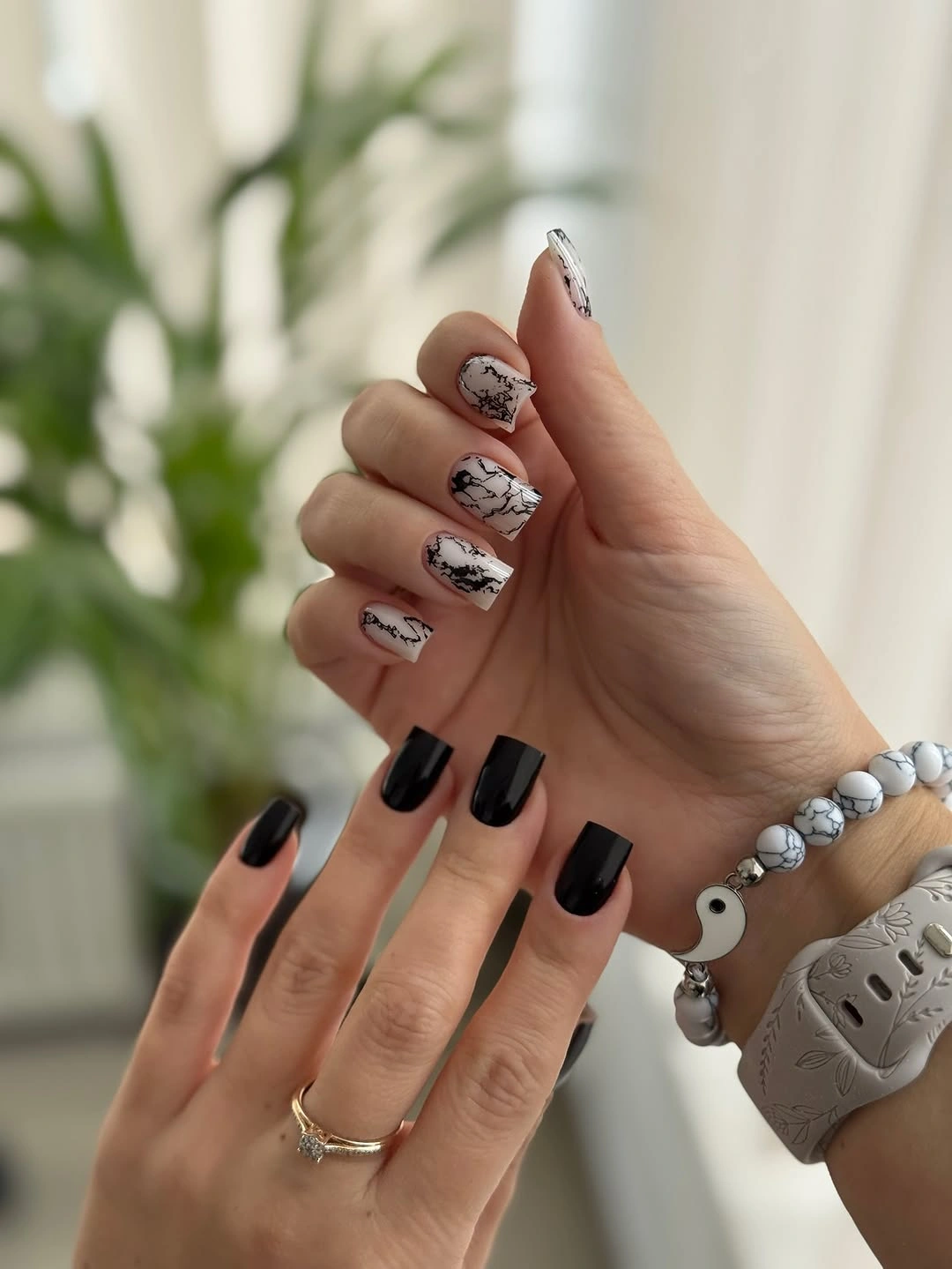
The useful idea is comparison rather than a single exact recipe. Pale space lets small drawings breathe, while black tips compress attention toward the edge and create a stronger graphic read. Both choices belong to a dark-fall conversation because each uses contrast, but they distribute it differently: one spreads light through the base, and the other concentrates darkness at the perimeter.
Choose one direction for a coordinated set instead of copying both hands literally. A pale manicure can keep one illustrated accent, while the dark version can reduce the black to two tips and leave the rest neutral. The tiny drawings are not clear enough to name, and that uncertainty is useful: preserve the contrast strategy, then choose marks that suit the length you can maintain.
Red Reflection Turns A Point Into A Line
Extreme stiletto nails show dark surfaces crossed by vivid red reflective lines. The points are very long and narrow, and the red appears to travel along the length like a sharp highlight rather than a broad color block. Black clothing and a dark setting keep the surrounding values low, so the linear red becomes the first thing the eye follows.
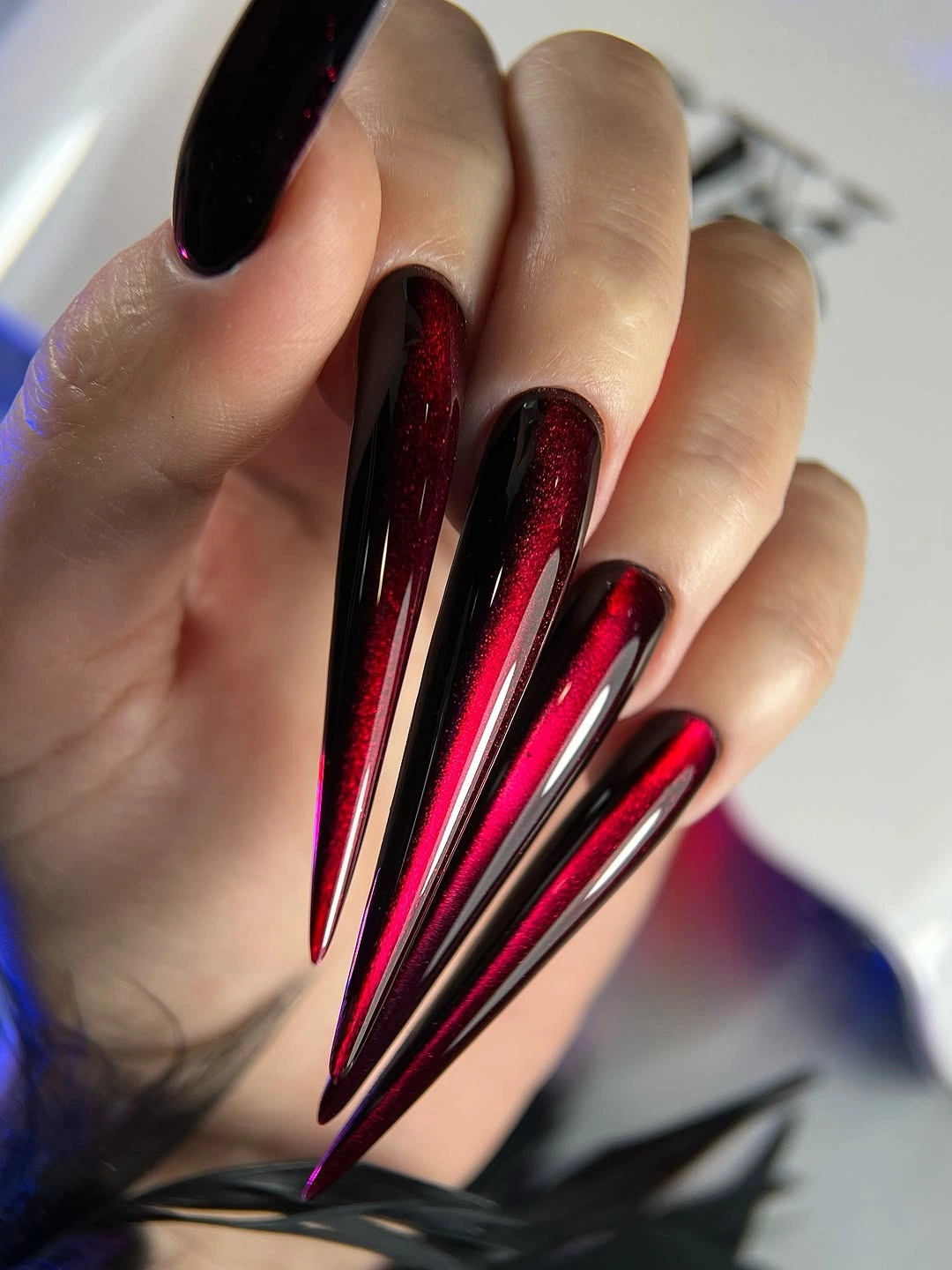
The design depends on direction. A broad red base would read as a bright manicure, but a narrow reflection preserves the dark field and gives the stiletto a blade-like rhythm. The long point supplies the tension, while the limited red keeps the surface legible. It is a strong example of using one line to organize an entire silhouette.
For daily wear, move the red line onto a shorter almond or place it on two dark accent nails. The reflective surface may show scratches, and the extreme point is the clearest practical limitation. Copying the color relationship is enough; the construction and finish should remain open because the visible evidence supports reflection and contrast, not a specific technique.
Pale Green Tips Interrupt Black Length
Very long dark nails narrow toward pale green or gray-green tips, creating an unusual two-tone silhouette. The base reads black or charcoal, while a light edge appears where the point finishes. Jewelry and dark clothing support the mood, but the unexpected pale tip changes the balance and keeps the manicure from disappearing into its setting.
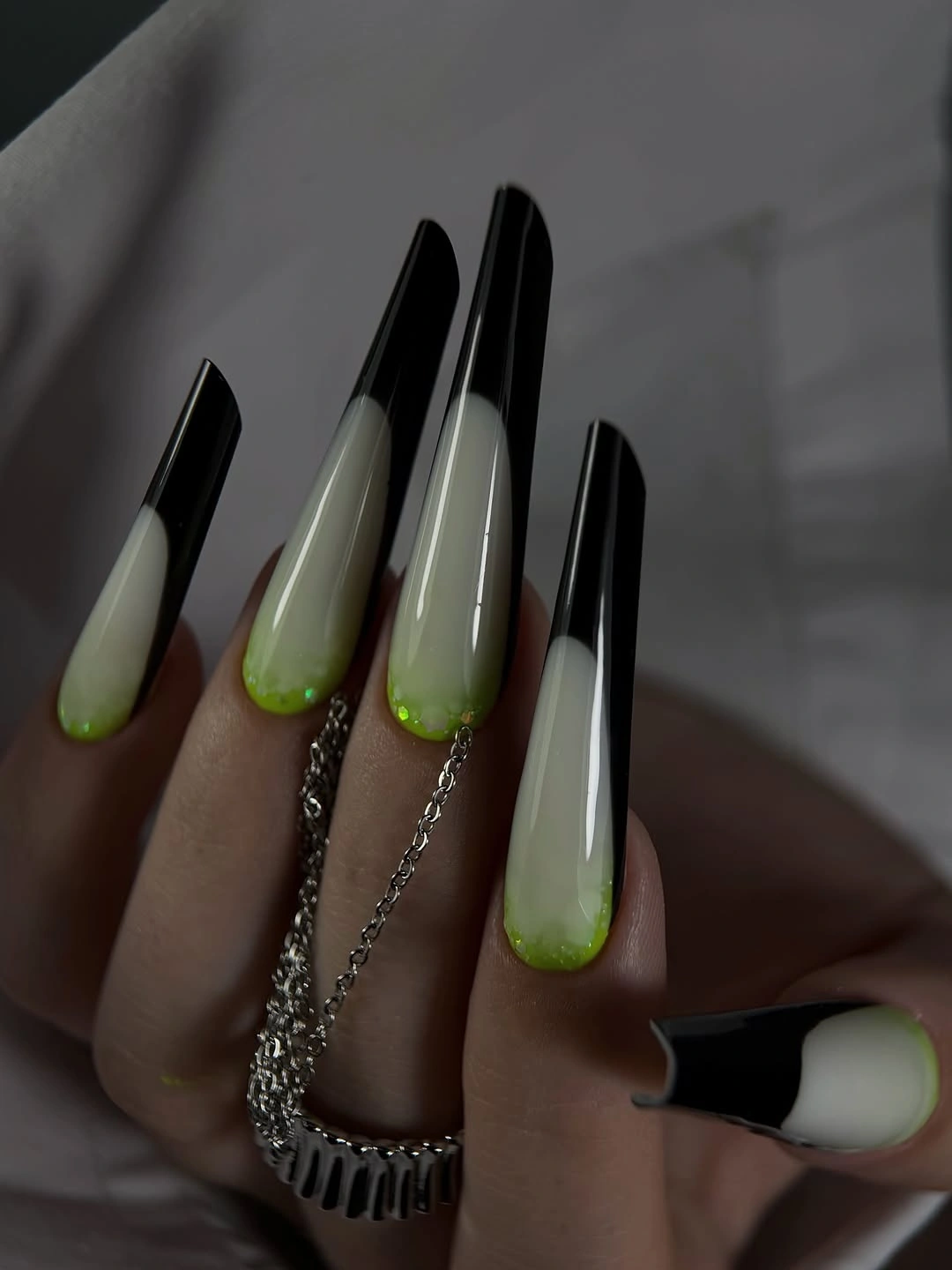
The tip color is the smallest visible area, yet it carries disproportionate weight because it sits at the end of every long line. Black supplies continuity from the hand to the point, and pale green cuts across that continuity with a cool counterpoint. That contrast gives the design a sharper identity than a plain black set without requiring a busy motif.
Use the pale shade on one or two tips over a medium black almond if the extreme length is not realistic. A flat light edge can replace any dangling or raised-looking detail, which will make the idea easier to wear with knit sleeves. Exact material is not clear, but the practical lesson is stable: one light counterpoint can change a dark silhouette.
Silver Tips Frost A Blue-Black Base
Long pointed nails combine a blue-black base with silver glitter concentrated near the tips and outer edges. The dark center stays visible, while the bright caps catch the light like a thin layer of frost. Gray textured surroundings support the cool palette, making the manicure feel atmospheric without depending on a warm red or burgundy accent.
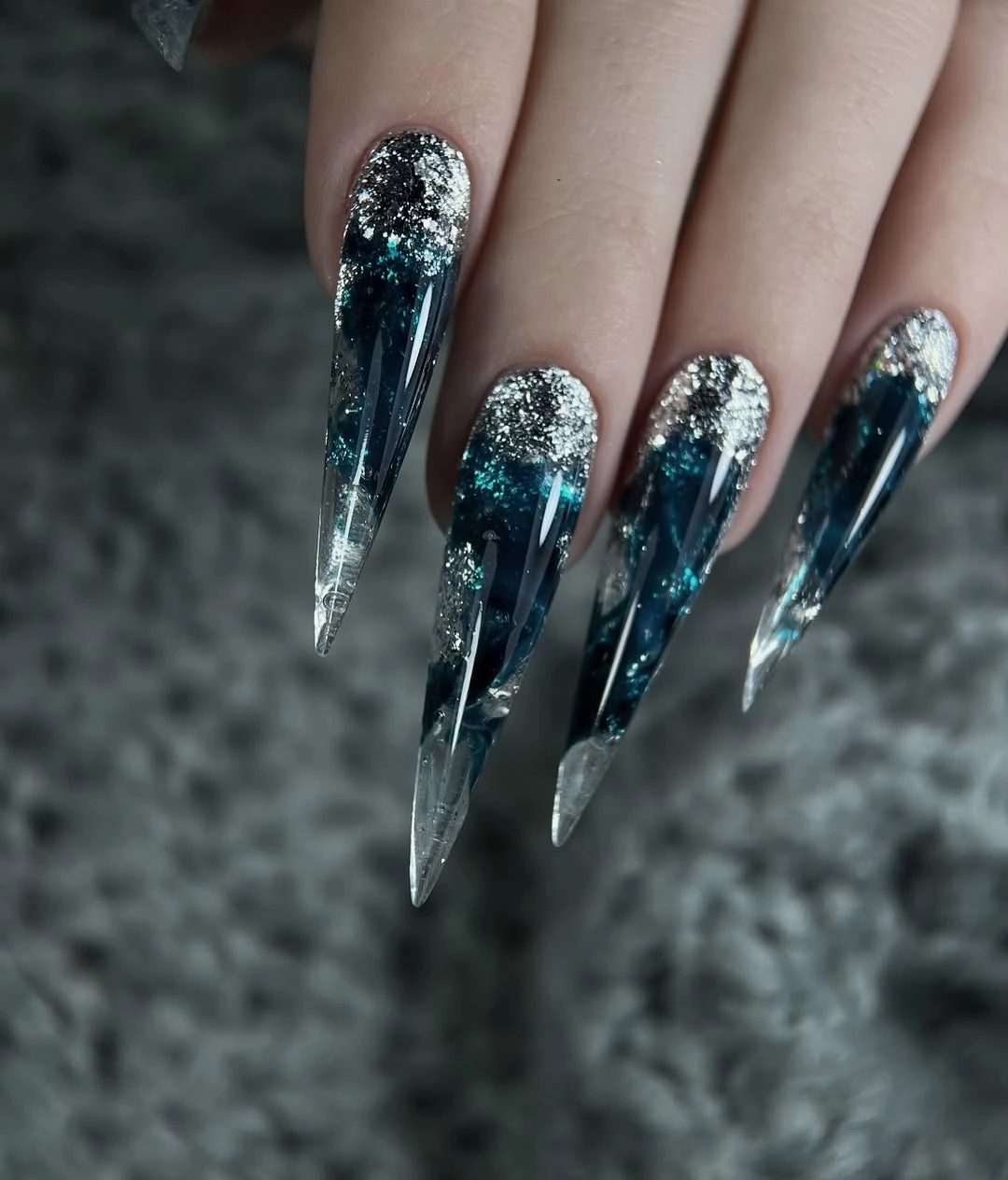
Tip-focused sparkle gives the eye a destination. Instead of scattering shine evenly, the design lets the dark length lead into a brighter ending, which makes the points appear even sharper. Navy and black deepen the center, while silver supplies relief at the perimeter. That arrangement keeps the glitter legible but prevents it from flattening the entire nail into one reflective surface.
Shorten the point into an almond and keep silver on two tips if a more practical version is needed. A muted pewter could replace the brighter glitter for a quieter fall direction. The dense tip and long shape are both maintenance considerations, so reducing either one will preserve the cool contrast while making the manicure less demanding in ordinary wear.
Metallic Silver Finds Its Dark Frame
A close view of a long tapered silver nail shows how reflective color can still feel dark when black or gunmetal frames the edge. The surface shifts from bright silver to charcoal with the light, and the pointed contour remains visible even in the tight crop. Gray fabric around the hand supports the cool palette rather than introducing another bright note.
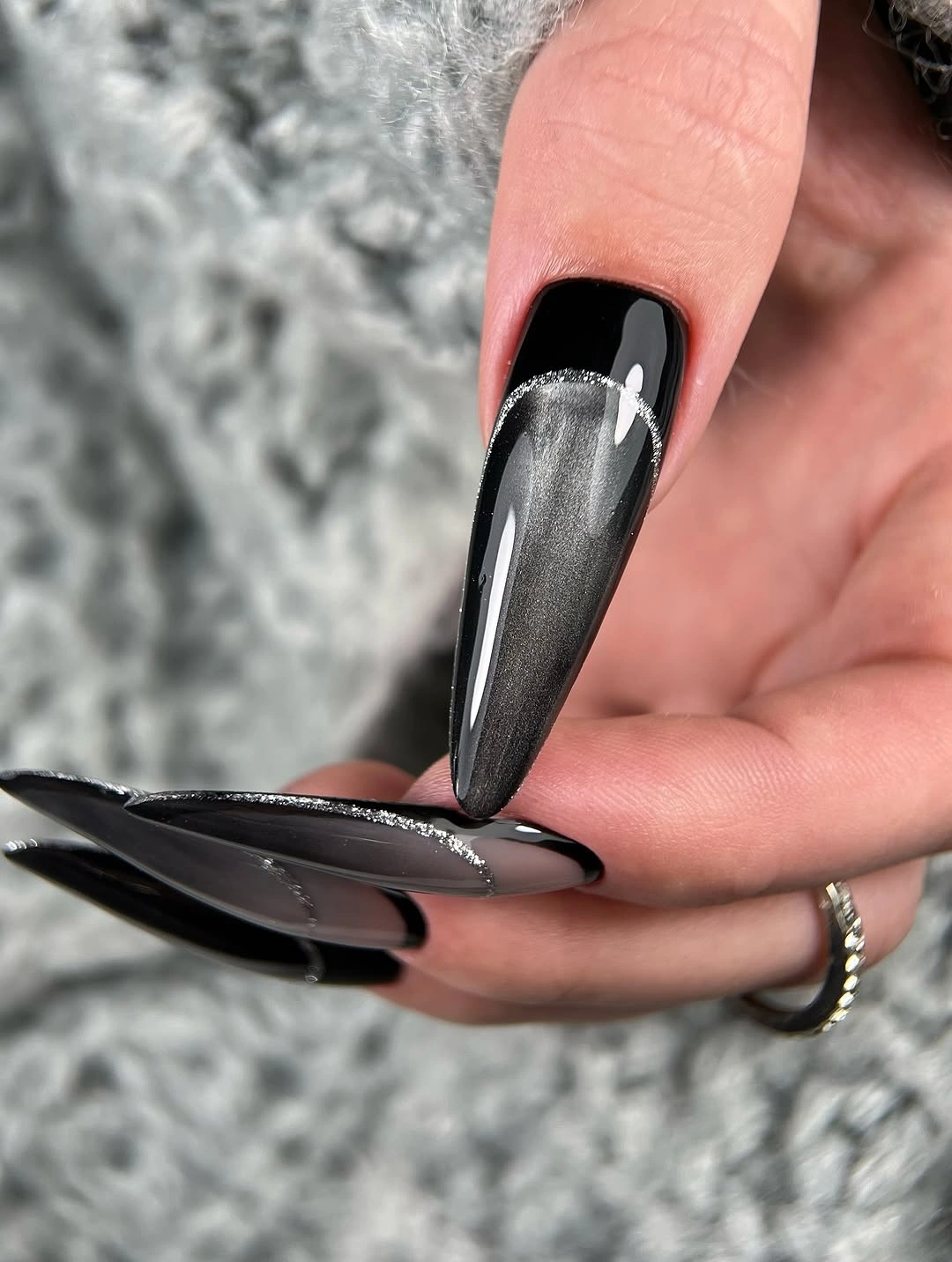
The value change is the interesting detail. Silver alone might look bright and polished, but the neighboring dark edge gives it tension and keeps the manicure connected to a dark-fall palette. Because the surface is mostly solid, the design feels sleek instead of decorated. The reflection itself supplies movement as the hand turns.
Use one metallic accent nail with a charcoal companion set, or switch to gunmetal on a medium almond for easier wear. A mirror-like surface can reveal scratches and uneven texture, while a long point places more emphasis on the tip. The full shape is partly hidden by the crop, so adapt the color relationship rather than copying an uncertain label for the silhouette.
One Oversized Silver Form Leads Black
Long black square nails carry a large silver geometric or bow-like accent across one visible surface. The black base is glossy and strong, while the silver feature is bright enough to become the focal point immediately. A pale background keeps the contrast crisp, and a small burgundy-red edge note appears near the hand without competing with the main black-and-silver relationship.
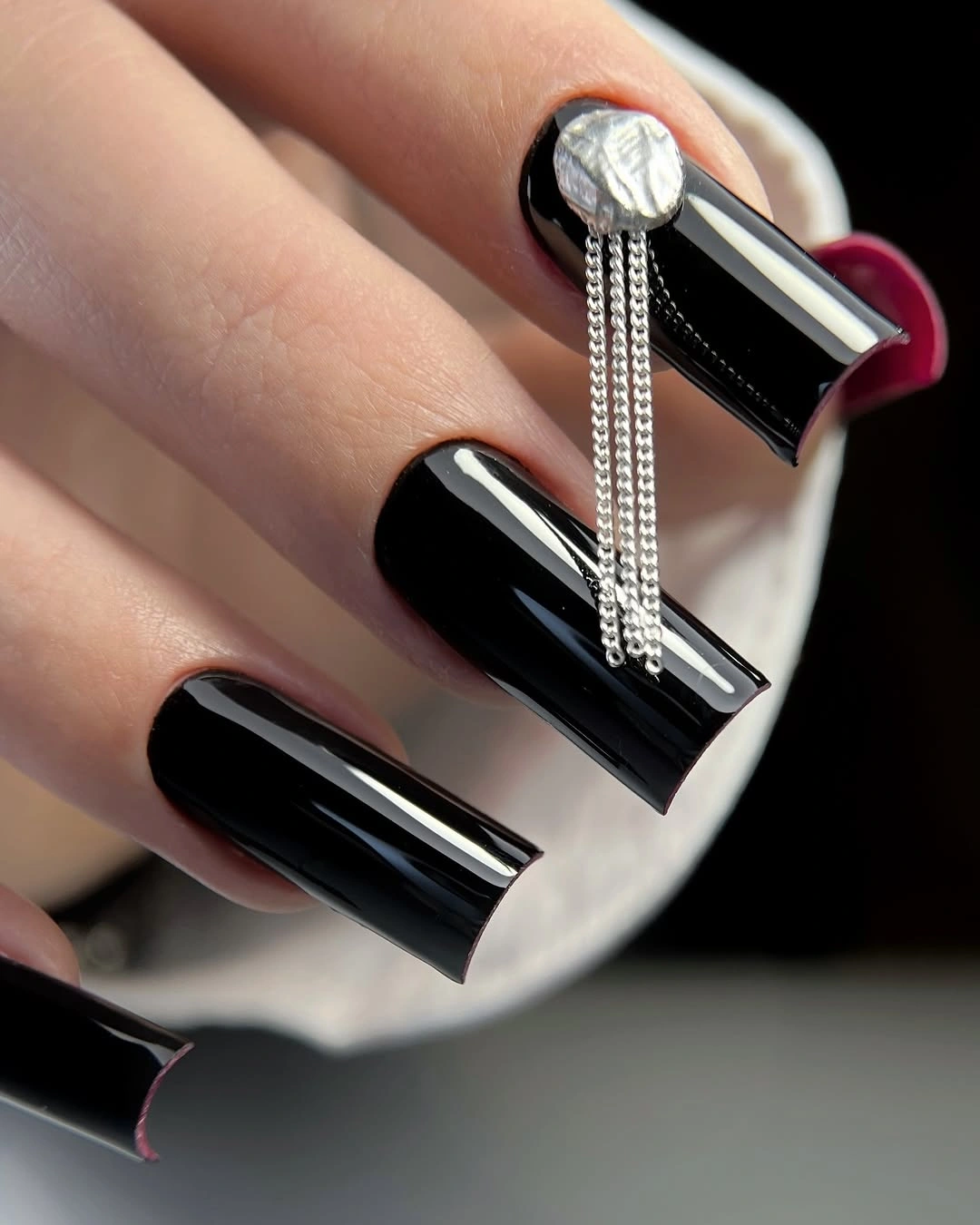
Scale is doing the work here. A single oversized form gives the set a center, while the plain black companions create relief around it. That arrangement is more readable than several small accents because the eye knows where to land and where to rest. The long square shape provides a broad canvas, making the silver feature feel intentional rather than crowded.
Place the large accent on one shorter nail if the full length or raised profile would interfere with clothing. A thin silver line can preserve the focal contrast with less snagging risk, while the black base remains unchanged. The object itself is not clear enough to name, and the useful adaptation is the proportion: one bright form against several quiet dark nails.
Cobalt Blue Makes A Long Point Glow
Long tapered nails are painted a vivid cobalt blue and set against white clothing. The color is solid and glossy, with the narrow shape providing the only major variation from nail to nail. White surroundings make the blue look even more electric, while the absence of glitter or line work gives the manicure a clean, almost sculptural presence.
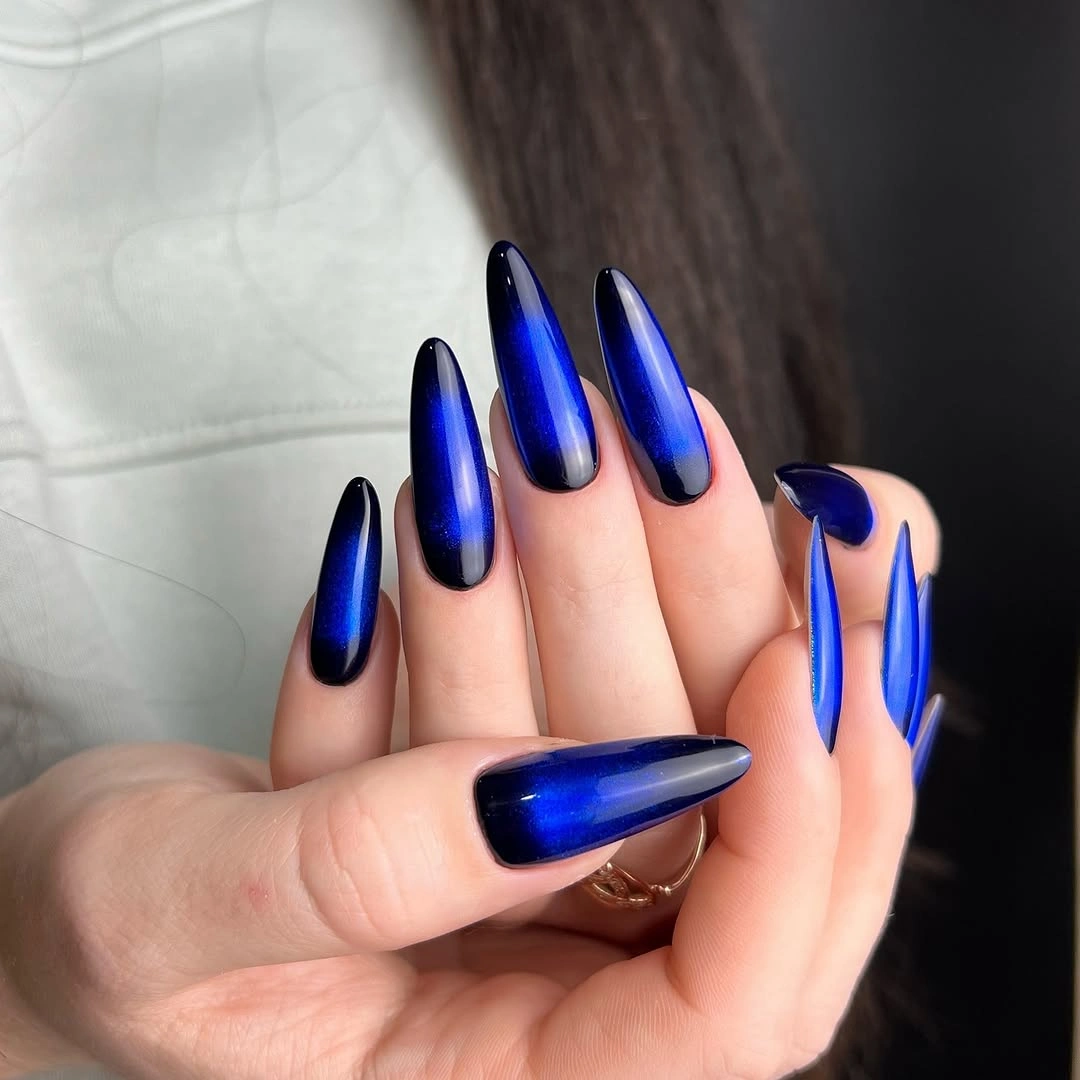
The point and color reinforce each other. Cobalt already has strong saturation, and the tapered silhouette concentrates that intensity at the tips. A darker setting would make the blue moodier, while the white clothing turns it into a brighter focal color. The reference shows how a solid shade can feel highly designed when the outline is deliberate.
Keep cobalt on a medium almond if the extreme point is too demanding, or use two blue accents with dark neutral companions. The surface has no detail to repair, but the length remains the main functional issue. A shorter version may lose some of the theatrical tension, yet it will preserve the color decision and make the manicure easier to use every day.
Mirror Red Keeps Black At The Edges
Long stiletto nails glow red through a highly reflective surface, while darker framing and small bright details keep the color connected to the rest of the collection. The points are narrow and sharp, and the low-light background amplifies the red without making it look flat. Black remains visible around the reflections, giving the bright center a defined border.
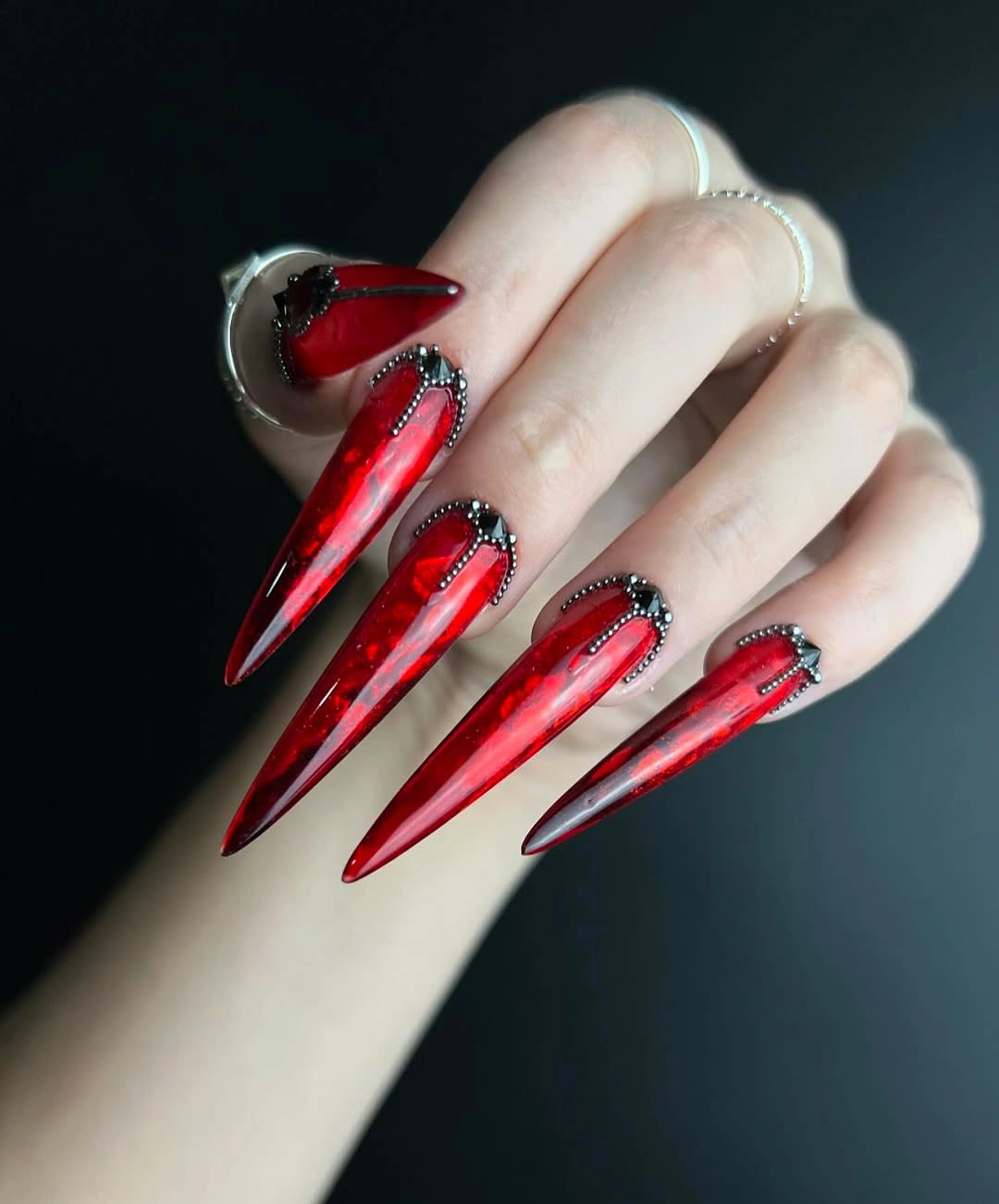
Red becomes more atmospheric when it is not allowed to fill every visual value. The dark edging follows the point, so the eye moves along the silhouette and returns to the mirror-like center. Small bright details add punctuation, but the main structure is still the relationship between a vivid reflective color and a nearly black frame.
For a toned-down version, use reflective red on two medium almond nails and keep the dark line narrow. A metallic surface can show scratches, while the stiletto length is difficult for routine tasks, so shortening the shape is the most useful change. Do not rely on naming the finish; the visible lesson is reflection, framing, and concentrated color.
Smoky Streaks Break Up Glossy Black
Medium-long black square nails close the collection with irregular gray and white streaks over a dark base. Each nail carries a slightly different vertical or brushed-looking mark, so the set feels coordinated without repeating one exact pattern. Low light and dark clothing deepen the background, while the pale streaks keep the surface readable and add movement to the square edges.
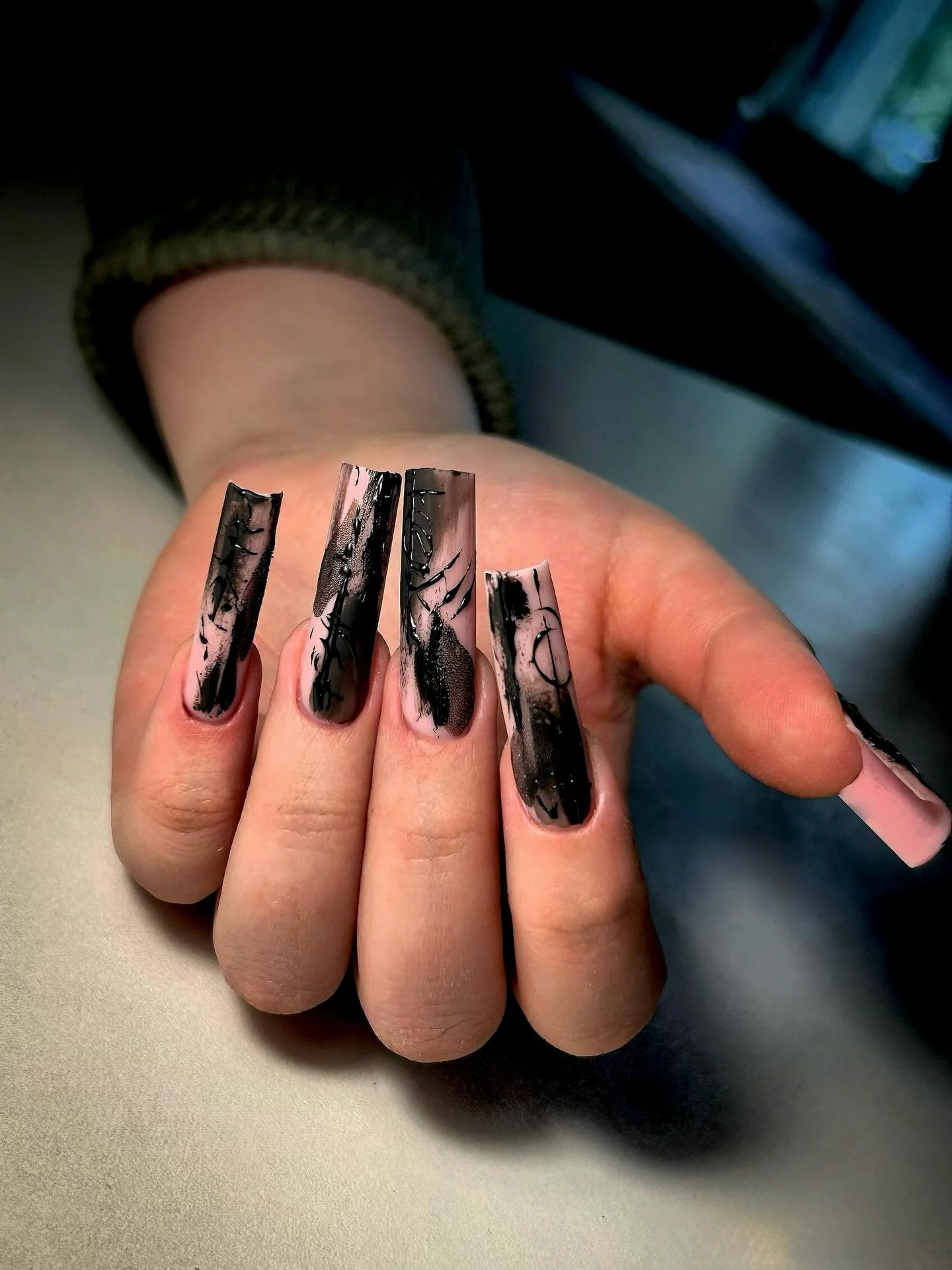
Variation between nails keeps the dark base from becoming a single block. Some streaks appear softer, others more defined, and that difference creates rhythm without requiring bright color. The square length gives the pale marks enough room to travel, while the irregular placement feels more forgiving than a strict repeated line that would expose every small mismatch.
Use the smoky effect on two accent nails if a quieter set is wanted, or shorten the square while keeping the black base. The exact technique is not visible, so it is safer to preserve the streak direction and contrast than to call it marble or a named finish. A less dense pattern will also be easier to maintain as the dark surface grows out.