Fall Burgundy Nails With Design, Contrast, and Shape
Burgundy does not need to become louder to feel special. A narrow curve, a pale interruption, or a glint close to the base can soften a deep shade without taking away its weight. The most appealing balance comes from letting the darker color hold the mood while a smaller detail keeps the hand open.
I would start with the space around an accent rather than the accent itself. When a pale section has room to breathe, even a richer wine tone feels less severe; when ornament is packed too closely, the softness disappears. That is the quiet decision behind a wearable burgundy manicure with design that still feels personal.
One Pale Floral Accent Softens Deep Burgundy
Deep burgundy sets the mood on most of these medium almond nails, but one dusty pink accent carries a small dark floral-like mark. That pale interruption gives the hand a resting point and keeps the dark color from becoming one continuous block. The almond shape adds a gentle taper, so the contrast feels controlled rather than severe even though the wine tone remains the strongest decision.
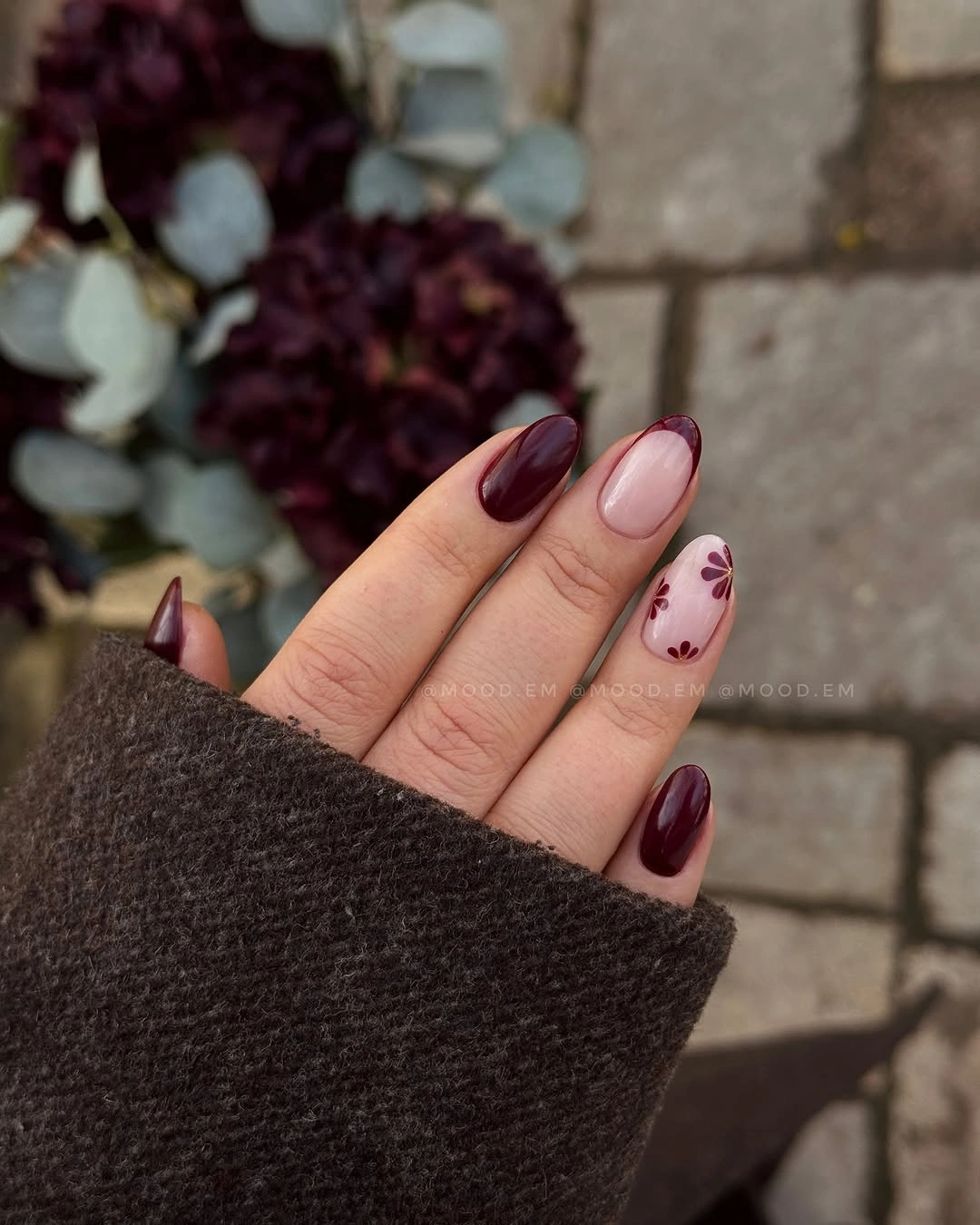
Keep the small floral detail on one finger and carry burgundy onto a shorter oval if you want the same softness with less length. The pale accent can remain plain when the tiny mark feels too delicate to repeat, because the color change alone already creates the necessary pause. A second decorated nail would likely dilute the single focal point.
Dark glossy color makes edge wear visible, while the small pale accent is easier to maintain when it stays isolated. The look works because the light nail does not try to compete with the wine; it simply opens the composition. Preserve that proportion and the manicure will feel considered without becoming heavily decorated.
Reflective Wine Color Follows a Long Almond
Long almond nails pair a deep wine color with a nude-pink interruption and a reflective burgundy surface. The shimmer appears strongest where the curved nail catches light, giving the dark tone movement without adding a separate motif. Because the base remains close to the wine family, the manicure feels rich and layered rather than divided into unrelated colors.
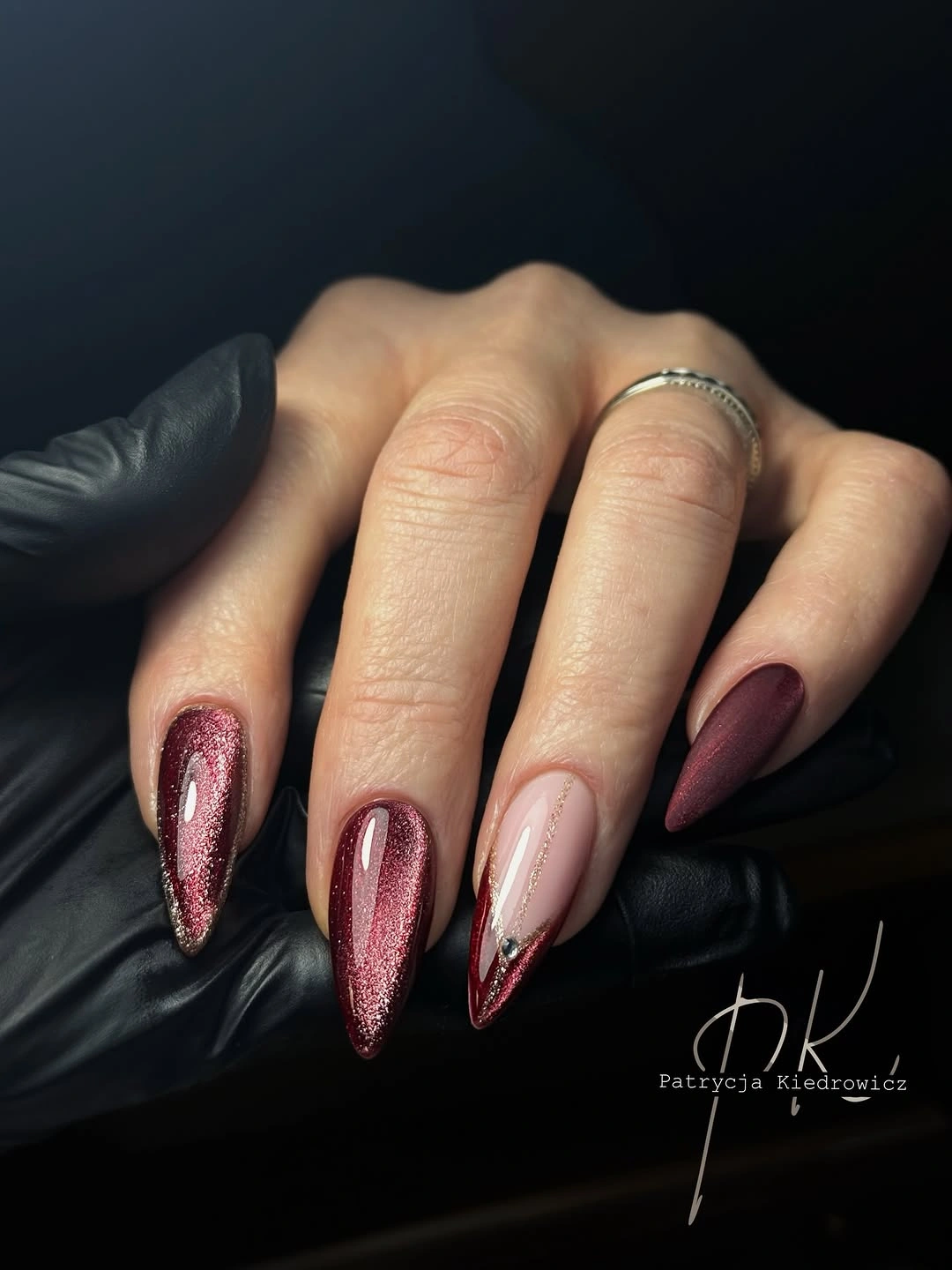
Use the wine on two accent fingers over nude pink if you want to make the design easier to wear. A medium almond will keep the same elegant direction with less point, while a narrow reflective section can replace the larger shimmer on a shorter shape. Let the pale interruption stay visible so the dark color has space to breathe.
The length gives the reflective surface room to show, but it also makes the almond point and dark edge more noticeable as they grow out. This is a good place to simplify by reducing coverage rather than adding art. A little shine inside a deep palette can carry the look when the silhouette remains clean.
Burgundy Blocks Meet Soft Pink Curves
Medium coffin nails combine burgundy blocks with pale pink sections, small white details, and curved lines near the tips. The dark areas establish a fall depth, while the lighter sections interrupt them before the manicure becomes visually heavy. Tapered edges give the blocks a direction, and the curves soften the geometry enough to keep the design from feeling rigid.
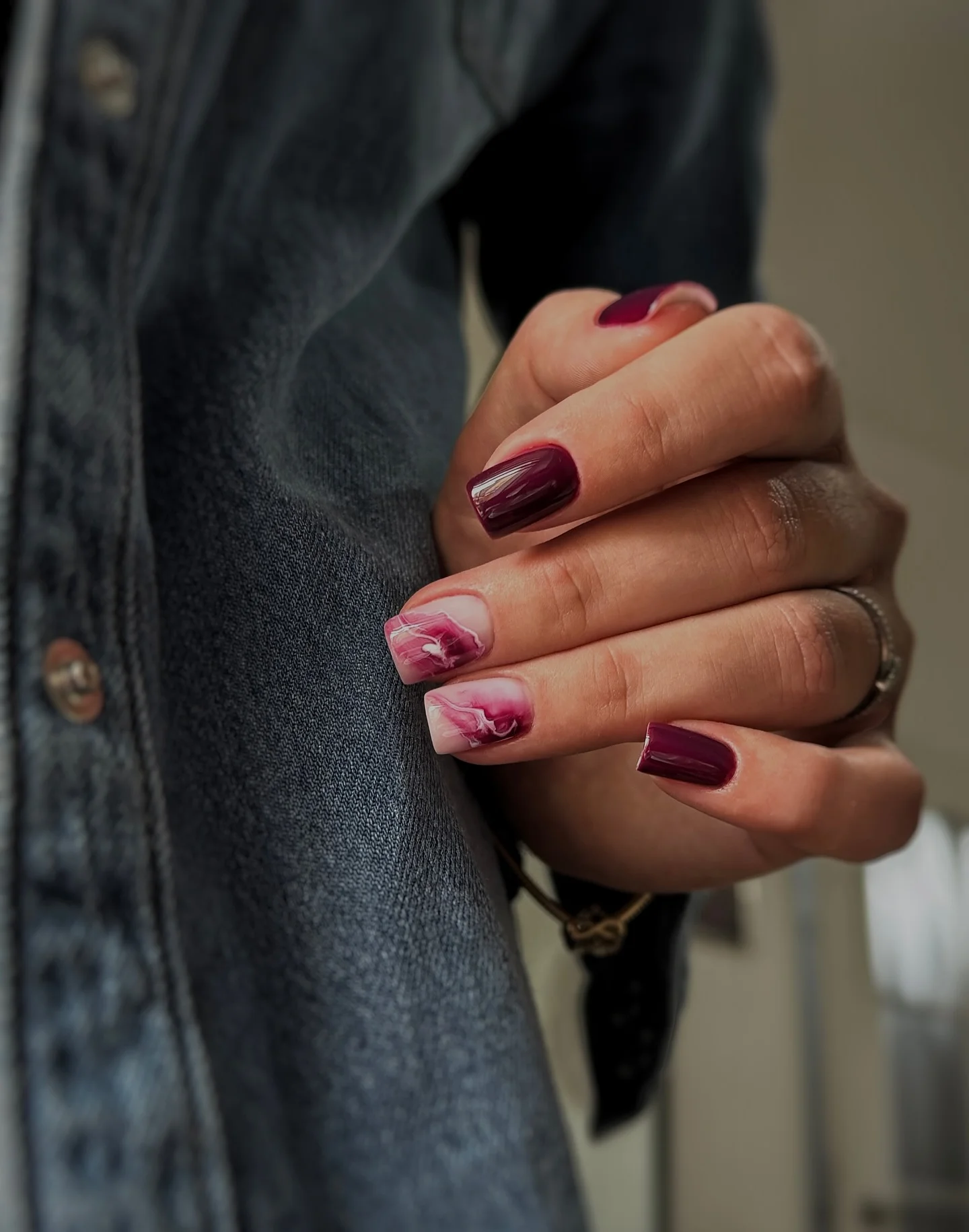
For a shorter interpretation, keep burgundy on two nails and place the pale curved detail on one accent finger. The white mark can remain small or disappear entirely if the pink space already gives enough relief. What matters is the conversation between deep color and open pale sections, not the number of lines carried over from the reference.
Graphic placement can look crowded when too many blocks are forced into a small surface, so reducing the count is the realistic adjustment. The burgundy should remain the anchor, while the pink keeps the shape visible around it. Clean borders will do more for the softness of the result than an additional decorative mark.
Wine Side Tips Leave a Blush Center Open
Long almond nails use burgundy along the sides and tips while a blush center remains visible. That placement gives the deep color a sweeping direction and lets the almond taper become part of the design, rather than simply carrying a solid coat. Dark curved accents appear on selected nails, but the pale center keeps the overall composition light around the stronger edges.
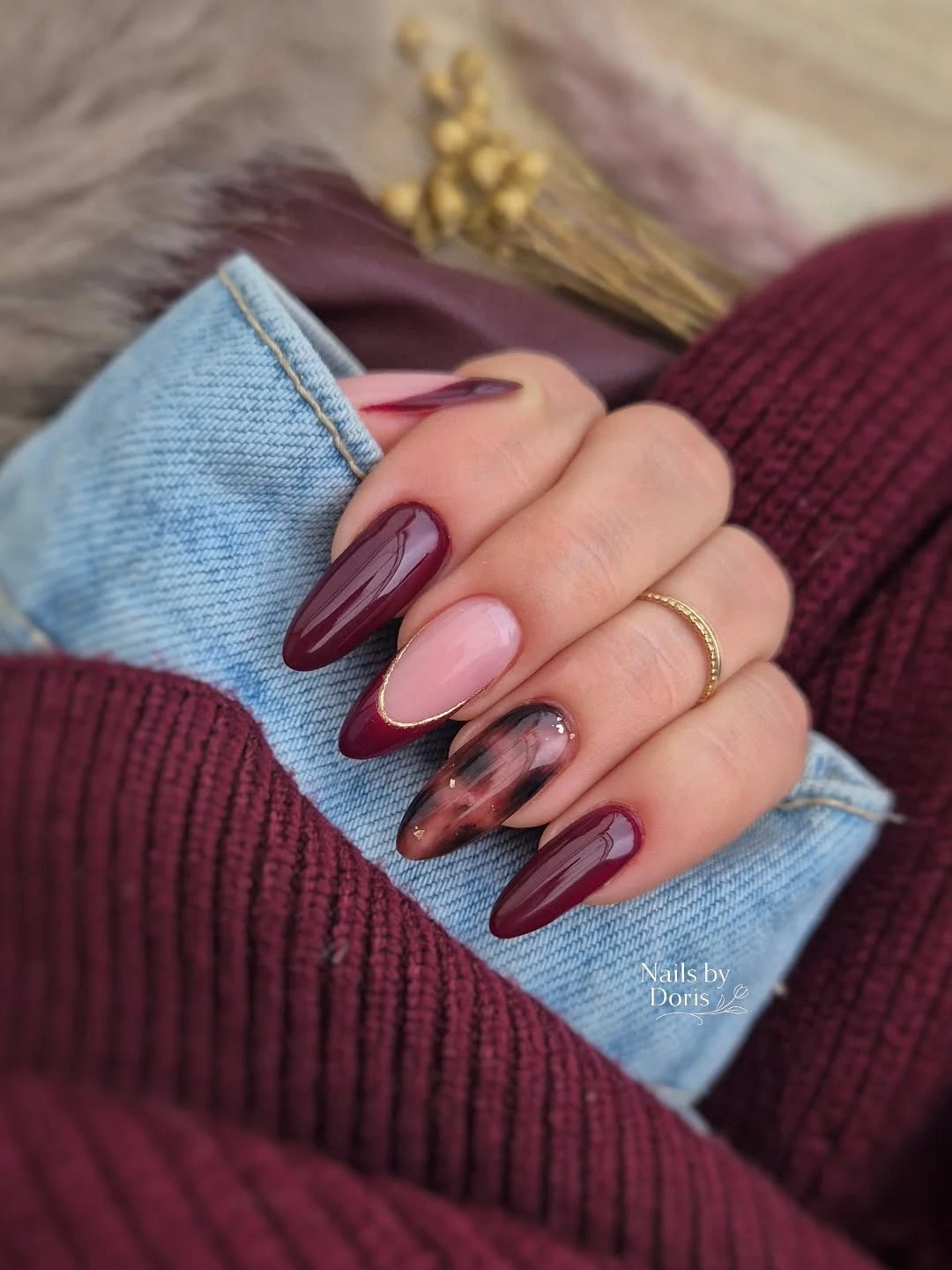
Move the wine to a thin side edge or one accent nail when shortening the manicure. Keeping the blush center open will preserve the soft contrast, while fewer curves will stop the compact surface from looking busy. A plain burgundy tip can replace the small dark accent and still leave the original side-to-center balance intact.
The design depends on the visible pale area, so covering more of the nail would change its character quickly. Long almond length supports the sweeping placement, yet the same idea can work on medium almond if the wine edge becomes narrower. The quiet center is not empty space to fill; it is what gives the deep color room to look deliberate.
Maximal Burgundy Detail Needs One Clear Anchor
This long pointed manicure gathers burgundy, chocolate, blush pink, spots, curved lines, and warm metallic-looking accents into a deliberately decorated set. The dark solids act as anchors for the more detailed fingers, so the eye has somewhere to rest between the spotted and embellished surfaces. Pointed length makes the variety feel intentional, but it also pushes the look firmly toward statement territory.
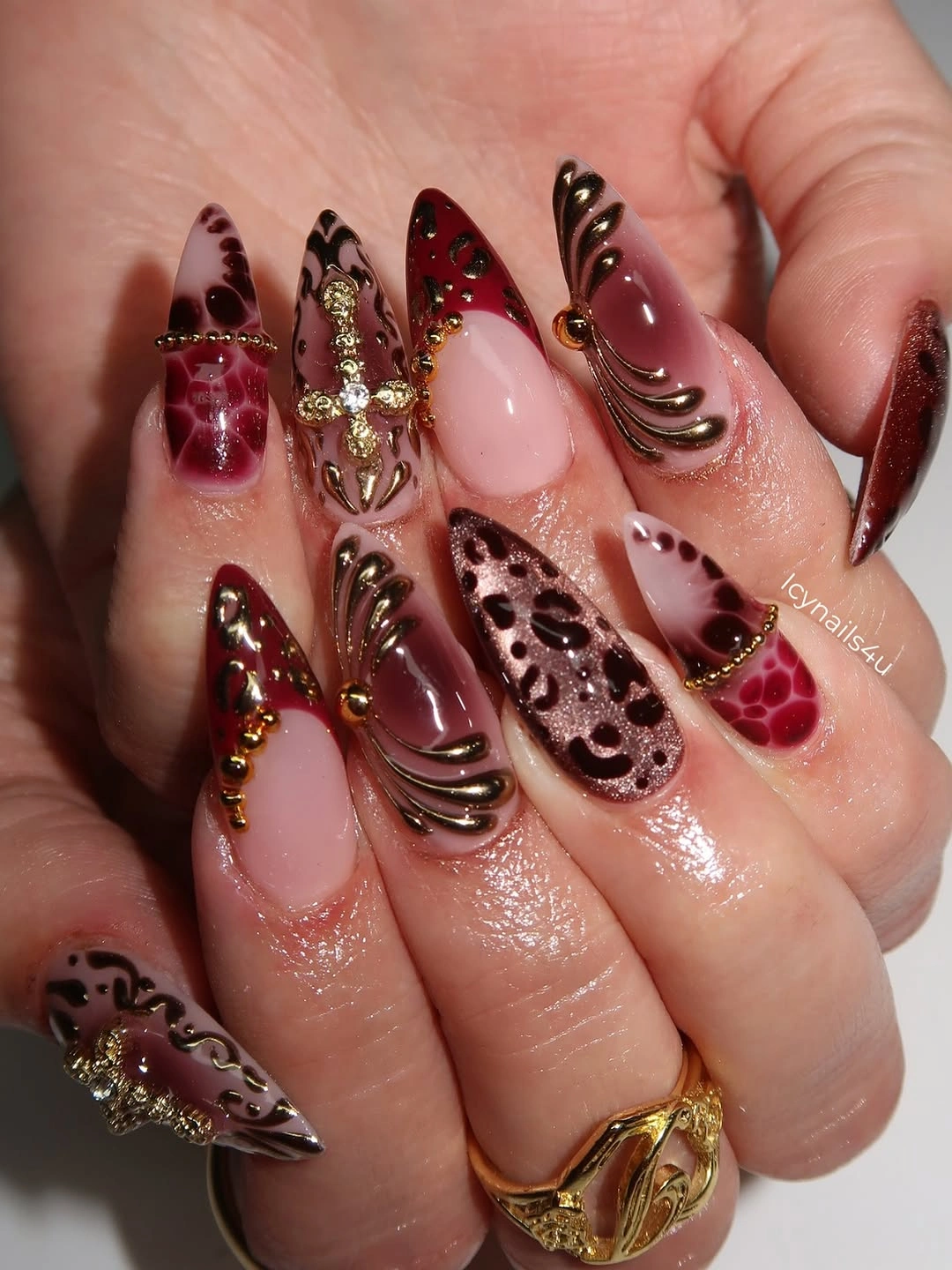
A wearable adaptation only needs one spotted accent and one warm detail. Keep the remaining nails burgundy or blush pink, and allow the pointed silhouette to be shorter if the full length feels too demanding. Reducing the number of motifs preserves the controlled contrast; replacing every accent with a new one would not create the same sense of order.
Dense ornament can catch more attention and may require more visual upkeep than a smooth surface, especially when small raised-looking elements are involved. The design works because the strongest details are grouped rather than scattered randomly. Give the solids enough space to anchor the hand and let one decorated nail carry the close-up interest.
Patterned Wine Tips Rest on Pale Pink
Medium almond nails use pale pink through the center, then add burgundy curved tips and darker patterned details near the edge. The light base keeps the wine accents from becoming full coverage, while repeated curves create continuity across the hands. The contrast is expressive but still airy because the most decorative marks remain at the perimeter.
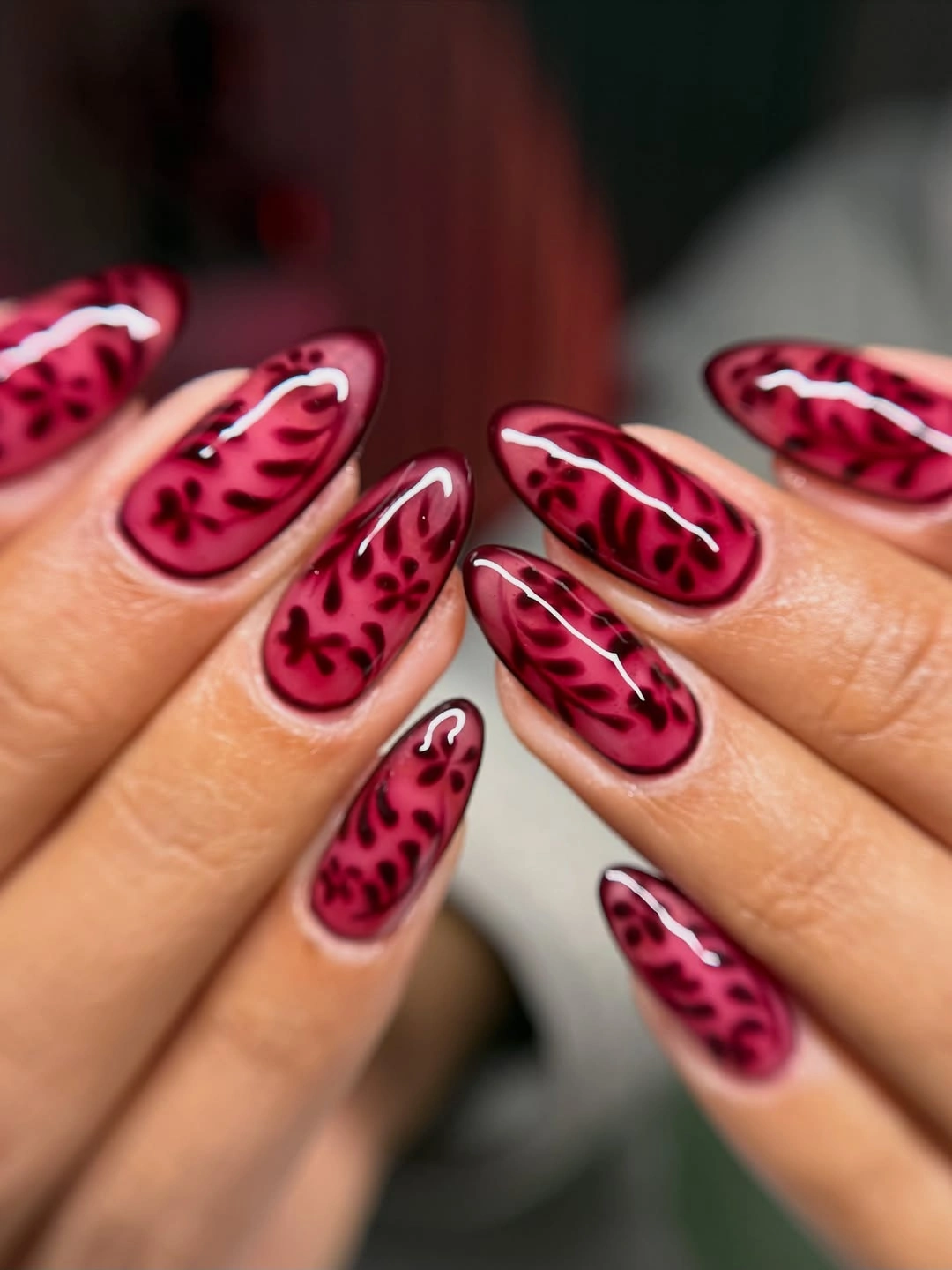
Keep the darker pattern on two accent nails and use plain burgundy tips on the rest for a shorter, calmer version. If the nail bed is compact, one curve will read more clearly than several narrow marks stacked together. A muted pink base can remain unchanged because it already gives the deep tip enough contrast.
The design’s softness comes from placement rather than from pale color alone. The wine is strong, but it sits along the edge and leaves the center open. That makes the practical choice clear: reduce detail density before changing the palette, and preserve the curved route that follows the almond shape.
Solid Burgundy Lets the Stiletto Speak
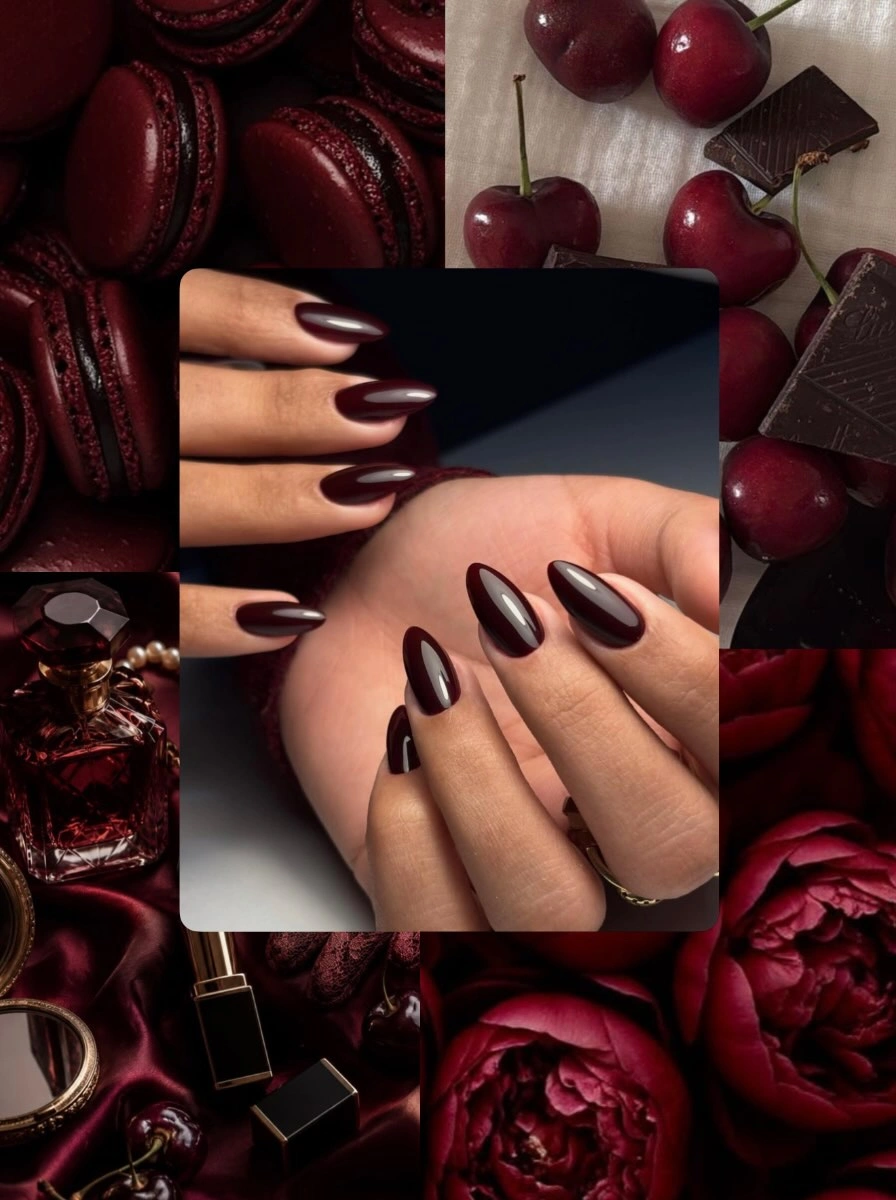
Long stiletto nails are painted a deep burgundy with no visible art, so the pointed silhouette and narrow gloss highlights become the entire composition. The color feels dramatic because the shape is sharp, yet the plain surface prevents the result from becoming ornate. It is a useful reminder that burgundy can look designed even when every nail carries the same finish.
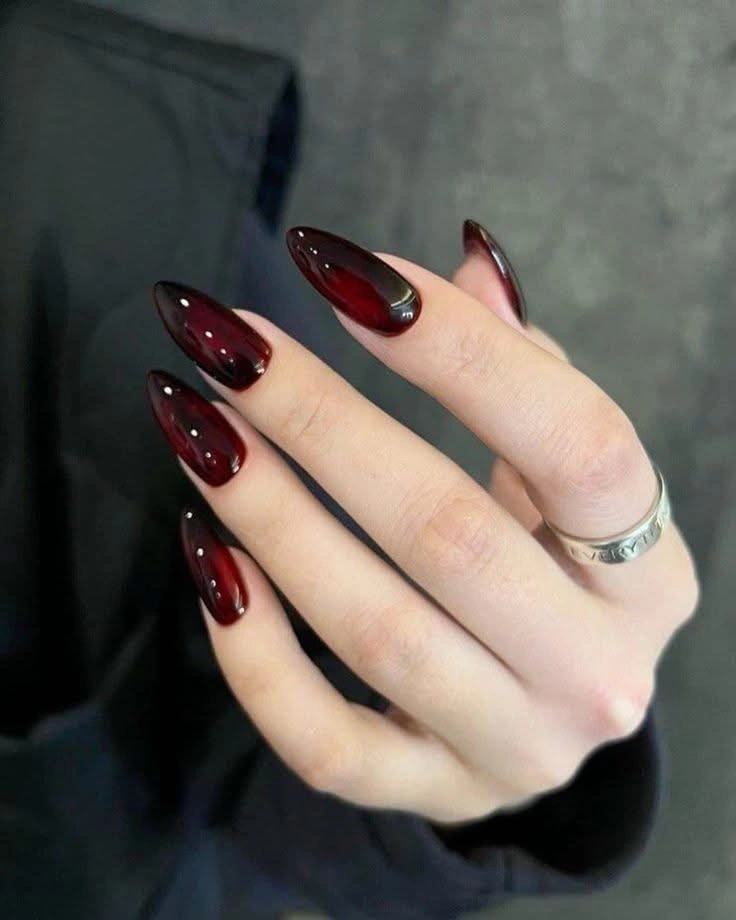
Use the same wine color on medium almond if you want to keep the depth while reducing the point. A pale pink accent on one finger would soften the set, but it is not necessary; the solid color already provides a clear focal decision. Keeping the surface unbroken will make the shorter version feel intentional rather than merely reduced.
The pointed length is the honest tradeoff. It creates strong impact and makes the reflected highlight elegant, but it also makes tip shape and edge wear more prominent. If the goal is a practical burgundy manicure, the simplest improvement is to shorten the silhouette while keeping the glossy color uninterrupted.
A Small Warm Detail Opens the Wine Palette
Long almond nails combine deep burgundy tips and solids with blush pink sections and tiny warm details near the base. The wine remains dominant, but the pale areas provide a quiet interval and the warm point gives the eye a place to pause. The almond taper carries the contrast upward, creating a flowing arrangement rather than a straight color division.
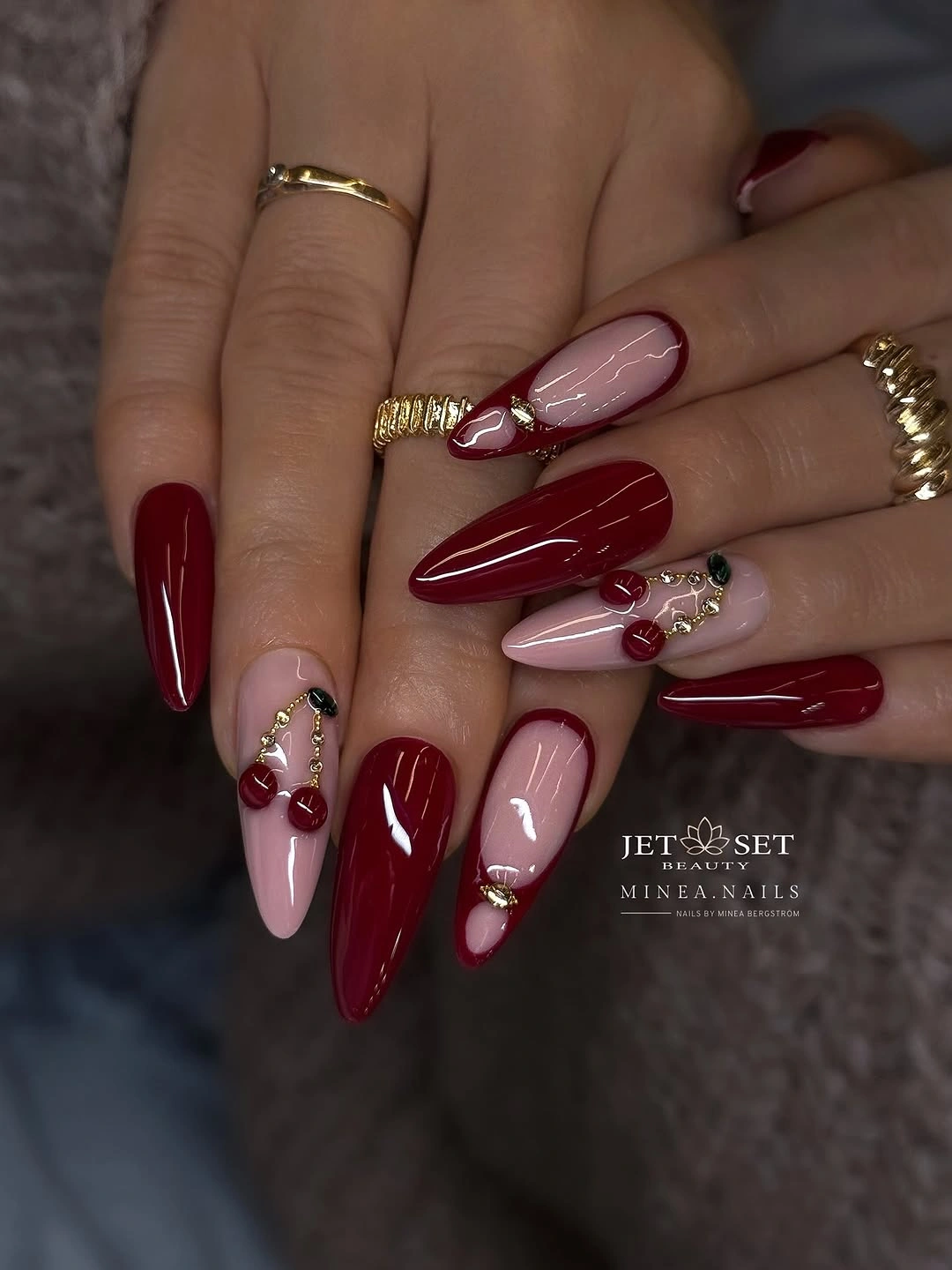
Place the warm detail on one nail and keep the remaining fingers to burgundy tips over blush pink when adapting the design. A shorter almond can use a thinner wine edge, while a plain burgundy nail can replace any accent that feels too small to reproduce cleanly. The balance comes from the light interruption, not from the number of warm marks.
Small base accents need enough room around them, particularly when the nail is shortened. The long version gives them a graceful setting, but a compact shape will look softer if the detail is moved toward the center or removed. Keep the wine coverage controlled and the pale section visible so the composition does not close up.
Sheer Pink Makes Burgundy French Tips Airy
Deep burgundy tips sit over a sheer blush base on these long pointed nails, creating a French silhouette that feels darker and more elongated than a pale tip. The open center keeps the color from becoming a full wine block, while the stiletto point directs attention toward the edge. With no charm or pattern, the contrast between sheer pink and dark burgundy carries the whole design.
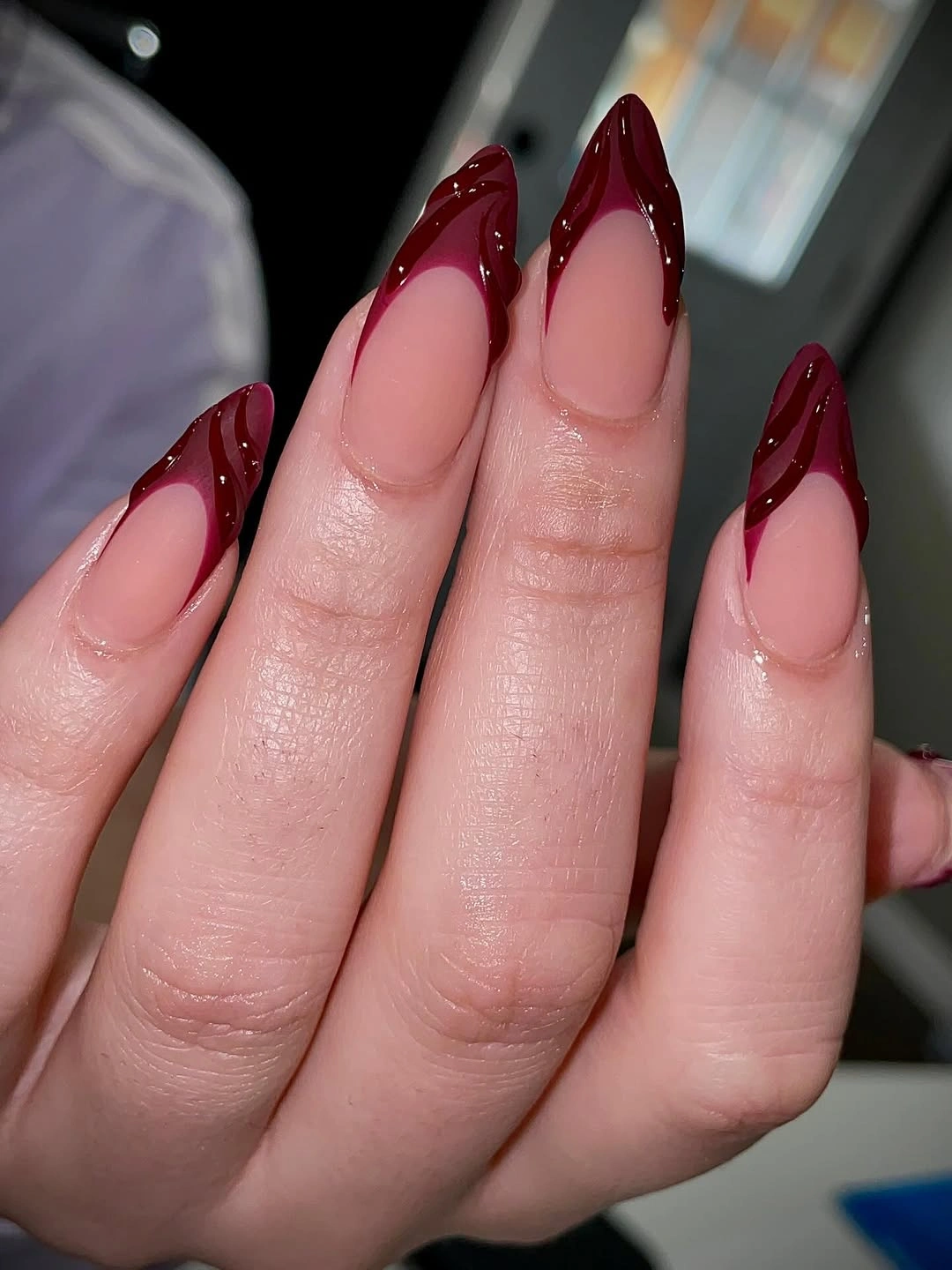
Use a thinner burgundy edge on medium almond or reserve the full pointed French for two statement fingers. A softer wine tone will reduce the visual weight, but keeping the blush base open is the more important adaptation. If the tip becomes too broad on a short nail, it will shorten the appearance instead of preserving the original airy effect.
Dark tips make the length look longer, which is helpful when the silhouette is part of the appeal, but they also expose uneven points and chips quickly. The design stays elegant through restraint: a clear edge, a visible pale center, and no extra motif fighting for attention as the hand moves through changing light.
Everyday Wine Solids Keep One Pale Pause
A medium almond manicure shown with a phone uses dark burgundy across most nails and leaves one nude-pink accent to interrupt the solid color. The glossy wine reads as polished in ordinary light, while the pale nail prevents the set from looking too uniform. Small accessories remain secondary because the manicure itself is simple enough to hold its own shape and contrast.
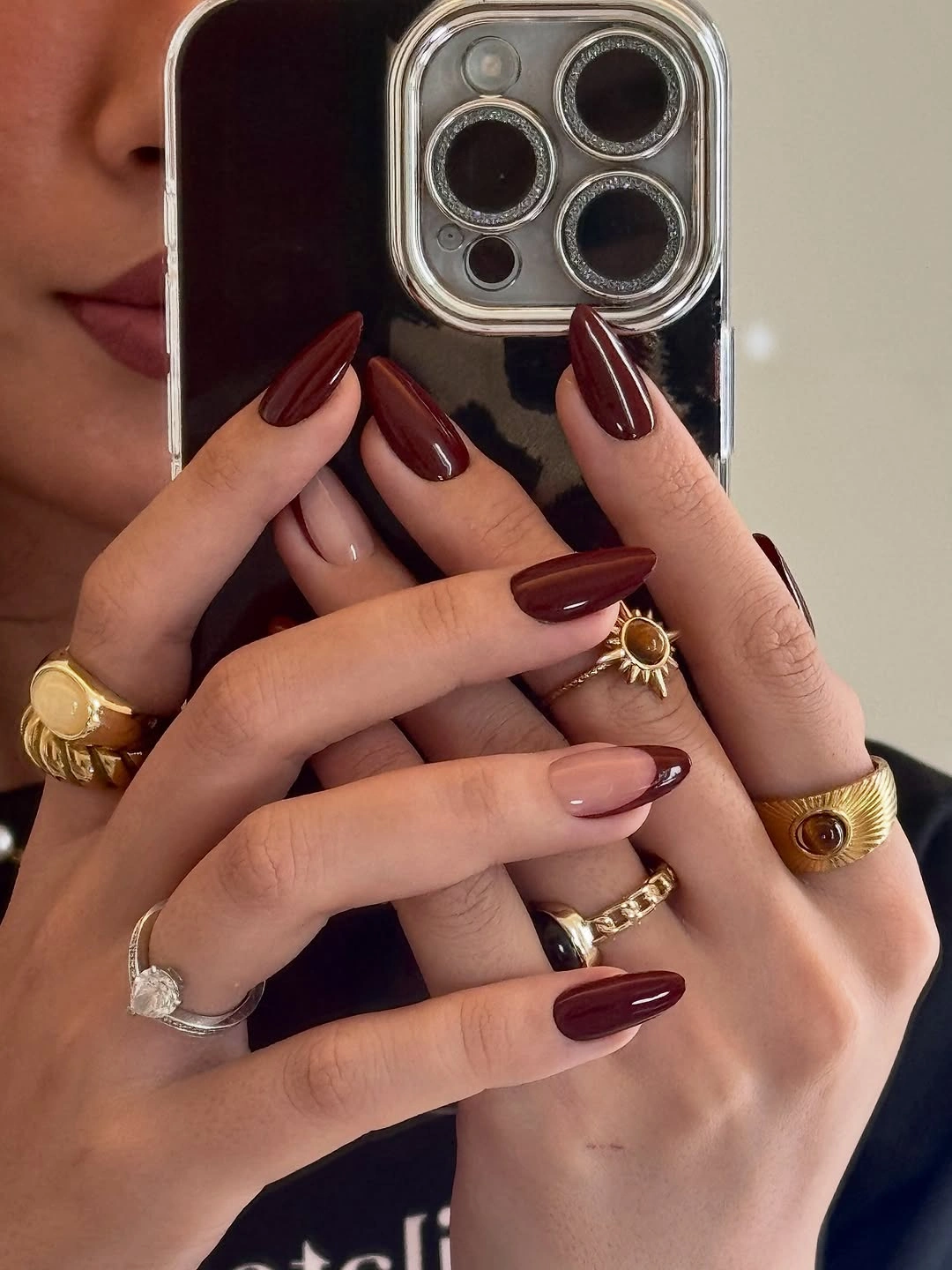
Use the wine on all short almond nails for the most direct version, or keep the pale accent if you like a little visual relief. A short oval will soften the silhouette, while a medium coffin will make the color feel more graphic. No extra design is needed unless the single-color depth does not provide enough contrast for your preference.
Low everyday light can make burgundy appear deeper, but the glossy surface still shows where the edge begins to wear. That is an easy maintenance tradeoff compared with a detailed accent. The useful idea is the ratio: many wine nails, one pale pause, and no additional element that would compete with the simple structure.
Warm Detail Punctuates Burgundy and Pink
Medium almond nails mix burgundy solids with pale pink fingers carrying small warm and dark accents near the center and tip. The deep color repeats often enough to unify the hands, while the lighter nails create places where the tiny details can be read. This balance feels more expressive than an all-over wine set but remains controlled because the accents are not spread across every nail.
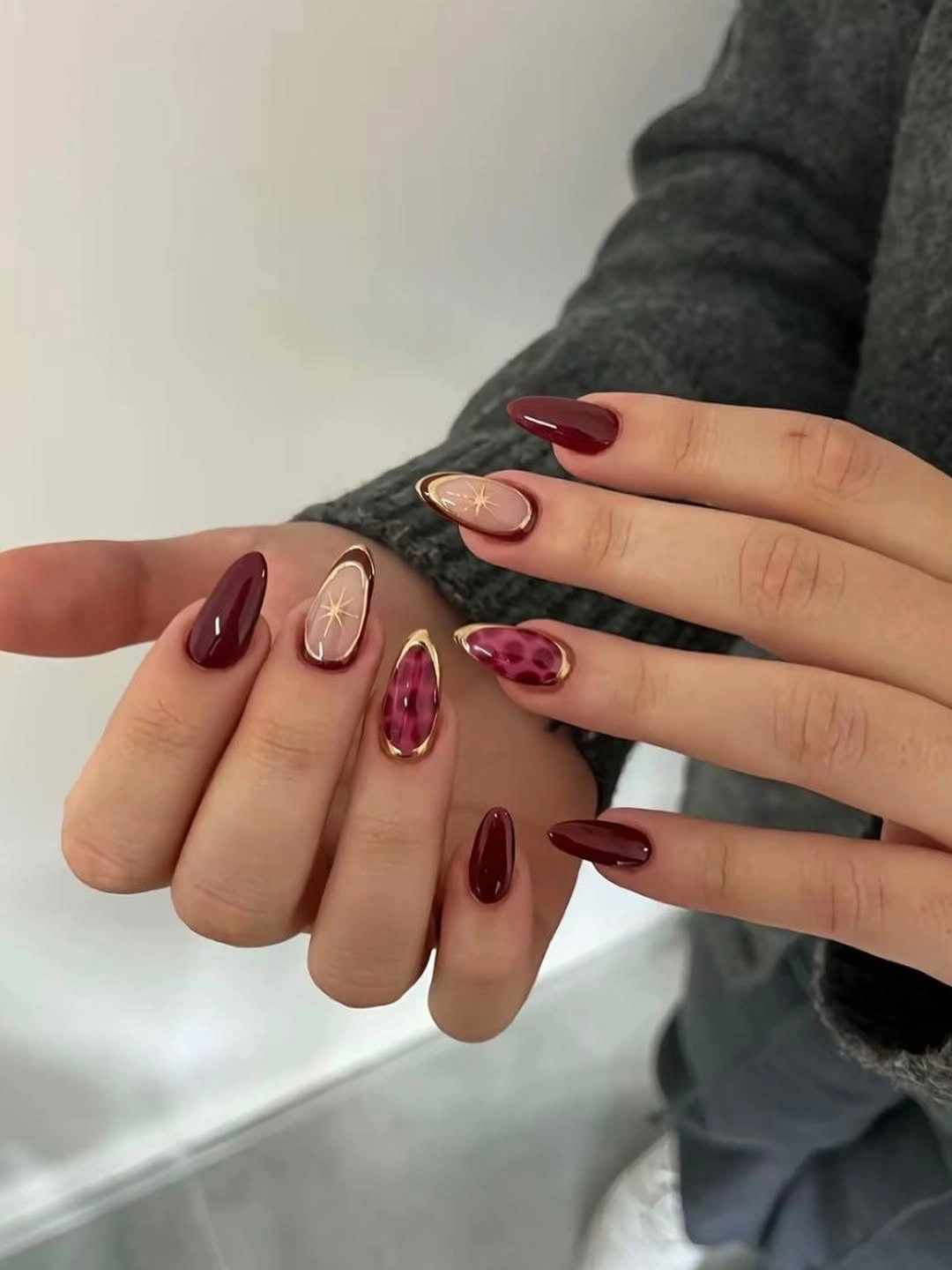
Keep most nails burgundy and use one decorated pale accent when adapting the look. A small warm point is enough to connect the colors; adding several different marks would make the pale nail compete with the wine instead of softening it. Shorter almond or oval shapes can carry the same ratio with less length.
The practical focus should stay on scale. Tiny accents read best against the pale base, while dark polish shows edge wear more clearly, so each side of the manicure has a different maintenance need. Let the wine remain the anchor and use the pale decorated nail as a controlled break, not a new centerpiece.
Pale Sections Give Long Wine Nails More Air
Long almond nails alternate glossy burgundy with pale sheer-pink sections and small warm marks near the base. The light areas interrupt the dark color so the long silhouette feels layered rather than uniformly heavy. Because the warm detail stays small, it supports the contrast without adding another large motif to an already elongated shape.
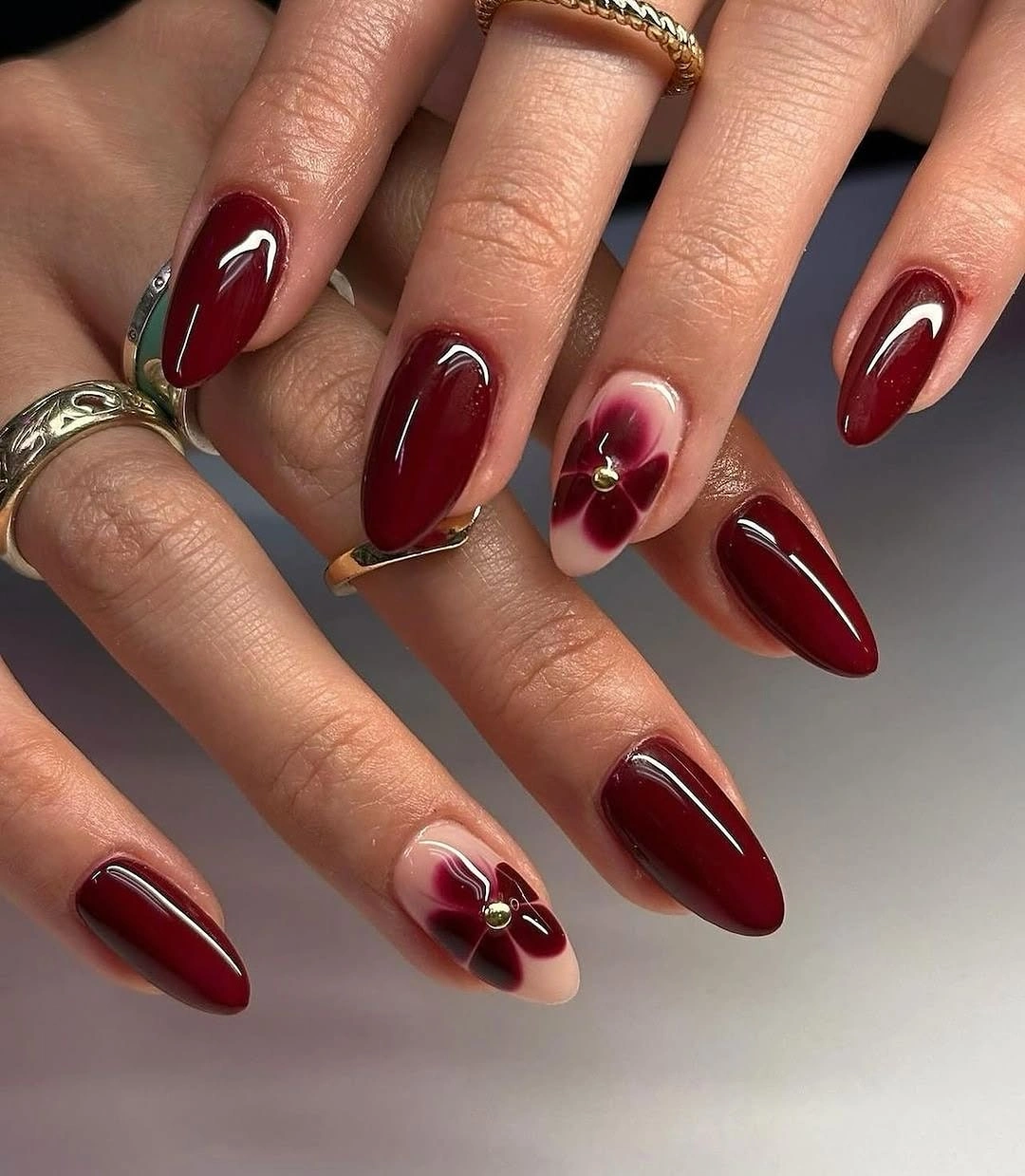
Use one pale accent nail with a tiny warm point and keep the rest solid wine for a more manageable interpretation. If the nail is shortened, reduce the number of color blocks before changing the palette. The pale section is valuable because it opens the manicure; it should not be squeezed into a narrow strip that disappears under the burgundy.
Long length gives the color changes room, but details near the base need careful spacing to remain distinct. The design will feel softer when the light section has a clean boundary and the warm mark stays isolated. Keeping the dark and pale areas in conversation is more important than reproducing every small element.
Curved Wine Edges Keep the Base Delicate
Medium almond nails carry burgundy curves over a sheer pink base, with fine pale lines and a small dark accent on one finger. The curved edges follow the almond profile and give the deep color a softer route across the nail than a straight block would. Pale linework adds delicacy, but the visible pink center remains large enough to keep the design from feeling closed.
Simplify the look by keeping one wine curve on the ring finger and using plain burgundy or sheer pink on the rest. A shorter shape may need fewer lines, but it can preserve the same softness if the dark edge remains curved. Let the pale base stay visible around the accent rather than filling it with another color.
Fine lines lose clarity when they are packed too closely, so reducing their number is the cleanest repair. The strength comes from the route of the burgundy around the edge and the quiet center beneath it. This is a good example of ornament that feels delicate because its scale is controlled, not because the color is weak.
Short Wine Coffin Makes the Color Practical
Short coffin nails in deep burgundy show the most direct route to a fall manicure with design implied by color and shape alone. The glossy surface reflects softly against the dark setting, while the compact tapered edge keeps the saturated tone from looking overly dramatic. Nothing is added to distract from the practical proportion, which makes this a useful counterpoint to the long pointed references.
Use the solid wine across every nail, then add one pale accent only if you want a break in the depth. A short square would make the edge more direct, while a medium coffin would retain a little more length without changing the calm surface. The simplest version is often the easiest to keep visually neat as it grows.
Dark gloss reveals chips and corner changes, but the short length reduces the amount of tip that can look worn. That tradeoff makes the solid coffin a practical choice when the palette is strong and the shape needs to stay easy to manage. Keep the color uninterrupted and the corners even; another motif would likely make the set less clear.
One Pale Nail Softens a Long Wine Stiletto
Most of these long pointed nails are deep burgundy, while one pale pink finger introduces a small dark accent. The light nail creates an immediate resting point and makes the repeated wine color feel more deliberate, not simply uniform. The stiletto length remains the dominant visual statement, but the pale break gives it a gentler rhythm.
Move the pale accent to the ring finger and shorten the rest to medium almond if you want a more wearable interpretation. Keep the accent mostly plain, since its job is to interrupt the dark repetition rather than introduce a second decorated story. A tiny line can remain if it has enough space around it to stay crisp.
Long pointed length and dark color both amplify maintenance attention, so the pale accent is a useful place to simplify. It offers contrast without adding much work, and the solid burgundy keeps the hand visually unified. The result is dramatic through proportion, yet still soft enough to avoid looking overloaded.
High Gloss Gives Solid Burgundy Vertical Rhythm
Long coffin nails in deep red-burgundy use bright curved reflections as their only visible variation. Those highlights run along the surface and create a vertical rhythm that follows the length, making the manicure look dimensional without art. The coffin edge supplies structure, while the uninterrupted color keeps the finish composed rather than ornamental.
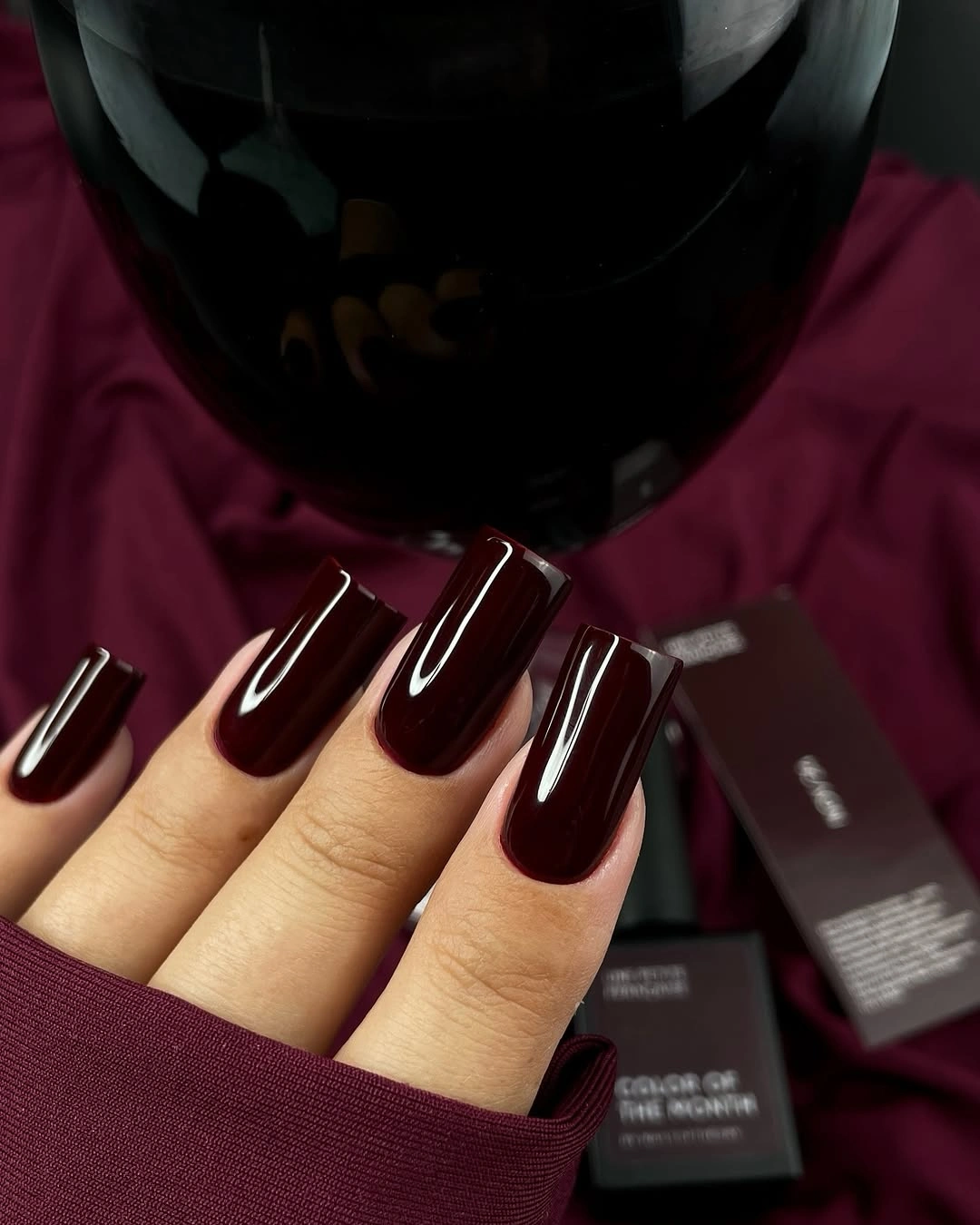
Keep the same gloss on a medium coffin for a more practical version, or use the wine on two fingers beside a sheer pink base. The reflection will still provide movement, but a shorter shape will reduce the visual emphasis on the tip. Avoid adding a pattern unless the goal is to replace the clean highlight with a new focal point.
Long coffin length gives the shine room to travel but makes the edge and corner wear easy to see. That is the main limitation of a solid high-gloss look, particularly when the hand is viewed close up. The payoff is clarity: a single dark color, a clean silhouette, and light doing enough work to keep the surface from feeling flat.
A Pale Accent and Tiny Bright Point Stay Gentle
Long almond nails combine glossy burgundy with pale pink sections and one small bright detail near the base. The deep color gives the set its fall depth, while the pale accent interrupts the repetition without asking for a large graphic. The tiny point is most effective because it sits inside an otherwise quiet nail and does not compete with the wine.
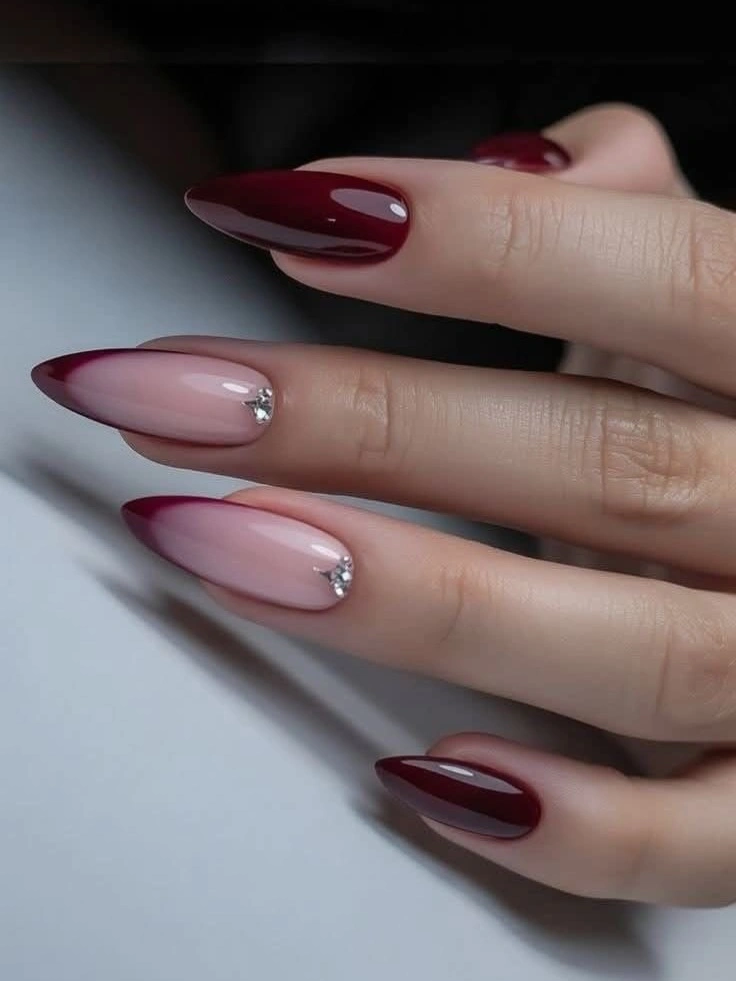
Use one pale accent and remove the tiny point if the shorter nail cannot give it enough space. The burgundy can stay on the remaining fingers, or it can become a narrow tip over blush pink for a softer adaptation. Either choice keeps the contrast delicate as long as the light nail is not covered in additional ornament.
The long almond profile provides a graceful setting, but delicate base details may be the first part to lose definition as the surface changes. Keep the mark small, protect the pale breathing room, and let the wine color remain the most stable element. That quiet hierarchy is what makes the design feel controlled.
Dark Burgundy Looks Natural in Low Light
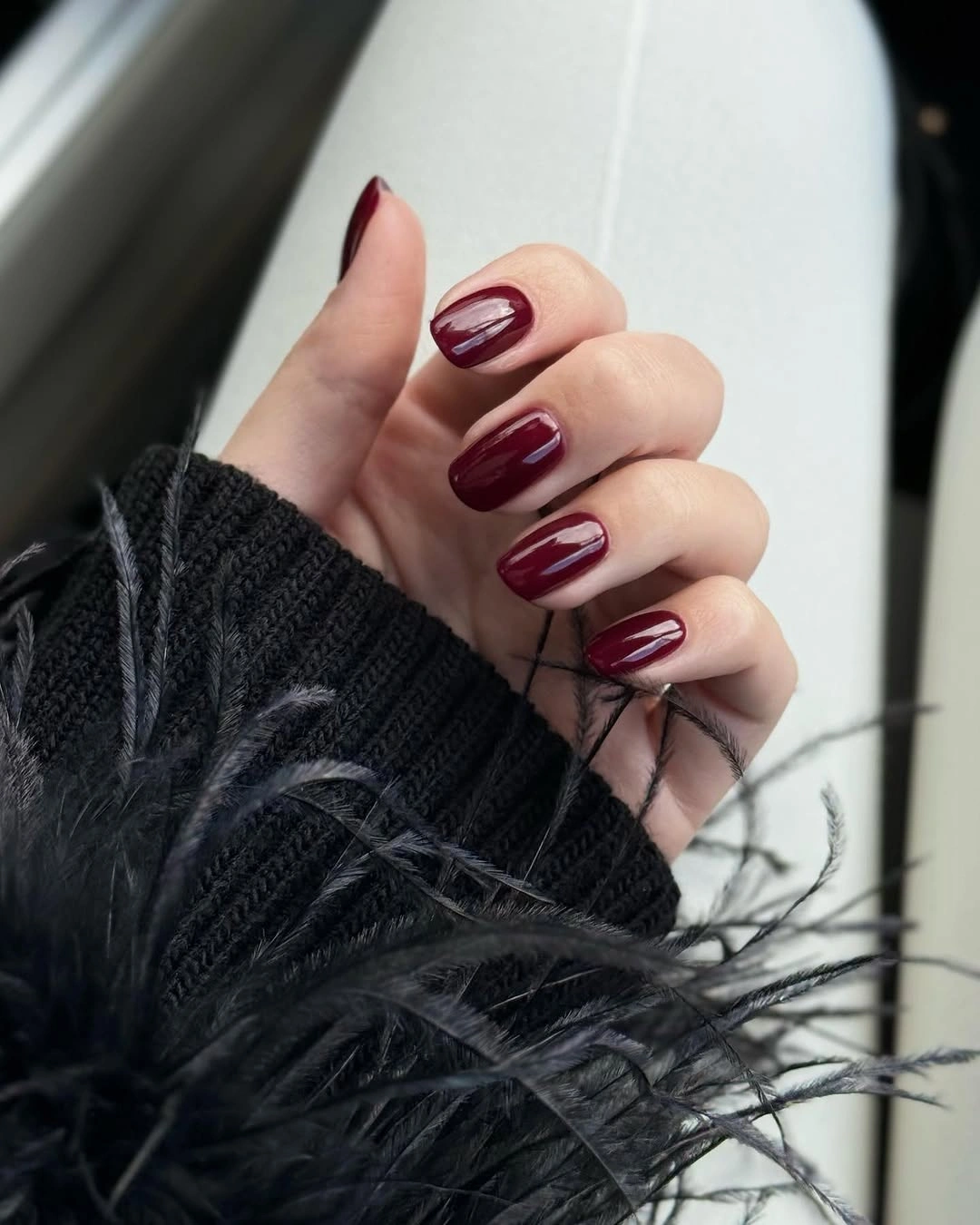
Medium almond nails carry a uniform dark burgundy in a dim car interior, where the low light deepens the color and reduces the visibility of small surface detail. The glossy finish still catches a few soft highlights, so the hand does not disappear completely. Without art or contrasting tips, the almond outline and the shifting depth of the wine provide the visual interest.
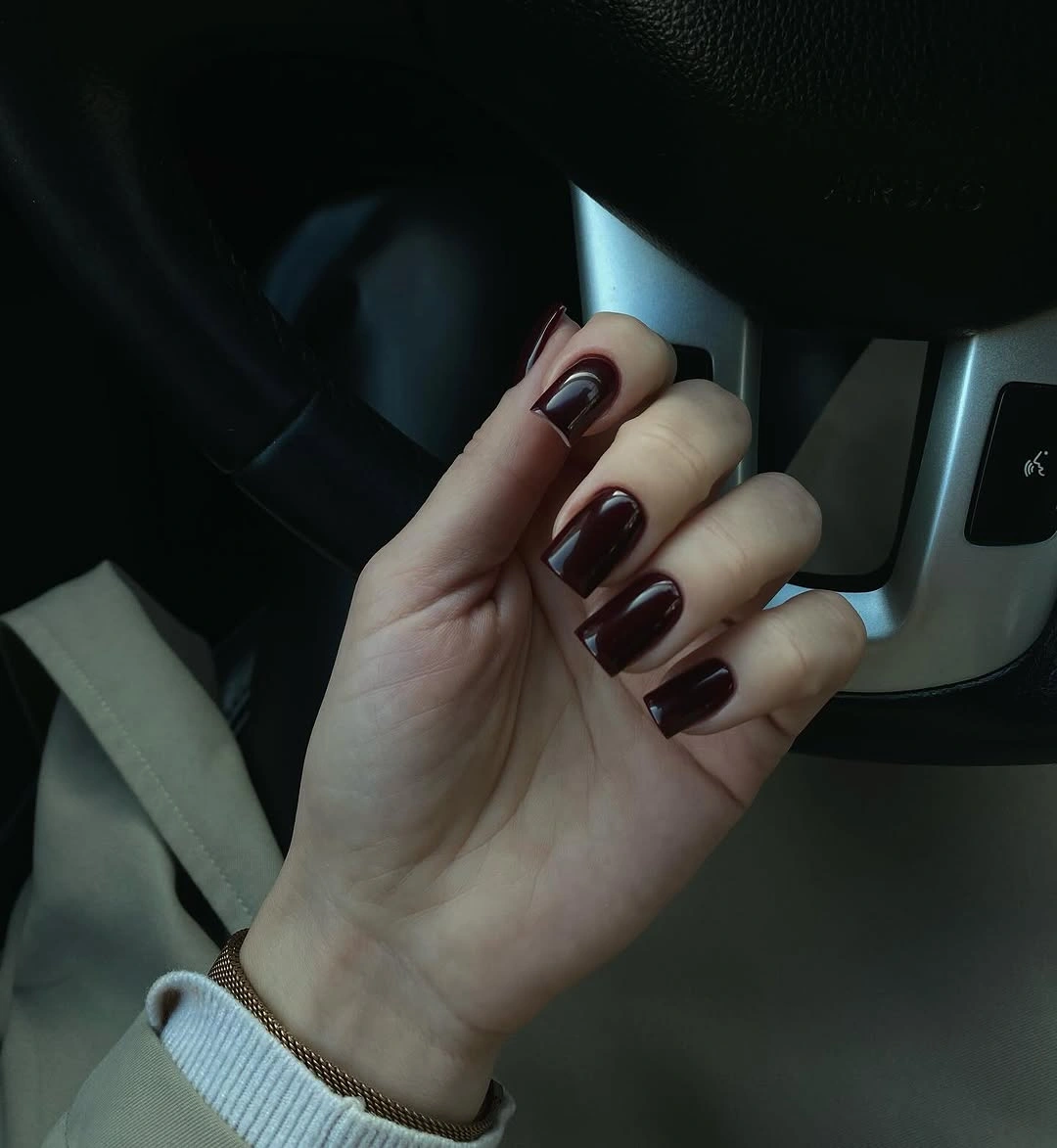
Use the same all-over color on a shorter oval when you want this understated mood, or add one nude-pink accent to create more light. The change in shape will make the result gentler, but the palette can remain deep. Keeping the surface plain is especially useful when the color itself changes with the setting.
Low light is not proof of a specific occasion or shade, so the practical lesson is simply how dark wine behaves against a shadowed background. In daylight, edge wear may appear more clearly along the glossy border. A smooth, short outline will help the color transition between settings without needing extra decoration.
Long Almond Wine Color Pairs With Quiet Texture
Long almond nails use an even deep burgundy against a plaid sleeve, with narrow highlights following the pointed tips. The background adds a rich visual atmosphere, but the manicure itself stays focused on the elongated shape and solid color. Because the surface is plain, the almond point becomes the main line and the burgundy can look polished without any added motif.
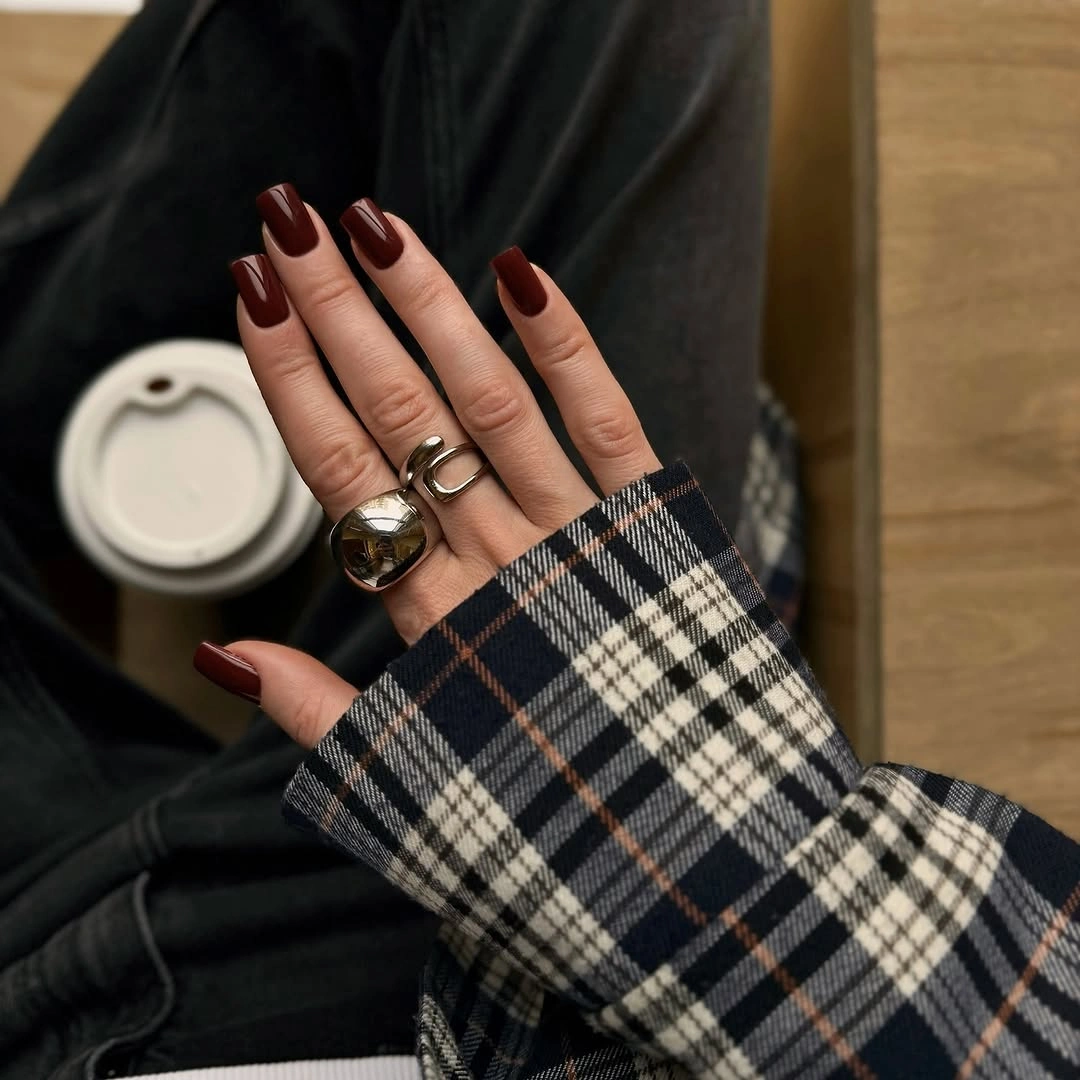
Use the same wine on medium almond if you want to keep the lengthwise direction with a softer point. Two long accent nails beside shorter solid wine fingers can also preserve the silhouette without requiring the full hand to carry extra length. Keep the color uniform so the shape remains the main change from finger to finger.
The rich background should not dictate the manicure, and the dark polish will still need clean edges when the hand moves into brighter light. A plain surface is easier to coordinate than a pattern, but it gives the tip line nowhere to hide. Let the elongated almond do the expressive work and keep the color steady.
Medium Coffin Wine Looks Easy Against Denim
Deep burgundy covers these medium coffin nails and creates a strong contrast against a denim sleeve. The clothing helps show how the color holds its own beside a cool blue texture, but the manicure remains simple: one glossy wine shade, one structured edge, and no added accent. That clear separation gives the rich color an everyday feeling without weakening its depth.
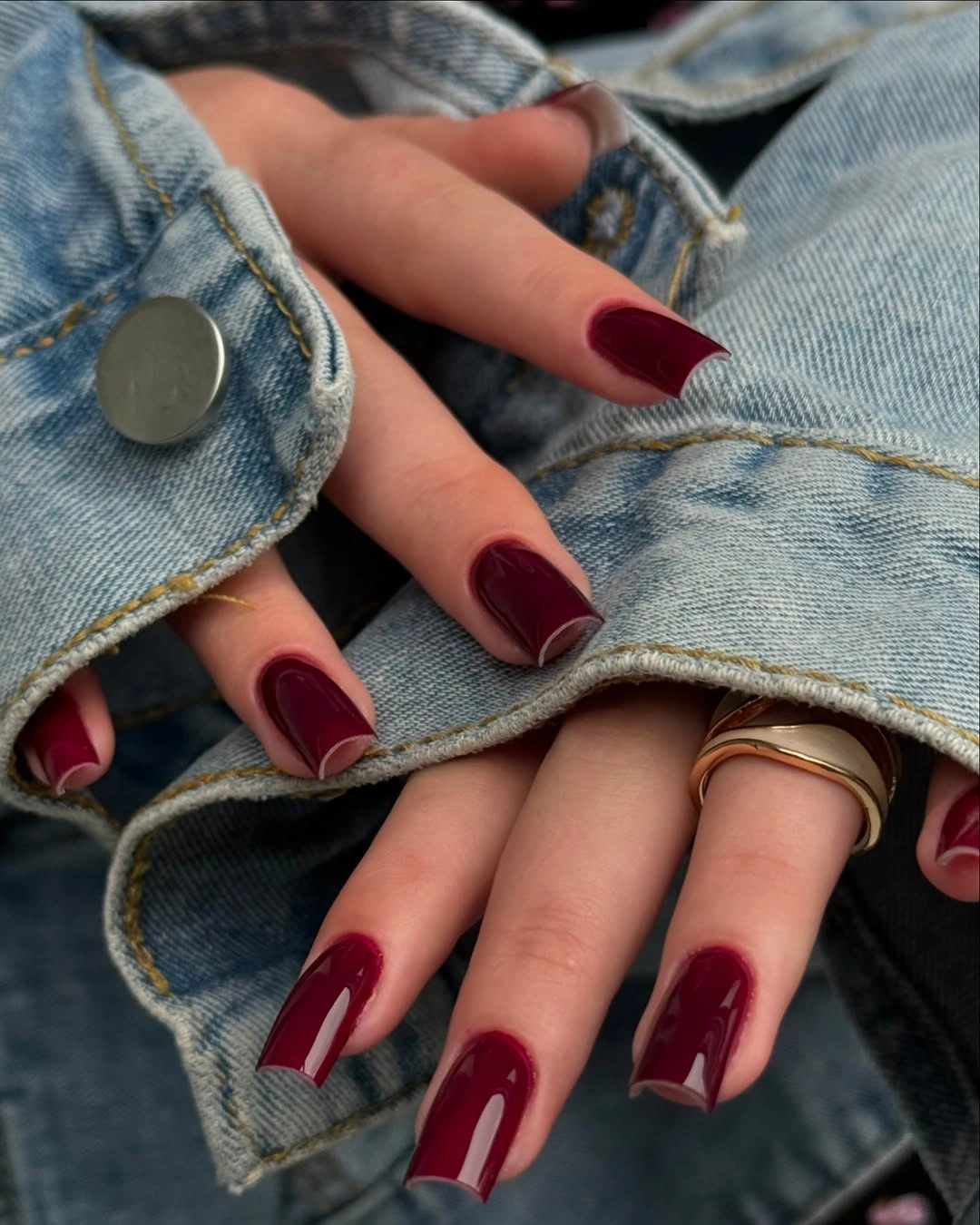
Use the shade on short coffin nails for a direct, practical version, or add one pale pink accent if you want more softness. The denim pairing is optional because the color already provides enough contrast; changing the background will not remove the main idea. Keep the corners even so the medium coffin remains a clean frame for the wine.
Glossy dark color can reveal chips against both denim and bare skin, which makes the edge the main maintenance point. The upside is that the surface is straightforward to repeat and does not depend on a fragile motif. A short or medium coffin keeps the strong shade grounded while leaving room for daily movement.
Very Deep Wine Ends on a Rounded Square
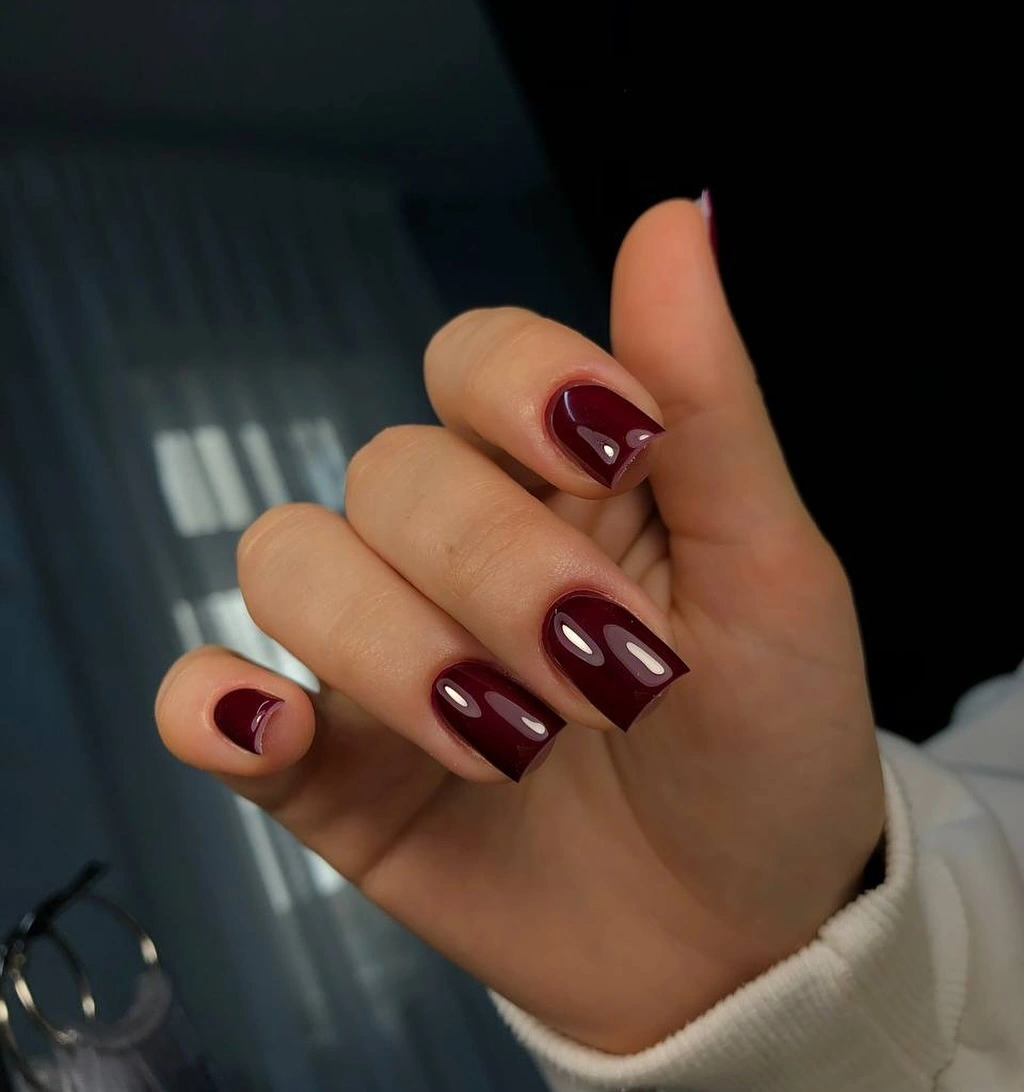
The final close-up uses a very deep burgundy on short rounded-square nails, with bright curved highlights preventing the color from reading as flat. The compact shape keeps the near-black wine tone practical, while the rounded corners soften the intensity more effectively than a long point would. There is no separate design because the finish and proportion already create a quiet conclusion.
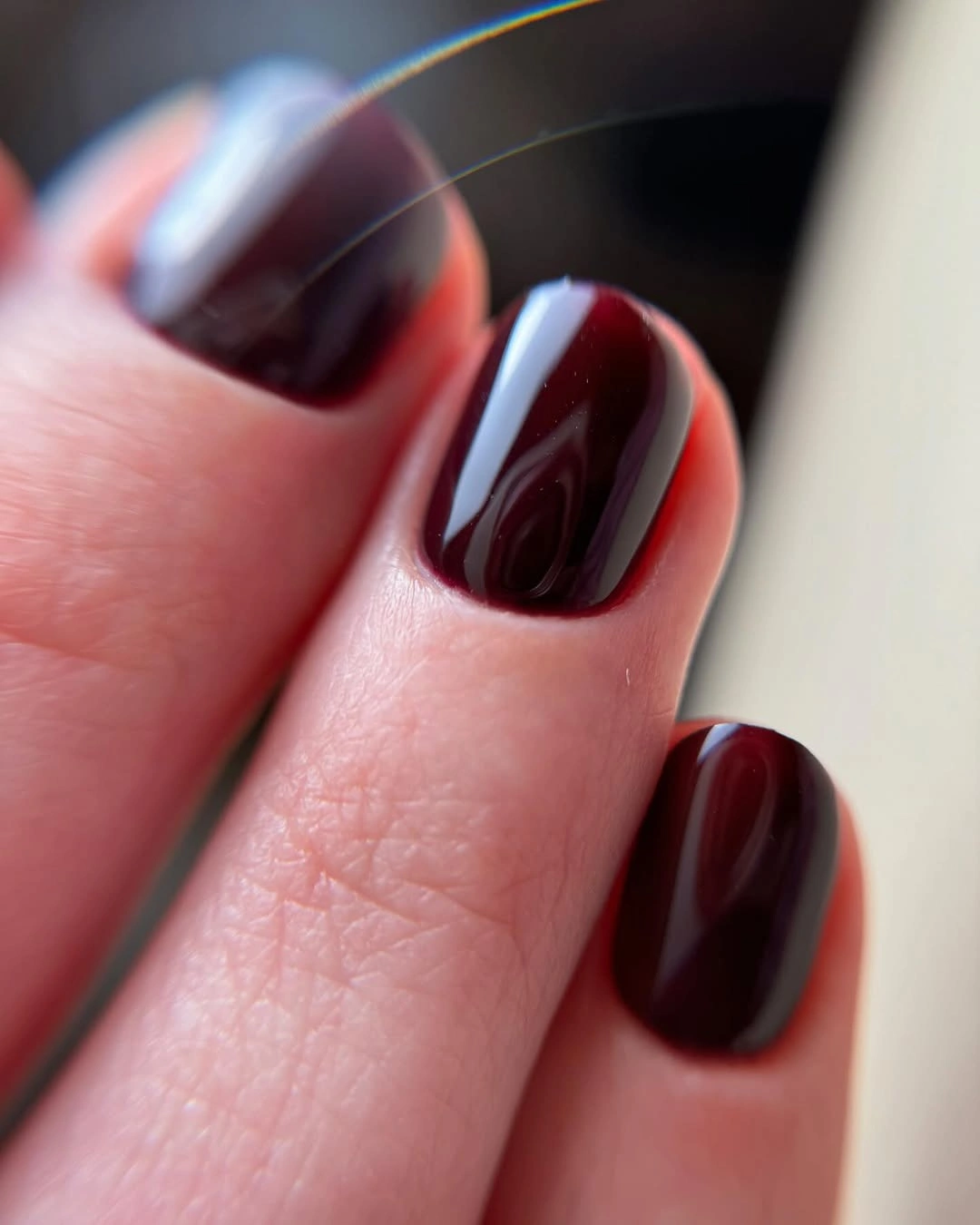
Wear the color across all short nails for a bold minimal set, or pair it with one warm nude accent if the depth needs a little relief. A rounded oval would make the result even softer, while a coffin edge would push it toward a sharper graphic mood. Keep the glossy surface clear so the reflected curves remain visible.
Very dark color shows every change in the edge at close range, but the short rounded square reduces the maintenance demand compared with a long pointed silhouette. That is the useful final balance: strong wine, small proportion, and enough shine to add dimension. Nothing else is needed when the shape and finish are already saying so much.