
Fall Medium Length Nails 2026: Color, Shape, and Detail Ideas
The hardest part of a seasonal manicure is often stopping at the right point. Too little intention can make a hand look unfinished, but too much coordination can turn every finger into the same announcement. A good choice leaves one detail with room to breathe, so the finished hand feels personal instead of assembled from a rulebook.
Use the shape as your first filter, then judge the finish by how it behaves when your hands are moving rather than posed. Ask whether the strongest line still reads on a shorter nail, whether the surface can survive your routine without constant attention, and whether the contrast supports your clothes instead of demanding a matching outfit. That small test is enough to make fall medium length nails 2026 feel like a choice, not a search result.
Deep Wine With One Quiet Cutout
Deep wine color gives this short square manicure its definition, but the pale interruption on one nail keeps the set from reading as a single dark block. Most of the nails are glossy and compact, while one visible accent leaves a light area near the edge before returning to the burgundy tone. That small change matters because the saturated color remains dominant without making every nail compete for attention.
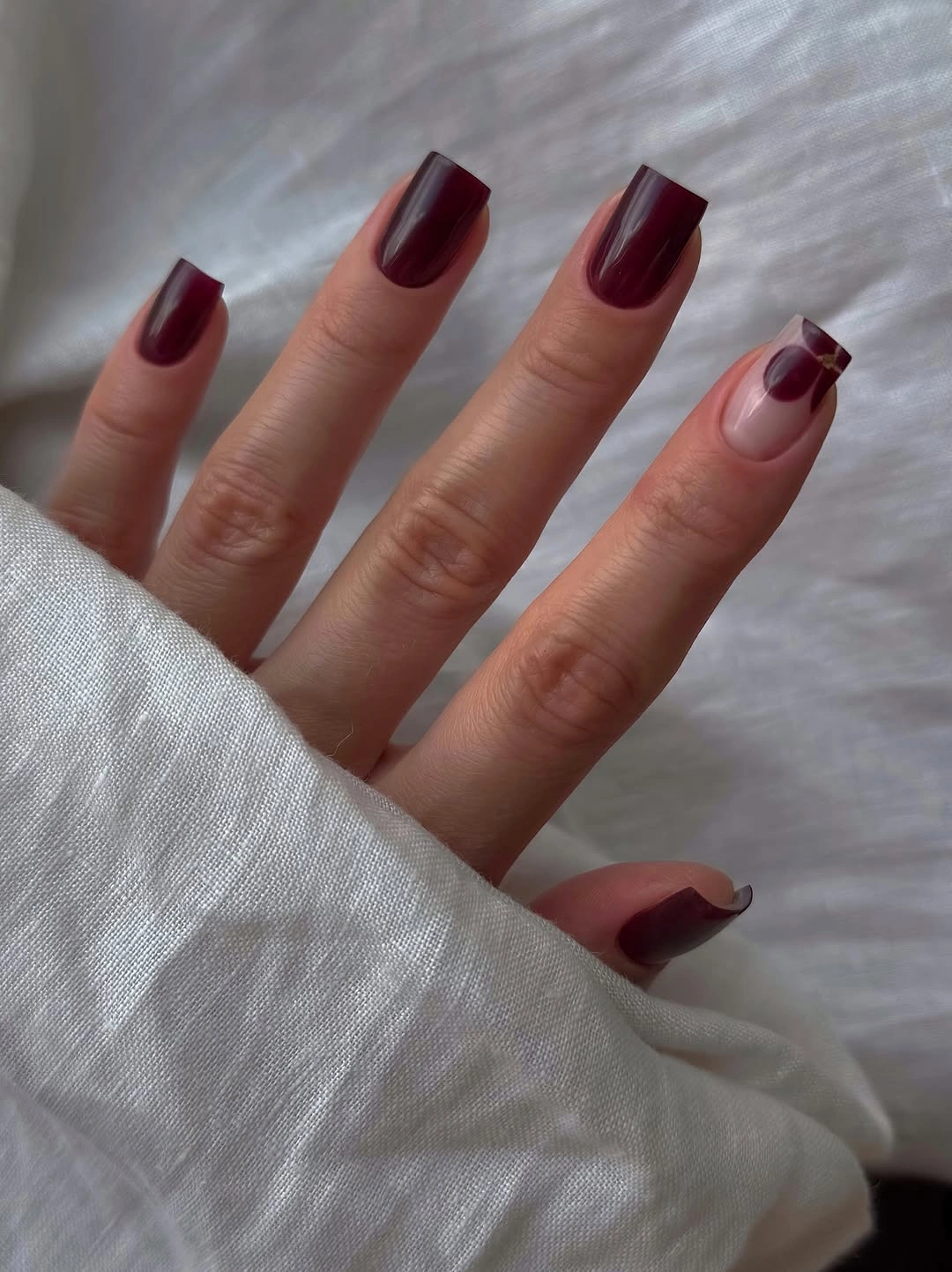
The design works through restraint rather than a complicated motif. A short square silhouette gives the dark shade a neat frame, and the single cutout creates just enough air to show that the manicure was planned around contrast. If you prefer a softer finish, the accent can stay sheer and the wine tip can become narrower, preserving the same idea while reducing the graphic edge.
Dark polish tends to make small chips and uneven corners easier to notice, so this is a style that rewards tidy edges. It is also easy to adapt for a work setting because the accent is isolated instead of repeated across the hand. Keep the color solid on the remaining nails, and the result will still feel intentional even when the shape is shortened slightly. That same proportion check is useful when comparing mid-length fall nails for a more practical version.
Tortoiseshell Texture On A Rounded Oval
Warm tortoiseshell turns the short oval shape into the main point of this manicure. Amber, caramel brown, and black patches shift from nail to nail, creating a glossy pattern that never settles into a perfectly repeated grid. The rounded outline softens the darker pieces, so the set feels more like layered autumn color than a sharp animal print.
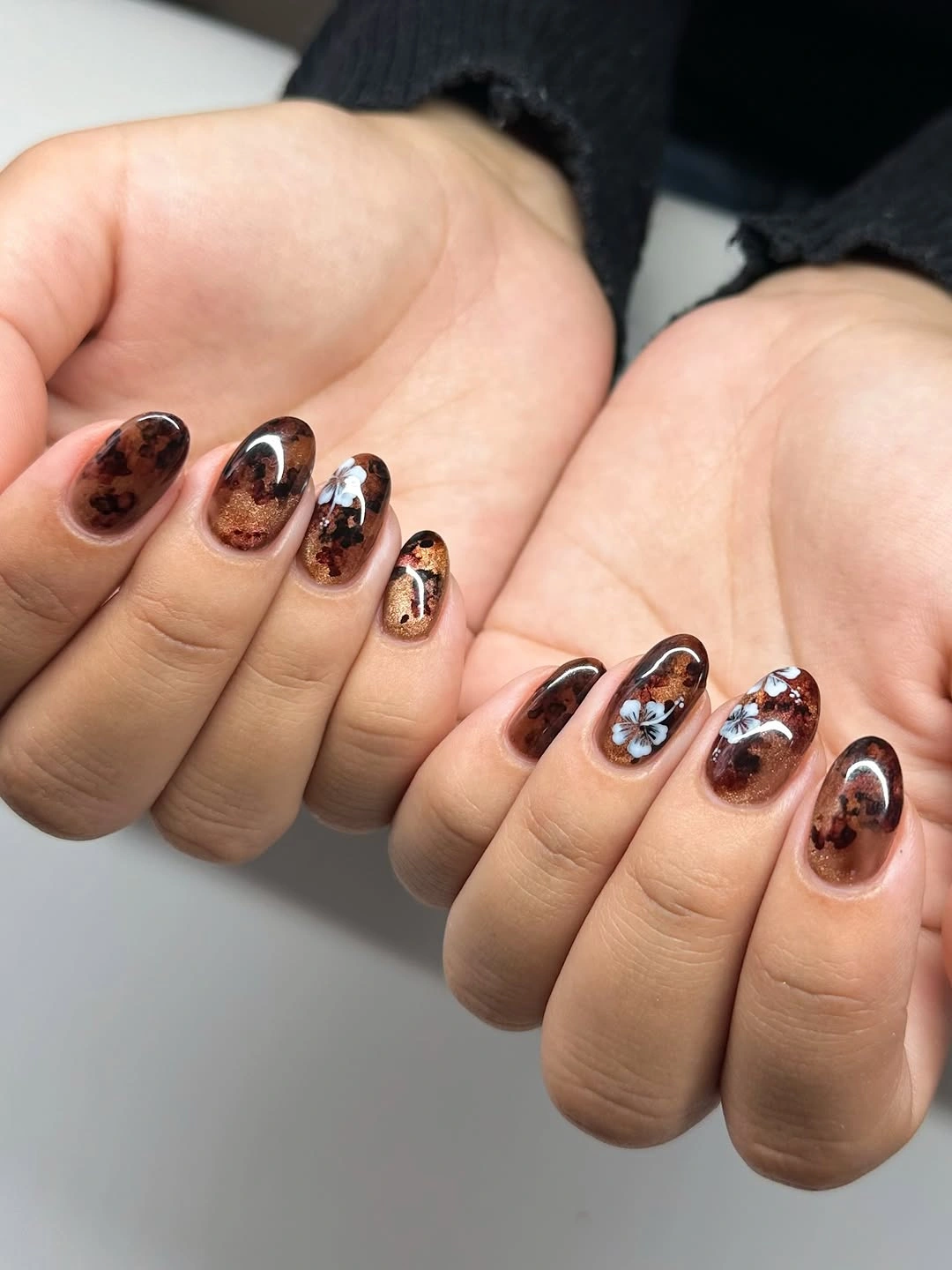
The irregular distribution is what gives the design depth. Some nails carry more light amber, while others let the black and brown collect near the edges, creating variation without needing an additional metallic accent. If the full pattern feels too busy, keep the tortoiseshell on alternating nails and use a plain caramel or sheer warm base beside it.
A short oval is a practical match for a mottled finish because the color remains close to the hand and does not rely on extra length to look complete. The tradeoff is that the many small transitions can look less clear if the nails are cut extremely short. Leave enough surface for the patches to breathe, and the warmth will remain visible instead of becoming a dark blur. For more proportion references, fall medium nail ideas help show how much surface a richer finish actually needs.
Icy Blue Length With One Jeweled Focus
This long tapered set keeps almost every nail in a pale icy blue, then gives one nail a darker blue focal area with a clustered faceted detail. The contrast is easy to read because the surrounding color stays quiet and cool. Rather than scattering sparkle everywhere, the manicure uses one concentrated point to control where the eye lands.
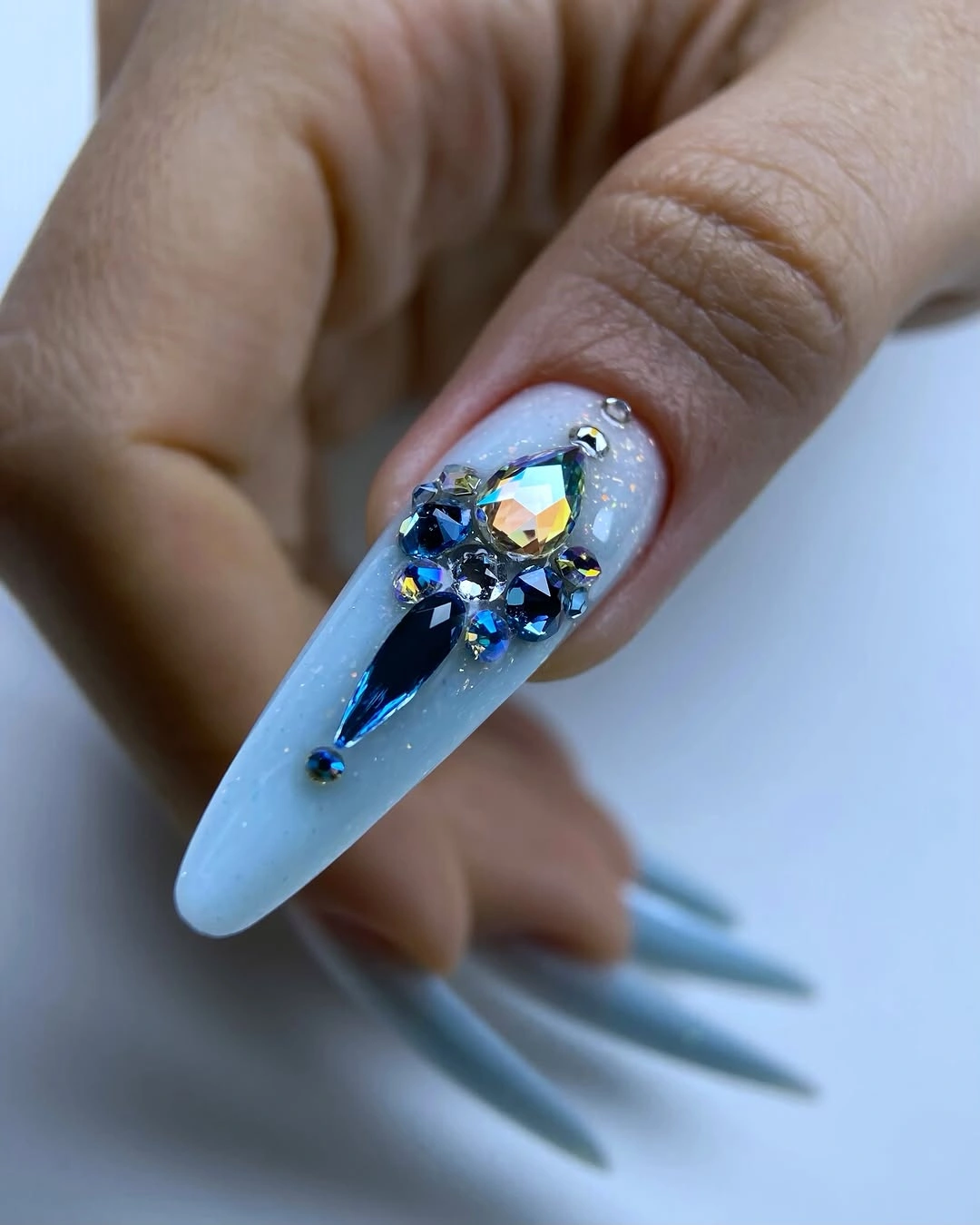
The single focal nail also changes how the length feels. Long tapered nails already create a strong line, so a dense accent on every finger would make the result much louder; here, the pale field lets the embellishment act like a deliberate punctuation mark. A shorter almond shape could keep the same relationship between a quiet base and one decorated nail without carrying as much visual drama, much like the proportion choices in fall almond nails.
For everyday wear, the practical question is not whether the blue is easy to combine, but whether the raised detail will catch on clothing or tasks. Keeping it on one nail limits that concern and makes maintenance more focused. If you want a calmer version, use a deeper blue accent without the cluster, then let the glossy pale nails provide the contrast.
Blush Squares With A Clean White Edge
A soft blush base and crisp white tips give this medium square manicure a familiar structure with a gentle contrast. The tips follow the straight free edge, so the shape stays clear instead of being softened into a rounded French line. Because the palette is light, the design reads as polished and fresh without needing extra art or a strong seasonal symbol.
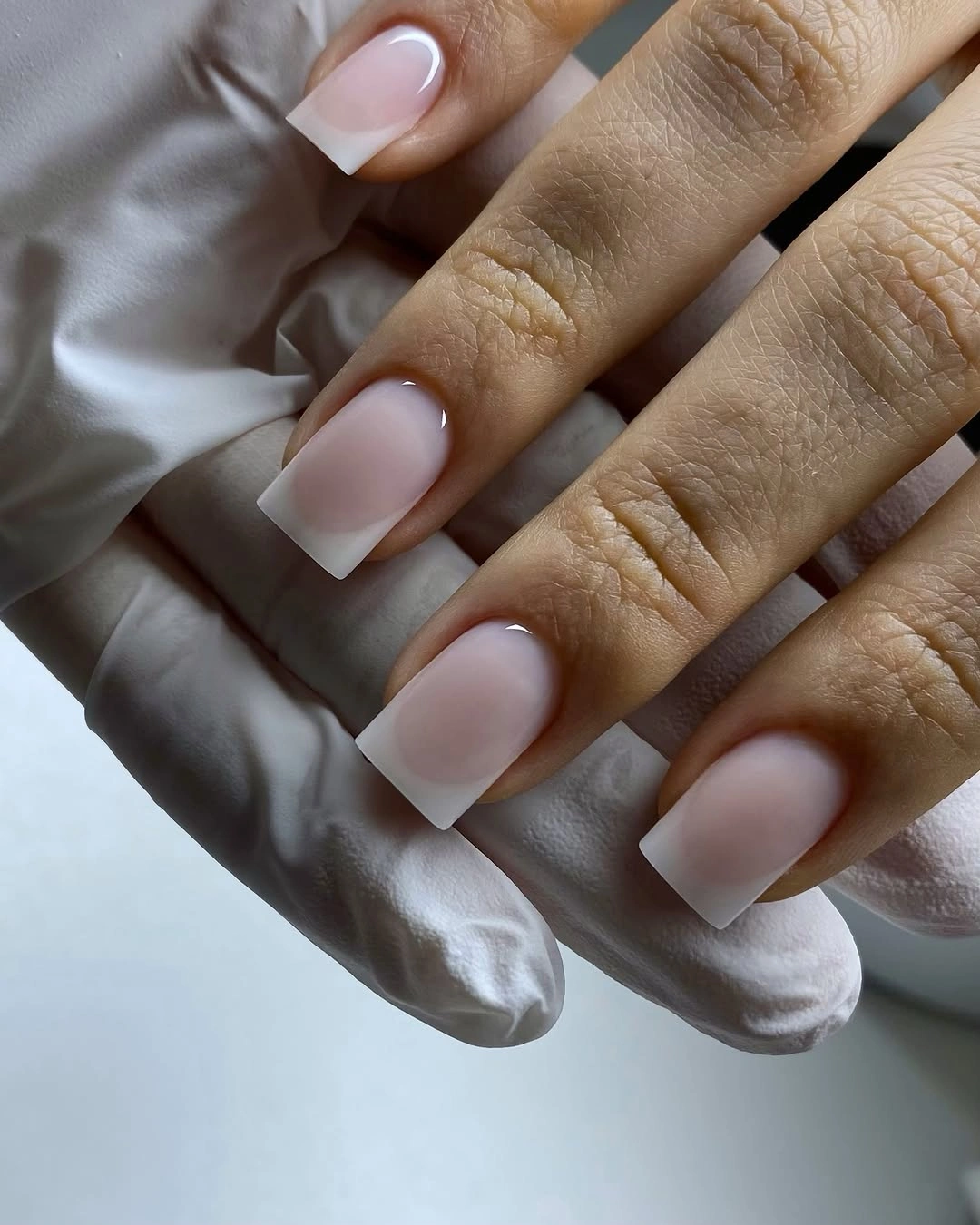
The balance depends on keeping the white band controlled. A wide tip would visually shorten the medium square and make the pale base disappear, while a narrower edge lets the blush color remain part of the design. This is a useful direction when you like the clean logic of square fall nail designs but do not want a darker color or a dense accent.
The light surface does ask for neat preparation because uneven tips stand out more than they would against a mottled pattern. On a shorter square, make the white line slightly thinner and keep the corners balanced. The result will lose some of the elongated effect, but it will retain the same quiet division between a translucent base and a clear edge.
Raised Quilting In Pale Blue
Pale blue becomes more dimensional here through a repeated quilted texture across the medium square surface. There is no competing color shift or large motif, so the eye follows the small raised intersections and the shadows they create. The straight shape gives the pattern a tidy frame, making the tactile effect feel organized rather than random.
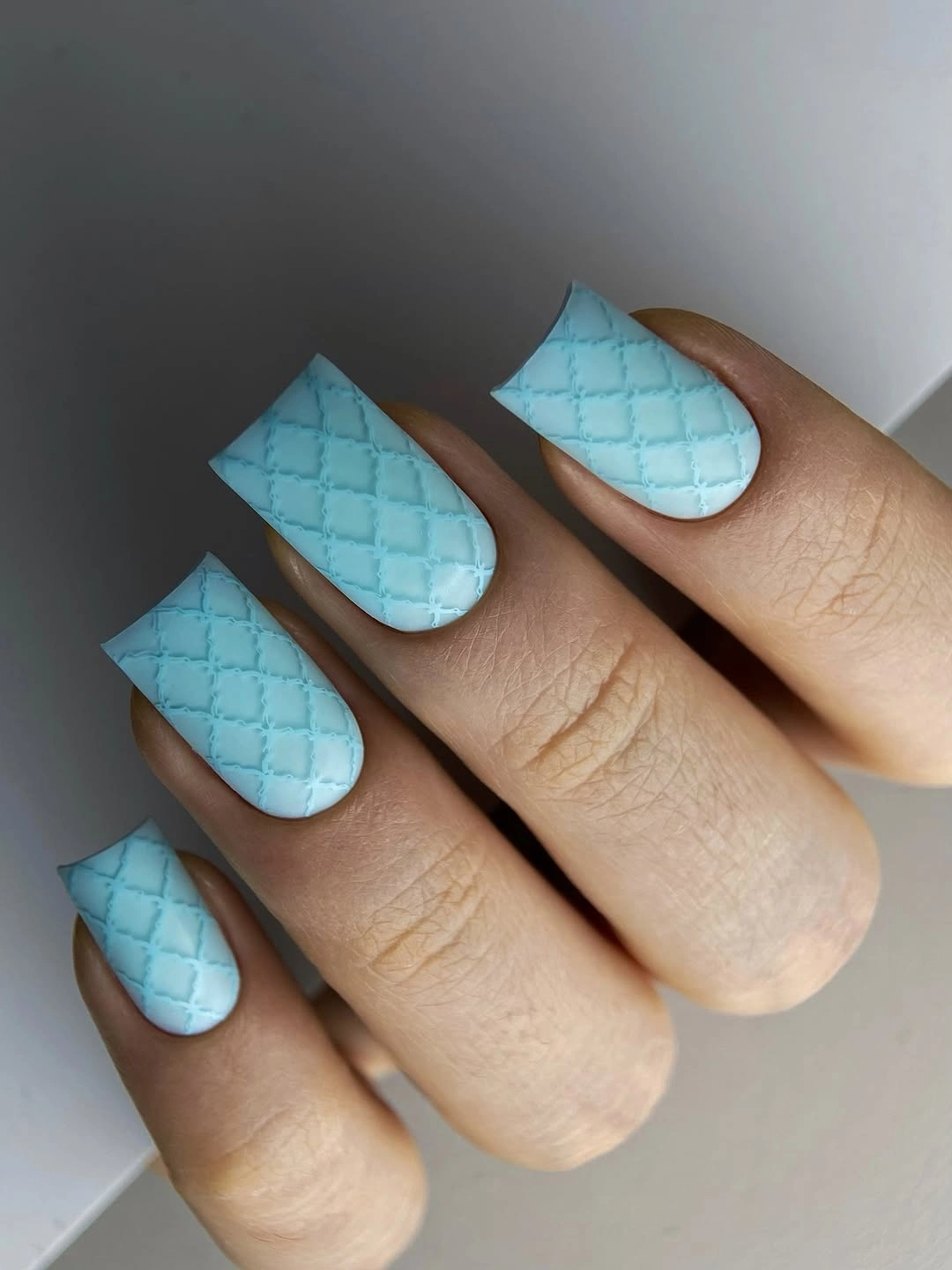
The monochrome choice is important because a second bright color would compete with the relief. Keeping everything within the same cool family allows the surface to change as the hand moves, while the medium length gives the grid enough room to stay legible. If you want only a hint of texture, place it on one or two accent nails and keep the remaining blue smooth.
Texture can draw attention to grow-out because the pattern has a visible starting point near the cuticle. That is the honest tradeoff compared with a solid glossy manicure, which tends to look quieter as it grows. The design is still adaptable to a shorter square, but simplify the grid slightly so the small nail plate does not become visually crowded.
Glossy Black With A Mirror-Like Pause
Solid black nails can look precise when the shape is medium and square, and this set relies on that precision. The surface is smooth and reflective, with curved highlights providing the only variation across the dark color. Without a motif to distract from the outline, the manicure makes the straight free edge and the even shine feel like deliberate choices.
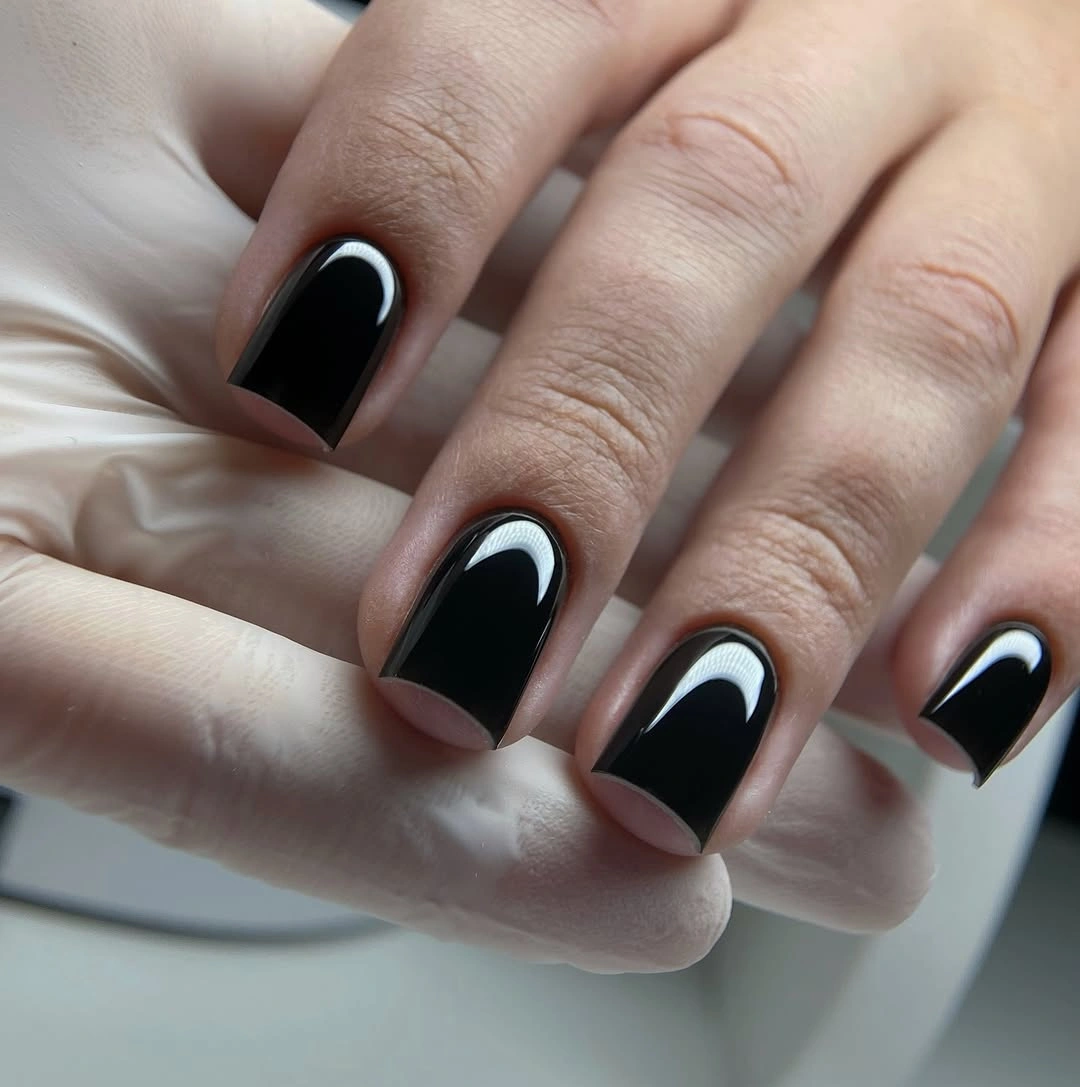
The appeal is its directness. A deep color usually gains softness from a shimmer or a pattern, but here the clean reflection keeps the result sharp while the square length prevents it from feeling overly dramatic. A shorter rounded square would make the same black finish less graphic, whereas a longer shape would make every edge more visually demanding.
Black is unforgiving about scratches, dents, and small gaps, so the finish benefits from careful everyday handling. That limitation is balanced by how easily it pairs with pale clothing, denim, silver jewelry, or a more layered autumn outfit. If a full black hand feels too strong, keep the color on four nails and replace one accent with a sheer blush that repeats the light reflection.
Red Solids And Loose White Spots
Bright red supplies a strong base for this medium manicure, while the white accent nails introduce irregular red spots that feel playful rather than formal. The solid nails repeat the exact accent color, which is why the patterned fingers still look connected to the rest of the hand. The spots are rounded and uneven, giving the design movement without forcing a strict repeat.
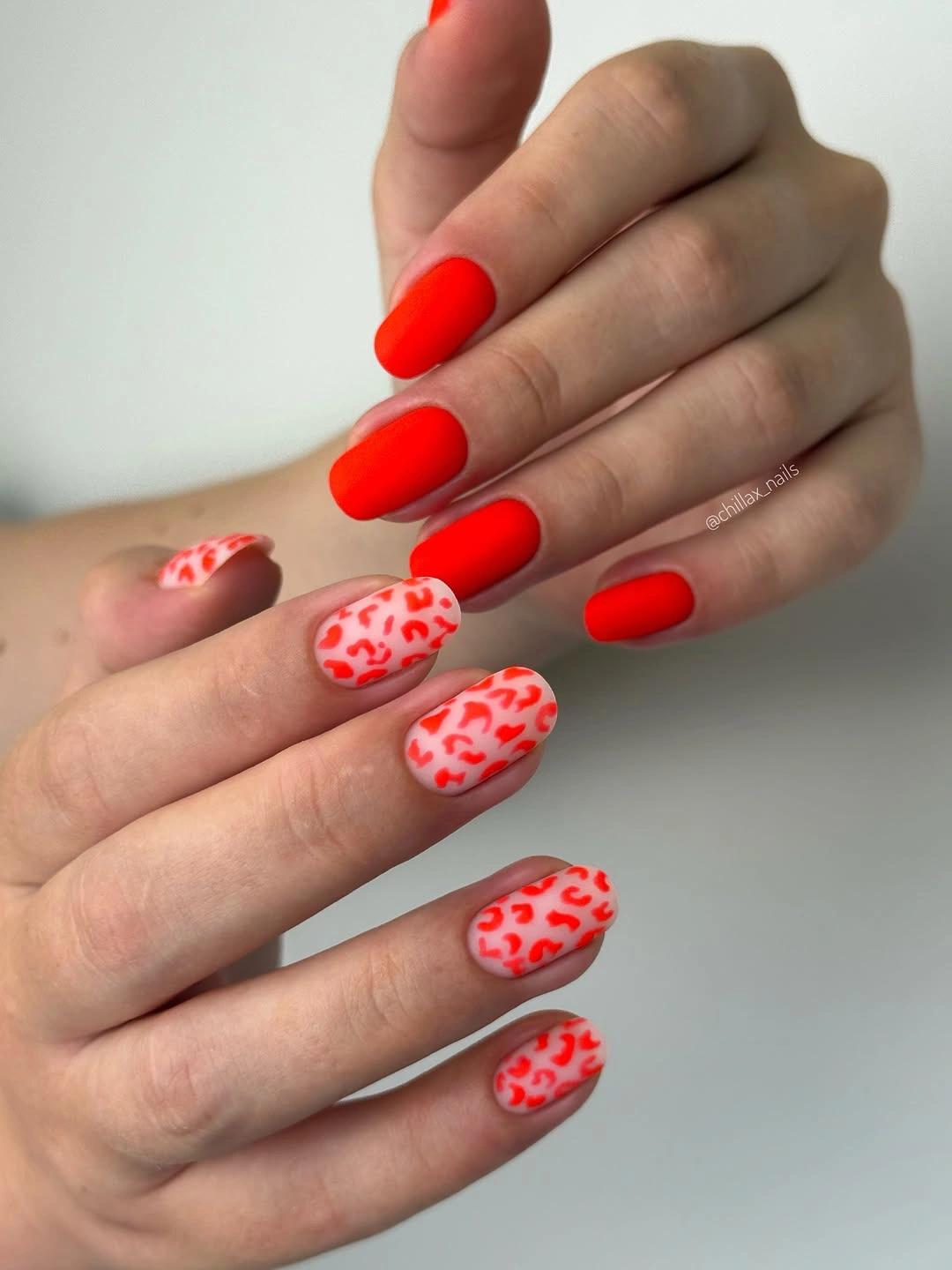
The contrast works best when the accent stays open. White space between the red marks keeps the pattern readable, and the solid red nails prevent the print from taking over the whole composition. On a shorter square, make the spots larger and fewer so they remain visible; tiny marks can merge together and lose the relaxed character that makes this version appealing.
This is a useful bridge between a plain red manicure and a fully decorated set. It gives you a clear focal change without requiring every nail to carry detail, and it can be made quieter by using a milky blush accent instead of bright white. The main maintenance note is simple: keep the red surface even, because uneven shine will compete with the loose spotting.
Open Gold Loops With A Burgundy Anchor
Long almond nails create a narrow stage for thin gold loops, clear negative space, and one deep burgundy accent. The metallic lines remain open rather than filling the nail, so the translucent nude base can still be seen between each curve. That breathing room keeps the set elegant even though the shape is long and the details are intentionally noticeable.
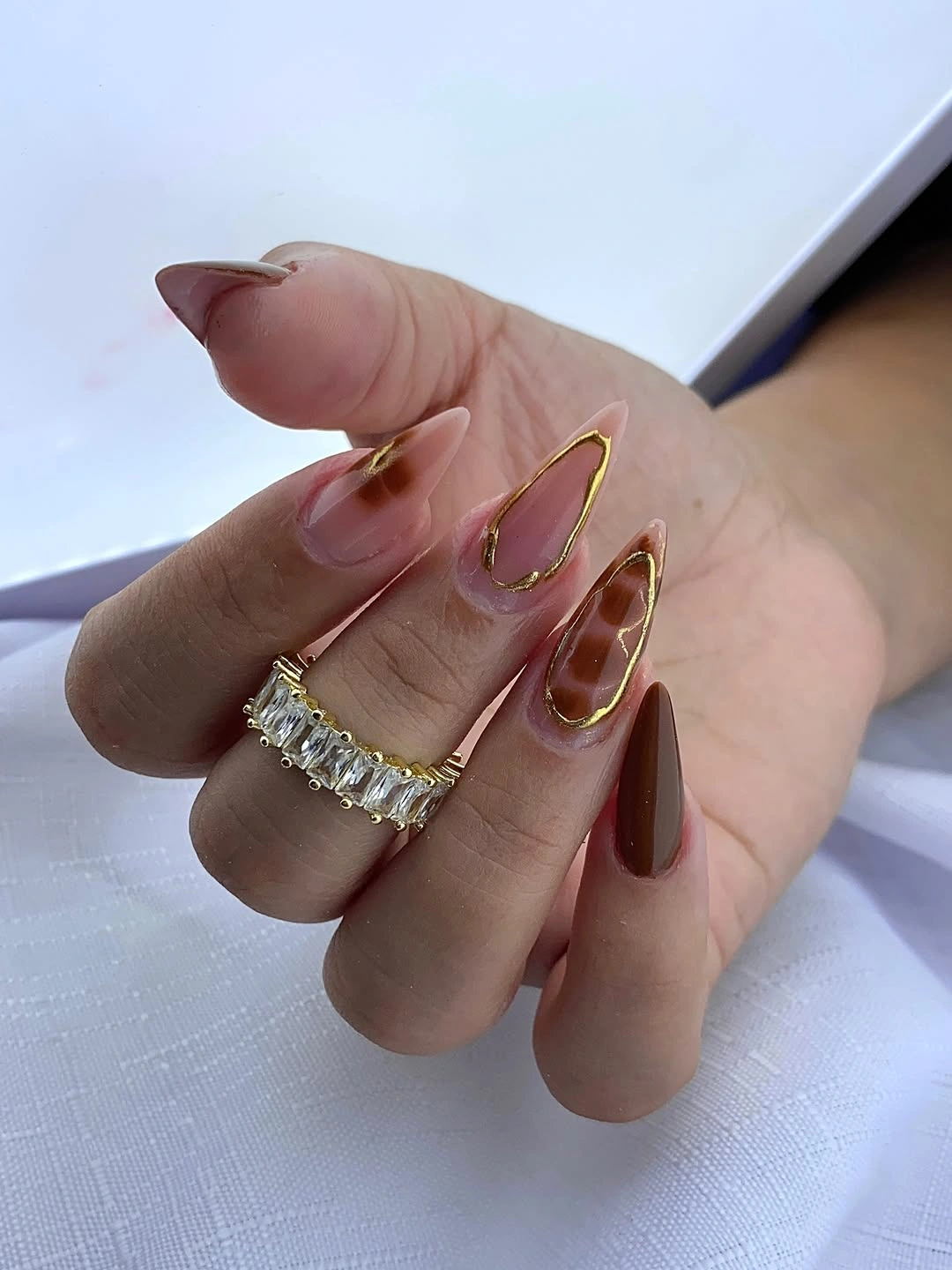
The burgundy nail acts as a visual anchor for the lighter geometry. Without it, the gold could feel delicate but slightly scattered; with one dark point, the hand gains a clear weight shift while the open loops preserve the airy side. A shorter almond shape can carry the idea well if the lines move closer to the center and remain broad enough to read from a normal distance.
Metallic curves and a long taper ask for a little more precision than a solid color, especially when the lines sit near the edge. That is the tradeoff for the expressive silhouette. If you need a lower-maintenance version, keep the gold on two nails, use one burgundy accent, and let the remaining nails stay translucent rather than adding another motif.
Blush Almonds With Tiny Dark Dots
This medium almond manicure uses a translucent blush base as a quiet field for black dots, gold foil, small stones, and fine metallic edging. The details vary from nail to nail, so the set feels collected rather than stamped from one repeated template. The almond shape adds length, but the pale ground keeps the overall impression light enough for the small accents to remain visible.
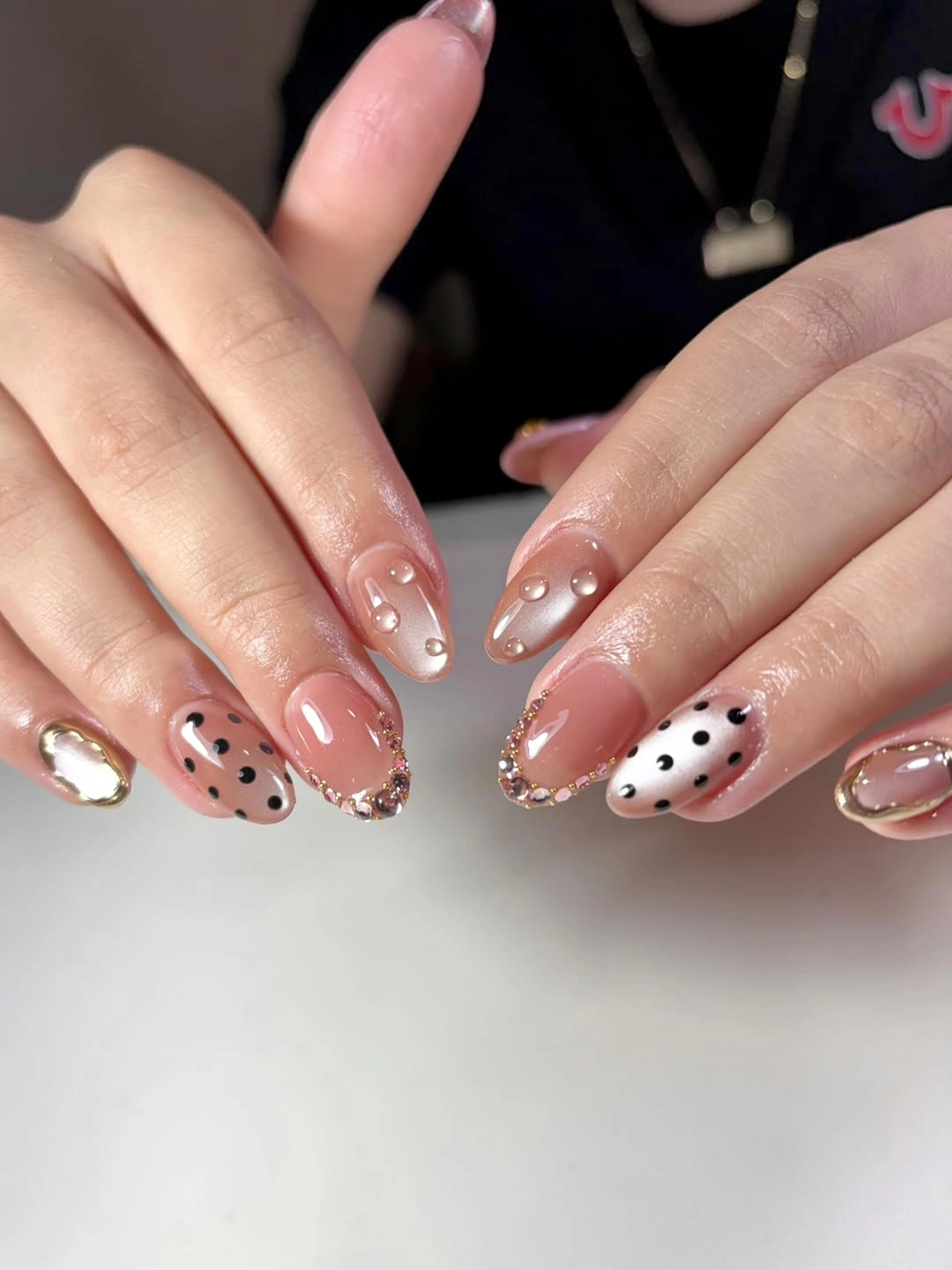
The contrast comes from scale as much as color. Dark dots provide small anchors, while the warm metallic pieces flash only when the hand moves, creating a slower rhythm than a full glitter surface. If the combination feels too detailed, keep the black dots on two nails and move the gold to one focal finger; the blush base will still carry the design.
Because the accents are numerous, the manicure will show grow-out and loose details more readily than a solid color. That is a realistic limitation, not a reason to avoid it; choosing a medium almond instead of a very long point already reduces some visual excess. The best adaptation is to preserve the pale base and reduce the number of embellishments rather than replacing the whole palette.
Nude Almonds Framed With Glitter
Long nude almond nails become festive through glittering edges and small crystal-like points placed over a sheer blush base. The center of each nail remains relatively calm, so the shimmer follows the taper instead of covering it. That placement makes the length look intentional while keeping the base visible enough to soften the sparkle.
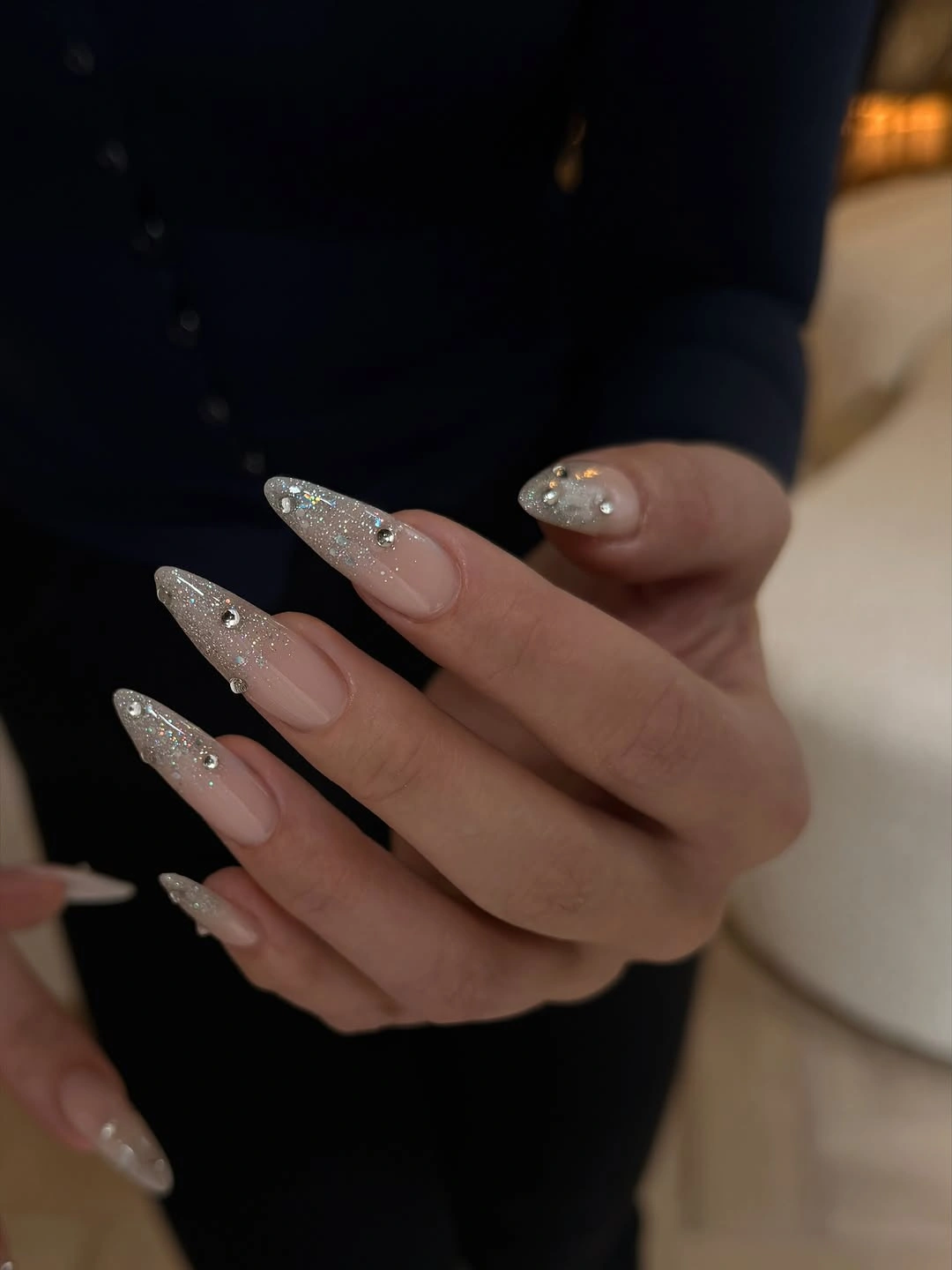
The design is strongest when the glitter acts as a border. It outlines the almond shape, catches light near the tips, and gives the hand a delicate finish without turning every surface opaque. A medium almond would preserve the same edge-led idea with less visual length, and the crystals could be reduced to two accent nails if daily wear matters more than maximum sparkle.
Edge glitter can make small chips less obvious in some places, but raised details may still catch on knitwear or hair. That makes the finish better suited to a controlled length than an extremely long point. Keep the base close to the natural blush family and the result will remain adaptable across clothing colors, jewelry, and different autumn occasions.
Pink With Small Raised Flower Moments
Glossy pink gives this medium oval manicure an easy starting point, while a handful of tiny flower-like charms and colorful raised pieces turn selected nails into focal points. The solid nails are important because they give the eye somewhere to rest between the decorated accents. The rounded length also keeps the playful details from feeling too sharp or overly formal.
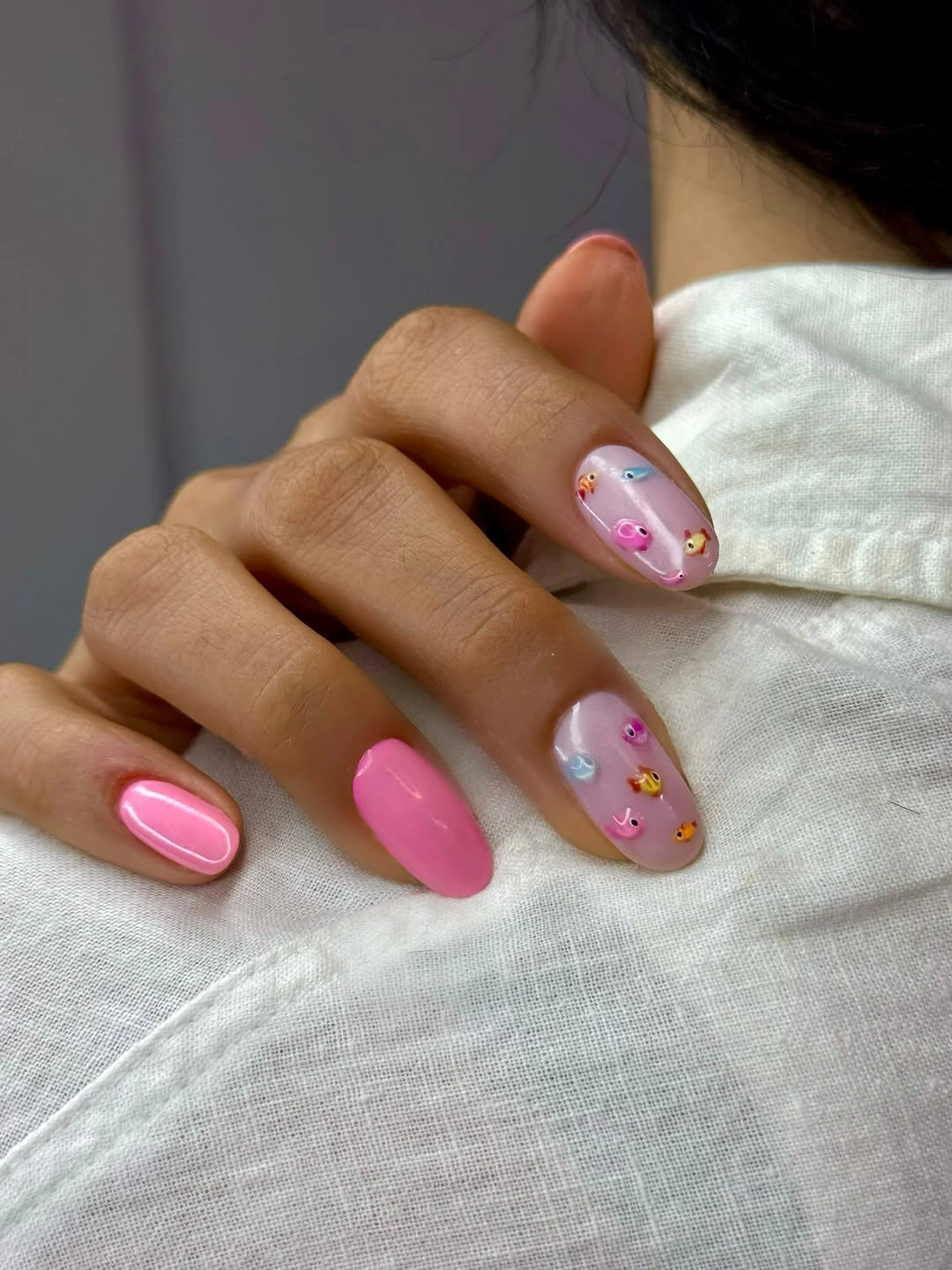
The placement feels more interesting than a full floral repeat. Some nails carry a small detail near the center, while others remain almost entirely pink, creating a casual rhythm that can be changed without losing the concept. For a simpler take, choose one solid pink and two accent nails with a single flower each instead of trying to reproduce every small element.
Raised pieces bring a practical limitation because they can catch more easily than painted lines. Keeping the length medium and the accents selective helps, but the design still asks for a little care around hair, fabric, and household tasks. If you prefer a flatter finish, keep the same pink palette and replace the charms with tiny painted dots or short petals.
Seafoam And Milky White Botanical Marks
Cool seafoam and milky white create a soft base for green leaf strokes, tiny dark specks, and scattered gold flecks. The almond shape gives the botanical marks a natural direction, while the white nails keep the green from becoming too dense. A few warm metallic flashes stop the palette from looking cold, but they remain small enough to support the pale colors.
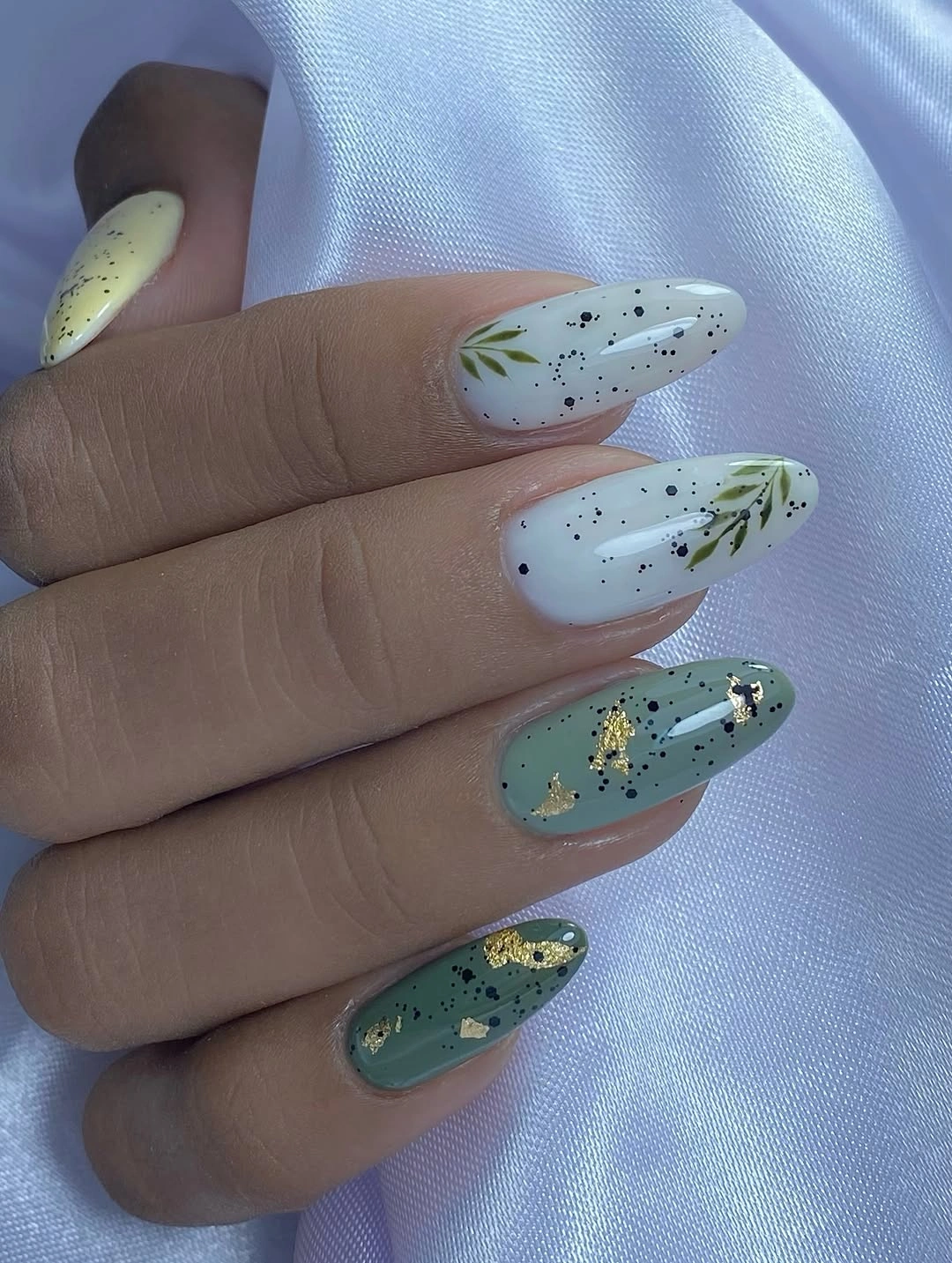
The visual logic is a balance of openness and detail. Green marks appear in different positions instead of forming one heavy band, so the hand still feels airy when viewed as a whole. If you want a lower-contrast version, replace the gold with a pale beige accent and keep the botanical lines on only two nails.
This palette can move easily into autumn because it borrows the season through muted green and warm flecks rather than obvious leaves or pumpkins. The tradeoff is that fine line work can lose clarity if the nails are shortened too far. Keep the almond medium and let one larger leaf shape stand in for several tiny marks on a shorter surface.
Lavender Pink Shine With Curved Direction
These long almond nails shift between lavender, pink, and a cool reflective blue-violet, giving the set movement before any line detail is added. Thin curved accents echo the taper and keep the eye traveling toward the tips. The result feels luminous rather than dark, even though the length makes the manicure visually prominent.
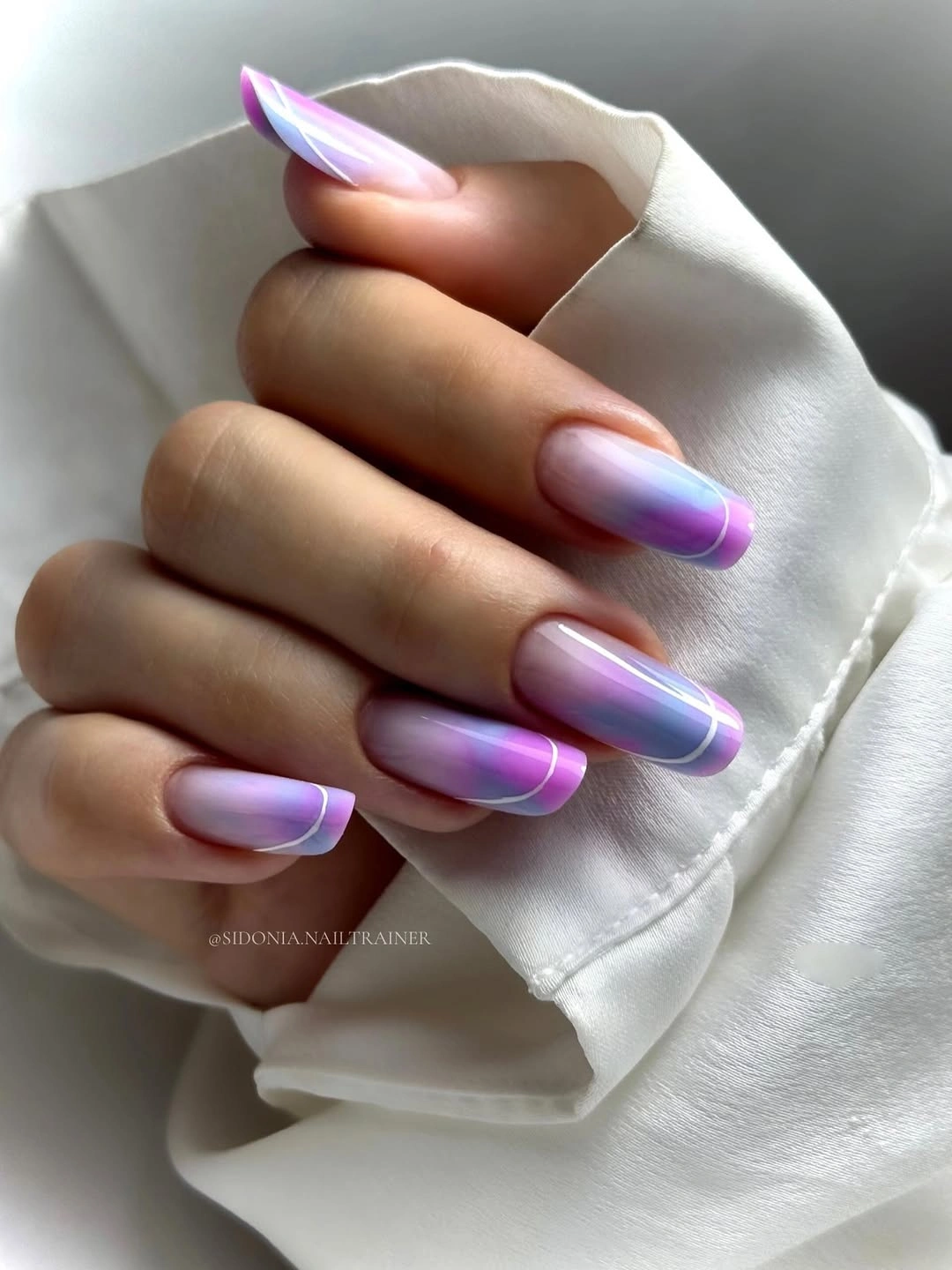
The color transition does most of the design work, so the curved lines are best understood as a guide rather than a separate motif. They make the reflective surface feel more directional and help each nail relate to the next. A shorter almond can keep the same cool shift with one arc per nail, while a plain color change is enough if you prefer less detail.
Reflective finishes can look different under indoor and outdoor light, which is part of their appeal and also a small planning consideration. A shade that appears lavender in one setting may lean blue in another, so a simple wardrobe palette gives it more room. Keep the taper moderate if you want the color movement to remain the focus instead of the length itself.
Neutral Waves Over Taupe And Ivory
Warm beige, taupe, and ivory form a quiet neutral base on these medium oval nails, with flowing white waves concentrated on an accent surface. The palette stays close enough that the design reads as layered neutrals rather than separate blocks. Those soft curves add movement without introducing a high-contrast motif, which makes the manicure feel considered but not loud.
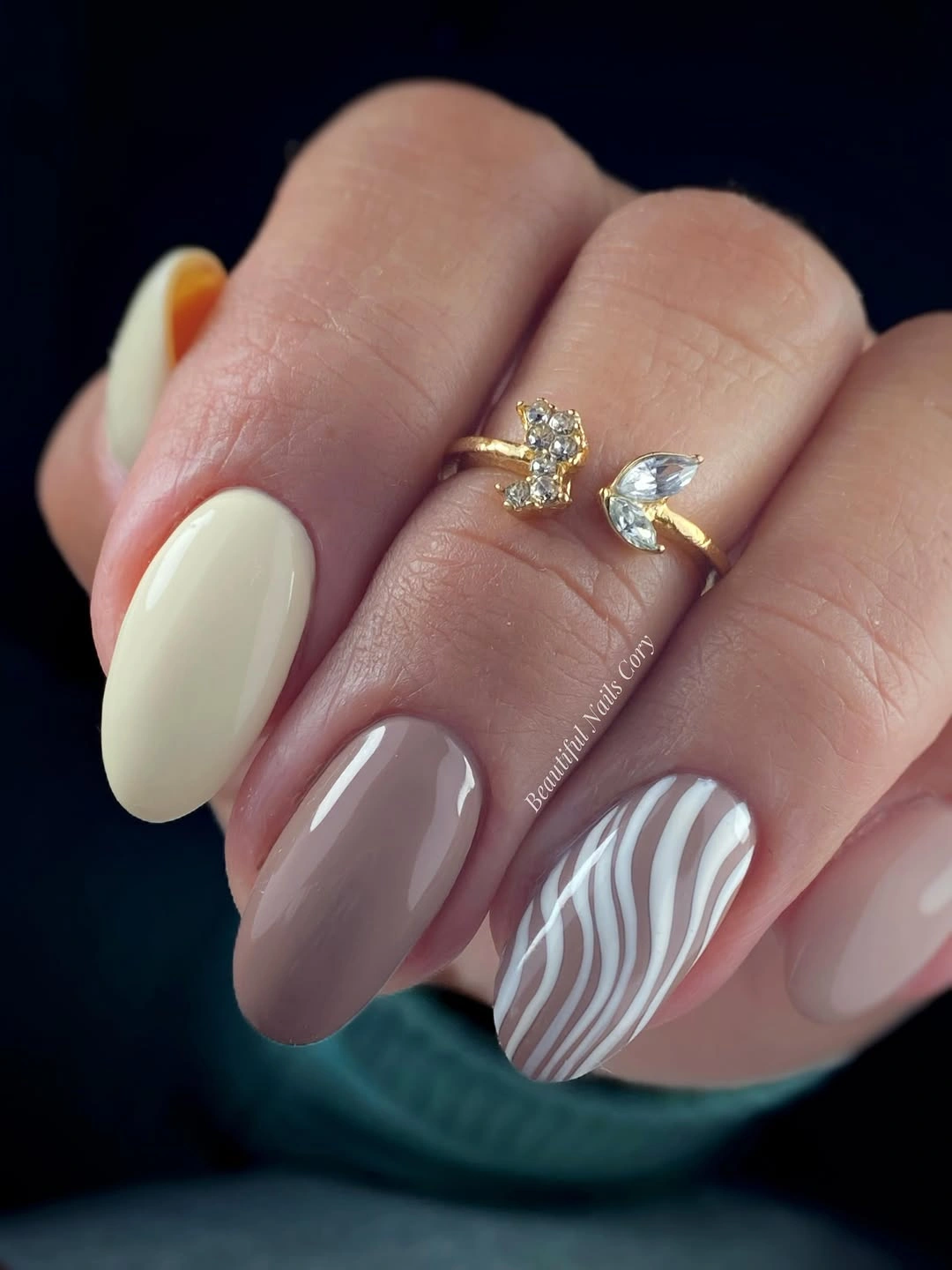
The accent works because the surrounding nails are mostly solid. The eye can notice the curved line work, then return to the calm beige surfaces without feeling pulled in several directions at once. On a shorter oval, use fewer waves and leave more base visible; the pattern will look cleaner and the neutral colors will remain distinct.
This is a practical choice for anyone who wants seasonal warmth without committing to red or brown. It also combines well with denim, cream knits, and black outer layers because the palette is muted rather than overly yellow. The main limitation is subtlety: if you want the art to read from farther away, deepen the taupe contrast instead of adding more lines.
Blue Marble Across A Tapered Tip
Long almond nails carry pale white sections, translucent aqua-blue marbling, and cooler blue tips that make the manicure feel almost watery. The color appears layered rather than painted in one flat block, especially where the pale areas meet the translucent blue. The taper gives the marbling a clear direction and keeps the cooler edge from looking visually heavy.
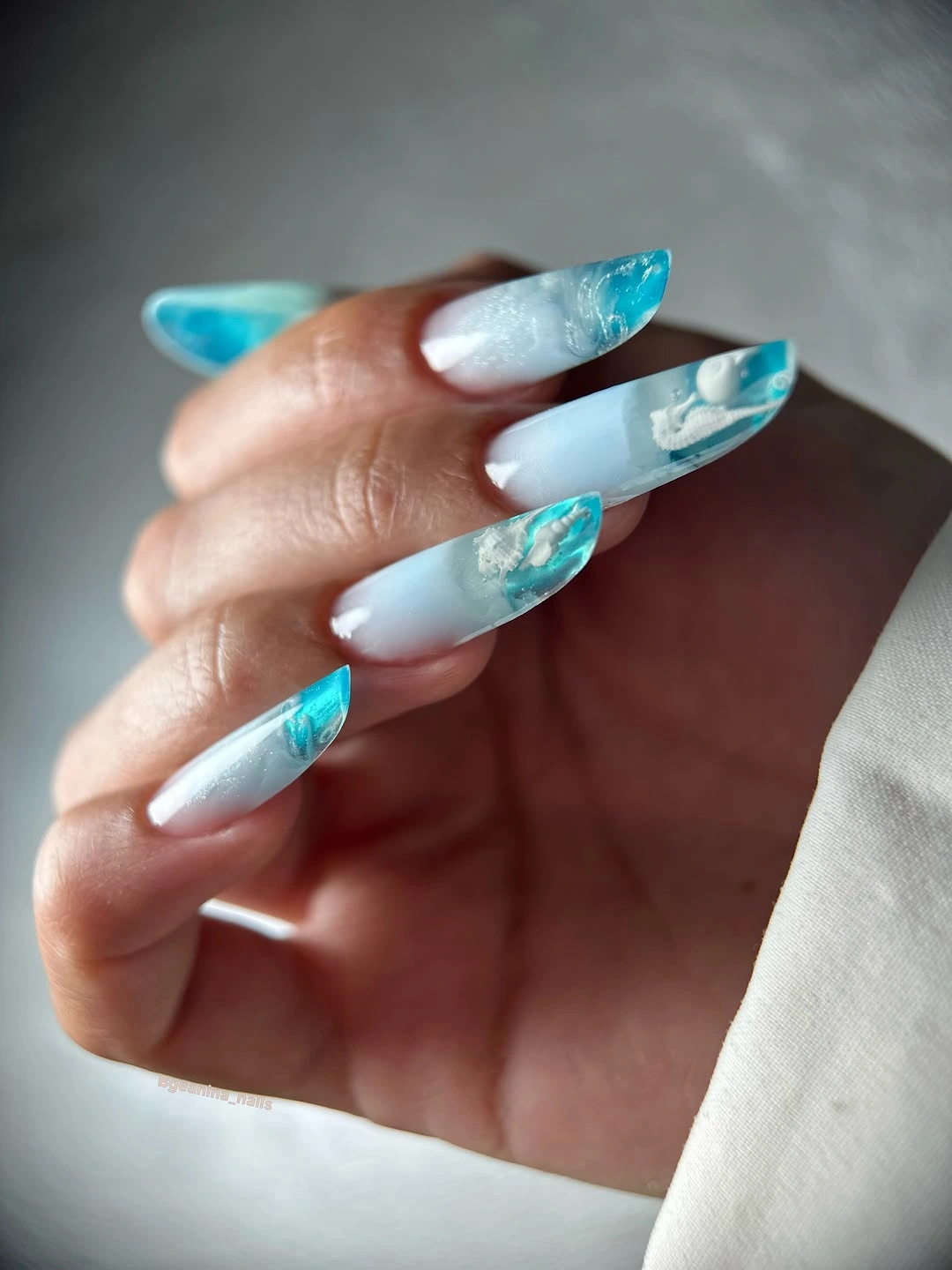
The appeal is the contrast between soft opacity and clear-looking color. White areas brighten the set, while the blue sections create depth without needing a dark outline or a separate metallic accent. A shorter almond can use the blue only at the tip and one side, giving the same watery impression with less surface to maintain.
Marbling is naturally less uniform than a solid shade, so small differences between nails become part of the design rather than a flaw. The tradeoff is that too many overlapping lines can make the pale base look cloudy. Keep the dominant white area open and let the aqua appear in a few clear zones where the shape can still be read, especially if you are comparing it with the shorter proportion used in short almond fall nails.
Pink Centers Bordered By Cobalt Blue
Soft pink centers sit inside cobalt-blue framing on these medium almond nails, with small red dots placed across the blue areas. The border makes the central pink shape immediately visible and gives the set a graphic edge without covering every nail in dark color. Because the dots repeat the warmth of the red accent, they feel connected to the pink instead of floating separately.
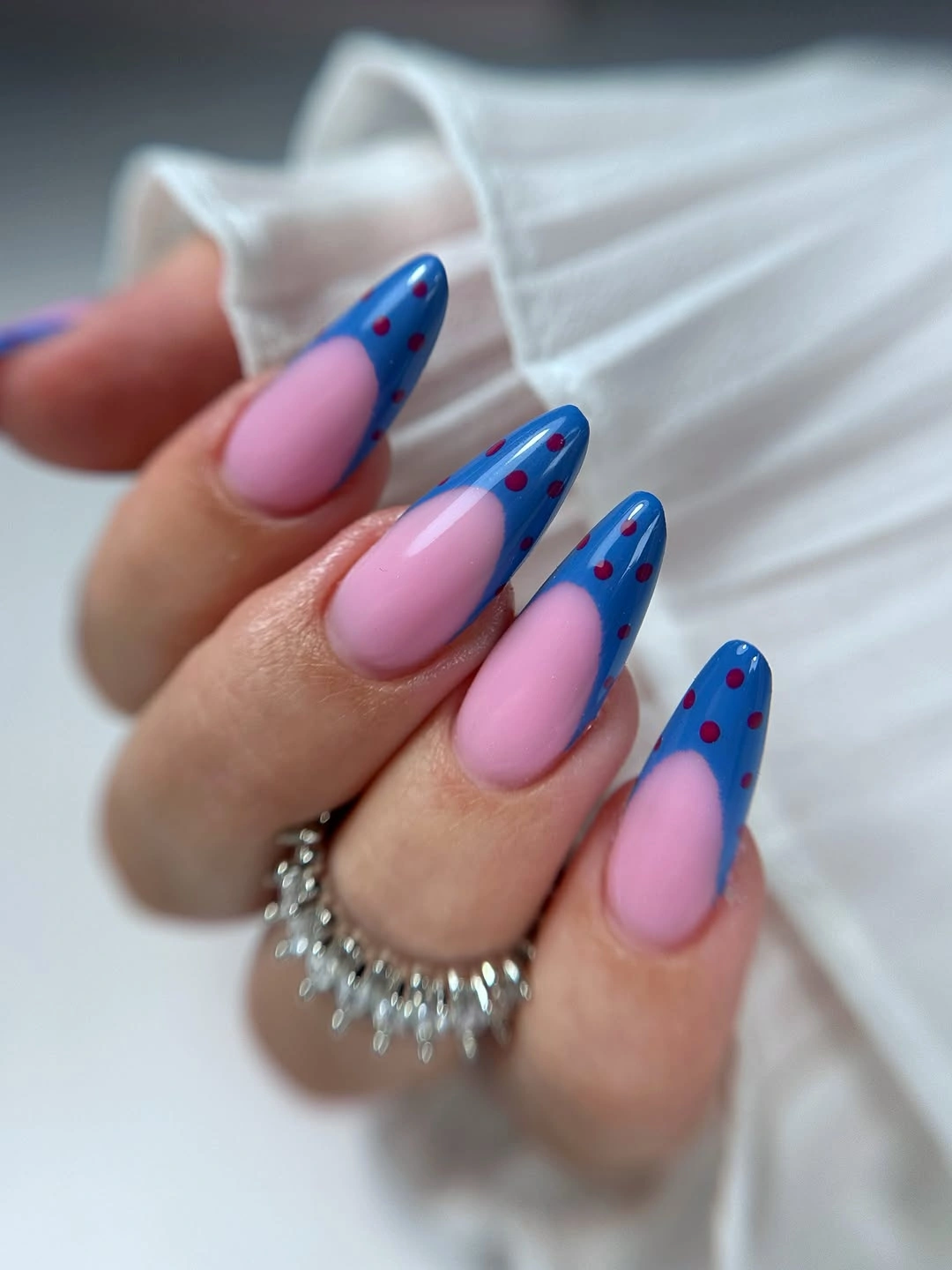
The design depends on spacing. A generous pink center keeps the border from looking like a solid blue nail, while the dots need enough room to remain round and separate. If you adapt it to a shorter almond, use a thinner blue frame and fewer red marks so the central color remains the first thing the eye sees.
This combination feels playful because the colors are clear and the accents are small, but the almond outline keeps it from becoming childish. It is also easy to tone down by changing cobalt to a softer denim blue or dropping the dots from every accent. Leave the pink center glossy and uncluttered, and the manicure will keep its strongest visual relationship.
Blush Marbling With A Fine Gold Trace
Short square nails in translucent blush and cloudy beige-white marbling create a soft, close-up manicure where the surface matters more than bold color. A few delicate gold traces sit near the cuticle or across selected areas, catching light without turning the set into glitter. The compact shape gives the pale palette a clean boundary and keeps the marble from feeling too spread out.
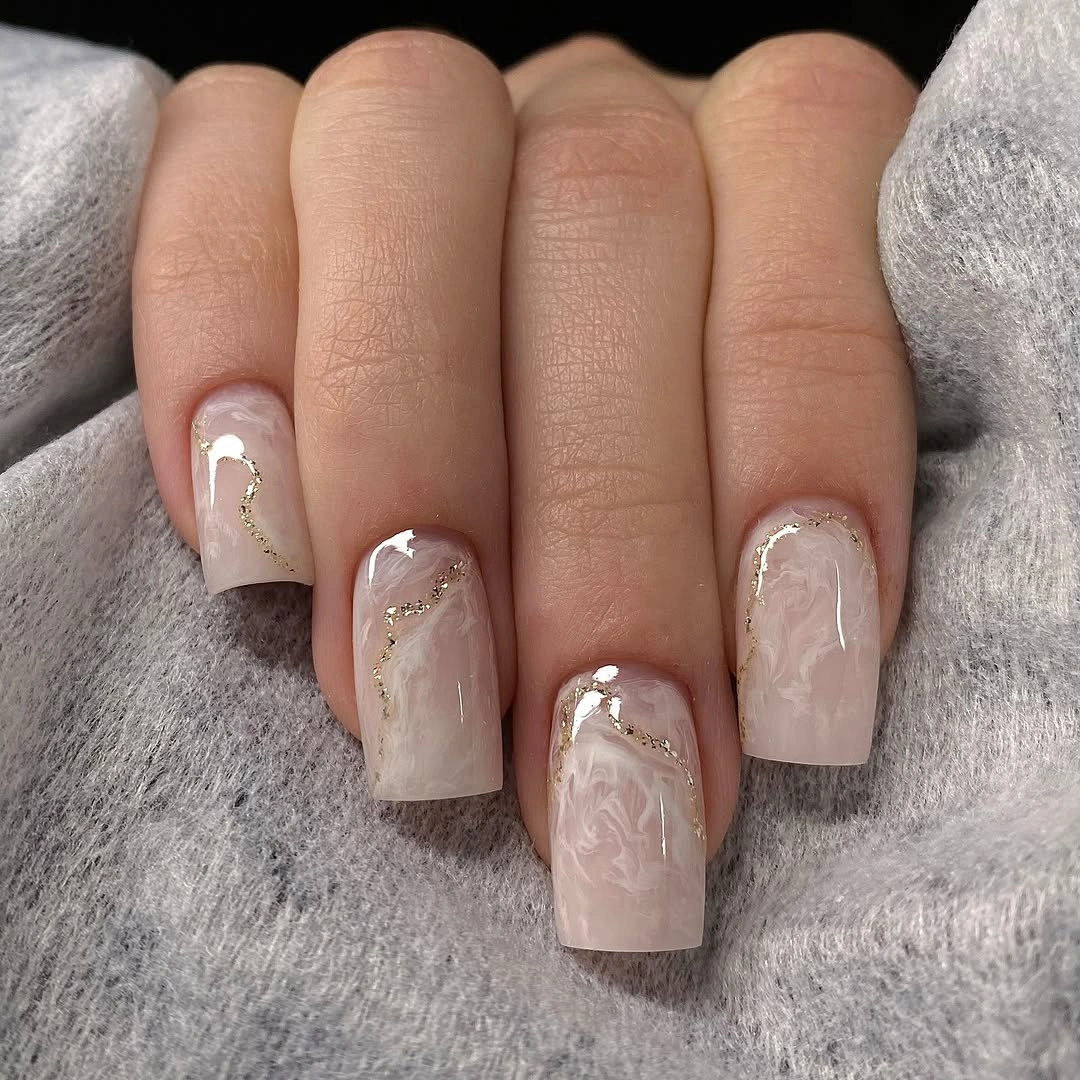
The gold is effective precisely because it is thin. It adds warmth to the cool blush base, but the cloudy pattern remains the larger visual field and does not lose its softness. If you want a more practical version, keep the marbling on three nails and use one gold line on the accent rather than repeating metallic detail across the whole hand.
Close color relationships can be forgiving when the surface changes slightly with wear, although the metallic line may still show if it lifts at an edge. The short square length helps keep that risk manageable. Avoid adding a dark outline, because it would turn a quietly blended manicure into a much harder graphic design and change the reason the palette works.
Creamy White On A Simple Medium Square
This creamy white manicure shows how much presence a single pale color can have when the medium square is even and the surface is glossy. There is no accent nail or visible pattern to distract from the clean silhouette. The shade feels softer than stark paper white, which helps the set look warm while still giving a crisp finish.
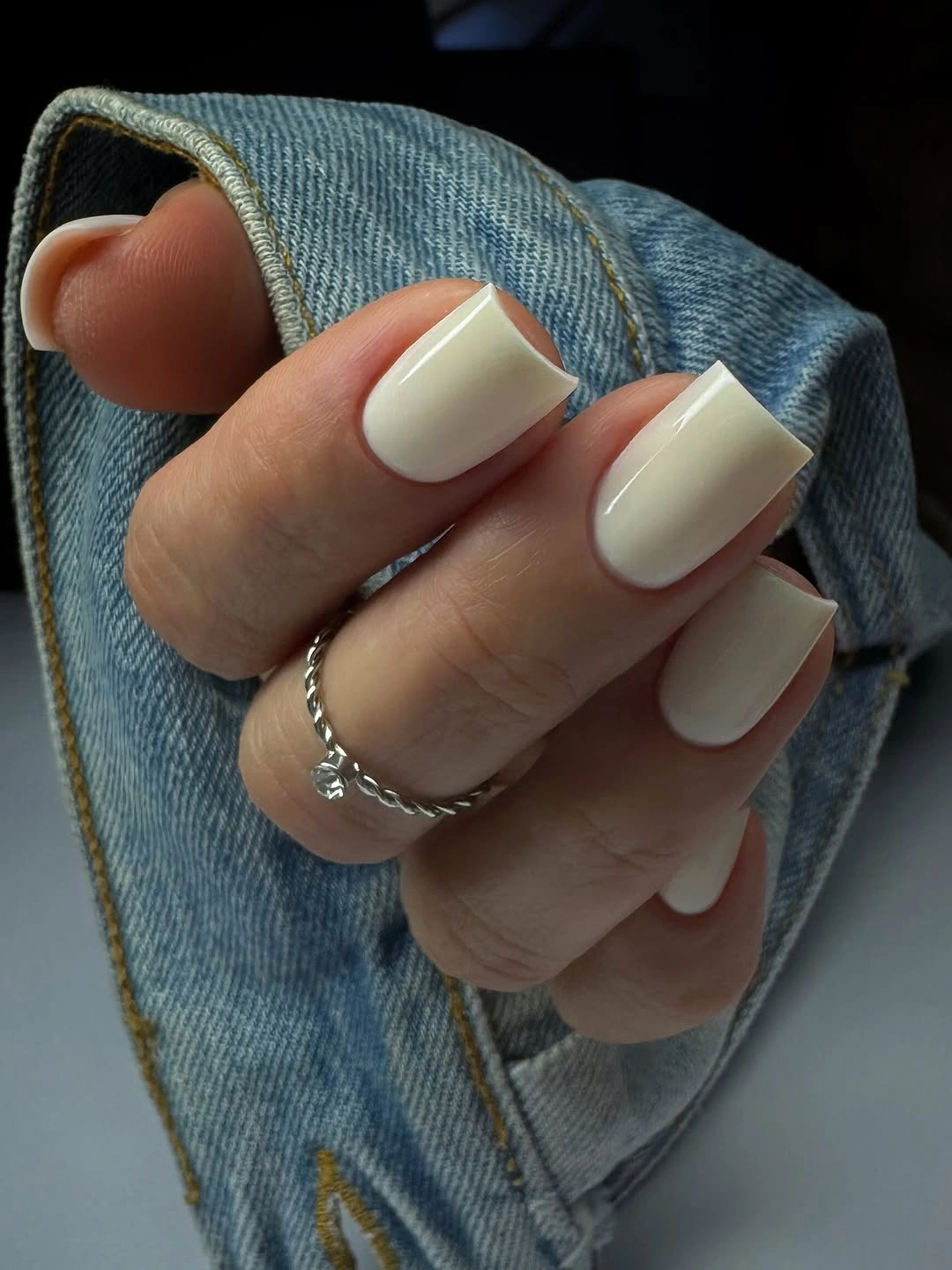
The simplicity creates useful styling space. Jewelry, denim, dark knits, and patterned clothing can all sit beside the nails without competing with another motif, and the straight edge gives the hand a structured finish. If you want a hint of art, add one very small line or a sheer accent rather than changing the base on every nail.
Light solid color has an honest maintenance demand: chips, stains, and uneven corners are visible sooner than they would be in tortoiseshell or a deep shimmer. The reward is that the manicure is easy to refresh and easy to shorten. Keep the length medium, and the clean white will remain a choice about polish and proportion rather than a statement about extra decoration.
Nude Squares With A Sharp Black Tip
A soft nude-pink base is framed by crisp black French tips on these medium square nails, creating a direct contrast between the light center and the dark edge. The straight free edge makes the graphic choice feel intentional, and the nude base prevents the set from becoming solid black. It is a clear example of how a small placement decision can change the mood of a familiar structure.
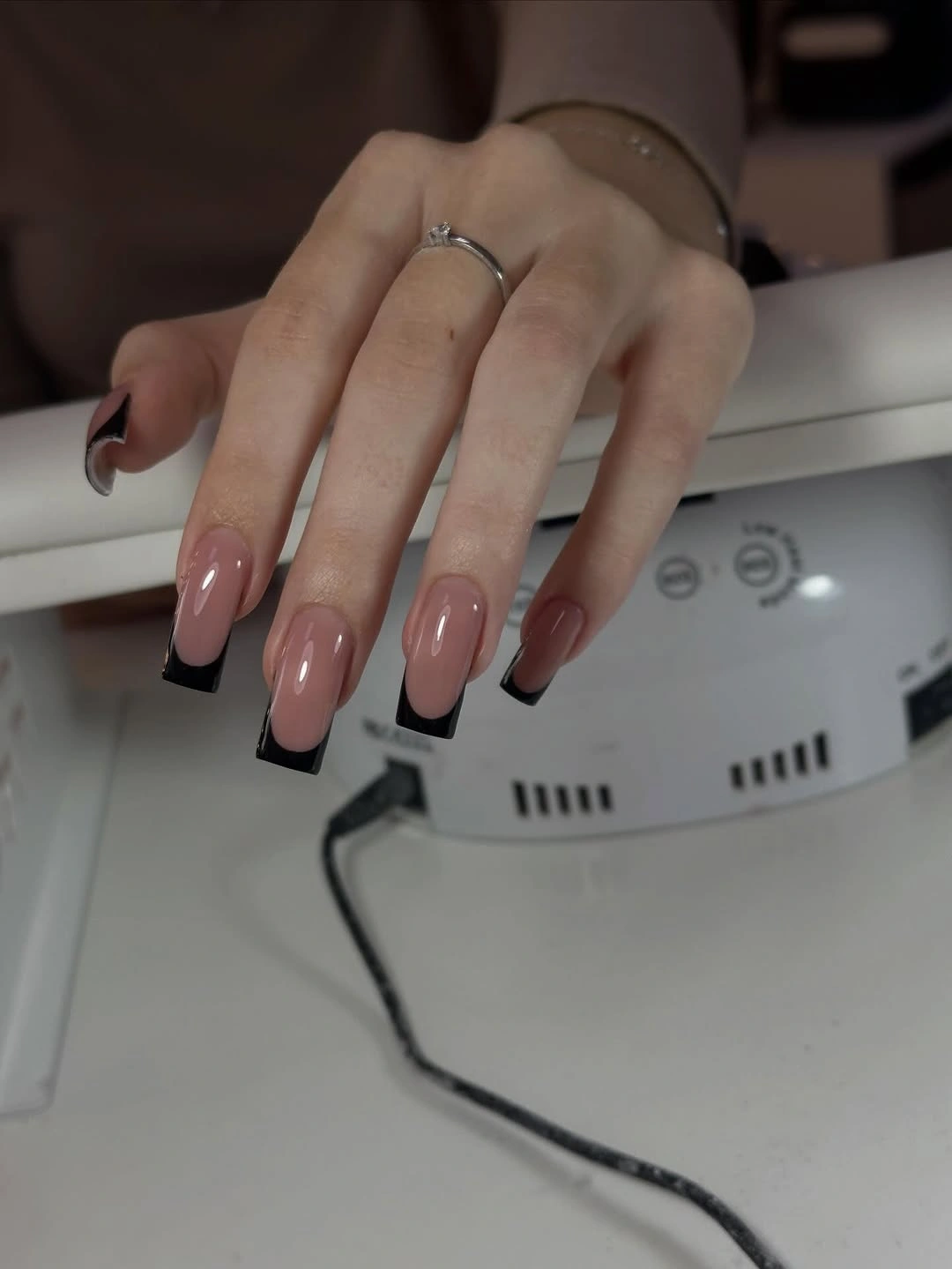
The black edge should stay even because the design depends on geometry more than texture. A thinner tip makes the set feel lighter, while a wider band makes the square appear shorter and more dramatic. If you like the proportion but need less contrast, replace black with espresso brown or deep wine and keep the nude center unchanged.
Compared with the pale French earlier in the article, this version asks for more confidence from the free edge and works especially well with black accessories or darker clothing. A shorter square will still hold the idea if the band is scaled down. The practical limitation is that a dark tip makes small asymmetries easy to spot, so a clean outline matters more than extra detail.
Pink Texture In The Same Color Family
Medium pink nails stay glossy and bright while fine lighter wave texture moves across several surfaces. Because the lines remain close to the base color, the design reads differently as the hand turns instead of announcing a strong contrast from the start. The medium square gives the texture a stable frame, letting the surface movement carry the interest.
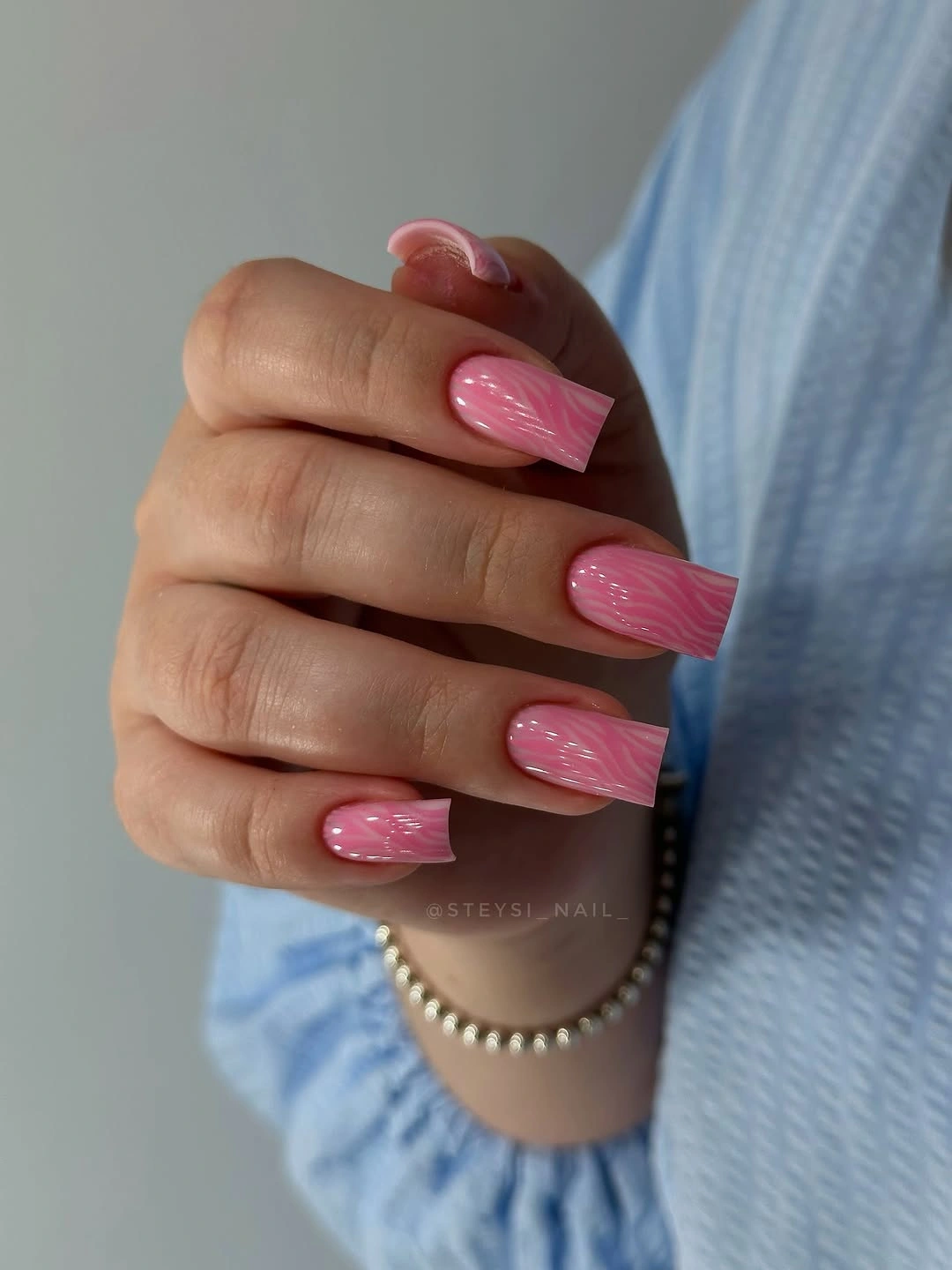
This approach is useful when you want art without a separate motif or contrasting palette. The raised-looking waves add depth, but the overall color remains simple enough to combine with other seasonal shades. On a shorter square, reduce the number of curves and leave wider gaps between them so the tone-on-tone texture remains visible instead of merging.
The same-color finish is more forgiving than a black-and-white graphic, although the texture can make grow-out more noticeable near the base. Keep the design on a few nails if you want easier upkeep, and use solid pink elsewhere. That adjustment preserves the tactile idea while lowering the amount of surface detail that needs to stay neat.
Vivid Red On A Compact Rounded Square
A saturated glossy red fills this short rounded-square manicure with no visible motif, so the color and the compact outline become the whole statement. The curved corners soften the intensity slightly, keeping the bright shade from looking too rigid. Because every nail carries the same finish, the set feels confident through consistency rather than contrast.
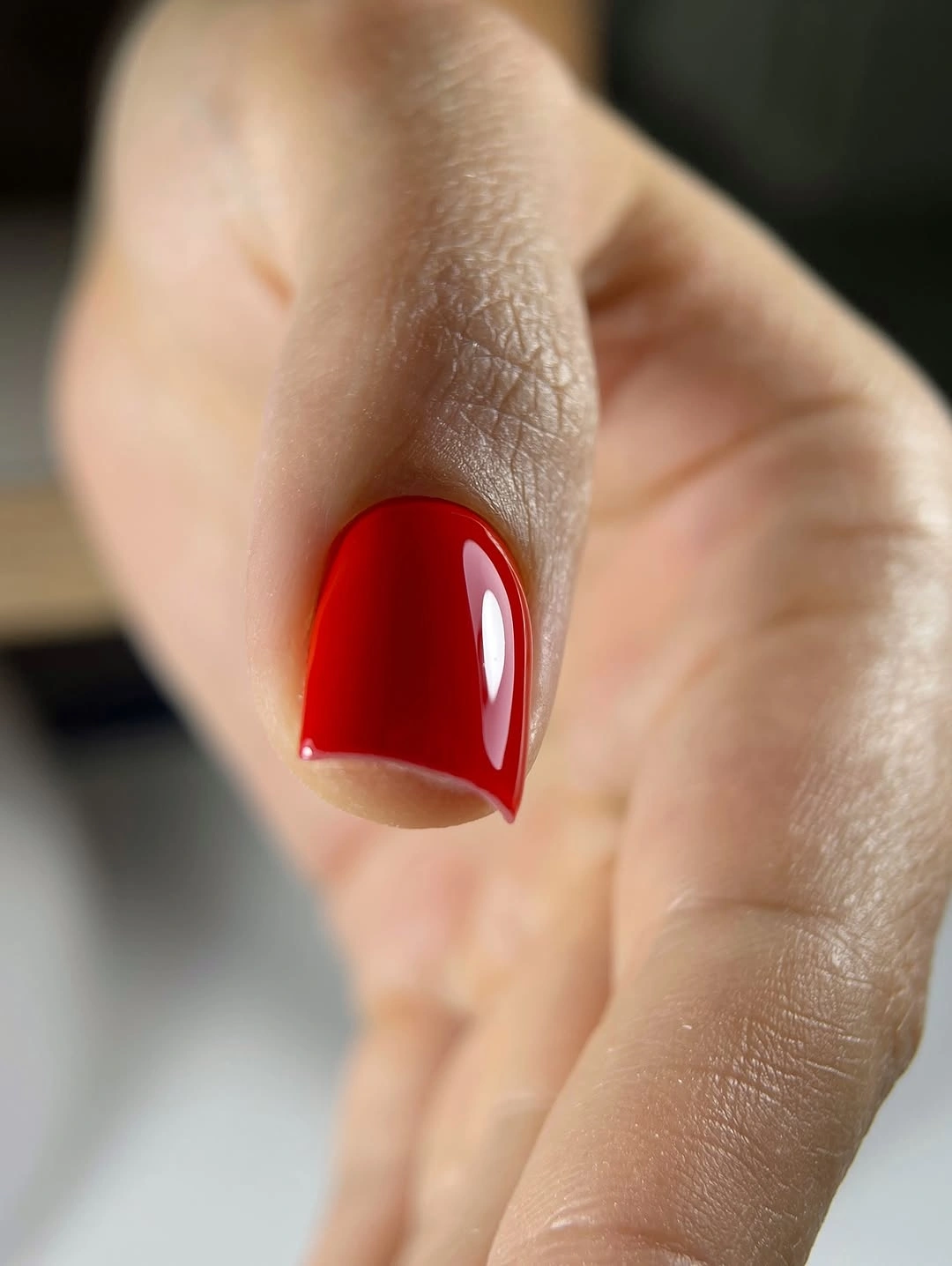
The strength of this design is how quickly it communicates. There is no small pattern to decode and no extra texture to compete with the shine, which makes the red easy to notice from a distance. It can be repeated on an even shorter nail without losing its identity, although the clean border becomes especially important when the surface is so uniform.
Bright red shows uneven edges and chips more plainly than a neutral, so it rewards a neat outline and a little care between appointments. In return, it pairs with denim, cream, charcoal, and autumn brown without needing a matching accessory. If the full hand feels too intense, keep the red on four nails and use a translucent blush on one accent for a softer landing.
Milky White And Periwinkle Rotation
Milky white, pale blue, and deeper periwinkle rotate across these long almond nails, creating a cool palette with enough variation to keep the shape from looking flat. The glossy surfaces are mostly solid, so the color changes remain easy to read along the taper. Each shade supports the next without requiring a painted motif, which gives the set a calm but designed appearance.
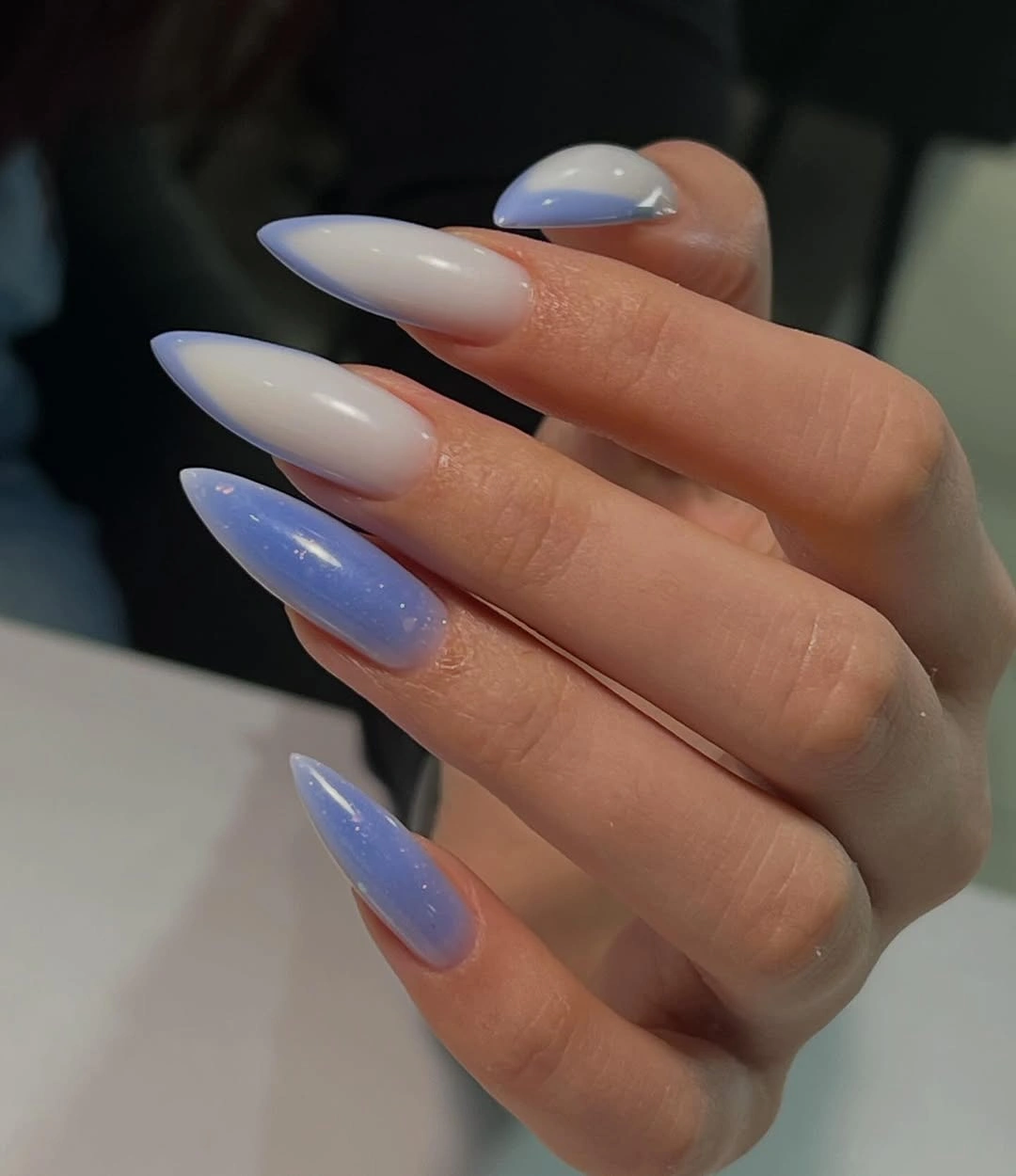
The three-color rhythm is the main decision. White brightens the hand, pale blue adds a soft transition, and periwinkle supplies the stronger point of contrast; removing any one shade changes the balance. For a simpler version, use white and one blue, or place periwinkle only on a single accent while keeping the almond shape moderate.
Long almond nails make the cool rotation feel elongated, but they also make everyday tasks more demanding than a medium version. That is the practical tradeoff, not a problem with the palette itself. If you want the colors to remain the focus, shorten the shape first and keep the finish glossy so the small differences in tone still catch light.
Irregular Leopard Marks On Medium Ovals
Medium oval nails carry irregular black, brown, and tan spots over a warm base, creating an animal-inspired pattern with a relaxed outline. The marks do not repeat evenly, so each nail has a slightly different balance of light and dark. The rounded silhouette softens the contrast and helps the print look organic rather than tightly tiled.
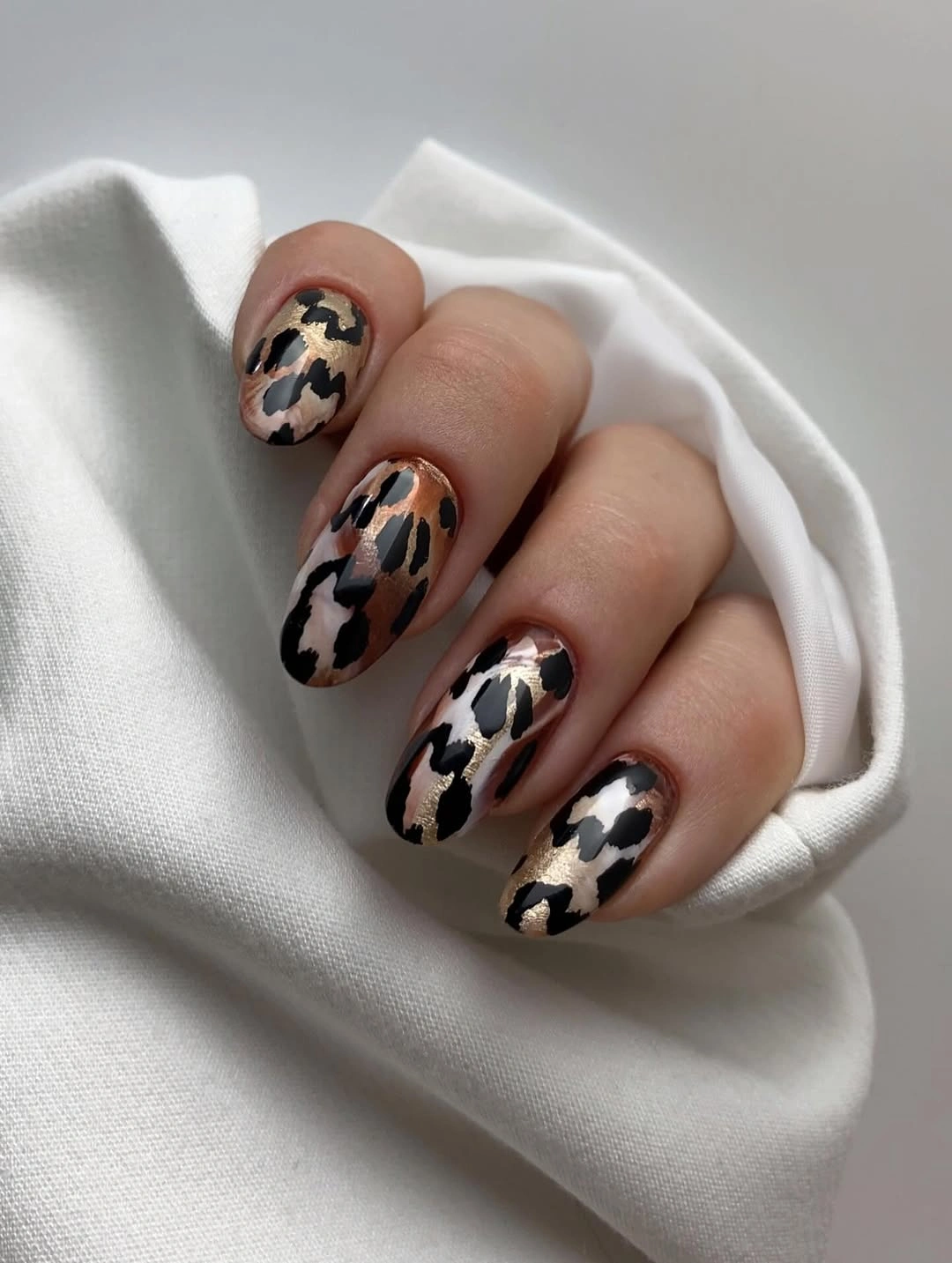
The print works because the base stays warm and the spots are allowed to vary. If every mark had the same size or spacing, the manicure would look more mechanical and the medium length would feel busier. A practical adaptation is to keep the pattern on two accent nails beside a solid tan or deep brown, preserving the fall mood with less visual density.
Animal print can remain wearable when the silhouette is not excessively long and the rest of the styling is simple. The tradeoff is that the irregular surface gives you less control over how each nail matches the next, which is part of its character. Keep the colors close to the visible warm palette and resist adding another bright accent that would compete with the spots.