
Fall Nail Colors for Dark Skin in Soft, Bold, and Rich Tones
When a color reaches the nail, it can look completely different from the shade you expected: warm in the bottle, bright beside a ring, softer against the skin, or deeper once the shine catches a shadow. That is why choosing a fall manicure by shade name alone is so often disappointing. The more useful question is what the color is doing at the edge, across the whole nail, and beside the rest of your hand.
Short nails often make a plain surface stronger, while extra length may be what lets a small detail remain readable. Before saving a design, notice where your eye lands first and what would still work after the color is muted, the tip shortened, or the accent removed. That small test separates a look you admire from one you can actually wear.
Sheer Pink Almonds With Dark Contours
A translucent rosy base keeps these long almond nails light, while thin deep brown or gold-looking outlines trace the outer shape on selected fingers. The contour gives the pale color a grounded edge without filling the whole nail, so negative space becomes part of the autumn mood. That balance is especially effective against dark skin because the outline supplies definition while the center remains soft and reflective.
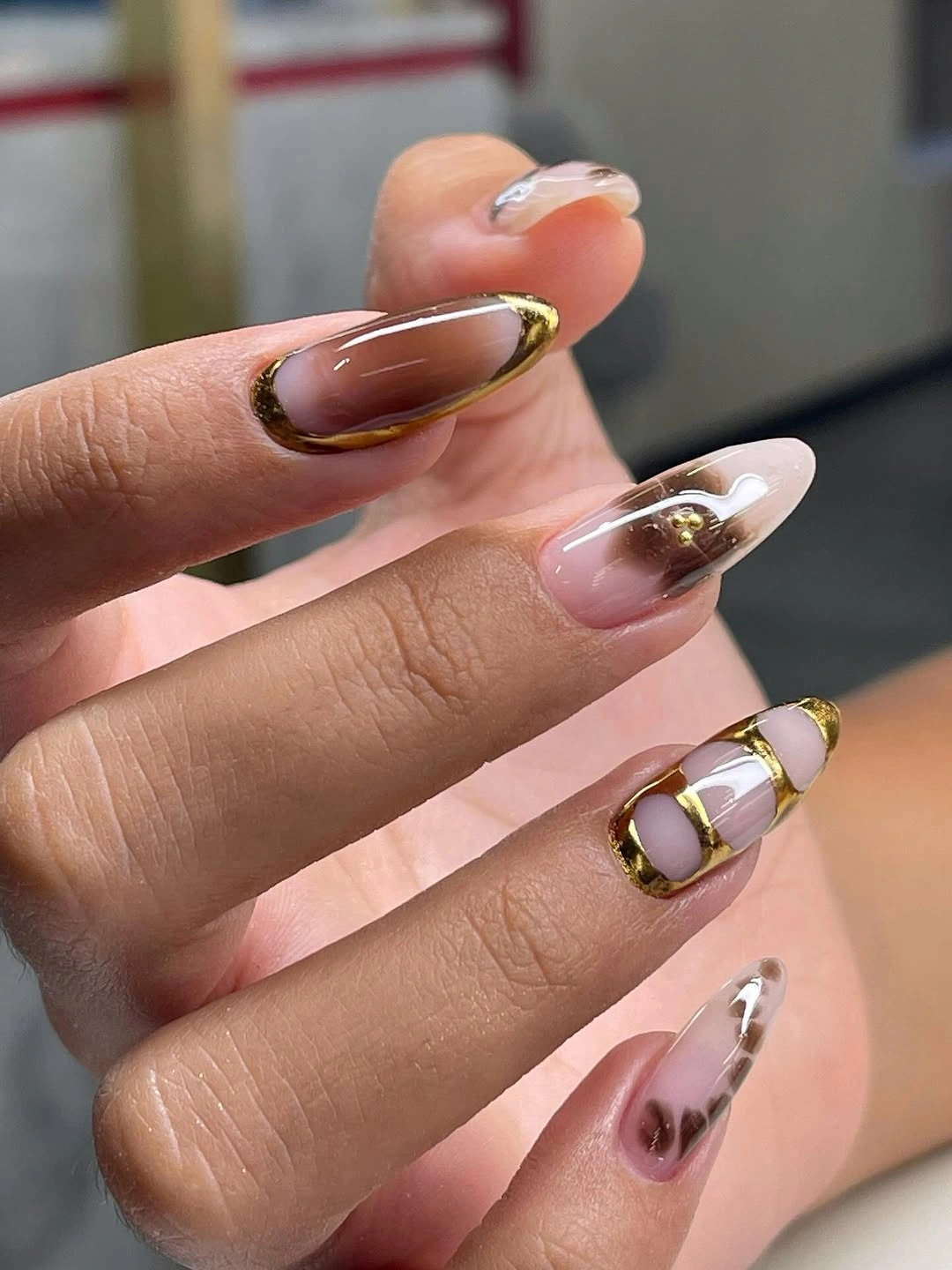
If you like the idea but want less visual length, keep the almond outline and shorten the free edge rather than adding more decoration. A single darker contour on two accent nails can create the same contrast with less upkeep, while a warmer brown line will feel softer than a bright metallic one. The design works because the border follows the nail shape, so keep that relationship clear when adapting it.
The tradeoff is that a long outlined almond makes every change in the perimeter easy to notice. A shorter oval would be more forgiving and would shift attention from the outline toward the rosy base, but it would lose some of the elegant stretched effect. Choose this direction when you want a quiet color with a deliberate frame rather than a full-coverage dark manicure.
Short Glossy Red With No Extra Motif
Short softly squared nails painted in vivid glossy red show how much a single saturated color can accomplish. There is no visible motif to compete with the surface, so the clean edge, compact length, and reflective finish carry the entire look. Against the hand, the red reads direct and confident, which makes it a useful seasonal choice when you want impact without a long shape or detailed accent.
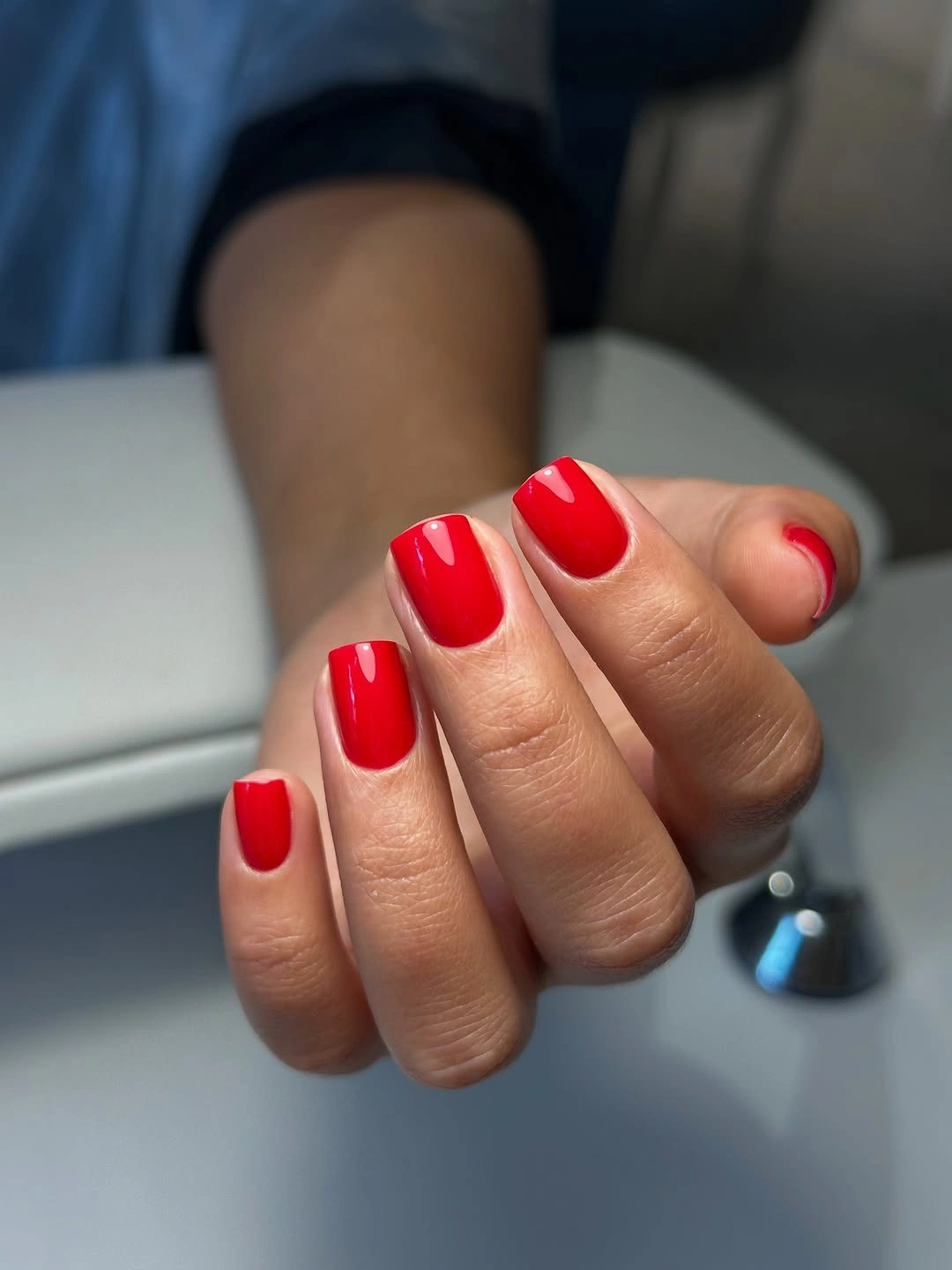
To make this solid red feel more autumnal, move the tone toward berry, brick, or a deeper wine family while keeping the shape simple. A shorter length already reduces visual intensity, so changing the undertone can be enough to make the result warmer or quieter. This is also a practical route for readers who want a color that remains clear even when there is no space for intricate line work.
The limitation of a plain glossy surface is that uneven edges are easy to see because nothing breaks the eye’s path. That is the honest cost of its simplicity, balanced by how little visual coordination it needs with clothing or jewelry. Pick it when you want the hand to look finished through color and shape alone, with no small elements competing for attention.
Nude Pink Almonds With Slim White Tips
These medium almond nails use a pale nude-pink base and narrow white tips, creating a light contrast that does not bury the natural warmth of the hand. The French edge follows the rounded shape instead of becoming a wide block, so the result feels elongated but not visually heavy. It is a softer answer to seasonal color, proving that a dark-skin manicure can look considered without leaning on deep pigment.
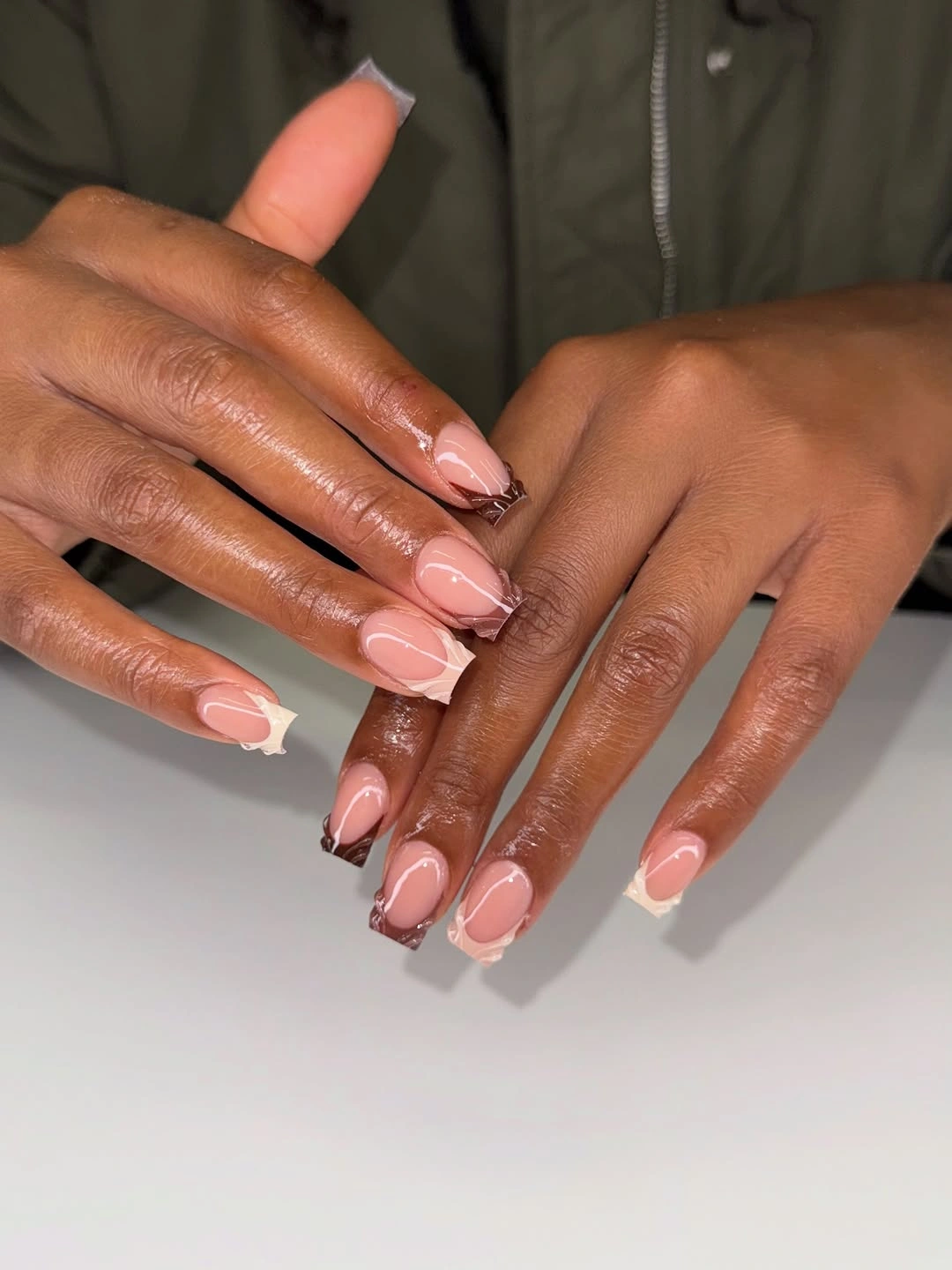
Keep the white line narrow if you want the base to remain the main color, or widen it slightly when a clearer graphic edge is more important. A shorter oval will preserve the same gentle proportion, while a longer almond will make the pale tip feel more noticeable. If you want more autumn depth, change the base toward a warmer nude before adding another accent, because the existing contrast is already doing enough.
The tradeoff is that this restrained palette may feel too quiet beside long ornate sets. Its advantage is flexibility: the shape works with soft clothing, richer fall colors, or simple jewelry because the manicure is not demanding the whole outfit’s attention. Choose it when you want a clean line and gentle contrast that can move between occasions without a dramatic shift.
White Stiletto Nails With Curved Gold Details
Long white stiletto nails create a bright field for multiple curved gold-looking bands and looped lines. Each finger has a slightly different placement, so the decoration feels like a series of small focal points rather than one repeated stamp. The narrow shape gives those arcs room to stretch, while the pale background keeps the dark hand and warm metallic contrast visually clear.
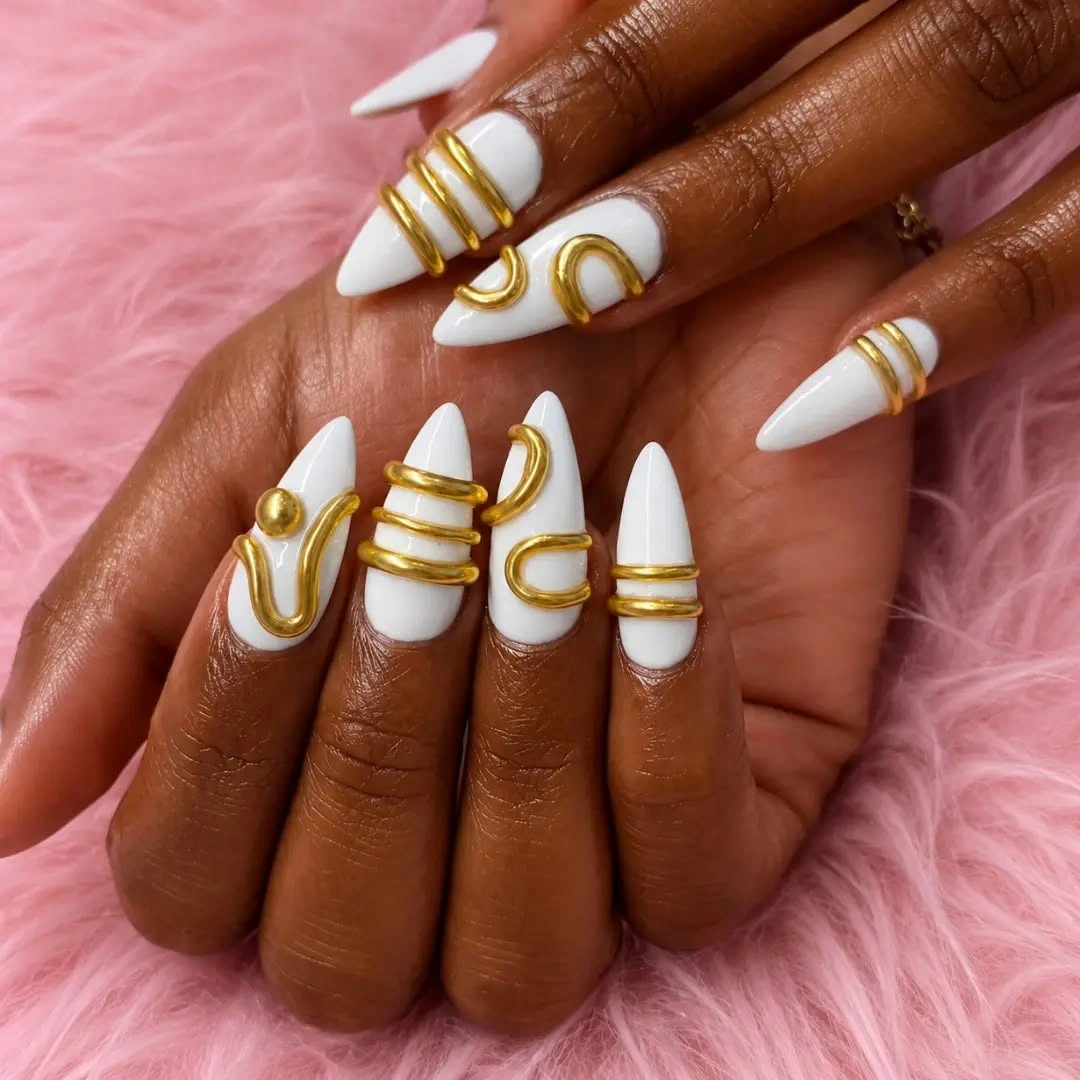
If you want the jewelry-like effect with less intensity, keep the white base and place one curved detail on only two nails. A shorter almond would soften the pointed silhouette, while a more limited line would preserve the idea of warm contrast without asking every finger to carry a separate event. The useful variable is motif density, because the white and gold relationship already provides enough seasonal direction.
The honest limitation is the amount of visual and physical attention a long pointed set can attract. The stiletto shape makes the lines look dramatic, but it also leaves less room for a low-key interpretation if the rest of the outfit is bold. Choose it when you want decoration to lead, and use a shorter shape when the same palette should feel more approachable.
Neon Green Almonds Against Lime Styling
Bright green pointed nails become the focal color here, and the nearby lime clothing reinforces that choice rather than competing with it. The nails are long enough for the saturated shade to read as a complete design without additional art, while the dark background gives the vivid color a sharp edge. The result is not quiet, but it is visually coherent because the same high-energy family appears around the hand.
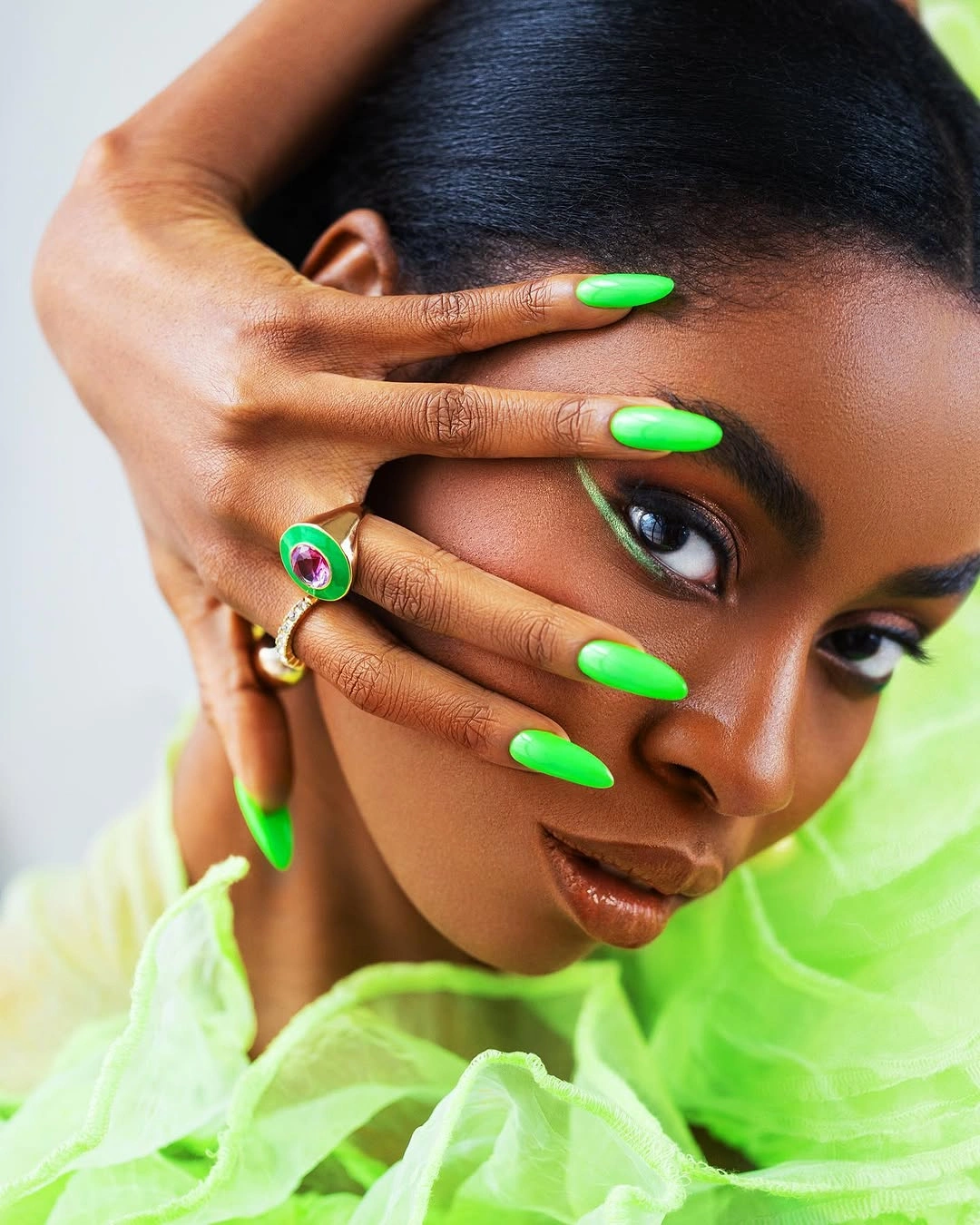
For a more wearable fall direction, keep the long almond-to-pointed outline but shift the green toward olive, forest, or a muted leaf tone. A shorter shape will also make the color feel less graphic while preserving the contrast against dark skin. If the clothing is already bright, let the nails stay mostly plain; adding extra motifs would weaken the strong relationship between color and styling.
The tradeoff is that neon green does not disappear into a neutral wardrobe. It asks to be noticed and may feel less seasonal if every surrounding element is also vivid, while a deeper green can bridge the same idea into richer clothing. Choose this look when you want a single color to carry the mood and are comfortable letting the manicure become the outfit’s clearest accent.
Black And White Contrast With One Focal Accent
This mixed set combines black, white, pale nude, and reflective-looking details across short-to-medium nails, with one larger ornament and one swirl-like accent drawing the eye. The contrast is graphic, but the design avoids looking random because the strongest element is not repeated on every finger. A neutral base gives the darker color and bright accents enough room to remain readable on the hand.
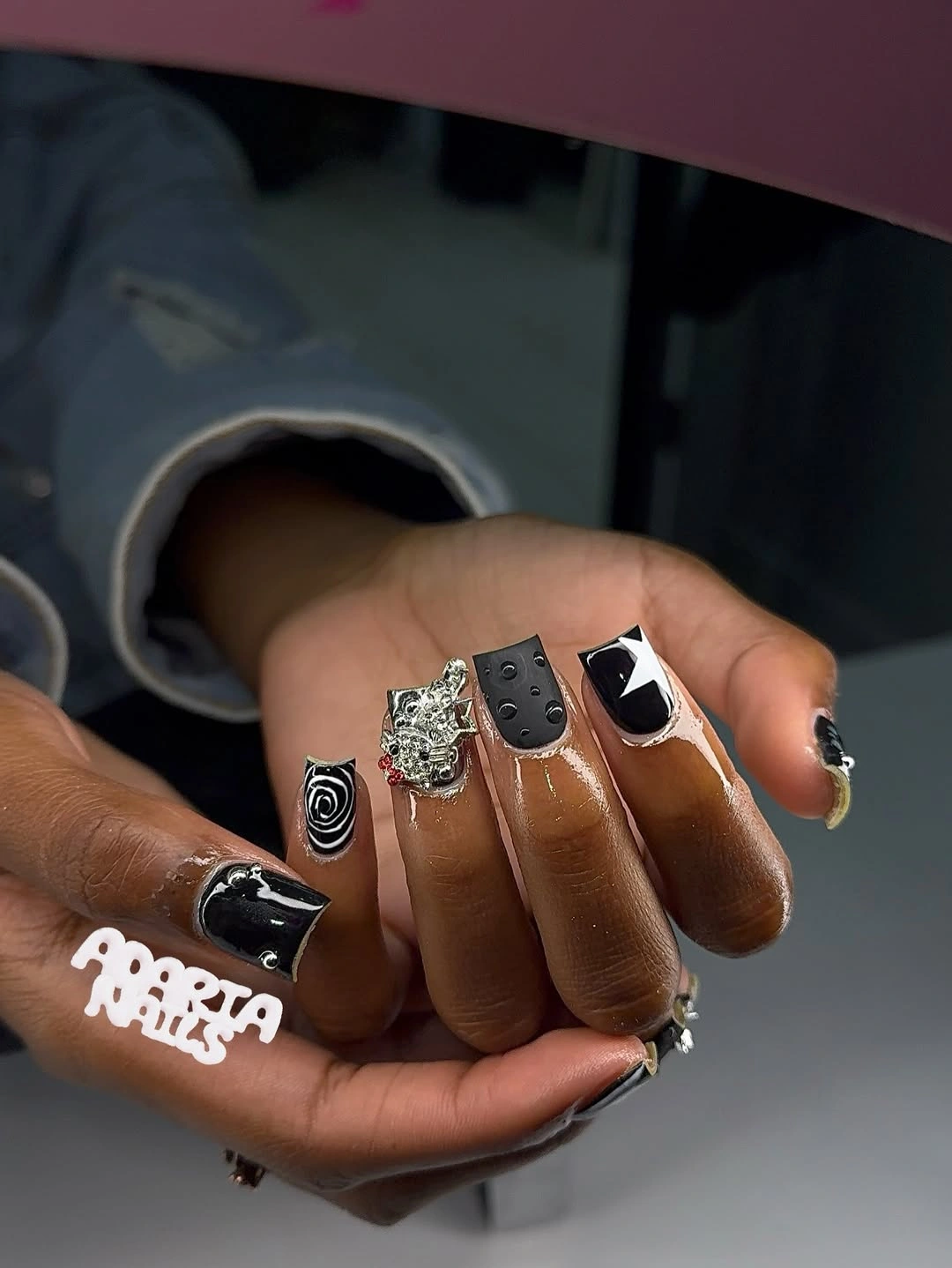
To adapt the layout, choose one focal nail and let the remaining fingers support it with simpler black or white shapes. Repeating the large accent everywhere would remove the visual hierarchy, while using pale nude on one or two fingers can soften the contrast without changing the main palette. This is a good place to adjust density rather than color, because the black-and-white relationship is already strong.
The limitation is that a mixed manicure can become crowded quickly on a shorter nail bed. Its benefit is flexibility in emphasis, but each extra reflective element needs enough empty space around it to stay legible. Choose this direction when you enjoy a graphic set with one clear leader, and reduce the number of accents if you want a calmer everyday result.
Nude Almonds Framed With Warm Metallic Edges
Long nude almond nails are outlined with thin warm metallic-looking lines that follow the outer edge and approach the tips. The center of each nail remains quiet, so the frame emphasizes length and symmetry without turning the base opaque or heavily decorated. Against dark skin, the nude and warm outline create a refined contrast that feels seasonal through warmth and shape rather than through a dark color block.
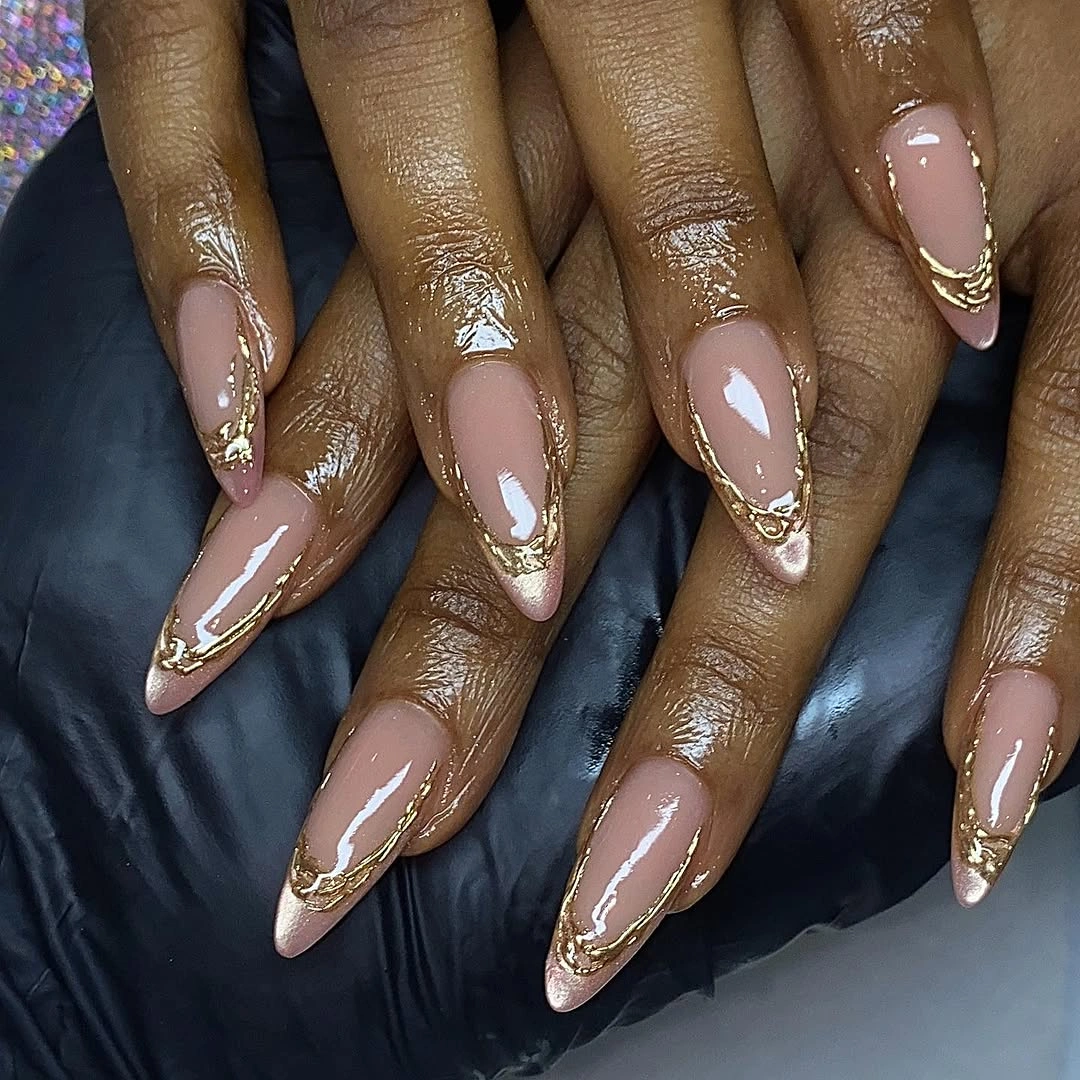
A shorter almond can keep the same framed effect with less visual extension, and limiting the line to the tip can make the result easier to wear. If you want more depth, choose a warmer nude first rather than adding several new accents, because the outline already gives the manicure a defined border. The most important adaptation is preserving the quiet center that lets the edge do its job.
The tradeoff is that the outline makes the perimeter the focus, so any unevenness will change the symmetry. A plain nude would be more forgiving but less distinctive, while a full metallic surface would be much louder. Choose this version when you like a manicure that looks detailed from a distance but still leaves generous space through the middle of every nail.
Earthy Wavy Lines Over a Nude Base
Soft nude nails become more autumnal through irregular brown and pale white waves that move across the surface. The lines are curved rather than geometric, so the set has a gentle flow that echoes the warm hand without turning into a solid brown manicure. The pattern stays visible because the base remains light, and the difference from the nearby outlined designs is the movement of the motif rather than its border.
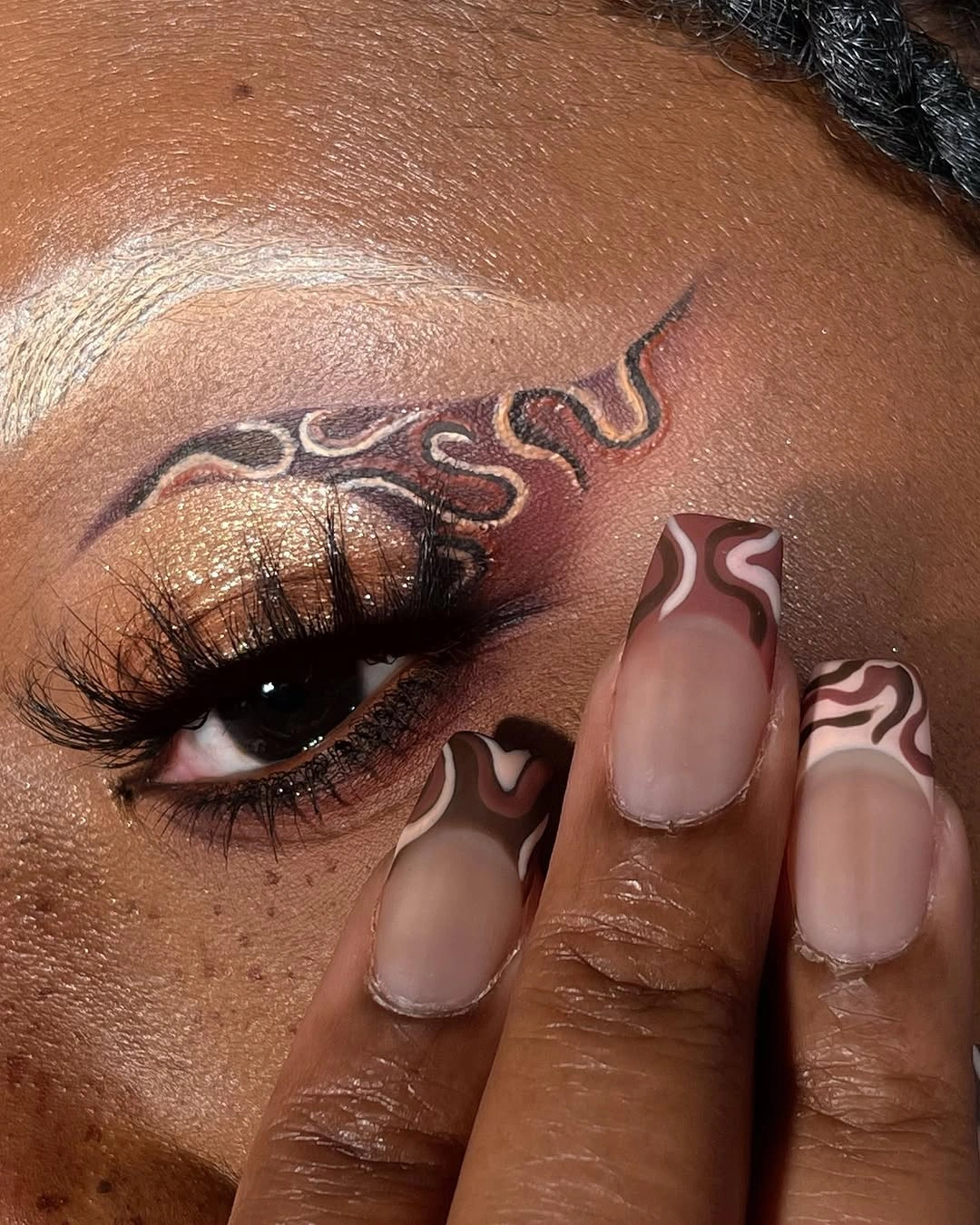
If you want to lower the visual density, place the wavy lines on one or two accent nails and leave the rest glossy nude. A shorter shape will make the pattern feel more compact, while a warmer brown will deepen the seasonal effect without introducing another color. Keep the curves varied enough to look intentional, because identical bands would make the design feel more rigid than the soft palette suggests.
The limitation is that abstract lines can lose their clarity if too many cross the same small area. The open nude base helps, but the manicure still needs breathing room to keep the warm contrast readable. Choose it when you want a fall motif with movement and personality, then simplify the number of accented fingers if the design starts to feel busier than your wardrobe.
Bright Pink Pointed Nails With Green Contrast
Long bright pink nails are shown against broad green leaves, creating a strong color contrast that makes the simple pointed shape feel intentional. The nails appear mostly solid, so the setting and the taper do more work than any small motif could. This is a useful reminder that fall nail colors for dark skin do not have to be muted when the surrounding contrast gives the shade a clear visual role.
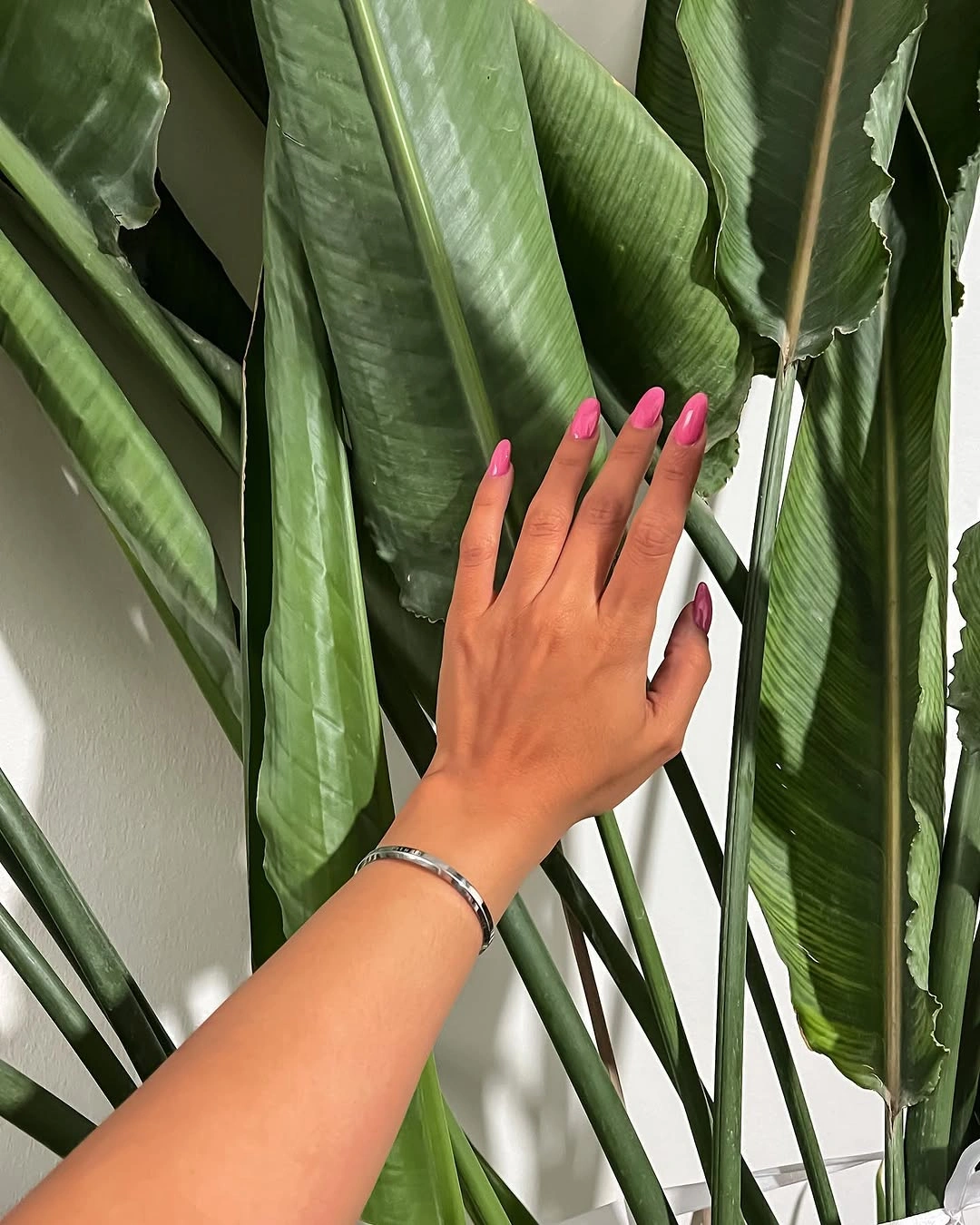
To adapt the idea for a quieter wardrobe, keep the pointed outline but change the pink toward berry, dusty rose, or a deeper plum-pink. A shorter almond will reduce the statement without losing the color-versus-background relationship, and a neutral outfit can let the manicure remain the only bright element. The design works best when one contrast is deliberate, not when every part of the styling is competing.
The limitation is that a vivid pink remains visually strong even after the length is reduced. That can be a benefit if you want a clear focal point, but it may feel less seasonal beside equally bright clothing. Choose it when you enjoy color that announces itself, or borrow only the contrast principle and shift the tone toward a richer fall family.
Glossy Nude Pink With Small White Flowers
A translucent pink base keeps these short-to-medium nails soft, while small white flower motifs and pale blue details add a gentle focal point. Because the decoration is concentrated on only a few fingers, the remaining glossy nails act as visual space rather than competing with the petals. The result feels lighter than a fully decorated set and gives dark skin a delicate contrast without turning the manicure pale all over.
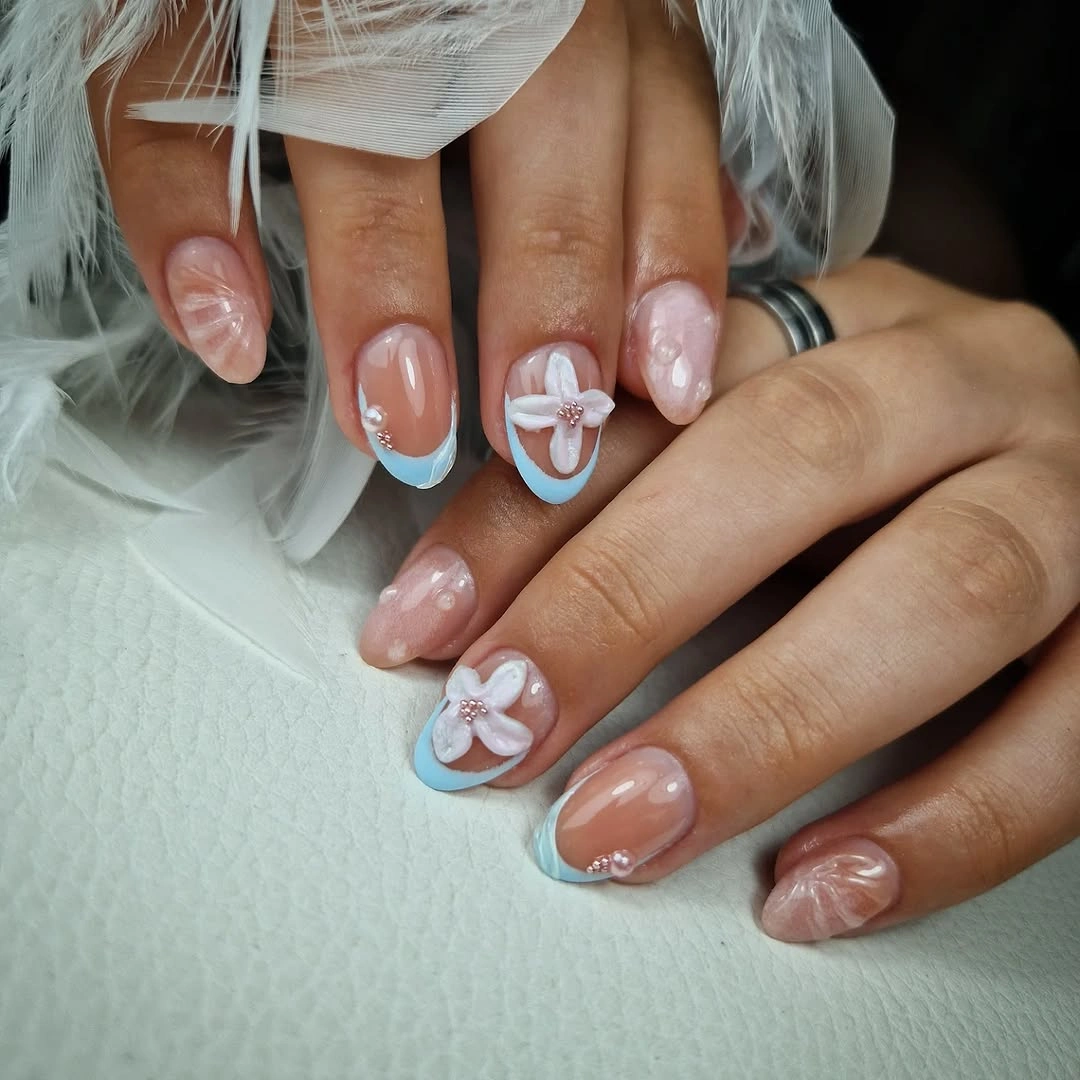
For a simpler version, keep one flower and replace the other accents with a single dot or a narrow white edge. The compact length already supports practical wear, while a warmer blush base can make the design feel more grounded for fall. The key is to keep the flower proportionate to the nail, because a large motif would remove the soft balance that makes the set work.
The tradeoff is that a small floral design asks for enough spacing to remain recognizable. Too many petals across every finger would make the short shape look crowded, but removing all decoration would lose the playful contrast. Choose it when you want a feminine detail that stays secondary to the base color and can sit comfortably with both cozy knits and richer seasonal clothing.
Vivid Blue With Pale And Gold Breaks
Long tapered nails use vivid blue as the main field, then break it with pale sections and small gold-looking flecks or lines. The cool color is unexpected beside the warmer autumn options, but the pale spaces prevent it from becoming a single flat block and the warm accents keep the palette from feeling cold. The result is painterly in placement while still controlled by repeated color relationships.
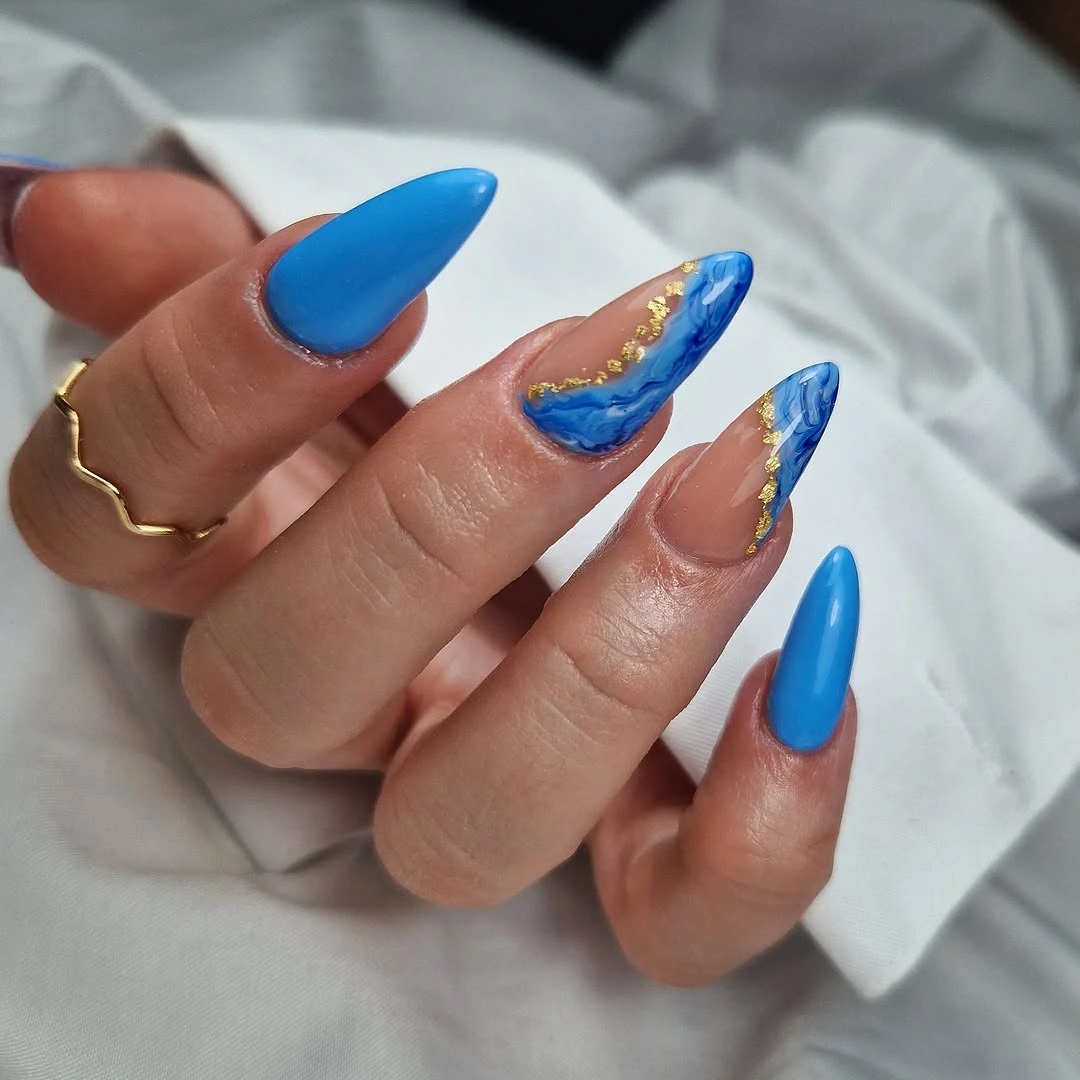
If you want a calmer adaptation, keep blue on fewer fingers and repeat one pale accent across the rest. A shorter almond will reduce the amount of saturated color visible at once, while a deeper navy or muted teal can make the set feel more seasonal. The practical lesson is to control the number of variables: let blue lead, then use warmth or negative space to support it.
The limitation is that multiple contrasting details can compete on long nails if each finger becomes equally loud. The original balance comes from blue being the dominant family, not from every accent having the same strength. Choose this direction when you are comfortable with a cool focal color, and simplify the placement if your clothes already include several saturated tones.
Pale Pink Almonds With Smoky Dark Tips
These long almond nails move from a pale pink center into smoky dark brown or black shading near the tips. The soft transition creates autumn depth without a hard French line, so the center stays light while the ends carry the richer color. A reflective bottle appears nearby, but the manicure itself works through the contrast between open base and darkened edge rather than through any accessory.
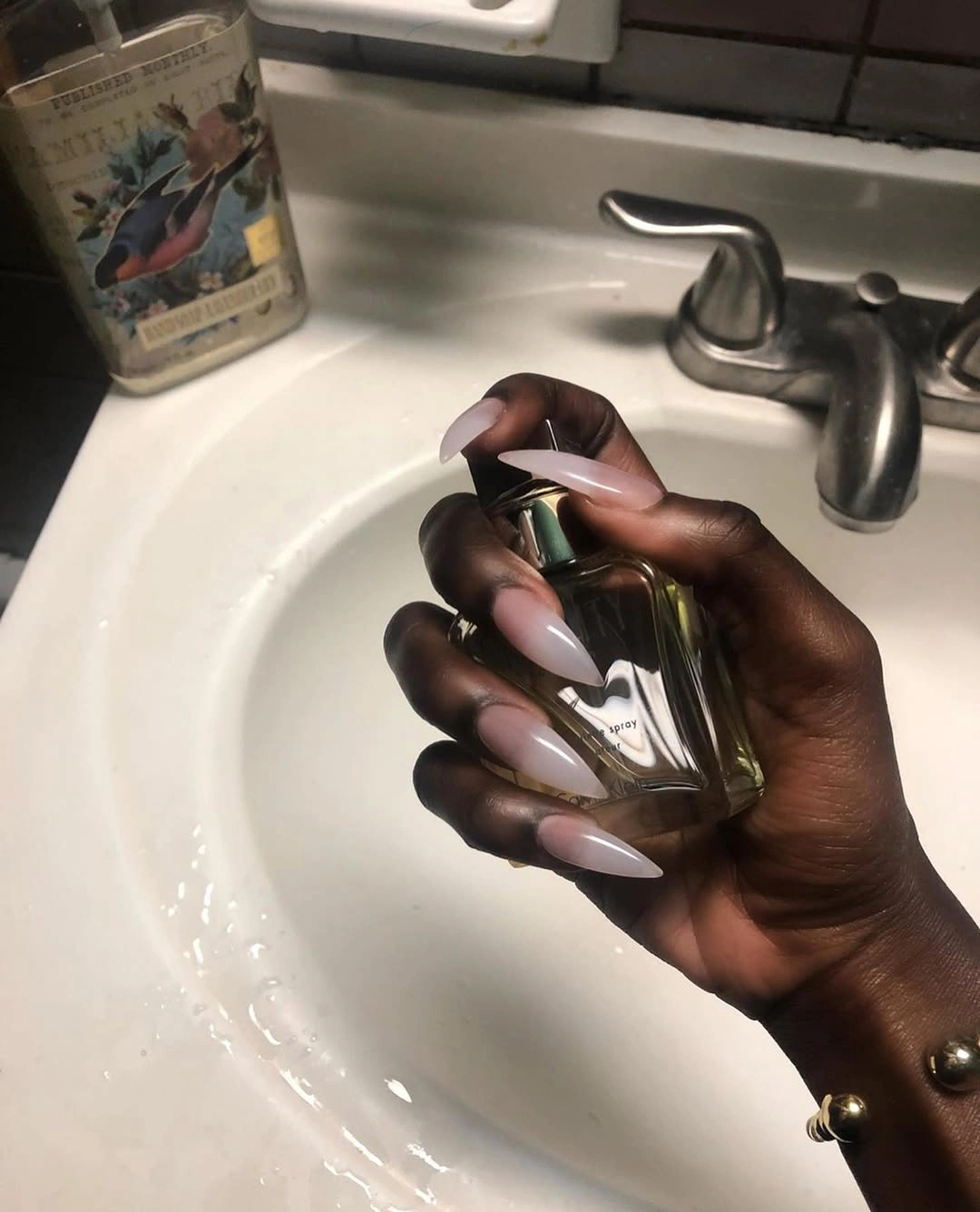
To soften the gradient, keep the dark tone closer to the edge and use a shorter almond so the transition has less distance to travel. A warm cocoa tip will feel gentler than near-black, while a deeper berry can add color without losing the tonal structure. The design is most successful when the center remains visibly pale, because that breathing room keeps the long shape from feeling heavy.
The tradeoff is that dark tips visually add weight to an already elongated nail. A plain pale base would look lighter but less seasonally grounded, while full dark coverage would be stronger and less subtle. Choose this version when you like a gradual shift in depth and want the fall feeling to live at the edge rather than across the whole hand.
Long Green Nails In One Coordinated Family
This two-hand set keeps the color within a vivid green family while allowing slight changes in tone or surface across the long pointed nails. There is no need for a separate motif because the repeated hue creates its own rhythm, and the length gives the color enough space to look intentional rather than accidental. The blurred background stays secondary, so the hand and coordinated palette remain the focus.
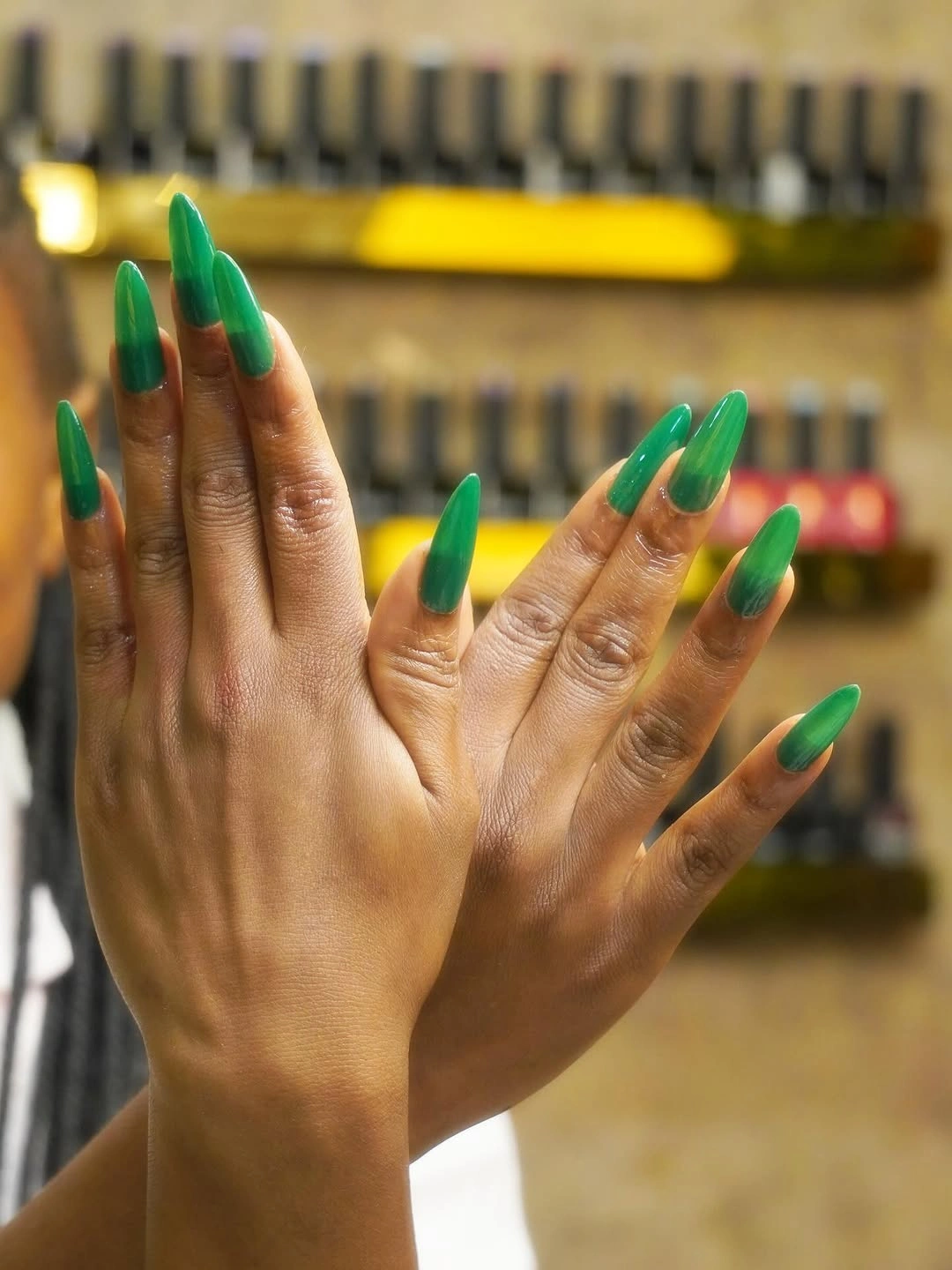
If you want the same monochrome idea with less drama, use a shorter almond or mix one saturated green with a muted version instead of keeping every nail equally bright. A darker green can make the look feel richer for fall, while a lighter accent gives the set dimension without introducing a new color family. The strongest adaptation changes intensity, not the clean commitment to green.
The limitation is that long pointed nails and saturated color together create a high-impact result, even when the palette is controlled. That can be exactly right for a statement look, but a smaller shape will be easier to pair with busy clothing and everyday routines. Choose this direction if you enjoy a focused color story more than a collection of unrelated accents.
Quiet Nude Almonds With Shape In Focus
This nearly unadorned nude almond manicure places all of its visual emphasis on shape, tone, and a smooth surface. The pale pink-beige color sits close to the hand without disappearing, and the clean background makes the lack of decoration part of the design rather than an omission. It is the calmest option in the collection, useful as a baseline for judging how much detail the other sets really need.
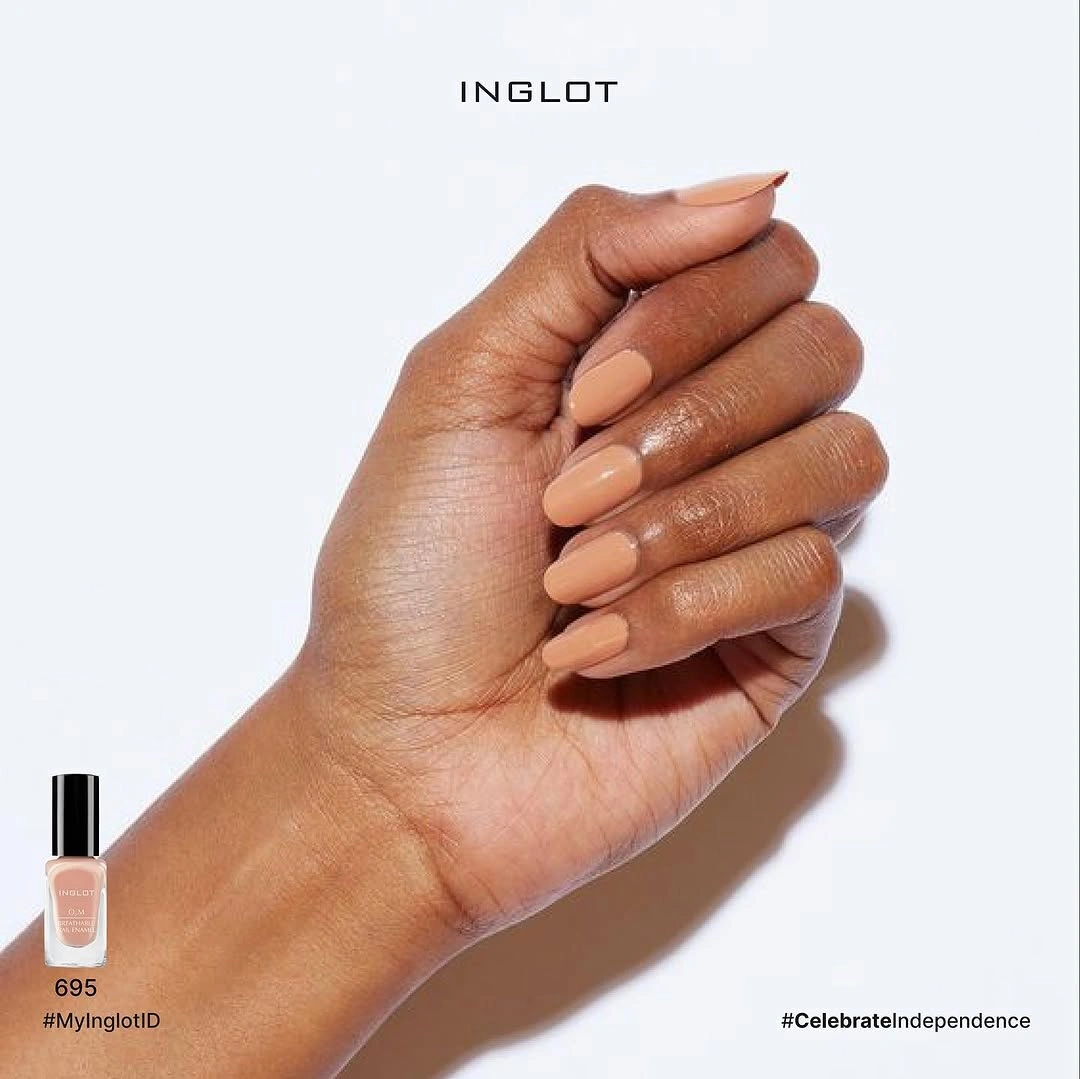
To make the same idea feel more seasonal, warm the nude slightly or shorten the almond into a soft oval, keeping the surface plain. Adding one small accent nail can create a focal point without changing the quiet structure, while a darker full set would move the look into a different visual category. This is a good choice when you want the hand to look polished but not styled around a theme.
The honest limitation is that a simple surface leaves less room to disguise uneven edges or small changes in tone. Its strength is compatibility: the manicure can sit beside bold clothing, jewelry, or makeup without creating another demand. Choose it when you value visual breathing room and want shape to do the work that nail art would normally handle.
Pink Coffin Nails With Warm Abstract Tips
Long pink coffin nails use the base as a soft anchor, then add irregular brown, white, and reflective-looking patches toward the tips. The pattern changes from finger to finger, giving the set a collected rhythm while the warm accents keep the pale pink from feeling too sweet. Concentrating detail at the ends also creates a clear transition from calm center to decorative edge.
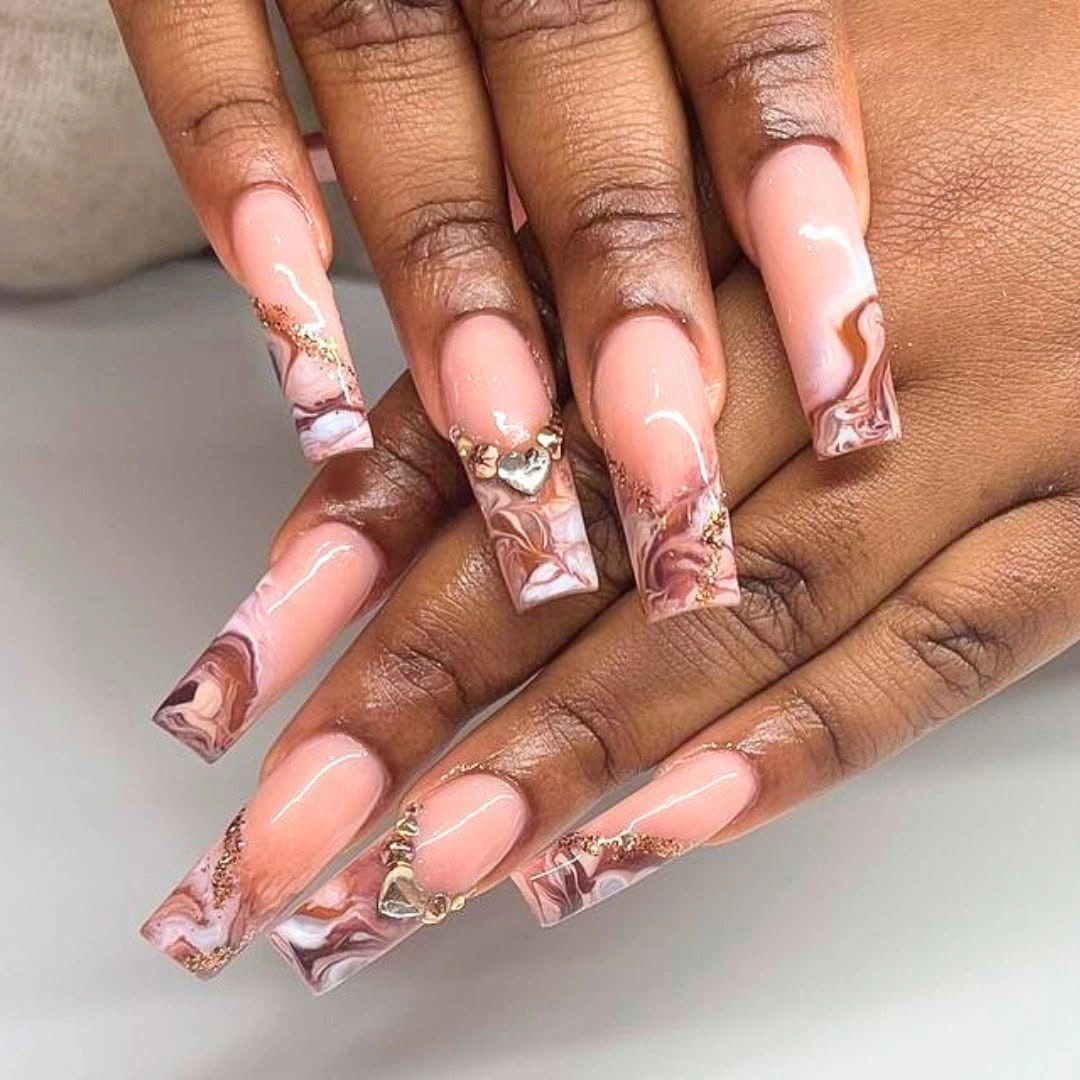
If you want to make the design more practical, keep the coffin shape but reduce the number of accented fingers or shorten the free edge. A single warm tip can preserve the seasonal relationship, while a slightly deeper pink base will make the lighter patches appear more deliberate. Try to keep some open pink space on every nail, because a fully covered pattern would lose the anchored quality.
The tradeoff is that detailed tips need enough length to show their changes clearly. A shorter coffin will be easier to wear but may make the patches look crowded, while a long set gives them more room and creates more visual weight. Choose it when you enjoy a decorative manicure with a soft base, and simplify the edge when you want the colors to feel less occasion-driven.
Cool Mauve Almonds Under Blue-Violet Light
Long pale mauve almond nails look cooler and more luminous under blue-violet light, even though the surface itself remains simple and glossy. The lack of a large motif lets the relationship between tone, reflection, and dark skin become the central idea. In neutral light the color may read softer and less purple, which makes the finish interesting without needing extra decoration.
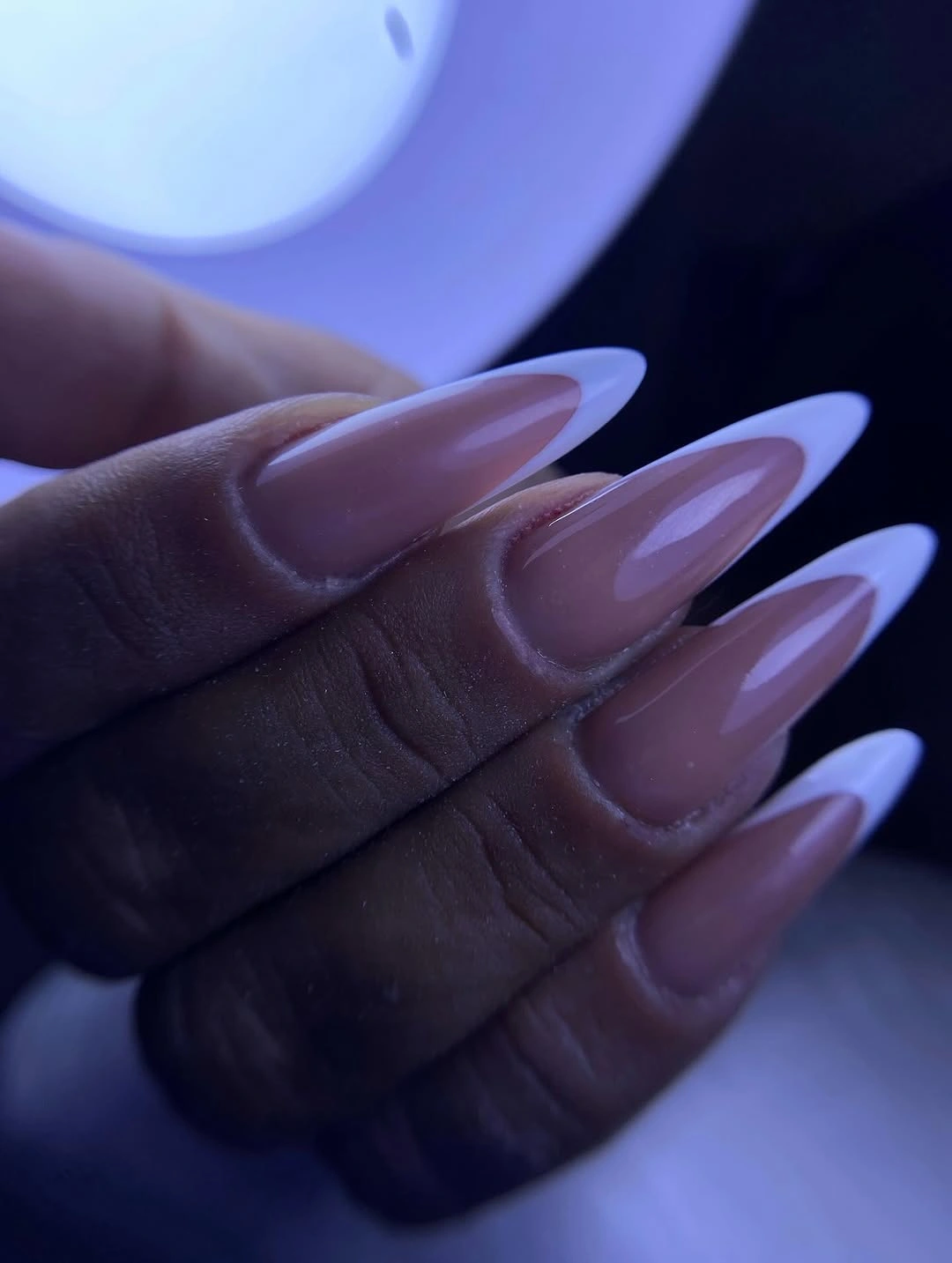
For a more stable everyday interpretation, choose a mauve with the same cool direction but rely on regular lighting to show its depth. A shorter almond will make the color feel less dramatic, while a warmer rose version can keep the soft base from looking too icy. The practical choice is whether you want the lighting to be part of the mood or simply want a shade that carries on its own.
The limitation is that a pale reflective color can change noticeably from room to room. That is part of its appeal, but it also means the manicure may not look exactly as expected beside warm clothing or indoor light. Choose it when you enjoy a quiet color that shifts subtly, and avoid adding busy art that would compete with the surface reflection.
Yellow French Tips With One Pink Flower
Medium rounded nails use a sheer pink-nude base and bright yellow French tips, with one small pink-and-white flower interrupting the clean edge. The yellow is thin but high contrast, so it gives the manicure energy without covering the whole nail in a vivid shade. The single flower works as a pause in the rhythm, keeping the playful detail from spreading everywhere.
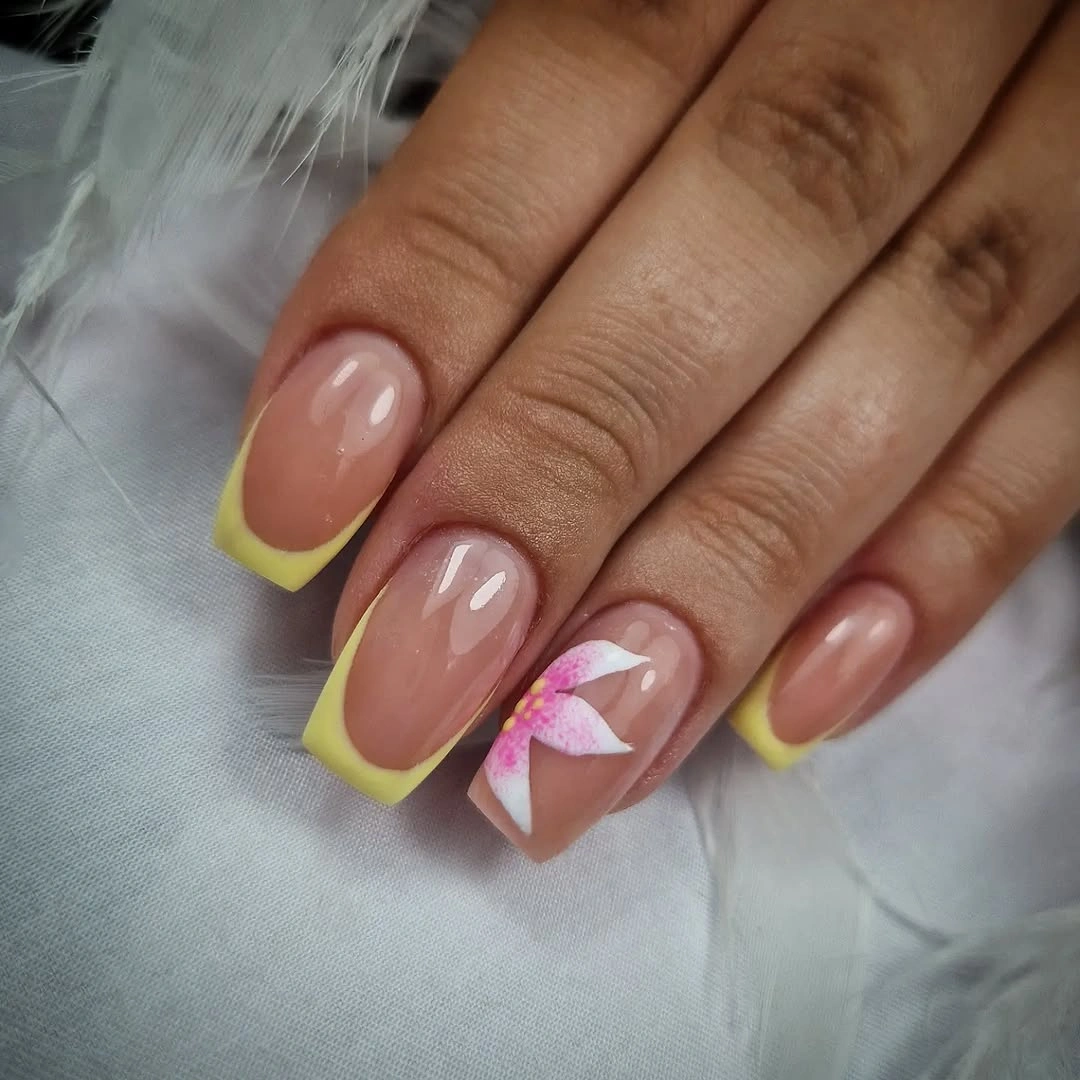
If you want the color to feel more autumnal, move the yellow toward mustard, olive, or a muted ochre while leaving the French structure intact. A shorter rounded shape will make the tip feel compact, and removing the flower will create a clearer color-only version. The design is easiest to adapt when the bright edge remains the main decision and the floral detail stays genuinely secondary.
The tradeoff is that a fluorescent tip can feel spring-like if the surrounding palette is equally light. A richer tip tone solves that without losing the clean line, while keeping the bright version can be a deliberate contrast for someone who enjoys cheerful color. Choose based on whether you want the manicure to blend with the season or refresh it with a sharper accent.
Long Mismatched Nails In A Pastel Mix
This long pointed set uses pink, mint green, lavender, orange, pale blue, and white in different arrangements across the fingers. The nails are intentionally mismatched, but shared pale sections keep the variety connected and prevent the design from feeling like unrelated samples. The visual rhythm comes from changing color placement while repeating the idea of a light base plus a stronger tip or accent.
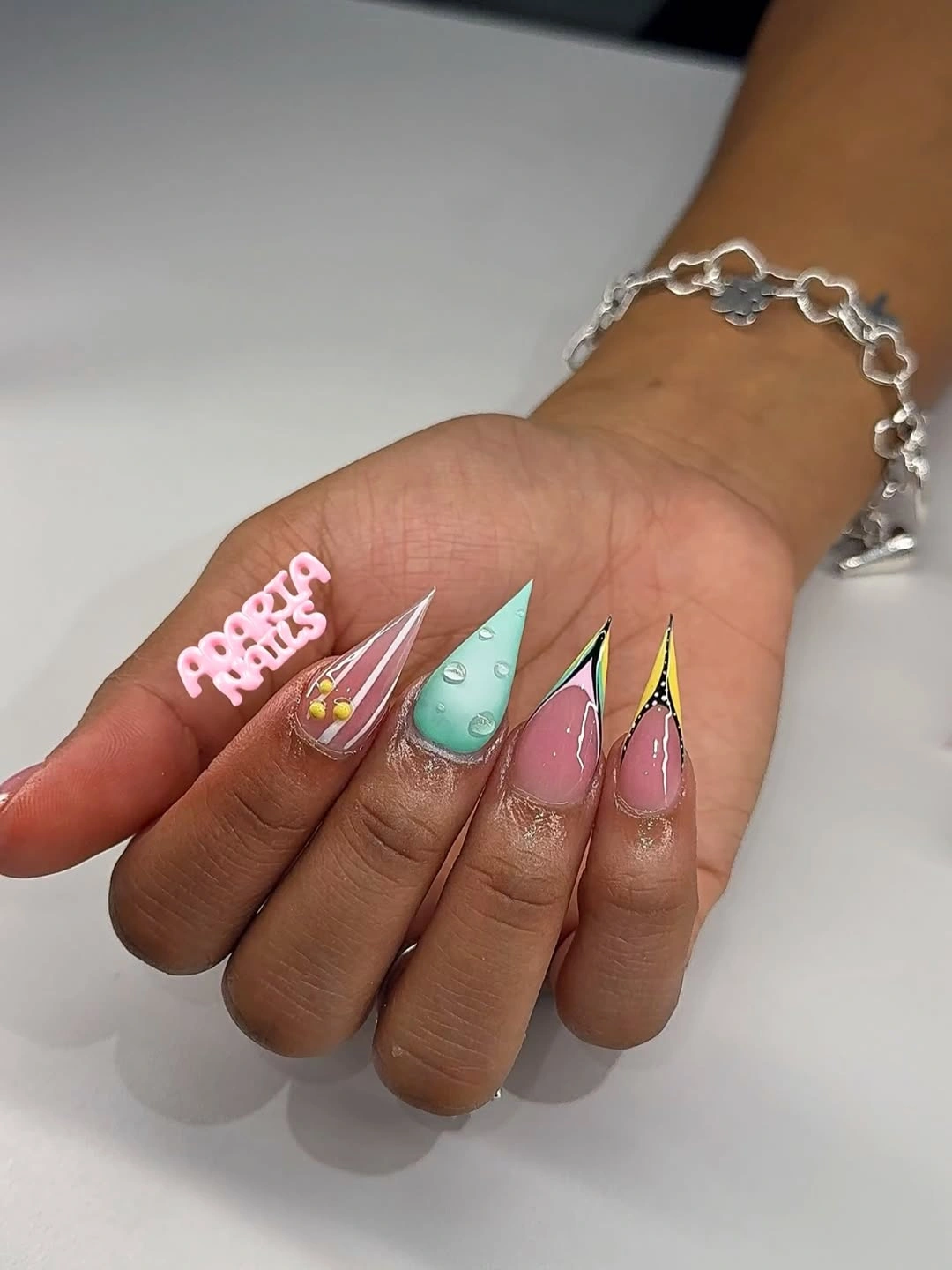
To make the palette easier to coordinate, choose two or three accent colors and repeat them on several nails rather than keeping every hue. A shorter shape will reduce the amount of color visible at once, while one solid nail can give the eye a resting point between busier fingers. The goal is not to remove the playful mix, but to give it a stronger hierarchy.
The limitation is that long mismatched nails can become visually busy before the colors themselves become difficult. They work for someone who likes variety and wants each finger to offer a separate idea, but a pared-back version may suit everyday clothing better. Keep the shared base tones if you simplify, because they are what make the different accents feel like one collection.
Glossy Black With A Single Silver Accent
Short square nails coated in glossy black create a compact, high-contrast base, while one or two silver-looking accents interrupt the dark surface. The small length keeps the color focused and prevents the design from becoming too theatrical, yet the reflective detail gives the hand a clear point of interest. A limited accent also lets the black remain the dominant visual statement.
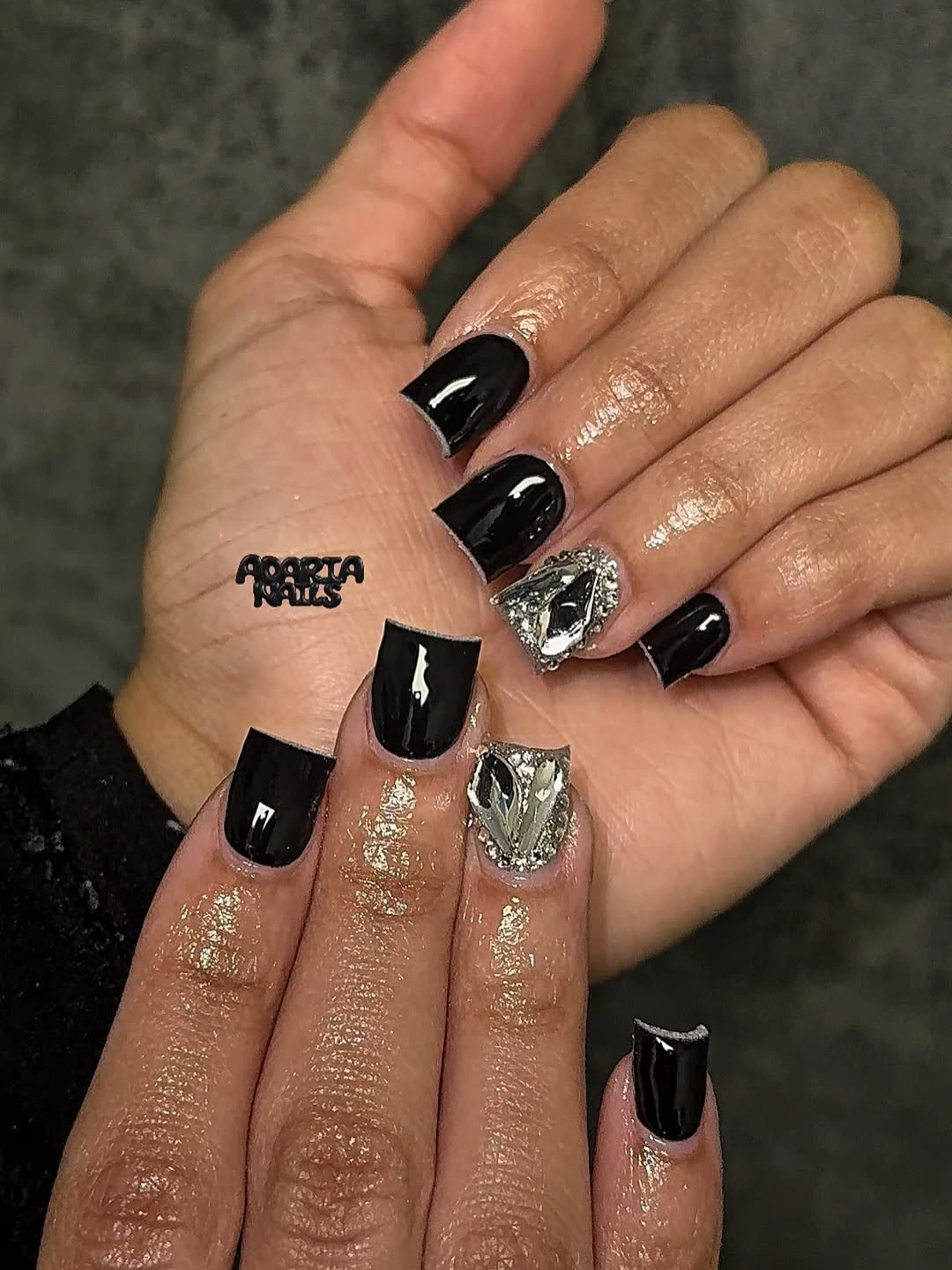
If you want an even quieter version, keep the black on every nail and add only one small reflective detail rather than several. A short rounded-square shape would soften the graphic edge, while deep brown or burgundy could preserve the autumn depth with less contrast. The important decision is the ratio between dark field and bright interruption, not the exact material of the accent.
The tradeoff is that glossy black can show surface changes clearly, especially on a short, simple shape. That is balanced by its strong compatibility with metallic jewelry, rich knits, or bright clothing because the manicure supplies a stable dark anchor. Choose it when you prefer a focused statement and want one accent to do all the decorative work.
Pale Pink Nails With Mixed Metallic Details
This shorter pale pink set uses reflective silver- or gold-looking pieces on several fingers, creating a softer alternative to the black manicure before it. The base keeps the mood light, while the accents add small flashes of depth that become visible as the hand changes angle. Because the nail length is compact, the decoration feels closer to jewelry detail than to a full illustrated design.
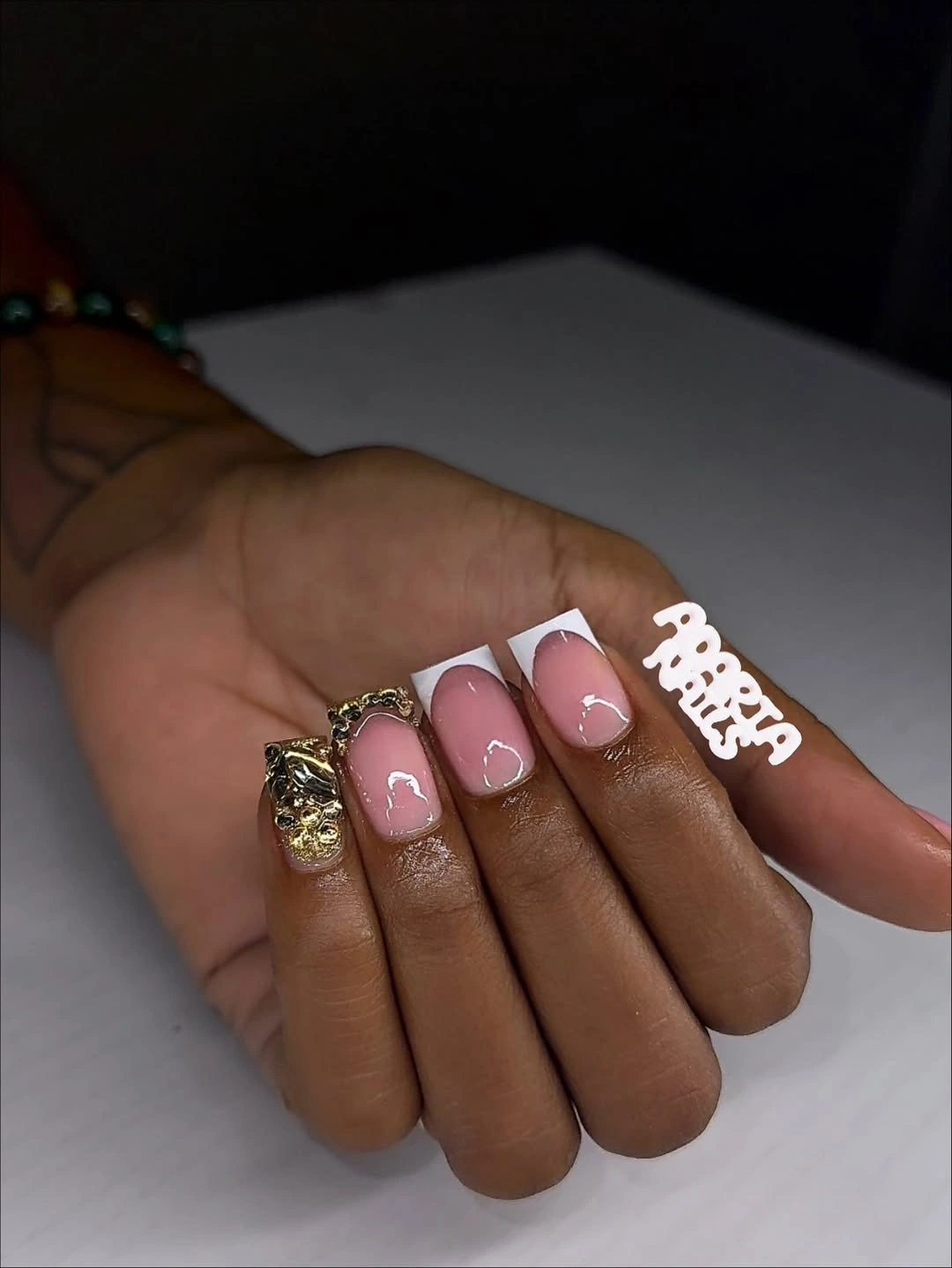
For a calmer arrangement, choose one metallic family and place it on alternating fingers or a single hand. A warmer blush base can make gold details feel grounded, while silver will keep the contrast cooler and brighter. Keeping a few nails completely plain is important here because the open pink surface gives the reflective pieces enough space to register.
The limitation is that mixed metallic-looking accents can compete when every finger carries a different size or direction. The softer base helps, but a consistent placement will make the set easier to coordinate with rings and clothing. Choose this idea when you want decoration without a dark foundation, and reduce the number of accents if the overall result begins to look crowded.
Pink Coffin Nails With Lilac Abstract Tips
Long pink coffin nails close the collection with white, pale lilac, and reflective-looking sections concentrated near the tips. The light palette creates a soft contrast against the base, and the changing tip arrangements keep both hands expressive without relying on a dark seasonal color. The coffin shape gives the abstract sections room to breathe, so the design feels open rather than compressed.
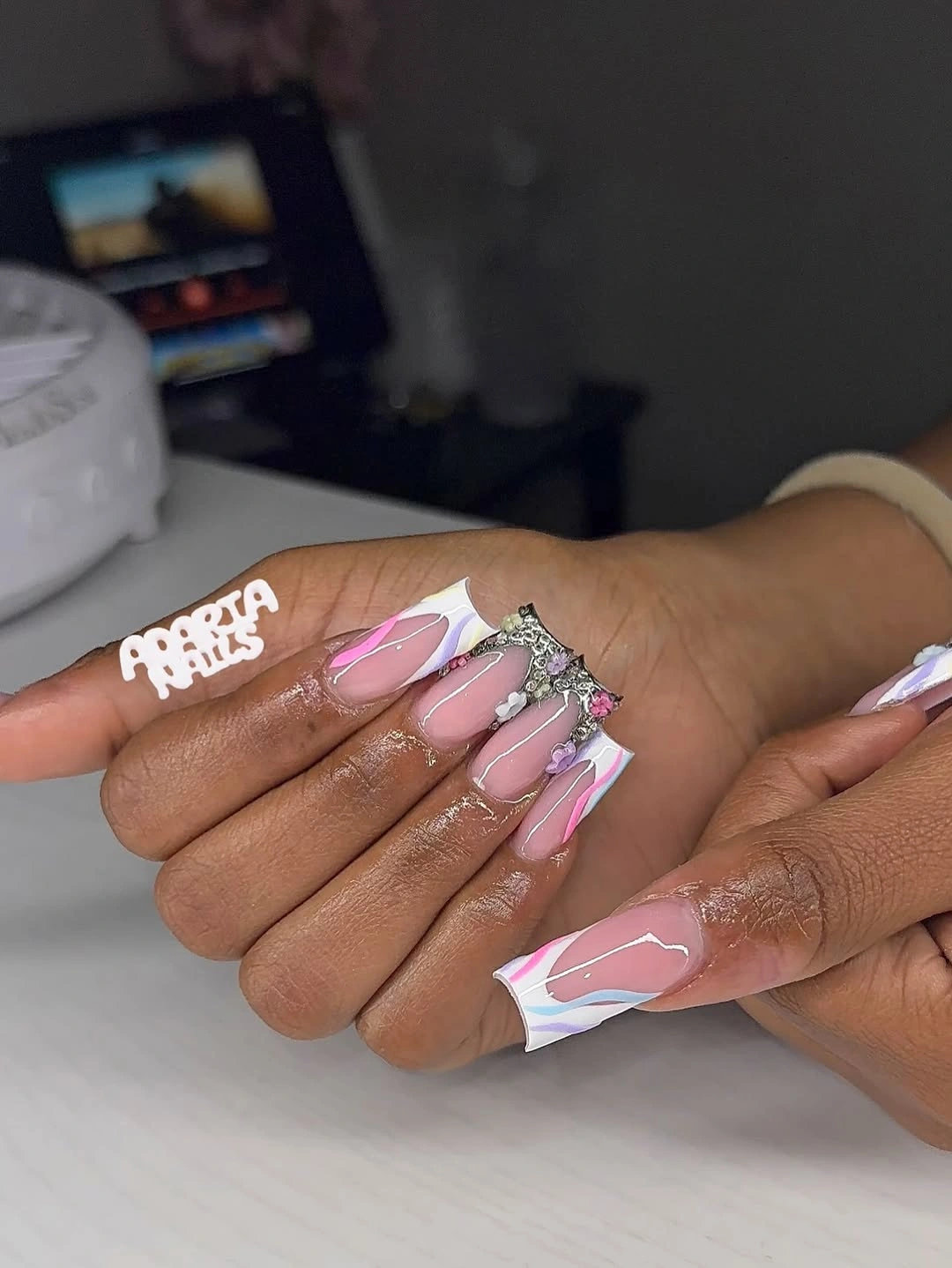
If you want the same color relationship on a shorter length, move the accent toward one clean tip line or keep the lilac on only two nails. A soft square will feel more compact, while a deeper berry base will make the white and lilac sections stand out with less length. Preserve some pink space through the center, because that is what keeps the pale accents connected to the hand.
The tradeoff is that long coffin nails make the light abstract tips look airy, but they also create more visual and practical commitment. A shorter version will be easier to pair with everyday clothes and still carry the pink, white, and lilac contrast. Choose the full length when you want the tips to lead, or borrow only the palette when a quieter finish fits better.