
Fall Square Nails 2026: Graphic Color, Clean Tips, and Texture
Straight edges expose decisions that curved silhouettes can hide. A line that stops a millimeter early, a dark block pushed too close to the corner, or an accent without enough blank space can change the whole rhythm of a square manicure. That is why the strongest fall square nails are rarely about adding more; they are about giving every mark a clear distance from the next one.
Before settling on color, choose the amount of visual pressure you want the hand to carry. Let one element lead, keep supporting marks smaller, and leave enough low-contrast space for the eye to reset. When you need a second opinion on spacing, compare the site’s fall nail art ideas and ask whether the detail still reads at arm’s length; if it does not, simplify placement before changing the shade.
Chocolate Squares With Pale Graphic Linework
The dark brown base gives these medium square nails their weight, while pale cream and muted mauve sections interrupt it with measured geometry. Some nails stay mostly dark and others open into lighter blocks, so the set avoids a flat wall of color. The square shape makes the corners part of the composition, giving the abstract lines a firm frame.
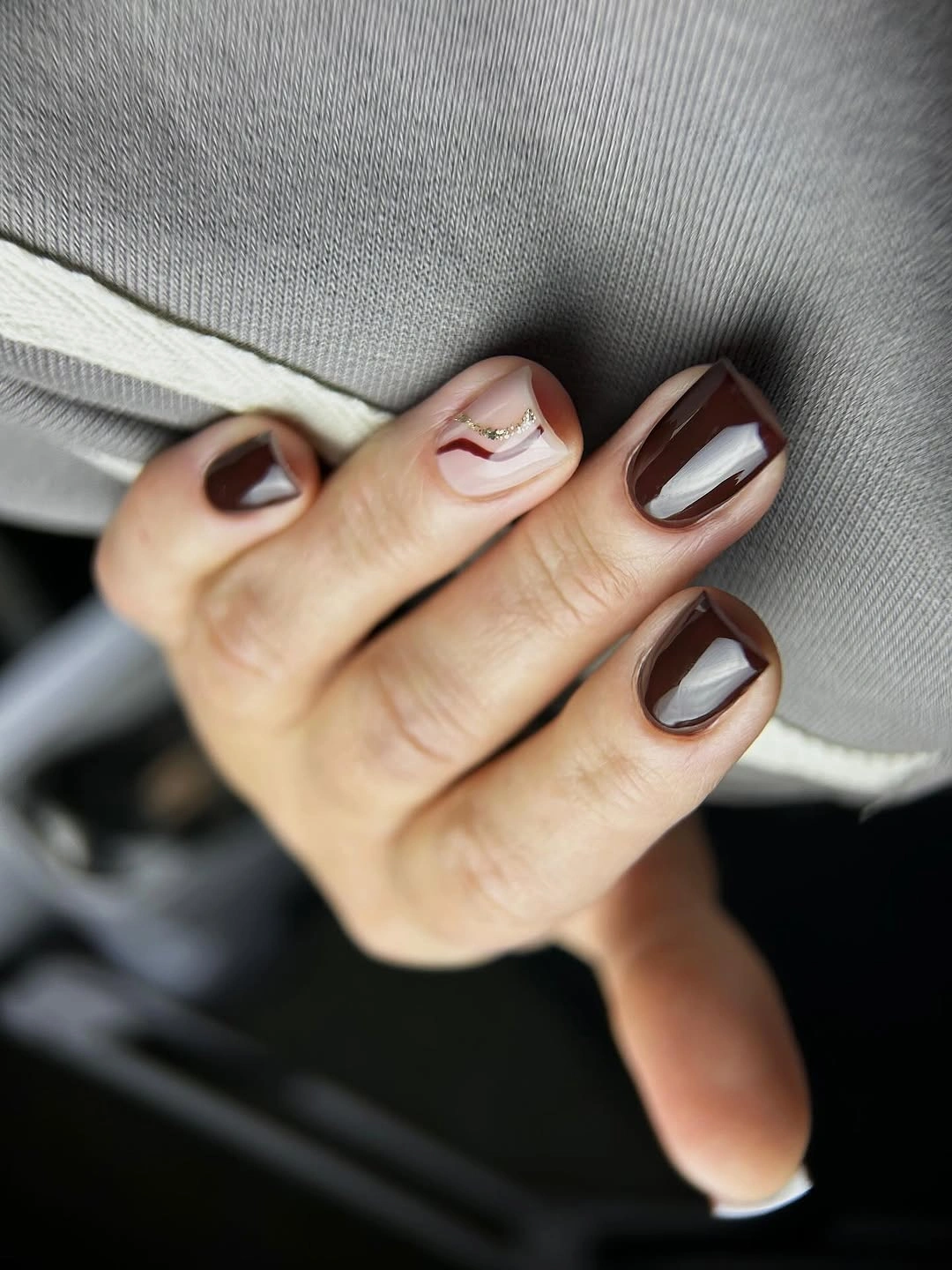
Keep one deep neutral dominant when adapting this design. The lighter blocks should create breathing room rather than compete for equal attention, especially on a shorter square where each section occupies more of the nail. Cream clothing, gray knitwear, or soft mauve details can echo the palette without adding another large pattern to the styling.
The limitation is proportion. If the pale areas become too small, they look like accidental marks; if they become too large, the brown loses its grounding effect. A practical edit is to retain one light geometric section on each accent nail and leave the remaining fingers solid brown. The square silhouette will still carry the graphic idea with less maintenance pressure.
Orange And Yellow Blended Into Fall Heat
Orange and yellow move into each other across the medium square nails, creating the visual depth that a single bright coat would not have. The warm gradient echoes the autumn leaves around the hand, but the square outline keeps the saturated colors from becoming too soft or floral. The blend is the motif, so no extra linework is needed to explain it.
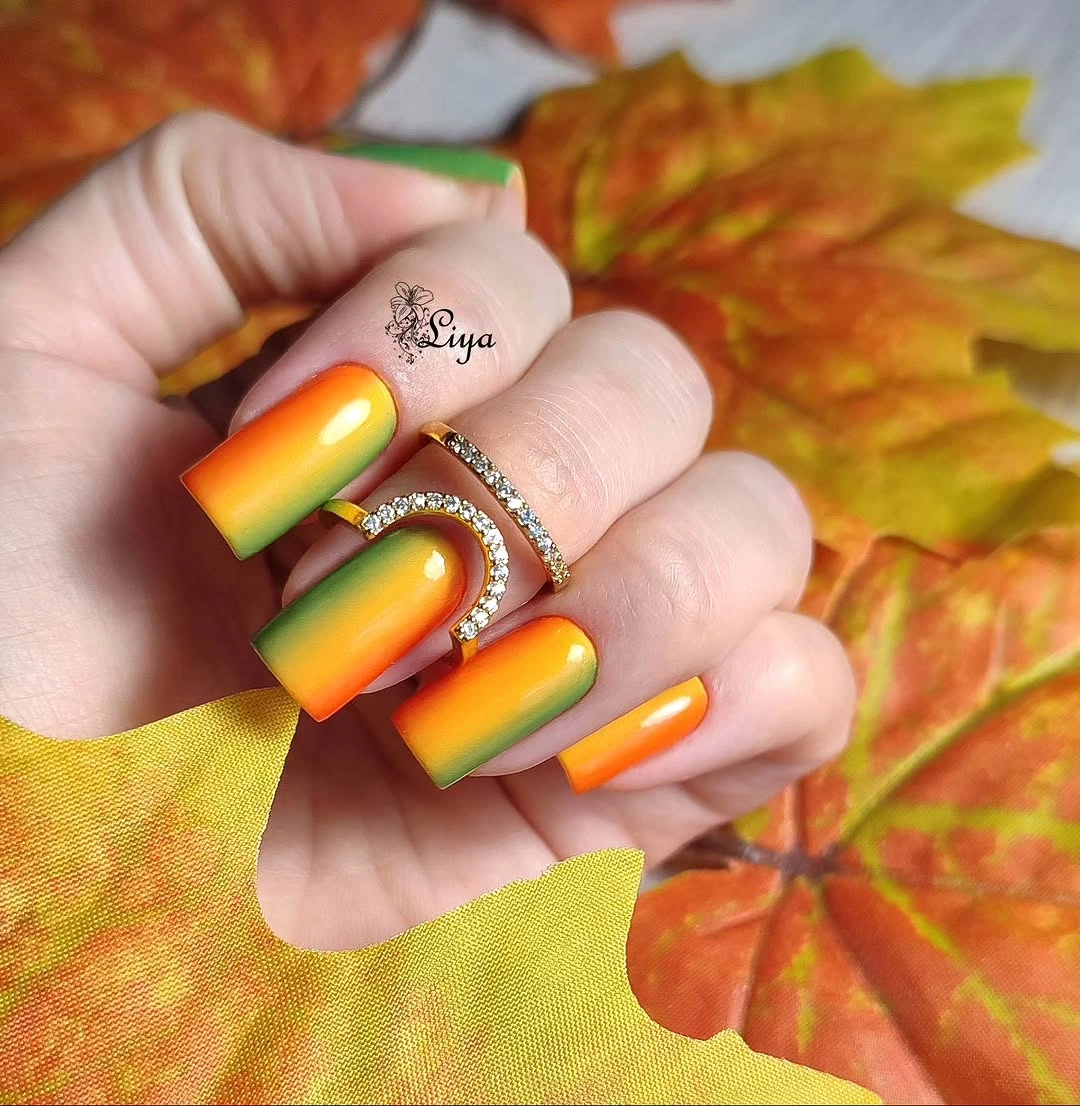
When using two hot colors, keep the shape moderate and the rest of the styling simple. The transition should remain visible from a normal distance, which means the nails need enough area and a clean surface. A shorter square can keep the orange at the edge and yellow closer to the center, while a solid neutral on one or two fingers can reduce the overall intensity.
Bright warmth is the tradeoff. It may compete with an equally colorful outfit, and a blended edge can be harder to repair invisibly than a solid coat. If you want the same fall energy with less commitment, use the orange-yellow movement on two accent nails and a warm nude or brown on the rest. The palette stays seasonal, but the hand gains a visual pause.
Hot Pink Squares With Long Pale Swoops
The saturated pink base is simple until the pale curved lines travel across it. Those lines follow the length of the long square nails, creating movement and making the straight edges feel less rigid. Because the color stays solid underneath, the design reads as one strong system: bright field, controlled sweep, and a clear square frame.
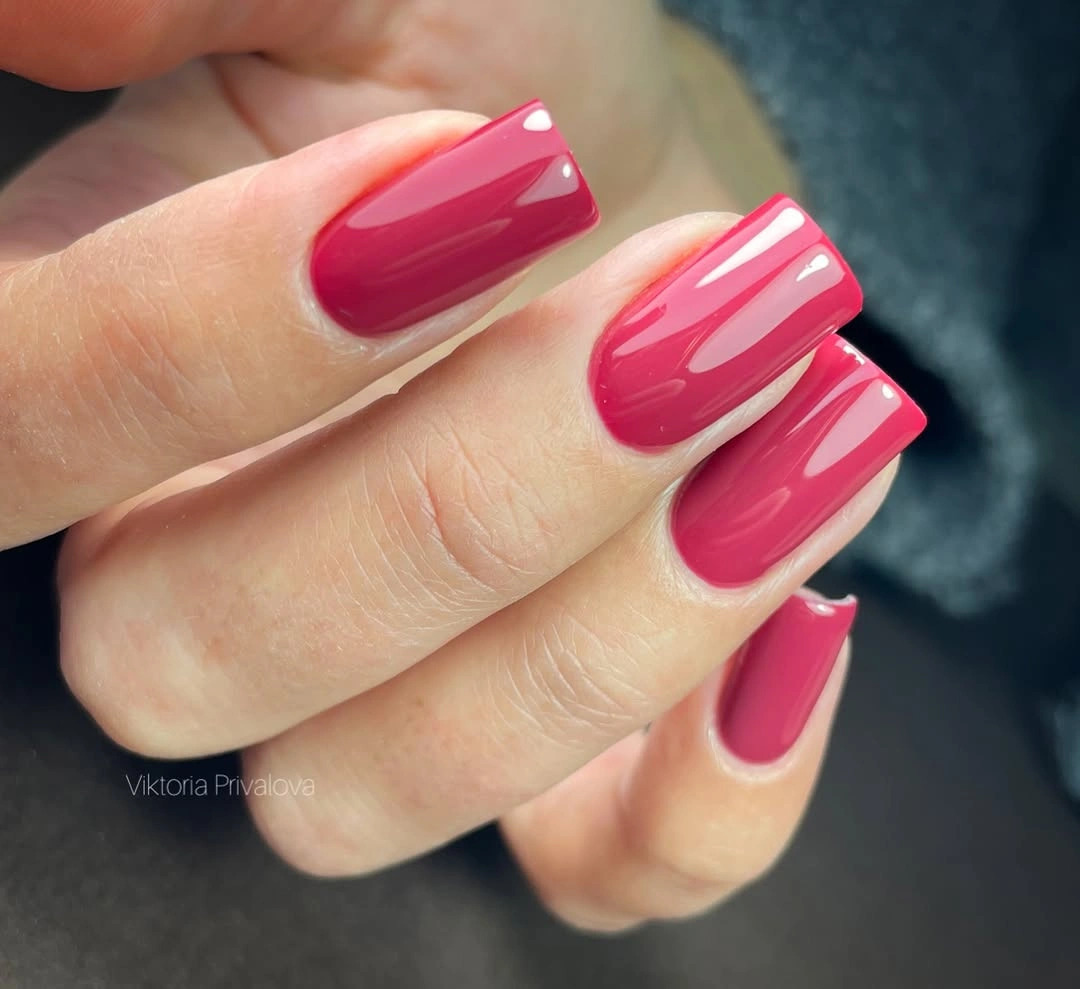
Use the long surface for one or two sweeping marks rather than filling every gap. A medium square can preserve the same idea if the lines become shorter and fewer, while a short shape benefits from one pale curve on an accent nail. Keep nearby colors quiet so the contrast between the pink field and pale linework remains the main relationship.
The length is the main limitation, not the pink. Long squares make the graphic movement obvious but can feel less convenient in daily tasks, and a crooked line will be easier to notice on a saturated base. If you need an easier version, shorten the shape and preserve the direction of one curve. The design will still move without asking the full nail to carry it.
Glossy Cherry Red With Square Precision
Every visible nail is a clean cherry red, so the medium square edge becomes the only contrasting decision. The glossy surface reflects in long highlights and makes the red look smooth rather than textured. This is a useful reminder that a square manicure does not need art to feel current; proportion, corners, and even coverage can form the complete composition.
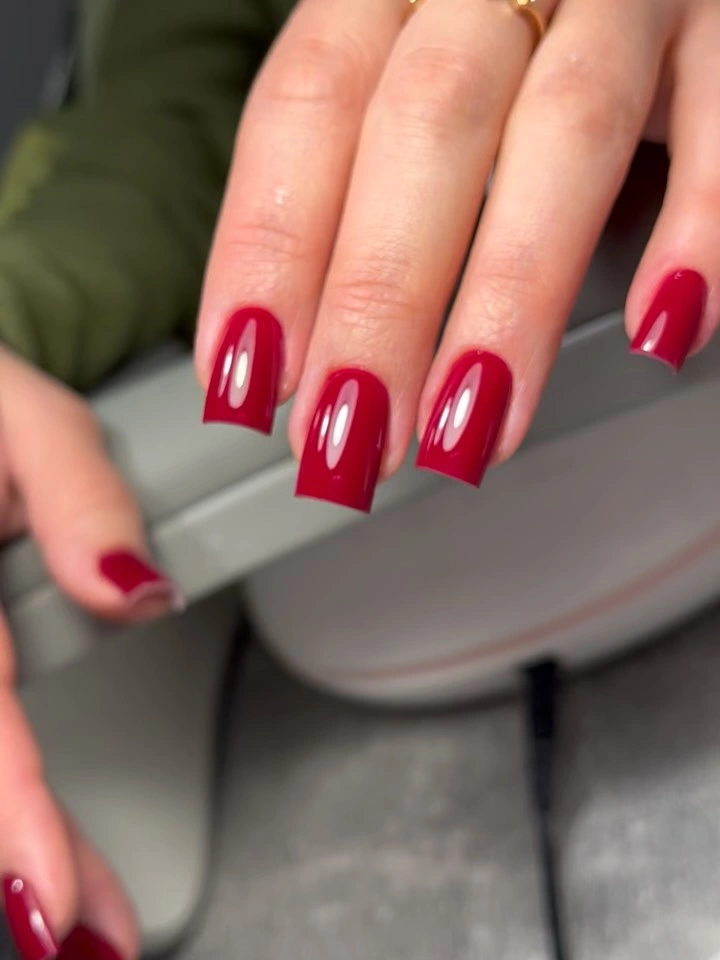
Choose this direction when you want a clear fall color with no visual explanation required. Medium length keeps the red practical, while the square corners make it feel more deliberate than a loose rounded shape. Cream, black, denim, and gold-toned accessories all support the color, but the manicure is strongest when the rest of the look does not compete for the same intensity. A warmer comparison is available in the site’s fall red nails guide.
The surface will reveal every uneven edge or chip, especially because the red is bright and uninterrupted. That is also what makes the set easy to refresh: there are no placements to reconstruct and no accent nail to match. Keep the shape even, preserve the reflection, and let the single color do the work rather than adding detail that would weaken the clean block.
Milky Short Squares With A Warm Gold Glint
The short square silhouette keeps this milky white manicure compact, while fine warm shimmer adds just enough depth to stop the base from looking flat. The light color remains the dominant field, and the gold-like glint appears as a subtle change in reflection rather than a separate motif. The result is quiet, but it still acknowledges fall through temperature.
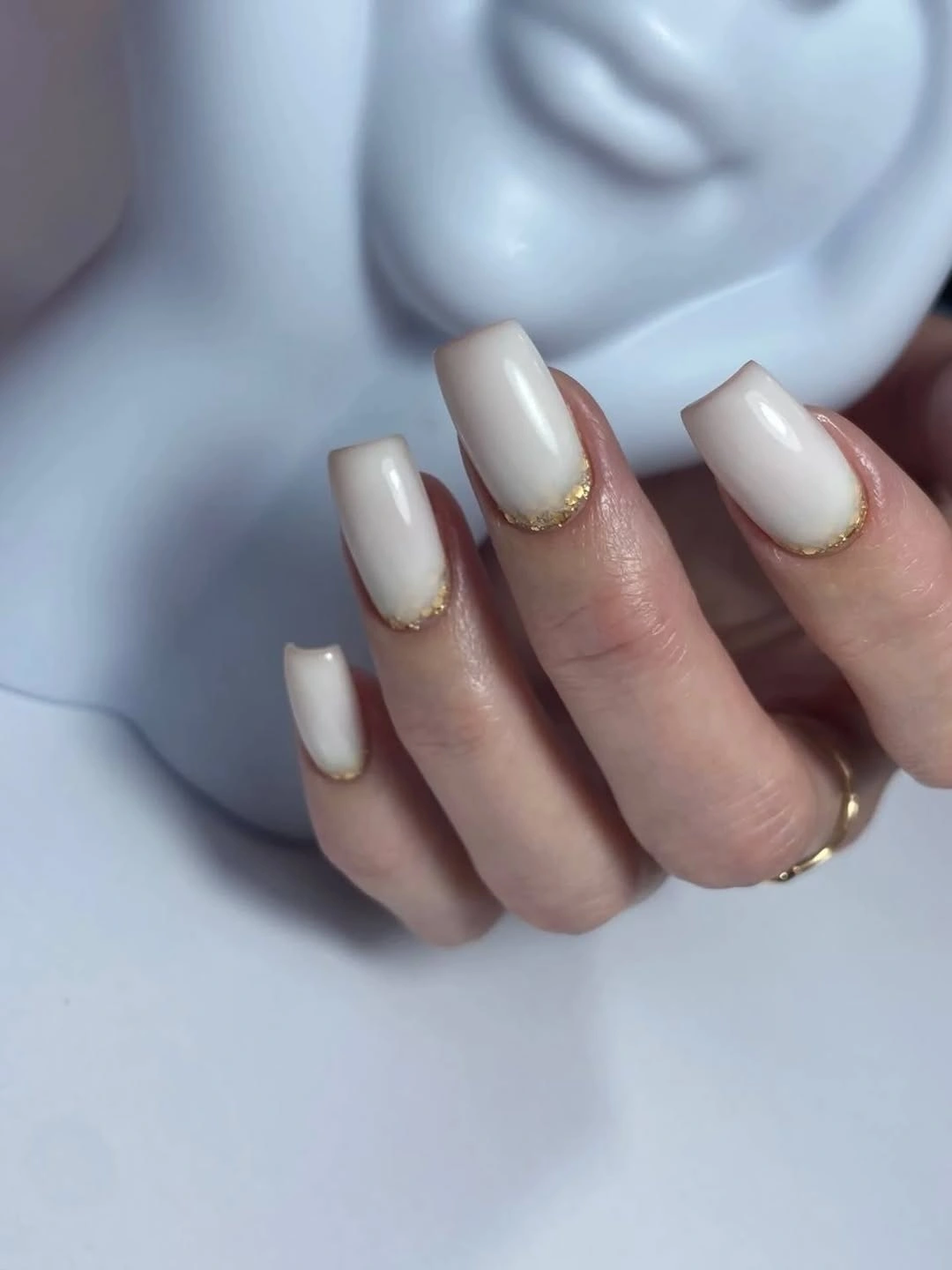
Use a short shape when you want a pale manicure to feel neat rather than elongated. The small amount of warmth works with cream, camel, denim, and simple gold jewelry, while the milky base keeps the overall contrast low. If you want more definition, place the shimmer on only two nails and leave the rest plain, so the light surface remains spacious.
Pale polish shows edge wear and uneven coverage more quickly than a dark neutral, and fine shimmer can look patchy if it gathers at one side. The practical fix is not more glitter but a simpler layout. Keep the base even, shorten the visual story to one warm reflection, and let the square outline provide the structure the color cannot provide alone.
Red Orange Blocks With Thin White Edges
The warm red-orange base is interrupted by narrow white lines that skim the tip or create a light border on selected nails. The contrast is graphic but controlled: white does not cover the color, it only gives the saturated surface a second edge to follow. Medium square nails support that relationship because their straight sides make the linework look intentional.
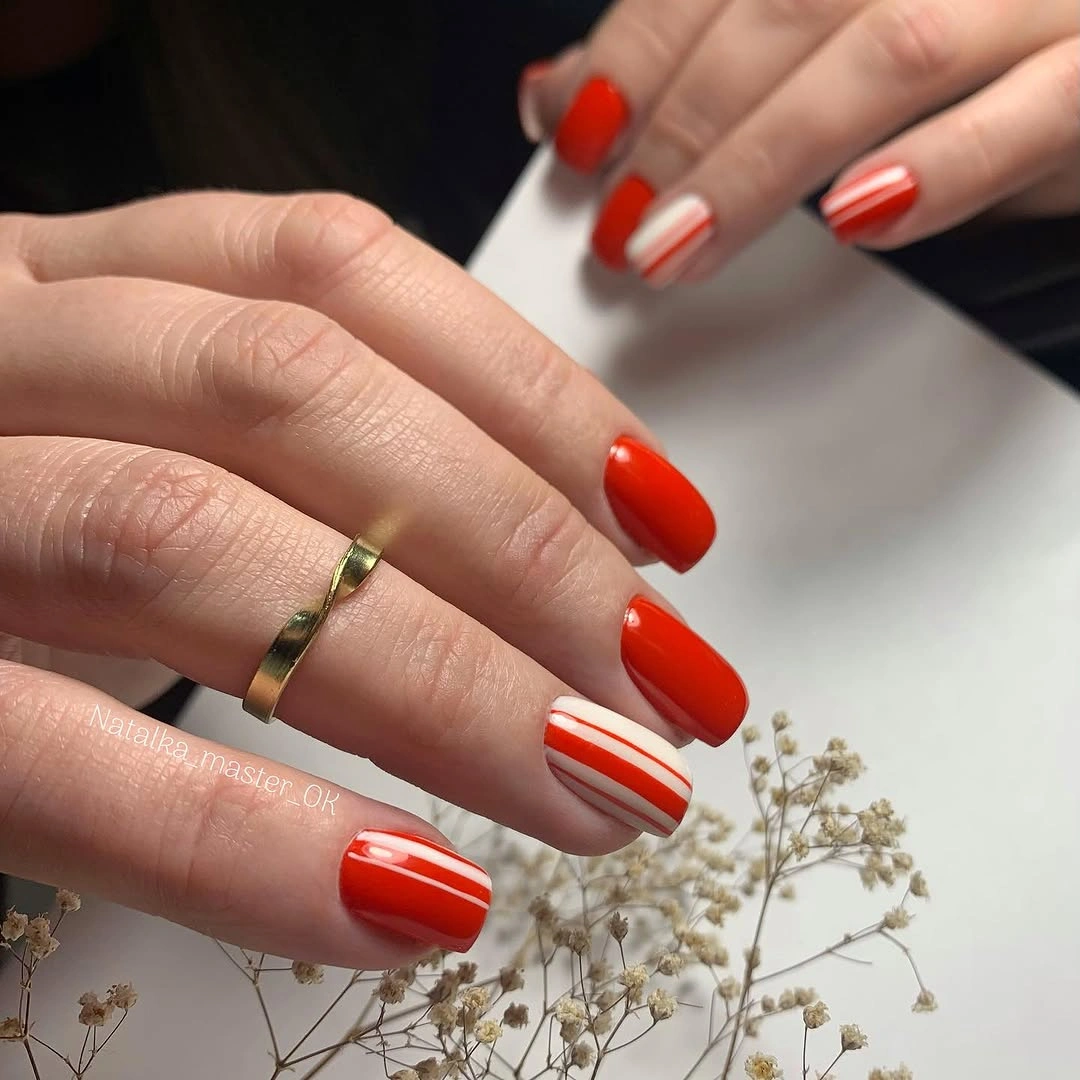
Keep the white line thin and repeat it selectively. On a shorter square, one clean edge on two or three fingers will read more clearly than several small parallel marks. The warm base pairs with cream, brown, denim, or a muted olive accessory, while a white sweater or bag can echo the line without turning the outfit into a matching set.
The border is the part most likely to show uneven growth, so the design benefits from careful edge maintenance. If you prefer less upkeep, keep the red-orange solid and place the white line on one accent nail. That preserves the contrast relationship and gives the eye a stopping point, while the remaining nails provide relief from the precise detail.
Solid Red Framed By Gold Accessories
This glossy medium square manicure repeats one saturated red across every visible nail, but the surrounding gold bracelet changes how the color is read. The red remains the central field; the jewelry provides a warm counterpoint rather than a second nail detail. Clean corners and an even reflection keep the set sharp without relying on linework or texture.
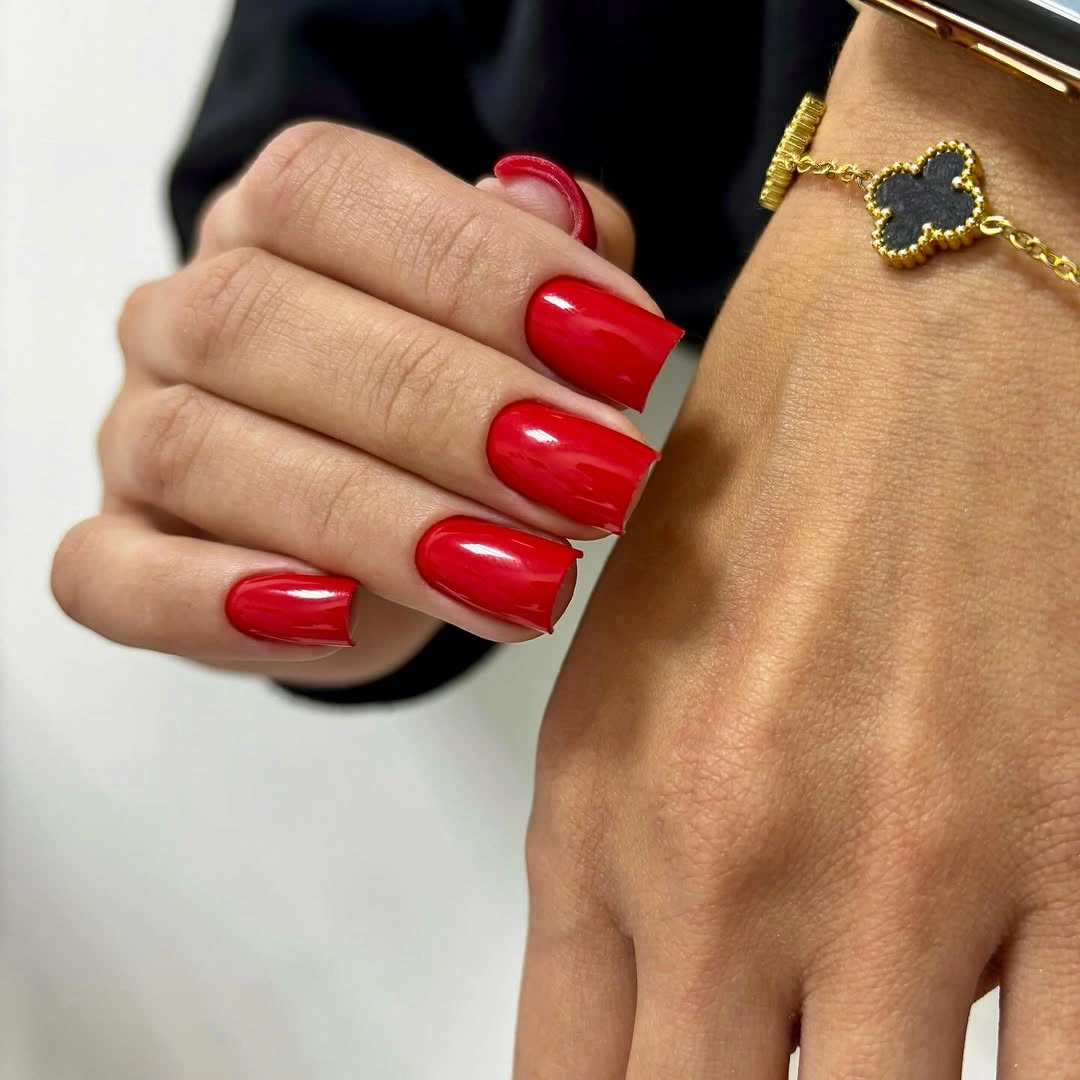
Use accessory contrast when you want a plain color to feel styled. Warm metal, cream fabric, or a deep neutral can support red, while another bright color nearby may pull attention away from the manicure. The medium square length keeps the color balanced, and a shorter version will make the same red feel more casual and less formal.
Because the surface is uninterrupted, small chips can be conspicuous, but repairs remain simpler than they would be on a patterned set. If you want more variation, change the surrounding styling before adding nail art. The strength of this design is the relationship between one clear color and one supporting accessory, not the number of elements competing for the hand.
Short Hot Pink With Glossy Compact Energy
Short square nails make the hot-pink color feel focused. The shade is saturated and glossy, but the reduced length prevents it from stretching into a long, theatrical block. There is no separate motif, so the clean shape and even reflection become the details to notice. That simplicity lets the color stay playful without requiring a complicated design.
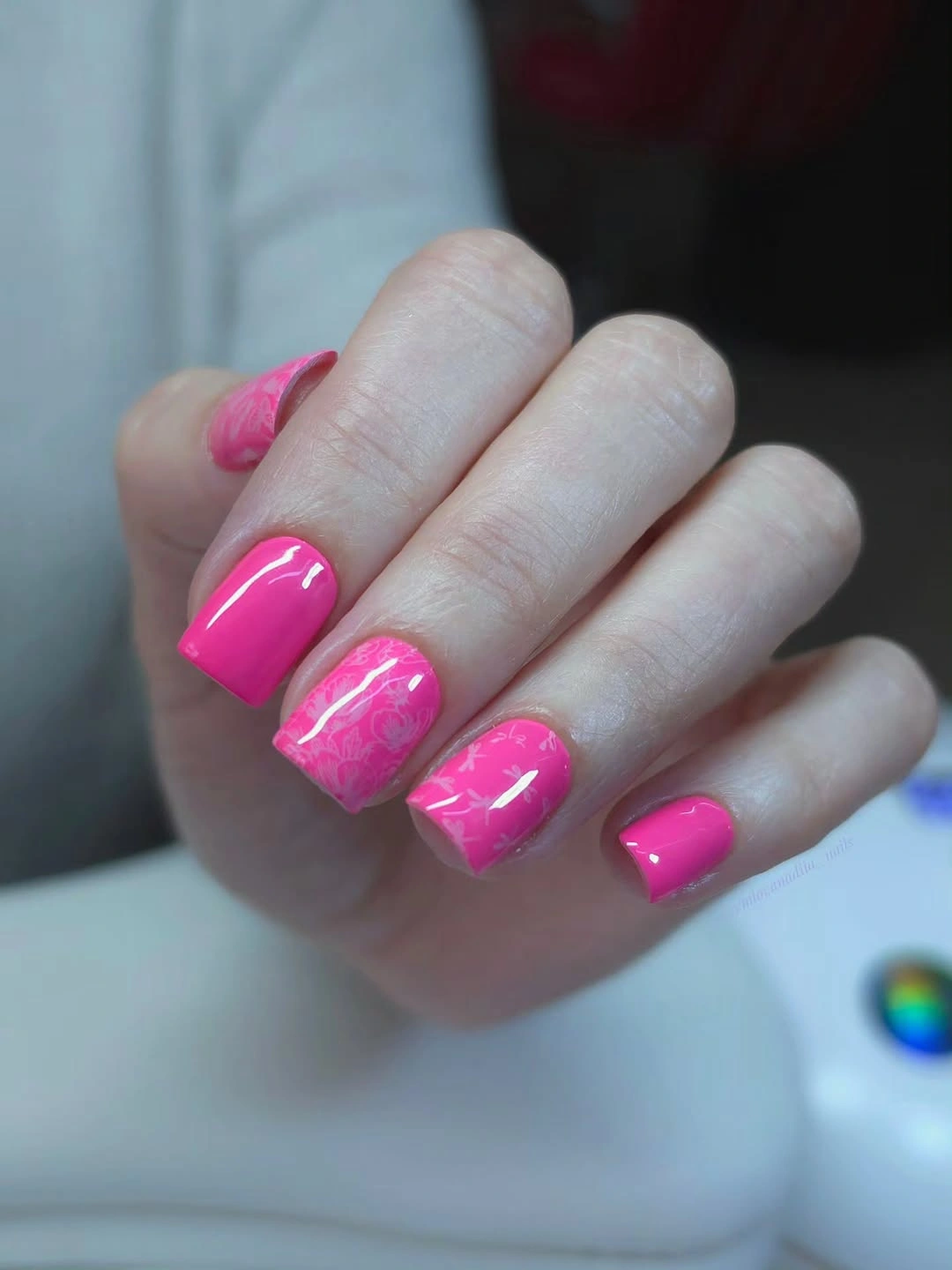
Keep the rest of the styling cool or quiet when using a bright short set. Denim, white, gray, and silver can frame the pink, while a medium square would make it feel slightly more polished and a rounded short shape would soften it further. If a full coat feels too strong, use the pink on two accent nails and repeat a pale base elsewhere.
The short length lowers maintenance, but the high saturation still makes chips visible at the edge. That is a fair exchange for a design with no linework to repair. Preserve the compact proportion and avoid adding several competing colors; the pink already has enough energy to act as the focal point without extra decoration.
Pale Pink Squares With One Marbled Accent
The pale pink-white base keeps most of the long square nails calm, while one darker pink marbled accent gives the set a concentrated point of interest. Clean light tips or edges reinforce the soft structure, and the single detailed nail stops the design from becoming a full marble pattern. The composition works because the contrast is isolated.
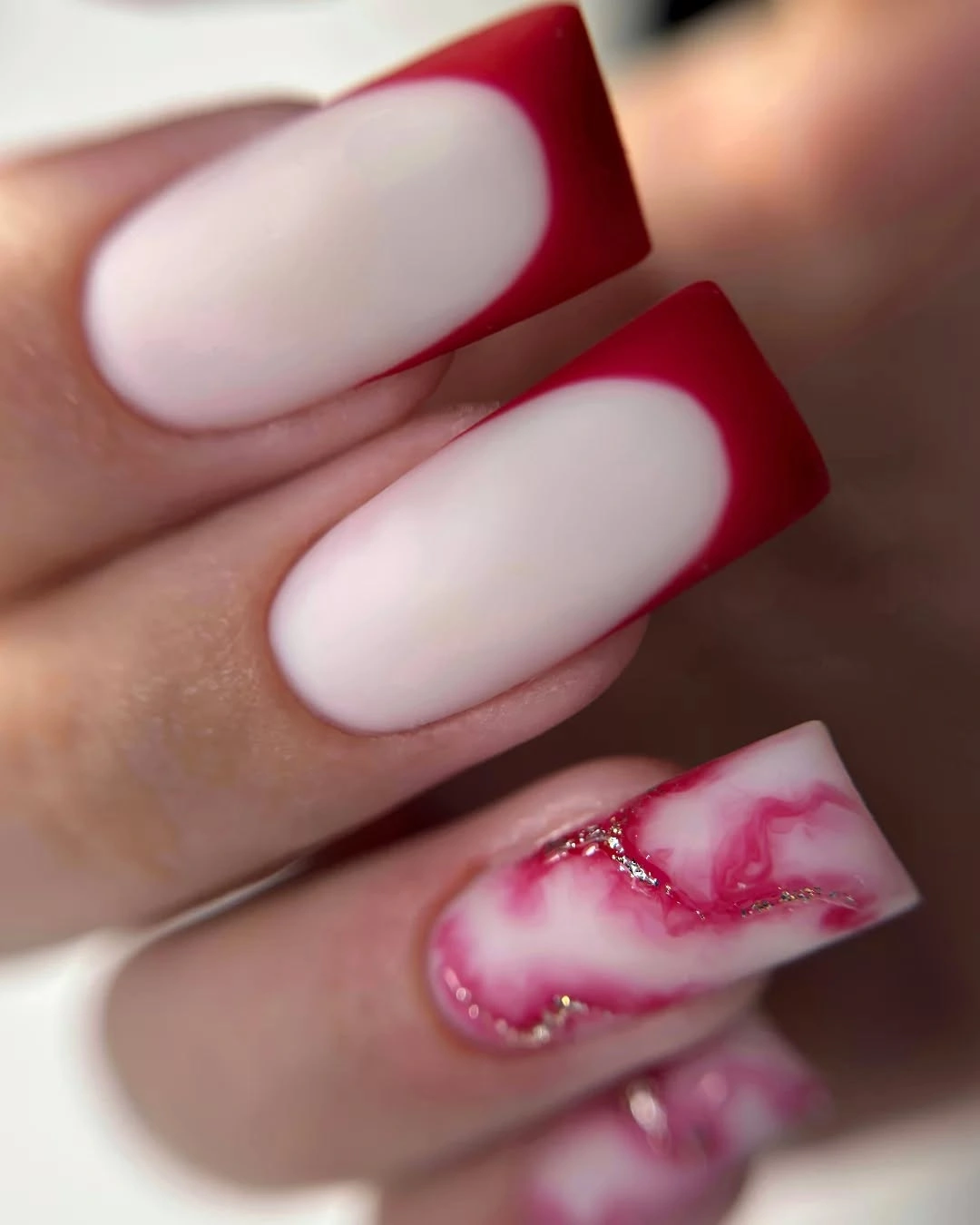
Use one expressive nail when you want decoration but still prefer a restrained neutral set. The long square offers enough room for the marbled mark to read, though a shorter shape should simplify the accent into one darker curved patch. Keep the rest of the palette pale and let clothing in gray, white, or soft denim provide context without adding another print.
The detailed accent can be harder to match after a chip or repair, and the long square still carries more daily commitment than the soft base suggests. If practicality matters, shorten the shape and keep the accent on the ring finger or thumb. The idea survives because the focal point stays singular, while the remaining nails restore visual calm.
Open Dark Geometry On A Neutral Square
Deep brown and black sections interrupt a pale base without covering the entire long square nail. The open spaces between blocks are just as important as the dark marks: they keep the design graphic and let the straight edges remain visible. Instead of a repeated motif, each nail uses a related arrangement of lines and tip shapes to create a controlled system.
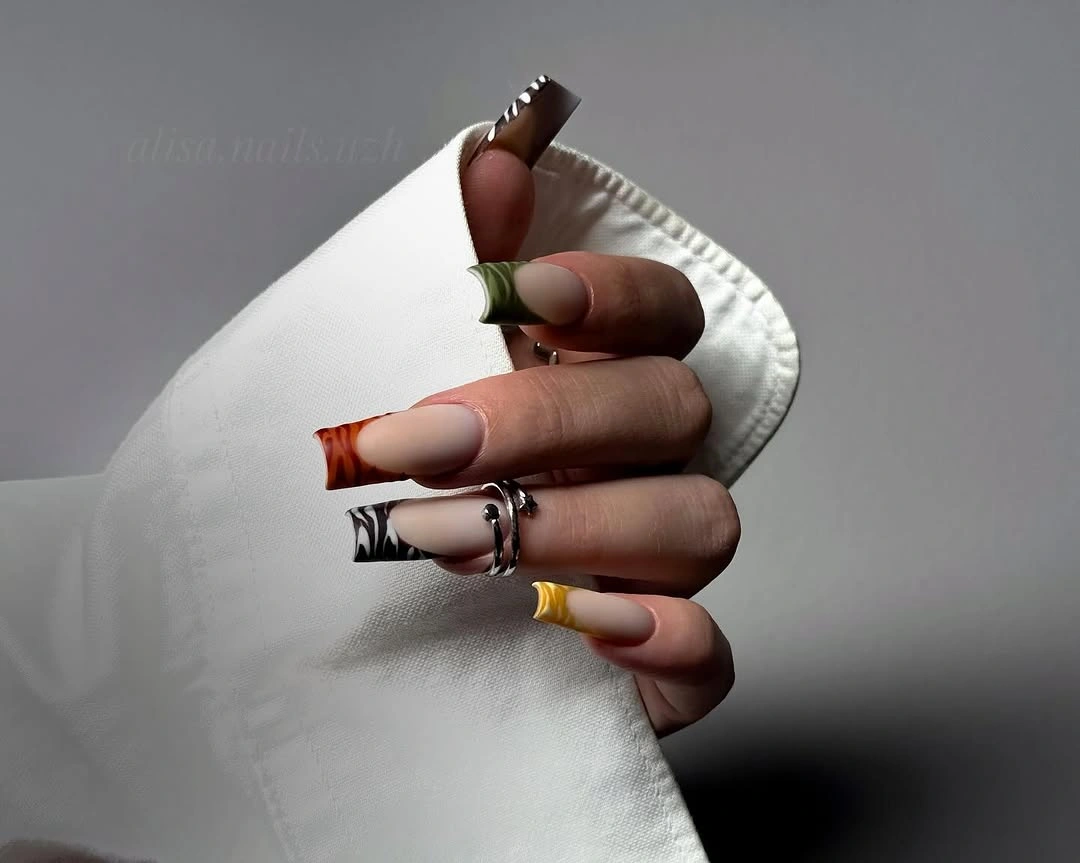
Preserve the empty space when adapting this design. A medium square can use one dark block near the tip and a thin line along the side, while a long version can support two or three separated sections. The neutral base works with cream, black, chocolate, and denim, and a simple outfit helps the negative space remain legible.
The risk is crowding. If dark areas touch or spread too far toward the cuticle, the manicure loses the open quality that makes it distinctive. Edit by removing one block before changing colors. The square shape will still carry the geometry, and the pale gaps will continue to do useful work by separating contrast rather than simply filling the nail.
Blush Squares With Small Cool Floral Marks
The blush-pink base is soft and warm, while small purple and blue flower-like marks introduce cooler notes near the tips of selected medium square nails. The accents are concentrated instead of repeated across every finger, so the base remains the first impression. The square shape gives the tiny motifs a stable canvas without making the set feel long or formal.
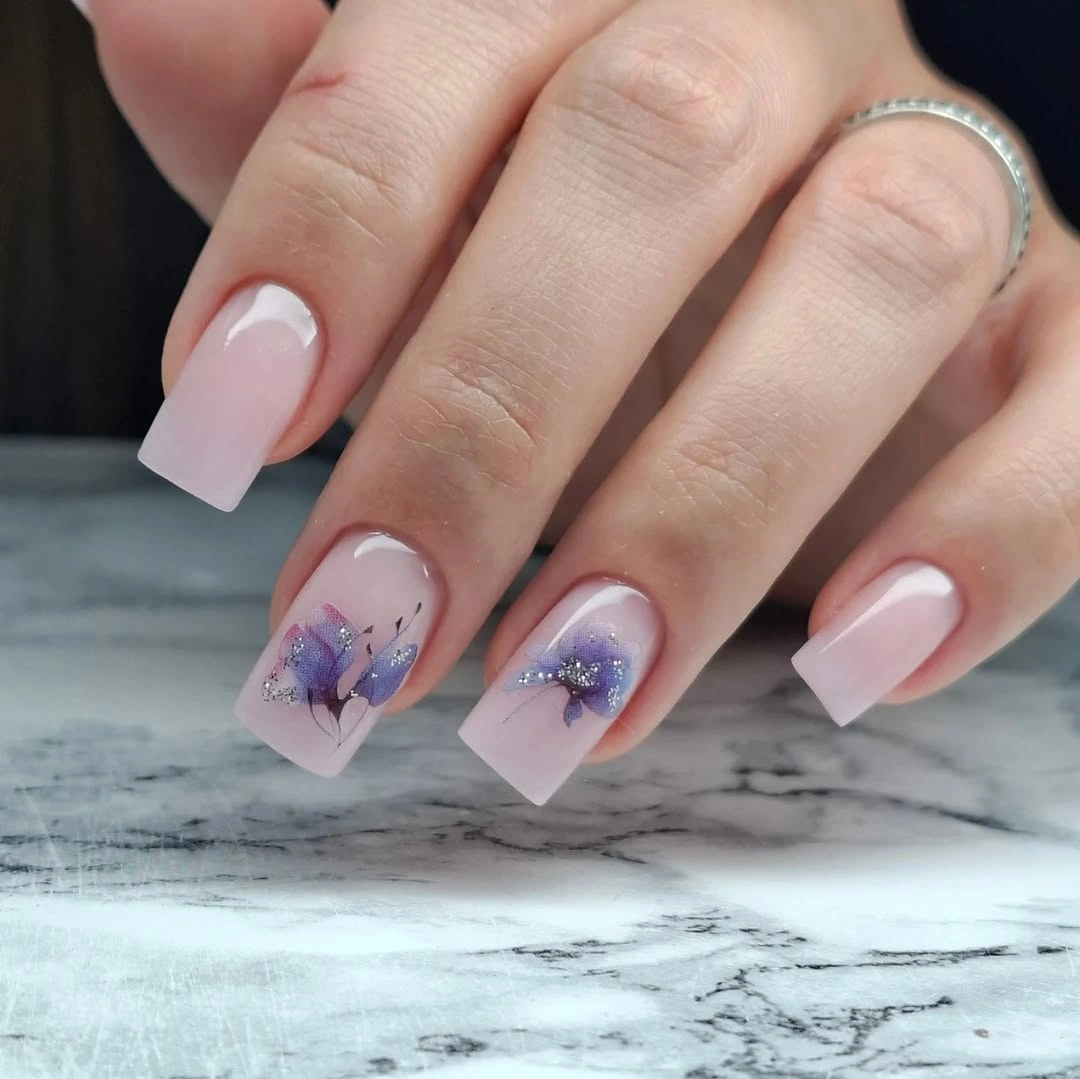
Keep the floral detail small and let the color relationship do the work. A pale pink base can support cool purple and blue when the marks remain airy, but too many petals will make a medium square look busy. Use the accents on two or three nails, then keep the remaining fingers glossy and plain. Soft gray, denim, and muted lavender clothing can echo the palette naturally. For a closer length comparison, see the site’s fall medium nail ideas.
The light colors are forgiving in mood but not always in edge wear. Pale pink and fine accents can show uneven repairs, especially if the design is copied across several nails. For a simpler version, keep one flower-like mark on one finger and replace the rest with the blush base. The contrast remains visible, but the manicure becomes easier to maintain and coordinate.
Angled Brown Tips With A Tailored Nude Base
Warm nude and layered brown sections form diagonal tips that echo the corners of the medium square nails. Thin lighter lines separate some of the blocks, so the design feels tailored rather than randomly striped. The base stays close to neutral, which lets the geometry add structure without turning the manicure into a bright statement.
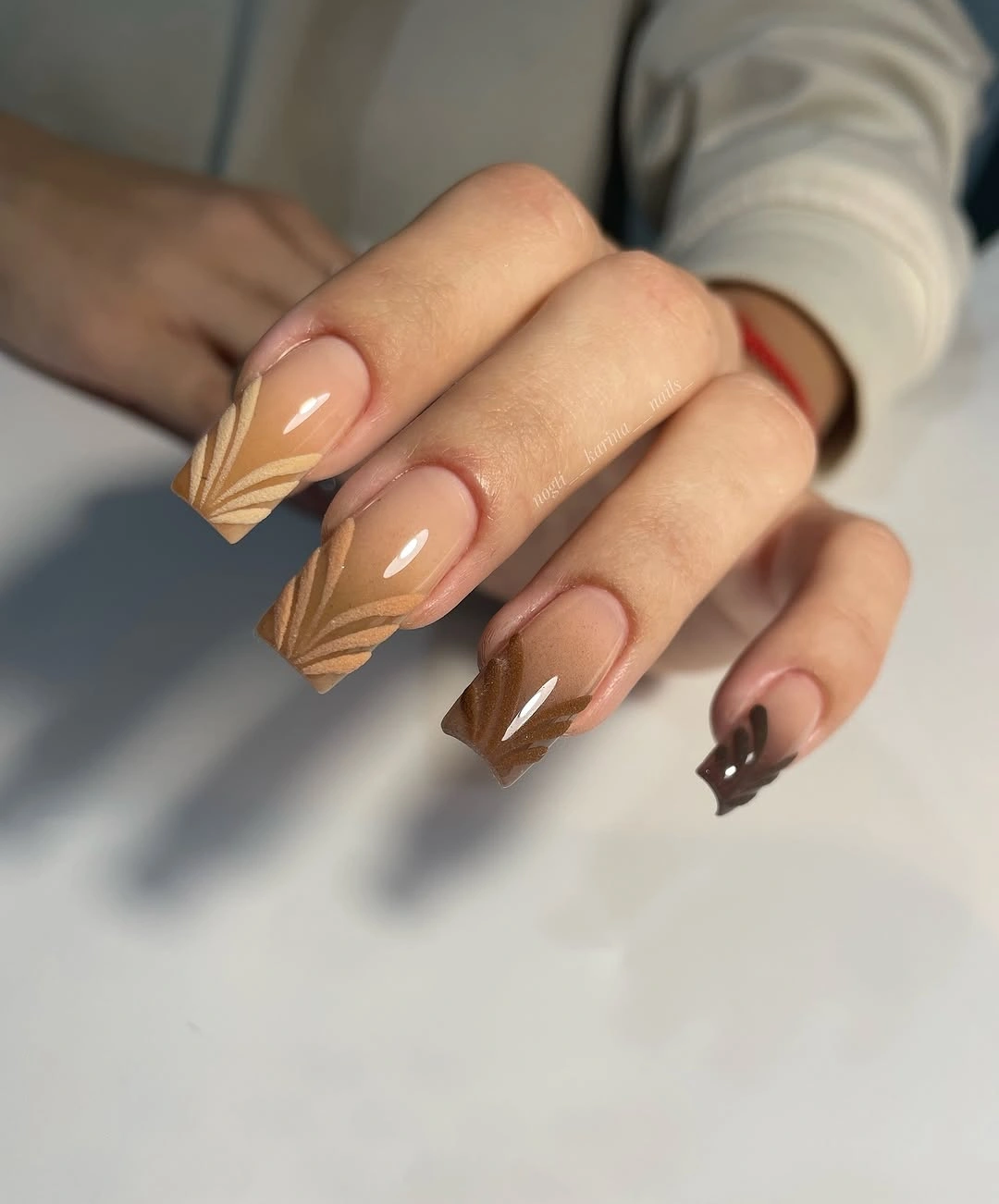
Use the diagonal direction to soften the strictness of a square edge. Keep one brown family dominant and let the lighter line act as a separator, not a third full color. On shorter nails, reduce the layers to one angled brown tip and one pale gap. The warm palette pairs with cream, camel, denim, and dark chocolate without needing a matching print.
Layered tips need clean spacing, and a small canvas can make several angled blocks merge into one dark patch. That is the main limitation, so remove a layer before shortening the shape dramatically. The design will remain recognizable through the diagonal edge and warm contrast, while a simpler version will look more intentional than compressed detail.
Electric Blue On A Long Square Frame
The electric blue is fully saturated and uninterrupted, so the long square outline becomes a clean frame for one strong color. Glossy highlights make the blue look almost luminous, and silver rings nearby increase the cool contrast without changing the manicure itself. The result is bold because of value and saturation, not because of a separate motif.
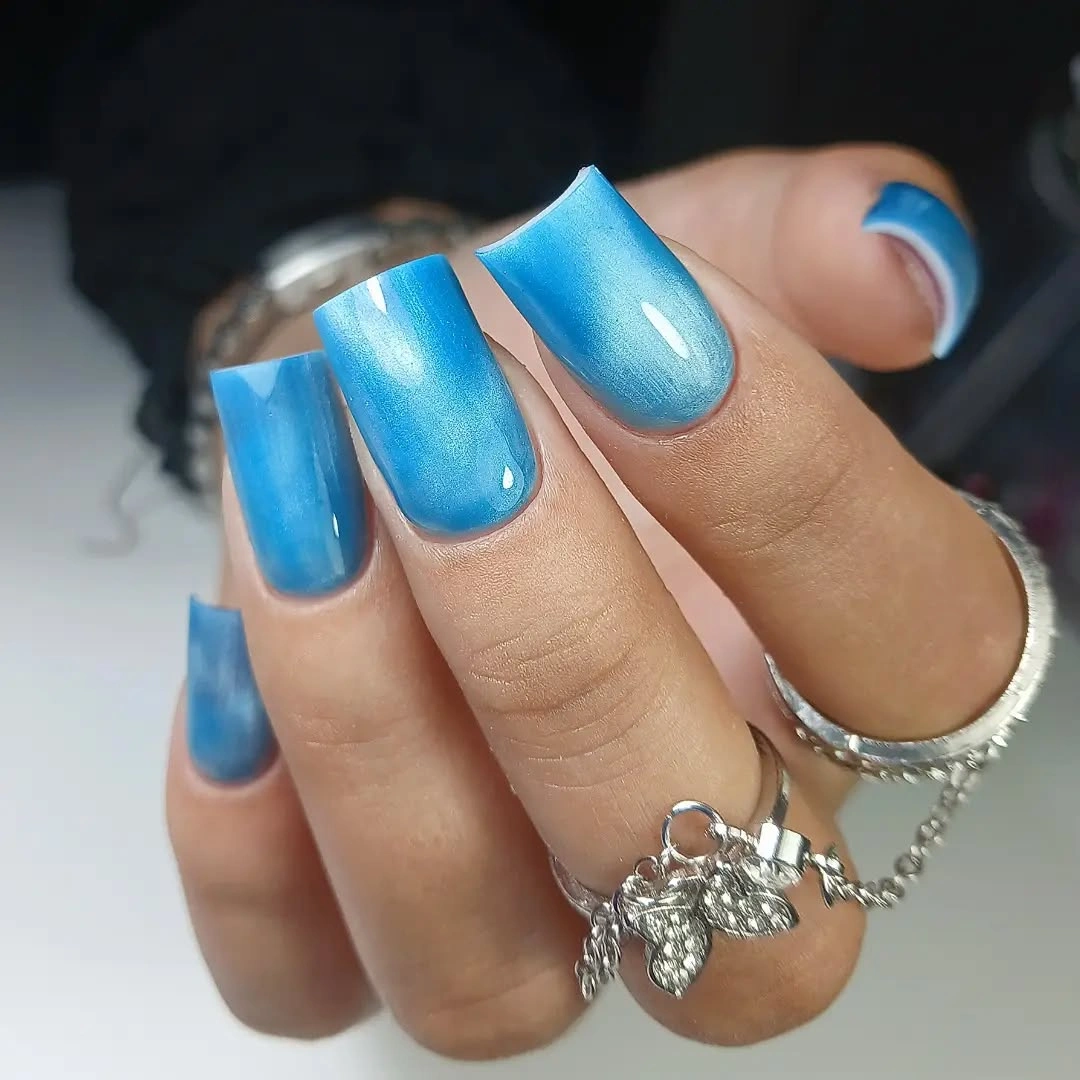
Keep the silhouette simple when the color is this intense. A medium square will retain the blue’s presence with less length, while a short square will make the look more graphic and casual. White, gray, black, and denim create a quiet background, and silver accessories can repeat the cool direction without adding another nail color.
The blue surface will show edge wear clearly, and the long square may feel more demanding during daily tasks. If you need an easier version, shorten the nail before softening the color; the saturated field is the reason the manicure works. A single pale accent would change the composition more than it improves it, so keep the surface clean.
Charcoal Orange White With One Leaf-Like Mark
Charcoal, orange, and white create a high-contrast palette, but one small leaf-like mark gives the mixed colors a focal point. The medium square shape keeps each block visible, while the limited palette prevents the set from becoming a random assortment. Orange supplies warmth, charcoal supplies depth, and white creates the space between them.
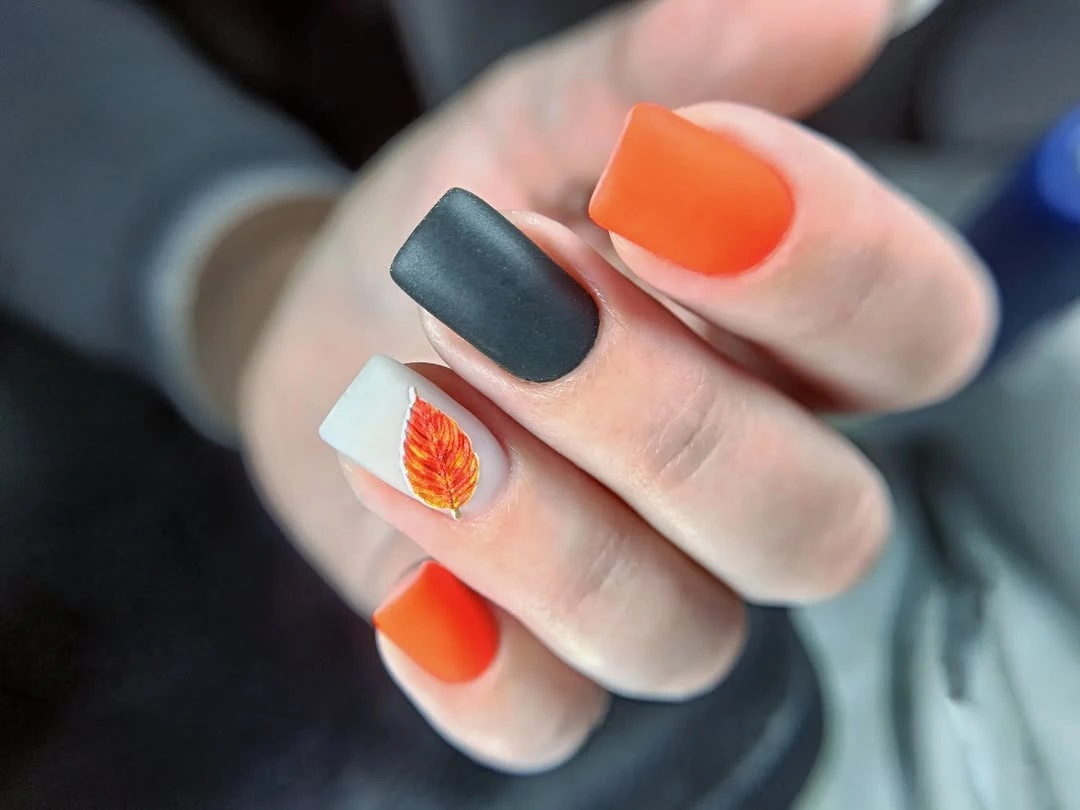
Choose one dominant color before assigning the accent. Here, charcoal can anchor the darker fingers, orange can appear as the energetic note, and white can keep the composition open. On a shorter square, reserve the leaf-like detail for one nail and use simple blocks elsewhere. Cream clothing with one orange or dark accessory will support the palette without competing.
The more colors a set contains, the more quickly it can feel disconnected if the spacing is inconsistent. The single seasonal mark solves that by giving the eye a place to land. If you want less maintenance, remove the motif rather than another color. The three-color relationship will still read, and the square shape will keep the blocks organized.
Ivory Squares Filled With Botanical Illustration
Several long square nails carry yellow, green, and orange botanical details over pale ivory and white areas, creating an illustrated garden effect. The flowers and stems vary from finger to finger, so the set feels hand-composed rather than mechanically repeated. The light base matters because it lets the warm details stay visible without requiring a dark background.
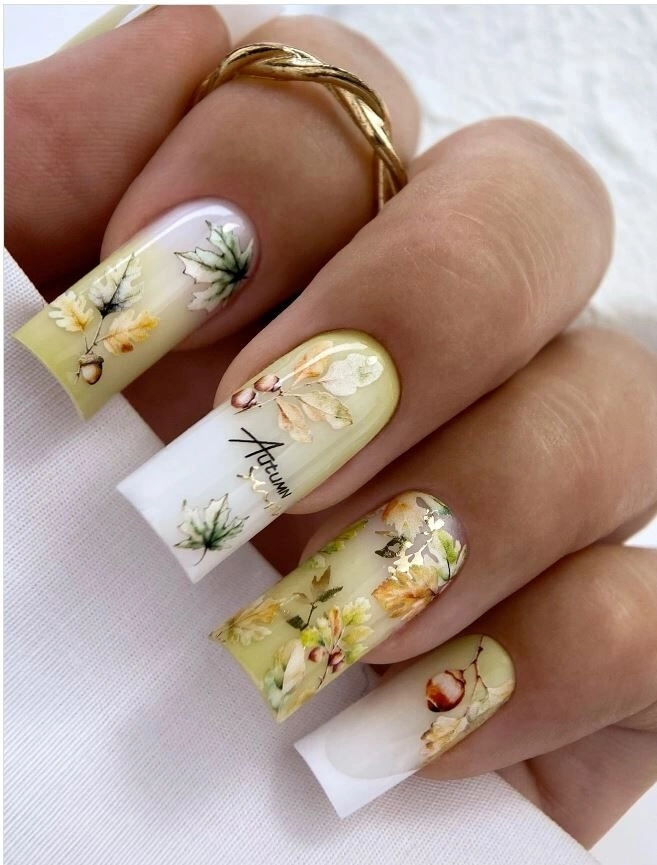
Use the available surface deliberately. Long squares can support several botanical accents, but a medium or short version will be clearer with one flower, one stem, or a small cluster on selected fingers. Keep the surrounding colors quiet and let cream, denim, olive, or warm brown accessories pick up one note from the manicure rather than all of them.
Detailed illustration asks for the most upkeep because a small chip can interrupt a whole motif, and shortening the nail can make petals compete for space. A practical edit is to keep the pale base on most fingers and move the botanical work to two accents. The manicure will still feel illustrated, but the open nails create a cleaner rhythm and easier repairs.
Black Squares With Reflective Color Panels
Glossy black covers most of the medium square nails, while selected fingers flash with pink, blue, or metallic-looking panels when the hand catches the light. The accents do not form a fixed floral or geometric motif; they act as interruptions in the dark field. That makes the manicure feel dimensional while preserving the authority of a black base.
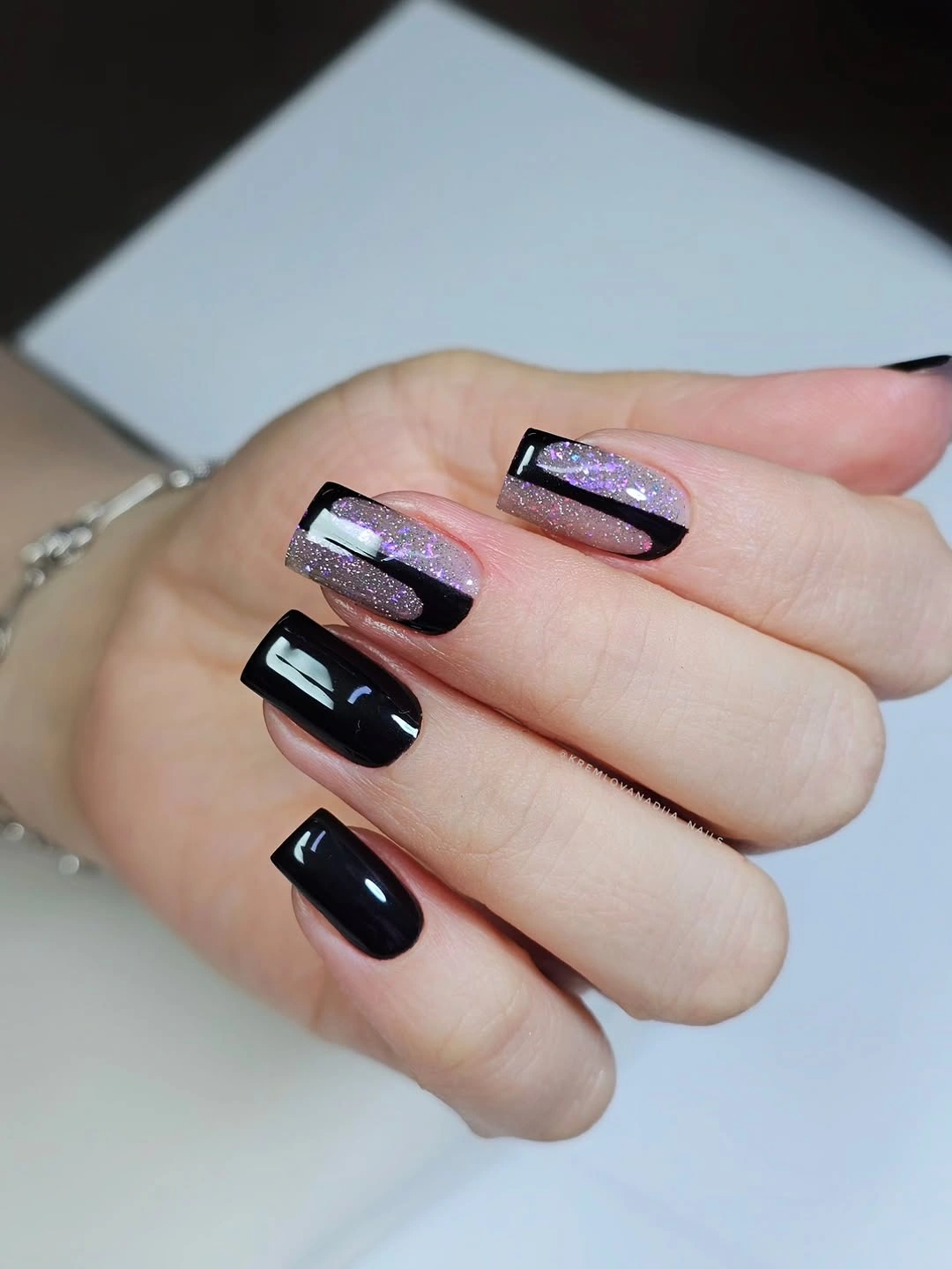
Keep the reflective color on a limited number of nails so the black remains the visual anchor. A shorter square can use one panel on the ring finger, while a longer shape can support two accents without losing the contrast. Gray clothing, denim, silver jewelry, or one muted pink detail can echo the flashes, but avoid a second strong pattern.
The uncertain quality of the reflections is part of the appeal, but it also means the accents may look different under ordinary light. Do not rely on them to carry the entire design. If you want more consistency, keep the black base and use one clearly visible color block on an accent nail. The composition will stay dark, with a focal point that is easier to maintain.
Long Deep Red With No Interrupted Surface
The long square shape changes the character of a solid dark red manicure. Earlier medium reds feel everyday and direct; here, the extended corners and uninterrupted glossy field make the color look more formal and deliberate. With no linework or accent, length becomes the only variable, which makes the silhouette easy to evaluate.
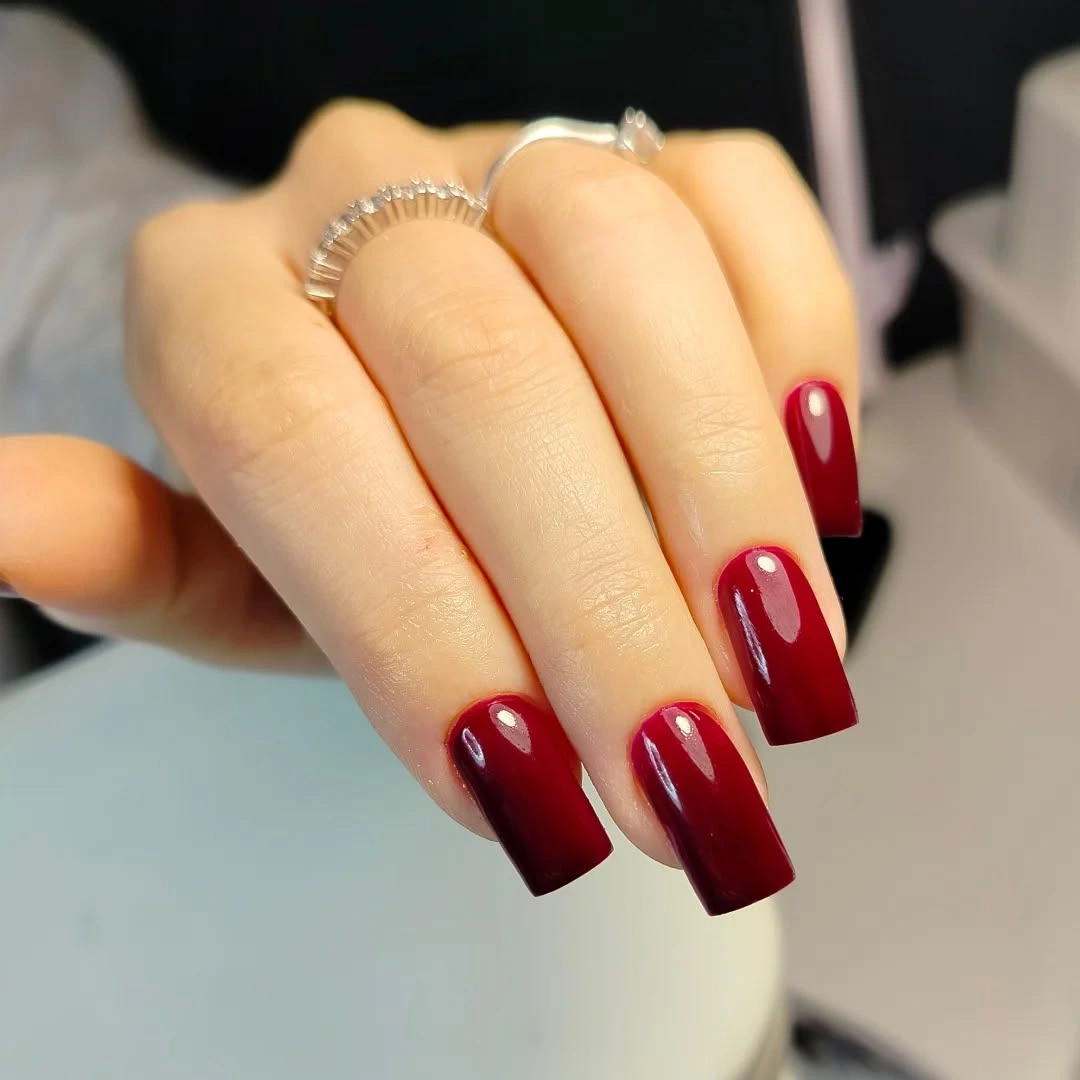
Choose the longer version when you want the red to act as a visible accessory. It pairs well with cream, black, gray, and gold, but the hand will remain a focal point even when the clothing is simple. A medium square preserves the same color relationship with less daily commitment, while a short square makes it feel more casual. For a more restrained workplace direction, compare fall nail designs for the office.
The corners and length are the practical tradeoff. They can make fastening clothing or using a phone less comfortable, and glossy dark red shows wear at the edges. If that is a concern, reduce the length before adding art or changing the shade. The uninterrupted surface is the strength of the manicure, so keep the edit structural rather than decorative.
Dark Plum Squares With A Softer Undertone
The medium square nails are a deep plum that can look nearly black in shadow but reveals purple around the highlights and against the flowers nearby. That undertone gives the solid manicure more nuance than a plain black coat without introducing a separate motif. The clean shape keeps the color grounded and lets the shift remain the small detail worth noticing.
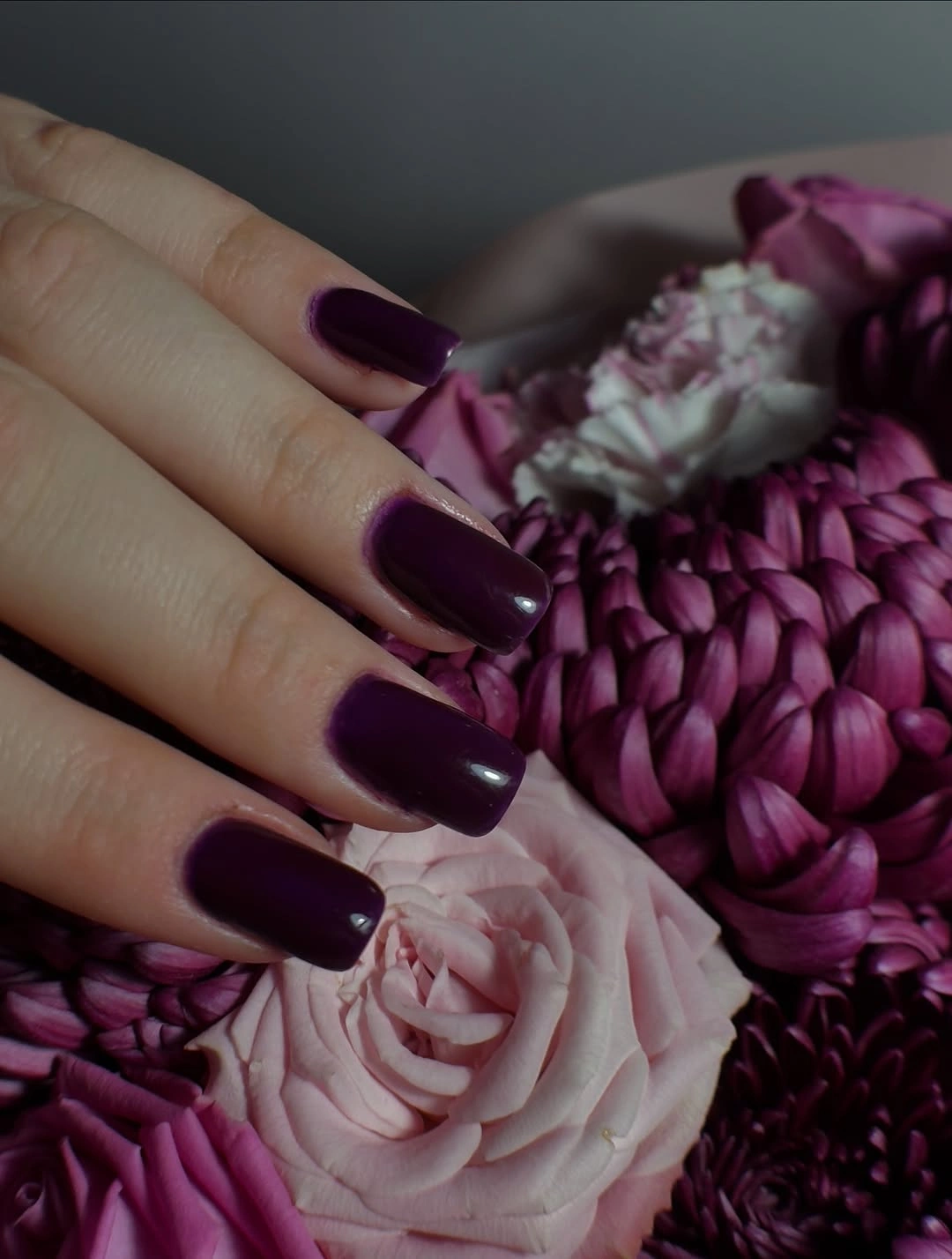
Use plum when you want dark depth with a little more color. Medium length keeps the surface balanced, while cream, mauve, denim, and muted gold can bring out the warmer or cooler parts of the shade. If you prefer a quieter version, use plum on the main fingers and a pale neutral on one accent rather than adding glitter over the entire set.
The shade may read differently depending on light, which is useful but can make color matching less exact. A solid finish keeps maintenance straightforward because there are no details to reconstruct, yet chips remain visible against the dark base. Preserve the glossy reflection and let the undertone change subtly; that is enough variation for a manicure with no extra art.
Short Lilac Squares With A Sheer Pearl-Like Glow
The short square shape holds a translucent lilac-pink color that catches a cool pearly reflection without becoming dense or metallic-looking. The base stays soft and slightly see-through, so tonal changes in the light become more important than a strong block of pigment. This creates a gentle bridge between bright summer color and the darker layers associated with fall.
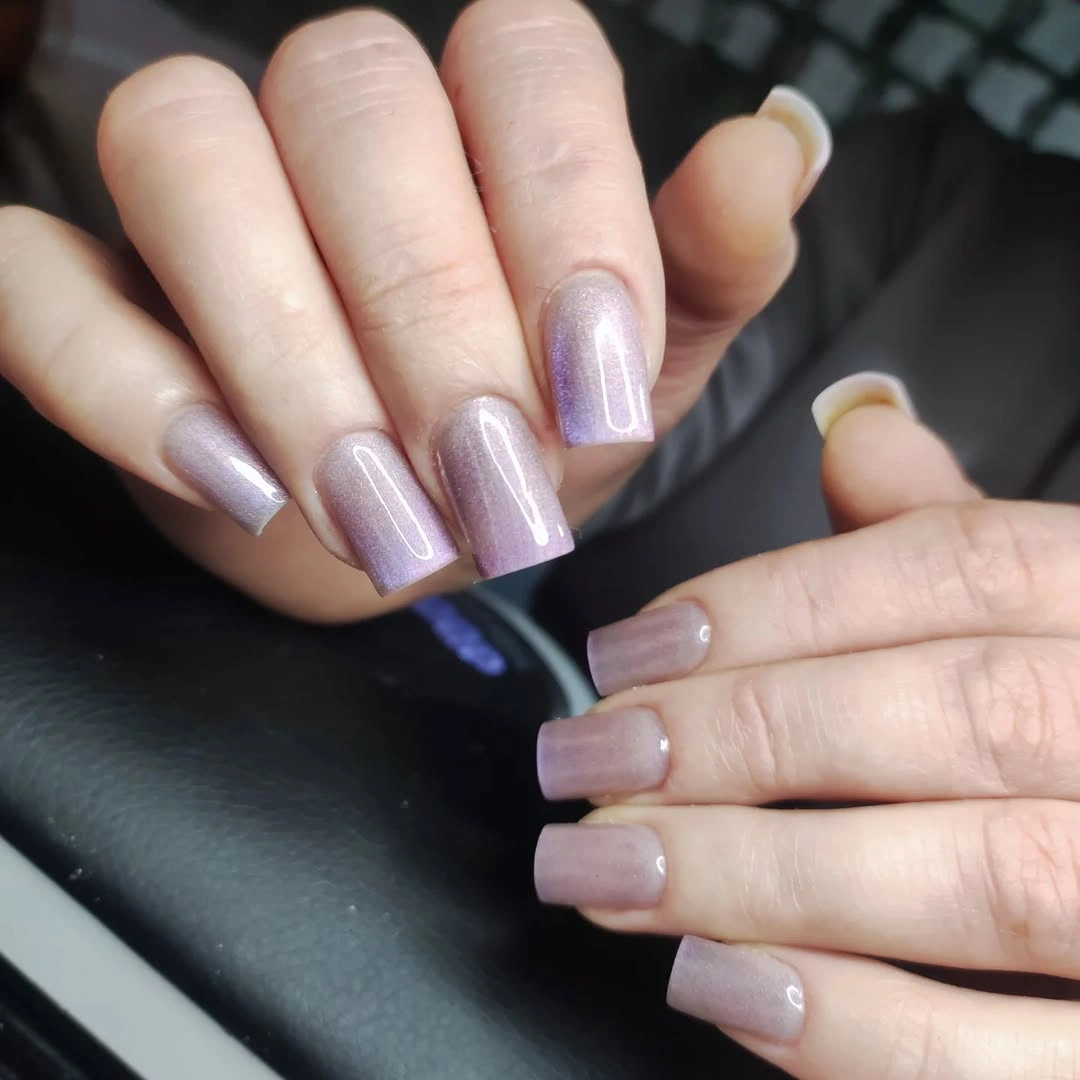
Keep the length short if you want the cool tint to feel practical. Gray, denim, white, and silver accessories will support the pale direction, while a dark brown sweater can create a sharper contrast. If the color looks too quiet, place it on the main fingers and add one slightly deeper lilac accent, but avoid turning the finish into chunky sparkle.
The low contrast is both the charm and the limitation. It may not satisfy someone looking for a dramatic fall manicure, and the light surface can show uneven edges. A shorter square helps with upkeep, while a single deep accent can supply definition without changing the airy base. Keep the glow fine and let the empty surface remain visible.
Long Squares Carrying Multicolor Wave Lines
Coral, blue, green, and pink lines move along a translucent pale base, creating a ribbon-like rhythm across the long square nails. The colors are separated by open space, so the set can contain several accents without becoming a solid rainbow block. The straight edges give the moving lines a firm boundary, which keeps the abstract design organized.
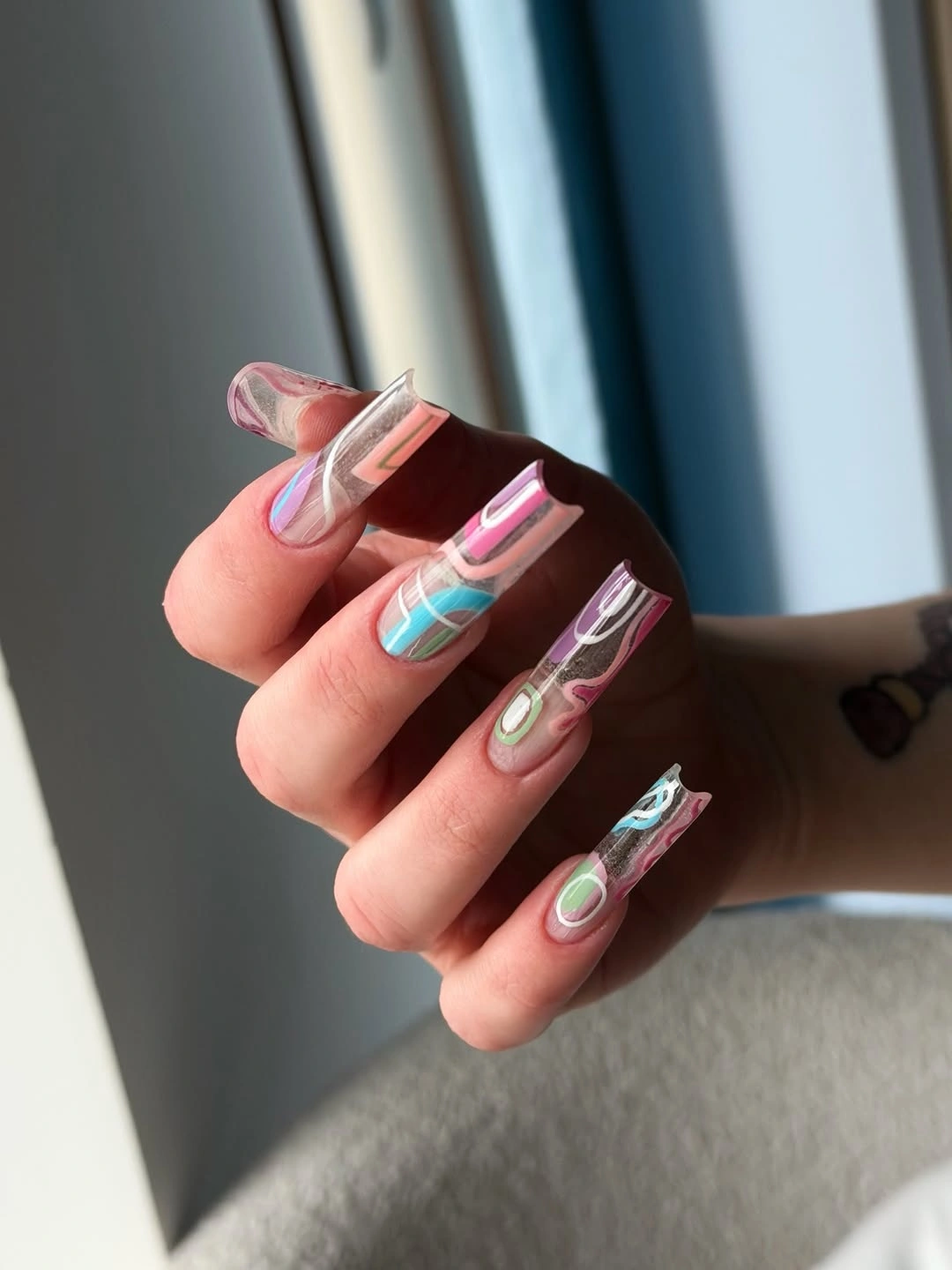
Use length to let each wave travel, then edit the palette if the nail becomes shorter. One coral curve and one blue or green curve can preserve the movement on a medium square, while a short nail may need only one accent line. Keep the outfit simple or repeat one color in a small accessory; matching every shade would compete with the open pattern.
The design’s main tradeoff is density. Several colors can feel lively, but compressed lines quickly merge and lose their individual rhythm. Remove a wave before adding more space or changing the base. The manicure will remain multicolor through a few clear movements, and the pale gaps will continue to provide the visual relief that makes the long squares work.
Compact Silver Glitter With Strong Texture
Fine silver glitter covers the short square nails as one even textured surface, with no separate accent or color break. The black background makes each reflective point easy to see, while the compact shape keeps the shine controlled. Because the finish is uniform, texture rather than line, motif, or length becomes the defining design decision.
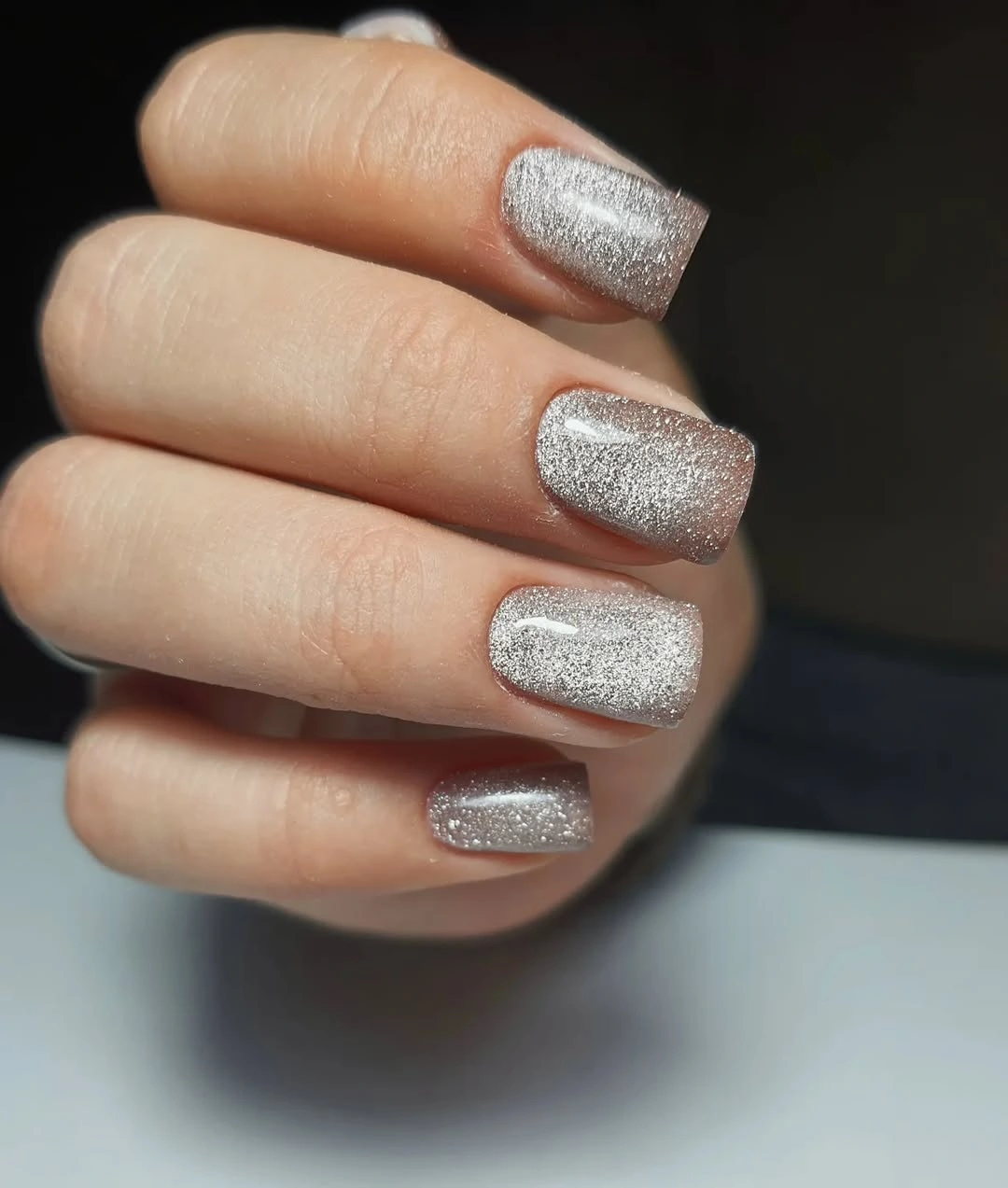
Keep the shape short when using full silver sparkle so the finish reads intentional instead of overly extended. Black, gray, white, denim, and simple metallic jewelry can frame it, but another glitter accessory may make the look feel busy. If you want less shine, keep the silver on two or three fingers and use a glossy neutral on the remaining nails. For another way to organize a statement manicure, browse the site’s fall nail inspiration.
The full glitter field can be harder to match during a repair, especially if the reflective particles catch light unevenly. It also remains visible in every setting, which may not suit a reader who prefers quiet nails. A limited accent version keeps the texture and reduces the commitment. Let the square outline stay simple so the silver remains the only strong surface event.
Burgundy Squares Stretched By White Stripes
Thin white stripes travel vertically through a glossy burgundy base, and their direction makes the long square nails appear even more elongated. The deep red supplies the visual mass, while the narrow pale lines break it into a measured rhythm. Nothing is scattered across the surface; the accent follows the length and reinforces the shape.
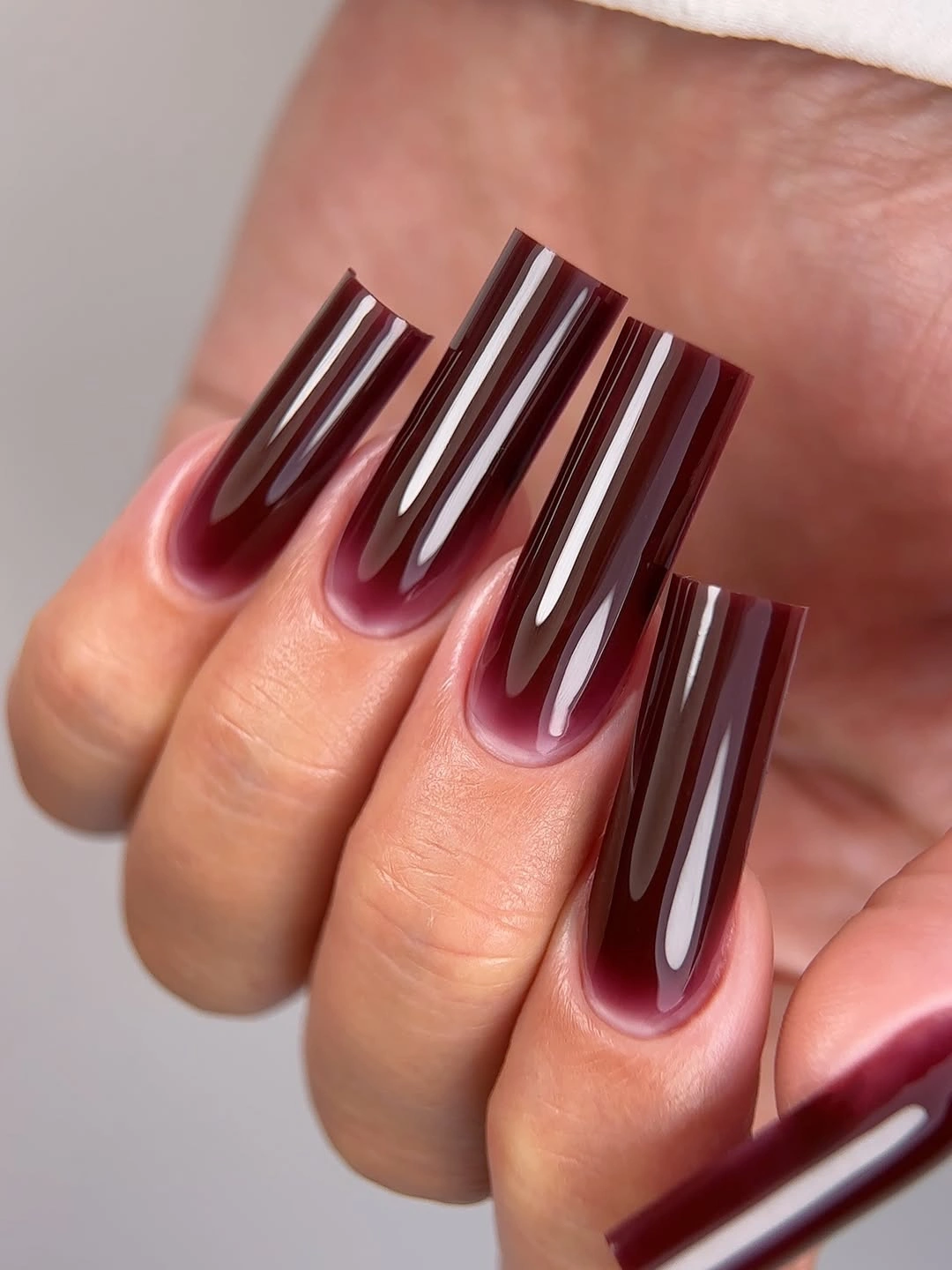
Use one line when the nail is medium and two only when the surface has enough room to keep them separate. The vertical direction is already strong, so the rest of the styling can stay quiet with cream, gray, black, or muted gold. If you want a softer effect, move the stripe closer to the side rather than making it wider.
The long square and dark base make any crooked stripe or worn tip easy to notice. A shorter version is more practical, but keep the line narrow so it remains an accent rather than a second full block of color. The design works through direction and restraint, so removing one stripe is a better repair strategy than adding more decoration around it.
Espresso Brown As A Warm Dark Neutral
The medium square nails are a very dark brown with glossy highlights that reveal a warmer edge when the light moves across them. In shadow they can approach black, but the brown undertone keeps the manicure softer and more connected to fall layers. There is no motif to distract from that color relationship, so the distinction is subtle but useful.
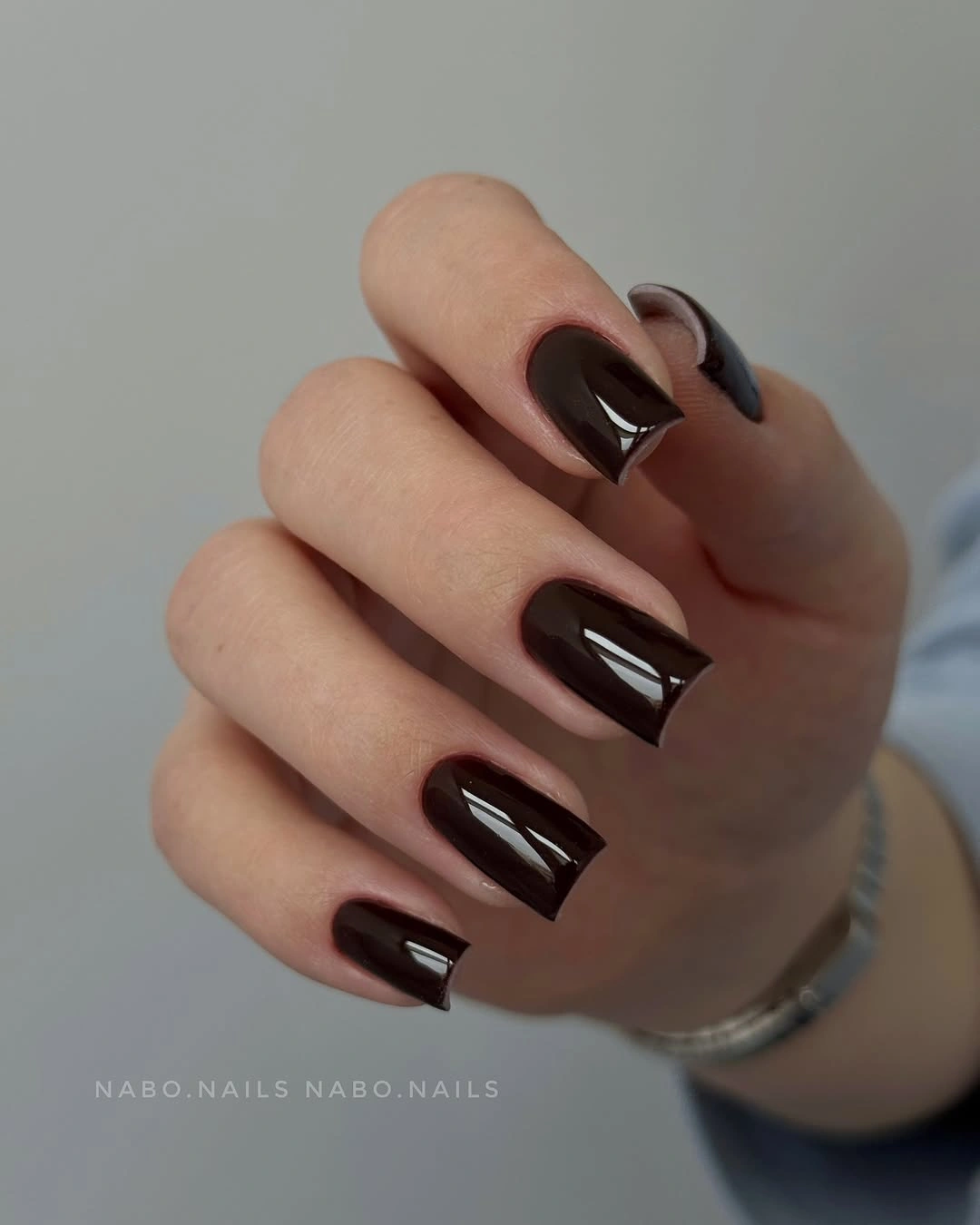
Choose espresso when black feels too severe and burgundy feels too red. The medium square keeps the dark neutral wearable, while cream, camel, denim, olive, and gold accessories bring out its warmth. If you want more variation, change the surrounding palette before adding nail art; the value of this set is its quiet depth and clean surface.
Very dark brown still shows chips and uneven edges, but it is easy to refresh because the design has no placement to recreate. A shorter square will make it more casual, while a longer square will push it toward a statement look. Preserve the glossy reflection and the warm undertone; those two details are enough to keep the neutral from flattening into black.