
Fall Trendy Nails 2026: Fresh Color, Tips and Texture
Trend can become tiring when every manicure is expected to announce its relevance at first glance. The pressure usually produces busy choices, yet the most convincing updates often come from one adjustment that changes how a familiar shape is read. The hand feels current when the decision looks intentional enough to explain itself, not when every available detail is added at once.
Use a simple test before committing: ask what you want someone to notice first, then remove anything that competes with that answer. Check whether the length suits your routine, whether the contrast will still read in ordinary light, and whether the upkeep matches your patience. A clear priority gives a playful choice room to breathe and keeps experimentation from turning into visual noise.
Cobalt Glitter on a Compact Square
Short square nails in deep cobalt blue are covered with fine glitter that catches light across the entire surface. The color is rich enough to feel jewel-like, but the compact outline keeps it from becoming overwhelming, and the large gold flower ring adds context without changing the manicure itself. Because the sparkle is built into one strong shade rather than divided into several colors, the hand still has a clean visual anchor.
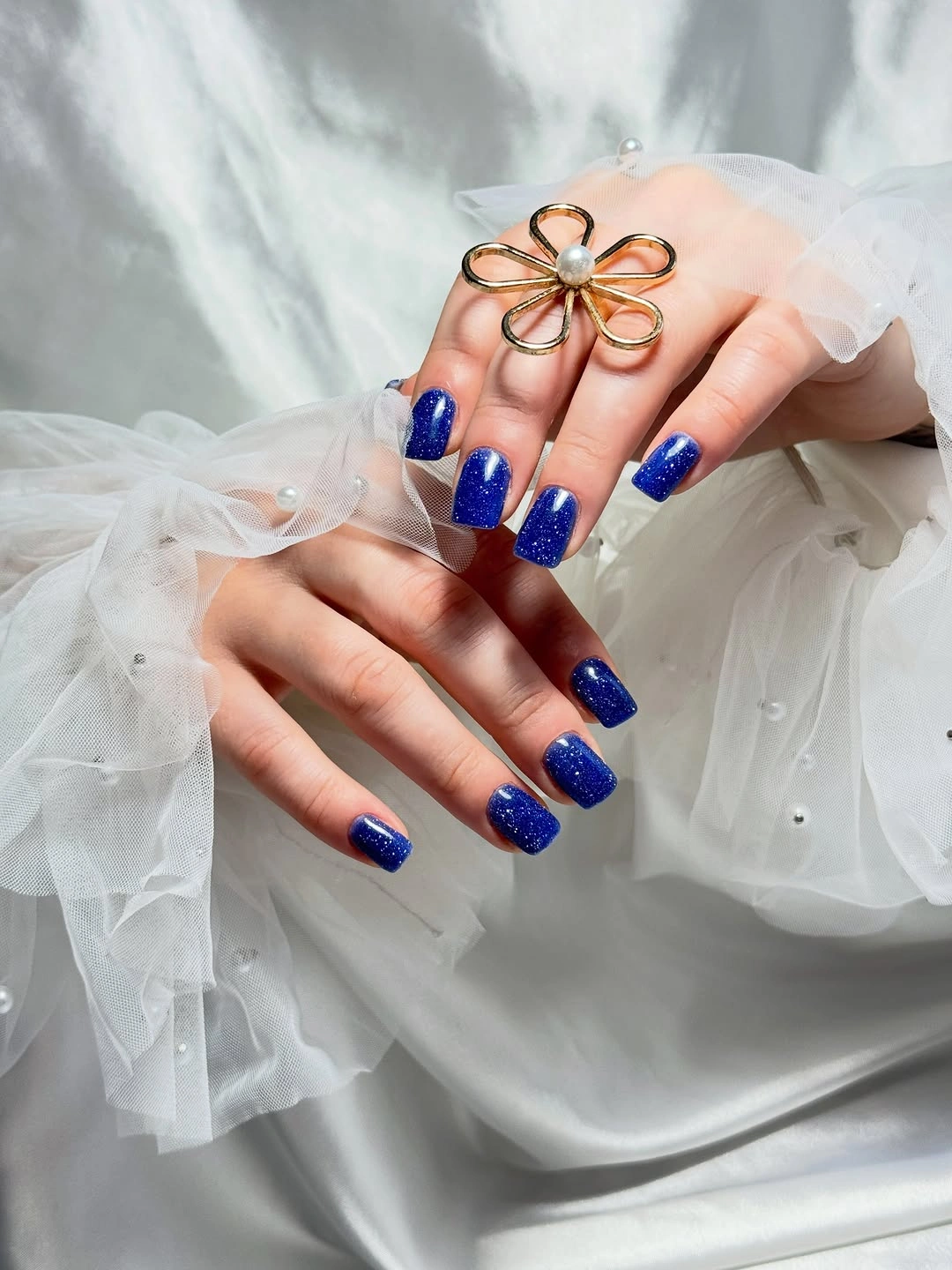
The useful trend decision is scale. A reader who wants a quieter version can keep the cobalt and move the glitter onto the big or ring finger, while a slightly rounded square will soften the blocky edge without losing the concise proportion. Fine particles create movement more gently than chunky decoration, but regrowth around a dark cuticle area can become visible, so the shorter length is doing practical work as well as stylistic work.
Keep the base color saturated if the goal is after-dark energy, or trade cobalt for deep teal, plum, or burgundy when the wardrobe calls for a warmer direction. The shape should remain short enough that the glitter reads as texture instead of making the fingers look visually crowded. This set succeeds because every nail repeats one clear idea; adding a separate motif would compete with the shine already present.
Black and White French with a Tiny Heart
Short square nails use a pale base with black French tips, plus one tiny dark heart-like mark near a cuticle. The dark edge frames the nail cleanly, while the small symbol gives the manicure a personal note without filling the surface with art. A gold heart ring sits nearby, but the nails stay visually controlled because the metallic accessory is not repeated as another nail decoration.
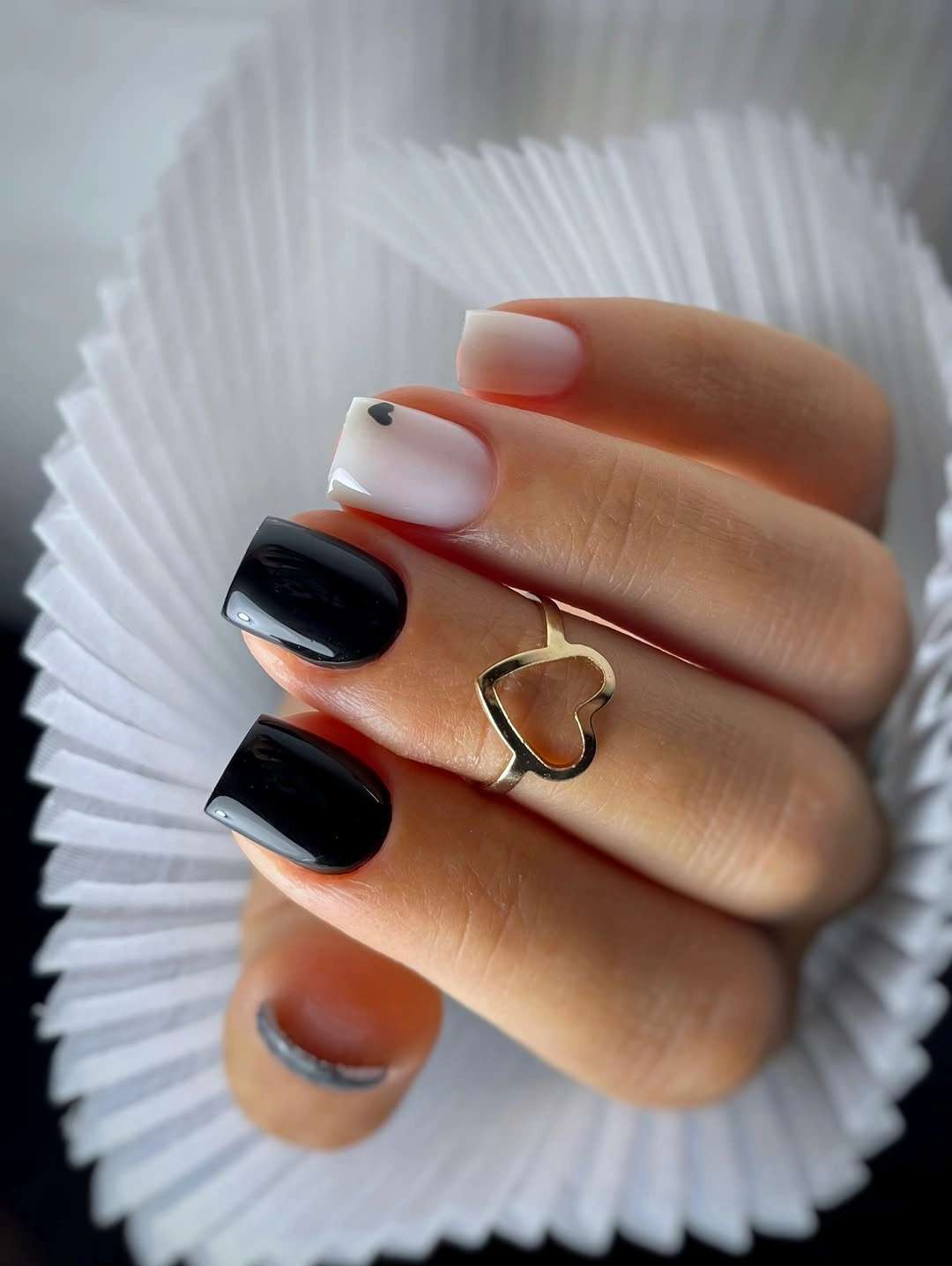
The design works through contrast at the edge, which makes it a strong reference for a short shape. If a black line feels too severe, make it thinner or switch to espresso brown; if the heart feels unnecessary, remove it and the French structure still holds. The important choice is where the dark color stops, because leaving the pale center open prevents the short nails from looking compressed.
Precise tips need a steady curve, especially on a small surface where a tiny difference is easy to notice. Use one symbol at most if you want the playful detail to remain a punctuation mark, and keep the remaining nails consistent so the hand does not become a collection of unrelated miniatures. For another clean edge direction, the guide to fall French nails can help compare how color placement changes the same basic structure.
Pale Blue with Small Rhinestone Lines
Short square nails carry a glossy light blue base, with narrow rhinestone clusters placed near the cuticle on several fingers. The stones are not scattered over the tips; they create slim vertical accents that draw the eye toward the neat shape and leave most of the cool color uninterrupted. That spacing keeps the sparkle graceful instead of turning a compact manicure into a heavily embellished surface.
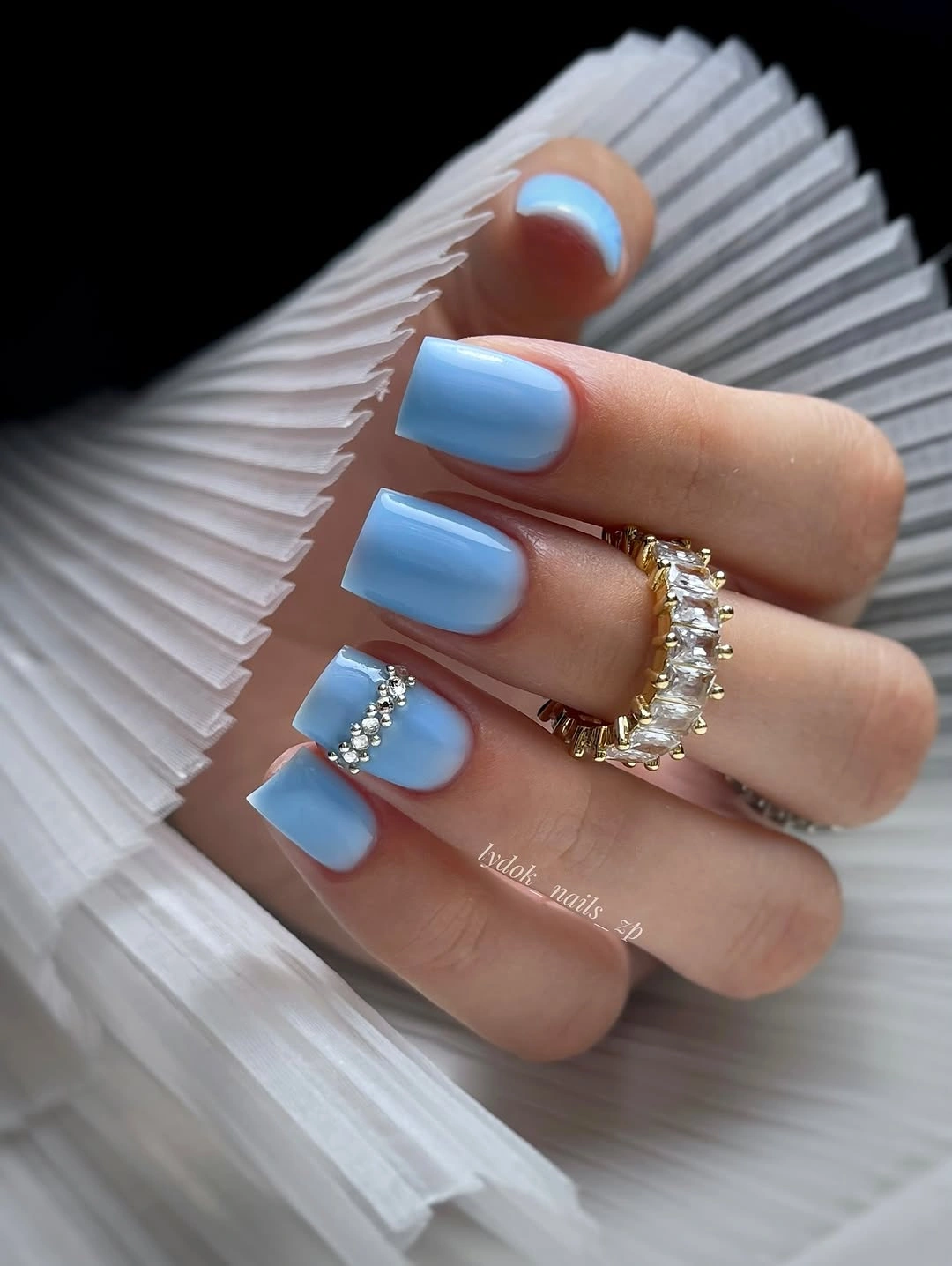
The pale base is doing more than providing a soft backdrop. It lets the stones catch light while keeping the overall mood cool and composed, and it makes the same idea easy to scale down to one accent finger. If raised decoration is inconvenient, use a small silver dot or a short painted line in the same cuticle position; the placement matters more than the amount of texture.
Rhinestones can catch on fabric, and their vertical arrangement may look uneven as the nail grows, so the border around each cuticle should stay clean. A shorter square helps the blue remain the dominant feature and gives the embellishment a clear frame. The set feels current because the shine is selective: the color supplies continuity, while the stones create only a few controlled interruptions.
Glossy Blue-Violet Square Nail Manicure
Medium-long square nails are coated in a vivid blue-violet that shifts slightly between the two colors as the surface catches light. The finish is smooth and decoration-free, so the interest comes from the undertone and the even block of color rather than any motif. A consistent square outline gives the saturated shade a composed frame, keeping the result strong without making it look chaotic.
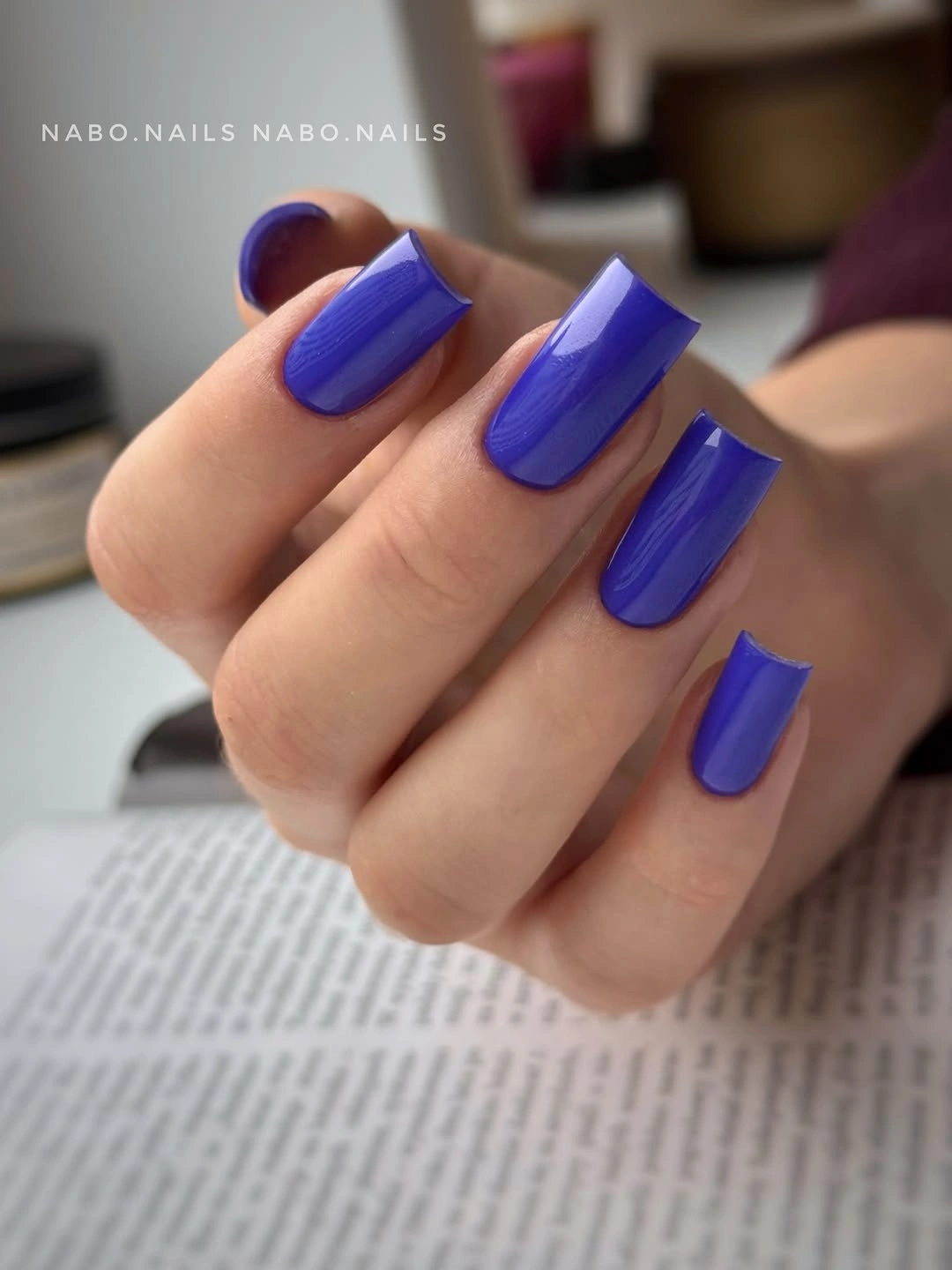
This is an easy design to adapt because the color already carries the trend signal. A shorter square makes the shade more approachable, while one nude accent can create relief if a full hand of blue-violet feels too dominant. The finish should stay glossy if the goal is depth; a flat matte surface would make the color calmer but would remove the reflective shift that gives it visual movement. For a wider shade comparison, fall nail colors keeps the decision centered on undertone rather than added art.
Bright cool colors can compete with neutral clothing, so consider the undertone before choosing the final shade. Cobalt will look deeper, periwinkle lighter, and purple more atmospheric even when the placement stays identical. The clean surface is the point here, and adding glitter or linework would make the manicure less about a precise color decision and more about decoration.
Short Cherry Red with a Clean Reflection
Short rounded-square nails are painted an even glossy red and shown across both hands, where the compact shape keeps the color bright rather than imposing. The red is classic, but the restrained length makes it feel fresh and practical, while the strong reflection keeps the surface from looking flat. Nothing interrupts the color block, so the neat curve of each corner becomes part of the finish.
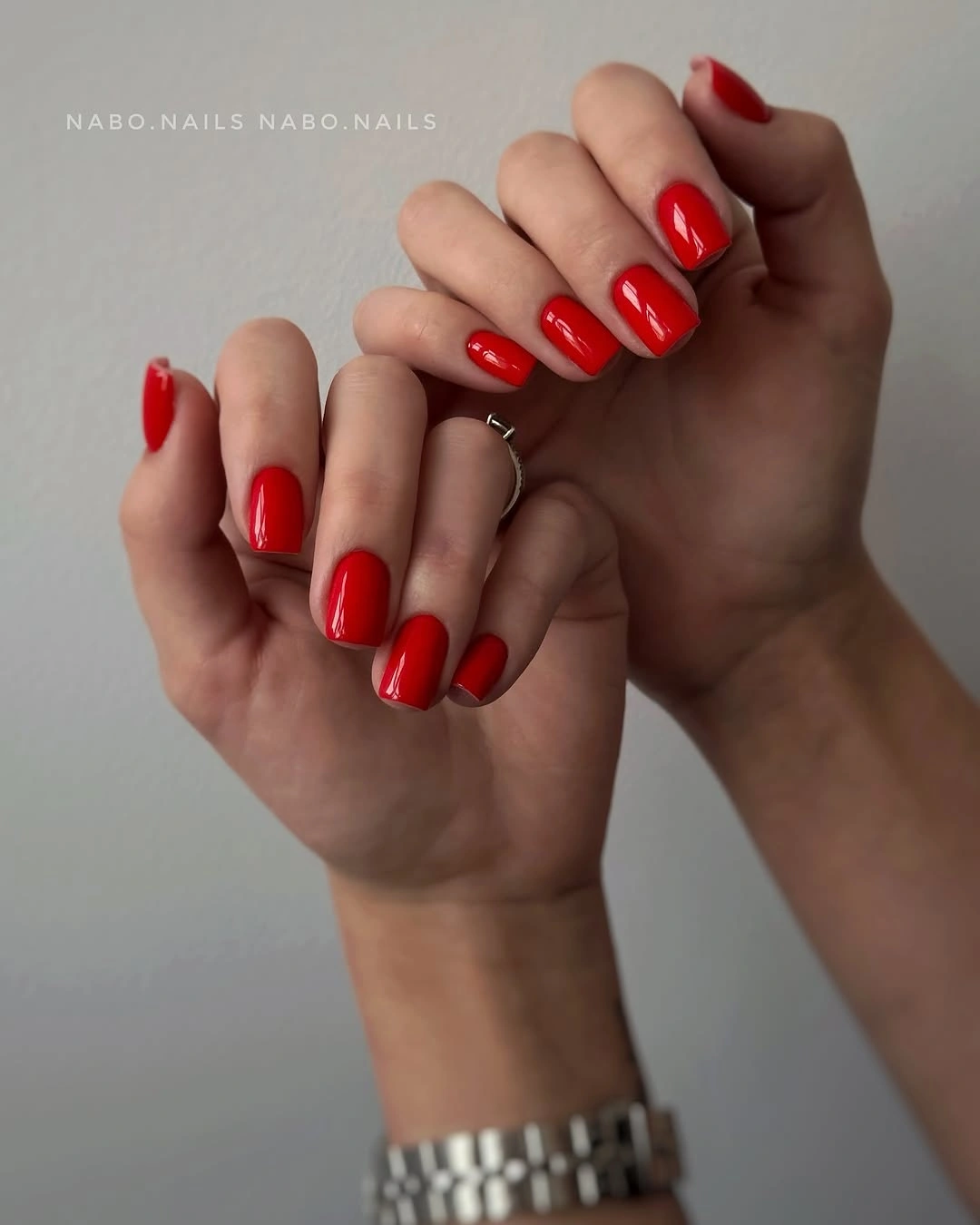
A reader can keep the exact idea for an everyday set by maintaining the short proportion and allowing the red to remain solid. A deeper berry or rust swap would move the color toward autumn without changing the shape, and a rounded corner can make small edge wear less abrupt than a hard square. There is no need for a separate accent unless the full red hand feels visually too direct.
The main maintenance thought is that a high-contrast red exposes chips quickly, even when the nails are short. A smooth border and balanced cuticle line will do more for the result than a second finish, because the manicure depends on clarity. It is trend-aware through restraint: a familiar color looks deliberate when the length, shine, and outline agree.
Soft Pink with One Silver Glitter Nail
Short rounded-square nails use a glossy pale pink base and reserve fine silver glitter for one accent finger. The pink stays soft and close to the skin, while the glitter introduces a clear change of finish without adding a loud second pigment. Because the sparkle is isolated, the hand remains calm enough for everyday styling but still has a visible focal point when light moves across the accent.
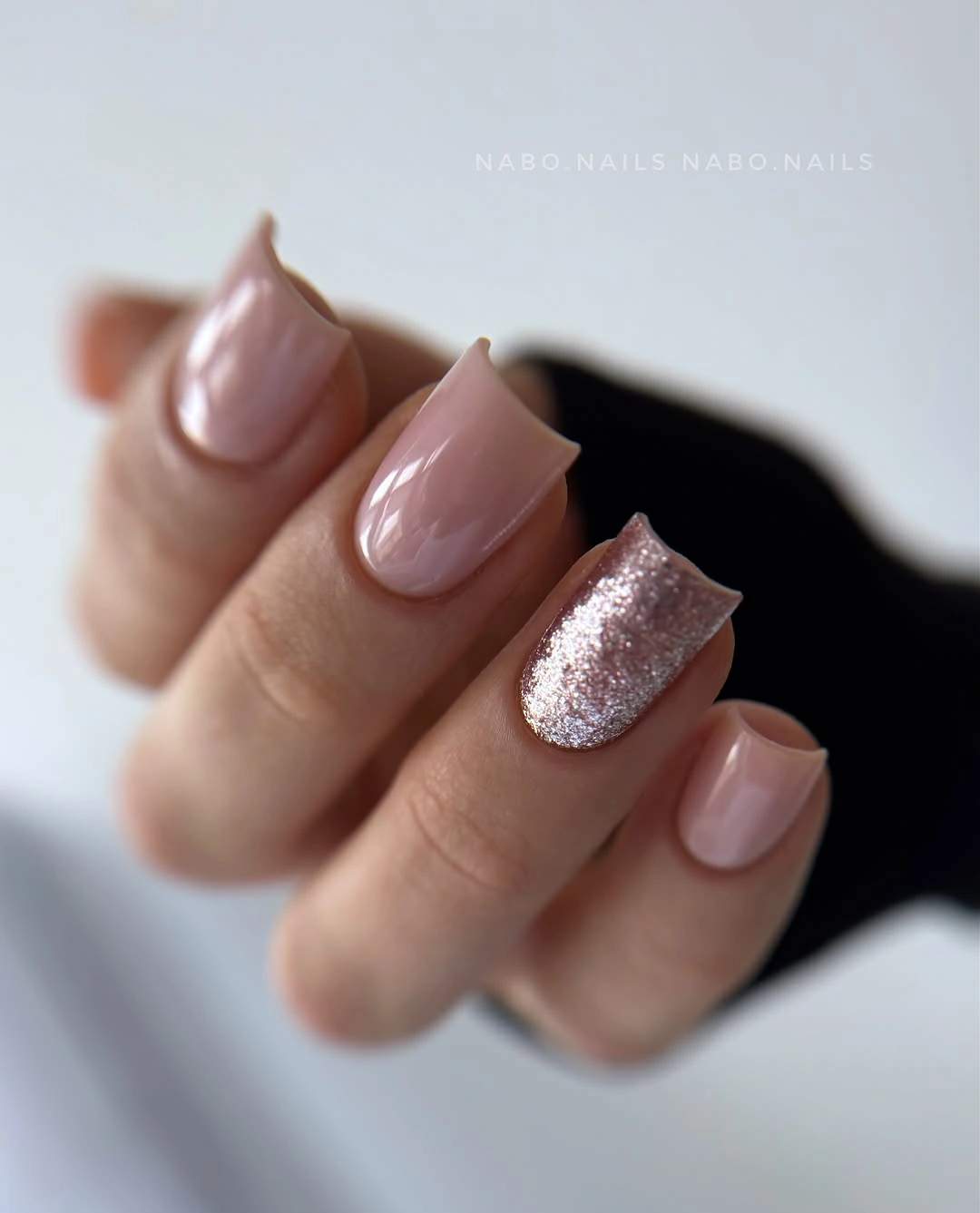
The one-finger strategy is the part worth borrowing. Full glitter would make the small shape busier and could turn the design into an occasion-only choice, while one accent creates a simple decision that is easier to refresh. A reader can switch silver for champagne, pale gold, or pewter and keep the pale pink base as the quiet counterweight.
Glitter can reveal uneven edges and may require more attention when it grows out, so keep the accent surface smooth and the rest of the hand uncomplicated. A slightly rounded square softens the transition between the quiet pink nails and the reflective finger. The result works because the finish changes once, at a visible but controlled point, rather than asking every nail to compete for shine.
Muted Sage Green with a Glossy Surface
Short square nails in muted sage green sit between gray and olive, giving the solid color a quiet seasonal undertone without becoming neon or overly dark. The glossy finish keeps the shade alive, while the concise outline prevents the hand from feeling heavy. With no art on the surface, the exact balance of green and gray becomes the feature that makes the set feel considered.
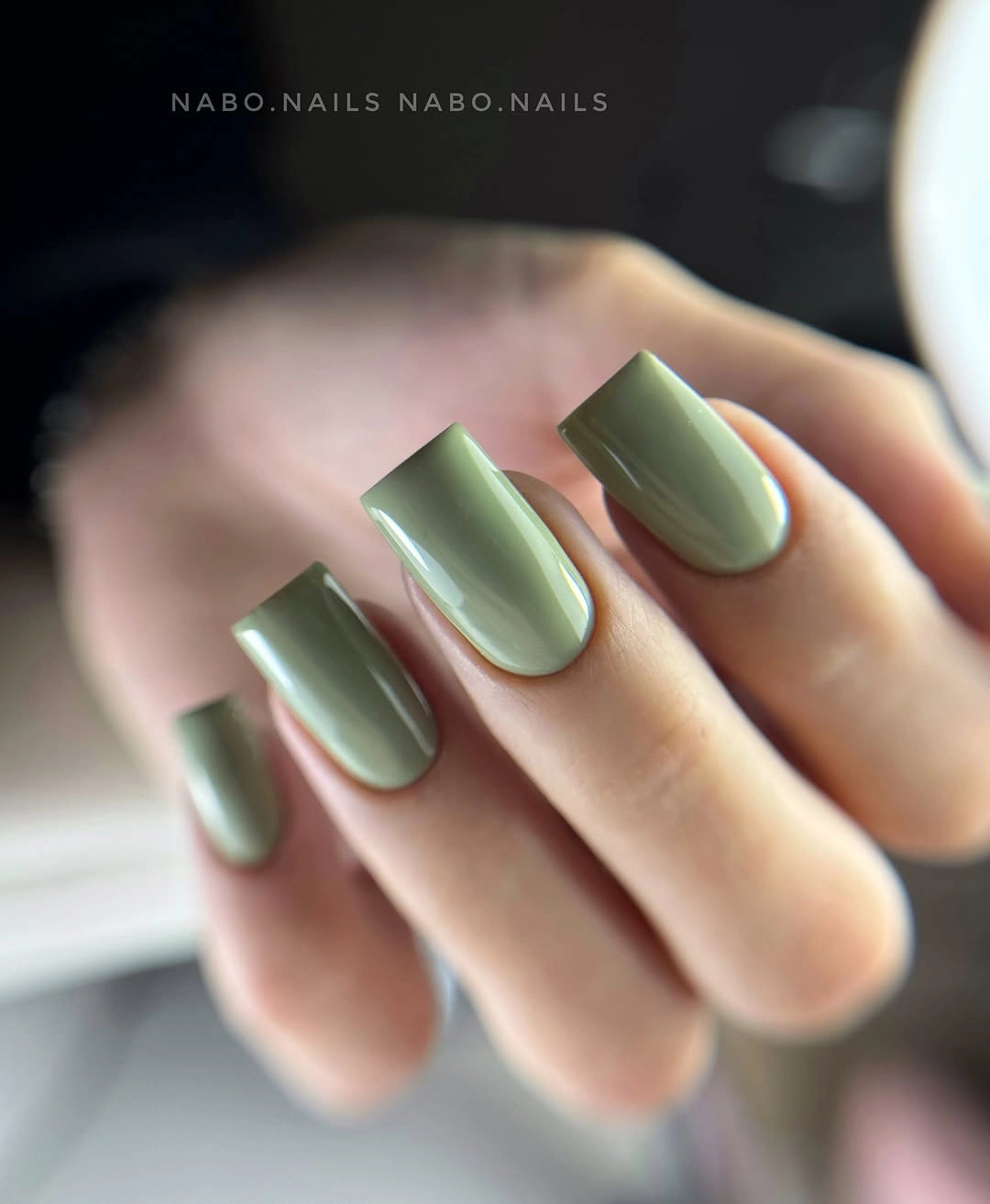
This shade is a useful alternative to the more predictable berry and black choices. A reader can keep the same compact square and move toward olive for warmth, or toward pale pistachio for a lighter result, but the structure should remain simple so the undertone stays legible. The color pairs naturally with denim, cream, and brown without needing a literal leaf or plaid motif to announce the season.
Muted green can change noticeably under warm light, so checking the color in the wardrobe it will meet is more helpful than relying on a name alone. A smooth edge matters because there is no pattern to disguise unevenness, yet the short length makes the set relatively practical. The trend quality comes from the softened undertone, not from adding a second color that would dilute its quiet character.
Blue Almond Nails with Fine Dark Speckles
Long pointed almond nails use a vivid blue base dotted with small dark speckles. The marks are sparse enough that blue remains the dominant color, but they add a slightly grainy depth that a solid coat would not have. The pointed outline gives the speckles a directional frame, so the pattern feels stretched along the nail rather than randomly sprinkled across it.
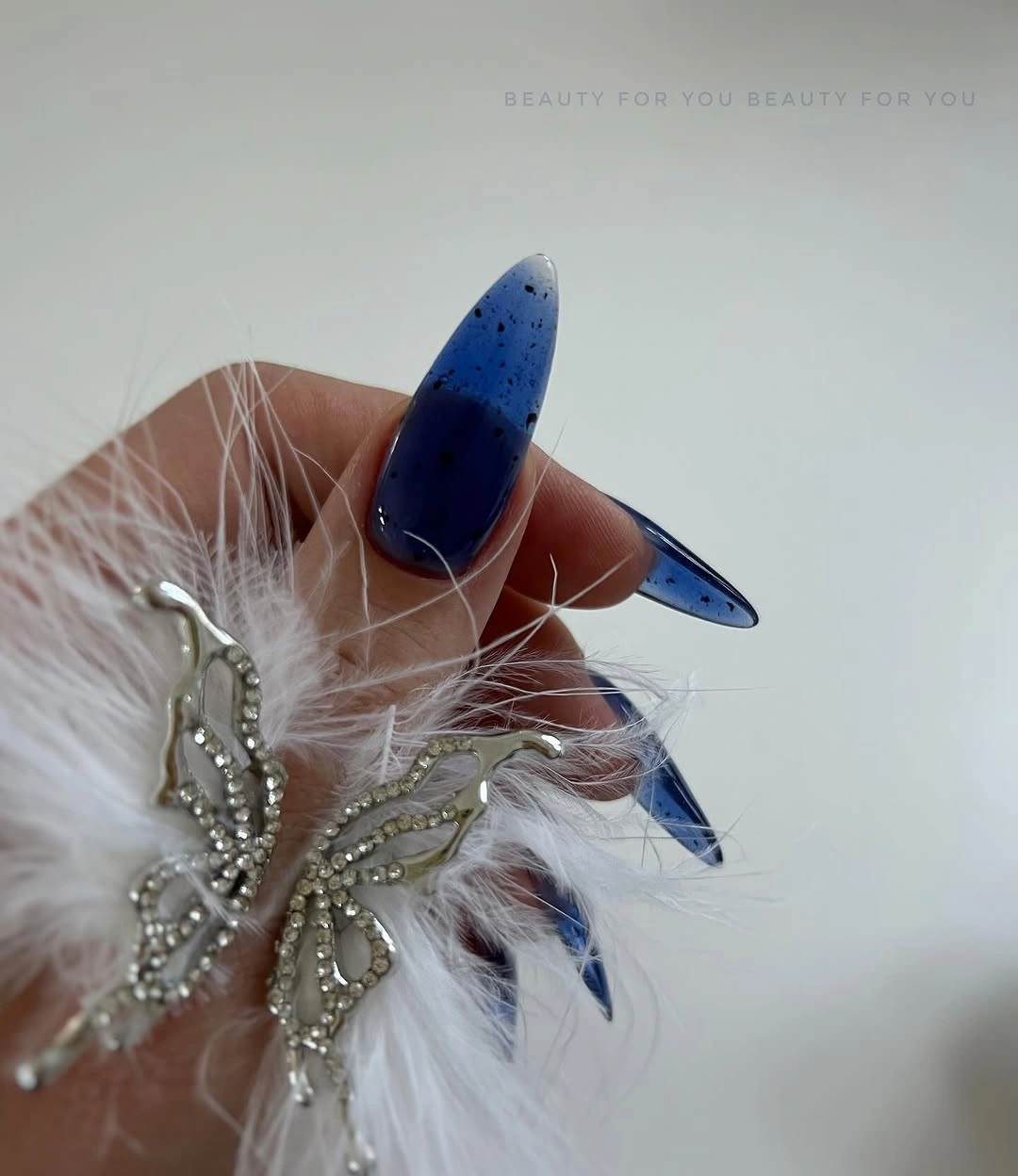
The contrast between bright color and restrained texture is what keeps the design readable. A shorter almond can carry the same speckle idea with less visual length, and using the pattern on two accent nails would give the hand more negative space. If the blue feels too intense, navy or cobalt can lower the brightness while allowing the dark marks to remain visible.
Speckles are easier to control than a full illustration, but they can still look crowded if their scale becomes too large for the nail. Keep them uneven rather than arranging them into a repeated grid, and leave the tip area clear enough for the almond point to remain sharp. The design feels current because it adds texture without losing the discipline of one dominant color.
Hot Pink with Small Spotted Accents
Short square nails are vivid hot pink, while two accent nails carry irregular black spots over a paler pink base. The bright solid nails establish the visual energy, and the spotted fingers interrupt the repetition without changing the playful color family. Concentrating the motif in the center gives the hand a focal area while the other nails act as clear color blocks.
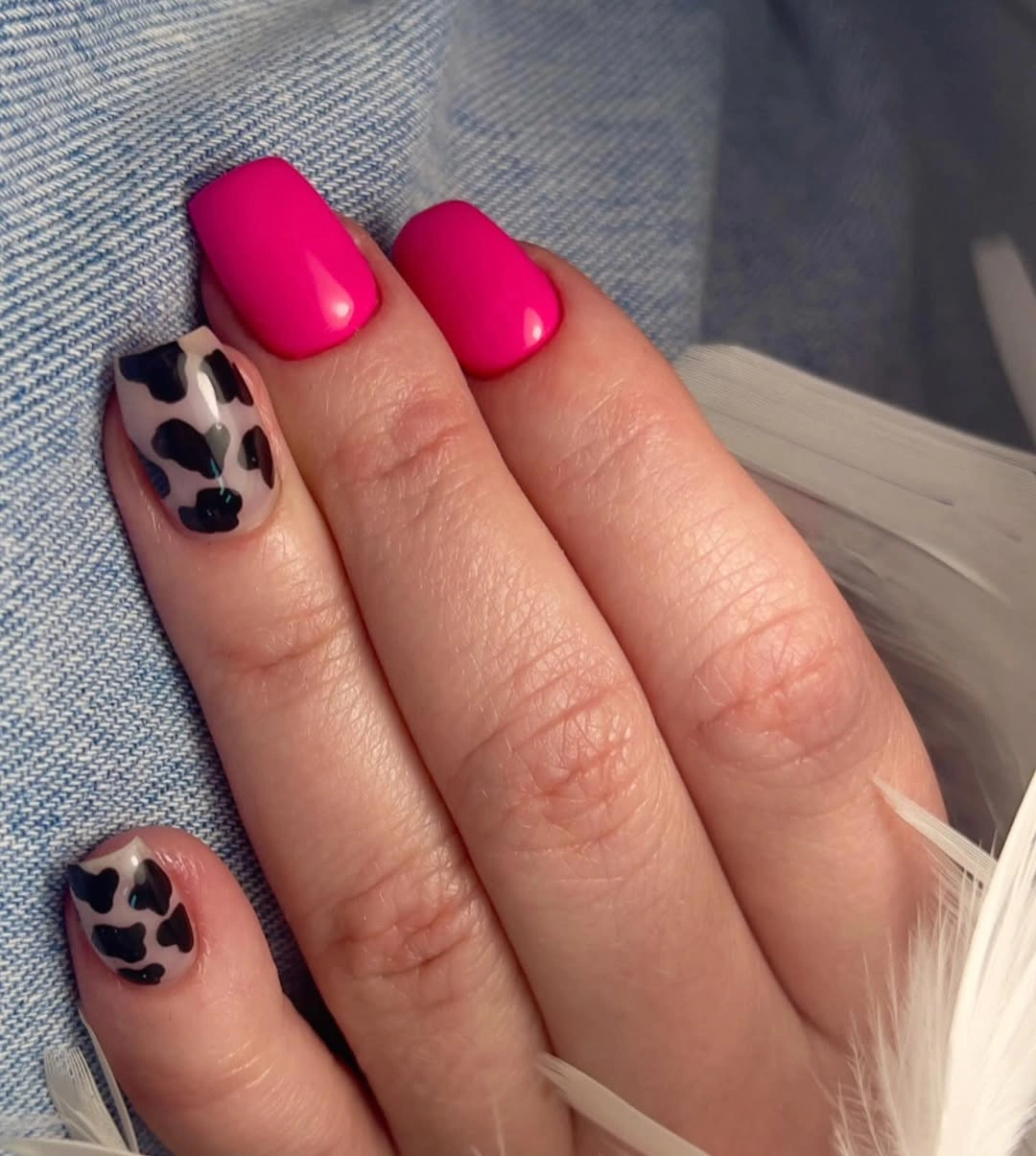
The idea is easier to wear when the spots stay small and the accents remain limited. A reader can use one spotted nail instead of two, or change the vivid pink to berry if the neon direction feels too strong for everyday clothes. The short square shape also helps the pattern remain compact; a long pointed version would make the same spots feel more animated and less restrained.
Organic spots need enough spacing to read as intentional rather than accidental, especially on a small nail. Avoid adding a third unrelated motif, because the hand already has a clear contrast between solid color and print. The design succeeds through a simple hierarchy: hot pink sets the volume, spotted accents provide variation, and the pale background keeps the motif visible.
Milky Nails with Reflective Silver Tips
Short-to-medium nails use a sheer milky base and narrow reflective silver points that follow the free edge. The metallic detail is concentrated where a French tip would normally sit, so the surface remains translucent and open while the edge catches light. This gives a familiar structure a cooler, more polished direction without turning the entire nail into glitter or chrome.
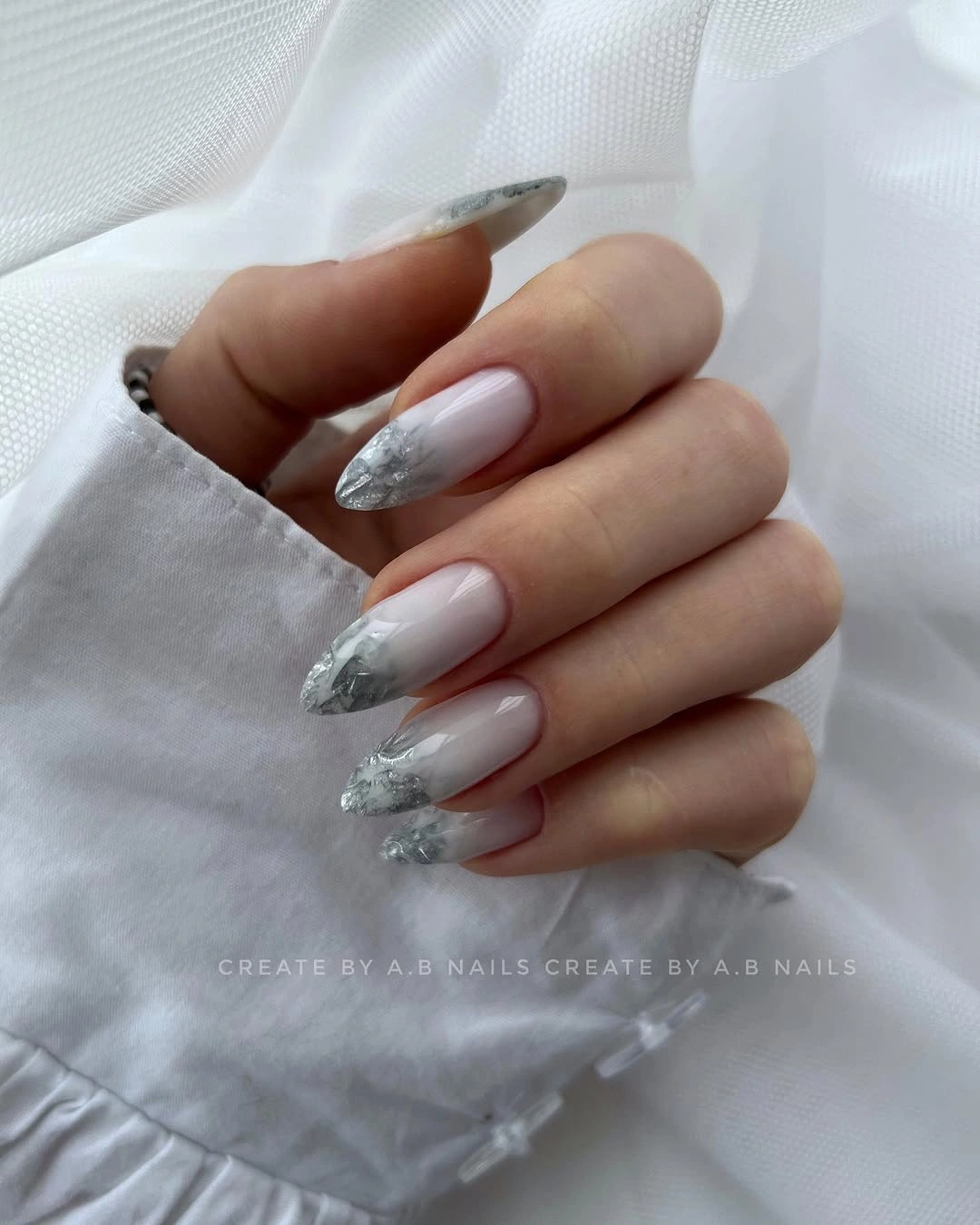
The thin tip is the practical feature to keep. On a shorter nail, a restrained silver line preserves the visual length of the nail bed, while a wider border can look heavier and less precise. If silver feels too bright, pewter or soft gray can create the same reflective edge with a quieter effect, and the base can stay milky so the contrast remains clean.
Reflective edges reveal uneven free tips, so shape consistency matters more than adding extra shine. A reader who likes the idea but works with very short nails can place the metallic mark only on the big and ring fingers, allowing the remaining nails to stay pale. The trend signal comes from where the finish is placed, not from using a reflective surface everywhere.
Black Almonds with a Blue-Tinted Edge
Short-to-medium almond nails are glossy black with a narrow vivid blue edge visible at the tips. The black base makes the blue flash feel sharp and intentional, while the almond outline keeps the dark color from looking too blocky. Since the second shade appears only at the edge, the manicure reads as one strong dark field with a precise cool interruption.
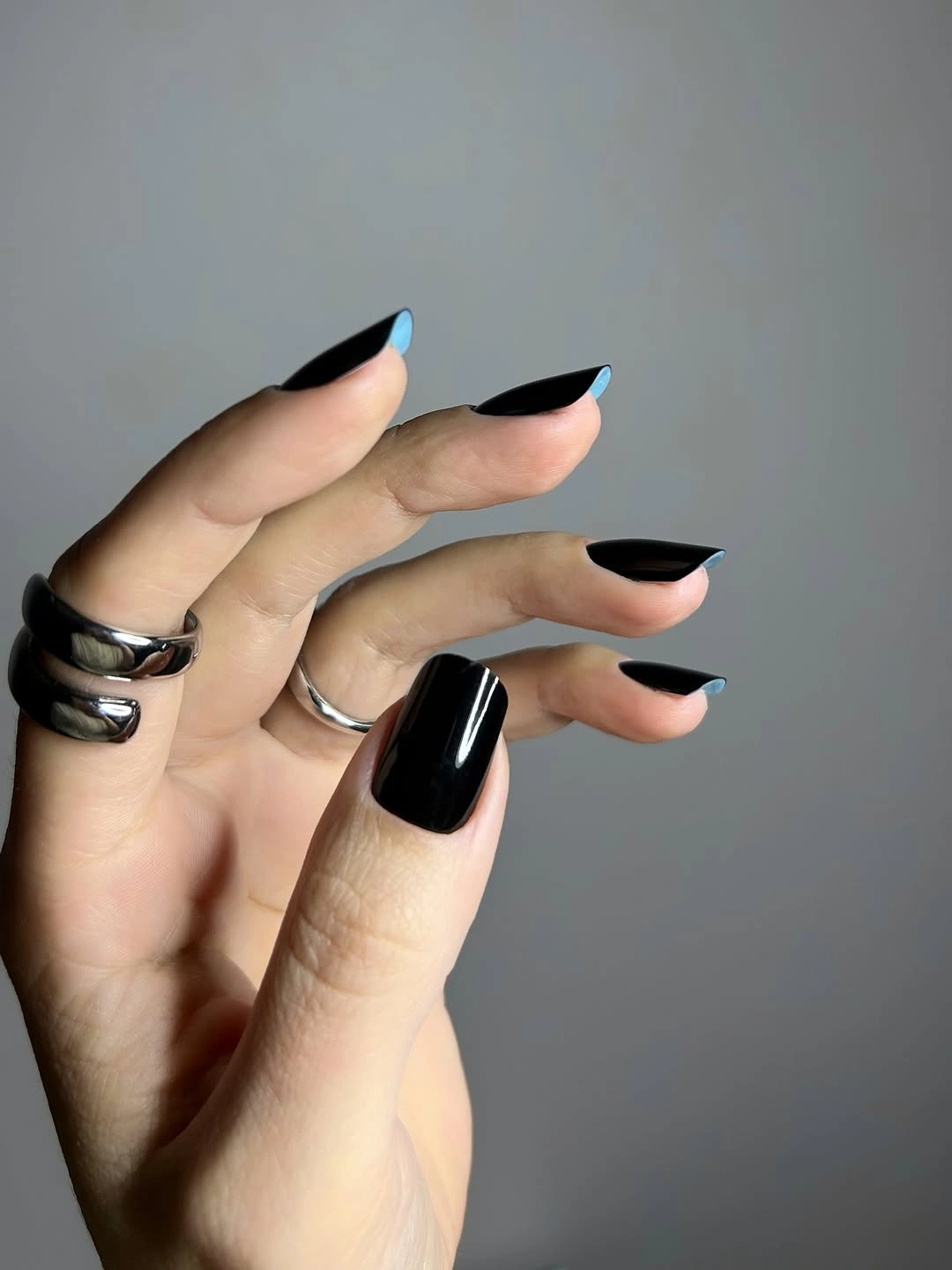
The border is more important than the exact blue. Cobalt, teal, or even a deep berry can occupy the same position, but the line should stay clear enough to survive a little growth. A reader can also shorten the almond further if the point feels inconvenient, because the contrast between black and the small colored edge remains legible on a compact nail.
Two-tone tips demand a steady outline and can expose uneven corners quickly, especially against black. Keep the blue narrow when the goal is after-dark energy, or widen it slightly when a stronger color statement is needed; changing the width is more coherent than adding a separate motif. The set works because the eye discovers the blue only after reading the black shape.
Short Glossy Black with Softened Corners
Short rounded-square nails are solid black with a high-gloss finish, and the softened corners keep the dark color from appearing too severe. Strong reflections slide across the surface, making the compact outline look deliberate rather than plain. With no blue border or accent art, the entire manicure depends on the agreement between shine, proportion, and edge control.
This is a practical route to a dark manicure for someone who does not want a long point. The short length supports daily movement, while the rounded corners reduce the visual harshness of a hard square; if black feels too stark, deep chocolate or espresso can keep the same finish-led structure. An accent would change the mood, so it is better to test the color first in its cleanest form.
Gloss makes surface texture and chips visible, but the compact shape limits the amount of edge that can be damaged. Keep the cuticle line even and the corners softly balanced so the black reads as a polished field rather than a rough outline. The trend quality is subtle: a classic dark shade feels updated through proportion and reflection, not through an overload of new details.
White Nails with a Narrow Red French Edge
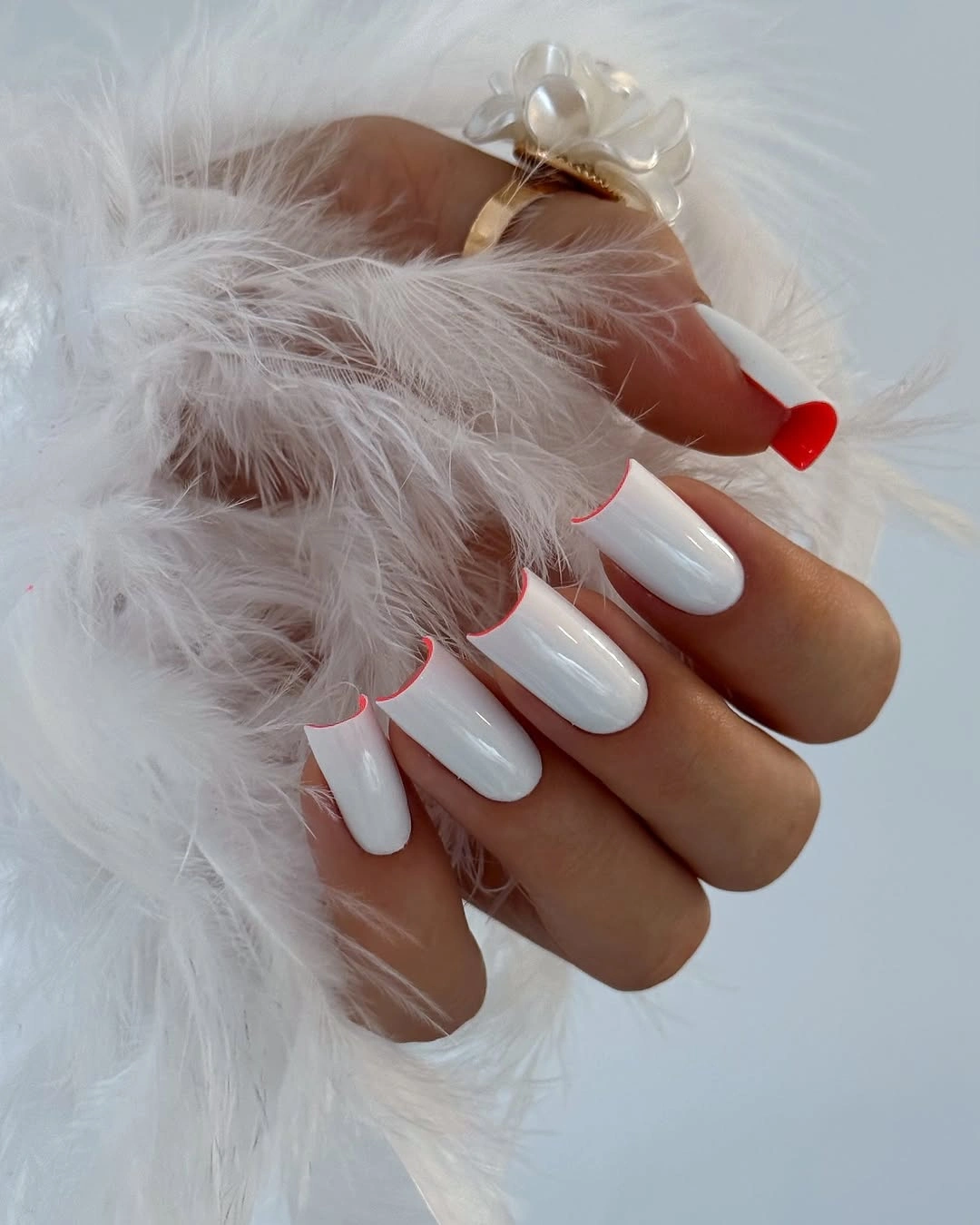
Short rounded-square nails use a milky white base with thin red French tips. The red stays at the edge, leaving most of the surface pale and open, so the color feels like a seasonal accent rather than a full commitment to a bright hand. A feathered white accessory surrounds the pose, but the nail design itself remains crisp and uncluttered.
The narrow border makes the idea easy to shift. A deeper burgundy can feel softer against the white, while a slightly thicker line will read more clearly if the nail is very short; both adaptations preserve the essential placement. Keep the shape rounded enough that the red follows the edge naturally, because a harsh corner would make the light base look more rigid than intended.
French work depends on symmetry, and bright red makes small differences visible, so a clean outline matters more than adding another accent. A reader can use the red edge on two central nails and keep the rest milky if the full hand feels too graphic. The manicure is current through restraint: the strong color is present, but it is allowed to occupy only one narrow zone.
Nude Nails Framed by Warm Red Tips
Short-to-medium rounded-square nails pair a sheer nude base with crisp red tips, giving the hand a warmer variation on the French structure. The red border is slightly broader than a whisper-thin line, so it remains visible without covering the pale center. The shape and color feel approachable together, while a small ring and white feathered setting keep the styling soft around the hands.
The tip proportion is the decision to adjust for different nail beds. A narrower edge can make the nail look longer, while a broader wine-colored tip supplies more graphic weight; both options work because the nude base stays intact. This is also a simple place to test chocolate, rust, or plum when the reader wants a fall shade that is less expected than cherry red.
Warm red can look intense under yellow light, so checking the color in daylight helps prevent an undertone surprise. Keep the sidewalls balanced and the free edge smooth, since the French line will draw attention directly to it. The design feels trend-aware not because it abandons the classic structure, but because the warmer border gives the familiar idea a more deliberate seasonal emphasis.
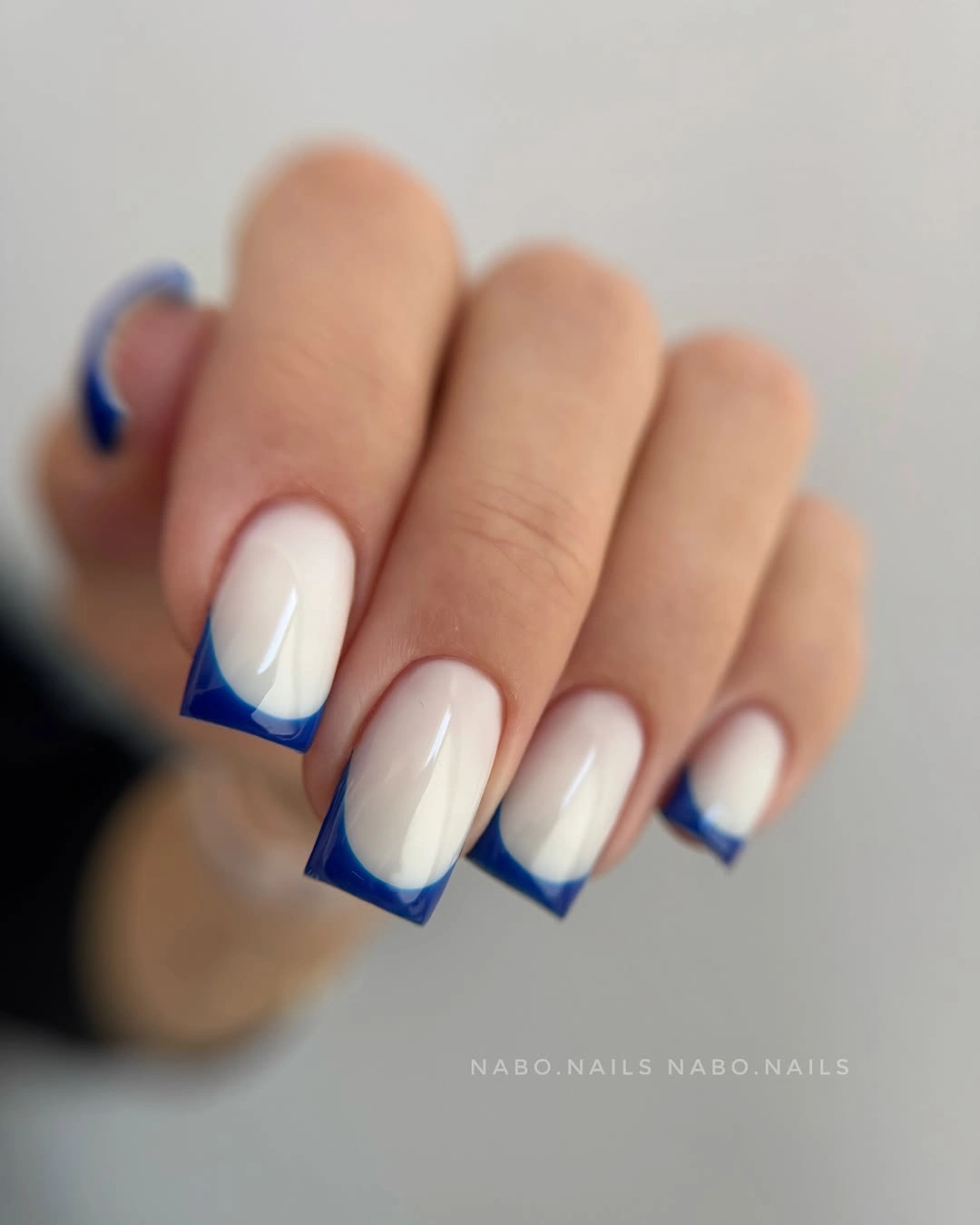
Nude Base with Blue and Silver Tip Details
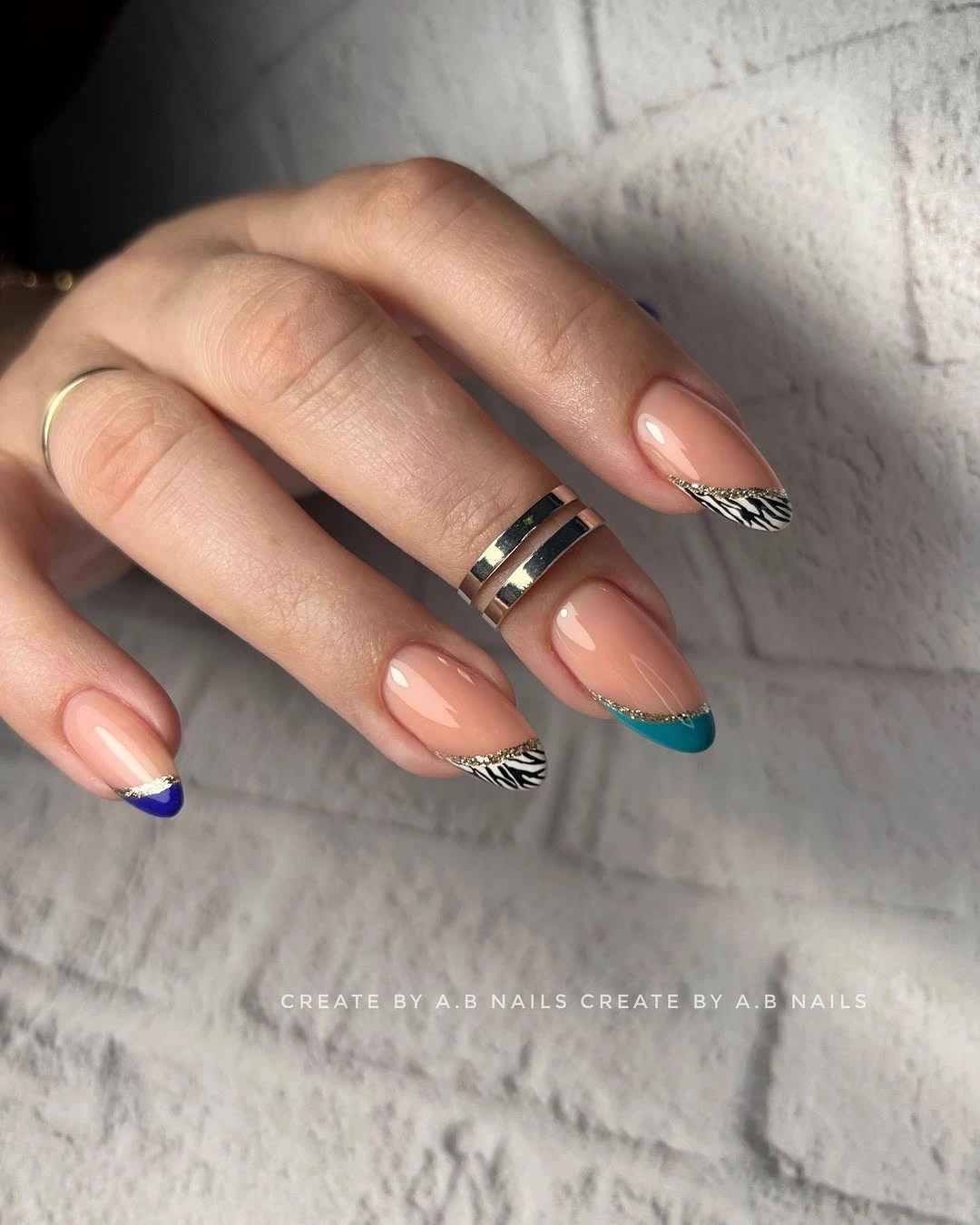
Short rounded-square nails have a nude base, narrow blue tips, and silver textured or striped accents on one or two fingers. The cool colors stay close to the edge, while the rest of the nail remains pale enough to prevent the combination from becoming busy. Blue supplies the visible contrast and silver adds a fine change of finish, so each detail has a separate role.
The layered French idea is easy to simplify. Keep the blue edge on every nail and place the silver only on one central finger, or remove the texture and use a single silver line if the surface needs to stay smooth. A shorter square can still hold the accents, but spacing is important because two cool details placed too close together may merge into a single heavy border.
Silver can show brush marks and blue tips need even width, so the edge should be treated as the construction point of the manicure. If the design begins to feel crowded, reduce the number of accent nails before changing the colors; the nude base is already providing relief. The result works through a clear sequence from pale center to blue edge to small metallic note, not through equal emphasis everywhere.
Black Nails with a Smooth High-Gloss Finish
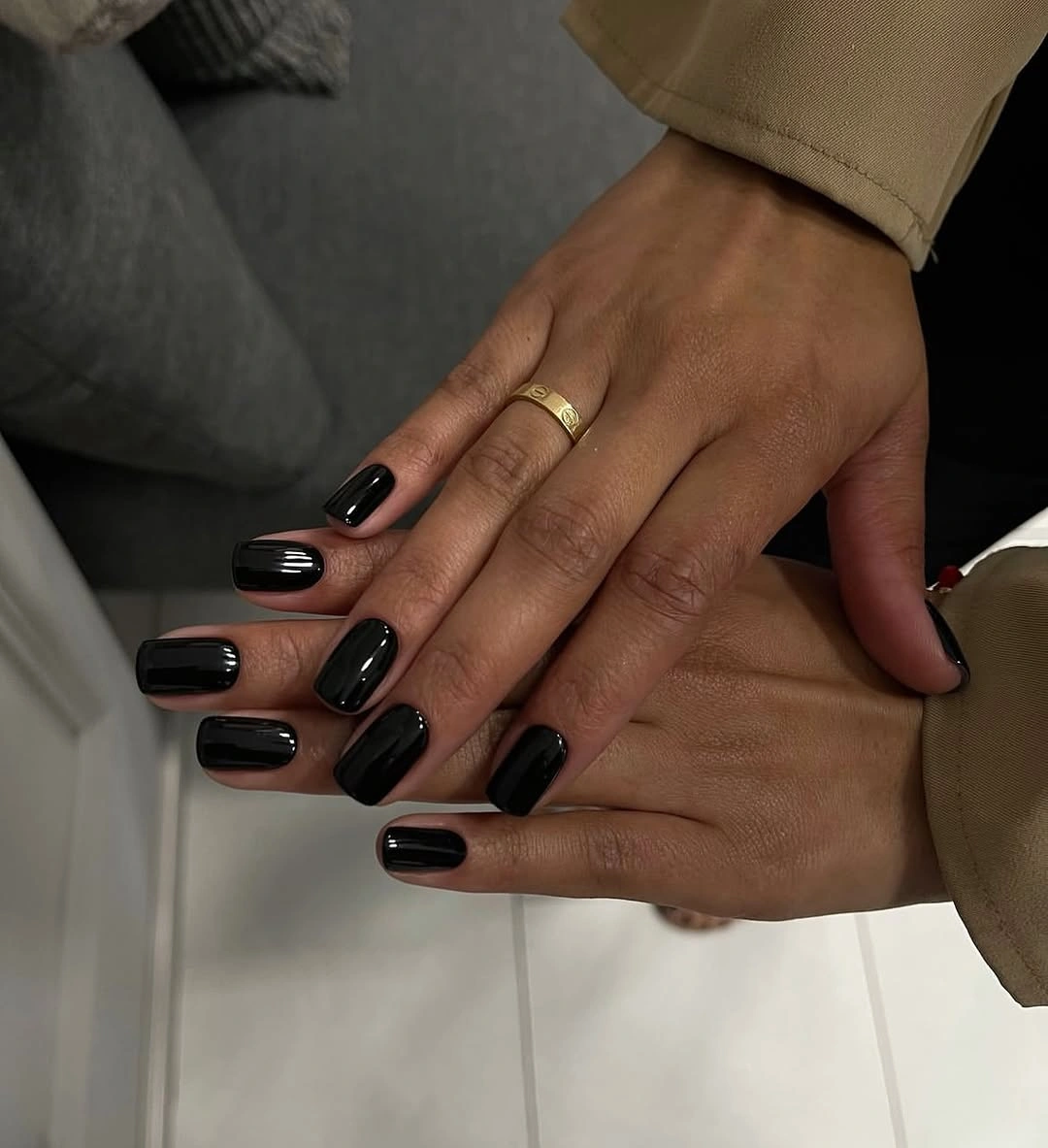
Short rounded-square nails are uniformly black and highly glossy, shown across overlapping hands where the compact proportion remains consistent. The dark finish carries enough reflection to keep the surface from looking flat, while the beige sleeve makes the color feel grounded rather than theatrical. There is no pattern to interrupt the eye, so the repeated outline and clean polish become the entire editorial statement.
This is the version of black that works when practicality matters. Short length limits catching at the edge, and the rounded square is easier to live with than an extreme point, although chips will still stand out against the solid shade. A reader can soften the result with deep brown or charcoal without changing the shape, but adding a bright accent would turn a quiet dark reset into a different idea.
The best maintenance choice is consistency. Keep every corner at a similar angle, smooth the free edge, and protect the reflective surface from becoming dull, because the manicure has no pattern to hide variation. It feels current through discipline: the color is familiar, but the short proportion and controlled shine give it an intentional, edited quality.
Close-Up Black with Bright Reflections
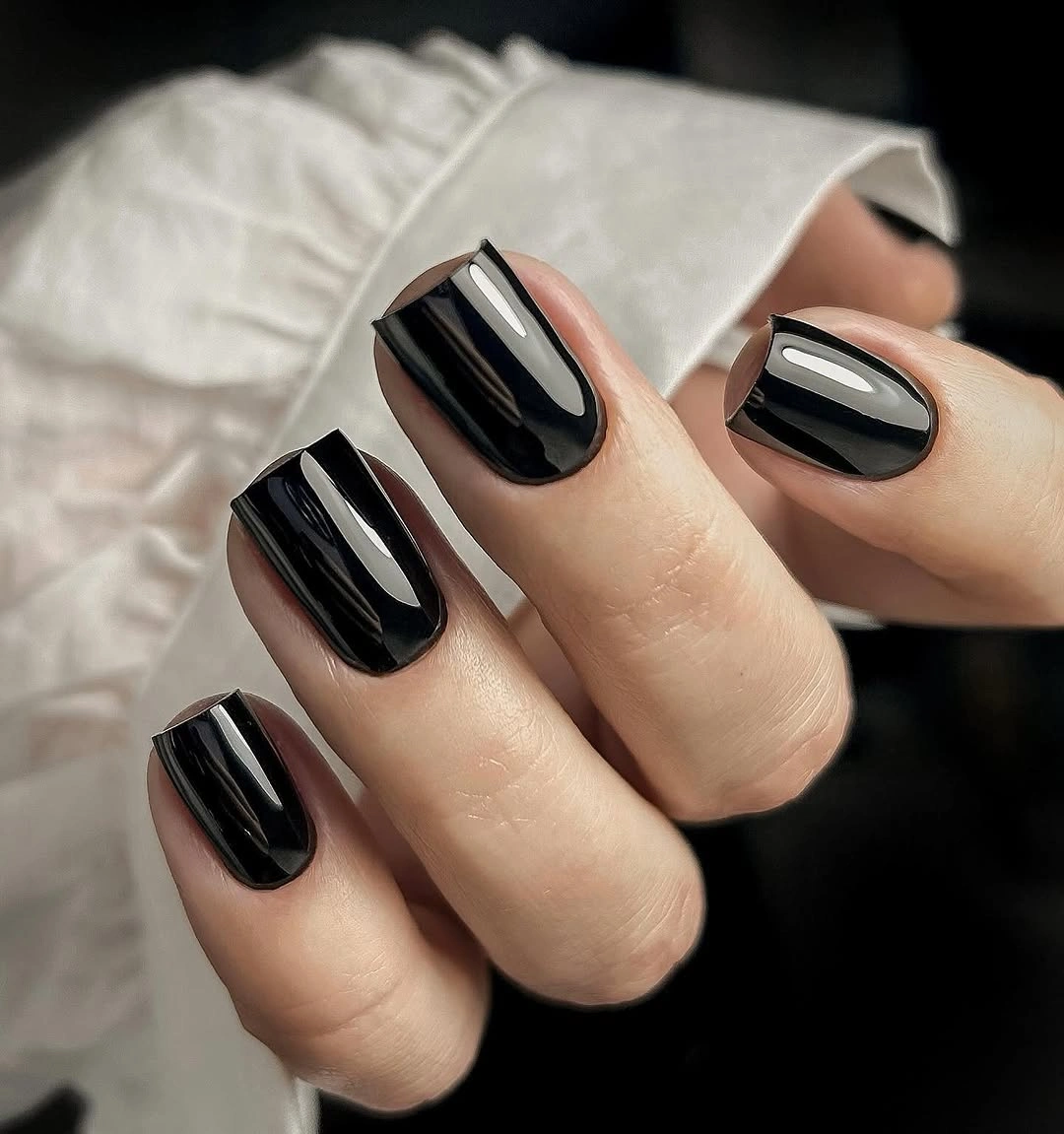
This close view uses short rounded-square black nails and lets strong white reflections travel along the upper curve of each surface. The softened corners prevent the dark color from looking severe, while the highlights add enough movement to make a plain manicure feel dimensional. The hand does not need a motif because the finish itself creates a series of clean visual strokes.
The idea is useful when the reader wants the polish quality to be the feature. Keep the shape short and the surface smooth, or switch to charcoal if pure black feels too stark; changing the finish to matte would remove the reflective rhythm that makes this version distinct. A single glossy accent on a dark base could also work, but the most coherent adaptation leaves every nail in the same reflective language.
High shine exposes dents, uneven coverage, and chips around the corners, so a careful edge does more than any extra decoration. Because the nail is short, a small repair can restore the overall balance without changing the proportion. The result has after-dark energy without needing a nightlife story or heavy styling: the readable feature is simply light moving over a controlled black surface.
Warm Orange and Black Striped Accents
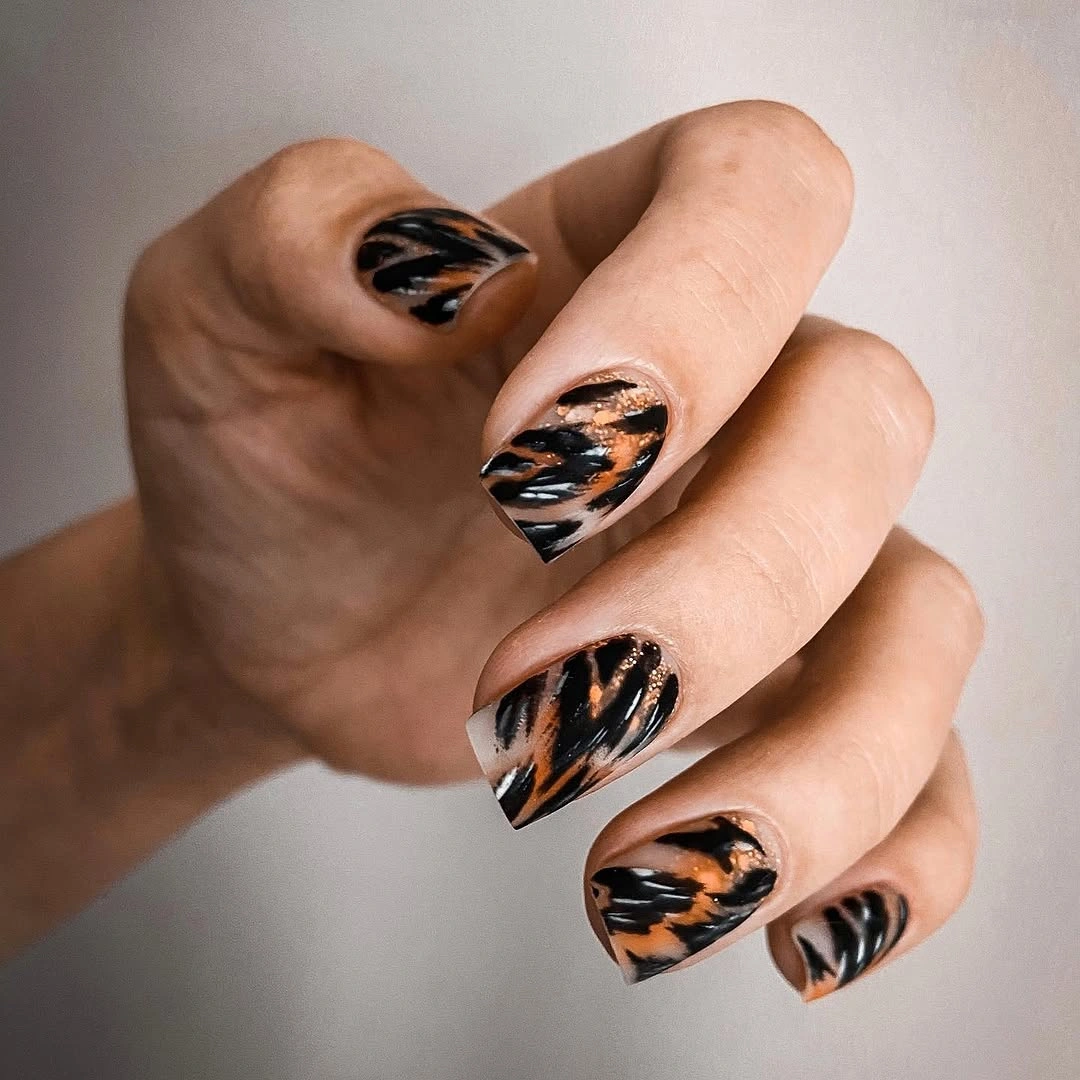
Short rounded-square nails begin with a pale nude base, then add orange, black, and cream irregular streaks across several accent nails. The marks resemble loose tiger-like bands rather than a perfectly repeated print, which gives the warm palette an organic rhythm. Leaving some nails mostly nude creates relief and keeps the autumnal colors from filling the whole hand with the same visual weight.
The strongest adaptation is to control how many fingers carry the stripes. Two or three accent nails are enough to establish the motif, while the nude nails can remain glossy and calm; a brown-and-beige swap will make the same pattern quieter without losing its seasonal direction. Short square proportions help the bands stay compact, but a medium almond could make the streaks feel more elongated and fluid.
Dense marks can quickly look crowded on a small nail, especially when black and orange sit beside one another, so open gaps are essential. Let some cream or nude base show between the strokes and avoid adding dots, gems, or a second print. The manicure works because the warm pattern is a focal texture inside a neutral frame, not because every nail is asked to become a separate illustration.
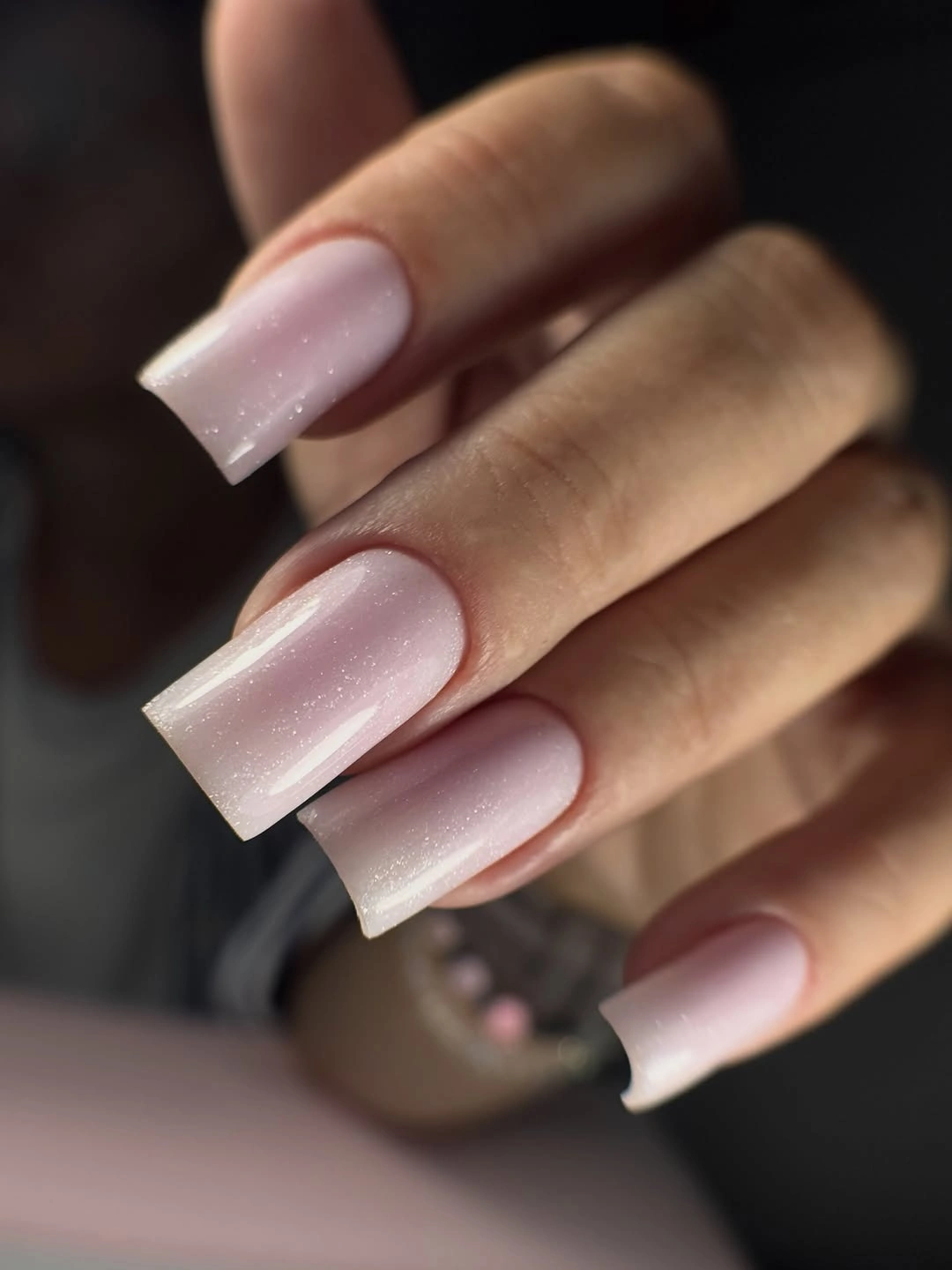
Moderate Pale Pink with a Soft Edge
Medium square nails use a pale pink glossy finish with a very subtle light edge at the tips. The shape is more practical than the long pointed examples, and the soft color makes the hand feel polished without demanding attention from across the room. A barely visible border gives the pale surface a little definition while keeping the design close to a quiet solid.
This is a good everyday reset when the reader wants something neat but not decorative. Keep the length moderate, or use a sheer milky base if a little more opacity is needed; the visual logic remains the same as long as the edge stays quiet. A delicate pink also leaves room for rings and clothing to supply contrast, which makes the manicure easier to coordinate.
Pale color can reveal streaks or uneven coverage, so a smooth surface matters more than adding a stronger accent. The softened square outline keeps the design from becoming too delicate, while the short-to-medium length gives the light color a grounded frame. It feels trend-conscious through restraint and proportion, not through a literal seasonal motif or a crowded collection of details.
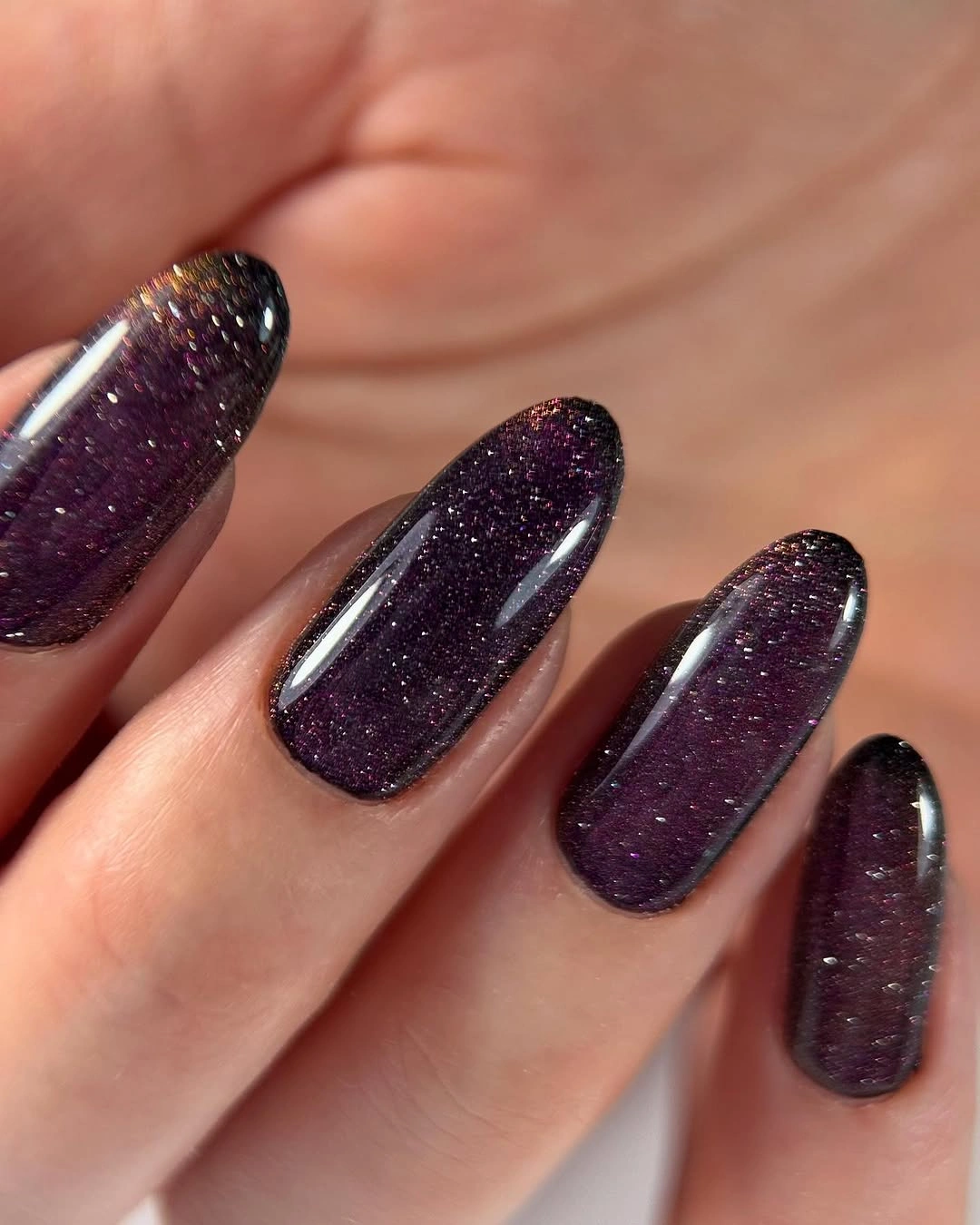
Deep Plum Microglitter on Short Ovals
Short oval nails are painted a deep plum or aubergine with fine multicolor glitter dispersed through the glossy surface. The dark purple base carries the seasonal depth, while the small reflective particles create movement without becoming chunky or overtly festive. The oval outline softens the saturated color, keeping the hand more relaxed than a long point in the same shade would appear.
The finish is a useful alternative to plain black or red. Keep the oval short so the glitter reads as a subtle texture, or move the sparkle to one accent nail if the reader wants a calmer result; changing the base to berry or charcoal will also alter the mood without changing the structure. The key is fine scale, because large particles would make the compact surface feel crowded.
Dark glitter can make cuticle growth visible and may catch more light than expected, so the edge should stay smooth and the color should be judged in both indoor and daylight settings. A rounded outline gives the deep purple room to feel soft rather than severe. This design has controlled darkness: the base is rich, the glitter is restrained, and nothing else competes with the small flashes.
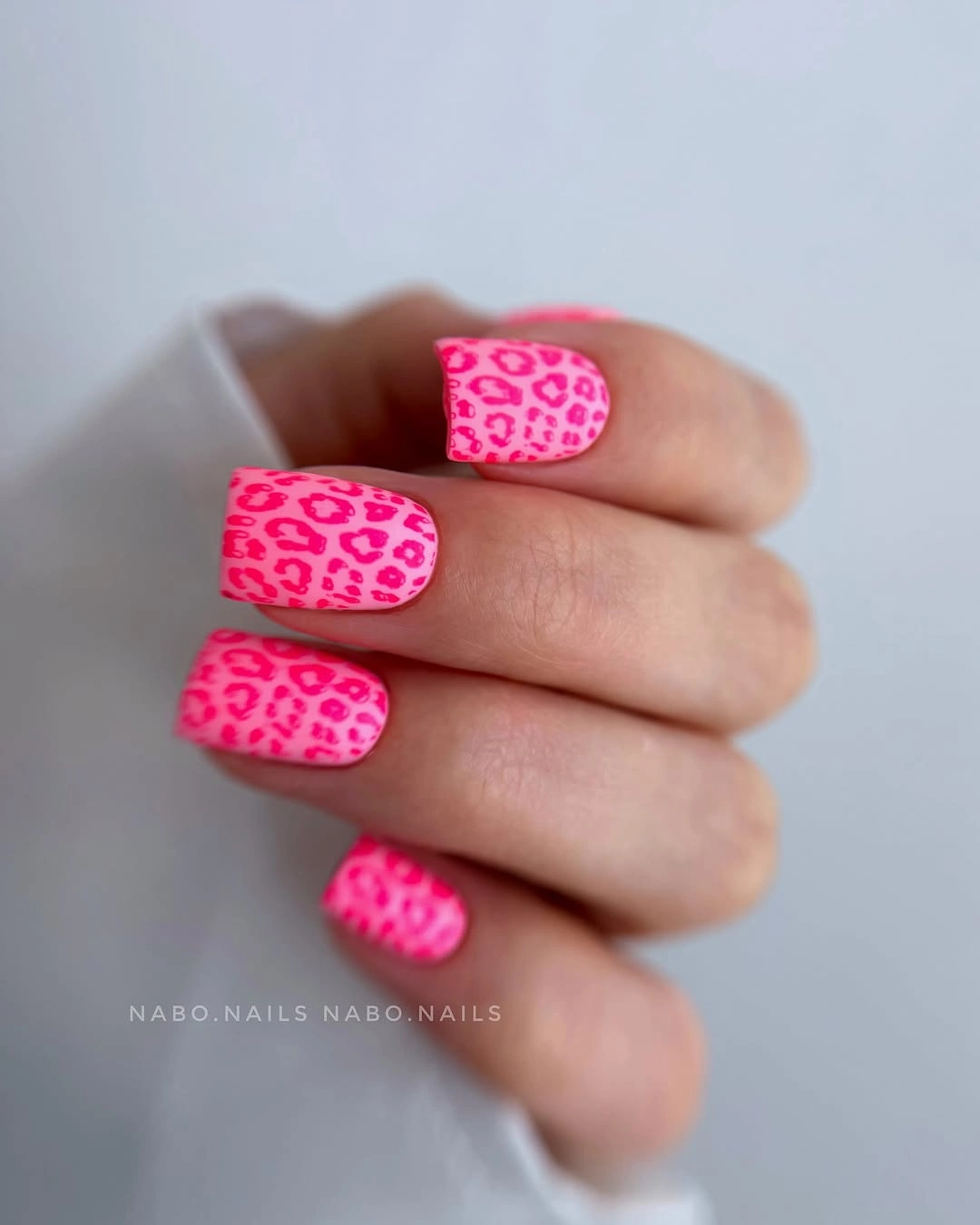
Neon Pink with Tiny Leopard Spots
Short square nails use vivid fluorescent pink as the base, with several nails carrying small darker pink and red leopard-like spots. The print repeats closely enough to feel intentional, but the color family stays narrow so the pattern reads as texture instead of a separate visual story. The square shape gives the bright hand a neat frame, balancing the playful motif with a clear outline.
The easiest way to soften the design is to limit the print to one or two nails while keeping the neon color on the rest. A warmer coral or berry can replace the fluorescent pink when the reader wants less intensity, and smaller spots will preserve the animal-print idea on a very short nail. Because the pattern is already high energy, additional gems or contrasting tips would likely make the composition less readable.
Small spots need breathing room, and the spacing should vary slightly so they do not become a rigid grid. A clean base around each mark helps the pattern look purposeful, while a consistent square edge keeps the hand from feeling visually scattered. For another place to borrow the motif selectively, fall leopard nails can help compare a louder print with a more controlled accent strategy.