
Nude Fall Nails 2026: Milky Bases, Fine Detail, and Soft Contrast
When a neutral color is not treated as the absence of a decision, its smallest shifts become visible. A pink base can look warmer or cooler depending on the white beside it, a pale surface can feel flat or luminous depending on its finish, and one dark edge can change the perceived weight of the whole hand. That is why nude fall nails are most convincing when they change only one variable and let the eye notice the shift.
One practical rule keeps the choice clear: change the variable that solves your actual styling problem. If your wardrobe is already textured, keep the surface quiet; if the color disappears against your skin, change value or temperature before adding art; if the shape feels too long, shorten it before making the design busier. For a formal reference, the site’s fall wedding nails can help test how much contrast still feels refined.
Milky White Squares With White Sculptural Waves
The base and the abstract accents stay in the same milky-white family, so texture rather than color creates the contrast. Long square nails give the thick wavy lines enough room to appear deliberate, while the monochrome palette keeps the design clean and light. The straight edges make the raised-looking detail feel architectural instead of soft or floral.
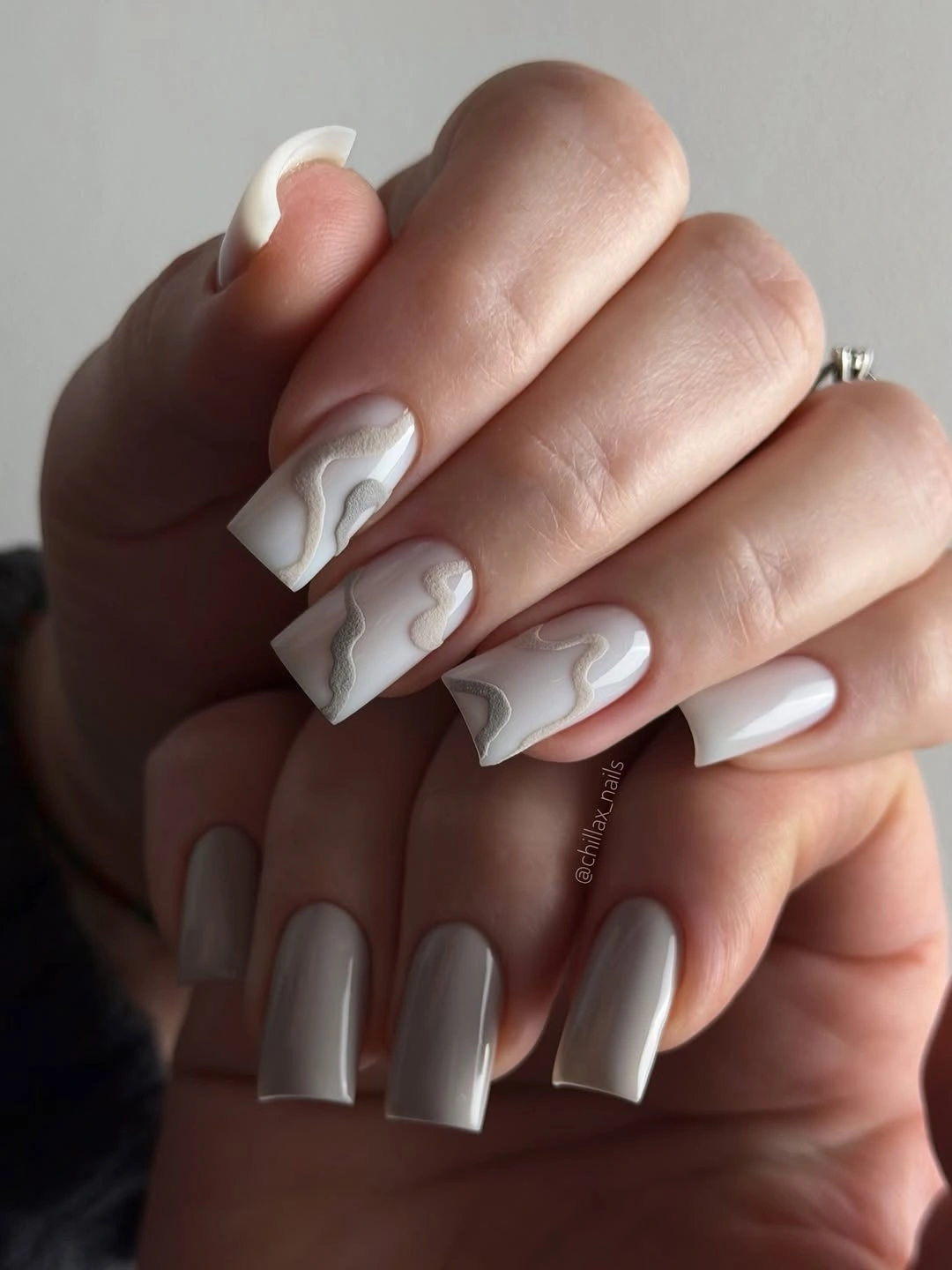
Keep the white base open around the wavy accents. On a shorter square, one sculptural-looking line on an accent nail will read more clearly than several compressed marks, while a longer shape can support a little more movement. Cream, gray, white, and simple silver accessories will echo the tonal palette without introducing a competing color relationship.
White-on-white detail can disappear in low contrast or look crowded when too many marks are added, and a raised-looking surface may be less convenient around fabric. If you want the idea with less commitment, preserve the monochrome palette but use a thin glossy line instead of several thick accents. The manicure will remain dimensional through surface rhythm, not through maximum height.
Sheer Pink Squares With Tiny Outlined Marks
The translucent blush-pink base remains the dominant field, while small pink and white outlined marks appear near the tips or side walls. Because the accents are partial and fine, the set feels detailed without losing its nude character. Medium square nails give the lines enough space to remain separate, and the low contrast keeps the overall composition gentle.
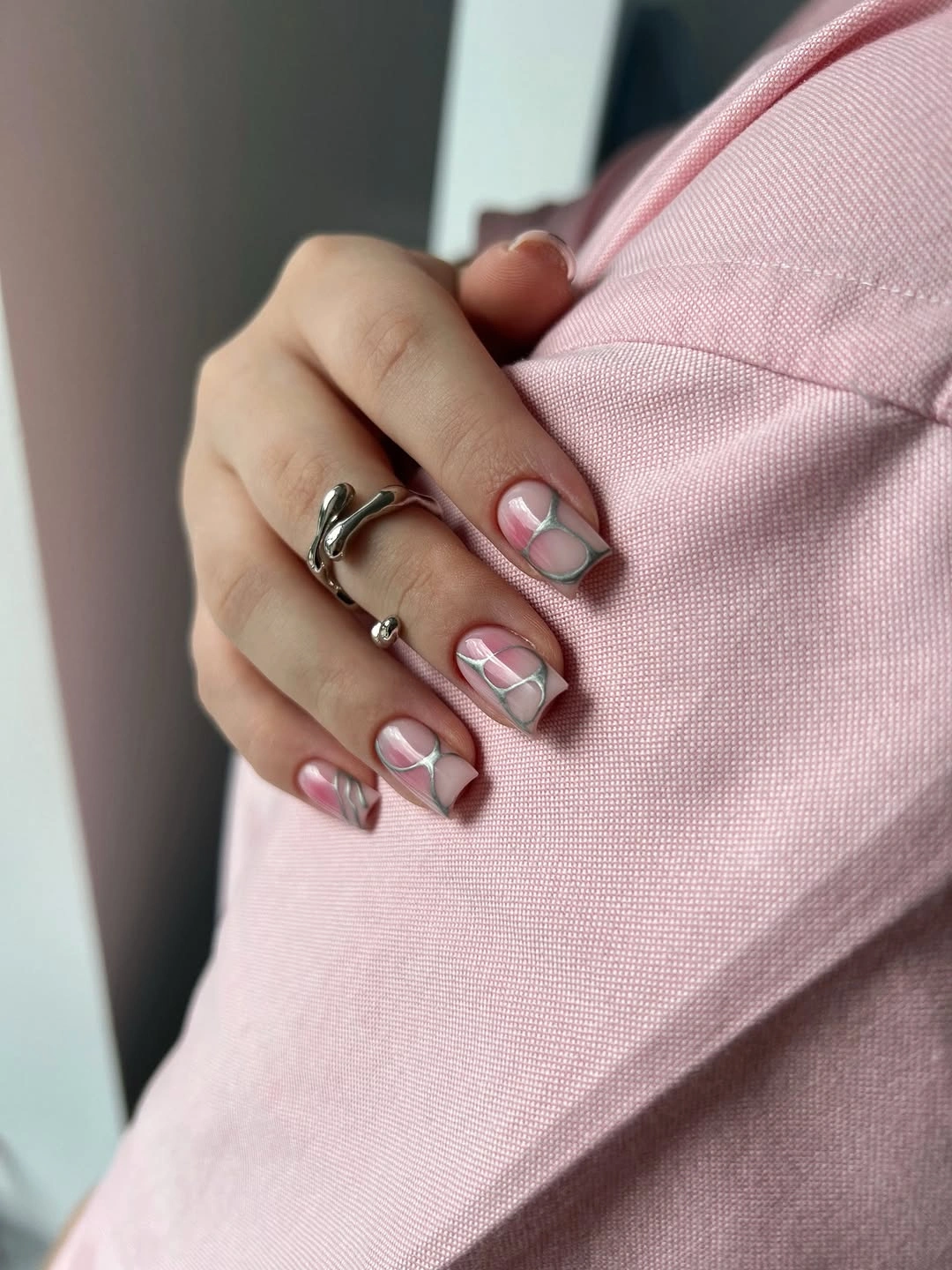
Use this formula when you want a neutral that rewards a closer look. Keep the outline thin and leave plenty of blush surface around it, especially if the nail is shortened. The pale palette works with pink, gray, cream, denim, and small silver details, while a single darker accessory can provide contrast without forcing the manicure into a stronger color story.
Micro linework loses clarity quickly when the nail is very short or when too many marks are repeated. A practical edit is to keep one outlined detail on two fingers and let the other nails stay glossy and sheer. That reduces maintenance and makes the accents feel intentional, while the translucent base continues to carry the quiet quality of the design.
Opaque Creamy White On A Balanced Square
The medium square nails are a smooth opaque creamy white with no visible art, so color value and edge consistency become the entire design. The base is brighter than a close nude but softer than a stark optical white, which keeps the manicure inside a light neutral palette. The simple shape gives the color enough structure to look finished.
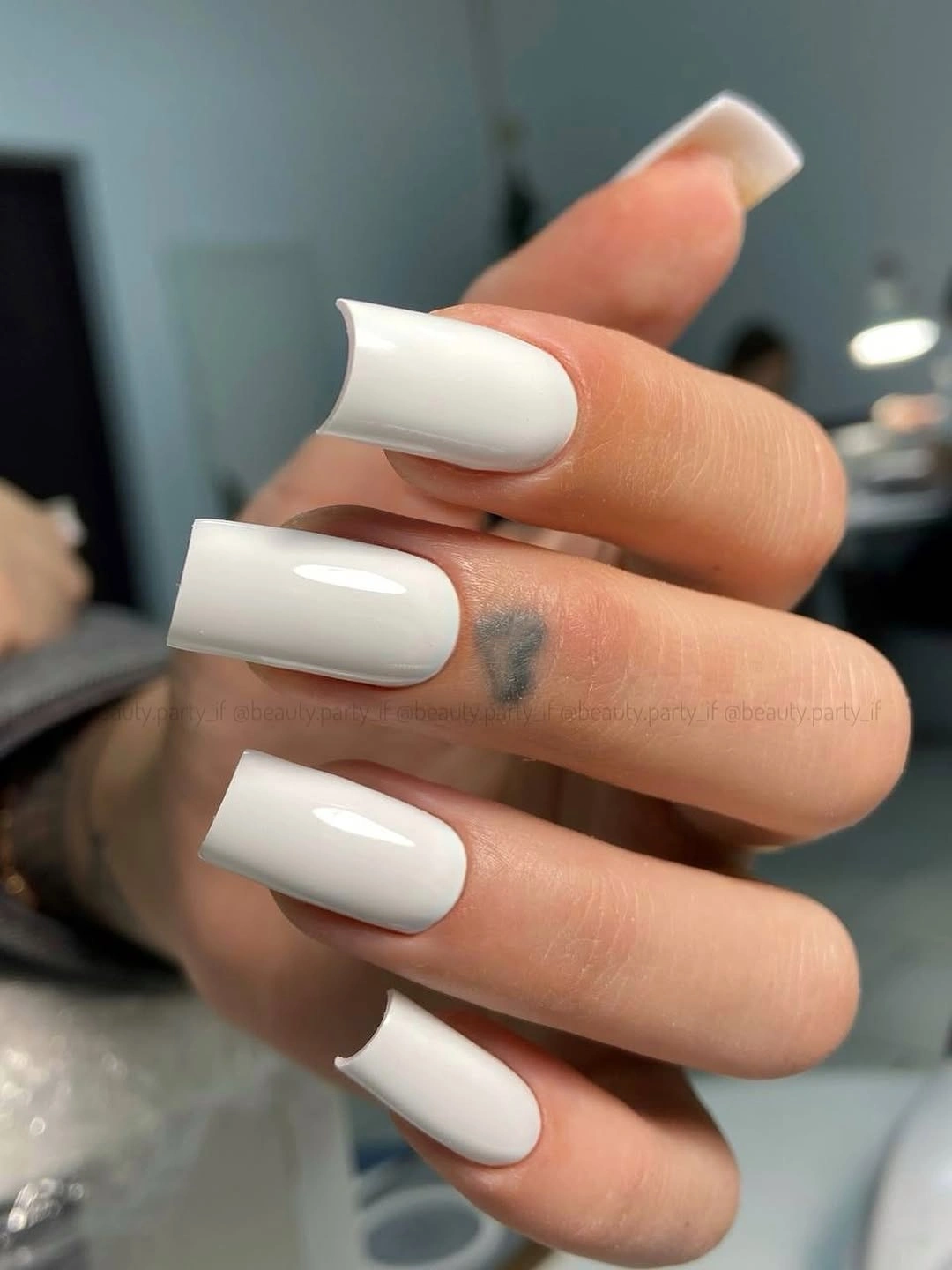
Choose this direction when you want a clean base that can work with almost any accent later. Medium length keeps the white practical, while a slightly rounded square can soften the brightness if the straight corner feels too sharp. Cream clothing, denim, gray, and muted gold all let the manicure remain visible without adding another strong focal point.
The limitation is exposure: pale solid color shows uneven edges, stains, and small chips more readily than a darker neutral. That is also why the design is easy to maintain structurally, since no motif needs to be matched during a repair. Keep the surface even and resist adding detail just to create interest; the value here is the calm, uninterrupted block.
Blush Squares Finished With Burgundy Tips
A translucent blush base keeps the center of each short-to-medium square nail light, while burgundy tips supply the fall contrast at the edge. The dark color is concentrated rather than spread across the whole nail, so the result feels seasonal without abandoning the nude foundation. The straight square edge gives the tip a clear, tailored finish.
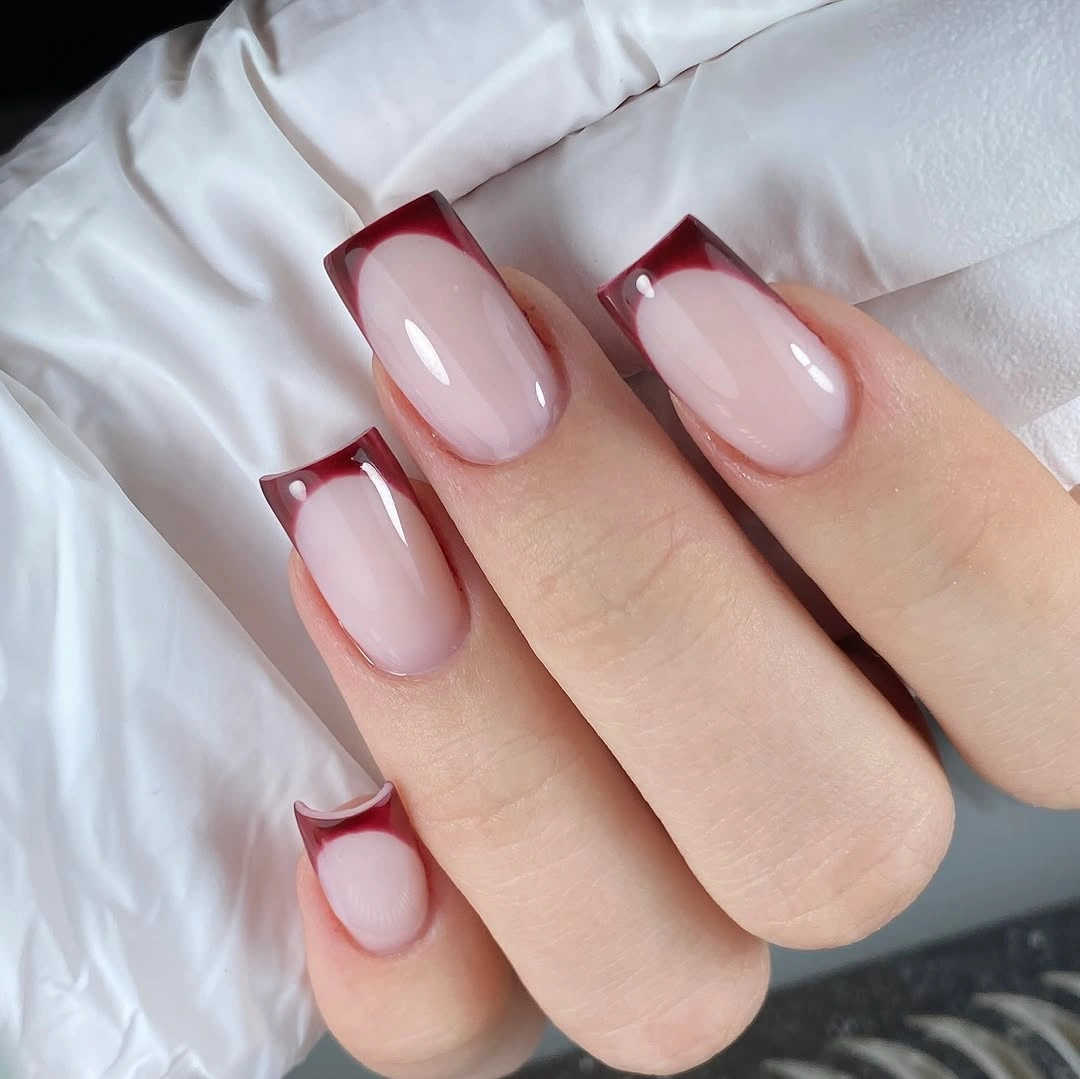
Keep the burgundy band narrow enough that the blush center remains the larger visual area. This works particularly well on shorter squares because the color at the free edge creates definition without requiring extra length. Cream, charcoal, denim, and warm brown clothing will support the contrast, while a burgundy accessory can repeat the tip without becoming a full match.
The crisp boundary is the maintenance point. As the nail grows, the proportion between blush and burgundy changes, and small chips show against the pale base. If you want less upkeep, use the dark tip on two or three accent nails and leave the others sheer pink. The fall contrast remains clear, but the set gains more visual breathing room and easier touch-ups.
Pale Pink Squares With A Frosted Reflective Veil
The pale pink-white base stays soft, but a cool fine shimmer moves across the surface like a frosted veil. Because the reflection is distributed rather than isolated in chunky glitter, the medium square nails remain clean and close to neutral. The color is not the only variable; its cool temperature makes the light base feel more dimensional.
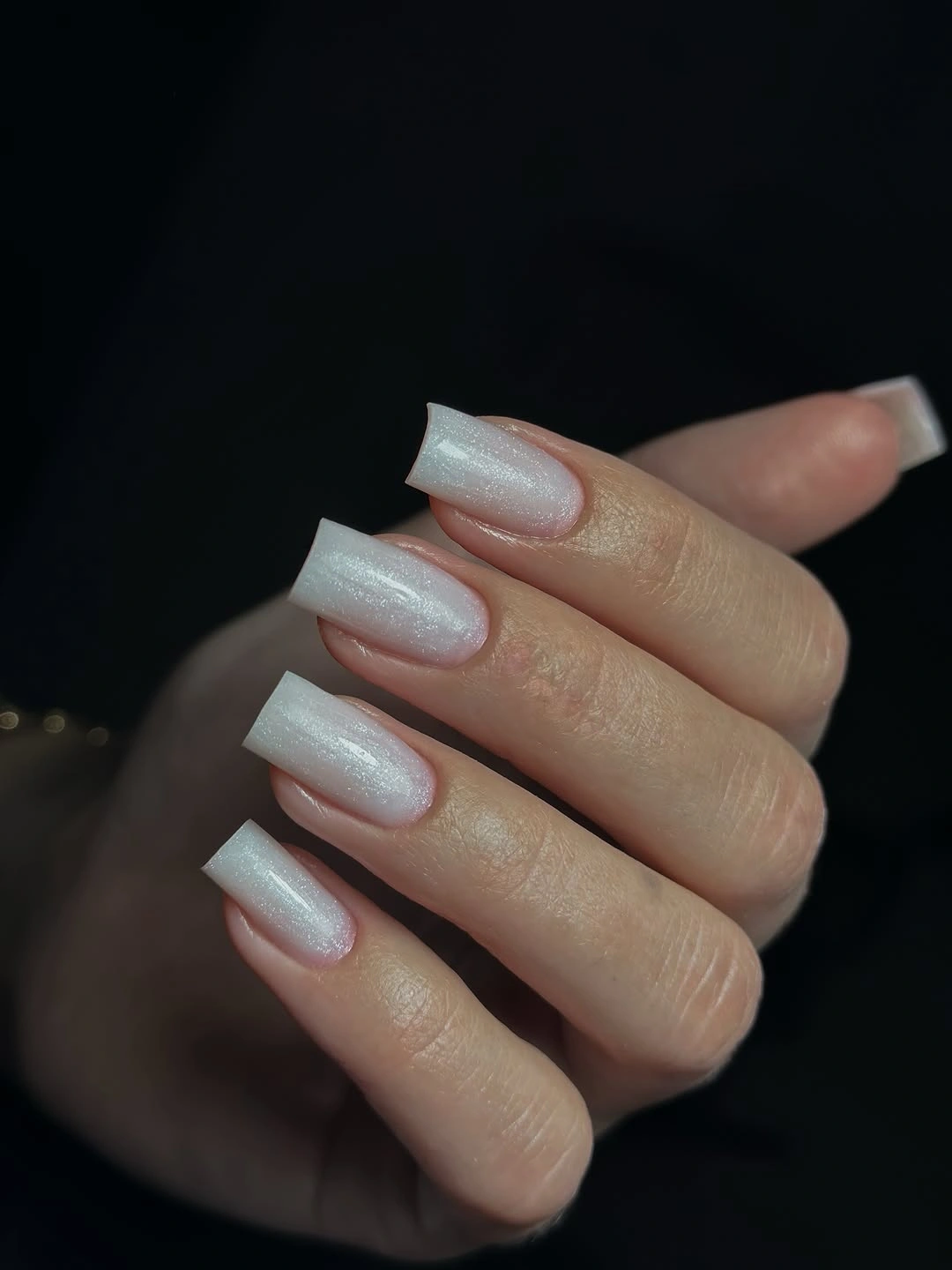
Use a fine reflective finish when you want a little event-ready light without a full glitter manicure. The medium square provides enough surface for the shimmer to show, while a shorter shape keeps it more understated. White, gray, pale blue, and silver accessories reinforce the cool direction; warm brown or camel will create a deliberate contrast if the set feels too icy.
The shimmer can look uneven if it gathers at the edge or catches light differently from nail to nail, and the pale base still shows wear. A controlled variation keeps the reflection on one or two accent fingers and leaves the rest plain pink. That preserves the relationship between neutral and light while making the finish easier to keep consistent.
Milky French With One Leopard Heart Accent
Most of the medium square nails are a clean milky French, but one accent carries a small black-and-brown leopard-like heart. That single motif changes the emotional register without disturbing the pale foundation. The pattern is concentrated enough to act as a focal point, while the surrounding French edges provide repetition and keep the set from feeling random.
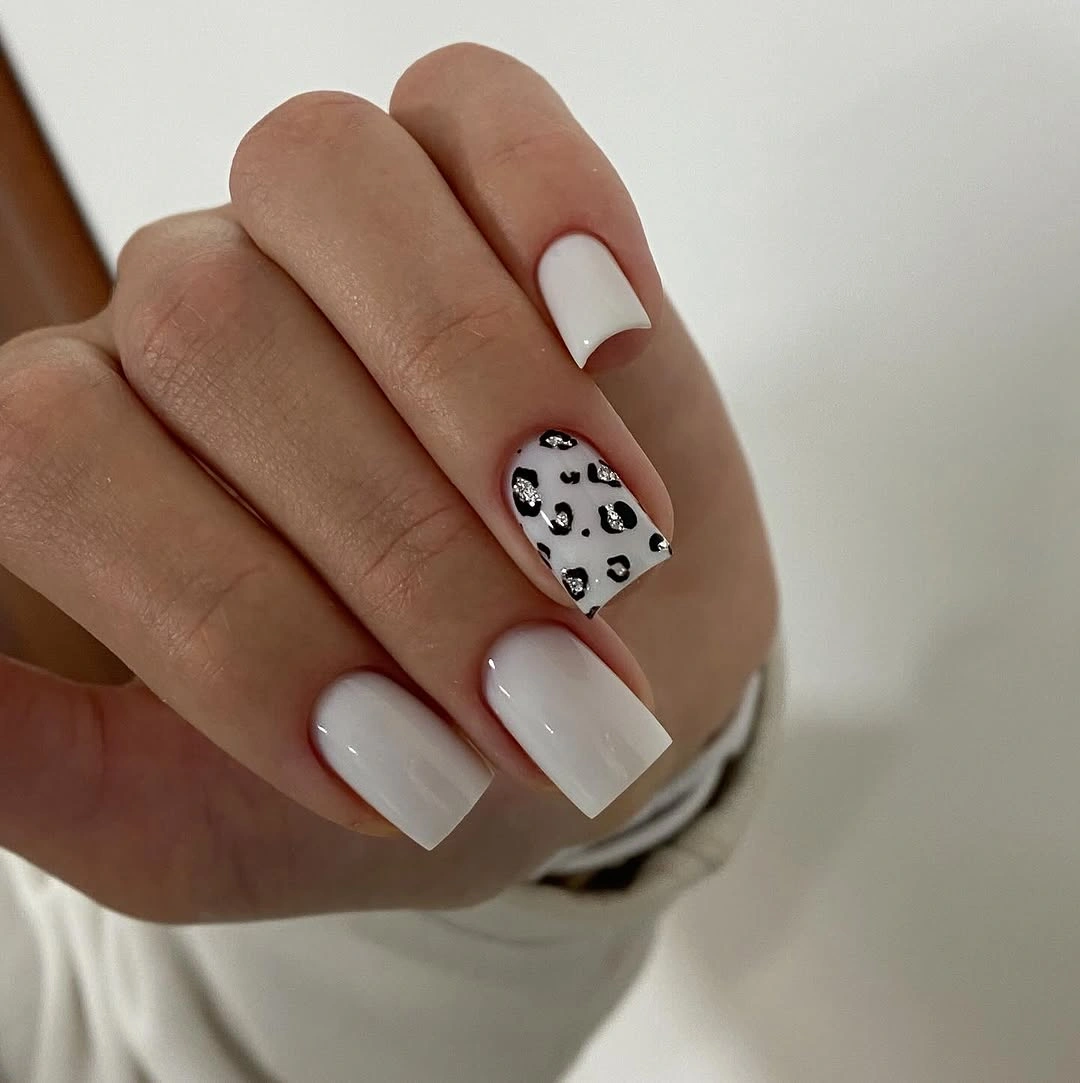
Keep the animal-inspired detail to one nail if the goal is wearable contrast. The light French base works with office clothing, denim, and simple gold jewelry, while the accent can be echoed through a small print accessory rather than another nail motif. On a shorter square, reduce the heart to a few dark marks so the shape remains readable.
A patterned accent is harder to repair exactly than a plain French nail, and the high contrast may feel stronger in daily styling than the pale base suggests. If you want a quieter result, keep the heart on the ring finger or replace it with one small dark dot. The composition will still have a focal point, but the neutral support will regain more visual control.
White French Squares With A Dark Foil-Like Accent
The pale French foundation is interrupted by one accent nail with irregular black and metallic-looking gold patches. That high-contrast detail supplies most of the visual weight, while the remaining medium square nails stay clean and light. The design works because the dramatic accent is isolated; repeating it across every finger would change the mood from restrained to dense.
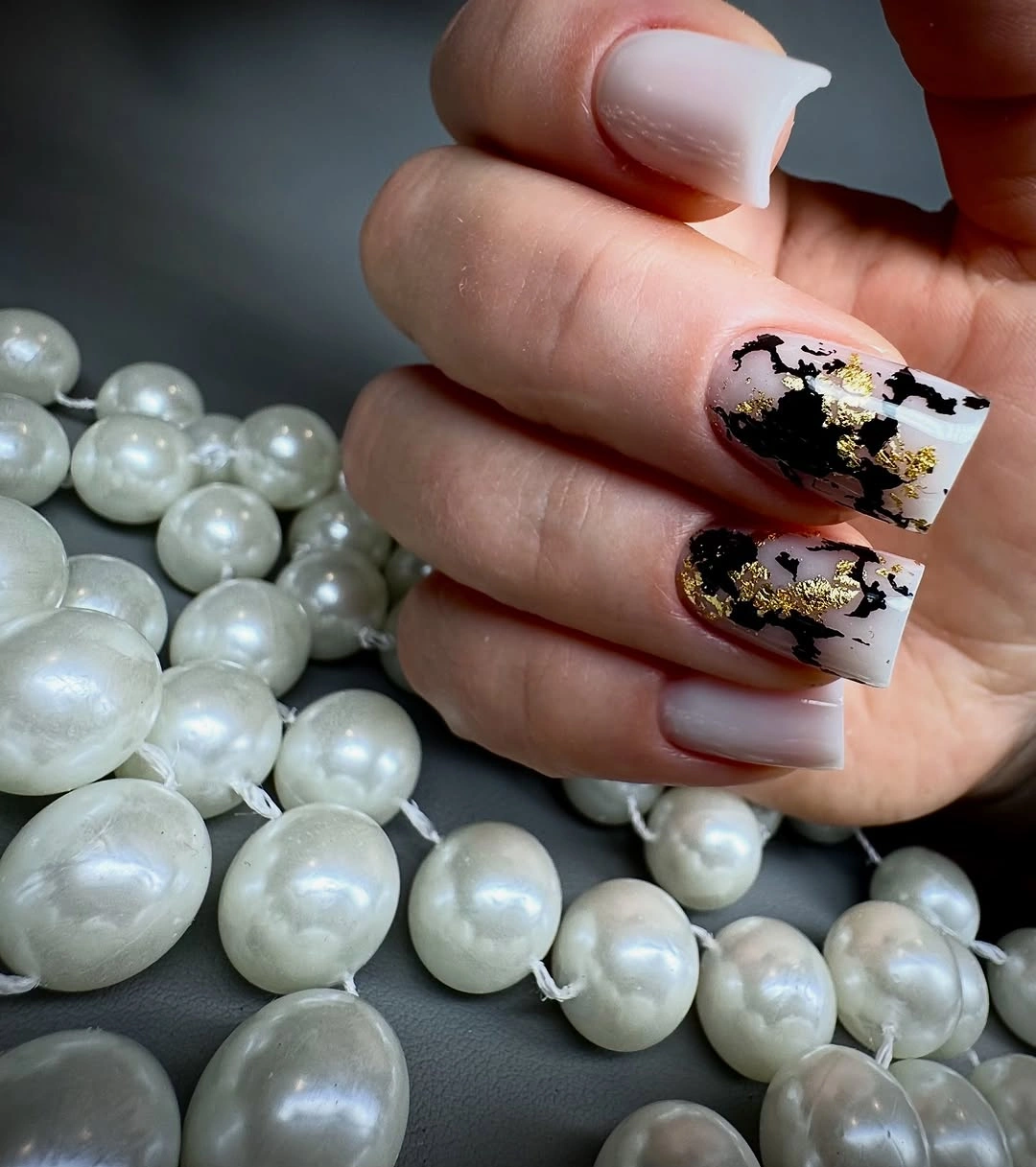
Use the accent nail as a controlled contrast variable. A shorter square can keep a single dark patch with one warm glint, while the rest remain pale and glossy. Cream, black, gold, and denim clothing can support the palette, but avoid a second busy print because the accent already has irregular edges that draw the eye.
The bold detail can feel less nude than the base, which is the honest tradeoff. It also creates a repair challenge if the patch is chipped or moved. If you want the same structure with softer value, replace the black area with a muted taupe or warm brown. The pale French rhythm will stay intact, but the focal nail will sit closer to the neutral family.
Classic Sheer Pink French With Crisp White Tips
The translucent pink center and white edge create the clearest traditional French relationship in the group. Medium square nails make the tip line easy to read, while the sheer base keeps the contrast light enough for a nude palette. There is no accent competing with the boundary, so the eye follows the shape from cuticle to square edge.
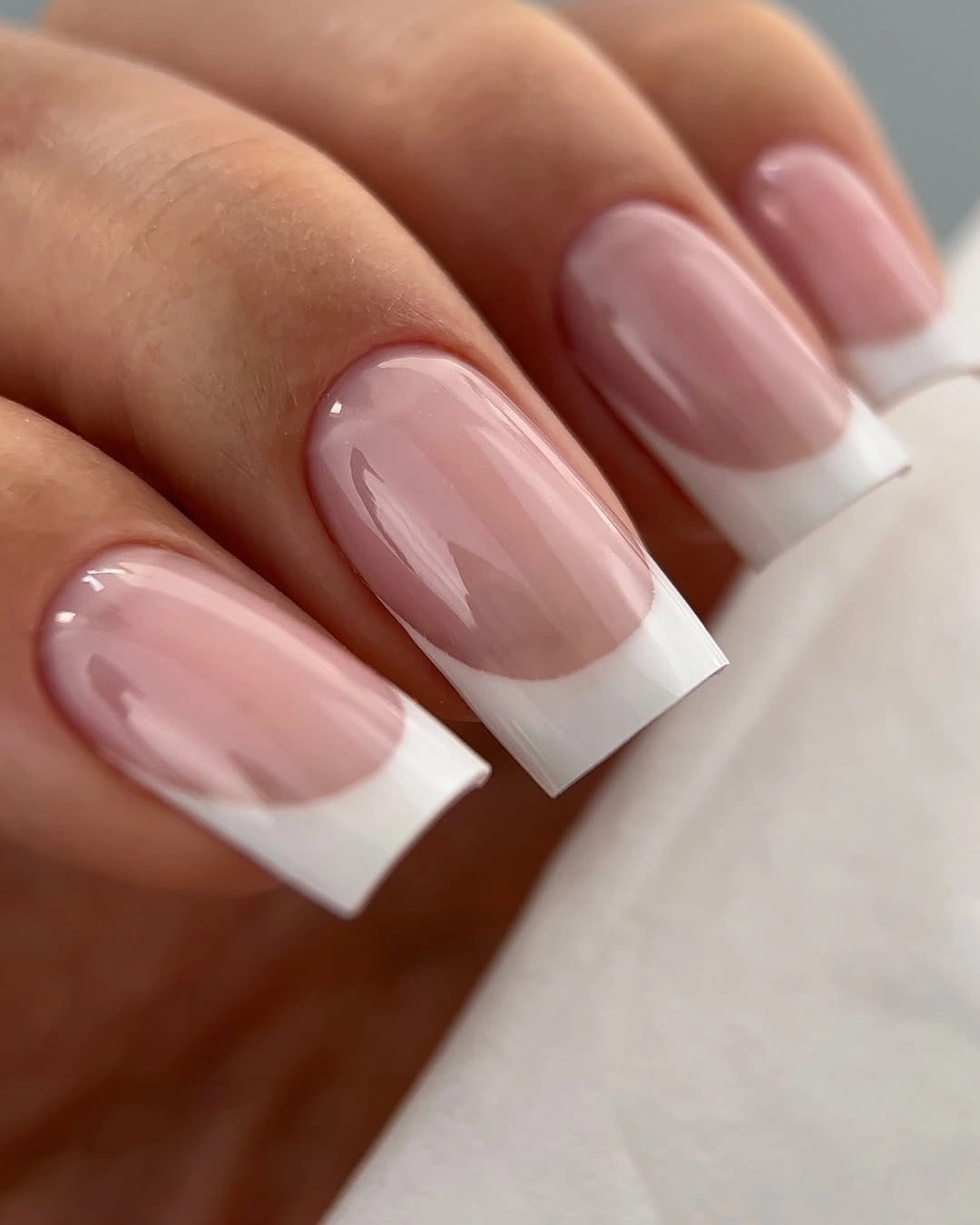
Choose this base when you want a manicure that can carry later detail without feeling unfinished on its own. Keep the white line narrow on a shorter square and let the pink remain visible through the center. White clothing will blend with the tips, while gray, denim, camel, or soft brown creates a warmer frame around the pale contrast.
The crisp edge shows growth and small chips, especially because the base is light and translucent. A lower-maintenance variation uses a softer white edge or places the French only on selected fingers. Preserve the pink-to-white relationship rather than chasing an exact line on every nail; the neutral quality comes from the open center and controlled tip. For more color-led fall variations, compare the site’s fall manicure ideas.
Glossy Nude Pink With A Completely Open Surface
The medium square nails are a uniform pale nude-pink with smooth glossy reflections and no visible decoration. Their interest comes from how closely the color sits to the skin and how evenly the outline is filed. With no shimmer, tip, or motif to redirect attention, the manicure depends on a clean surface and a quiet value relationship.
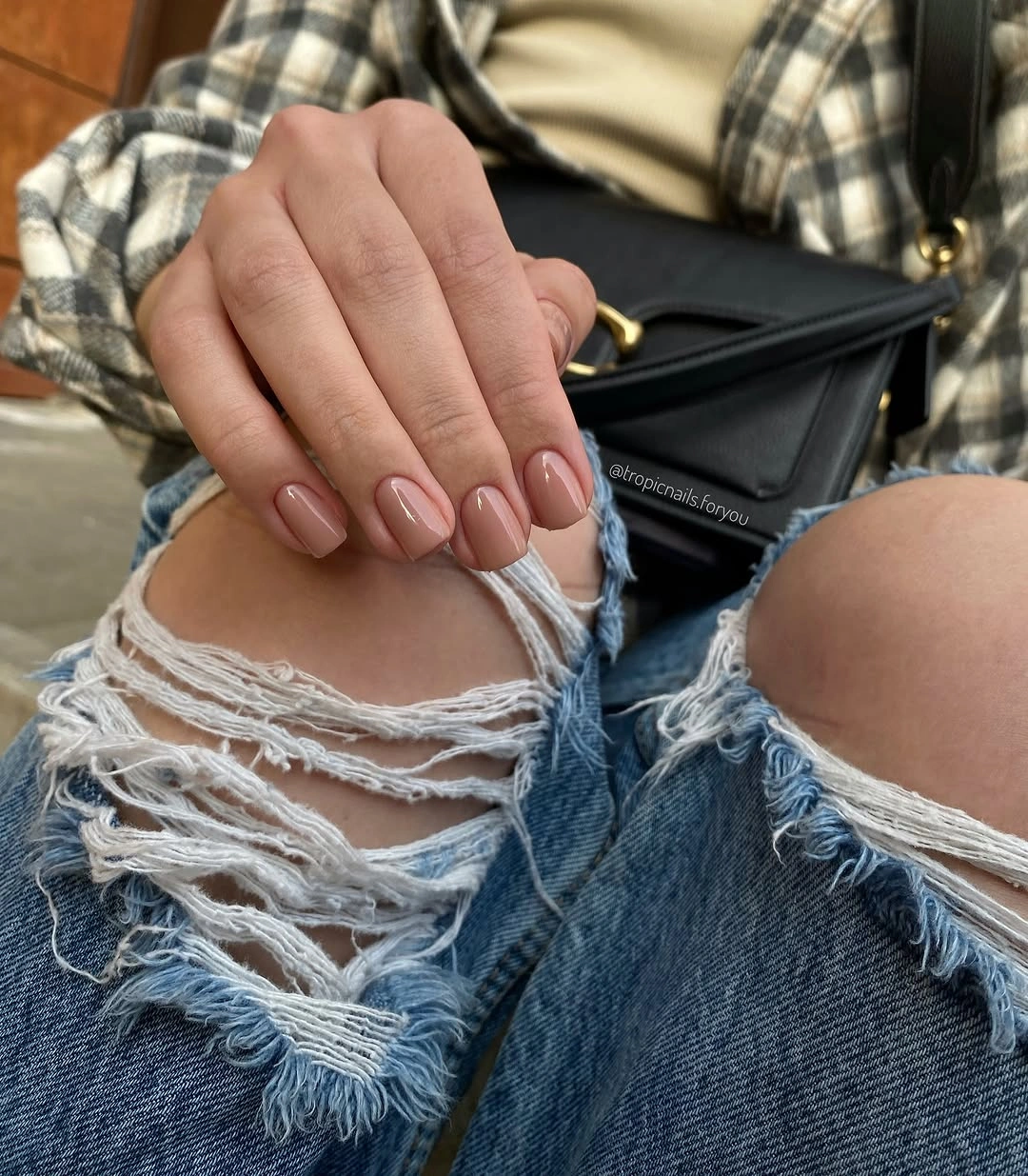
Use this as a baseline when you want the color to support rather than lead an outfit. Medium square is practical enough for daily wear, while cream, denim, gray, and muted gold accessories can bring out different undertones in the nude. If the set feels too plain, add detail to one nail only instead of changing the entire neutral field.
Close-to-skin color can expose uneven edges, and the low contrast may feel too quiet for someone who prefers visible art. The advantage is easy coordination and straightforward maintenance. Keep the gloss smooth, shorten the shape if needed, and let the restraint remain the point rather than filling the surface simply because there is room.
Long Pale Almonds With Shape As The Detail
The long almond nails use a pale pink glossy surface with no visible art, so the taper becomes the main visual decision. The color stays close to a neutral and allows the silhouette to lengthen the hand without adding contrast. This is a useful reminder that a nude manicure can be noticeable through line and proportion alone.
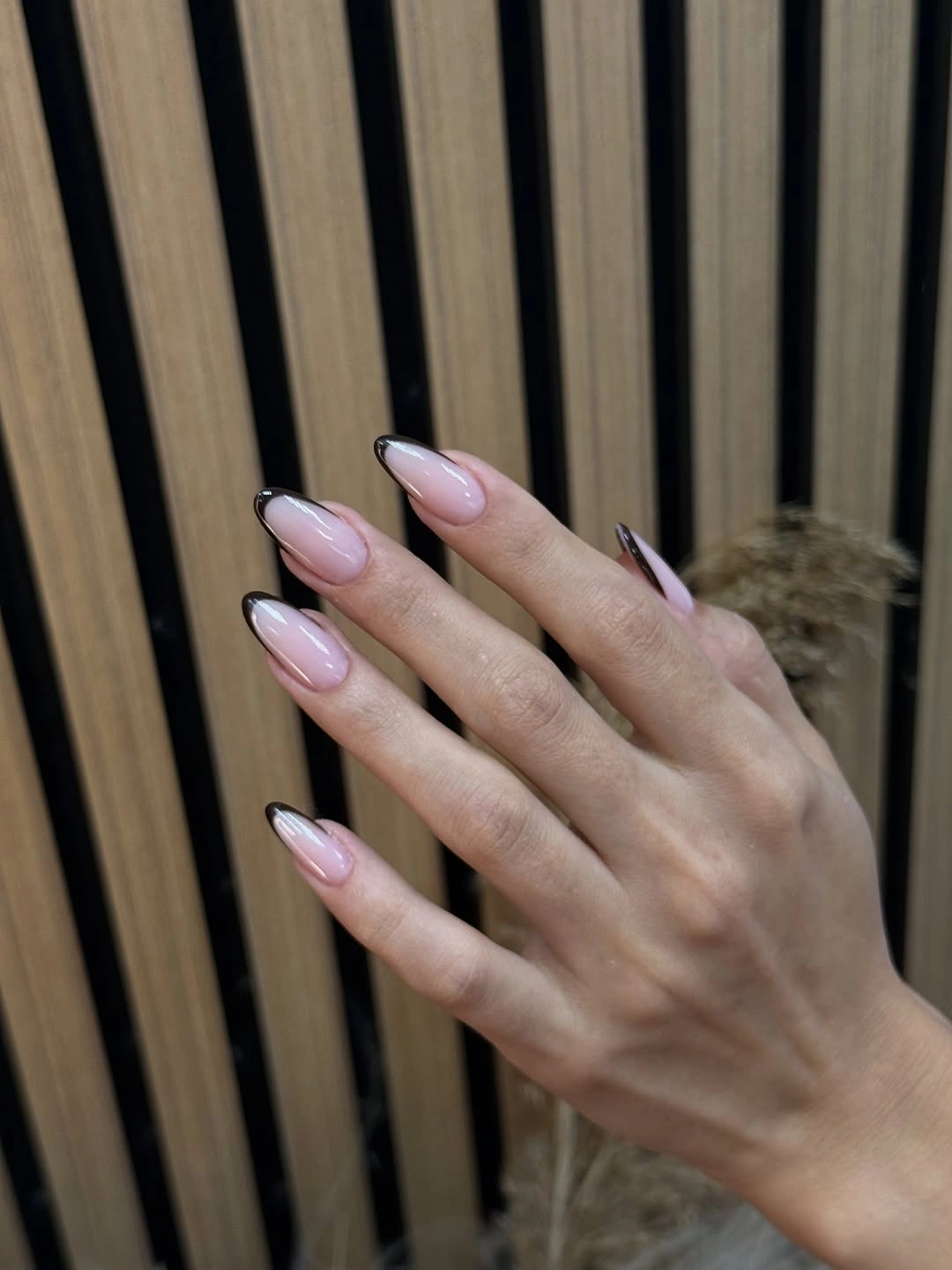
Choose the almond when you want a simple color to have a more elongated presence. A medium almond preserves the same direction with less daily commitment, while a short oval keeps the pale pink casual. Let clothing in cream, gray, denim, or soft brown remain uncomplicated so the shape can be seen without another dramatic element beside it. Readers weighing shape can also compare the site’s fall almond nails.
The long tip is the practical limitation, especially for readers who prefer low-maintenance movement. There is also little visual distraction if an edge becomes uneven, because the plain surface exposes the outline. If that happens, reduce the length before adding decoration. The manicure works because the shape is clear, not because the nail needs more visual information.
Creamy Almonds With Pointed Tips And Tiny Dots
The long almond shape is pale and creamy, with pointed light tips and tiny warm dots placed near selected ends. The dots are small enough to preserve the neutral base, but they create a repeating punctuation that keeps the surface from feeling blank. The muted grasses around the hand reinforce the soft, low-saturation color relationship.
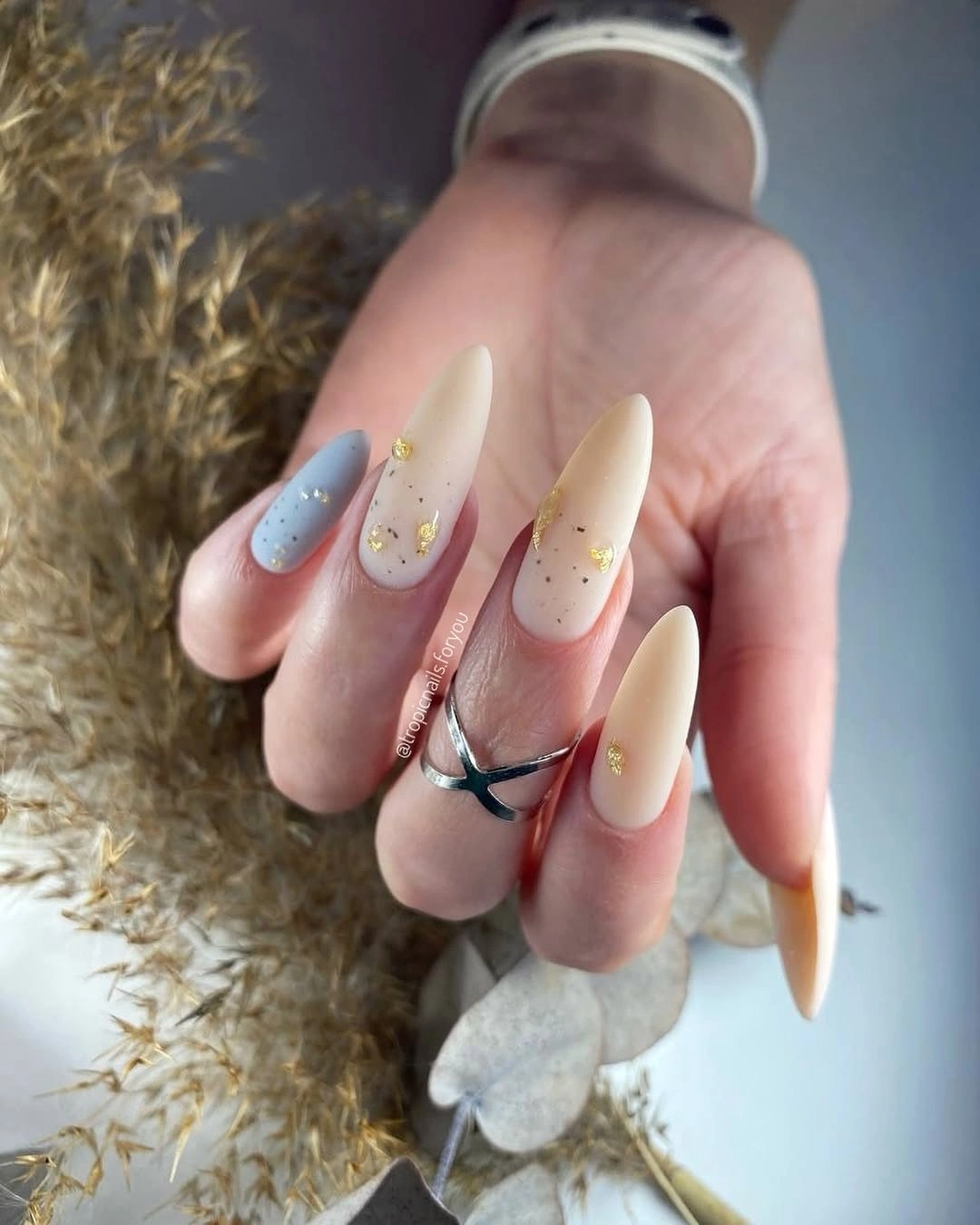
Keep the warm accents sparse and use them to guide the eye toward the tip rather than filling the center. A shorter almond can retain two or three dots on an accent nail, while the remaining fingers stay cream. Pale gold, gray, camel, and soft brown clothing will support the temperature without turning the delicate set into a fully matched arrangement.
The pointed length and tiny marks create two different upkeep demands. The tip needs daily care, and the dots can become crowded if the nail is shortened without editing their number. Remove marks before compressing the shape. The result will keep the relationship between a pale base and warm punctuation while staying more readable and easier to wear.
Light Squares With Tiny Dark Punctuation
The medium square set combines a nude-pink base with pale tips or blocks and small dark or metallic-looking details on selected fingers. The accents are not large enough to become a motif, but they stop the light manicure from disappearing against the skin. A green sleeve appears in the setting, yet the nail design itself remains restrained and mostly neutral.
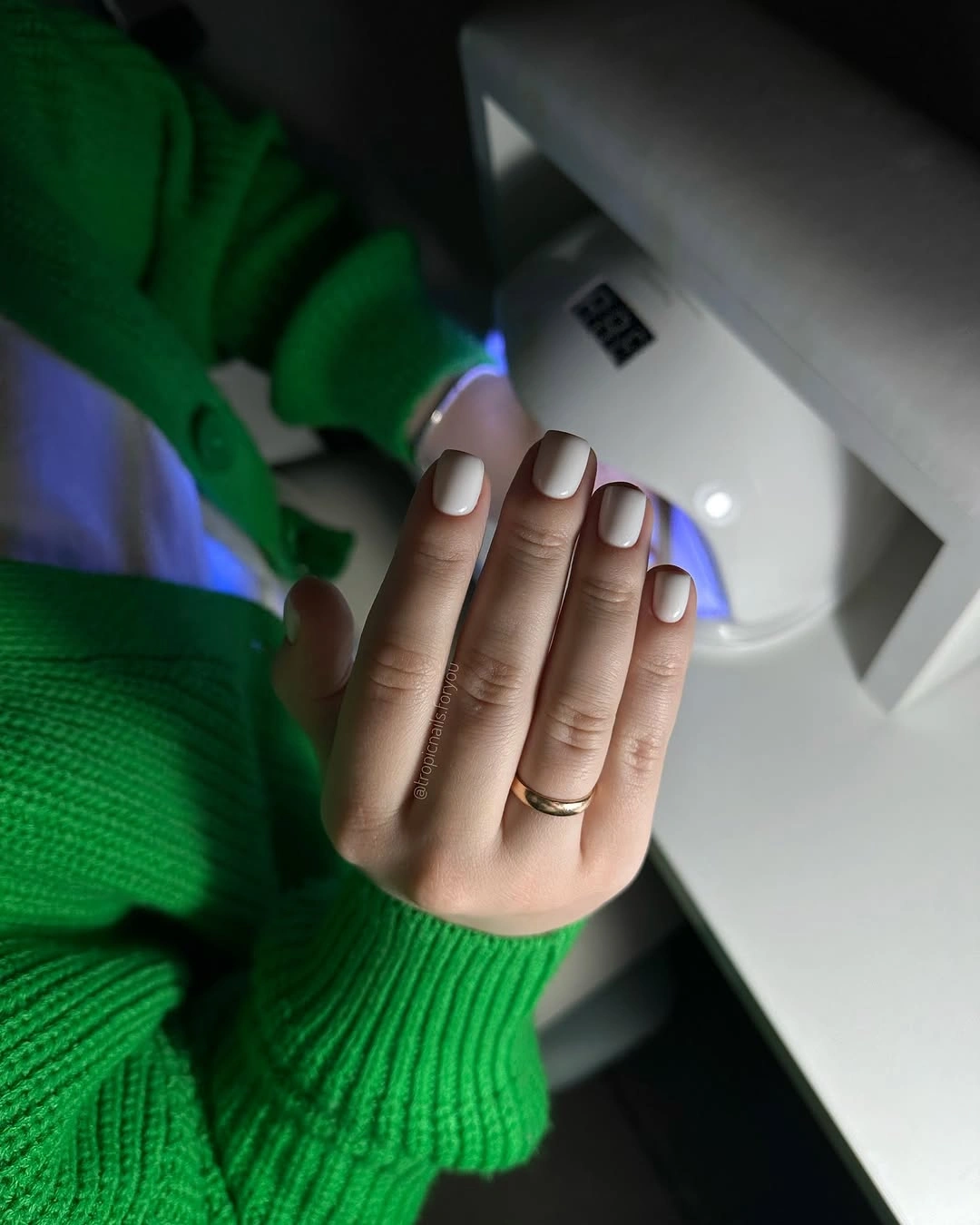
Use one small dark note to sharpen a pale manicure instead of adding a full pattern. Medium square gives the marks enough room to stay separate, while a shorter shape benefits from placing the detail on a single accent nail. Cream, green, denim, and gray clothing can frame the neutral without forcing the manicure to match the outfit’s strongest color.
The exact accent is small enough that overexplaining it would add more certainty than the view supports. Treat it as punctuation, not as a named motif, and preserve the open base around it. If the look feels too subtle, increase the value contrast slightly on one nail rather than repeating the dark detail across the set.
Warm Nude Squares With Fine Sparkle And Dots
The warm nude base carries fine sparkle and small pale flower-like or dot details across several medium square nails. Unlike a single accent, the shimmer is distributed gently, creating a repeated field that still leaves the color visible. The design feels seasonal through temperature and texture rather than through a dark pigment or a large symbol.
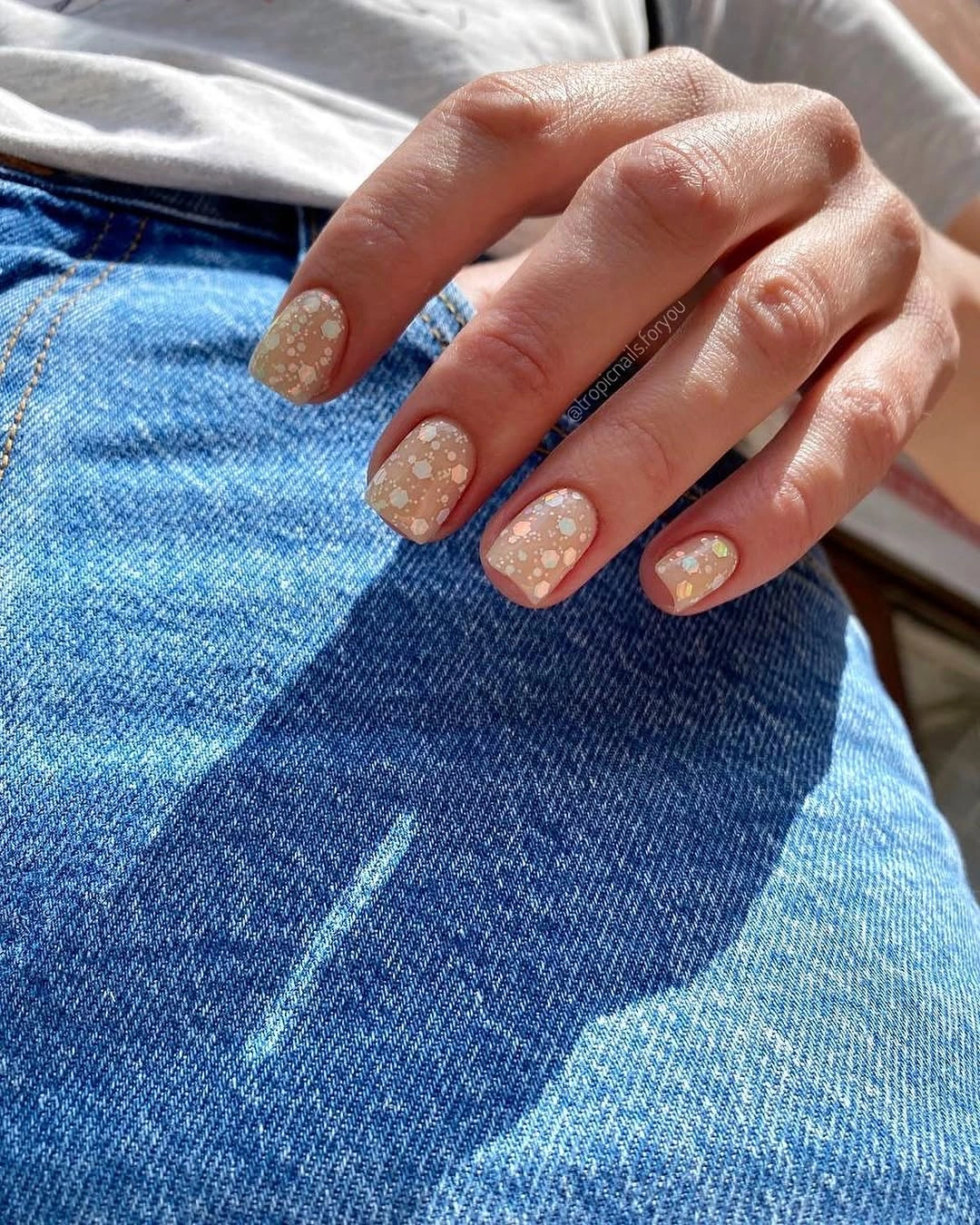
Keep the sparkle fine and the dots small so the nude remains the largest visual area. Medium square contains the repeated detail, while a shorter version should reduce the number of marks rather than squeeze them together. Cream, camel, denim, and warm gold accessories can bring out the undertone without competing with the subtle surface texture.
Distributed micro detail is harder to repair than a plain nail because uneven density can make one finger look different from the others. A practical edit places the shimmer and dots on two or three nails, then uses a glossy warm nude on the rest. The color relationship stays warm and delicate, but the set gains a cleaner rhythm.
Lavender Squares With One Zebra-Like Accent
The short square nails are a soft glossy lavender, while one accent carries thin black-and-white zebra-like striping. The cool pastel remains the main color, and the high-contrast pattern is isolated so it sharpens rather than overwhelms the set. Short length helps contain the graphic accent and keeps the contrast playful instead of elongated.
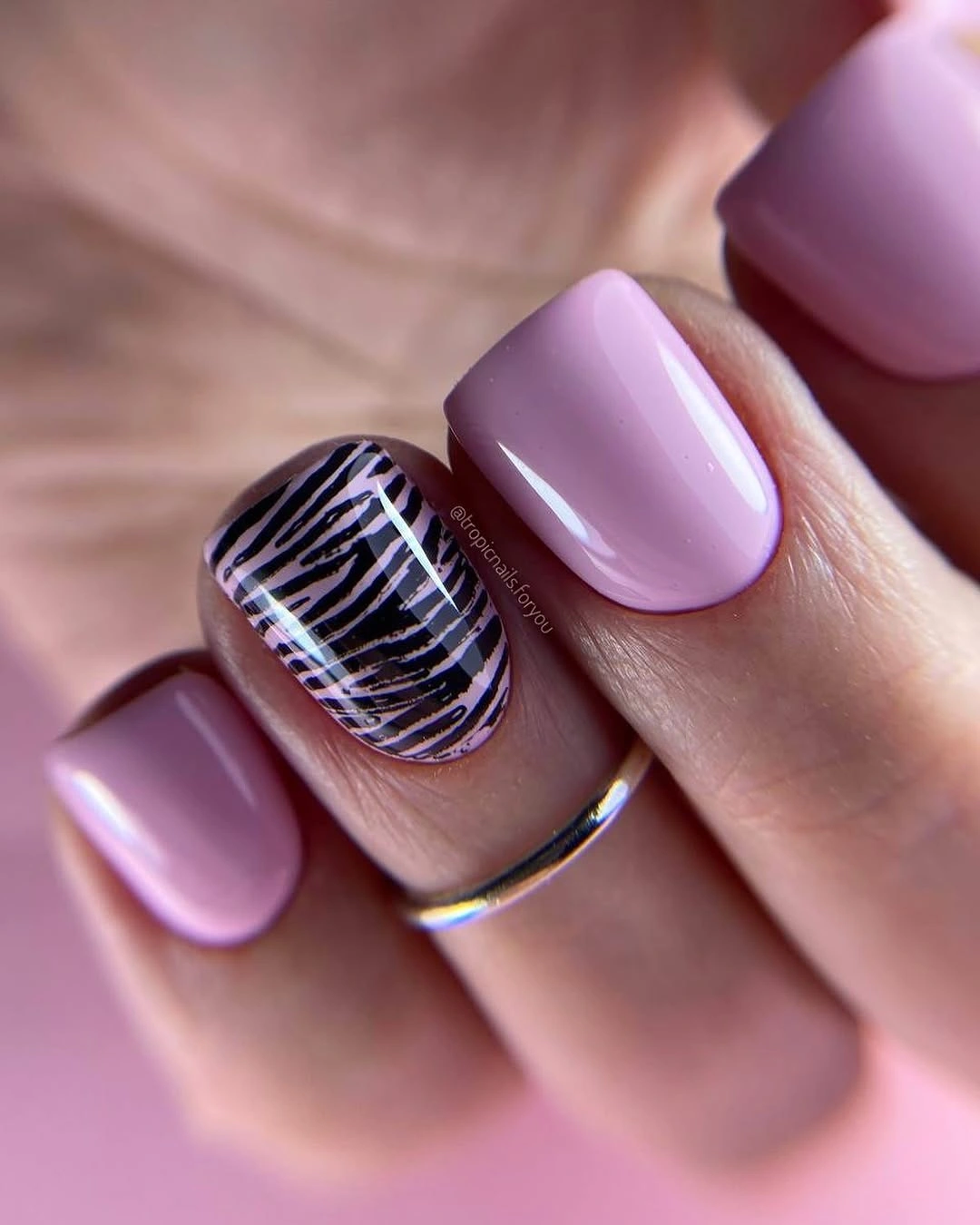
Use the solid color as the support and the striped nail as the only strong contrast. A very short square can keep a single stripe or small patch, while a medium shape could hold a little more movement. White, gray, denim, and silver accessories reinforce the cool palette, and a black detail elsewhere can echo the accent without adding another print.
The black-and-white mark may feel bolder than the lavender base suggests, especially in a simple outfit. That is the tradeoff that gives the set personality. If you need more neutrality, reduce the pattern area instead of darkening the purple. The manicure will keep its focal point, while the short square and soft color return to the foreground.
Milky Almonds With Fine Lines And Tiny Color
The long almond nails use a milky pale base with slender white lines and tiny pink, yellow, or reflective accents near the edges. The marks follow the length, so they reinforce the taper instead of breaking it into blocks. The palette remains light, but the linear detail gives the set enough structure to feel occasion-ready.
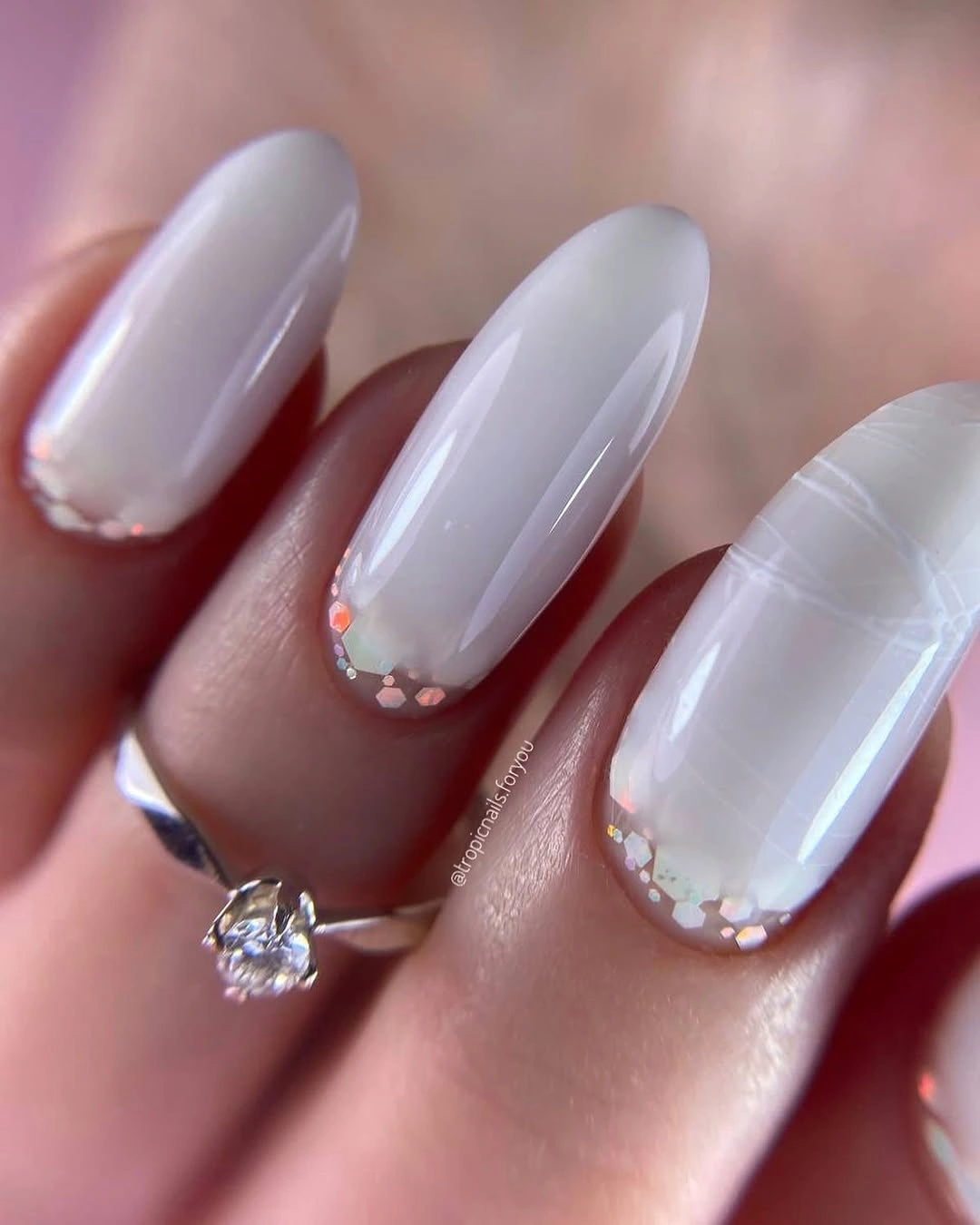
Keep the lines thin and the accent colors small. A long almond has room for a fine border or two, while a shorter version should move the detail to one or two fingers and leave the remaining nails milky. Silver jewelry, pale pink clothing, cream, and soft gray will support the low-contrast palette without adding another dense pattern.
The longer the nail, the more clearly every line placement is seen, and tiny accents can catch on fabric or become uneven after a repair. A practical variation keeps the linear direction but removes half the color points. The manicure will still read through repetition and pale contrast, while the surface becomes easier to maintain and less crowded.
Soft Pink Almonds With One Botanical Trace
Most of the long nails are a soft glossy pink, but one visible nail carries a thin blue-green botanical-looking detail inside a clear-looking accent area. The cool mark changes the temperature of the set without overpowering the pale base. The almond shape gives that narrow detail room to breathe, so the accent feels personal rather than decorative for its own sake.
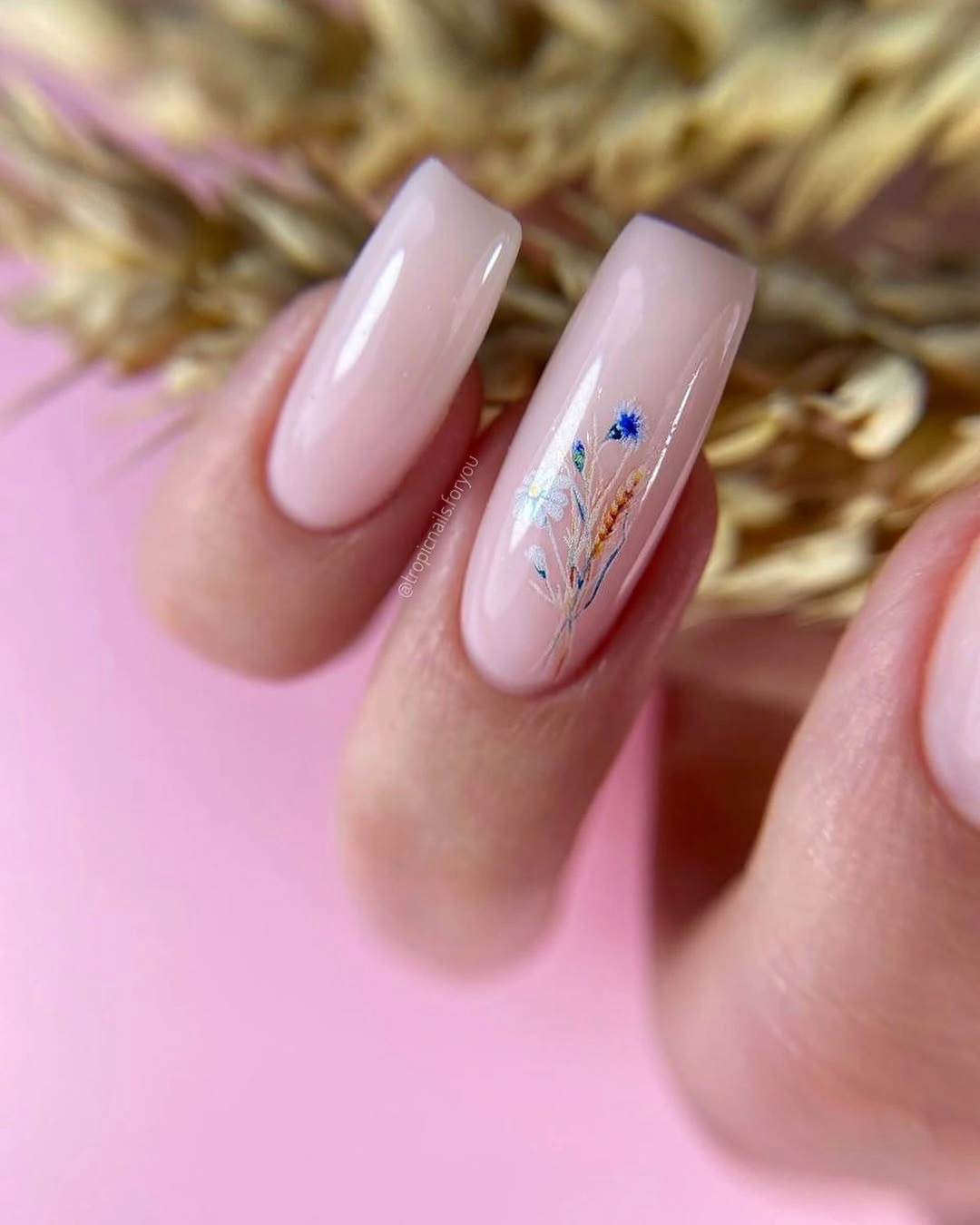
Keep one botanical accent when adapting this idea. On a shorter almond or oval, a single stem-like mark will remain clearer than several tiny leaves, while the other nails can stay glossy pink. Pale blue, gray, denim, and silver details can echo the cool note, but a warm brown accessory will make the blue-green accent stand out more sharply.
The detail is delicate enough that its material or exact subject should not be overstated, and its narrow placement may be difficult to reproduce after wear. If practicality matters, retain the color relationship but reduce the mark to one small line. The pale pink base will continue to carry the manicure, with the cool accent acting as a quiet change in temperature.
Short Rounded Lavender With A Glossy Surface
The short rounded nails use a soft lavender color with a smooth glossy finish and no visible motif. Their compact outline keeps the pastel from feeling too expansive, while the rounded edge makes the cool color approachable rather than sharply graphic. The manicure is quiet, but the purple undertone gives it more personality than a plain white neutral.
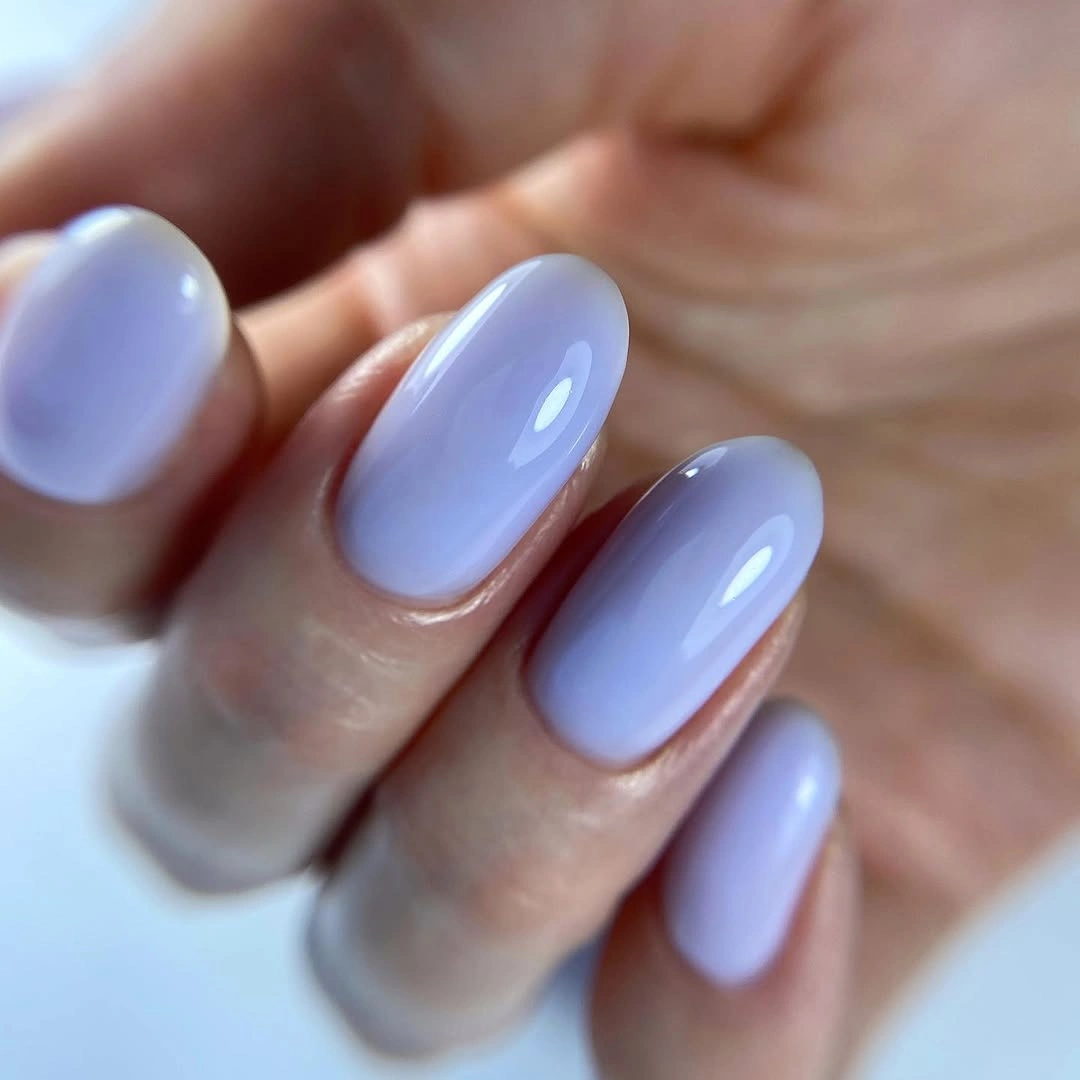
Choose this shape when you want a cool pastel that stays practical. The short length pairs well with gray, white, denim, silver, and muted green, while a rounded edge softens the transition between the nail and fingertip. If you want more fall weight, keep the lavender on most fingers and add one muted brown accessory instead of a dark nail accent.
The low contrast may feel too understated for someone who wants visible art, and a pale purple surface can show uneven edges. The benefit is straightforward upkeep and easy coordination. Preserve the simple gloss, shorten the nail if necessary, and let the color’s cool temperature provide the variation rather than forcing a motif onto an already complete design.
Bright Magenta Rounded Nails Kept Short
The saturated magenta-pink color is vivid, but the short rounded shape contains it and keeps the set from becoming overly long or formal. Glossy reflections make the surface look smooth and energetic, while the absence of art ensures the color remains the only strong decision. The contrast between compact proportion and high saturation is what makes the manicure feel controlled.
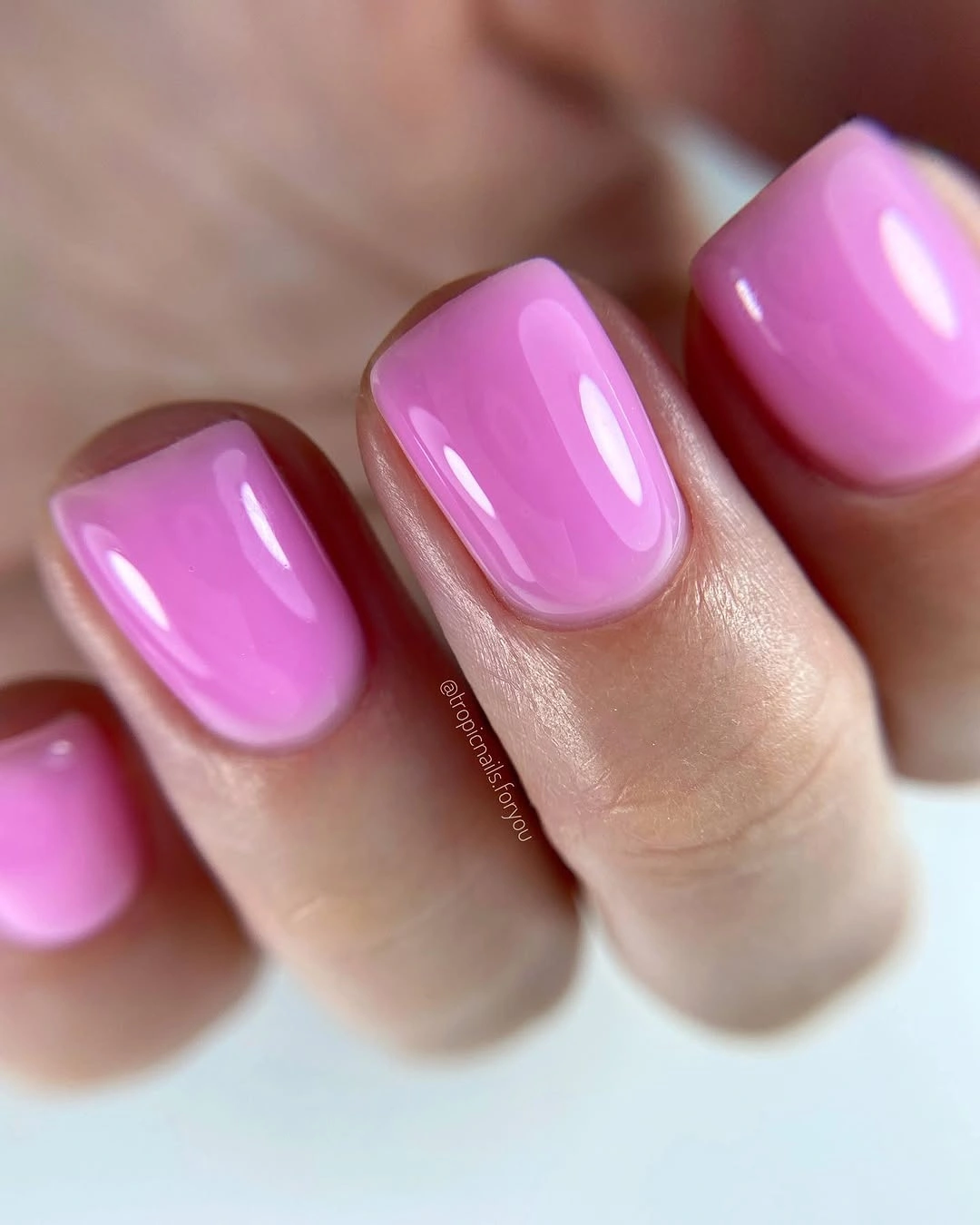
Use a short shape when you want a bright color with fewer practical compromises. The manicure can lead against cream, gray, denim, or black clothing, and a small magenta accessory can repeat the energy without matching every detail. If the full coat feels too intense, move the color to two accent nails and keep the rest pale pink or milky white.
A saturated pink will show chips, but a solid surface is easy to refresh and does not require pattern alignment. The realistic limitation is wardrobe coordination rather than nail length. Keep the shape rounded and compact, then let the color be the focal point. Extra shimmer or linework would add complexity without improving the clear color relationship.
Cool Gray Blue Squares With Clean Gloss
The medium square nails sit between pale gray, soft blue, and white, creating a cool neutral that changes slightly with the light. The color is opaque and glossy, with no visible art to interrupt the understated surface. Because the base is cooler than the usual pink or beige nude, the manicure feels quietly directional without becoming bright.
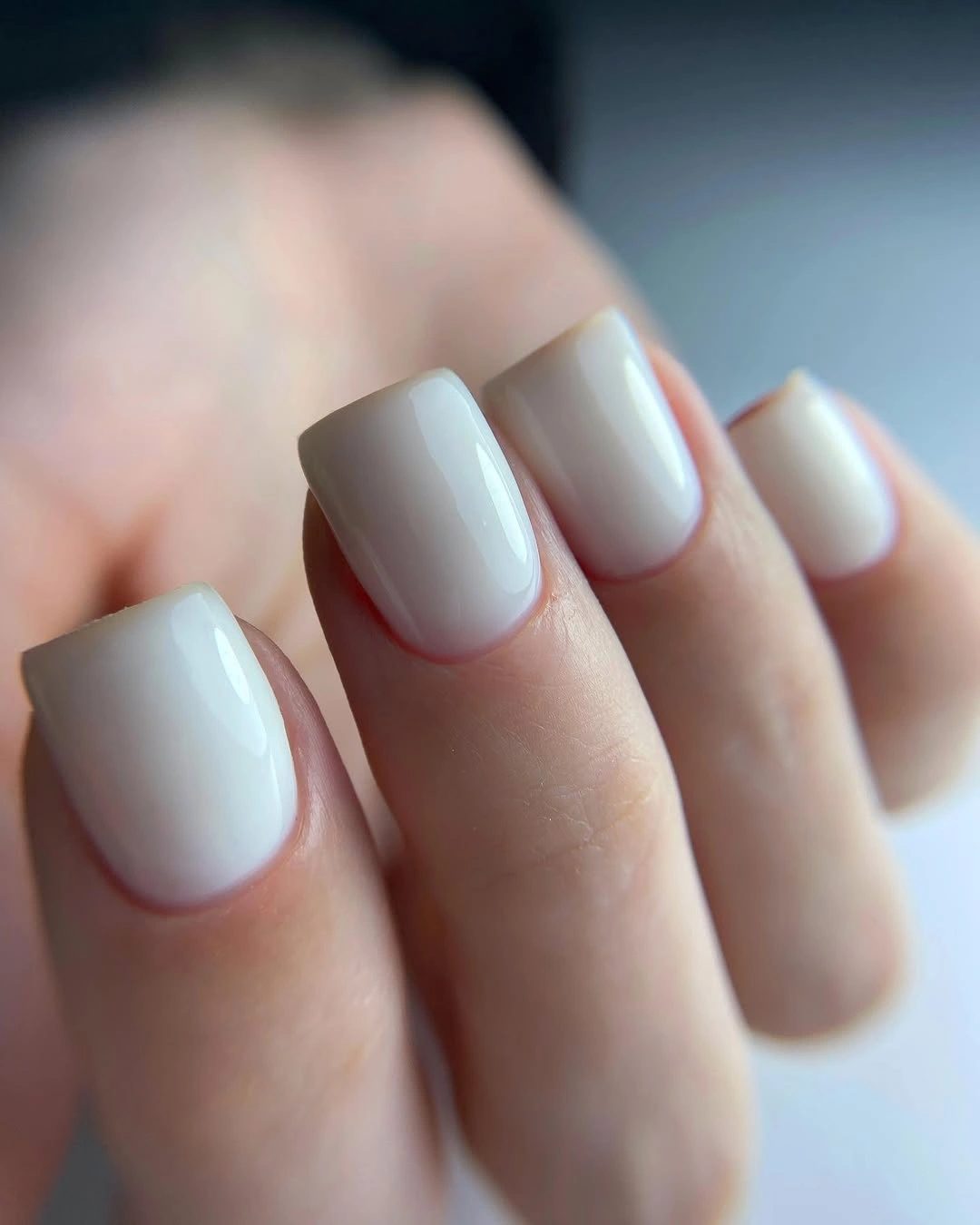
Choose this tone when your fall wardrobe leans toward denim, gray, silver, black, or crisp white. Medium square keeps the cool color balanced, while a shorter shape will make it more casual and a rounded square will soften the graphic edge. Warm camel or brown nearby will create contrast and make the blue undertone easier to notice. For more undertone comparisons, see the site’s fall nail designs for every skin tone.
The shade may not look identical in every light, which is part of its interest but can make exact matching difficult. The pale surface also shows edge wear, although the plain finish keeps repairs simple. Preserve the cool value and glossy reflection; adding a strong accent would move attention away from the subtle color shift that defines the set.
Blush Rounds With Sparse Warm Flecks
The short rounded nails carry a pale blush base with delicate peach or gold-like flecks scattered across selected areas. The marks are sparse enough that the pink remains the dominant field, but their warmer temperature gives the light manicure a gentle fall connection. The rounded shape keeps the design soft and prevents the tiny accents from looking too formal.
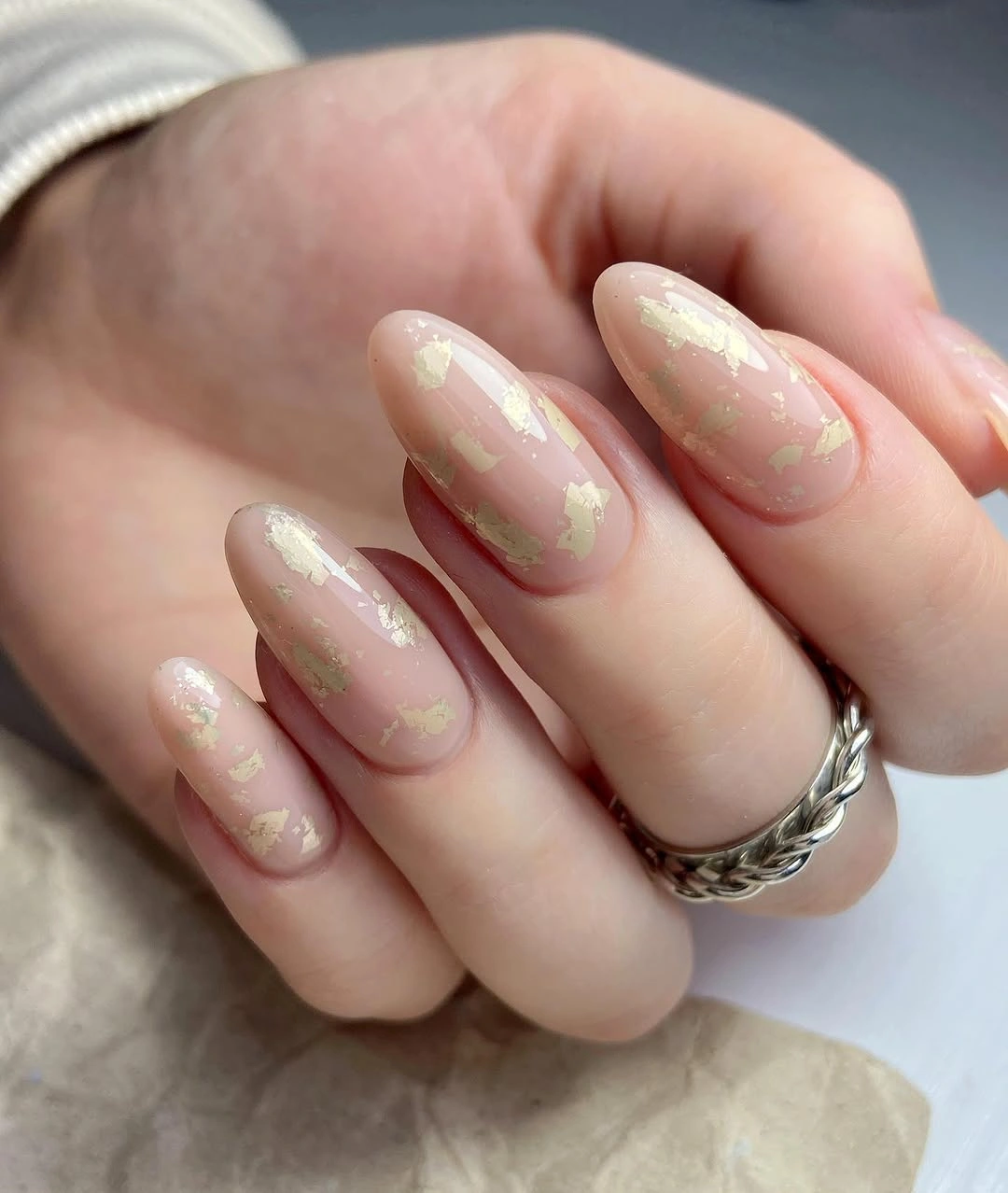
Keep the flecks small and unevenly spaced so they read as a quiet surface detail rather than a full pattern. Short length makes the design easy to contain, while cream, camel, denim, and warm gold accessories can support the color relationship. If the marks feel too subtle, place a few more on one accent nail instead of increasing the contrast everywhere.
The exact material and subject of the flecks are not necessary to the design, and overdefining them would add unsupported certainty. Treat them as warm points against blush, then edit for maintenance by leaving several nails plain. The manicure will still feel seasonal through temperature and spacing, while the soft base remains the part that holds the set together. If you want a work-ready reference, compare the balance with fall nail designs for the office.