
Simple Fall Short Nails With Clean Color Ideas
A short manicure feels instantly newer when the surface has one clear job. It might be to show a clean curve, hold a quiet sheen, or leave a small accent with enough space around it. When every nail tries to entertain at once, the result stops feeling simple and starts looking undecided, even when each individual detail is attractive.
The easiest reset is not stripping a design down until it is anonymous. It is choosing the one detail that improves the shape, then letting the rest of the hand stay calm. That small edit makes short nails look intentional and keeps the finish easy to live with as the season changes, without turning the manicure into a blank default.
Blush Pink Starts With a Clean Short Edge
A pale blush color gives these short rounded-square nails a visual reset because nothing interrupts the even surface. The compact edge stays easy to read against the bright magenta setting, and the glossy reflection adds just enough movement to keep the monochrome finish from looking flat. It is a quiet beginning, but the lack of extra detail makes the shape feel deliberate rather than unfinished.
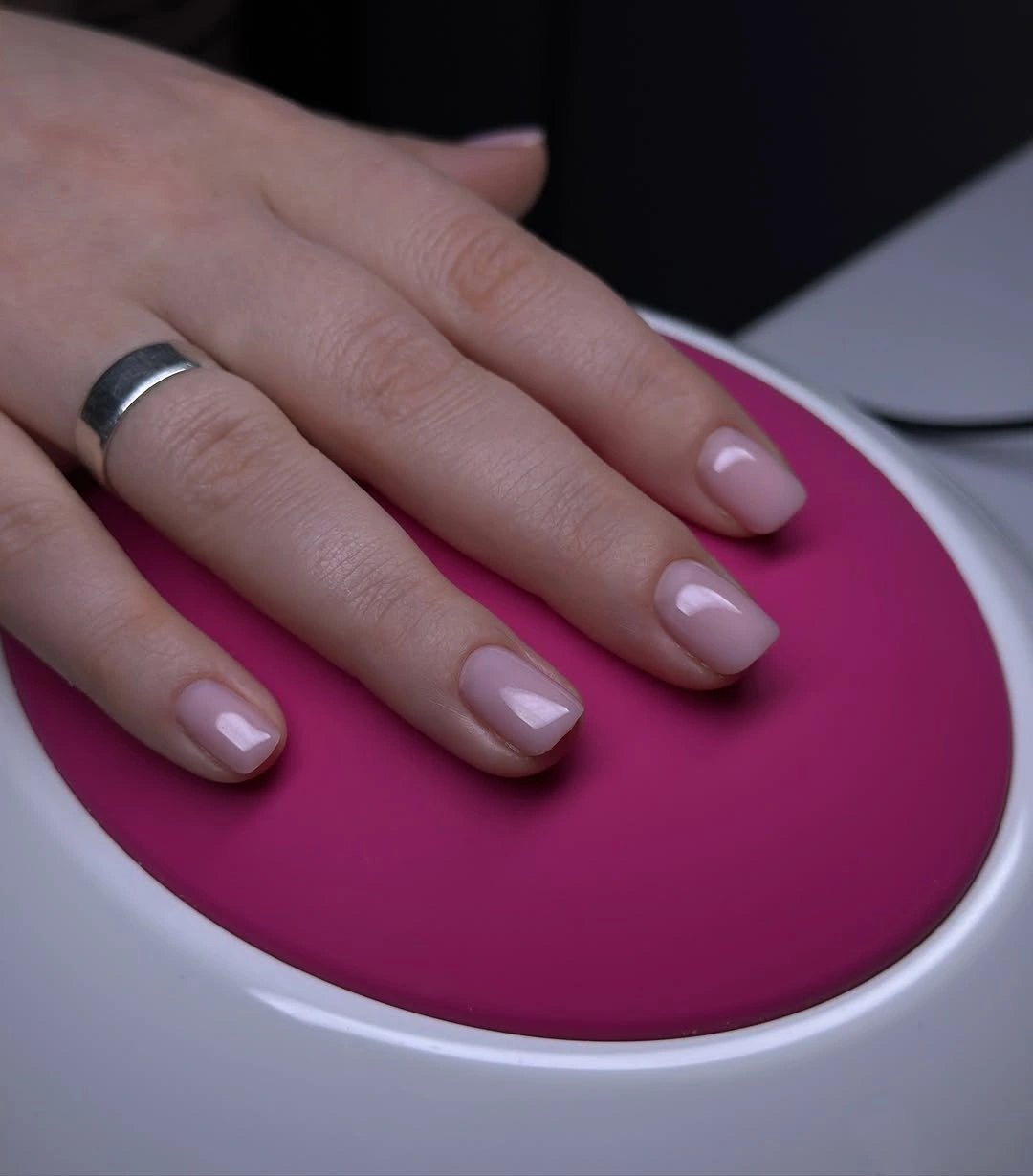
Use this as the full manicure when you want a simple fall color that can move between casual and polished settings. If a completely plain result feels too bare, add one narrow darker line on the ring finger and leave the other nails untouched. The clean pink field is important, because adding a different motif to every finger would erase the fresh sense of space.
Minimal color does ask for tidy edges and even coverage, since there is no pattern to distract from a small flaw. That is a manageable tradeoff on a short nail: the surface is quick to understand and easy to adapt. Keeping the outline rounded rather than forcing extra length is what makes the pale shade feel current and practical.
Cool Lilac Gains Depth Along the Oval
Pale lilac can look very soft on a short nail, yet the blue-gray shading along these medium ovals gives the color a little more structure. The rounded outline keeps the cool palette gentle while the darker edges stop the surface from disappearing into the background. It is a simple finish, but the light-to-dark shift makes the shape visible from more than one angle.
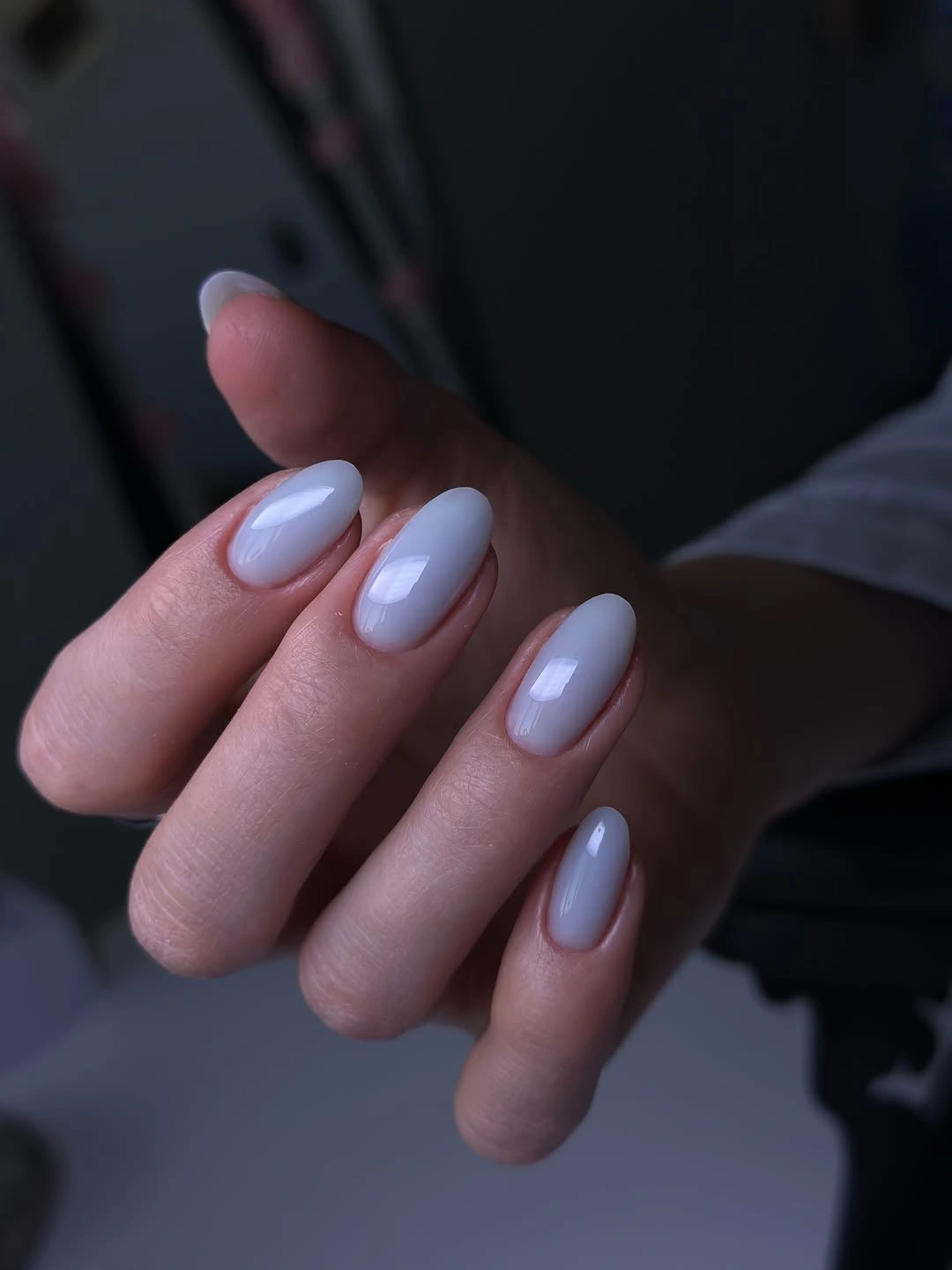
For a clean adaptation, keep one cool lilac across a shorter oval and let the darker blue-gray appear only near the tip or side of the ring finger. That preserves the shaded impression without requiring a full transition on every nail. A soft gray clothing palette would echo the color, but the manicure does not need an outfit theme to work.
Lighting will change how much of the cooler edge is visible, so the result may read lighter in daylight and moodier against a dark background. That is part of the appeal, but it also means the outline should remain tidy when the color contrast is subtle. The oval carries the softness; the edge shading simply gives it direction.
Powder Blue Leaves the Dots to Two Accents
Most nails are a smooth powder blue, while two white accent nails carry tiny yellow, pink, and green dots. The color story feels playful without becoming noisy because the detailed pair is surrounded by solid blue. Short square edges give the accents a compact frame, and the white background lets the small marks stay visible instead of disappearing into the main pastel shade.
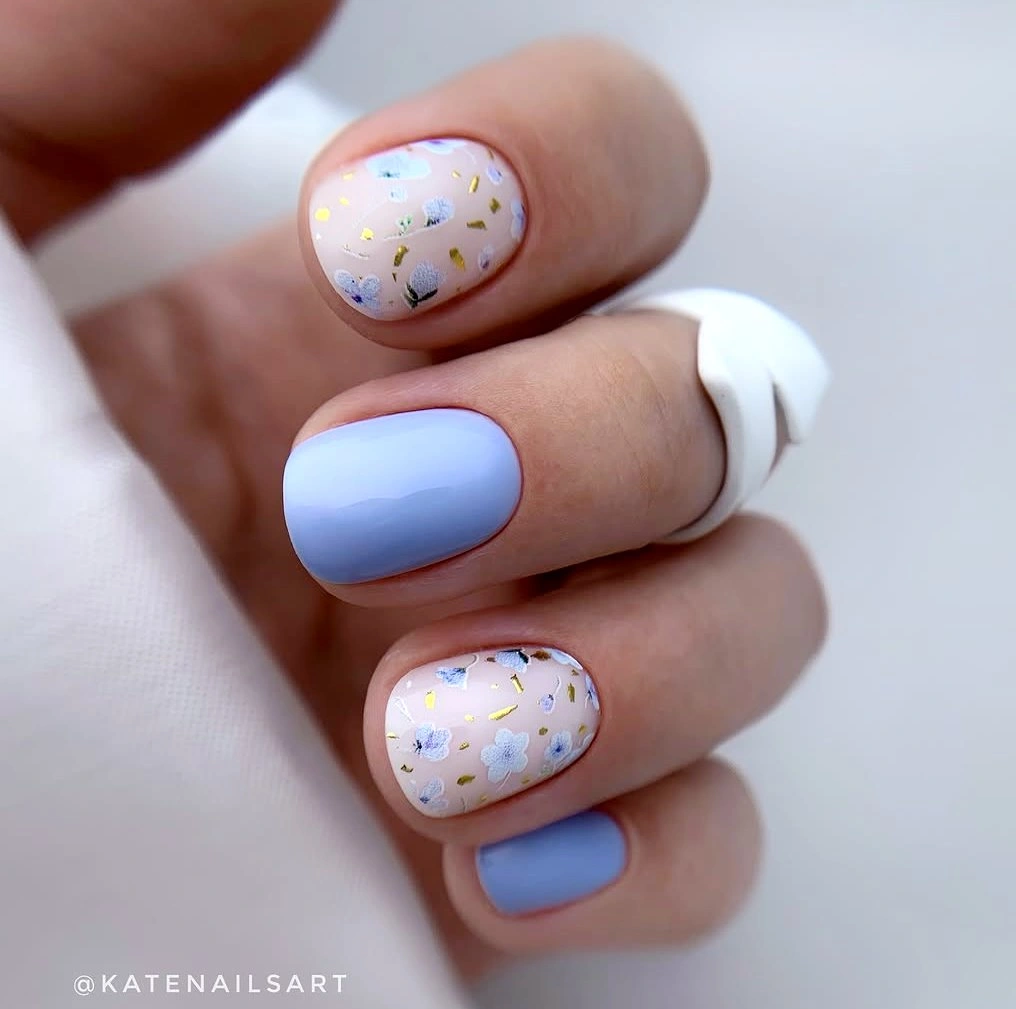
One dotted white nail is enough for a more restrained version. Keep the others blue, then borrow one pastel from the accent as a tiny supporting point if you want the fingers to connect. The same placement can work on a short coffin shape, but the dots should remain sparse so the color blocks do not compete with the outline.
The fresh feeling comes from breathing room, not from the number of colors. Repeating the small marks across every nail would make the manicure busier and reduce the value of the solid blue pauses. Use the accent pair as the place for personality, then let the plain nails carry the visual reset around it.
Soft Mauve Gradient Creates a Short Shadow
These short oval nails use a darker plum-like center against softer blush edges, so the color has more dimension than a single pastel coat. The shadowed placement makes the small shape appear narrower through the middle, while the lighter sides keep the result from becoming too heavy. It is a quiet gradient with a clear mood, not a separate pattern fighting for attention.
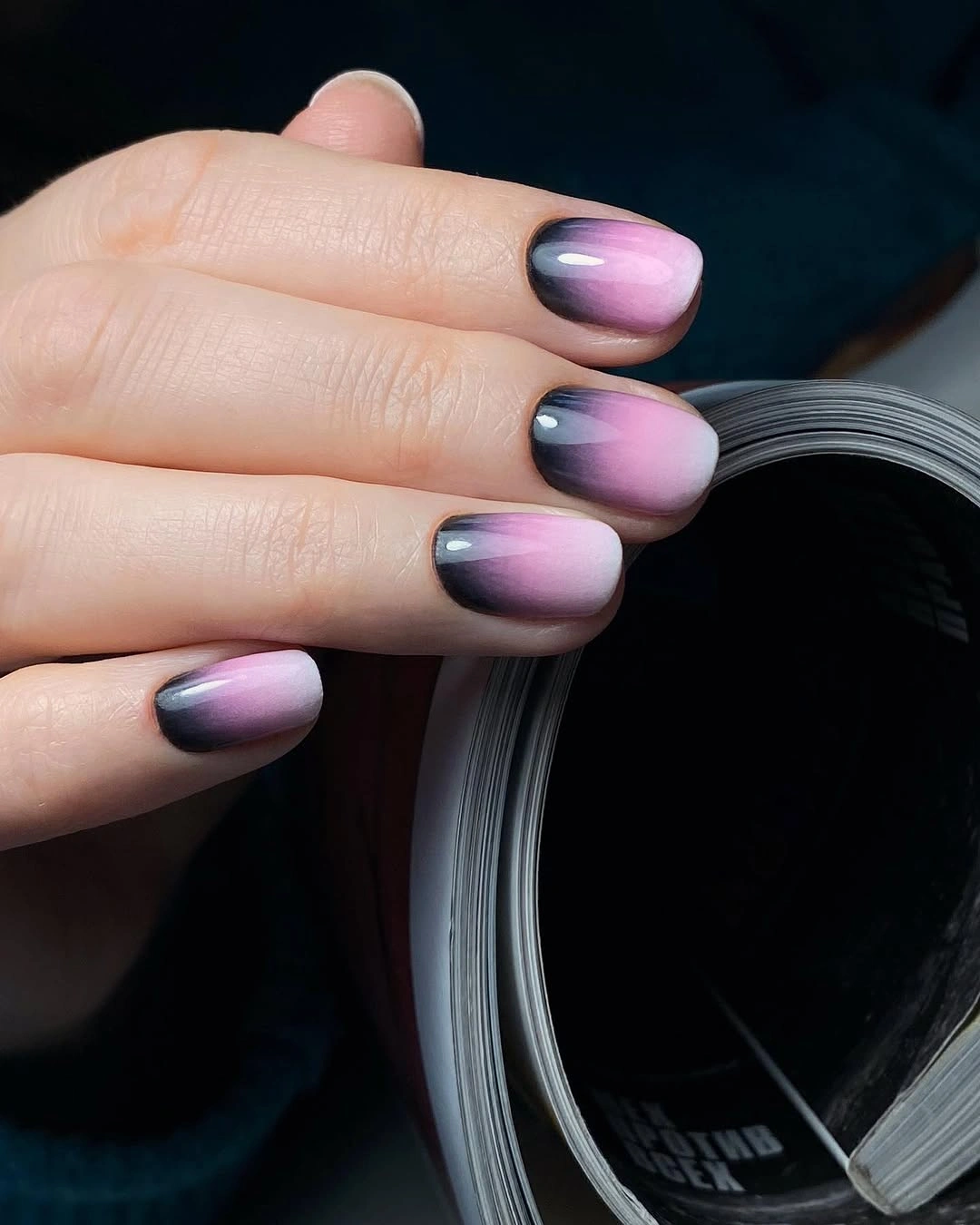
Keep the deepest shade near the tip if you want a simpler fall version, or use the full center fade only on two fingers. A shorter oval benefits from a gradual transition because a hard dark band would visually cut across the nail. The palette can stay muted; the placement is what creates the depth.
Gradient work is sensitive to scale. A broad dark area can make a small nail look crowded, while a softer fade lets the oval remain visible. That is the useful adjustment here: reduce the dark zone before adding another color, and let the pale edge maintain the clean feeling that makes the manicure easy to wear.
Peach Coral Keeps a Warm Solid Color Easy
A warm peach-coral surface gives these short rounded-square nails a gentle fall direction without needing brown, red, or visible art. The glossy finish catches light across the compact shape, and the soft color stays approachable against the darker background. Because the shade does not rely on a motif, the rounded square remains part of the look rather than a simple container for decoration.
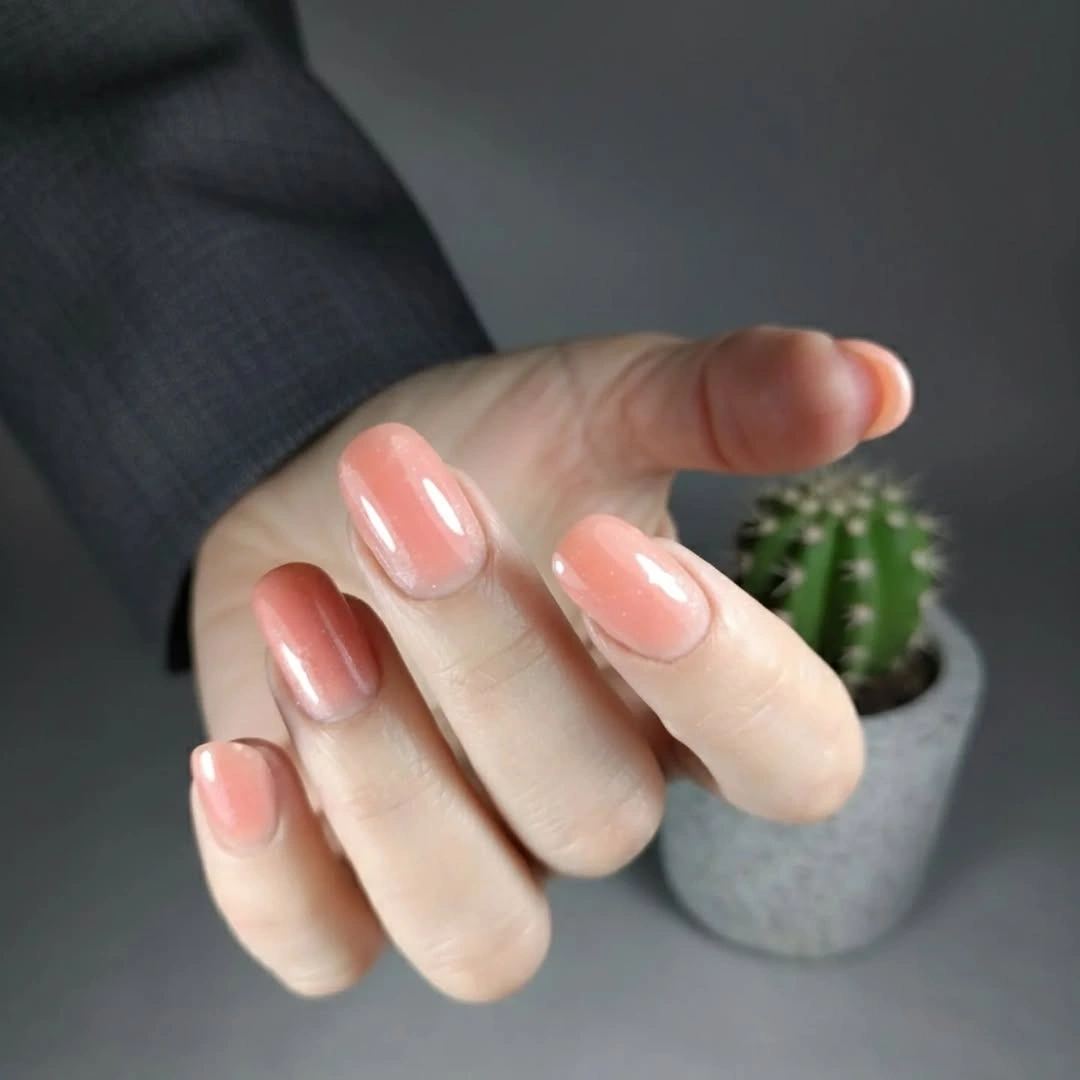
Wear the color across all fingers for a straightforward warm set, or deepen only the ring finger if you want a small change in value. A neutral cream accent would keep the palette soft, while a dark red would make the result more graphic. Either way, keeping the base mostly plain preserves the clean simplicity of the original idea.
Warm peach can shift depending on skin and background, so it is worth judging the color in the light where it will be worn. The smooth surface also shows edge wear clearly, but that is easier to manage than a detailed design that needs exact repair. The short outline keeps the bright color grounded and prevents it from looking overly dramatic.
Icy Silver Sparkle Fits a Compact Oval
Fine silver sparkle covers the short oval nails evenly, creating a cool reflective effect without a separate accent finger. The compact shape keeps the shimmer contained, while the consistent texture allows the manicure to look complete from every angle. There is no visual competition between colors, so the main decisions are the icy tone, the small oval, and the way light travels across the surface.
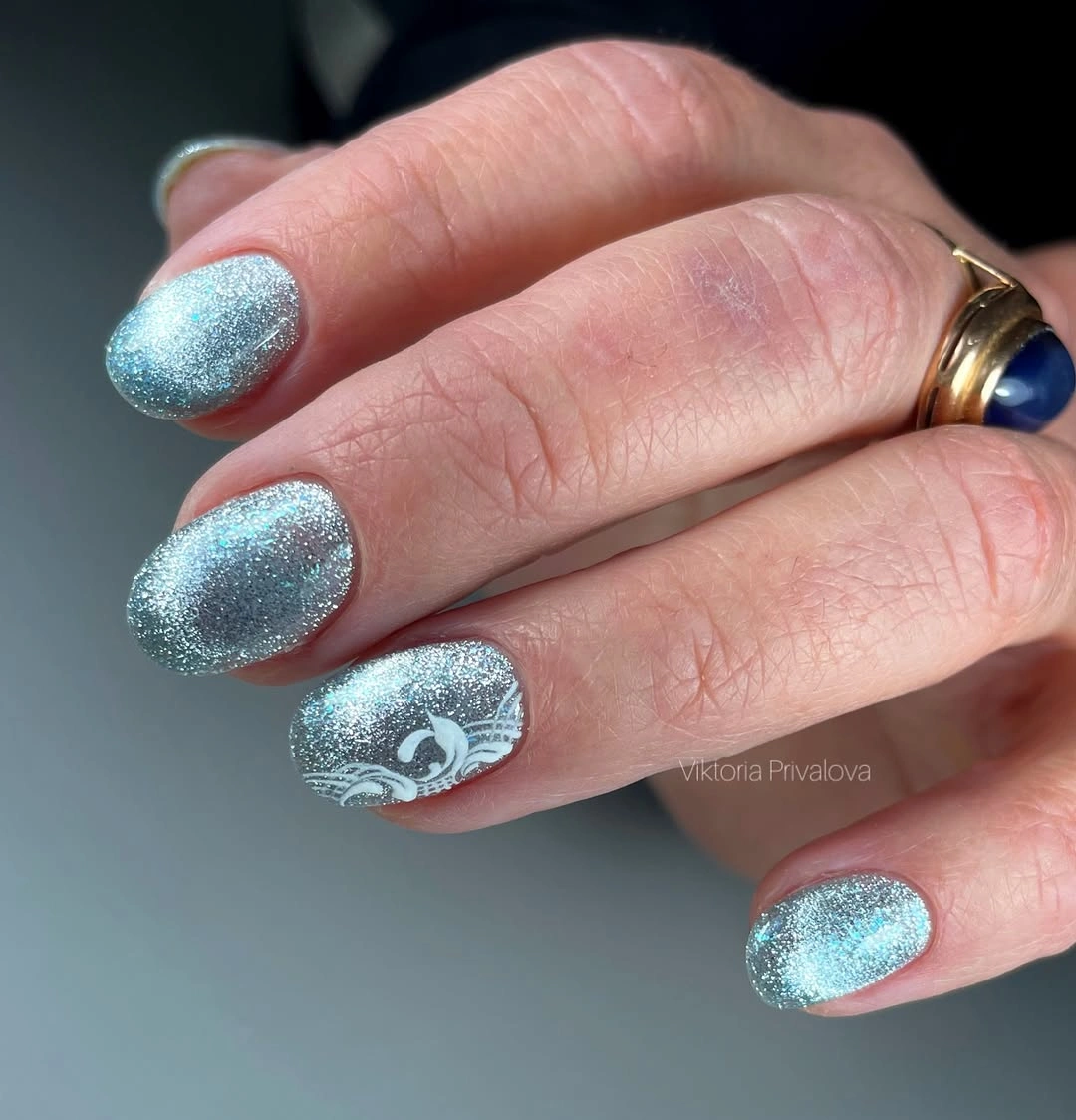
All-over silver is easy to translate to a shorter shape because it does not depend on a large motif. If the full shine feels too bright, keep it on the middle and ring fingers over a pale blue base. That small change creates contrast while preserving the cool relationship between sparkle and pastel.
The uniform finish is forgiving of tiny color variation but not of a rough edge that catches the light. It may also appear bluer or brighter as the hand moves, so a softer base can keep it calm in mixed lighting. The best way to simplify it is to reduce the number of sparkling nails, not to add another competing pattern.
Pink Side Blocks Add Shape Without Full Coverage
Nude centers leave room around the bright pink side blocks, and a thin dark-and-warm curved accent follows the border on selected nails. That placement gives the short square a graphic update without covering the entire nail in color. The design reads clearly because the nude area separates the hot pink from the small line, creating a tidy sequence of center, block, and edge.
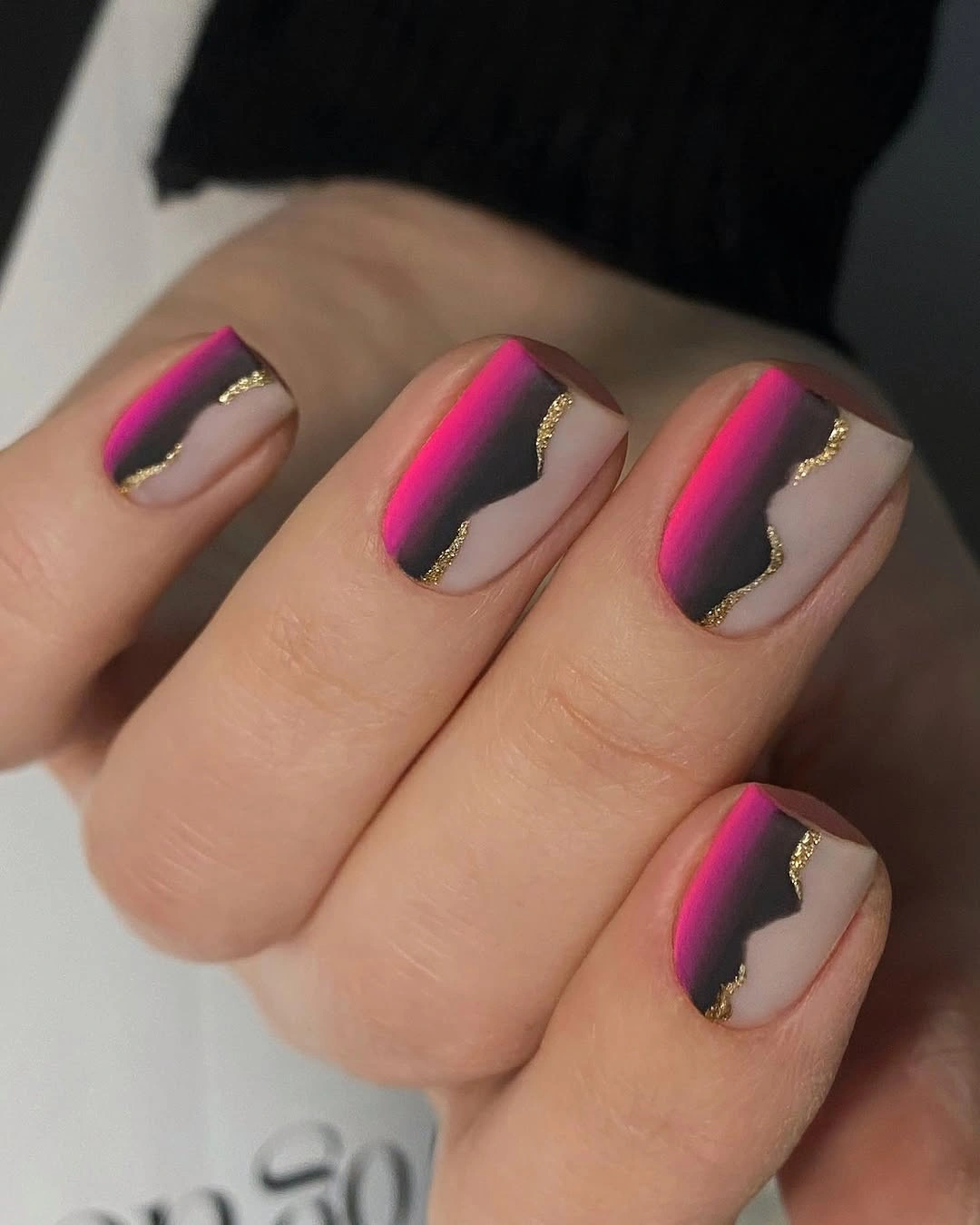
Repeat the pink side block on two fingers and keep the rest nude for a simple adaptation. One narrow curved line can remain as the shared detail, but it should stay close to the border rather than crossing the open center. On a shorter edge, a smaller block will preserve the same side-to-center contrast without making the nail look wider.
Graphic placement rewards clean boundaries, so uneven sides will show more quickly than they would under a scattered motif. The practical benefit is that the design has a clear place to repair: focus on the pink edge and leave the nude field alone. That single decision keeps the manicure crisp and prevents the color from becoming a full block.
Cherry Red Makes the Short Square Direct
Deep cherry red covers these short square nails evenly, and the saturated gloss provides enough visual interest without shimmer or art. The compact corners keep the color disciplined, while the pale background around the hands makes the red look even richer. It is a simple fall choice with a clear point of view: one strong color, one tidy shape, no extra explanation needed.
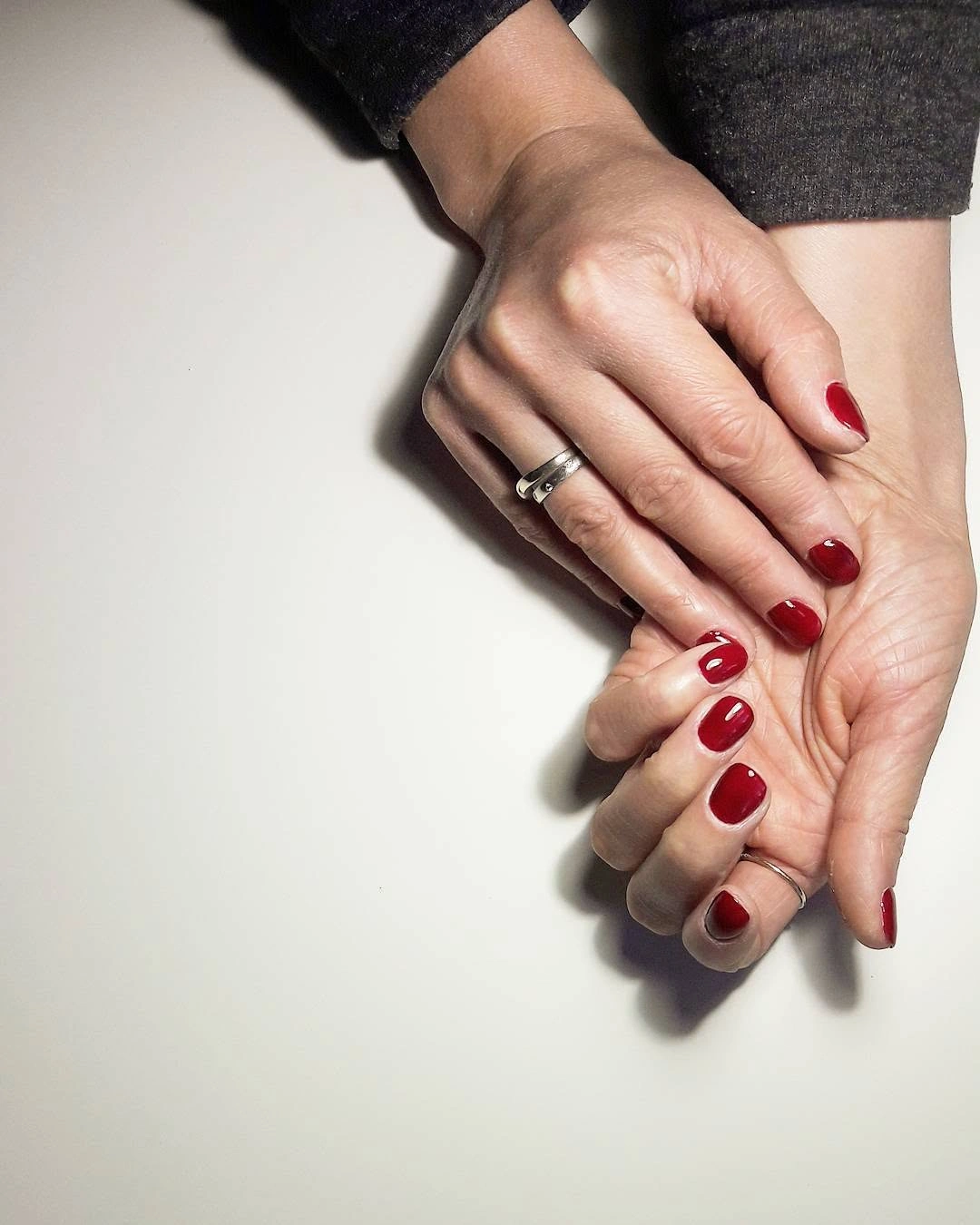
Use the red on every nail when you want the most direct version, or make one finger sheer to create a small pause. A shorter rounded square would soften the effect, while a medium coffin would make it sharper. The color itself does not need another accent unless you want to change the balance from bold simplicity to contrast.
Dark glossy polish shows edge wear and uneven corners, but the plain surface makes those points easy to identify and maintain. The saturated shade also gives the hand a strong visual anchor, so additional decoration would likely compete rather than improve it. A clean short square is the reason this red feels wearable.
Blue French Tips Keep a Milky Base Clear
Milky nails finish with vivid cobalt tips, and a narrow cool line follows part of the blue edge. The base softens the stronger color, while the short squoval shape keeps the French construction practical and easy to read. The reflective border is small enough to support the cobalt rather than become a second main motif, giving the manicure a clean contemporary contrast.
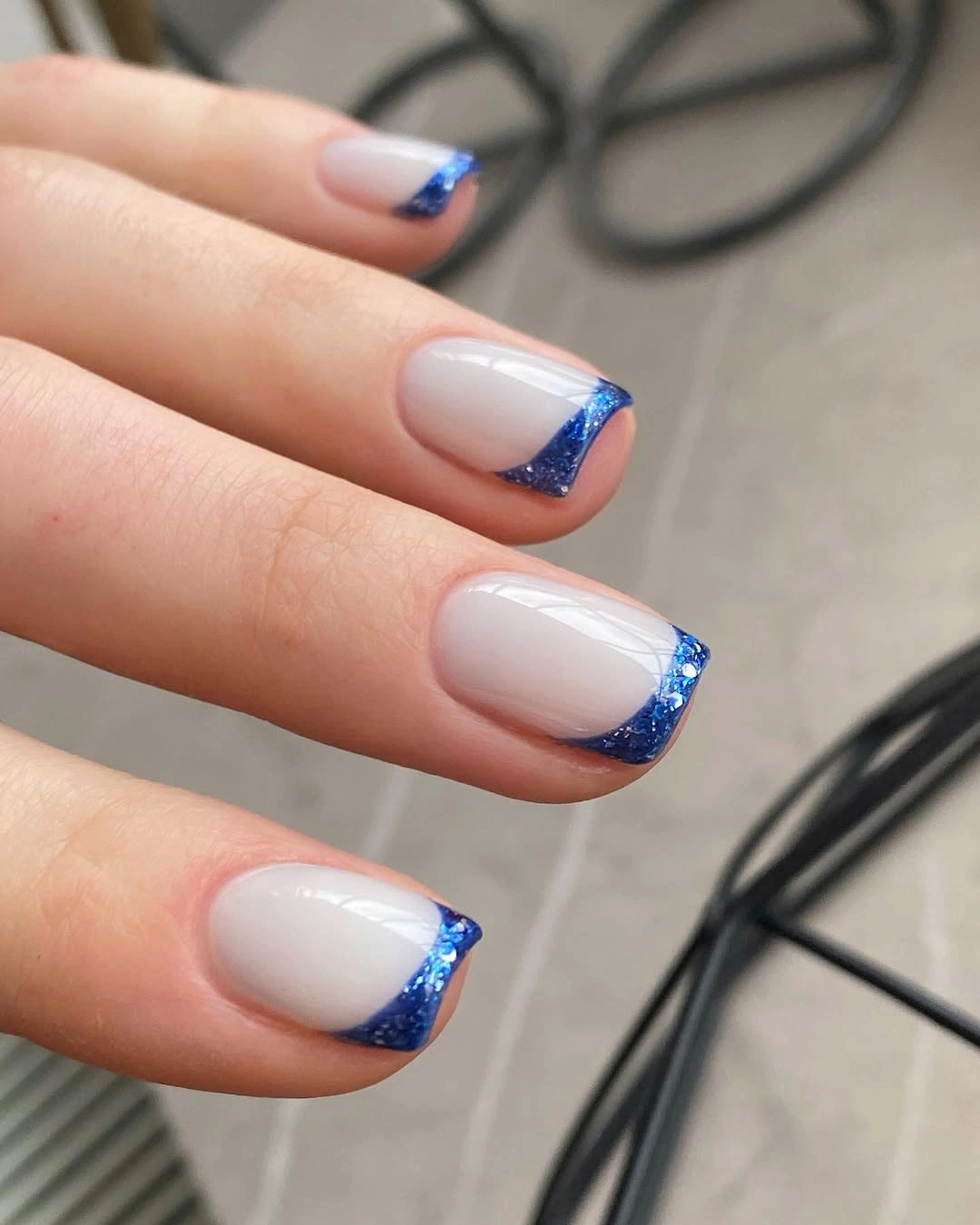
For a simpler set, keep the blue tips on the index and ring fingers and use plain milky nails elsewhere. The same tip can be made thinner on a very short nail, where a broad cobalt band would reduce the visible base. If the outline is kept cool and narrow, the design will stay fresh even without the small reflective detail.
French edges depend on consistent thickness, especially when the colors contrast strongly. The short squoval helps because it offers a clear boundary without requiring extra length, but it still needs enough milky space to keep the blue from taking over. The useful choice is to protect the open base and let the cobalt remain the only bold color.
Rose Gold Shimmer Warms Up a Plain Pink
A pale pink base covered in fine rose-gold shimmer gives these short square nails more depth without adding a motif. The colors sit close together, so the reflective surface feels warm and soft rather than sharply metallic. The compact edge remains visible under the sparkle, which makes this a good example of a simple manicure that changes through finish instead of decoration.
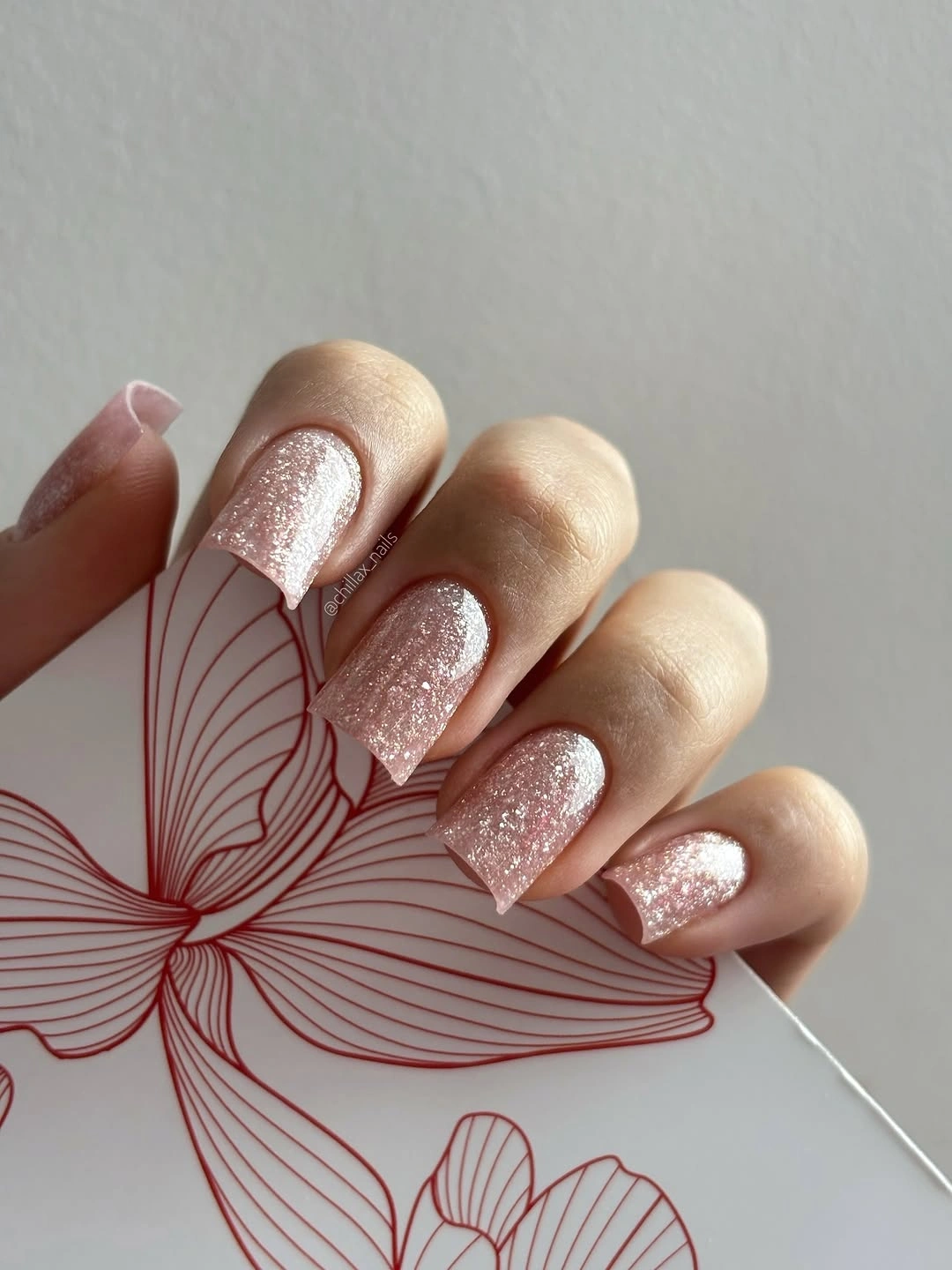
Keep the shimmer on two accent fingers over plain pale pink when you want more breathing room. That arrangement preserves the warm connection while making the reflection a deliberate focal point. A slightly cooler pink would make the gold look brighter, so a soft blush base is the calmer choice if the set needs to stay understated.
Fine shimmer can look champagne in warm light and more rose in cooler light, which gives the simple finish some movement. It also draws attention to surface texture, so an even edge matters. No extra line or charm is needed; the close-toned color relationship is already doing the work of a small accent.
Milky Pearl Keeps Tiny Dots Almost Hidden
These short rounded-square nails combine a milky white base with a soft pearl sheen and a few low-contrast dots. The details are visible on closer inspection but do not interrupt the clean first impression, which makes the manicure feel light without being entirely plain. The rounded edge supports that quiet effect by avoiding a hard graphic finish.
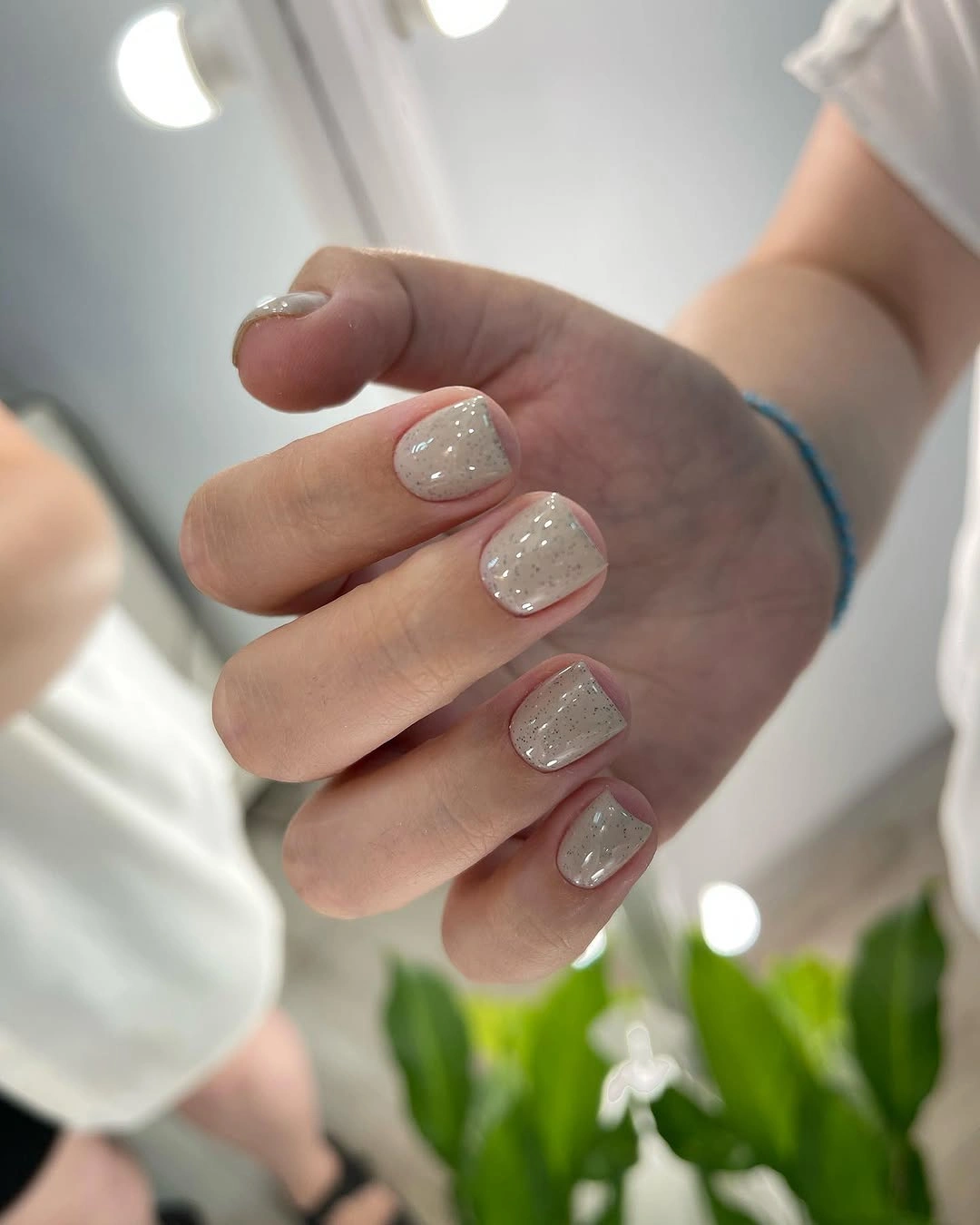
Skip the dots on the thumb and index when adapting the set, leaving the pearl finish to carry the rest. If you want slightly more definition, place one dot near the tip of the ring finger rather than increasing the size across every nail. The milky base should remain the largest visible area so the small marks stay subtle.
Low-contrast decoration depends on light and may fade from view in shade, but that is not a flaw for a simple manicure. The design is meant to reveal a little texture without asking for constant attention. Keeping the surface smooth and the dots sparse preserves the clean reset better than adding a stronger color would.
Chocolate and Milky White Share the Work
Deep chocolate brown appears on selected short squoval nails, while milky white creates space between the darker fingers. A small warm oval accent sits inside the brown, giving that nail a point of interest without changing the overall structure. The contrast feels seasonal because the colors are rich, but the limited placement keeps the manicure light enough for a short shape.
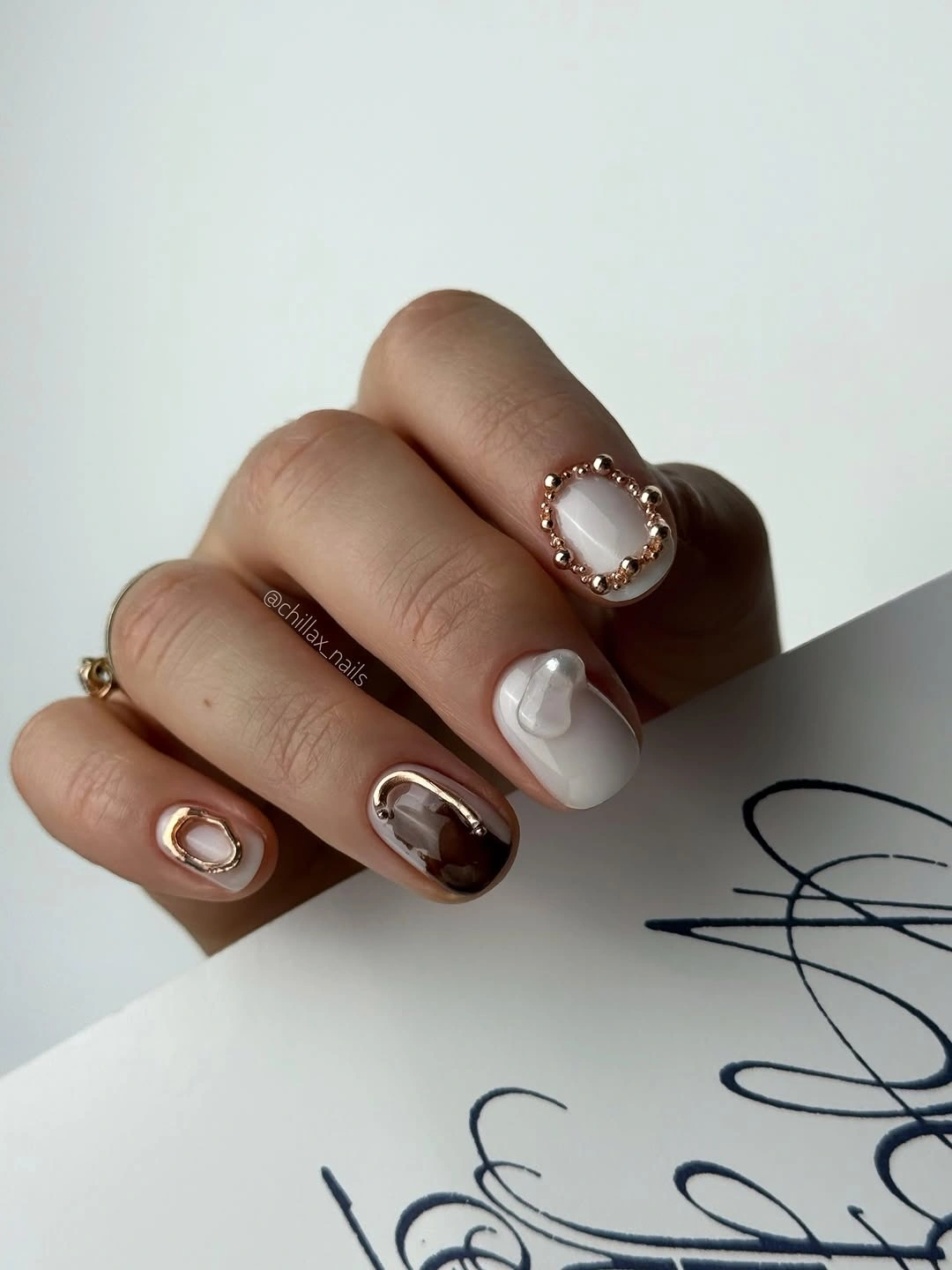
Use brown on two fingers and leave the oval detail on one of them for a clean adaptation. The other nails can stay milky, or one can take a softer beige if the white feels too bright. Keeping the dark color in selected areas preserves the visual pauses that make the palette look composed rather than heavy.
Brown emphasizes the edge and any change in length more than the milky shade does, so the shape should stay tidy. The small oval is useful precisely because it is limited; repeating it everywhere would make the contrast busier and weaken the simple color story. Let white provide relief and brown provide focus.
Charcoal Texture Turns One Color Into a Finish
Short square nails in dense charcoal gray use texture and sparkle instead of a second shade or motif. The surface catches light in many small points, giving the single color a stormy depth while the compact edge keeps the result controlled. It is a strong neutral, but the shape stops it from becoming as dramatic as the same texture on a long pointed nail.
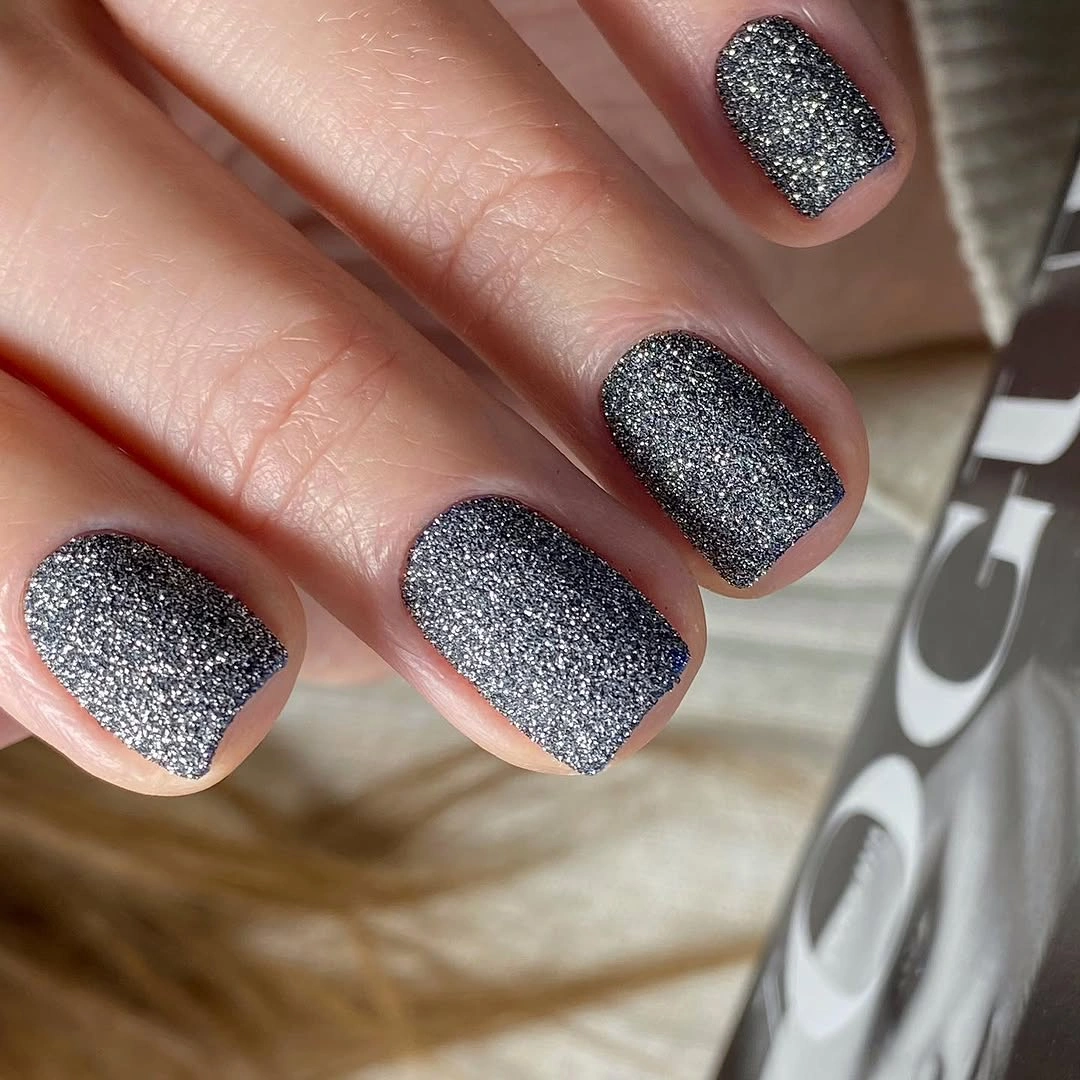
Use the textured gray across every nail for a deliberate neutral, or place it on two fingers beside a smoother charcoal base. That small variation keeps the finish as the focus while creating more breathing room. A shorter square can carry the texture well, but the accent should remain even so the surface does not appear cluttered.
Granular sparkle can hide small shifts in color, yet it may draw attention to grow-out because the texture changes where the nail meets the skin. That is the realistic limitation. If the manicure needs simplifying, reduce the number of textured nails rather than adding a pattern, because the surface itself is already the main statement.
A Micro French Line Fits a Very Short Square
This very short square manicure uses pale pink as the field and a fine deeper pink line near the tip, with one tiny light accent on a selected finger. The line is narrow enough to respect the limited edge, proving that a short nail does not need a broad French band to look designed. The result stays fresh because the base remains the dominant area.
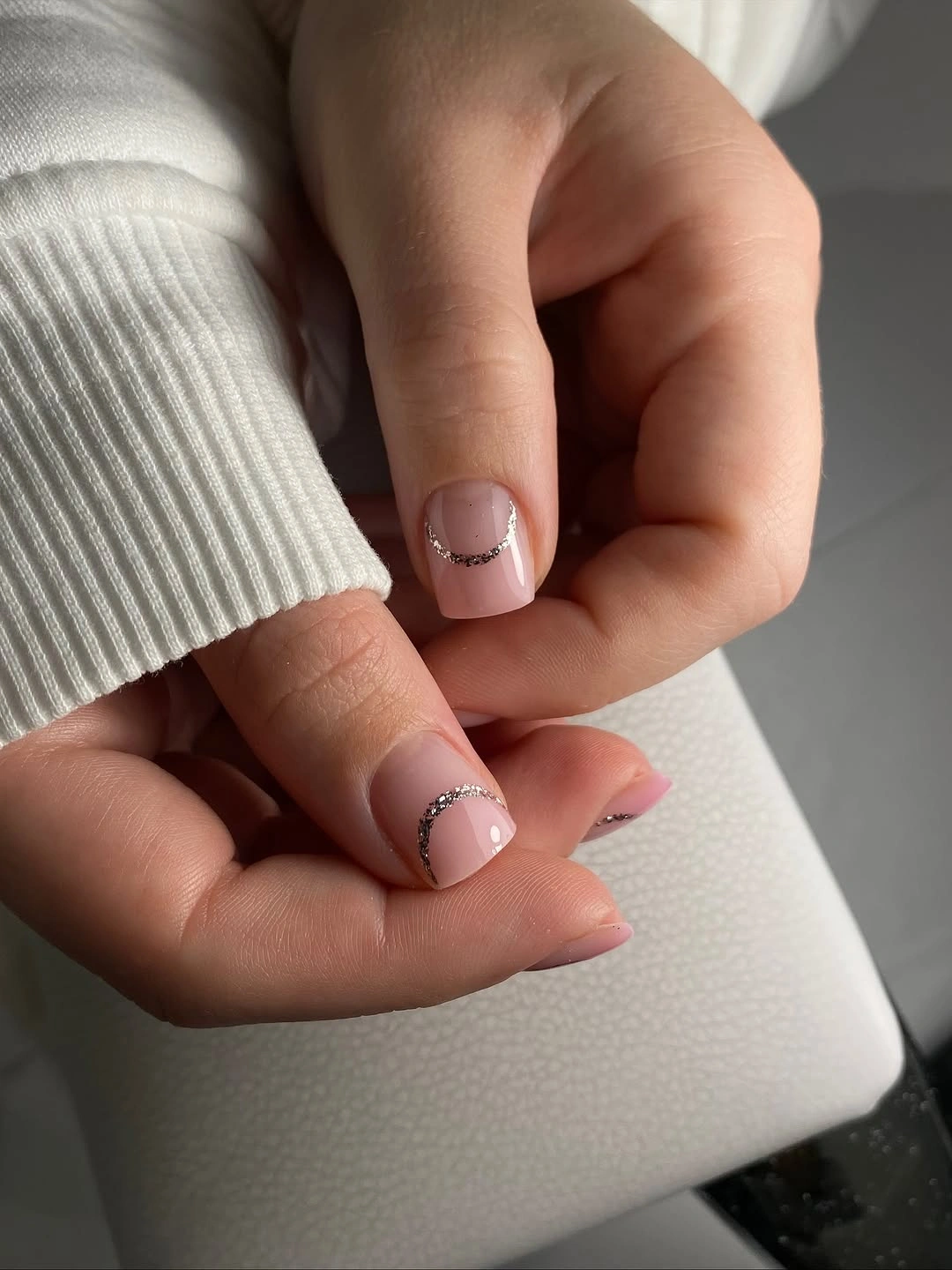
Repeat the line on every nail if you want a consistent micro-French, or keep it only on the ring finger for the quietest version. A slightly darker pink will stay visible without introducing a new color family. The important adjustment is width: a thicker stripe would take away the open space that makes the very short shape look neat.
Small edges require careful spacing because there is little room to hide a heavy or uneven mark. That makes the design precise, but it also keeps the maintenance task focused. The pale base and tiny line already create enough contrast; adding extra dots or art would make the compact surface feel busier than the reference.
White Lattice Detail Creates One Structured Accent
Most of the short square manicure is white, while selected nails carry a dark outlined lattice-like detail with a cool reflective point inside. The accent has structure, but it does not spread across every finger, so the white base keeps the set visually open. The small square shape frames the intersections and makes the pattern feel graphic rather than soft.
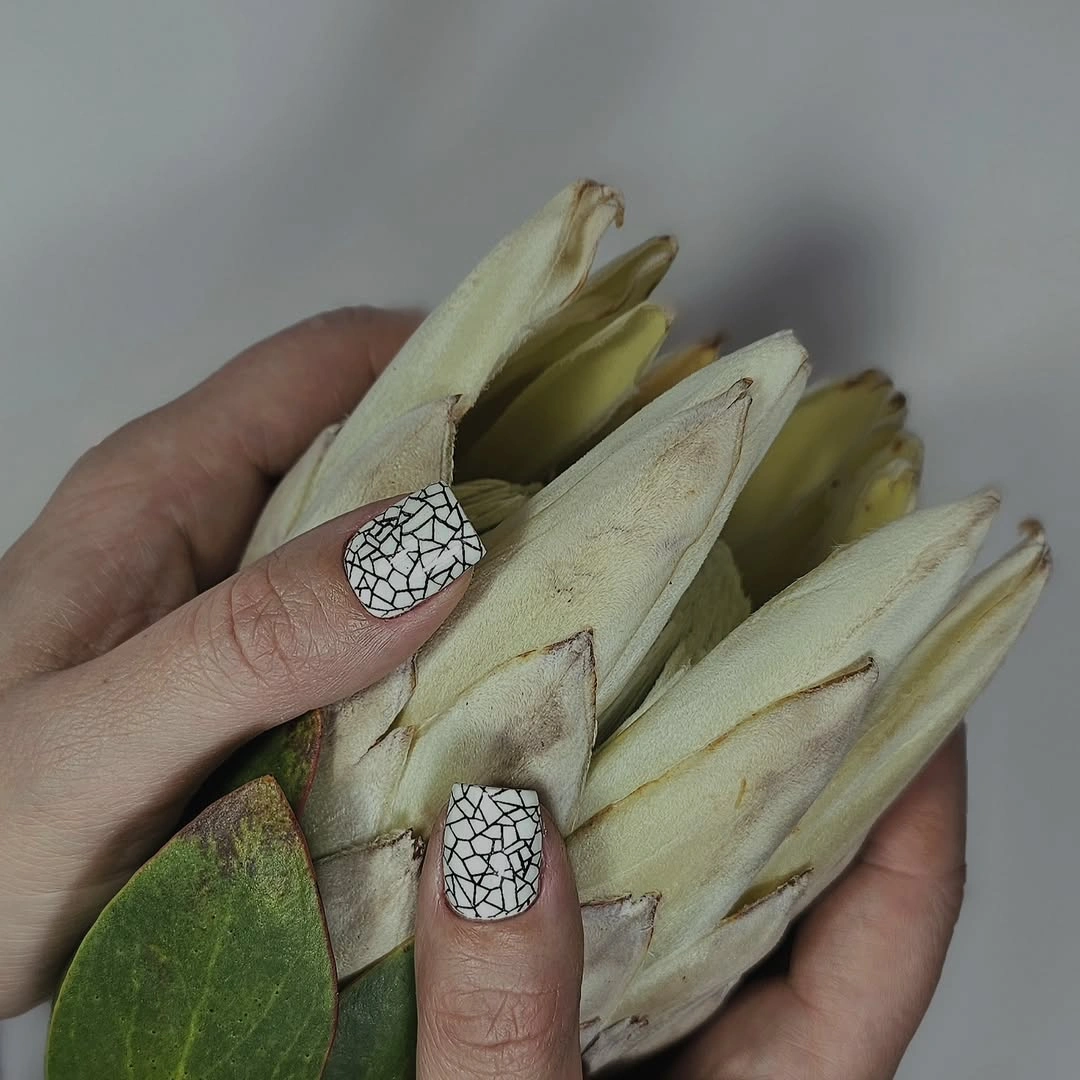
Use one lattice accent and plain white or pale gray on the rest for a simpler interpretation. If the nail is especially short, keep only the outer border or two crossing lines instead of trying to fit a dense grid. That preserves the idea of structure while allowing the base to remain the main visual field.
Fine intersections need enough space to stay distinct, so scale matters more than adding more lines. The pattern will lose its clarity if the dark marks merge, whereas a single clean accent can look intentional even when the rest of the set is completely plain. Let the white provide the reset and the lattice provide the one update.
Black Gloss Uses an Almond Curve as Softness
Opaque black can feel heavy, but the medium almond shape gives this manicure a softer route through the color. A high-gloss highlight follows the curved surface and keeps the dark finish dimensional, so there is no need for a contrasting motif. The result is direct and strong while still controlled by the rounded taper of the nail.
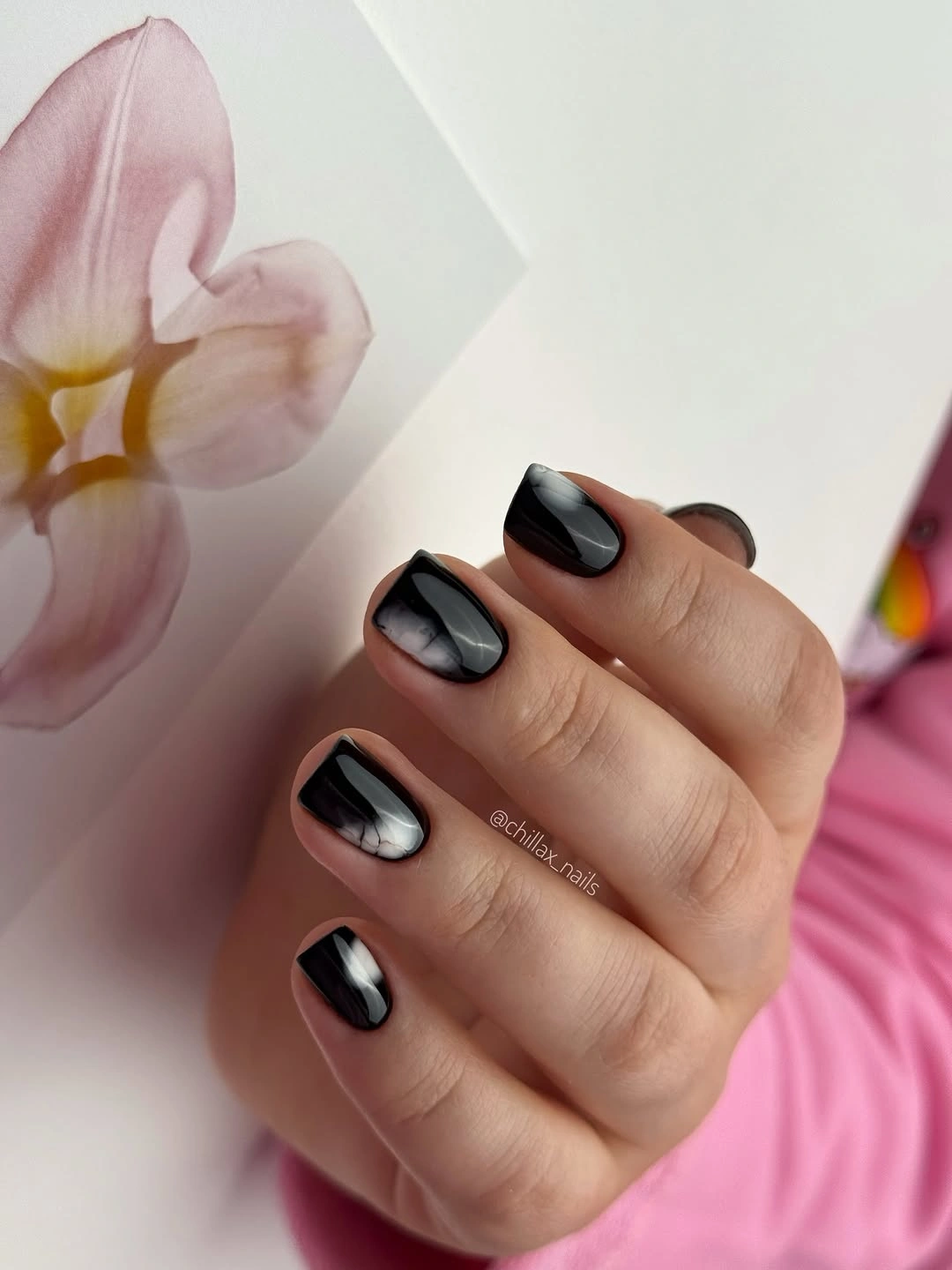
Use black on two accent nails beside soft pink if you want a lighter version, keeping the same almond outline to preserve the balance. An entirely black short almond would also work when the shape is tidy and the gloss remains even. Avoid adding several tiny accents, because the clean reflection is what makes the color feel considered.
Dark gloss makes edge wear and small shape changes visible, but the plain surface is straightforward to coordinate with fall colors. The almond curve does the softening; the shine does the movement. Together they show how a simple set can feel current without relying on a pale shade or a decorative mark.
Milky Pink Leaves Room for Warm Ovals
Short rounded-square nails use milky pink as the calm base and place small warm oval details on only two fingers. The accents are centered enough to be noticed, yet their size keeps them from changing the whole manicure into a metallic design. The rounded edge and pale color make the result gentle, while the warm marks supply a clear point of contrast.
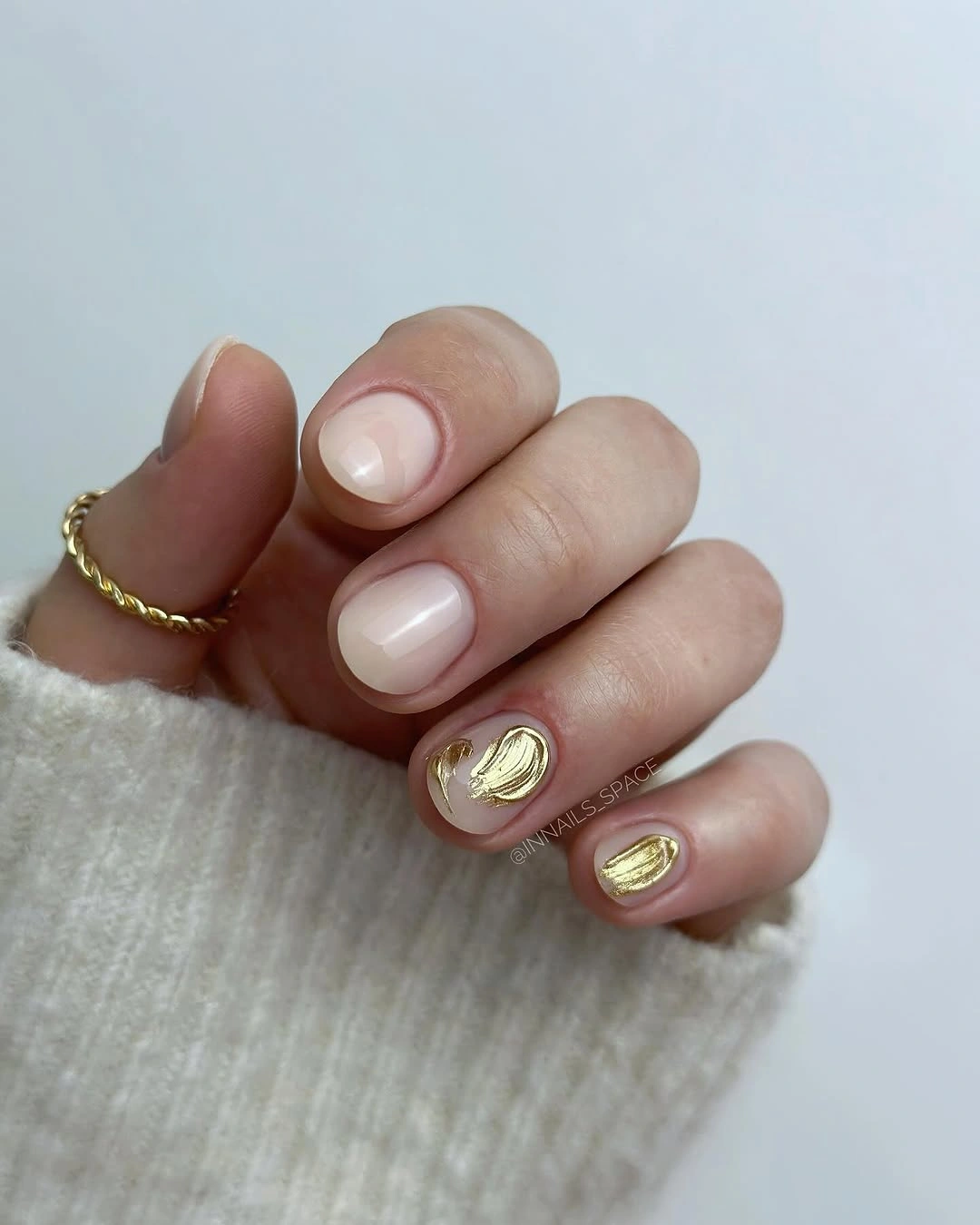
Keep one oval on the ring finger and leave the other nails plain for a cleaner version. If you want a little more structure, repeat a very thin warm line near the tip on one additional nail, but do not expand the ovals into a full pattern. The pale base should remain the largest part of the design.
Center accents can visually narrow a short nail, which may be useful if the shape feels wide, but they need clear space around them. The low number of details is what makes this manicure simple; the practical choice is to preserve the spacing and let the tiny warm points remain an occasional discovery.
Rose Silver Gradient Makes a Long Shape Lighter
Long tapered square nails shift from rosy pink near the base to silver-bright tips, so the finish creates direction without a separate motif. The reflective section follows the taper and makes the length feel intentional, while the warm rose base stops the result from looking like plain silver. A mauve shadow on the thumb adds depth but does not interrupt the main transition.
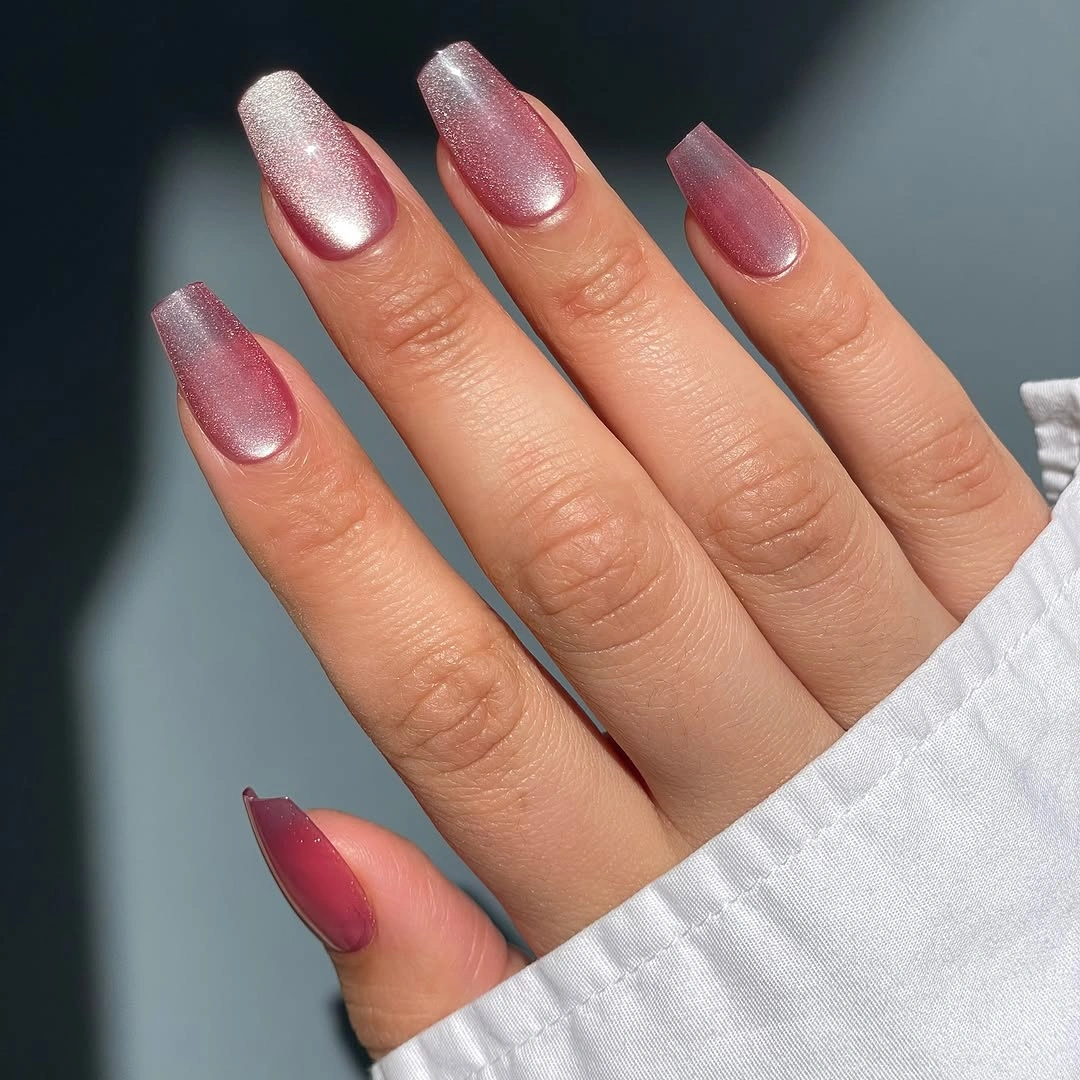
Shorten the look by keeping the rose tone over most of each nail and using silver only at the tip. Two accent nails can carry the full fade while the others stay rose, which preserves the reflective idea and adds more breathing room. A compact squoval would make the finish gentler, but the fade should still travel in one direction.
Reflective color shifts with the light source, so the tips may look quieter indoors and brighter under a direct highlight. The long length gives the transition space, but it also makes edge wear more obvious. A shorter bright zone will age more softly and keep the simple palette from becoming visually top-heavy.
Soft Pink Squoval Looks Finished Without Art
A soft baby-pink color and a short squoval edge create a practical manicure that feels fresh through proportion rather than decoration. The gray knit around the hand adds a cozy setting, but the nail surface remains the main decision: even color, a rounded corner, and a glossy reflection. Nothing competes with the shape, so the result is easy to understand from the first glance.
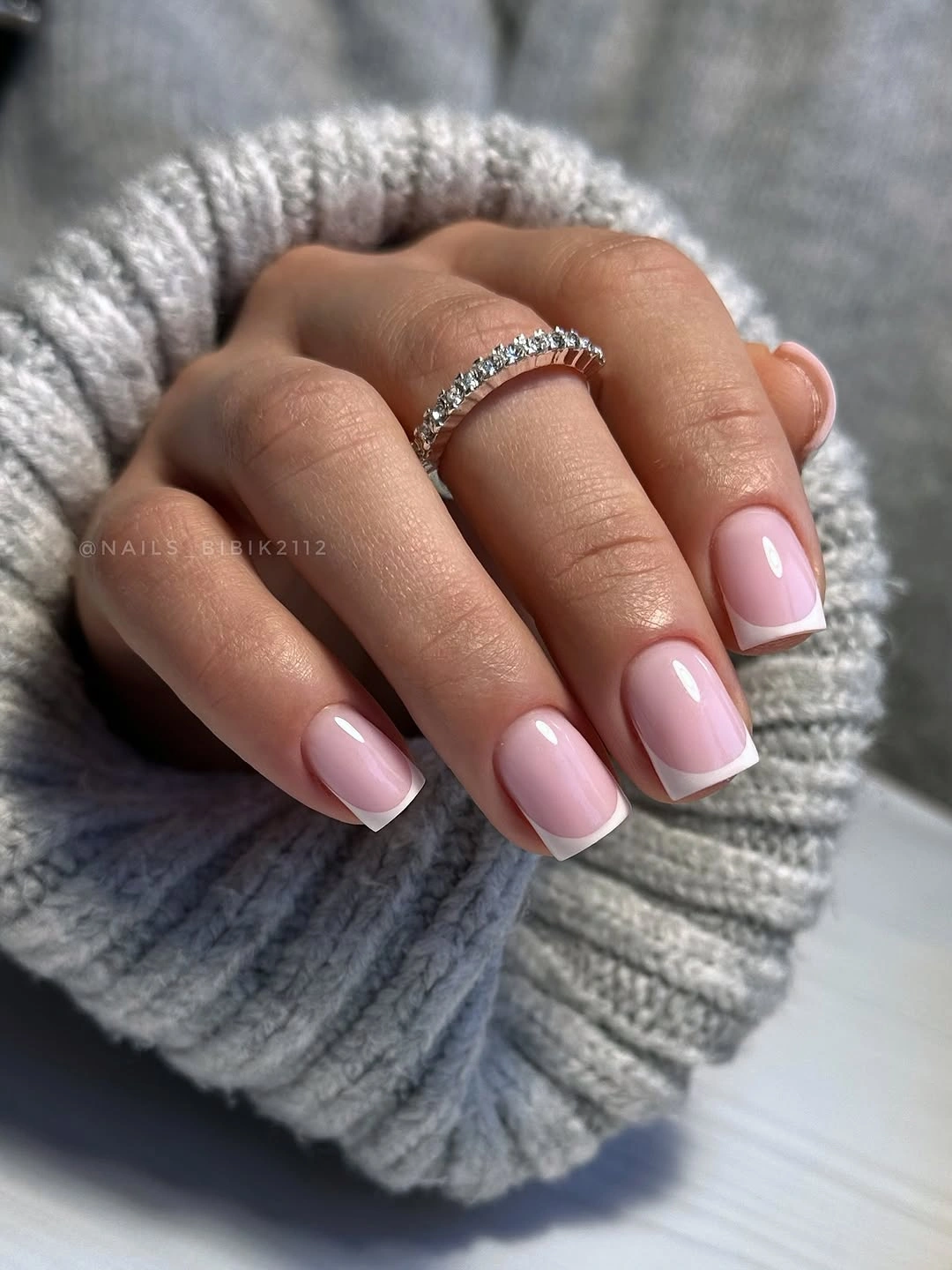
Keep the set plain for the cleanest version, or use the pink as a base for one darker accent nail. A tiny line near the tip would add structure without changing the short proportion, while a full pattern would move the manicure away from its simple purpose. The squoval edge should remain visible even if you introduce one small change.
Soft pink can look different against warm fabric, gray clothing, and bare skin, so the tone is worth checking in everyday light. Its plain surface also shows uneven coverage, but that makes repairs easier to locate. The fresh feeling comes from a controlled outline and an uncluttered field, not from adding more color.
Colorful Mini Accents End on a Pink Base
The final short rounded-square manicure keeps most nails pink and reserves the detail for two accent fingers. Tiny yellow, purple, green, and flower-like marks add personality, but the base remains open enough that the result still belongs to a simple collection. The accent pair is clear because the surrounding nails do not compete with it or repeat every color at full scale.
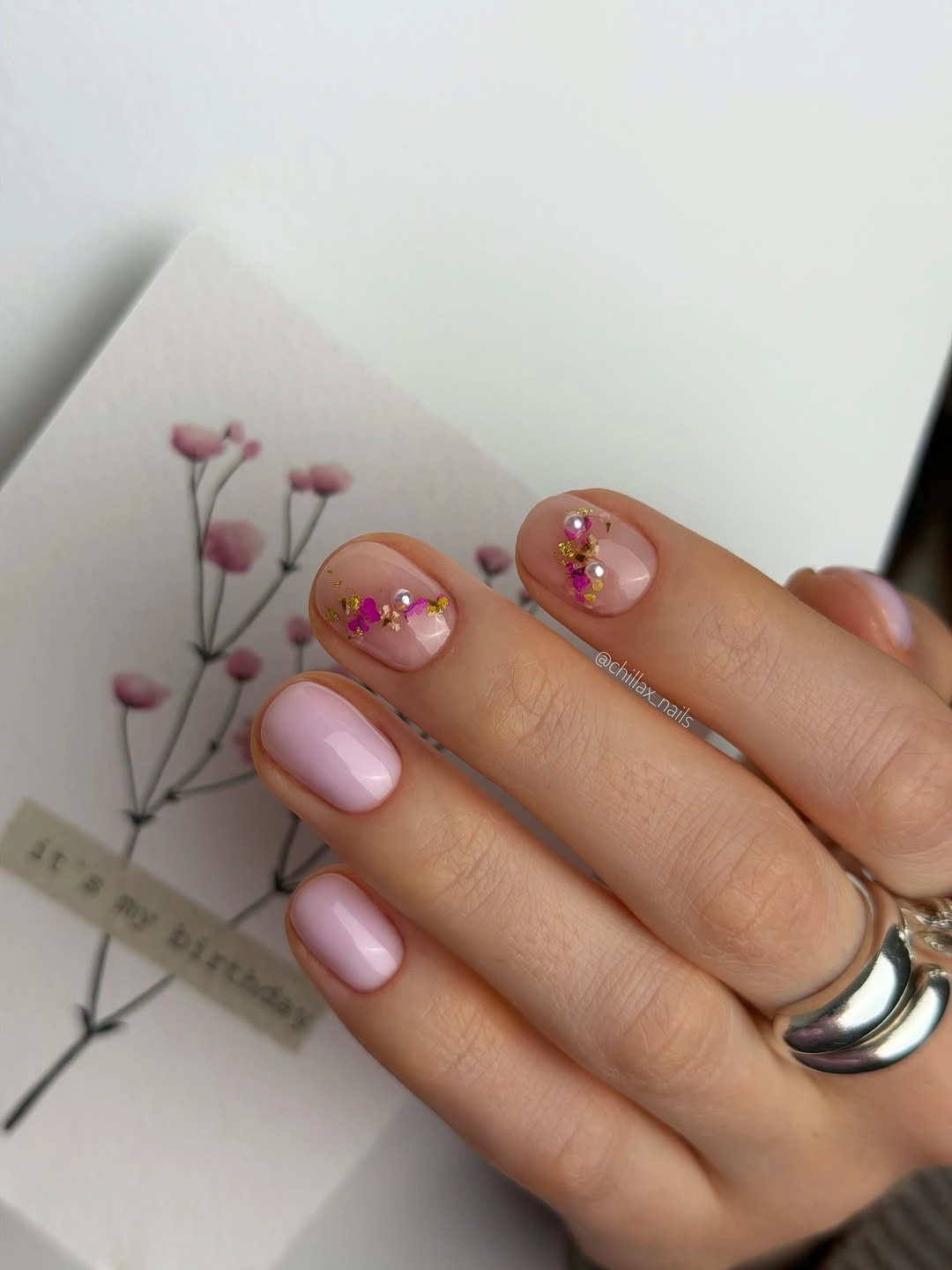
Choose two colors from the accents and repeat one small motif when adapting the set. For example, a pink base with one yellow point and one purple mark can keep the cheerful contrast without turning each nail into a separate illustration. Leave the other fingers plain so the short shape and soft color continue to create visual breathing room.
Tiny details are most useful when they stay contained. Spreading them across all nails would remove the reset that makes this manicure feel simple, while shrinking them too far could make the pattern disappear. Keep the accent pair readable, protect the plain pink pauses, and let the collection finish on a small but purposeful update.