22 Early Winter Outfits With Layers Worth a Closer Look
Early winter dressing is a useful exercise in proportion because the outfit has to feel complete before the weather settles into one predictable mood. A coat may be the largest shape, but the visible edge of a knit, the break at the waist, or the way a trouser hem meets a shoe can change the whole reading. Those transitions are often where an outfit feels intentional.
Rather than treating a look as a fixed formula, use the references as a way to study relationships between volume, texture, color, and exposure. A simple base can look sharper with one defined accessory; a generous layer can feel lighter when the lower line stays clear. The most helpful takeaway is not a shopping list, but a better sense of which small choices make layered clothing feel balanced on you.
A Charcoal Frame for Long White Layers
Charcoal lapels frame a white high-neck knit, and the coat's open front lets that pale center continue into wide white trousers. The coat extends well below the sweater, revealing a different inner layer as your eye moves down the opening. At the bottom, the white hems continue beyond the charcoal panels, so the contrast stays clear without needing a belt to divide the outfit at the waist.
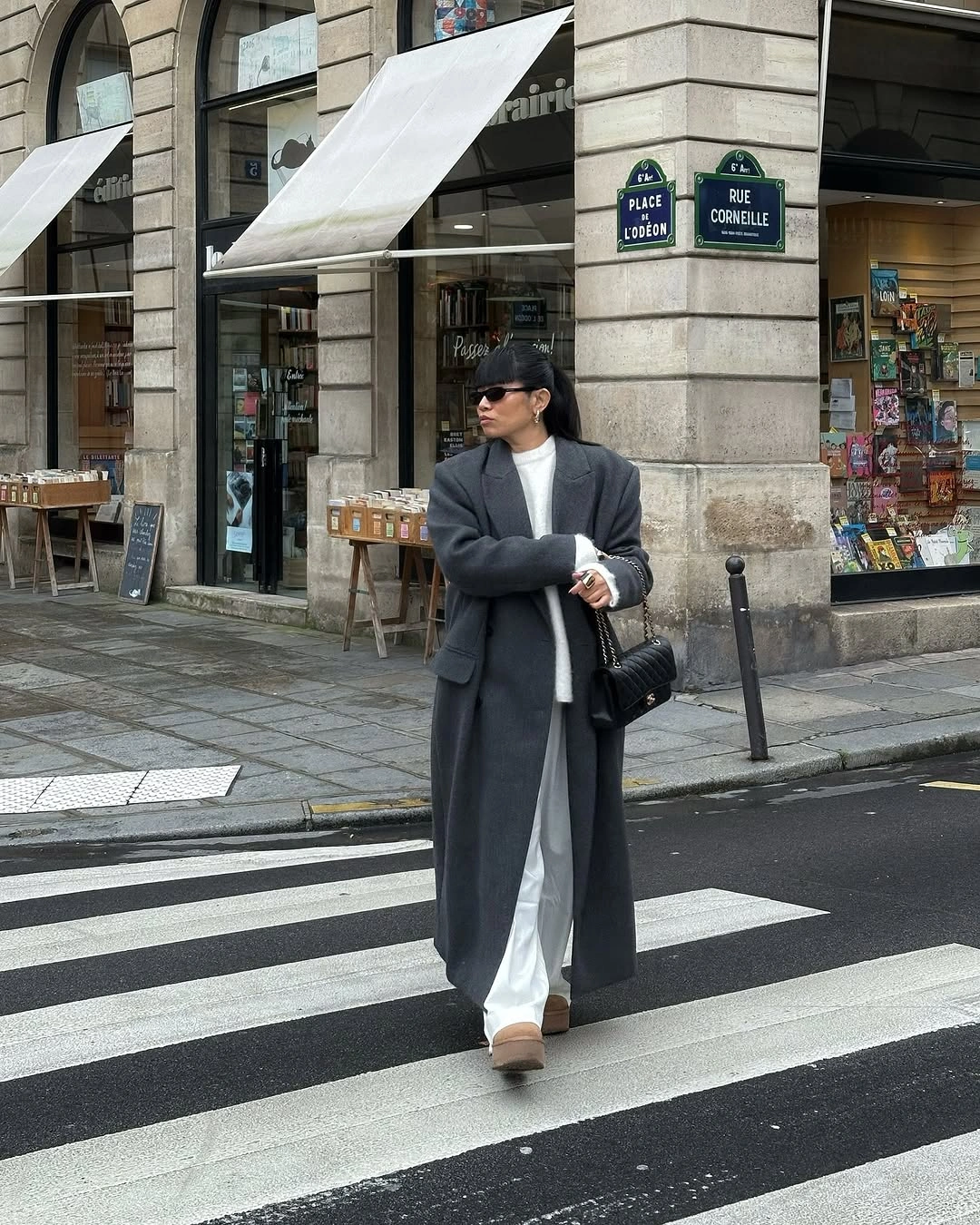
The black quilted bag occupies only a small patch at the hip, while the tan shoes look noticeably broad beneath the white hems. That difference matters as much as the colors: the bag has a compact, defined outline, and the footwear introduces rounded toes with visibly thick soles. Tan appears only at the bottom, giving the otherwise charcoal-and-white combination a separate color note.
The sweater extends below the waistband instead of stopping at a visible belt, leaving its hem as the main break within the white layers. White also reappears at the raised neckline and exposed cuffs, so the knit is readable at several openings in the coat.
A Narrow Belt Beneath a Draped Camel Coat
A narrow brown belt gives the white separates a clear dividing line, with a structured brown handbag held immediately below it. The two details gather attention around the waist even though the camel coat remains open and rests over the shoulders. The bag's flat front and horizontal flap reinforce that placement, while its darker brown keeps it distinct from the much larger camel panels on either side.
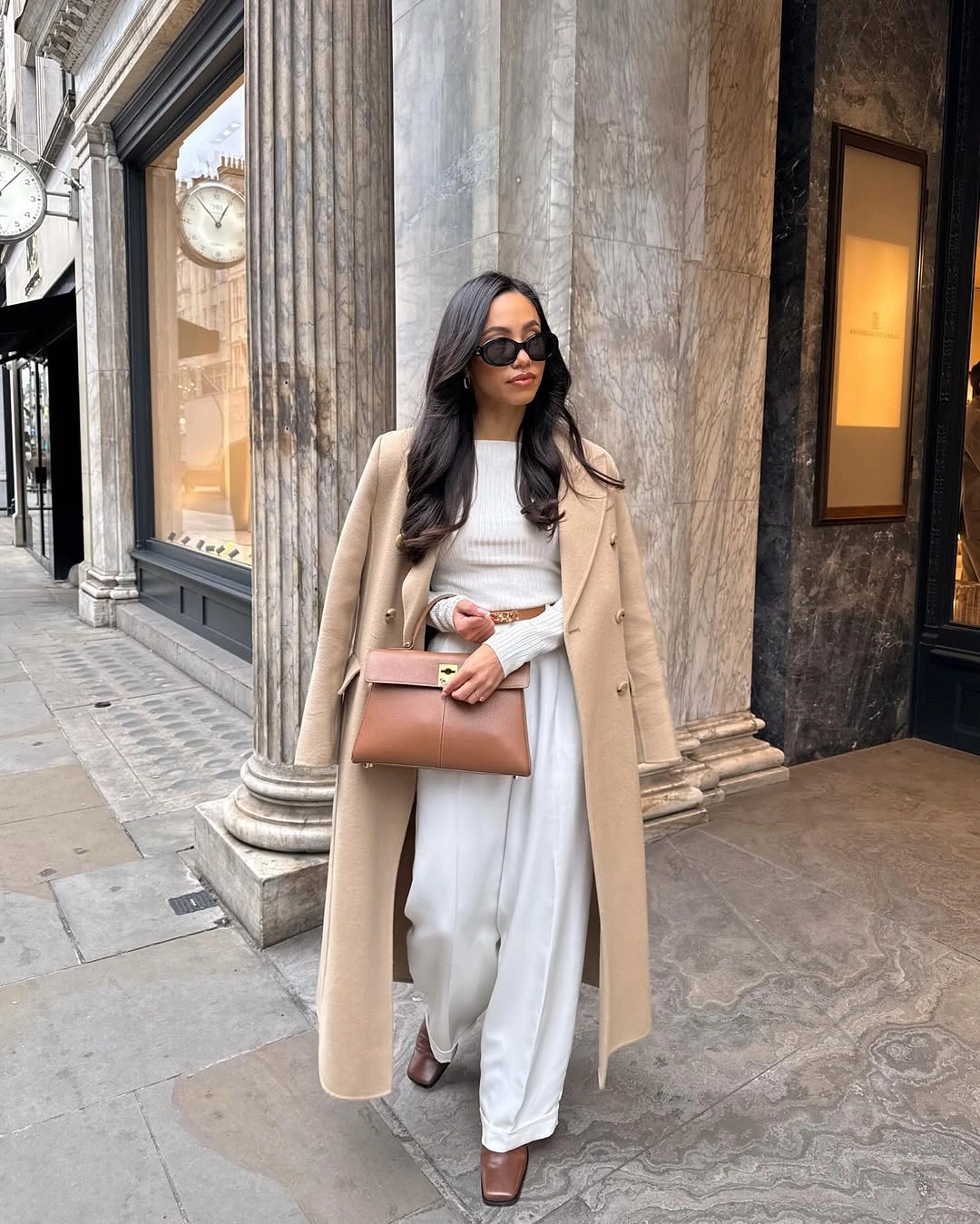
The fitted ribbed top sits close through the torso, while the white trousers fall in broad folds below the belt. With the camel coat resting over the shoulders, its empty sleeves hang at either side rather than following the bent arms. The top's pale sleeves remain visible around the handbag, letting you distinguish the narrow inner layer from the much longer, more open shape of the coat.
Brown square-toed footwear repeats the color family of the belt and bag at the bottom of the outfit. The long white trouser legs still form its largest uninterrupted light area, with only the shoe tips breaking through beneath the hems.
Broad Stripes Between Plain Beige Lapels
Broad black-and-cream stripes create a graphic center between the plain beige lapels, even though only a narrow slice of the knit is visible. The horizontal bands cross the coat's long opening, making their direction as noticeable as their contrast. For late fall outfits, this is a useful pattern placement to study: the striped area stays concentrated at the torso while the outer layer remains mostly plain.
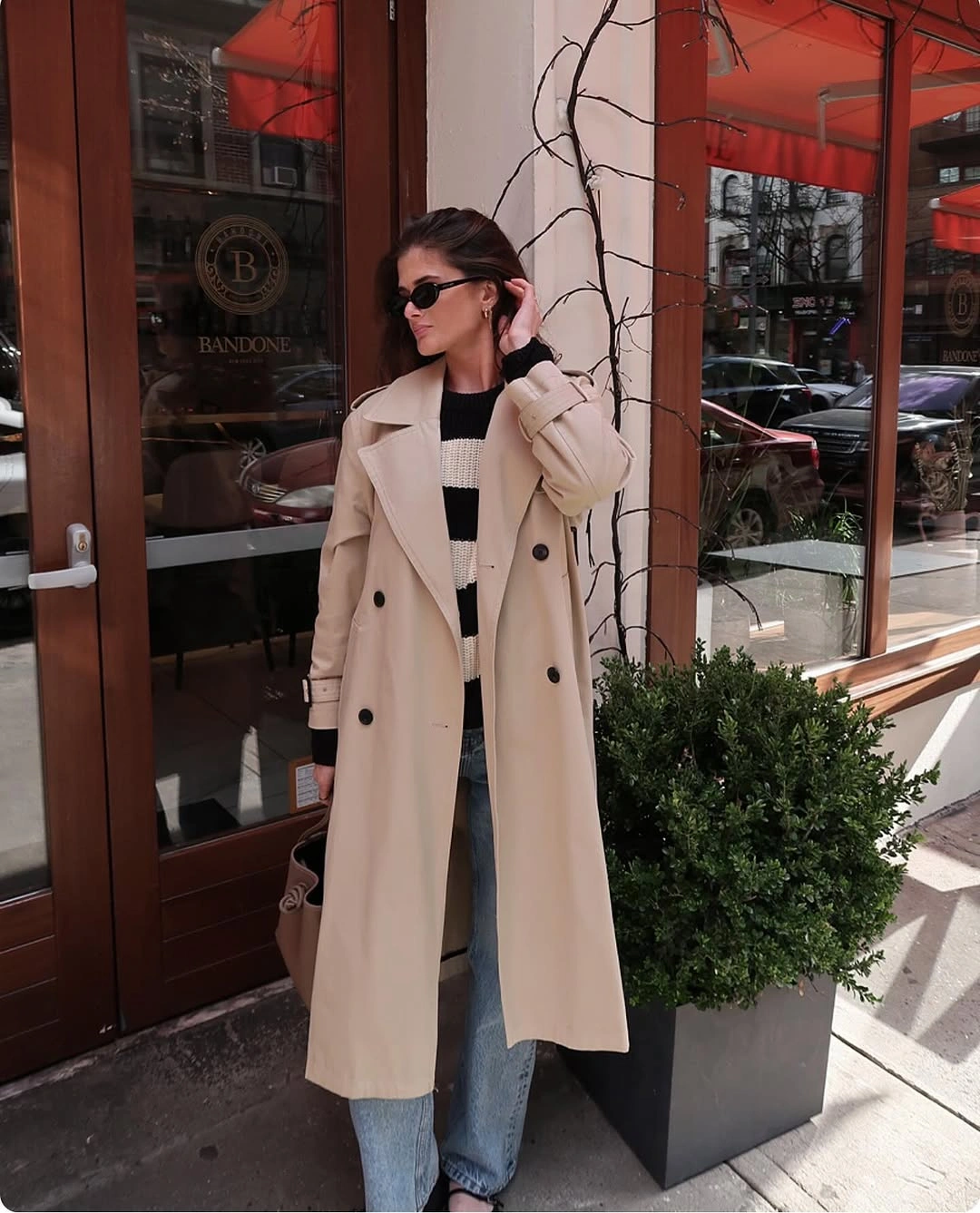
Dark buttons mark two rows down the beige coat, adding small repeated shapes outside the striped center. The black knit cuffs extend beyond the coat sleeves, where the cuff straps add a different, horizontal detail. A partly visible tan bag stays close to the coat's color, leaving the sunglasses and buttons as the clearer contrasts. Those dark points echo the sweater without requiring the coat to repeat its pattern.
Blue jeans begin below the striped torso and carry the open center toward the coat's lower edge. The beige panels extend well past the sweater, so the stripes occupy just one section of a much longer layered outline.
Bright Buttons Link Burgundy With Gray Tailoring
Bright buttons draw a dotted line down the burgundy cardigan, while its cuffs extend beyond the long gray coat's sleeves. A slim burgundy shoulder bag repeats the shade at one side, keeping the color visible away from the center as well. The combination offers a color reference for early winter outfits for work, using a defined cardigan front and smaller accents rather than a fully matching set.
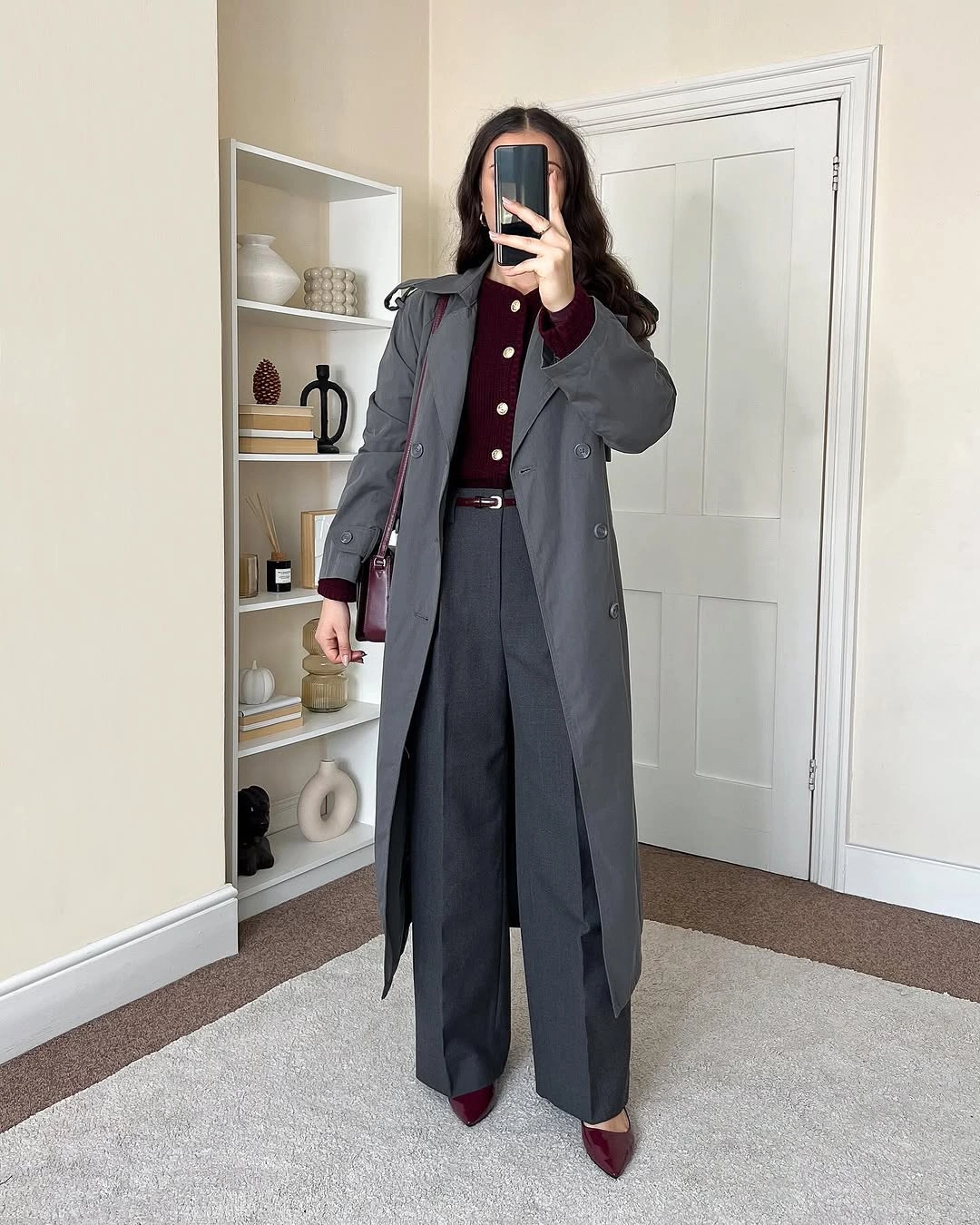
Long gray coat panels sit in front of the charcoal trousers, but the pleats remain visible through the opening below the waist. The slightly different shades keep the layers distinct: the coat has its own vertical edges, while the trousers widen into separate, broad legs underneath. Their hems extend beyond the coat's lower edge, allowing the trouser shape to stay clear instead of disappearing within one solid gray silhouette.
A narrow burgundy belt marks the meeting of cardigan and trousers, making a small horizontal break beneath the line of buttons. Burgundy pointed toes emerge below the wide charcoal hems, repeating the cardigan's color in a much sharper shape.
A Pale Scarf Leads Olive and Brown Layers
A pale plush scarf runs from the neck down the front of an olive-brown jacket, concentrating the most pronounced texture in one long accessory. Its lower end reaches the hands, so the scarf occupies much of the jacket front rather than staying close to the neckline. The shorter outer layer still shows at the shoulders and broad sleeves, where its quieter surface contrasts with the scarf's loose strands.
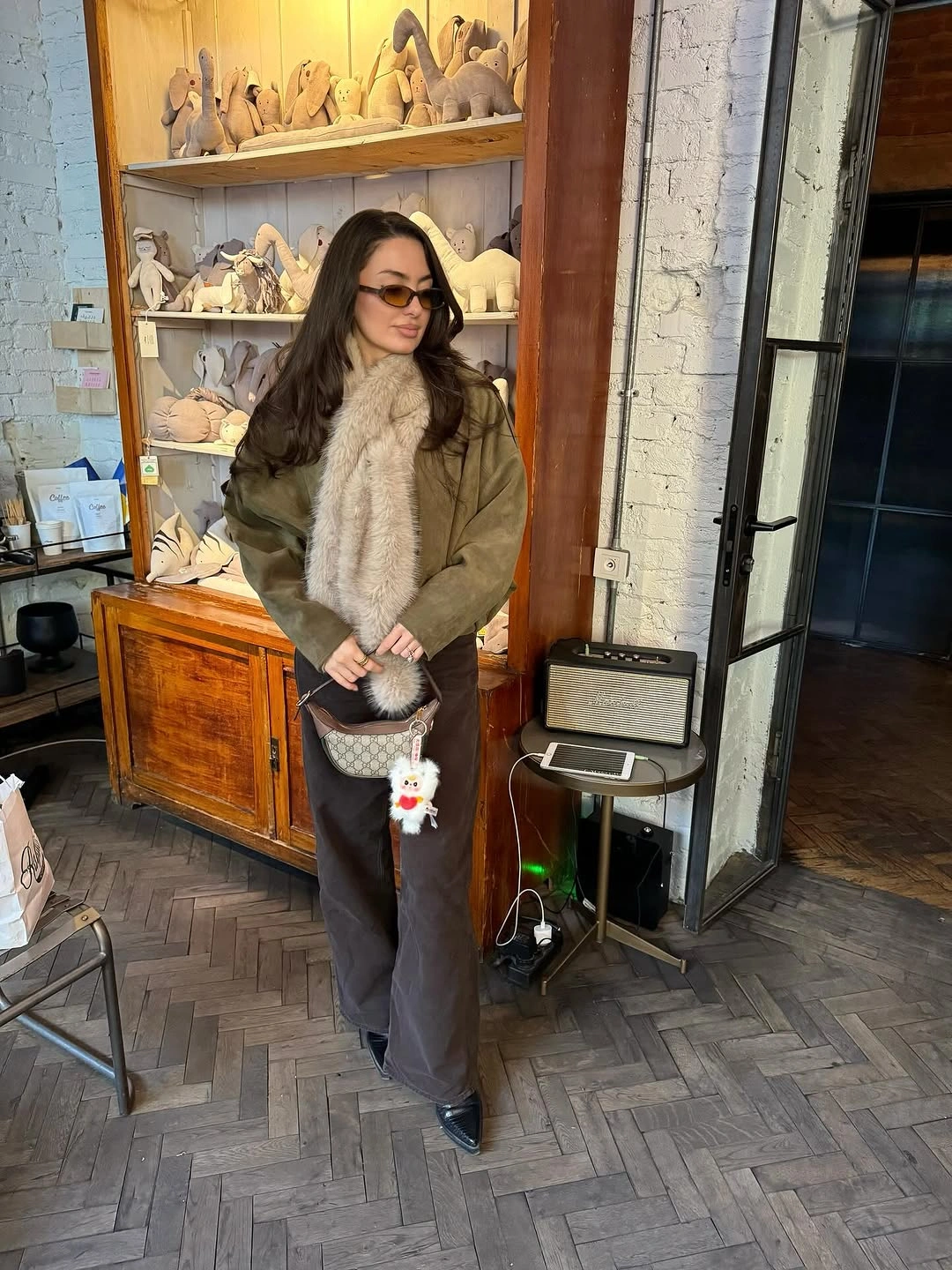
A small patterned bag sits below the scarf, close to the point where the jacket gives way to the trousers. Its repeating surface detail is much finer than the scarf's plush texture, and a light-colored charm hangs from one side against the dark brown below. The arrangement gives you three different scales to compare: a broad scarf, a compact bag, and a narrow dangling detail that extends beneath both.
The sleeves spread outward above trousers that continue in long, wide lines, so the jacket's volume stays concentrated near the top. At the bottom, the visible black pointed shoe interrupts the broader trouser hem with a much sharper edge.
Draped Gray Layers Over Cream and Blue
A lighter gray knit is draped over the shoulders of the longer gray coat, adding another visible layer outside the coat's own lapels. Its two ends hang down beside the front opening, creating softer vertical lines over the more structured edges underneath. The effect is easy to distinguish because the draped piece stays concentrated around the shoulders while the coat continues much farther down the body.
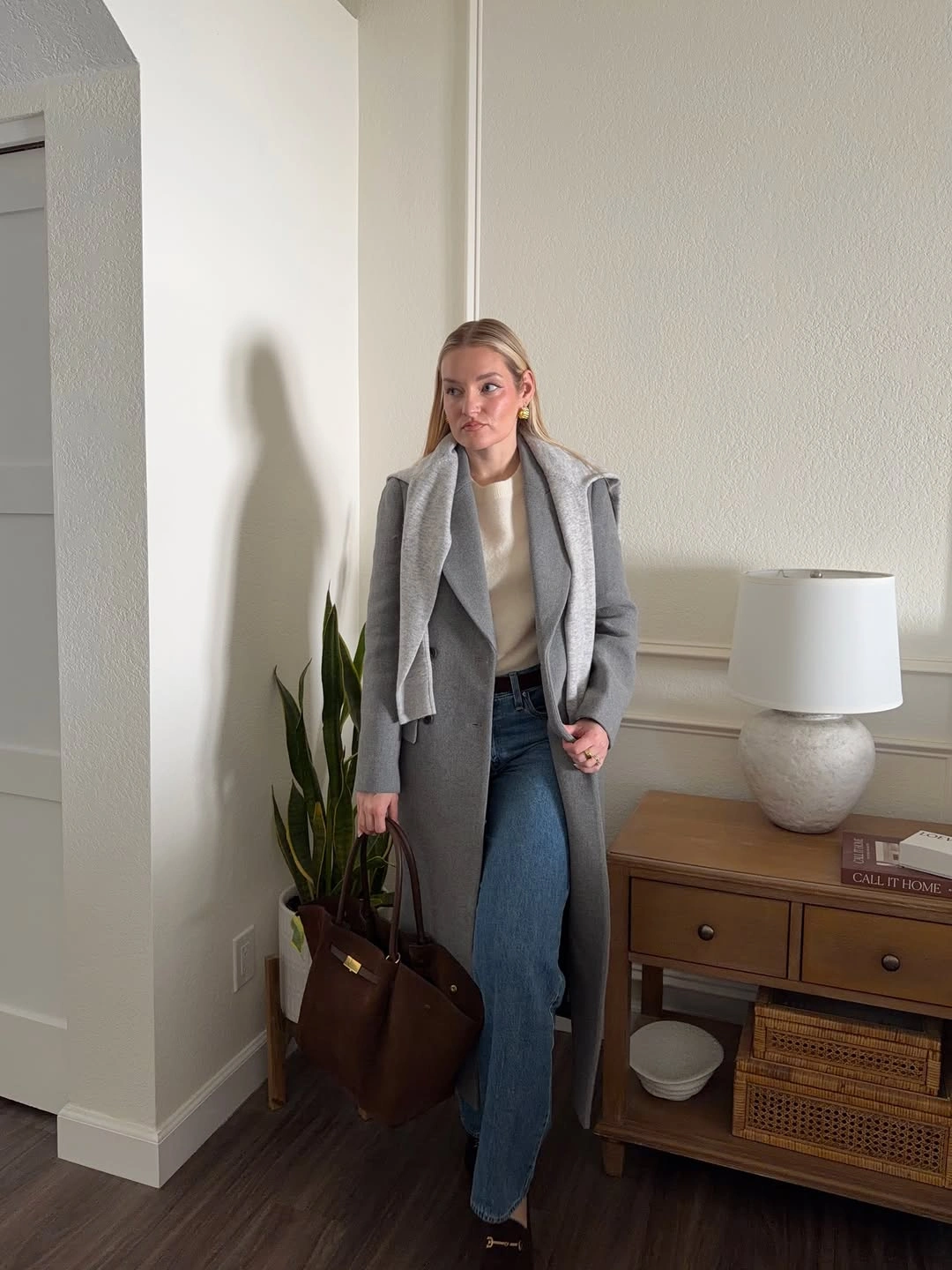
Inside that gray frame, a cream top meets blue jeans at a visible belt, giving the center of the outfit a clear horizontal division. The jeans fall in long straight lines, while a large dark-brown tote hangs low beside one leg and occupies considerably more space than the smaller accessories in earlier looks. Dark loafers appear beneath the denim, adding another compact dark element at the bottom.
The shoulder-draped knit and the coat create two different gray outlines without blending into one layer. The brown tote then adds a separate block of color beside the blue jeans, keeping the palette from reading as only gray, cream, and denim.
A Short Textured Jacket Above Straight Jeans
Seen from the back and side, the mottled brown, tan, and cream jacket ends high enough to leave the jeans' back pockets fully visible. That shorter proportion separates the textured upper half from the long, straight blue legs beneath it. The irregular color patches across the jacket also stand out more clearly from this angle because there is little competing detail through the center of the outfit.
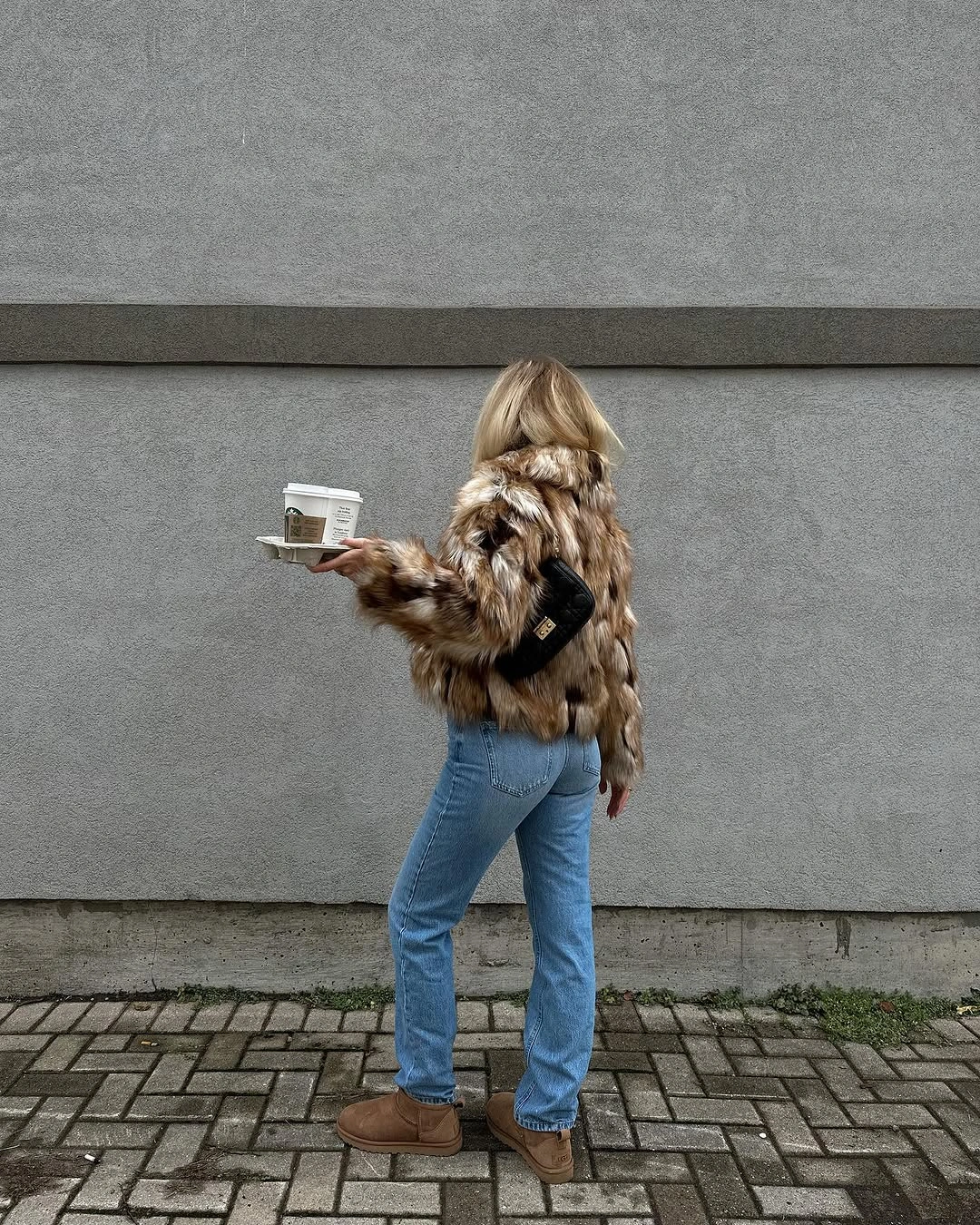
A small black bag sits high beneath the arm and overlaps the patterned surface instead of hanging below the jacket hem. Its dark rectangular shape is easy to pick out against the mixed brown and cream tones, while the tan ankle boots create a softer color transition at the bottom of the jeans. Together, the bag and boots mark opposite ends of the outfit without repeating the jacket's mottled pattern.
The straight jeans keep the lower silhouette simple beneath the fuller outer layer. This back view is especially useful for comparing where a short jacket ends, where the bag sits, and how much denim remains uninterrupted below both.
Striped Sneakers Ground Pale Textures and Denim
White-and-gray sneakers with dark side stripes provide the clearest graphic detail at the bottom of this seated outfit. Above them, pale blue jeans fold at the knees and continue into much softer-looking pale outerwear, so the shoes introduce a sharper pattern among otherwise light, irregular surfaces. Their dark stripes also echo the sunglasses, giving the outfit two small, separated areas of stronger contrast.
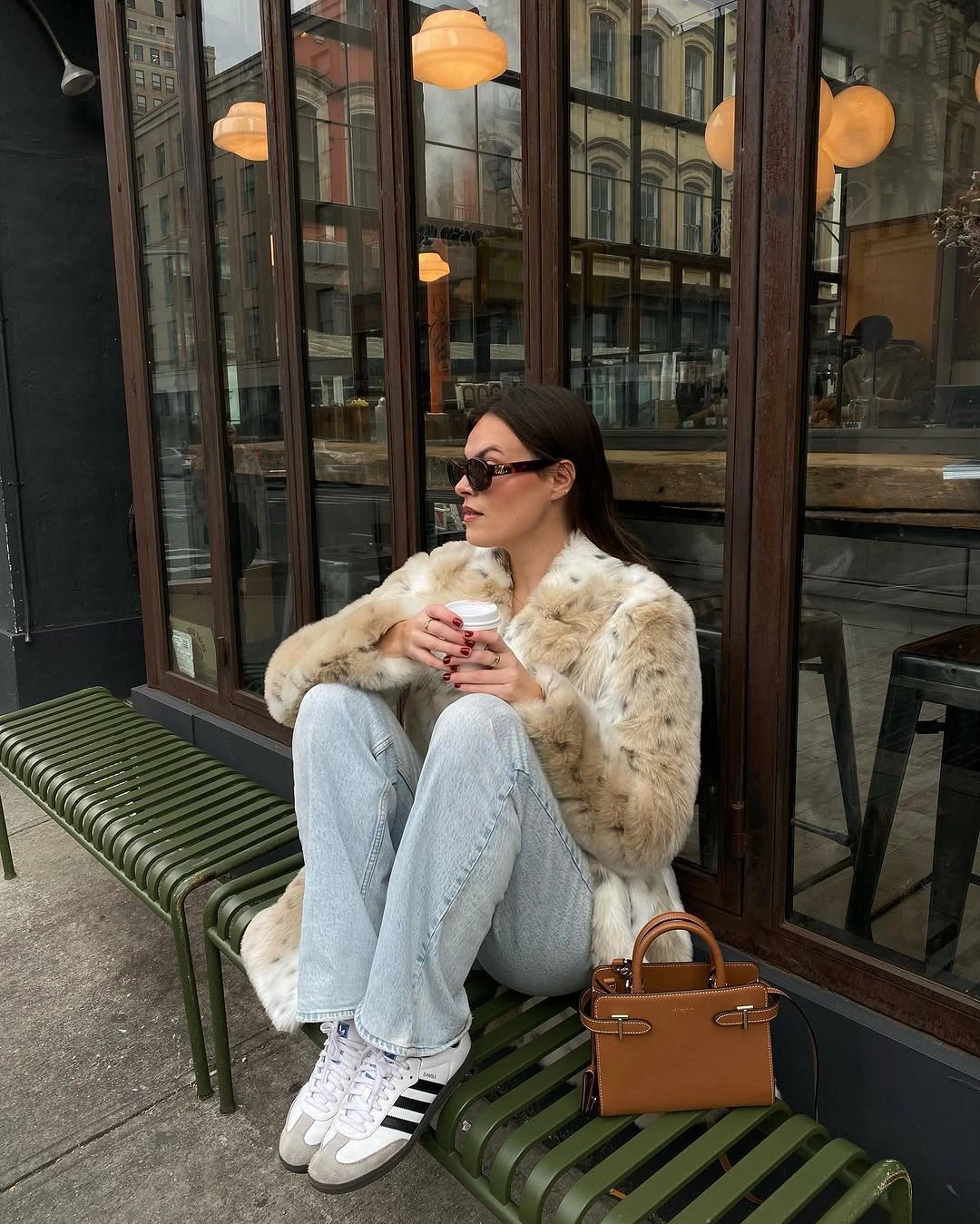
The outer layer has a visibly uneven plush surface, while the denim shows smoother folds and seams through the legs. A structured caramel handbag rests separately on the bench, adding a compact warm-toned shape beside the pale clothing rather than overlapping it. Its firm outline contrasts with the looser folds of the jeans and the irregular texture concentrated around the upper body.
The seated pose makes the footwear unusually prominent compared with the pale center formed by the jeans and jacket. The darker shoe stripes and sunglasses create a quiet visual link without making the accessories identical.
A Narrow Black Skirt Beneath Pale Volume
A narrow black midi skirt continues almost directly into black pointed boots, producing a long dark line beneath the much broader pale jacket. The upper layer widens through the sleeves and collar, while the skirt stays comparatively close and straight through the lower body. That contrast in width gives this look a distinct silhouette among the trouser-heavy early winter outfits surrounding it.
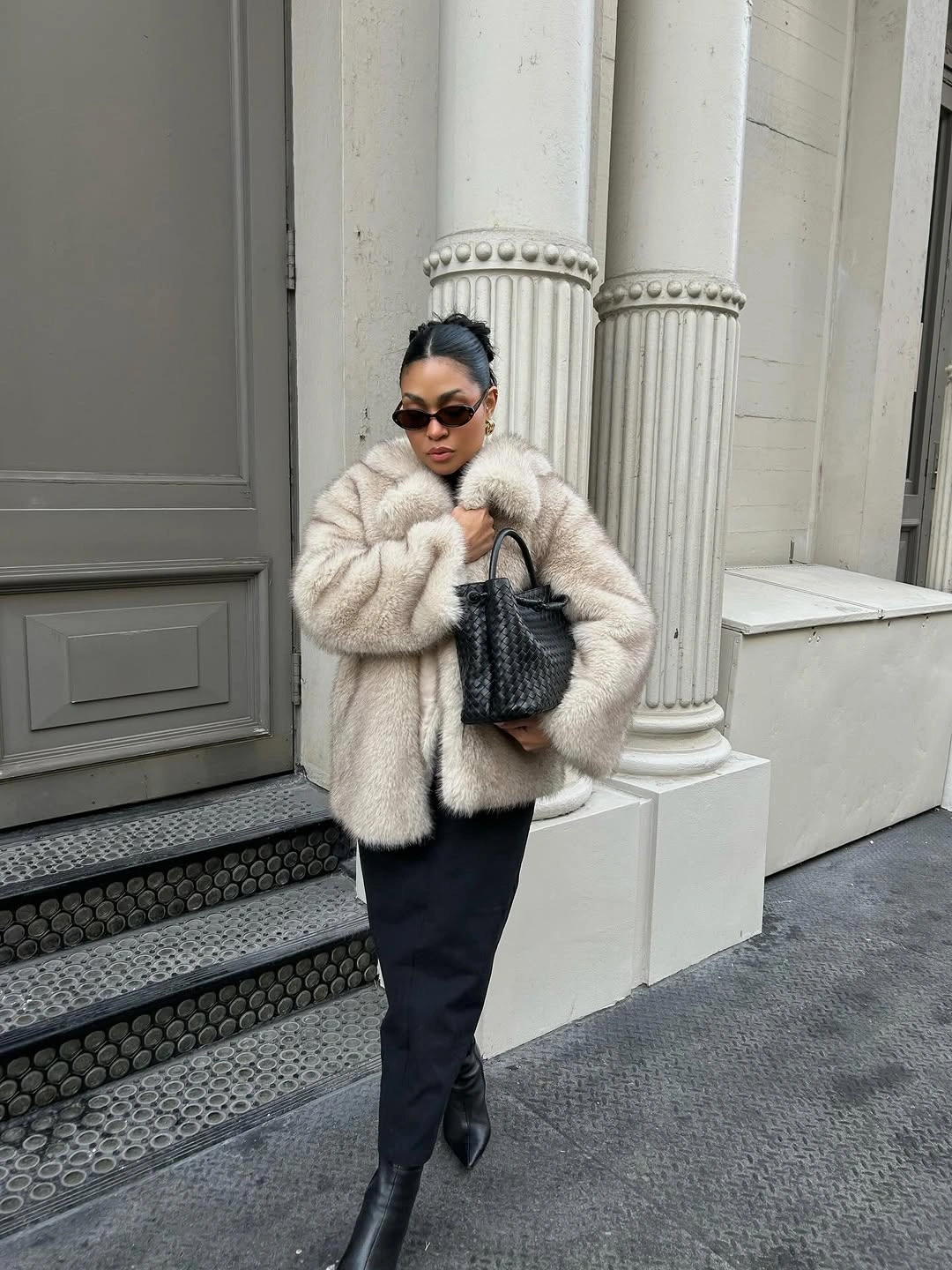
The black bag overlaps the pale front of the jacket, making its dark woven surface easy to distinguish against the lighter texture behind it. Instead of extending the lower black column, the bag brings the same color upward into the center of the outfit. The pointed boots repeat that dark tone below, but their sharper toes create a different outline from both the bag and the straight skirt hem.
The pale jacket carries most of the visible volume, while the skirt and boots keep the lower half narrow and continuous. The woven bag breaks that separation by placing black directly against the lighter upper layer, connecting the two halves without changing their proportions.
A Belted Brown Cape Over Pale Jeans
The brown outer layer spreads broadly from the shoulders before drawing inward at a tied waist, giving the upper silhouette a cape-like shape. A high buttoned collar keeps the neckline compact, while the long belt ends descend well below the knot and cross the pale jeans. That combination of width at the shoulders and a defined center makes the tie more structurally important than a simple decorative accent.
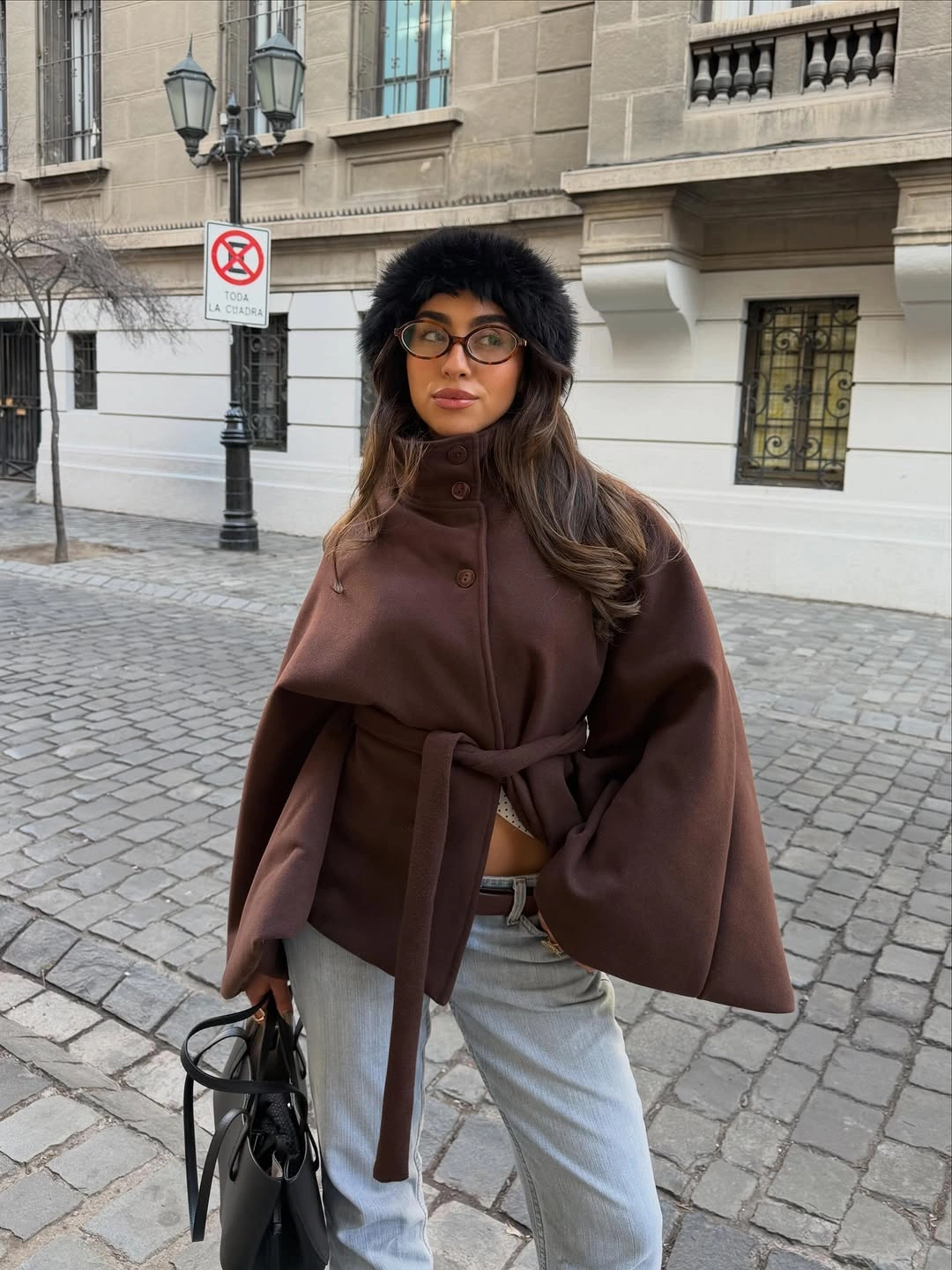
Pale gray-blue jeans begin beneath the tied outer layer, and their own waistband belt remains visible as a separate horizontal line. A black plush hat adds a rounded dark shape at the top, while a black handbag creates another strong dark area lower down at the side. Neither accessory repeats the brown outer layer, so the outfit relies on contrast rather than matching every accent.
The long tie ends continue vertically over the jeans and visually connect the upper layer to the lower half. The visible trouser waistband makes it clear that the outer tie and the jeans' belt are separate details serving different parts of the silhouette.
Cream Texture Above Glossy Black Wide Legs
Loose cream strands spread across the cropped jacket, while the black wide-leg trousers below catch light in smoother, glossier highlights. That surface contrast gives the outfit two very different visual rhythms even though the palette stays restrained. The short jacket also leaves much more of the long trouser shape exposed, making the shift from textured upper half to reflective lower half easy to read.
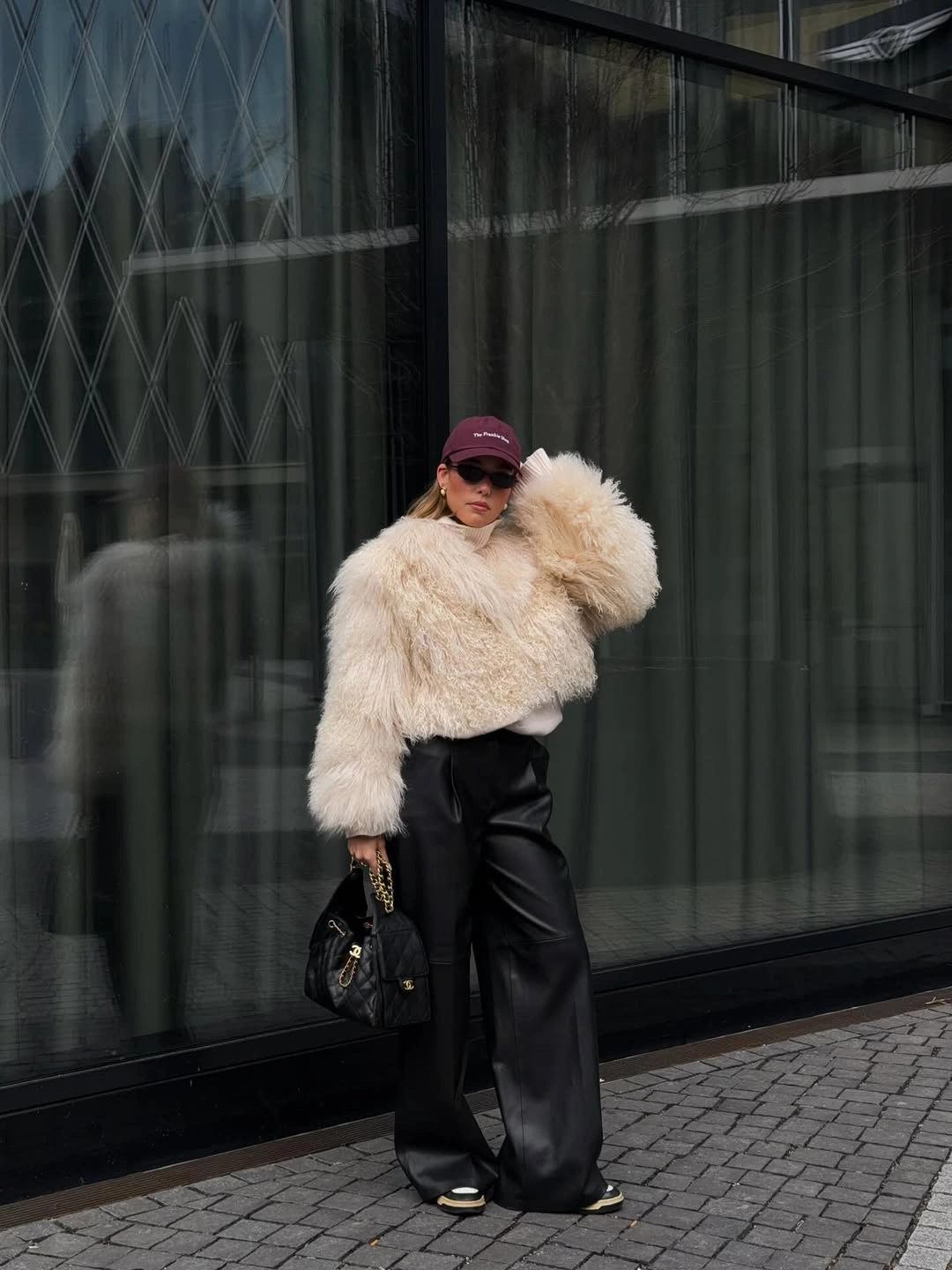
A burgundy baseball cap introduces a small, concentrated color accent above the pale jacket, while the black chain-detail bag adds a darker accessory shape near the side. The cap is rounded and compact, whereas the bag combines a softer body with visible hardware. Those details interrupt the cream-and-black pairing in different ways without competing with the stronger jacket-to-trouser contrast.
A narrow pale strip remains visible at the waist between the cropped jacket and the trousers, keeping the layers clearly separated. The black wide legs continue almost to the ground, where only pale sole edges break through beneath the hems.
Burgundy Repeats Through Texture, Shine, and Shape
Burgundy appears first as a large shaggy jacket and then again in the smaller baseball cap above it, but the two pieces do not read identically because their surfaces and shapes differ. The jacket has a loose, irregular texture and broad outline, while the cap is compact and smooth by comparison. Repeating the same color at different scales keeps the upper half connected without making every element look uniform.
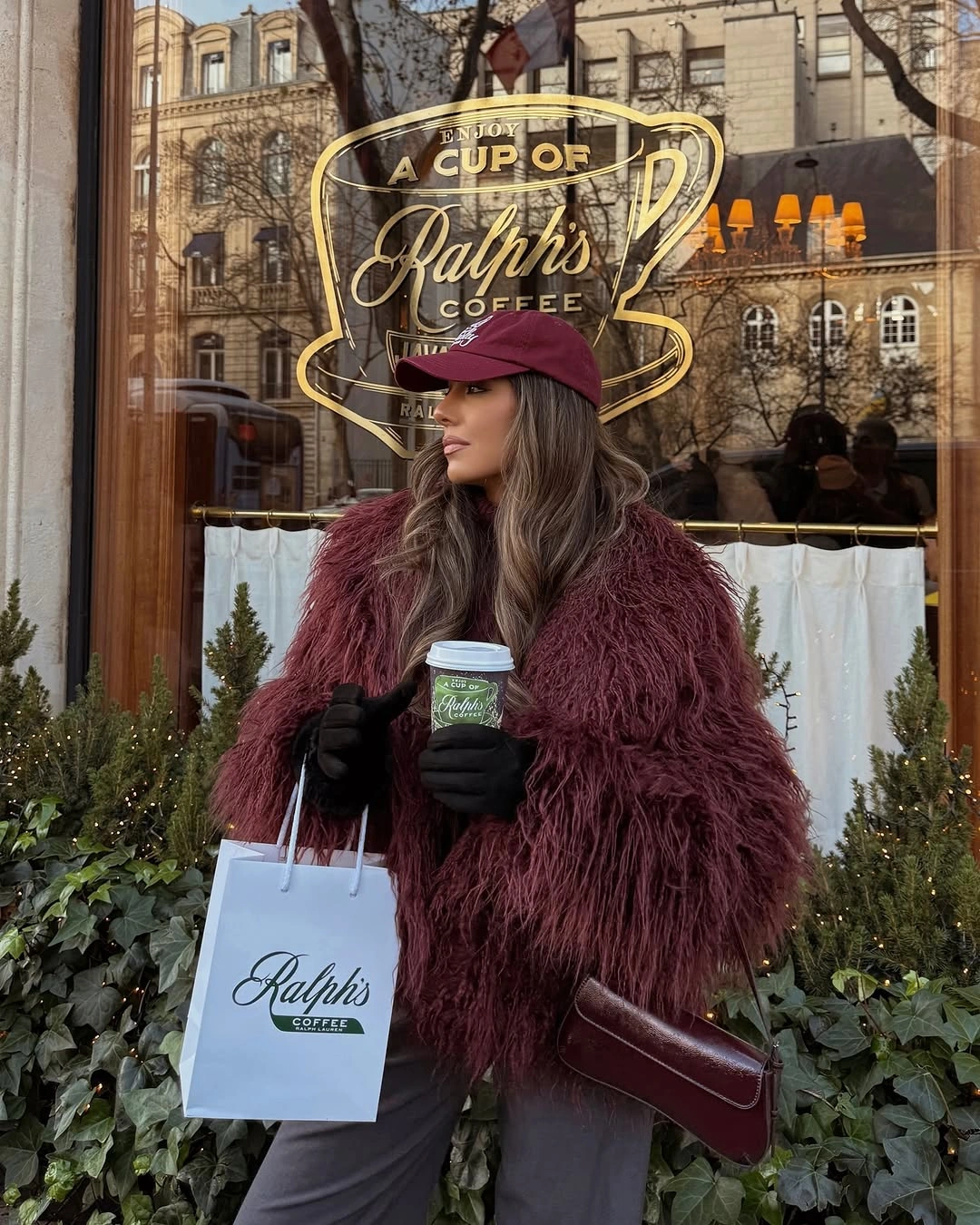
Black gloves create a dark interruption against the burgundy sleeves, and gray trousers introduce a quieter base below the jacket. Those cooler, flatter tones give the repeated burgundy room to stand out rather than extending it through the whole outfit. The pale shopping bag adds another separate shape in the hand, but it stays visually distinct from the clothing and from the smaller shoulder bag.
The slim burgundy shoulder bag has a smoother, narrower outline than the shaggy jacket surrounding it, so the repeated shade arrives in a noticeably different form. The pale shopping bag is simply a separate held object and should not be read as another layer of the outfit.
Cream Knit Edges Under a Short Brown Jacket
Cream ribbing stays visible through the center opening of the short dark-brown jacket, then appears again at the cuffs and lower hem. Those repeated edges make the knit easy to trace even though the outer layer covers most of the torso. The relationship is especially useful for casual early winter outfit ideas because the inner layer is defined by where it extends beyond the jacket rather than by a large contrasting panel.
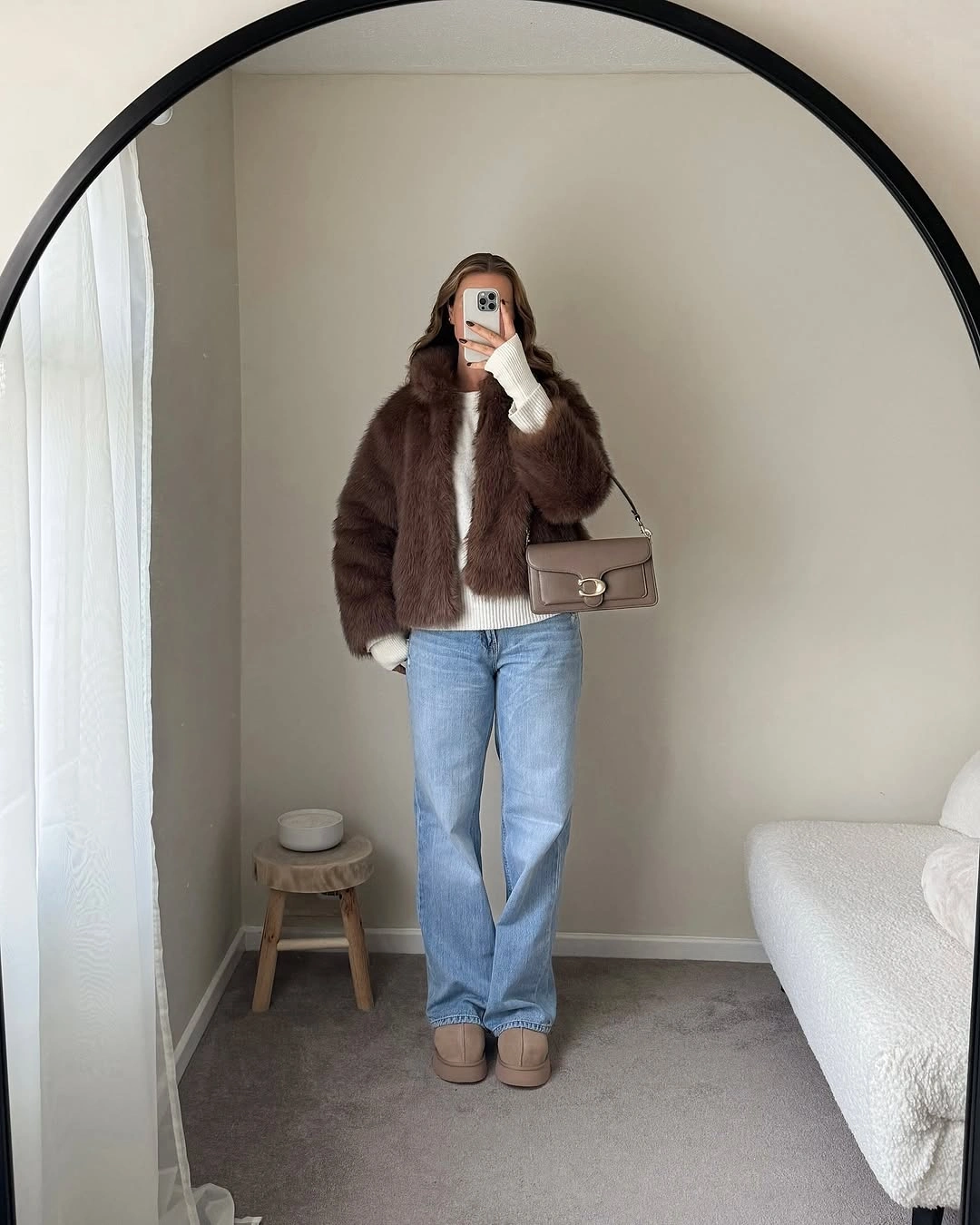
A taupe flap bag sits close to the lower edge of the jacket, where its clean, structured outline contrasts with the more irregular surface of the brown outer layer. The bag remains close in color to the surrounding neutrals, so shape becomes more important than contrast. Below, the light-blue jeans create a broader pale section that separates the darker jacket from the tan footwear.
The straight jeans fall to the tan thick-soled shoes without a rolled cuff, keeping the lower line continuous. Their broad hems meet the rounded, substantial shoes in a way that feels visually different from the sharper footwear seen in several earlier looks.
A Long Cream Scarf Shapes the Silhouette
The cream scarf is wrapped closely around the neckline, then continues in a long section that crosses the taupe jacket and drops toward the lap. Because it occupies so much of the front, it becomes part of the visible silhouette rather than a small finishing detail. The ribbed cream beanie repeats the pale tone higher up, giving the scarf a second reference point above the textured outer layer.
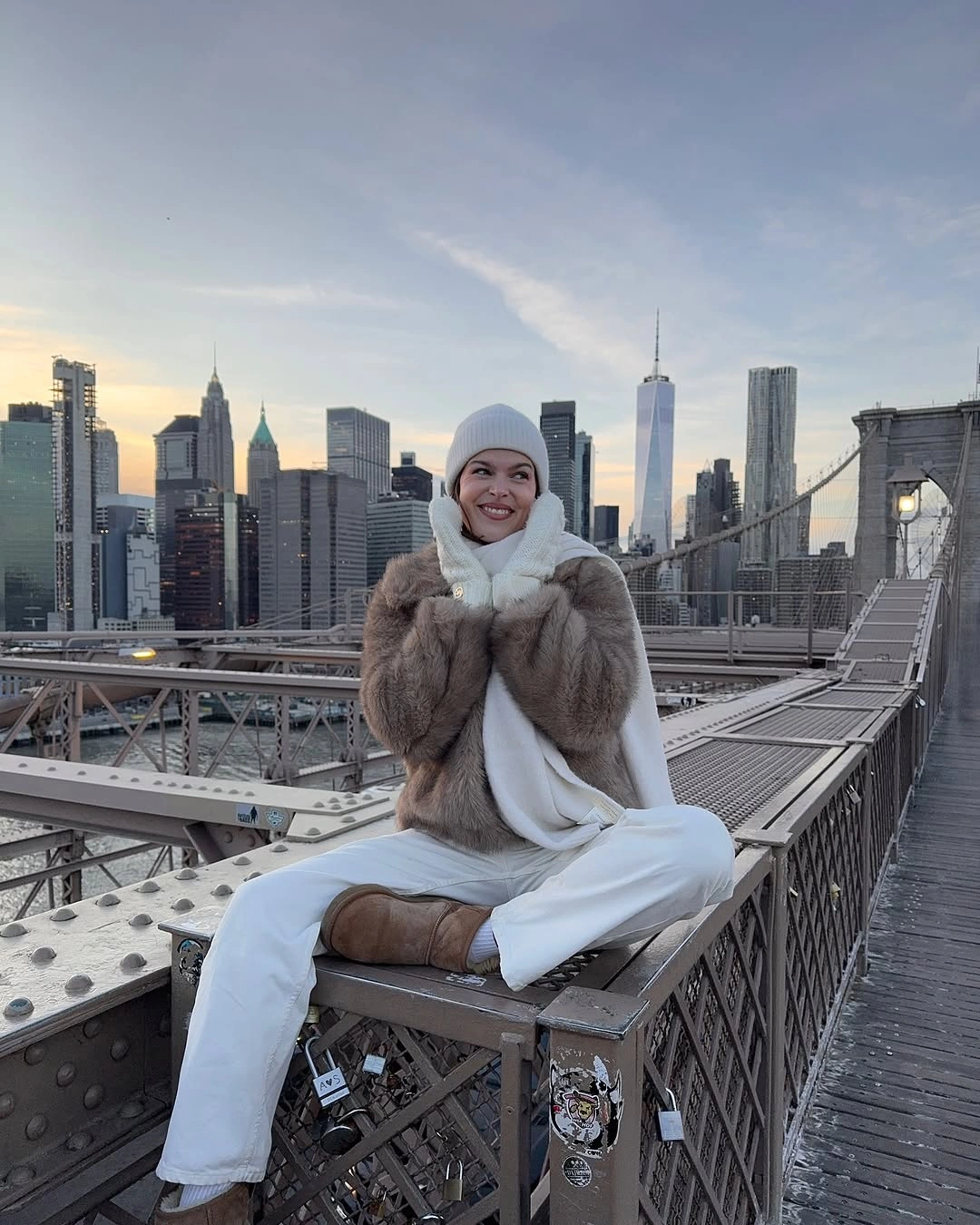
White trousers extend the same light color family below the jacket, linking the lower half with the scarf and beanie without making every piece identical. The taupe jacket remains the central contrasting block between those pale areas. This gives the early winter outfits theme a clear example of how one light color can reappear in separated sections while a darker neutral holds the middle.
Tan ankle boots create a distinct color break beneath the white trouser legs and prevent the pale lower half from continuing uninterrupted to the ground. Their rounded shape also gives the hemline a more defined ending than the softer scarf and trouser folds above.
Pink Knit Brightens Layers of Brown
The pink cable-knit sweater provides the strongest color contrast in the outfit, with the textured pattern visible across the torso and the same pink returning at the cuffs. Framed by the long brown coat, that brighter center remains concentrated instead of spreading through every layer. For late fall outfits, this is a useful way to study how one saturated knit can sit inside a mostly brown and denim palette.
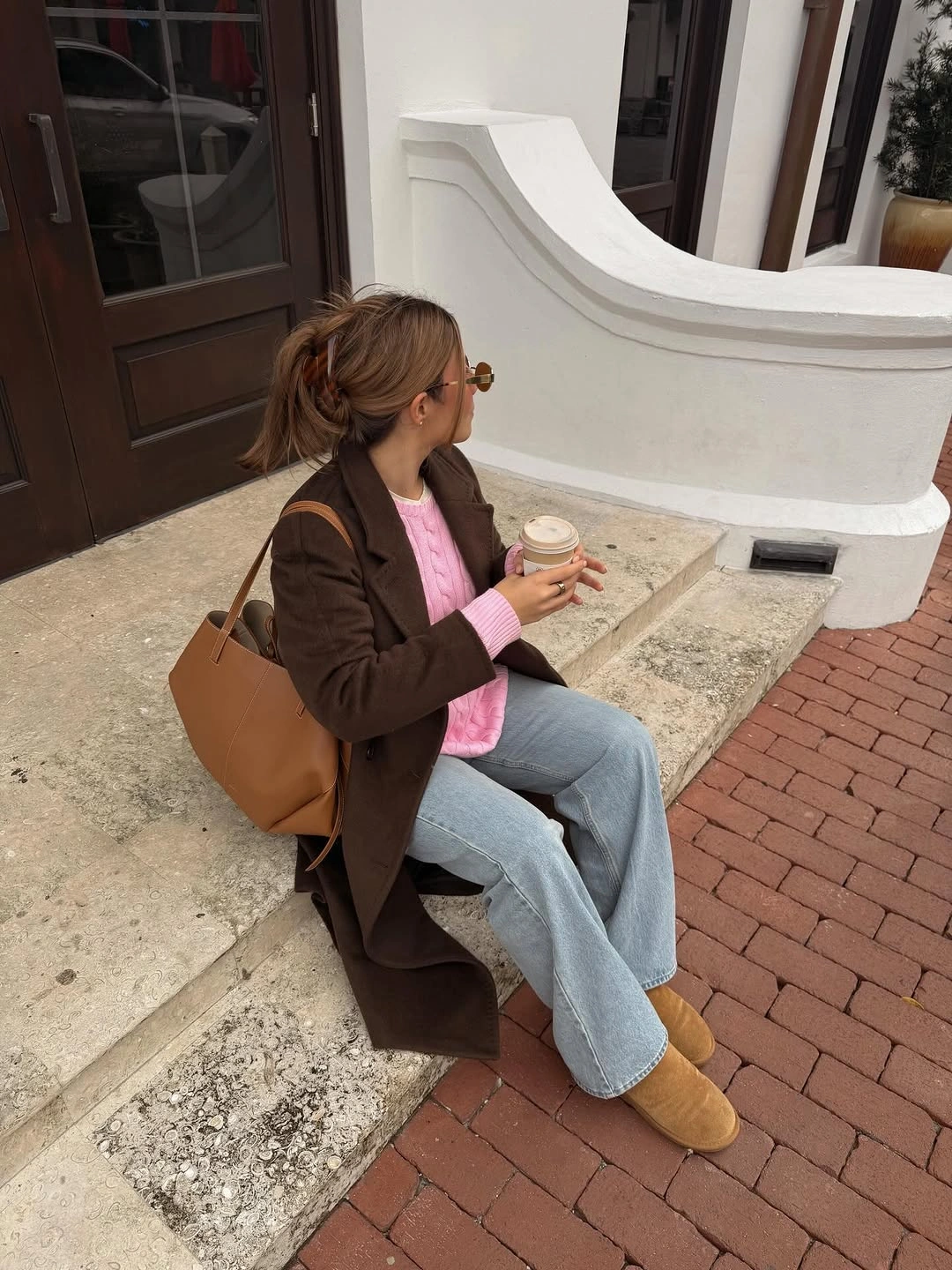
The outer coat, cognac shoulder tote, and tan ankle boots all stay within a brown family, but they are visibly different shades rather than a single matched color. The coat is the darkest and largest area, the tote adds a warmer mid-tone beside it, and the boots introduce a lighter brown at the bottom. Keeping those distinctions clear makes the pink sweater feel intentional without flattening the rest of the outfit.
The coat stays open around the light-blue jeans, allowing their wider hems to remain visible from thigh to ankle. Those hems end over rounded tan boot toes, creating a softer lower outline than the pointed footwear used in several earlier sections.
Three Tailored Layers Inside a Deep Brown Coat
A gray high-neck top, charcoal blazer, and long deep-brown outer coat remain readable as three separate layers because each creates its own visible edge. The high neckline forms the innermost boundary, the blazer adds sharper lapels around it, and the broader textured coat frames both from the outside. That nested structure gives early winter outfits for the office a clear tailoring reference without suggesting any required dress code.
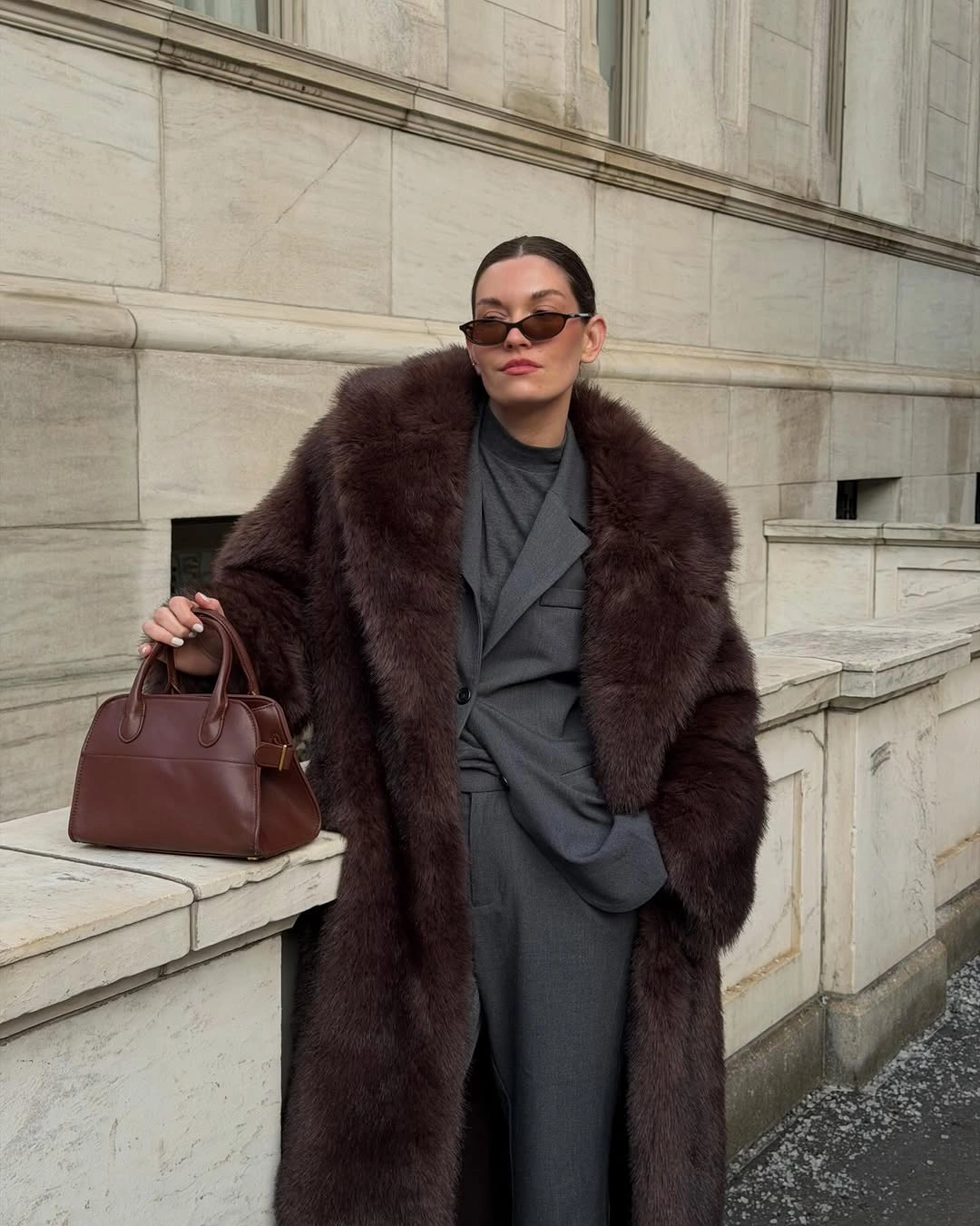
A structured brown top-handle bag rests on the ledge beside the outfit, where its curved body and compact handles contrast with the long, irregular texture of the coat. The bag stays close to the coat in color, so the difference comes more from shape than from a strong color shift. Its defined outline gives the composition one controlled accessory form beside the much larger outer layer.
The blazer's angular lapels remain visible inside the coat's broader collar, which keeps the inner tailoring from disappearing. Gray continues from the high-neck top into the trousers below, but the image does not establish that those pieces are a matching set.
Rounded Brown Texture Over an All-Black Base
A large black bag is held across the waist and overlaps the front of the short brown jacket instead of hanging freely at the side. That placement pulls a dark shape into the center of the textured outer layer, while the black high-neck top and loose trousers continue the same color above and below it. The result is a layered dark base interrupted mainly by the brown jacket rather than by multiple accent colors.
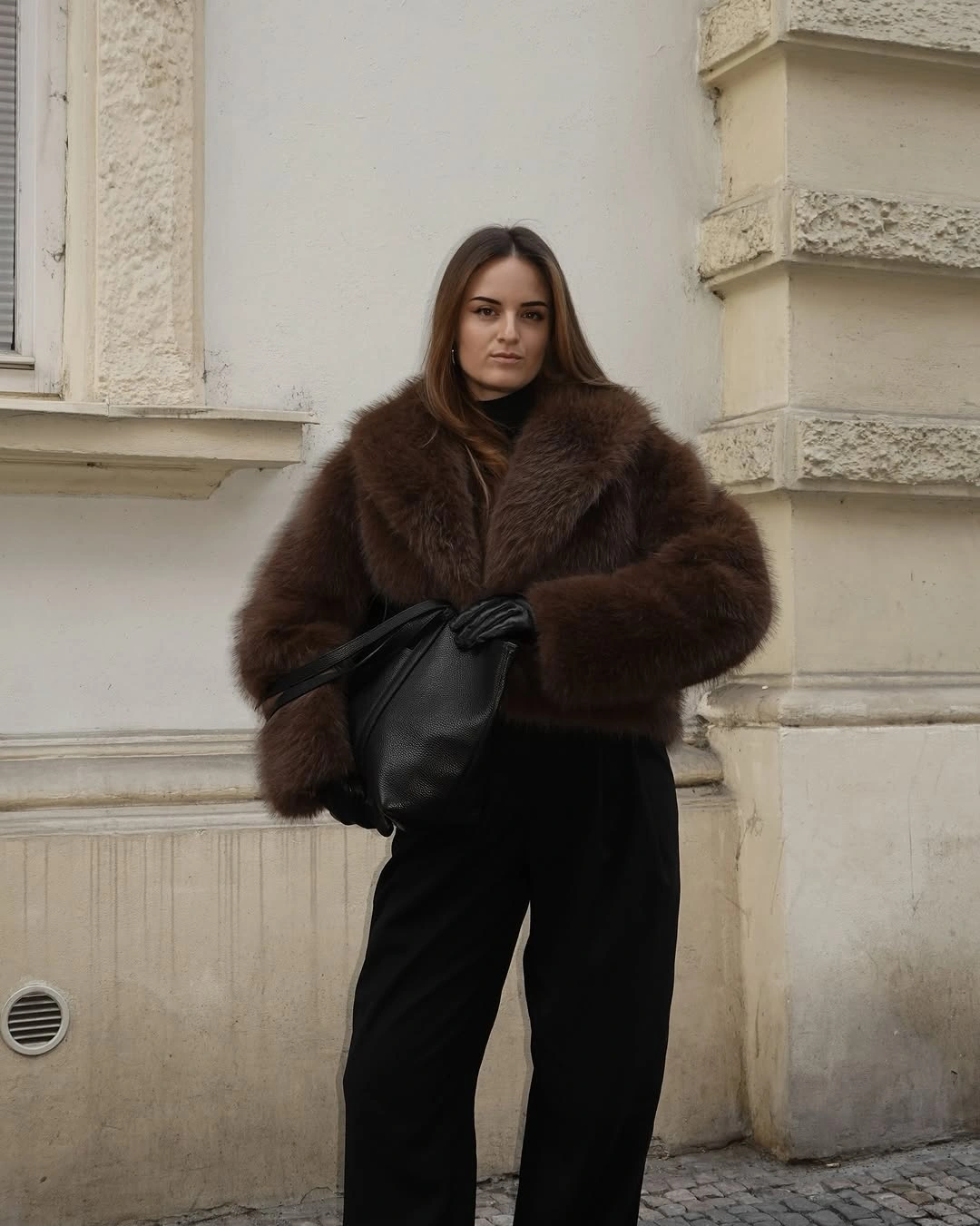
The bag has a soft, collapsed outline that bends across the body, while the jacket keeps fuller sleeves and a broad rounded collar around it. Those shapes are related in volume but different in structure, which prevents the center from looking flat. Black gloves blend into the bag and lower clothing, reinforcing the darker section while the jacket remains the dominant textured area.
The black neckline connects tonally with the trousers, creating a continuous dark path through the center of the outfit. Brown stays concentrated in the outer layer, so the main contrast comes from texture and proportion rather than repeated color.
Geometric Knit Pattern Over a Simple Black Base
Black geometric bands are concentrated across the upper chest and sleeves of the roomy cream knit, while the lower half of the sweater remains mostly plain. That placement gives the pattern a clear boundary instead of spreading it evenly across the entire garment. The contrast is strong enough to define the upper body on its own, which makes this a useful example within casual early winter outfit ideas without relying on any claim about weather performance.
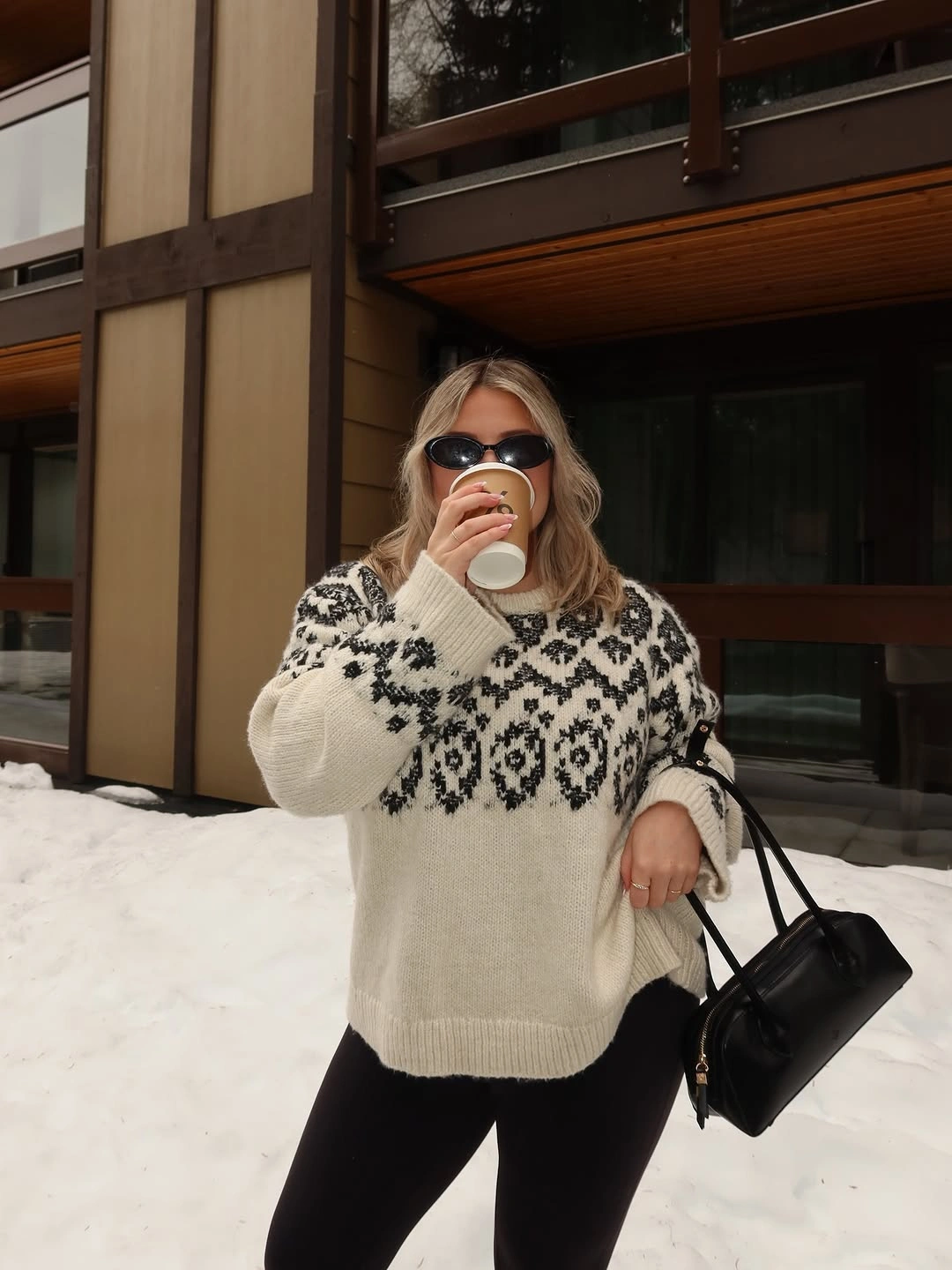
A black handbag and dark sunglasses repeat the pattern color in solid, compact shapes rather than in another print. The bag hangs beside the lower sweater and pants, while the sunglasses sit well above the geometric band, so the black accents appear at separate heights. Snow is visible in the setting, but the styling itself is best read through color placement, scale, and silhouette rather than through assumptions about warmth.
The close-fitting black pants create a narrow lower line beneath the sweater's generous sleeves and body. A visible ribbed hem marks the point where the cream knit ends and the darker lower half begins.
Brown Layers Separated by Ribbing and Weave
The dark-brown coat, brown ribbed zip-neck knit, and large woven-texture bag stay within a similar color family but remain easy to distinguish because their surfaces are different. The coat reads as the broadest and smoothest outer shape, the sweater introduces narrow vertical ribbing, and the bag adds a tighter woven pattern under the arm. That makes surface, rather than bright contrast, the main organizing idea.
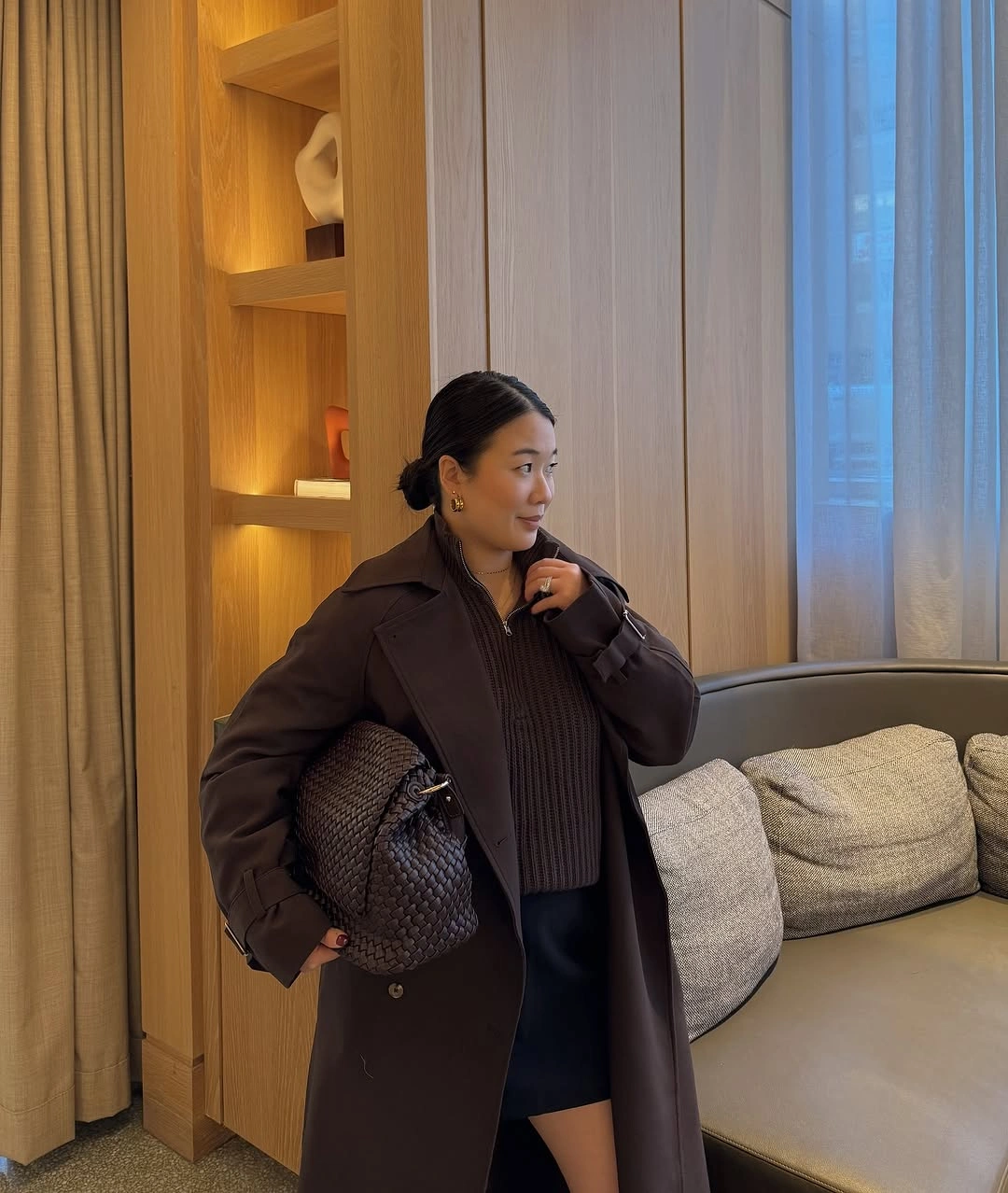
The long coat extends well below the short dark lower garment visible through its opening, creating a strong difference in length between the outer and inner layers. The crop does not clearly resolve whether that short piece is a skirt or shorts, so it is better treated simply as a dark lower garment. For late autumn outfits, the useful point is the proportion created by a long coat surrounding a much shorter visible layer.
The sweater's zip opening creates a smaller vertical detail inside the wider coat lapels. Its ribbing continues down the exposed front, reinforcing the separation between knit and coat even though both stay within brown tones.
Wide Blue Jeans Break Up a Long Brown Coat
Wide blue jeans form a broad central column between the open panels of the long brown coat, making the denim the largest color break in the outfit. The coat stays dark on both sides, while the black high-neck top creates an even deeper section above the visible waistband. This arrangement gives early winter outfits with jeans a clear example of how an exposed center can keep a long outer layer from visually swallowing the denim.
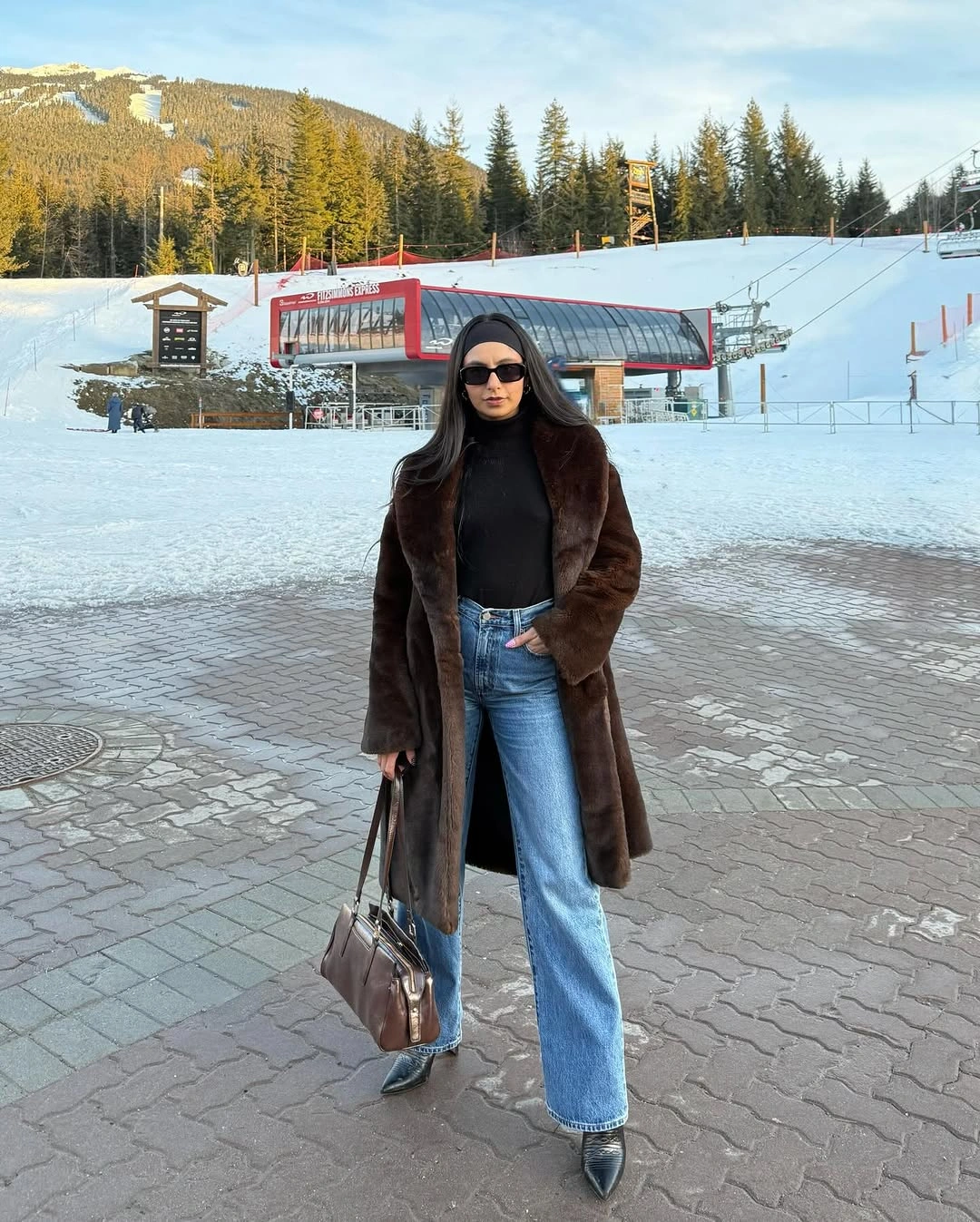
The jeans fall toward dark pointed footwear, where sharp toe shapes emerge below the wider hems and create a more defined ending at the bottom. A structured brown bag hangs low at the side, close to the coat rather than interrupting the blue center. Its placement keeps the accessory within the darker outer zone while the jeans remain visually dominant through the middle.
The black top stops at the exposed waistband, leaving a clear boundary between the upper layer and the denim. Because the coat remains open, that waistline stays visible despite the outer layer extending far below it.
Plum Layers Meet a Structured Skirt and Boots
Rounded pocket outlines soften the short plum jacket, while the dark blue-gray A-line skirt below introduces a more angular overlapping front. The jacket ends well above the skirt hem, so those two shapes remain clearly separated instead of merging into one continuous block. That contrast gives this early winter outfit for women a useful proportion study built around curved upper details and a more defined lower silhouette.
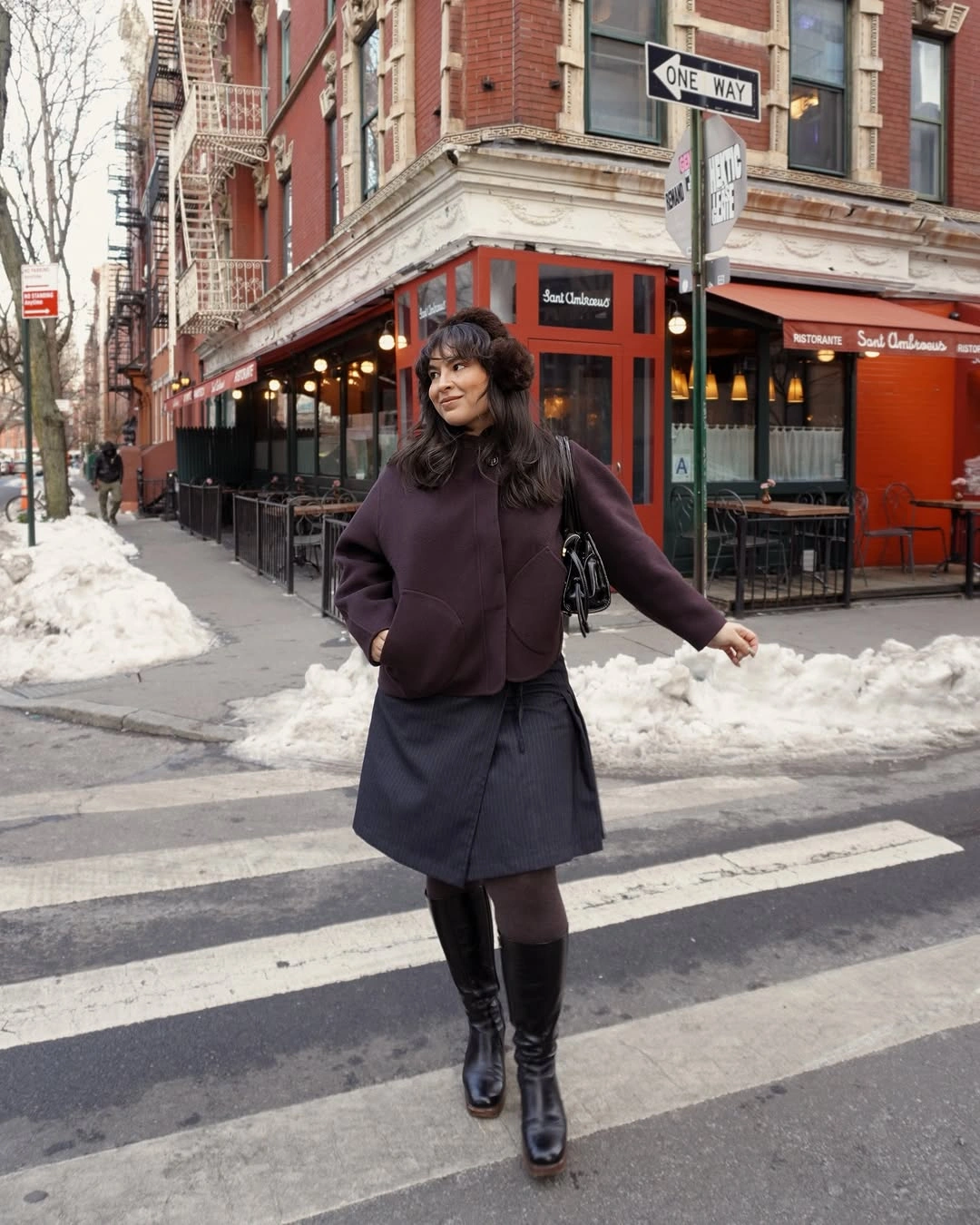
A small underarm bag stays close to the jacket rather than extending far below it, keeping the accessory within the compact upper portion of the look. Plush earmuffs add another rounded shape near the head, echoing the softer jacket details without repeating the skirt's sharper lines. Together, those elements keep visual emphasis concentrated above the waist while the skirt remains the main structured shape below.
A visible band of sheer dark tights separates the skirt hem from the tops of the black knee-high boots, creating a clear transition between the two lower pieces. The boots have a shinier visible surface than the skirt and tights, so the lower half changes not only in length but also in finish.
An Asymmetric Cream Scarf Over Gray Layers
The cream scarf crosses the gray coat and hangs much farther down one side, creating an asymmetric line across an otherwise straightforward layered outfit. Its pale color stands out against the darker outer layer and draws the eye vertically from the neckline toward the hip. For casual early winter outfit ideas, this shows how one long accessory can alter the balance of a familiar coat-and-jeans combination without changing the core layers.
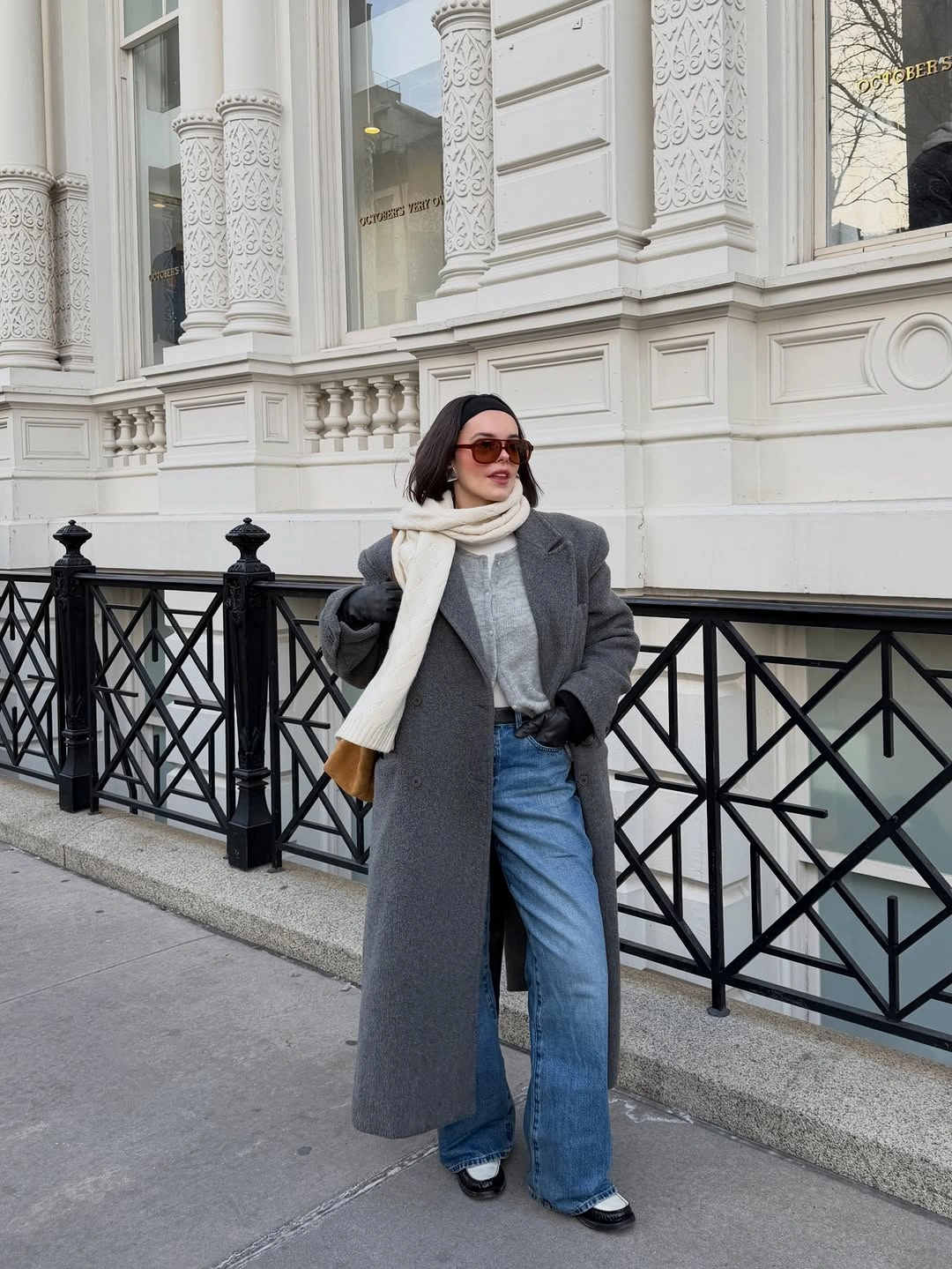
Inside the open coat, a lighter gray cardigan remains visible beneath the scarf, with a white neckline creating the palest point at the center. A dark belt introduces a narrow horizontal line above the wide blue jeans, while black gloves add smaller dark accents near the coat opening. A partly visible tan bag sits to one side, adding a warmer note without interrupting the gray-and-blue structure through the middle.
The wide jeans continue below the coat hem, preserving their full shape even under the long outer layer. Small black-and-white details at the feet repeat the outfit's darker and lighter accents, giving the lower edge a final contrast without competing with the scarf above.