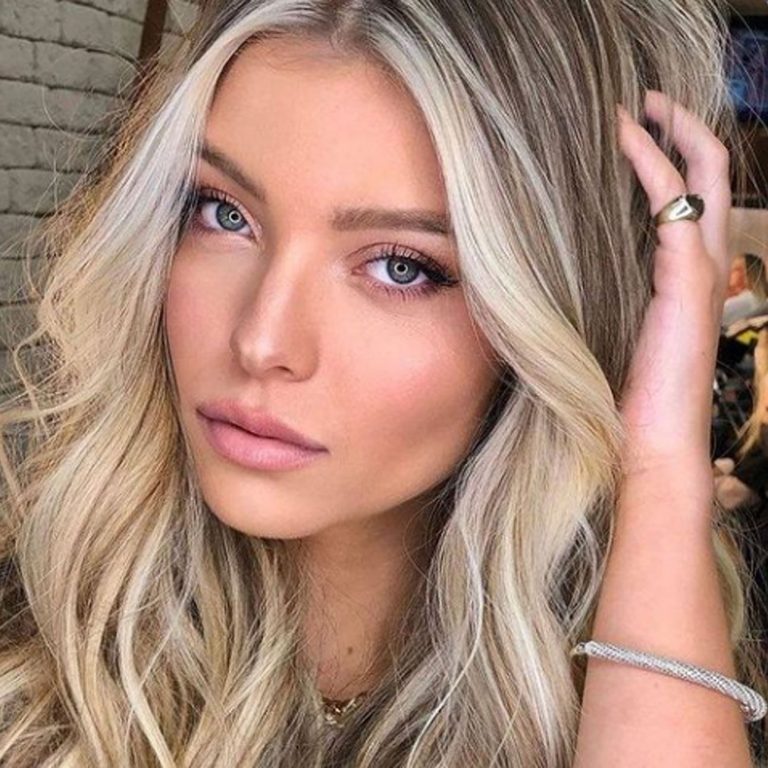
39 Winter Hat Hairstyles to Keep You Cozy and Chic in 2027

I’ve spent winters pulling a beanie off and watching my hair salute the ceiling. This season, I kept seeing shapes that survived: soft waves that bounced back, braids that tucked neatly, a side part that didn’t fight the brim. It’s not about fighting the hat.
This roundup has 39 Winter Hat Hairstyles that cover the range: air-dried curls, bubble braids, blunt cuts that hold their line. Some take ten minutes, some need a stylist. I tested them on my fine, flat-by-4-pm hair and on friends with thick textures. If your hair has ever gone flat under a hat, you’ll find something here.
Loose Waves With Side-Swept Bangs
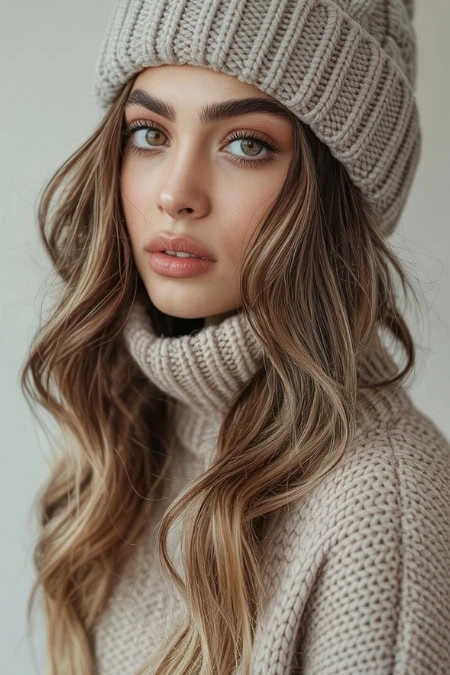
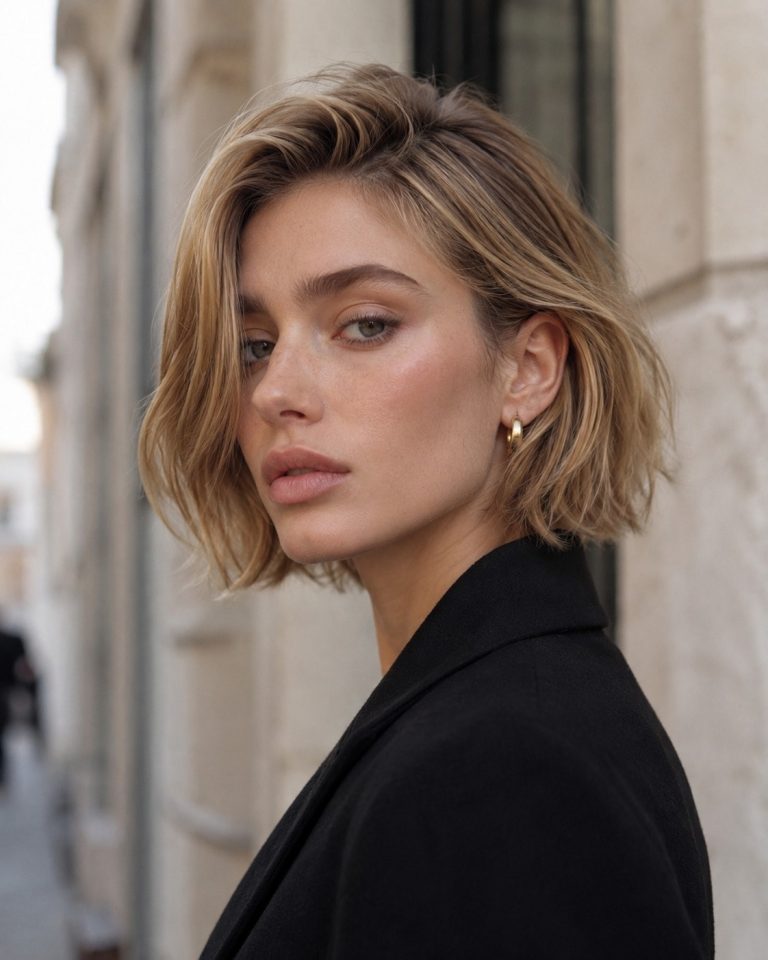
A collarbone cut with side-swept bangs reads as intentional, even when it’s just how your hair fell after the beanie came off. The loose waves with side bangs hit that sweet spot where the hat sits above the ears and the ends still show. For medium-density hair like mine, the waves hold their shape because the collarbone length is heavy enough to resist the beanie’s compression but light enough to bounce back. The dark blonde with honey highlights catches the winter light differently every time you step outside. Styling takes about fifteen minutes with a large barrel curling iron. Upkeep is minimal: trims every eight to ten weeks, and avoid over-brushing or the waves separate into strings. This works best if your face is oval or heart-shaped, because the side sweep softens the jawline without hiding it.
Vibrant Red Waves For Winter
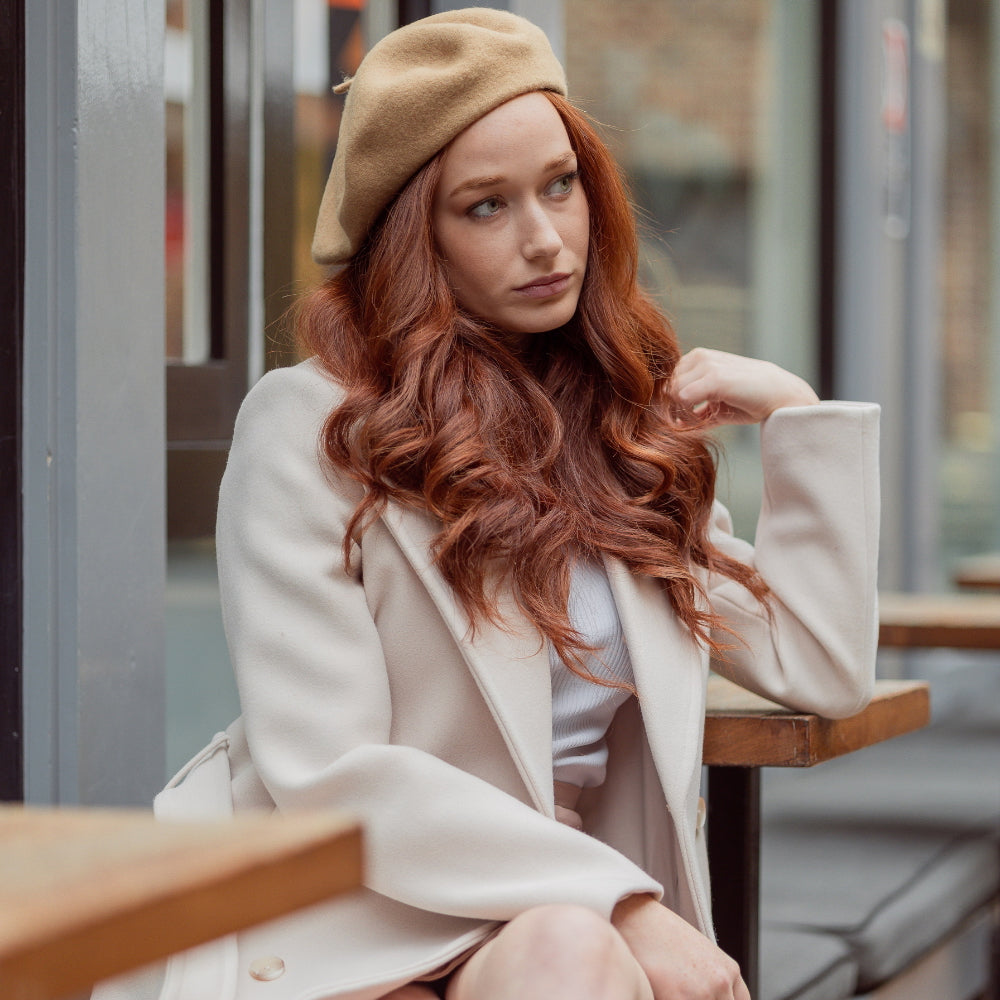
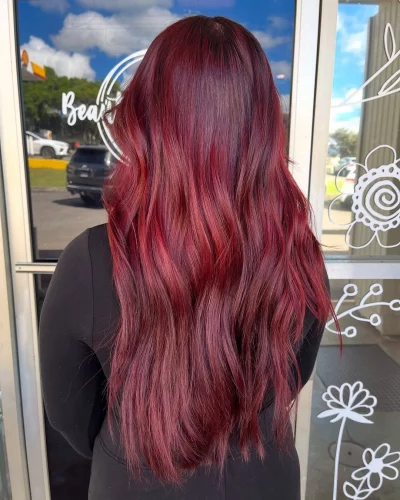
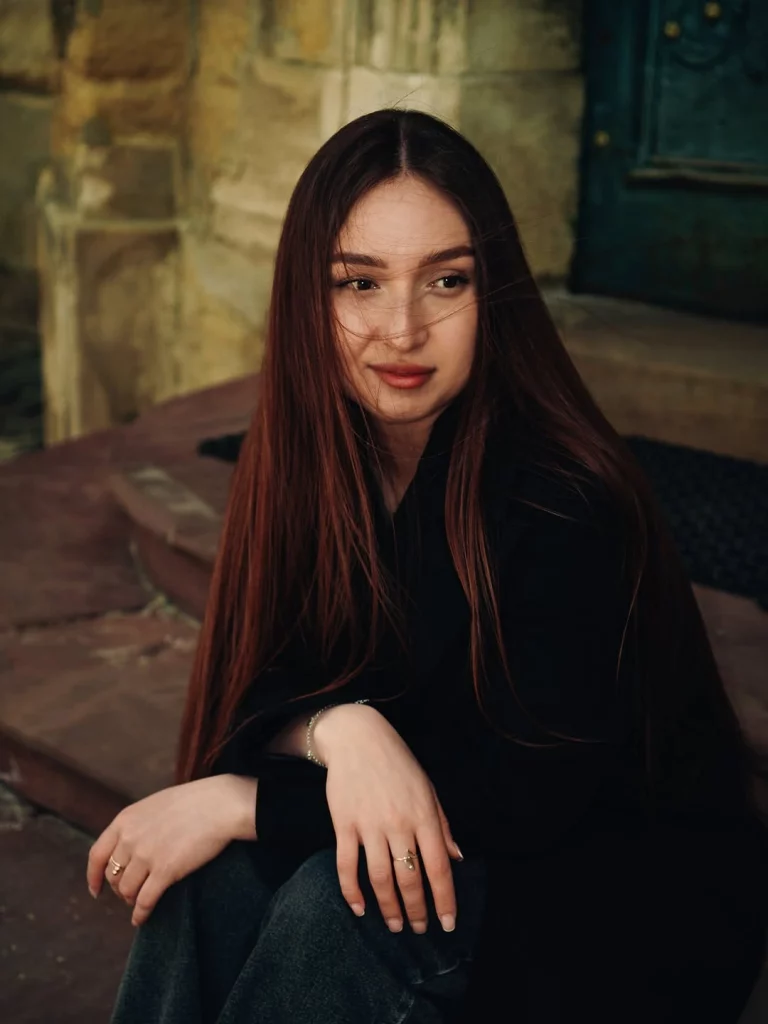
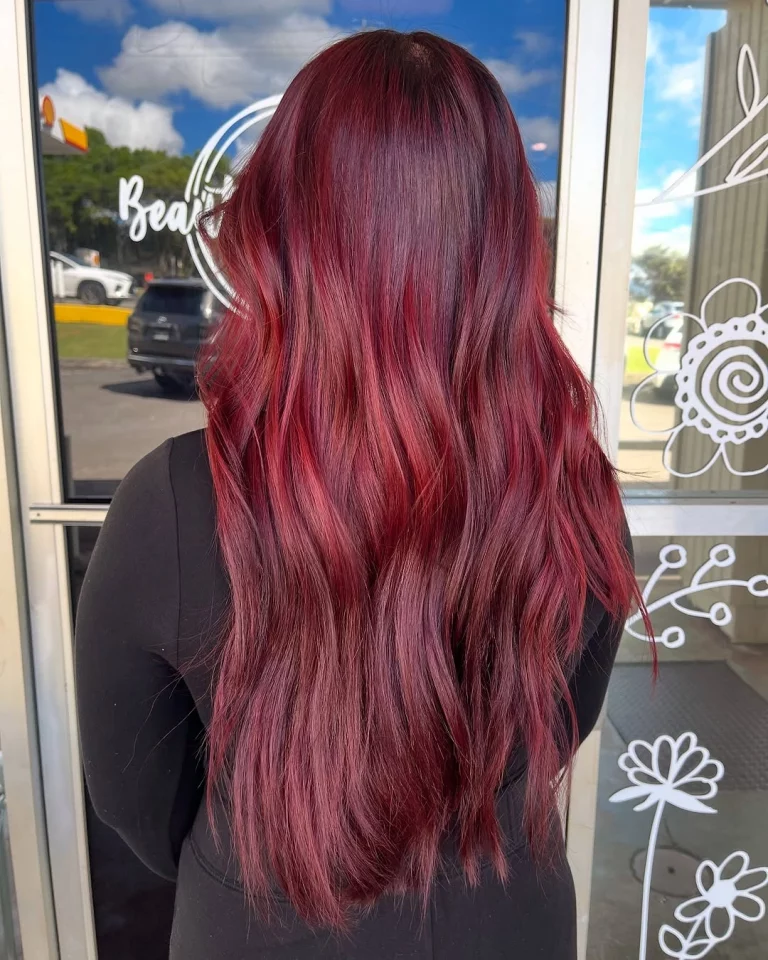
Red hair loose waves are the winter color move I didn’t know I needed. The warm undertones in this shade push back against all that grey daylight, and the thick wavy hair holds a wave pattern that doesn’t quit under a hat. The technique is straightforward: a large barrel curling iron, sections no wider than the barrel, and a few seconds of cool air before you release each curl. The middle part keeps the volume balanced, so when the beanie comes off, the waves fall evenly on both sides. This is a holiday party or cozy dinner out style, not an everyday thing unless you have the time to re-curl. The red reads rich against a black coat or a cream scarf, and the mid-back length means the waves have room to move without tangling.
Air-Dried Curls Under A Beanie
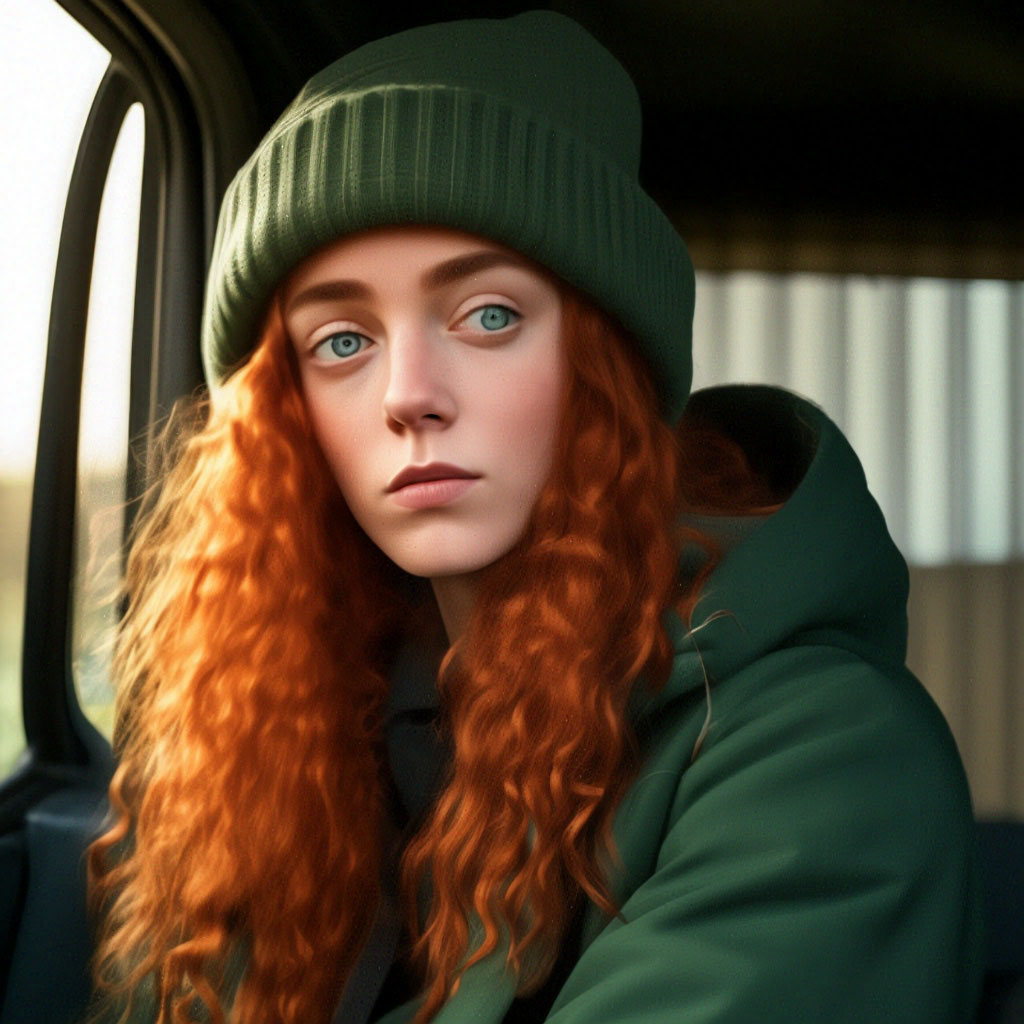
Can curly red hair survive a beanie without turning into a frizz halo? Yes, if you let it air dry first. The curly red hair beanie combo works because the air dried texture has the cuticle closed, so the hat doesn’t steal moisture as fast. The downside: the beanie flattens the crown, and by day two you’ll need to spritz with water and separate the curls with your fingers. The red color stays vibrant even when compressed, which is a relief. This is a low-effort style for those with natural curl or wave, but skip it if your hair is fine and prone to frizz, because the beanie will amplify both.
Playful Bubble Braid With Beanie
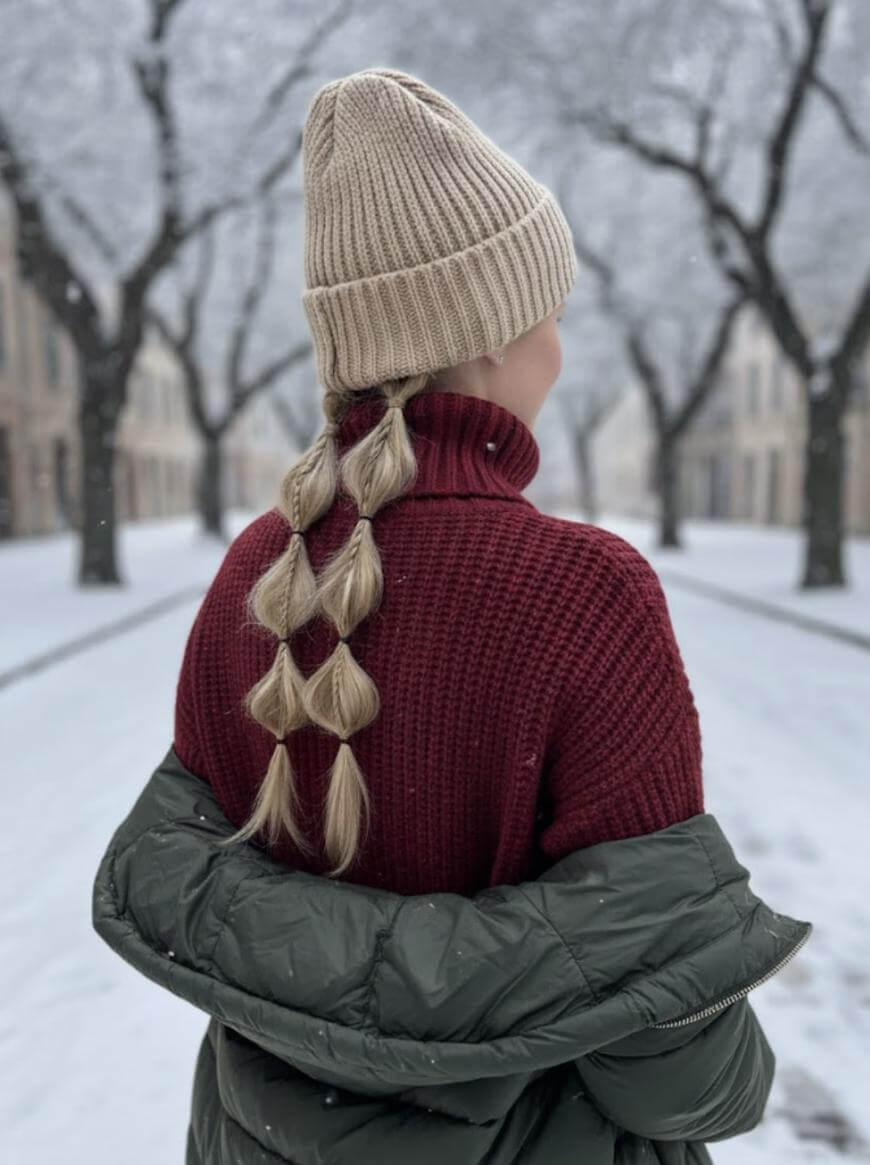
I used to think bubble braids were a TikTok thing I’d never attempt. Then I tried one under a beanie and realized it solves the problem a regular braid has: a standard braid goes flat and invisible under a hat, but a bubble braid keeps its volume and peeks out from under the brim. The bubble braid blonde hair stands out against a dark beanie, and the unique hairstyle takes about fifteen minutes to create.
Here is the short list of steps. Section the hair into a low ponytail. Add small elastic bands every two inches down the length. Gently tug at the sections between the bands to create the bubbles. That is it. This is a DIY style, no salon needed, and it holds for a full day even with the hat on and off. The blonde color helps the bubbles read as deliberate rather than messy.
Short Curly Cut With Side Part
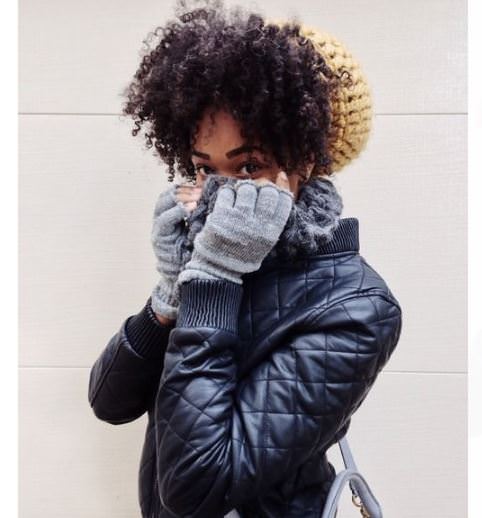
A short curly cut with a side part is the hat-friendly haircut that doesn’t need a mirror after you pull the beanie off. The short curly hair beanie pairing works because the cut ends at the ear, so the hat sits above the curls instead of crushing them. The side part adds lift at the crown, which prevents the dreaded flat-top look. This suits anyone with natural curl or coil, because the short length means less weight pulling the curls down. The dark brown color reads rich against a neutral beanie, and the texture holds its shape all day with just a quick finger-comb after hat removal.
Intricate Fishtail Braid

Skip the basic braid. This fishtail braid brown hair style is the one that earns a second glance, and it holds better than any ponytail I’ve tried under a hat. The technique matters: alternate thin strands from each side, keep the tension even, and the pattern reads as deliberate. On thick straight hair, the braid sits flat and stays put for a full day, no redoing it at 3 pm. It took me about twenty minutes on second-day hair, which is the sweet spot for grip. A side part softens the front, and the medium brown with subtle highlights catches light even when the rest of you is bundled up.
Compared to a simple three-strand braid, this one looks like you planned it. The trade-off is time, but the hold is worth it. I have worn this through a windy commute and a long dinner, and it did not shift. If your hair is fine or slippery, a texture spray helps, but on thick hair you can skip it. The back view is the payoff, so keep the braid centered and let it fall past your mid-back. A trim every eight to ten weeks keeps the ends clean, which matters because split ends make the braid look fuzzy fast.
Subtle Style With Lavender Hat
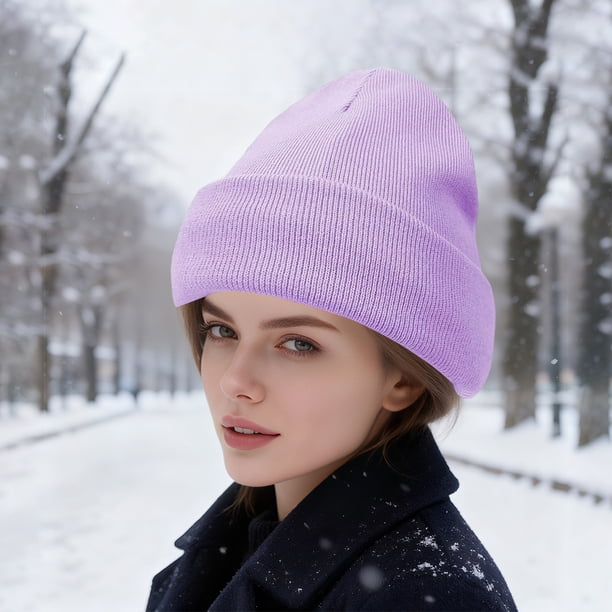
This lavender hat makes me want to lean into winter pastels. Light brown hair winter hat pairings usually play it safe, but the soft purple reads as calm and intentional, like you planned the whole mood. The hair is simple: tucked behind the ears, no bangs, no styling beyond a quick brush. That is the point. The hat does the work, and the hair just needs to stay out of the way. It suits a low-key day, a coffee run, a walk where you want warmth without fuss. The lavender tone works best with neutral hair colors, so if your hair is warm or brassy, the contrast might feel off. I would keep the hair clean and dry, because a hat this soft will flatten any volume by lunch. Trims every eight to ten weeks keep the ends tidy, but honestly, this is the lowest-maintenance winter look I know.
Wavy Brown With Blonde Highlights
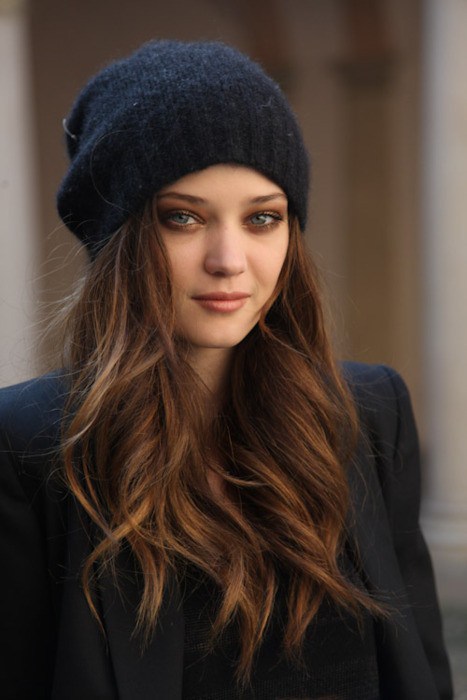
Have you noticed how a fuzzy hat can turn a good wave into a flat mess by noon? This wavy brown hair highlights style fights back. The loose waves reach mid-back, and the dark fuzzy hat sits on top without crushing the shape, because the waves are set with enough bend to survive pressure. The blonde highlights add dimension, so even when the hat flattens the crown, the color keeps the eye moving. I curled this with a wand in about fifteen minutes, and the side part held its line all day. The hat’s texture is the variable: a tight knit grabs more, a loose one lets the waves breathe. Upkeep is the real commitment. The highlights need a toning treatment every six to eight weeks to stay bright, and trims every eight to ten weeks keep the ends from looking stringy. If you skip the toner, the blonde goes brassy fast, especially in winter when you are drying it more. This is a style for days you want to look polished but still wear a hat, and it delivers.
Pop of Color With Yellow Hat
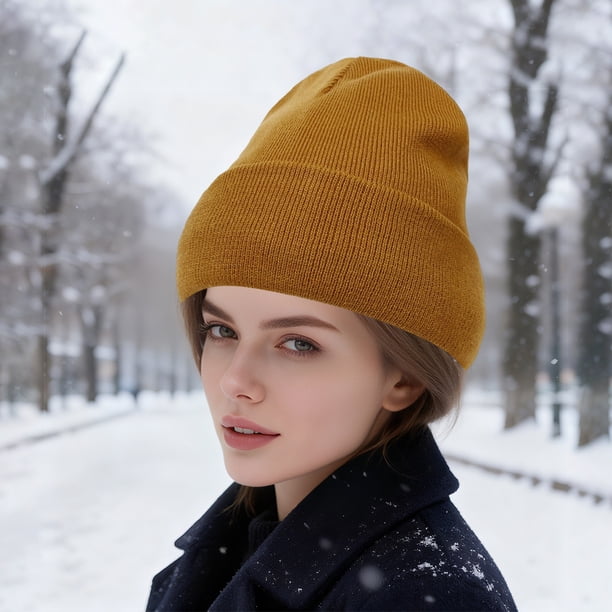
A yellow knit hat is a shortcut to making plain hair look deliberate. Light brown hair yellow hat combos work because the bright color pulls focus, so the hair underneath can be as simple as tucked back with no bangs. The technique is minimal: a quick brush, tuck the strands behind your ears, and let the hat sit low enough to cover the crown. That is it. I would not overthink this one. The hat does the heavy lifting, and the hair just needs to be clean and dry. A middle part or side part both work, but a side part adds a little asymmetry that feels more styled. This is a DIY situation, no salon required. The only real decision is how much hair to leave out, and I would keep it all tucked for maximum warmth. The yellow reads cheerful, which is exactly what February needs.
Cool Tones With Blue Hat
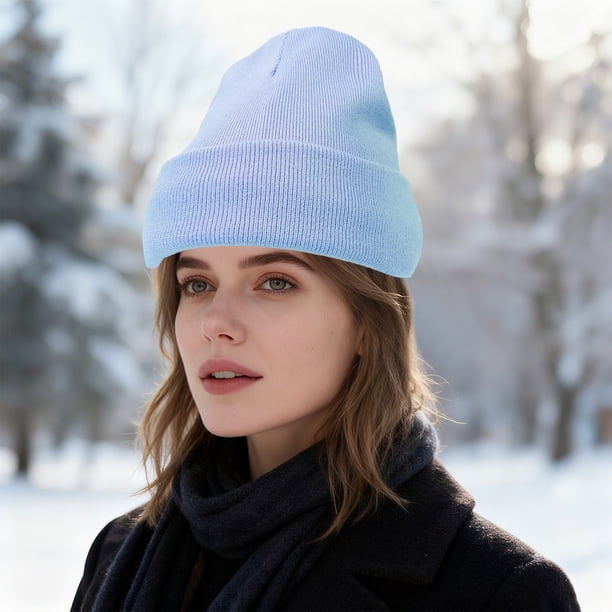
A light blue knit hat flatters cool-toned hair, and that is the honest truth. Light brown hair blue hat pairings work when the hair has ash or neutral undertones, because the blue picks up the coolness and makes it look deliberate. If your hair runs warm or golden, the contrast can clash, so this is a pass for copper or honey shades. The styling is minimal: tuck the hair back, no bangs, and let the hat sit at the hairline. A center part works fine, but a side part adds a little softness. The hat’s pale blue reads calm, so it suits a relaxed day, not a night out. I would keep the hair smooth and dry, because a fuzzy hat will grab any frizz. This is a low-effort look, but the color match is everything. If you are not sure about your undertones, hold the hat near your face in natural light, and you will know.
Ash Blonde Waves With Darker Roots
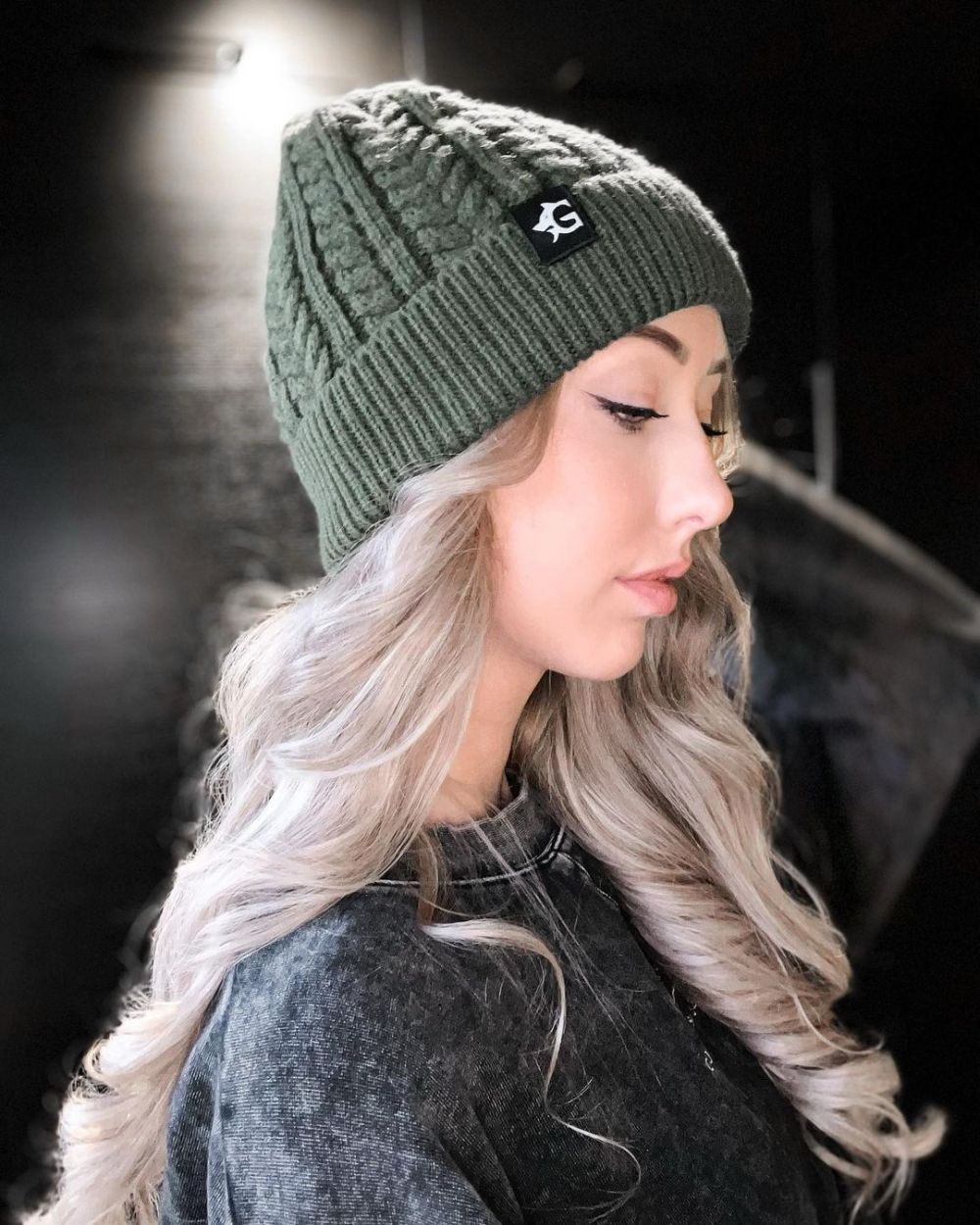
The beanie comes off, and the waves are still there. That’s the real test of a winter style. With ash blonde hair loose waves and darker roots, the contrast between the styled hair and the hat is intentional. The darker roots mean you don’t have to worry about root grow-out for weeks. The waves hold their shape because the hair is thick and the layers are long. Mid-back length gives enough weight to keep the waves from falling flat by noon. The colour is ash blonde, cool-toned, and the darker roots add depth. The ash tone needs a purple shampoo every few washes to stay cool. Upkeep is minimal: a trim every eight weeks keeps the ends healthy. The hold is reliable through a week of hats. The loose waves are created with a wand, but they last because the hair is thick and the layers are long. The beanie doesn’t flatten them completely; they spring back.
Low Ponytail With Visor Beanie
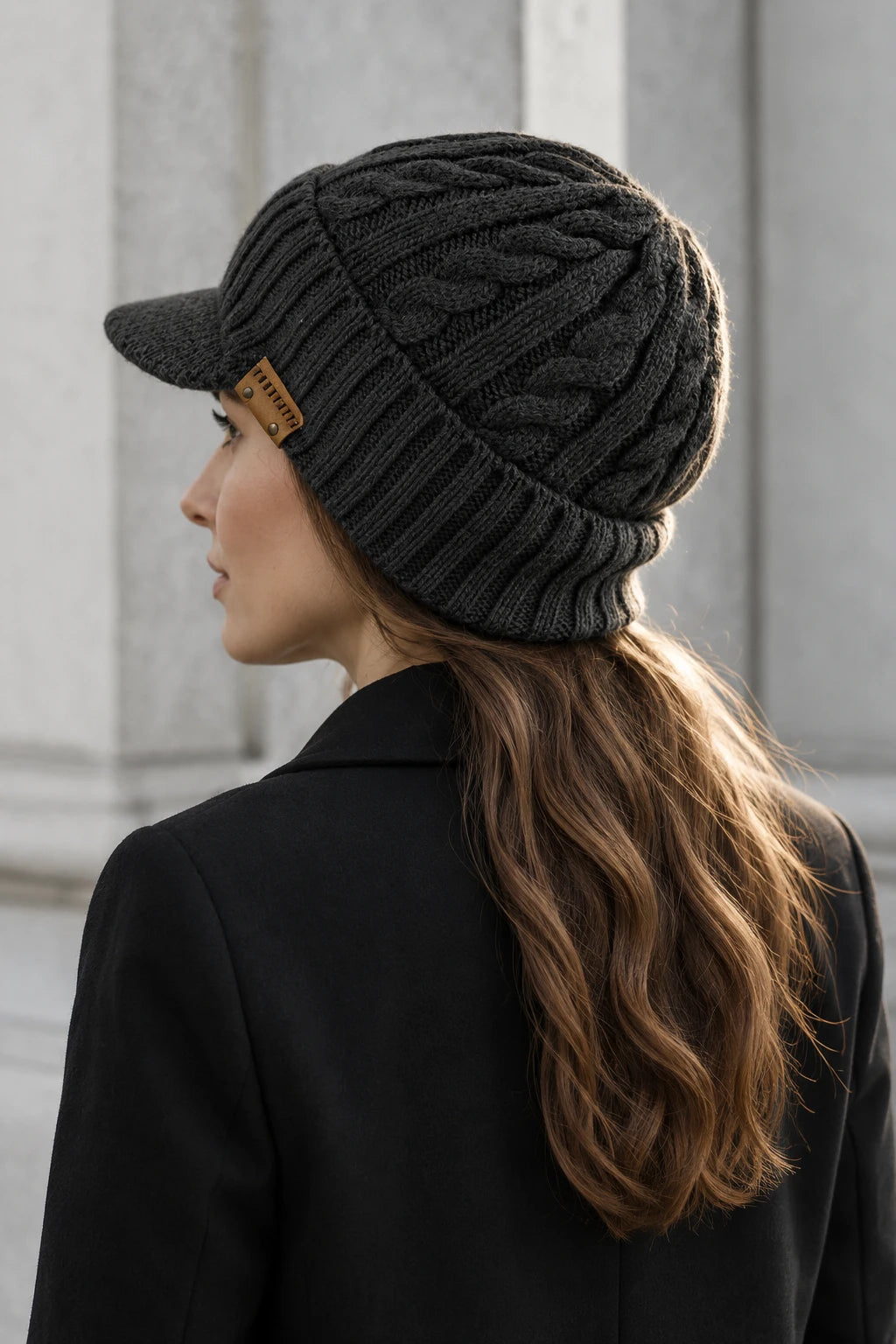
Ever tried to keep a ponytail sleek under a visor beanie? The trick is placement. The key is a low ponytail dark hair positioned at the nape of your neck, not higher. Start with dry, brushed hair. Secure it with a thin elastic, then pull the visor beanie over your head, letting the ponytail slide through the back opening. The visor beanie holds the front hair flat, while the ponytail stays undisturbed.
For a polished finish, wrap a small section of hair around the elastic to hide it. A light mist of hairspray tames any flyaways. This style is perfect for winter walks or a casual day out when you want hair out of your face. The low ponytail dark hair works best with thick, wavy textures because the weight keeps it from slipping. The length is mid-back, which gives enough heft to hold the ponytail in place. The colour is dark brown, which reads as sleek and low-maintenance. The texture is wavy, which helps the ponytail stay in place. The hold is secure under the beanie, no readjusting needed.
Double Bubble Braids
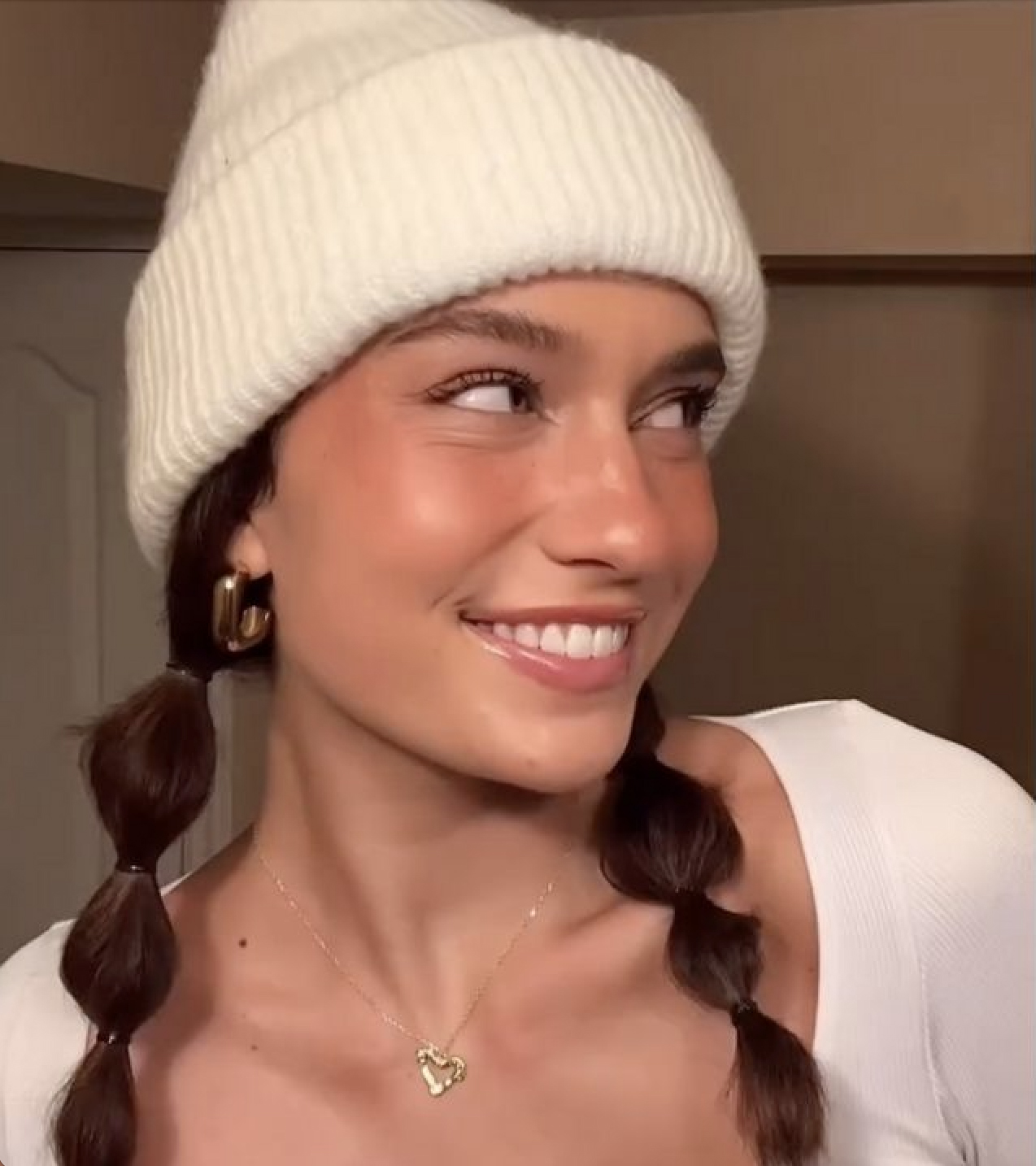
I used to think bubble braids were for kids. Then I tried them on my shoulder length bubble braids with dark brown hair. They take ten minutes, no salon needed. The straight, medium-density texture holds the elastic sections without slipping. The side part keeps the braids balanced under a white beanie. The colour is dark brown, which shows the bubble shape clearly. The hold is secure through a day of errands. I wore them to a coffee shop and got compliments. They’re my quick winter style.
Collarbone Waves With Fluffy Hat
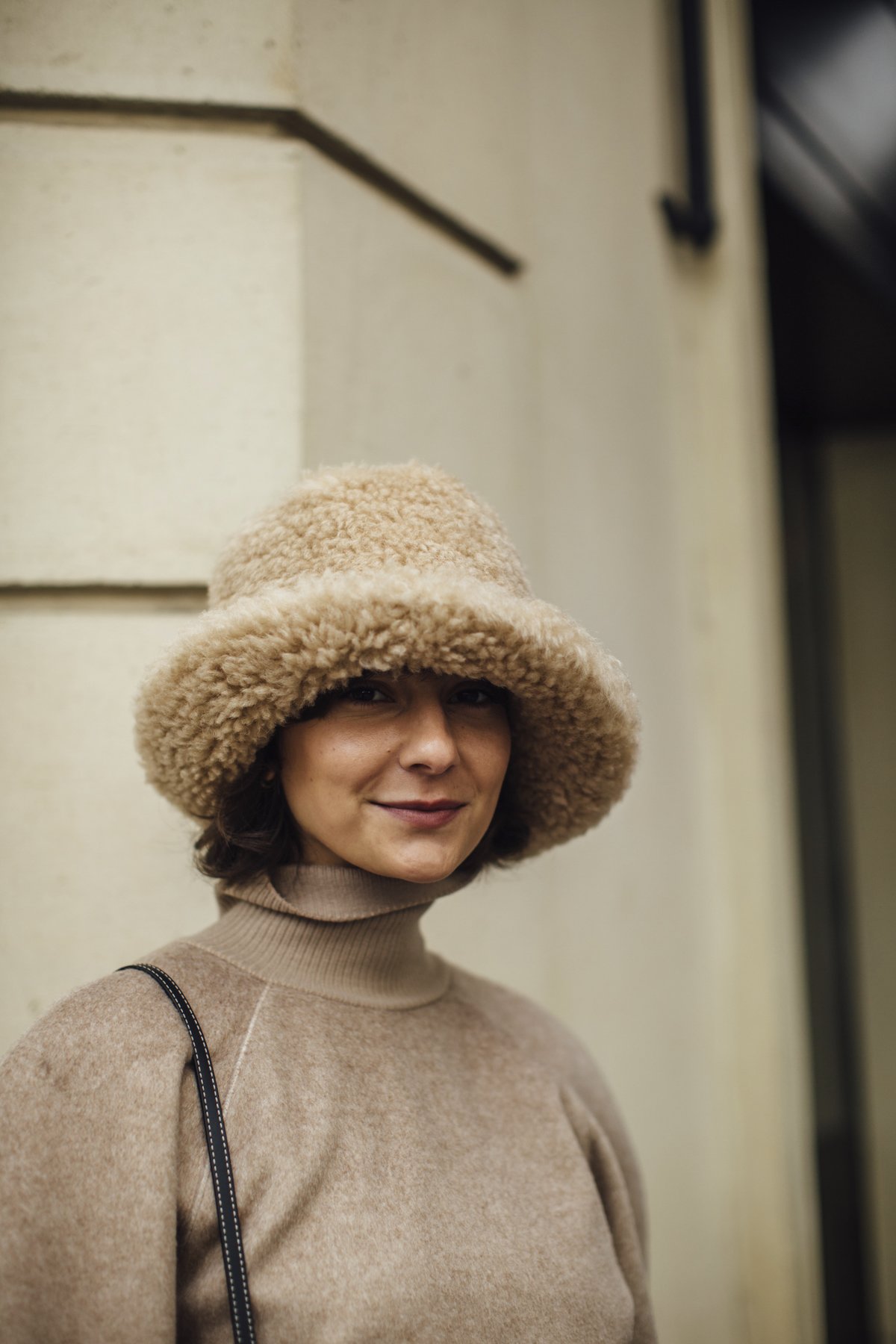
Collarbone length is the sweet spot for air-dried waves under a hat. The medium brown wavy hair falls just at the collarbone, which means it doesn’t get crushed by a fluffy hat. The layers add movement without needing a wand. The middle part keeps the face balanced. This length works best for medium-density, wavy hair because it has enough weight to avoid frizz but not so much that it flattens. The colour is medium brown, neutral and low-maintenance. The waves hold their shape from air-drying alone, no heat needed. The hold is soft but present under the hat. The air-dried texture means no heat damage, and the waves look natural. For fine hair, this length might fall flat. For thick, coily hair, the hat might compress the volume too much.
Blonde Blowout With Sparkly Beanie
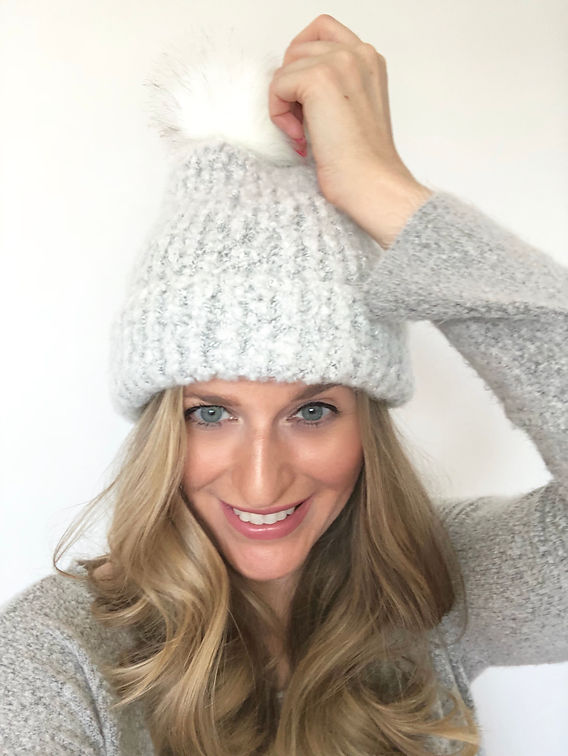
The sparkly beanie caught my eye first. Then I noticed the blonde hair blowout style underneath. This is for festive winter occasions: holiday parties, New Year’s Eve. The blowout creates volume at the roots and soft waves through the mid-back length. The side part adds polish. The colour is blonde, bright and celebratory. The texture is wavy from the blowout. The hold is strong enough to survive the beanie coming on and off. The sparkling hat is the accessory, but the blowout is the foundation.
Air-Dried Wavy Brown Hair
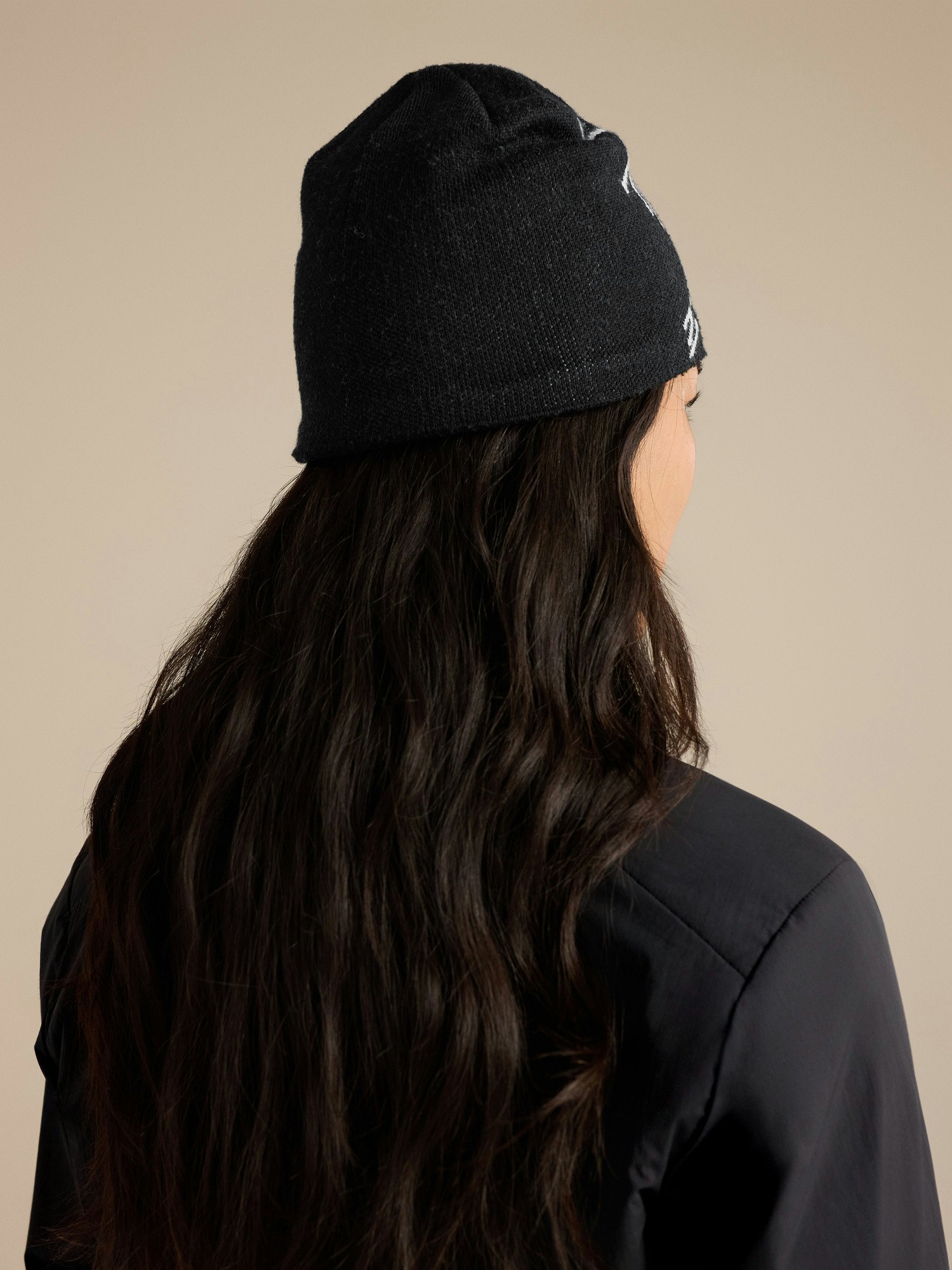
The back view tells the whole story. My air dried dark brown hair falls past my shoulders in subtle layers, and under a black beanie it holds its natural texture all day. No heat, no fuss. The middle part stays put because the hat presses everything flat. I get about three days before the waves look slept on, but that’s fine. A trim every eight weeks keeps the ends from splitting. Colour is just my natural brown, so no root panic. Styling time: zero. The hold is whatever the air decides, and under wool that’s enough.
Short Ash Blonde With Side Bangs
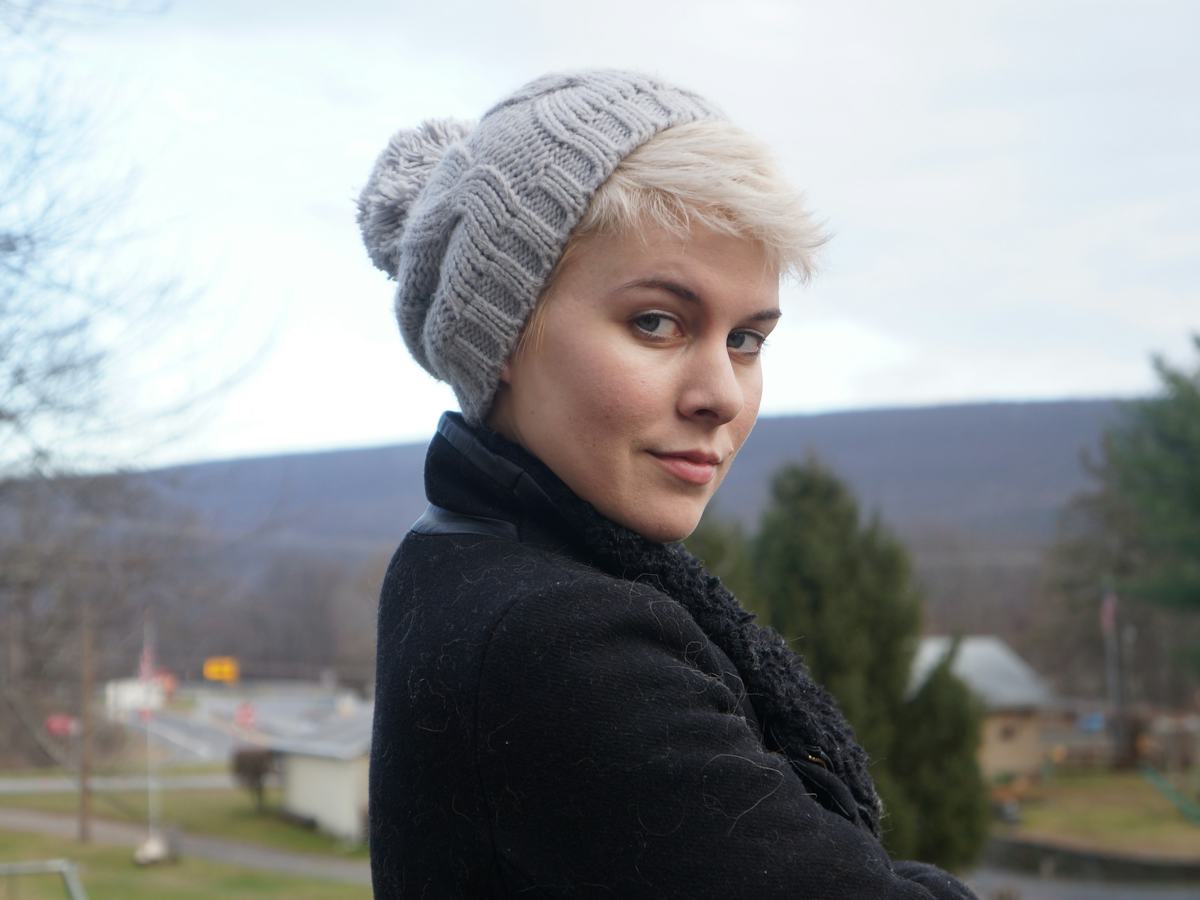
This cut is a commitment. My short ash blonde hair bangs skim my ears, side-swept and air-dried, and the textured cut means I can style it in ten minutes with a dab of wax. But the bangs grow fast. I trim them myself every three weeks because a salon visit every month feels excessive. The ash blonde colour needs a purple shampoo once a week to stay cool. Hold is fine — short hair doesn’t move much. Just don’t expect it to look the same on day four.
Shoulder Curls With Side Bangs
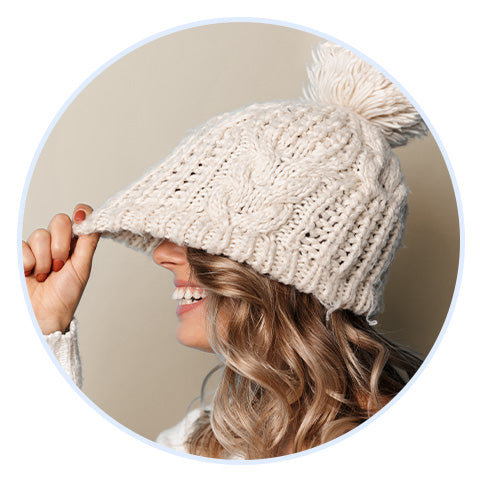
Why spend 25 minutes on a blowout if a hat will flatten it? My shoulder length curls blowout starts with a round brush and a heat protectant, creating loose waves that brush past my collarbone. The side-swept bangs frame the face, and the light brown with blonde highlights catches the light. It looks polished.
Then I pull on a chunky pom-pom hat and half the volume disappears. The curls hold, but they drop from bouncy to soft. If I want the hat to win, I skip the blowout and air-dry. The hat does the work. The blowout is for the five minutes between the car and the door.
High Messy Bun With Crochet Hat
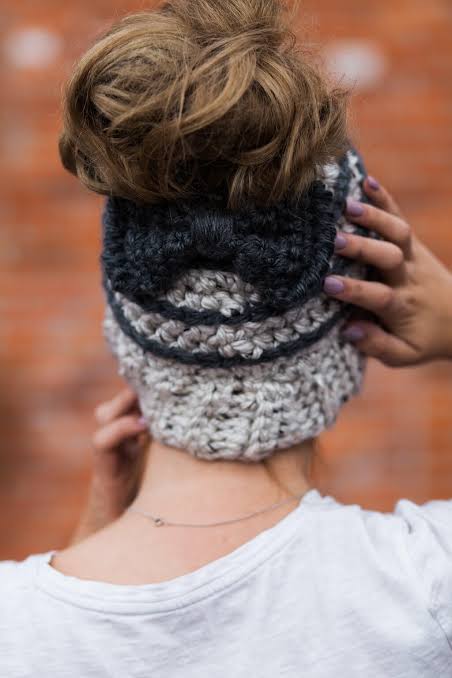
I admit it: I wear this bun three days in a row. My messy bun brown hair is wavy and thick, so I twist it high on my head and pin it loose. The crochet beanie slides over the bun without flattening it. The hold is solid — thick hair grips itself. I don’t even use a hair tie. The brown colour fades slowly, so no root worry. Styling time is under five minutes, and it works best on second-day hair. A trim every ten weeks keeps the ends from fraying.
Visual Idea
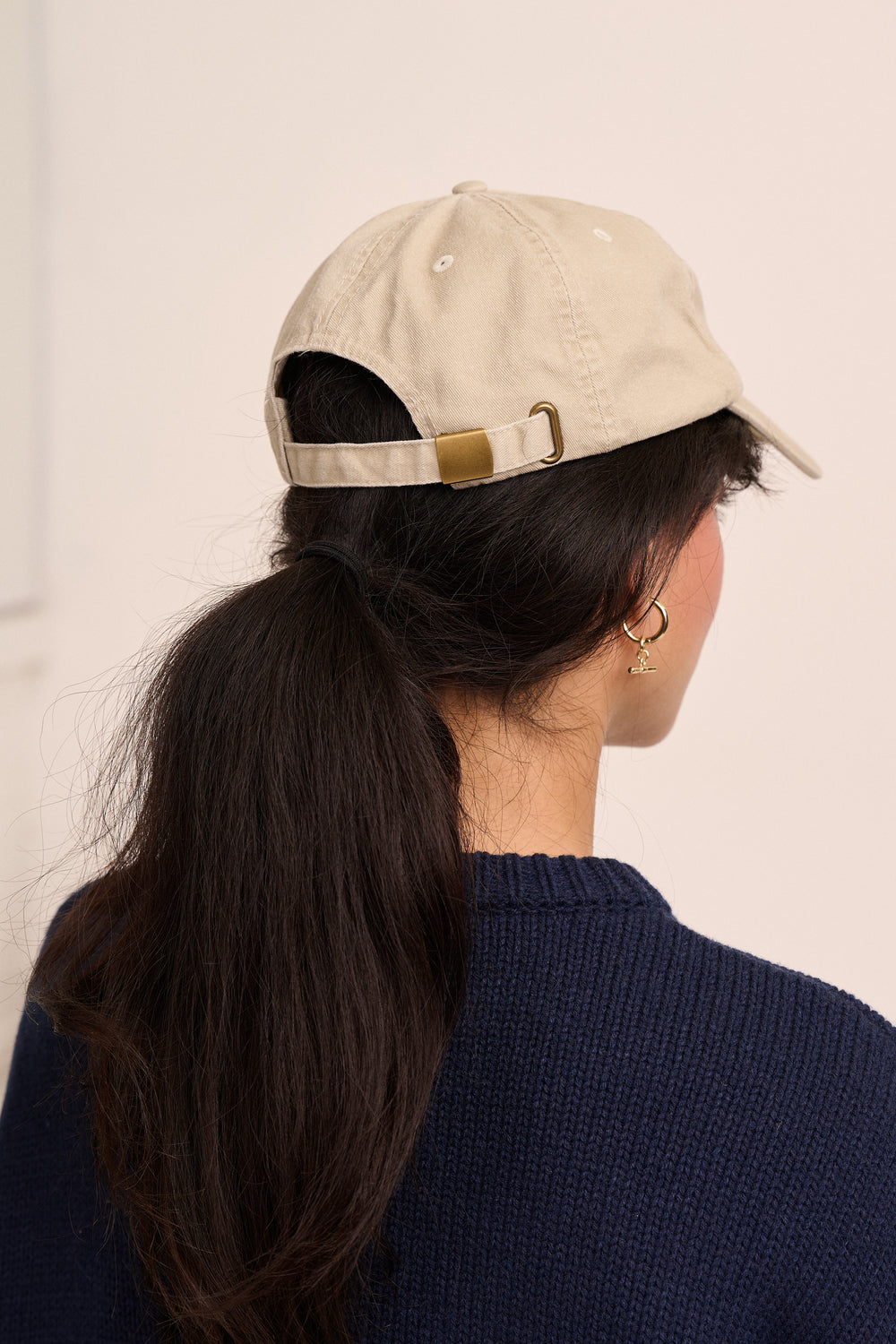
A ponytail under a cap is about placement. I pull my dark brown, straight hair into a low ponytail at the nape, then slide a baseball cap over the top. The tail peeks out the back, long layers brushing mid-back. The hold is secure — one elastic, no pins. Styling takes two minutes. The side part keeps the hair from bunching under the brim. It’s a DIY move that works every time.
Collarbone Visual Idea
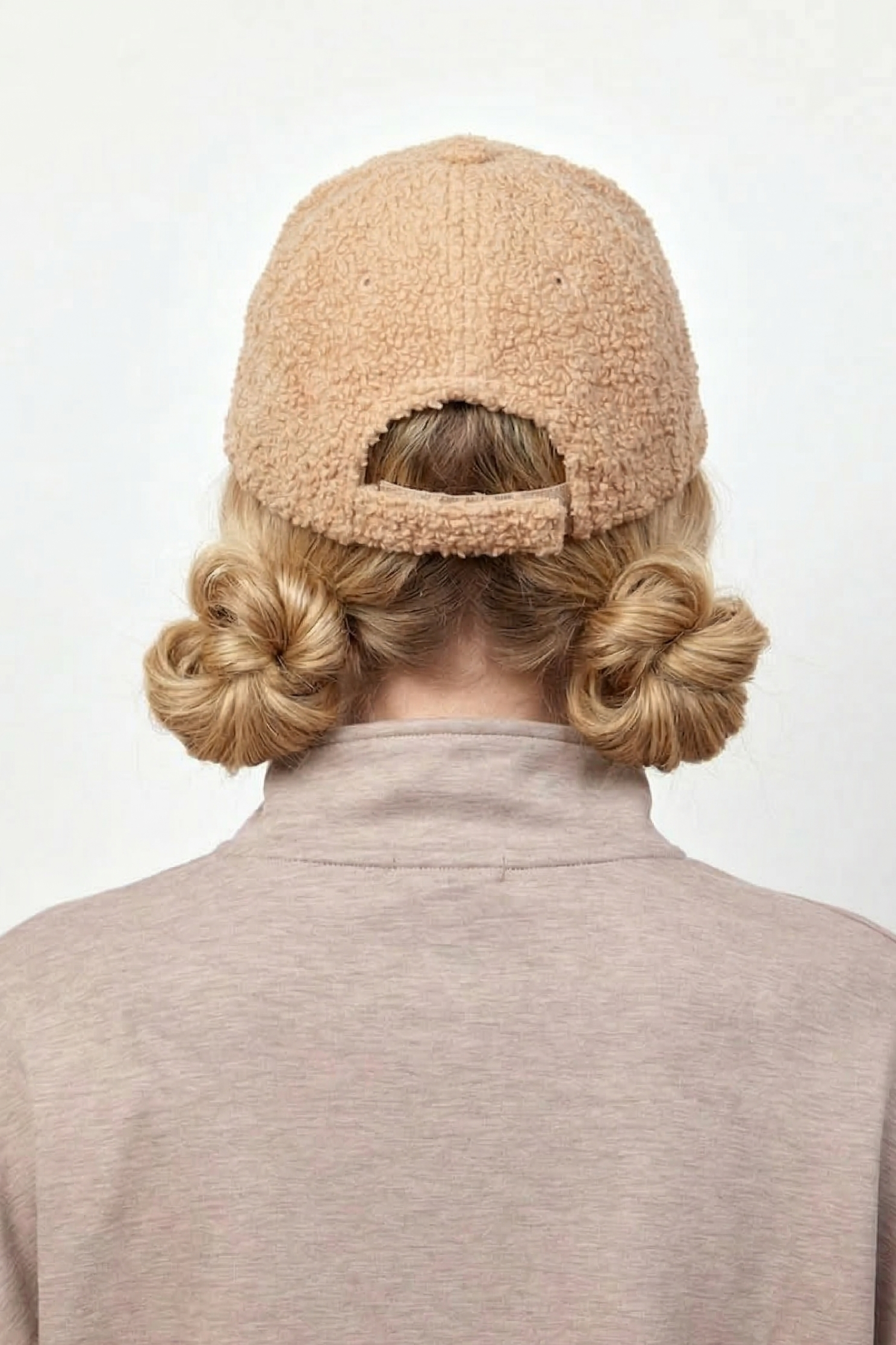
Two braided buns. I was skeptical. That is a lot of work for a winter hat. The back view shows collarbone-length blonde hair, thick and wavy, pulled into two braided buns. The middle part is clean. No bangs. The braiding is intricate. This is not a five-minute style. You need dry hair with enough texture to hold a braid without slipping. Wavy works. Thick helps. The hold is good because the buns are pinned. Under a hat, they flatten slightly but the braid pattern stays. The colour is a solid blonde, nothing complicated, which is smart because the braiding is the whole point. It is a salon-leaning look, not for a bathroom mirror on a Tuesday.
Mid-Back Visual Idea
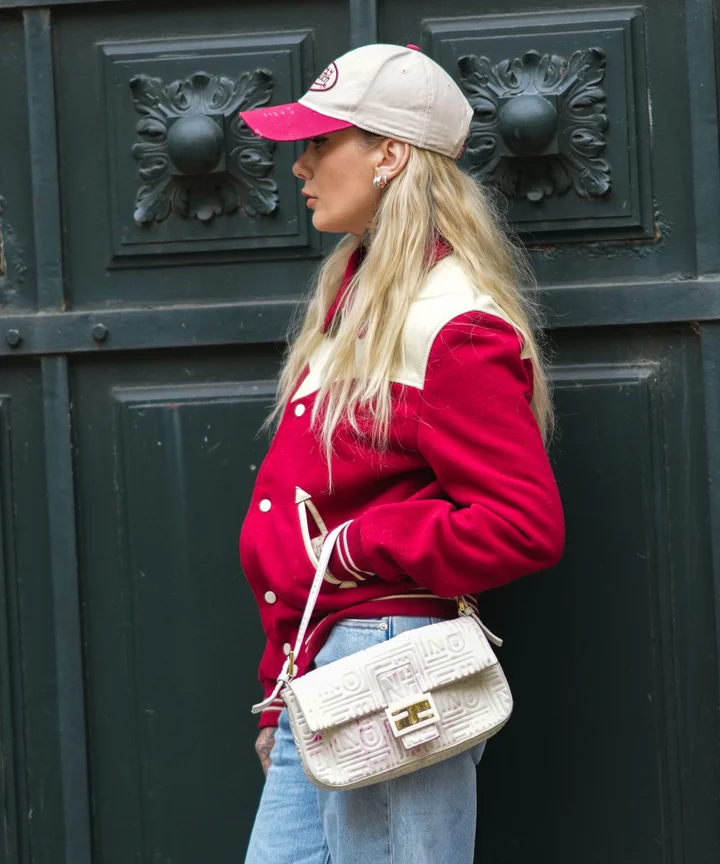
Who actually wears a blowout under a baseball cap? Someone who knows the cap is coming off. The side view shows mid-back ash blonde hair, straight with long layers, styled in a smooth blowout. Side part. No bangs. The baseball cap sits on top, not smashing the volume. This works best for straight hair with some natural body. Fine hair loses the lift. Thick, straight hair holds. The hold is decent if you let the hair cool completely before the hat. It is a salon blowout. If you have the density, this is a solid winter hat move.
Medium Brown Visual Idea
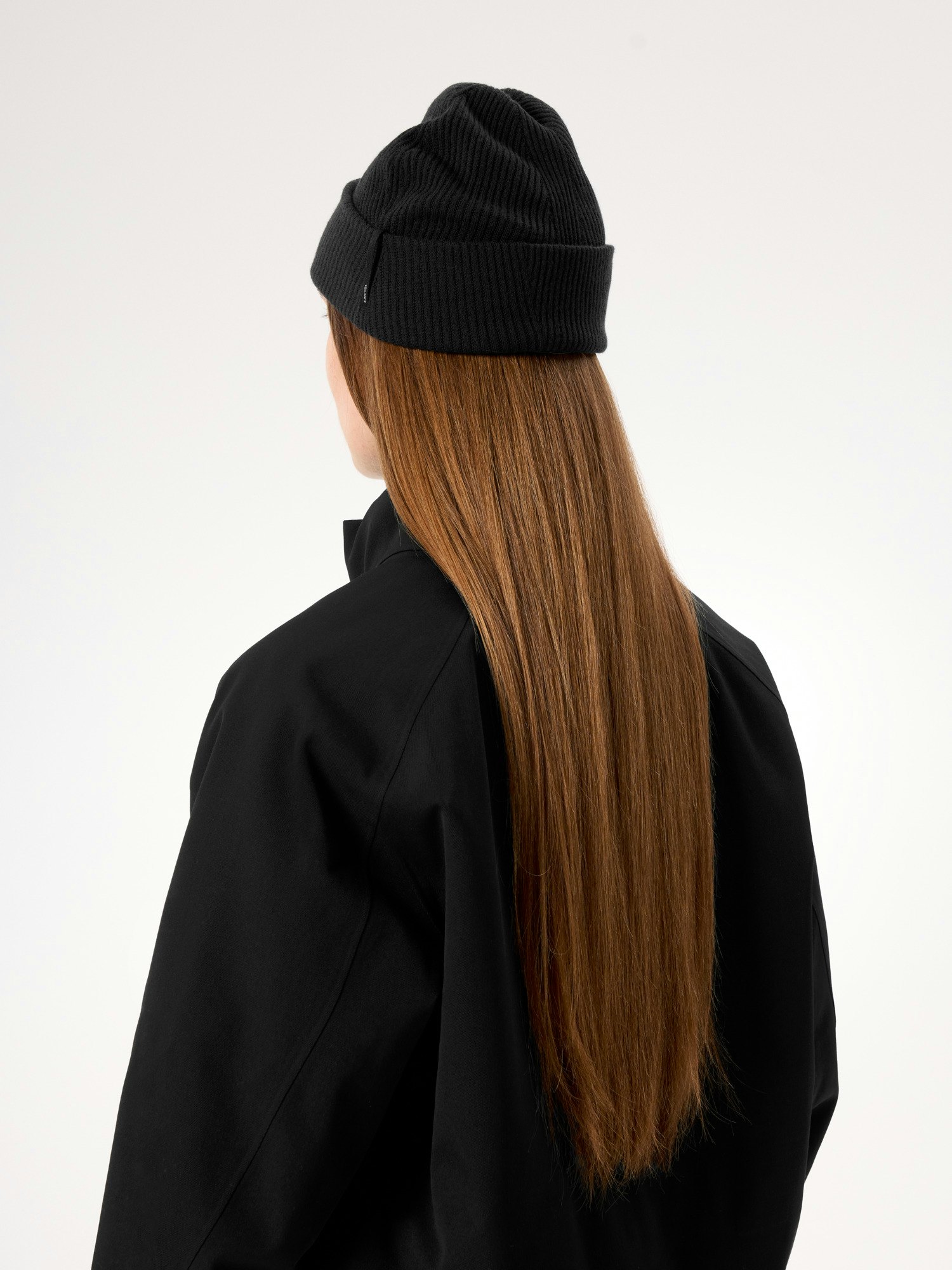
Monday morning, hat on, no time to style. The back view shows mid-back medium brown hair, straight and thick, air-dried with a middle part. No bangs. This is the reality of winter hair: you wash it, you let it dry, you put on a hat. The layers are cut so the weight falls evenly. Thick, straight hair behaves under a hat. It does not kink easily. It does not go flat in the same way fine hair does. The hold is natural because there is no styling to lose. The colour is a single process medium brown, which means no root line to worry about for weeks. The upkeep is a trim every eight weeks to keep the layers from growing into a triangle.
Multicolored Visual Idea
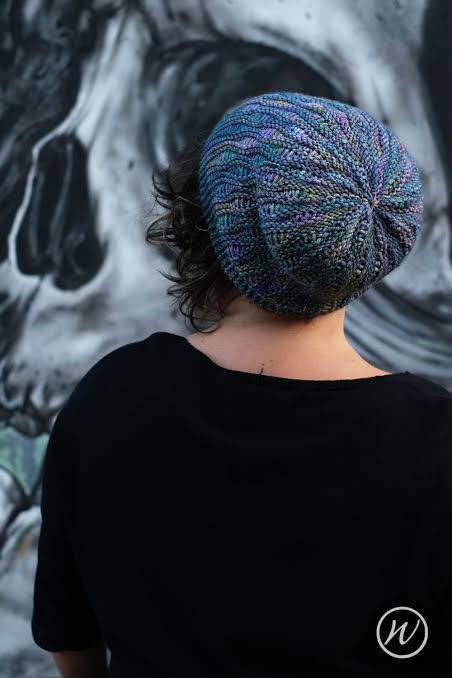
That hat is doing a lot of work. The intricate knit pattern is the star. The hair is mid-back, wavy, long layers, air-dried. Middle part. No bangs. The colour is multicolored, which I am guessing means highlights or a dimensional dye job that catches the light when the hat comes off.
This is a winter holiday look. The hat is festive. The hair is background. Wavy texture helps because it does not fight the hat’s volume. The hold is whatever your natural wave does. The layers prevent the ends from looking too heavy. The colour is the only thing that signals effort. If you have a hat this busy, the hair needs to be simple. Air-dried waves, a middle part, and let the knit pattern do the talking. It is a salon colour underneath, but the styling is zero effort.
Blonde Visual Idea
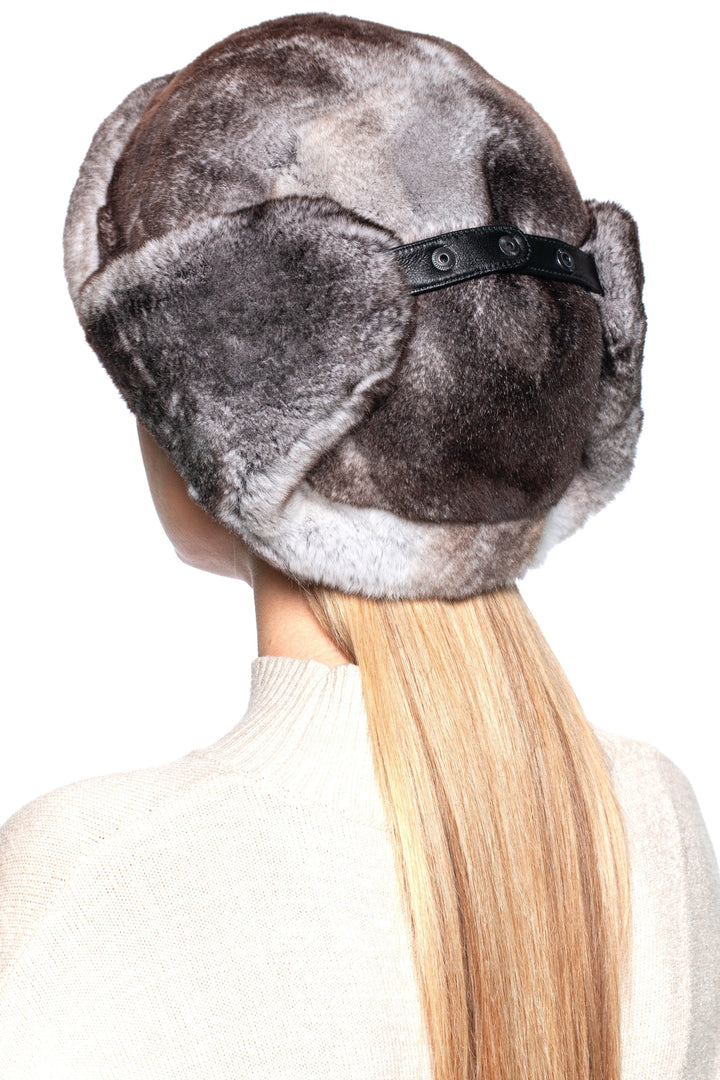
The trapper hat wins. The hair is just there. The back view shows mid-back blonde hair, straight with layers, air-dried. Middle part. No bangs. The mistake is trying to compete. Do not. This is a warmth situation. Straight texture slides under without bulk. The colour is salon blonde, but under a trapper hat, no one sees it. The hold is irrelevant because the hat does not come off. If you want to show the colour, take the hat off inside. Otherwise, let the hat be the look.
Shoulder Visual Idea
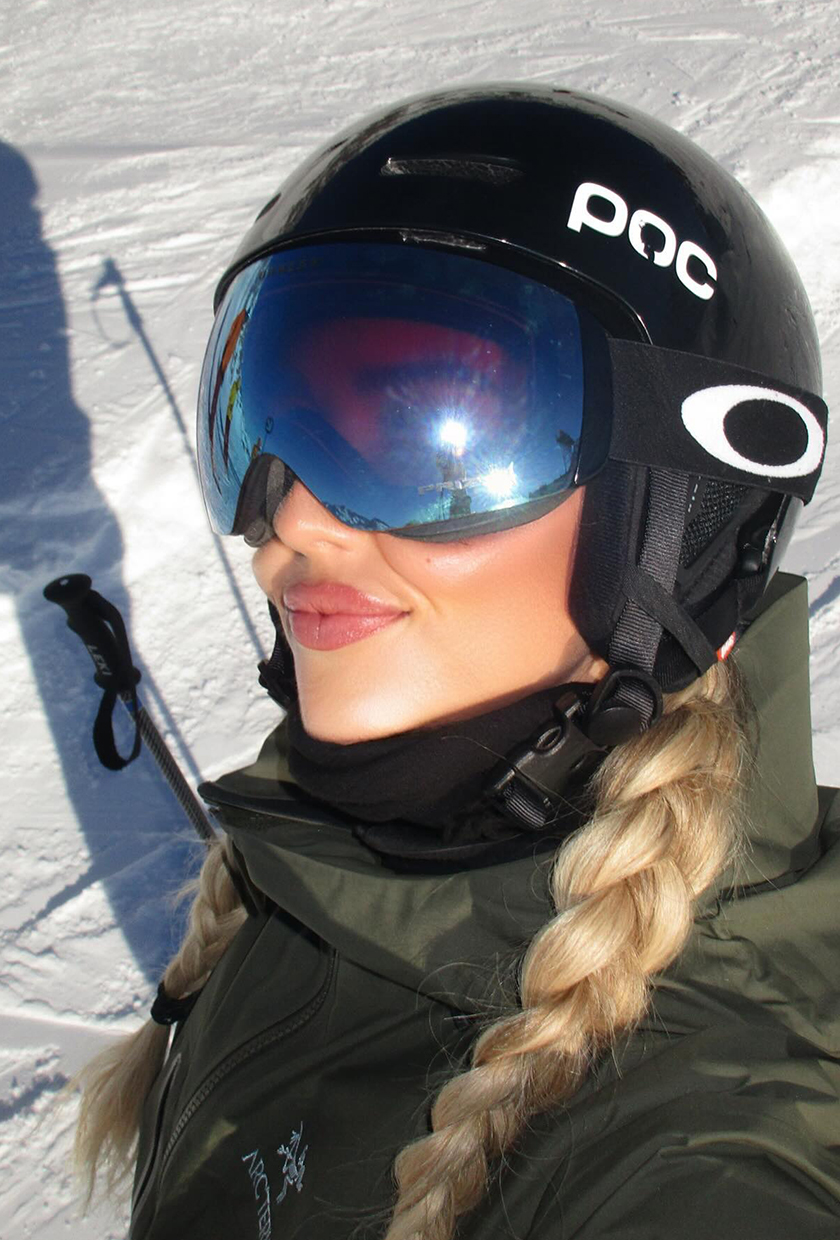
Ever tried to tuck a braid under a helmet only to end up with a lumpy mess? The trick is to start with a middle part on shoulder-length, wavy hair — the layers help the braid lie flat against the head. Divide the hair into two sections and braid each tightly, securing with small elastics. Then coil each braid into a low bun at the nape, pinning flat. The result: no helmet bulge, and the blonde waves peek out just enough to remind everyone you have hair under there. The hold lasts all day, even through a commute.
Dark Brown Visual Idea
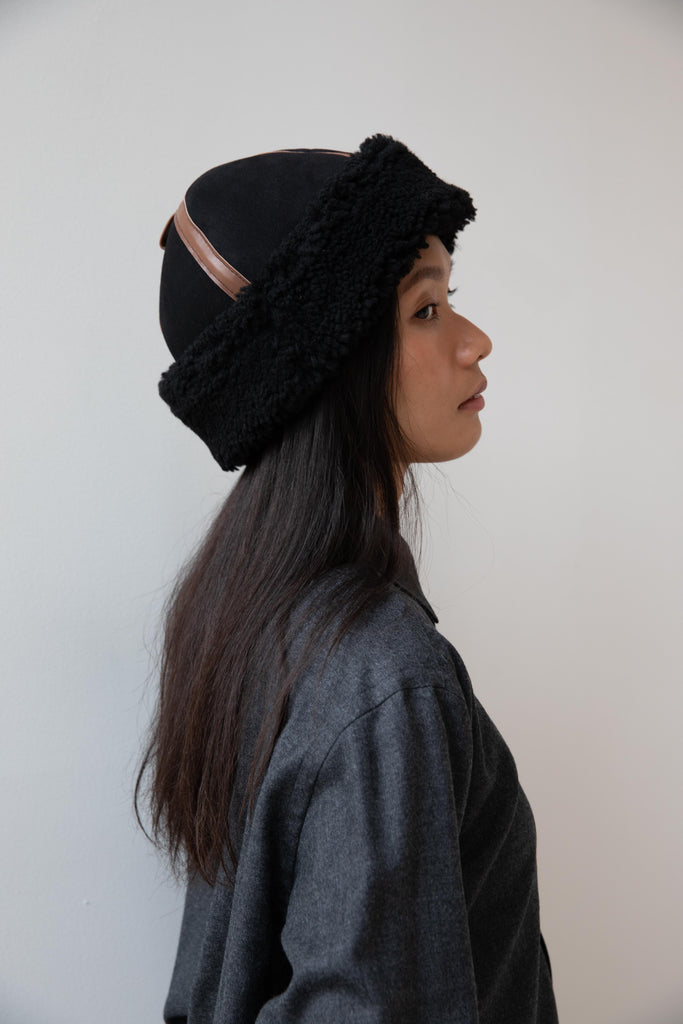
Dark brown hair against a fur-lined hat reads instantly more polished. This look genuinely flatters those with thick, straight hair — the weight of the hair keeps it from puffing up under the hat, and the dark colour creates a rich contrast against the fur. If your hair is fine or prone to static, the hat’s friction might create flyaways that ruin the sleek effect.
Wear is simple: air-dry the mid-back length, then pull on the hat. Upkeep means brushing the fur lining gently after each wear to prevent matting. The dark brown colour holds its depth even after repeated hat wear, no brassiness to worry about. The straight texture stays smooth, and the hat’s hold is secure without crushing the layers.
Layers Visual Idea

Monday morning, you air-dried your collarbone-length blonde waves and pulled on a pink beanie. Easy, right? But by noon, the layers start escaping — those wavy pieces at the nape and temples fly away like they have plans. The hold is decent for the first hour, then you’re tucking strands back under. The colour stays bright under the hat, but static from the beanie adds to the chaos. The DIY reality: quick to put on, constant to maintain.
Ash Blonde With Platinum Highlights Visual Idea
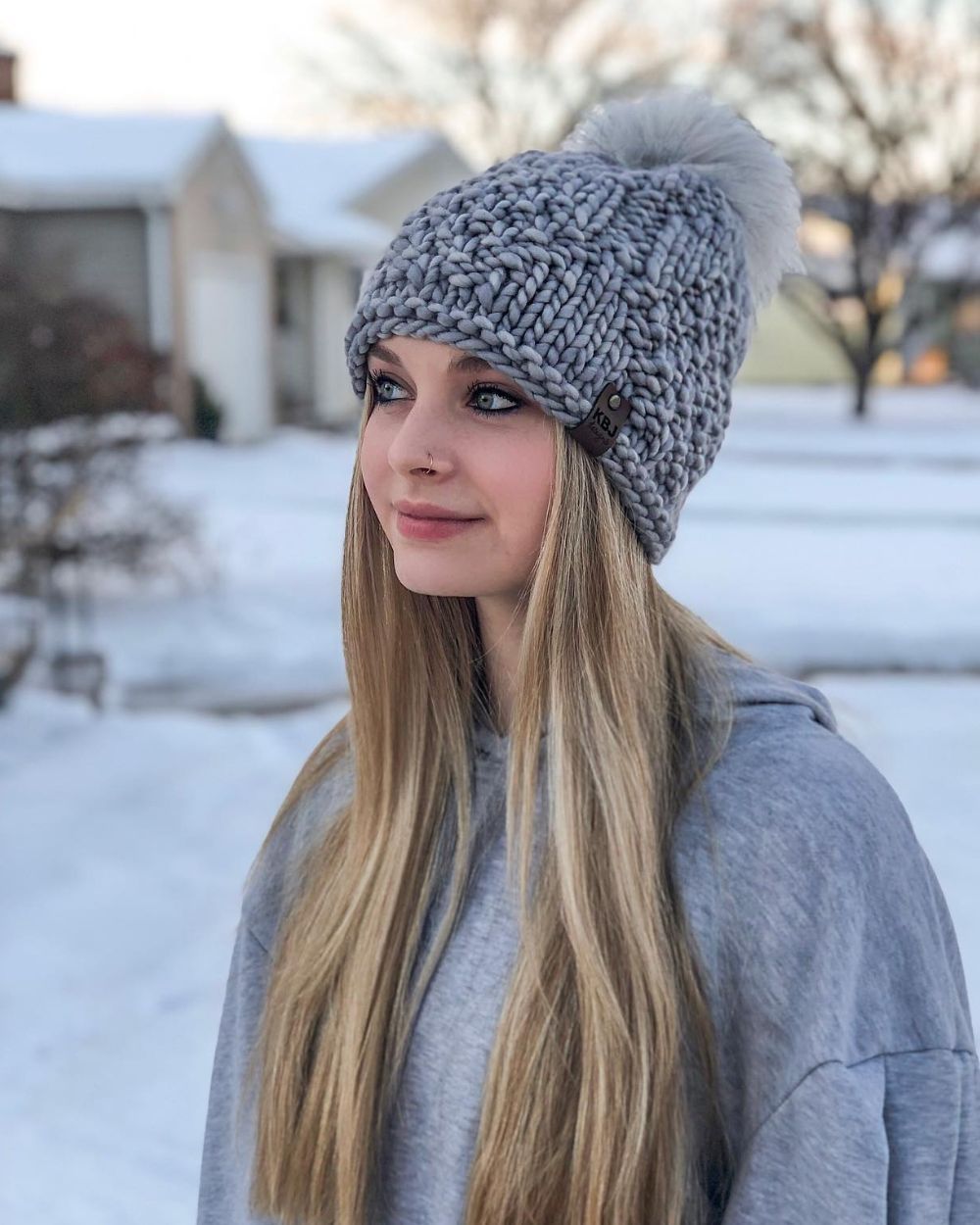
Ash blonde with platinum highlights and a winter hat: not a natural pair, but it works if you treat the hair right. The fine, straight texture means the hat can crush it into a flat mess — but a middle part and a smooth blowout beforehand keep the mid-back length sleek enough to slide under the hat without creasing. Compare that to a thicker, warmer blonde that would puff up under the pressure. The icy tones actually pop against a dark hat, making the colour the star. The hold is fragile — one hat removal and you might need a quick refresh — but for a short outing, it’s worth the risk.
Long Layers Visual Idea
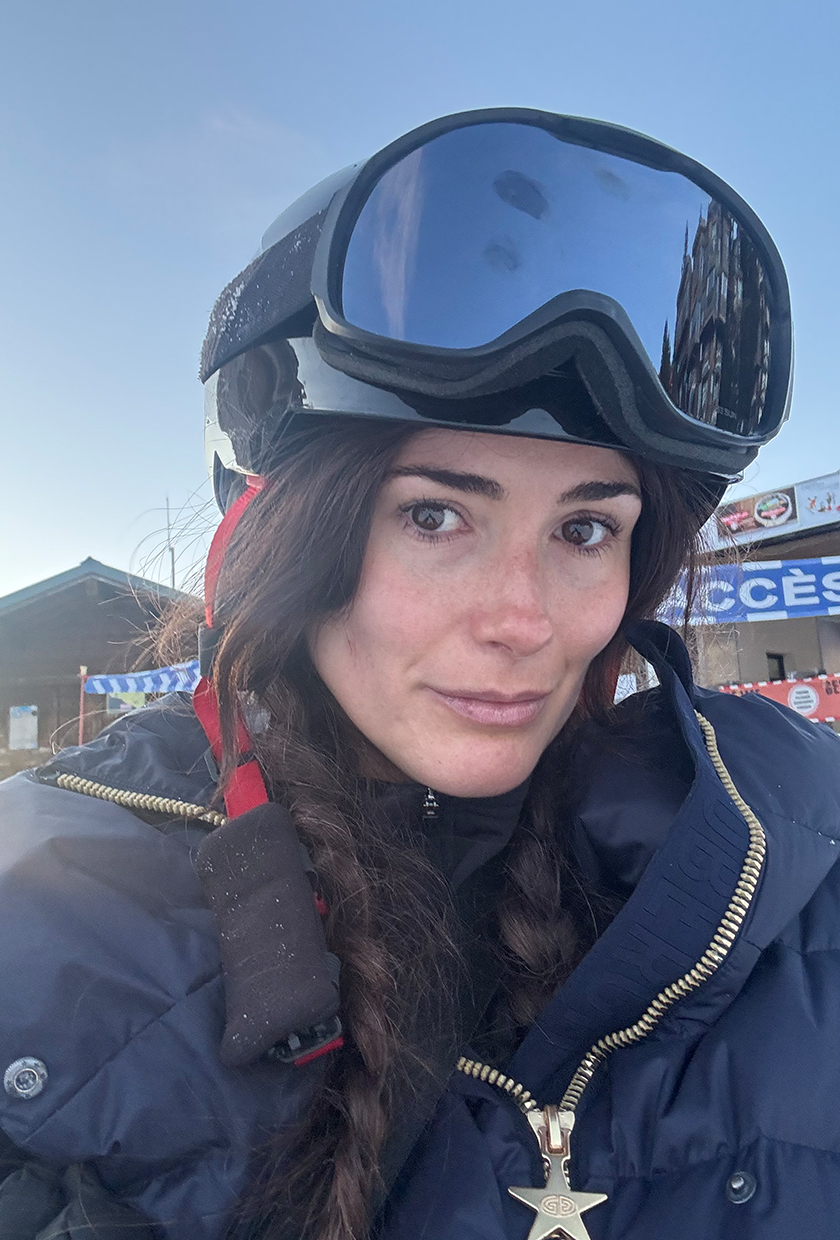
Does a braid peeking from under a hat feel like the most intentional winter detail? It does, because it solves two problems at once: your hair stays out of your face, and the braid adds texture against the hat’s solid shape. The long layers in this dark brown, mid-back length help the braid lie flat without bulk, while the wavy texture gives the braid a soft, lived-in look.
For winter outings — think ice skating or a holiday market — this style keeps you warm without sacrificing polish. The braid’s hold is strong enough to survive hat removal, and the dark brown colour contrasts nicely with a neutral hat. The braid peeking out becomes the focal point, turning a practical choice into a deliberate one.
Side Swept Visual Idea
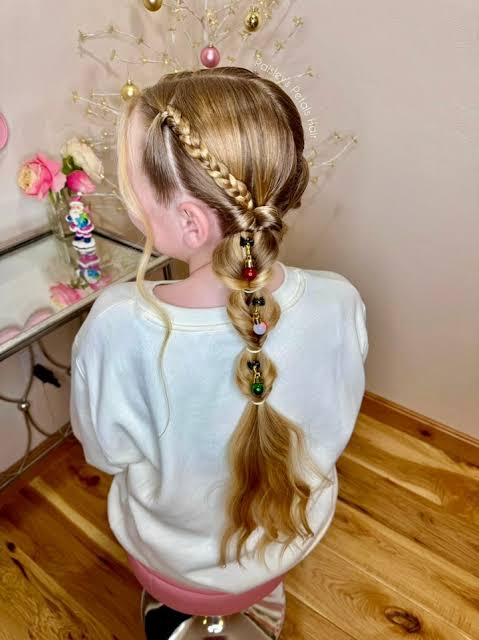
Side swept bangs. Bad reputation for being dated. Everyone says side parts are over. They solve a real hat problem: the fringe that separates into two limp triangles. A deep side sweep stays put against the forehead. The blonde against the dark beanie gives it contrast. This side swept visual idea works best on fine, straight hair that can tuck cleanly. The braid in the back keeps the length from bunching at the collar. It’s not a trend. It’s a strategy. The hold is in the geometry.
Visual Idea — Close-Up Take
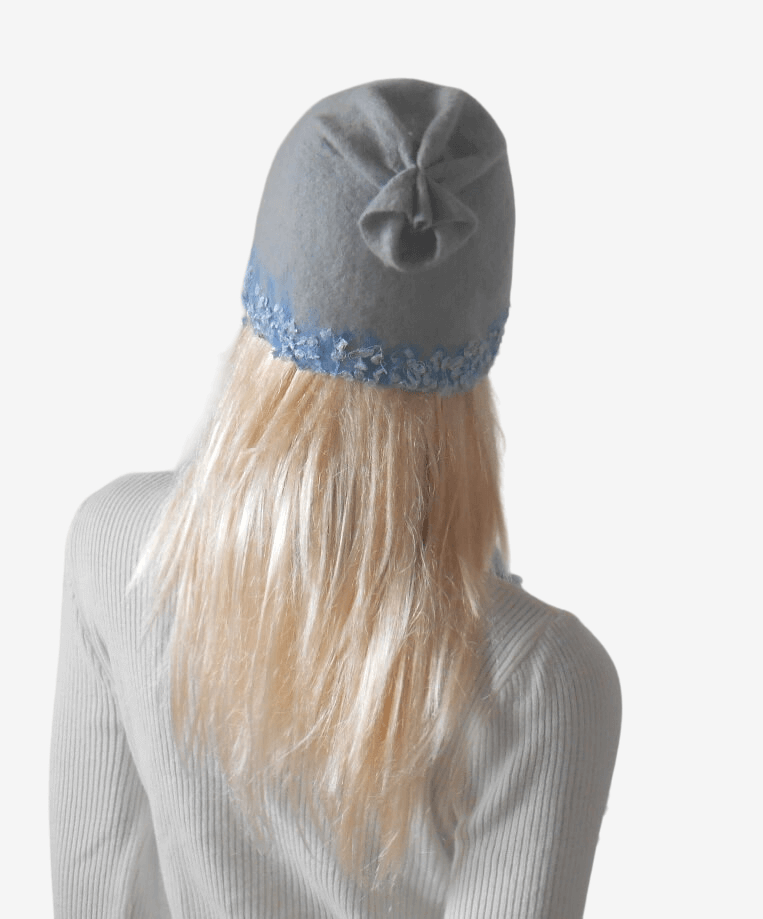
A light blue beanie, a middle part, and collarbone layers. Wasn’t planning to recommend a middle part with a hat, then I tried it. This visual idea, the close-up take, works because the long layers ending at the collarbone hit right at the hat’s edge, so the hair fans out instead of bunching up. Actually, it fans out perfectly. The ash blonde reads cool next to the blue felt. The straight, air-dried texture means zero re-styling after you pull the beanie off. It flatters a round face because the vertical lines of the middle part and the straight fall lengthen the shape. Fine hair holds this shape well since there’s no heavy weight pulling the layers flat. The hold is in the cut, not the curl.
Visual Idea — Styled In Loose Waves
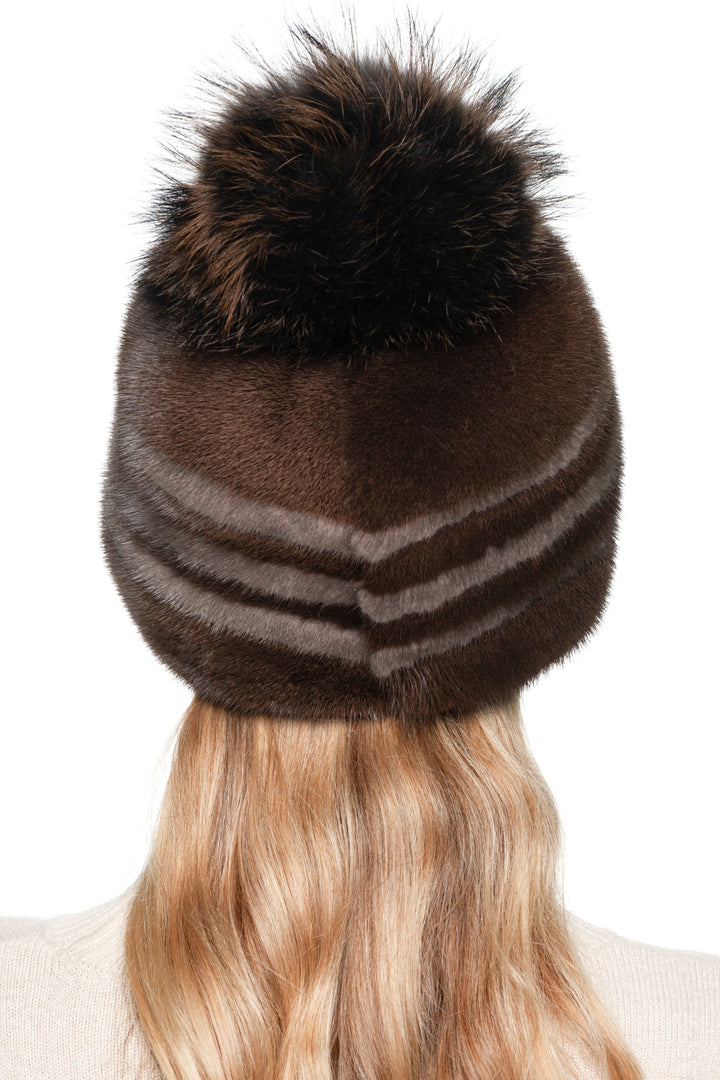
Ever put on a statement hat and immediately regretted your hair choice? A luxurious brown mink fur hat with a large fox fur pom-pom is not a casual beanie. It demands the hair underneath hold its shape, and this visual idea, styled in loose waves, does exactly that. The mid-back length blonde hair is parted in the middle and styled in loose waves. They said the waves would drop by lunch under that weight. They held till midnight.
The trick was the styling: the waves were set fully dry before the hat went on, so the hat sat on top of the shape, not fighting it. The blonde against the dark fur gives the contrast that makes the whole thing work. The hold is in the prep, not the product. A hat this big doesn’t flatten the hair, it frames it. The real win is taking the hat off and having the waves still there.
Long Visual Idea
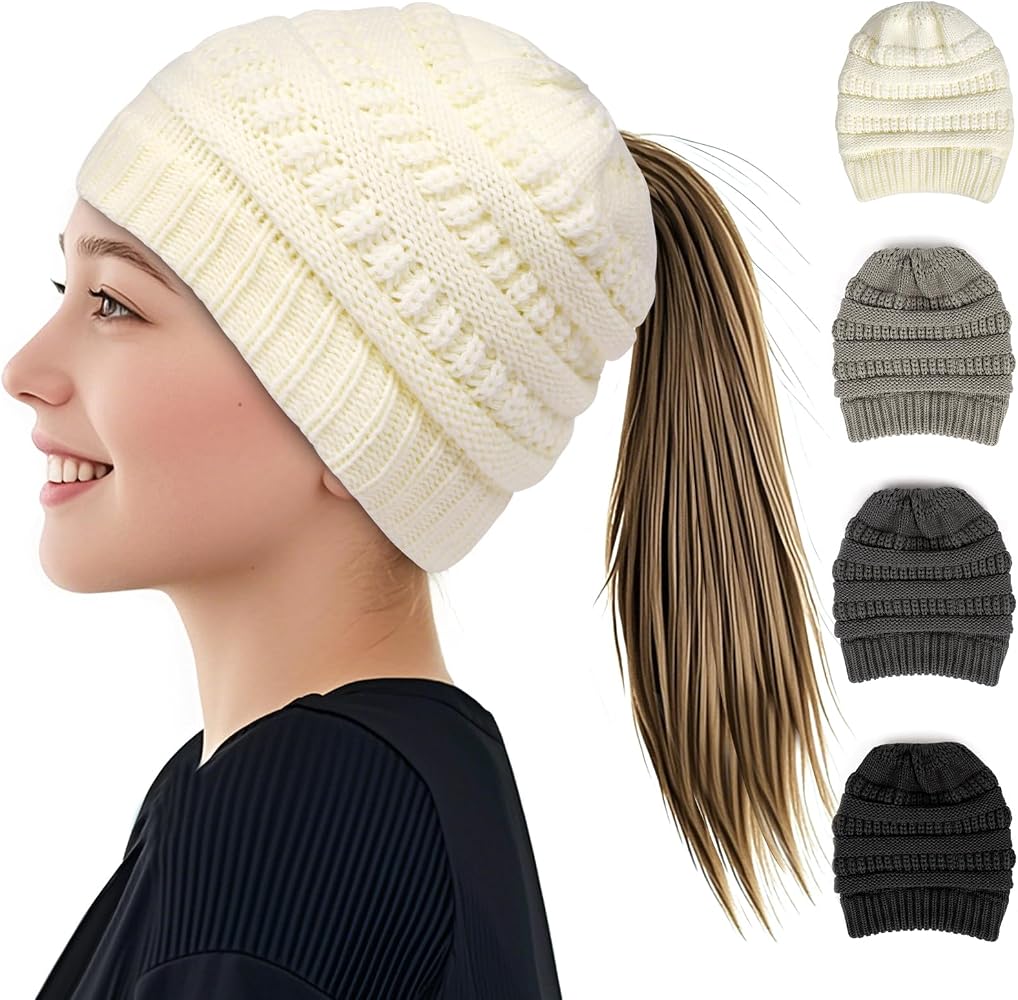
I’ll be honest, I bought a ponytail beanie hoping it would solve all my winter hair problems. It does, but only if the base is right. This long visual idea works because the ponytail is positioned high enough to clear the hat’s opening, and the blonde is uniform enough that the exposed ponytail looks intentional. The salon part is the blunt cut that gives the ponytail weight. The DIY part is the pull-through. It’s a ponytail beanie, not a magic trick. The hold is in the placement. A middle part and straight texture keep it clean. It’s the closest thing to a low-fuss winter style that still looks put together.
Visual Idea — Everyday Version
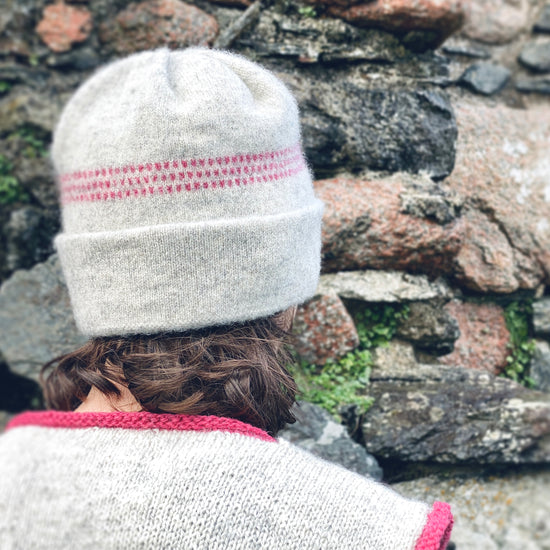
There is something quietly superior about a middle part that air-dries into loose waves and then sits calmly under a light grey knit beanie with a pink striped band. The collarbone length keeps the weight low, so those subtle layers hold their curve instead of flattening into a helmet. Dark brown needs no fuss to read as polished, which is more than I can say for an intricate braid that takes twenty minutes and still migrates sideways. This is the everyday version, and it wins.
Blonde Highlights Visual Idea

The blonde highlights visual idea works because the waves do the heavy lifting, not the colour. Layers are cut at different lengths, so each wave gets its own anchor instead of one heavy block of hair. You wrap sections around a medium barrel, let them cool completely, then break them up with your fingers until the texture reads as wave, not curl. That cooling step is the whole trick; any heat left in the strand and the wave collapses the minute the beanie goes on. Thick, wavy texture holds the pattern for hours, and the collarbone length keeps the ends from tangling into the collar. The middle part keeps the front calm, and the highlights catch the light so the texture stays visible even under the hat.
No Bangs Visual Idea
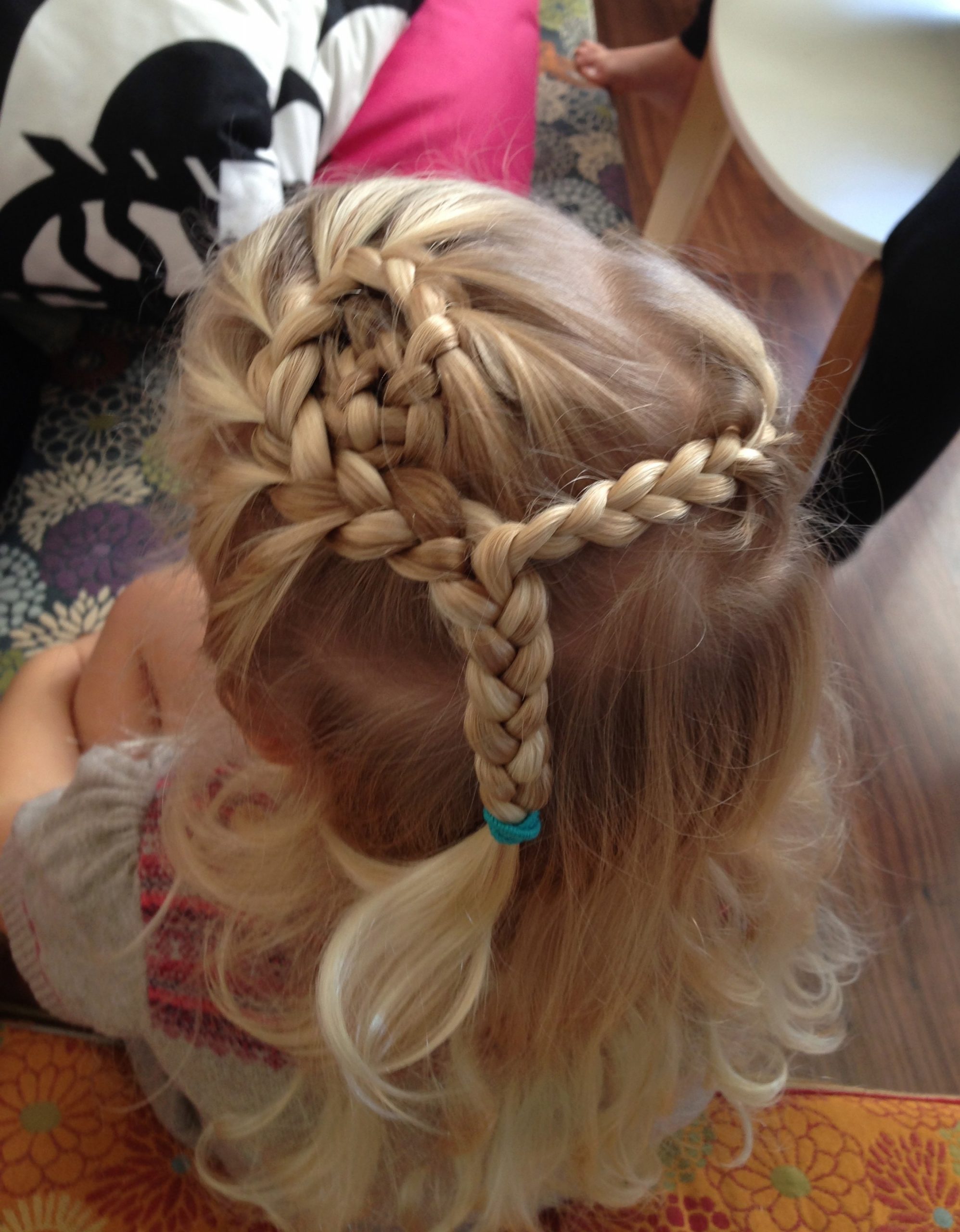
Did anyone else spend their twenties convinced that bangs were the only answer to a hat, only to learn the braid does the job cleaner? For those with no bangs, a thick braid is the neatest trick in Winter Hat Hairstyles. The middle part keeps the front symmetrical, so there is nothing to tuck or pin, and the braid pulls everything back into one clean line that sits flat under the beanie instead of bulging. Mid-back length gives the braid enough weight to hang properly, and wavy, thick texture makes it look substantial rather than stringy.
The flattering part is the vertical line; it lengthens a round face the way a fringe never could. A long oval face, honestly, should pass, because the braid adds length to a face that already has plenty. If your hair is fine or thin, skip it too, since the braid will read as a mouse tail no matter how carefully it is woven. Blonde layers catch the shade, so the braid has dimension even from behind.
Front View Visual Idea
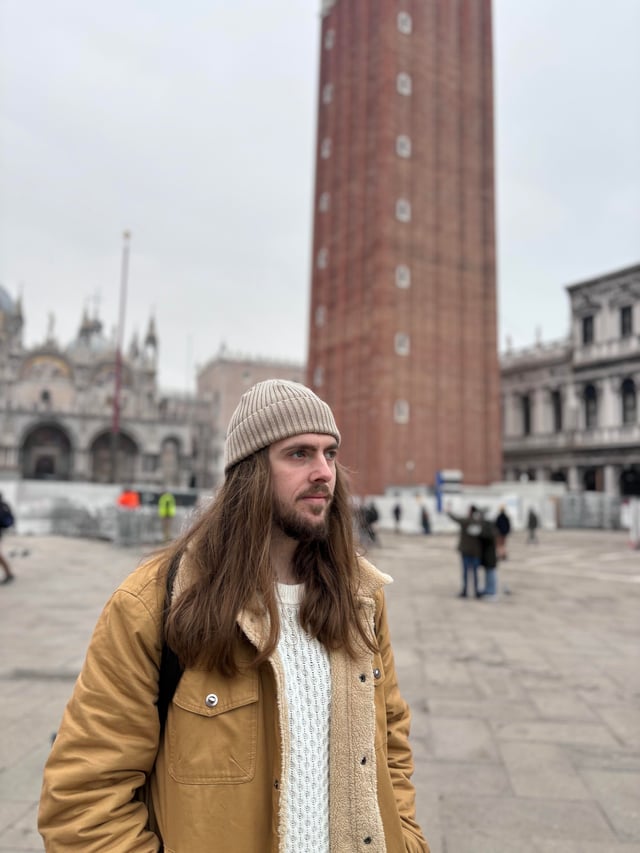
The hat comes off and the hair underneath is the real test, and with a fluffy faux fur hat the stakes are higher. That plush interior grips every strand, so by the time you cross the room the front view shows a flattened crown and ends that have gone fuzzy. The honest cost here is time, not money; you pay for it after. Mid-back, air-dried hair with wavy, thick texture survives because the body holds its shape even when the top loses volume, but plan on ten minutes of re-wetting the ends and scrunching them back into wave. The upkeep is the same every single wear: damp ends, a quick scrunch, let it dry while you find your keys. Dark brown shows the hat fuzz less than blonde would, which is the small win.
Back View Visual Idea
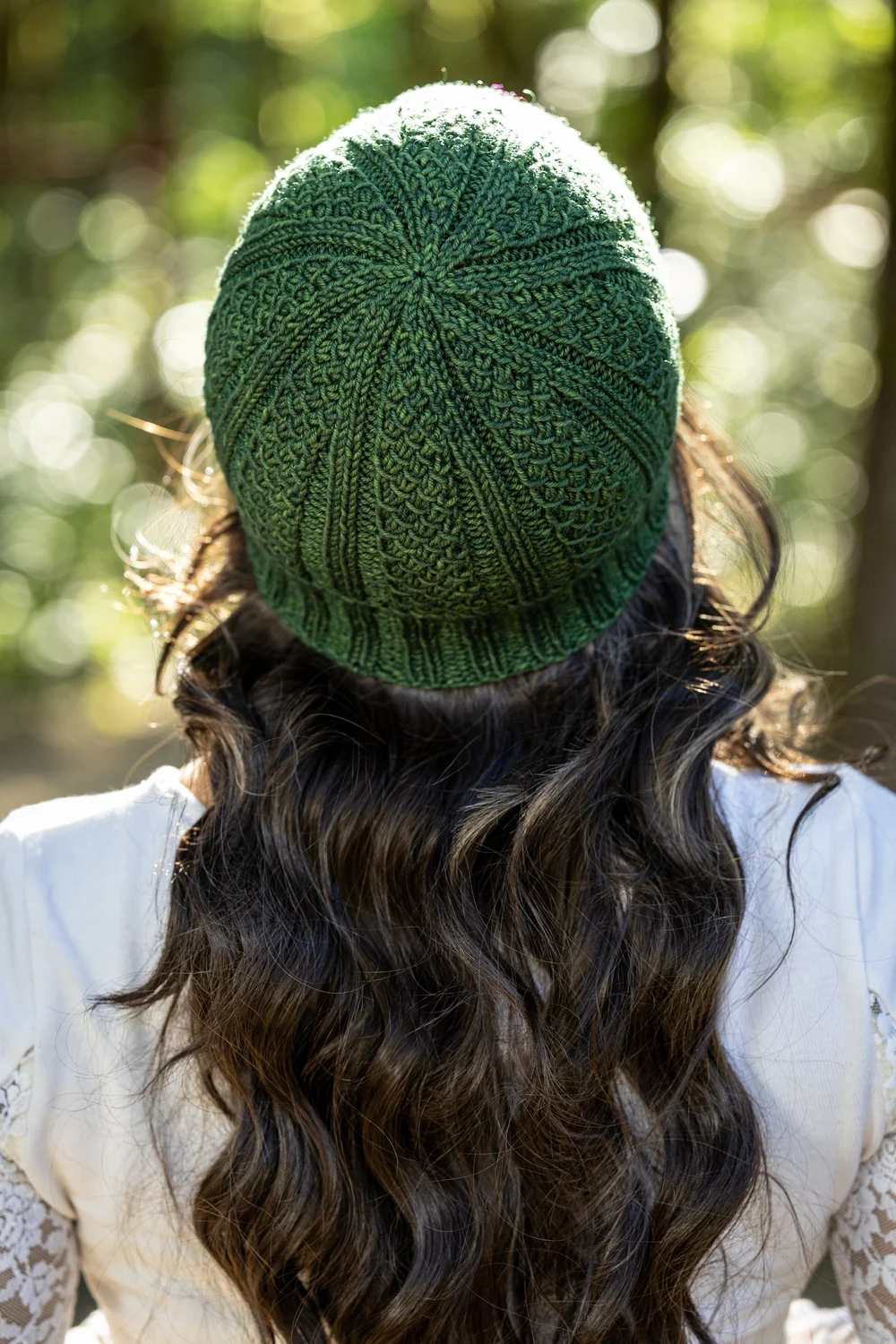
Relief is my honest first reaction, because this is a style that does not fight back. Loose waves, air-dried or set with a low barrel, fall into a middle part and simply stay put under that heavily knit beanie. The DIY case is strong; long layers and thick, wavy texture mean the waves hold their shape from a quick twist-and-pin, no salon session required. Dark brown with subtle highlights adds depth, so the back view looks composed despite the ten minutes. The hat’s intricate knit pattern carries the look, and the hair politely agrees.
Final Thoughts
I started this list convinced that hats and hair are natural enemies. After 39 ideas, I’m not so sure. The ones I least expected to work, like the bubble braid and the air-dried curls, held best. I’m booking the short curly cut with side part next. It’s the one that made me stop worrying about hat hair entirely.