40 Winter Hairstyles for Long Hair 2027 to Keep You Cozy
I keep seeing the same thing in the chair next to mine: dark brown waves with a fringe that lands just past the eyebrow. Not a full bang, not a side sweep, something that says winter without trying too hard. It is the season for structured silhouettes and soft pastels, and long hair finally gets to do both.
These 40 Winter Hairstyles for Long Hair run from a five-minute braid to a full salon afternoon. They work for fine strands that go flat by 4 pm, for thick hair that needs a shape, and for anyone who wants a root line that holds past week five. I wrote them for the grow-out reality, not the Instagram highlight reel.
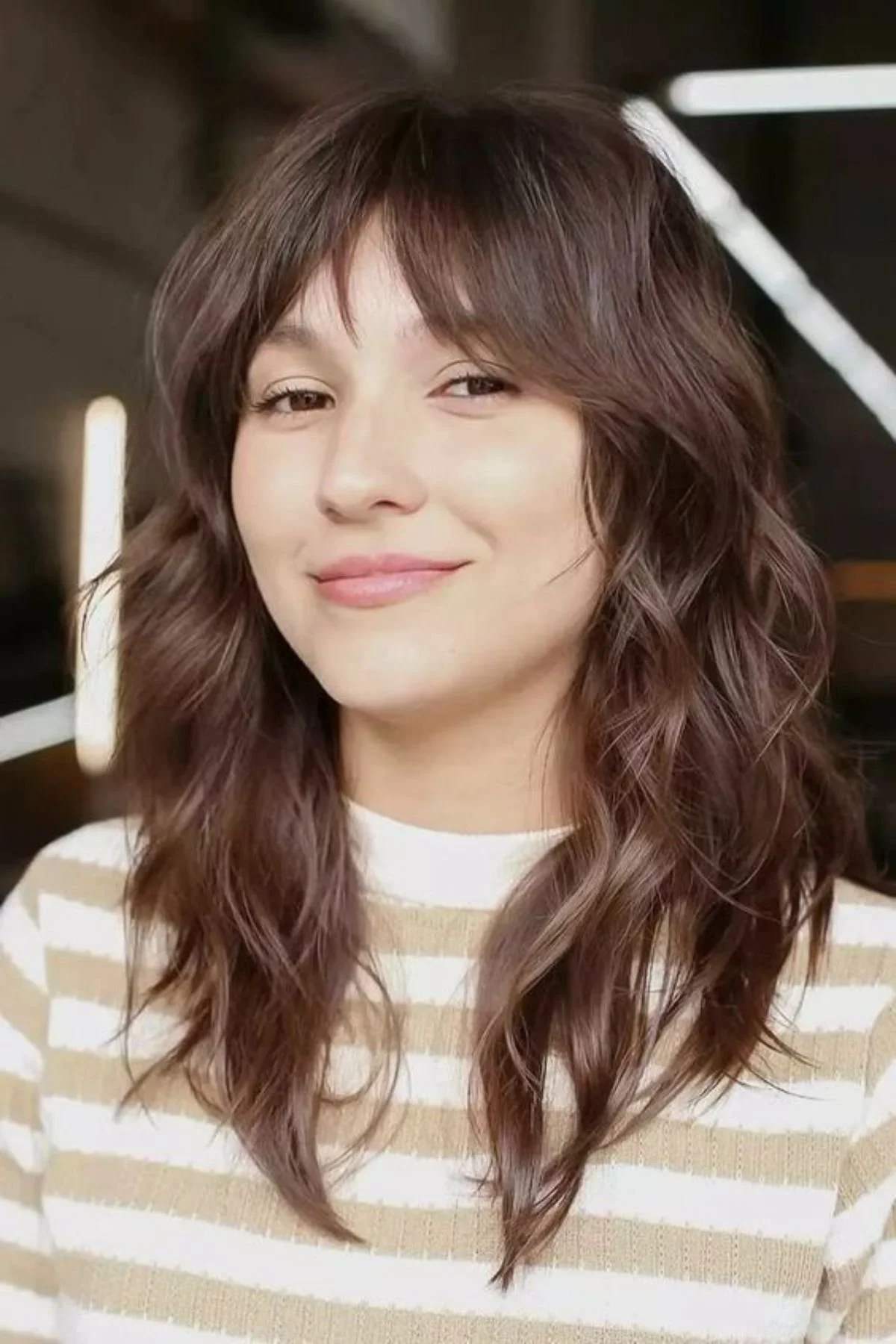
Dark Brown Waves With Curtain Fringe
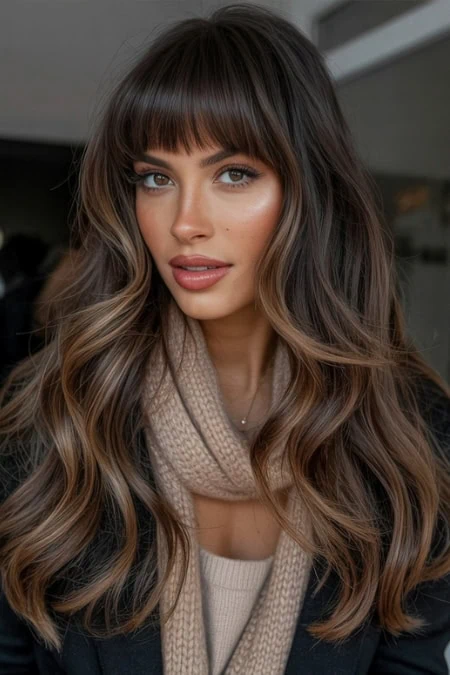
This is the winter hair equivalent of a cashmere sweater: soft, warm, and it makes you look like you have your life together. The long dark wavy hair with bangs here works because the curtain bangs are cut to sweep outward, not straight across, so they frame the face without committing you to full fringe maintenance. Long layers start around the cheekbone and cascade down, which gives thick wavy hair movement instead of a heavy triangle shape. The middle part keeps the bangs symmetrical, and the subtle highlights catch the light so the brown doesn’t read flat. Ask your stylist for curtain bangs that graze the cheekbone and long layers that blend into the length. That’s the whole recipe.
Ash Blonde Soft Snow Waves
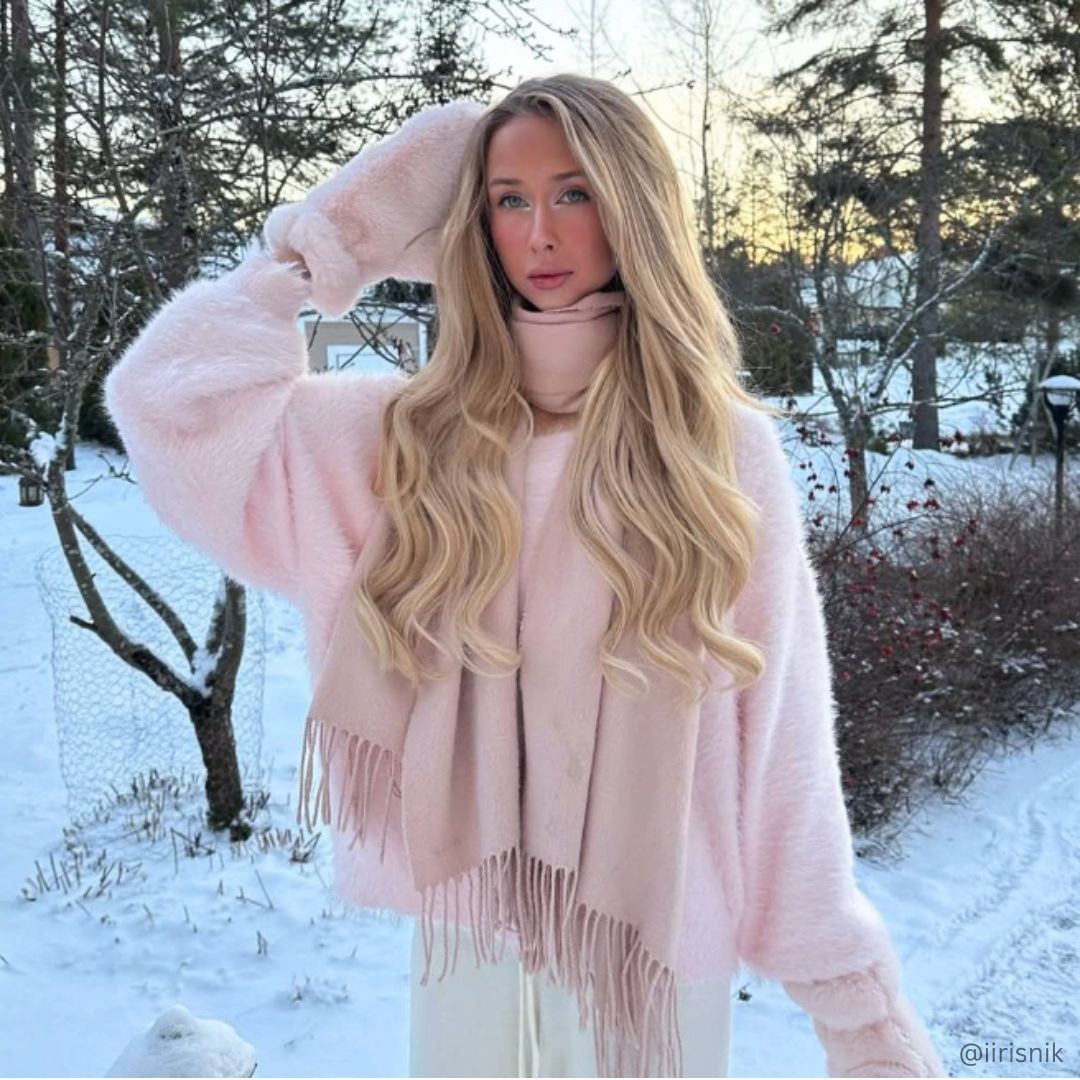
Does your fine hair go flat by 4 pm even on a good day? This ash blonde long wavy hair is the fix, if you can handle the upkeep. The layers are cut to add volume at the crown, and the lack of bangs keeps the face open, which suits rounder face shapes especially well. The ash tone reads cool next to warm skin, so if you’re warm-toned, ask for a beige ash instead of a true gray. On fine wavy hair, loose waves hold better when you use a lightweight texturizing spray before you curl, and they’ll survive winter wind better than you’d think. The color fades fast, though. Expect to tone it every four to six weeks or it drifts yellow.
Platinum Dutch Braids Into Pigtails
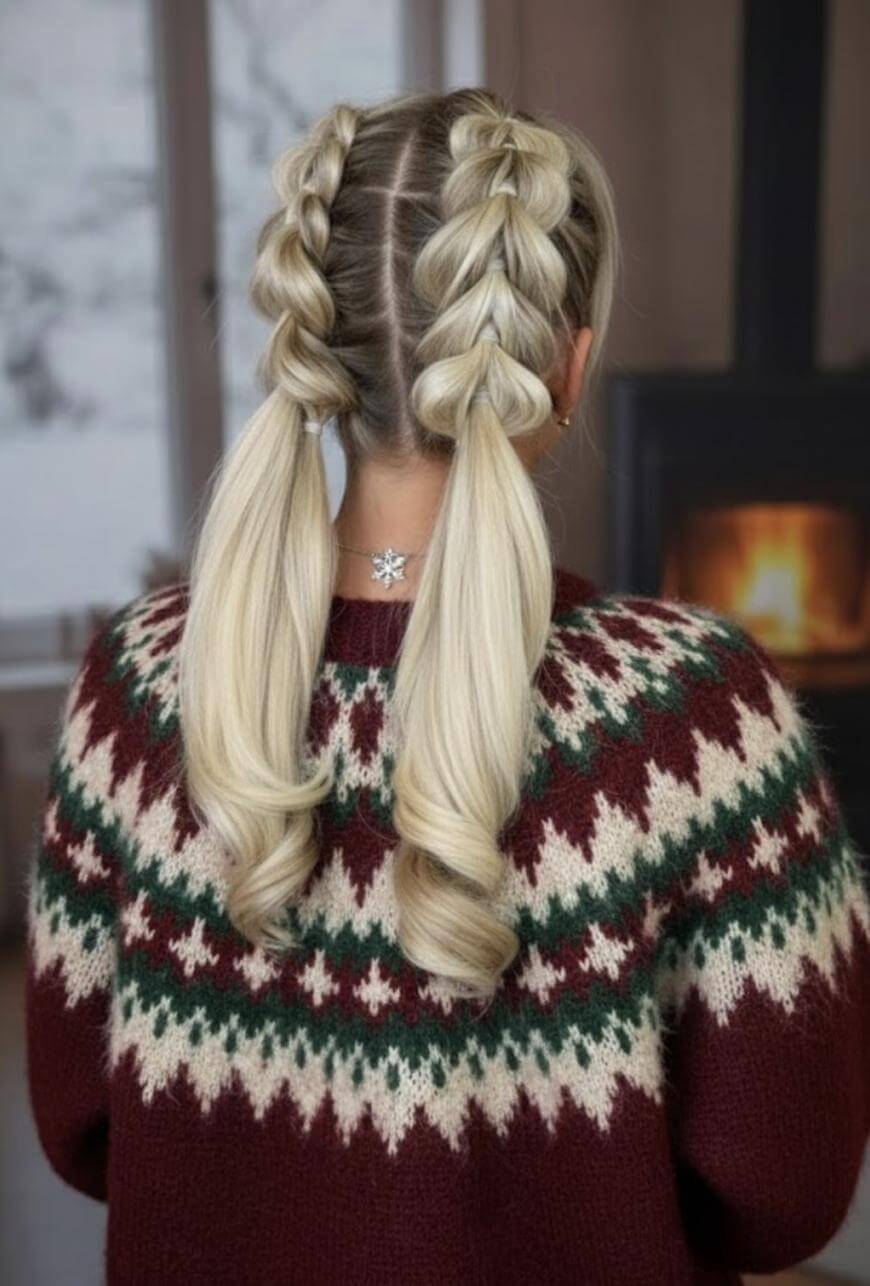
These platinum blonde double braids are tighter than they look. The Dutch braids are woven close to the scalp, which means they hold their shape for a full day, even through a commute and a windy walk. The mid-back length keeps them from feeling childish, and the curled ends add a soft finish that balances the sharp braid lines. On fine hair, the braids actually read thicker than loose waves, which is a nice trick. The honest downside: they take a while to do, and if your hair is slippery, they’ll loosen by noon. But they’re perfect for a holiday party or a day when you want your hair out of your face and still look intentional. Just don’t expect to sleep on them and have them survive.
Copper Shag With Voluminous Fringe
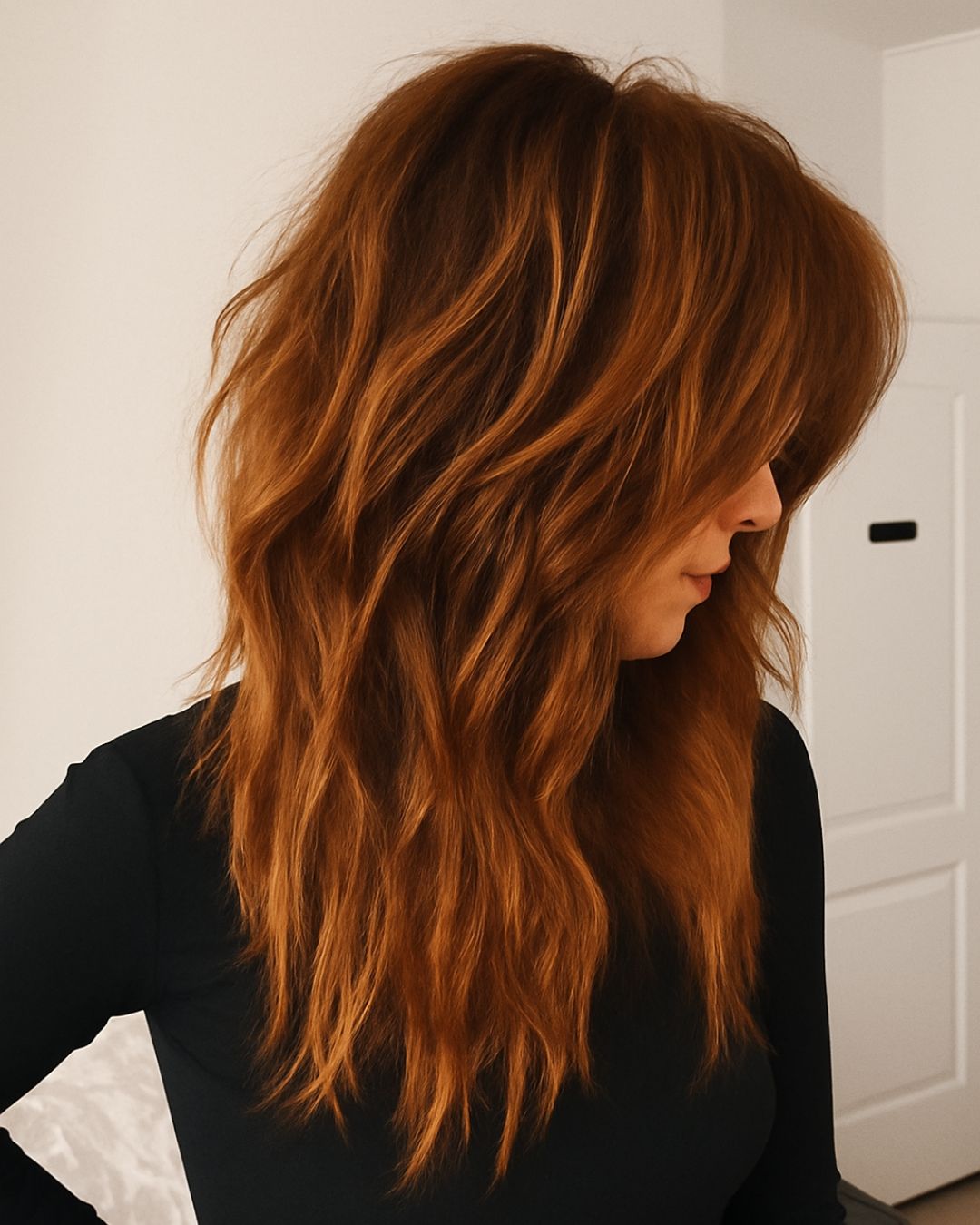
This is the cut that makes you look like you just stepped out of a salon, even on day three. The copper shag haircut with bangs is built on a layered shag that starts with short, choppy layers at the crown and cascades down to mid-back. The curtain bangs are cut to blend into the layers, so they don’t require daily styling to look right. The copper base is rich, and the blonde highlights are woven through the mid-lengths and ends, which adds dimension without a harsh line. On thick wavy hair, the layers remove weight, so the waves curl up instead of pulling straight. The key is the blowout: diffuse the roots for volume, then smooth the bangs with a round brush. That’s it.
Half-Up Crown Braid On Dark Waves
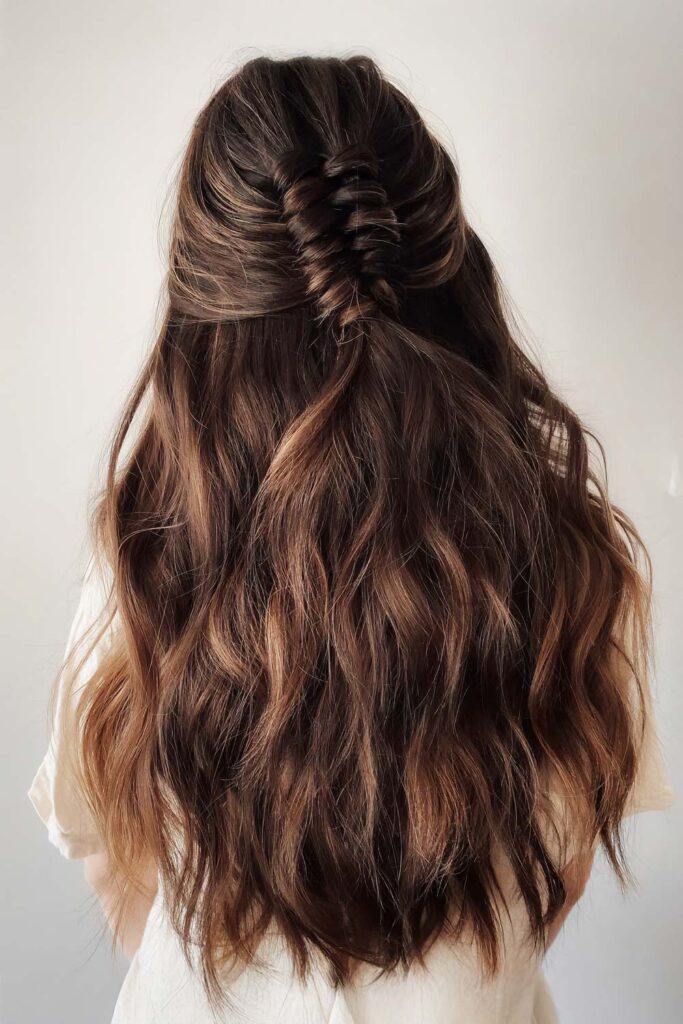
I’ll admit, I was skeptical about this half up braided hairstyle. The crown braid looks like it requires a professional, but it’s more doable than you’d think. The braid starts at the front hairline and weaves back, so it frames the face without needing bangs. The rest of the hair falls in loose waves, which keeps it from feeling too formal. On thick wavy hair, the braid holds well, but you need to pin it securely or it’ll slip. If you’re not comfortable braiding, this is a salon-leaning style, but with a bit of practice, you can get it at home. The key is to braid tightly and pin as you go, not at the end.
Defined Curls With Rich Dimension
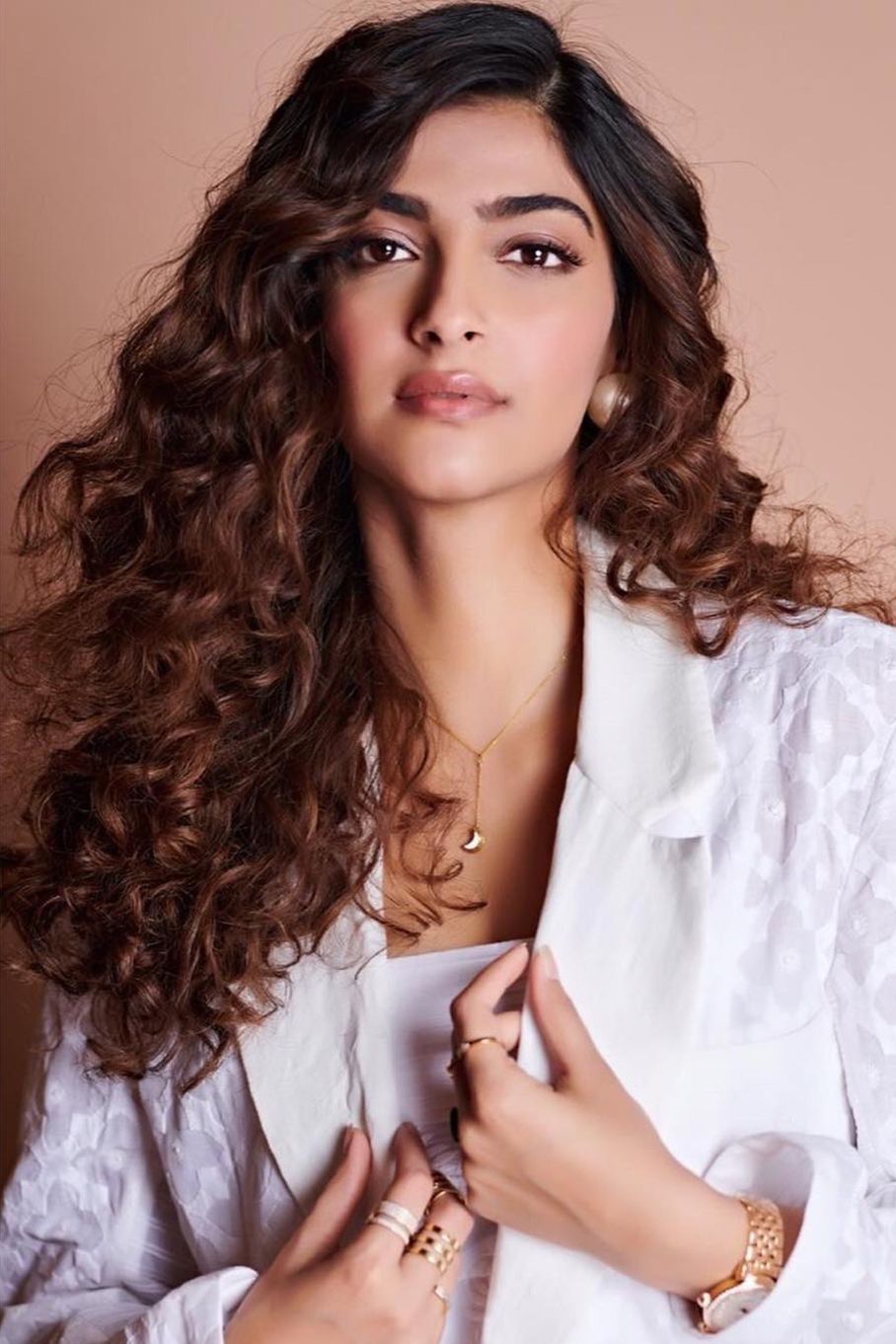
Forget the flat iron this winter, because thick curly hair holds its shape through snow and slush when straight styles fall limp by noon. This mid-back length keeps the weight where it belongs, and the long layers stop the triangle head that plagues so many curly cuts. The middle part widens a round face, and the dark brown base with lighter brown highlights gives the curl definition somewhere to land. You need a rich curl cream on soaking wet hair, scrunched upward before diffusing on low heat. It is not the wash-and-go for fine strands, but for long curly hair with highlights, the upkeep is a trim every ten weeks and a lot of patience.
Sleek Side-Parted Double Braids
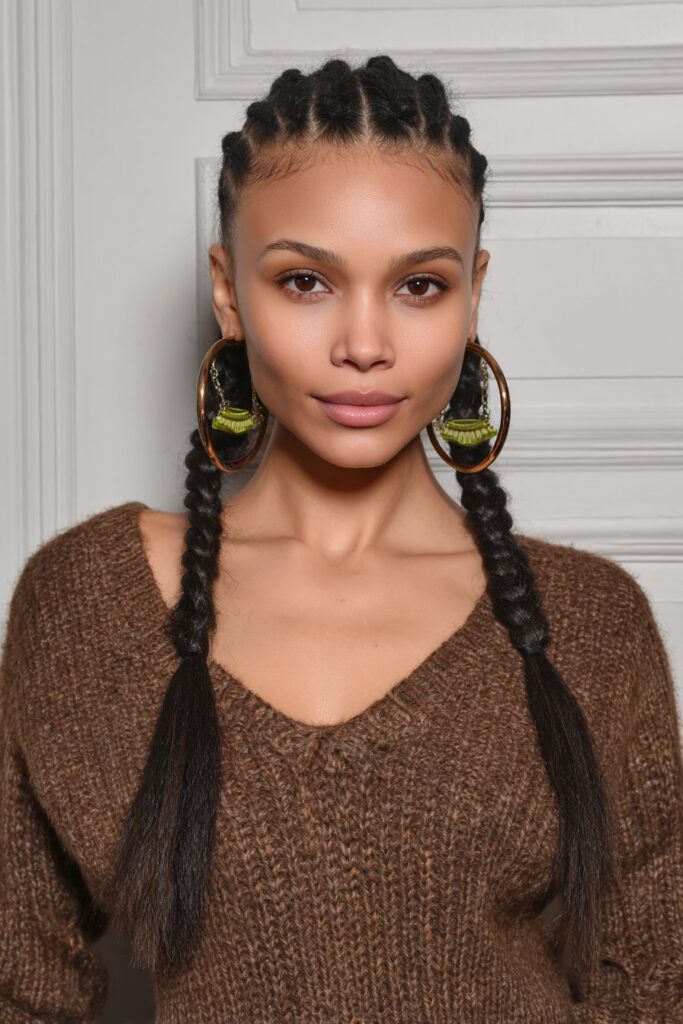
Side parted thick braids are the winter answer for hair that will not cooperate, and this version keeps the part sharp while the length does the work. The double braids sit at mid-back, thick enough to read as substantial, and the side part softens a strong jawline. On straight, thick hair, the sleek finish holds all day, but the real trick is the part: it must be clean, so run a fine-tooth comb along the scalp before you braid. No bangs means the face stays open, and the texture stays smooth, which is a relief when static season hits. It is a salon-level look that survives a week of hats.
Blonde Updo With Sparkly Fishtail
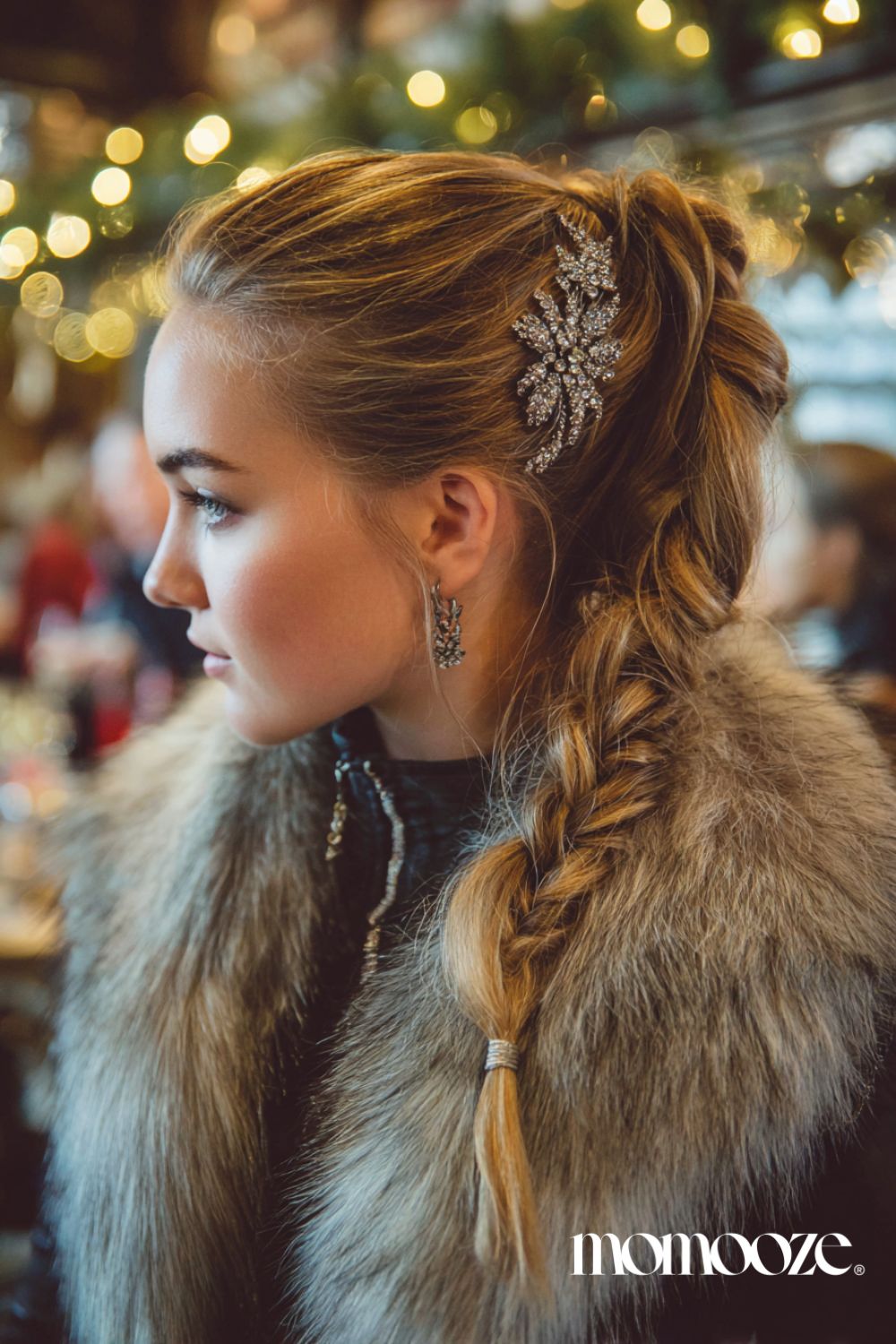
When the invitation says festive, this is the updo you want, and the fishtail braid wrapped around the crown is the showstopper. The blonde base reads warm against the dark strands, and the loose pieces around the face keep it from feeling severe. A fishtail braid works best on medium-density hair, because fine hair loses the texture and very thick hair gets too heavy to pin. The sparkly accessory catches the light, but it is the braid itself that does the lifting. I expected this to fall apart by the second glass of something, but the pins held, and the loose strands curled around my face all night.
Cornrows Into Long Dark Braids
Cornrow braids into long braids are a protective style that actually protects, and this version with neat cornrows leading into long dark braids is the winter workhorse. The cornrows keep the scalp tidy for two weeks, and the long braids swing at mid-back without tangling. You will need a silk scarf at night, and the edges need a light touch of oil by day three, because winter air dries everything. The side part is the key, it lifts the whole face, and the thickness of the braids means they read as substantial, not scraggly. It is not a five-minute style, but the payoff is a month of no bad hair days.
Brown Waves With Subtle Blonde Dimension
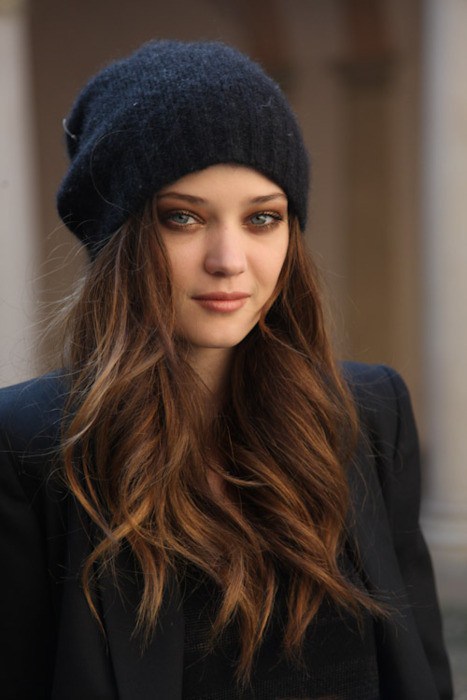
Brown waves with subtle blonde dimension are the winter answer to flat, dull color, and this version proves it. The long wavy brown hair highlights are the hero, a few face-framing strands of blonde that catch the light without screaming for attention. On thick, wavy hair, the subtle highlights add depth, and the long layers let the waves move. I was skeptical that a few blonde pieces would matter in winter, but they do, they read as sun-kissed even in January. The middle part keeps it modern, and the lack of bangs means the face stays open. It is a low-maintenance color that grows out gracefully, which is the real winter miracle.
Winter Greenery Braided Updo
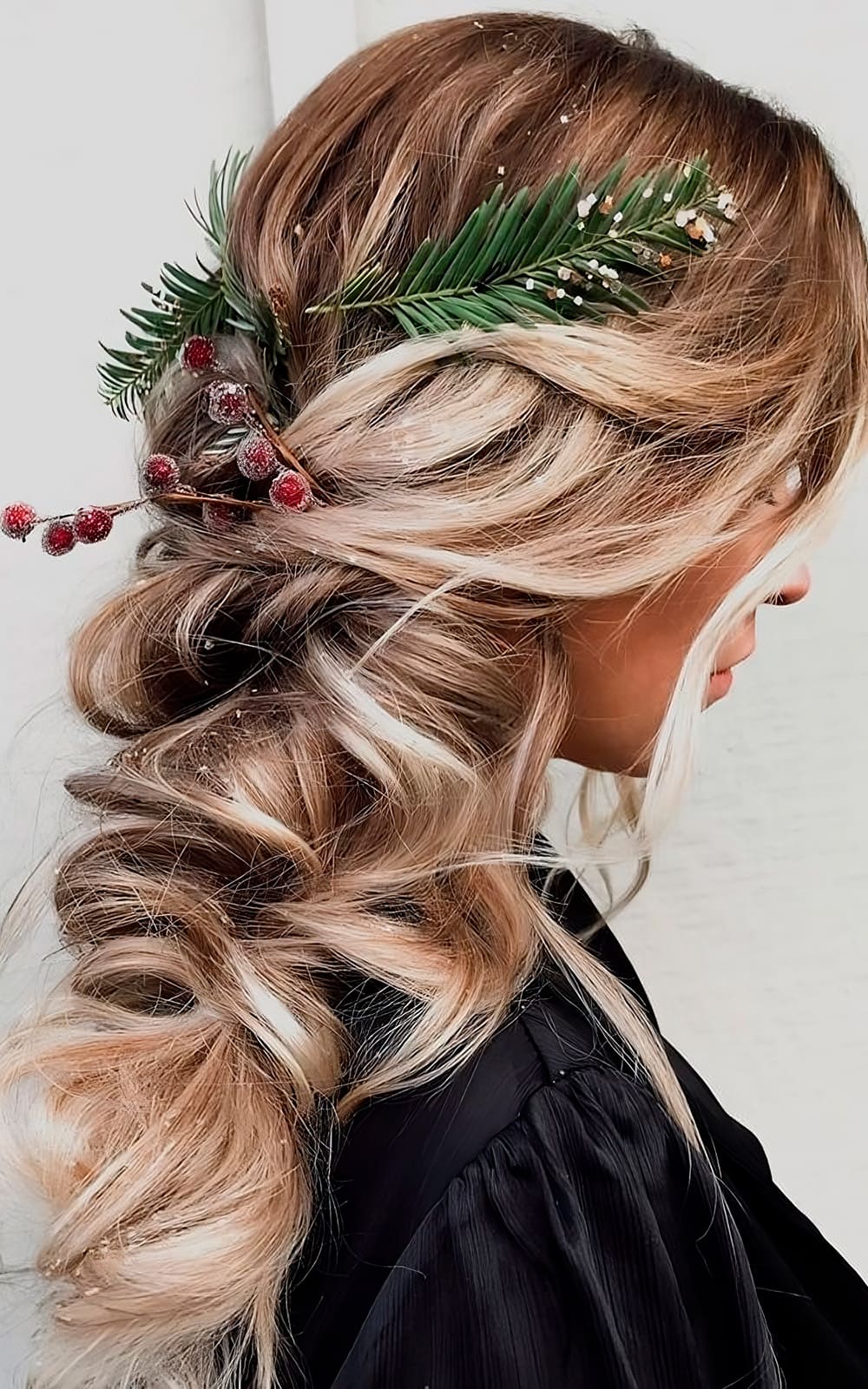
You walk into a December party and you want your hair to say something before you do. This is that look. The stylist starts with long layers for movement, then braids a few sections near the crown and pins the rest into a loose, wavy updo. Mid-back length gets tucked and twisted, no bangs, just a middle part. The texture is thick and wavy, which holds the braided accents without slipping. Then comes the real work: tucking small sprigs of faux greenery into the braided sections and crossing bobby pins in an X to lock them. That is not a five-minute job. Budget 45 minutes with the pins alone. But it stays put through coats, scarves and a full evening of conversation.
Thick French Braid Crown
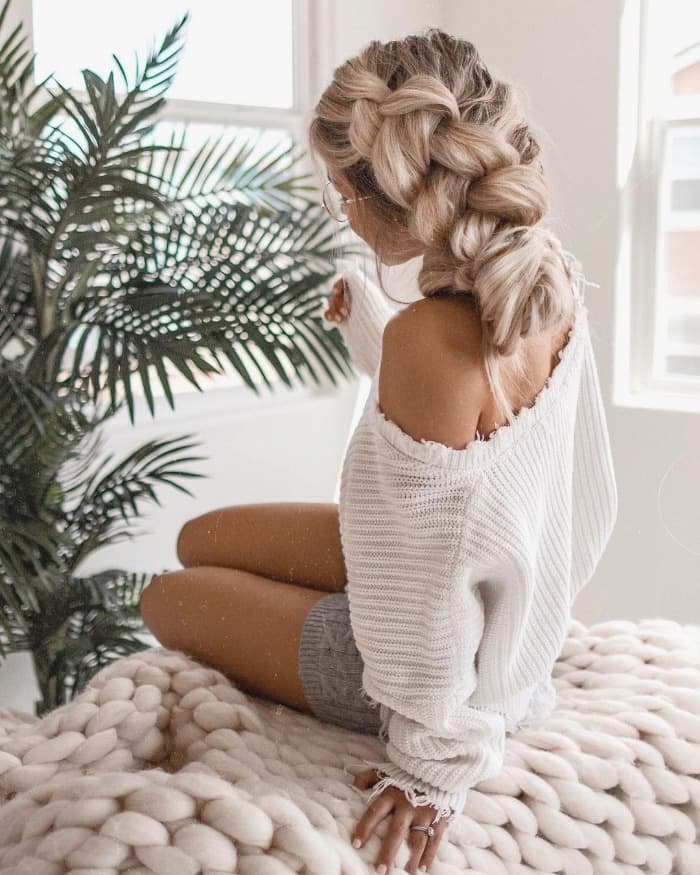
I have never gotten a French braid to look this thick on the first try. The trick is not in the braiding itself. It is in what you do after. This is a long blonde french braid on mid-back hair with medium density and a wavy texture. The stylist starts with layers so the braid has grip, then sections from the hairline and weaves a crown that wraps around the top of the head. No bangs, middle part. The real move comes after the elastic is on. You pancake the edges of each braid segment, pulling gently outward until the braid doubles in visual width. That takes five minutes and changes everything. It holds all day because the crown sits tight against the scalp. A French braid that actually reads as full, not flat.
High Cornrow Ponytail With Blonde Highlights
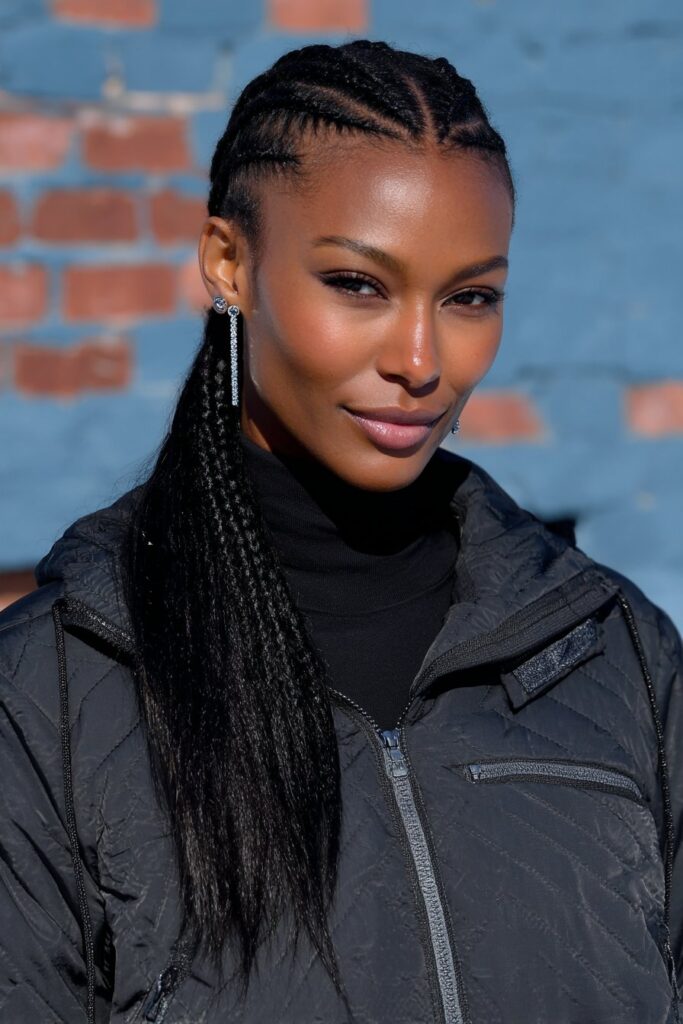
Can you pull off a cornrow high ponytail blonde highlights style? It depends on your hairline and your patience. This look works best on straight, medium-to-thick texture. The scalp cornrows start at the front hairline and feed into a high ponytail at the crown. No bangs, middle part. The ponytail itself is wrapped at the base with a thick braided strand to hide the elastic. The blonde highlights pop against the black base because the cornrows create clean, straight lines. Here is the honest downside. This is not a wash-and-go style. The scalp needs edge control gel to stay smooth, and the ponytail requires a wrap every night to avoid frizz at the base. It flatters a long oval face shape best. Round or wide faces may find the high placement reads too severe. Book a stylist who knows cornrows specifically. This is not a DIY project.
Side-Profile Braided Crown With Loose Ends
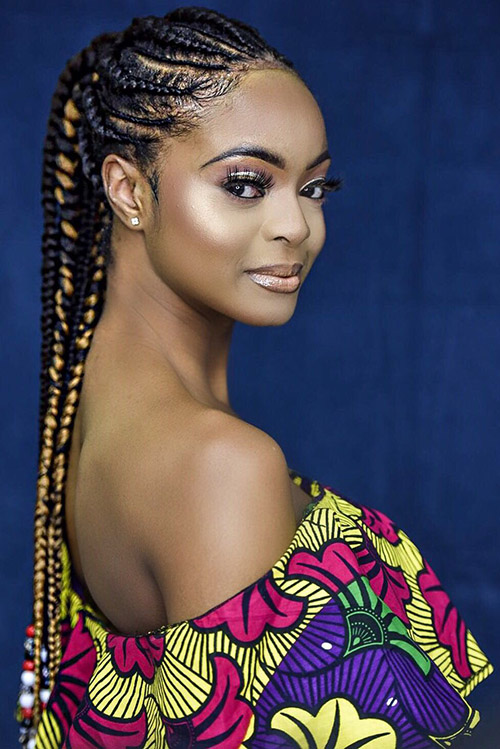
A fully loose style and a winter coat collar are enemies. This is the compromise that works. The scalp braids with loose hair start at one temple, weave across the crown and end behind the opposite ear. The rest of the hair stays down, mid-back length, straight texture, black and blonde sections. No bangs, middle part. The braided crown lifts the hair off the collar on one side while the loose side falls naturally. That means no static tangles where the coat meets the neck. A smoothing serum on the loose ends daily keeps the winter flyaways under control. It is not a full updo and it is not fully down. It is the one that survives the coat check.
Textured Messy Updo With Tendrils
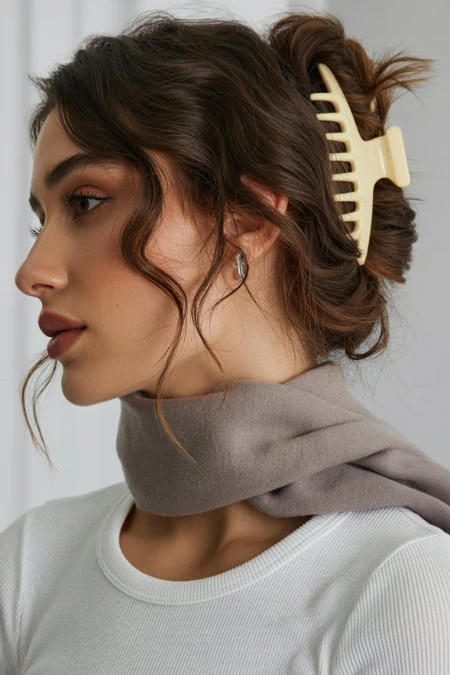
This one holds up better than it looks. A messy updo with face framing tendrils on dark brown, long, wavy hair. The cut is all one length, no bangs, a side part. The stylist pulls the back into a loose twist and pins it, then releases a few pieces around the ears and the nape. Those tendrils are the key. They keep the updo from looking like a bun you gave up on. The texture is wavy, which gives the twist volume without product. It stays through a scarf because the tendrils take the friction. The pinned section stays tight. By hour six, the tendrils have loosened into soft waves and the updo still reads intentional. That is the best kind of messy.
Sleek Ash Blonde Straight Finish
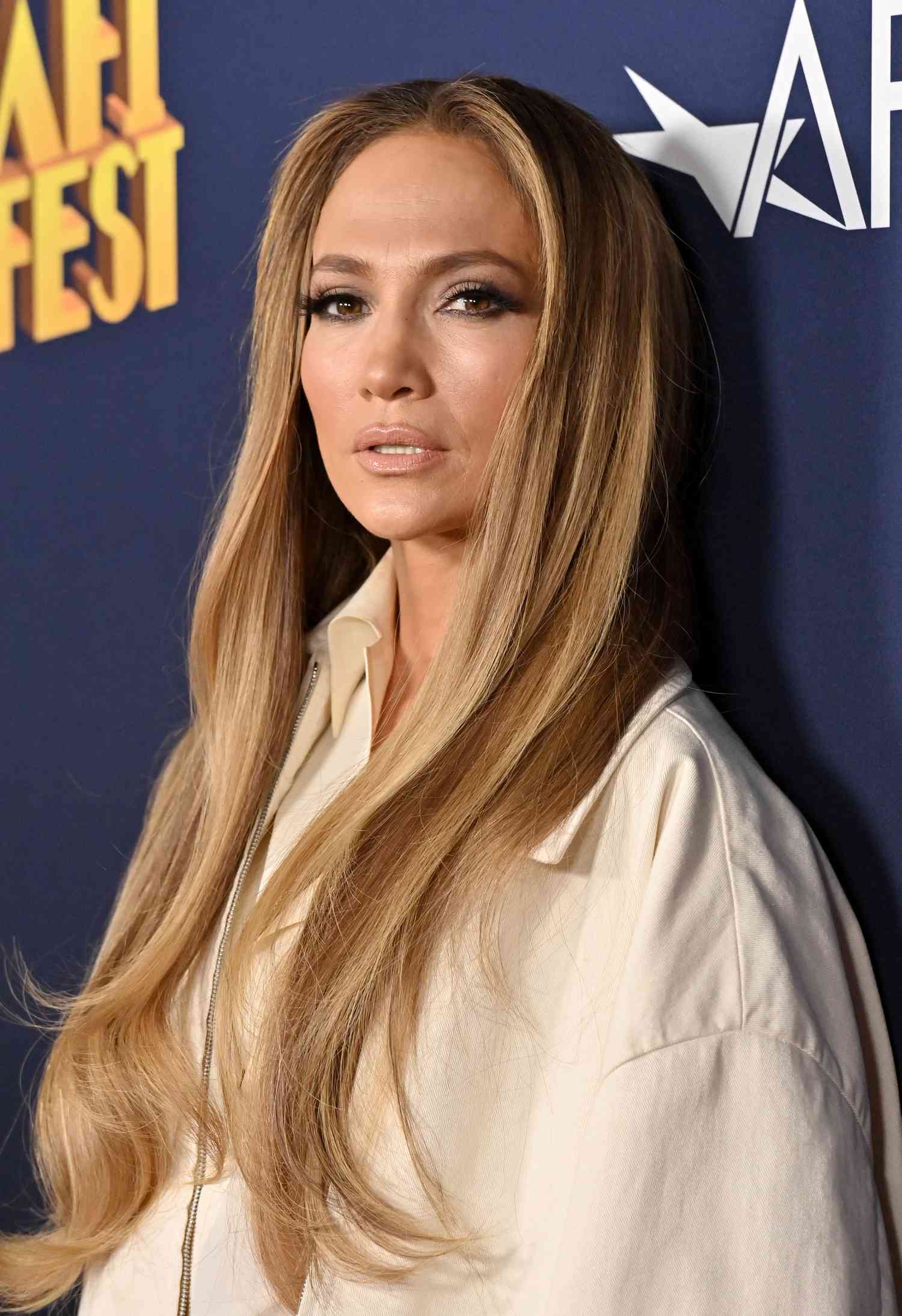
I have a confession: I rarely reach for a flat iron in winter. Too much static, too many flyaways, too much work for something that collapses by lunch. But this sleek straight ash blonde hair makes me reconsider. The cut is long layers, subtle enough that you barely see them, just enough to stop the ends from flipping under. No bangs. Middle part. The colour is ash blonde with highlights that read more silver than gold, which keeps the whole thing looking expensive rather than brassy. Texture matters here: this only works if your hair is fine to medium and already straight. Coarse or wavy hair will fight the finish, and you will lose.
The technique is the whole point. You pass a flat iron over small sections, not big ones, and you use a heat protectant every single time. Then an anti-humidity serum on the ends. The result is a single, unbroken sheet of colour from root to tip. It is not a wash-and-go. It is a wash, blow-dry, section, iron, serum, and pray the weather cooperates kind of day. But on the days it works, it is worth the effort.
Voluminous Multi-Toned Dreadlocks
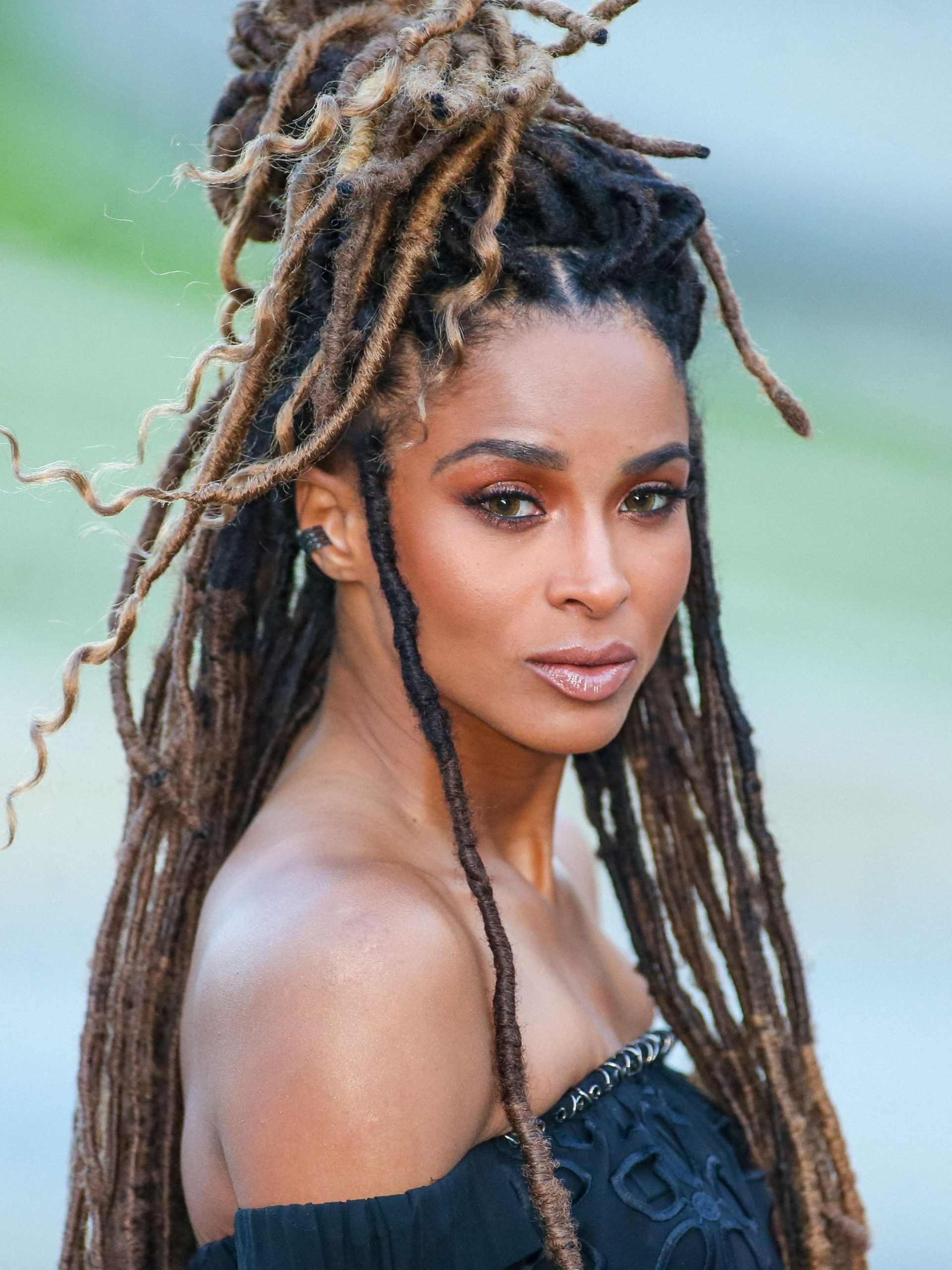
Picture this: you sit in the chair for eight hours, you walk out with long multi toned dreadlocks that hit mid-back, and you think you are done. You are not done. The weight is real. These are voluminous, dark brown at the base with blonde and grey streaks running through, and the curly ends add another inch of bounce. The drying time in winter is absurd. I am not exaggerating when I say three hours with a hooded dryer, and even then the middle sections stay damp. This is a salon job, not a DIY project. The technique matters: interlocking at the roots, not palm-rolling, or the whole thing loosens by week three. If you want the volume without the wait, skip the full head and do a few accent dreadlocks instead.
Intricate Twisted Low Nape Bun
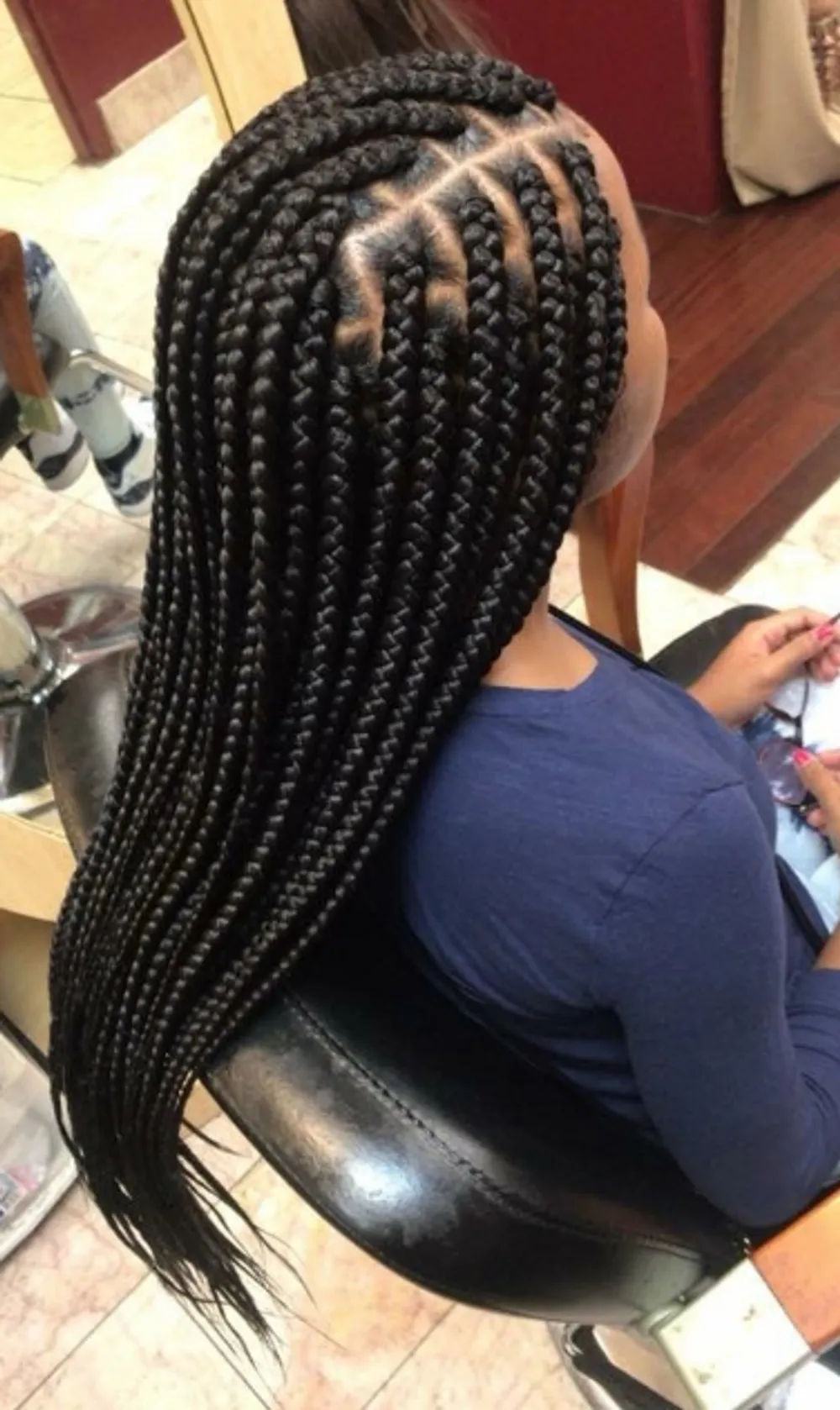
When did a bun start looking this deliberate? The twisted low updo bun sits right at the nape, built from sections that twist backward from the temples and pin into a single anchor. The hair is golden brown, thick and wavy, which is the texture this style needs. Fine hair will show every pin and every gap. The grow-out is forgiving: since the bun hides the ends, you can stretch a trim to ten weeks. Face shape matters here. The low placement lengthens a round face and balances a strong jaw. A high bun would fight that jaw. This one works with it. The upkeep is minimal once it is pinned, but getting it there takes practice. Expect to redo the left side twice.
Vibrant Purple Braided High Bun
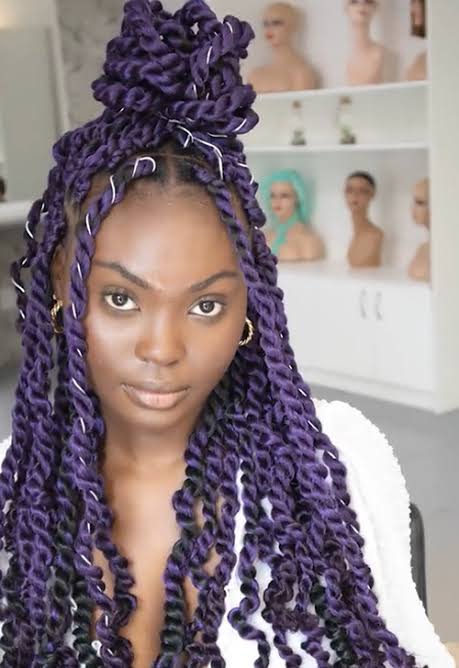
I will admit I was sceptical of the purple braided high bun when I first saw it. Purple is a commitment. But the colour here is not a single flat violet. It is a deep purple base with white streaks woven through, which gives it dimension and stops it from looking like a costume wig. The cut is all braids, gathered into a high bun at the crown with the surrounding braids hanging loose to frame the face. Middle part. Coily texture. The vivid color works best on warm skin tones with olive or golden undertones. Cool, pale skin can wash out next to the purple. Face shape matters too: the height of the bun lengthens a round face, but if you have a long face already, skip the height and wear the braids down instead. The honest downside is the removal. Taking these braids out takes an hour and a half, minimum. Plan for it.
Visual Idea
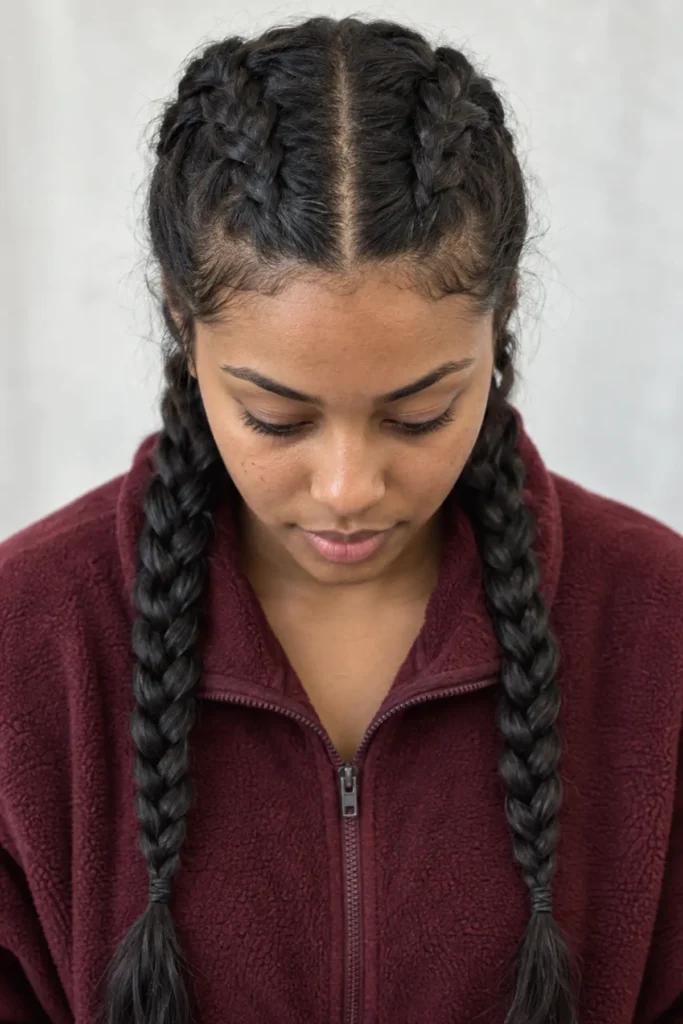
Day two of double Dutch braids on long straight thick black hair looks better than day one. The braids have settled, the tension has relaxed, and the edges are no longer pulled tight. The middle part stays clean because the braids anchor it. No bangs. No layers. Just two braids that run from the crown to the ends, and they hold through a full day of winter wind. The trick is to braid them slightly damp, not wet, so they dry into place without frizz. By day three, the crown will loosen, and you will need to re-braid the top section or accept the soft halo. I accept it.
Mid-Back Visual Idea
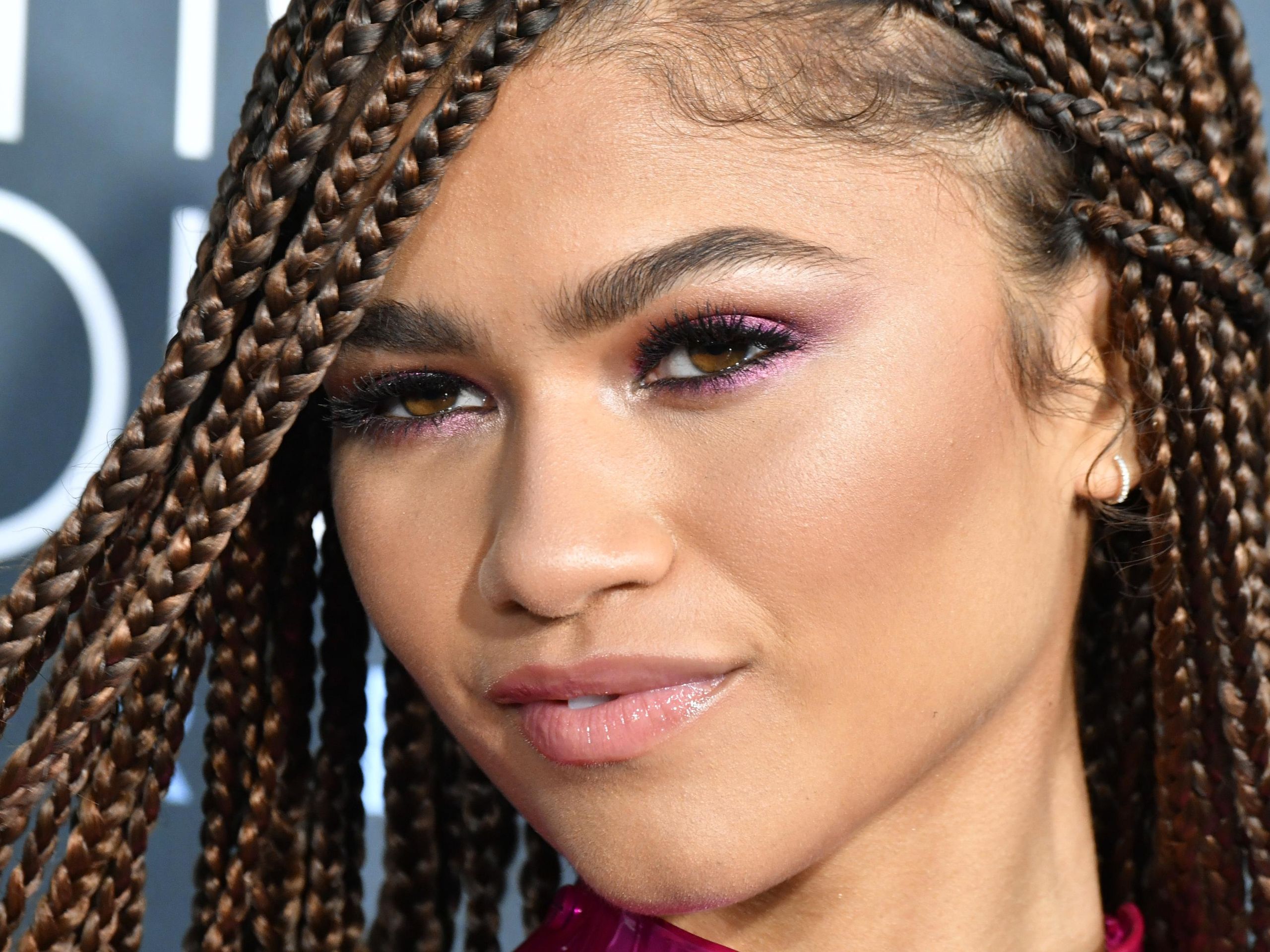
Best grow-out in this roundup. The installation of medium brown box braids with lighter brown highlights is a salon appointment, not a bathroom mirror job. Each braid starts at the scalp with a clean, square part and runs straight to the end. No taper, no loose tail. The pattern is neat enough that you can wear a middle part and still look polished. At mid-back length, the weight pulls evenly, so the braids lie flat against the head. No bumps, no flyaways. A trim every eight to ten weeks keeps the ends from fraying. Between appointments, a silk scarf at night stops the parts from lifting. That is the whole upkeep.
Honey Blonde With Balayage Visual Idea
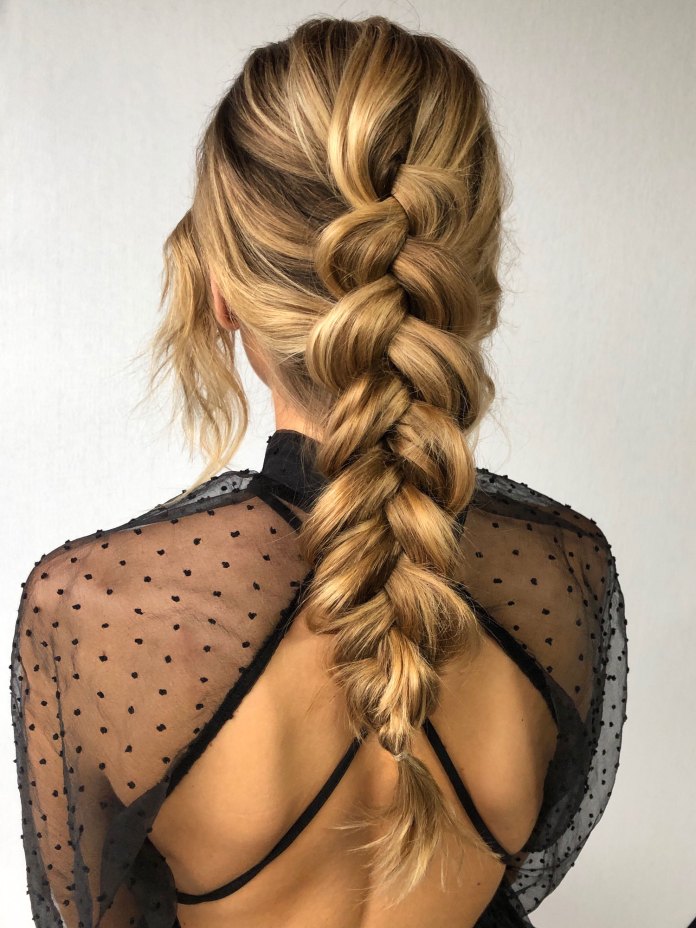
I did not expect to like the chunky fishtail braid this much. A standard three-strand plait on honey blonde balayage reads flat. The sections blend into one block of colour. A fishtail braid does the opposite. Each strand stays separate, so the balayage highlights run through the braid like ribbons. The honey base sits next to the lighter pieces, and the contrast holds all the way down to mid-back.
The technique matters here. A fishtail uses two sections, not three, and you pull thin pieces from the outside edge. Chunky means you grab wider sections, about an inch each. The result is a braid that looks thick and structured, not delicate. It holds shape without pins. On wavy, thick hair, the texture grips itself. No elastic needed for the first hour. I would book a salon for the colour and learn the braid at home. It is not hard once you see the rhythm.
Ash Blonde With Pinkish Undertones Visual Idea
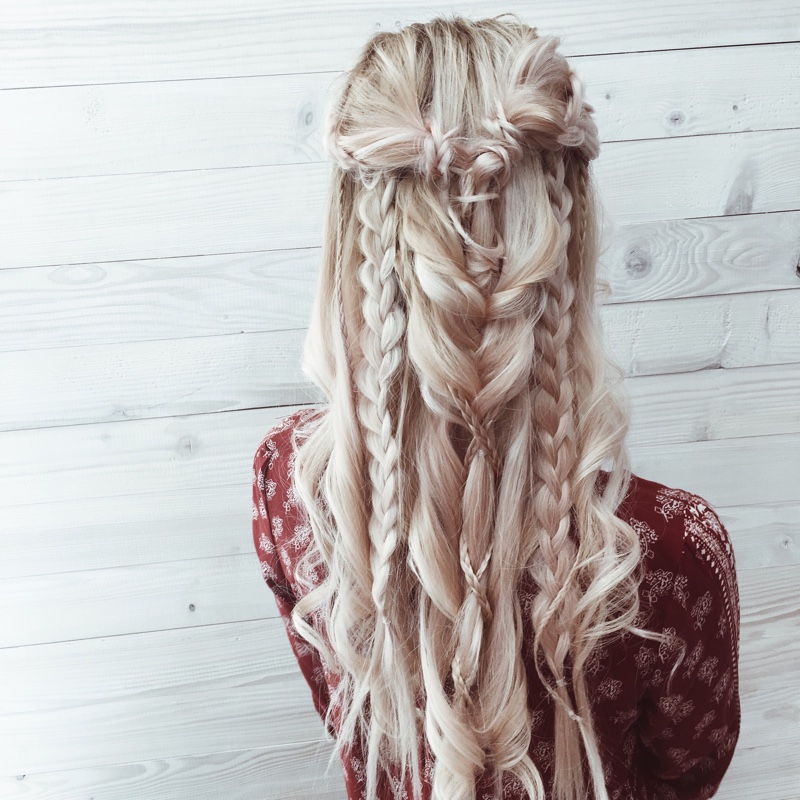
You see the photo and think, that is a lot of braids for hair that colour. Ash blonde with pinkish undertones is not a low-maintenance base. The pink fades first, then the ash reads muddy. In multiple braids, half-up and half-down, every tone shift shows. The middle part and thick layers mean the braids sit close to the scalp, so regrowth is visible at week three. I would not try this at home. A stylist places each braid to hide the root line. Between appointments, a purple shampoo keeps the pink from turning brassy. But honestly, you are booking every five weeks or you are living with a gradient.
Medium Brown With Blonde Highlights Visual Idea
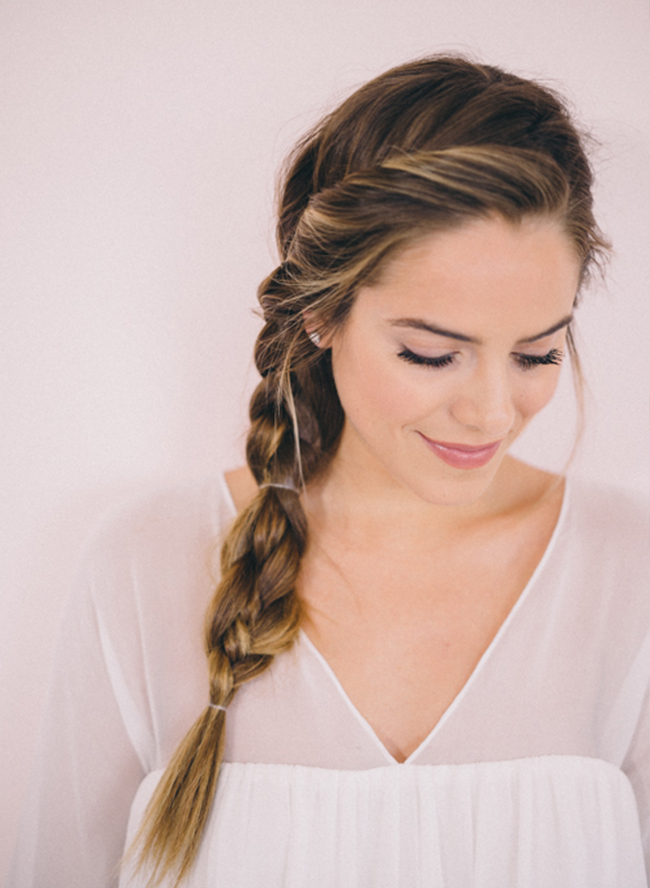
Can a side part make a braid look intentional? Yes. The medium brown base with blonde highlights runs down one shoulder, and the side parting splits the hair cleanly before the braid starts. No stray pieces at the crown. The layers are cut so the blonde highlights sit on top, not buried underneath. When the braid is woven, the lighter pieces catch the light first. The texture is wavy and thick, so the braid has volume without backcombing. This is a winter occasion look. Holiday dinner, work party, a day you want to look put together without spending an hour. The side braid takes fifteen minutes once you know the pattern. The colour does the rest.
Long Visual Idea
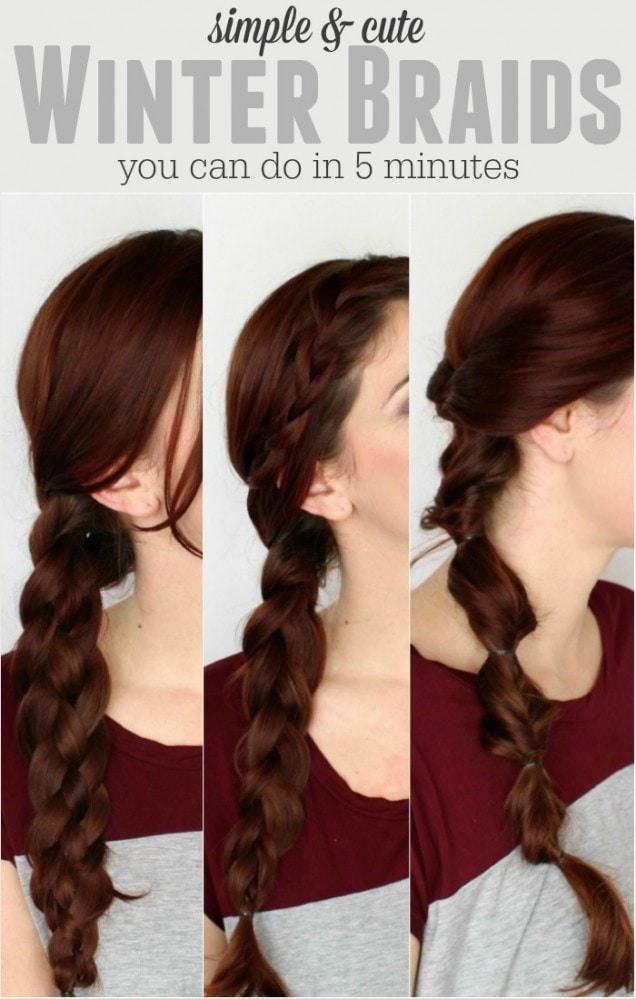
I will confess: I learned the French braid from a YouTube video at 11 pm on a Tuesday. It is not hard, but it takes a few tries to get the tension right. On straight blonde hair, the construction is visible. Every crossover shows. Here is how to get close at home.
Start with dry hair. A little texture spray on the roots helps the sections grip. Part down the middle. Grab a small section at the crown, split it into three. Cross the right piece over the middle, then the left piece over the new middle. That is the first stitch. Now add hair: pick up a thin strip from the right side of your head and join it to the right piece before crossing. Repeat on the left. Keep the sections even. Pull tight enough that the braid sits against the scalp, not loose. Work down to the nape, then finish as a standard three-strand plait. A clear elastic at the end. The whole thing takes twelve minutes once you have the rhythm. The visible braid construction is the point, so do not worry if it is not perfect.
Blonde Visual Idea
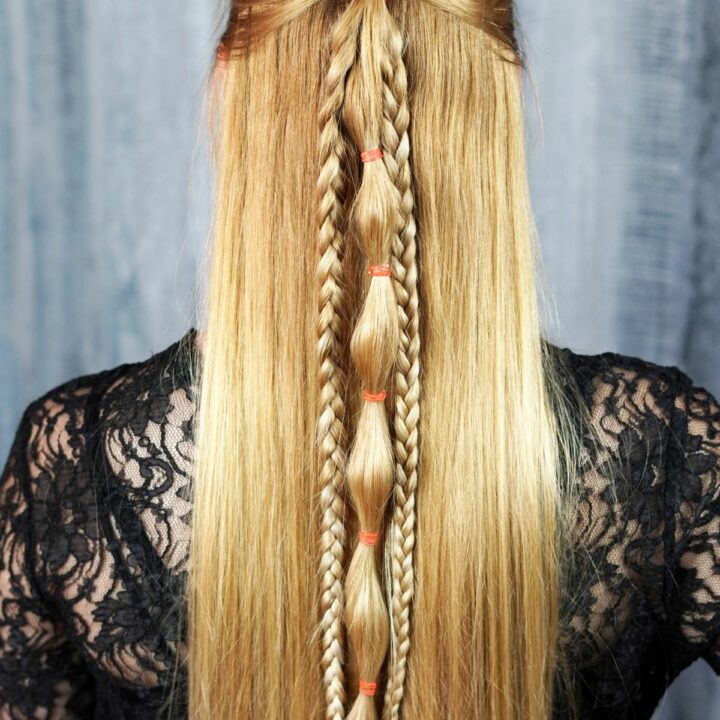
This is the winter braid that makes you look like you raided a fantasy wardrobe, and I mean that as a compliment. Viking braids with elastic bands, worn half up on thick, straight blonde hair, hold their shape through a full day of dry indoor heat. The bands do the work, so the braid stays put without a single pin stabbing your scalp. On my fine strands, the elastic bands would slide by hour two, but on thick hair this is a set-it-and-forget-it situation. The half-up keeps the length off your coat collar, which is where winter static lives. Middle part, no bangs, just clean sections and a firm grip. If your hair is on the finer side, skip the bands and try a small clear elastic instead.
Black With Blonde Tips Visual Idea
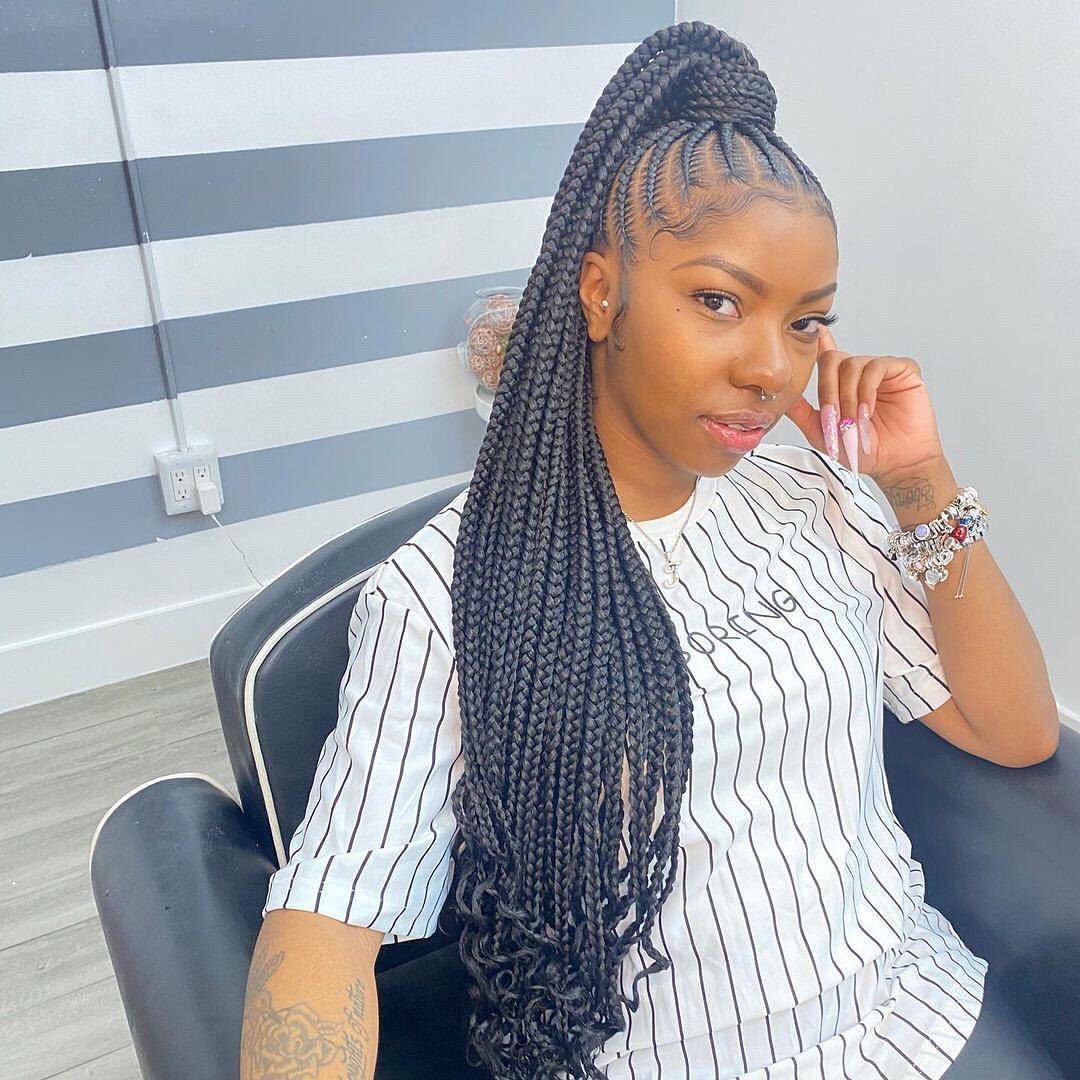
When did black with blonde tips start looking this sharp? This high braided ponytail with intricate cornrow details and curly ends is the winter hairstyle that reads as deliberate without trying too hard. The cornrows start at the hairline and feed into the ponytail, so the braid looks like it grew that way. The blonde tips hit mid-back and catch the light when you turn your head, which is the whole point. On curly hair, the ends bounce and move, so the style never feels stiff. The middle part keeps the face open, and the lack of bangs means zero fringe to freeze against your forehead. This is a salon-level look, not because the technique is impossible, but because the cornrow pattern needs a steady hand. Book the appointment, bring a reference photo, and let the braider work.
Long Layers Visual Idea
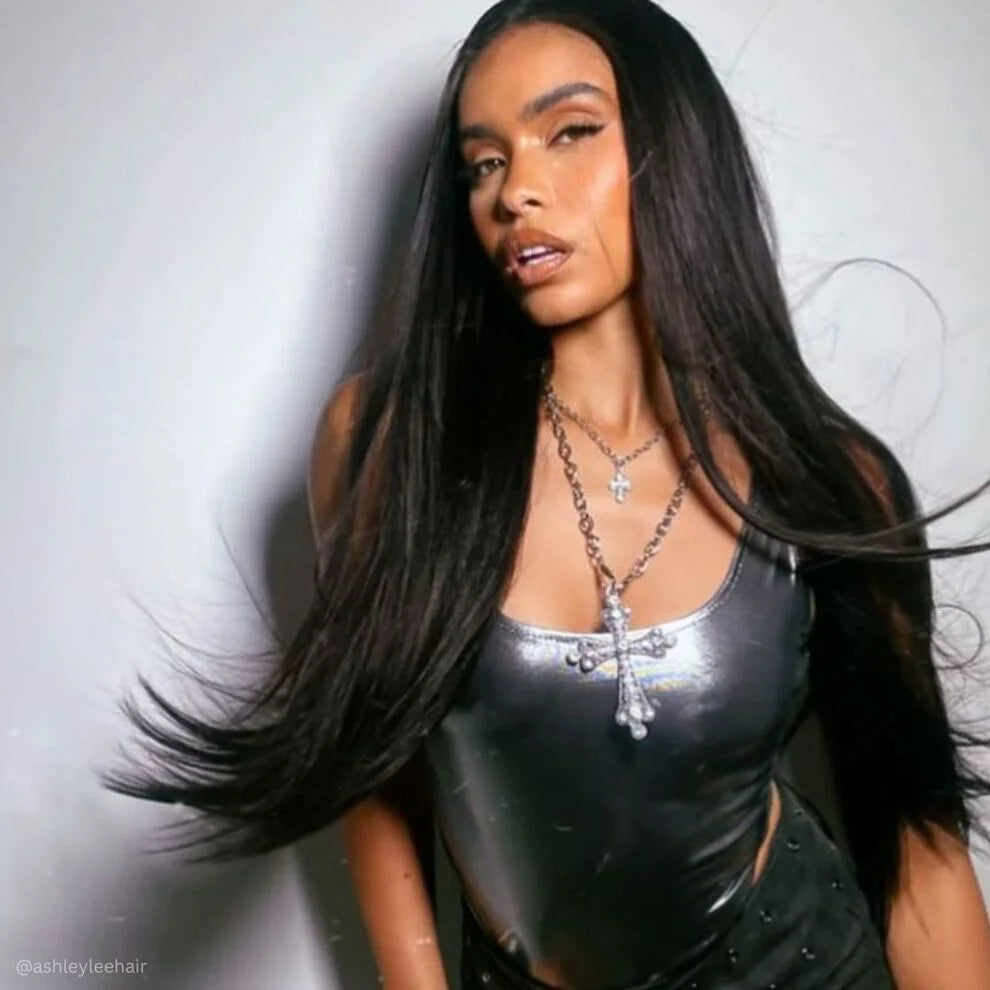
Side-swept bangs with long layers on dark brown hair is the winter cut that does not fight you. The layers start at the collarbone and melt into the length, so the hair moves as one piece instead of chopping into chunks. The side-swept bangs sweep across the forehead and blend into the layers, which softens the face without hiding it. On straight, fine hair, the layers add the illusion of volume without any product that freezes. The mid-back length keeps the weight, so the ends do not flip into a triangle. I have fine hair that goes flat by 4 pm, and this cut holds a bend longer than most. The caramel highlights catch the light, but the dark base keeps the roots from screaming by week three. Ask for long layers with a side part, and skip the razor if your hair is fine.
Ash Blonde With Subtle Highlights Visual Idea
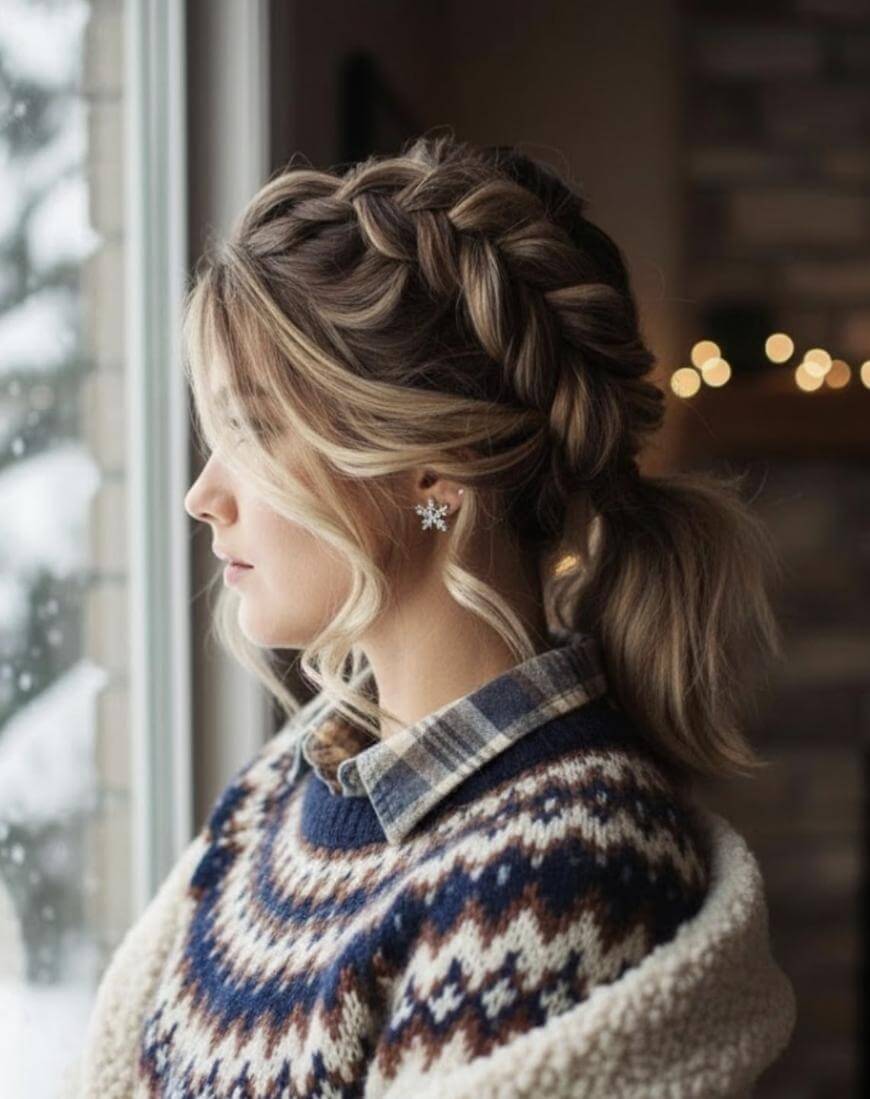
This is the ash blonde that makes you do a double take, and not because of the colour alone. The subtle highlights are woven through the mid-back length, so the blonde reads as dimensional rather than flat. The curtain bangs frame the face and blend into the layers, which means the style works whether you wear it down or pull it into a low ponytail. The dutch braid into a low ponytail with loose waves is the winter styling trick that keeps the hair off your neck without looking like you tried. On medium density, wavy hair, the texture holds the waves without product, and the middle part keeps the face balanced. The ash tone reads cool next to warm skin, so if you have pink undertones, this is your shade. Ask for a gloss every six weeks to keep the brass out.
Dark Brown To Blonde Ombre Visual Idea
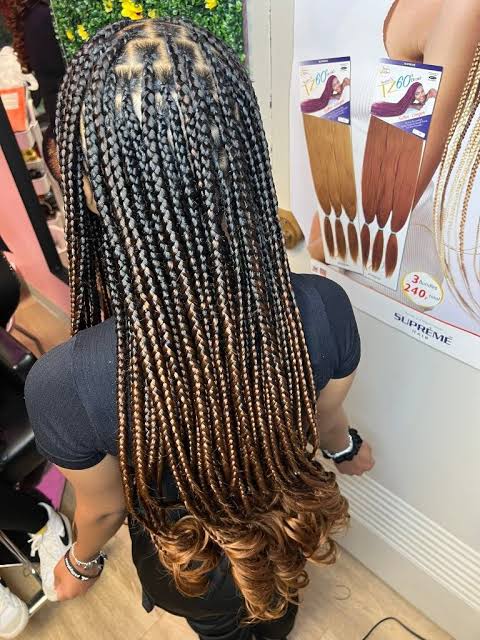
Compare this dark brown to blonde ombre against a solid colour braid, and you will see the difference immediately. The ombre transition starts mid-back and melts into a warm blonde, so the braid catches the light in sections instead of one flat block. The long layers keep the movement, and the no-bangs, middle part lets the colour do the talking. On straight, thick hair, the ombre reads as intentional, not grown out. The back view shows the colour transition clearly, and the braided style with curly ends adds texture without tangling. The dark roots mean you can skip the salon for an extra month, which is the real winter win. Ask for a balayage-style melt, not a harsh line, and keep the ends conditioned so the blonde does not snap.
Waist-Length Visual Idea
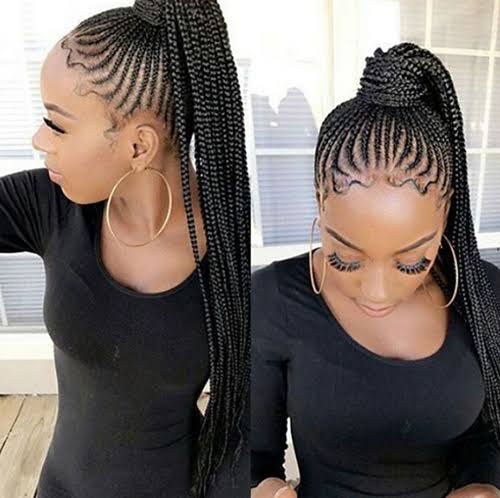
I’ll admit it: I’ve never successfully braided a fishtail that didn’t look like a tangled mess. This waist-length blonde fishtail braid is for those with thick, straight hair and the patience to section it properly. The long layers give the braid some texture, but the real work is in the tight weave. Who should pass? Anyone with fine or slippery hair, because the braid will unravel. Honest downside: it takes a solid twenty minutes to braid, and waist-length hair is heavy enough to give you a headache by the end of the night. The height requirement means you need long arms or a patient friend.
The middle part keeps the braid centered, and the lack of bangs means no fringe to tuck. It’s a look that demands commitment, but for a winter party, it’s worth the effort.
Dark Brown Visual Idea
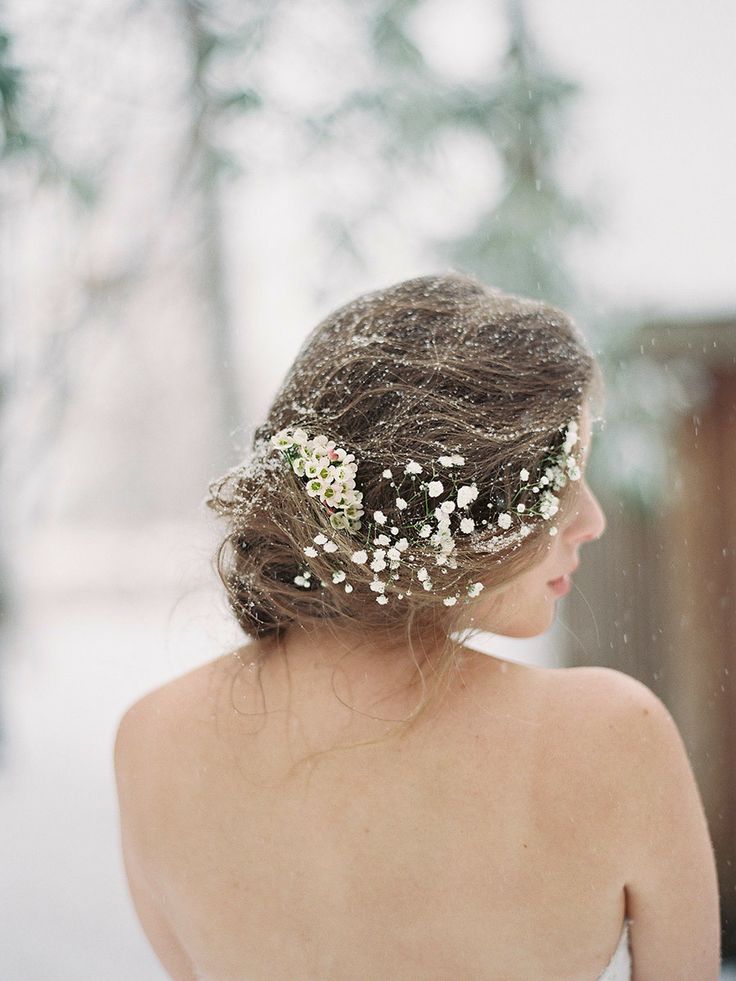
A dark brown updo with braids and flowers stays intact through an entire winter formal. The long wavy texture is twisted into a low updo, braided sections add grip, and the floral accessory is pinned securely. No layers are visible, just smooth dark brown waves. No bangs, so the face is fully exposed. It holds up because the braids anchor the whole structure.
Dark Brown Base With Blonde Highlights Visual Idea
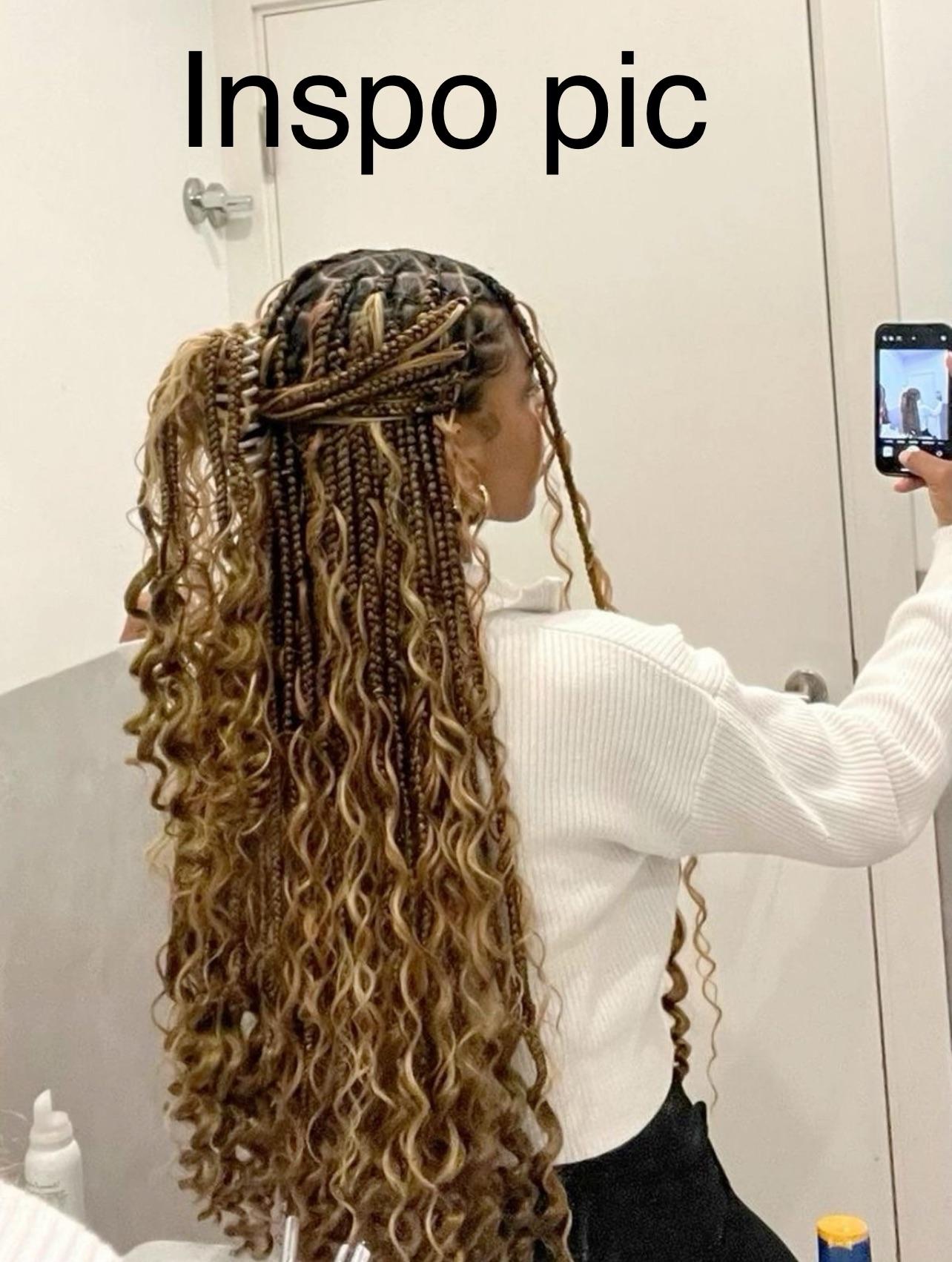
This is a salon job, not a weekend project. The dark brown base with blonde highlights is built with curly extensions braided into long voluminous braids. The technique involves attaching the extensions at the root, then braiding them in to blend the blonde highlights throughout. The mid-back length means the braids are heavy but manageable. No bangs, so the forehead is bare. The curly texture of the extensions gives the braid volume and movement. The braids hide any layering, so the cut is essentially just braids. Wear and upkeep: the braids last two to three weeks with careful sleeping and gentle washing.
Black Visual Idea
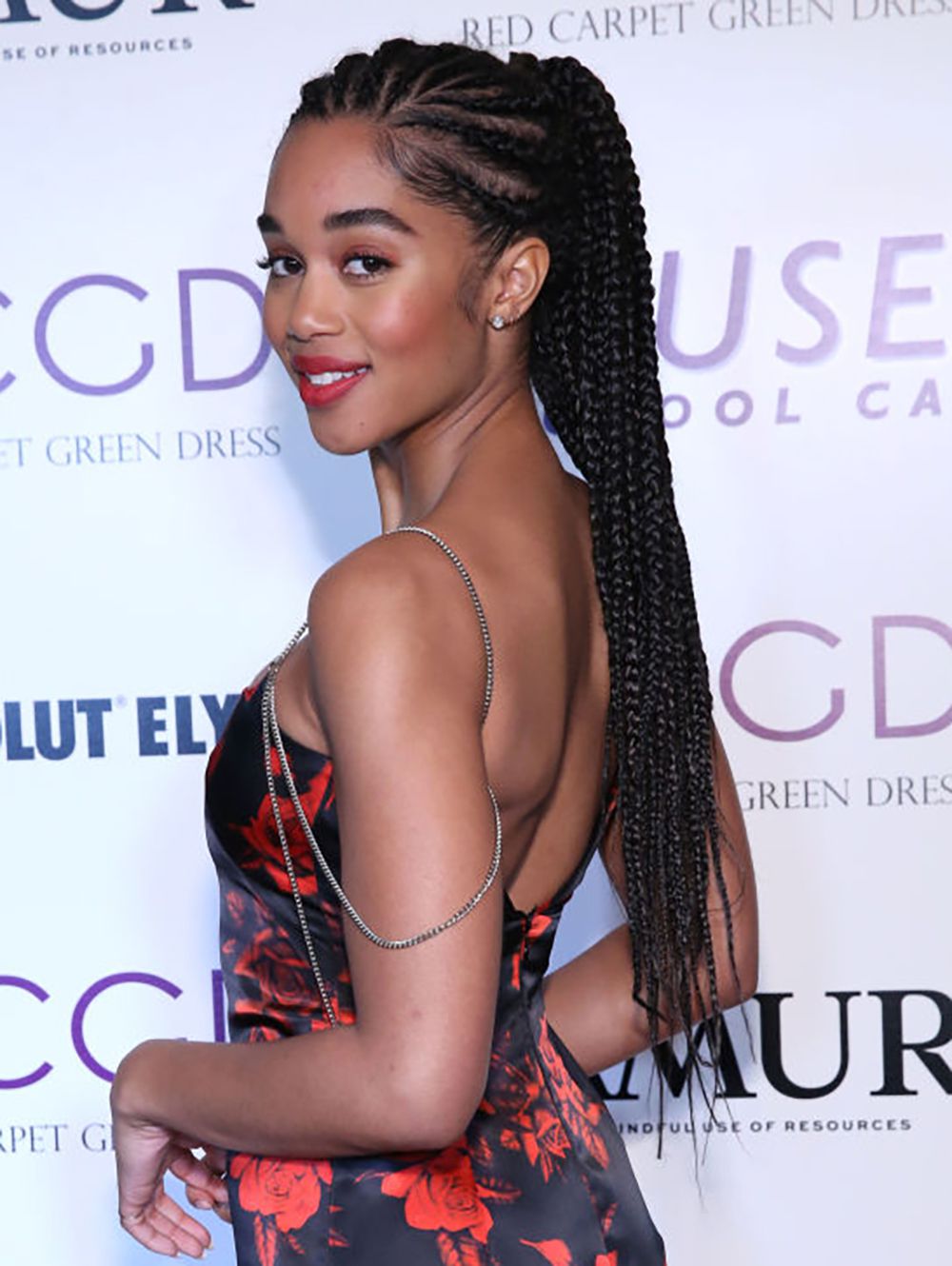
That braid is so tight and clean it looks like it was done by a machine. The black, straight, thick hair is cut with layers that add subtle texture to the braid. The mid-back length allows the braid to hang evenly. No bangs, so the face is framed by the braid alone. The intricate pattern is possible because the hair is thick and straight, holding each twist. The middle part keeps the braid symmetrical.
The layers prevent the braid from being too heavy, and the straight texture makes the pattern pop. It’s a look that relies on perfect execution.
Braids Visual Idea
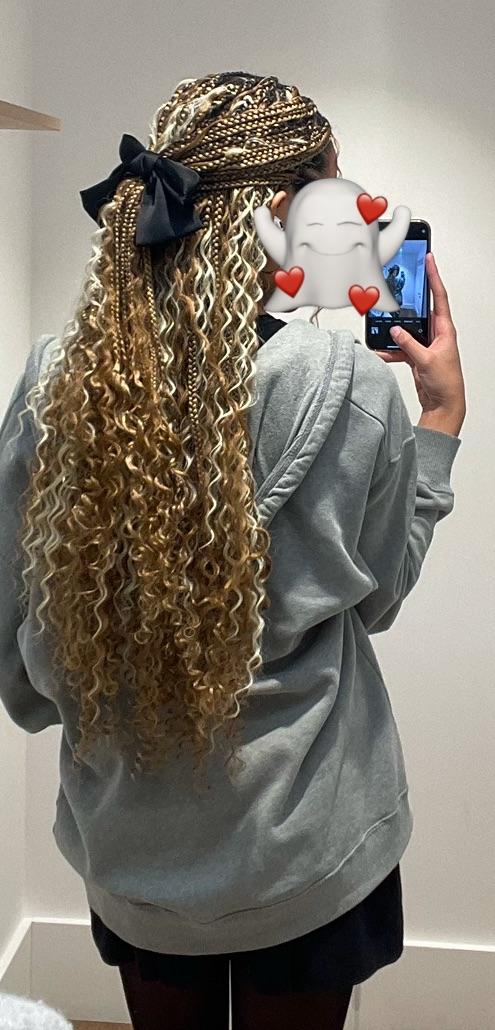
Imagine a braid that catches the light in three different shades. The dark brown base with blonde and light brown highlights runs through long curly extensions braided into voluminous mid-back braids. No bangs, so the colour dimension is the star. The braids have no visible layers, so the cut is just braids. This suits anyone with medium to thick hair who wants to add visual interest without a full colour change. Those with fine hair should pass, as the extensions may overwhelm.
No Bangs Visual Idea
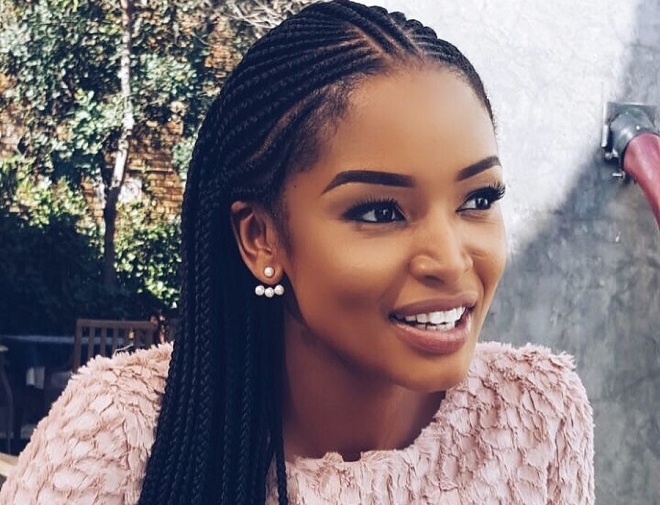
Have you ever worn a style that looks calm from the front but is doing all the work on the sides? That is this one, a middle-parted, mid-back length of straight black hair with no bangs and an intricate cornrow pattern running along both temples. The braids pull the hair back with real tension, so the front stays flat and sleek while the rest hangs loose. I have worn similar side cornrows, and the grip is honest: they hold for days, but that tightness asks for scalp care by night two. A light massage at the roots keeps the ache away. The downside is the take-down, which takes patience and a lot of conditioner.
Layers Visual Idea
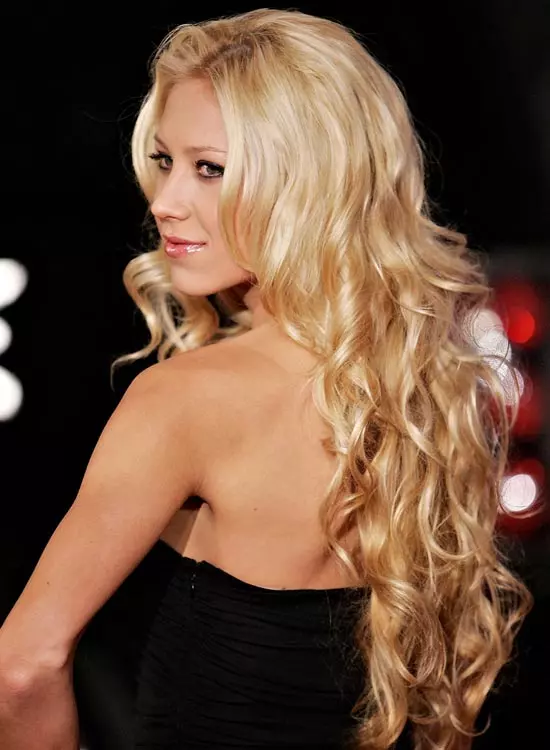
I will admit it, I used to think layers were just something stylists sold to get you back in the chair. Then I watched how this blonde, mid-back cut with subtle highlights and no bangs actually moves. The layers are cut to stack from the collarbone down, and when you curl them with a medium barrel, each section catches the light separately. That is what makes the waves look voluminous instead of just wavy.
The trick is in the direction. You wrap each piece away from the face, then break the curls up with your fingers while they are still warm. The cascading effect comes from the shorter layers flipping over the longer ones, which reads as depth even before the highlights do their part. A middle part keeps the whole thing symmetrical, and the lack of bangs means nothing falls flat in your eyes by noon.
Ash Blonde With Darker Roots Visual Idea
The first thing I notice is the contrast: ash blonde lengths against a darker root that softens the grow-out line, so this mid-back, layered cut with no bangs and wavy, fine to medium density hair looks deliberate for weeks. The half-up, half-down styling with a braided crown adds structure, and the pearl embellishments woven through the braid give it a holiday-ready finish. This is the kind of look you book for a winter wedding or a festive dinner, when you want the hair to feel dressed without being stiff. The loose waves keep it from tipping into formal, and the darker roots mean you are not chasing a toner every four weeks.
Front View Visual Idea
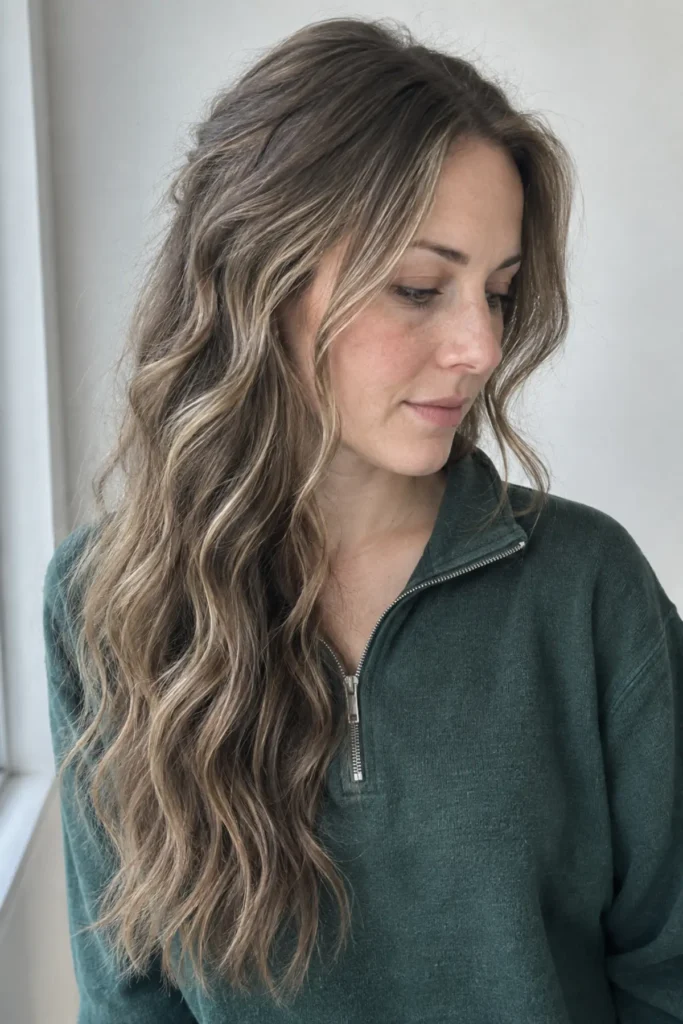
This one flatters a narrow face and softens a strong jaw. The wavy blowout on this mid-back, layered cut with no bangs and medium density hair gives volume at the sides, which visually widens a long or oval face. The middle part draws the eye down the center, so if you have a round face, you might want to skip it, a deep side part would balance better. The brown base with blonde highlights adds dimension, which reads as movement even when the waves drop. It is a salon cut, the layers need precision to fall right, but the result is a shape that works with your natural texture rather than fighting it.
Back View Visual Idea
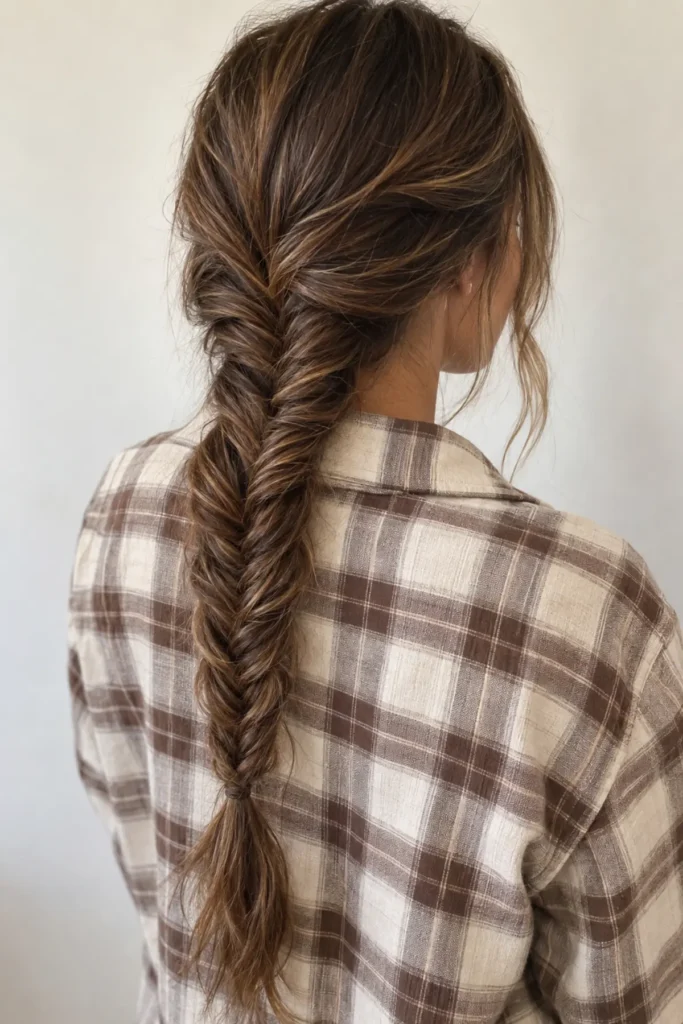
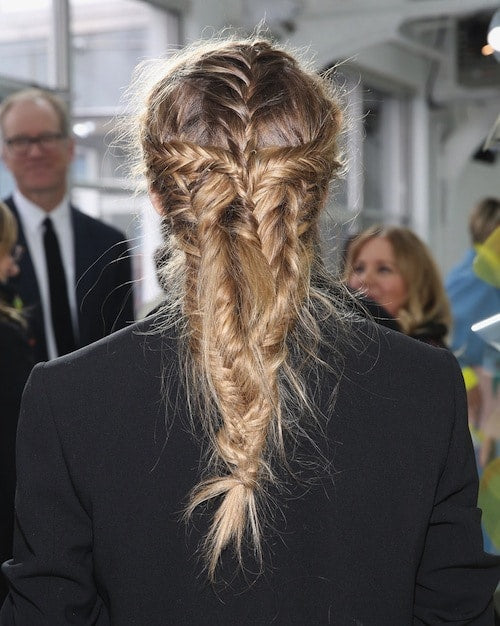
My gut reaction to a fishtail braid is always the same: that takes forever. And it does, the first time, but the payoff is a pattern that looks far more intricate than it is. This one sits on a side part, with medium brown hair and subtle highlights woven through, and the braid starts high and falls down the back, showing off the alternating strands. The wavy texture of the mid-back, layered cut gives the braid grip, so it does not slide apart by evening.
The upkeep is the real cost. You are looking at maybe twenty minutes of braiding on a good day, and if you want it to last, you need to secure the ends well and sleep on a silk pillowcase to avoid frizz. The highlights mean you can stretch your salon visits, but the braid itself will pull at the roots if you wear it too tight. I would not call this an everyday style, it is a Saturday plan, not a Tuesday morning.
Final Thoughts
After writing all of these, I noticed something. The braids and the buns hold better in dry winter air than they do in July. Less frizz, more grip. I am booking the copper shag next. The fringe scares me, but I have sat through worse.