Christmas Hairstyles 2027 With Bows, Braids and Shape
Does Christmas hair have to announce the holiday before the rest of you enters the room? Christmas hairstyles 2027 can feel more personal when the styling reflects how you actually want to show up, rather than treating festivity as an obligation to look visibly decorated. The stronger choice is the one that feels intentional in relation to your own presence, because a holiday look can register through care and confidence without needing to perform a theme.
A useful starting point is the impression you want to make once you are actually in the room with other people. Some occasions call for hair that feels composed and deliberate, while others leave more space for softness, playfulness, or a little drama, and the right direction depends on the social setting as much as personal taste. Choosing that impression first makes the hairstyle feel connected to the moment instead of chosen only because the calendar says Christmas.
Braids Give a White Bow Its Landing Point
The two braided sections do more than decorate the back of the hair: they create a clear route toward the center, so the large white bow feels attached to the hairstyle's structure rather than placed over it at random. Because the braids meet just above the bow, the eye follows that inward movement before dropping into the loose curled lengths below.
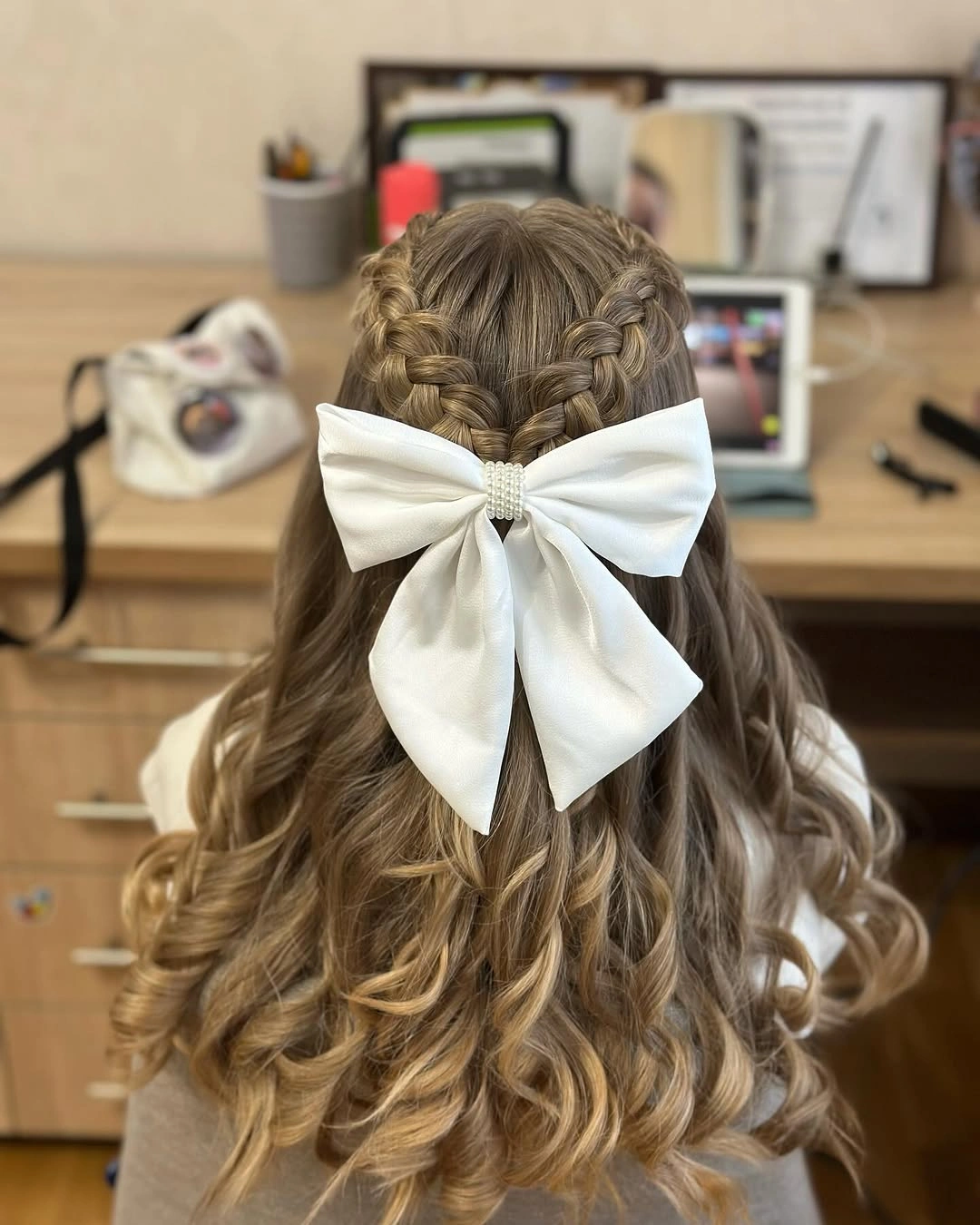
Photo via Instagram
The bow is large enough to remain unmistakable against the light brown hair, yet the lower half is not visually empty. Lighter strands catch through the curls and keep movement running beneath the accessory, so the hairstyle has two readable zones: a defined meeting point near the middle and a softer, more expansive finish through the length.
This kind of arrangement makes the back view especially important, since the accessory has its strongest effect when the braid junction can be seen. If you want the bow to act more like punctuation than the main event, reducing its scale would let the braided meeting point carry more of the attention.
Soft Waves Build Interest Below a Smooth Crown
What stands out here is where the movement begins. The upper section stays comparatively smooth and close to the head, while the stronger bends gather through the middle and lower lengths, giving the hairstyle a gradual transition instead of immediate volume at the crown. That placement makes the waves feel soft rather than heavily sculpted.
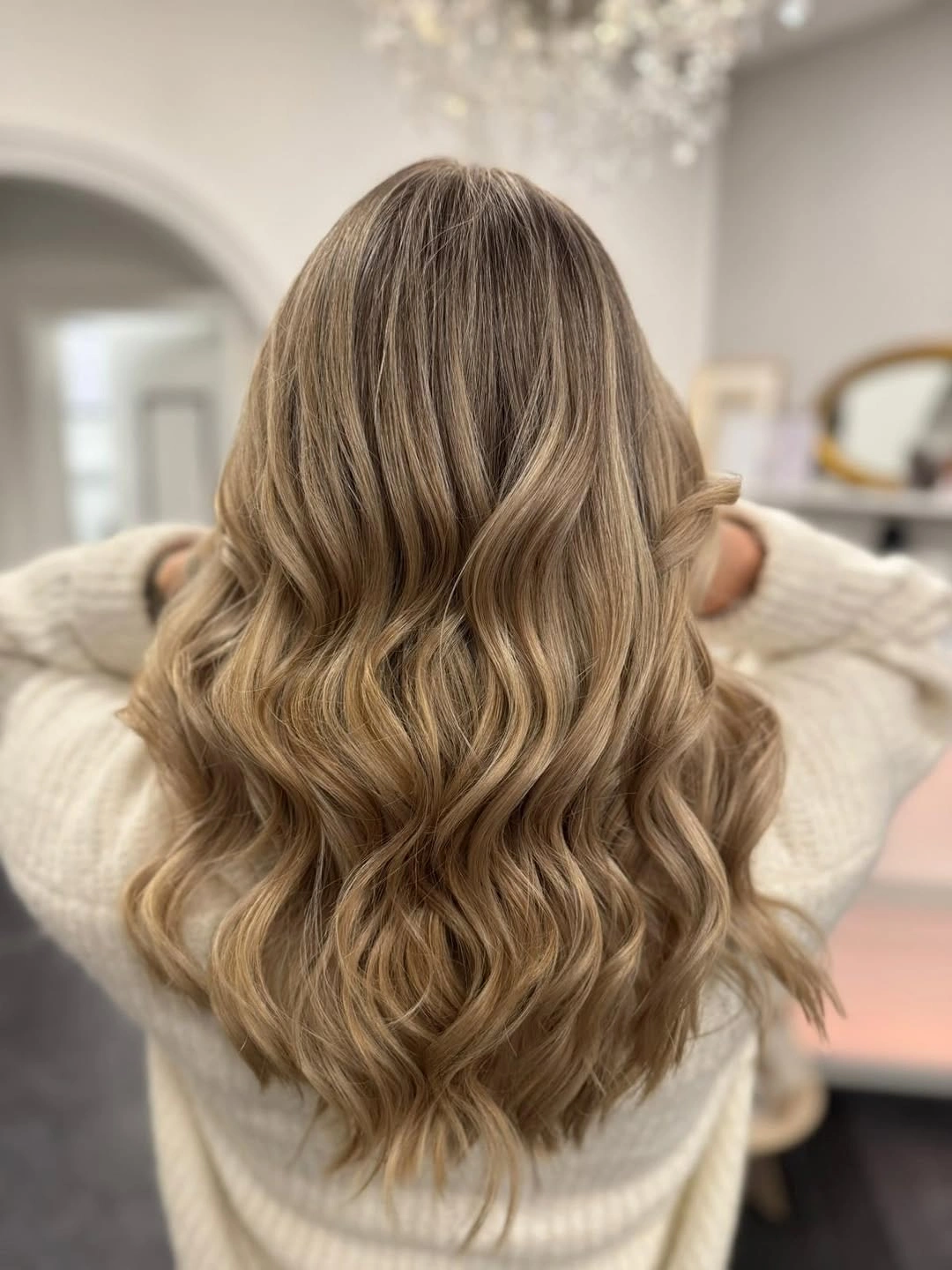
Photo via Instagram
The lighter pieces become more noticeable where the hair curves, because each bend exposes a slightly different mix of warm brown and pale tones. That variation gives the back view depth without relying on clips, bows, or other visible accessories, and it lets the repeating wave pattern provide enough visual interest on its own.
Choose this lower-start wave pattern if you prefer the crown to stay relatively calm while the movement builds farther down. A wave that begins higher near the temples would create a fuller upper silhouette and change the emphasis completely.
Fine Braids Pull the Focus Forward
The hair is pulled closely back from the face, with braided sections visible across the crown before two slim, light-toned braids descend in front. That combination keeps the upper shape compact while the two long front braids create clear vertical lines beside the face, so the detail reads through direction and length rather than through added accessories.
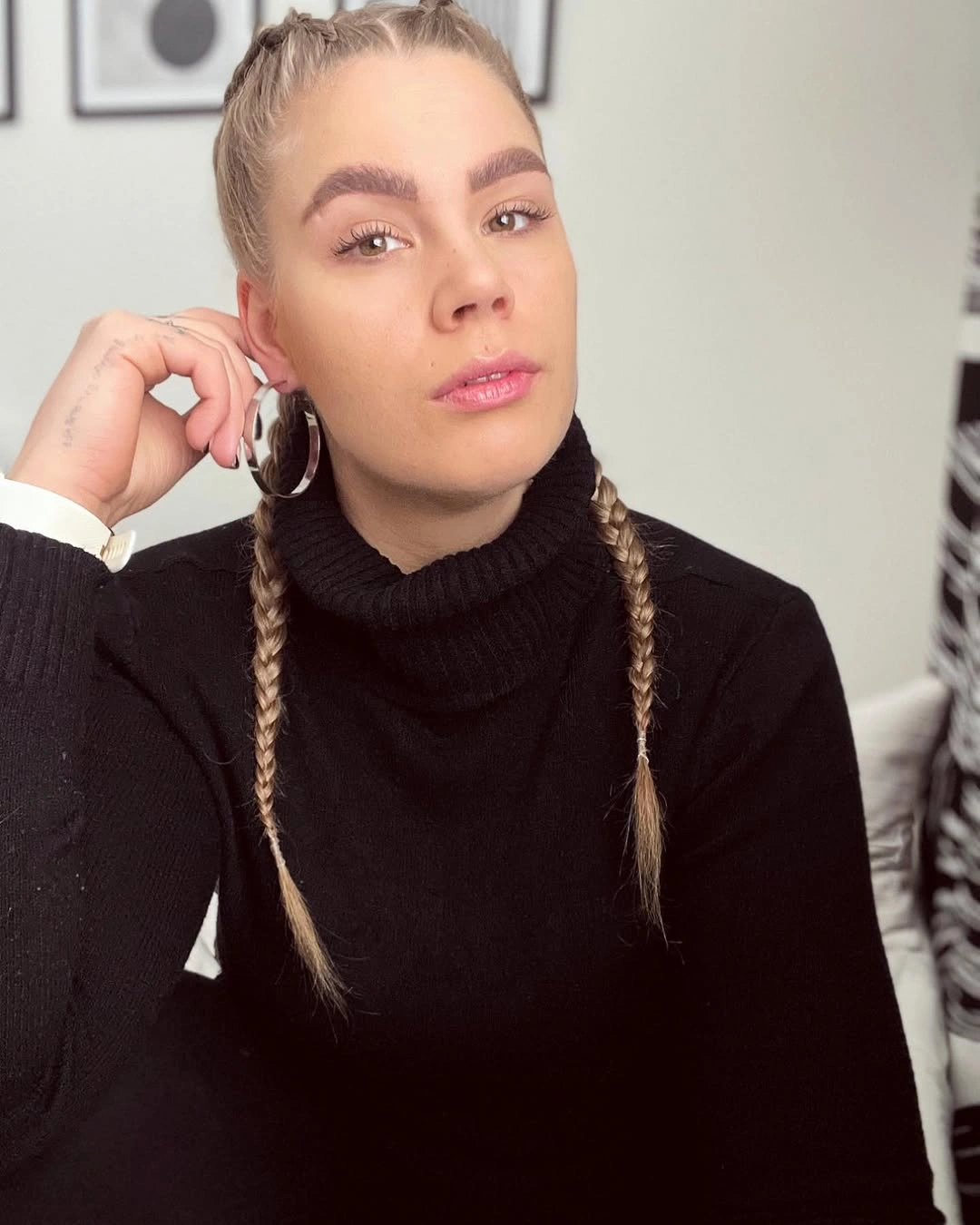
Photo via Instagram
The contrast between the darker hair near the scalp and the lighter braided lengths makes those narrow sections easy to read without adding a separate ornament. Because the crown stays compact, the hairstyle does not build much visible width around the face; the interest comes from line, repetition, and the length of the two front braids instead.
Braid width is the useful decision here. Keeping the sections fine preserves that precise vertical rhythm, while noticeably thicker braids would give the front framing more visual weight and make the hairstyle feel less delicate.
A Red Bow Makes the Holiday Cue Explicit
A very large deep red bow changes the reading of this loose hairstyle immediately because it sits high and centered against the dark brown length. The accessory occupies enough space to become the first detail the eye registers, and the decorated Christmas tree behind it reinforces the holiday setting without requiring the hair itself to mimic a seasonal motif.
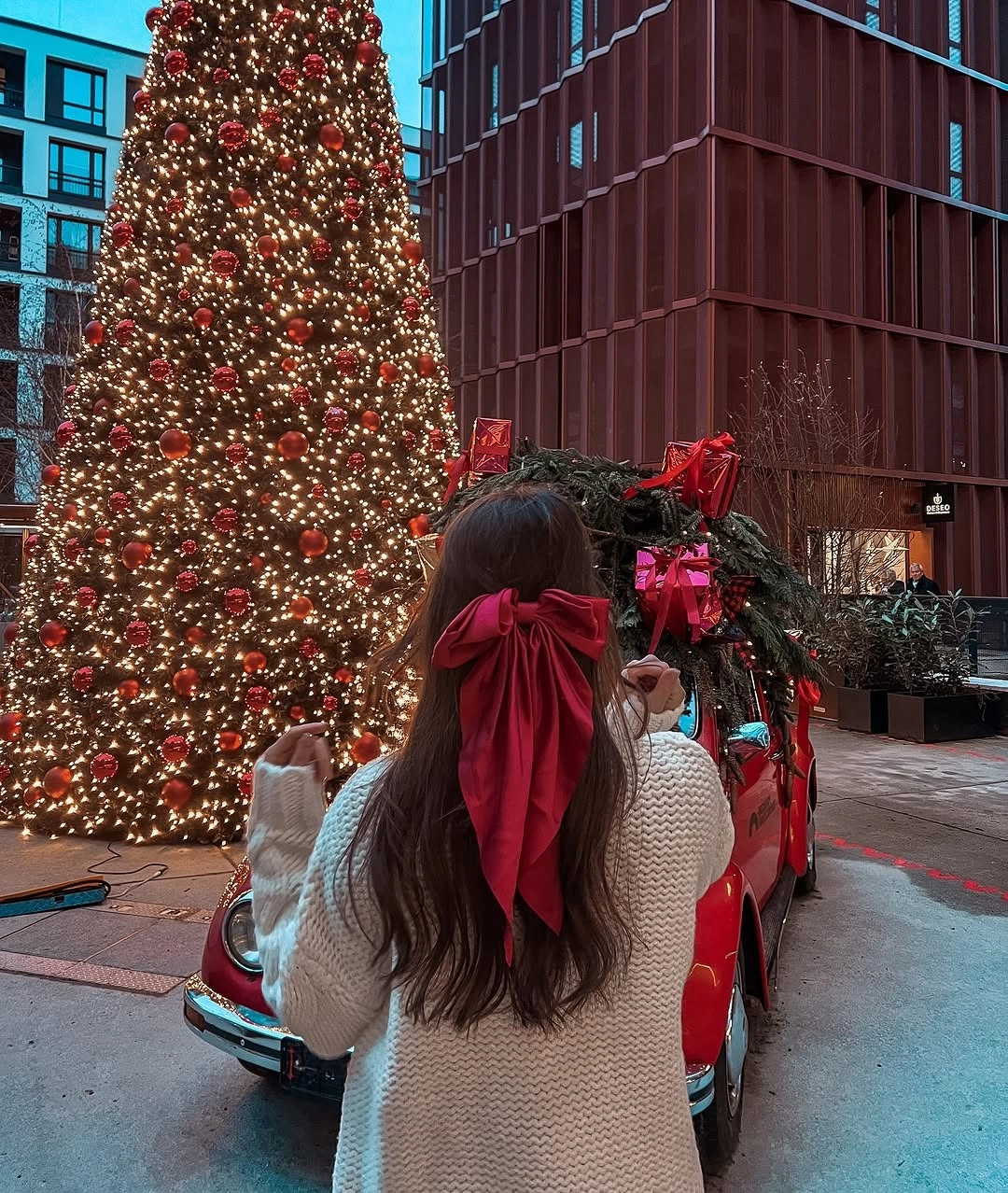
Photo via Instagram
Below the bow, the hair remains long, dark, and comparatively uninterrupted, which gives the accessory a broad field to sit against. That clear separation matters: the bow supplies a crisp block of color and shape near the upper back, while the loose length keeps the overall silhouette soft rather than turning the entire hairstyle into one rigid decorative form.
Scale is what decides whether this reads as a full holiday statement or a subtler accent. A bow this large is meant to be noticed from behind, while a smaller version would leave more attention on the uninterrupted fall of the hair itself.
A Deep Side Part Creates Its Own Drama
The deep side part creates the strongest movement before the eye ever reaches the ends. Hair rises and sweeps away from the part, giving the front a directional shape that feels intentional even without a visible clip, bow, or braid. For anyone drawn to a visually simple Christmas hairstyle, it shows how much presence can come from the placement of the part alone.
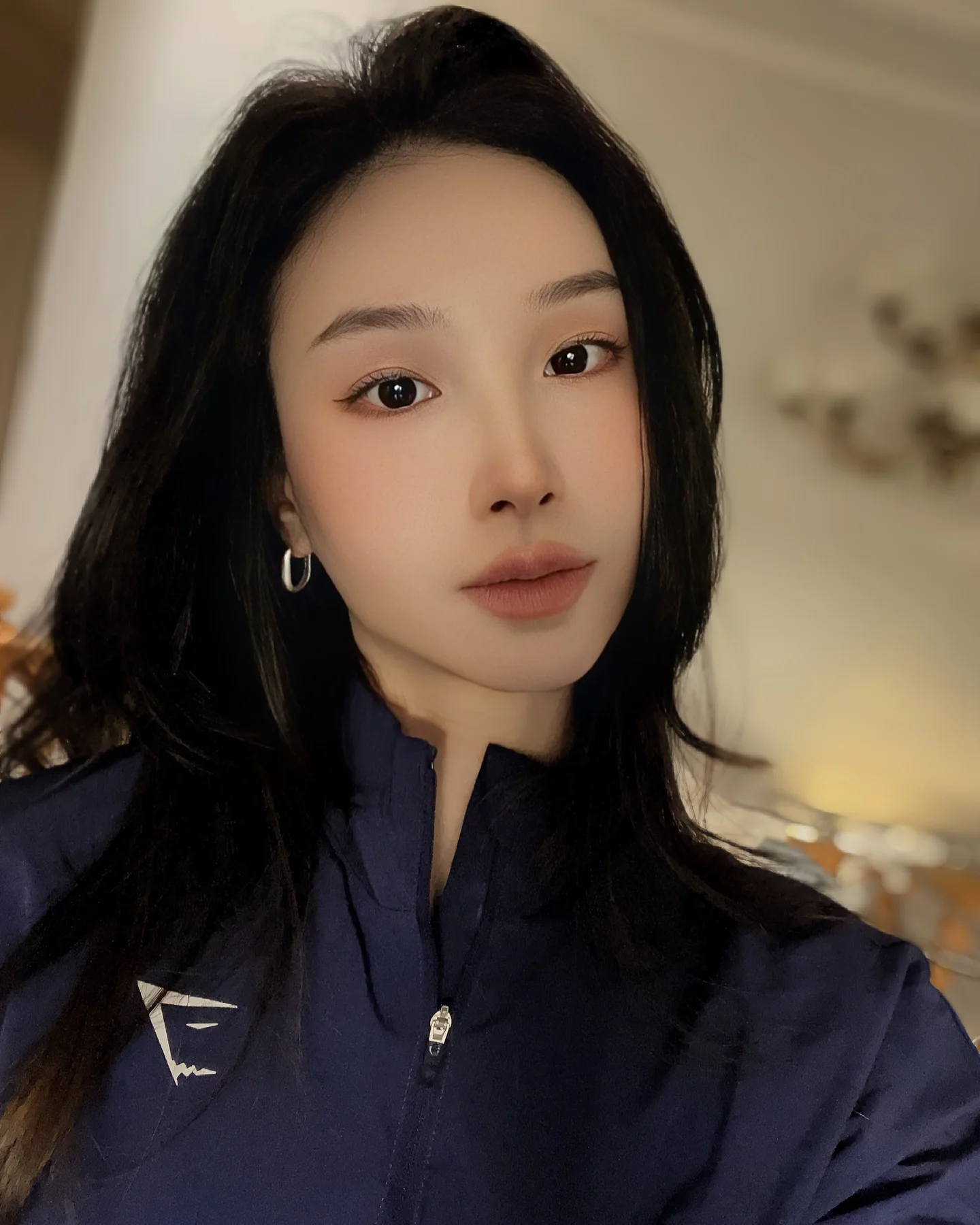
Photo via Instagram
Most of the visible length stays relatively straight and smooth, so the curved ends register as a restrained finishing detail rather than the start of a full curl pattern. That cleaner surface keeps attention near the face and makes the contrast between the lifted front and the softer lower edge more noticeable than it would be in a heavily waved style.
This is a strong reference when you want the main decision to happen around the face rather than at the back of the head. It also makes sense when the hairstyle will be viewed mostly from the front, because the deep part and lifted sweep remain visible without depending on a rear accessory.
Waves That Start High Create Face-Framing Fullness
The volume begins high rather than waiting until the ends, which changes the whole outline of these long black waves. Broad bends form around the sides of the face and continue through the middle lengths, so the hairstyle carries visible width near the cheeks and shoulders instead of keeping the upper section close to the head.
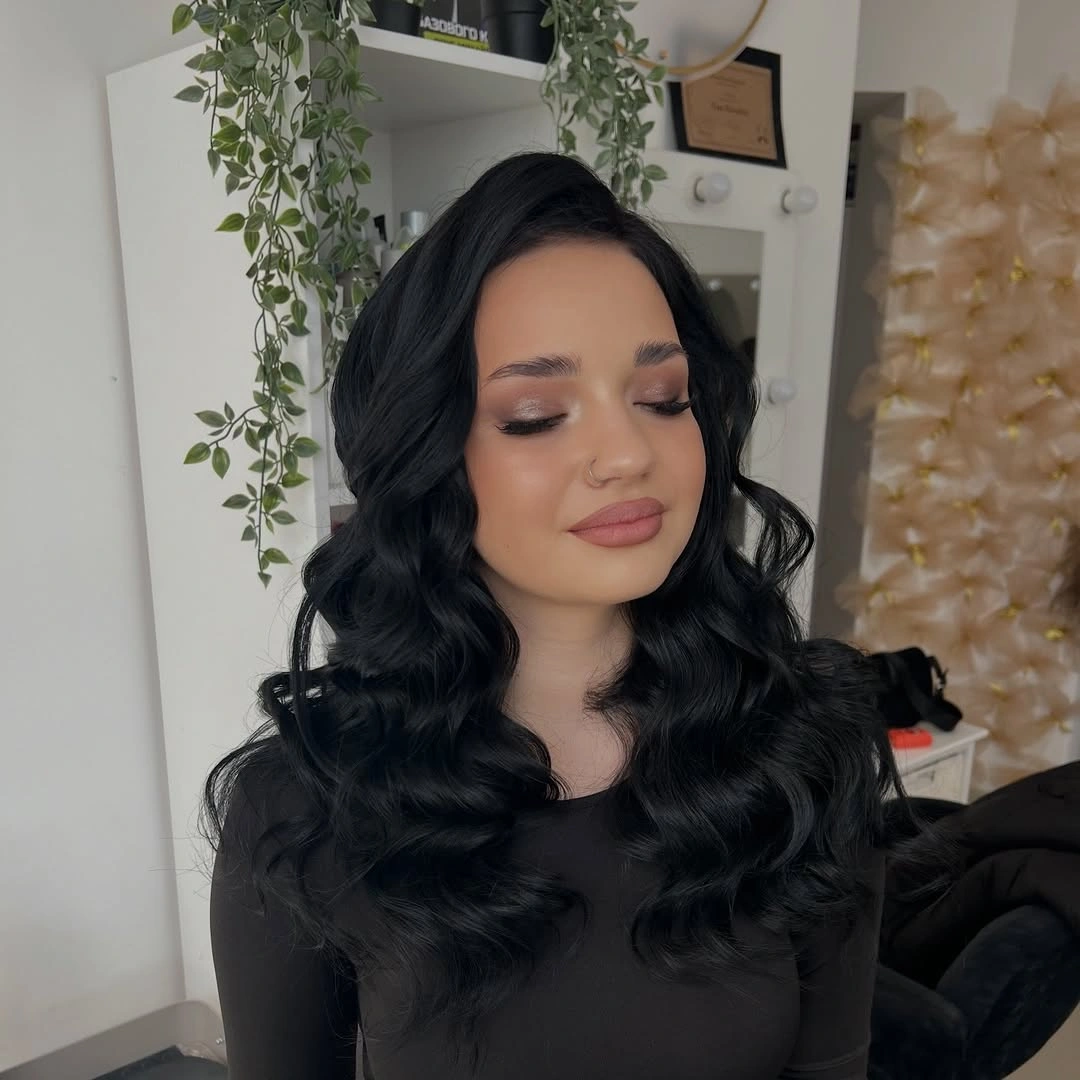
Photo via Instagram
Because the hair is very dark and the waves are large, each ridge reads clearly against the next one. The repeating curves become the main decorative feature, with the side part giving the front a slightly directional start before the fuller wave pattern takes over through the rest of the visible length.
This is a useful reference if you want fullness to begin close to the face rather than gathering mostly through the lower lengths. Starting the strongest bends farther down would leave the upper outline noticeably narrower and put more emphasis on the ends.
Center-Parted Waves Create an Even Front View
The center part gives this long brown hairstyle a clear axis, and the waves on both sides follow that division with an unusually even rhythm. Each side curves outward and back in a similar sequence, so the face is framed by matching S-shaped movement rather than by a stronger sweep on only one side.
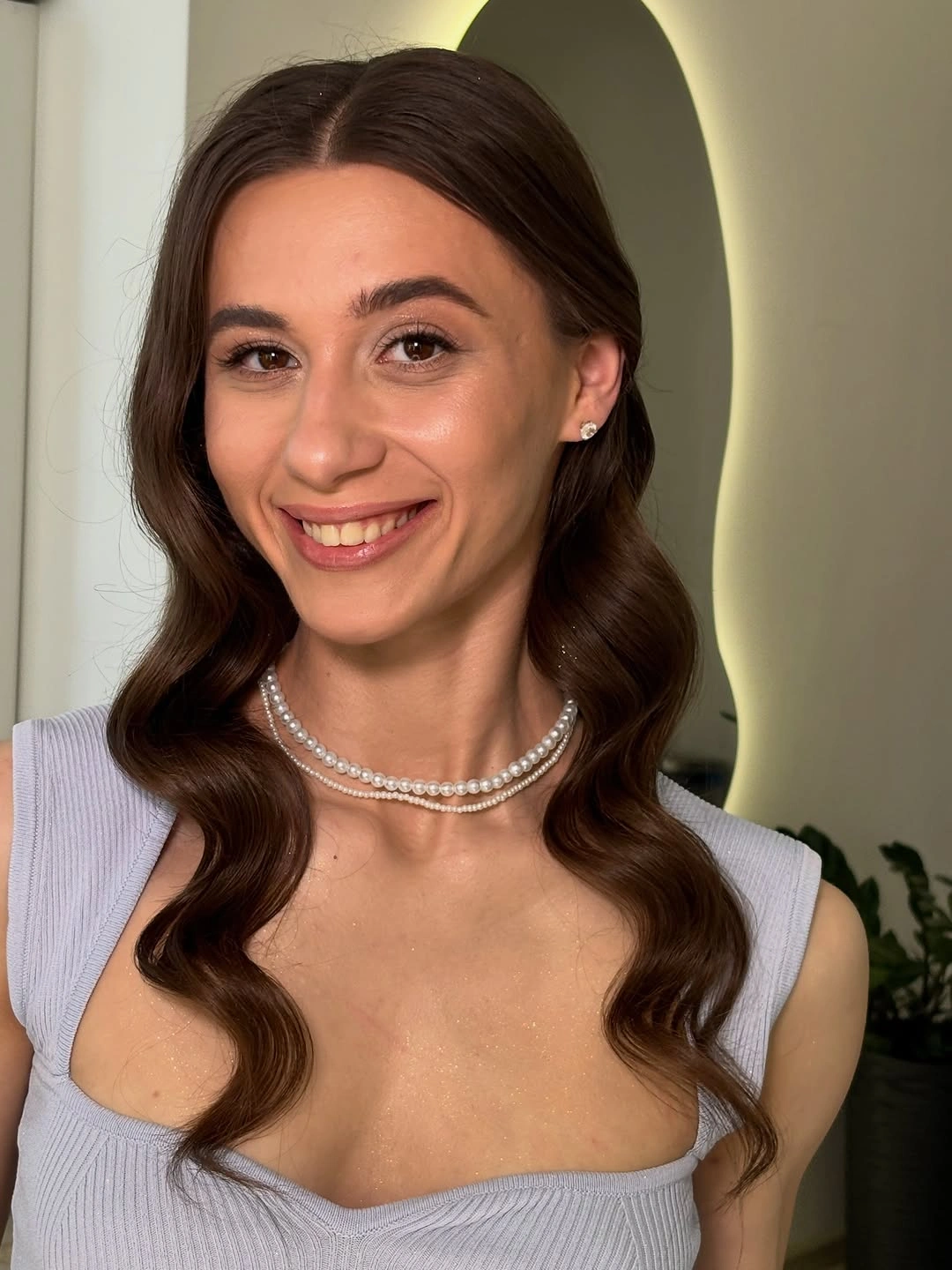
Photo via Instagram
That symmetry makes the front view feel controlled without requiring a visible accessory. The waves are smooth enough to read as repeated lines rather than separate curls, and their matching placement keeps attention on the face while still giving the long lengths a clearly formal, deliberate shape.
A center part works especially well when you want both sides of the hairstyle to carry similar visual weight from the front. Shifting the part off center would introduce a stronger directional emphasis and make one side of the framing feel more dominant.
A Low Bun Keeps the Focus at the Nape
Most of the visual work happens at the nape in this low bun. The crown is swept back smoothly, which keeps the upper silhouette close to the head, while overlapping sections gather into a rounded form below. That lower placement makes the bun feel substantial without adding noticeable height above the crown.
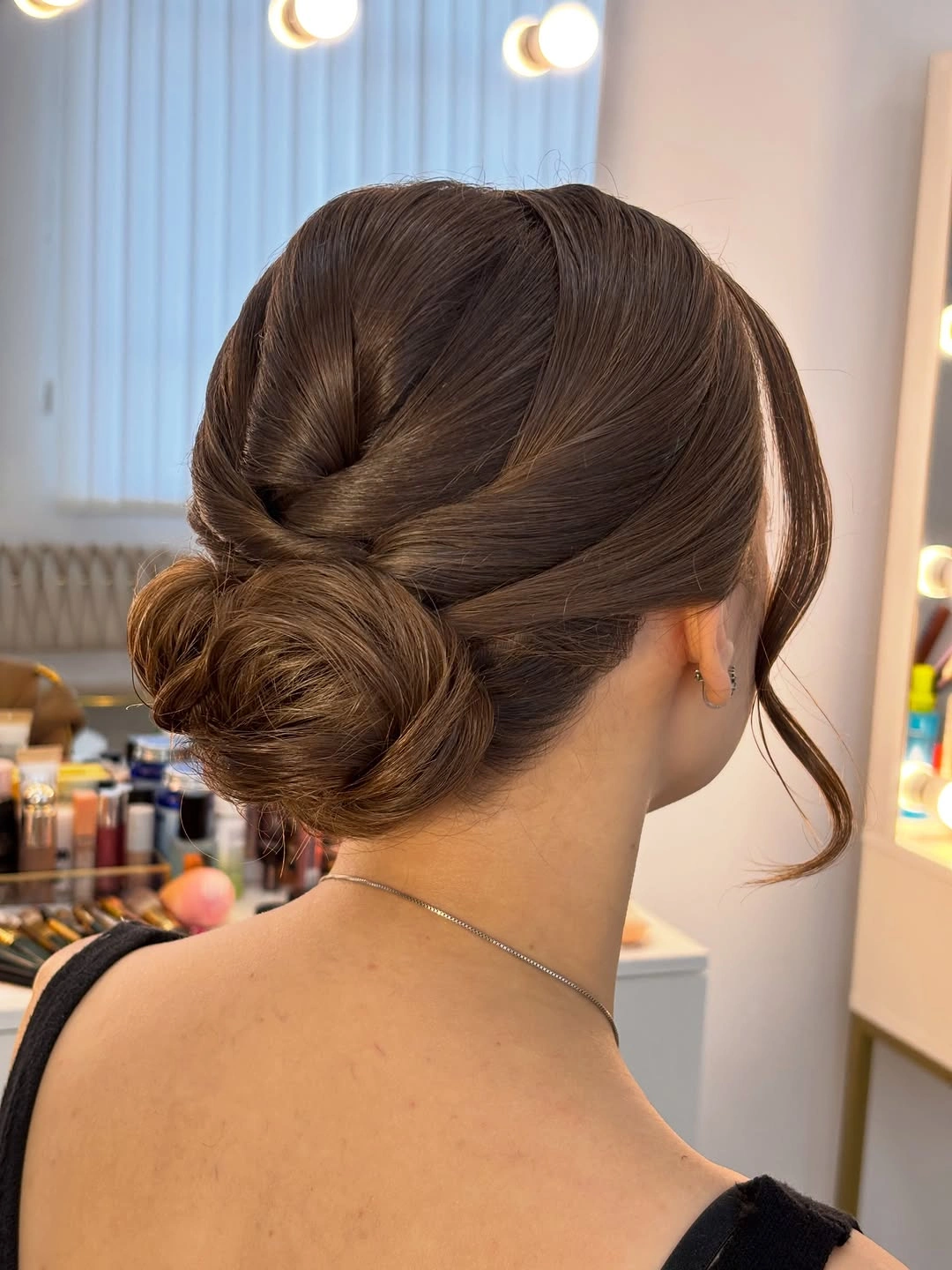
Photo via Instagram
One long curved strand beside the face changes the effect of the otherwise contained shape. It introduces a soft vertical line at the front while the bun remains concentrated at the back, so the hairstyle has a clear contrast between a smooth swept surface and the layered, dimensional form at the nape.
For a Christmas bun hairstyle, consider how much of the gathered shape you want visible from the side as well as the back. A broader rounded bun projects more clearly in profile, while a tighter form kept closer to the nape would create a slimmer outline.
Scattered White Accents Travel Through Soft Waves
The small white round accents are scattered across several parts of the hairstyle rather than concentrated in one clip or bow. They appear near the center part, along the sides, and farther down the softly waved lengths, so the decorative effect travels through the hair instead of stopping at one focal point.
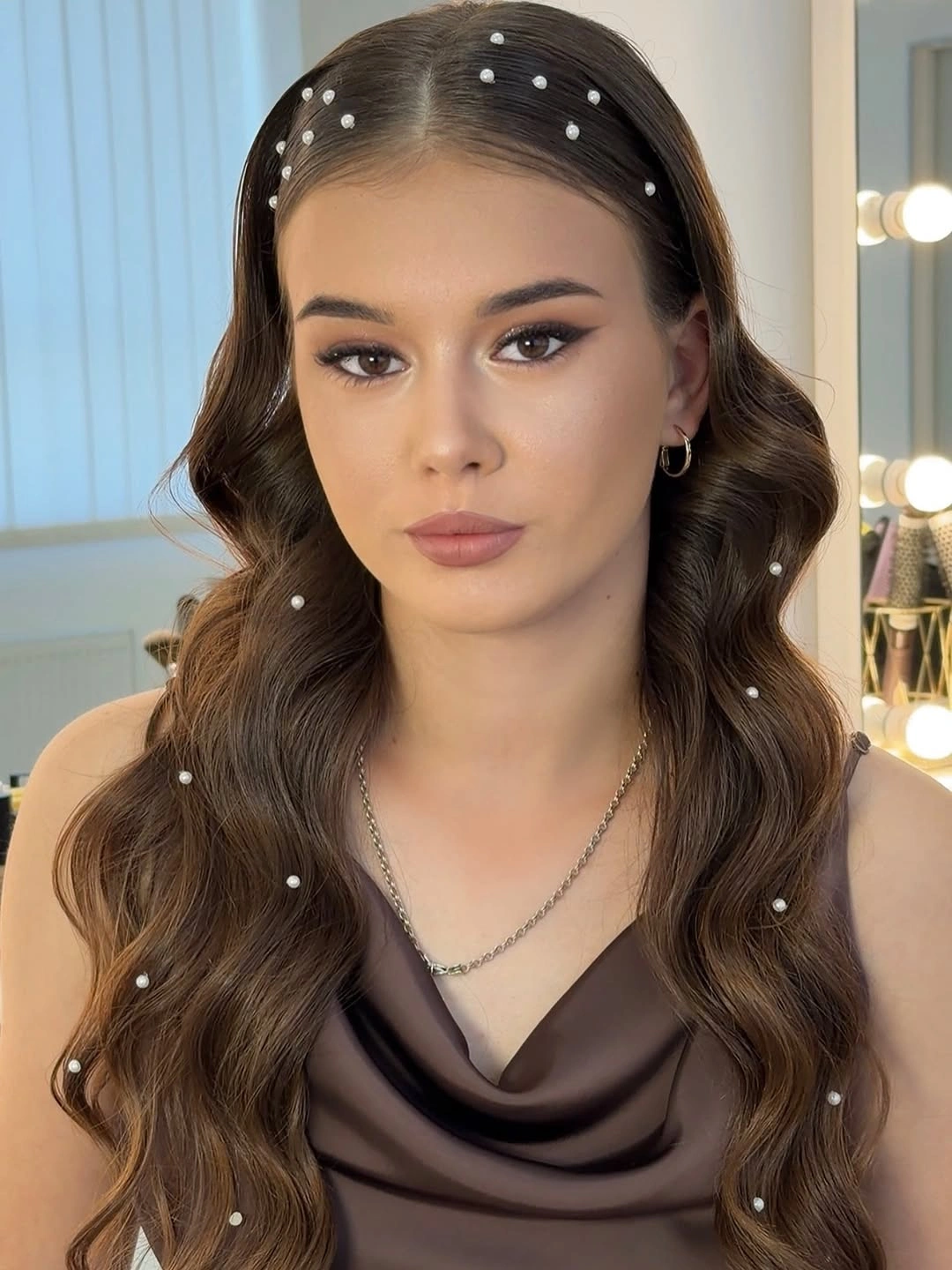
Photo via Instagram
Their small scale leaves plenty of the brown wave pattern visible between each accent. That spacing matters because the hairstyle still reads first as long, center-parted waves, while the repeated white points add a playful Christmas detail that becomes more noticeable only as the eye moves through the full length.
Placement gives you another choice beyond simply adding more or fewer accents. Keeping them mainly near the part would focus attention around the face, while carrying them farther through the lengths creates the more dispersed effect seen here.
Long Waves Let the Length Become the Statement
The sheer amount of visible length is part of the impact here. Very long brunette hair falls well below the chest in broad loose waves, so the repeated bends become a large-scale part of the silhouette rather than a detail limited to the ends. That makes this a strong reference for Christmas hairstyles for long hair that keep the length fully on display.
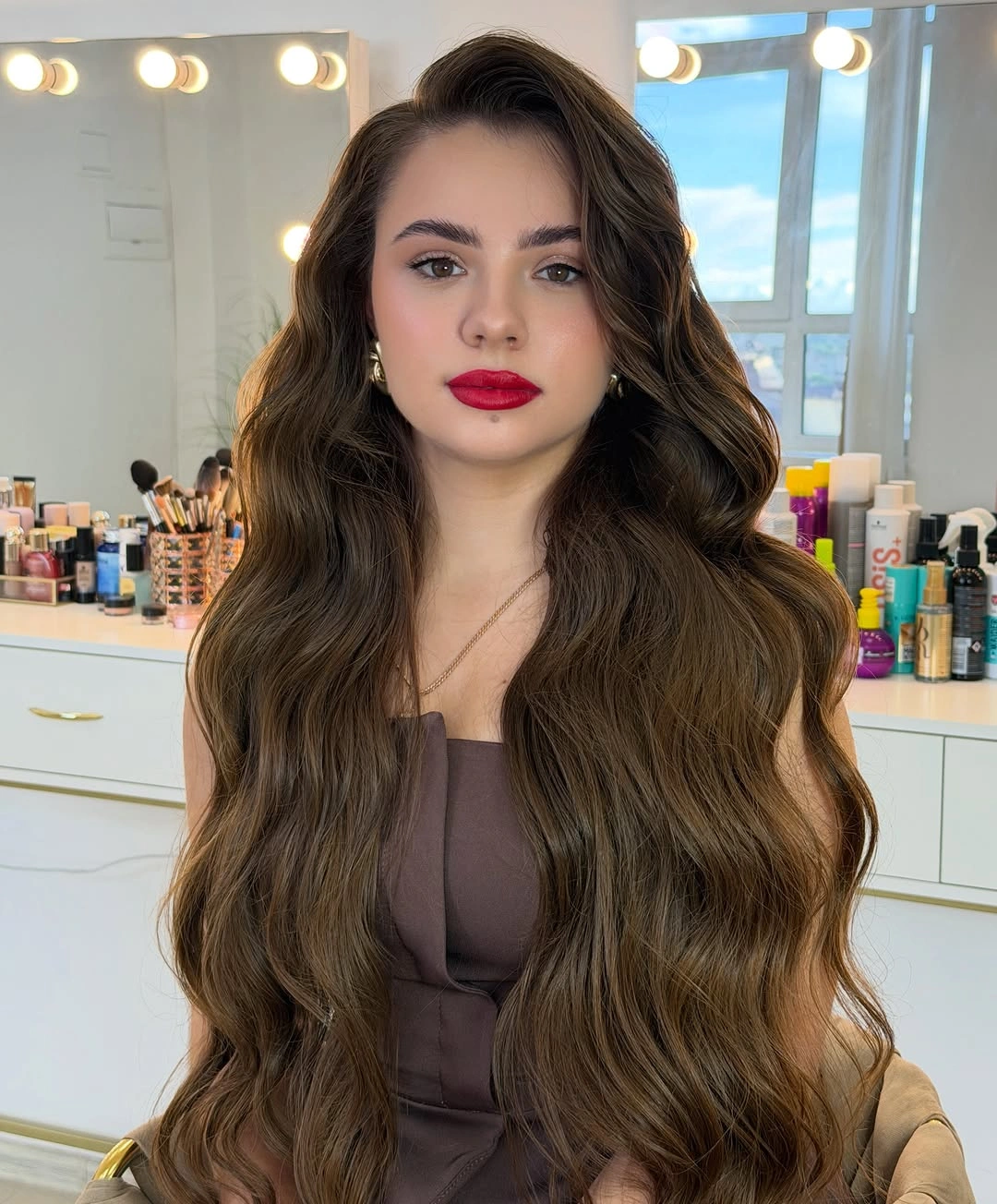
Photo via Instagram
The pronounced side part and lift around the front keep the upper section from looking small beside all that length. Volume begins near the crown and then relaxes into wider waves below, creating a gradual transition from a fuller top to the long flowing sections without introducing any visible accessory or gathered element.
Think about how much of that length you want brought forward over the shoulders. Wearing more of it in front makes the waves occupy more of the portrait, while moving a larger portion behind the shoulders would give the same long shape a less enveloping presence.
A Diagonal Sweep Makes a Low Bun Sleeker
The most distinctive line in this low bun is not the bun itself but the sweep that reaches it. Brown hair crosses the back of the head on a visible diagonal before disappearing into the gathered shape, so the eye moves from the smooth upper section toward the nape instead of reading the style as a centered, symmetrical arrangement.
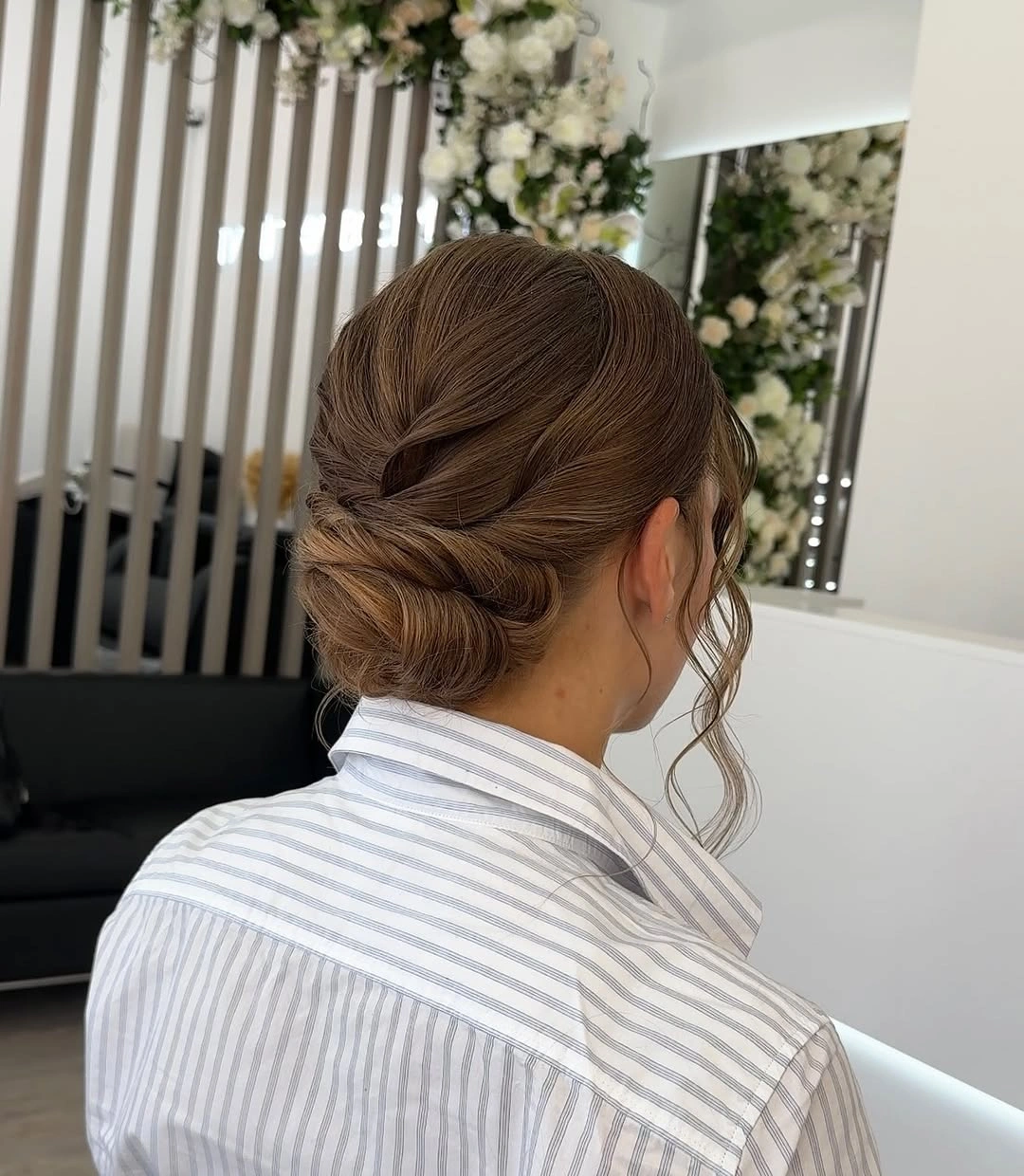
Photo via Instagram
The bun stays compact and close to the head, which gives the hairstyle a flatter profile than a fuller rounded low bun. A narrow curled strand beside the face adds one softer line without changing that low-profile character, so the detail at the front feels separate from the controlled direction of the back.
If you like a back view with an obvious sense of direction, the diagonal sweep is the feature to preserve. A more centered wrap would make the silhouette feel more symmetrical and would shift attention away from that slanted line.
One Tucked Side Lets a Broad Wave Lead
A few broad wave arcs do more here than a dense pattern of smaller curls would. The warm brown hair bends outward around the cheek and shoulder area in large, smooth sections, which lets each curve remain easy to see even though the visible length is moderate in this view rather than dramatically long.
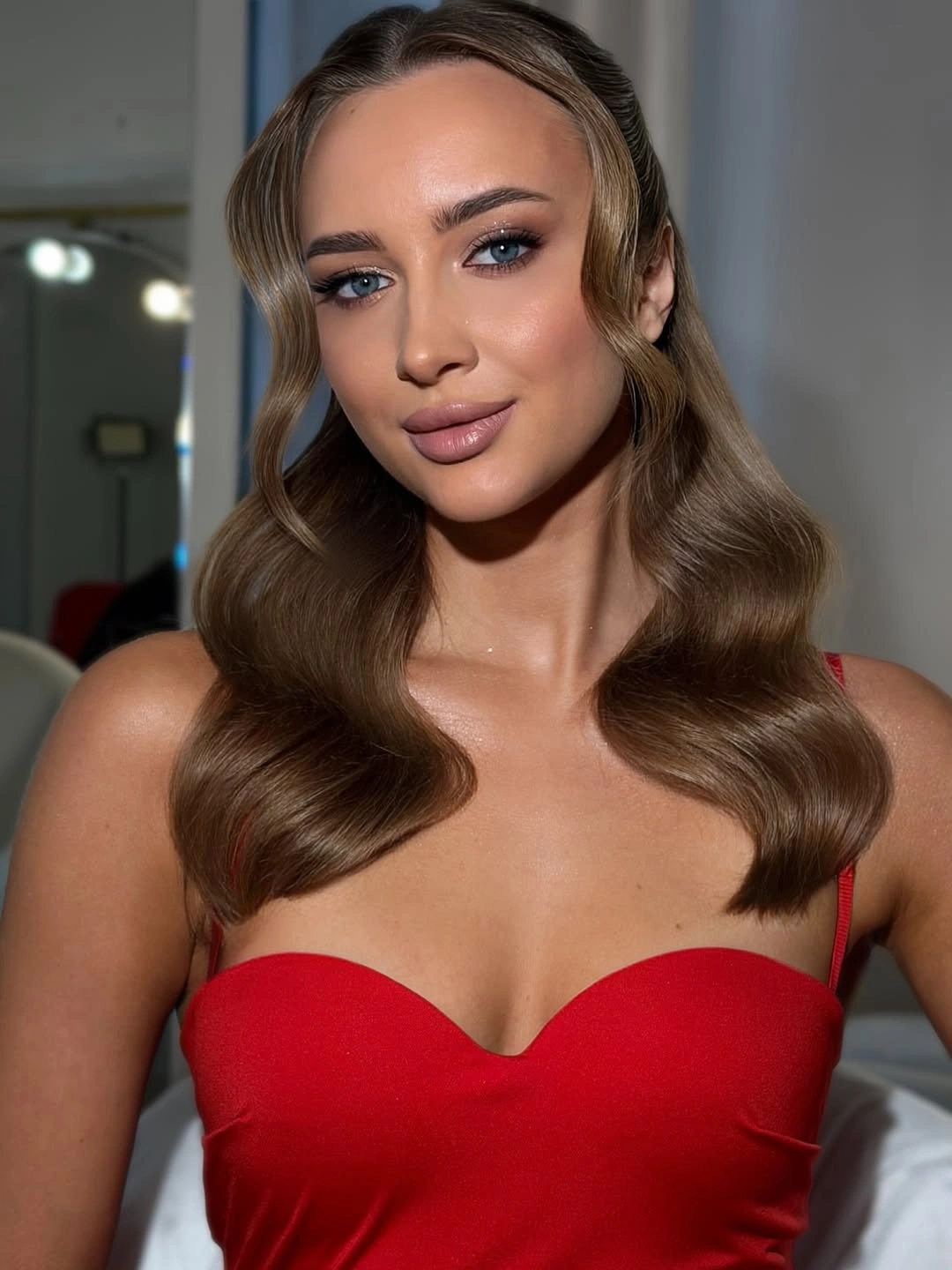
Photo via Instagram
One side stays drawn neatly back while the opposite side carries the fuller wave, and that uneven distribution is what gives the front view its character. The face feels more open on one side, while the larger arc on the other becomes the place where the eye lingers, creating definition without adding volume everywhere.
Decide whether you want both sides to frame the face equally or one side to stay quieter. Mirroring the fuller wave on both sides would create a more symmetrical outline, while this arrangement leaves one broad curve in charge.
Half-Up Height Keeps Long Waves in View
The gathered section sits high enough to create a clear focal point above the rest of the hair without turning the whole style into an updo. That elevated knot lifts the rear silhouette at the crown, while most of the long dark brown hair remains loose, so the hairstyle still reads strongly through its visible length.
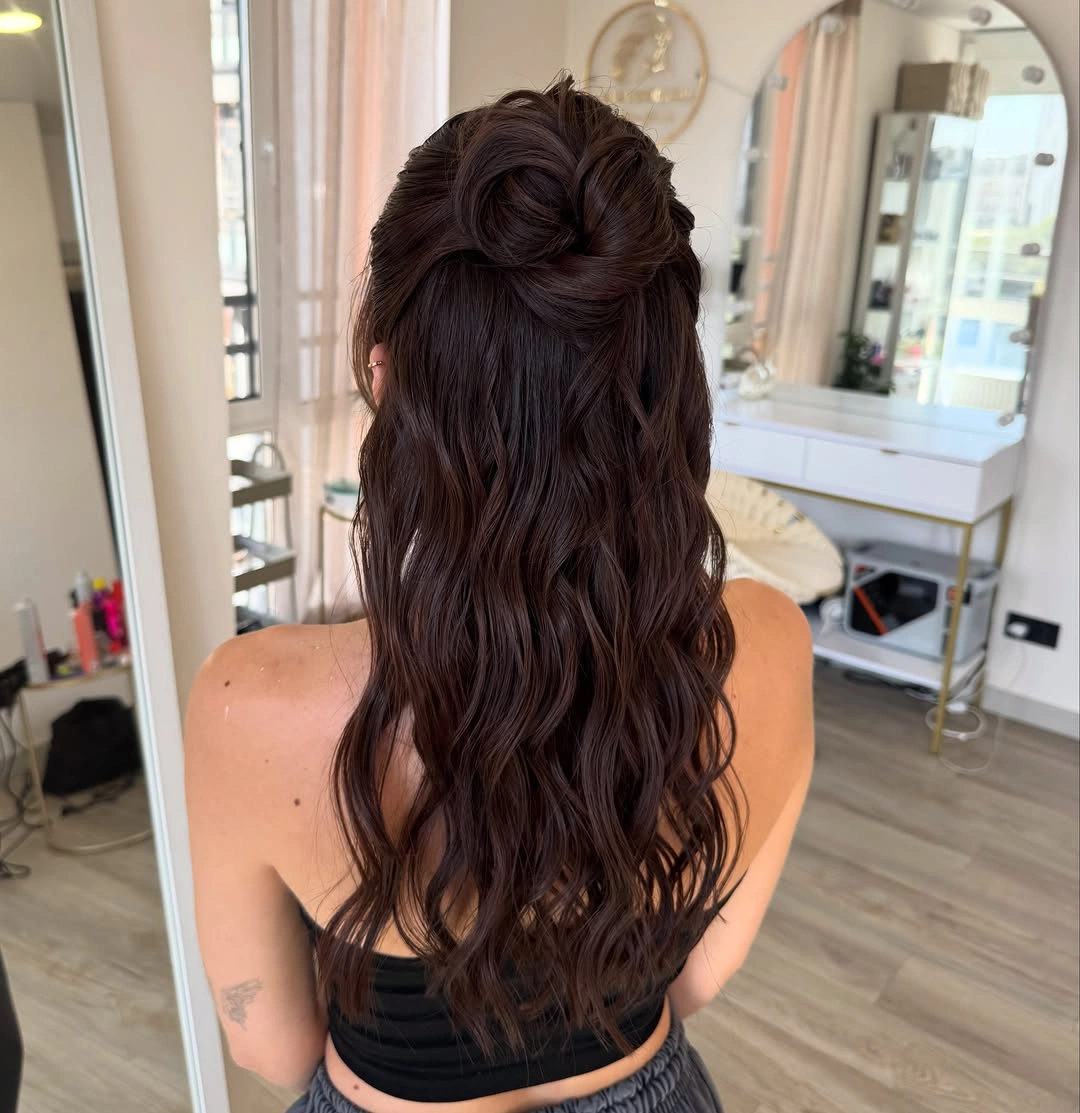
Photo via Instagram
Below the gathered section, the loose waves keep their own shape and volume instead of blending into the knot. That separation gives this half-up, half-down Christmas hairstyle two distinct levels: a compact rounded form near the crown and a much longer field of movement extending through the back.
The size of the gathered portion changes which half of the hairstyle dominates. Keeping the knot smaller lets the long waves remain the main event, while making it larger would move more of the visual weight toward the crown.
A High Ponytail Gains Softness From One Front Section
This high ponytail gets its impact from a clean upward pull rather than from a heavily curled tail. The dark brown hair is smoothed close to the head and gathered high, so the ponytail projects clearly behind the crown and creates a long, uninterrupted line that is especially easy to read from the side.
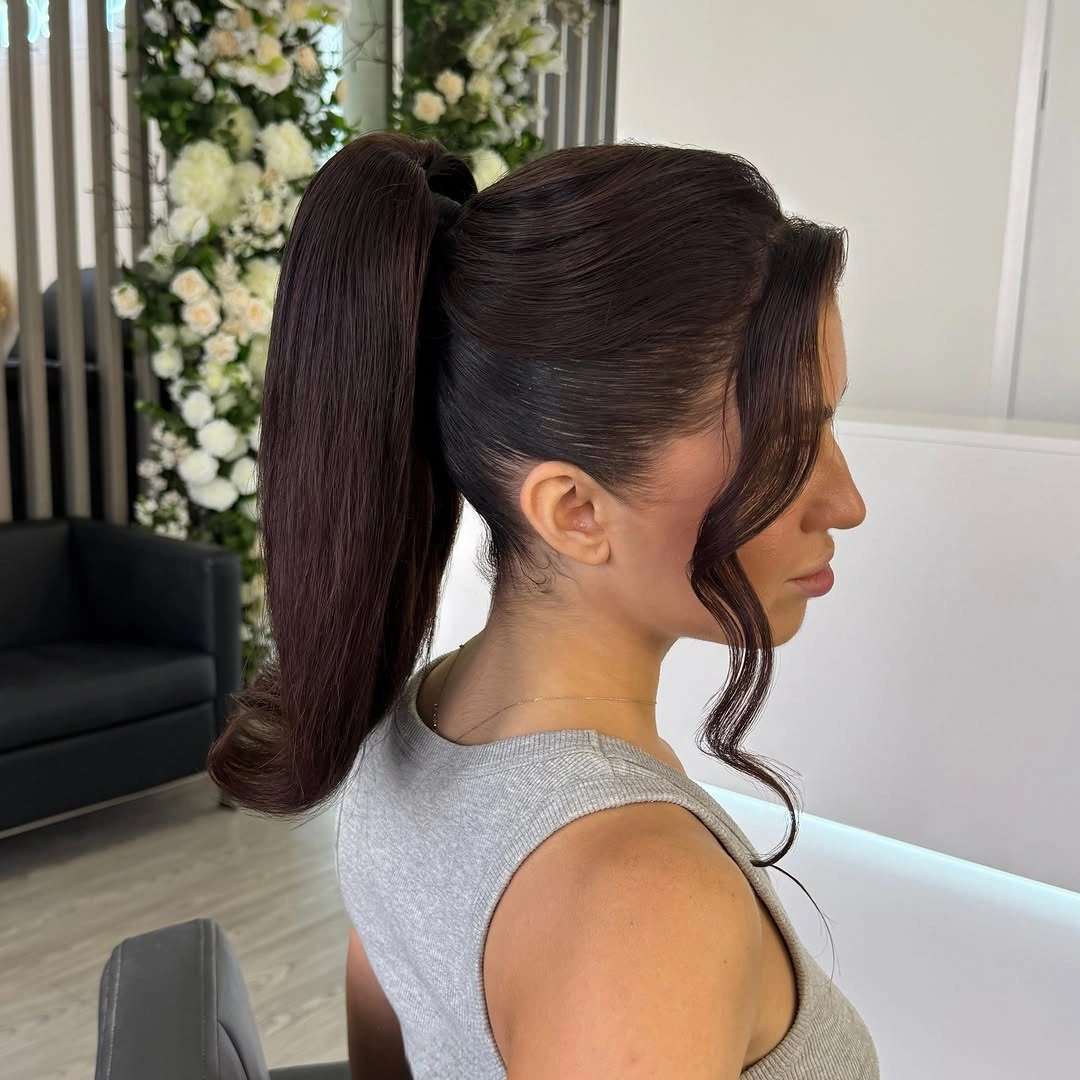
Photo via Instagram
The ponytail stays comparatively straight through most of its visible length, then turns into a gentle curve near the lower end. In the pictured profile, one substantial loose section falls beside the face and carries much of the front movement, creating a softer line against the sleek pulled-back hair without changing the long, clean shape of the tail.
Think about whether that face-framing section belongs in the effect you want. Leaving it out softens the profile and adds asymmetry, while drawing it back would expose more of the side of the face and make the ponytail read more sharply.
A Chain-Like Accent Follows the Entire Braid
Among Christmas hairstyles with braids, this one makes length part of the decoration itself. A very long, thick single braid descends from a high gathered base in one continuous vertical line, so the eye follows the structure downward rather than stopping at a bun, bow, or isolated accessory near the crown.
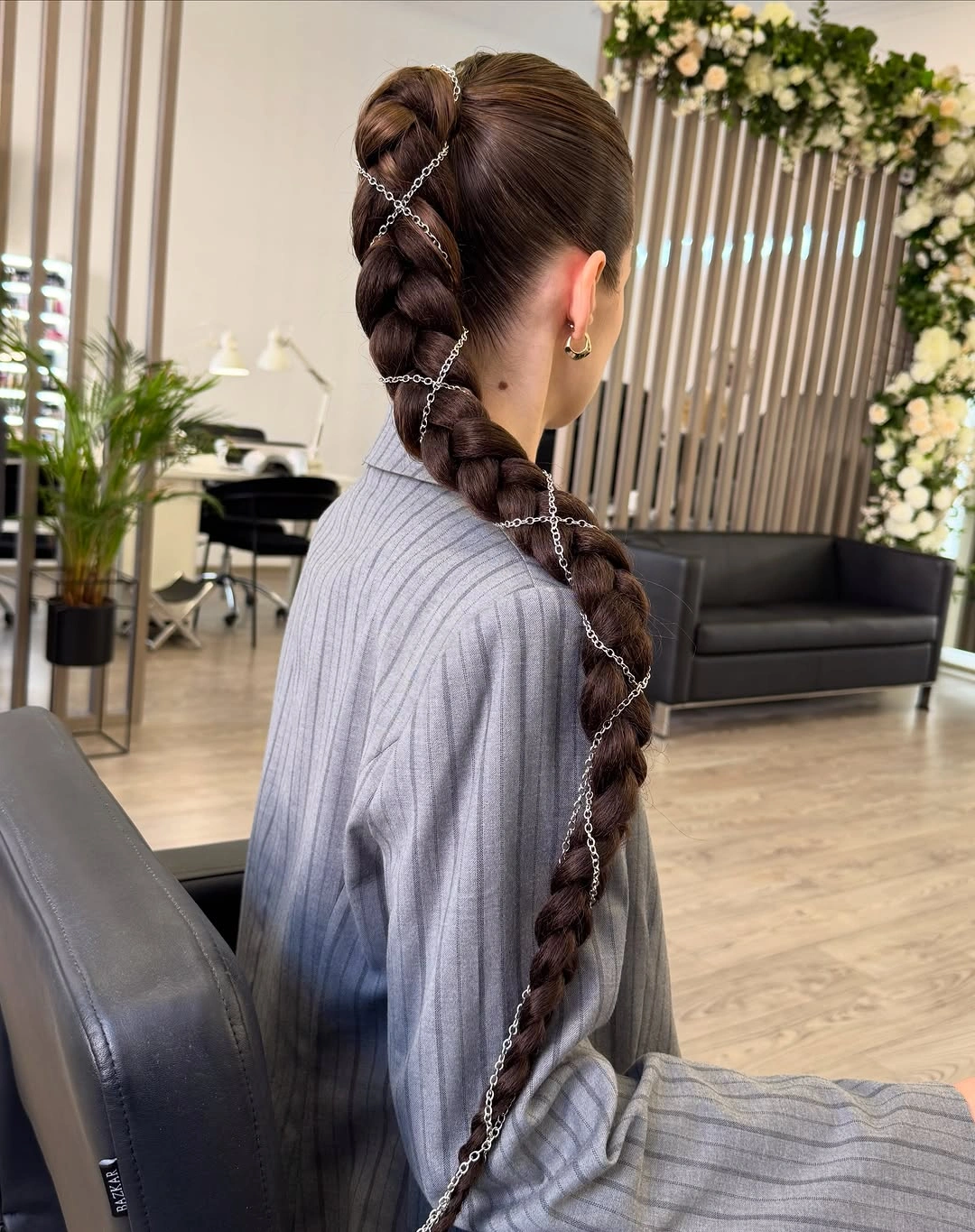
Photo via Instagram
A fine chain-like accent crosses and winds around several sections of the braid instead of sitting in one fixed spot. Because the accessory repeatedly reappears along the braid, it traces its path and makes the ornament feel integrated with the full length rather than attached as a separate finishing piece.
You can decide how far down the braid you want that decorative line to travel. Limiting the accent to the upper portion would concentrate attention near the gathered base, while continuing it through the length creates the extended effect seen here.
High Volume Turns the Updo Into the Focus
The height is immediate in this warm brown updo because most of the gathered hair sits above and behind the crown rather than spreading across the nape. Overlapping curled sections build a rounded, elevated mass, so the silhouette rises noticeably before the two loose pieces bring the eye back down toward the face.
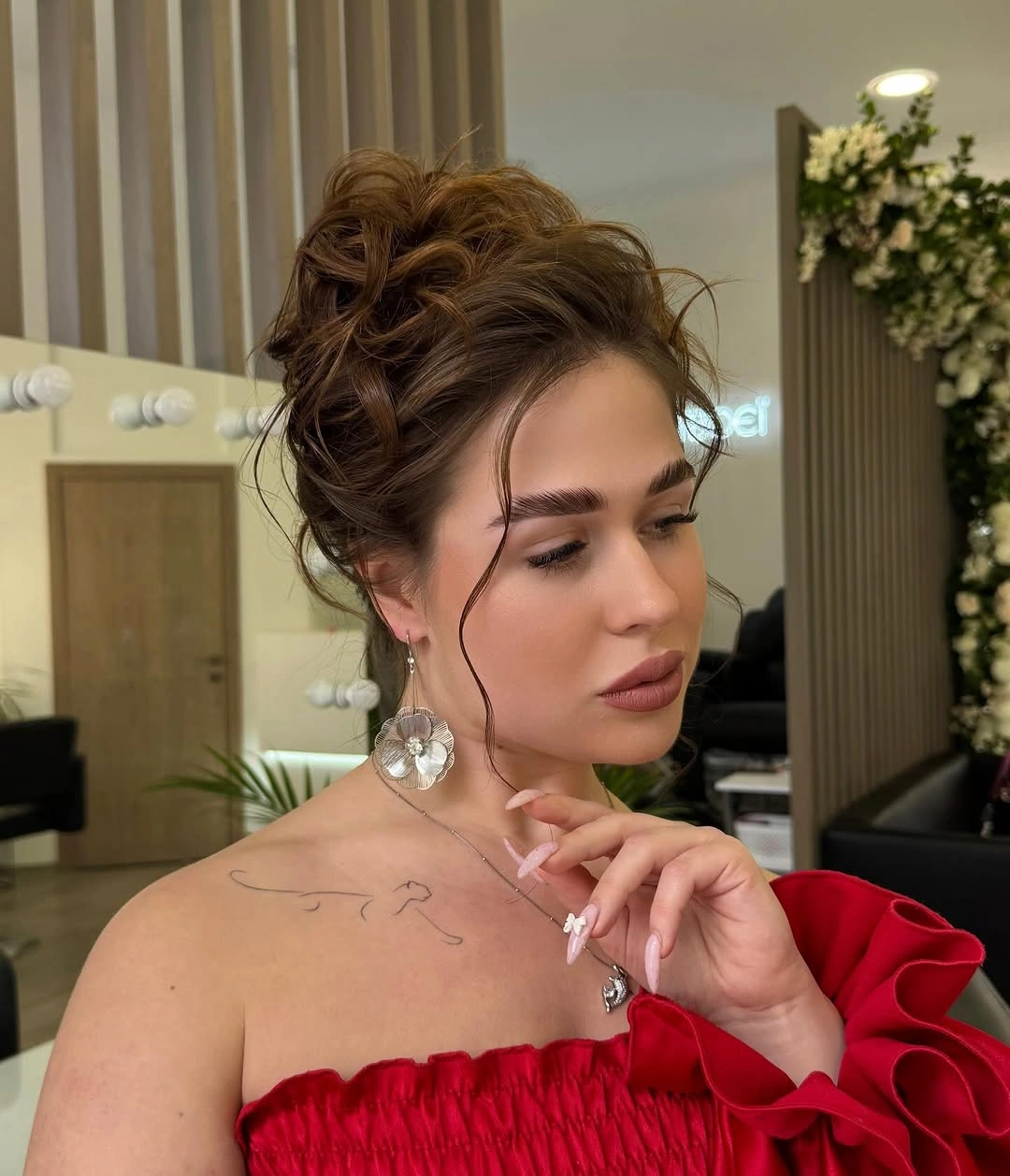
Photo via Instagram
What keeps the shape from reading as a single smooth bun is the irregular texture inside that gathered area. Loops and curls overlap at different angles, creating visible pockets of depth throughout, while the two face-framing strands stay separate from the lifted center and give the front a softer outline.
Choose this kind of Christmas updo when you want height to be part of the occasion look, not just a way to gather the length. Moving the main mass lower would shift attention away from the crown and make the profile feel less elevated.
Loose Strands Soften the Edge of a High Updo
This updo keeps its main volume high, but the outer edge is much looser than a tightly contained gathered style. Warm brown hair is collected into a soft upper shape while several fine curled pieces escape around the temple, cheek, and nape, giving the side profile an intentionally irregular perimeter.
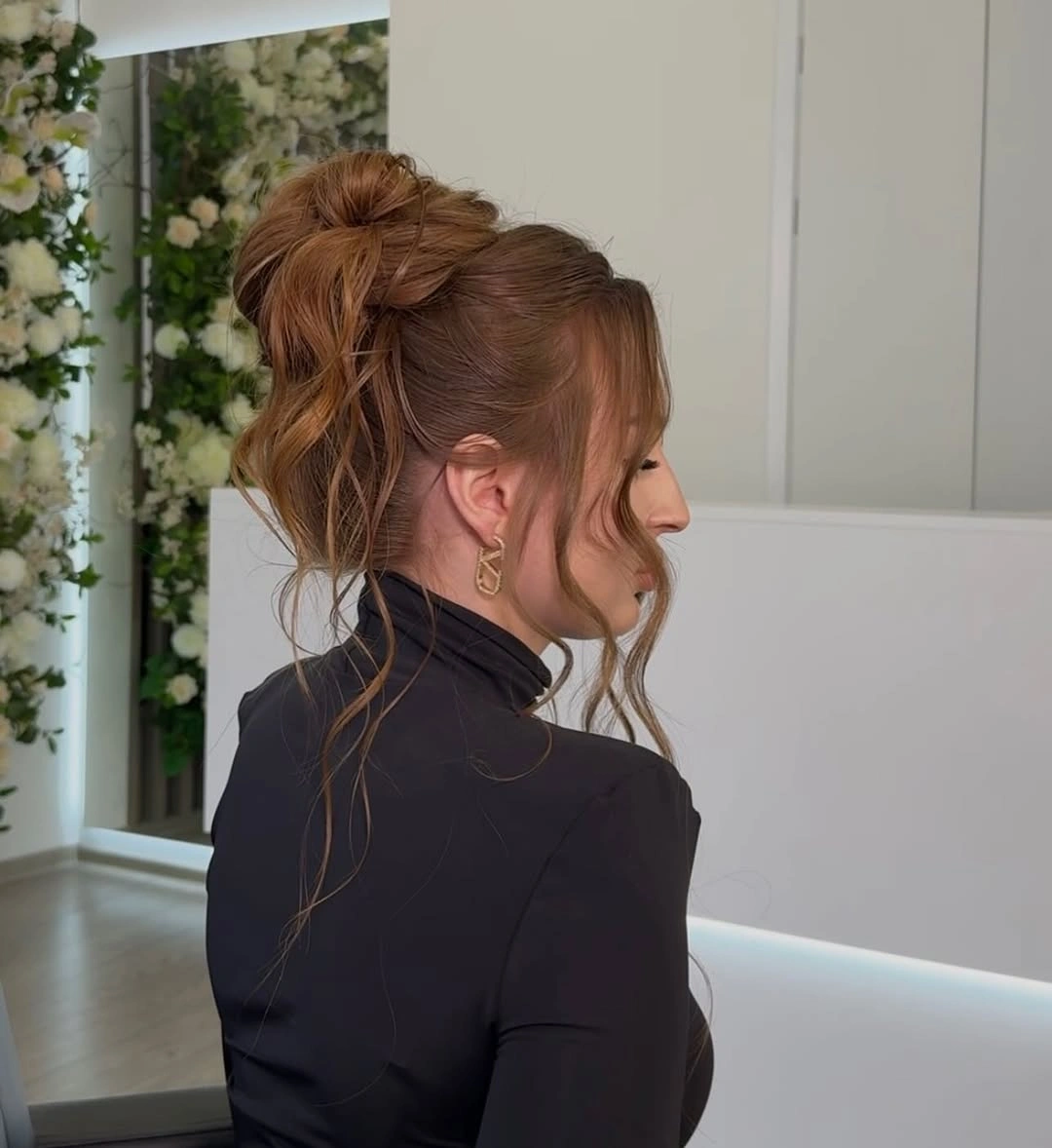
Photo via Instagram
Those loose sections matter because they extend to different lengths instead of forming one matching pair around the face. Some stop near the cheek while others continue down the neck and back, so the silhouette has movement beyond the gathered center and feels less enclosed than a smooth high updo.
Decide how much of the perimeter you actually want left free. Keeping only one or two pieces would make the outline cleaner, while several longer strands create the more airy, undone profile seen here.
Repeating Waves Create a Strong Front Pattern
The center part gives these very long near-black waves an exact starting point, and the pattern then repeats with striking consistency on both sides. Large ridges begin high beside the face and continue through the visible length, creating a broad, symmetrical silhouette that reads clearly from the front.
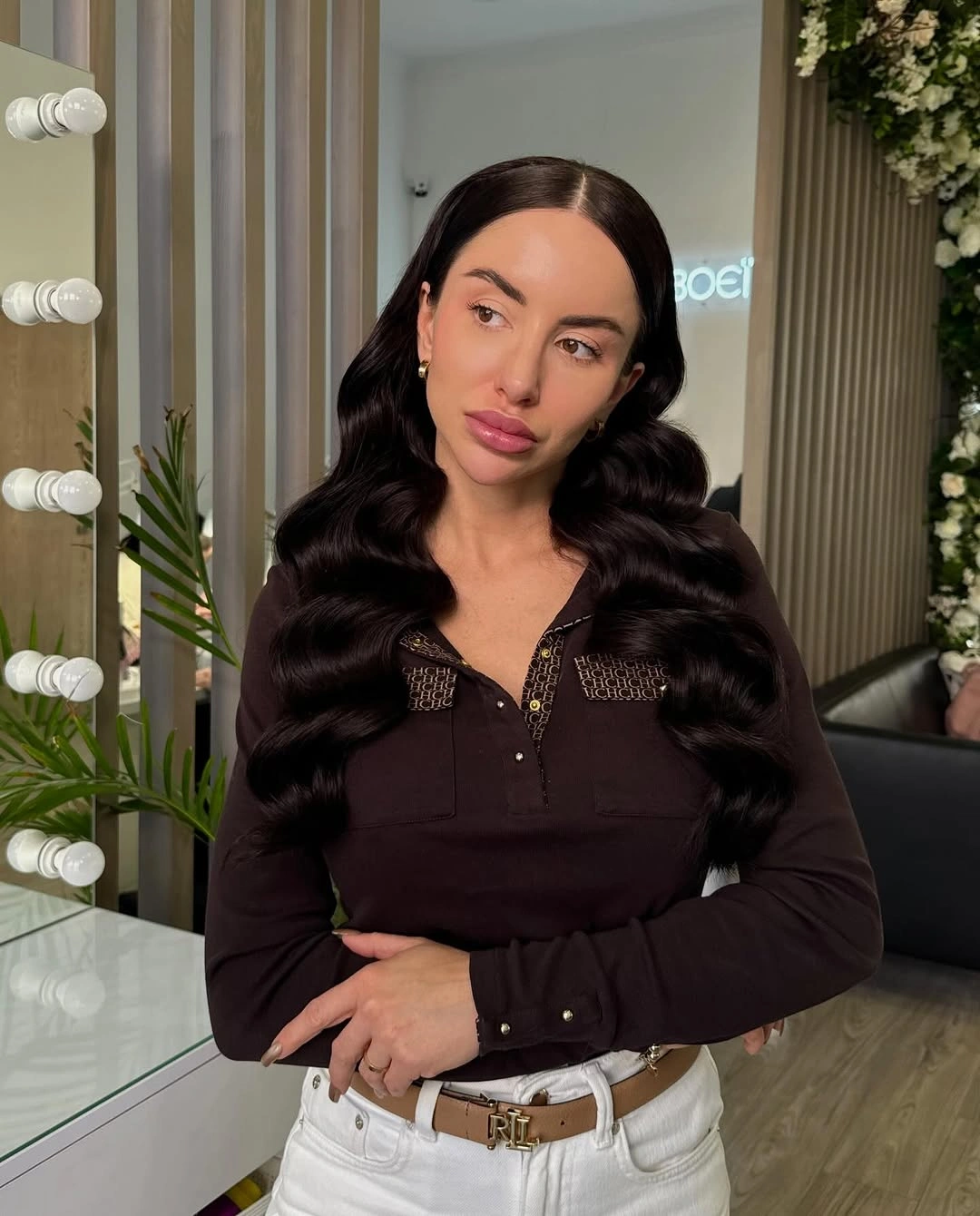
Photo via Instagram
What makes the hairstyle feel especially graphic is the continuity of those broad wave ridges. Instead of breaking into many separate curls, the hair forms long repeating curves with similar depth from side to side, so the eye clearly follows the pattern downward rather than isolating individual sections.
Use this reference if you want the wave pattern itself to be obvious in a straight-on view. Choosing a looser, less synchronized curl arrangement would trade that strong repetition for a softer and more irregular outline.
Rounded Curls Build Fullness Around the Face
These long dark brown curls create fullness in a different way because the rounded sections overlap rather than lining up as one continuous wave. The deep side part adds noticeable lift near the crown, and the curls begin high enough that substantial volume surrounds the face as well as the lower lengths.
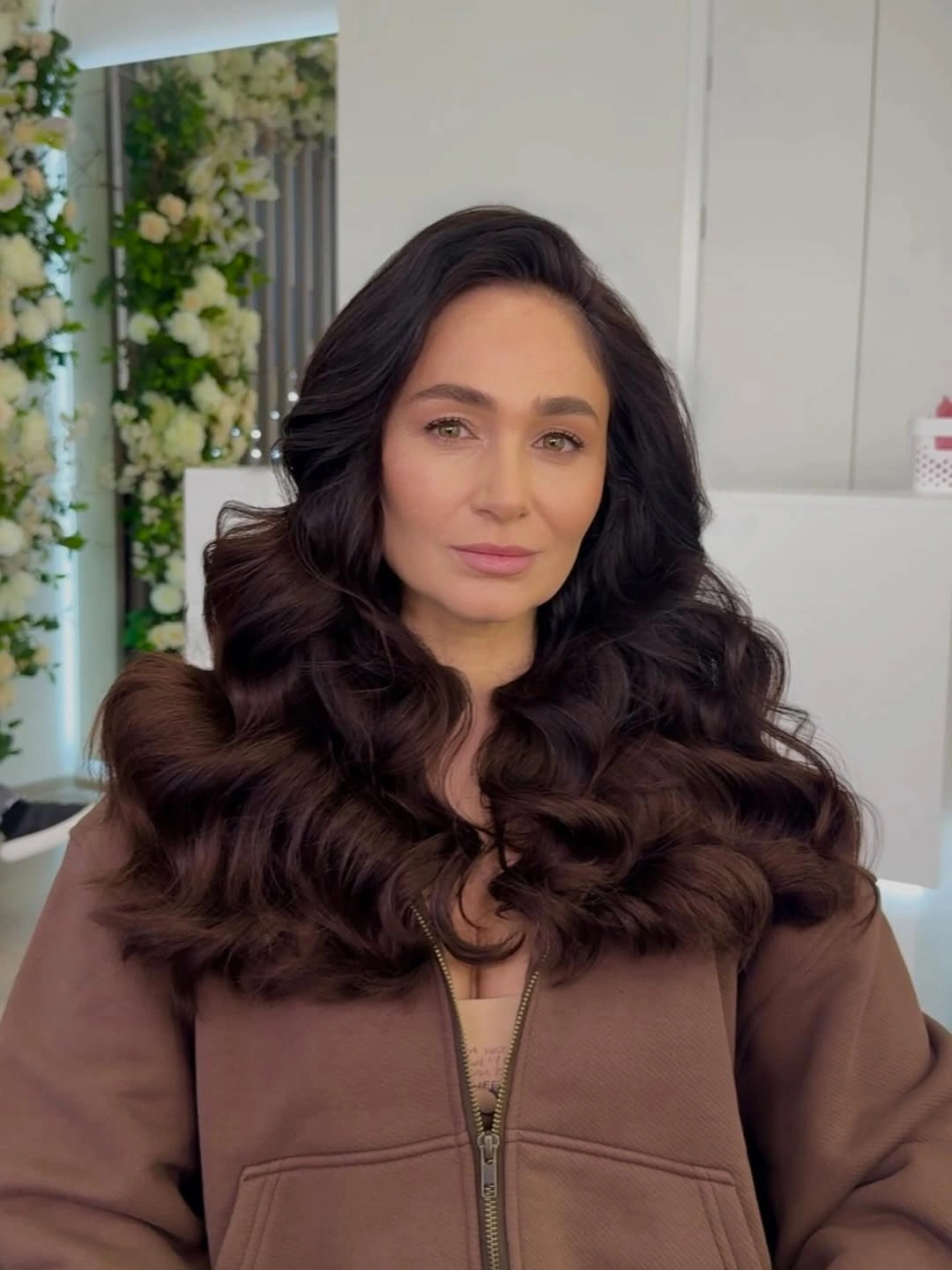
Photo via Instagram
Each curl turns at a slightly different angle, so the hairstyle has a layered, rounded density instead of the even ridges of a sculpted wave pattern. That makes the front feel more expansive and textured, with multiple curved shapes sharing attention instead of one repeated line controlling the whole silhouette.
For Christmas hairstyles with curls, decide whether you want the fullness to begin near the face or collect mainly through the ends. Keeping these rounded sections high creates a wider upper silhouette, while a lower concentration would leave more space around the cheeks.
One-Sided Waves Change the Whole Composition
A precise center part and smooth crown make the top of this dark brown hairstyle feel controlled before the visible length changes direction. Rather than falling evenly on both sides, the hair is directed back and then brought forward as one long sequence of large sculpted waves over a single shoulder.
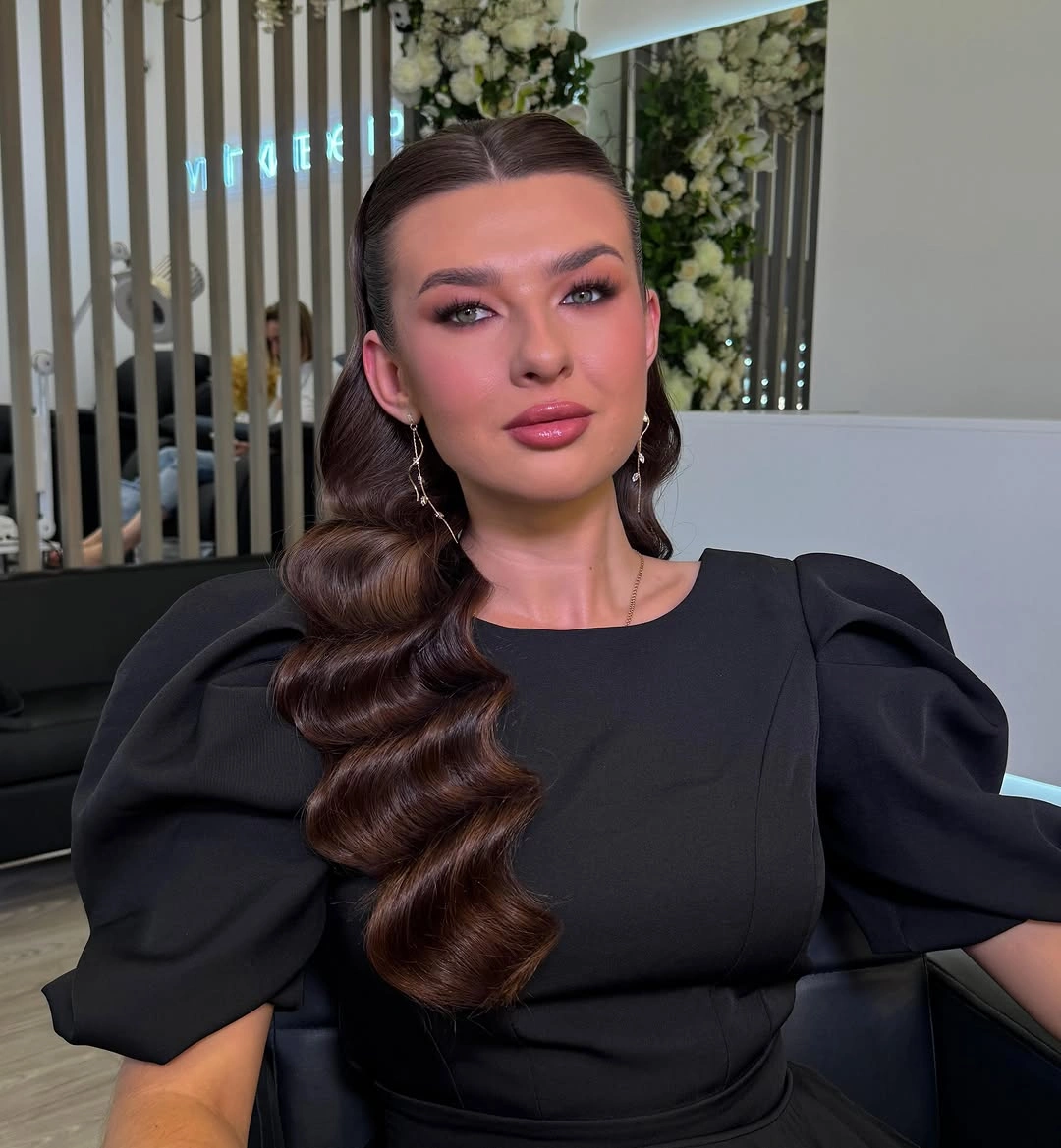
Photo via Instagram
That one-sided placement gives the waves a different role from a symmetrical front style. The large curves become a continuous column beside the torso, while the opposite side stays much more open, so the direction of the hair determines where the visual weight sits instead of relying on an accessory or extra crown height.
Choose the forward side according to which part of your neckline, earring, or profile you want to leave more exposed. Bringing the wave cascade across the other shoulder would reverse the composition without changing the sculpted shape itself.