20 Aesthetic Dark Brown Curly Hair Ideas 2027

Dark brown curly hair is having a moment, and it’s not about fighting your texture into submission. The shift is toward cuts that let natural volume and curl patterns lead, with soft layers and curtain bangs replacing heavy, one-length shapes.
This collection of 20 Aesthetic Dark Brown Curly Hair ideas spans collarbone shags to chin-length layers, covering low-upkeep air-dried styles and polished blowouts alike. Whether your curls are fine and need lift or dense and need weight removed, there’s a cut here that solves the problem of a shape that doesn’t hold or a fringe that fights your wave pattern.
Collarbone Length Layers With Curtain Bangs
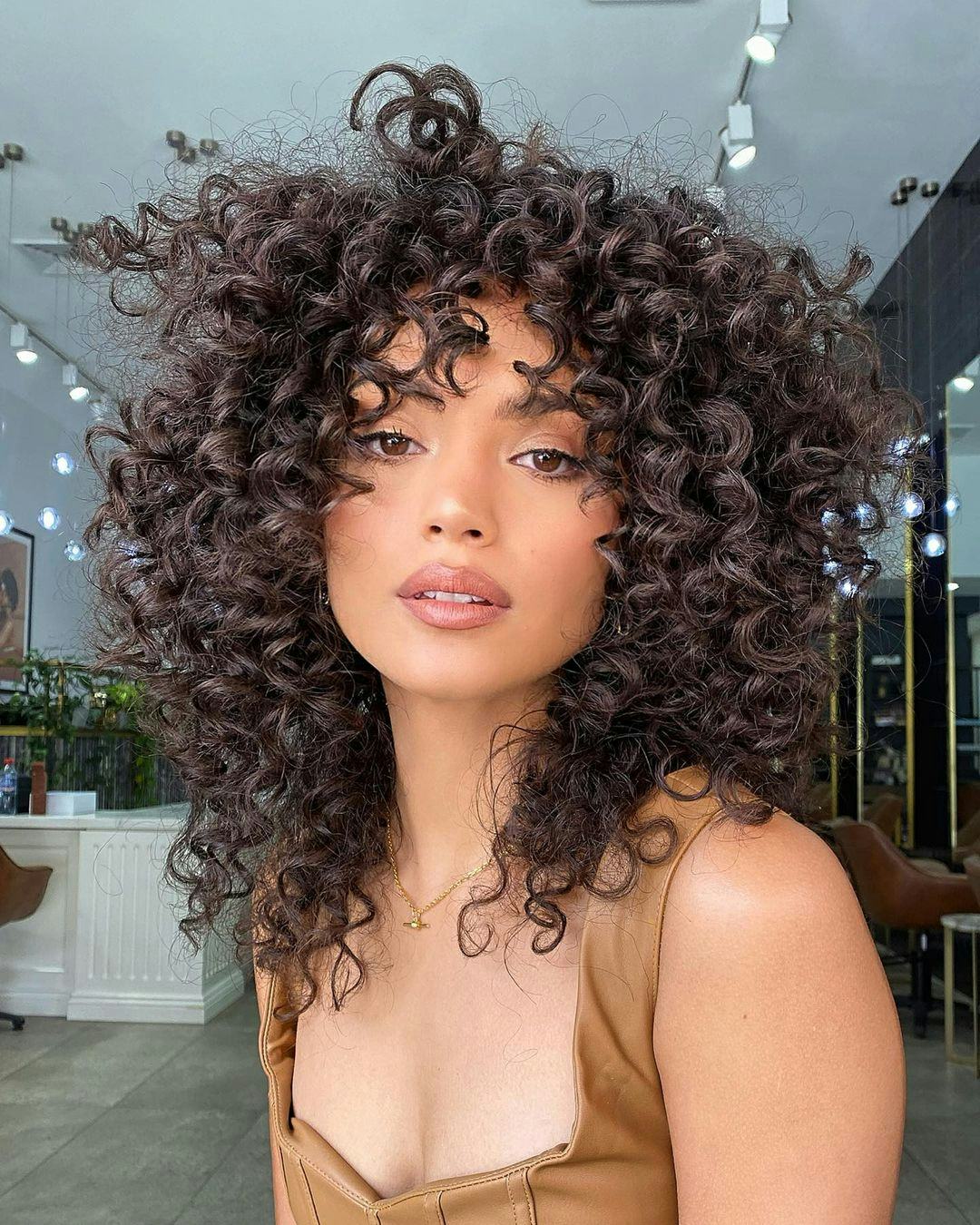
The subtle lighter brown highlights here read as dimension, not contrast, so the dark base stays the star. A middle parting and curtain bangs soften the face without sacrificing volume, which is the whole trick. Ask your stylist for: collarbone layers, soft curtain bangs. The layers sit best on hair that starts at collarbone length and has enough density to hold shape. This cut suits round and heart-shaped faces especially well, since the bangs break up width without adding bulk at the jaw.
Shoulder Length Blowout With Full Fringe
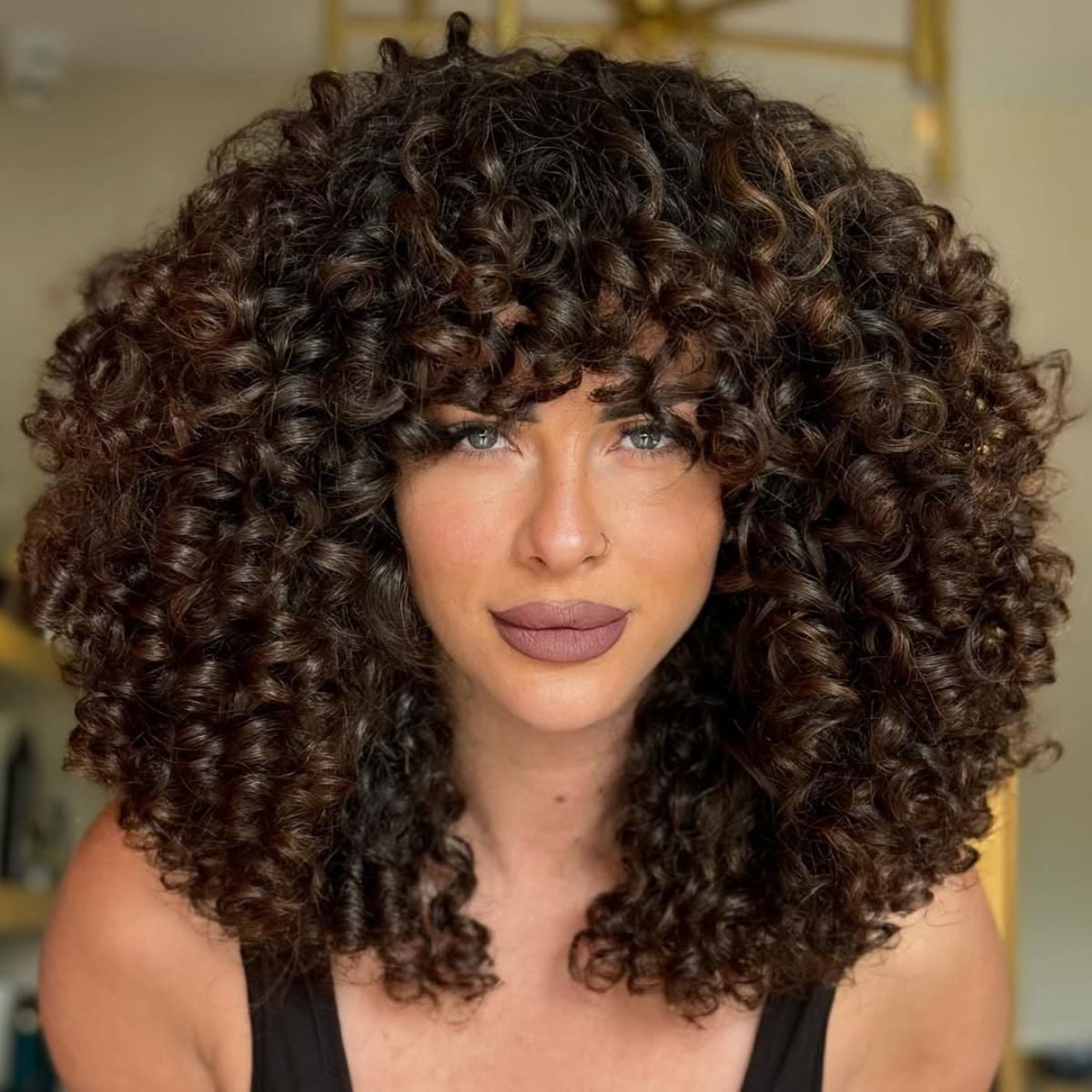
Can a full fringe work on thick curly hair? Yes, if the cut and technique line up. The key is shoulder length with layers underneath, so the weight does not pull the fringe flat. This blowout version shows glossy, defined curls and a full fringe that lands just above the brows. Ask your stylist for: shoulder length blowout, full fringe, defined curls. The subtle lighter brown highlights add movement without fighting the dark base. A full fringe balances longer face shapes by shortening the vertical line, but it does demand a dry cut for precision.
Collarbone Shag With Air-Dried Curls
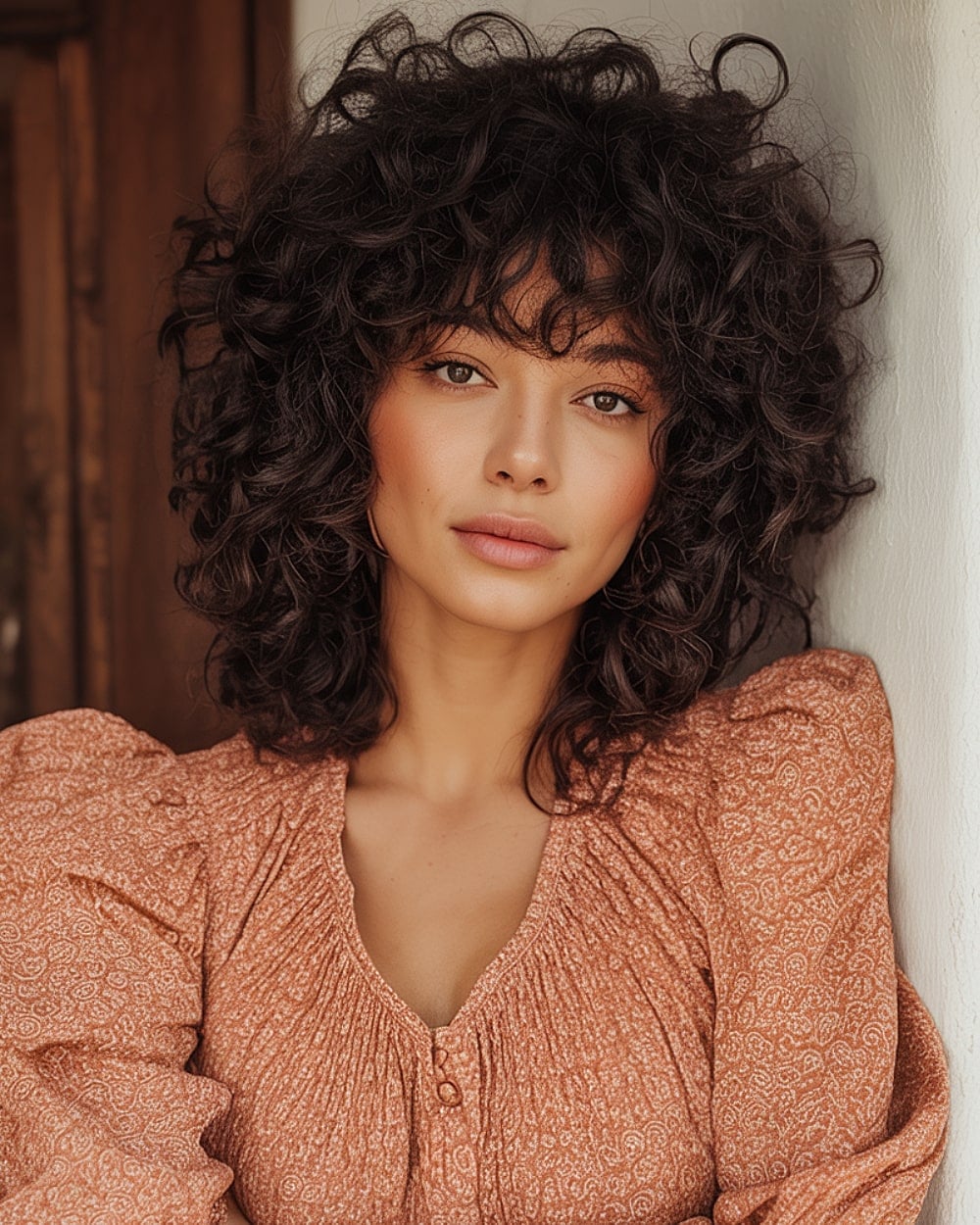
This collarbone shag uses curtain bangs to frame the face without losing the shag’s signature texture. The air-dried finish keeps the curls springy and defined. Ask your stylist for: collarbone shag, curtain bangs. The upkeep is straightforward: a trim every six to eight weeks to maintain the shape, and air-drying with a curl cream for daily wear. Oval and square faces benefit from the added width at the cheekbones.
Shoulder Length Air-Dried Curls Side Part
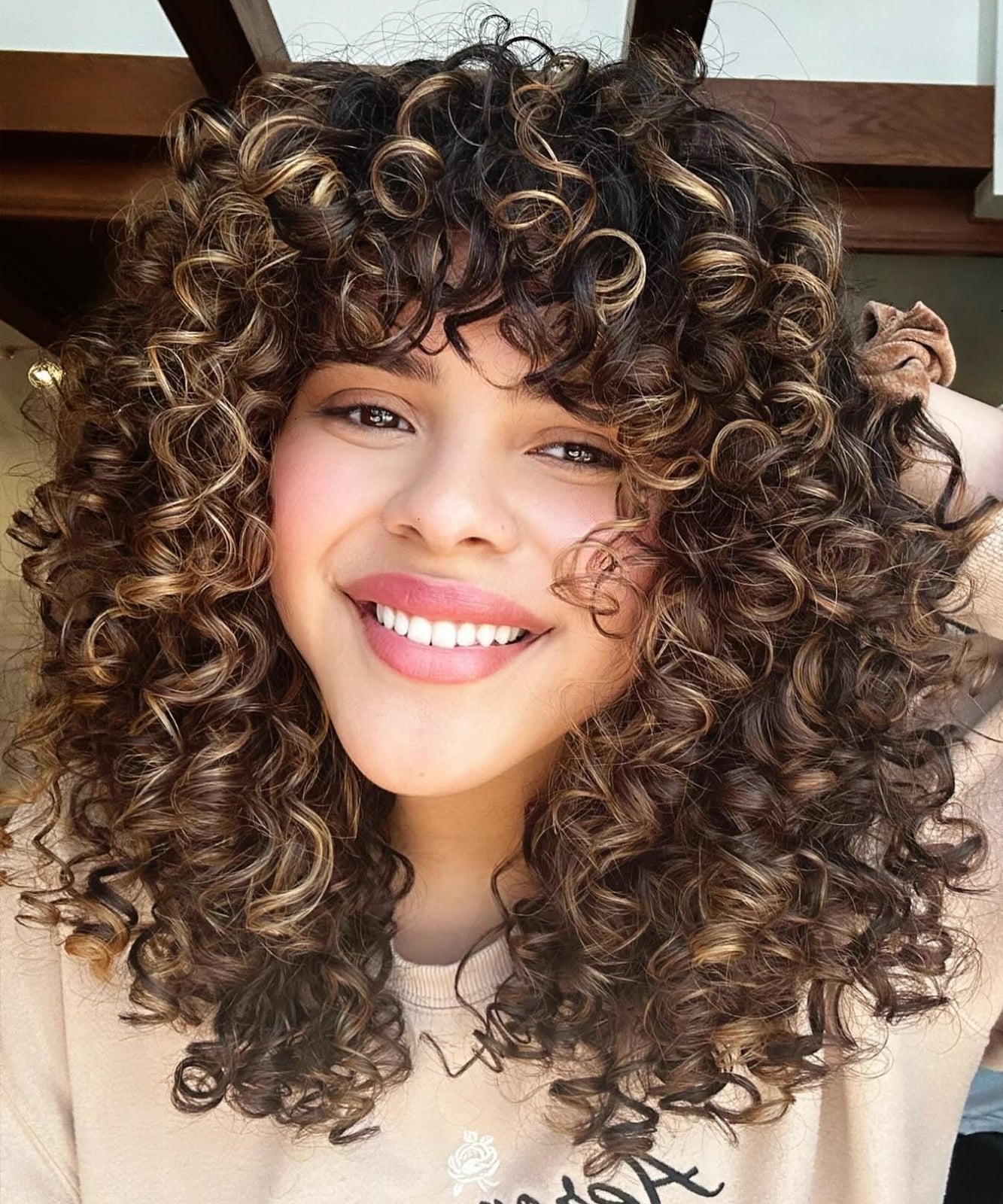
A side part is the low-effort alternative to a middle parting when your curls refuse to cooperate. This shoulder length cut with subtle lighter brown highlights works because the layers are soft enough to air-dry without frizz. The side parting shifts volume to one side, which flatters longer face shapes. Ask your stylist for: shoulder length layers, side part, air-dried texture. This is one of the few cuts you can reasonably DIY between salon visits, since the shape forgives minor unevenness. No blowout required, just a microfiber towel and patience.
Collarbone Layers With Glossy Curtain Bangs, Side
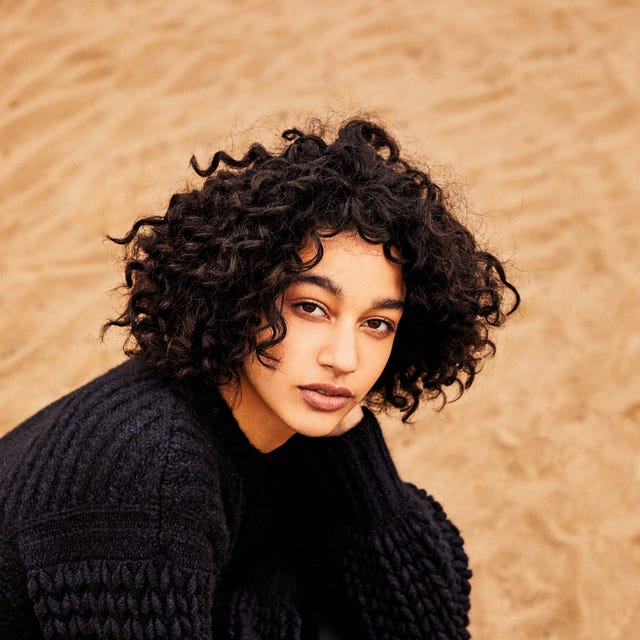
Glossy curtain bangs on collarbone length curly hair require one thing that isn’t obvious: a side parting that lets the bangs fall asymmetrically. This cut uses soft layers throughout, so the weight sits evenly without flattening the crown. The dark brown base is rich, not flat, thanks to the natural gloss in the texture. Ask your stylist for: collarbone length, soft curtain bangs, glossy finish. Glossy styles show every product buildup, so clarifying every two weeks is necessary. Curtain bangs also need trimming every four to six weeks to stay above the brow bone.
Collarbone Shag With Full Bangs

A shag at collarbone length with full bangs trades the softness of curtain bangs for a bolder, more graphic line. The full fringe sits straight across, cutting a clean horizontal against the air-dried curls below. Thick, curly hair at this length has enough weight to keep the bangs from floating away, and the shag’s internal layers prevent the sides from turning into a triangle. A longer forehead helps the fringe land without constant pushing. Ask your stylist for: collarbone shag, full bangs, air-dried volume. The bangs will want a trim every three to four weeks; the cut can go six to eight.
Collarbone Shag With Auburn Highlights Blowout
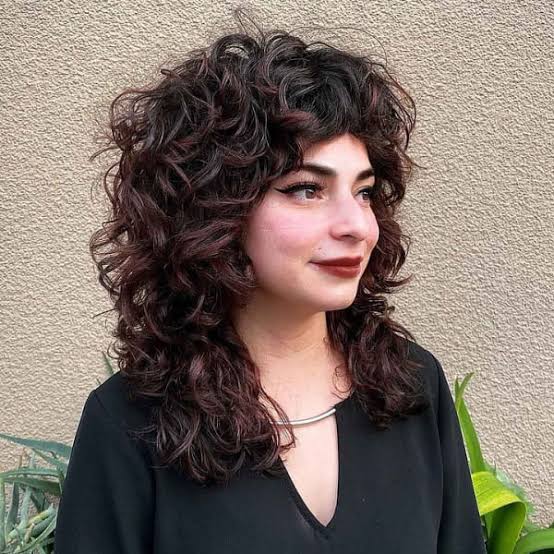
Can warm highlights survive the shift from fall to spring? On a collarbone shag with curtain bangs, subtle auburn streaks do exactly that. The dark brown base keeps the color grounded, while the auburn catches cooler light in winter and warms up in brighter months. Blowout styling lifts the thick, curly texture into a smooth, voluminous shape. Ask your stylist for: collarbone shag, curtain bangs, subtle auburn highlights, blowout finish. This is a salon-only cut and color, about two and a half hours in the chair.
Mid-Back Layers With Face-Framing Detail
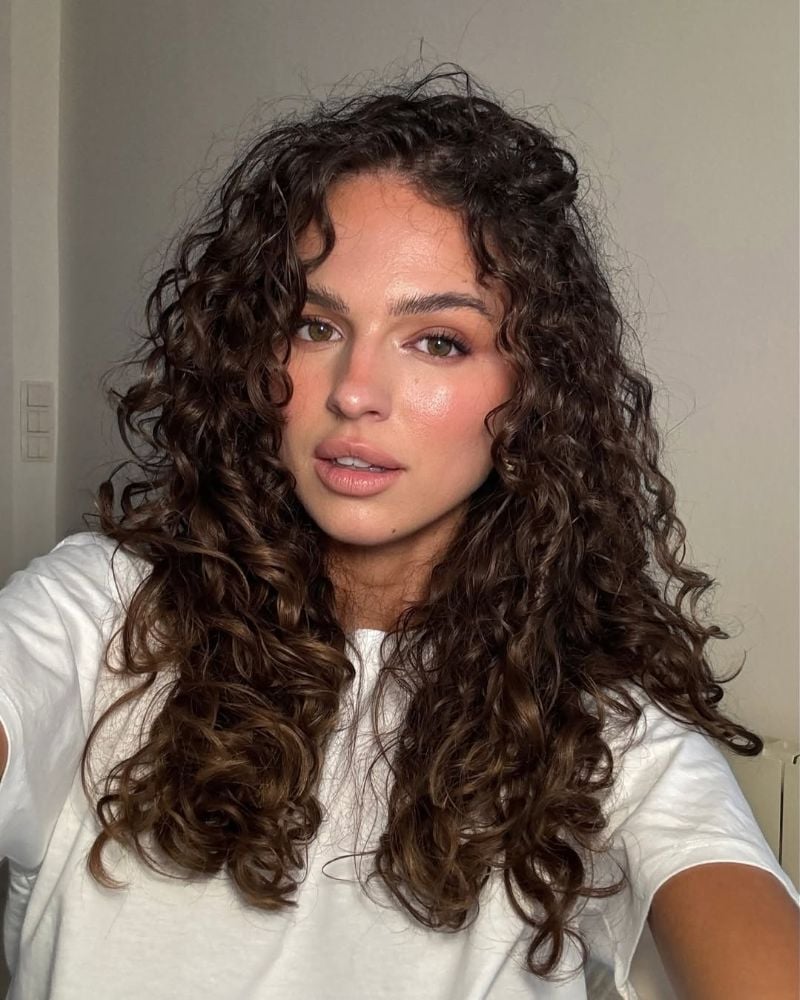
The common mistake with mid-back curly hair is cutting layers that are too long, which lets the weight pull the curl straight. The fix is soft face-framing layers that start around the chin and graduate outward, keeping the internal shape light enough for the curl to spring. Thick, dark brown hair at this length benefits from the side parting, which lets the front pieces fall forward without crowding the face.
Ask your stylist for: mid-back length, soft face-framing layers, natural air-dried finish. A wide-tooth comb on wet hair is all the styling it needs. Plan a trim every eight to ten weeks to keep the ends healthy and the layers from growing past their sweet spot.
Collarbone Shag With Voluminous Curls
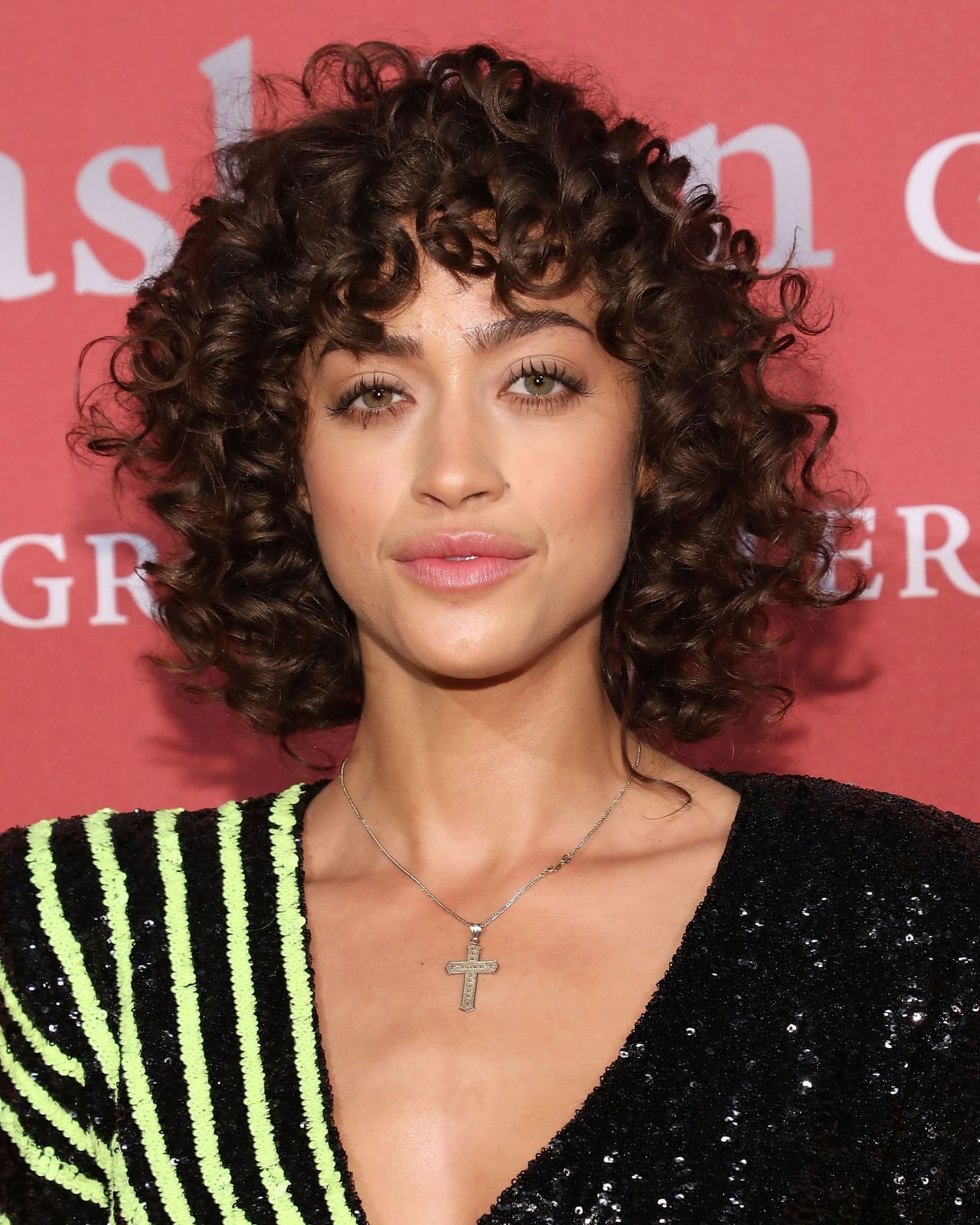
The shag’s layered construction gives thick curly hair noticeable volume, but that fullness comes with a trade-off. The curtain bangs and face-framing layers need to be coaxed forward while the rest dries, or the shape can look top-heavy. Air-dried texture keeps the result casual, but it does ask for a morning routine of scrunching and patience: about ten minutes of hands-on time, then waiting for the curls to set. Ask your stylist for: collarbone shag, blended curtain bangs, natural volume. On humid days, the shag’s layers can fluff more than intended, and not everyone wants that extra width.
Collarbone Layers With Glossy Curtain Bangs, Close-Up Take
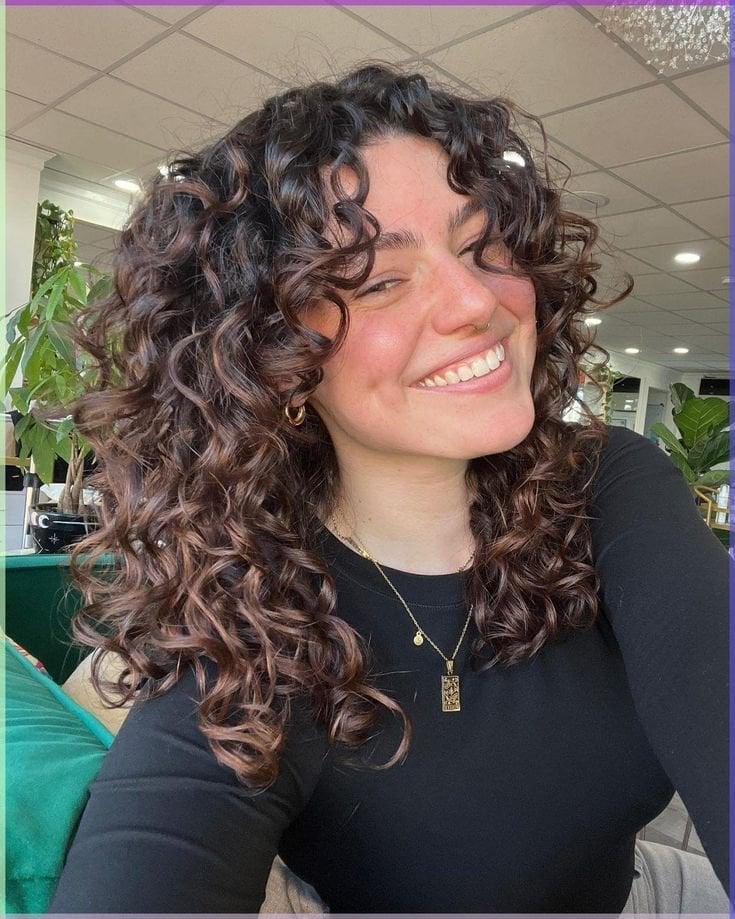
A practical rule for curtain bangs on dense curly hair: they should hit just below the brow bone when dry, so they curve outward rather than sitting flat on the forehead. Here, the collarbone layers are cut with face-framing pieces that blend into the bangs, creating a continuous arc from temple to jaw. The side parting shifts the density off-center, which helps the bangs lie smoothly on one side and feather on the other. Ask your stylist for: collarbone layers, face-framing curtain bangs, glossy natural style. A finishing serum adds shine without weighing the curl down. Trim the bangs every six weeks to keep the length precise.
Shoulder Length Layers With Soft Waves
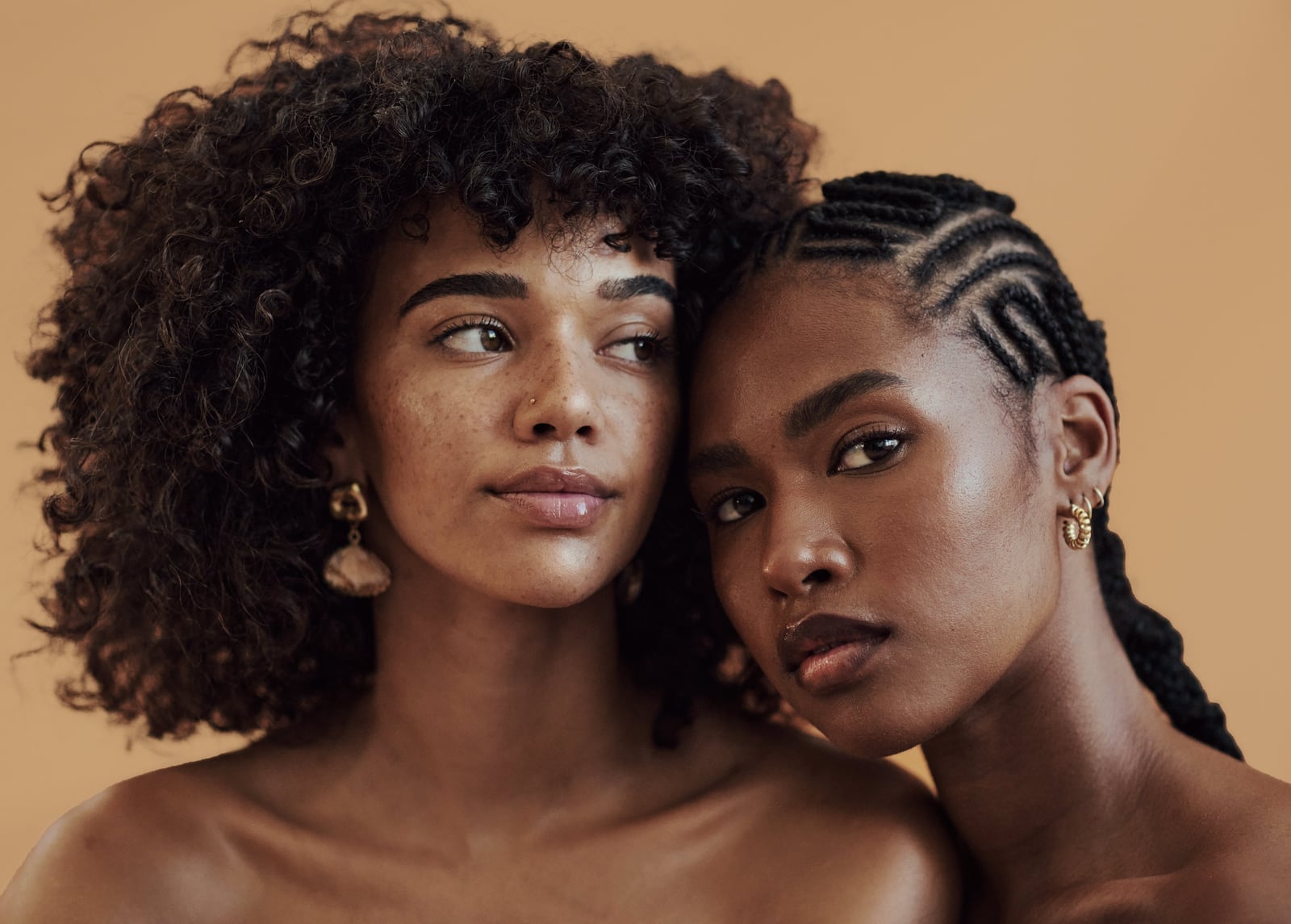
Shoulder-length layers and curtain bangs give thick, curly hair a shape that moves without tenting out. The layers reduce bulk at the sides while the soft waves keep the silhouette from forming a solid triangle. This cut is a good fit if your curls have density and you want them to sit closer to the shoulder without losing volume. Ask your stylist for: shoulder length layers, curtain bangs, soft waves. The natural texture does the work, though the blow-dry part of the process is salon-based; a stylist shapes the layers and bangs while the hair is dry so the fall is predictable.
Thick curls at shoulder length can feel heavy. The layering here carves out weight exactly where it is needed, and the curtain bangs break up the front line. A side parting adds lift at the root without extra effort. For day-to-day styling, a medium-hold curl cream and air-drying preserve the wave pattern. A trim every six to eight weeks keeps the layers from growing into a single blunt block.
Collarbone Air-Dried Curls Side Part With Curtain Bangs
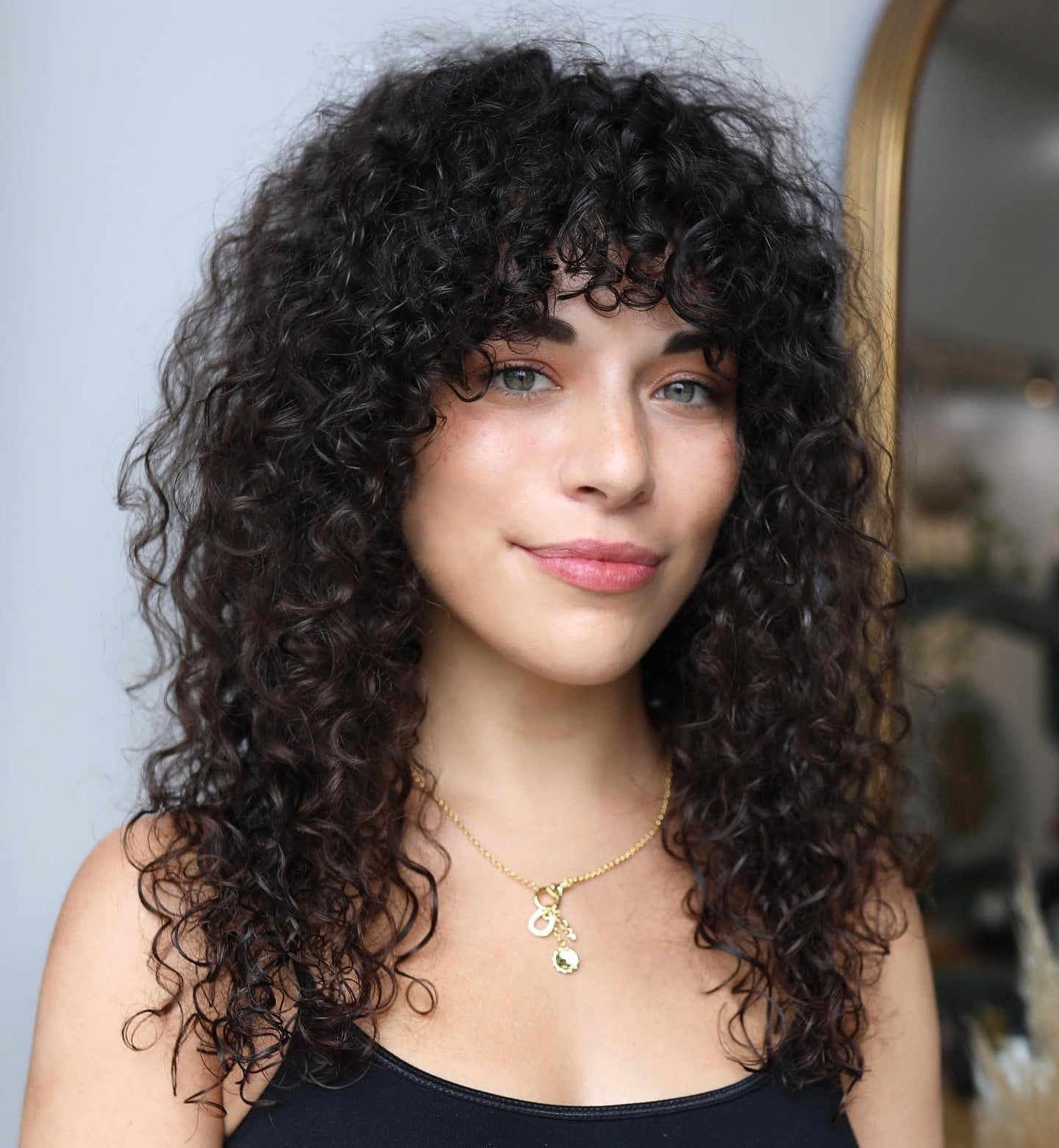
It is not a blowout, and that is the point. This collarbone cut relies on air-dried curls and a side part with curtain bangs, which makes it one of the more realistic options for a Tuesday morning. The curtain bangs are cut to blend into the layers, so they fall naturally without styling. Ask your stylist for: collarbone length, air-dried curls, curtain bangs, side part. A curl cream applied to soaking wet hair, then left alone, produces the definition shown. This is fully DIY: no round brush, no diffuser, no heat. The only salon visit needed is the initial cut and a trim every eight to ten weeks to keep the bangs from overtaking the cheekbone.
Collarbone Blowout With Subtle Highlights
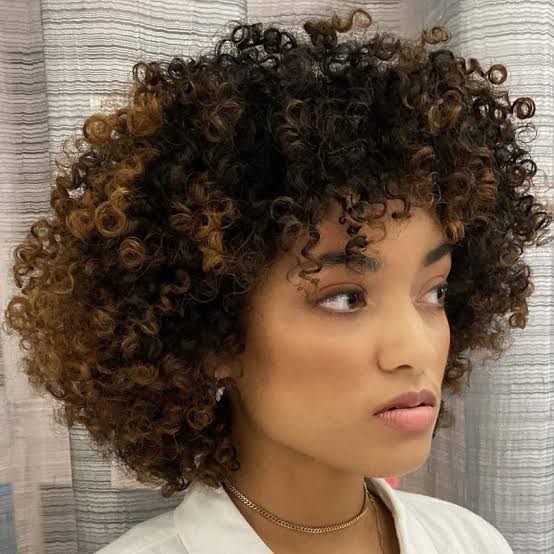
The upkeep is straightforward: a toning shampoo every four to six weeks keeps the highlights from turning brassy, and trims every six to eight weeks maintain the collarbone line. The middle parting and voluminous curls mean the shape stays balanced as it grows out.
Collarbone Layers With Highlighted Curls
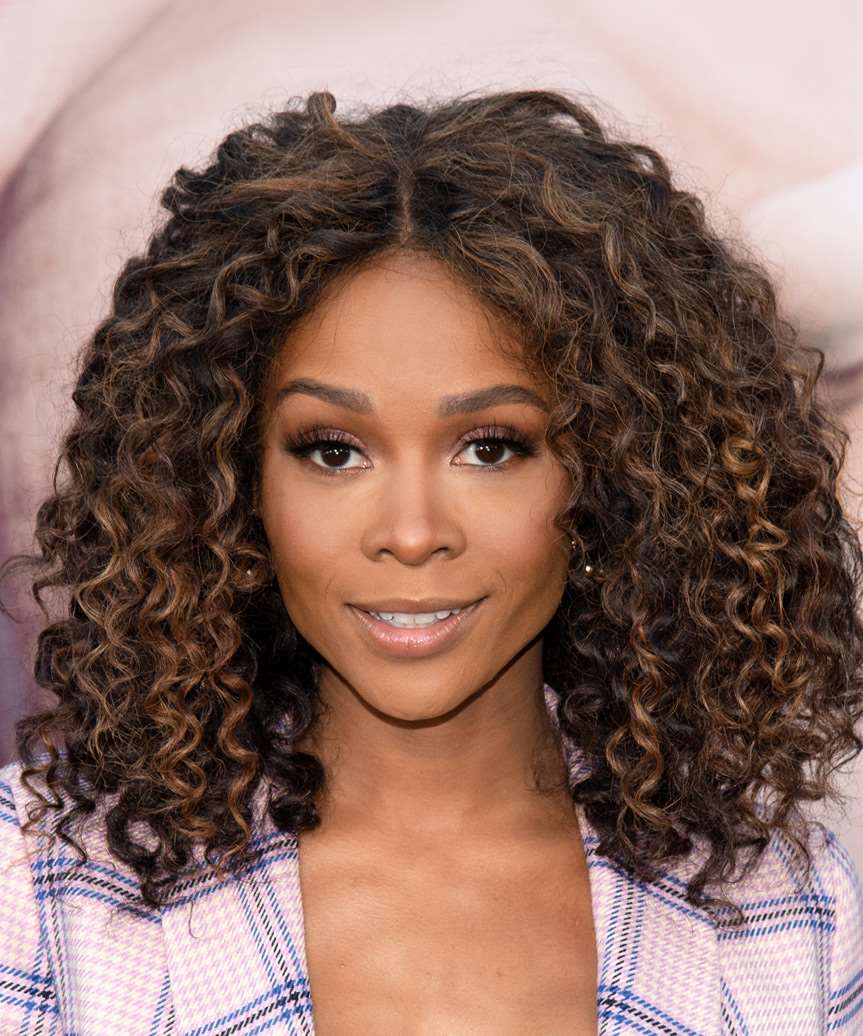
The layering here is built to move with the curl pattern, not against it. On collarbone-length, medium-density curly hair, the stylist carves internal layers that prevent the hair from stacking into a heavy shelf at the ends. The light brown highlights are woven through the top sections only, so they catch light when the head turns. Ask your colorist for: subtle light brown highlights, side part, natural texture. One drawback: the highlights require a toning appointment every four to six weeks to keep the warmth from drifting orange. The side parting adds lift on the crown, which balances the weight of the curls at the jawline.
Collarbone Blowout With Warm Highlights, Layers
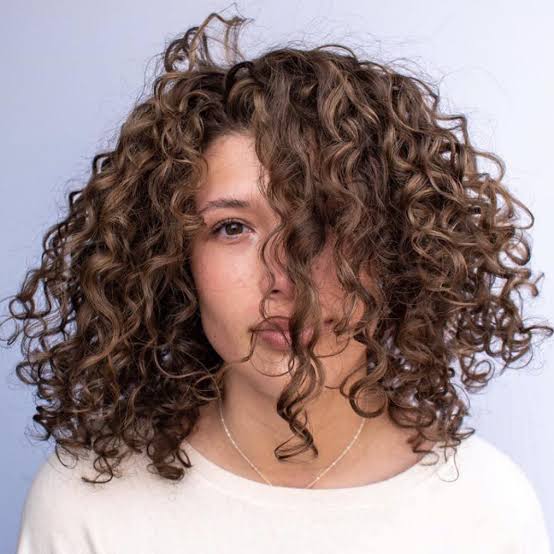
A collarbone blowout with warm highlights lands best when the weather shifts toward cooler months. The subtle lighter brown highlights add warmth to dark brown curls without turning them golden, which suits the lower light of fall and winter. The voluminous blowout and middle parting give the cut a polished finish that works for both office hours and evening plans. Ask your colorist for: subtle lighter brown highlights, middle part, voluminous blowout. The layers are cut to hold the curve of the blowout, so the curls fall in a uniform C-shape around the collarbone. This is a salon look: the blowout requires a round brush and a concentrator nozzle, and the highlights need a colorist who paints fine sections.
Collarbone Layers With Defined Curls and Curtain Bangs
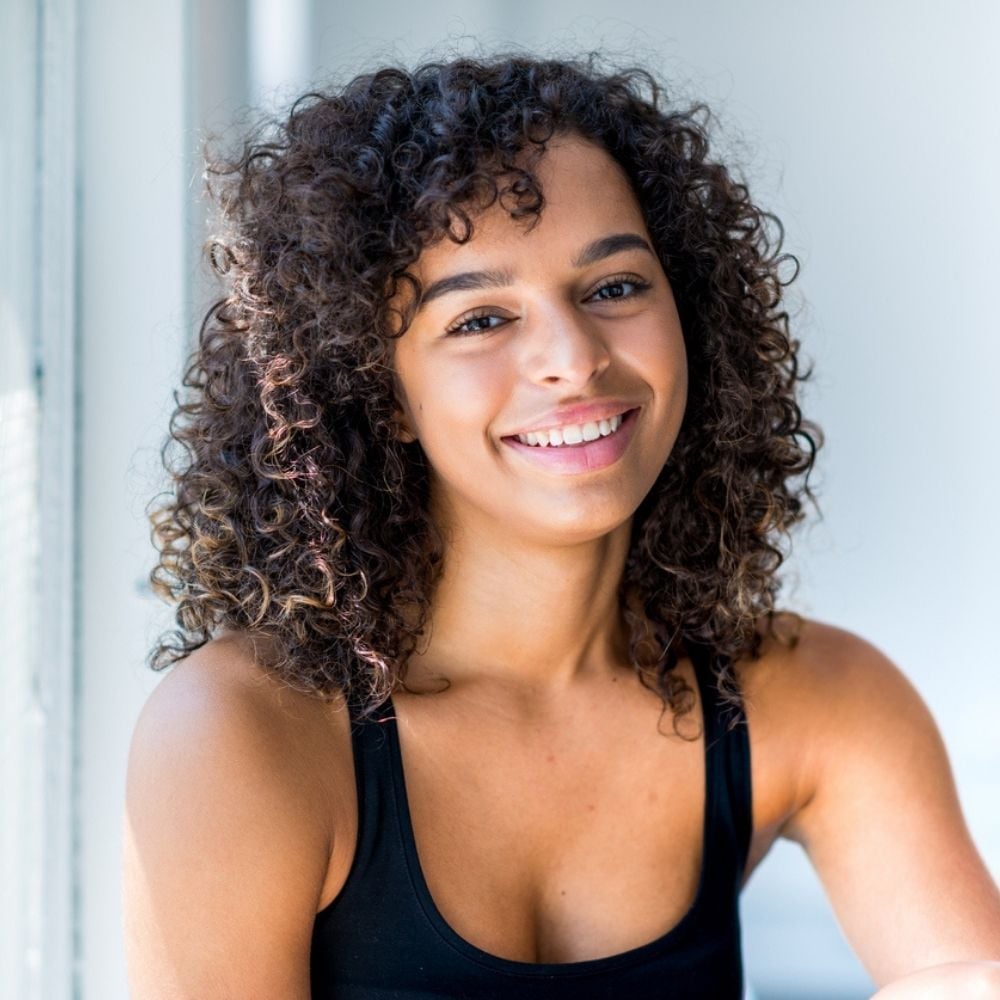
It is not a blowout, it is a carefully coaxed air-dried finish that makes the curl pattern the whole point. Ask your stylist for collarbone length layers, curtain bangs, and defined air-dried curls. This suits thick, curly hair at collarbone length where layers and curtain bangs enhance natural curl patterns. Apply a curl cream to damp hair and scrunch, then let it dry without touching it. The middle parting keeps the face-framing bangs symmetrical, and a trim every six to eight weeks maintains the shape.
Collarbone Shag With Choppy Layers
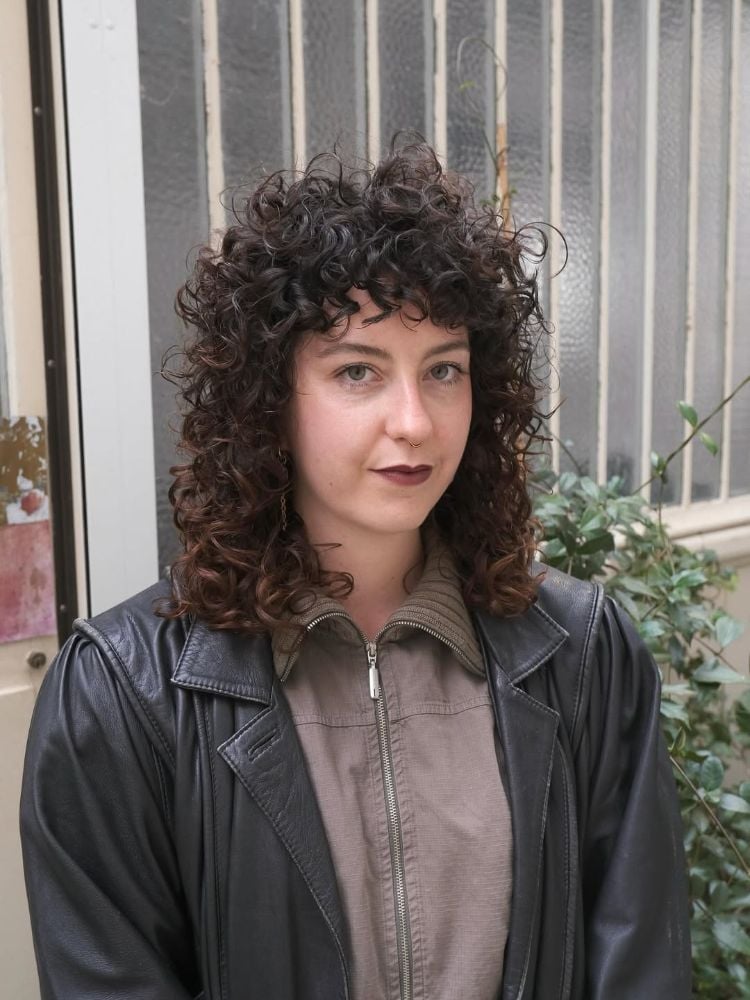
A shag cut uses choppy layers to create movement where a standard layered cut would blend. The full fringe and collarbone length keep it wearable, while the air-dried finish emphasizes the texture. Ask your stylist for a collarbone shag, choppy layers, and a full fringe. Thick, curly hair at collarbone length benefits from the weight removal, which prevents the shape from becoming too heavy. A texturizing spray on dry hair enhances the choppiness between trims.
Ear Length Shag With Textured Bangs
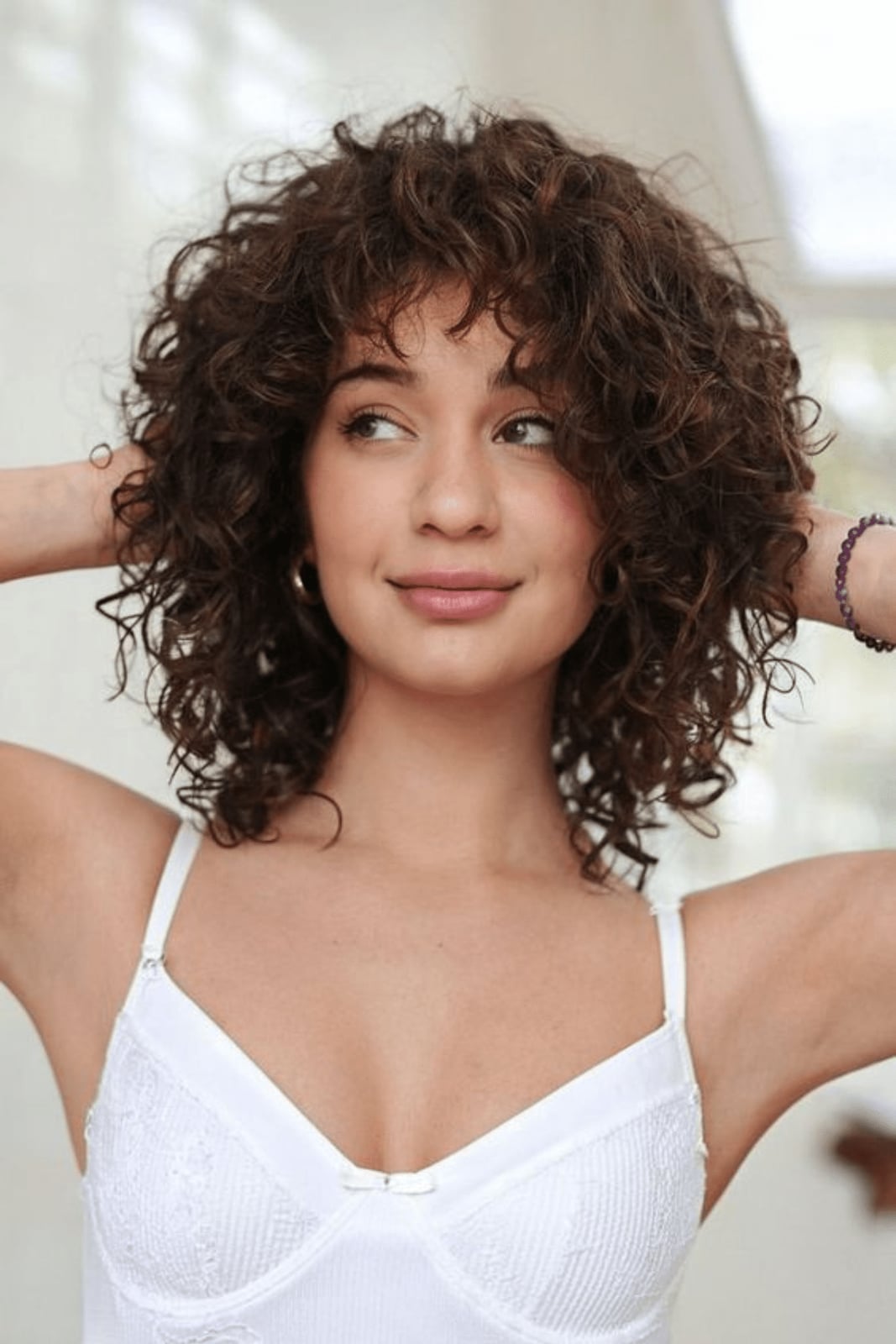
Short, textured bangs on an ear-length shag mean committing to a forehead-framing shape that does not blend into the rest of the cut. Tousled, air-dried texture keeps it from looking too precious. Thick, curly hair at ear length suits this bold statement, but the bangs need a trim every three to four weeks to stay out of your eyes. Ask your stylist for an ear length shag with short textured bangs and a middle part.
Collarbone Blowout With Defined Curls
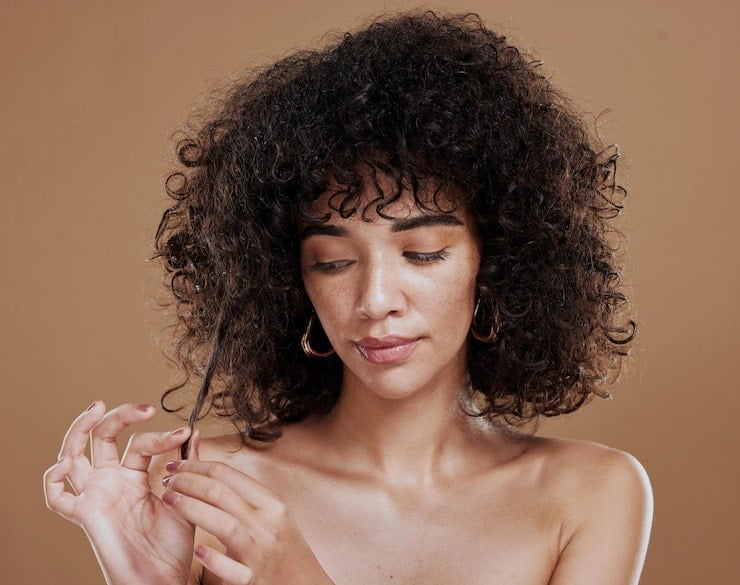
A polished blowout on collarbone-length curls trades air-dried texture for controlled definition. The side parting and curtain bangs add softness around the face, while the defined curls maintain the natural pattern. Ask your stylist for a collarbone length polished blowout with defined curls and curtain bangs. Thick, curly hair at this length holds the shape well. Use a heat protectant and a medium round brush during styling, then schedule trims every six to eight weeks to keep the ends healthy.
Chin Length Layers With Short Bangs

Chin-length layers work best when the cut does the work and the styling stays minimal. The short bangs and side parting create asymmetry that keeps the shape from feeling too blunt. Ask your stylist for chin length layers, short bangs, and an air-dried texture with a side part. Medium-density curly hair at chin length benefits from the light layering, which encourages defined ringlets without losing volume. Apply curl cream to damp hair and twist sections, then trim bangs every three to four weeks.
Final Thoughts
For thick, curly hair, prioritize layered cuts that remove weight while maintaining shape. If opting for bangs, ensure they blend softly with face-framing layers to avoid a blunt, heavy appearance.
- Trim every 8-12 weeks to maintain shape and prevent split ends.
- Use a sulfate-free shampoo and conditioner formulated for curly hair.
- Air-dry or diffuse to preserve curl definition and minimize frizz.
- Deep condition weekly to maintain moisture and elasticity.
Embrace your natural texture with a cut that celebrates it.