39 Gorgeous Winter Hair Colors for Curly Hair Styles

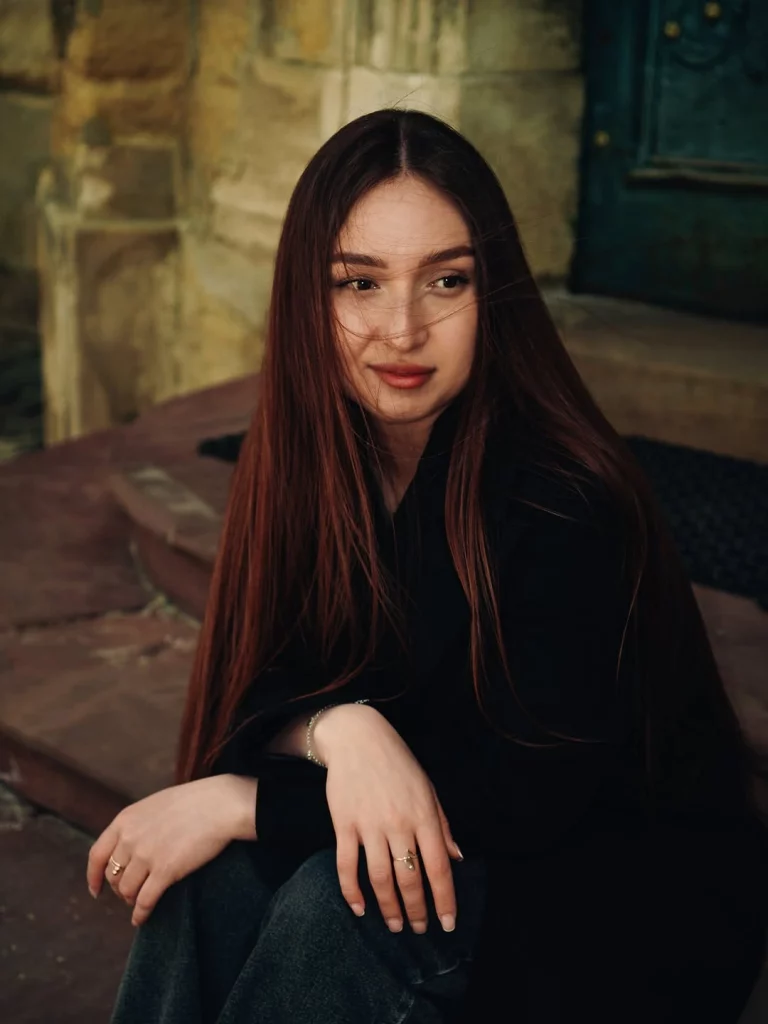
I’ve been seeing deep auburn and cool ash tones on curly heads since October, and not just on Instagram. The rich reds and ashy blondes are replacing the usual winter brunette, and I have opinions. They work with curls in a way flat winter light usually doesn’t.
These 39 Winter Hair Colors for Curly Hair cover the range: low-upkeep root shadows for fine curls, vivid copper for thick spirals, and ash blonde that actually holds. I tested them against my own frizzy week three and a friend’s grey coverage panic. No fluff, just real curl color that survives winter.
Cool Ash Blonde For Fine Curls
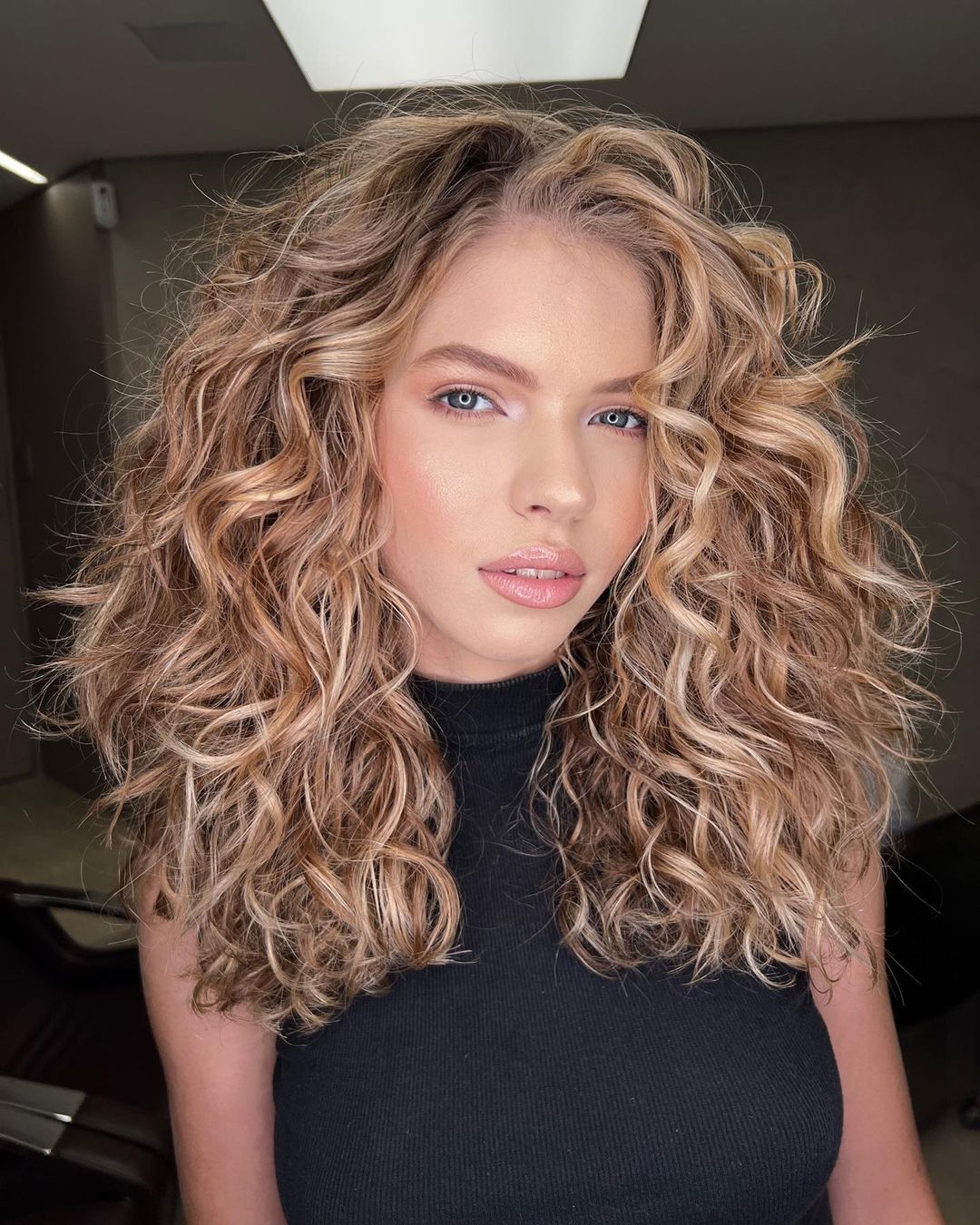
Ash blonde fine curly hair is a gamble that pays off when the undertones stay cool. On collarbone-length layers, the tone reads more silver than yellow, which is exactly what fine curls need. The lightness adds visual volume without weighing the strands down. A side part and air-dried texture keep it low-effort. The all-over colour is applied with cool undertones, so the stylist works in small sections to protect the curl pattern. This shade suits anyone with naturally cool skin undertones; if your complexion runs warm, the ash can read flat. Skip it if your curls are already dry — the lightening process requires salon-level care.
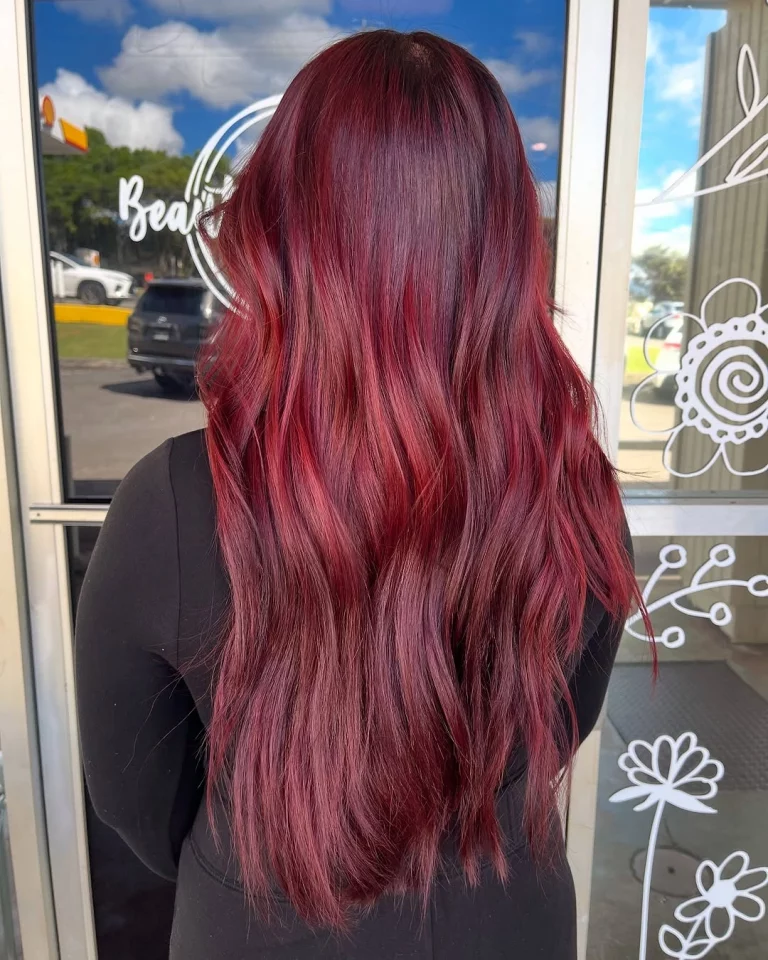
Rich Red Base With Warm Undertones
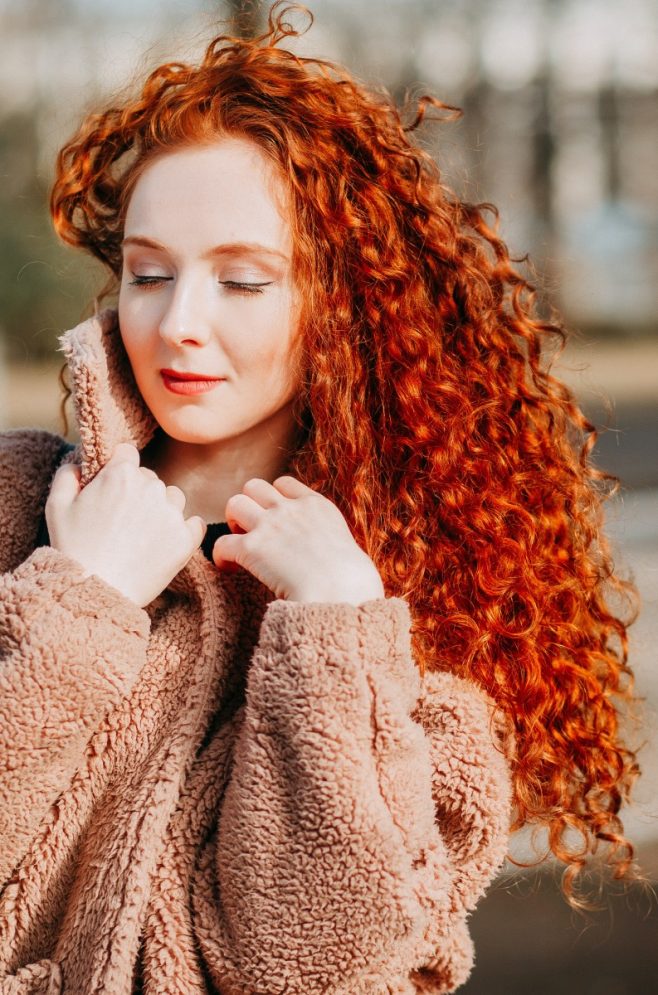
This colour is built, not slapped on. The rich red curly hair starts with a deep red base, then the stylist adds subtle orange and gold undertones through a gloss or lowlights. On long, thick curls, the warmth catches the light differently with each bend, so the colour shifts from auburn to copper depending on the angle. The side part and air-dried texture let the natural curl pattern show off the dimension.
The upkeep is real. Expect to refresh the gloss every four to six weeks, because red fades faster than any other shade. Use a color-safe shampoo and cool water to slow the loss. The thickness of the curls helps hold the pigment longer, but the undertones will soften first, leaving a more uniform red. Book a toner appointment before the brassiness sets in.
Visual Idea
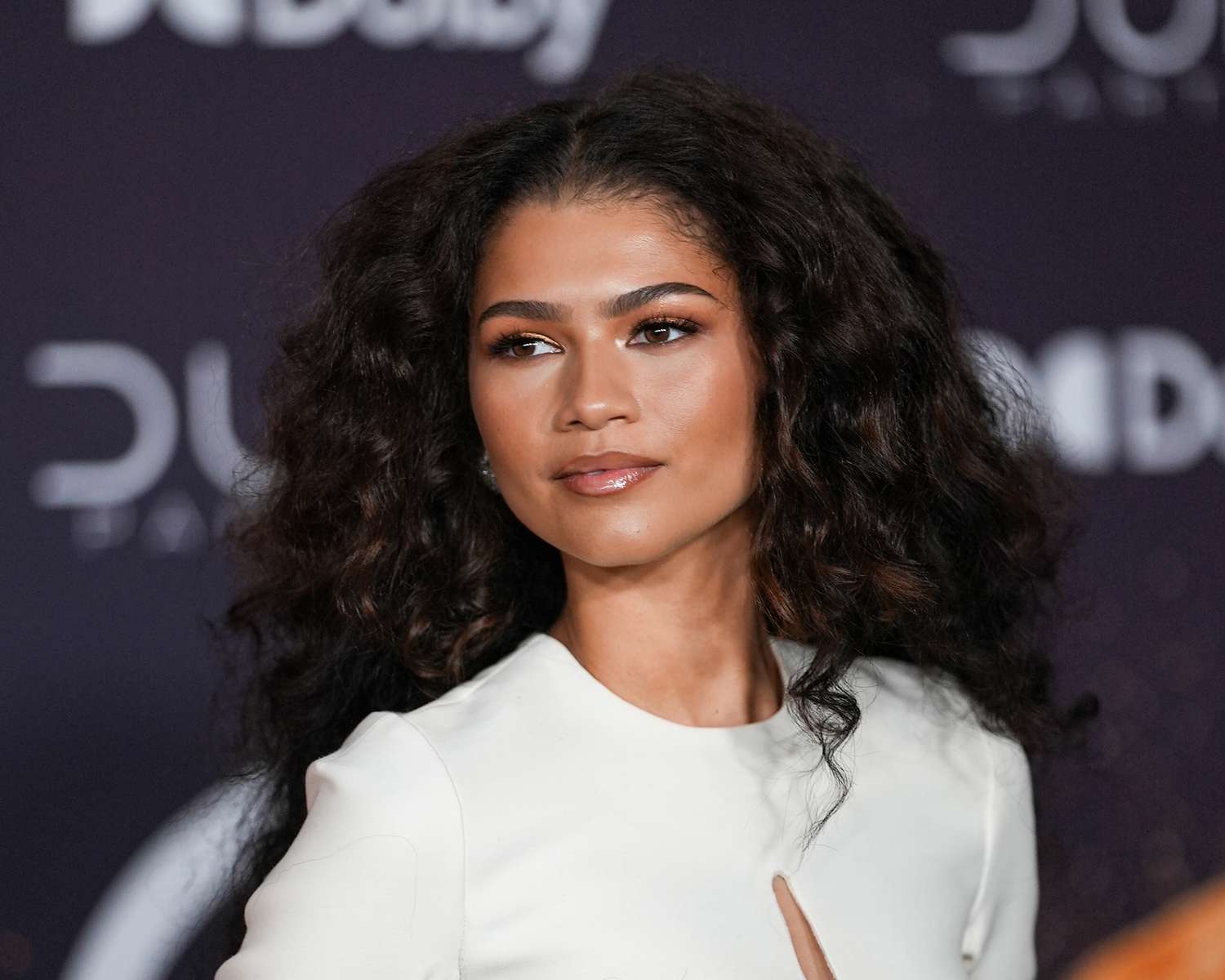
Why choose dark brown over black for winter? Black can flatten curls, while dark brown with subtle auburn undertones adds warmth without losing depth. On long, thick curls with a middle part, the auburn catches winter light and keeps the colour from falling flat. Ask your stylist for a single-process colour with a warm auburn gloss on top. The defined curls will show off the dimension.
Mid-Back Visual Idea
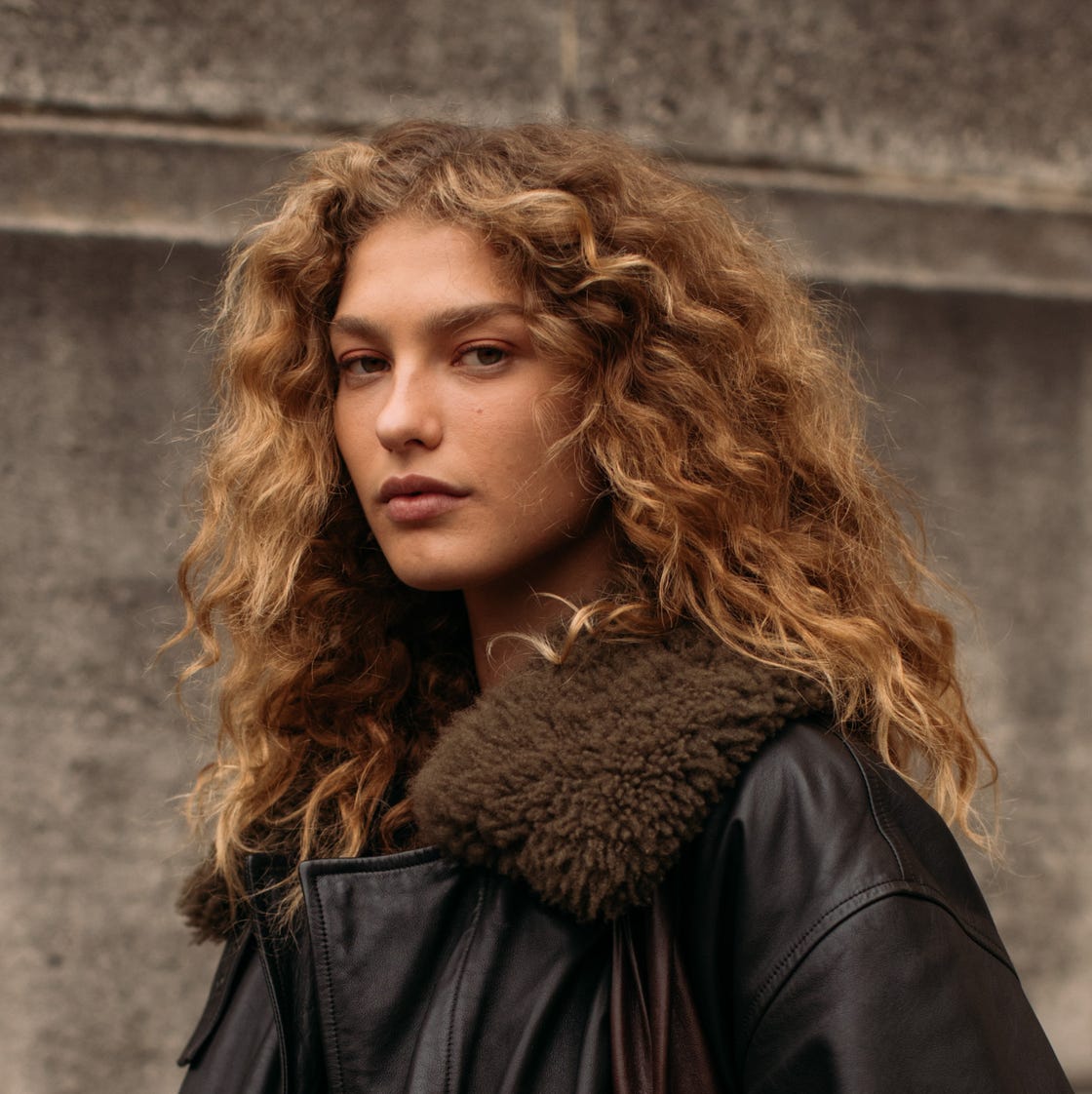
I’ll admit, I was skeptical about honey blonde in winter. But on mid-back length, thick, wavy-to-curly hair, the blend of honey blonde base with ash blonde highlights reads like a sun-kissed tone that works even in January. The side part and air-dried texture keep it natural, and the ash highlights prevent the warmth from going brassy.
Over a week, the colour holds its dimension because the highlights are woven through the layers. The honey base warms up the face, which helps during shorter days. Upkeep means a toner every six to eight weeks to keep the ash bright and the honey from muddying. This is a salon colour, but the grow-out is soft — no harsh line at the root.
Collarbone Visual Idea
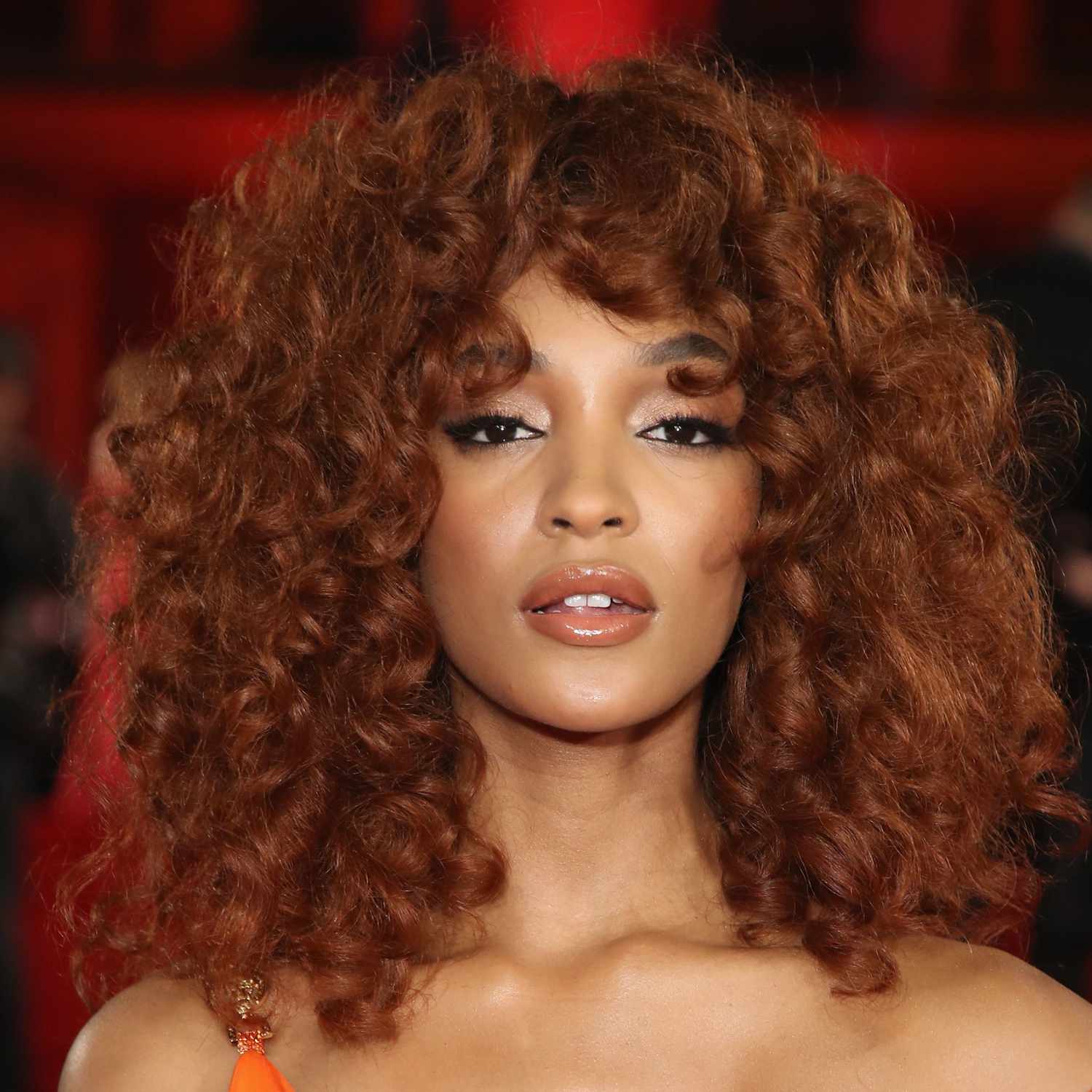
The first time I saw copper on collarbone-length curls, I understood the hype. The copper base with lighter copper highlights catches the light like a penny in the sun. On thick, wavy hair with a middle part and loose curls, the colour looks electric. But the honest downside: copper fades fast. Within three weeks, the vibrancy dulls to a rusty brown. You will need a gloss every four weeks to keep it bright. This is not a set-it-and-forget-it shade. It demands attention.
Shoulder Visual Idea
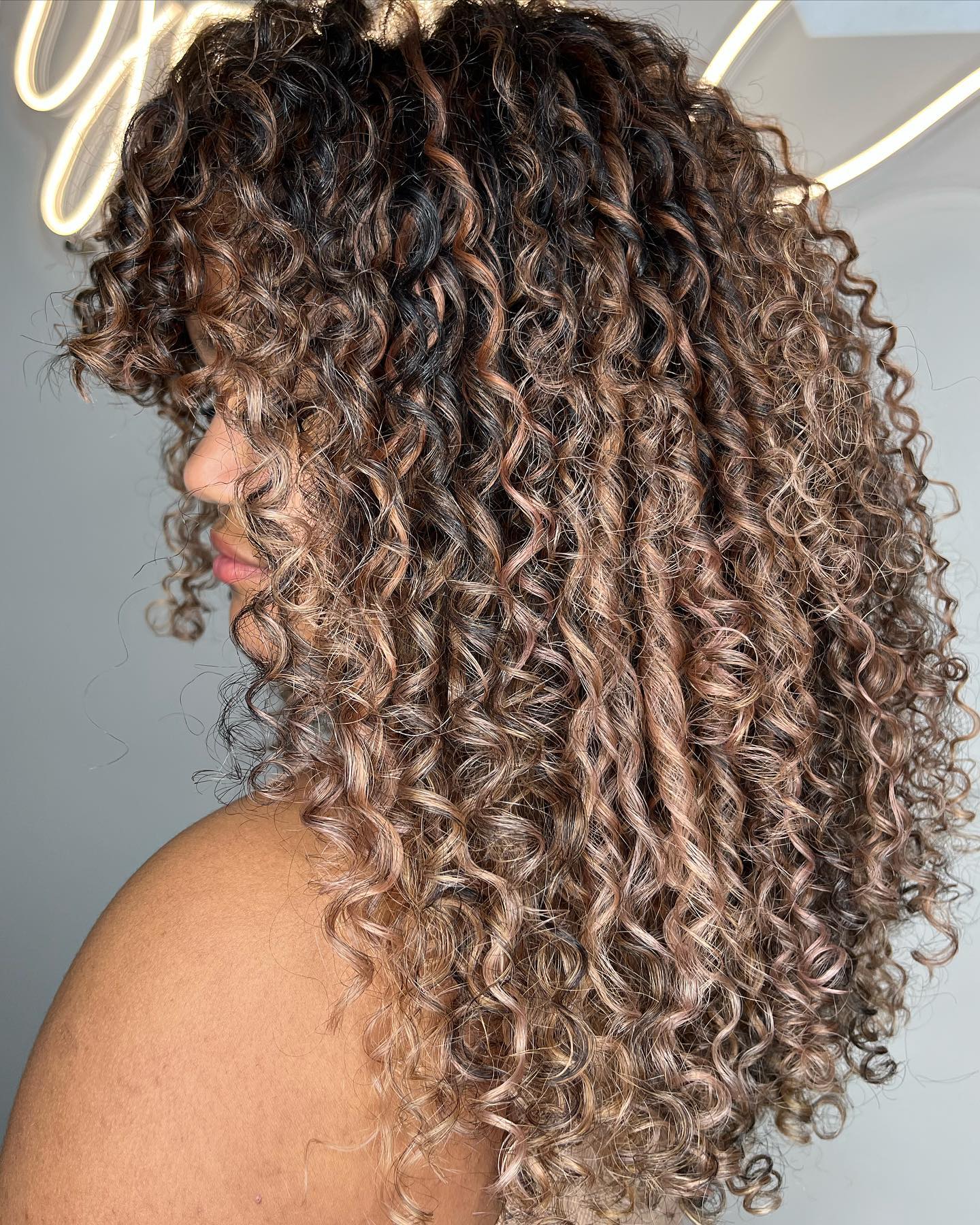
A dark brown base with caramel and blonde highlights sounds like a standard request, until you see it on thick, defined curls that catch winter light from every angle. The technique is balayage, painted freehand so the caramel lands on the top layers and the deeper blonde stays near the ends. That is a salon job, not a box-dye situation, the painterly placement is too precise for a bathroom mirror. The warm tone stops the dark brown from going flat, and the shoulder length keeps the curls from weighing themselves down. A side part widens a round face nicely, the asymmetry gives the eye somewhere to travel.
Shoulder Length Visual Idea
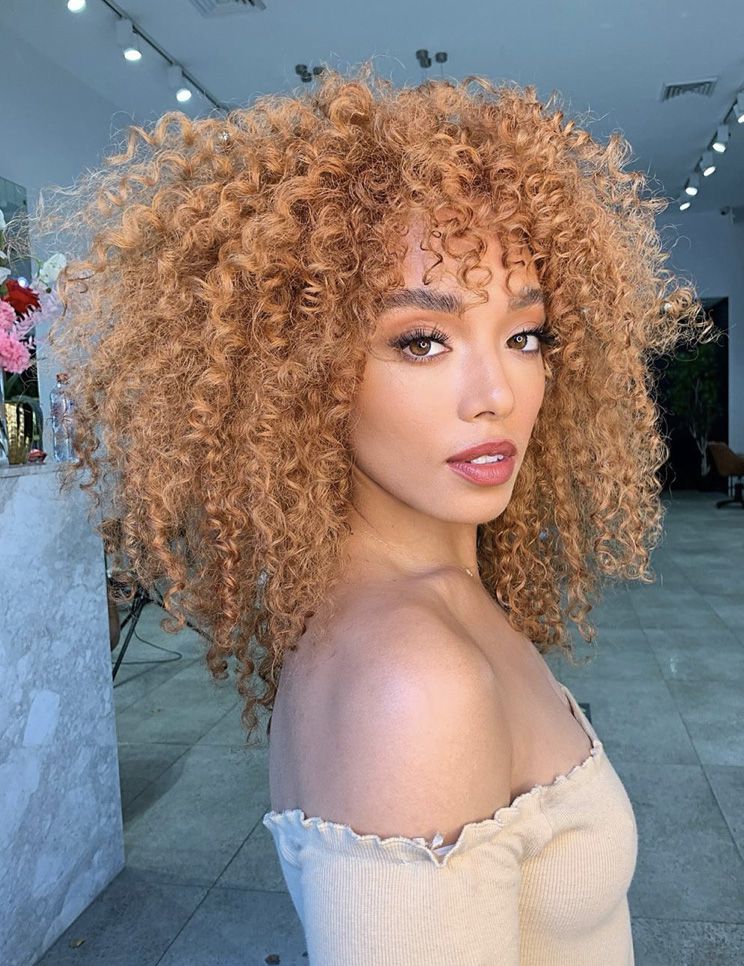
Have you seen honey blonde look this dimensional on coily hair? The secret is the warm undertone, a golden base that stops the blonde from turning ashy. The technique is a full-root melt with hand-painted highlights through the mid-lengths, so the colour lands inside the curl pattern, not just on the surface. The curtain bangs catch the lighter pieces at the face, which softens a strong jawline and keeps the colour from feeling heavy. Middle part, defined coils, shoulder length that still bounces. A stylist who knows curl placement is non-negotiable here.
Long Layers Visual Idea
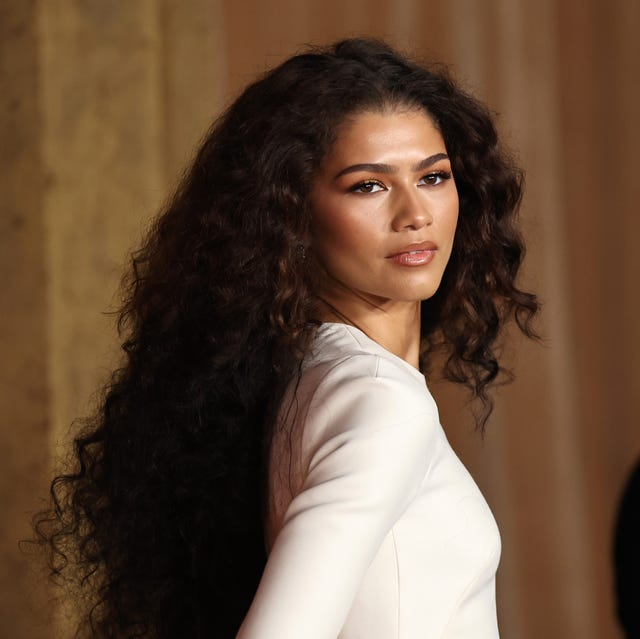
This is the colour that actually works through a real week. Dark brown with subtle caramel undertones, no chunky contrast, no stripe effect. The caramel is woven in as a semi-permanent gloss, so it shifts in lower winter light instead of screaming for attention. Monday it reads dark chocolate, Thursday the caramel peeks through at the ends. Honest downside: the gloss fades in about six washes, you will need a toning refresh every five weeks to keep the warmth alive. The long layers preserve volume on thick curls, and the side part hides the fade zone longest. Not a high-maintenance colour, just one that asks you to pay attention.
Chin Visual Idea
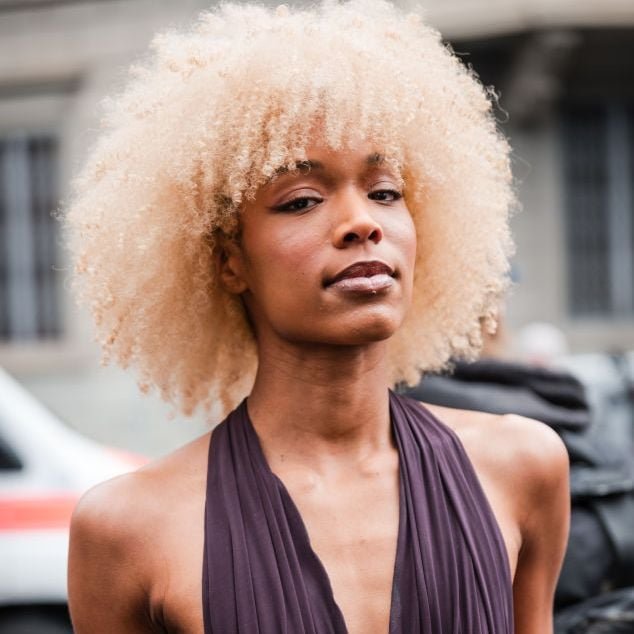
I will admit I expected platinum blonde to look harsh on curly hair. It does not. On a chin-length bob with voluminous, defined curls, the cool tone reads deliberate, not washed out. The technique is a double-process lift, the hair is pre-lightened to pale yellow then toned with a violet-based toner that knocks out the brass. The curtain bangs keep the lightness from feeling severe at the face, and the middle part balances the roundness of the face. It is bold and it does not pretend to be subtle. Thick texture hides the regrowth line better than fine hair would.
No Bangs Visual Idea
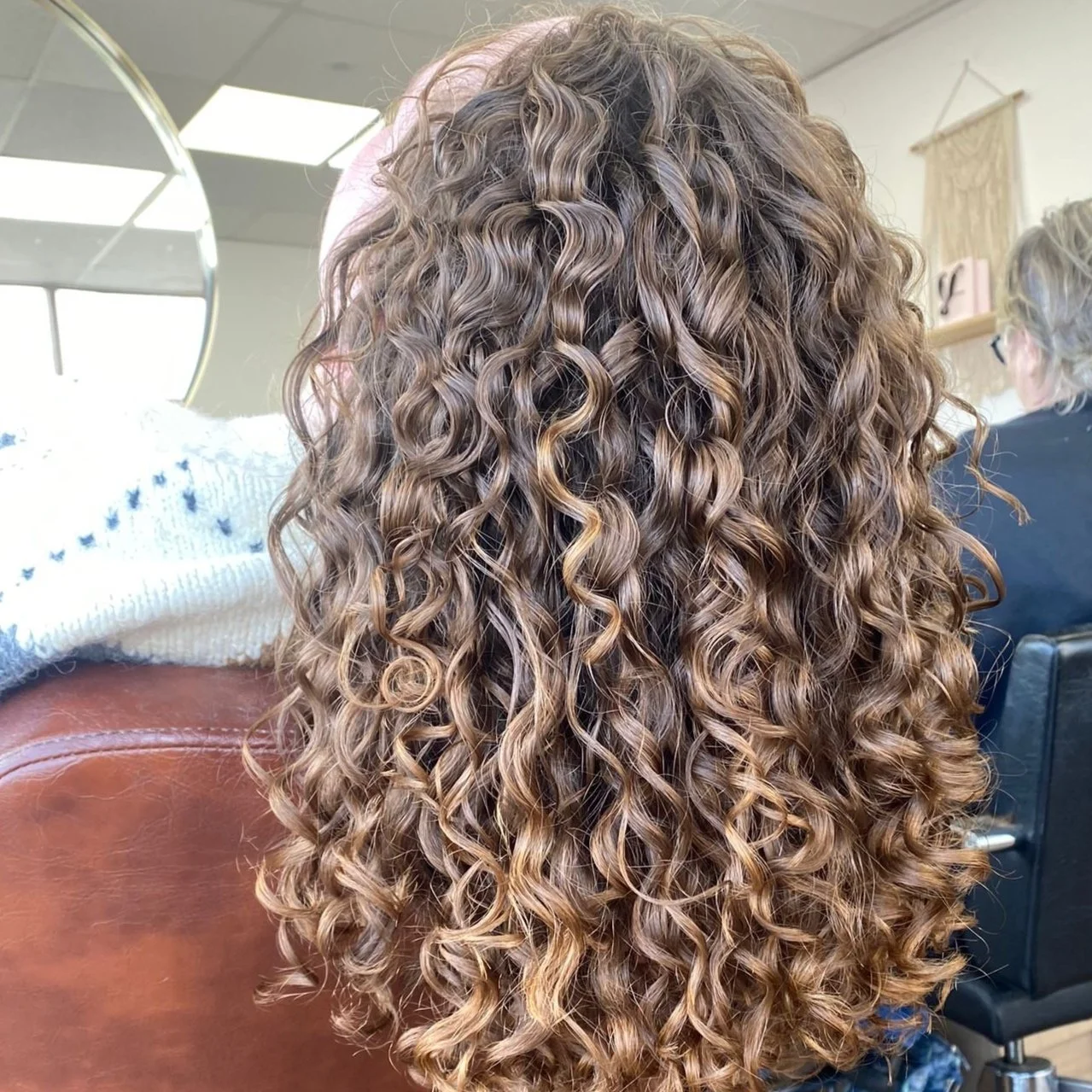
A fall morning, a blowout that actually held, and a colour that does not fight the season. Medium brown base with warm blonde balayage, painted in sweeping vertical sections so the lightness stays concentrated at the ends. No bangs here, the side part and the long layers do the framing alone. The technique is softer than a solid colour application, which means the regrowth is less obvious in the darker winter months. The warm blonde reads golden, not yellow, and on thick, curly texture the dimension stops the whole thing from looking like one flat block of brown. It works for daytime and for evenings that run late.
Vibrant Copper Red Visual Idea
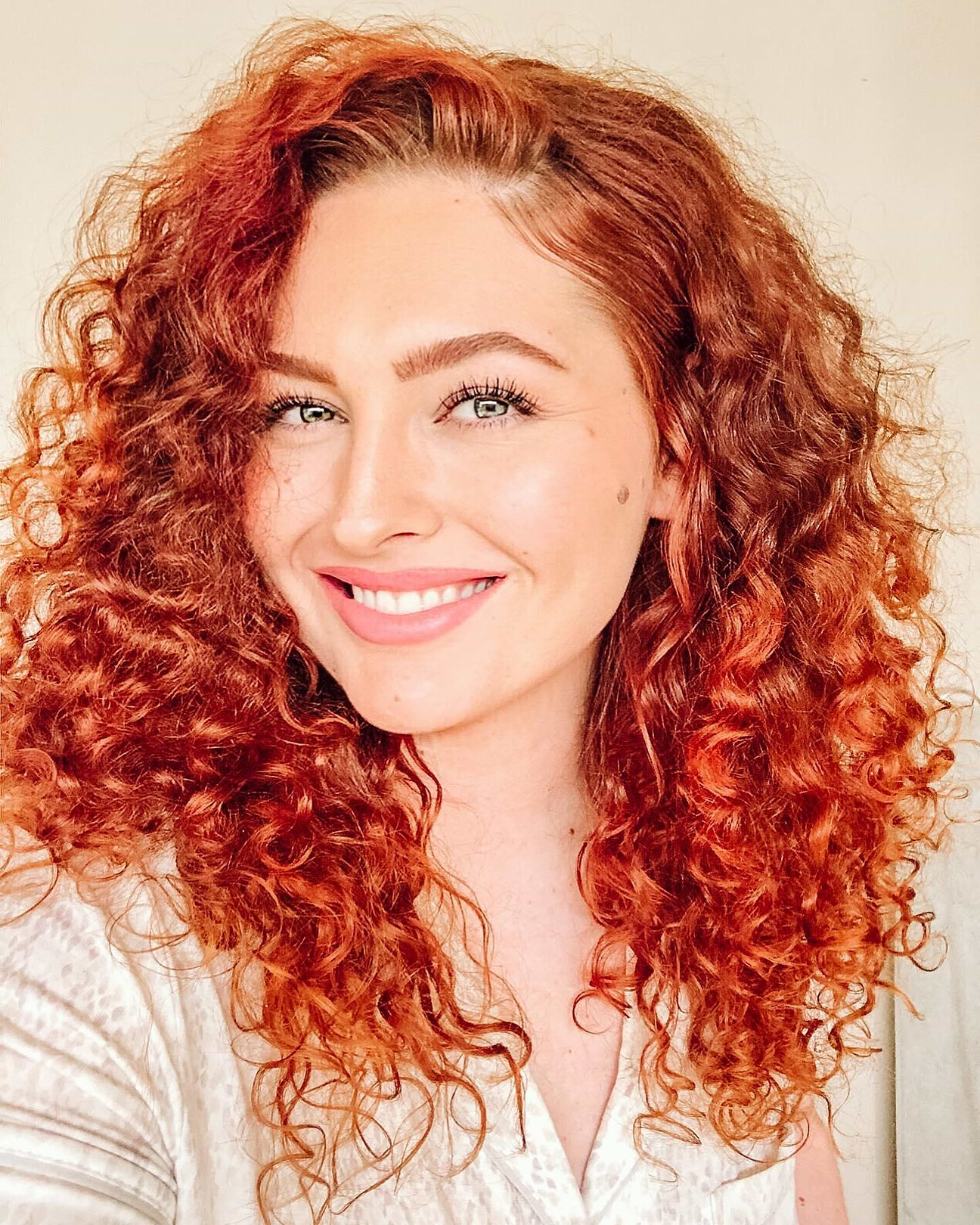
That copper stops you mid-scroll. On shoulder-length thick curls, air-dried with a middle part and no bangs, it reads as intentional, not accidental. The technique involves lifting the natural pigment first, then depositing a warm, saturated red tone. On curly hair, the cuticle is more raised, so the color grabs faster and can turn uneven if you rush it. A single-process works if your base is already light, but darker hair needs a double process. DIY is possible if you have steady hands and a good sectioning clip. I would book the salon. One uneven patch and you are wearing a hat for a month.
Collarbone Length Visual Idea
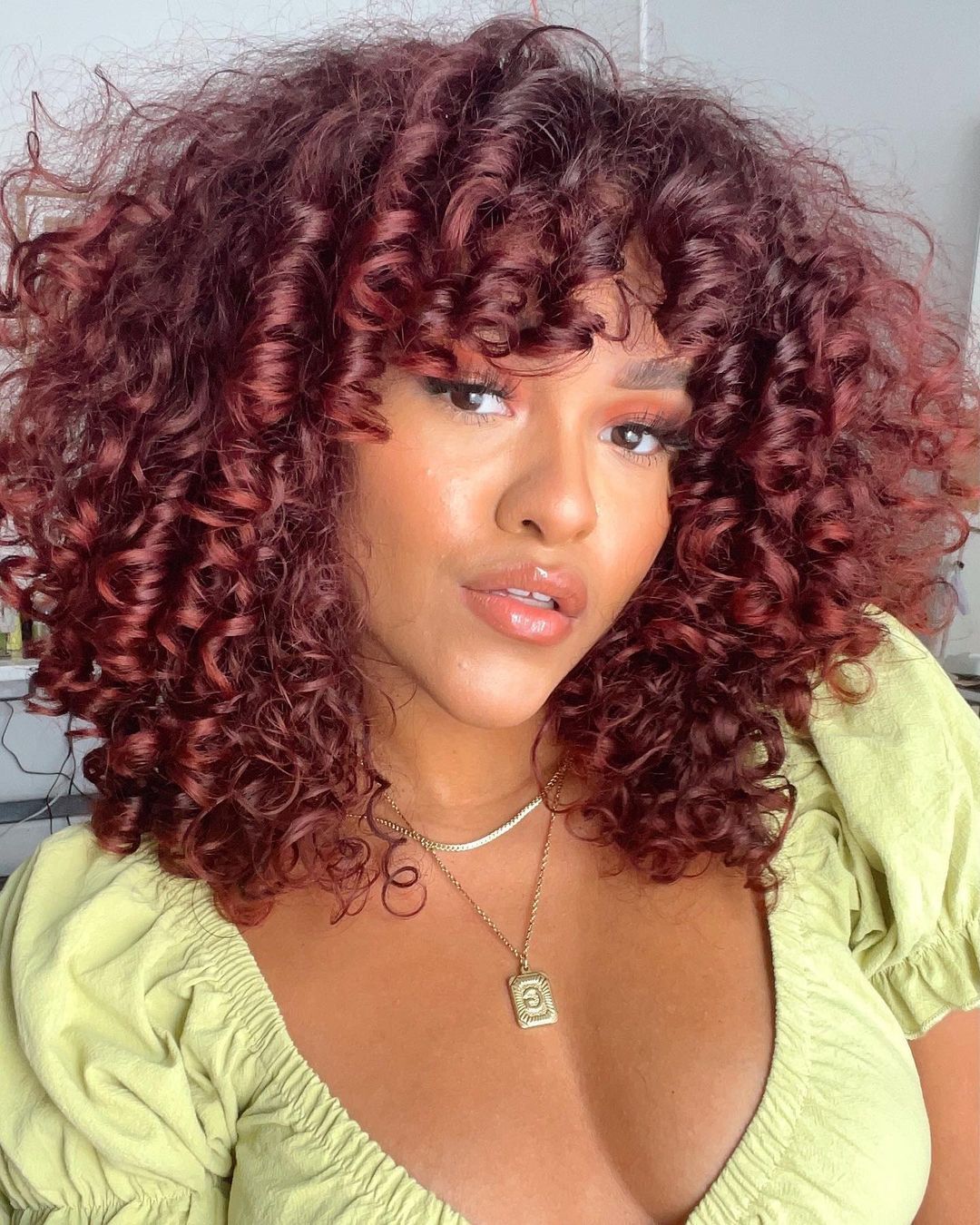
Ever had a color that looks different every time you catch the light? This deep auburn with red undertones does that. On collarbone-length thick coily curls with short wispy bangs and a middle part, the red flashes in winter sun and reads almost brown in dim rooms. It is the kind of shade that makes you check a mirror twice.
Here is the honest part. That intense red fades. After four washes, the undertone starts pulling more brown, and by week three you are reaching for a color-depositing conditioner. The winter light makes it look richer initially, but also shows every faded patch. You will need a toning routine and a trim every eight weeks to keep the shape from looking dull. Worth it if you like a color that does not sit still.
Rich Reddish-Brown Visual Idea
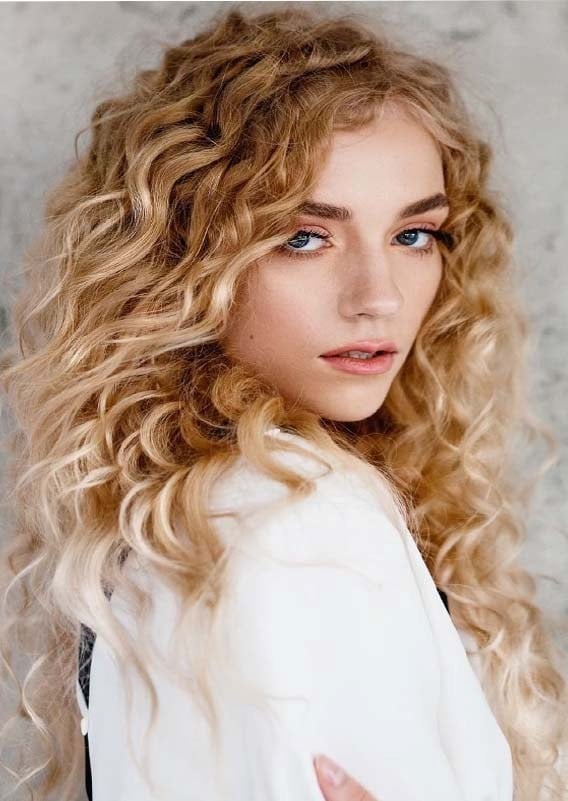
This is the color you wear to a holiday party and a Tuesday meeting. I showed up to a family dinner with this rich reddish-brown on my collarbone-length wavy hair, side part, loose waves, no bangs. My aunt said it looked like I had just come from a salon. I wore it to work the next day and a coworker asked if I had done something different. It is that versatile. The warm autumnal tone sits between brown and red, so it never screams costume. It just looks like you put thought into it. Which, technically, you did. But it does not announce the effort.
Long Visual Idea
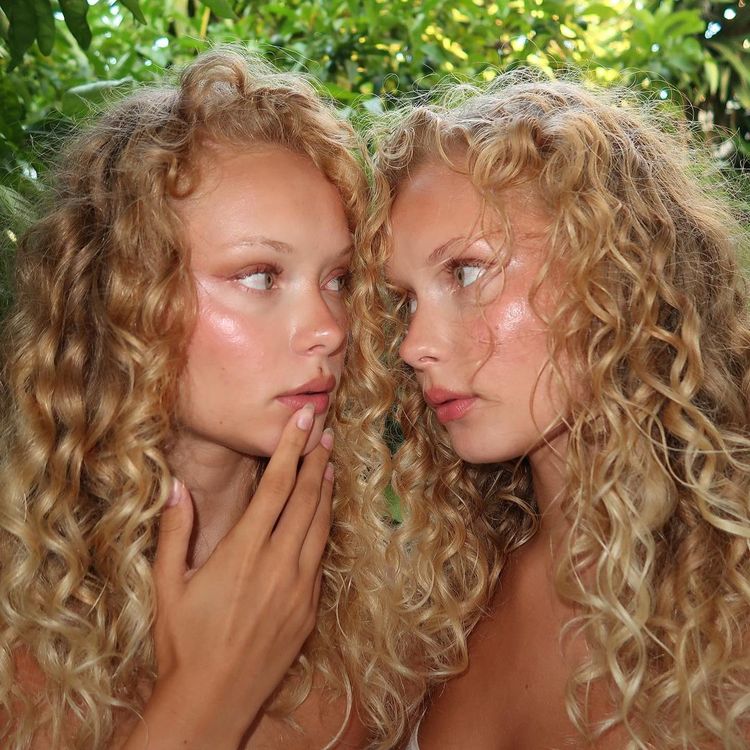
Ash blonde on thick curly hair is not for everyone. It works best when your curls have enough volume to carry a lighter shade without looking washed out. On long, thick curls with a middle part and no bangs, the subtle highlights add dimension without going brassy. The ash tone keeps it cool, which is rare for curly hair that tends to pull warm.
Who should pass? Anyone with fine, low-density curls. The lightness can make thin hair look sparser. And if your skin undertone runs warm, ash blonde can read flat. DIY is possible with a good toner and a careful hand, but highlights on thick curls are tricky to place evenly. I would let a stylist handle the lift and save the toner touch-ups for home. The result is a winter blonde that does not scream beach.
Deep Auburn With Subtle Red Undertones Visual Idea
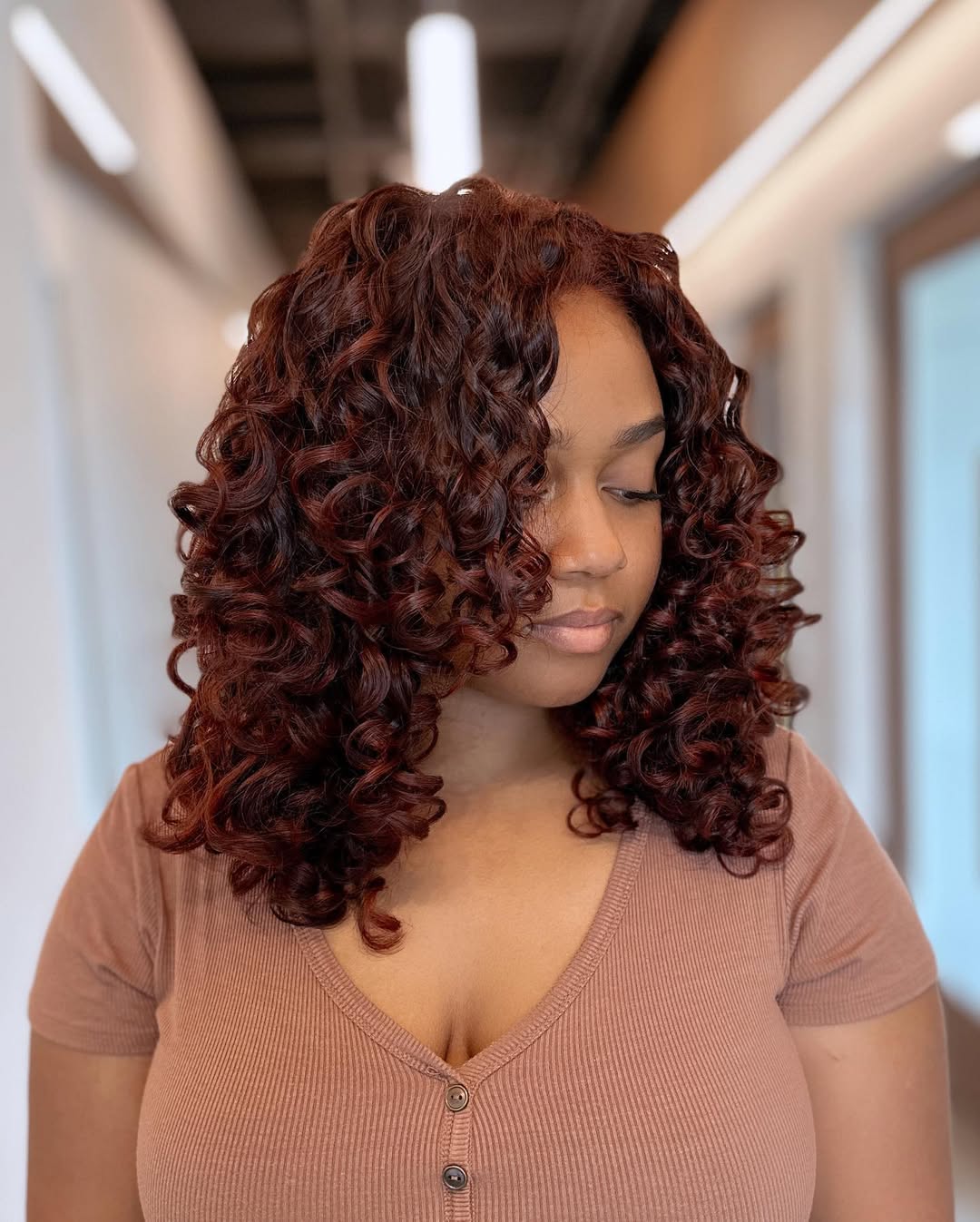
The colorist mixes a drop of red into the brown. That is the whole trick. On shoulder-length curly hair with medium density, a side part and a blowout, the deep auburn base gets a whisper of red undertone that catches light without shouting. The process is straightforward: a single application of a permanent color with a custom red additive. No double process, no heavy lift. The red is subtle enough that it does not fade into orange, just softens toward a warm brown over time. It is a low-commitment way to test auburn without going full copper.
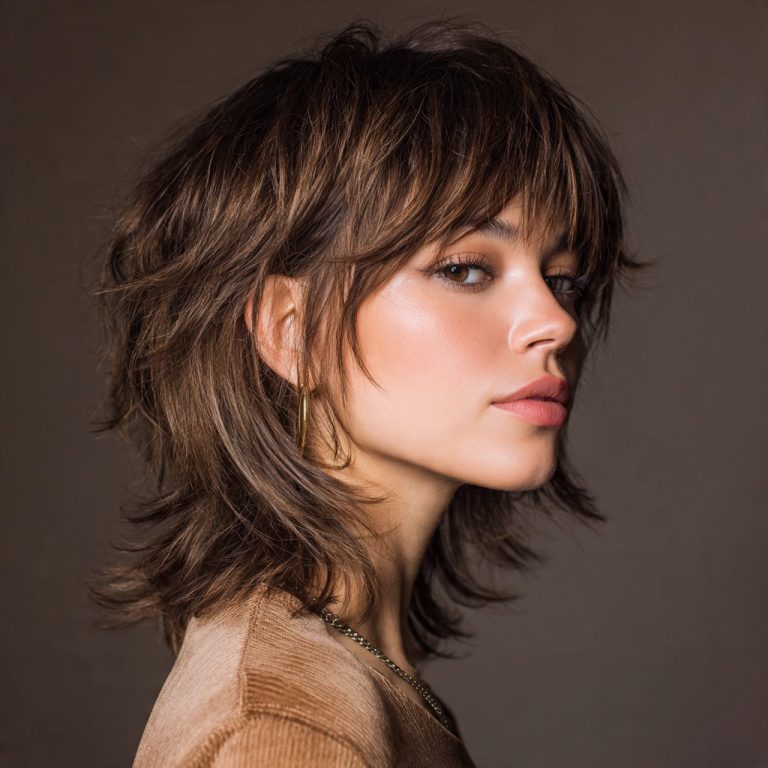
Shag Visual Idea
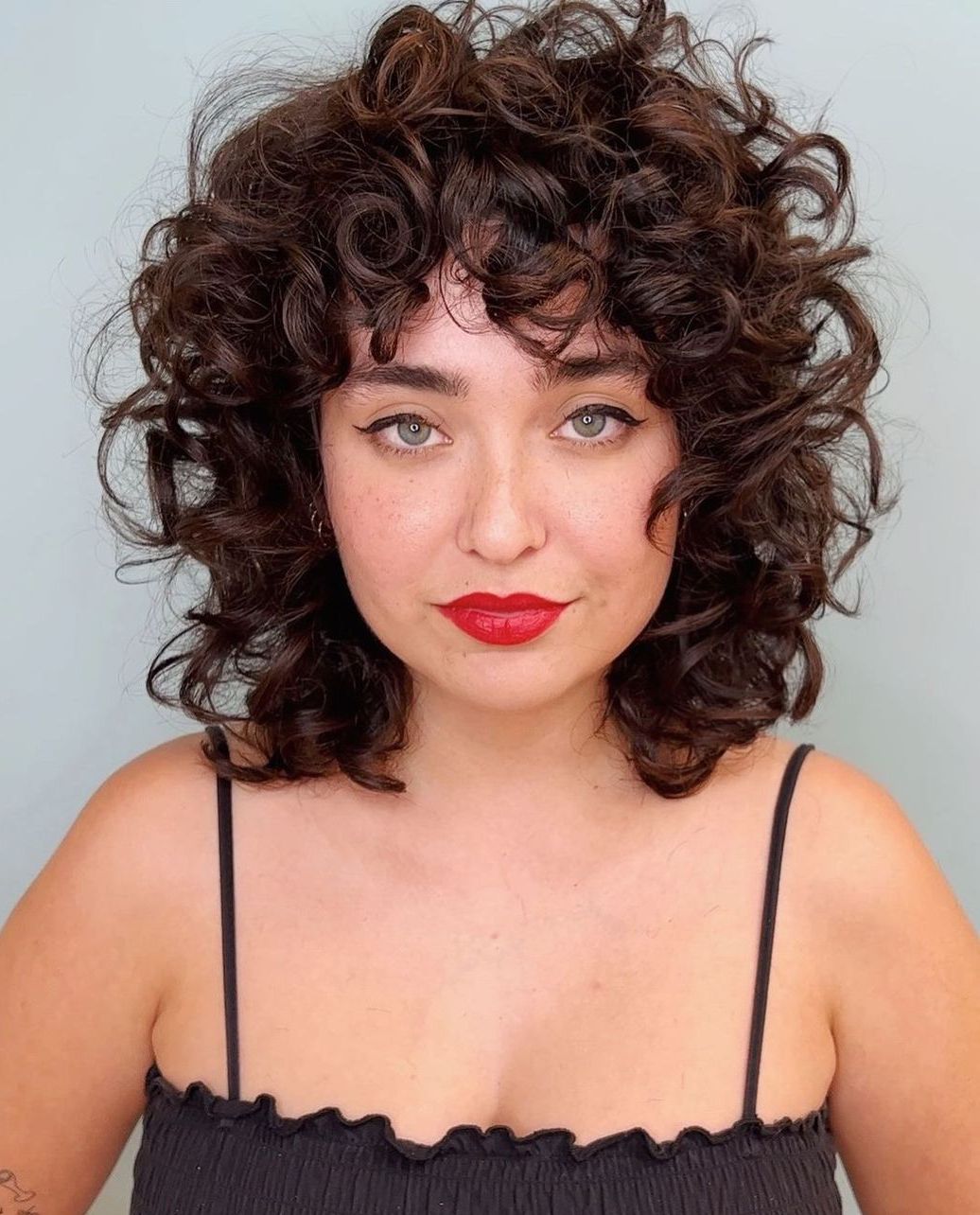
I’ll admit it: I used to think a shag on curly hair was a gamble. This one, with its short curly bangs and tight curls at chin length, changed my mind. The dark brown base with honey blonde highlights is where the real work lives. Those contrasting highlights on dark curls need a salon hand, and they need upkeep. By week three, the brightness starts to dull, and the curls at the root show a line. It’s not a wash-and-go color. You’ll be booking a gloss every six weeks to keep the honey from turning muddy. Worth it, but know the commitment.
Rich Auburn With Copper Undertones Visual Idea
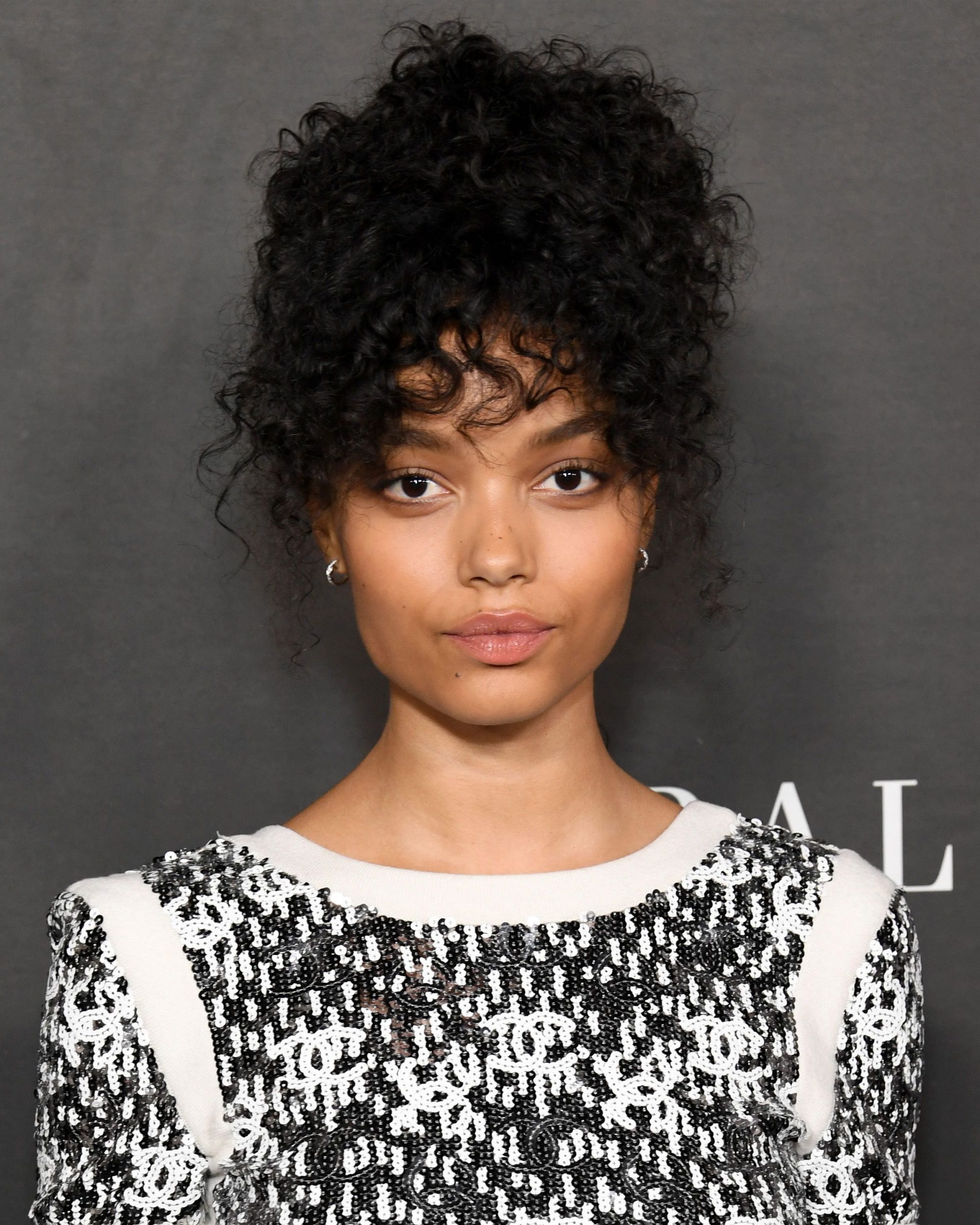
My gut says this is the red that actually flatters winter skin. Rich auburn with copper undertones sits warmer than a true cherry red, which can wash you out, and deeper than a bright ginger, which can fight your complexion. The copper catches the low winter light without going orange. On thick, curly hair at mid-back length, air dried, it reads like a natural-born color, not a dye job.
Compared to a burgundy, this shade keeps your face looking lit. Burgundy leans purple and can make skin look sallow in January. This one holds warmth. The layers help the color move, so the undertones shift as your curls bounce. That’s the trick: it’s not flat, it’s dimensional.
Layers Visual Idea
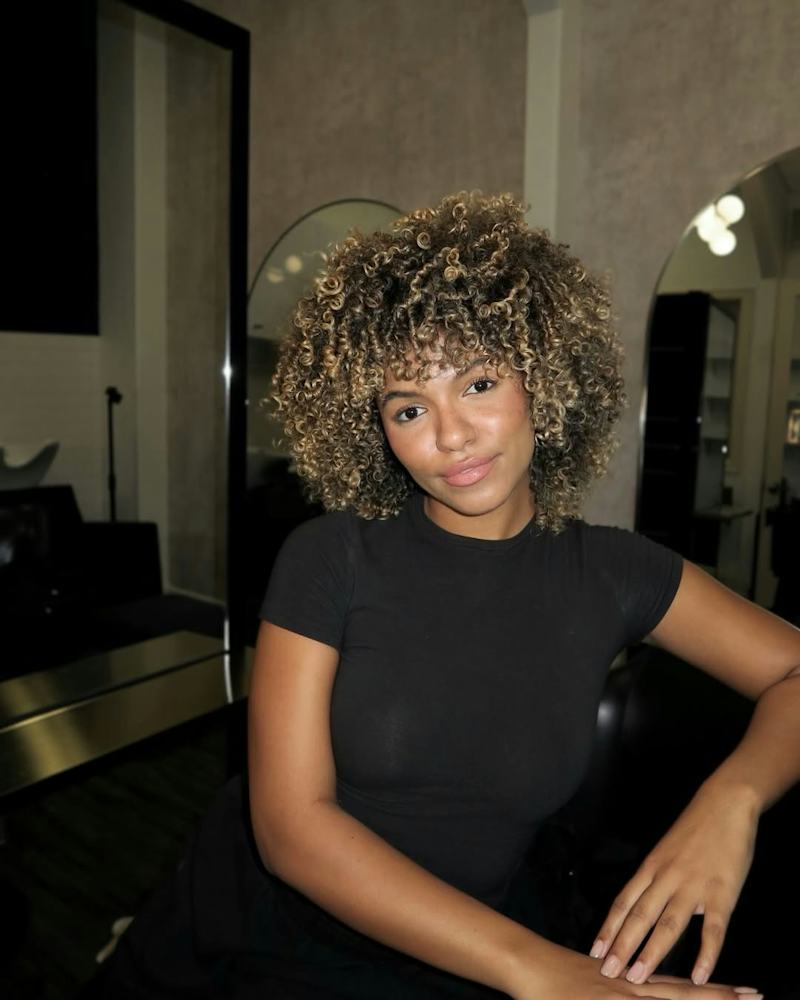
Do you have dense, thick curls that feel heavy by noon? Then this collarbone-length cut with curtain bangs is for you. The dark brown base with honey blonde highlights adds dimension that makes the layers read clearly, so your hair doesn’t look like one solid blob. The honey pieces catch light and give the illusion of movement. This is a salon job, not a bathroom-mirror project. The highlights need to be placed where your curls naturally fall, and that takes a stylist who understands curly density. Skip it if your hair is fine and sparse; the contrast will look patchy.
Vibrant Ginger Visual Idea
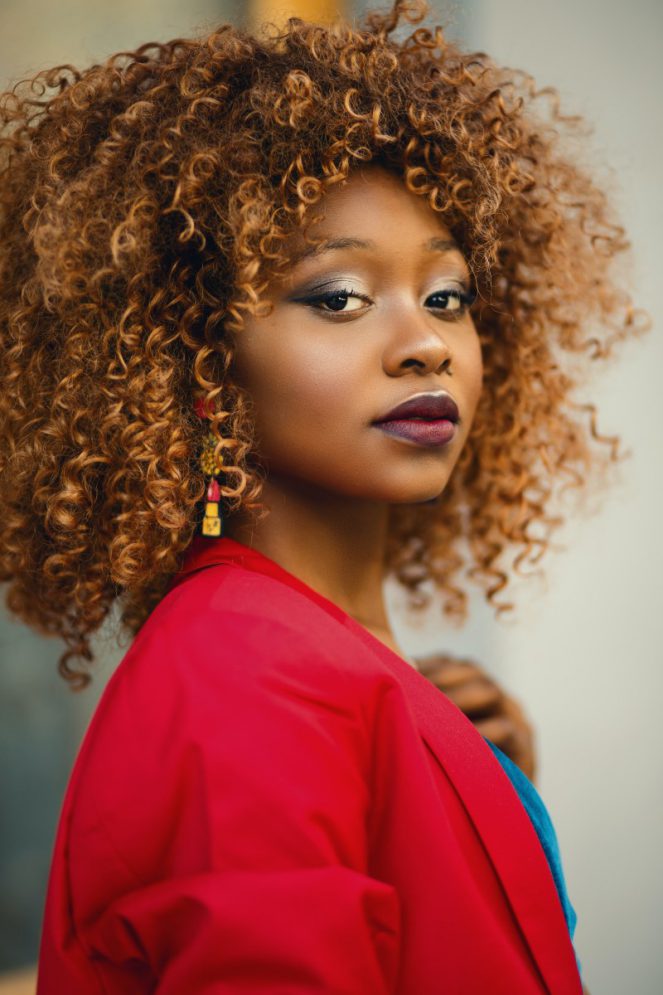
The precision here is the lift. Vibrant ginger on thick, coily hair at mid-back length doesn’t happen in one pass. Your stylist has to pre-lighten the hair to a pale yellow, then lay the ginger over it, otherwise you get a murky orange. The defined, voluminous curls show off the color’s clarity, and during the holiday season, that intensity pops against dark sweaters and twinkling lights. It’s a statement shade, no question. The process takes hours, but the result is a color that looks lit from within.
Front View Visual Idea
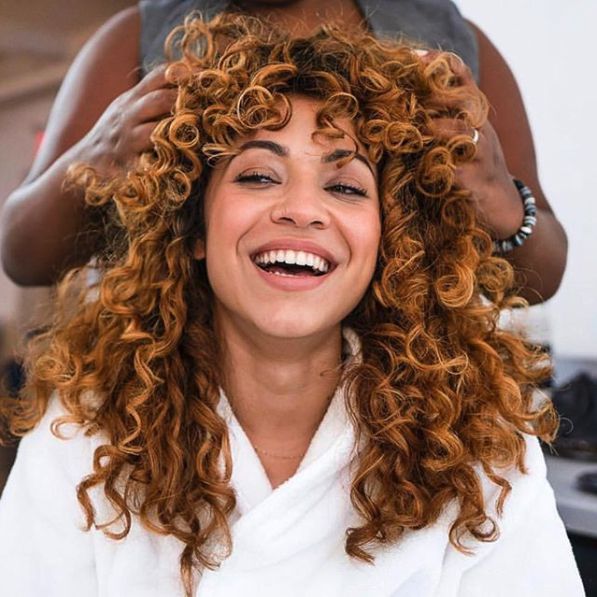
Verdict: this warm copper base with lighter copper highlights is gorgeous, but it’s a high-maintenance love. The vibrant copper hue fades faster than any brown I’ve tried, especially on thick, curly hair that’s air dried. By week four, the lighter highlights start to look brassy against the base. You’ll need a color-depositing conditioner in your rotation and a gloss every four to five weeks. The collarbone length helps, since shorter hair means less old color hanging around. If you can’t commit to the upkeep, pick a deeper auburn instead.
Side Visual Idea
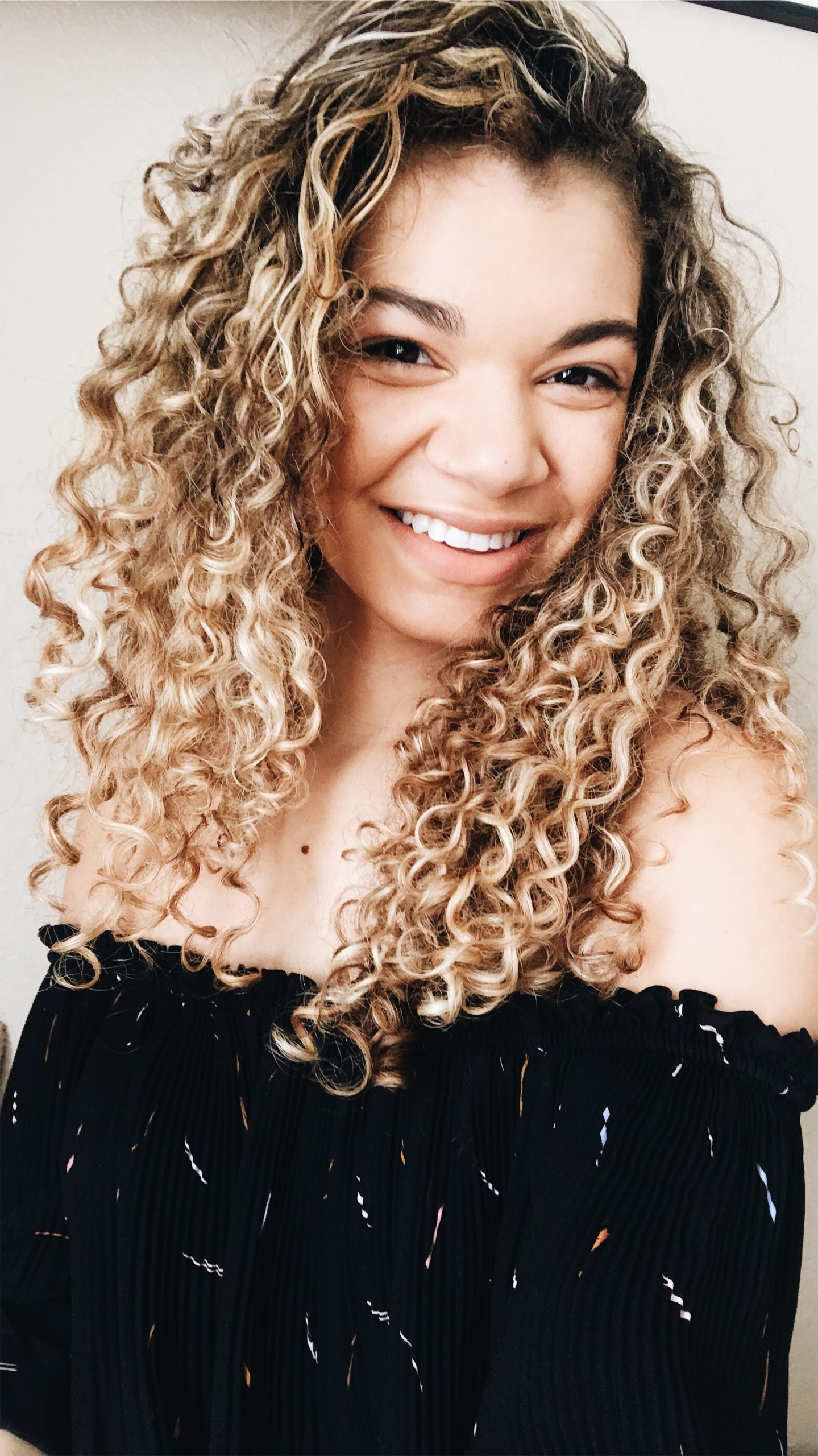
I walked into the salon wanting a honey blonde that looked like it belonged on my curls. The stylist lifted my natural base to a bright honey, then wove in lighter blonde highlights through the crown and toward the front. Shoulder length, so the colour doesn’t get lost in longer hair. Medium density curls catch the light best here the highlights sit on the surface instead of disappearing. A warm, golden tone that reads sunny even when the winter sky is grey. This is a salon job. The bleach work needs precision a DIY kit will land patchy on curls.
Back View Visual Idea
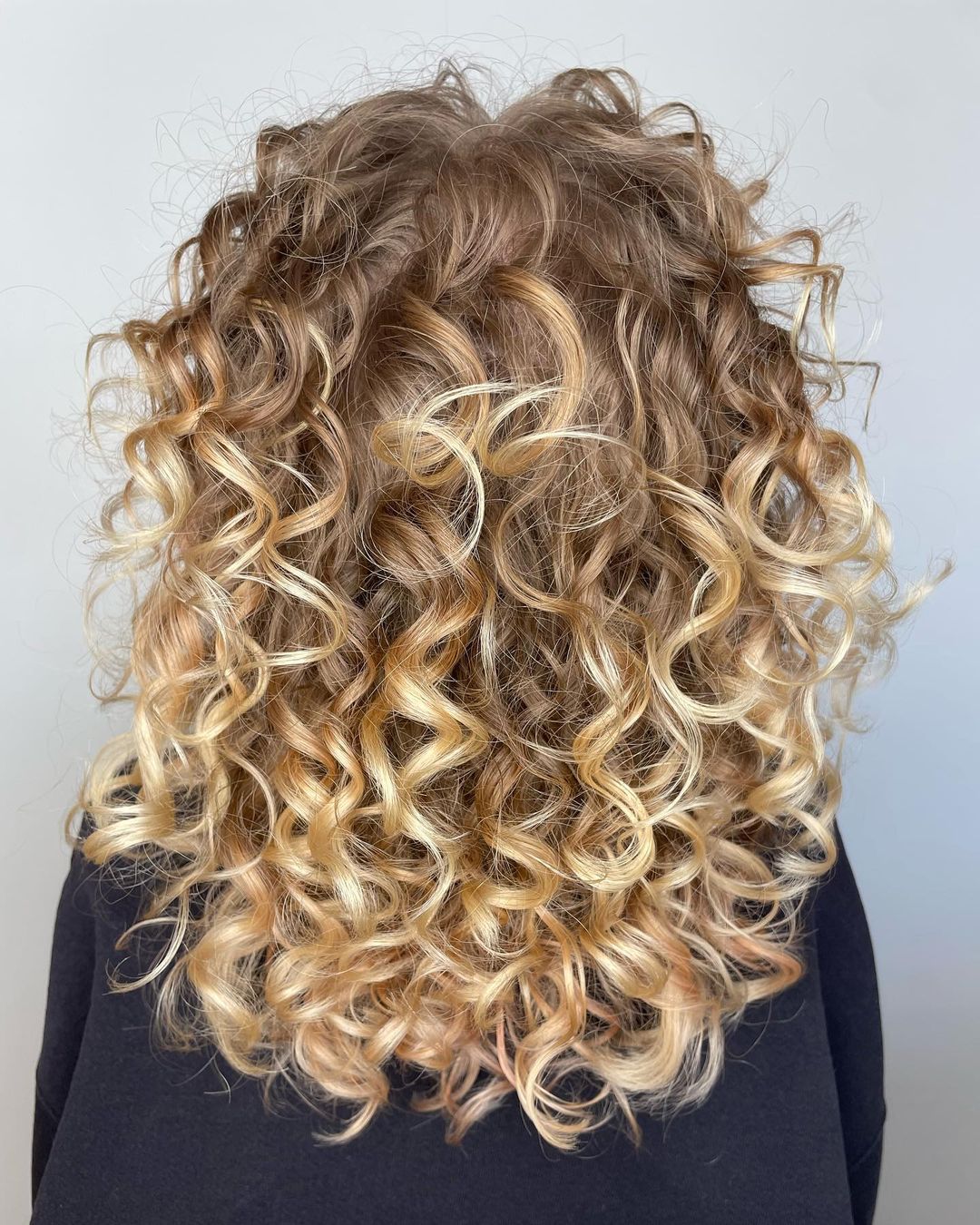
Do you have winter hair that goes flat in two hours? This one keeps the volume up. The base is a cool ash blonde, darker at the roots for contrast, with subtle platinum highlights woven through the layers. Mid-back length, thick wavy texture that holds the lift. The colour adds dimension without weight, which is rare for longer hair.
What it takes. A root touch-up every four weeks, because the dark root versus platinum highlight line is not subtle when it grows. A blowout helps the waves read as intentional. Best for coarse or thick hair that can absorb the lightening without breaking. Fine hair may need a lower lift to keep structure.
Medium Brown Base With Blonde Highlights Visual Idea
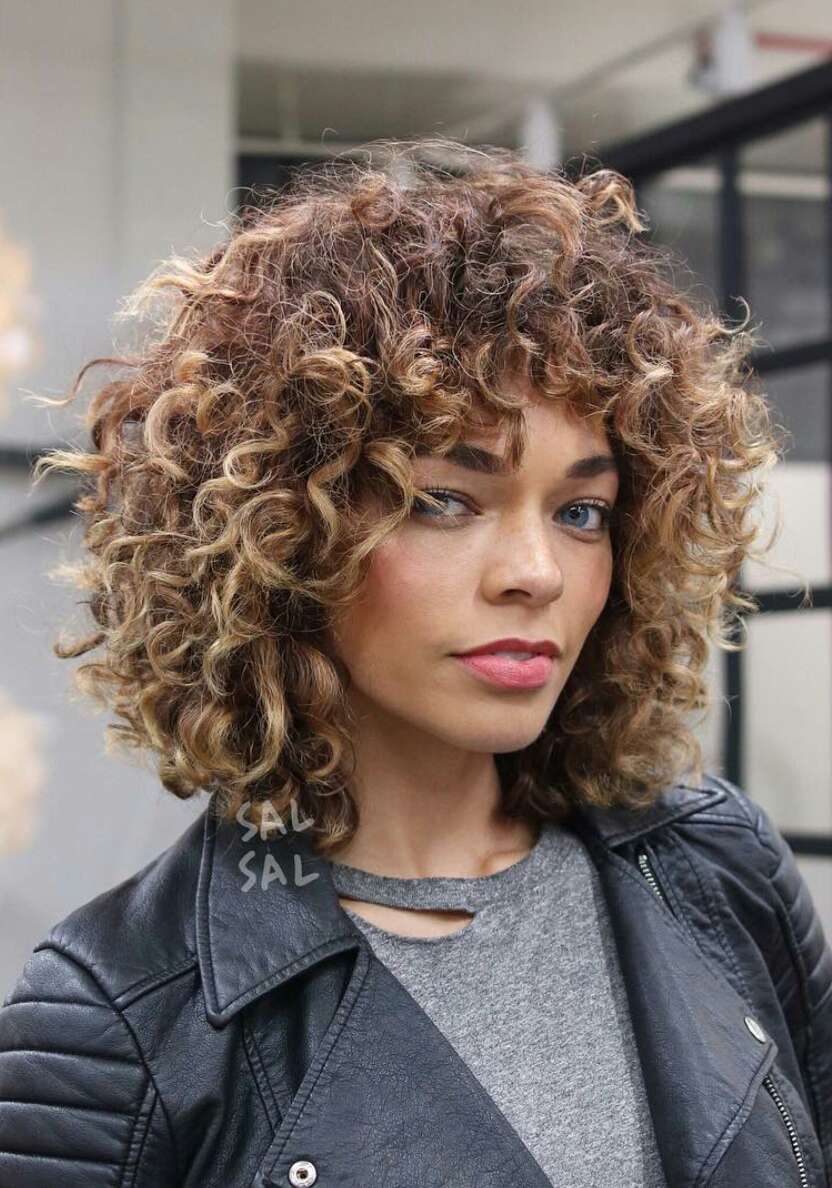
I admit I used to think highlights on curls were a waste — they always looked chunkier than the inspo. Then I saw this bob. Chin length, thick defined curls, a medium brown base with blonde highlights placed on the curl crests. The technique matters. A stylist paints each section with the curl pattern, not across it, so the blonde lands on the highest curve and the brown shadows the dip. Side part, no bangs. The blonde reads dimensional instead of streaky.
Side View Visual Idea
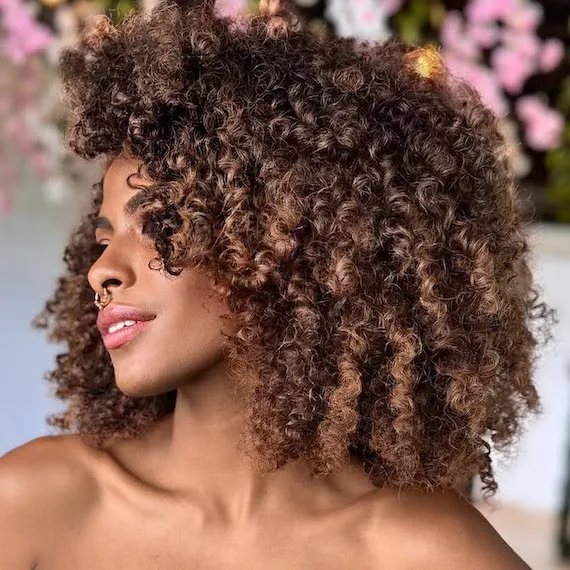
Golden highlights in winter light do something grey. They catch the overcast glow and turn warm instead of washing out. Shoulder length, thick curly texture, a medium brown base with subtle golden highlights placed through the mids and ends. The tone is modest, not brassy. What nobody says is how much a purple shampoo matters here gold can tip into yellow after a few washes, especially under artificial office lighting. Third-day curls lose some of the lift, but the colour stays readable. The honest downside is the toning rhythm. Every two weeks, or the highlights go dull.
Dark Brown Base With Caramel Highlights Visual Idea
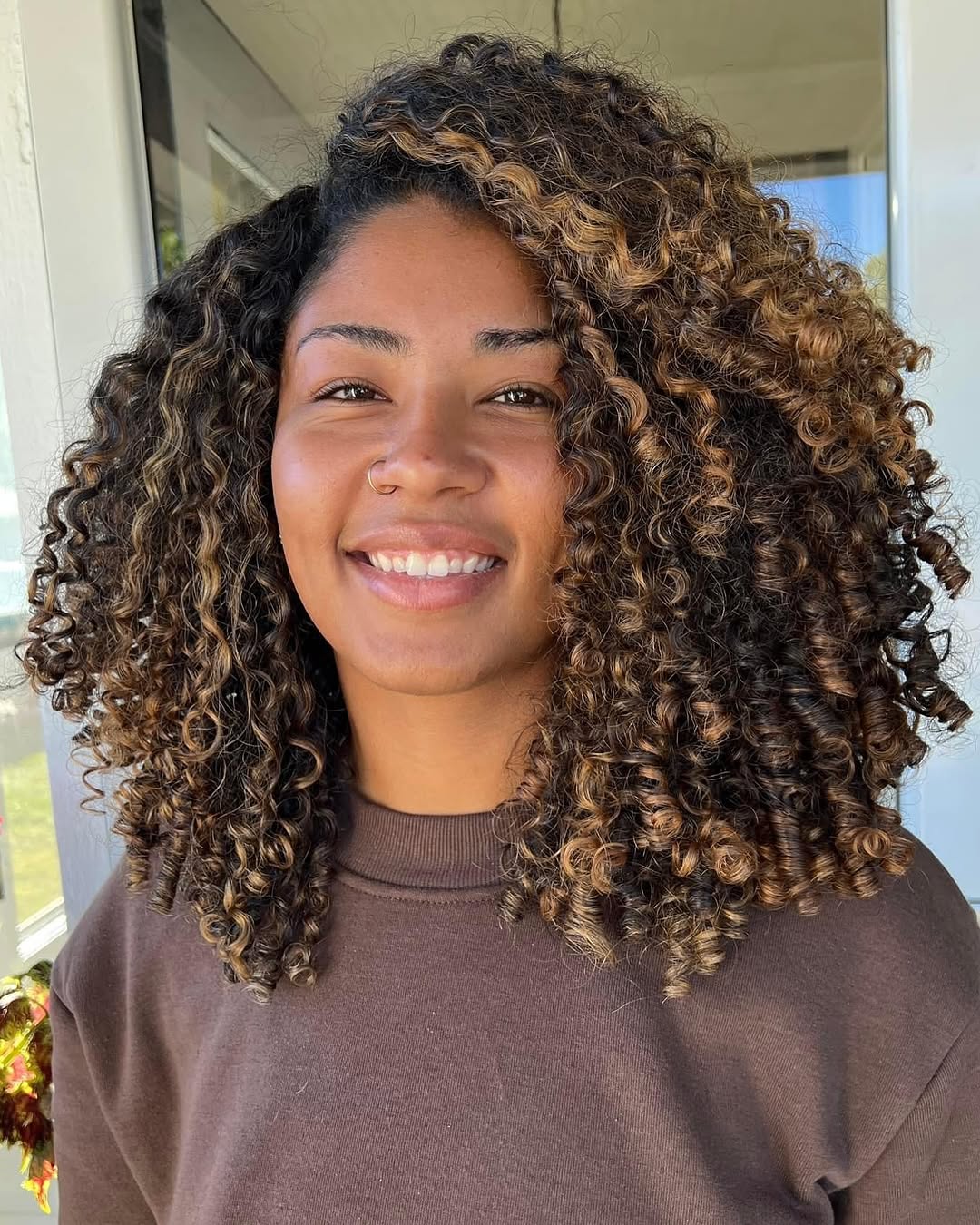
Ash blonde gets all the winter press, but caramel highlights work harder on dark bases. A lob cut at chin length, thick natural curls, a dark brown base with caramel highlights sliced through the mid-lengths. The warmth sits between brown and copper it softens the contrast without shouting. Ash blonde can read silver on curls; caramel keeps the depth and adds light. Middle part, no bangs. The caramel brings out the curl definition without the brittleness of a full bleach.
Defined Curls Visual Idea
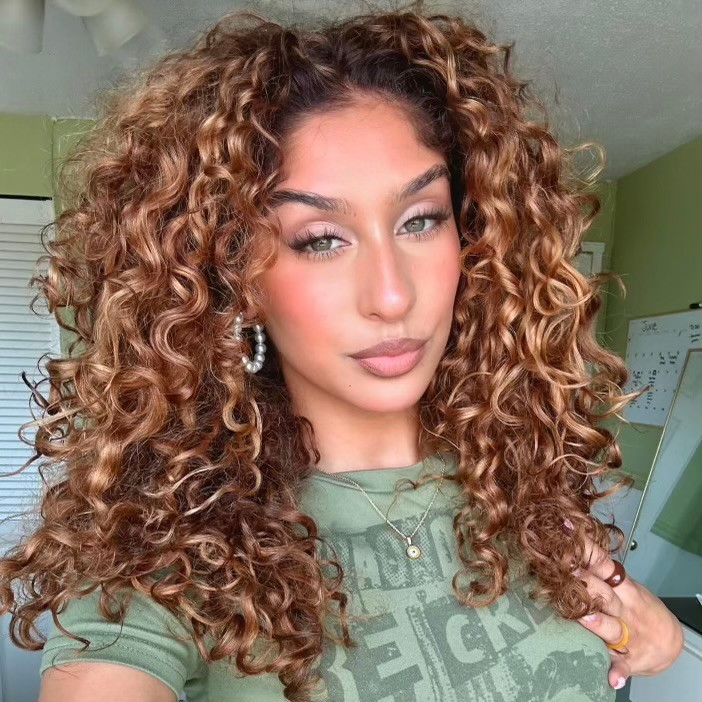
Best grow-out in this roundup. This Defined Curls Visual Idea uses a rich brown base with caramel highlights on a collarbone length, layered cut. The warm caramel tone reads vibrant against deeper skin tones and brings dimension to thick, curly texture without the root line trauma of a full bleach. The technique is a soft balayage, which means the grow-out is gradual, not a sharp line. This is a salon job, not a box color moment. The colorist places the caramel to catch the light where your curls naturally fall, so the dimension looks built in, not painted on. If your natural base is already in the medium to dark brown family, this is the lowest maintenance way to brighten your winter look.
Ear Visual Idea
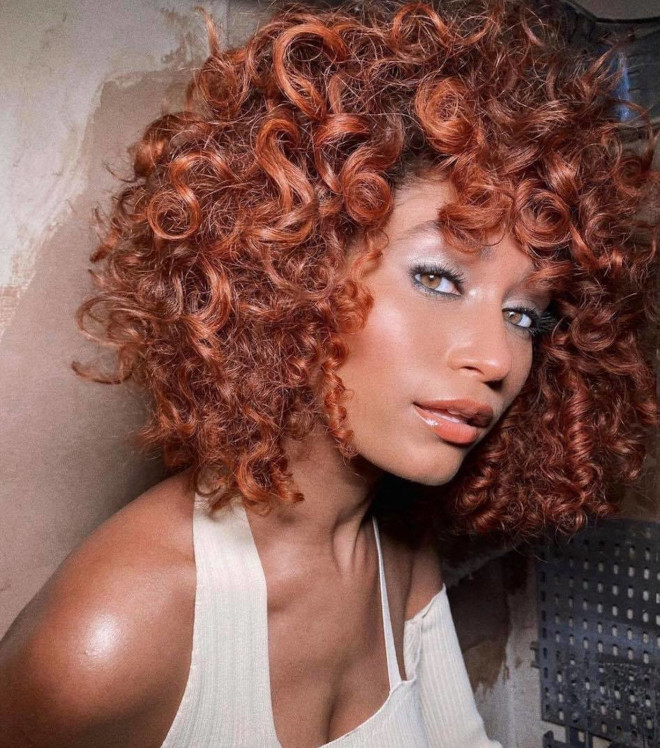
How do you get a fiery copper this intense on short, thick curls without it turning brassy in a week? This Ear Visual Idea relies on a full saturation technique, not highlights. The colorist applies a high-lift copper tone directly to the base, which means every single curl strand is saturated from root to tip. On an ear length cut with short bangs, the color reads as a solid block of heat, which is exactly the point. The middle part and tight curl pattern let the copper catch light from every angle. It is a commitment, but the technical payoff is a uniform, jewel-like tone that no partial application can mimic.
Loose Curls Visual Idea
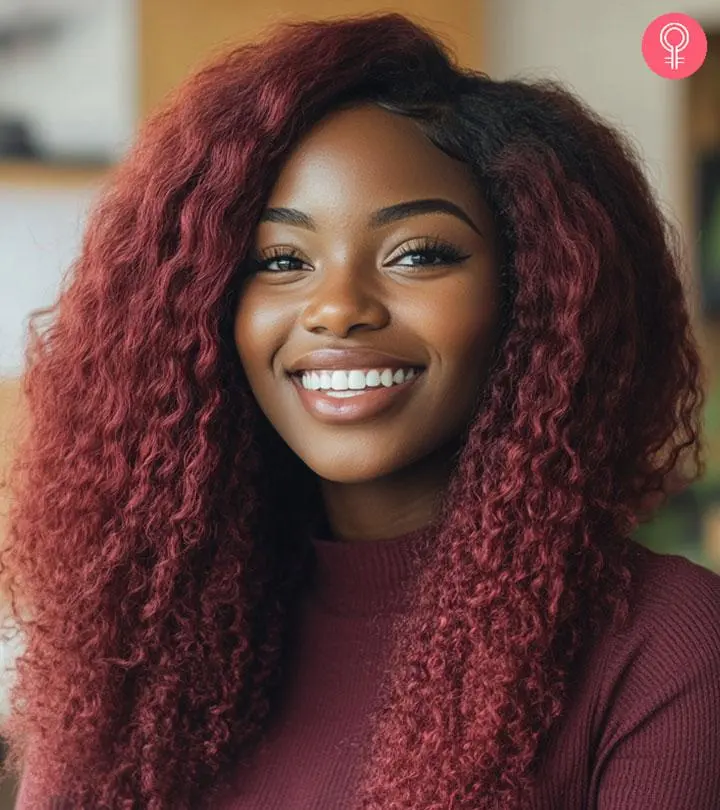
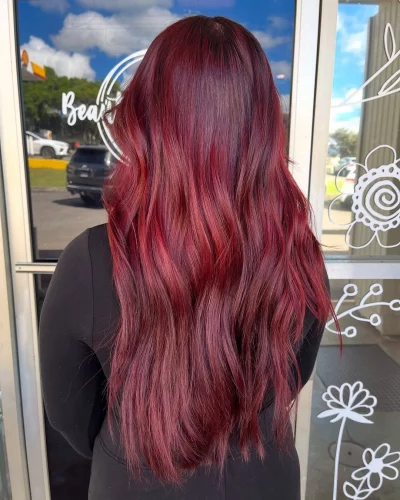
Winter light hits this color and suddenly you understand why people pay for a gloss. This Loose Curls Visual Idea uses a deep burgundy base with subtle darker undertones on a mid-back layered cut. It is a shape-shifter. In the morning sun it reads as a rich, almost black cherry. By afternoon, under office fluorescents, the burgundy peeks out. By candlelight, it is pure drama. The loose curl pattern helps, the waves catch the undertones instead of swallowing them.
The honest downside is that this richness is a high-maintenance tenant. The darker undertones mean the color leans cool, and cool tones fade faster on porous curly texture. You will need a color-depositing conditioner to keep the burgundy from pulling brown by week four. The grow-out is forgiving because the base is deep, but the vibrancy is not. A gloss every six to eight weeks is the only way to keep the winter light magic alive.
Layered Bob Visual Idea
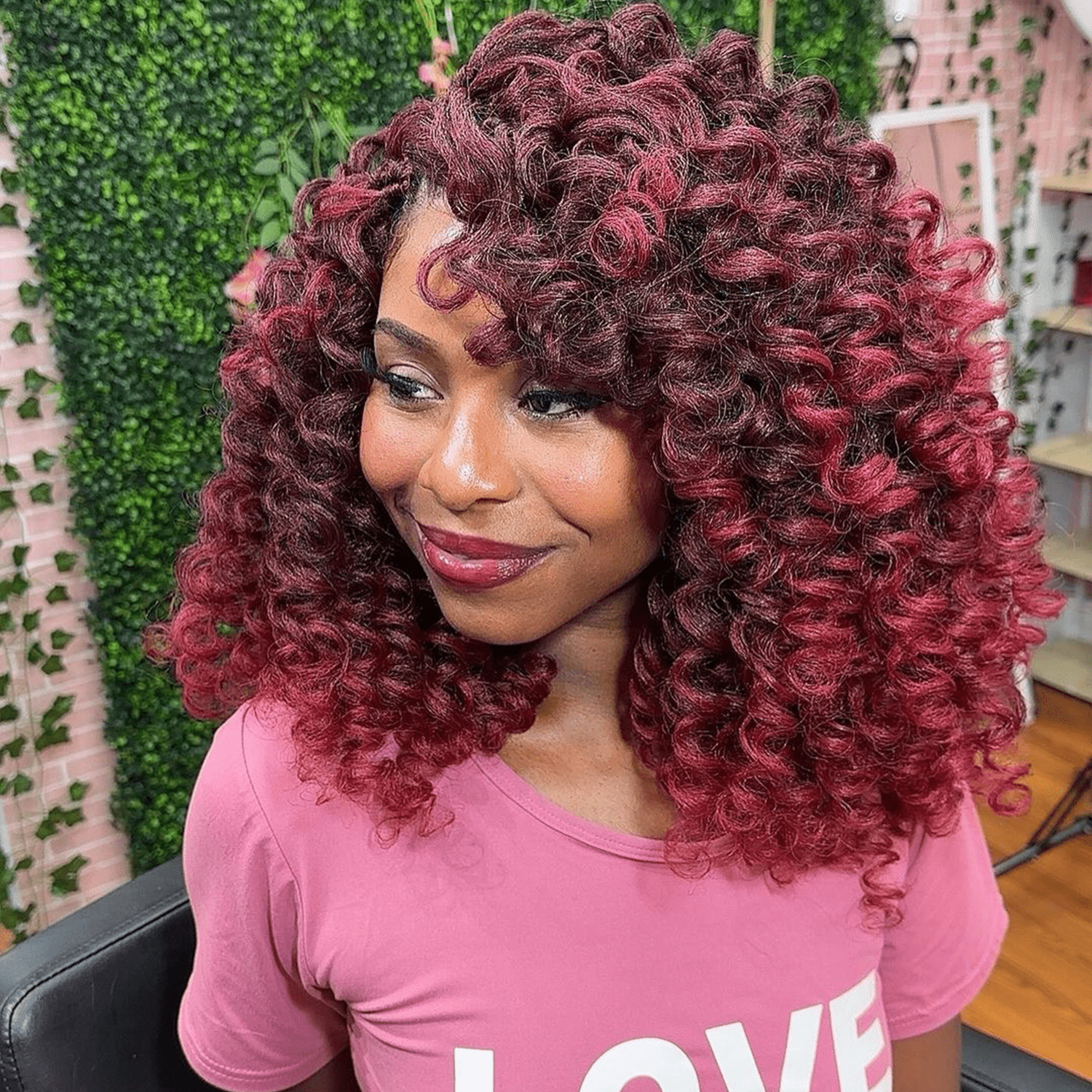
I told my colorist I wanted to look like I had just walked in from the cold. She gave me this. The Layered Bob Visual Idea with a vibrant deep red tone is a shock to the system, in the best way. On a chin length bob with full bangs and defined curls, the red reads as a solid, glossy block. The middle part and thick texture mean the color has weight. It does not whisper. It is the color equivalent of walking into a room and everyone stops talking. I was not prepared for how much I liked being that person.
Vibrant Purple Visual Idea
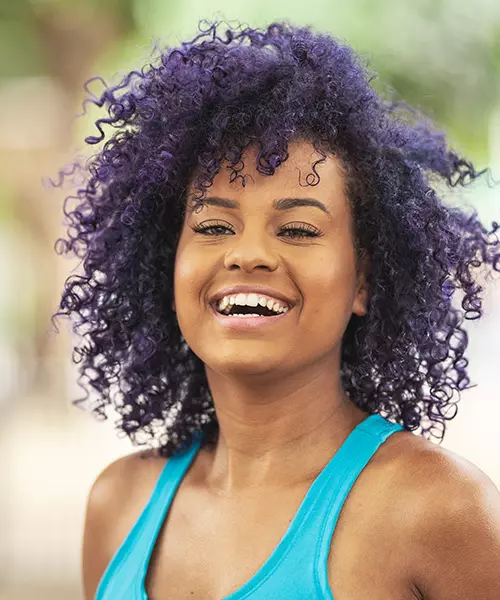
My first thought was who has the nerve. My second was I want her number. The Vibrant Purple Visual Idea is not for the cautious. This shoulder length cut with natural curls and a middle part uses a full saturation vivid technique. The purple is applied directly to a pre-lightened base, which means this is a two-step salon process. This is not a DIY weekend project. The color flatters anyone who likes being the most memorable person in the room. It works best on thick, defined curl patterns because the texture holds the pigment and keeps it from looking flat. If you have ever wanted to see what your hair looks like when it refuses to blend in, this is the color.
Middle Visual Idea
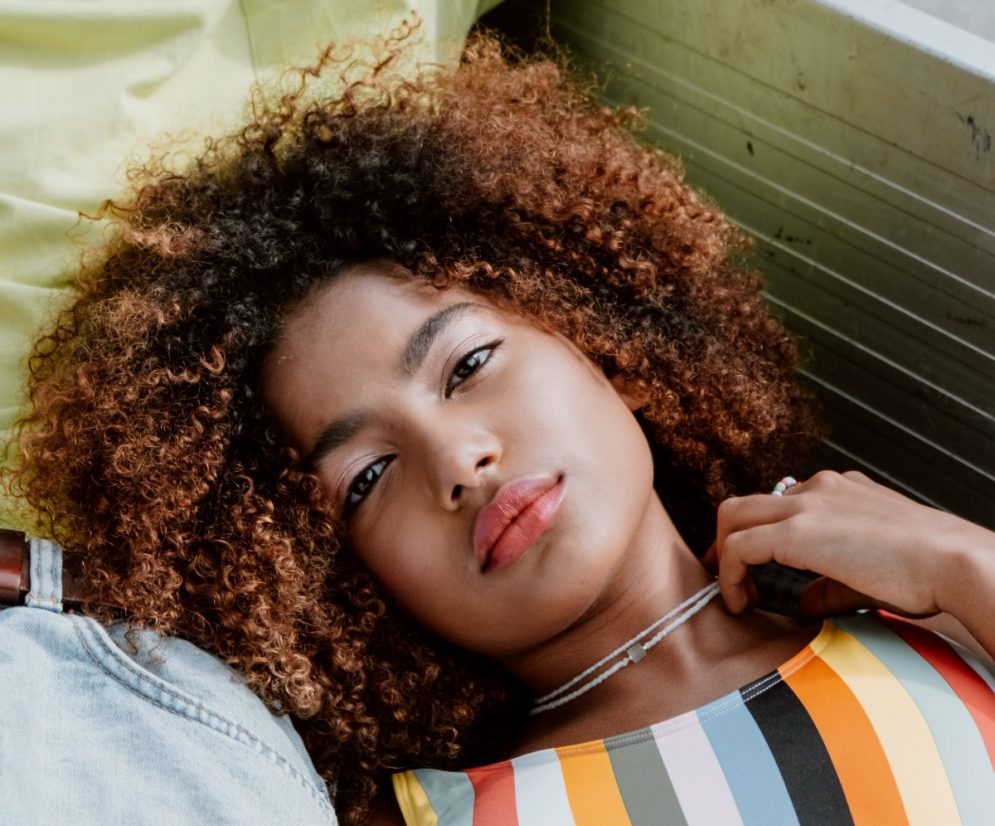
Have you ever tried to get a cool brown on curly hair and ended up with a brassy mess? For winter hair colors for curly hair, a dark chocolate brown with subtle cool undertones is the answer, but the technique matters more than the shade.
The trick is to start with a blue-based color formula, applied from the mid-lengths to the ends first, then the roots last. This prevents the heat from the scalp from accelerating the color and pulling warm tones. Curly hair, especially thick strands, tends to hold onto warmth, so a cool-toned base with a blue additive neutralizes any red or orange that tries to peek through. The principle is simple: warm tones rise, cool tones sink, so you have to lock the cool in with the right developer and timing. The cool undertone reads almost smoky in low light, which is exactly what you want for winter. On mid-back length curls that are air-dried, the color looks deep and rich, with the thick texture catching light in a way that gives dimension. Apply the color in small sections to ensure every curl is saturated evenly, because uneven application leads to uneven tone. No brassy surprise, just a consistent, cool chocolate.
Warm Brown Base With Honey Highlights Visual Idea
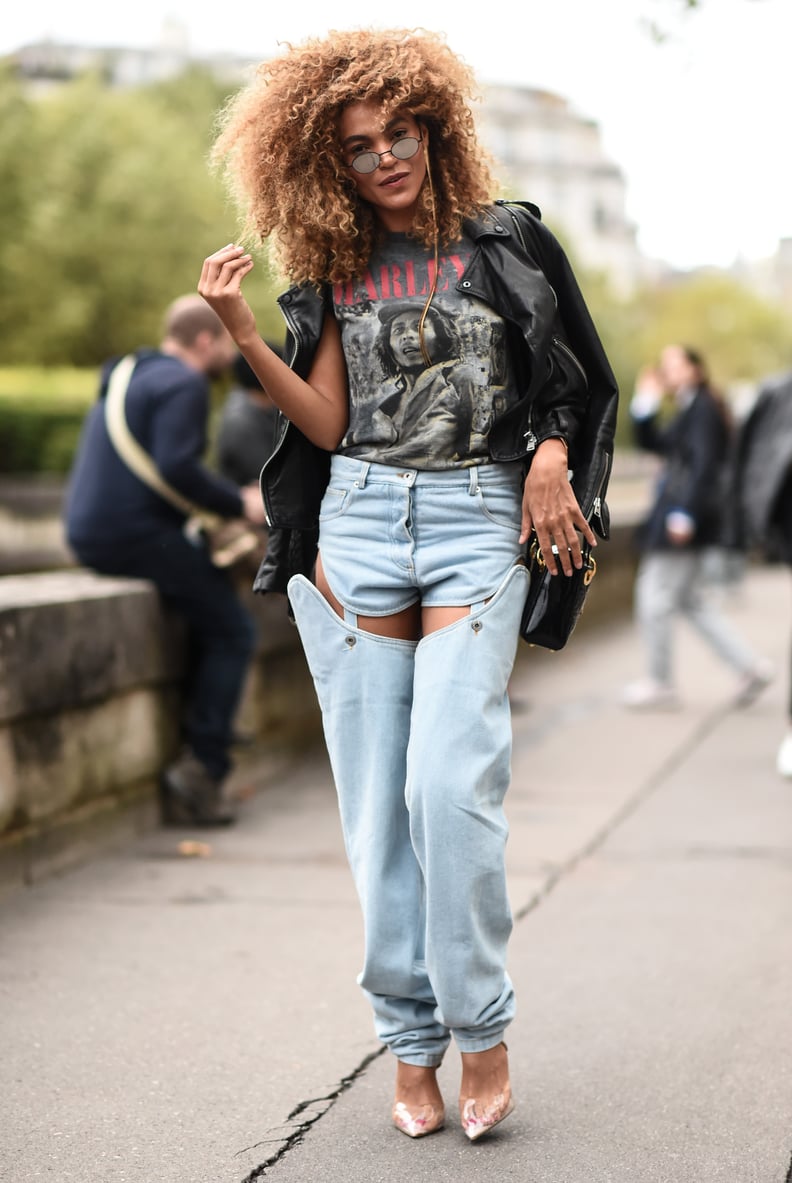
The honey highlights look incredible on day one, but by day three they start to fade into the warm brown base. For winter hair colors for curly hair, this warm brown with honey highlights requires extra upkeep because winter dryness can dull the lighter pieces. The curly, thick texture at mid-back length means the highlights are dispersed, so they don’t look stripey, but they also need more moisture to keep the honey tone bright. A weekly deep conditioner is non-negotiable, or the highlights turn brassy by week two. The honest downside is that the honey can lean yellow if you skip a purple shampoo, and winter air makes that happen faster. Still, the warm brown base keeps the grow-out soft, so you can stretch toning to every four weeks.
Loose Waves Visual Idea
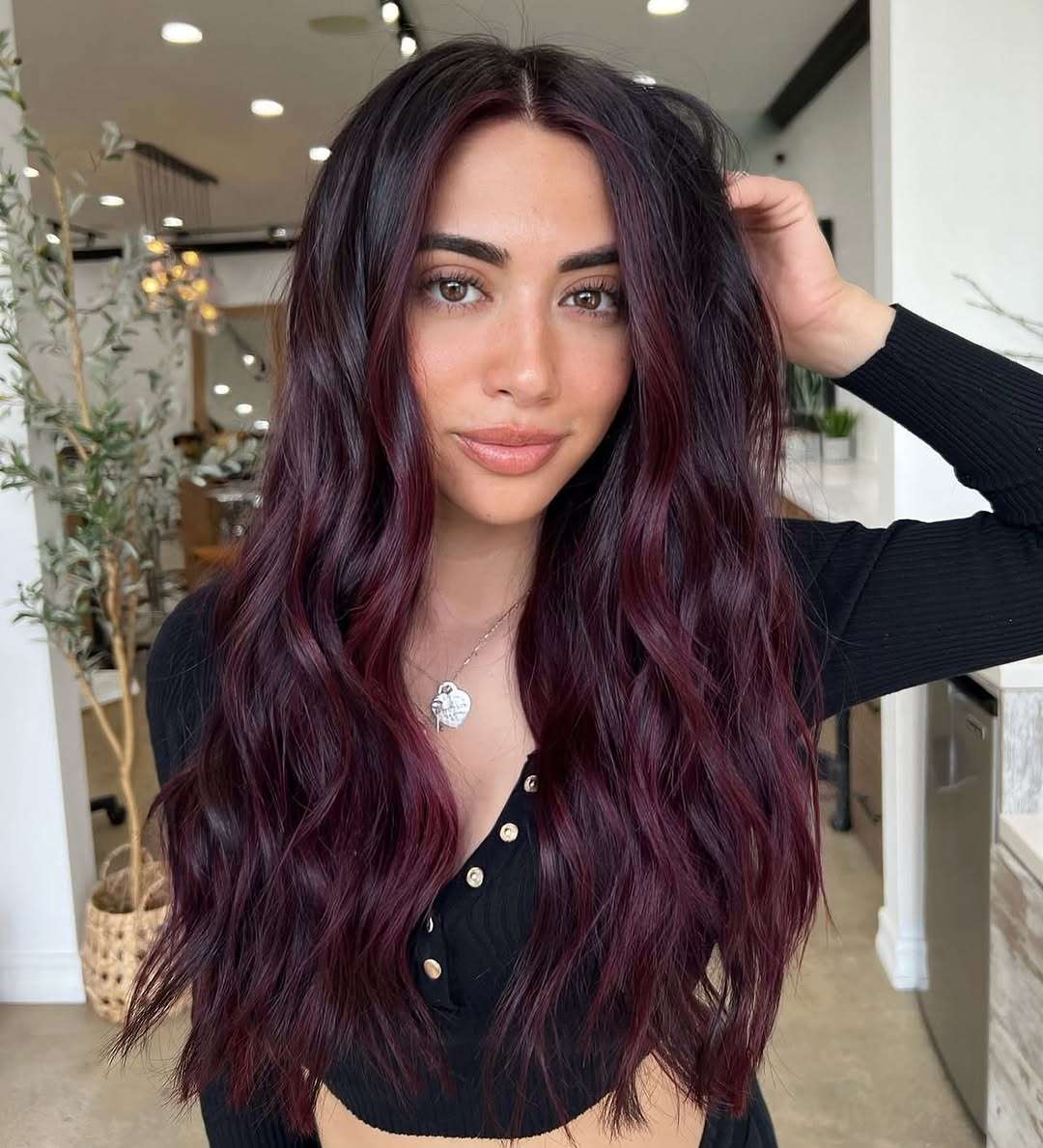
Deep burgundy beats emerald green every time for winter curls. For winter hair colors for curly hair, this deep burgundy base with subtle red undertones is the jewel tone that actually works with wavy, thick textures instead of fighting them.
Emerald and sapphire can look flat on curly hair because the cool tones don’t catch light the same way. Burgundy, with its red undertones, reflects warmth and gives dimension, especially on mid-back length loose waves. Amethyst is too cool and can look ashy on warm skin, while burgundy adapts. The red undertones also mean the color doesn’t go dull in low winter light; it stays rich and inviting. It’s the color for holiday parties and cozy winter evenings, and it doesn’t require a full highlight schedule to stay interesting. The single-process application keeps the color consistent, and the wavy texture helps the burgundy read as multi-dimensional even though it’s one shade. This is the jewel tone that actually works for winter.
Auburn With Warm Undertones Visual Idea
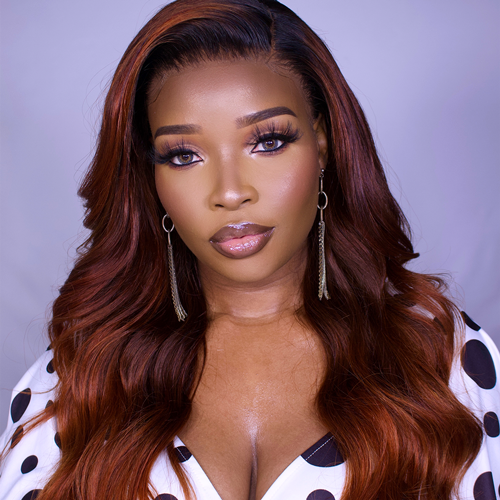
I walked into the salon with a photo of a copper penny and walked out with auburn. For winter hair colors for curly hair, this auburn with warm undertones is ideal if you have warm skin or natural red in your hair. The color is a single process with a copper gloss to lock in the warmth, and it works best on those with warm skin tones because the auburn picks up the warmth. On mid-back length wavy to curly thick hair, the auburn catches light beautifully, especially with a blowout. This is not a DIY color; the undertone is too easy to mess up at home.
Dark Brown With Subtle Auburn Highlights Visual Idea
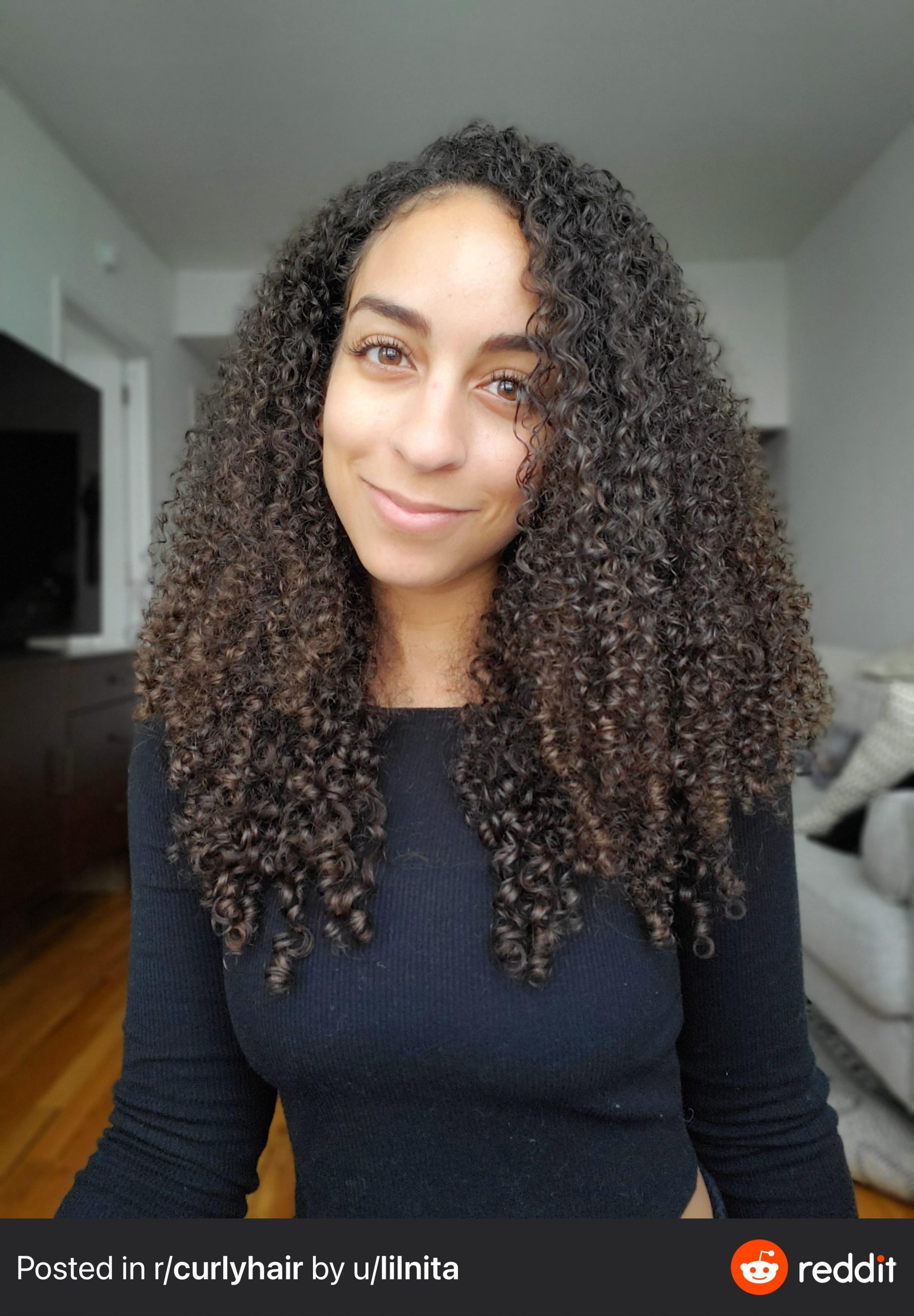
Ever tried auburn highlights on dark brown and ended up with orange streaks? The mistake is using a highlight that’s too light or too warm, which looks brassy on curly hair. For winter hair colors for curly hair, the right technique is to use a low-lift auburn color applied in fine sections, then toned with a copper additive to keep it subtle. The low-lift means you use a 10-volume developer so the color doesn’t lift past the auburn stage.
On mid-back length curly thick hair, the highlights should be woven from the mid-lengths to the ends, avoiding the roots to keep the base dark. The dark brown base stays rich, and the auburn highlights add dimension without screaming. The key is to keep the highlights fine and spaced, so they read as a soft glow rather than stripes. Place them where the curls naturally catch light, and the multi-dimensional effect is automatic.
Auburn Base With Copper Highlights Visual Idea
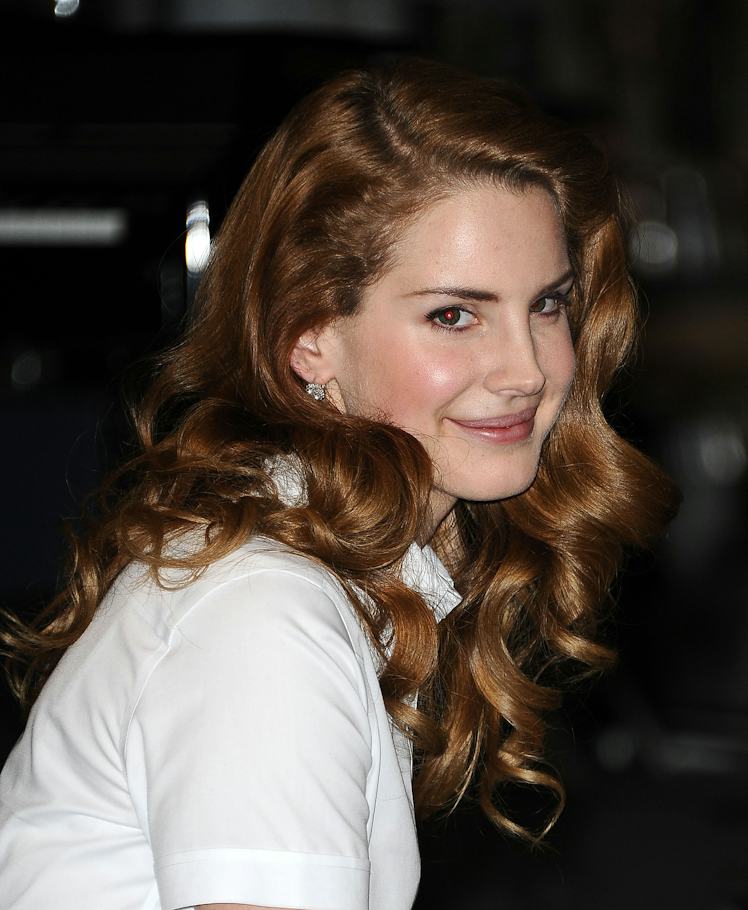
I’ll admit, I used to think auburn and copper were too close to bother with both. But this mid-back length on thick, wavy curls proves me wrong. The auburn base gives depth while the copper highlights catch the low winter sun. That combination is warmer than straight auburn and less brassy than full copper. The downside? These tones fade fast. By week four, the copper starts to dull, and auburn can lean brown if you skip a color-depositing conditioner. Worth it for the first month, though. The loose waves let both shades show, and the middle part keeps it balanced. If you want a tone that shifts with the season, this is it.
Wispy Bangs Visual Idea
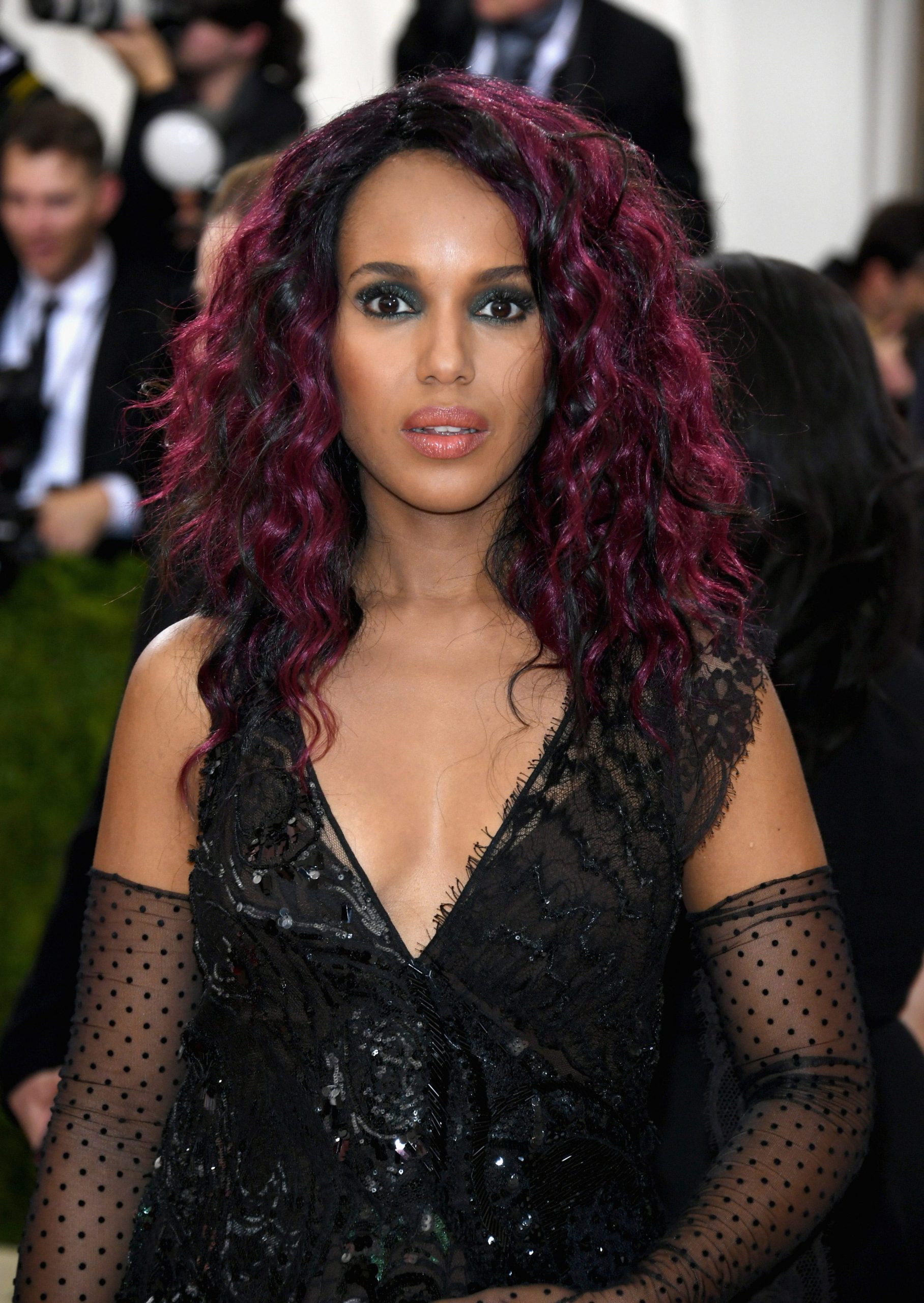
I almost talked myself out of magenta and purple highlights. My dark brown, mid-back curls felt complete on their own. But the first time I saw this combination on someone with my texture, I understood immediately. The cool-toned purple catches light in a way brown never does. It is not subtle. That is the point. It transforms dark hair from something safe into something that announces itself.
Styling these highlights takes a few deliberate steps. Start with a heat protectant on damp hair to prevent damage. Use a diffuser on low heat to keep the curls defined without disturbing the color. Once dry, separate a few curls around the face to let the wispy bangs and the purple peek through. A spritz of texture spray at the roots adds volume without weighing down the highlights. The result is dimensional without being loud. The wispy bangs frame the face without hiding the color.
Front View Medium Crop Visual Idea
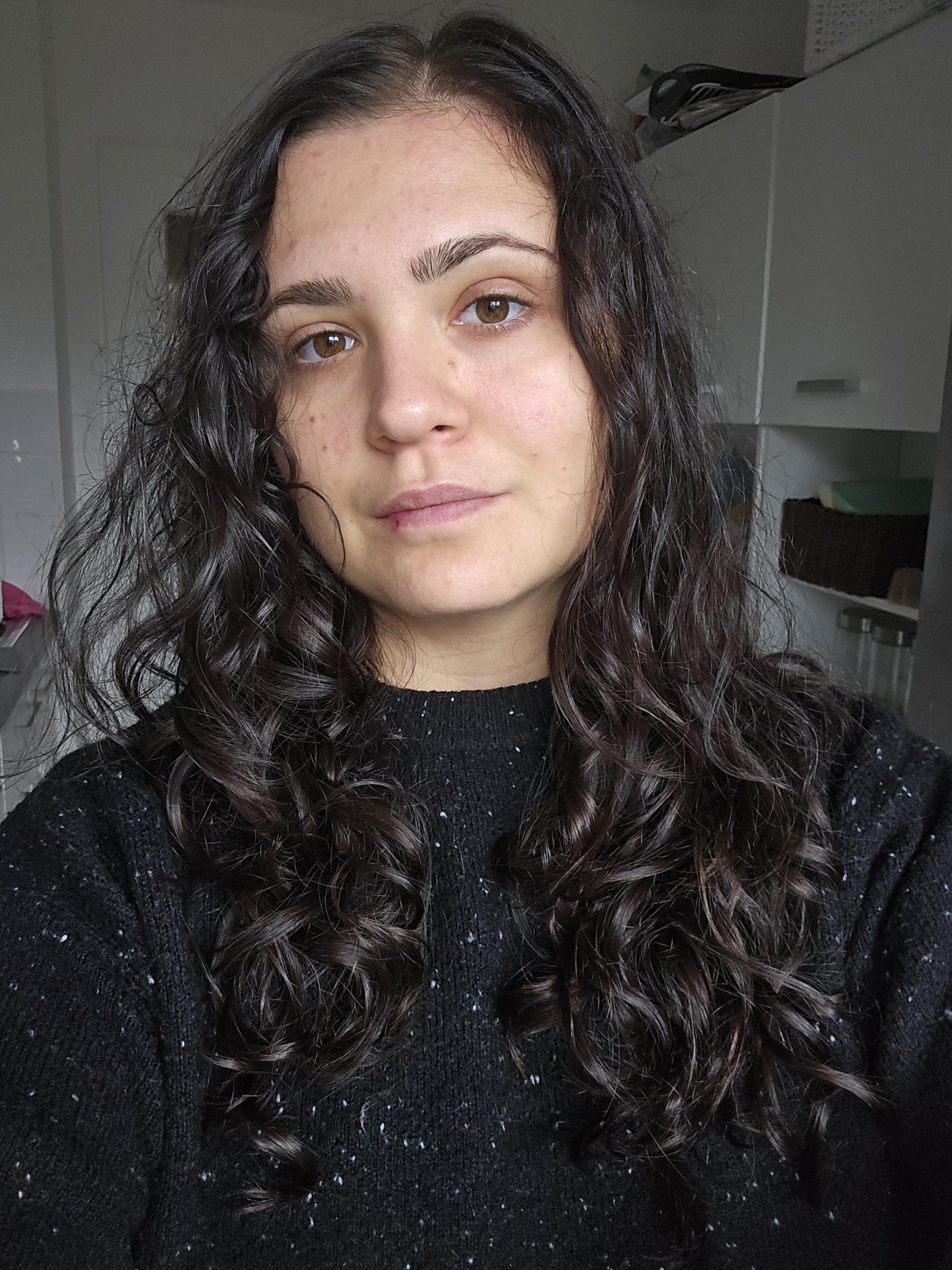
The difference between a flat dark brown and a multidimensional one is a few well-placed ash blonde highlights. This is not a quick process. Expect to sit for a couple of hours while the stylist weaves in fine ribbons of ash blonde through the mid-back length. The result is a dark brown base that reads rich, not flat. It works best on medium-density, wavy to curly hair where the highlights can catch the bends without overwhelming the base. The subtle ash blonde tone keeps it cool, so it suits those who want dimension without warmth. The middle part helps the highlights fall evenly on both sides.
Wavy And Thick Visual Idea
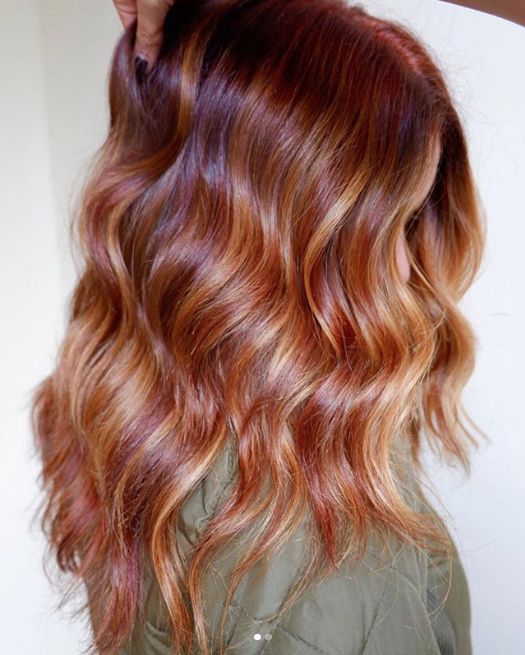
Verdict: This is a salon-only color job. Honey blonde highlights on a medium brown base require precise placement to avoid looking streaky. On wavy, thick hair, the stylist will weave the highlights through the layers, focusing on the top and around the face. The honey blonde tone should be subtle enough to blend with the medium brown base but visible enough to add depth. The side part helps the honey tones fall naturally.
Final Thoughts
After writing all of these, I’m booking a rich auburn with copper highlights for my own curls. I resisted warm tones for years, but the balance of dimension and grow-out sold me. It lasts. And it doesn’t fight my curl pattern.