Locs take color differently than loose hair, which makes the payoff worth the extra planning. Right now, vivid jewel tones and balayage are the standouts, with soft pastel highlights and ombre techniques running close behind.
This collection of 19 colored loc ideas covers the range, from subtle caramel highlights to full rainbow up-dos. Some need a salon appointment and a toner schedule; others work for a confident DIY weekend. The struggle this solves is finding a color approach that works with your loc texture, length, and how often you want to sit in the chair.
Dark Brown Locs With Warm Caramel Balayage
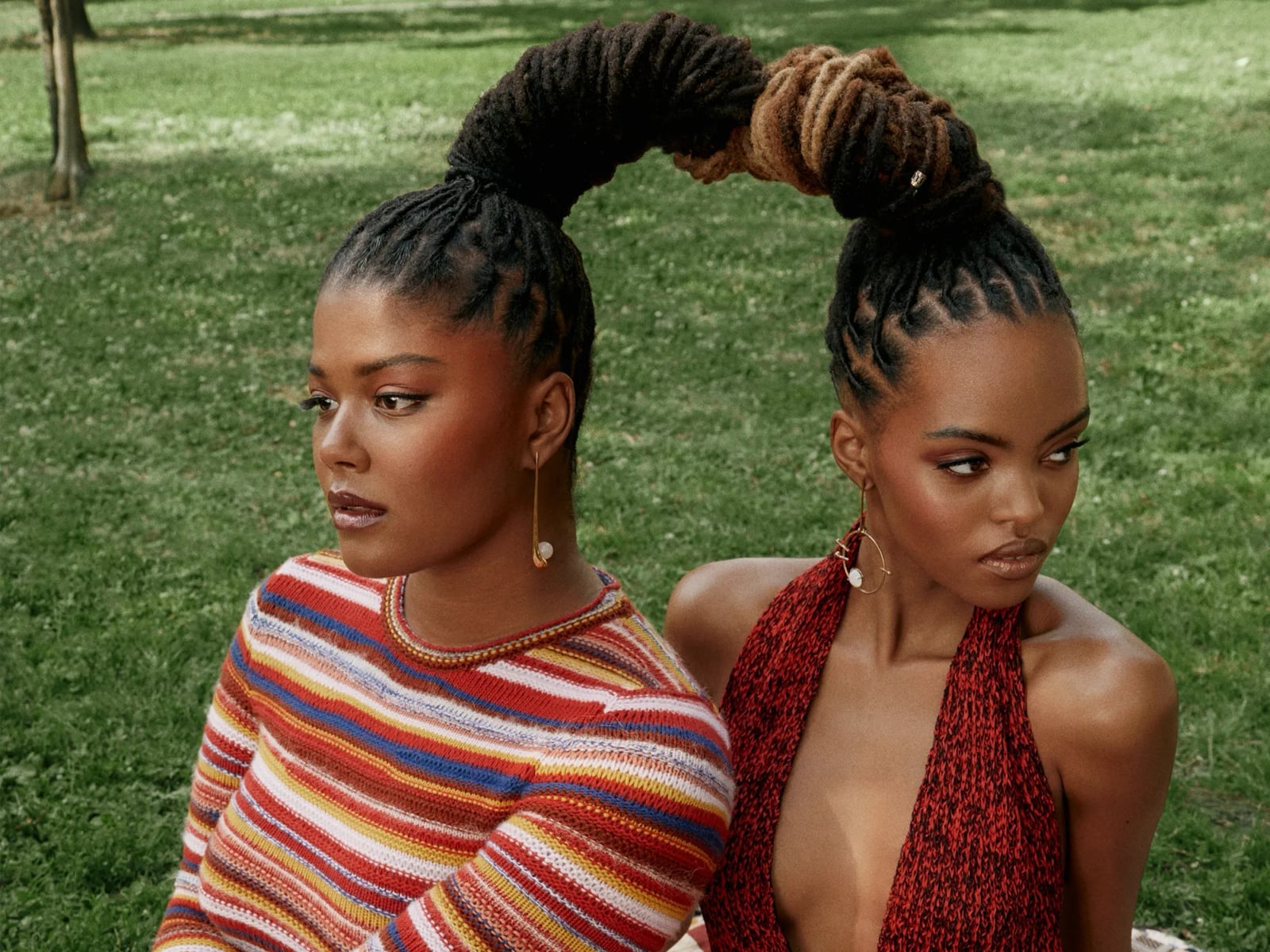
The trick with caramel balayage on locs is letting the dark base do the work. The warm caramel highlights appear on each loc, creating depth that a single tone cannot. The wavy texture helps the color look dimensional rather than striped. A middle part keeps the symmetry clean, letting the balayage fan outward from the roots.
Thick, wavy locs starting at mid-back give this technique room to breathe. Ask your colorist for: mid-back length locs with caramel balayage. A smoothing serum controls frizz and boosts the shine that makes caramel pop. Expect a toning appointment every six to eight weeks to keep the warmth from going brassy.
Short Vibrant Red Locs With Undercut
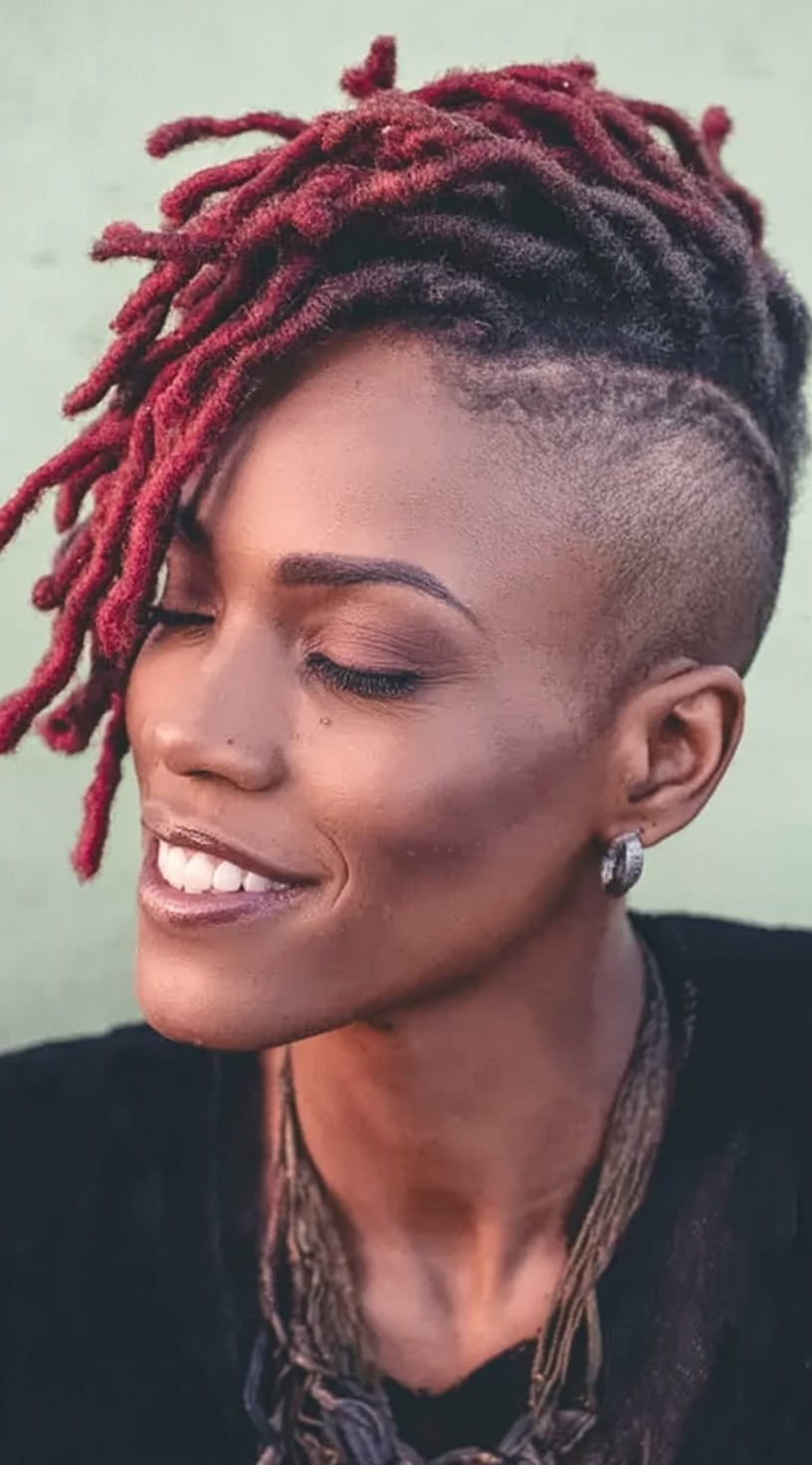
Can short locs make a statement? Yes, when you pair a vibrant red with a sharp undercut. The bold red demands attention, while the shaved side keeps the whole look from feeling heavy. Fine to medium density coily locs work best here, the undercut removes bulk, so the remaining locs sit neatly. Ask your colorist for: short vibrant red locs with an undercut. Upkeep requires a trim every two to three weeks to keep the undercut sharp. This is a summer look by nature, but it works year-round if you enjoy explaining your hair to strangers.
Short Black Base With Vibrant Red Locs
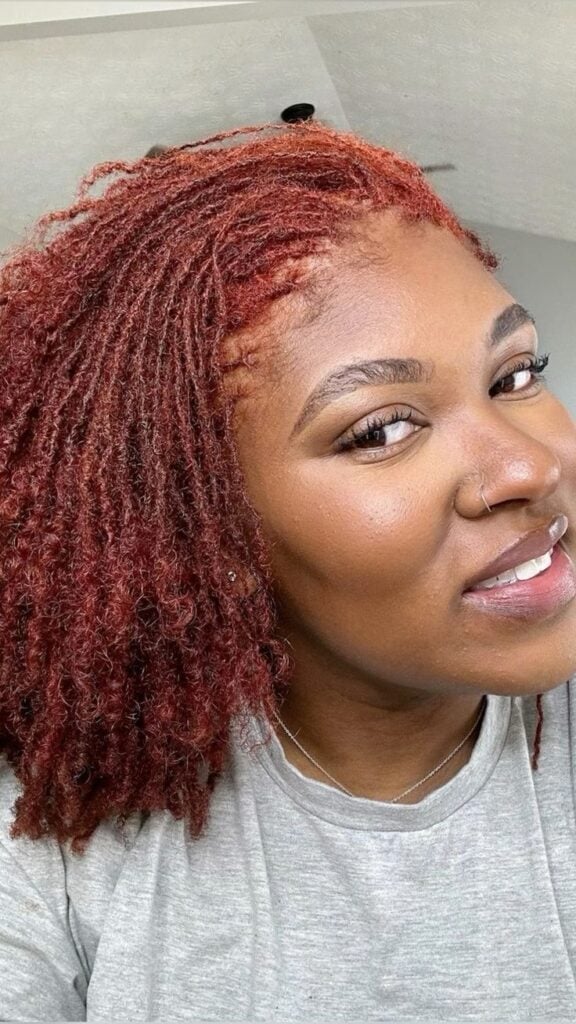
The mistake people make with vibrant red on a black base is skipping the pre-lightening step. On fine, coily locs, the black base needs a gentle lift before the red will show up as anything other than a dark maroon. This is a DIY-friendly project if you have patience and a good developer. Ask your colorist for: short fine locs, black base with vibrant red. The middle part and natural styling keep the focus on the color saturation itself. A conditioner prevents the fine locs from drying out after the lightening process.
Mid-Back Length Uniform Vibrant Red Locs
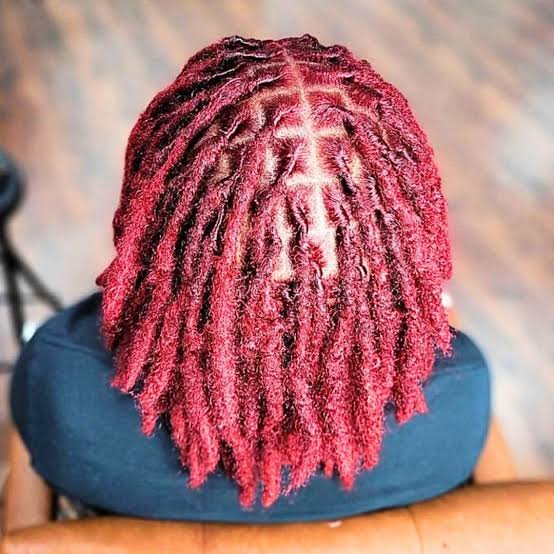
Uniform color on locs is harder than it looks. Every loc needs the same saturation from root to tip, which means sectioning carefully and saturating each loc individually. From the back view, the result is a single, unbroken block of vibrant red. The mid-back length gives the color enough surface area to register as rich rather than sparse.
This look works for any loc texture that reaches the mid-back. Ask your colorist for: mid-back locs with uniform vibrant red color. The main upkeep is protecting the color from sun exposure, direct light fades red faster than any other shade. A toning visit every four weeks keeps the red from pulling pink or orange.
Wavy Thick Locs In Vibrant Copper Orange Updo
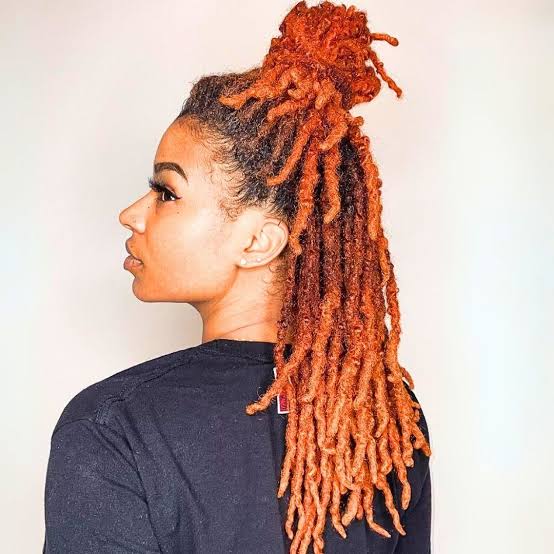
This is not your standard updo. The high bun with loose hanging locs creates a sculptural silhouette, and the vibrant copper orange color makes sure you notice. The darker roots add a grow-out-friendly touch that saves you from a strict toning schedule. Thick, wavy locs hold the bun shape without needing pins everywhere. Ask your colorist for: mid-back wavy locs in a high bun, copper orange color. This is a fall-to-spring style: the copper warms up cooler months, and the updo keeps hair off your neck when the weather shifts.
Mid-Back Deep Plum Faux Locs With Braids
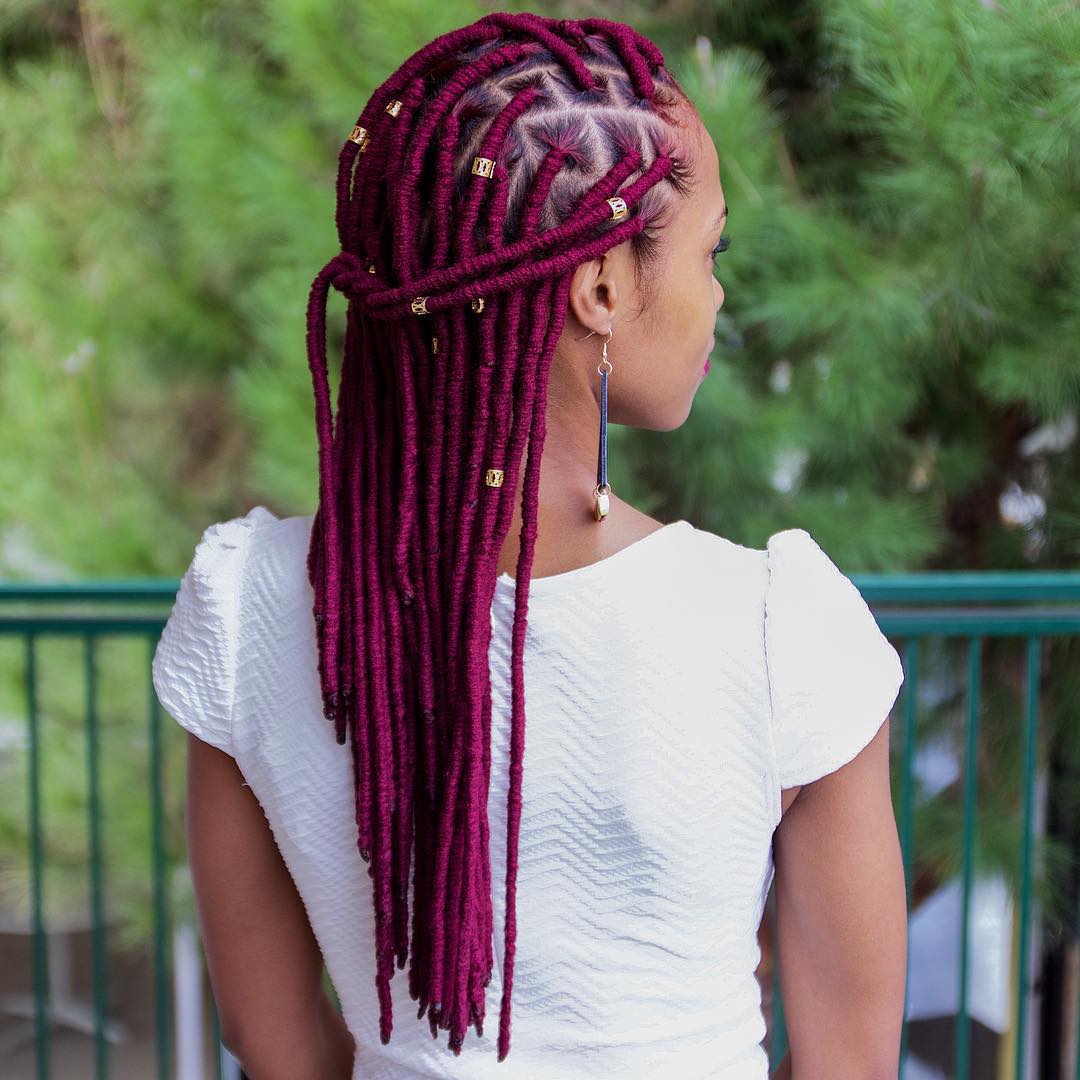
How do you get a plum shade that is rich but not costume-like? The base needs depth. These thick, wavy faux locs hit mid-back and are styled partially up, partially down, with braided accents and small gold beads woven through. The deep plum hue has subtle lighter undertones that avoid going brassy. Ask your stylist for: mid-back deep plum faux locs with braids and beads. The middle part and length below the chin elongate a round face, while the volume at the sides suits longer face shapes. A plum shade like this works best on fair to medium skin tones.
If you want the braided accents to stay defined, plan to have them re-braided every few weeks. The beads need to come out before washing, which adds a few minutes to your routine. The result is a color that looks intentionally moody.
Mid-Back Soft Locs With Caramel Highlights
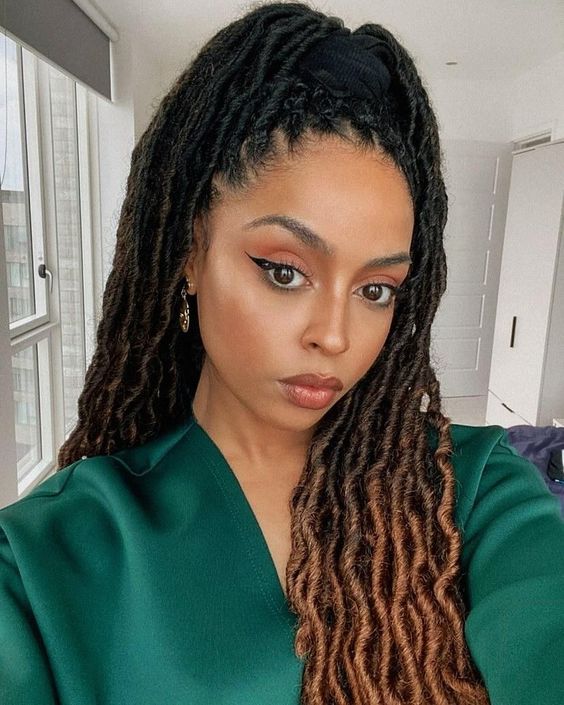
This is not the high-contrast look of chunky highlights. Soft locs with a dark brown base and caramel highlights create a more blended dimension that wears well over time. These are styled loosely with waves, reaching mid-back, with side-swept bangs that frame the face. The side part and bangs soften a square or round face shape. Ask your colorist for: mid-back soft locs with caramel highlights and side-swept bangs. The caramel pieces look natural because they are woven into the locs instead of applied in blocks.
The waves hold their movement through the day. The side-swept bangs need a trim every three to four weeks to stay at the right length. The dark base means roots grow in gently, so you can stretch toning appointments to eight weeks.
Shoulder Length Natural Locs With Subtle Highlights
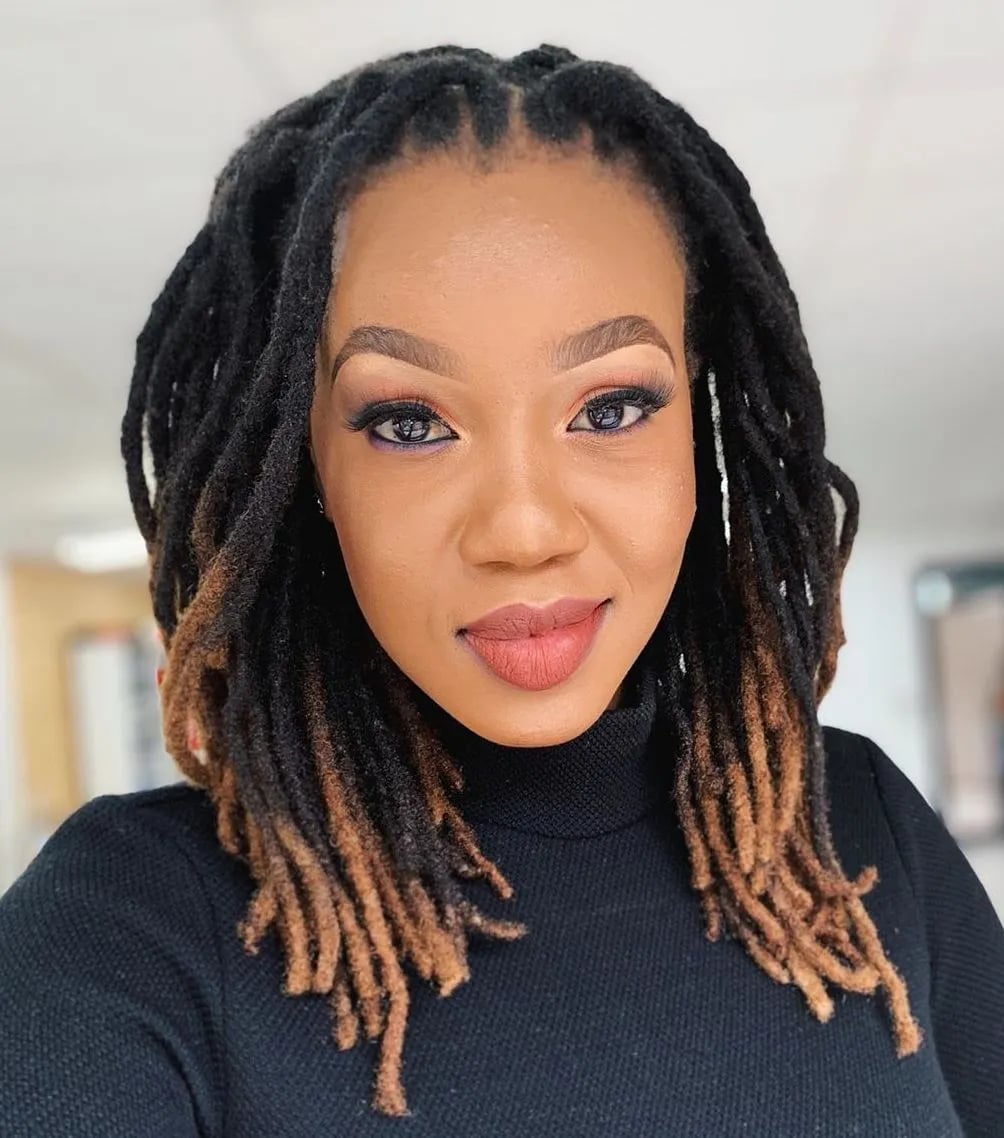
Subtle lighter brown highlights on a dark brown base do not scream for attention, which is the point. These shoulder-length locs are thick and wavy, styled naturally with a middle part and no bangs. The color creates a soft dimension that moves with the locs rather than sitting on top of them. Ask your colorist for: shoulder length natural locs with subtle brown highlights. Unlike a full balayage or vivid shade, this approach lets the texture lead and the color follow. The natural shade suits any skin tone and requires no special toning routine. A light oil applied to the locs keeps the base rich and the highlights visible.
Shoulder Length Wavy Locs With Balayage
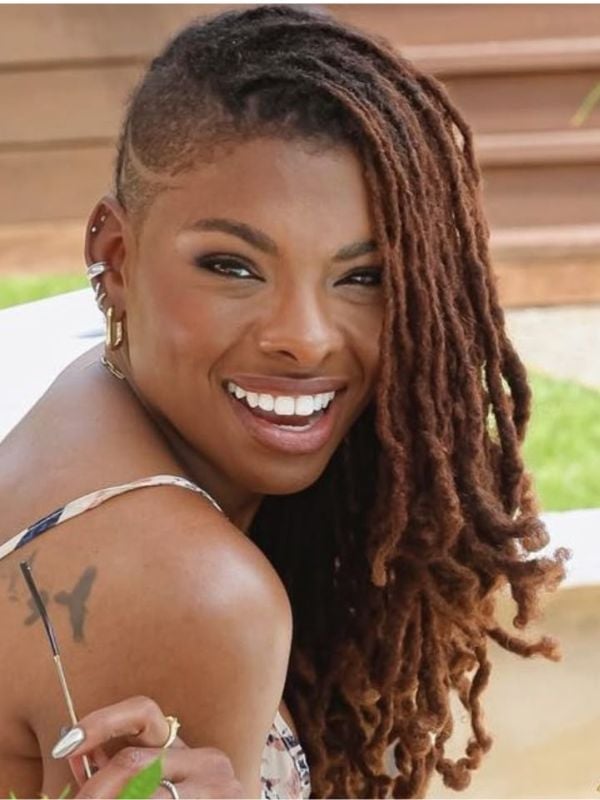
The balayage here starts dark at the roots and graduates into lighter brown highlights, so the grow-out line is soft rather than harsh. These wavy, thick locs hit shoulder length and are swept to one side with a side part, which complements oval and heart-shaped faces. Ask your colorist for: shoulder length wavy locs with dark to light brown balayage, side-swept. Because the color is painted freehand onto each loc, the transition looks custom to your texture rather than applied from a tube. A wide-tooth comb set the side-swept direction without pulling the waves out of shape. No bangs here, so the focus stays on the gradient.
Mid-Back Multi-Colored Locs In Ponytail
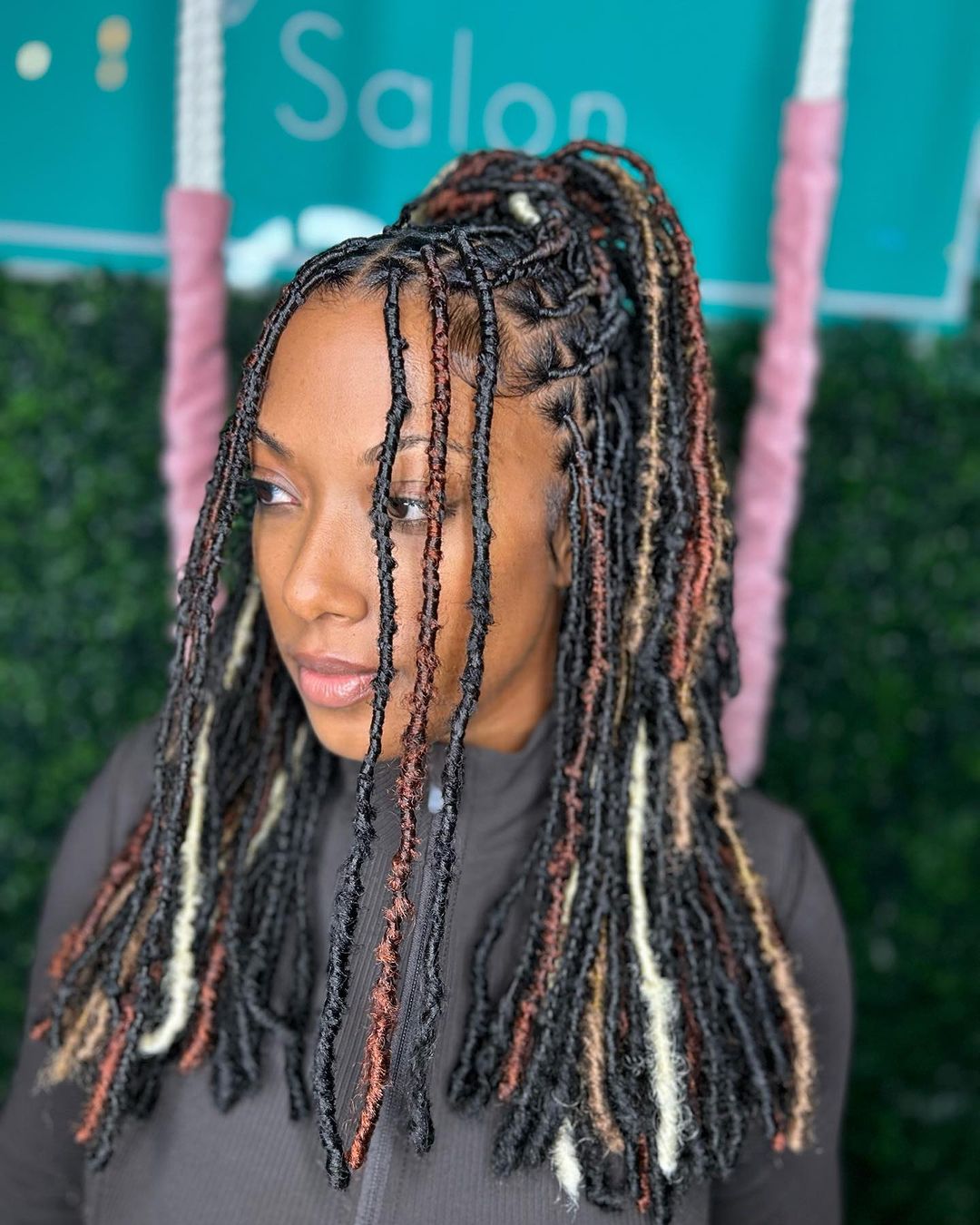
Multiple colors in one head work best when they share a tonal family or a base. This high ponytail pulls together black, brown, blonde, and red strands into a cohesive look. The locs are thick, wavy, and reach mid-back, with a middle part that lets every shade show. Ask your colorist for: mid-back locs in a high ponytail, black, brown, blonde, red mix. The variety of colors creates a dynamic effect that changes depending on how the ponytail falls.
The honest drawback is upkeep. Four shades mean four toning schedules, and the blonde pieces will need a purple shampoo every wash to stay cool. The ponytail itself is straightforward: a strong elastic keeps it secure all day, and the thickness of the locs hides the tie. This is a salon-only project, and a trim every eight weeks keeps the ends looking intentional rather than frayed.
Shoulder Length Wavy Ombre Locs, Middle
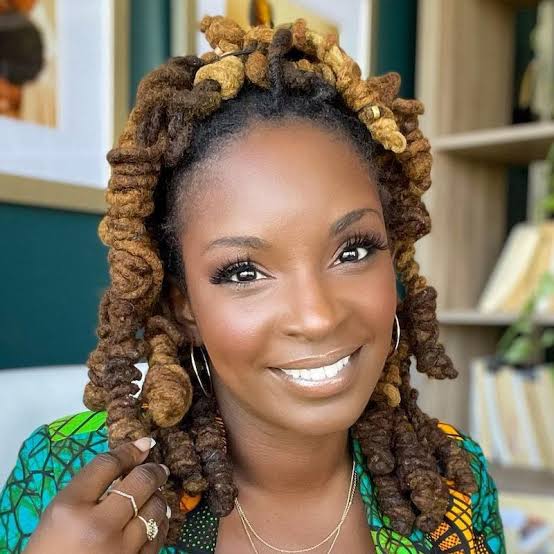
The ombre transition from blonde tips to brown roots gives these thick wavy locs a graduated color shift that appears natural. The technique works best on shoulder-length or longer locs where the fade has room to travel. Ask your colorist for: shoulder length wavy locs with blonde to brown ombre. The middle part keeps the color distribution even on both sides. This is a viable DIY project if you have experience with lightener, but the risk of patchy results on locs is real, so a salon visit is safer for a smooth blend.
Shoulder Length Teal Locs With Baby Bangs
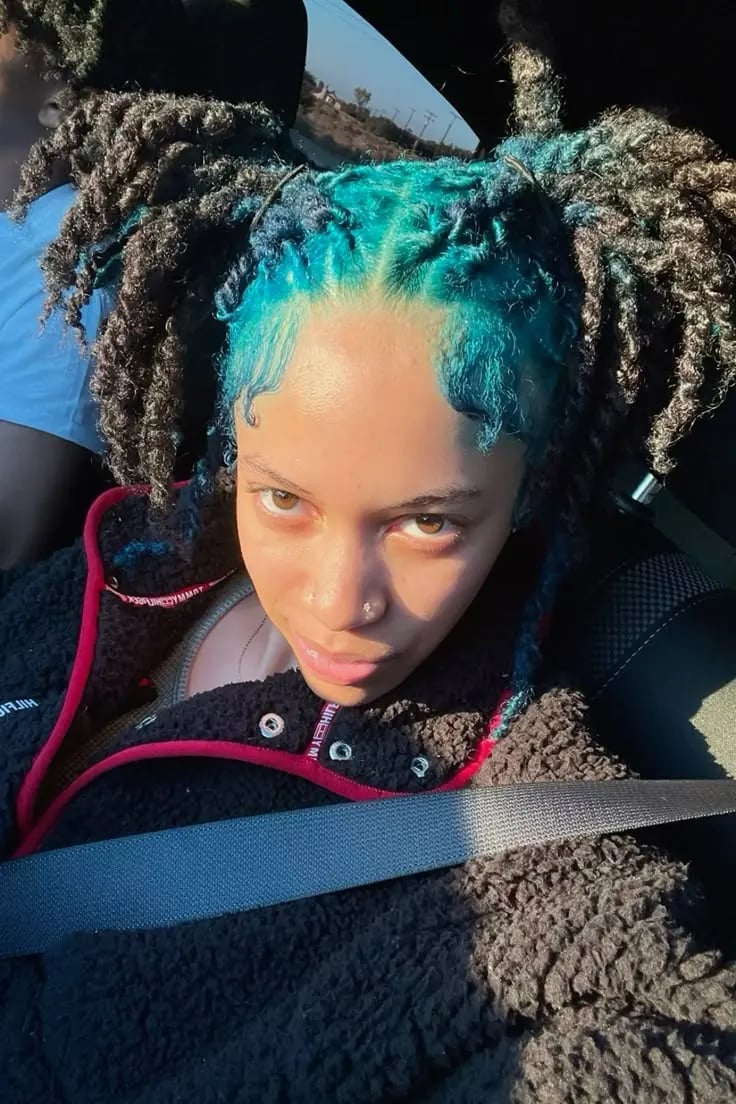
Vibrant teal locs with dark roots hit differently when you add baby bangs to the mix. The short fringe cuts the intensity of the jewel tone and gives the whole style a sharper, more intentional finish. Ask your colorist for: shoulder length teal locs with dark roots and baby bangs. The dark root line means you can go longer between touch-ups, about eight weeks, though the bangs will need a trim every three to four weeks to stay crisp. The pigtail styling is optional, but it shows off the color on both sides evenly.
Shoulder Length Auburn Locs Updo
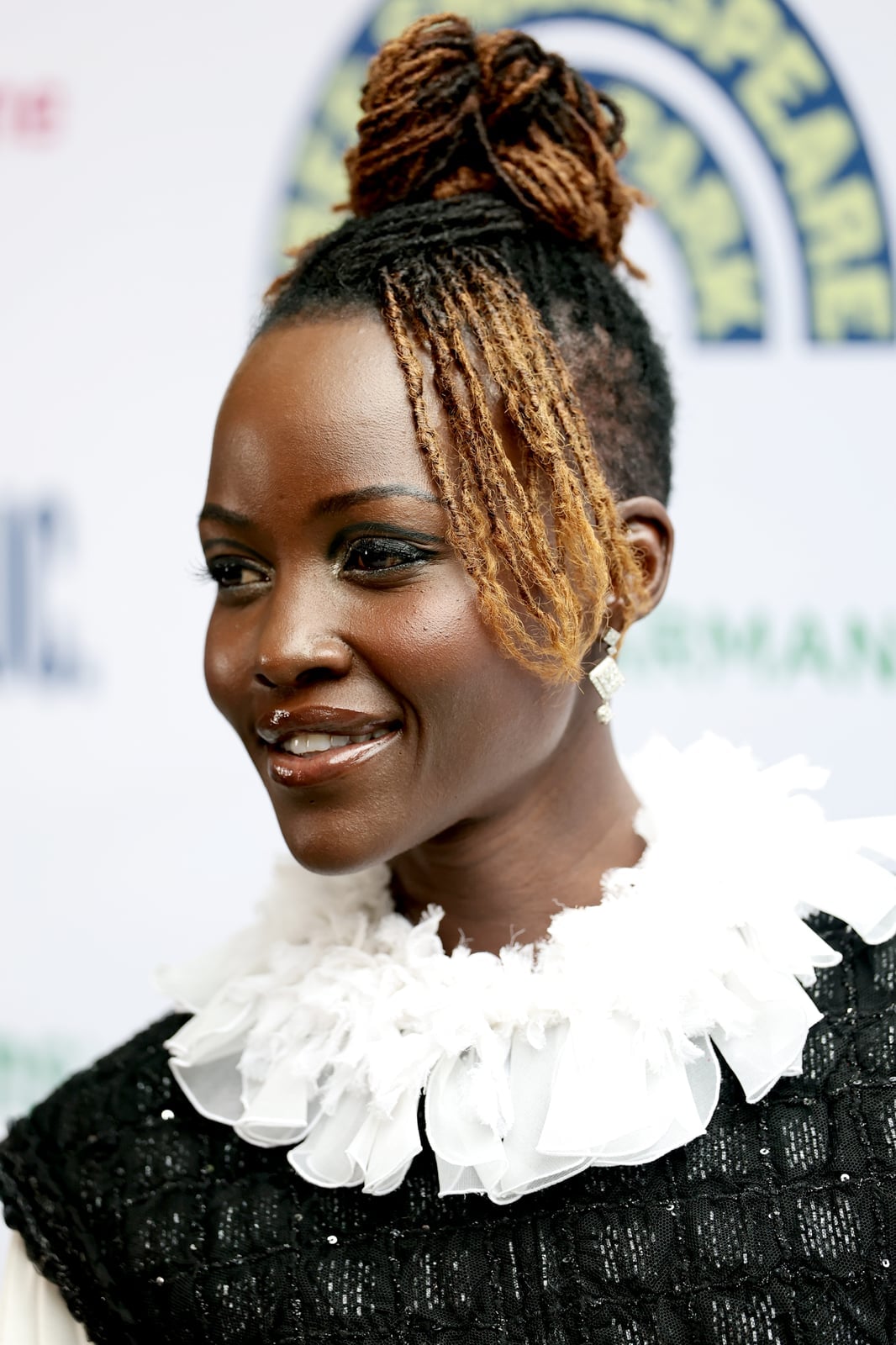
Lighter auburn highlights threaded through a rich auburn base turn an updo into something with depth. The face-framing pieces soften the pulled-back shape, so the style works for events where you want hair off your neck but not completely swept away. Ask your colorist for: shoulder length auburn locs with lighter auburn highlights. The middle part keeps the updo symmetrical, and the wavy texture adds volume at the crown. This is a solid choice for fall occasions or anytime you want a warm-toned accent without going full copper.
Shoulder Length Copper Micro Locs Updo
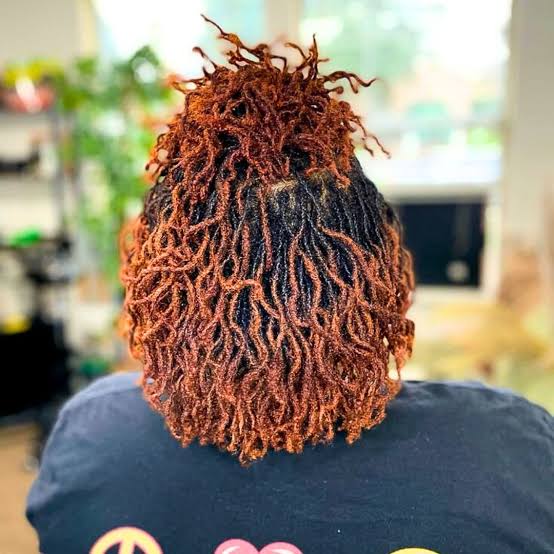
Fine, coily micro locs in a vibrant copper hue gain visual weight from the high bun shape. The lighter copper highlights prevent the color from reading flat, which matters on smaller locs where dimension is harder to achieve. Ask your colorist for: shoulder length copper micro locs in a high bun. The drawback: micro locs with lightener can be more fragile, so skip frequent re-dyes and stick to a gloss treatment every six to eight weeks instead. The updo hides any new growth effectively, extending the time between full color sessions.
Mid-Back Coily Locs In Red and Blue Buns
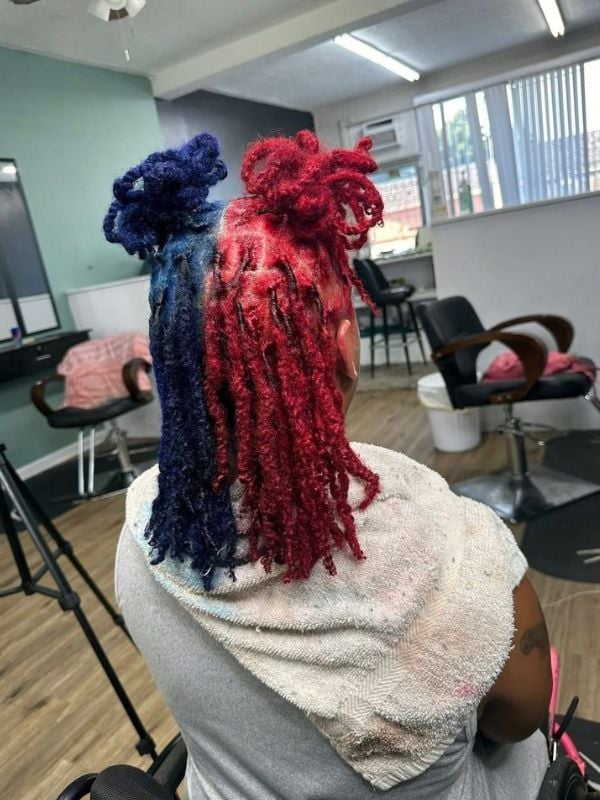
Split-color locs are not the same as random streaks. Here, the red and blue are divided cleanly at the center, each side a solid block of color. The coily texture adds grip, so the two buns sit tight and secure without pins sliding out. Thick, coily locs at mid-back length give the color enough surface area for the split to be clearly visible.
The upkeep on split color is where it gets honest. Red and blue fade at different rates, so expect a toning appointment every four weeks to keep the blue from turning greenish and the red from washing out to pink. Ask your colorist for: mid-back coily locs, red and blue split color, in two buns. The buns themselves need to be twisted tightly at the base to hold the shape through a full day, especially if your locs are on the heavier side.
Mid-Back Black Base With Rainbow Locs Updo

Rainbow on locs is less about random sections and more about a controlled weave of color through each coil. A black base keeps the roots grounded, so the red, orange, yellow, green, blue, and purple strands appear deliberate. The high updo pulls the eye to the crown, where the saturation is strongest. Coily locs at mid-back length grip color longer than smoother hair does.
Ask your colorist for: black base with rainbow-dyed locs, high updo. The process takes time: each loc is typically sectioned and saturated individually to avoid bleeding into the black. Use color-safe shampoo and cool water to hold the vibrancy. A gloss treatment every four weeks keeps the rainbow tones from turning muddy.
Mid-Back Reddish-Brown Locs With Copper Braids
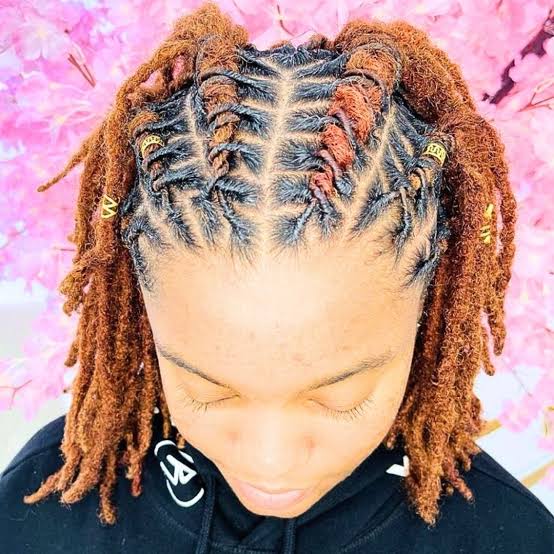
This is not a full head of copper; it is a strategic placement of copper highlights woven into braids on top, with the rest of the locs staying a warm reddish-brown. The contrast reads like jewelry for your hair. The braids sit on the crown, so the copper catches light without overwhelming the base. It suits locs at mid-back length, and the reddish-brown tone works with fair to medium coloring.
Ask your colorist for: reddish-brown base with copper highlights in top braids. The braids need re-braiding every week to two weeks to keep the pattern clean. The copper sections will fade faster than the base, so a color-depositing conditioner in a copper shade helps stretch the time between toning appointments.
Short Vibrant Red Locs With Sharp Undercut, Mid-Back
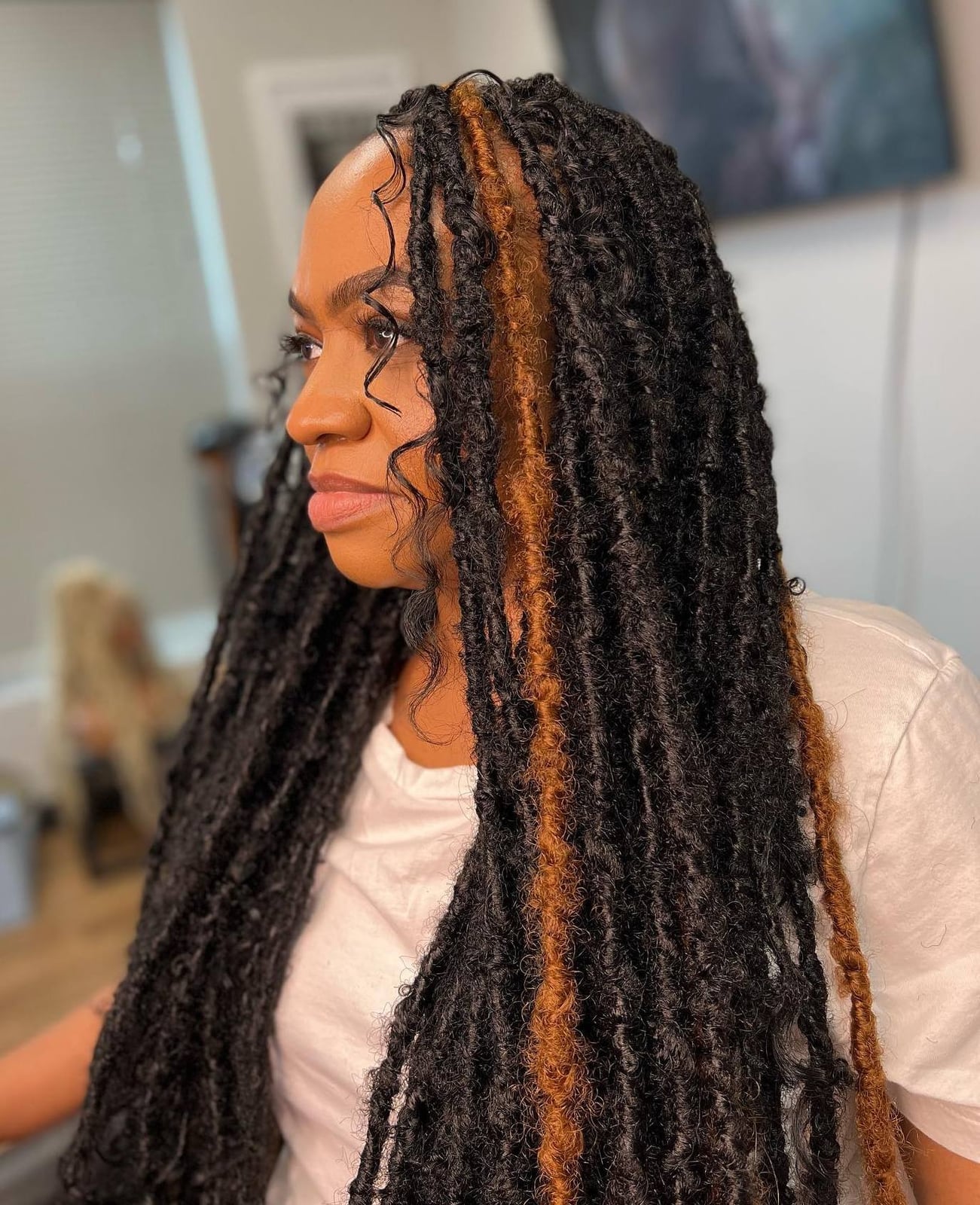
The caramel is spaced enough to add dimension without reading as streaky. This suits medium to thick hair that can hold wavy body without product weight. Ask your stylist for: mid-back wavy faux locs with caramel highlights. The highlights are painted on, not foiled, so the transition from black to caramel is subtle. A trim every ten weeks keeps the ends from thinning out the wave pattern.
Mid-Back Locs With Blonde Ombre Ponytail
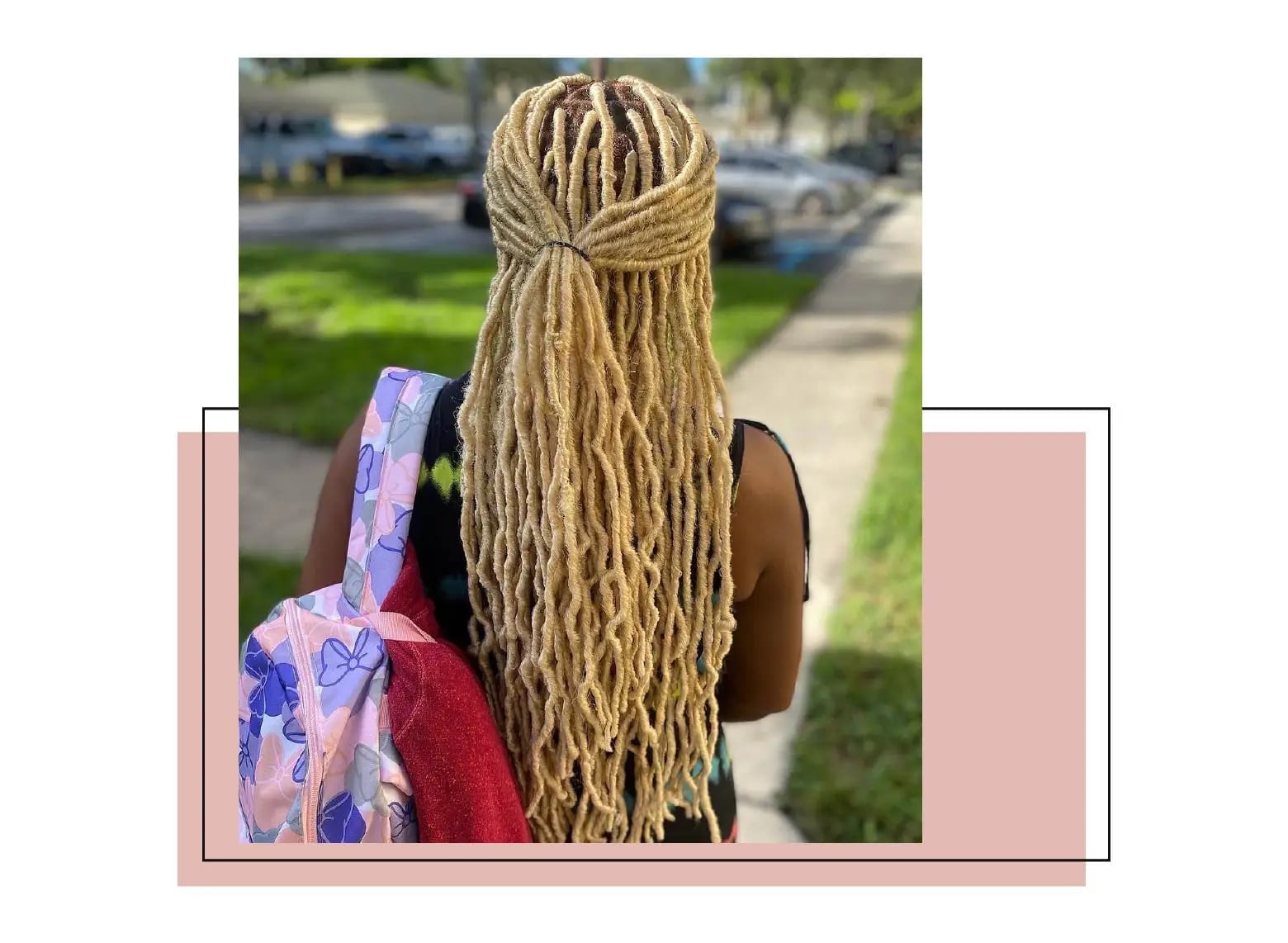
A smooth blonde ombre on locs requires a graduated lightener application: more saturation at the ends, nearly none at the roots. The result is a natural fade from dark to pale blonde that looks like sun exposure. The ponytail styling shows off the gradient in a single vertical line. It works on locs at mid-back length, where the ombre has enough length to transition gradually.
Ask your colorist for: mid-back locs with blonde ombre, styled in a ponytail. The ombre should start around the ears to avoid a harsh root line. A purple shampoo once a week keeps the blonde from turning brassy. The ponytail itself needs a texture spray for grip, because locs can slide out of an elastic faster than loose hair.
Final Thoughts
For low maintenance, stick with a warm caramel balayage or subtle highlights on a natural base. The grow-out line stays soft, and you can push touch-ups to every ten weeks. If you want to commit, vivid red or teal locs need a color-safe shampoo and a toner every four to six weeks to keep the tone from shifting warm. The decision rule is simple: match the technique to the time you have for upkeep.
- Use color-safe shampoos and conditioners. For vibrant colors, add a color-depositing conditioner every four to six weeks.
- Touch up roots or highlights every six to ten weeks, depending on the technique.
- Minimize heat styling and always use a heat protectant spray to preserve color vibrancy.
- Wash locs every one to two weeks to avoid stripping natural oils and color.
Find the colored loc style that speaks to your individuality.