20 Cornrows Braid Styles 2027: Sleek Black & Wavy Looks
Cornrows are a protective foundation that can take you anywhere from a full scalp design to a half-up ponytail with loose ends. The current shift is toward softer textures at the finish: think wavy, curly, or loosely braided ends rather than a uniform, tight line.
This collection of 20 Cornrows Braid Styles covers the range from sleek, precise parts to voluminous, textured looks. It solves for fine hair that needs grip, a long face that benefits from width at the sides, and a grow-out line you want to hide for as long as possible. Each style gives you one concrete benefit: less daily styling, a specific hold time, or a color placement that works with the braid.
Voluminous Loose Braids With Wavy Ends
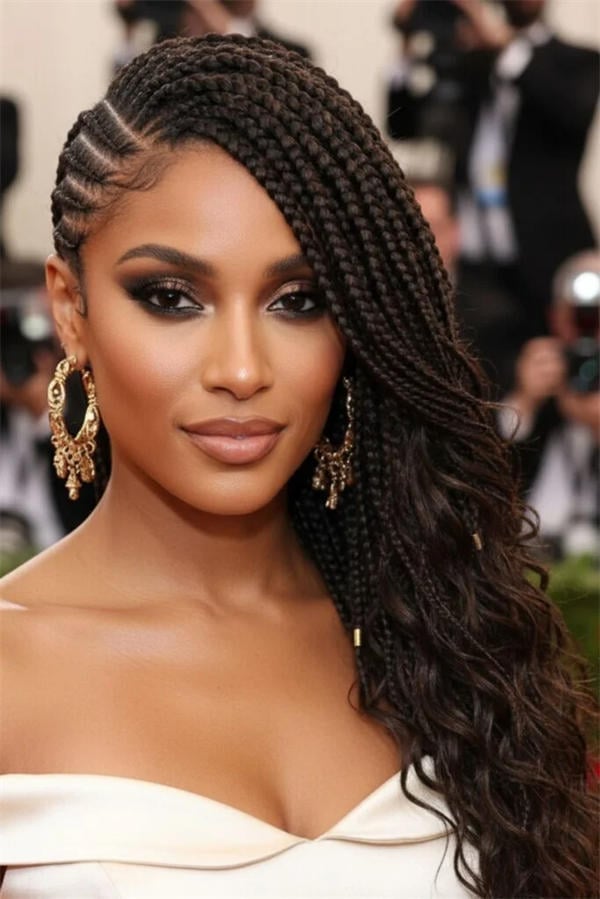
A side parting sends these cornrows into voluminous loose braids that hit mid-back, with wavy ends that add deliberate, almost lazy movement. The thick, wavy texture is what makes this work: the scalp braids stay crisp while the lower half softens into something that moves. If your hair is at least mid-back length and has natural weight, this is a style that actually holds its shape. Ask your stylist for: cornrows with a side part, transitioning into voluminous loose braids with wavy ends. Gently separate the wavy ends with your fingers after braiding to keep the volume from collapsing.
Sleek Black Cornrows Down The Back
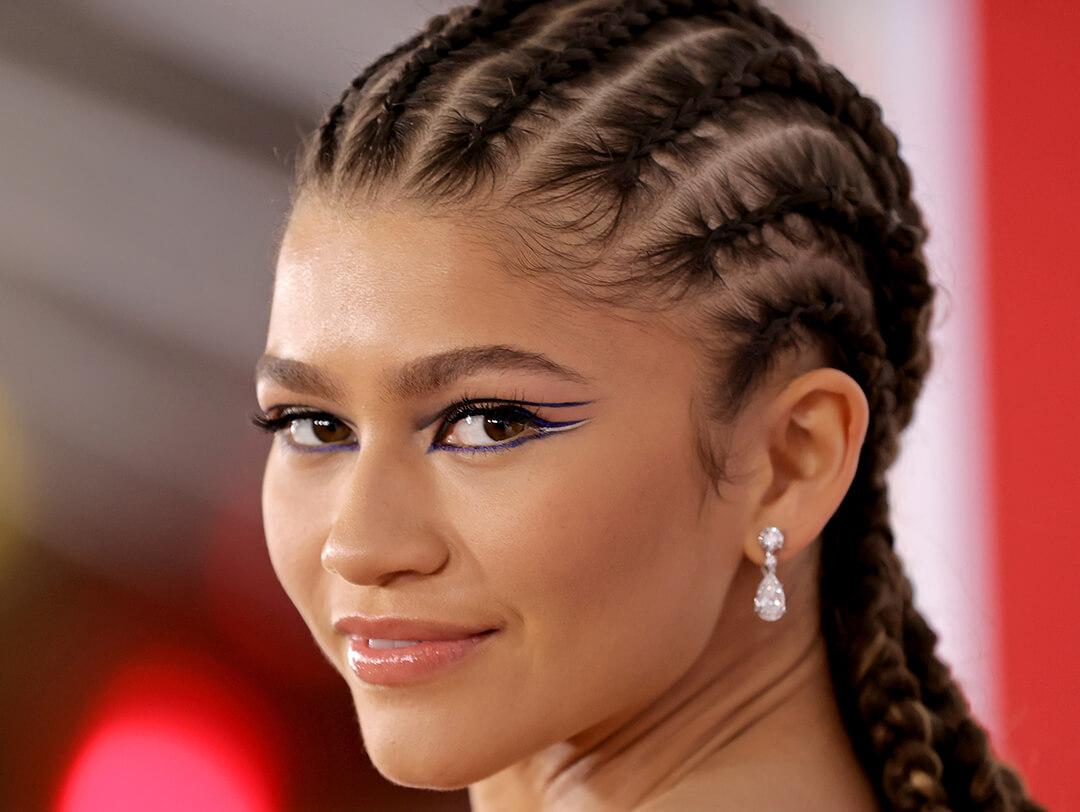
A middle parting and a clean scalp pattern define these sleek black cornrows. The braids run straight down the back, relying on even tension and a consistent part width for that polished finish. Thick, wavy hair at long length is the starting point, because the weight helps the braids lie flat and stay aligned.
Ask your stylist for: sleek cornrows with a middle part, extending long down the back. Run a light pomade over the parts every few days to catch any flyaways. The scalp braids will need redoing every six to eight weeks as new growth lifts the pattern.
Brown Cornrows With Curly Ends
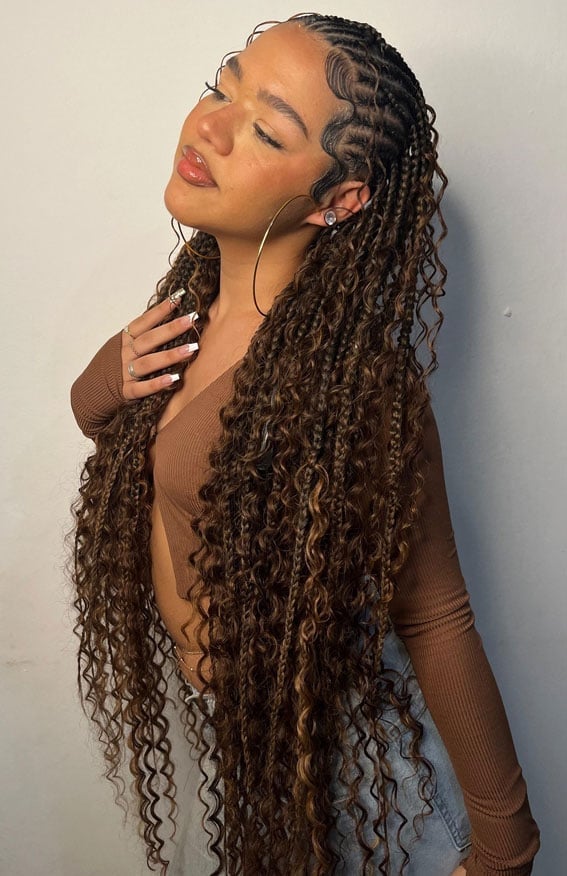
These cornrows keep the brown base, then let blonde and auburn highlights run through the long braids before the ends spring into tight curls. The color adds dimension without a full balayage; the curly ends are what separate it from a standard straight braid. If you have long, thick hair and want more texture at the bottom, this is the version that delivers it. Ask your stylist for: cornrows with a middle part, long voluminous braids with extremely curly ends, brown with blonde and auburn highlights. A curl-defining cream on the ends keeps the shape from loosening, and the color depth works for festive occasions or daily wear.
Dark Brown Blonde Highlight Cornrows
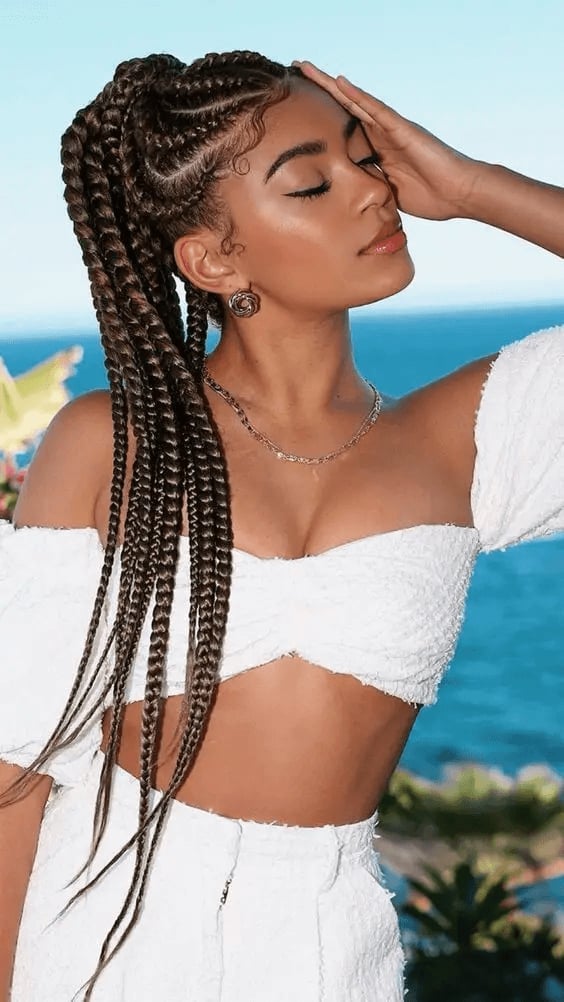
Cornrows can read as one solid color from the root but lighten toward the ends when blonde highlights are placed in the braids. The side part sets a diagonal flow, and the wavy ends keep the long braids from looking too uniform. This style suits mid-back length hair with thick texture, where the contrast can read clearly. Ask your stylist for: cornrows with a side part, long flowing braids with dark brown and blonde highlights. A texturizing spray on the wavy ends will keep definition between washes.
Medium Brown Cornrows With Lighter Ends
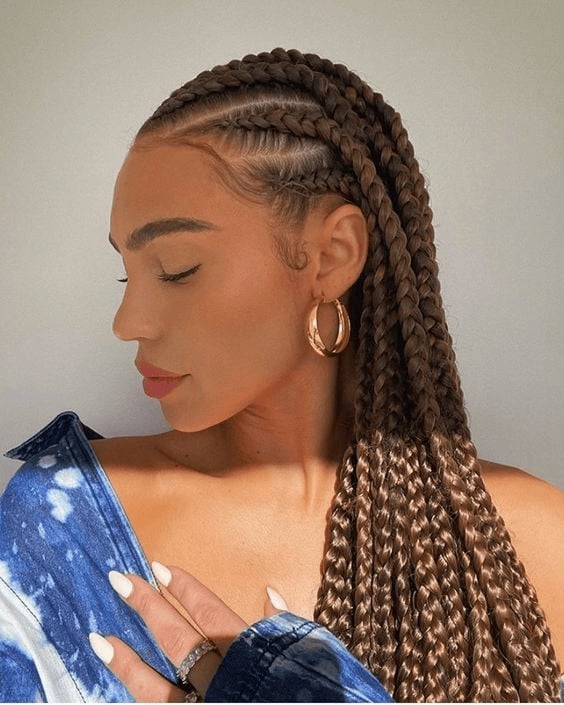
A middle parting and straight, thick texture give these medium brown cornrows a tidy, deliberate line from scalp to tip. The color graduates to lighter ends, a subtler gradient than highlights, so the transition reads as sun-bleached rather than applied. Straight hair at mid-back length holds this gradient evenly, and the thick texture keeps the braids from thinning out at the ends. Ask your stylist for: medium brown cornrows with a middle part and lighter ends, straight texture. A light serum on the ends preserves the lighter tone and keeps the hair from drying out between re-braiding, which lands around every six to eight weeks.
Heart-Shaped Cornrow Design
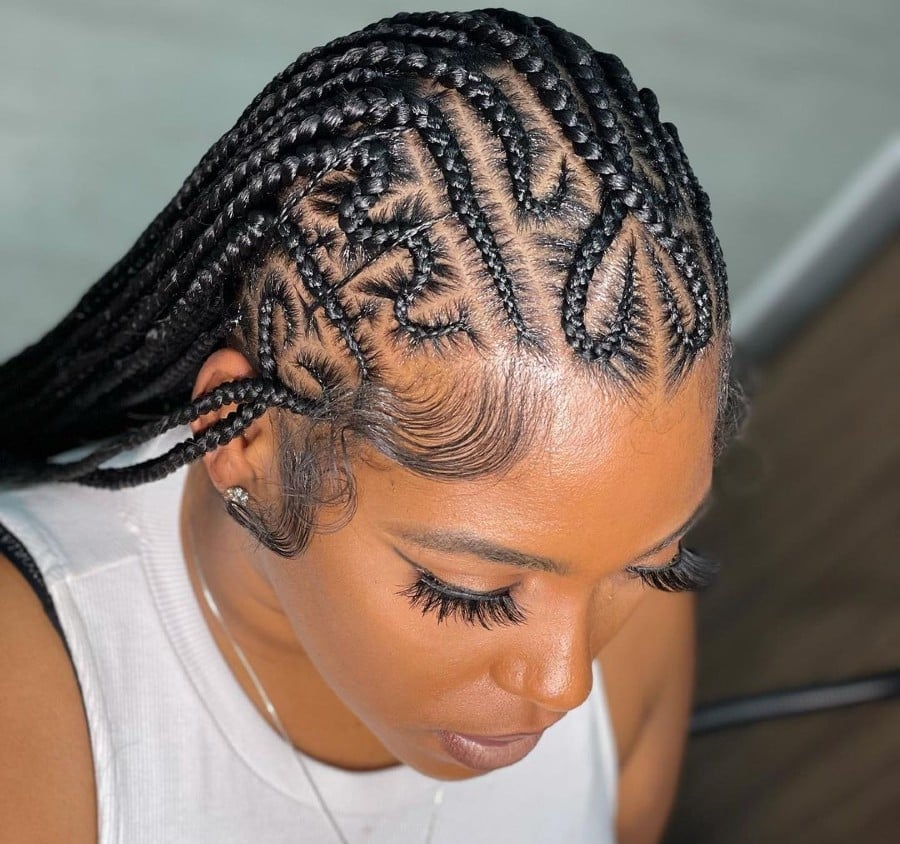
This design starts at the crown with a precise heart shape formed from the cornrows themselves, not added after. The middle parting anchors the symmetry, and the straight, thick black braids fall neatly to mid-back. Ask your stylist for: cornrows with a middle part, styled into a heart shape on the scalp. A heart-shaped cornrow pattern is a salon-only project, requiring a steady hand and a good eye for symmetry. Expect to sit for about three hours while each section is mapped and braided. The scalp needs to stay clean for the lines to read clearly, and the cornrows should be redone every six to eight weeks before the new growth blurs the shape.
Individual Braids With Wavy Ends
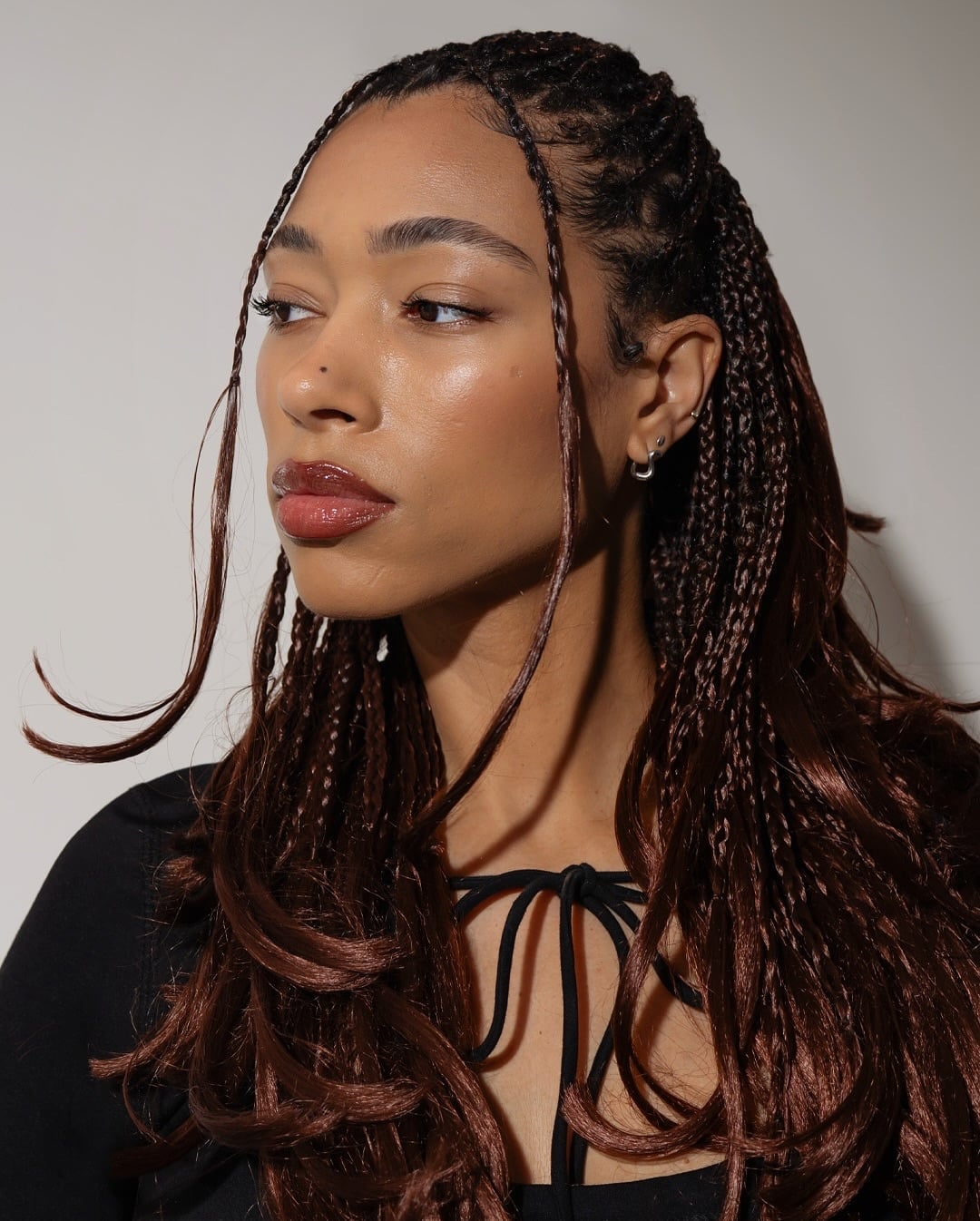
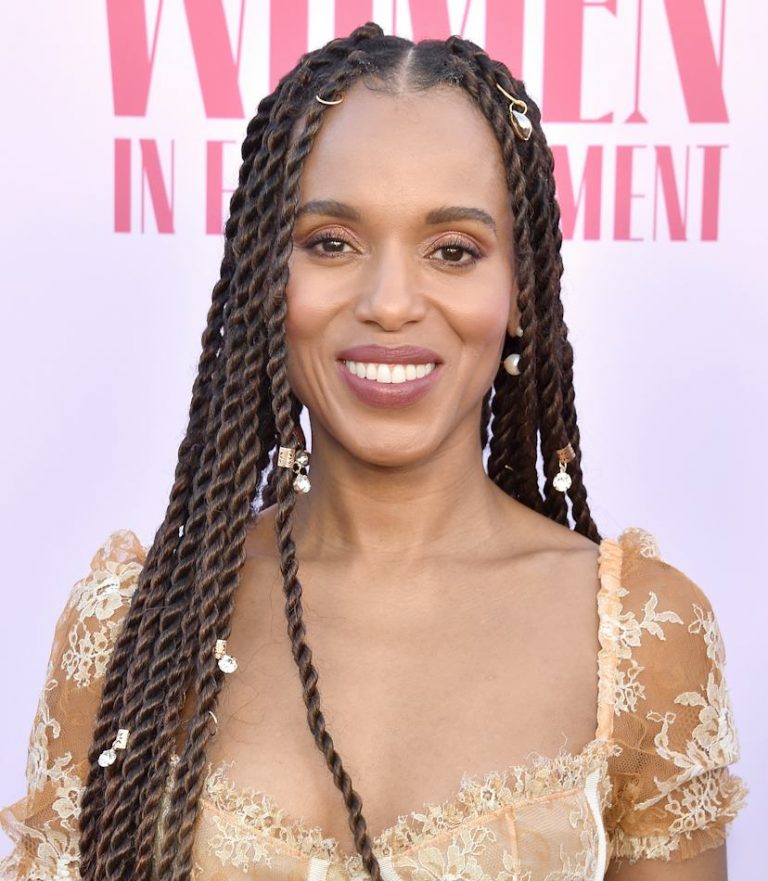
The wavy ends are the point of the style. From a middle parting, individual cornrows extend to mid-back in a rich medium brown that has a natural gloss. Ask your stylist for: individual braids with a middle part, mid-back length, and wavy ends in medium brown. Individual braids take longer to install than standard cornrows, and the wavy ends need a light sheen serum every few days to keep from frizzing. If you want a style you can wash and forget, this is not that. But if you want a braided look with movement and depth, the wavy ends deliver.
Geometric Parting Cornrows
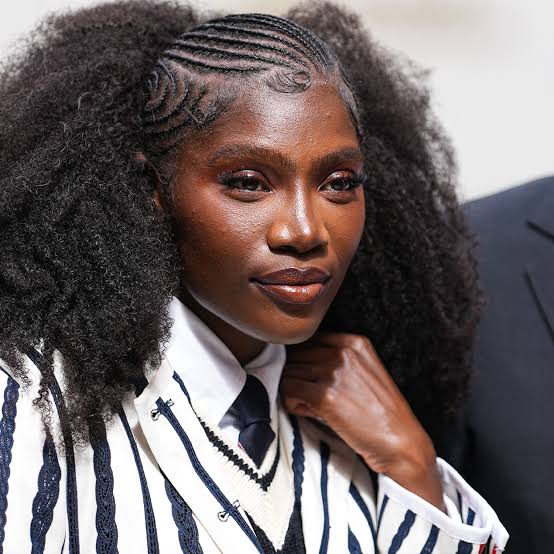
Does your hair texture get the short end of the stick when it comes to visible braid patterns? Not here. The geometric parting at the front is cut straight into the coily, thick black hair, creating a sharp angular design that the texture holds instead of hiding. The cornrows then transition into voluminous loose braids past the shoulders. Ask your stylist for: cornrows with a middle part and geometric scalp parting, extending into loose braids. This works best on hair that is naturally thick and long, because the volume of the loose braids balances the precise scalp work. The coily texture gives the geometric lines a distinct visual weight that straight hair cannot match. A spritz bottle with water and leave-in conditioner keeps the coils defined between washes.
Cornrows With High Bun And Loose Braids
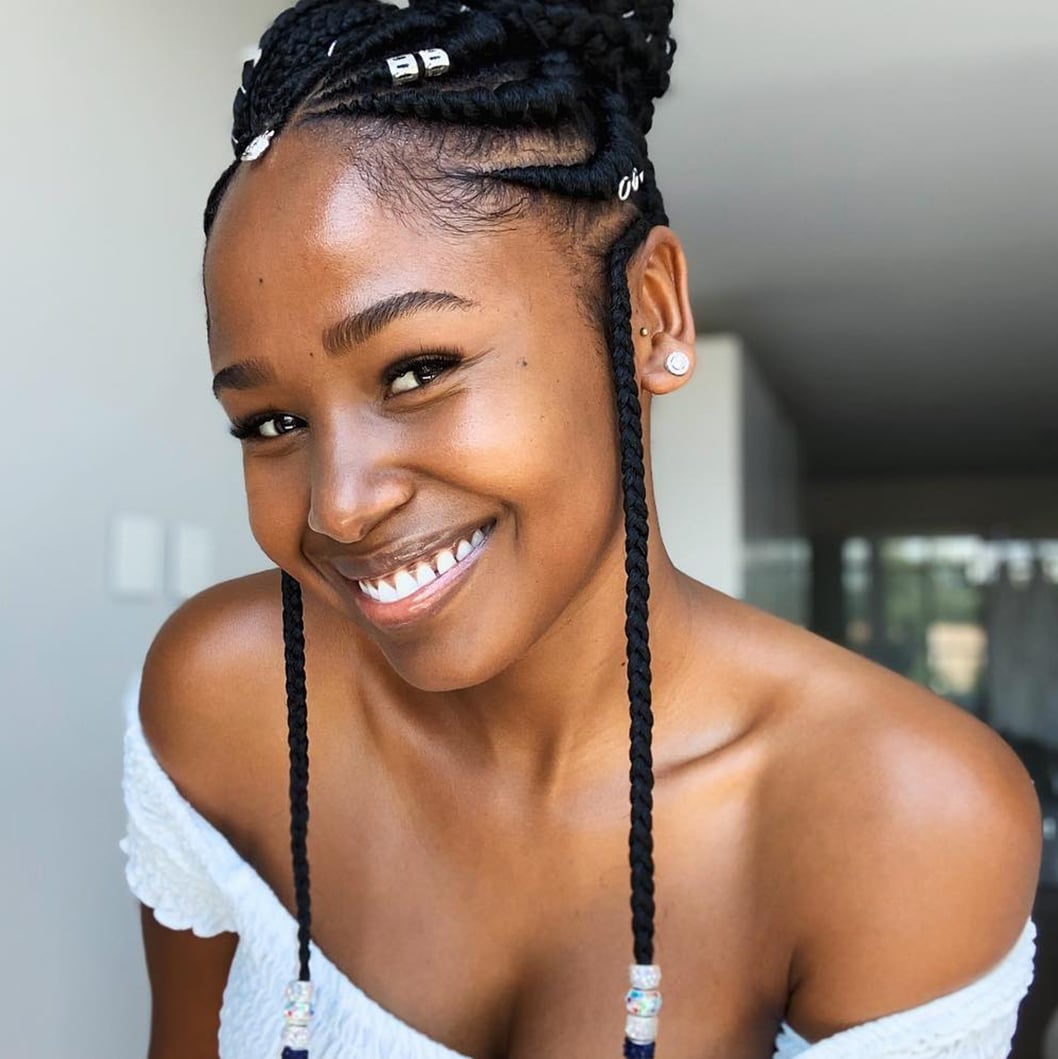
Gather the cornrows into a high bun, then let several braids fall loose down the back. Decorative beads are threaded onto a few of the loose braids, adding a subtle clink and visual detail without overwhelming the shape. Ask your stylist for: cornrows pulled into a high bun with loose braids extending down the back, including decorative beads. The bun sits high on the crown, which keeps the weight off the nape and makes the style feel lighter. The loose braids need to be secured with a small elastic before they join the bun, or they will slip out over the course of a day. This is a good pick for a formal event or a wedding guest look. The beads stay put as long as the braids are tight.
Neat Black Cornrows With Sharp Lines
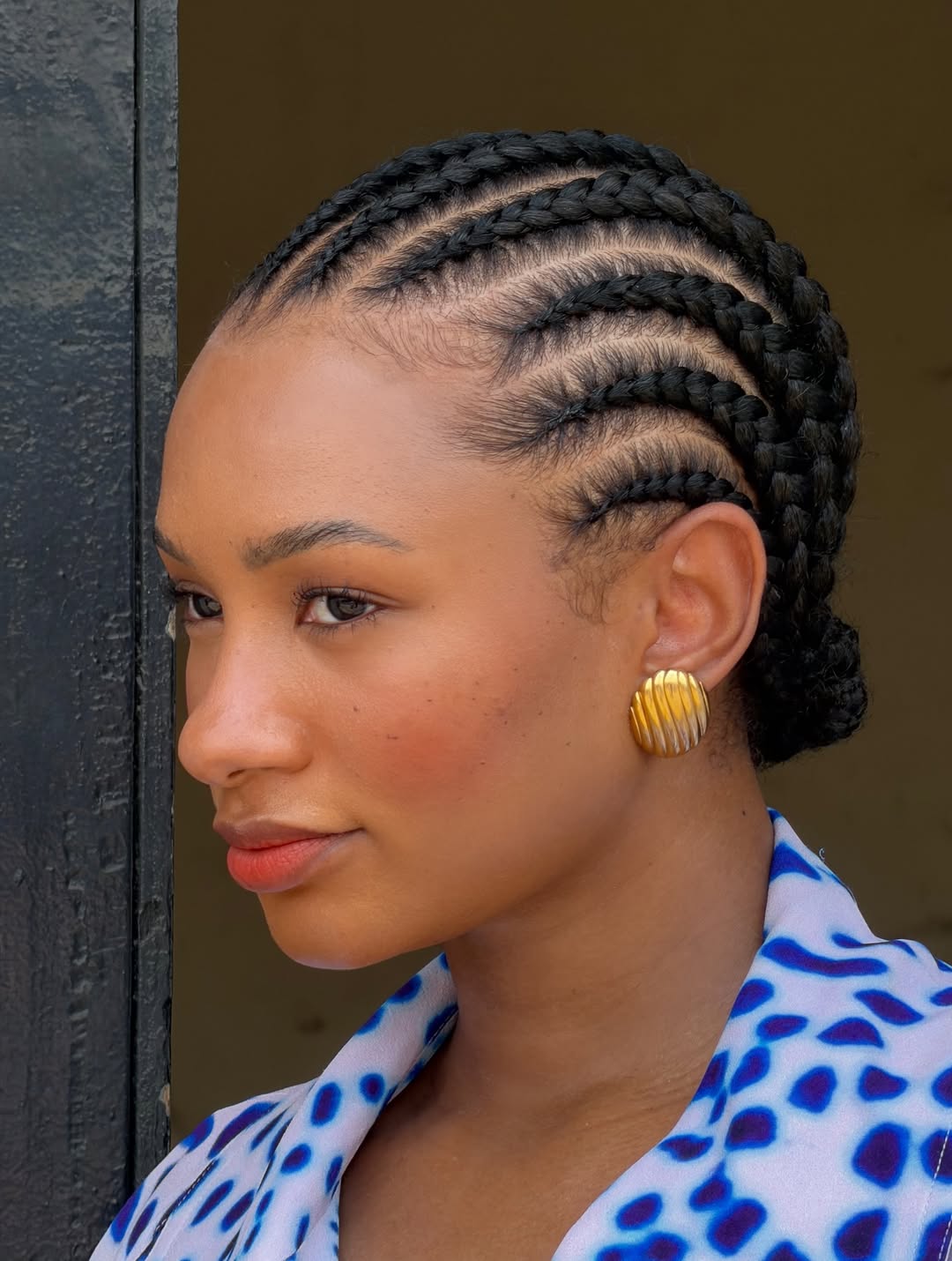
Sharply defined scalp lines are the whole game here. The cornrows start at a clean middle parting and run straight back into long, sleek black braids. No texture, no waviness, no ornament. Ask your stylist for: long, straight black cornrows with a middle part and very neat scalp lines. The precision of the partings is what separates this from a standard set of cornrows. A fine-tooth comb run along each part every morning keeps the scalp lines crisp. The sleekness lasts longest when the hair is wrapped at night with a satin scarf. Re-braiding every six to eight weeks is required because new growth softens the lines fast. This is a style that rewards upkeep.
Multi-Colored Cornrows
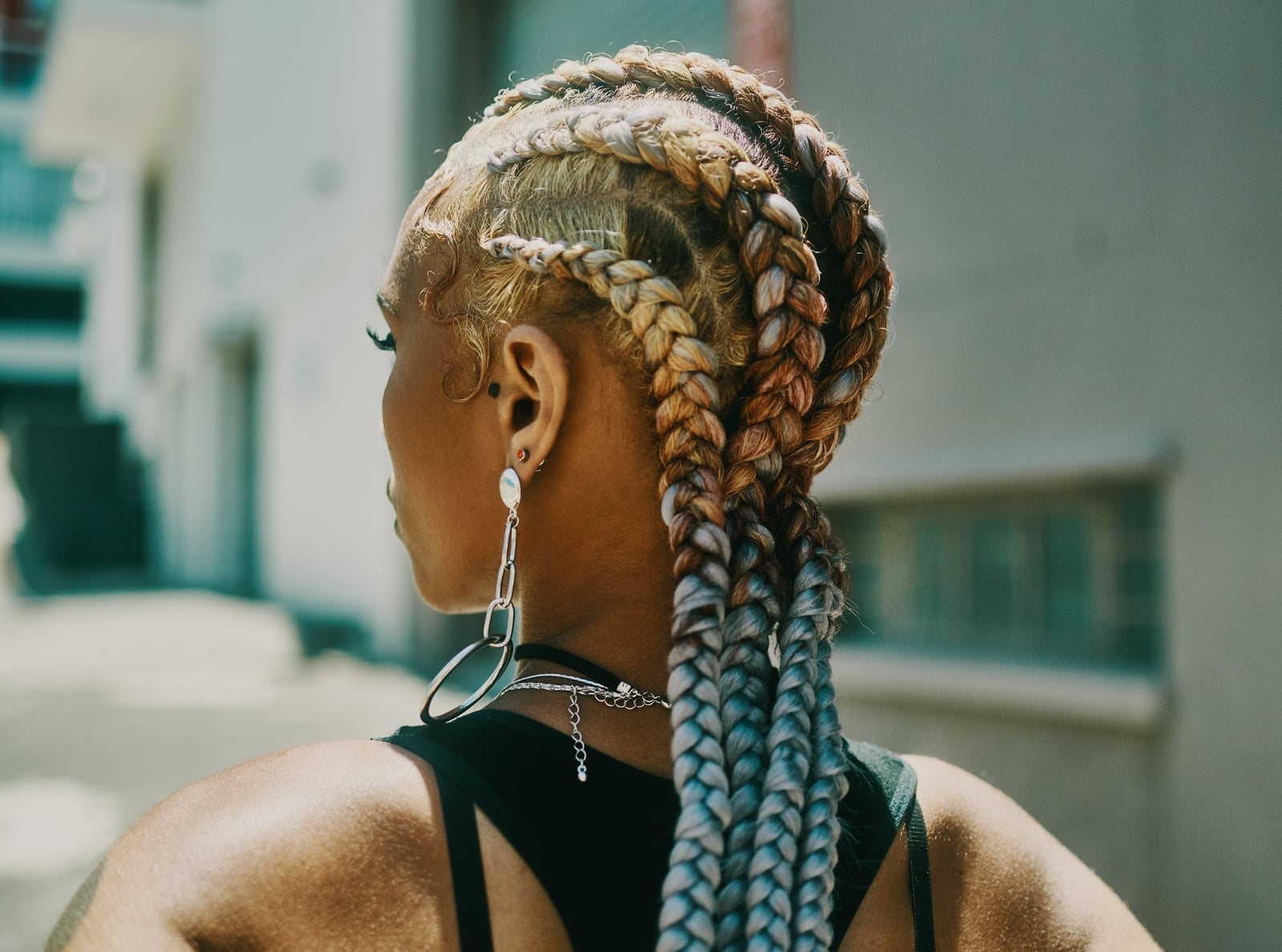
Thick cornrows with a middle part and a straight texture take on a completely different personality when the color palette shifts from a single shade to three. Here, blonde, blue, and brown highlights are woven through the mid-back length, each one catching the eye at a different angle. A single base color like black or dark brown is classic; this version is a deliberate statement. Ask your stylist for: cornrows with a middle part, mid-back length, in blonde, blue, and brown highlights. Maintaining three vibrant tones requires a color-safe shampoo and a sulfate-free conditioner to keep the blue from fading first. Thick, straight hair holds the saturation best, but the braids themselves will need a scalp redo every six to eight weeks as the roots grow in.
Cornrows Pulled Into A Nape Bun
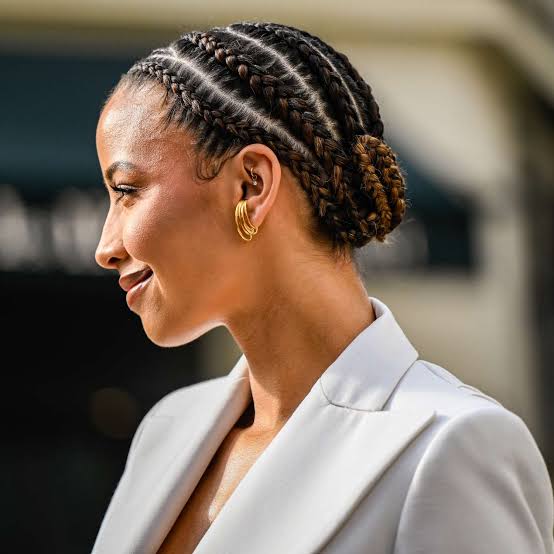
A nape bun built from neat cornrows starts with a middle part and shoulder-length wavy thick hair in dark brown. The braids are pulled back and secured low, which keeps the style tidy without the weight of a high bun pulling on the hairline. This is a salon-only finish because the cornrows need to be evenly tensioned from the scalp to the bun, but once done, you can re-pin the bun yourself between appointments. Ask your stylist for: cornrows pulled into a bun at the nape, with a middle part. The bun holds best when the braids are slightly dry before pinning, and a light-hold hairspray on the finished shape keeps flyaways in check through an eight-hour day.
Large Thick Cornrows
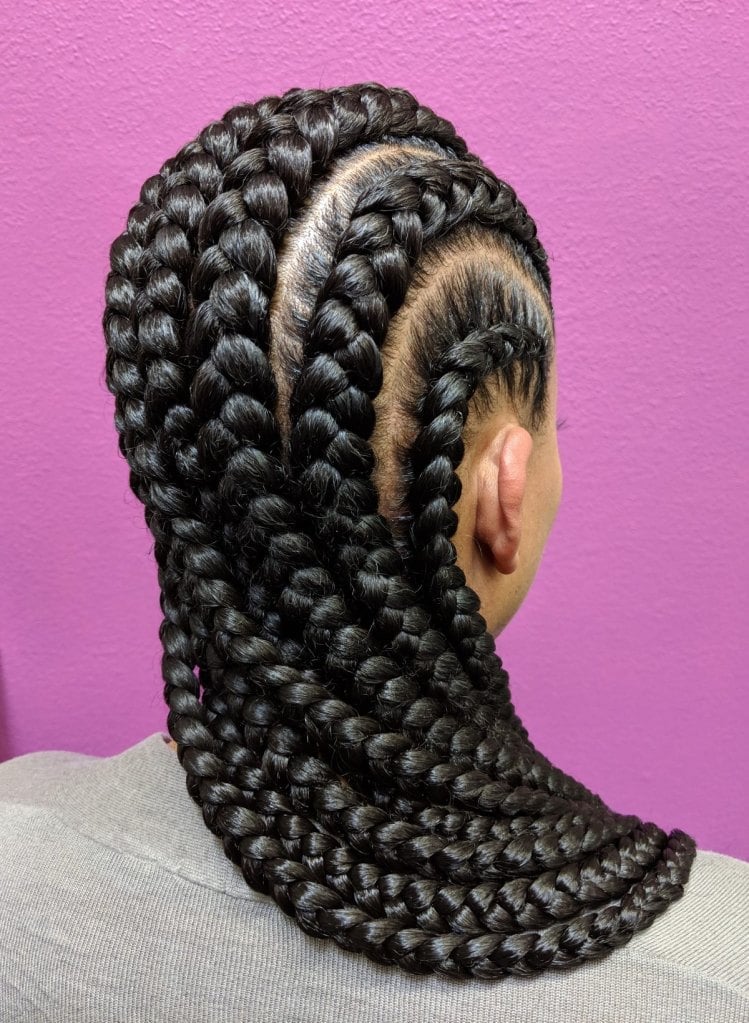
Large, thick cornrows on straight, dense black hair create a bold, defined look that smaller braids cannot match. The sections are wider, which means fewer braids overall and a faster installation time at the salon. This style suits thick, straight hair of mid-back length because the density keeps the large braids from looking sparse. Fine or thin hair will not fill the sections evenly, so the braids may feel loose after a few days. Ask your stylist for: large, thick cornrows extending down the back. A lightweight oil applied to the length every few days prevents the braids from drying out, and a scalp refresh every six to eight weeks keeps the roots neat.
Cornrows With Blonde Curtain Bangs
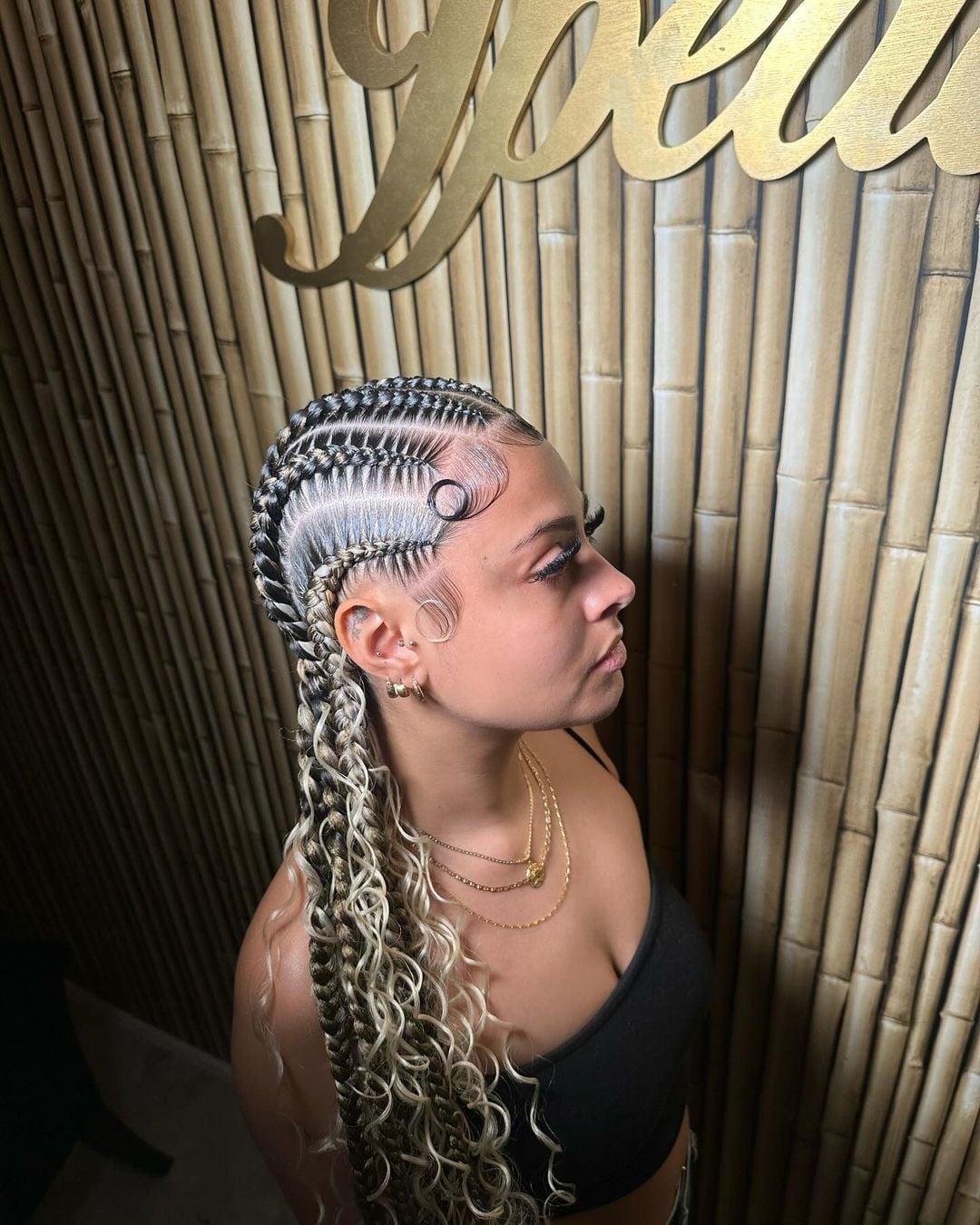
The contrast between the black base and the blonde ends adds depth without needing highlights throughout every braid. Ask your stylist for: cornrows with a middle part, face-framing curtain bangs, and long wavy blonde-tipped braids. The curtain bangs need a round brush and heat to hold their shape, so this is a style for a fashion event or a night out where you want the front to move freely. The long length cascades behind the bangs, and a touch-up every six to eight weeks keeps the parting crisp.
Long Neat Black Cornrows
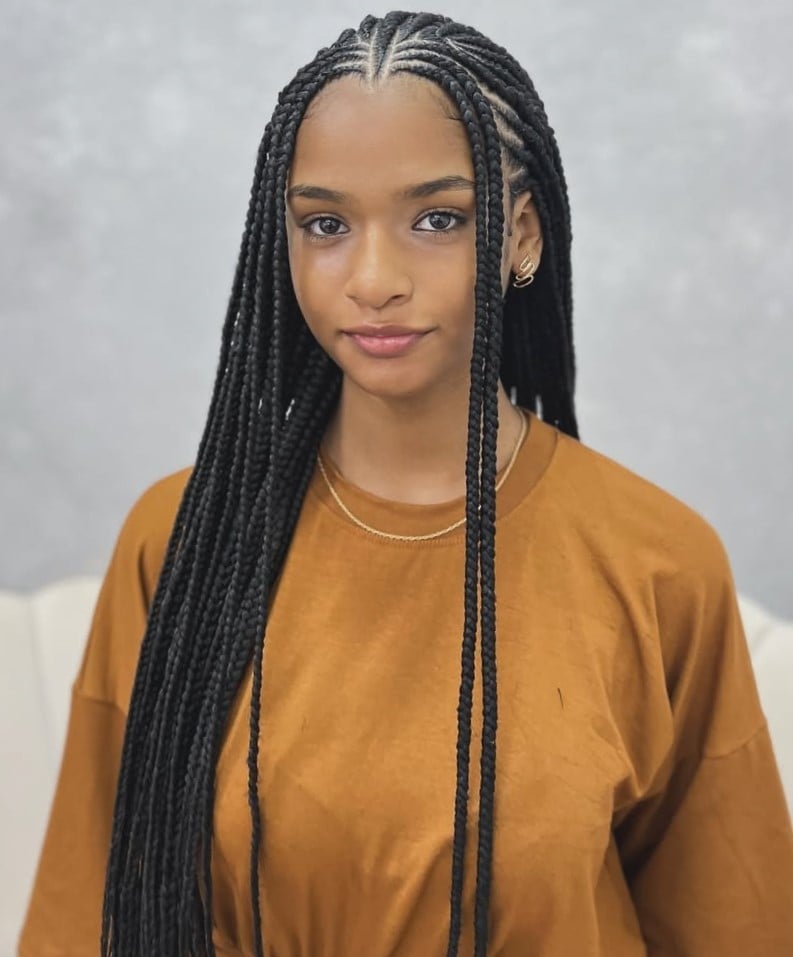
Here, black hair is parted in the middle and braided from the scalp to mid-back in uniform sections, creating a polished, all-over texture. The front view shows how the braids frame the face without bangs, relying on the precise parting and even tension. Ask your stylist for: long, neat cornrows with a middle part, extending to mid-back. A light oil on the scalp and along the length keeps the hair hydrated, and a trim every six to eight weeks at re-braid time prevents the ends from fraying. This is a low-maintenance option for everyday wear or a professional setting where a consistent silhouette matters.
Black Cornrows With Loose Curly Ends
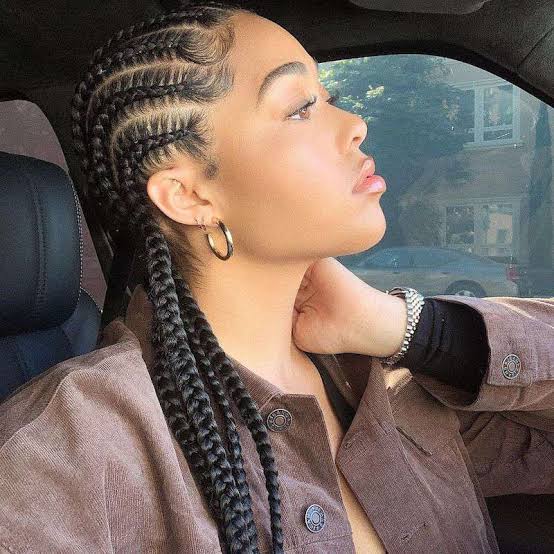
These aren’t the sleek, uniform braids that go from root to tip in one texture. Instead, the cornrows run neatly from a middle part down the back, then release into loose curls at the ends, giving a long, wavy, thick style a softer finish. This look works best on hair that already has some wave or curl, since the end texture blends naturally rather than looking tacked on. Ask your stylist for: cornrows with a middle part, long braids with loose curly ends. The curled ends need a refresh with a curl-enhancing cream each morning, and the scalp cornrows should be redone every six to eight weeks. One honest drawback: the ends can lose their definition by day two or three if the weather is humid, so plan for touch-ups.
Thick Curly Cornrows
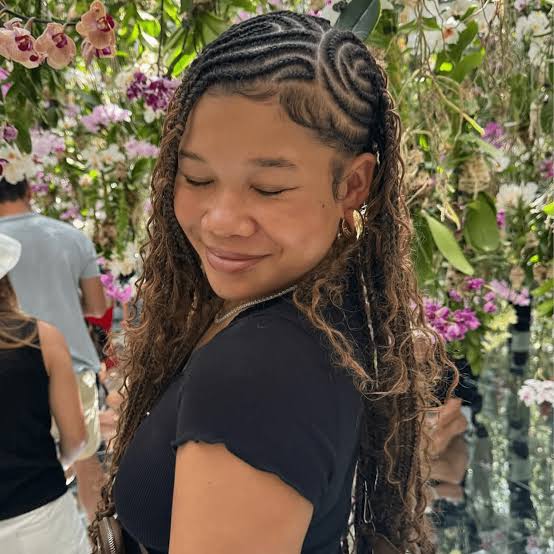
Thick, curly hair and cornrows are a natural pair, and this version proves it. A middle part frames the scalp, while the braids extend to mid-back with the loose ends braided as well, keeping the entire style contained. This is a salon only project: the intricate parting requires a steady hand, and the density of thick curly hair means the braider needs time to part cleanly. Ask your stylist for: cornrows with a middle part, mid-back length, on thick curly hair. This protective style holds its shape for weeks, with the natural curl adding volume along the braid itself. For anyone with finer or straighter hair, this look will feel heavy.
Geometric Pattern Cornrows
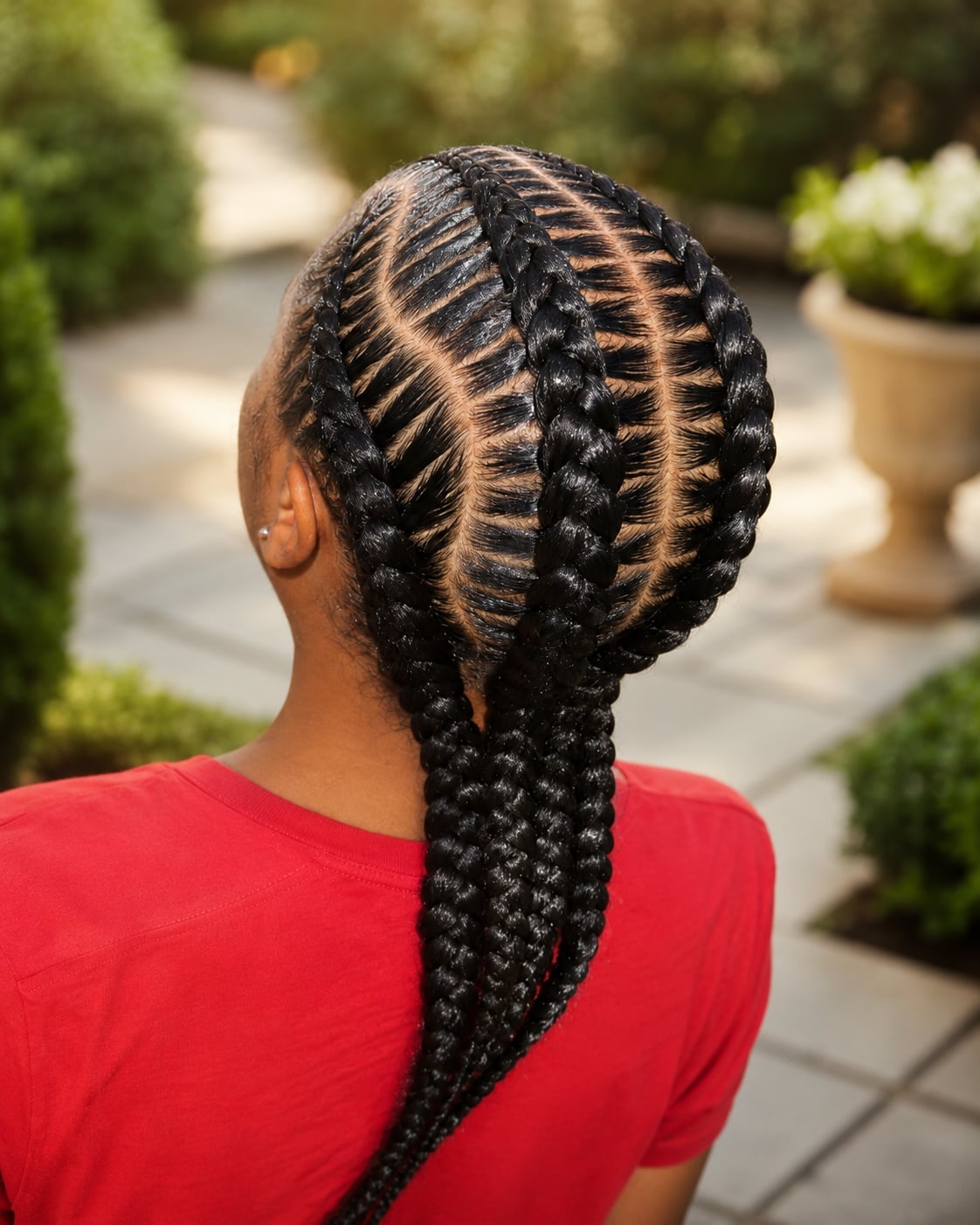
A practical rule for geometric cornrows: the more precise the scalp pattern, the less forgiving the grow-out. Here, large cornrows start at the front and transition into thick braids that fall to mid-back, with a distinct middle parting that creates a clean, angular design. This is a look built on straight, dense black hair, where the lines stay sharp and the braids lie flat. Ask your stylist for: large cornrows with a distinct geometric pattern on the scalp, extending to mid-back. The parting and pattern are the focal point, so any frizz or lift at the roots disrupts the effect faster than on a standard cornrow style. Stick to a six-week re-braid schedule to maintain the geometry.
Cornrows With Gold Hair Cuffs
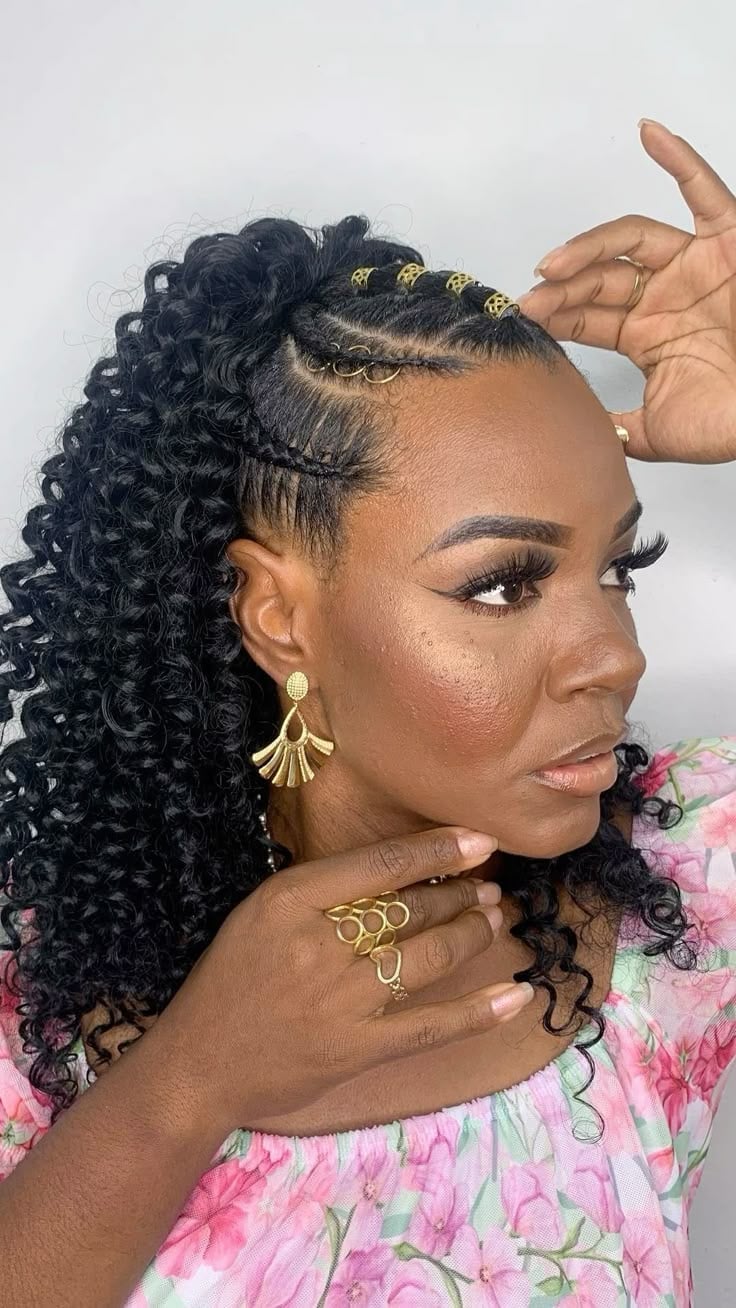
A half-up ponytail and cornrows with a side parting already feel like a party, but the gold hair cuffs near the hairline push it into festival territory. The base is black with blonde highlights, wavy and thick, braided from a side part and gathered into a ponytail that falls to mid-back. To get close to this at home, have the cornrows and ponytail professionally installed, then add the cuffs yourself by clipping them onto the braids near the scalp. Ask your stylist for: cornrows with a side part, half up ponytail, black and blonde highlights, with gold hair cuffs. This style lands best at outdoor events, weddings, or any occasion where a little shine is welcome.
Cornrows With Pink Highlights
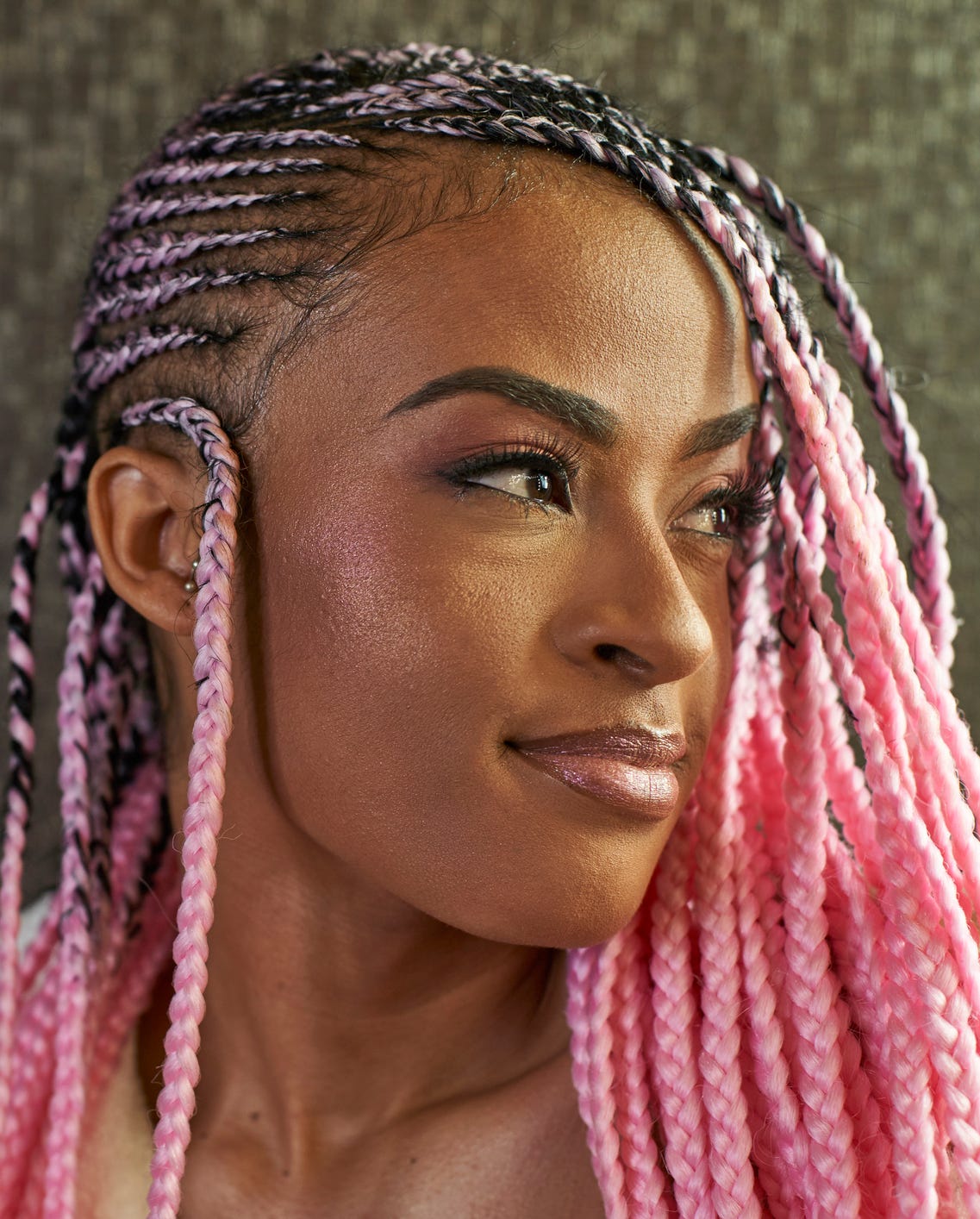
Here, a middle part anchors a radial design on the scalp, with black and vibrant pink braids extending into long, straight strands. The pink is woven through the black as highlights, not an all-over color, which keeps the style from looking like a costume. Ask your colorist for: cornrows with a middle part, black with vibrant pink highlights, extending into long straight braids. One real drawback: pink fades fast, especially on the ends, so using a color-safe shampoo and conditioner is essential if you want the hue to last beyond three weeks. The scalp pattern stays crisp, but the color will need refreshing sooner than the braids themselves.
Final Thoughts
For a low-maintenance cornrow style, stick with straight, uniform braids and a clean middle part. That setup holds for weeks with minimal fuss and works for most face shapes and densities. If you prefer added texture, plan for a slightly shorter wear time and more careful nightly protection.
- Maintain scalp moisture with a light oil or spray, focusing on the parts between braids.
- Protect braids from friction by sleeping with a silk or satin scarf or bonnet.
- Avoid excessive manipulation and pulling to prevent tension on the scalp and hairline.
- Allow braids to air dry completely after washing; do not use direct heat.
- Schedule touch-ups or re-braiding every 4-8 weeks, depending on hair growth and desired longevity.
Cornrows offer a sophisticated foundation for countless braided looks.