20 Easy Natural Hair Styles 4c 2027 for Quick Styling
Natural 4c hair is a playground of texture and shape, not a styling challenge to be conquered. The current shift leans toward glossy, defined coils and soft face-framing layers that work with your hair’s natural volume, not against it.
This collection of 20 Easy Natural Hair Styles 4c covers the full spectrum, from air-dried afros that need zero heat to braided updos that can last a week. Whether your hair is fine and needs careful shaping or thick and demands weight management, there is a straightforward option here. The struggle of a style that looks flat by noon or a fringe that refuses to cooperate? Solved on these pages.
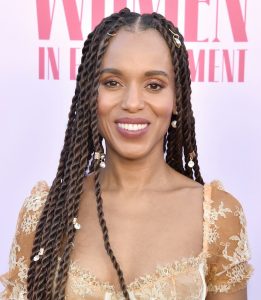
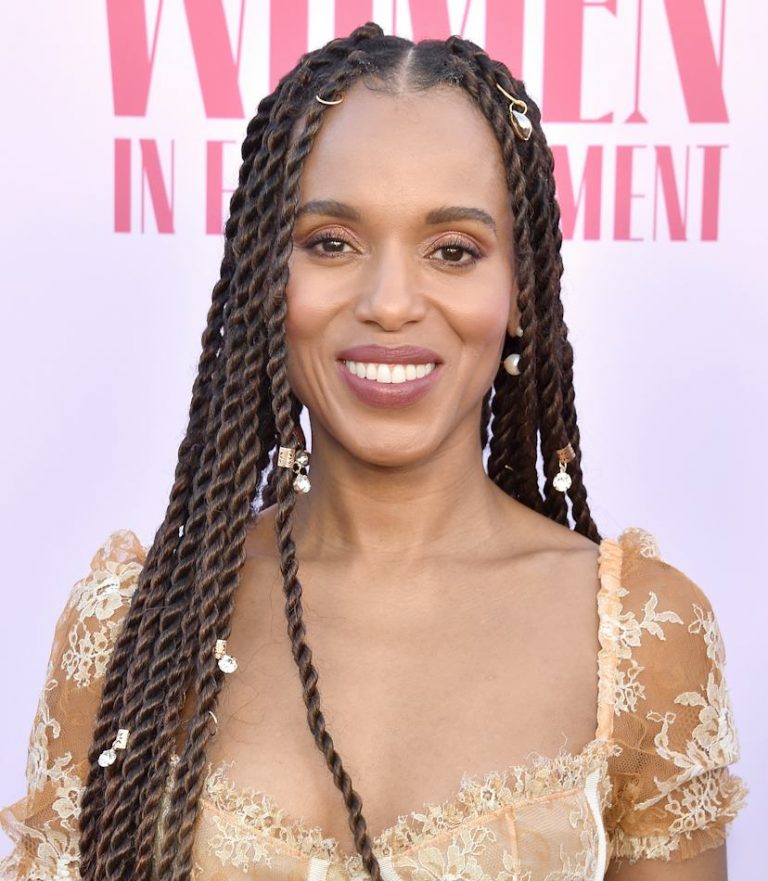
Multiple Twisted Sections Into Two Updos
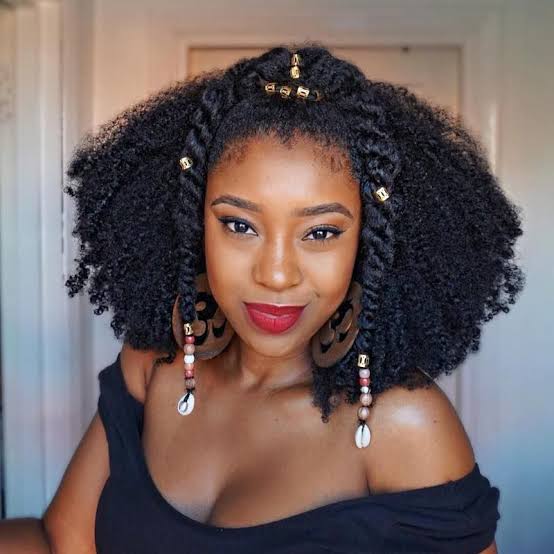
The design here is as deliberate as it gets: the hair is divided into multiple twisted sections, each pulled into one of two distinct updos, with gold beads and shell-like accessories threaded along the twists. Thick, coily hair at shoulder length or longer gives you enough heft for the structure to hold. Ask your stylist for: two updos with twisted sections and decorative beads. A moisturizing balm applied before twisting adds a bit of shine, and a few well-placed pins keep everything secure for the day.
Voluminous Mid-Back Length Blowout
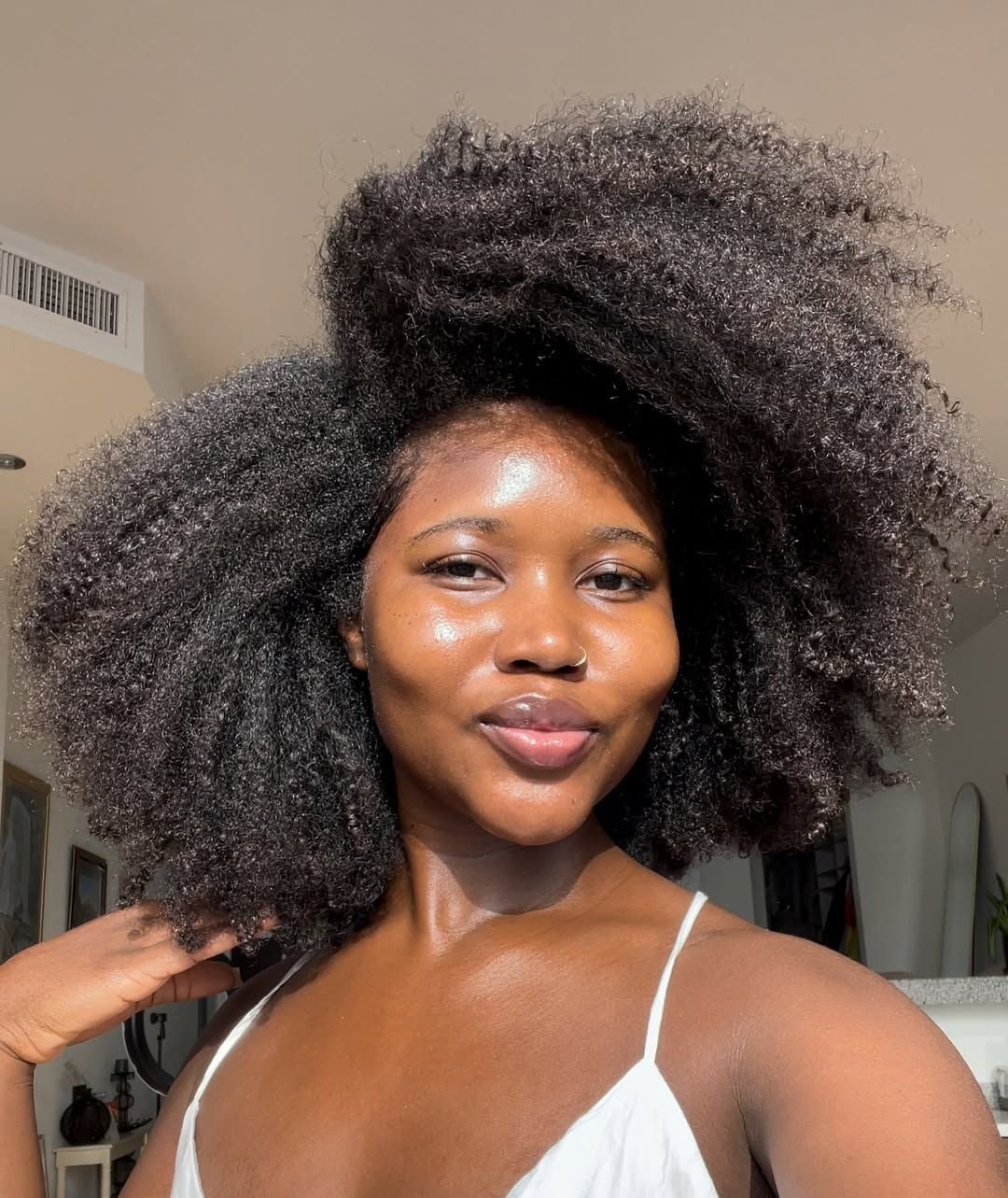
Can a blowout on coily hair actually look this full without turning into a frizz situation? Yes, when the cut uses layers to distribute the volume rather than let it pile up at the ends. The hair is dark brown, mid-back length, with a middle part and no bangs, which means the shape comes entirely from the cut and the blow-dry technique. Ask your stylist for: voluminous blowout with layers, mid-back length. Use a heat protectant before blow-drying, then a light serum to seal the gloss. A trim every eight weeks keeps the ends from splitting and the layers from losing their shape.
This style suits thick, coily hair that’s at least mid-back length. If your hair is finer or shorter than that, the layers won’t have enough density to create the same lift, and the blowout may fall flat within hours.
Short Thick Coily Afro
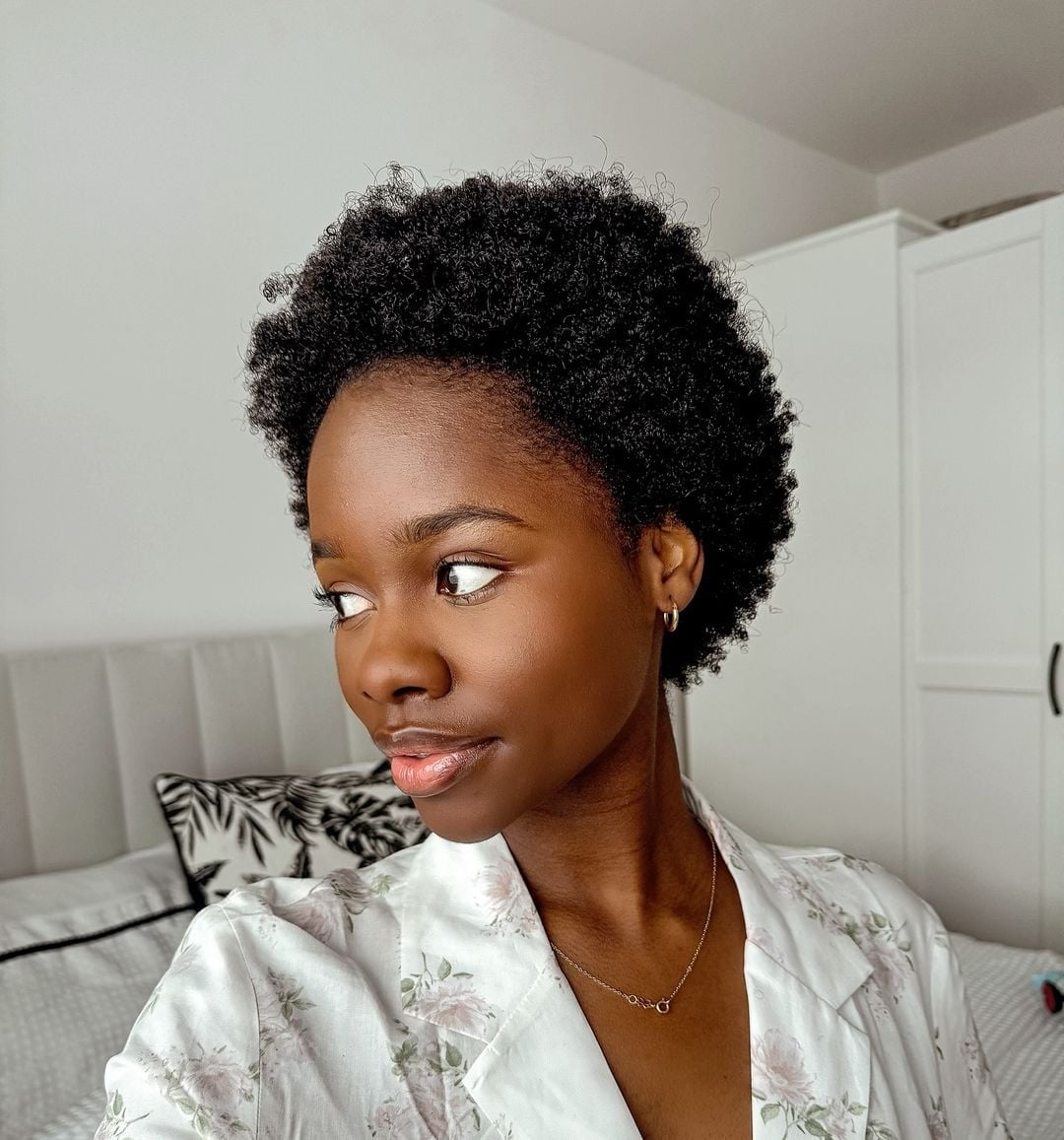
A short, thick, coily afro that falls around the ear and is simply air-dried is about as low-commitment as it gets. The side part adds a little asymmetry to the round shape. You can do this at home with a leave-in conditioner and your fingers to fluff it into place. The shape relies entirely on your hair’s natural density and curl pattern, so if your coils are looser or your hair is fine, the afro may look more like a puff than a full sphere.
Shoulder Length Voluminous Afro Pouf
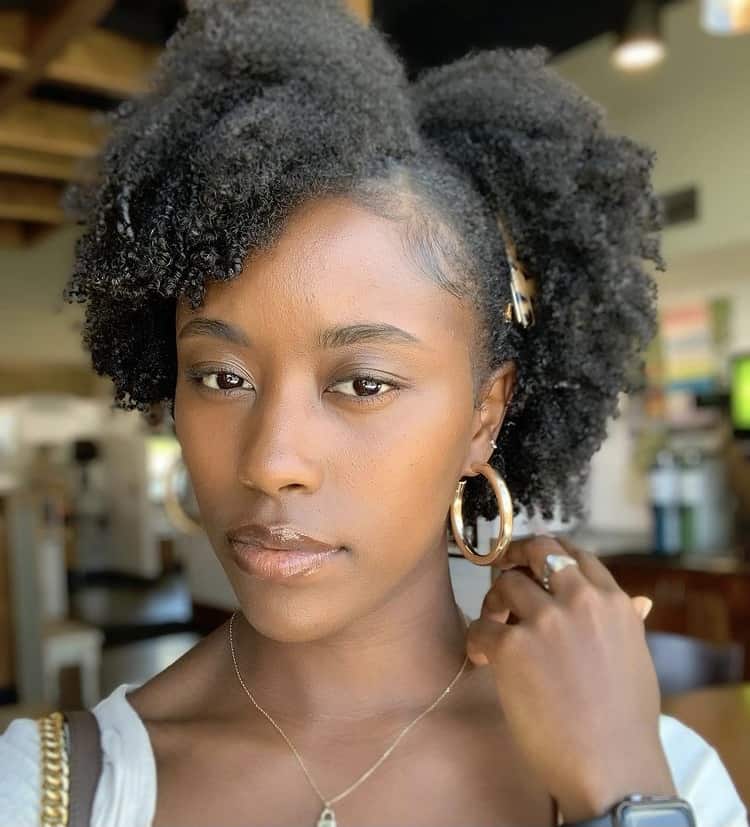
This is not a topknot, and it is not a loose afro. The shoulder-length high pouf pulls the bulk upward while letting the length fall, creating a silhouette that is round on top and softer at the edges. The middle part and the absence of bangs keep the focus on the volume. A pick gently lifted at the roots gives you the height; over-brushing will separate the coils and shrink the pouf. For thick, coily hair at shoulder length, this is a straightforward shape that holds without pins or product buildup.
Short Layered Afro With Wispy Bangs
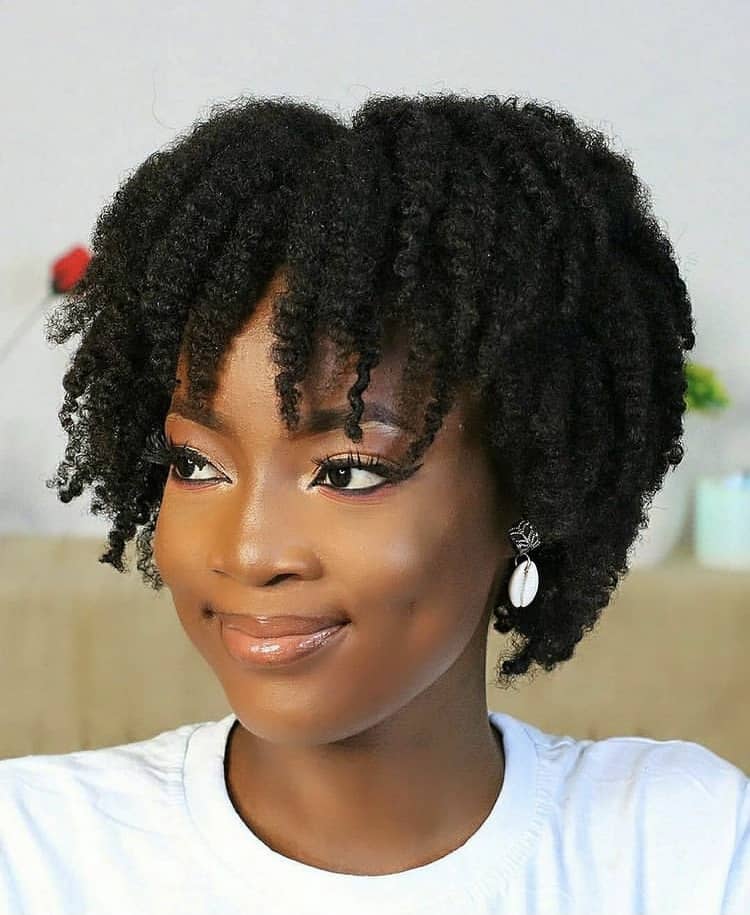
The layers in this chin-length cut break up the round silhouette, and the wispy bangs shorten the forehead line without requiring daily styling. The coils are defined enough that the texture reads clearly even at this shorter length. Ask your stylist for: short layered afro, chin length, wispy bangs. Use a light hold gel on the bangs to keep them separate, then air dry for the most natural finish. A trim every six weeks maintains the bangs’ shape.
Short Defined Coils With Bangs
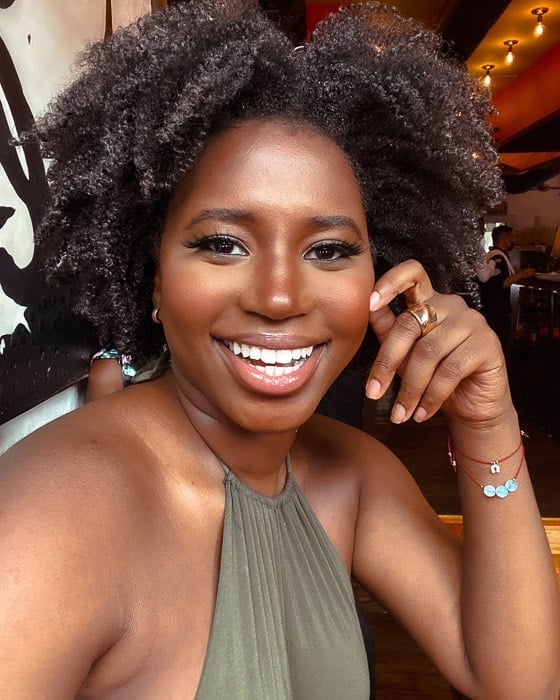
A short afro with dense, coily texture and short bangs is about as low-stakes as it gets for a DIY style. For 4c hair around ear length with medium to thick density, the goal is definition without the crunch. Start with damp hair, apply a curl cream and scrunch upward, then let it air dry completely. Avoid touching it until it is dry if you want those coils to stay separate rather than merge into a single puff. Ask your stylist for: short afro with bangs, defined coils.
Chin Length Bantu Knots Style
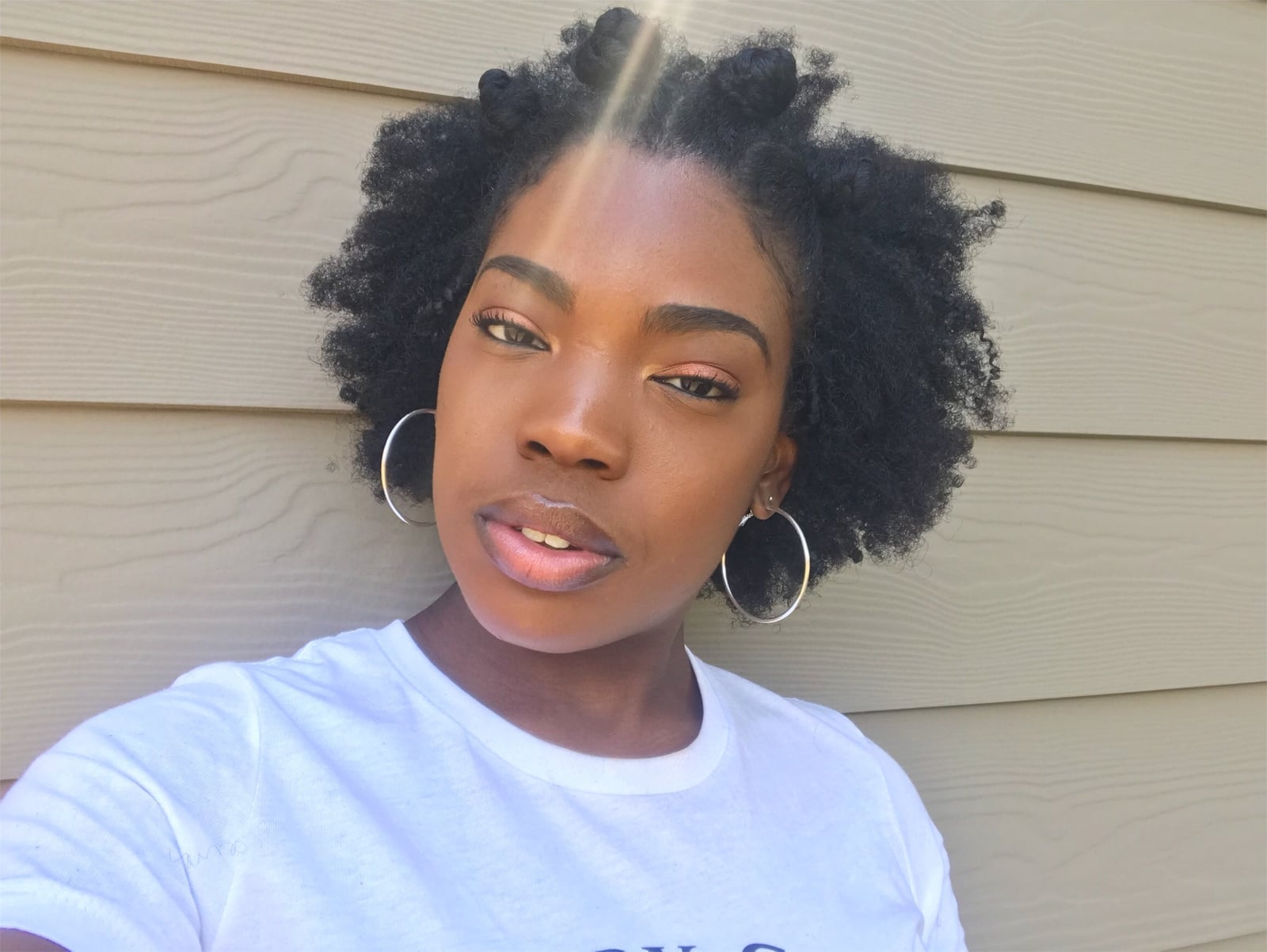
Wondering whether bantu knots or a twist-out gives more staying power? For thick, coily chin-length hair with a middle part, bantu knots win on definition. Each section is twisted, coiled into a flat knot and secured at the scalp, which locks in shape until you unravel it. The middle part keeps the knots symmetrical, so the overall silhouette looks deliberate. Ask your stylist for: chin length bantu knots. If you want volume that lasts two or three days, choose the knots over a regular twist-out.
Chin Length Bob With Bubble Bantu Knots
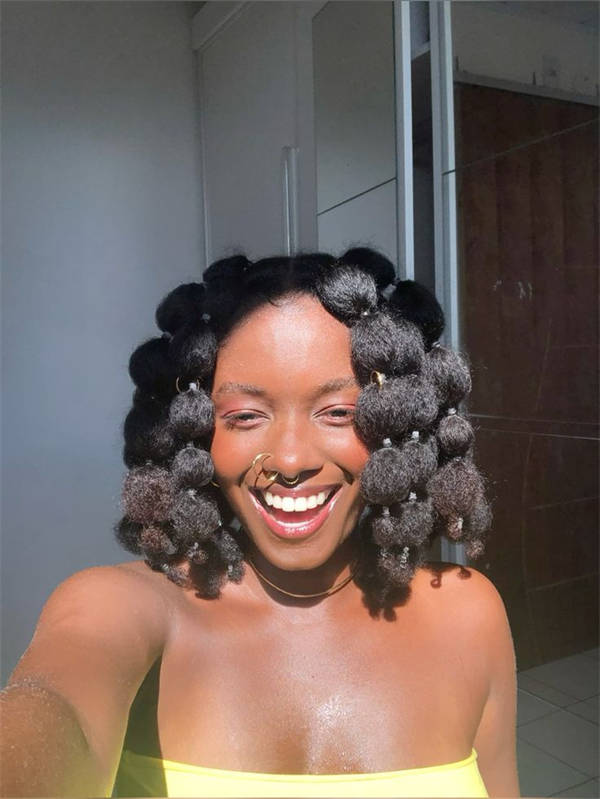
A chin length bob gets a texture upgrade when the entire surface is covered in small, flat bantu knots. The trick is the scale: dozens of tiny sections twisted tight and coiled against the scalp create that bubble-like finish around the bob’s perimeter. On thick, coily hair with a middle part, the knots form one continuous shape. Ask your stylist for: chin length bob with bubble bantu knots. The technique relies on even parting and consistent tension, so a steady hand helps.
Short Tapered Cut With Side Part
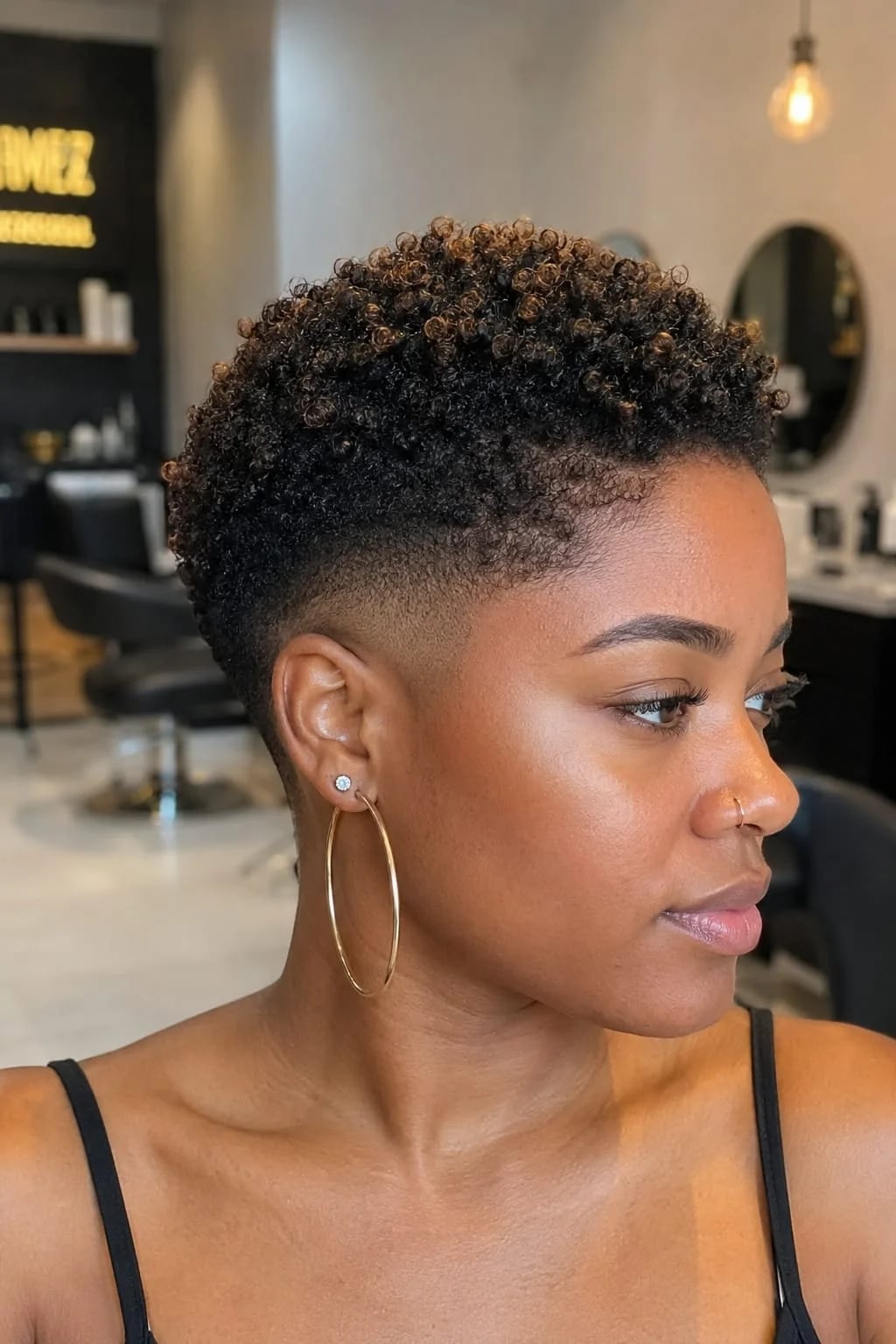
The short tapered cut with a side part works best when the contrast between the faded sides and the longer top is clean. For fine, coily hair at ear length, the subtle lighter brown highlights add dimension without the grow-out headache of a full color. A small amount of pomade on the textured top keeps flyaways in line. The honest trade-off: the faded sides need a trim every two to three weeks, and skipping that window turns a sharp silhouette into a fuzzy one. Ask your stylist for: short tapered cut, side part, subtle highlights.
Short Tapered Cut With Undercut
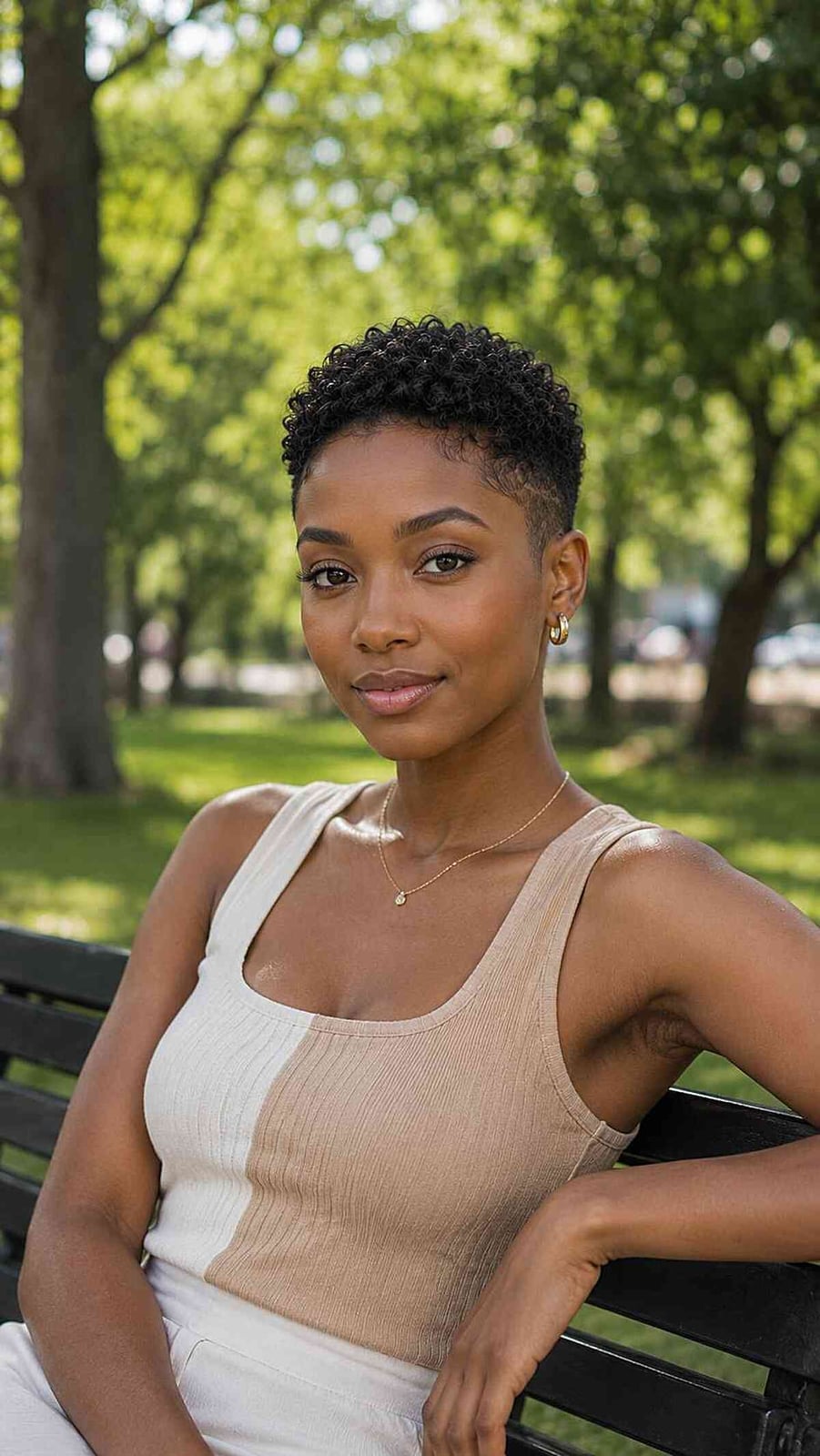
An undercut on a short tapered cut is less about subtlety and more about commitment. The shaved sides are the standout detail here, and they require a barber visit every two to three weeks to stay crisp. For fine, coily hair, the natural texture on top is styled with a light product and a side part. This is not a cut you can replicate at home between salon visits. Ask your stylist for: short tapered cut with undercut, natural texture. The payoff is a silhouette that stays clean with minimal daily styling.
Short Bob With Braids And Curls
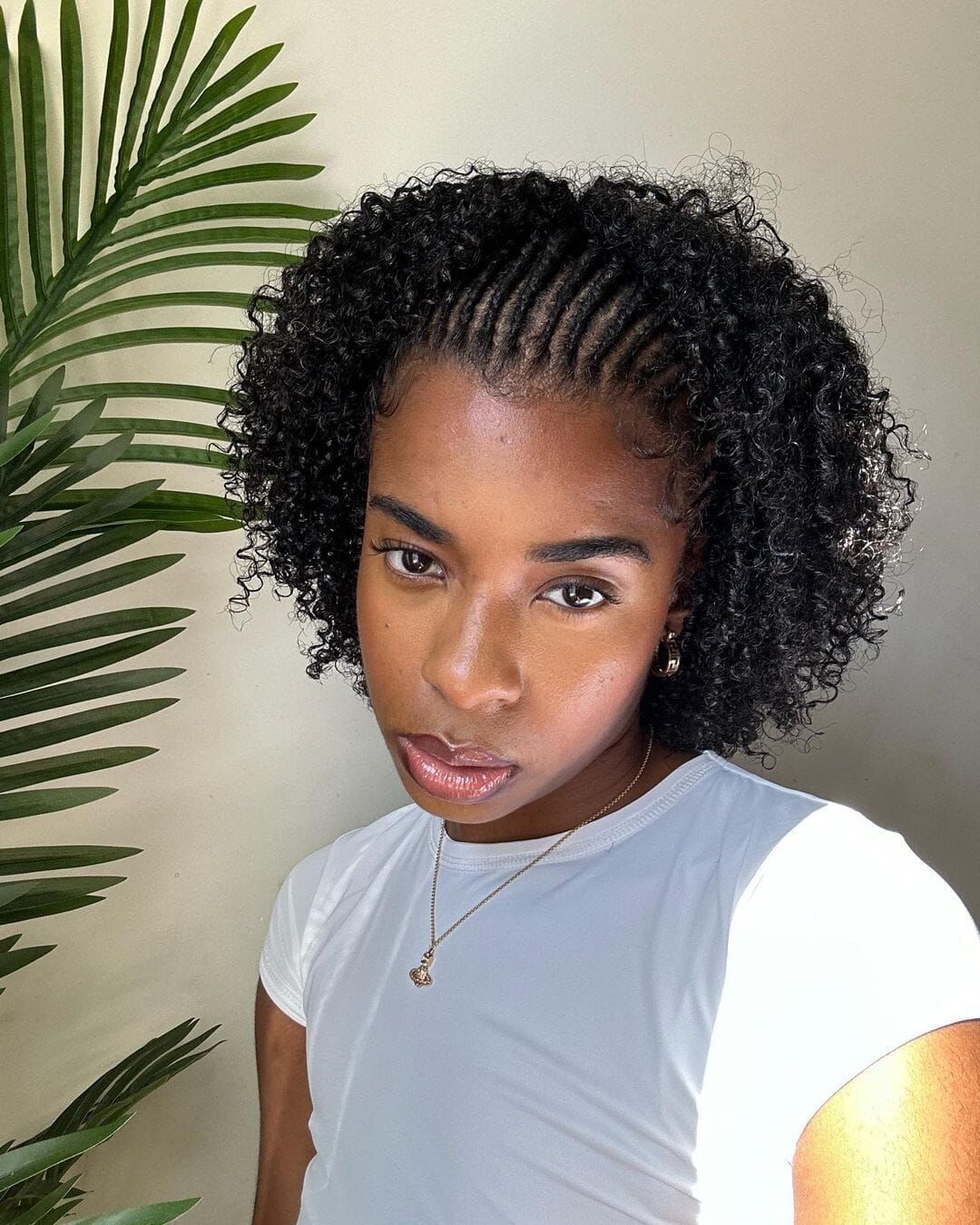
A short bob with black, coily hair gets a clever update when the front sections are braided and the rest is left in defined curls. The ear-length cut works best on medium density hair that can hold both a neat braid and a springy curl without looking sparse. Ask your stylist for: a short bob with braided front and defined curls. The braided part keeps the style on the right side of polished, while the curls keep it from veering into costume territory.
Ear Length Braids and Twists with Beads
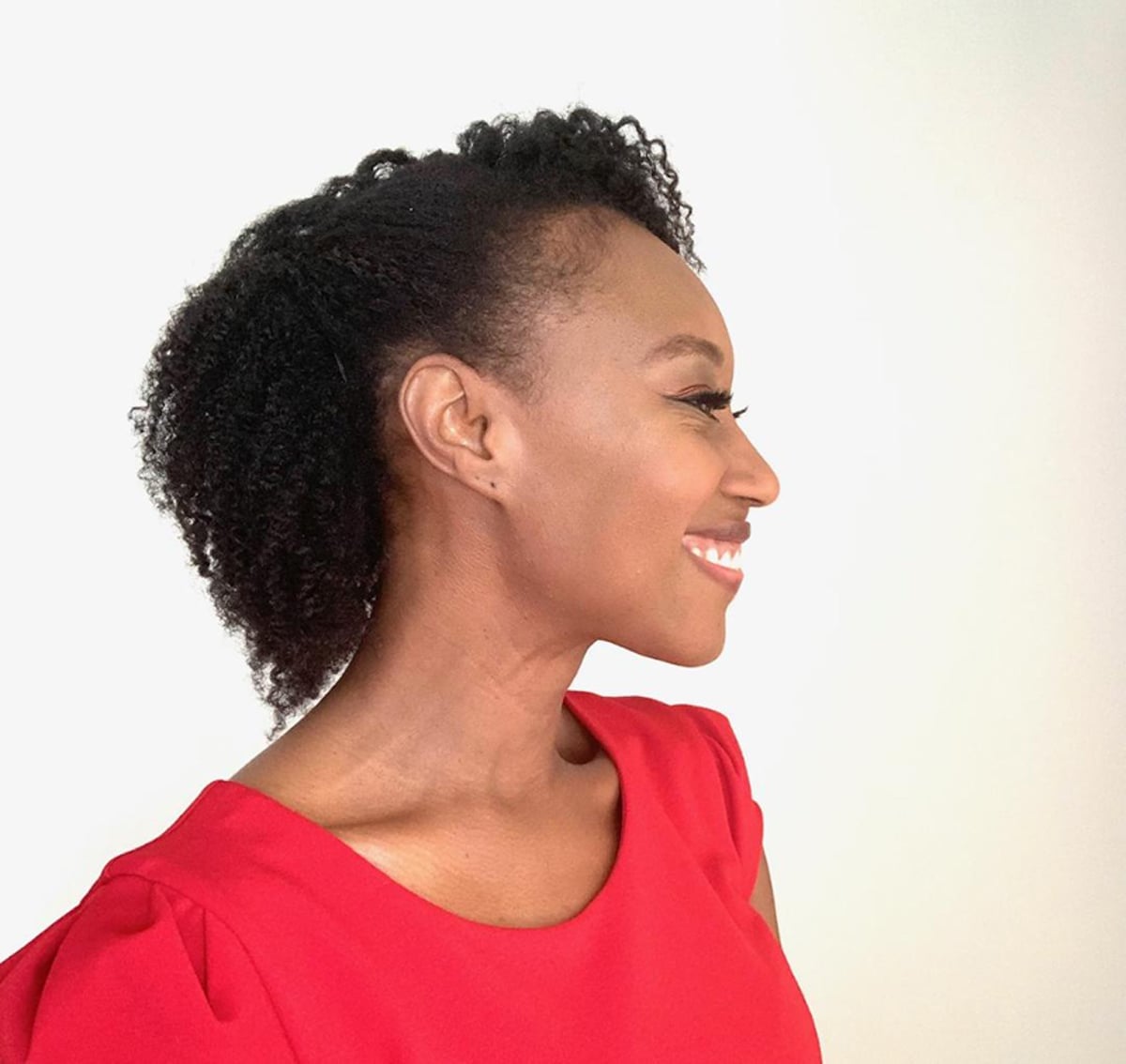
Small braids and twists reaching the ear length, all finished with tiny gold beads: it is a lot of detail in a compact space. The side view shows how the thickness of the hair carries the intricate work without losing definition. Ask your stylist for: ear-length braids and twists with small gold beads. Upkeep means a light oil on the beads and braid ends so they do not dry out, and a moisturizer on the scalp. The beads add a small weight that helps the style hang evenly.
Short 4c Coily Hair with Braided Accents
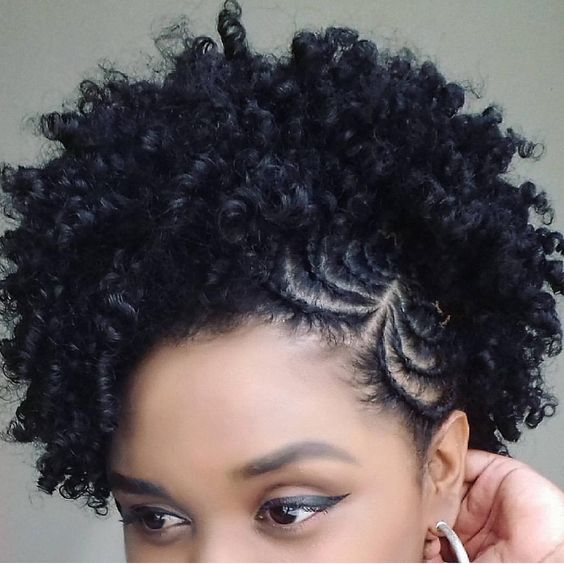
Twisted coils with a braided accent on one side give short 4c hair a focal point without needing full coverage. The ear-length silhouette stays low maintenance while the side detail adds a deliberate touch. Where a full braided style requires more time and tension, this hybrid leaves most of your hair in its natural state. Ask your stylist for: short 4c coily hair with twisted coils and side braided accents. Medium density hair holds the contrast best between the loose coil texture and the tight braid.
Collarbone Length Braids With Curled Ends
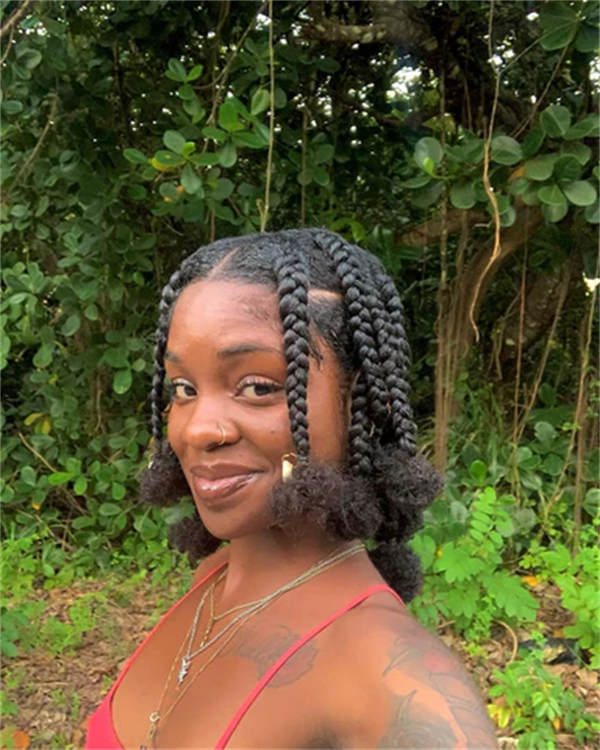
The trick to asking for this style is to specify both the braid size and the end finish. Large, neat braids that stop at the collarbone, with the final few inches left loose and curled into a fluffy texture. Ask your stylist for: collarbone-length large braids with fluffy curled ends. A middle part keeps the look symmetrical. This is a salon-only commitment, but the result is a complete statement. It works for everyday wear or a gathering where you want the hair to do the talking.
Collarbone Texture With Geometric Braids
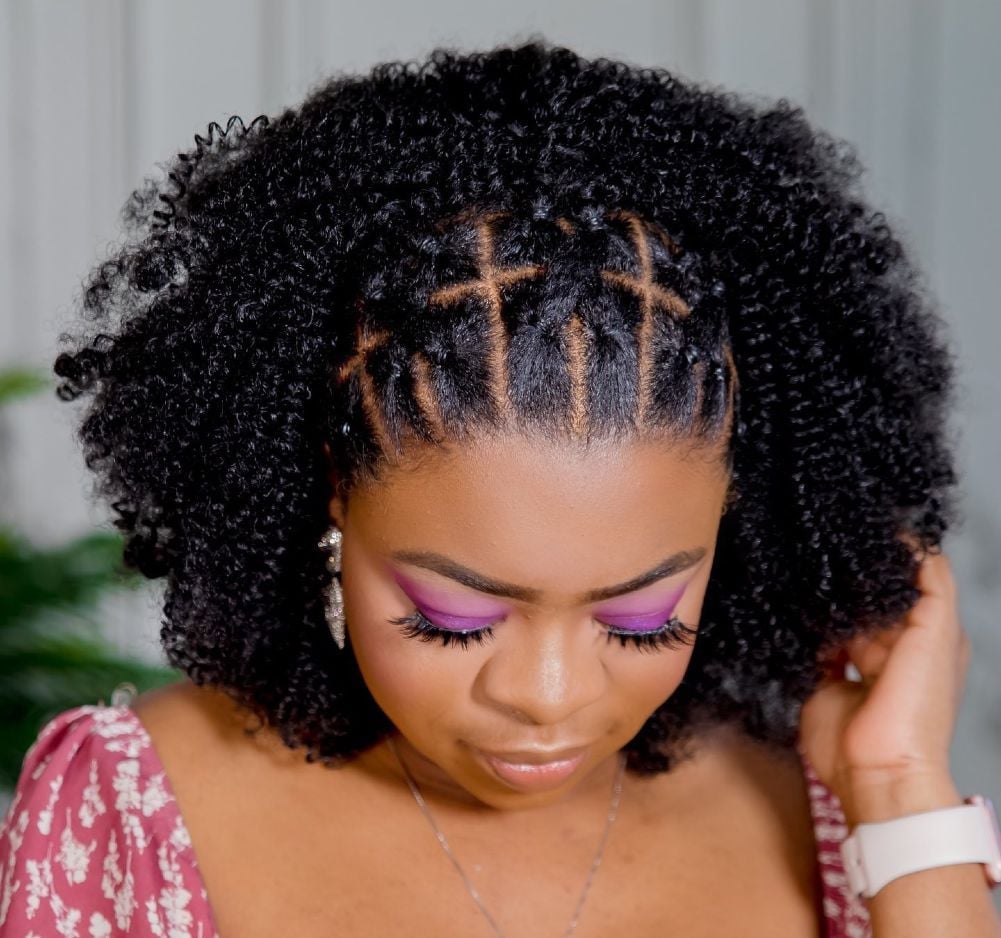
Geometric scalp braids at the front transition into loose curls that fall to the collarbone, creating a style that is half architecture and half volume. The front section requires precise parting and tension, so this is not a bathroom-mirror project. Ask your stylist for: collarbone-length hair with geometric scalp braids and loose curls. Thick, coily hair carries the geometric lines without them looking sparse. The loose ends need a curl refresher between washes, but the braided front stays put for weeks.
Shoulder Length Braids With Loose Curls
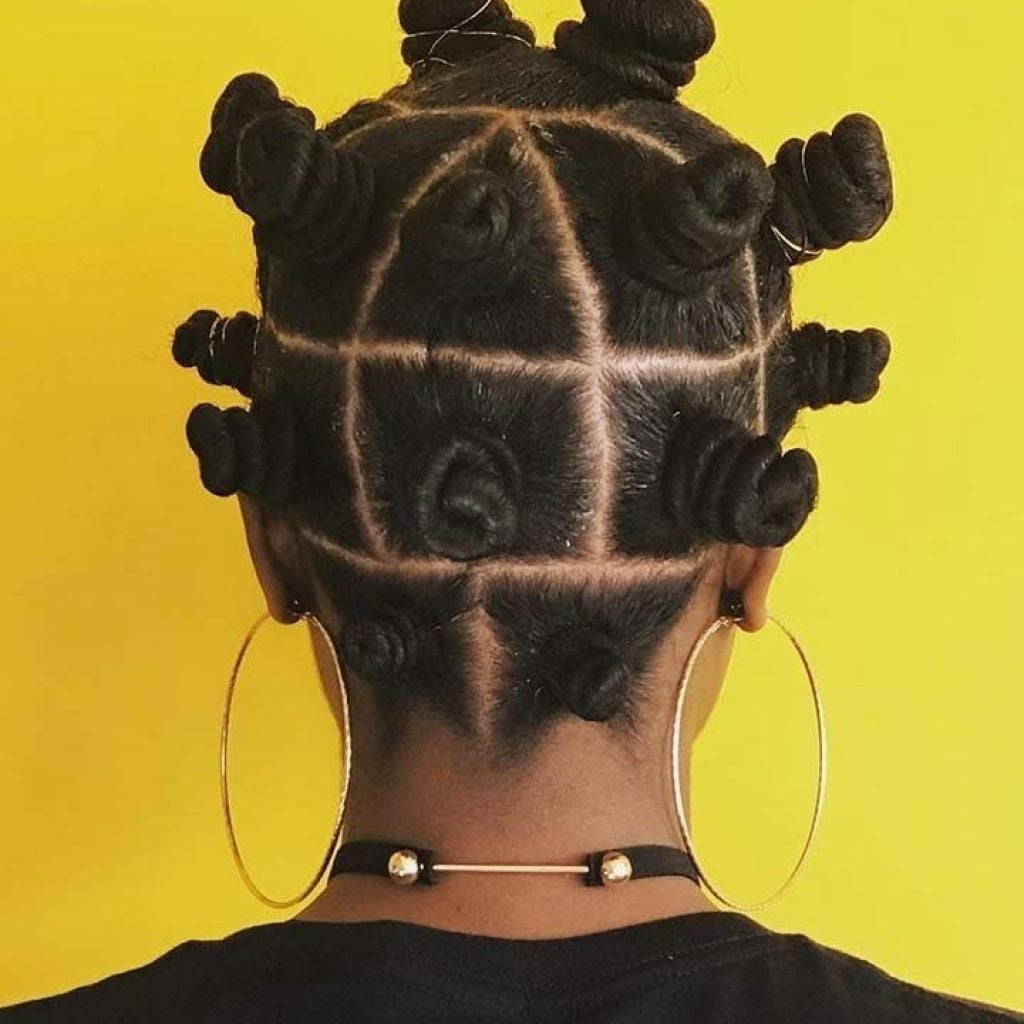
The design here is a hybrid: neat braided sections run along the middle parting, then the shoulder length hair falls into loose curls. It works best on medium density coily hair that can hold both a defined braid and a soft curl pattern. Ask your stylist for: shoulder length hair with braided sections and loose curls. The loose curls need a light oil on the ends every couple of days to stay defined, and the braids will need redoing every two to three weeks to keep them neat. The drawback is that the two textures do not wear evenly. One side will unravel faster than the other, and you will be fighting that asymmetry by week two.
Shoulder Length Defined Spiral Curls
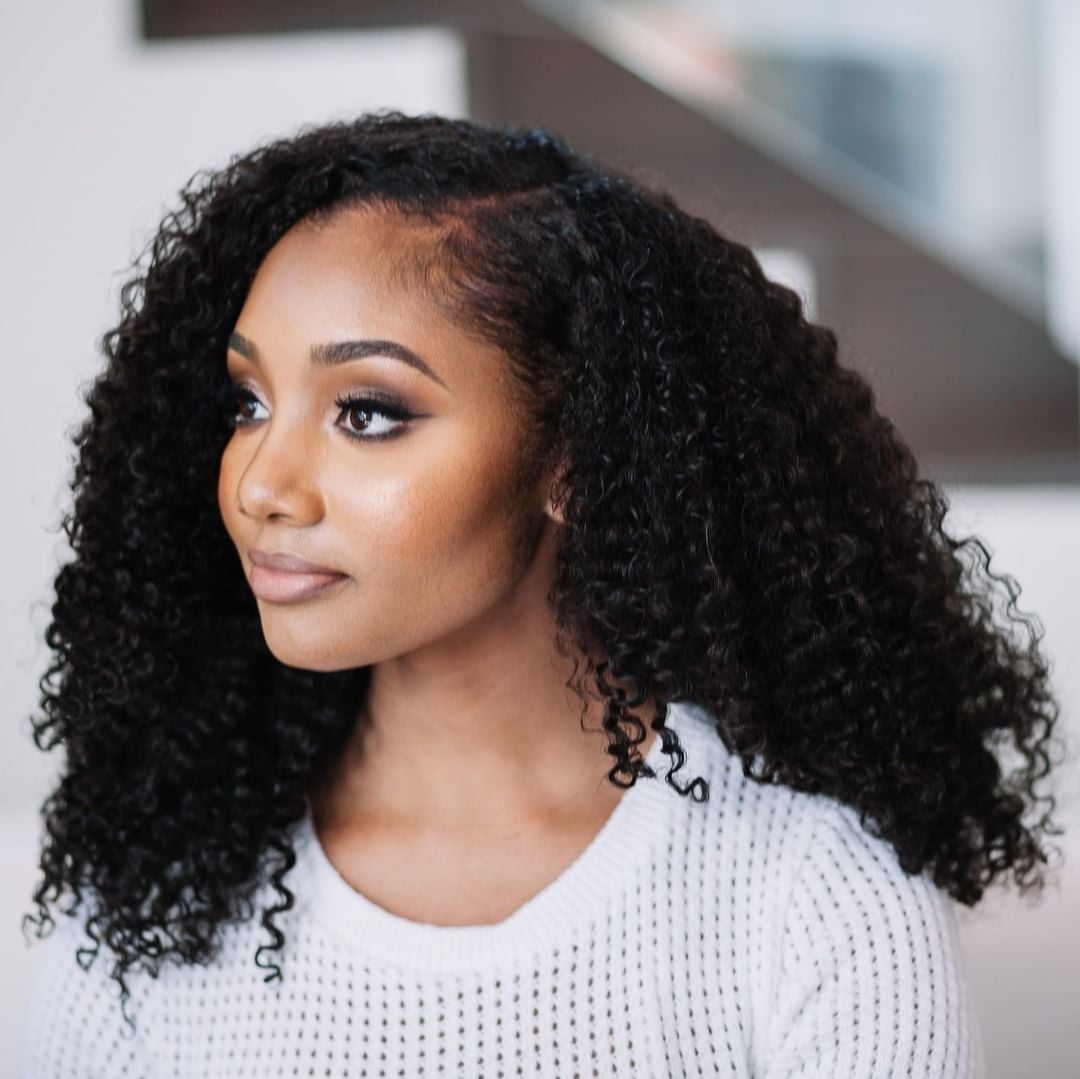
This is a cut that relies entirely on how your natural texture behaves. Thick, coily hair at shoulder length with layers produces these defined spiral curls without much intervention, air drying with a curl-defining cream is usually enough. Ask your stylist for: shoulder length hair with defined spiral curls and layers. The subtle lighter pieces separate the spirals so they do not look like one solid mass. A refresh with a spray bottle of water in the morning reactivates the curl pattern, so this is one of those cuts that actually looks better on day two than day one.
Mid-Back Braided Crown Ponytail
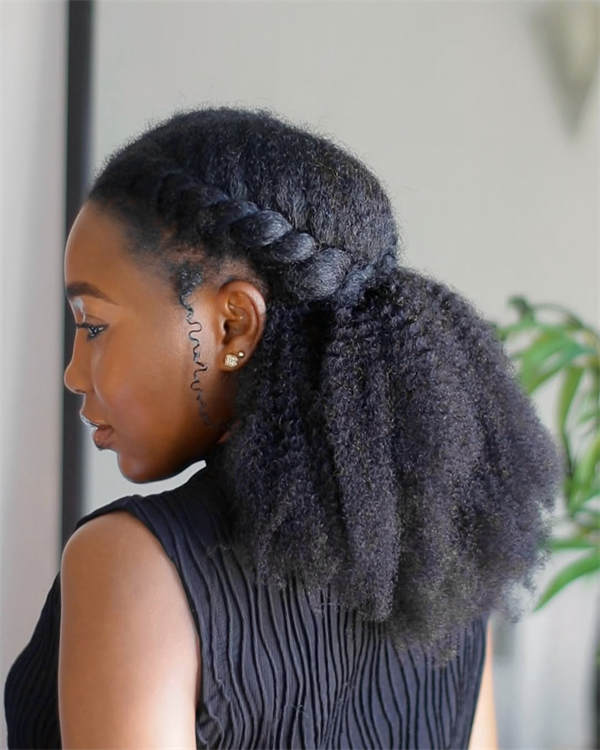
A good rule for a braided crown ponytail is that the crown section needs to be long enough to wrap around the head without pulling the edges too tight. This version starts with a side part, braids the front section into a crown that meets the hair at the back, then falls into a mid-back ponytail. Ask your stylist for: mid-back braided crown into a ponytail. It suits those with thick, coily hair at mid-back length or longer. The weight of longer hair keeps the ponytail from collapsing the crown. This is a special occasion style: weddings, milestone birthdays, anything where you plan to sit still for two hours while someone braids and pins. The single face-framing tendril is a softening element, but it will need a flat iron touch-up after the first hour.
Mid-Back Large Braids With Loose Ends
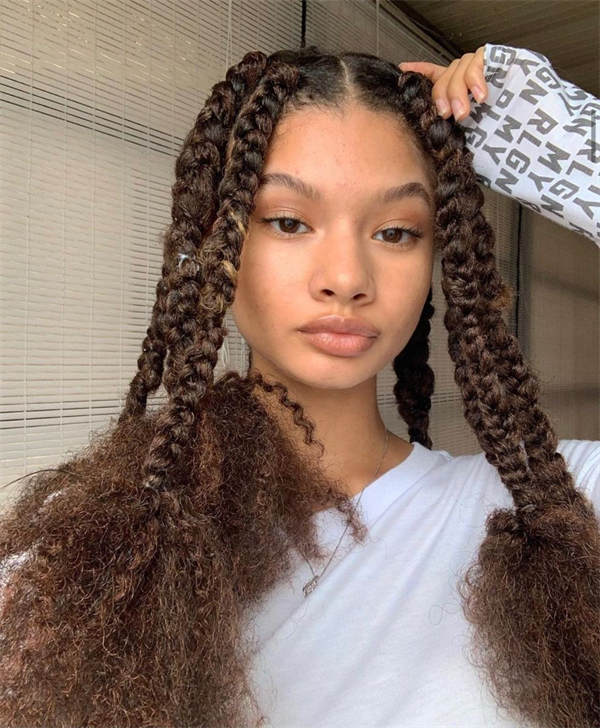
At first glance this looks like a set of standard box braids, but the difference is the loose ends: instead of being sealed with a dip or a knot, the braids stop about three inches short and the natural coily texture fans out. Ask your stylist for: mid-back large braids with loose ends, highlights. The dark brown base color with lighter brown highlights woven through gives dimension that a single shade of braiding hair cannot. Trying this at home is possible if you have the patience for sectioning and the skill to keep braid tension even, but the loose ends require a moisturizing balm sealed on every single one or they will unravel into a fuzzy mess within a week. A salon is the safer bet for the highlight placement alone.
Sleek High Ponytail
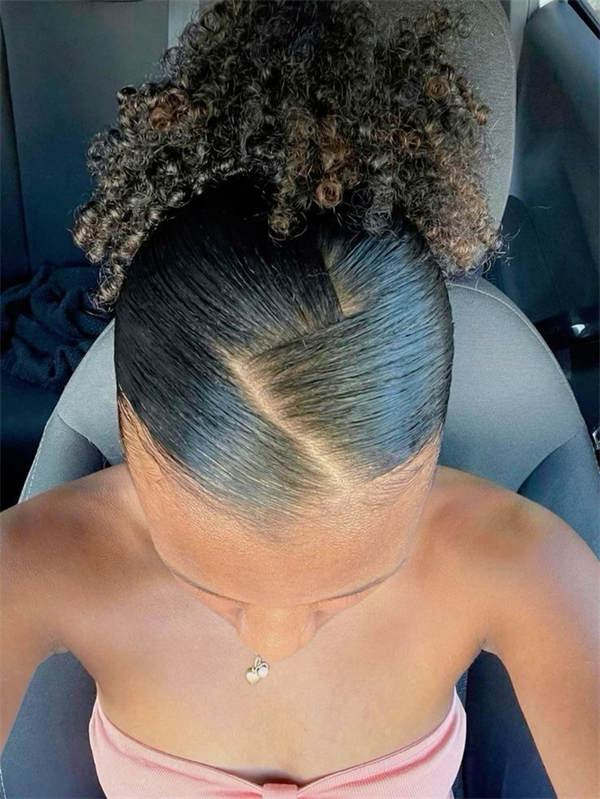
The mistake people make with a sleek high ponytail on coily hair is assuming that gel alone will do the job. It will not. The secret is the side part. A diagonal line across the scalp creates a natural direction for the hair to lay flat, and that gives the slicked-back effect something to follow. Ask your stylist for: sleek high ponytail, side part. Thick, coily hair needs a strong-hold gel applied in small sections, each smoothed with a fine-tooth comb before the next one starts. The top-down view in the photo shows why this works: every hair follows the same path, so there are no bumps or ridges. A durable hair tie is essential. A thin elastic will snap under the weight of thick coily hair within an hour.
Final Thoughts
For minimal styling time, focus on air-dried afros or styles with defined twists and braids that hold their shape. The decision is simple: if you want something that lasts several days, choose a braided or twisted look. If you want maximum volume with minimum effort, let your afro breathe.
- Maintain braids and twists with regular moisturizing and sealing.
- Refresh air-dried styles by gently fluffing coils or using a light spray.
- For updos, use satin scrunchies to avoid breakage.
- Trim split ends every 12-16 weeks to maintain shape.
- Protect hair at night with a silk or satin bonnet.
Embrace your natural 4c texture with these easy, beautiful styles.