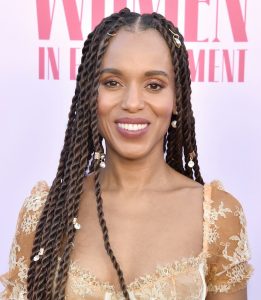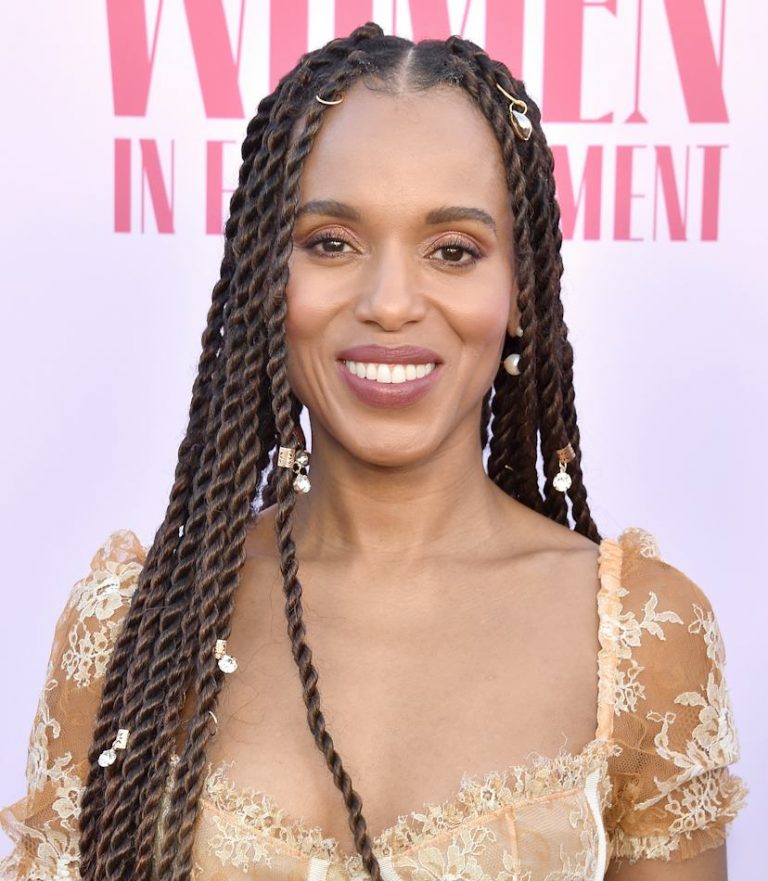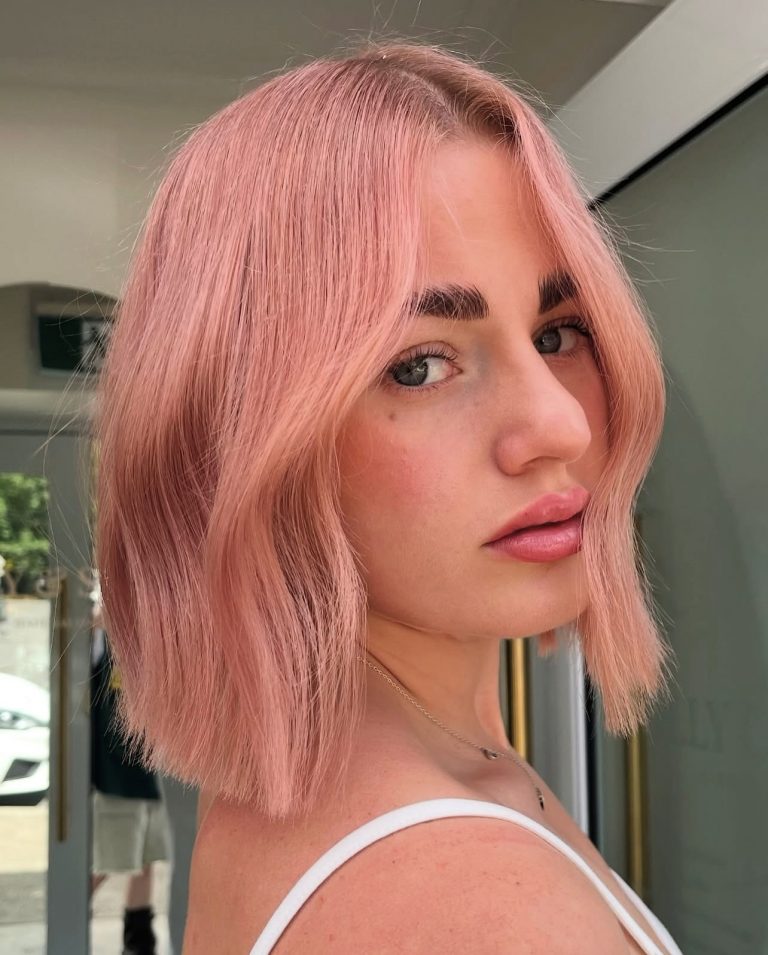
Feed-in braids are a protective style built by adding synthetic hair strand by strand, which keeps the base flat while the length builds smoothly. The current shift leans toward softer finishes: lived-in color blends and wavy ends that move rather than sit stiff.
This collection of 16 Feed In Braid Styles covers the full spectrum, from a quick weekend set to an intricate salon piece. You will find options for fine hair that needs grip, a visible grow-out line that needs hiding, and a length that works with a bob or mid-back hair. Every look here prioritizes a clean hold without the tension headache.
Intricate Swirl Feed-In Braids With Baby Hairs
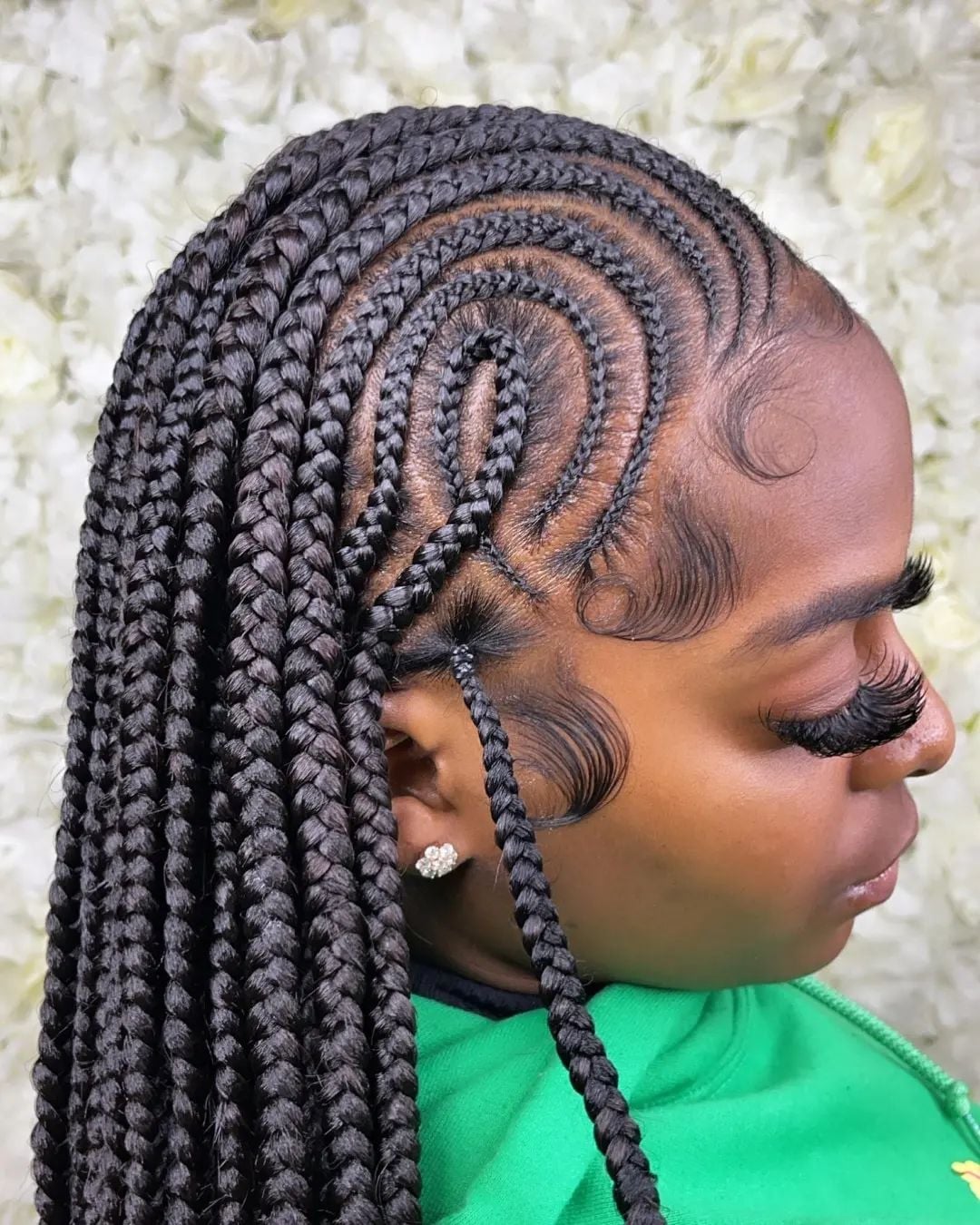
A swirl pattern that starts at the crown and travels down the scalp defines this style. The braids fall to mid-back, thick and black, with a middle parting that keeps the geometry symmetrical. Ask your stylist for: feed-in braids with a swirl pattern and laid baby hairs. Those with dense, straight hair who want a sculpted, architectural look will get the most from this one. The baby hairs frame the face with sharp, deliberate curves, held in place with a firm-hold gel. A trim every eight weeks keeps the ends clean, but avoid heavy products on the braids themselves to prevent buildup.
The swirl feed in braids stand out because the pattern reads as a deliberate design choice. The precision of the scalp work and the neatness of the baby hairs mean this is strictly a salon-only request. A stylist with experience in intricate parting patterns is essential here.
Shoulder Length Braids With Gray Highlights
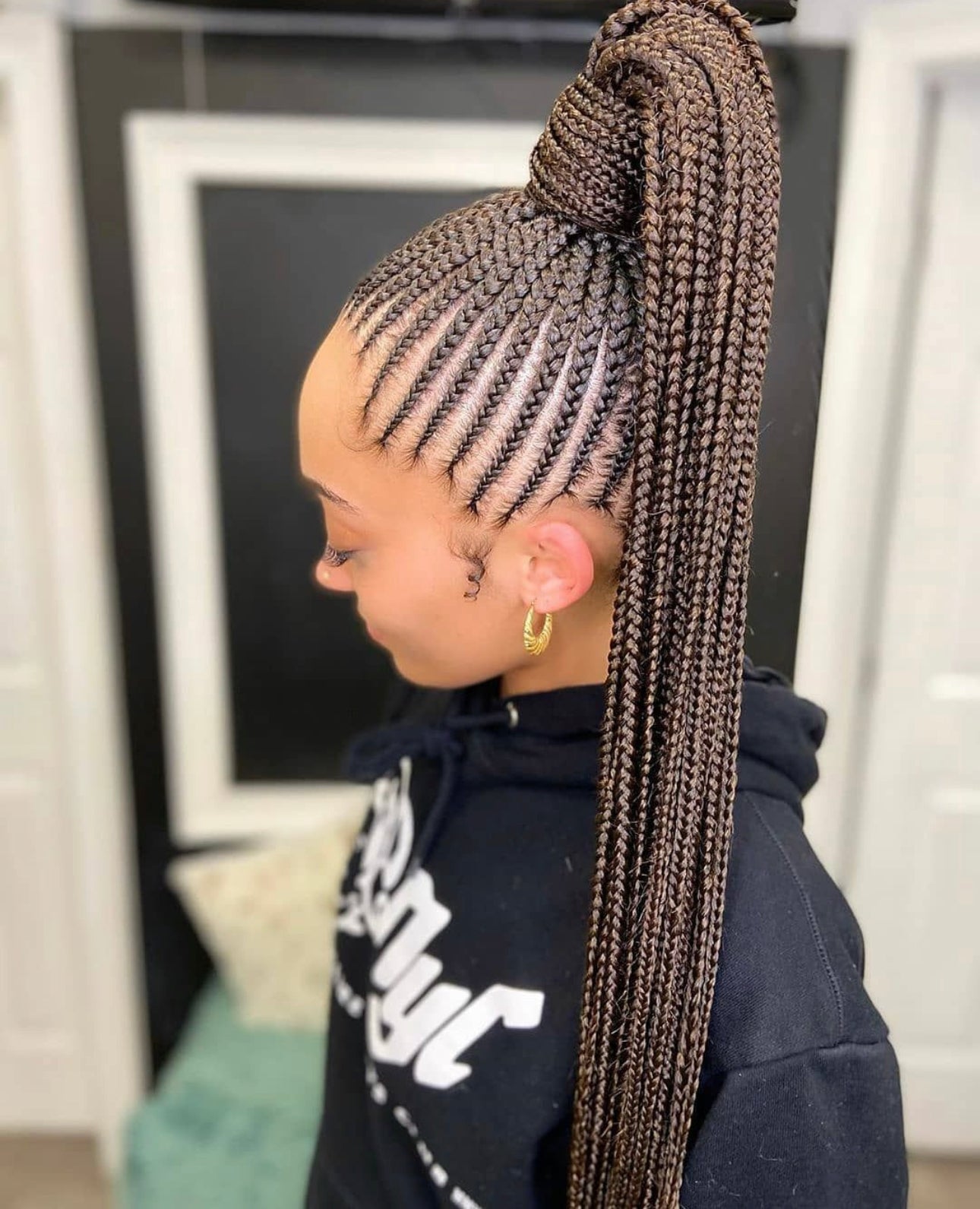
Longer braids can feel heavy and take hours to install, so shoulder length versions exist for those who want the look without the commitment. These thick, wavy braids stop at shoulder length, and the subtle gray highlights woven through the black base add a modern touch. Ask your stylist for: shoulder length braids with subtle gray highlights. A light serum on the ends maintains shine and prevents dryness, and a weekly check for flyaways keeps the lines sharp. The layers in the cut stop the braids from feeling blocky, and the shorter length means faster drying time and less weight on the scalp.
Cornrow Braids Into A Voluminous Nape Bun
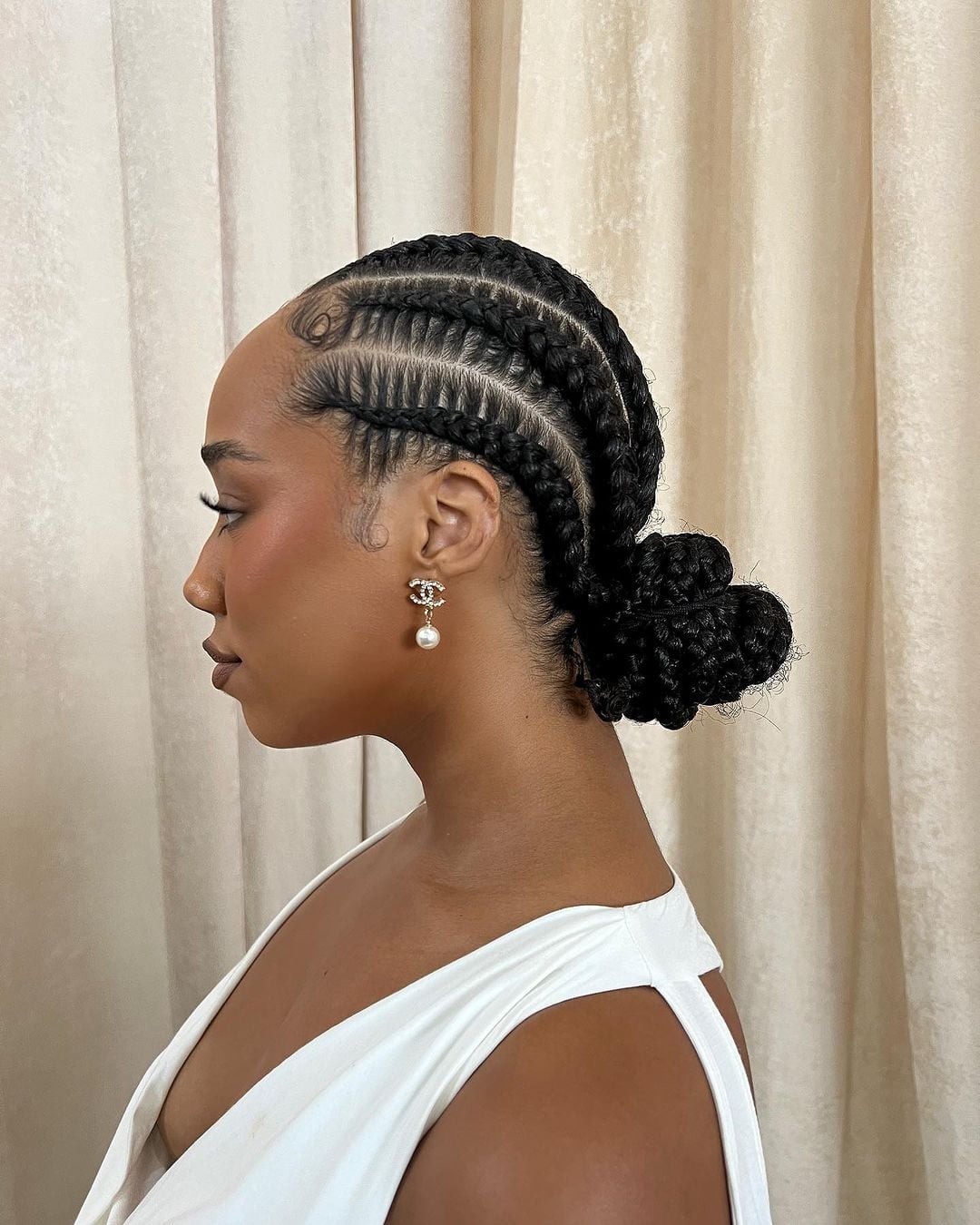
The cornrows start at a middle parting and travel back in neat, parallel lines before gathering into a thick, coily bun at the nape. It is a style that showcases the scalp work and then transitions into volume. Ask your stylist for: feed-in cornrows into a nape bun. Coily, dense hair types benefit from the tension distribution, and the bun holds its shape without excessive pinning. This is a salon-only design; the precision of the cornrow pattern and the smooth transition into the bun require a steady hand and a practiced eye. A silk scarf at night preserves the bun’s shape and prevents frizz along the braided scalp lines.
Heart Shaped Feed-In Braids With Blonde Highlights
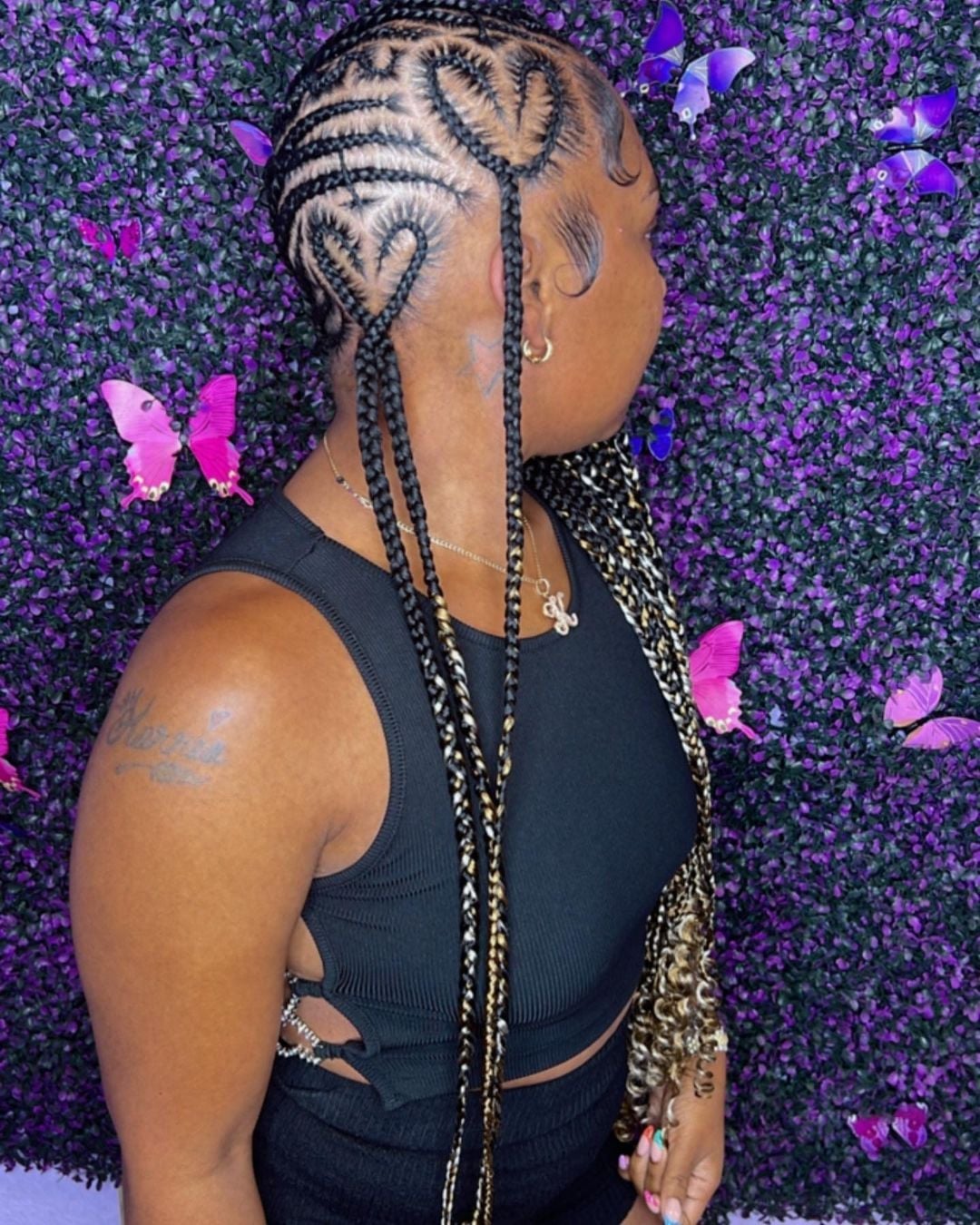
Heart-shaped braids on the side of the head turn a protective style into a conversation piece. The design uses a middle parting and feeds into long, flowing braids at mid-back, with blonde highlights cutting through the black base for contrast. Ask your stylist for: feed-in braids with heart shapes and blonde highlights. Straight, thick hair holds the clean lines of the heart shape best, and the glossy finish comes from a lightweight shine serum on the loose ends. One real drawback: the heart pattern requires a stylist with solid geometric parting skills, and not every braider will take it on. It is a special-occasion look that demands artistic confidence on both sides of the chair.
Multi-Toned Chunky Stitch Braids
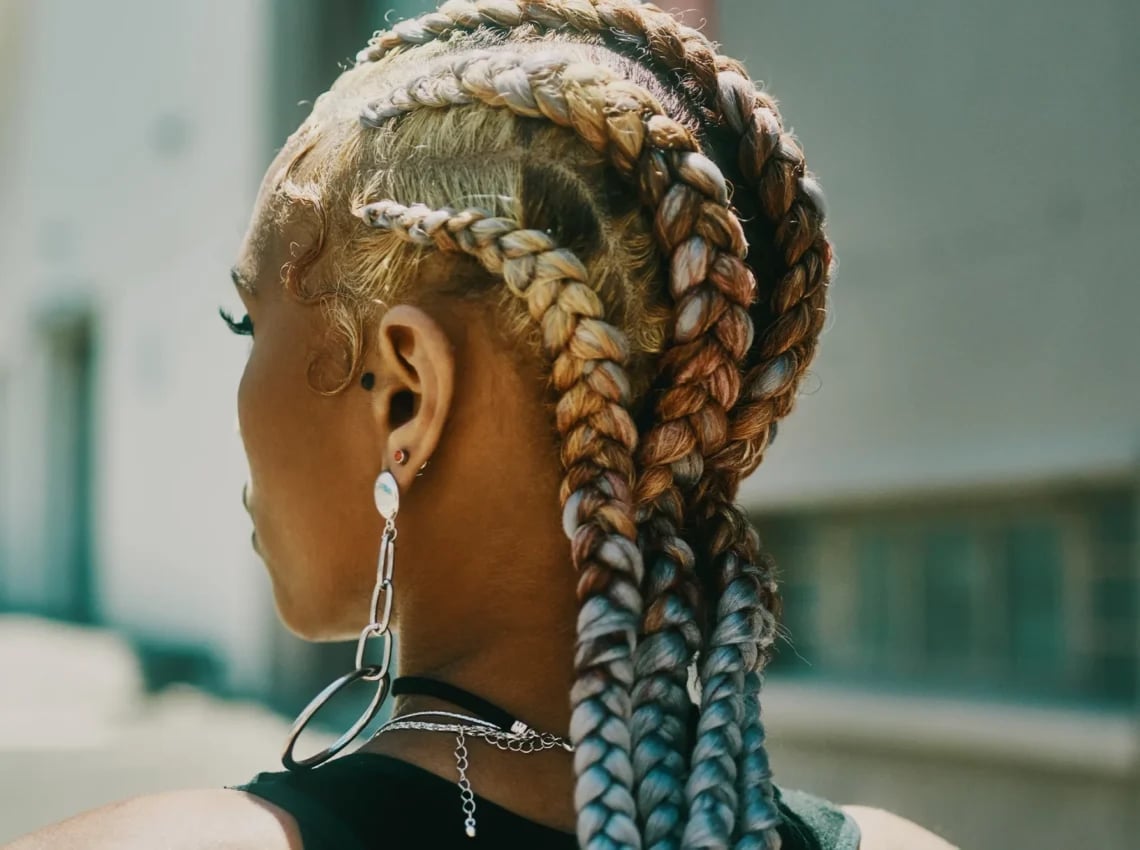
Can a braid style feel bold and practical at the same time? These chunky stitch braids make the case. Seen from the back, the middle parting splits a palette of blonde, brown, and gray into clean sections that fall to mid-back. Ask your stylist for: chunky stitch braids in blonde, brown, and gray. The multi-toned color means any regrowth becomes less obvious than it would be with a single shade. Thick, straight hair carries the weight of chunky braids without pulling at the roots. A braid-defining cream rubbed between the palms and smoothed down each section enhances the separation and keeps the texture looking intentional rather than messy.
Feed-In Braids With Zig-Zag Pattern and Wavy Ends
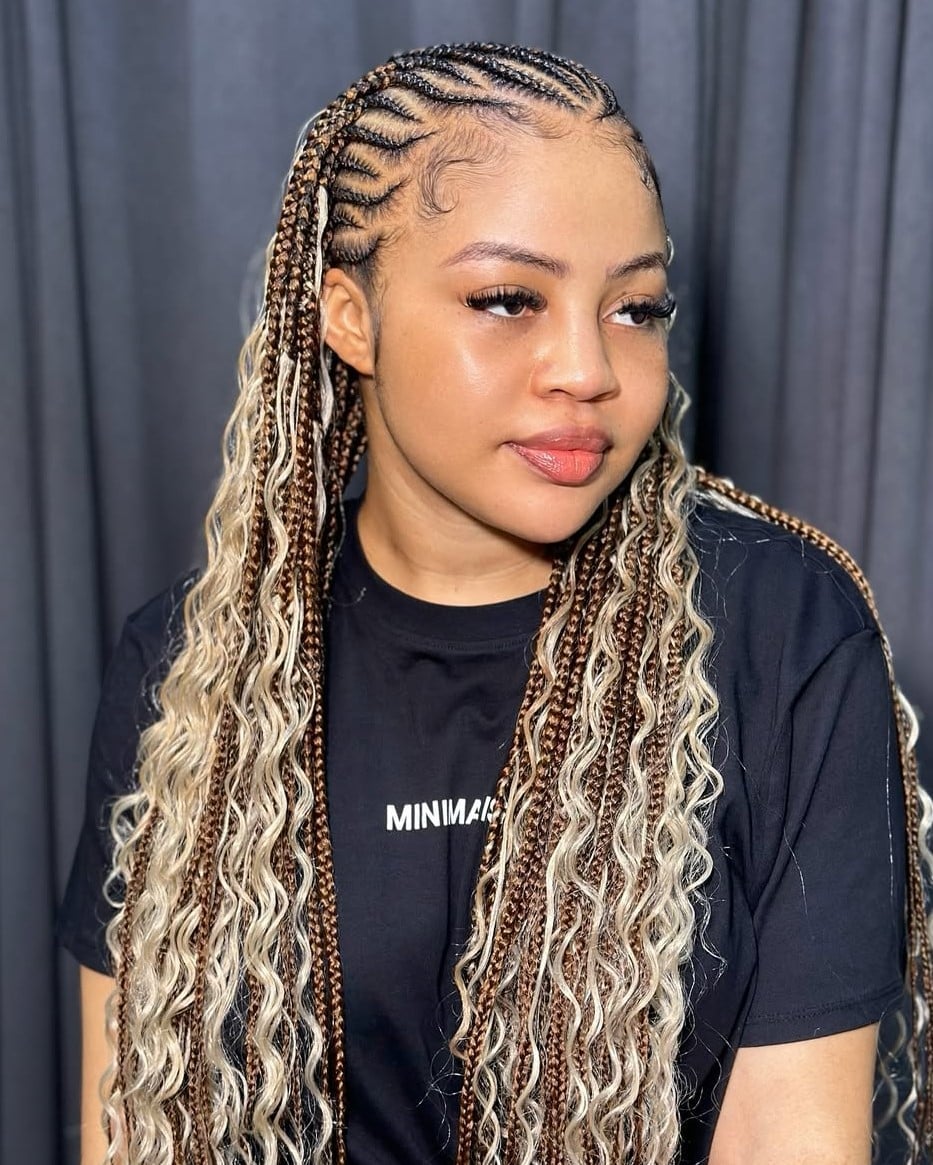
The zig-zag pattern near the hairline is the first thing you notice, a deliberate design choice that breaks up the usual straight-back rows. These mid-back feed-in braids mix black, blonde, and brown strands, so the color variation is built into the braid itself rather than added after. The wavy ends soften the whole look, giving it movement that the structured scalp work lacks on its own. Ask your stylist for: feed-in braids with zig-zag pattern and wavy ends. To keep the wave definition, gently separate the ends with your fingers and re-curl them between washes.
Two-Tone Feed-In Braids With Loose Wavy Ends
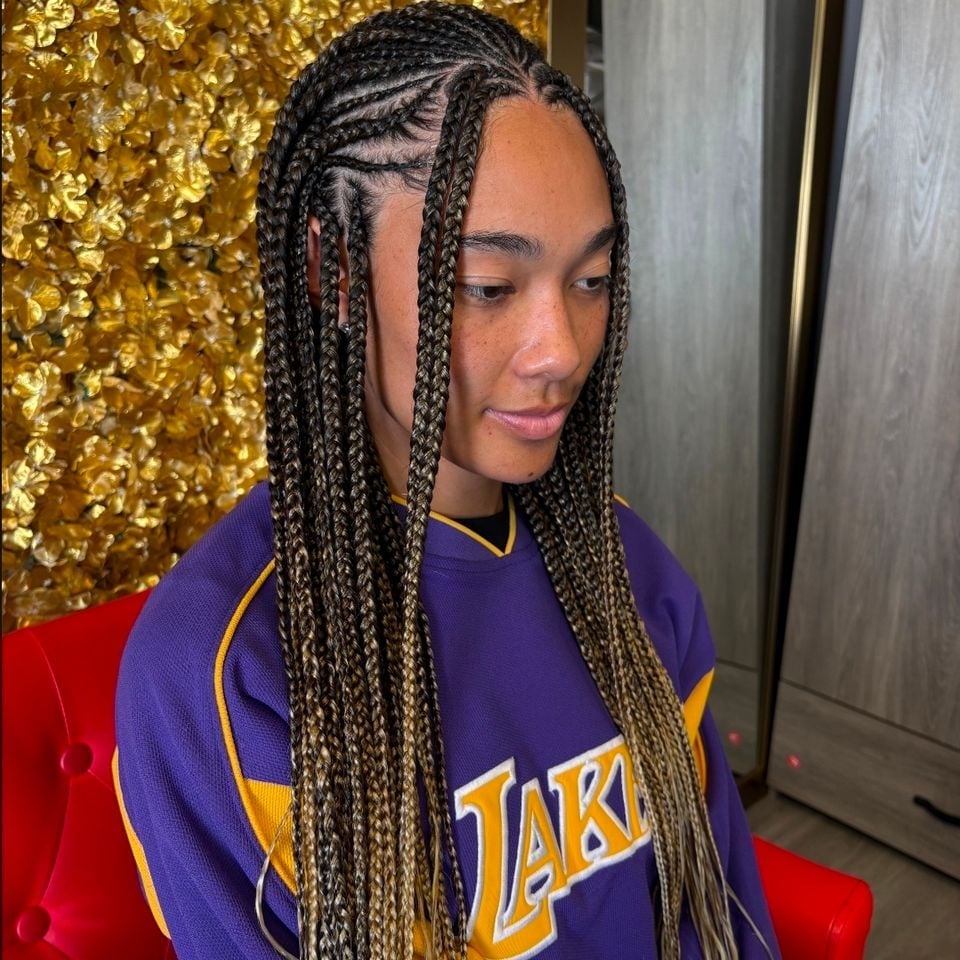
How do you get that high-contrast blonde-through-black effect without it looking like a costume? You ask for it by name. These long feed-in braids start at a middle parting and run straight back, with blonde highlights woven into the black base at regular intervals. The loose wavy ends keep the style from feeling severe, which is the risk with any two-tone look. Ask your stylist for: feed-in braids with blonde highlights and wavy ends. For styling, apply a hydrating product to the wavy ends to keep them moisturized and prevent tangling.
Feed-In Braids Adorned With Decorative Beads
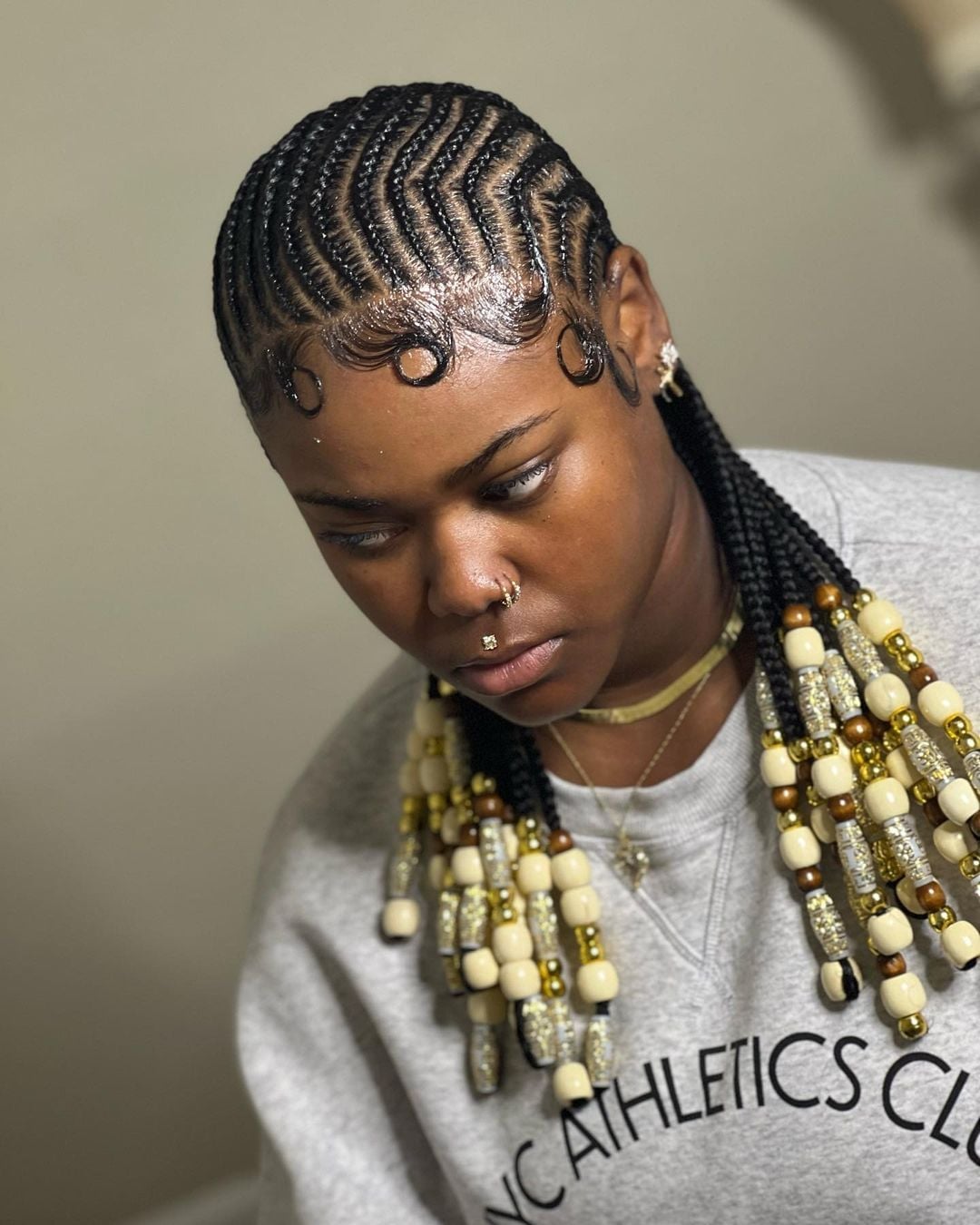
The beads here use blonde and brown tones matched to the braids themselves, threaded onto the ends at mid-back length. The cornrow patterns on the scalp are clean and precise, which is the foundation the beads need to look polished and not tacked on.
Adding beads is a DIY-friendly step in theory, but getting them evenly spaced and securely fastened usually requires a salon visit. A threading needle and a steady hand help. The real drawback is weight: too many beads can pull at the roots over time, so keep them concentrated at the ends. Ask your stylist for: feed-in braids with blonde and brown decorative beads.
Intricate Parting Feed-In Braids Into A Bun
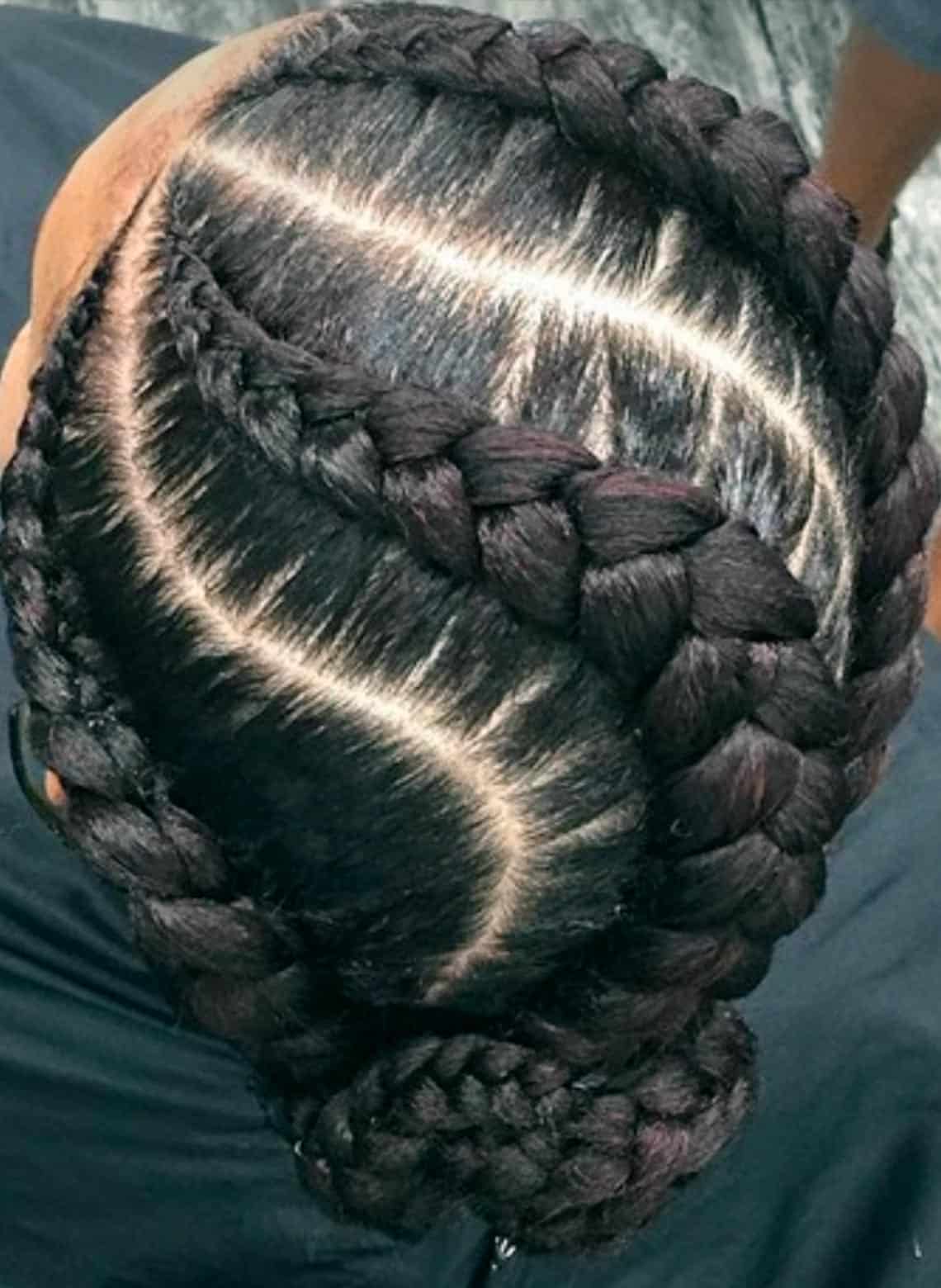
The parting is symmetrical, precise, and visible from a top-down view because the scalp is clean between each braid. Thick black feed-in braids follow the part lines into a neatly styled bun, which keeps the length out of the way while showing off the scalp pattern.
This is not a style you rush through. The parting alone takes a skilled hand, and the bun needs to sit low enough to not disrupt the braid lines above it. Ask your stylist for: feed-in braids with intricate parting into a nape bun. A strong-hold hairspray on the edges and the bun helps everything stay in place for the day.
Feed-In Braids With Vibrant Orange Accents
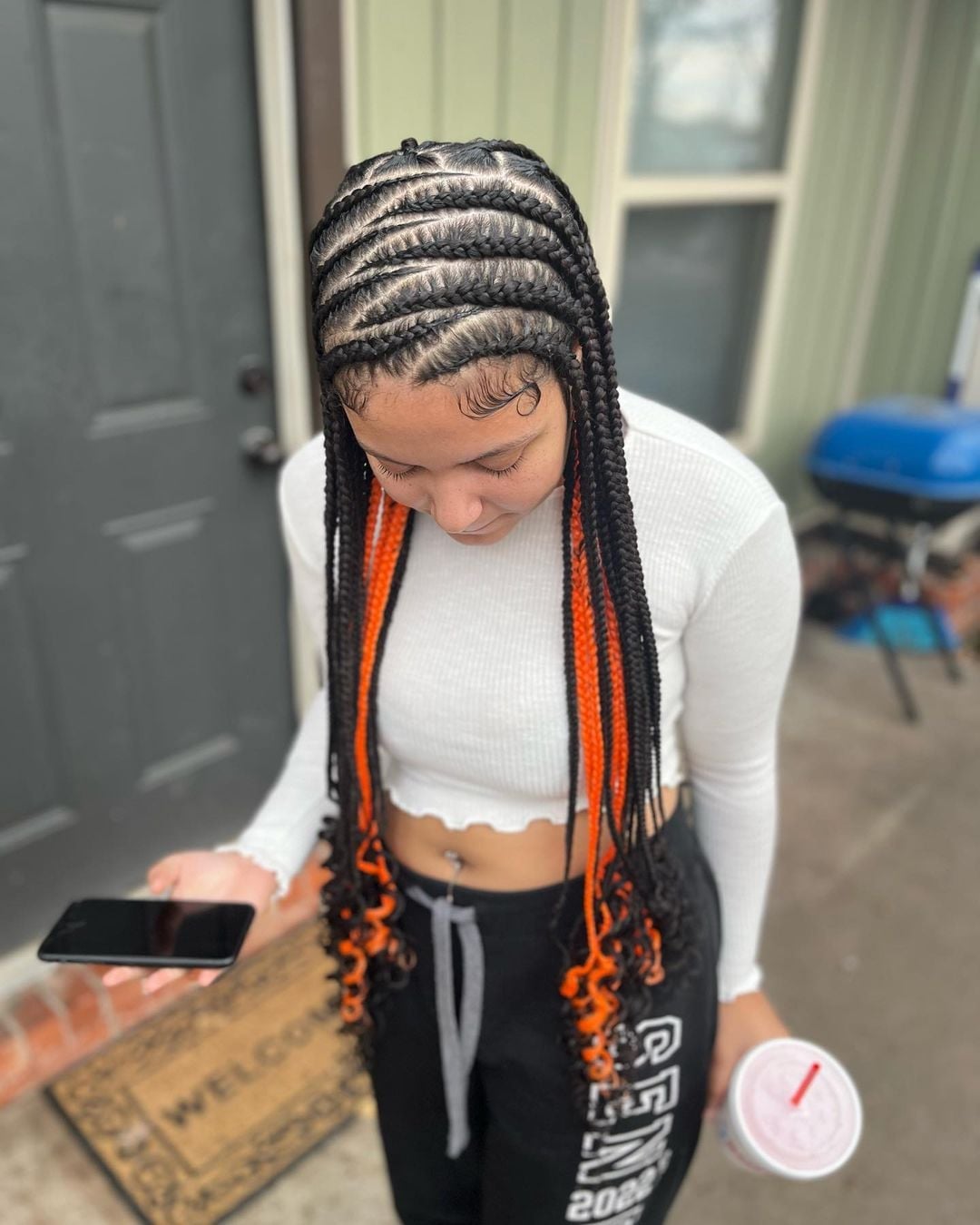
Orange is not the obvious choice for a braid accent, which is exactly why it works. These mid-back feed-in braids are mostly black, with vibrant orange strands woven in at intervals, and the ends are styled into loose curls that soften the contrast. The middle parting keeps the pattern symmetrical, so the orange looks like a deliberate pop, not a random streak.
For fall festivals or any occasion where you want the hair to do the talking, this is the color move. The orange holds up better on synthetic braiding hair than on natural strands, so the vibrancy lasts the full wear period. Ask your colorist for: feed-in braids with vibrant orange strands and curly ends.
Two Large Feed-In Braids
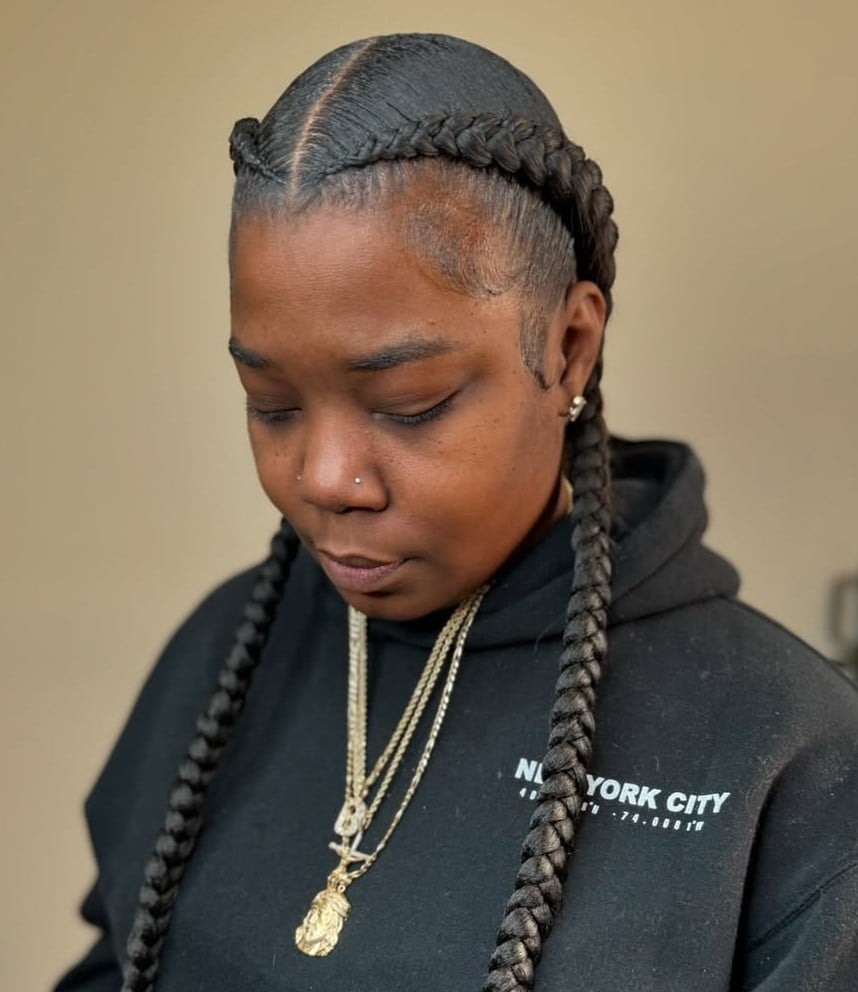
Thick, straight hair carries the weight best; finer textures may find the braids pull at the roots. Ask your stylist for: two large feed-in braids. The scalp between the braids needs regular cleansing and moisturizing. A light oil applied with a dropper keeps the part clean without greasing the braids. A trim every eight weeks prevents the ends from fraying, and the style holds its shape for about three weeks before the roots grow out noticeably.
Coily Feed-In Braids With Geometric Pattern
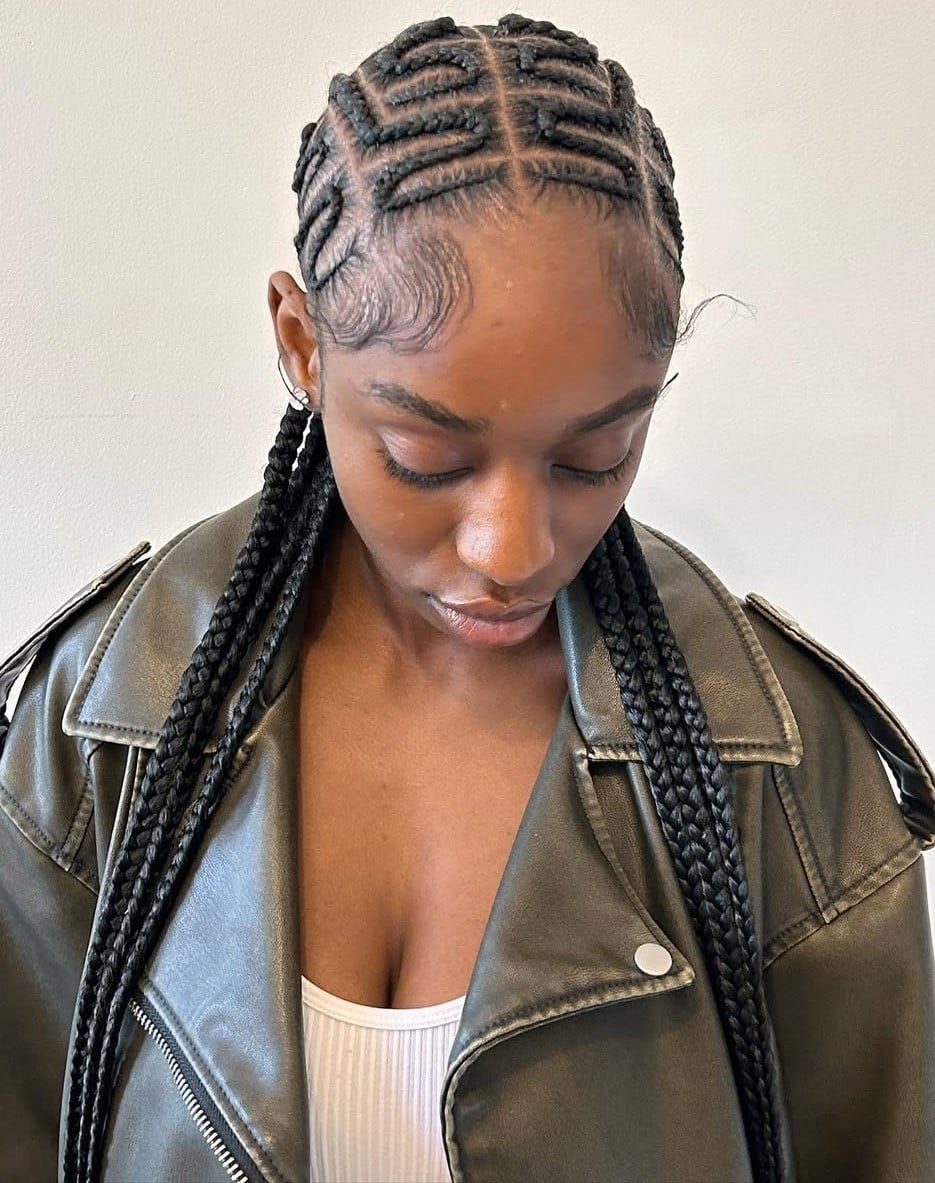
This is a style that genuinely works best for those with naturally coily, dense hair. The geometric scalp pattern relies on thick strands to hold the angles crisp, and shoulder-length coily braids have enough weight to hang neatly without bouncing into a different shape every hour. Ask your stylist for: coily feed-in braids with a geometric scalp pattern. This is a salon-only project. The pattern requires a steady hand and about three hours in the chair. Straight hair lacks the grip to keep those sharp lines defined, so if your texture is fine or slippery, pass on this one.
Precise Feed-In Braids With Clean Edges
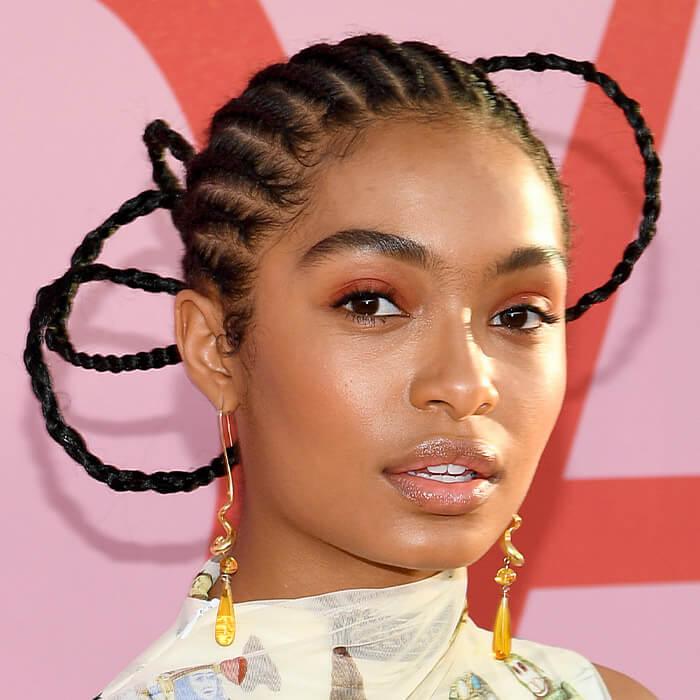
Neat feed-in braids with exceptionally clean edges and precise application along the scalp, extending to mid-back length. The middle parting is razor-straight, and every braid sits flush against the scalp with zero lifting. That level of precision means the braids will not loosen or bunch up at the roots for at least two weeks, but it also comes with a real drawback: the edges will start to soften and fray around the hairline within ten days. A soft brush and a dab of edge control each morning keeps the hairline tidy, but you cannot skip it. Ask your stylist for: feed-in braids with very neat edges.
Thick, straight hair takes this technique best because the strands lie flat and cooperate with the parting. The hold is solid for about three weeks before the roots need a refresh, and the braids themselves stay smooth without frizzing for a full month. A trim every ten weeks keeps the ends blunt and prevents the braid tips from looking straggly.
Sharp Stitch Braids With Side Parting
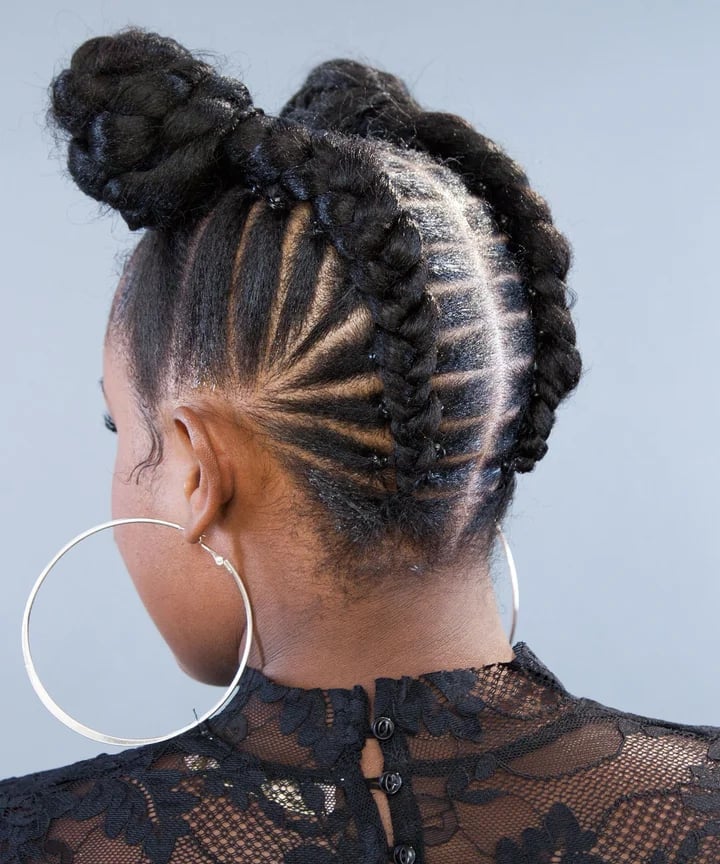
A practical rule for stitch braids: the sharper the part, the longer the style reads as fresh. These stitch braids use a clean side parting and precise lines along the scalp, with the braids falling to mid-back in a uniform black shade. The side part changes the visual weight. It pulls the eye diagonally across the head instead of straight down, which makes the braids look fuller on one side. Ask your stylist for: stitch braids with a sharp side parting.
Straight hair holds these sharp lines best; coarser textures may blur the part. The braiding technique here is about consistent tension: every stitch is the same width, every row parallel to the next. That means a good three to four hours in the chair, but the result holds its shape for about three weeks before the roots need a touch-up. A fine-tooth comb on dry edges keeps the side part crisp between appointments.
Mid-Back Braids With Dark Brown and Blonde Highlights
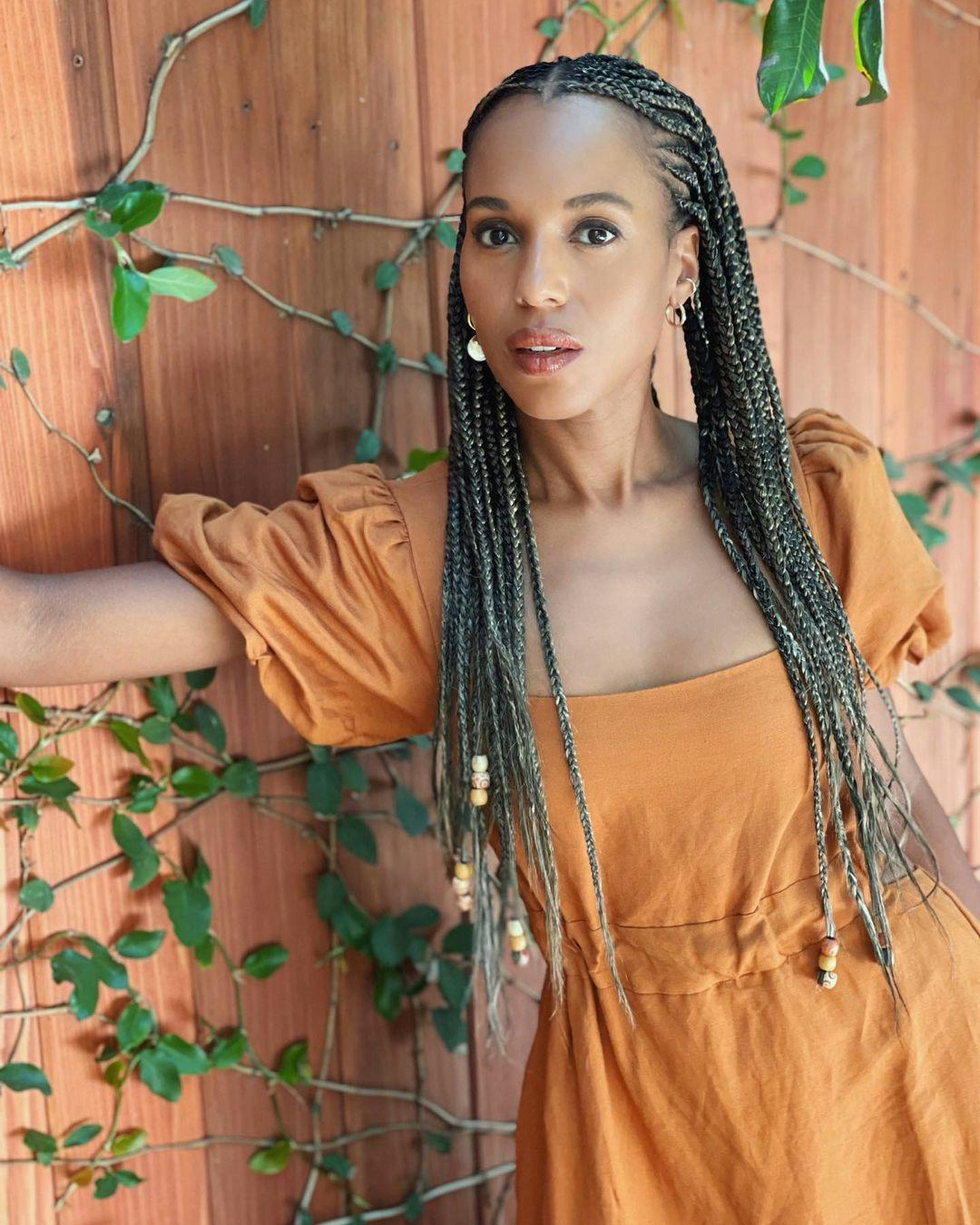
Most highlight braids rely on a single contrast, dark base, light ends. This one does something different: the blonde runs through the mid-back length as actual highlights, not just dipped tips, with a dark brown base that keeps the overall look grounded. The wavy, thick texture gives the color depth, because the light catches the waves at different angles. Ask your colorist for: mid-back braids with dark brown and blonde highlights. It is a salon-only job, and the appointment runs about four hours for the braiding alone. A color-protecting conditioner in your wash routine keeps both tones from muddying into each other.
Thin Feed-In Braids With Wavy Ends and Beads
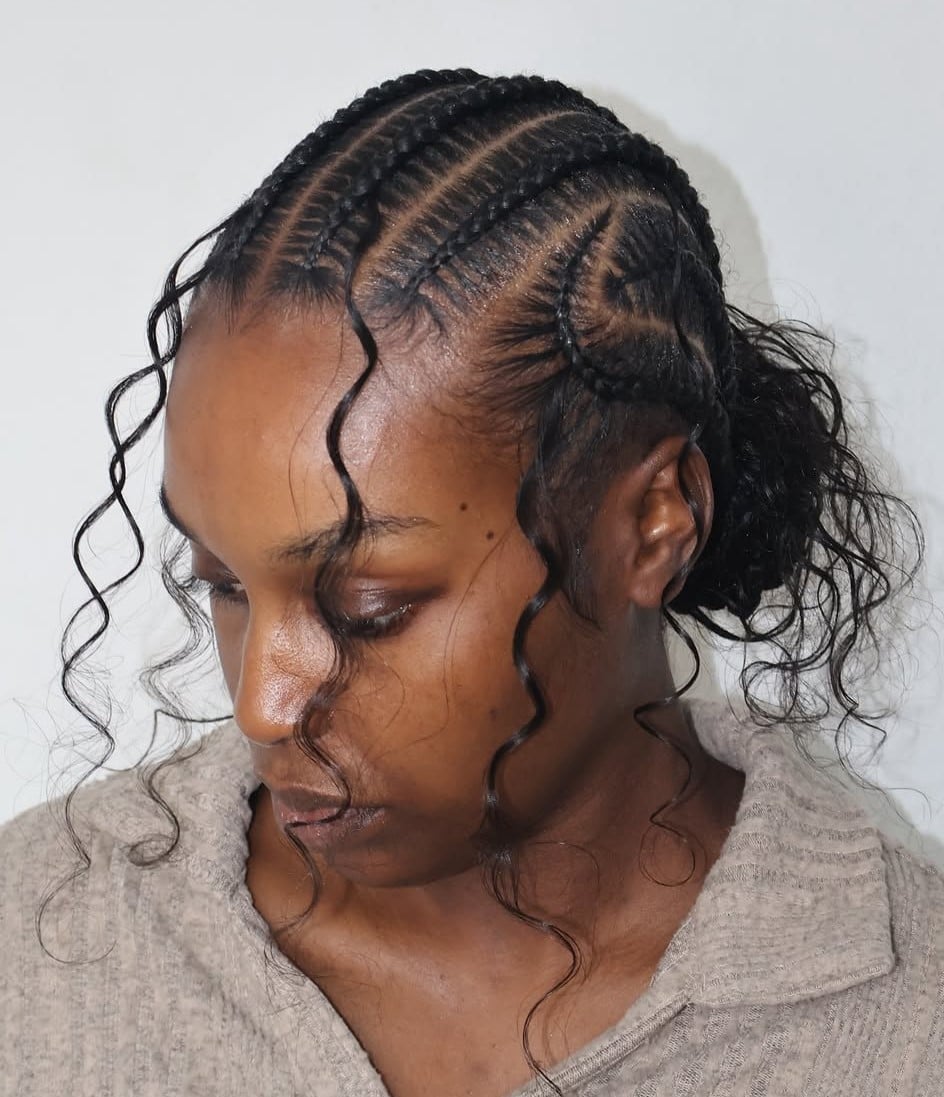
Thin feed-in braids with loose wavy ends and earthy-toned decorative beads make for a delicate, bohemian look that rewards patience. The style works best on thick, wavy hair that can support the fine braids without looking sparse, and it needs at least mid-back length for the waves to fall properly. Ask your stylist for: thin feed-in braids with wavy ends and earthy beads. Styling requires a salon visit. The braiding itself takes several hours, and the beads are hand-tied one by one. The honest trade-off: wavy ends need gentle detangling to prevent frizz, and beads can snag on scarves or loosen over time. Check each bead’s knot weekly to avoid losing them mid-week.
Final Thoughts
For a low-maintenance routine, stick with solid black or dark brown braids at a mid-back length. If you want more visual interest without extra styling time, choose a style with subtle highlights or a few beads.
- Keep scalp moisturized with a lightweight, non-greasy oil or spray.
- Avoid excessive manipulation or tight styles to prevent tension.
- Cover hair with a silk or satin bonnet at night to reduce frizz.
- Gently cleanse the scalp if needed, focusing on the roots.
- Schedule touch-ups or re-braiding every 6-8 weeks depending on growth.
Feed-in braids offer a canvas for creativity and protection.