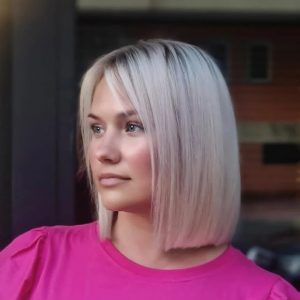
Gray Blending Highlights: 20 Ideas for Seamless Hair Color
Three appointments in a row, the woman next to me asked for gray, not against it. Gray blending has stopped being a compromise you settle for. It’s the color people actually book. I spent years covering my own silver, so this shift took me a minute to trust.
I found 20 ways to wear Gray Blending Highlights, from a chin-length crop to mid-back layers. Most sit in bob territory, because that’s where gray reads best. Fine hair works if the cut holds shape, thicker textures get more movement. My roots showed at week five on my last grow-out, so I write from the side of anyone who wants the line blurred, not the gray erased.
Natural Gray Blending on a Wavy Bob
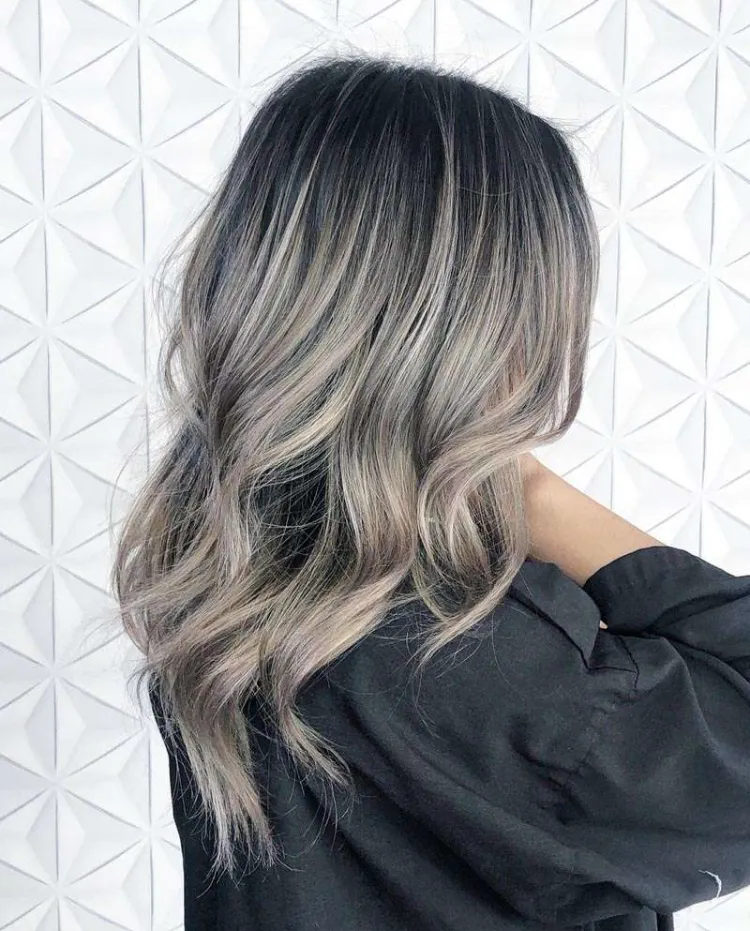
A chin-length bob with natural gray blending bob reads older before it reads gray, which is the point. That soft blend lets the silver sit like a shadow instead of a stripe, so the tone lands somewhere between salt and pepper and a deliberate ash. On medium density wavy hair, the natural gray base catches light in the bends of the wave, which is where the colour earns its keep. Part it hard on one side and the blend does the work of dimension; a blunt line would fight it. This flatters anyone whose gray is coming in patchy, because the technique evens the story out. Skip it if your hair is very fine and limp, the wave is what holds the illusion together.
Fine Wavy Bob With Silver Highlights
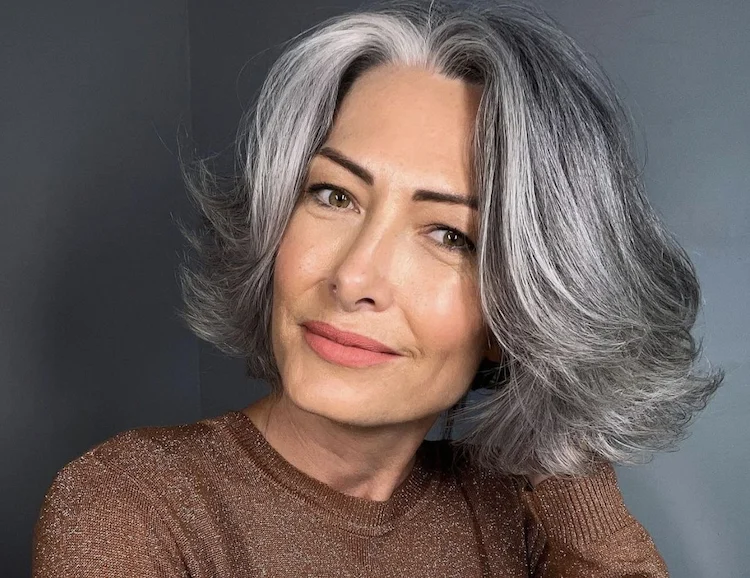
What if the gray you already have could be the highlight, not the problem? That’s the trick with silver highlights on gray hair: the stylist paints a few blended silver highlights through the top layer, then lets your natural gray base stay underneath. The lift is gentle, just enough to read as dimension on a fine, wavy chin-length bob. Ask for a side part and a few face-framing pieces, it takes twenty minutes off the appointment. Tell them you want the silver to look lived in, not metallic.
Cool Gray Bob With Subtle Highlights
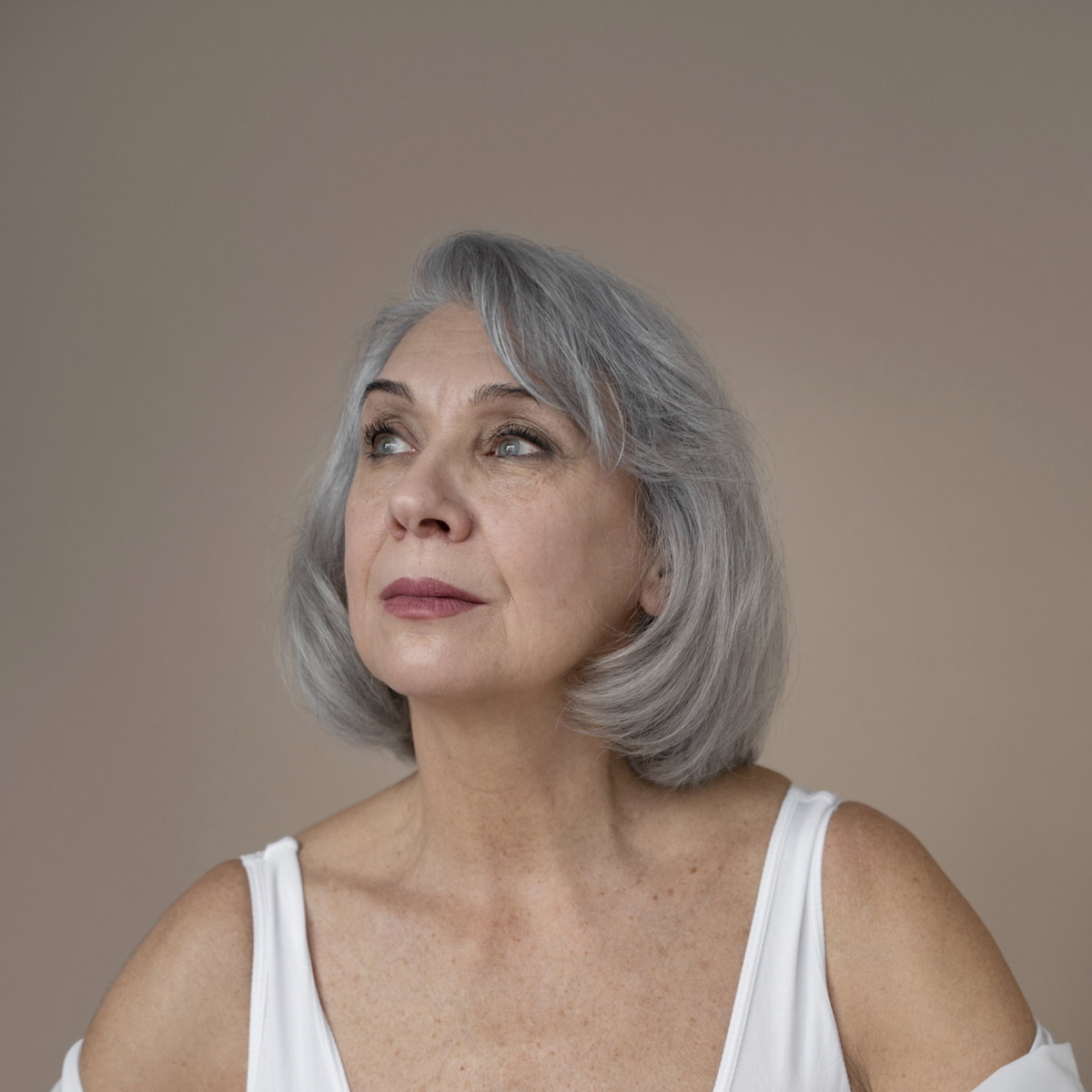
I’ll confess, I expected this to wash out by Thursday. The cool gray hair with highlights on a fine, wavy bob is actually the low-maintenance hero of the group.
A cool gray base means the strands read as one consistent tone, with subtle lighter pieces only at the crown and ends. It air-dries into soft waves with zero product, and the natural gray tone means no visible root line for six to eight weeks. Touch up with a texturizing spray on day three and it looks styled, not neglected.
Natural Gray Bob With Tousled Finish
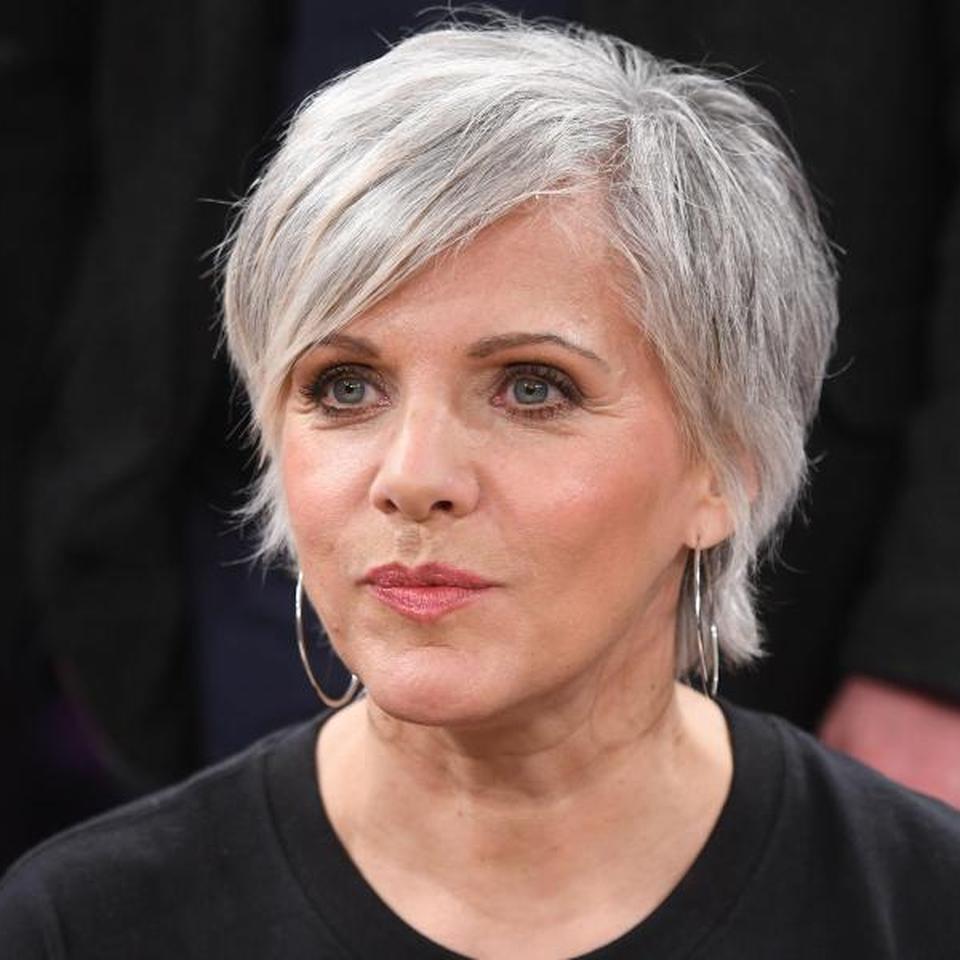
Forget the dimensional blends, the painted-on silver, the babylights. Natural uniform gray hair is the move here, and this chin-length bob proves it. One solid, even gray, no contrast, no lifting, just the whole head agreeing on the colour. Compared to the layered techniques that need a stylist’s eye to keep the blend intact, this is the set-it-and-forget-it option: wash, rough dry, finger-comb, go. On straight fine hair it lands blunter, which is why the tousled finish matters, it softens the edges. If you’d rather not think about your hair for a month straight, this is the one.
Air-Dried Gray Bob

The ear-length short gray bob is what happens when you decide your hair should dry itself and mean it. It suits thick wavy hair best, because that texture holds the shape without a round brush or a diffuser. The middle parting does the heavy lifting here, it splits the volume evenly so the ends flip just slightly. Air-drying is the whole routine, literal zero styling. The natural gray colour means grow-out is invisible, you only trim when the shape starts to cave.
Layered Gray With Blended Highlights
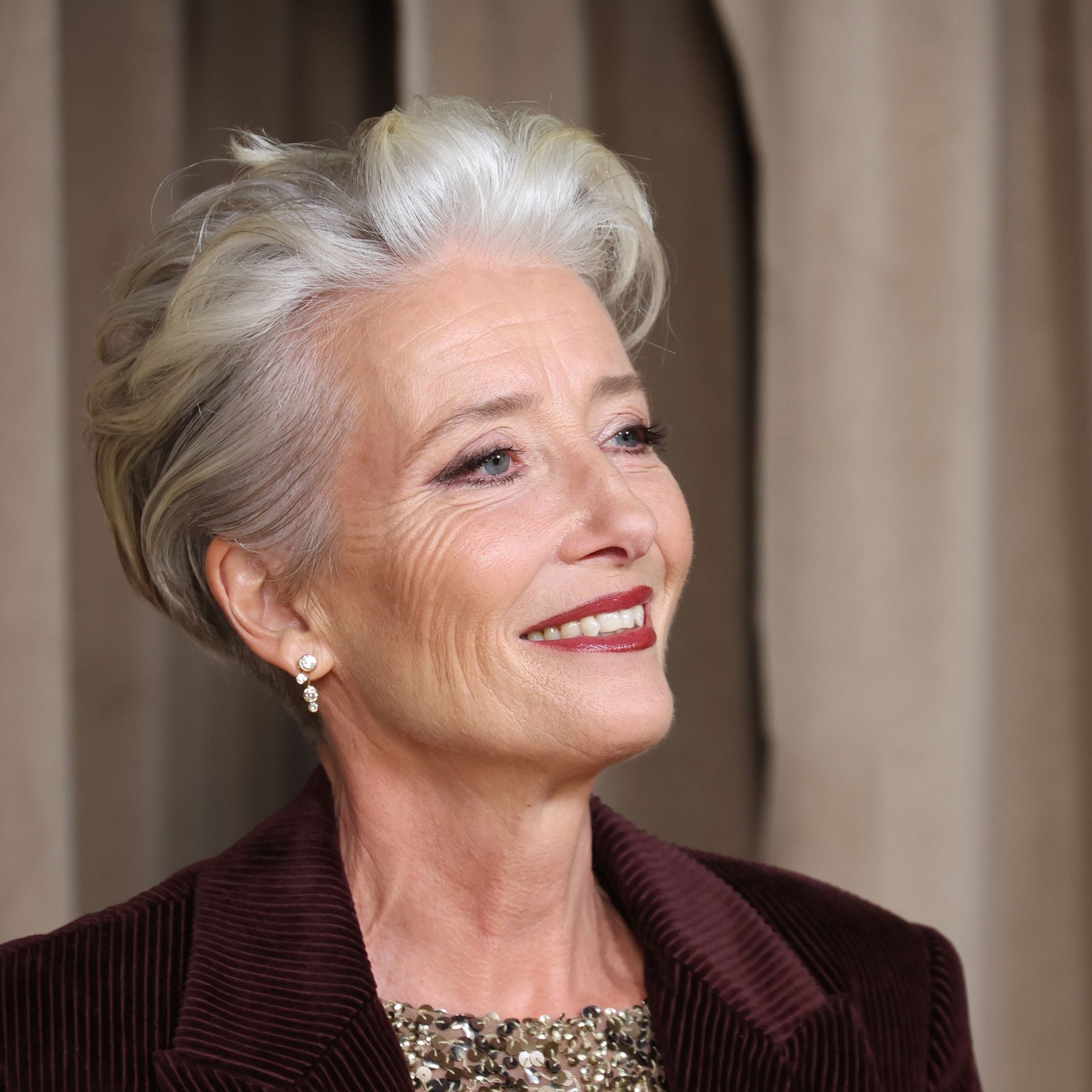
I was not expecting this to look so dynamic. The blended gray highlights here are painted through short layers, not scattered randomly. That is the trick: the technique uses a soft balayage to merge the cool gray tone with the natural base, so the ear-length cut reads as one cohesive colour rather than stripes. On thick, wavy texture, the layers catch light and the gray reads silver. This is layered gray hair that actually moves.
Textured Silver-Gray Crop
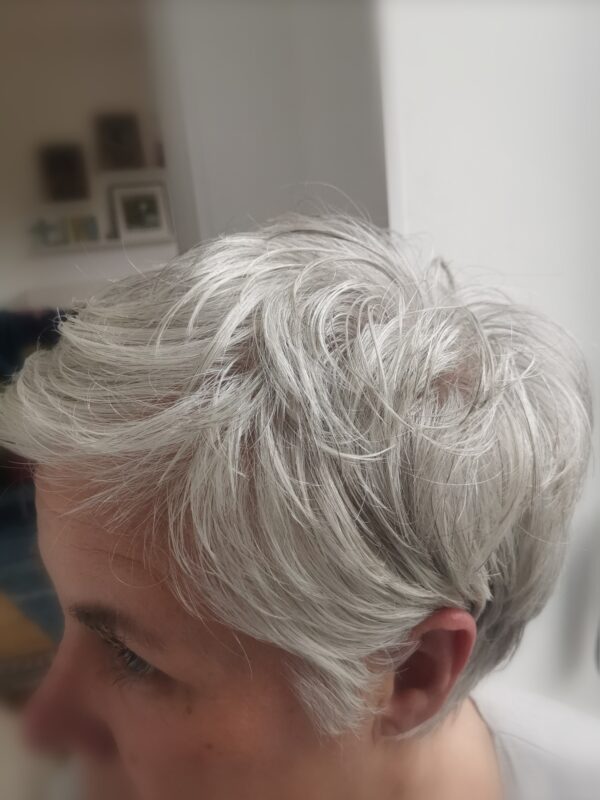
The natural silver tone here is doing most of the work. That is why this textured crop is one of the few gray blending highlights you can attempt at home. The colour is bright silver gray hair with subtle lighter strands woven through the top layers, and the technique is simple: a few face-framing pieces lightened with a gentle bleach and toner. On fine, wavy texture at ear length, the silver-gray tone blends into the natural gray without a harsh line. A salon can do it cleaner, but if you are patient with a brush, the DIY version holds up fine for six weeks.
Layered Gray Bob With Subtle Strands
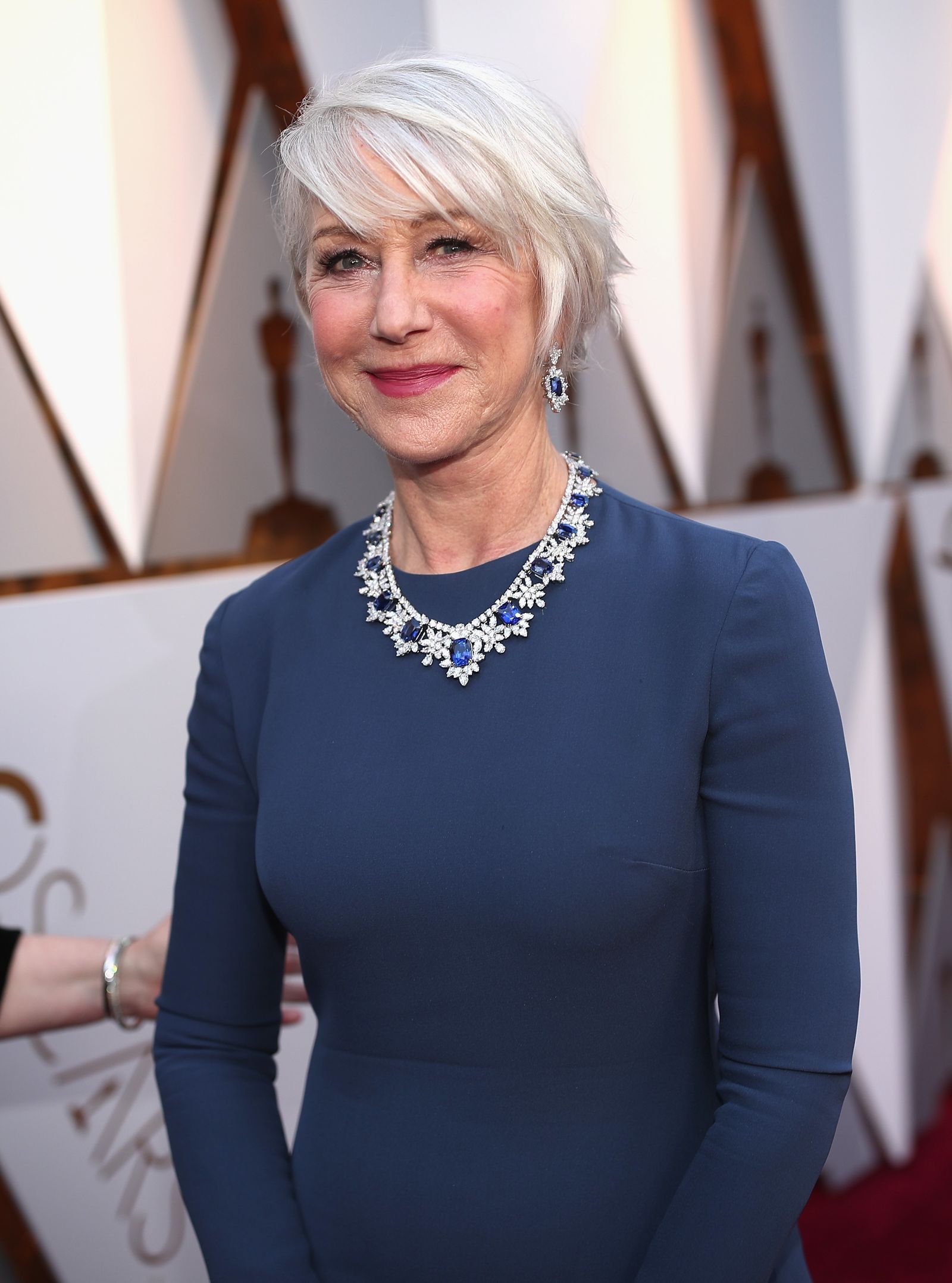
Can a natural gray bob actually stay sharp for a full week? This one does, but only if the subtle lighter strands are placed correctly. The technique here is a layered bob with fine, face-framing pieces lightened to a soft silver, while the rest stays your natural gray.
On straight, fine texture at chin length, the layers add movement without frizz. The upkeep is a trim every six weeks to keep the bob line clean, and a purple shampoo once a week to keep the lighter strands from warming up.
Collarbone Layered Lob With Gray Highlights
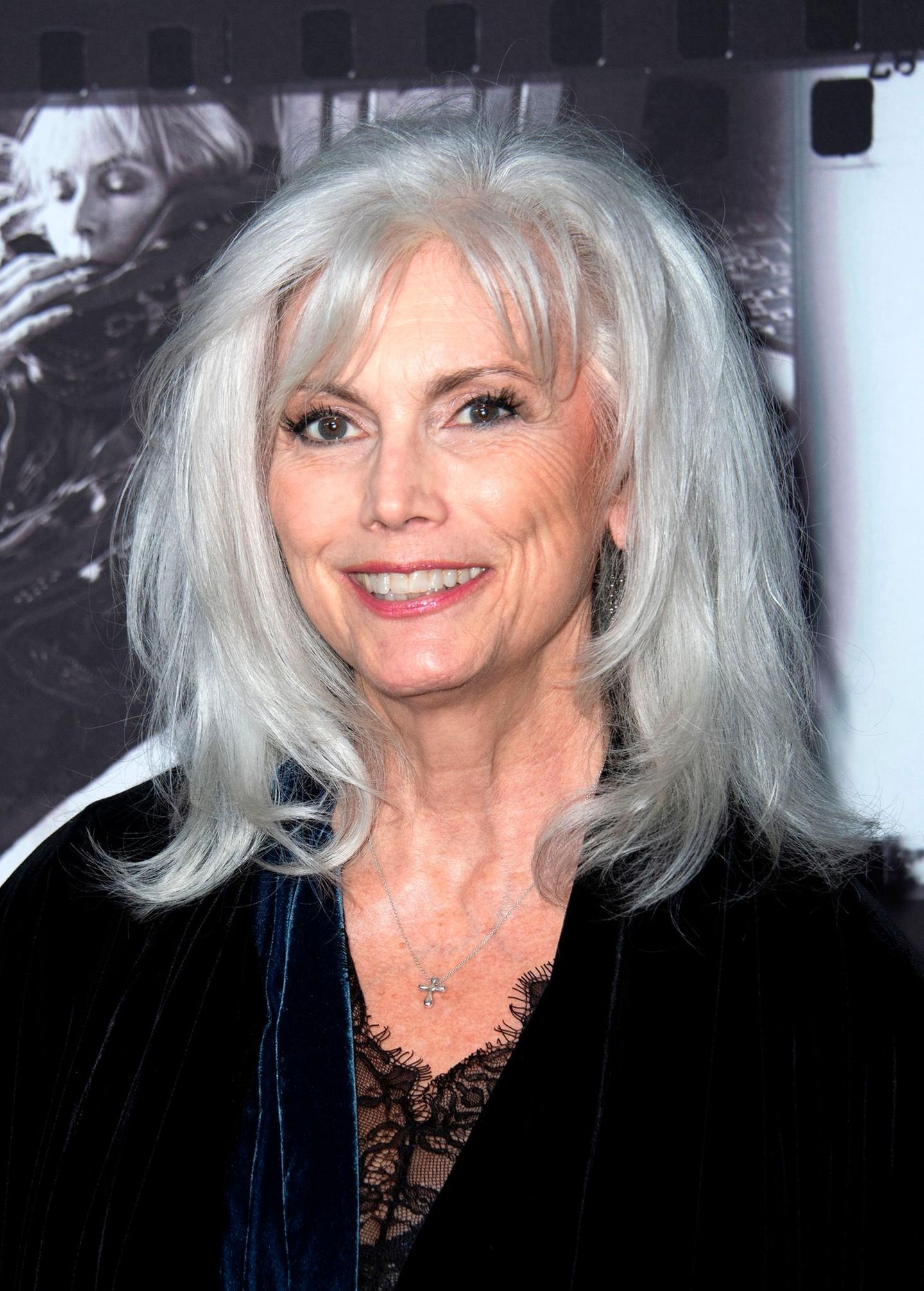
Side-swept bangs and loose waves give this collarbone lob a soft, lived-in feel. The gray base is lifted with gray highlights on lob that are subtle enough to read as natural. Lighter gray highlights around the face brighten without going platinum. The tone stays cool, no yellow or beige creeping in. Texture is wavy with medium density, which means the layers hold shape without going flat by noon.
This is the cut for anyone with a round or square face shape. The side-swept bangs break up width, and the collarbone length elongates. Medium density is ideal; fine hair might need a volumizing mousse to keep the waves from collapsing. Thick hair will need more layering to avoid a triangle shape. It’s forgiving on grow-out, trims every eight weeks keep the shape clean.
Wavy Blowout With Gray Blending
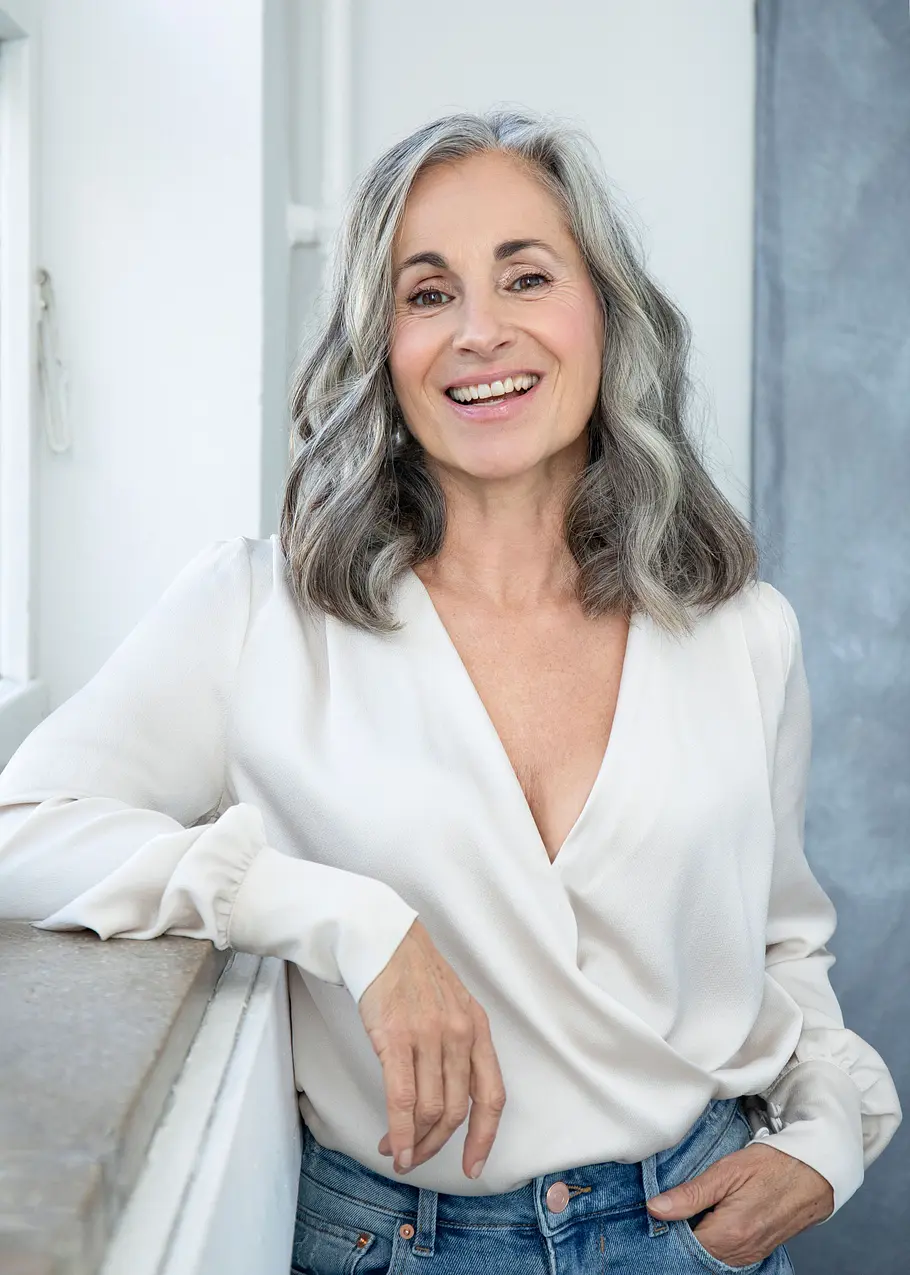
This is the technique that makes gray blending look seamless. A wavy blowout with a round brush creates volume at the roots and soft bends through the ends, which mirrors the natural gray blending of the colour. The base is a cool gray with blended lighter highlights that avoid any harsh lines. The tone stays muted, no brassiness. Length is collarbone, texture is wavy medium density, which holds a blowout well without needing a curling iron.
The seamless transition between the darker base and the lighter highlights is what makes this work. The blowout technique enhances that gradient by catching light on the waves. A texturizing spray at the ends adds grip so the waves last past lunch. This is a salon color, not a DIY job, because the blending needs a professional eye. Trims every eight weeks keep the ends healthy and the shape intact.
Collarbone Muted Gray With Blended Highlights
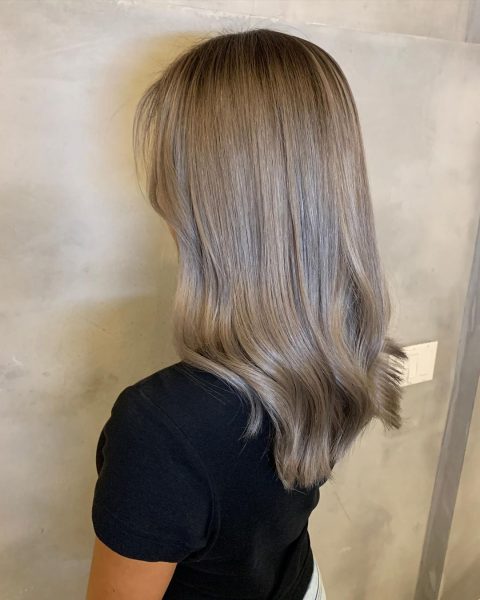
I’ll admit it: I was skeptical about air-dried gray blending. But this collarbone length with a middle part and soft waves convinced me. The muted gray hair is a cool, ashy tone with blended highlights that diffuse the grow-out line. Texture is wavy and thick, which means air drying actually works without looking stringy. The technique is a soft balayage, placing highlights throughout the mid-lengths and ends.
Daily styling is minimal: a scrunch with a texturizing spray after washing, then let it dry. On day two, a quick refresh with a mist of water and a scrunch brings the waves back. Upkeep is forgiving because the blended highlights grow out softly, no harsh root line. A toning gloss every six to eight weeks keeps the muted tone from warming up. Thick hair holds the waves longer; fine hair might need a diffuser to add volume.
Dark Ash Base With Ash Blonde Highlights
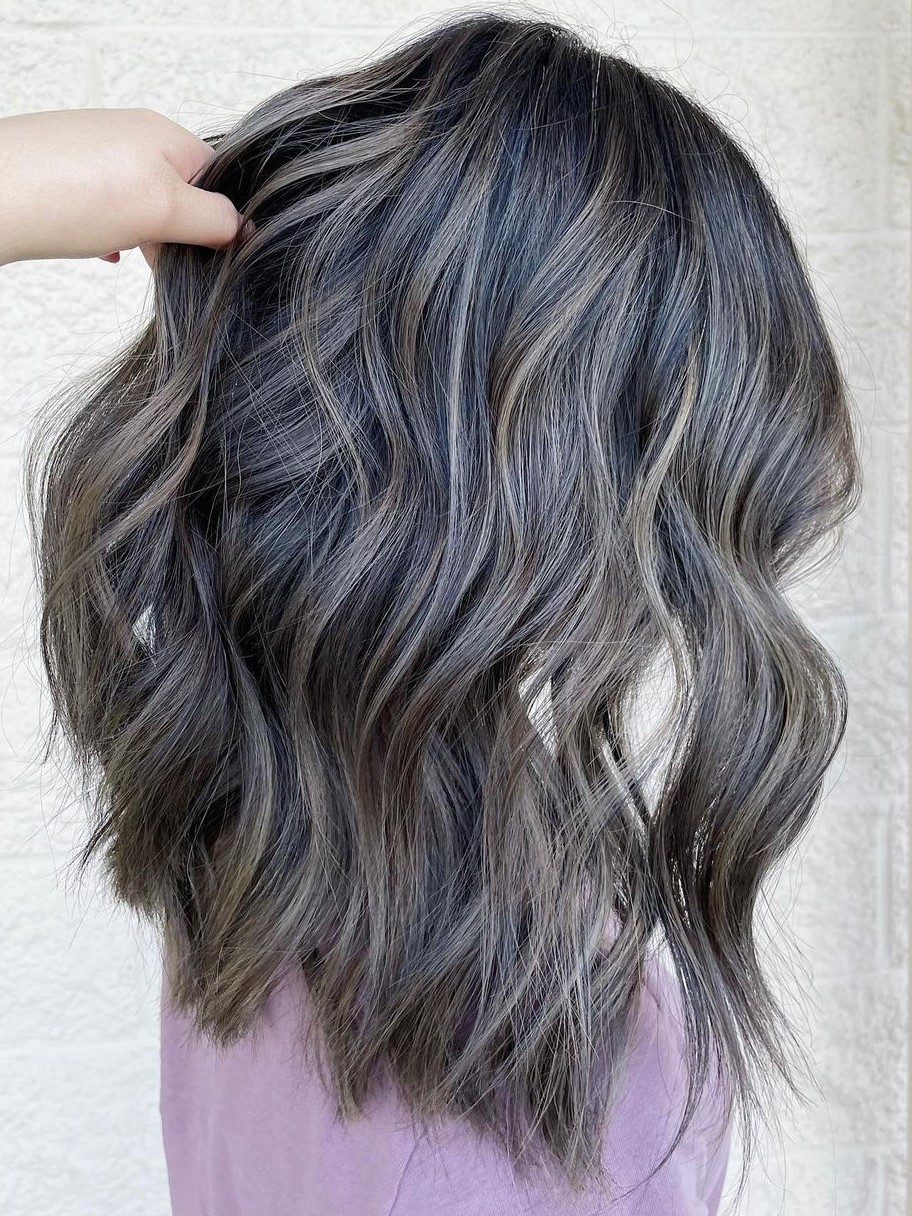
This dark ash base with blended ash blonde highlights is a precision move, not a grow-out hack. The dark ash base sits close to my natural level, but the ash blonde highlights on dark ash are painted higher, around the crown and front, so the contrast reads deliberate instead of rooty. The tone stays cool on both ends, no warmth sneaking in. The lob hits collarbone with loose waves, fine to medium texture holds the wave without turning flat by 4. It is not a gray blending shortcut — it is a dimensional colour that asks for trims every eight weeks and a stylist who understands ash without pulling green.
Layered Bob With Gray and Blonde Blend
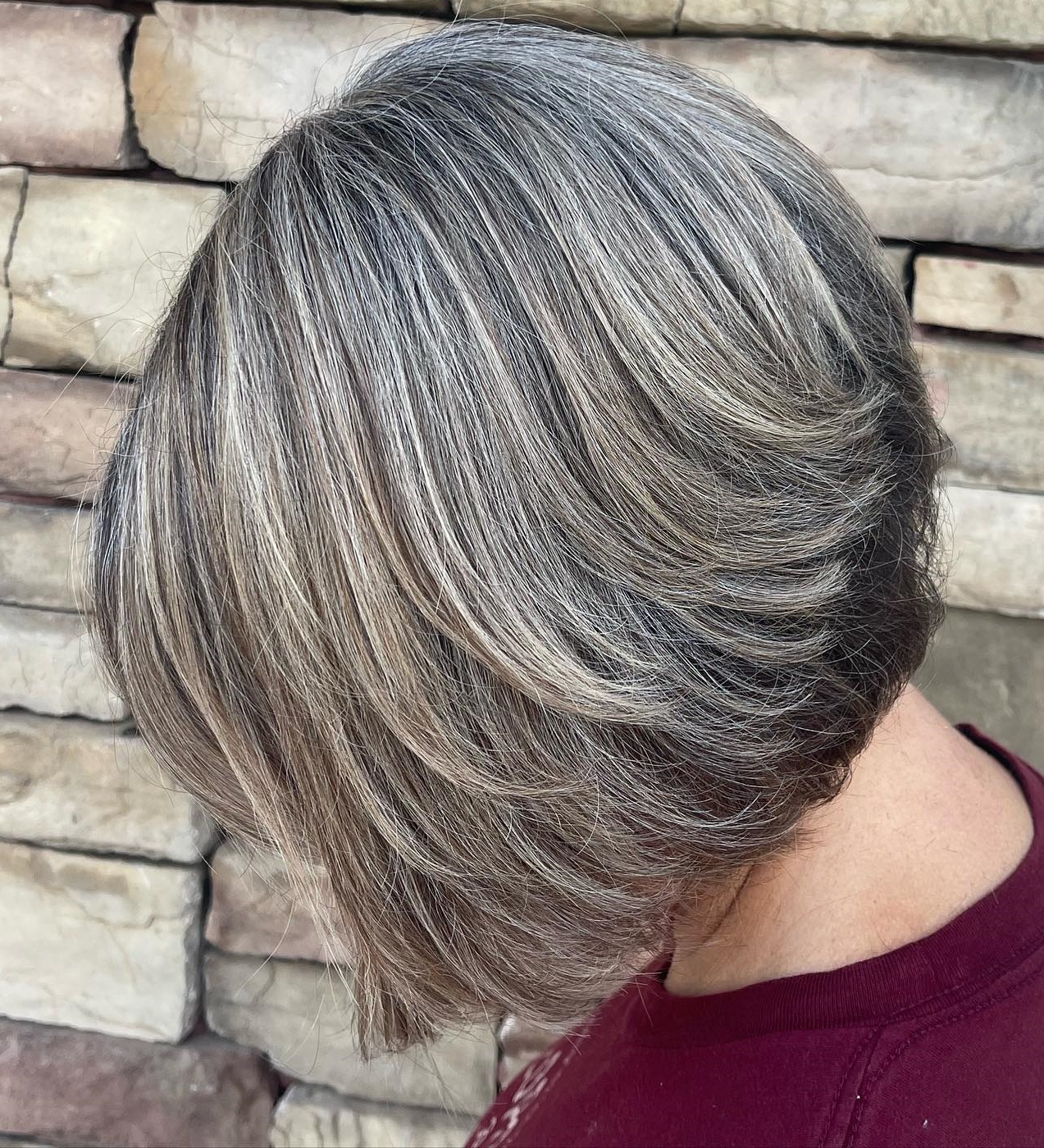
Can thick, straight hair carry two colours this close in value without reading muddy? Yes, if the cut earns its keep. This layered bob uses gray and blonde highlights that land in alternating sections, not uniform streaks, so the blended blonde highlights separate from the gray instead of melting into it. The length stops at collarbone, and the middle part lets the contrast show evenly on both sides. Straight, thick texture needs that layering — without it, the bob sits like a helmet. A smooth blowout with a round brush defines the shape. Skip this if your hair is fine and sparse; the density here does the work.
Layered Lob With Platinum Highlights
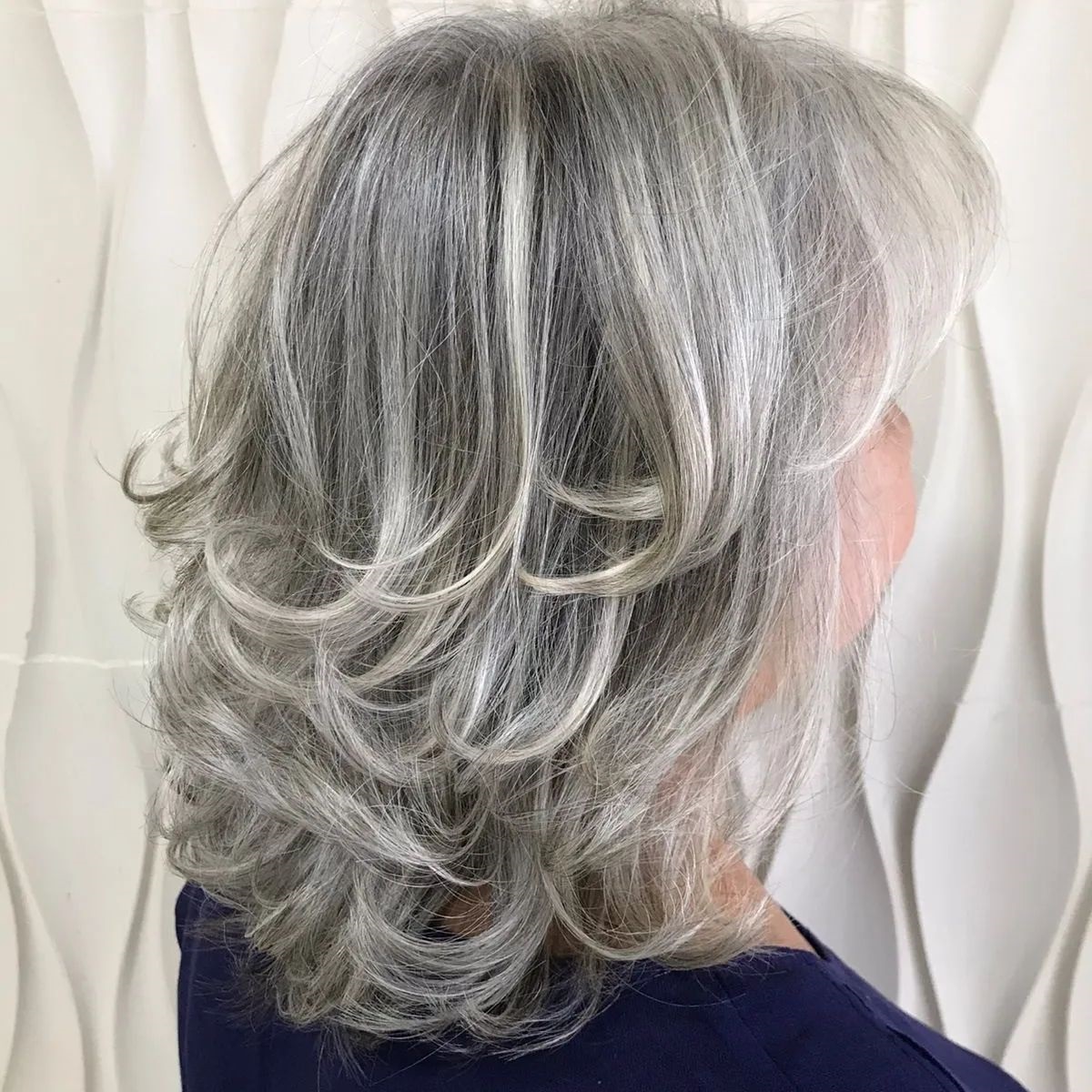
A Thursday evening event and no time to re-wash. That is when this style earns its keep. The layered lob with platinum highlights on gray base holds soft curls from a Tuesday blowout through Friday, medium density giving the shape memory without freeze spray. The blended platinum highlights wrap around the layers, so every curl catches a bright piece. It works for holiday parties or a weekday dinner where the lighting is unflattering — the platinum picks up candlelight fast. Trims every ten weeks preserve the lob base; toning maintenance lands every third wash or the platinum drifts warm. A heat protectant before the curling iron, then let the curls cool in clips.
Lob With Curtain Bangs and Silver Highlights
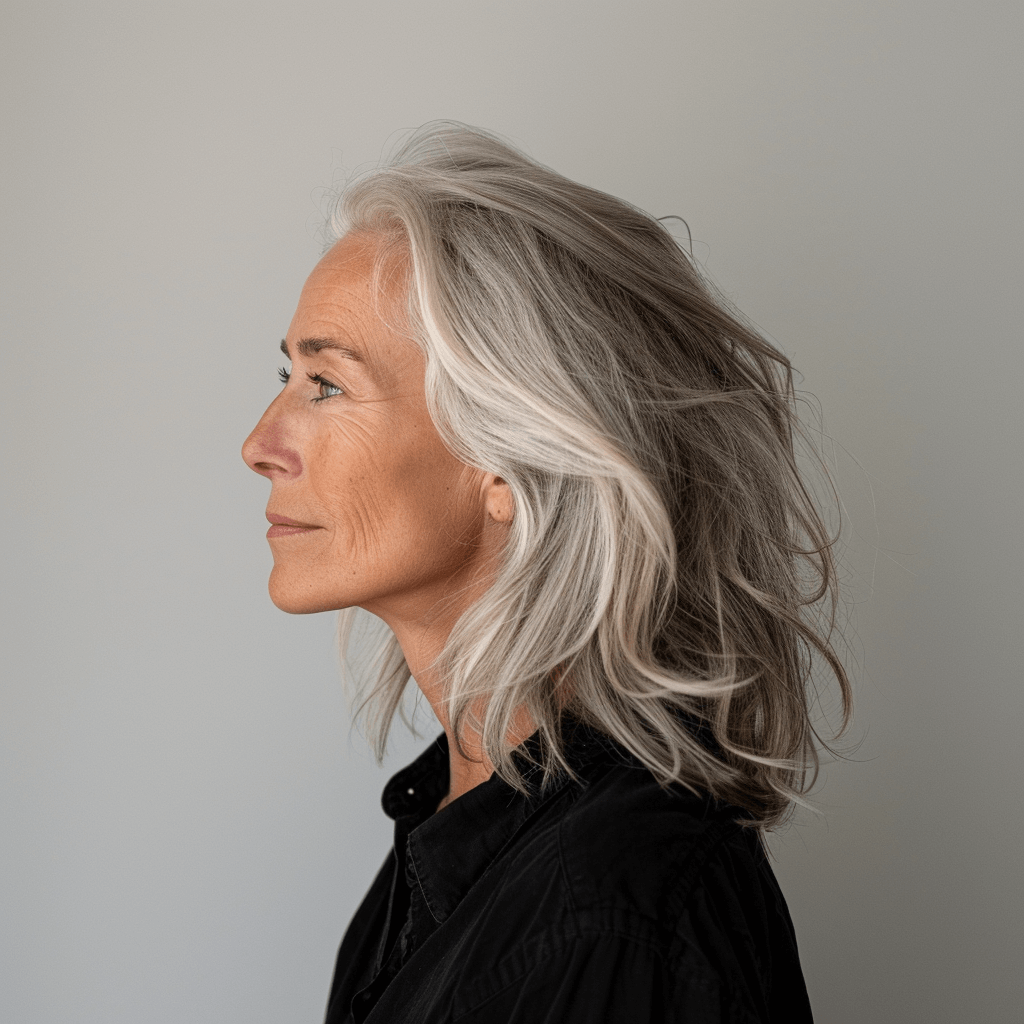
I did not expect curtain bangs with gray highlights to hit this hard. The lob lands at collarbone, thick and wavy, with a middle part that lets the face-framing highlights do their job. Silver and blonde strands are blended into a gray base, concentrated around the front so the bangs catch light without looking stripey. To get this at home: rough-dry, then take a round brush through each section of the bangs and the front pieces, pulling forward and away from the face. The rest gets a quick blowout with a paddle brush. That is the whole recipe.
Chin-Length Bob With Silver and Dark Gray
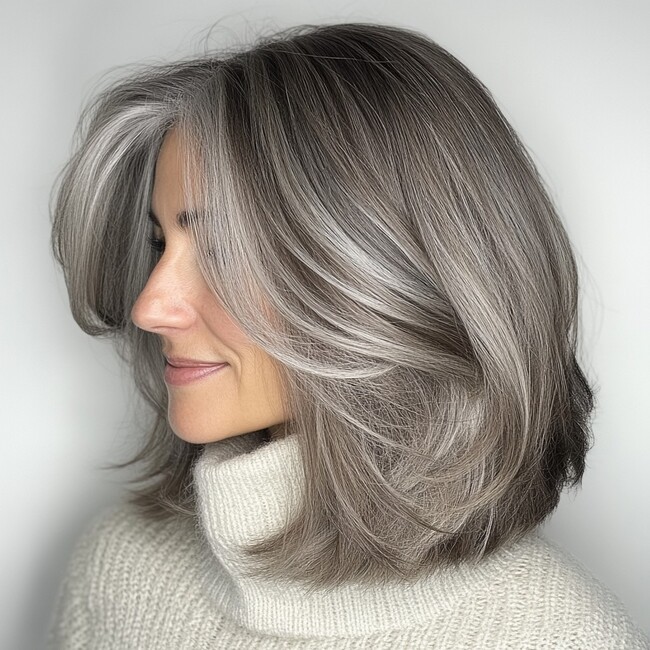
I’ll admit, I was skeptical about high-contrast gray blending on a short bob. The silver and dark gray highlights sit against a cool gray base, and the contrast between gray and silver is exactly what makes it work. The technique is a careful weave of highlights through the chin-length bob, creating dimension without looking striped. The texture is naturally wavy and thick, which helps the blend read as intentional. But here’s the honest downside: that high contrast can turn brassy or uneven if the toner lifts too warm. This is not a quick appointment; expect a few hours in the chair and a decent investment in upkeep.
Angled Bob With Cool Gray Blend
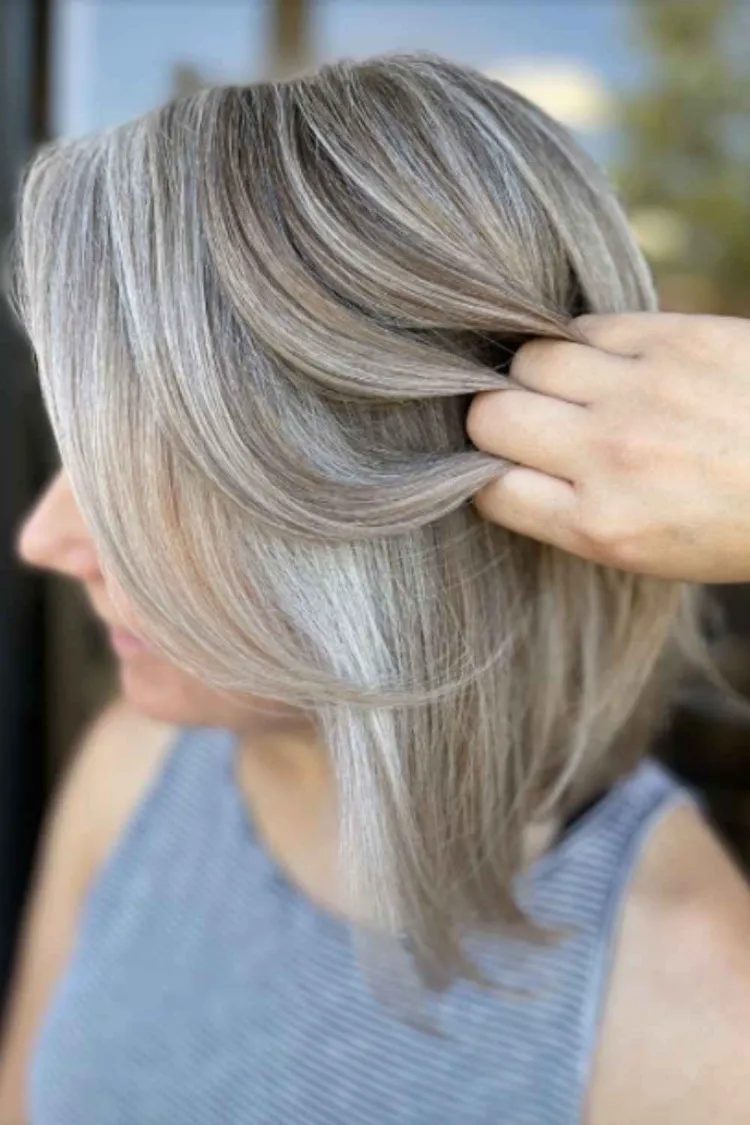
The cool gray blend uses silver and ash blonde highlights woven through a collarbone-length angled bob. The tone stays icy without turning blue, and the technique is a soft balayage that keeps the root darker for a gentle grow-out. This look lands perfectly in fall, when you want something crisp but not harsh. It also works in early spring as a cool counterpoint to warmer trends. The straight, medium-density texture lets the highlights sit cleanly without frizz.
The angled bob suits round and heart faces by adding sharpness at the jaw. Medium density hair holds the shape without going flat, but fine hair may need a volumizing cut underneath. The side-swept bangs soften the forehead and make the whole silhouette feel intentional. Oval faces can pull off the blunt angle, while square faces benefit from the soft sweep of the bangs. For low-density hair, keep layers minimal to avoid stringiness.
Dark Gray Lob With Platinum Face-Framing
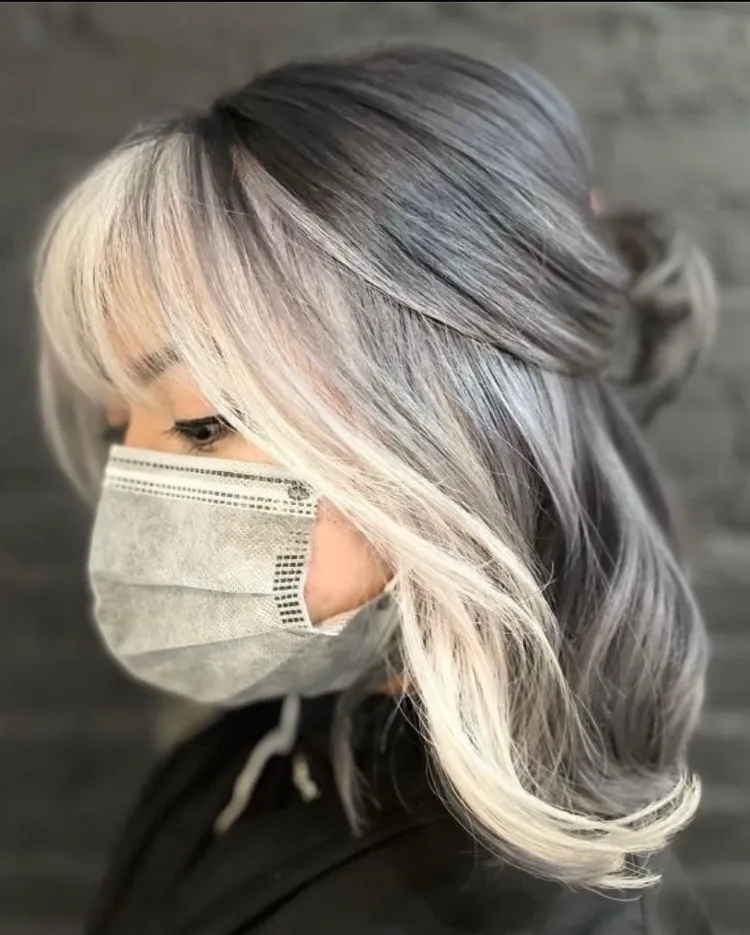
The platinum face-framing pieces are the first thing you notice. The dark gray with platinum highlights creates a bold contrast that draws the eye to the front, and the technique uses a heavy hand on the face-framing strands while keeping the rest dark. The tone is cool and icy on the platinum, deep charcoal on the base. The collarbone-length lob has wavy, medium texture that holds the half-updo shape without slipping. The full bangs frame the forehead and need a round brush with cool air to stay flat.
The upkeep is real: the platinum pieces need a purple shampoo every other wash to stay cool and avoid yellowing. The dark base grows out softly, so you can stretch salon visits to ten weeks if you blend the root with a shadow toner at home. The half-updo styling requires a texturizing spray and a few minutes with a curling wand to define the waves. Trims every eight weeks keep the ends from splitting, especially on the lighter strands that are more porous.
Wavy Lob With Natural Gray Blend
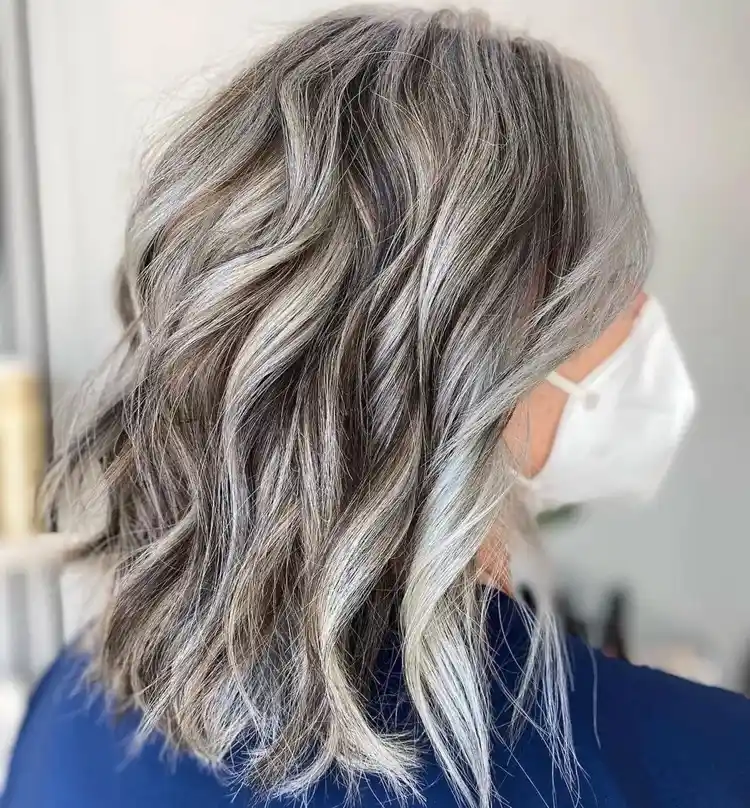
Can natural gray blending actually look intentional? On this wavy lob, the natural gray blend uses visible highlights that are slightly lighter than the base, creating a soft salt-and-pepper effect without looking streaky. The technique is a combination of lowlights and fine highlights woven through the mid-lengths and ends. The tone stays neutral, neither warm nor icy, which makes it forgiving as it grows. I was skeptical at first, but the lack of a hard root line means you can go twelve weeks between appointments. The collarbone length and wavy, medium texture let the blend read as naturally sun-kissed rather than salon-placed.
Mid-Back Layers With Subtle Gray Highlights
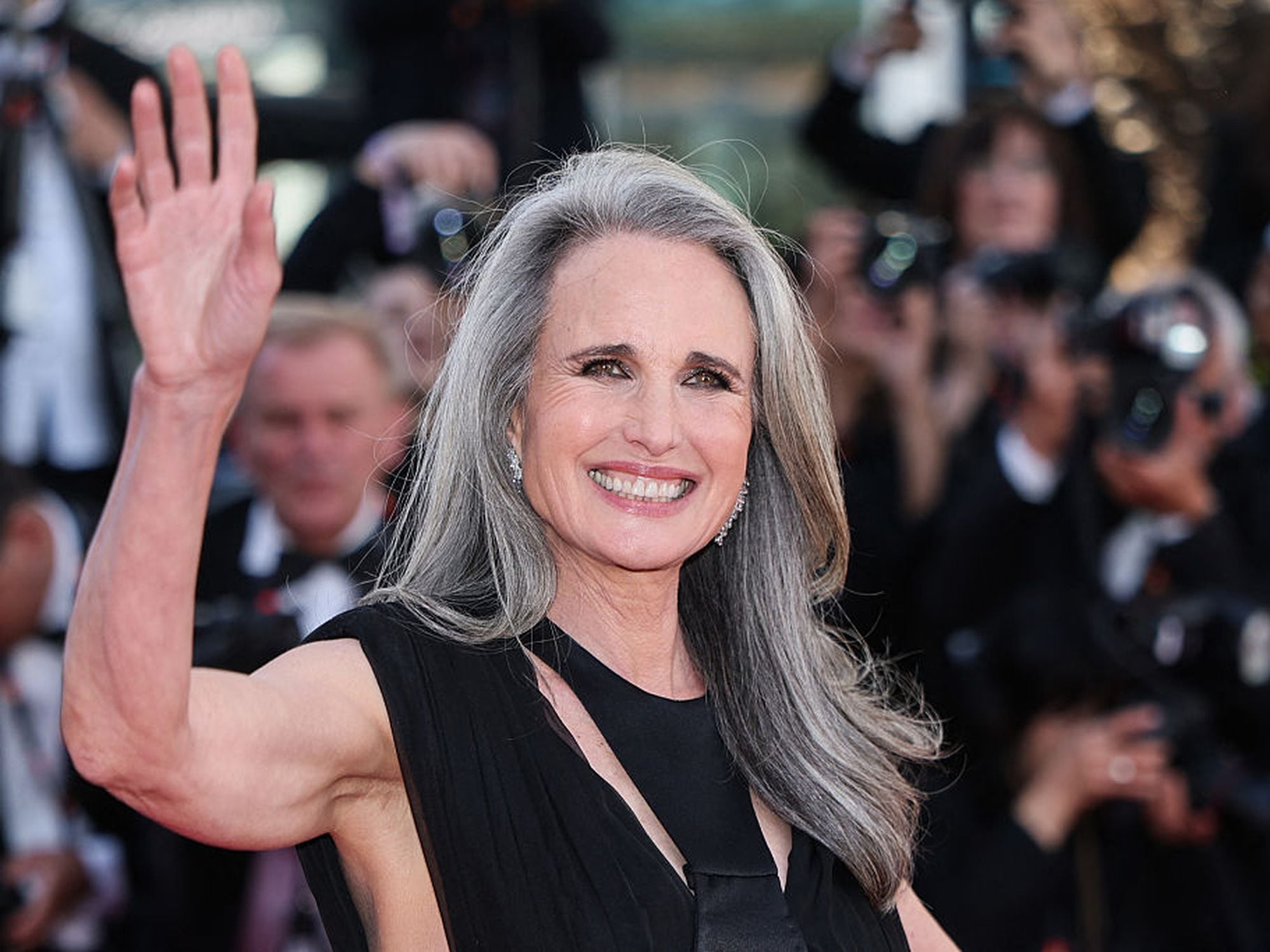
You see this in a coffee shop and immediately want it. The subtle gray highlights are seamlessly blended into a mid-back length of layered hair, with a gray base that reads almost silver in the right light. The technique uses fine weaves and a cool toner to keep the tone neutral. The wavy, medium texture helps the highlights catch the light without looking artificial. The middle part and loose waves make the color look natural, but that’s the result of careful placement.
This is a salon job. The subtle gray highlights need to be seamlessly blended into the base, and at-home kits tend to go too warm or too stripey. A stylist can place the highlights to mimic natural sun exposure, using a balayage technique with fine slices. If you try this at home, you risk uneven color and a harsh grow-out line. For upkeep, a purple shampoo at home keeps the tone cool between appointments. Trims every ten to twelve weeks keep the layers fresh and the ends healthy.
Final Thoughts
I came in expecting to defend the short bobs and ignore the longer ones. What surprised me was the collarbone lobs. They keep the silver visible without committing you to a crop, and the grow-out stays soft for weeks, not days. I’m booking the wavy lob with the natural gray blend for myself. My grays and I have a truce now.