32 Stunning Mahogany Hair Color Ideas to Try
I keep seeing mahogany in the chair next to mine. Not the flat brown I remember from drugstore boxes, but something with movement, a colour that catches the light and shifts. It is brown, then it is not. That is the point.
This roundup has 32 takes on Mahogany Hair Color, from a five-minute air-dry lob to a full balayage that needs a Saturday afternoon. Some work on fine hair, some need density. One fringe I would not attempt without a stylist. My fine strands go flat by 4 pm, so I paid attention to which cuts hold volume and which ones collapse. Here is what I found.
Vibrant Mahogany Lob With Curtain Bangs
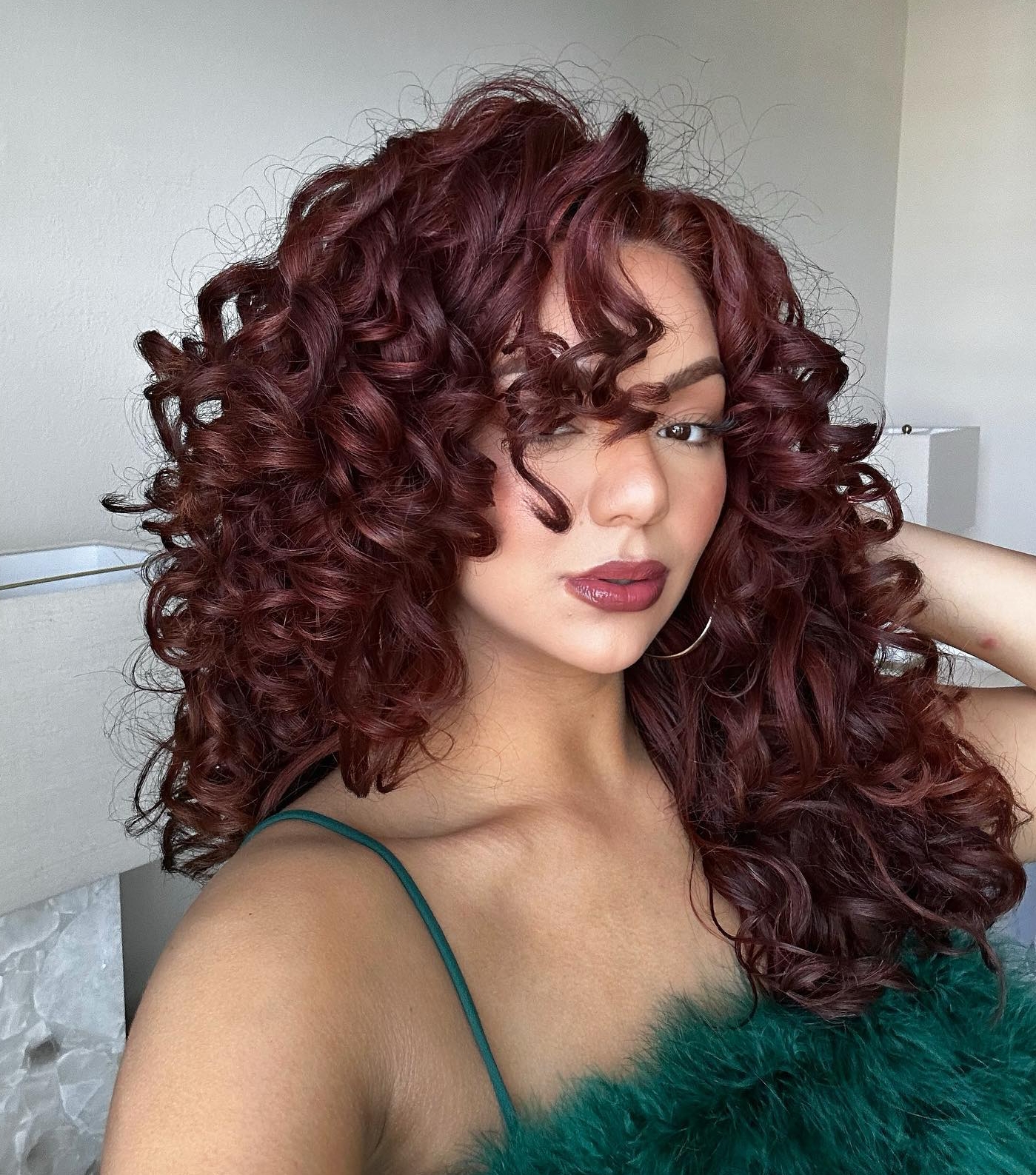
That first glimpse of mahogany hit me like a warm espresso. The vibrant mahogany color here is a single-process dye, no highlights, just pure depth. The tone reads rich and red without tipping into burgundy. On a collarbone lob with curtain bangs and thick, wavy texture, the colour catches every bend. The middle part lets those bangs frame the face without hiding the colour. This is the kind of lob that makes you check your reflection in store windows.
Mahogany Lob With Subtle Red Undertones
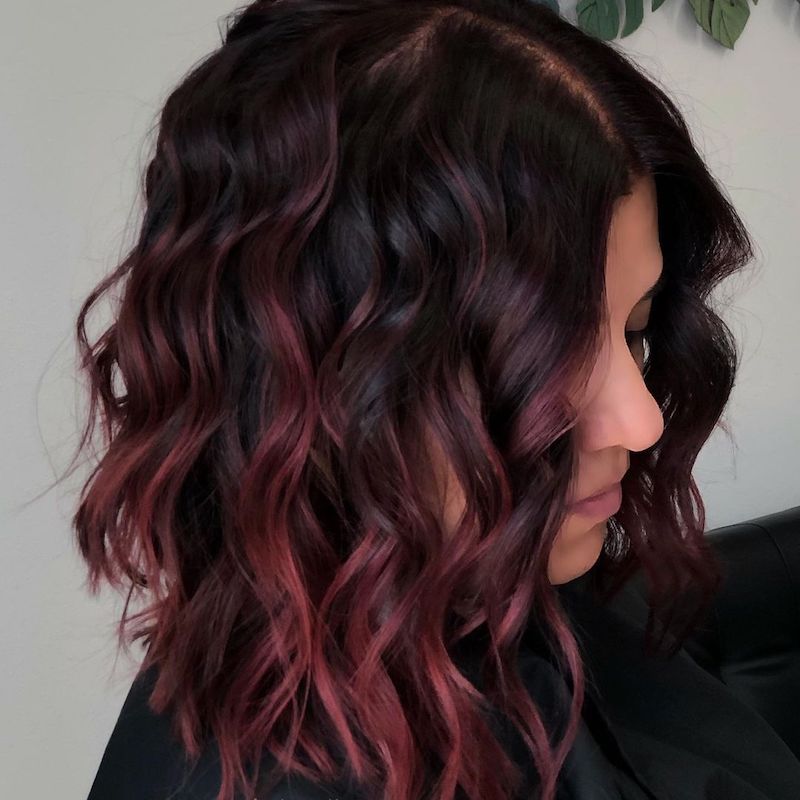
Wondering if mahogany with red undertones works on your hair? It does if your texture is wavy and medium density. The colour here is a solid mahogany base with a red tone that shows only when light hits it. The technique is a single application, no foils, which keeps the colour uniform. On a collarbone lob with a side part, the waves get a soft shimmer without looking brassy. A quick 10-minute blowout with a volumizing spray is all you need. The side part adds asymmetry that flatters round and oval faces. Upkeep involves a color-depositing conditioner every other wash to keep the red tones bright.
Mahogany Brown With Copper Undertones
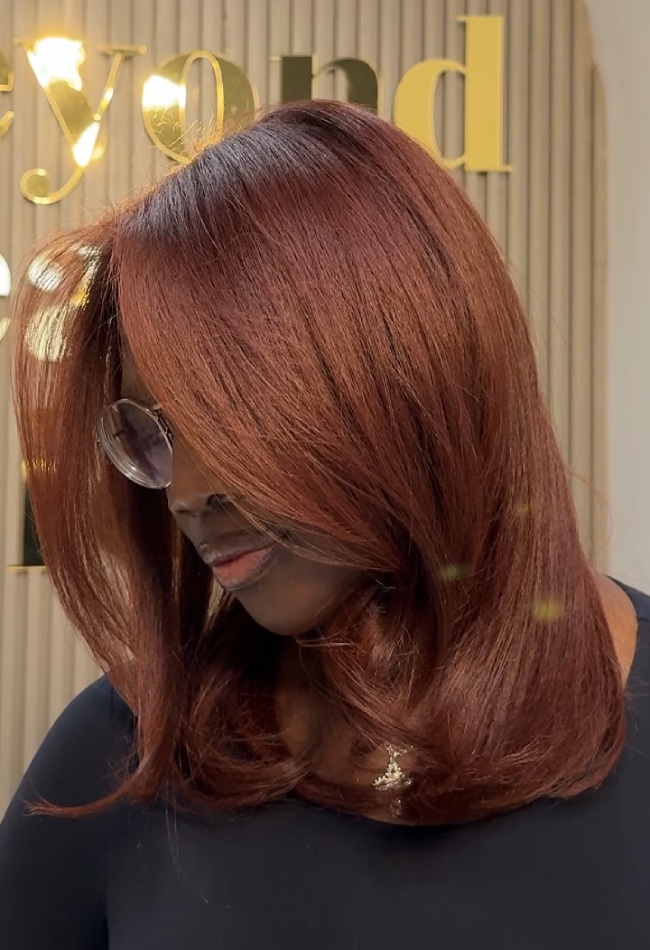
The trick with mahogany brown copper is getting the blend just right. This is not a one-bottle job. The stylist applies a mahogany brown base, then paints subtle copper undertones through the mid-lengths and ends using a balayage technique. The copper tone is warm but not orange, and it catches light on straight to wavy medium-density hair. On a collarbone cut with side bangs and a blowout, the copper reads as dimension, not a separate colour. It takes a salon visit to get this right, and a toner refresh every 8 weeks keeps the copper from turning brassy.
Mahogany With Red Undertones And Blunt Bangs
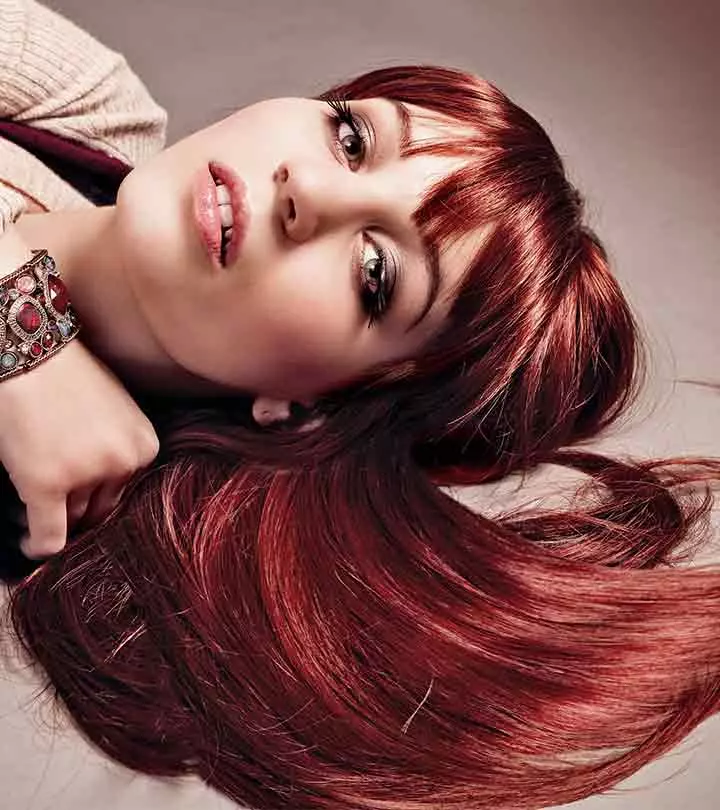
I’ll admit it: blunt bangs with mahogany colour is high maintenance. The vibrant mahogany hue here is a rich red-brown that fades fast, especially on wavy medium-density hair. The technique is a single-process colour, no highlights, so every fade shows. The collarbone length layers keep the waves from looking heavy. Styling takes 15 minutes: loose waves with a medium barrel iron and the blunt bangs flat-ironed straight. The honest downside: those bangs need a trim every 3-4 weeks to stay sharp. A color-depositing mask weekly helps keep the red tones fresh, but you will see roots at week five. Book it only if you are ready for the upkeep.
Mahogany Bob With Subtle Red Highlights
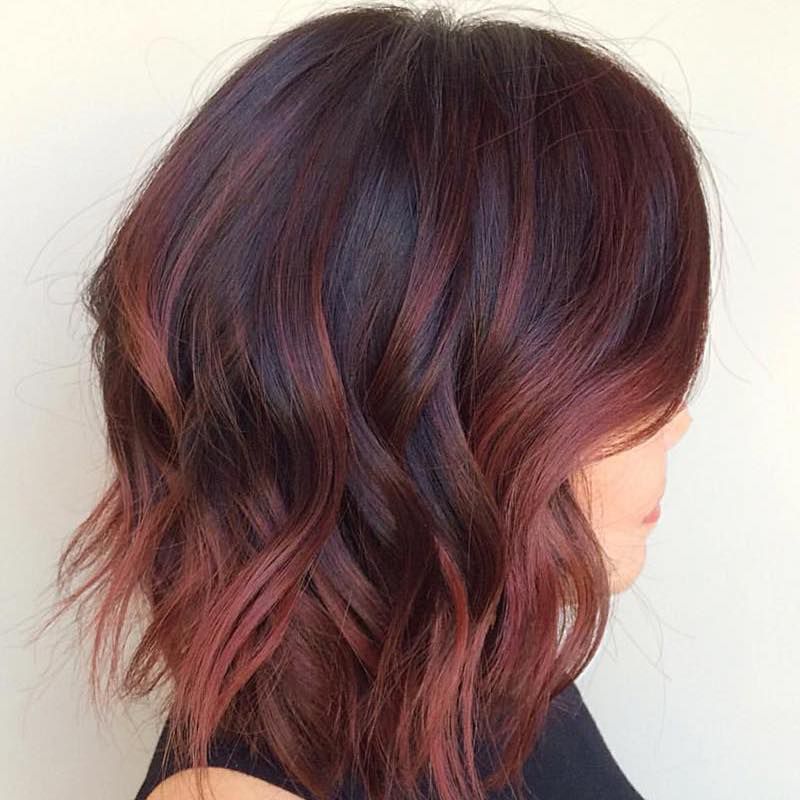
I am team bob over lob for this one. The rich mahogany color with subtle dimension works better at chin length because the highlights stay concentrated. The colour is a mahogany base with lighter mahogany highlights painted through the top layers, a balayage technique that keeps the tone soft. The red undertones are subtle, not shouty. On a wavy medium-density bob with side bangs and a side part, the highlights catch every wave. The shorter length means the shape holds all day, no midday collapse. A lob would spread the dimension too thin. This bob makes the colour the star.
Rich Mahogany Lob With Full Bangs
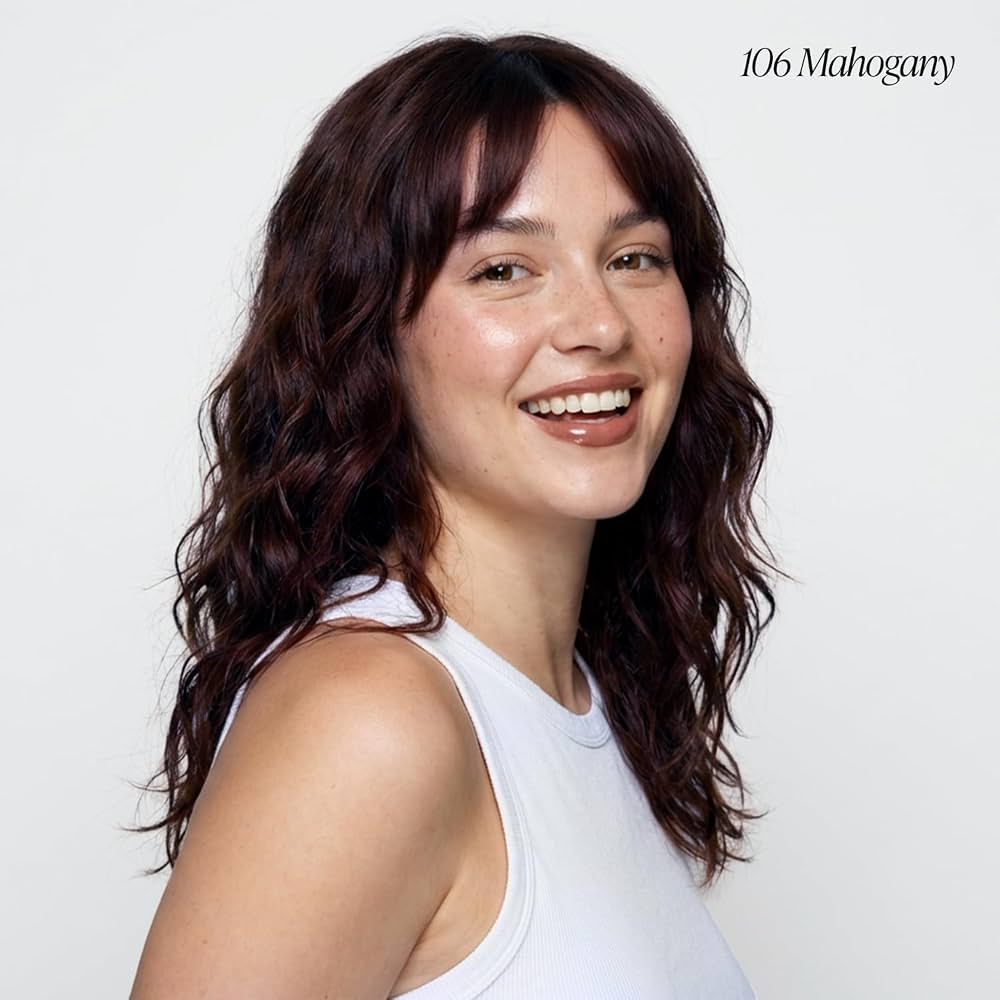
The full bangs hit the eyebrows. The lob lands at the collarbone. The mahogany color is so rich it looks almost purple in low light. I keep wondering if this is a weekend-only look.
A collarbone lob with full bangs means a trim every three weeks. The waves take fifteen minutes with a curling iron, but the bangs need a round brush and patience. This is a fall-through-winter color, the kind that catches the light at holiday parties. The all-over colour sits on medium-density wavy hair, and the rich mahogany lob reads as bold but not costume-y.
Thick Mahogany Hair With Side Swept Bangs
How much time does a thick, wavy mahogany blowout with side swept bangs actually cost you? The colour itself is a single process, about two hours in the chair. The cut and blowout add another forty-five minutes. DIY? Not really. The side swept bangs need a stylist’s eye to blend with the layers, and the mahogany with warm tones requires a professional hand to keep the base even. The collarbone length and thick texture hold the blowout well, but the salon time is non-negotiable.
Vibrant Mahogany With Warm Red Undertones
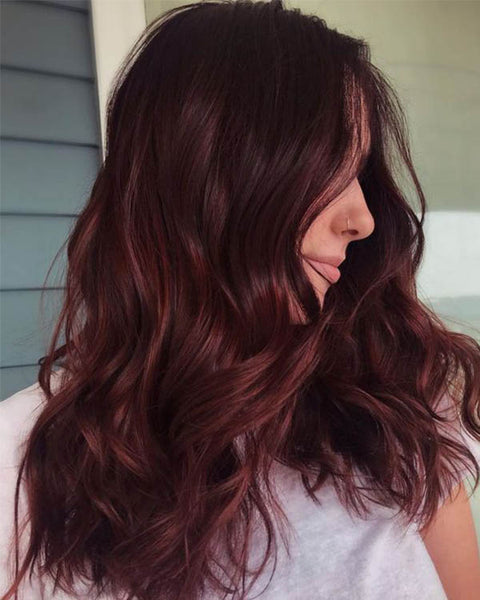
The warm red undertones catch the low autumn sun in a way that no other shade does. This shoulder-length cut with loose waves is made for September through November. The vibrant mahogany red tone reads like a sunset, rich and dimensional on medium-density wavy hair.
It works for a casual weekend or a dinner out. The layers add movement without losing the intensity of the colour. The all-over technique keeps the warm red undertones consistent from root to tip, and the shoulder length means it sits just above the collar, easy to style or leave loose.
Dark Mahogany Brown Lob With Loose Curls
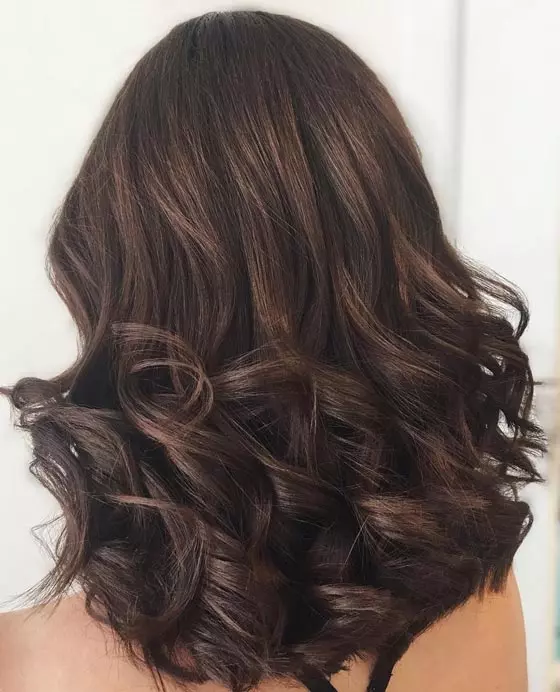
The back view of this lob is what sold me. The dark mahogany brown colour is deep enough to look almost black in shadow, but the loose curls catch the light and reveal the brown base. The blunt ends keep the shape from looking too heavy. The all-over colour on medium-density wavy hair at collarbone length means the curls hold their shape without extra product. The deep mahogany shade is a solid choice if you want richness without red overtone.
Dark Mahogany With Deep Red Hints
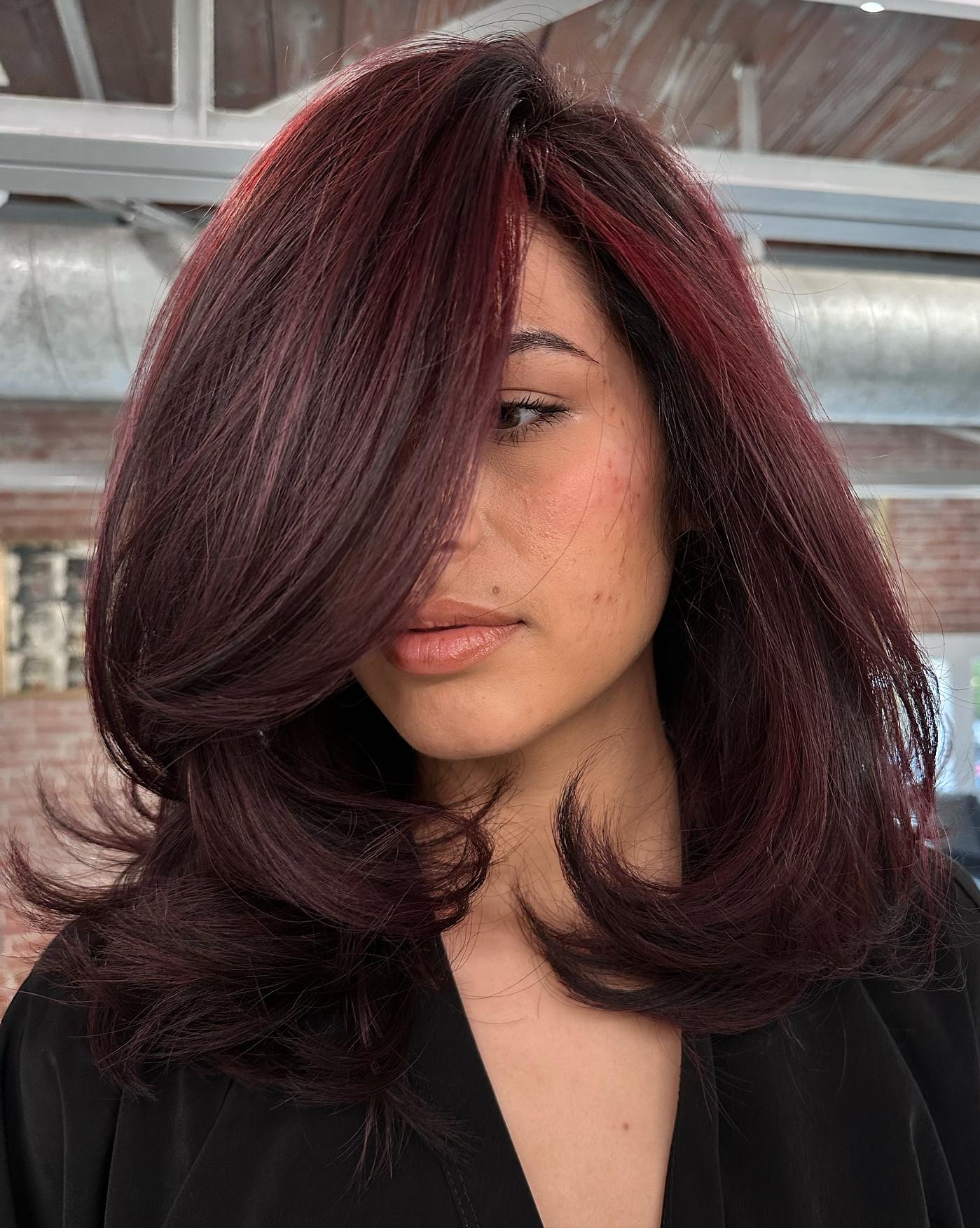
I’ll be honest: this look is not low-maintenance. The voluminous blowout on thick wavy hair takes a solid twenty minutes with a round brush. The full bangs need a touch-up every morning. And the dark mahogany deep red colour fades faster than you’d expect.
The red hints wash out after about four weeks if you use regular shampoo. A color-depositing mask helps, but it’s an extra step. The all-over technique with deep red hints works best on collarbone-length layers, and the thick texture gives the volume some staying power. Worth it for the drama, but plan your upkeep.
Mahogany With Lighter Mahogany Highlights
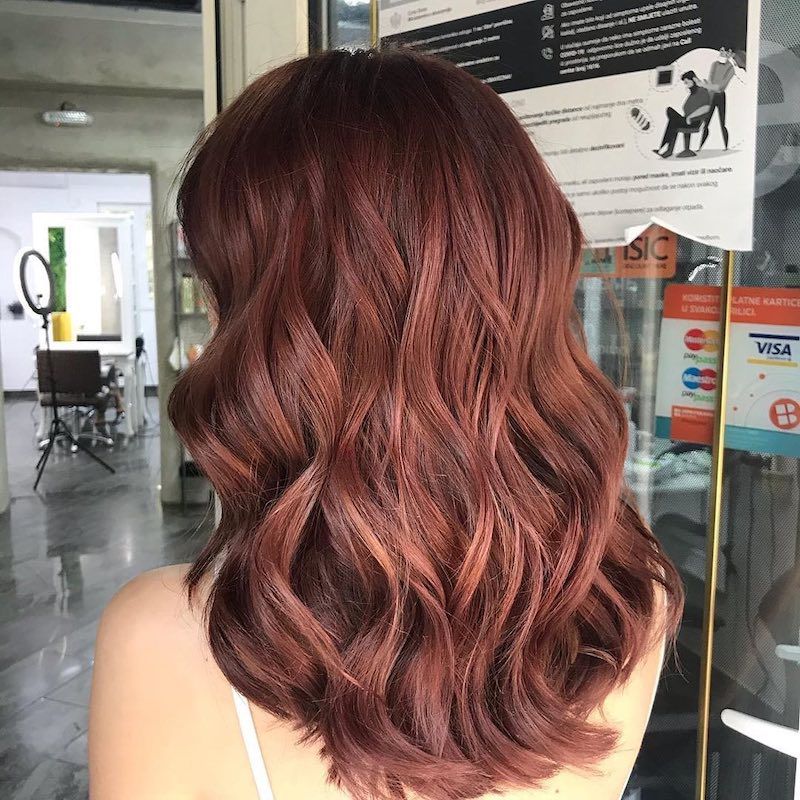
I have a confession: I used to think highlights on mahogany were unnecessary. But lighter mahogany highlights woven into thick, wavy collarbone layers create subtle dimension without going brassy. The technique uses a rich mahogany base with slightly lighter tones painted on selected strands, keeping the overall tone deep and warm. The length sits at the collarbone, and the texture is naturally wavy and thick, so the highlights catch light from every angle. It is not a dramatic shift, just a richer depth.
Deep Mahogany With Subtle Red Balayage
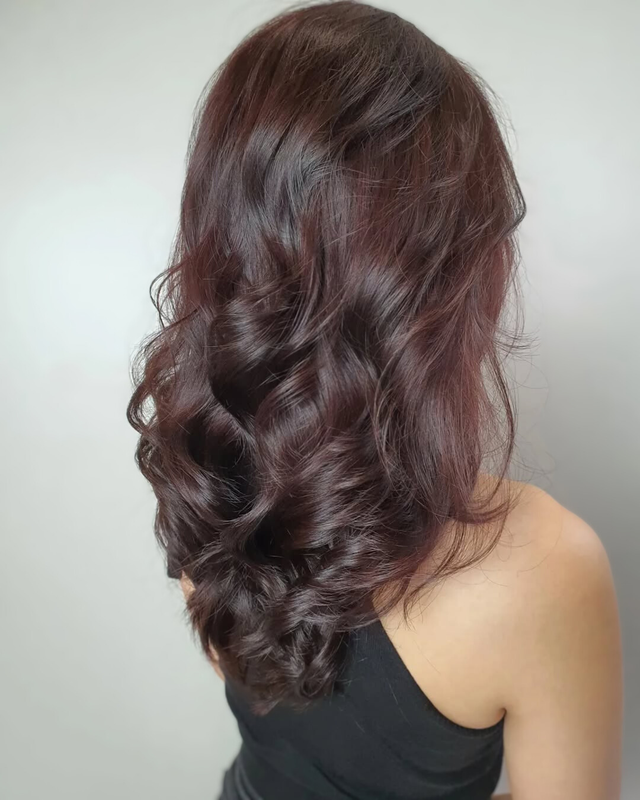
Who actually pulls off a deep mahogany balayage? The rich, dark mahogany base with subtle red highlights uses a balayage technique that paints the red into the mid-lengths and ends, keeping the root area dark. The collarbone-length hair here is wavy with medium density and a side part, which gives the red tone room to glow without being overwhelming.
This combination genuinely flatters those with neutral to warm skin undertones because the red picks up warmth without going brassy. If your skin runs very cool, the red can read too orange against it. For olive skin, it adds a complementary warmth that brings out the skin’s green undertones without making it look sallow. But if you already have a lot of natural red in your complexion, skip it — the colour will compete. Pass on this if you prefer an ashy or pure cool tone.
Deep Mahogany With Red And Brown Undertones
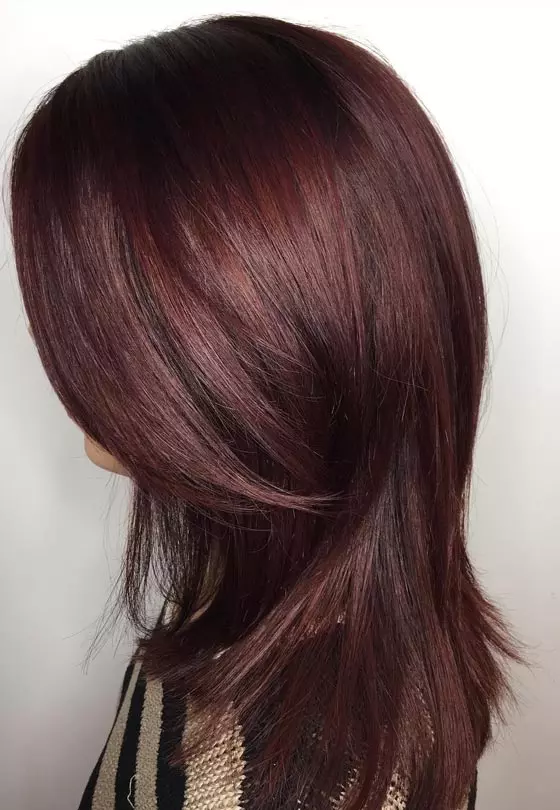
Straight shoulder-length layers show every nuance of deep mahogany brown. The deep, rich mahogany hue here has subtle hints of red and brown that catch the light differently than wavy styles would. With straight texture and medium density, the tone reads more even and controlled, while waves would break up the colour and make the red hints more scattered. For showing off the depth of this deep mahogany brown, straight layers win. It is a precise observation worth making when you book the cut, and the shoulder length keeps the layers visible without losing the colour’s impact.
Vibrant Copper Mahogany Hue
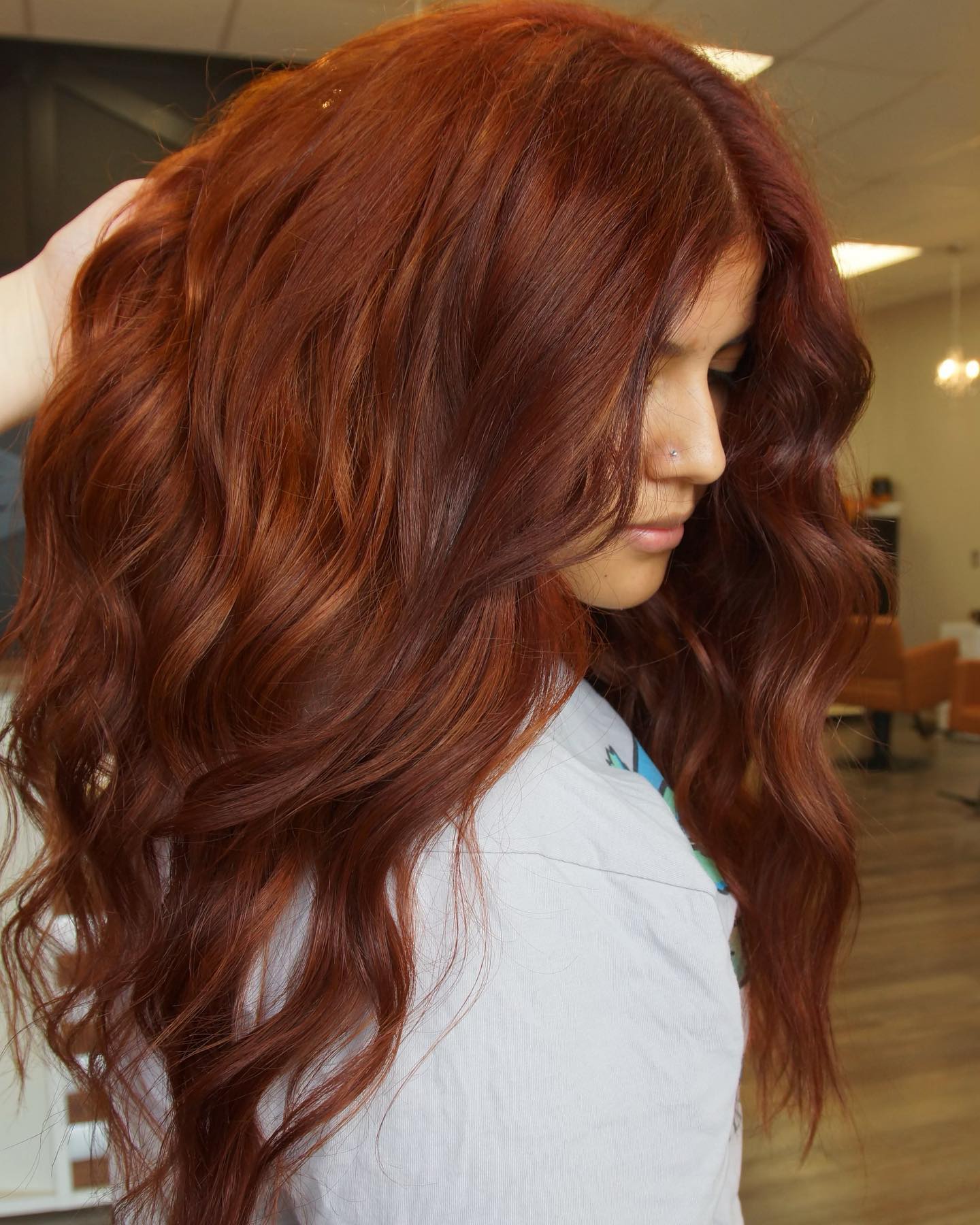
What makes a copper mahogany hue work from a side view? The answer is in the way the light hits the waves. This mid-back length has a vibrant copper tone that shifts from warm brown to almost amber depending on the angle. The side view reveals the depth of the color better than a front shot ever could. The wavy texture catches that light and multiplies it, so every strand reads as dimensional even though the color is uniform. No highlights needed, just that rich, single-note copper mahogany hair that glows on its own.
Mahogany Brown With Copper Auburn Highlights
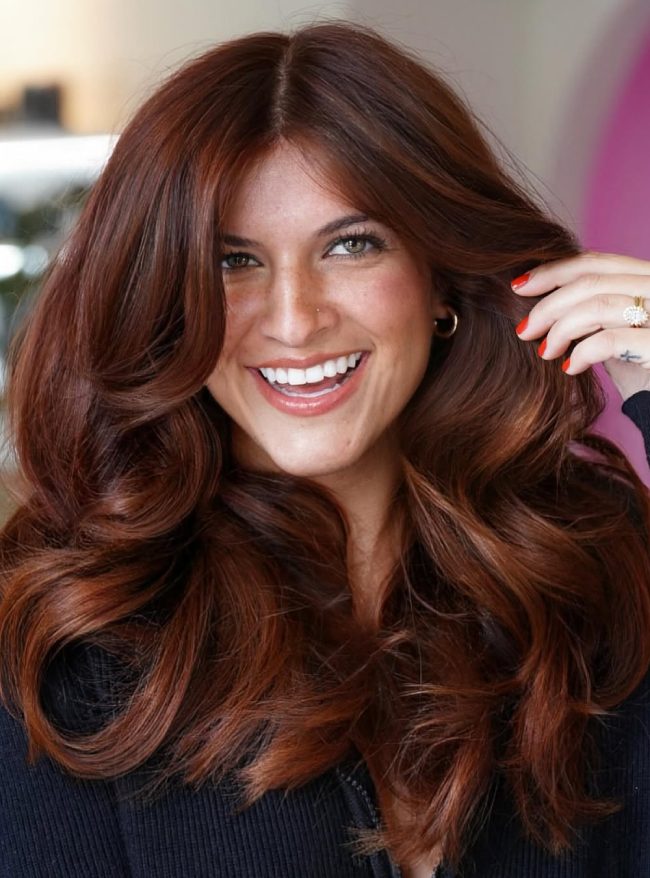
The combination of mahogany brown and copper auburn highlights looks stunning in the salon light, but by day three, the copper starts to dull. On thick, wavy mid-back hair, the highlights can get lost in the volume unless you style them to show. The curtain bangs help frame the face, but they also show fading first. The wavy texture means the highlights are only visible when the hair is styled with waves; air-drying flattens the dimension.
Ask your stylist for fine, face-framing highlights that start a half-inch from the root to soften grow-out, and add a root shadow for extra longevity. The honest downside: the copper auburn tones need a color-depositing mask every two weeks to stay bright. Without it, the mahogany copper auburn highlights turn into a muddy brown faster than you’d expect. Also, avoid sulfate shampoos to prevent the copper from turning orange.
Dark Brown With Copper Auburn Balayage
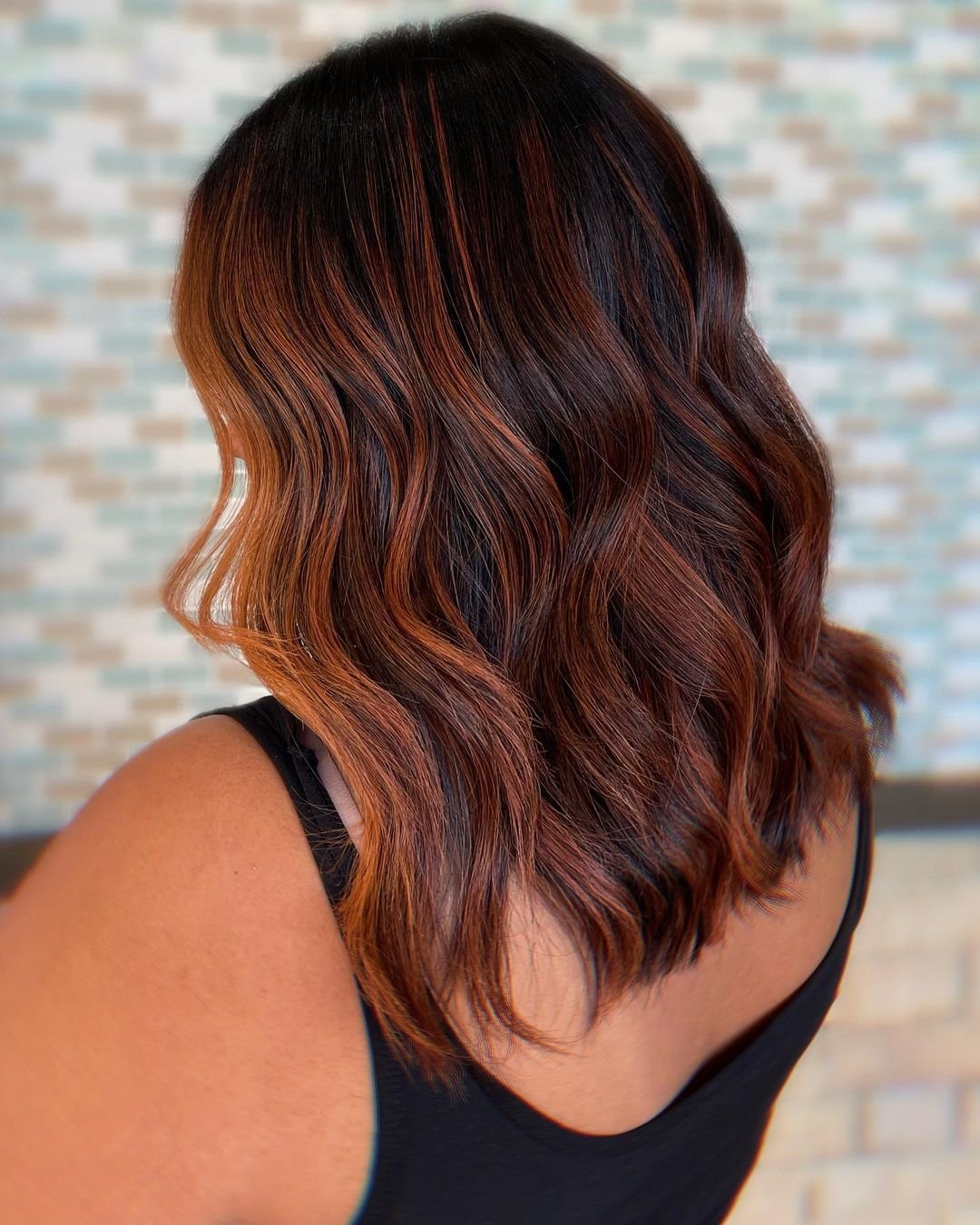
I used to think balayage was only for blondes, but this dark brown copper auburn application changed my mind. The technique involves hand-painting the copper and auburn tones onto the mid-lengths and ends of a shoulder-length lob, leaving the root area dark. The balayage is painted in sweeping motions, concentrating the copper on the surface layers for a sun-kissed effect, while the auburn is placed deeper for contrast. The wavy texture helps the color blend naturally, so there’s no harsh line. It’s a way to add warmth without committing to a full color change.
Mahogany With Visible Reddish Highlights
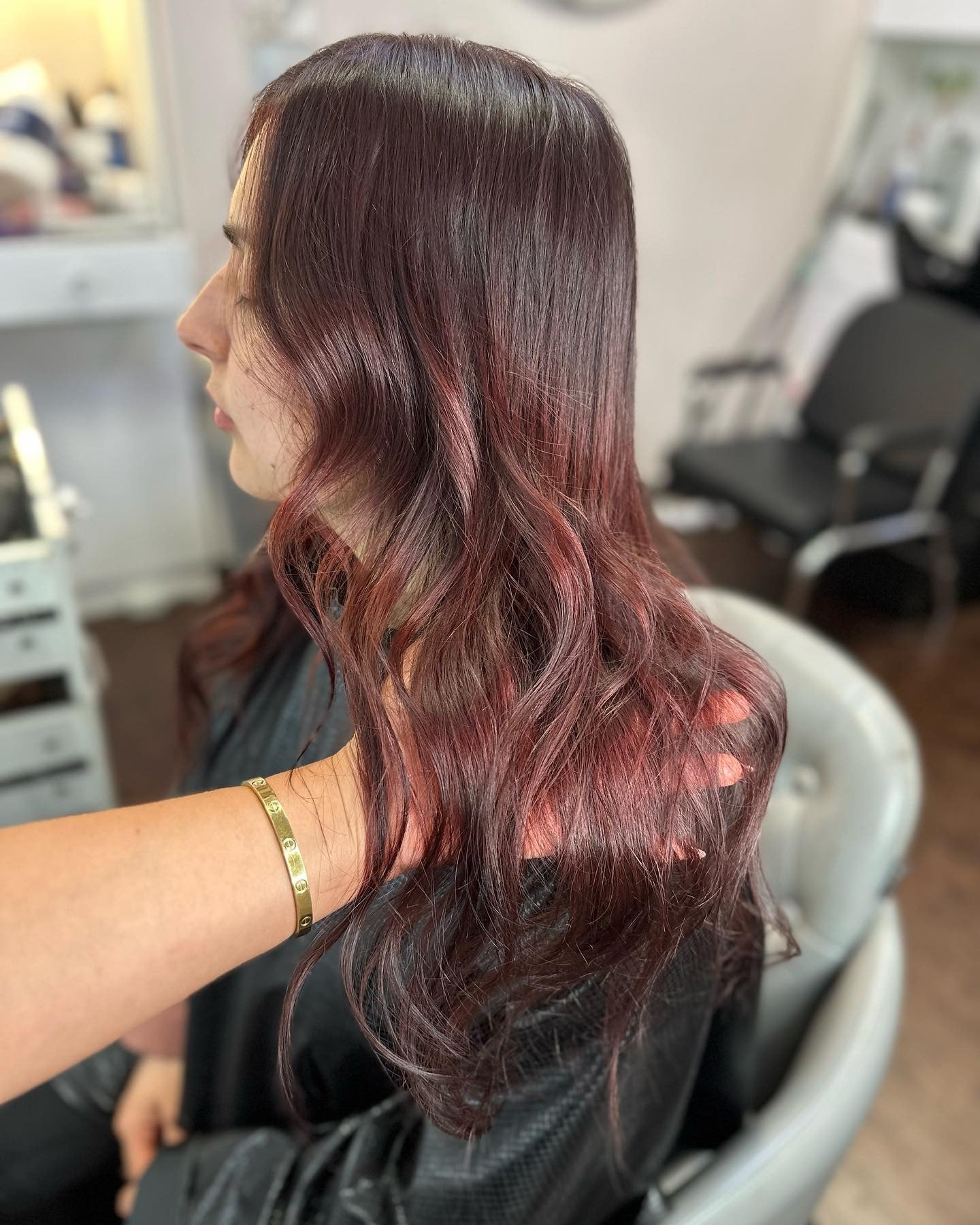
This color is for anyone who wants warmth without going full red. The mahogany with reddish highlights reads as rich and dimensional, especially on medium-density wavy hair. The side part allows the highlights to catch light on one side, which softens a round face. If you have fine hair, the highlights add visual density without weighing it down. This color works best on medium to warm skin tones; the red highlights can look ashy on very cool skin.
Wear and upkeep: the loose waves take about 15 minutes to style with a curling wand. The highlights grow out softly because they’re painted on, so you can stretch salon visits to ten weeks. The side part means you can hide the roots longer on one side. Use a color-depositing conditioner weekly to keep the red from fading to orange. It’s a low-commitment way to test red tones.
Mahogany With Striking Red Balayage Highlights
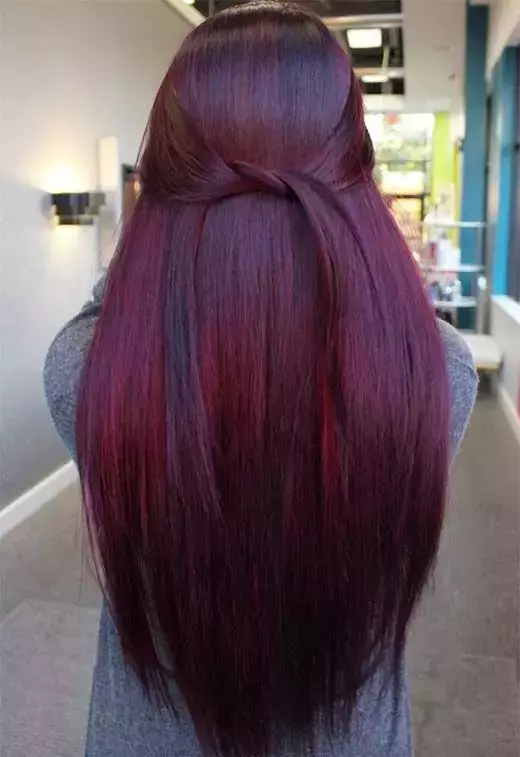
Straight hair lets a mahogany red balayage read like a clean ribbon of color. Wavy hair diffuses it, softens the contrast. On this mid-back length with a middle part, the red highlights land precisely where the balayage technique placed them: bright at the ends, subtle near the roots. The tone stays warm, the texture straight and medium density, so every strand catches the light the same way. It is not a wash-and-go color. It is a color that demands a flat iron to show off.
Long Layers Striking Mahogany With Subtle Red Undertones
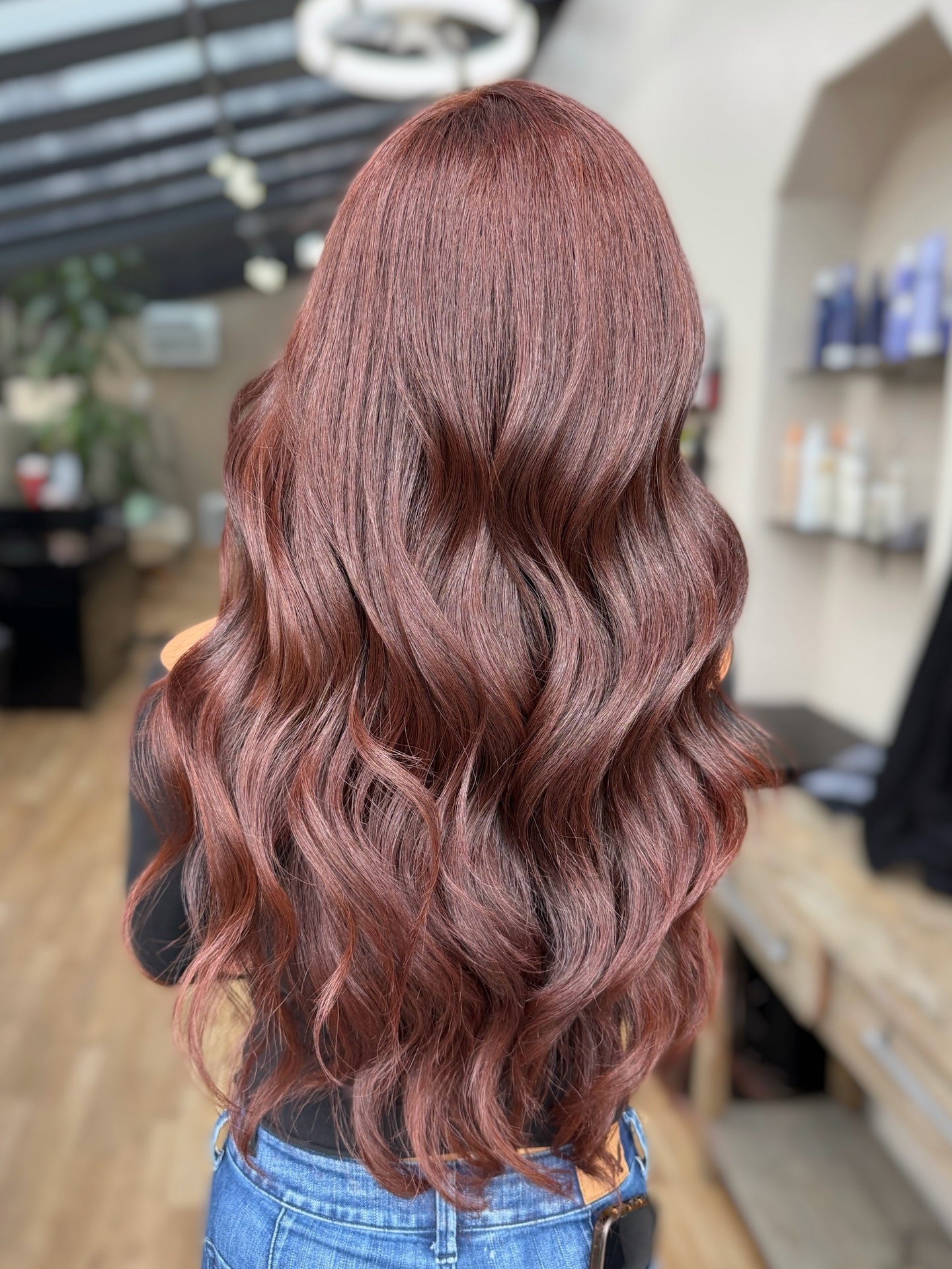
Can thick, wavy mid-back hair really hold onto subtle red undertones? This striking mahogany hair says yes, but only if you book a gloss treatment every six weeks. The color here is a single-process mahogany with a red tone that peeks through in soft light. The long layers let the waves move, and the texture is thick enough to keep the undertones from fading to plain brown too fast.
I am skeptical. My own fine hair would eat this color in three washes. But if your hair is dense and porous, the red might linger. The key is the tone: warm, not violet. A gloss is not optional. It is the difference between mahogany and just brown.
Deep Mahogany With Subtle Auburn Highlights
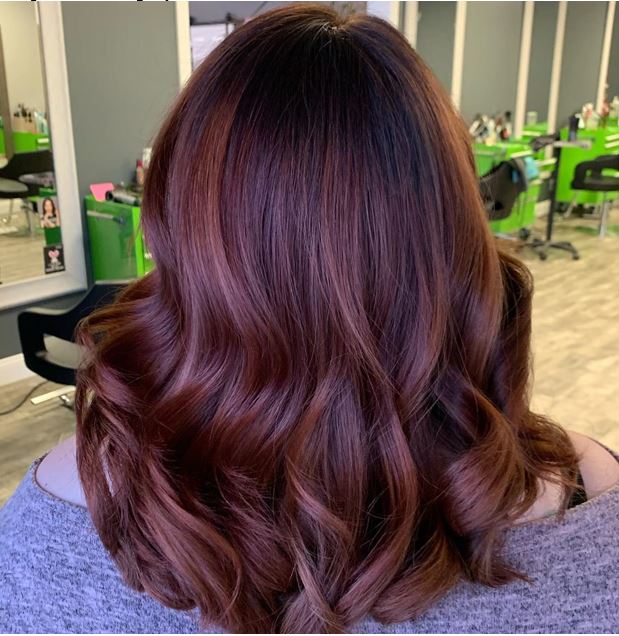
A deep mahogany base with subtle auburn highlights costs about three hours in the chair every eight weeks. The salon does the heavy lifting: a single-process base color plus a partial highlight weave for dimension. I have tried a DIY gloss at home to stretch the time, but the auburn tone turns brassy without professional toner. The technique is precise: the highlights sit on the top layers, mid-back length, wavy texture, so they catch movement without looking stripey. You pay for that precision.
Deep Glossy Mahogany
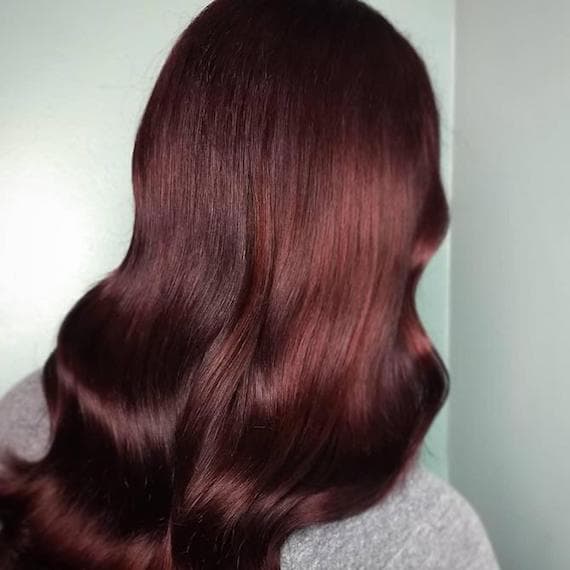
This is the color that makes you want to touch it. Deep glossy mahogany on smooth, polished waves, mid-back length, thick texture. It lands in winter because the richness cuts through gray light. The gloss technique seals the cuticle, so the color looks wet, not dry. No highlights, no dimension tricks, just a single deep tone that reflects like glass.
Winter is the season for this. The low humidity helps the gloss last. The color is warm enough to fight the cold. The tone is pure mahogany, no red or violet leaning. The layers are long, the waves are polished with a round brush. It is a color that asks for a coat and a scarf, not a beach.
Rich Mahogany With Subtle Dimension
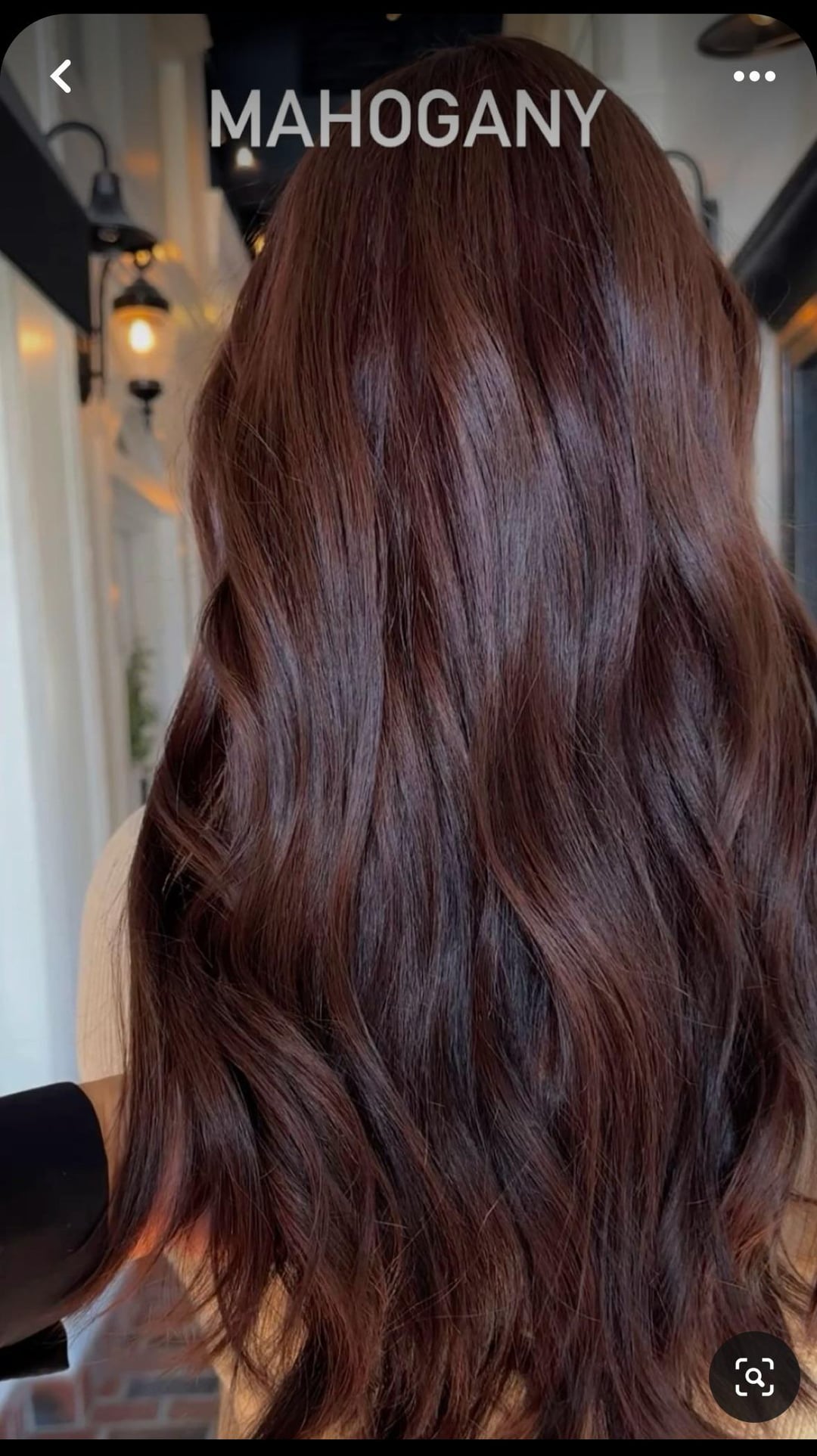
This is how you do dimension without highlights. The rich mahogany dimension comes from the cut: long layers on thick, wavy mid-back hair. The color is a single tone, no contrasting strands, but the texture and movement create natural shadow and light. The back view shows it best: the waves catch the light at different angles, so the mahogany looks deeper in the troughs and brighter on the crests. The tone is warm, not flat. The technique is a single-process application with a gloss finish. No extra steps, just a good cut and a rich color.
Deep Rich Mahogany Shade
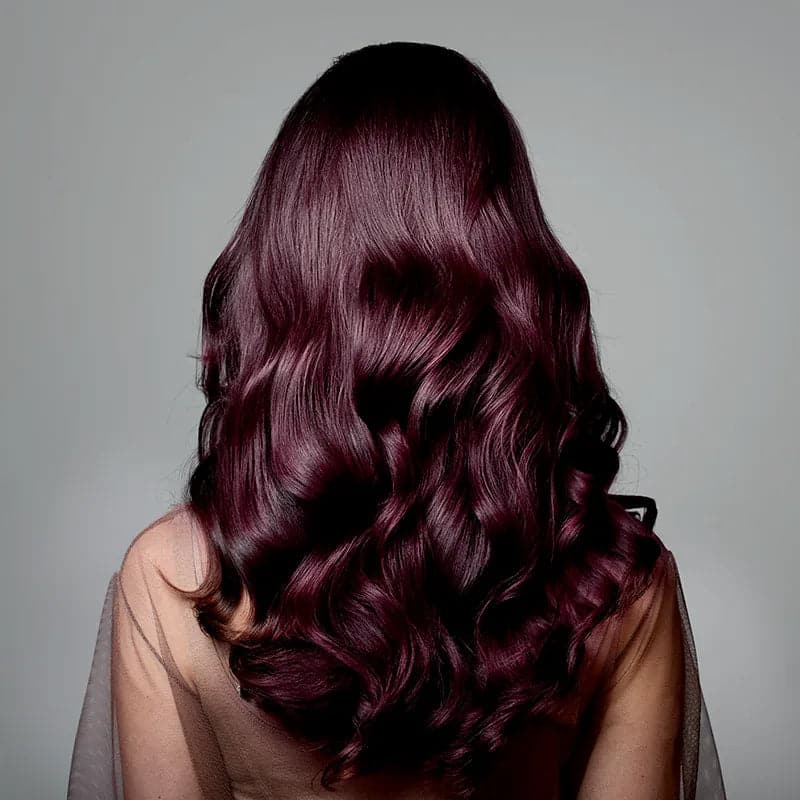
I’ll admit it: this deep mahogany colour makes me jealous. The mid-back length, thick wavy layers, no bangs — it’s a lot of hair, and the deep mahogany color shines with a red-brown tone from root to tip. But I know the tangling struggles. Thick waves at this length catch on everything, and the colour means a trim every eight weeks to keep the ends healthy.
Upkeep is real. A colour-depositing mask every three weeks stops the red from going flat, but the grow-out line stays hidden for about six weeks because the deep base blurs it. The honest downside: this is not a wash-and-go colour. Fifteen minutes with a leave-in conditioner and a wide-tooth comb is the minimum to keep the wave pattern defined and the colour glossy.
Deep Mahogany Brown Air Dried
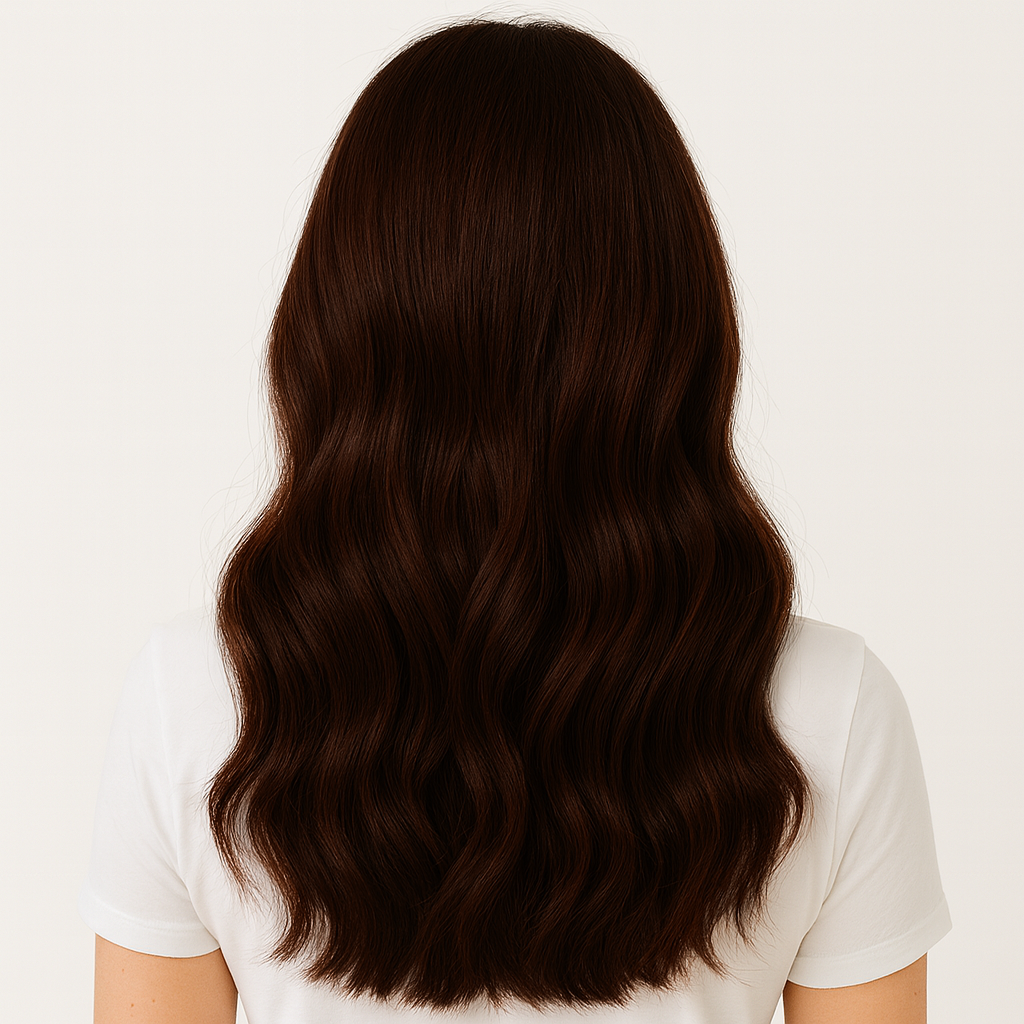
Ever wonder how air-drying changes a deep mahogany brown air dried finish? On thick, wavy mid-back hair, the rich colour settles into a matte, velvety tone — less shine than a blowout, but the red-brown undertone looks deeper because there’s no artificial gloss. The air-dried technique lets the natural wave pattern do the work, and a light serum stops frizz from dulling the colour. No heat means the cuticle stays closed longer, which keeps the mahogany from fading fast.
Deep Rich Mahogany Brown Straight Hair
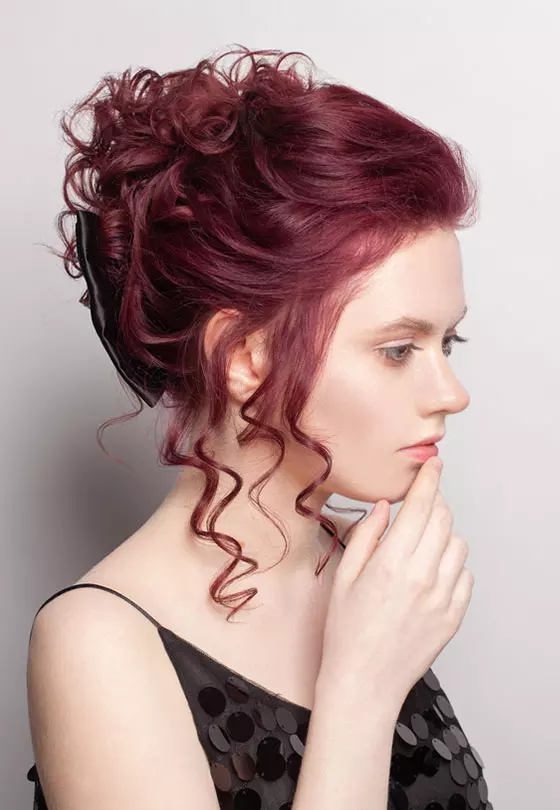
Straight, thick mid-back hair that holds a deep, rich mahogany brown color without frizz — that’s a specific hair type. This shade flatters medium to high density straight hair best, because the colour sits evenly without patchiness. A middle part here widens a round face slightly, so oval or heart shapes get the most from the clean line.
The deep rich mahogany brown straight technique means a single process colour applied from root to tip, no highlights needed. The tone reads as a cool red-brown, not warm. If your hair is fine or low density, the straight mid-back length can look stringy — this cut wants weight. That precise observation: the colour works best when the hair has enough body to carry the darkness without looking flat.
Dark Brown With Mahogany Highlights
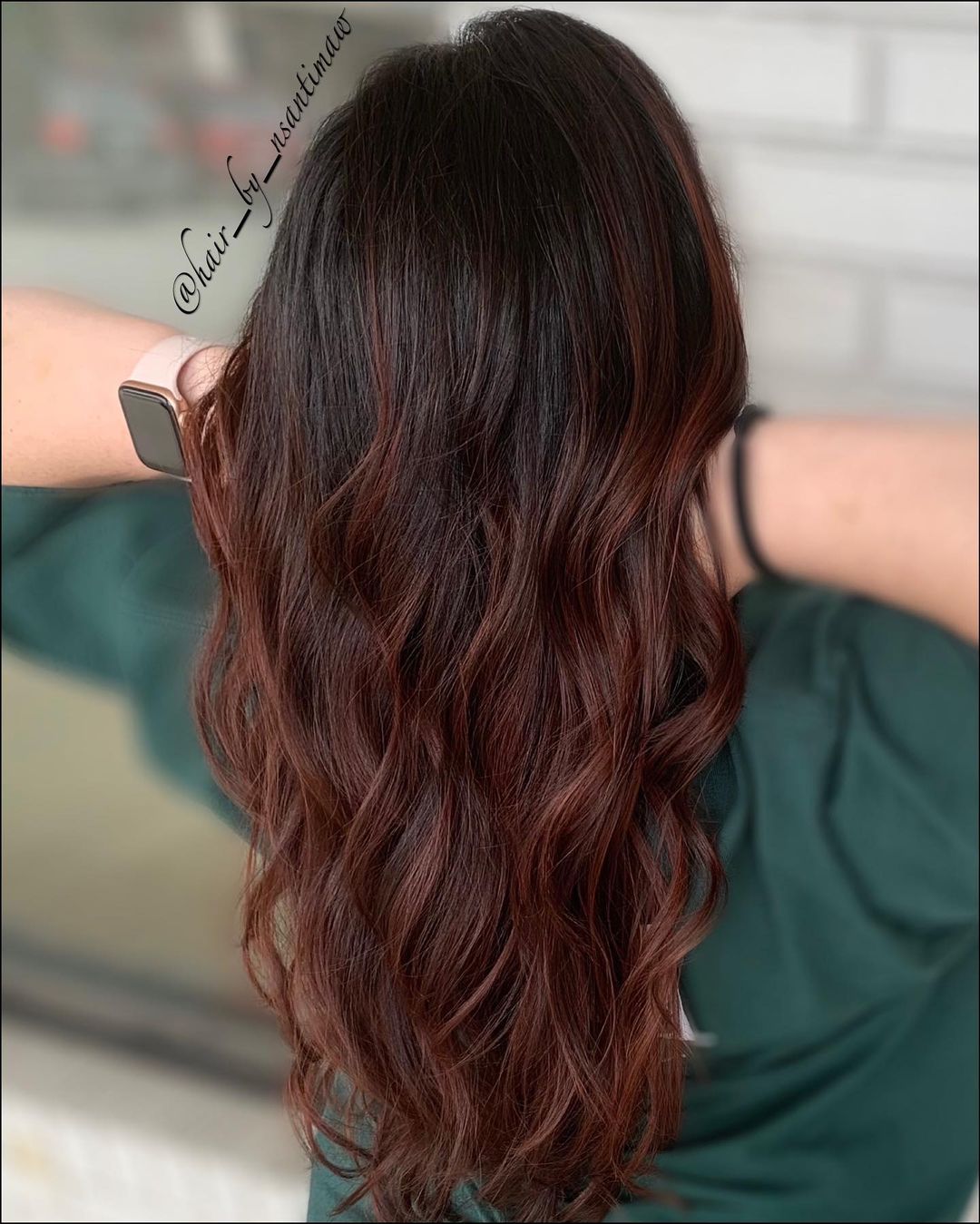
You’re at the salon, deciding between weaving mahogany tones into dark brown hair or going all-over mahogany. The highlights are lower maintenance — the dark brown mahogany highlights grow out softer, no harsh line at the root. An all-over dye job looks richer initially, but the root shows at week four. Highlights let the natural base peek through, so the colour reads as dimensional rather than flat. For wavy, mid-back hair, the woven technique adds movement without needing a full commitment.
Dark Base With Mahogany Balayage Highlights
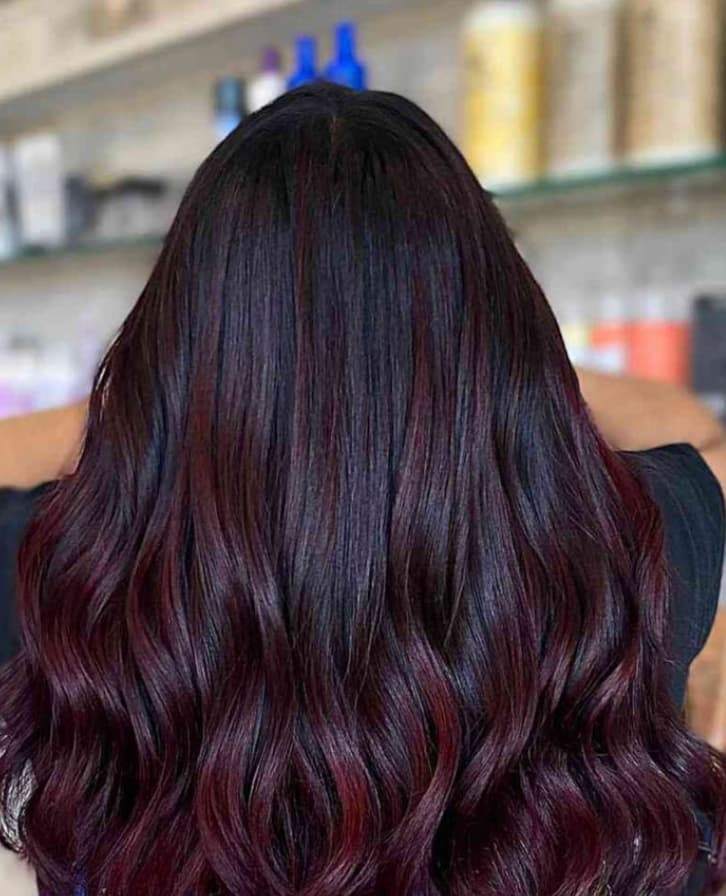
I’m not convinced the dark mahogany balayage on a dark base stays vibrant without work. The wavy mid-back layers show the mahogany tone painted from mid-lengths to ends, but on dark hair, that red can fade to a dull warm brown in four weeks without a toning gloss. Balayage is meant to be low maintenance, but mahogany is a demanding tone.
A colour-depositing conditioner every two weeks keeps the red alive, but that’s a regular habit, not an occasional fix. The grow-out is soft, sure, but the colour shifts noticeably between glossings. If you want a true mahogany that reads consistently, an all-over dye job is less of a gamble. The balayage works better if you’re okay with the tone evolving over time.
Dark Base With Deep Red And Purple Streaks
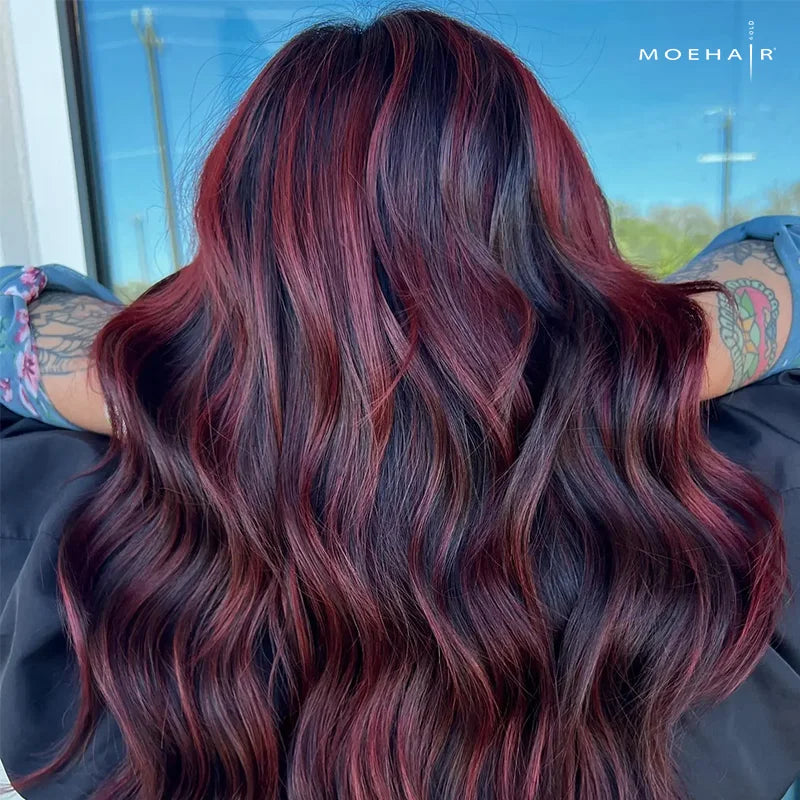
I saw this and my first thought was: that chair time is real. The dark base red purple streaks combination is a salon-only job, no question. The technique involves precise sectioning and multiple tones, which means three hours minimum. The tone is vibrant, almost jewel-like, and it demands a dark base underneath. At mid-back length with thick, wavy texture, the streaks catch light from every angle. DIY? Skip it. You need a pro who knows how to keep the dark base from bleeding into the red and purple. The cost is time, not just money, and it adds up fast.
Deep Mahogany With Subtle Violet Undertones
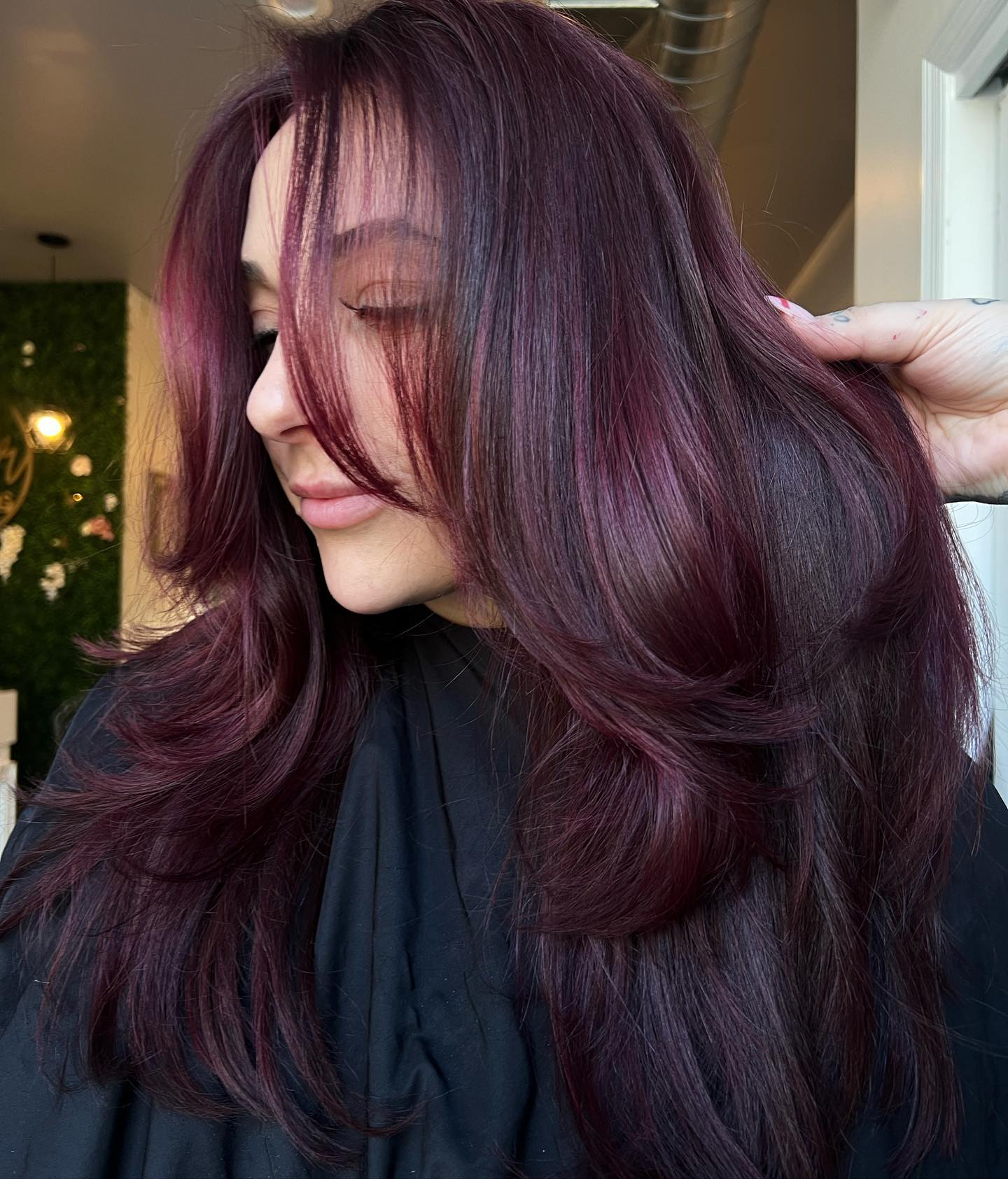
Ever wonder why deep mahogany with violet undertones feels so right in winter? The deep mahogany violet undertones come from a single-process color with a violet additive, creating a tone that is cool but not cold. The subtle shimmer catches low winter light, and the rich depth suits the darker months.
At mid-back length with thick, wavy texture and side swept bangs, this is a winter evening look. The voluminous blowout adds drama, and the violet undertones play off candlelight and dark coats. Think holiday parties, dinner dates, or a night in by the fire. It lands in this season because it matches the atmosphere: rich, deep, and a little mysterious.
Dark Base With Vibrant Mahogany Ombre
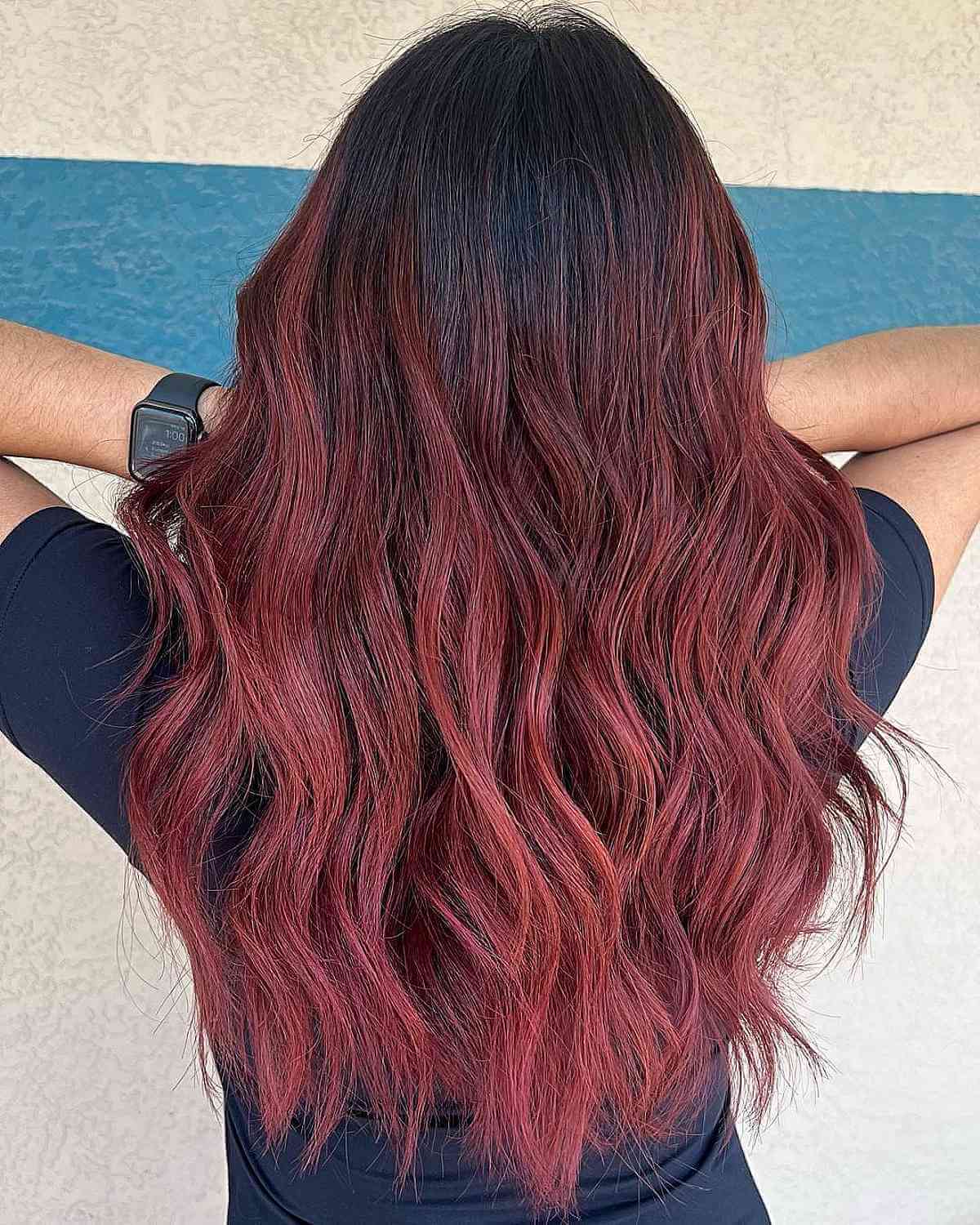
The gradient starts just below the shoulders, with the darkest mahogany hitting the ends. The dark mahogany ombre on a dark base creates a seamless transition, no harsh line. The technique is a hand-painted ombre, soft and blended. The tone is vibrant but not neon, with a warm mahogany richness. At mid-back length with medium-density wavy hair, the ombre catches light in waves. The back view shows the color shift clearly, and the middle part keeps it balanced.
Visual Idea
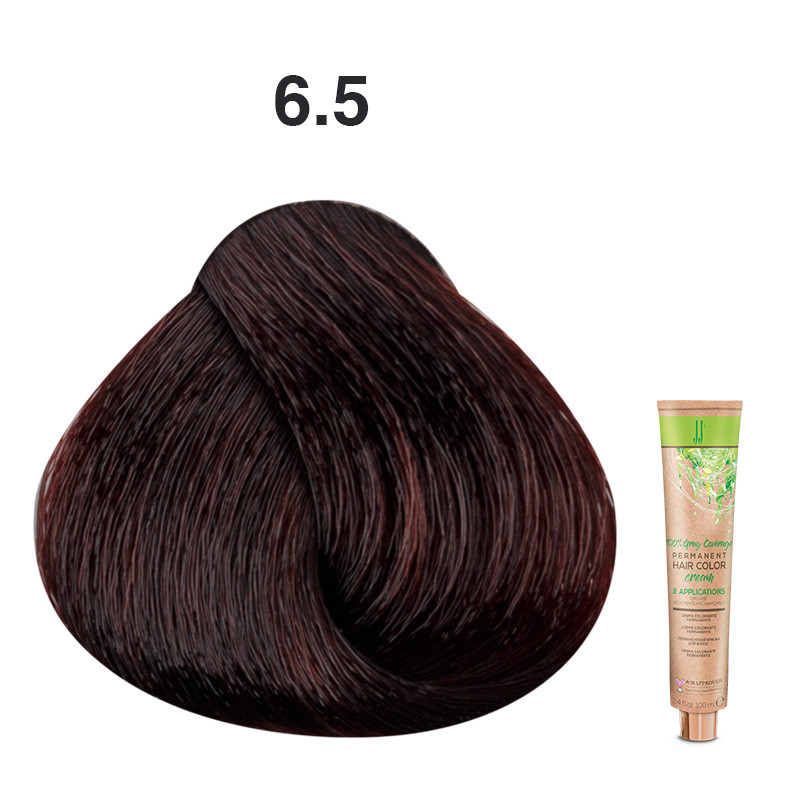
I’ll admit, I was skeptical about mahogany dark blonde on fine, straight hair. The shade is delicate, and fine hair tends to let color slip faster than thicker textures. The tone is warm but not brassy, and the technique is a single-process color that needs a good base to hold.
Upkeep items: a color-depositing conditioner every wash, a toning gloss every four weeks, and a sulfate-free shampoo. The honest downside: the color fades visibly on fine hair, losing its mahogany depth within two weeks. Straight, fine hair shows every bit of fading, so you have to stay on top of it. The length here is cropped close, so the color reads as a solid shade.
Mid-Back Visual Idea
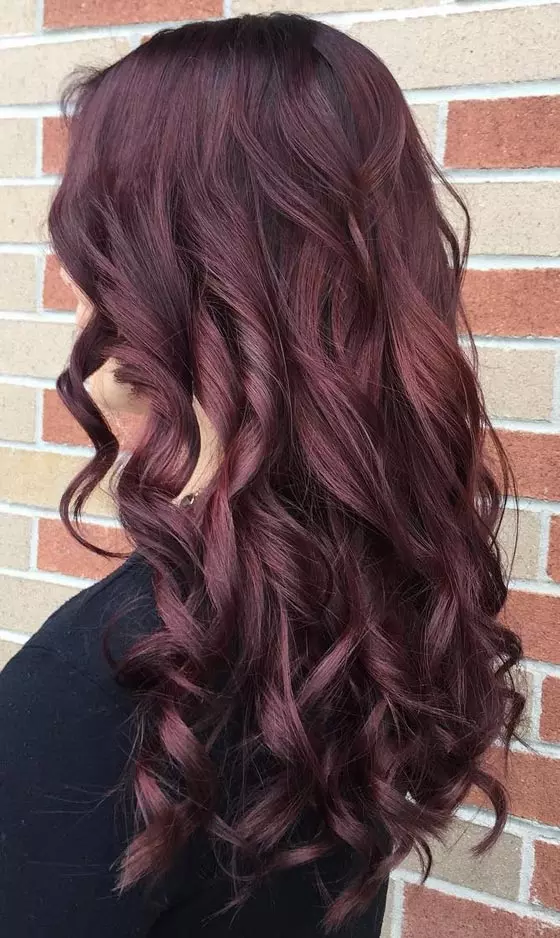
This is how you build a rich mahogany color on thick, wavy hair. The technique starts with a dark base, then adds subtle red undertones through a layered color application. The tone is warm and deep, not flat. At mid-back length with loose waves, the color catches light in the layers. The texture is thick and wavy, which holds the color well. The side view shows the dimension from the layering technique.
Final Thoughts
After writing all of these, I noticed one thing: the best mahogany is never just one note. The ones that stopped me had a second colour underneath, a red or a copper or even a violet, something that made the brown feel alive. I am booking the deep mahogany with subtle red balayage next. It buys me six weeks before the roots show, and that is worth the chair time.
- Tone with a color-depositing conditioner at week four.
- Wash in cool water to keep the red from fading.
- Trim the ends every eight weeks to prevent brassiness.
- Avoid sulfates if you can.