Middle Parting Hairstyles for Waves, Length, and Soft Shape
A middle part has a funny reputation: it can make a hairstyle look newly intentional before you change a single strand. That same line can also expose an overworked crown, flatten the frame around the face, or make long hair feel too symmetrical. The difference is rarely the part alone; it is the amount of softness left around it and the direction the length is allowed to take.
Before copying a center-parted look, ask what you want the hair to do around the face. If you have ever made the part perfectly straight and still disliked the result, the missing decision was probably not precision but where the volume begins, how far the hair sits from the cheeks, or whether the ends should stay quiet. Let the line support that feeling rather than asking it to carry the whole style.
Soft Blonde Waves With a Clear Center
The first look uses a clean middle line to divide long blonde hair into two evenly weighted curtains of soft S waves. The movement begins around the face and repeats down the lengths, so the style feels organized before the eye even notices the white blazer behind it. That repeated wave scale is what keeps the generous length from looking shapeless or accidentally heavy.
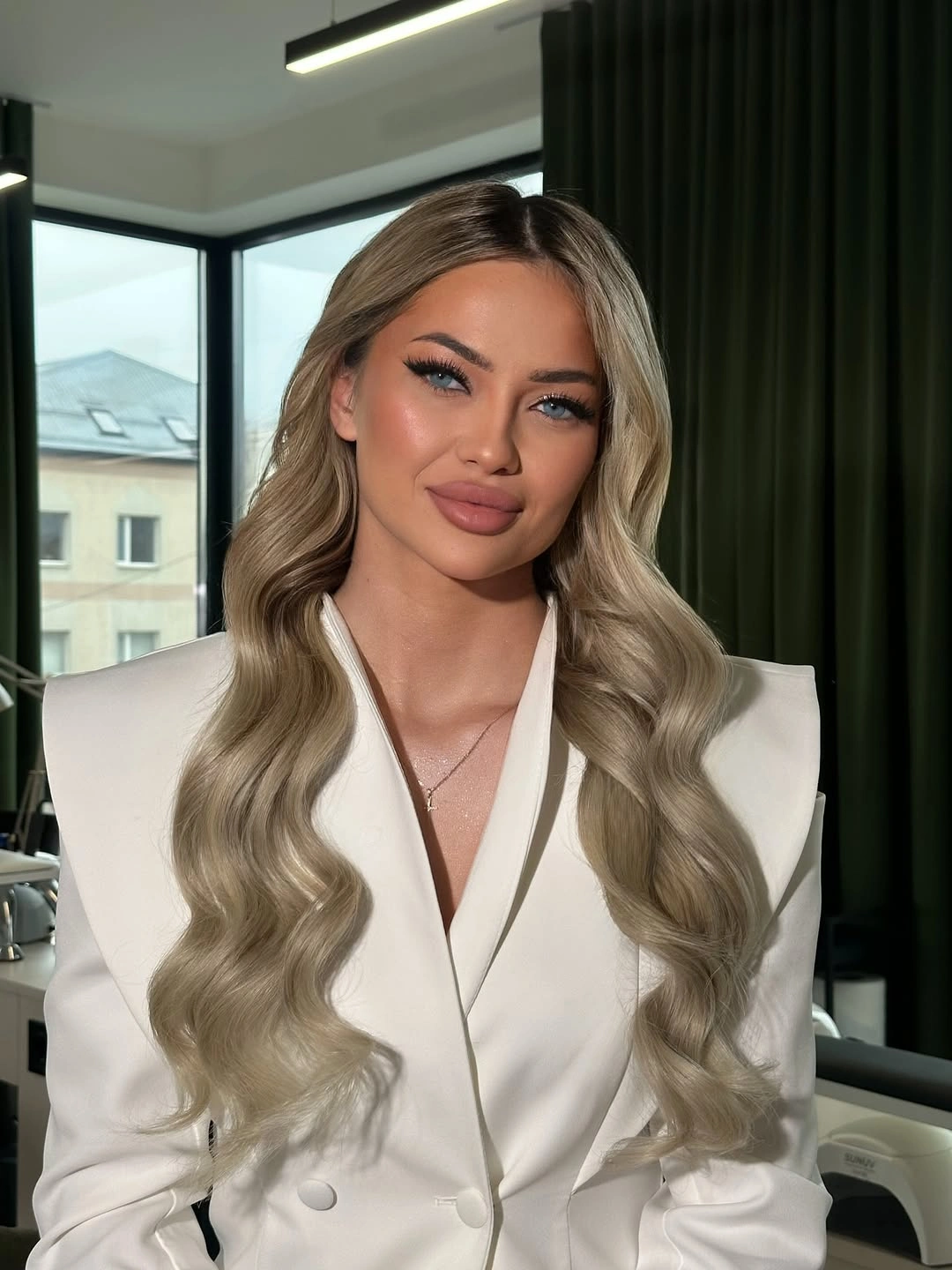
If you want this relationship between line and movement, keep the crown visually quiet and let the wave begin lower rather than adding volume everywhere. A shorter version can preserve the same idea with a shoulder-grazing cut, although the waves will appear rounder because there is less length to stretch them. The useful choice is not a particular tool, but keeping both sides similar enough that the center remains the first point of order.
The tradeoff is that symmetry makes small differences noticeable. If one side lifts higher or bends in a different direction, the center part can stop looking intentional, while a slightly irregular finish would hide that variation more easily. This style suits someone who likes a polished frame and is willing to keep the part and wave rhythm visually aligned.
Gathered Blonde Hair With Soft Face-Framing Pieces
Here the middle separation stays visible at the top while most of the blonde length is drawn away from the face. The loose pieces beside the cheeks keep the gathered shape from becoming severe, and their curved edges add a softer color transition against the bright blue shirt. The look works because the center line remains a starting point even after the silhouette becomes lighter and more open.
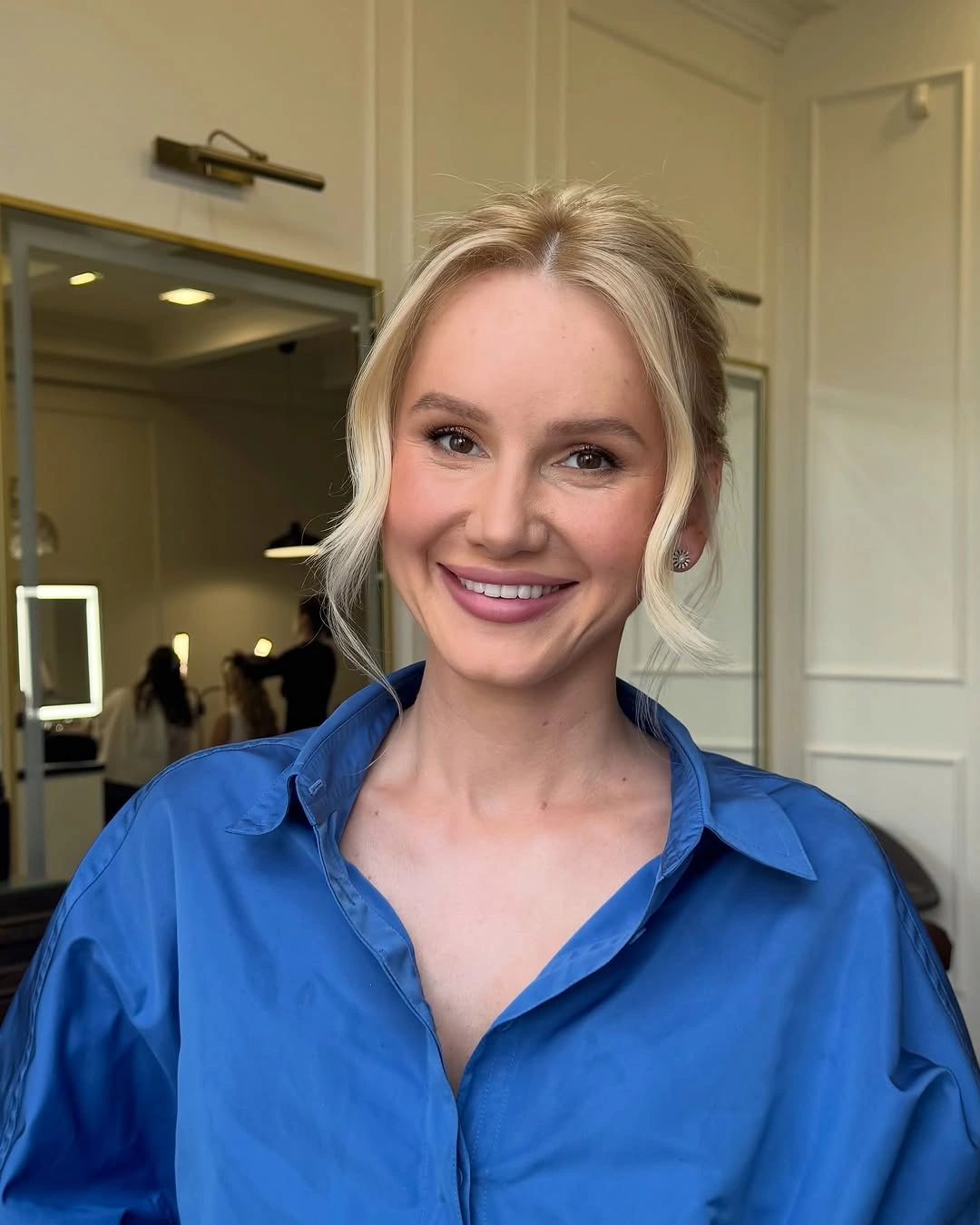
To adapt this idea, decide first how much of the face-framing hair should remain free. Longer pieces create a relaxed outline and soften the gathered shape, while a closer finish makes the result cleaner and more formal. A central part is especially useful here because it gives both sides a clear direction before they move backward, which helps the style feel deliberate even when the ends are not visible.
The limitation is that the most important detail sits near the front, so uneven pieces or too much lift can change the balance quickly. This is a good option when you want hair away from the shoulders but still prefer a gentle frame around the face. It is less about identifying a precise updo and more about preserving the calm division at the crown.
Long Dark Curls With One Directional Accent
Long dark brown curls make the middle part feel more dramatic because the texture expands on both sides of the face. The curls are dense and clearly defined through the lengths, while one narrow front detail introduces a directional break without taking over the whole shape. That contrast between a stable center and a small asymmetrical accent gives the style rhythm instead of letting the volume read as one continuous block.
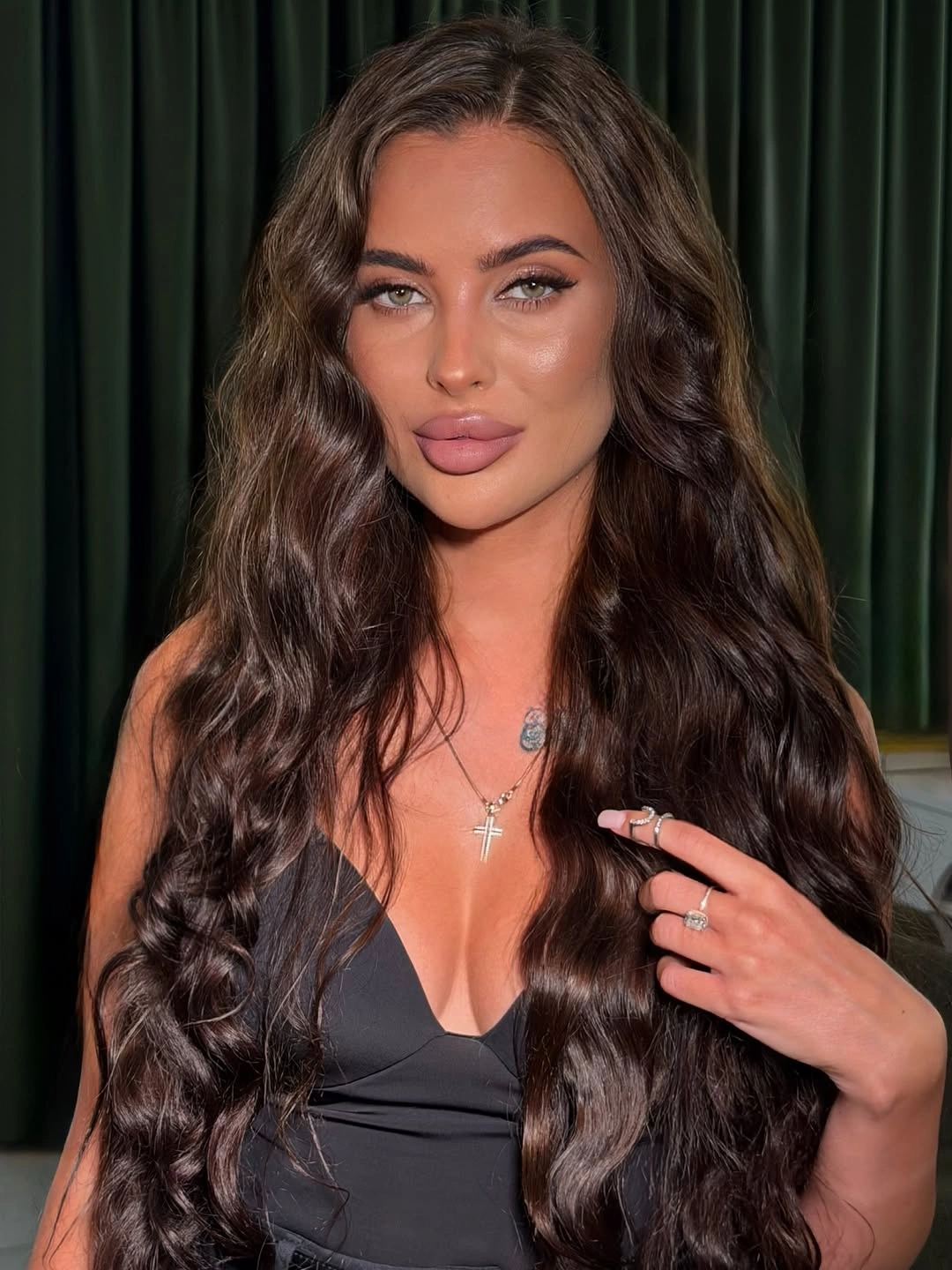
The most wearable adaptation is to keep the central split and reduce the size of the front accent, allowing the curl pattern to remain the main event. You could also soften the curl definition through the ends so the hair feels less formal while the part still anchors the face. The point is to let one detail guide the eye, not to add several competing decorations to an already full silhouette.
Very long, dense curls carry visual weight, and that is both the appeal and the honest drawback. A shorter length would make the center line and face-framing texture easier to maintain, but it would also remove some of the sweeping drama created by the long fall. Choose this direction when you want the part to organize abundant movement rather than disappear beneath it.
Sleek Dark Length With Graphic Middle Parting
This nearly black style keeps the shape almost entirely straight, so the middle part becomes the main design decision. The long sides fall in clean uninterrupted lines past the shoulders, creating a graphic frame that is stronger than any accessory or curl pattern could be. The beige top adds warmth around the face, but it does not compete with the simple relationship between dark length and clear separation.
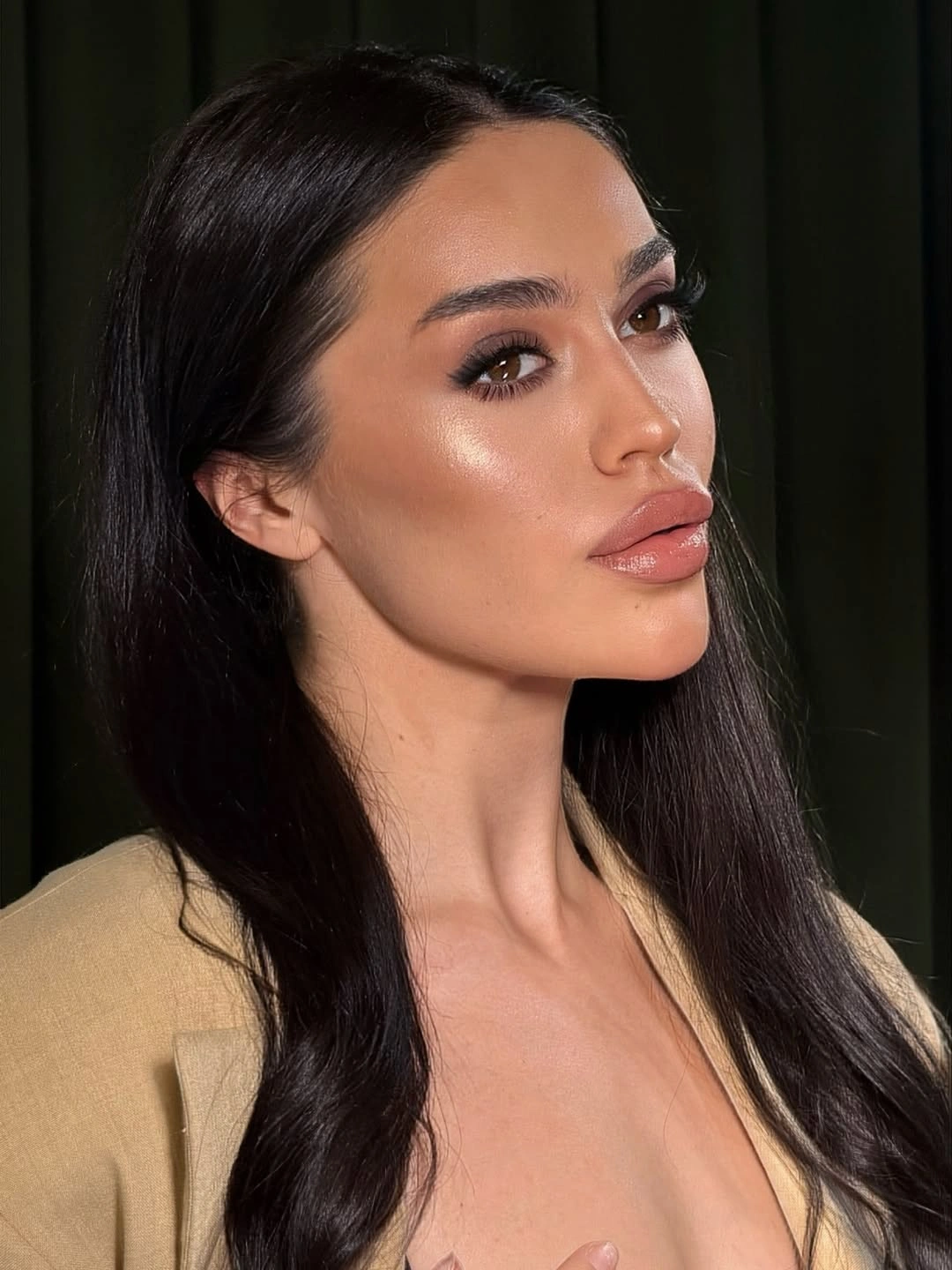
For a similar result, keep the upper section smooth enough that the center line remains visible and let the ends fall without too many extra bends. A gentle curve at the bottom can soften the silhouette, while a large wave would move the focus from alignment to texture. This is a useful choice for someone who likes the visual clarity of a middle part and does not need volume to make the hairstyle feel finished.
The limitation of a low-detail shape is that the perimeter matters more. Flyaways, uneven ends, or an inconsistent part will stand out against an otherwise uninterrupted surface, whereas a fuller wave can disguise small changes. The payoff is a clean style with little visual noise, especially when clothing and jewelry are already supplying enough contrast around the face.
Large Honey Waves With Deliberate Symmetry
Broad honey-blonde waves make the center part look almost architectural because each side repeats the same rounded pattern down the front. The hair has enough volume to become the dominant feature, yet the middle line keeps the mass divided into two readable sections. Against a white shirt, the warm tone and repeated ridges carry the entire silhouette without needing a second focal color.
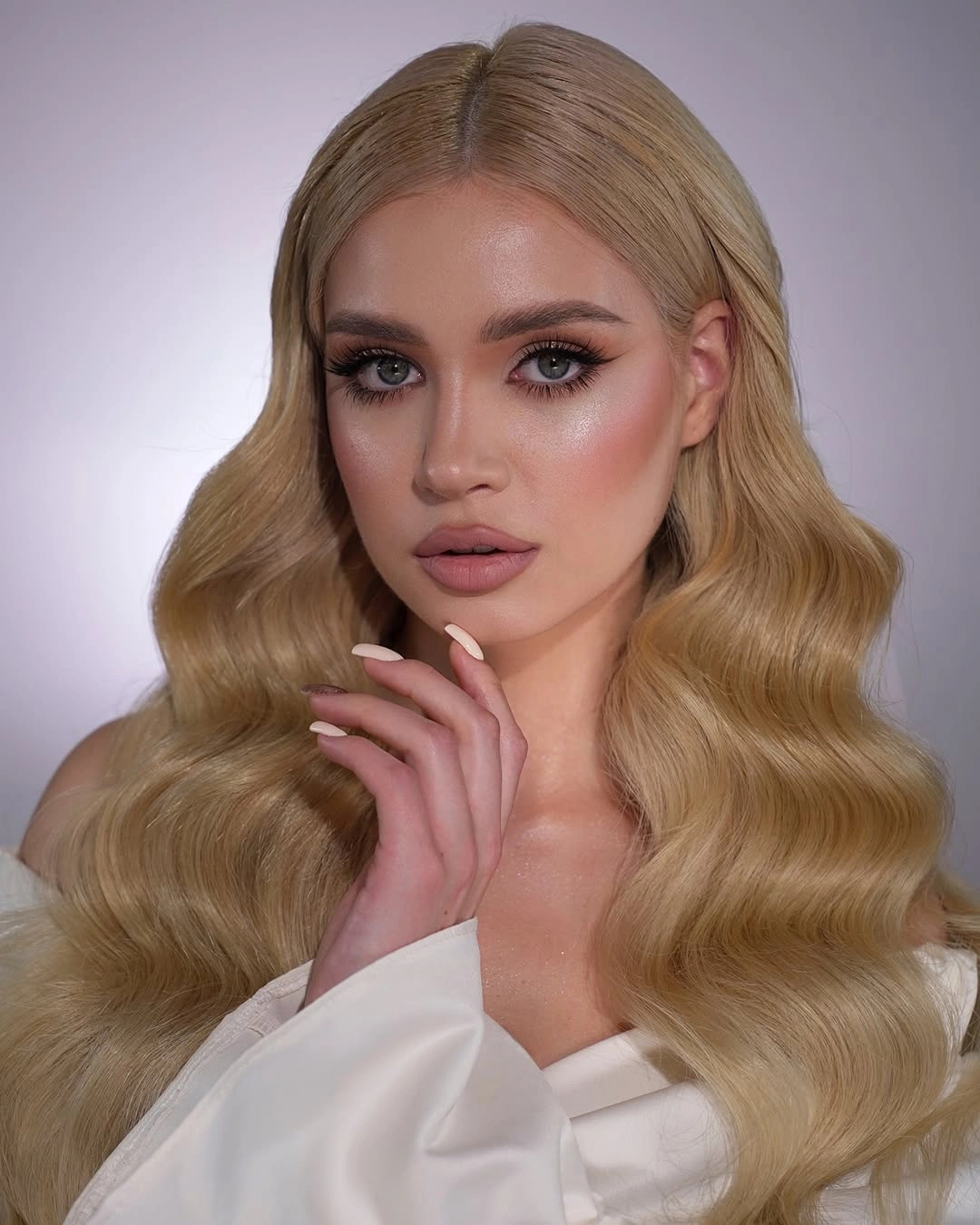
If you like this structure but want less intensity, keep the wave size broad and reduce the number of visible bends through the lower lengths. A shorter cut will make the pattern look fuller and more rounded, while a longer cut stretches the ridges into a more dramatic fall. Changing one variable at a time, such as length or wave definition, lets you keep the part as the stable feature.
The tradeoff is maintenance of visual equality rather than a particular salon process. The style is most convincing when both sides hold a similar scale, so it may feel demanding if you prefer deliberately uneven texture. It works best for occasions or wardrobes that can support a strong silhouette, because the large waves will naturally attract more attention than a quiet center-parted finish.
Relaxed Gathered Texture Away From the Shoulders
This view shifts the middle-part idea into a loose rounded updo, where the hair is gathered high at the back and several strands remain visibly soft around the edges. The irregular outline gives the shape air and keeps it from reading as a rigid formal construction. Even though the front division is less obvious from this angle, the centered beginning still explains why the gathered texture feels balanced instead of lopsided.
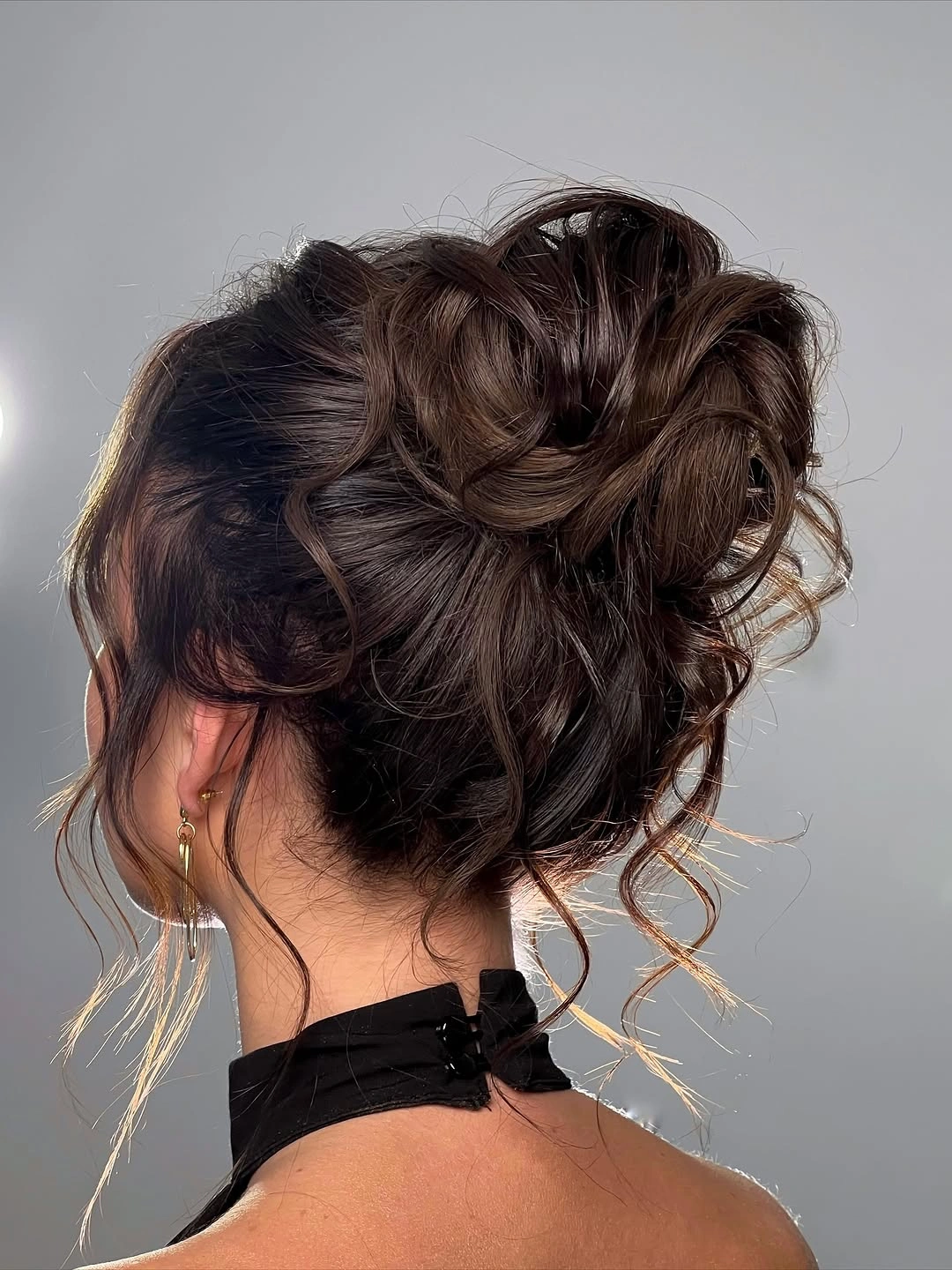
To use the same direction, focus on the contrast between a controlled center and a relaxed perimeter. Leaving a few pieces loose around the neck makes the result softer, while smoothing the outside more closely shifts it toward evening polish. The style also gives long hair a way to leave the shoulders without requiring the full visual weight of a high-volume loose wave.
The honest limitation is that this silhouette asks the gathered texture to do more work than the part itself. From a front view, the middle line may become a supporting detail rather than the headline, and the result will change substantially depending on how much softness is left outside the shape. Choose it when texture and lifted volume matter more to you than displaying the center line from every angle.
Smooth Crown With Soft Movement Through the Lengths
Here the central line is clean at the crown, but the lower brown lengths bend gently over both shoulders. That split between a quiet upper section and softer movement below creates a useful balance: the part remains legible without making the entire hairstyle feel strict. The dark color also gives the smooth crown enough contrast that the small shifts in texture are easy to notice.
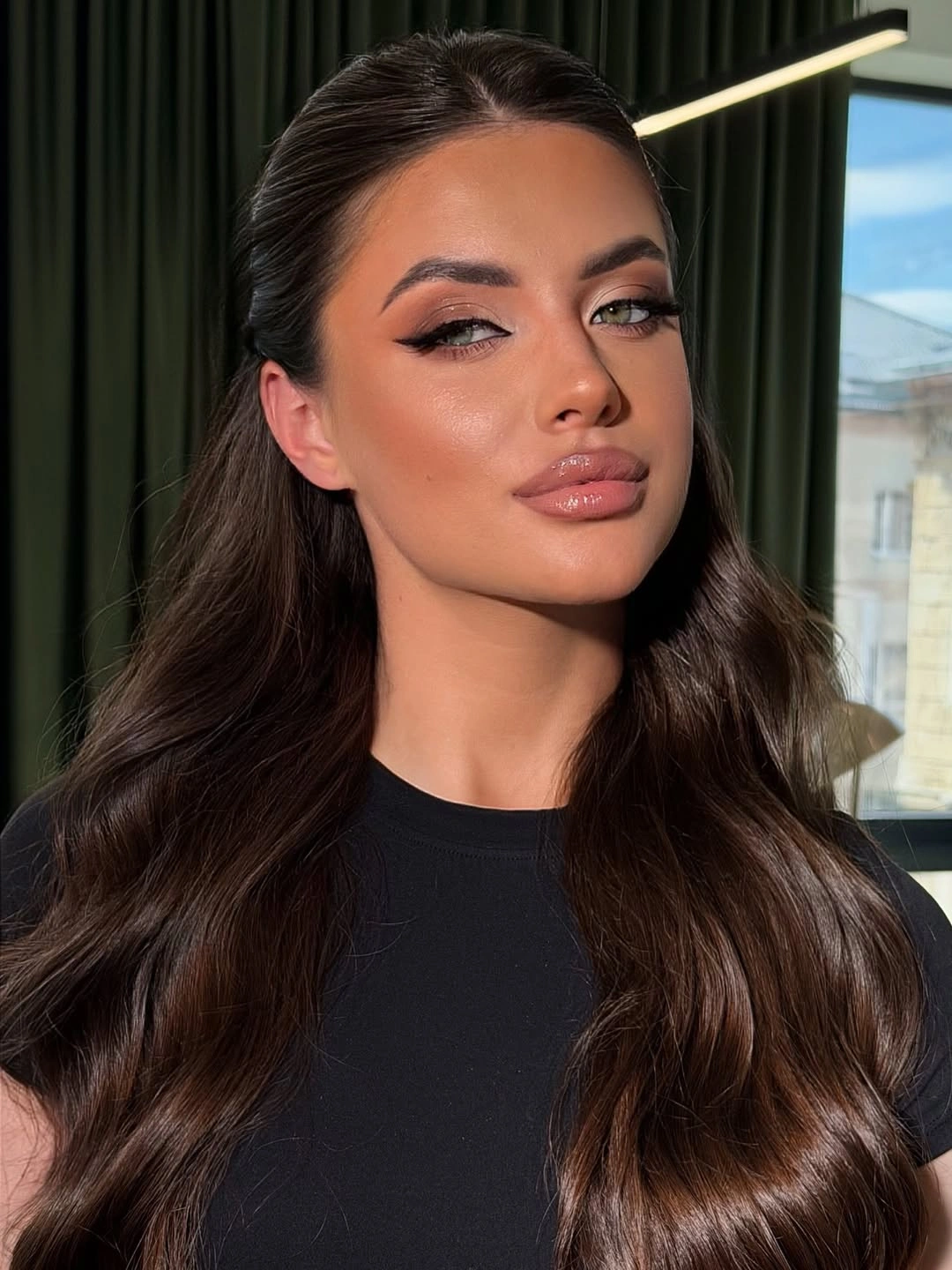
Keep the top controlled if you want this proportion to hold, then allow the lower lengths to move without forcing a strong curl pattern. Loosening the crown will make the style more casual, but it can also blur the middle line and reduce the clean visual axis. A shorter version can work well because the transition from smooth roots to gentle ends will happen closer to the shoulders and feel lighter.
The tradeoff is between clarity and softness. Too much smoothness can make the result look severe, while too much texture near the part can remove the reason the style feels composed. This is a practical middle ground for someone who wants a visible center part but prefers movement that looks calmer than a sculpted wave set.
Half-Up Waves With a Centered Back Structure
The back view shows how a small gathered section can organize long brown waves without hiding their length. Hair is drawn together around the crown, then allowed to fall in broad movement below, creating a centered curtain rather than a single mass. The pale sleeves make the warm brown tone easy to read, but the important relationship is between the contained top and the open lower section.
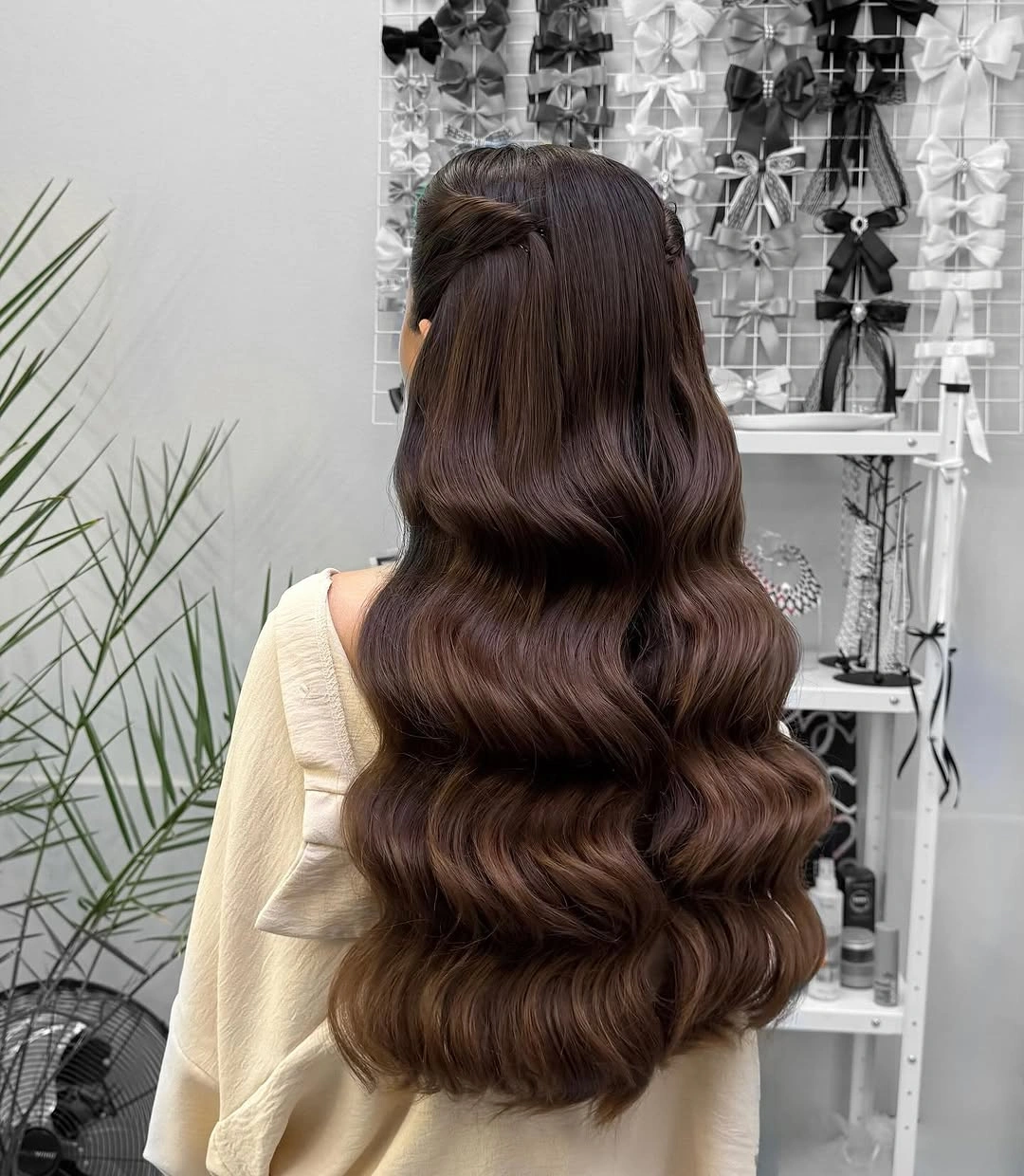
For a lighter adaptation, gather only the uppermost section and leave more width through the sides so the face does not feel pulled back. Gathering more hair gives a cleaner outline and reduces bulk, while leaving the wave pattern generous keeps the style from becoming overly formal. This is a useful option when fully loose hair feels too open but a complete updo would remove too much movement.
The limitation is that the exact front part is partly hidden from this view, so the style should be judged by the balance of the silhouette rather than by a perfectly visible line. The gathered transition also needs to sit comfortably with the wave pattern below it. When those two zones are proportionate, the middle-part idea continues through the shape even without a front-facing portrait.
High Ponytail With a Smooth Centered Crown
A high ponytail turns the middle part into a directing line: the smooth crown divides evenly, then sends the eye toward the long wavy tail behind the shoulder. The upper section is controlled and clean, while the lower hair keeps enough movement to avoid a severe vertical block. That contrast between fixed direction and moving length is what gives the gathered style its energy.
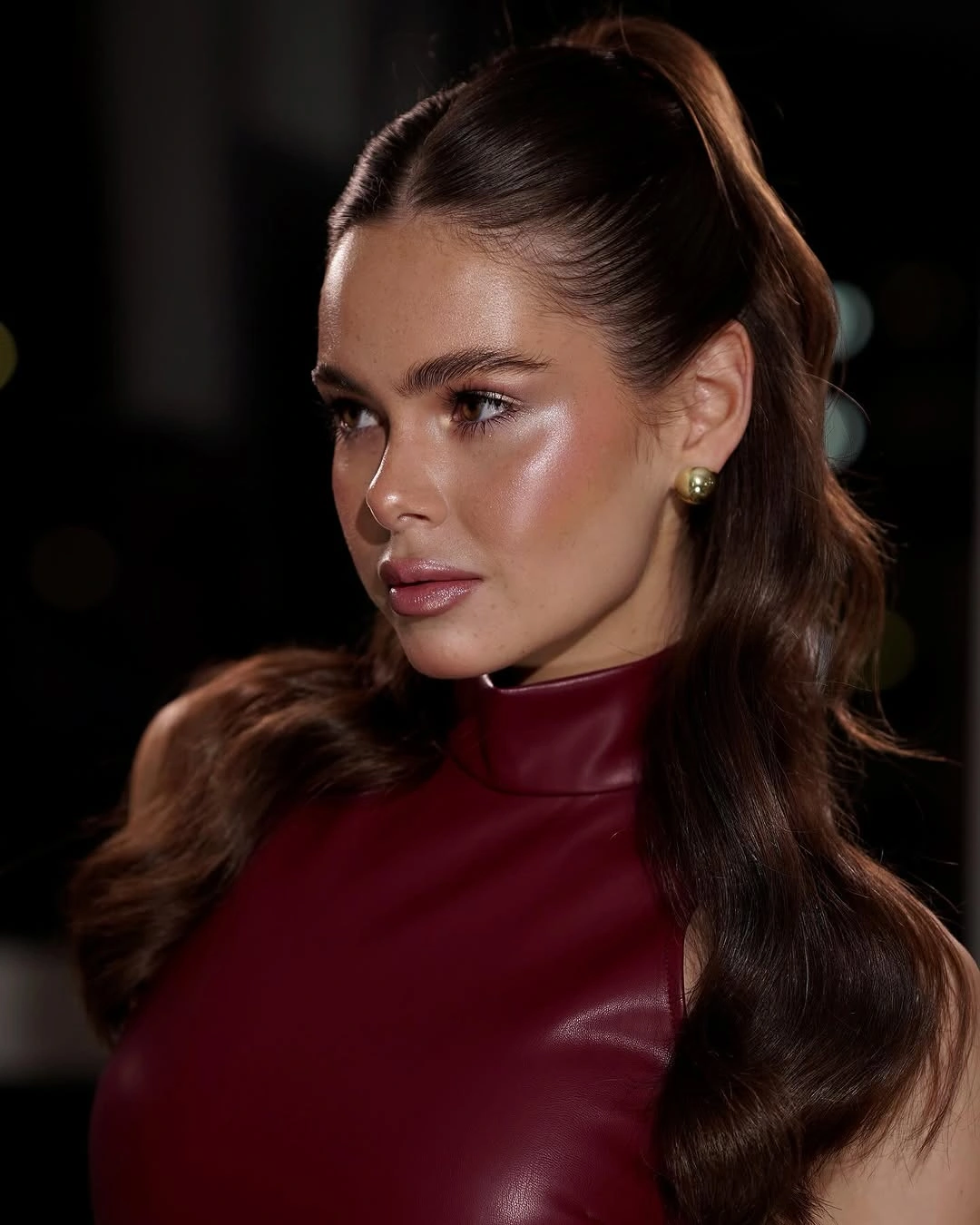
If you want the ponytail to feel softer, lower the gathered point or keep the crown less close to the head while preserving the center separation. A straighter tail will look sharper and more graphic, whereas broad waves add width and make the result feel more relaxed. The best adaptation changes one location of volume at a time, because changing both crown height and tail texture can erase the original balance.
The tradeoff is that a high gathered shape makes the central line and the transition into the tail very visible. Any unevenness at the crown becomes part of the design, while a lower ponytail can be more forgiving. Choose this version when you like height, a clear direction, and long movement that stays behind the face rather than falling equally over both shoulders.
Dark Waves Against a Deep Burgundy Backdrop
The long dark waves in this look are relaxed rather than tightly sculpted, and the deep burgundy top changes how their color and weight are perceived. The middle part keeps the hair balanced even though the clothing supplies a saturated field beneath it. Because the wave bends are broad, the style reads as movement first and decoration second, which makes the strong surrounding color feel intentional rather than crowded.
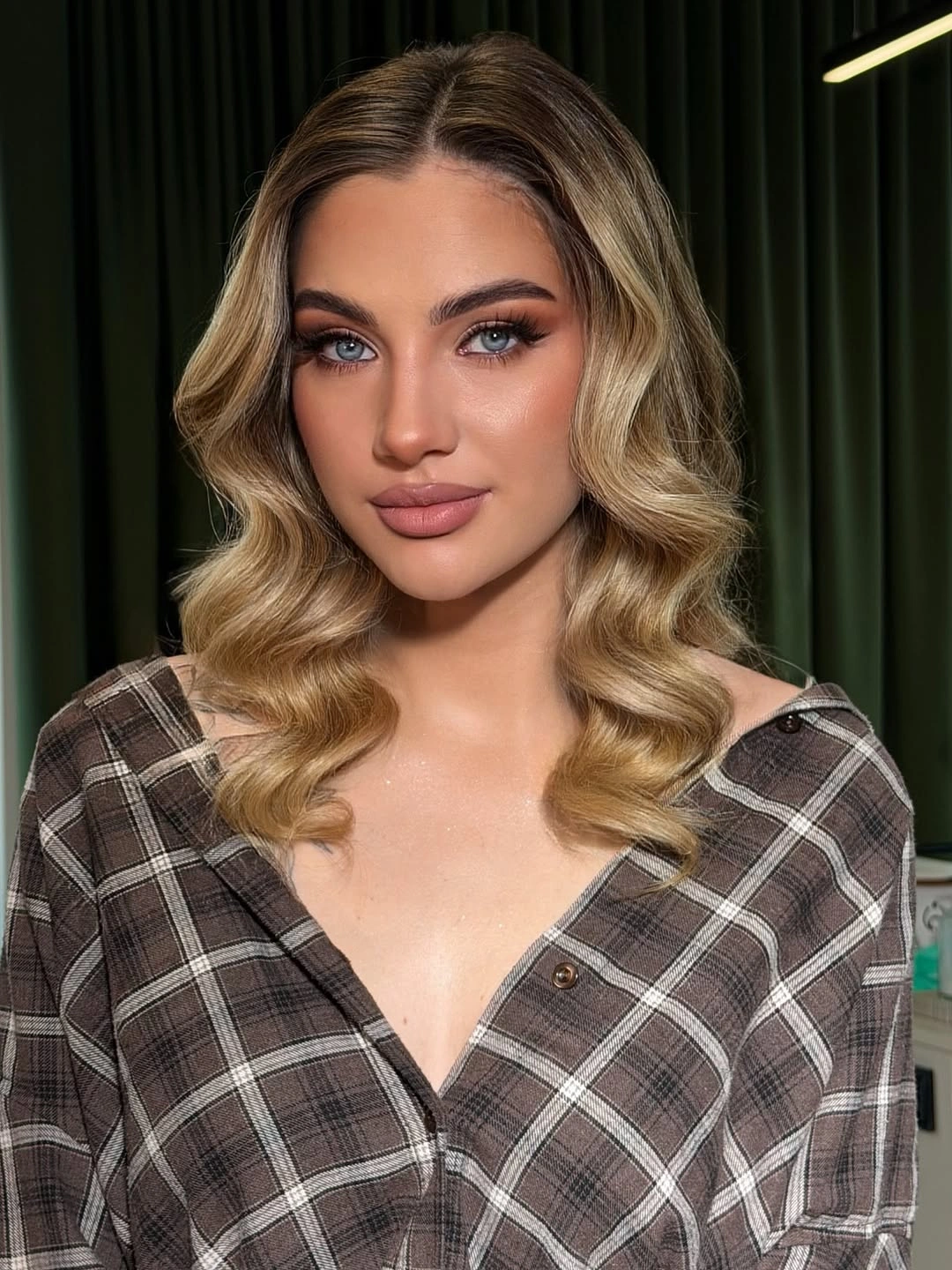
When the outfit already contains a deep tone, keep the wave pattern open and avoid adding another competing accent near the face. A neutral neckline will make the hair feel calmer, while a similarly rich color can create a more dramatic frame if the center part stays clean. This is a useful example of adjusting the surrounding contrast instead of changing the hairstyle itself.
The limitation is that dark hair and dark clothing can merge if the texture is too flat or the neckline is too busy. Broad movement helps separate the two, but a highly detailed outfit could still take attention away from the part. Keep the silhouette simple when you want the center line and the warm-cool relationship between hair and clothing to remain visible.
Defined Brunette Waves With Repeating Rhythm
These brunette waves have a clear repeated pattern, with ridges that continue from the face through the long ends on both sides of the center. The part acts as a stable axis while the texture supplies a measured rhythm, so the hairstyle feels designed rather than simply curled. A pale top and small pendant leave enough open space for the brown tone and the wave repetition to carry the look.
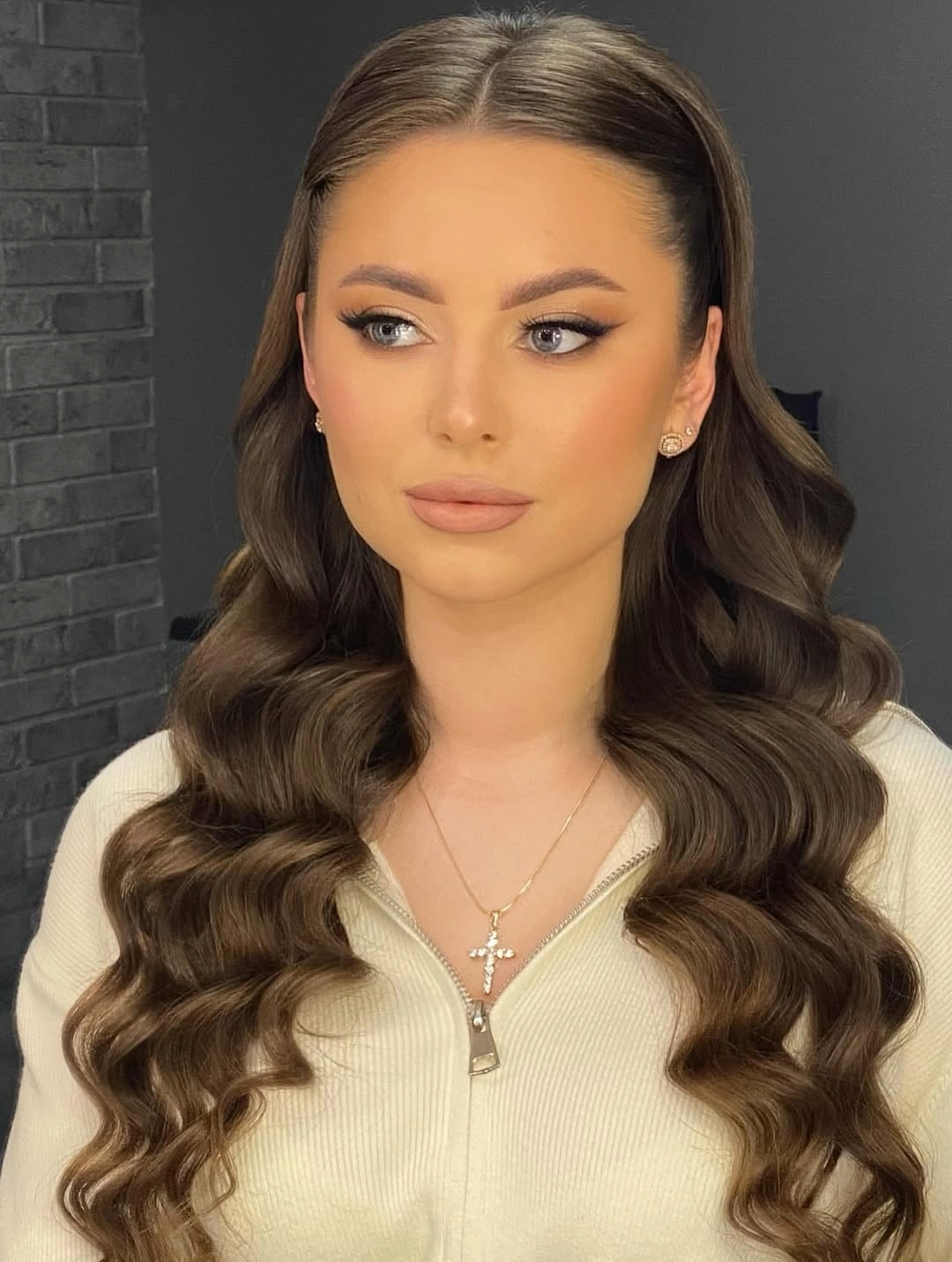
To adapt the idea, keep the wave size consistent but decide how much definition you want through the ends. Softer bends will make the result more casual, while keeping the ridges distinct creates a more editorial silhouette. If the hair is shorter, the same repeated pattern will appear fuller and may need less width near the face to keep the middle part from disappearing.
The tradeoff is that a clearly repeated wave can look more deliberate than you intended. It suits someone who enjoys visible structure, but it may feel too formal if your preference is uneven, airy movement. The center part is doing important balancing work here, so changing to a strongly directional sweep would make the whole texture read differently even if the color stayed the same.
Cool Ash Waves With a Small Half-Up Pause
The cool ash-brown color gives this back view a quieter mood, while a small gathered section creates a pause between the smooth upper shape and the long waves below. The hair still feels generous, but the centered transition stops the length from becoming a single uninterrupted curtain. That change in structure is subtle and useful when you want a middle-parted style to look composed without adding a large accessory.
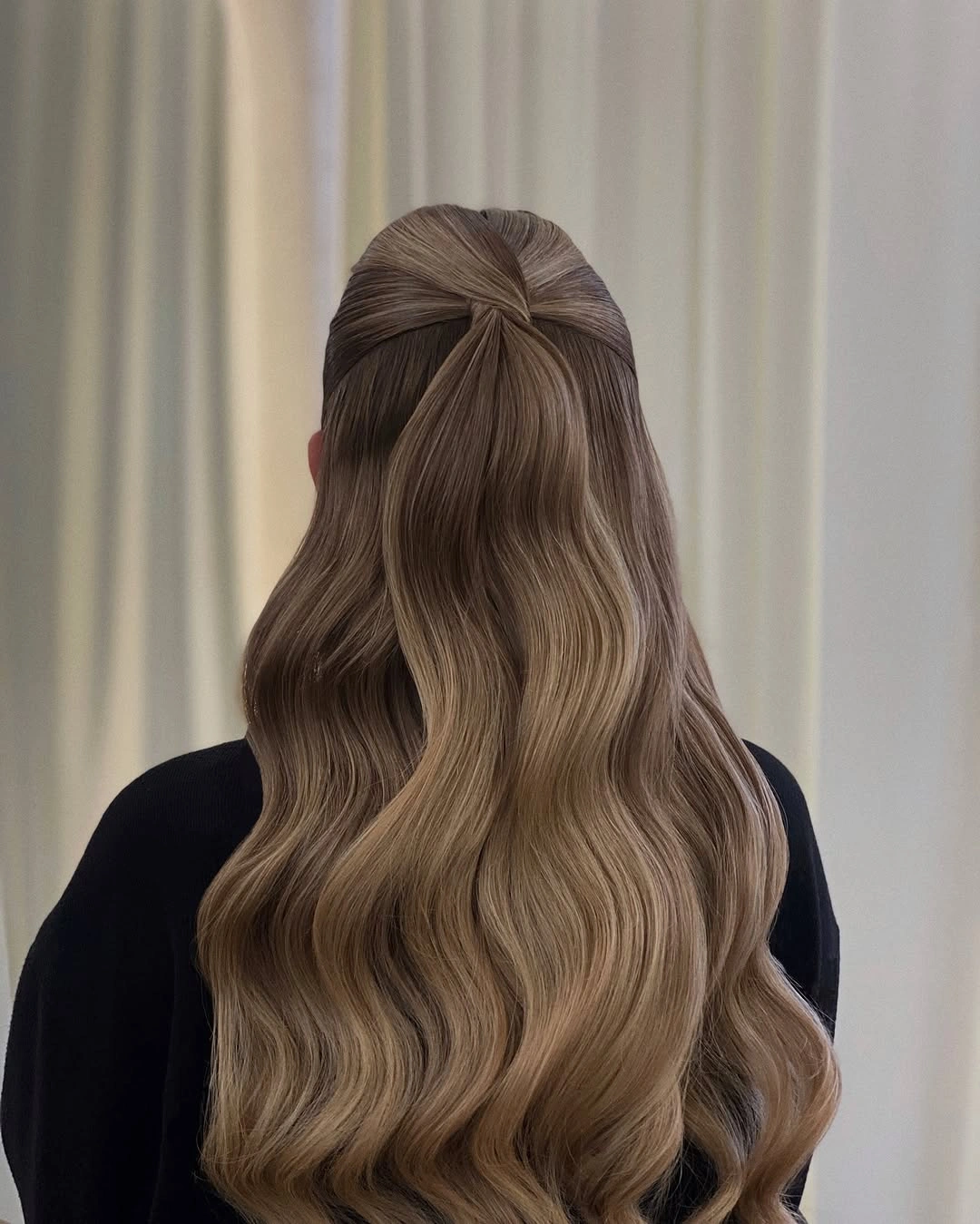
Keep the gathered section narrow if you want the loose waves to remain the main feature, or make it wider to create more control around the crown. A warmer brown will make the style feel richer, while a cool ash tone keeps the visual contrast understated. Either way, the practical idea is to use a small structural break rather than adding more texture everywhere.
The limitation is that the back view cannot show every detail of the front part, and a tied section can make the style feel more contained than a fully loose version. That is the reason to compare it with your preferred amount of volume before copying the silhouette. It works for readers who want movement with a visible sense of organization rather than a completely free fall.
Smooth Long Hair With a Barely Bent Finish
This brown style uses a clear center part and very little movement through the lengths, leaving an open frame around the face and a gentle bend near the ends. The restraint lets the part, the warm tone, and the clean direction of the hair work together without needing a dramatic silhouette. A light top and simple neckline reinforce that quiet relationship instead of introducing another visual problem.
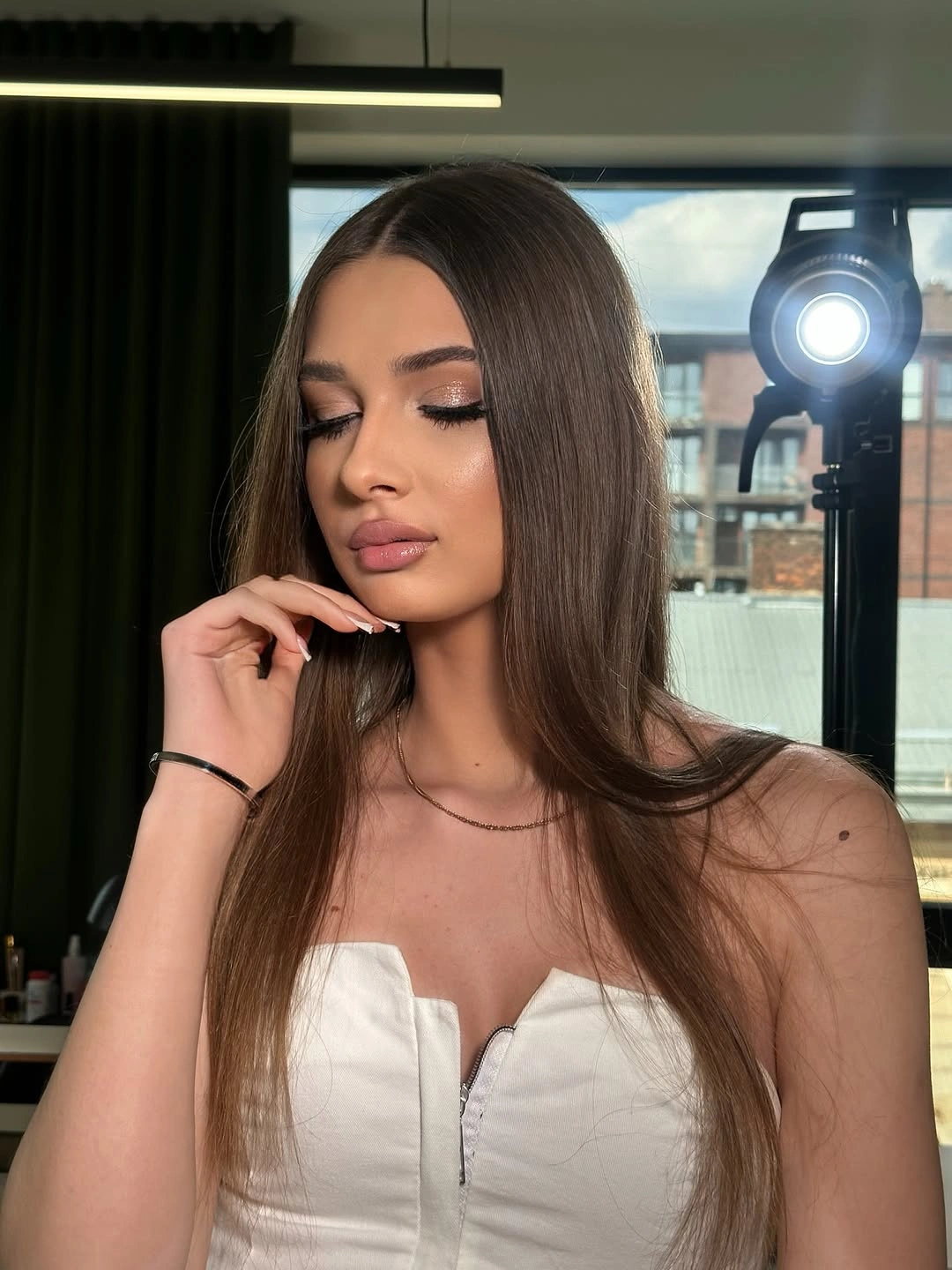
If you want the look to stay low volume, let the ends turn slightly rather than adding waves from the cheekbones downward. A stronger bend will make the lower silhouette more active, while keeping the upper section smooth preserves the middle line as the main cue. This approach can also suit a shorter length, where the small movement at the ends reads as a soft finish instead of a full style.
The tradeoff is that simple shapes show their perimeter clearly. Uneven ends or extra bulk can interrupt the calm effect, but the benefit is a style that does not compete with expressive clothing or jewelry. Choose it when you want the center part to be visible and useful without turning your hair into the loudest element of the outfit.
Very Full Dark Waves Anchored by the Part
Very long dark waves create substantial volume around the shoulders, so the middle part is needed as an anchor rather than a minor detail. The clean line divides the fullness into two readable sides and keeps the black sequined top from making the entire frame feel visually dense. The result is dramatic because of the scale of the waves, but it stays balanced because the mass is organized from the center.
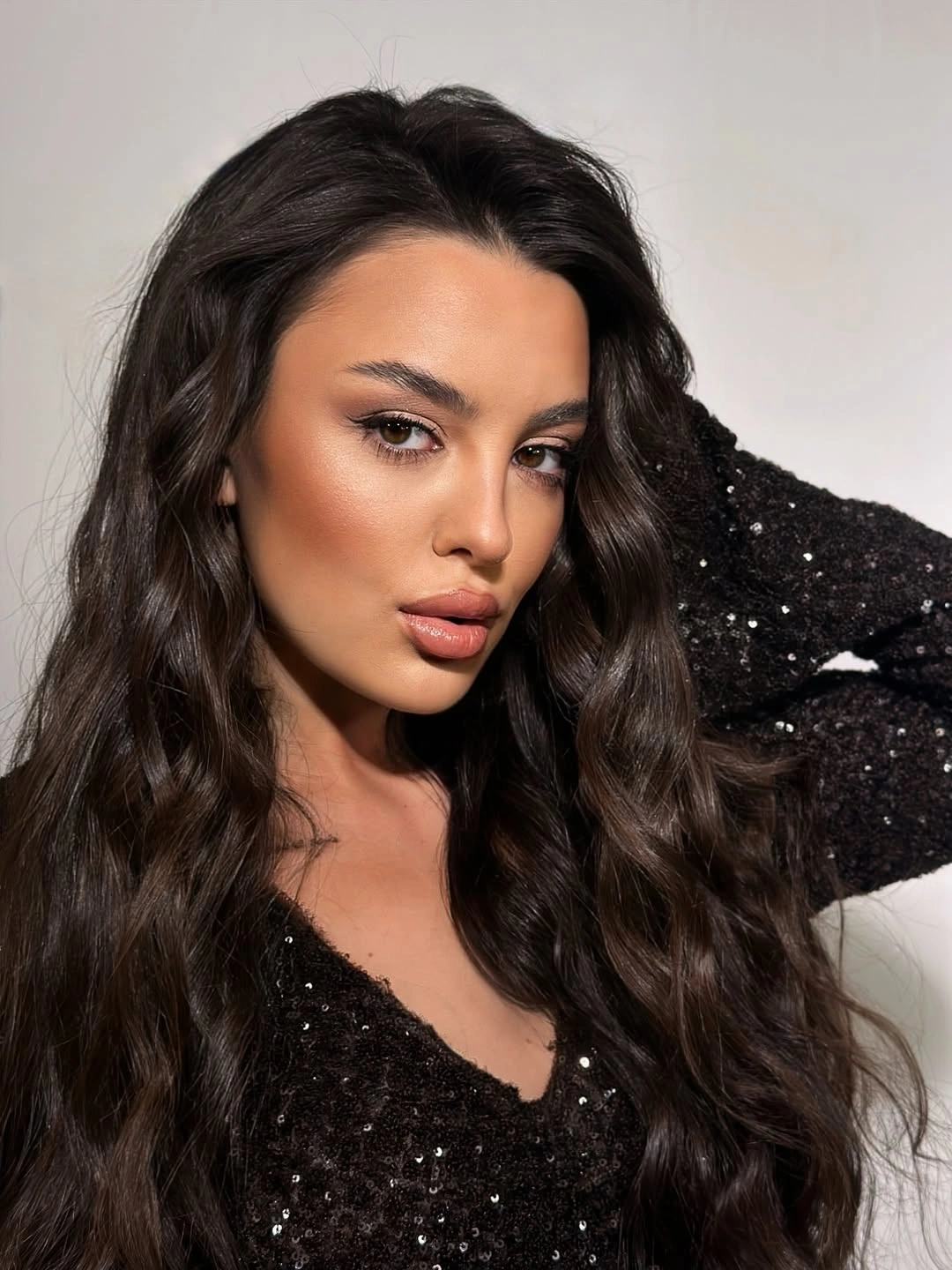
For a more wearable variation, keep the deep wave pattern but reduce the width around the cheeks or shorten the overall length. A softer top will make the style more relaxed, while a cleaner crown preserves the polished contrast between line and volume. This is a case where changing the amount of hair around the face may have a bigger effect than changing the wave itself.
The honest drawback is visual weight. Very full, very long hair can dominate a simple outfit and may feel more demanding than a smoother style, especially when the center part must stay clear. It suits someone who wants the part to control a high-impact silhouette, not someone looking for a nearly invisible everyday finish.
Long Side Silhouette With Relaxed Light Waves
The side view shifts attention from the front line to the way long light-brown waves fall through the silhouette. The crown stays relatively smooth, while the length bends in an elongated pattern that creates movement without a dense curl cloud. Because the face and neckline remain open, the style demonstrates how a middle-parted starting point can support a balanced shape even when the view favors one side.
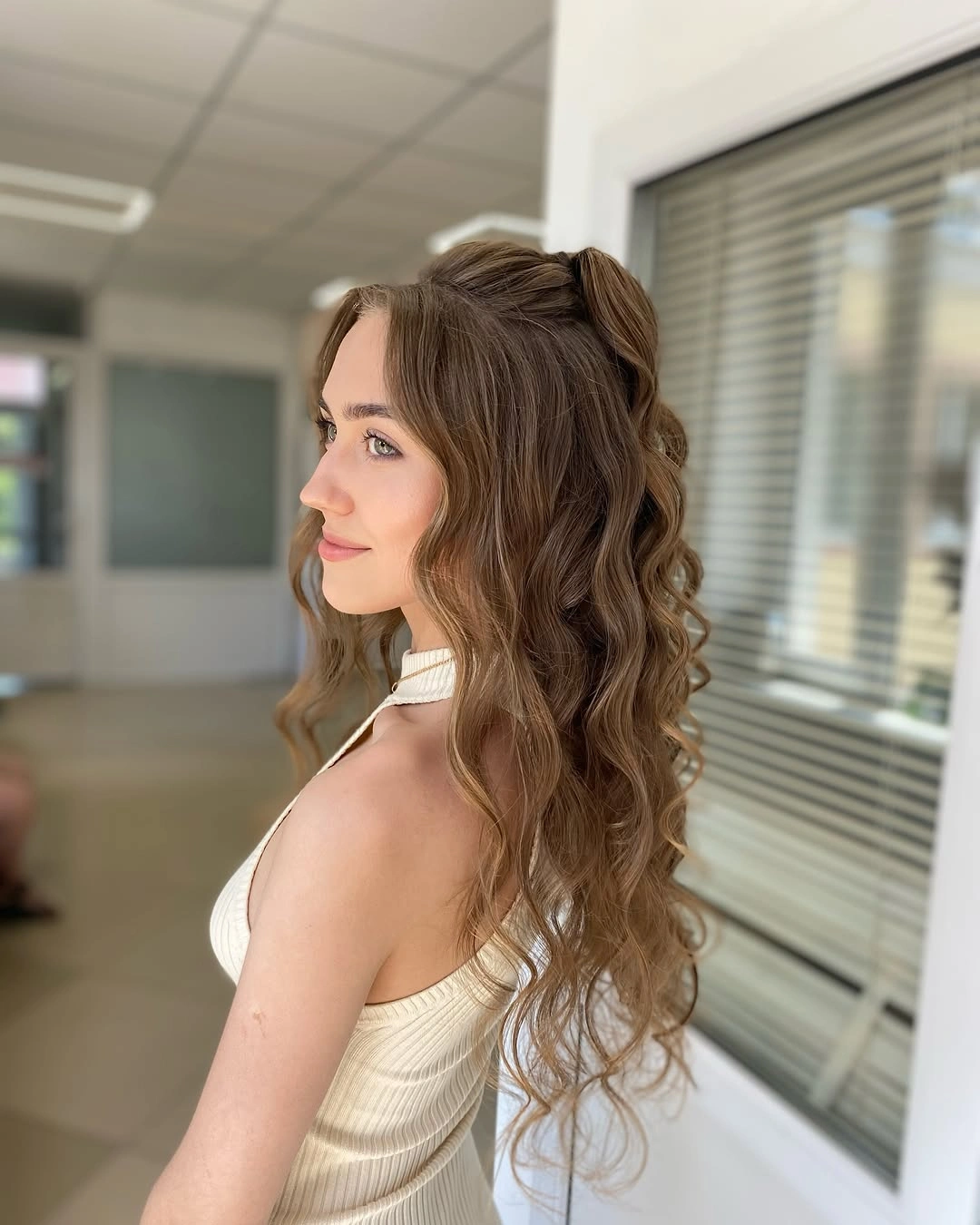
If you want the side profile to stay light, use fewer wave repetitions and let the lengths stretch rather than bunching them close to the shoulder. A front-facing finish will make the center part more obvious, while a side-directed fall adds softness and a little asymmetry. This is a useful variation for readers who care about how the hair moves around the body, not only how the part looks in a mirror.
The limitation is that the middle separation is less visible from this angle, so the style depends more on silhouette and flow than on a graphic line. That does not make the part irrelevant, but it changes its job from headline to foundation. Choose this direction if you prefer a relaxed fall and want the center structure to support movement rather than announce itself.
Casual Blonde Waves With Lower Styling Intensity
These warm blonde waves keep a clear middle part but feel more casual than the large sculpted blonde pattern earlier in the collection. The hair moves in airy bends over a simple white T-shirt, so the surrounding color lowers the formality and lets the softness come forward. The contrast shows how the same part can look polished or approachable depending on wave definition and wardrobe support.
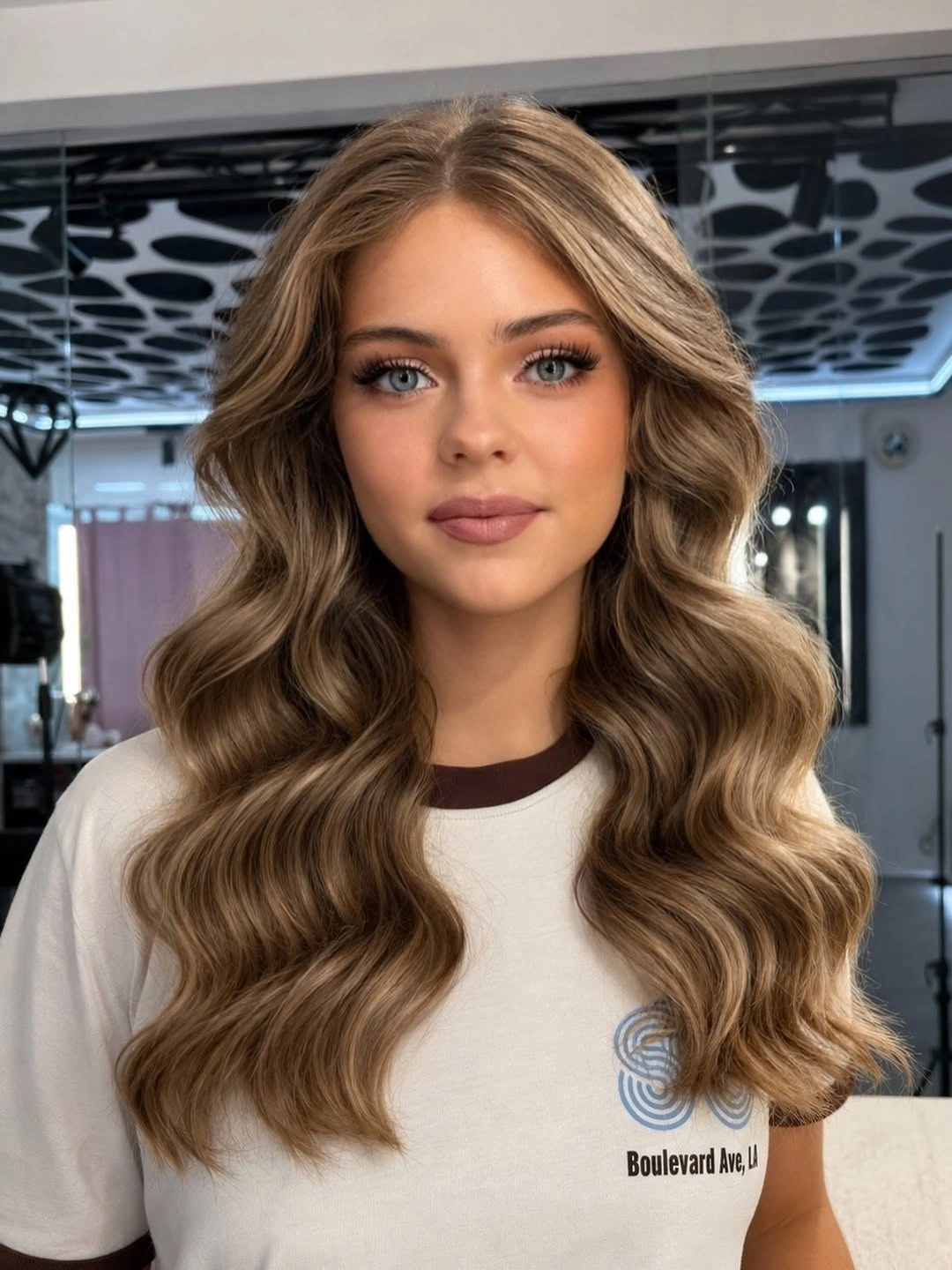
To keep the relaxed quality, leave the wave size uneven enough to avoid a rigid repeated pattern while maintaining the central division at the crown. Shortening the length will make the movement springier, and choosing a quieter top will keep the hairstyle from looking too styled for the setting. The useful adjustment is reducing intensity, not removing the part that gives the face a clear frame.
The tradeoff is that airy waves can lose their shape sooner visually than a tightly repeated pattern, even without making any claim about hold or technique. That softer finish is also what makes them easier to pair with casual clothes. Pick this style when you want movement that feels considered but not like the outfit has been built around the hair.
Controlled Crown With Full Brown Waves
This long brown style combines a controlled crown with generous waves through the lengths, giving the center part a clear place to begin before the silhouette expands. The patterned dark top adds background detail, yet the hair remains readable because its upper shape is relatively smooth and its lower volume is concentrated. The proportion is more important than any single wave: quiet above, expressive below.
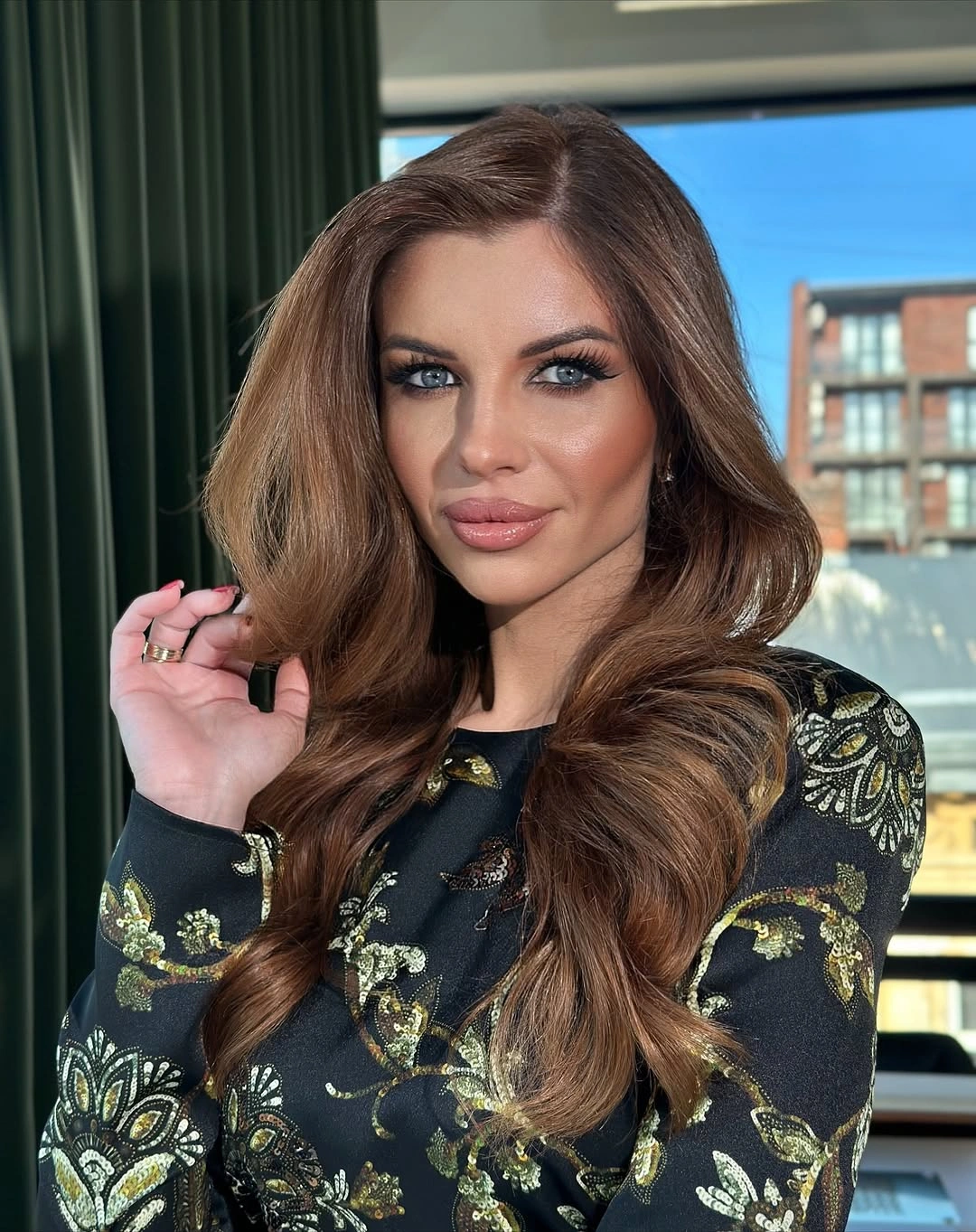
If you want to copy the balance, decide where the hair should start becoming full and keep the area above that point simple. Making the crown too loose will blur the part, while smoothing the entire length will remove the contrast that makes the style interesting. A plain neckline can make the same waves feel more dominant, so clothing color and pattern should be considered as part of the visual proportion.
The limitation is that a full lower silhouette may feel dressed even when the part itself is simple. It is a good option for readers who like volume with a visible organizing line, but it may be more than you want if your wardrobe already carries bold pattern. Keep the structure and reduce the width if you need the style to move from occasion-ready toward everyday.
Sleek High Ponytail With Vertical Direction
This high ponytail is the straight counterpart to the wavy gathered style earlier. Light brown hair moves from a centered, smooth crown into a compact vertical tail, so the entire silhouette is built from direction rather than texture. The black high collar strengthens that clean outline and makes the middle part feel almost architectural without requiring extra decoration.
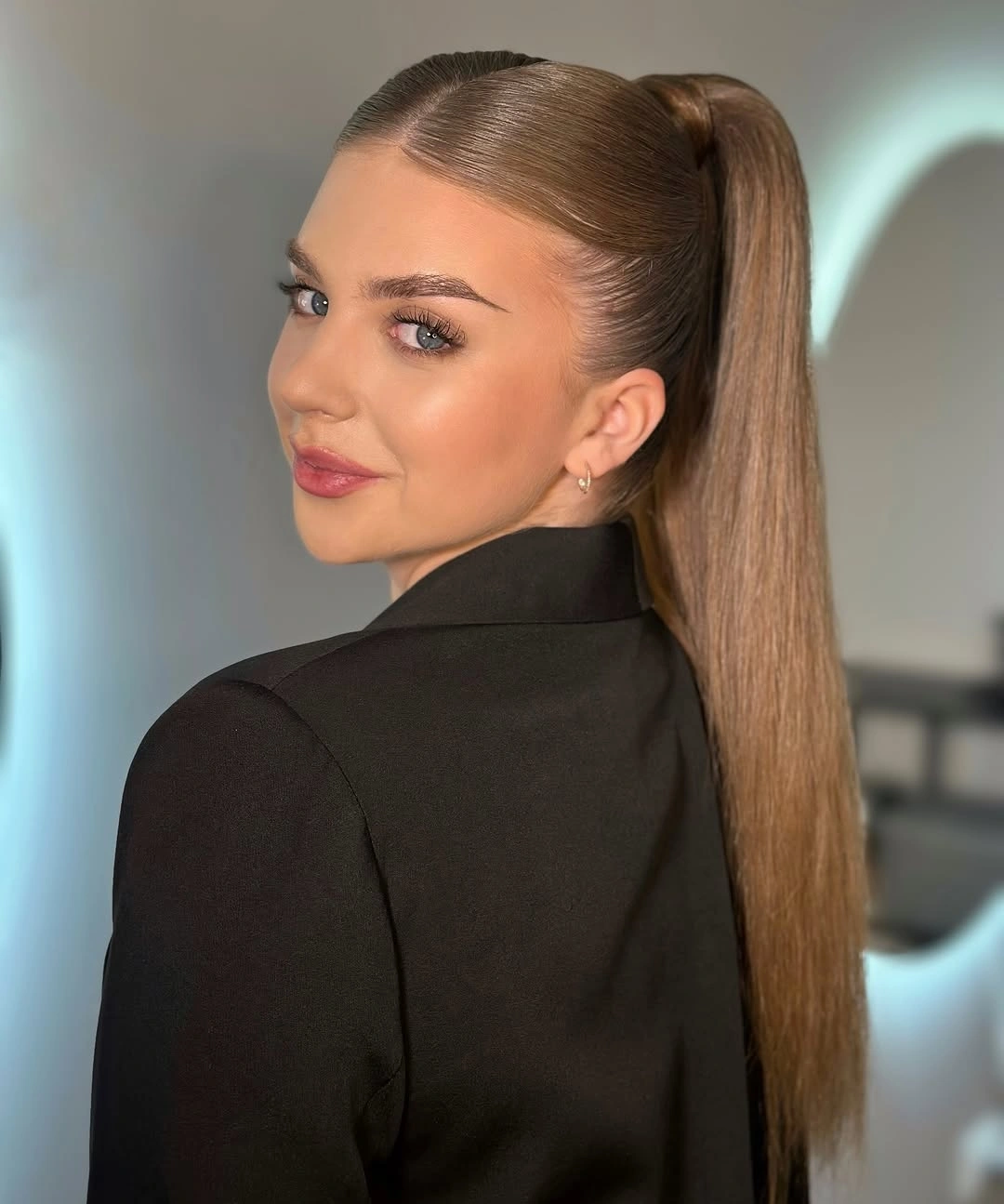
For a softer variation, lower the ponytail or let a little more width remain at the sides while keeping the crown aligned. Adding waves to the tail will make it feel more relaxed, but it will also shift attention from the straight vertical line to movement. The most important choice is where the gathered point sits, because that decides whether the style reads lifted, restrained, or casual.
The tradeoff is that a smooth vertical ponytail makes alignment easy to judge. Any uneven transition from the middle part into the tail will be visible, but the reward is a clean silhouette that works when you want hair away from the face. Choose it for clarity and height rather than softness or volume through the shoulders.
Warm Copper Color With Minimal Movement
Warm copper-brown hair turns a simple center-parted shape into a color study. The lengths fall almost straight to the chest, so there is little texture competing with the warm tone, while the middle line keeps the long shape clean and centered. A fine necklace and open shoulders leave enough space for the color to read as the main visual relationship.
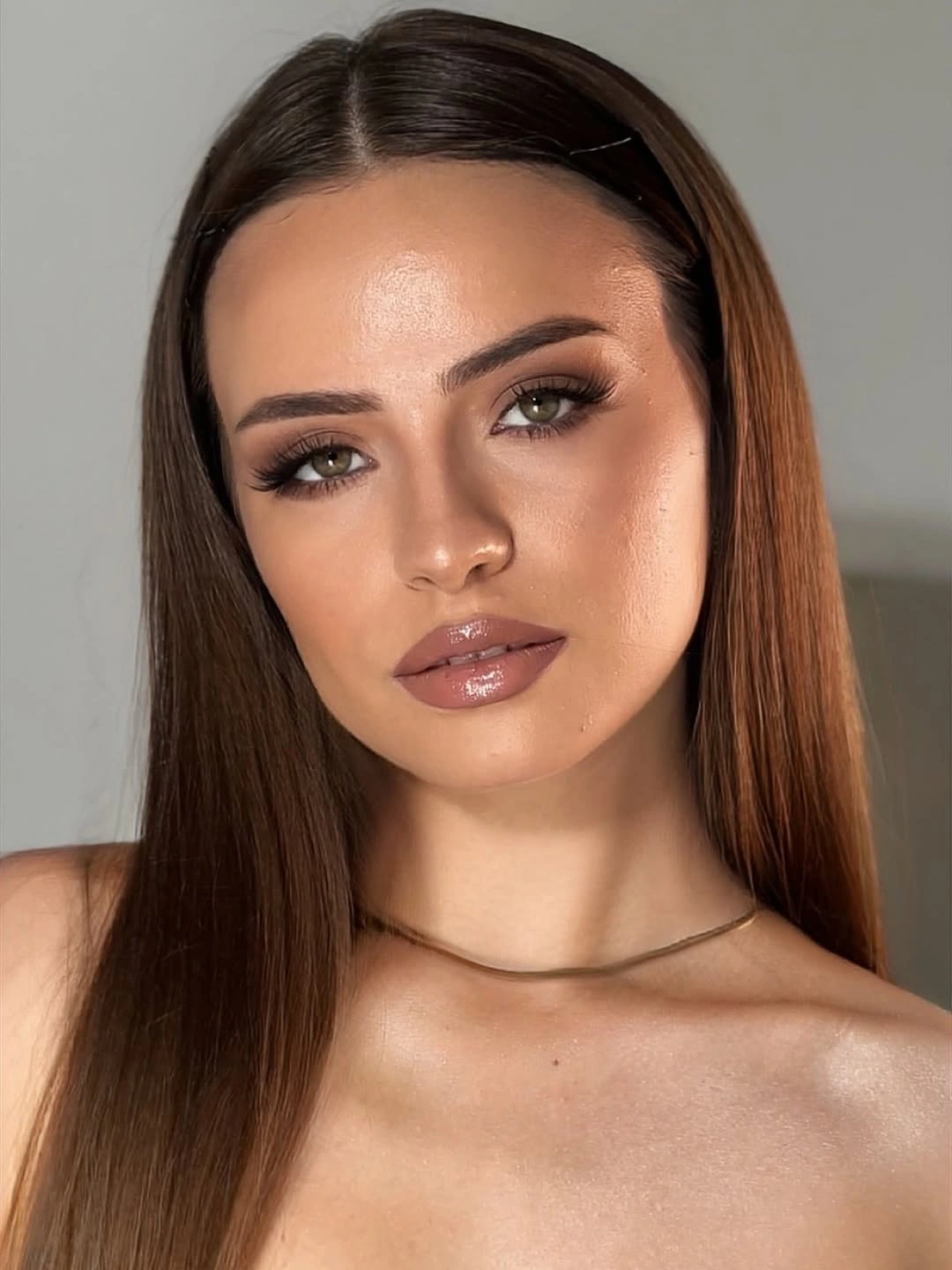
If you like this low-detail approach, keep the upper hair smooth and change only the ends or the depth of the tone. A small bend can add softness, while full waves will make the silhouette more active and reduce the quiet color-led effect. This is a useful example of letting one variable, warmth, carry the personality of the style instead of asking the part and texture to compete.
The limitation is that a simple shape does not hide uneven edges or an inconsistent line. That can feel demanding, but it also makes the result easy to understand and pair with patterned clothing. Choose it when you prefer a strong color relationship and want the middle part to give long hair a calm, deliberate boundary.
Soft Lower Bends From a Clean Middle Line
This brown style sits between straight lengths and full waves: the upper section is smooth and clearly divided in the middle, while the lower half develops mild bends. That transition keeps the face open and gives the long silhouette a little motion without changing its calm center. The pink shirt adds a soft neighboring color, which makes the warm brown hair feel gentler than a dark high-contrast outfit would.
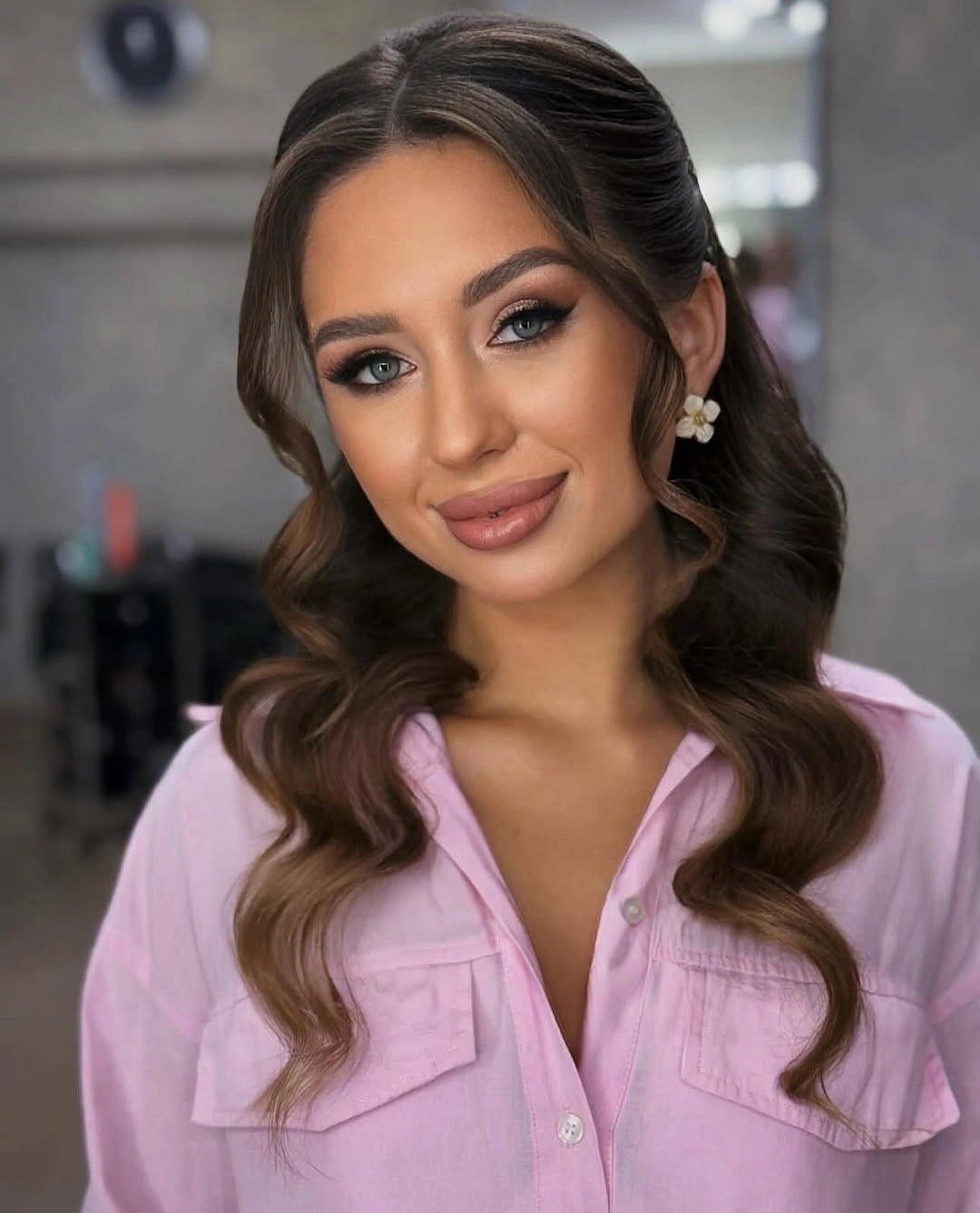
To keep the same balance, begin the movement below the cheekbones and avoid adding width right beside the part. A shorter version can show the bend more quickly, while a longer version will stretch it into a quieter wave. This is a practical choice for someone who wants hair that moves but does not need a repeated pattern to look finished.
The tradeoff is subtlety: the style may feel too restrained if you want visible curl definition, yet extra texture would make the center line less dominant. Its strength is the transition between the two zones, so preserve the smooth crown even if you change the length or warmth. That keeps the look readable while allowing the ends to feel less static.
Deep Waves Directed Into a Soft Side Fall
The final look begins with a composed dark crown and sends the deep waves more heavily toward one shoulder, creating a soft side-directed silhouette. That movement eases the strict symmetry of a middle part without replacing it with a hard side line. The cream jacket keeps the backdrop quiet, so the important contrast is between the centered start and the fuller fall on one side.
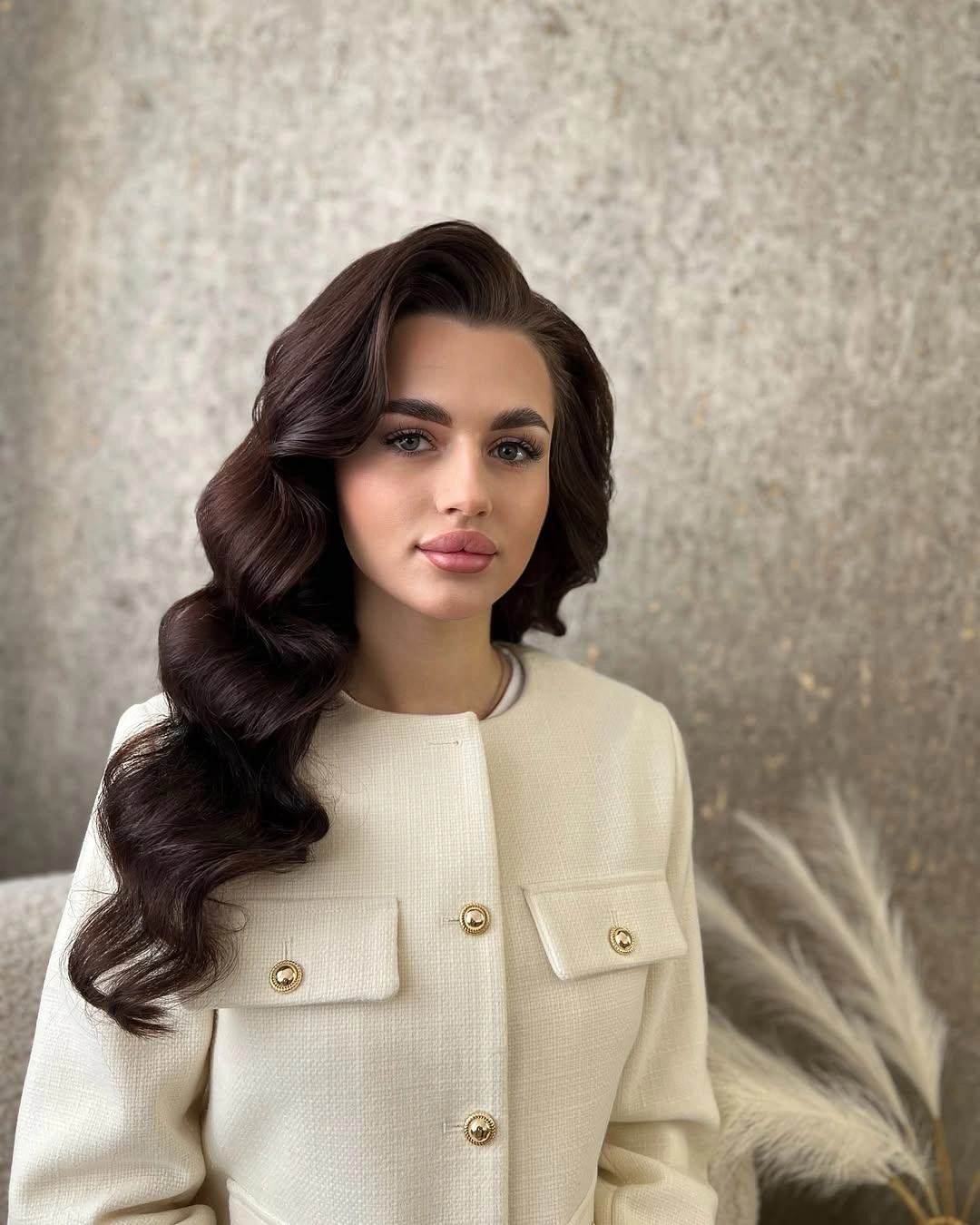
For a gentler adaptation, keep more of the length balanced across both shoulders and let only the lower waves drift to one side. Directing the whole shape farther over will make the finish more dramatic, while a shorter cut will reduce the weight of the sweep. The part works best here as a foundation that gives the asymmetry a stable beginning instead of making the result look accidental.
The limitation is that a side-directed finish will not feel as symmetrical as the early blonde wave styles, even when the part remains centered. That is precisely its useful difference: it gives readers who like the clarity of a middle line a way to add softness and movement. Preserve the calm crown, then decide how much imbalance the rest of the silhouette should carry.