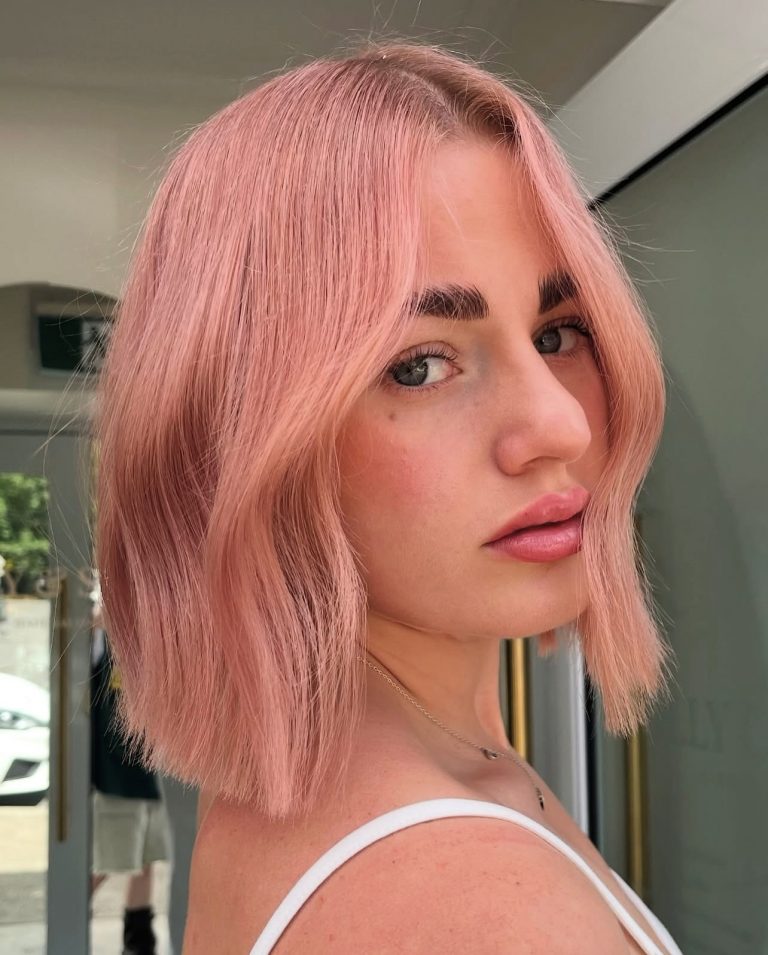
21 Purple Hair Dye Designs 2027 with Violet & Blue Accents
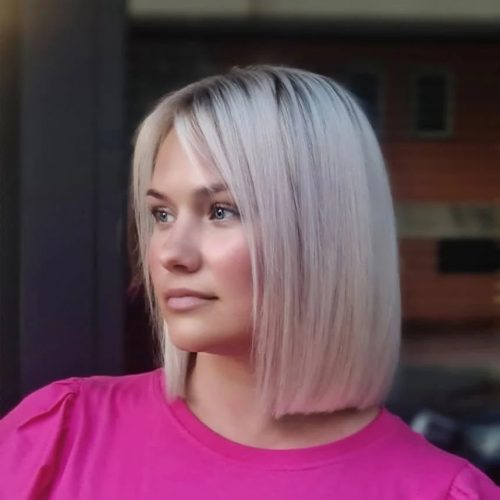
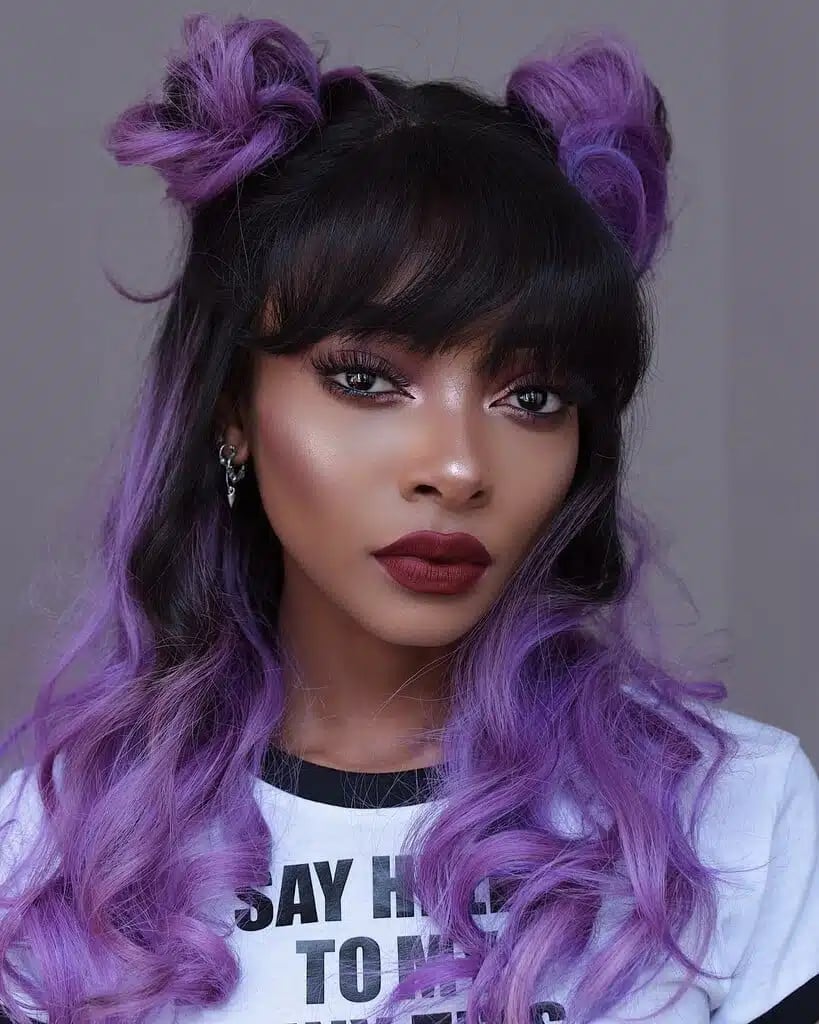
Purple hair dye designs have moved past the one-and-done phase into a spectrum of intentional color placements, from vivid multi-tonal blends to glossy solid shades. The current shift favors lived-in color with soft face-framing layers and natural texture that lets the pigment do the talking.
This collection of 21 purple hair dye designs covers the range from low-maintenance ombres to high-impact all-over color, with options for every length and texture. Whether your hair is fine and prone to falling flat or you are managing a visible grow-out line, these looks offer a practical starting point. Purple Hair Dye Designs are no longer a niche choice; they are a versatile category worth exploring.
Vibrant Multi-Tonal Purple Pink Blue Highlights
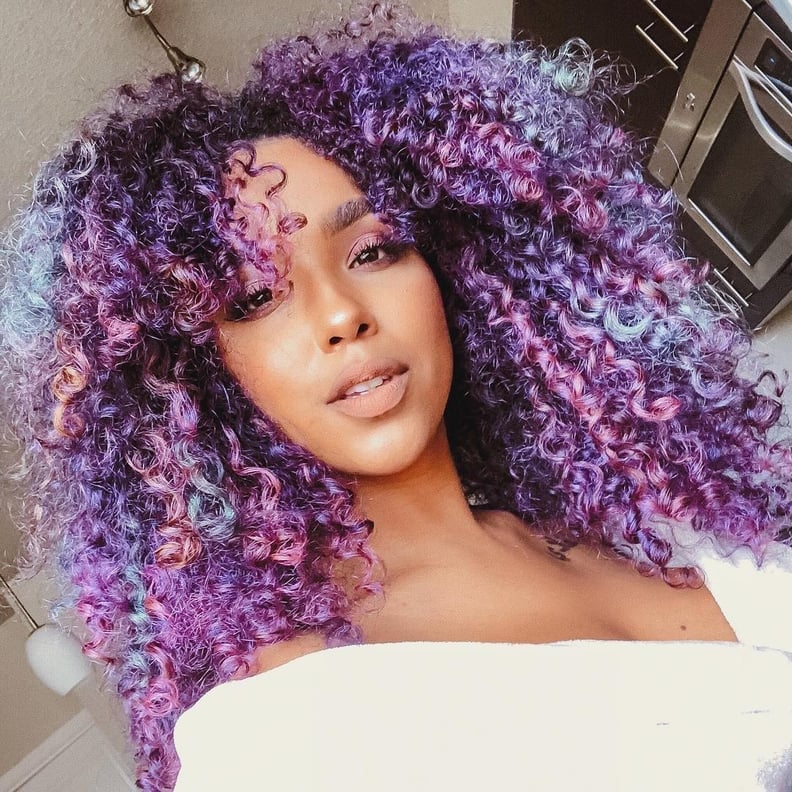
This is not a single shade applied from root to tip; it is a deliberate placement of vivid purple, pink, and blue highlights woven through thick, curly shoulder-length hair with curtain bangs, parted down the middle and left to air-dry. Ask your colorist for: vibrant purple, pink, and blue highlights on shoulder-length layered curly hair. The colorist will likely use a balayage or hand-painted technique to keep the tones from blending into mud, which is the risk when you request three bright shades on one head. Thick, coarse curls hold this kind of saturation best; finer textures may need a pre-lightener to get the same pop. A curl cream after washing is enough to shape the hair and show off each distinct color streak.
Collarbone Length Plum With Violet Highlights
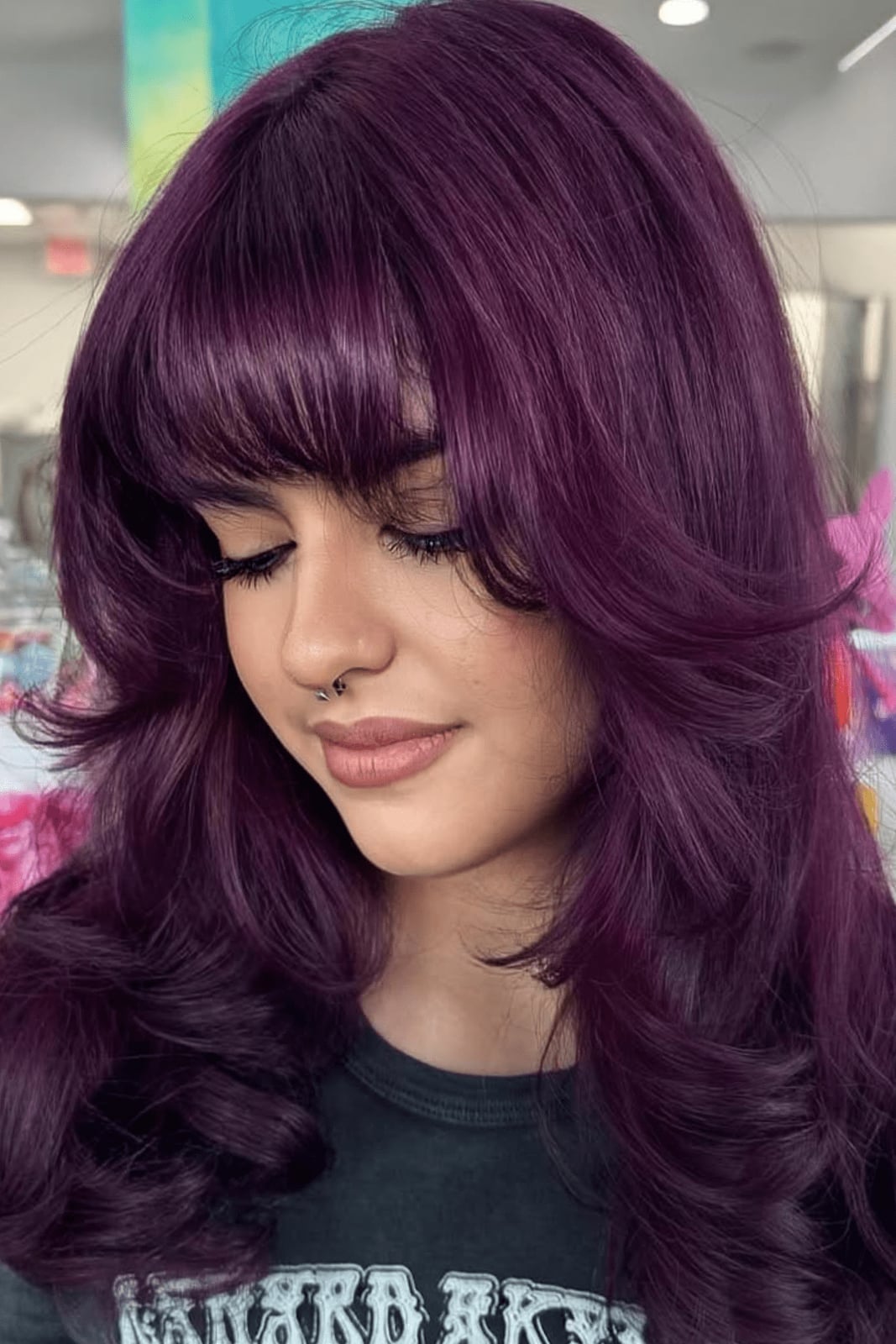
Wondering if purple is limited to long hair or dramatic lengths? This collarbone-length cut with soft curtain bangs and a middle part proves otherwise. The rich plum base carries subtle violet highlights, creating dimension without overwhelming the shorter silhouette.
Ask your colorist for: rich plum base with subtle violet highlights and soft curtain bangs. Medium-density wavy hair holds the violet accents well, and the curtain bangs soften round and oval face shapes. A blowout with a large round brush is the quickest way to make the color shift visible. Plan for a toning appointment every six to eight weeks to keep the violet from fading to a muddy brown.
Mid-Back Purple With Blue Highlights
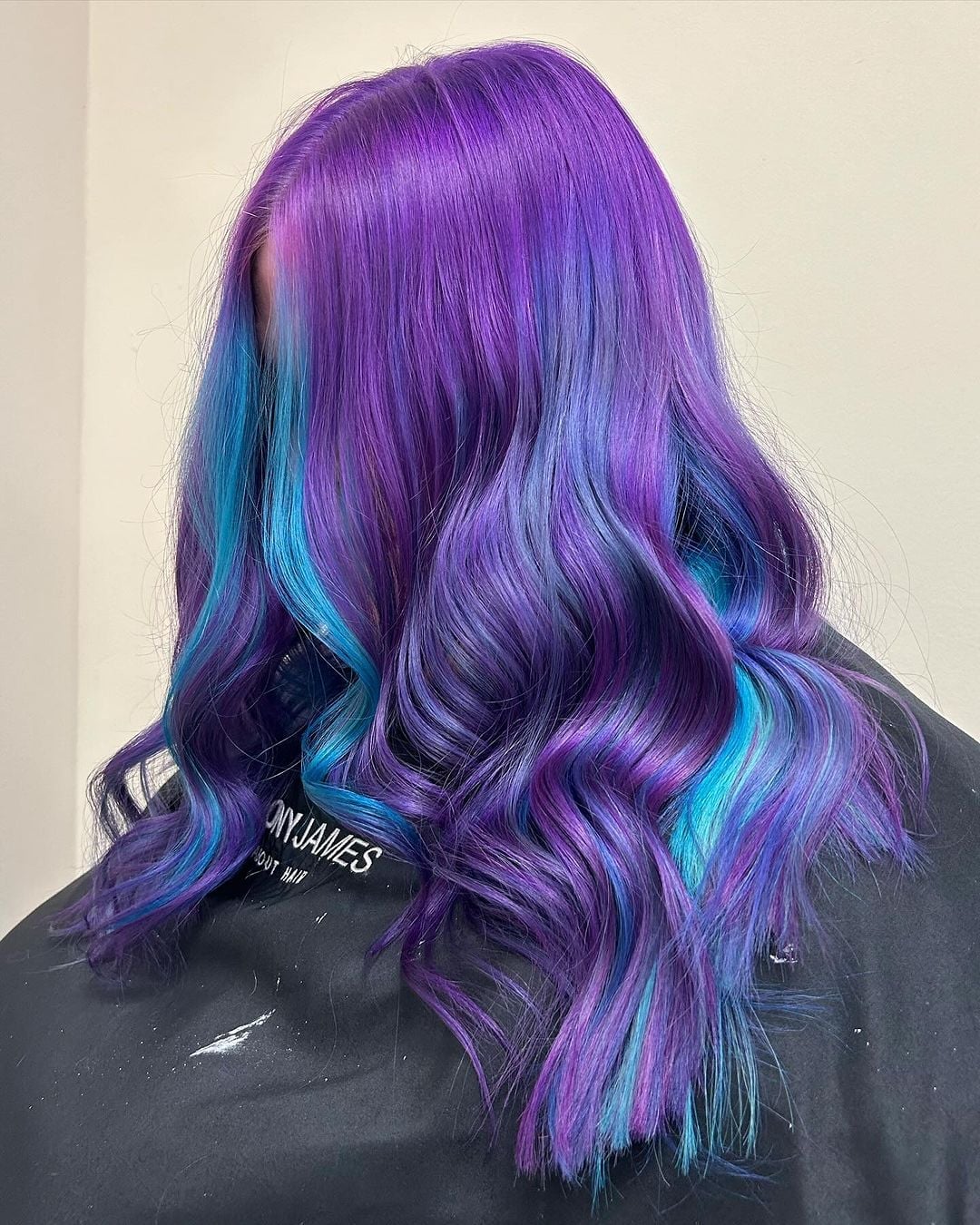
A solid purple can look flat, especially on long, thick hair. This version adds bright blue highlights to a vibrant purple base, and the difference is immediate. The blue pieces are woven through the layers, so the color looks multidimensional. Ask your colorist for: vibrant purple base with bright blue highlights. Thick, wavy hair at mid-back length shows off the contrast best; the loose waves create natural breaks that let both colors show their tones. Compared to a single-tone purple, this design requires more strategy from the colorist but delivers a finish that shifts depending on how you move. A glossing serum adds the shine that makes the blue appear intentional.
Mid-Back Purple Ombre Waves
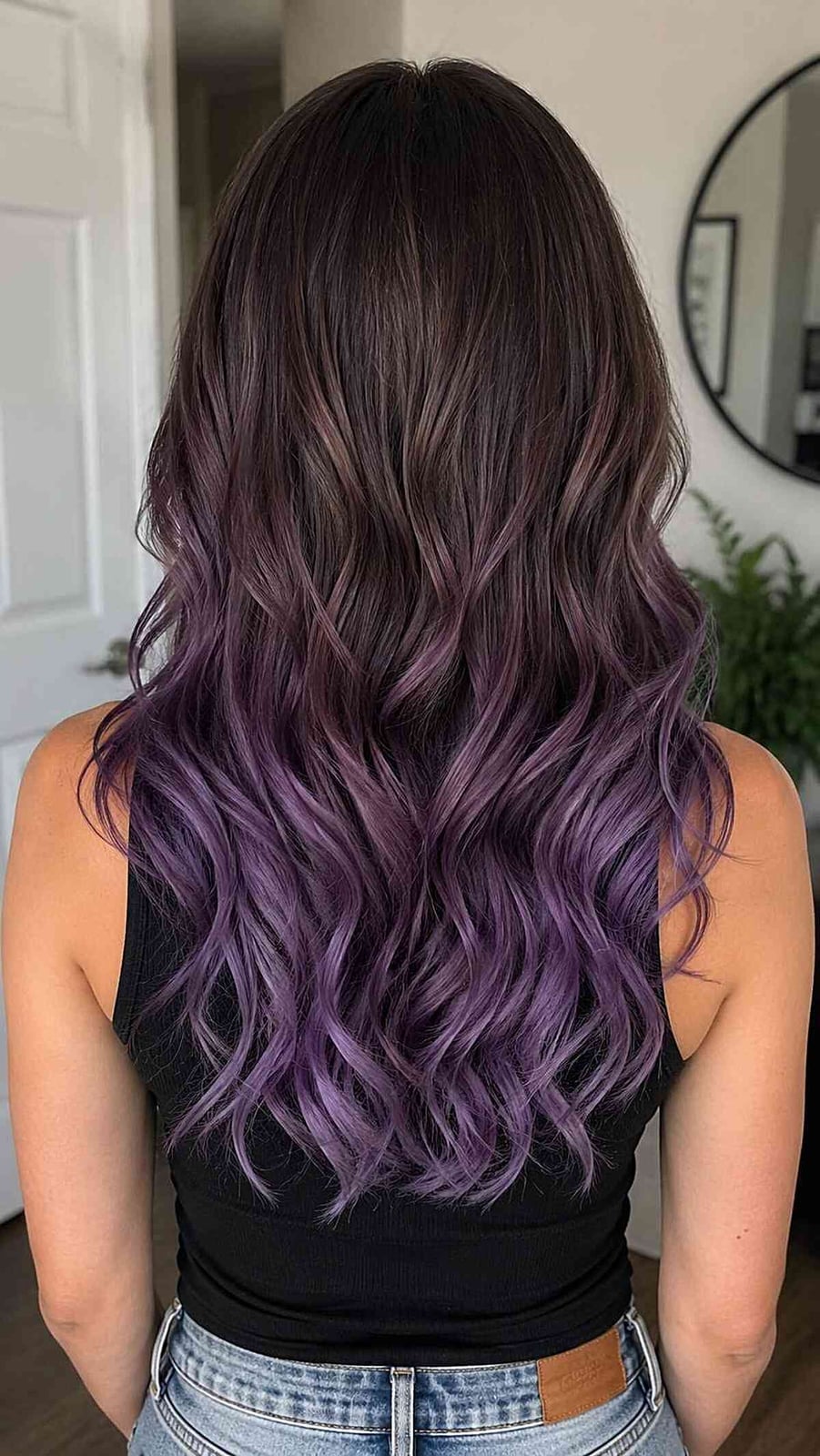
The transition from dark brown to vibrant purple is smooth here, not abrupt. The ombre starts below the ears and deepens gradually to the ends, which means the roots stay dark for a low-maintenance grow-out period. Ask your colorist for: dark brown to vibrant purple ombre with loose waves. Thick, wavy hair at mid-back length carries the gradient well; the texture keeps the line from looking harsh. Because the purple is concentrated on the lower half, you only need to refresh that section with a color-depositing conditioner or a salon toning appointment every eight weeks. The dark base does not require bleach, which is a practical advantage if you want to avoid full lightening. A texturizing spray on damp waves gives the ombre more movement.
Mid-Back Dark Base To Purple Ombre
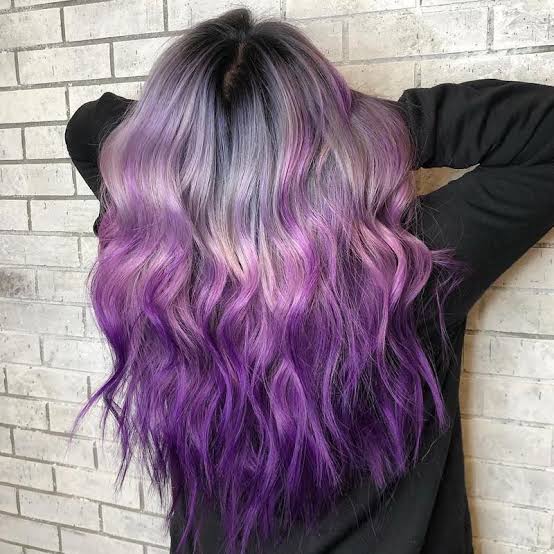
How do you ask for a purple ombre that actually looks vibrant? Start with the exact words: dark base to vibrant purple ombre with long layers. Ask your colorist for: dark base to vibrant purple ombre with long layers. This mid-back length style uses long layers to graduate the color, so the purple has room to spread without a hard line. Medium-density wavy hair works here because the waves help blend the transition point. The dark base stays natural, which cuts down on root upkeep, while the ends need a pre-lightener to reach that vivid tone. Use a heat protectant when styling the loose waves; the lightened ends are more porous and prone to heat damage. This is a salon-only project; ombre requires precise sectioning and timing to keep the gradient even.
Collarbone Ombre With Vivid Purple Ends
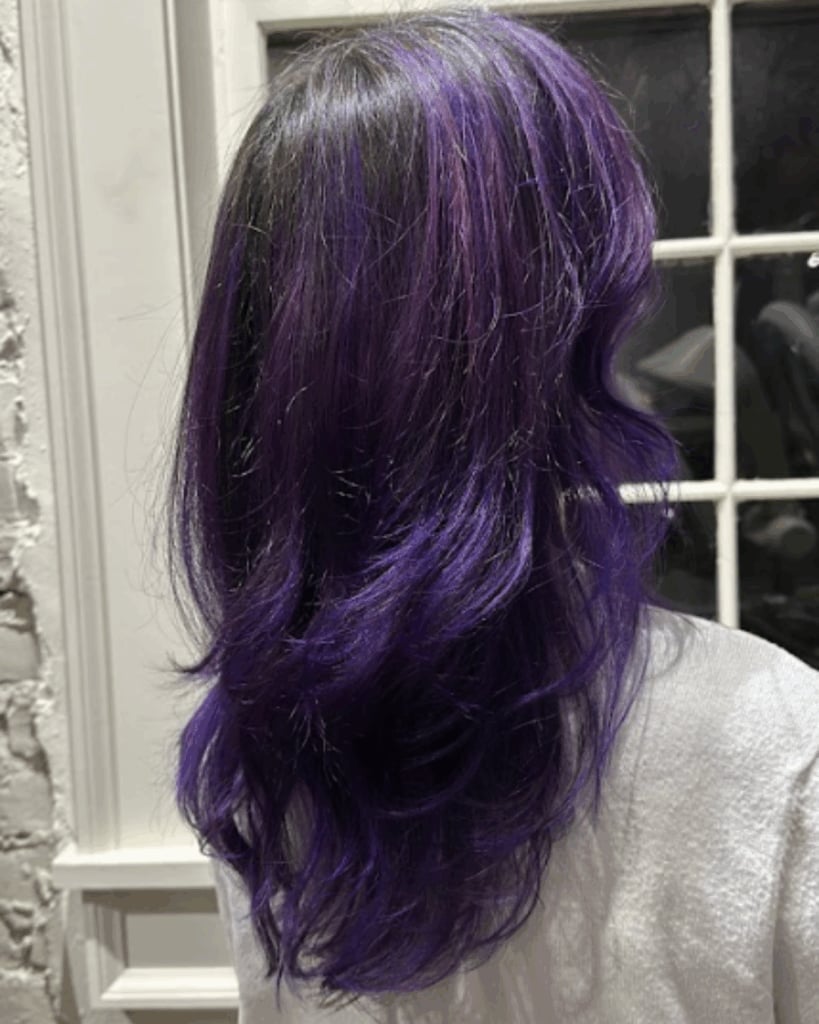
This design works because the vivid purple ends hit right where the collarbone-length layers end, making the color change the logical conclusion of the cut. A dark base with a side-blown blowout keeps the ombre from reading as an afterthought. Ask your colorist for: dark base to vivid purple ombre ends on layered collarbone hair. Medium density wavy hair of collarbone length is ideal here; the side part draws the eye down the curve of the blowout. Ombre maintenance is mostly about the ends, expect to tone the purple every four to six weeks to keep the contrast sharp.
Mid-Back Split Pink And Purple
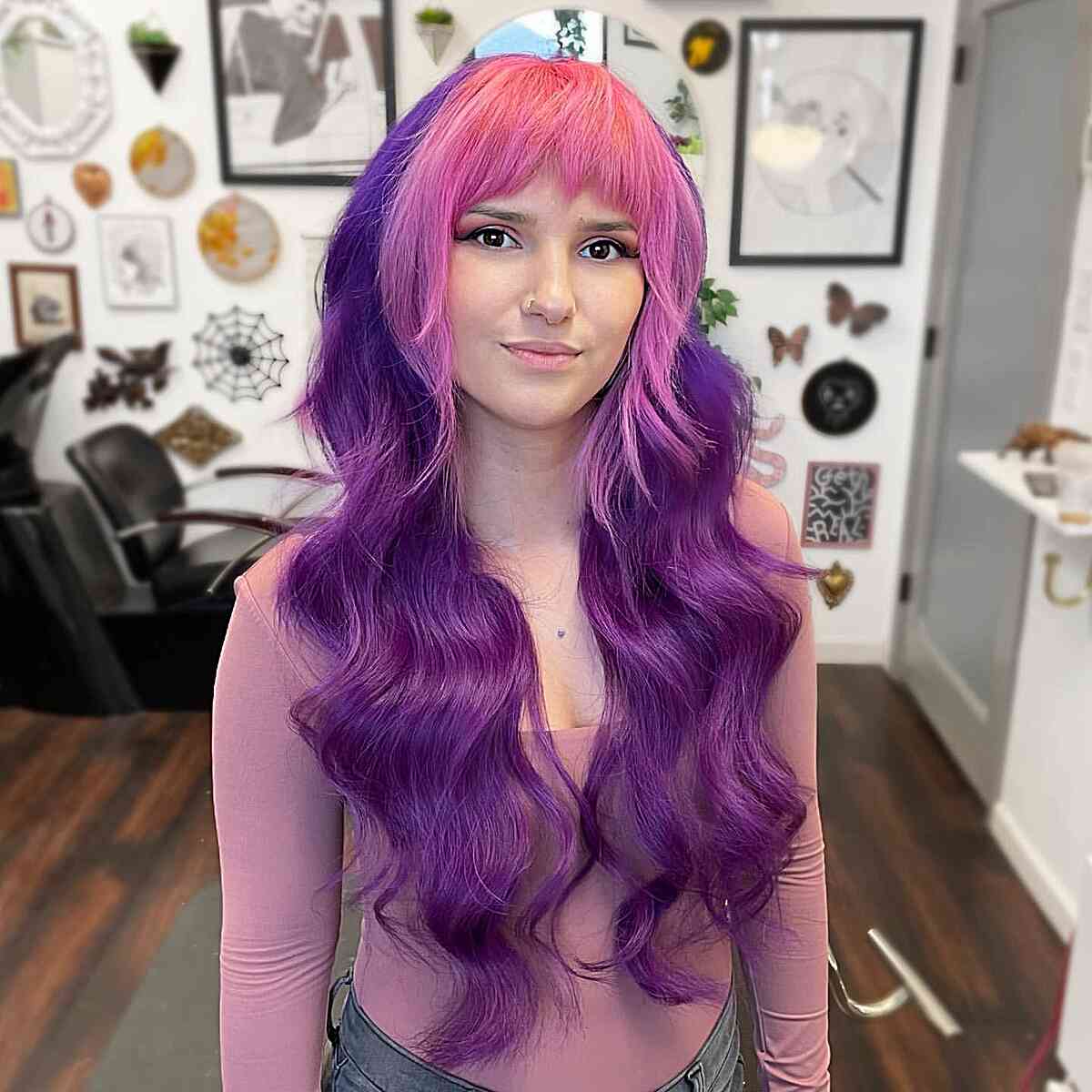
This split color is the cousin of a peekaboo highlight that got impatient and took over the whole head. It is not subtle, which is the point, but it is also not low-maintenance. The pink top section and purple bottom section meet at a clear middle parting, with blunt bangs carrying the color separation right to the forehead. Ask your colorist for: pink top section, purple bottom section, blunt bangs, long layers.
Medium density wavy hair of mid-back length can carry the weight of this design, but the blunt bangs need a trim every three to four weeks to stay sharp. The honest drawback is grow-out: once the roots come in, the neat split blurs fast, and touch-ups require a full section reapplication rather than a quick root melt.
Mid-Back Blue And Purple Color Block
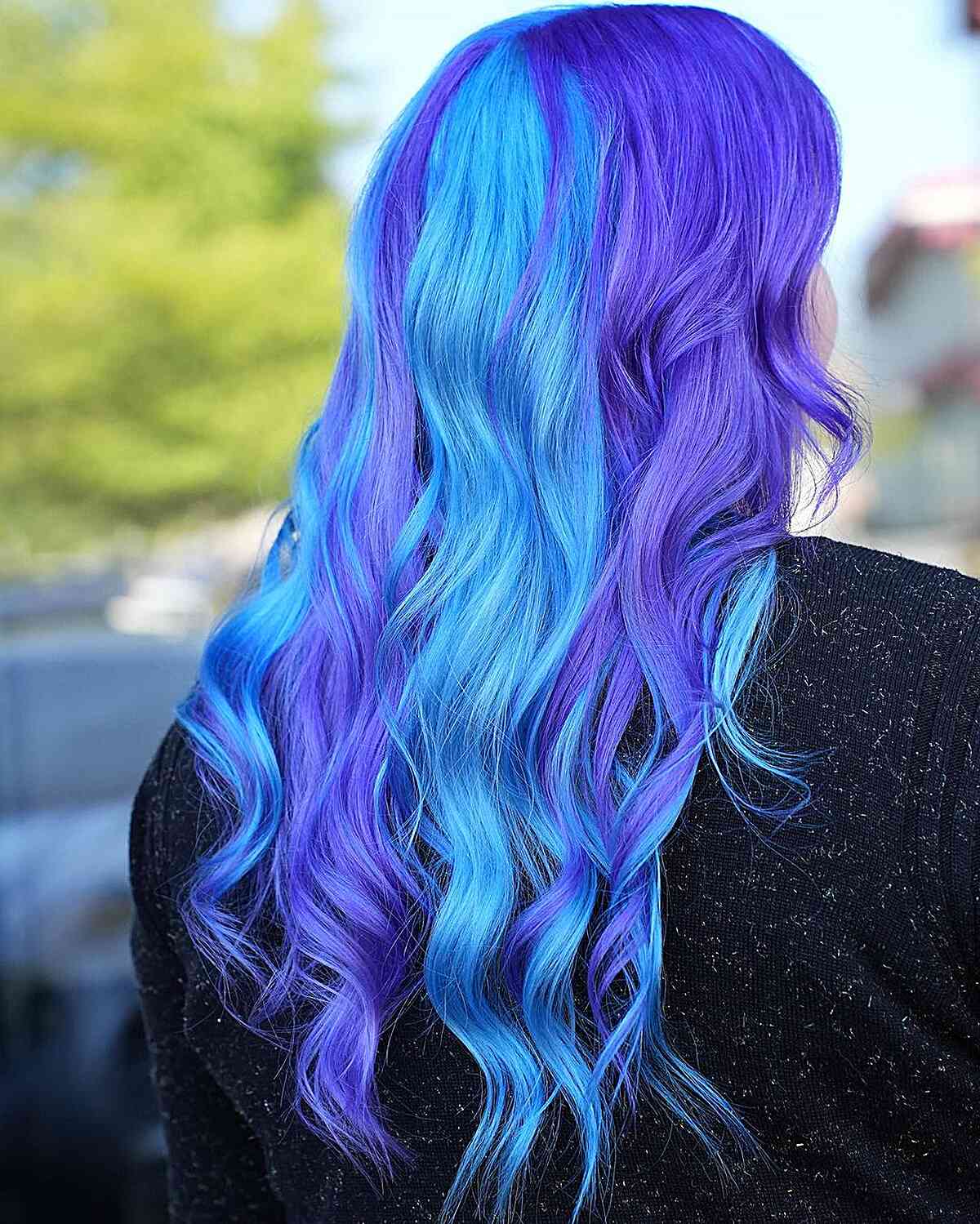
Where a subtle highlight whispers, this color block shouts, one side bright purple, the other vivid blue, meeting somewhere around the middle of the head. The thick wavy texture of mid-back length hair helps the two colors blend slightly at the edges. Ask your colorist for: blue and purple color blocking, loose waves. This suits thick wavy hair of mid-back length; the density keeps each color block opaque so the scalp does not show through. Compared to a full head of highlights, this design demands less maintenance between toning sessions because the grow-out line is a planned part of the look.
Mid-Back Teal Base With Purple Highlights
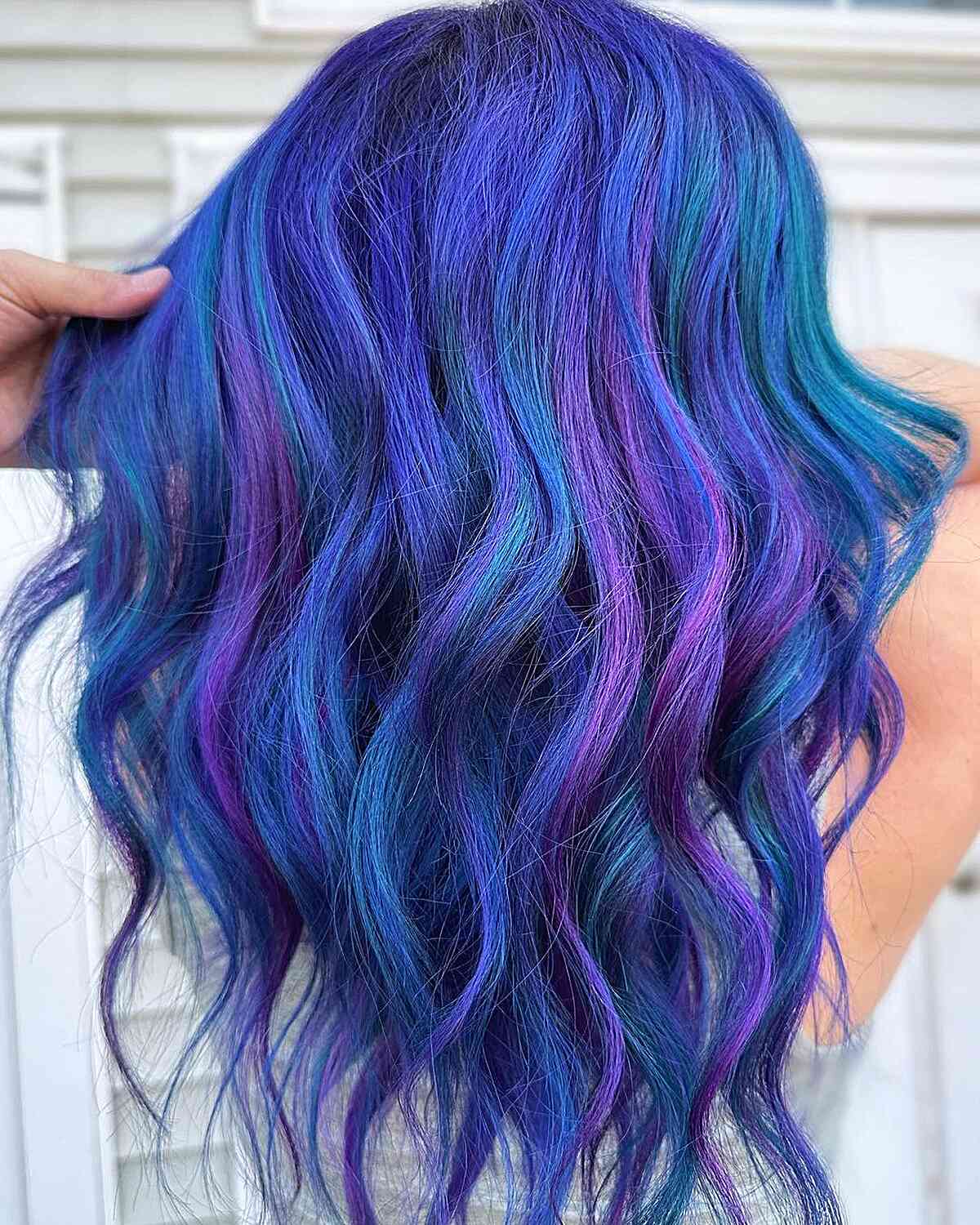
If you have thick wavy hair and are ready to commit to a fantasy palette, this is the one. The teal base provides a cool anchor, while the vibrant purple and lighter blue highlights create a layered dimensional effect. Ask your colorist for: teal and purple highlights on a blue base, loose waves. Thick wavy hair of mid-back length is the starting point here, fine hair would struggle to show the separate colors. Upkeep involves a purple shampoo alternating with a blue shampoo to keep each tone from mudding into the other, roughly every second wash for the first few weeks.
Mid-Back Deep Purple With Blue Pink Streaks
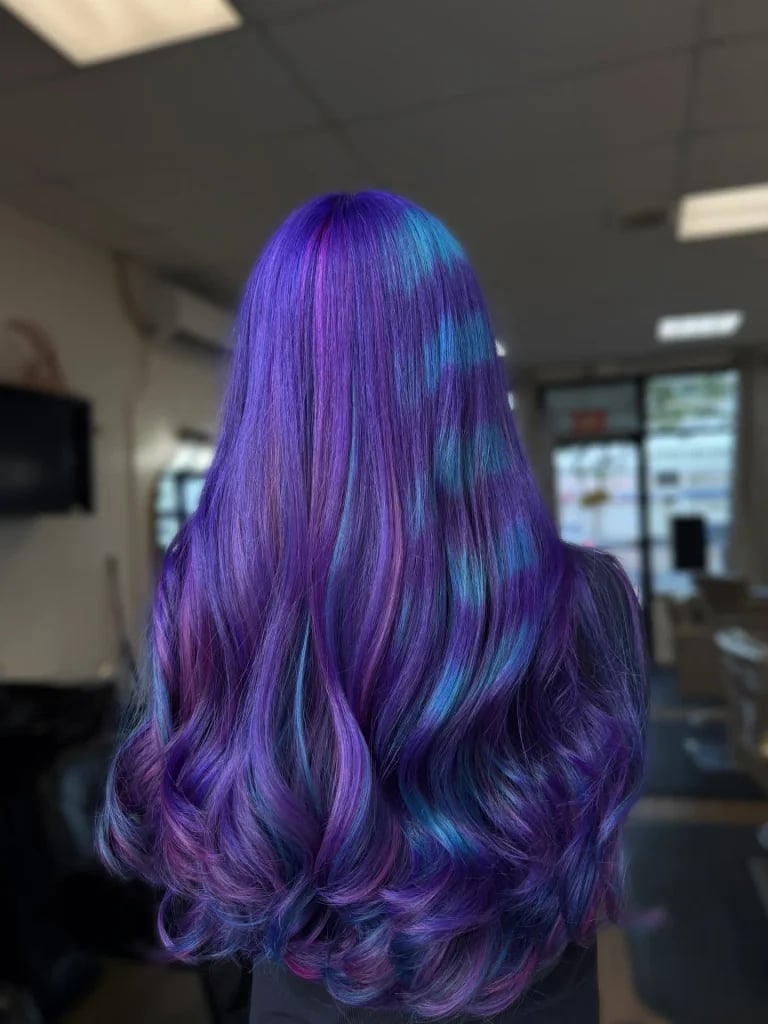
The deep purple base provides a rich foundation that keeps the electric blue and softer pink streaks from floating away visually. The streaks sit in the mid-back length layers, which prevents the multi-tonal effect from looking like separate chunks of color. Ask your colorist for: deep purple base with electric blue and pink streaks, loose waves. Thick wavy hair of mid-back length works best; the waves catch the different colors at different angles, making the blend shift as you move. A clear glossing serum helps the streaks pop, and a trim every 10 to 12 weeks keeps the layers from outgrowing the color placement.
Mid-Back Vivid Purple With Pink Undertones
A vivid purple that leans pink reads warmer and softer than its neon reputation suggests. On thick, wavy mid-back hair air-dried to a natural finish, the pink undertones keep the shade from turning flat or muddy as the day goes on. The middle parting shows the saturation from root to tip, so any fading becomes immediately obvious.
Ask your colorist for: vivid purple with pink undertones. Low heat when drying helps the waves hold their shape without crushing the color. Expect to refresh the tone every three to four weeks: pink undertones fade faster than blue-based purples, and a color-depositing conditioner in the shower is the only thing standing between you and a brassy sort-of-blonde.
Mid-Back Uniform Vivid Purple
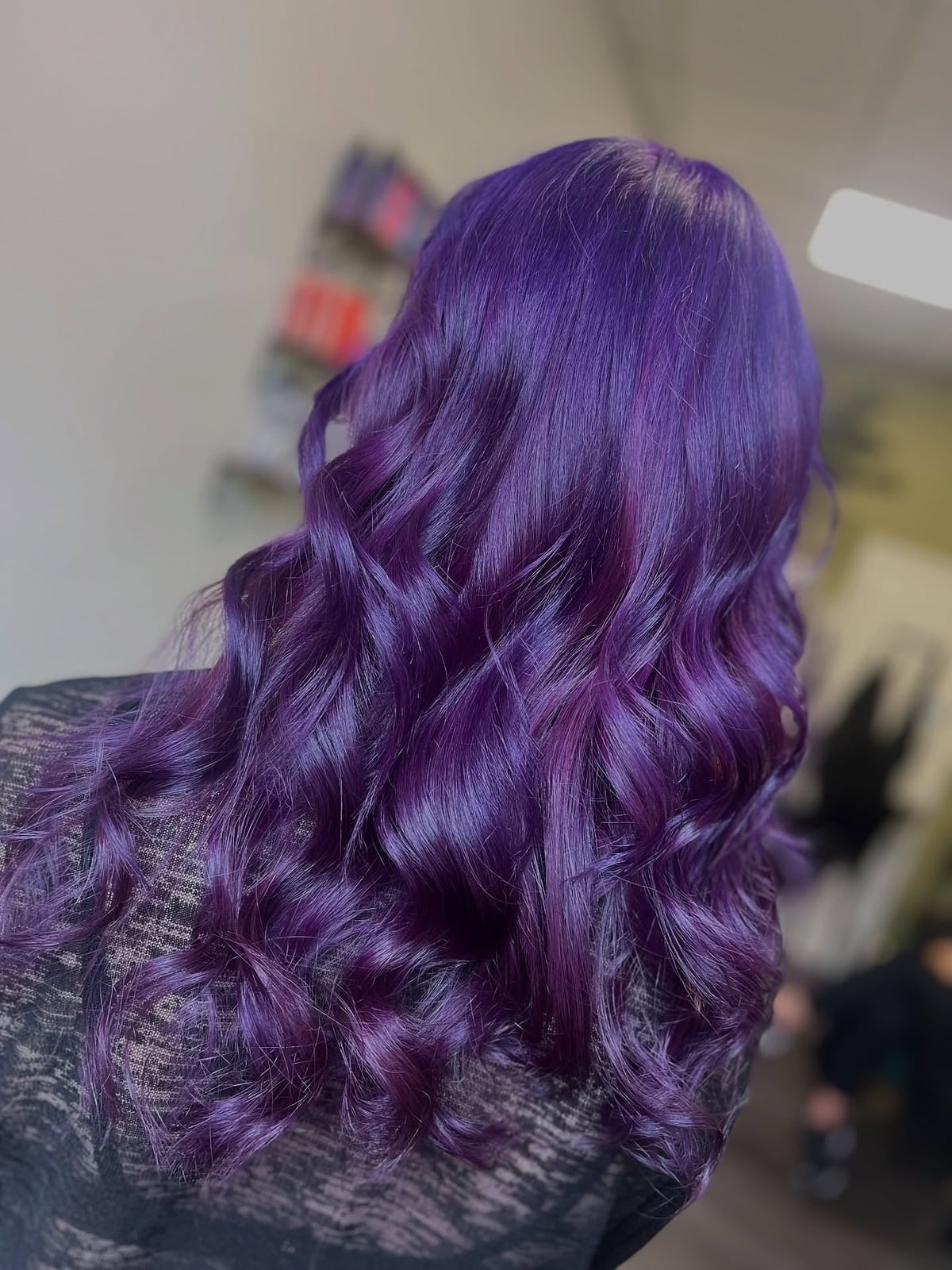
A single shade of vivid purple across mid-back length is the most straightforward ask on this list, which is both its selling point and its catch. The color has to be perfectly even from root to end, so a salon application is the only way to avoid patchiness on thick, wavy hair. Ask your colorist for: uniform vivid purple, soft loose waves. The glossy finish comes from a shine spray, not from the formula itself. The middle parting and back view mean every strand is visible, so there is nowhere for an uneven root line to hide.
Collarbone Deep Purple With Violet Highlights
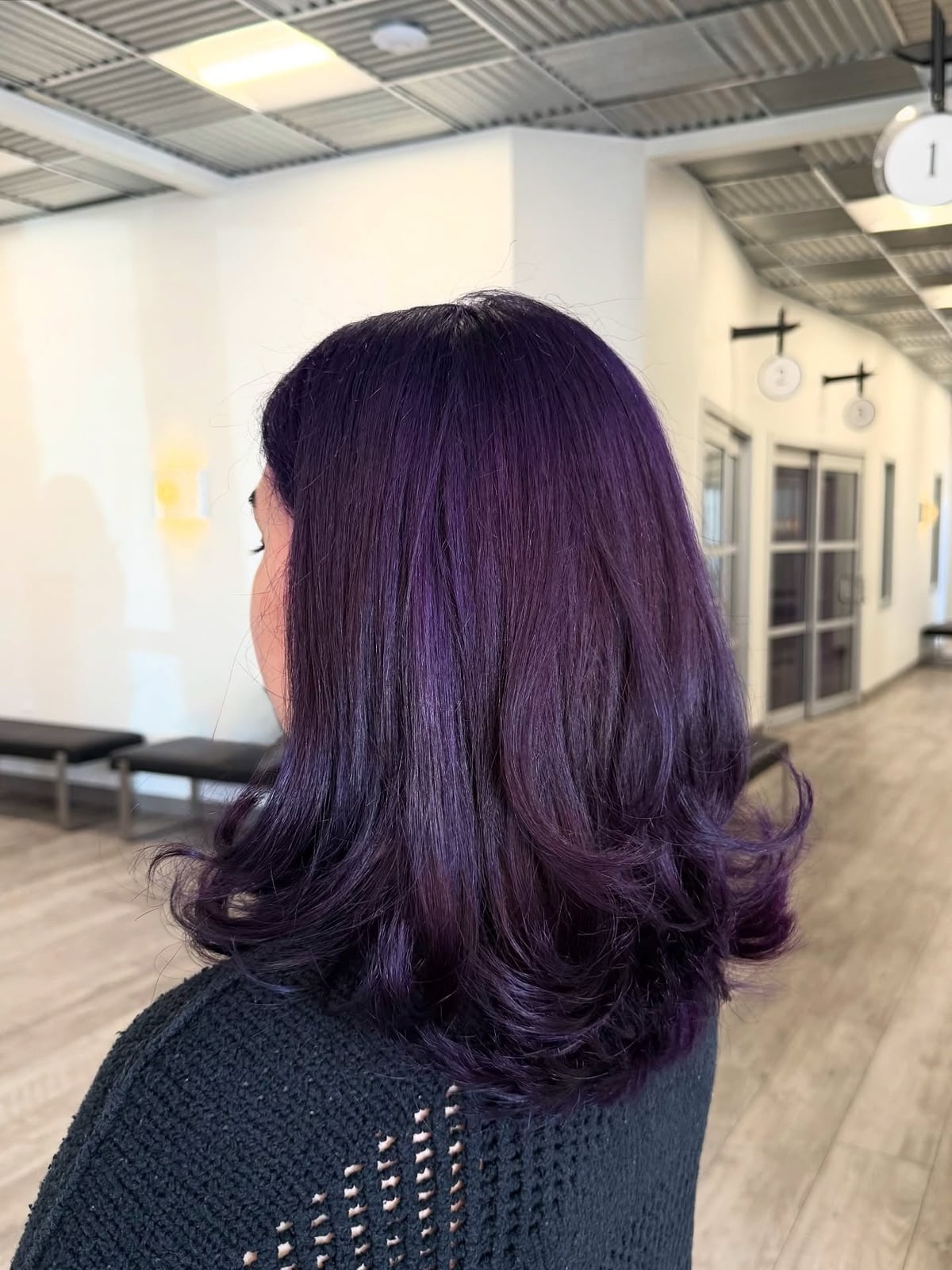
The effect here comes from contrast: a deep purple base sits underneath thinner violet highlights on the surface of each wave. On collarbone length, medium density wavy hair, the highlights appear from the mid lengths to ends, leaving the root area darker for a lived in grow out. Ask your colorist for: deep purple base with subtle violet highlights, soft waves. The blowout finish at the ends keeps the waves from looking too casual, and the side view makes the dimensional shift between base and highlight read clearly.
Collarbone Solid Medium Purple Lob
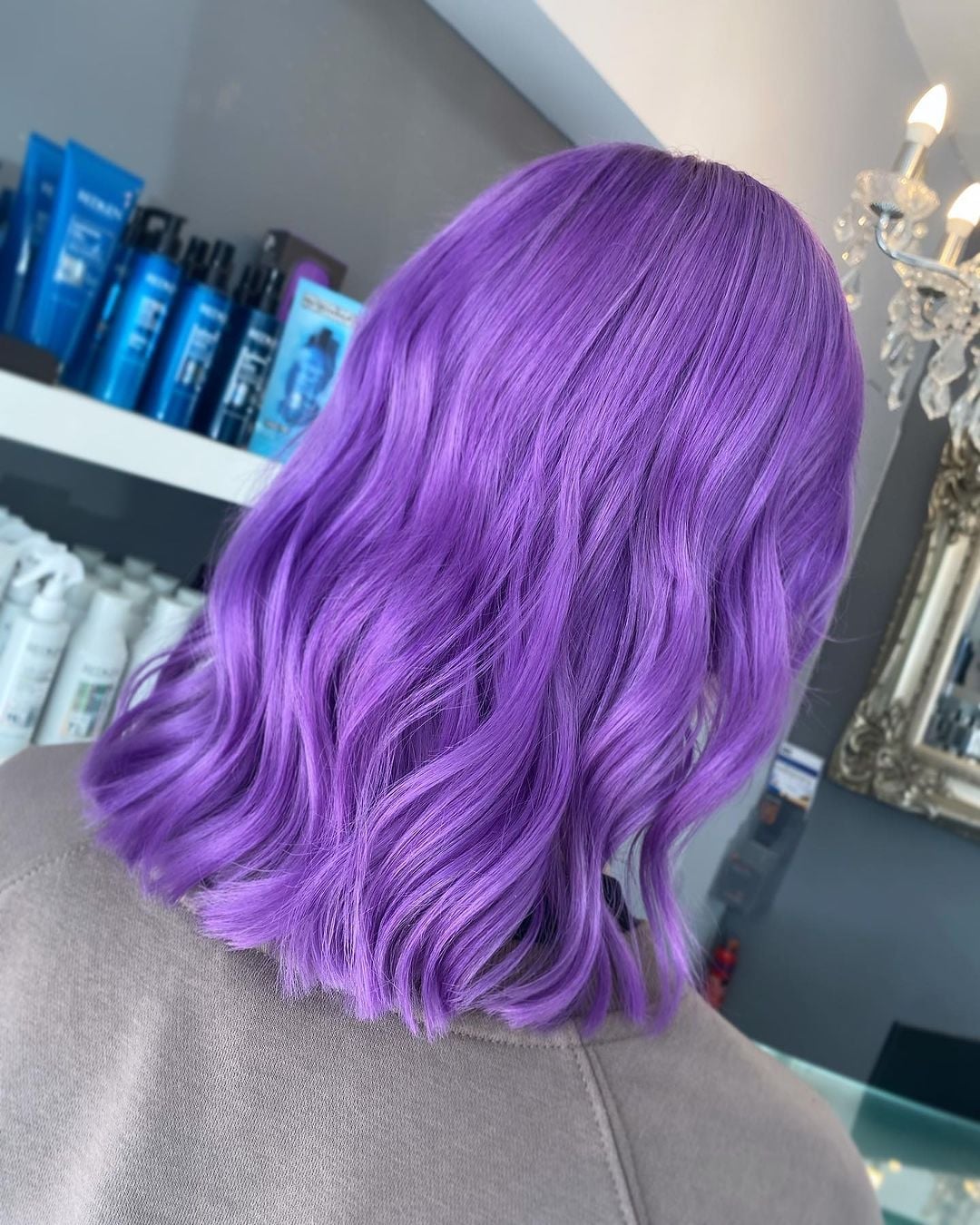
A solid medium purple on a collarbone lob is a color that works best when the cut is sharp and the saturation is high. On medium-density wavy hair, the uniform shade needs a glossy finish to avoid looking flat, which means a smoothing balm and low heat are your friends. Ask your colorist for: solid medium purple, collarbone lob, soft waves. The middle parting and back view make the cut’s silhouette the main event, so a trim every six to eight weeks keeps the line clean. Grow-out is visible on dark roots within about three weeks, depending on your natural base.
Mid-Back Ash Purple With Lilac Highlights
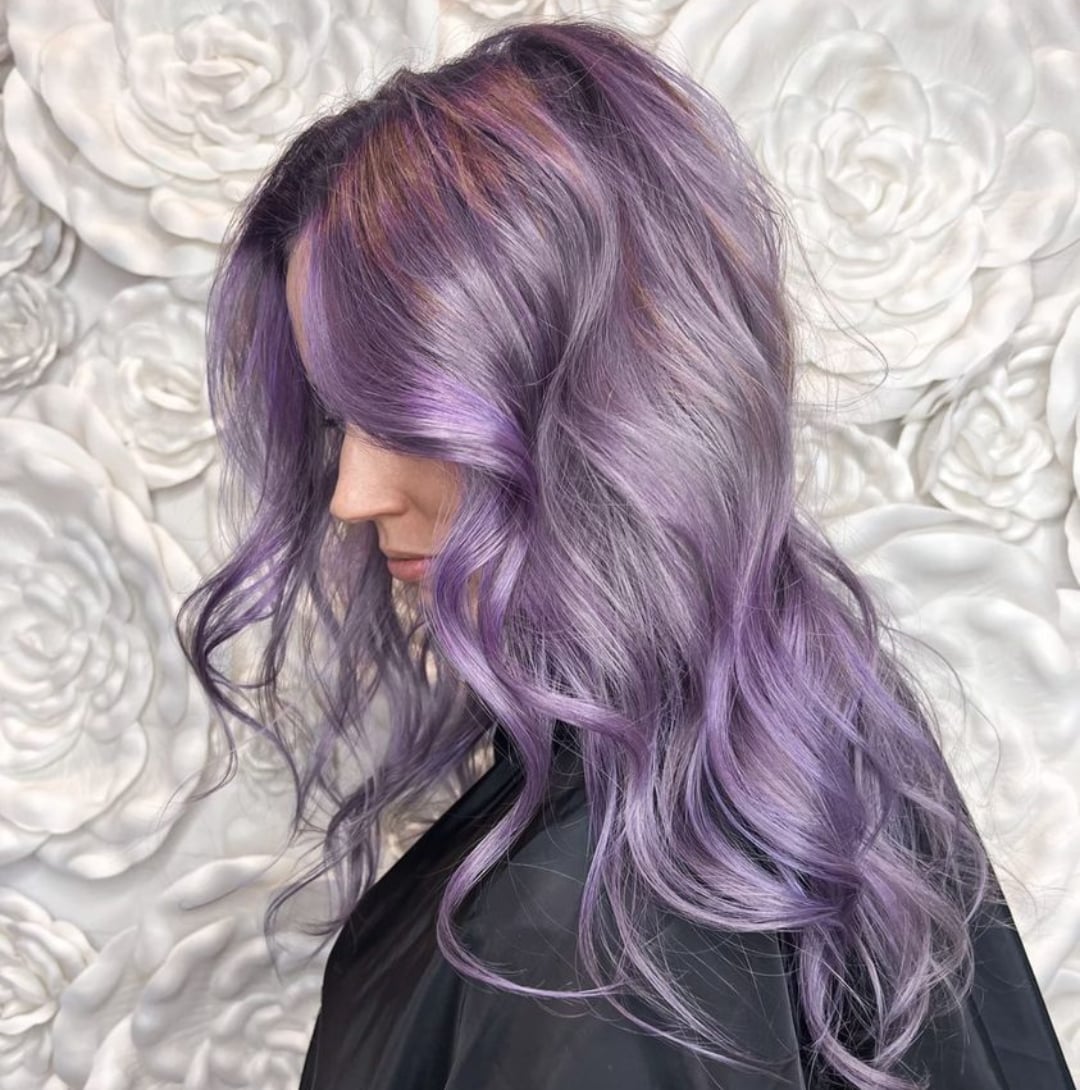
This is the cooler, softer cousin of the vivid pinks and deep plums elsewhere on this list. An ash purple base with lighter lilac highlights reads almost dusty, like the color has been filtered through a cloud. On mid-back length wavy hair with long layers and soft curtain bangs, the highlights are fine and spaced, so the overall impression is tonal rather than streaky. Ask your colorist for: ash purple base with lilac highlights, soft curtain bangs, loose waves. The front-side view shows how the bangs frame the face without competing with the color. A purple shampoo once a week keeps the ash tone from pulling beige.
Mid-Back Pastel Pink Purple Gray Blend
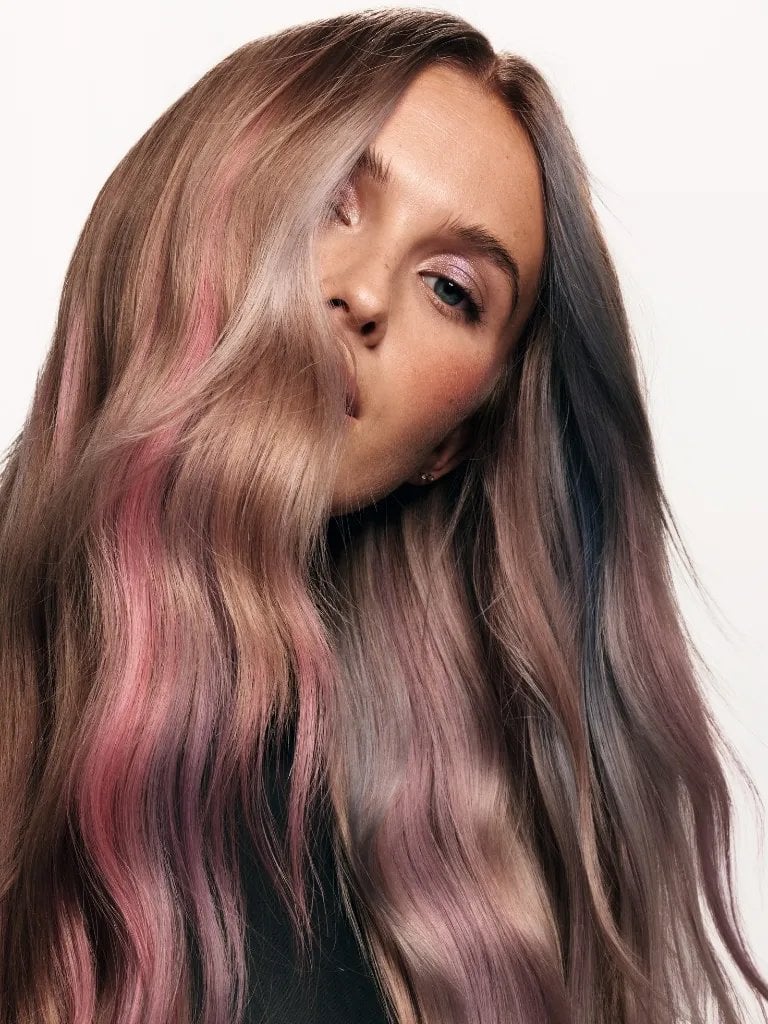
This design works because no single color dominates. The pink, purple, and gray strands are finely interwoven to create a single pastel cloud. Mid-back length with long layers and loose waves gives the blend room to breathe without turning muddy. Ask your colorist for: pastel pink, purple, and gray blend with long layers. The wavy, medium texture hair will look soft and diffused, not flat.
Building this means pre-lightening to pale blonde first, then applying three separate pastel tones section by section. It is a salon-only project; the fade rate is high, so expect to refresh with a tinted conditioner every few washes. The result is a pastel purple gray blend that shifts subtly depending on the light.
Collarbone Dark Base With Purple Highlights
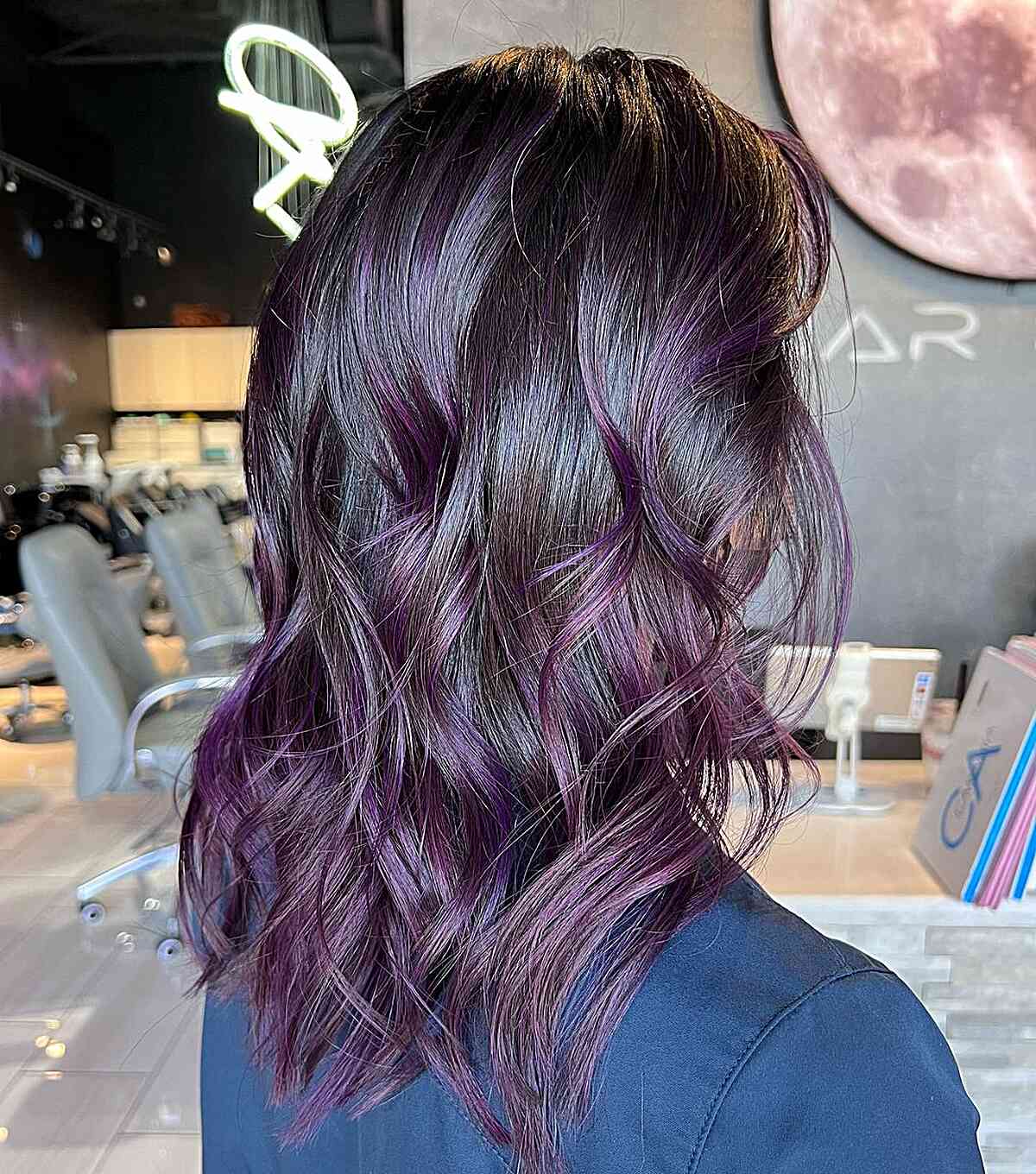
Subtle purple highlights on a dark base add a soft pop of color. This collarbone length cut with soft layers and curtain bangs lets those multidimensional strands peek through without overpowering the natural depth. Ask your colorist for: dark base with subtle purple highlights and curtain bangs. The side view here shows the interplay clearly. The purple is an accent, not a commitment.
The upkeep is manageable for a salon-leaning color: the highlights will fade gradually over six to eight weeks, and the dark base keeps grow-out from looking obvious. Curtain bangs and layers need a trim every six to eight weeks to maintain their shape. A purple shampoo once a week helps the highlights stay cool-toned and avoid turning brassy.
Collarbone Peekaboo Purple Highlights
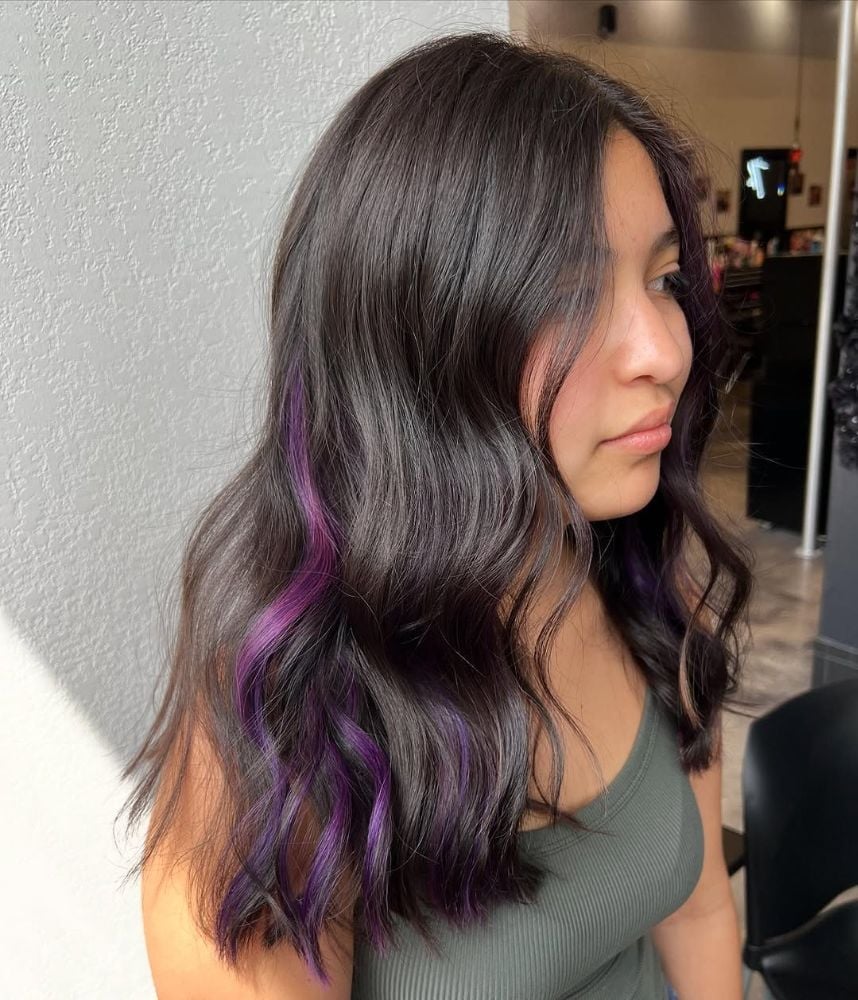
Peekaboo highlights are the hair equivalent of a secret handshake: only visible when you move. Here, collarbone-length hair with layers and a side parting reveals subtle purple strands underneath a dark brown base. Ask your colorist for: dark brown with subtle purple peekaboo highlights and layers. The wavy texture and air-dried styling keep it low-key, so the color does not compete with the casual finish.
This works best on medium density hair where the top layer is thick enough to conceal the purple until you want it seen. The highlights are placed on the underside from mid-lengths to ends, which means they last through several washes before needing a toner refresh. A one-session salon appointment gets this done, and the grow-out is invisible because the base is your natural shade.
Pixie Cut Gray With Purple Pink Streaks
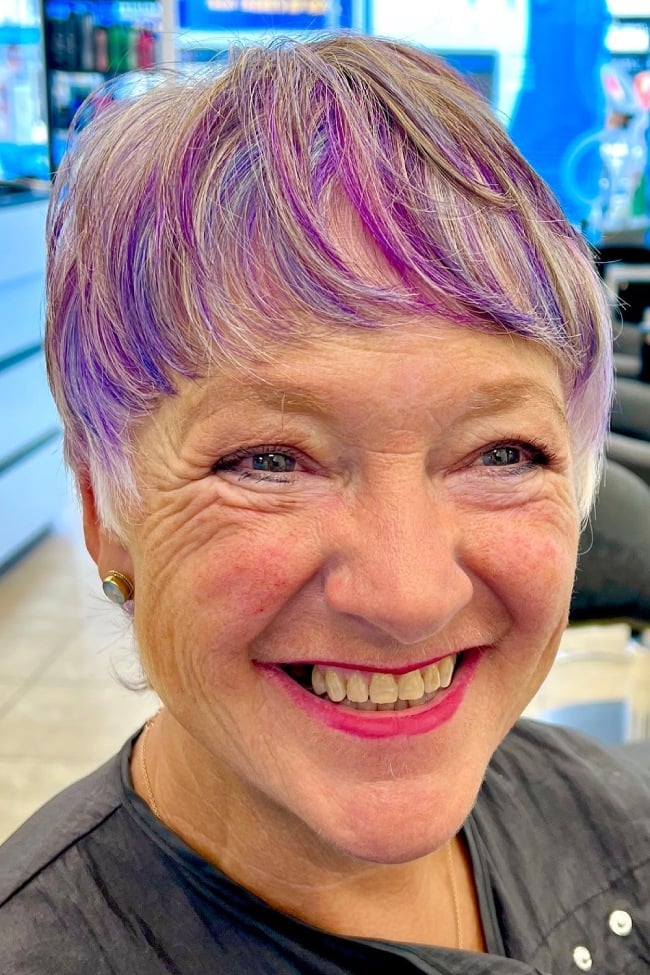
When fine, straight hair goes short, every streak has to earn its place. This pixie cut uses a gray base with purple and pink streaks placed for maximum contrast. Ask your colorist for: gray base with purple and pink streaks and short textured pixie. The side-swept bangs keep the look balanced.
DIY is not the move here. Achieving a clean gray base on fine hair while keeping the pastel streaks separate requires a pro who understands lift levels. A texturizing paste will define the streaks without weighing the fine texture down. Expect to return for a trim every four weeks; the pixie shape loses its edge fast.
Chin Length Bob Vibrant Purple Streaks
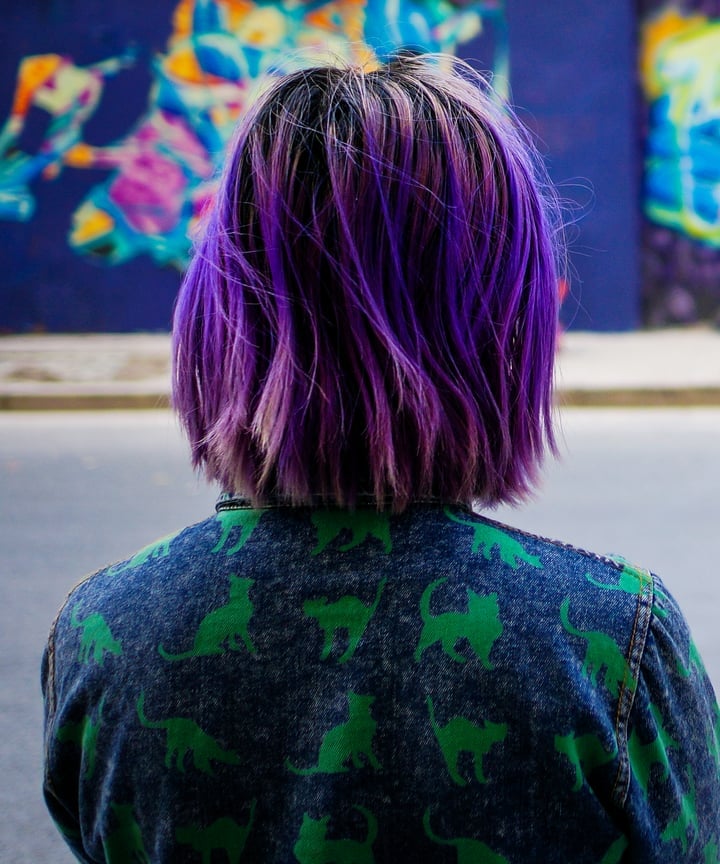
A chin-length bob with a textured finish and a middle parting is already bold; adding vibrant purple with lighter purple streaks pushes it into statement territory. Ask your colorist for: chin-length bob, vibrant purple with lighter streaks, textured finish. The back view here shows the color dimension, the lighter streaks create movement without needing layers to do the work.
The honest trade-off: fine, wavy hair tends to lose vibrant color fast, especially on a short cut where every inch of color is visible. You will likely need a toner touch-up every four weeks to keep the purple from washing out to a muted lilac. A dry texture spray can revive the bob’s shape between washes, but the color commitment is real.
Mid-Back Straight Dark Purple Glossy
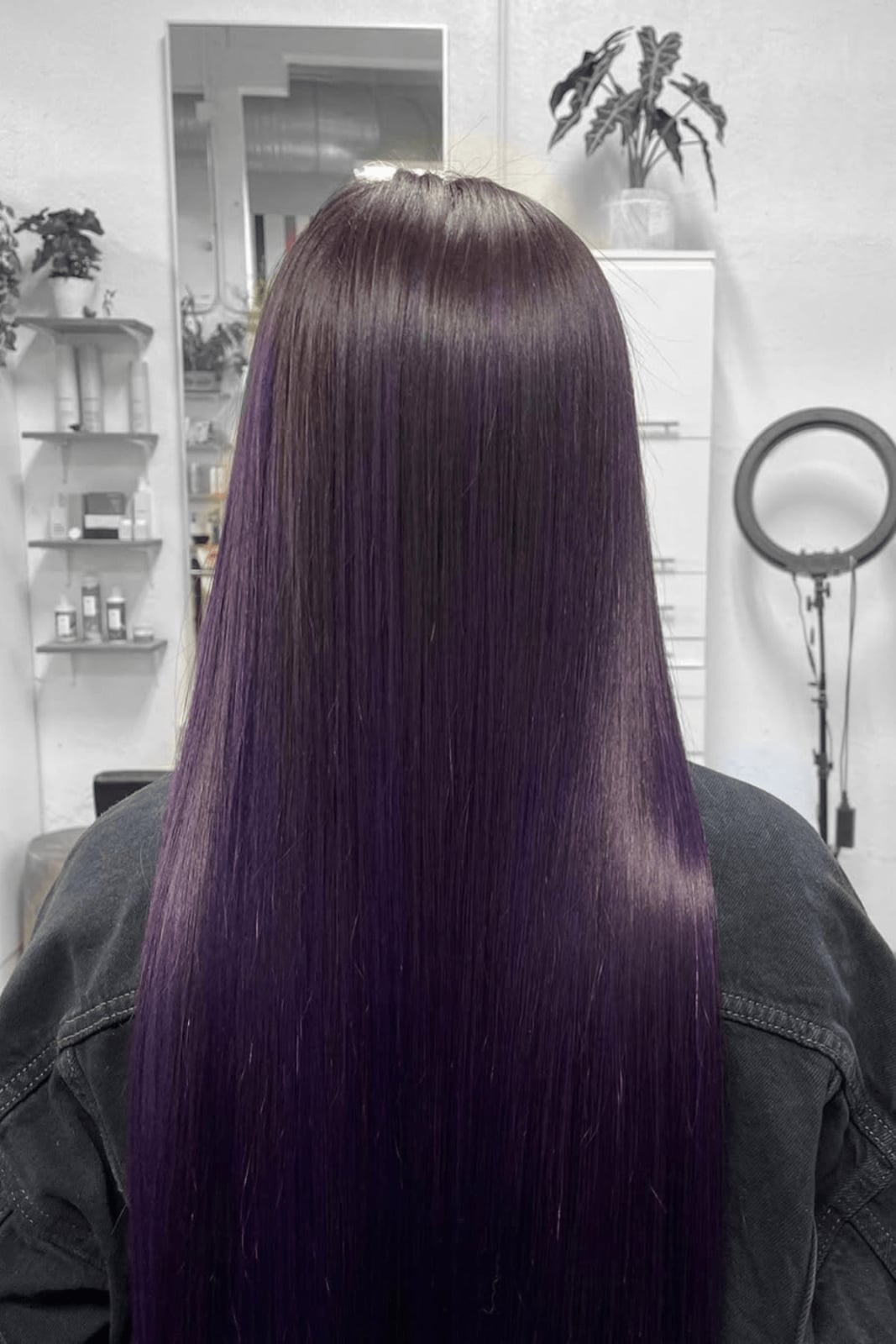
Ask your colorist for: dark purple with violet undertones, straight sleek style. A drop of shine spray on dry hair before you leave the house, and a gloss treatment every six to eight weeks. A trim every ten to twelve weeks keeps the ends from fraying and the whole thing looking like you spent more time on it than you did.
Final Thoughts
For vibrant, multi-tonal purple, ensure your base is lightened sufficiently by a professional. For ombres or highlights, consider your natural depth and desired maintenance.
- Wash colored hair with cool water and sulfate-free shampoo.
- Use color-depositing conditioners to maintain vibrancy between salon visits.
- Incorporate a deep conditioning treatment weekly to combat dryness.
- Protect hair from heat styling and UV exposure.
- Plan for touch-ups every 6-8 weeks, depending on growth and fading.
Embrace the power of purple.