15 Simple Blue Highlights 2027 for a Bold Hair Color Statement
Blue hair is back, but not in the way you might expect. Forget all-over color; the trend is shifting towards subtle, integrated blue highlights that add depth without the commitment of a full dye job.
This collection of 15 ideas for Simple Blue Highlights covers the range from low-maintenance peekaboo sections to bolder, more saturated tones. Whether your hair is fine, thick, short, long, straight or curly, there is a technique here that works with your texture and your lifestyle. No more worrying about a visible grow-out line or a fringe that won’t behave.
Wavy Lob With Purple To Blue Gradient
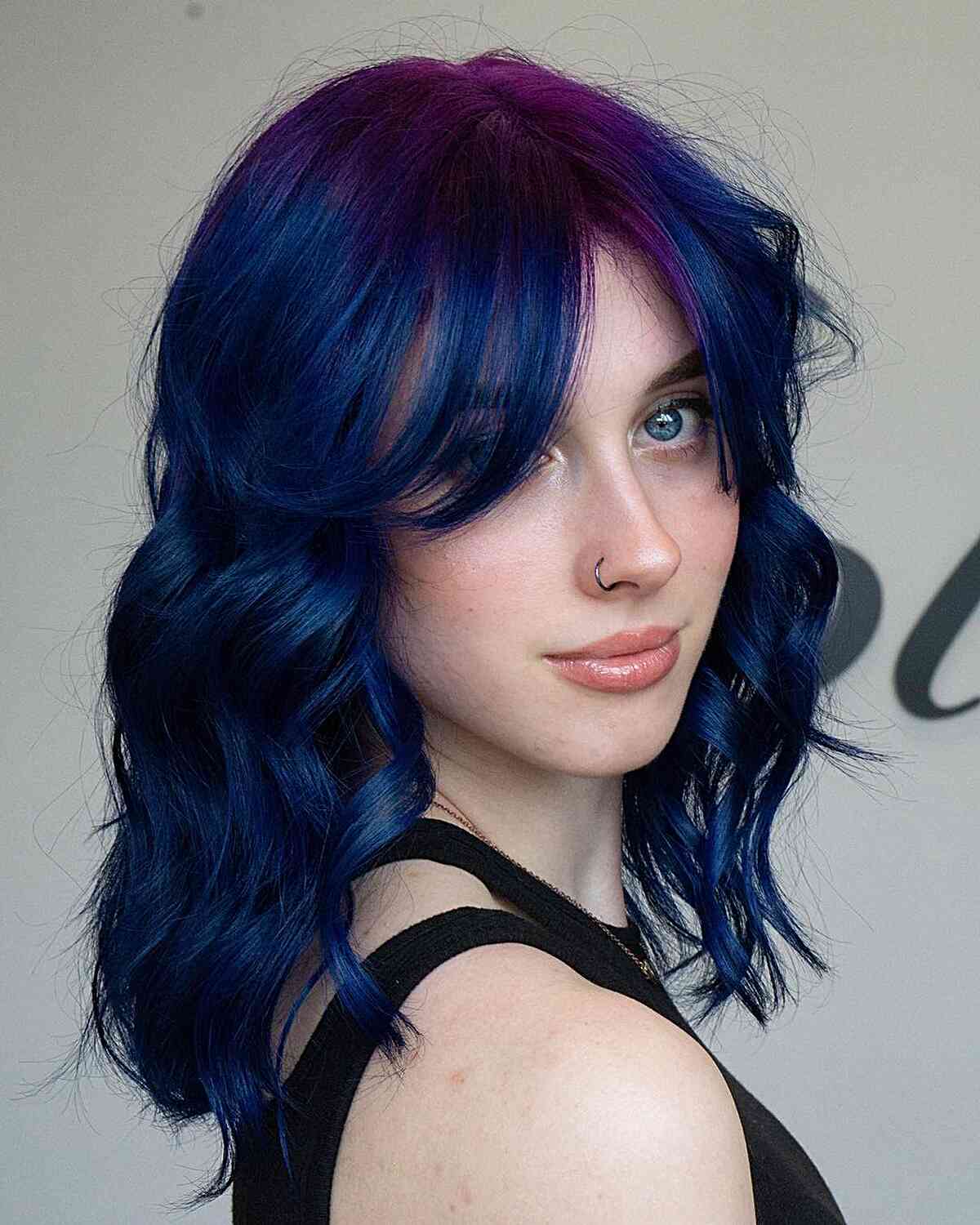
The gradient here is precise: vibrant purple sits at the roots and fades into dark blue through the lengths, giving the lob a deliberate ombré effect rather than a random dip. The curtain bangs and middle parting keep the focus on the color transition, which works best on medium density wavy hair starting at collarbone length. Ask your colorist for: wavy lob, purple root to blue ends, curtain bangs. A texturizing spray defines the waves, and a trim every six to eight weeks keeps the shape and the gradient line clean.
Chin Length Bob With Blunt Bangs And Blue Highlights
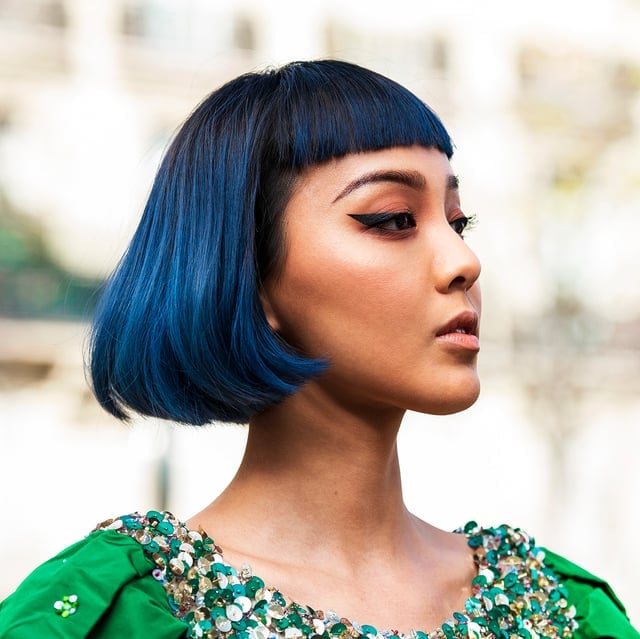
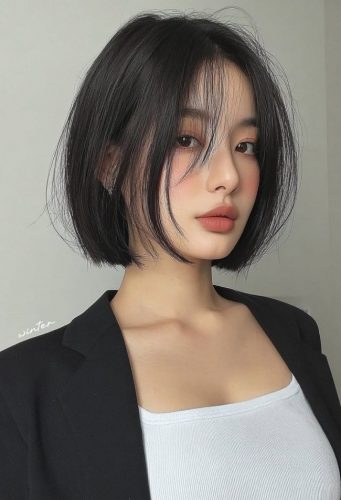
To achieve precise placement of bright blue on a dark base without it looking like a home experiment, ask for woven highlights through the top and front sections, keeping the density low so the blue reads as accent rather than a solid stripe. A chin-length bob cut with blunt bangs suits fine, straight hair that holds a smooth blowout well. Ask your colorist for: chin-length bob, blunt bangs, dark base with bright blue highlights. The blunt ends and straight texture make the blue pop against the dark background, and the middle parting keeps both sides even.
Collarbone Layers In Midnight Blue With Lighter Blue
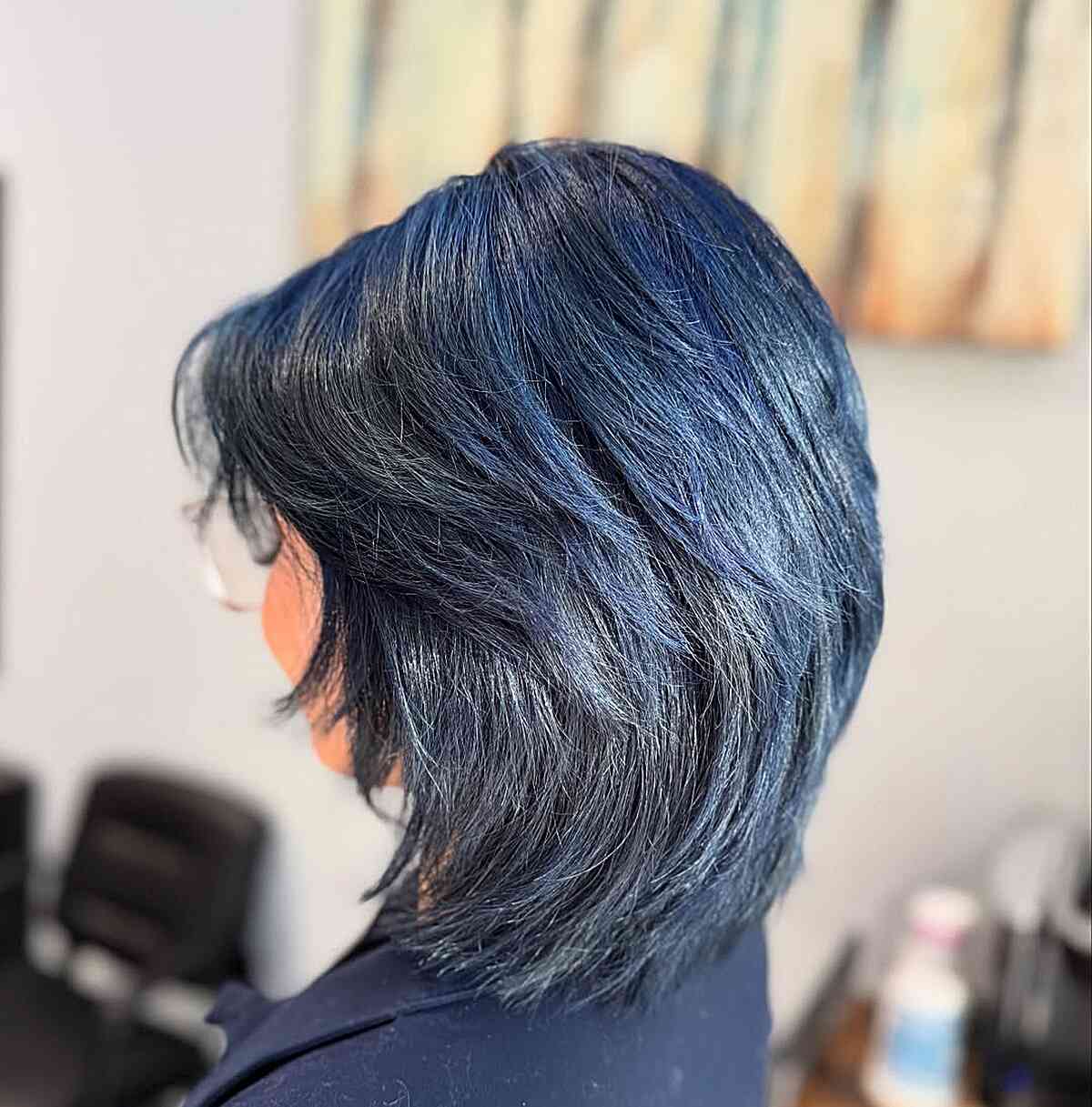
Midnight blue is not navy and it is not black-blue. It sits somewhere between the two, with enough depth that the lighter blue highlights read as dimension and not a separate color. Against a full-on bright blue, this version is quieter: the highlights are fine and spaced, letting the dark base do most of the work. Collarbone-length layers in a soft wavy blowout give the color room to shift as the hair moves. Ask your colorist for: collarbone length layers, midnight blue with subtle light blue highlights. The waves catch the lighter pieces without needing a full highlight application.
Shoulder Length Layered With Blue Highlights
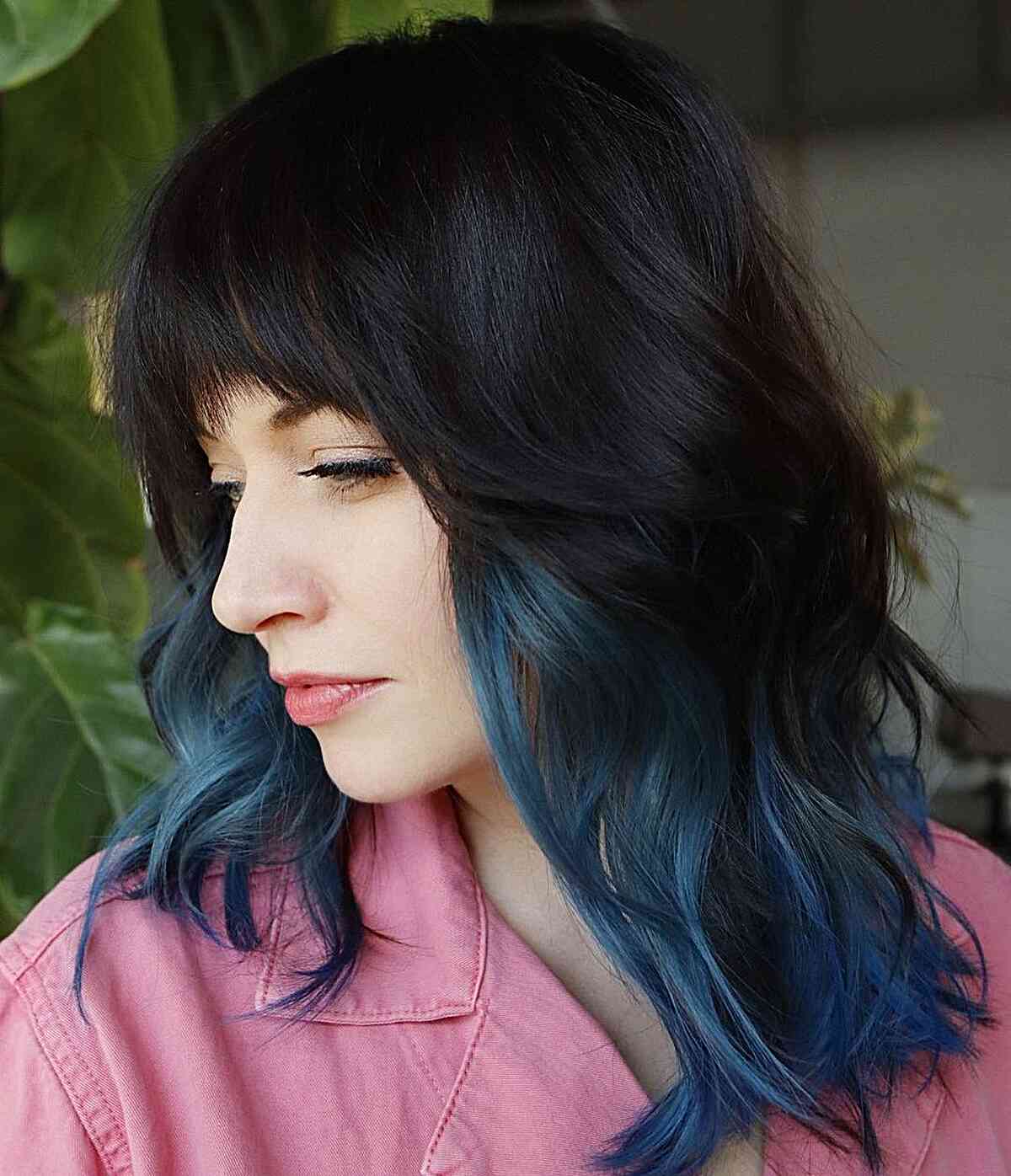
Thick, wavy hair at shoulder length has enough weight to handle both layers and vibrant highlights without looking busy. The dark base here grounds the blue, while the curtain bangs frame the face and break up the density at the front. A side parting adds movement through the top, and the blowout smooths the texture without flattening it. Ask your colorist for: layered shoulder length, dark base with vibrant blue highlights, curtain bangs. Use a round brush and blow dryer to lift the roots, and plan a trim every six to eight weeks to keep the layers visible.
Collarbone Layers Ash Blonde With Light Blue
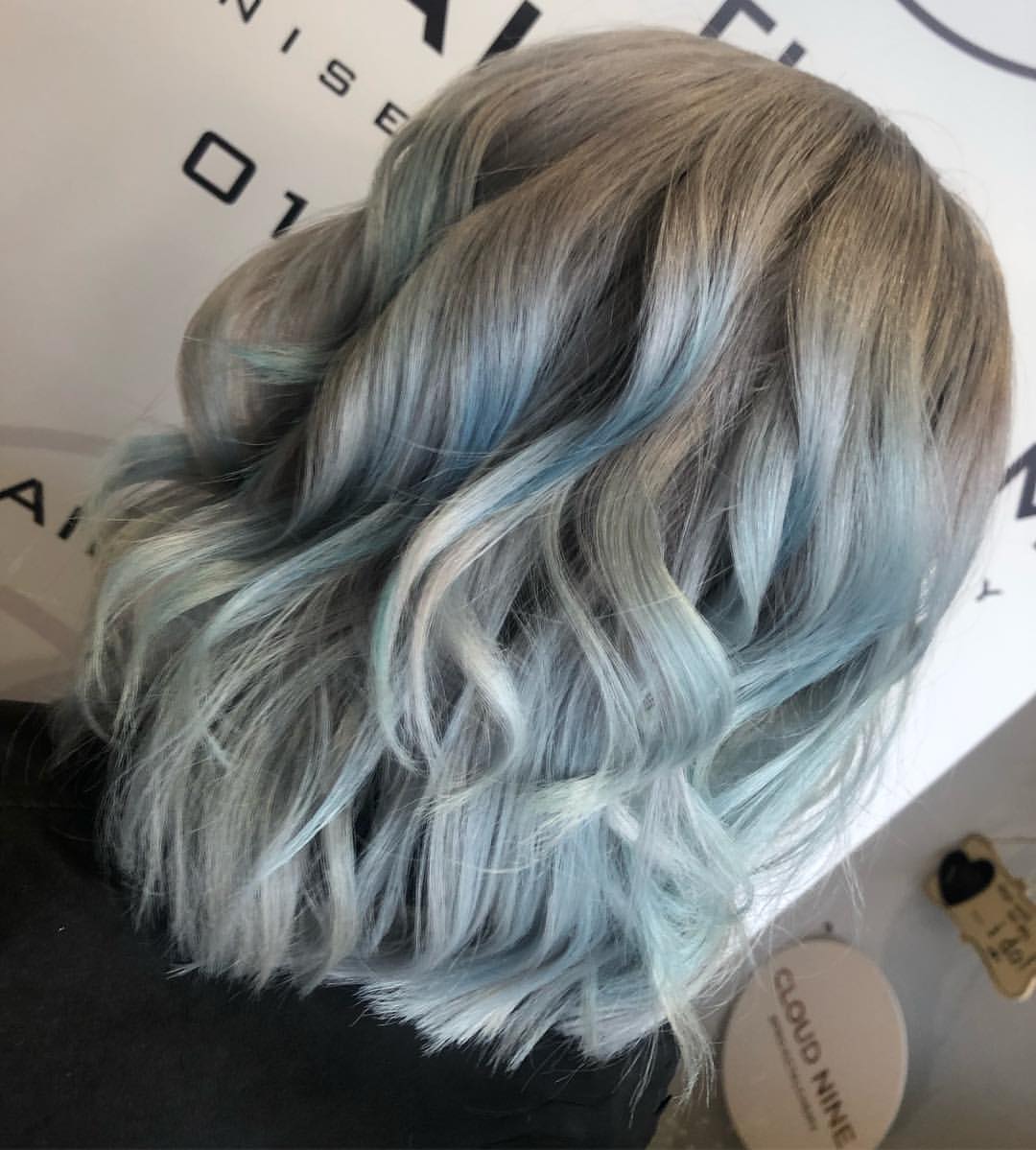
Ash blonde as a base changes how light blue reads. Instead of contrasting against a dark background, the blue blends into the cool tones and registers as a soft pastel accent. From the back view, the collarbone-length layers and middle parting let the highlights fall in natural sections, not in deliberate streaks. This is a color that works for spring and summer, when lighter shades feel less heavy. Ask your colorist for: collarbone length layers, ash blonde with subtle light blue highlights. A diffuser keeps the waves soft, and a trim every six to eight weeks maintains the shape.
Short Pixie With Brown Base And Blue Highlights
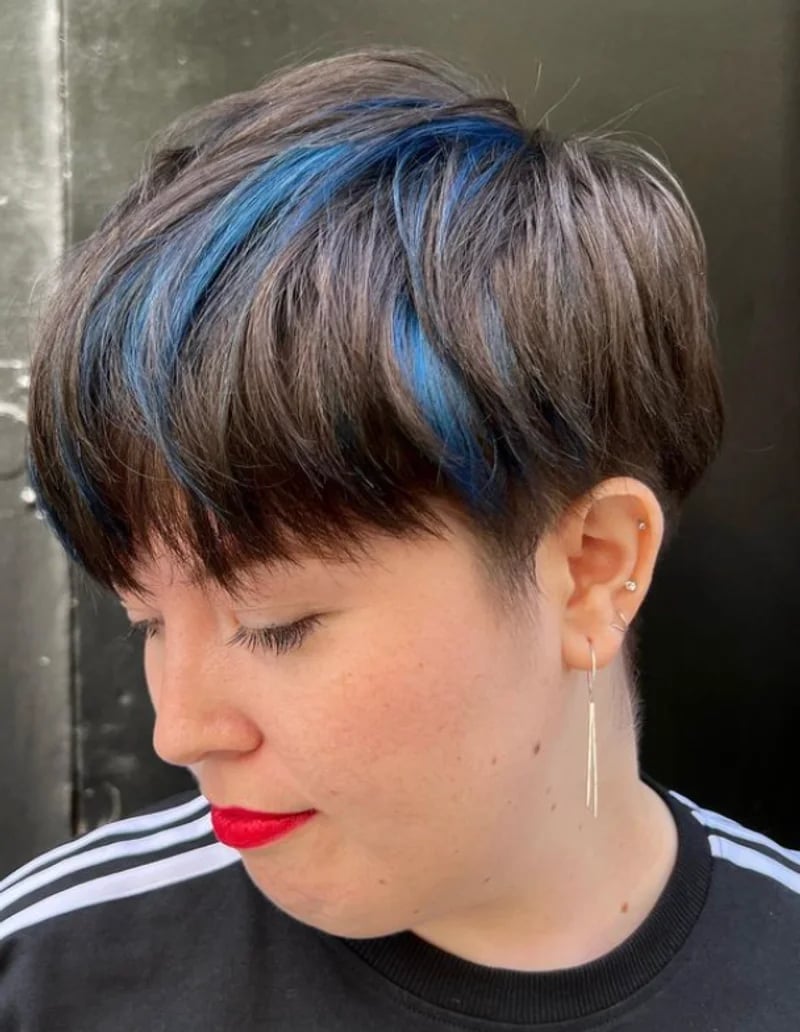
A short pixie with a brown base and vibrant blue highlights sounds dramatic, and it is, that is the point. Fine, straight hair at ear length is a good candidate because the cut does the heavy lifting. Ask your colorist for: short pixie, brown base with striking blue highlights, short bangs. This is a salon-only proposition. The blue pieces need to be lifted from the brown base first, and on fine hair the bleach process is not something you want to attempt at home. A texturizing paste gives the top volume. Trim rhythm: every four to six weeks, or the shape disappears.
Short Curly Hair With Blue Highlights
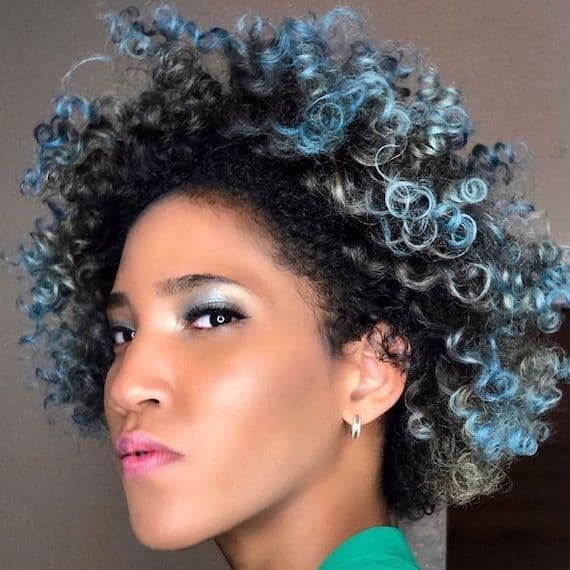
The mistake people make with short, curly hair and blue highlights is skipping a strand test. Thick curls at ear length look incredible with a dark base and bright blue pieces, but the bleach needs to sit long enough to lift the color without turning the curl into mush. Ask your colorist for: short curly hair, dark base with blue highlights, side parting. A curl-defining cream and a diffuser maintain the shape. The real drawback: if the highlights are placed too deep in the curl, they can look like random streaks instead of intentional color placement. Trim every six to eight weeks.
Collarbone Long Bob Navy Blue Highlights
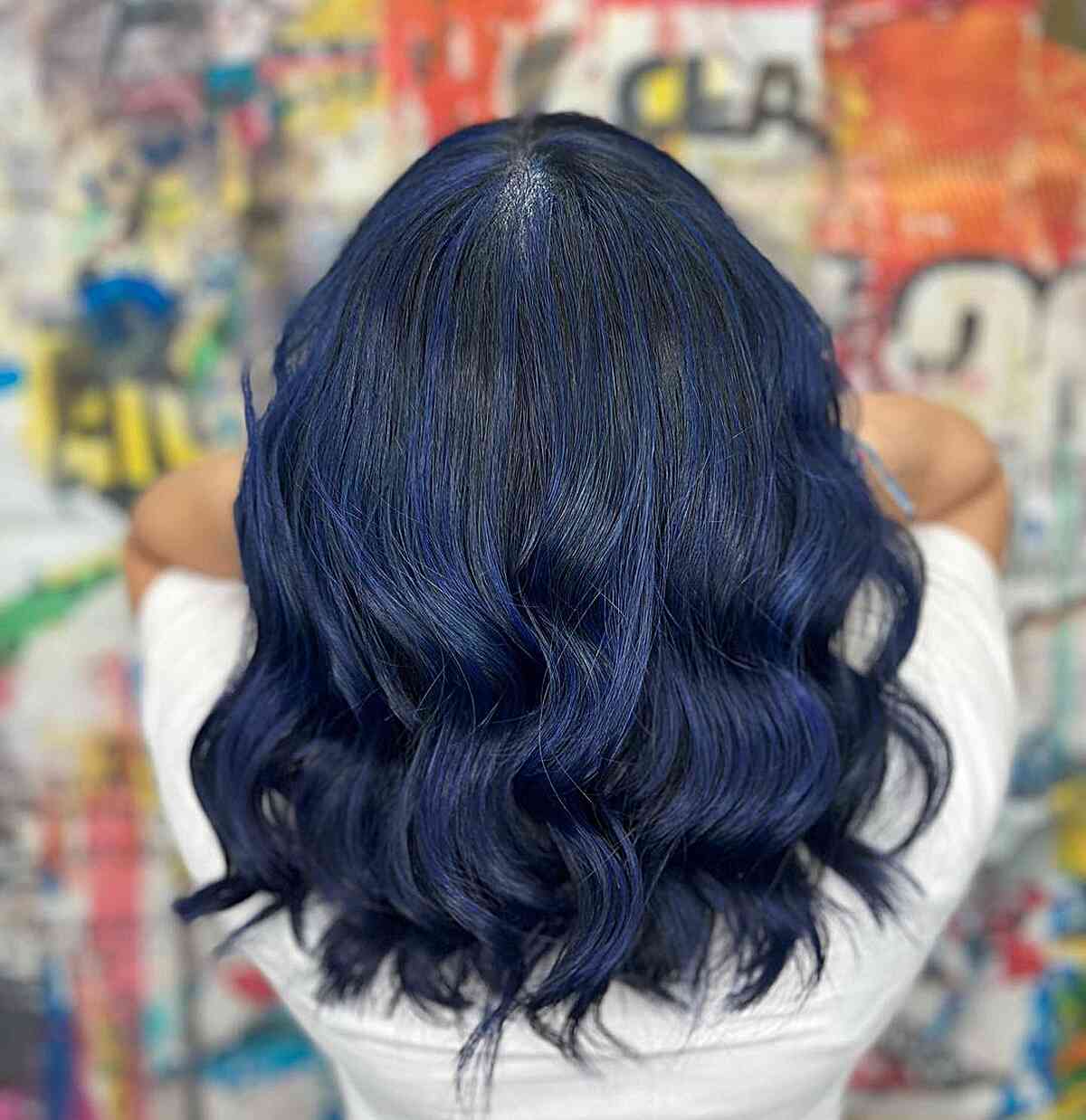
A collarbone-length long bob in deep navy blue is the color equivalent of a cashmere sweater. The dark base keeps it wearable; the subtle navy highlights add depth. Medium-textured wavy hair takes the tone evenly, and the loose waves in the back view show off the dimension. Ask your colorist for: collarbone length long bob, dark base with subtle navy blue highlights. The navy hue is dense enough that a gloss treatment every six weeks keeps the tone from pulling green. Trim the baseline every six to eight weeks. A texturizing spray on dry hair is all the styling it needs.
Mid-Back Teal Peekaboo Sections
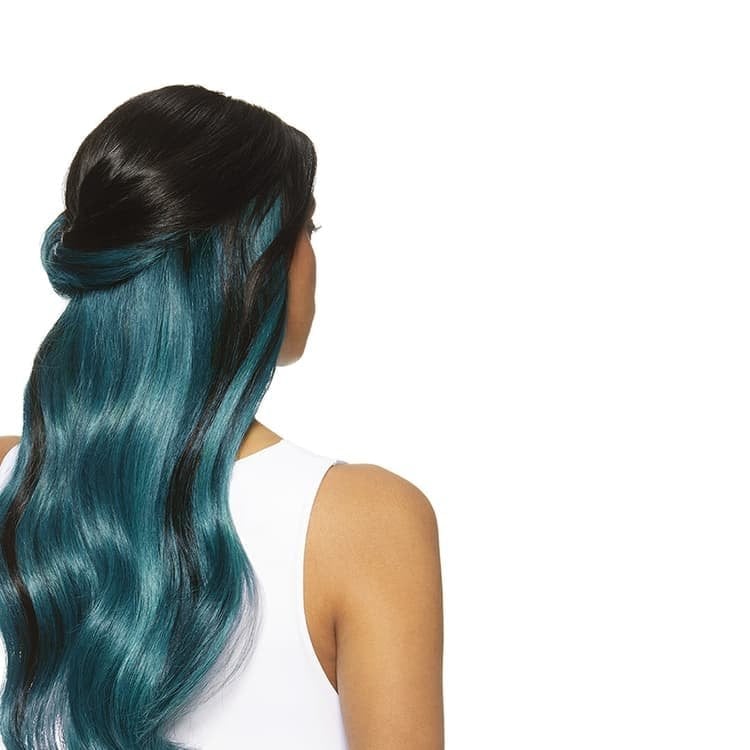
The peekaboo technique places color underneath the top layer of hair, so it only shows when you move. In this version, the base is dark at the roots, then transitions to vibrant teal in hidden sections. Thick, wavy hair at mid-back length is ideal because the weight pulls the waves into loose, glossy curves. Ask your colorist for: mid-back length, dark base with teal peekaboo sections.
The colorist will weave the teal pieces into the underlayer, leaving the top dark. Tucking hair behind the ear or twisting it into a low ponytail reveals the color. The dark root shadow means the grow-out is forgiving for about eight weeks. A toning appointment every four weeks keeps the teal from fading to green.
Long Waves Blue Highlights And Lowlights
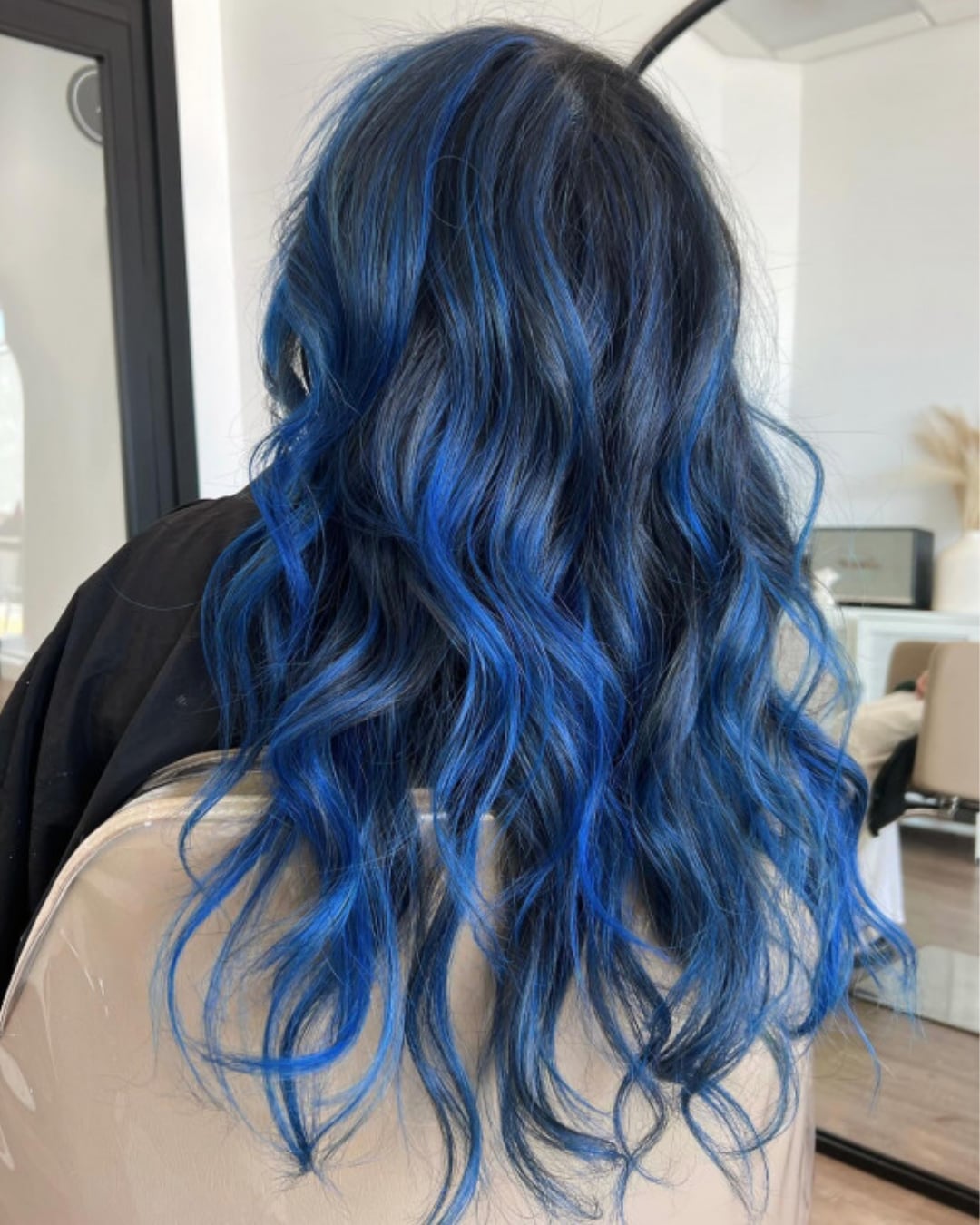
How do you get a dimensional blue that does not look like a single stripe of color? You ask for a color melt with highlights and lowlights. The dark base here is threaded with brighter blue pieces and deeper navy lowlights, creating a gradient effect in the waves. Thick, wavy hair at mid-back length holds the multiple tones without them blending into mud. Ask your colorist for: long hair, dark base with blue highlights and lowlights, loose waves.
- Specify a color melt that starts darker at the roots and shifts to brighter blue at the ends.
- Request face-framing highlights that pick up the light.
- Ask for lowlights that match the darkest part of your base to add depth.
The result is a blue that changes in different light. A wide-tooth comb on damp hair and a smoothing balm on the ends keep the wave pattern defined. Trim every eight to ten weeks.
Mid-Back Dark Brown With Vibrant Blue Highlights
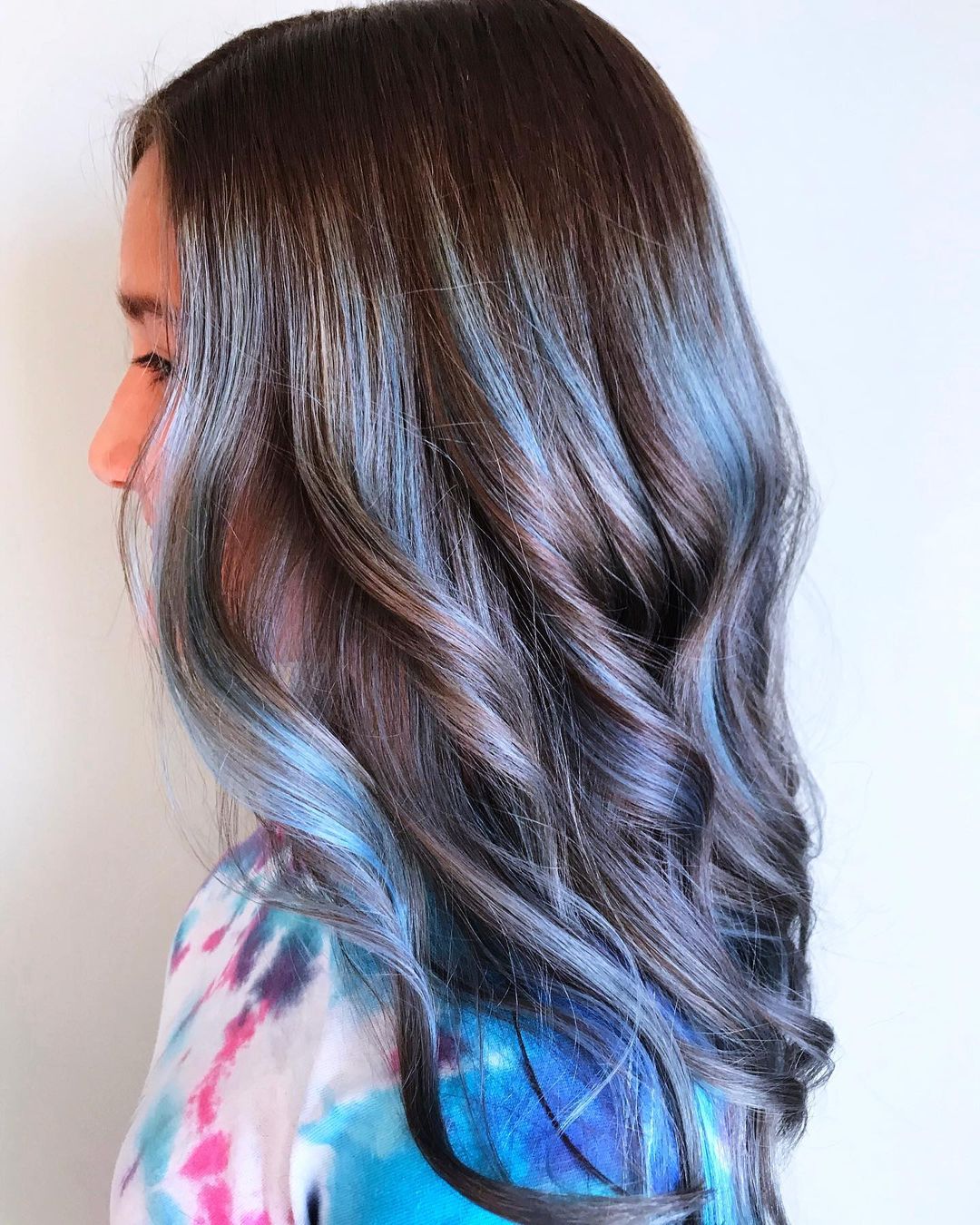
The whole point of a dark brown base is to make blue truly pop, and this mid-back length with loose waves does exactly that. The contrast between a deep, rich brunette and those vibrant blue highlights keeps the color from looking like a costume. Thick, wavy hair at this length has the weight to hold a wave pattern, which lets the highlights catch light from every angle. A middle part keeps the distribution even on both sides, so the color feels balanced and not stripey.
Ask your colorist for: dark brown base, vibrant blue highlights, loose waves. This works best for those with naturally thick waves who want a bold shift without bleaching the whole head. The waves are set with a curling iron after a heat protectant is applied; a trim every eight to ten weeks keeps the ends healthy enough to hold color.
Mid-Back Dark Base Bright Blue Highlights
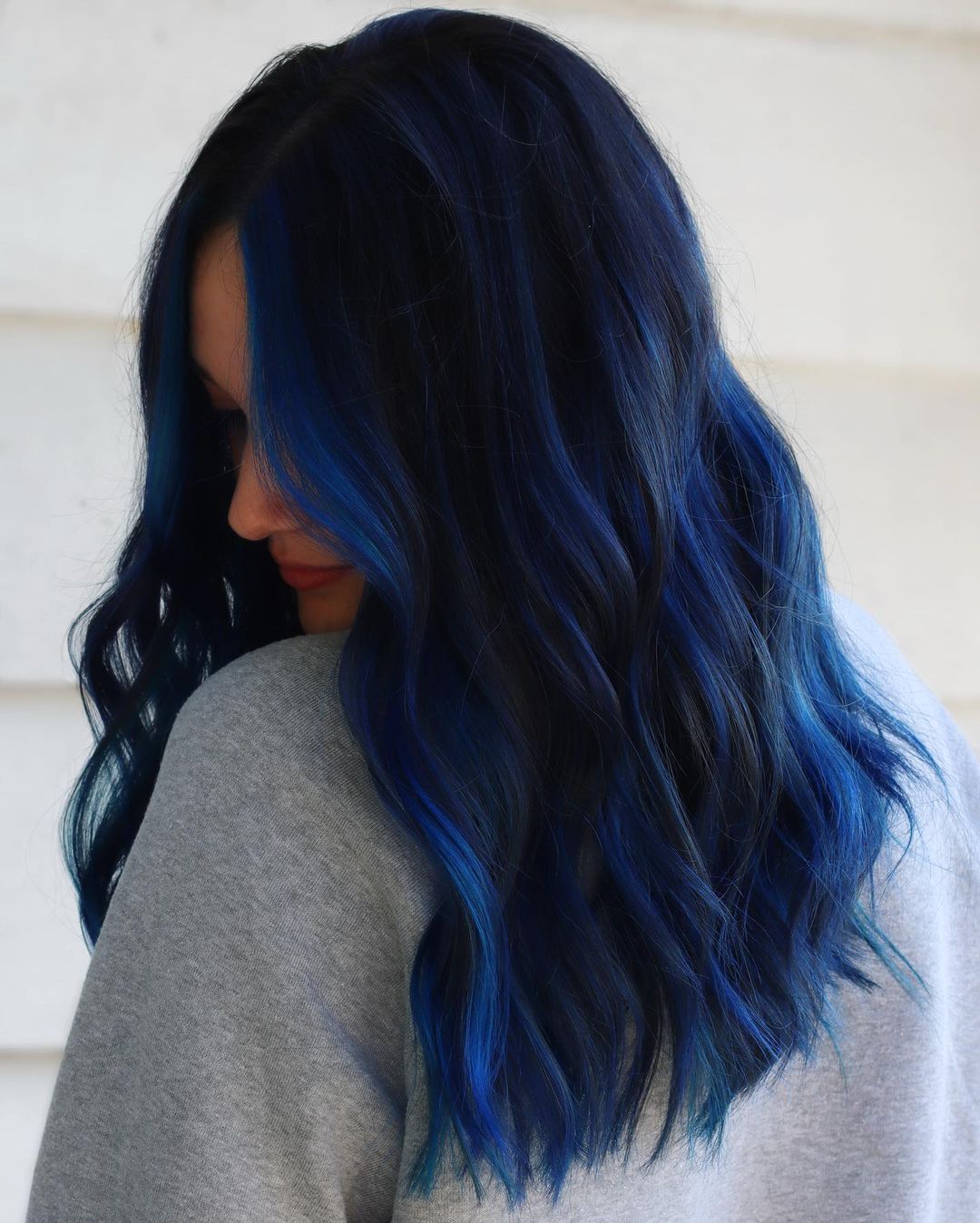
Bright blue highlights on a dark base fade faster than you think. That is the honest reality of this mid-back length wavy blowout. The bright blue is what catches the eye first, but it is also what fades to a washed teal after about six weeks without a toning appointment. A texturizing spray on the waves helps the highlights look integrated, and a trim every eight to ten weeks prevents the ends from looking dry. Ask your colorist for: dark base, bright blue highlights, loose waves.
Mid-Back Dark Blue With Lighter Blue Highlights
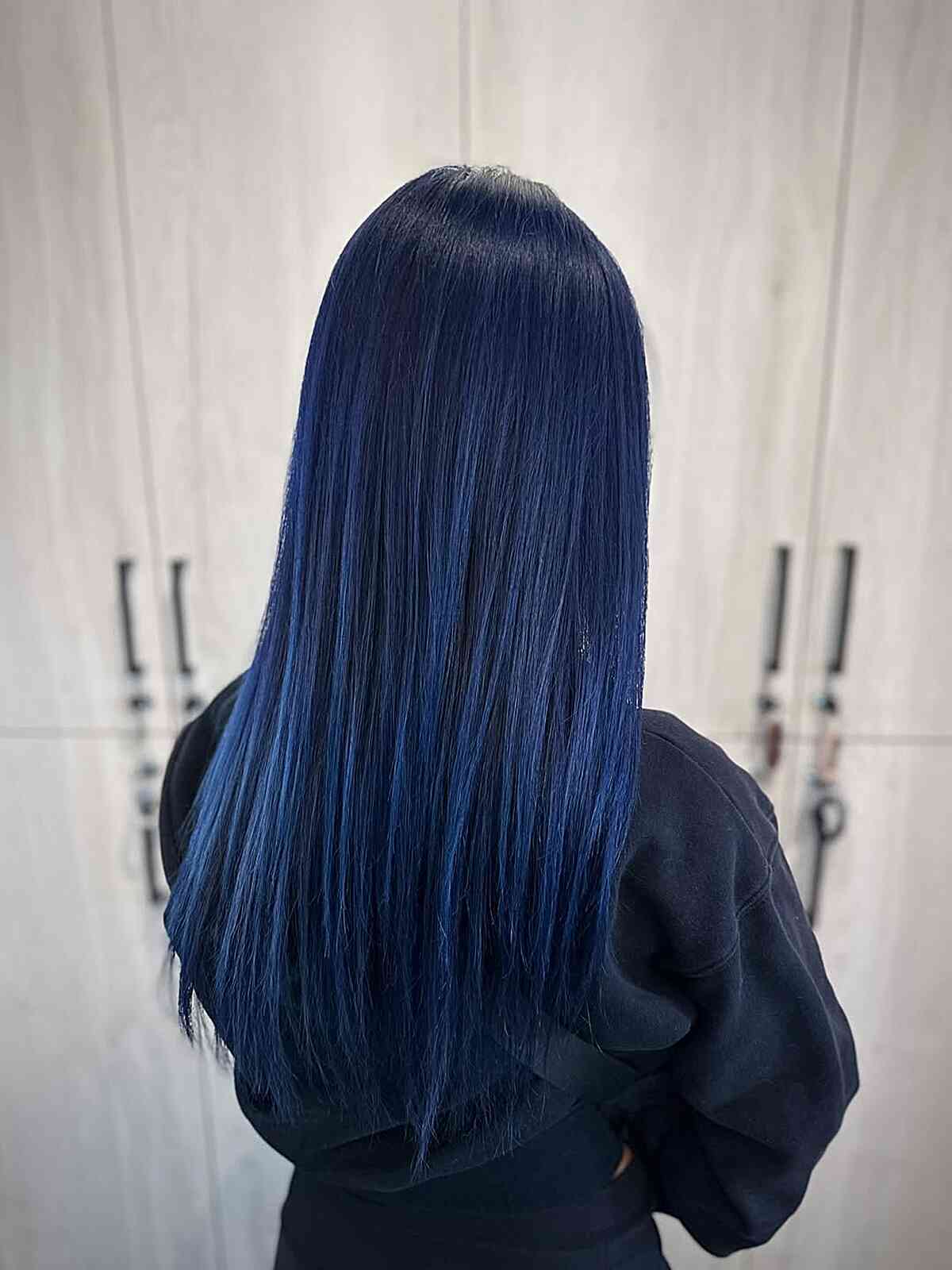
Here is the practical rule for straight, thick hair: lighter blue highlights on a dark blue base require a double process, not a single bowl mix. The dark blue base is applied first, then the lighter pieces are painted on after the base is lifted enough to take the pastel tone. That means about three hours in the chair minimum, and it is not a job for a quick fix at home. The risk of patchy lift is too high. The straight styling and middle parting show exactly where the contrast lives, which is also where any unevenness would show. Ask your colorist for: dark blue base, lighter blue highlights, straight style. The honest drawback is that the lighter highlights need a toning refresh every four weeks to stay cool rather than green.
Mid-Back Dark Root Shadow To Blue Ombre
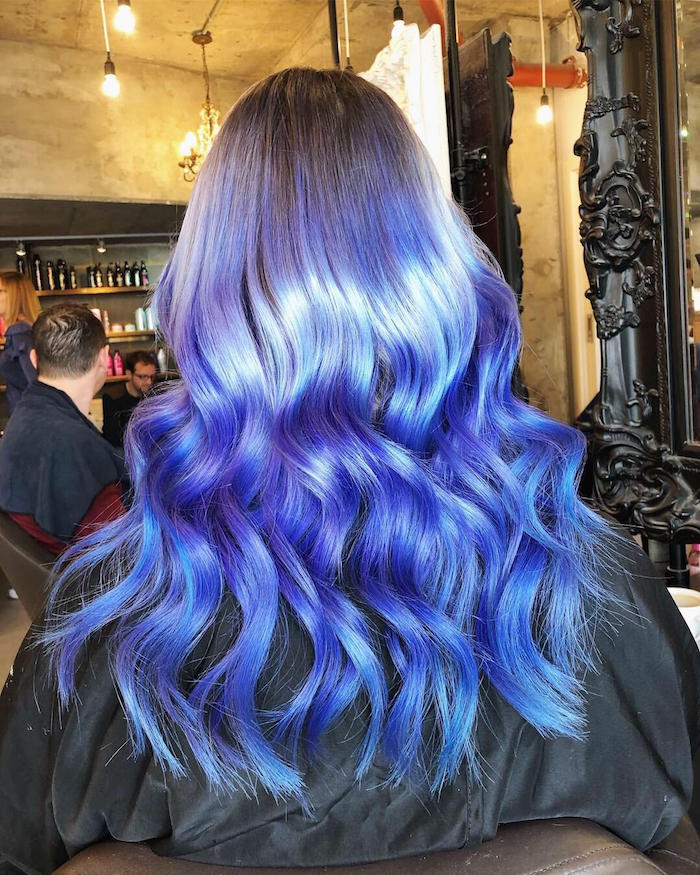
An ombre is the lower-maintenance cousin of traditional highlights when you want blue color. With a dark root shadow that stays your natural brunette, the regrowth is invisible for months, no telltale line at the scalp every three weeks. The bright blue ombre starts around the chin and deepens toward the ends, which means the most intense color sits where the hair is oldest and most porous. Thick, wavy hair takes this gradient well because the wave pattern diffuses the transition. Ask your colorist for: dark root shadow, blue ombre, loose waves. If you prefer a more uniform distribution of blue, stick with traditional highlights; this ombre is for those who want a fade-out effect rather than scattered pieces.
Textured Pixie In Multi-Tonal Blue
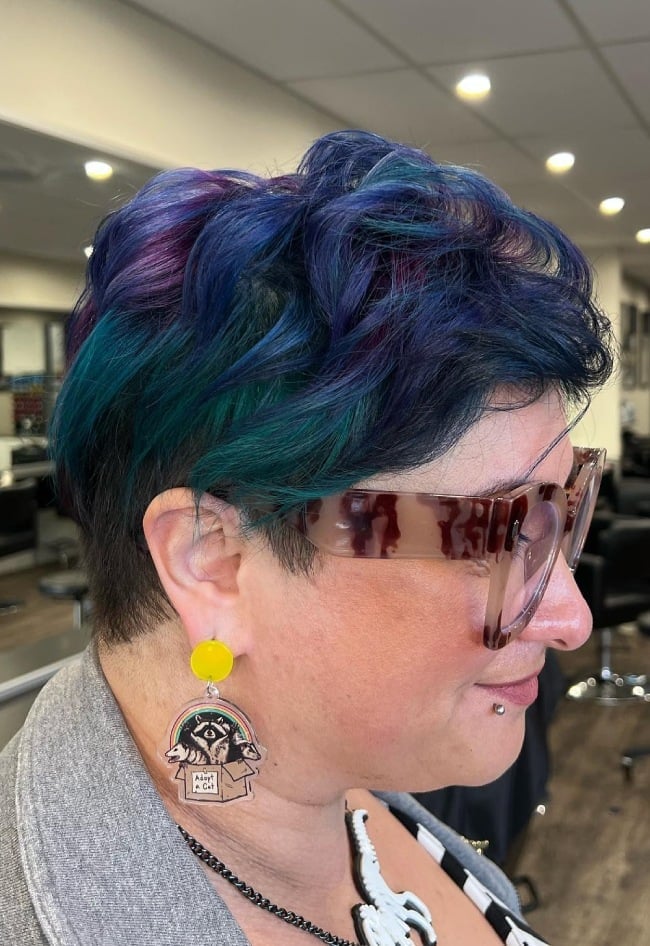
A textured pixie with multiple blue tones works because the short length lets each color sit as a distinct piece rather than blending into mud. Dark blue near the roots, teal through the mid-lengths and purple at the tips. Each shade is applied in sections so the cut’s movement reveals different colors as the head turns. The wavy, thick texture gives each piece enough body to stand up on its own, which is essential for a pixie that ends around the ear. Ask your colorist for: textured pixie, multi-tonal blue, teal and purple. This is a bold look suited for an artistic season or a personal style shift; the application takes about two hours in the salon and the cut needs a trim every four to six weeks to keep the shape crisp.
Final Thoughts
For a low-maintenance look, opt for darker blue tones or peekaboo placements. For a bolder statement, choose vibrant blues with a strategic color melt.
- Maintain blue tones with color-depositing conditioners every 2-3 washes.
- Use sulfate-free shampoos to preserve color vibrancy.
- Heat protectant is essential before styling to prevent color fade.
- Plan for touch-ups or toning every 6-8 weeks depending on maintenance.
Blue highlights offer a versatile way to express personal style.