15 Simple Cutting Bangs Haircuts to Try in 2027
Bangs are a single cut that changes everything. For 2027, the trend leans toward soft, lived-in fringes that move with your hair rather than sitting stiffly across your forehead.
This collection of 15 looks for Simple Cutting Bangs covers every texture and commitment level, from air-dried curtain styles to blunt fringes that demand a flat iron. Fine hair that falls flat, thick hair that poufs, or a fringe that won’t sit still? There is a section here that solves it. The styles range from five-minute refresh to full salon blowout, so you can find the one that fits your morning.
Collarbone Layers With Soft Curtain Bangs

Long layers and curtain bangs are a low-risk way to see if you like having hair in your face. The collarbone length keeps enough weight to stop the layers from disappearing, and the side-swept curtain bangs blend into the face-framing pieces rather than sitting as a separate fringe. Medium to thick hair starting at the collarbone holds the shape best, especially if it already has natural wave. Ask your stylist for: collarbone length with long layers, soft curtain bangs. These bangs work well with oval and heart-shaped faces because the diagonal line softens the forehead without narrowing it.
Shoulder Length With Face-Framing Curtain Bangs

Can you get the soft, lived-in curtain bang effect without committing to a full fringe? Yes, if the bangs are cut to blend into the layers instead of stopping abruptly. This shoulder length cut uses honey blonde highlights on a warm brown base to accent the face framing pieces, so the bangs read as part of the whole shape. Ask your stylist for: shoulder length with face framing curtain bangs. The subtle layers prevent the ends from feeling heavy, which matters for medium density hair. A round brush and a quick blowout are all that is needed to set the curve.
Collarbone Cut Full Curtain Bangs

Full curtain bangs are cut with more density, so they sweep as a solid piece instead of scattered strands. On a collarbone length cut with a middle parting, the bangs are sectioned from the crown and cut to hit just below the brow bone before angling into the sides. Ask your stylist for: collarbone length cut, full curtain bangs with middle part. Thick hair has enough weight to keep the bangs from parting in the middle prematurely. A medium round brush and a dryer set on low heat direct the bangs outward without creating a stiff bend.
Chin Length Shag With Wispy Bangs
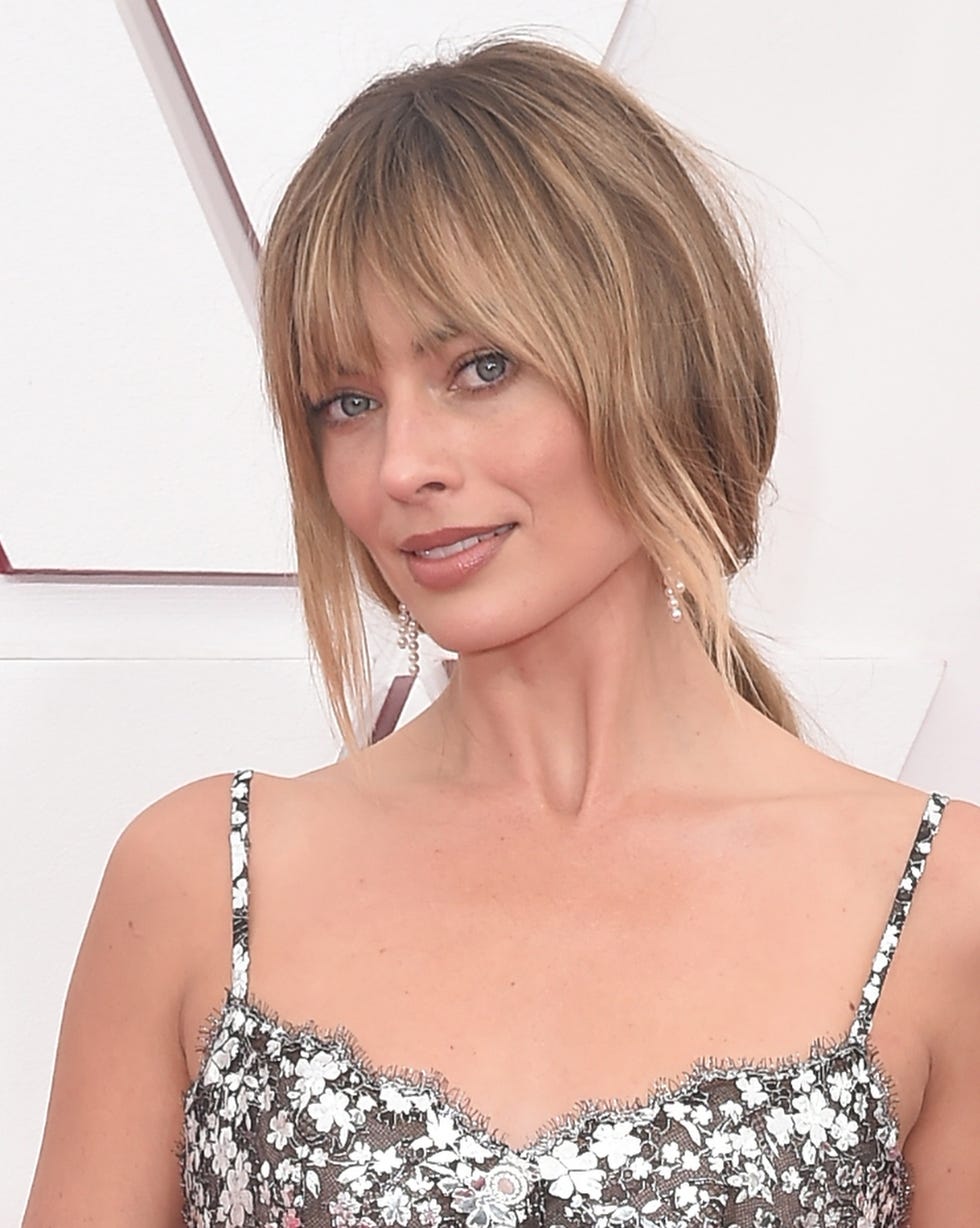
A chin-length shag with wispy bangs is essentially the opposite of a blunt bob: it relies on disconnected layers and a light, airy fringe. The auburn color adds warmth, but the real draw is how little effort the cut demands. Fine, wavy hair benefits most because the shag creates volume at the crown while the wispy bangs reduce bulk around the face. Ask your stylist for: chin length shag, wispy bangs, natural texture. A DIY approach works here if you are comfortable point-cutting the bangs when they hit your lashes, though the shag layers themselves are better done in the salon. Air drying with a texture paste is often all this cut needs.
Shoulder Length With Wispy Curtain-Like Bangs

This shoulder-length cut proves that bangs do not need to be dense to do their job. The wispy, curtain-like fringe is cut so lightly that it almost blends into the surrounding hair, which means no awkward grow-out phase and no sudden fringe regret. Medium-brown hair with subtle highlights keeps the look from feeling flat, and the center part ensures the bangs fall evenly on both sides. Ask your stylist for: shoulder length, wispy curtain-like bangs. Straight, medium-density hair holds the soft sweep without needing a full blowout. A quick pass with a flat iron on the bangs only is enough to reset the shape between washes.
Collarbone Layers With Soft Air-Dried Curtain Bangs
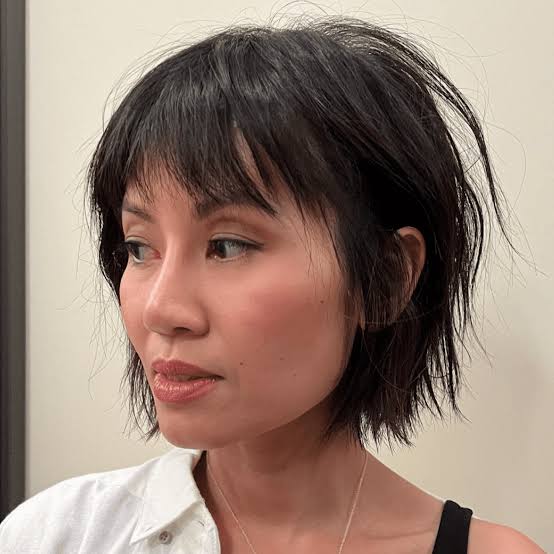
These collarbone-length layers and soft curtain bangs let thick, wavy dark brown hair do its own thing, with a side parting that nudges the fringe into flattering territory. Ask your stylist for: collarbone length with long layers, soft curtain bangs. Round faces get a nice elongating assist here. A texturizing spray and air-drying replace the blow-dryer, and the bangs air-dry into a gentle curve. That is the whole morning routine.
Long Wavy Hair With Prominent Curtain Bangs

Ask your stylist for: long wavy hair, prominent curtain bangs, side part. The look is genuinely DIY-friendly once the initial cut is done, but the trade-off is that those bangs need a trim every four to six weeks to avoid turning into an accidental curtain. Suits most face shapes, though anyone who dislikes regular fringe maintenance should probably skip it.
Collarbone Dark Brown With Wispy Side Bangs

The design looks simple until you realize the mistake most people make: cutting wispy bangs too short or too blunt for a side sweep. These are long layers at collarbone length, dark brown with a soft blowout and wavy texture, and the wispy side bangs are feathered enough to tuck behind an ear or fall forward. Ask your stylist for: collarbone length with long layers, wispy bangs swept to the side. Square and round faces get a softening line here. A small round brush and a few seconds of heat direct the fringe where it belongs, while the rest air-dries or gets a quick blow-dry every six to eight weeks.
Shoulder Length Wavy With Air-Dried Curtain Bangs
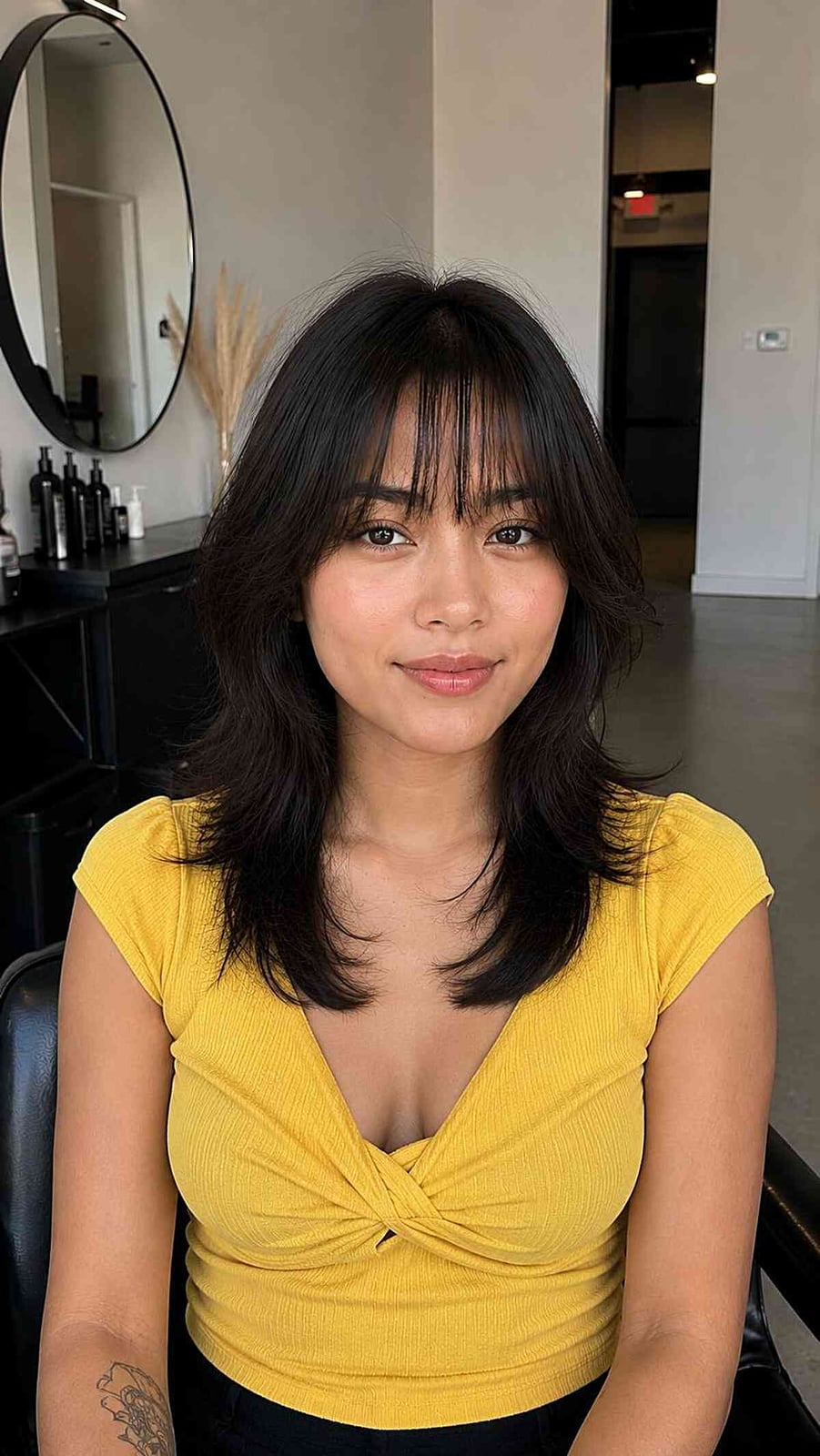
Setting this against a polished blowout version of the same shape, the air-dried take trades precision for warmth and a lot less effort. Shoulder-length wavy dark brown hair with face-framing layers, the soft curtain bangs fall into place without a round brush in sight. Ask your stylist for: shoulder length wavy hair, soft curtain bangs, air-dried finish. A texturizing cream worked through damp hair encourages the wave, and the bangs dry into a natural sweep. Oval faces get the most elongation from the middle part. Trims every four to six weeks keep the curtain from collapsing into a triangle.
Chin Length Bob With Choppy Bangs

The bob gets an edge when the ends and the bangs both land on choppy, texturized finishes. This chin-length cut in dark brown with a side parting and slight wave uses the choppy bangs to frame the face without hiding it. Ask your stylist for: chin length bob, choppy bangs, choppy ends. Medium density hair holds the shape best, and square or round faces benefit from the broken, piecey line. A texturizing paste applied to dry hair emphasizes the separation, and the bangs need trimming every three to four weeks to keep the edge sharp.
Mid-Back Copper Red With Curtain Bangs
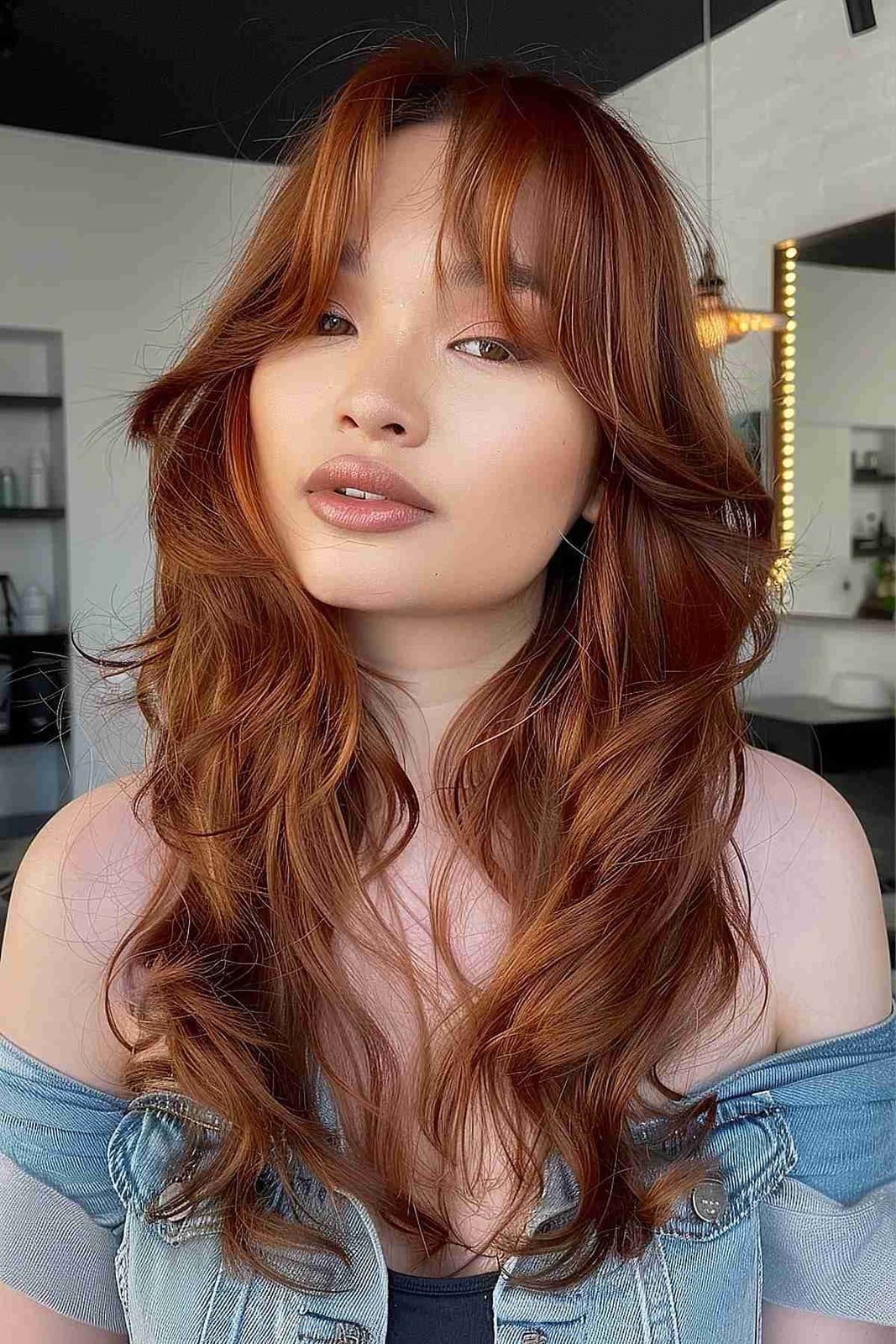
If you are torn between a bold color and a soft fringe, this is the one that says yes to both. Long, wavy layers reach mid-back, and the copper red shade adds warmth while the curtain bangs soften the whole thing. Thick, wavy hair at this length handles the vivid pigment easily, and the loose waves keep the look from feeling flat. Ask your stylist for: long hair, copper red color, prominent curtain bangs.
The color leans warm and saturated, which means it shows best in natural light and works as a statement for evening. Styling is straightforward: a large barrel curling iron on sections, a lightweight oil on the ends. The middle part and curtain bangs frame without overpowering, so the color stays the main event. A gloss treatment every four weeks keeps the copper from turning brassy.
Mid-Back Dark Brown With Caramel Highlights
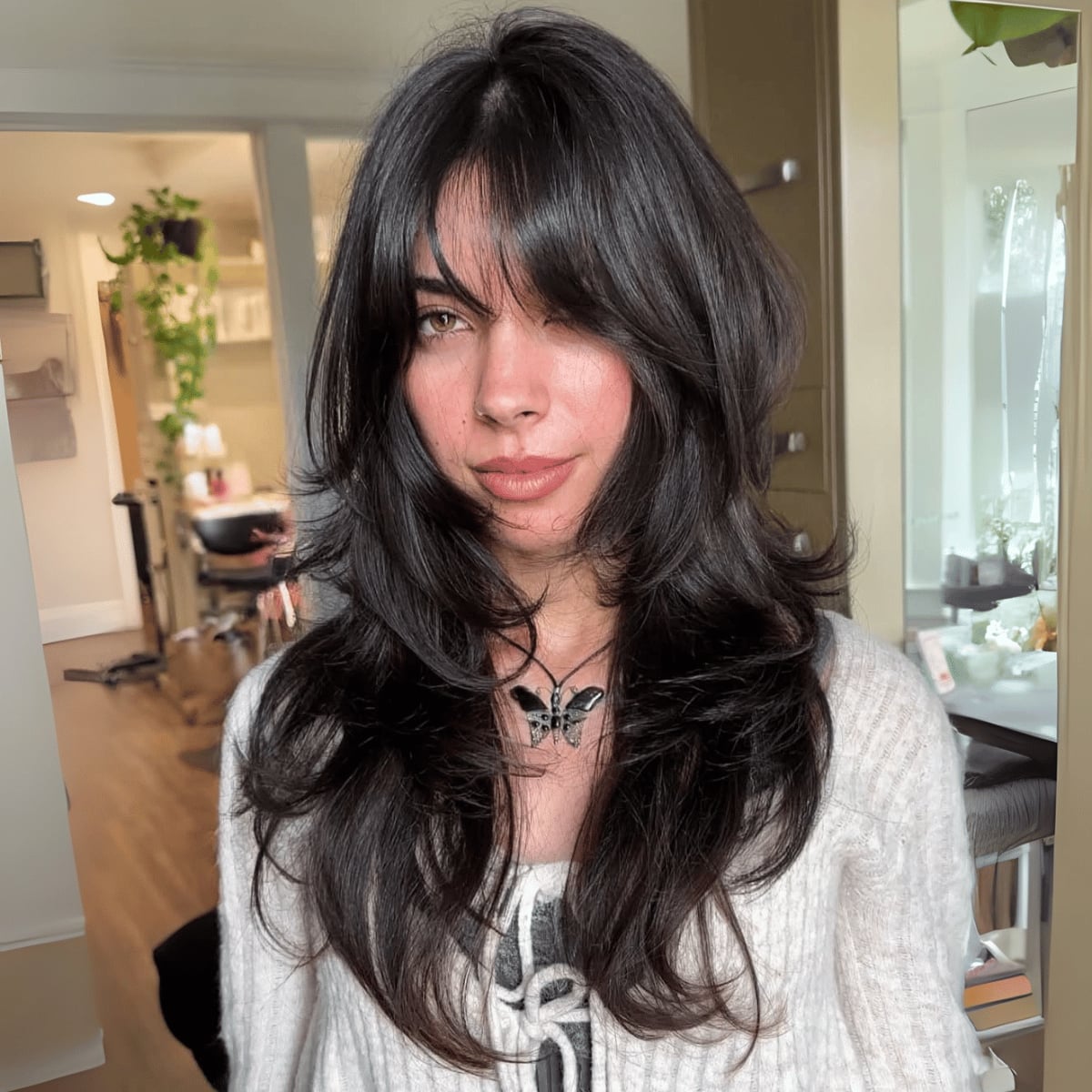
The technique here pairs a dark brown base with caramel highlights that start near the mid-lengths and thin out toward the ends. That placement keeps the roots low-maintenance while the face-framing layers and curtain bangs catch the lighter pieces. Thick, wavy hair at mid-back length benefits from the contrast, as the caramel adds dimension without a full color change. Ask your colorist for: mid-back length, dark brown with caramel highlights, curtain bangs.
A blow-dry with a round brush is all it takes to make the layers and waves hold their shape. The middle part lets the highlights fall evenly on both sides. Trims every eight to ten weeks keep the ends healthy and the layers defined. This is a work-ready look that does not demand weekly toning.
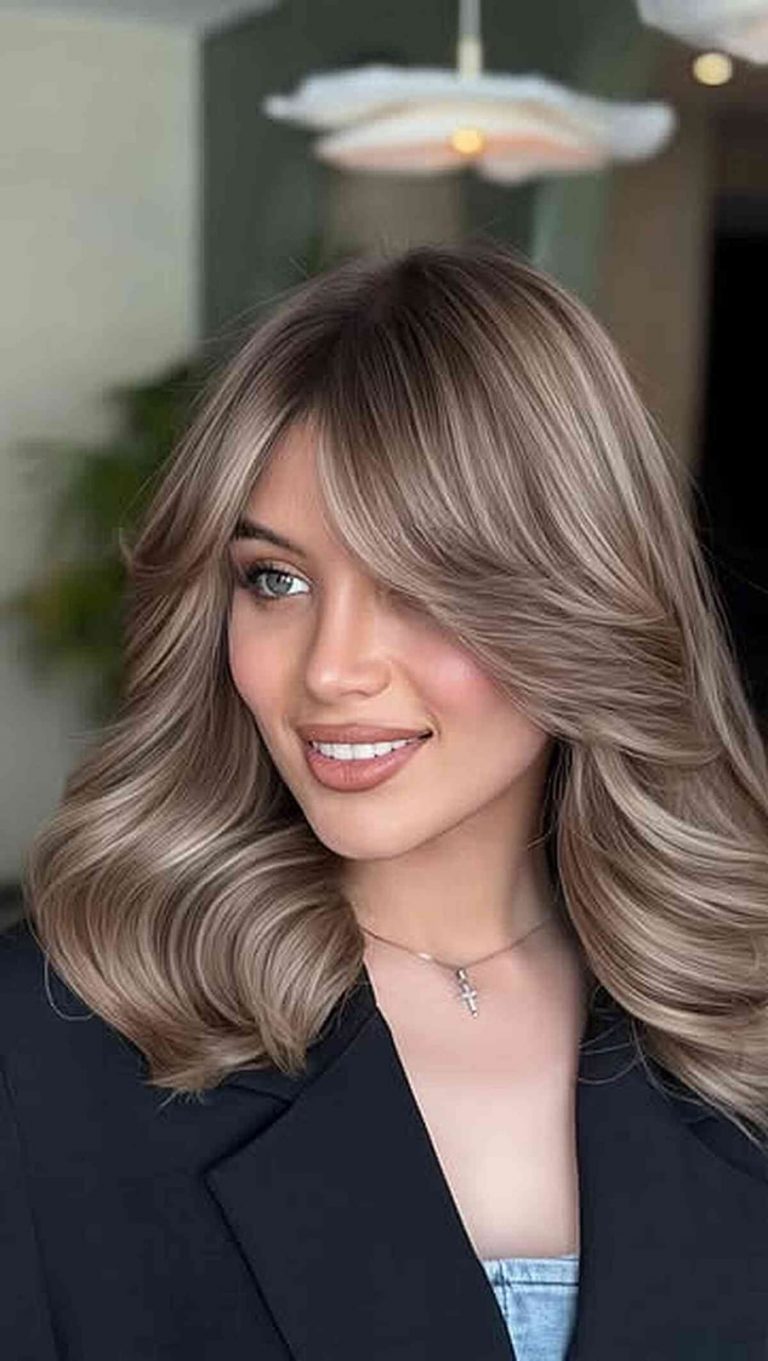
Collarbone Ash Blonde Layered Lob

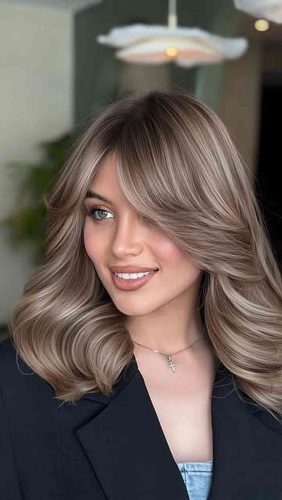
This one keeps it manageable with soft curtain bangs and medium wavy texture that adds volume without bulk. The ash blonde base reads cool and muted, which works best when the toner is fresh. Ask your stylist for: collarbone length layered lob, ash blonde, soft curtain bangs. A volumizing spray before blow-drying gives the layers lift at the crown, and a trim every six to eight weeks keeps the lob shape sharp. The middle part and soft bangs mean you can skip heavy styling on busy mornings.
Mid-Back Straight With Blunt Bangs
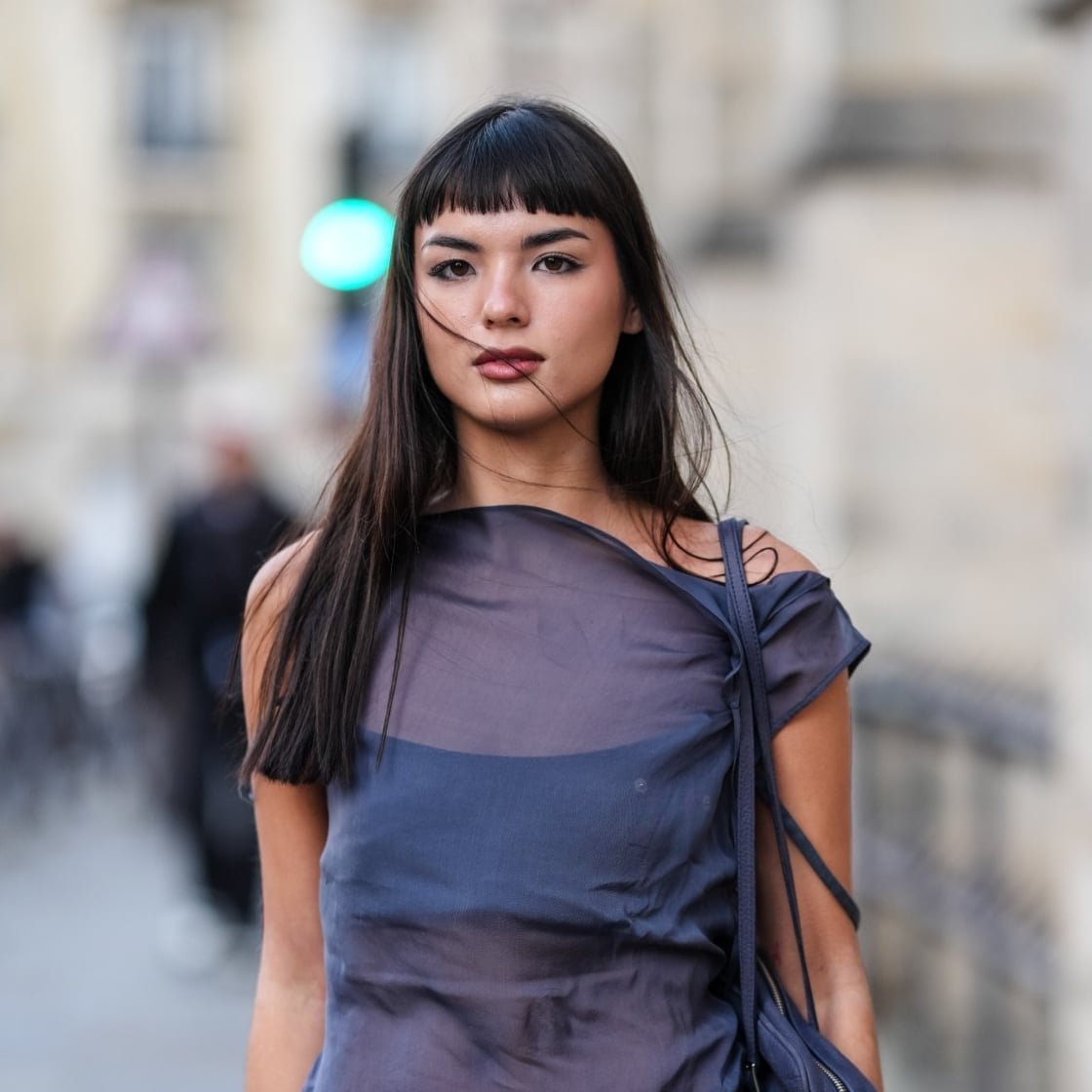
The blunt bangs are cut just above the eyebrows, and the rest of the hair falls straight to mid-back with no layers to distract. That is the design: one clean horizontal line across the forehead, the rest left alone. Fine, straight hair at this length benefits from the bangs because they add visual weight at the top, making the hair look denser than it is. Ask your stylist for: mid-back length straight hair, blunt bangs above the eyebrows.
The middle part keeps the bangs symmetrical and the overall shape modern. Styling is minimal: a flat iron on the bangs for a crisp edge, nothing else. The trade-off is the upkeep: blunt bangs need a trim every two to three weeks to stay sharp, and the rest of the length only needs a cut every three months. If you can keep that schedule, the payoff is a look that requires almost no daily effort.
Chin Length Ash Blonde Bob With Blunt Bangs
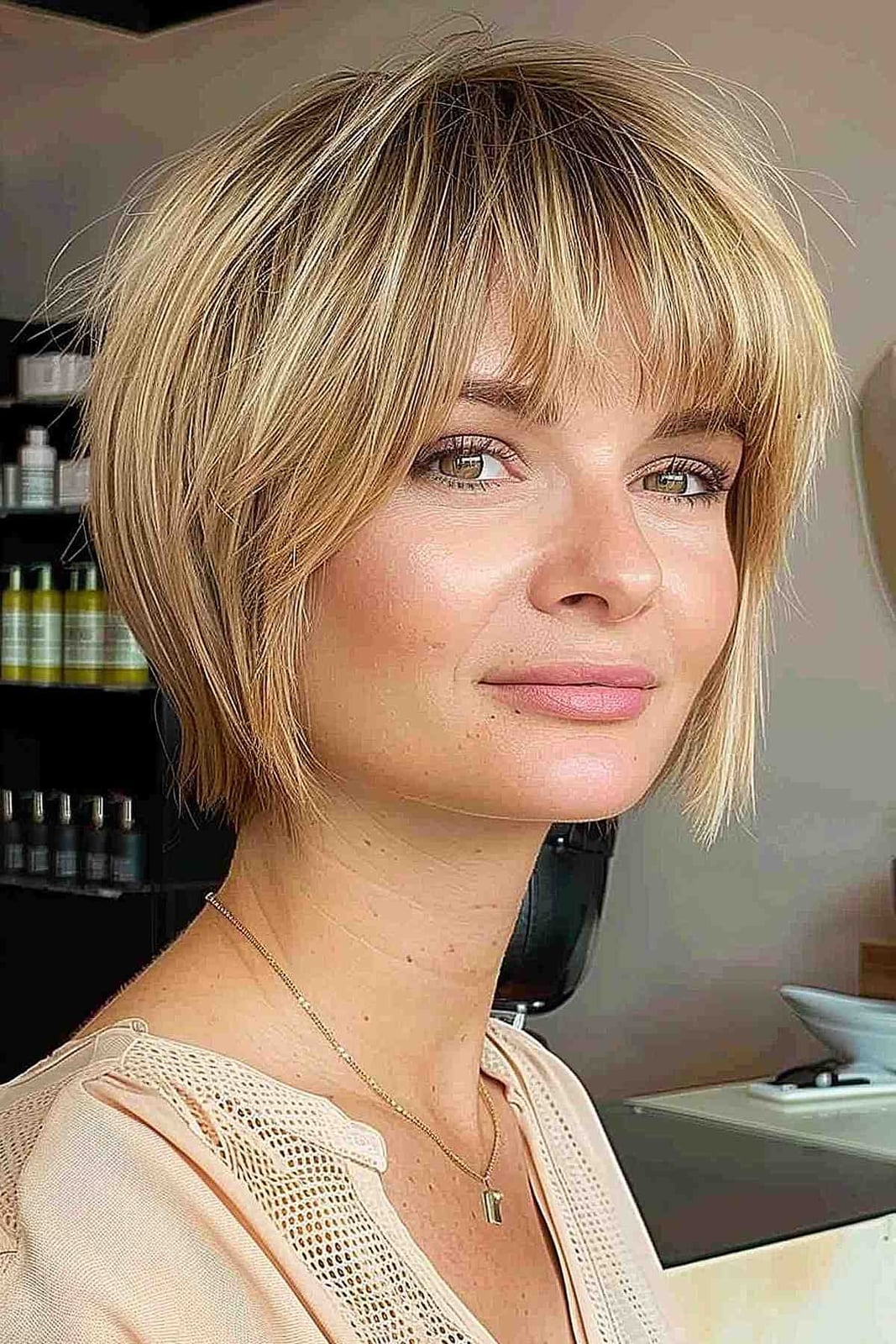
Ask your stylist for: chin length layered bob, ash blonde, blunt bangs. The blowout is required for the smooth finish, and a smoothing serum helps with flyaways. The real drawback is the grow out: the bangs need a trim every three to four weeks, and the bob itself starts to lose its shape after six. This is a salon only commitment, not a DIY project.
Final Thoughts
For fine hair, choose wispy or softly blended curtain bangs that won’t weigh down the ends. For thick hair, a blunt cut or a fuller curtain style controls the volume. Let your hair’s natural texture guide the density of the fringe.
- Trim bangs every 2-4 weeks to maintain shape.
- Use a small round brush to style face-framing bangs with a blow dryer.
- Refresh air-dried texture with a texturizing spray or sea salt spray.
- Wash bangs separately between full hair washes to keep them clean.
Find the fringe that speaks to your style.