28 Gorgeous Espresso Brown Hair Color Ideas for 2027
I’ve been watching brown hair get overlooked for years. Every season brings a new blonde or a red that fades in two washes. But espresso brown stays rich, stays cool, and doesn’t announce itself at the salon check-in. I started noticing it more when my own highlights grew out and I let them.
This roundup has 28 ways to wear Espresso Brown Hair, from collarbone lengths that air-dry in ten minutes to layered waves that need a round brush. It covers fine hair that goes flat by 4 pm and thick hair that holds a curl. I wrote it because I’ve sat through enough toning sessions to know what actually lasts.
Mid-Back Wavy Espresso With Brown Sugar Highlights
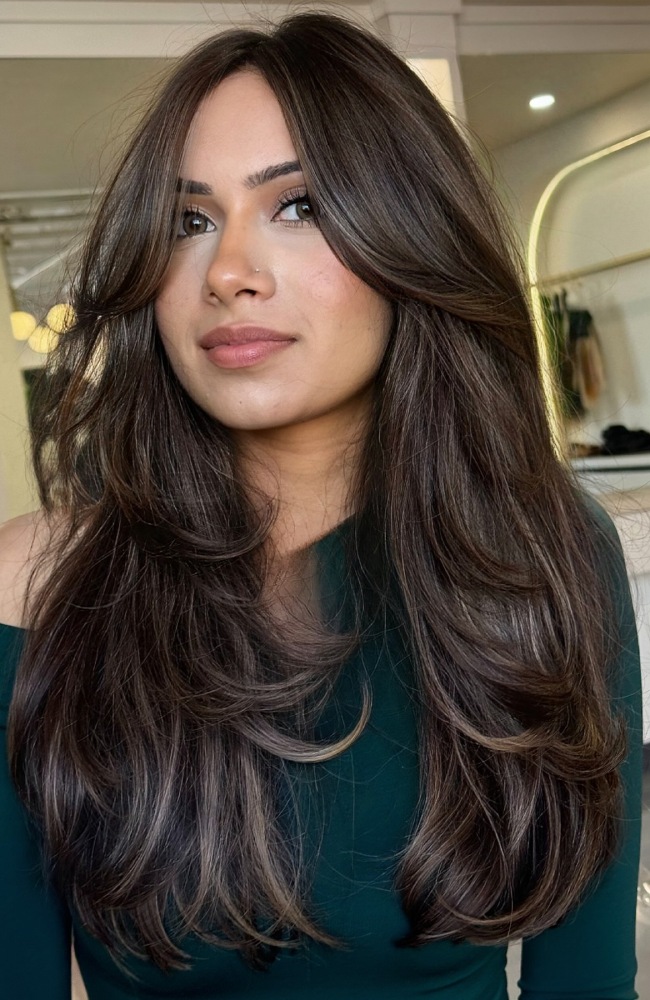
This is the kind of brown that makes you stop scrolling. Dark espresso brown with brown sugar highlights reads warm without going orange, and on thick wavy hair at mid-back length, the dimension is the whole point. The technique is subtle: the highlights are fine and scattered, not chunky, so the tone stays rich and the base does the heavy lifting. The waves are loose, not curled tight, which lets the colour breathe. It’s not a low-maintenance shade, but for a salon job, it’s worth the chair time.
Collarbone Espresso Brown Waves
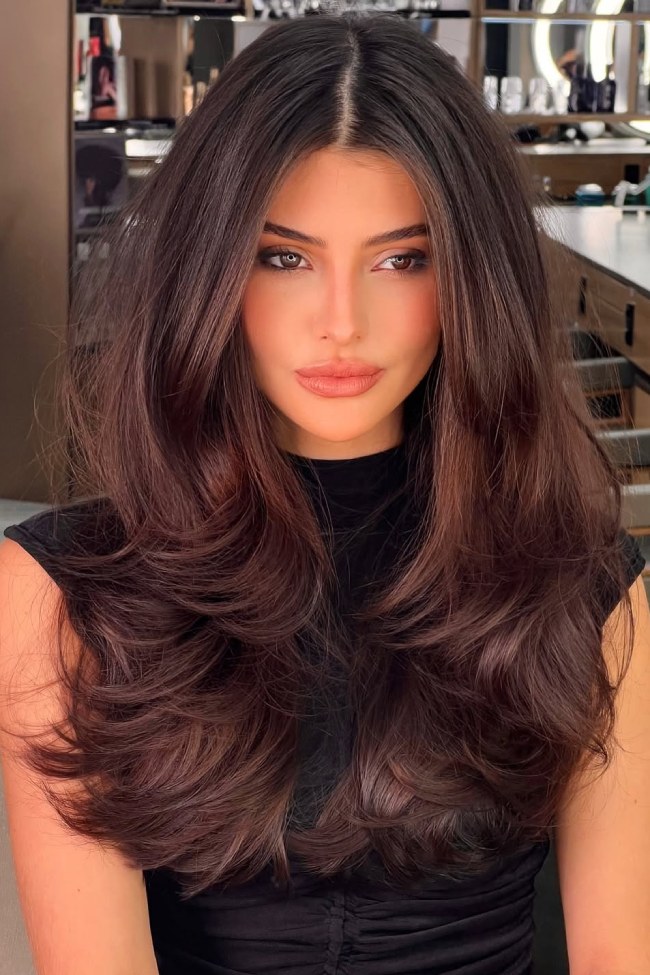
Collarbone length espresso brown is a strong choice for thick wavy hair. The cut holds its shape because the weight of the hair keeps the waves from springing up too short. The rich espresso tone reads polished, almost serious, and on this texture it looks deliberate, not accidental. The downside: if your hair is fine or straight, this length can fall flat. The waves need volume to justify the cut. And the colour, solid without highlights, can feel heavy if you are used to dimension. It works best when you have natural wave and density to carry it. Otherwise, you are fighting the cut. For those with the right texture, it is a set-it-and-forget-it colour that needs only a trim every eight weeks.
Glossy Mid-Back Espresso With Caramel Highlights
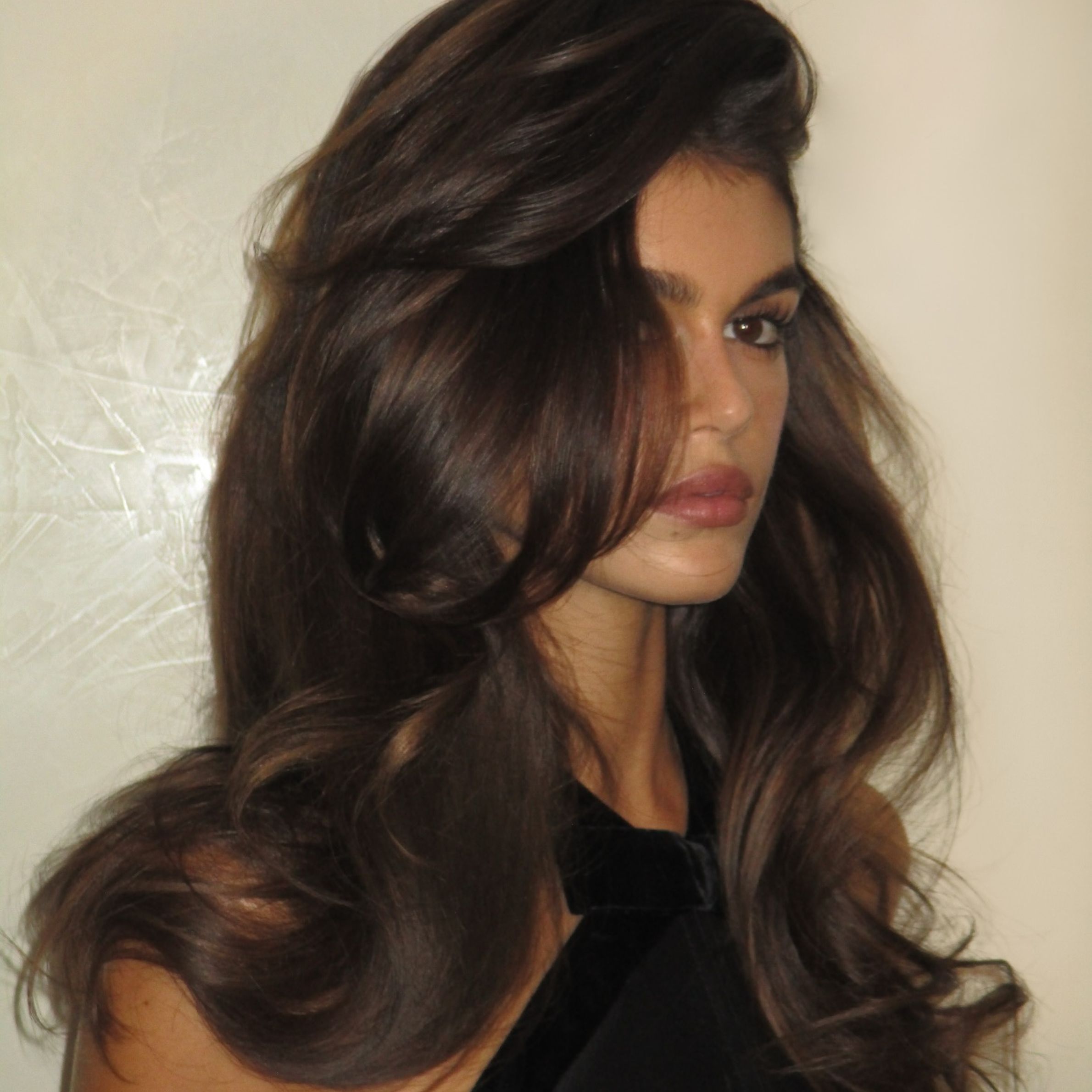
The technique here is about placement. The caramel highlights sit mostly around the face and through the mid-lengths, not the ends, so the espresso base stays dark at the bottom. This gives the colour depth without a harsh line. The tone is warm but not brassy because the caramel is a soft golden brown, not yellow. On thick wavy mid-back hair, the highlights catch the light in the waves, which is the whole point. The gloss finish seals it all together, making the colour look wet even when dry.
Collarbone Layers With Espresso Curtain Bangs
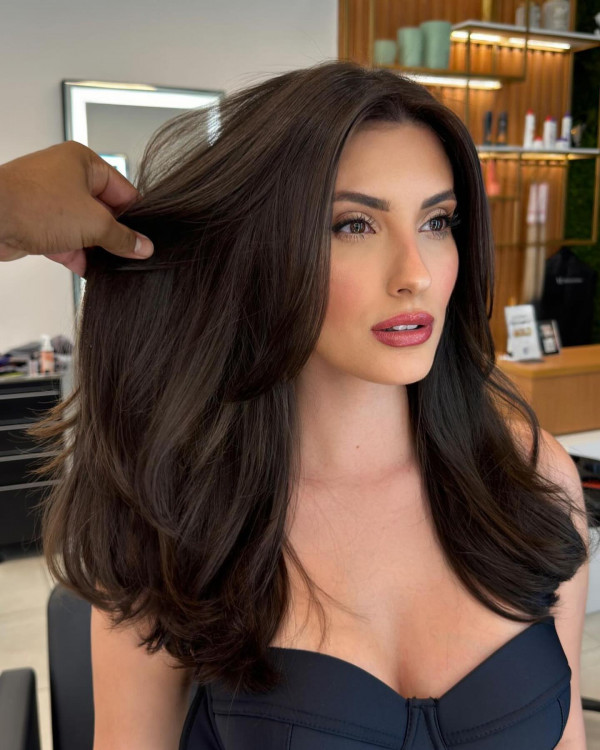
Can a solid espresso brown with curtain bangs survive a work week? Yes, but with conditions. The colour is low-maintenance in the sense that there are no highlights to fade or brass out. But solid espresso means every new root is visible, so you are booking a root touch-up every four weeks if you want the line clean.
The curtain bangs are the real commitment. They need a round brush and a cool shot of air every morning, or they separate and look sad by noon. The collarbone layers help because the weight of thick hair keeps the shape from collapsing, but the bangs are the part that demands your time. If you are okay with a weekly blowout on the front section, this cut works. If not, skip the bangs.
Long Wavy Espresso With Face-Framing Layers
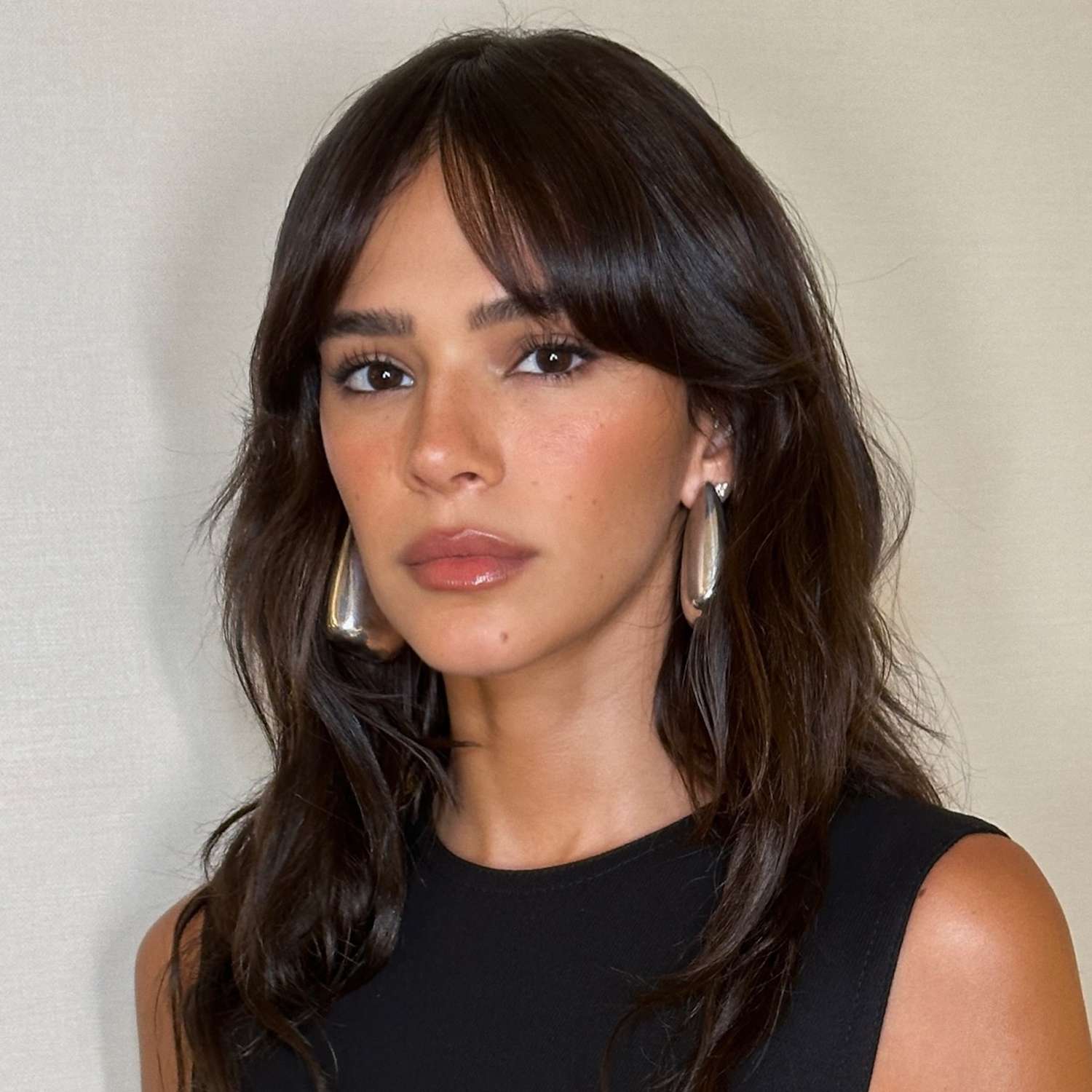
I used to think solid espresso was the only way to go for long hair. Then I saw this: long wavy espresso with subtle highlights and face-framing layers. The difference is movement. Solid colour sits flat on medium density hair, but the highlights here are fine and placed mostly around the face and through the ends, so the waves catch light without looking streaky. The tone stays cool because the highlights are a shade or two lighter than the base, not a full jump to caramel. On long hair, this stops the colour from feeling heavy. The curtain bangs add softness, and the layers keep the shape from turning into a triangle. It is a better version of the same idea.
Espresso With Bold Ash Blonde Highlights
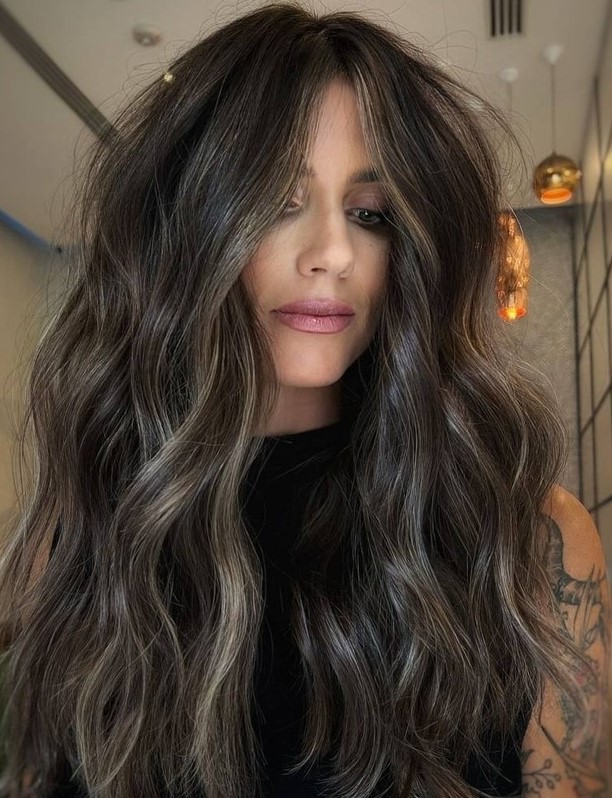
The photo stops you: thick waves, that blueish-blonde slicing through espresso brown. The mistake people make is treating it like a low-maintenance gloss. Espresso brown ash blonde highlights demand a toner schedule. Ash tones shift fast — that cool blonde turns brassy in four weeks without a purple toner refresh. The contrast requires professional upkeep every six to eight weeks. The length is mid-back, the texture thick and wavy, so the highlights sit wide. The technique is chunky, deliberate. Not a subtle fade.
Layered Espresso With Subtle Highlights
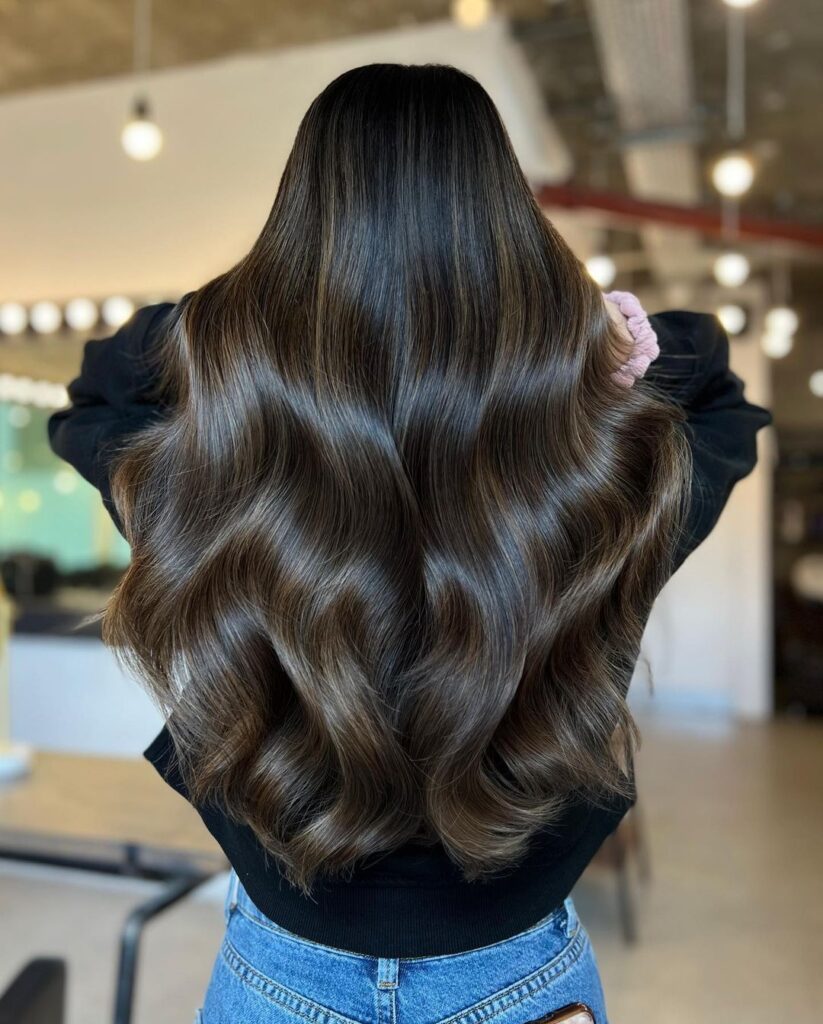
My first thought: this is the colour you think you want when you say “natural but better.” The technique is soft babylights painted in — no harsh foil lines — so the grow-out blurs instead of banding.
The base is layered espresso brown hair, deep and neutral. The tone of the highlights is a warm caramel-brown, barely lighter. At mid-back length on thick wavy texture, those highlights read as dimension, not streaks. The back view shows the real depth: the colour lands differently on every wave. That careful placement is what makes it look effortless — which is anything but. It requires a skilled hand.
Straight Espresso With Layered Flow
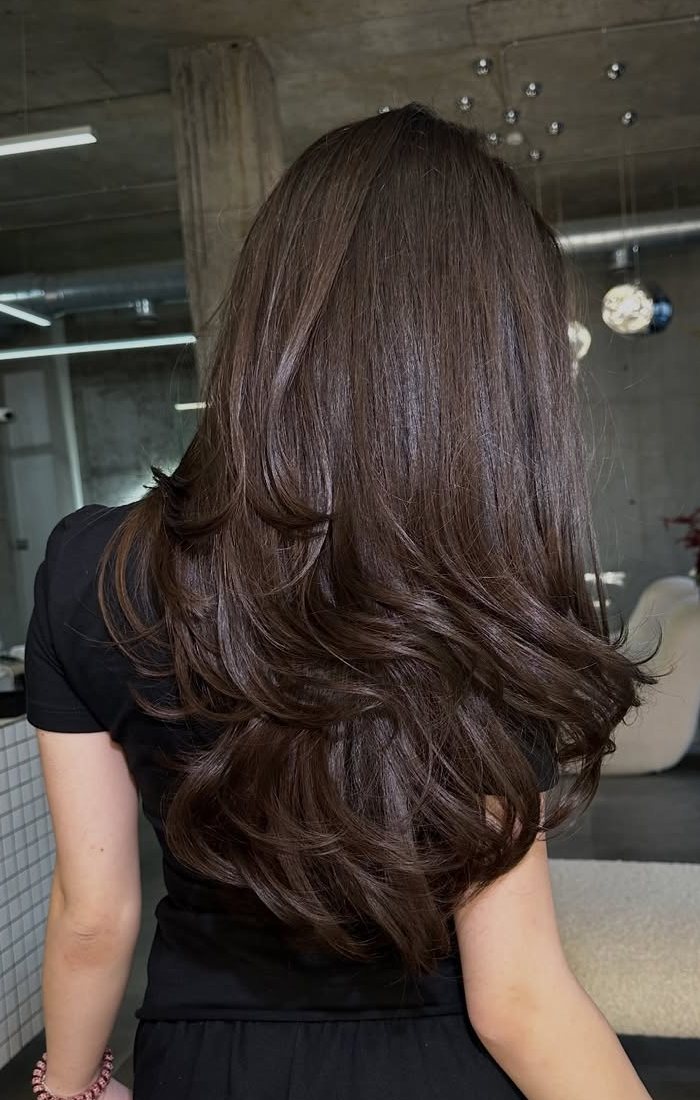
This cut works best if you have thick, straight hair. The layered flow relies on density to hold its shape — fine hair goes flat by midday. The colour is straight espresso brown, no technique beyond a single all-over gloss. The tone is neutral, no warmth, no ash. At mid-back length, the layers stack to create movement without losing weight. If your hair is thin or wavy, skip it. The cut will collapse. It is a precision haircut that needs a trim every eight weeks to keep the flow alive.
Espresso With Side-Swept Bangs
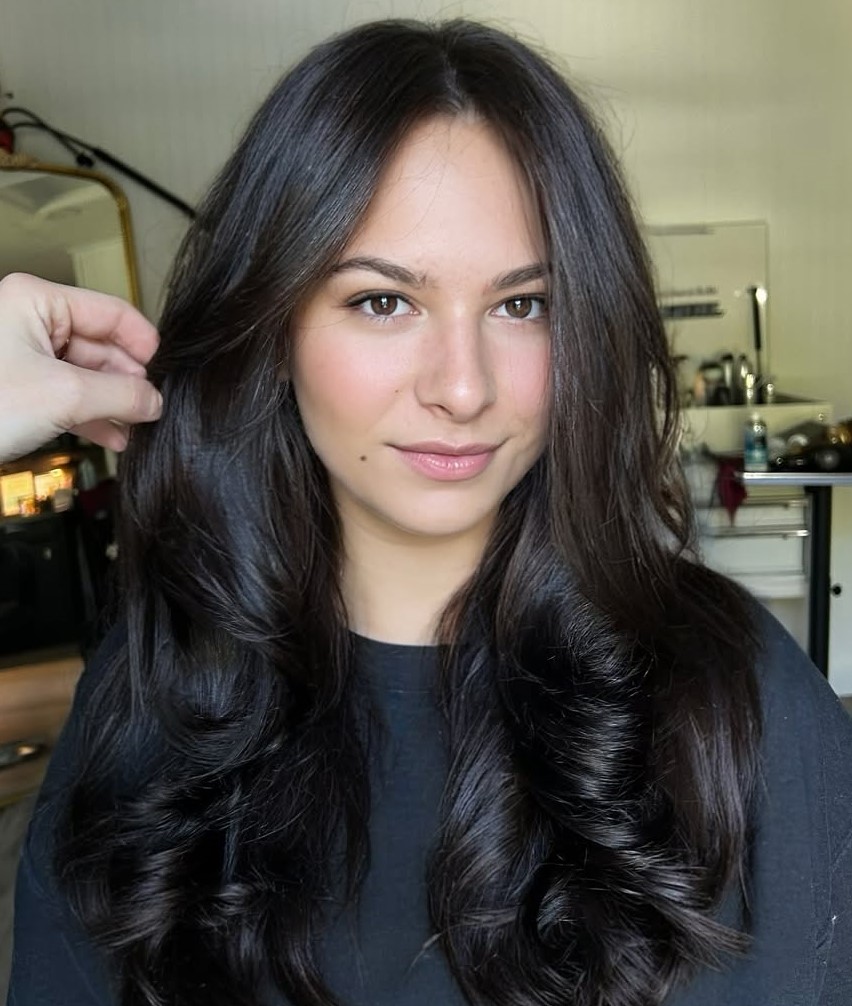
Side-swept bangs are not a wash-and-wear situation. They need a round brush, a blow-dryer, and ten minutes of your morning. Here is the sequence: dry the bangs first, pulling them to the opposite side, then sweep back with a cooler shot. Use a curling iron on the rest for loose curls — one inch sections, curl away from the face, hold for ten seconds. The key is directing the bangs so they fall at an angle, not straight down.
The base colour is shoulder length espresso brown, deep and uniform — no highlights to confuse the line. The tone is warm but not red. The texture is wavy and thick, which helps the bangs hold their curve after that blowout. Without that natural texture, side-swept bangs separate into strands by noon. Keep the bangs trimmed every three to four weeks, or they will hit your eyelashes and lose the line.
Mid-Back Espresso With Full Bangs
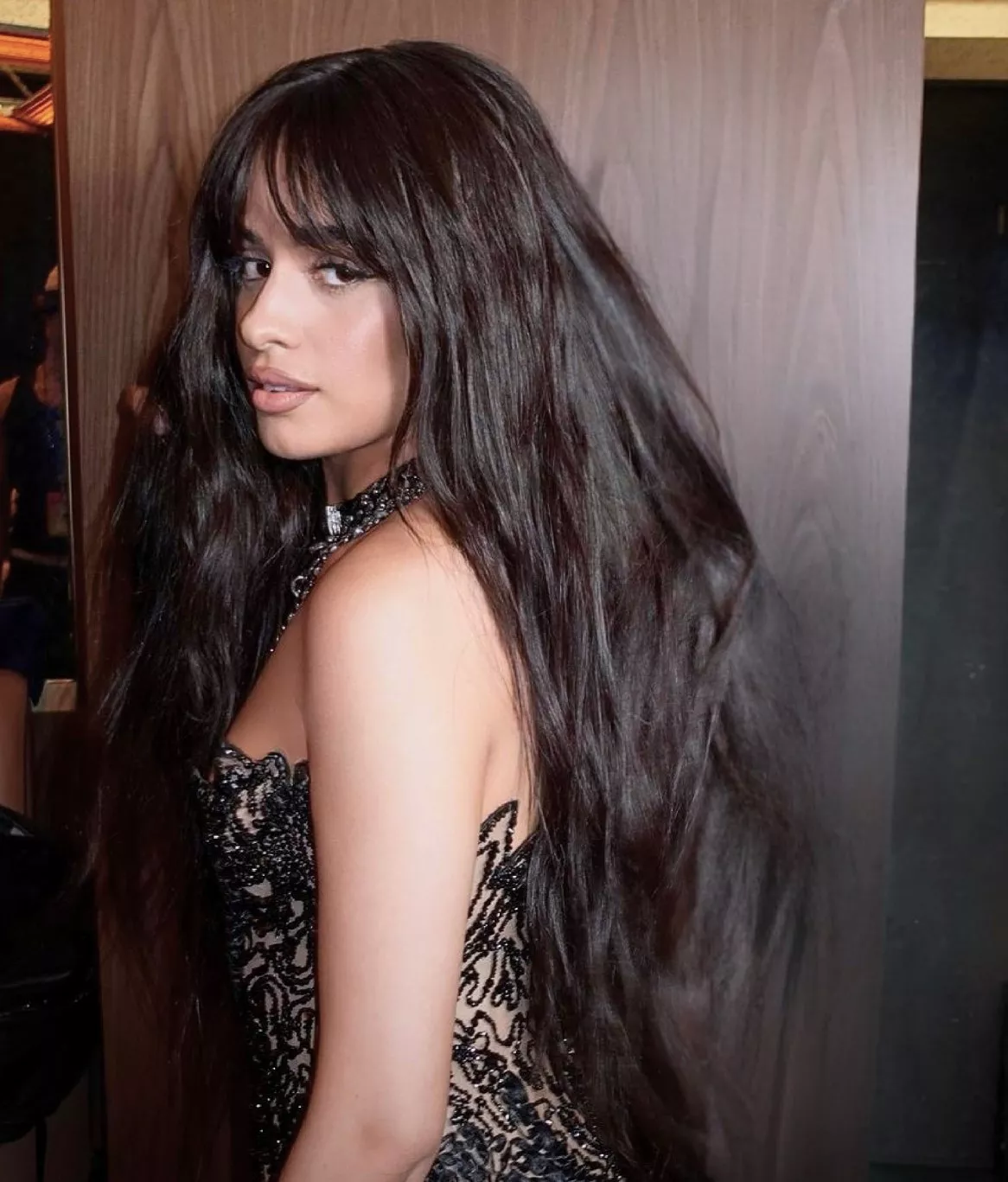
Can you really pull off full bangs with a mid-back length? I am not sure. Full bangs demand commitment — trims every three weeks, and they look terrible the day after a blowout. The colour is espresso brown with full bangs, solid, no highlights. The tone is glossy and deep, not matte. The texture is straight and thick, which gives the bangs weight, but that also means they separate if your hair is the least bit oily. This is a cold-weather look: scarf season hides the bangs, and indoor lighting shows the shine. If you work from home and can blow-dry daily, maybe. Otherwise, pass.
Collarbone Wavy Espresso
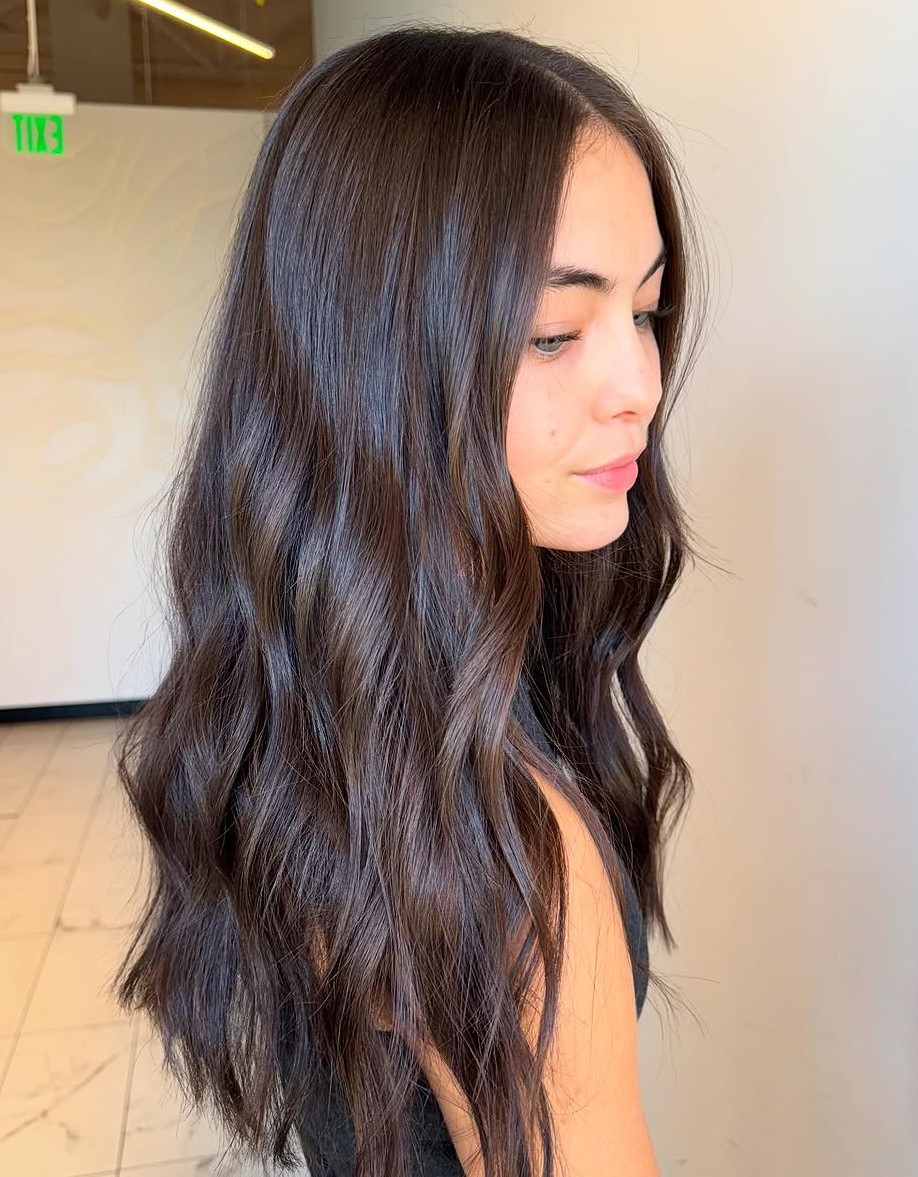
I will admit it: I booked this one because the colour looked like it cost twice what it did. A collarbone cut with long layers, thick wavy texture, and a rich deep espresso brown hair shade that reads expensive in any light. The colour technique is a single-process gloss, cool-toned, no highlights to complicate the grow-out. The tone stays neutral, warm enough to avoid looking flat, cool enough to skip the brass. The length hits right at the collarbone, which means it swings when you turn your head. Thick hair holds the wave pattern well, and the blowout takes about 20 minutes with a round brush and a volumizing mousse. Trim every eight weeks to keep the shape sharp, and do not use heavy products that will pull the waves flat by 4 pm.
Espresso With Lighter Brown Balayage
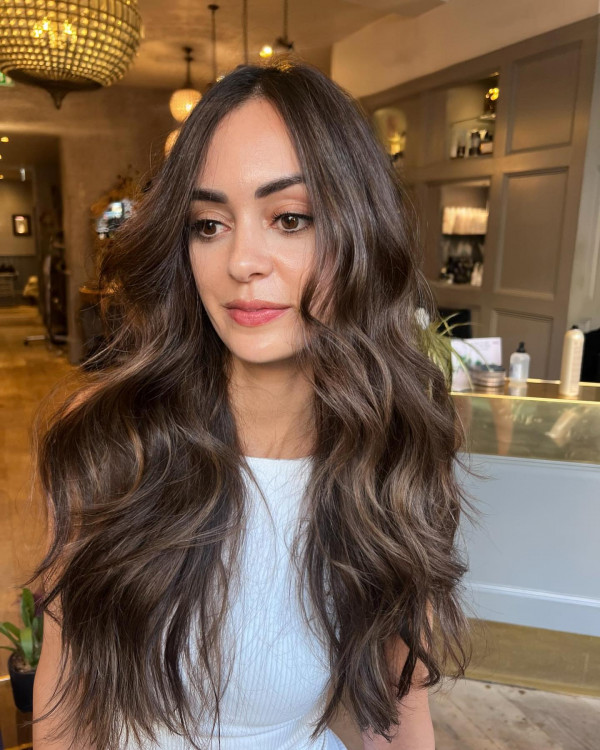
When the first cool snap hits, this deep espresso brown base with lighter brown balayage feels like the right move. The warm undertones catch the low autumn sun, and the hand-painted balayage technique keeps the colour dimensional without looking stripey. On my mid-back wavy medium-density hair, the lighter pieces frame the face and soften the dark. It’s a seasonal shift that doesn’t scream “I got highlights” — it just looks richer, like the colour of fallen leaves. Perfect for sweater weather and shorter days, this espresso brown balayage is the kind of colour that works with a scarf and a cup of coffee.
Espresso With Reddish Undertones
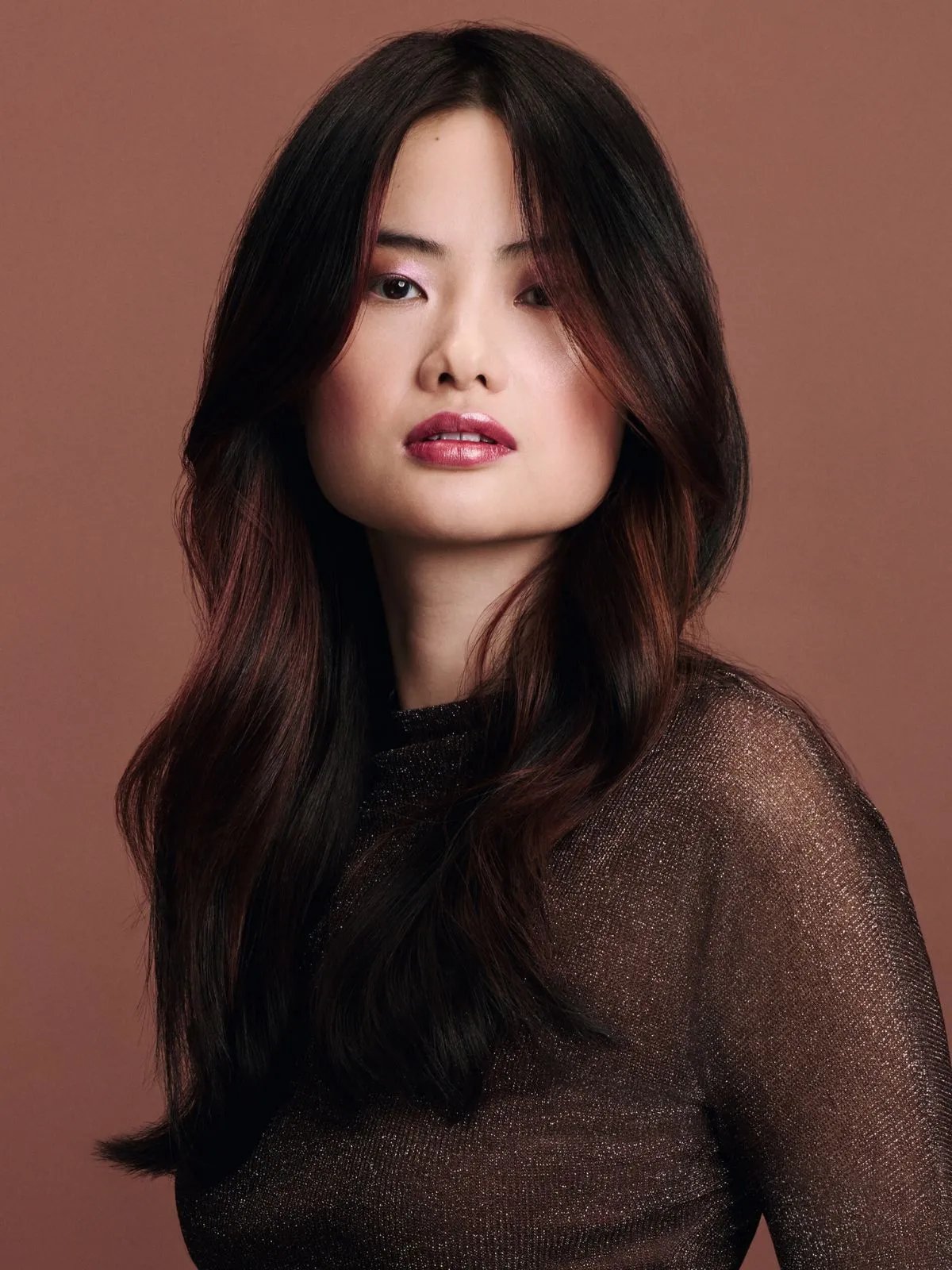
My first thought: that’s not just brown, that’s a whole mood. The dark brown base has subtle reddish undertones that glow in natural light, while lighter brown highlights add dimension without going brassy. On mid-back wavy medium-density hair, the colour reads rich and intentional — like you spent hours on it, but it’s just a well-chosen shade. The espresso brown with red undertones is the kind of colour that makes you look twice.
Espresso Brown Solid Collarbone Espresso With Side Bangs
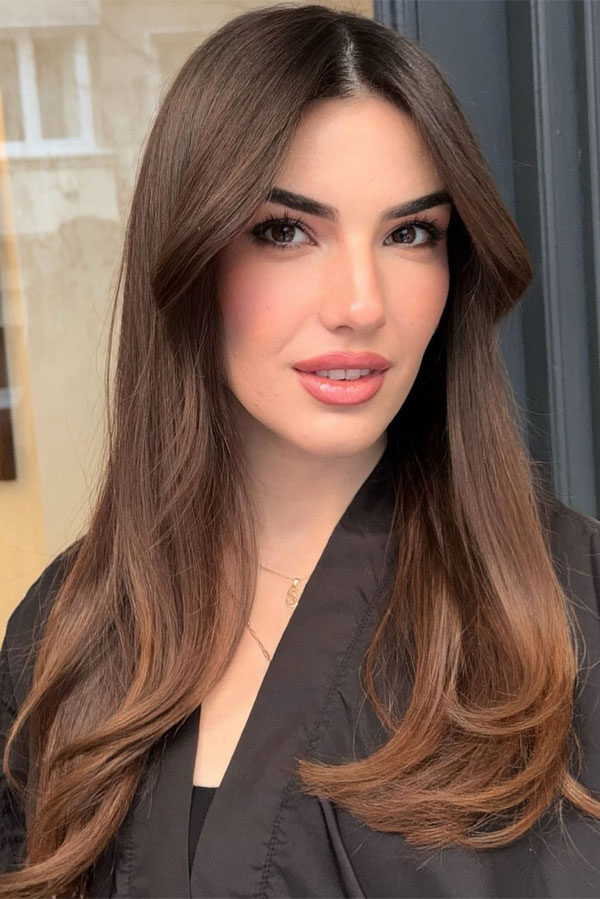
This one is for the person who wants a solid colour that does not need a touch-up every three weeks. The espresso brown side bangs sweep across the forehead, and the rest of the hair falls in a straight, thick collarbone-length blunt shape. The colour is solid, no dimension, no highlights, just one deep shade from root to end. The technique is a single-process application, cool-toned, with a tone that leans slightly neutral so it does not pull too warm or too ashy.
The honest downside: side bangs need a trim every three to four weeks, or they start poking you in the eye. The rest of the hair can go six to eight weeks between trims. This works best on straight, thick hair that holds a blowout. Fine or thin hair will look flat, because there is no layering to add movement. The face shape it flatters most is oval or heart, because the side sweep softens a wider forehead. Round faces should ask the stylist to keep the bangs long enough to graze the cheekbone, not stop at the brow.
Collarbone Espresso Lob With Air-Dried Waves
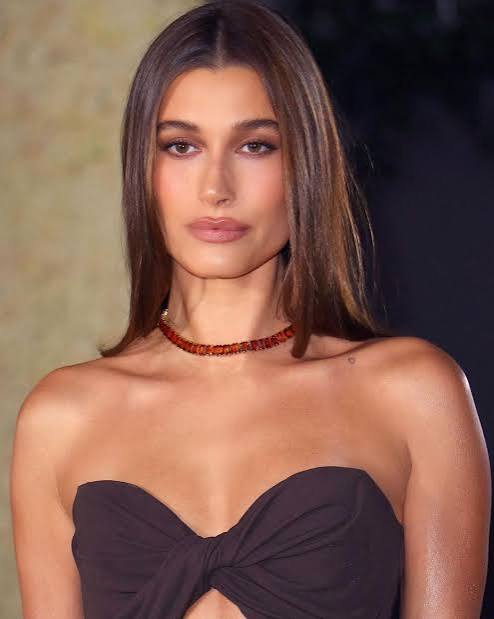
Ever air-dried a lob and ended up with a sad, flat triangle by noon? This solid espresso brown lob avoids that. The collarbone length is cut with subtle layers that give medium-density waves just enough structure to hold shape without heat. Air-dried, it stays wavy through a full workday. The technique is a single-process solid colour, so tone stays uniform. But don’t try this at home: the layering needs a stylist’s eye. A DIY trim will ruin the balance.
Dimensional Espresso With Warm Highlights
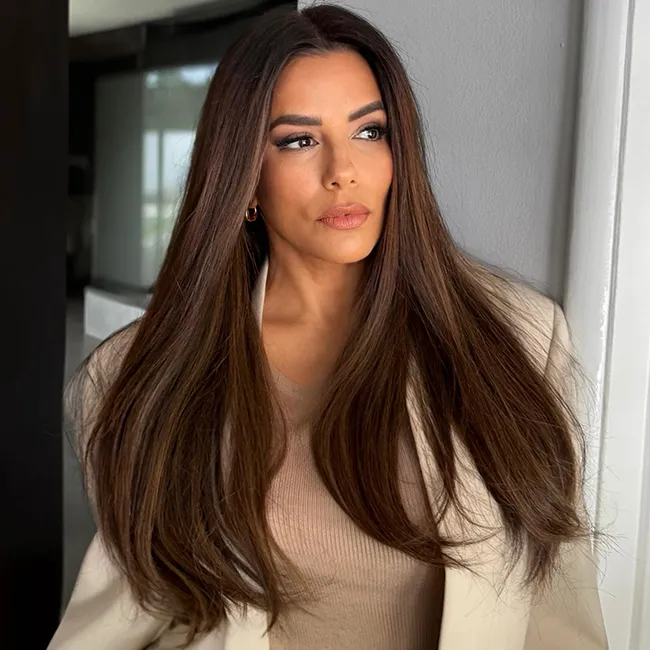
I used to think cool-toned highlights were the only way to add dimension. Then I tried rich espresso brown hair with warm undertones and lighter brown highlights. The difference: warm highlights catch light differently on mid-back wavy hair. They read richer, less ashy. The technique is a balayage-style placement that keeps the root dark. The tone stays warm without going brassy because the base is deep enough. For medium-density waves, the dimension moves with the curl. Cool highlights can look streaky here; warm melts better.
Voluminous Espresso Curls
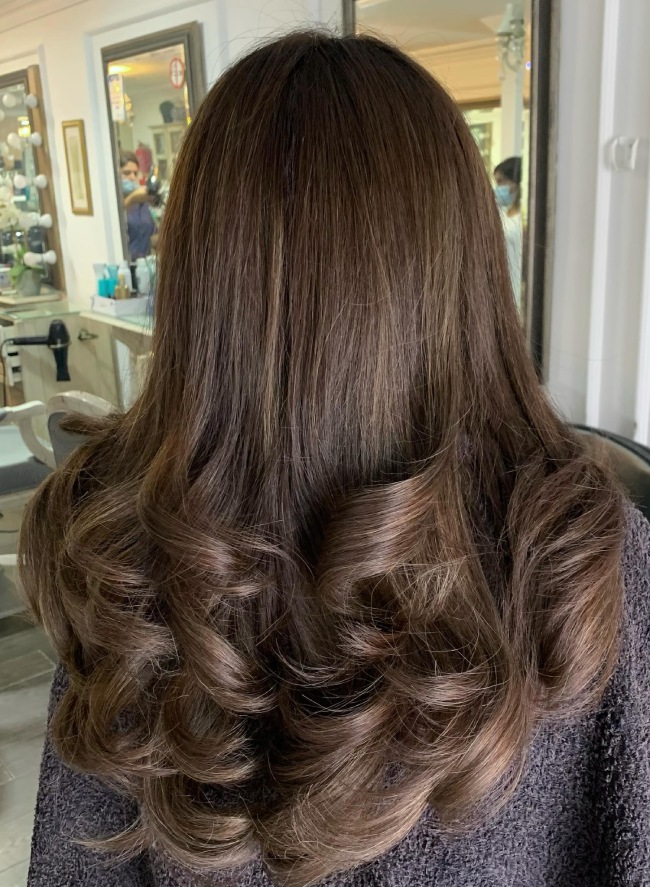
You see a photo of voluminous espresso brown curls and think ‘I can do that with a curling wand in ten minutes.’ Then you try it and end up with a frizzy mess that deflates by dinner.
The mistake: thick mid-back hair needs more than just curl — it needs internal layers to support the volume. Without them, the weight pulls the curls straight. The rich espresso brown colour helps because it’s deep enough to hide uneven texture. But the honest downside is that even with good layers, these curls take 25-30 minutes to set and require a hold product. Skip the cheap curling iron and invest in a quality one with adjustable heat. And always let curls cool completely before touching them.
Espresso With Full Bangs, Air-Dried

Full bangs with air-dried straight hair usually look like a mistake. But this espresso brown shoulder length cut works because the bangs are cut with a slight curve that follows the brow. The medium-density straight texture means they fall flat without effort. The colour is a solid espresso brown, no highlights, which keeps the look clean. Wear: the bangs separate by midday, so you’ll be pushing them aside. Upkeep: trims every three weeks to keep them out of your eyes. The rest of the length needs a trim every eight weeks.
Mid-Back Wavy Espresso With Gloss
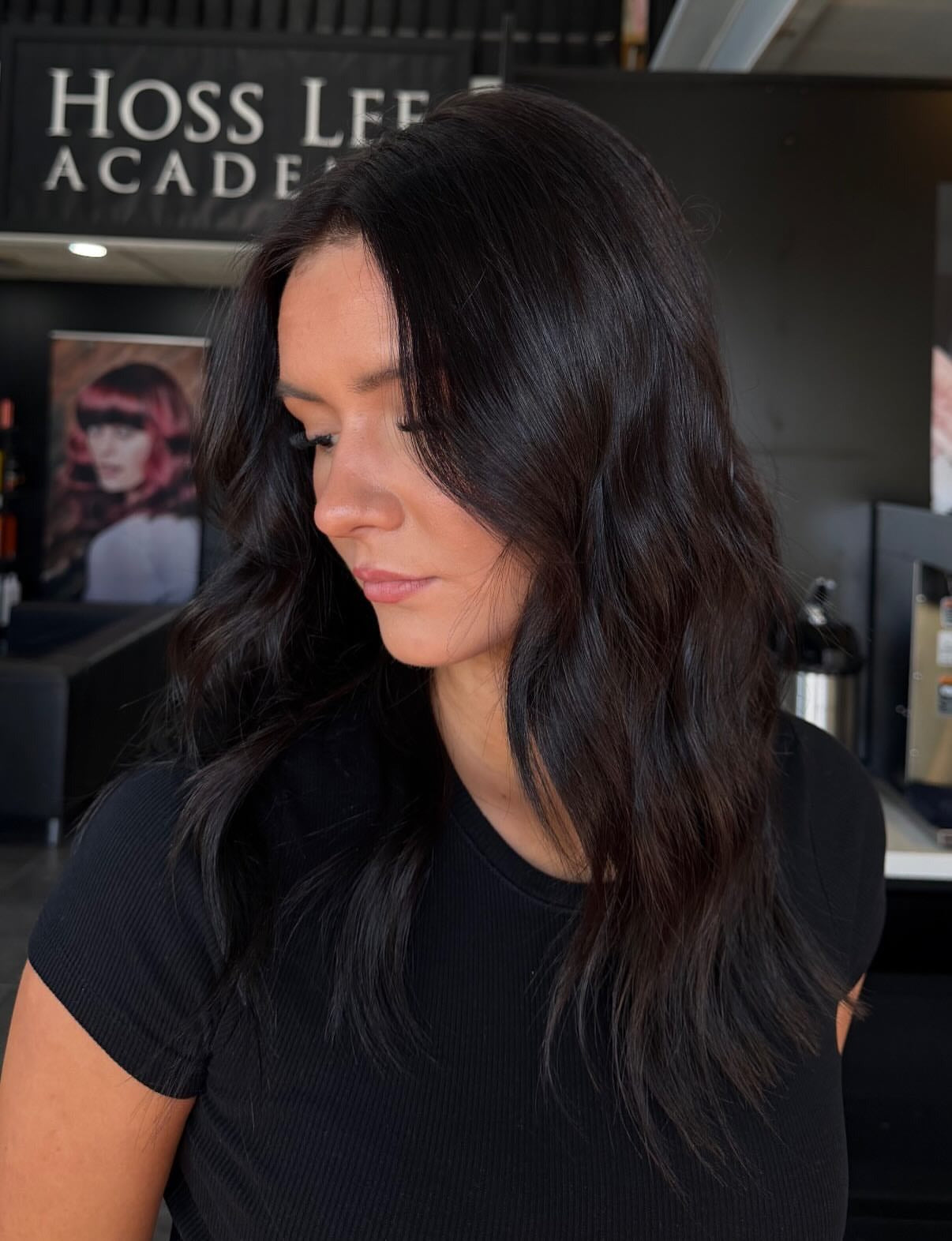
This glossy espresso brown hair is a gamble. It flatters anyone with medium to thick wavy hair because the gloss catches the wave pattern and amplifies shine. The solid colour means no root maintenance, so it suits people who want low upkeep. But if your hair is fine or straight, the uniform shade can look flat — you need texture to bounce the light. The mid-back length works best on oval and heart-shaped faces because the weight pulls down. Skip it if you have a round face: the length can widen. The technique is a single-process colour with a gloss overlay, so tone stays cool and reflective.
Layers Collarbone Espresso With Lighter Balayage
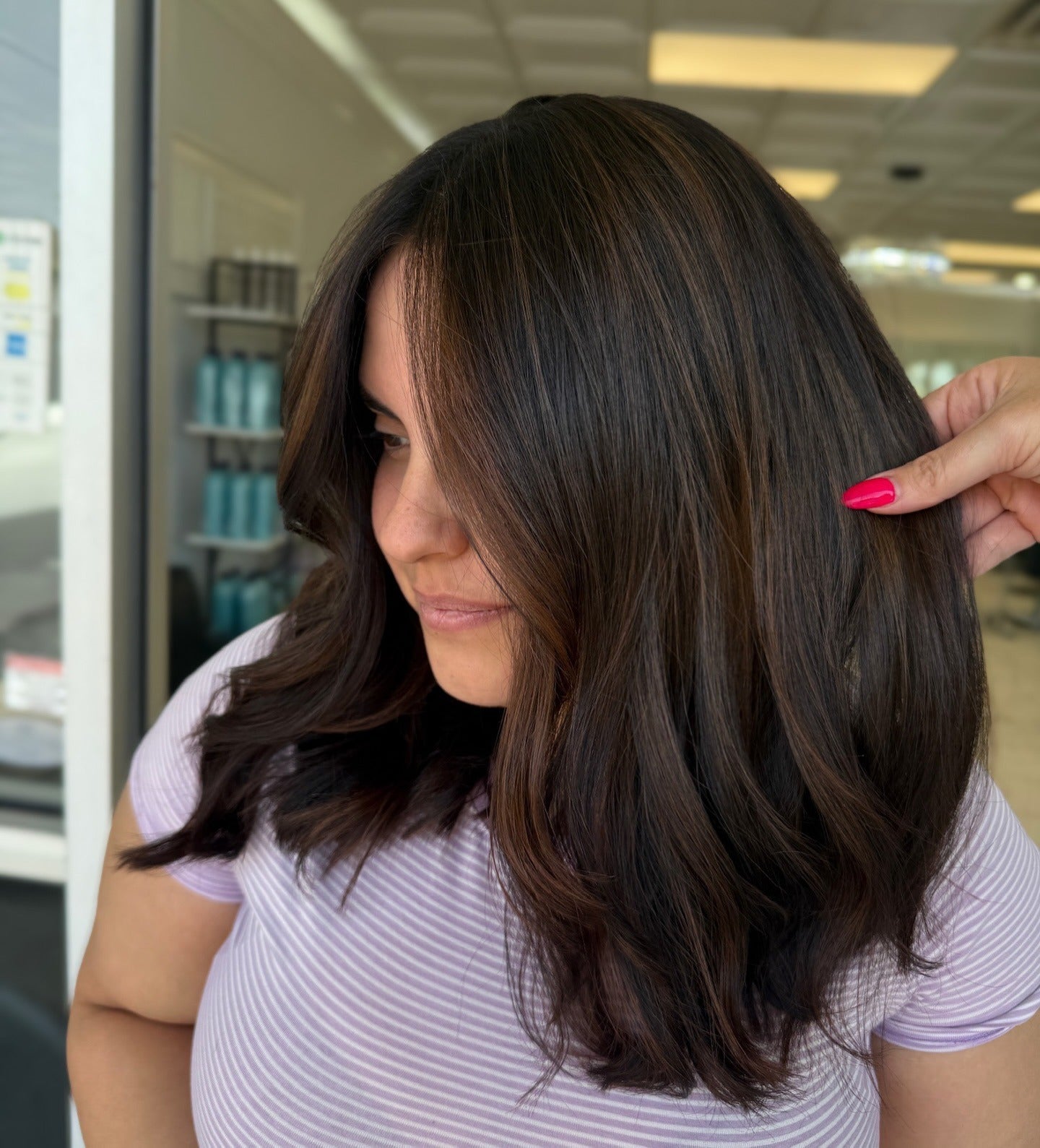
What does a week of wear do to an espresso brown collarbone length balayage? On thick straight hair with a side part and smooth blowout, the lighter brown strands stay visible but soften. The deep espresso base keeps the roots from looking obvious, even as the balayage fades slightly. By day three, the shine dulls, but a quick blow-dry brings it back. The layers keep the shape from collapsing, so the collarbone length still reads clean even when you skip a wash. The side part holds its line through most of the week.
Upkeep is straightforward. The balayage needs refreshing every 10-12 weeks, and a trim every 8 weeks keeps the collarbone length sharp. Use a heat protectant for the blowout. The tone stays neutral, so no purple shampoo required. A dry shampoo on day two helps extend the blowout, and the balayage hides any oiliness because the lighter pieces reflect light differently.
Mid-Back Straight Espresso
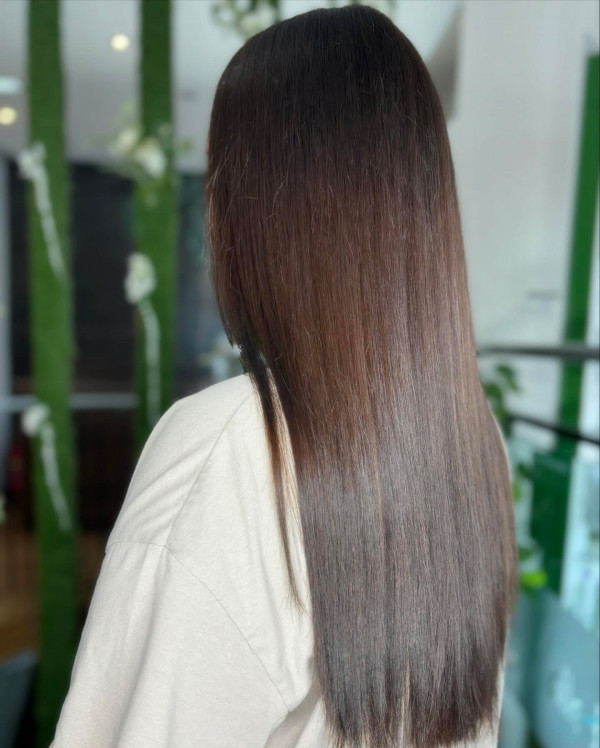
I used to think waves were the only way to make brown interesting. Then I saw this solid espresso brown hair at mid-back, straight and thick with a middle part. The technique is just a single-process colour, no highlights, no dimension. The tone is pure espresso, no warm or cool shift. The length hits mid-back, and the texture is straight and thick.
Against textured waves, the straight version reads more uniform, more deliberate. The shine is the star. Waves catch light in pieces; this catches it in one sheet. The uniform colour makes the cut matter more, and the blunt baseline is what sells it. A middle part works because the hair is dense enough to hold its own weight. Waves would break that line. I pick straight.
Wavy Medium Density Collarbone Lob With Air-Dried Espresso Waves
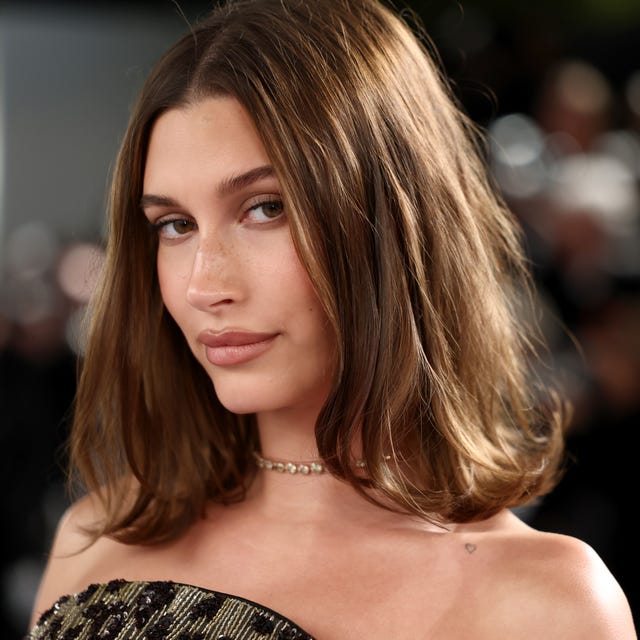
The espresso brown lob waves are one of those rare things that actually look better when you do less. Collarbone length hits the sweet spot for medium density: long enough to wave, short enough not to pull the curl out. Air-dried texture means it sits like real hair, not a salon floor sample. The middle part keeps things clean. If your hair goes flat by lunch, skip this. It needs that natural body to hold the wave through.
Espresso With Caramel Highlights and Layers
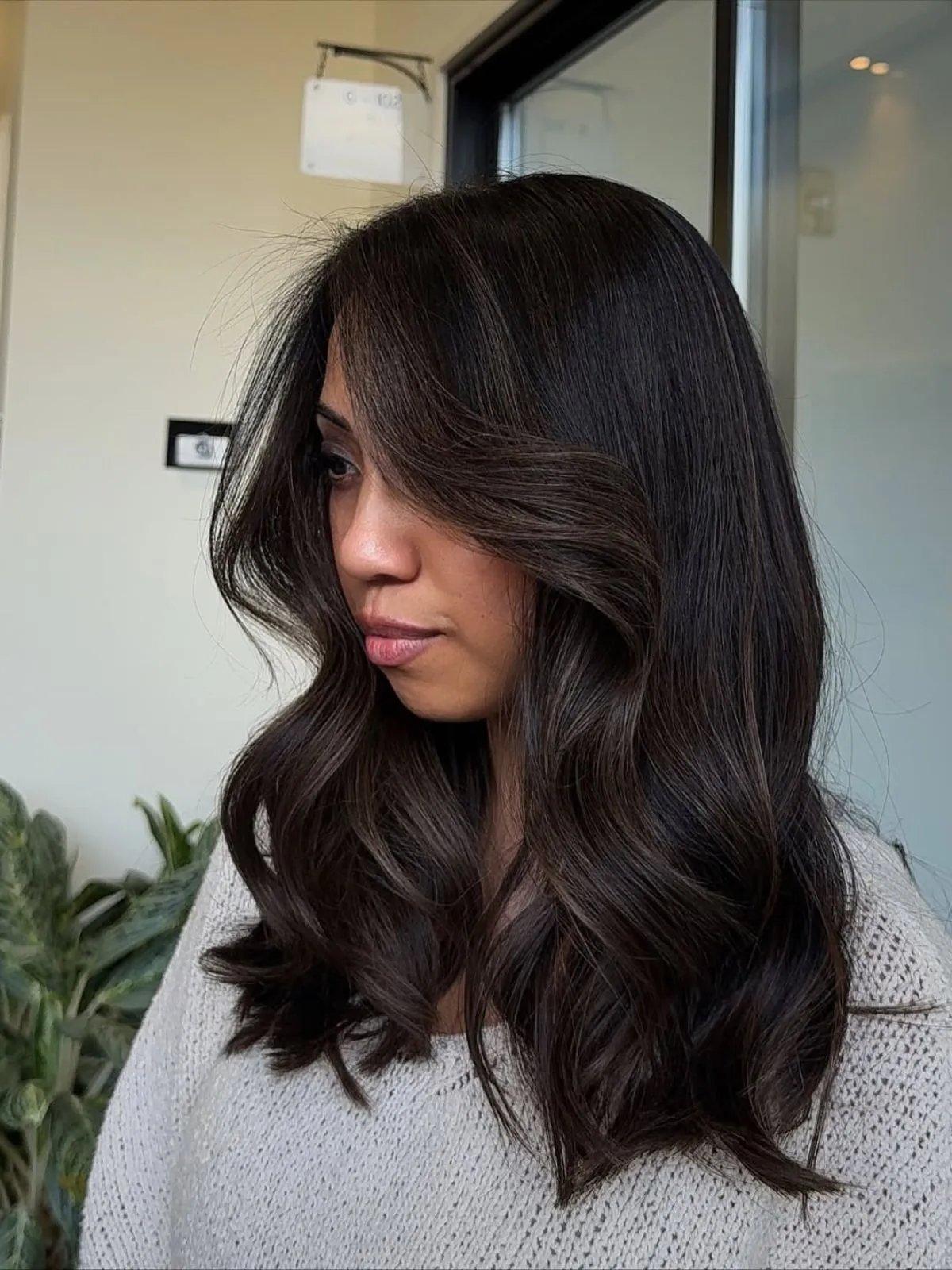
Look at how the caramel sits. It is not painted in thick ribbons. The colorist wove it into the mid-lengths and ends, thin slices, so the espresso brown base stays dominant at the root. That is what keeps this dimensional without turning into a highlight helmet.
Mid-back length gives the long layers room to breathe. Curtain bangs take the edge off, especially if your forehead is on the shorter side. Wavy texture catches the caramel at the bends, which is the whole point of the technique. A solid base, a soft lift, no color banding.
Mid-Back Wavy Espresso With Subtle Sheen
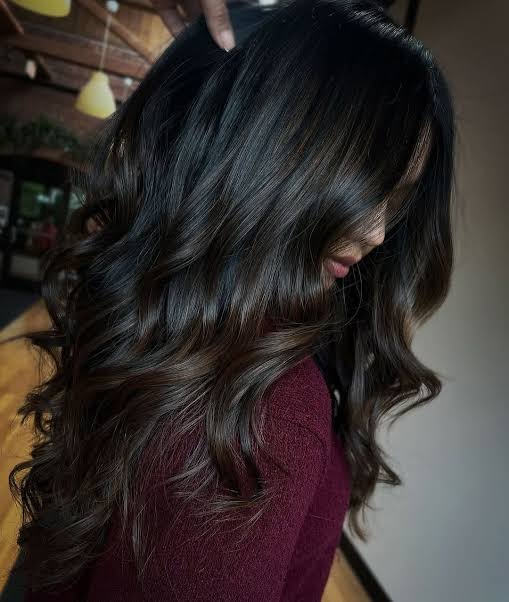
Ever notice how some browns go flat by Wednesday? Not this one. The deep solid espresso brown on thick, wavy hair holds its shine because there is nothing to fade, no highlights to muddy, no toner to wash out. Loose waves catch the light unevenly, which creates a natural sheen without product. Trims every eight to ten weeks keep the ends from looking dull. That is the whole upkeep, and it is exactly why I keep coming back to solid color.
Collarbone Espresso With Blended Highlights
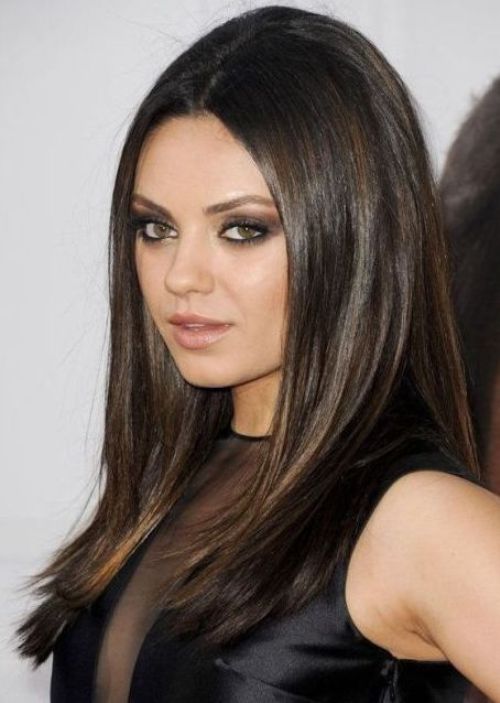
I used to think lighter highlights were the only way to go. Then I tried a dark brown with lighter highlights that actually blended, not sliced. The colorist painted them close to the base shade, so the collarbone bob reads dark with a soft lift, not striped. Straight texture with a blowout makes the highlights sit even and clean. No harsh grow-out line, no sudden roots. It is not dramatic. It is better than dramatic.
Layers Mid-Back Wavy Espresso Blowout
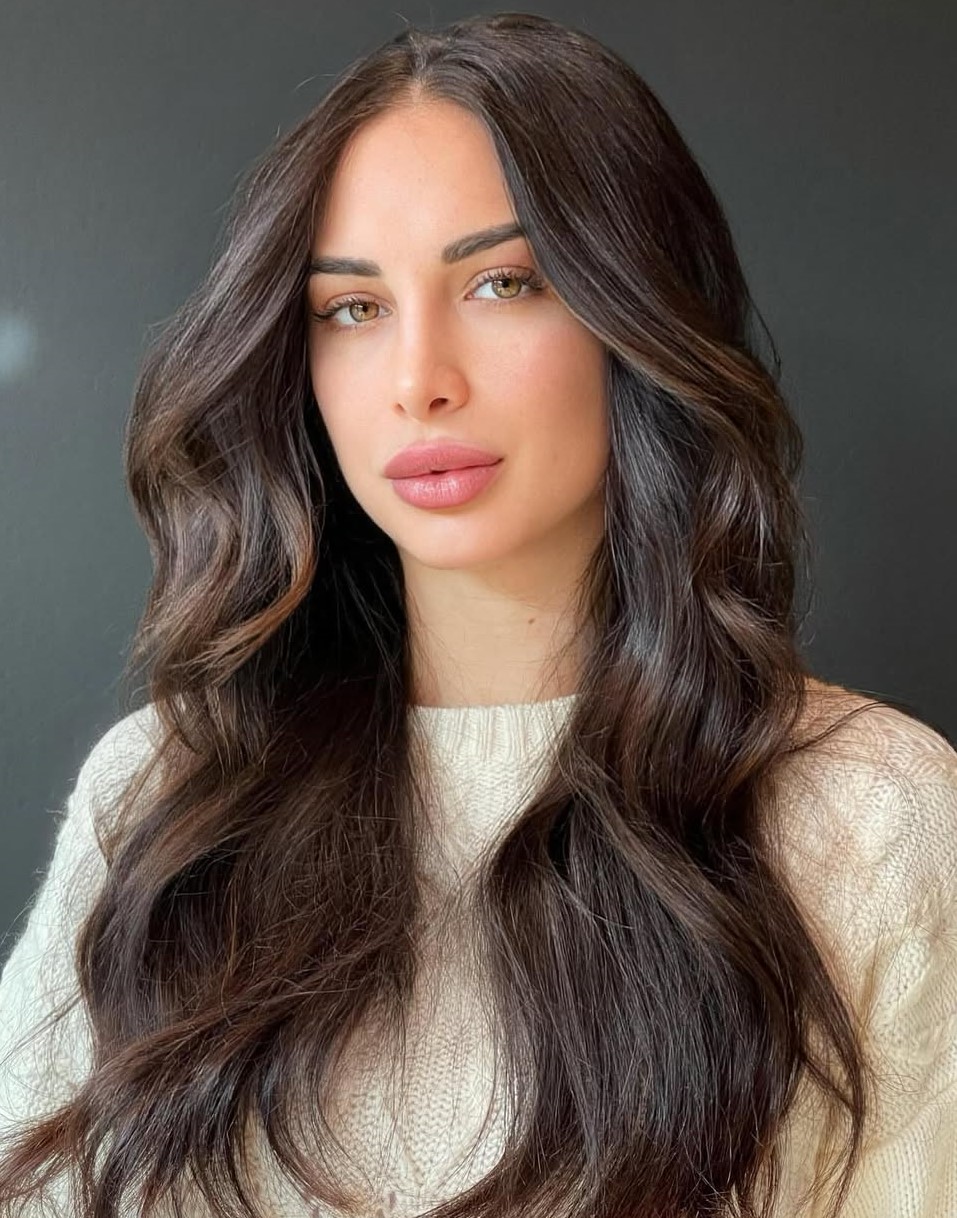
You see that blowout and think round brush for forty minutes, right? That is the mistake. Thick, wavy hair does not need a perfect curl. The espresso brown wavy blowout is about stretch and slide, not ringlets. A paddle brush, a nozzle, and blow downward. That is it. The solid espresso brown catches the light evenly because there is no highlight to distract. The mistake is overworking it. The fix is stopping early.
Mid-Back Dimensional Espresso With Cool-Toned Highlights
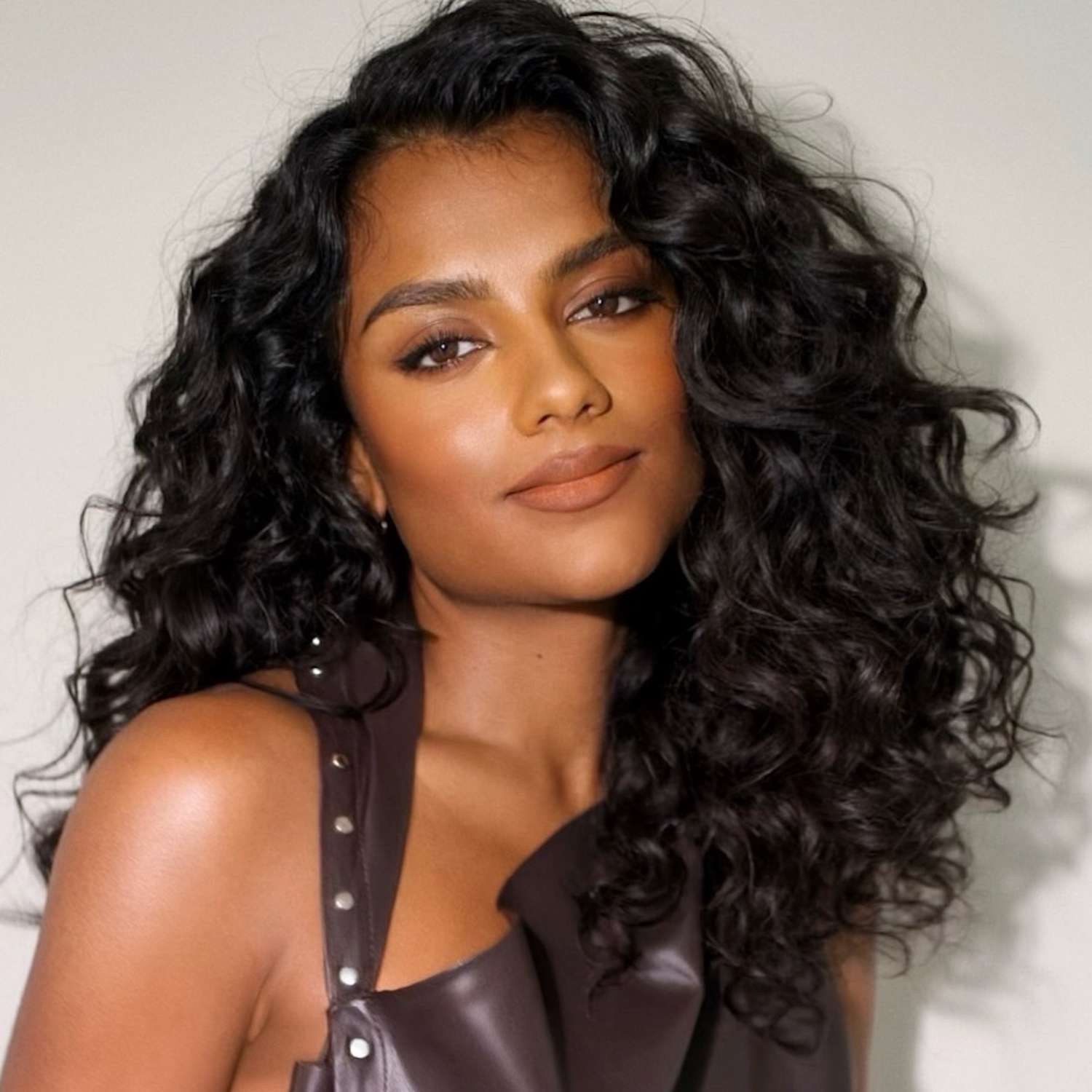
Cool-toned highlights on dark brown can look chalky. This is the opposite. The base is a deep espresso brown, and the technique uses espresso brown cool toned highlights to add a dimensional shimmer without fighting the shade below. The cool tone reads as a soft steel blue against the espresso, and the loose waves on medium-density hair let the light catch each layer. At mid-back, the long layers keep the weight moving, so the colour doesn’t sit in a solid block.
Visual Idea
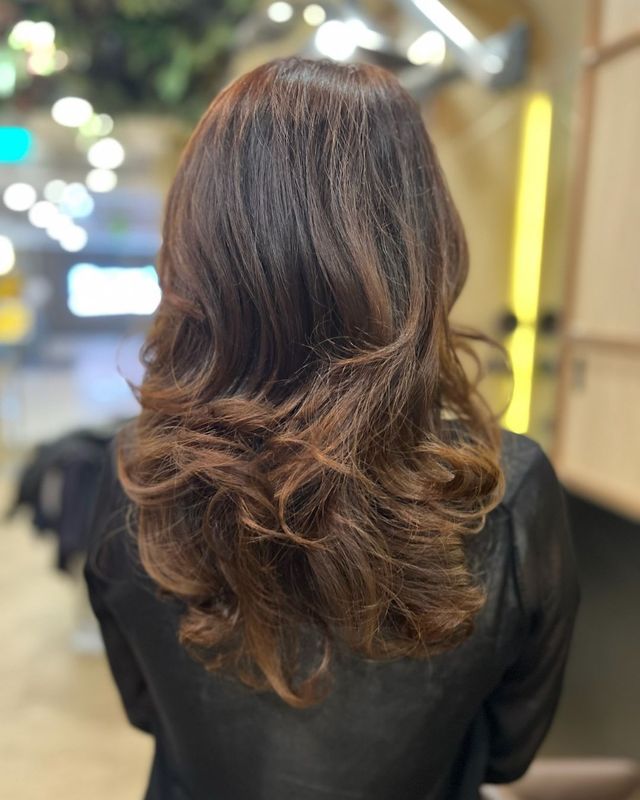
A natural brown lob with soft waves is one of those rare cuts that flatters almost everyone. The shoulder length hits a sweet spot: long enough to pull into a low ponytail, short enough that fine hair doesn’t get stringy. Medium-density wavy hair holds the soft waves without a full round-brush blowout, and the natural brown tone means no root line to schedule around. It’s not a universal fit. Very straight, fine hair will want some face-framing layers to keep the shape from looking like a solid triangle. Very thick, coily hair might find the shoulder length creates too much width without internal layering to break up the volume. But for most heads, this is a reliable, low-fuss colour and cut that looks like it took more effort than it did.
Final Thoughts
After writing all 28 of these, I kept coming back to one thing: espresso brown works because it doesn’t try to be anything else. It’s not a gateway to blonde, not a compromise. It’s the color you pick when you know what you want.
I’m booking the collarbone layers with curtain bangs next. My fine hair needs the movement, and I’m tired of pretending I’ll style long waves every morning.