20 Simple Fulani Braids Natural Hair 2027 with Geometric Patterns
Fulani braids are a protective style that combines straight-back cornrows with a central braided section, creating a clean, structured look. The trend has shifted toward larger sections and geometric scalp patterns, with beads and cowrie shells as the preferred accents.
This collection of 20 simple Fulani braids for natural hair covers shoulder-length to mid-back styles, with options for every texture and density. Whether you need a low-maintenance workweek style or something with more presence for a special occasion, these ideas solve the problem of finding a braided look that holds without constant fussing. Simple Fulani Braids Natural Hair works best on medium to thick textures with enough length for clean parting.
Fulani Braids With Geometric Scalp Pattern And Baby Hairs
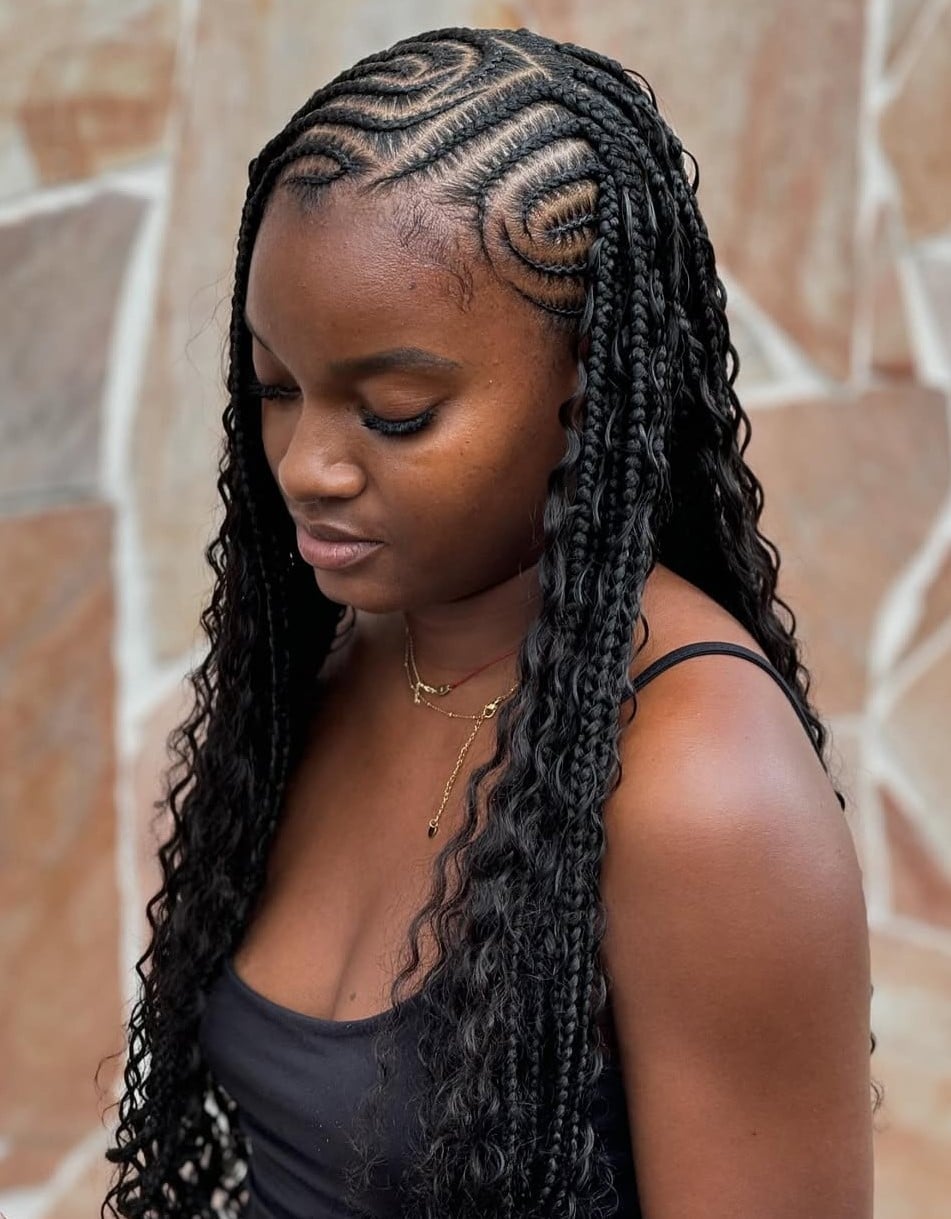
That geometric pattern on the scalp is not a stencil. It is a deliberate part layout that requires a steady hand and a solid hour of sectioning before the first braid is even started. The middle parting keeps the design symmetrical, while the baby hairs soften the precision so the whole thing does not read as too severe. Ask your stylist for: Fulani braids with geometric scalp pattern and baby hairs. A light pomade smoothed over the edges keeps those baby hairs in place for the week. The wavy extensions add body at mid-back, but the real work is on the scalp, and that holds its shape until you take it down.
Fulani Braids With Geometric Scalp And Wavy Extensions
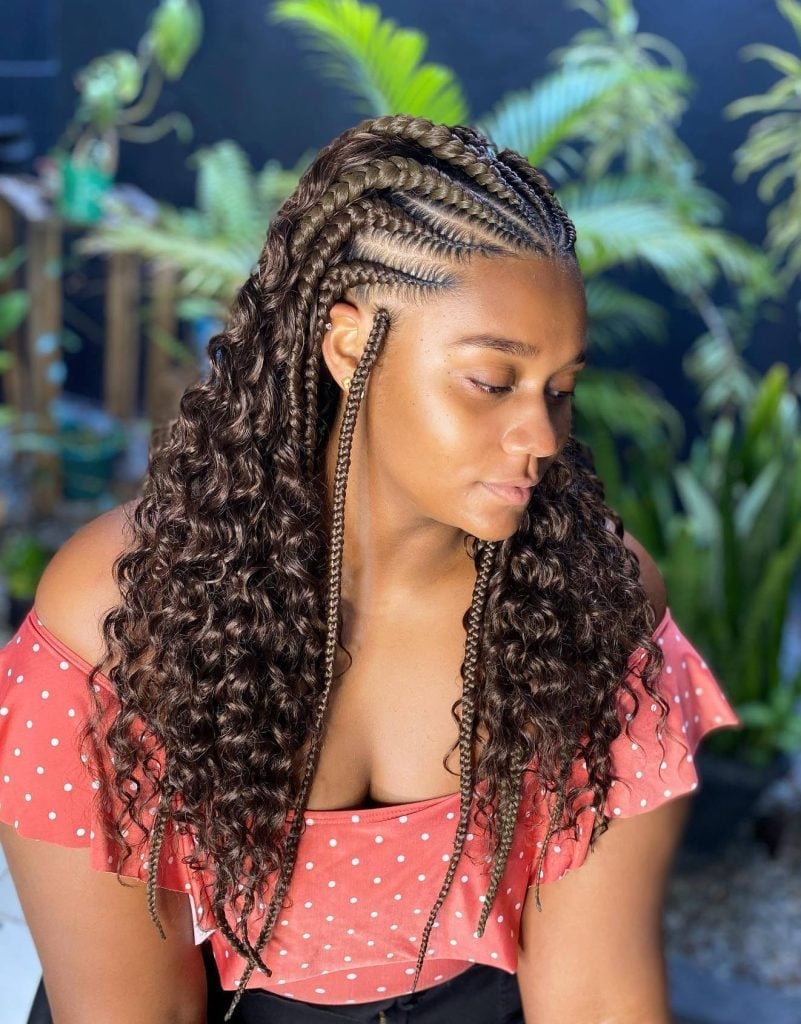
Where section one leaned into tight scalp precision, this version adds wavy extensions that give the braids more movement and a looser feel overall. The geometric pattern is still the anchor, but the waves keep the style from appearing as a strict grid, think architectural top with a relaxed body. Ask your stylist for: Fulani braids with geometric scalp pattern and baby hairs. Natural hair of medium to thick density takes the detail best; finer textures may need the parts spaced a bit wider. A silk scarf at night preserves the wave pattern and keeps the scalp neat between refreshes.
Fulani Braids Geometric Spiral Pattern With Baby Hairs, Mid-Back
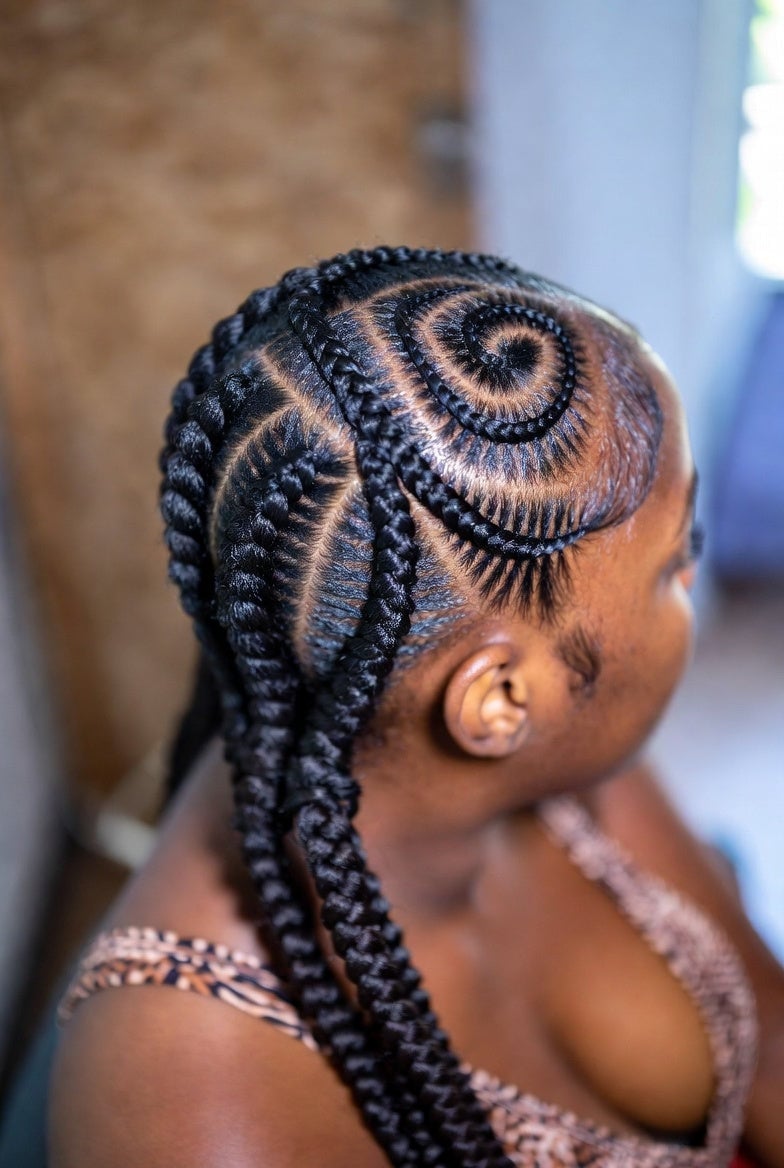
Wondering if a spiral scalp design works for your hair density? It does, provided you have at least medium thickness. The spiral needs enough hair per section to show the curve without gaping. The baby hairs along the hairline frame the face without competing with the pattern, and the mid-back length gives the braids enough weight to hang well. Ask your stylist for: Fulani braids with a geometric spiral scalp pattern and baby hairs. A soft edge-control gel brushed through the baby hairs keeps them sleek without stiffness. The spiral holds its definition for the full wear period.
Fulani Braids Black And Brown Wavy Scalp Design
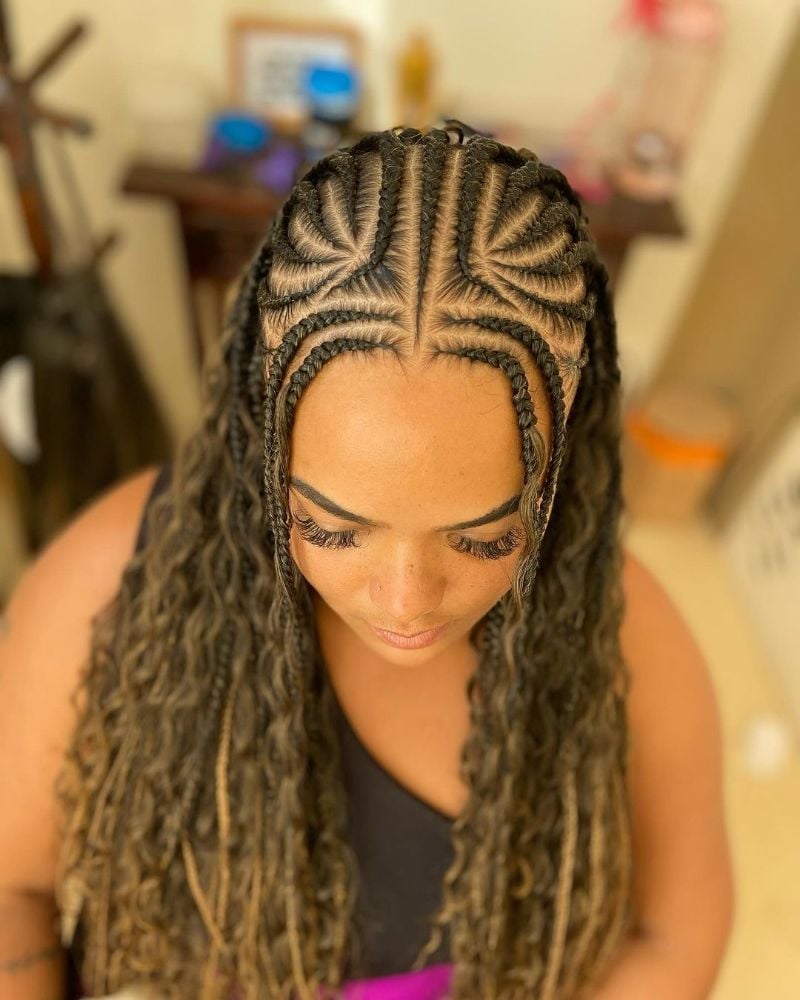
The black and brown tones here are not a dye job, the extensions come pre-colored, which means the color stays consistent and does not fade unevenly. The geometric scalp pattern is the same precision work, but the two-tone effect adds depth that a single shade cannot. Ask your stylist for: Fulani braids with geometric scalp pattern and black/brown tones. A color-safe shampoo once a week keeps the brown from dulling, and a dry shampoo on the scalp between washes extends the neat look. The pattern holds for about three to four weeks before the new growth shifts the lines.
Fulani Braids With Beads And Geometric Scalp
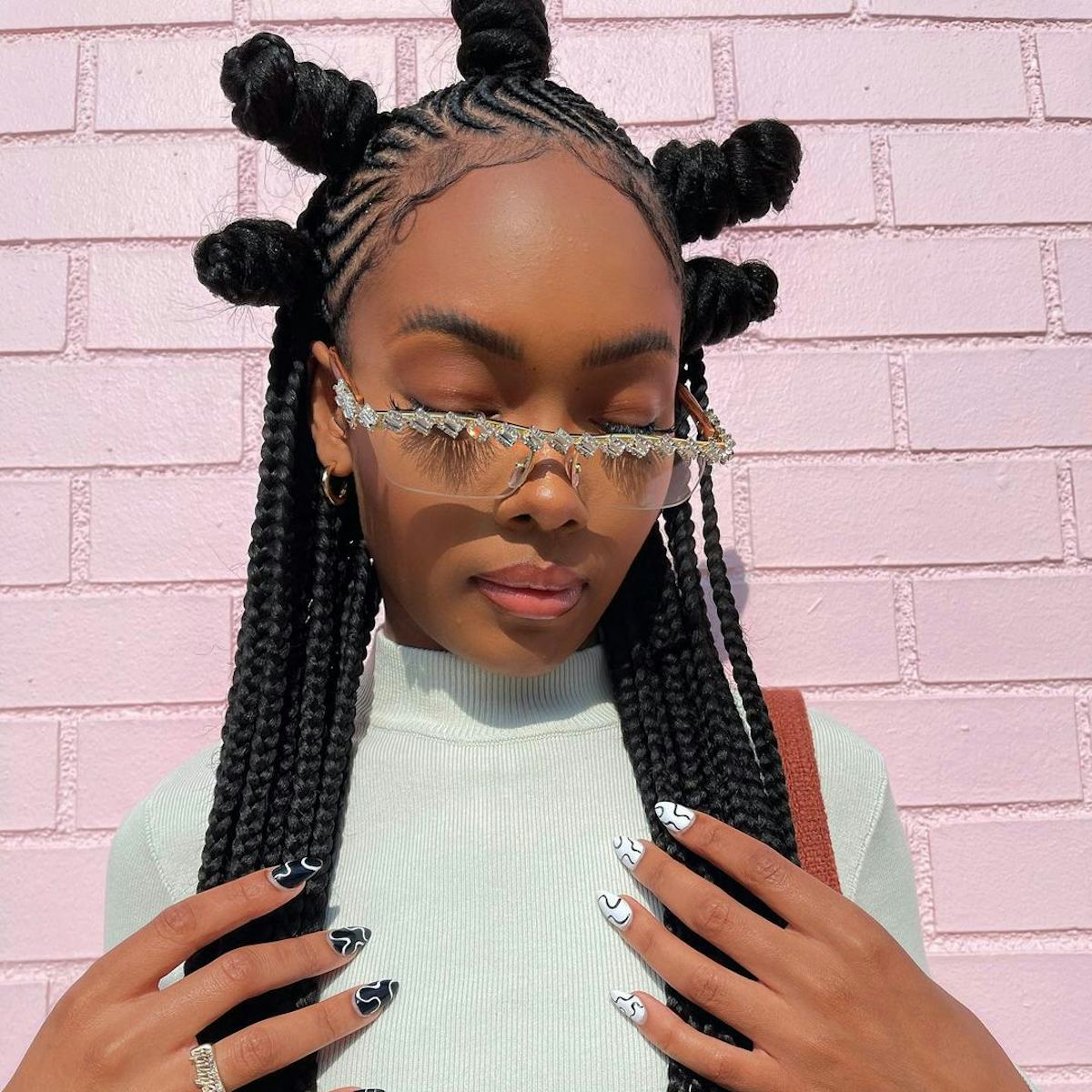
The beads and cowrie shells are threaded onto the braids during installation, so every piece stays secure. The geometric scalp pattern provides a clean base that the adornments can play against without the whole style looking busy. Ask your stylist for: Fulani braids with geometric scalp pattern, beads, and cowrie shells. This style suits a festival or casual outing; the shells add a soft click when you move, so expect some sound. The wavy texture at mid-back keeps the ends from looking blunt against the decorated sections.
Shoulder Length Fulani Braids With Colourful Beads
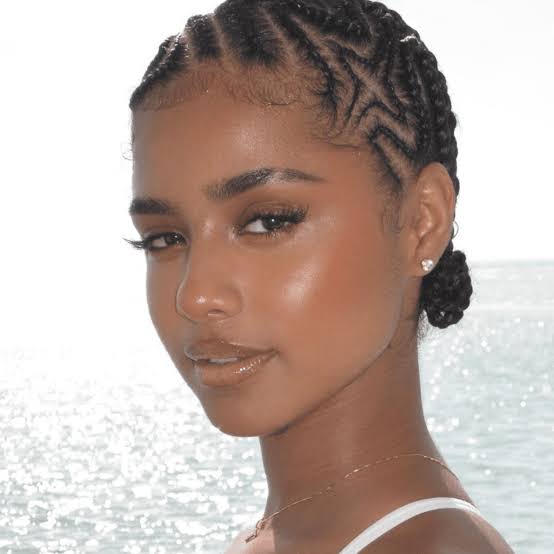
Multiple rows of Fulani braids are gathered into shoulder-length curls, each braid threaded with colorful beads. This length works best for natural hair that starts at the shoulder or a few inches longer, since the braids need enough weight to hold the curl. Ask your stylist for: shoulder-length Fulani braids with colorful beads. The trade-off: this is a salon-only style, and those beads add weight, so expect a denser feel than plain braids.
Shoulder Length Fulani Braids With Beads And Baby Hairs
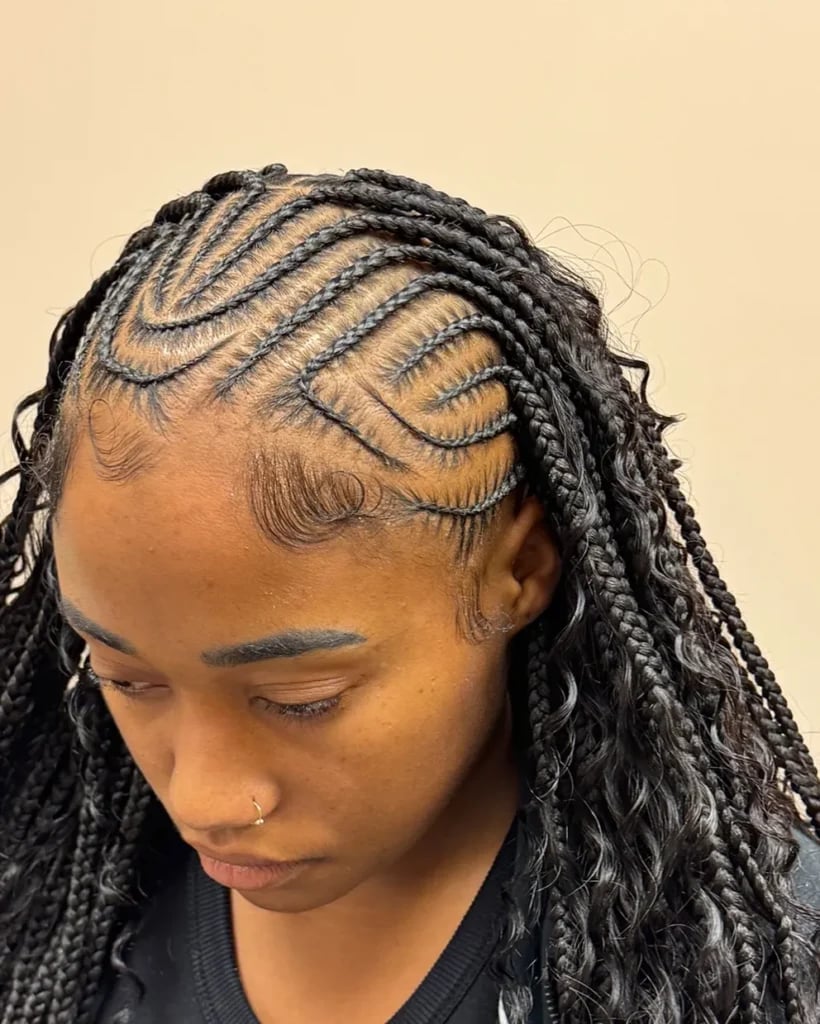
Fulani braids with a geometric pattern along the hairline read more intricate than the version with beads scattered through the length, though the clear and white beads here offer a quieter accent. This style works best for anyone who wants defined edges without heavy adornment. Ask your stylist for: shoulder-length Fulani braids with geometric hairline, beads, and baby hairs. A toothbrush and edge control gel give those baby hairs their swoop.
Shoulder Length Fulani Braids With Curls And Baby Hairs, Black
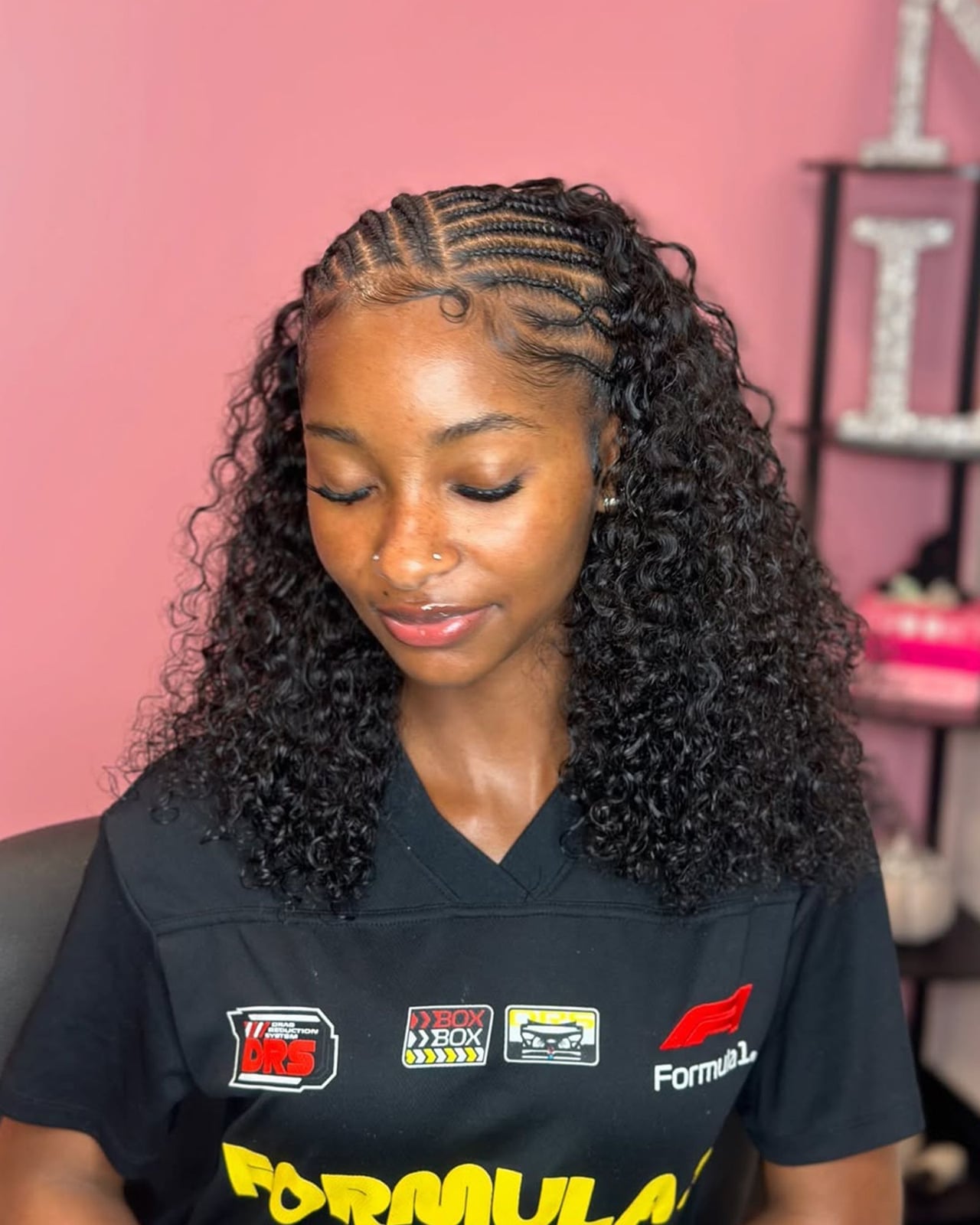
Can a braided style still feel soft? When the cornrows transition into loose, shoulder-length curls and baby hairs frame the face, yes. This combination flatters medium to thick natural hair that has enough density to support the braids without the ends looking sparse. Ask your stylist for: shoulder-length Fulani braids with loose curls and baby hairs. Separate the curls gently with your fingers to maintain definition between refresh days.
Shoulder Length Fulani Braids With Curls And Baby Hairs, Close-Up Take
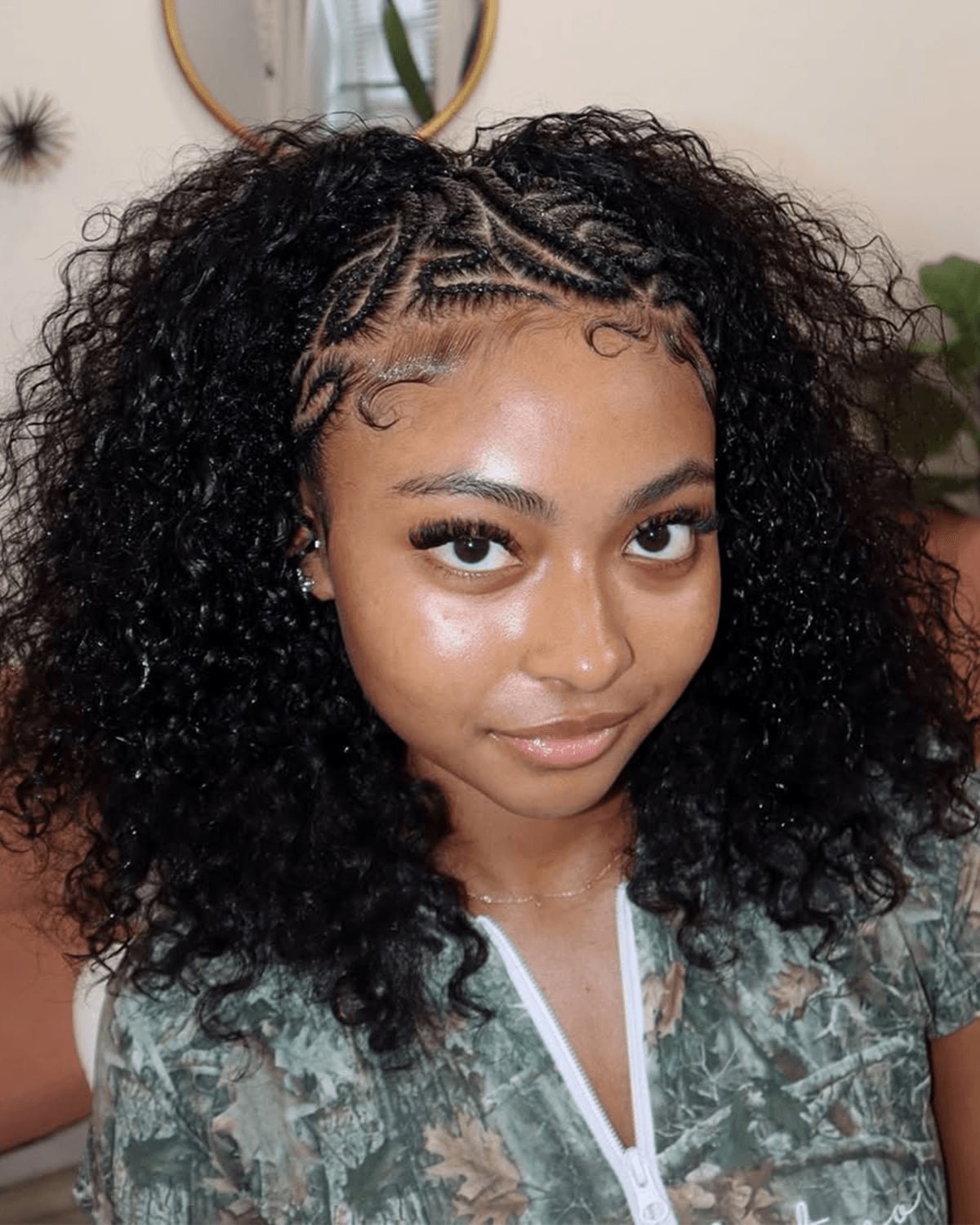
The baby hairs here are styled into deliberate swoops that soften the transition from cornrow to voluminous curl. A close look shows how the braid pattern continues past the hairline before releasing into the shoulder-length curl. Ask your stylist for: shoulder-length Fulani braids with voluminous curls and baby hairs. A curl-defining cream on the loose ends keeps the texture neat and reduces frizz.
Fulani Braids With Large Voluminous Curls
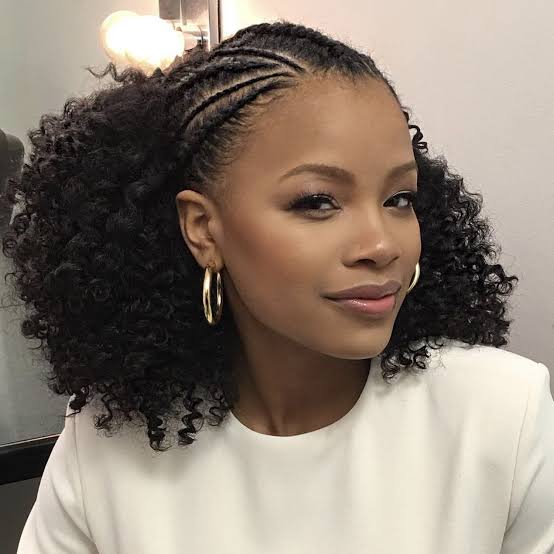
Large, voluminous curls at shoulder length give Fulani braids a fuller silhouette than the tighter curl variations. This style lands well in cooler months when a heavier, more substantial look feels right, and it holds up through events where you want the braids to read clearly without tiny detail work. Ask your stylist for: Fulani braids with large, voluminous curls. A middle parting keeps the weight balanced and the pattern symmetrical.
Shoulder Length Fulani Braids With Brown Highlights
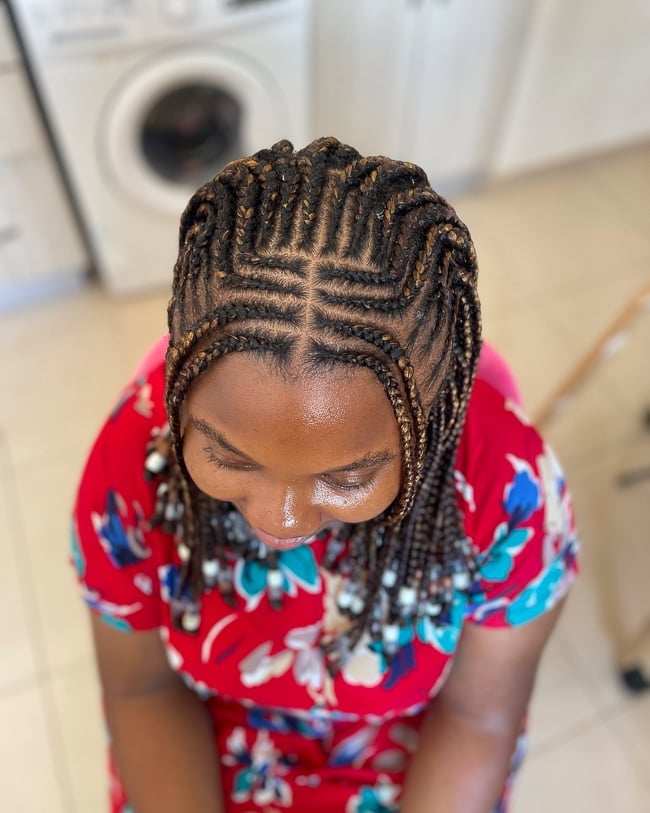
The geometric scalp pattern here does double duty: it adds visual interest without requiring more braids, keeping the style clean and the weight manageable at shoulder length. The lighter brown highlights woven through black hair create a subtle dimension that reads as natural rather than applied, which means a toning shampoo every two to three weeks will keep the warmth from shifting brassy. Ask your stylist for Fulani braids with geometric scalp pattern, small beads, and brown highlights. The wavy texture and medium-sized braids hold their shape well, though the beads will make a quiet click when you move, something to know if you take calls on speaker.
Mid-Back Fulani Braids With Wooden Beads
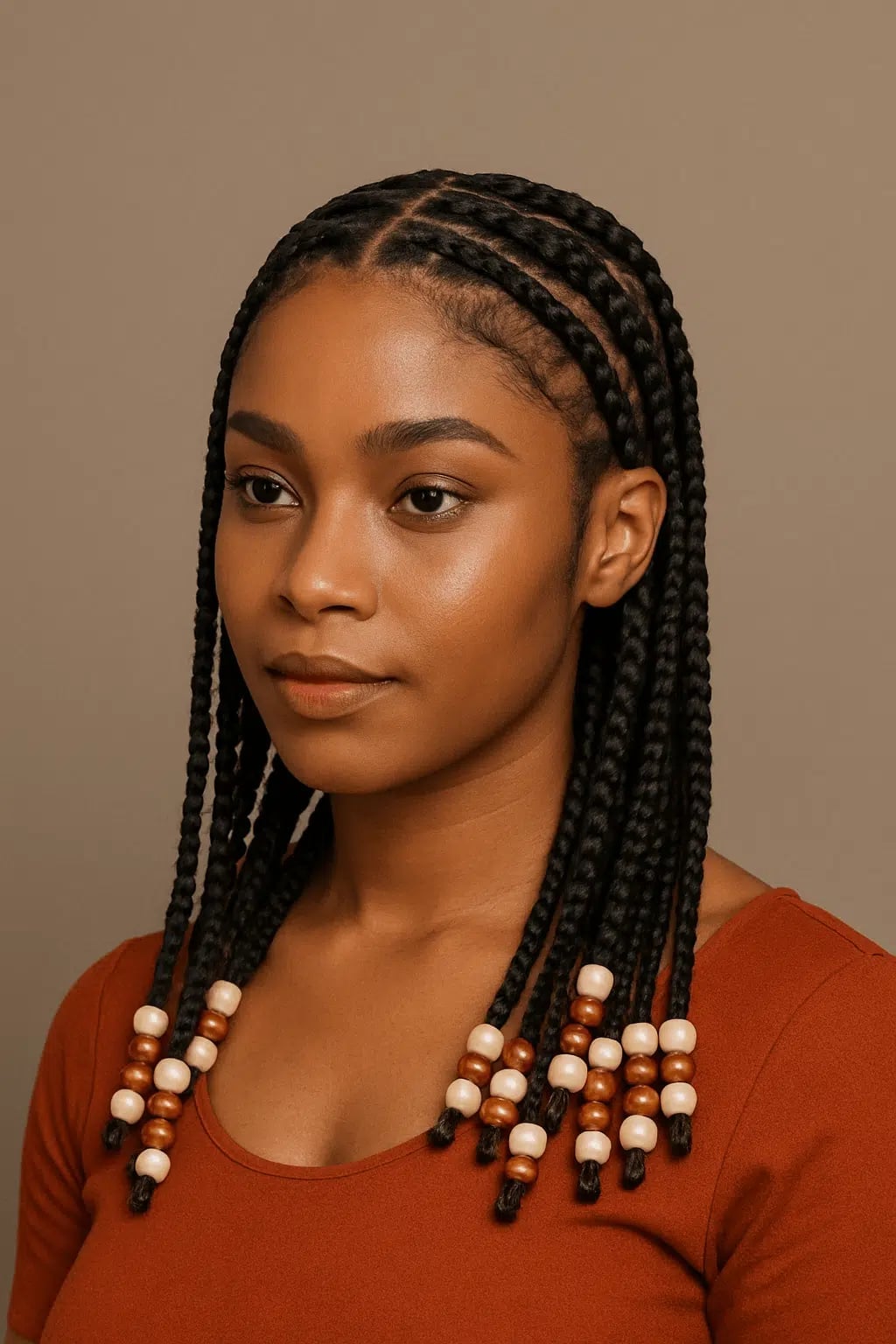
These are straight Fulani braids with a thick, dense feel, the kind that takes a solid four to five hours to install because every braid gets a bead at the end. Ask your stylist for mid-back Fulani braids with wooden beads. The beads come in brown and cream tones that blend with black hair rather than contrast against it, so the overall look stays grounded. The middle parting keeps the geometric lines of the scalp visible, and the straight texture means the style will not tangle as quickly as a curly variation would.
Mid-Back Fulani Braids With Beads And Curls, Black
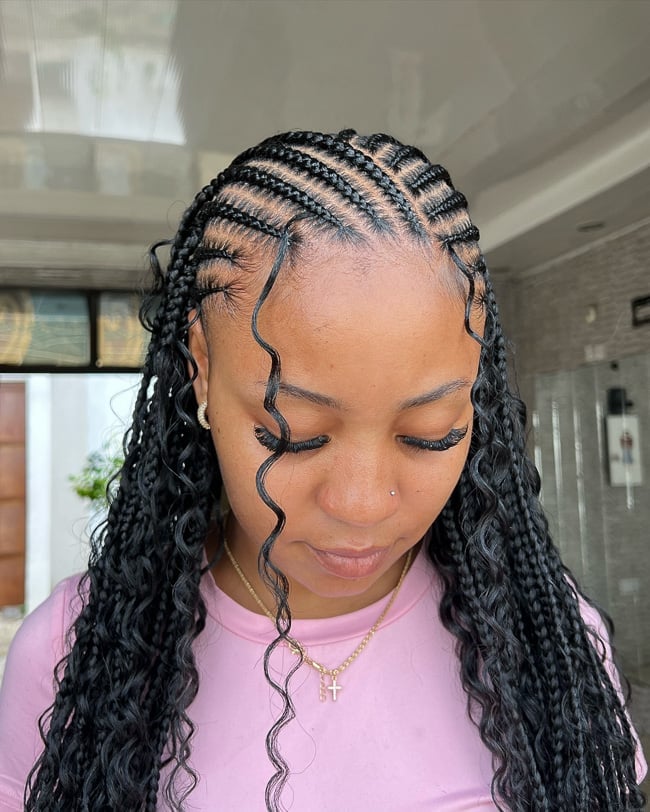
A straight braid version like the one above gives you a clean, uniform finish that lasts longer between touch-ups, but this one swaps that discipline for movement. Here, wavy braids meet loose curly tendrils at the front, with beads and shells threaded through both sections. The loose curls require a bit of care, finger coiling or twisting each morning to keep them defined, while the braided sections stay put for weeks. Ask your stylist for mid-back Fulani braids with beads, shells, and loose curls. This is a salon-only style; the DIY version takes more patience than most people have on a weekend.
Mid-Back Fulani Braids With Curls Beads And Shells and Baby Hairs
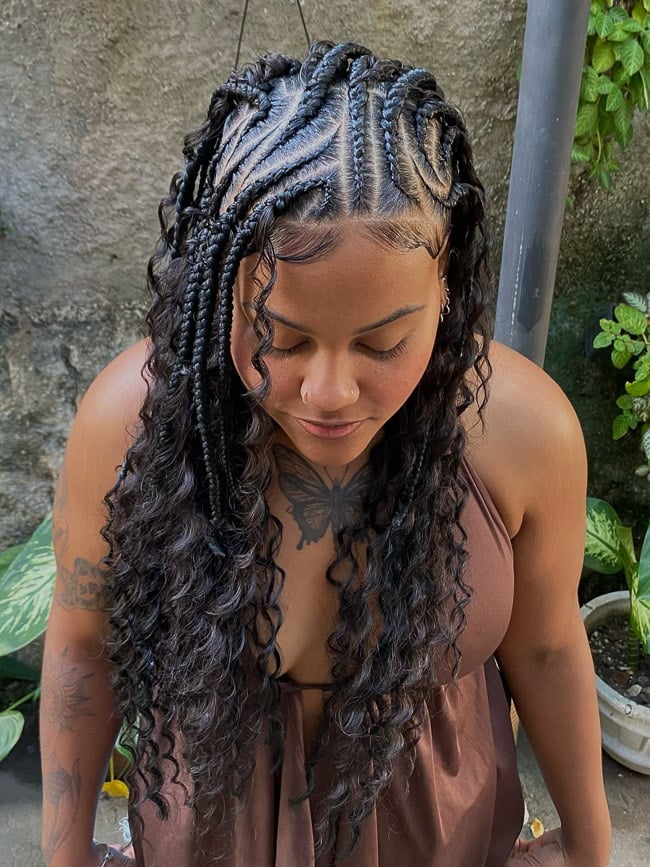
The construction here follows a deliberate order: the braids are set first, then the beads and shells are added at intervals rather than clustered at the ends, and finally the loose waves and curly tendrils are left unbraided to break up the line. Baby hairs along the hairline soften the transition from scalp to braid, which helps the style read as finished rather than half-done. The styling steps are straightforward:
- Braid the base sections in a geometric pattern.
- Thread beads and shells onto individual braids before sealing the ends.
- Leave selected sections loose and curl them with flexi rods or a wand.
Ask your stylist for mid-back Fulani braids with beads, shells, and loose curls. The hold is solid. The braids last four to six weeks, the curls need refreshing every few days.
Mid-Back Fulani Braids With Curls And Shells
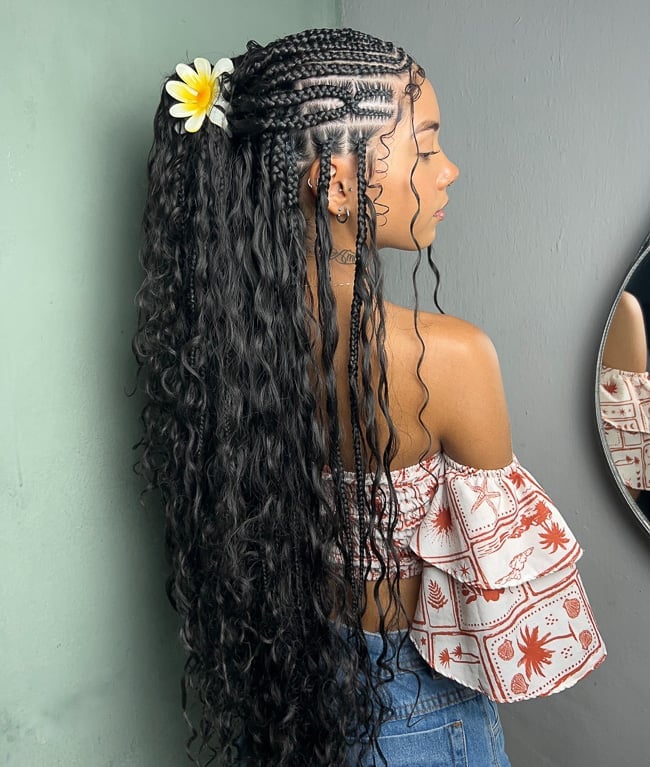
From the back, this style forms a dense curtain of wavy curls with beads and shells. The middle parting keeps the weight distributed evenly, which matters at mid-back length, uneven tension can pull at the nape after a few weeks. One real drawback: the shells can snag on collars or scarves, so a satin-lined hood or a low ponytail helps when layering. Ask your stylist for mid-back Fulani braids with beads and loose curls. A lightweight serum on the curls every other day keeps the shine up and the frizz down, and the braids themselves need a scalp spray to manage buildup between washes.
Mid-Back Fulani Braids With Loose Waves And Curls
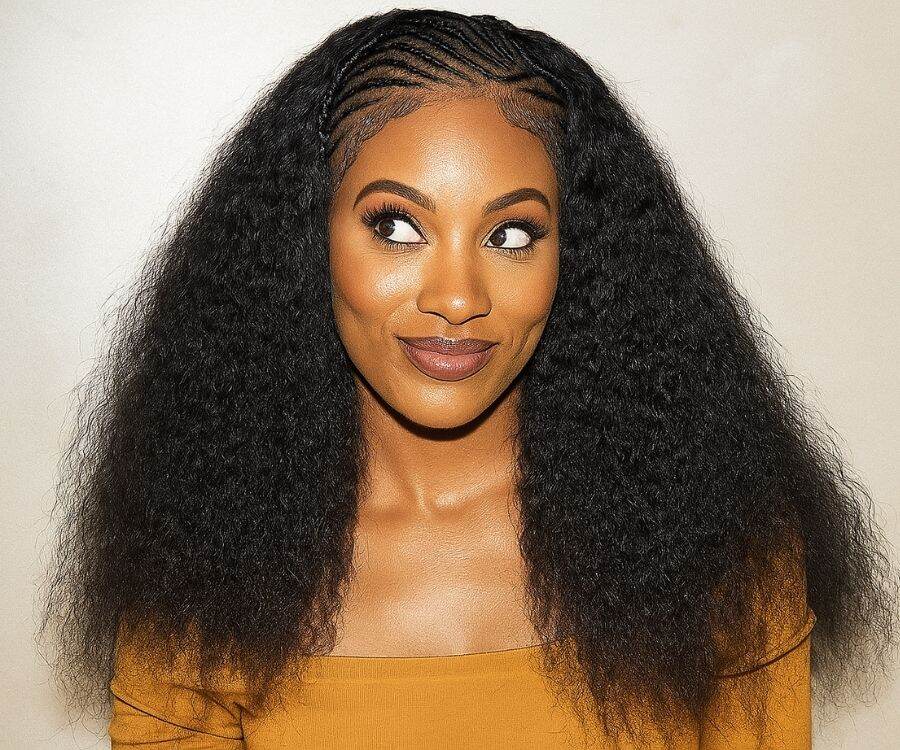
These are the Fulani braid version of wash-and-wear hair. The braided scalp section keeps the style intact while the mid-back length falls into loose waves and curls that move like unbraided hair. It is not a flat braid situation.
This style works best on natural hair starting at shoulder length or longer. Visible individual braids along the scalp give it structure without looking rigid. Ask your stylist for mid-back Fulani braids with loose waves and curls. A leave-in conditioner keeps the ends soft so the waves do not frizz out after a few days.
Mid-Back Fulani Braids With Voluminous Curls, Dark Brown
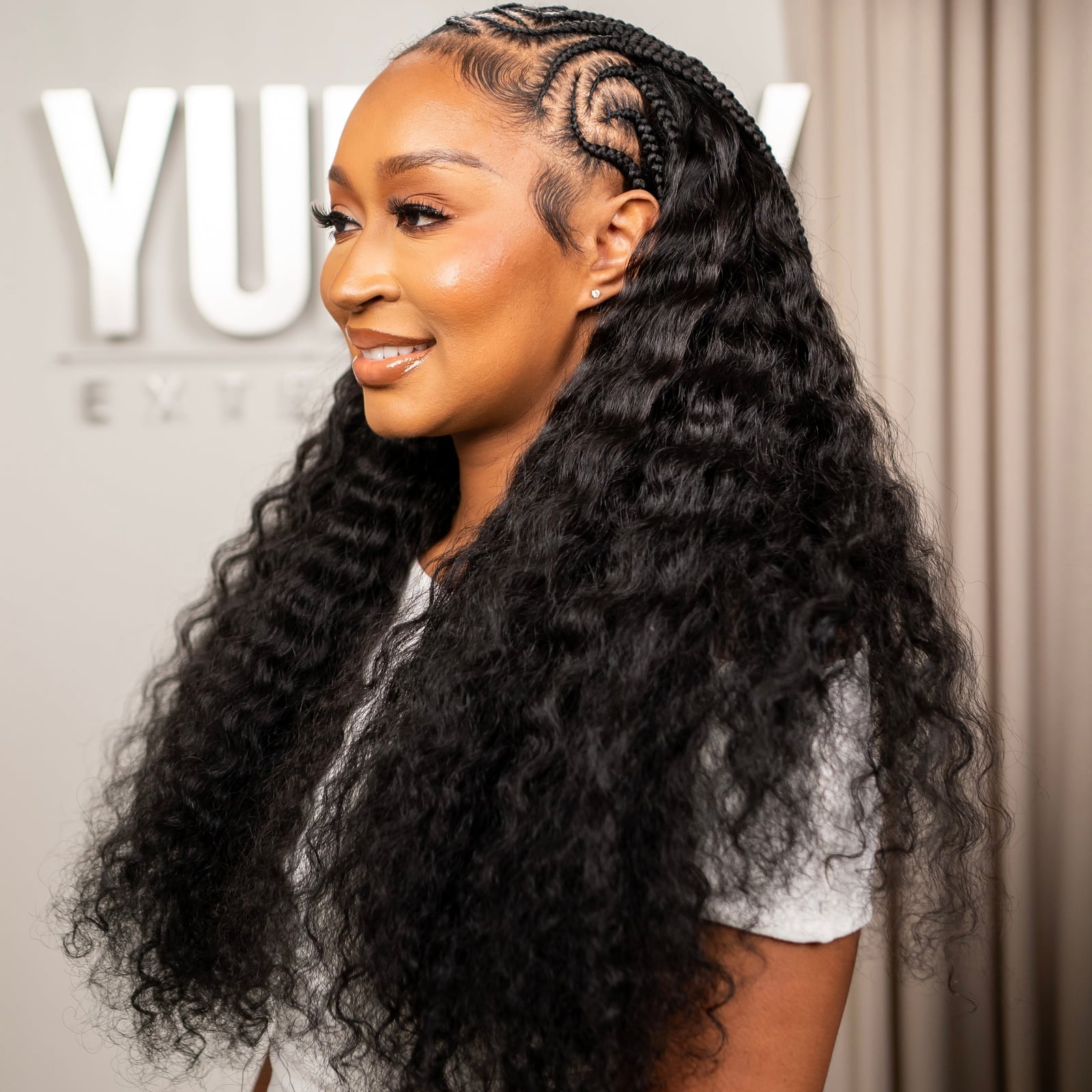
This is a salon-committed style, not a weekend project. The intricate scalp patterns and transition into voluminous dark brown curls at mid-back take a skilled hand to install and a good diffuser to maintain. Natural hair with density that starts at shoulder length or longer can carry the weight of the curls without pulling at the roots. Ask your stylist for mid-back Fulani braids with voluminous curls and scalp patterns. The one real trade-off is that those curls need refreshing every few days with a diffuser to keep their bounce. This style is not a low-maintenance braid that sleeps the same every night.
Mid-Back Fulani Braids With Cowrie Shells, Black
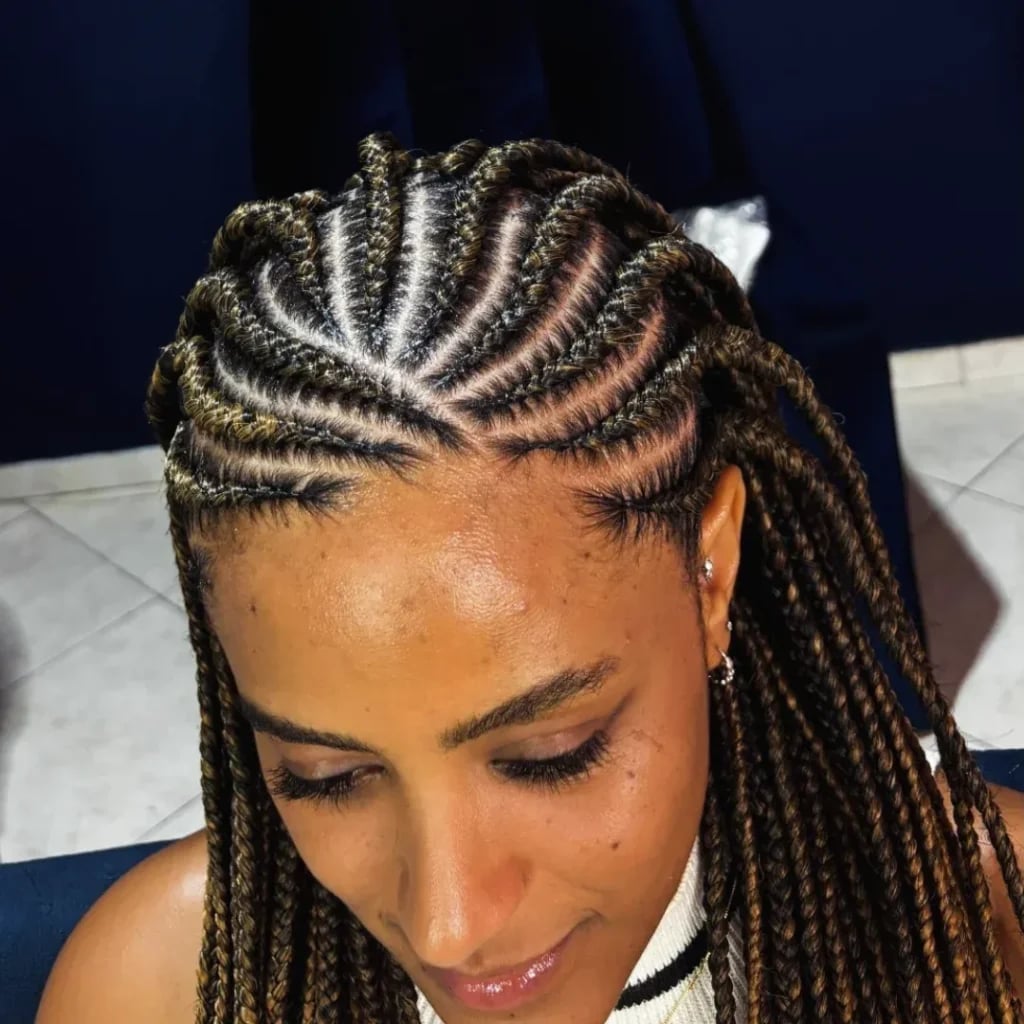
Cowrie shells have been used in West African hairstyling for generations, and on a side view like this you can see exactly why they endure. The natural thick black hair reaches mid-back, and each shell catches the light differently as the braids shift. The baby hairs and middle parting keep the look clean enough for a cultural festival or a celebration where the design is part of the story. Ask your stylist for mid-back Fulani braids with cowrie shells and baby hairs. Make sure the shells are secured to the braids tightly so nothing catches on a collar.
Mid-Back Fulani Braids With Baby Hairs
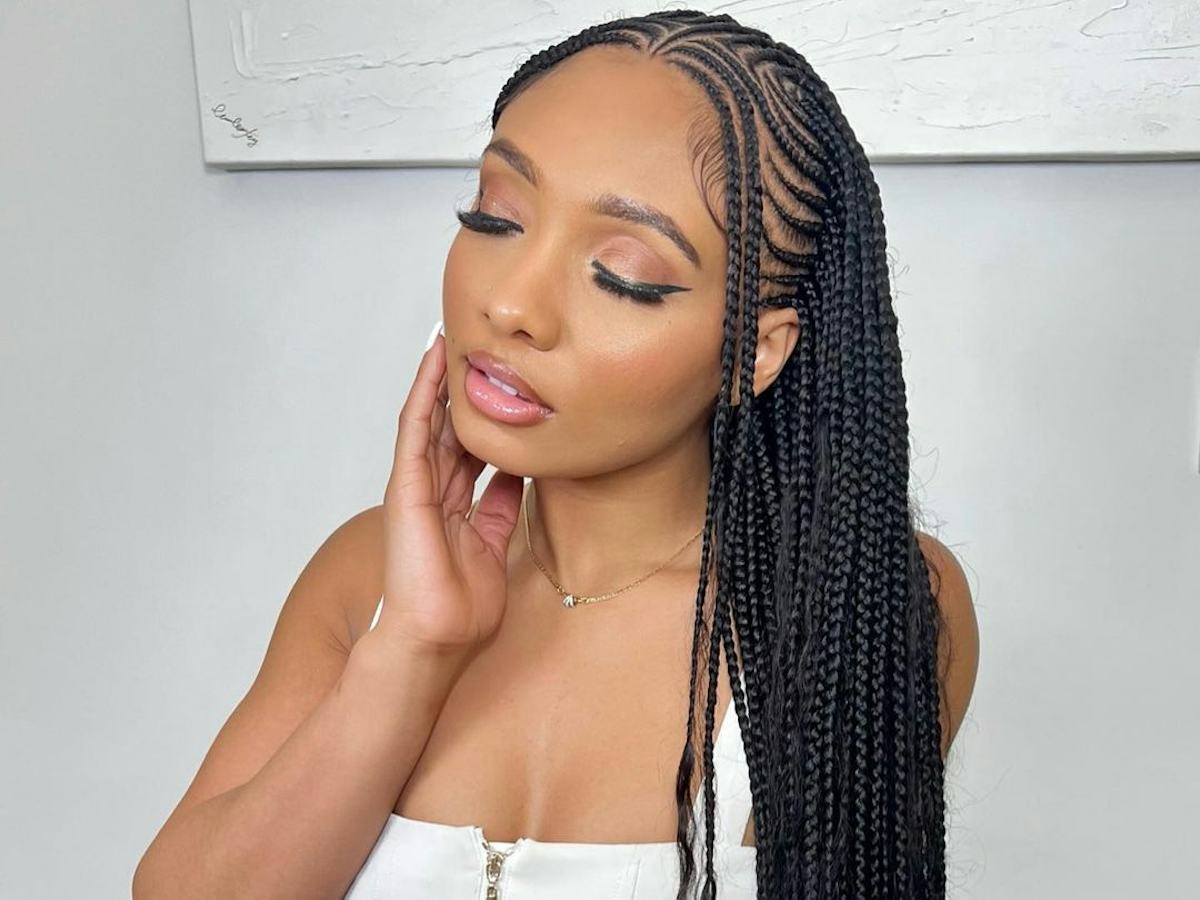
Start with the braids installed at the salon, then handle the baby hairs yourself. A soft toothbrush and a dab of styling gel are all you need to sculpt those fine edges into swoops or curls along the hairline. The mid-back length and thick straight texture give the braids a polished finish that works for an office setting just as well as a night out. Ask your stylist for mid-back Fulani braids with baby hairs. To keep that clean edge, refresh the baby hairs with a bit of water and gel each morning. A trim every eight weeks prevents the ends from looking ragged.
Mid-Back Fulani Braids With Curls And Beads, Close-Up Take
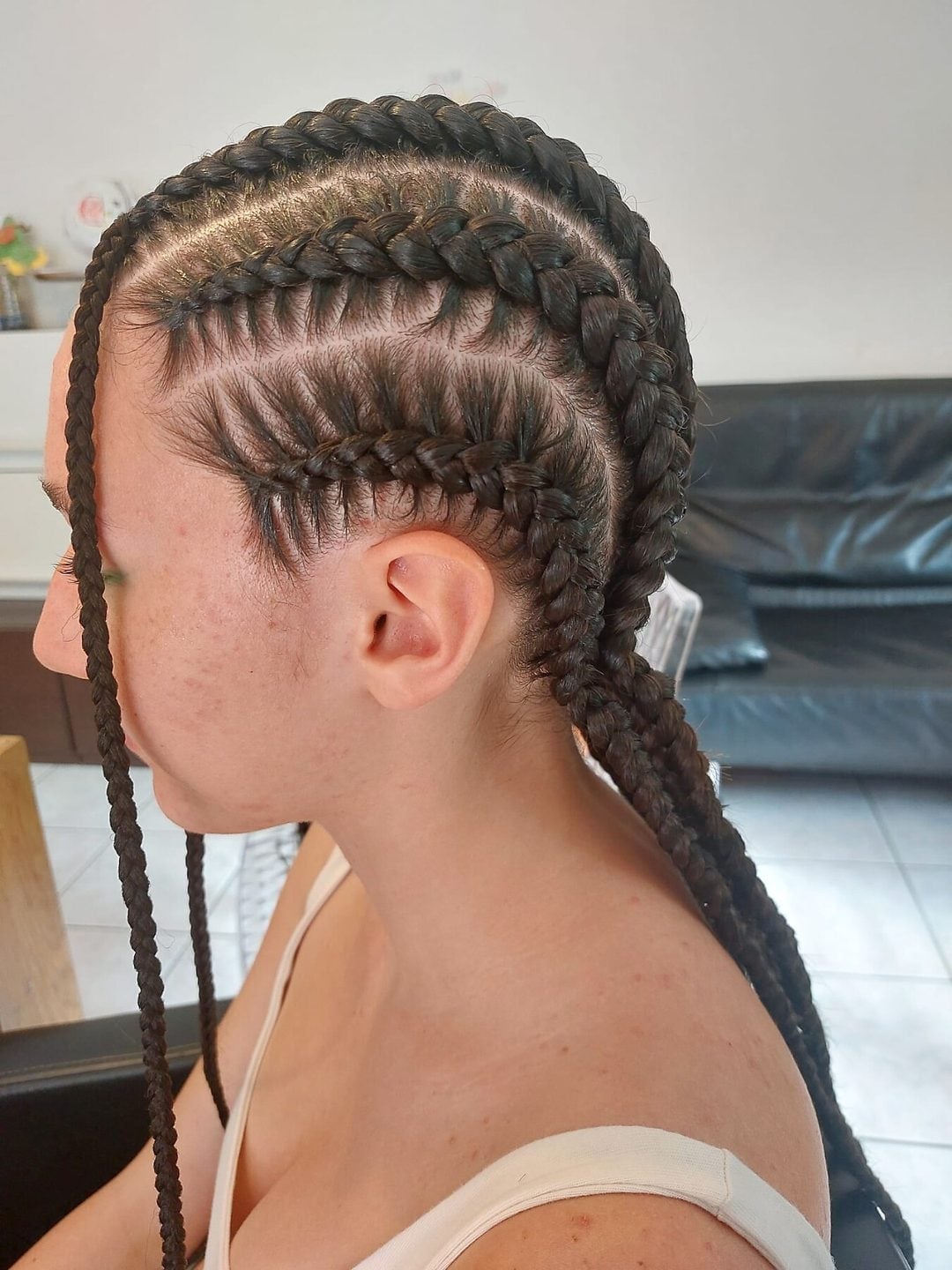
Compare this close-up view with a style that skips the beads: the geometric pattern on the scalp becomes the main event here, not just the length. The dark brown wavy texture and mid-back braids get punctuated by beads and loose curly tendrils that break up the symmetry. It is a busier look than plain Fulani braids, which is exactly the point for someone who wants every angle to offer something different. Ask your stylist for mid-back Fulani braids with beads, shells, and loose curls. The loose tendrils need a quick finger coil in the morning to keep their shape.
Final Thoughts
For a simpler maintenance routine, choose Fulani braids with minimal or no added beads and shells, focusing on the braid pattern itself. If you prefer more flair, pick styles with beads that are securely attached and avoid heavy shells near the ends.
- Keep braids moisturized with a light oil or spray, focusing on the scalp and roots.
- Avoid excessive manipulation to prevent frizz and maintain braid integrity.
- Sleep with a satin bonnet or scarf to protect the braids and scalp.
- Cleanse the scalp gently with a diluted shampoo or micellar water to remove buildup.
- Re-braid or refresh edges as needed, typically every 6-8 weeks, depending on growth.
Fulani braids offer a rich canvas for personal expression.