15 Simple Gray Highlights for Wavy Collarbone Hair 2027
Gray highlights have moved past the grow-out phase into their own category. Soft, face-framing layers and curtain bangs now give them a lived-in feel that is more about texture than a uniform stripe.
This collection of 15 ideas for Simple Gray Highlights covers cuts from a tight pixie to mid-back length, with low- to higher-maintenance options for fine, medium or thick hair. If a typical highlight grows out too fast or a bob loses its shape between trims, these looks offer a solution that keeps the line soft and the color natural.
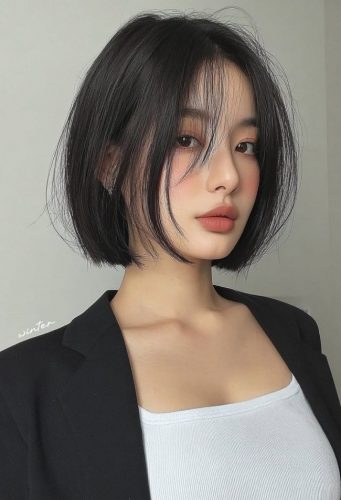
Collarbone Bob With Soft Layers And Curtain Bangs
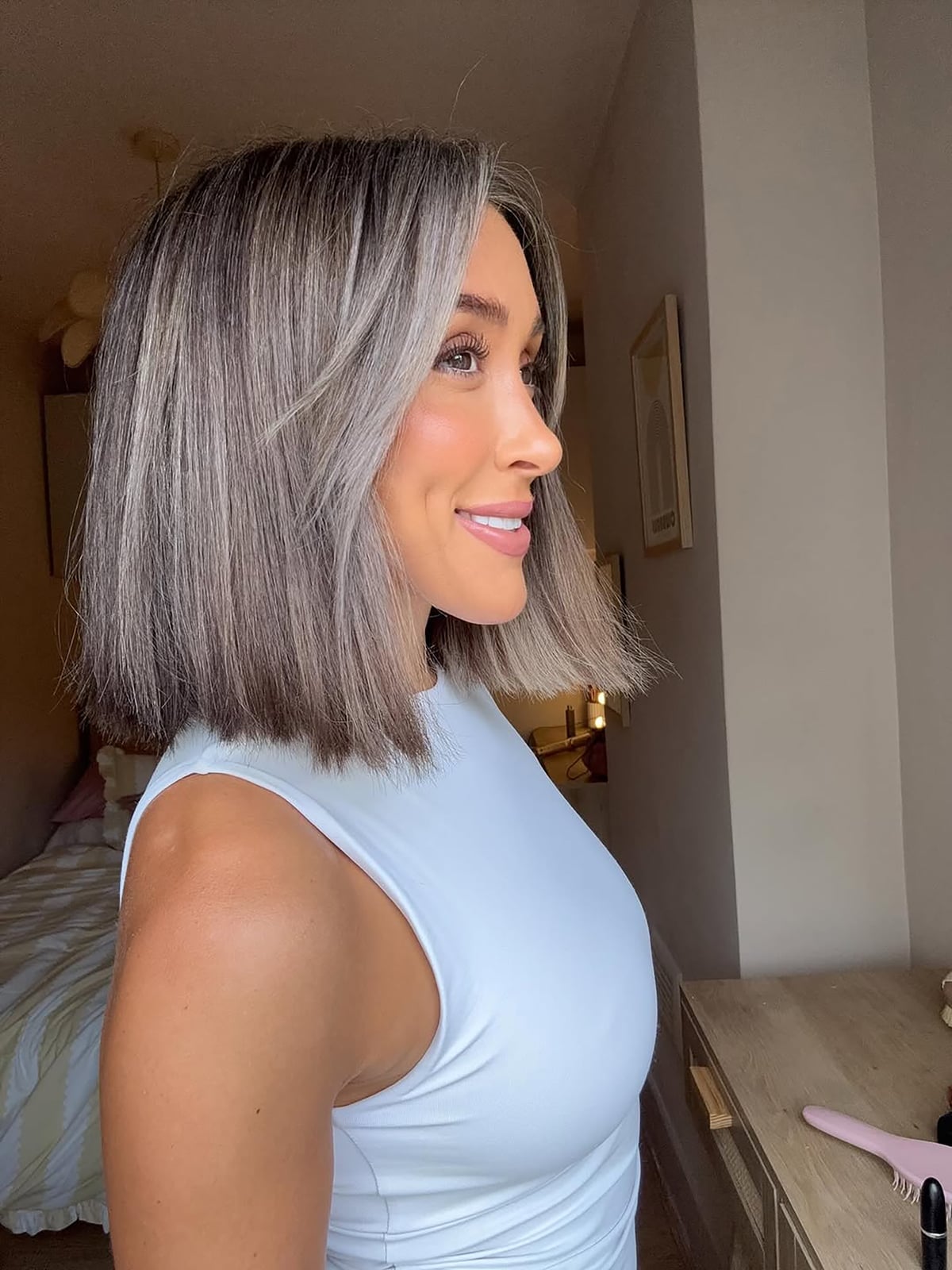
The whole point of a collarbone bob with soft layers and curtain bangs is that the gray highlights on a dark base catch the light. Fine, straight texture keeps the look tidy. Round and oval faces benefit from the curtain bangs softening the perimeter. Ask your colorist for: gray highlights on dark base. A stylist will place the lighter strands mostly around the face and through the ends, so the grow out looks deliberate. Blow-dry the fringe forward with a round brush for that bent outward finish. A trim every six to eight weeks keeps the baseline sharp.
Sleek Collarbone Lob With Ash Gray Highlights
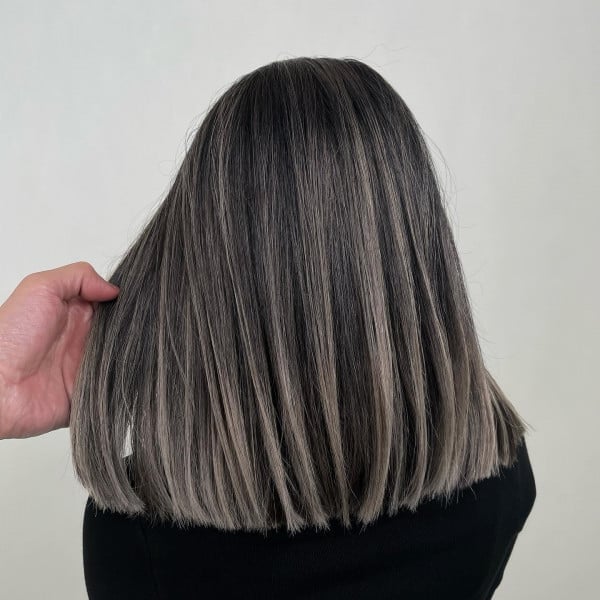
A sleek collarbone lob with ash gray highlights on a dark base is the controlled cousin of a full-on silver melt. Where a true gray highlight can lean blue, ash gray reads cooler and sits closer to the base, so the contrast is sharp but not jarring. This works best on thick, straight hair that can hold a blunt line and a middle part. The length below the chin helps elongate a round face without needing layers. Ask your colorist for: dark base with ash gray highlights. The highlights here are painted in wider sections, creating a chunkier, more graphic effect than a fine weave. A flat iron and a trim every six weeks keep the poker-straight finish from looking ragged.
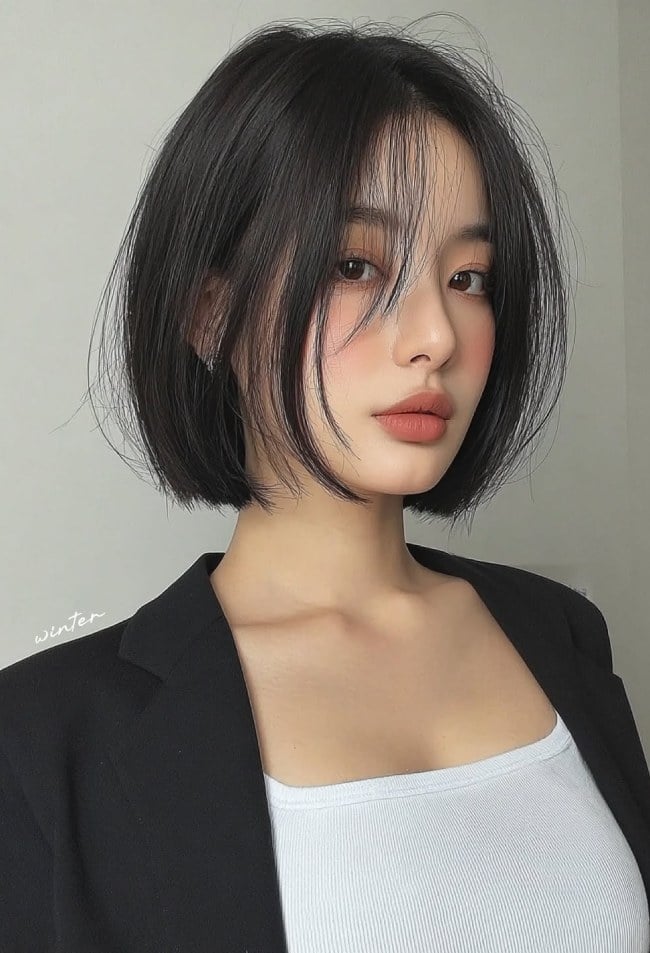
Sharp Chin Length Bob With Gray Highlights
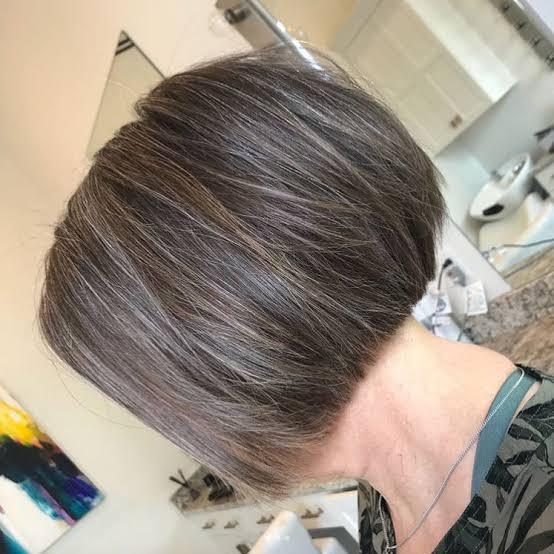
A sharp chin-length bob with a side parting hits the jaw exactly, and the gray highlights on a dark brown base add just enough dimension to stop the silhouette from feeling flat. Fine, straight textures benefit from the side parting lifting the roots on the shorter side. Squared jawlines and longer faces get a balancing effect from the horizontal line of the cut. Ask your colorist for: gray highlights on dark brown base. The highlights are subtle and fine, so the result is more defined than a solid color but less demanding than a full balayage.
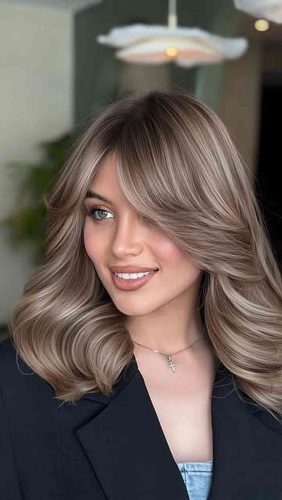
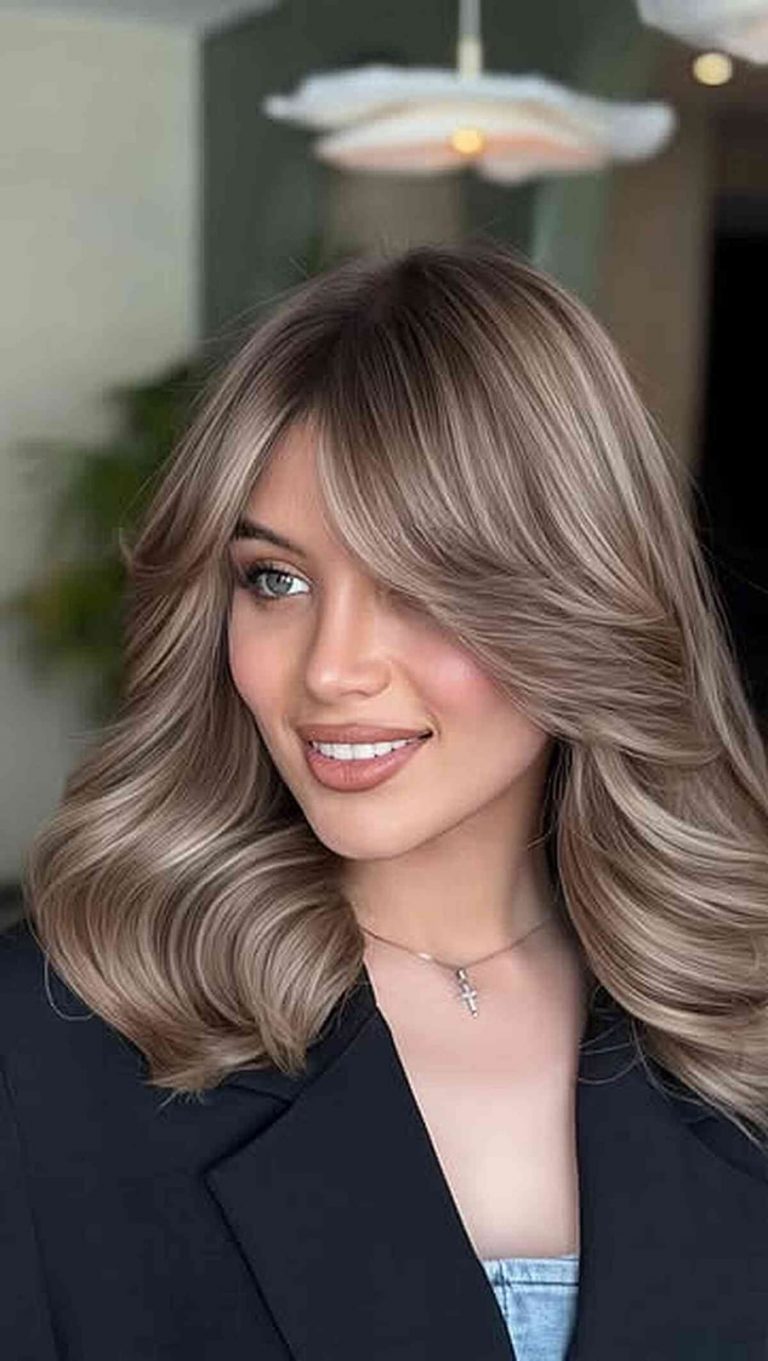
Collarbone Waves With Wispy Bangs And Gray Highlights
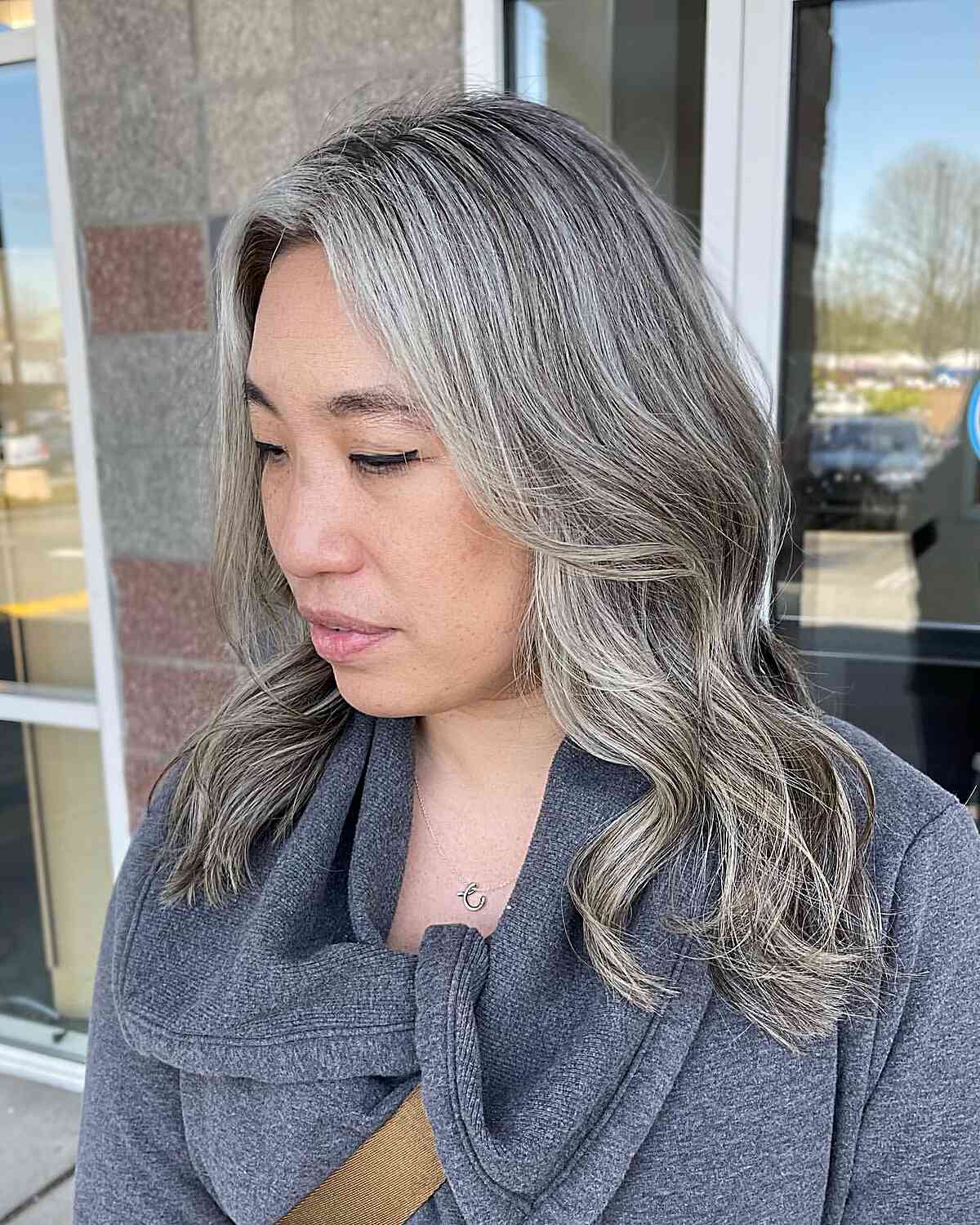
Collarbone waves with wispy bangs and gray highlights on a dark base hit a practical sweet spot: the contrast is visible enough to be intentional, but the waves blur any harsh lines between the two tones. The wispy bangs soften the forehead and shorten a longer face, which is useful if you want the collarbone length without it dragging your features down. Ask your colorist for: dark base with gray highlights.
Waves do fade highlights faster than straight hair because the cuticle opens more with heat tools. A toning appointment every six weeks keeps the gray from pulling yellow, and the bangs need a trim every four weeks or they will land in your eyes. A texturizing spray on damp hair and a quick air-dry is the fastest way to refresh the wave pattern between washes.
Shag With Face-Framing Layers And Ash Gray Highlights
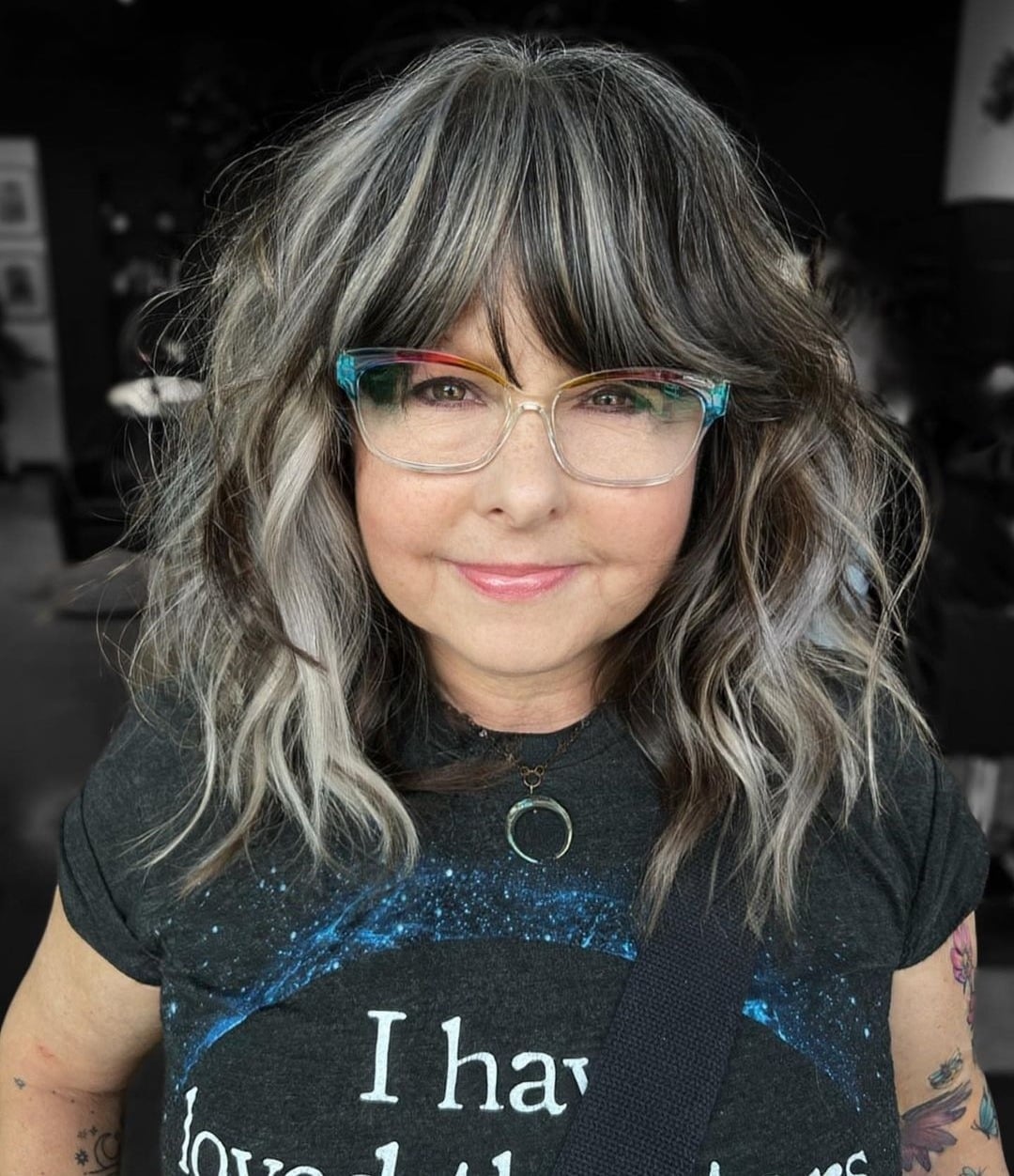
A shag with face-framing layers and curtain bangs relies on the cut doing the work, and the ash gray highlights on a dark base add depth without fighting the texture. The layers start at the collarbone and stack toward the crown, which gives thick, wavy hair movement it otherwise lacks. Curtain bangs split at the center and blend into the face-framing pieces, so the highlight placement follows the same V-shape. Ask your colorist for: dark base with ash gray highlights. The technique here is a fine weave through the top sections and chunkier slices through the layers, so the color moves with the cut rather than sitting on top of it. Most face shapes suit a shag; a very narrow or very wide jaw may want the layers softened at the chin.
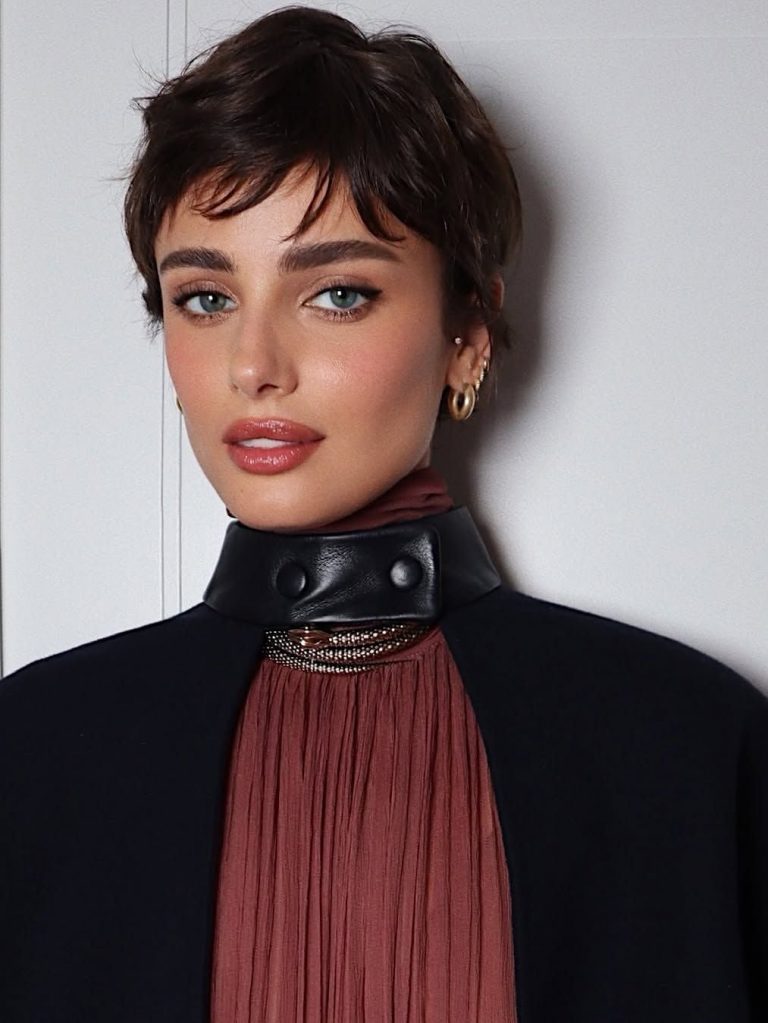
Textured Pixie With Silver And Gray Highlights
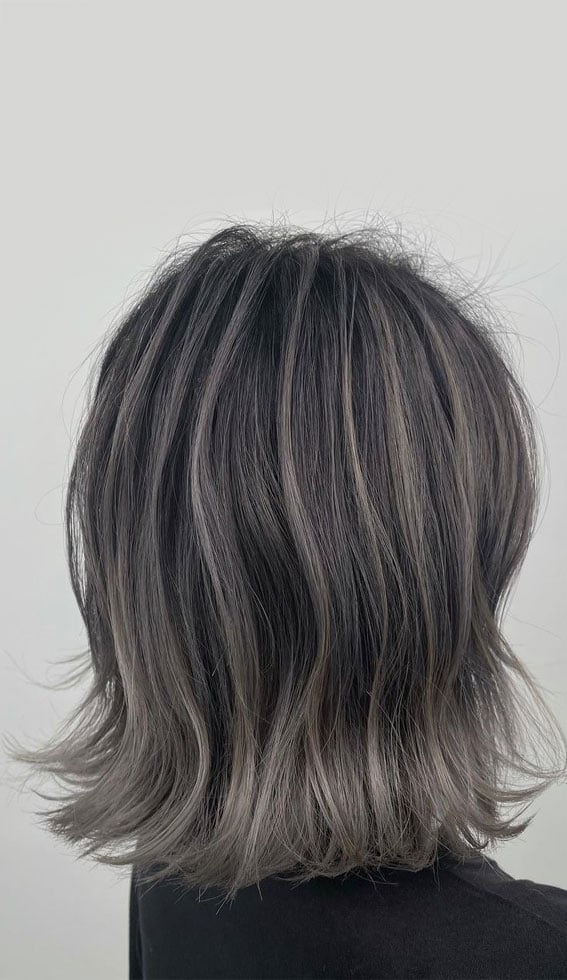
A pixie with this much vibrancy requires a trim every four weeks to keep the shape sharp. The fine, wavy texture takes the silver and gray highlights well, but the bright tone has a downside. Vibrant silver can pull warm after a few washes, and a toning appointment every three weeks is necessary. Ask your colorist for: a textured pixie with silver and gray highlights, short bangs. The slicked-back styling keeps the focus on the contrast, and a strong hold wax preserves the shape through the day.
Chin Length Bob With Side Swept Bangs And Gray Highlights
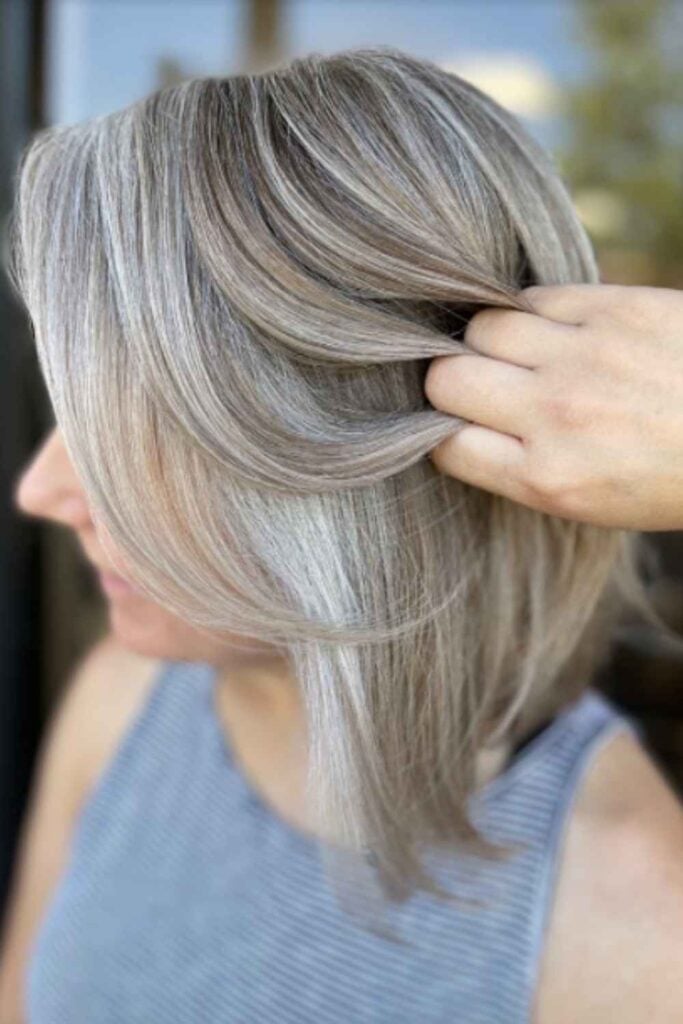
Can you get gray highlights this subtle at home? Technically yes. Will they look like this? No. The chin-length bob with side-swept bangs relies on precise placement of the lighter gray pieces around the face, and a single uneven section reads as a mistake rather than a design. The fine, wavy texture benefits from the smooth blowout a round brush delivers. Ask your colorist for: a chin-length bob with side-swept bangs and gray highlights. A trim every six to eight weeks keeps the bob sharp, and the salon is the faster route to the result.
Collarbone Layers With Curtain Bangs And Seamless Gray Blend
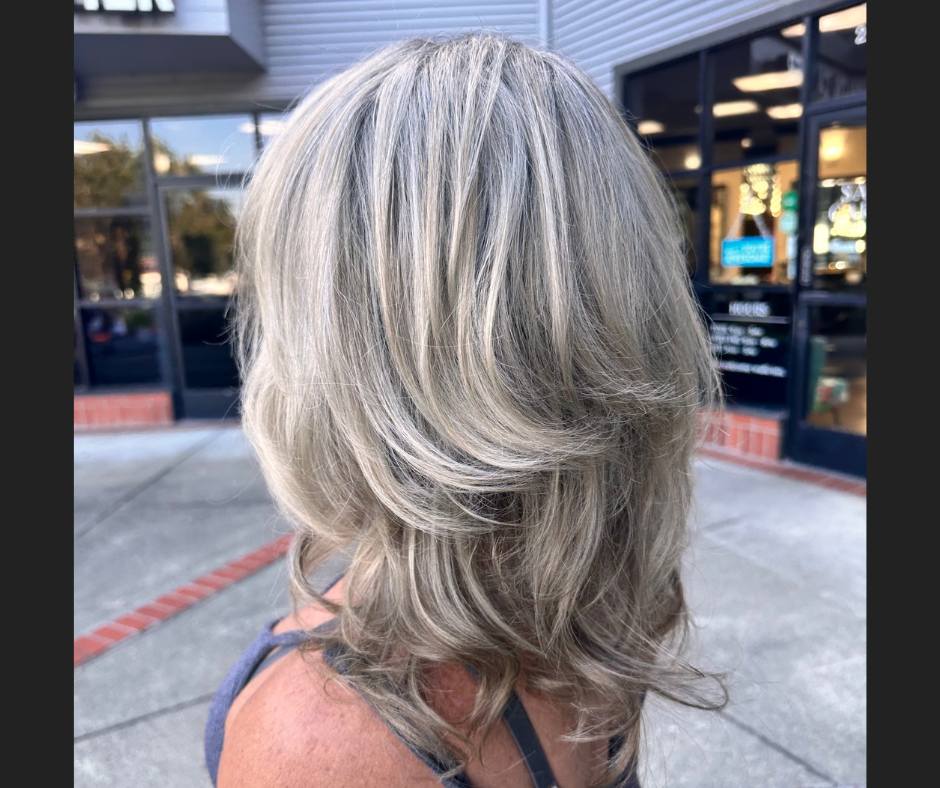
The design here is precise: the gray highlights are blended so closely with the natural gray tones that the root line barely registers. That makes this collarbone length with soft layers and curtain bangs a strong choice for cooler weather, when a bright blonde feels out of season. The thick, wavy texture holds the blowout shape well, and the middle parting lets the curtain bangs frame the face without commitment. Ask your colorist for: collarbone layers with curtain bangs and a seamless gray blend. A smoothing serum and a round brush get the finish in under twenty minutes, and the grow-out buys you an extra week or two before the next toning.
Collarbone Lob With Ash Blonde And Gray Highlights, Wavy
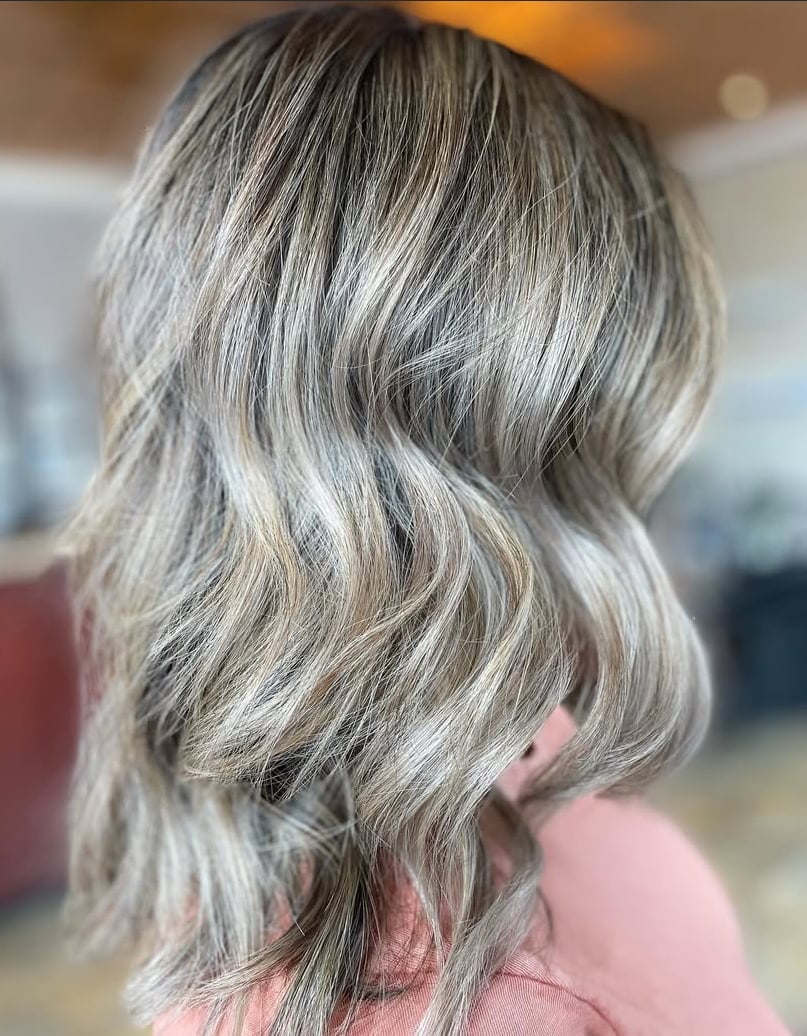
The blend of ash blonde and gray highlights works because the two tones sit close enough on the value scale that there is no harsh line between them. On medium-density, wavy hair, the soft waves break up the color further, creating a lived-in effect that does not need a perfect blowout. The side parting adds asymmetry to the collarbone-length lob, and the no-bangs silhouette keeps the look low-commitment. Ask your colorist for: a collarbone lob with ash blonde and gray highlights, soft waves. A curl cream on damp hair and a diffuser are the only tools needed; a trim every six to eight weeks maintains the shape.
Collarbone Layers With Ash Blonde Highlights And Blowout
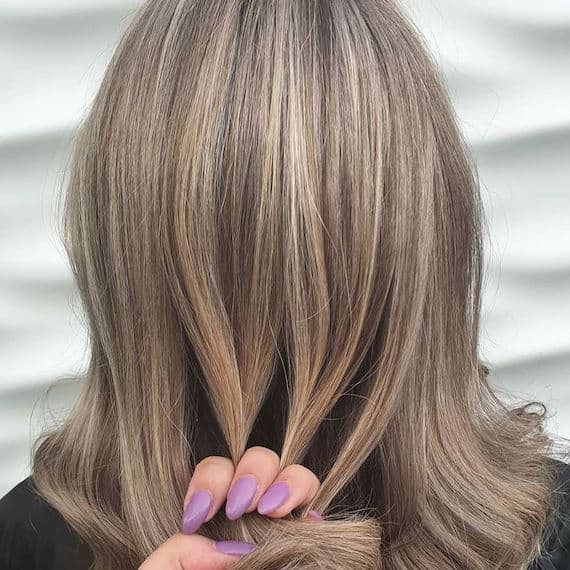
A practical rule when lifting a brown base to ash blonde: go slowly. The thick, wavy texture in this collarbone length with layers can handle the process, but over-lifting in one session risks breakage. The ash blonde highlights sit on the ends, leaving the root area darker, which is the real trick. Ask your colorist for: collarbone layers with ash blonde highlights on a brown base. A large round brush and a volumizing spray create the blowout in about fifteen minutes. A trim every six to eight weeks keeps the layers from losing their shape.
Shoulder Length With Blended Gray Highlights For Natural Grow-Out
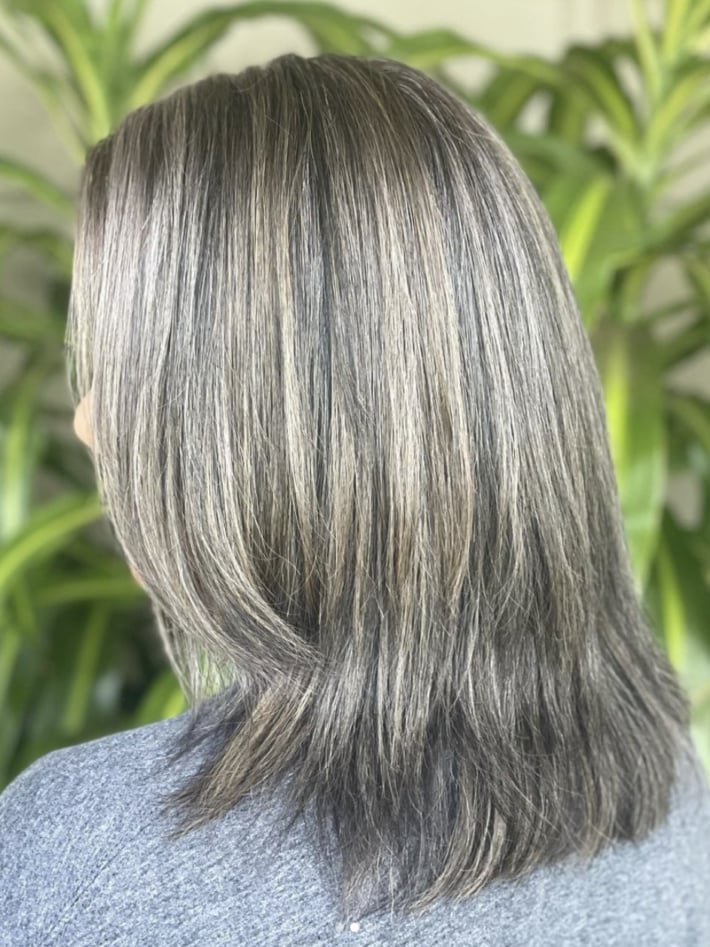
What if you could skip the monthly root touch-up without looking like you forgot about your hair appointment? That is the logic behind a shoulder-length cut with long layers, fine, straight-to-wavy texture, where the dark base carries subtle, blended gray highlights. The colorist uses a hand-painted technique so the lighter strands sit deeper in the hair, not stacked at the root. It mimics the way natural gray grows in, which means the line between colored and new growth stays soft for weeks.
This suits fine hair that flattens easily: the long layers keep movement without removing weight, and a middle parting elongates a round face. Ask your colorist for: shoulder length with long layers, blended gray highlights. Styling is a five-minute affair with air drying, and a trim every eight to ten weeks keeps the ends clean. No heat, no fuss, no calendar reminder for six weeks.
Mid-Back Length With Subtle Gray Highlights On Brown Base
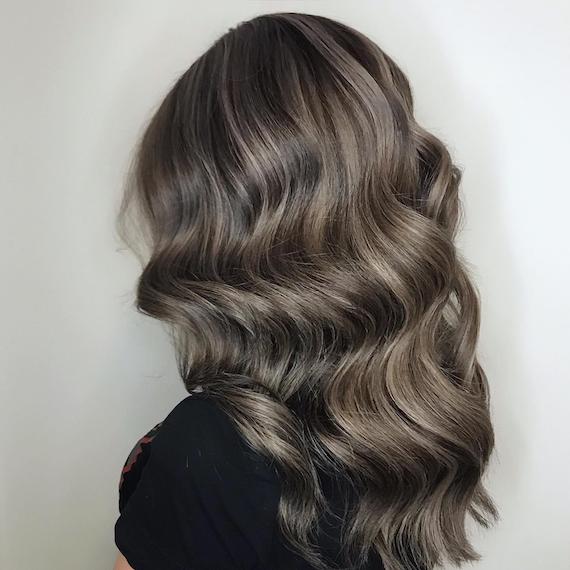
A brown base with gray highlights and a brown base with silver highlights are not the same thing, and the distinction matters more than you would think. Here the gray is subtle: it appears as a muted, dusty tone against warm brown, not a bright metallic stripe. The mid-back length has loose waves, a middle parting and thick texture, so the color sits inside the curve of each wave. The lived-in effect looks like your hair did the work, not the salon.
This is a good call for anyone with thick, wavy hair who wants dimension without a high-contrast commitment. The middle parting balances a long face, and the waves break up the color enough that regrowth is not obvious at week four. Ask your colorist for: subtle gray highlights on a brown base. A texturizing spray and a quick diffuser session are all the styling it needs.
Mid-Back Length With Dimensional Gray Highlights
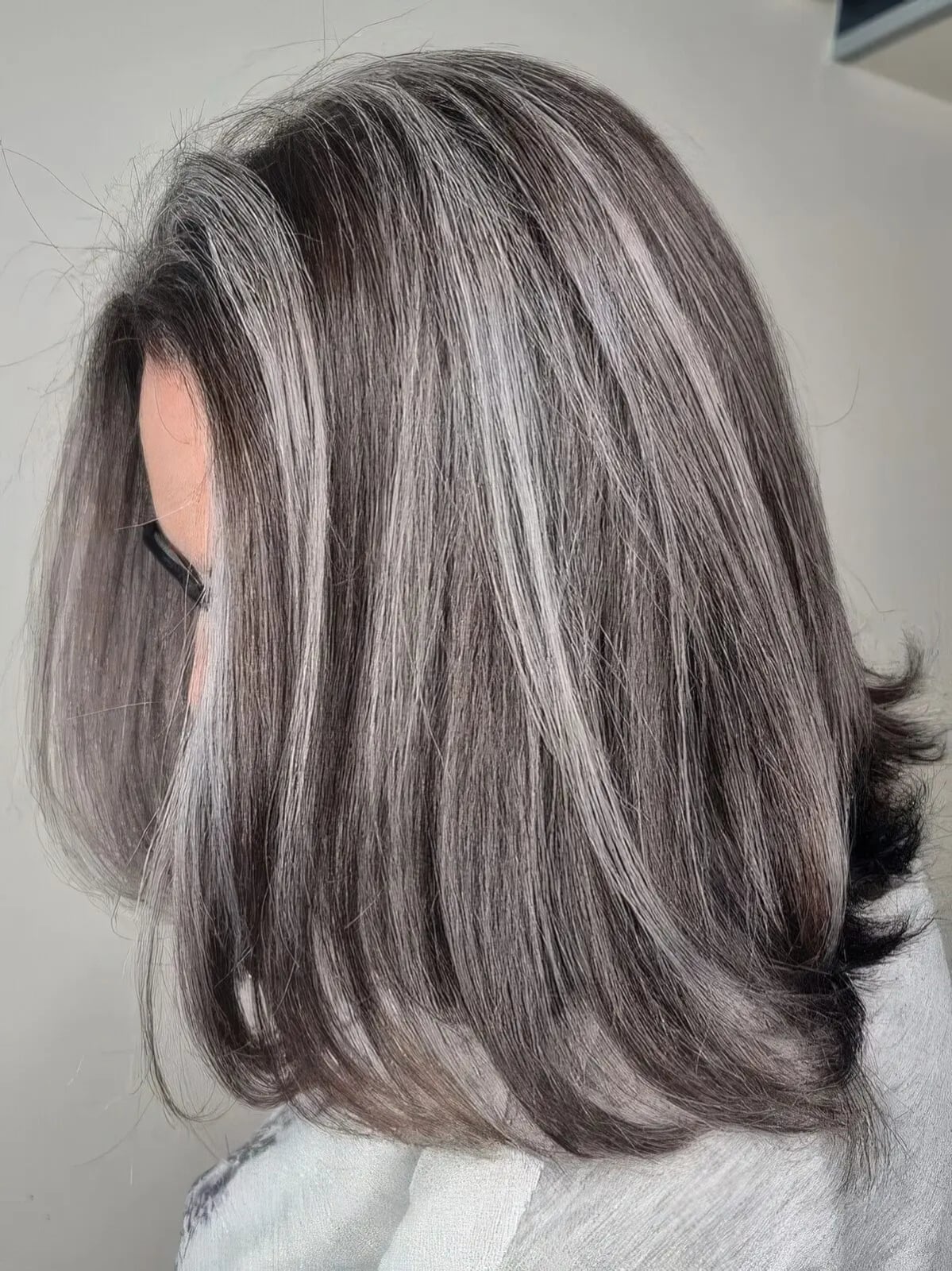
For thick, wavy hair, more movement allows more contrast without looking heavy. This mid-back length proves it with a dark base and numerous gray highlights woven through in loose, flowing waves. The colorist places the lighter strands at different depths, so some sit near the surface while others stay deeper in the wave pattern. That is the dimensional effect: the hair looks fuller and more textured than a single-process shade could manage. Wavy hair of mid-back length is the natural home for this technique. The waves do the work of distributing the color, and the thickness keeps the gray from overwhelming the base. Ask your colorist for: dimensional gray highlights on a dark base. A lightweight oil on the ends is the only product you need, and a trim every eight to ten weeks maintains the shape.
Long Wavy Hair With Natural Gray Highlights Blend
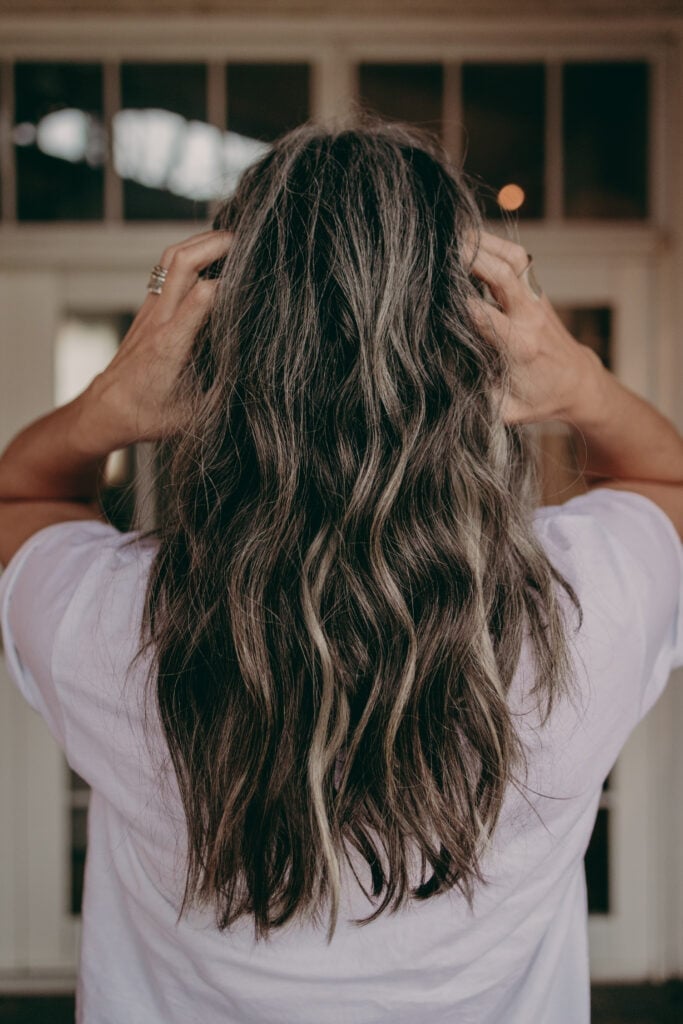
The design here is built on a single premise: the gray highlights are prominent but not precise. They are distributed throughout long, wavy hair with a dark base, and the lack of a strict placement pattern is the point. A natural blend means the colorist does not foil every section to the same width; some strands are thicker, some thinner, and the air-dried, thick texture softens any hard lines. The result is dimension that looks like it arrived on its own.
This finish wears best on hair that is already wavy, because the texture scatters the highlights naturally. A busy lifestyle suits it: air drying with a lightweight product is the standard routine, and a trim every ten to twelve weeks is enough. Ask your colorist for: a natural blend of dark base and gray highlights. A diffuser speeds things up if you are in a hurry, but it is not required.
Mid-Back Natural Gray Base With Lighter Gray Highlights
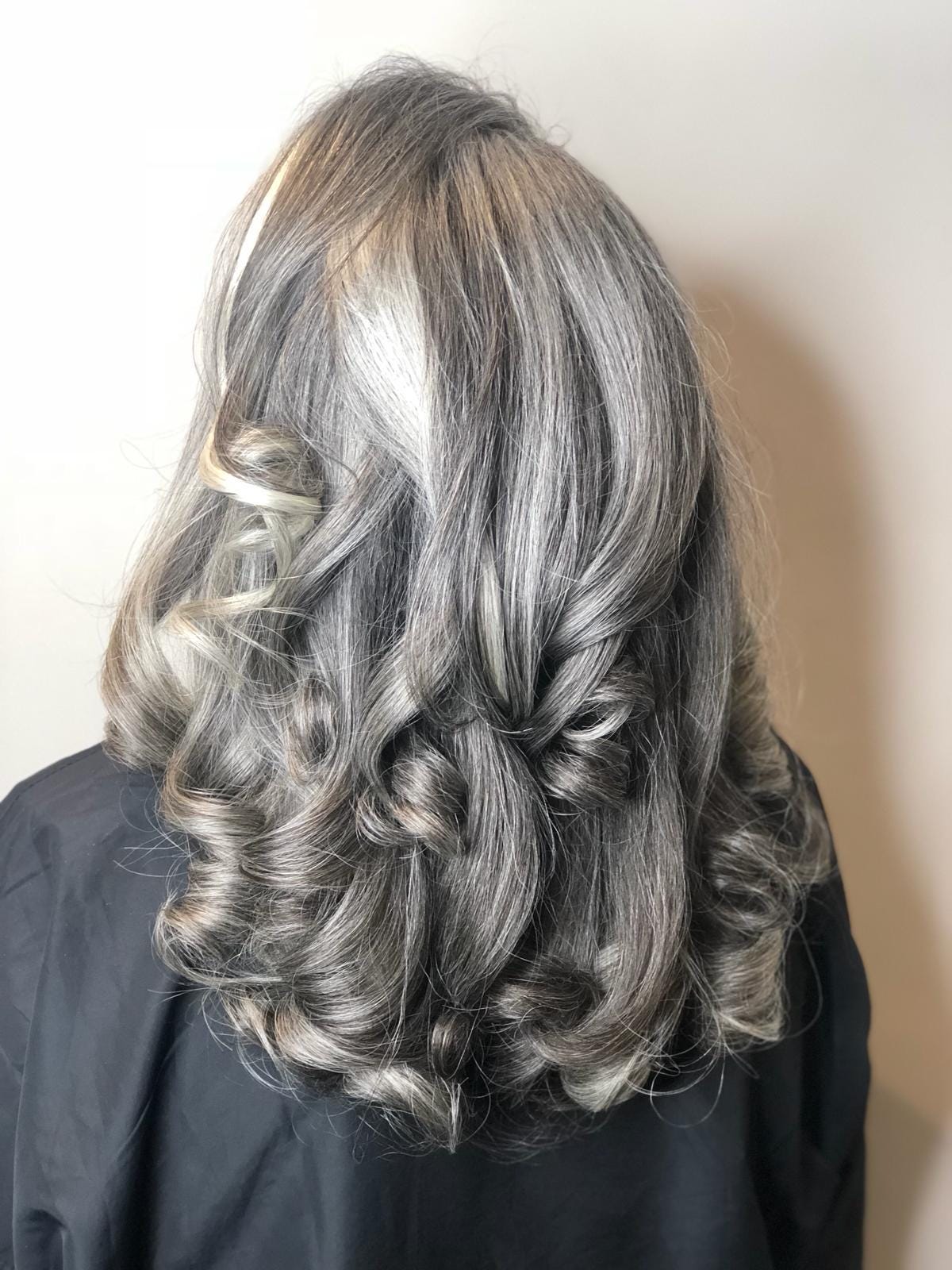
When your base is already gray, you add lighter gray highlights for contrast, not coverage. This mid-back length starts with a natural gray base and weaves in distinct, lighter gray strands through loose, voluminous waves. The technique is a partial weave: the colorist selects sections that will catch light and leaves others at the natural depth, creating a visible contrast between the two tones. Thick, wavy texture is essential here, because the volume keeps the lighter pieces from disappearing into the base. The waves also add movement, so the highlights shift as the hair moves. Ask your colorist for: a natural gray base with lighter gray highlights. A volumizing mousse and a blow-dry technique give the waves structure, and a trim every eight to ten weeks keeps the layers sharp.
Final Thoughts
If you want something that grows out with minimal fuss, choose a blended gray highlight on a natural base with long layers or a shag. For a bolder, more graphic effect, go with a higher-contrast placement on a precise cut like a chin-length bob or a pixie. Gray highlights offer a chic, modern update for any hair color.
- Use a violet shampoo or conditioner once a week to keep highlights bright and prevent brassiness.
- Trim every 6-10 weeks to maintain shape and prevent split ends.
- Wash 2-3 times a week with color-safe products to preserve vibrancy.
- Minimize heat styling; always use a heat protectant when you do.