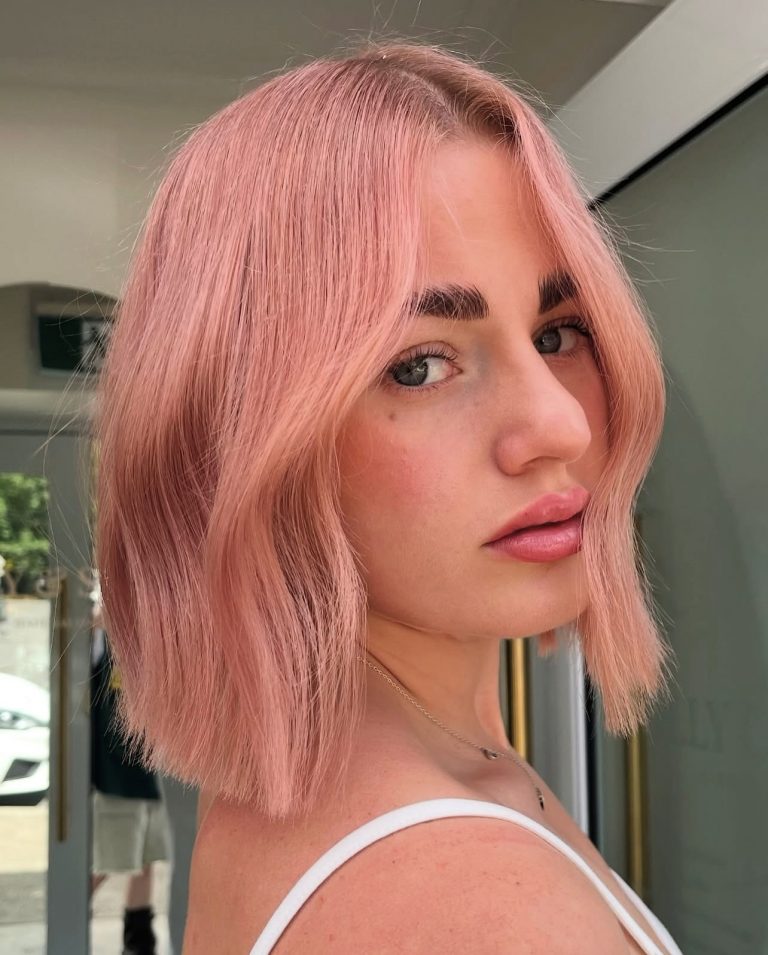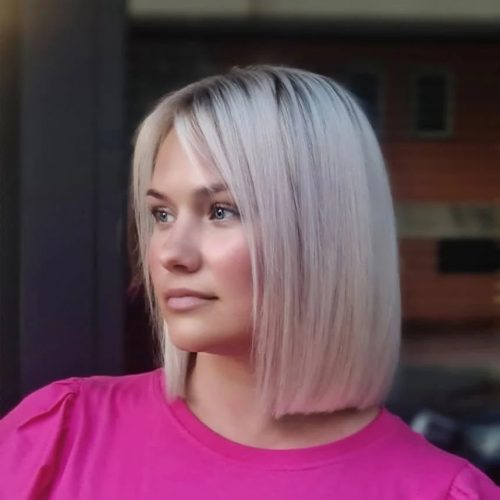
Hair color charts take the guesswork out of your next salon visit. Lived-in color and soft face-framing layers are the current markers of a modern look, moving away from chunky highlights and flat-ironed straightness.
This collection of 20 looks spans everything from a classic hair color swatches chart to dimensional balayage on lobs and mid-back lengths. Whether you need low-upkeep toning or high-impact reds, the Simple Hair Color Chart here covers the range. Fine hair that falls flat and a visible grow-out line are the real struggles this guide addresses, with practical examples for every texture.
Numbered Hair Color Swatches Chart
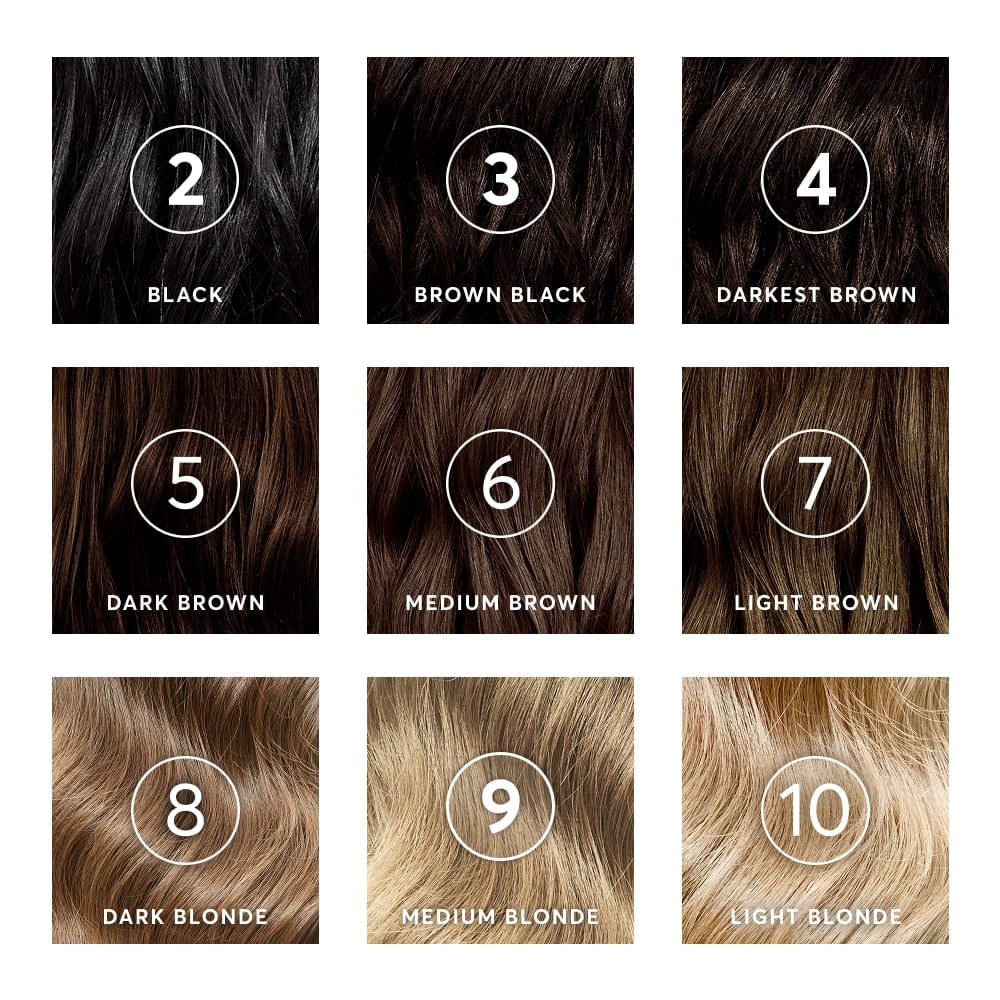
A numbered grid from level 2 to 10 walks you through black, brown and blonde depths in straight texture. Each swatch shows the base pigment alone, without tone or technique layered in. Anyone picking a box color at the drugstore can match their current level against it first. Ask your colorist for: a color swatch reference from level 2 to 10. The real work happens when you add tone and application method, so think of this as the starting point, not the finish line. A salon consultation uses these numbers to talk about lift and deposit before a single brushstroke.
Organized Brochure Hair Color Chart
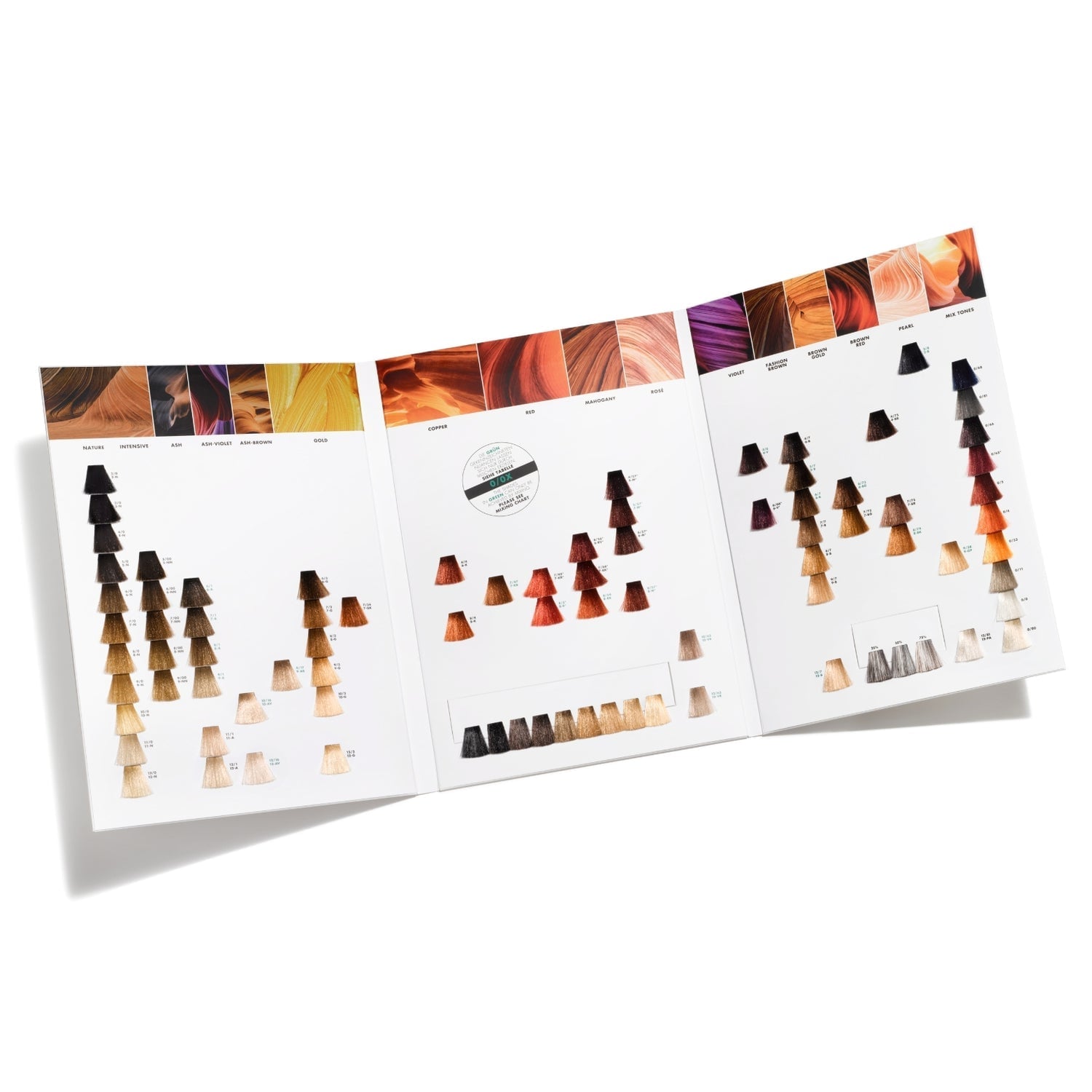
A salon brochure organizes swatches into shade families like Natural, Red, Copper and Brown, each with a numerical code. That tidy layout looks reassuring, but matching a swatch to your actual hair is a different skill. The chart is a planning tool, not a promise. Ask your colorist for: a professional color chart with shade family categories. Use it to point at the general neighborhood you want, then let your stylist translate that into your specific base color and texture. A swatch on paper never accounts for porosity or existing color, so the conversation matters more than the rectangle.
Variety of Fashion Hair Colors
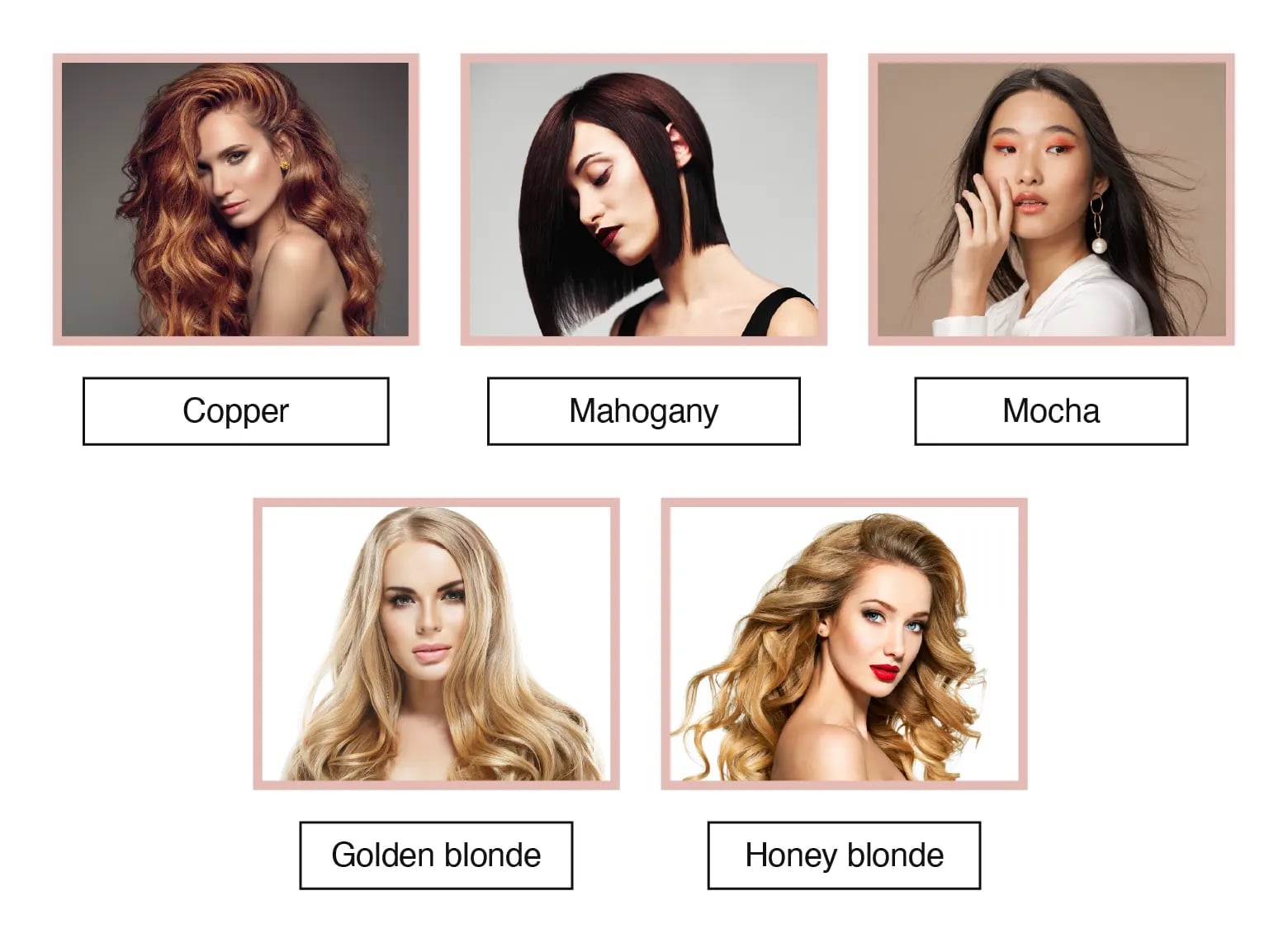
Which warm shade actually works on your hair? This grid lines up copper, mahogany, mocha, golden blonde and honey blonde, each shown on a different model with loose waves. Copper reads bright and coppery; mahogany leans deeper with a red-brown weight. Mocha sits neutral-warm, golden blonde is all sun, and honey blonde lands somewhere between gold and beige. Ask your colorist for: copper, mahogany, mocha, golden blonde, or honey blonde in loose waves.
These are not one-and-done shades. Warm tones fade faster than cool ones, and a gloss or demi-permanent refresh every four to six weeks keeps them from turning brassy or muddy. Thick, wavy texture holds the color visibly longer than fine straight hair, so your starting texture shapes the result as much as the formula does.
Collarbone Lob Ash Blonde Balayage
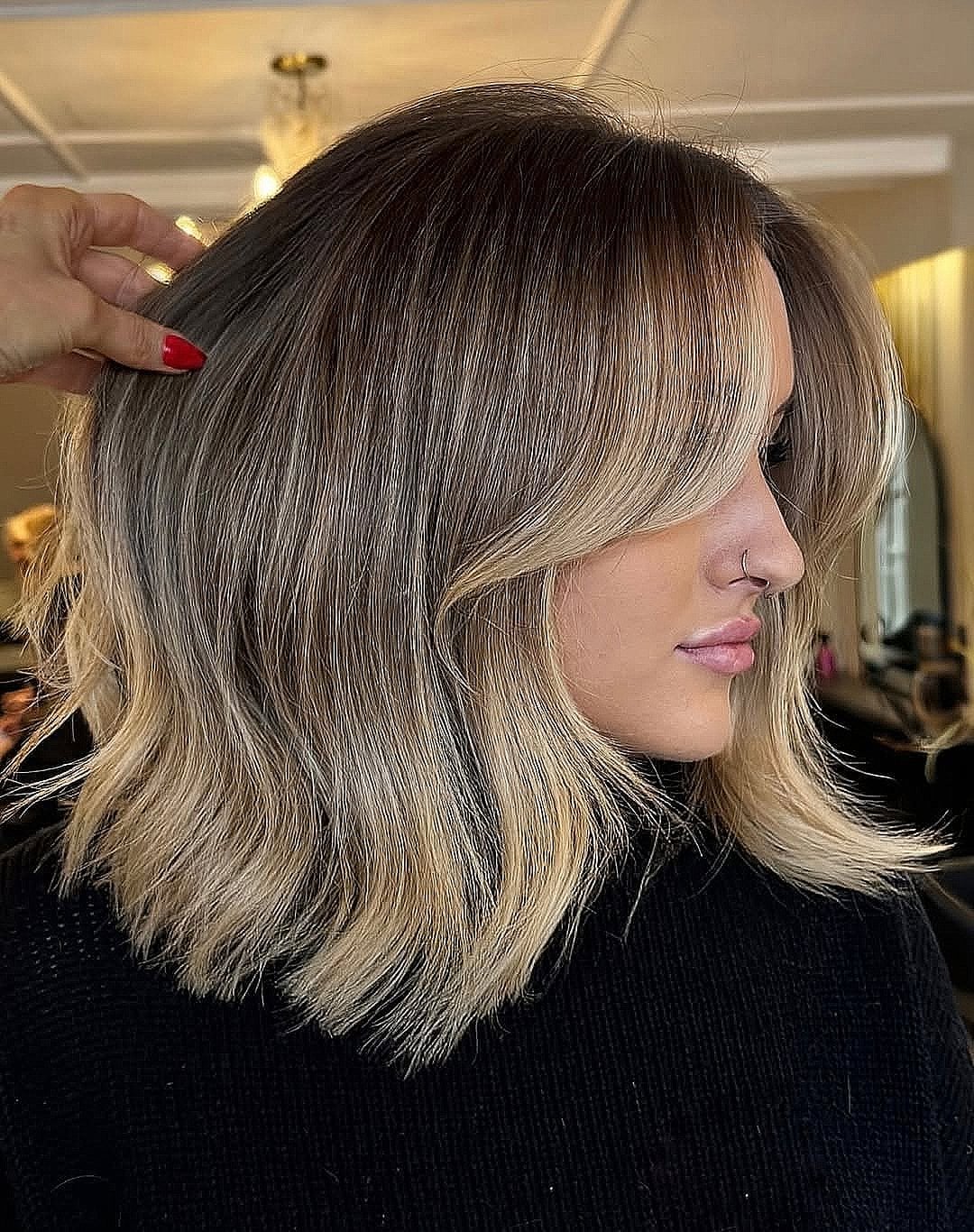
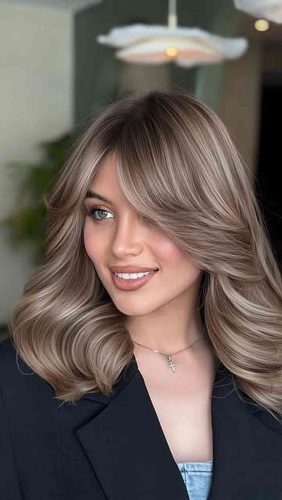
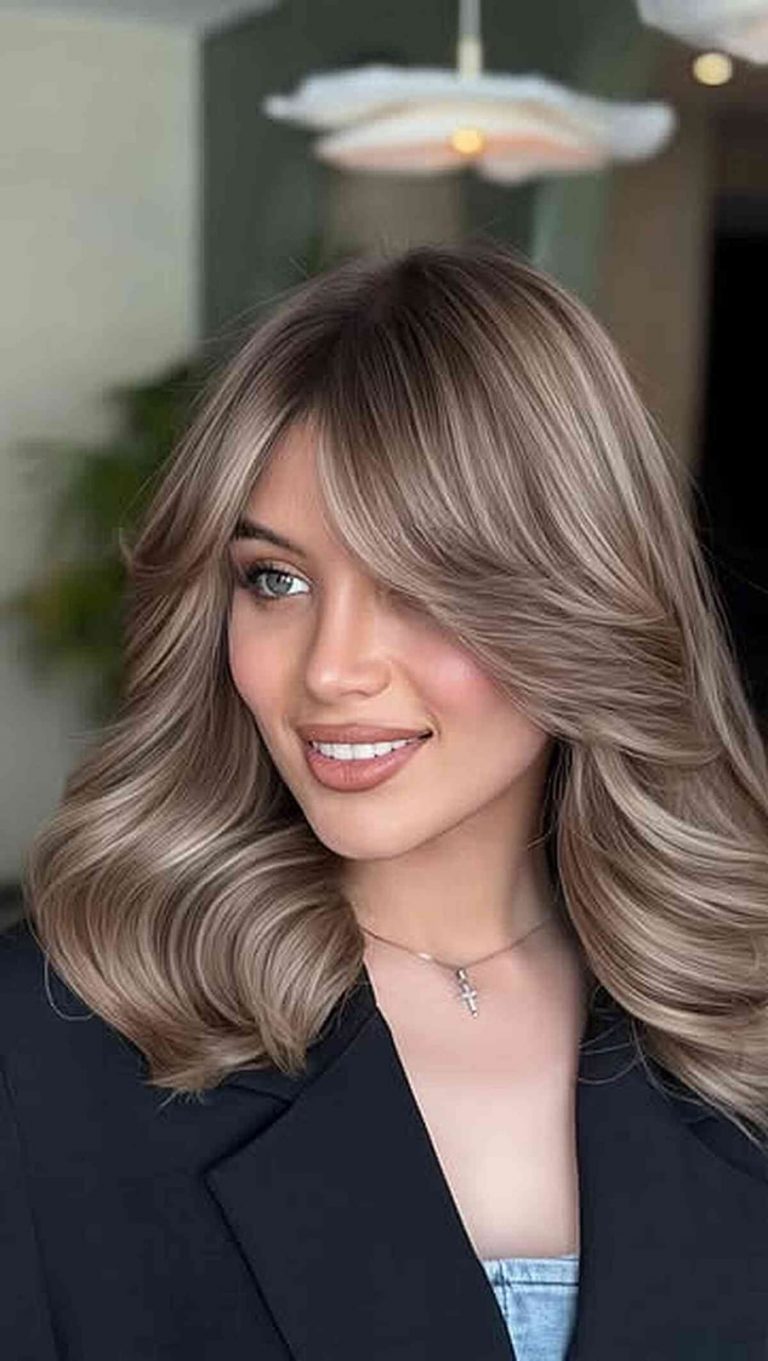
A collarbone lob with a middle part and curtain bangs uses soft waves to show off ash blonde balayage on a darker blonde base. The lighter pieces sit mostly on the ends, so the root stays darker and the grow-out line stays soft. Medium density hair starting at collarbone length works best here; curtain bangs soften round and heart faces. Ask your colorist for: collarbone lob with curtain bangs, ash blonde balayage on dark blonde. The waves add definition without weighing the lob down. Touch up the balayage every 10 to 12 weeks, and expect about 90 minutes in the chair for a refresh.
Collarbone Layers Dark Brown Blonde Balayage
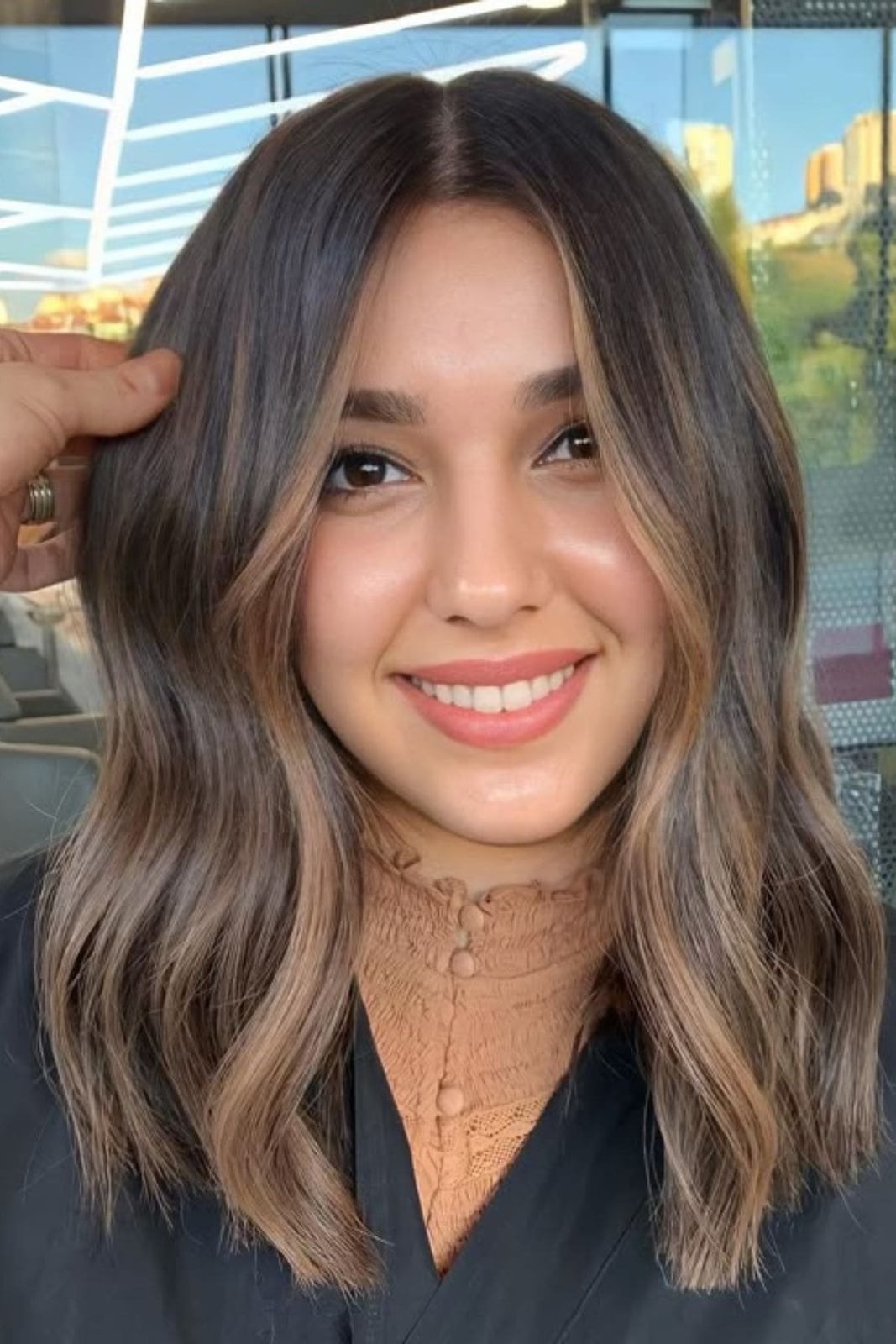
Collarbone-length layers with a middle part and soft curtain bangs pair a dark brown base with blended blonde balayage for dimension. The layers keep the shape from feeling heavy, which matters on thick, wavy hair. Curtain bangs complement round and square faces by breaking up the width at the jaw. Ask your colorist for: collarbone layered cut with curtain bangs, dark brown to blonde balayage. The blonde pieces can pull warmer over time, especially on a dark base, so a purple shampoo once a week helps keep them cool. Tuck the curtain bangs behind your ears for a different silhouette. Refresh the blonde tones every 10 to 12 weeks, though the dark root means the grow-out never looks harsh.
Shoulder Length Dark Brown Caramel Honey Highlights
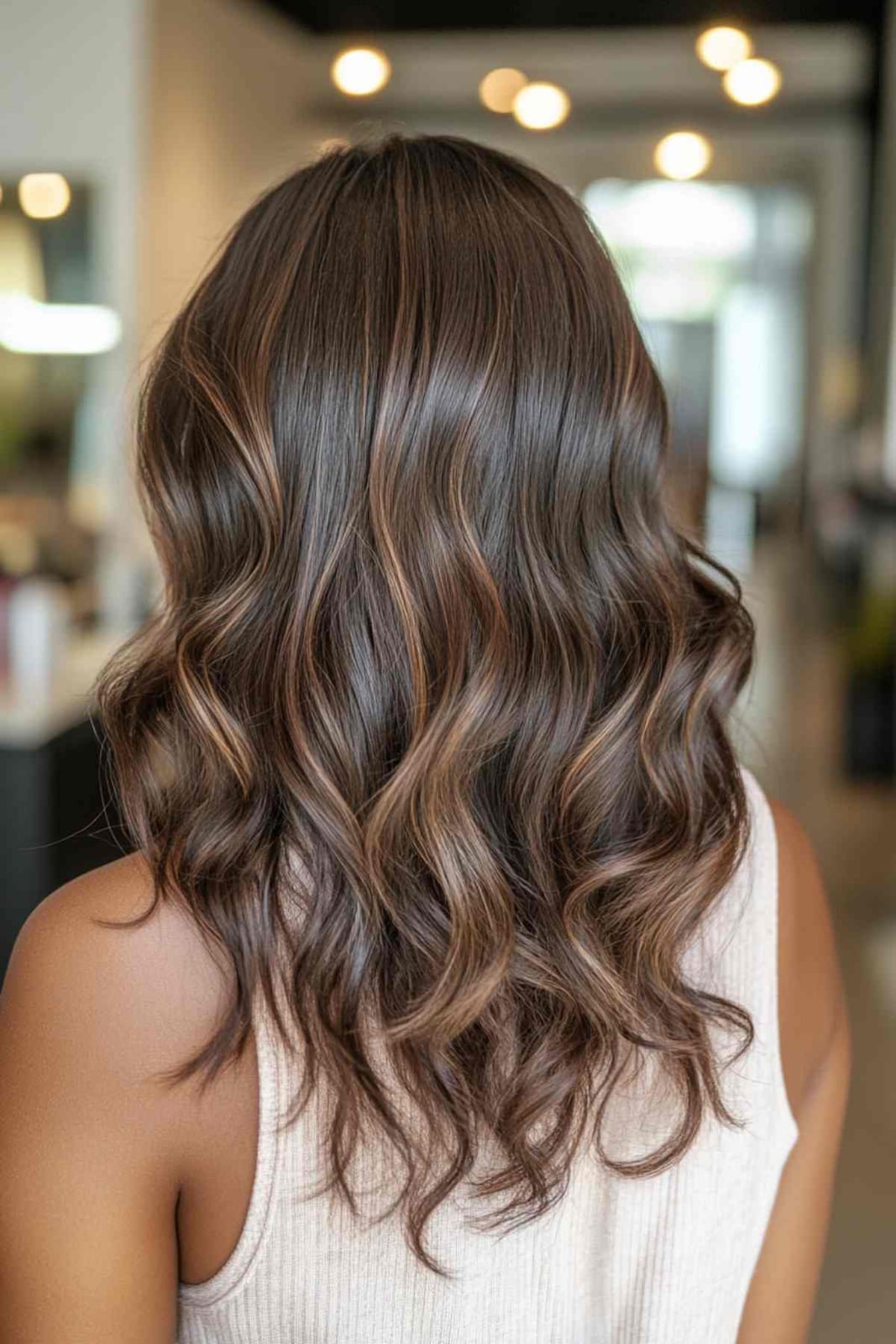
A dark brown base gets a dose of dimension with caramel and honey highlights that land between sun-kissed and deliberate. The shoulder-length layers and loose waves let the lighter pieces catch attention. Thick hair at shoulder length holds this blend particularly well; the middle parting keeps the distribution even. Ask your colorist for: shoulder length layered cut, dark brown with caramel and honey highlights. A serum smoothed through damp hair cuts frizz and seals shine. Touch up the highlights every 10 to 12 weeks, though the dark base means the grow-out stays reasonably subtle for the first month.
Collarbone Dark Brown Blonde Balayage Contrast, Close-Up Take
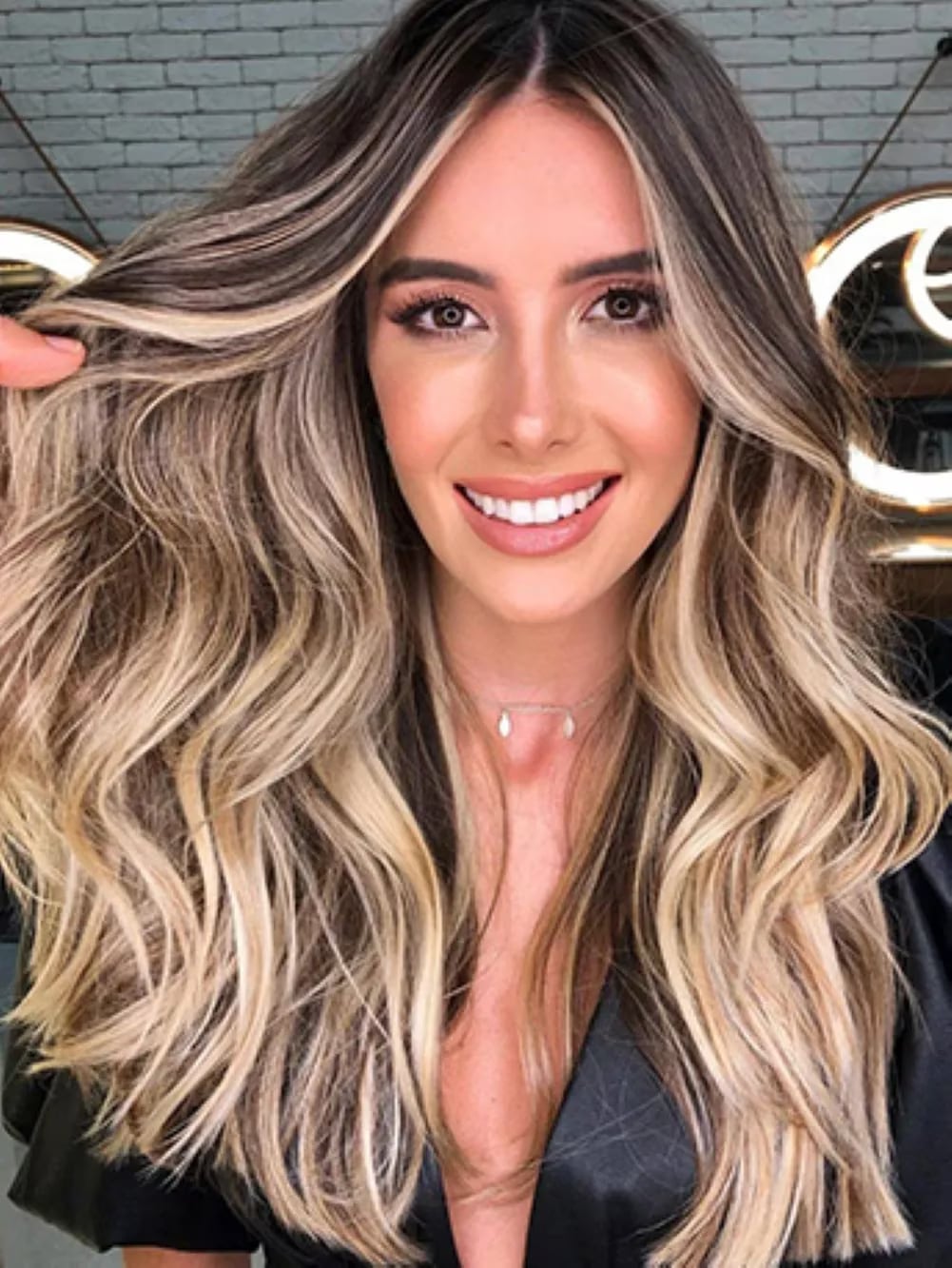
The balayage here is built on contrast: a deep dark brown base meets sections of blonde that start low and widen toward the ends. Thick, wavy hair at collarbone length gives the lighter pieces room to separate and move. The front view shows how the blonde wraps around the front sections, which is the part people actually see when you talk.
Ask your colorist for: collarbone length wavy cut, dark brown with bold blonde balayage. The technique relies on hand-painted sections rather than foils, so the transition stays soft even with the contrast. Sea salt spray on damp hair encourages the natural wave pattern. To keep the blonde from pulling brassy against the dark base, schedule a toning visit every 10 to 12 weeks.
Collarbone Bob Copper Blonde Balayage
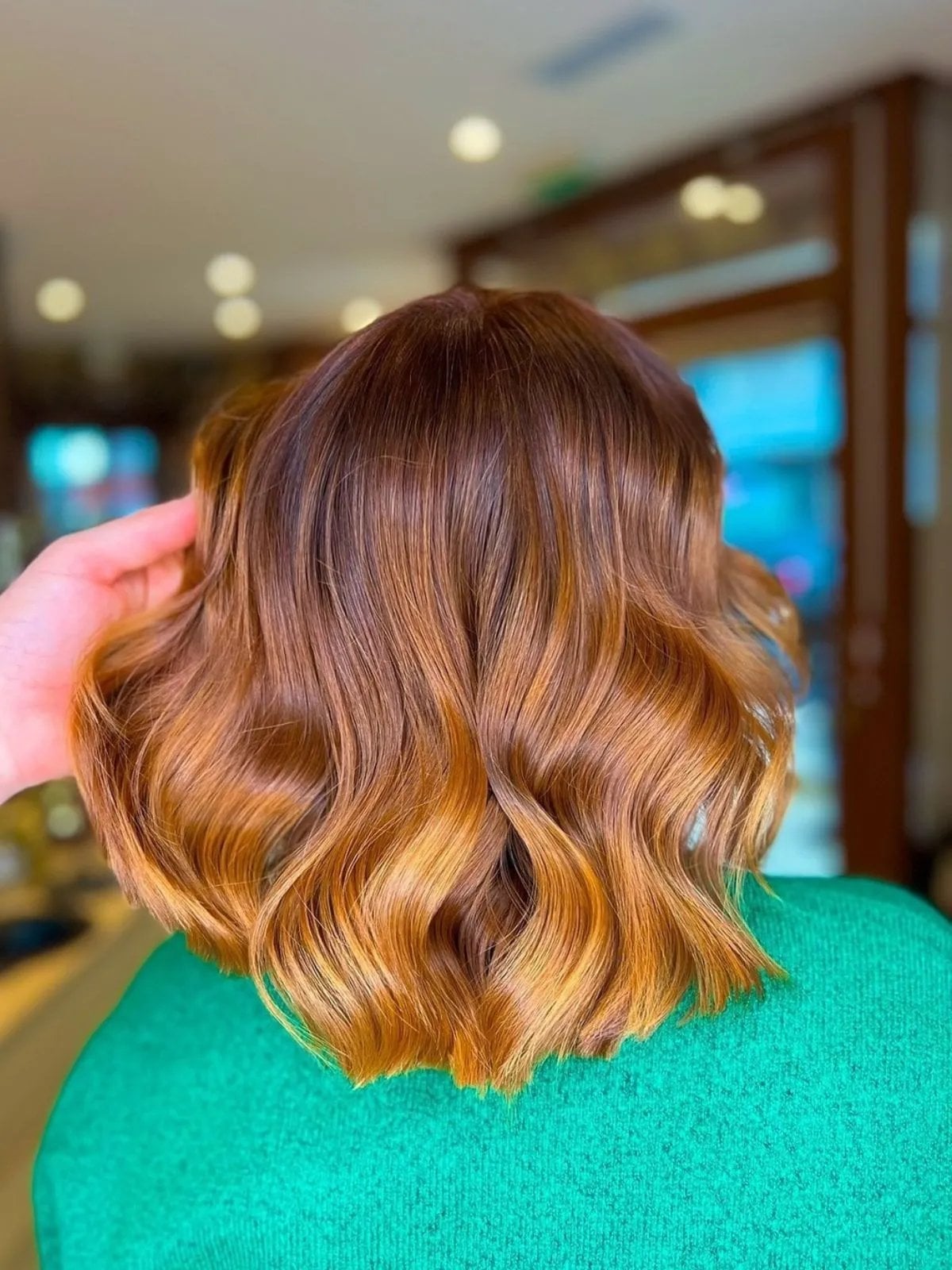
Can a bob handle a two-tone color without looking chopped up? This one manages it because the copper base and blonde balayage meet somewhere around the jaw, then the blonde pulls ahead toward the ends. The collarbone length keeps the gradient visible even when the hair is down. Medium-density hair at this length benefits from the extra visual weight the balayage adds.
Ask your colorist for: collarbone bob, copper base with blonde balayage to the ends. The wavy blowout styling helps blend the two tones; a flat iron would make the contrast read sharper. Copper fades faster than most shades, so a color-depositing conditioner used once a week will stretch the time between salon visits. Warm undertones in the skin tend to look most natural with this combination, though anyone willing to commit to the upkeep can wear it.
Mid-Back Layers Rich Copper Red Highlights
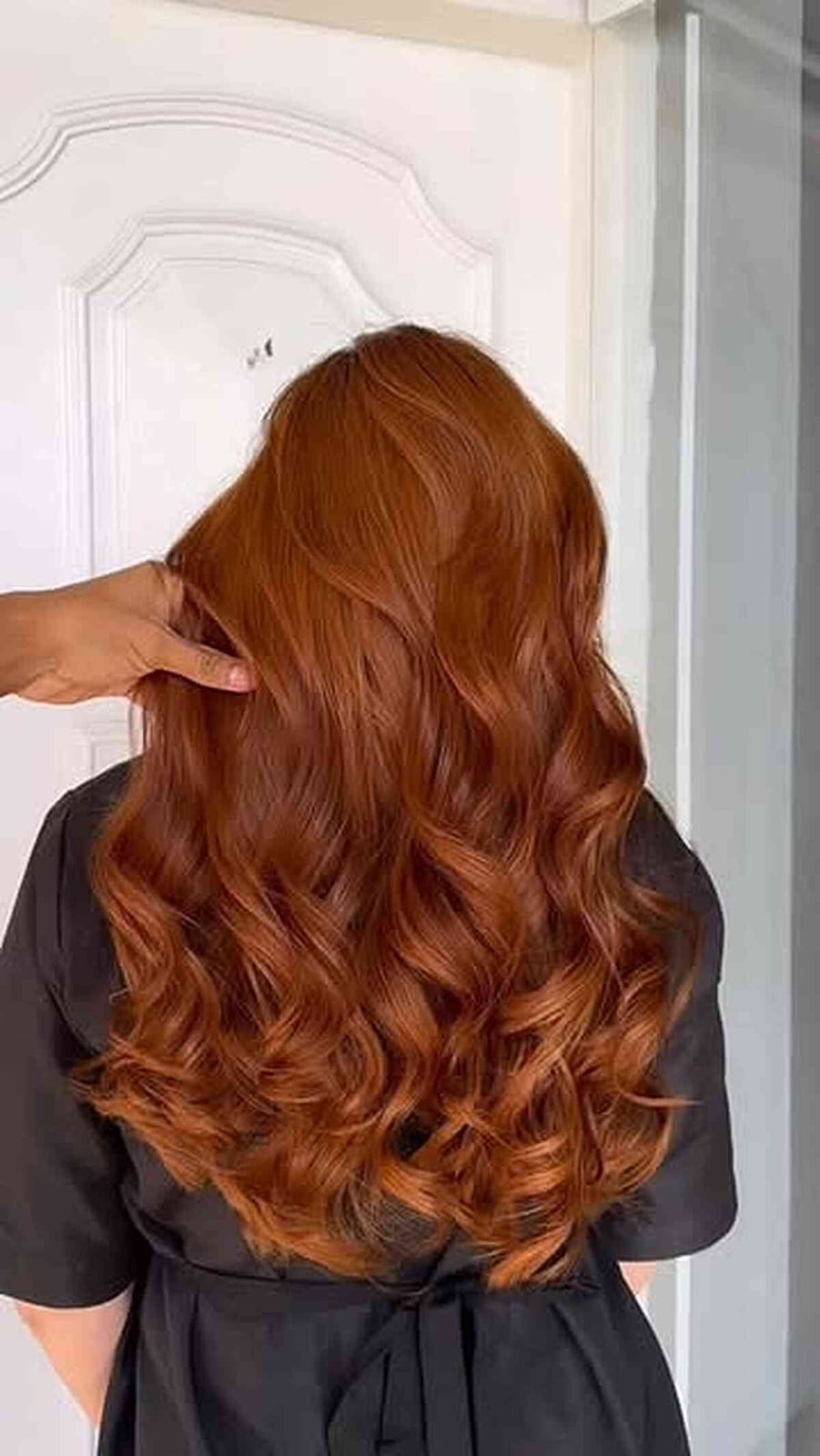
Rich copper red covers the base, and subtle lighter red highlights add depth without shifting the overall tone toward orange. The mid-back layers and loose waves create enough surface area for the color to catch light from different angles. Thick hair at this length holds the vibrancy well, but the trade-off is maintenance. Copper red is one of the fastest-fading shades in the spectrum.
Ask your colorist for: mid-back layered cut, rich copper red base with subtle lighter red highlights. Washing in cool water and using a color-depositing conditioner weekly will keep the red from turning rusty after three weeks. A gloss treatment every six to eight weeks helps restore the shine that fades along with the pigment. This is not a set-it-and-forget-it color, but the payoff is a shade that looks expensive when it is fresh.
Mid-Back Deep Cherry Red Uniform Glossy
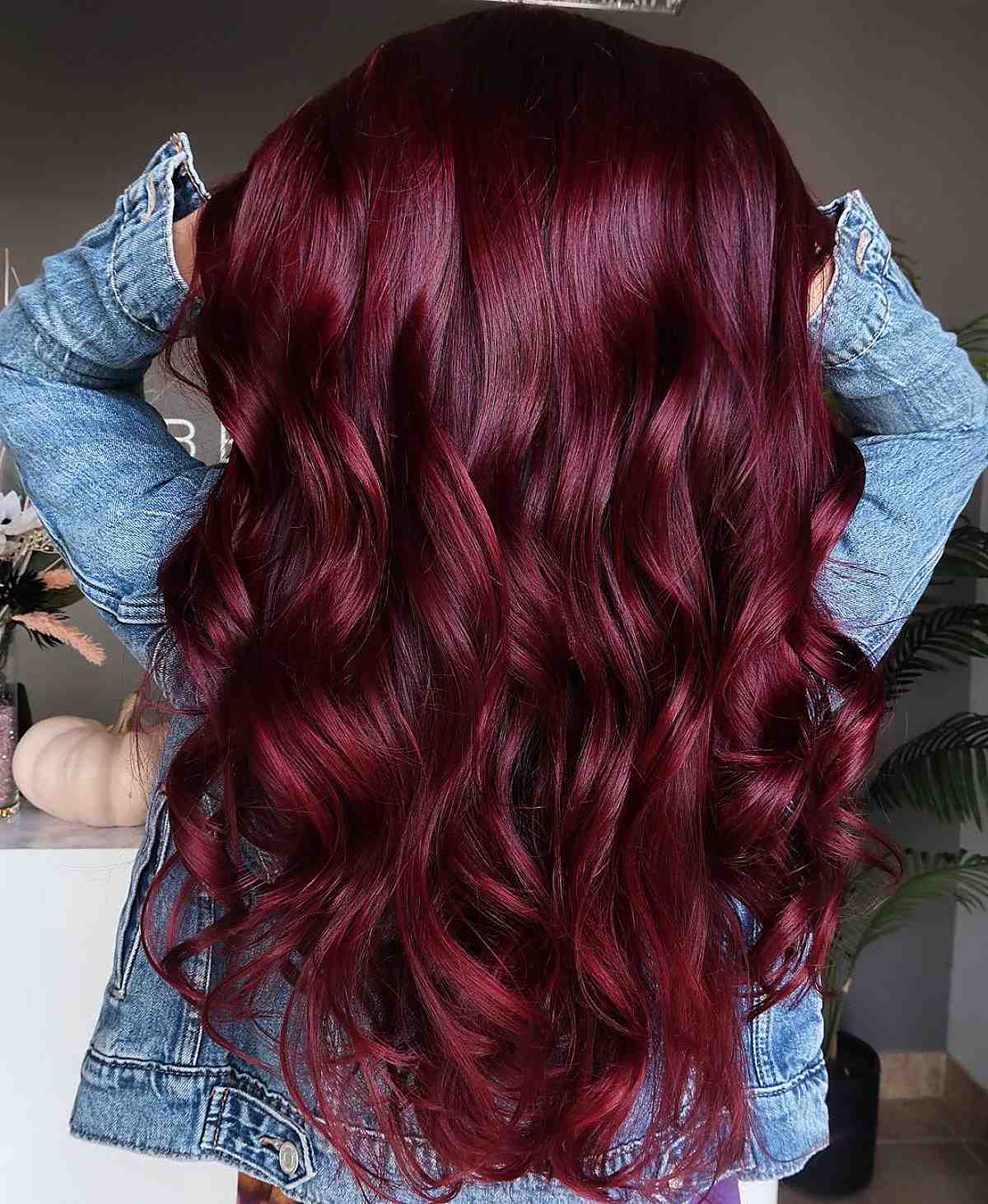
Ask your colorist for: mid-back length, deep cherry red, uniform all over. The honest drawback is that any root regrowth shows immediately against such a saturated shade, so expect a root touch-up every four to five weeks. Sulfate-free shampoo and a weekly deep conditioner are not optional here; the color needs the cuticle to stay closed to keep that glass-like shine. This is a high-commitment color for someone who does not mind being noticed.
Mid-Back Vibrant Cherry Red Darker Undertones
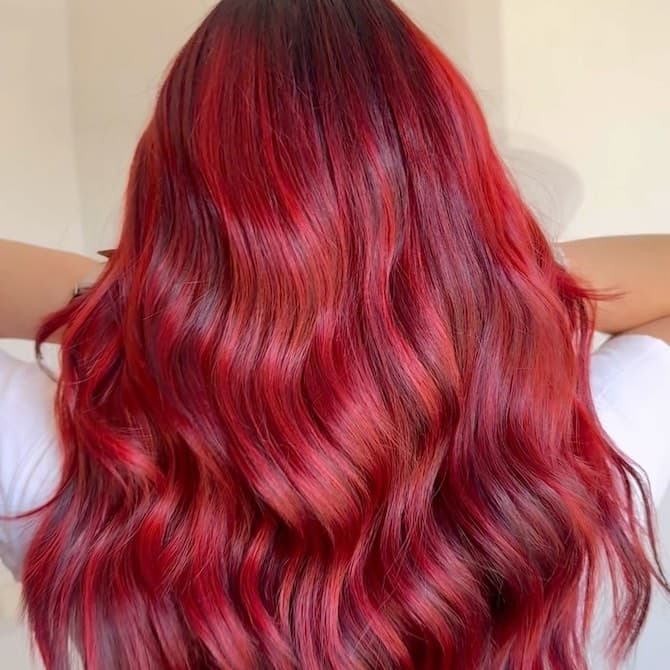
The design holds a trick: a vibrant cherry red base gets its depth from subtly darker undertones. Thick, wavy hair at mid-back length carries this shade well; the natural wave helps the darker pieces catch light differently. Ask your colorist for a mid-back layered cut with vibrant cherry red and subtle dark undertones. The technique involves a two-step process: a bright cherry gloss over a slightly deeper root, so the color appears dimensional rather than flat.
This is a salon-only color; the depth comes from a custom mix, not a box. A color-depositing gloss used every few weeks keeps the cherry from fading toward orange. Prolonged sun exposure will pull the red toward pink, so a heat protectant with UV filters is worth the extra step.
Mid-Back Ash Blonde Gray Lilac Tones
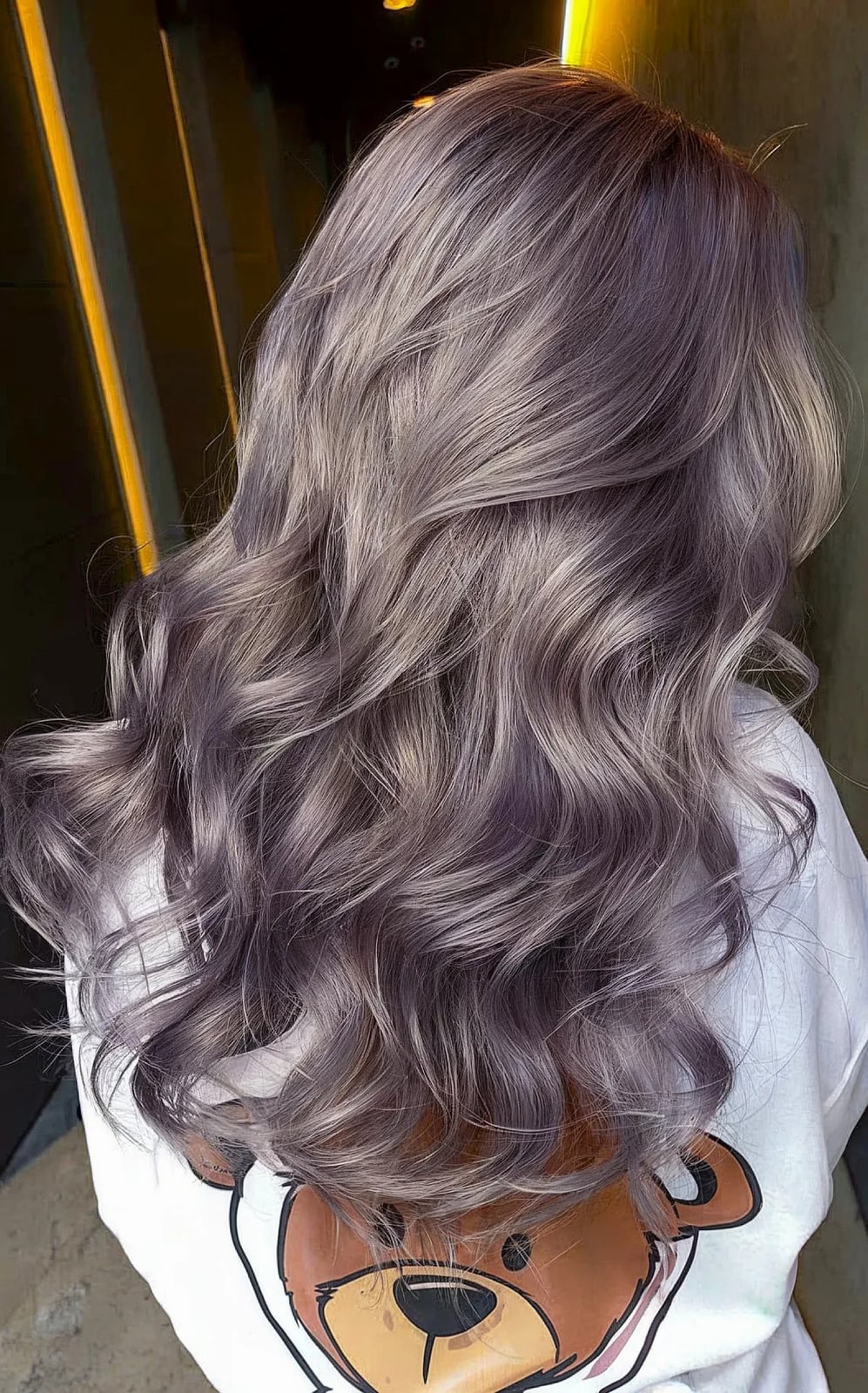
This is the coolest blonde in the lineup and it lands best in late fall and winter, when low light plays up the gray and lilac notes. Thick, wavy hair at mid-back length gives the tone enough surface area to read as sophisticated. Ask your colorist for a mid-back layered cut with ash blonde, subtle gray and lilac tones. The base is a cool blonde, with diluted violet and gray tones painted through the midsection.
A purple shampoo is not optional here; a standard blonde shampoo will let brass creep in by week three. Toning appointments every four to six weeks keep the gray-lilac element crisp. This finish stays interesting without high-contrast highlights.
Mid-Back Side Part Ash Blonde
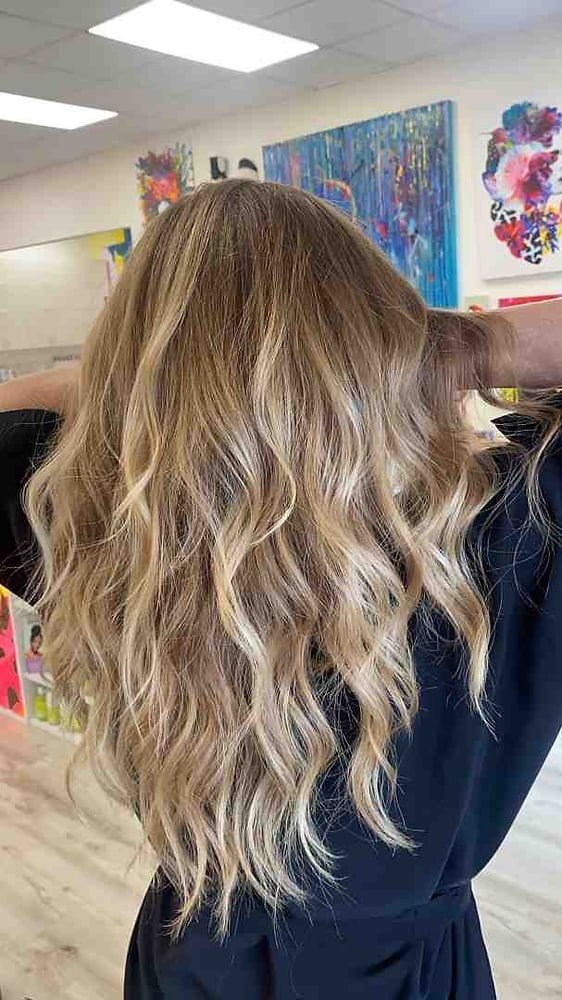
The side part creates immediate volume at the root and lets the ash blonde tone fall in a heavier curtain on one side. Wavy, mid-back length hair with subtle layers benefits from the asymmetry; the waves stack differently on each side, making the cut look fuller. Ask your colorist for a mid-back length with subtle layers, a cool ash blonde shade and a side part. A texturizing spray on dry hair will enhance the natural wave pattern and keep the side part from falling flat by midday. This is a practical everyday color with a low-key cool finish.
Mid-Back Neutral Blonde Babylights Balayage
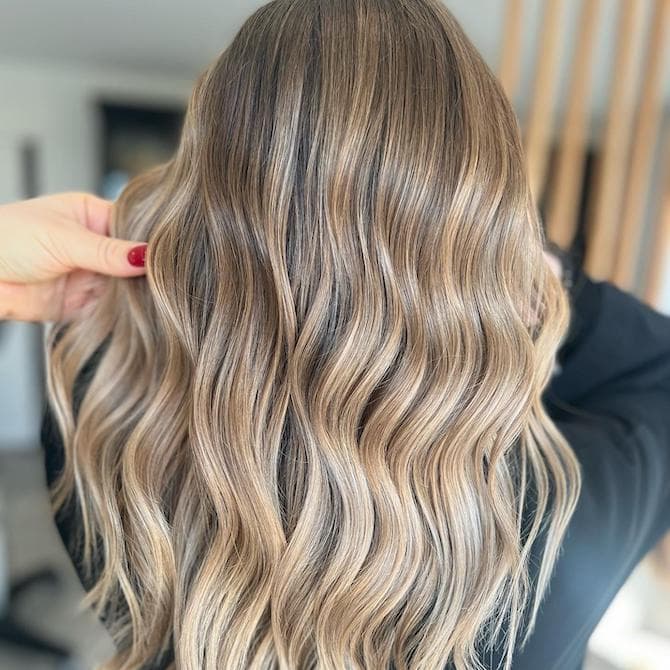
Choosing between babylights and chunky highlights: babylights mimic the natural lightening of childhood, while balayage creates a soft, painted-on graduation. This neutral blonde combines both, using fine babylights and a gentle balayage through the midsection. Thick, wavy hair at mid-back length is the ideal canvas; the density lets the fine highlights show as a subtle sheen. Ask your colorist for a mid-back layered cut with neutral blonde, babylights and balayage. The blend is low maintenance compared to a full head of foils; a clear gloss every eight to ten weeks refreshes the tone without altering the placement.
Mid-Back Platinum Blonde Balayage
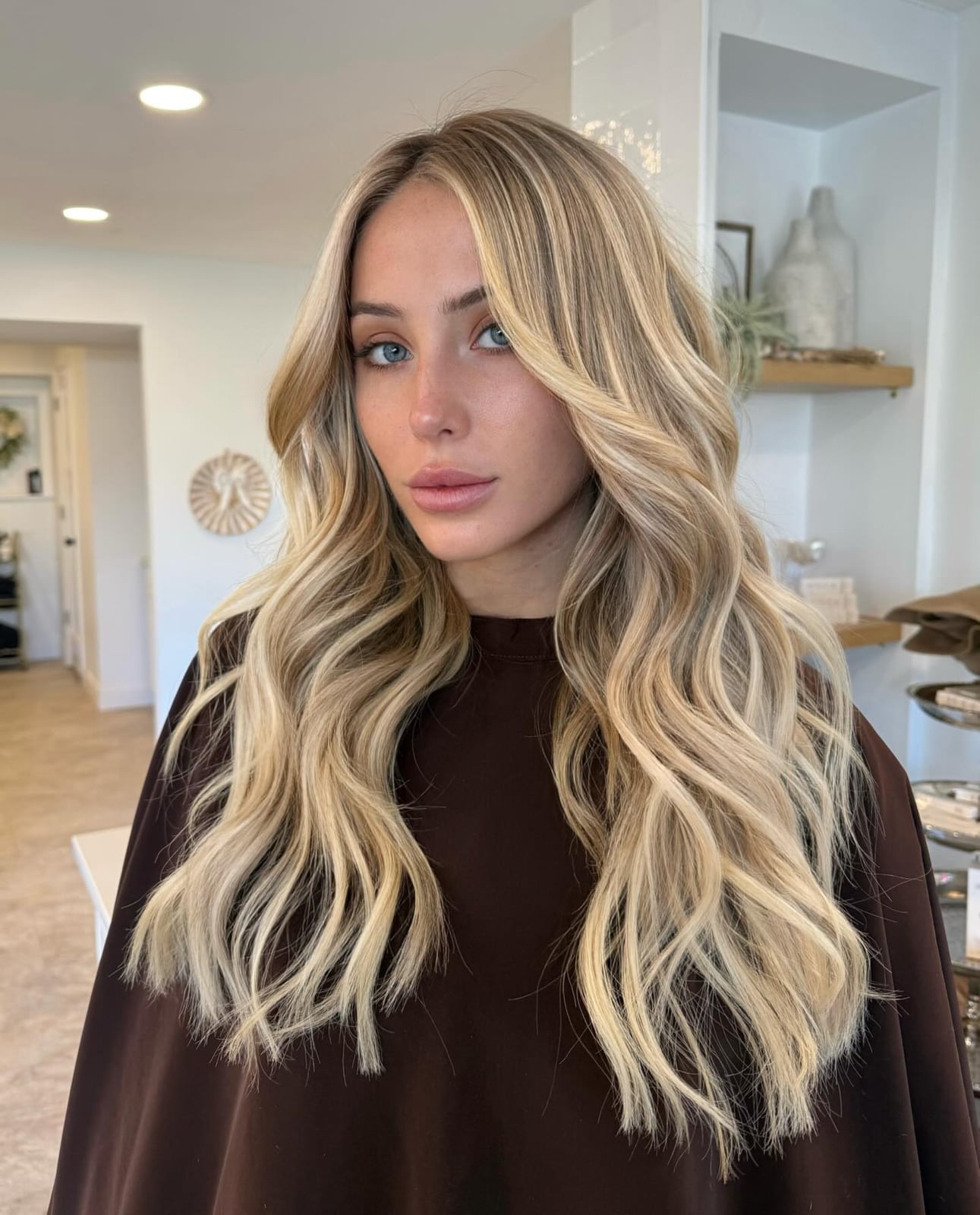
Platinum balayage sits in a specific territory: it is less maintenance than a full platinum head, but more work than a typical caramel balayage. Medium density, wavy hair at mid-back length handles the bright placement well; the curtain bangs frame the face without needing the same lightening intensity. Ask your stylist for a mid-back layered cut with curtain bangs and platinum blonde balayage on a light blonde base. The upkeep requires a brass-banishing toner every four weeks and a heat protectant before any styling; UV exposure will yellow the platinum faster than a warmer blonde. The trade-off is a dimensional platinum that grows out softer than a solid bleach-and-tone.
Collarbone Lob Dark Brown Blonde Balayage, Everyday Version
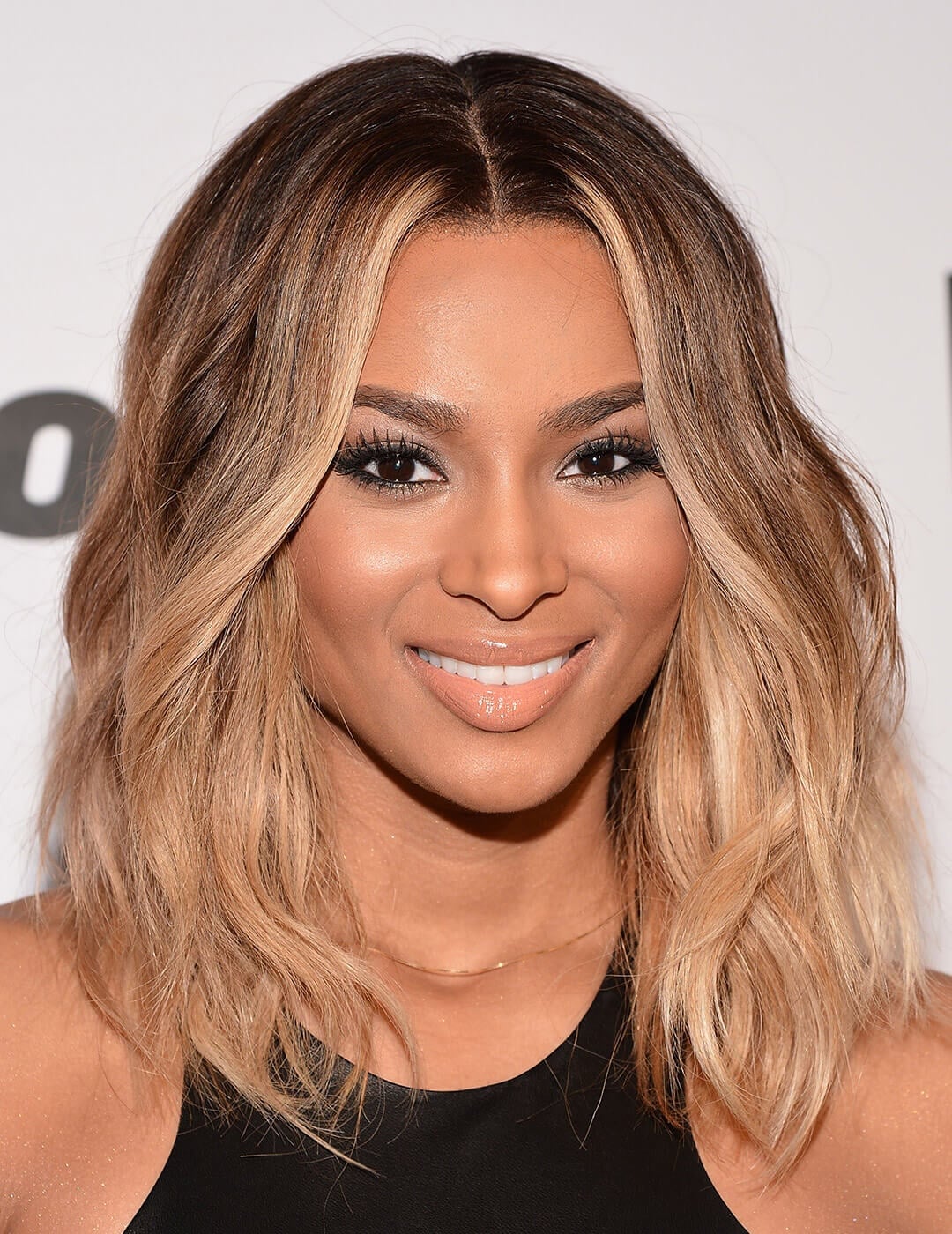
A collarbone-length lob with layers and a middle parting uses a dark brown base as the anchor while blonde balayage highlights add dimension without full commitment. Thick, wavy hair at this length holds the loose wave pattern well, and the middle part keeps the face open. Ask your colorist for a collarbone lob with layers, dark brown base and blonde balayage. The one real drawback: the highlights will need refreshing around the face every 10-12 weeks.
Air-dry this lob for a natural finish, or blow-dry it for more polish. The balayage grows out softly, so you can stretch the salon visits longer than foils. It’s an everyday color that doesn’t demand daily styling.
Mid-Back Dark Brown Seamless Blonde Balayage
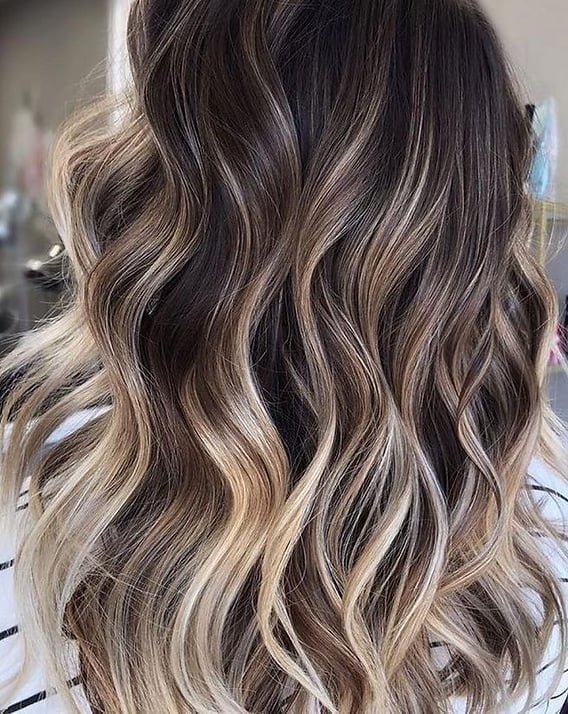
A seamless balayage transition is the technical star here: the blonde moves from the dark brown base with no visible line, creating a soft, dimensional gradient through mid-back length wavy hair. Thick, wavy texture at this length benefits from the technique because the natural wave helps the color melt. Ask your colorist for a mid-back length, dark brown with seamless blonde balayage. The key is the stylist painting the lightener freehand and keeping the saturation heavier mid-lengths to ends.
A gloss treatment every six to eight weeks will enhance the shine and keep the blonde from looking dusty. This is a salon-only technique; the grow-out is forgiving enough to skip a month.
Mid-Back Dark Brown Lighter Brown Blonde Balayage With Loose Waves
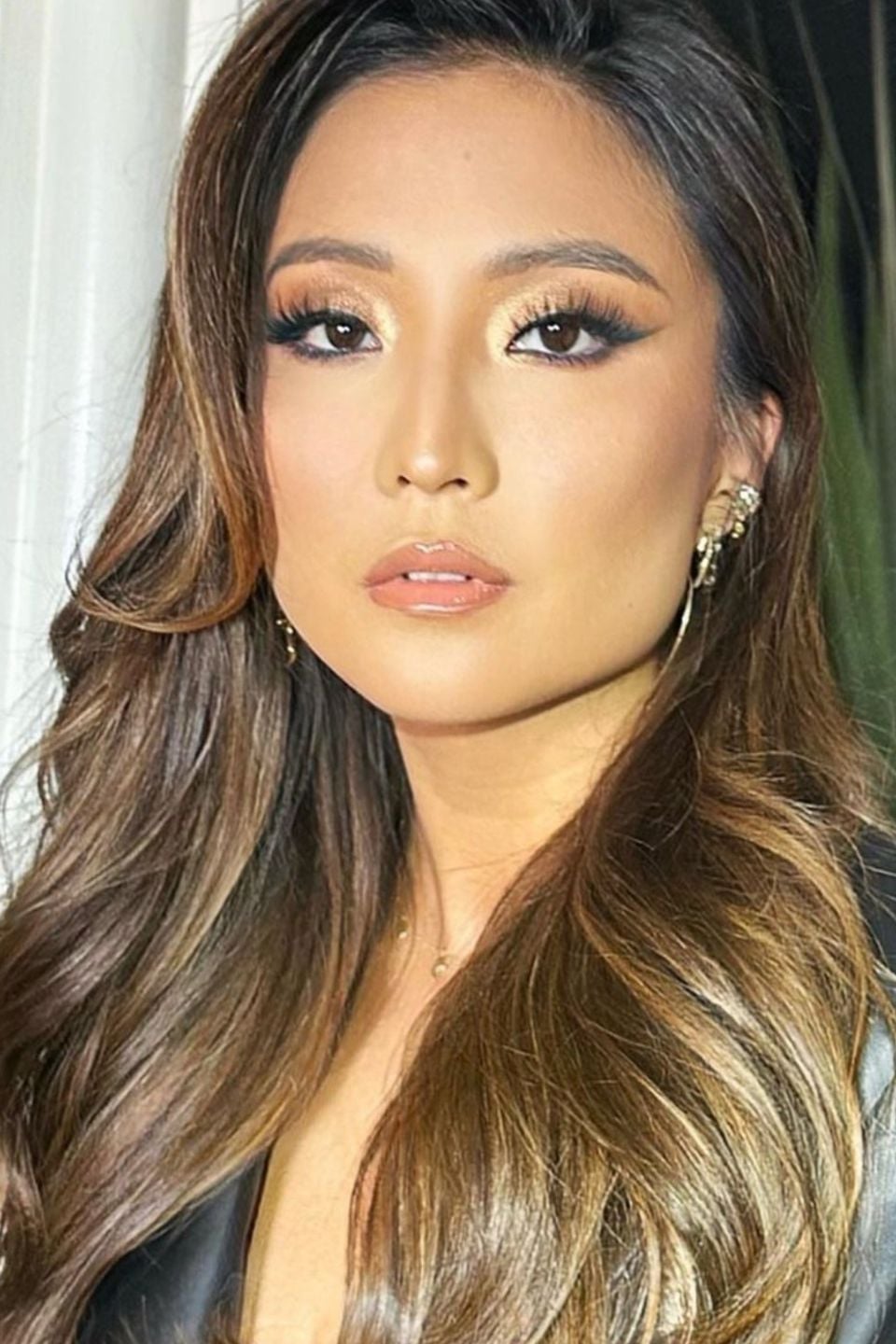
Unlike a high-contrast blonde balayage, this version uses lighter brown and blonde tones on a dark brown base for a more natural, blended effect through mid-back layers. Thick, wavy hair at this length shows the multiple tones best when styled in loose waves. Ask your colorist for a mid-back layered cut, dark brown with lighter brown and blonde balayage. This is strictly a salon job: a DIY kit cannot layer three tones with a seamless transition.
The payoff is a low-maintenance color that fades gracefully. Refresh the highlights every 10-12 weeks, but the root line stays soft enough to let it go longer. The entire process takes about three hours in the chair.
Mid-Back Natural Brunette Subtle Balayage
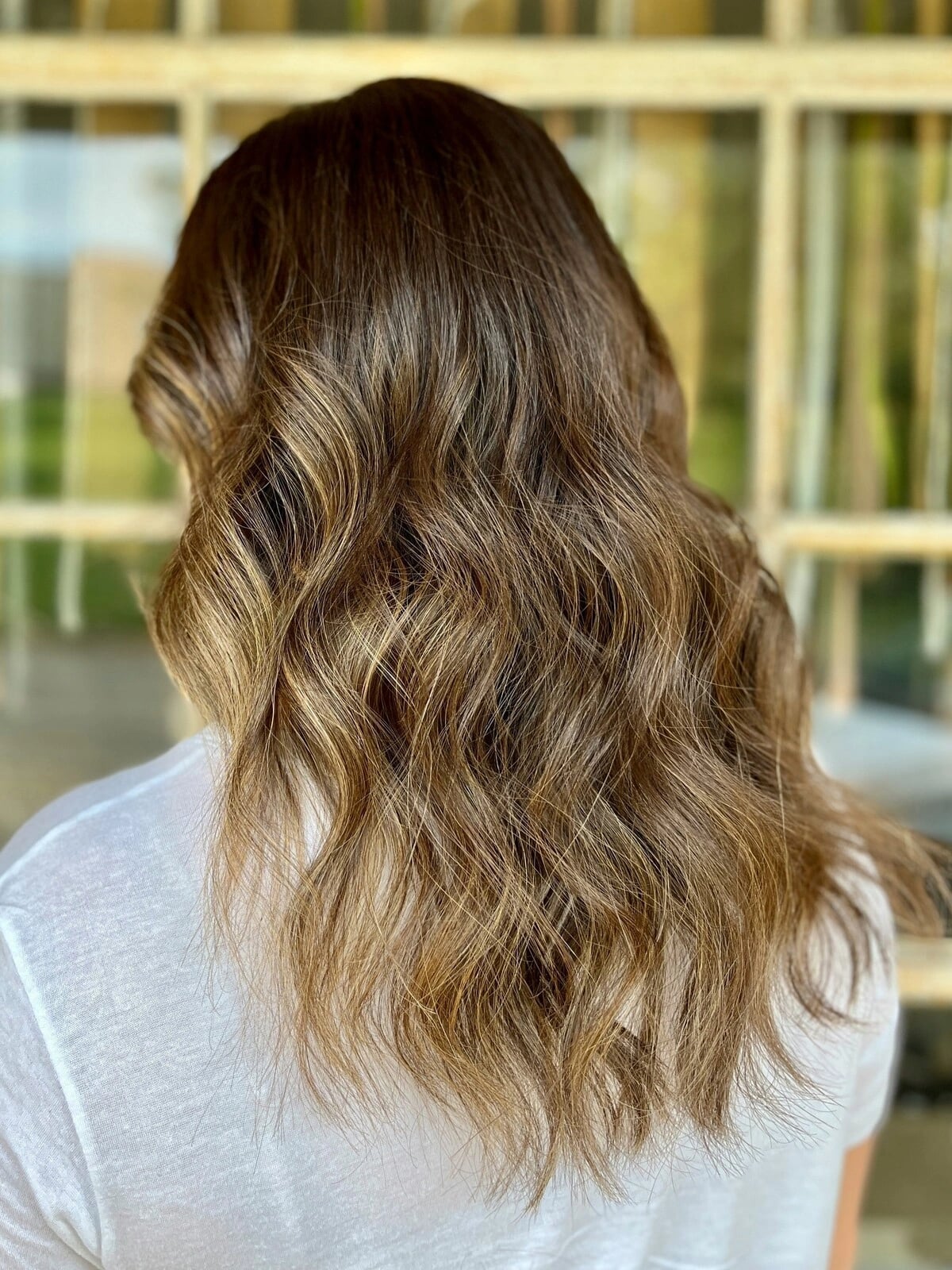
For subtle balayage on a natural brunette base, the lighter brown highlights should be placed where the sun would naturally hit. Medium density, wavy hair at mid-back length holds this dimension without looking overdone. Ask your colorist for a mid-back wavy cut, natural brunette with subtle lighter brown balayage. If the stylist goes too subtle, the color can look uncolored entirely.
This is a low-maintenance style that grows out beautifully, with touch-ups needed only every 12-16 weeks. It works best for anyone who wants a change without a dramatic shift.
Mid-Back Medium Brown Blonde Balayage Blend, Wavy
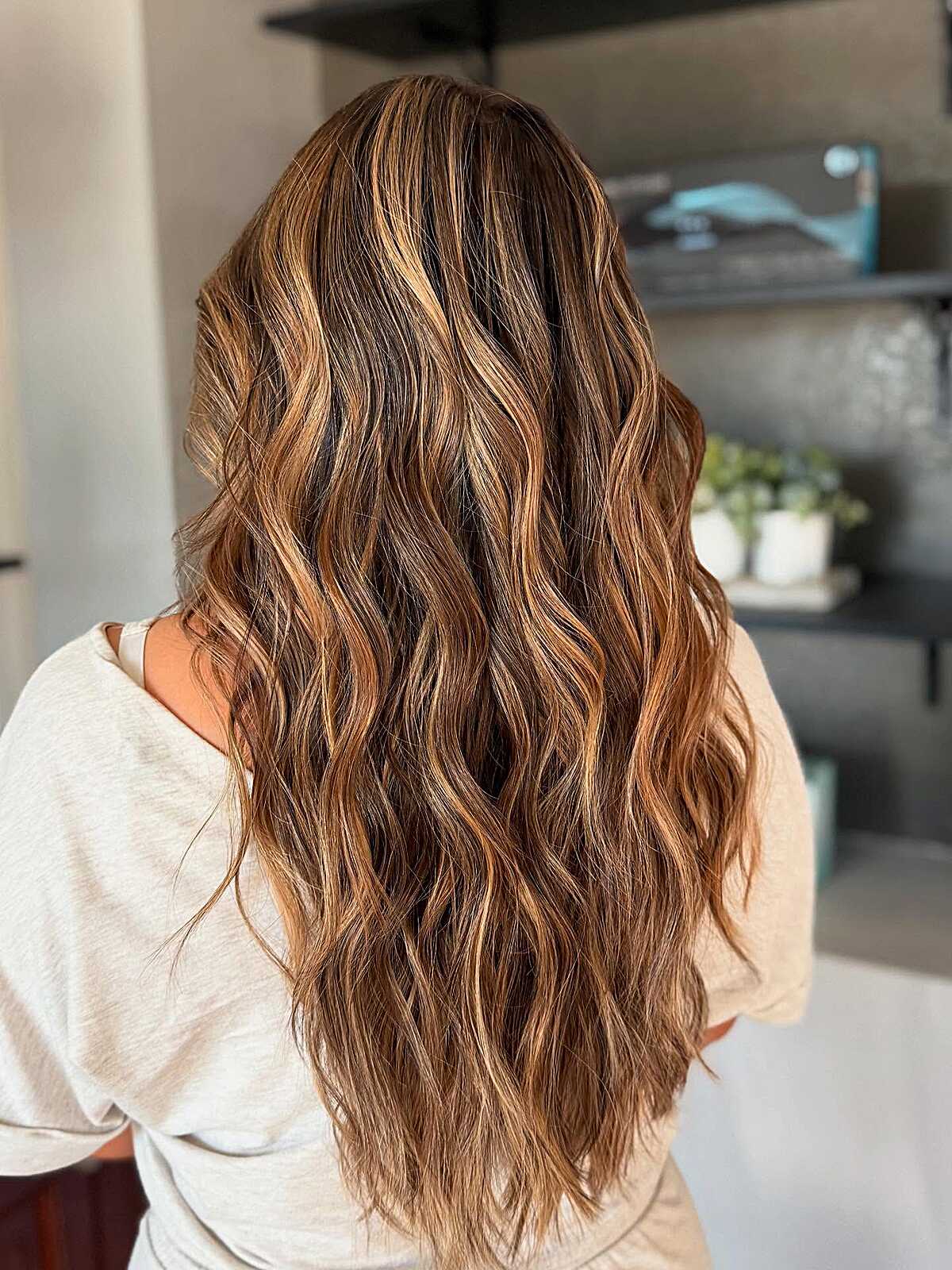
This medium brown base with a seamless blonde balayage creates a natural sun-kissed effect, in contrast to an ashy or cool-toned blonde that can look more artificial. Thick, wavy hair at mid-back length shows the blend best because the waves catch the lighter pieces at different angles. Ask your colorist for a mid-back layered cut, medium brown with seamless blonde balayage. The wear is straightforward: a texturizing spray on damp hair enhances the sun-kissed look, and the waves hold shape without heat.
Upkeep is minimal. Refresh the balayage every 10-12 weeks, and the grow-out remains soft because the base color is close to the natural shade. It’s a reliable, low-commitment choice for a dimensional brunette.
Final Thoughts
For low upkeep, stick with darker bases and subtle balayage that grows out softly. For high impact, go for vibrant reds or cool blondes with distinct highlights that demand a regular toning schedule.
- Refresh red tones every 4-6 weeks with a color-depositing conditioner.
- Tone blonde shades every 6-8 weeks to maintain coolness.
- Balayage grows out gracefully, requiring a touch-up every 12-16 weeks.
- Use color-safe shampoos and conditioners to preserve vibrancy.
Find the shade that truly speaks to you.