20 Simple Hairstyles for Teens that Are Easy to Create 2027
Teen hairstyles in 2027 are leaning into soft face-framing layers and lived-in color, with curtain bangs making a strong comeback. The glossy, natural texture trend means you can skip the flat iron and let your hair do its thing.
This collection of 20 Simple Hairstyles for Teens covers everything from low-maintenance cuts to intricate braids, so you can find the right balance for your schedule and hair type. Whether your hair is fine and falls flat by noon, or you have a visible grow-out line to hide, there’s a style here that works without demanding hours of styling time.
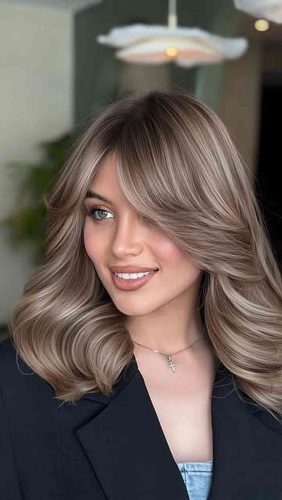
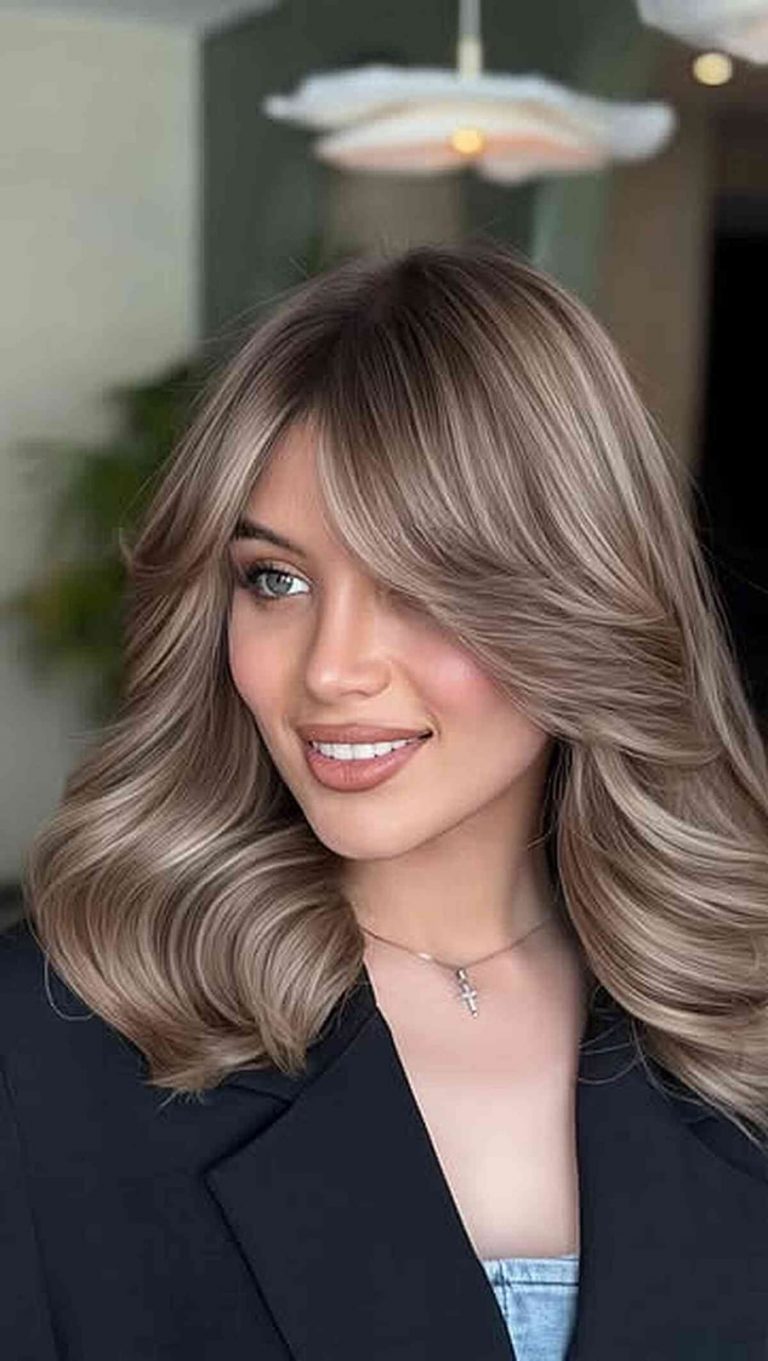
Collarbone Shag With Face-Framing Bangs
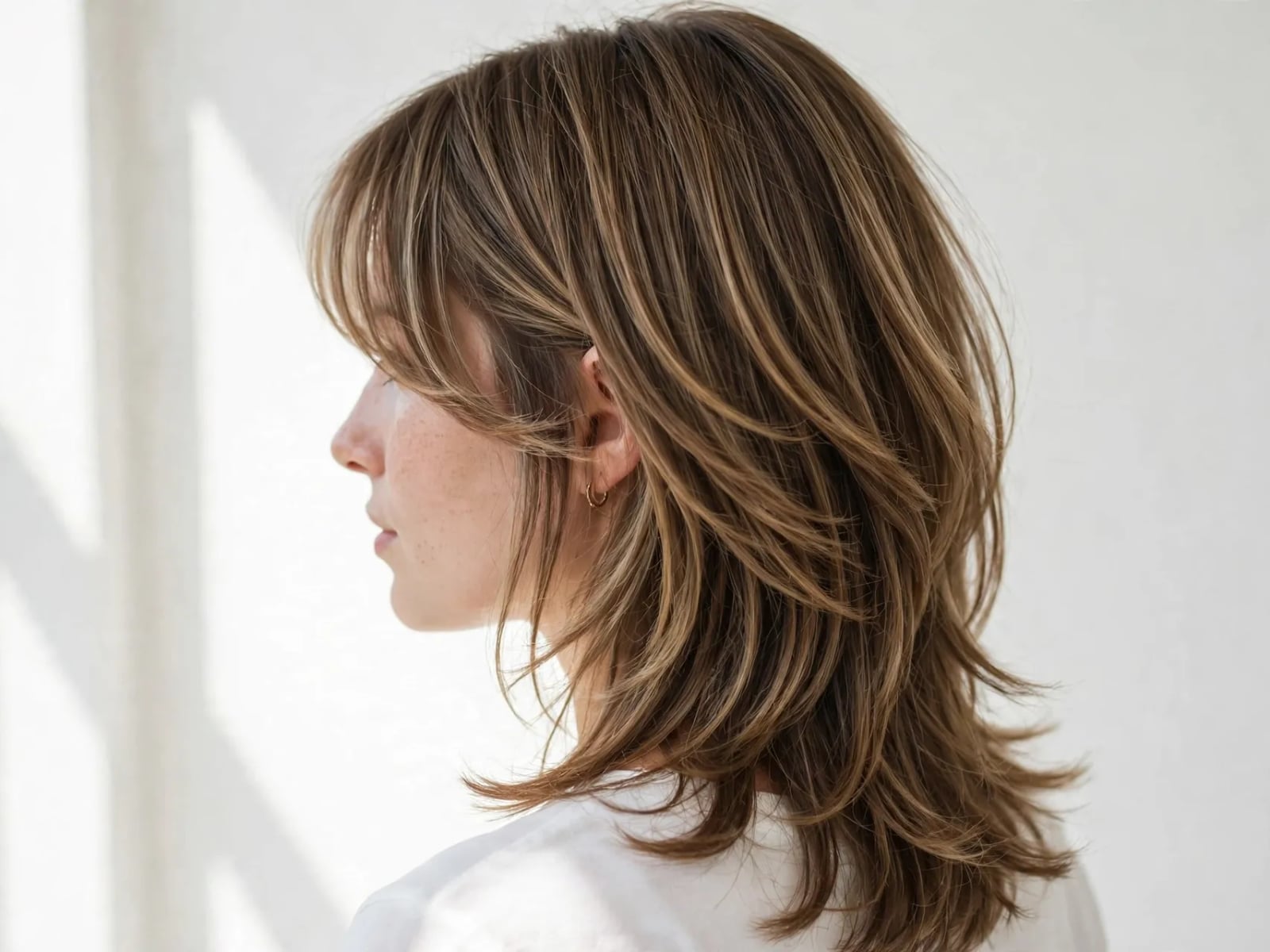
The genius of a collarbone shag is how the layers do the work: they build movement where straight hair can fall flat and tame bulk where thick hair gets puffy. A side parting and curtain bangs frame without a full fringe, which buys you room to grow them out if you change your mind. Medium to thick wavy hair at collarbone length takes this cut best, and the softer edges work well on angular faces. Ask your stylist for: collarbone shag with curtain bangs, soft layers. A round brush and blow-dryer create the bend, and the bangs need a trim every three to four weeks to keep the face-framing line crisp.
Shoulder-Length Wavy Lob
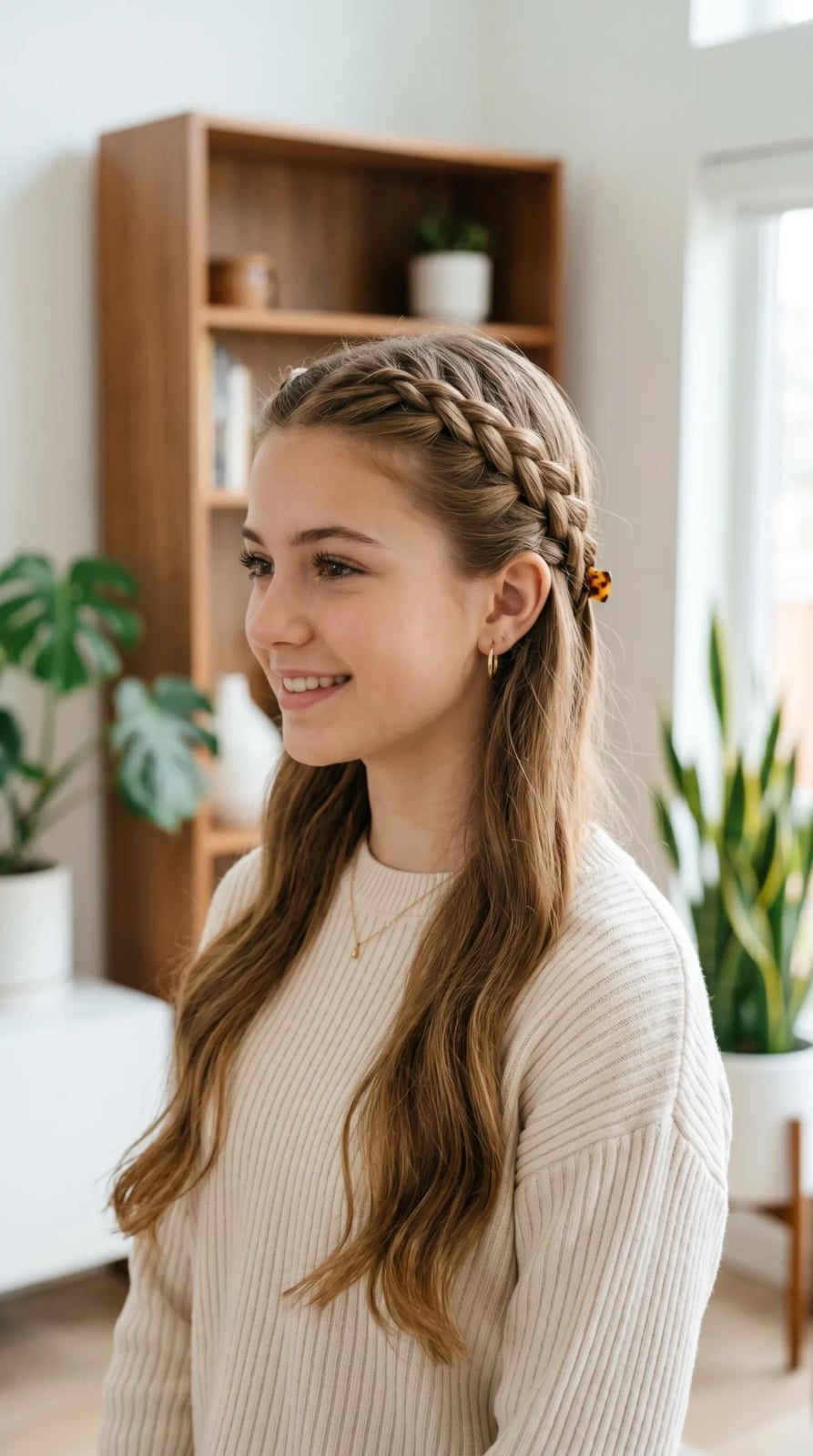
A shoulder-length lob with subtle layers and a side part is a low-maintenance way to get a styled look with minimal effort. The blonde base with subtle highlights adds dimension, preventing the wave from appearing as one flat color, and the air-dried texture means you skip the heat. Fine to medium wavy hair gets a volume boost from the layers, and the shoulder length is long enough to pull back but short enough to dry fast. Ask your stylist for: shoulder length layered cut, natural waves, side part. This is a true DIY cut: wash, add product, and let it dry naturally.
Mid-Back Length With Long Layers And Curtain Bangs
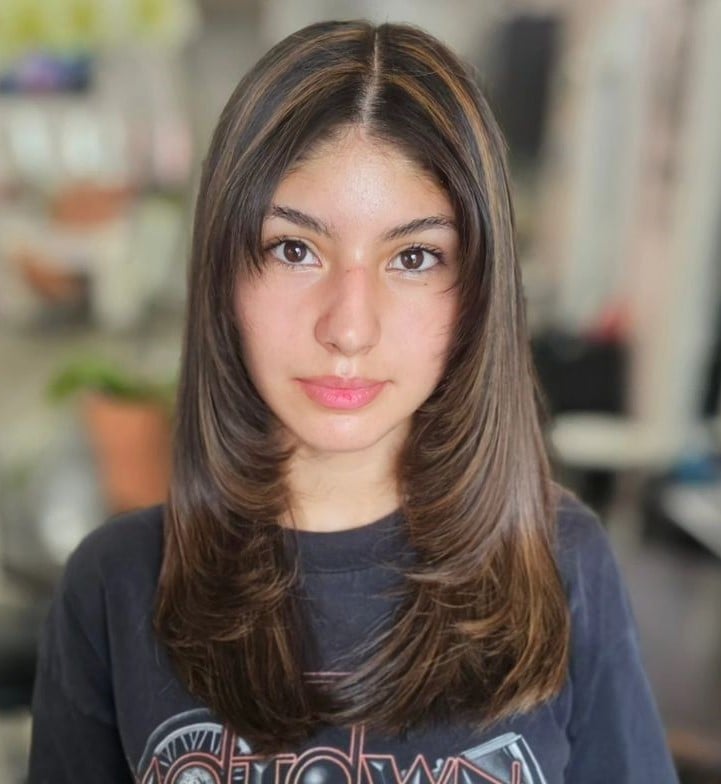
Long layers on mid-back length hair are a technical balancing act: cut too high and you lose weight, cut too low and the face-framing pieces vanish. Curtain bangs here are cut to feather around the cheekbones, while the dark brown base with blonde highlights catches light at the layer points. Straight, medium-density hair holds the blowout shape longer than fine hair would, and the length balances longer face shapes by adding width at the sides. Ask your stylist for: mid-back length with long layers and curtain bangs. The salon visit takes about an hour, and the curtain bangs need a trim every four to six weeks to stay out of your eyes.
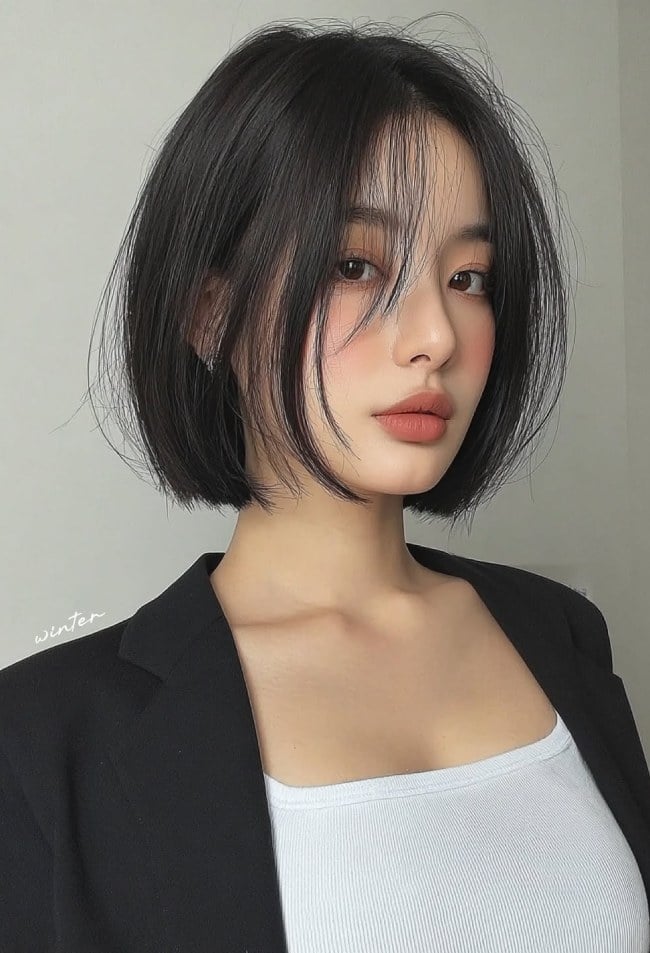
Chin Length Bob With Side Swept Bangs
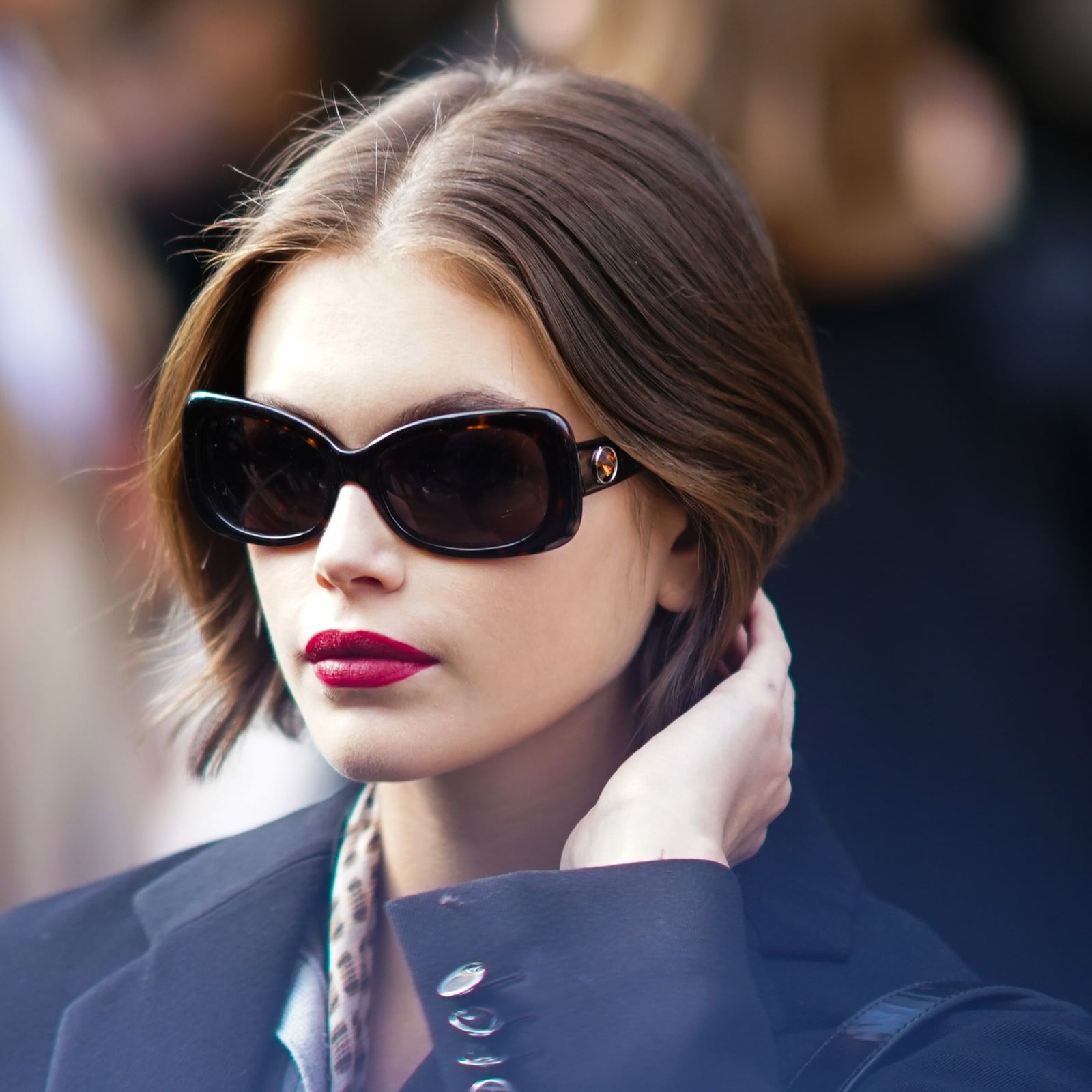
Wondering what to say so you don’t end up with a blunt line that feels severe? A chin-length bob with side-swept bangs and blonde balayage on a brown base keeps the shape soft while the color adds depth. The side part and inward curl at the ends give fine, straight hair a denser-looking silhouette, and the chin length works well on oval and square face shapes. Ask your stylist for: chin length bob, side swept bangs, balayage highlights. A round brush and blow-dryer create the inward curl, and the bob needs a trim every six weeks to hold its line.
Brown Bob With Blonde Balayage And Inward Curl
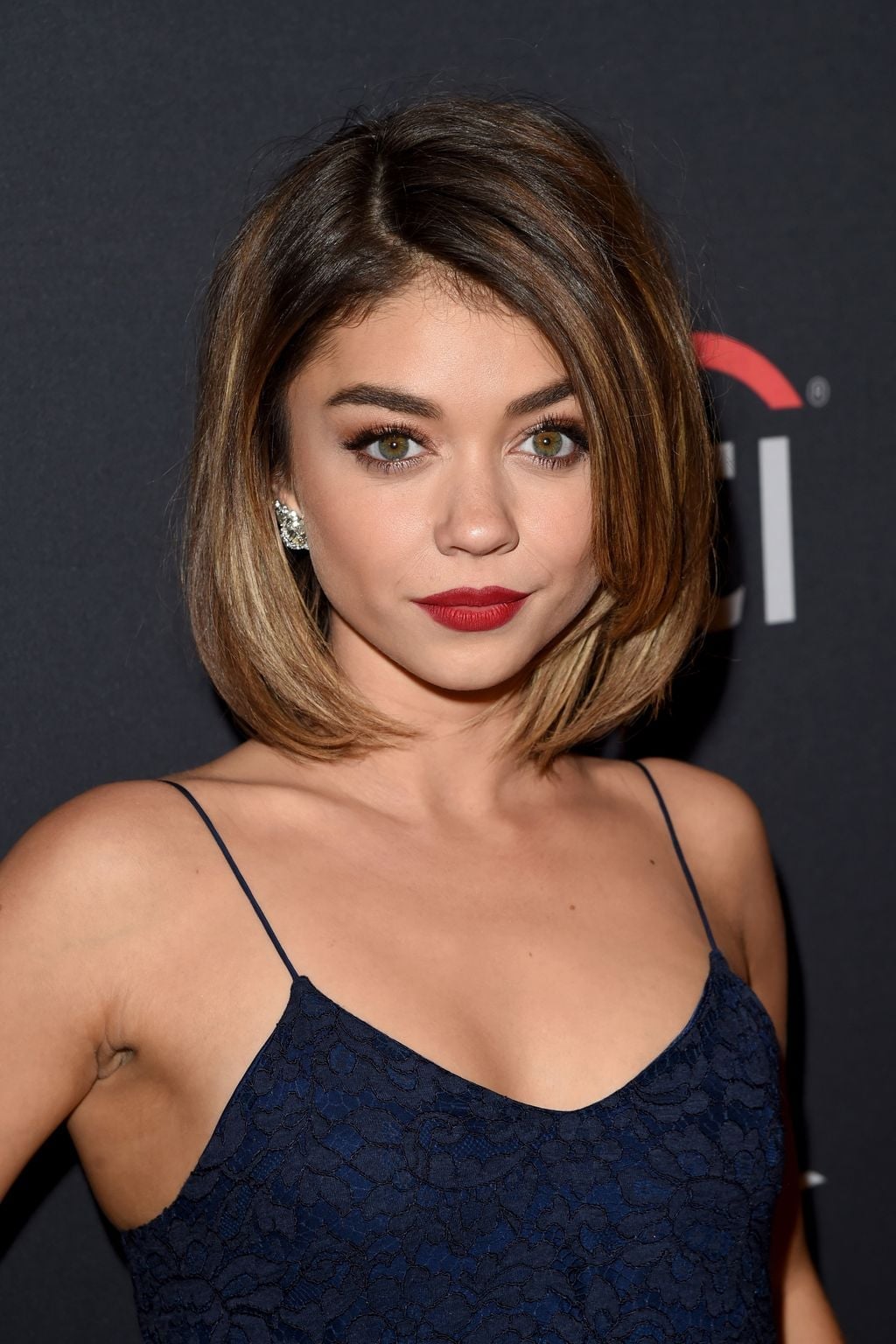
Ask your stylist for: chin length bob, blonde balayage, inward curl styling. The balayage lifts lighter on virgin hair than on previously colored ends, so the grow-out is softer but the tone may shift warmer faster. A toning appointment every eight to ten weeks helps maintain the color.
Shoulder Length With Single Side Braid
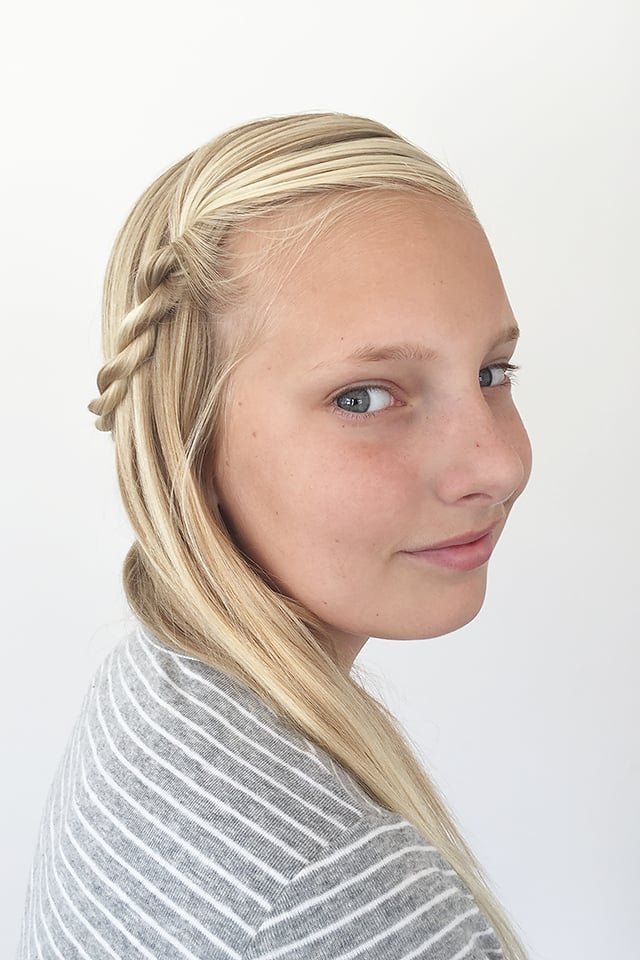
The single side braid breaks up an otherwise loose, straight fall of fine blonde hair without committing to an all-over braid. The side parting lets the braid sit close to the hairline, so it reads as a deliberate detail. This works best on fine, straight hair, where a small braid adds texture and keeps the front pieces from drifting into your face. Ask your stylist for: shoulder length hair, one small side braid. You can do this yourself in under five minutes on dry hair, securing the braid with a clear elastic. It is a DIY win for school mornings, and it holds its shape all day without much fuss.
Shoulder Length Lob Half Up Twist
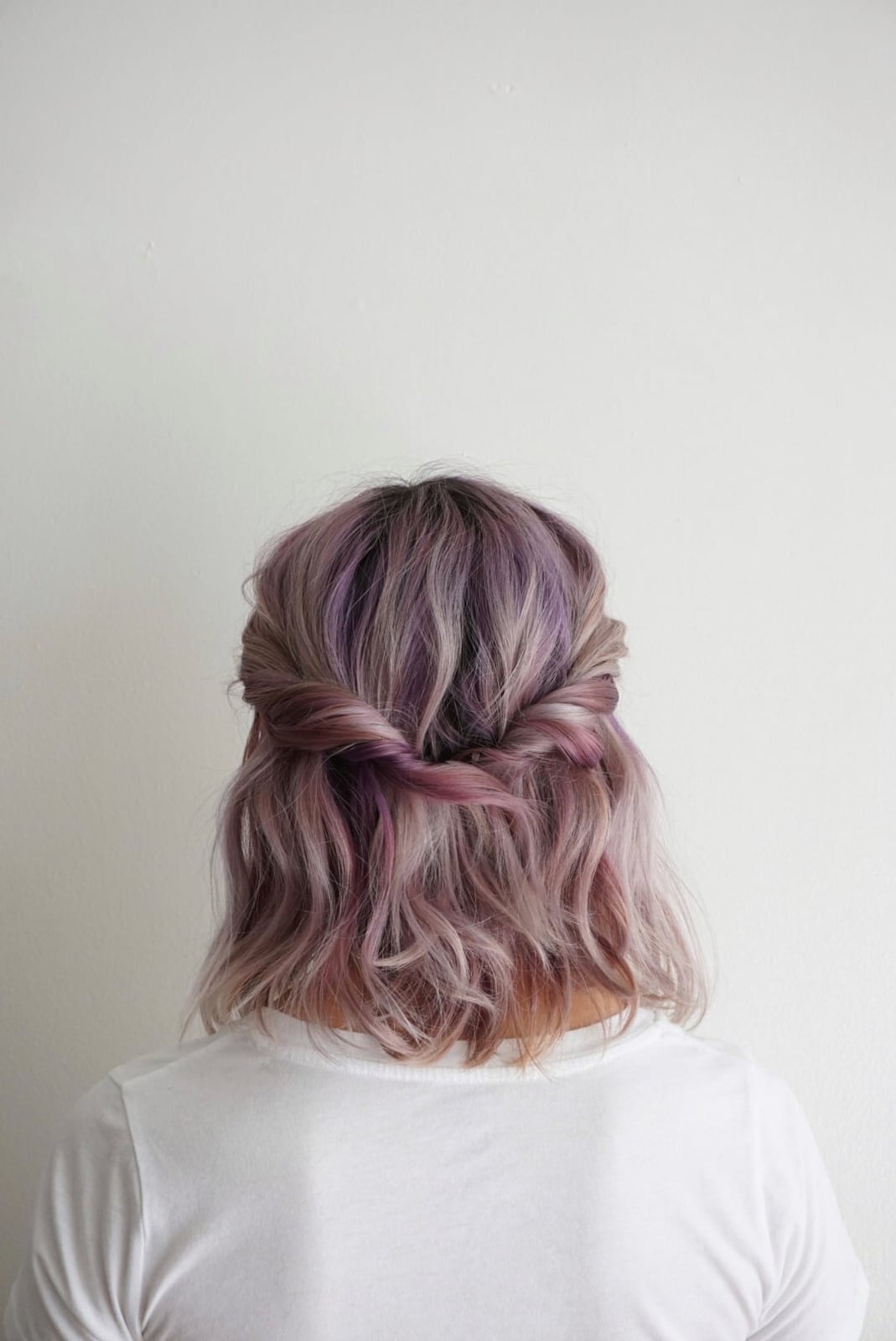
Does a half-up twist actually stay put on wavy, medium-textured hair? Yes, if you twist the sections firmly before pinning. This shoulder-length lob with subtle lighter highlights gets its structure from the twist: it lifts the top layers while the rest of the waves fall loose. The back view shows how the twist anchors the style, keeping it neat without looking stiff. Ask your stylist for: shoulder length lob, half up twist. Secure the twisted sections with bobby pins or a small clip, which takes about five minutes. For fine hair, a light texturizing spray before twisting gives the style more grip. A trim every eight weeks keeps the lob’s ends from looking ragged.
Collarbone Low Messy Bun With Loose Tendrils
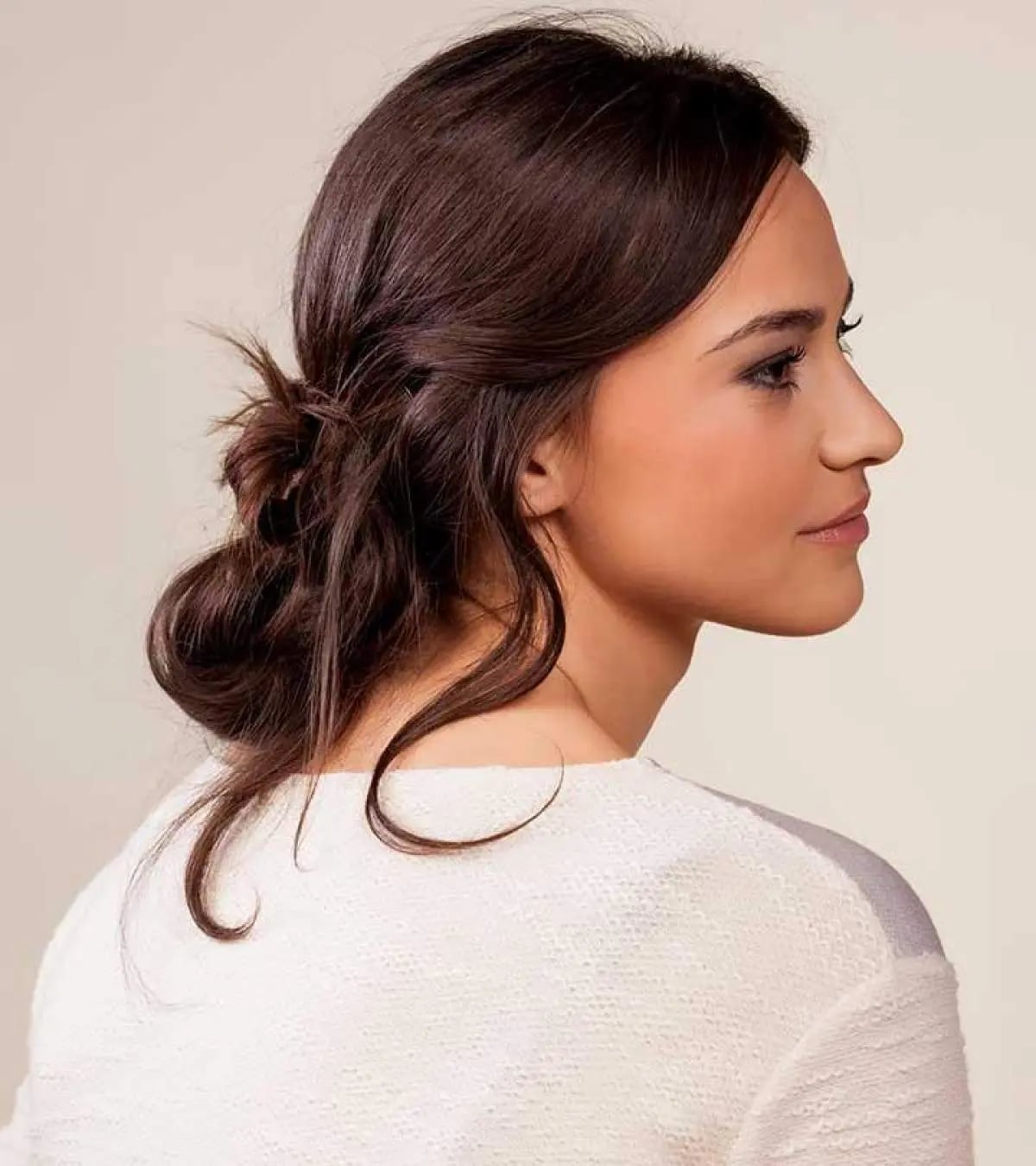
The low messy bun relies on the loose tendrils to do all the flattering work. With collarbone-length dark brown wavy hair and a side parting, the bun sits low at the back while the front pieces frame the face, softening the whole effect. The wavy texture helps the tendrils blend into the bun instead of sticking out like stray wires. Ask your stylist for: collarbone length messy bun, face-framing tendrils. Pull out the front pieces after securing the bun for that soft, undone finish. The tendrils can lose their wave by afternoon, so a quick re-twist or a spritz of water brings them back. It is a two-minute fix, not a dealbreaker.
Mid-Back Ponytail With Slide-Up Braid Headband
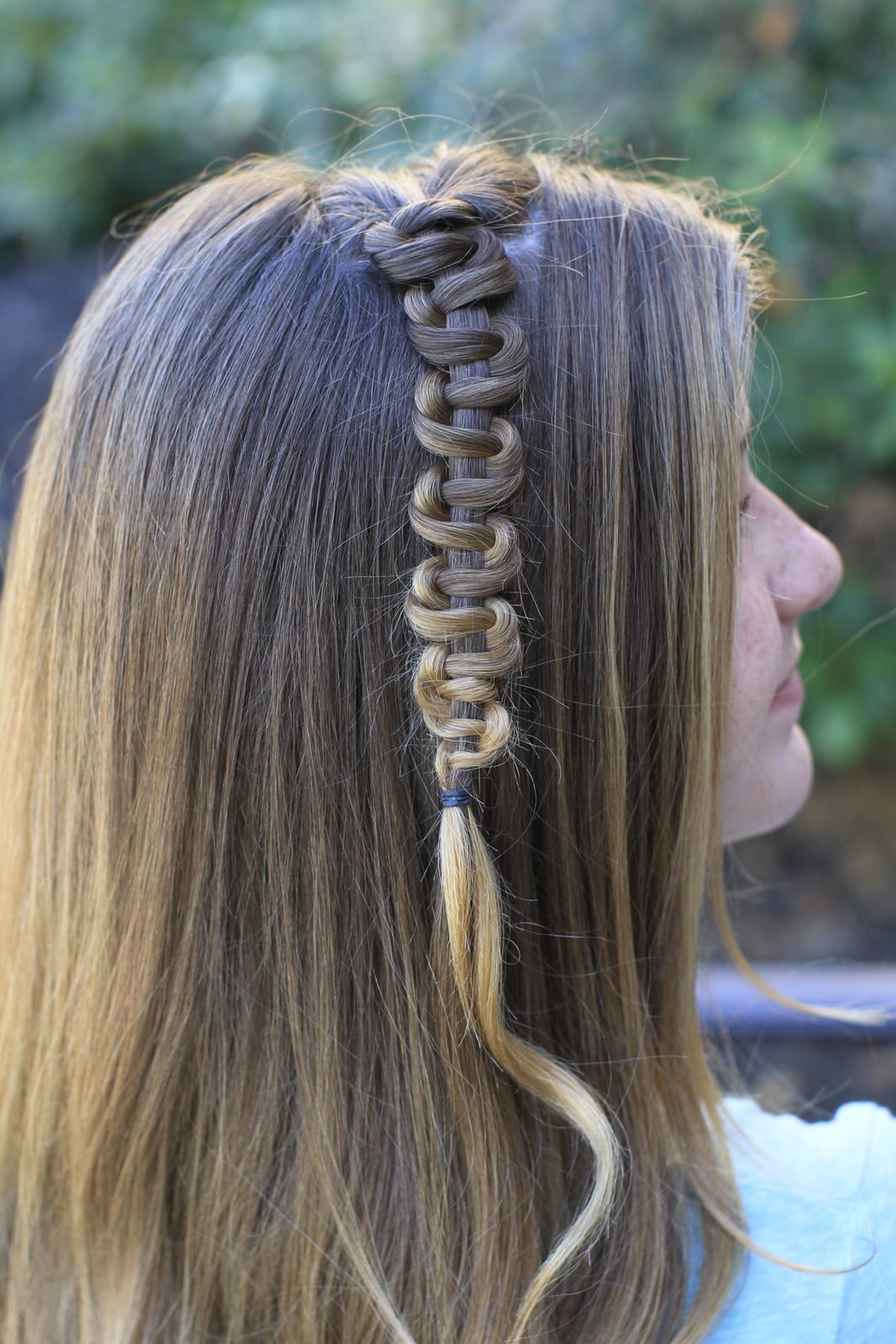
The slide-up braid headband is a clever way to add a braid without losing the ponytail. This mid-back length blonde hair with lighter highlights starts with a middle parting, then a braid is created along the hairline and slid upward to sit like a headband, with the rest gathered into a ponytail. The technique requires a bit of patience: you braid a section from the front, then pull it back and tuck the end under the ponytail elastic. Ask your stylist for: ponytail with a slide-up braid headband. Doing it yourself takes about ten minutes and a couple of bobby pins, but it is a salon-style result once you get the hang of it. The straight, medium texture keeps the braid smooth and the ponytail sleek.
Mid-Back High Ponytail With Scrunchie Sections
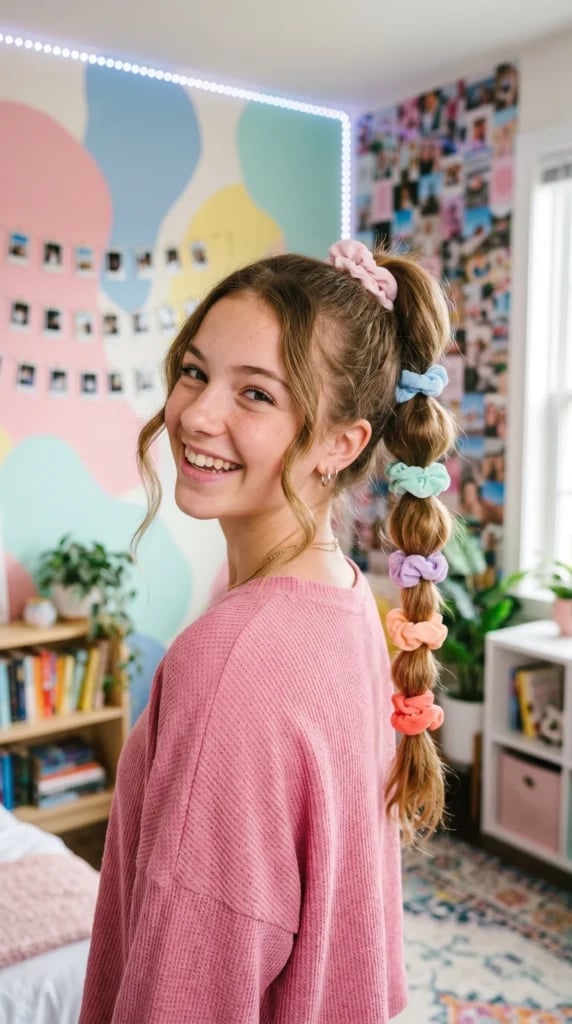
The scrunchie sections turn an ordinary high ponytail into a playful, bubble-like style that suits casual school days and weekend hangouts. Light brown wavy hair is pulled high on the head with a side parting, then segmented with colorful scrunchies spaced evenly down the length. The waves give each section a soft, full shape, and the scrunchies keep the hair out of your face while adding a pop of color. Ask your stylist for: high ponytail with scrunchie sections. You can easily recreate this at home in a few minutes, using three or four scrunchies depending on your length. The key is to space them evenly and gently tug each section to create the bubble effect. It is a simple hairstyle for teens that holds all day, even through gym class.
Mid-Back Double Braids
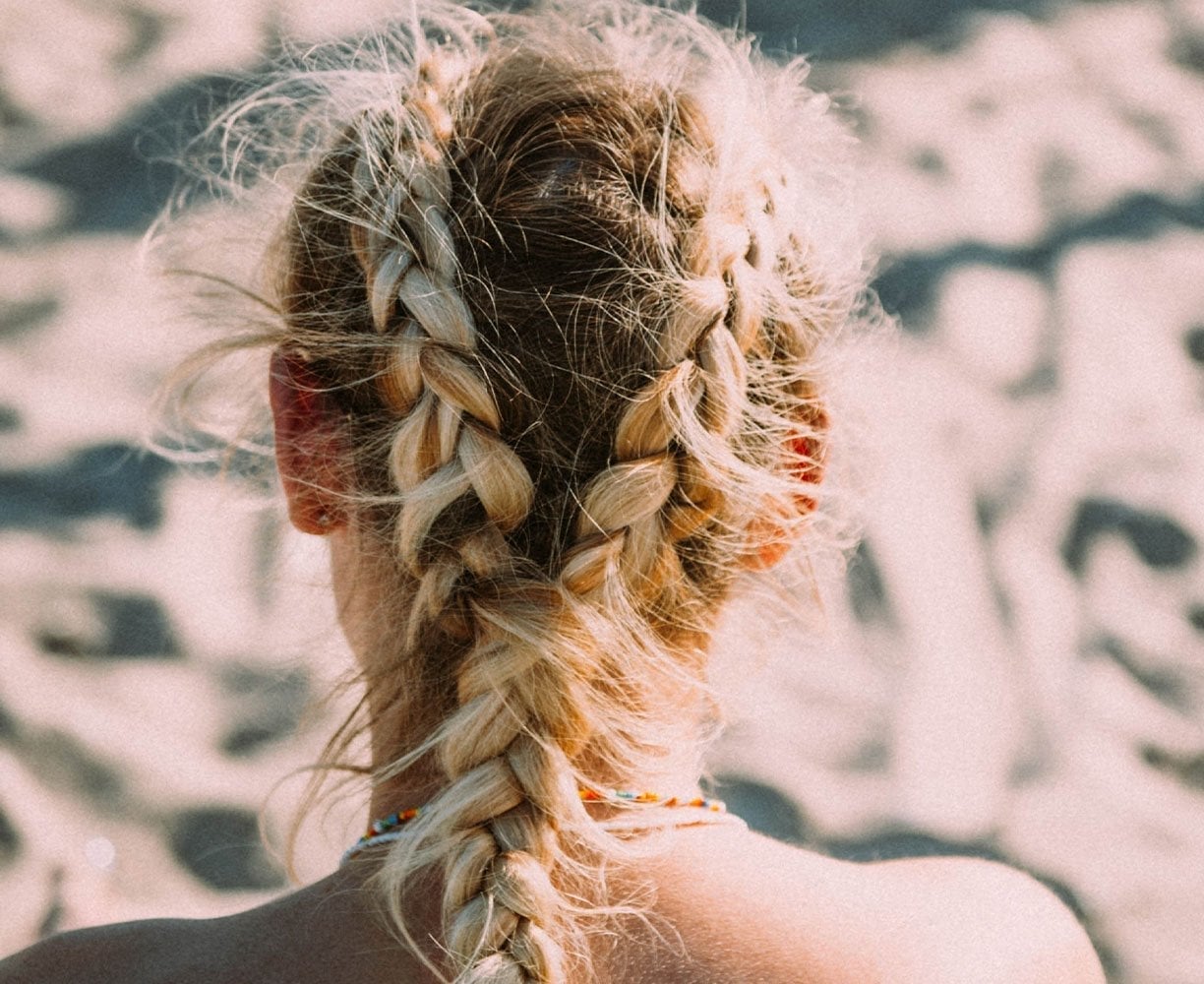
Two braids are faster than one to section, and the payoff is double the visual weight. The wavy, medium-density hair here fills out each braid nicely, so they don’t look stringy or thin. A middle parting splits the blonde-with-highlights base evenly, keeping the whole thing symmetrical from the back. Ask your stylist for: mid-back length, two loose braids.
This is more of a texture trick than a cut: long layers prevent the braids from bunching at the ends, and the wavy texture gives them grip without extra product. Wavy medium-density hair of mid-back length is the sweet spot, because the braids sit full without being heavy. Braid loosely on damp or dry hair for a softer finish, and you have a style that stays put through gym class or a study session.
Long Hair Half Up With Side Braid
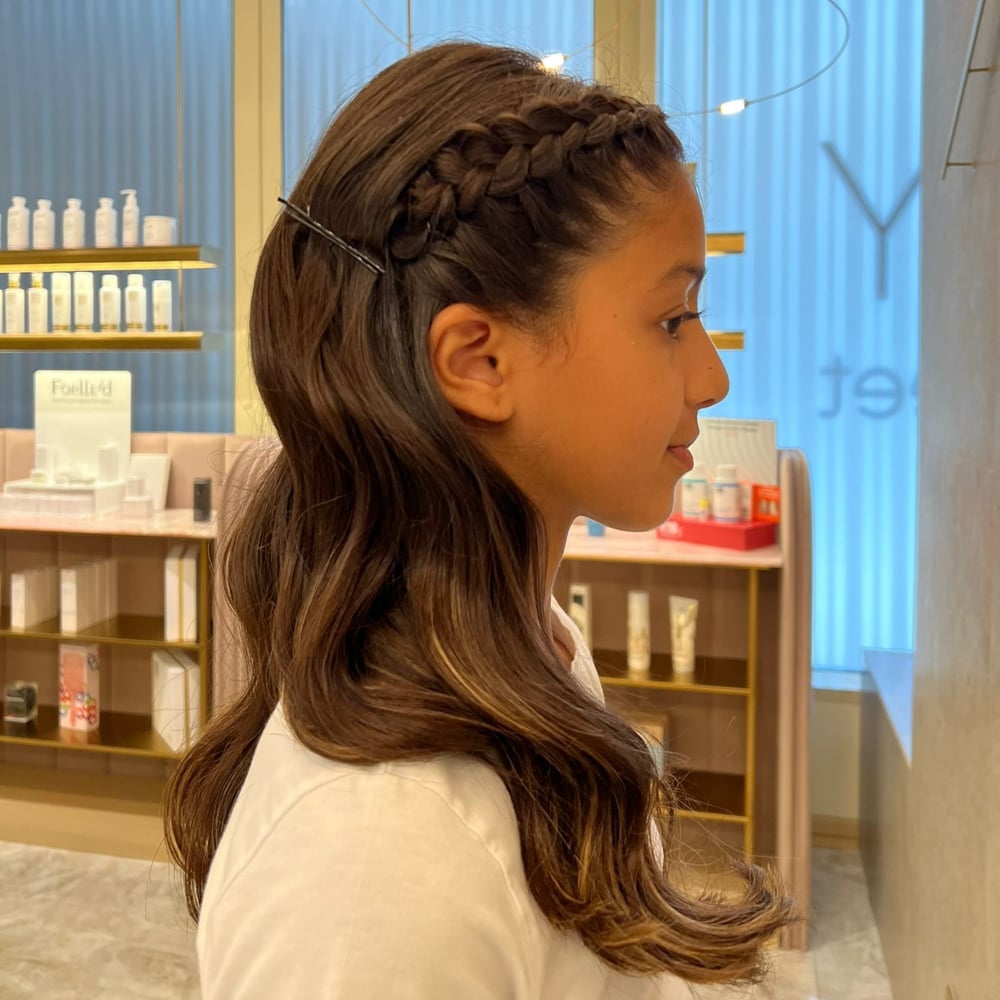
The braid on one side is a deliberate detail. But it does demand a reset after a day of wear, because the braid will loosen and the waves will drop. Start the braid from the hairline, sweep it back, and secure it with a bobby pin behind the ear. Ask your stylist for: long hair, half up with a side braid.
The hair falls in soft waves, so the overall effect is structured on top and relaxed below. This style works best on wavy medium hair of long length, since the braid needs enough slip to weave cleanly and the loose waves need enough weight to hang well. A heat protectant before curling helps the waves hold their shape, and a spritz of hairspray on the braid keeps the edges tidy.
Collarbone Layers With Curtain Bangs
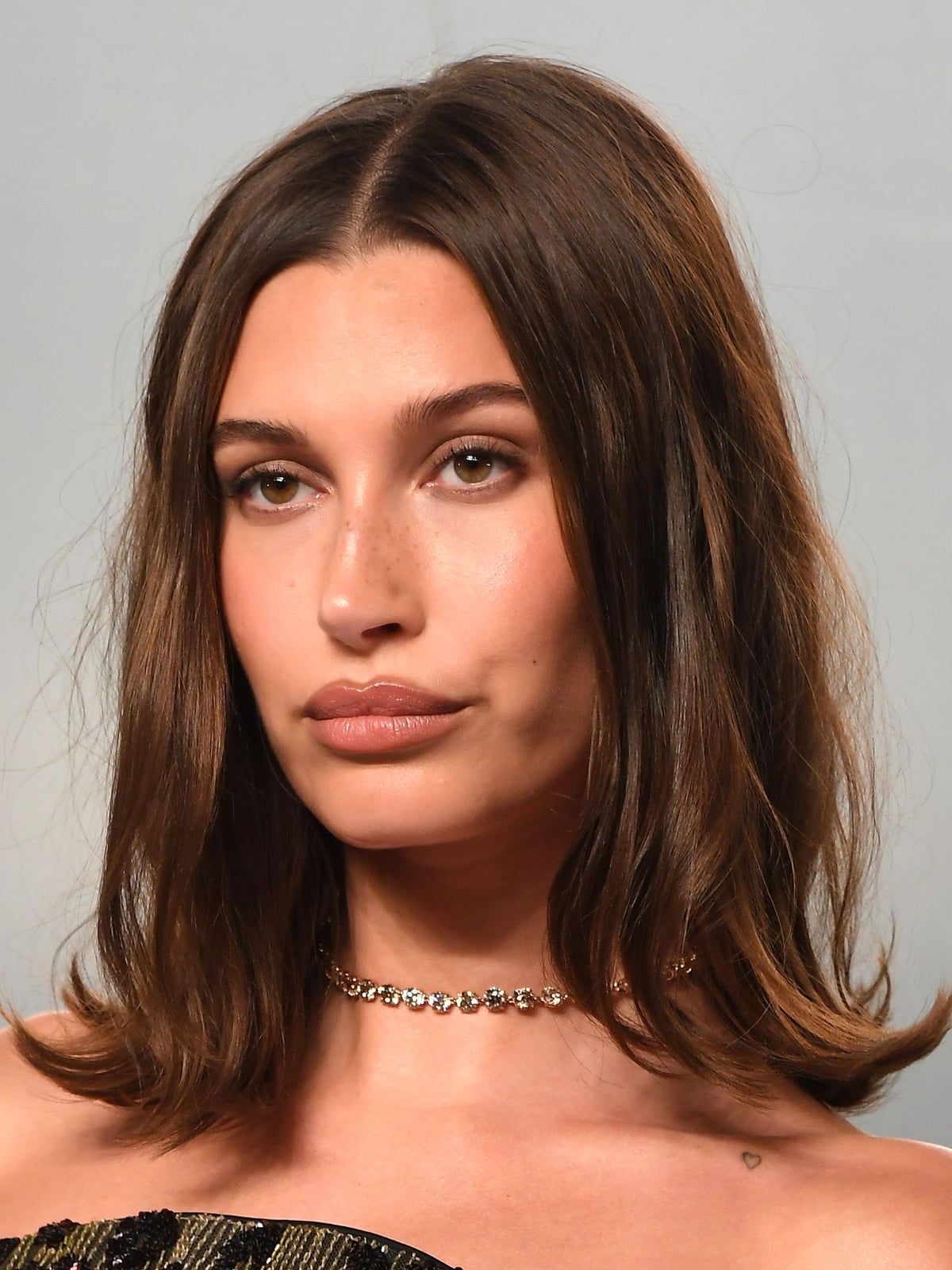
The mistake people make with collarbone layers and curtain bangs is thinking they are a wash-and-wear cut. The face-framing layers here are polished, not shaggy, and that requires a round brush and a blow-dryer to get the outward curl at the ends. Without styling, the bangs can fall flat and the layers can look choppy. Ask your stylist for: collarbone length layers, curtain bangs, soft waves.
Mid-Back Loose Curls With Sparkly Clips
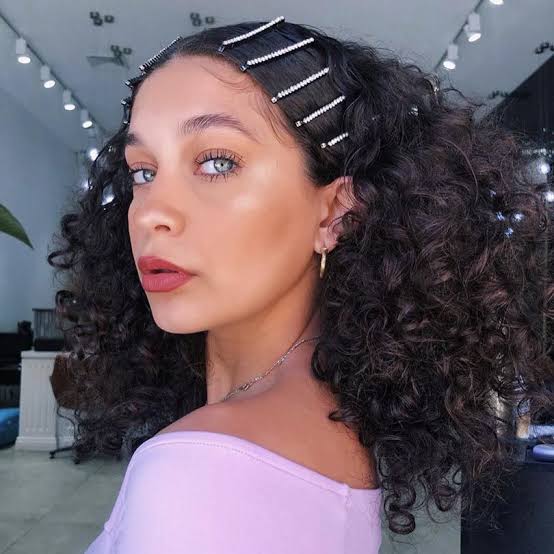
This is a pure DIY move, which means you control the intensity. For tighter curls, scrunch more product in and dry with a diffuser. For looser waves, twist sections around your finger and let them set. The side part gives the clips more real estate to land on, and the thick dark brown base makes the sparkly finish pop without competing for attention.
Mid-Back Braided Ponytail
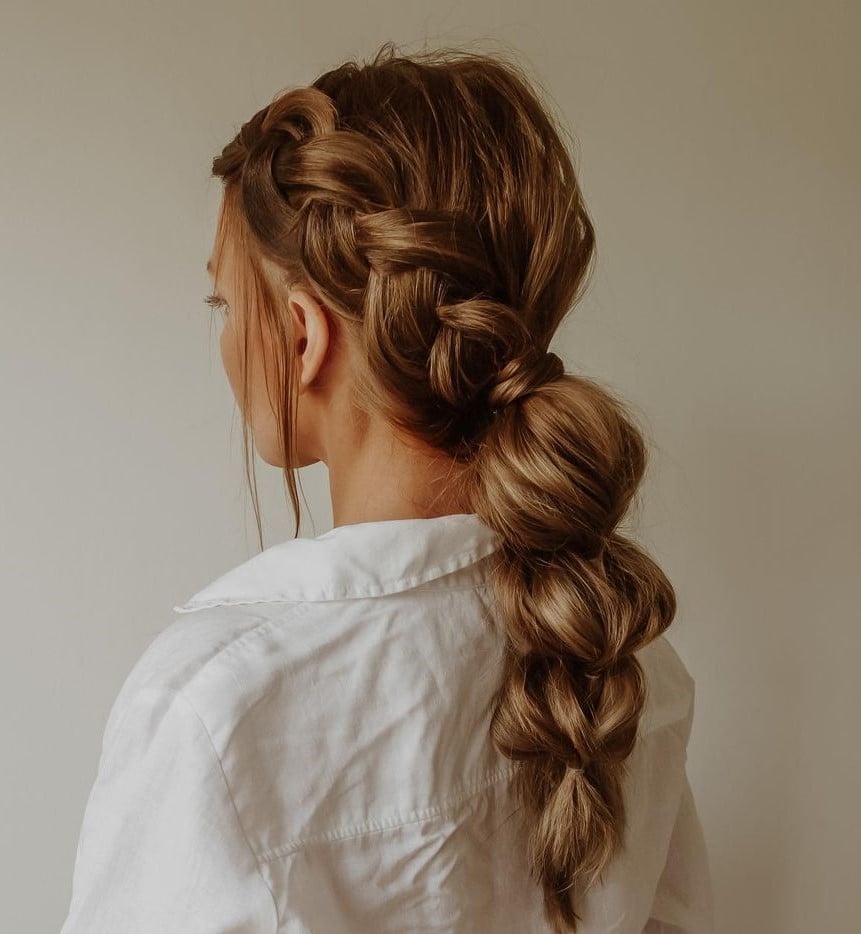
The bubble braid effect is built by sectioning the ponytail into even segments and gently pulling each one wider. The brown-with-blonde-highlights base gives the bubbles a dimensional look, and the wavy thick texture keeps each section from slipping apart. A side parting adds a little asymmetry so the ponytail lands off-center. Ask your stylist for: mid-back length braided ponytail, bubble braid effect.
Technically, this is a ponytail with a braid on top, so it helps to start with hair that has some grip from texture spray or second-day wave. Secure the ponytail at the crown, braid it to the ends, then tug each section outward until the bubbles form. The long layers in the cut prevent the braid from looking bulky at the base, and the thick texture fills the bubbles evenly.
Medium Ponytail With V-Shaped Braid
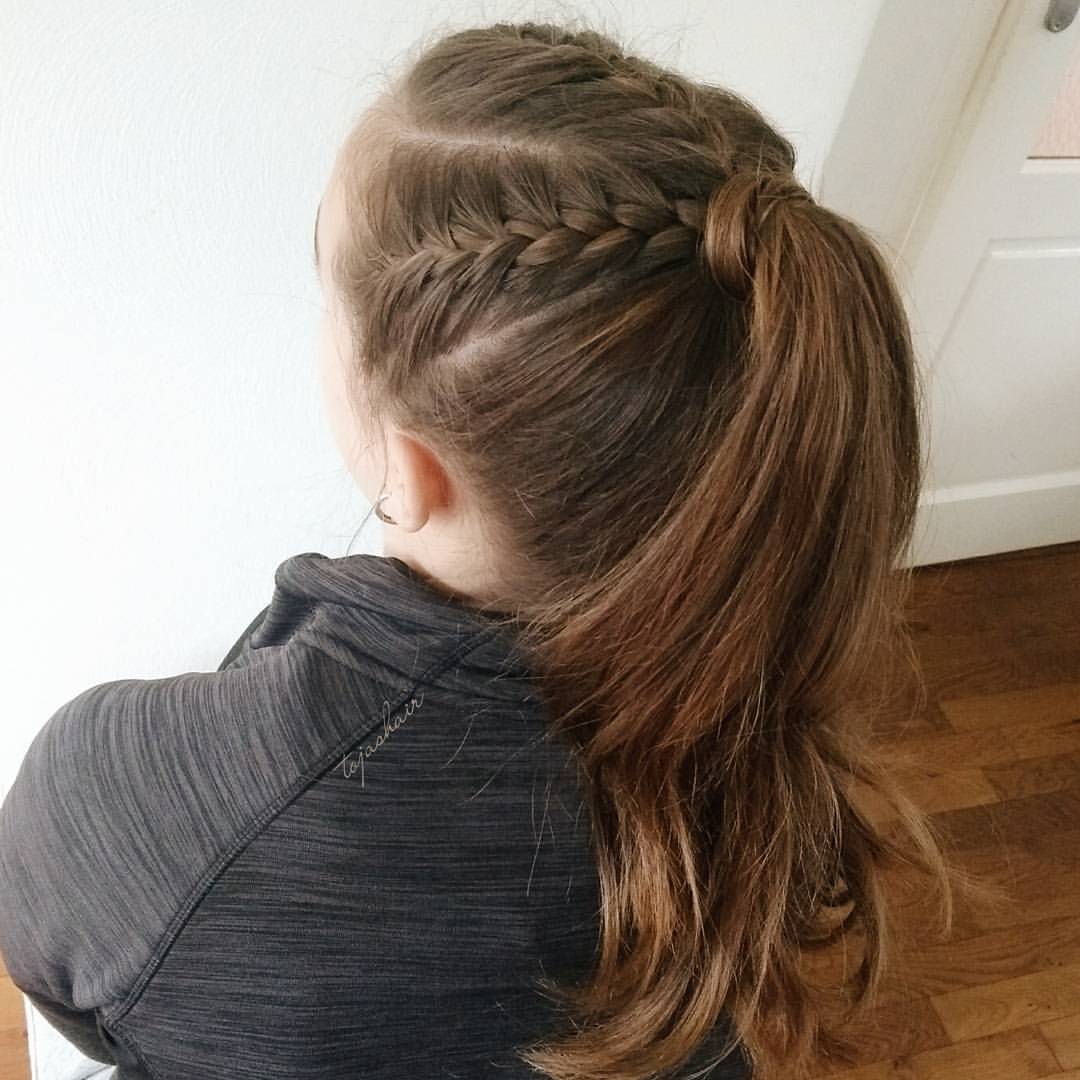
Most ponytails just pull hair back and call it a day, but this one builds in a V-shaped braid that makes the style feel like it took more effort than it actually did. It works best on straight medium hair, since the braid needs a clean surface to read properly. Ask your stylist for: medium ponytail with v-shaped braid. The braid is worked into the section before the elastic, so the V-shape sits right at the crown. A side parting keeps the whole thing from looking too symmetrical. Compared to a plain ponytail, this version holds its shape all day without slipping, and it hides any awkward grow-out at the roots.
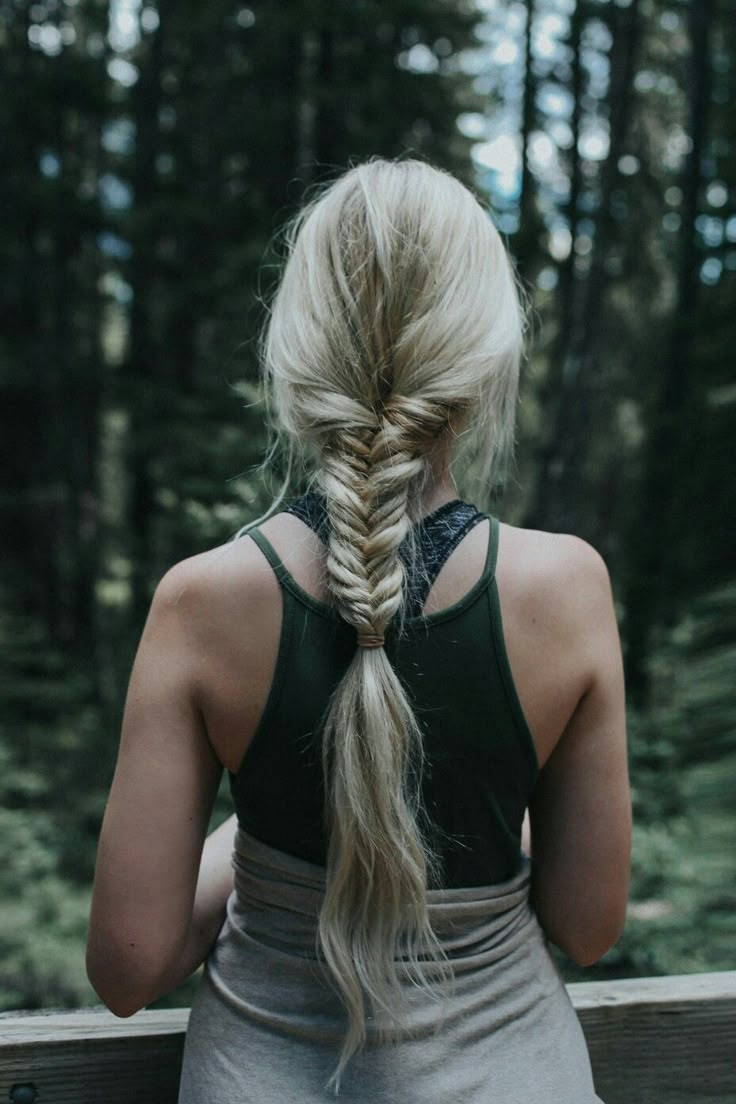
Mid-Back Fishtail Braid With Flowers
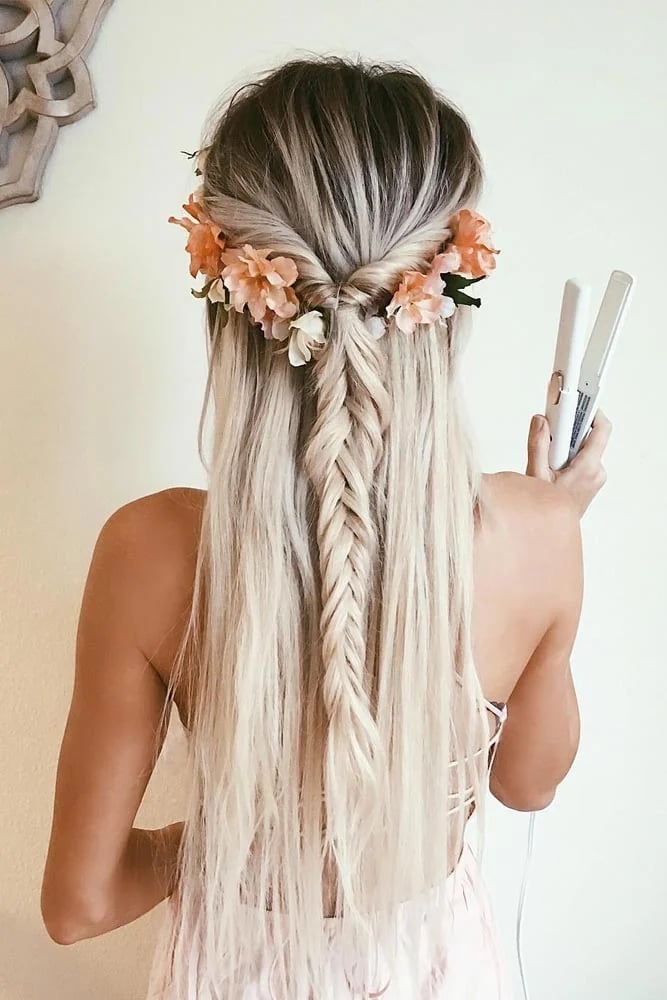
The fishtail braid already looks more intricate than a standard three-strand, but adding small flowers along the crown pushes it firmly into special-occasion territory. The ash blonde base with visible dark roots gives the style some depth, so the braid reads as textured rather than flat. Ask your stylist for: mid-back fishtail braid, half up with flowers. The top section is pulled up and pinned before the fishtail begins, which keeps the flowers visible and the braid from pulling at the scalp. Fine straight hair actually holds a fishtail better than thick hair, since each section stays distinct. This one works for school dances or holiday dinners, anywhere you want the hair to match the event.
Getting the braid right takes about twenty minutes with practice, but the flowers should be added last so they don’t get tangled. A clear elastic at the end keeps the fishtail from unraveling before you even walk out the door.
Mid-Back Braided Crown And Fishtail
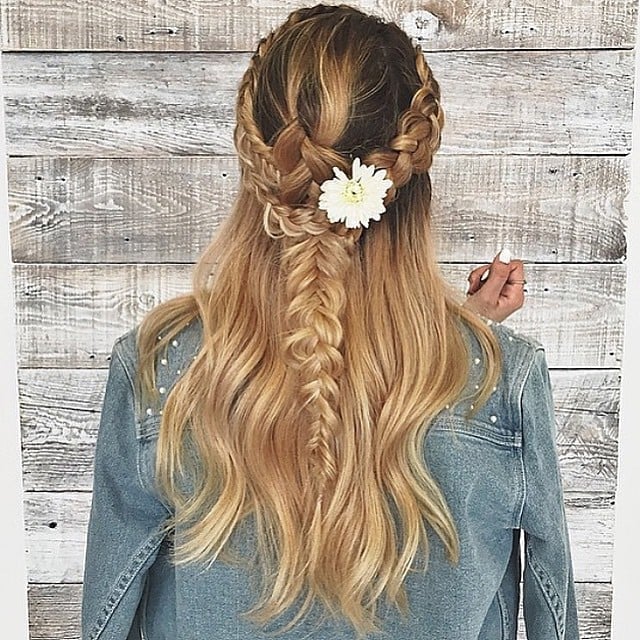
This style looks intricate but requires a friend with pin skills. The braided crown wraps around the front hairline and feeds into a central fishtail, with the remaining hair left in loose waves. Thick wavy hair is ideal because the crown braid needs density to stay visible and the waves add volume to the length. Ask your stylist for: mid-back length braided crown and fishtail braid. The middle parting keeps both sides even, and the blonde highlights help the braid strands read separately against each other. Frizz is a drawback: wavy hair tends to escape braids over a few hours, so apply a smoothing product to the crown beforehand. Skip this if your hair is fine or straight, since the crown will look thin and the fishtail will lack body.
Mid-Back Intricate Braided Hairstyle, Blonde
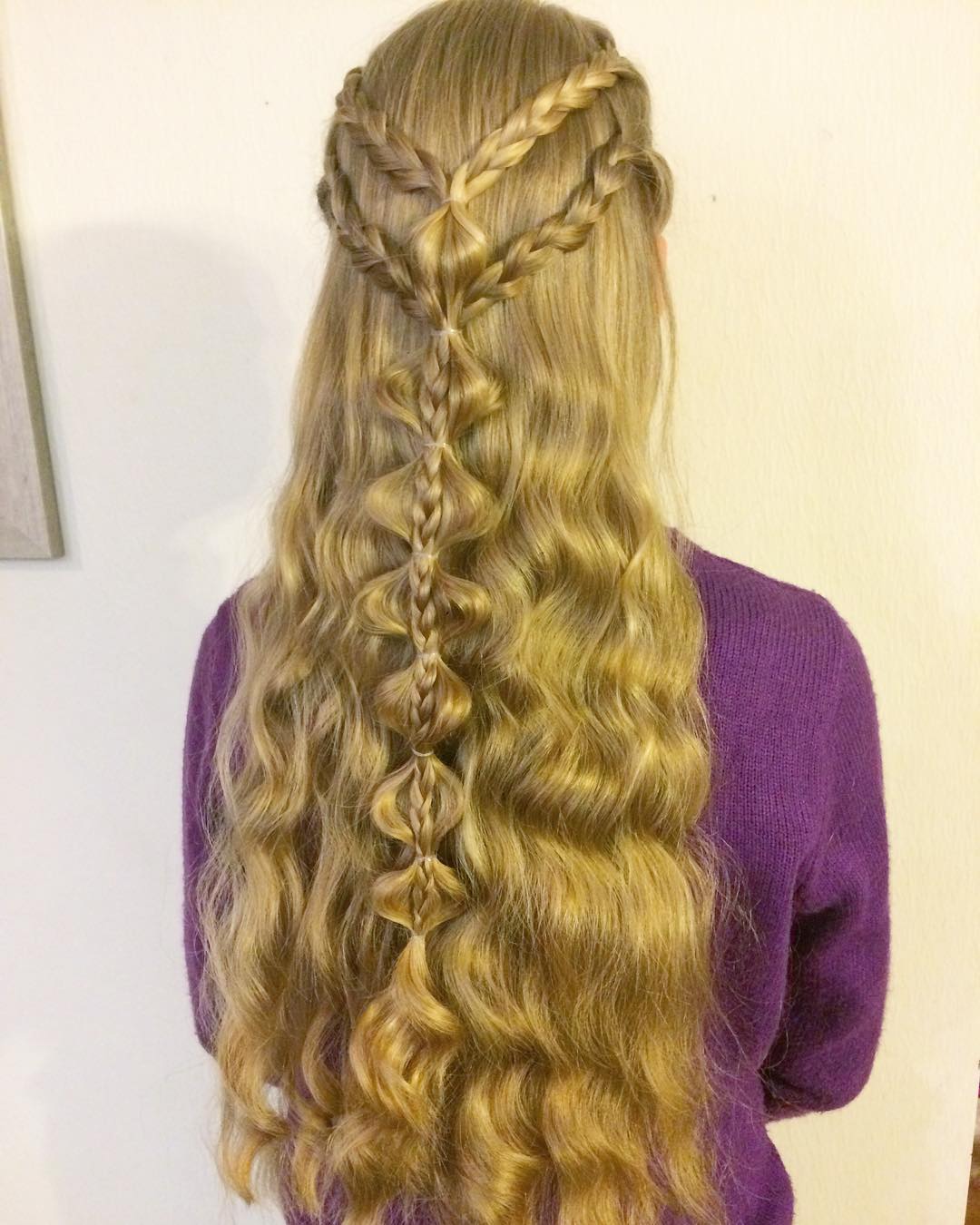
The rule with intricate braiding is that every section needs to be secured before you move to the next one. This style starts with two braids at the temples that meet at the center back, where they merge into a larger braid that continues down the length. Smaller braids are woven in along the way, creating a pattern that looks polished and tidy. Ask your stylist for: mid-back length intricate braided hairstyle. Thick wavy hair holds these sections best, since the texture grips the strands and keeps them from sliding out. The blonde color helps, because lighter tones make the crossing points visible even from a distance. This is a salon-only style, not something to attempt at 7 am before school.
Mid-Back Half Up Half Down With Twisted Style
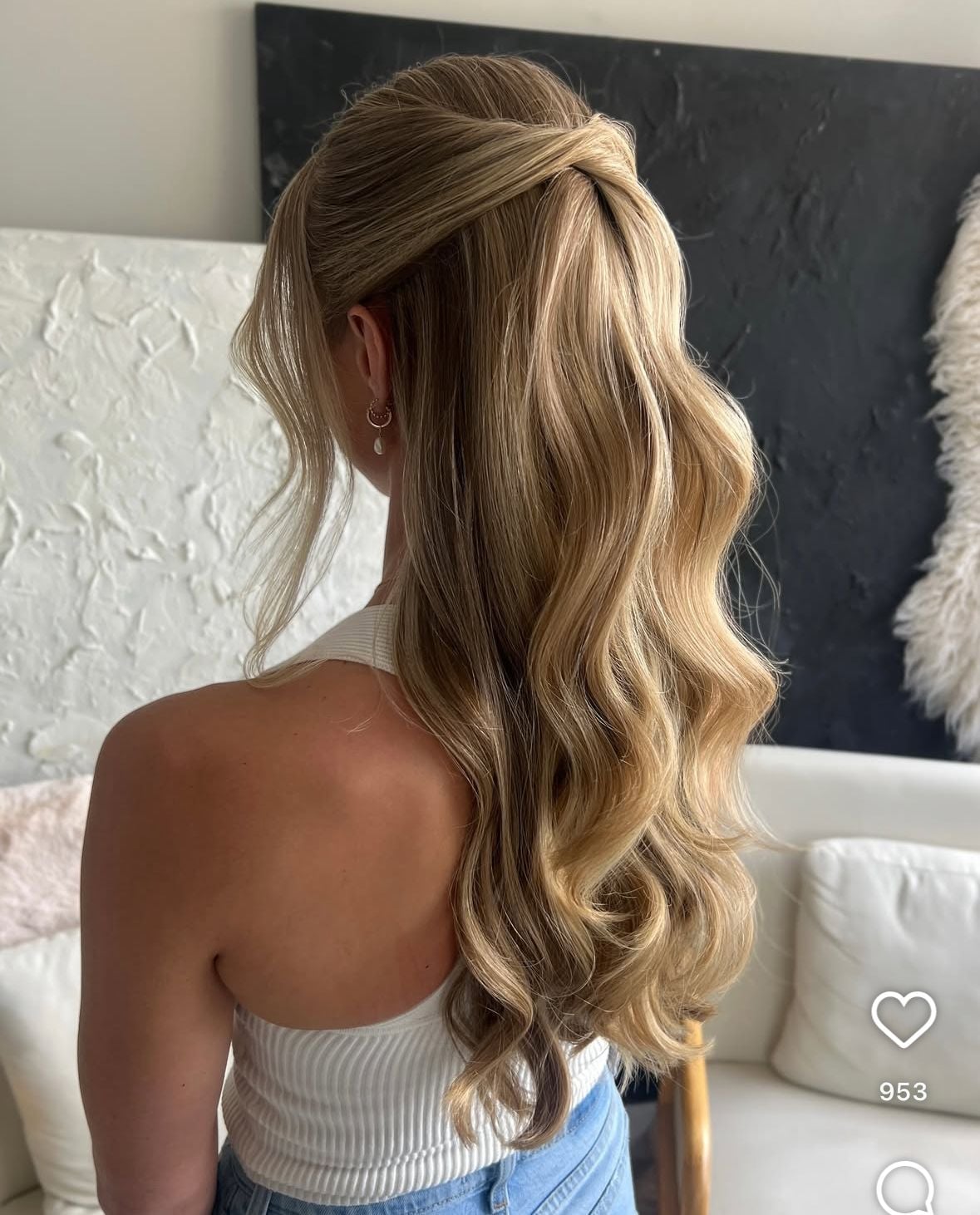
A half-up twist can look polished at 9 am and slightly defeated by lunch, so the trick is to twist tightly and pin securely. This version takes the top section from a side parting, twists it back, and secures it at the crown, leaving the rest in loose waves. Fine wavy hair actually benefits here, since the twist adds height that fine hair often lacks. Ask your stylist for: mid-back length half up half down, twisted top section. The side-swept bangs are swept forward to soften the front, and the blonde highlights give the waves some depth. Upkeep is minimal: a trim every eight weeks keeps the ends from looking stringy, and the twist can be redone in about five minutes if it loosens. It is not a set-and-forget style, but it is close.
Final Thoughts
For low-maintenance teens, stick with air-dried textures, simple ponytails, and cuts that do not demand heat styling. If you have more time or enjoy the process, intricate braids and half-up twists give you room to play. Fine hair holds shape better with blunt ends and light layers; thicker textures can carry more weight without falling flat.
- Trim layered cuts every six to eight weeks to maintain shape.
- Refresh blonde highlights with a purple shampoo once a week to prevent brassiness.
- Protect wavy and fine hair from heat with a spray before using styling tools.
- Wash and condition hair based on texture and activity level, typically 2-3 times per week for medium density.
- Re-braid or re-twist styles weekly for longevity if wearing braids for multiple days.
Find your go-to style and wear it with confidence.