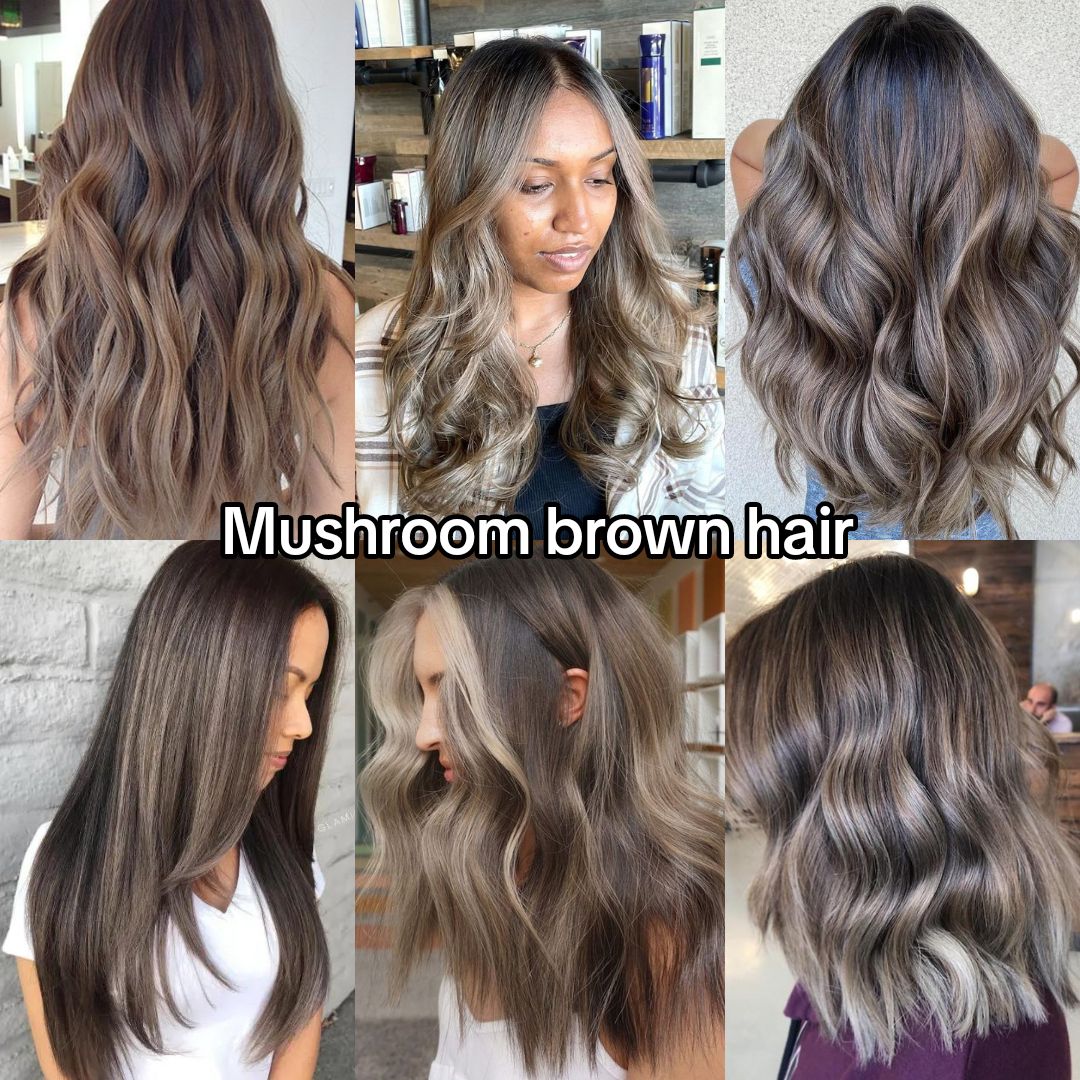
37 Mushroom Brown Hair Color Ideas & Styles
I keep seeing mushroom brown in the chair next to mine. It’s the cool-toned brown that doesn’t go brassy by week three, and it’s everywhere this summer. Not a trend I expected to stick, but it has.
This roundup has 37 ways to wear Mushroom Brown Hair, from a quick root shadow to a full balayage. Some take an hour of styling, others work with air-dry. For fine hair like mine, the ash tones add depth without weight. And the grow-out is honest: you get six weeks before the line shows.
Long Layered Waves With Ash Blonde Balayage
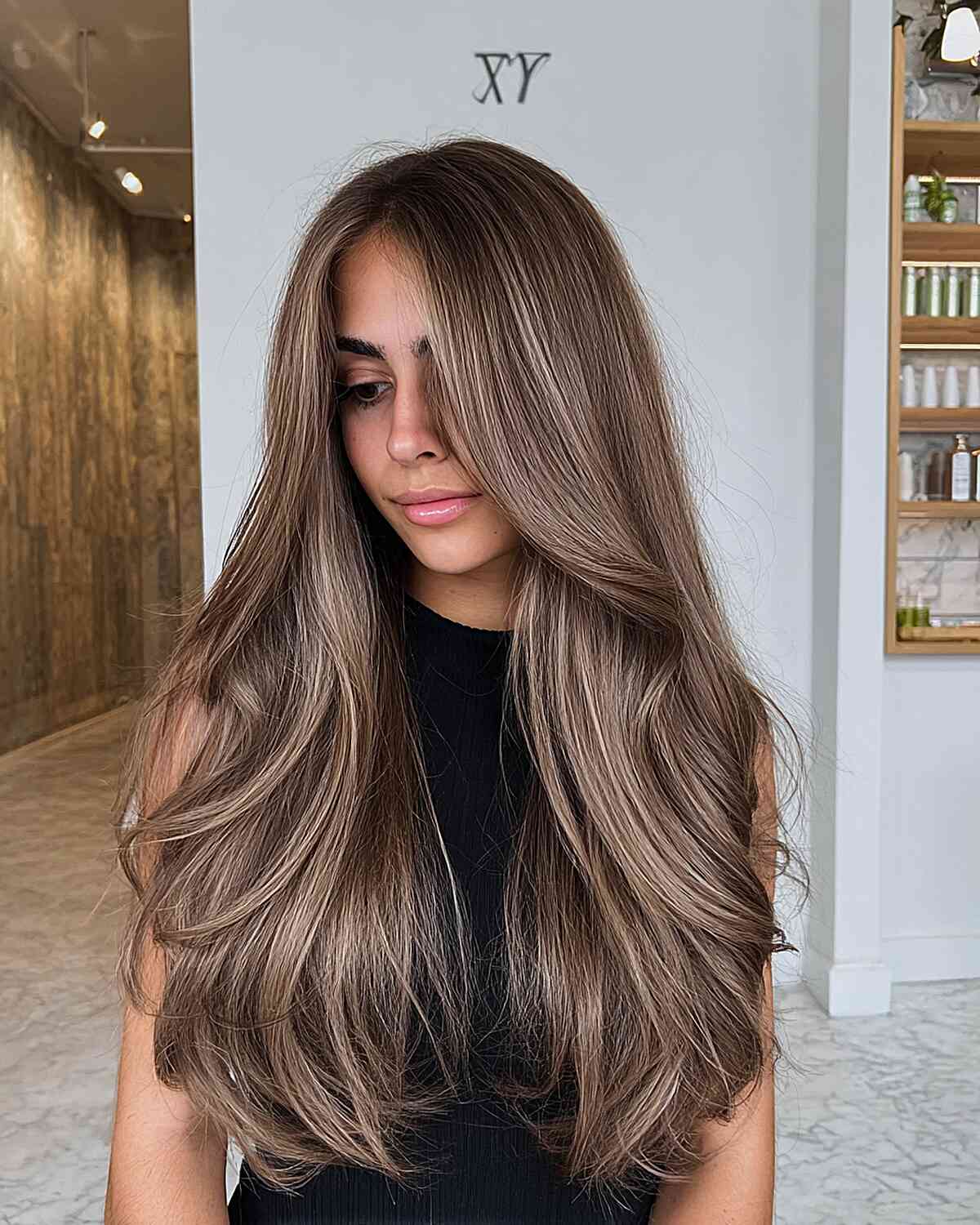
This is mushroom brown with ash blonde balayage, and it does exactly what a cool brunette should: it lives in the middle. Not too dark, not too light, not warm enough to pull golden. The base is a muted mushroom brown, the balayage lifts to a dusty ash blonde, and together they read expensive in a way that has nothing to do with the price tag. The cut is long layers on mid-back length, thick and wavy, side-parted, no bangs. The technique matters here because a balayage that starts low and fades upward keeps the root line soft for months. That means you book a toner refresh every six to eight weeks instead of a full colour. If your hair is fine, the lightness at the ends can read thin. But on medium to thick texture, this is the kind of colour that makes you forget you ever considered highlights.
Collarbone Waves With Subtle Ash Blonde
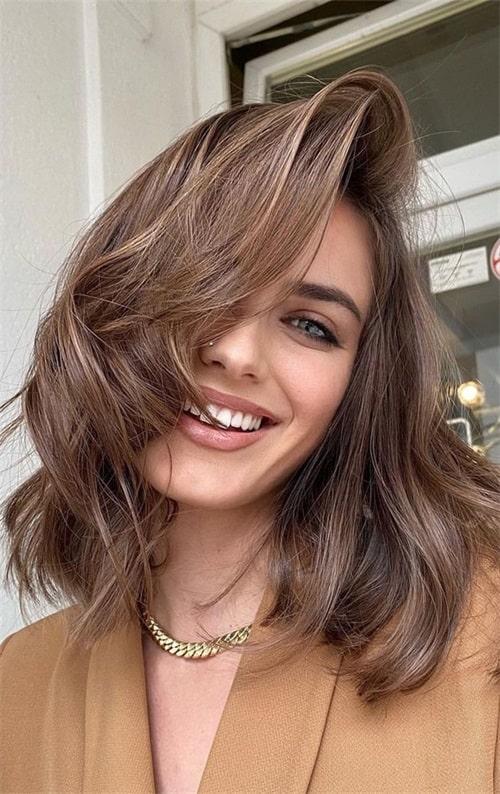
I will take medium brown with ash blonde highlights over a warm caramel every time. Warm browns glow, sure, but they also pull orange by week three. This stays cool. The base is a medium brown, the highlights are fine and spaced, and the ash tone keeps everything in the grey-brown family. Collarbone length, layered, side-swept bangs, wavy texture, medium density. The contrast is low, so the grow-out is gentle. No hard line, no obvious root. If you have ever looked at a warm brunette and thought, that is pretty but it will not be pretty on me, this is the alternative.
Mid-Back Wavy Blowout With Curtain Bangs
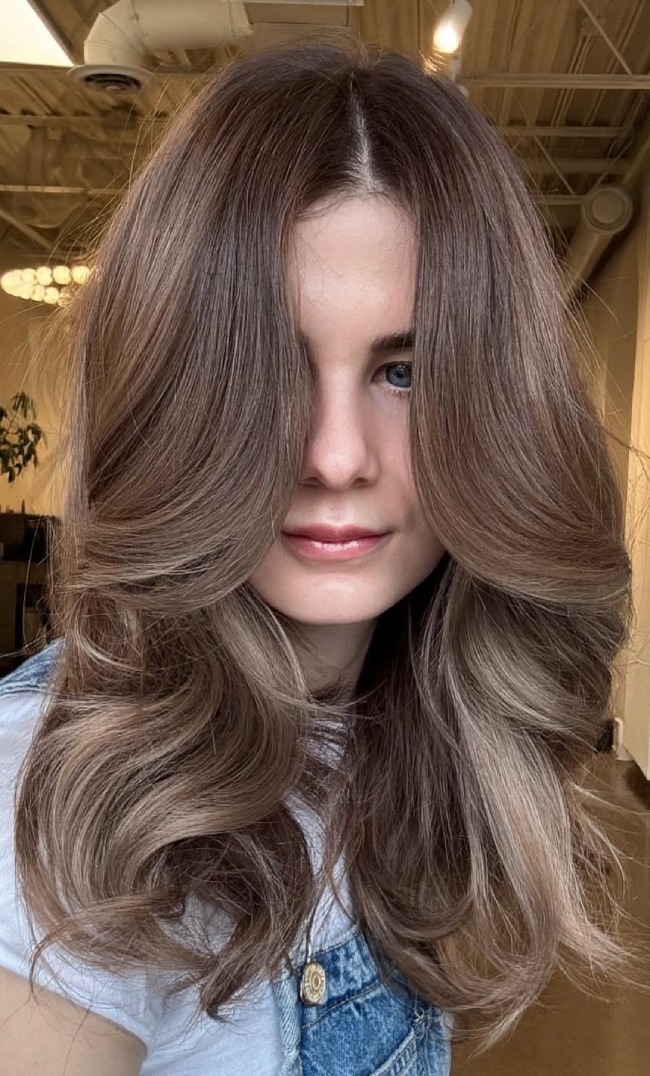
Can a colour make a haircut work harder? This one does. The base is light brown with ash highlights, and the ash tones keep the curtain bangs from disappearing into warmth. Curtain bangs need contrast to read as deliberate, and the cooler highlights provide it. The cut is layered, mid-back length, thick and wavy, middle-parted, styled into a voluminous blowout. The honest downside: ash highlights fade faster than neutral ones. By week 37 they can look dusty instead of dimensional. You will need a toner appointment, and you will need to use a purple-tinged shampoo at home. But for the first two months, the bangs and the colour work together like they planned it.
Sleek Mid-Back Straight With Smoky Ash
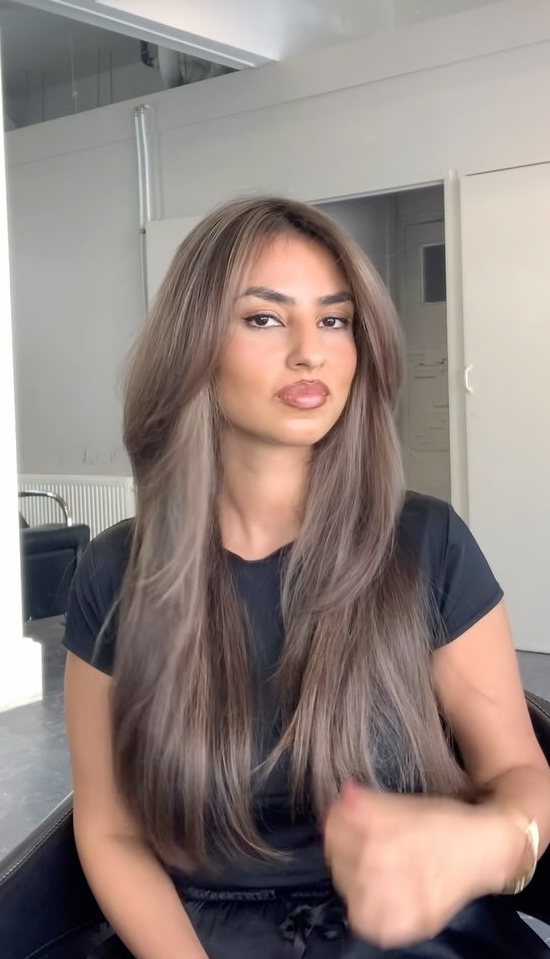
I will admit I did not expect to like smoky ash brown hair this much. Sleek, straight styles usually read flat on me, but the colour carries it. The base is a deep smoky ash brown with cool undertones, mid-back length, layered, centre-parted, straight with a slight wave at the ends. The cool tone catches light in a way warm browns do not. It reflects grey and silver, not gold. The wear is good: straight hair shows less fading than curly, because the cuticle lies flat. The upkeep is a toner every eight to ten weeks and a trim every ten. If your hair is fine, the weight of straight styling helps it hang. If it is coarse, the sleek finish keeps it from looking bulky.
Mushroom Brown Melt With Side Bangs
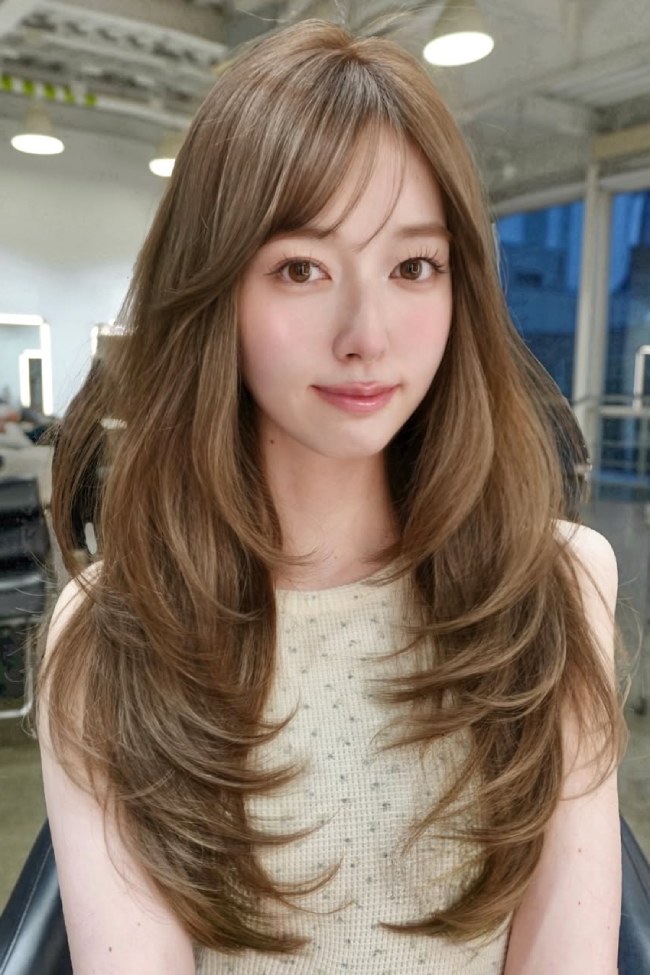
This one got me. Mushroom brown color melt, long layers, mid-back length, thick and wavy, middle-parted, side bangs. The colour is a soft mushroom brown with subtle dimension, no visible line, just a fade into slightly lighter ends. The side bangs soften a square jaw and a round face equally. What to ask the stylist: keep the base dark, fade the melt low, and do not lift past a level six. That keeps the dimension without the brass. If your hair is very fine, the lack of contrast can read flat. But on medium to thick texture, this is the kind of colour that looks intentional without trying.
Cool-Toned Brown With Ash Blonde Balayage
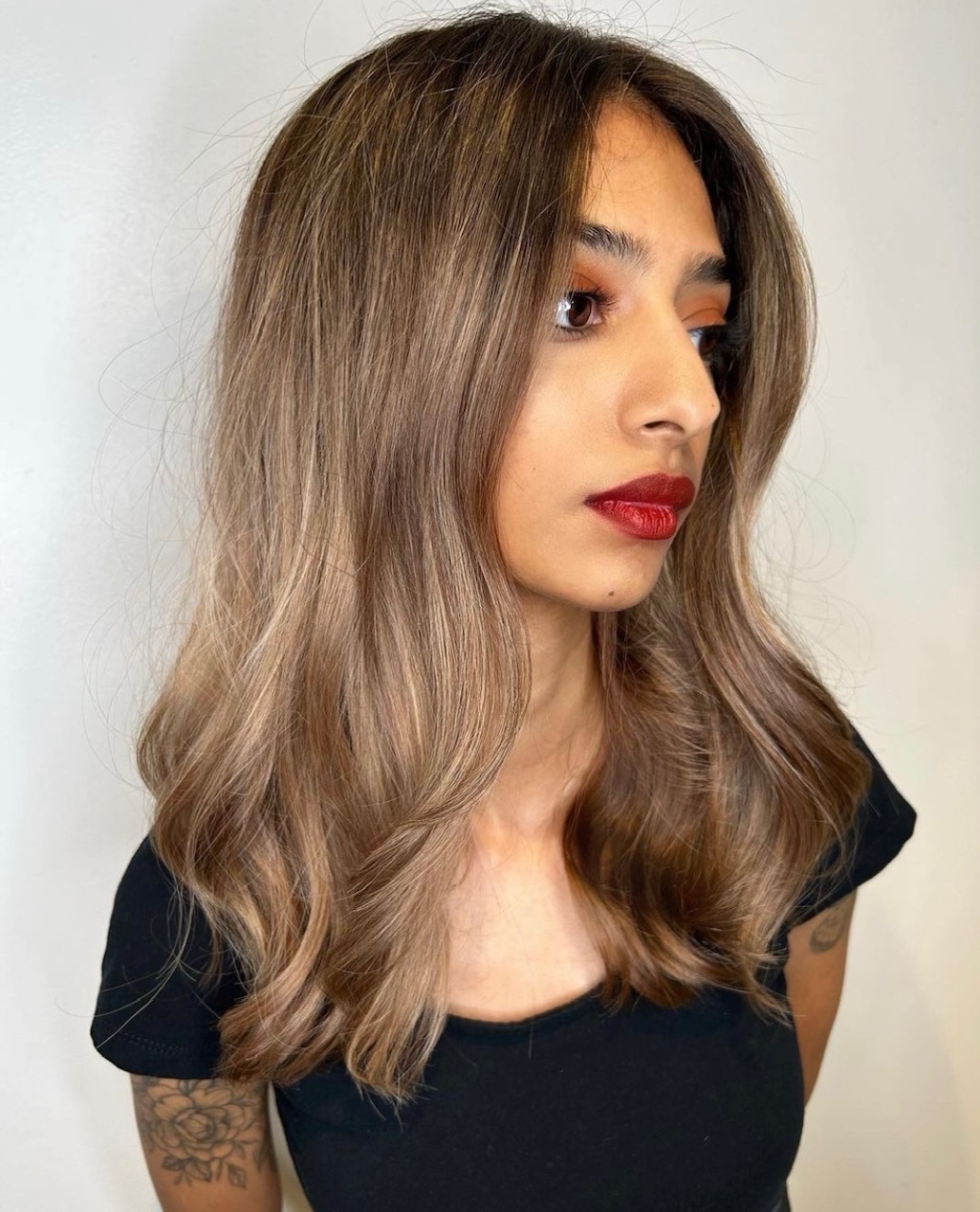
The trick to a smoky balayage is in the placement. The colourist paints the ash blonde onto a cool toned mushroom brown base, keeping the light sections concentrated around the mid-lengths and ends. At mid-back length, the blended transition creates a soft, dusty effect that never reads harsh. On loose, flowing waves, the cool tones catch the light without going brassy. It’s a deliberate, low-contrast look.
Shoulder Length Wavy Blowout With Curtain Bangs
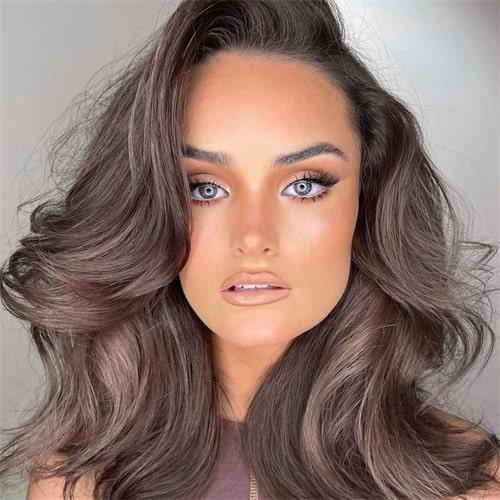
There’s a moment in late spring when medium brown starts feeling heavy. That’s when ash-blonde highlights earn their place. Lifted through the mid-lengths and into the curtain bangs, they keep the shoulder-length waves from falling flat. The cool tone reads crisp against humidity, and the blowout holds its shape without product. It’s brown with a fresh, smoky edge that suits the season without trying too hard. The curtain bangs add movement, and the middle parting keeps the volume balanced. It’s a spring refresh that doesn’t scream for attention.
Mid-Back Waves With Curtain Bangs and Balayage
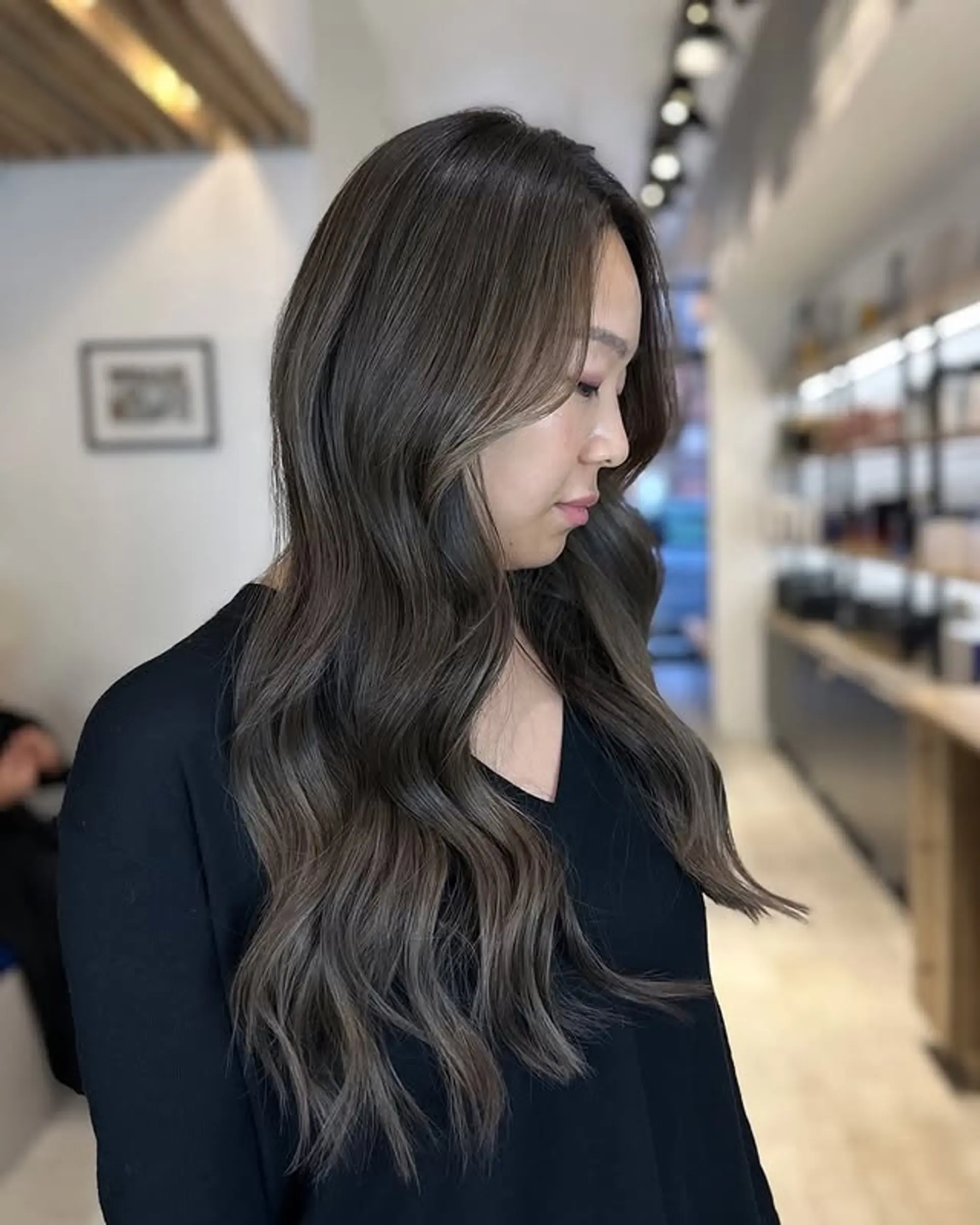
Can you get this look at home? Short answer: not really. Balayage is a hand-painted technique that requires a colourist to see the placement in three dimensions. The mushroom brown base with ash blonde balayage relies on soft, sweeping strokes that are hard to replicate on your own head. At mid-back length with thick, wavy texture, the colour needs to be distributed evenly through the layers. The curtain bangs add another challenge, because the light pieces need to hit the right spots around the face.
Your best bet is to book a consultation and bring a photo. The colourist will paint the ash blonde onto the mushroom brown base, keeping the transition soft and smoky. For the waves, a large-barrel curling iron and a heat protectant will get you close to the look. It’s a salon colour, but the styling is doable at home.
Mid-Length Waves With Subtle Ash Highlights
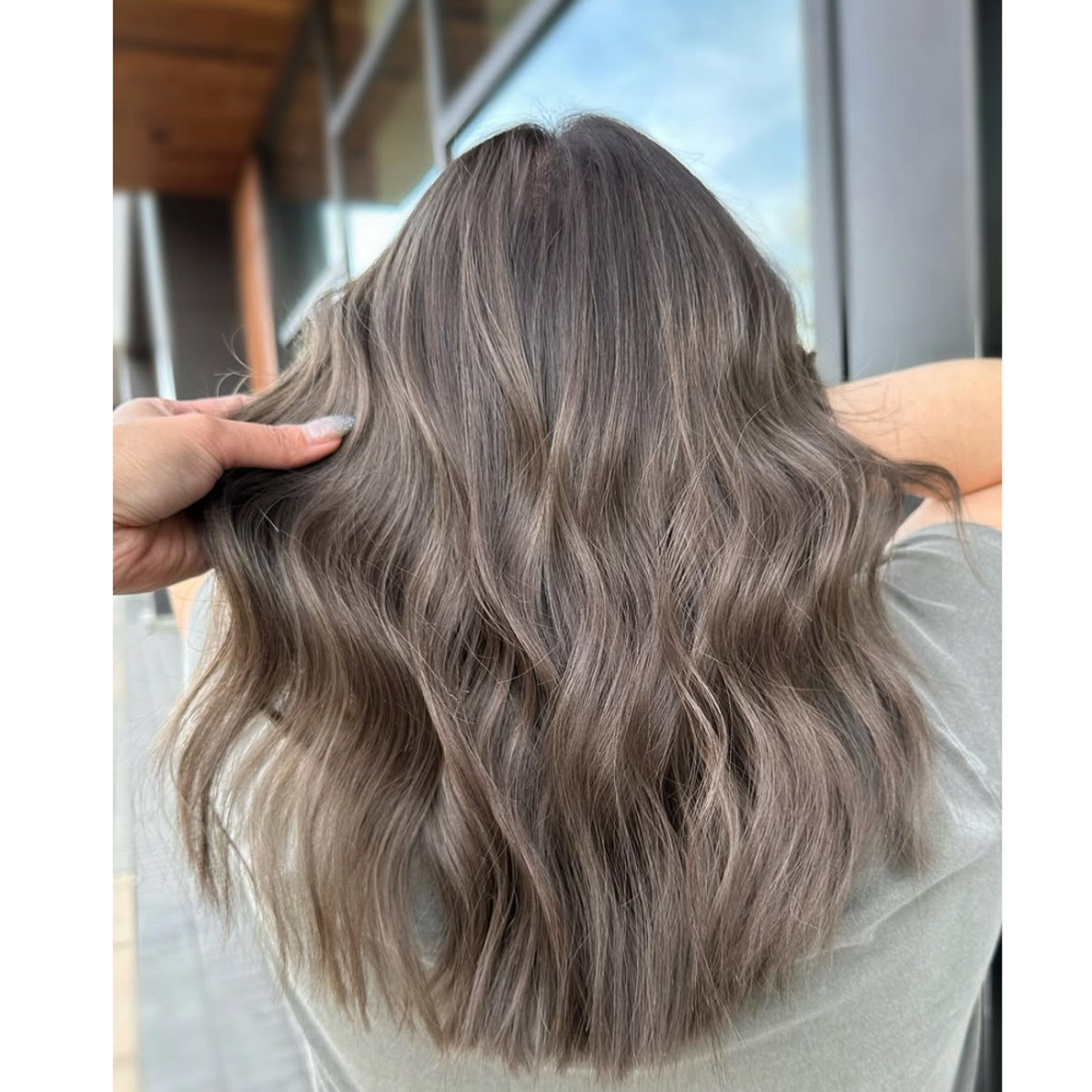
The grow-out on this is nearly invisible. The subtle ash-toned highlights are woven so close to the mushroom brown base that there is no harsh line when the roots come in. At mid-back length with loose waves, the colour looks dimensional without obvious regrowth. The highlights are concentrated around the mid-lengths and ends, so the top stays dark and low-maintenance. A toner every eight to ten weeks keeps the ash tone from warming up, but honestly, you could stretch it longer without looking undone.
During the week, the waves soften the colour transitions, so even on day three, the highlights still catch the light. The medium density texture helps the waves hold without falling flat. The lack of bangs means less daily styling, and the middle parting keeps the colour distribution even. It’s a set-it-and-forget-it colour that still looks intentional.
Chin Length Blunt Lob With Side-Swept Bangs
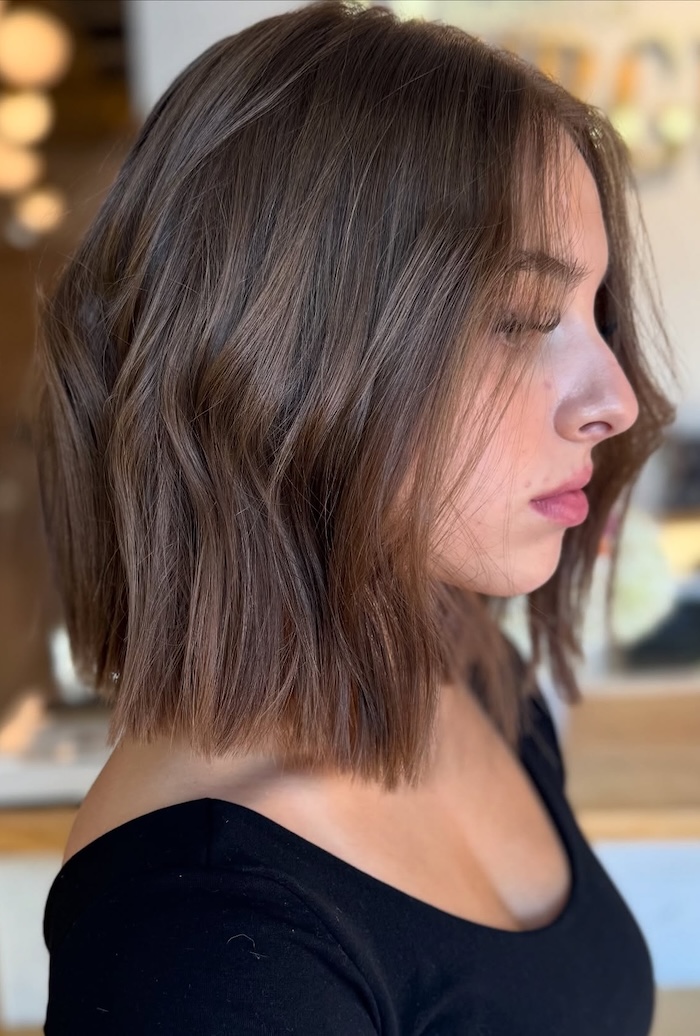
A chin-length blunt lob on fine hair is a gamble that pays off when the tone is right. The ash beige mushroom brown base adds cool depth without weighing the texture down. The single-process colour keeps the tone uniform, and the blunt baseline creates the illusion of density. The side-swept bangs soften the severe line. The honest downside: the blunt cut shows every split end, so trims are non-negotiable.
Long Layered Back With Cool-Toned Depth
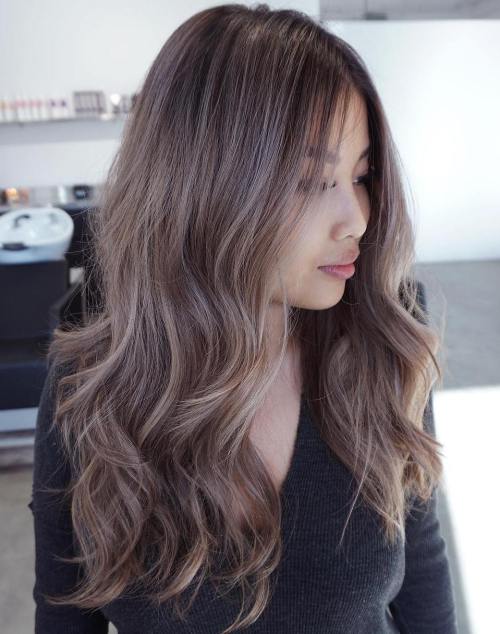
Have you ever looked at a warm brown and thought, that’s fine, but it’s not me? That’s where this cool-toned mushroom brown depth comes in. The base is a deep, almost mushroom-grey brown, and the subtle ash highlights sit just below the surface, catching light without turning brassy. The technique is a soft hand-painted highlight, placed to build dimension from the mid-back length down through the loose waves. The tone is cool, almost smoky, and it reads as expensive because it doesn’t fight your natural cool undertones. On medium-density wavy hair, the layers keep the colour from pooling at the ends. It’s not a warm caramel, it’s a cool shadow, and that’s the whole point.
The back view tells the story: the colour graduates from a richer brown at the roots to a lighter, ashier tone at the mid-lengths, then softens again. No harsh line, no sudden lightening. The middle part lets the depth fall evenly on both sides. If you’ve been tempted by golden browns, try this first. It stays cooler, longer, and never looks like it’s trying to be blonde.
Collarbone Waves With Wispy Bangs and Ash Blonde
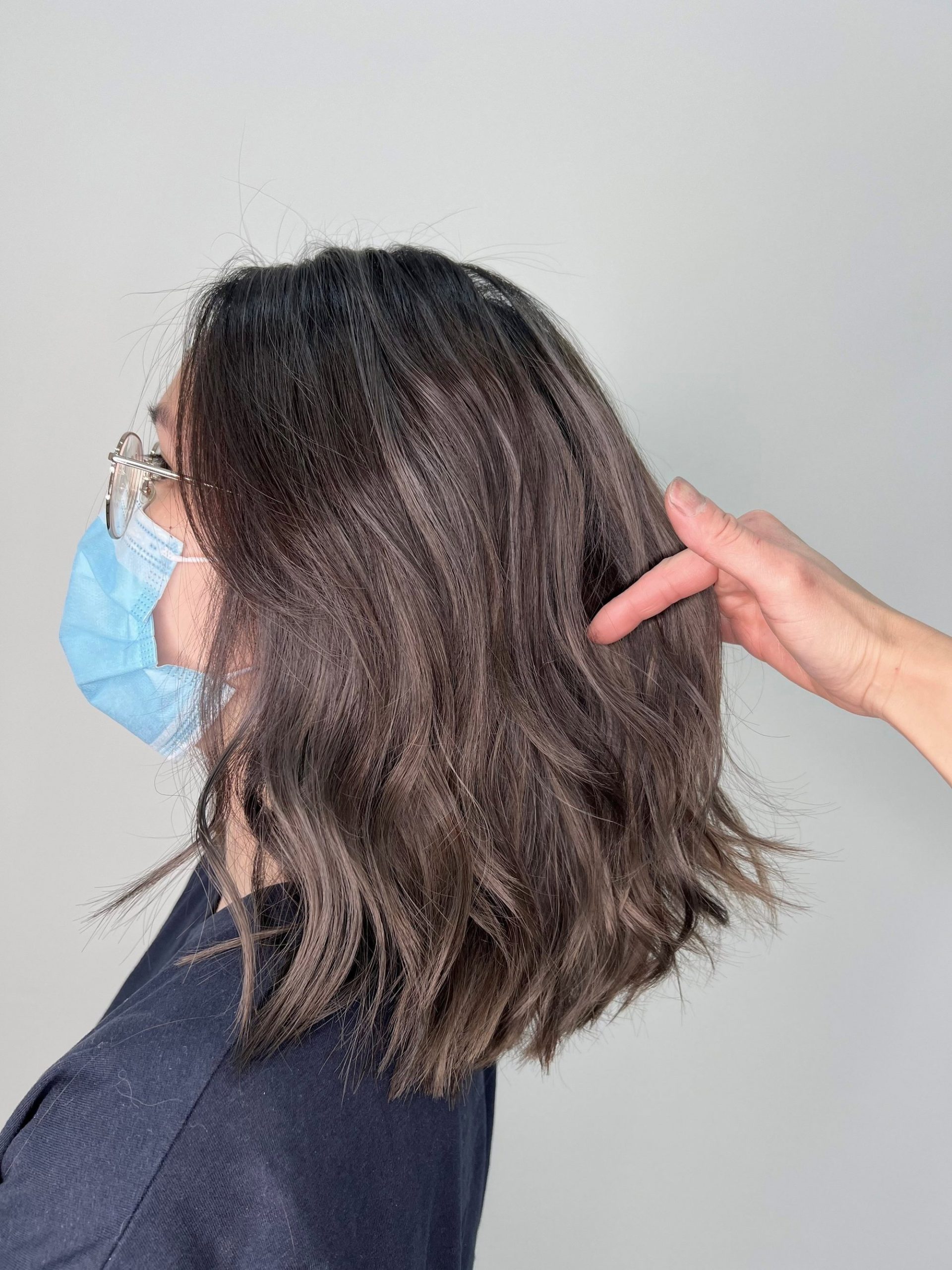
It’s the week between seasons, and you need a colour that works with a light jacket and a heavy sweater. This mushroom brown ash blonde wispy bangs combination lands right there. The base is a neutral mushroom brown, not too warm, not too grey, and the ash blonde highlights are woven through the mid-lengths and ends, hitting the collarbone in loose waves. The tone is cool but not icy, which means it doesn’t scream winter. The wispy bangs soften the forehead without committing to a full fringe, and the long layers keep the waves from looking heavy. It’s a transitional shade that doesn’t need a seasonal reset. You can wear it through spring rain or autumn wind, and it still reads as intentional.
Dark Mushroom Brown Lob With Side-Swept Bangs
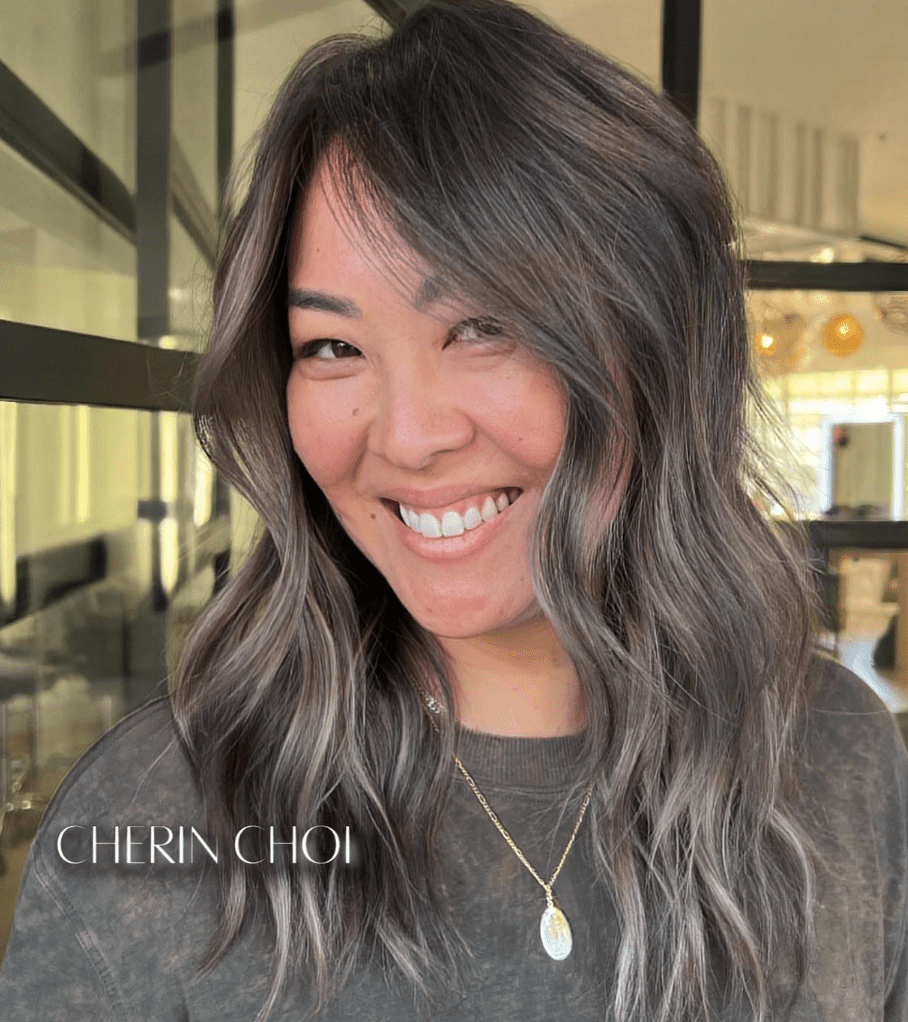
I’ll admit it: I booked this colour partly because I wanted to see if a dark base could still feel dimensional without being obvious. The dark mushroom brown base is the anchor, and the ash blonde highlights are painted sparingly through the top layers, so the colour shifts when the light hits. The tone is cool, almost dusty, and on a lob with side-swept bangs, it reads as grown-up without being severe. The texture is wavy, medium density, which means the waves hold shape but don’t get weighed down. The lob itself needs a trim every six to eight weeks to keep the blunt edge from fraying, and the side-swept bangs will want a touch-up every four weeks. The blowout takes about fifteen minutes, but the bangs are the part that needs attention. You can’t just let them air-dry and hope. They need a round brush and a few minutes of heat.
The wear reality: by day three, the waves soften, the bangs start to separate, and the colour settles into a more uniform dark brown. The ash blonde highlights become subtler, but they don’t disappear. That’s the point. It’s not a high-contrast look, it’s a slow-burn dimension.
Collarbone Lob With Ash Blonde Balayage
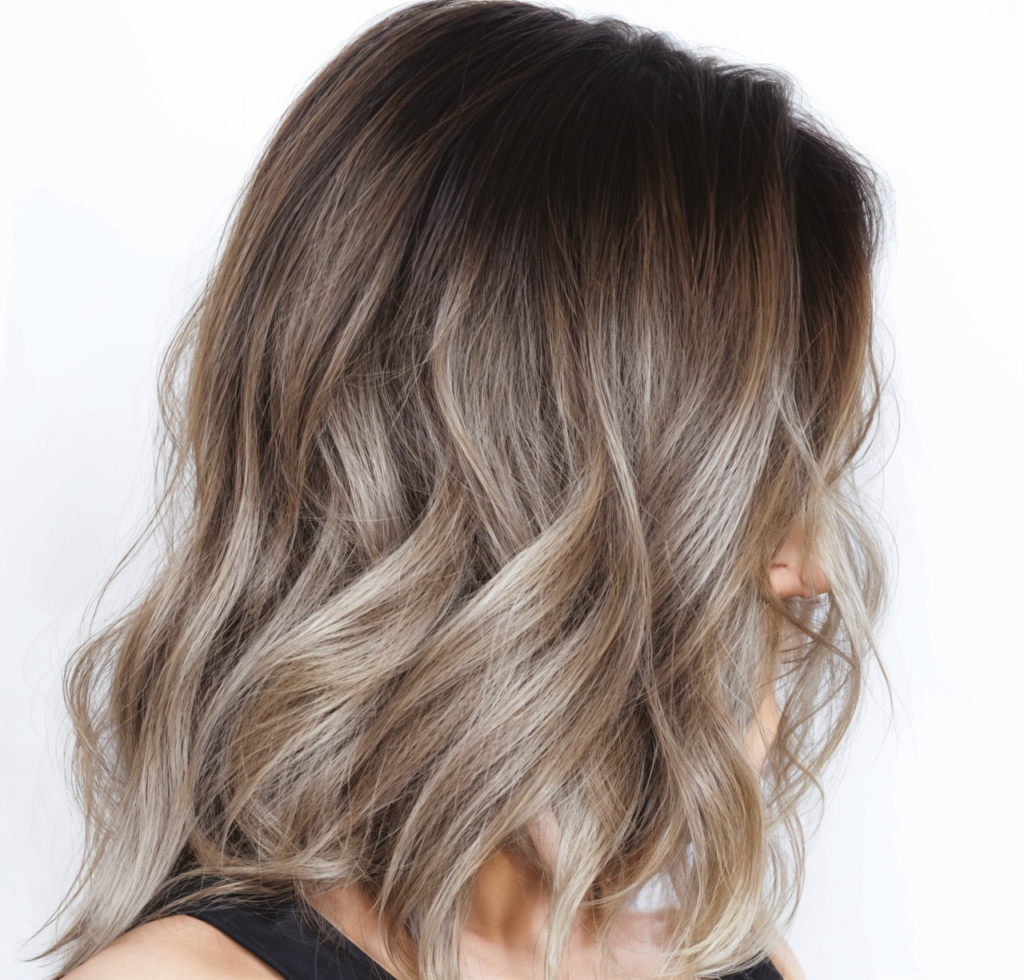
Okay, I get it now. The dark brown ash blonde balayage on this lob is not just a colour, it’s a construction. The technique is a freehand balayage, painted from the mid-shaft to the ends, leaving the root area untouched. The result is a soft, vertical dimension that follows the wave pattern. The base is a deep, cool brown, and the ash blonde sections are placed to catch the light where the hair bends at the collarbone. The tone is cool, almost silver-tinged in bright light, but it never reads as grey. The texture is thick and wavy, which is exactly what this technique needs. Thick hair holds the colour bands without them looking stripey, and the waves break up any harsh lines. The length is collarbone, which is long enough to show the balayage’s gradient but short enough that the ends don’t get too light. The side view shows the colour wrapping around the face, soft and deliberate. It’s a technical colour that looks like it just happened.
The balayage itself is the hero. It’s not a highlight, it’s a melt, and that’s why the grow-out is forgiving. The root line is invisible for weeks.
Lob Layers Collarbone Lob With Ash Blonde Highlights
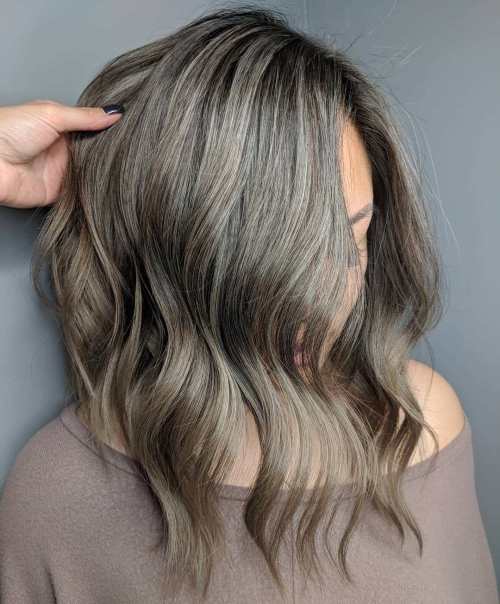
This mushroom brown ash blonde lob is a density puzzle. The colour is a cool mushroom brown base with ash blonde highlights woven through the layers, and the tone stays cool, never warm. The length hits the collarbone, and the texture is wavy with medium density. Here’s the precision: if you have fine hair, the layers will add movement without taking away weight. If you have thick hair, the layers will prevent the colour from pooling at the ends. The side part helps distribute the highlights evenly, so one side doesn’t look lighter. The wavy blowout gives the colour a soft, diffused finish. It flatters medium density best, because that’s where the highlights sit without looking sparse or crowded. If your hair is very fine, skip the heavy layering and keep the lob blunt. If it’s very thick, ask for more internal layers to keep the colour from feeling heavy.
Mid-Back Curls With Contrasting Highlights
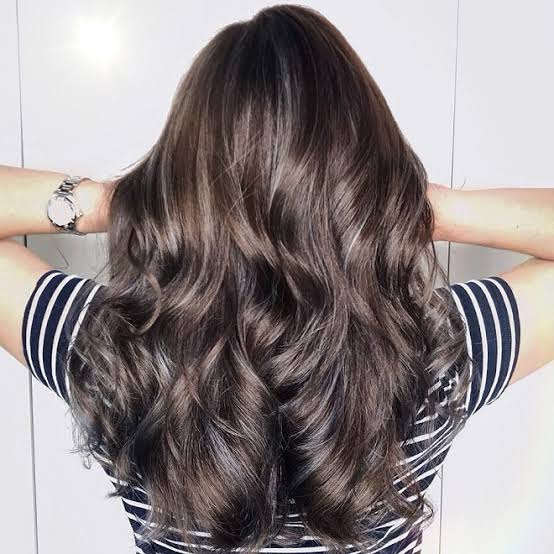
Contrasting highlights beat a blended balayage every time. The blended version goes muddy by week three, but this mushroom brown base with lighter brown and ash blonde highlights keeps its edge. The technique is foil highlights, not hand-painted, which gives each strand its own identity. The tone stays cool and neutral, no warmth creeping in. The length hits mid-back, and the texture is wavy medium density, so the curls catch the light at different angles. The rich mushroom brown highlights create a deliberate stripe effect, not a soft wash. If you want dimension that announces itself, this is the side to pick.
The comparison is simple: blended balayage is a whisper, contrasting highlights are a statement. The latter holds its shape longer because the lighter pieces are concentrated, not scattered. For medium-density wavy hair, this approach avoids the flat look that a diffuse balayage can create. The back view shows exactly how the lighter strands frame the curl pattern without disappearing into the base.
Mid-Back Waves With Dimensional Balayage
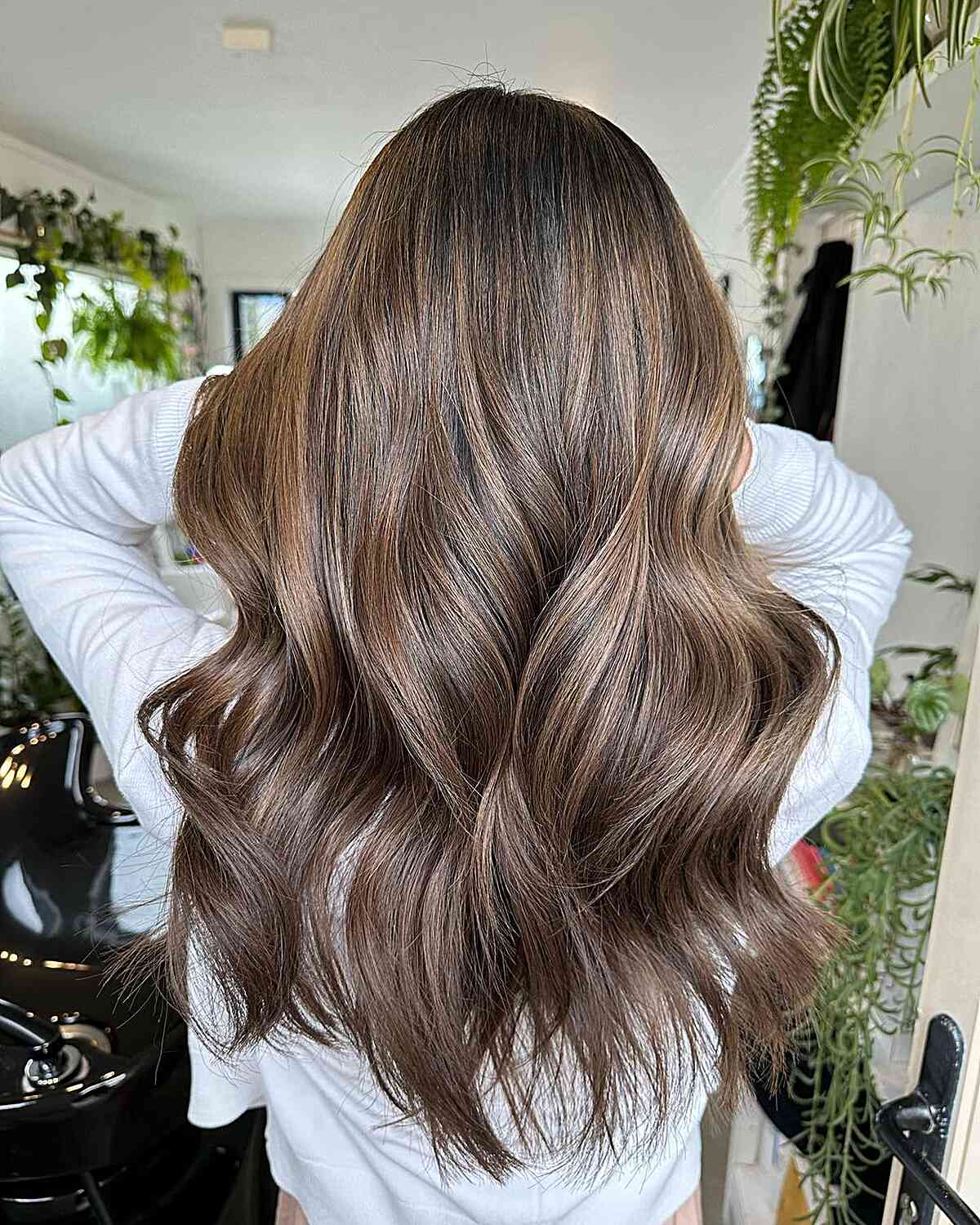
How does a balayage actually create dimension without looking stripey? The trick is in the application: the stylist paints the lightener in a sweeping motion, concentrating it mid-length to ends, leaving the root area untouched. For this mushroom brown ash blonde dimensional look, the base is a cool mushroom brown, and the balayage lifts to a muted ash blonde. The tone stays cool across the board, no gold or orange peeking through. The length is mid-back, and the texture is thick and wavy, which helps the colour transition look seamless.
The dimensional effect comes from varying the saturation: some sections get a heavier lift, others a lighter dusting. Thick hair benefits from this because the waves break up the colour lines naturally. The back view shows how the lighter pieces weave through the darker base without a hard demarcation. No foils, just hand-painted sections that blend as they grow out. The result is a colour that moves with the hair, not on top of it.
Mid-Back Straight With Money Piece
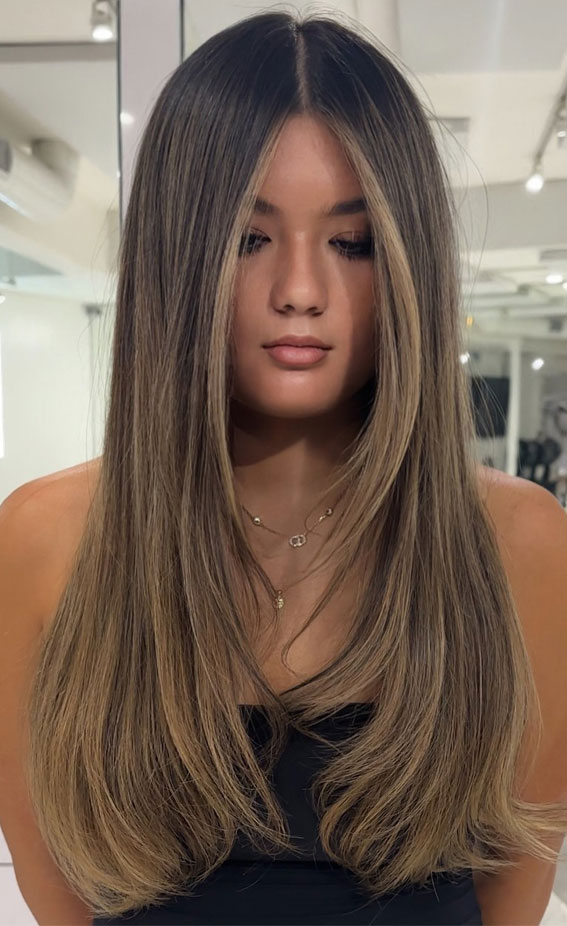
It is December, and every other person at the holiday party has a bright blonde money piece. This dark mushroom brown money piece stands out because the base is deep and cool, making the front sections pop without screaming. The technique is a face-framing highlight, kept thick and bright, while the rest stays a rich mushroom brown. The tone is cool on both sides, no warmth to clash. The length is mid-back, and the texture is straight and thick, so the money piece lays flat and deliberate. The downside: that front section needs a toner every four weeks, or it goes yellow. Worth it for the one night, but plan the upkeep.
Collarbone Waves With Muted Cool Tones
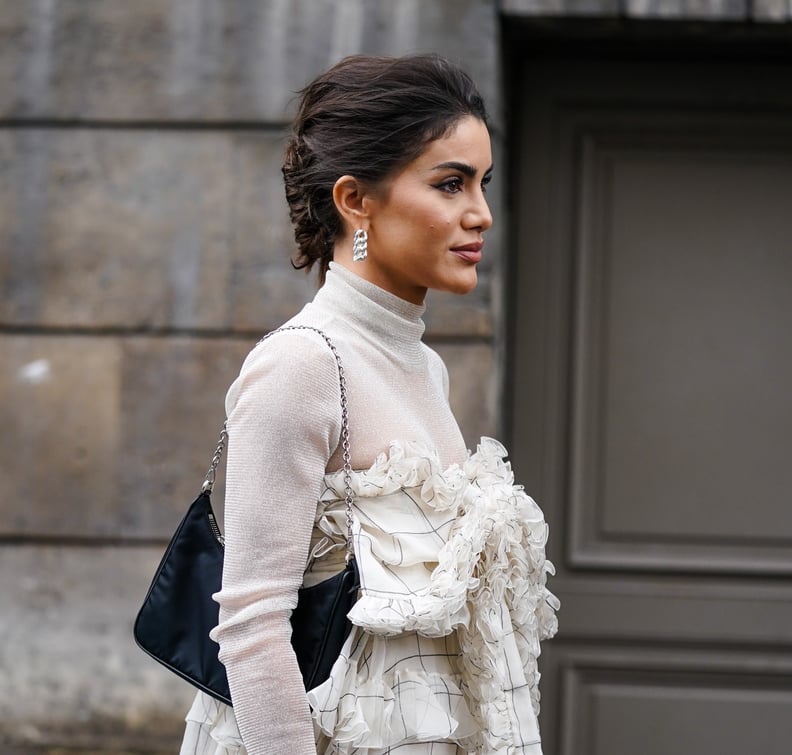
I will admit it: I thought muted mushroom brown hair would wash me out. But this collarbone-length version with subtle highlights proves me wrong. The base is a cool, muted mushroom brown, almost grey-brown, with barely-there highlights that add depth without brightness. The technique is low-contrast highlights, placed sparingly to keep the tone soft. The tone is cool and subdued, no ash blonde or warm notes. The length is collarbone, and the texture is wavy medium density, which helps the colour read as intentional, not faded. The wear reality: the cool tone fades to a neutral brown after about six weeks, not brassy, just less interesting. A toner every eight weeks keeps it from going flat. The waves hold their shape through the week, but the colour is the real work.
Collarbone Lob With Ash Brown Undertones
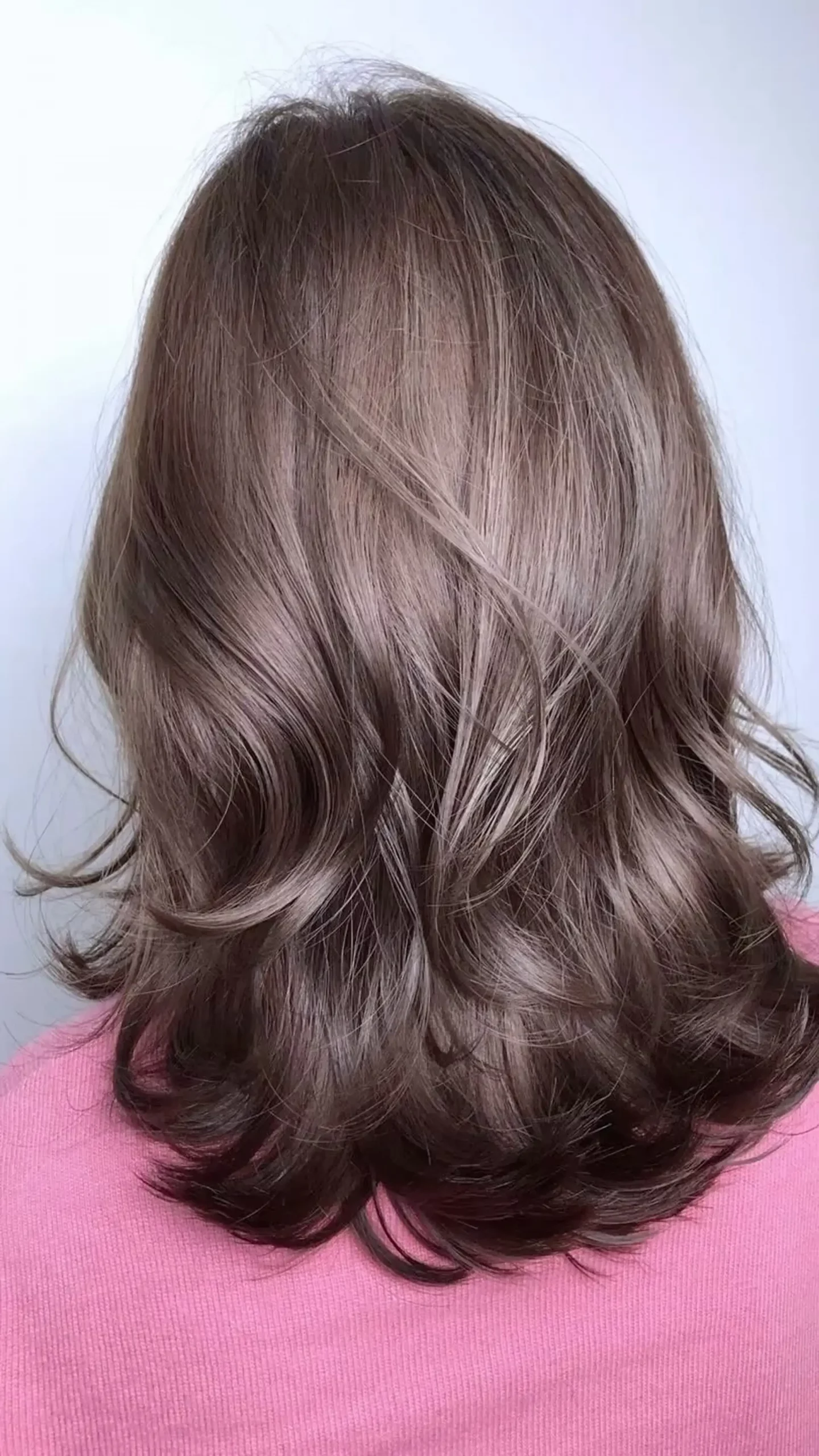
The ash brown cool undertones in this lob are not for everyone. They hit best on skin with cool or neutral undertones, where the greyish cast reads as sophisticated, not sallow. The colour is a solid ash brown, no highlights, just a single-process tone that sits flat and deliberate. The technique is a gloss or toner over a darker base, keeping the tone even. The length is collarbone, and the texture is wavy medium density, which gives the blunt lob a little movement without losing the shape. The precise observation: if your skin has warm or golden undertones, this colour will make you look tired. Stick to a warmer mushroom brown instead. For the cool-toned crowd, this is a low-commitment way to test the trend without highlights or balayage.
Mid-Back Wavy With Uniform Mushroom Brown
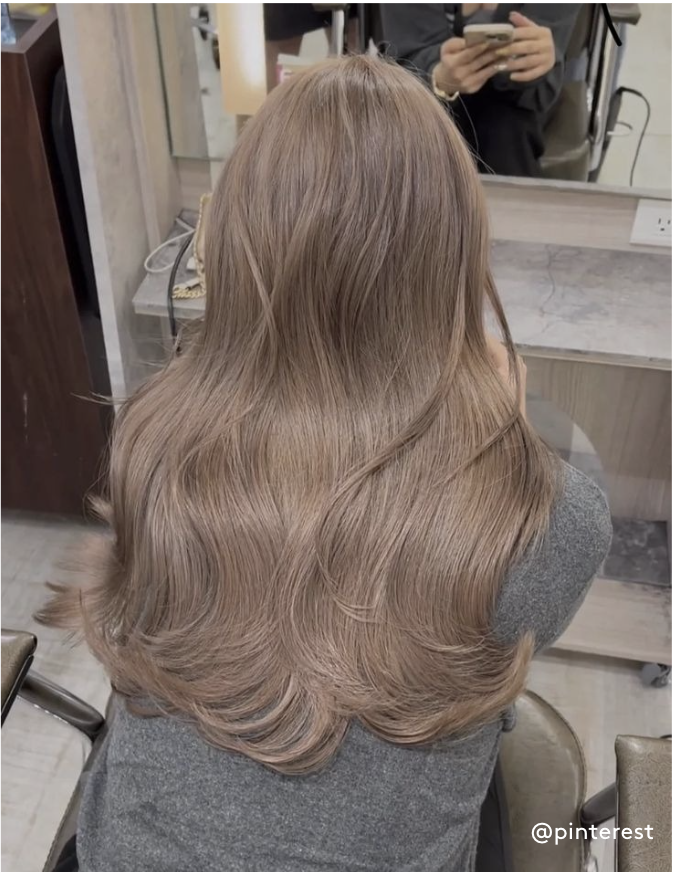
Can you get uniform mushroom brown hair at home without a salon visit? Technically yes, but the margin for error is wider than you think. The colour is a single, even cool-toned brown with no highlights or dimension, applied from root to tip on thick, wavy mid-back layers. The technique is a single-process gloss, which means you are depositing tone, not lifting. That matters because mushroom brown sits on the ashy side of brown, and ash tones grab unevenly on porous hair. Fine, low-porosity hair takes it flat. Medium to high porosity hair turns muddy in two washes. If your base is already a level six or seven brown, a box dye can get close. If you are starting from black or bleached blonde, book the chair. The tone is cool but not grey, and it needs a purple shampoo every third wash or the warmth creeps back in by week four.
Here is the honest part. A uniform mushroom brown hair colour looks simple, but simple is not easy. The length is mid-back, which means you need enough product to cover the full head, and most drugstore boxes give you just enough for shoulder-length. Running out mid-application is a real risk. The texture is wavy and thick, so the colour needs to be sectioned thoroughly or you end up with patches. The tone reads flat without dimension, which is the point, but flat also means every uneven spot shows. If you attempt it, use a bowl and brush, not the bottle applicator. And do a strand test. I skipped one once. Do not be me.
Chin Length Bob With Dimensional Colour
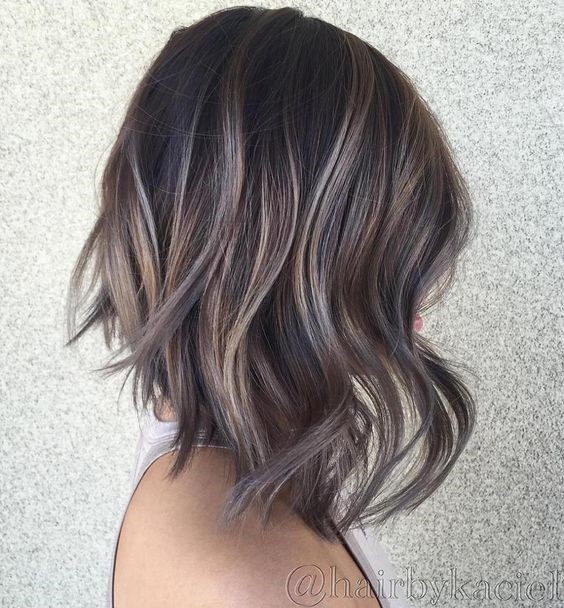
I saw this and immediately wanted to know how they did it. The answer is a root shadow plus scattered highlights, which is more technique than it sounds. The base is mushroom brown, the highlights are muted mushroom brown highlights placed in the interior, not the surface. That is the trick. Surface highlights read stripey. Interior highlights read like texture. The bob is chin-length, blunt at the baseline with soft internal layers, and the texture is wavy, medium density. The waves catch the lighter pieces, so the dimension moves when you turn your head. The tone is cool all over, no warm contrast. The technique is called a babylight weave, and it takes about two hours. Not a bathroom-mirror job.
Mid-Back Waves With Rich Dark Base
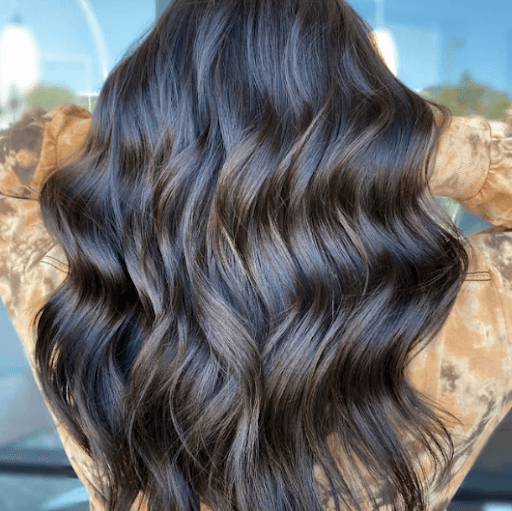
The light drops early and this is the colour that makes sense in it. Deep mushroom brown highlights sit on a base that is almost espresso, and the combination reads like a neutral charcoal brown with warmth only in the lighter strands. The length is mid-back, the texture is thick and wavy, and the parting is a clean middle. The technique is a low-contrast balayage, meaning the highlights start below the ear and fade into the ends. No root line, no stripe. The tone is cool but not icy, which is why it works for autumn and winter. Warm tones fight grey coats and knit scarves. This one settles into them. The season asks for depth, and this delivers it without going black. The waves are loose, styled with a large barrel, and the whole thing takes about fifteen minutes once the colour is done.
Here is the catch. A rich dark base like this needs a clean canvas, meaning no old warmth underneath. If your hair has residual copper from a previous colour, the deep mushroom brown highlights will read muddy instead of dimensional. The solution is a filler or a colour remover before the balayage, and that adds an hour to the appointment. The upkeep is forgiving. The dark base grows out soft, and the highlights are low enough that a root touch-up every ten weeks is enough. The texture stays smooth because there is no heavy lift. Thick hair holds the wave better than fine hair, which tends to eat the darker pieces. Fine hair needs more highlight strands to keep the dimension visible.
Chin Length Hush Cut Lob With See-Through Bangs
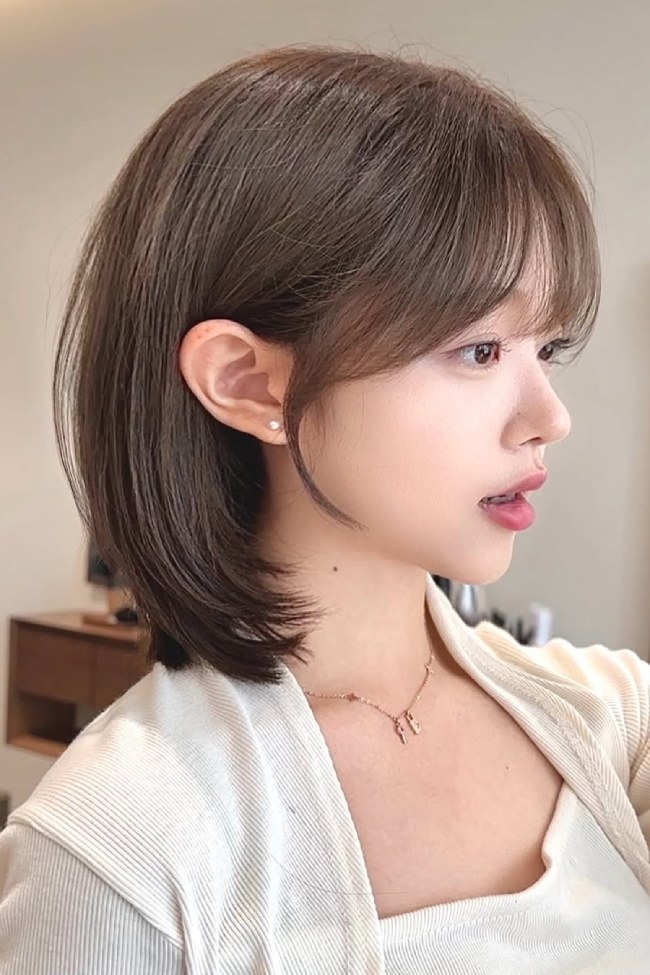
I will admit I was skeptical about the hush cut on fine hair. The hush cut lob here is chin-length, straight, with subtle internal layers that are supposed to add volume without losing weight. The bangs are see-through, which means they are sparse enough to show forehead but dense enough to read as intentional. The colour is a uniform mushroom brown, no highlights, and the tone is cool and flat. The texture is straight and fine, which is exactly the type that makes the hush cut either work or collapse. Here is the reality. The layers need heat styling every day to hold their shape. Air-dried, they disappear into the baseline by noon. The see-through bangs need a trim every four weeks, not six, because fine hair shows split ends faster. The honest downside is that this is a wash-and-style cut, not a wash-and-go cut. If you want low effort, pick a blunt bob instead.
Mushroom Brown With Ash Blonde Balayage Long Layered Back With Ash Blonde Balayage
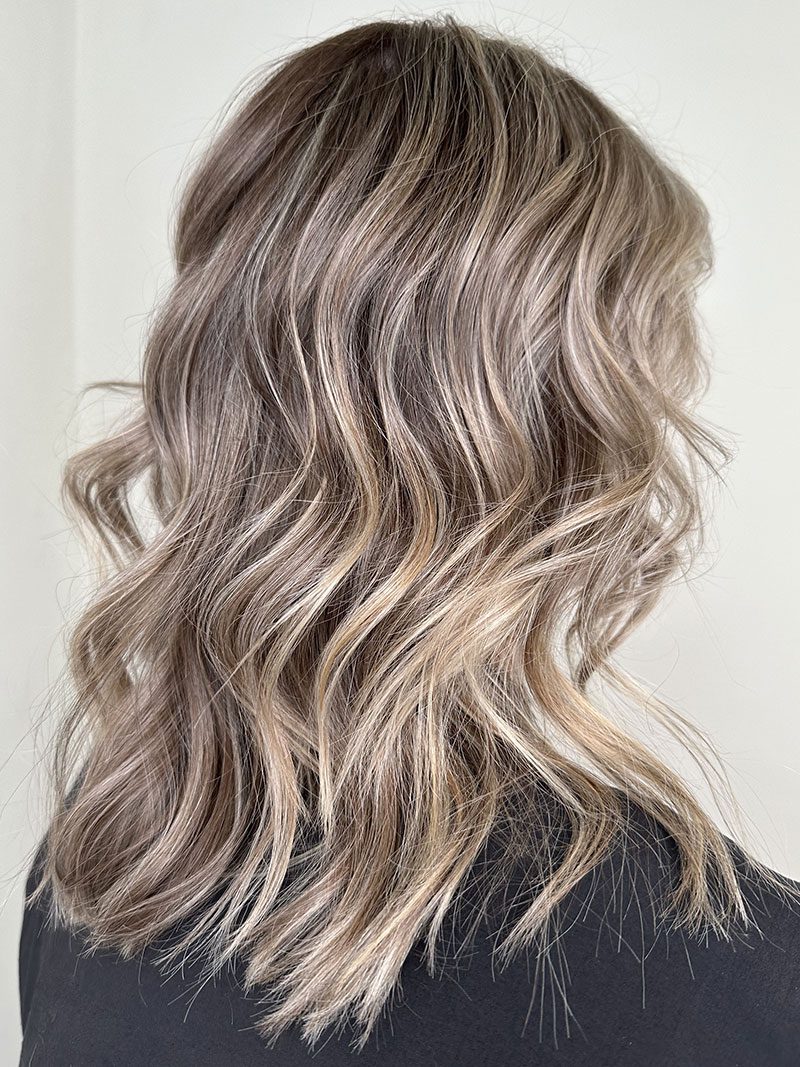
The mushroom brown ash blonde contrast here is precise. The base is a cool mushroom brown, and the balayage lifts to an ash blonde that is one step away from silver. The length is mid-back, the layers are long and subtle, and the texture is wavy with medium density. The technique is a freehand balayage, painted in a V-shape from the mid-lengths to the ends, with heavier concentration at the back. The result is a gradient that reads as natural even though the contrast is high. Here is who it suits. Medium-density hair holds the wave and shows the colour shift without looking sparse. Thick hair needs more layering or the balayage sits too far from the root and looks like grown-out highlights. Fine hair struggles because the ash blonde pieces are lighter than the base, and fine strands read as thinner when they are lighter. The tone is cool on both ends, which means no warm band during grow-out, just a soft root shadow that buys you an extra three weeks between appointments. The parting is a middle, and the waves are styled with a one-inch barrel, which takes about fifteen minutes.
Who should pass? Anyone with high-porosity hair that grabs ash tones unevenly. The ash blonde will pull green or grey in the porous sections, and the mushroom brown base will look flat next to it. Low-porosity hair takes the colour cleanly but needs a longer processing time. The balayage requires a salon visit every ten weeks, and the ash blonde needs a purple shampoo every other wash or it shifts beige by week five. The length is forgiving. The layers are subtle enough that a trim every twelve weeks keeps the shape without losing the colour placement.
Collarbone Bob With Subtle Lighter Ends
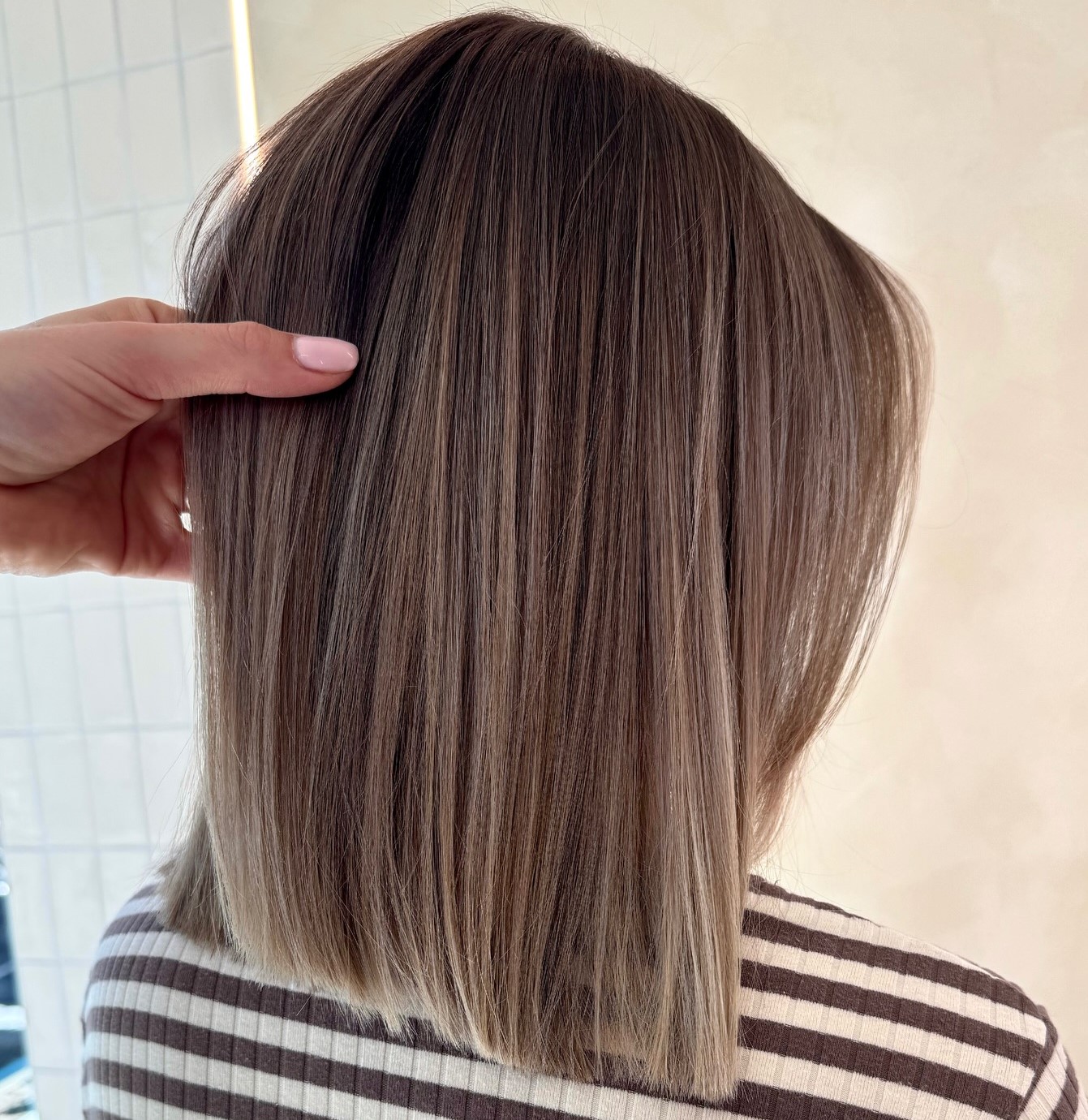
Ever wonder how a bob gets that soft lightening at the ends without looking striped? It is not a typical ombre; it is a hand-painted gradient that starts dark at the roots and barely lifts the last couple of inches. The colour stays a cool mushroom brown along most of the length, then shifts to a slightly paler ash beige just at the tips. On a collarbone-length bob with a middle part and a slight bend, the transition reads as natural shadow, not a hard line. Technique wise, your stylist will paint the lightener only on the very ends and feather it upward into damp hair, so the blend disappears into the base.
The straight, medium-density texture here helps the colour sit smoothly. No layers to catch the eye, just a clean curtain of colour that graduates softly. That is the trick: the lighter ends never announce themselves; they just make the rest of the mushroom brown feel deeper by contrast.
Mid-Back Waves With Multidimensional Brown
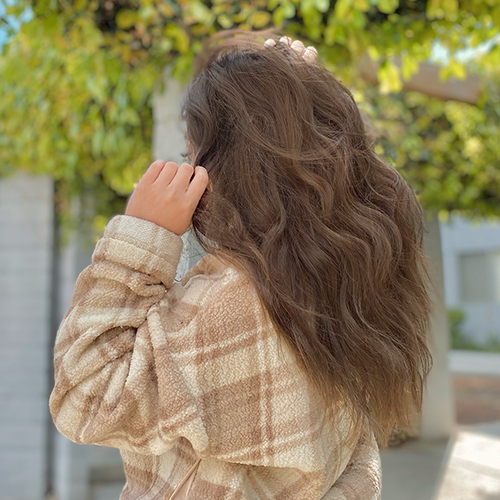
October sun streams through these waves and the brown reads almost silver one moment, deep chocolate the next. That shift is the point. The colour here is not flat; it is a rich multidimensional mushroom brown built from two or three different tones woven through the hair. A cool taupe base meets slightly warmer ash pieces, and the combination catches every angle of light differently.
For fall and winter, this complexity works because it mimics the muted, varied tones of the season: damp bark, dry leaves, grey sky. The mid-back length and thick wavy texture give enough surface area for all those tones to separate in the curls. No single highlight shouts; they all blend into a brown that never looks flat. It is a colour that changes with the day, and that is exactly the point.
Mid-Back Natural Waves With Soft Mushroom Brown
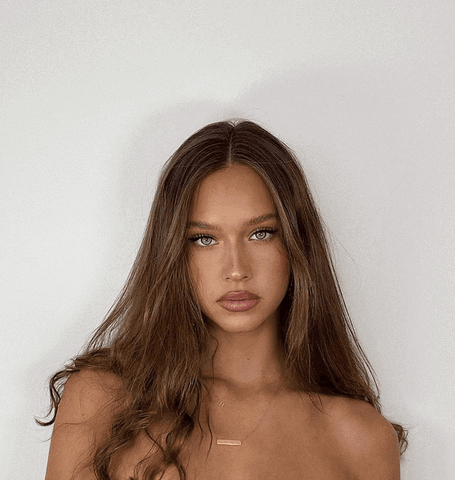
I will be honest: I wanted this colour without a salon visit. Soft mushroom brown natural waves can be done at home, provided you pick the right shade and accept that the result will be more uniform than a pro job. Most box dyes in the mushroom family lean either too green or too warm, so look for one labelled “cool taupe” or “ash brown” and check the swatch against your natural level. Apply to dry hair, wait the minimum time, and rinse with cool water.
The real star here is the texture. These are fine, wavy lengths air-dried with a leave-in cream, so the colour sits softly without much effort. The single-process result will not have the dimension of a salon balayage, but the soft mushroom brown tone is forgiving and grows out gently. For a wash-and-go colour that does not scream for maintenance, this is a solid weekend project.
Mid-Back Waves With Ash Blonde Contrast
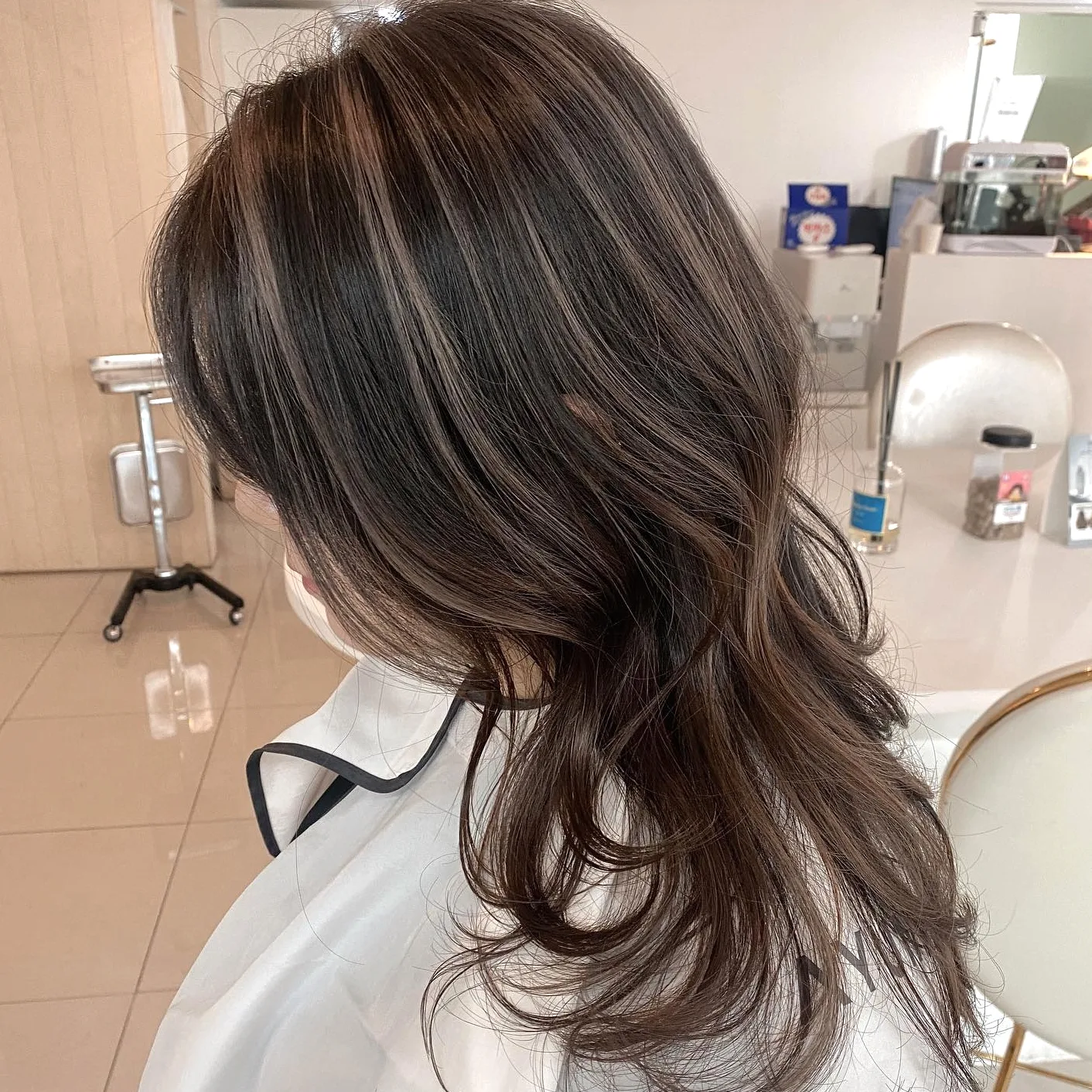
The ash blonde highlights against the deep mushroom brown base look incredible for about three weeks. Then the brass starts creeping in. Maintaining this contrast is not optional; it is a commitment. The highlights need a cooler toner every 6 to 8 weeks, and washing with a silver shampoo between appointments stretches the lifespan. Even then, the ash tones soften faster than the brown base, so the contrast diminishes gradually.
In real wear, this style keeps its punch longest if you wash no more than twice a week and rinse with cool water. The thick wavy texture hides regrowth well, but the blonde sections will need a salon refresh before they yellow. By week five, the distinction between dark mushroom brown base and ash blonde pieces starts to blur into a murky beige unless you stay on top of toning. It is a showstopper for the first month; after that, it is a test of your upkeep patience.
Chin Length Bob With Subtle Cool Tones
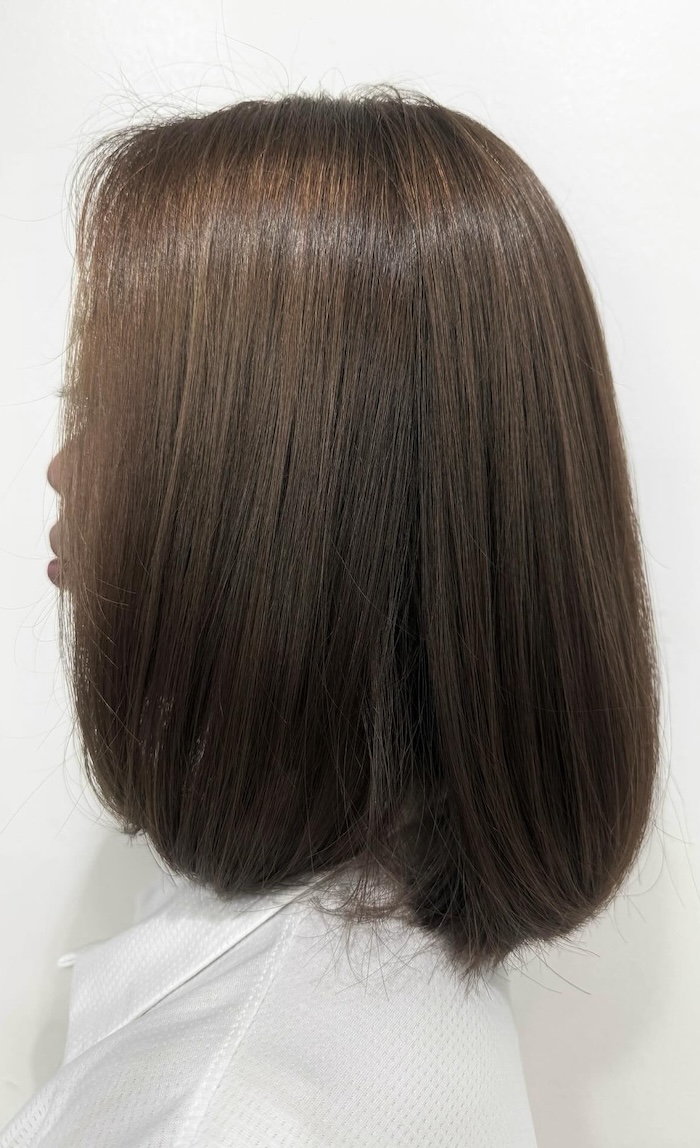
Cool-toned mushroom brown reads almost grey next to warm skin but brightens a cool or neutral complexion. That is the precise observation: if your veins read blue and silver jewellery suits you, this shade will sharpen your features. The single-process colour here is a muted ash brown with no hint of gold, applied to a chin-length bob with a middle part and sleek straight finish. It is a colour that asks for a specific skin match, but when it hits, the whole haircut looks more expensive than it is.
Shoulder Length Ponytail With Brown Undertones
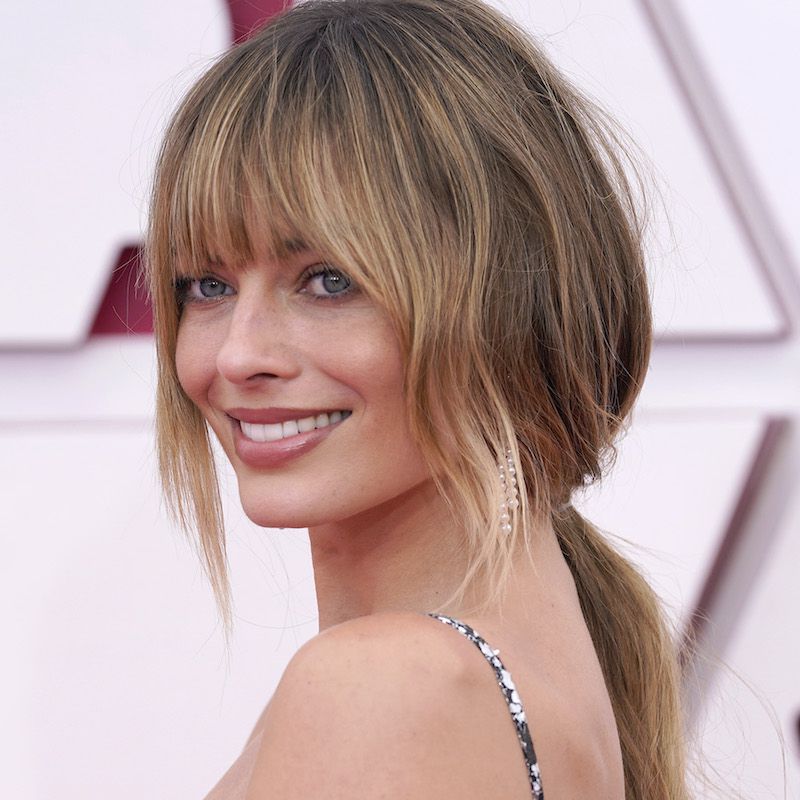
What’s the difference between ash blonde and mushroom brown? This shade sits right between them. It’s ash blonde with noticeable brown undertones, leaning toward mushroom, but it’s lighter than a true mushroom brown. The tone stays cool, not brassy. The technique is a single process with a toner that adds those brown undertones. On shoulder-length straight fine hair pulled into a low ponytail with blunt bangs, it reads softer than a pure ash blonde. Pure ash can wash you out. This one has enough depth to keep your face from disappearing. I’d take this over a flat ash blonde any day. The brown undertones make it look intentional, not accidental.
Collarbone Blunt Lob With Subtle Balayage
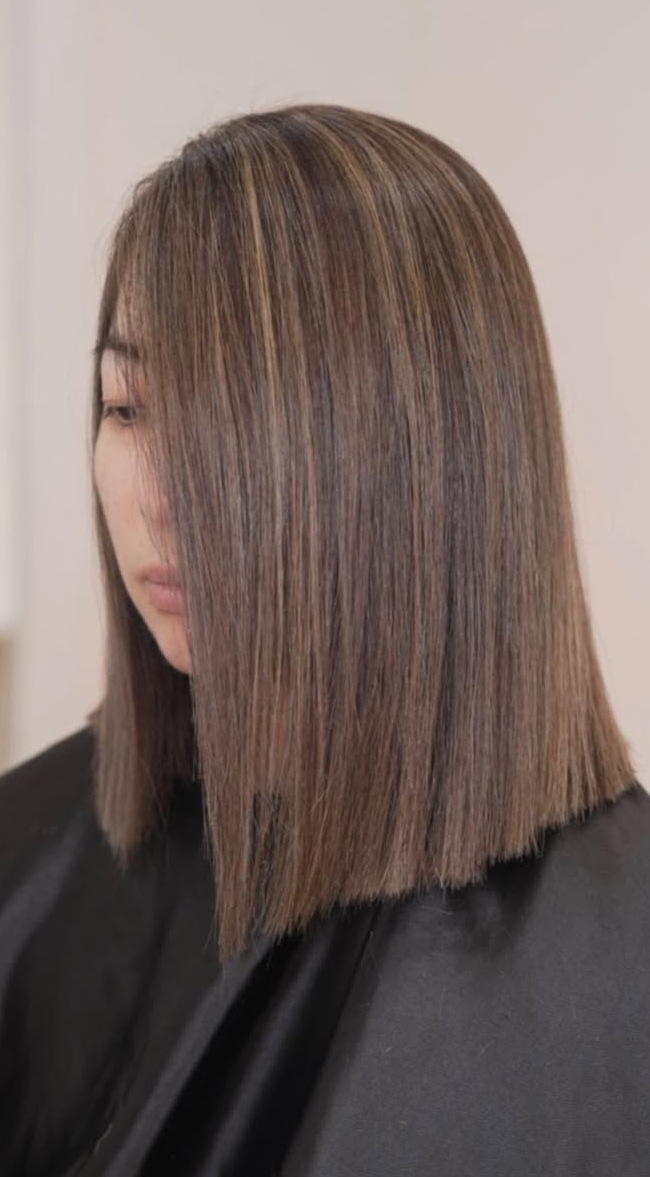
I wasn’t expecting a blunt lob to work with balayage. Usually balayage softens the line, but here the cut stays sharp. The technique is precise: the colourist paints the mushroom brown balayage highlights starting below the jaw, leaving the blunt baseline untouched. The tone is cool mushroom brown, no warmth creeping in. On collarbone-length straight medium-density hair, the subtle balayage adds dimension without breaking the clean edge. The colour lifts just a shade lighter at the ends, enough to catch light. It’s a trick: keep the blunt shape, add soft movement through colour alone. The result is sleek but not flat.
Mid-Back Straight With Soft Face-Framing Layers
I’ll admit, I was skeptical about layers on fine hair. They can go stringy by noon. But these soft face-framing layers are cut high enough to hold volume without collapsing. The colour is a consistent mushroom brown, no highlights, so the tone stays uniform. On mid-back straight fine hair, the layers start around the chin and blend into the length. The texture is straight, which means the layers sit flat unless you add a bit of lift at the roots. Across a real week, the shape holds for two days, then the ends start to separate. A quick blast of heat at the roots brings it back. The colour fades slowly because there’s no lift, just a single cool tone. It’s low maintenance if you can handle a trim every eight weeks to keep the layers crisp.
Mushroom Brown With Ash Blonde Balayage Collarbone Wavy With Ash Blonde Balayage
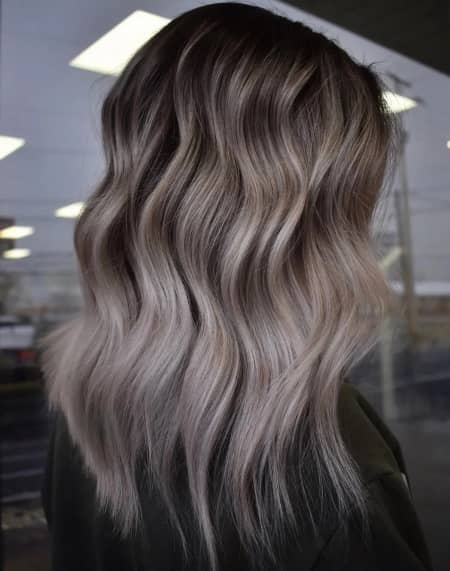
The ash blonde balayage here catches the light in a way that reads cool, not yellow. On collarbone-length wavy medium-density hair, the mushroom brown base anchors the darker roots while the ash blonde pieces frame the waves. The technique is a freehand balayage applied to the mid-lengths and ends, leaving the root untouched. The tone is cool throughout, no warmth. This combination flatters medium to high density hair because the balayage adds visual weight without bulk. Fine hair might look too sparse unless the waves are tight. Skip it if your hair is very fine and straight the balayage can look like thin streaks instead of dimension. The collarbone length keeps the waves from dragging down, so the colour stays visible.
Mushroom Brown With Ash Blonde Balayage Mid-Back Waves With Blended Balayage
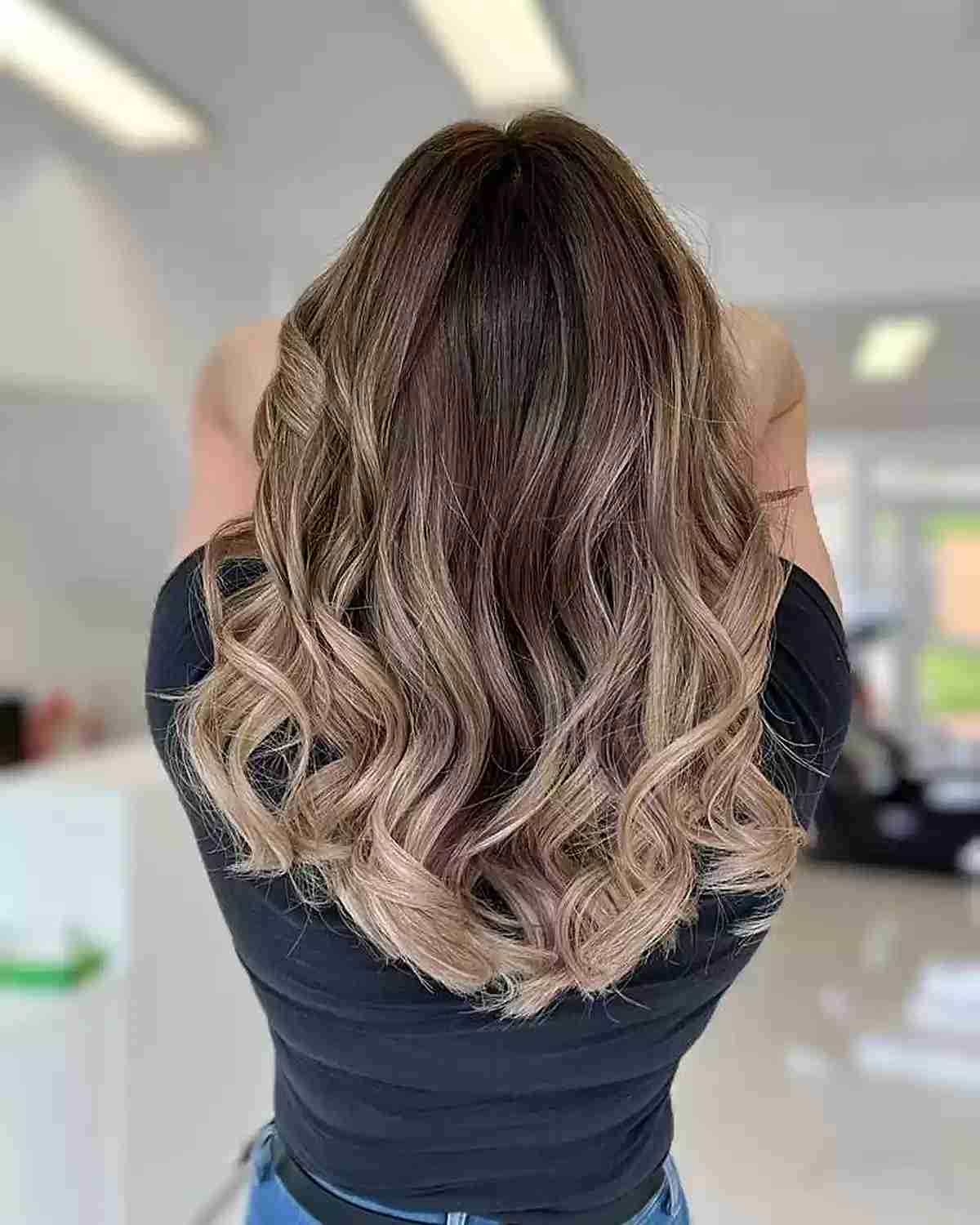
The secret to a blended balayage is the placement of the lighter pieces. Here the colourist paints the mushroom brown blended balayage in a V-shape from the mid-lengths down, so the ash blonde melts into the darker base without a harsh line. The technique uses a sweeping motion, not foils, to keep the transition soft. On mid-back wavy medium-density hair, the loose waves help the blend read as natural, not striped. The tone is cool mushroom brown at the root, shifting to ash blonde at the ends. The effect is dimensional but seamless. You don’t see where one colour starts and the other ends. That’s the point. The waves are styled with a large barrel iron to keep the pattern open, not tight. A heat protectant is non-negotiable here.
Mid-Back Waves With Seamless Blend
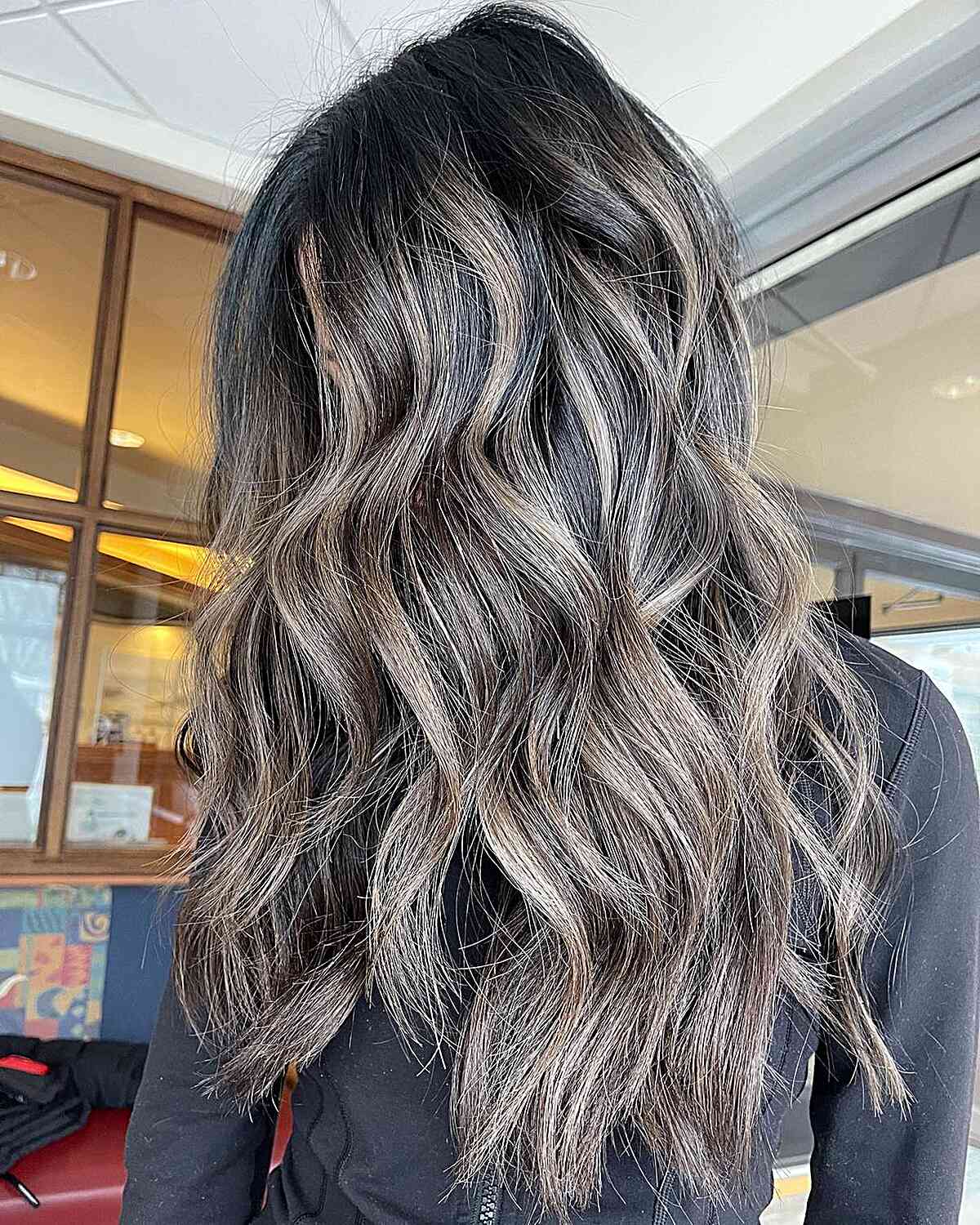
The light catches the wave at the nape, and you see it: a seamless drift from mushroom brown to ash blonde. This balayage doesn’t announce itself. The mushroom brown base stays deep at the roots, then softens into ash blonde somewhere around the shoulders. The blend is the point: no line, no stripe, just a gradient that follows the wave. It works for spring because the lightness reads fresh, but it also carries through winter without looking washed out.
I’ve seen this colour on a friend who wears it to the office and then to a weekend wedding. The ash tone keeps it from pulling warm, so it doesn’t compete with a tan or a sweater. The thick texture holds the wave without product, which is rare. It’s a set-it-and-forget-it balayage, if that exists. The seamless mushroom brown ash blonde blend is the reason you book the appointment.
Mid-Back Thick Waves With Muted Highlights
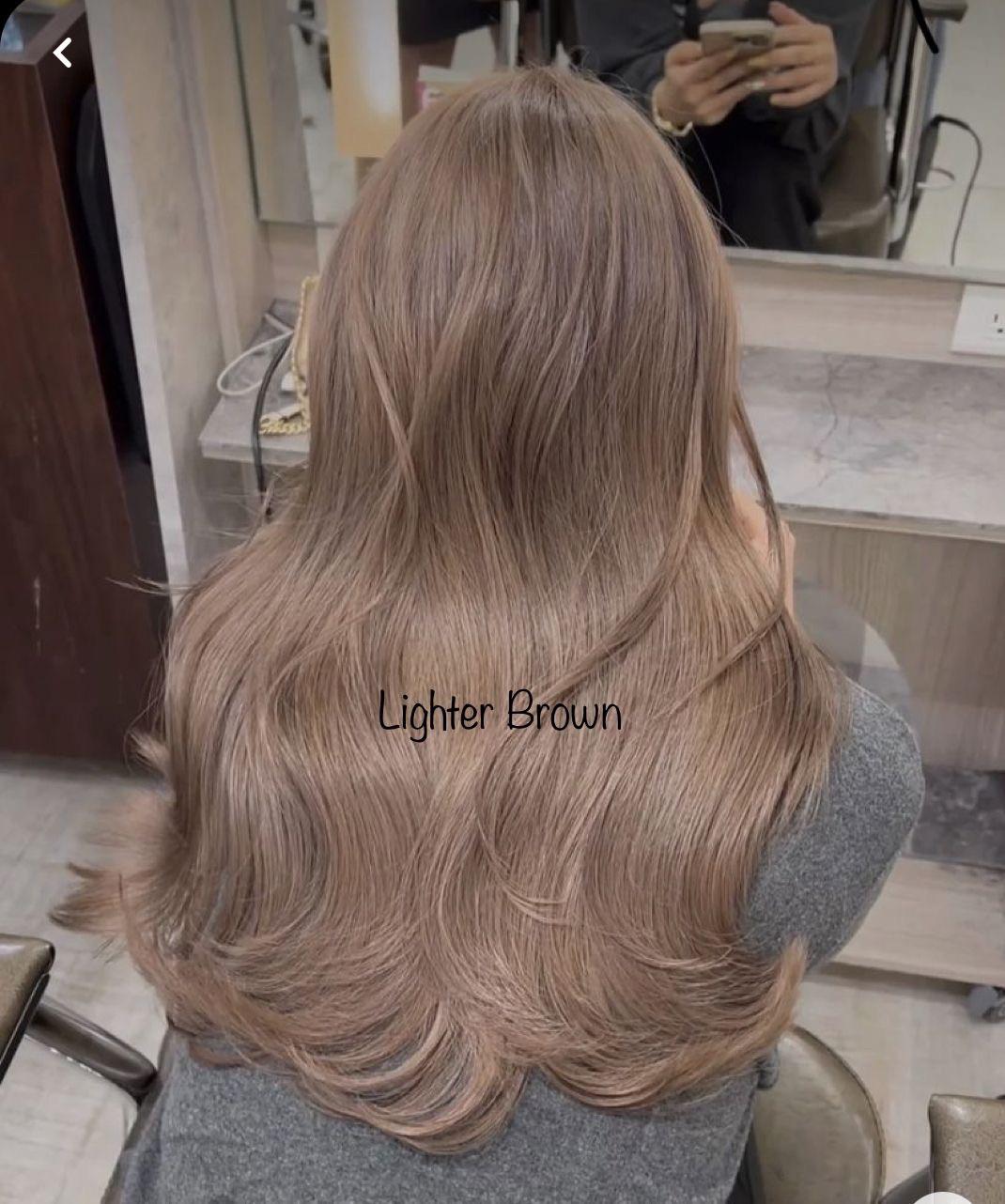
I’ll admit it: I was skeptical about muted highlights on thick hair. But the cool-toned brown shade here is so soft that it reads like a shadow, not a highlight. The muted mushroom brown soft highlights are the draw. The upkeep is the catch. Those subtle ash tones can turn brassy by week four if you don’t use a purple shampoo. The thick texture hides the grow-out well, but the colour itself needs a refresh every eight to ten weeks. It’s a trade-off: low contrast, higher maintenance.
Final Thoughts
After writing all 37 of these, I’m still surprised by how versatile mushroom brown is. It’s not just one shade, it’s a whole family of cool browns that flatter different skin tones and hair types.
- Trim the baseline every eight weeks.
- Tone at week six, not week ten.
- Use a purple shampoo once a week.
- Avoid direct sun to prevent warmth.
I’m booking the chin-length bob with dimensional colour next. It’s low upkeep and the ash tones hide my grey for weeks.