20 Winter Haircuts That Make Length and Layers Matter
A haircut earns its place in a winter rotation when it keeps its character beyond the moment it is styled. Length, weight, movement, and the line around the face all change how a cut behaves, so two silhouettes with a similar overall shape can create very different impressions. Looking closely at those relationships is more useful than choosing a haircut from its name alone.
The references here invite a slower comparison of proportion and finish. Notice where the hair stays full, where it narrows, how the ends are shaped, and whether the front opens the face or falls forward. Those small decisions can help you describe what you want more clearly, especially when you are weighing a visible change against a style that still feels familiar.
Long Layers With Soft Face-Framing Movement
The length is the first thing you notice here, but it is not left as one uninterrupted curtain. Shorter pieces begin around the face and then step gradually into longer side sections, so the front gains visible shape without taking away the overall long proportion. Among winter haircuts for long hair, this is a useful example of framing that changes the silhouette while still letting length remain the dominant feature.
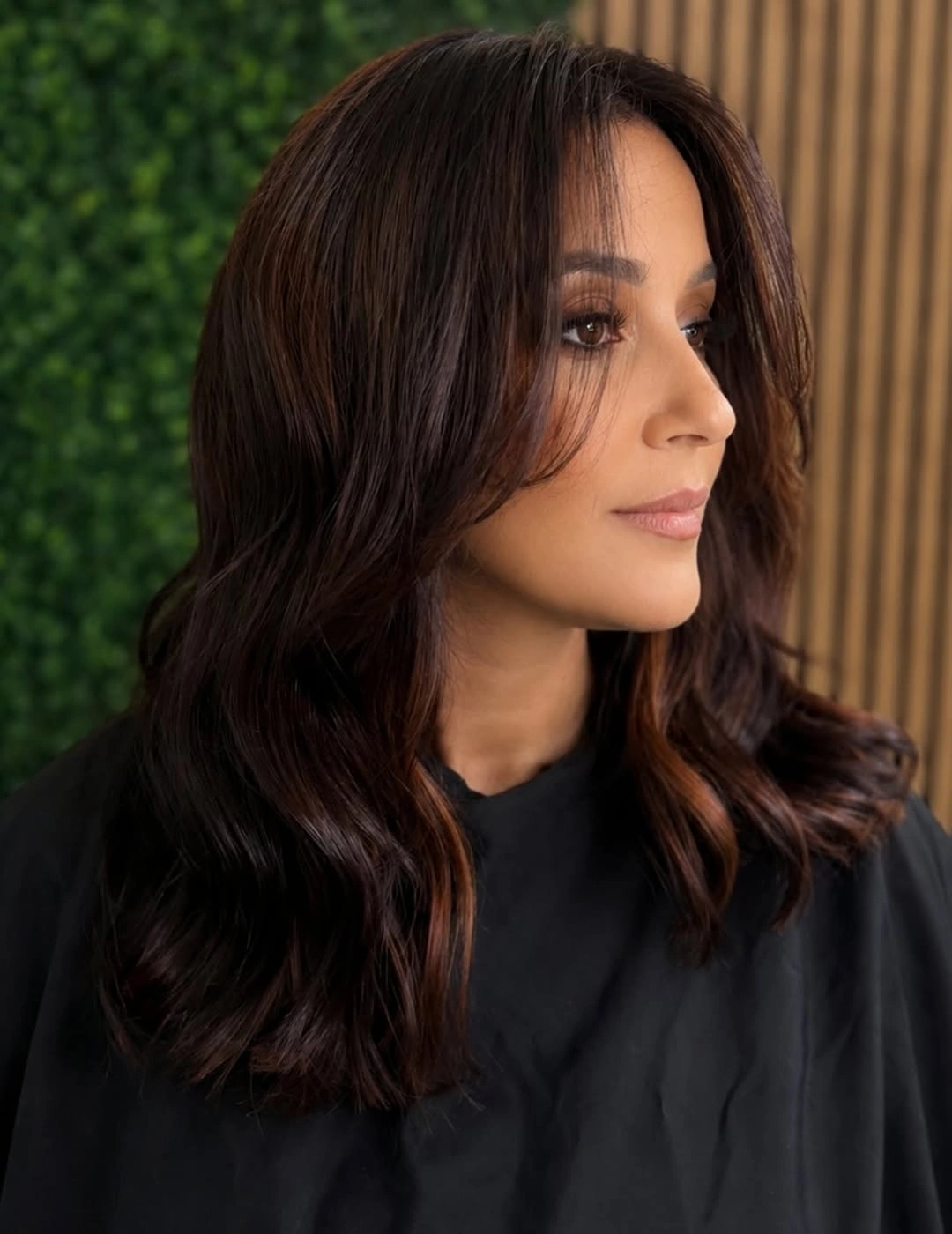
What makes the cut especially readable is the way those front pieces continue into the lower sections rather than stopping as a separate fringe. The side lengths become progressively longer, creating a connected transition from the face to the chest. Because the lower ends curve outward, those different levels are easier to distinguish, yet the haircut still looks smooth rather than sharply stacked or heavily tiered.
The curved finish gives each level enough separation to be seen without making the graduation feel abrupt. It is a long haircut with structure concentrated around the front and sides, not a cut built around dramatic short layers.
Very Long Hair With Gentle Front Framing
This cut reads first as very long hair, and that scale matters more than any individual layer. The silhouette extends well below the shoulders and stays broad through much of the lower length, while the center part keeps the front balanced on both sides. The loose waves create movement, but they do not interrupt the sense of continuity that defines this long winter haircut.
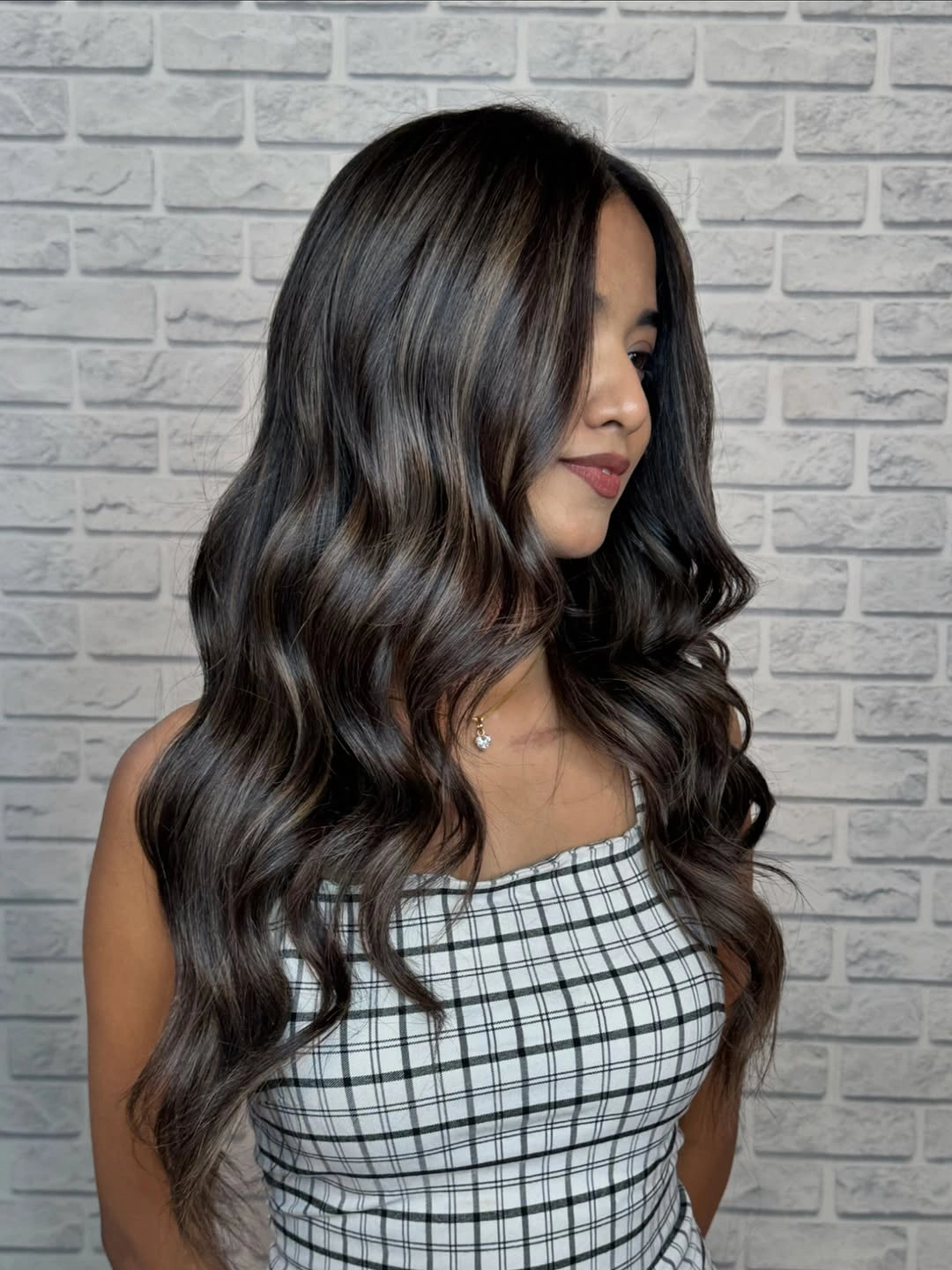
The front sections are shorter than the longest pieces, yet they remain substantial enough to blend into the body of the hair rather than creating a separate face-framing tier. That gradual connection is what keeps the cut looking continuous from top to bottom. The waves soften the exact layer boundaries, so the most useful detail is the relationship between the long front pieces and the broad, uninterrupted lower silhouette.
Compared with more tapered long cuts, this one keeps more visible width toward the bottom. It shows how a long haircut can gain some framing without making layered separation the main attraction.
Straight Length With a Soft Curved Perimeter
Straight hair makes the structure of this cut unusually easy to see because the surface falls smoothly from the upper lengths to the ends. From the back, there are no obvious short tiers breaking through the shape, so the eye goes directly to the overall length and lower perimeter. For straight-hair winter cuts, this is a strong reference for a cleaner silhouette where the bottom edge does more of the visual work than pronounced layering.
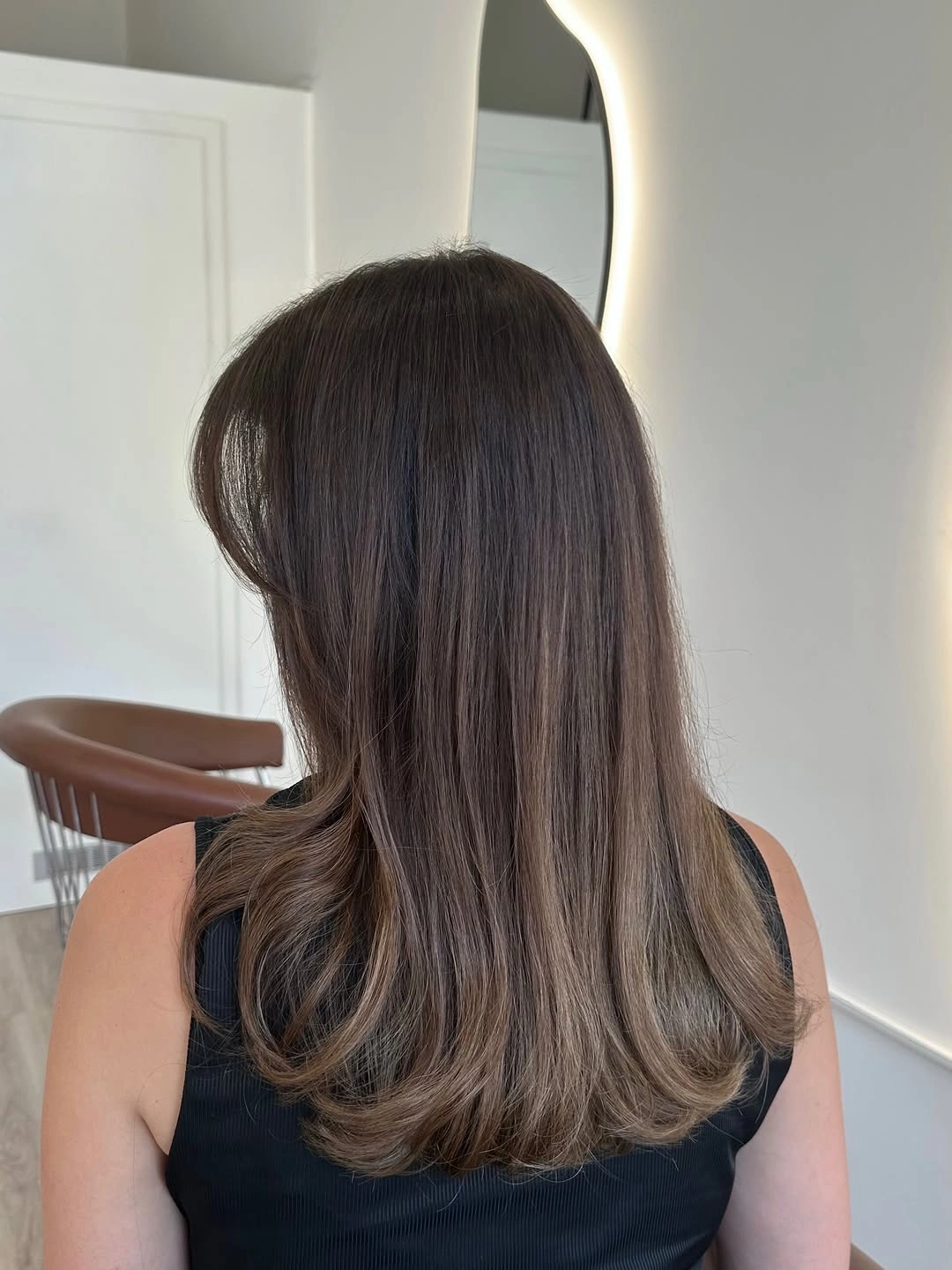
The perimeter is not a rigid horizontal bar, however. It curves gently across the back, allowing the center and side lengths to meet in a softer outline while still appearing comparatively even. That slight curve matters because it gives the cut shape without relying on visible feathering, dramatic graduation or multiple separated levels, and the smooth finish keeps that outline especially clear.
The result sits comfortably between a severe blunt line and a visibly layered back. Its appeal comes from restraint, with the silhouette staying simple enough for the perimeter itself to remain noticeable.
Mid-Length Hair With Relaxed Face-Framing Layers
This haircut occupies a useful middle ground in the collection because it is clearly longer than a shoulder-focused cut but does not have the extended scale of the very longest examples. A center part divides the front evenly, while shorter sections around the face create an immediate break from the longer lengths below. That balance makes it one of the more adaptable ideas for winter haircuts when moderate framing matters more than dramatic graduation.
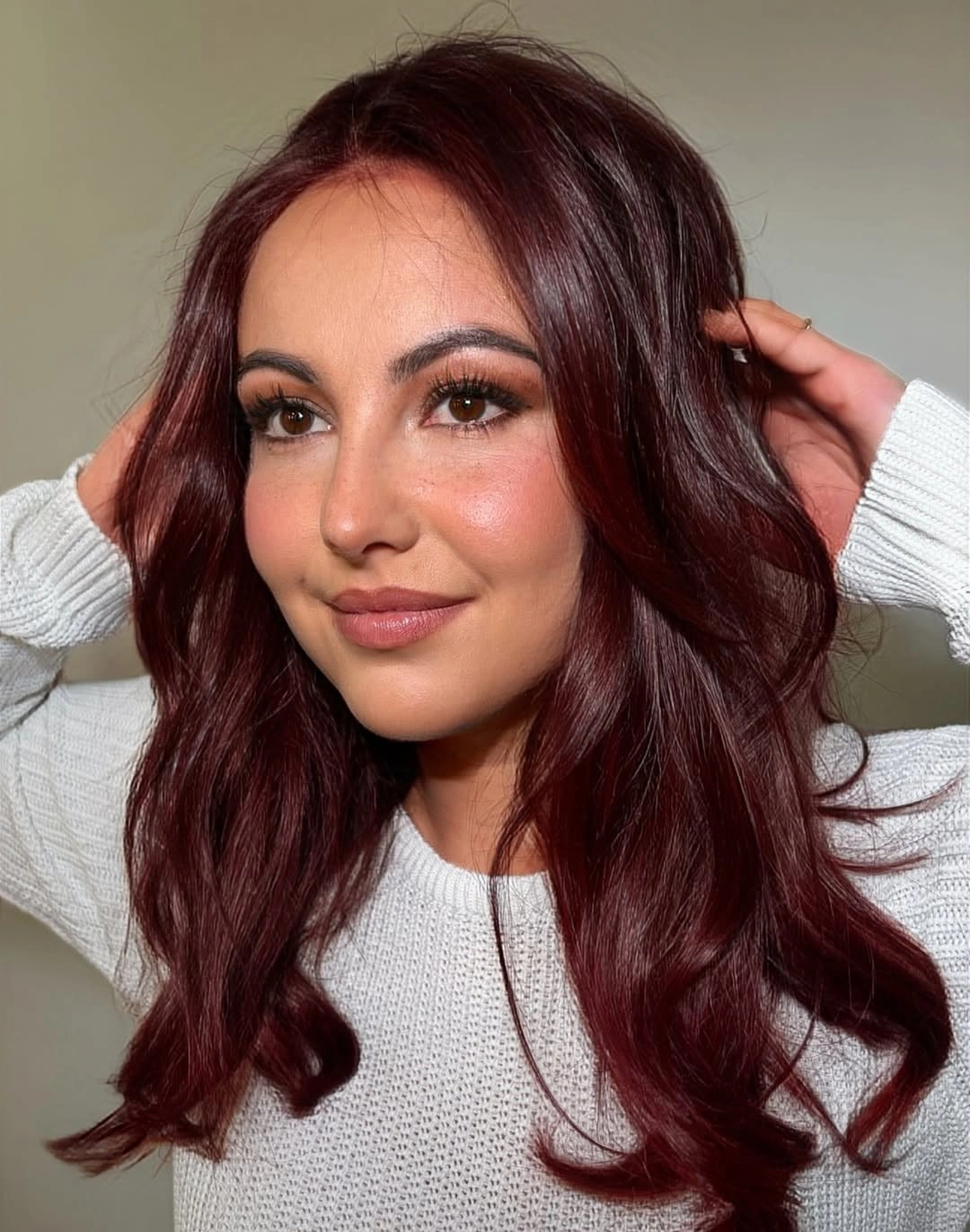
The front pieces separate visibly around the face before blending into the longer sides, and the lower hair has enough movement to prevent the perimeter from reading as one dense block. Loose bends help reveal that broken-up outline, but the haircut itself still appears relatively cohesive. Instead of obvious repeated tiers, the shape relies on a restrained difference between the shorter front and the longer body.
The softer graduation keeps the silhouette from looking either blunt or heavily feathered. It is the kind of mid-long shape where a few strategically shorter sections change the front without dominating the entire cut.
Very Long Waves With a Tapered Finish
Here, length clearly outweighs layering as the defining feature. The hair extends far below the shoulders, creating a long vertical silhouette, while the center part and broad waves keep the upper and middle sections visually full. Among winter haircuts for long hair, this example is useful because the shaping stays subtle: the cut does not need strongly separated short layers to avoid looking like one heavy mass.
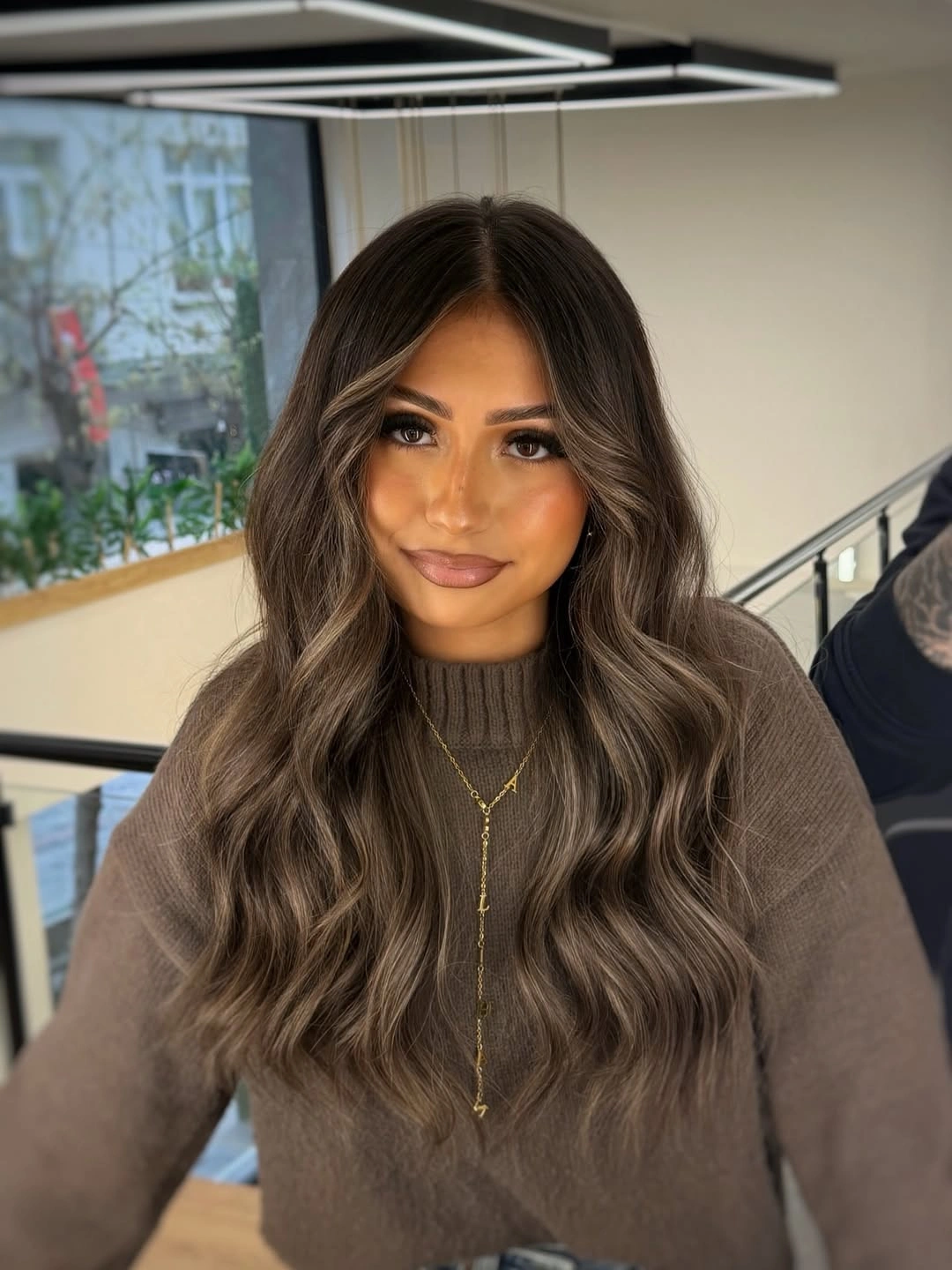
Long front pieces begin somewhat shorter than the deepest lengths, but they merge gradually into the sides rather than forming a sharp step. Farther down, the silhouette narrows toward the ends, so the bottom feels lighter than the broader middle section. Dense waves make the exact internal layer pattern difficult to isolate, which makes the visible relationship between face-framing, overall length and taper the most reliable way to read the cut.
The gradual narrowing gives the very long silhouette a softer finish than a broad blunt perimeter would. It is a good example of shaping through proportion and taper rather than through aggressively visible graduation.
Shoulder-Length Layers With Curved Face Framing
The first shift here is proportion: the hair stops around the shoulders and collarbone instead of continuing far down the chest. That shorter span makes the layered construction much more visible, because the curved ends occupy a larger share of the silhouette. Among medium winter haircuts, this one feels especially shaped by graduation rather than by sheer length.
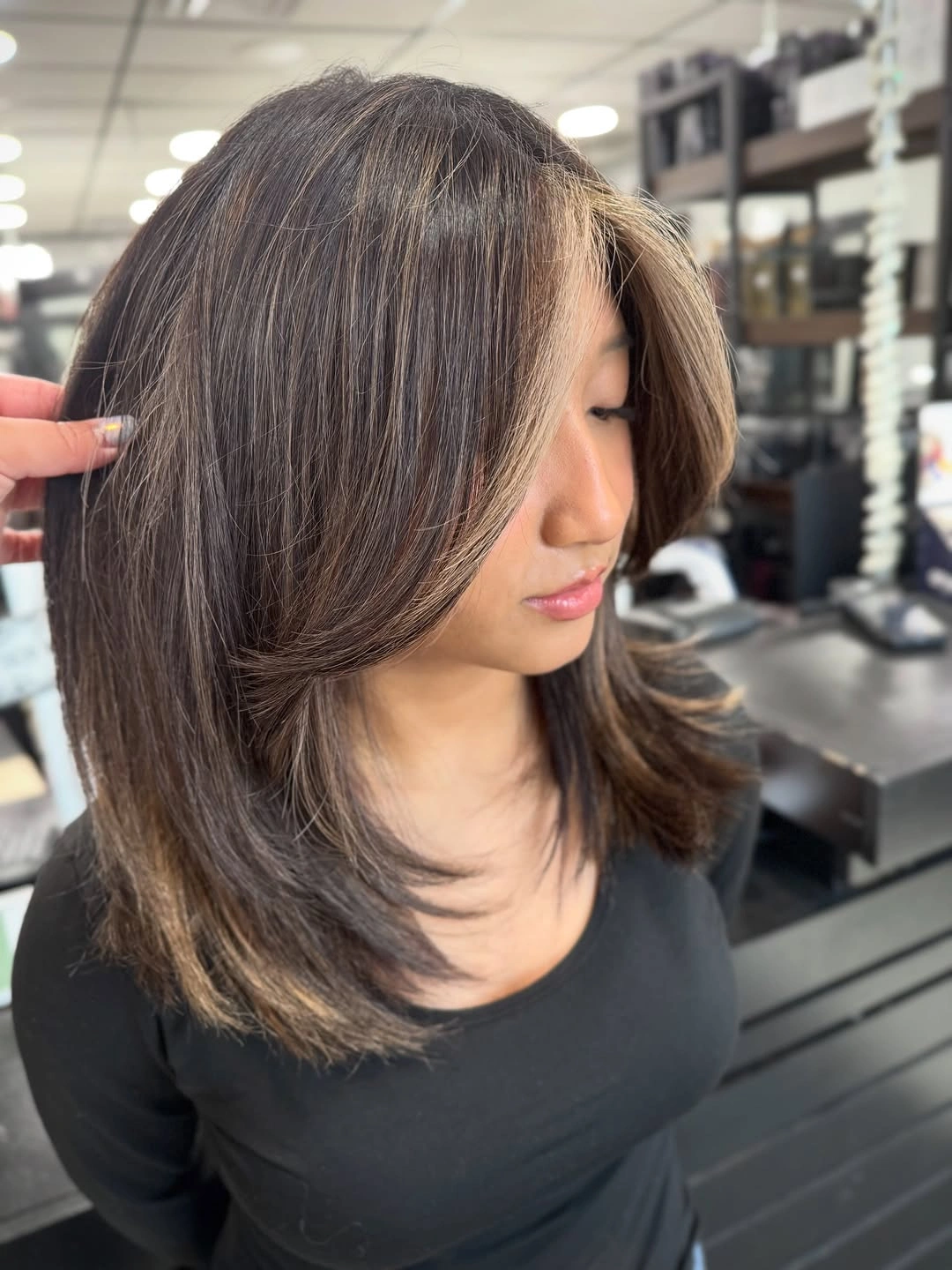
The sweeping front sections begin noticeably shorter than the pieces beneath them and then connect into progressively longer layers along the sides. That relationship keeps the framing integrated with the rest of the haircut instead of reading like a separate fringe. Around the neckline, several curved levels turn outward and give the lower edge a deliberately broken, dimensional shape.
The shoulder area is where the structure becomes most expressive, with shorter and longer ends clearly occupying different levels. The cut gains movement from those relationships even before you focus on the color or finish.
Long Straight Hair With a Broad Perimeter
Seen from the back, this long straight shape is almost the opposite of a visibly graduated cut. The hair falls in a continuous sheet from the upper lengths to a broad lower edge, so the outline is easy to read without waves or pronounced bends changing its contour. For straight-hair winter cuts, that clarity makes the perimeter itself the central feature.
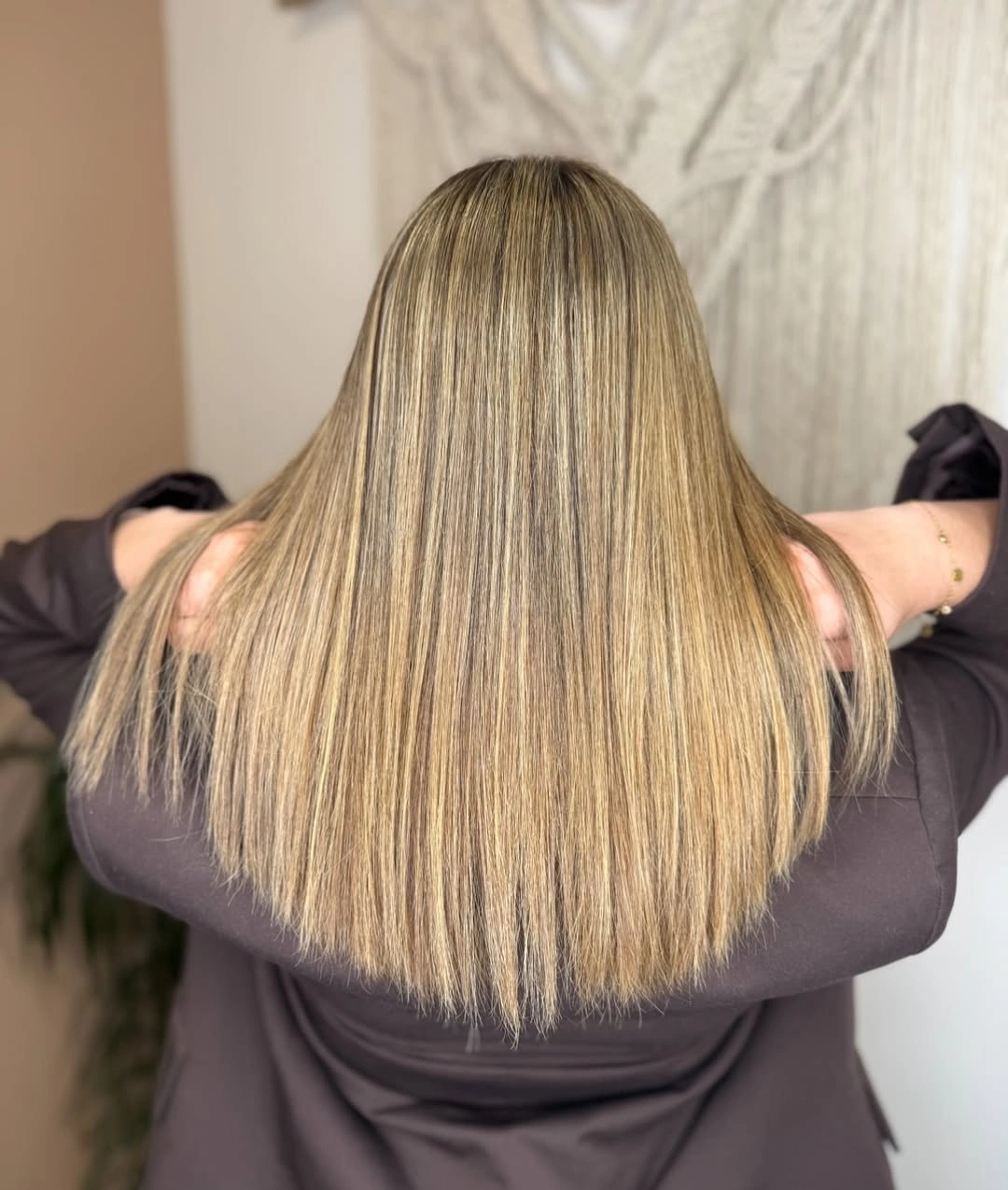
There are no obvious short tiers interrupting the back view, and the sides descend toward a softly curved edge rather than breaking into feathered sections. The result keeps more visual weight at the bottom than a strongly tapered cut would. Even if subtle internal layers are present, the visible effect is one of continuity, which is what distinguishes this silhouette from more separated layered shapes.
The broad perimeter gives the length a calm, deliberate finish rather than a light, piecey one. It is useful precisely because the shape does not depend on dramatic layering to look considered.
Long Waves With a Rounded Lower Shape
This long brown haircut keeps substantial width through the back, and the polished waves make that fullness easy to notice. Instead of narrowing quickly toward the ends, the silhouette stays broad for most of its length before curving into a rounded lower outline. That makes the bottom shape more important here than any individual layer that might be hidden by the waves.
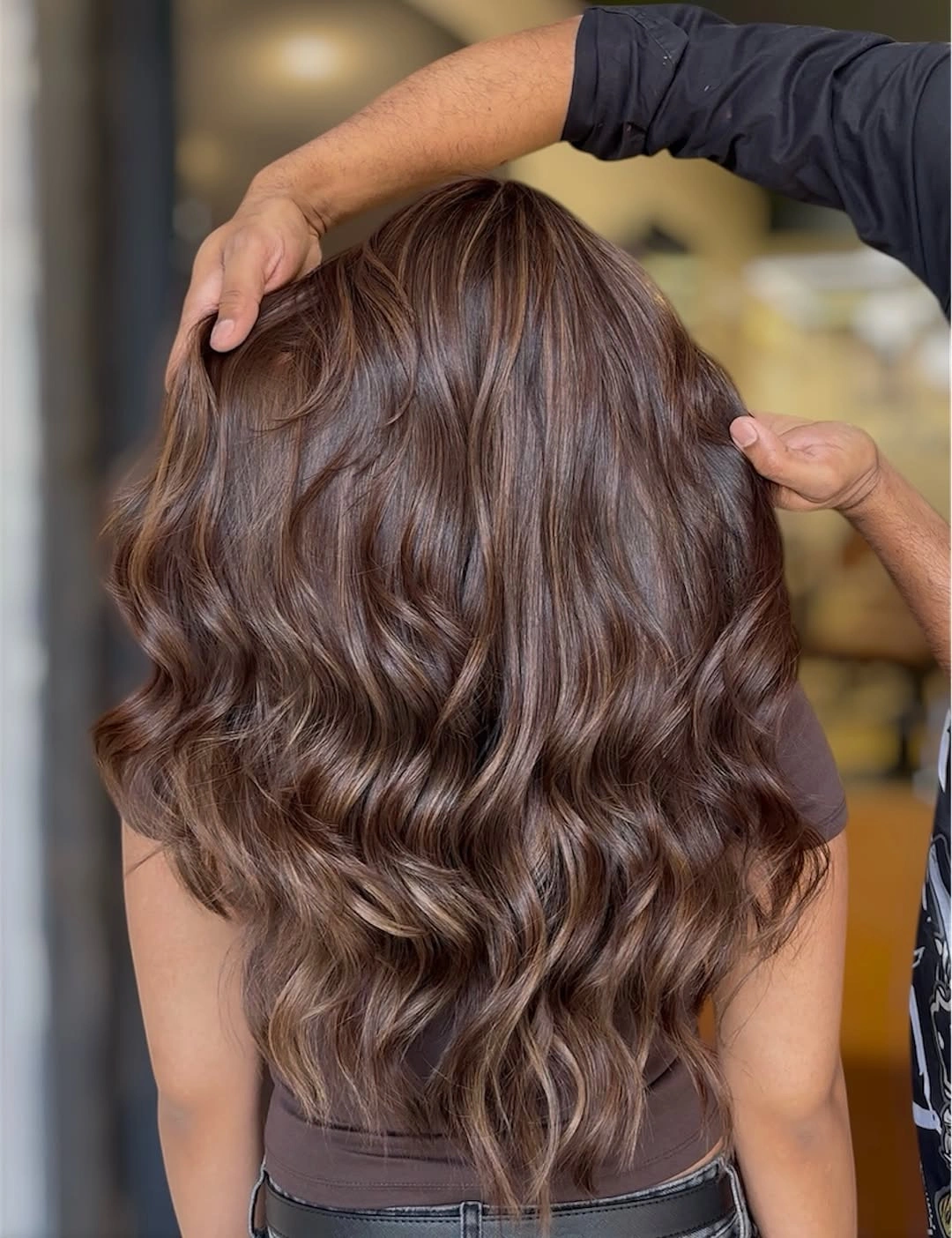
The wave pattern runs through the hair in large, repeated bends, so it emphasizes the continuous curve of the perimeter rather than exposing short internal tiers. The lower edge feels softer and more rounded than a broad straight perimeter, yet it is also fuller than the tapered shapes elsewhere in the collection. That difference gives this long winter haircut its own visual weight.
The rounded finish keeps the back looking cohesive even as the waves create plenty of movement. It is a strong example of how perimeter shape can change the character of long hair without relying on visibly short layers.
Soft Medium Length With Broken-Up Ends
The compact length is what separates this cut from the longest examples: the hair ends just below the shoulders rather than extending far down the back. Loose, irregular bends keep the outline from looking rigid, and the lower edge appears softly broken instead of sharply geometric. As a medium winter haircut, it offers a gentler silhouette than a heavily graduated shoulder cut.
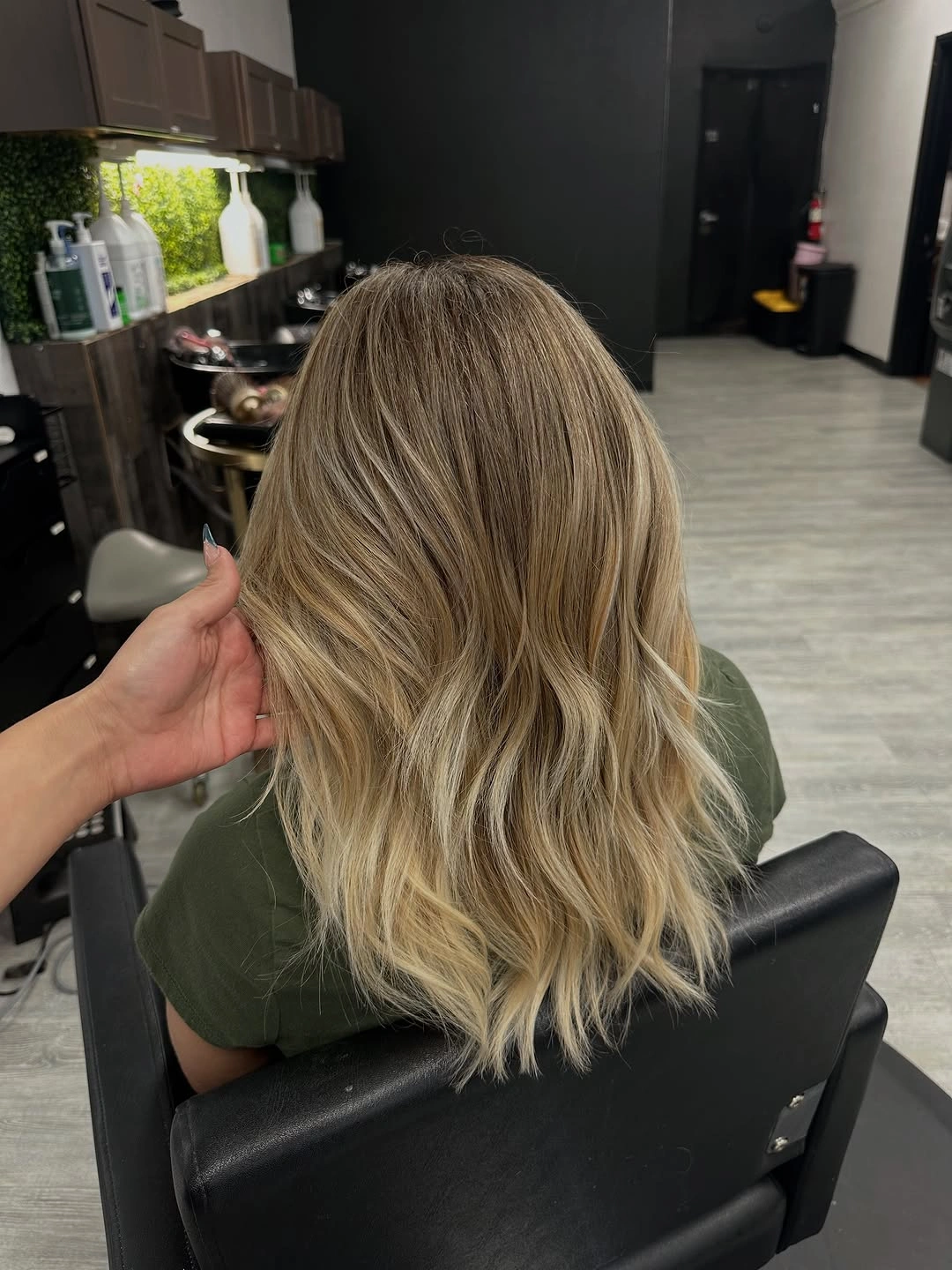
The bends do not form neat repeated tiers, so the eye reads a softly shaped perimeter rather than a stack of distinct layers. Some sections turn outward while others fall more quietly, which gives the bottom a slightly uneven rhythm without making it look dramatically feathered. That looser edge contrasts with shoulder-length cuts where separate curved levels are much easier to identify.
The result sits between a blunt shoulder-length shape and a strongly layered medium cut. Its interest comes from the softer breakup of the ends rather than from a clearly stepped structure.
Very Long Hair With Sweeping Face Framing
Here the contrast between the front and the longest lengths is impossible to miss. The pale blonde hair extends well below the chest, but the face-framing sections begin much higher and sweep outward on both sides before flowing into the body of the cut. For winter haircuts for long hair, this is the clearest example so far of keeping extreme length while making the front significantly more sculpted.
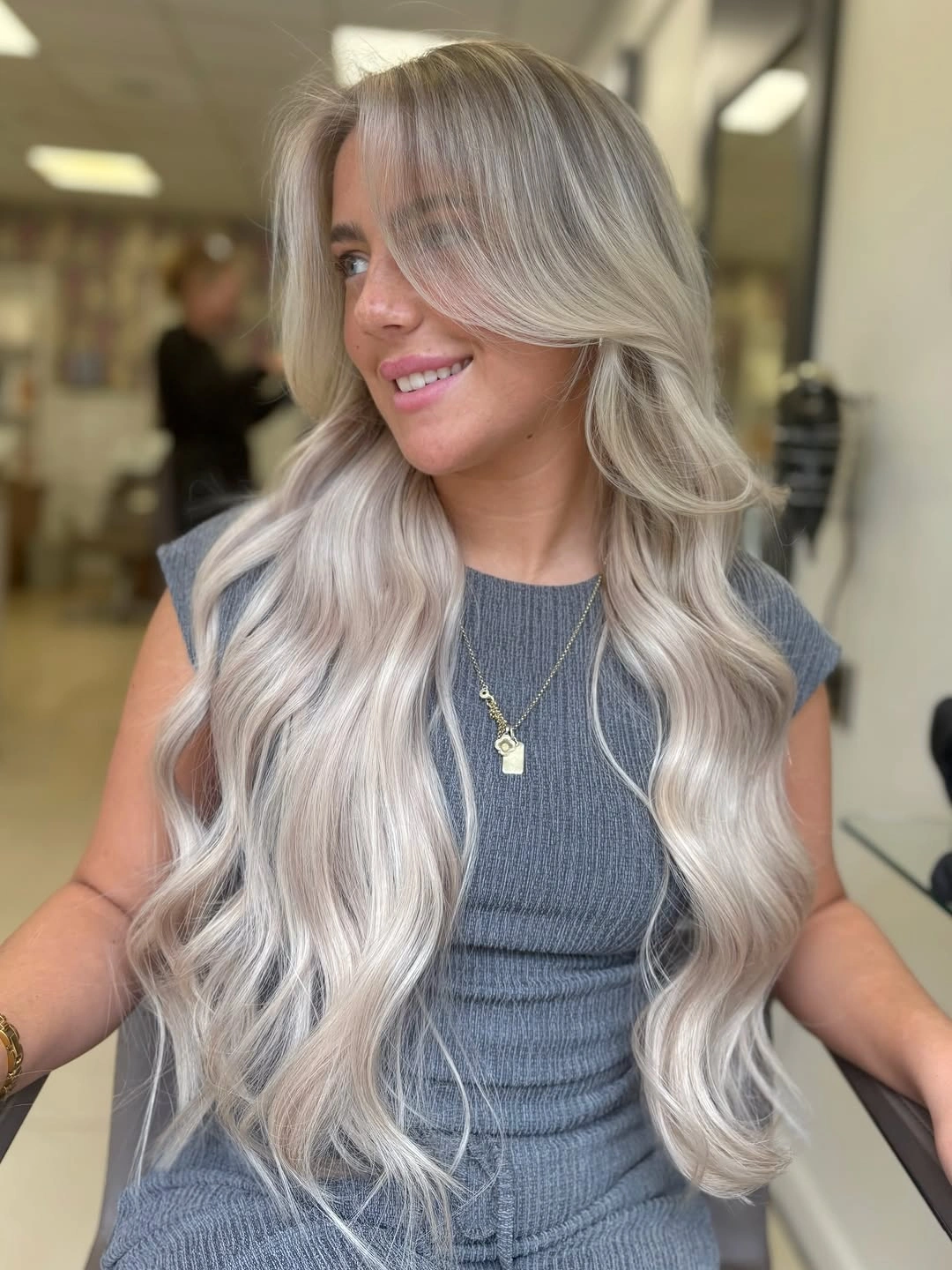
Those shorter pieces create a broad curve around the face, then transition through longer sections instead of jumping directly to the deepest ends. Because the difference in length is substantial, the graduation remains visible even through the large waves. The lower hair still reads as very long and continuous, so the framing changes the front profile without sacrificing the scale of the overall silhouette.
The separation between the sweeping front and the lowest waves makes the haircut structure unusually easy to read. It shows how pronounced face-framing can coexist with very long hair without turning the entire cut into short, repeated tiers.
Long Waves With Fullness Through the Ends
What stands out here is how much width the haircut keeps through the upper and middle lengths before narrowing closer to the bottom. The back view feels substantial rather than airy, and that preserved fullness gives the silhouette a different character from long cuts that thin out much earlier. The smooth upper section lets the lower shape become the main point of interest.
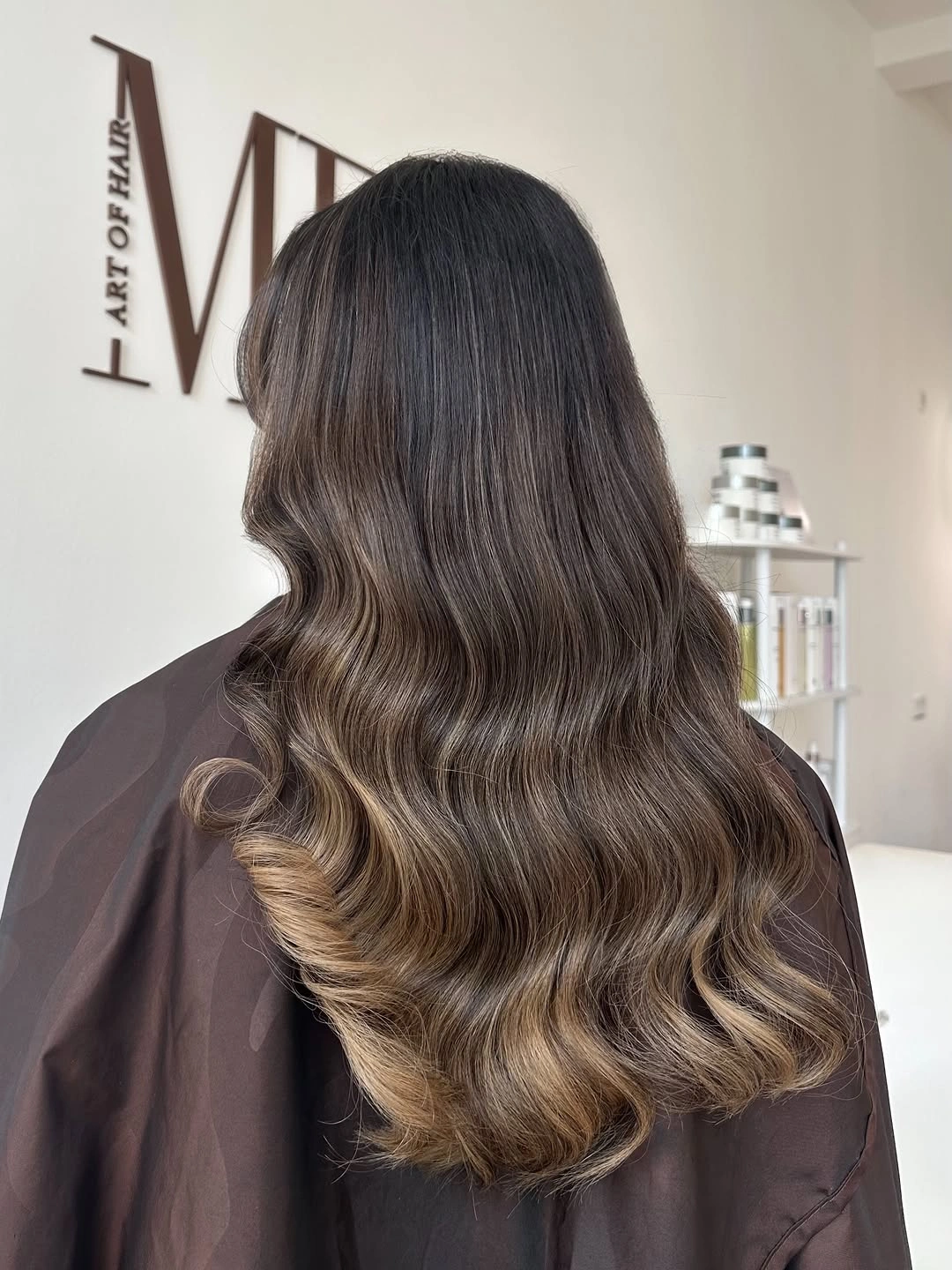
Most of the visible movement appears through the lower half, where the hair forms broad S-shaped waves instead of breaking into obvious short layers near the crown. That concentration keeps the upper length looking cohesive while allowing the ends to separate and curve more freely. Among long winter haircuts, this one makes end weight especially easy to compare because the taper arrives late rather than gradually through the whole length.
I like the restraint of that lower taper because it prevents the bottom from ending in a strict horizontal line without sacrificing fullness above it. The silhouette stays generous through most of the back, then softens only where the ends begin to gather.
Long Hair With Movement Focused Near the Ends
This back view has a quieter rhythm than the more visibly graduated cuts, and that is exactly what makes it useful. The crown and upper lengths remain relatively smooth, so the eye travels down a continuous surface before encountering most of the movement lower in the hair. The shape feels controlled through the top and middle instead of being broken up from the start.
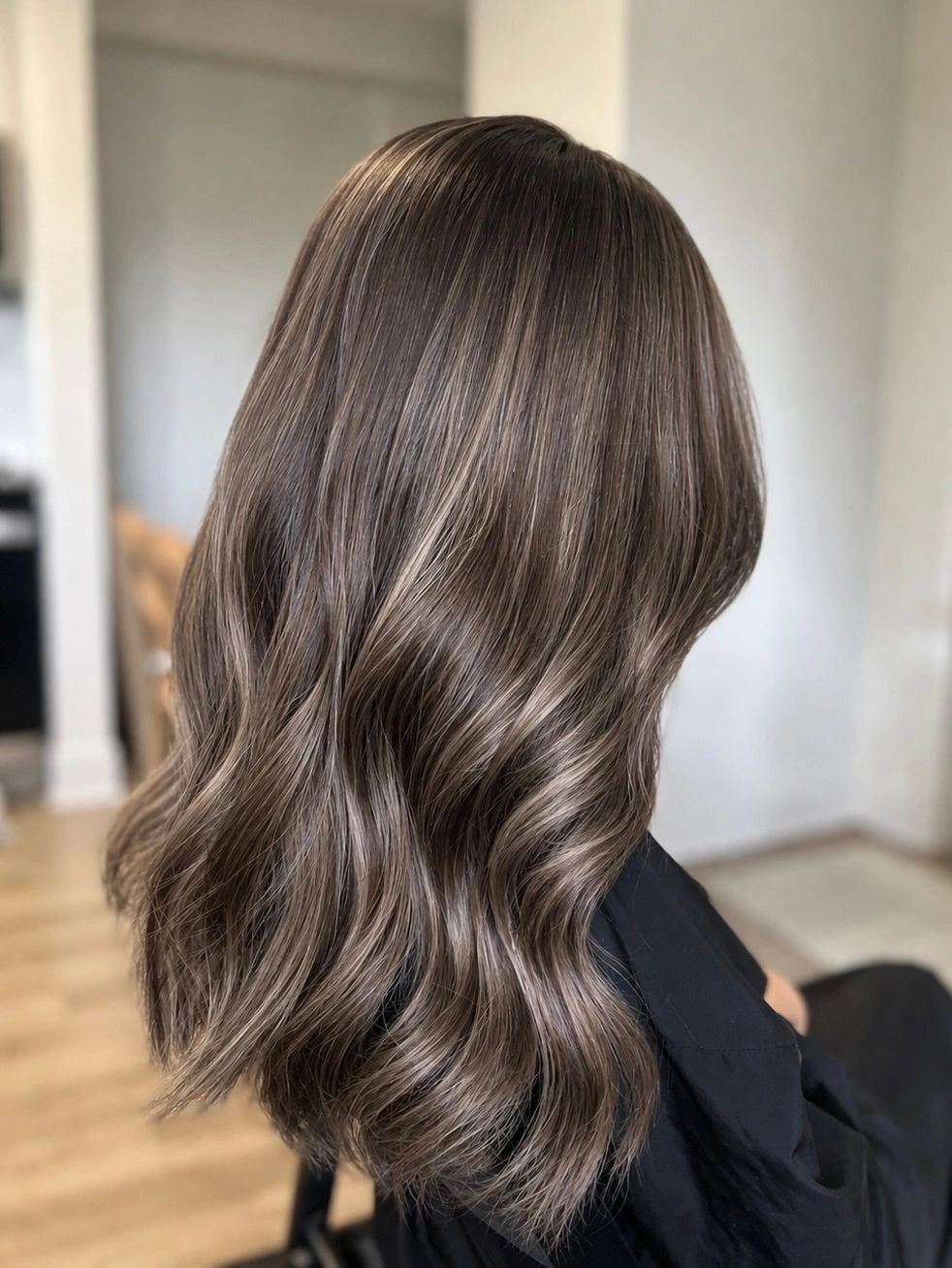
Loose curves begin farther down and become more noticeable toward the ends, where the perimeter rounds softly rather than finishing in a sharp line. The styled bends make exact internal layers hard to isolate, but the placement of movement is still clear. For long winter haircuts, this offers a good reference for a silhouette where shape is concentrated near the bottom rather than distributed through many visible levels.
The effect is subtle, but not featureless. That gentle lower curve gives the length definition without introducing strong feathering, obvious tiering or a narrow pointed finish.
Long Layers With Strong Graduated Face Framing
This is one of the clearest examples in the collection where graduation becomes the haircut's defining feature rather than a small adjustment around the face. Shorter front sections are visibly distinct from the longest lengths, and the difference continues through several curved levels along the sides. The result is a long silhouette that still shows a lot of internal structure at first glance.
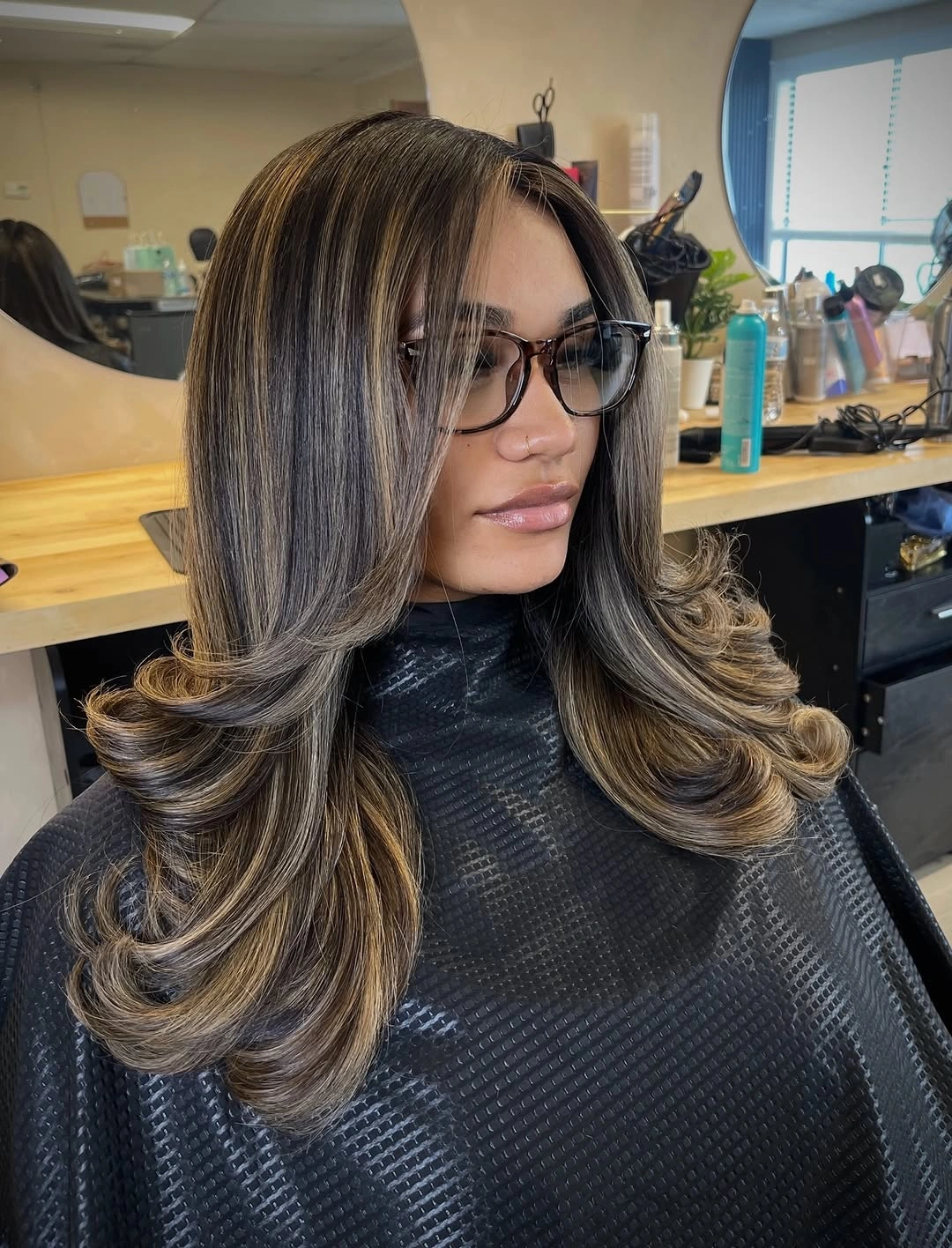
Repeated sections turn outward at different heights, so the transitions from shorter to longer hair remain visible well beyond the face-framing area. That repeated graduation matters because it keeps the haircut from reading as simply very long hair with two shorter front pieces. Among winter haircuts for long hair, this one places more emphasis on the relationship between each layer level and the next.
The outward-curved ends exaggerate the separation enough to make the architecture easy to read, and I think that suits this cut better than hiding everything in one smooth wave. The length is still substantial, but it is no longer the only thing carrying the silhouette.
Long Copper Hair With a Rounded Perimeter
After a strongly graduated silhouette, this long copper-red back view feels notably more continuous. The hair keeps a broad shape through the upper and middle sections, and there are no obvious short tiers competing with the overall length. Loose waves add movement across the surface, but the haircut still reads first as one cohesive long outline rather than a sequence of separated layers.
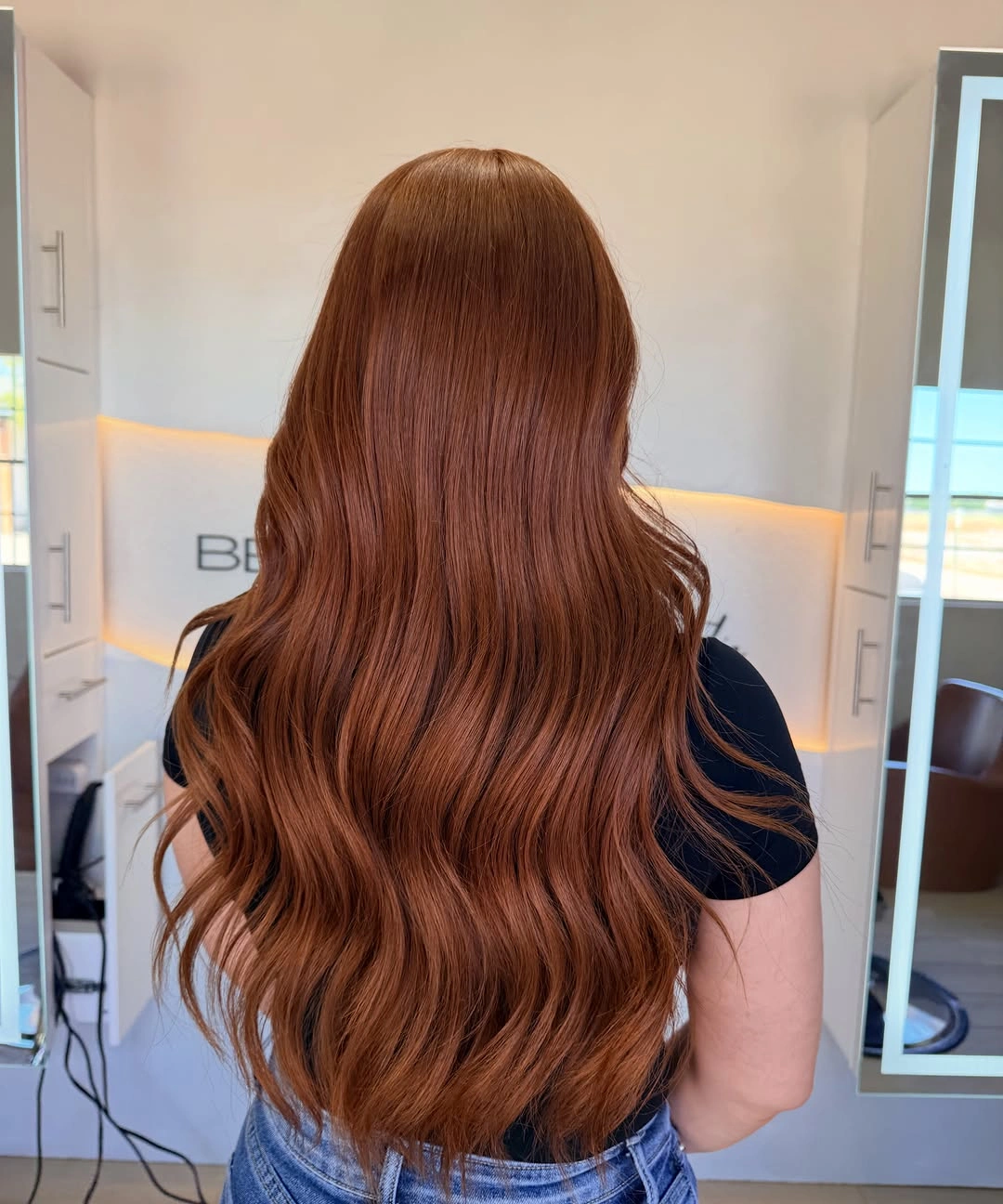
The lower edge rounds gently across the back, which gives the silhouette shape without making it narrow or sharply pointed. Because the waves do not reveal a clear hierarchy of internal layers, the perimeter becomes the most useful feature to study. That rounded finish lets the ends feel deliberate while preserving substantial width through the lower lengths instead of breaking them into feathered pieces.
There is something appealing about how little the cut needs to announce its structure. The continuous length and softened bottom do enough, creating a fuller long shape without relying on dramatic graduation.
Very Long Hair With Gradual Front Framing
The overall scale remains impressive here, with the longest sections extending well below the chest and keeping the haircut unmistakably very long. What changes the silhouette is the way the front pieces begin shorter and sweep outward without separating sharply from the sides. The framing is visible, but it feels more gradual than the dramatic front-to-bottom contrast seen in some other very long cuts.
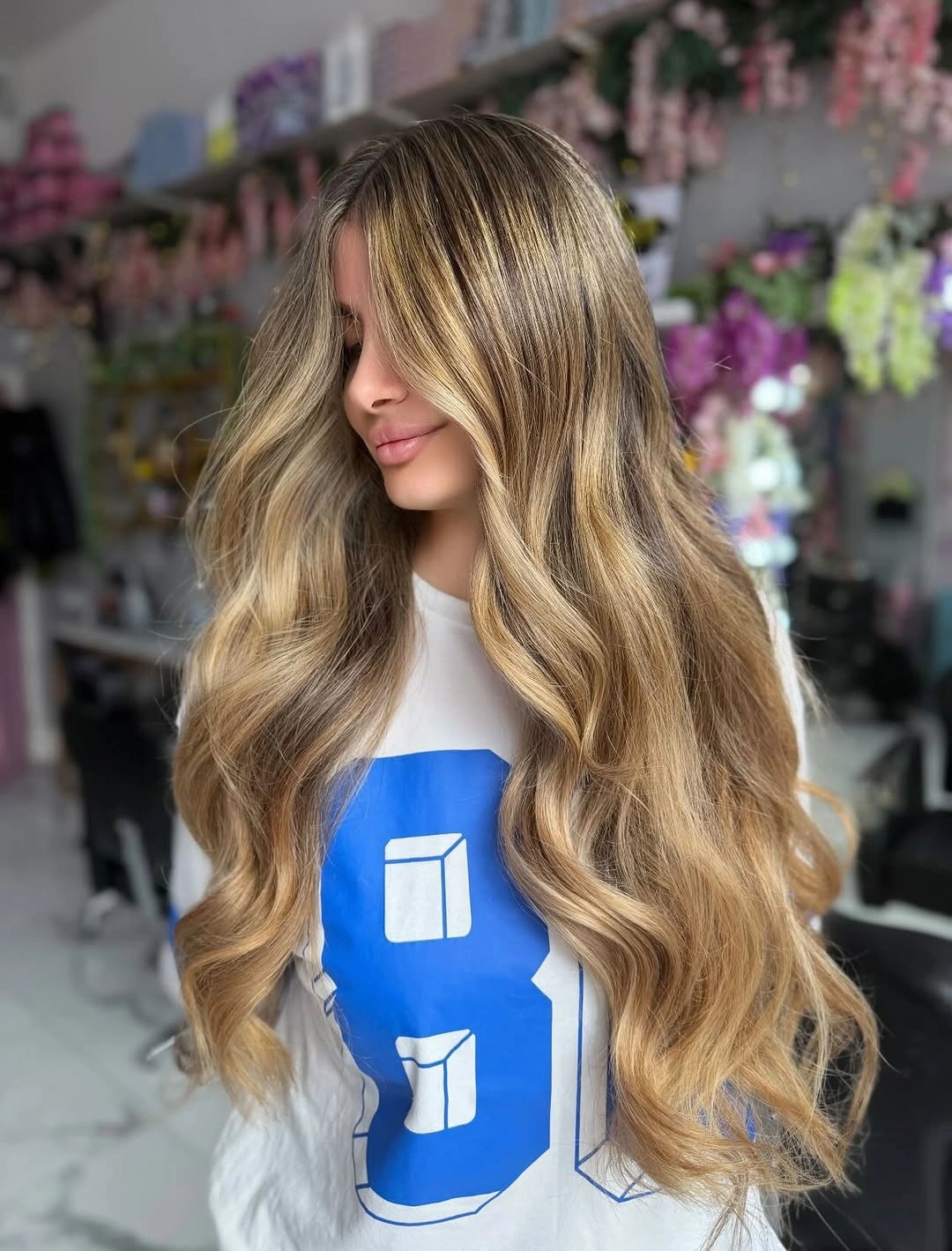
Broad waves help the shorter front sections connect into progressively longer lengths, so the transition feels stretched out rather than abrupt. Farther down, the silhouette narrows gently toward the ends instead of maintaining the same width from top to bottom. For winter haircuts for long hair, that combination offers a softer reading of face-framing, where proportion changes slowly and the taper supports the length rather than competing with it.
I prefer the gradual connection here because the framing remains noticeable without turning into a series of sharply separated tiers. The tapered bottom also gives the extreme length a lighter finish than a broad, full perimeter would.
Long Layers With Smooth Face-Framing Curves
This long brunette cut makes the front shape easy to notice without turning it into a dramatic fringe. The center part opens into shorter face-framing sections that curve away from the cheeks, while the rest of the hair keeps enough length to maintain a long, balanced silhouette. Among winter haircuts for long hair, this one feels especially controlled because the graduation is visible without becoming sharply stepped.
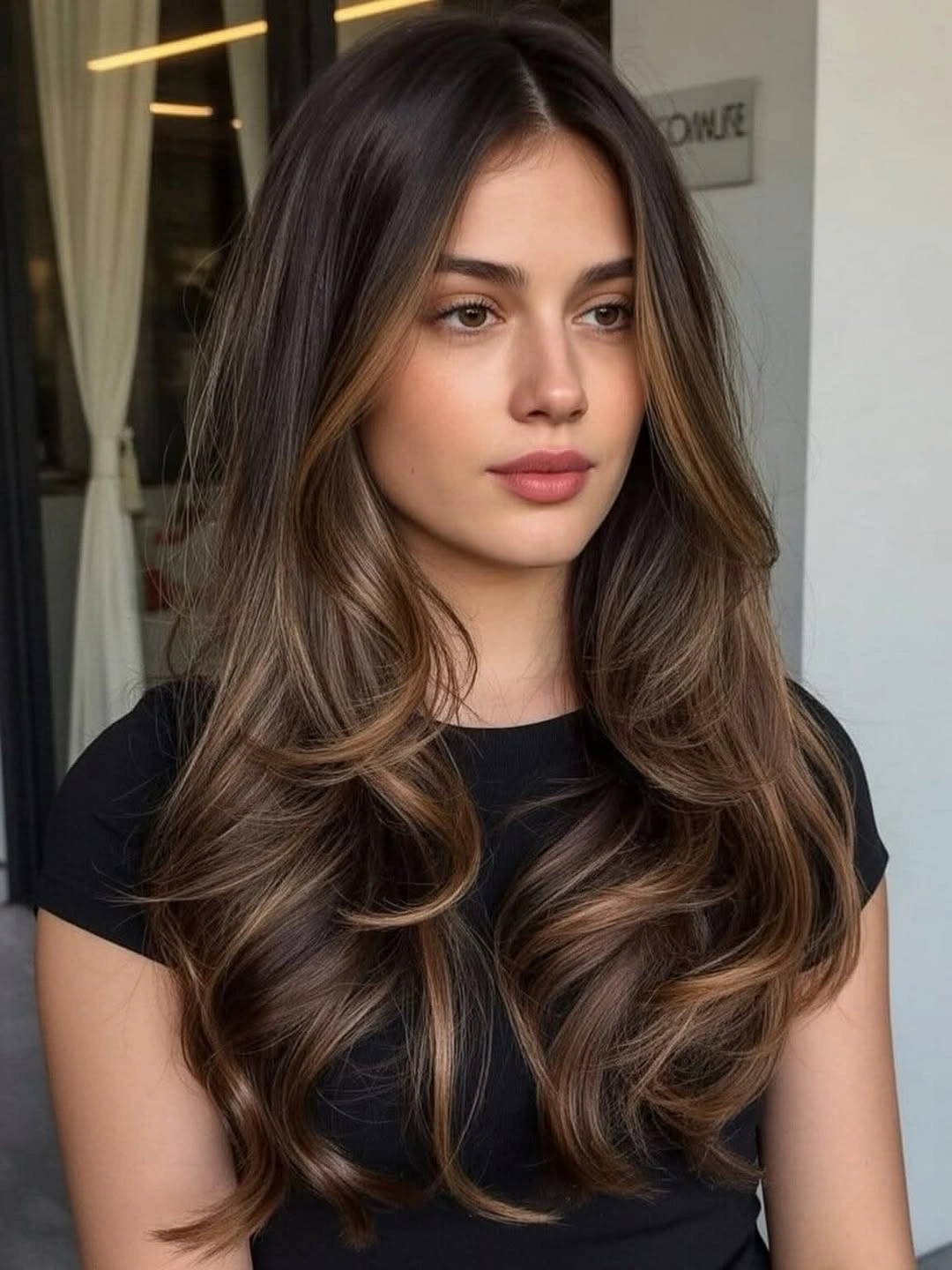
The shorter front pieces lead into successively longer sections through the sides, so the framing keeps traveling downward rather than stopping near the face. Those longer layers become more noticeable around the chest, where several ends curve outward at slightly different heights. The effect is structured, but the transitions stay smooth enough that the haircut still reads as one connected shape rather than a collection of separate tiers.
The curved ends help reveal the layers without making the outline feel busy. It is a useful reference for someone drawn to visible long layering but preferring a smoother, more continuous finish.
Very Long Hair With Restrained Lower Layers
The upper half of this very long blonde haircut stays noticeably smooth, which gives the silhouette a calm, continuous quality before the shaping becomes more visible lower down. A center part keeps the front balanced, while the long face-framing pieces remain close enough in length to the body of the hair that they do not interrupt that upper continuity. The result is long hair where the structure reveals itself gradually.
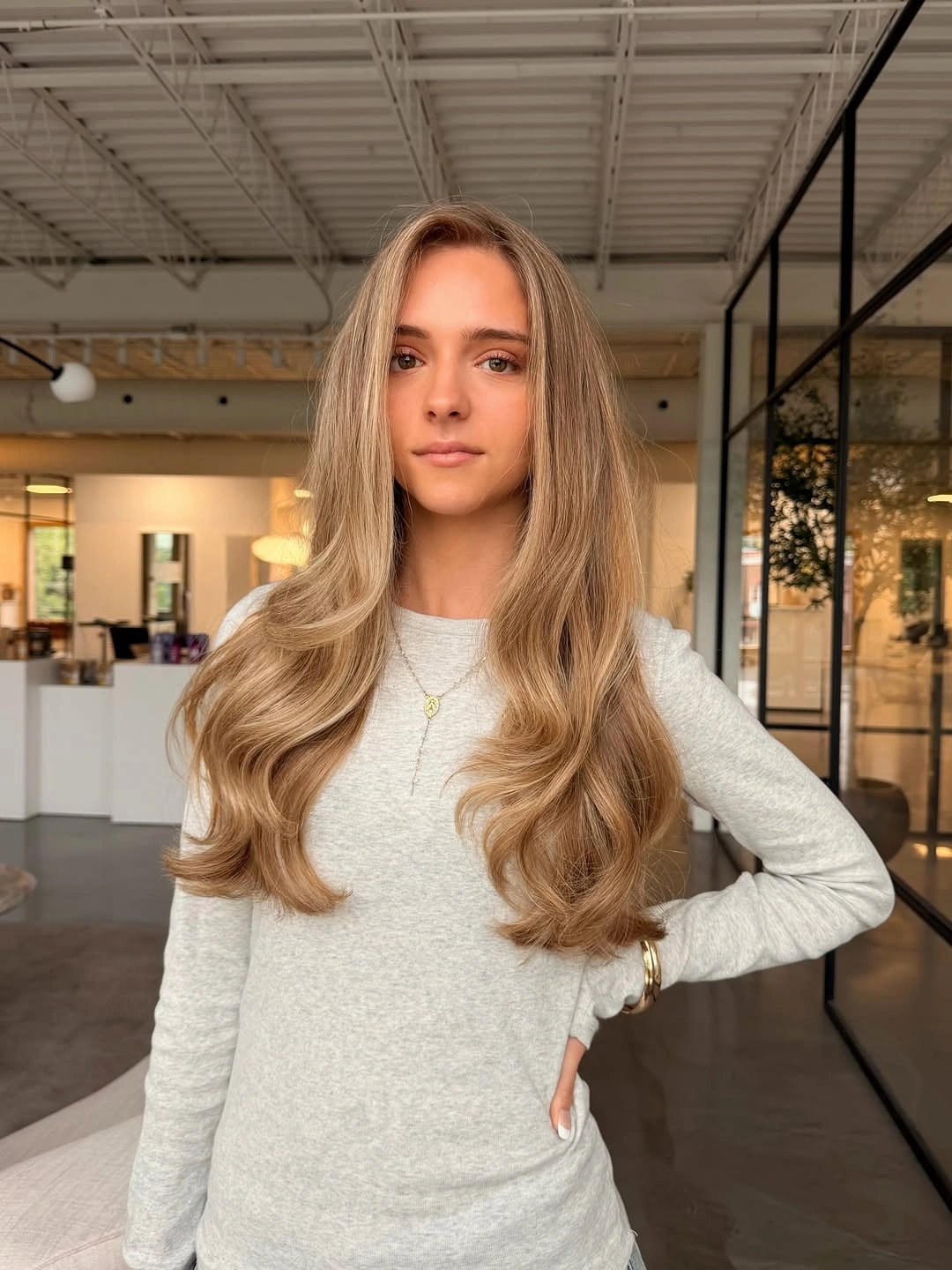
Most of the visible movement appears around the front and through the lower sections, where the ends begin to curve outward and separate more clearly. Those bends suggest graduation, but the haircut does not present a sequence of strongly defined short levels. That makes this long winter haircut a useful middle ground between a nearly one-length silhouette and the more obviously tiered shapes elsewhere in the collection.
The restraint is what gives this example its appeal. The cut keeps the upper lengths visually cohesive, then allows the lower sections to carry most of the shaping.
Long Waves With a Full Rounded Perimeter
This back view is defined by fullness more than by visible layering. The brunette hair keeps substantial width through the middle and lower lengths, and the broad waves reinforce that generous shape instead of breaking it into narrow sections. Among long winter haircuts, this one stands out because the bottom remains broad and rounded rather than tapering sharply as it approaches the ends.
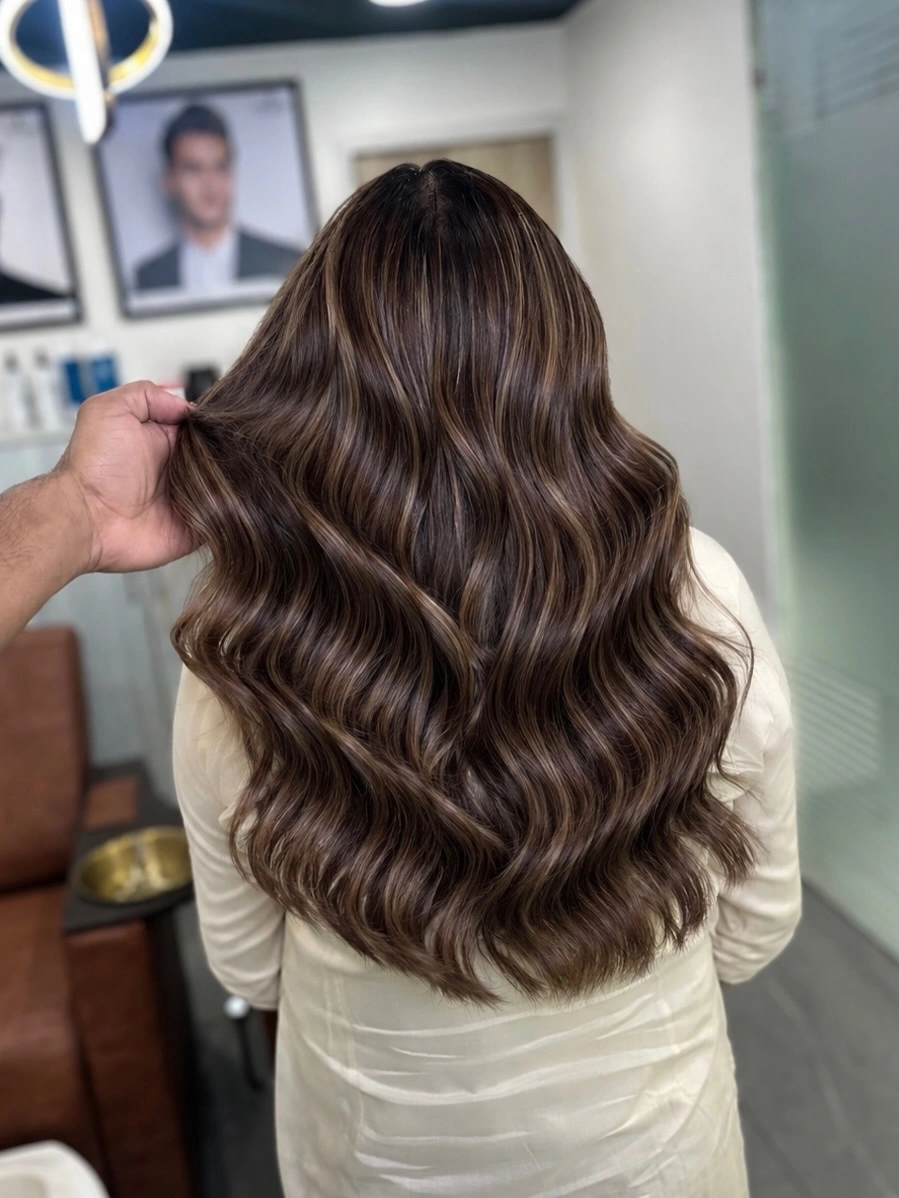
The wave pattern is remarkably even across the back, so the silhouette reads as cohesive from side to side. There is no obvious feathering at the bottom and no narrow point pulling the eye downward; instead, the perimeter stays full before rounding softly across the lower edge. That gives the haircut a heavier visual base than long shapes where the ends become progressively lighter or more separated.
The strongest detail here is simply how much width the cut preserves at the bottom. That fullness gives the long waves a substantial finish without needing visible face-framing or pronounced tiering to define the shape.
Shoulder-Length Hair With a Compact Soft Edge
This shoulder-length cut changes the pace of the collection by reducing the vertical scale almost immediately. The hair ends around the shoulders, creating a compact outline that feels distinctly different from the long and very long shapes around it. As one of the clearest medium winter haircuts here, it shows how much the silhouette can shift simply by bringing the perimeter higher.
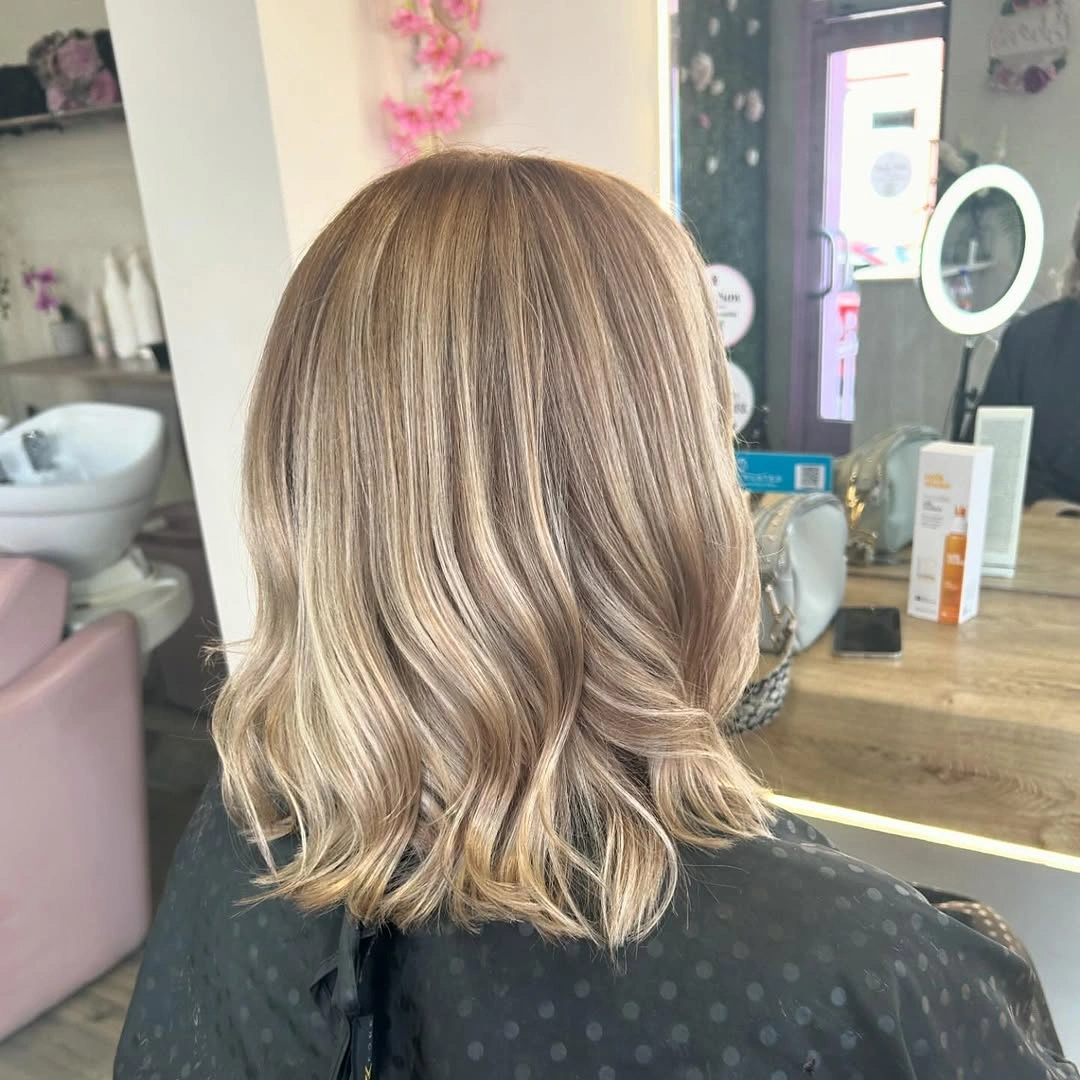
From the back, the lower edge looks comparatively even and concise rather than tapering into a point or breaking into several visible levels. The ends turn outward slightly, which softens the shape without making the haircut appear heavily layered. That small amount of movement keeps the perimeter from feeling rigid while still preserving the straightforward, shoulder-focused proportion.
The cut has enough softness at the ends to avoid a severe line, but its identity still comes from compact length rather than elaborate graduation. It is a strong reference for anyone who prefers a neater shoulder-level silhouette over extended length.
Long Hair With Softly Tapered Face Framing
The overall length remains the dominant feature in this golden-brown haircut, but the front has enough shaping to keep the silhouette from looking entirely uniform. A center part opens into long face-framing pieces that begin higher than the deepest lengths, then flow gradually into the sides. For winter haircuts for long hair, this is a restrained approach where the framing is noticeable without becoming sharply separated.
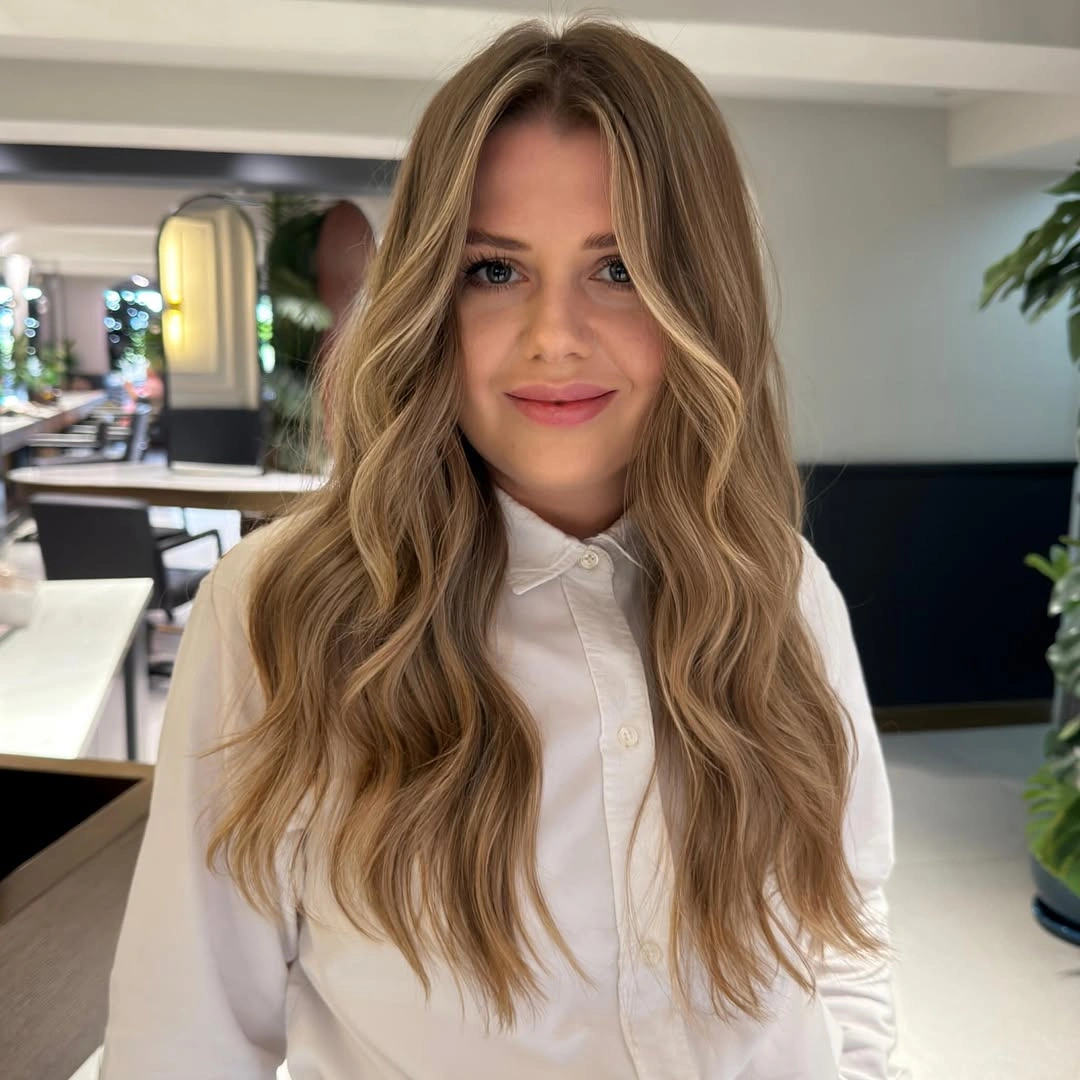
Loose waves make the transition from the shorter front pieces to the longer body feel especially gradual, and the silhouette narrows softly toward the bottom rather than staying equally broad throughout. That relationship gives the ends a lighter appearance than the full rounded shapes elsewhere in the article. The internal layer boundaries are softened by the waves, but the combination of long framing and gentle taper remains clearly visible.
The result favors continuity over dramatic contrast. It keeps the long silhouette intact while letting the front and lower edge provide just enough shaping to keep the outline from feeling heavy.