34 Winter Hairstyles for Thin Hair to Add Volume
I started seeing the same cut in every salon chair next to mine this fall. A blunt, chin-grazing bob, sometimes with a fringe, sometimes without. For thin hair, it is the difference between looking polished and looking like you forgot the dryer.
These 34 Winter Hairstyles for Thin Hair range from a five-minute air dry to a full blowout commitment. They work for round faces, fine density, and anyone whose hair goes flat by 4 pm. I wrote them for the grow-out I am already planning and the one I am still resisting.
Textured Honey Blonde Pixie Crop
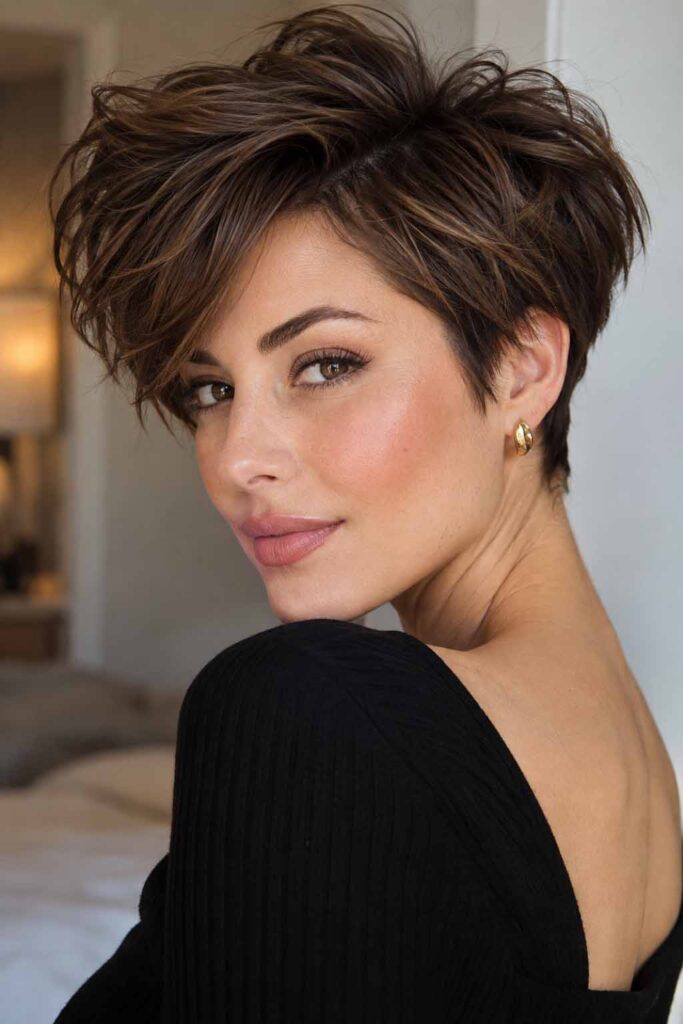
A short pixie for fine hair works because it removes the weight that pulls straight strands flat. The cut stays close at the nape and ear, then stacks textured volume on top. Side-swept bangs break the line across the forehead, which keeps the shape from reading too severe or too round. Straight, fine texture actually holds the piecey lift better than thicker hair would, since each strand bends without resistance. Five minutes with a styling paste on damp hair, pushing the top forward and to the side. That is the whole routine.
Tousled Jaw Length Shag With Curtain Fringe
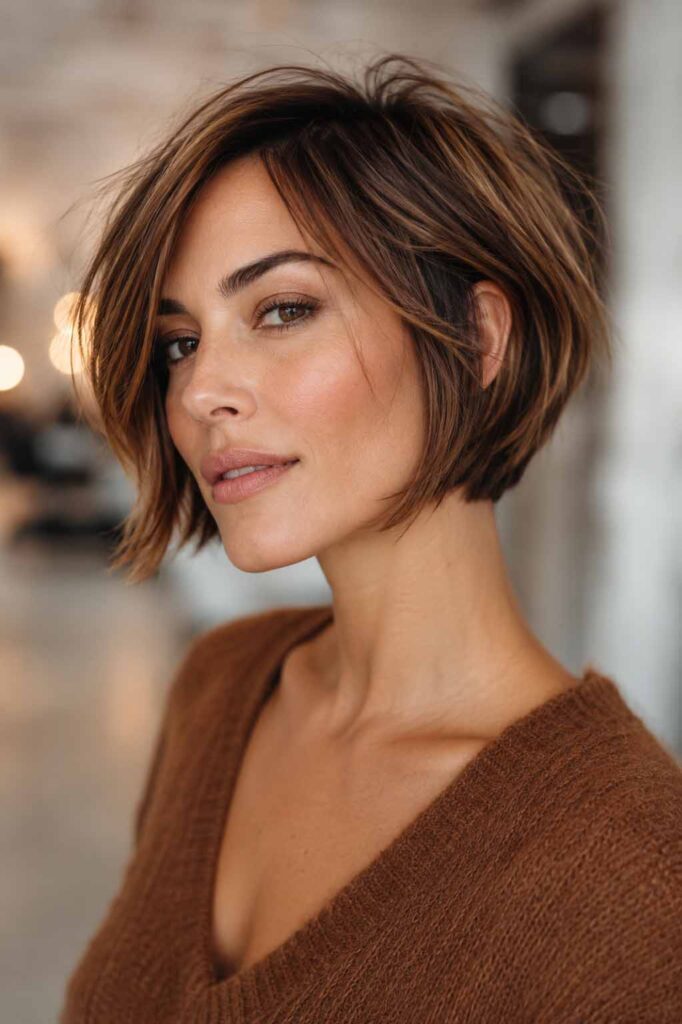
Can a jaw length shag for fine hair hold its shape past lunch? It can, if the layers are cut into the interior rather than razored through the ends. The curtain fringe parts naturally at the centre and sweeps to each side, which hides the fact that fine, wavy hair tends to separate by noon. A texturizing spray scrunched into damp hair, then air dried or diffused on low heat, keeps the piecey texture intact without stiffening the strands. Trim every six weeks to keep the ends sharp, and keep hot tools away from the fringe to preserve the natural bend. That bend is what makes the shag look deliberate, not defeated.
Collarbone Wavy Bob With Balayage Dimension
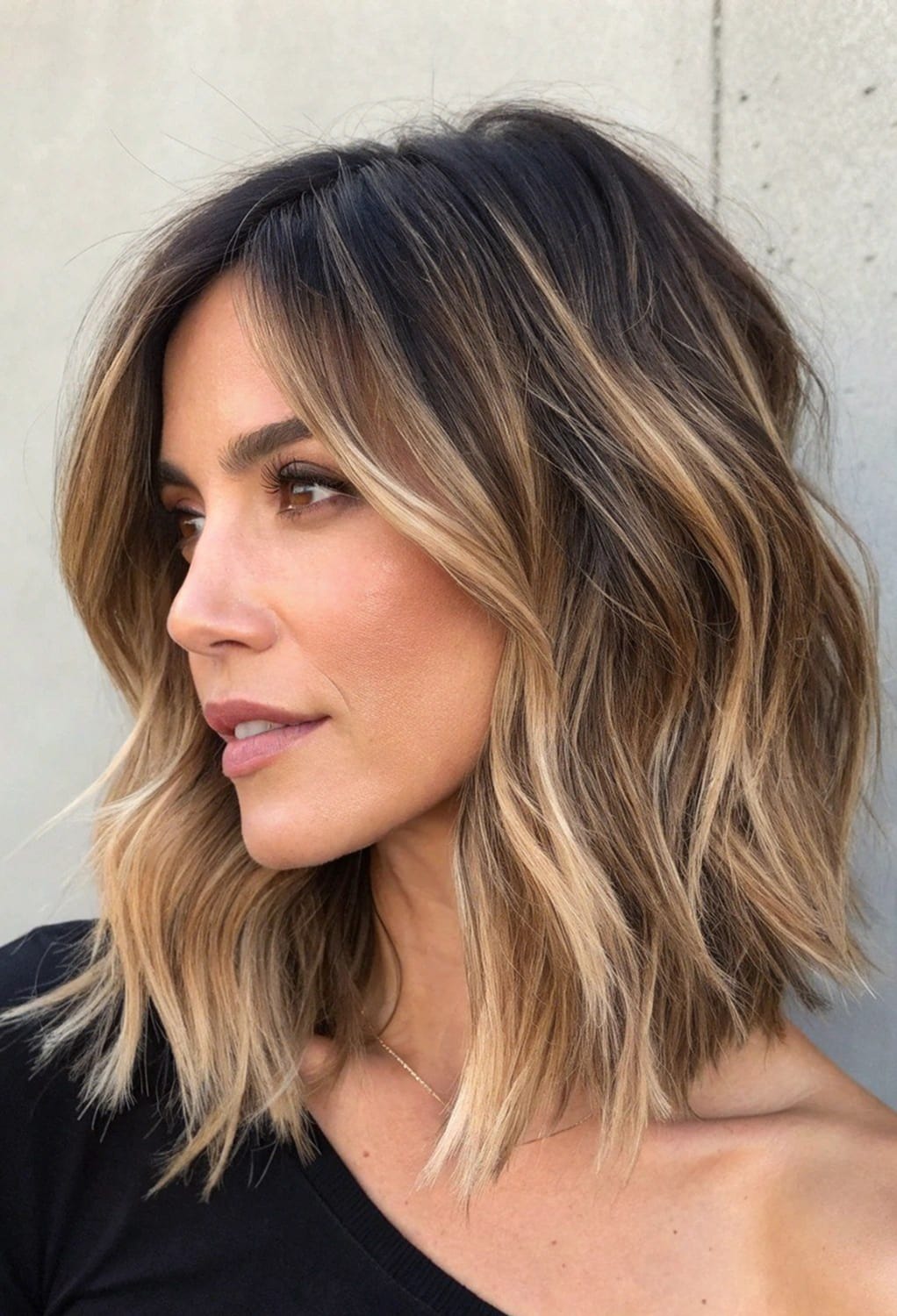
A wavy collarbone bob with balayage highlights does two things at once. The blunt baseline keeps the hemline dense, so fine strands do not look sparse at the ends. The balayage technique paints lighter pieces onto the surface only, which creates the illusion of depth without lifting every strand.
Dark brown base with blonde highlights placed a few inches from the root means the grow-out line stays soft for months. This is the cut for winter parties where you want movement without spending an hour with a curling wand. Wrap large sections around a barrel for ten minutes, brush out into soft bends, and go.
Chin Length Bob With Soft Curtain Bangs
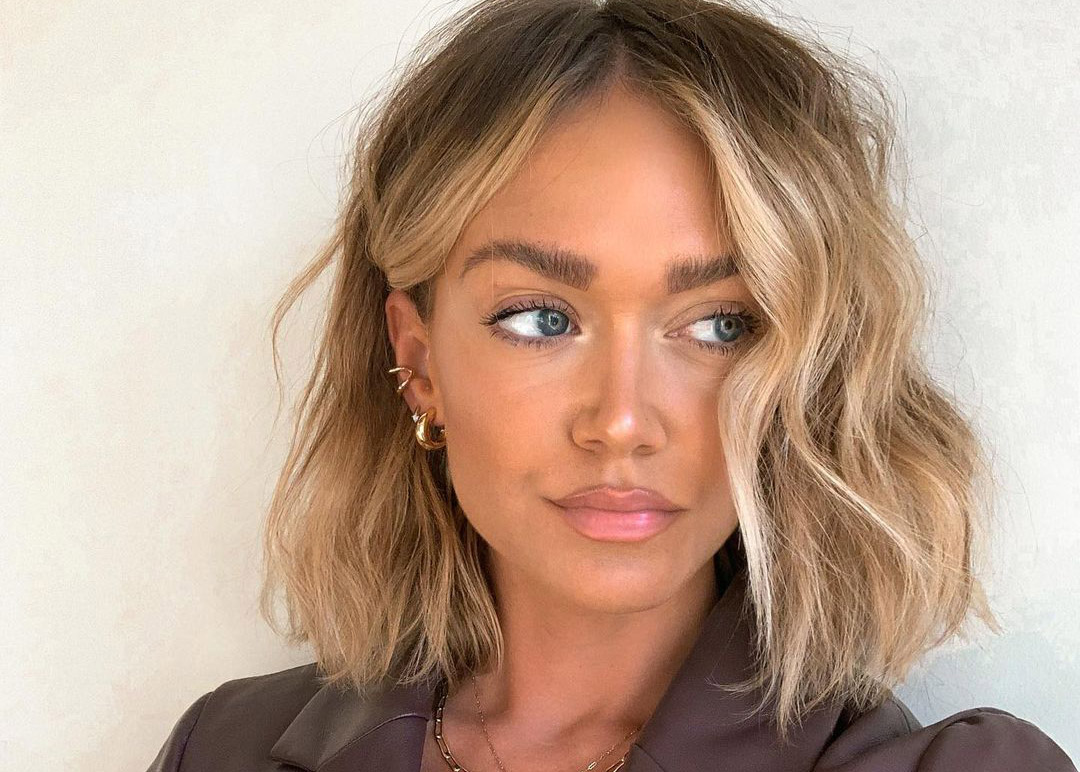
I was wrong about chin length bobs on fine hair. I assumed they would sit too heavy. A chin length bob with curtain bangs works because the bangs are cut to sweep away from the face, which opens up the front and lets the crown stay lifted. Face-framing layers carved into the sides keep the shape from falling into a solid triangle. Ask your stylist to keep the interior layers soft and the perimeter blunt. That combination gives fine, wavy hair enough structure to hold a bend but enough movement to look airy.
Mid Back Voluminous Layers With Full Fringe
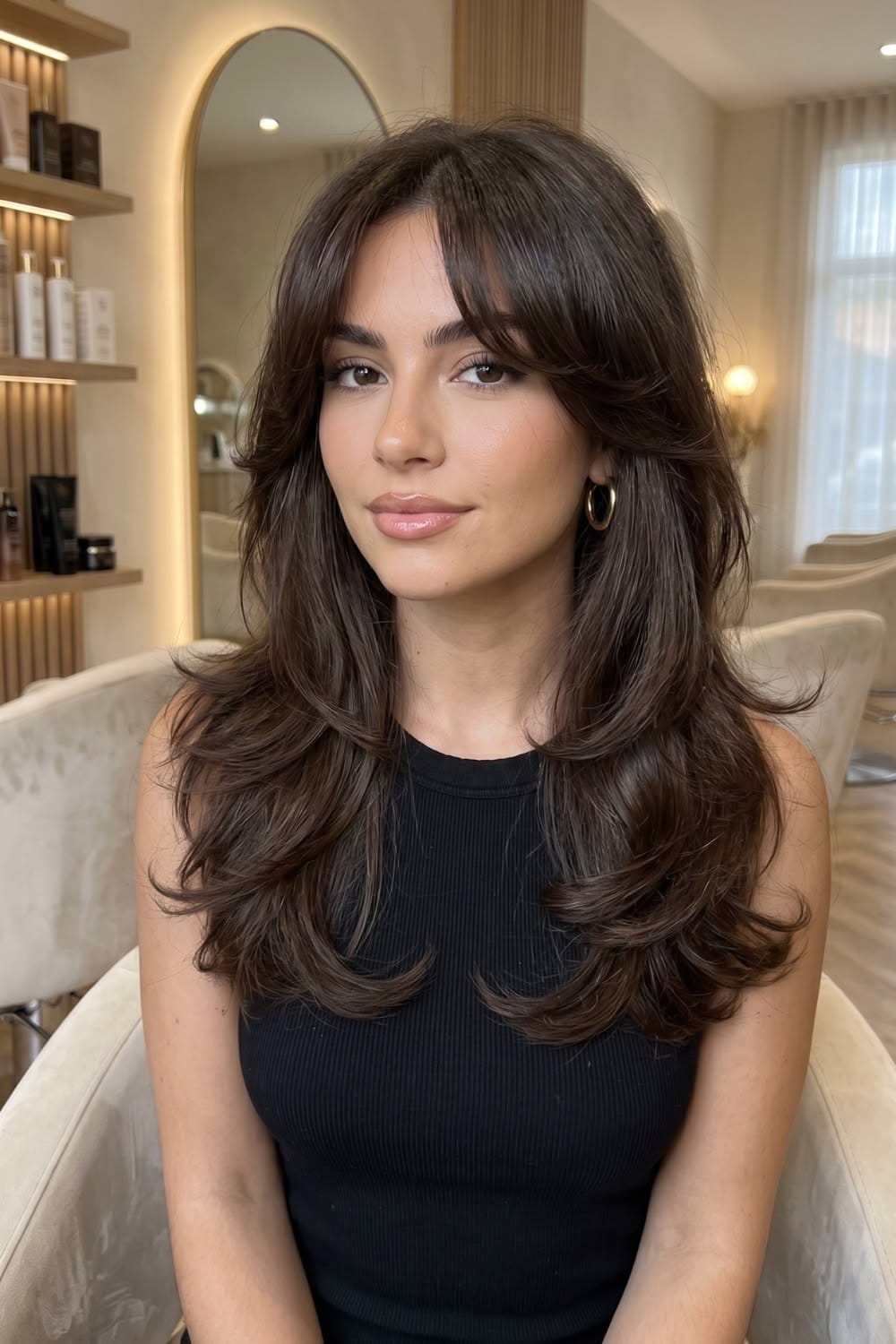
Long layered hair with fringe is the most honest entry in this roundup. It requires work. The full fringe needs a round brush and a blow-dryer every morning, and the mid-back length means fine strands will tangle at the nape by day three. But the payoff is real: layers cut through the interior create pockets of air that stop long hair from hanging like wet string.
The honest downside is that the volume drops by evening unless you build it with a large barrel brush for fifteen minutes after washing. Winter coat friction will also grab the ends, so a quick detangle before bed matters. Trim every eight weeks to keep the fringe from grazing the lashes and the layers from blending into one flat sheet. It is not a set-it-and-forget-it cut. It is a cut that rewards the effort.
Vibrant Copper Red Collarbone Shag
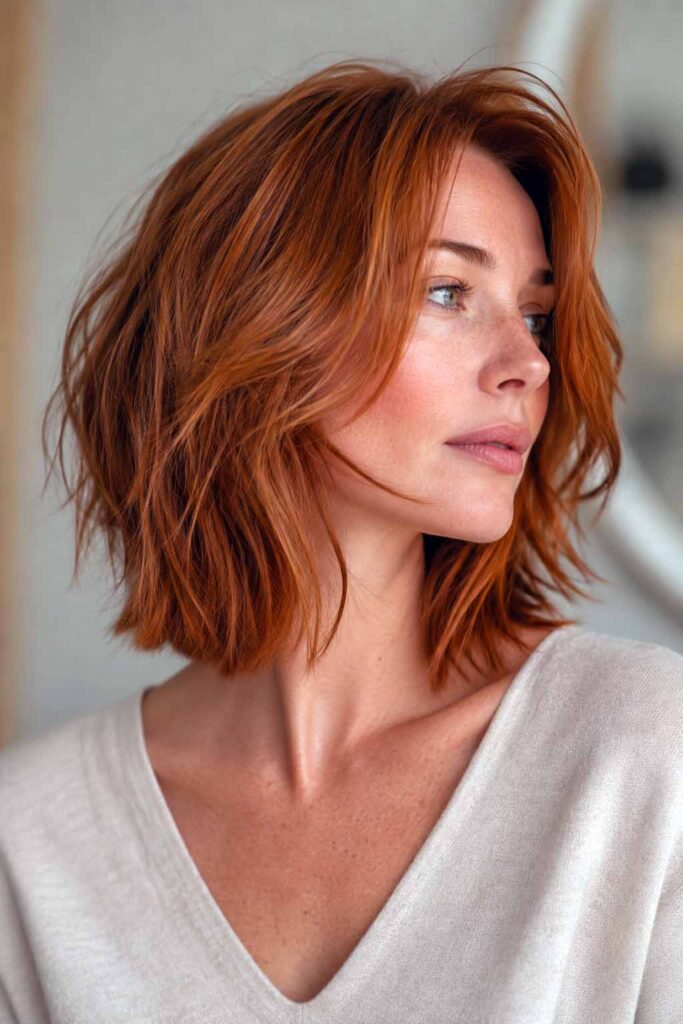
Snow on the sidewalk, copper in the chair. This collarbone shag lands choppy layers through the midsection and a heavy set of textured bangs that hit just above the brow, and the colour does the heavy lifting for thin hair in winter. The copper shag for fine hair reads warm against grey light, and the cut itself gives the texture a reason to hold wave without product weight. The middle part widens a round face, but the shag shape balances it fast. Book this one.
Classic Chin Length Bob With Blunt Bangs
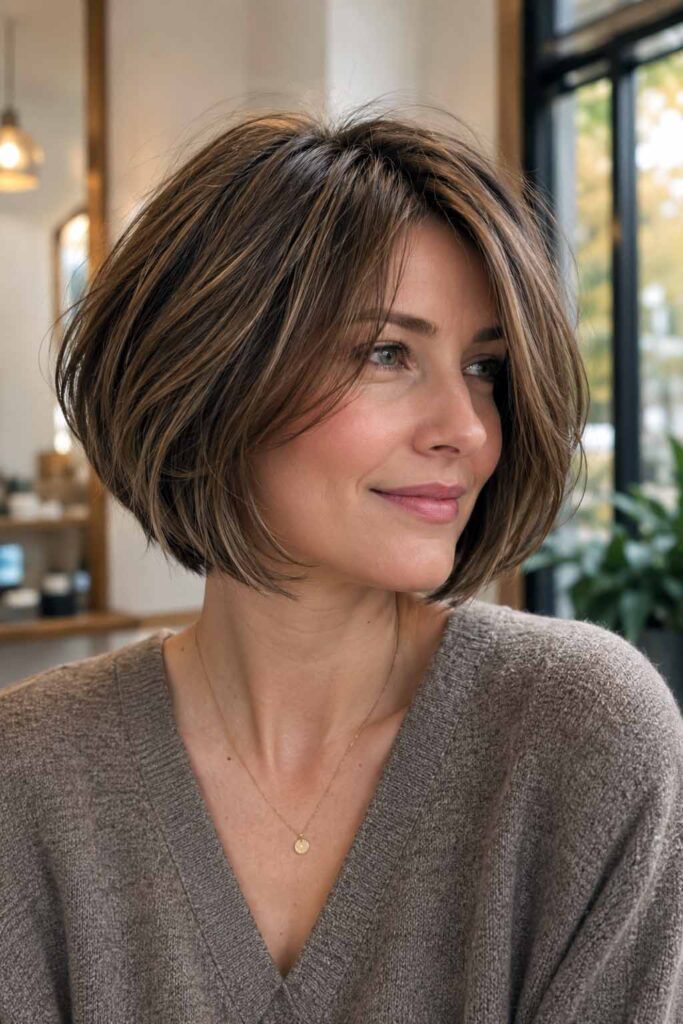
I did not expect to like this blunt bob with blunt bangs as much as I do. The chin length bob lands clean lines from a straight, fine texture, and the blunt bangs sit heavy across the forehead with zero wisp. This is a salon shape, not a bathroom mirror job. The middle part keeps the geometry strict, and the brown with highlights adds dimension without softening the edge. It is the opposite of a soft shag, and that is exactly why it works.
Textured Side Part Pixie Crop
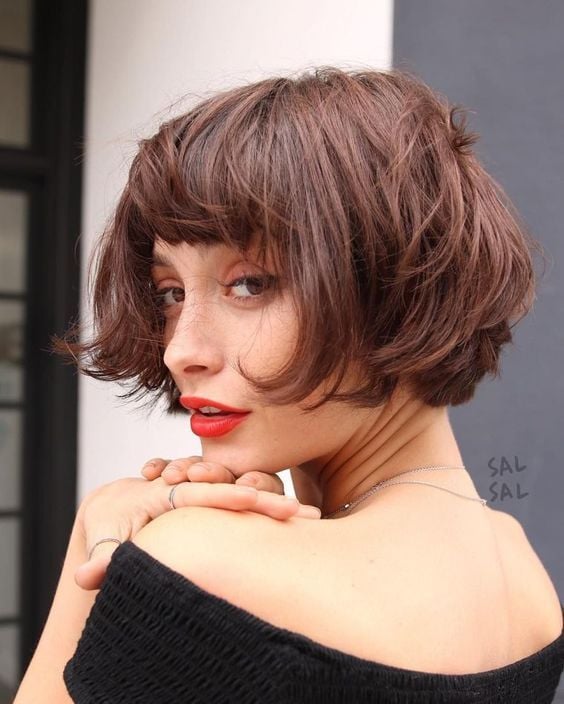
The textured pixie for thick volume looks full at 9 AM and flat by 4 PM on fine hair. This ear length crop uses a deep side parting and textured bangs that sweep across the forehead, and the wavy texture holds better than straight if you let it air dry with a pinch of paste. The honest downside is the four-week trim rhythm, because the nape grows out fast and the shape collapses without it. Dark brown keeps the contrast sharp.
Flowing Mid Back Layered Waves
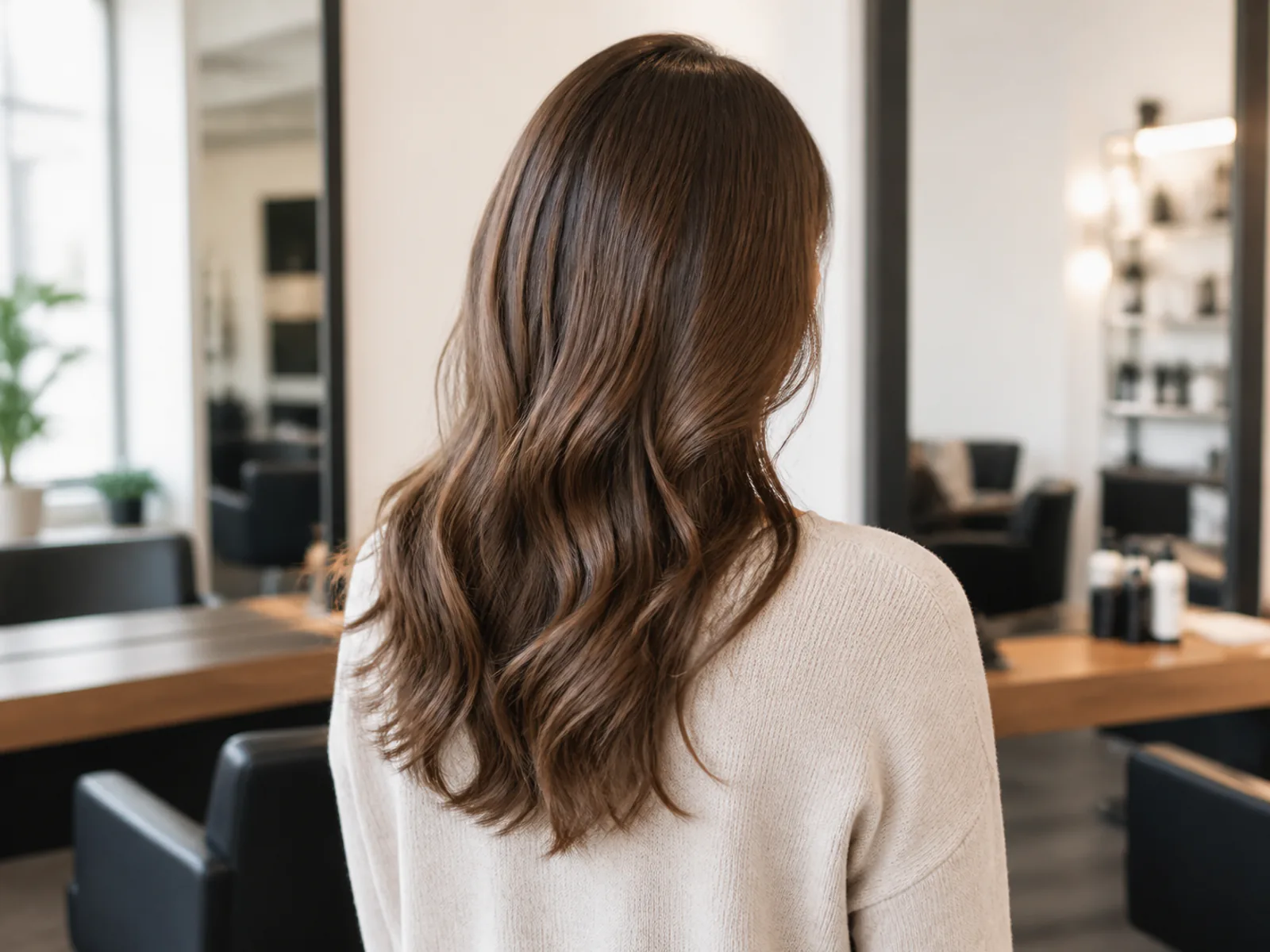
Can long layered hair for fine texture actually hold wave without collapsing? Yes, if the layers start below the shoulder and the cut keeps weight at the hemline. This mid-back length uses long layers that move through the midsection, no bangs, a middle part, and loose waves set with a large curling iron. The fine texture needs twenty minutes of heat, but the shape holds through a workday. The back view shows the wave pattern clearly, and the medium brown adds soft contrast without brassiness. Trim every ten weeks, and use a satin scrunchie at night. Skip this if your hair is low density, because the length will pull the wave out by noon.
Piecey Ash Blonde Textured Pixie
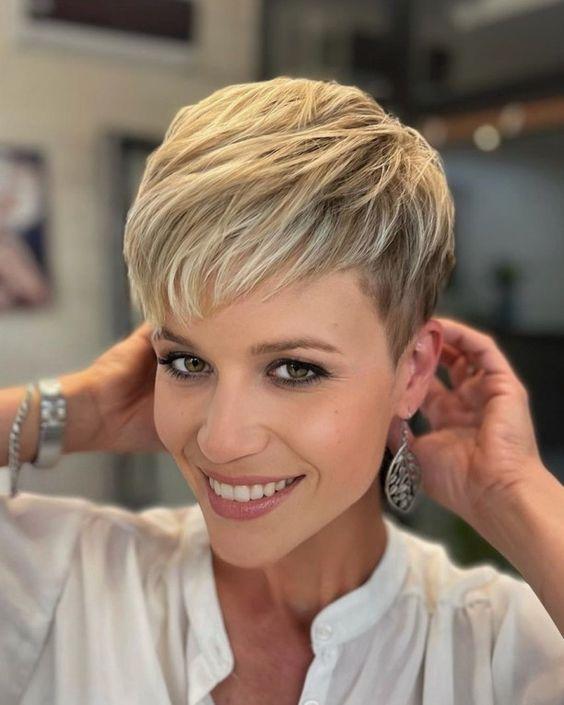
This ash blonde textured pixie works because the cut builds the texture, not the product. The ear length crop uses short, textured bangs and a side part that lets the top layers separate naturally. The straight, fine texture gets piecey separation from the cut alone, and the ash blonde tone needs a purple shampoo fortnightly to stay cool. The technique is simple: the stylist point-cuts the top layers so each section ends at a different length. A texturizing clay through dry hair pulls the pieces outward, but the structure is already there.
Tousled Curly Ear Length Shag
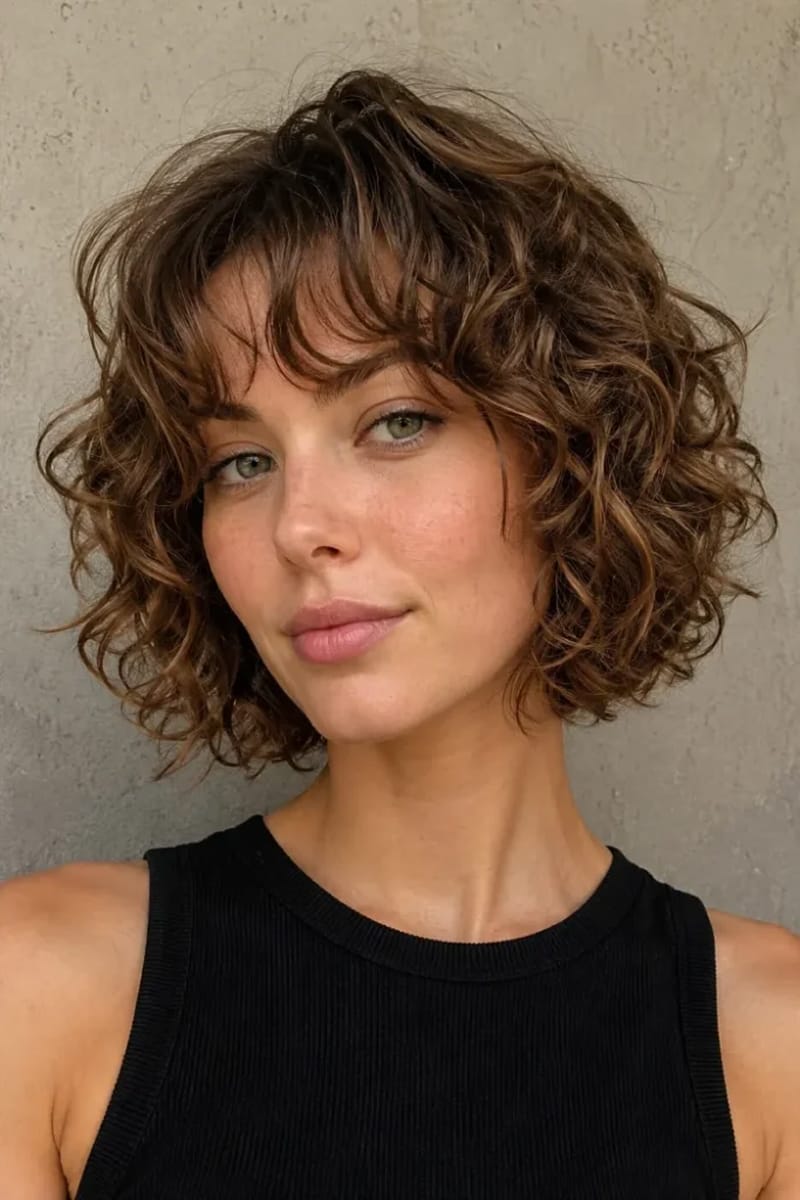
Picture this: you walk into a coffee shop in January, snow melting on your collar, and your hair still looks like you meant to be there. That is what this curly short shag for fine hair does. The cut lands at ear length with heavy layers that stop the curls from collapsing into a wet mop by noon. Textured bangs hit just above the brow, short enough to stay curly but long enough to tuck behind an ear when you need a break from fringe maintenance. The texture is the point: fine curls that usually go flat by lunch suddenly hold their shape because the layers are doing the lifting, not product. On medium heat with a diffuser, you get a bouncy, wild finish that laughs at winter humidity. It is cozy without trying, and that is the whole trick.
Asymmetrical Fringe Dark Brown Pixie
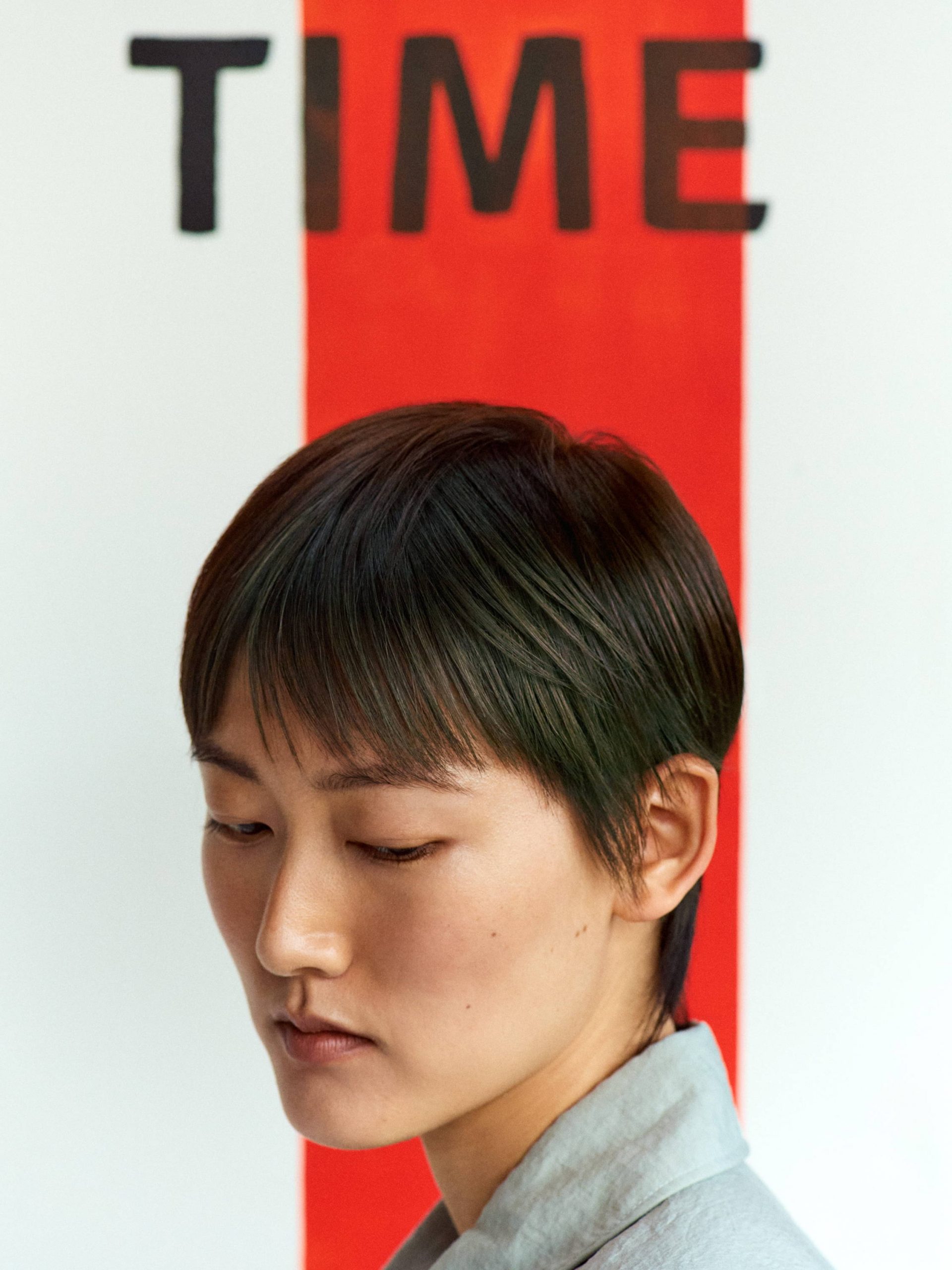
I will admit: I was skeptical about an asymmetrical pixie for fine hair. The asymmetry can look like a mistake if the balance is off. But this version works because the asymmetrical fringe is cut long on one side and short on the other, creating diagonal lines that trick the eye into seeing more density. The cut is a pixie at ear length with no layers on top, just a blunt, straight texture that keeps the shape clean. Here is the honest downside: fine hair does not hold that asymmetrical line for long. You need a salon trim every four weeks, minimum. This is not a bathroom-mirror job. Book it, and tell your stylist you want a heavy side fringe that grazes the brow on one side and sits above the ear on the other.
Soft Blowout Collarbone Waves
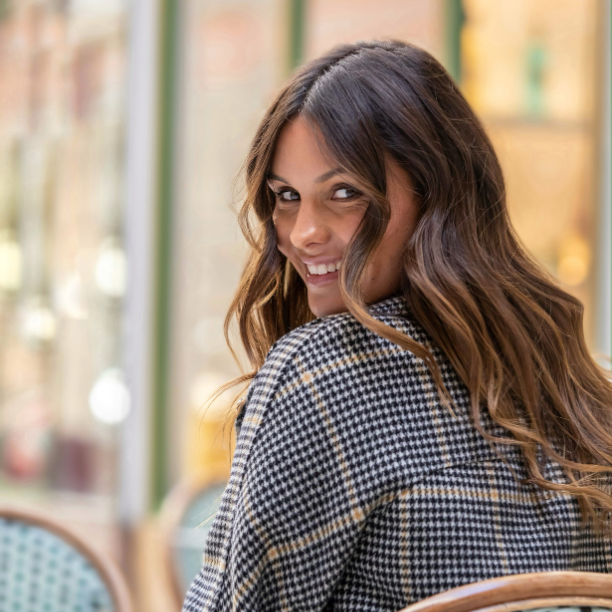
Here is what happens with shoulder length blowout waves on medium density hair: they look polished on day one, acceptable on day two, and like you made an effort on day three. The cut is collarbone length with soft layers that start below the chin, so the weight stays low and the waves do not frizz into a triangle. No bangs here, just a middle part that lets the layers frame the jaw. The texture is wavy, not curly, which means a ten-minute round brush blowout holds for a full workday. The upkeep is light: an eight-week trim keeps the ends from splitting, and a heat protectant is non-negotiable if you want the soft waves to stay soft instead of crispy. It is the haircut that looks like you tried without actually trying that hard.
Ash Blonde Lob With Blunt Bangs
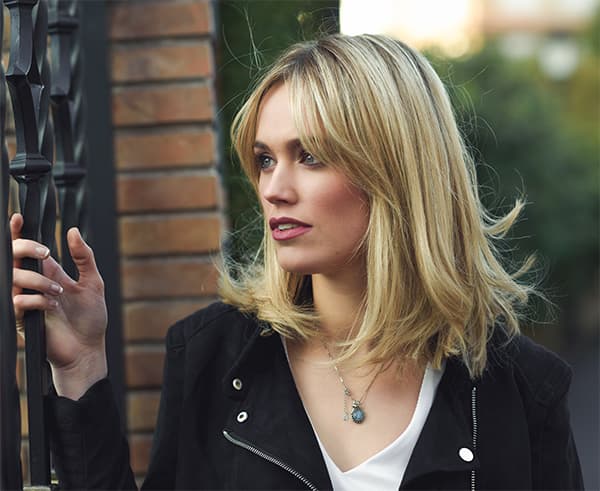
Do you have fine, straight hair that goes flat by 4 pm? Then an ash blonde lob with bangs might be your winter answer. The cut is a shoulder-length lob with a blunt baseline that makes the ends look thicker than they are. The blunt bangs hit just above the brow, straight across, no taper. The layers are minimal: a few subtle ones through the crown to stop the top from pancaking. The texture is straight and fine, which is exactly what this cut needs to hold its crisp line. Here is what to ask your stylist: keep one blunt baseline, no texturizing shears, and cut the bangs dry so they land exactly where you want them. It is a cool, crisp look that works best on oval and heart-shaped faces. If your hair is wavy, skip it.
Beanie Friendly Long Wavy Layers

It is January. You are pulling on a beanie before you leave the house. Most long hair looks like a static disaster when the hat comes off. Not this one.
The cut is mid-back length with long layers that start at the collarbone, so the weight stays distributed and the waves do not mat into a single clump. No bangs, just a middle part that survives hat compression. The texture is wavy and fine, which means it air dries with a sea salt mist and looks natural, not styled. The trick is the layers: they give the waves room to move even after an hour under wool. This is long wavy hair for winter hats, and it works because it does not fight the accessories. Trim every ten weeks, use an anti-static spray on the ends, and you will not spend five minutes fixing hat hair in the bathroom mirror.
Tousled Blonde Short Layered Bob
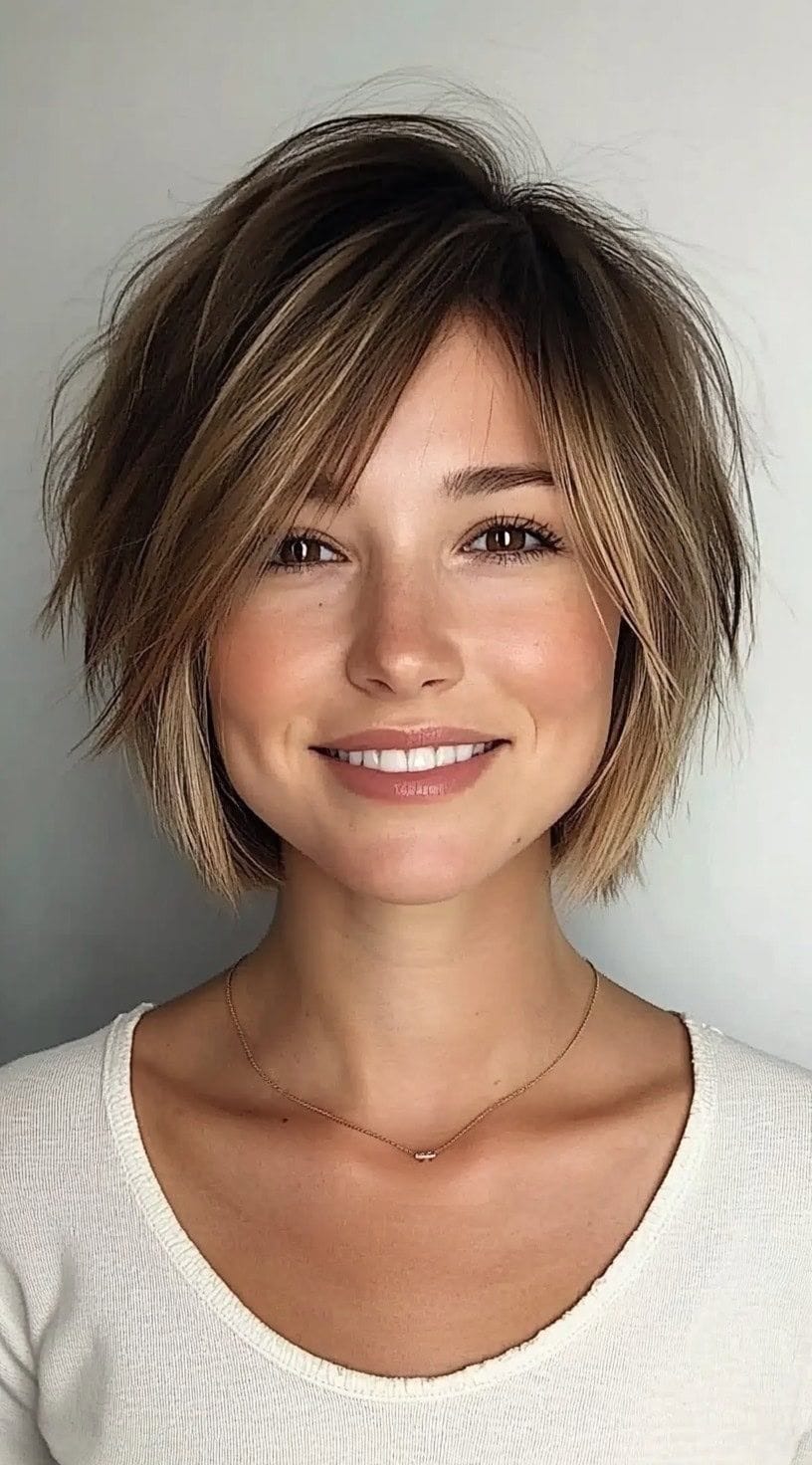
The trick to this short layered blonde bob is that the texture is built, not born. The cut uses point-cutting on straight hair to create those separated, piecey ends — no curl, no wave, just the scissors doing the work. Side-swept bangs break up the line so the bob reads soft instead of severe. A texturizing powder on dry hair, worked in for maybe five minutes, gives the lift that the cut alone can’t hold. The downside: the layers can look choppy instead of intentional if you skip a trim past six weeks.
Copper Red Shag With Wispy Bangs
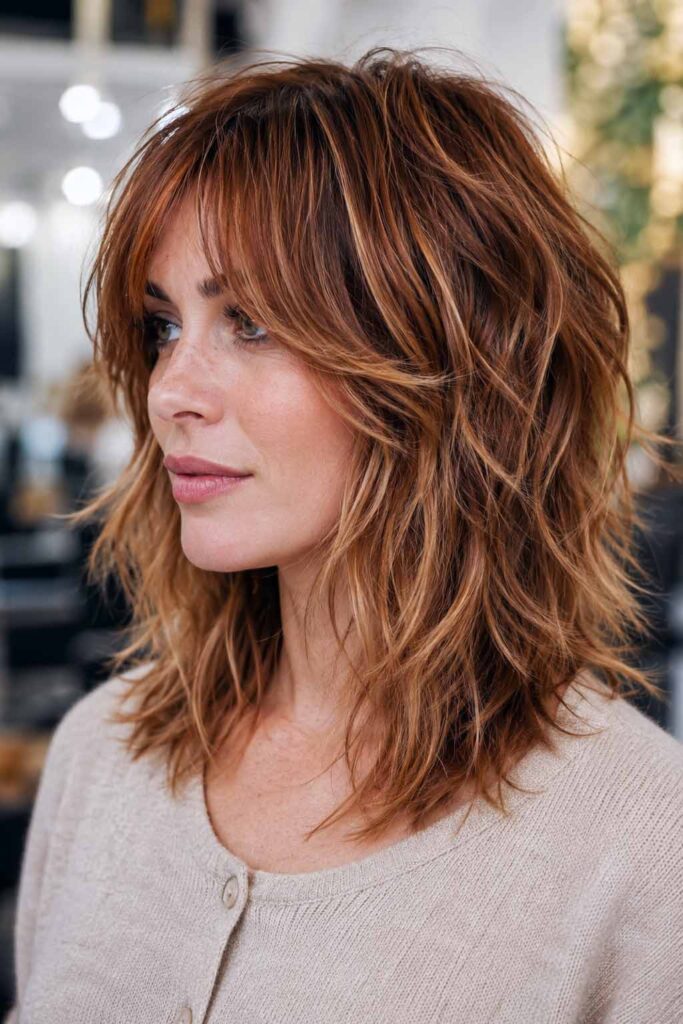
I wanted to dismiss this copper shag with wispy bangs as a summer holdover. Then I saw how the red reads against gray winter light. It’s not warm, it’s electric. The shag’s stacked layers push volume into the crown while the wispy bangs land light and see-through, so fine hair doesn’t feel weighed down. Compared to a muted ash or beige winter tone, this one actually looks deliberate — like you chose the season’s contrast, not just its safety. The copper demands a color-depositing conditioner every third wash, but the payoff is a shade that doesn’t disappear into a coat collar.
Chin Length Light Blonde Shag

Here’s the thing about a light blonde shag with blunt bangs on fine, wavy hair: it looks great for about four hours. The cut itself is smart — the shag’s internal layers give lift where fine hair usually collapses, and the chin length keeps the weight from pulling the shape down. But the blunt bangs need a round brush and a cool shot every morning, and the light ends show every split. I trim mine every five weeks, not six. The waves hold better on day two, after the hair has had a night to settle.
Dark Brown Pixie Bob Choppy Layers
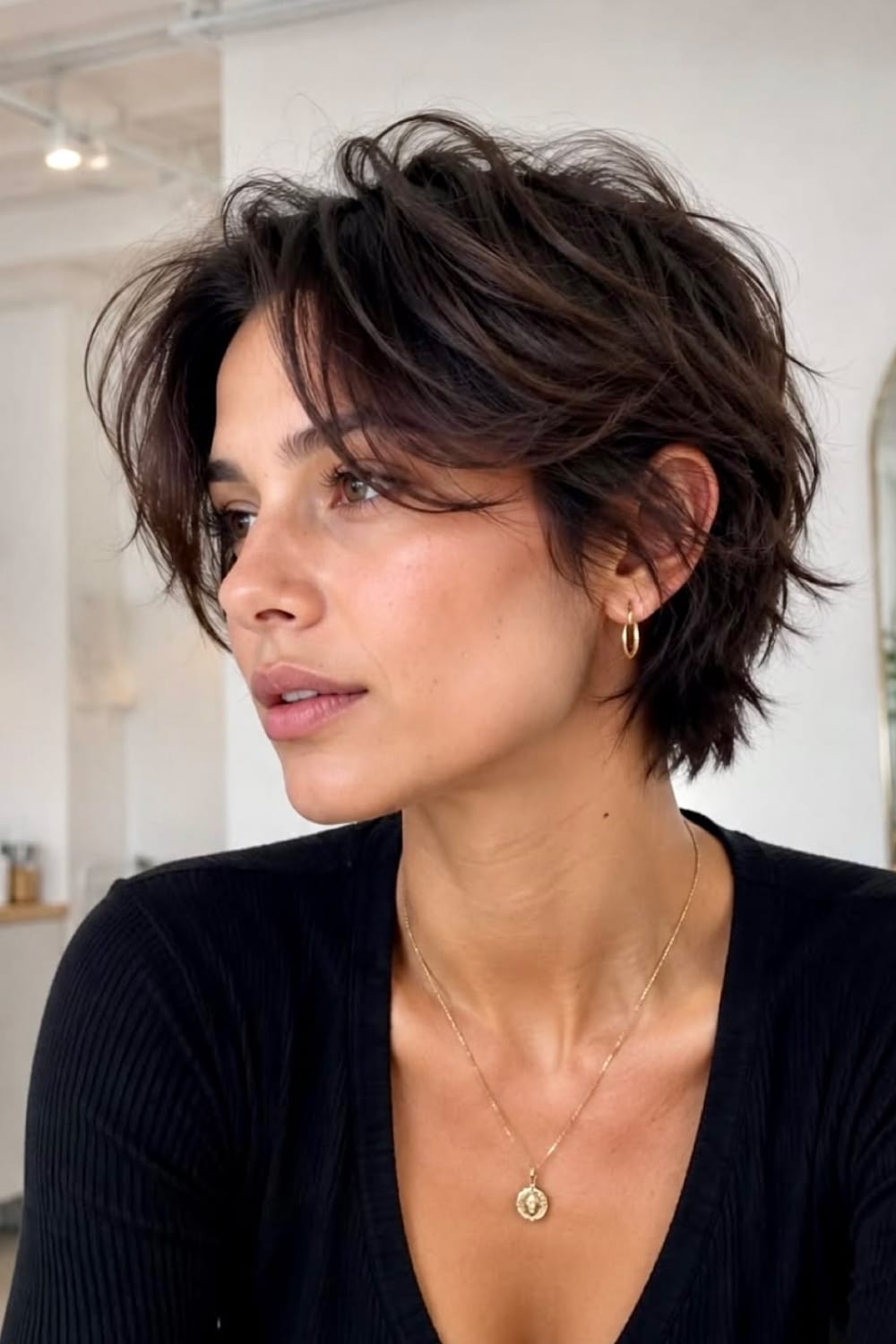
A pixie bob for fine dark hair works best when the choppy layers are cut into the interior, not just the ends. On straight hair, surface layers can look thin. But when the stylist carves out sections underneath, the top pieces sit with enough lift to read as density. This one flatters a longer face because the ear-length sides add width. The side-swept bangs soften the forehead line. Styling is three steps: texturizing cream on damp hair, blow drying forward, and a quick finger-comb. No brush needed.
Collarbone Shag With Wispy Bangs

Can a collarbone shag for thin hair hold its shape without a round brush and a prayer? Barely. The cut is built on choppy layers that stack at the crown and taper through the ends, which creates the illusion of density on fine, wavy hair. The wispy bangs are the trickiest part — they need point-cutting to stay light, and they separate by noon if you touch them at all. This is a salon cut, not a bathroom-mirror job. The honest downside: the layers grow out unevenly, so you’re on a six-week trim schedule or you look shaggy in the wrong way.
Sharp Chin Length Smooth Bob
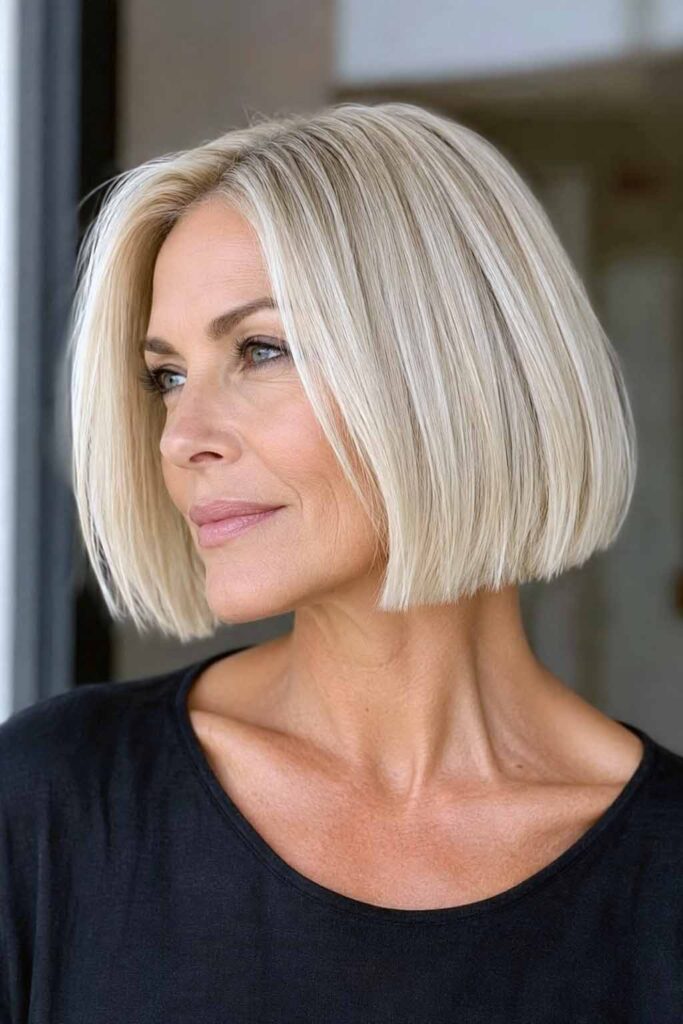
Best grow-out in this roundup. A sharp chin length bob on thin hair depends entirely on the cut itself. The stylist carves a clean line that is precise enough to catch light, and that precision is what creates the illusion of density. My fine, straight strands hold this shape because the blunt baseline removes the tapered ends that usually collapse. Mid-length layers stay hidden beneath the surface, adding internal movement without breaking the silhouette. Bangs sweep to one side, soft enough to blend when they grow past the bridge of my nose. The texture is smooth, zero texture spray, just a flat iron and a prayer that my humidity is low.
Air Dried Dark Brown Shag

It is 9 am on a Wednesday, and my hair is wet. The air dried shag for fine hair starts with a texture cream scrunched into damp strands. No blow dryer, no round brush, no heat. The shag cut uses aggressive internal layers that make fine, wavy hair look deliberately undone rather than flat. Curtain bangs fall in two soft sections, framing without clinging to my forehead. By 4 pm, the ends have curled slightly but the structure holds because the layers were cut dry, tailored to my specific wave pattern. A trim every eight weeks keeps the shape from turning into a sad triangle. Winter break from heat tools.
Upkeep shrinks to a scrunch and a walk out the door. Wash day is Sunday, refresh day is Wednesday, and heat styling never enters the equation. The only tool required is my hands.
Visual Idea
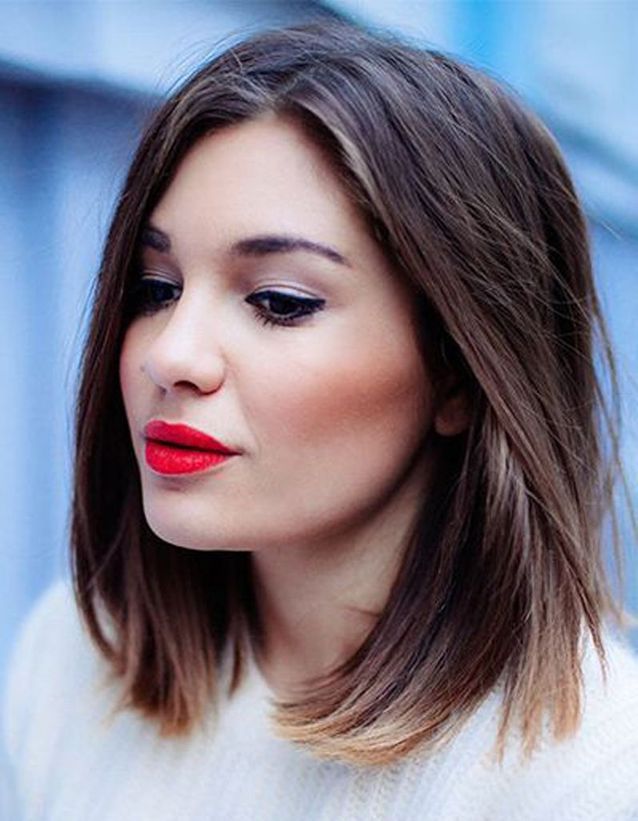
A sleek blunt bob at collarbone length is the structural engineer of Winter Hairstyles for Thin Hair. Fine, straight hair needs that clean perimeter to look like it has mass. No bangs means no frizzy triangles at the forehead, just a straight fall from the side part to the hem. The dark brown base with subtle highlights keeps the line visible, which matters more than any texture spray ever could. This cut flatters anyone with a longer face who wants width at the jaw. Skip it if you have a round face or prefer to hide behind your hair. It shows everything.
Chin Visual Idea
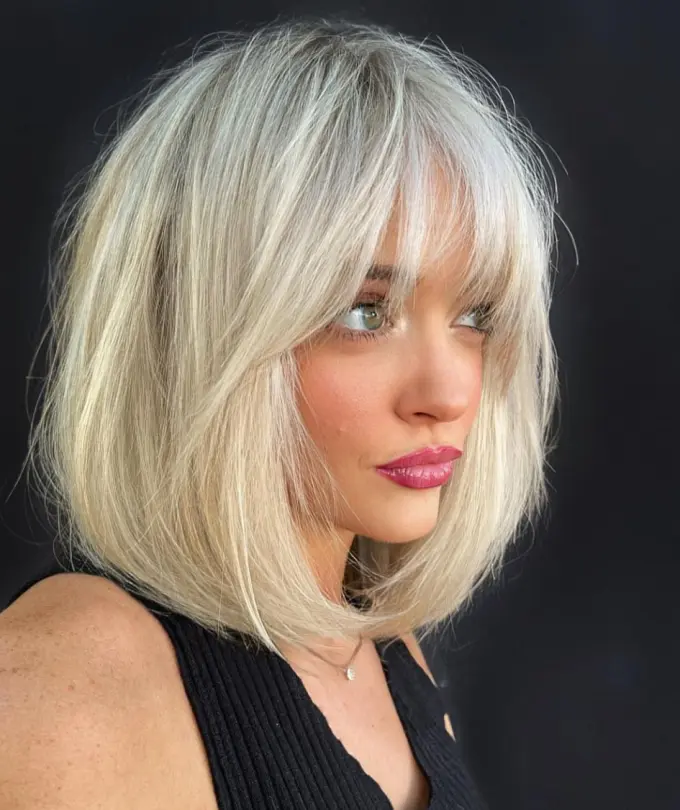
What if your chin-length bob actually had volume at the root instead of going flat by noon? This one does, and it’s not a trick of the light. The cut is a chin-length bob with curtain bangs, but the real work is in the blowout: a round brush at the crown, a middle part that lets the layered bangs fall forward, and a texture that reads straight but holds lift. The bangs are the key, they frame the face without pulling weight from the rest. You can try this at home if you own a round brush and fifteen minutes. If you don’t, book it.
Blonde With Balayage Visual Idea
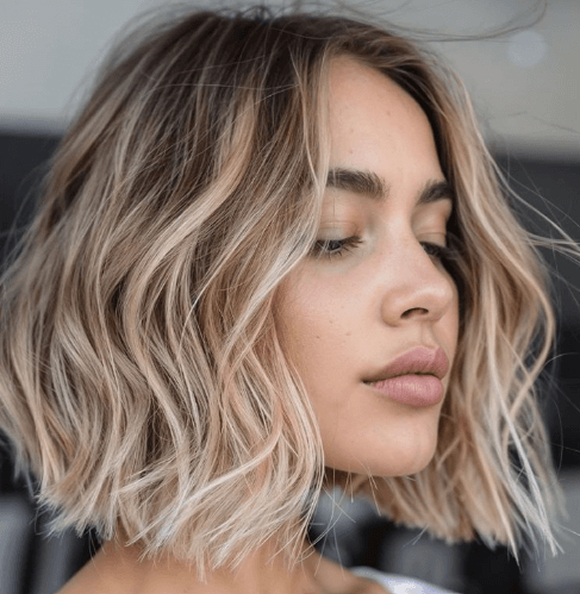
Balayage on fine, wavy hair is a good bet, but it comes with a catch. The cut is a chin-length bob with no bangs, the texture is wavy and fine, and the colour is blonde with balayage highlights that start a few inches from the root. That soft root shadow is what saves it, the grow-out line blurs instead of announcing itself at week three. The honest downside: blonde on fine hair needs a toner every four to six weeks or it goes brassy, especially on wavy texture where the light catches every warm note. Worth it if you can keep up.
Mid-Back Visual Idea
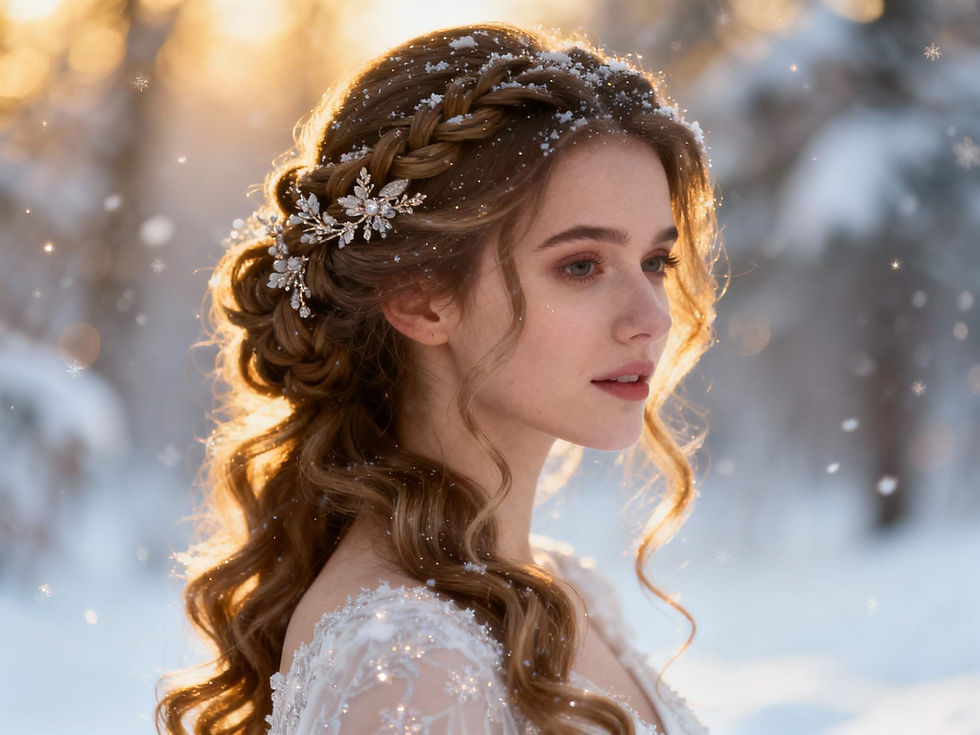
There is a moment every winter when I see a braid like this and immediately want to cancel my own plans. The cut lands at mid-back with wavy, fine texture that somehow reads thicker than it is, which is the whole trick for thin hair. Layers are cut to move, not to thin, so the length keeps its weight while the waves do the visual work. The middle part suits a longer face, pulling the eye down instead of out. What I like most is the braid itself, woven through the crown and left to fall into the waves. It is an event hairstyle, the kind you wear to a holiday dinner and forget about until midnight. Fine hair holds this shape because the braid does the holding for you. A trim every ten weeks keeps the ends from going see-through, which is the real enemy of long thin hair. This is a salon cut, no question, the layers need a professional hand to land right.
Collarbone Visual Idea

Short bangs on fine hair are a commitment I respect, and this collarbone bob with ash blonde color is the payoff. The cut hits right at the collarbone, which is the longest length that still gives fine hair some lift at the roots. Short bangs change the whole balance, they shorten a long face and pull attention to the eyes. The middle parting keeps it modern, none of that swept-to-the-side business that reads dated by noon. Straight, fine texture is the star here, the blunt baseline makes the hair look denser than it is. Ash blonde reads cool against warm skin, so know your undertone before you book. The blunt cut means every strand shows, which is both the appeal and the risk. I would not attempt the bangs at home, that is a salon conversation about how short is too short for your cowlick. The grow-out is the real timeline, bangs need a trim every three weeks or they start asking for a barrette.
Blonde Visual Idea
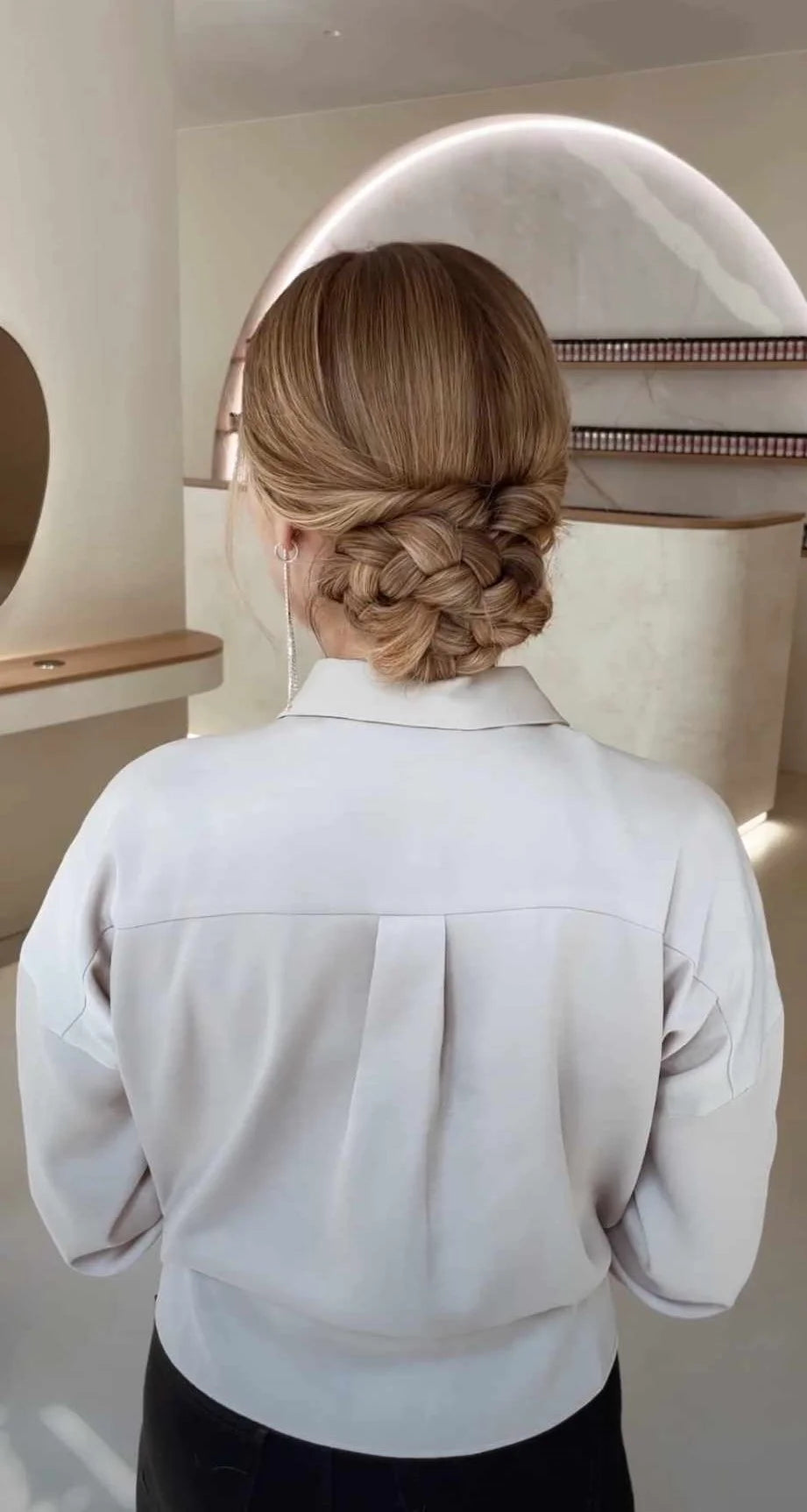
I have a complicated relationship with updos on fine hair, so I understand the skepticism. This braided updo with wavy, thick texture is the exception, and here is the honest part: it is not for everyone. The mid-back length gives the braid enough material to actually hold, which is the first thing thin hair lacks. The intricate braided bun sits low and looks like you spent an hour when it is really about the cut doing the work. Blonde color adds dimension, so the braid reads as a series of shapes instead of one flat rope. The middle part keeps the front soft, which matters because a slicked-back updo can make fine hair look like it is disappearing. This is a salon situation, the layers need to be cut to stack inside the braid or you get stragglers everywhere. I would not recommend this for anyone with very fine hair, the weight of the braid pulls and you end up with a headache by dinner.
Black Visual Idea
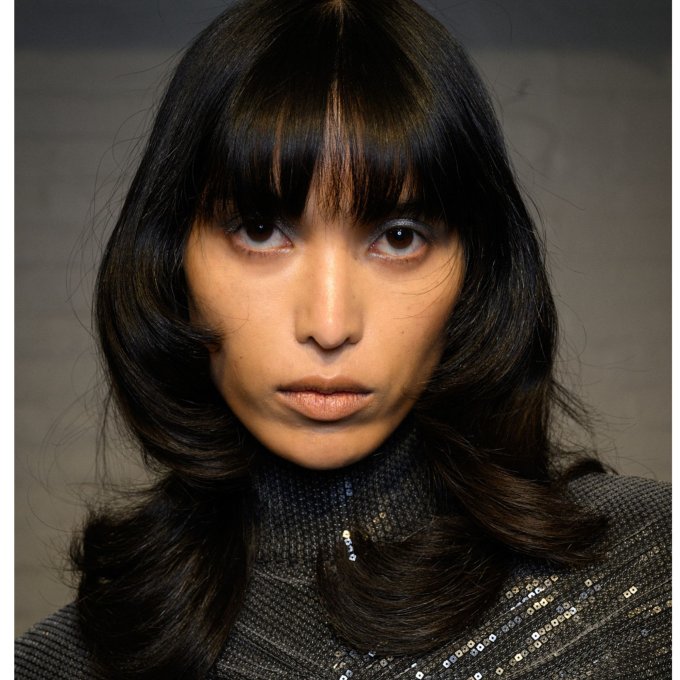
Heavy blunt bangs on thick, straight hair are a visual idea that sounds simpler than it is. The long shag cut lands at collarbone length, which is the sweet spot for fine hair that wants movement without losing density. Black color makes the blunt bangs the hero, they frame the face like a curtain and demand attention. The middle parting and voluminous layers keep the whole thing from feeling like a helmet, which is the risk with this much hair and this much fringe. Straight, thick texture is non-negotiable here, if your hair has any wave it will push the bangs sideways by lunch. The blunt bangs need a trim every two weeks, that is the honest upkeep, and they will not sit right the morning after you wash them. This is a salon cut, the shag layers and the bangs need to be cut together or the whole shape falls apart. I would not attempt this at home, the margin for error is zero.
Dark Brown Visual Idea
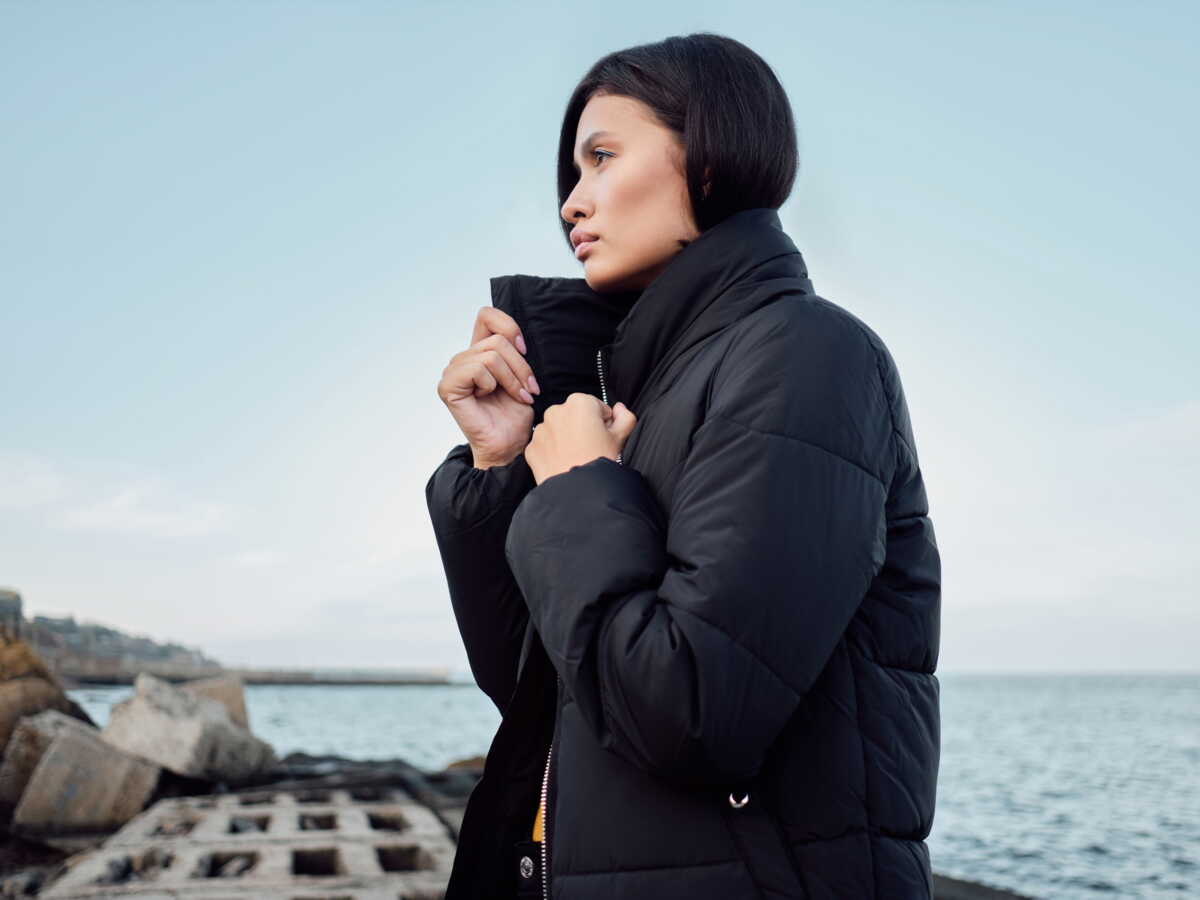
There is a reason dark brown bob with a sharp cut keeps showing up in my winter rotation. The chin length is the shortest bob that still flatters a round face, and the middle parting adds the illusion of length. No bangs means the focus stays on the blunt line, which is exactly what fine, straight hair needs in winter. Dark brown color reads almost black in low light, so the shape does the talking instead of the shade. The sharp bob cut is the whole point, it gives fine hair a density that wavy or layered cuts fake. Straight, fine texture means this cut looks best right after a blowout, the blunt line needs that glassy finish to land. I would book this at a salon, the precision of the chin length is not something to freehand at home. The grow-out is the real timeline, that sharp line softens fast and you will be back in six weeks.
Ear To Chin Visual Idea
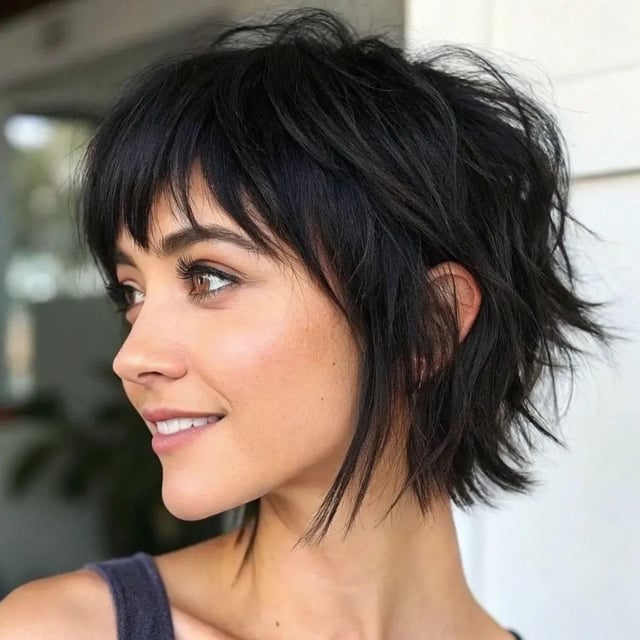
What sets this shag apart is how the choppy layers refuse to blend into one uniform shape. The piecey texture catches light at odd angles, which is exactly what fine hair needs to look like it has more going on than it does. Dark brown reads almost black in winter light, and that depth makes the movement of each layer more obvious. Side part, ear to chin, wavy with choppy layers: it is less a haircut than a series of deliberate interruptions. A more uniform layered cut would lie flat by noon, this one keeps its shape because the layers are cut to stand apart, not stack together.
Shoulder Visual Idea
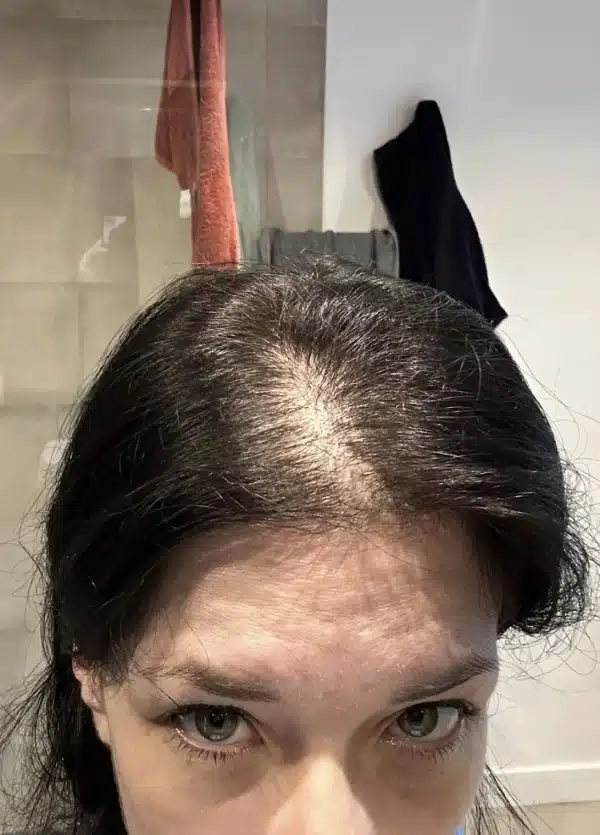
Ever stared at your part and counted scalp? That is the reality of fine, straight hair at shoulder length, and no cut erases it. What styling can do is buy you a few hours of coverage. A root-lifting spray at the crown, then a quick blast with a round brush, gives the roots enough lift that the scalp reads less visible. The honest downside: air drying leaves you flat by 4 pm, and the layers here are cut to move, not to hide. You will be re-wetting or re-styling if you want the coverage to last past dinner.
Ash Blonde With Highlights Visual Idea
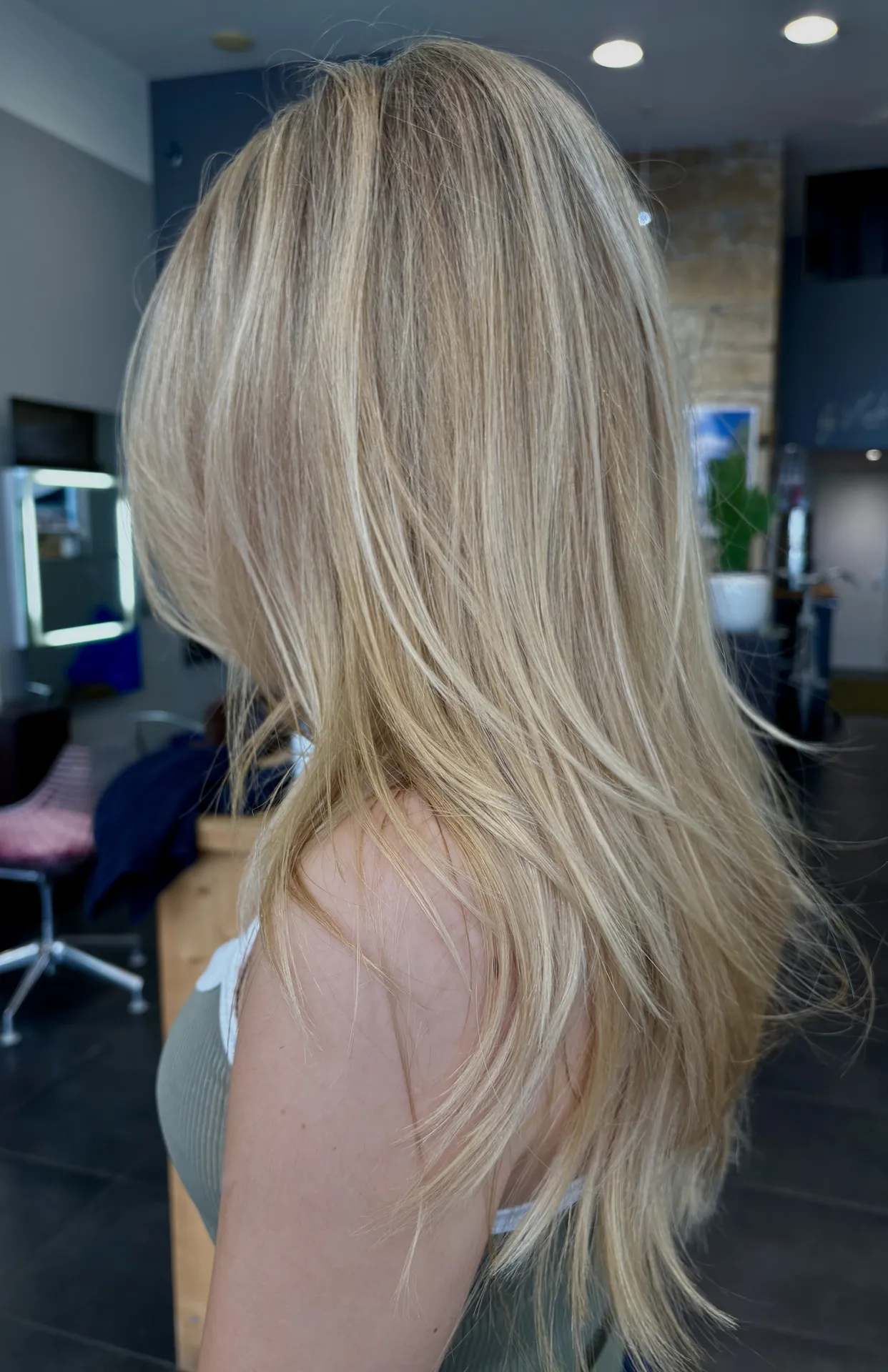
I will admit I was skeptical about ash blonde on fine hair, too pale and it washes you out, too dark and it flattens the dimension you need. But this version, with highlights woven through long layers and curtain bangs, is the exception. The highlights are placed to catch the light when you move, which gives fine, wavy hair the illusion of depth it cannot produce on its own. The curtain bangs frame the face without committing to a heavy fringe, and they blend into the layers so there is no harsh line.
For winter events, this is the one. The ash tone reads cool against the grey light outside, and the highlights pick up the sparkle of holiday lights without you having to do anything. A blowout with soft waves holds the shape for an evening, and the mid-back length means you can still pull it into a low twist if the party runs long.
Brown With Subtle Highlights Visual Idea
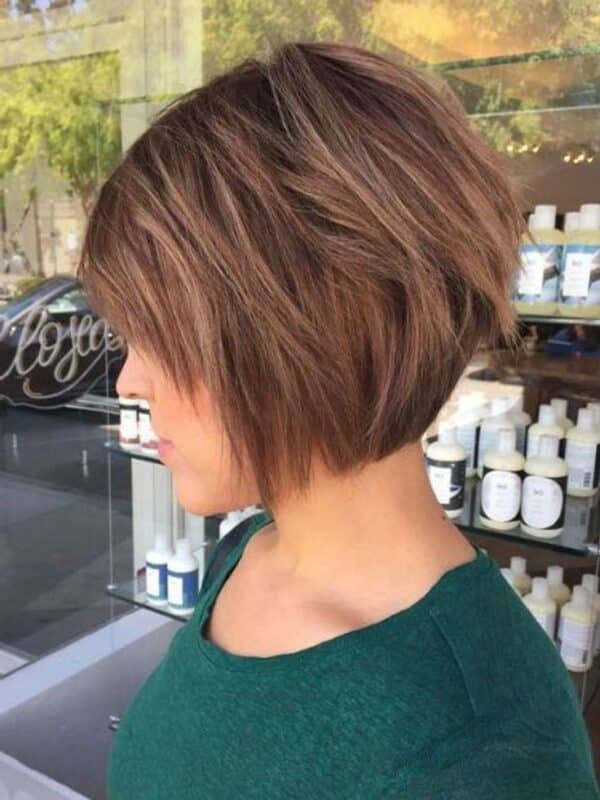
The technique here is all in the layering, not the colour. A chin length bob with no bangs, side part, straight and fine, gets its movement from textured layers cut into the interior, so the hair swings instead of sitting flat. Brown with subtle highlights adds just enough contrast to show the layers, but the real work is the cutting. This is a salon job, not a bathroom-mirror trim. Ask for internal layers that start at the jaw, keep the perimeter blunt, and let the highlights be fine and spaced out, too dense and you lose the subtlety.
Final Thoughts
I walked into this roundup expecting to defend the bob. I am leaving it ready to book the pixie. The grow-out is shorter, the root shadow buys me six weeks, and winter hats do not fight it.
- Trim the baseline every eight weeks
- Tone at week six, not week ten
- Ask for a soft root shadow, no visible line
- Skip the heavy conditioner at the crown
That is the one I am actually booking next.