
Fall Nails with Autumn Designs 2026 for Warm, Wearable Detail
Seasonal warmth is easiest to lose when every decision tries to announce itself. The hand begins to feel busy, the richer tones compete with one another, and the small details that could have carried the mood disappear inside the noise. A quieter approach often feels more inviting: let one visual relationship create depth, then leave enough room for the eye to breathe.
Begin with the feeling you want the hand to leave behind, then adjust the scale of detail until it sits naturally beside your clothes and daily gestures. A design can be richly colored without becoming heavy, or softly decorated without feeling unfinished. The useful question is not whether every nail says “season,” but whether the whole hand holds one believable mood from edge to edge.
Silver Crossing Over Soft Nude
Long almond nails begin with a pale nude base and one concentrated silver crossing that looks like a small arrangement of reflective stones. The neutral surface leaves plenty of room around the accent, while the pointed outline gives the bright detail a clean frame. Smaller pale accents appear nearby, but the central crossing remains the element that sets the mood.
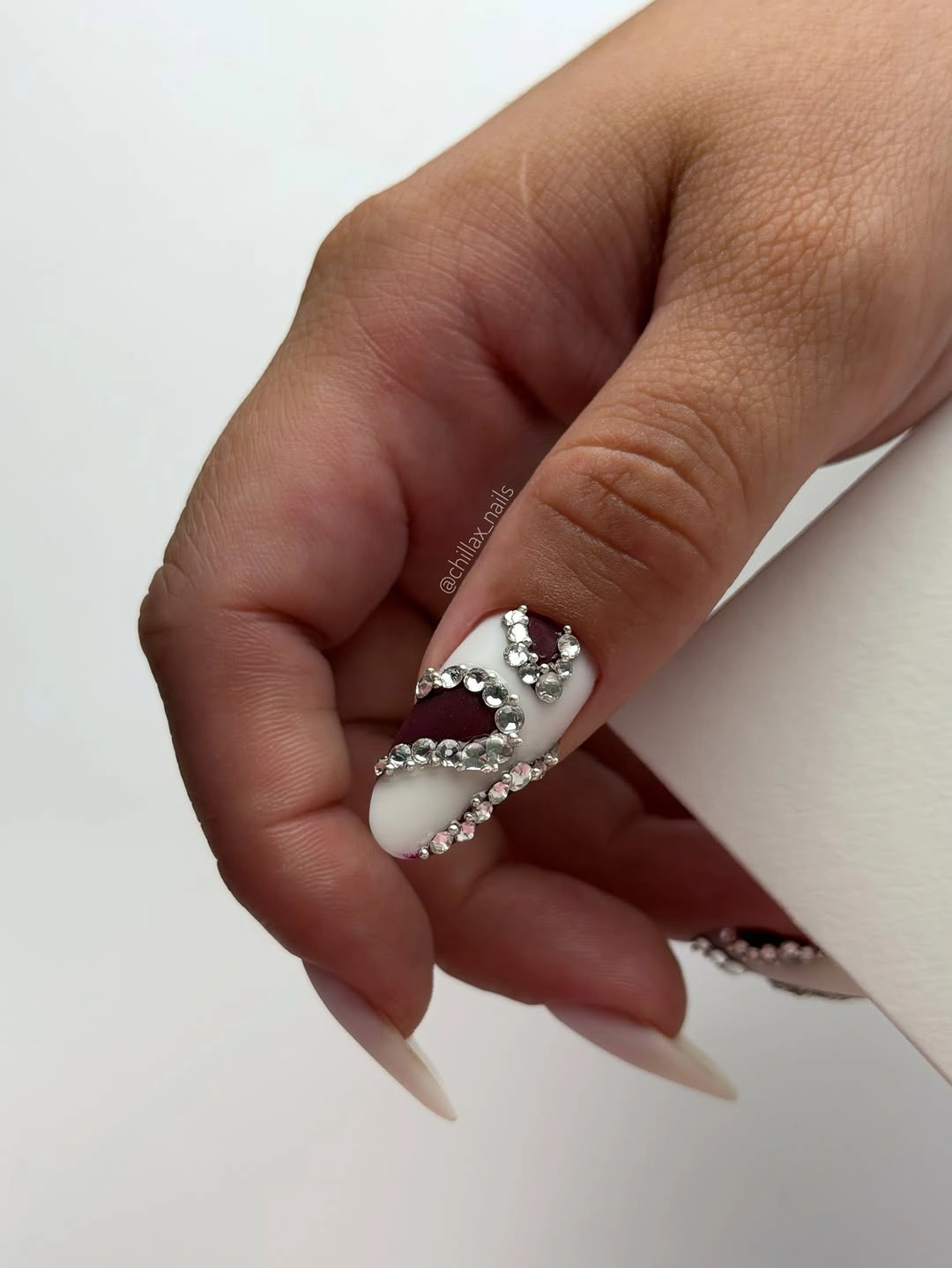
The warmth comes from restraint rather than a warm pigment. A nude base lets the silver feel crisp but not cold, especially when the hand is styled with soft fabric or simple jewelry. For a shorter adaptation, keep the crossing on one almond nail and leave the rest sheer; the same quiet focal point will feel less formal and easier to maintain.
Reflective embellishment deserves space around it, because crowding the accent would make the neutral base lose its calming role. Place the brightest detail inward from the free edge and choose a shape that does not make the point carry every bit of visual drama. The payoff is a seasonal manicure that feels dressed without depending on a large motif.
Scattered Silver Studs on Almond Nude
Here the silver detail is distributed across several long almond nails rather than gathered into one crossing. Small and medium round accents sit at different heights over a nude base, creating a gentle rhythm that changes from finger to finger. One pale nail remains quieter, which keeps the embellishment from reading as a solid metallic field.
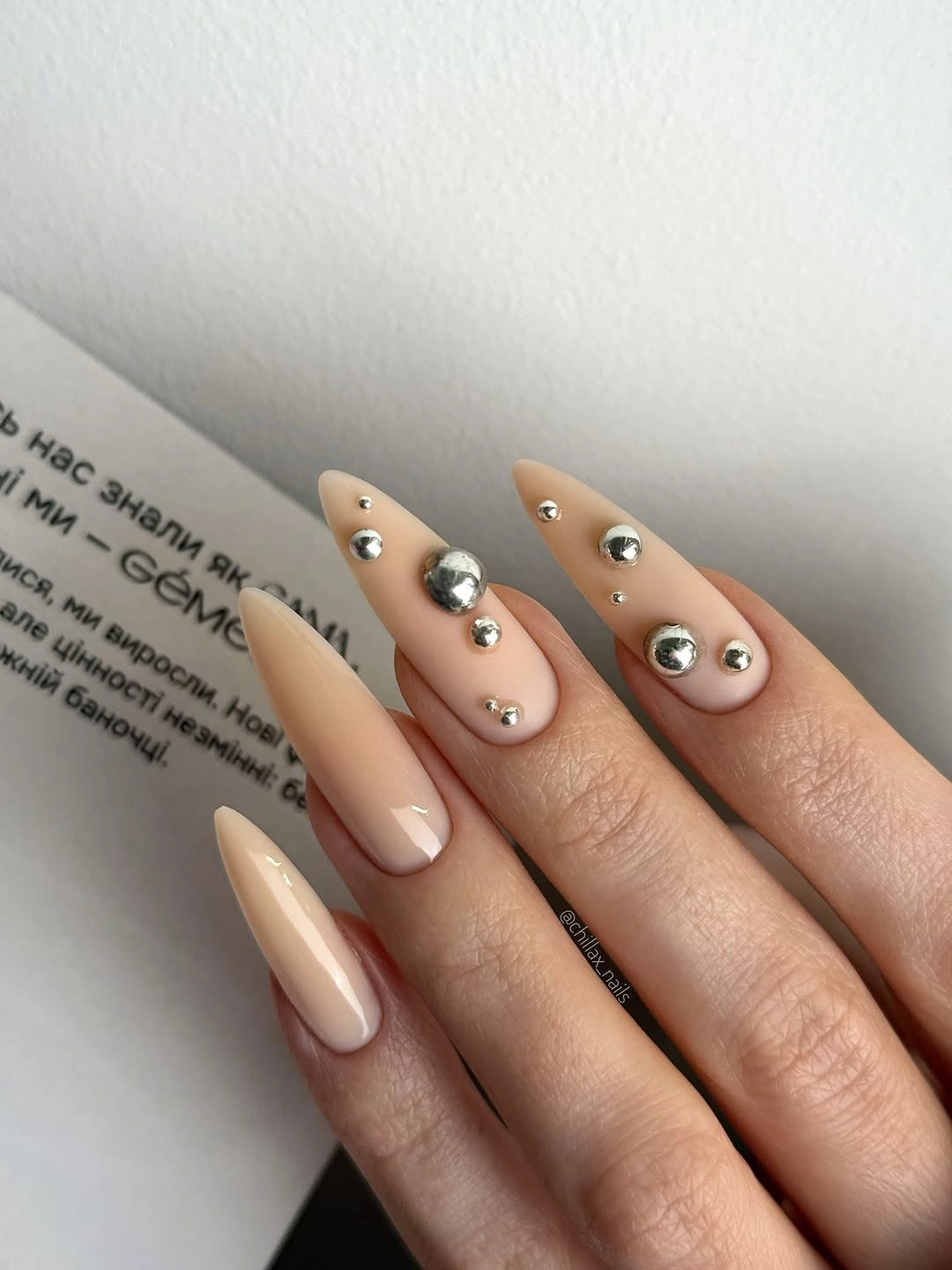
Changing the scale of the accents gives the hand a soft sense of movement. The nude background keeps the shine light, while the almond outline prevents the separate dots from looking too square or mechanical. On short nails, three small accents near the center or cuticle can deliver the same effect without using large pieces that overwhelm the available space.
The practical question is whether the sparkle should be a repeated note or a single event. If you want a calmer manicure, keep only one decorated finger and let the rest stay sheer nude, especially when the styling already includes rings. Small accents can catch on fabric, so a simpler placement often keeps the seasonal polish comfortable for longer.
Neutral Squares with Pale French Sparkle
Soft nude square nails combine pale French-like edges with small silver accents and one more decorated surface. The squared outline gives the light tips a stable border, while the mostly neutral palette lets the metallic details appear as little points of light. The manicure feels dressed but not dark because the base and edge remain close in value.
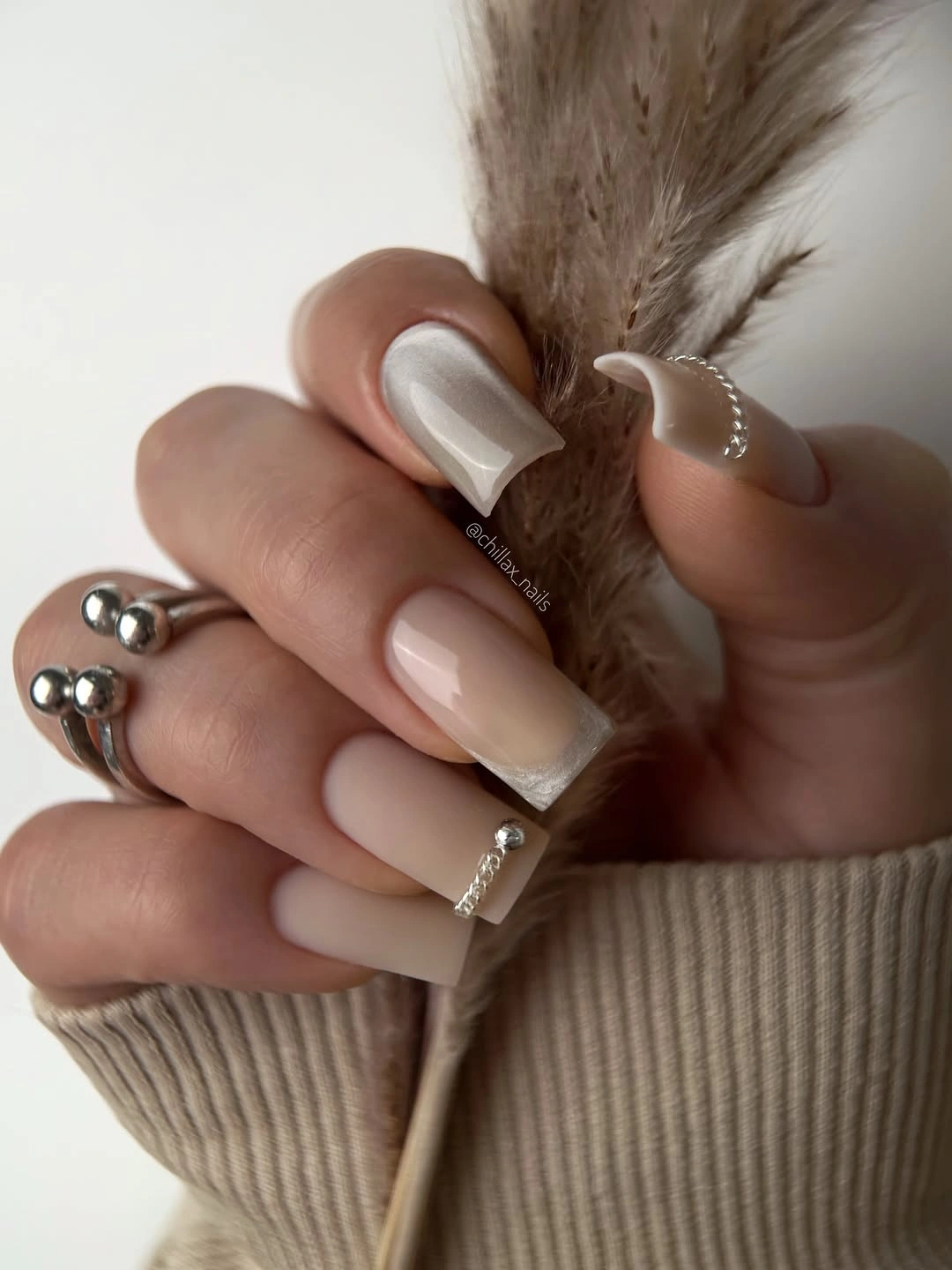
The shape changes the character of the embellishment. On almond nails, scattered details would feel more fluid, but on a square they become a neat arrangement that can work with structured clothing. A shorter version can keep the pale edge plain and move one silver accent inward, preserving the contrast while reducing the amount of detail near the tip.
Long corners and embellishments create two separate upkeep concerns, so the design is better when the decorative areas remain limited. A thin pale tip can be refreshed more easily than a wide contrast band, and a single accent will not make the rest of the manicure feel unfinished if it wears first. The overall warmth comes from the soft base and controlled shine.
Black Glitter Framing a Nude Center
Medium square nails turn a pale nude base into a stronger autumn design by placing dark glitter only at the tips. The edge creates a clear horizontal frame, while the center stays light and open enough to keep the hand from feeling weighed down. The glitter adds texture and reflection, but the color placement remains simple and easy to understand.
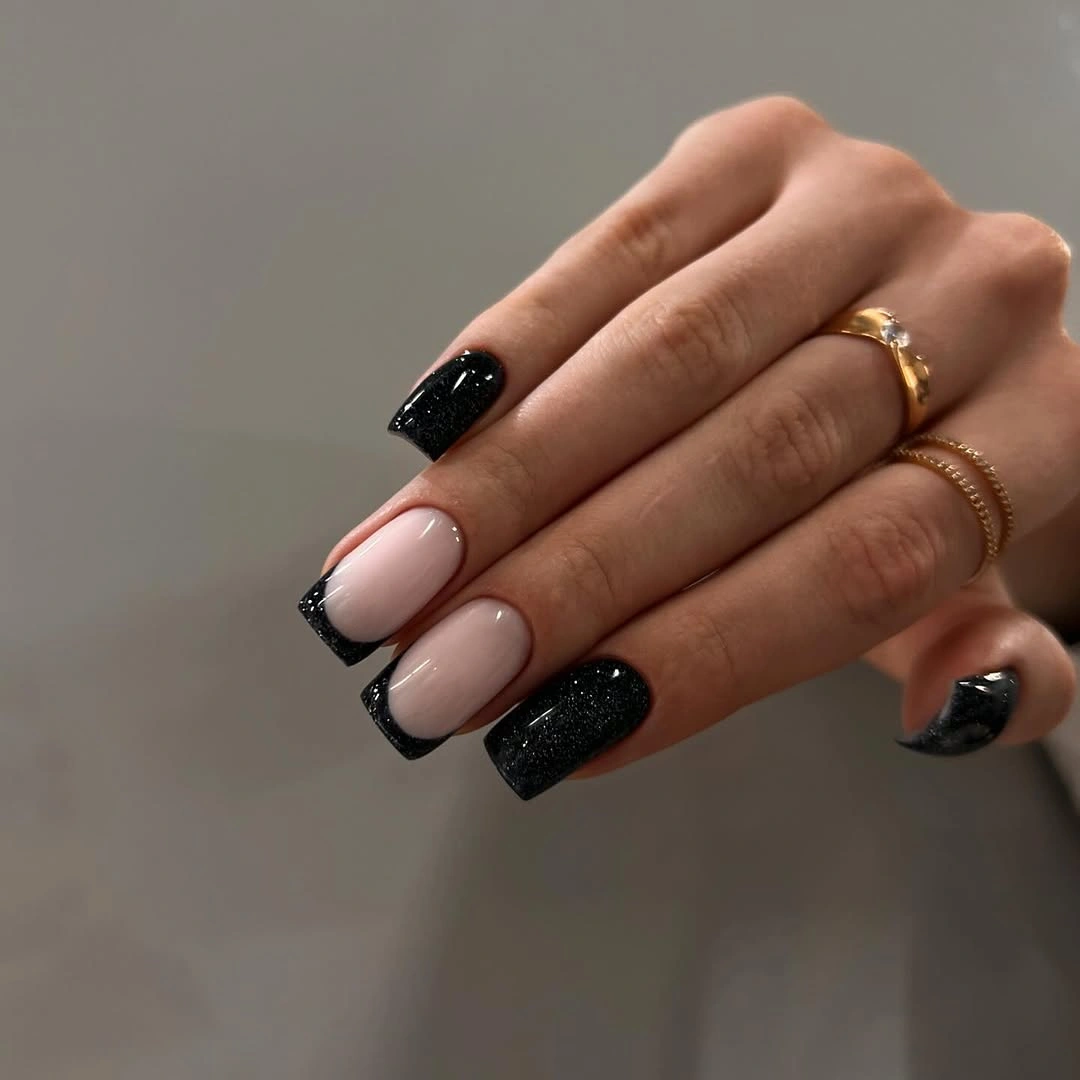
The dark edge works because it does not cover the whole nail. A thinner tip would suit shorter squares, while a wider edge would make the look more graphic and more demanding to keep even. If you want less sparkle, use a deep charcoal cream at the free edge; the same light-to-dark relationship will remain visible.
Tip designs show growth quickly because the base line moves away from the cuticle as the nail extends. Keep the edge clean and let the nude center provide relief rather than adding another accent. This kind of contrast is a practical companion to fall French nails because it feels seasonal through color and finish without needing a literal autumn symbol.
Sheer Burgundy with Pale Curving Marks
Long square nails use a translucent deep burgundy-brown base with pale curves and darker layered areas visible through the shine. The color feels warm and substantial, but the sheer quality leaves openings that soften the long shape. Pale lines trace across the surface in an uneven rhythm, giving the design movement without turning it into a dense illustration.
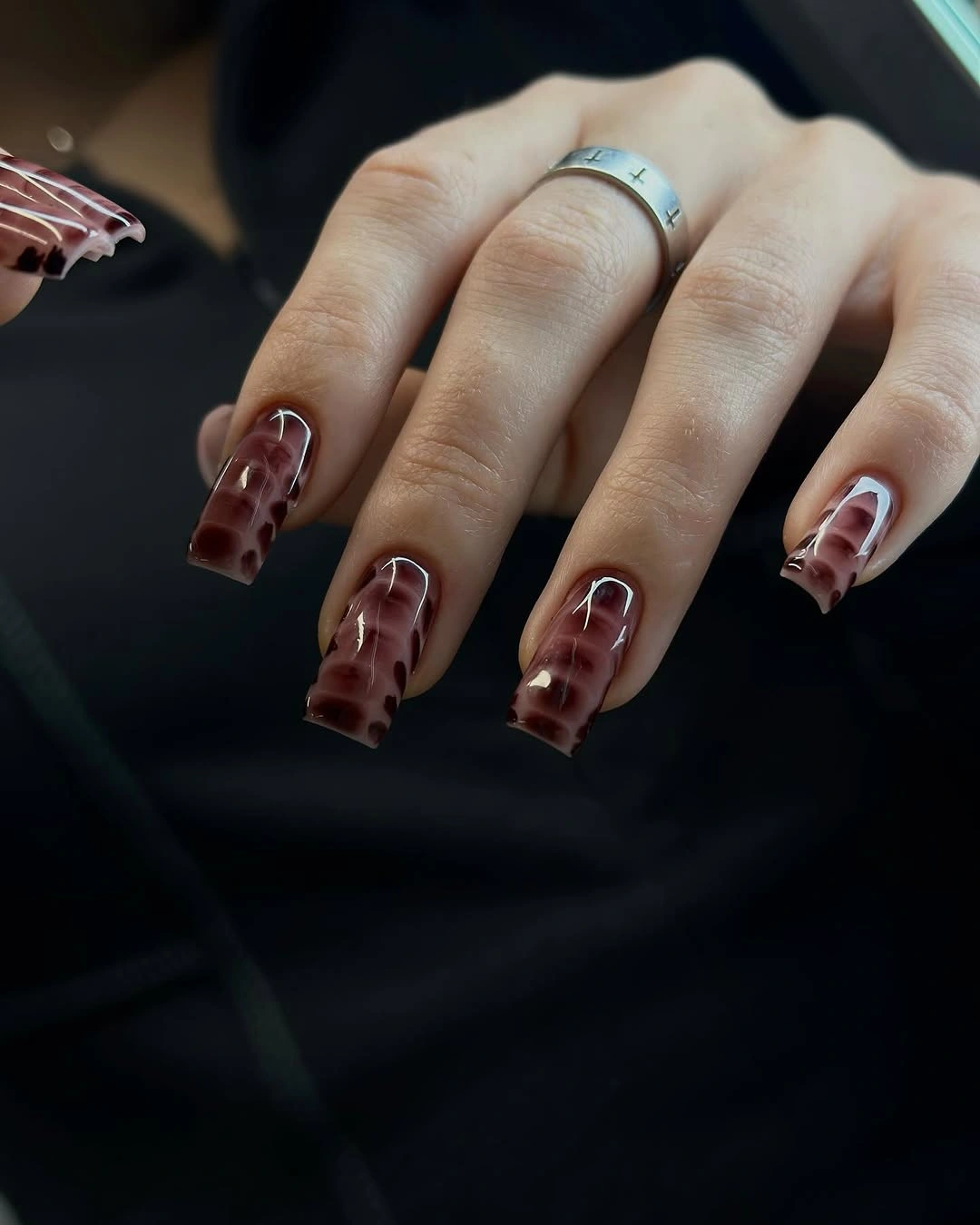
The balance comes from letting the base remain visible between the marks. A shorter version can keep the same burgundy on every nail and add one curved accent on two fingers, allowing the translucent quality to remain the quiet feature. If the color feels too deep, a red-brown or muted berry shift can warm it without adding brightness.
Sheer layering has a realistic limit because uneven coverage can be seen more easily, especially on long square tips. Keep the pale curves slightly inward so grow-out does not turn them into a crowded border. The design earns its autumn character through depth and undertone, which means extra symbols would only distract from the transparent movement.
Blue Dot Clusters on a Sheer Base
Short square nails carry a sheer nude base with small cobalt dot clusters arranged like tiny flowers or rounded bursts. The bright blue is contained to repeated groups, so it feels intentional rather than scattered across the hand. The compact shape gives each cluster a clear boundary and makes the scale easy to read from close up.
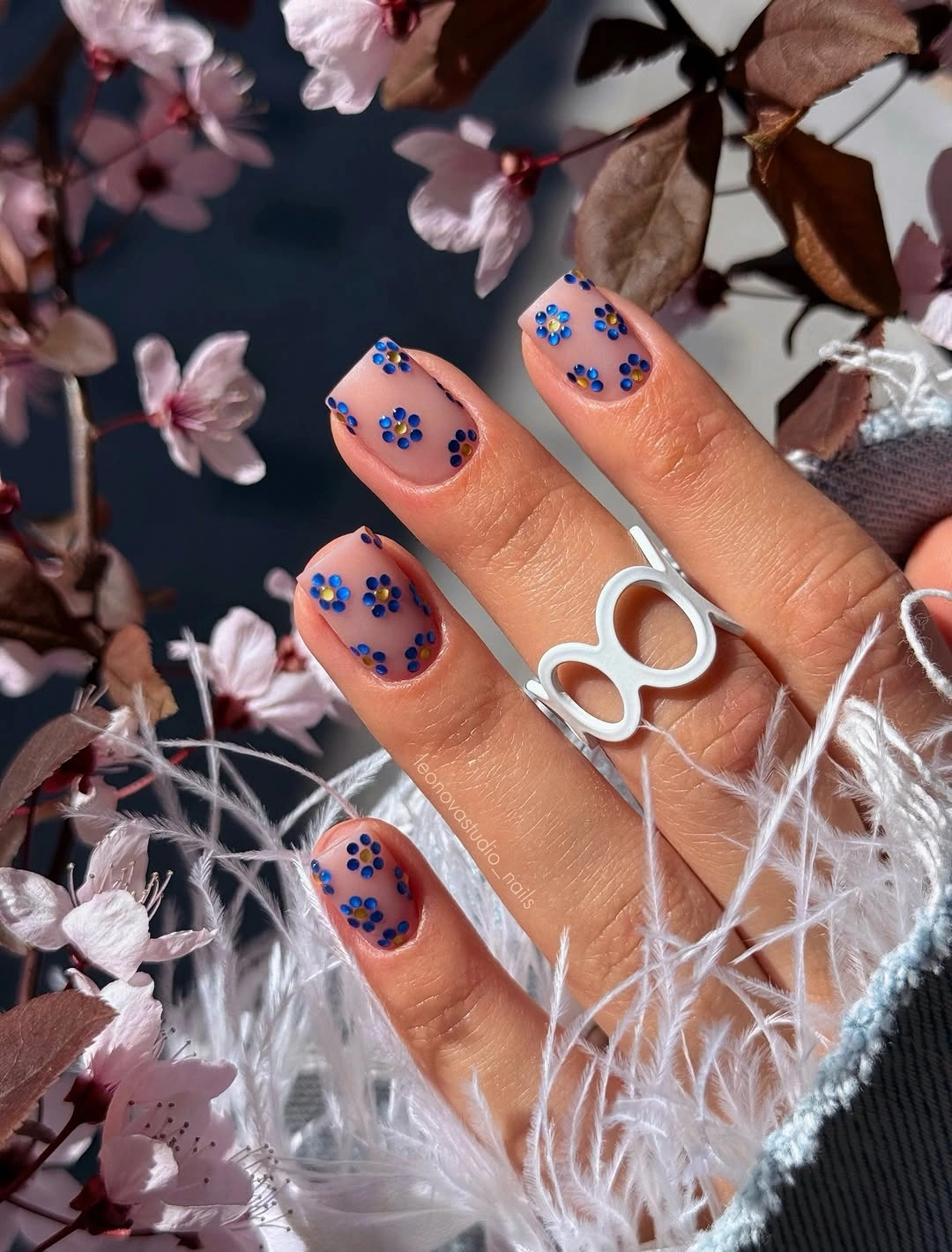
The warmth comes from the contrast between a soft neutral background and a concentrated cool accent. One cluster near the side or center can work on a very short nail, while two decorated fingers will leave more negative space for everyday wear. Keep the dots similar in size but not perfectly identical, so the set feels lively without losing its rhythm.
Tiny repeated marks need enough distance from the free edge to survive growth. If the cluster sits too low, its shape can blur into the tip; if it sits too high, the nail may look top-heavy. A plain sheer base is a useful partner because it gives the blue room to remain the only bright note, even when the manicure is paired with richer fall colors.
Pressed-Flower Color on Soft Pink
Short square nails use soft pink as a light field for scattered floral-looking foil in gold, green, pink, and darker tones. The accents are irregular and organic, with no single flower dominating the design, so the hand feels touched by color rather than covered by a print. The pale base keeps the mixed pieces airy and prevents the warmth from becoming too dense.
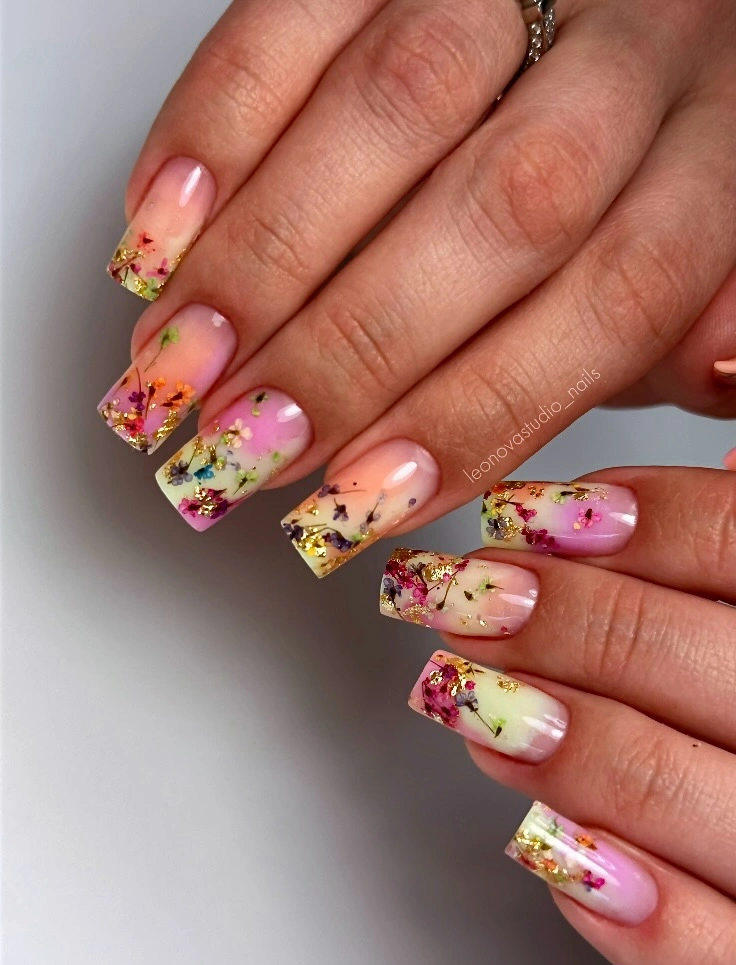
The variation in each accent is part of the charm. A few pieces on one nail can look more considered than an even spread over every finger, and a short shape benefits from leaving clean pink space around the foil. For a quieter version, choose gold and one botanical green only, keeping the base pink so the seasonal connection remains soft.
Irregular foil is visually forgiving when the pieces differ, but it can lift or look crowded near the free edge. Place the strongest color toward the center and let the tips stay lighter, especially if your nails are very short. The design works when it suggests pressed petals and leaves through tone and texture, not when it tries to depict every detail literally.
Muted Blue with a Narrow Pale Border
Short square nails in muted steel blue use a narrow pale line along part of the edge to create a quiet geometric frame. The base is matte or low-shine, so the border becomes the first detail the eye notices after the compact shape. The color feels cool, but the soft value keeps it compatible with warmer clothes and accessories.
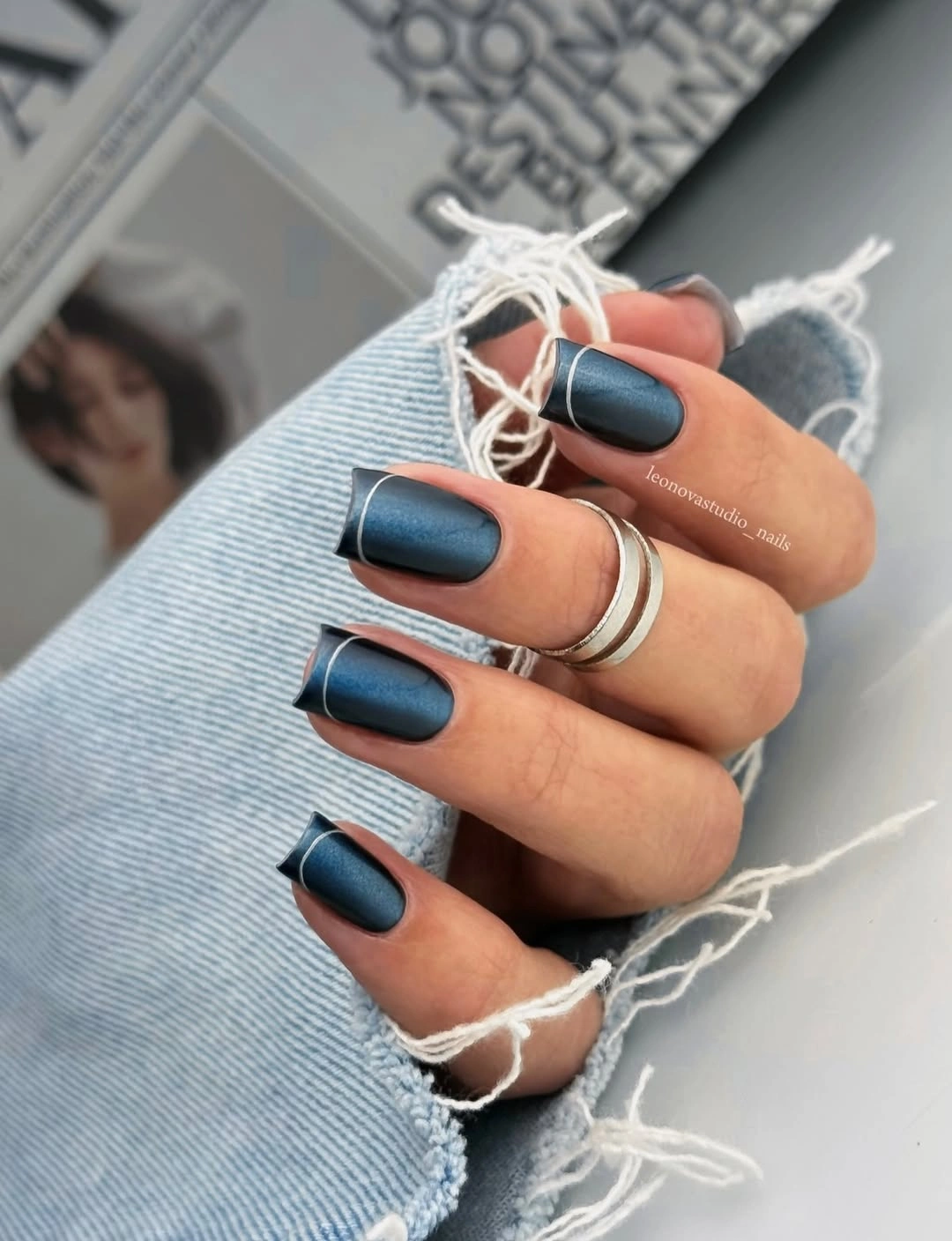
The border is most effective because it is incomplete and restrained. A full outline would make the design heavier, while a short line near the tip or side preserves negative space and gives the blue a clean direction. On even shorter nails, use the pale mark on two fingers only and allow the matte color to carry the remaining surfaces.
Matte texture shows handling marks, while a fine edge line can wear at the point of contact. Keep the line slightly inward and choose a calm pale gray instead of a bright white if you want the contrast to sit quietly. This is a good bridge from delicate floral color into deeper autumn surfaces because the design remains clear without becoming decorative.
Amber Spots with Small Gold Flecks
Warm amber and brown square nails are filled with irregular dark spots and small gold-looking flecks. The pattern has an animal-like rhythm, but the transparent brown layers and metallic touches keep it connected to a richer autumn palette rather than a flat black-and-white print. The square shape gives the spots a stable field and keeps the design graphic.
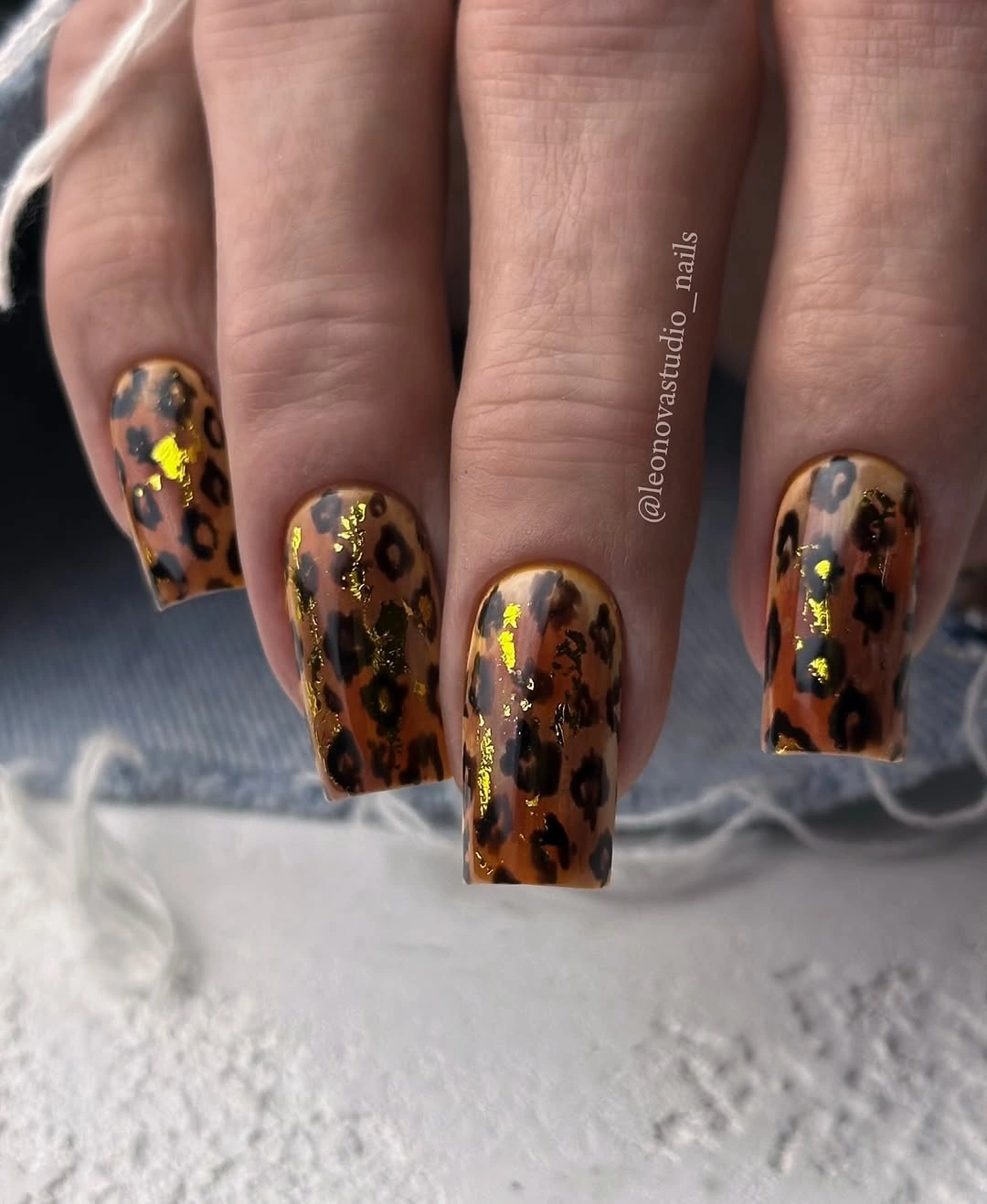
The eye moves between the dark marks and the smaller flashes of gold, so neither detail needs to cover the whole nail. A plain caramel or espresso finger can provide relief if the pattern feels too dense, and two decorated nails are enough to suggest the same mood on a shorter shape. Keep the amber visible between spots so the warmth stays central.
Spot placement should vary, but it still needs a sense of balance across the hand. Too many dark areas on one side can make the manicure feel heavier, and dense marks may lose clarity when the nails are filed shorter. Use fall leopard nails as a visual direction if you like the print, then edit the amount of pattern to fit your own proportions.
Brown Glitter with One Pale Marble
Medium almond nails combine deep brown sparkle with one translucent pale accent that carries soft marbled white detail. The glitter is concentrated on the warm base nails, while the lighter accent opens the composition and keeps the hand from reading as one continuous brown block. The almond outline ties the different surfaces together through a smooth curve.
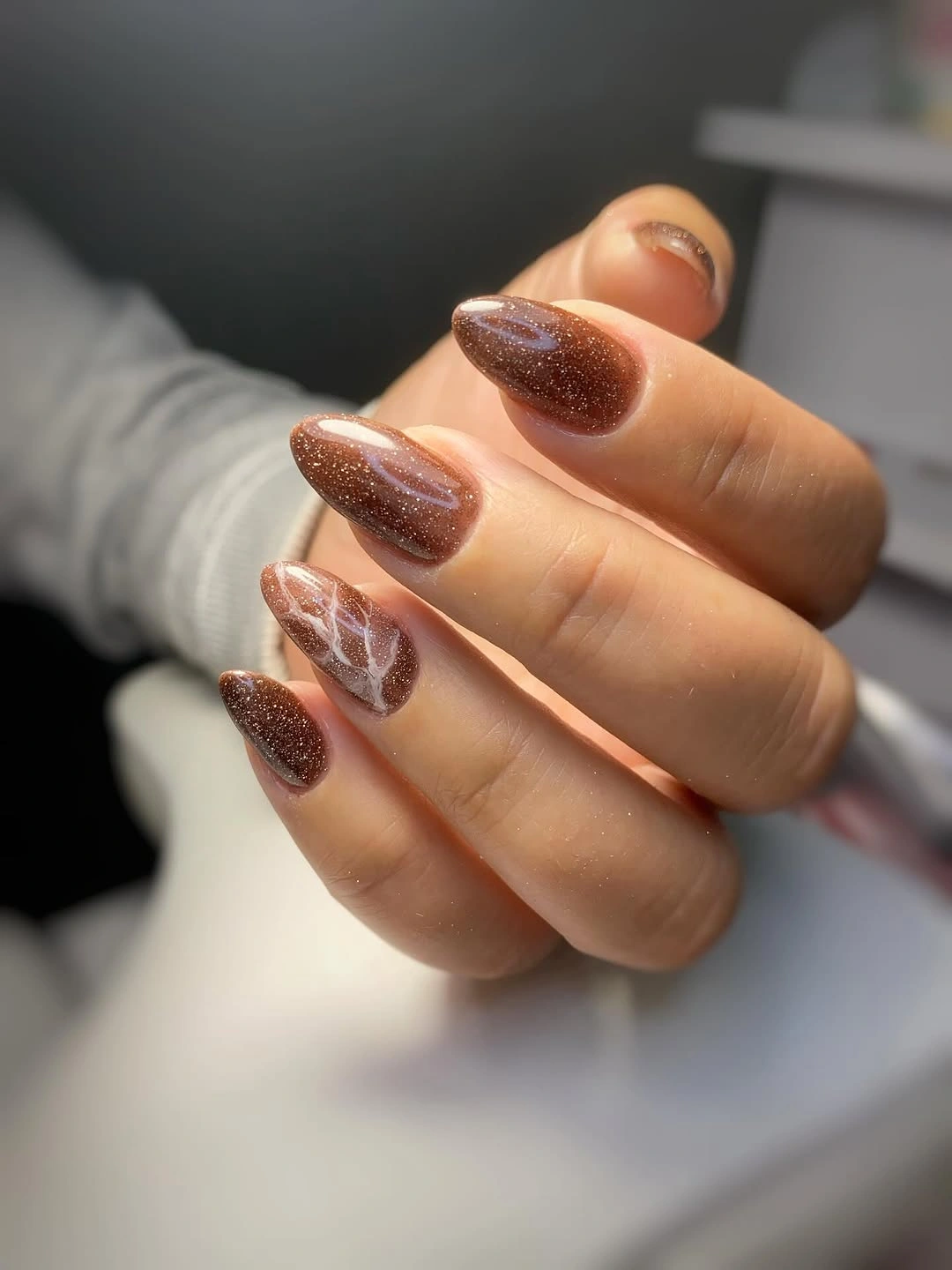
The pale accent works as a quiet pause, not a competing color story. A shorter almond can keep the brown glitter on two fingers and the pale marble on one, leaving the rest in a plain warm neutral. If the sparkle feels too bright, choose a finer brown shimmer so the surface still has depth but the light accent remains the main contrast.
Glitter exposes changes in shine, and translucent marble can reveal uneven coverage, so the set needs a smooth surface even though the design appears relaxed. Keep the pale detail away from the most active edge and let the brown carry the warmth. The manicure feels seasonal through contrast between earth and light, not through an added symbol.
Mixed Fall Colors with Tiny Seasonal Motifs
Short square nails alternate burgundy-brown, coral, and pale surfaces, with tiny orange and brown motifs on selected fingers. The solids are important because they give the small drawings room to remain recognizable, while the warm palette keeps the mix connected. No single motif fills the hand, so the design stays playful without becoming costume-like.
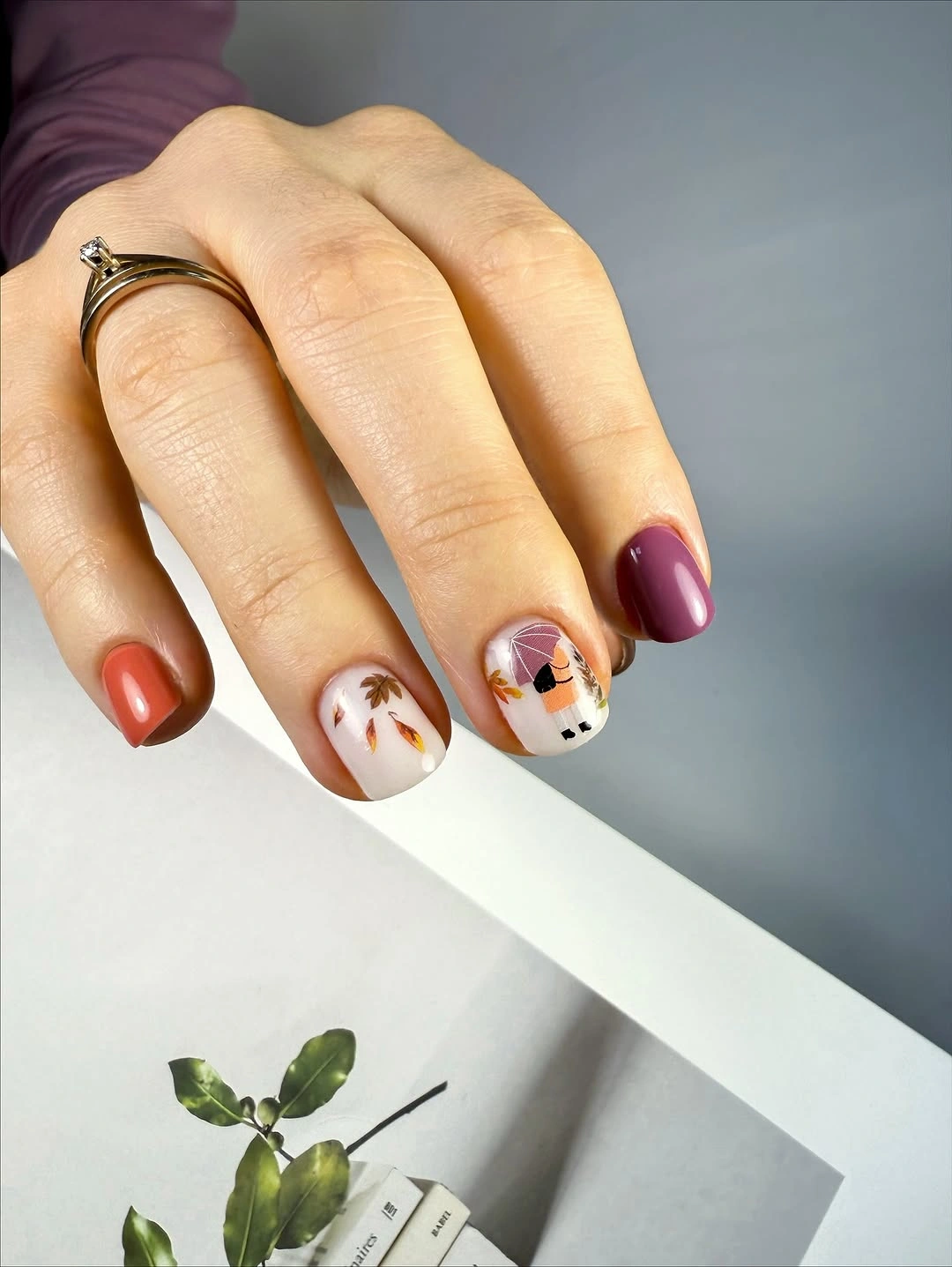
The detail-first choice is to let the motif sit on a light background while the solid colors carry the warmth. A single accent nail can hold the tiny seasonal mark, and the remaining fingers can alternate coral with a muted wine shade for a cleaner version. If the nails are very short, remove the smallest internal lines and keep only the broad color shape.
Tiny art near the tip is vulnerable to growth and can blur sooner than a solid base. Place the motif slightly inward and use one clear warm color as its anchor instead of adding several little shades. The manicure stays autumnal when the palette does the seasonal work, even if the motif is reduced to a simple curved or leaf-like suggestion.
Red Tips with Leopard Contrast
Long tapered nails combine pale nude sections, vivid red edges, and dark spotted panels to create a high-contrast autumn mix. The red tips form a strong border, while the leopard-like accents introduce a second rhythm across the longer surfaces. The design feels bold because the elements are clearly separated, not because every nail is equally covered.
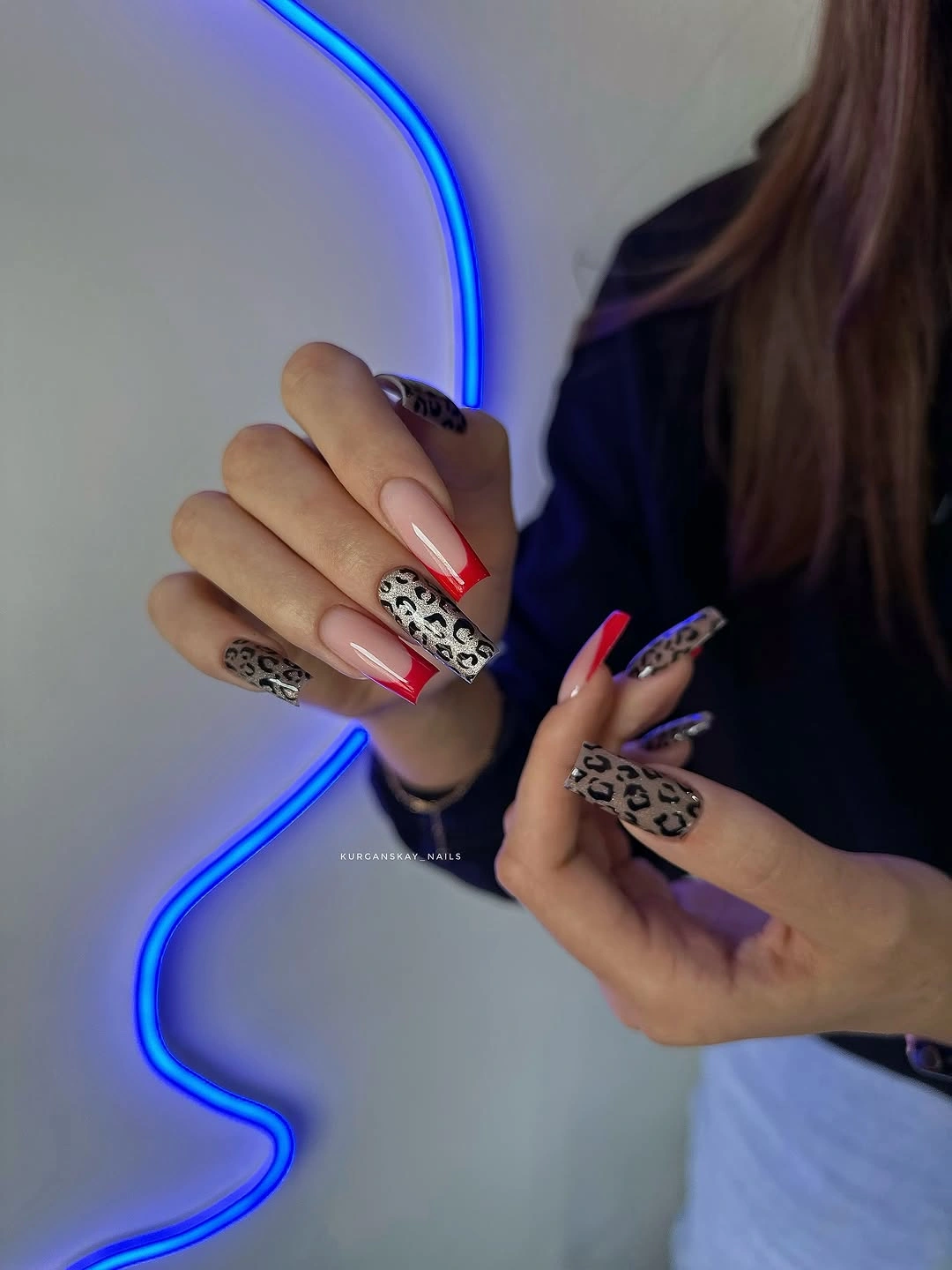
The best proportion keeps the red edge visible and gives the spotted areas enough space to read as pattern. On shorter nails, move the print to one or two fingers and use a thinner red tip on the rest, allowing the light base to remain the quiet middle ground. A warm brown instead of black can soften the contrast without losing the autumn direction.
Multiple high-contrast features plus long length make grow-out especially noticeable. The edges need to stay sharp, and the spotted accents should not crowd the narrowest parts of the nail. If you want the color impact without the full commitment, use a red-and-nude French structure and let one leopard accent supply the visual surprise.
Turquoise Ribbons Through Clear Nude
Long nails use a pale nude base with translucent turquoise ribbons flowing across several surfaces. The blue-green marks curve and overlap, leaving clear areas between them so the design feels airy rather than saturated. The sharp shape gives the ribbons a long path, but the light base keeps the manicure connected to a softer seasonal palette.
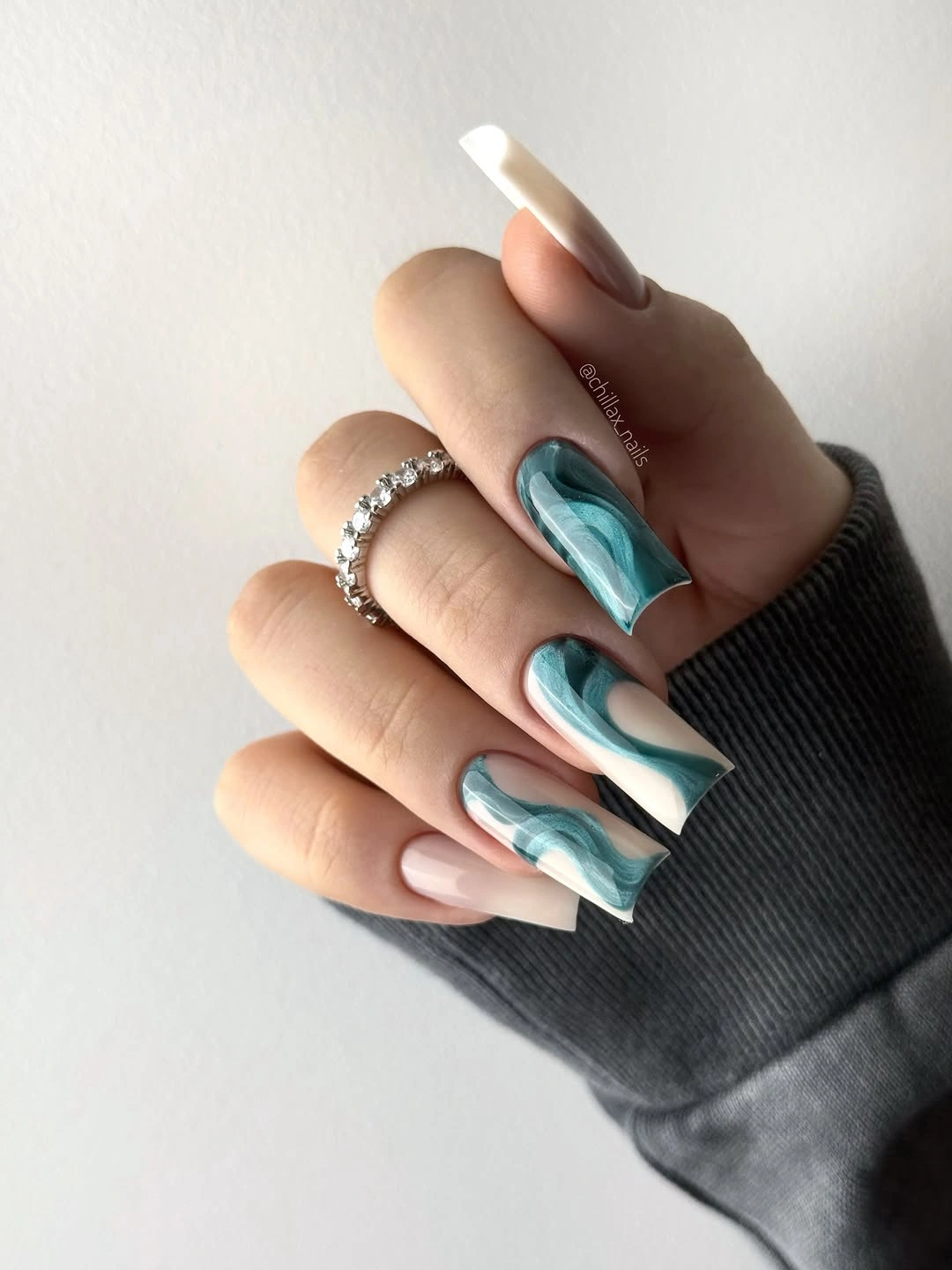
The movement is the main design decision, and it works because the ribbons are not all the same width. A shorter almond can keep the marble on two accent nails, with a pale neutral on the rest, while a deeper teal can make the effect feel richer if the light base seems too delicate. Preserve the open sections so the blue-green does not become one solid field.
Flowing detail needs room to remain legible, and clear-looking edges can show wear more quickly than an opaque color. Keep the strongest ribbon away from the free edge and avoid adding metallic pieces that would compete with its direction. The manicure feels autumnal through the relationship between cool water-like color and warm neutral space, not through literal imagery.
Warm Waves Across Brown and Cream
Short square nails mix brown, red, cream, and pale sections with narrow black wavy lines. The colors are warm and grounded, but the black curves create a visual thread that keeps the different blocks from separating. Because the design stays compact, each nail reads as a small composition rather than one fragment of an oversized illustration.
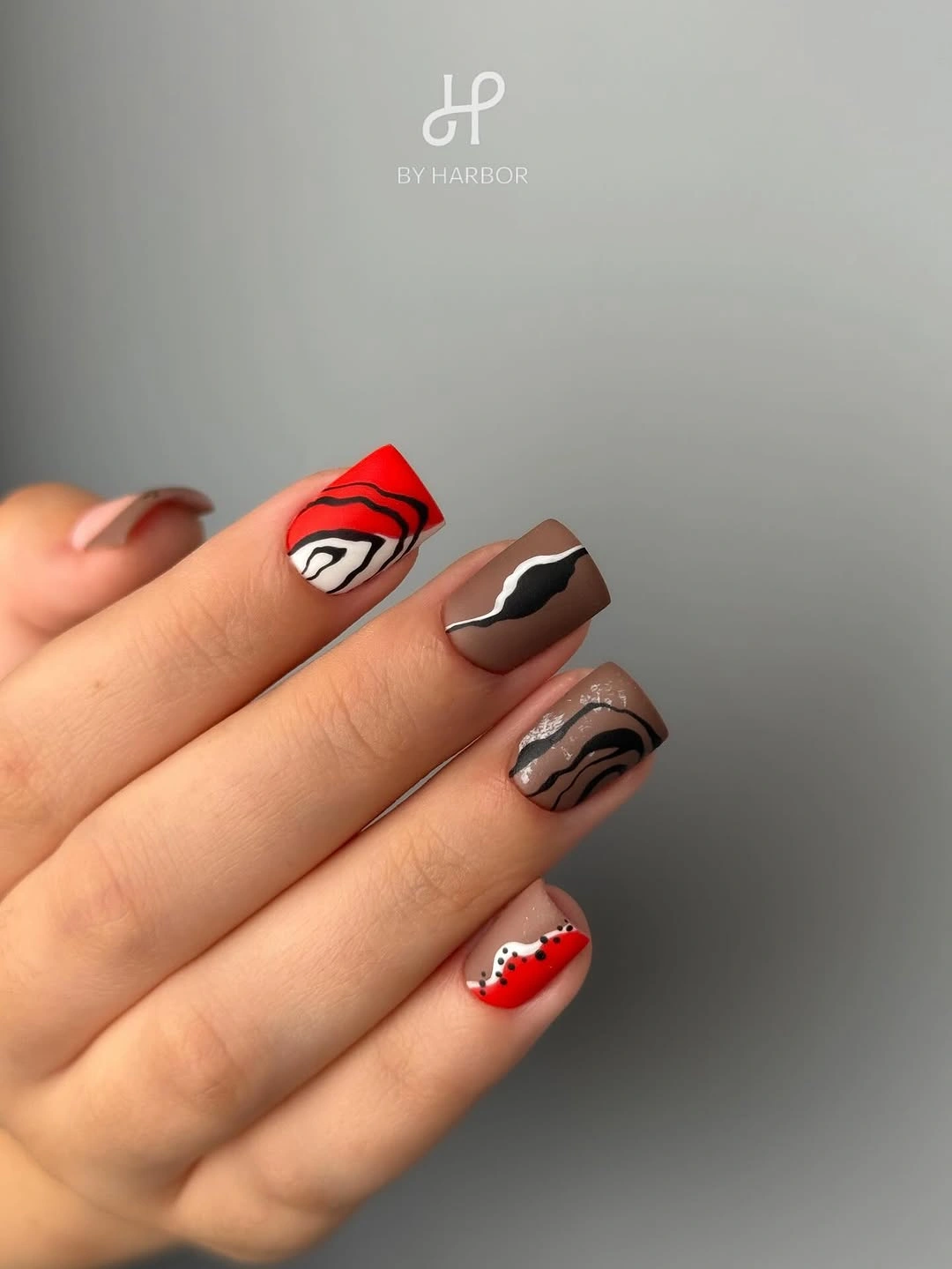
The curved line is the detail that gives the palette movement. It can sit on a cream accent to create a clear focal point, while the brown and red fingers remain simpler and warmer. For a lower-detail version, keep the line on two nails and use one brown plus one muted red across the rest; the seasonal warmth will still feel complete.
Several colors on a short nail need enough space between them, especially when the line is thin and high contrast. Reduce the number of color blocks before shrinking the wave into an unreadable mark. A clean border and controlled repetition will keep the design feeling considered even as the edge grows and the small spaces change proportion.
Matte Chocolate with Tone-on-Tone Texture
Short square nails in matte chocolate brown carry a subtle tonal texture that looks like soft checks or layered blocks. The pattern does not depend on a contrasting color, so the surface remains warm and quiet while the shape stays clearly visible. This is a design where the hand notices depth gradually rather than being met by a bright focal point.
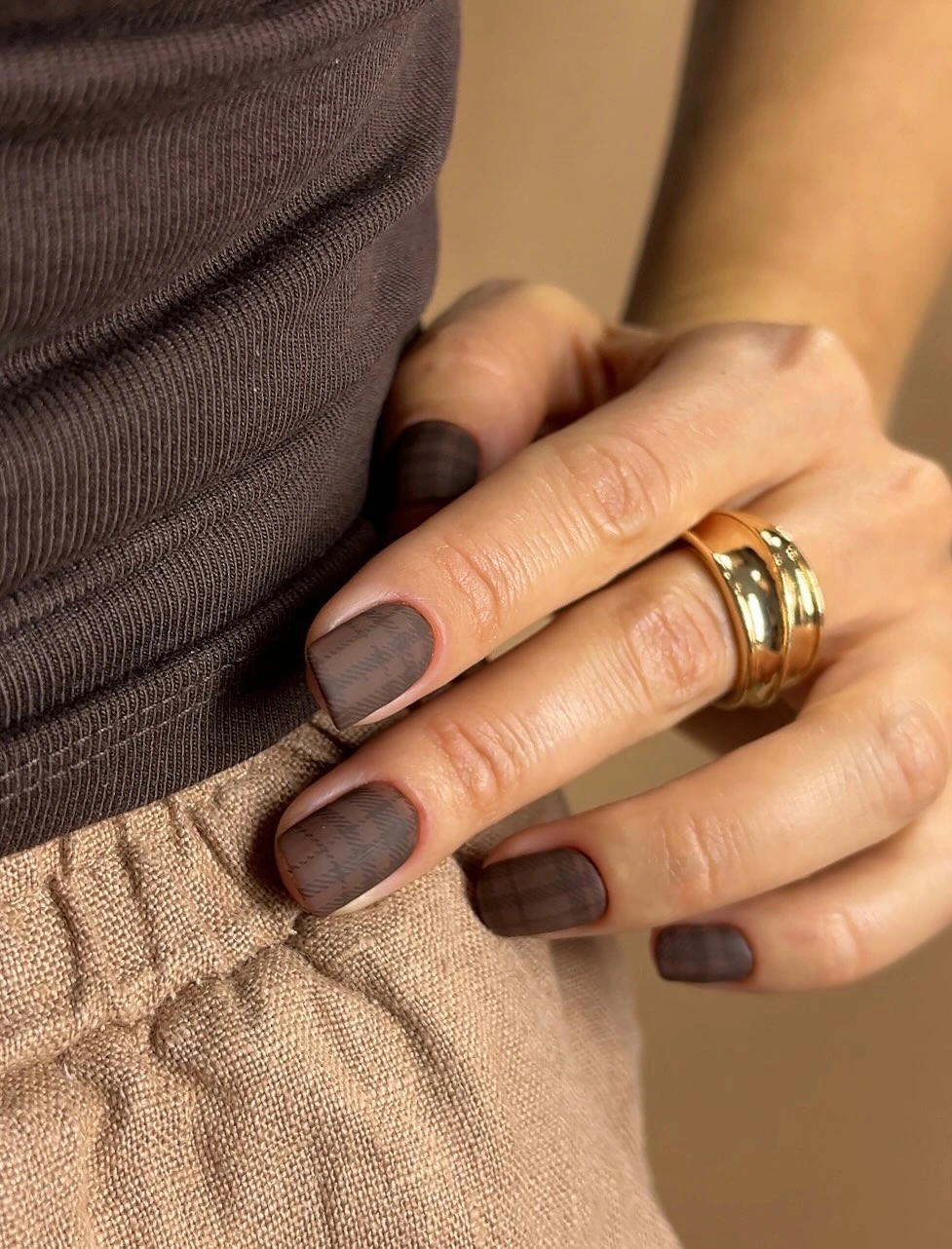
The low contrast is what makes the texture wearable. A darker brown grid on one or two fingers can preserve the idea if the full hand feels too uniform, while a glossy top would change the surface and make the pattern less softly grounded. Keep the blocks broad enough to remain visible on short nails instead of adding many tiny squares.
Matte texture shows oil and handling marks, so the quiet finish needs occasional care to keep its even appearance. The benefit is that small imperfections in the pattern will not dominate as they would in a high-contrast print. This is a comfortable direction when you want a seasonal design that feels rich through undertone and surface rather than decoration.
Black Gloss with One Pale Graphic
Short glossy black nails stay almost completely plain, with one pale abstract accent adding a small interruption. The hand is styled near red flowers and dark clothing, but the manicure does not rely on those colors; the single light graphic creates its own focal point. The compact shape makes the contrast feel intentional and controlled rather than dramatic.
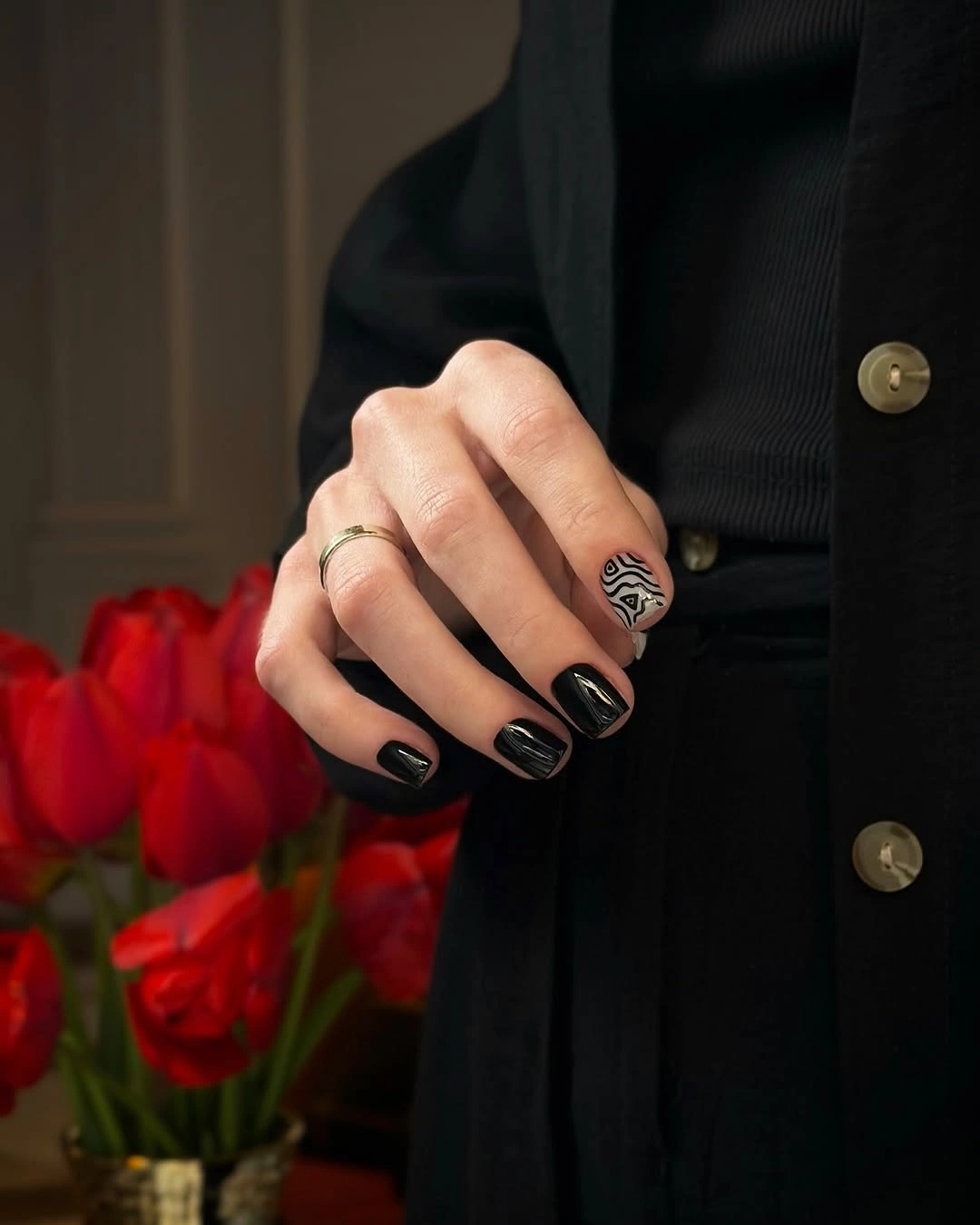
A lone light mark works because the remaining fingers give it visual silence. Keep the accent near the center or upper surface, where it can be seen without becoming a tip border, and use a soft gray or silver if white feels too sharp. This structure adapts easily to shorter nails because the base does not require extra room for a repeated motif.
Black gloss is honest about chips and edge wear, while a small pale accent needs clean boundaries to remain polished. If the graphic begins to wear first, replacing it with a small metallic dot can preserve the contrast without rebuilding a full drawing. The seasonal mood comes from dark depth and one warm surrounding note, not from adding more art.
Burgundy Bubbles on a Dark Gloss Base
Deep burgundy nails use repeated circular details and reflective highlights to create a bubble-like surface over a short square shape. The color remains dark and warm, but the small round marks break up the gloss and give the manicure a tactile-looking rhythm. Because the dots are repeated, the set feels coherent even though each nail catches light differently.
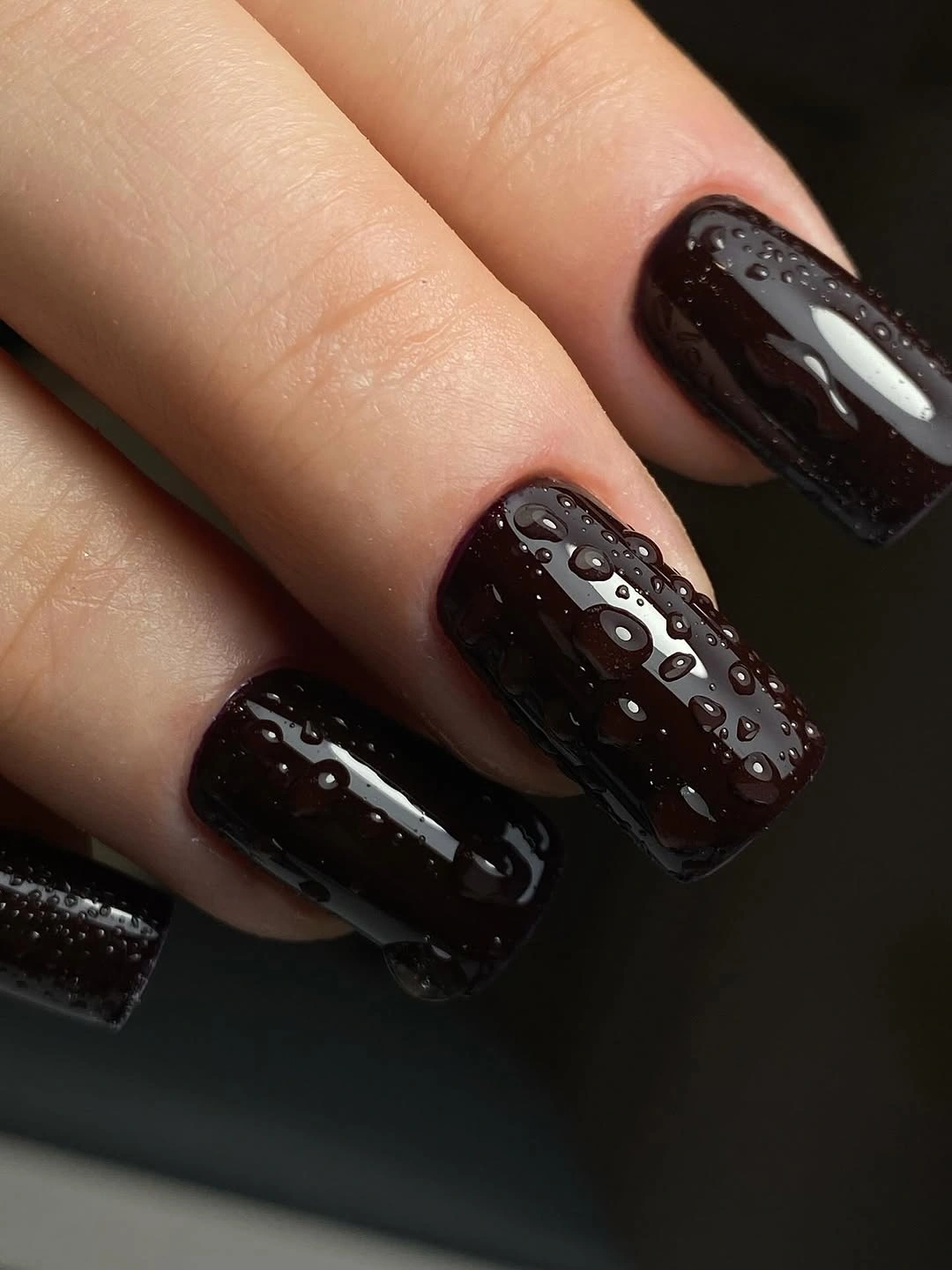
The circular texture is most effective when it is allowed to cluster in some areas and thin out in others. A single accent nail with denser dots can carry the idea on a shorter hand, while the remaining fingers stay plain burgundy. Keep the base visible between the marks so the design does not turn into a single heavy textured block.
Small raised-looking details can show uneven wear and may catch on fabrics, so density is a practical decision as well as an aesthetic one. Place fewer dots near the free edge and let the center carry the texture. The result has the depth of fall burgundy nail designs while keeping the decoration focused and readable.
Olive Green with Nude Spotted Accents
Short nails alternate glossy olive green with pale nude surfaces carrying irregular black spots. The earthy green gives the hand a grounded warmth, while the nude accents lighten the composition and make the pattern easy to see. The short shape keeps the combination friendly and practical even though the spotted nails add a playful edge.
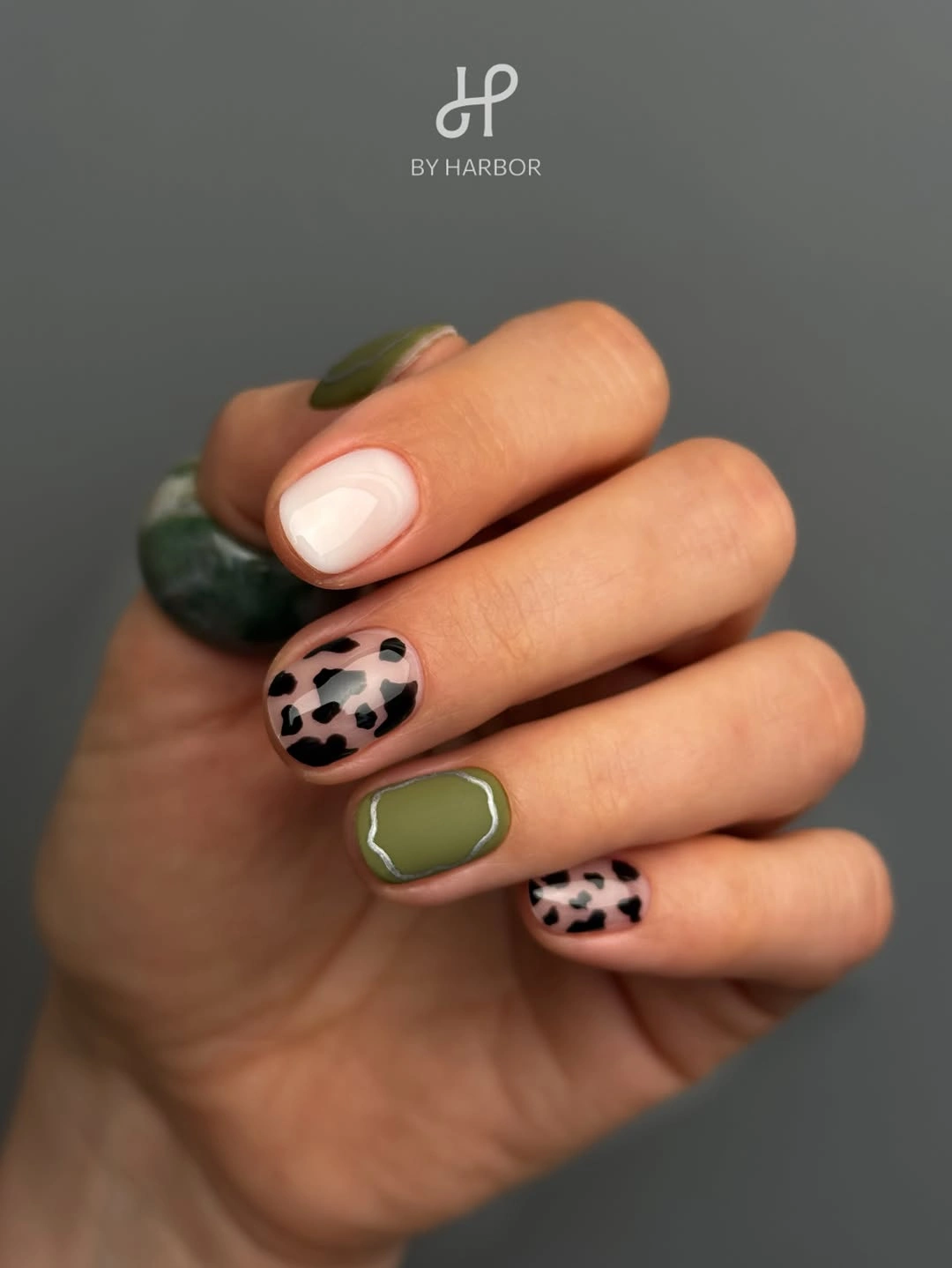
The palette is doing more work than the motif. Olive and nude belong close enough in softness to feel related, and the black spots become the detail rather than a competing color field. Use one spotted accent with two olive nails if you want a calmer version, or replace the black with deep brown to reduce the contrast while keeping the print visible.
Spots should vary in size without becoming so numerous that the nude base disappears. Leave more open space near the tip and keep the largest mark away from the edge, where growth will change its position. This is an easy way to keep the manicure seasonal through earth tones without relying on orange or red.
Red and Cream with Small Raised Motifs
Short square nails combine pale cream and nude surfaces with small red and green motifs that appear raised or carefully placed. A deep red finger adds a stronger color anchor, while the light nails keep the hand open and soft. The design uses a limited palette, so the tiny details feel intentional rather than scattered.
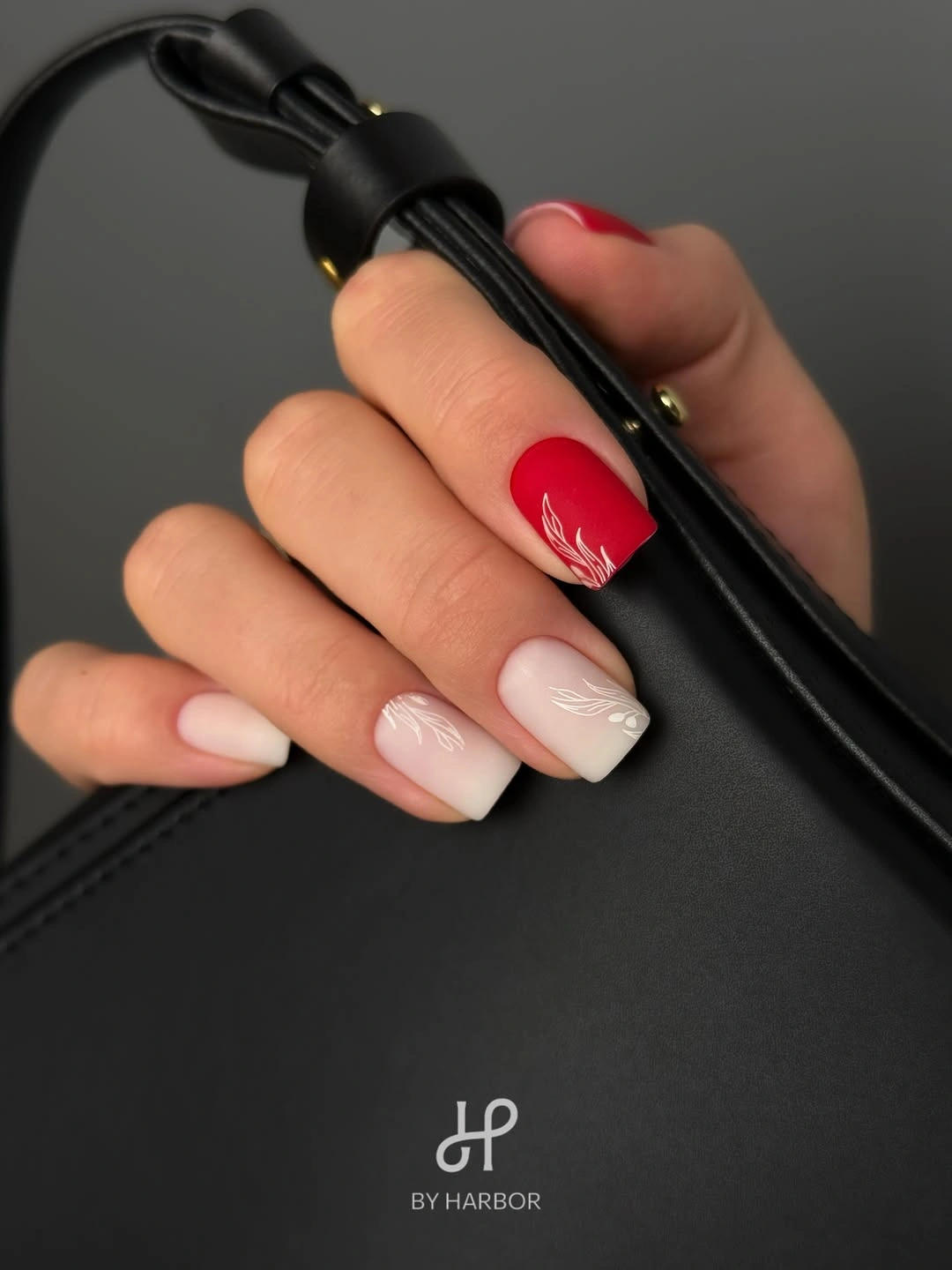
The light background is important because it allows the colored marks to remain readable at a small scale. One motif on a pale nail can carry the seasonal suggestion, while the other fingers alternate cream with the richer red. If the details feel too decorative, keep only the red accent and use a soft neutral base throughout the hand.
Small raised-looking elements may wear differently from the base, especially near the tip or sidewall. Keep them centered and avoid filling every pale surface, so the manicure retains relief when one detail changes. A controlled accent is more useful here than trying to repeat a complex seasonal symbol across all fingers.
Black Spots on a Soft White Base
Short square nails are covered with irregular black and brown spots over a pale white base, creating a clear animal-inspired print. The light background makes each mark easy to read, while the compact shape gives the pattern a tidy edge instead of a stretched, busy appearance. The manicure feels graphic but still grounded by the neutral base.
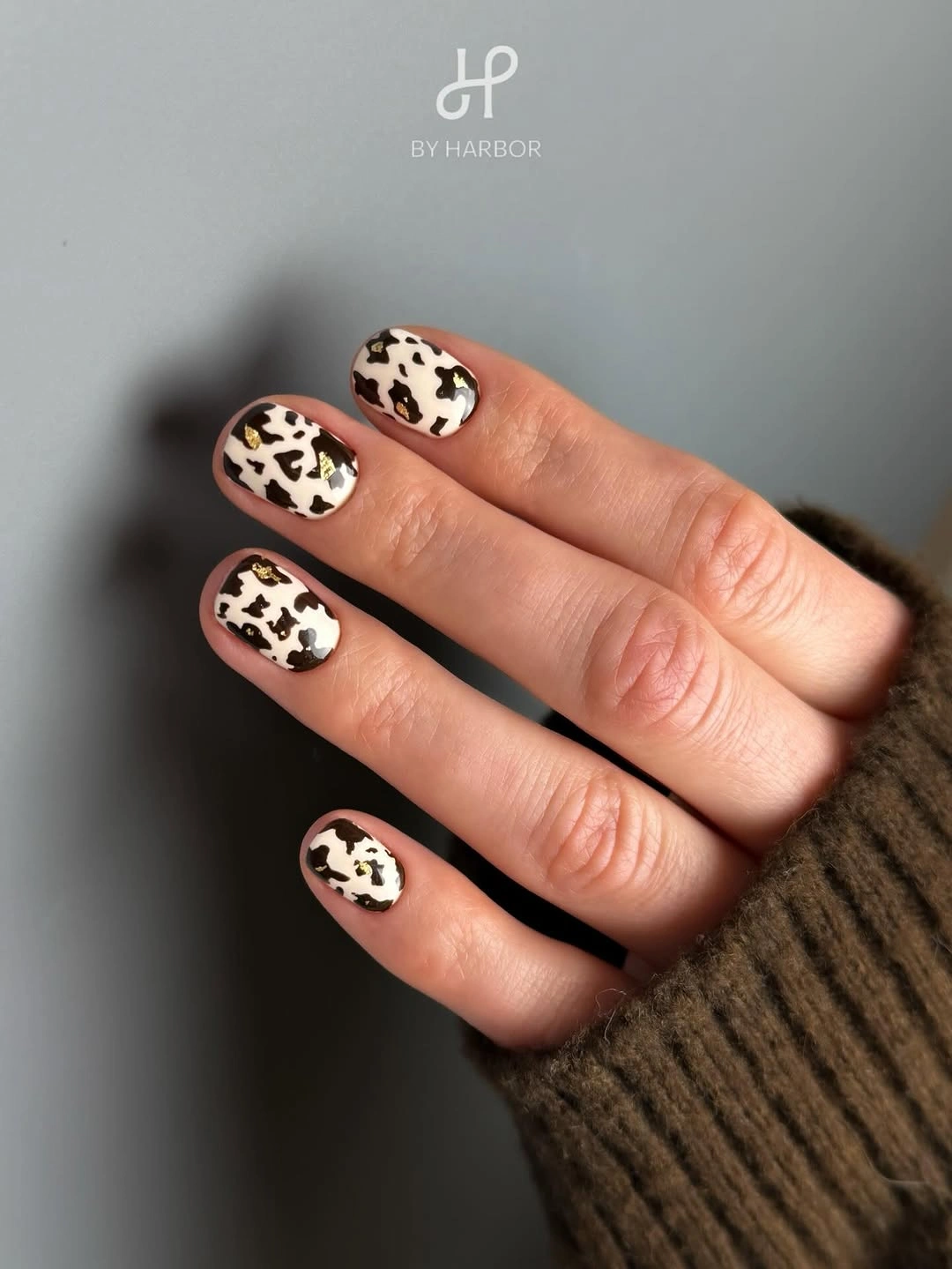
Pattern scale controls the mood. Larger spots feel bolder and leave more white space, while many small marks make the hand look more animated and dense. For a softer adaptation, place the print on two fingers and use olive, nude, or espresso on the rest; the black-and-white contrast will remain a clear accent rather than the entire story.
High-contrast spots can reveal chips around every mark, so the free edge should stay clean and the pattern should not be pushed too close to it. Keep the background warm white if you want a gentler autumn pairing, or use a brighter white when the goal is graphic contrast. The design works because one print is repeated with discipline.
Matte Black and White with Gold Veining
The final manicure limits the palette to matte charcoal, soft white, and one gold-veined accent. The black and white fingers create a quiet graphic balance, while the pale nail with irregular gold lines supplies a concentrated warm detail. The square shape gives the contrast a clean boundary and keeps the metallic accent from becoming too ornate.
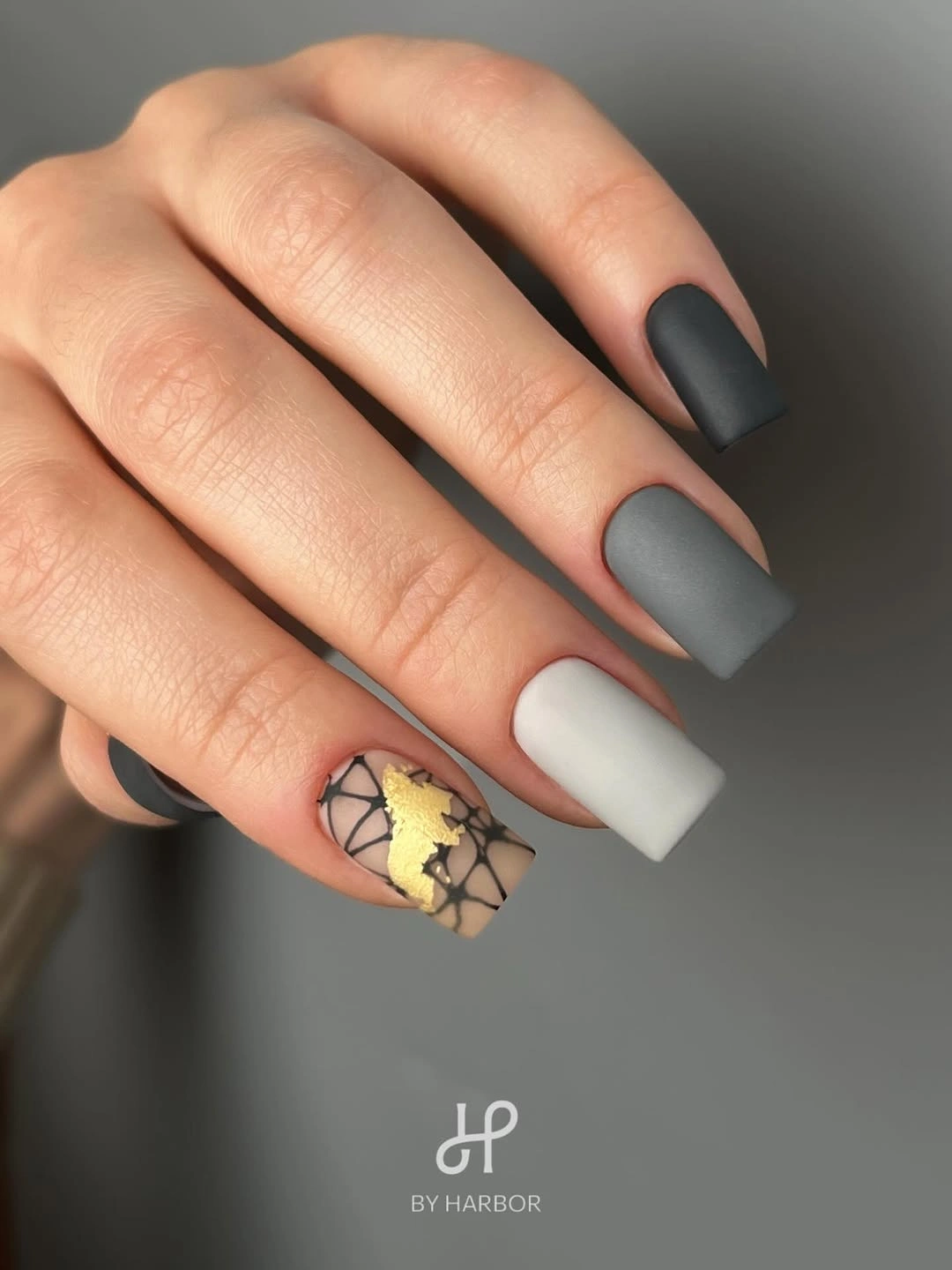
Gold works here because it is contained. It warms the neutral pair without asking the whole hand to sparkle, and the irregular lines add movement while the surrounding nails stay still. A shorter version can alternate one black and one white accent with a single gold-veined nail, preserving the same measured contrast.
Matte black shows marks, while fine gold-like detail can lose its crispness at the edge, so the design benefits from a little inward placement and a clean surface. If the gold feels too bright, use a muted bronze tone that sits closer to the brown side of the palette. The result closes the seasonal edit with warmth held inside a simple structure.