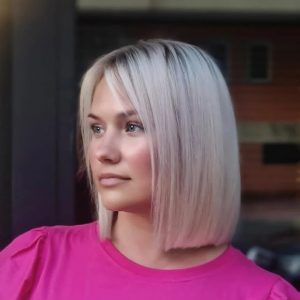
33 Winter Hair Colors for Blondes: Icy & Warm Tones
This winter, I keep seeing blondes trade their summer honey for something cooler. Ash bases, silver tones, beige neutrals. It’s not a full reinvention, just a seasonal shift that reads more expensive and grows out kinder.
All 33 of these Winter Hair Colors for Blondes land somewhere between low-maintenance and high-impact. Some need a root shadow every six weeks, others just a purple shampoo and a trim. I picked them for fine hair that goes flat by 4 pm, for round faces that need structure, for anyone who booked a bleach job on a Tuesday and regretted it by Friday.
Icy Platinum Waves With Ash Roots
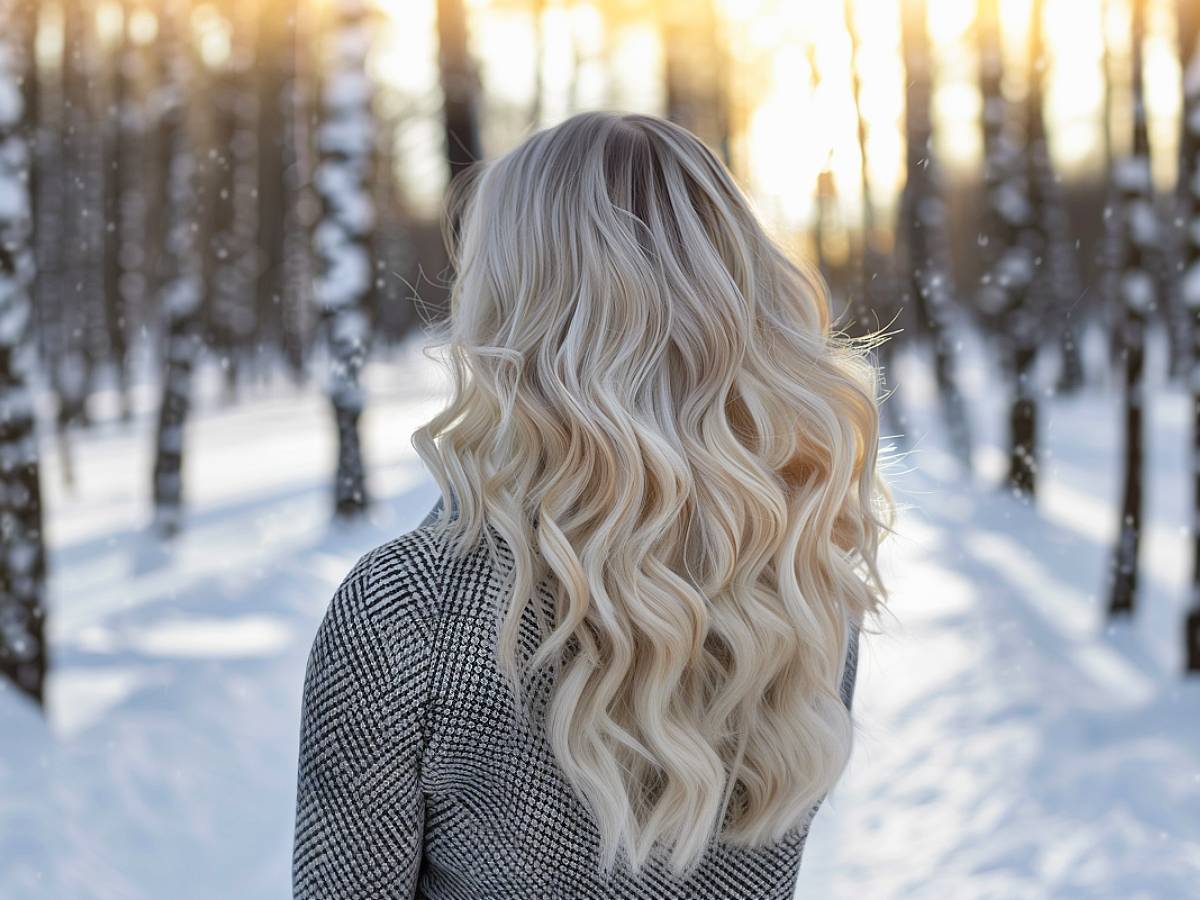
That frosty mid-back length is not the kind of platinum you maintain with a purple shampoo and a prayer. The subtle darker roots anchor the whole thing, so the icy platinum blonde waves read deliberate instead of grown out. Thick, wavy texture holds the loose bend without fighting it. The ash undertones keep the blonde from warming up against winter light. The honest downside: this is a salon colour, full stop. You need a stylist who understands tone placement, or the roots look like an accident and the ends go brassy by week three. Trim the ends every eight weeks. The breakage is real at this level of lift.
Warm Beige Blonde With Face Framing Pieces
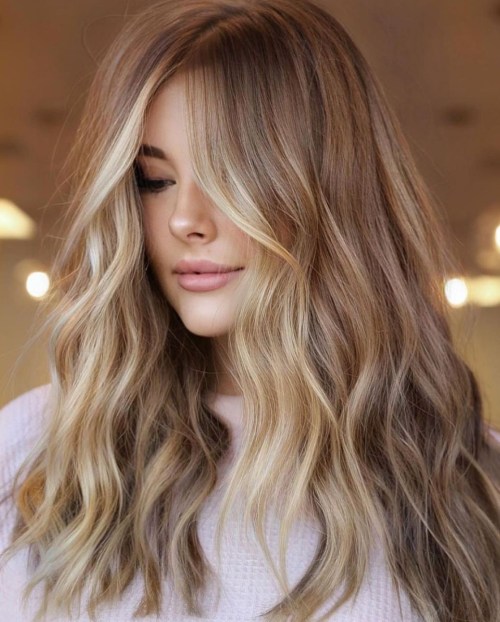
Is there a winter blonde that does not scream cold? This one. The warm beige blonde highlights sit on a shoulder-length base with a side parting, and the face-framing pieces catch light differently than the rest. That is the trick. Medium-thick wavy texture carries the colour without looking heavy. It flatters anyone whose skin reads cool or neutral, because the beige sits in between — not golden, not ashy. The lighter blonde highlights add dimension without a stripe effect. Skip this if your hair is fine and straight; the warmth can read flat without wave to scatter it.
Mid Back Ash Blonde With Wispy Fringe
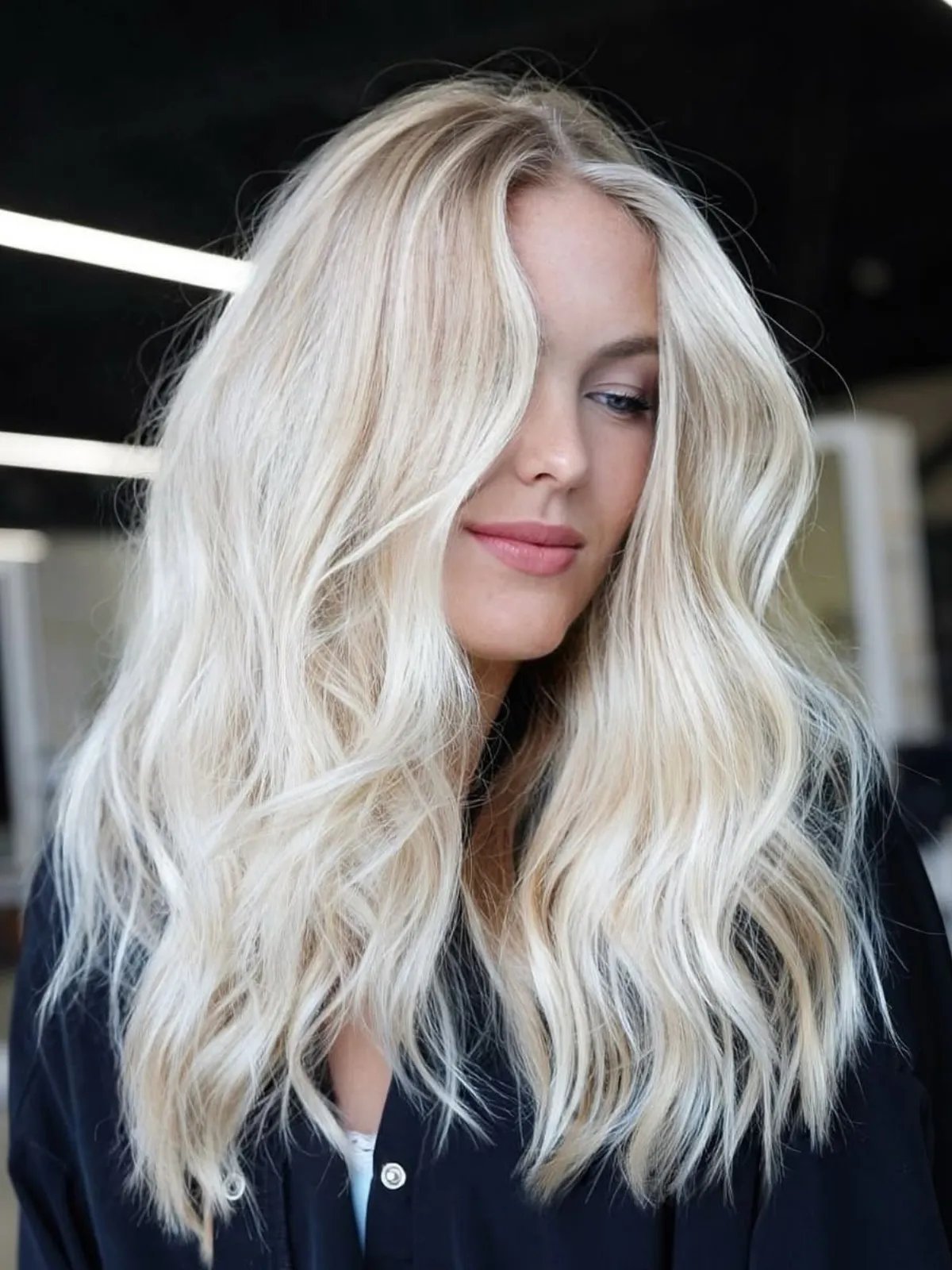
The wispy fringe hits the brow bone, and the mid-back length is layered just enough to keep the weight off the ends. This cool ash blonde with bangs needs a specific rhythm. Wash every other day at most, because the wispy fringe separates into sad strings by noon on day two. A dry shampoo at the roots buys you another day. The subtle highlights keep the ash from going flat — without them, mid-back ash reads grey, not blonde. Thick, wavy texture helps the fringe sit right. Fine hair would let the wispy pieces disappear into the rest.
- Mid-back length with long layers
- Wispy bangs, trimmed every six weeks
- Ash blonde base with subtle highlights
- Wavy, thick texture
- Blow dry the fringe forward immediately
That is the whole maintenance list. Miss one trim and the fringe is in your eyes.
Voluminous Blowout Ash Blonde Curtain Fringe
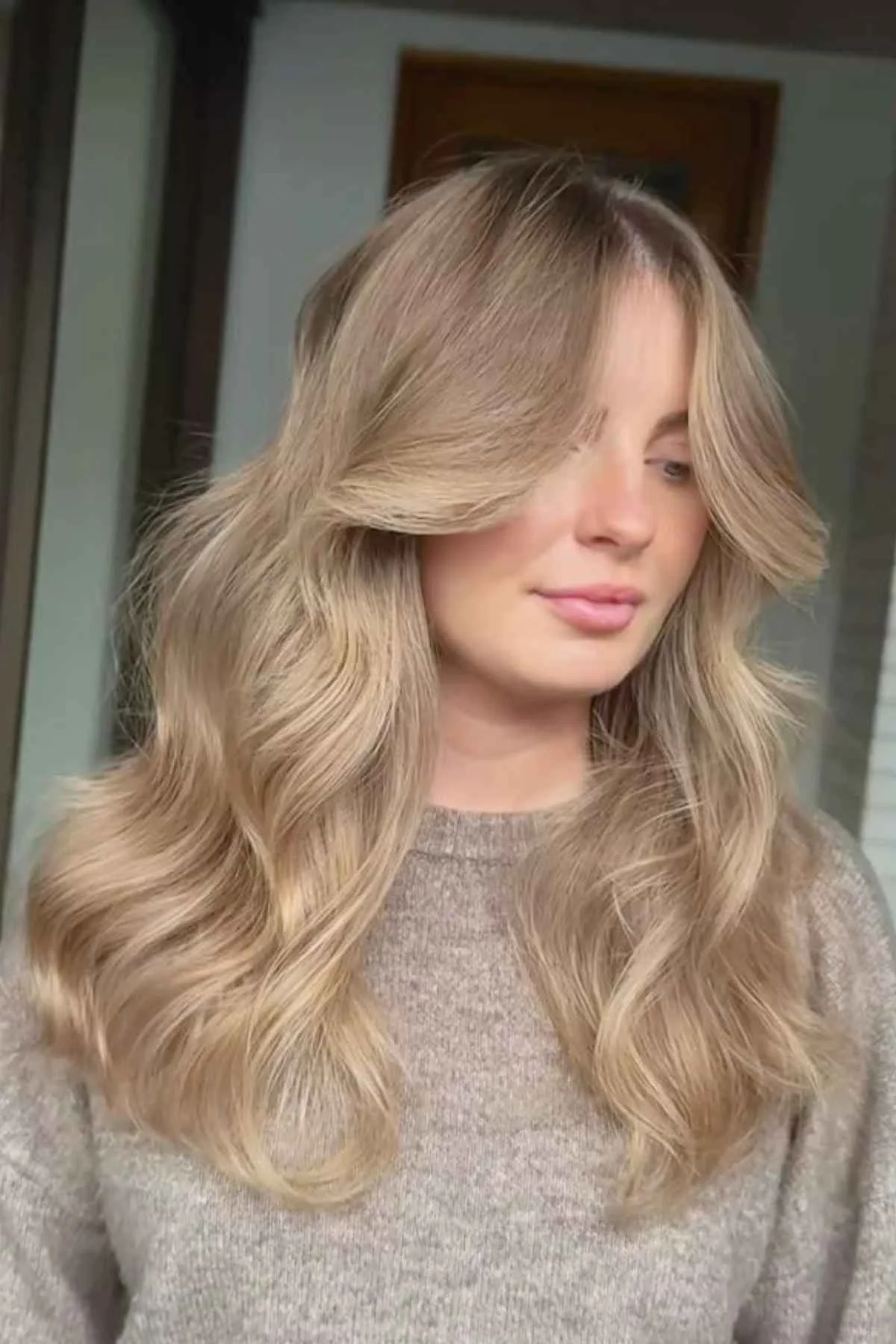
Best grow-out in this roundup. The ash blonde curtain bangs blowout works because the curtain fringe is cut to sweep away from the face, not sit across the forehead. That means it grows for six weeks before you notice. The voluminous blowout itself is built on thick, wavy texture. A round thermal brush lifts the roots, and Velcro rollers set the bend while you do the rest of your routine. Twenty minutes total. The ash blonde with lighter blonde highlights adds depth at the roots and brightness at the ends, which makes the volume read dimensional, not puffy. This is a winter party hair. It holds through dinner and into the coat check line. The mid-back length helps — shorter would collapse under the volume.
Soft Beige Blonde Medium Density Waves
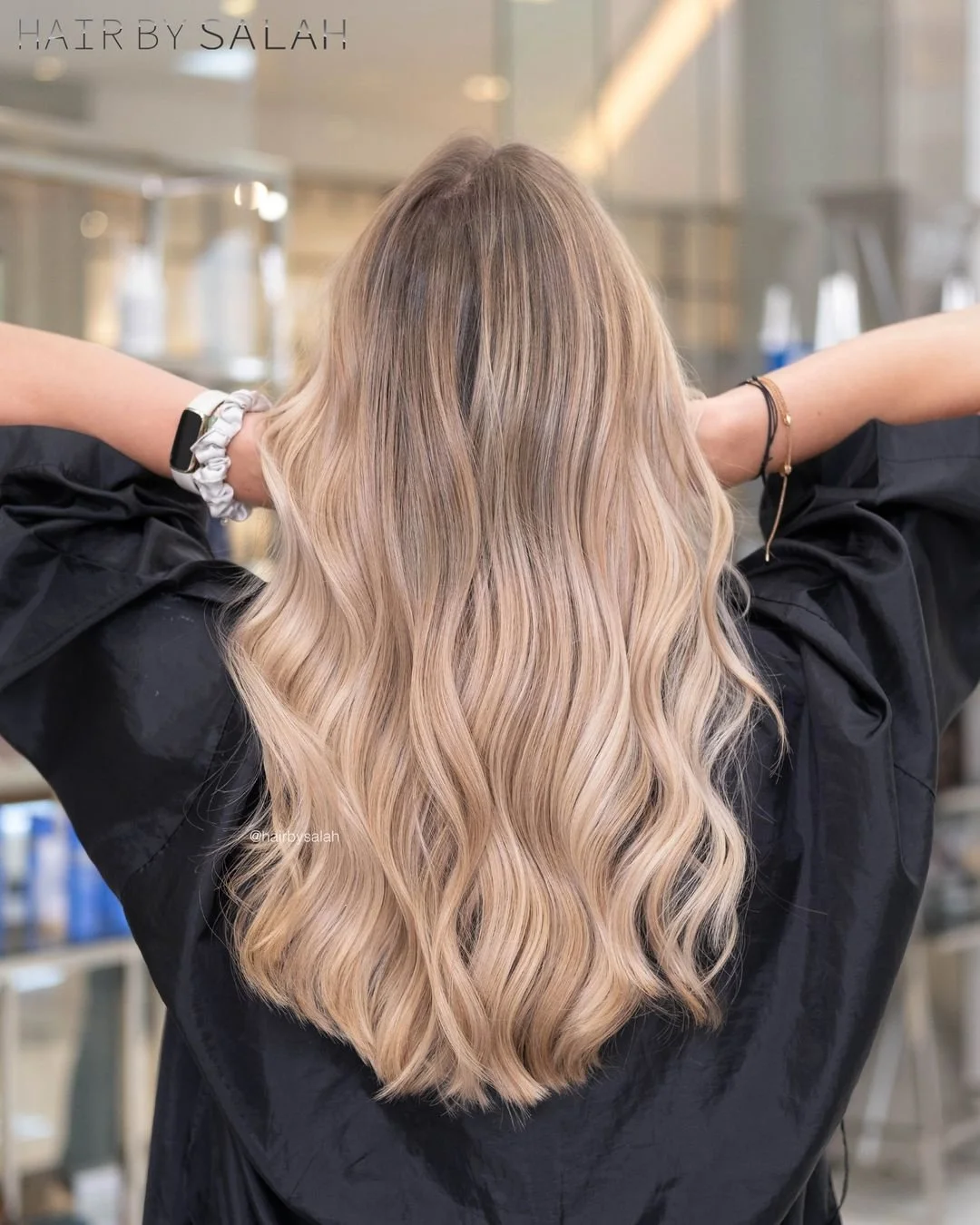
I was sceptical about beige blonde long hair in winter. It can wash out under grey skies. But the soft beige blonde here has subtle highlights that catch indoor light, and the medium density waves give it enough texture to stop the colour from reading flat. The mid-back length is unlayered, which keeps the tone consistent from root to end. A salt spray and air drying gets you a relaxed bend. A curling wand takes ten minutes if you want more definition. The upkeep is reasonable: a toner every second salon visit keeps the beige from tipping into yellow. Fine, low-density hair would let this colour disappear.
Textured Ash Blonde Bob With Choppy Bangs
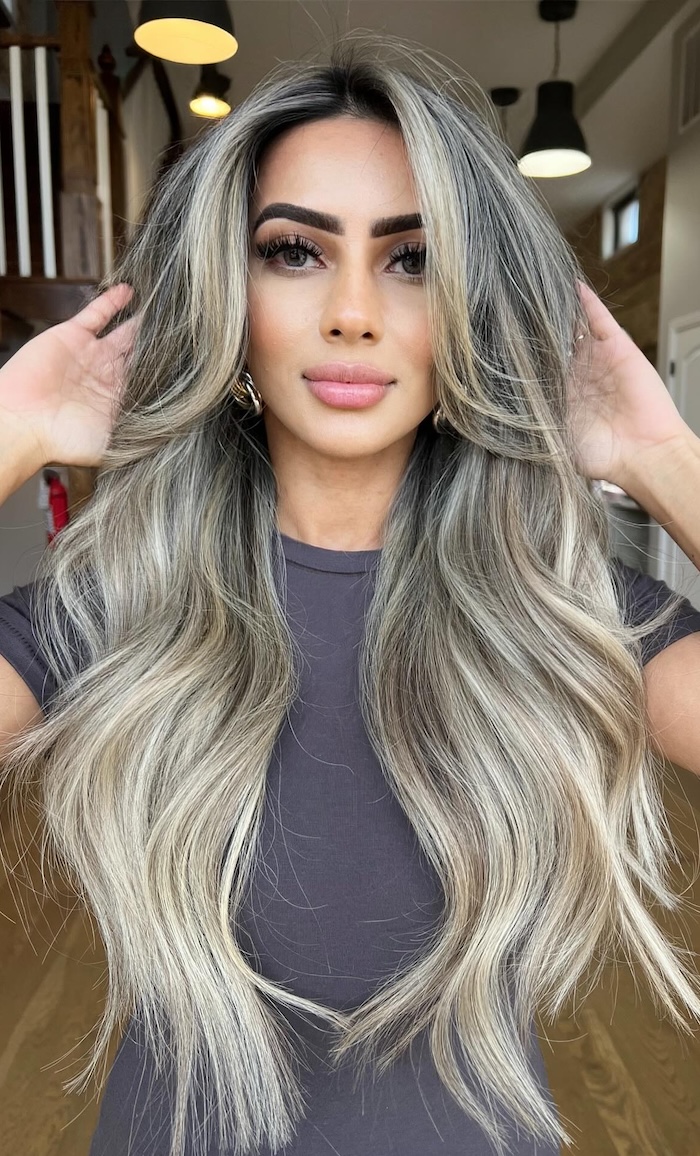
The common trap with a cool ash blonde bob choppy bangs combo is over-toning. You take it home looking like a frosty magazine page. Then you hit it with purple shampoo three times in one week and suddenly it’s lavender. The colour here is cool ash blonde, the technique is a solid all-over lightening with a toner that barely whispers. Length is chin, texture is straight and fine. Choppy bangs sit short and uneven, which is exactly the point. The honest downside: those bangs need a trim every three weeks or they hit your eyebrow and lose the whole sharp thing. The baseline blunts fast on fine hair. Skip the flat iron, rough dry with texture spray, and book the salon for the colour every time.
Extreme Platinum Straight Mid Back Blonde

Do you trust yourself with bleach and a bowl at 11 pm on a Sunday? I didn’t think so. Extreme platinum blonde hair at mid-back length, straight and fine, is a salon job. Full stop. The colour is platinum blonde, the technique is multiple lightening sessions spaced weeks apart. The tone is cool and almost white. At home you get patchy lift and breakage around week two. At the salon you get a smooth baseline that does not snap. Straight and fine texture shows every uneven section. Keep a flat iron on low heat and a trim every six weeks. This is not a weekend project.
Icy Silver Blonde Voluminous Blowout
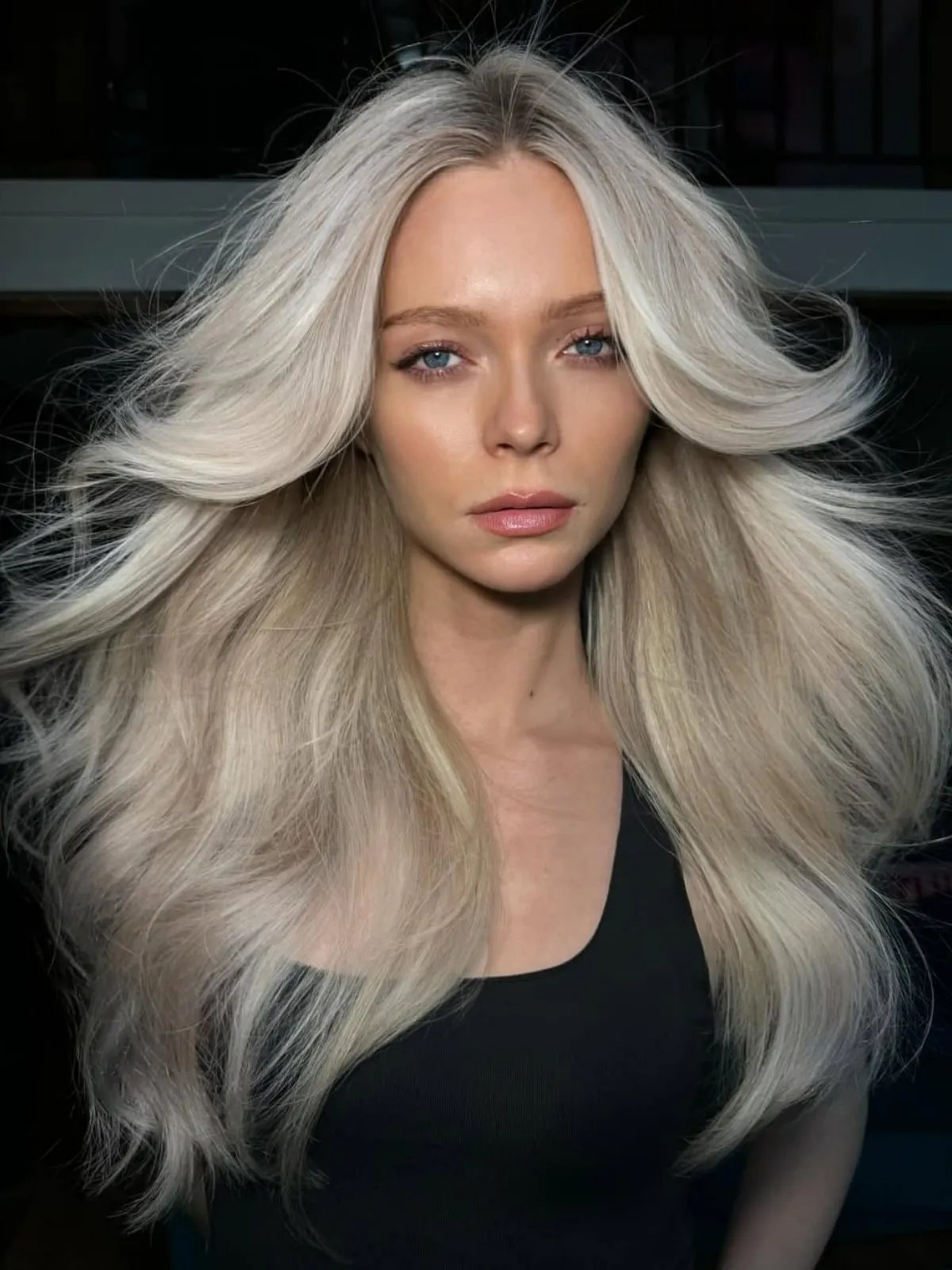
An icy silver blonde blowout lands in winter the way a heavy coat lands in a blizzard. It belongs. The colour is icy blonde with silver tones, the technique is a full highlight with a violet-based toner. Length is mid-back with long layers, texture is wavy and thick. That thickness is what holds the voluminous blowout. A large round brush and sectioned pinning gets the lift. The silver tones read cool and bright against the short grey light of January. The upkeep is a toner refresh every four weeks or the silver slips to a muddy grey. Thick wavy hair takes the blowout well and keeps it past noon. Trim every eight weeks to stop the ends from fraying.
Warm Honey Blonde Caramel Balayage
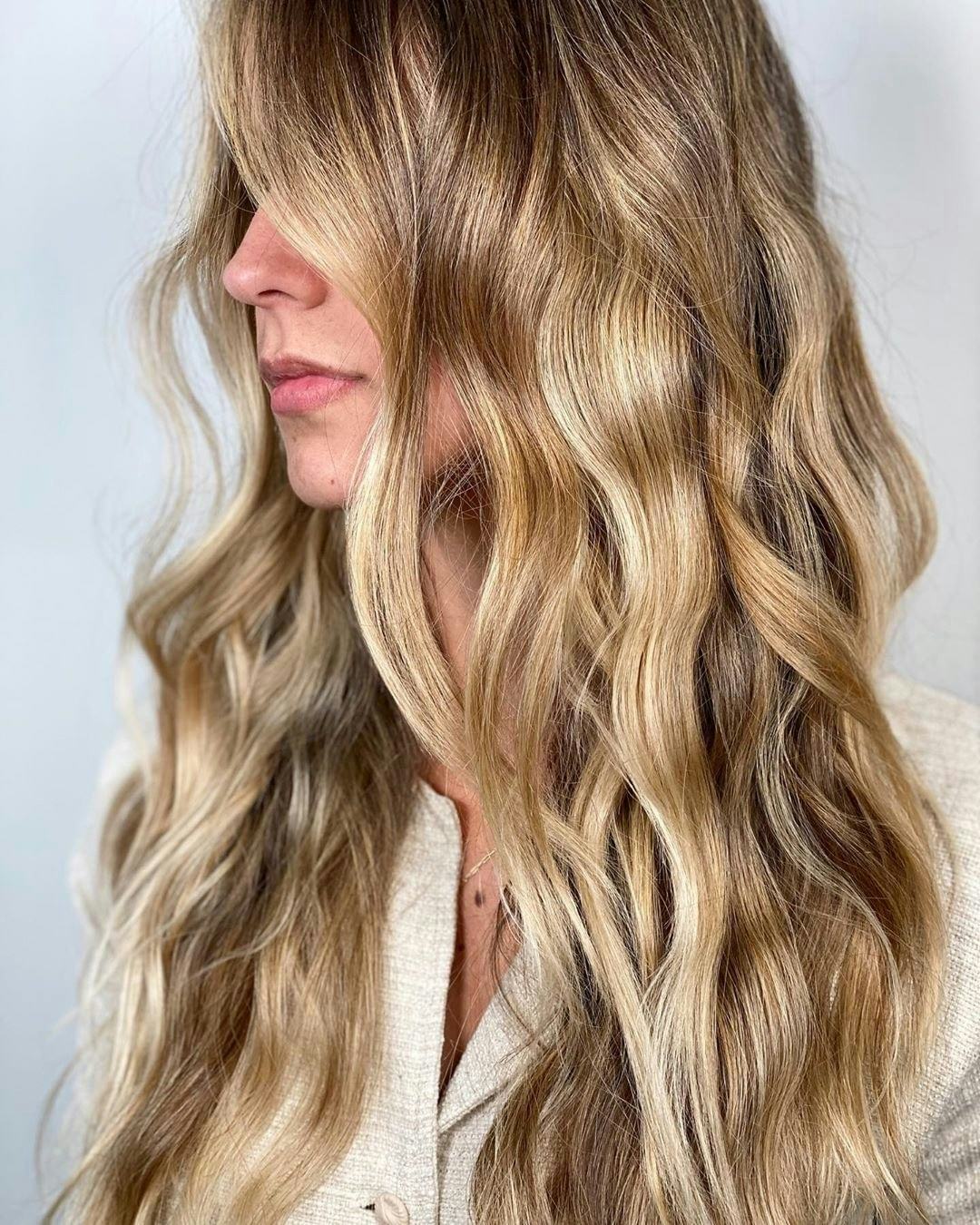
A honey blonde caramel balayage looks rich and cozy. It is a warm honey blonde base with caramel balayage painted through the mid-lengths and ends. The technique is hand-painted, no foils, so the grow-out is soft. Length is mid-back with layers, texture is wavy and thick. The tone is warm and golden. Face-framing pieces catch the light and pull the warmth toward your features. Who it flatters: anyone with warm undertones who wants a winter blonde that does not freeze them out. Who should pass: anyone with a cool pink undertone who will look washed out by the honey. The balayage keeps the root line soft for about ten weeks.
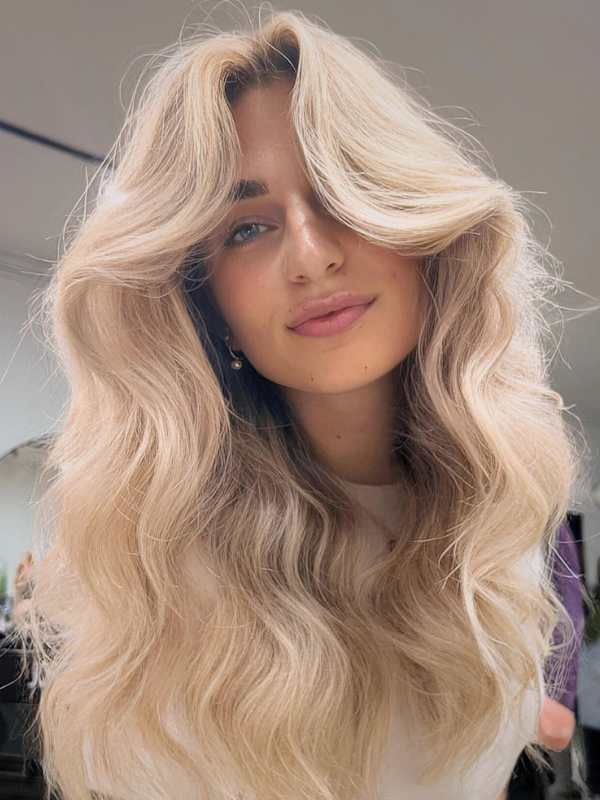
Collarbone Ash Blonde Voluminous Waves
Ash Blonde Platinum Highlighted Chin Bob
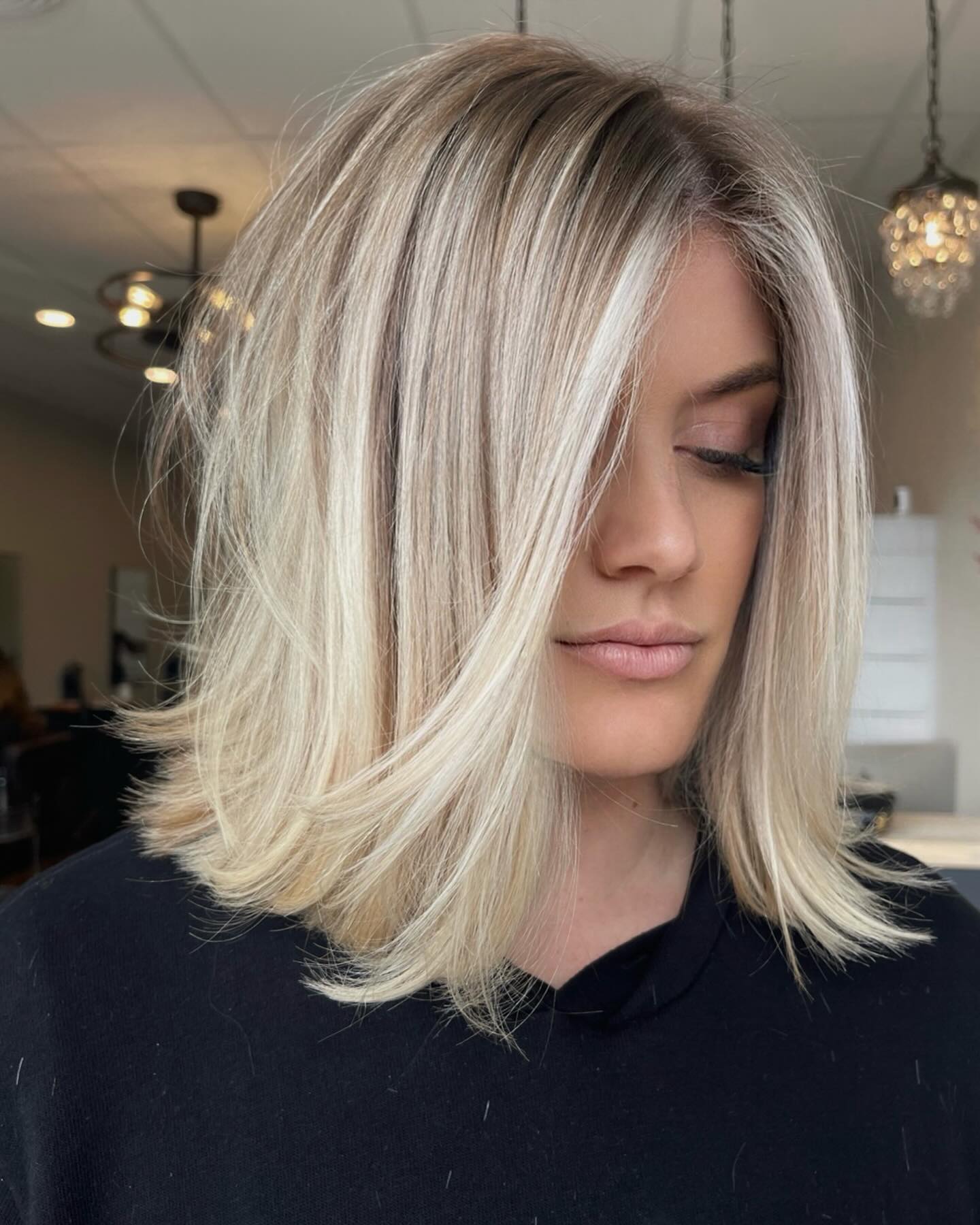
I’ll admit I was skeptical a chin bob could hold both ash and platinum without looking muddy. The trick is the foiling method: the stylist weaves fine sections, placing platinum highlights only through the top layer and keeping the ash base underneath. That way the ash blonde platinum bob reads cool and dimensional, not flat. The wavy blowout helps too — those curves catch the light differently than straight hair would. Medium density hair handles this best, since the contrast needs enough strands to show. The curtain bangs soften the blunt chin line, which matters when the bob sits right at the jaw.
Upkeep is real. Every six weeks, or the shape goes. The platinum highlights need a purple shampoo once a week to stay icy, not brassy. I use a lightweight serum on the ends because the foiling process can dry them out. A curved paddle brush gives that smooth yet lifted finish without heat damage. Not a low-maintenance cut, but the payoff is a bob that actually looks expensive in winter light.
Rose Gold Blonde Mid Back Wavy Hair
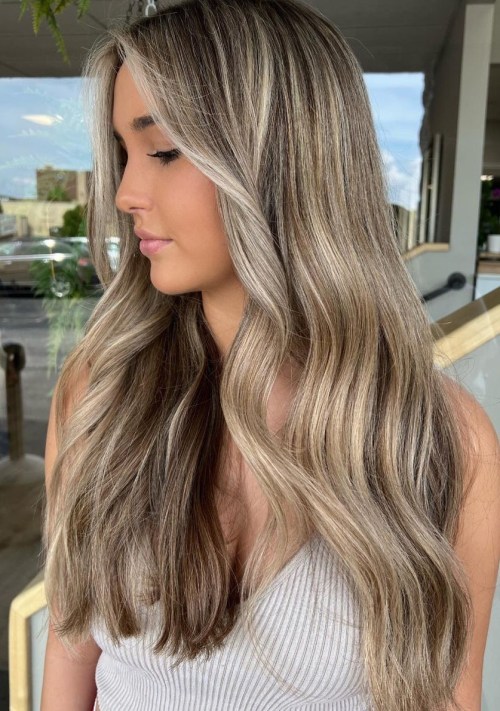
Picture mid-back rose gold blonde waves tumbling over a charcoal wool coat. That is the whole appeal. The rose gold tone sits somewhere between pink and copper, warm enough to fight winter’s gray without screaming Valentine’s Day. Thick, wavy texture carries the color better than fine hair would — each wave catches the pink shimmer differently. No bangs, just a middle part and loose bends from a 1.25 inch iron. A sulfate free shampoo keeps the tint from fading into brassy territory. This is the color you book for holiday parties and wear through February.
Silver Ash Shaggy Bob Choppy Bangs
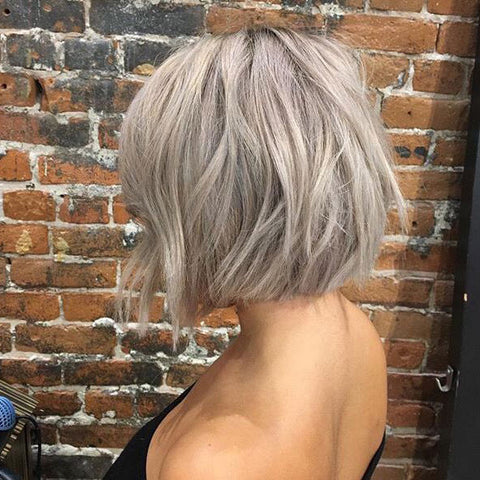
Can fine, wavy hair actually pull off an ash blonde shaggy bob with choppy bangs? I have seen it work, but only when the cut respects the texture. The shaggy bob relies on internal layers that give volume without removing weight — that is key for fine hair that goes flat by noon. The choppy bangs need a side part to blend, not a blunt line across the forehead. The silver ash tone helps because it reflects light, making each layer look separate. Sea salt spray on dry hair, scrunched with fingers, is the styling method. Avoid smoothing irons, they collapse the shape. The honest downside: trims every six weeks, no exceptions, or the choppy ends turn into a frayed mess.
Windswept Golden Blonde Shoulder Layers
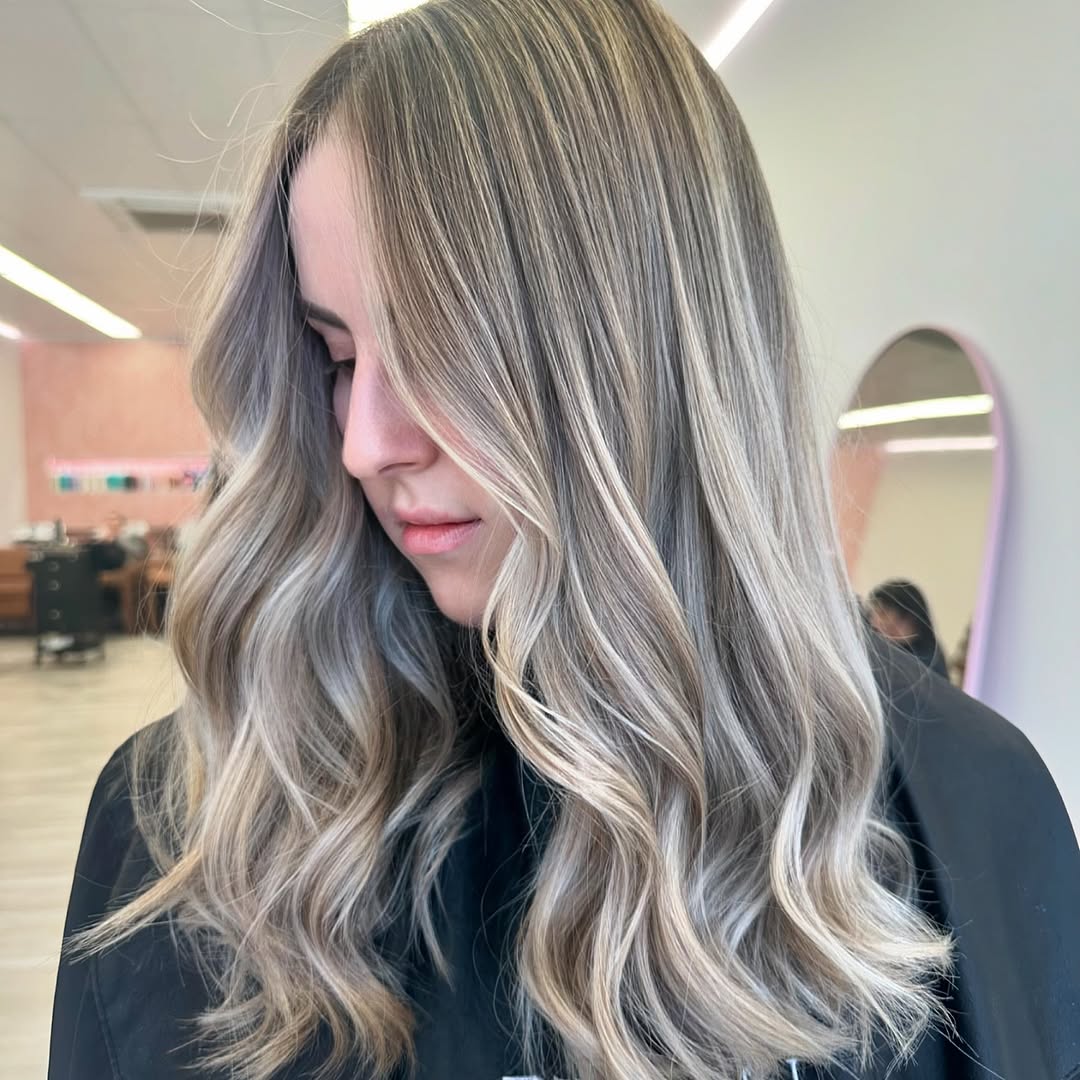
Pure golden blonde can read too warm for winter, like a beach color that refuses to retire. This version adds ash undertones to the mix, cooling it down without losing the golden base. The golden blonde shoulder length hair gets a diffuser blow-dry for natural movement, and the loose waves look windswept, not curled. Medium density hair holds the layers without them disappearing into the length. No bangs, middle part, shoulder length — it is straightforward. The ash undertones are subtle, visible only when the light hits the ends. That is what makes it winter-appropriate: it has the warmth of gold and the restraint of ash.
Rich Honey Blonde Caramel Highlights
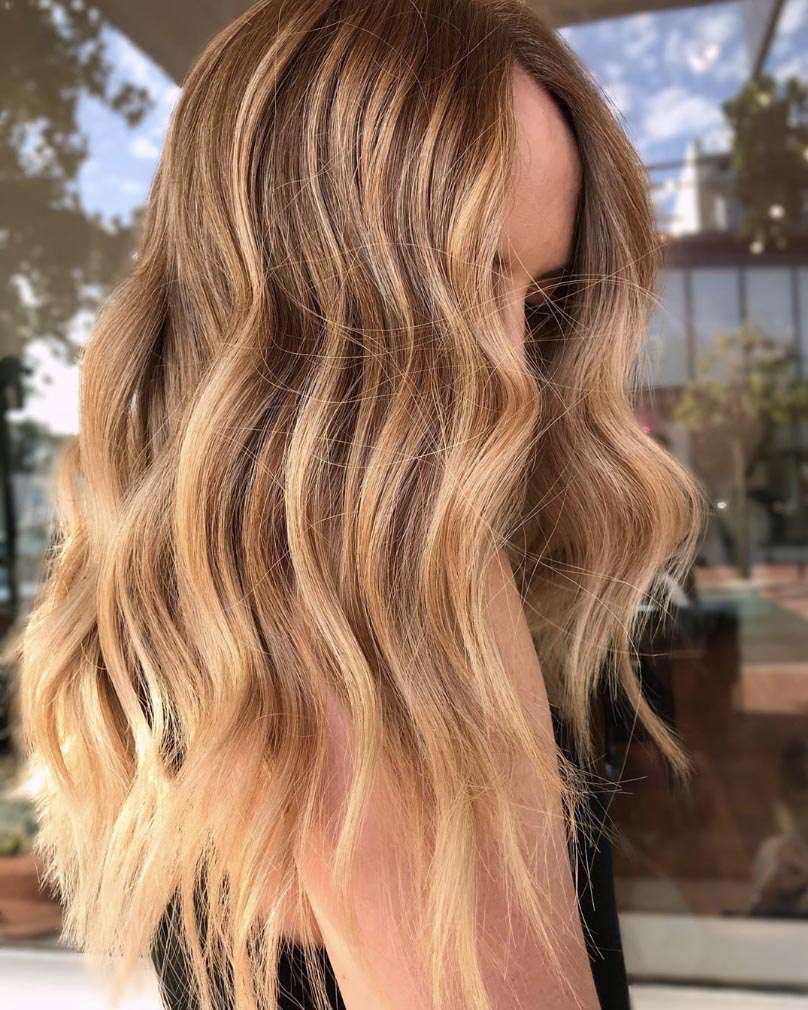
Honey blonde caramel highlights are the winter coat of hair colors: they wrap you in warmth without overheating. The honey base sits deep, almost bronde, and the caramel highlights are painted through the mid-lengths and ends. Thick, mid-back waves carry the contrast best — each bend shows a different stripe of caramel against the honey. A large barrel curling wand gives soft bends, not tight curls. Moisture masks once a week, because the lightening process can dry out thick hair faster than you expect.
This is a season-specific color. It lands in December and carries through March because it compensates for the lack of sun. The caramel highlights catch warm indoor lighting, which is where you spend most of winter anyway. No bangs, middle part, loose waves. The upkeep is a trim every eight weeks and a gloss appointment at ten weeks to refresh the honey tone. It is not flashy. It is reliable.
Icy Ash Blonde Side View Waves
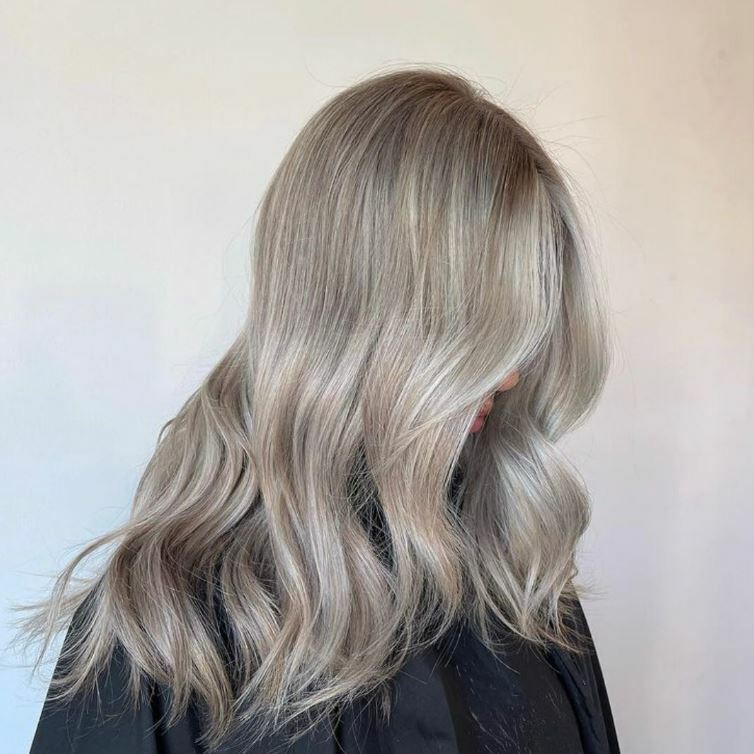
There is something almost unfair about how good icy ash blonde hair looks from the side. The mid-back length with long layers gives the loose waves somewhere to travel, and the ash undertones keep the whole thing from tipping into that washed-out silver that reads more costume than colour. It suits skin with cool undertones best, the kind that carries frosty shades without looking tired. Fine to medium density hair holds these waves without going flat by afternoon, which is more than I can say for most long styles. Middle part, no bangs, just clean movement.
Shoulder Length Platinum Ash Waves
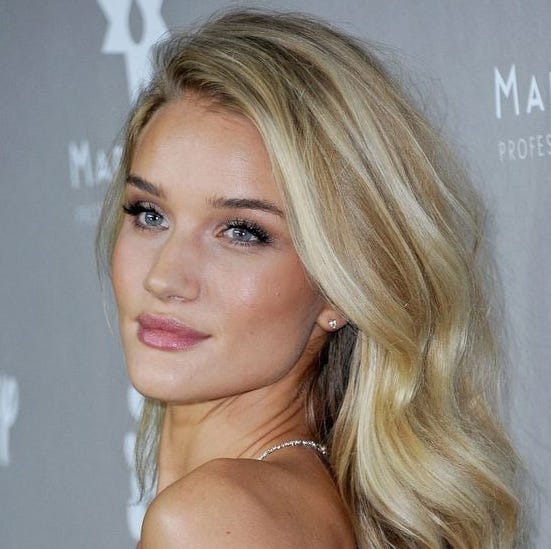
I will admit it: I underestimated how much work this shade is. Platinum ash blonde shoulder length hair with cool ash undertones looks luminous in the chair and then demands things from you. The thick, wavy texture is actually an advantage here, it gives the platinum something to catch light on, but that same density means every new root is visible at week three, not week six. Layers keep the shoulder length from sitting like a helmet, which is the real risk with thick hair. You are looking at a trim every six weeks and a toning session roughly every other visit. It is a commitment. The colour is worth it, but book the maintenance into your calendar before you book the appointment.
Collarbone Side Part Ash Platinum Blowout
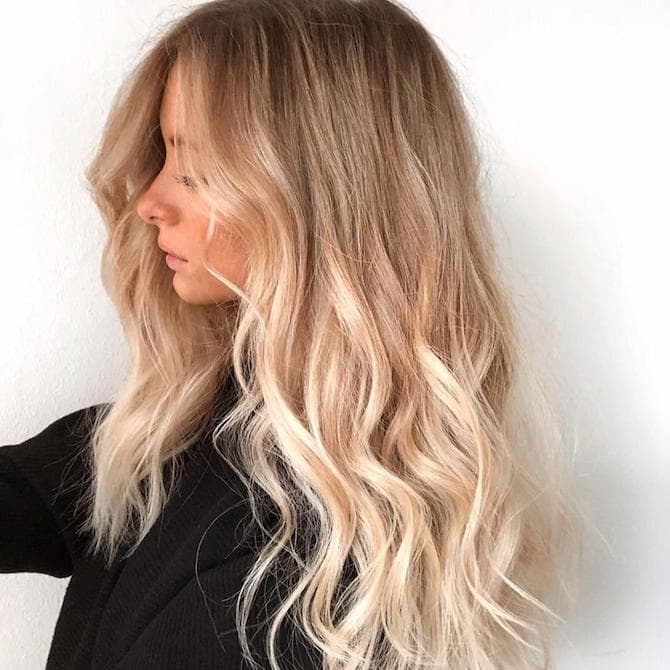
The blowout starts at the root, not the ends. For collarbone-length fine hair, you want the side parting set while the hair is still damp, then a medium round brush pulls each section up and away from the scalp. That is where the volume comes from, and ash blonde platinum highlights do the rest of the work by adding dimension so the fine texture does not read as flat. The wavy blowout finish is a medium barrel at the ends only, nothing tighter. A root lift spray at the parting helps, but the technique matters more. This is a salon colour, no question, the platinum highlights need a steady hand to land in the right places.
What you are asking for is a side part with soft movement, not a curl. The layers are cut so the waves stack gently at the collarbone, which keeps fine hair from looking straggly. It is polished without being stiff, which is harder to achieve than it sounds.
Collarbone Strawberry Blonde Lob
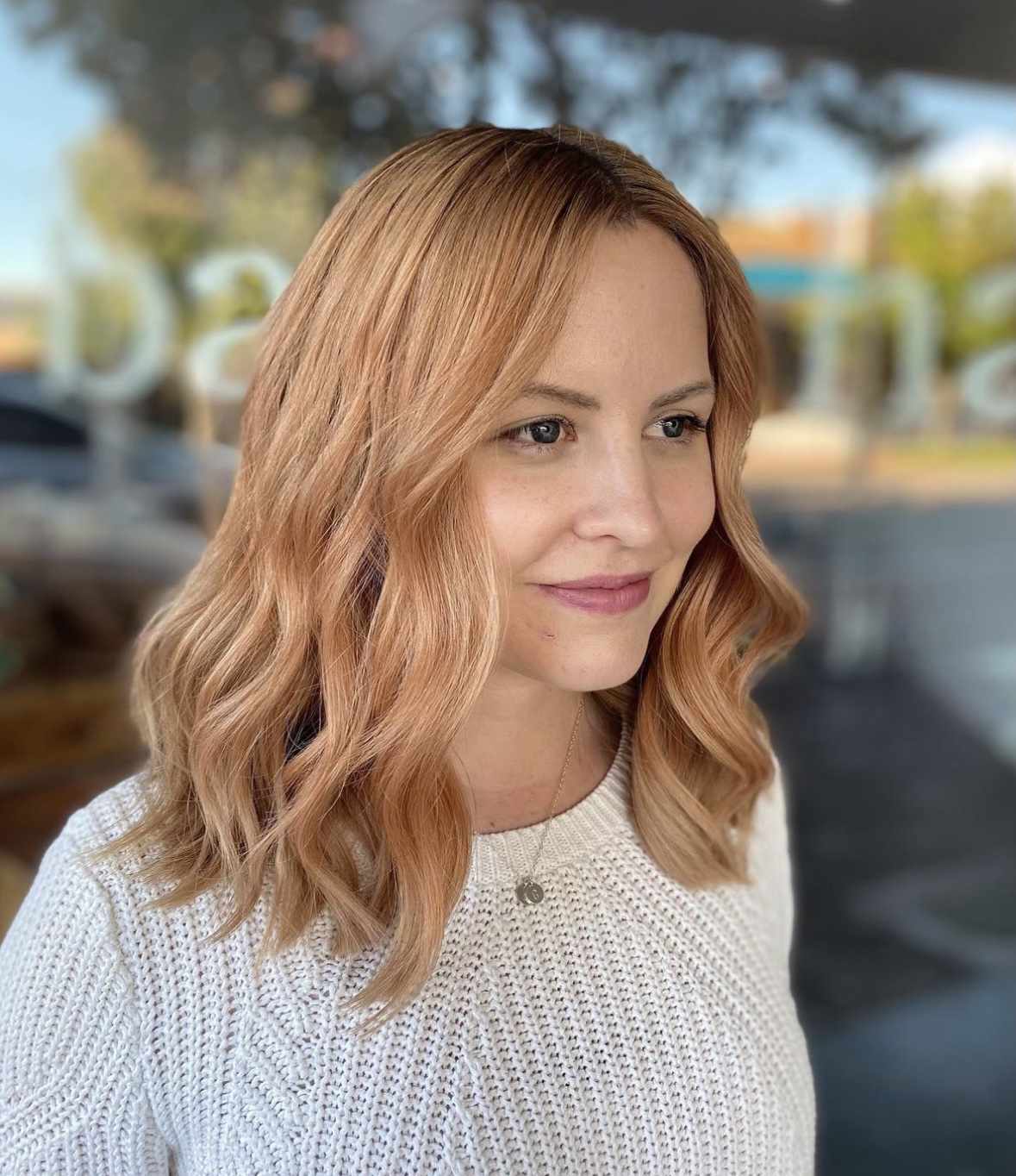
Have you ever watched a strawberry blonde lob turn orange by week four? The collarbone length with loose waves and a middle part is lovely, but the strawberry blonde hue is a fugitive. It fades warm and brassy unless you treat it like a redhead, which most blondes forget. The trick is asking your stylist for a tone that leans more rose than copper, so when it fades it lands on pink rather than orange. Medium density wavy hair carries this colour beautifully, the waves catch the warmth without going muddy. Use a colour-safe shampoo meant for reds and you buy yourself a few extra weeks between glosses.
Platinum Textured Short Pixie Cut
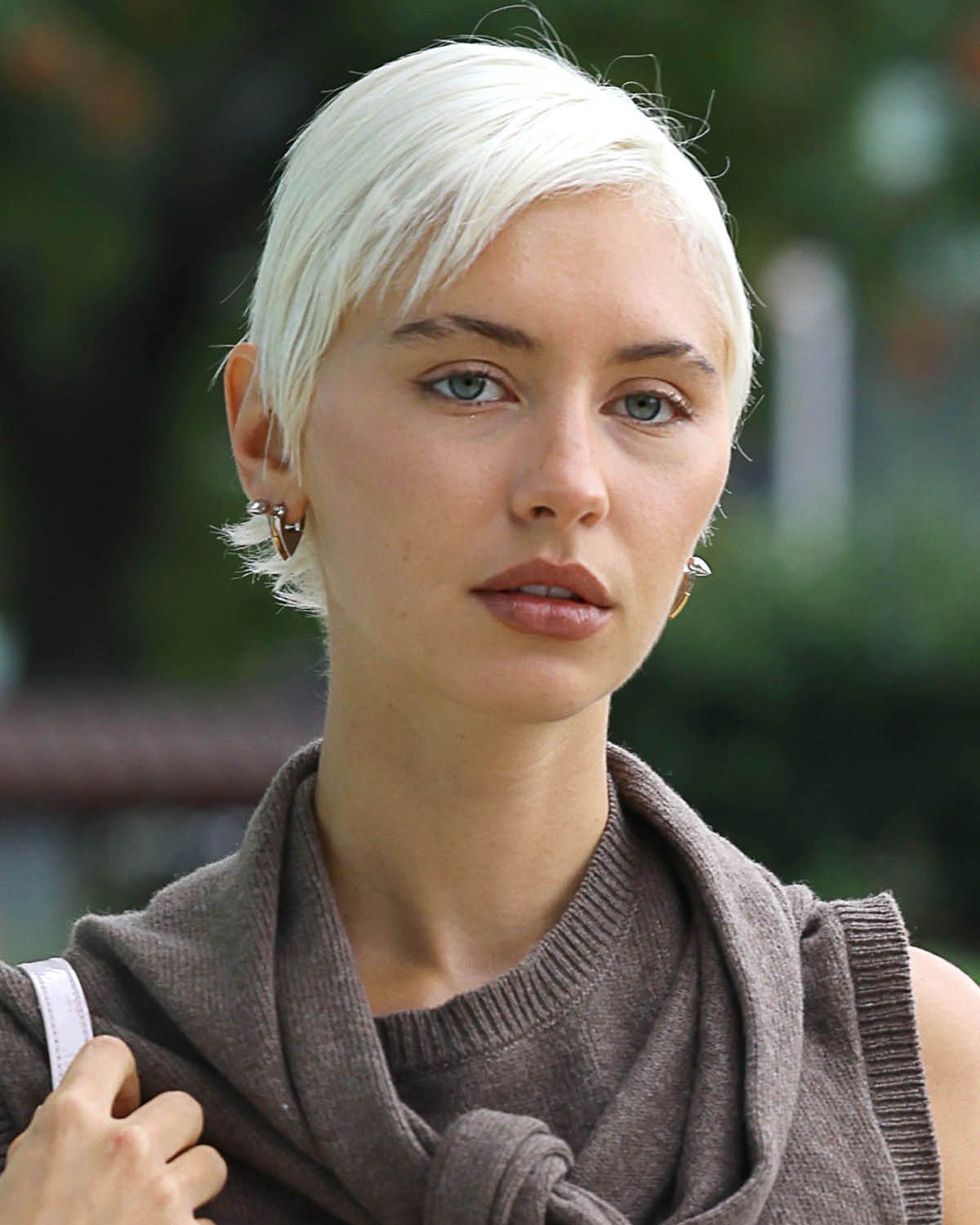
Here is the precise observation: a platinum pixie cut needs more salon time than long platinum, not less. The ear-length cut with wispy side swept bangs shows every millimetre of regrowth, and fine straight hair does not hide anything. You are in the chair every four weeks, without fail, whereas long platinum can stretch to six or eight. The trade-off is that styling takes minutes. Texture paste on damp hair, piece it out with your fingers, done. This is not a bathroom-mirror colour job, the platinum needs a professional to lift fine density hair evenly. If you can handle the monthly trim rhythm, the payoff is a cut that looks deliberate every single day.
Visual Idea
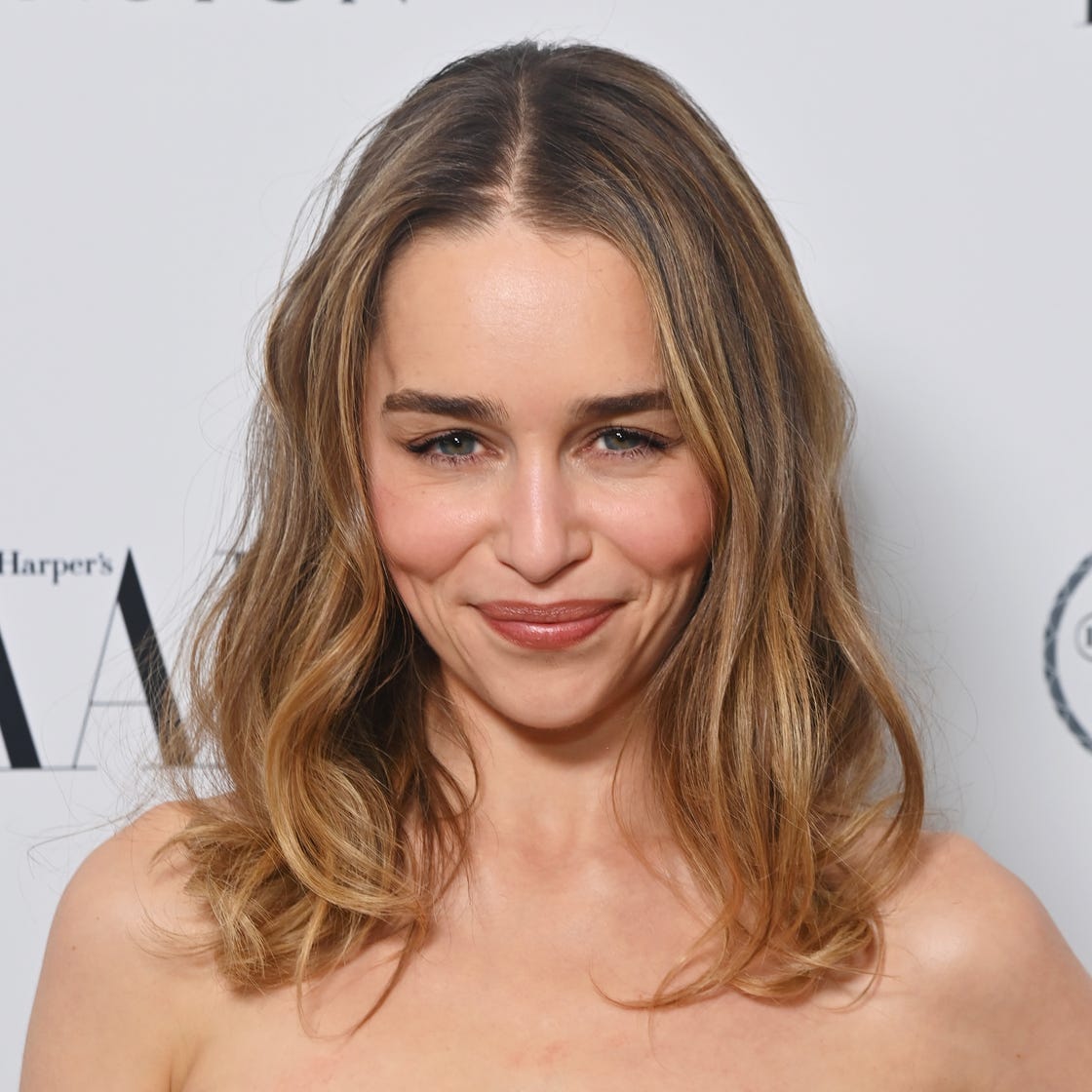
This is the best transitional shade I have seen all season. Warm blonde with subtle highlights lands somewhere between summer brightness and winter depth. The collarbone lob keeps the shape current without committing to a full chop. Curtain bangs sweep off the face, which means they grow out looking intentional instead of awkward. Wavy texture and medium density give it volume that lasts past noon. Middle part widens a round face, so I would ask your stylist for a soft side sweep if that is your shape.
Collarbone Visual Idea
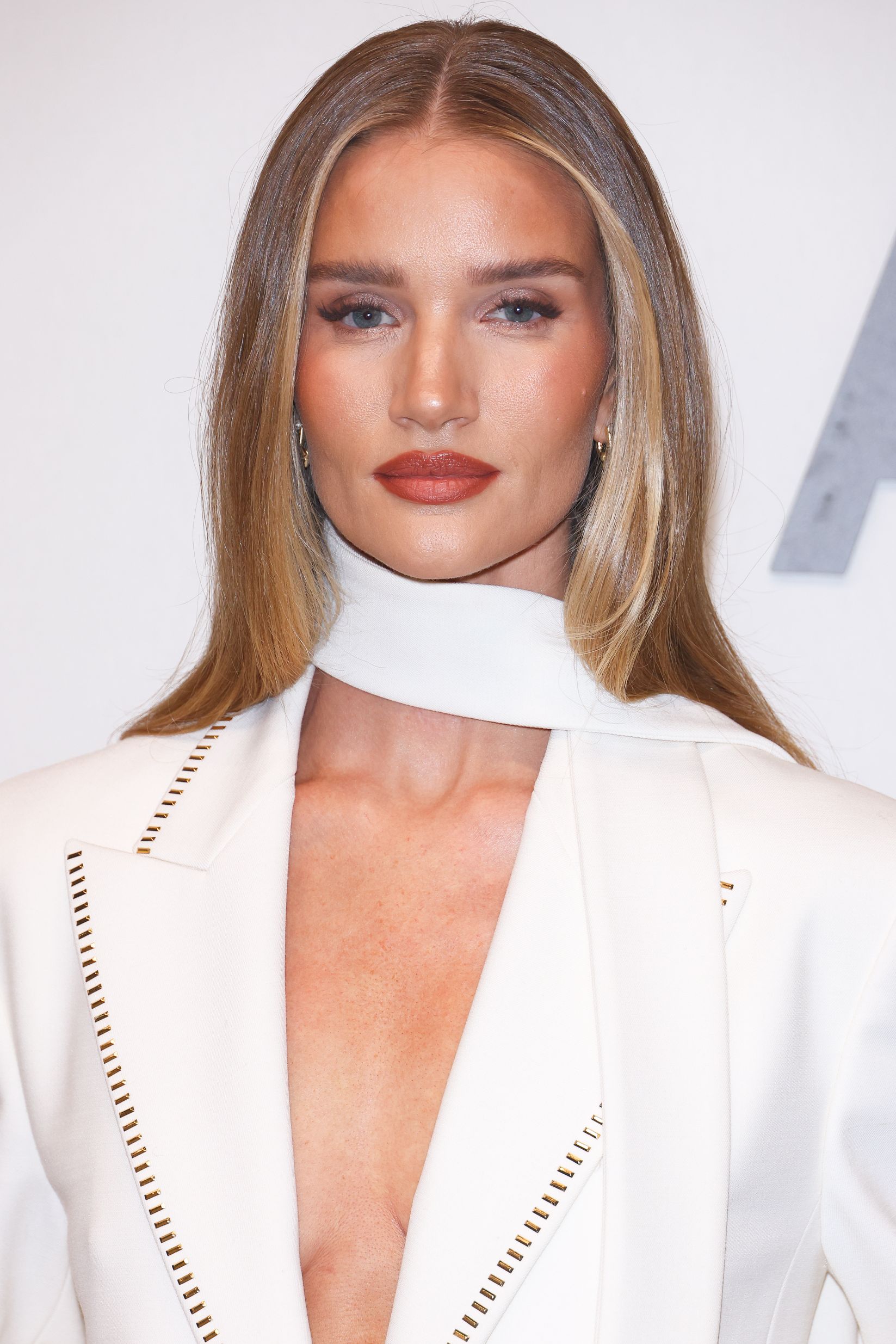
I will confess I expected this to look flat. A dark blonde base with lighter blonde highlights on straight, fine hair usually reads as one solid block. It does not. The highlights sit at the mid-lengths and ends, so the root stays rich and the ends catch light. Collarbone is the ideal length for fine hair — long enough to pull into a low ponytail, short enough that it does not weigh itself down. Air-dried finish means zero heat styling most days. Wash, add a texture spray at the roots, go. The grow-out is invisible because the base is already dark. I would book a toner refresh every ten weeks, not a full colour.
Platinum Blonde Visual Idea
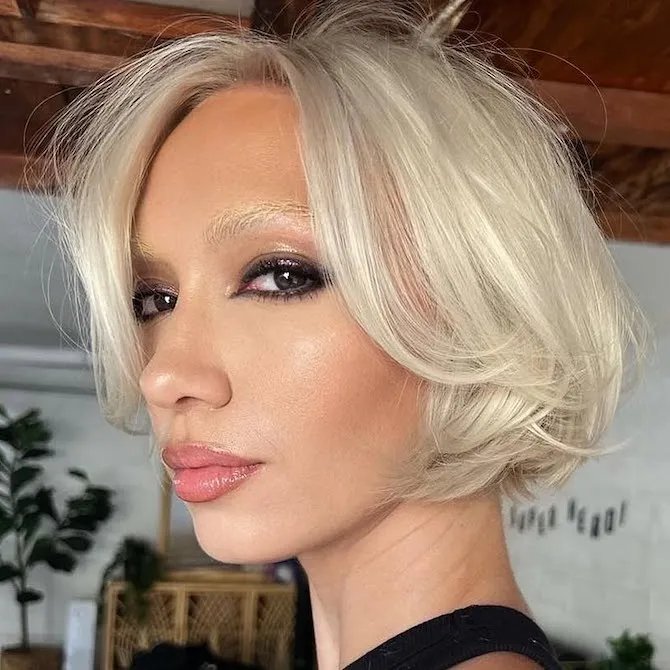
You walk into the room and the hair arrives before you do. Platinum blonde at collarbone length reads as deliberate, not accidental. But it is picky about face shapes. A middle part and loose waves soften a square jaw, and the medium crop balances a long oval face by adding width at the cheekbone. Round faces should ask for more layers at the chin to avoid a helmet effect. Wavy, medium density texture holds the wave pattern without product. Fine hair will look thinner at this lightness level, so I would only try this if your density is at least medium. The colour itself demands a salon visit every five weeks.
Mid-Back Visual Idea
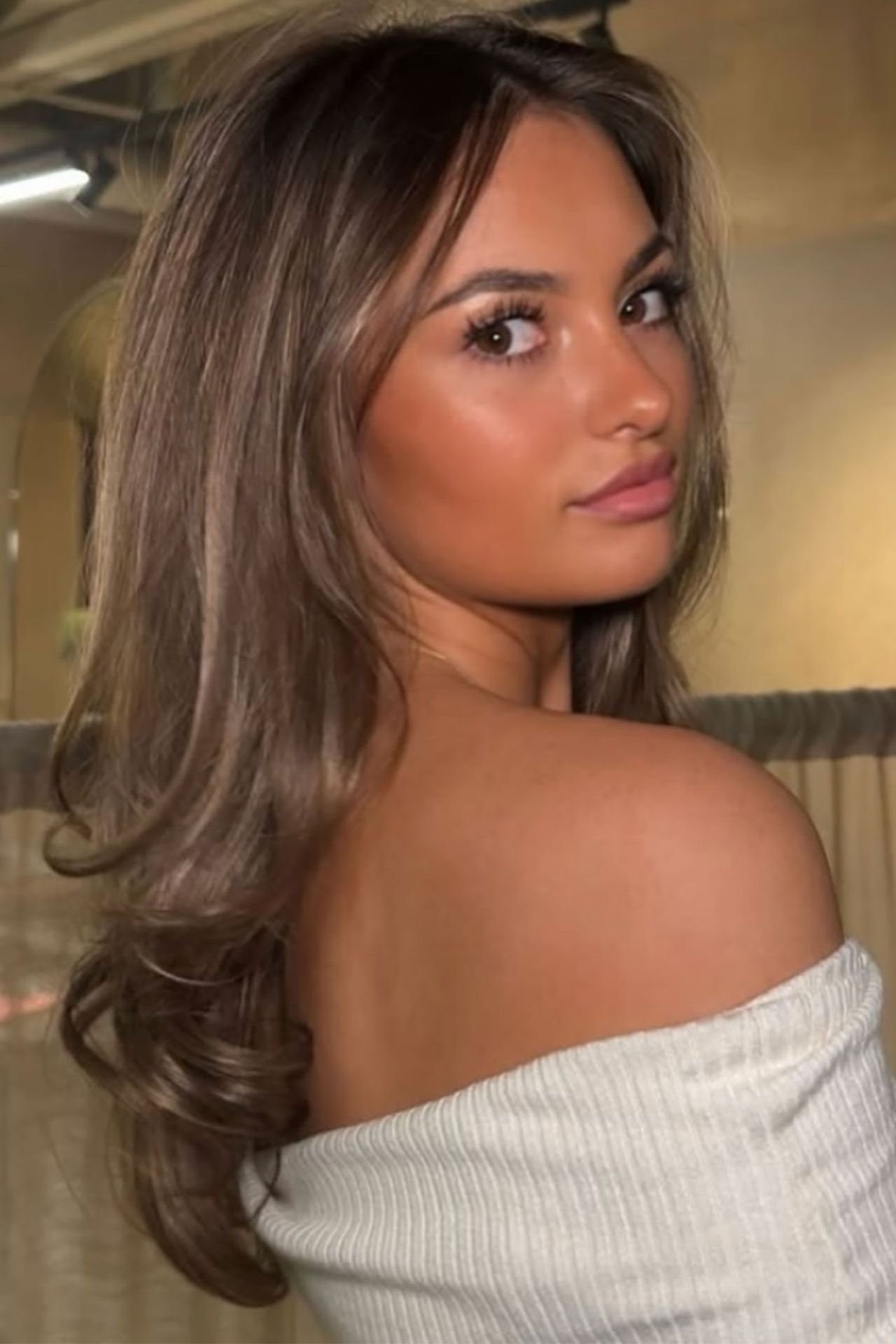
Does a darker base mean you give up dimension? Not here. Ash brown base with blonde highlights on thick, wavy mid-back hair creates a layered effect that moves when you turn your head. The blonde pieces are concentrated around the face and through the mid-lengths, so the ends stay light without the roots screaming for attention.
Wear reality: this holds its shape for four days before the waves drop. A dry shampoo at the roots on day three revives the volume. The ash brown base fades cooler than a warm brown, which is a relief if you hate brassiness. Upkeep is a gloss treatment every eight weeks and a trim every twelve. The grow-out is graceful because the base matches your natural colour if you are a level five or six. Thick hair handles the layering well; fine hair would look overwhelmed at this length.
Layers Visual Idea
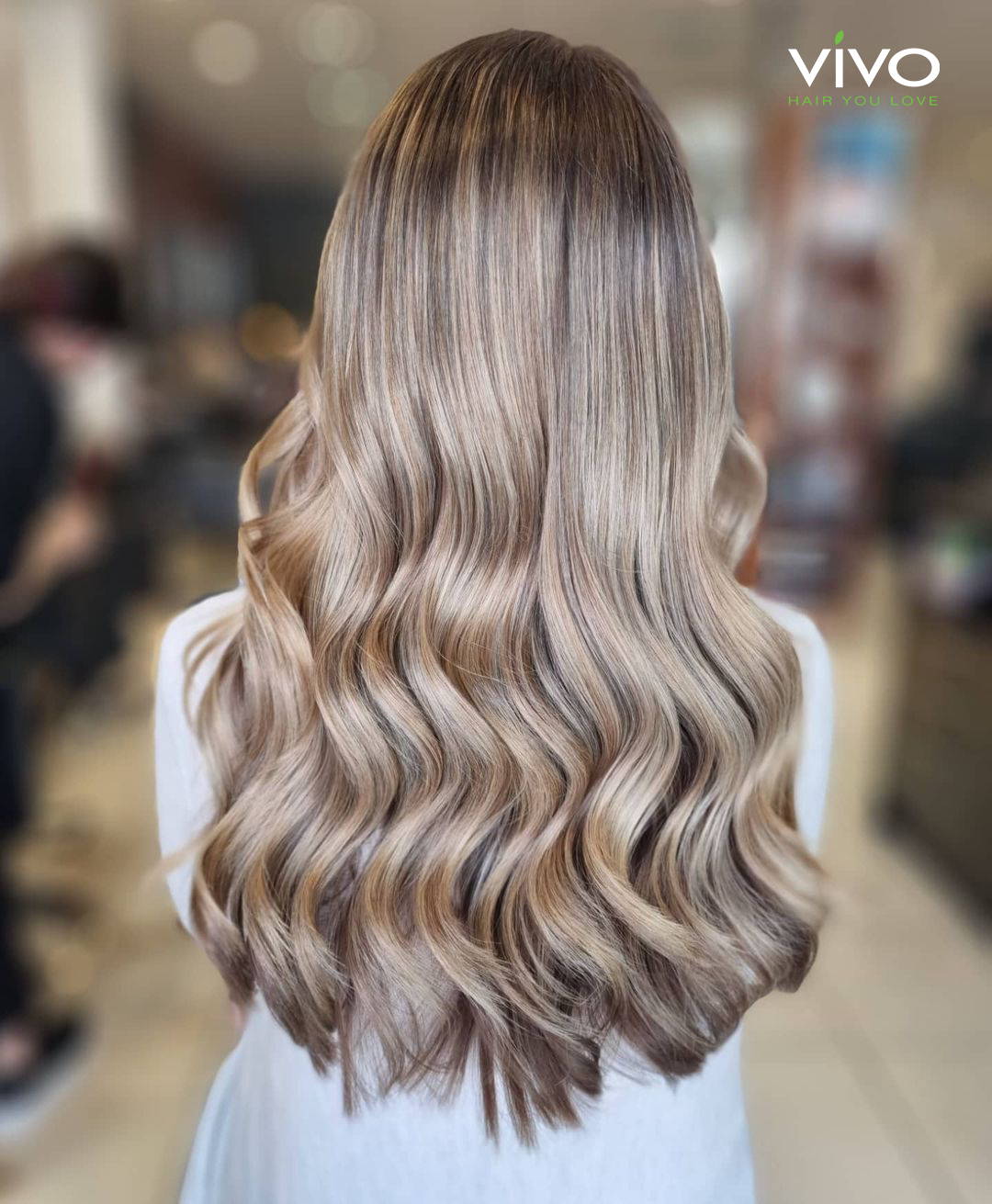
Observe the root first. That darker section is not grow-out, it is deliberate. Ash blonde with darker roots and subtle highlights creates a dimensional ash blonde colour that reads as expensive, not neglected. The technique is a shadow root applied two inches from the scalp, then babylights woven through the mid-lengths and ends. The darker roots sit against the scalp and the lighter pieces catch light as the hair moves. Thick, wavy texture at mid-back length needs this kind of contrast or it reads as one flat mass.
Honest downside: this requires a stylist who understands shadow root placement. A heavy hand leaves a harsh line that defeats the purpose. The highlights need a cool toner or they drift warm in six weeks. I would book a toning appointment at week five and use a purple shampoo once a week starting week three. The layers themselves are long and subtle, not choppy, so the shape stays polished even when the colour fades. Wavy blowout styling takes twenty minutes with a round brush. Skip if you prefer a single-process colour.
Golden Bronde Visual Idea
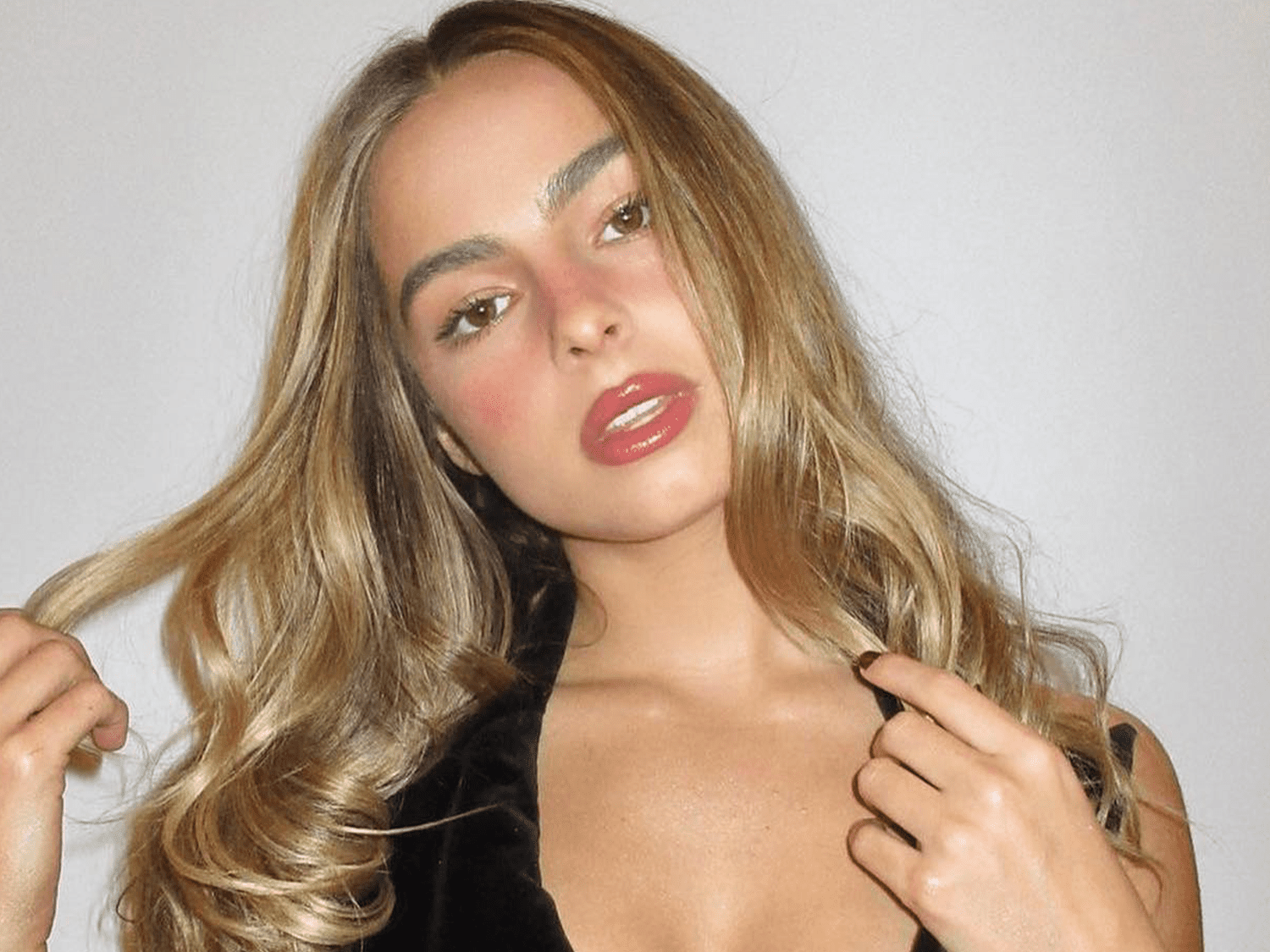
Best grow-out in this roundup. Golden bronde gets dismissed as a summer color every year, and every year I watch it outlast October. The warmth reads intentional against a heavy knit, not like you forgot to tone it. Collarbone length with soft waves and a middle part, thick enough texture to hold the bend without product. The base shade sits somewhere between blonde and brunette, painted in a balayage technique that leaves the root line soft. That blur is what saves you at week eight. Ash tones would fight the gold here, so the stylist kept the tone warm and dimensional. No bangs, no fuss, just a color that finally gets its winter moment.
Chin Visual Idea
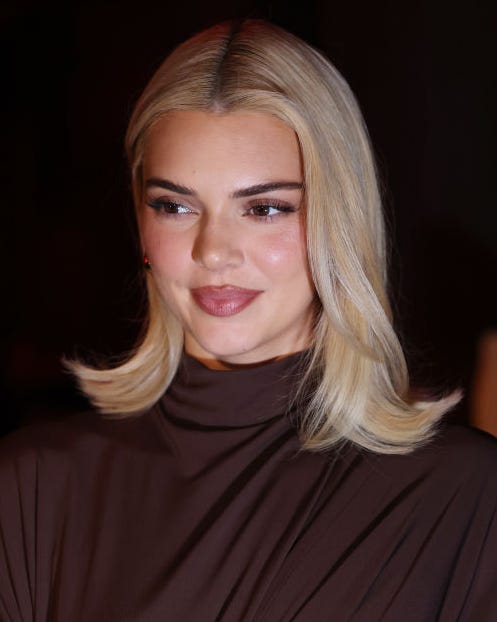
My gut says this chin bob is a trap for anyone with fine, straight hair who also owns a flat iron. The cool-toned blonde looks sharp and expensive in the chair, but winter heat-styling on a bob this short means the ends get over-dried fast. Over-dried ends on fine texture? They split, they snap, they go fuzzy by lunch. The middle part and blowout styling hide nothing, so every damaged strand is on display. You need a trim every five weeks, not eight. And you need to let the bob air-dry twice a week, even if it means waking up with a bent kink. The color is worth the effort, but the effort is real.
Champagne Blonde Visual Idea

You walk into the salon with a faded beige blonde and walk out with champagne blonde, a tone that sits right between silver and cream. The difference between a salon gloss and an at-home gloss on fine, straight collarbone hair is the depth. Salon gloss lays pigment into the cuticle in a way a box never does, so the champagne reads dimensional instead of flat. At-home glosses deposit a thin film that fades in two weeks, and on fine texture that film can look greasy by day three. Lob, no bangs, middle part, blowout styling. The salon version costs more time and money, but it lasts four weeks instead of two. I know which one I book.
Long Layers Visual Idea
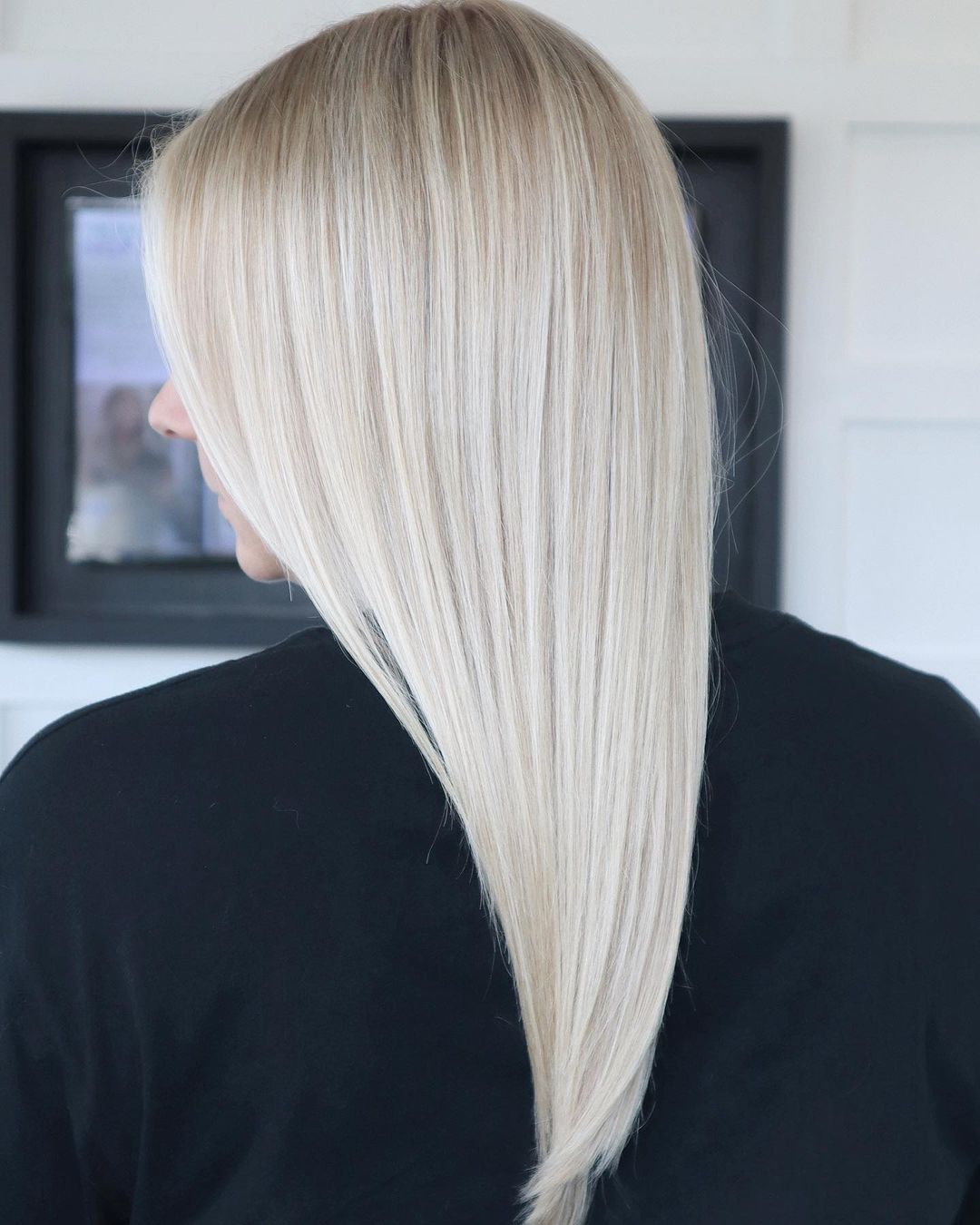
When did sleek straight icy platinum become the default holiday party color? Mid-back length with long layers, fine to medium density, a middle part, no bangs, and a shade so pale it reads silver under warm lights. The back view shows how the babylights catch every angle, which is exactly what you want when someone snaps a photo at a dinner table. The icy platinum blonde shade works because the tone is ash with no yellow, so it reflects candlelight instead of absorbing it. Straight styling keeps the shine uninterrupted. No waves, no texture spray, just a flat iron and a good heat protectant. This is the color equivalent of a black dress.
Platinum Blonde With Root Shadow Visual Idea
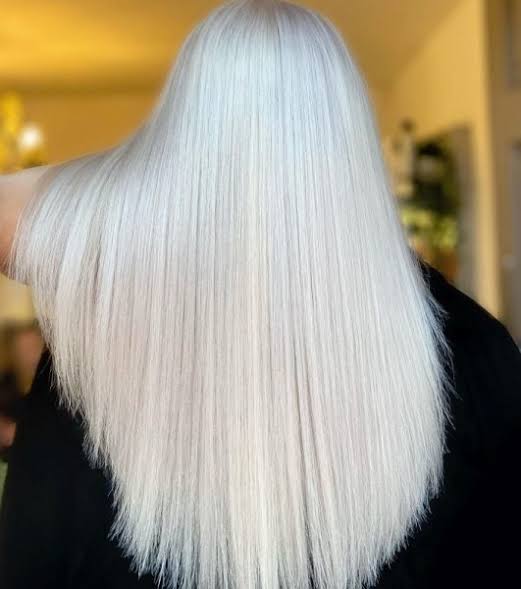
The root shadow is doing the heavy lifting here. Striking platinum blonde with a soft root shadow, collarbone length, curtain bangs, loose waves, medium density. Without that darker base at the crown, the platinum would look flat against winter scalp tones. The shadow creates depth where the waves start, so the color reads expensive instead of over-processed. Curtain bangs frame the front without committing to full fringe upkeep, and the loose wave technique means you can air-dry with a texture spray and call it done. The grow-out is the real win: the root shadow buys you six weeks between touch-ups, maybe seven if you squint. I book this one twice a season.
No Bangs Visual Idea
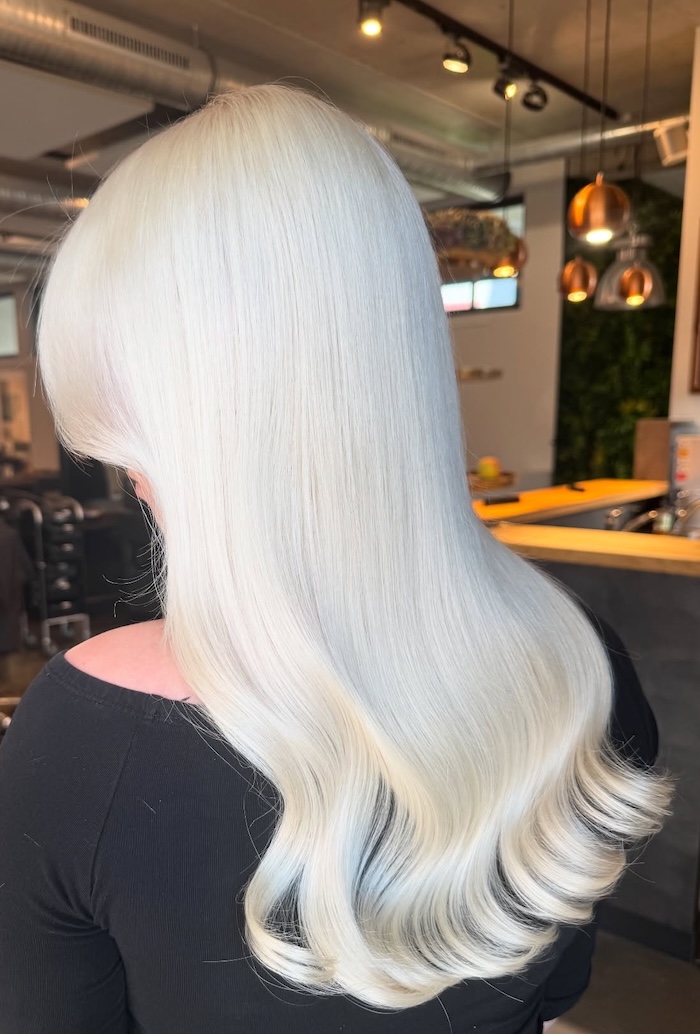
Best grow-out in this batch. Thick, wavy mid-back icy platinum with no bangs means one less trim appointment every six weeks, and winter air already pulls moisture from everything. The real work happens between washes: a deep treatment every third shampoo keeps the wave pattern from frizzing into a cloud, and the platinum stays silver instead of drying chalky if you let conditioner sit for a full five minutes. I learned the hard way that skipping hydration on thick texture makes the ends grab every bit of indoor heat, so your blowout looks ragged by day two.
The middle part and long layers give the weight somewhere to fall, which matters because thick hair amplifies every split end. My top three: gloves for any purple shampoo applications, a silk scarf for sleeping, and booking your toner appointment before you think you need it.
Platinum Blonde With Ash Undertones Visual Idea
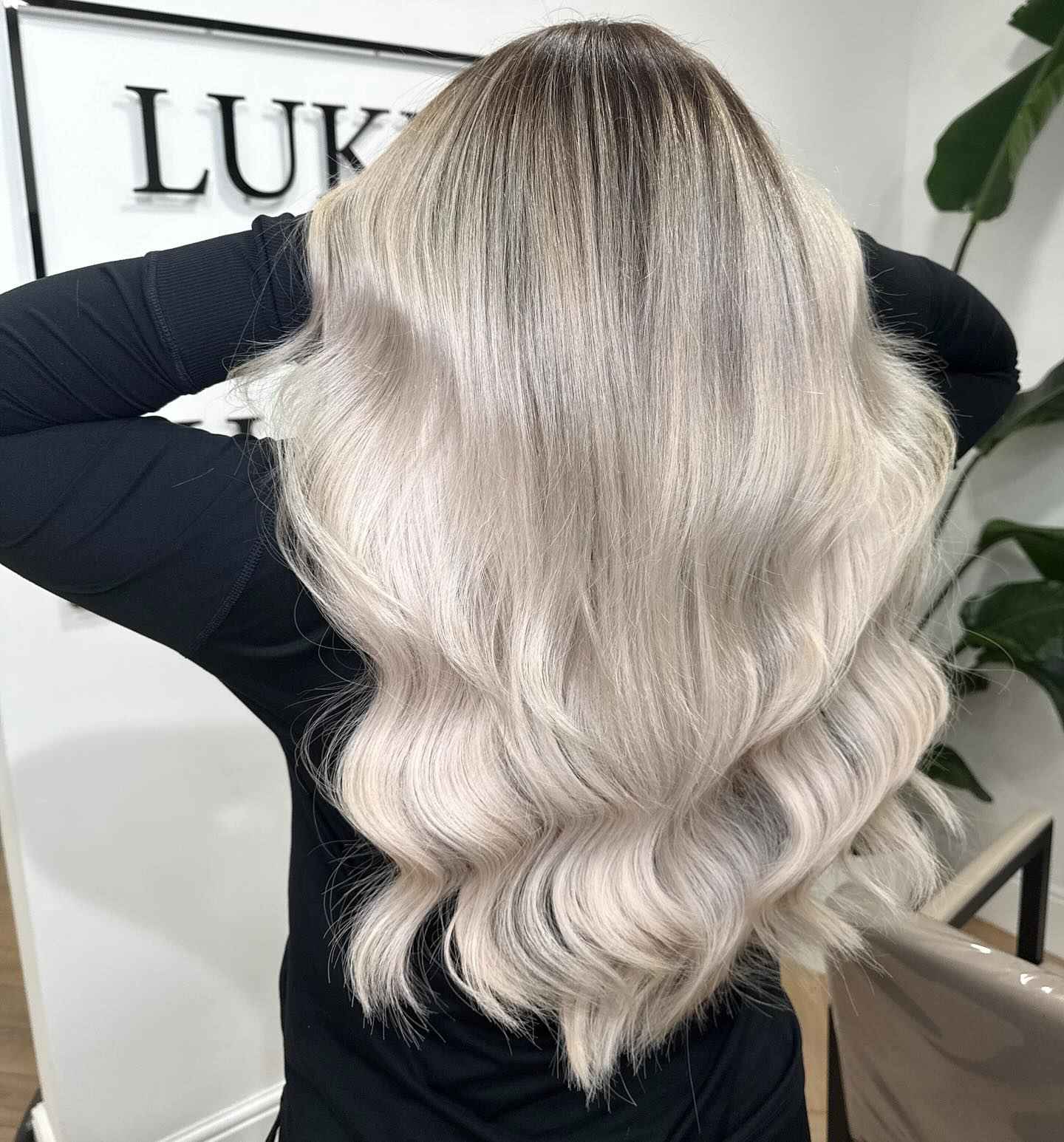
I will say it: maintaining extreme platinum with ash undertones at mid-back length is a part-time job. The loose waves and long layers show every half-inch of new growth, and ash tones fade faster than any other blonde because they have no warmth to buffer against your shower water. A toner appointment every four weeks keeps the base from pulling greenish, and you cannot skip the bond builder in your routine — the length has been chemically processed multiple times to get that cool finish, so one missed treatment and the wave pattern starts crumbling at the ends.
Front View Visual Idea
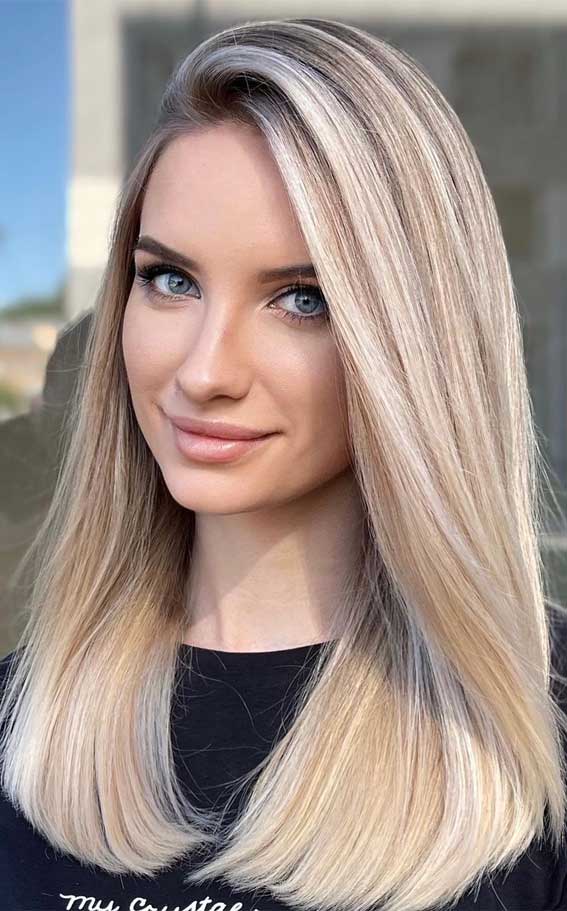
A dark blonde base with bright blonde contrast highlights, side part, mid-back, thick and wavy. That is the formula, and it works best for anyone whose natural base already sits in the medium to dark blonde range — skipping the full bleach-out saves your mid-lengths from becoming a spongy mess by spring. The honest downside: those bright pieces show brassiness first, usually around week six, and the side part means your part line highlight placement matters more than the rest of the head. Who wears this well through winter? Anyone with cool or neutral skin undertones, because the contrast reads crisp against a scarf and a coat collar, not muddy.
Final Thoughts
After writing all of these, I noticed something. The ones I kept coming back to were the ones with a root shadow or a beige base. Not the pure platinum. Not the extreme silver. The ones that let you go six weeks without panicking at the mirror.
I am booking the warm beige blonde with face-framing pieces next. It is the only one that survived every grow-out test in my head.