Men’s Outfits for 2027: 22 Looks With Better Proportions
Getting dressed well is often less about buying a dramatic new piece than learning where the eye lands first. When a shoulder line, shirt hem, trouser break, and shoe weight agree, even a familiar combination feels intentional. That is why a practical wardrobe can look more personal after a few proportion decisions, while an expensive mix can still feel unsettled when every element asks for equal attention.
For men’s outfits in 2027, the most useful filter is whether the silhouette supports the way you actually move through a day. Start with one anchor – a shirt, knit, jacket, or trouser shape – then give the rest of the look a quieter role. That makes it easier to adjust for comfort, weather, and personal taste without chasing a rigid formula or treating every trend as an obligation.
A Long Stripe Layer With Denim Shorts
The pale blue striped shirt falls well below the waist and turns the knee-length denim shorts into part of a longer, relaxed column. Its vertical pattern keeps the loose fit from looking shapeless, while the navy cap gives the upper half a compact dark point. White sneakers keep the base light, which matters because heavier shoes would make the broad shorts feel more grounded and less easygoing.
What works here is the contrast between a shirt that moves vertically and shorts that spread horizontally at the knee. If the shirt were tucked fully in, the proportions would become much more conventional; leaving it loose preserves the casual scale. For a quieter version, choose a finer stripe and a cap without a large logo, but keep the shirt noticeably longer than the short hem.
There is a practical limit to this balance: both pieces are roomy, so a bulky jacket or oversized backpack would add too much volume at once. A small crossbody, slim watch, or clean low-profile sneaker would keep the outline controlled. The outfit also benefits from a partial sleeve roll, because that small break stops the long shirt from reading like a single uninterrupted block of fabric.
Utility Vest Over Mixed Warm Textures
A tan utility vest sits on top of a red plaid shirt and a dark inner layer, making several different textures feel coordinated rather than accidental. The brown trousers and dark boots continue the warm palette without trying to match the vest exactly. A black knit cap frames the upper body, so the open vest has a clear center instead of looking like an extra piece added at the last minute.
This outfit earns its depth from layering order: the dark layer recedes, the plaid adds movement at the sleeves, and the tan vest provides the main surface. That order is easier to wear than piling on several equally bold prints. If you want to translate the idea to a lighter day, swap the boots for dark low-top shoes and use a cotton overshirt beneath the vest rather than removing the middle layer entirely.
The tradeoff is visual density, especially around the torso. Keep the trousers plain and avoid a patterned bag, since the vest pockets and plaid already offer plenty to look at. A slightly straighter trouser leg also helps here; extremely wide pants could make the outfit feel costume-like beside such a detailed upper half, while a calm brown cut keeps the weight low and steady.
White Tee and Wide Charcoal Trousers
A fitted white crewneck T-shirt gives the wide charcoal trousers a clean, almost architectural starting point. Because the shirt stays close to the body, the extra room in the leg looks purposeful instead of simply oversized. The dark loafers create a polished finish that matches the trouser color, letting the white top remain the sharpest contrast without introducing another competing color.
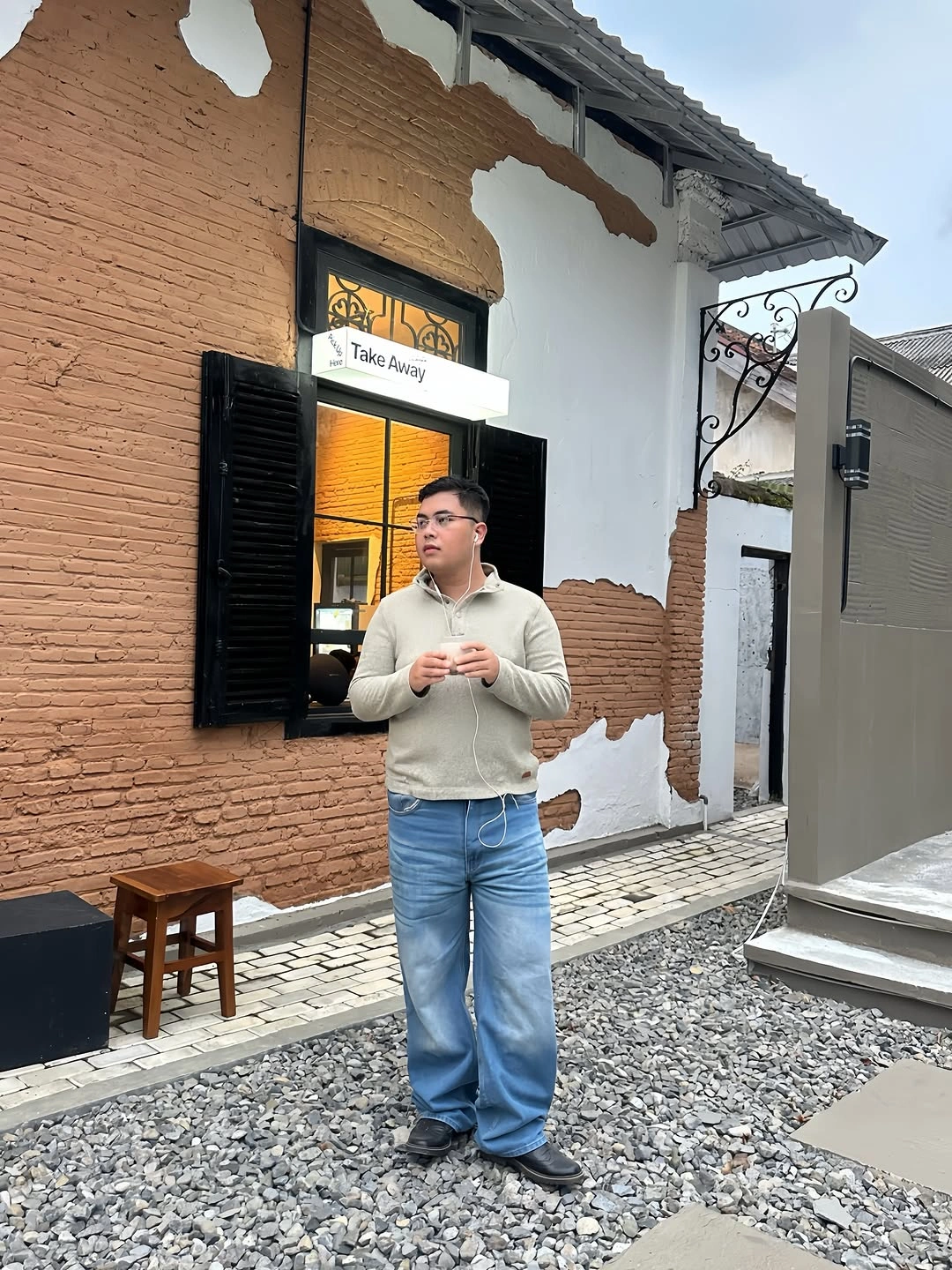
The key decision is restraint. The trousers already provide movement, texture, and scale, so the top does not need a graphic, heavy chain, or layered overshirt to feel complete. For a more casual version, use a dense white tee with a slightly cropped hem and clean leather sneakers; the important part is still the narrow-to-wide relationship between the upper body and the trousers.
Pay attention to length before copying this silhouette. A T-shirt that reaches too far over the hips can erase the point where the trousers begin and make the legs appear shorter. A subtle front tuck is enough if the tee is long, while a hem that ends near the top of the trouser waistband will keep the proportions crisp without making the look feel overly styled.
Crossbody Detail With Washed Denim Shorts
The white T-shirt and washed denim shorts are deliberately uncomplicated, which lets the small black crossbody bag do real styling work. It sits near the waist and creates a compact dark interruption across the loose shirt, while the black shoes repeat that weight near the ground. Layered necklaces add a little vertical shine, but they do not distract from the broad, relaxed denim shape.
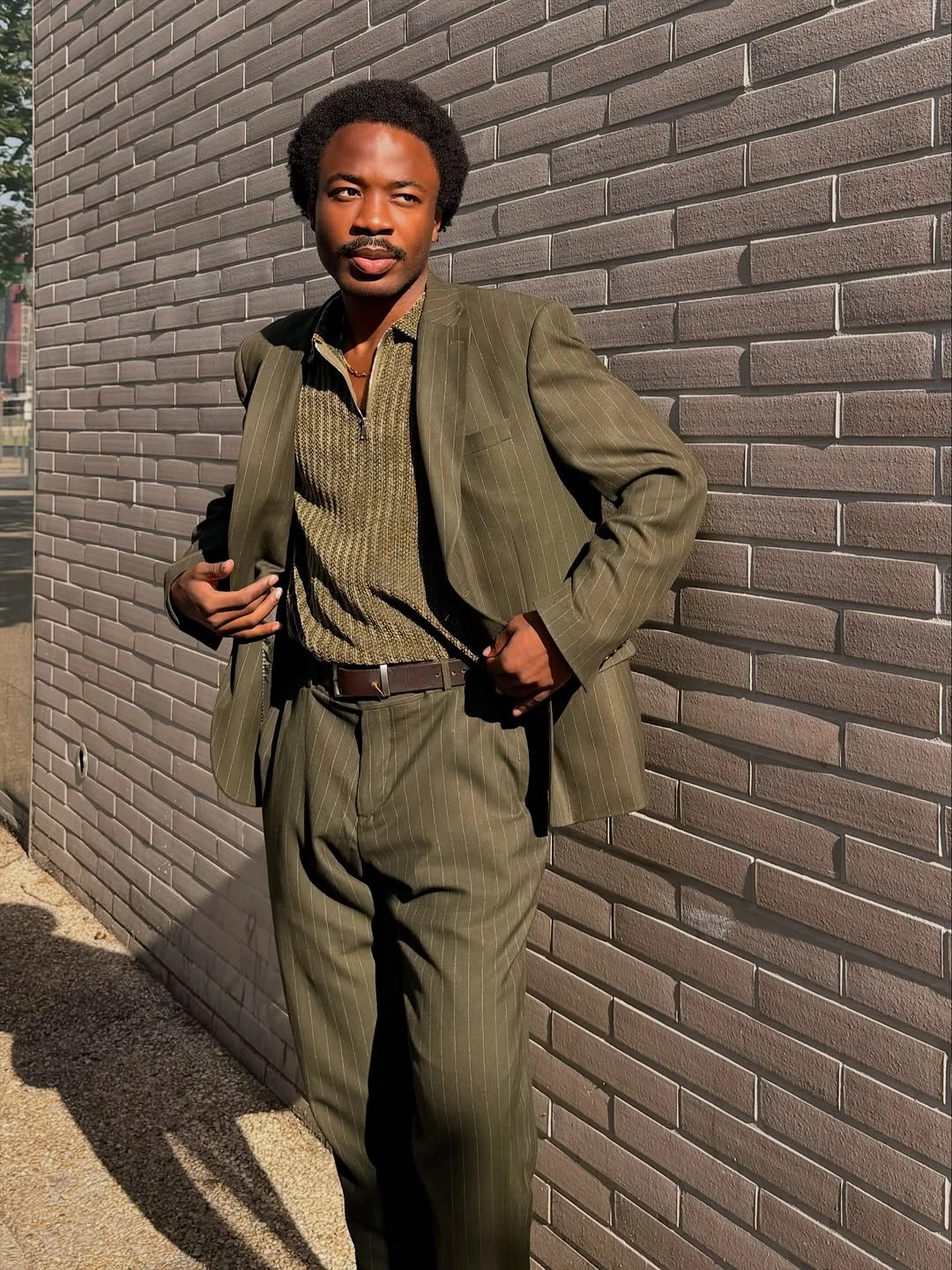
This is a useful example of an accessory solving a proportion issue rather than merely decorating an outfit. Long shorts and a roomy tee can otherwise become one wide silhouette, especially in a light wash. A belt bag worn close to the body, a compact camera bag, or even a short necklace can supply that missing center point, provided it stays small enough not to dominate the shirt.
Keep the footwear neat if you try this combination. Thick running shoes could pull focus away from the clean, simple palette, while a sleek black sneaker or low leather shoe gives the hemline a more deliberate stop. The denim already has a casual surface, so an additional distressed jacket or heavily printed cap would be unnecessary; one contained black accessory is the more useful contrast.
Camel Set With Boots and a Scarf
The camel shirt and trousers form one quiet base, allowing the light blue layer, patterned scarf, and brown boots to appear as measured accents. The matching color across the torso and legs makes the outfit look longer, while the pointed boot shape gives the soft fabric a firm finish. Rather than breaking the look into many colors, the scarf introduces detail in a small, controlled area near the face.
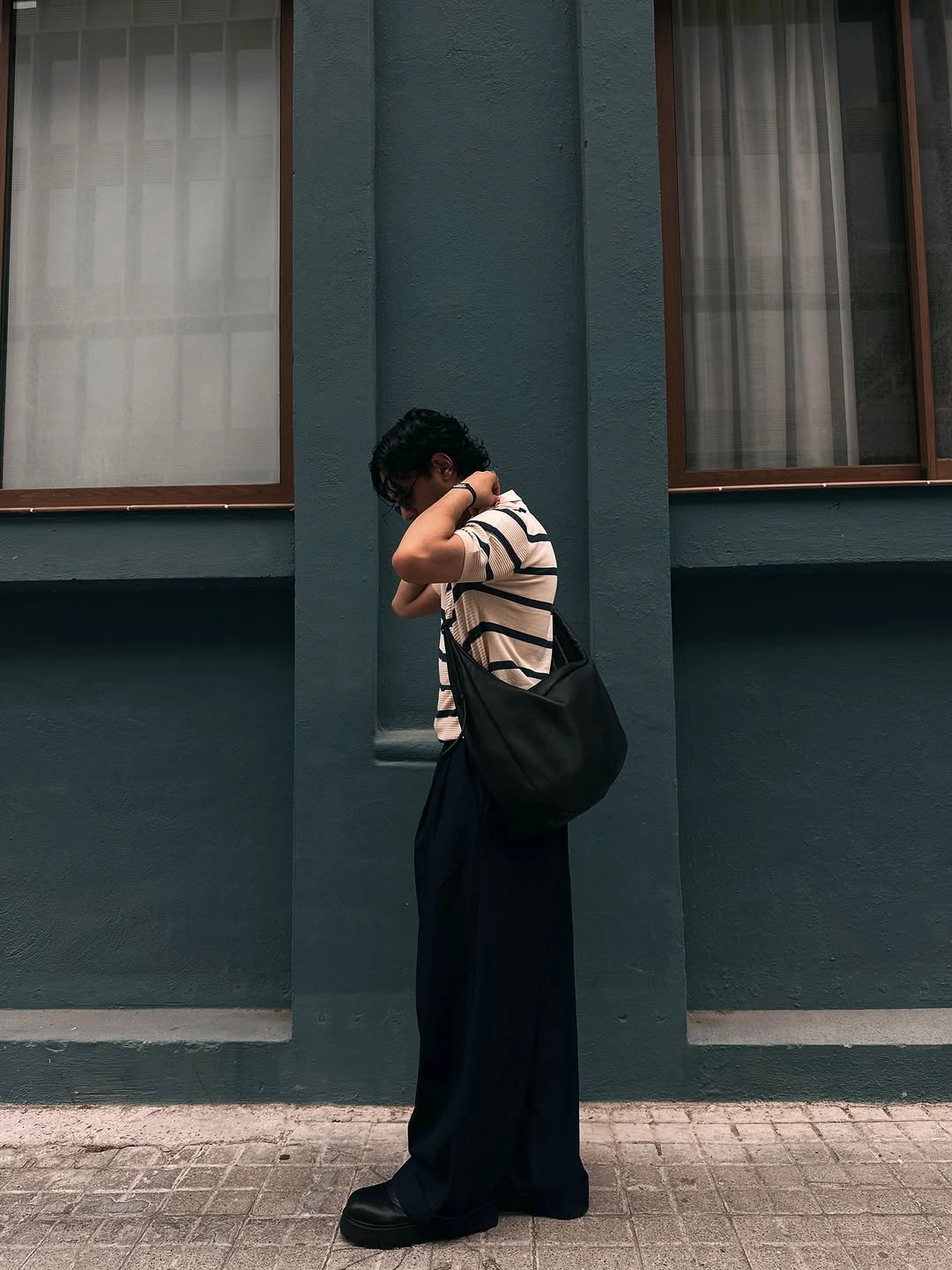
Tonal dressing works best when the pieces are not identical in texture or cut. Here, the relaxed shirt and looser trousers create enough variation to keep camel from appearing flat. A similar outfit could use olive, stone, or tobacco shades, but the shoe should remain darker than the trousers so the lower half still has definition and the overall column does not fade into one soft mass.
The scarf is the element to edit carefully. A large wrapped scarf would hide the open collar and make the upper half too busy, whereas a narrow printed piece gives contrast without adding bulk. This approach is best for a day when you want a more dressed-up feeling from relaxed pieces; it is less useful for lots of walking in wet conditions, because the pointed leather boot becomes the outfit’s most delicate component.
Olive Pleats Beneath a Striped Shirt
The blue-and-white striped shirt stays unstructured over olive pleated trousers, which gives the outfit an easy rhythm without losing the trouser shape. Brown sandals and the tan cap add warm notes that make the cool stripe feel less sharp. The oversized canvas tote supports the relaxed mood, yet its pale surface does not compete with the vertical stripe pattern or the folds at the waist.
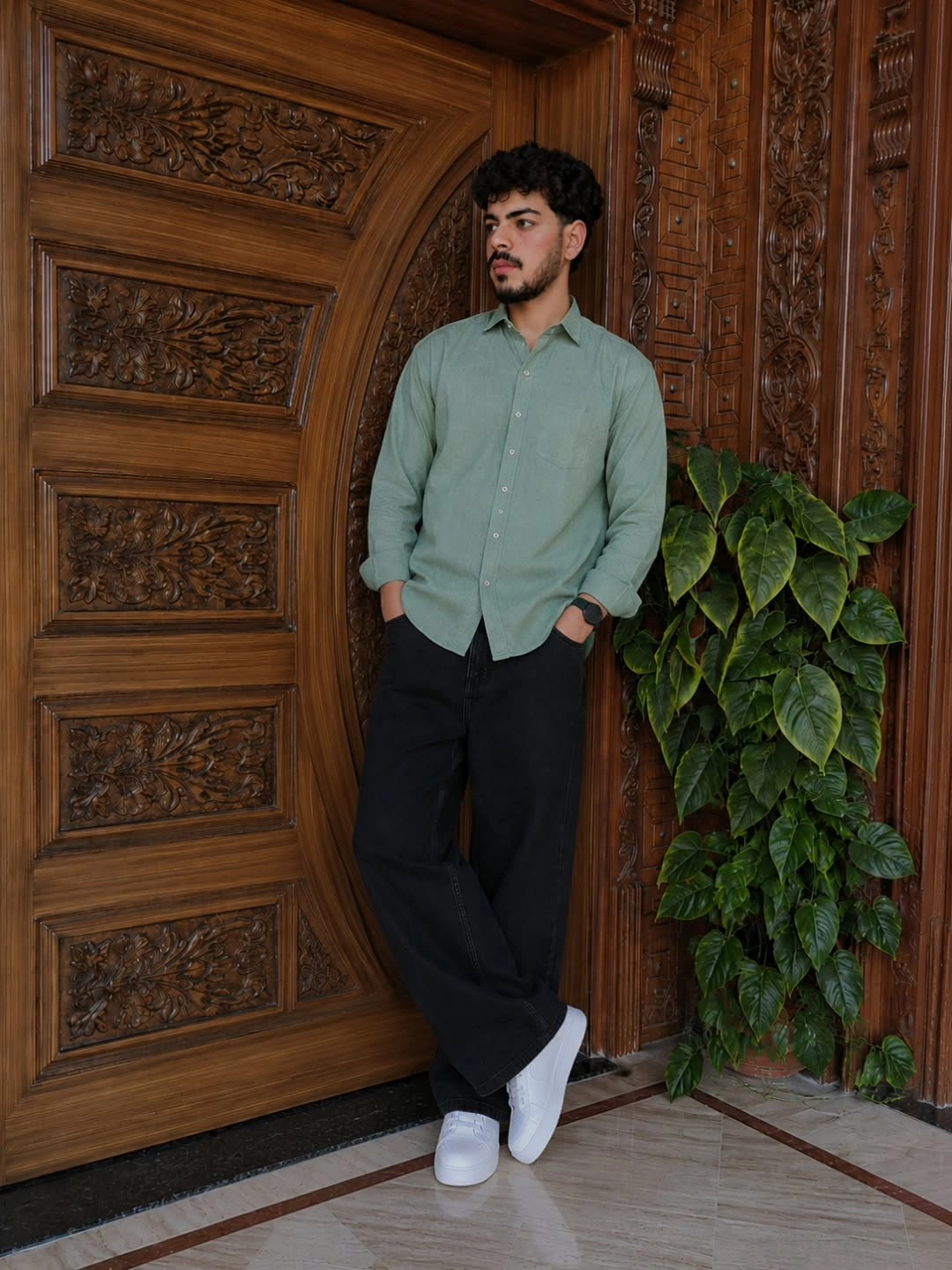
Pleats can look formal when every other piece is polished, but the open shirt and sandals redirect them toward a more casual register. If sandals are not practical, choose a suede loafer or a simple canvas sneaker in a muted brown or cream. The goal is to preserve the lightness below the ankle, because a chunky black boot would turn the trousers from fluid to heavy very quickly.
One limitation is that both the shirt stripe and trouser pleats are vertical signals. They work together here because the colors are restrained and the shirt is not tightly tucked. When styling a similar pair, avoid pinstripe trousers or another fine linear print; let either the shirt or the trouser construction lead, and use the tote or cap as supporting texture rather than another source of visual lines.
Yellow Sneakers Against Brown Denim
A white graphic T-shirt and loose brown jeans create a muted base for the bright yellow sneakers. The shoes are not treated as a random pop; their warm tone relates naturally to the brown denim, even though it is much more saturated. The black-and-white cap keeps the upper half from becoming too plain and makes the contrast feel distributed from head to toe rather than isolated at the feet.
Colorful sneakers are easiest to wear when the rest of the outfit has one nearby undertone instead of five unrelated shades. Here, brown denim is a smart bridge because it welcomes yellow without copying it exactly. Try the same logic with green sneakers and olive trousers, or red sneakers and dark burgundy denim, but keep the T-shirt neutral so the shoe retains a clear role.
The graphic tee should remain secondary. A large multicolored print, bright outer layer, or loud bag would make the yellow shoes compete for attention rather than complete the outfit. Brown denim can also look different in direct sunlight, so a clean white sneaker panel or white sock helps preserve contrast if the jeans appear deeper than expected when you leave the house.
Gray Overshirt Over Dark Denim
The pale gray zip-front overshirt creates a visible outer edge over the black inner layer and faded dark jeans. Tan work-style boots add a grounded, practical note without matching the gray exactly, while the dark cap keeps the colors from becoming too light overall. The result is a layered outfit that uses contrast in value more than contrast in bright color.
For anyone who usually reaches for an all-black casual outfit, this is a useful adjustment. Adding one light utility layer changes the silhouette and makes the darker shirt and jeans easier to distinguish from each other. A stone, faded green, or washed navy overshirt would offer the same effect, but it should have enough structure at the collar and shoulders to remain readable over soft denim.
Boot weight is the main thing to manage. These tan boots work because the trousers are loose enough to meet them without bunching, yet a much wider cuff could swallow the ankle completely. If you prefer a slimmer jean, choose a lower-profile boot or lace-up shoe. That keeps the gray overshirt as the visual emphasis rather than allowing footwear bulk to take over.
Abstract Shirt With Cream Trousers
The black-and-cream abstract shirt has enough movement to act as the outfit’s main pattern, while the cream trousers give the eye a calm place to rest. A black belt, dark loafers, and sunglasses repeat the shirt’s darkest tone in compact details. That repetition makes the print feel connected to the full look instead of floating above a pair of unrelated light trousers.
The easiest way to wear a printed short-sleeve shirt is to let the trouser color appear somewhere inside the print, even if only as a small accent. Cream works well here because it softens the high contrast and keeps the outfit suitable for daytime. A black trouser would make the shirt much more dramatic, while a strong colored pant could turn the same print into a harder combination to control.
Keep the shirt fit relaxed but not overly long. With a print this active, an extra-long hem could make the torso feel wide and reduce the clean line created by the belt. A half tuck is an option if you want to reveal more waist definition, although a full tuck will give a more polished effect. The choice should depend on the shoe: loafers invite more structure than casual sneakers do.
Textured Polo and Generous Trousers
The brown short-sleeve polo appears slightly textured, which gives it more presence than a standard flat T-shirt against wide dark trousers. A narrow strip of white undershirt separates the warm top from the near-black lower half. That small layer matters because it gives the eye a place to register the waist before the trousers widen, keeping the silhouette from becoming one uninterrupted dark block.
When trousers are generous through the leg, a shorter or firmer top often creates a better balance than another oversized layer. A knit polo, structured camp shirt, or close-fitting overshirt can all work, especially when their texture is visible from a distance. The color does not need to be brown, but it helps if it has enough warmth to distinguish itself from the trousers without relying on a loud print.
Watch the hem and shoulder fit with this idea. A polo that is too tight around the arms can make the wide trousers look exaggerated, while one that is too long removes the contrast that makes the pairing compelling. Choose a sleeve that lands around mid-bicep and a hem near the top of the hip. That keeps the proportions intentional even when the trousers move more freely.
Shoulder-Knit Detail With Faded Jeans
The dark sweater draped across the white T-shirt gives a basic jeans outfit a clear upper-frame detail. Its sleeves create diagonal lines near the chest, while the burgundy loafers bring another deep color to the base. The faded denim remains casual, but the cap, shoulder layer, and polished shoes keep it from looking like an outfit made only from default weekend pieces.
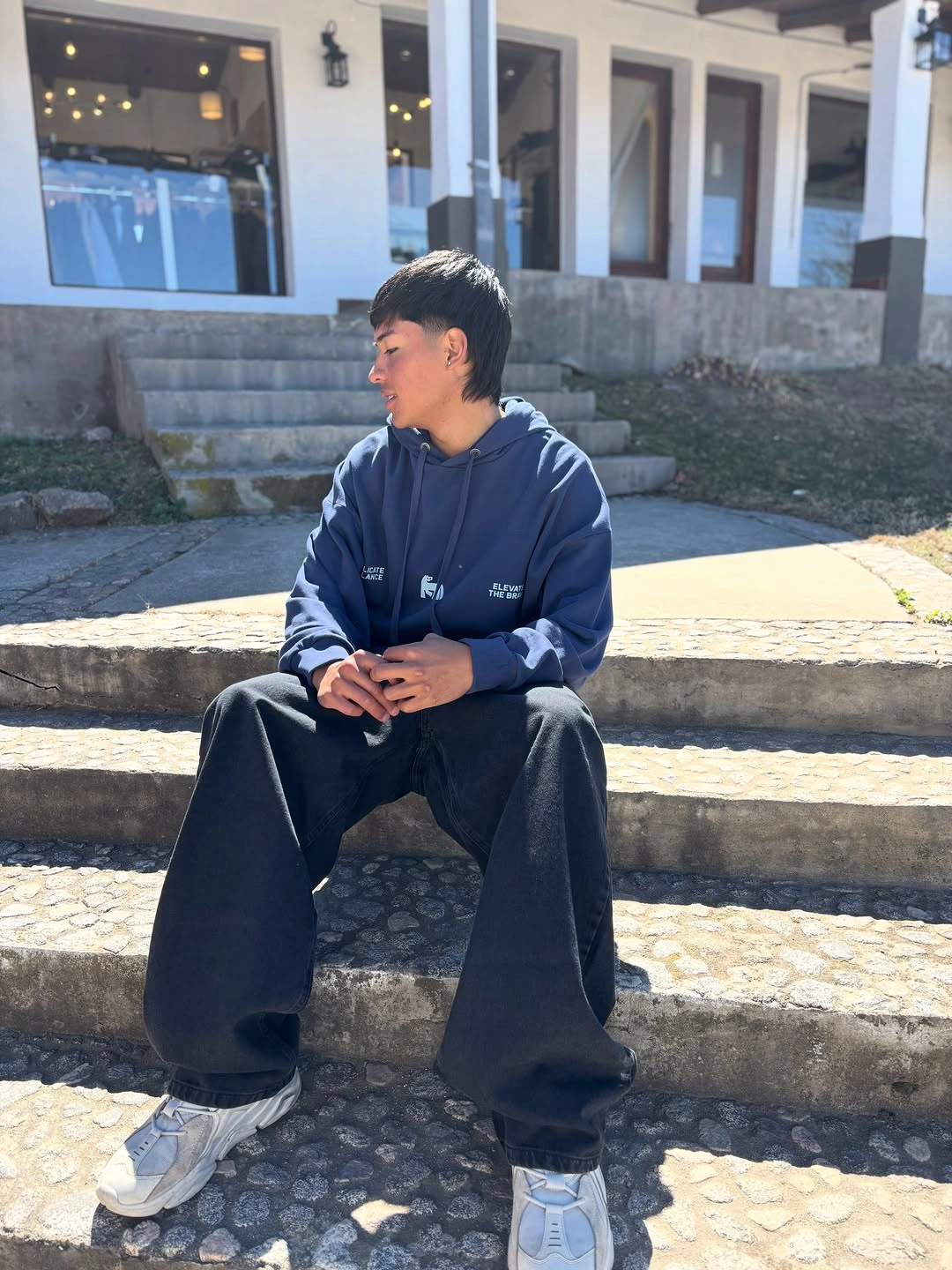
A shoulder-draped knit is most useful when you do not actually need another full layer. It can add dimension in a café, a transit day, or an indoor setting where a jacket would be too much. Choose a fine sweater in a color that relates to your shoes or cap, and keep the T-shirt clean; large chest graphics would fight with the diagonal knit shape.
The styling can look fussy if the sweater is too bulky or tied too tightly. Let the sleeves hang with some ease, and avoid stacking a backpack over them if you want the detail to remain visible. Burgundy loafers give this version a more considered edge, but a dark minimal sneaker could make the same construction more casual while still preserving the useful contrast between white tee and faded denim.
Striped Overshirt With a White Base Layer
The long blue striped shirt opens over a white T-shirt and loose black trousers, producing three simple horizontal zones that are easy to read. The white layer is small but important: it keeps the patterned top from merging into the dark trousers. A navy cap, black shoes, and printed tote stay within the same dark family, leaving the stripes as the main source of movement.
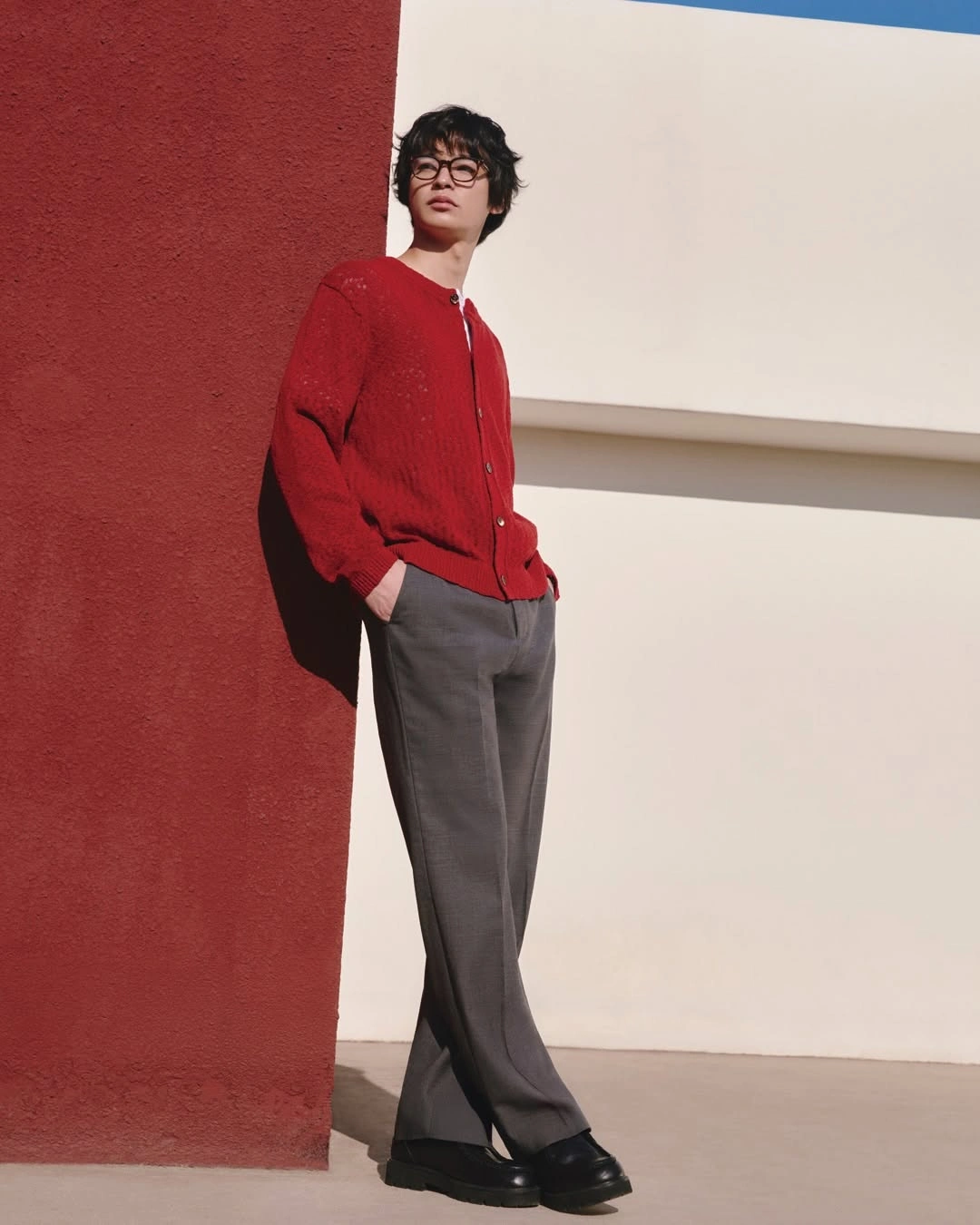
This is a strong formula for an overshirt because it uses contrast at the waist rather than relying on a dramatic color palette. If you own a striped, checked, or chambray shirt that feels too long on its own, wear it open over a plain pale T-shirt before adding darker trousers. The visible base layer creates structure even when the overshirt is loose through the torso.
Keep any printed tote or bag relatively small in visual scale. The shirt already has a repeating stripe, so another dense pattern should stay at the side rather than across the chest. Black trousers are the simplest partner here, though dark olive or deep navy would also work. Just make sure the shoe is as dark as the trouser so the white T-shirt remains the main break in the outfit.
Navy Shirt Over Bright White Trousers
The loose navy button shirt and white trousers make a high-contrast split that gives the colorful bucket hat a stable background. Burgundy shoes introduce a deeper warm note at the bottom, while sunglasses keep the upper half from becoming too playful. Because the trousers are so light, the shirt can stay oversized without making the whole silhouette feel heavy or visually compressed.
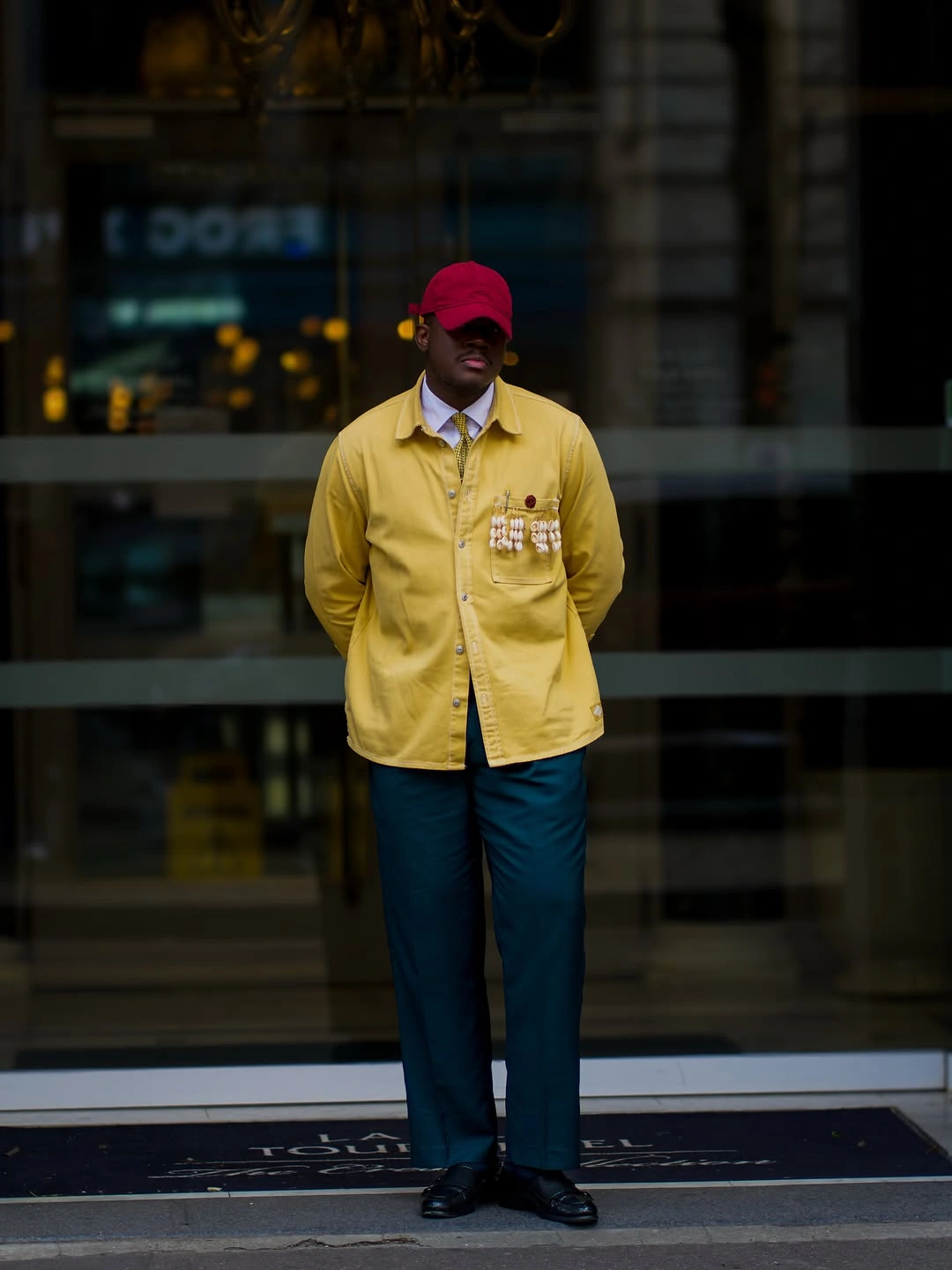
White trousers are often easier to style than they seem when the top provides a strong dark anchor. A navy shirt, charcoal knit, or black overshirt can create the same effect, especially if the pants have a relaxed rather than skinny cut. The hat is optional, but if you add a playful accessory, use a color already supported by the shoes or shirt so it feels like part of the palette.
The obvious limitation is maintenance. Light trousers show marks faster, so this idea suits a day without messy travel or unpredictable weather more than a long commute. Choose a heavier cotton or denim-like white fabric if you want a less delicate version. The burgundy shoes also help practical styling because their dark color gives the pale hems a clear endpoint and hides less dirt than white footwear would.
Brown Blazer With Loose Light Denim
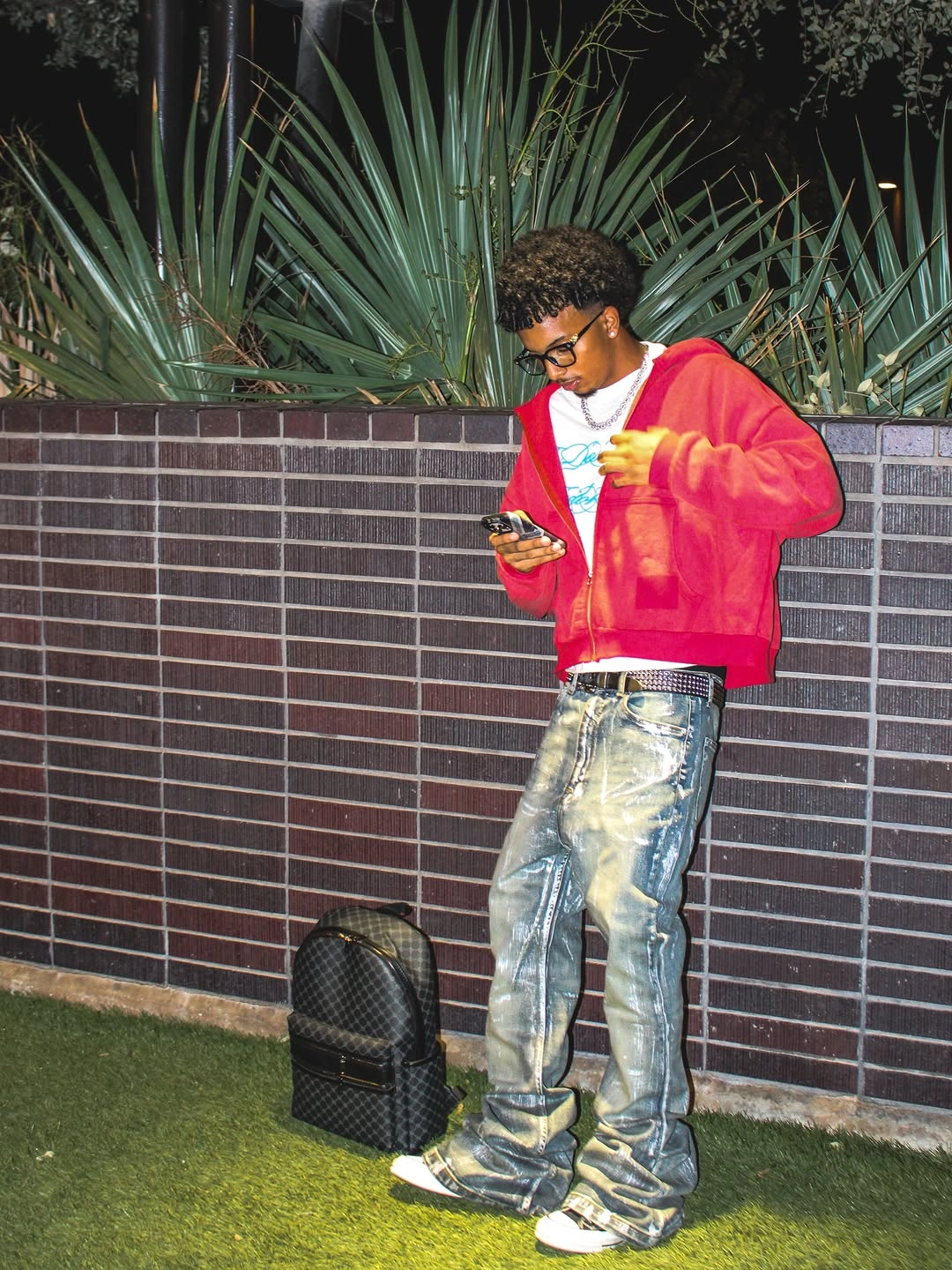
The brown blazer supplies a tailored shoulder line over a simple gray T-shirt and pale loose jeans. White sneakers keep the lower half casual, while the small dark bag provides a compact contrast against the soft denim wash. The best part is the tension between the blazer’s structure and the jeans’ relaxed drape; neither piece tries to fully convert the other into formal or casual territory.
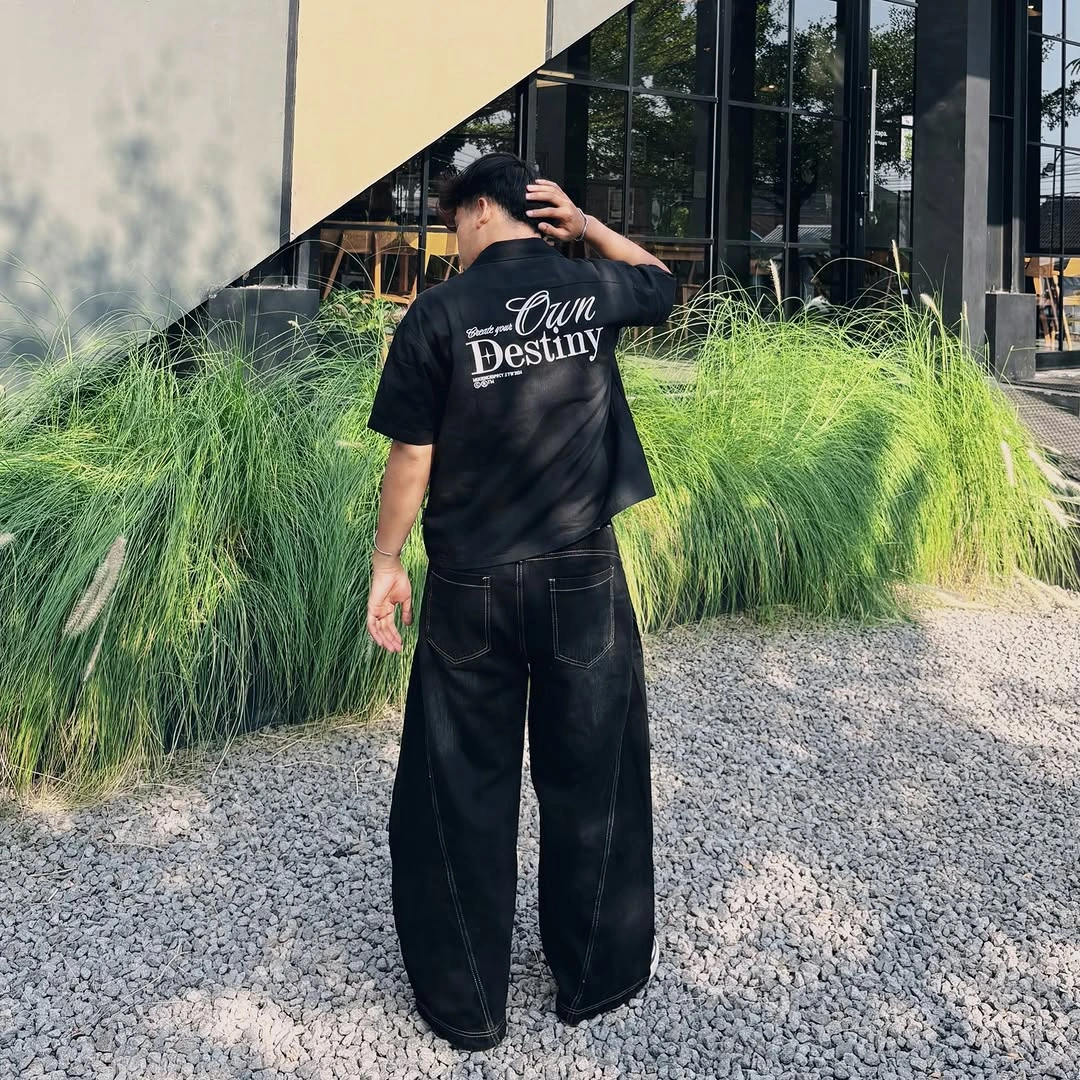
A blazer with relaxed jeans works when the blazer has enough ease to move with the denim rather than pulling tightly across the chest. Look for a slightly softer shoulder, an unpadded construction, or room at the hip. A crisp shirt would push the outfit closer to business casual, while a substantial T-shirt keeps it suitable for settings where a sneaker still makes sense.
Do not add too many polished accessories. A slim belt and small bag are plenty, because the blazer is already the formal signal. If your jeans are very wide, keep the blazer length around the upper thigh so the jacket does not disappear into the trouser volume. The white sneaker should also stay clean and simple; a bulky sole could make the lower half feel disconnected from the controlled top line.
Charcoal Knit With Cream Volume
The dark crewneck knit has a small pale chest graphic that quietly relates to the cream trousers below. That connection is subtle enough to avoid looking matched, yet it prevents the two large color blocks from feeling unrelated. White sneakers repeat the light trouser tone at the base, and the roomy cut of the pants adds movement beneath an otherwise compact upper body.
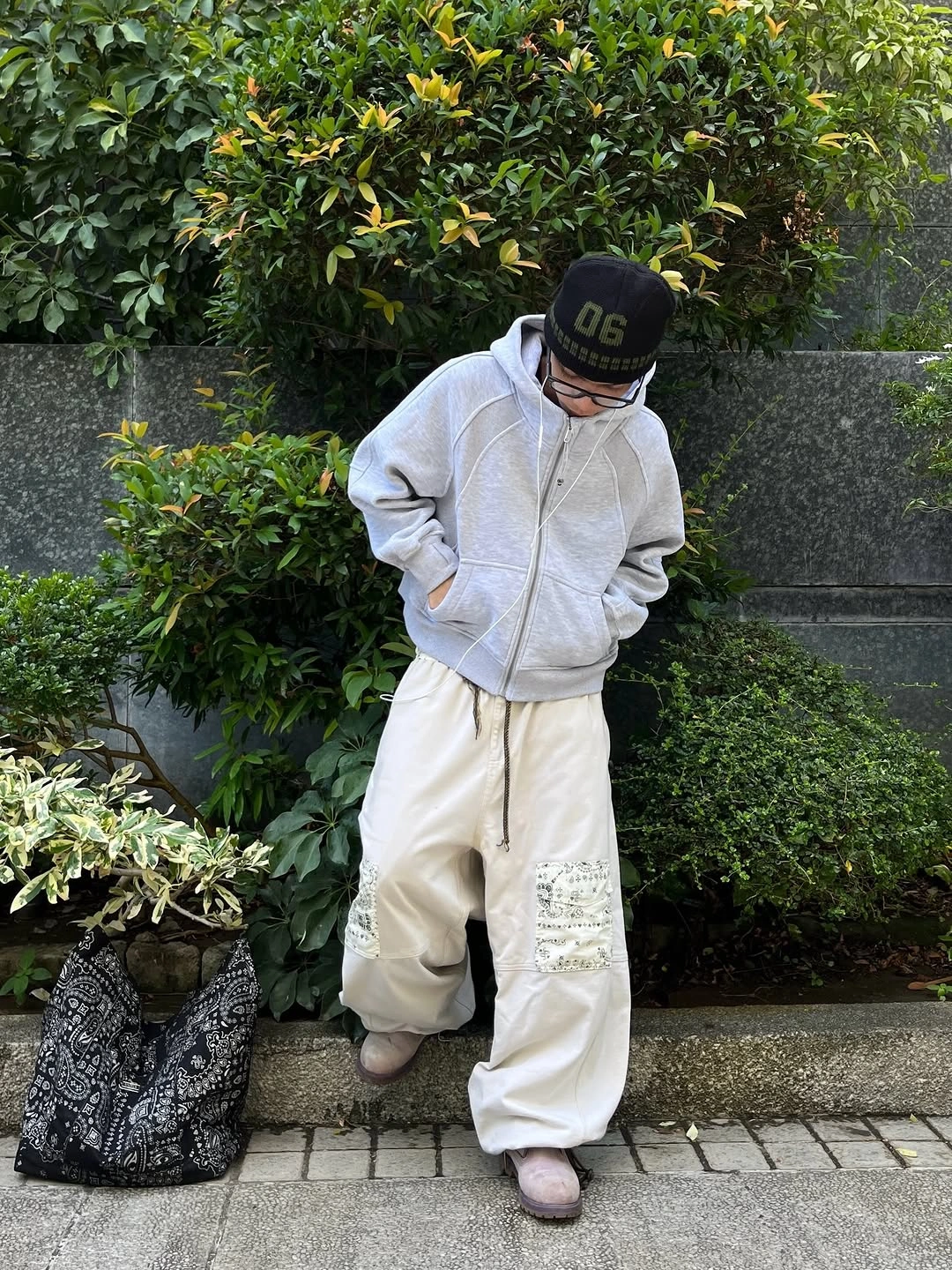
This kind of outfit shows why a small detail can be more useful than a full print. The graphic does not need to tell a story; it simply gives the dark sweater a point of contrast and echoes the light trousers. If your knit is completely plain, try a cream sock edge, off-white cap, or subtle T-shirt hem instead of adding a louder accessory that would interrupt the calm palette.
Wide cream trousers can become the focus very quickly, so keep the sweater’s texture and fit straightforward. A heavy cable knit might make the top feel too bulky beside the broad leg, while a smoother crewneck keeps the vertical balance clear. This combination also asks for clean footwear: scuffed white sneakers would undermine the deliberate relationship between the small chest detail and the pale lower half.
A Deep Green Suit Kept Simple
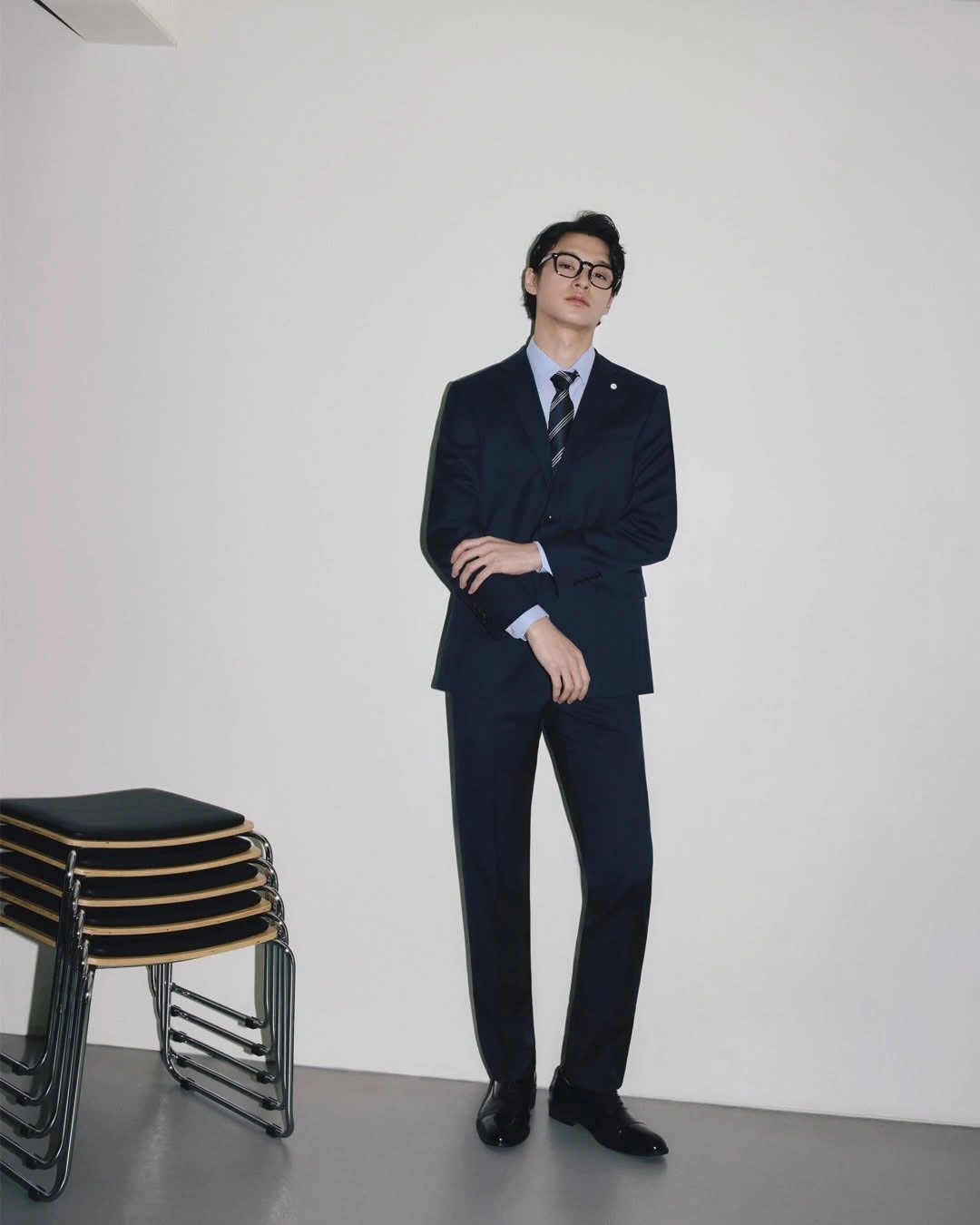
The deep green double-breasted suit carries the color and structure on its own, which is why the light shirt, dark brown loafers, and watch remain so restrained. The suit narrows neatly at the ankle, giving the shoes a visible role without competing with the jacket’s strong front. It feels formal because of construction and finish, not because it piles on extra accessories or a loud tie.
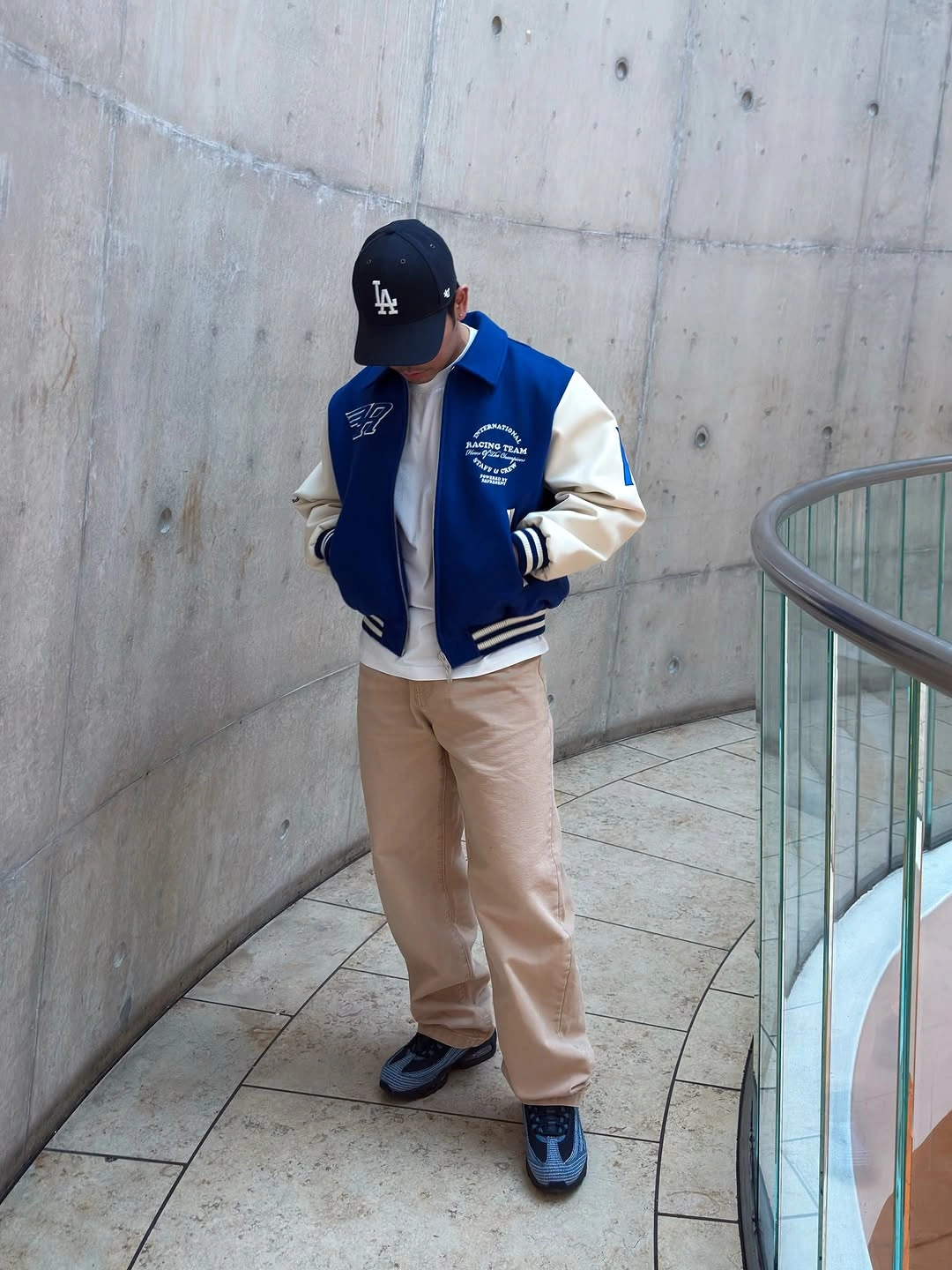
When a suit has a saturated color, treat the shirt as a brightness control rather than another statement. White, soft cream, or pale blue are useful choices because they let the jacket’s color retain its depth. Brown shoes work well with green when they are dark and polished, but black shoes would make the result sharper and more severe if that better matches the setting.
The tradeoff is that a double-breasted jacket already creates a broad visual front, so fit matters more than it would with an open single-breasted blazer. Make sure the waist is not pulled tight and the trouser break is clean at the shoe. A large patterned pocket square, chunky sneaker, or oversized bag would distract from the suit’s clean lines; the quiet accessories are what let the green look intentional.
Hoodie and Patterned Shorts in Balance
The light gray hoodie provides a neutral top over dark patterned knee shorts, giving colorful running shoes room to stand out without making the outfit chaotic. A yellow cap adds another warm point near the face, and white socks create a small pause before the bright sneakers. The loose proportions remain casual, but the repeated warm accents make the pieces feel connected rather than randomly chosen.
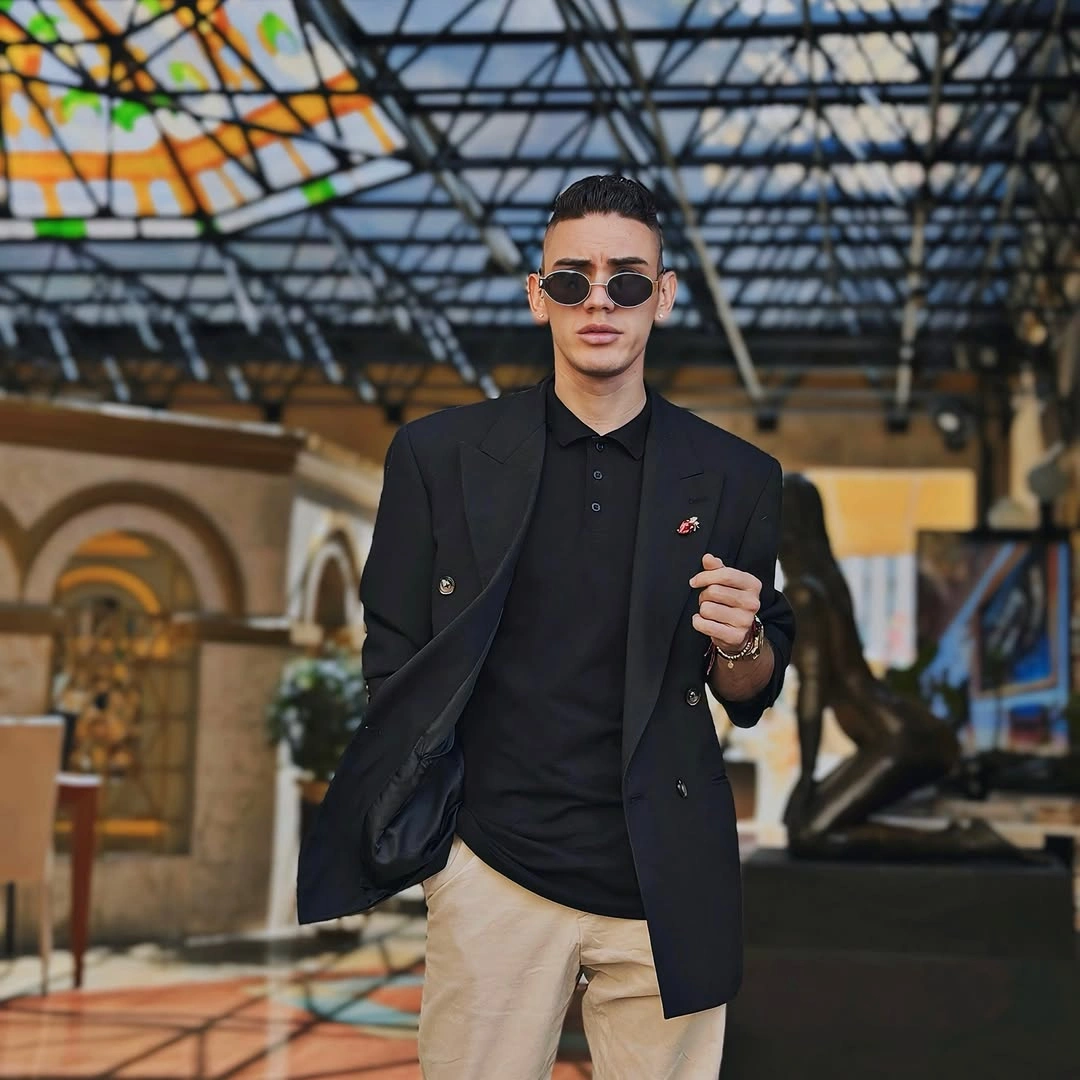
Patterned shorts do not require an equally expressive top. In fact, a plain hoodie or sweatshirt is often the better choice because it gives the eye one broad quiet area before the print begins. If you want less color than this version, swap the yellow cap for gray or navy and let the shoes be the only bright feature. The shorts will still supply enough visual movement.
Consider the scale of the shoe when wearing knee-length shorts. A low, minimal sneaker could make the calves and shorts feel visually long, while a more substantial running shoe adds weight at the bottom and helps the whole shape feel grounded. The practical downside is heat: a hoodie and thick shoes may be too much in warm weather, so this is more useful for a cool morning or travel day than peak summer.
Cream Sweater Above Brown Wide Trousers
The cream textured sweater and white sneakers create light bookends around the brown wide trousers. A white cap continues that brightness near the face, while the patterned tote adds detail at the side instead of across the main silhouette. The trousers still provide most of the volume, but the pale upper and lower elements stop their deep color from feeling too dense or heavy.
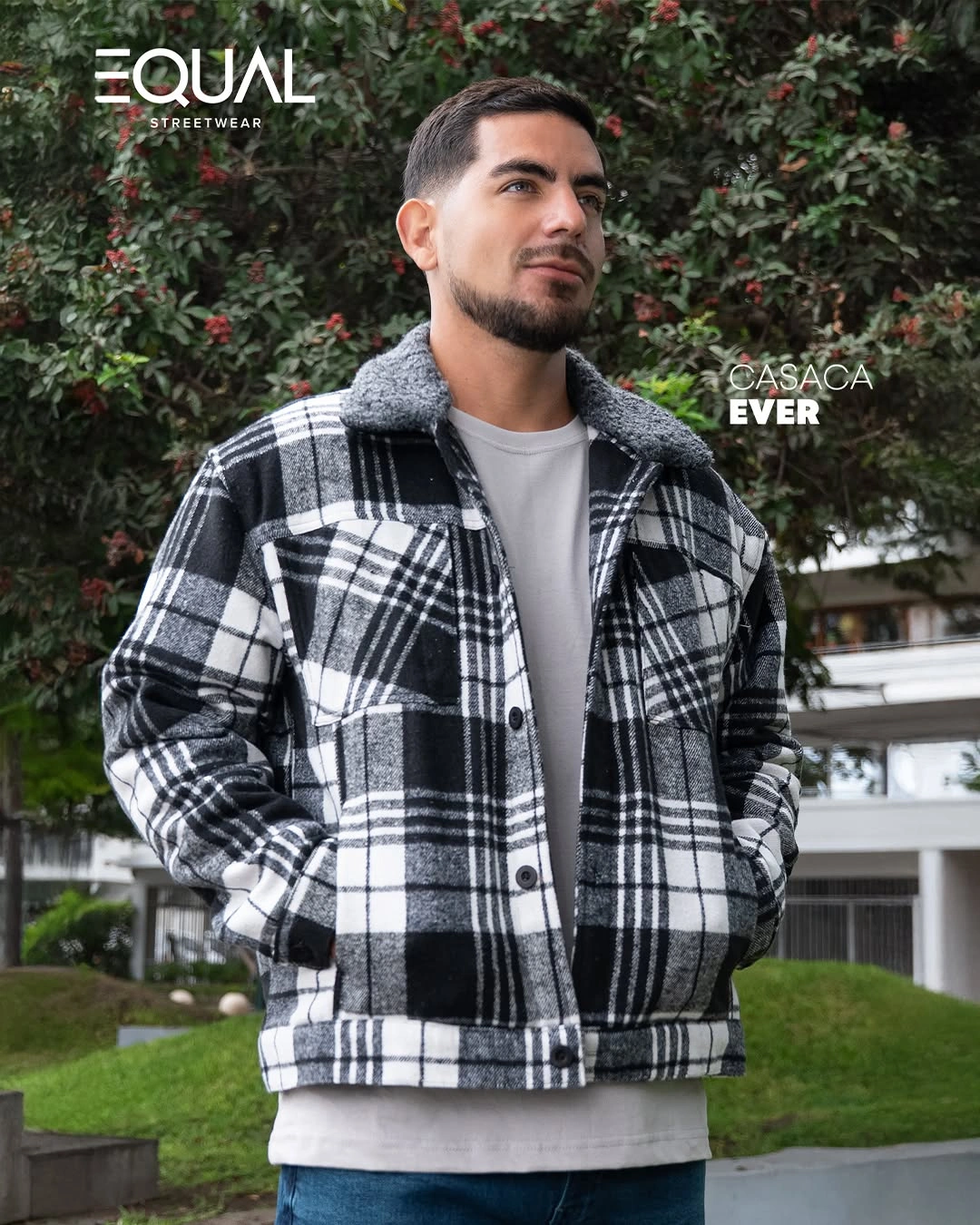
This is a useful way to wear wide brown pants if you prefer a softer palette to a stark black-and-white contrast. Cream has enough warmth to relate to brown, yet it remains light enough to define the shoulders and shoes. A stone sweatshirt, off-white knit, or pale beige overshirt could do the same job, especially when paired with footwear that stays visually close to the top.
The tote should remain the only pattern in this outfit. Adding a graphic sweater or printed cap would make the soft tonal story much less clear. Brown trousers also reward attention to hem length: if they stack heavily on the sneaker, the intended wide line can look untidy. A small cuff or a hem that just meets the shoe keeps the volume deliberate and protects the clean light-to-dark balance.
Relaxed Plaid With Dark Wide Trousers
The red-and-blue plaid shirt brings color and texture to a pair of loose black trousers without needing a more complicated base layer. White sneakers make the hem feel casual and keep the dark trousers from becoming visually bottom-heavy. A brown cap is a quieter warm accent than a matching red one would be, so the shirt remains the strongest color event in the outfit.
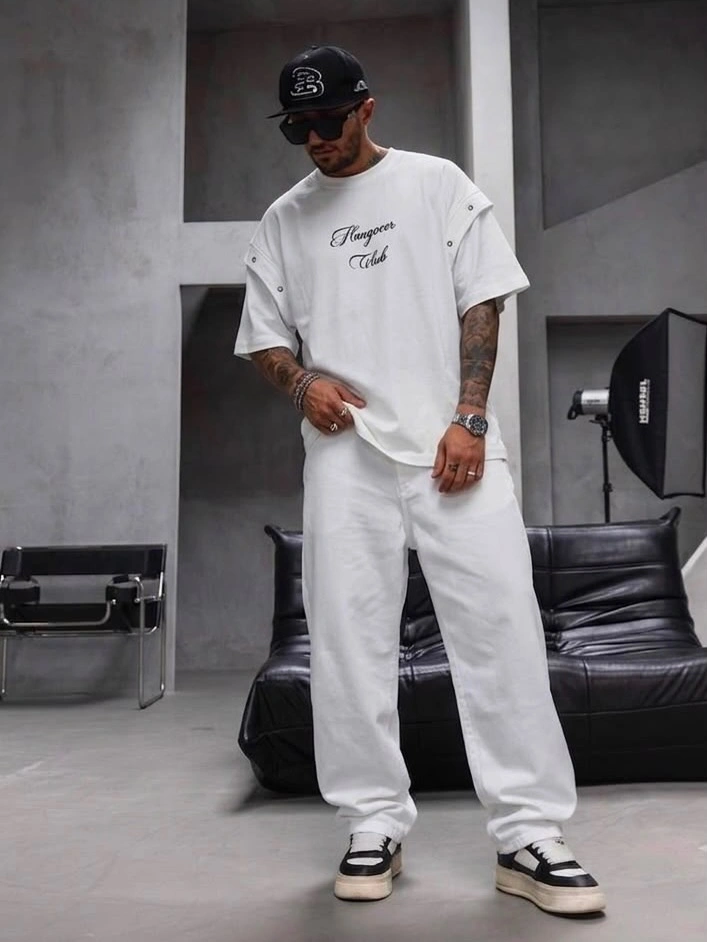
Loose plaid works best when the rest of the look is simple enough to give it space. Black trousers are effective because they respond to the dark lines in the pattern, but charcoal or deep navy could work too. If you want a cleaner outline, tuck only the front edge of the shirt or choose a version with a slightly shorter hem; that adds shape without making the relaxed shirt feel formal.
The danger is letting every piece become oversized at the same time. The shirt and trousers both have room, so the sneaker needs a fairly streamlined profile and the cap should stay low-key. A huge puffer, an oversized tote, or heavy platform shoe would add too much mass. Keep the outer layer cropped or skip it, and let the plaid shirt provide the movement on its own.
Red T-Shirt Over Pale Baggy Denim
The bright red T-shirt sits against very light baggy denim, creating a simple and immediate color contrast. Because the jeans are pale and roomy, the saturated top does not need a print, jacket, or complicated accessory to be noticed. Dark glasses and a watch are enough to add small points of weight, while the trousers remain the broad, casual shape that gives the outfit its relaxed character.
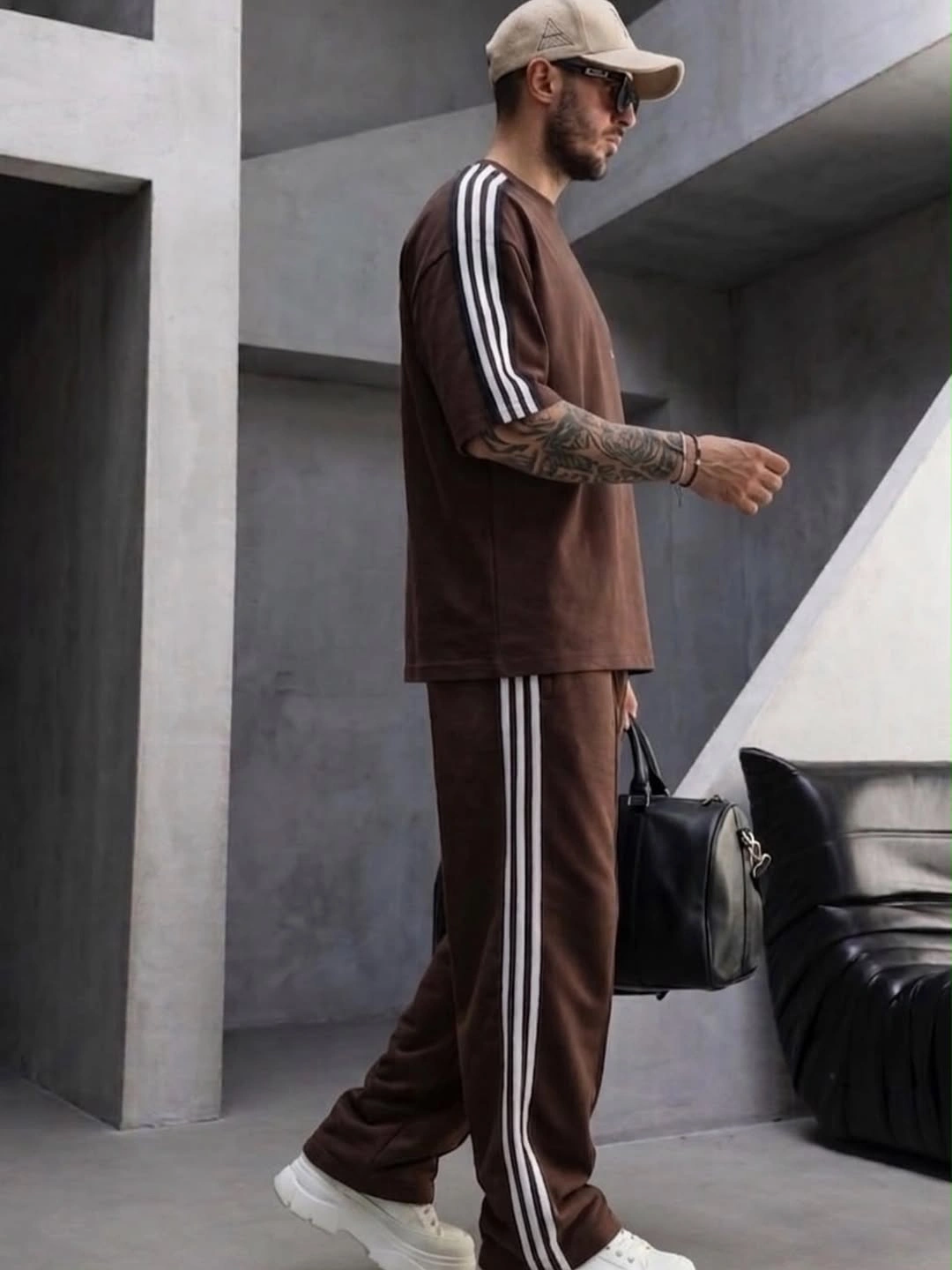
A saturated T-shirt is an efficient choice when you want casual denim to look purposeful fast. The trick is to pair it with a wash light enough to let the color stand out, rather than medium blue jeans that might compete with it. A darker red could work with charcoal denim, while a softer brick tone would suit brown or ecru pants. Keep the rest of the palette quiet so the relationship stays clear.
Fit makes the difference here. If the T-shirt is oversized and the jeans are very loose, make sure the shoulder seam still lands in a controlled place and the denim is not dragging at the shoe. A small front tuck can help if the shirt is too long, but it is not essential. The look loses its appeal when both pieces simply appear too large rather than intentionally broad.
Rolled Light Denim With Black Plaid
The black-and-white plaid overshirt layers over a white top and cuffed pale jeans, building contrast at several different points without adding color. Burgundy shoes become especially noticeable because the rolled hems expose them cleanly. The knit cap and dark overshirt hold the upper half together, while the white base layer stops the check pattern and light denim from blending into one busy surface.
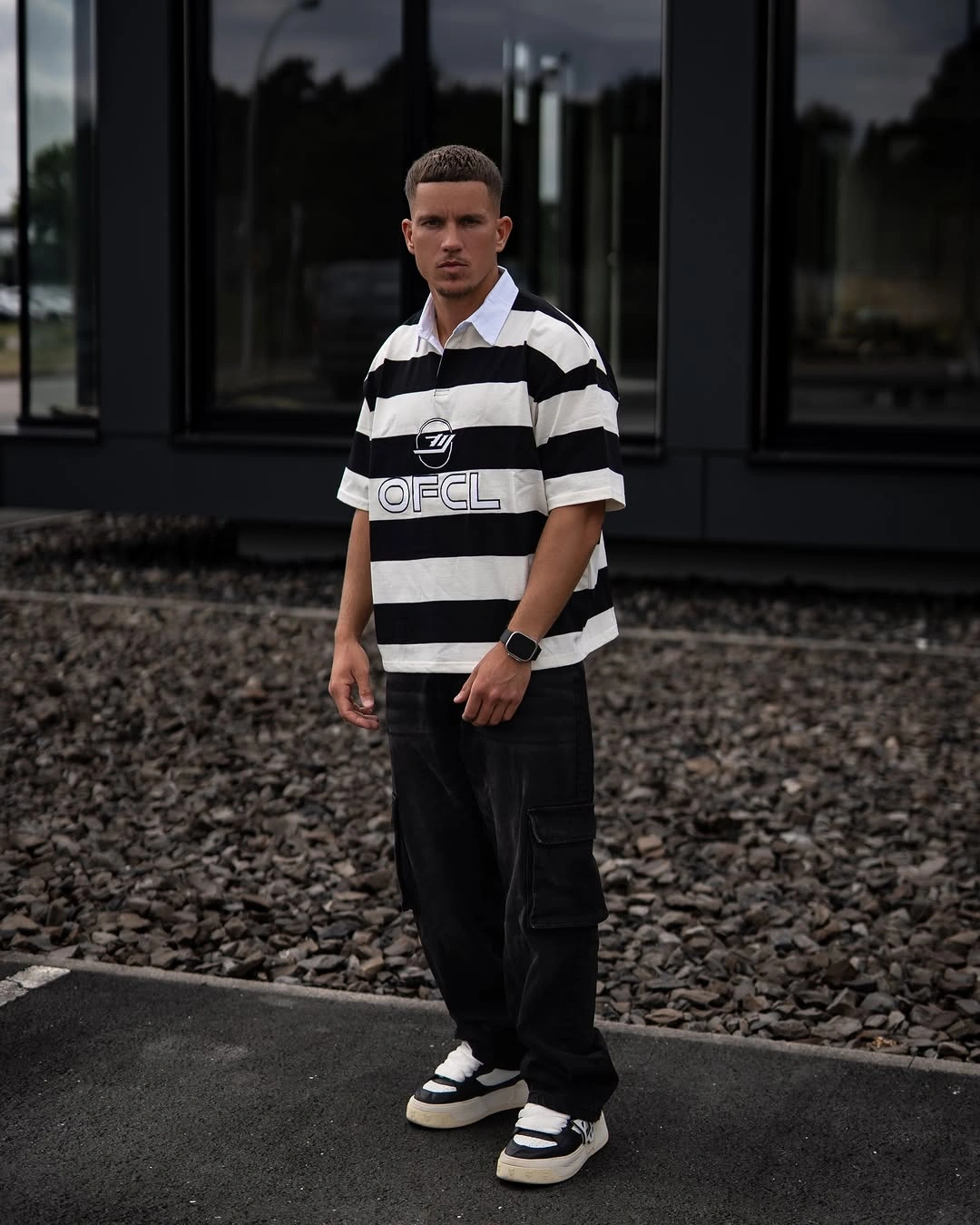
Cuffing is useful here because it changes the relationship between wide light denim and a darker shoe. Without that break, the jeans could cover the footwear and make the lower half feel unfinished. Try one neat roll rather than several small turns, and keep the sock simple. The burgundy shoe is a good choice because it brings warmth without forcing the plaid shirt to carry all of the outfit’s interest.
This arrangement is forgiving, but not limitless. A second bold pattern in the socks, bag, or T-shirt would crowd the plaid, and a very long overshirt could hide too much of the white base. Keep the visible layers distinct: dark check at the outside, clean white near the center, light denim below. That simple sequencing is what makes the mixed values feel organized rather than accidental.
All Black Framed by White Layers
The black hoodie and loose black trousers create a nearly continuous dark silhouette, but the white shirt hem and white sneakers give it a precise outline. Those light details are small enough to preserve the mood of an all-black outfit, yet they keep the torso and ankle areas from disappearing into one solid shape. Sunglasses add a final dark accent without breaking the monochrome direction.
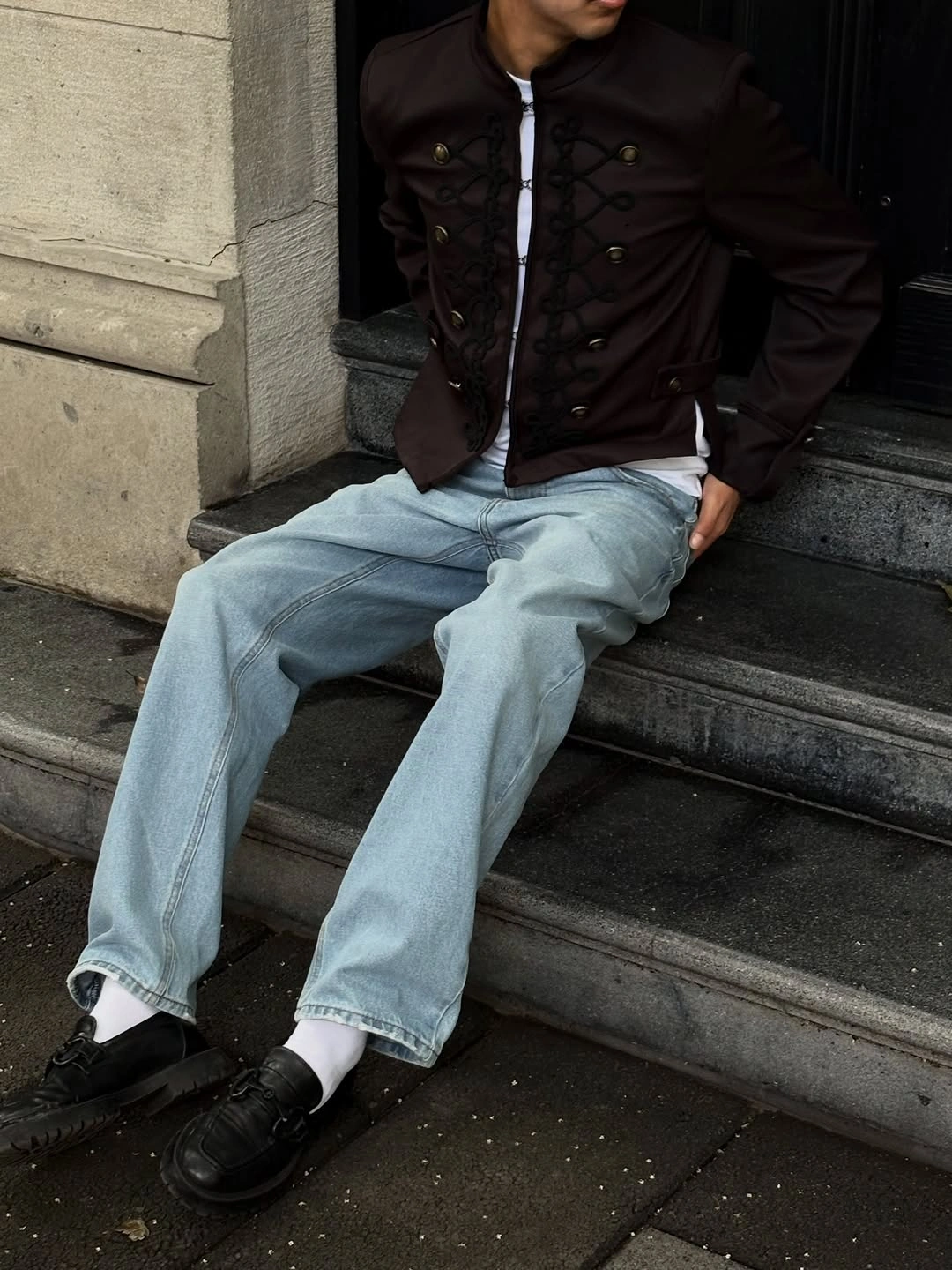
An all-black casual outfit does not need a different color to look complete; it often just needs changes in depth and edge. A white undershirt, pale sock, or bright shoe can provide that separation without changing the palette’s character. If you prefer to keep the shoes black, use a gray T-shirt hem or a lighter wash on the hoodie so the layered structure remains visible from a distance.
Keep the garment shapes clean, because this combination relies on silhouette more than decoration. A hoodie that is too long can cover the white layer completely, while trousers that stack too much will hide the sneaker contrast. This is also a good base for anyone exploring more relaxed proportions: the dark color makes the volume feel quieter, and the controlled white details show where each part of the outfit begins and ends.