
What to Wear for Padel: Court Outfits That Move Well
Padel outfits for women need to solve a real on-court question before they solve a style question: can you turn, reach, and reset your feet without noticing the clothes at the wrong moment? The clearest looks treat the racket, the stance, and the court as part of the outfit’s visual logic. A clean dress, skirt, or pair of shorts works best when its proportion leaves the body easy to read in motion instead of burying it under decoration.
Start with your preferred coverage and the amount of fabric you want moving around you, then use color to make the choice feel deliberate. A dark top can steady a pale skirt, a cap can repeat one accent, and a warm-up layer can stay useful without becoming the center of attention. The site’s workout outfits for women can help when you are building a broader active rotation, but the final choice still needs to suit the turns, reaches, and racket work specific to padel.
White Court Dress With a Clean Racket Focus
The white sleeveless dress creates a simple vertical line beside the court, while the small black accent near the shoulder and the dark racket keep it from becoming featureless. Its short pleated hem gives the outfit a familiar court shape without needing a belt, jewelry, or a busy print. The ball basket and open gate make the setting feel practice-ready, so the outfit reads as part of the sport rather than a dress borrowed from a casual summer plan.
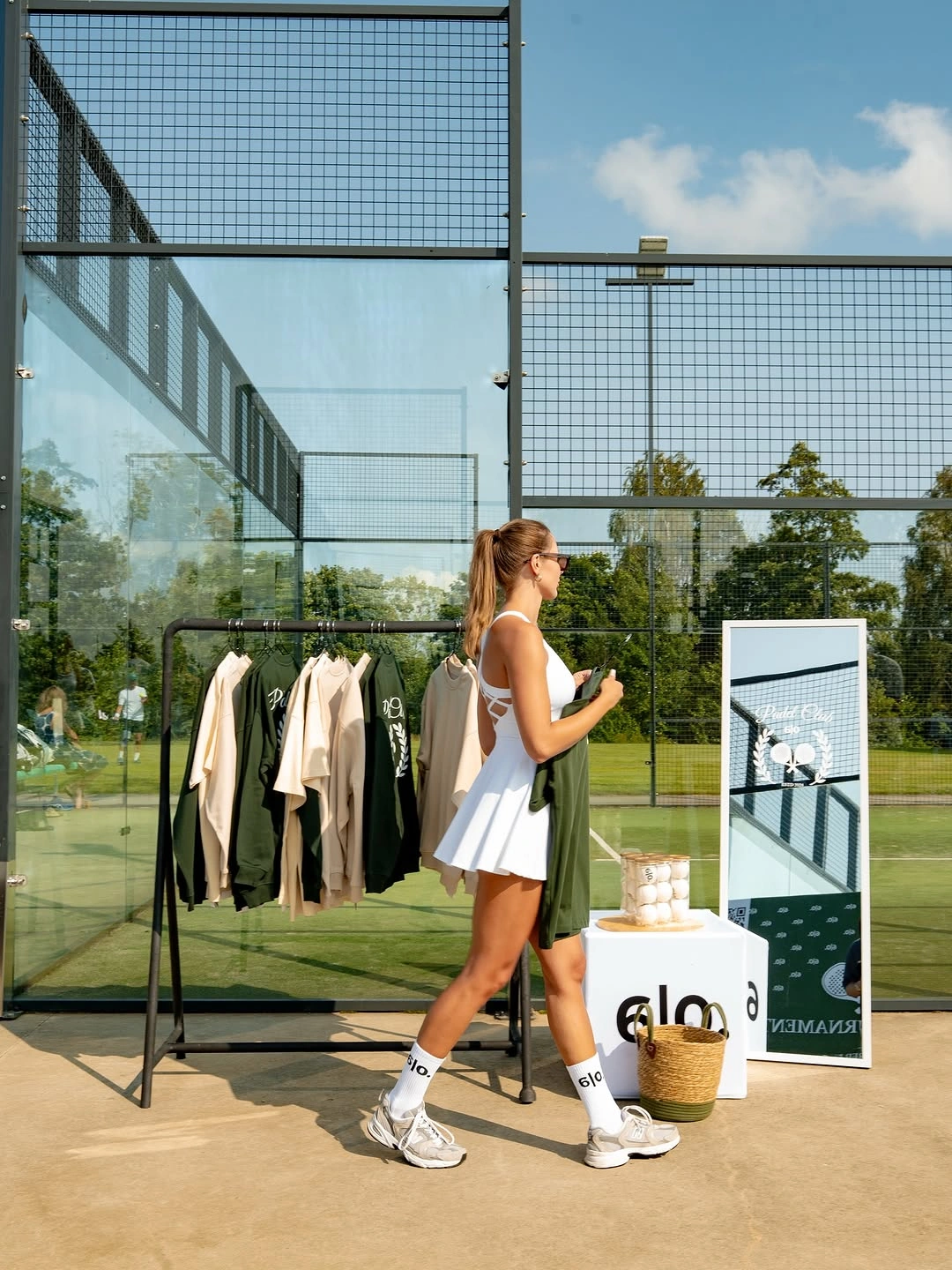
For a player who likes one-piece dressing, this is a useful baseline because the shoes, socks, and racket do most of the supporting work. Keep the footwear light and close to the outfit’s tone, then decide separately whether the hem and neckline give you the coverage you want. The restraint matters here: adding a bright bag or several contrasting accessories would pull attention away from the direct relationship between the dress and the court.
One-piece looks reduce the number of styling decisions before a session, but they also give you fewer ways to adjust warmth or coverage once you arrive. A small layer carried for before and after play can be more helpful than turning the dress itself into a layered outfit. The strongest version keeps the white base clean, lets the equipment supply the dark edge, and leaves room for your movement to be the main visual event.
Navy Polo and White Pleats in Motion
A navy polo paired with a white pleated skirt is one of the most immediately legible women’s padel outfits because the dark upper half and light lower half stay distinct when the body is ready to move. The collar gives the top structure, while the short skirt keeps the silhouette light around the legs. Holding the racket on a glass-walled blue court reinforces why this combination feels sport-specific rather than merely preppy.
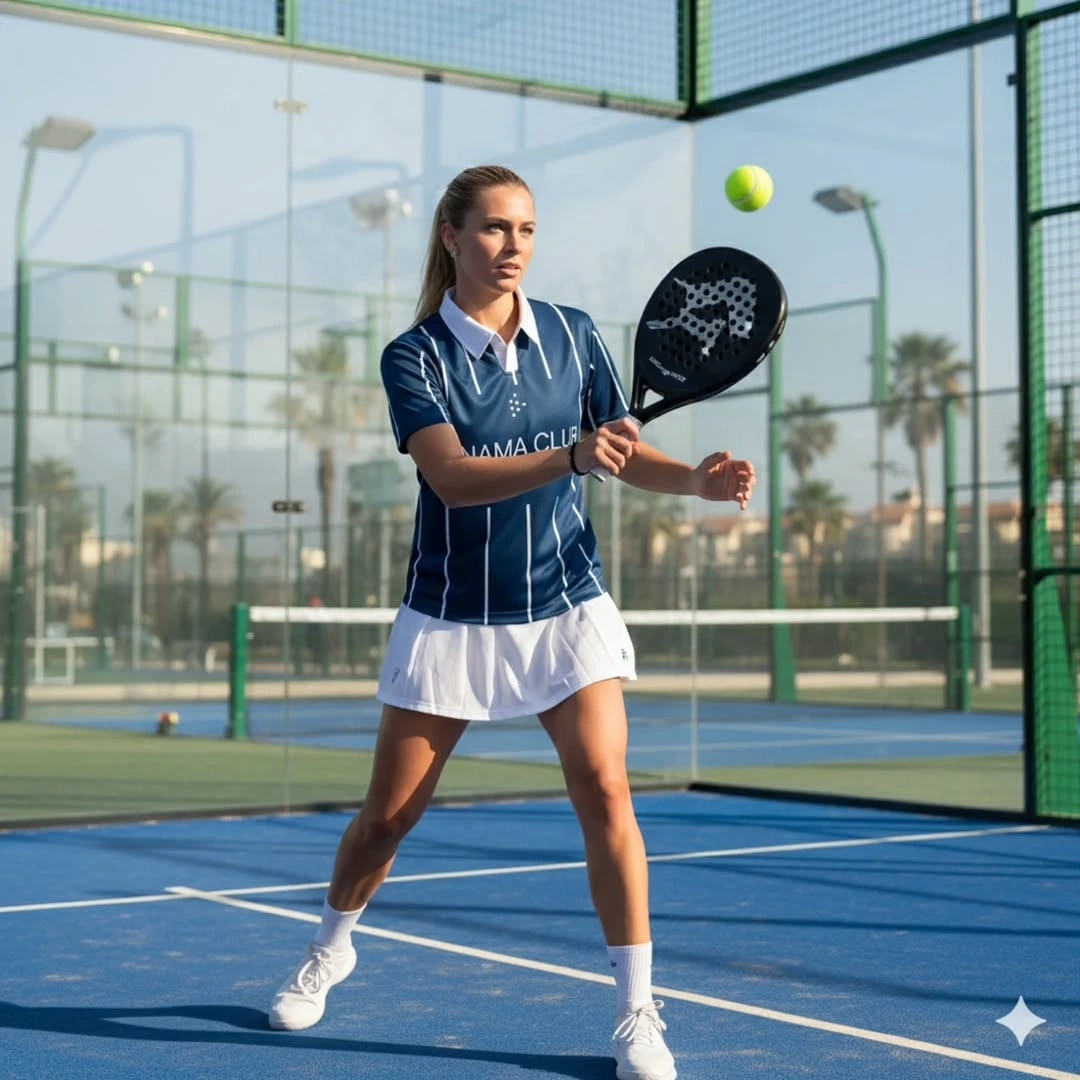
Choose this kind of contrast when you want the outfit to look organized without relying on a matching set. A navy top can make a white skirt feel less delicate, and the sleeves offer a different coverage balance from a tank. For another useful take on that light lower-half proportion, browse the site’s tennis skirt ideas, then keep the shoes neutral so the eye moves from collar to waist to racket in one clear path.
The practical tradeoff is that bright white at the lower half shows court dust more readily than a darker skirt, especially after repeated stops and low reaches. That does not make the combination less useful; it simply means the visual freshness comes with more upkeep. If that detail bothers you, preserve the polo shape and swap only the skirt color, because the real strength of the outfit is the crisp division of proportion.
Soft Pink Set With Cap Contrast
The pale pink sleeveless top and pleated skirt create a calm, coordinated line, while the white cap, socks, and sneakers keep the color from looking overly sweet. With the racket resting nearby on the blue court, the outfit feels connected to a break between points rather than a generic matching set. The cap is especially useful visually because it introduces a firm light accent near the face and ties back to the shoes.
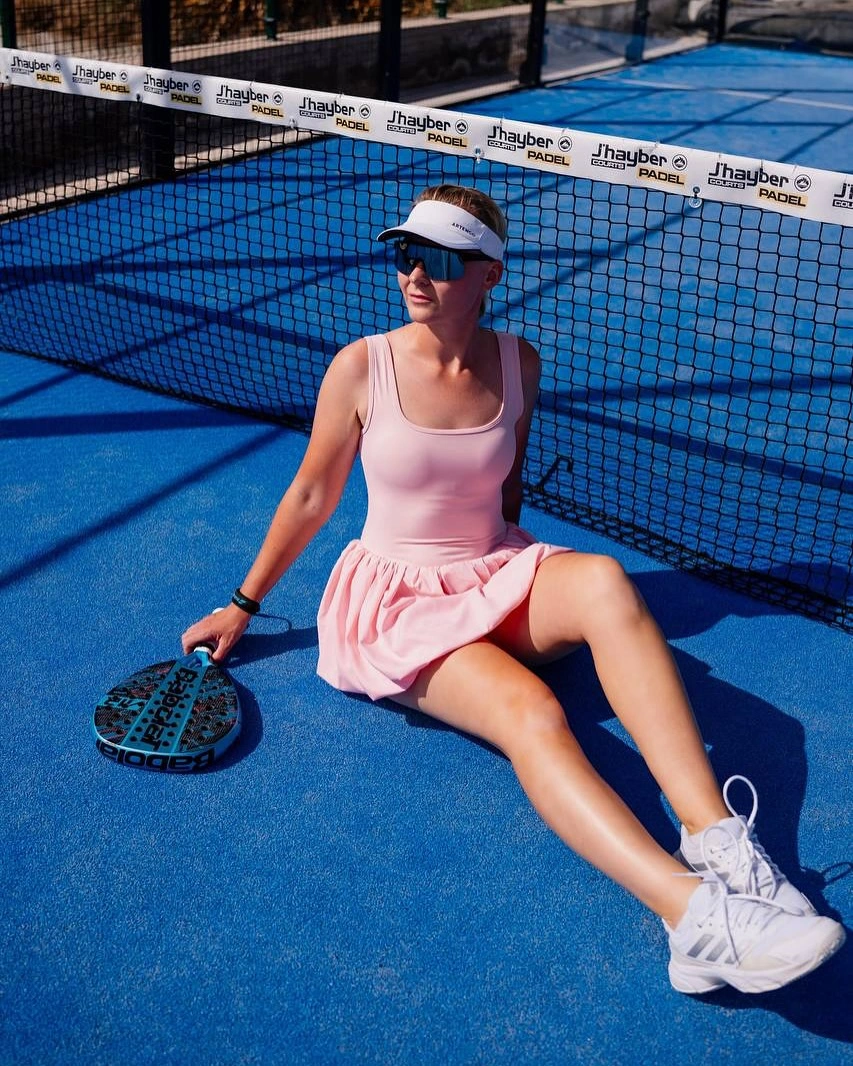
For padel outfits women summer searches, a cap-and-separates formula is more adaptable than choosing color alone. You can retain the pink skirt and replace the sleeveless top with a short sleeve if that is your preferred coverage, or keep the top and choose shorts on another day. The site’s summer tennis skirt outfits offer another way to study that pleated base before you repeat the same practical balance with white details that keep the outfit clear.
Light pink rewards a tidy combination of shoes and accessories, yet it can show dust or marks sooner than navy or black. That is a fair trade if the color makes you feel more comfortable stepping onto the court, but it is worth treating the set as active clothing rather than a precious look. A simple racket bag and one functional layer are enough; more decorative additions would weaken the quiet, mobile feeling of the outfit.
Relaxed Sweatshirt Layer for the Way to Court
The oversized cream sweatshirt and white shorts have a relaxed proportion that makes sense around a padel session, especially when the back graphic and racket motif provide the only strong detail. From behind, the loose layer creates a longer silhouette than the short bottoms alone would give. Near the court entrance, it reads more like an arrival or recovery piece than something chosen for the quickest exchanges at the net.
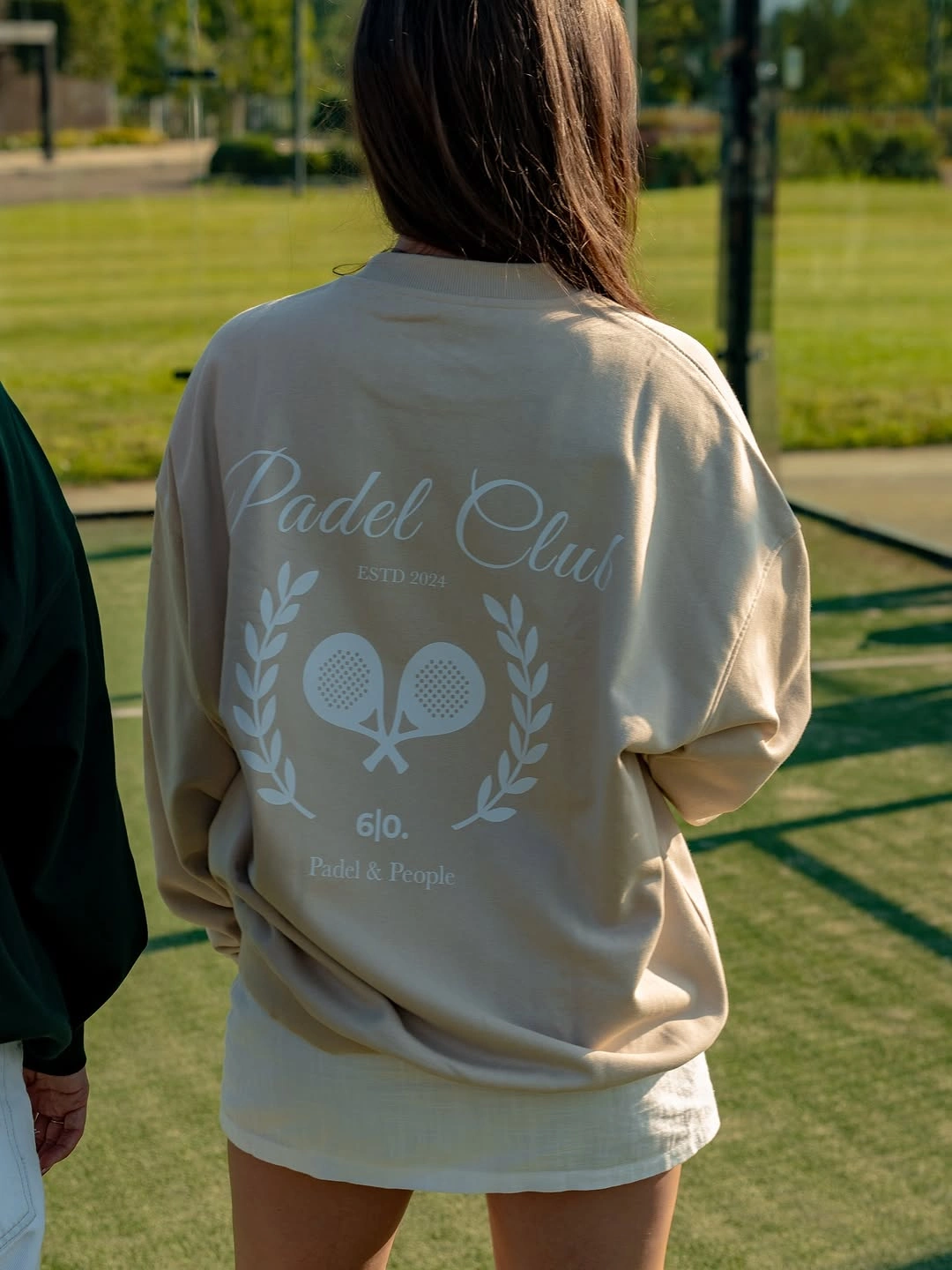
Use a sweatshirt like this to solve the transition around play, not to compete with the action once the racket is moving quickly. The shorts keep the lower half simple, and the creamy palette prevents the large back design from becoming too loud. If you prefer a more contained shape, choose a layer that ends closer to the waist, but retain the same idea of one relaxed piece over a clearly athletic base.
Extra sleeve and hem volume can feel different when you begin to reach, rotate, and lift the racket, so it is sensible to treat this layer as removable. That is not a style failure; it is the reason a warm-up piece and a match outfit can have different jobs. The look stays convincing because the graphic speaks to the sport, while the shorts and shoes keep the rest of the outfit visually uncomplicated.
Cream Layered Look and Knee-High Socks
Cream from sweatshirt to shorts creates a soft, nearly continuous field of color, and the white knee-high socks make the legs feel intentionally framed rather than simply bare below an oversized top. The racket held behind the body and the net nearby make the outfit more grounded than a lounge set. It is a composed option for arriving at court or cooling down, with the tall socks acting as the clearest style decision.
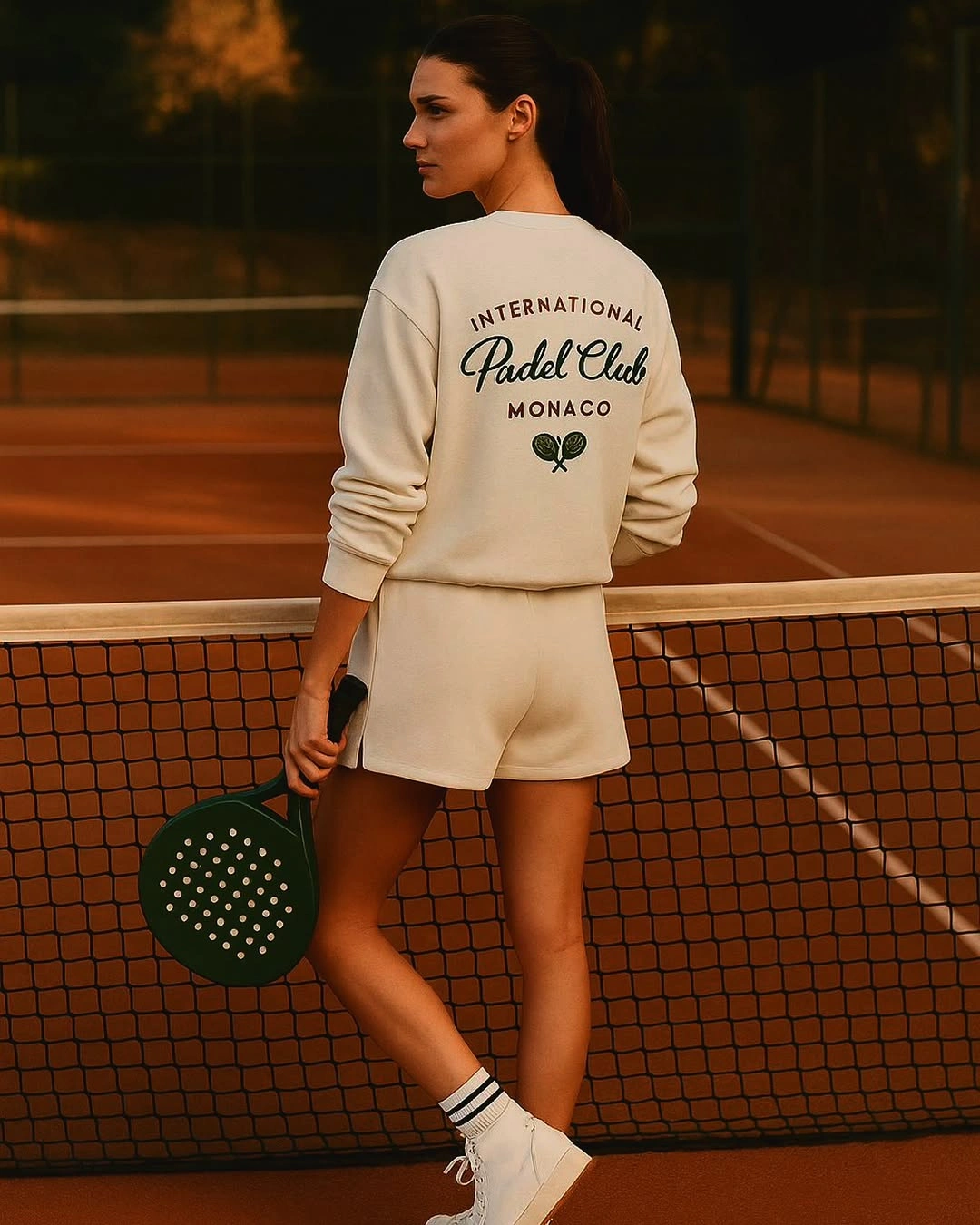
Knee-high socks are worth choosing on purpose because they draw the eye lower and create more coverage without adding another garment at the waist. Keep the shoes simple and light, then let the tonal upper half do the quieter work. A player who prefers a less statement-making finish can switch to crew socks while keeping the sweatshirt-and-shorts proportion exactly the same.
The relaxed top has the same limitation as any roomy warm-up layer: it is not automatically the best choice for unrestricted racket work. Let it earn its place before play, during a break, or after the final point rather than forcing it through every movement. The monochrome approach remains useful because it needs almost no adjustment, and the socks provide enough contrast to keep the outfit from feeling flat.
Red Court Dress With White Footwear
The bright red sleeveless dress is the whole focal point, which is why the white shoes are the right restraint underneath it. Sitting beside the court with a racket makes the dress feel less like an occasion piece and more like a color-forward answer for a racket sport. Its skirted hem keeps the outline active, while the saturated red holds enough visual weight that a printed layer or colorful bag would only compete.
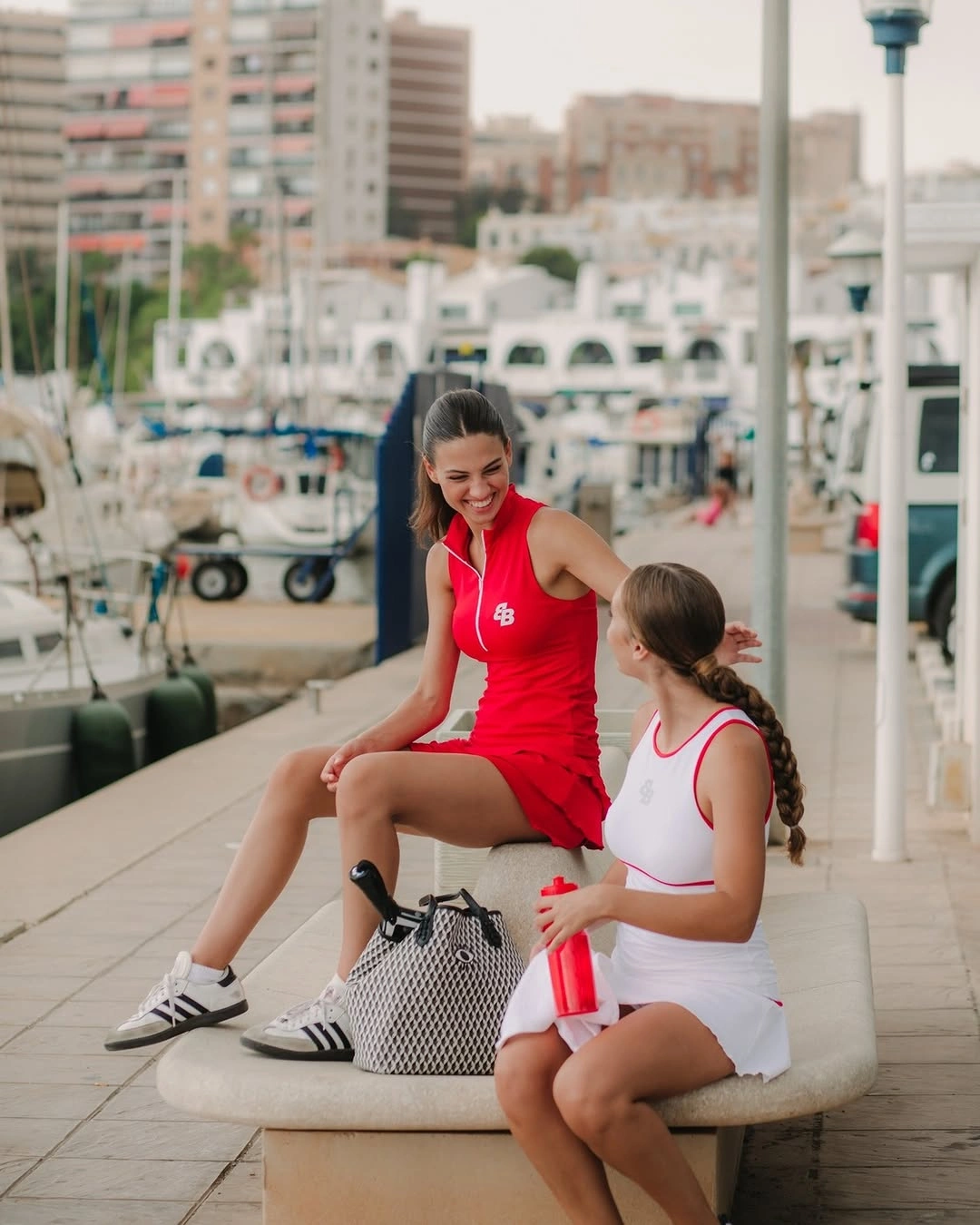
When you choose a color this strong, make the remaining decisions quieter and more functional. White footwear, a plain cap if you need one, and a neutral outer layer allow the dress to stay readable from a distance. The formula works for someone who wants a bolder court presence but still wants the outfit to look like it belongs around rallies, equipment, and a changing score.
Red can reveal dust, spilled drinks, or scuffs in a different way than black or navy, so the commitment is partly about maintenance as well as color. There is no need to avoid it for that reason, but it helps to accept that the freshness of the look depends on keeping the rest restrained. A simple white shoe line gives the dress room to lead without asking every other piece to make a statement.
Navy Collar and Defined Waist
The navy sleeveless dress uses a white waistband and small collar detail to make the one-piece shape easy to read, even without a racket or court surface in the frame. The bodice sits close to the body before the skirt opens slightly, which gives the silhouette a more tailored direction than a loose athletic dress. Navy also brings enough visual depth that the white trim can work as structure instead of merely decoration.
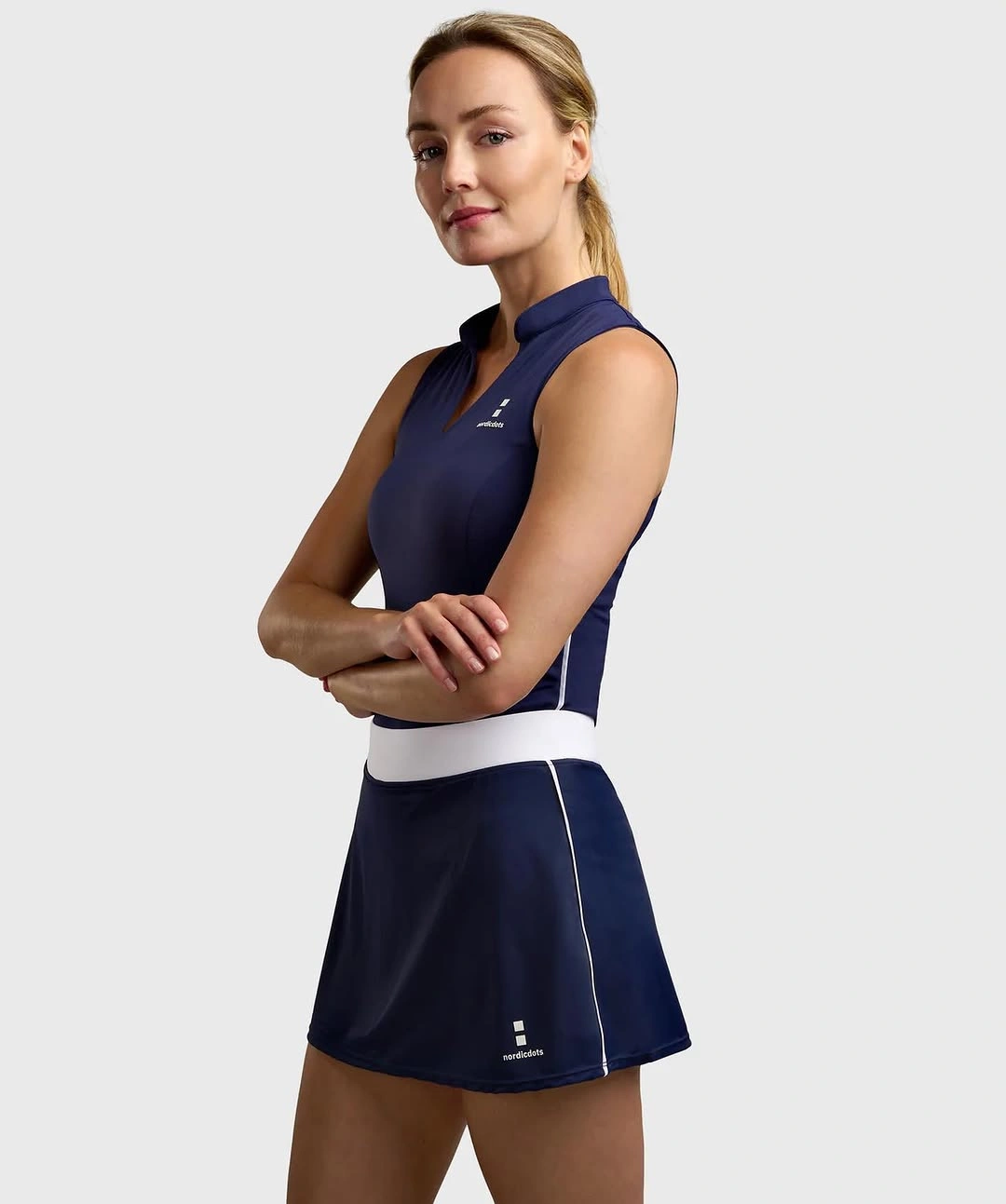
This is a useful option when you like a one-piece but still want a clear break between upper body and skirt. The defined waist creates that separation without asking for a belt, and the collar makes the neckline feel purposeful for courtwear. Pair it with clean white shoes and keep the rest minimal, because the dress already has two visible design decisions: the waistline and the pale trim.
A closer upper body can feel more fixed than separates, which is worth considering if you prefer to adjust your layers throughout a session. The advantage is a polished line that does not need much styling before you leave home. Treat the dress as the anchor, then let the racket and footwear establish the sport context instead of adding accessories that dilute its disciplined navy-and-white contrast.
Blue Warm-Up Layer During a Swing
The cobalt sweatshirt over a white pleated skirt looks immediately expressive because the color blocks are so clear, yet the swing and visible ball also reveal the tension in this pairing. The loose top extends below the waist, while the short skirt remains visible as a light base beneath it. On a blue indoor court, the sweatshirt holds the eye first, so the outfit feels more like a warm-up layer with a court skirt than a minimal match uniform.
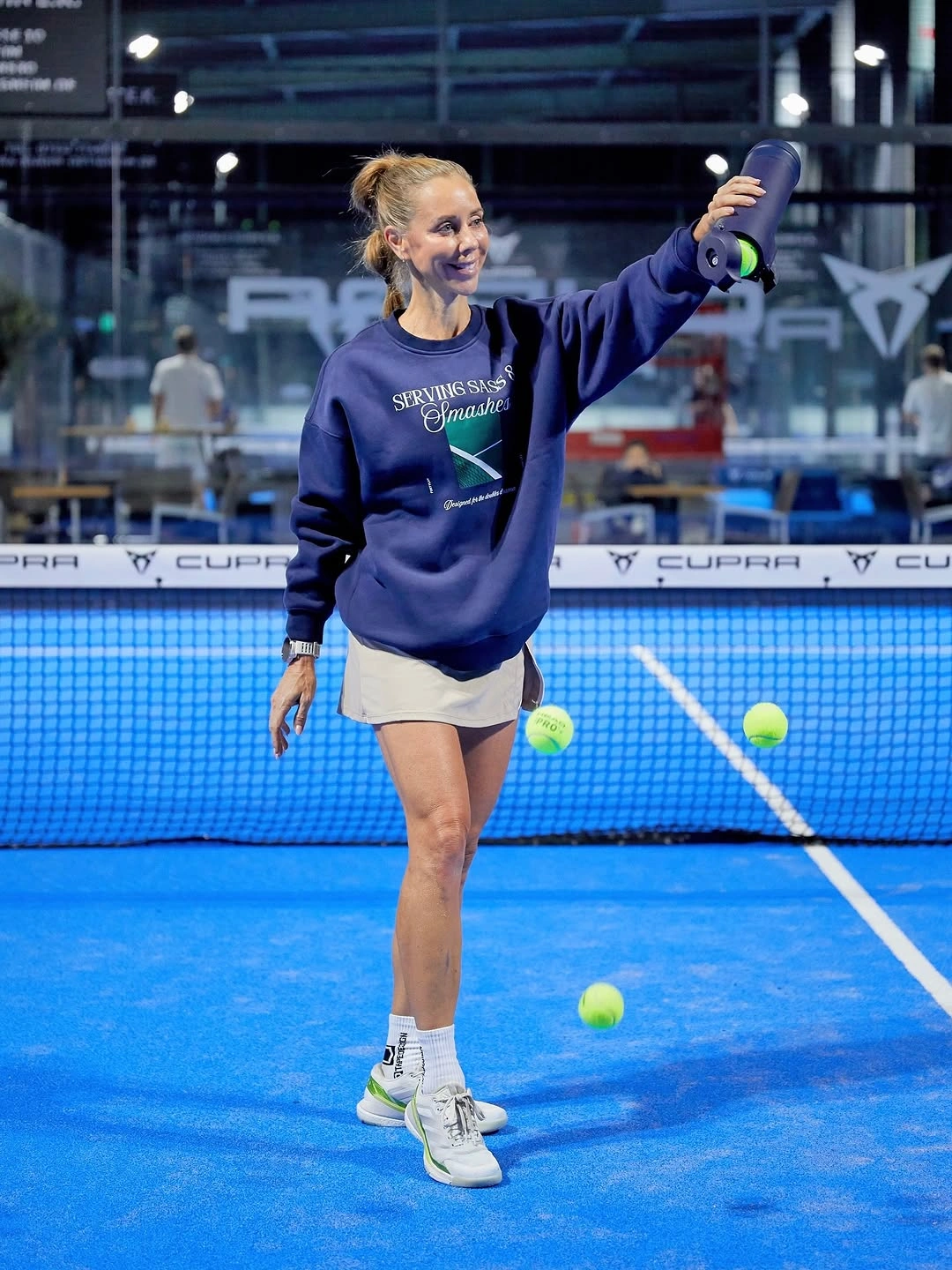
That contrast can be useful before play or during a gentle hit when you want the top layer to carry the mood. Keep the skirt, sneakers, and any cap plain so the cobalt remains one intentional statement rather than the beginning of a color pileup. If the sweatshirt feels too long for your own movement, a shorter zip layer can preserve the same blue-and-white idea with a more contained hem.
The honest limitation is visible in the raised racket position: sleeves and extra fabric have more chances to announce themselves once the action gets larger. A good padel outfit should not make you think about its volume at a key moment. Save the oversized sweatshirt for the parts of the session where comfort and warmth matter more than speed, then return to the skirted base when you want less distraction.
Minimal White Set Against Dark Equipment
The white cropped top and pleated skirt are nearly monochrome, but the black padel racket gives the outfit a clear center of gravity beside the net. That dark equipment edge keeps the white pieces from blending into a blank block of color. The result is spare but not empty: the cropped top defines the waist, the pleats give the lower half movement, and the racket supplies the necessary contrast.
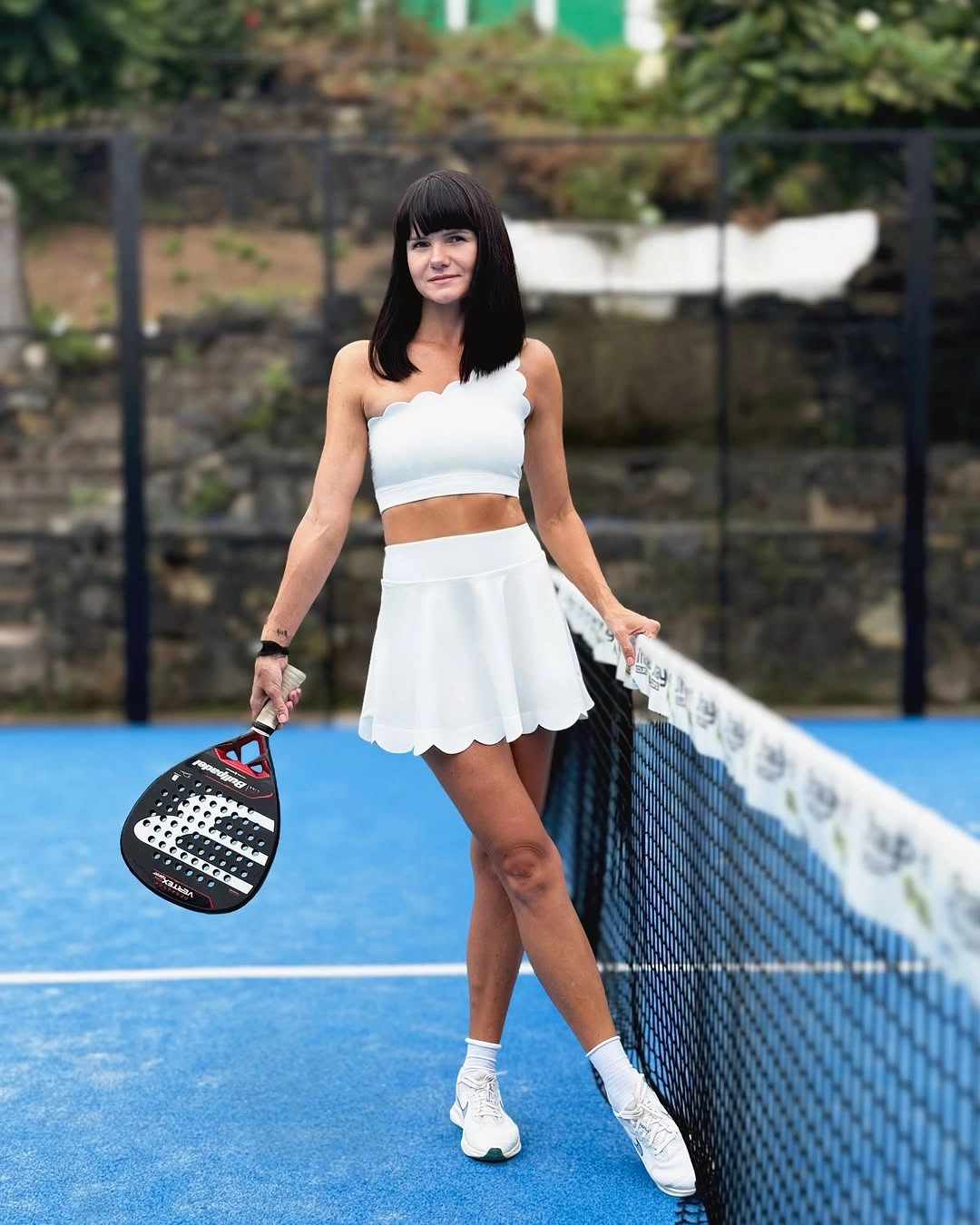
Choose an all-white direction when you enjoy a clean court reference and are comfortable deciding coverage through cut rather than color. A longer top, a higher neckline, or a less cropped silhouette can follow the same visual logic without copying the exact outfit. The important part is allowing one darker item, often the racket itself, to break the light palette instead of adding several small accessories.
A cropped top is a preference, not a requirement for a padel look, and there is no reason to force it if you want more coverage through the midsection. The skirt and shoe combination can carry the same minimal mood with a different upper layer. White also needs regular care after court time, but its simplicity can make that care feel worthwhile when the outfit lets your stance and equipment remain visually central.
Lavender Pleats Beneath a Cream Layer
The lavender pleated skirt introduces a soft color note under a cream sweatshirt, while the red court fence and the balls in hand make the scene feel active rather than decorative. The layer stays quiet enough that the skirt gets a real role in the outfit instead of appearing as a small flash below a bulky top. White shoes continue the light lower-half line and keep the palette from drifting into too many separate tones.
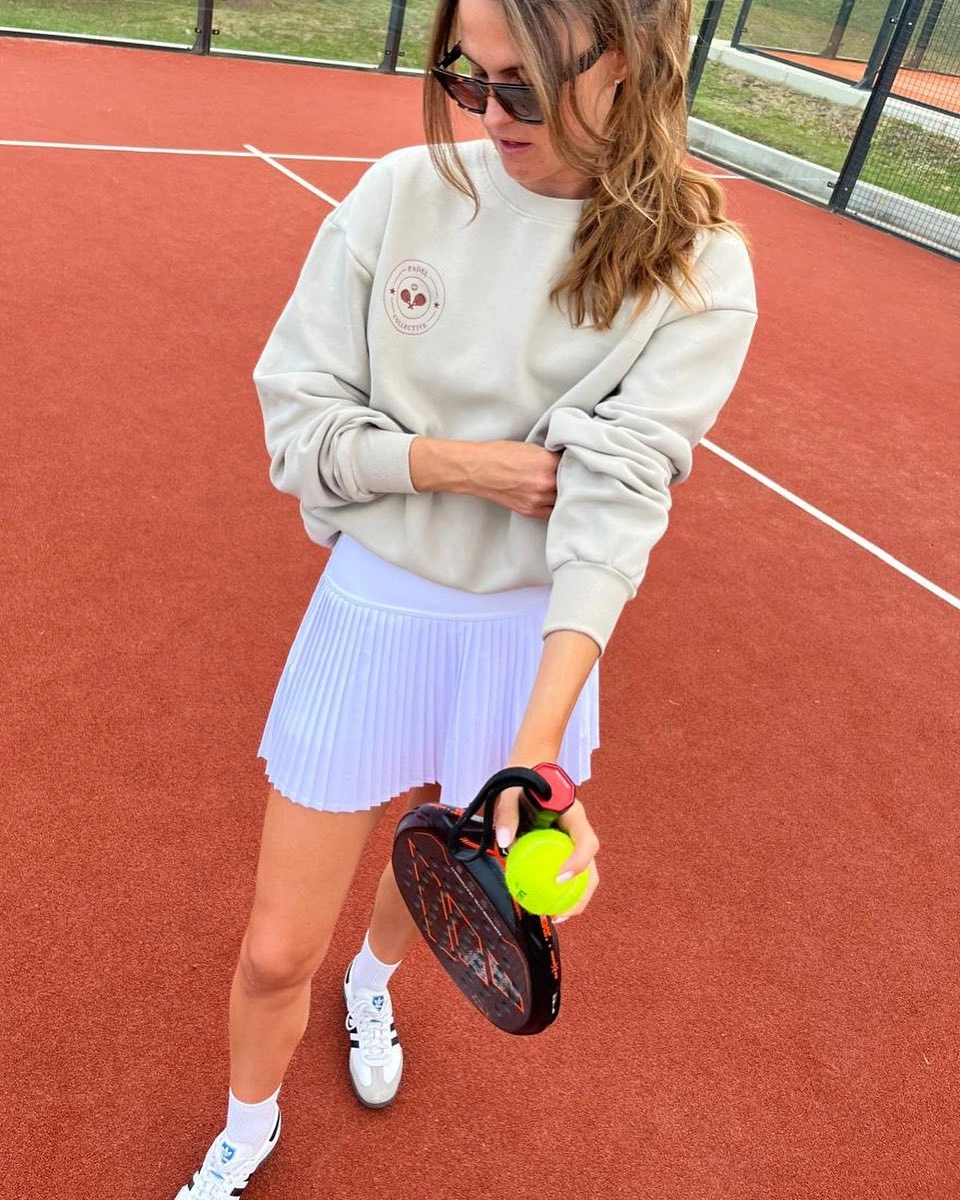
Use this approach when you want pastel without committing to a full matching set. The neutral top makes the lavender easier to repeat with simple accessories, and the pleats retain the familiar court shape beneath a relaxed layer. Sunglasses are already enough visual interest near the face, so a printed cap or colorful bag would make the combination work harder than it needs to.
The sweatshirt is most convincing as a transition piece, especially if your own game involves frequent overhead reaches or quick turns. Once you decide the layer has done its job, the lavender skirt can take over with a fitted top in white, cream, or another quiet neutral. That flexibility is the value here: one color accent, one removable layer, and no need to build the whole outfit around a trend phrase.
Black Polo With Bright Pleats
A black short-sleeve polo and white pleated skirt create a firm contrast that remains easy to read against an indoor blue padel court. The collar gives the top a compact shape, while the bright skirt keeps the lower body visible and light. Holding the racket at rest makes the formula feel calm, but it is still grounded in the sport because every piece has a clear courtwear role and nothing feels ornamental.
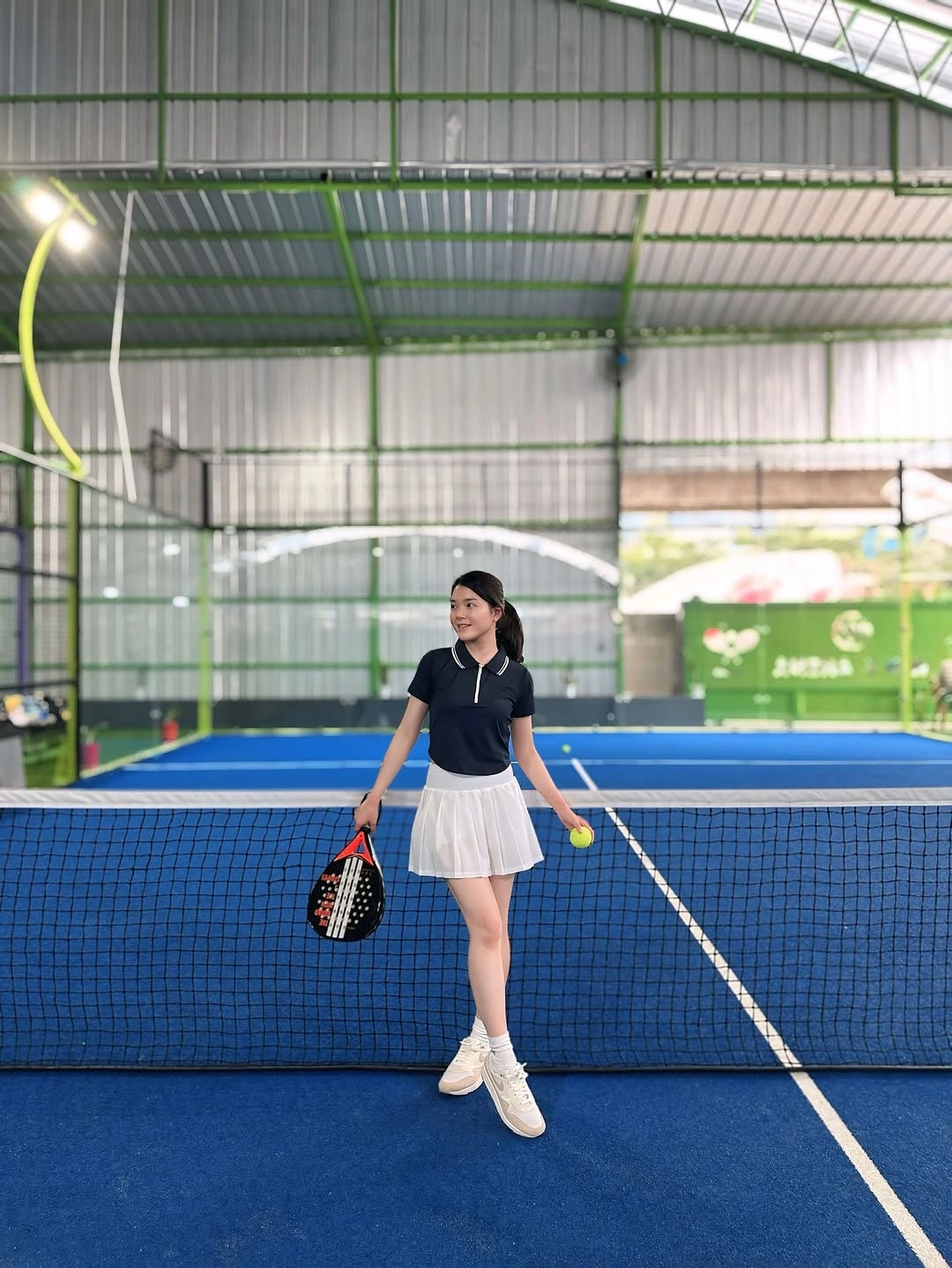
For padel outfits women skirt searches, this is a useful reference because the look does not depend on a matching logo, complicated layering, or a particular body type. The polo can be replaced with another fitted short-sleeve top if collars are not your preference, while the black-and-white division still holds. Keep the shoe color close to white so the skirt remains the light visual bridge between the darker top and the court surface.
White pleats bring a polished contrast, though they will need more attention after contact with a dusty court or a low bench. If you value a lower-maintenance option, reverse the colors with a white polo and black skirt, but keep the same measured balance. The real lesson is not the exact clothing list; it is using two neutrals so each part of the body remains readable during actual play.
Deep Red Set for Overhead Movement
The deep red sleeveless top and matching pleated skirt stay visually coherent even with the racket raised overhead, which matters more than a posed front-facing view for this kind of outfit. The closer fit leaves the arms and waist easy to follow, while the small pale trim at the waist gives the two red pieces a needed line of definition. Color becomes the statement, but the movement keeps the outfit connected to the game.
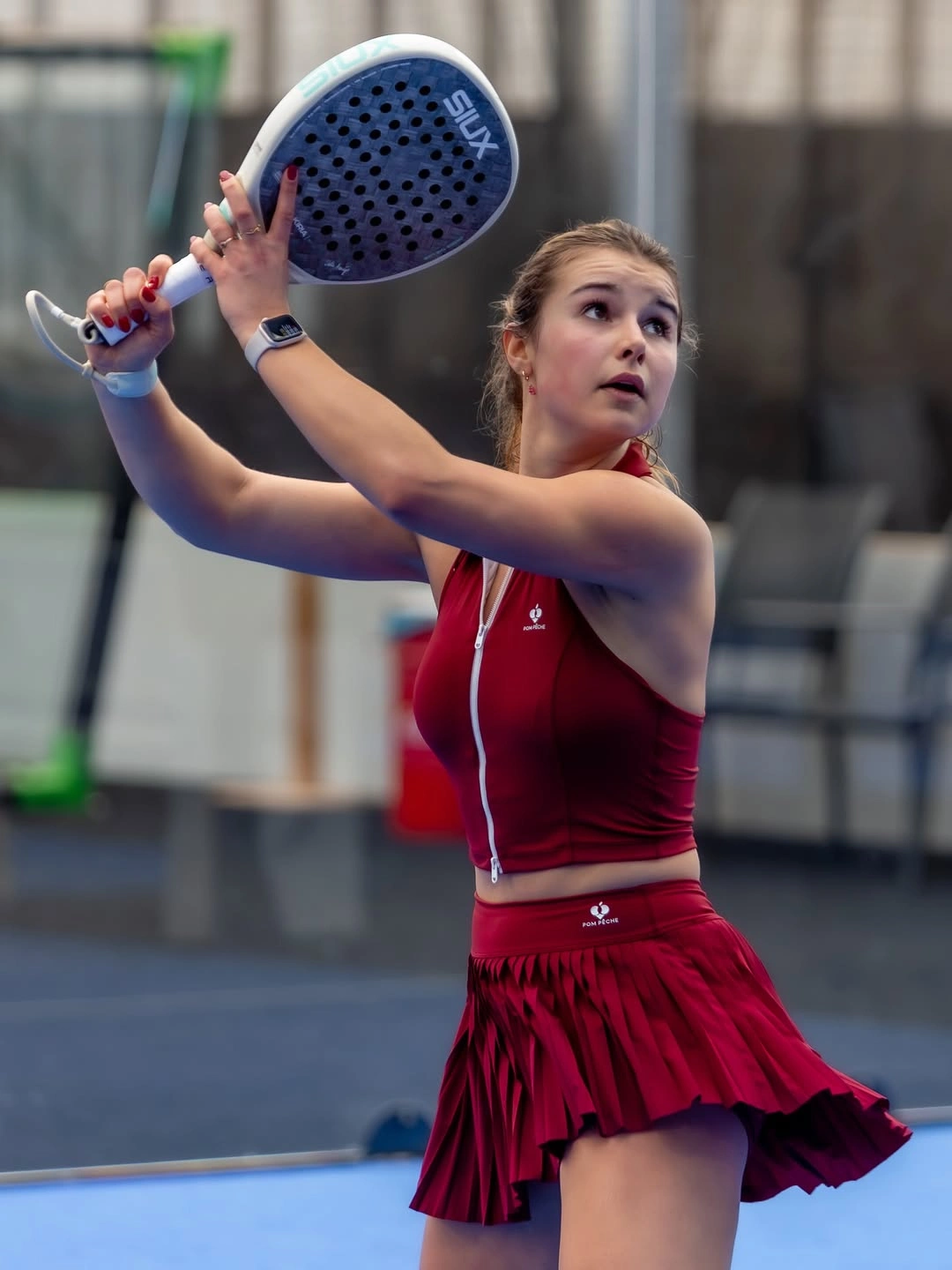
A matching set like this can help a player avoid the fuss of coordinating separate colors before a session. The key is choosing a top that feels comfortable around the shoulders and a skirt shape that suits your own coverage preference, rather than assuming any red set will work the same way. White sneakers are a smart quiet finish because they echo the trim and stop the outfit from becoming a single uninterrupted field.
Fitted pieces can be appealing when loose fabric near the racket arm feels distracting, but close cuts are still personal and should never be treated as the only athletic choice. If you want more coverage, a short-sleeve red top can preserve the same color story. The stronger idea is letting the outfit keep its shape while the arms move, not trying to make a dramatic color carry the entire performance of the look.
Green Layer With a Pink Cap
The green sweatshirt and pale pink skirt could easily feel disconnected, yet the pink cap repeats the skirt’s color and turns the contrast into a deliberate pairing. The racket and ball keep the combination rooted beside the court, while the roomy top suggests a layer for arriving or pausing between games. Without the cap, the green would dominate; with it, the outfit has a clear color conversation from head to hem.
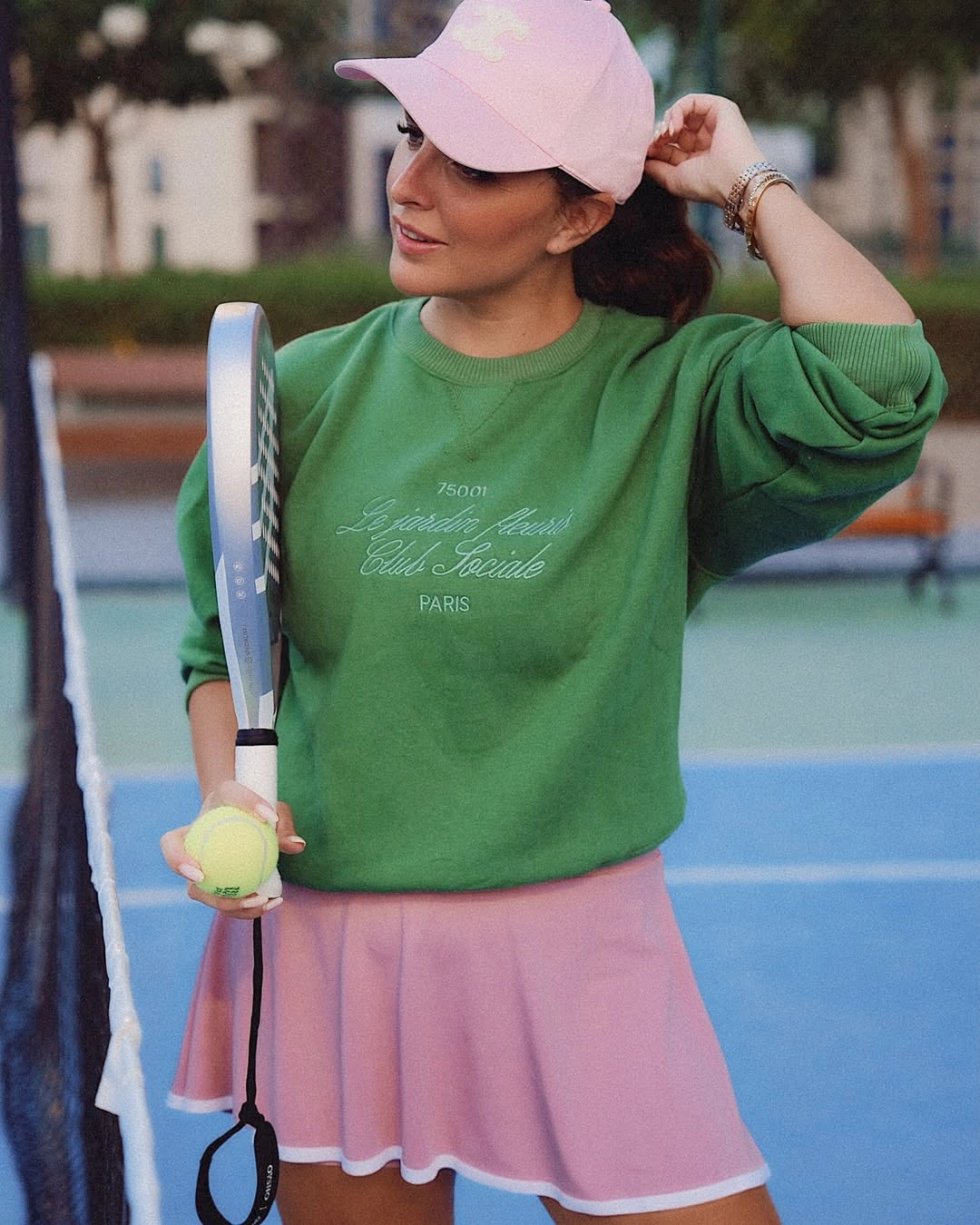
This is a good reminder that one repeated accent can do more than a collection of extra accessories. If you like the color pairing but prefer less volume, use a fitted green long-sleeve top with the same pink skirt and cap. The equipment should still read clearly, so choose a neutral shoe and avoid adding another saturated item near the bag or outer layer.
An oversized sweatshirt is not a universal answer for fast padel movement, and its role is stronger before or after the demanding part of the session. The skirt-and-cap echo remains useful even when the layer comes off, which makes the styling more adaptable than it first appears. Color works best here as a small system: green for depth, pink twice for continuity, and white footwear to leave visual space around both.
Pink Dress With Net-Side Contrast
The pale pink dress sits against a much brighter pink court, yet the dark padel racket and white sneakers stop the outfit from disappearing into the background. Its fitted sleeveless top and pleated hem create a continuous, uncomplicated line from shoulder to thigh. Sitting by the net also shows why a dress needs little embellishment in this setting: the equipment and court already provide enough surrounding detail.
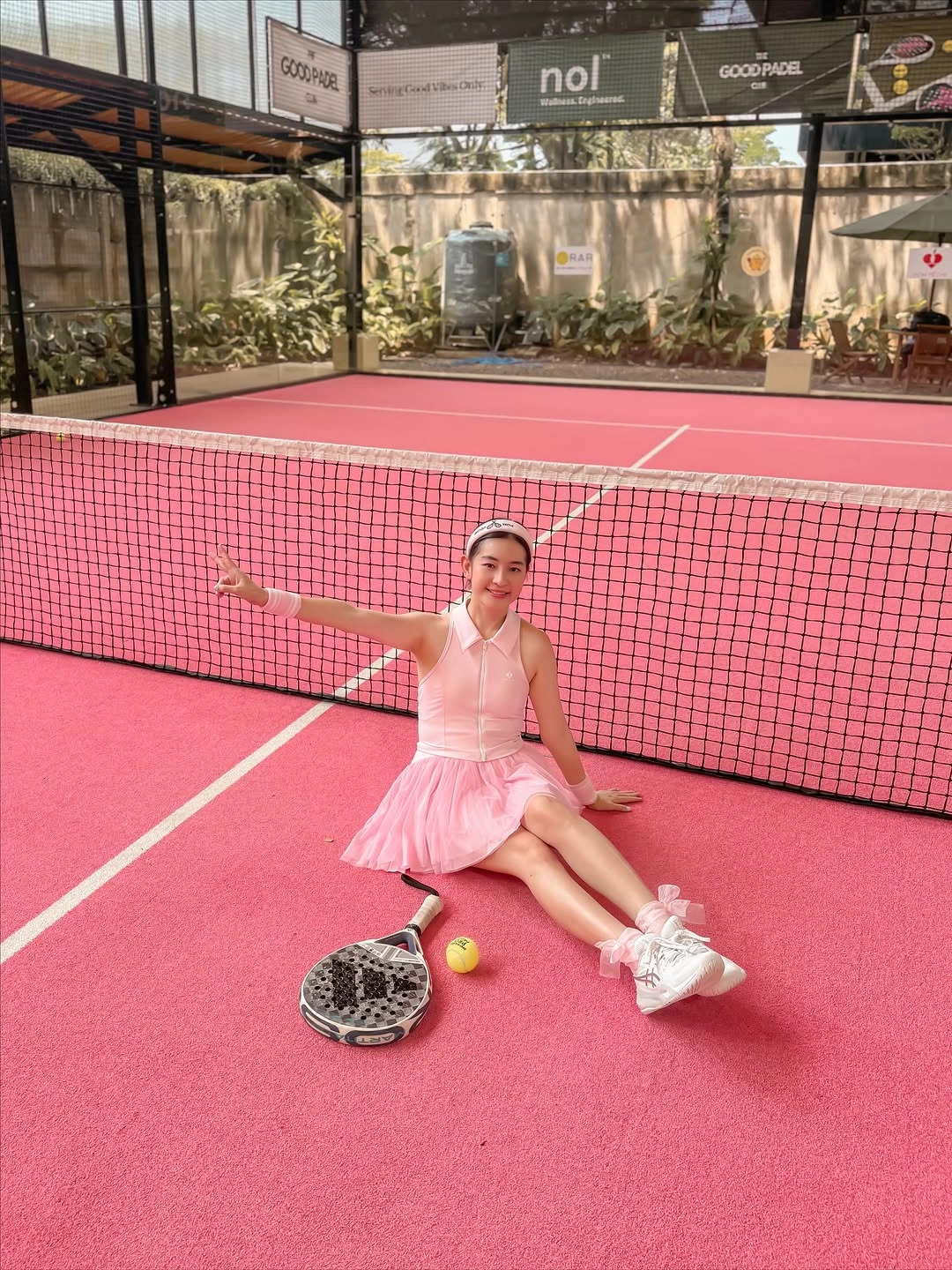
When a dress and court happen to share a color family, contrast becomes more useful than adding more color. A black or dark racket, white shoes, and a neutral layer for before play create that separation without changing the dress itself. The same reasoning applies away from this particular court, where the pink can remain the focal point even if the backdrop is blue, green, or gray.
A light dress may show court marks sooner than a darker one, so it works best for someone who does not mind treating a fresh outfit as active clothing. If you want the same silhouette with a little less maintenance pressure, look for navy, deep red, or black in a comparable shape. The padel connection comes from the practical restraint around it, not from trying to match every surrounding surface.
Light Blue One-Piece in a Glass Court
The light blue sleeveless dress is easy to spot inside the darker glass-walled court because the black racket and white shoes give its soft color enough definition. Carrying the racket while walking through the facility makes the one-piece feel ready for a session, not like a generic summer dress. The short skirted hem keeps the outline athletic, while the lack of extra layers lets the pale blue hold a calm, direct role.
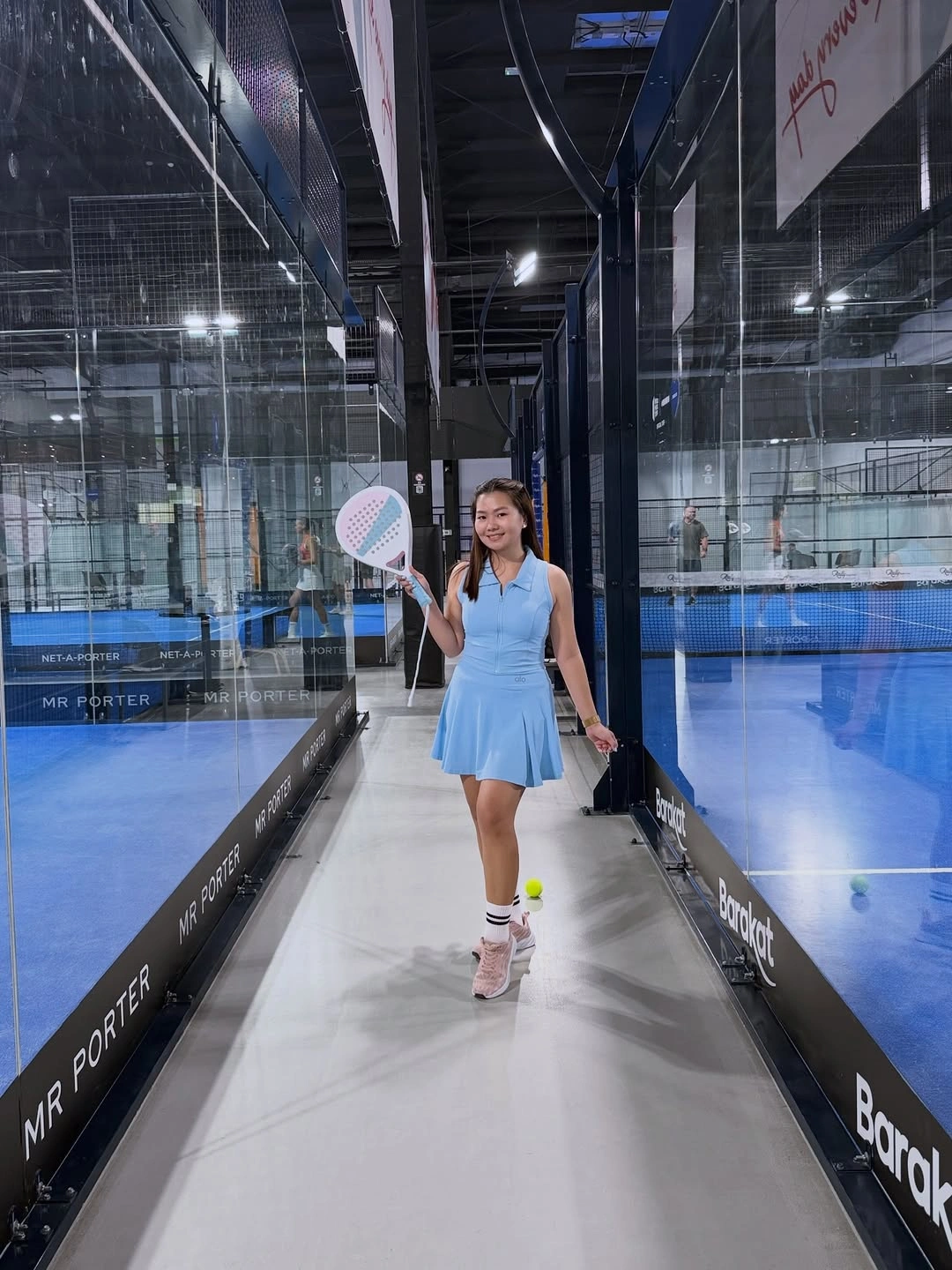
A one-piece can be especially appealing on days when you want to get dressed without building a separate top-and-bottom combination. Before choosing one, decide whether you prefer that simplicity over the option to alter your coverage once you are there. White socks and shoes are enough to support the dress, and a light neutral warm-up piece can wait off court instead of changing the clean blue line.
The limitation of a dress is not that it cannot look athletic; it is that there are fewer adjustment points if your comfort changes. That is why a player who likes the color but wants more flexibility might translate it into a light blue top and pale skirt. Either route can suit padel when the racket, footwear, and body movement remain the visible priorities rather than being crowded out by styling extras.
Black Socks Against a White Base
The white sleeveless top and pleated skirt follow a familiar court formula, but the black crew socks introduce a sharp graphic interruption at the ankle. With the racket lifted overhead, that small contrast becomes surprisingly important because it gives the lower leg a clear outline against the white shoes. The outfit remains minimal, yet it does not fade into a uniform white block during an active reach.
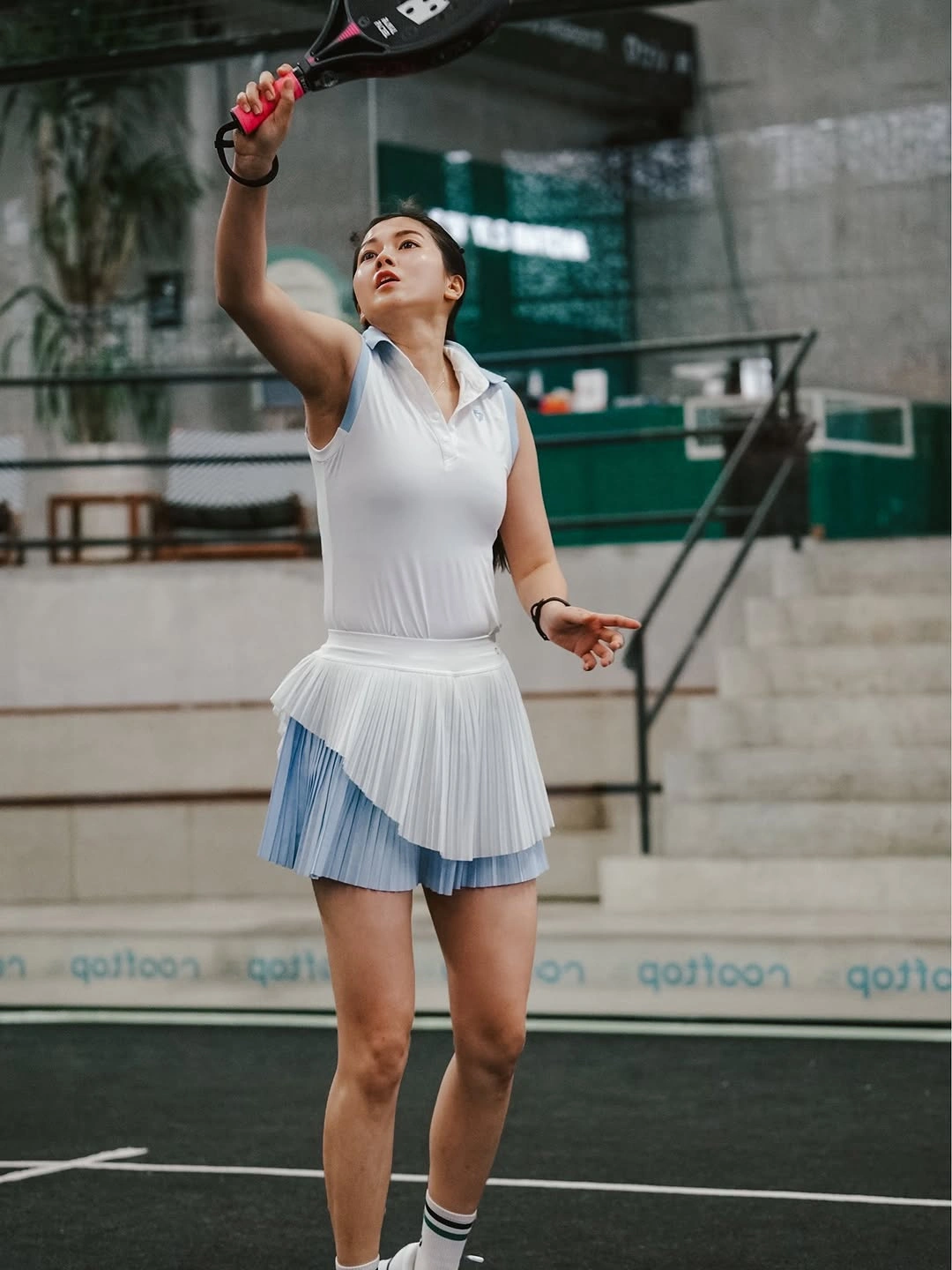
Black socks are a simple way to change the mood of a white base without buying a new dress or adding a trend-driven accessory. Their height is a personal style choice, so try a shorter version if you want less emphasis around the calves. Keep the racket and any bag dark or neutral, because repeating too many new colors would make one crisp contrast turn into visual clutter.
The socks draw attention to the lower leg, which can be exactly the point or exactly what you want to avoid depending on your preferred proportion. That makes them more than a tiny afterthought in an otherwise plain outfit. If you like the all-white silhouette better, white socks will restore it immediately; if you prefer a sharper edge, the black pair gives the dress a stronger court-to-street boundary.
Teal Long Sleeves With a Visor
The dark teal long-sleeve top and matching pleated skirt offer more arm coverage while keeping the overall shape unmistakably tied to the court. A light visor, white shoes, and the padel racket prevent the tonal set from becoming heavy. The fitted sleeves keep the upper half controlled, while the short skirt preserves enough contrast in proportion that the look still feels active rather than overly covered.
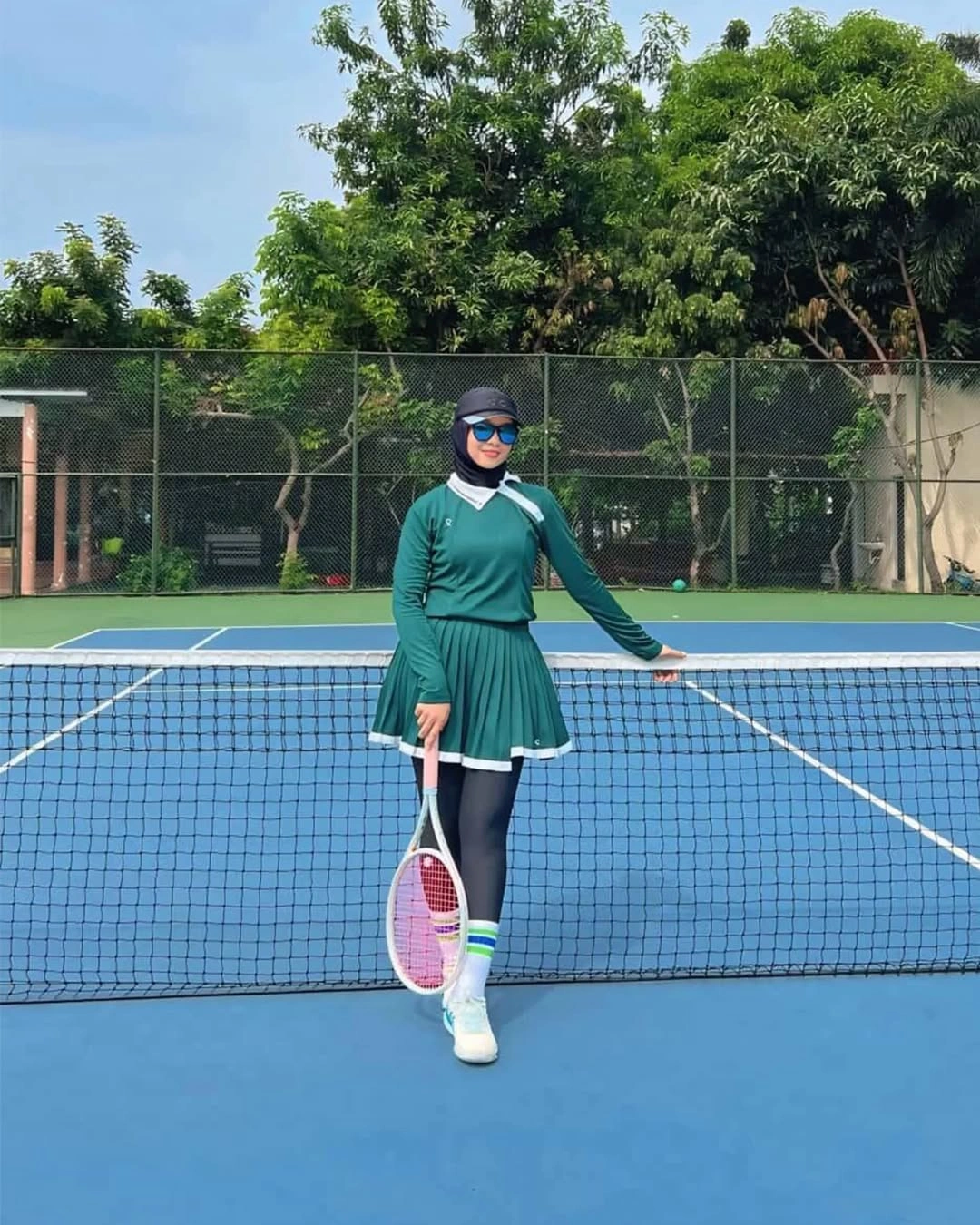
Long sleeves can be a thoughtful choice when that coverage feels right to you, especially if you do not want a loose extra layer around your arms. The visor adds a sport-specific finish without asking for jewelry or a statement bag, and its light color relates naturally to the shoes. Keep the teal pieces close in tone so the outfit reads as one system, not a top and skirt that happened to meet.
More coverage does not need to mean more volume, and this look makes that distinction clear. A fitted sleeve will behave differently from a sweatshirt hem during a reach, but the exact comfort still depends on the cut you choose. The small tradeoff is maintenance around a dark tonal set, where lint or pale court dust can be more visible, though the clean silhouette often makes that attention feel worthwhile.
Pale Beige Pleats and a Crisp Collar
The pale beige pleated skirt softens the classic court palette without losing the sport signal created by the white collared top, white socks, and black racket. Standing by the net, the outfit feels calm and composed rather than overly styled. The collar gives the upper body a defined starting point, and the neutral skirt supplies a quieter alternative for anyone who finds pure white too stark.
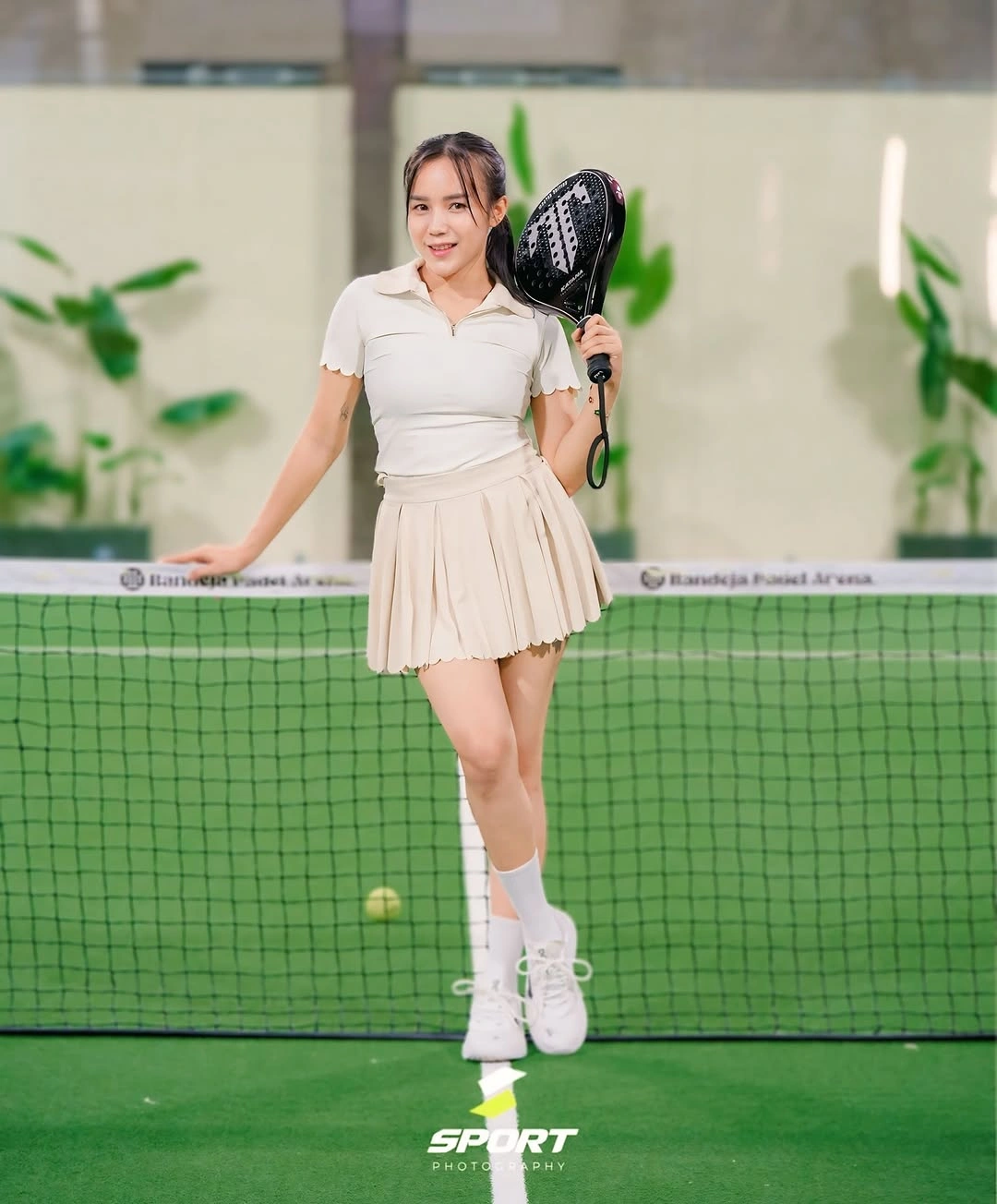
Beige works well here because it stays close enough to white footwear that the lower half does not break into separate blocks. Keep accessories spare and let the dark racket make the strongest contrast. A player who prefers a different neckline can swap the polo-like top for a plain white tee, but retaining one structured detail near the shoulders helps the outfit keep its court-focused character.
Light neutrals have the same honest tradeoff as white: court dust and small marks can become visible quickly. That is not a reason to treat them as impractical, only a reason to choose them when the softer color balance matters to you. The beige skirt earns its place by widening the neutral options, giving the outfit a measured, low-key tone without asking it to abandon the movement-friendly pleated shape.
Pink Shorts Set for Skirt-Free Play
The pale pink short-sleeve top and matching shorts offer a clear answer for anyone who wants the softness of a coordinated set without choosing a skirt or dress. The white cap and sneakers bring the outfit back to a light athletic base, while the racket, balls, and court bag establish the sport context. Because the bottom is shorts, the silhouette feels a little more grounded and less dependent on a pleated hem for its identity.
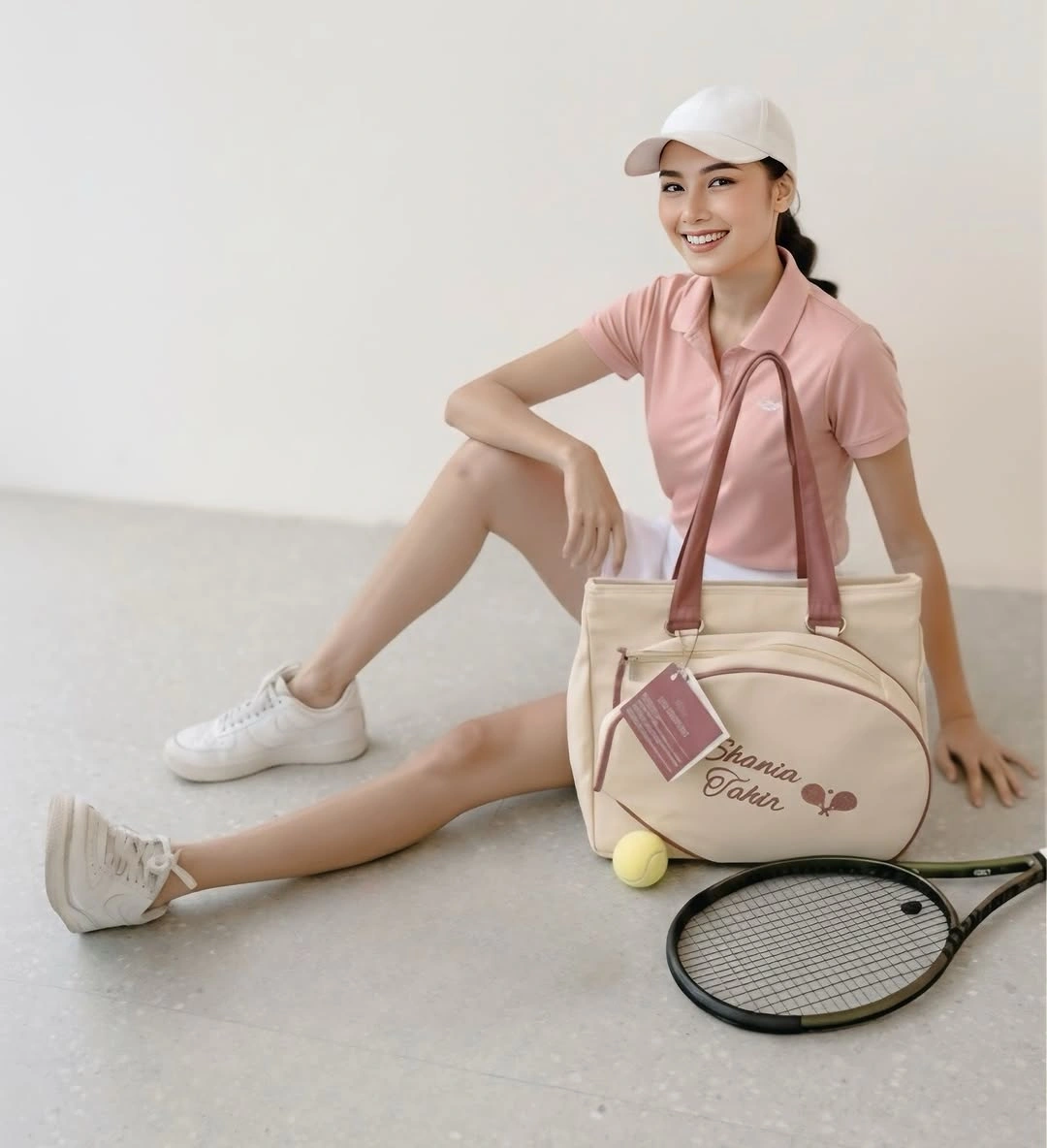
For padel outfits women shorts ideas, start with the practical preference first: do you want a bottom that reads as a single shape when you lunge, sit, or bend? If the answer is yes, a shorts set can be easier to style than trying to make a skirt fit every part of your game. The matching pink top keeps the result cohesive, while a simple cap and neutral shoes prevent the set from feeling overly coordinated.
The matching bag is tidy for arrival, but it does not need to become part of the outfit once play starts. Let the shorts and top carry the visual direction, then choose equipment that serves a direct purpose instead of turning every item into a color match. This look is useful precisely because it offers a skirt-free route without giving up the soft, considered tone that makes a coordinated padel set feel intentional.
Streamlined Long Sleeves in Motion
The pale gray-green long-sleeve top stays close to the body as the player meets the ball, and the white pleated skirt keeps the lower half bright against the darker indoor court. That action moment is more useful than a still pose because it shows the difference between a fitted sleeve and a loose warm-up layer. The black racket adds a clean point of contrast, so the muted top does not disappear into the background.
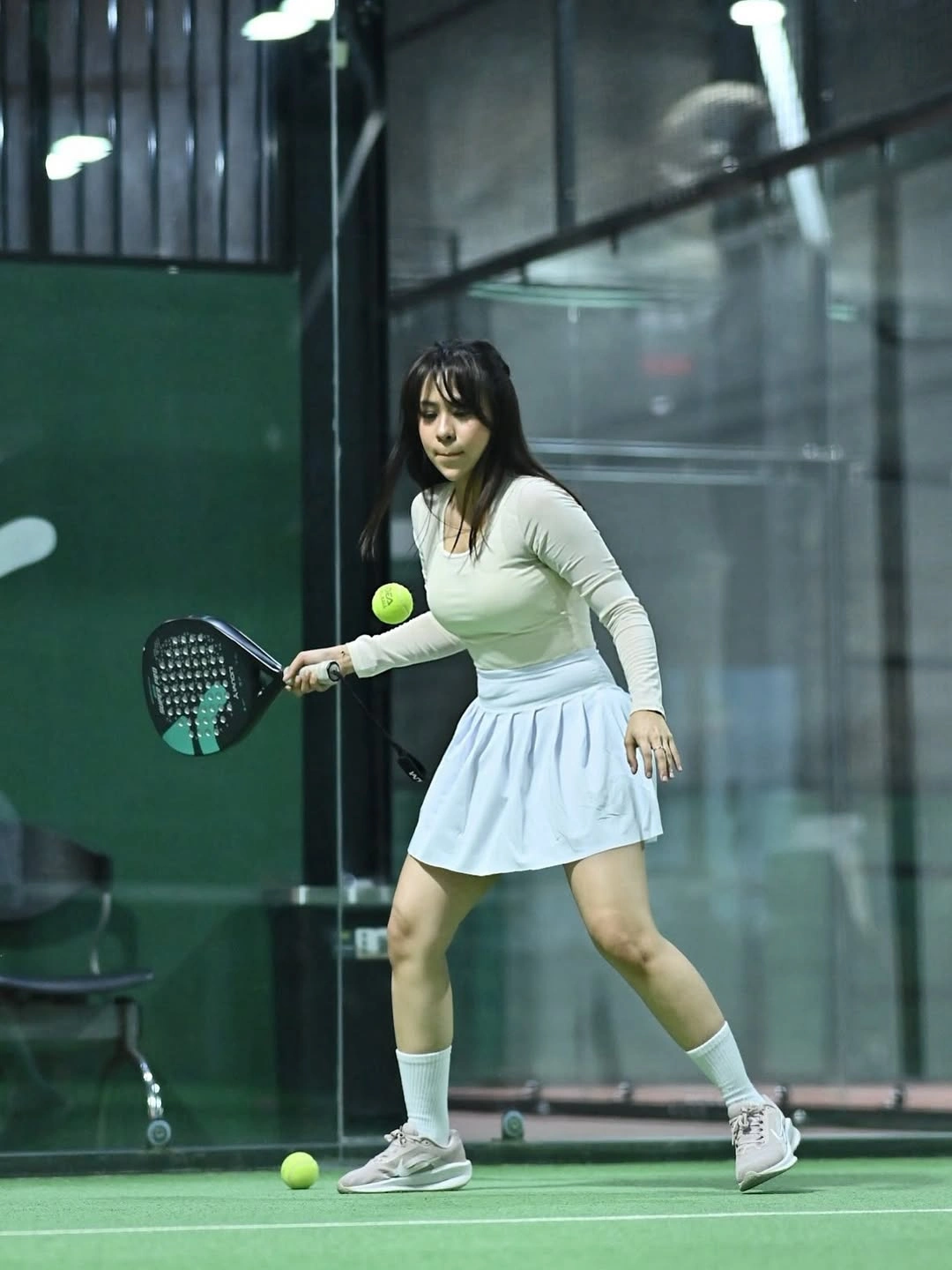
This is a strong formula if you want covered arms but do not want the bulk of a sweatshirt during movement. Keep the skirt simple, choose shoes in a light neutral, and let the top’s subdued shade make the outfit feel quieter than a saturated matching set. The visible ball and racket also make a useful case for avoiding unnecessary bracelets, dangling accessories, or loose outerwear around the hands and arms.
The white skirt will demand more cleaning attention than a darker bottom, especially if you spend time near the court surface or sit during breaks. In return, it gives the outfit a crisp lower edge and keeps the long-sleeve top from feeling too uniform-like. A darker skirt would change the emphasis, but the fitted upper body remains the key practical idea for padel: coverage that does not add distracting volume.
Full White Skirt With a Visor
The fuller layered white skirt brings more volume than the simple pleated options, but the visor, collar, and racket keep it firmly connected to an active court setting. Dark trim near the waist gives the outfit a small graphic boundary so the white pieces do not merge. In a forward swing, the skirt becomes the visual statement, which means the rest of the look needs to stay controlled and practical.
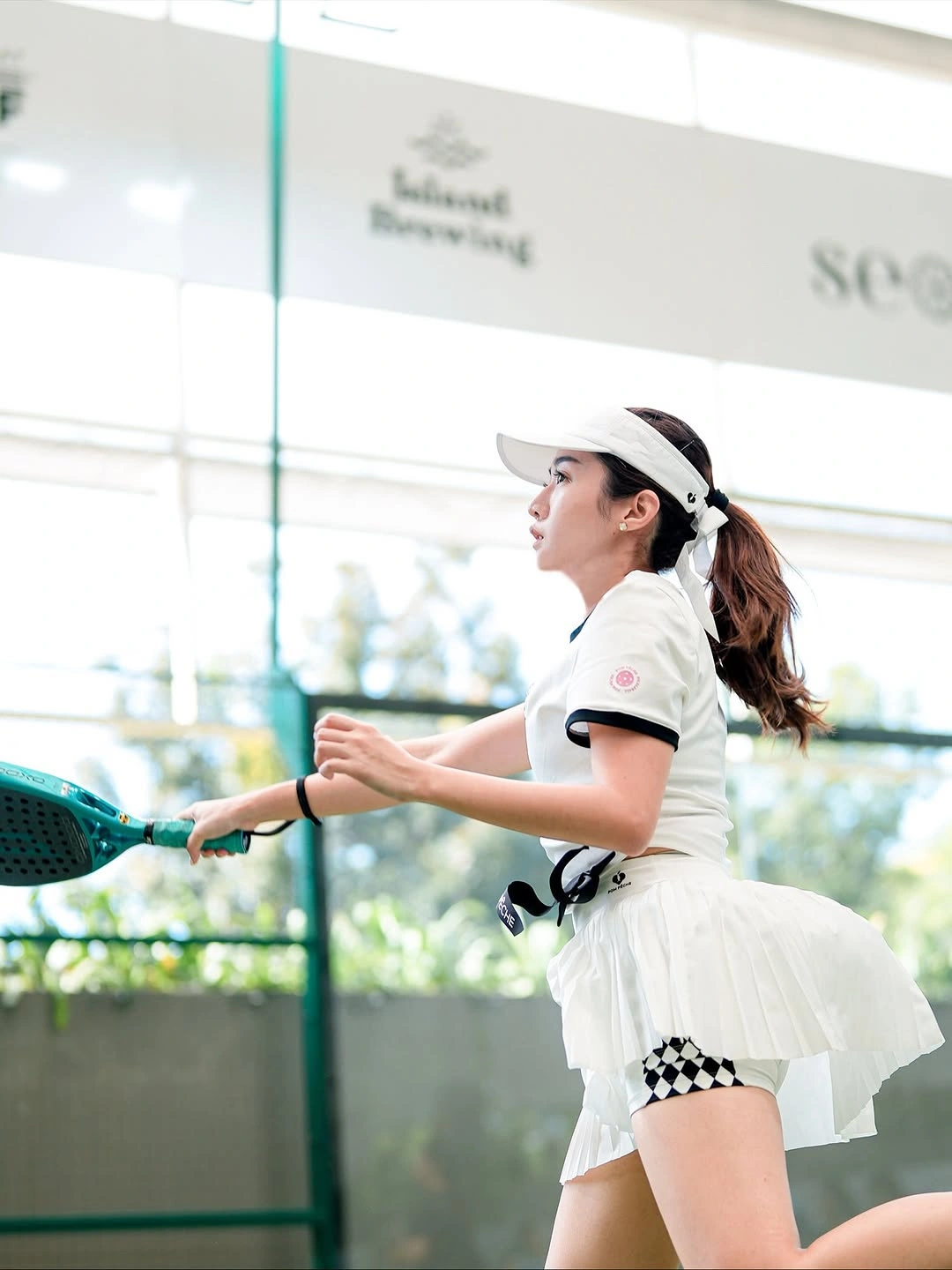
A more voluminous skirt can be fun if you enjoy a stronger silhouette, yet it is worth checking how its shape feels through your own turns and reaches before treating it as a match default. Keep the visor and shoes plain, because they already provide the sport-specific anchors that make the skirt believable on court. A fitted white top or polo helps preserve the proportion by giving the upper half a concise, stable line.
This is not the lowest-distraction option in the group, and that is fine as long as the extra volume is a choice rather than an accident. If you want a subtler version, switch to a flatter pleated skirt while keeping the collar, visor, and neutral palette. The important distinction is between fashion volume that supports your confidence and fabric that asks for attention when you would rather focus on the next ball.
Black Pleats With Fine White Piping
The black sleeveless top and pleated skirt make a strong silhouette against the blue court, while the narrow white piping at the neckline and hem stops the set from looking visually dense. Yellow balls around the racket add bright surrounding color, so the black outfit does not need another accent of its own. The result is direct and athletic: close upper body, short pleats, light shoes, and equipment that remains easy to spot.
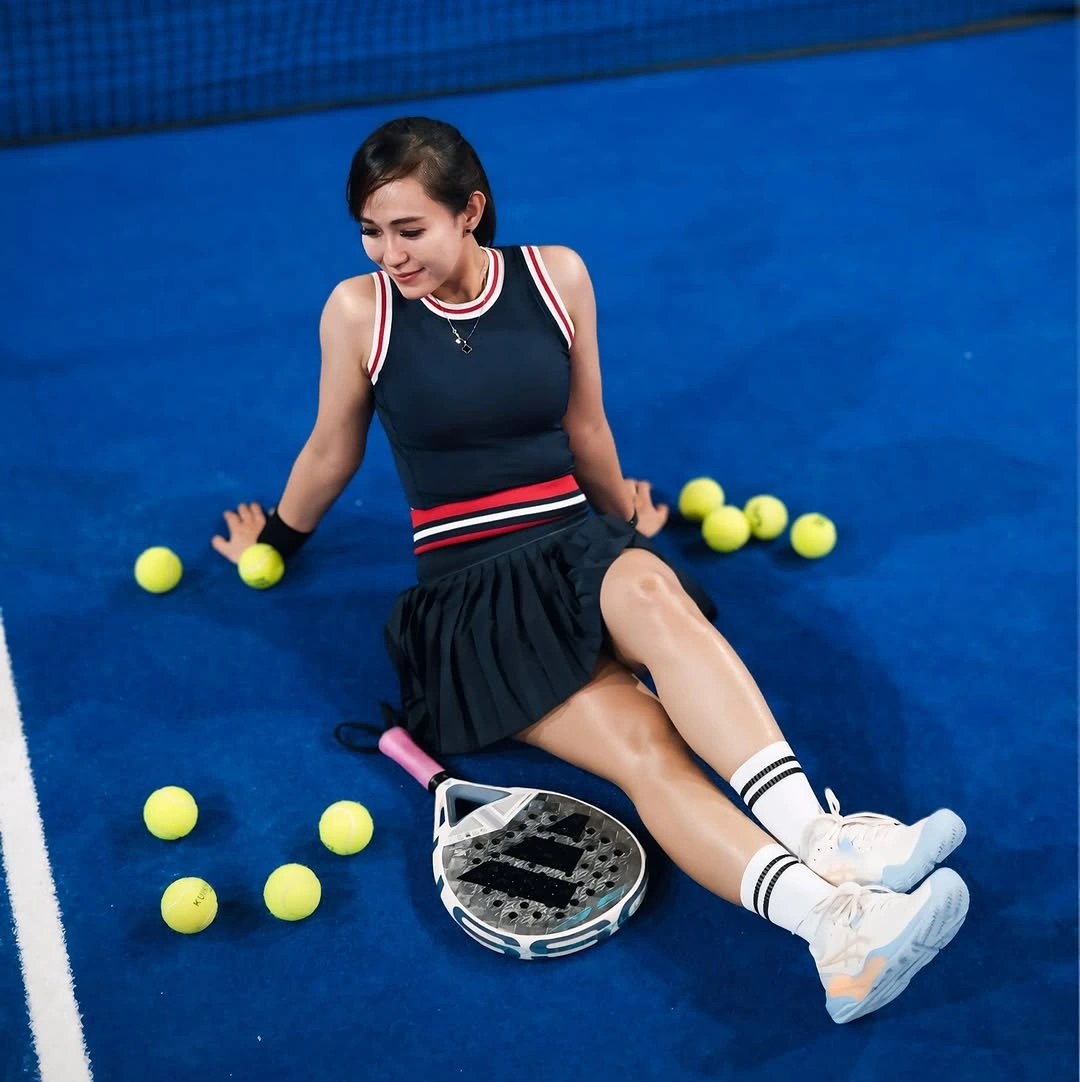
Black padel outfits women can be a practical choice for players who want a darker base but still prefer the unmistakable structure of a skirted court look. The white trim is enough to define the pieces, so keep any cap, bag, or sweatshirt neutral rather than trying to echo every detail. White sneakers are especially useful here because they create a clean exit point at the bottom of an otherwise dark silhouette.
A dark set may make small pale lint or dust more noticeable, even though it hides other marks that would stand out on white. That maintenance tradeoff is simply different, not better in every situation. What makes this outfit work is the restraint of the piping: it gives the black pieces shape and separation without turning the look into a graphic pattern that competes with the pace and color of the court.
Black Collared Dress in a Low Stance
The black sleeveless collared dress keeps a clean outline even in a low ready position, which is a useful test for a one-piece intended for a racket sport. White shoes lift the lower edge of the look, while the orange court gives the dark dress a warm, decisive contrast. The collar adds structure near the face, and the short skirted hem keeps the outfit from reading as a generic black dress outside the game.
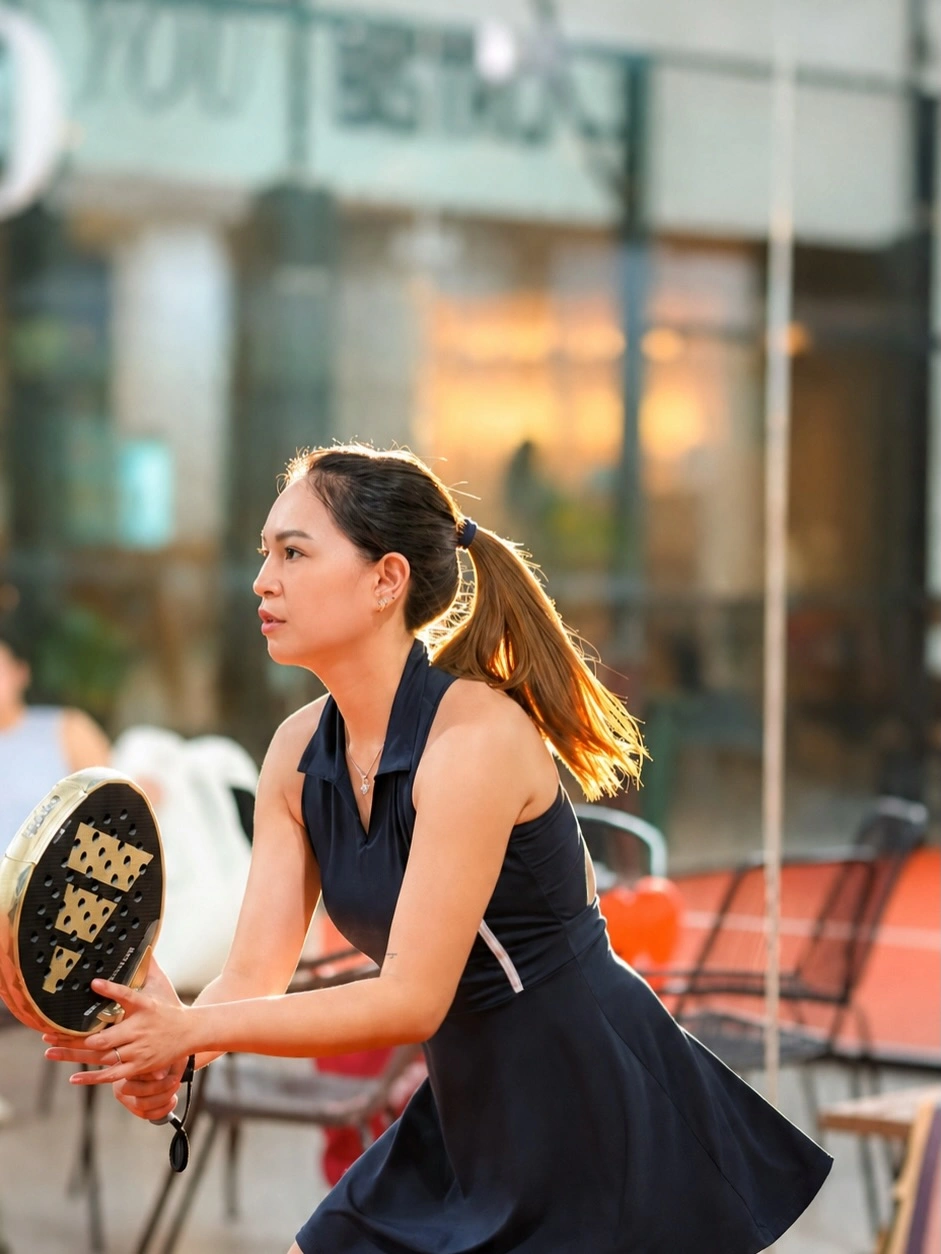
A black one-piece can be a strong option when you want to get dressed quickly but do not want an all-white court look. Let the footwear stay light, choose a simple racket bag for arrival, and avoid adding a dramatic layer that would interrupt the dress’s clean line. The value is in the directness: collar, dress, shoes, racket, and stance all make sense together without a long list of supporting items.
The same convenience that makes a dress appealing can limit your ability to change only the top or only the bottom once your comfort shifts, so it helps to know your preferred coverage before choosing it. If the fit works for you, the dark color can be a calm finish against busy courts and bright balls. It closes the article’s main idea neatly: padel clothing earns its place when the style choices still leave movement looking like the priority.