Streetwear Women Winter Outfits: 23 Color-Led Looks
Streetwear women winter outfits are at their best when one bright or textured decision has room to breathe. A cap, scarf, polished shoe, or plush jacket can change the energy of a practical base without turning the whole look into a costume. The interesting part is not collecting statements; it is deciding which one gets to lead and which pieces simply keep its rhythm. For another perspective on cold-weather outfits, the same balance applies.
Start by watching the balance between volume and contrast. A wide trouser needs either a shorter layer, a clear shoe, or a concentrated point of color to avoid looking accidental, while a dramatic coat benefits from a quieter base. That visual check lets winter dressing feel playful and intentional even when every piece has a useful, everyday purpose.
Camel Jacket With a Red Striped Scarf
The short camel jacket keeps the relaxed white trousers from becoming too soft and open, while the wide red-and-white scarf supplies a lively pattern close to the face. A burgundy cap repeats the scarf’s warm note in a smaller dose, so the color feels distributed rather than pasted on. The brown handbag adds another grounded element without competing with the stripe.
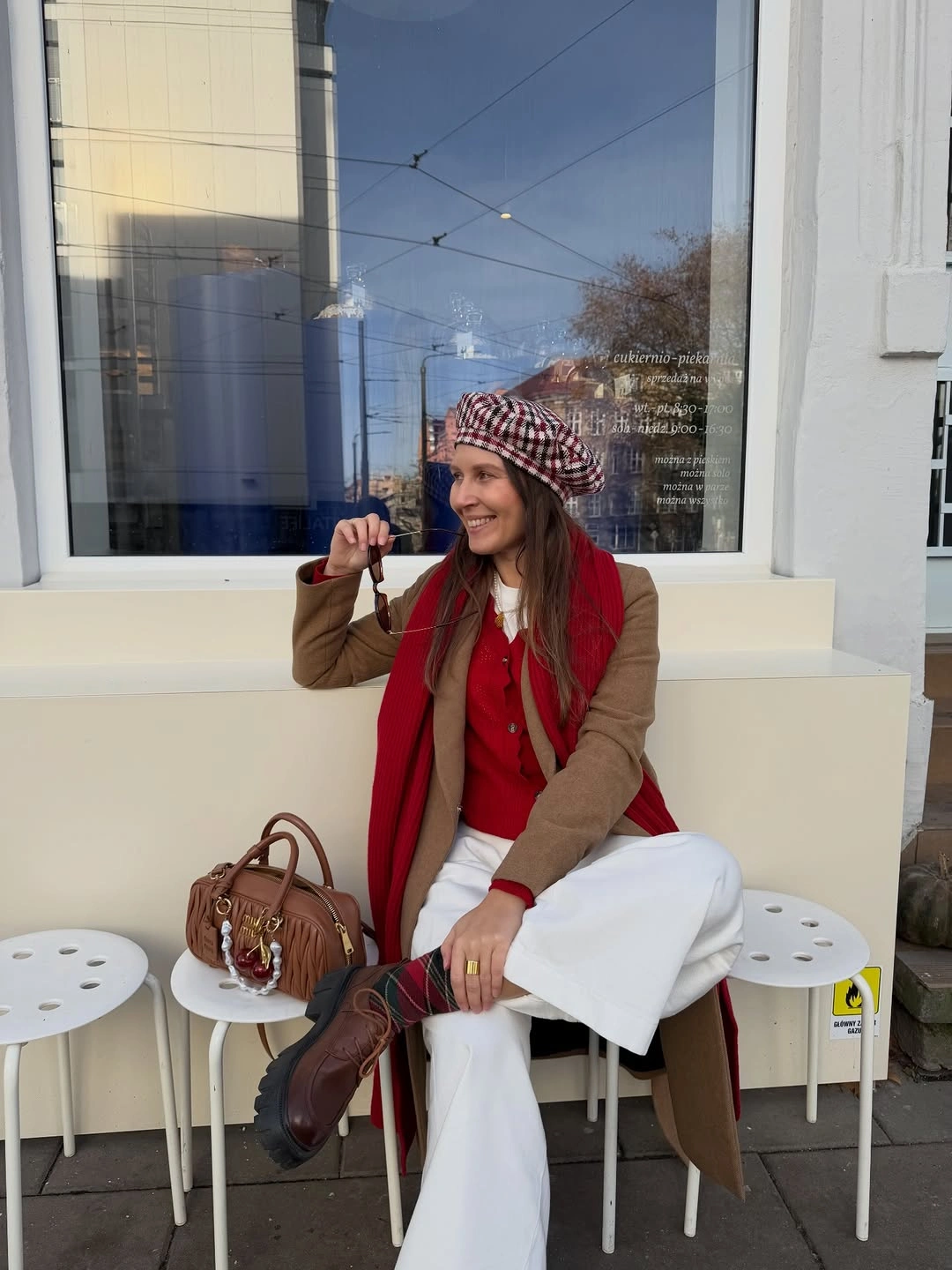
That scarf is doing more than keeping the neckline covered: its graphic bands make familiar neutrals look less formal. If red feels too assertive, a narrower striped scarf in rust or deep rose would preserve the same idea with less contrast. Keeping the trousers light is helpful here because it gives the cap and scarf a crisp place to register.
There is also a useful proportion lesson in the cropped outer layer. The jacket ends well above the roomy trouser hem, which stops the pale lower half from reading as a single oversized block. A longer coat could still work, but then the bag or footwear would need a sharper outline to restore the definition created naturally by this shorter silhouette.
Soft Cream Knit Set and Clean Trainers
A fitted cream cardigan and flowing trousers create a tonal outfit with a calm, continuous line. The cardigan is narrower than the trousers, so the softness does not spread evenly from shoulder to hem; that small contrast is what makes the set feel composed. White trainers keep the base practical and match the light palette without adding another texture story.
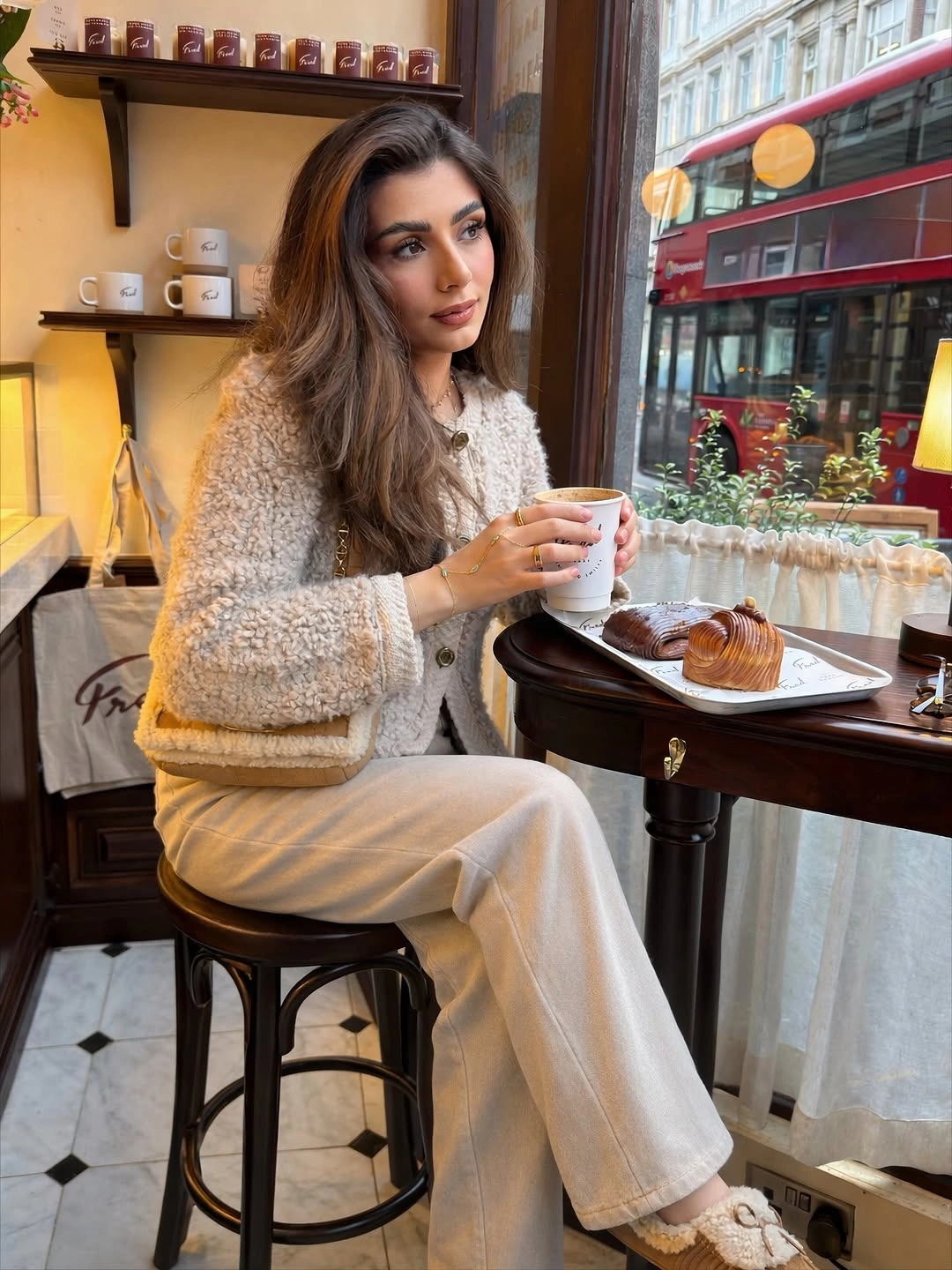
For an everyday version, this is a good reminder that a matching color family does not require identical fabrics. The textured cardigan gives the upper half detail, while the smoother trousers keep the outfit from becoming visually busy. A compact dark bag could make the palette more graphic, but a soft beige bag would maintain its quieter mood.
The long trouser shape deserves attention before adding a heavy outer layer. A short puffer or cropped wool-like jacket would let the waist relationship remain visible, whereas a bulky mid-length coat could flatten the clean vertical flow. Choosing a trainer with a low profile matters too, since a very thick sole might pull focus away from the balanced upper and lower proportions.
Black Column Interrupted by a Camel Wrap
The black coat and wide-leg trousers form one dark, lengthening column, then the oversized camel scarf breaks it with warmth and volume. Because the scarf sits centrally instead of at the hem, it softens the face area without chopping the long outline into several pieces. Sunglasses and the small black bag keep the surrounding details restrained.
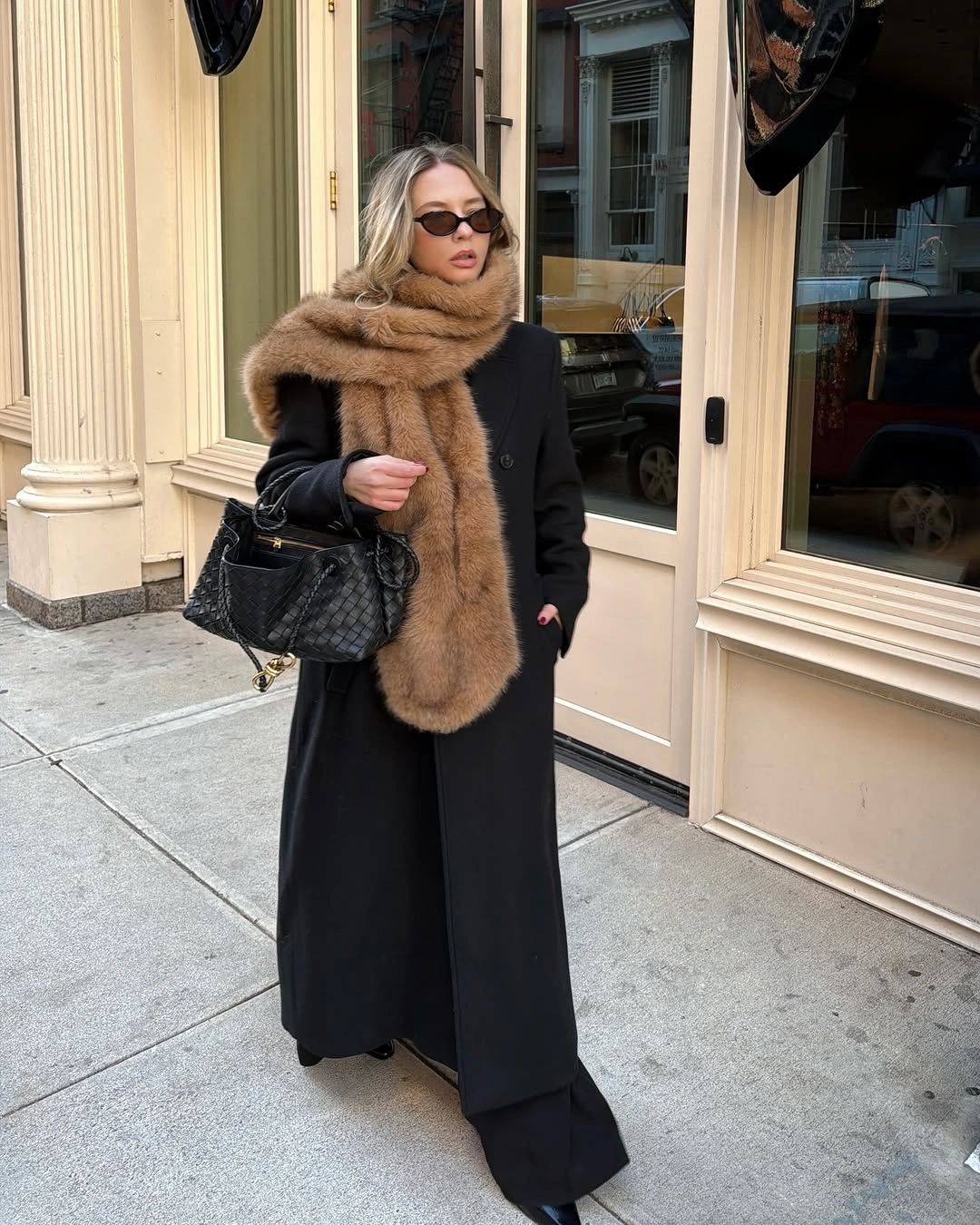
Camel works well in this setting because it is warm enough to read against black but still quiet enough to look intentional. A soft taupe or muted cinnamon wrap would offer a similar contrast if camel feels too classic. The key is to let the scarf stay broad and plain, since a loud print would compete with the strong coat-and-trouser line.
Wide trousers under a long coat can look heavy when the top layer has the same visual density from shoulder to ankle. Here, the scarf creates a fuller middle section and gives the eye a pause before the long trouser fall begins. If movement feels restricted by the amount of fabric, a thinner knit base under the coat would keep warmth without adding another bulky zone.
Espresso Plush Jacket Over Charcoal Trousers
The dark brown plush jacket brings a rounded, tactile surface to charcoal wide trousers and black boots. Its dropped shoulder reads deliberately relaxed, but the close palette prevents the different volumes from becoming noisy. The compact dark bag is a useful scale choice because it does not ask the lower half to carry even more visual weight.
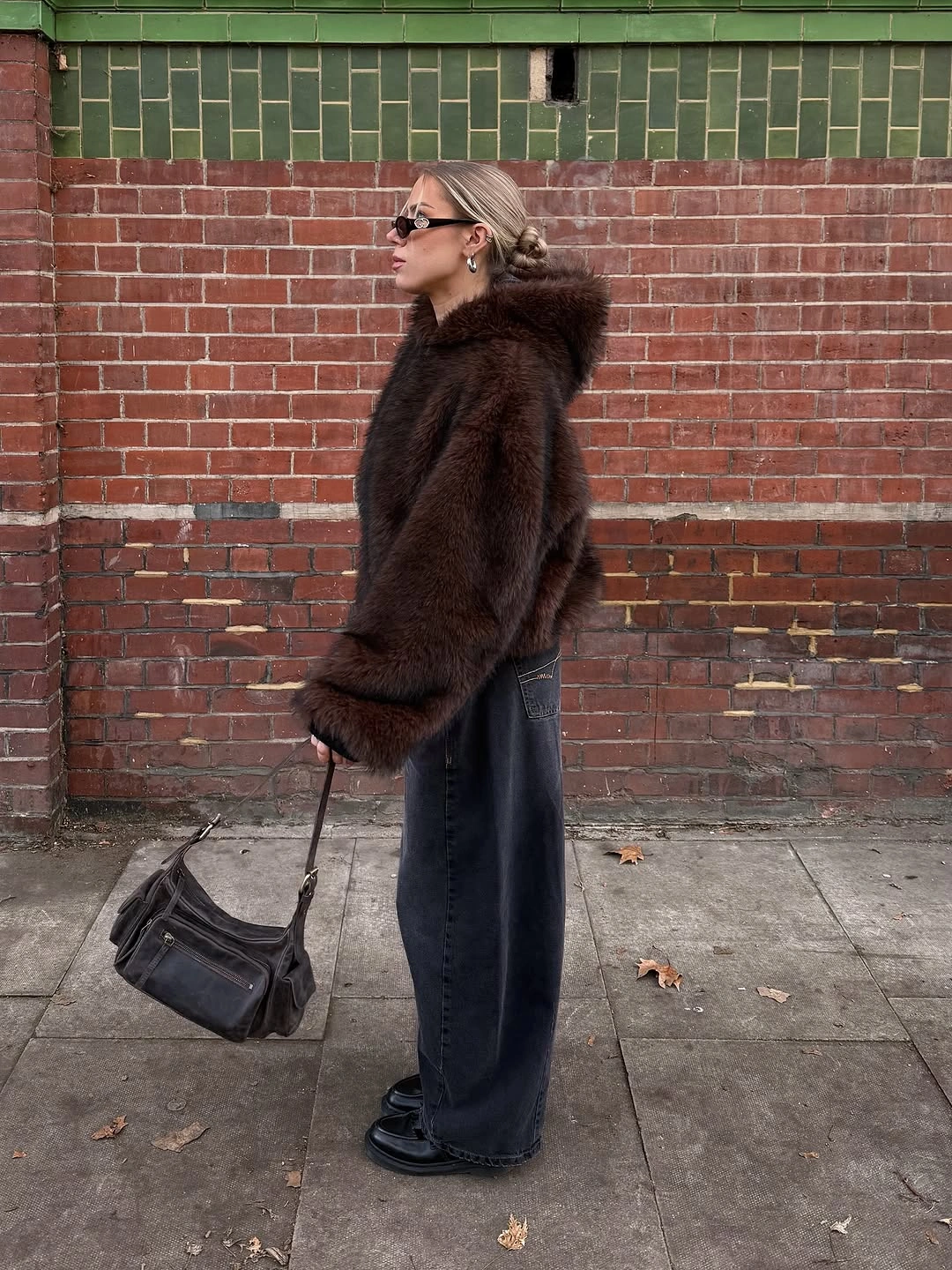
This combination shows how texture can replace color as the main streetwear signal. The fuzzy jacket catches attention first, while the trouser shape stays broad and matte underneath. To make the look lighter, swap the charcoal trousers for washed gray denim; to keep the same mood, avoid a shiny top that would make the surfaces compete rather than support one another.
Short outerwear is especially helpful when trousers already have generous width. It gives the outfit a visible turning point at the hip and lets the boot line finish the silhouette cleanly. A very long coat over this same base could work on a narrower leg, but with these proportions it might hide the strongest relationship between the jacket and trousers.
White Texture on a Narrow Black Base
The rounded white fuzzy jacket carries nearly all the volume and texture, while straight black trousers create a sharp, narrow foundation below it. That high contrast is simple rather than severe because the pale layer is soft-edged instead of tailored. The dark sunglasses echo the trouser line and keep the upper part from looking too sweet.
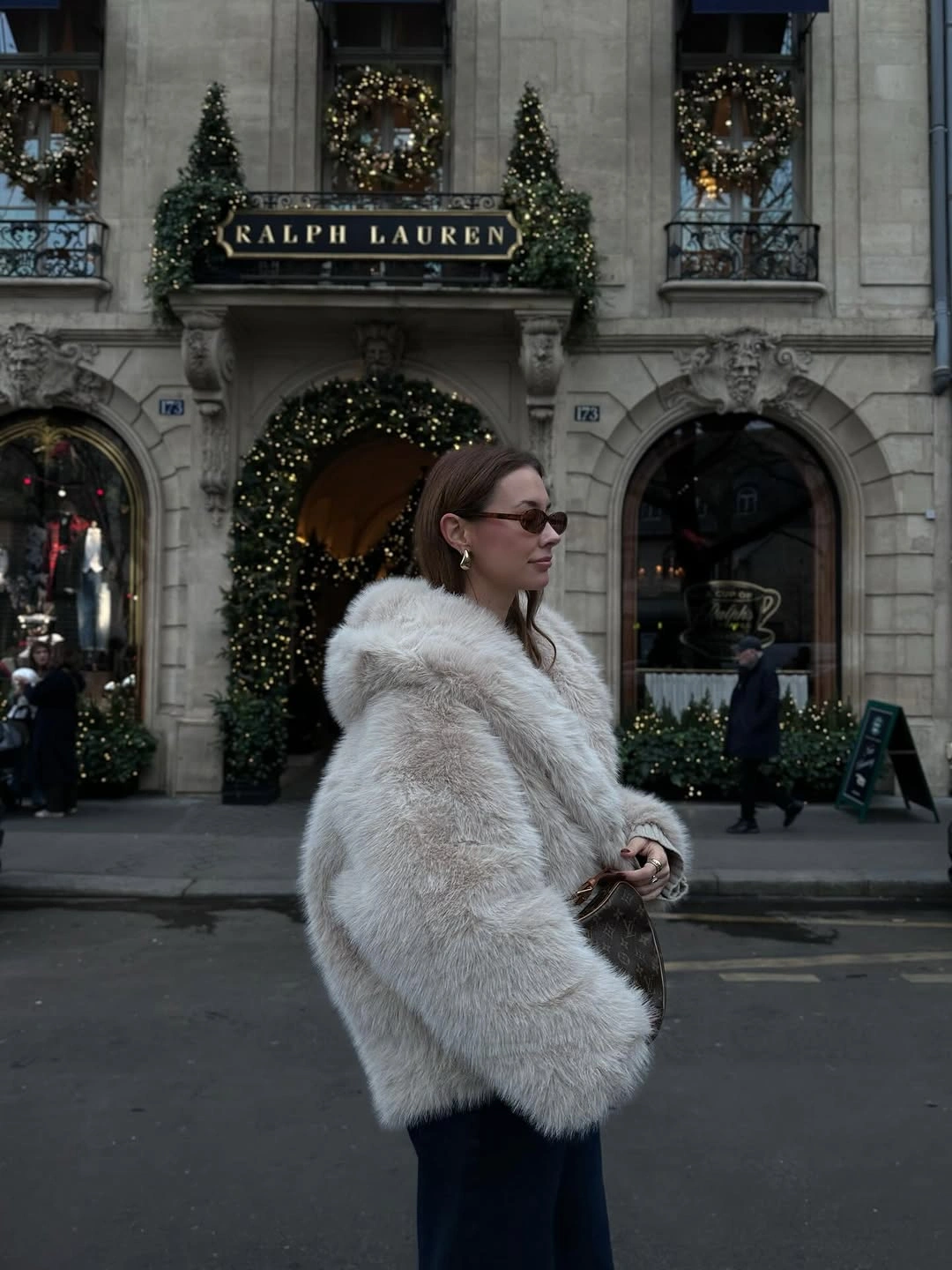
A look like this works when only one layer is allowed to be visually fluffy. Adding a thick patterned scarf or oversized pale bag would blur the clean black-and-white argument. For a quieter variation, choose charcoal trousers instead of black; the jacket will still stand forward, but the transition at the waist will feel less graphic.
The practical tradeoff is proportion at the hip. A high-volume jacket can make very wide pants feel expansive in every direction, so a straighter leg gives it a useful boundary. Pointed boots, loafers, or a sleek trainer would all maintain that boundary, whereas a giant padded shoe might repeat the jacket’s bulk at exactly the wrong place.
Long Camel Texture With Bright Wide Trousers
The long camel teddy-style coat has enough texture to feel substantial, yet the white wide trousers pull it toward a more relaxed streetwear direction. A dark top creates a narrow break between the pale pieces, which makes the layers easier to read. The crossbody strap also adds a small diagonal line across a silhouette that could otherwise become very vertical.
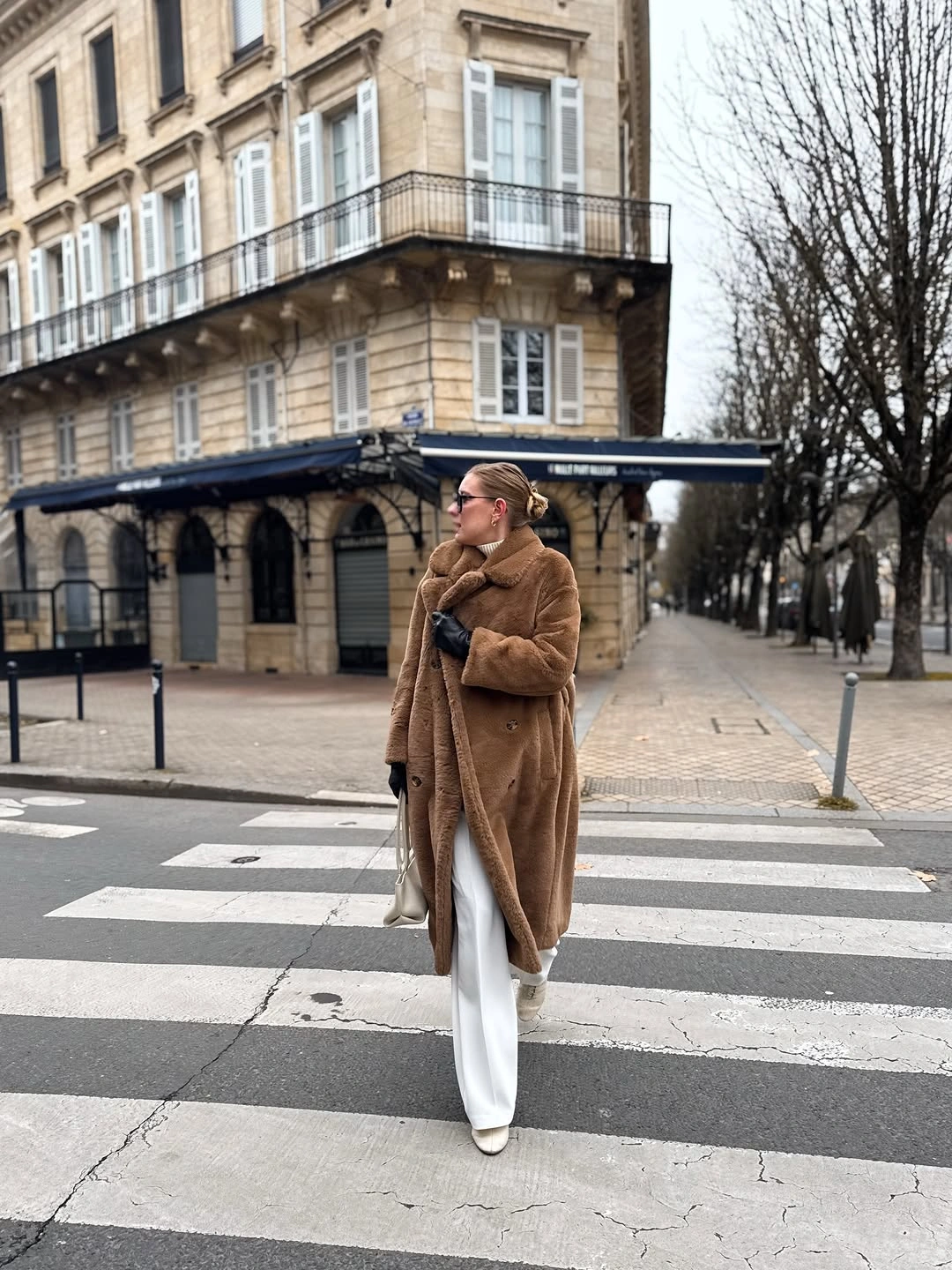
White trousers are the color moment here, even though they are not loud. They make the camel coat appear warmer and less traditional than it would over black denim. If maintaining light trousers feels impractical, pale stone or soft gray can provide a similar contrast while being a little less visually exacting through a long day. A related set of casual winter outfit ideas can help expand that base.
The coat’s length asks for footwear that does not disappear completely beneath the hem. Simple sneakers work because their pale surface repeats the trousers and keeps the bottom from looking abrupt. A dark chunky boot would change the balance quickly, so it is better paired with a darker top or bag that can repeat that grounding color higher in the outfit.
Checked Skirt Beneath a Compact Brown Jacket
The brown plush jacket is compact and rounded, while the checked skirt makes a long, gently patterned line all the way toward the boots. That difference in length is the reason the outfit feels balanced instead of top-heavy. A dark beanie keeps the head area connected to the jacket, and the deep brown palette gives the print room to feel subtle.
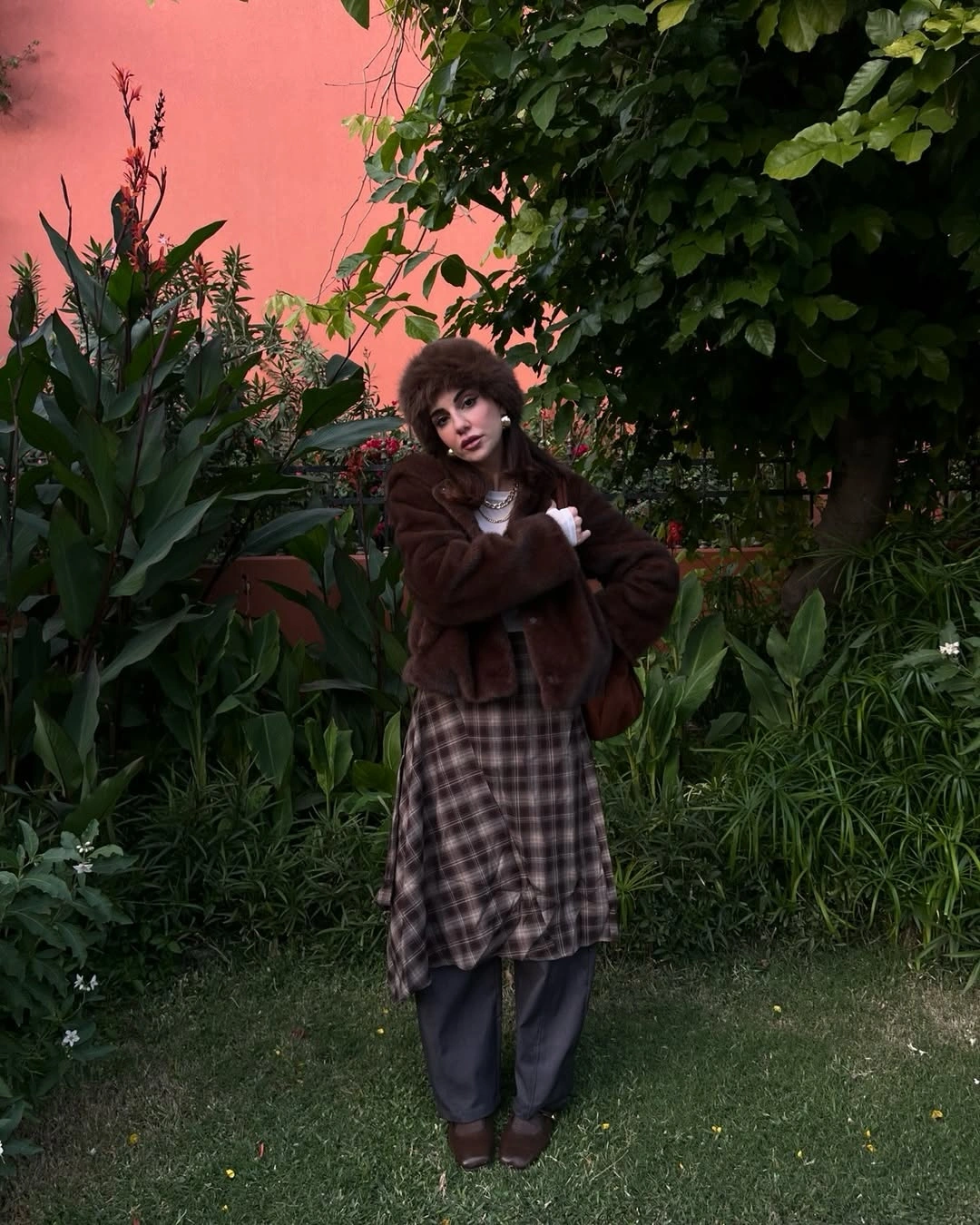
The check is a useful alternative to adding another fuzzy piece. It introduces winter texture through a flat surface and lets the jacket remain the softest element in the look. If a full patterned skirt feels too much, a plain charcoal skirt with a checked scarf could borrow the same rhythm in a more concentrated way.
Long skirts under short jackets need an intentional shoe ending. The brown boots work because they continue the lower color story instead of cutting it with a bright sole or bare ankle. For more movement, choose a skirt with a little more width at the hem; a very narrow pencil shape might make the jacket’s rounded volume feel disconnected from the lower half.
Forest Puffer With a Pink Texture Point
The dark green puffer provides a deep, useful backdrop for the vivid pink furry scarf, which becomes the most playful color decision at the neckline. Brown pointed boots and the small studded bag sit in the darker family and stop the bright accent from floating alone. The result feels color-led because the contrast is contained rather than repeated everywhere.
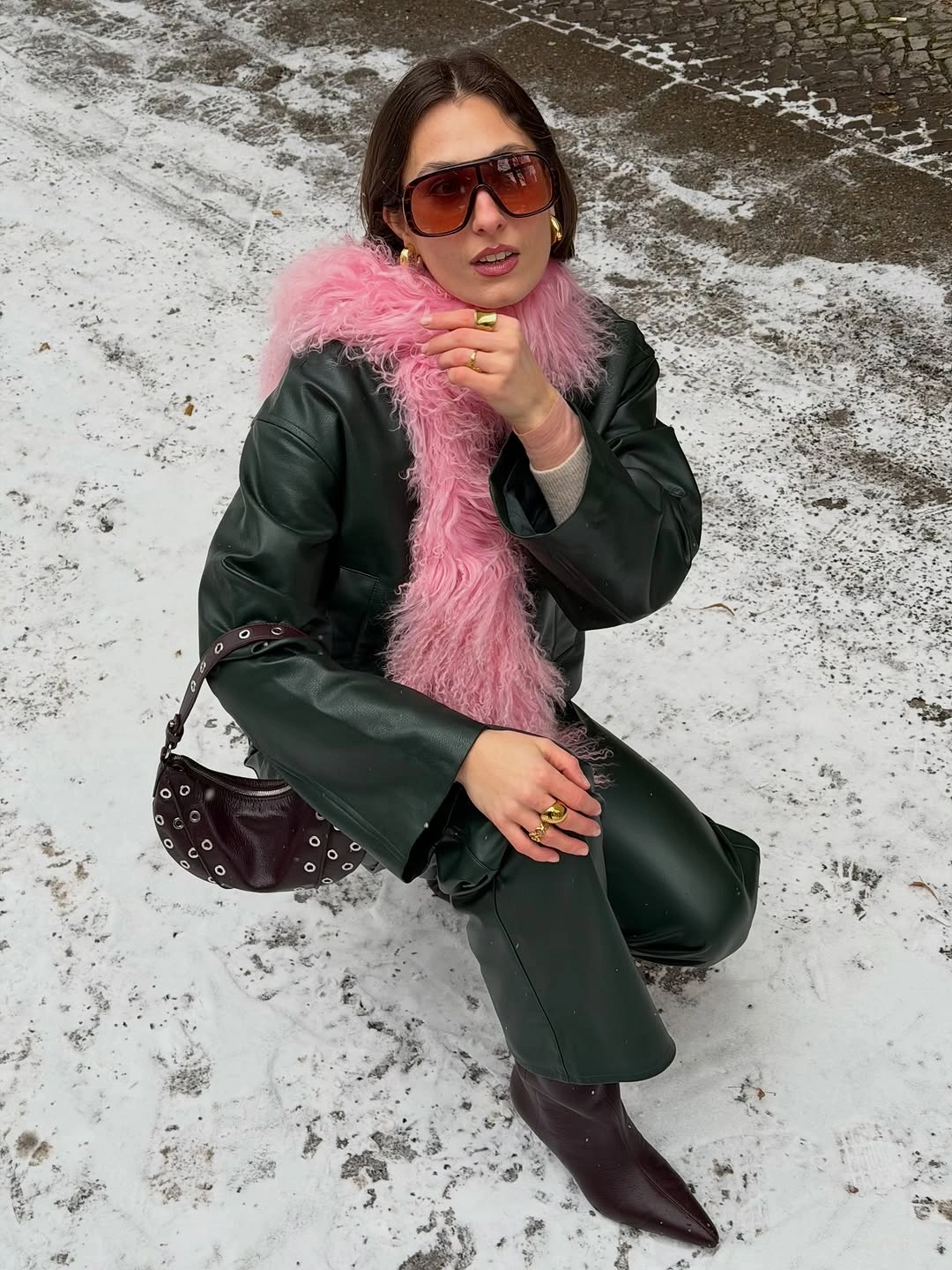
When a scarf is this saturated, the easiest adaptation is to keep the coat and footwear muted. A berry, fuchsia, or raspberry scarf would all create the same lively effect against forest green, but a second bright bag would weaken the focus. The fun option is to repeat the pink only in lipstick or a tiny hair accessory, not in another full garment.
Puffer coats naturally add width, so the narrow scarf shape matters. It creates a vertical, concentrated color line rather than wrapping the whole upper body in more volume. If warmth requires a larger scarf, choose a flatter knit instead of a fuzzy one; that will retain the color contrast while letting the padded coat remain the main textural presence.
Rich Brown Jacket and a Precise Boot Line
The mid-length brown fur-style jacket softens a slim dark-denim base, while pointed black boots bring a precise finish below it. Thick cuffs and a structured top-handle bag give the look shape without making it formal. The warm jacket color is doing the emotional work, and the dark pieces keep it from becoming overly plush or decorative.
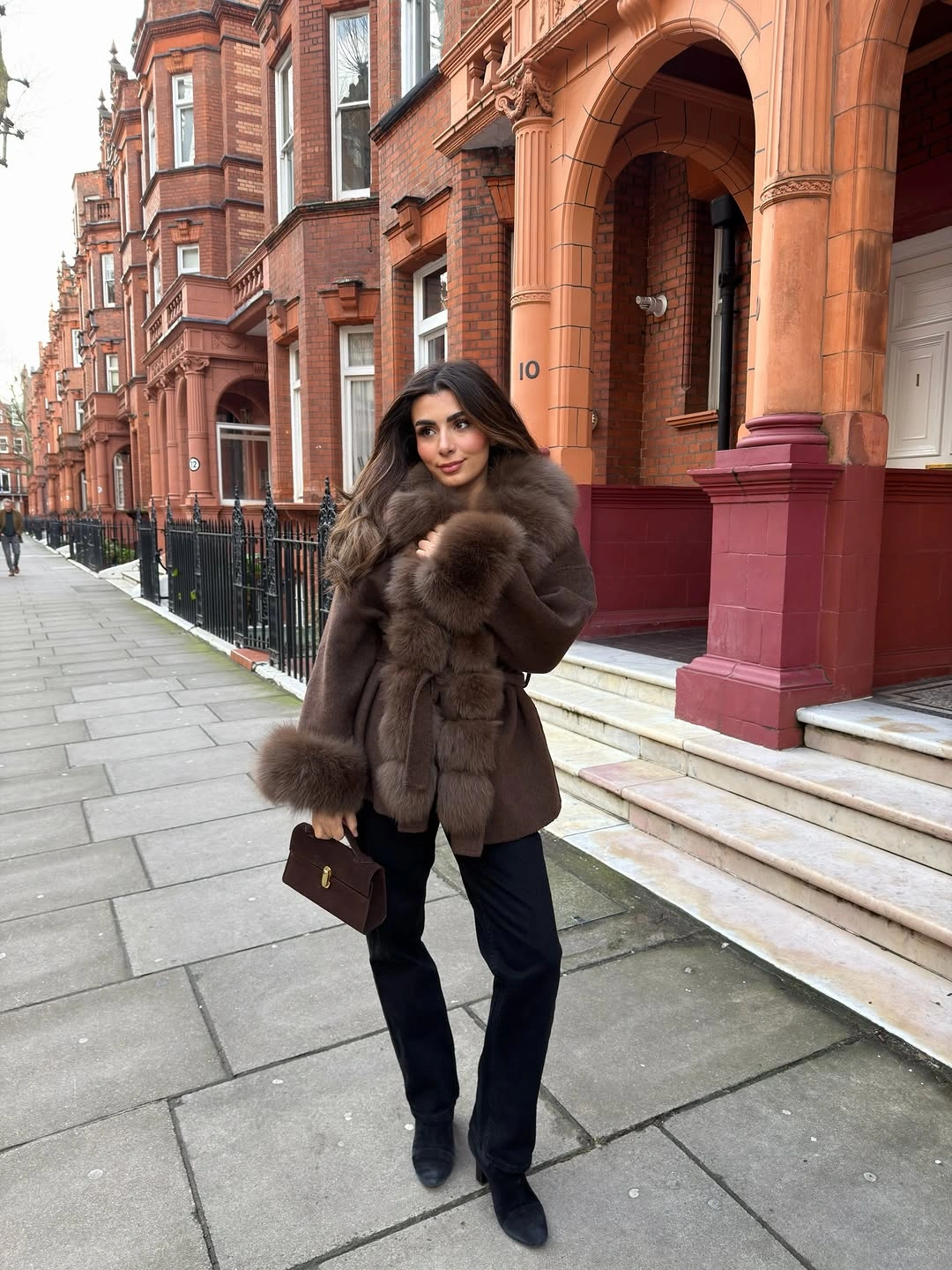
Brown outerwear is especially useful with dark denim because it offers warmth without the high contrast of a pale coat. A more casual version could use rounded boots or sneakers, although the outfit would lose some of its clean lower line. Keeping the bag structured is a smart counterpoint to the softer jacket surface and broad cuffs.
The silhouette depends on the trousers staying relatively close through the leg. A very wide jean would compete with the jacket’s visual weight and make the pointed footwear much less visible. If looser denim is preferred, consider a shorter jacket instead; that change would return a little space and let the outfit retain the deliberate top-to-bottom progression seen here.
Blue-Gray Coat With Dark Denim Weight
The long blue-gray fuzzy coat softens the broad dark jeans without requiring a pale base layer. Its plush surface creates a cool, hazy color field, while the dark top and full denim hem give the outfit solid visual weight. A patterned brown bag brings a small amount of warmth into an otherwise blue-driven arrangement.
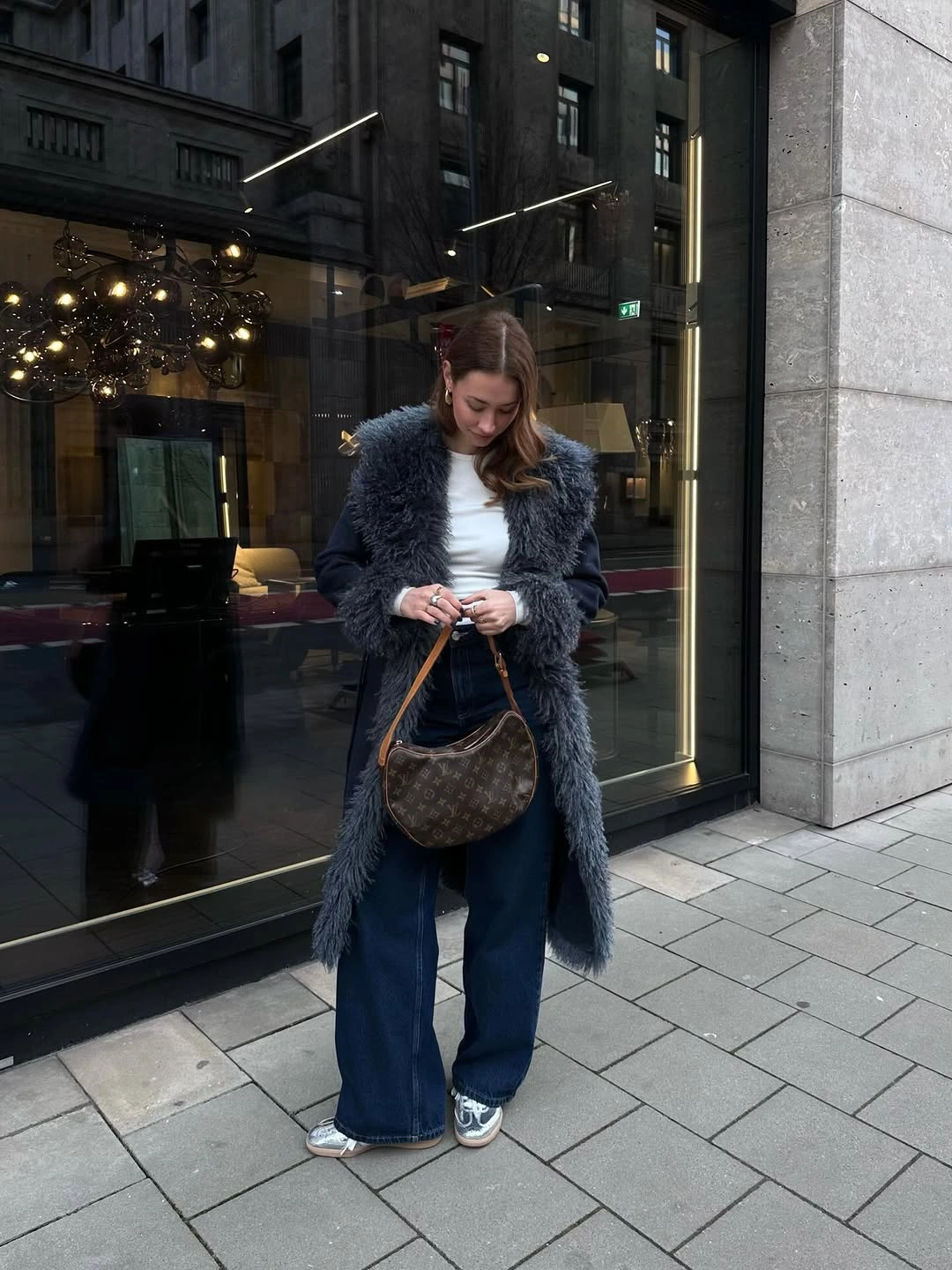
Blue-gray is interesting because it can feel lighter than charcoal but less expected than cream. If the coat is already textured, keep the bag detail contained as it is here; one patterned brown accessory is enough to prevent the palette from becoming flat. A plain black bag would make the idea moodier, while a tan bag would sharpen the warm-cool contrast.
With jeans this wide, an open coat is a helpful choice because it reveals the darker central column and stops the whole look from reading like one padded mass. The tradeoff is exposure at the front, so a close knit or heavier top layer makes more sense than a loose sweater. That restraint lets the coat’s soft texture remain the visual lead.
Fine Stripes Against Straight Gray Trousers
The dark striped sweater introduces movement across the upper body, while straight gray trousers give that pattern a calm, flat base. A slim scarf-like layer at the neck adds another line without competing with the horizontal stripes. Sunglasses and the black quilted bag keep the accessories compact, which makes the knit read as the highest-contrast feature.
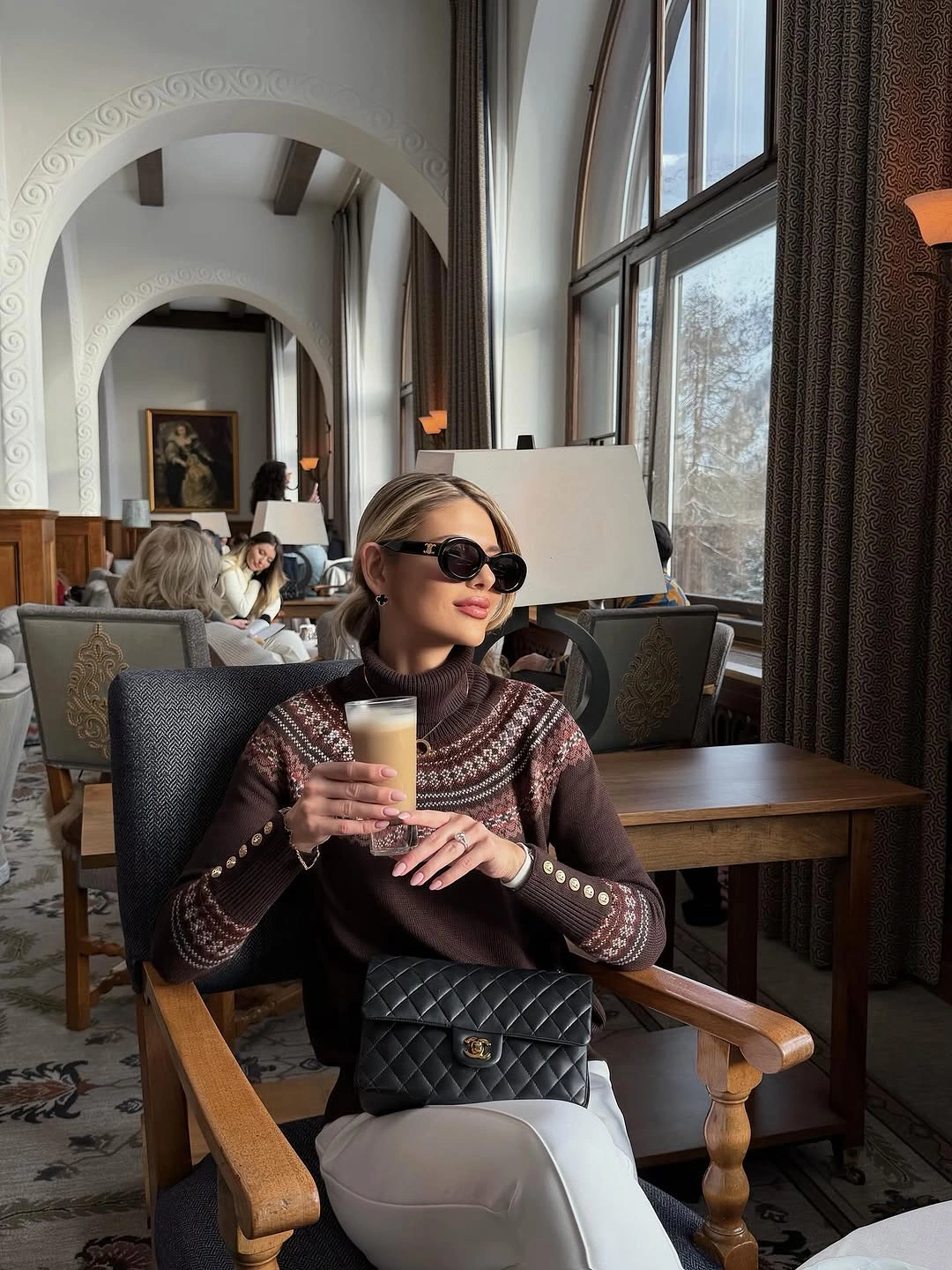
Fine stripes are useful when a full statement coat feels unnecessary. They make a muted winter palette feel more active but still leave room for a long outer layer if needed. To adapt the outfit, a black coat would preserve the graphic mood, while a soft brown coat would pick up the warmer thread in the sweater without changing the trouser balance.
The gray trousers are important because they do not fight the sweater’s pattern. A plaid bottom or heavily washed jean would add too much surface information in the same outfit. For those who prefer a looser shape, increase the trouser width slightly but keep the sweater close enough at the hem to preserve the tidy contrast between patterned top and solid lower half.
Spotted Coat With a Pink Sock Flash
The short spotted dark coat has enough pattern to feel playful on its own, yet the hot pink socks make the styling choice unmistakably streetwear. A white furry hat creates a soft light point near the face, while the black shoes and tiny structured bag keep the lower half grounded. The contrast arrives in small flashes rather than a full block of color.
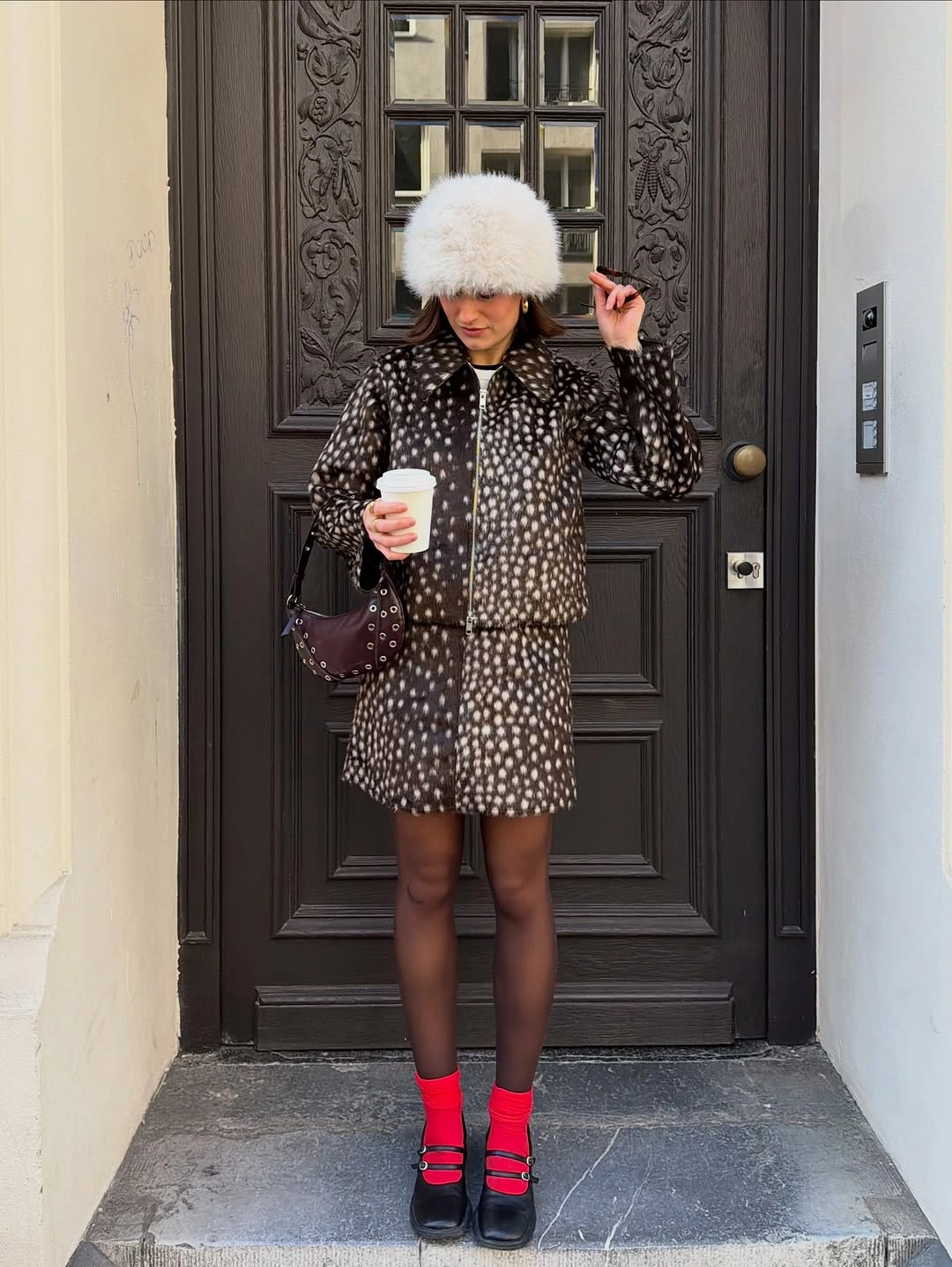
Visible socks are a simple way to shift the mood of a familiar dark shoe. Pink is bold here, but red, cobalt, or even a striped cream sock would create a different color moment without changing the coat. The trick is to leave the rest of the accessories quiet, otherwise the eye will have several unrelated places to land.
The bare-looking leg line is visually light against the compact coat, which keeps the outfit from feeling bulky despite the fuzzy hat. In colder conditions, opaque black tights could preserve the same contrast while adding coverage. A longer skirt or slouchy trouser would change the story entirely, because it would hide the sock detail that gives this look its sharpest bit of personality.
Black Bomber Softened by a Taupe Scarf
The black leather-look bomber and wide trousers create a boxy, graphic silhouette, then the taupe scarf introduces matte volume around the neckline. That softer piece keeps the smooth jacket surface from feeling too severe and gives the outfit an approachable color transition. The loafers and shoulder bag remain compact enough to support the long trouser line.
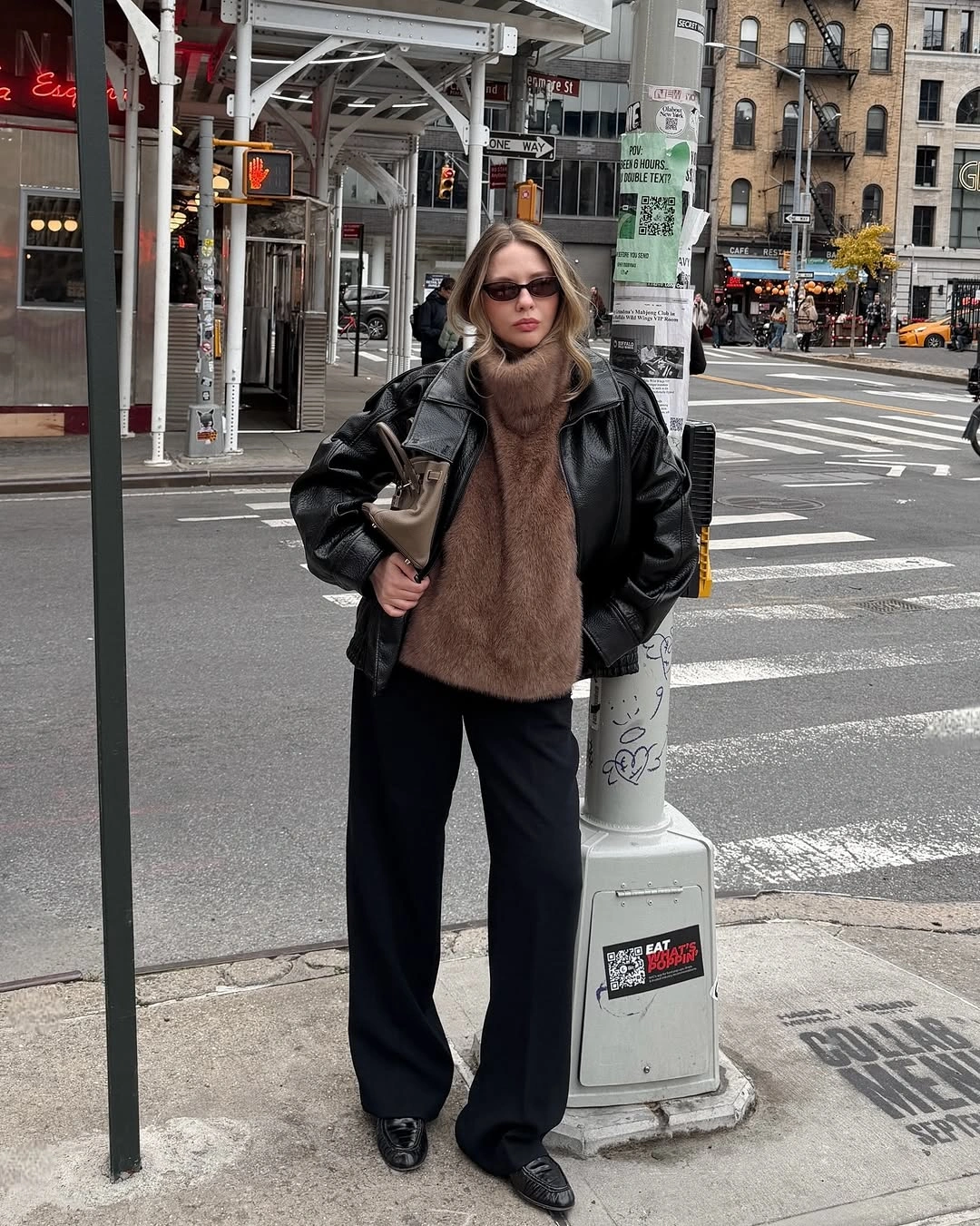
It is the difference in finish, not a large color contrast, that makes the scarf effective. Taupe sits close enough to black to feel calm but has enough warmth to separate the face from the jacket. A gray marl knit scarf would give a cooler variation, while a bright scarf could overwhelm the restrained surface relationship that makes this pairing work.
Wide trousers under a bomber need some length below the jacket so the proportions look intentional rather than abruptly cropped. Here the loose leg continues cleanly to the loafers, allowing the boxy upper layer to feel balanced. If the trousers are shorter, a higher-profile boot or a more fitted jacket would be a safer adjustment to prevent the silhouette from appearing cut in half.
Red Scarf Framing a Black Coat and Boots
The black coat, short dark skirt, and knee-high boots create a narrow, uninterrupted lower line, while the red scarf becomes the clear focal point. A pale shirt collar brightens the neckline beneath it and stops the red from feeling isolated. The chain bag adds a small hard-edged detail that matches the coat-and-boot structure without adding another color.
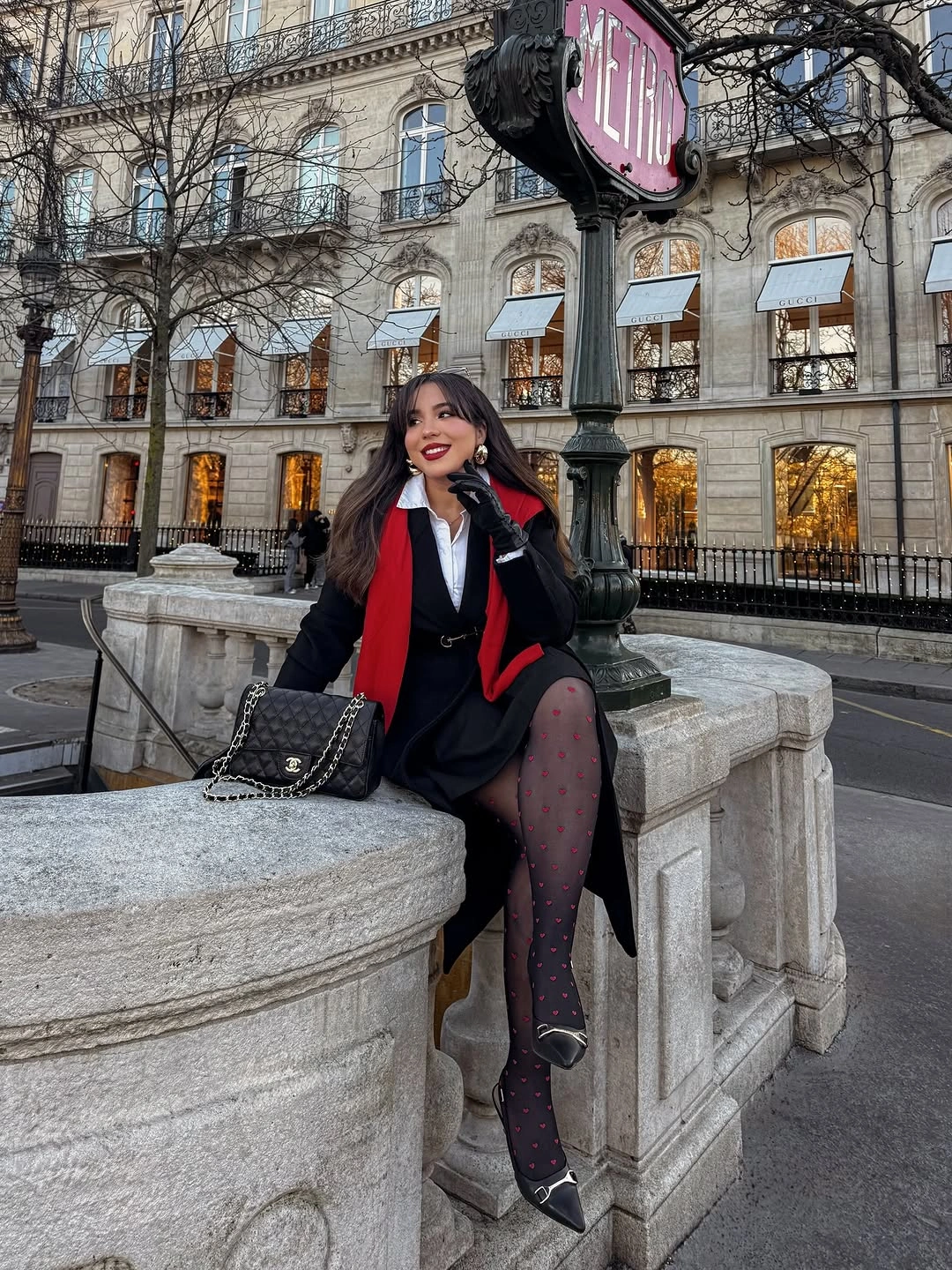
A single red scarf has more impact than several red accessories because the rest of the palette stays disciplined. Deep cherry, tomato, or rust could all work depending on the coat’s undertone, but the scarf should remain the only large color field. Adding a red bag as well would turn the composition into a matchy set and weaken the focused contrast.
The skirt and tall boot relationship is what keeps the long coat from overwhelming the body line. There is a clear dark finish beneath the hem, so the outfit still has shape when the coat is open. A longer skirt would require a lighter boot or visible ankle break, otherwise the bottom could become one dense rectangle with little room for the red scarf to lead.
Pale Fuzzy Jacket With a Brown Bag Anchor
The pale gray-beige fuzzy jacket and cream trousers build a soft, low-contrast base, then the brown structured bag gives the outfit a warm, precise anchor. Its rounded form echoes the jacket’s texture without repeating it literally. Small dark sunglasses add just enough definition near the face to keep the pale layers from becoming visually diffuse.
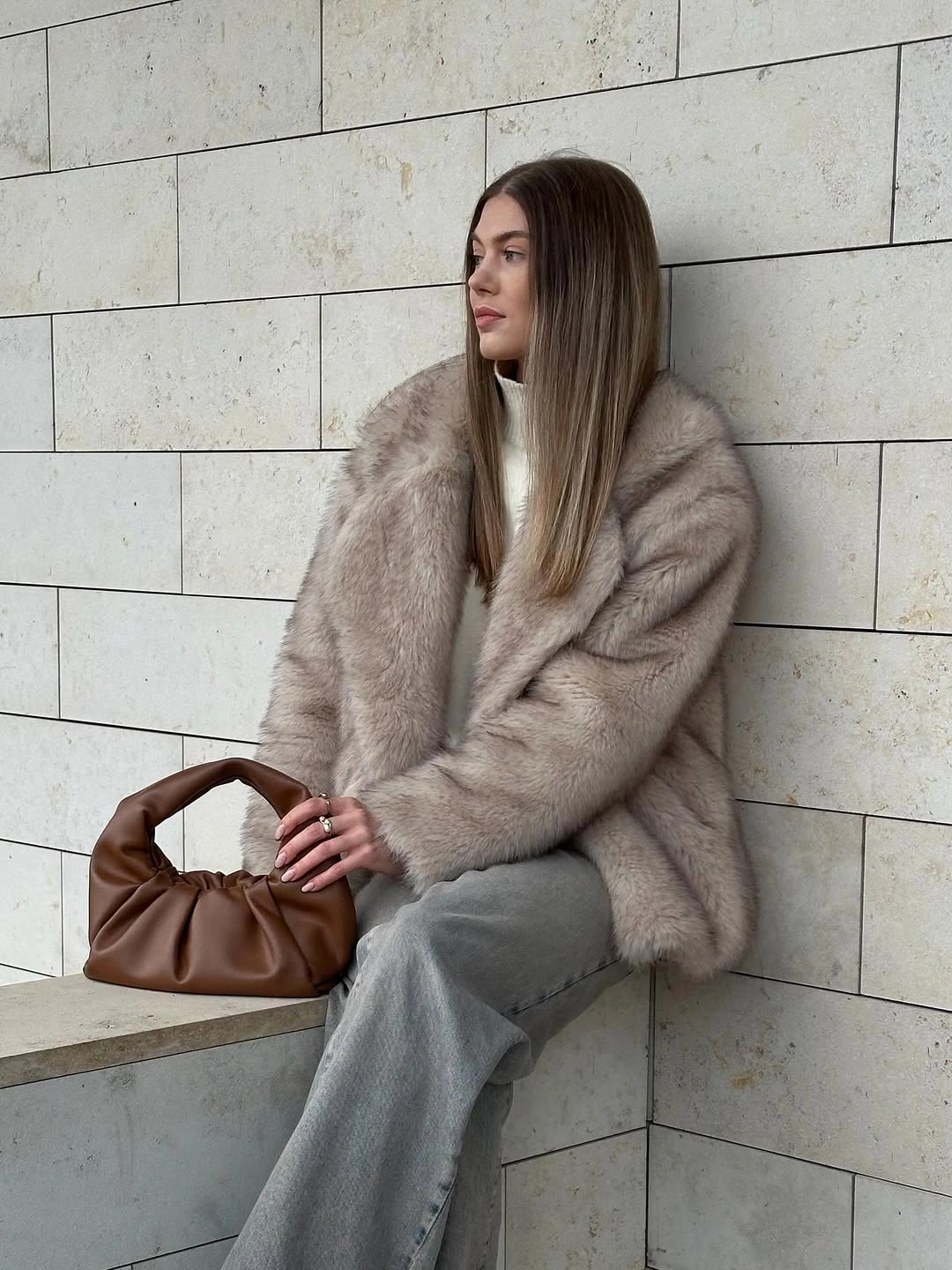
This is a useful way to wear light neutrals without relying on a fully monochrome result. The brown bag creates depth through temperature rather than a harsh color break, so the outfit remains calm. A cognac boot could repeat that warmth lower down, but it would be best paired with a small brown belt or another minor detail to make the repetition feel considered.
The jacket is short and rounded while the trousers are full, a pairing that works because the waist relationship remains legible. A long, equally fuzzy coat would hide that contrast and make the soft palette feel much heavier. If a longer layer is needed, choose a smoother beige coat so the trousers retain their quiet movement and the bag can stay the sharpest accent.
Light Puffer Framed in Black and White
The light gray puffer is made crisper by a black beanie and loose black trousers, which frame the pale jacket rather than blending into it. White trainers and a tiny white bag repeat the jacket in small, clean points. This three-color arrangement feels lively because each shade has a specific location and none is asked to dominate the whole outfit.
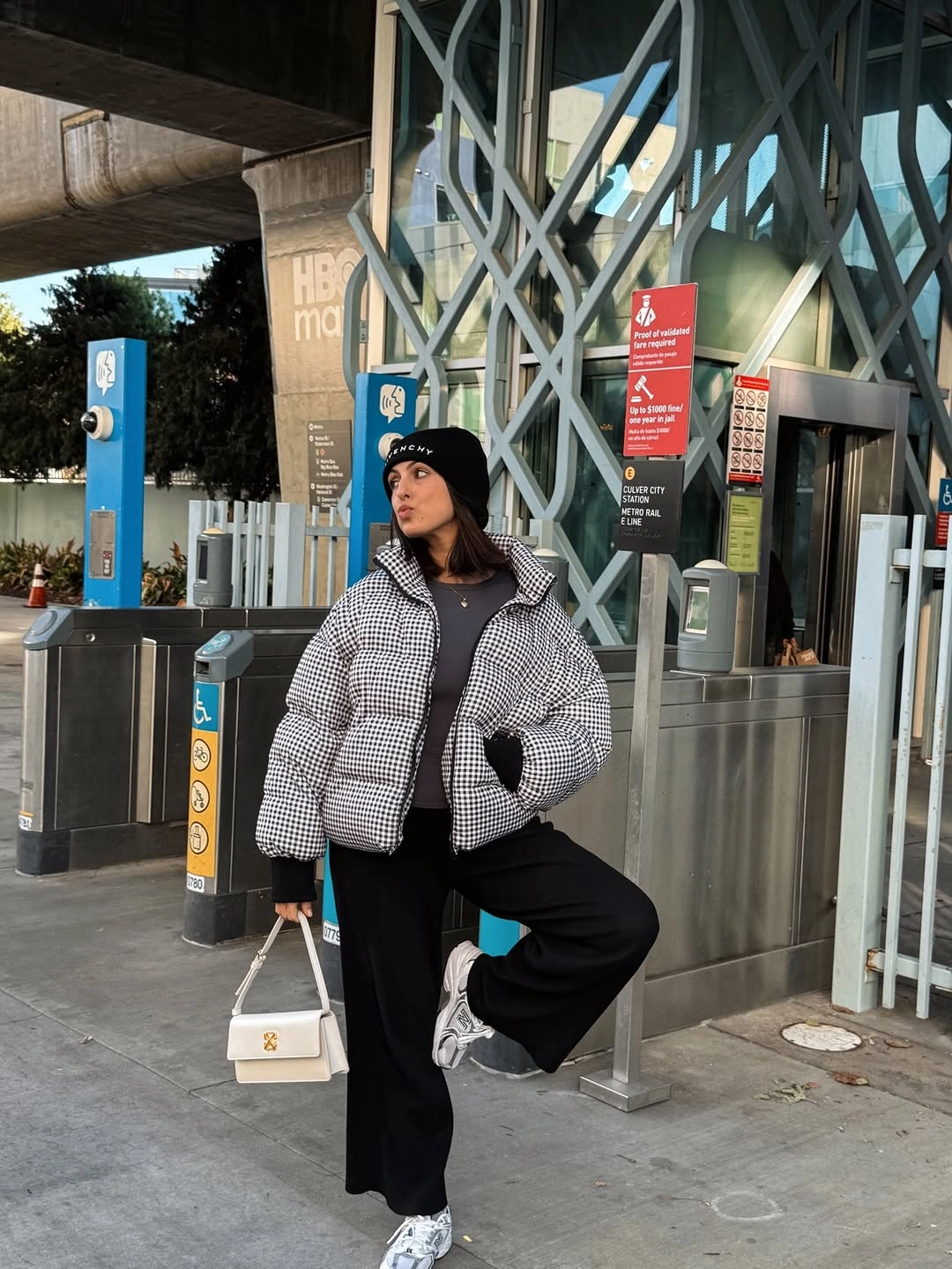
The black hat is particularly effective because it gives the light puffer a clear upper boundary. For a softer version, swap black trousers for charcoal and keep the white accessories; for a sharper version, add a black crossbody strap. Either change should preserve the light-dark-light rhythm instead of introducing a fourth color with no visual job.
Cropped loose trousers work with trainers here because the shoe has enough contrast to stay visible at the hem. A very long wide pant could cover that useful white endpoint and make the puffer feel too top-heavy. If longer pants are more comfortable, choose a brighter trainer with a slightly more defined toe so the lower part still answers the jacket’s volume.
Draped Camel Layer Over Relaxed Gray Trousers
The camel-and-gray poncho or cape creates a wide, hanging outer shape above loose gray trousers, so the outfit depends on flow rather than a sharply defined waist. Its draped edges look intentional because the trousers continue the relaxed line below. A pale bag and light trainers keep the broad layers from turning into one heavy, shadowy mass.
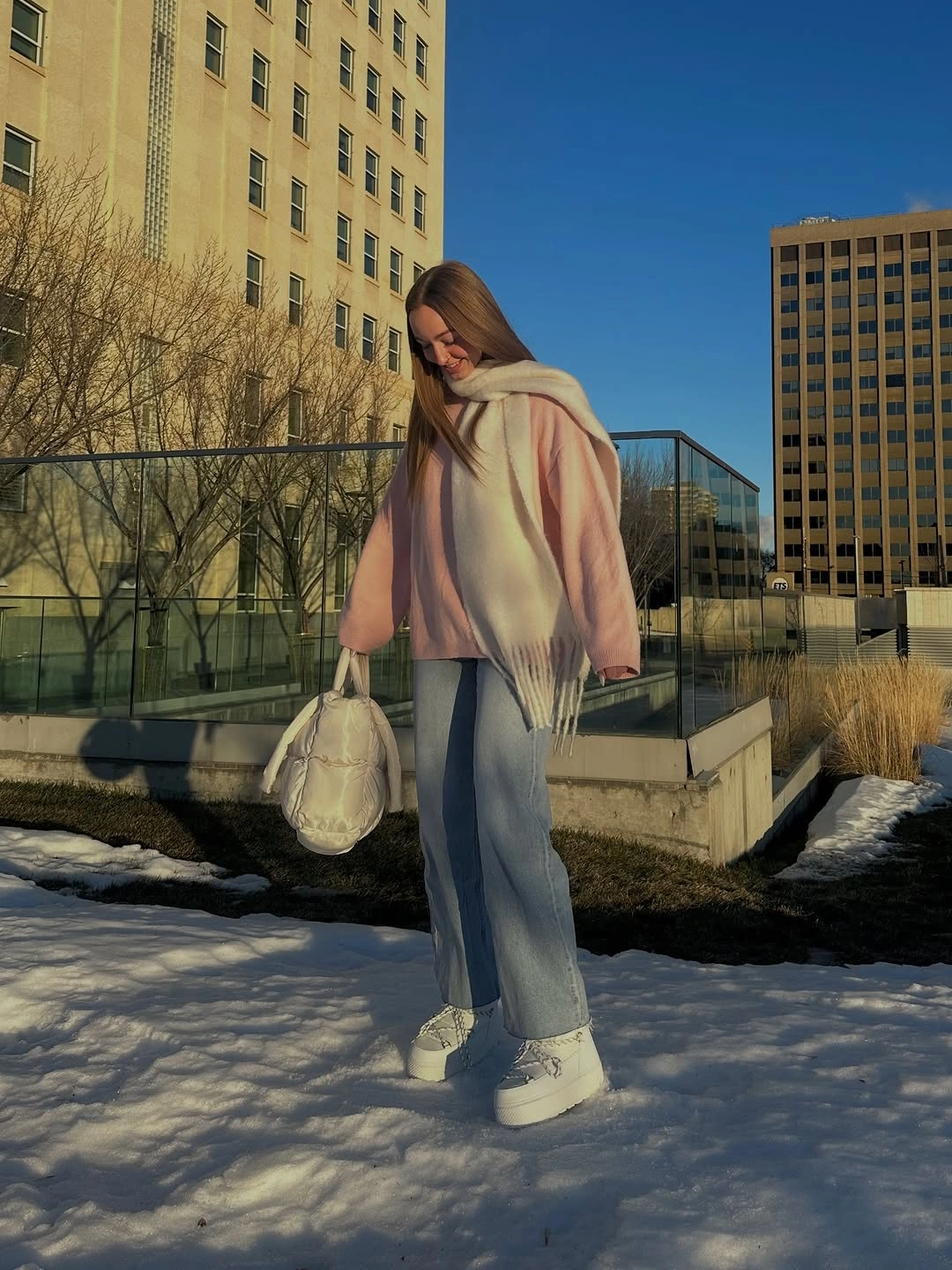
When the outer layer has this much movement, color should do less work. Camel and gray are close enough to feel calm, but the pale accessories create gentle pauses at the bag and feet. A striped top could be added only if it remains mostly hidden; a large print across the middle would distract from the cape’s clean fall and wide shape.
The tradeoff with a draped layer is practicality around bags and sleeves. A small shoulder bag or handheld style makes more sense than a large backpack, which could bunch the fabric and erase its best line. Choosing trousers with a straight or softly wide leg is also safer than a dramatic flare, since two competing horizontal expansions would make the silhouette harder to read.
Dark Fuzzy Jacket Finished With Loafers
The short dark brown fuzzy jacket has a rounded, substantial surface, but relaxed straight jeans keep it from feeling overly polished. Shiny black loafers are the key finishing decision: they give the lower half a neat endpoint and add a different kind of sheen than the jacket’s pile. A black bag and sunglasses continue that refined punctuation without taking over.
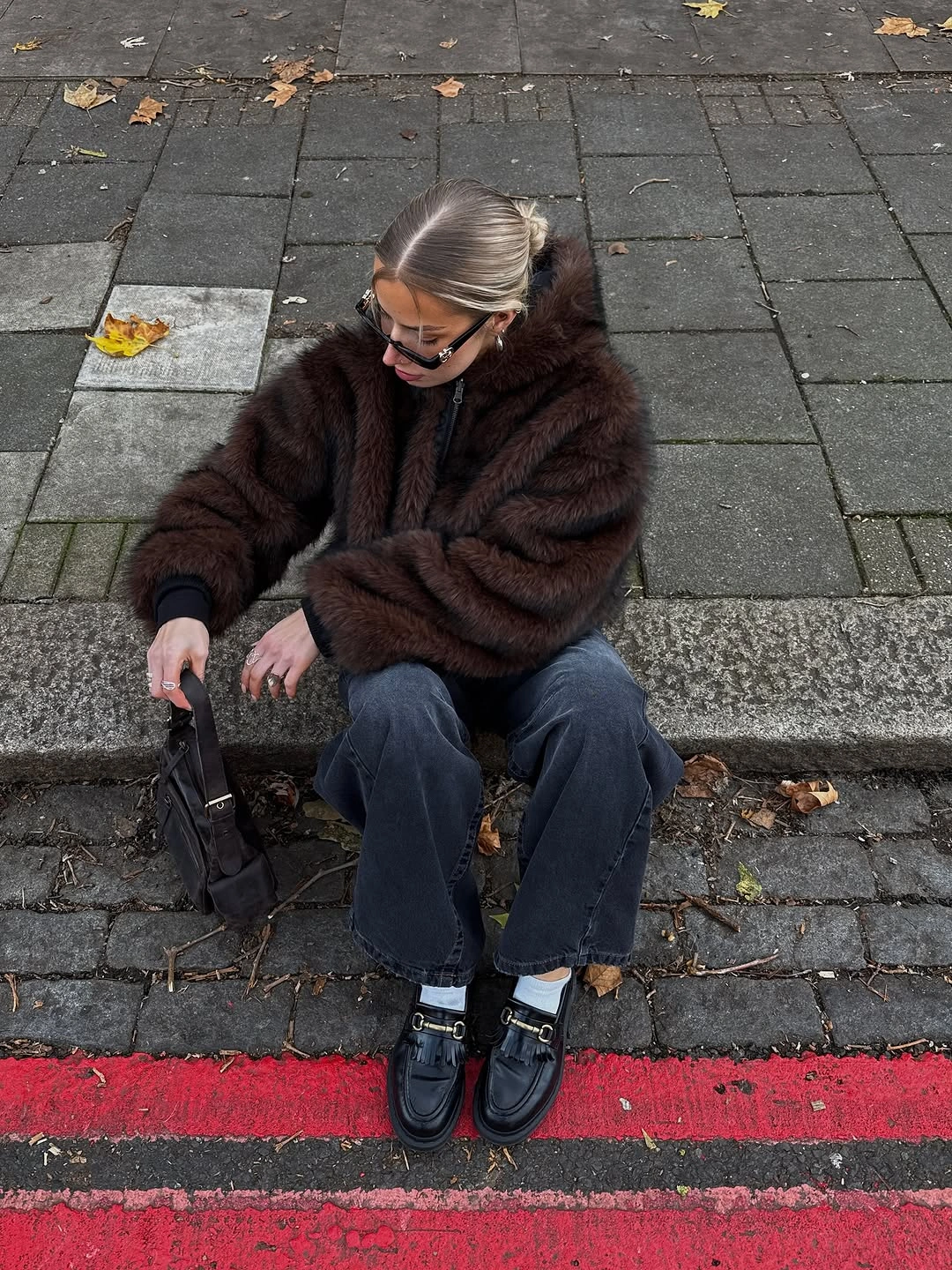
This is a good streetwear formula when you want texture without an elaborate color story. The jacket supplies depth, denim supplies ease, and the loafers make the combination feel chosen rather than thrown on. A flat boot would offer more coverage, but a rounded sneaker might make the look noticeably more casual by removing the crisp toe shape at the bottom.
The jacket works because it ends before the jeans become visually wide, letting the trouser line remain the long element. If the denim were much looser, consider a smoother jacket or a slightly taller shoe to retain definition. That one adjustment matters more than adding jewelry, because the outfit’s impact comes from the relationship between a soft upper block and a clean lower line.
Cobalt Scarf Above Very Wide Light Denim
The cream shaggy jacket is broad and light, while the cobalt scarf pulls attention upward before the very wide pale jeans take over the lower half. Brown boots and the oversized brown tote keep the outfit from floating in a cloud of pale texture. The scarf is the color leader, but its long vertical fall also helps organize the generous proportions.
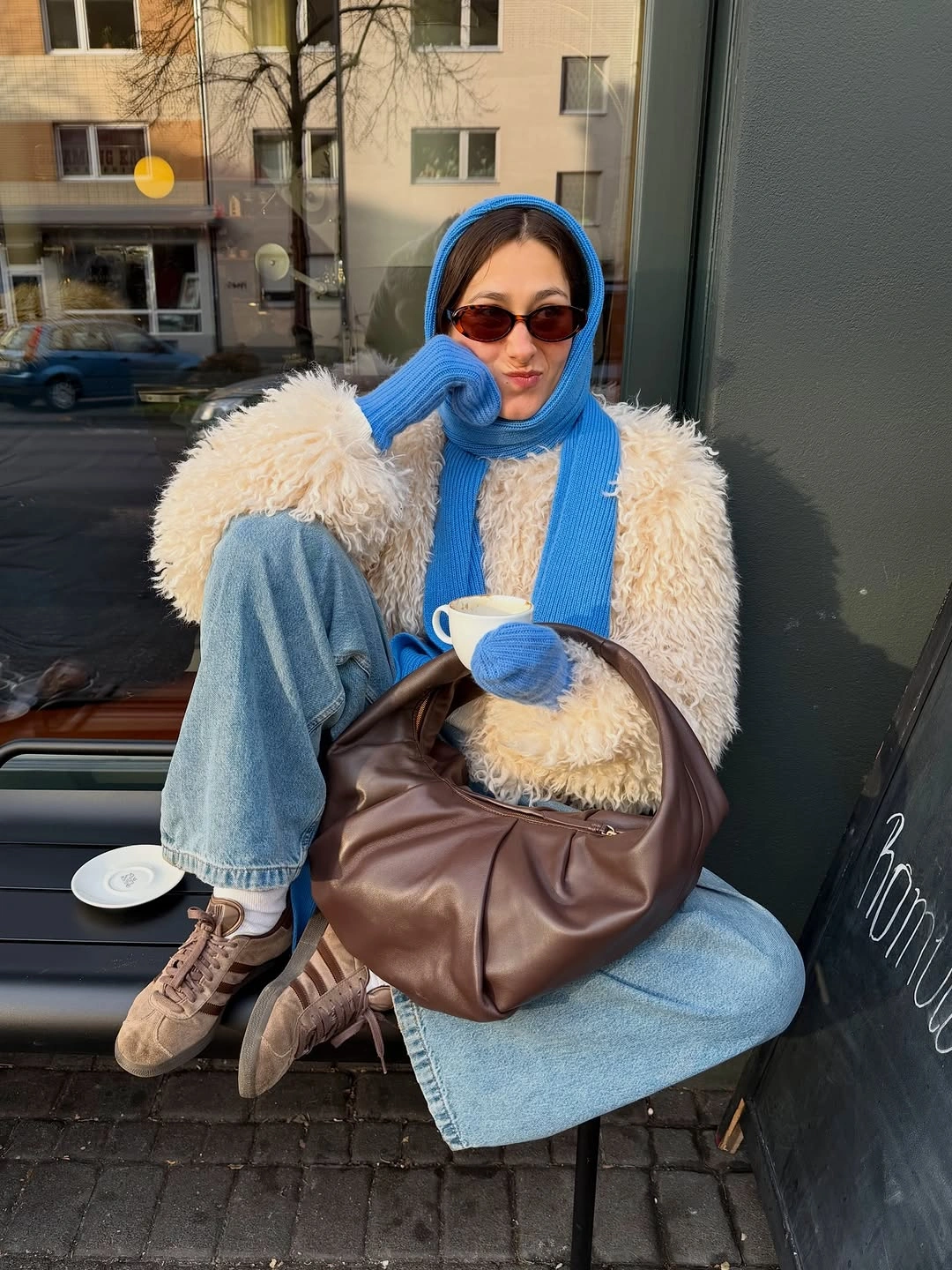
Blue is especially effective here because it has enough cool contrast against cream to read clearly without clashing with brown leather-like accessories. A navy or soft denim-blue scarf would be more restrained, while cobalt gives a punchier result. Keeping the tote brown rather than blue is smart, since it creates a warm base note instead of turning the outfit into a two-color uniform.
Very wide jeans call for a deliberate boot and bag scale. The boots have enough depth of color to remain visible, and the roomy tote mirrors the overall relaxed attitude without adding another pale volume. If a smaller bag is preferred, make the scarf slightly shorter or darker; otherwise the outfit may lose the useful balance between the expansive lower half and the focused upper color.
All Black Plush Coat With Small-Scale Detail
The long black plush coat creates one continuous dark outer shape, so its success depends on finish and proportion rather than added color. A rounded black hat extends the coat’s soft outline, while the small structured handbag introduces a precise scale contrast. That tiny accessory prevents the look from becoming an undifferentiated dark block from shoulder to hem.
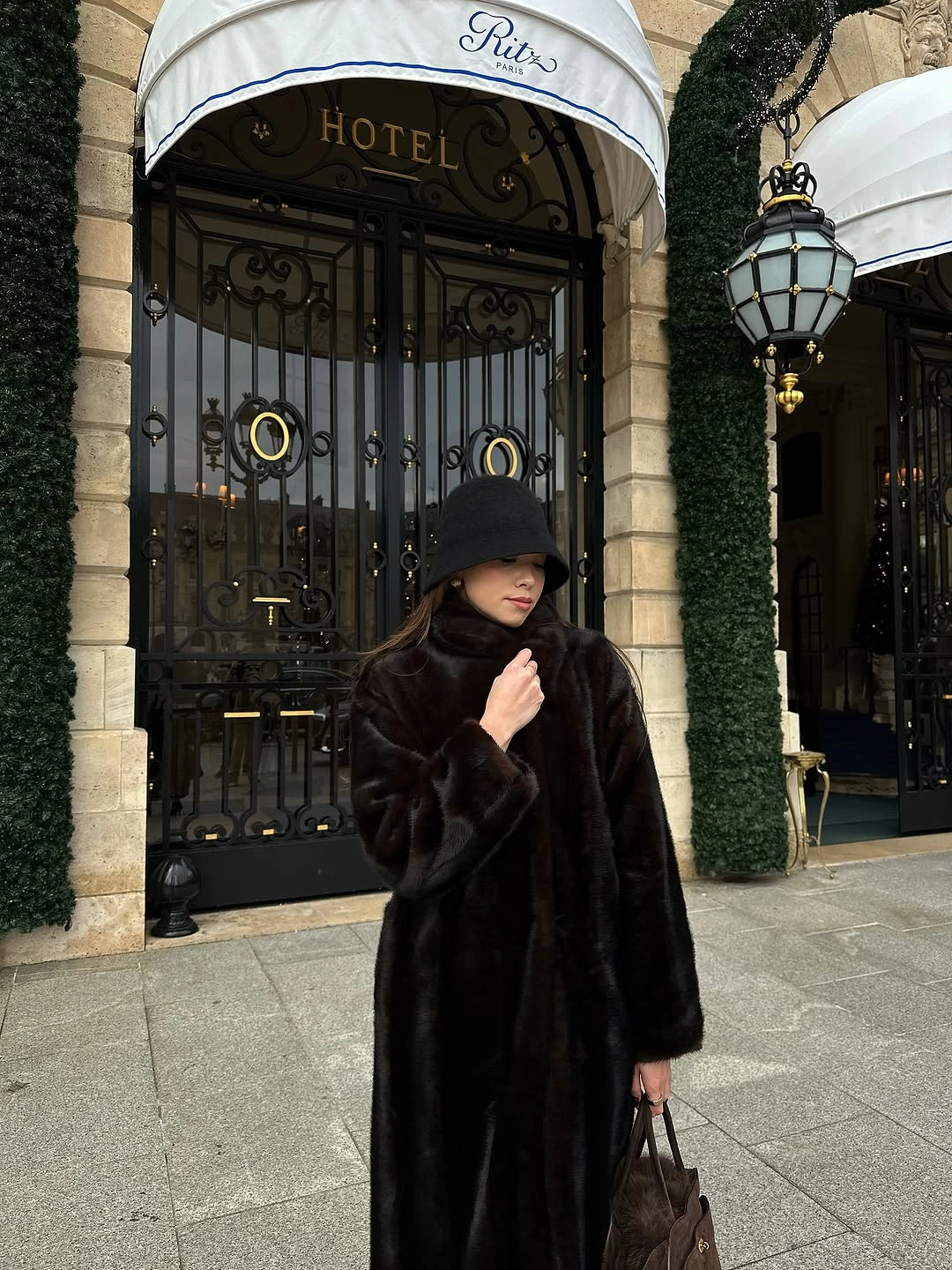
All-black winter dressing benefits from pieces that catch light differently. The coat appears softly textured, the bag looks more structured, and the hat has a rounded form; those shifts give the palette enough internal movement. A matte boot or subtle metal hardware could continue the effect, but a large glossy bag would likely compete with the coat’s quieter surface.
Length is the main practical issue with an uninterrupted dark coat. The footwear needs some presence even if it stays black, otherwise the lower hem can feel visually unfinished. A boot with a defined toe, a slightly thicker sole, or a small flash of sock would solve that problem without sacrificing the monochrome idea or asking the outfit to rely on a bright accent.
Charcoal Double-Breasted Coat With White Knit Frame
The charcoal double-breasted coat is structured and long, then a white beanie, white turtleneck, and pale gloves make a bright frame around the face. The buttons provide enough built-in detail to keep the coat from looking plain, while sunglasses and the small pale handbag make the contrast feel intentional. This is a strong example of color concentrated exactly where the eye begins.
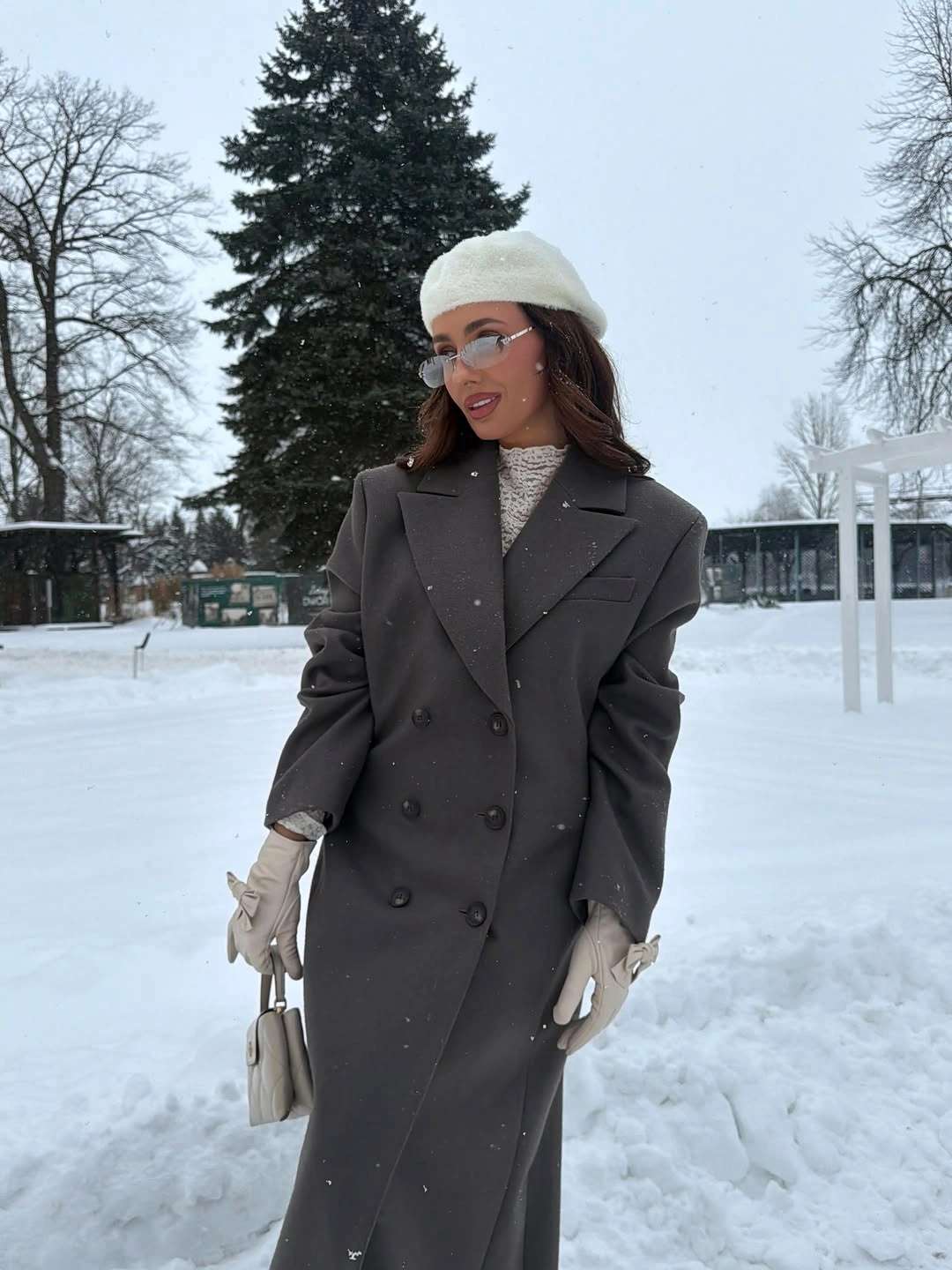
White knit accessories can make a dark coat feel sharper without needing a scarf in a strong color. The repeated light notes are related but not identical, so they read as a frame rather than a matching set. For a softer alternative, cream or pale gray would reduce the contrast; for a bolder one, keep the white but let the handbag stay charcoal.
The coat’s long, tailored shape asks for accessories that do not interrupt its buttoned front. A small bag works better than a large slouchy tote because it preserves the central structure. If the beanie is omitted, a turtleneck with a slightly higher collar could still maintain the helpful light area near the face and keep the charcoal from feeling visually dense.
White Fuzzy Layers With Graphic Black Accessories
The white fuzzy jacket and straight white trousers create a soft, light foundation, while black loafers and a rectangular black handbag give it a crisp graphic edge. Dark sunglasses repeat that contrast near the face and stop the pale layers from reading unfinished. The outfit has energy because the black pieces are compact, precise, and placed at useful visual endpoints.
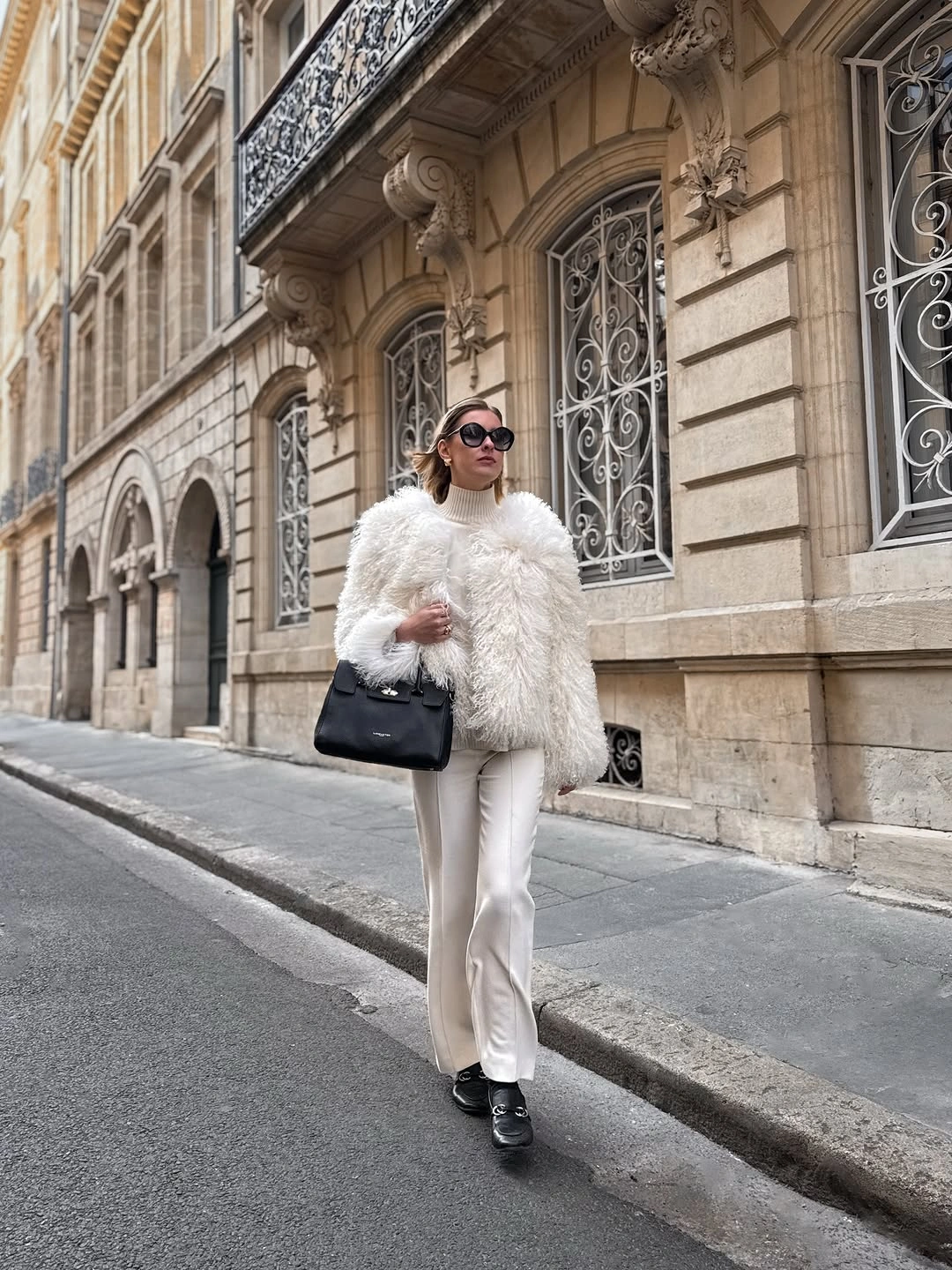
Black accessories work particularly well with pale texture because they introduce line and scale instead of another competing surface. A dark belt, watch strap, or hair clip could continue the theme in small doses, though only one additional black detail is needed. Replacing the loafers with white trainers would make the outfit softer but also remove the clear lower boundary created here.
The tailored trouser shape is a quiet stabilizer beneath the fuzzy jacket. It stops the outfit from becoming soft in every direction and gives the handbag something clean to contrast against. A wider trouser could work with a less voluminous jacket, but with this outer layer it would be safer to retain a straighter leg and let the graphic shoes handle the finish.
Long Beige Shag With Dark Edge Definition
The full-length beige shaggy coat and cream wide trousers make a generous, soft-toned silhouette, then black gloves, footwear, and a dark scarf or collar establish clear edges. Those dark details are small but essential: they stop the pale layers from dissolving into one diffuse field. The long coat remains the star because the contrast stays close to the body rather than spreading across it.
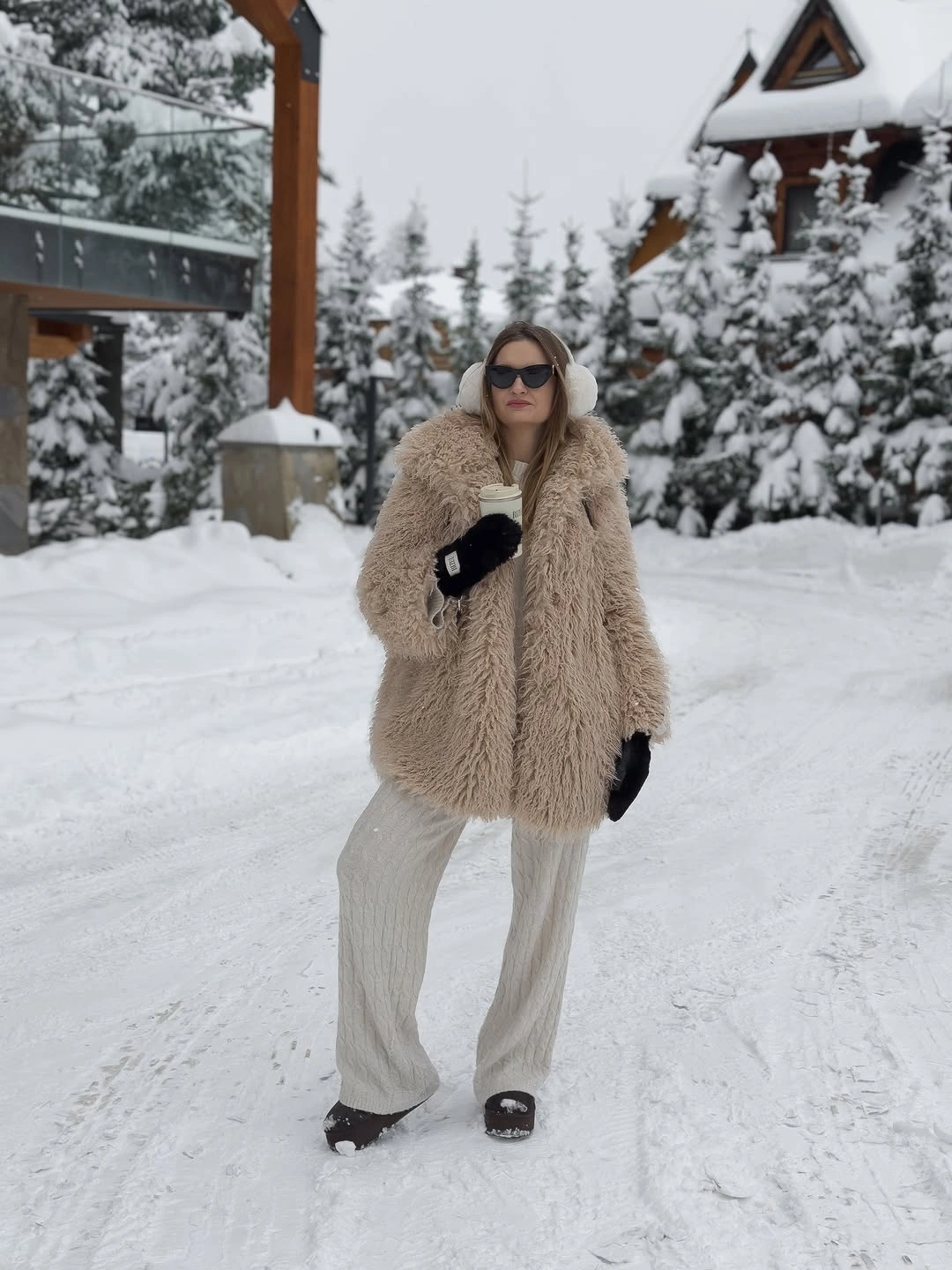
For a similar palette, the best adaptation is to choose one dark accessory family and repeat it twice. Black gloves plus boots work; chocolate brown could work too if the bag follows that warm direction. What matters is not adding a different accent color, since the calm relationship between beige and cream is the reason the long textured layer still feels coherent.
The coat and trouser lengths create a lot of fabric movement, so footwear needs a firm visual base. Dark boots do that job more effectively than a pale shoe, which might disappear into the trouser hem. A shorter coat would make the outfit feel lighter, but the dramatic long line is worth keeping when the accessories remain minimal and define the silhouette at its edges.