Winter Outfits for Women: 23 Looks With Warm Texture
Winter outfits for women become most interesting when warmth is not treated as a single bulky layer. A pale coat, a dark boot, or a scarf with a little movement can change the balance of an outfit more than another accessory ever could. The strongest combinations let texture do some of the work, then give the eye one clear place to rest.
When choosing a cold-weather look, start with proportion before deciding whether it feels casual or polished. Notice where the widest layer sits, where the hem finishes, and whether footwear gives the lower half enough visual weight. That small check makes it easier to keep a soft, layered outfit personal rather than overworked.
Powder Blue Coat With Bright Knit Accents
The oversized powder-blue coat creates a quiet backdrop for the pink trousers, striped scarf, and pale green bag. Because the color sits in one generous outer layer, the brighter details do not have to compete for attention. The long fringe brings movement near the knees, while the neater trouser line keeps the silhouette from spreading outward all at once.
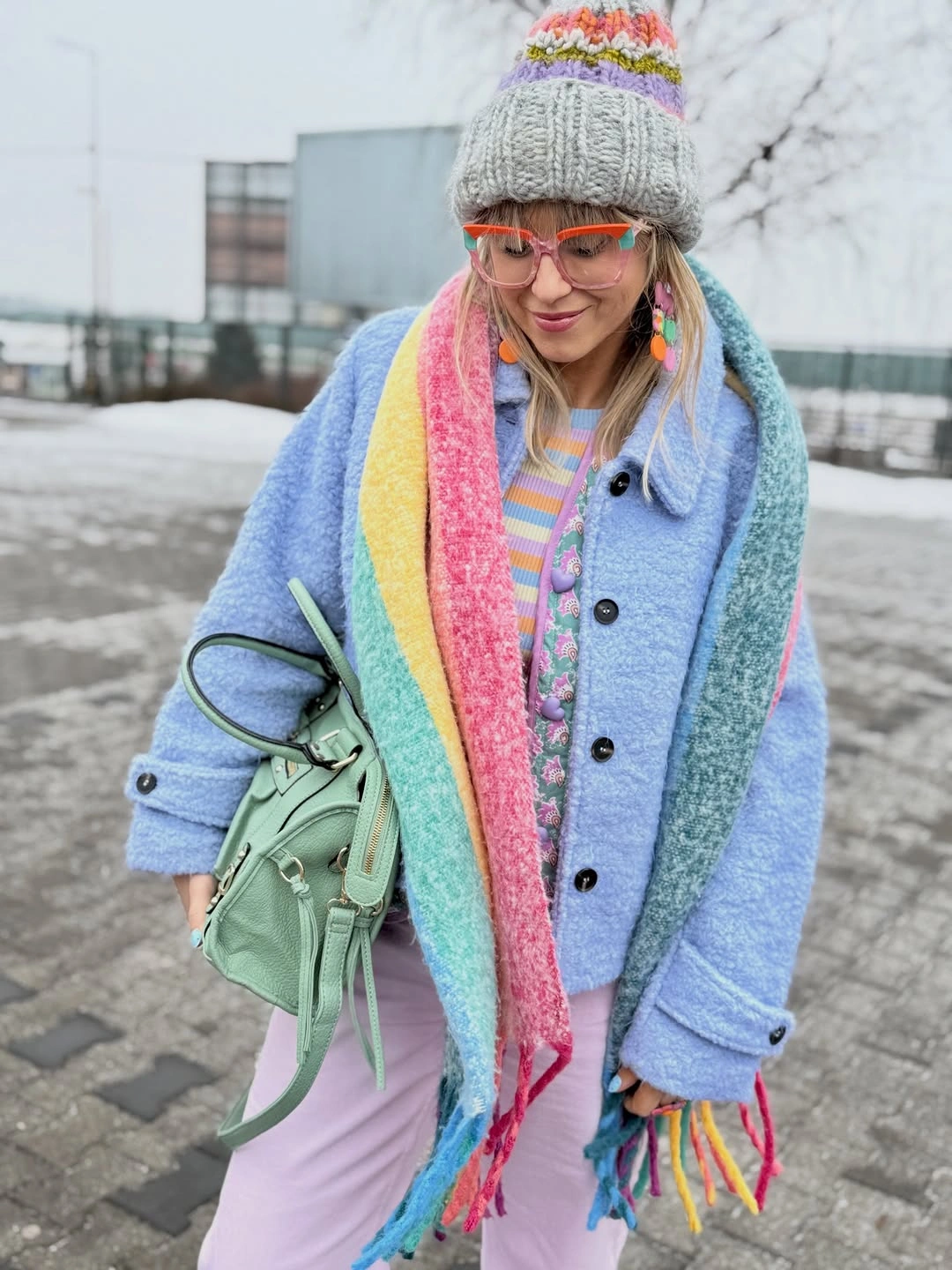
A scarf with several lively colors works especially well when the coat itself is a single soft shade. Here it sits close to the face and acts almost like a small print story, while the bag repeats the light, playful mood without matching anything exactly. For a calmer version, keep the coat and trousers but switch to a solid scarf in one of its softer colors.
The roomy coat is the reason this outfit feels relaxed, so the base needs to remain relatively streamlined. Slimmer trousers, compact shoes, or a small bag would all protect that balance. Adding another oversized knit underneath could make the middle feel crowded, but a close-fitting layer would keep the colorful outer pieces looking grounded and easy to wear.
Short Brown Texture Over a Dark Base
The cropped brown jacket has a visibly soft, shaggy surface that gives the otherwise dark outfit its whole point of view. Under it, the buttoned black top and dark trousers create a clean vertical base, so the rounded jacket does not feel like an extra layer added at random. Its shorter length also gives the waist area more definition than a longer coat would.
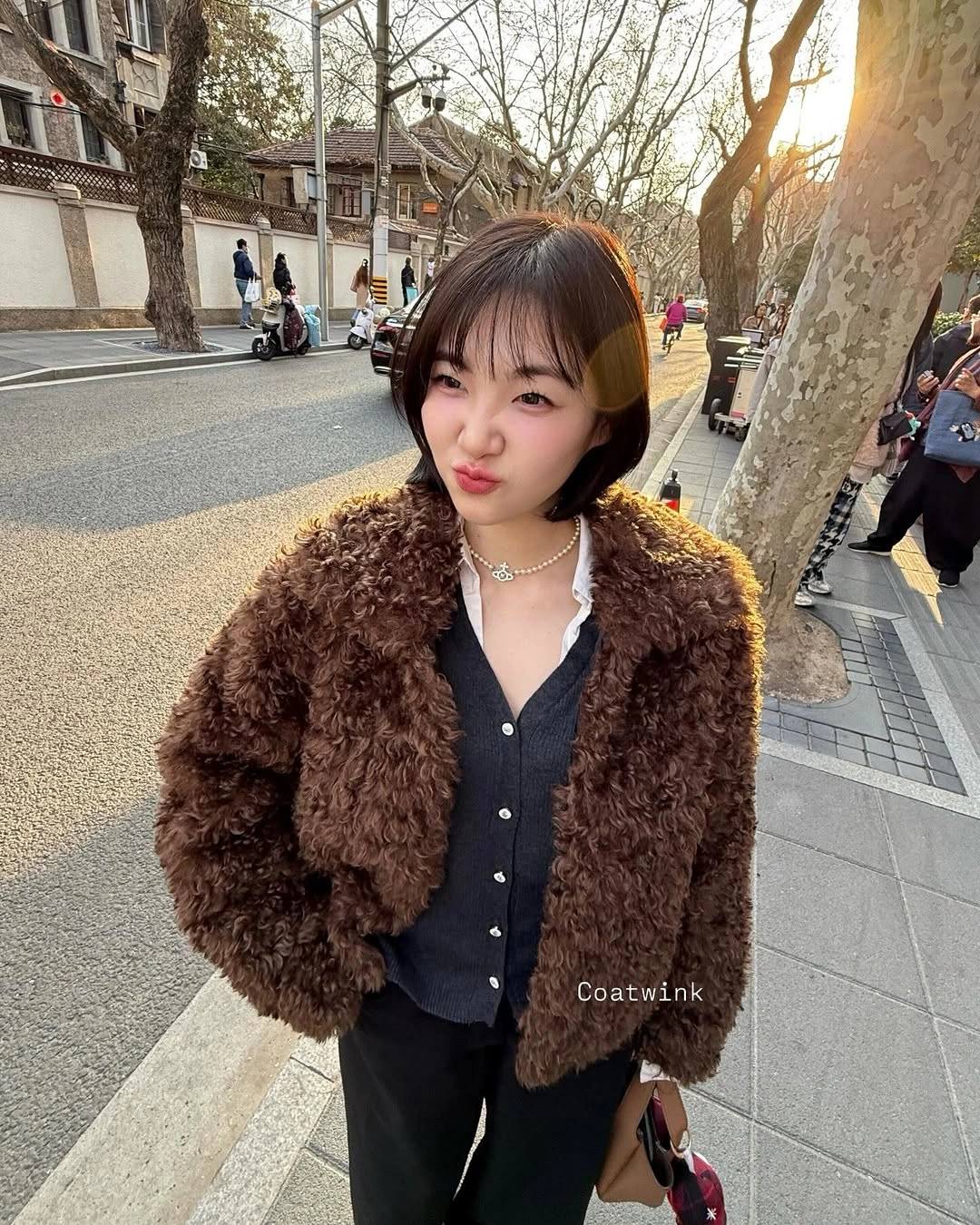
Dark-on-dark dressing can become flat when every surface behaves the same way, which is why the tactile brown jacket matters here. The difference is not about a loud contrast but about a surface that catches light differently from the smooth trousers. A smaller shoulder bag keeps the outfit compact; a large slouchy tote could pull attention away from that deliberate upper-body texture.
For winter outfits for women who prefer familiar colors, this is a useful reminder that proportion can replace print. Keep the jacket short enough to reveal the line of the trousers, then choose footwear with a simple shape rather than a heavy platform. The main tradeoff is volume: a thick sweater under this layer would quickly change the intended compact profile.
Burgundy Scarf Breaking Up Black Layers
A wide burgundy scarf changes the feeling of the black coat and trousers by introducing depth at the center of the body. Its saturated tone is strong enough to be noticed from a distance, yet the rest of the outfit remains almost entirely dark. That restraint makes the scarf read as a deliberate warm accent rather than an attempt to brighten every part of the look.
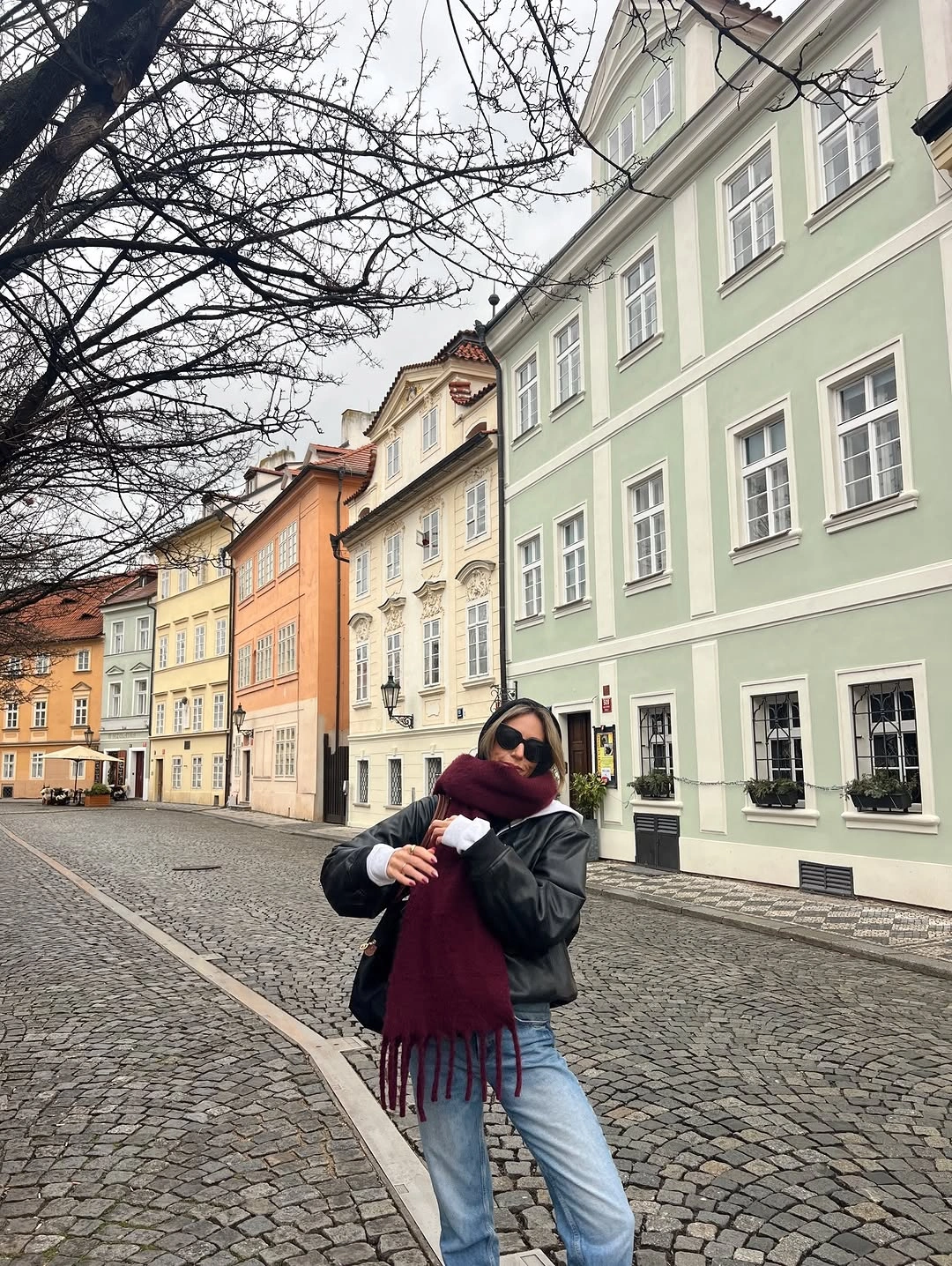
The wrap has enough width to soften the long outer line and to create a focal area near the face. Leaving it loose rather than tightly knotted keeps the effect relaxed, which suits the easy trousers and small shoulder bag. If burgundy feels too intense, a muted plum, deep navy, or charcoal scarf could create a similarly layered result without changing the outfit’s simple structure.
Black layers are practical because they visually connect coat, trousers, and shoes, but they can absorb details when everything is equally matte. A scarf with visible softness solves that problem without asking for more jewelry or a patterned bag. The only caution is proportion: very short scarves would not create the same vertical interruption, while an overly bulky one could hide the coat neckline entirely.
Gray Knit Dress With Tall Black Boots
The fitted gray knit dress keeps its shape close to the body, while black tights and knee-high boots give the lower half a firm, continuous finish. The folded neckline creates the main point of contrast, showing how a soft knit can feel dressed without relying on a bright color. A small dark bag keeps the accessories in scale with the narrow silhouette.
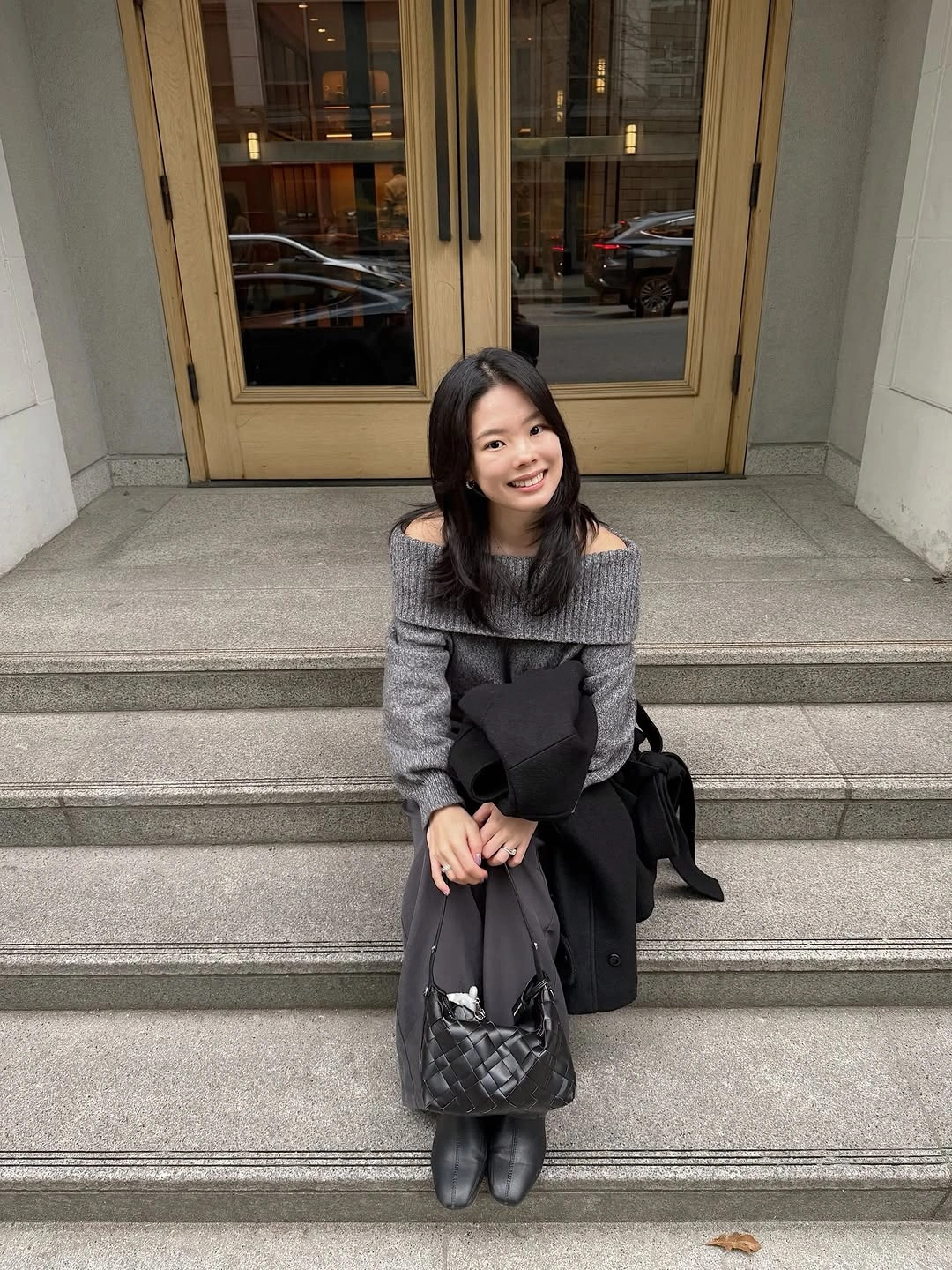
Because the dress has a soft, slightly gathered line, the tall boots provide useful visual weight and prevent the outfit from feeling too delicate. This pairing could shift easily with an opaque tight, a lower heel, or a flat boot, depending on how much structure is wanted. A chunky ankle boot would interrupt the long line more sharply, so it would create a more casual result than the tall pair.
The balance depends on keeping the outfit’s separate elements close in value. Gray and black make the neckline and boot shape more important than any single accessory, which is why a simple bag works better than a bright one. On days when extra coverage is needed, a long coat in charcoal, black, or deep brown would preserve the same quiet, close-fitted direction.
Cream Knit Over a Dark Lace Hem
The oversized cream sweater looks soft and approachable because the darker skirt appears only as a narrow lace-trimmed hem below it. That small reveal gives the neutral knit a more layered finish without making the outfit feel costume-like. Ribbing at the cuffs and a black shoulder bag add enough definition to keep the light top from blending into the background.
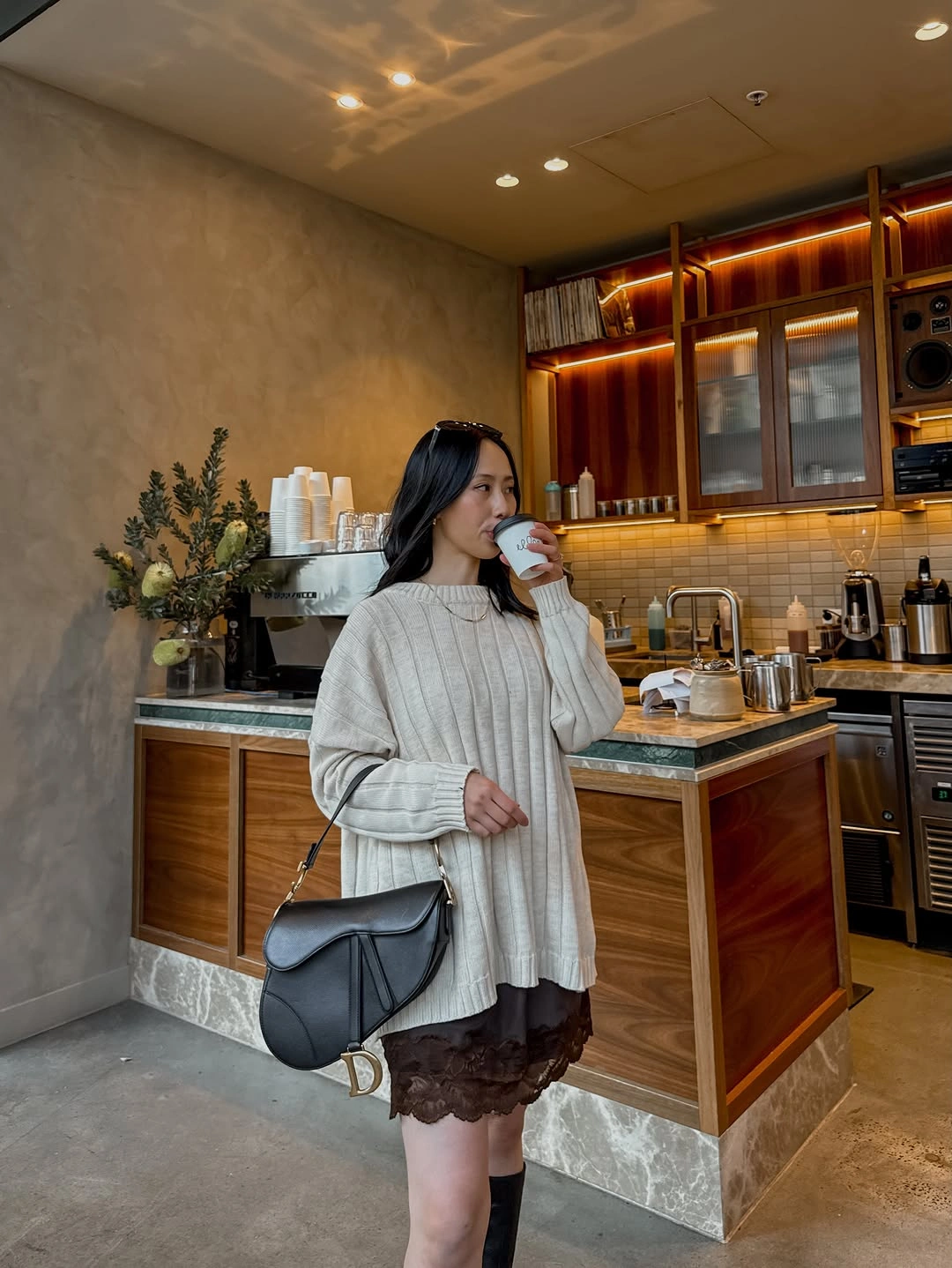
This is an effective way to use a delicate-looking skirt in winter outfits for women without asking it to carry the whole look. The large sweater provides coverage and volume, while boots make the exposed lower edge feel intentional rather than fragile. For a subtler version, choose a straight dark slip skirt with the same slight contrast at the hem but less visible surface detail.
The skirt needs to remain narrow beneath the sweater for the proportions to stay clean. A very full midi skirt or thick layered petticoat would compete with the knit’s volume and make the middle look heavier. Keeping the bag dark and compact is helpful too, because it repeats the skirt and footwear while leaving the cream sweater as the widest, softest element.
Spotted Jacket With Relaxed Light Denim
The short spotted jacket gives the relaxed gray sweatshirt and pale jeans a clear focal point without changing the casual character of the outfit. Its dark, irregular pattern is balanced by a burgundy cap and polished dark loafers, which keep the styling connected from top to bottom. The jeans remain light and roomy enough to create separation between the jacket and shoes.
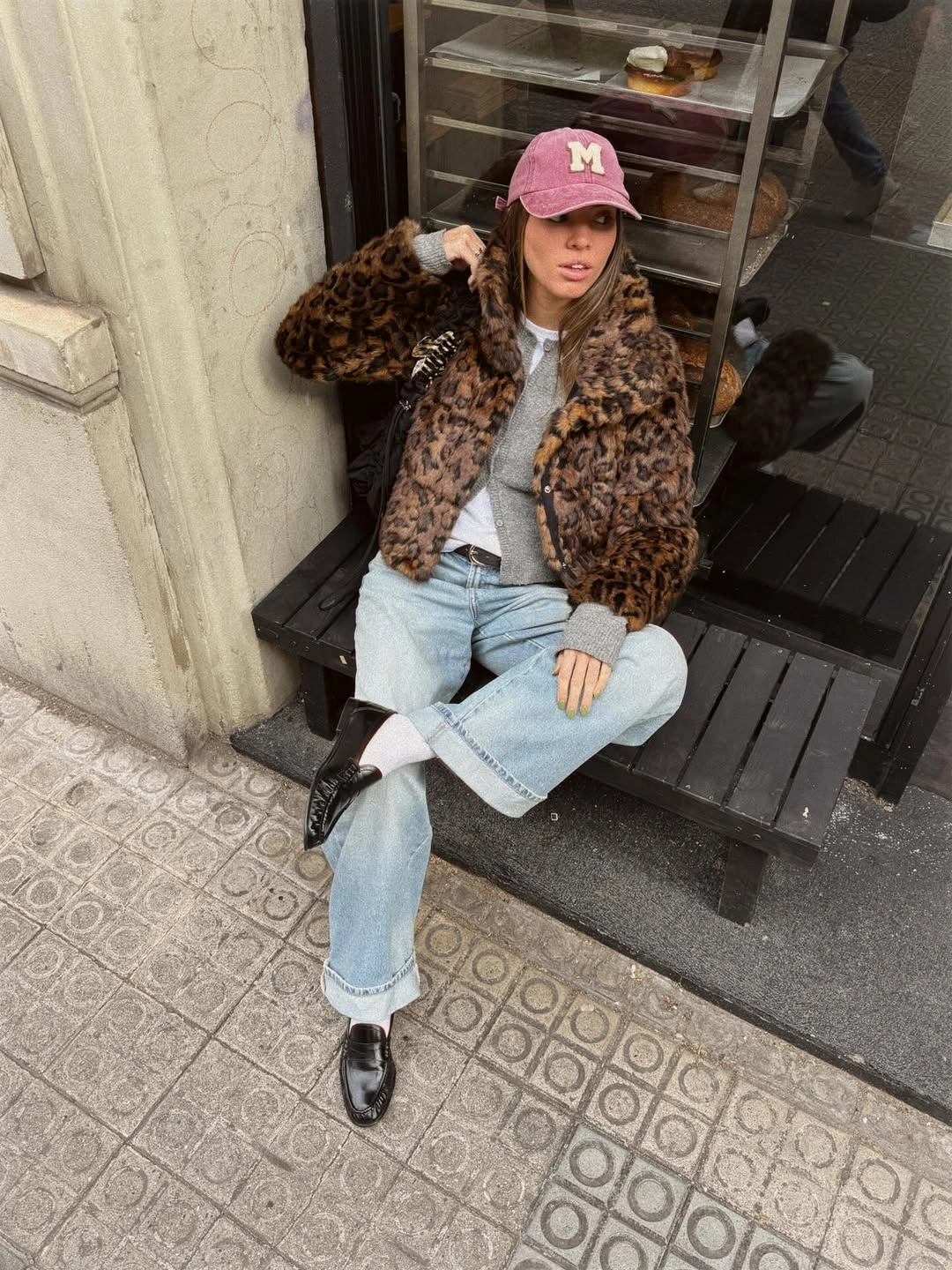
Texture works here because it appears in only one major piece. The sweatshirt stays neutral, and the jeans give the print enough open space to feel deliberate rather than busy. If a cap is not part of the plan, a dark knit beanie could repeat the same top-heavy accent, but adding a patterned scarf as well would likely make the upper half feel too crowded.
The rolled denim hem is useful because it gives the loafers a clear stopping point and prevents the pants from pooling around the shoe. For an easy variation, switch the loafers to clean low-profile sneakers and keep the jacket’s cropped length. The tradeoff is that chunkier shoes would add more weight, which may require a straighter or slightly shorter jean to retain the same ease.
Black Column With Brown Knee-High Boots
The black coat and tights form a continuous dark column, allowing the tall brown boots to read as a warm, purposeful interruption rather than a random contrast. A navy scarf softens the upper half, while the slim boot shaft keeps the lower line clean. The result is understated but not severe, because the brown footwear changes the temperature of the palette.
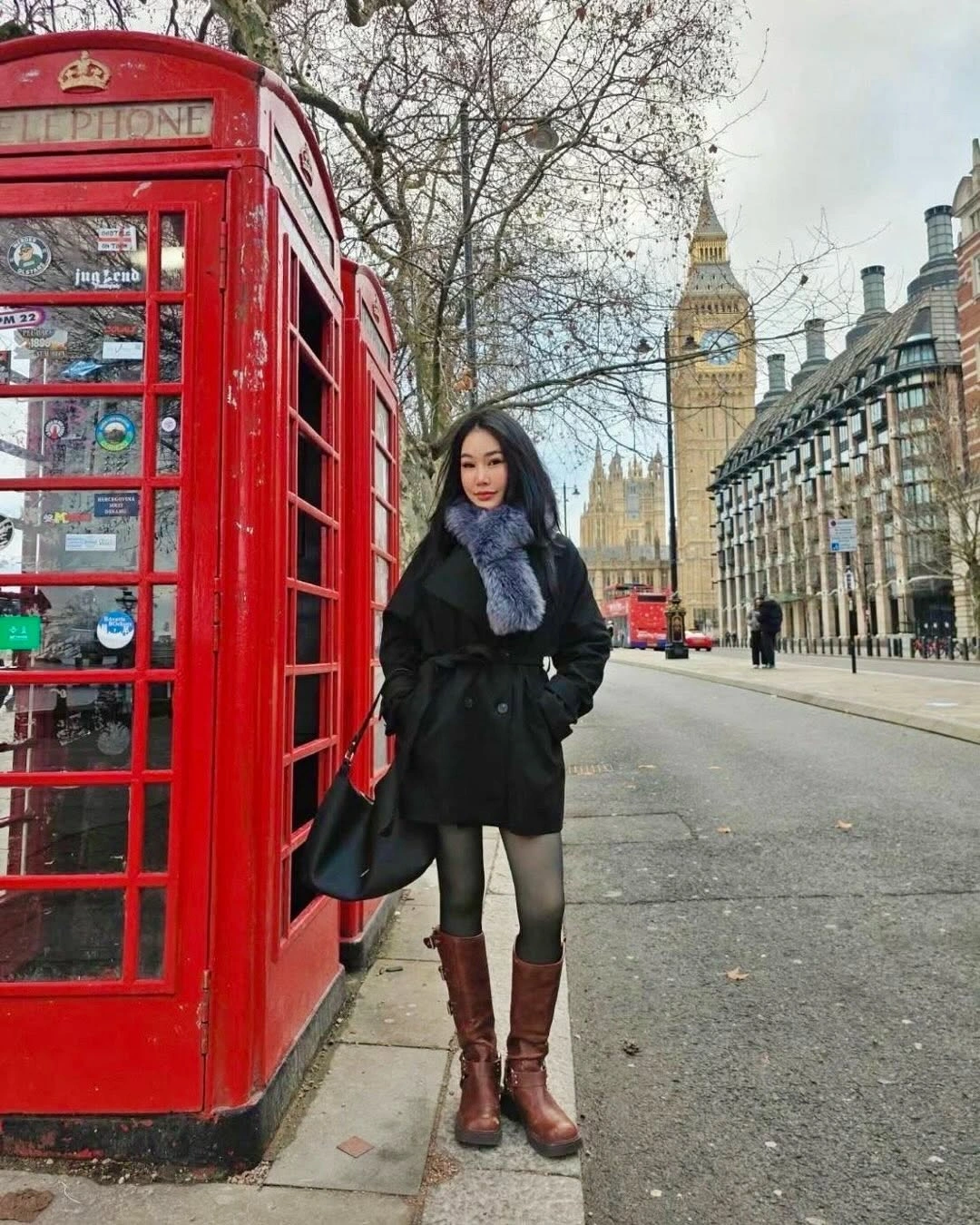
Brown boots do not need a matching coat or bag to make sense in a mostly black outfit. In this case, they work because the tights bridge the hem to the boot and because the scarf brings another soft, cool tone near the face. A darker chocolate boot would make the contrast quieter; a lighter tan pair would become a much more noticeable feature.
Long boots are most useful here when the skirt or dress hem stays above the shaft, keeping the transition deliberate. If the hem were much longer, the brown color would become only a small peek at the ankle and lose some of its balancing effect. For more walking comfort, a block heel or flat tall boot could preserve the same clean line without changing the visual logic.
Gray Scarf Over a Black Winter Base
The large gray scarf adds softness to a black coat, tights, and bag while the brown boots keep the lower half from becoming visually flat. Its pale tone sits at the center of the outfit, where it lightens the face and breaks up the dark outer layer. The accessories remain simple enough that the scarf’s width feels like a choice, not an afterthought.
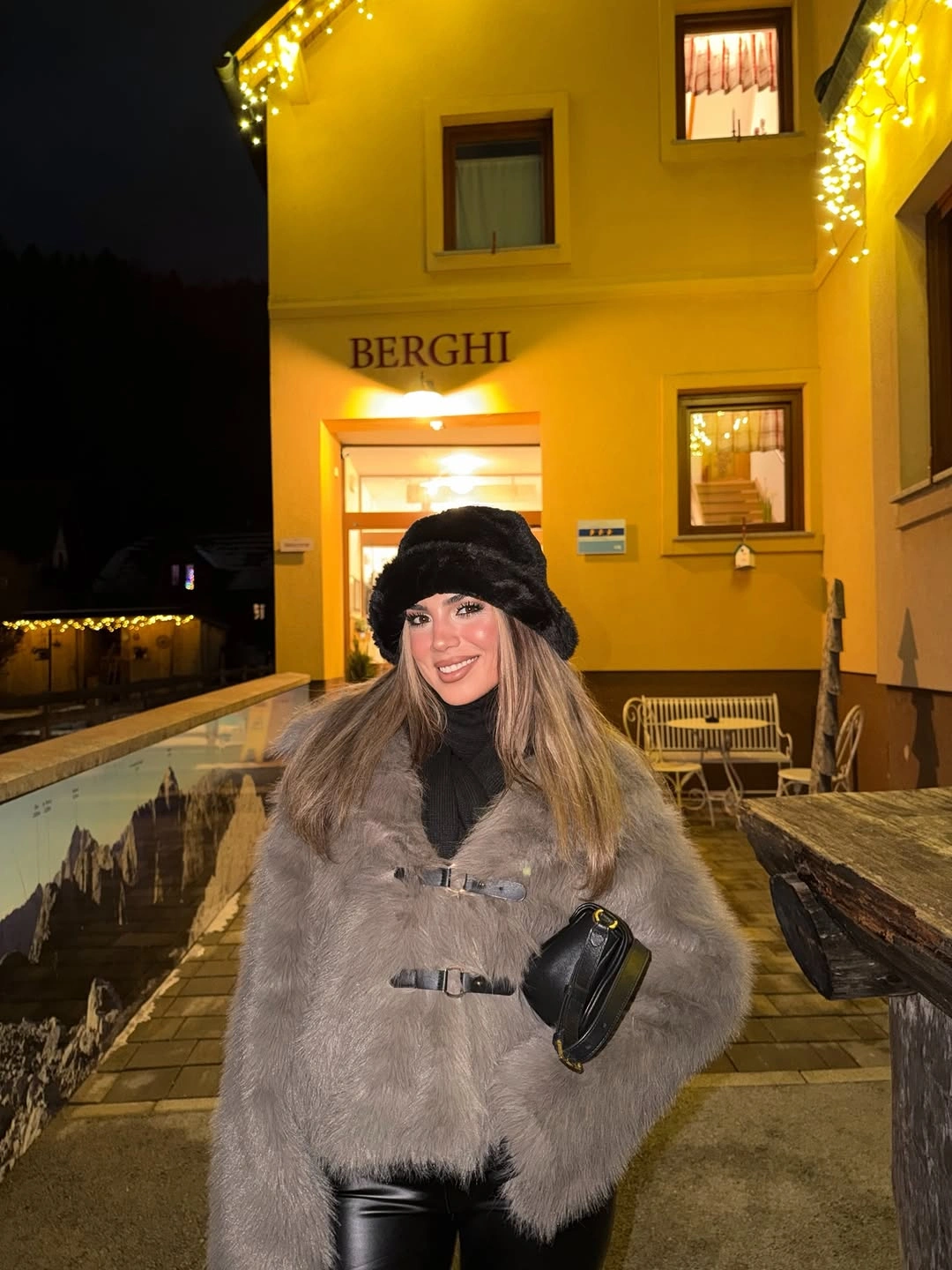
For winter outfits for women casual enough for everyday errands, this combination shows how little color is actually required. A scarf in stone, dove gray, or muted blue can perform the same role, especially when the coat is black. The brown boots add a quieter finish than black boots would, yet they remain dark enough to keep the outfit grounded and easy to repeat.
The key is to let the scarf remain the lightest area rather than introducing several other pale accessories. A white bag or bright sneakers would change the contrast pattern and make the outfit more graphic. When the coat is very long, choose a scarf with enough length to create a vertical drape; a small neckerchief would not give the same softening effect.
Taupe Soft Volume With Black Trousers
The taupe fuzzy outer layer has a broad, rounded shape, so the fitted black lower half becomes essential to the outfit’s proportion. Leather-look trousers, a dark cap, and a compact crossbody bag create a narrow base beneath all that surface texture. The muted color keeps the outer layer noticeable without making it look overly sweet or decorative.
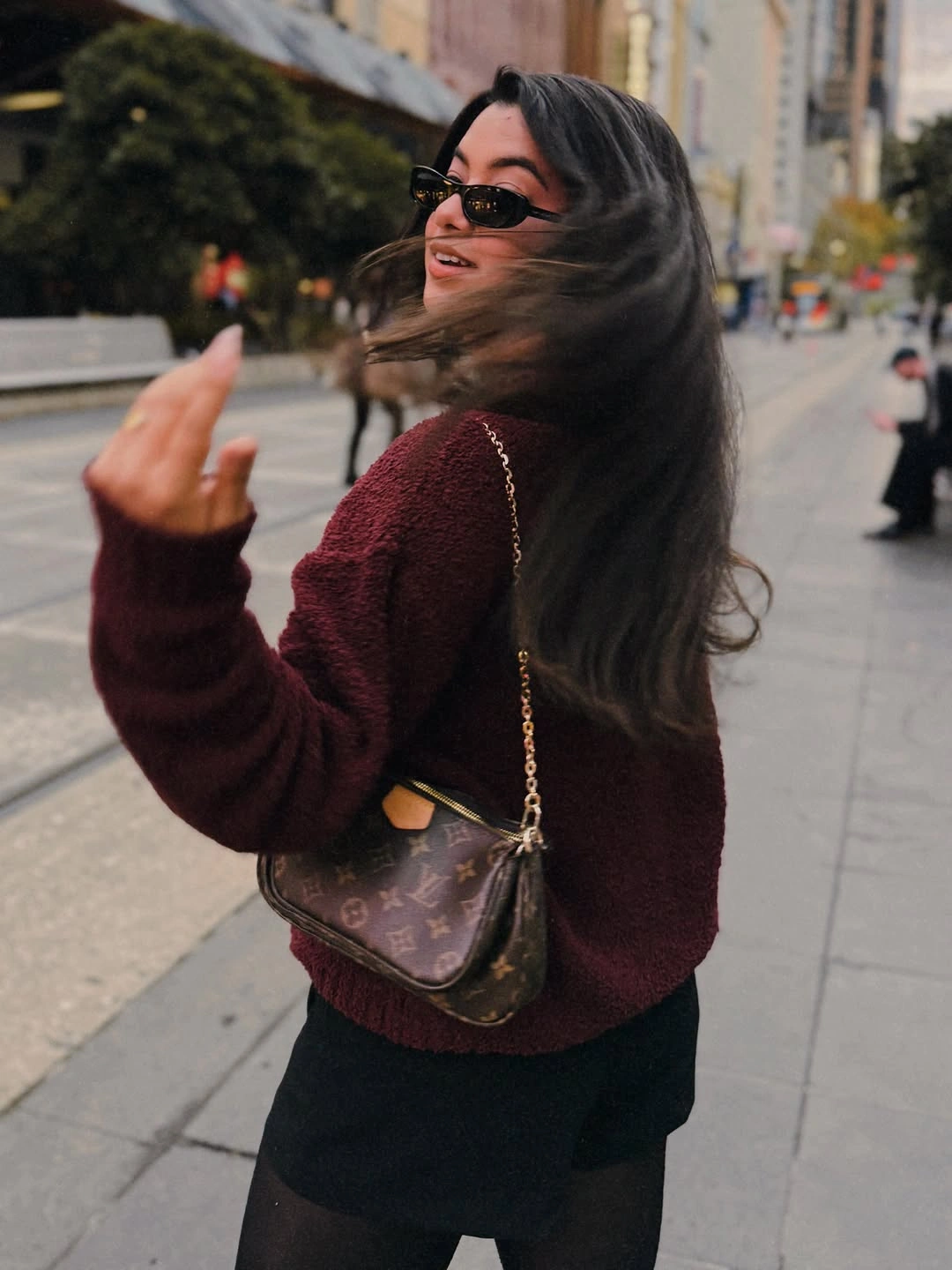
When an outer layer is this voluminous, the most useful styling decision is often what not to add. The dark trousers and small bag leave the jacket room to be the only soft, oversized element. A sleek ankle boot or pointed shoe would continue that idea; a second bulky layer, such as a giant scarf, could make the upper body feel more crowded than cozy.
The cap brings a casual edge and prevents the outfit from becoming too precious, but it is not required for the basic formula. A smooth knit hat in black would make the same color connection while feeling quieter. The main limitation is warmth around the hips and thighs: a short, rounded layer may look appealing, but it may need a longer coat option when more coverage is the priority.
Wine Sweater With Skirt and Boots
The burgundy sweater gives the black skirt, tights, and boots a richer center than a neutral knit would. Its relaxed shape balances the short hem, while the tall boots make the lower half feel contained and ready for cooler conditions. A patterned brown shoulder bag adds texture in a small area, so it supports the palette without competing with the sweater’s saturated color.
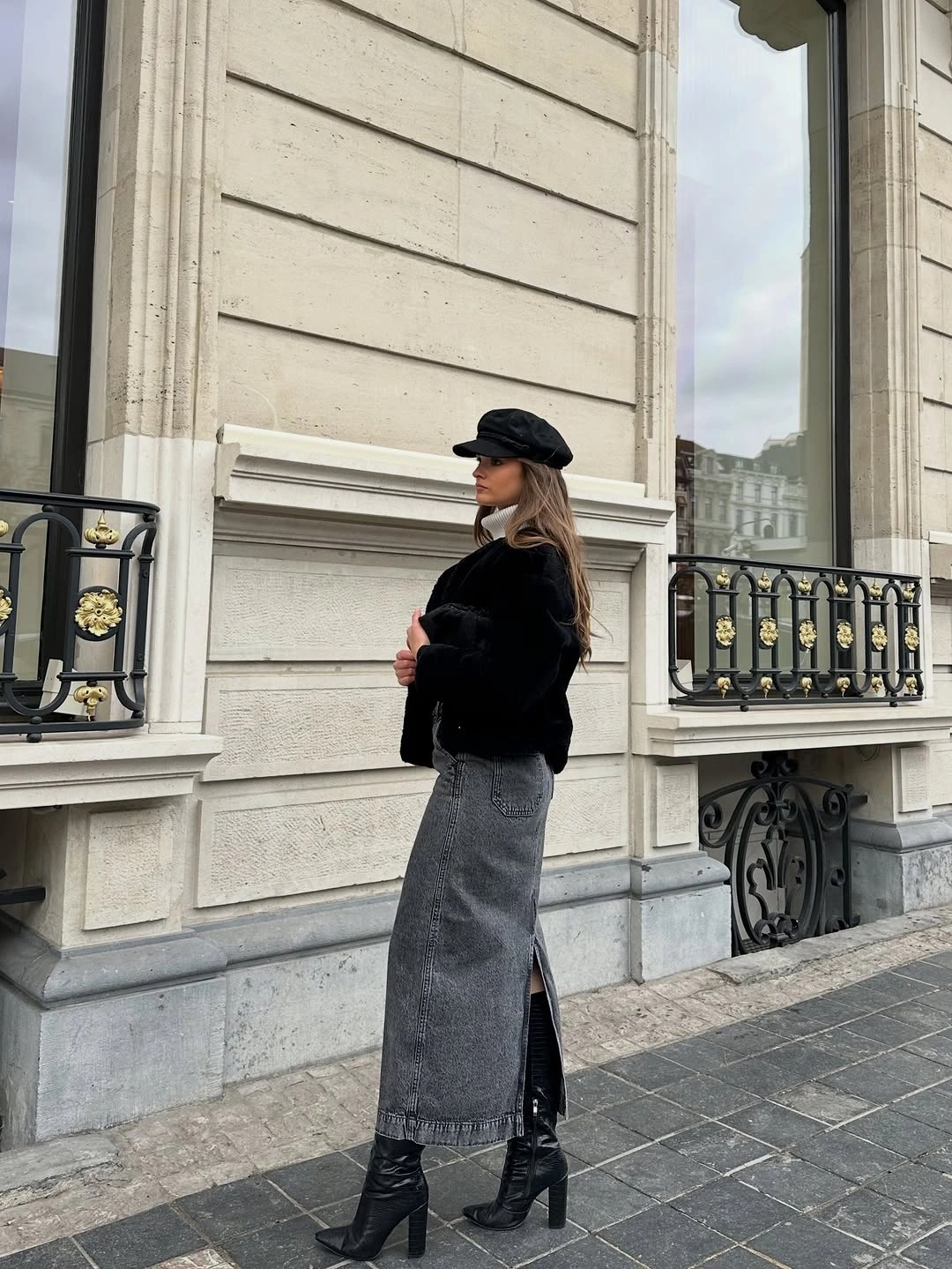
A darker red knit is especially useful when a black skirt-and-boot combination starts to feel too predictable. It adds depth but remains quieter than a true bright red, making it easier to wear with brown or black accessories. If the skirt feels too abbreviated, a longer straight skirt with the same tights and boot height could keep the color idea while shifting the proportion toward more coverage.
The boot shaft is important because it connects the dark skirt area to the ground and reduces the amount of bare visual space. Short ankle boots would create a more broken line, which can be appealing but would make the outfit feel less continuous. Keep jewelry restrained here; a large necklace or very colorful earring could compete with the sweater’s already strong color role.
Cream Sweater With Gray Tailored Trousers
The cream sweater and gray trousers rely on gentle contrast rather than a sharp color divide, which lets the brown ankle boots feel like a warm finishing note. The top is soft and uncomplicated, while the trousers taper enough to keep the lower half from looking too loose. Dark sunglasses and a small bag provide definition without changing the outfit’s quiet, grounded direction.
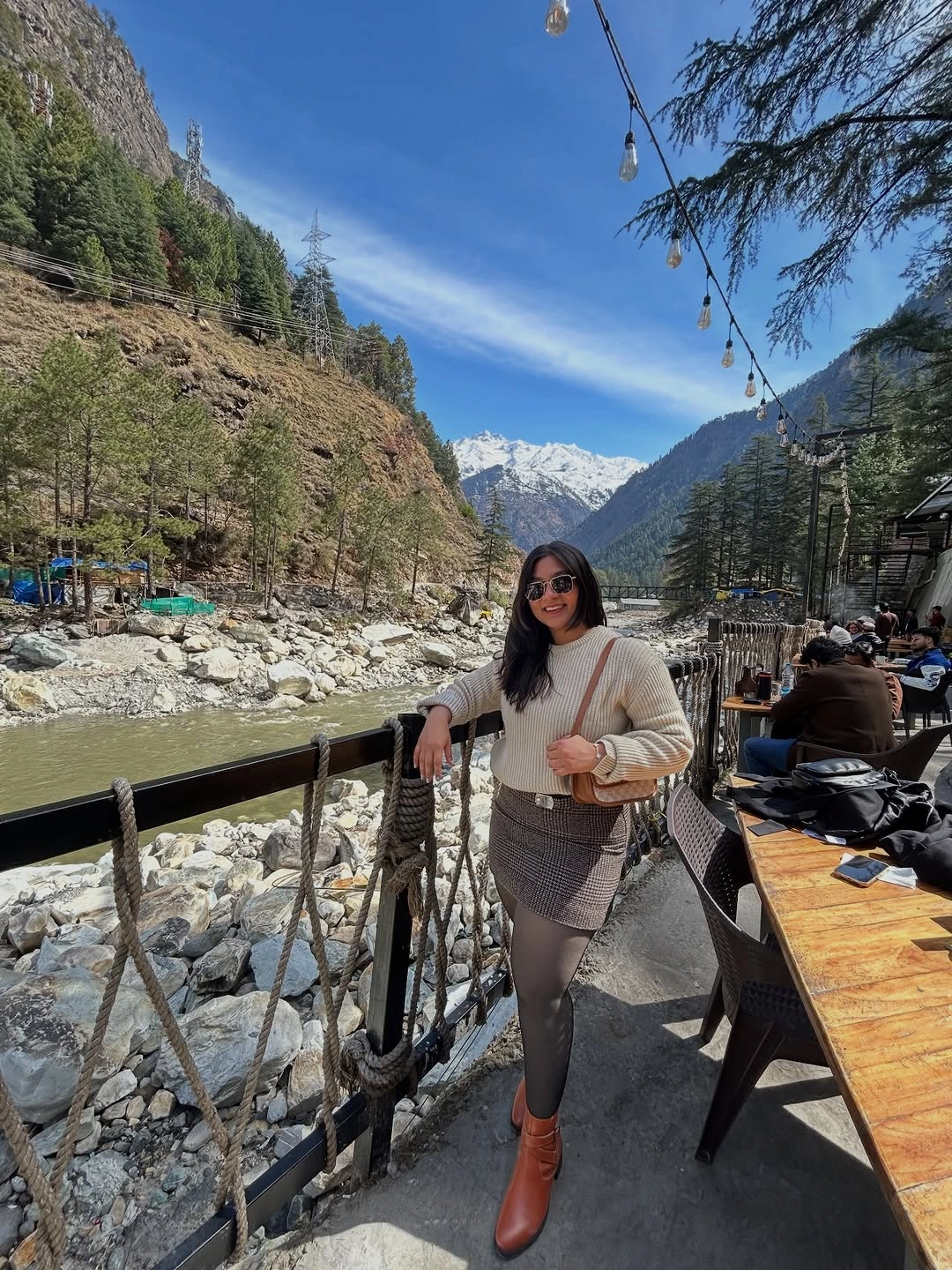
This kind of pale knit and gray trouser pairing is useful when you want winter outfits for women aesthetic without relying on a visibly trendy detail. The brown boots warm the cool gray and keep the clothing from reading like office basics. A darker brown loafer or flat boot could make the same palette more relaxed, while a pointed heeled boot would sharpen it for winter outfits for work or a dressed-up moment.
Because the sweater is light, keep the fit intentional at the shoulders and cuffs rather than overly slouchy. Too much extra volume on top combined with tapered trousers can make the outfit feel unbalanced. The cropped trouser hem also matters: it gives the boot space to show its shape, whereas a long hem covering the boot would reduce the useful warmth of that brown accent.
Dark Cardigan With White Trim Details
The dark brown cardigan gains definition from its white collar and cuffs, then stays elegant over long black wide-leg trousers. Those small pale edges lift the neckline and sleeves without turning the outfit into a high-contrast costume. A pointed ankle boot extends the trouser line, keeping the soft knit and roomy pants from feeling too relaxed together.
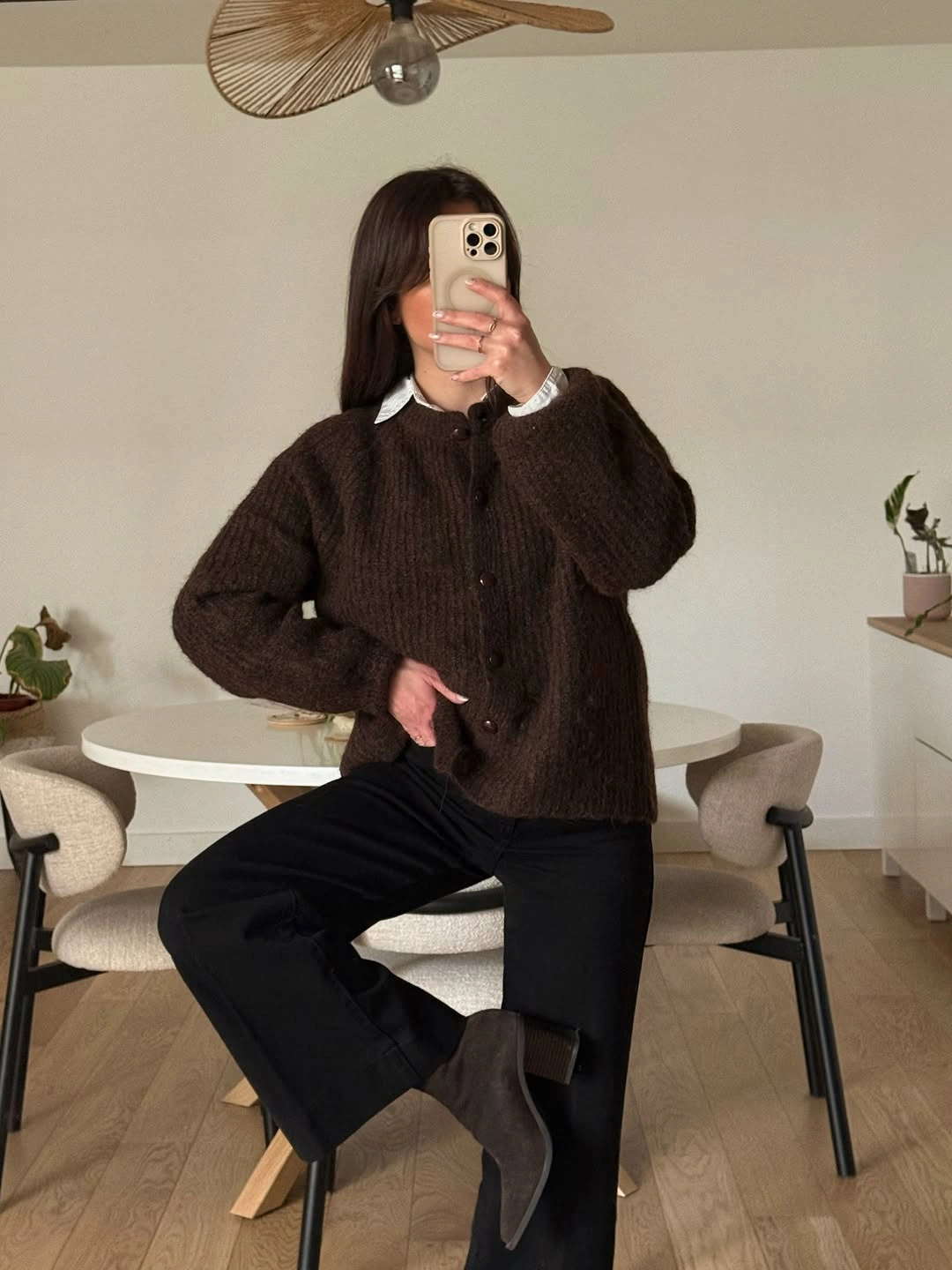
Contrast trim can do the work of an accessory when it appears in careful, repeated places. Here it frames the face and hands, leaving the cardigan’s rich brown surface visible as the main color. To make this idea more casual, choose a cardigan with one simple light collar and wear it over straight dark denim; the visual principle stays intact even when the trousers change.
The wide trousers need length and a relatively clean drape to support the cardigan’s neat shape. If the hem gathers heavily over the shoe, the outfit may lose the long vertical effect that makes it look composed. A narrow belt could add more waist definition, but it is not necessary when the cardigan already ends at a balanced point above the hips.
Oatmeal Cardigan With Wide White Trousers
The short oatmeal cardigan gives white wide-leg trousers a structured upper half through its large dark buttons and patch-pocket details. Rather than blending into the pale base, the knit creates a visible vertical rhythm from neckline to hem. A small dark bag and sunglasses add compact contrast, letting the outfit remain light without looking unfinished or overly delicate.
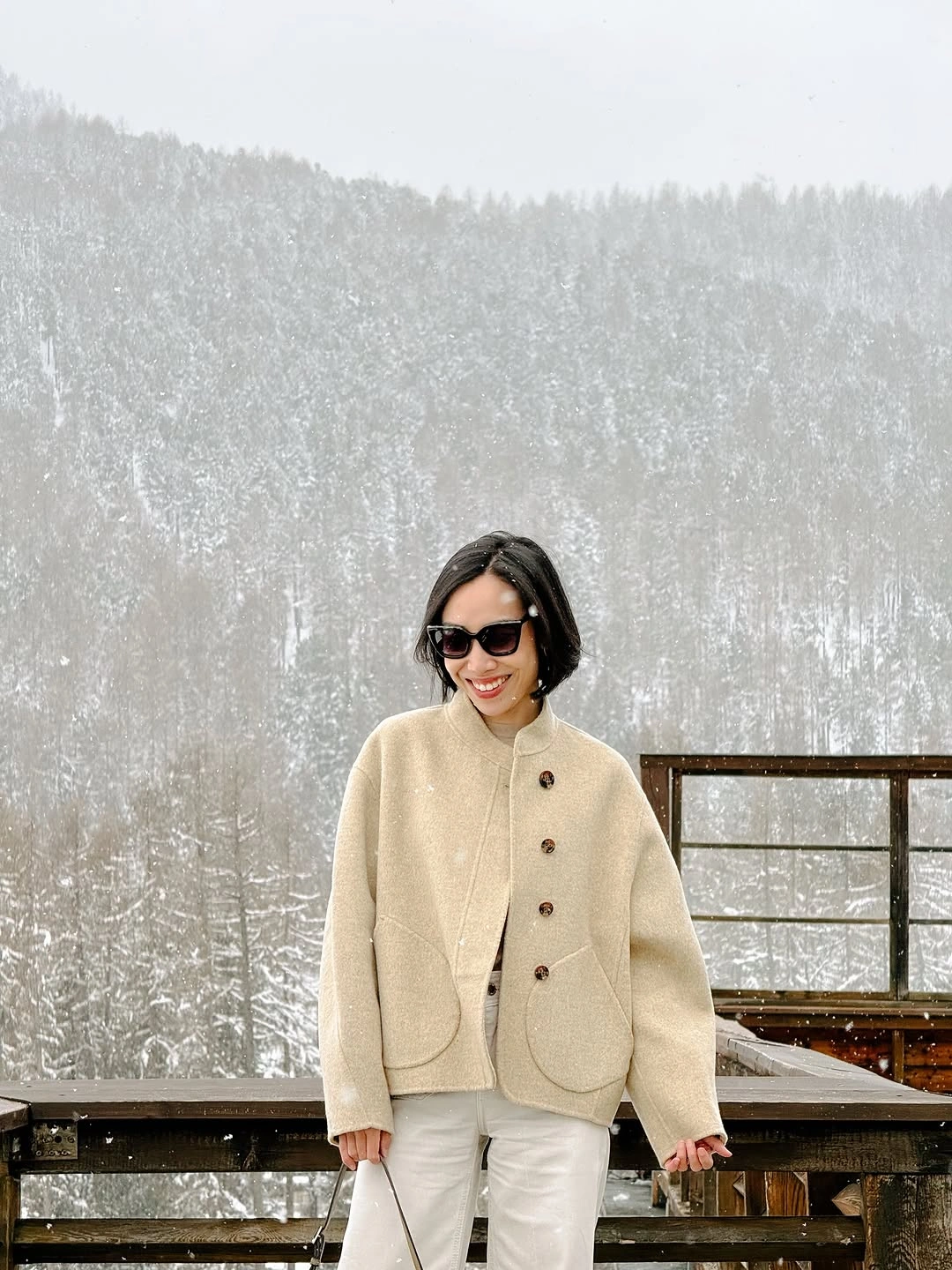
Wide white trousers can feel daunting in winter, but a slightly darker knit on top gives them a clear frame. The oatmeal shade is soft enough to keep the look cohesive, while the buttons provide more visual information than a plain sweater would. For a colder day, a longer coat in camel, gray, or deep brown could cover the cardigan without disrupting the calm tonal relationship.
The trousers are most successful when their hem stays clean and does not drag, especially with a shorter top. A heavy shoe might make the base feel grounded, but it could also add too much contrast to an otherwise pale outfit. If more definition is needed, choose a dark belt or a medium brown bag instead of adding a bright color that would interrupt the simple light-to-dark progression.
Long Cream Coat Over Printed Trousers
The long cream teddy-style coat creates a soft, continuous outer line over the printed brown trousers, while white earmuffs and a small pale bag repeat its color family near the face and shoulder. The trousers only emerge below the coat, so their pattern reads as a contained detail rather than the main visual statement. Pale boots keep the lower half equally gentle.
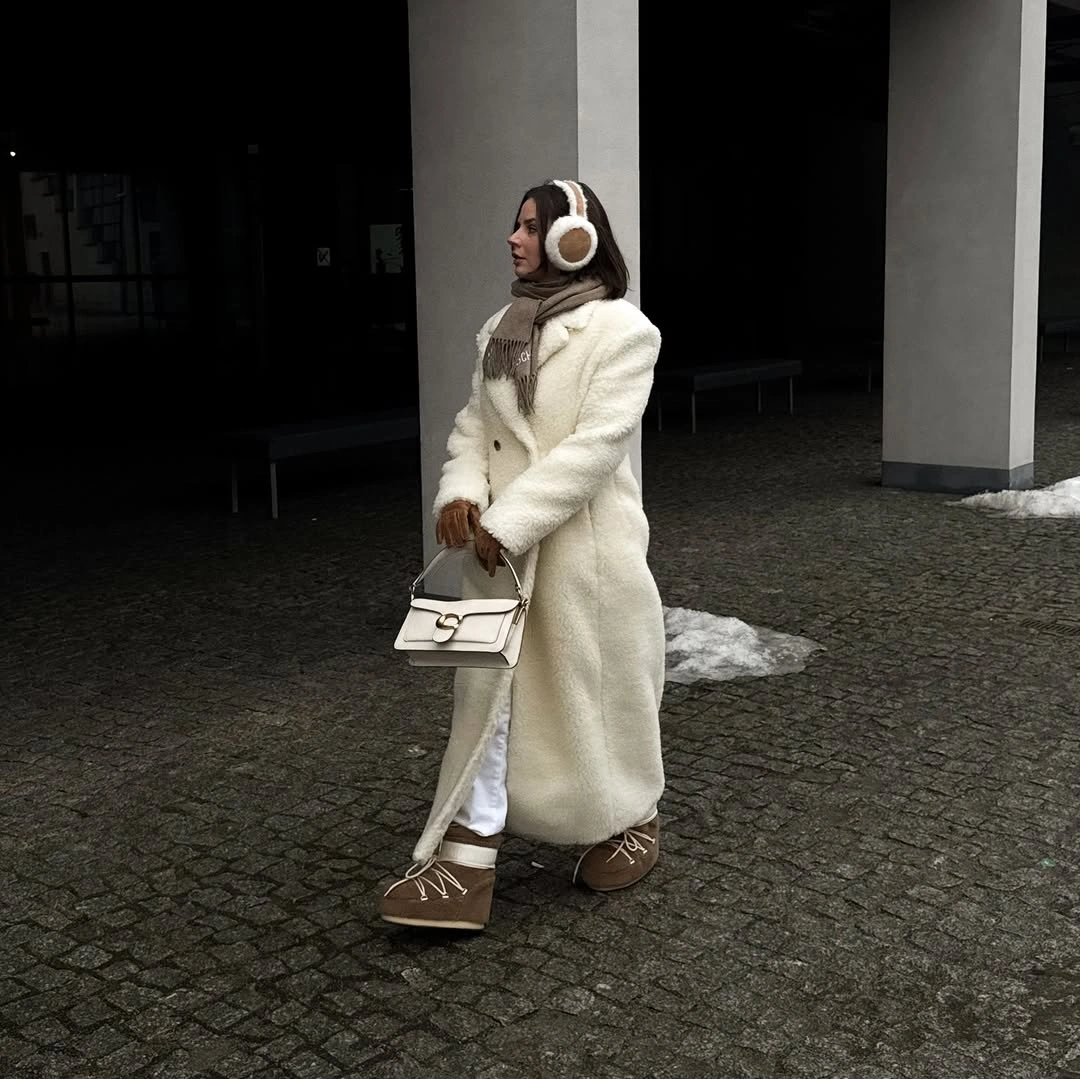
This is a thoughtful way to bring a print into winter outfits for women snow without making the entire look visually loud. The cream outer layer acts as a calm field around the brown motif, and the light accessories keep the palette close. A plain dark trouser would make the outfit more minimal, but it would also remove the small contrast that gives this version its distinct personality.
Because the coat is both long and textured, the printed trousers need to remain a lower-body detail rather than a second major volume. A larger print or a very wide, pooled hem could compete with the coat’s soft surface. Choose a boot with a simple rounded toe and a light color if preserving the pale finish matters; dark footwear would create a much stronger stopping point at the ground.
Black Jacket With White Trousers and Brown Bag
The dark leather-look jacket has a broad, boxy shape, but white trousers keep the overall outfit from becoming too heavy. A gray scarf settles the transition near the neckline, and the large warm-brown bag introduces a practical contrast at the side. The black, gray, white, and brown each have a clear job, which makes the combination feel more deliberate than a simple monochrome base.
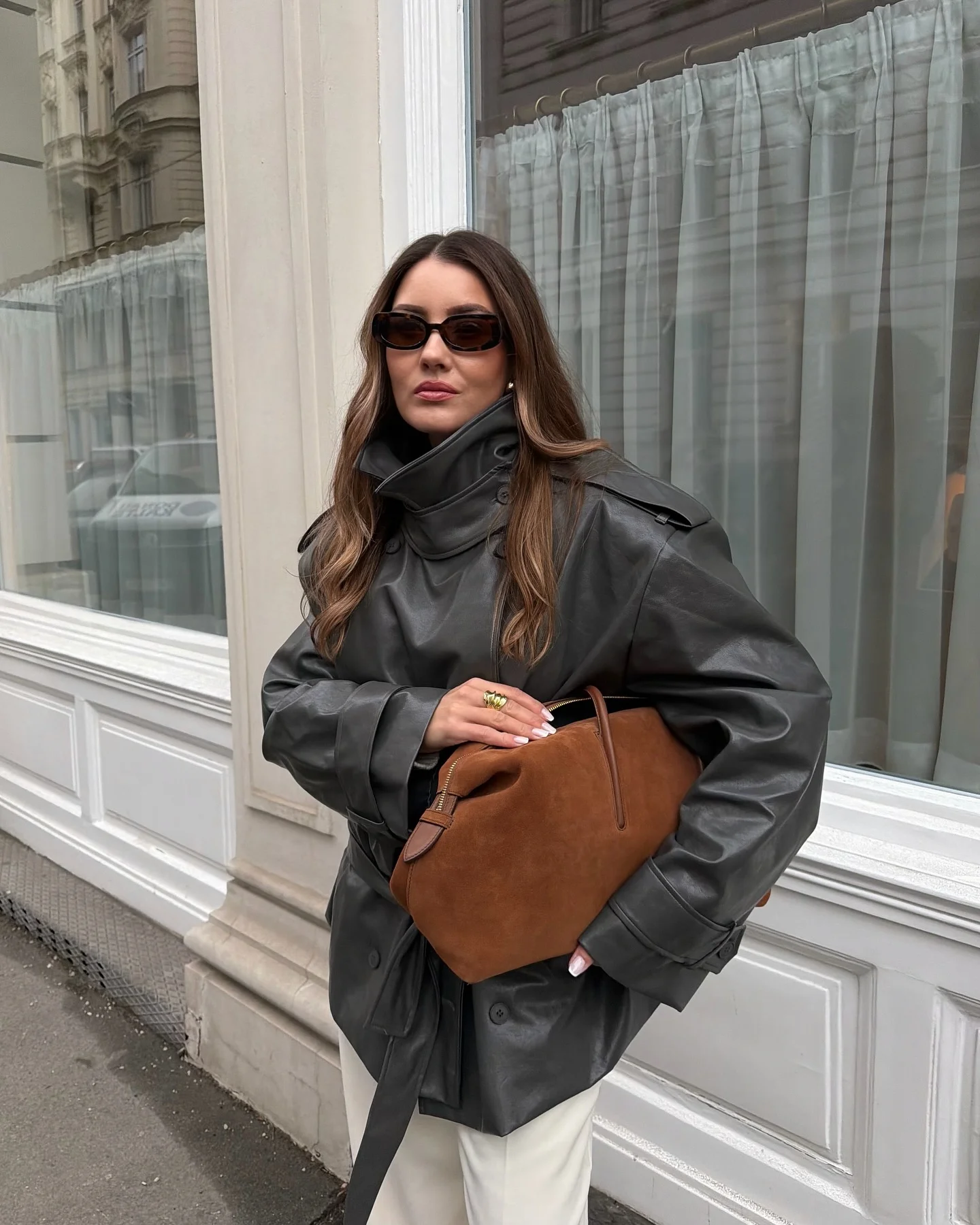
White trousers can be useful with dark outerwear because they change the balance without asking for a bright color. Here they create space under the bulky jacket, while the brown bag adds softness and visual warmth. If the bag were black, the outfit would look sharper and more graphic; keeping it brown makes the layers feel slightly more lived-in and less severe.
The jacket’s width works because the trousers fall in a fairly straight line rather than adding another oversized shape. A very wide leg or a large slouchy scarf could make the proportions less clear. This formula also benefits from footwear with a little substance, such as a dark boot or loafer, because a delicate shoe could look too light beneath the strong shoulders and roomy jacket.
Cream Texture Over a Dark Denim Base
The cream shaggy jacket brings immediate texture to dark jeans, a black belt, and a patterned structured bag. Its short length lets the belt create a crisp break at the waist, which is important when the jacket has so much rounded volume through the sleeves and lapels. The light outer layer becomes the focus, while the denim and accessories provide a disciplined frame.
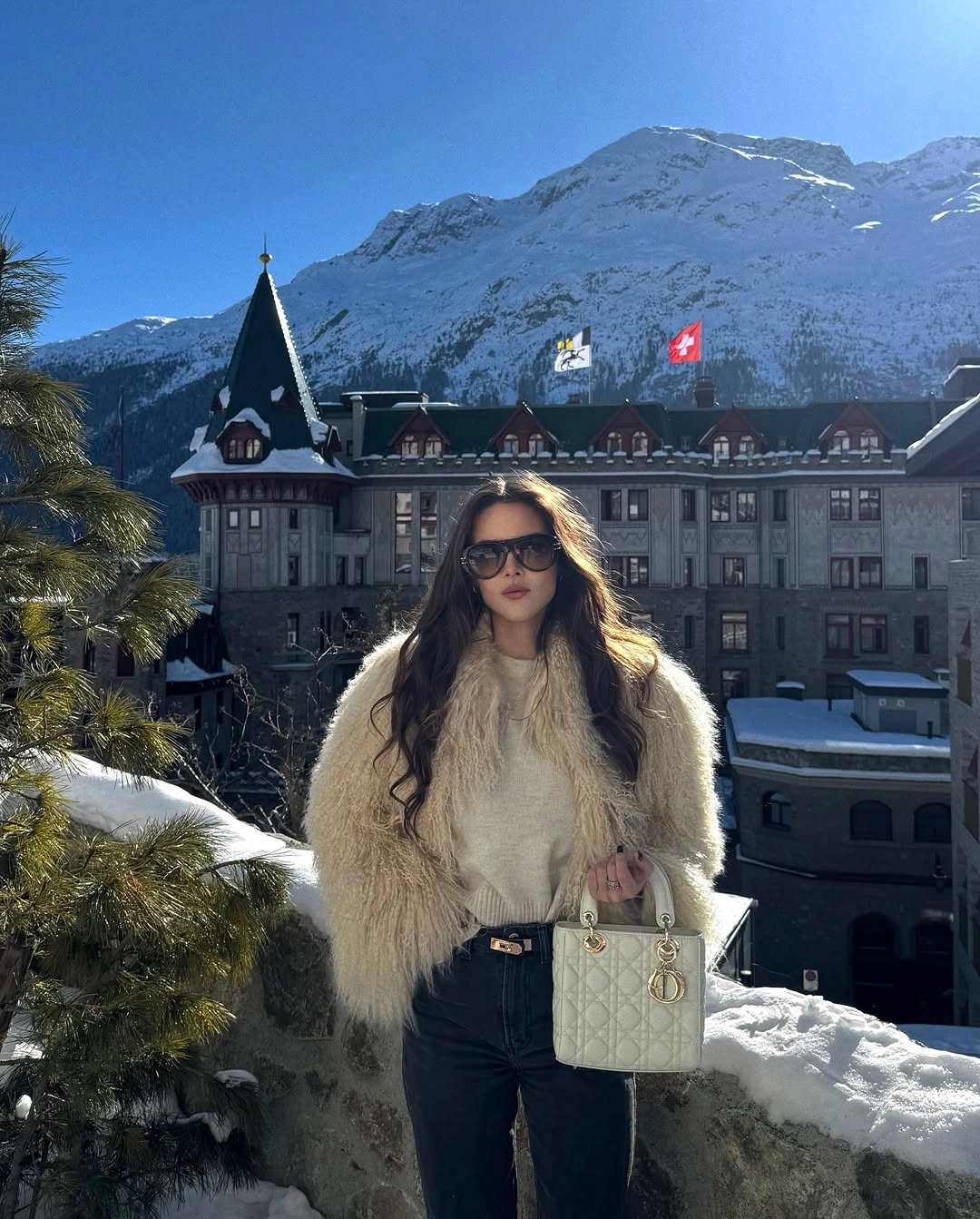
To make a textured light jacket feel modern rather than precious, use darker denim and keep the accessories graphic. The belt buckle and bag pattern add small points of detail, but neither pulls attention away from the jacket. A plain black bag would make the outfit even quieter, while a brighter accessory could compete with the light pile and make the top half feel more crowded.
This balance may need adjusting if the jacket is worn over a thick knit. Extra bulk at the torso could erase the waist break that makes the proportions work. A close-fitting tee, a thin turtleneck, or a fine-gauge sweater would keep the jacket’s soft shape visible. The jeans should remain straight or slim enough that the outfit does not become equally voluminous from shoulder to hem.
Long Brown Coat With a Statement Hat
The long brown coat is made more expressive by the oversized furry hat, while the dark striped trousers keep the lower half visually extended. The palette stays within brown and black, so the large headwear feels like a proportion decision rather than a separate costume detail. Dark sunglasses add another compact line that helps the face area remain crisp against all the soft texture.
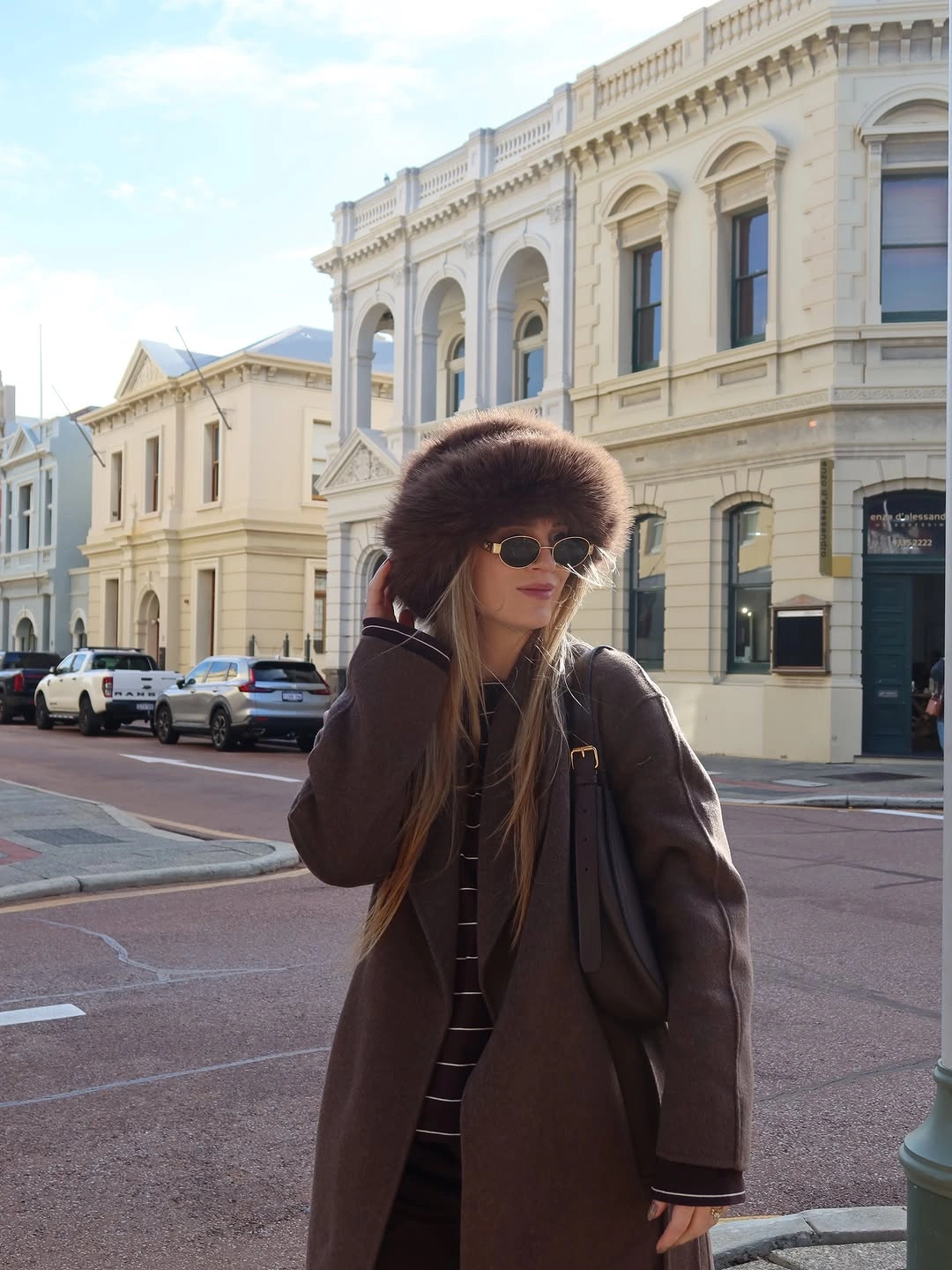
Statement headwear works best when the outfit below it has a long, simple direction. The faint vertical stripe in the trousers supports that idea and prevents the coat from appearing like one uninterrupted block. For a lower-key version, swap the large hat for a close-fitting dark beanie and keep the coat, then let the striped trousers remain the subtle point of visual interest.
The main tradeoff is scale: a dramatic hat can overpower a shorter coat or a very wide scarf. Here the long coat and narrow trouser line give it enough space. When replicating this combination, make sure the outer layer has some vertical length and avoid adding another large print. The success comes from controlling texture and height, not from piling on more winter accessories.
Gray Textured Jacket With Flaring Trousers
The pale gray zip jacket has a compact, textured shape that stops at the hip, while the dark flared trousers create a long, grounded base beneath it. A large black tote repeats the trouser color and gives the outfit useful visual weight at the side. This contrast between a light, bulky top and a dark, flowing lower half keeps the silhouette clear.
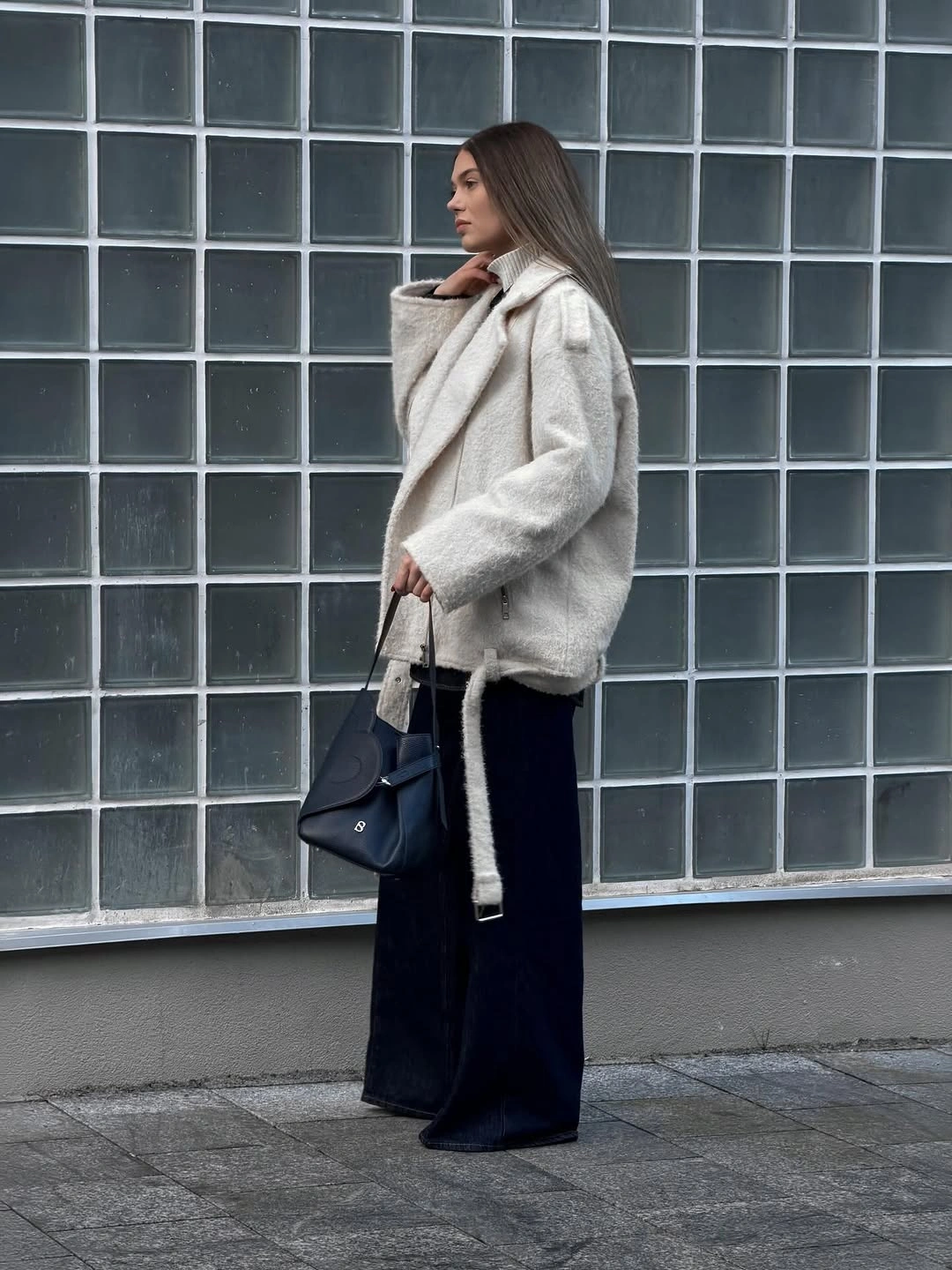
Flaring trousers are helpful when a short textured jacket has a lot of shoulder or sleeve volume, because they give the lower body enough presence to balance it. A straight trouser would make the look more compact, while a very wide denim could make it too relaxed. The black tote is large but visually simple, which lets it support the dark base rather than introduce a second focal point.
For a more casual adaptation, replace the tote with a smaller crossbody and choose a clean trainer, keeping the same light-over-dark relationship. The outfit would lose some of its vertical polish but retain the important proportion. Avoid adding another pale accessory at the waist, since the jacket already occupies that visual space and needs the trousers to remain the continuous darker foundation.
Dusty Shaggy Jacket With Narrow Black Layers
The dusty mauve-brown shaggy jacket carries almost all the outfit’s volume and texture, leaving the black trousers and boots to create a narrow, quiet base. Its high-pile surface is soft and expressive, but the restrained lower half stops it from becoming overwhelming. The limited palette helps the jacket feel like a considered focal layer rather than a costume-like piece.
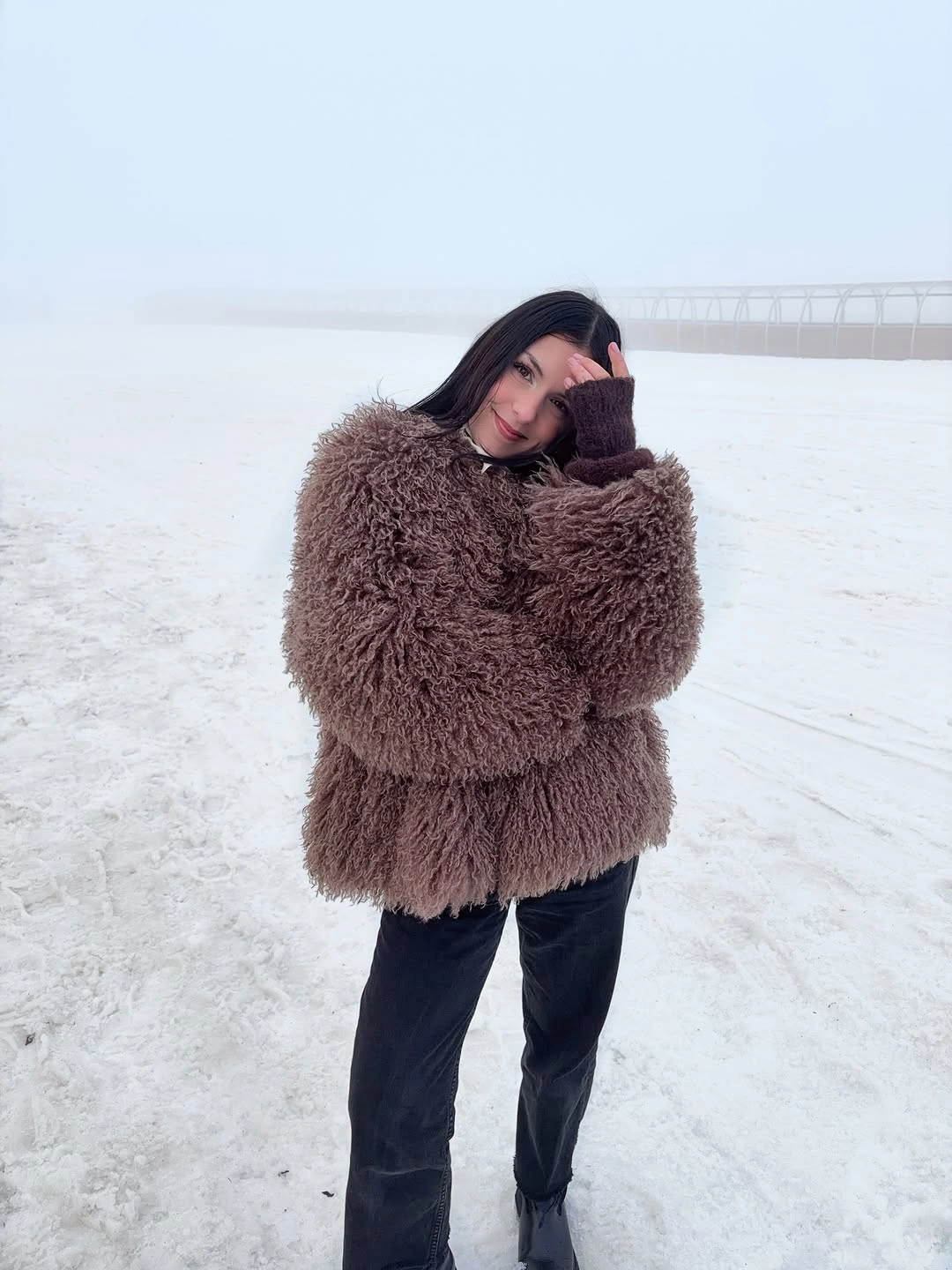
When an outer layer has this much texture, there is little need for a patterned bag, statement scarf, or bright shoe. Black trousers are useful because they visually recede and allow the jacket’s shape to remain legible. If the dusty brown color feels too muted, a small gold-toned earring or warm brown bag could add depth, but keeping those additions compact preserves the calm balance.
The narrow boot and trouser line also make this an adaptable formula for different heights. The jacket could be shortened slightly, but a much longer shaggy layer would require more fitted trousers or a heeled shoe to avoid a heavy overall silhouette. Practical movement is another consideration: very textured sleeves can be warm and visually appealing, yet they may feel bulky under a second coat or close-fitting bag strap.
Gray Long Coat With Cuffed Denim
The long light-gray coat gives cuffed dark denim a polished outer frame, while the white turtleneck and brown ankle boots keep the outfit warm in tone without looking matched. The rolled hems create a clear break above the boots, making the denim feel intentional rather than simply too short. A small brown tote repeats the footwear and gives the accessories a steady visual connection.
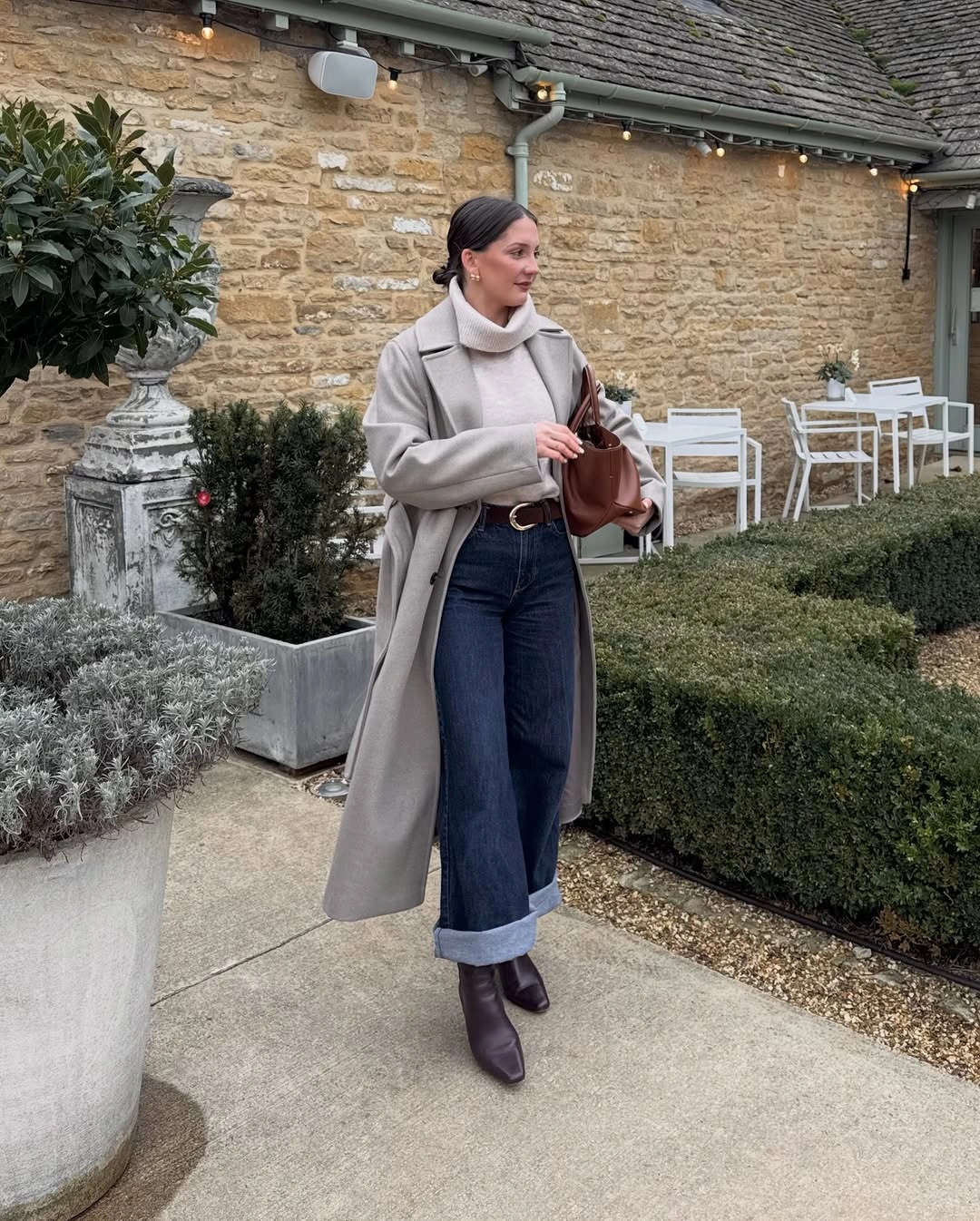
Cuffed jeans make this combination feel more relaxed than tailored trousers would, especially when the coat is long and straight. The exposed transition at the ankle creates a little rhythm in an otherwise quiet color palette. For a neater version, choose a darker straight jean with a single narrow cuff, or let the hem skim the boot shaft so the brown footwear becomes a smaller, subtler detail.
The coat needs enough length to create contrast with the casual denim, but it does not need a dramatic shape to work. A simple straight cut keeps attention on the cuff, boot, and tote relationship. The practical limitation is weather exposure at the ankle; taller boots or slightly longer denim could make the look feel more protected without sacrificing the gray, white, and brown balance.
Leopard Jacket Anchored by Black Accessories
The leopard-print short jacket has enough visual energy to lead the outfit, so the light straight jeans, black cap, black sunglasses, and black bag stay intentionally simple. Black accessories pick up the darkest parts of the print and give it a clear frame. The pale denim works like neutral space, preventing the spotted surface from becoming too dominant across the whole silhouette.
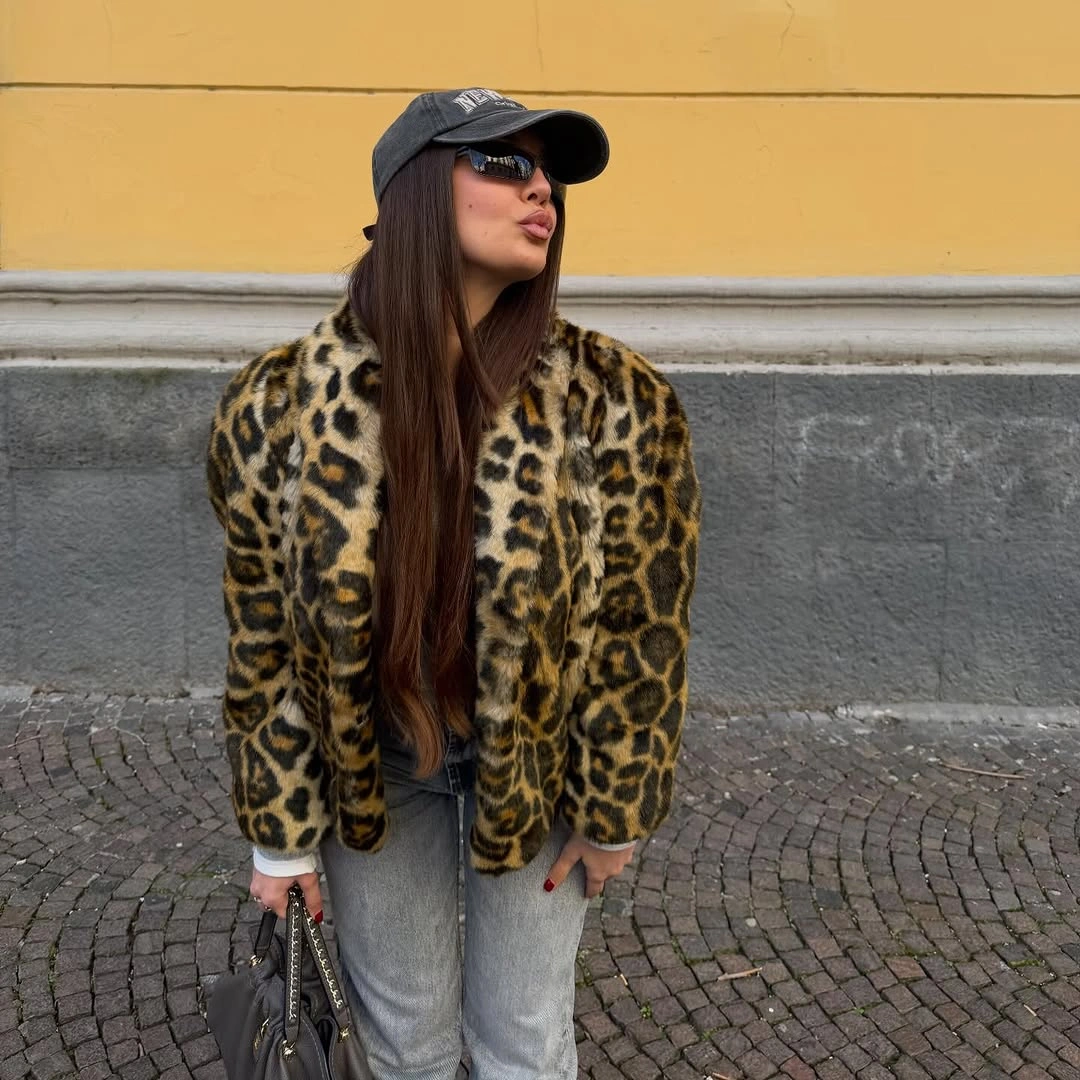
Animal print is easiest to wear when the supporting pieces repeat one of its existing colors rather than adding a new accent. Here, the black bag and cap do exactly that, while the jeans keep the outfit casual and relaxed. A plain white tee or gray sweatshirt could sit underneath without changing the logic, but a second patterned layer would make the jacket’s clear focal role less effective.
The cropped proportion also matters because it reveals the simple line of the jeans and gives the print a defined boundary. A long leopard coat would create a different, more dramatic effect and might need darker trousers to feel balanced. For everyday wear, a low-profile shoe and a compact bag maintain the casual feel; oversized accessories could make the pattern seem more formal or costume-led than intended.
Plush Long Coat Over a Gray Sweat Set
The pale blush-beige long coat makes the matching gray sweatshirt and joggers feel intentional by adding a soft, full-length outer layer over the relaxed base. Gray sneakers and a small gray bag repeat the lounge-set color, while the cap keeps the styling casual. The result is comfortable in mood but still organized through the clear contrast between plush pale texture and smooth gray jersey.
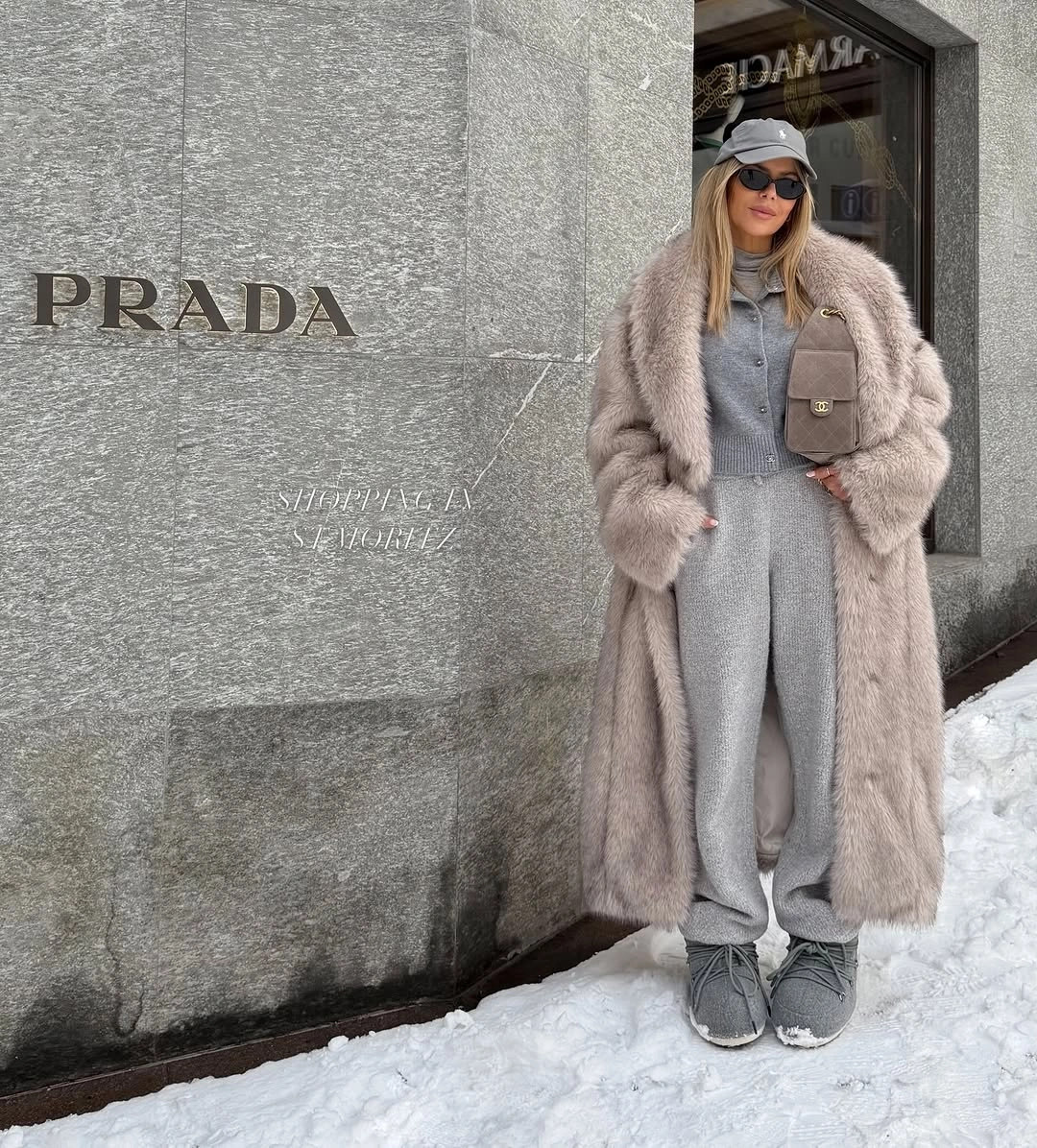
Matching sweats can look unfinished when every piece has the same casual surface, which is why the long coat changes the whole impression. It adds length and a different texture without demanding a dressier shoe. If the coat feels too much for the setting, a shorter light puffer could create a similar pale-over-gray contrast, though it would not offer the same elongated, softly layered effect.
The sneakers and bag are important because they keep the lower half connected to the gray base. A sharp black boot would create more drama but could make the coat and joggers feel like two separate outfits. This combination also benefits from keeping the sweatshirt fit relatively neat; very oversized layers beneath a long plush coat could make the midsection feel crowded and reduce the calm vertical line.
Beige Shaggy Coat With a Black Base
The beige shaggy coat stays defined because black tights, black ankle boots, and a small dark bag form a close, continuous base underneath it. The soft cropped outer layer becomes the only major volume, while the sturdy boots give the lower half enough weight to balance the texture at the shoulders. The beige-and-black palette is simple, but the contrast makes every shape easy to read.
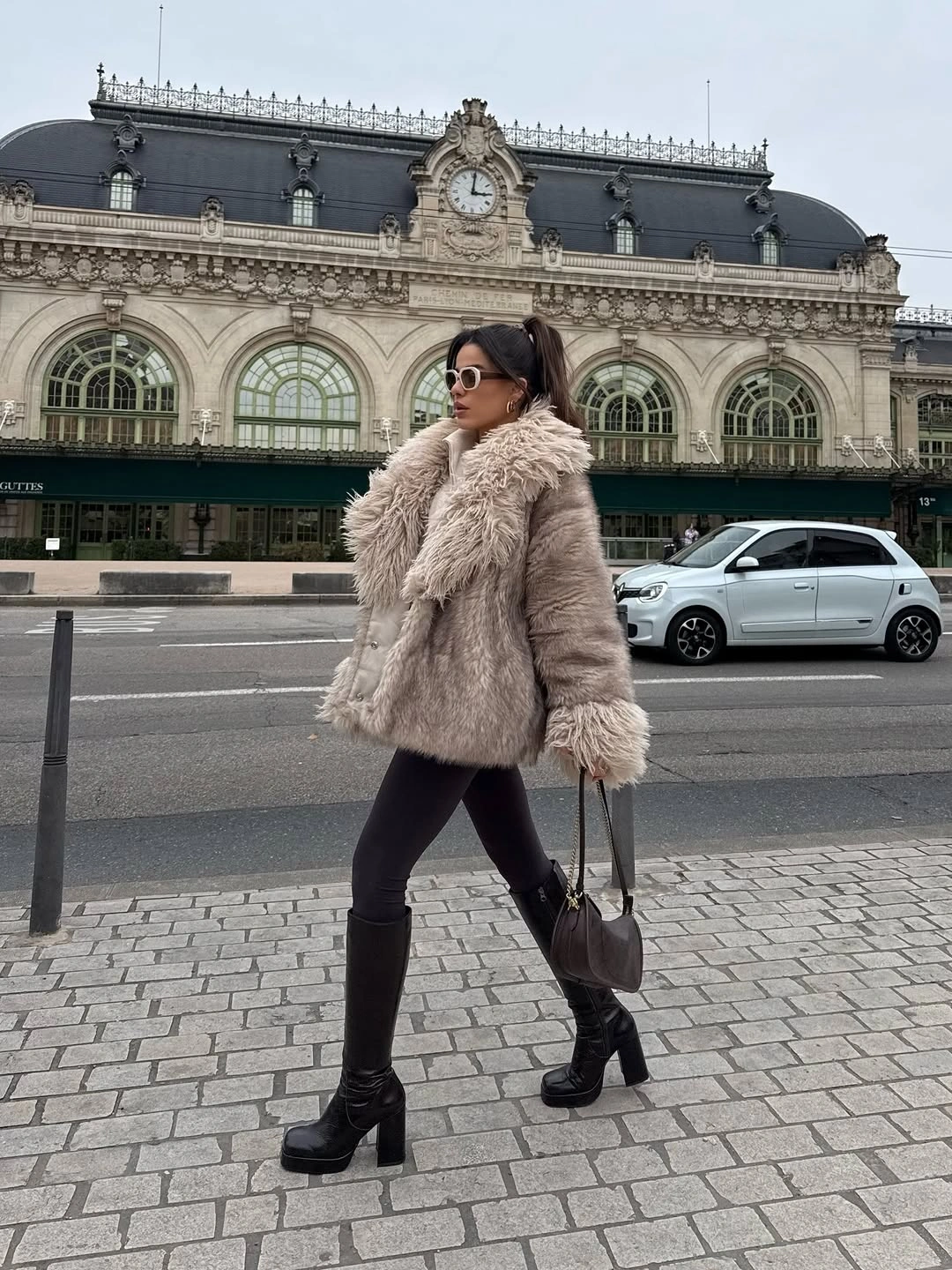
This is a practical answer for winter outfits for women when a textured coat is the statement piece. Keeping the base nearly monochrome avoids the need to coordinate several colors, and the dark boots make the outfit feel more grounded than a pale shoe would. A dark straight-leg trouser could replace the tights for more coverage while preserving the same light-over-dark relationship.
The cropped coat benefits from footwear with some substance, so a slim lug sole or block heel makes sense here. Delicate flats could leave the lower half looking too light next to the jacket’s visible pile. If extra warmth is needed, add a narrow black scarf or close-fitting turtleneck rather than another bulky pale layer; that keeps the texture and contrast working in the same clear order.