A-Line Bob Haircuts With Angled Shape and Polish
You get to decide how much a haircut should change the way you recognize yourself in the mirror. A-line bob haircuts can feel like a small act of self-editing: enough structure to make the choice visible, but still personal enough to reflect your taste instead of someone else's template. The best starting point is not a label, but the feeling you want to carry when the cut becomes part of your everyday style.
A good haircut decision often begins before any technical words enter the conversation. Think about what you want the change to say about your taste, how much attention you want the new shape to invite, and how close the result should stay to the version of yourself you already like. That kind of clarity gives you better language for a stylist and keeps the choice rooted in self-expression rather than impulse.
Blunt Bangs With a Rounded Bob Line
The strongest choice here is the straight fringe: it makes the whole cut read more graphic before the eye even reaches the angled side. In this A-line bob with bangs, the hair curves under smoothly at the cheek and jaw, so the blunt line across the forehead is balanced by a rounded side shape rather than a razor-sharp edge.
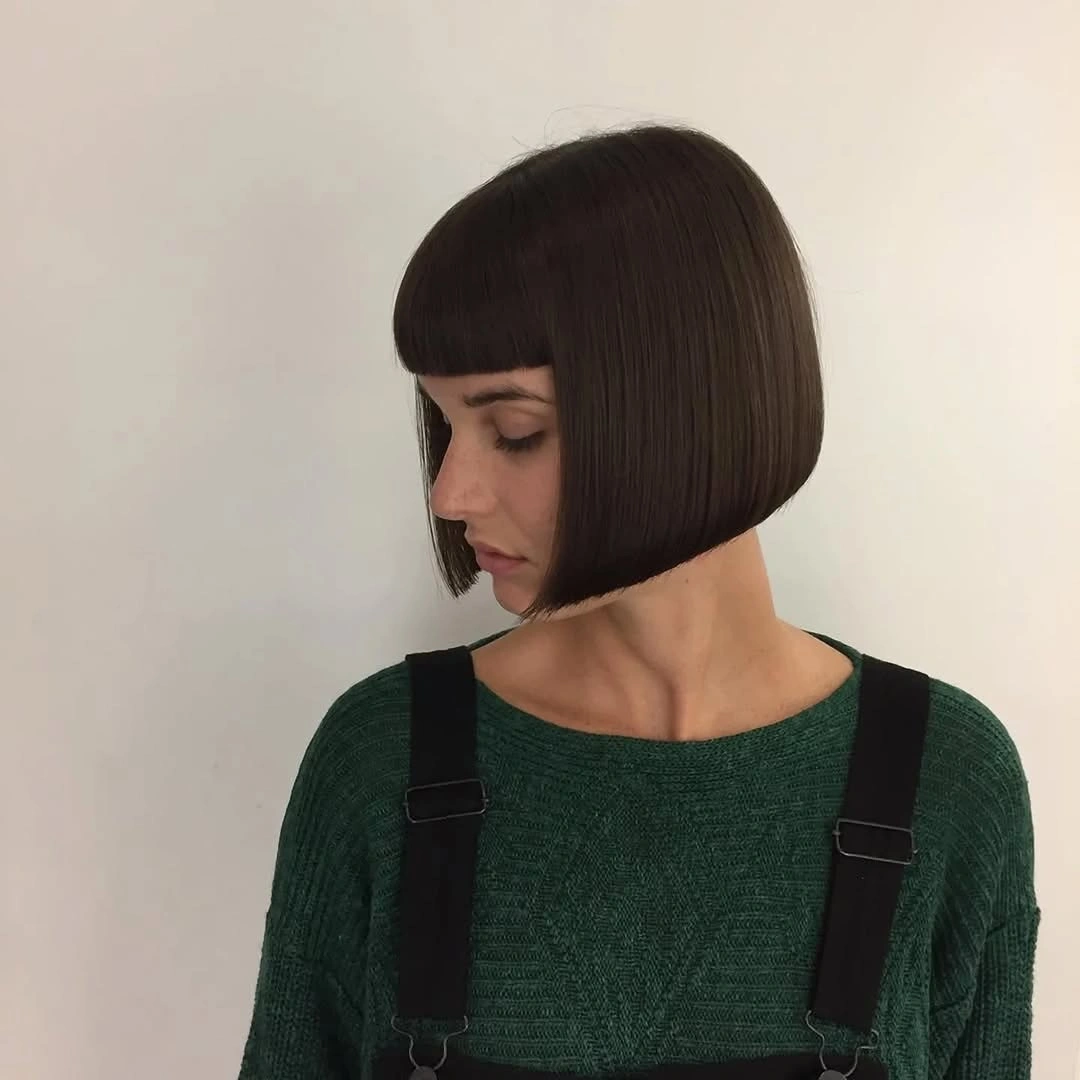
Photo via Instagram
The head turn matters because it exposes the compact relationship between the bang, the cheek-skimming side, and the short perimeter near the neck. Instead of relying on loose texture or color contrast, the shape carries the look through a clean surface, a tucked-under edge, and a jaw-level finish that keeps the bob controlled from front to side.
A strong bang changes the mood of an A-line cut because it gives the front its own horizontal statement. The result feels deliberate and framed, with the rounded lower edge keeping the short shape from looking severe.
Soft Waves on a Dark A-Line Bob
The side view makes the movement the first thing to notice, because the loose bends push the outline outward and then break it softly near the neck. This wavy A-line bob keeps the shorter-back, longer-front feeling visible, but the waves blur the edge enough that the angle reads gentle instead of strict. That balance is the reason the cut feels shaped without looking stiff.
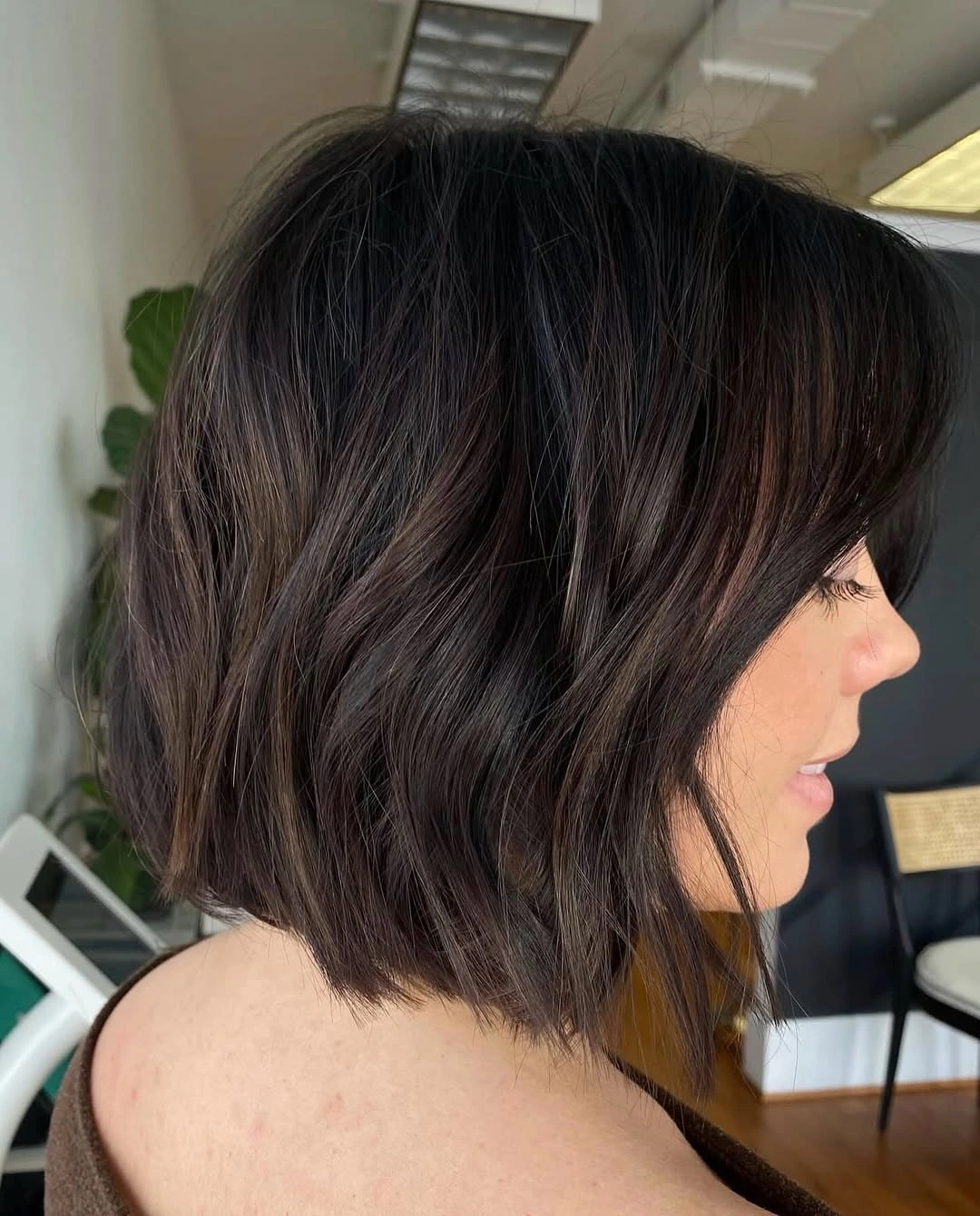
Photo via Instagram
The brunette surface is not flat; narrow brown shifts catch the light through the waves and make the surface look more dimensional. Those small tonal changes support the haircut because they separate the bends from one another, letting the front piece, crown fullness, and airy ends register as connected parts of one side profile.
Movement gives this bob a different kind of polish than a blunt, glassy finish. The outline still has intention, but the texture lets the perimeter feel lighter and more relaxed around the neck.
Side-Swept Shape With Shoulder-Skimming Ends
The useful detail is the way the front section falls diagonally from the side-swept fringe into the longer lower length. That direction pulls attention from the brow area down toward the cheek and shoulder, so the bob feels guided rather than simply grown out, even though the overall shape is softer than a short blunt cut. The side angle also shows the back sitting rounder and slightly shorter.
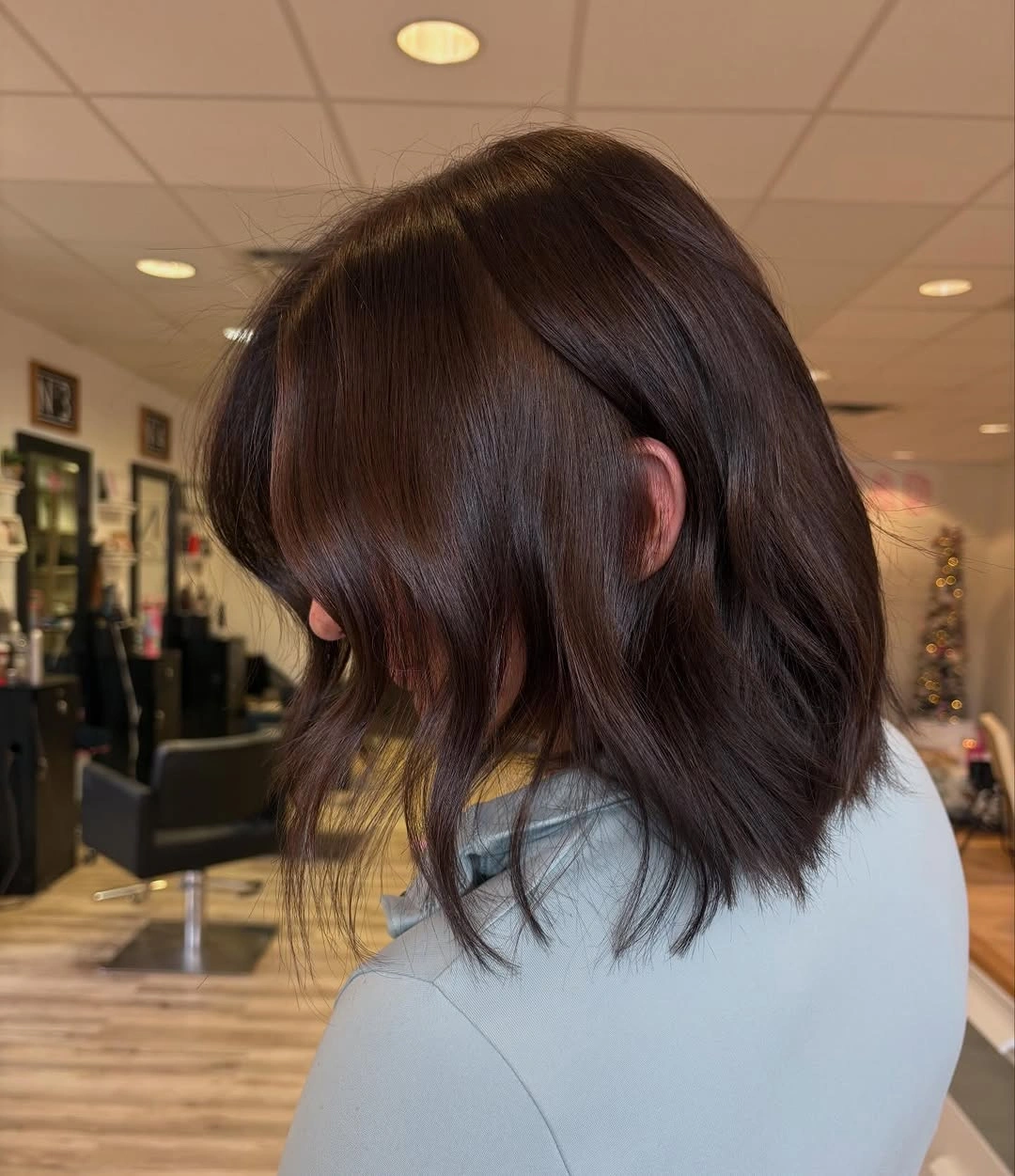
Photo via Instagram
The crown is smoother than the ends, and that contrast gives the cut its balance. A calm upper surface keeps the silhouette from feeling busy, while the lower waves add enough separation to make the shoulder-skimming edge feel light, not heavy, as it turns away from the face. The difference is visible without needing a dramatic color change or a hard line.
The value is the middle ground between a polished bob and a loose lob. It shows how an A-line feeling can come from direction, perimeter, and controlled softness at the same time.
Layered Movement With Soft Brown Dimension
The rear three-quarter view shifts the decision away from face framing and toward how the lower edge behaves. The visible layers break the shoulder-level ends into small pieces, so this layered A-line bob reads less like one solid block and more like a shape that opens and narrows as the hair bends. That matters for anyone comparing movement against a crisp perimeter.
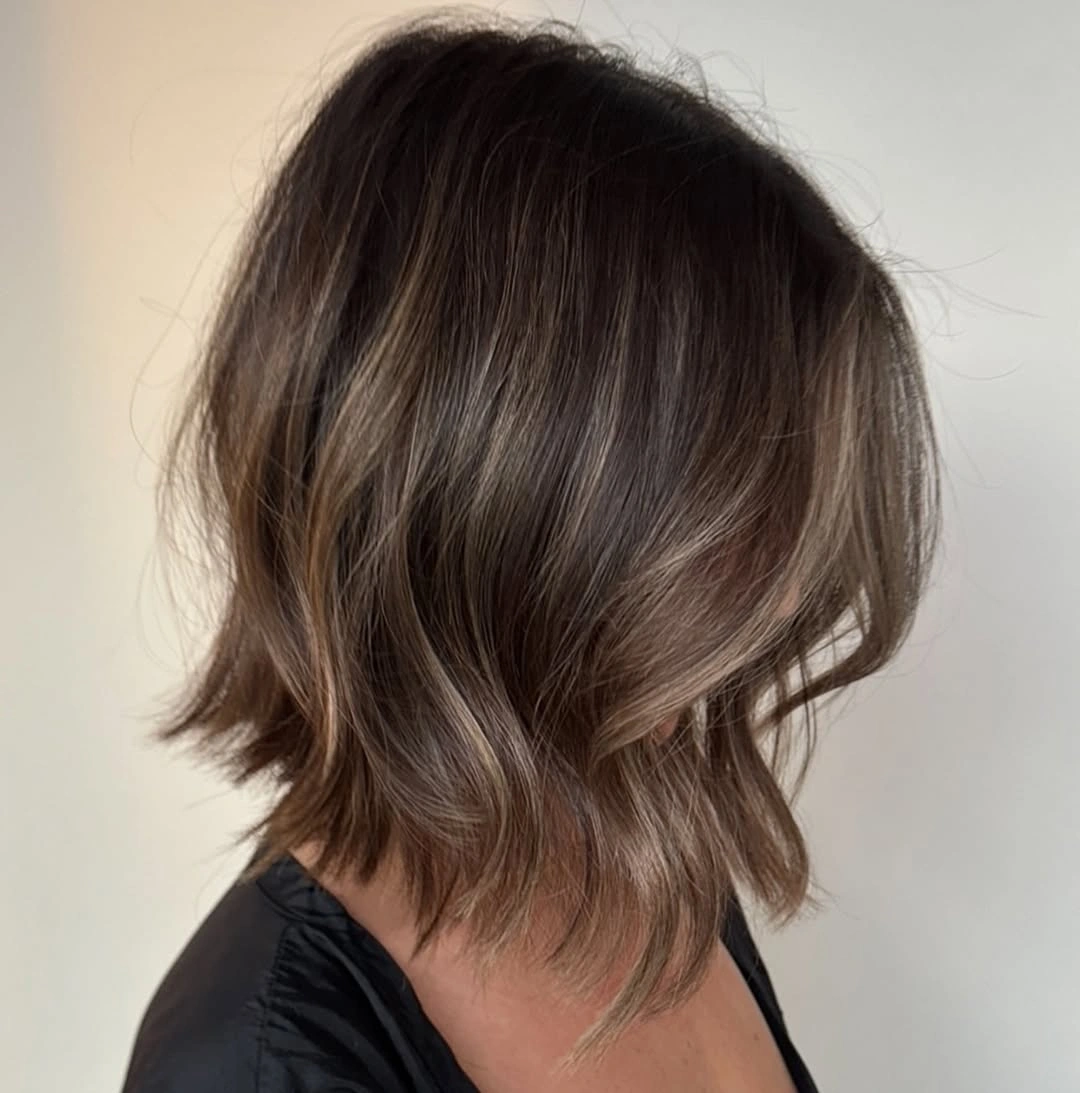
Photo via Instagram
The lighter beige-brown ribbons stand out most along the bends, where they separate the lower length from the darker, fuller-looking top. They help the eye follow the curve around the back of the head, then down into the piecey shoulder-level ends. That contrast gives the layered shape more depth, with the crown reading denser and the edge reading looser.
Layering changes the argument of an A-line bob because the eye follows pieces instead of a single clean border. Here, softness is not vague; it is built from the way the ends separate and the back shape stays rounded.
Tucked Side With a Subtle Angle
The tucked side is the useful clue because it clears the cheek and exposes the line from the smooth crown down to the neck-level ends. With one side held behind the ear, the bob shows its quiet angle more plainly than it would with both sides falling forward, and the slightly longer front piece becomes easier to compare with the compact back.
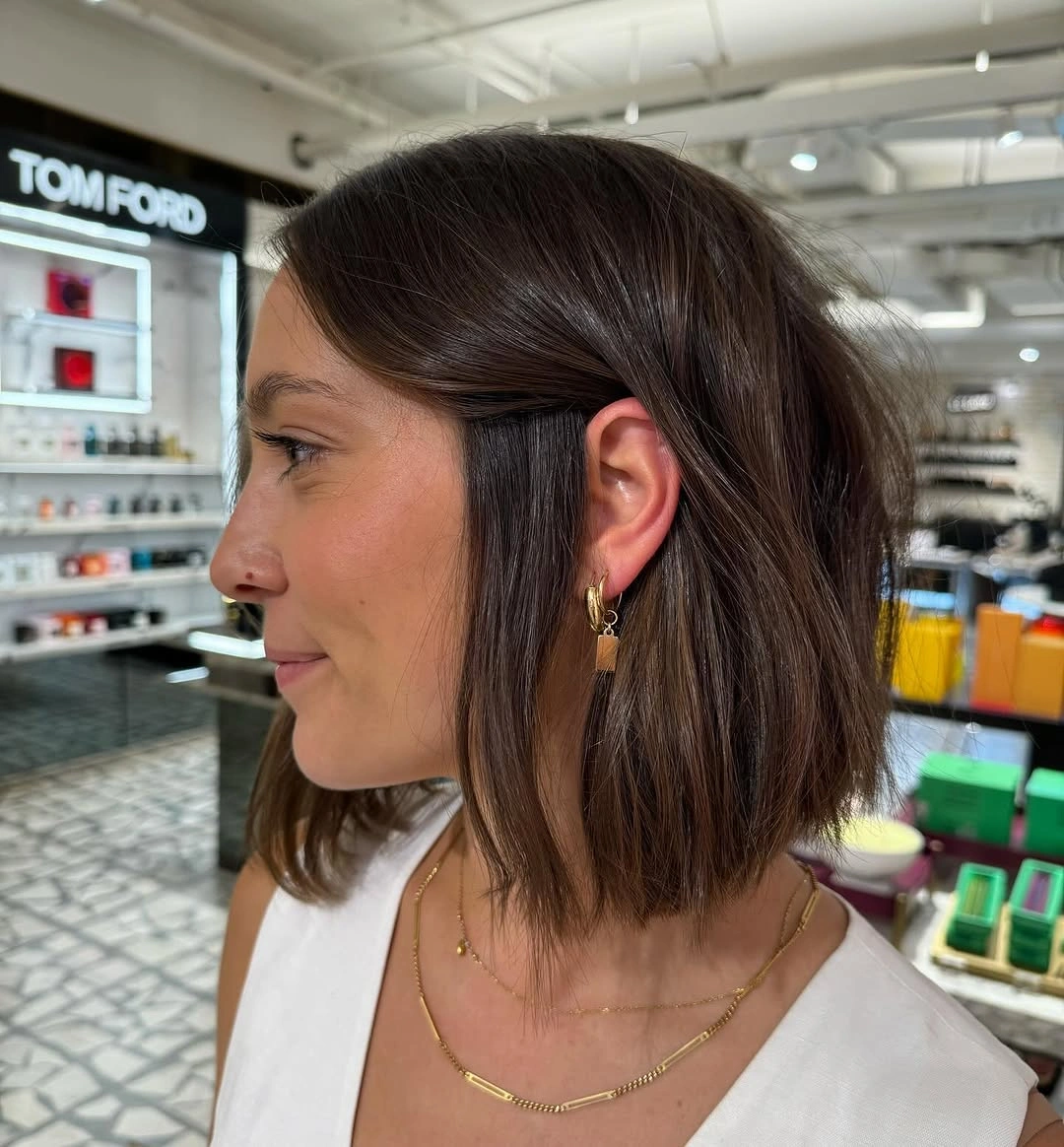
Photo via Instagram
The top surface stays controlled, while the ends separate just enough to keep the shape from looking too rigid. That mix gives the cut a restrained effect: polished through the upper section, softer near the lower edge, and angled in a way that supports the profile without turning into a stacked short bob. The visible line feels neat rather than dramatic.
The value is subtlety rather than a big stacked shape. A small side difference, a tuck, and a clean lower edge can still change how the jaw and neck area read.
Balanced Medium Bob With Outward Bends
The center part gives this medium A-line bob a calm, even starting point, so the face-framing panels feel balanced instead of heavily swept to one side. The front pieces sit close to the cheeks before widening near the lower edge, which makes the shape feel full around the face without turning into a sharply short bob. That proportion is the practical draw here.
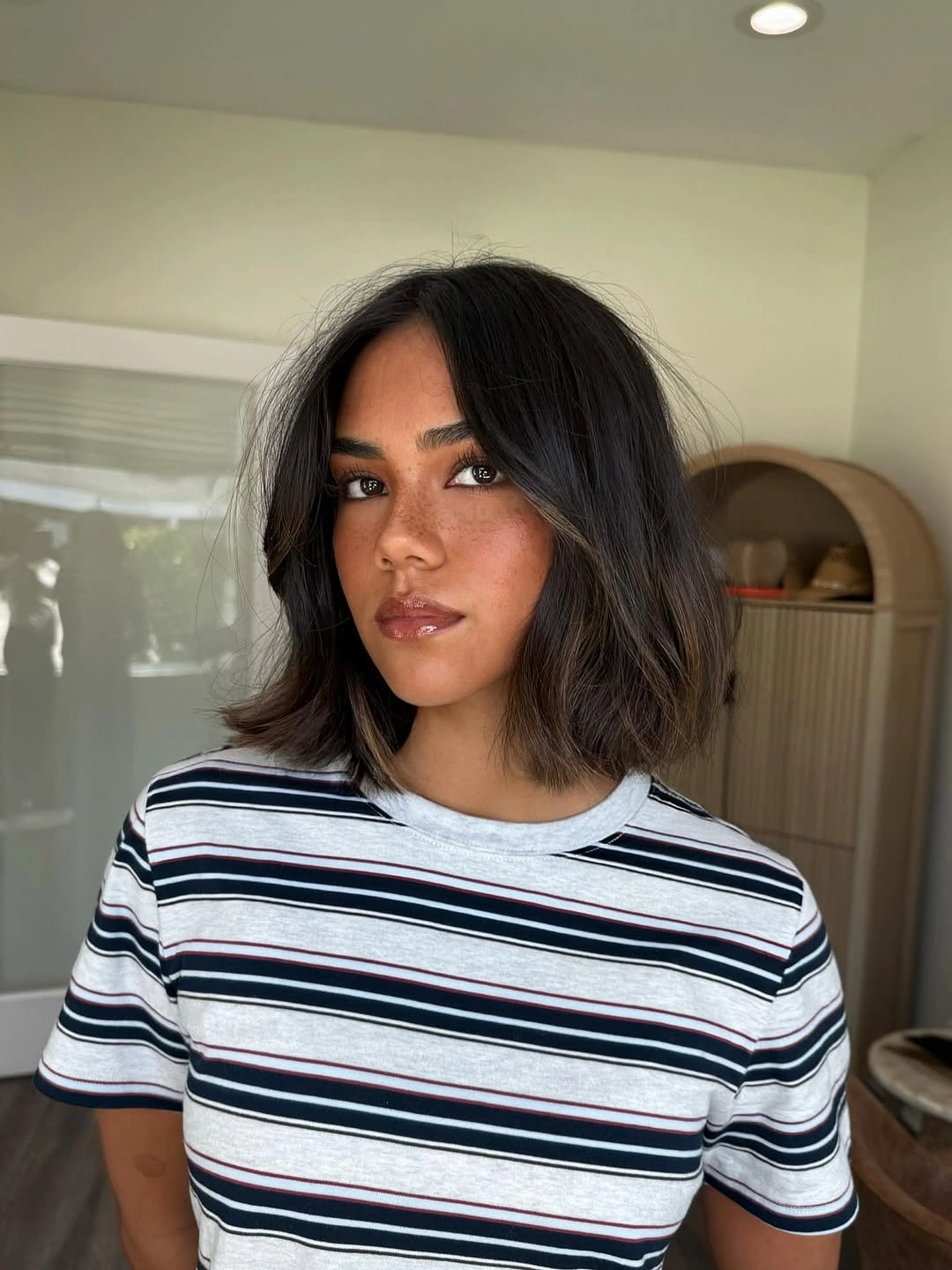
Photo via Instagram
The length falls around the shoulder area, and the outward bends at the ends keep the lower edge from looking too solid. Because the sides have volume and the tips turn away from the face, the silhouette opens slightly at the bottom while still holding a clean bob outline. The result feels like a measured change, not a dramatic removal of length.
This cut matters because it shows how an A-line idea can stay soft from the front. The shape gives attention to the face frame and lower movement before it asks for a severe angle.
Long Front Panels With Smooth Weight
The longer front panels are the clearest feature, because they fall forward and make the shape feel closer to a long bob than a compact crop. Long A-line bob haircuts can work this way when the front length carries most of the visual change, letting the cut feel angled without making the whole silhouette short. The hand in the frame also makes that front fall easier to read.
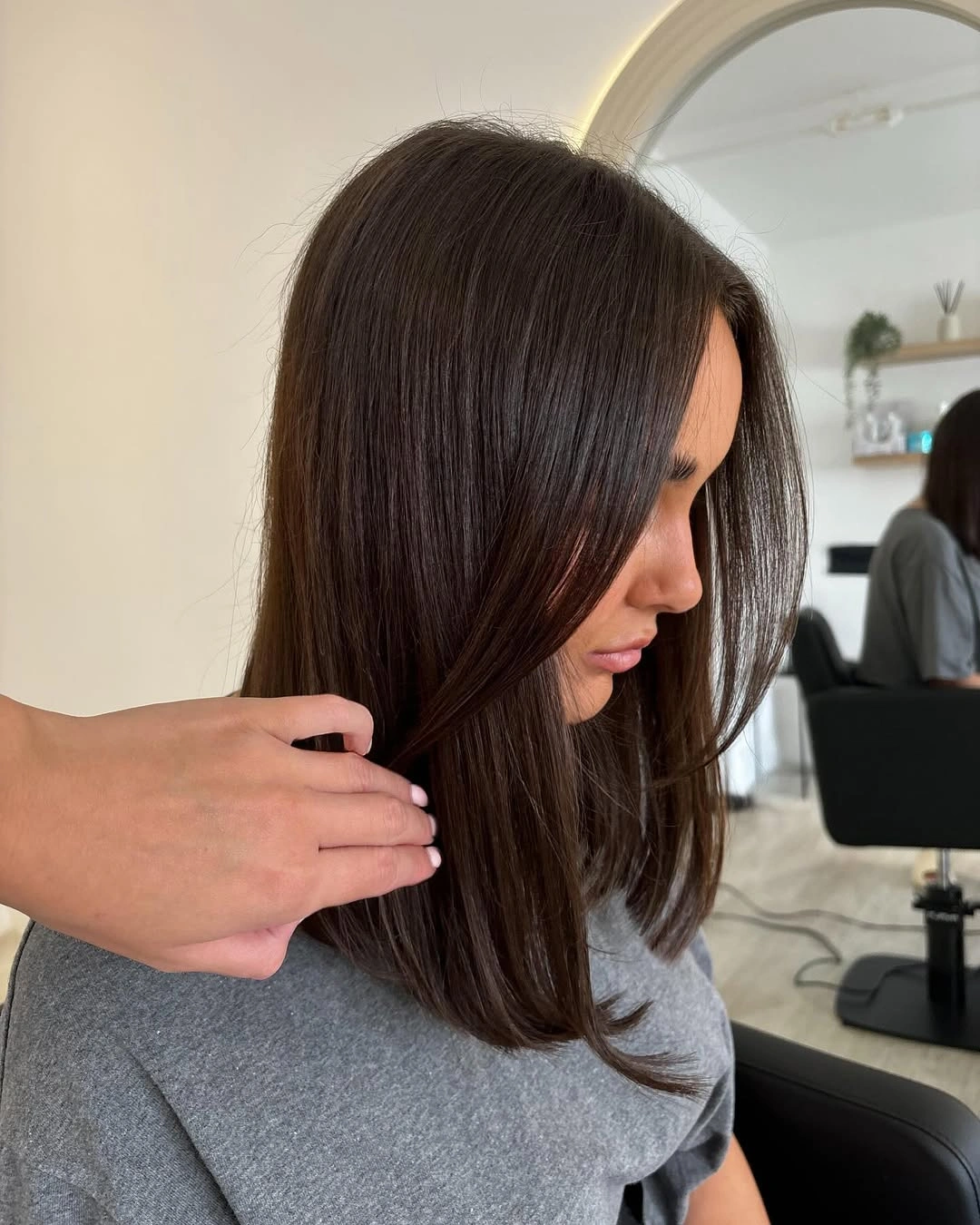
Photo via Instagram
The smooth finish keeps attention on proportion rather than texture, and the collarbone-level length gives the cut a slower, more gradual feeling. From this angle, the back reads a little more contained while the front keeps its length, so the profile has direction without a hard stacked shape. That makes the haircut feel controlled but not severe.
This is the quieter route for someone drawn to the A-line outline but not to a dramatic neckline shift. The length keeps the change visible in profile while leaving the overall shape relaxed.
Textured Waves With Lighter Face Pieces
The textured A-line bob here gets its shape from broken movement rather than a crisp border. Waves push the front forward, the back looks shorter and fuller from the side, and the ends separate into uneven pieces that make the perimeter feel lighter. That texture changes the mood of the angle, turning it into something loose and dimensional instead of exact.
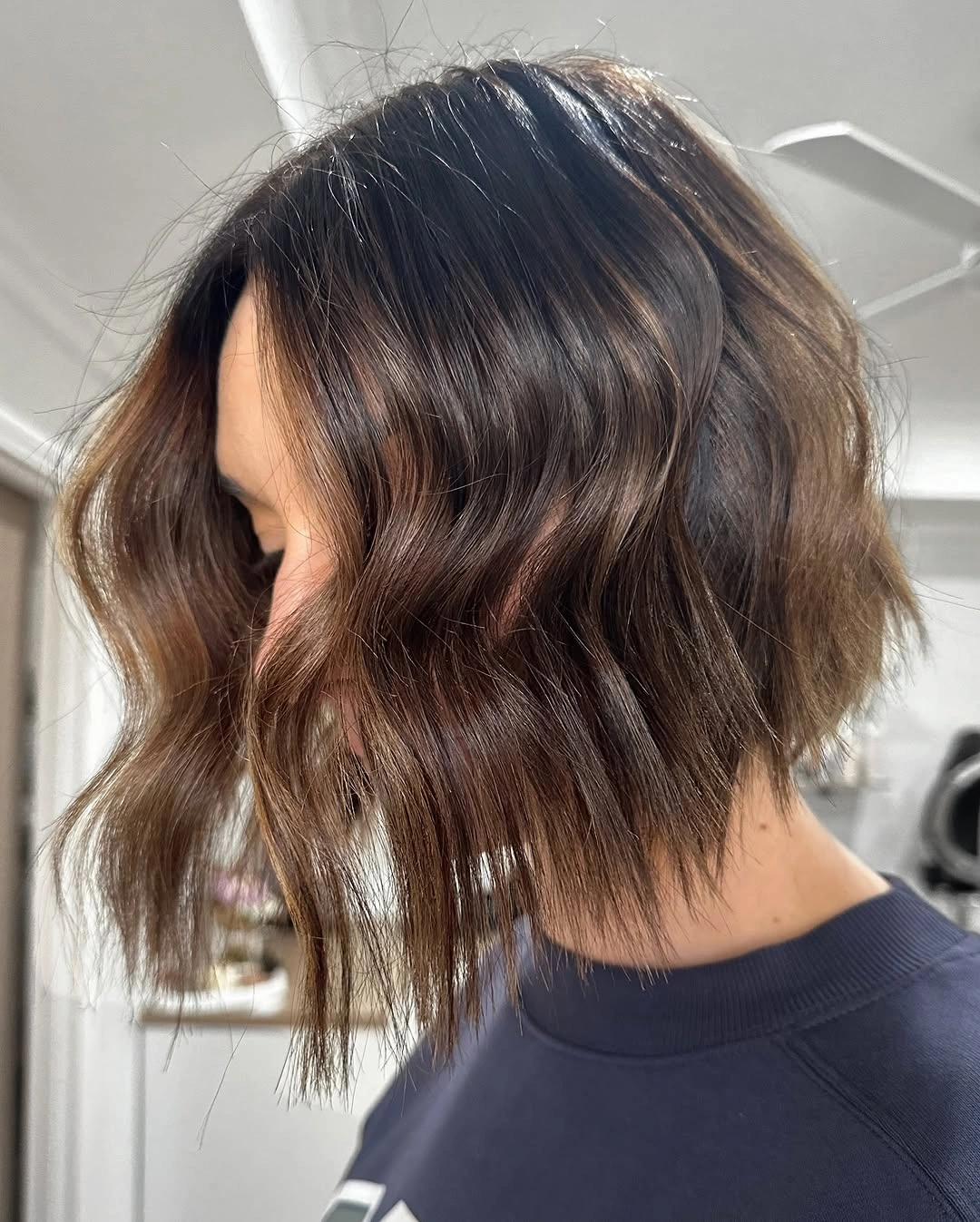
Photo via Instagram
The lighter face-framing pieces matter because they pull attention to the front section before the eye moves back through the darker waves. They make the cheek area feel more open and give the forward-falling pieces extra visibility, while the choppy ends keep the lower edge from becoming one heavy block. Color contrast supports the shape without needing a technical explanation.
The practical effect is softness around a cut that still has a visible direction. Texture lets the bob feel less polished, but it does not make the shape disappear.
Soft Bangs on a Rounded Short Bob
The bangs are soft rather than sharply graphic, and they bend into the side shape instead of sitting apart from it. That connection makes the short bob feel rounded from the forehead through the cheek, with the fringe guiding the eye into the curved side panel. The effect is gentler than a blunt fringe, even though the cut still frames the face clearly.
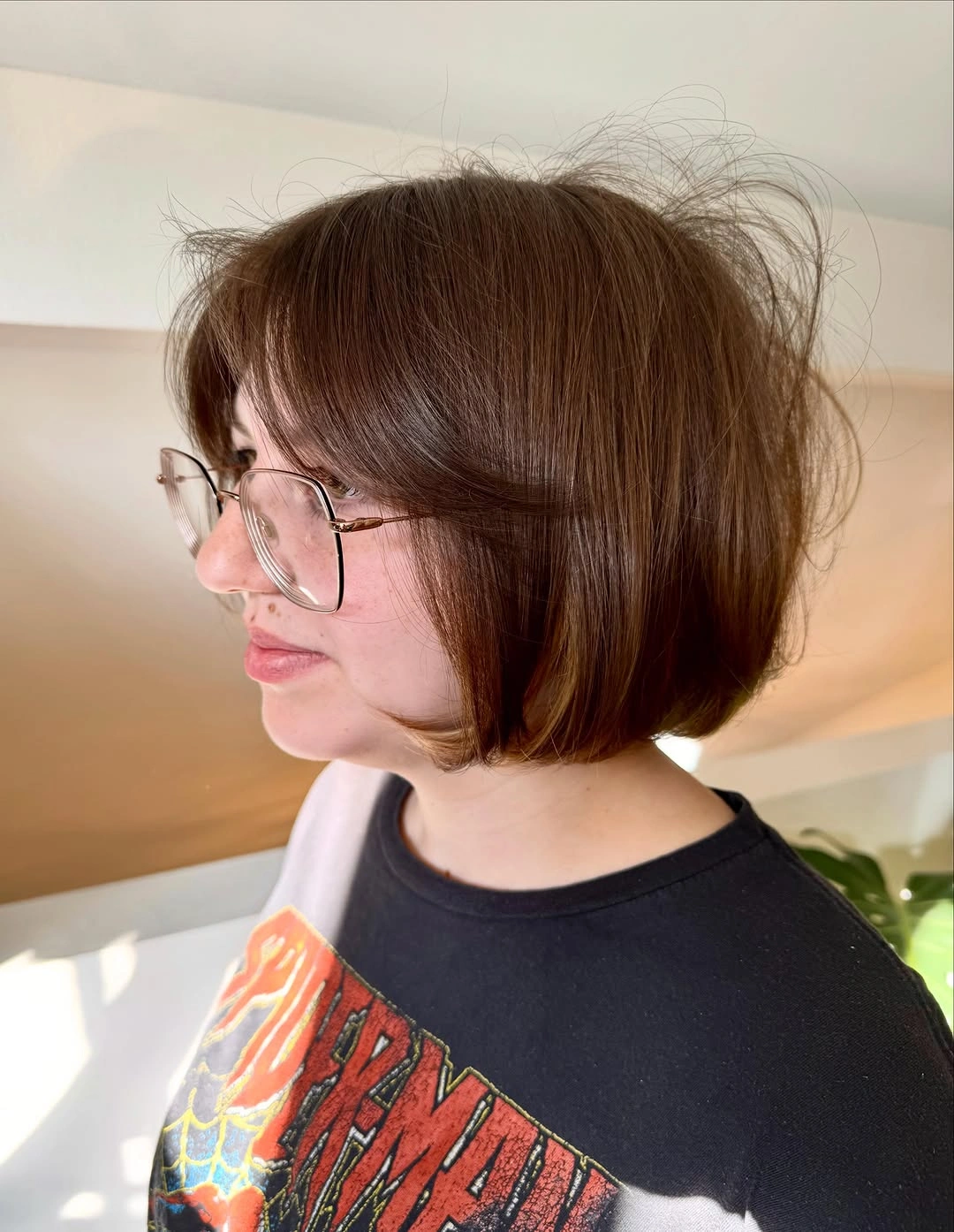
Photo via Instagram
The lower edge curves under near the jaw, giving the short length a soft frame that still feels clearly shaped. At the back, the compact rounded nape supports the side line instead of disappearing into it, while the crown lift adds a little height above the fringe. The visible flyaway texture keeps the surface lively, so the cut reads rounded, light, and controlled at once.
Softness comes from the way the fringe, crown, and curved perimeter work together. The bangs guide attention toward the cheek, the lifted top loosens the short shape, and the rounded edge keeps the finish gentle rather than blunt.
Warm Ribbons Through a Wavy Bob
The warm copper-brown ribbons make the waves easier to follow, especially where the bends move from the darker crown into the lighter mid-lengths. On this highlighted A-line bob, the color variation helps separate the front, side, and lower edge so the haircut does not read as one dark mass. The visible contrast gives the shape more rhythm without needing a sharper perimeter.
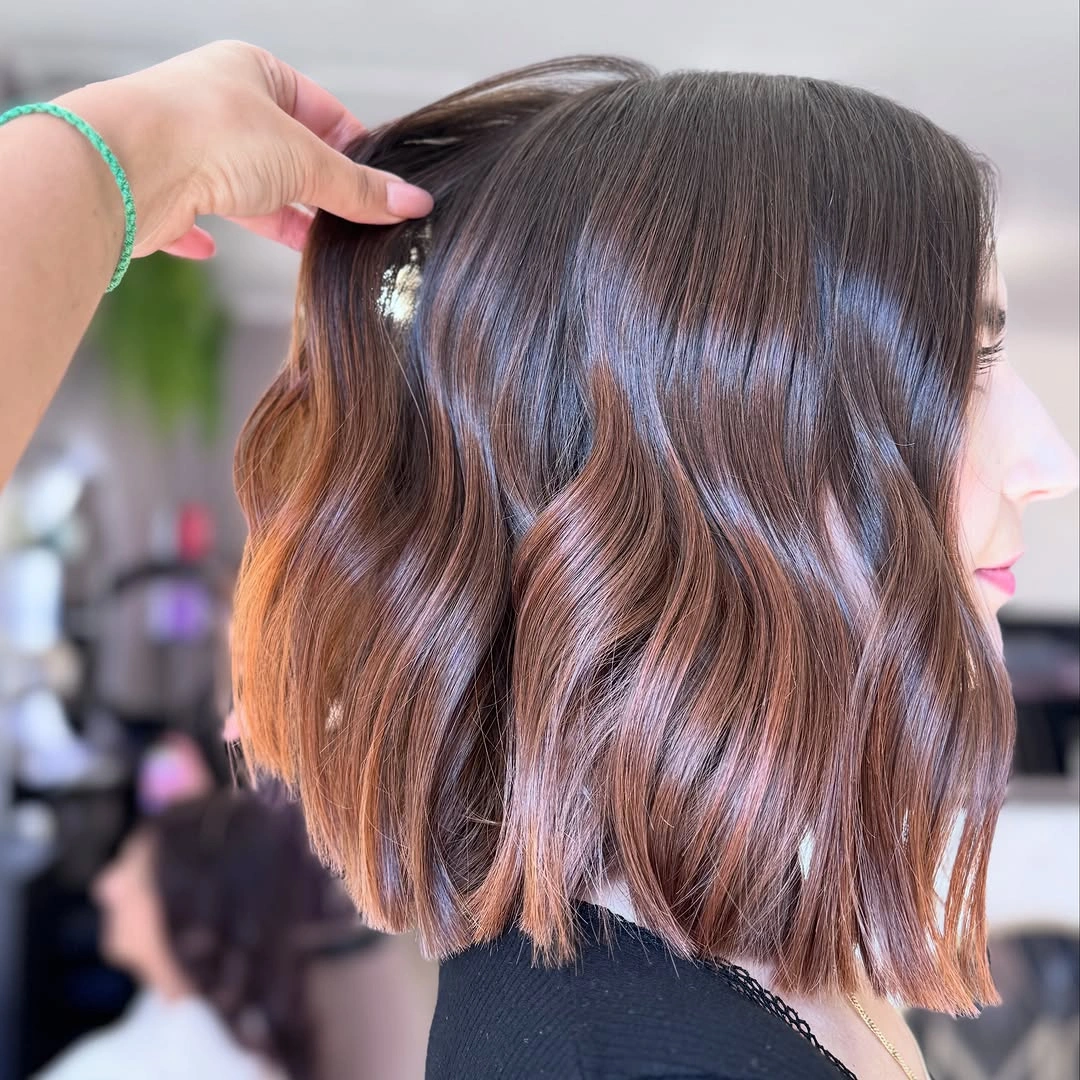
Photo via Instagram
The lifted upper section reveals how much darker the crown appears compared with the glowing lower waves. That relationship matters because the top feels smooth and weighty, while the ends look shorter, glossier, and more separated near the nape. The contrast makes the bob's movement and outline easier to understand from the side-back angle.
This is a strong example of color supporting haircut architecture. The ribbons do not replace the A-line shape; they make its bends, edge, and side movement more legible.
Sleek Center Part With a Clear Angle
The center part gives this sleek A-line bob its discipline, since both front panels fall cleanly beside the face before the lower edge curves under. The smooth surface leaves very little distraction, so the eye can compare the longer front section with the shorter, tucked-in back shape. That clean geometry is the strongest reading of the haircut.
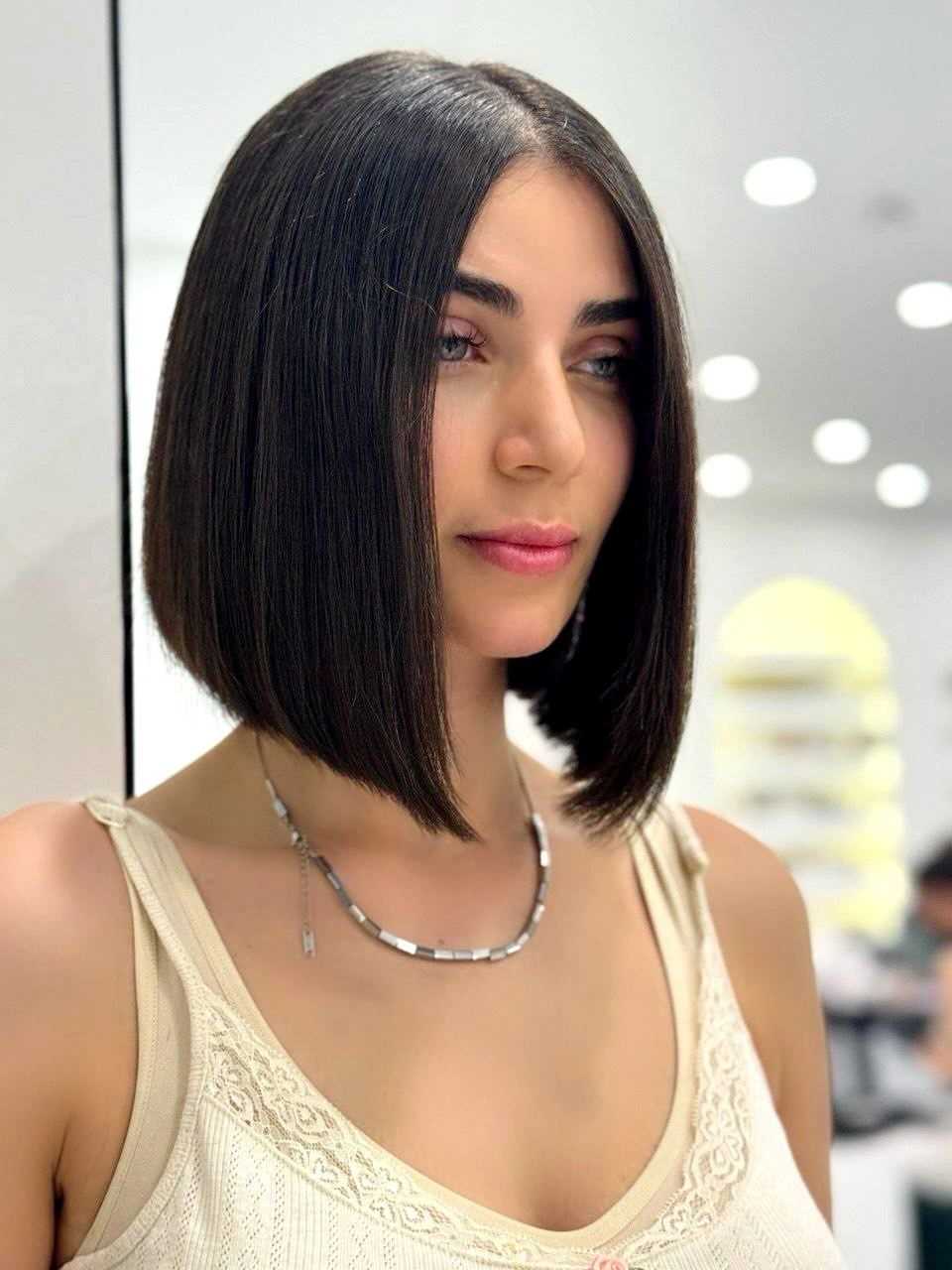
Photo via Instagram
The front length drops below the chin and creates a narrow vertical frame, while the back looks more compact around the neck. That difference gives the profile its tension: the cut feels polished from the surface, but the shape still has a clear forward pull. The shine also sharpens the line, making small changes in length easier to notice.
A sleek finish can make an A-line bob feel more exacting than a wavy one. Here, the appeal is the restraint: center part, dark surface, curved edge, and a visible angle doing the work without extra detail.
Side Part With Quiet Asymmetry
This bob has a quieter kind of imbalance, created by the side part and the way one side is tucked back while the other falls along the cheek. The shape does not need a steep angle to feel considered, because the front emphasis already changes how the face frame reads. The visible choice is small, but it shifts the attention to one side.
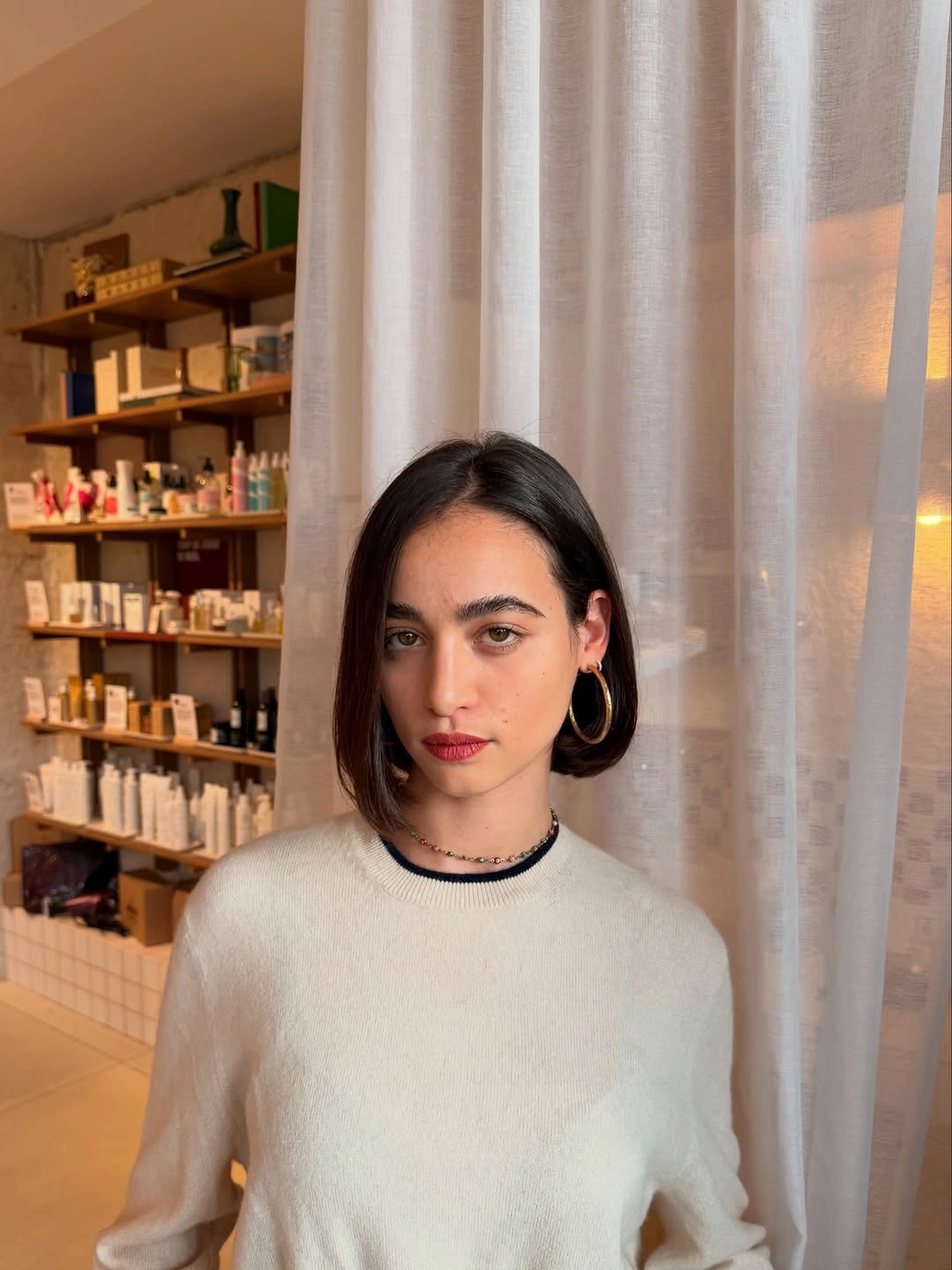
Photo via Instagram
The lower edge stays rounded near the chin, which keeps the haircut soft even with the uneven front placement. Instead of a strong stacked profile or a sharp diagonal, the cut depends on a curved perimeter and a clean tuck behind the ear. That makes the asymmetry feel casual and controlled at the same time, not accidental.
The interesting part is how little drama the shape needs. A side part, one exposed ear area, and a rounded end line can give a short bob a distinct point of view.
Polished Side Profile With Forward Length
The side profile gives the angle a direct reading: the front section drops lower along the face while the back sits higher and curves inward. The smooth crown leads into a glossy side panel, so the forward length feels intentional rather than heavy. That relationship between a lower front and a lifted back is what gives the haircut its clean architectural pull.
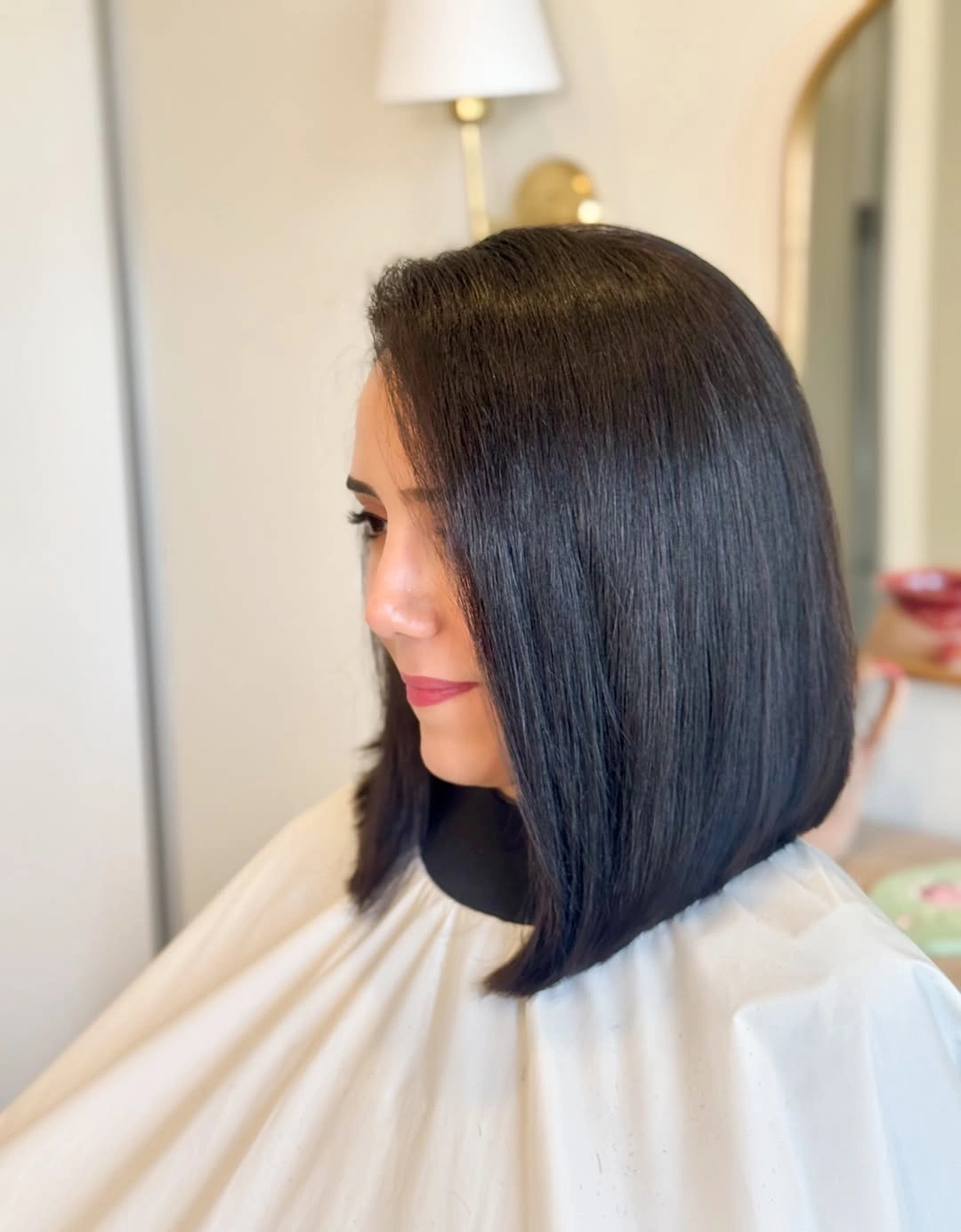
Photo via Instagram
The surface looks controlled from crown to ends, which makes the shape feel sharper than it might with more separation. The longer front piece draws the line downward beside the cheek, while the shorter back keeps the neck area lighter and more open. That contrast gives the cut a clean profile without needing an exaggerated stack.
This is the kind of A-line bob that rewards a side view. The front length carries the statement, and the simple finish keeps the geometry visible.
Soft Sweep on a Rounded Bob
The side-swept front gives this soft A-line bob its most approachable quality, because the diagonal movement begins near the eye area and settles into a rounded chin-level edge. The curve is gentle, not severe, and the smooth side panel bends under instead of cutting sharply forward. That makes the shape feel polished without becoming rigid.
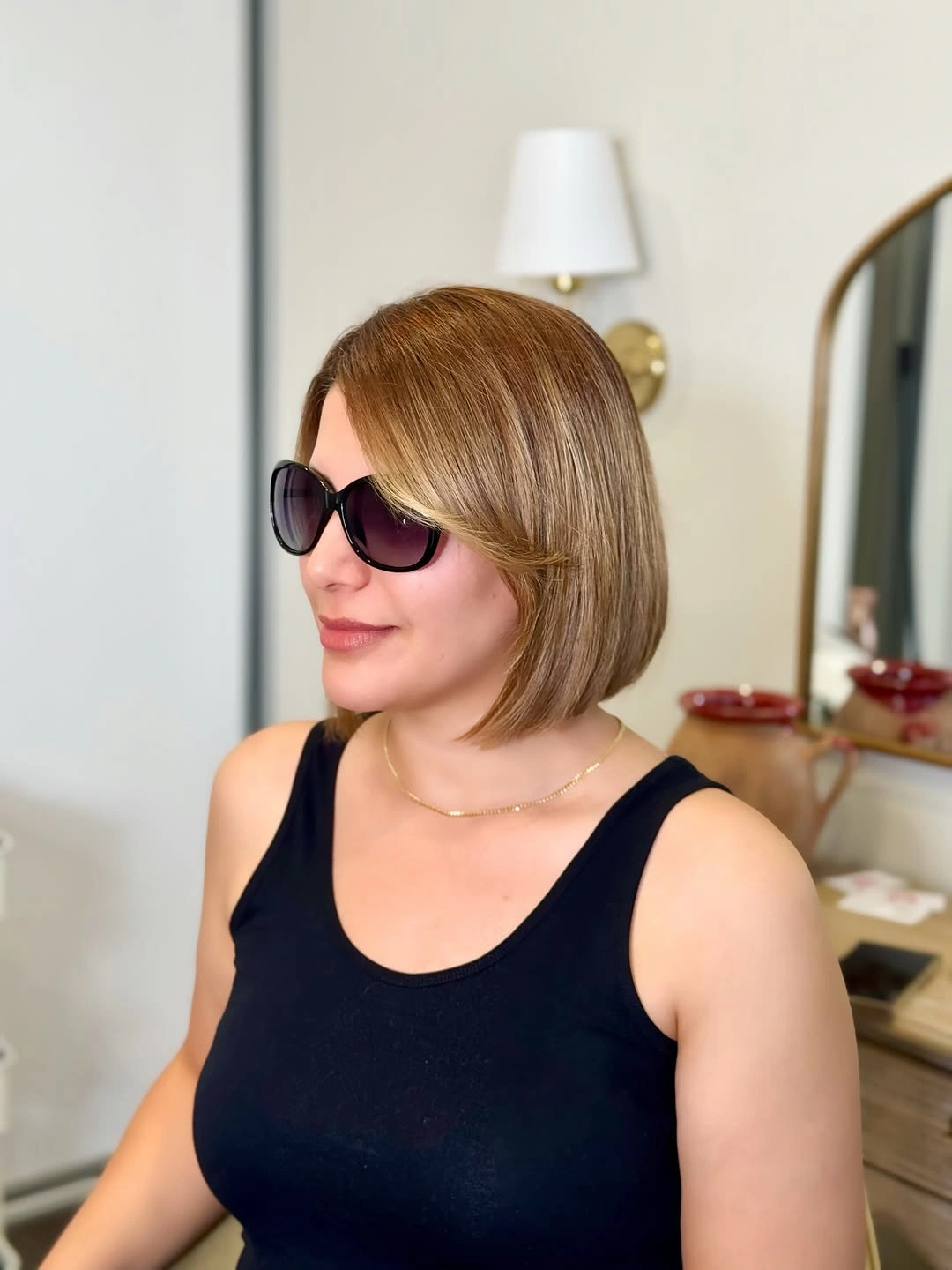
Photo via Instagram
The rounded lower edge keeps the bob compact, while the front sweep adds direction through the cheek area before the side panel bends under. The visible light brown to soft-blonde color makes the curve look gentler, especially where the side section catches brightness near the face. Together, the sweep and curved edge give the profile a soft diagonal rather than a sharply stacked shape.
The preference here is subtlety. The cut gives the A-line idea a quieter expression, with a soft curve doing more than a hard angle would.
Classic Shape With Glossy Precision
This classic A-line bob is built on proportion more than decoration, and that is why the close framing feels useful. The center part divides the smooth front panels evenly, while the curved-under edge sits near the chin and keeps the shape compact. The front appears slightly longer, giving the bob direction without pulling attention away from the clean outline.
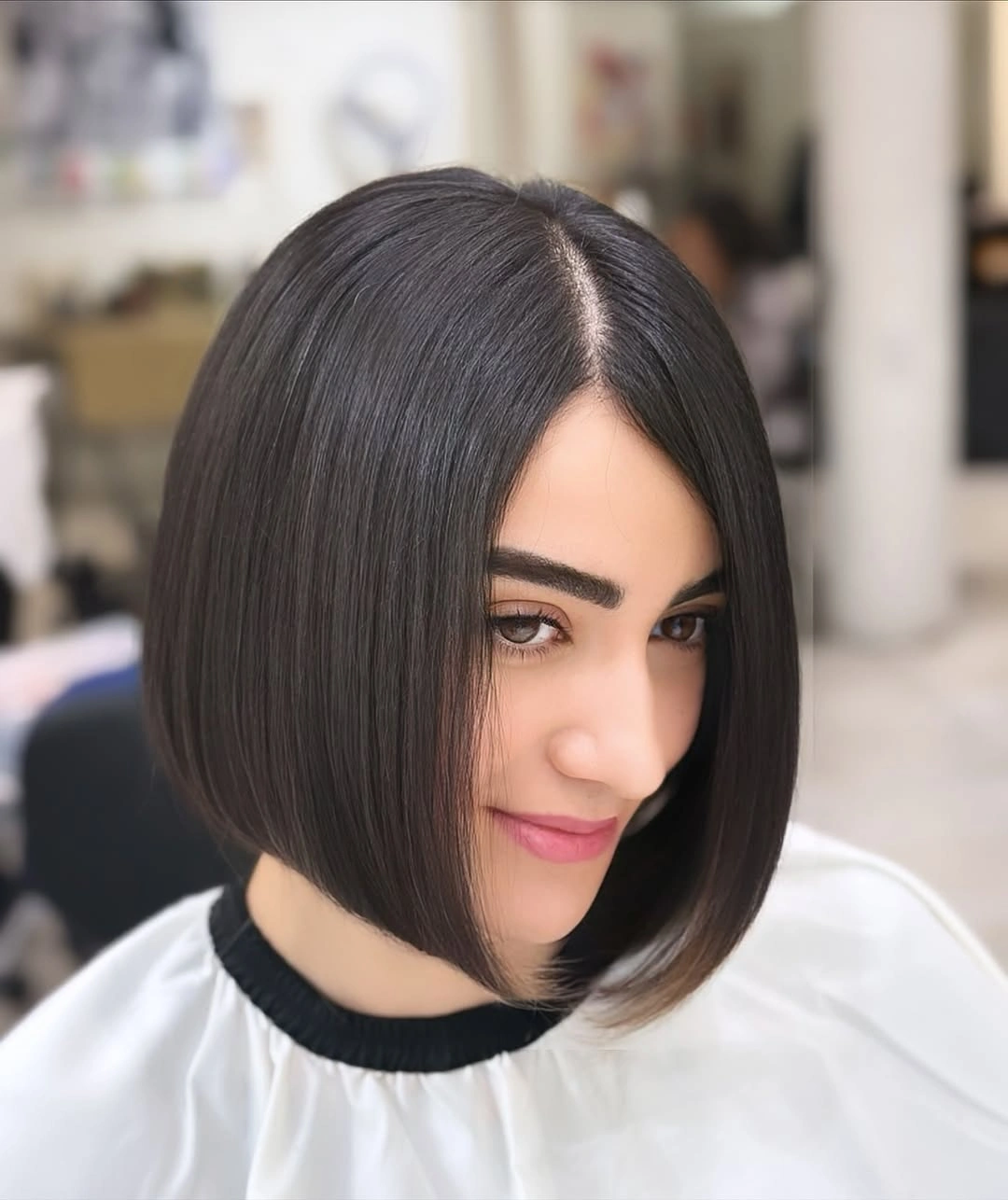
Photo via Instagram
The surface is glossy and controlled, so the line of the cut becomes the main feature rather than texture or color variation. A rounded back impression supports the face-framing front, and the chin-length perimeter makes the whole shape feel deliberate. The result is classic not because it is plain, but because every visible element is edited down.
The strongest detail is the relationship between symmetry and angle. The part feels balanced, while the lower edge still gives the bob a forward-facing shape.
Short Stacked Shape With a Soft Sweep
The stacked back is the main piece of architecture here, because the nape sits close while the crown rounds outward with visible lift. Among short A-line bob haircuts, this shape makes the neckline change feel immediate, yet the longer side-swept front keeps the cut from reading as purely cropped. The contrast is compact in the back and softer beside the cheek.
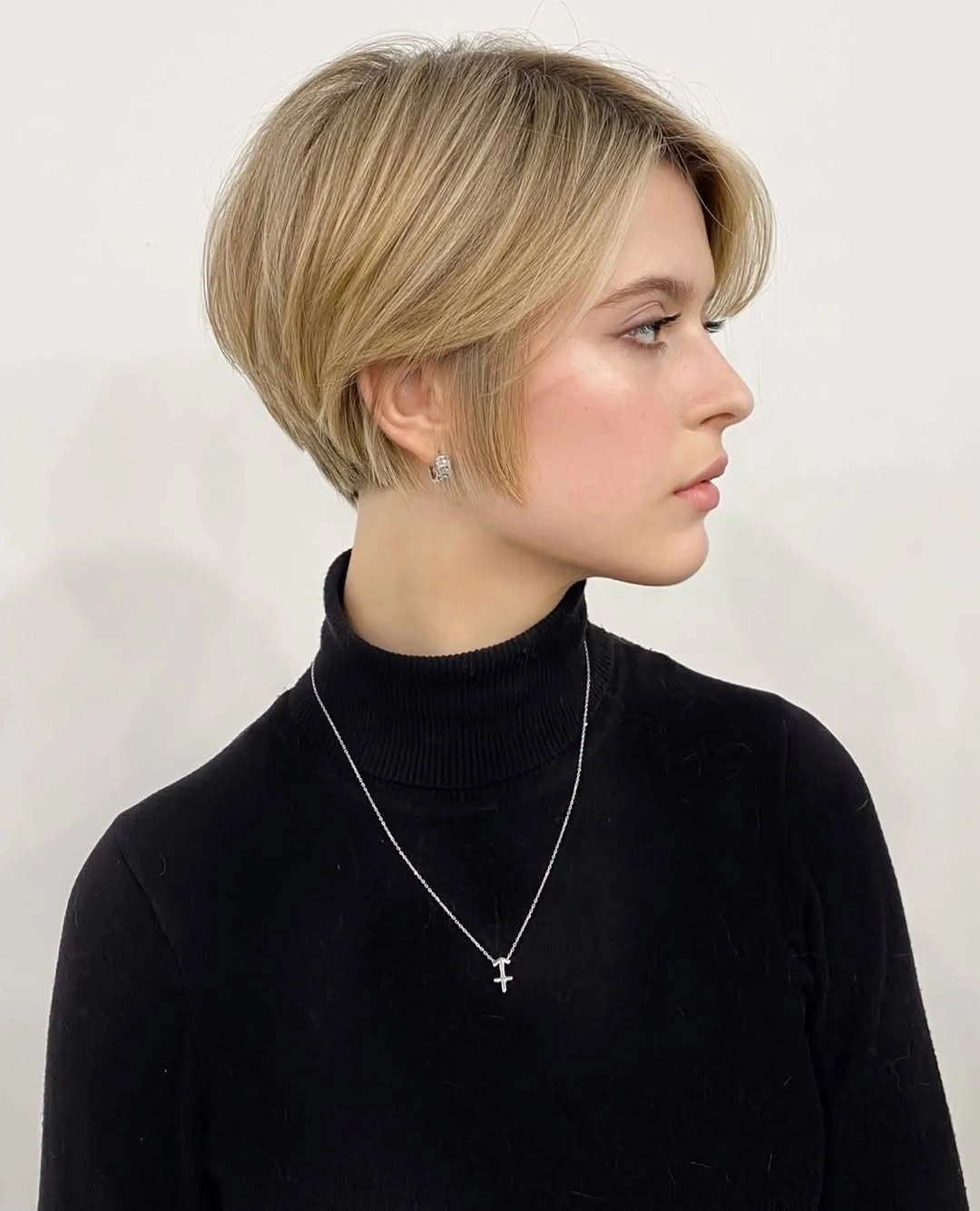
Photo via Instagram
The side view shows how a short stacked A-line bob can carry movement without needing long ends. The back is shaped in graduated layers that build a curved silhouette, while the front piece drops low enough to keep attention near the face. That makes the cut feel precise at the neck and more forgiving at the front, a balance that gives it personality.
The useful choice is not simply going short; it is deciding where the softness remains. Here, the nape is neat and lifted, while the face frame still has a gentle sweep.
A-Line Bob With a Rounded Rear Perimeter
The blunt upper-neck edge gives this A-line bob a clear base, while the rounded rear silhouette keeps the shape smooth across the back. The perimeter follows the neck in a clean, slightly curved line, so the weight feels intentionally gathered and controlled. That rear structure matters because it defines the cut's polish before any movement or color detail takes over.
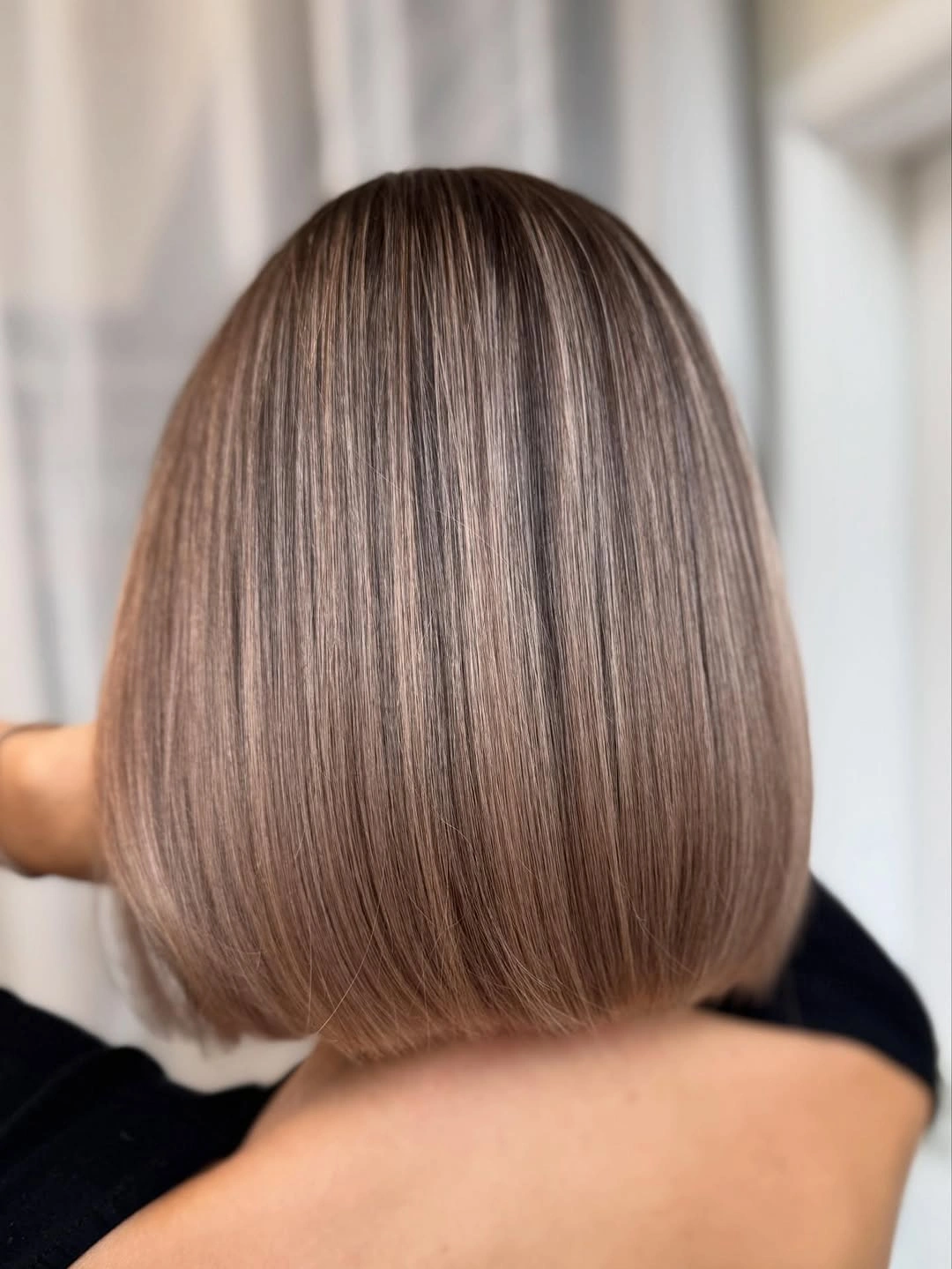
Photo via Instagram
The taupe-blonde and beige-blonde strands run vertically through the smooth surface, which makes the rounded back shape easier to see. Fine tonal shifts break up the solidness of the blunt edge without making the cut look piecey or loose. The result is clean but not blank, with the color variation giving quiet depth to a very controlled outline.
A rear line like this affects how polished an A-line silhouette feels from every angle. The blunt edge gives structure, while the rounded volume keeps the back from looking too severe.
Graduated Blonde Bob With Rounded Volume
The clearest feature is the rounded build at the back, where the layers appear to step upward from the nape into a fuller crown. This stacked A-line bob has a stronger side silhouette than the softer rounded bobs earlier, because the neckline is exposed and the back shape becomes the main statement. The pale blonde surface makes that curved volume especially visible.
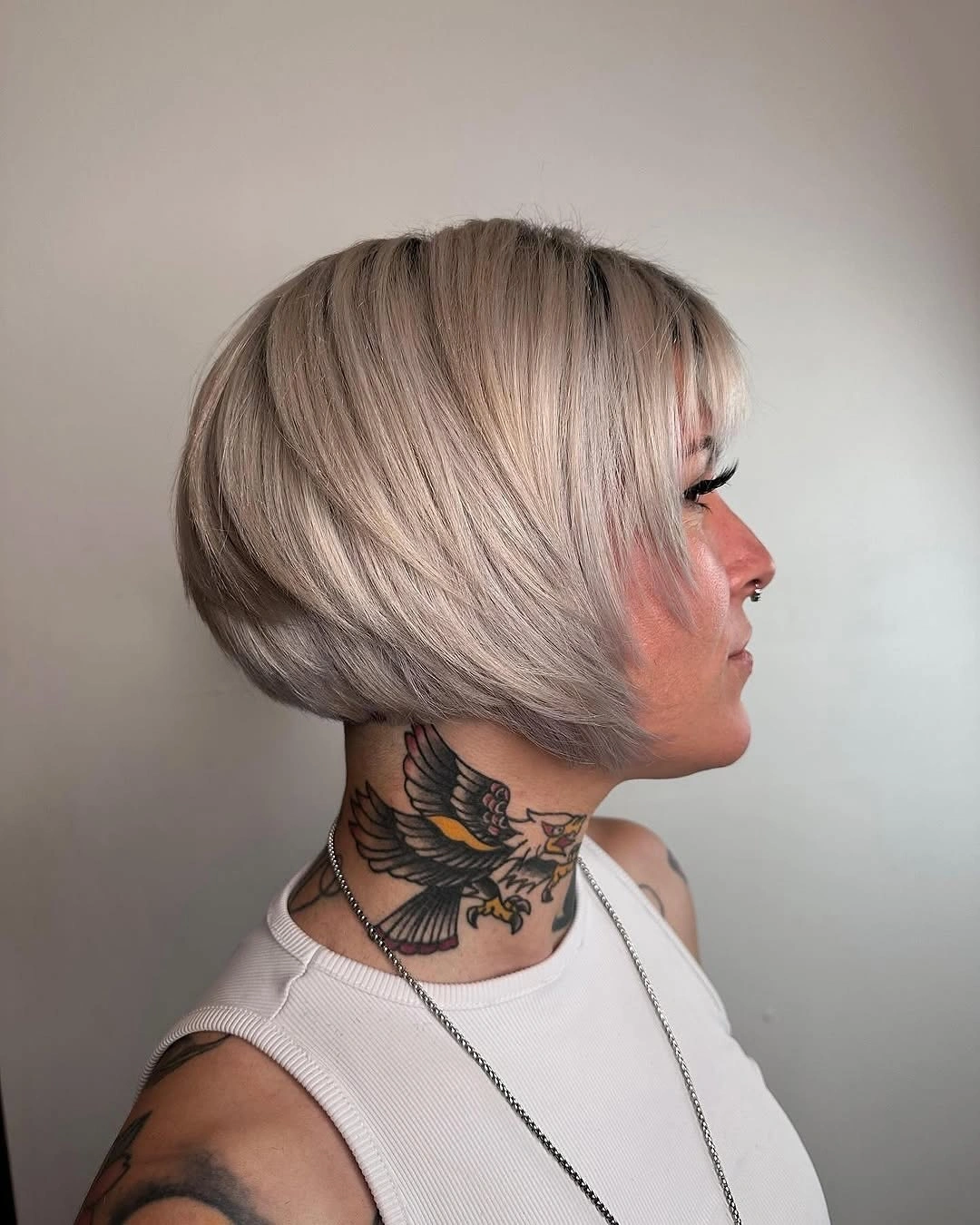
Photo via Instagram
The longer front piece changes the feeling of the graduated A-line bob, because it keeps the cut connected to the face rather than letting the short back dominate completely. The side-swept top adds height and direction, while the jaw-area front softens the transition into the very shaped nape. That contrast gives the haircut a deliberate profile with a clear front-to-back relationship.
Rounded volume is the structure here, not an extra flourish. The shape feels sculpted at the back and lighter at the front, which gives the short length a controlled sense of movement.
Blonde Bob With Clean Front Polish
The blonde A-line bob here is read mostly from the front, so the important details are the center part, the smooth face-framing panels, and the curved lower edge. The ends sit around chin-to-neck length and turn under with a clean, even finish, giving the color-bright surface a clear shape. The blonde tone catches attention first, then the neat perimeter gives that brightness a defined frame.
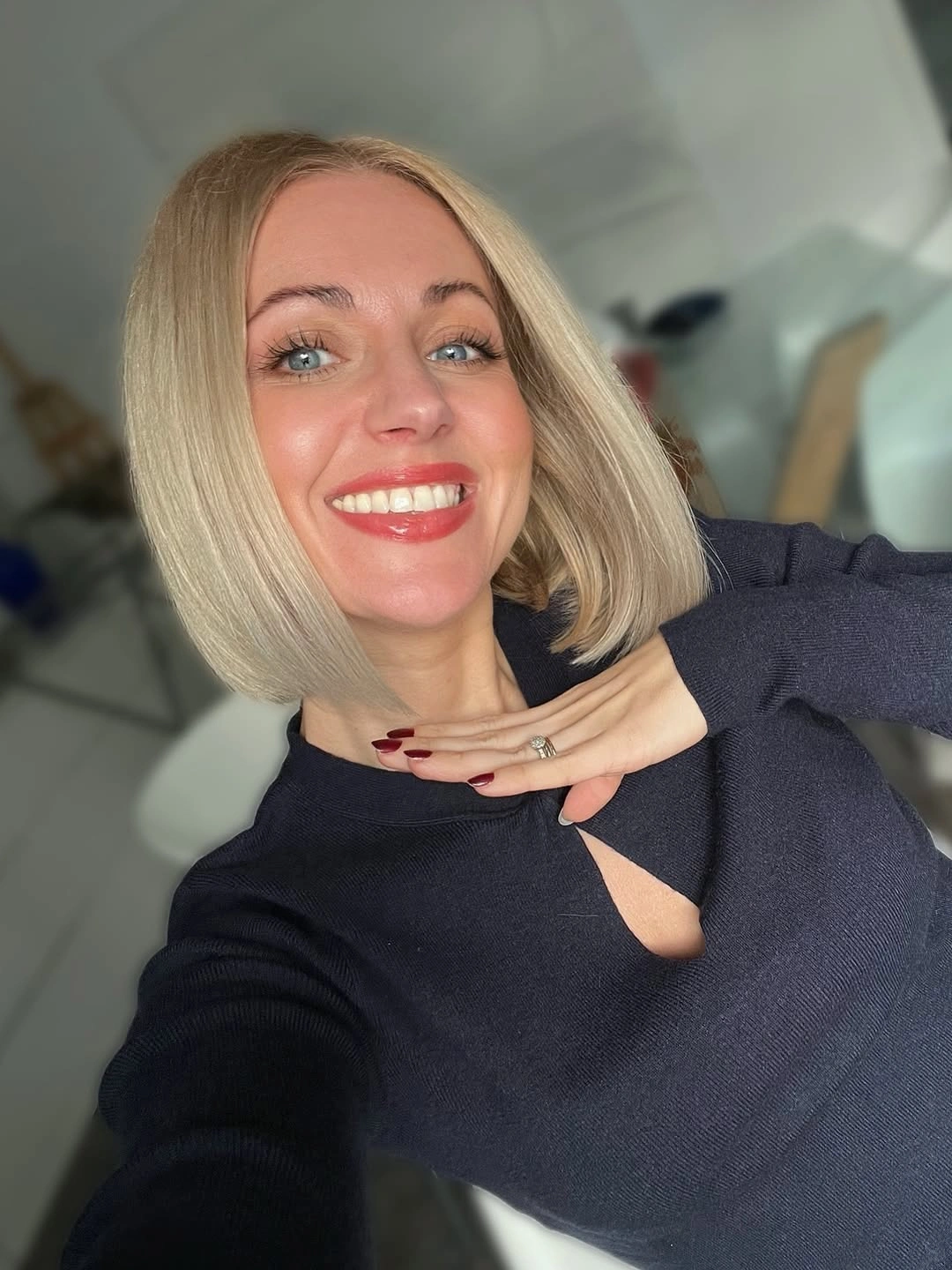
Photo via Instagram
Because the sides appear balanced, the effect is less about dramatic asymmetry and more about calm polish. The lower edge gives the bob its definition, while the front panels keep the face framed in a clear vertical line. That makes the color and cut feel connected: the blonde surface catches the eye, and the neat perimeter tells it where to look next.
This is a restrained way to let color and geometry share the focus. The cut does not need heavy texture to feel finished, because the curved edge gives the polish its shape.
Long Angled Bob With Dark Smoothness
The side profile gives this angled A-line bob its clearest evidence, with the front panel dropping much lower than the back. The longer piece falls near the collarbone area, while the rear shape sits shorter and rounder behind it. That forward drop creates a noticeable change without sacrificing the visual presence of length around the face.
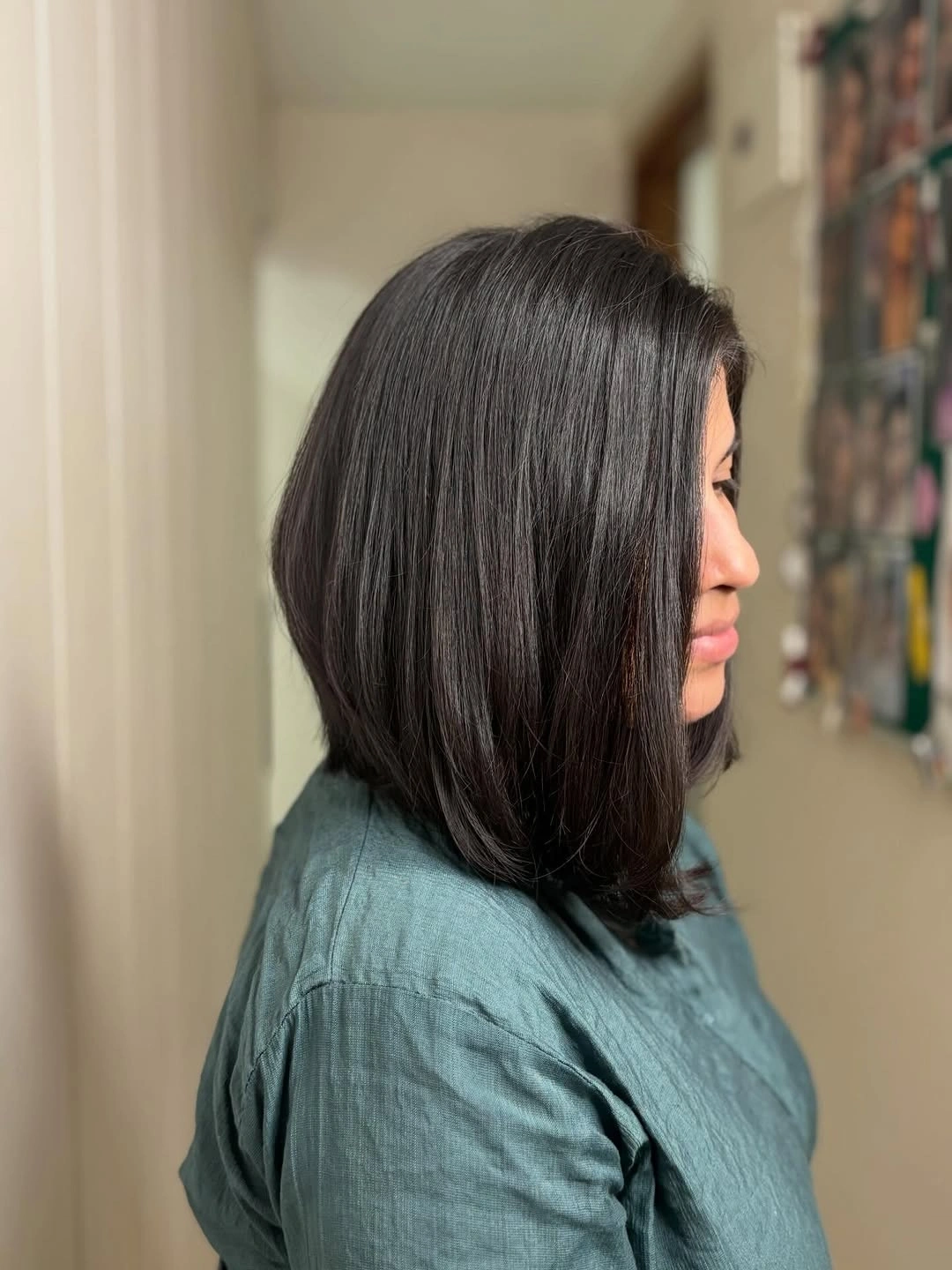
Photo via Instagram
The dark smooth surface makes the geometry easier to read because the eye follows one continuous sheet from crown to ends. Slight separation near the lower edge keeps the front from looking too heavy, but the main impression stays sleek and controlled. Compared with the short stacked shapes, this one puts the drama into the diagonal line rather than the lifted nape.
This cut offers the most obvious long-angle statement in the group. It feels sharp in profile, but the retained front length keeps the overall impression measured rather than abrupt.
Blonde Long Bob With Curtain-Like Front Pieces
The front section falls across part of the face in a soft curtain-like shape, which gives this long bob or lob its main point of interest. For someone drawn to an A-line bob with curtain-style bangs, the visible idea is not a blunt fringe but a longer front frame that moves into the rest of the cut. That makes the face area feel shaded, shaped, and less exact than a sharp angled panel.
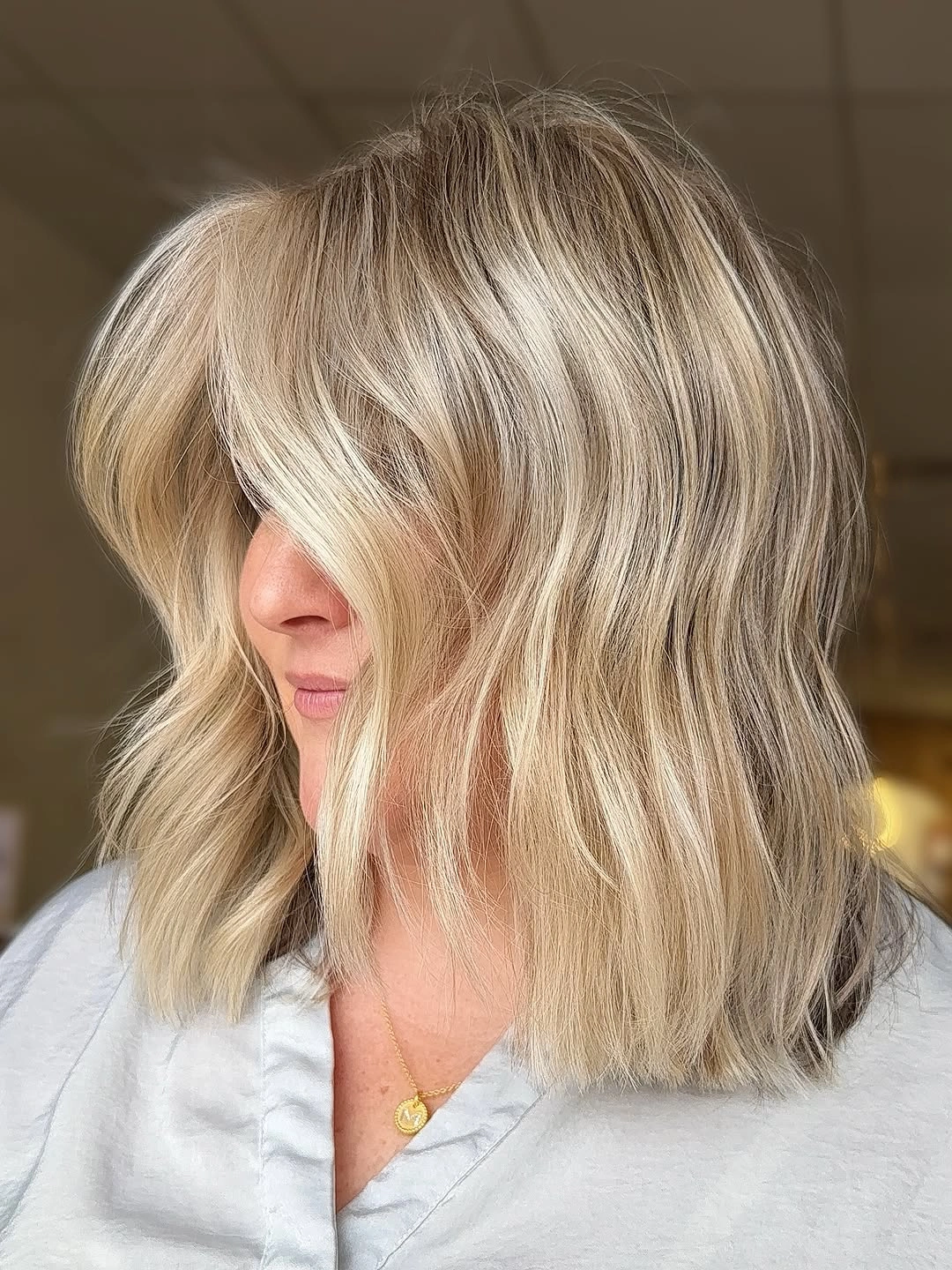
Photo via Instagram
The lower length sits near the collarbone and separates into loose waves, so the haircut reads through soft movement more than a strict edge. Blonde pieces with darker strands running through them make the layers easier to see, especially where the front drops forward and the side length opens into bends. The effect is relaxed in scale, but the cut still has a clear relationship between face frame and lower shape.
The section works because the front pieces and the wavy ends are not competing for attention. One creates the frame, the other gives the long bob its looseness, and together they make the A-line idea feel softer without losing shape.