23 Christmas Hairstyles 2026 With Color and Shape
Festive hair can register quietly or make a clear visual statement, and neither approach needs to depend on costume-like details. Christmas hairstyles for women in 2026 can draw their character from the way color, parting, length, volume, and movement work together, so the seasonal impression feels intentional rather than forced. The useful question is not how much decoration to add, but which visible element deserves to lead.
A strong holiday look can begin with something as restrained as a polished silhouette or become more explicit through high-contrast color and recognizable accessories. Paying attention to where the eye lands first helps separate shape from surface detail: a deep side part changes direction, layered ends change volume, and a concentrated accent changes emphasis. That approach leaves room for personal taste while keeping every choice visually legible.
Copper Length With Broad, Flowing Waves
The uninterrupted copper-red color gives this very long hair a strong visual continuity from the crown through the ends. Because there is no contrasting accessory or obvious color break, the broad wave pattern becomes especially easy to follow as it repeats down the length. Light catches different bends along the surface, making the movement readable without taking attention away from the saturated color.
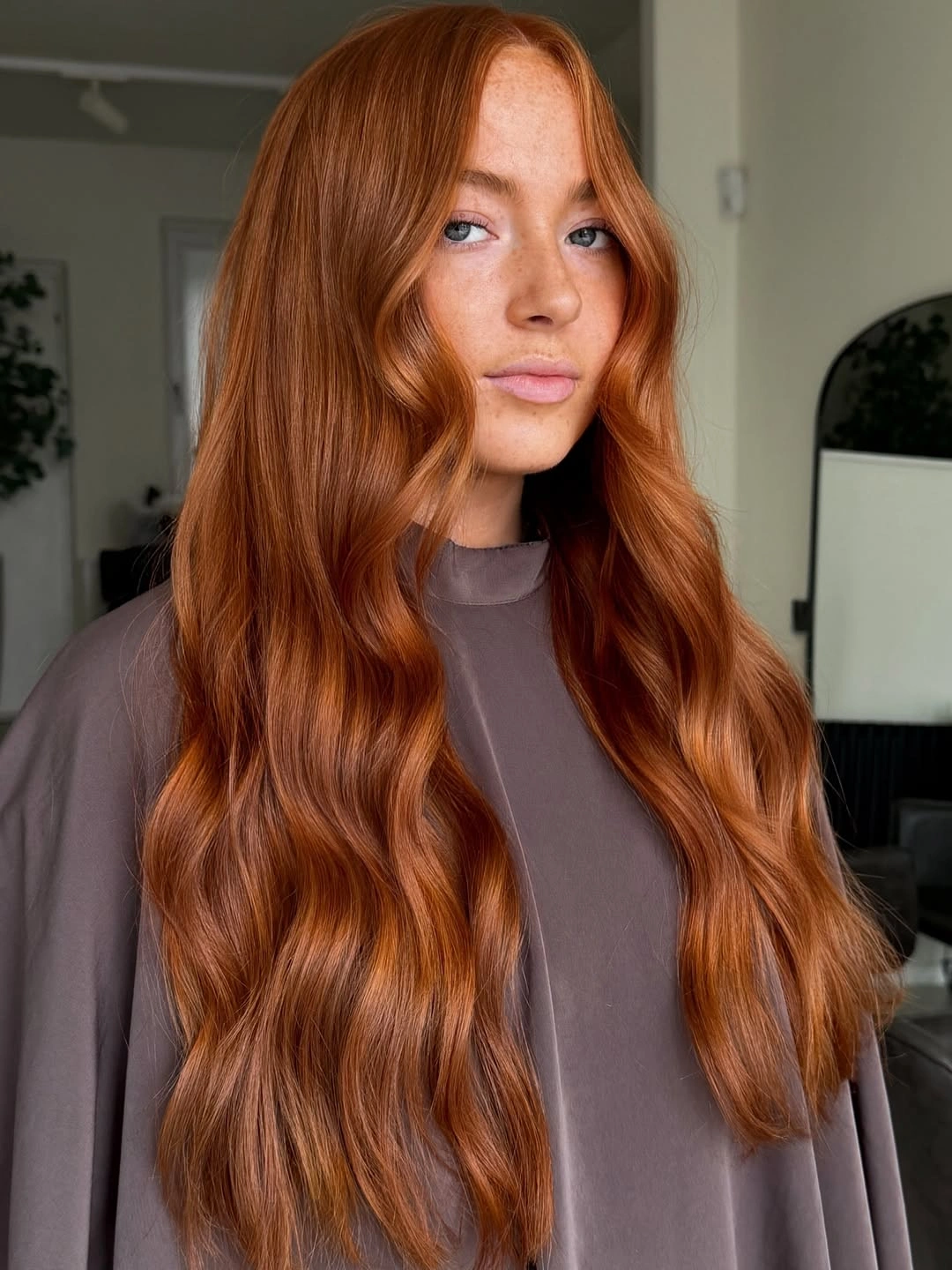
Photo via Instagram
A near-center part keeps the upper shape balanced, while the hair close to the crown appears comparatively smooth and controlled. The pattern grows more pronounced farther down, where the long sections bend into larger, softer waves and create a fuller outline. That gradual shift from a calmer top to stronger movement below gives the length structure without interrupting its continuous copper tone.
This is a useful example of long hair feeling visually rich without any literal holiday object in view. Color, length, and wave shape carry the entire effect, so there is no need to assign a specific occasion or styling method to what the image shows.
Side-Swept Shape With Rounded Layers
The strong side part immediately sends the hair in one direction, creating an asymmetrical shape with visible lift across the front. A lighter face-framing section follows that sweep, so the eye traces both the tonal contrast and the change in height at the same time. Rather than sitting evenly on both sides, the front section crosses the forehead area and blends into the longer lengths beside the face.
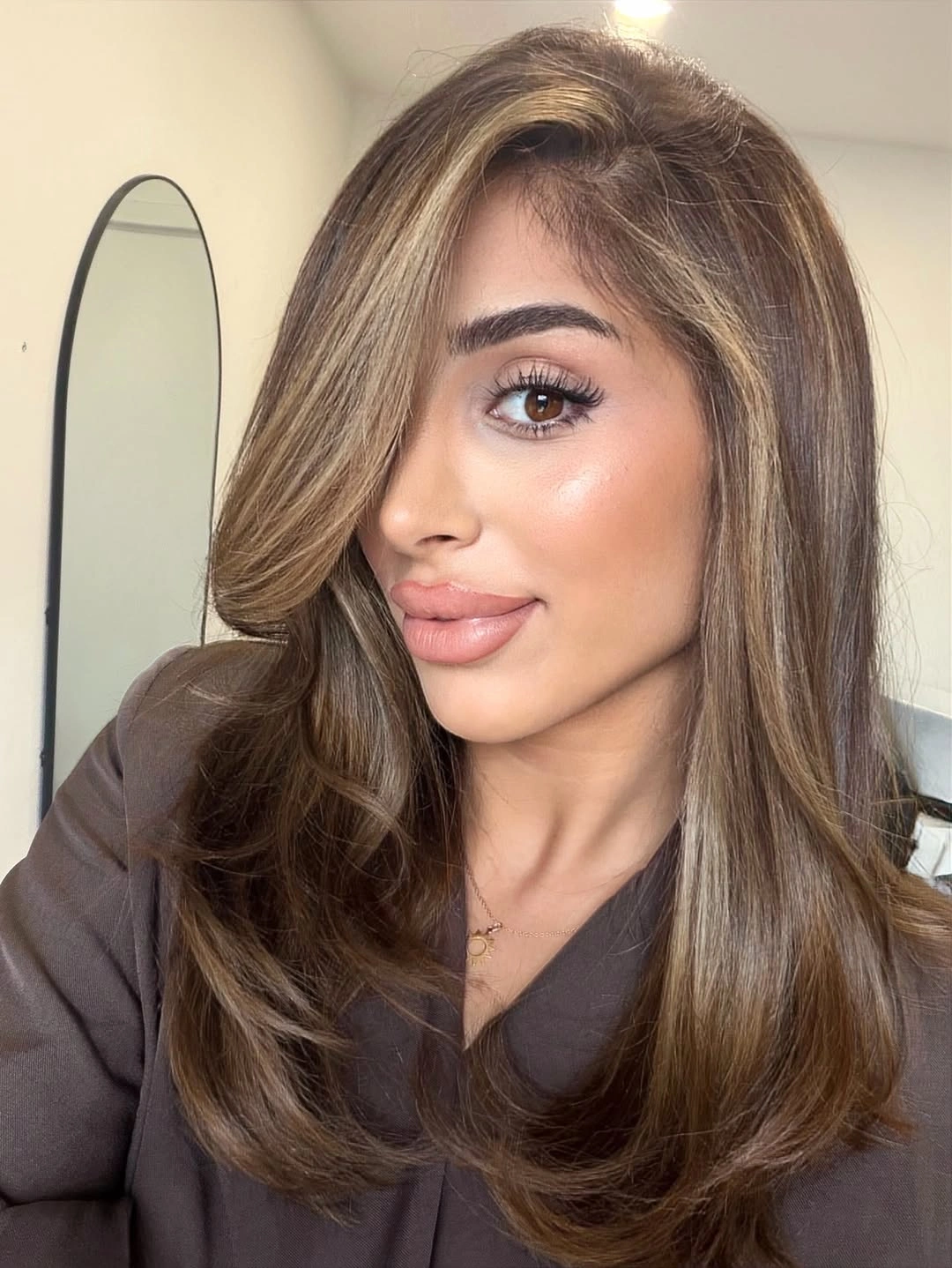
Photo via Instagram
Lower down, the silhouette becomes softer and more dimensional as several layers finish in rounded, curved ends. Those turns stack at slightly different heights, which keeps the bottom from reading as one blunt edge and gives the hair a fuller outline. The lighter pieces continue through parts of the length, but here the main visual interest comes from how the layers overlap and turn outward or inward.
This look sits at the restrained end of the festive spectrum because shape does more work than themed detail. The sweeping front section is best described as a long face-framing piece rather than bangs, since its exact cut cannot be confirmed from the photograph.
Dimensional Brown Waves With Lighter Streaks
Lighter streaks run through the brown base most clearly around the front and upper lengths, where the contrast is visible before the hair opens into broader movement. Because the color is distributed in narrow and medium-width sections rather than one solid block, the surface has depth even where it lies relatively smooth. The brighter strands also draw attention toward the layered pieces near the face without defining a separate accessory or added element.
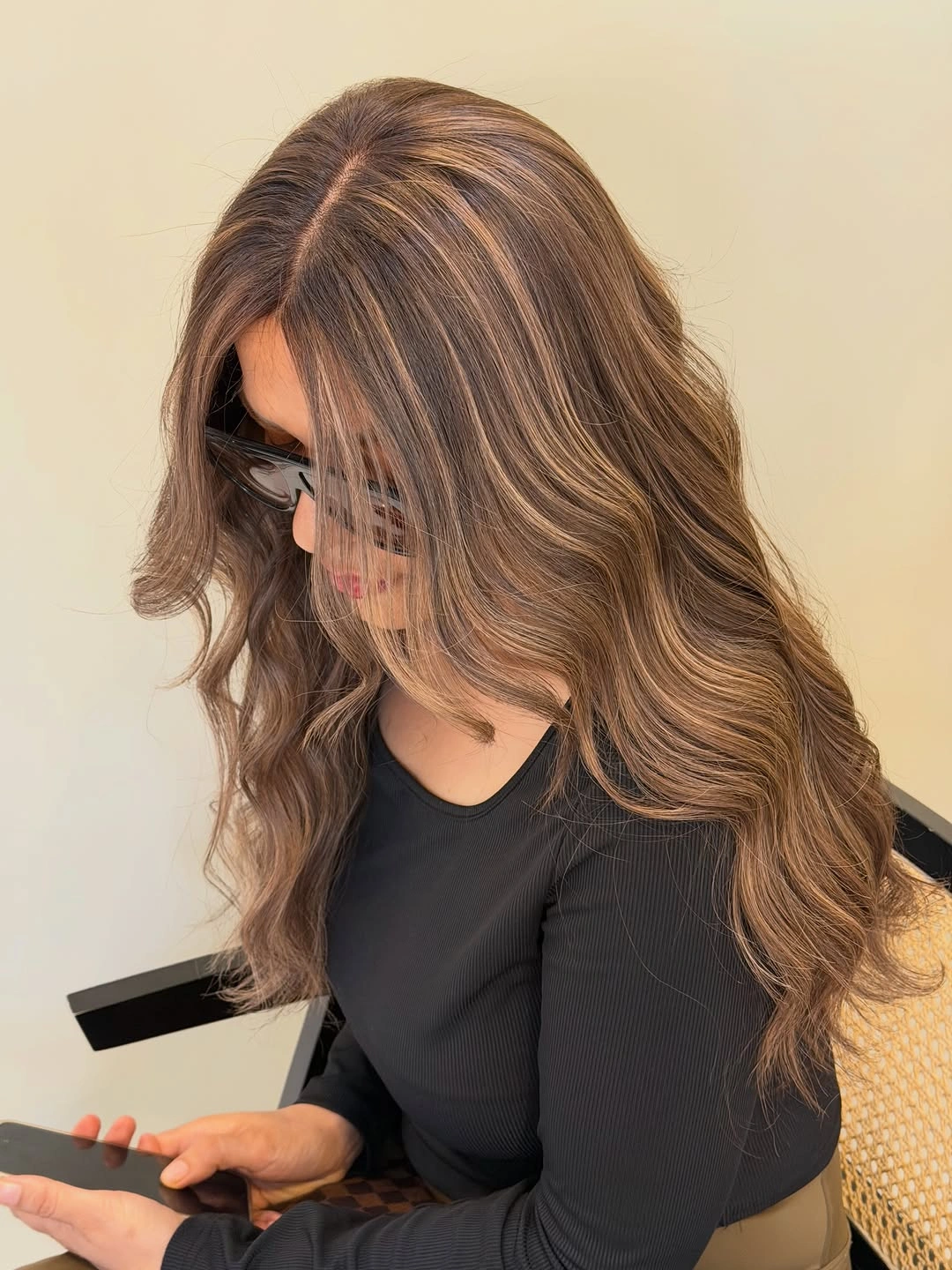
Photo via Instagram
Broad waves change how those lighter sections appear as the hair moves down the length, breaking the color into alternating curves instead of straight vertical lines. Layered front pieces join the same pattern, so shorter and longer sections bend at different points and build a more varied outline. The result is a clear interaction between tonal contrast and movement, with neither one needing to dominate the entire silhouette.
The strongest takeaway here is the way color placement becomes more noticeable when it travels through visible movement. The photograph supports describing streaks, layers, and waves, but not a specific coloring process, styling tool, or method used to create them.
Dark Long Layers With Sculpted Ends
From the back, the upper section appears smooth and nearly uniform, so the long dark surface reads as one continuous shape before the layering becomes obvious. As the eye moves downward, the lengths separate into progressively more visible tiers, each ending at a slightly different level. With very little color contrast to interrupt the view, the structure of the cut and the lower outline become the main sources of depth.
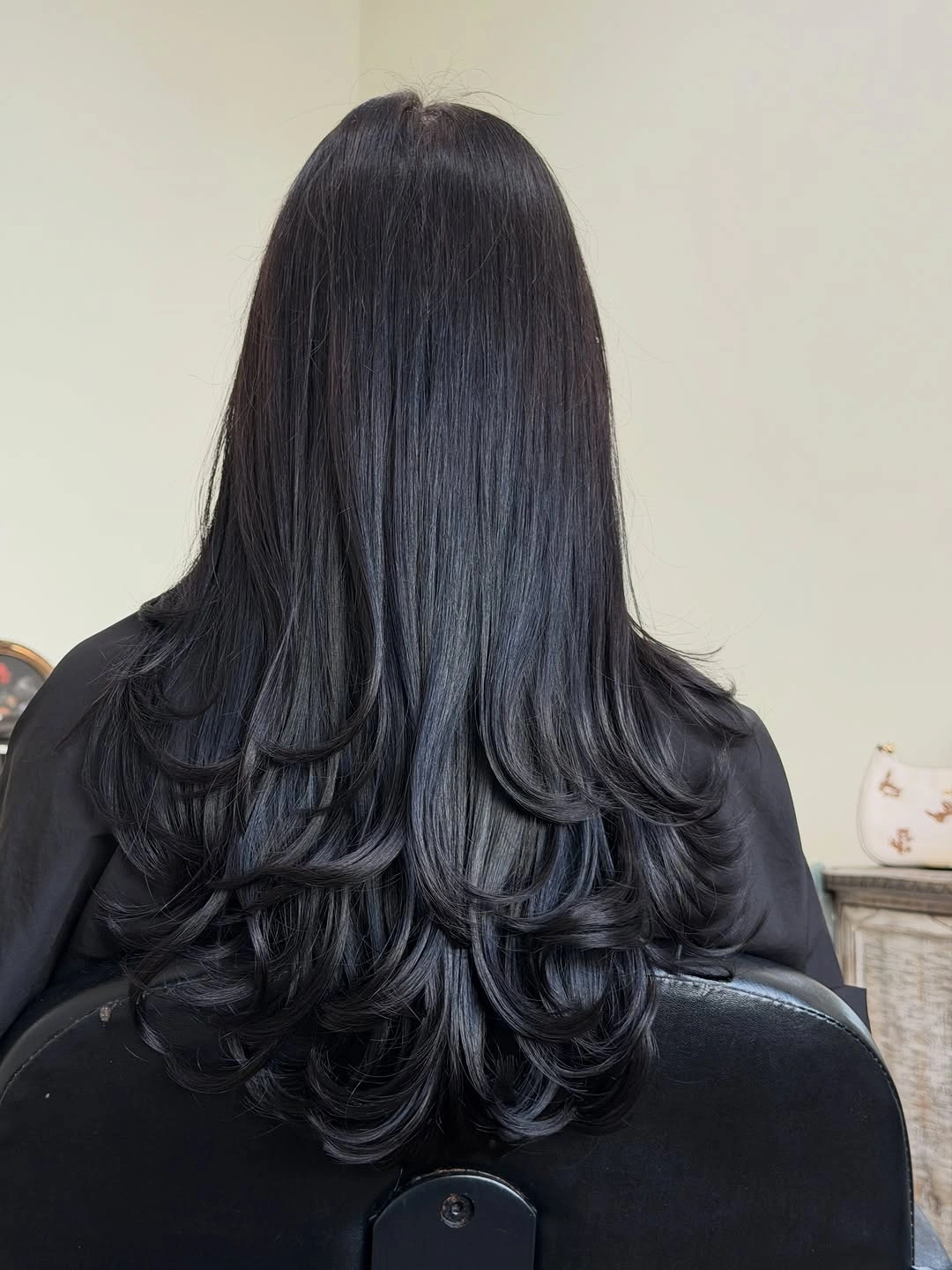
Photo via Instagram
The ends curve into pronounced rounded and flipped shapes, creating several stacked arcs across the lower portion of the hair. Some sections turn outward while others fold under, which produces a sculpted edge rather than a flat or blunt finish. That repeated change in direction gives the bottom more dimension and makes the individual layer lengths easier to distinguish against the very dark color.
This image shows how visible layering can create depth even when the color remains close to monochrome. The shape is clear enough to discuss, but the photograph does not establish the exact cutting or styling technique behind the curved finish.
Soft Brown Layers With Rounded Lower Volume
Fine lighter streaks run vertically through the medium-brown base, creating a subtle tonal shift rather than a high-contrast pattern. They are most noticeable where the surface catches light, especially across the straighter upper and middle sections. Because the variation stays relatively narrow and blended, the overall color remains cohesive while still giving the long hair more visible dimension.
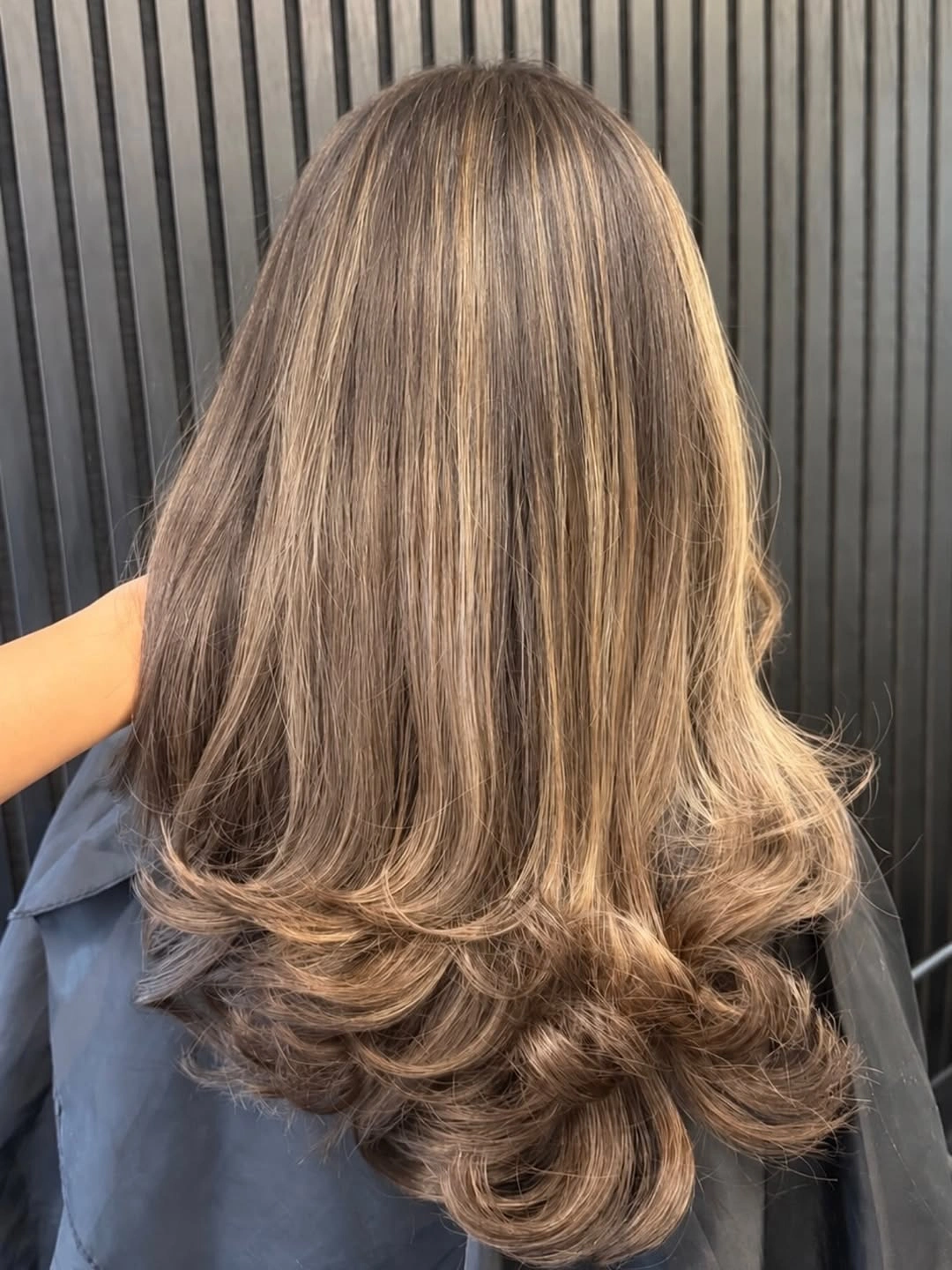
Photo via Instagram
Most of the volume gathers lower in the silhouette, where layered ends curve into broad rounded shapes and overlap near the bottom. The upper section stays smoother, so the eye can see a clear transition from controlled length to fuller movement rather than a continuous wave pattern beginning at the crown. That concentration of shape near the ends gives the hair softness without erasing the layered structure.
The contrast between a calmer upper section and fuller lower movement is what defines this long-hair look. Its visual interest comes from the blend of fine tonal variation and rounded ends, without requiring claims about hold, longevity, products, or how difficult the style is to create.
Red and Green Waves With Bold Contrast
Broad red and green sections make color the first thing the eye registers, with each hue occupying enough space to remain distinct even where the two meet. The contrast is especially strong along the central transitions, where saturated green sits directly beside vivid red. Instead of relying on a small seasonal accent, the visible palette carries most of the hairstyle’s Christmas character at first glance.
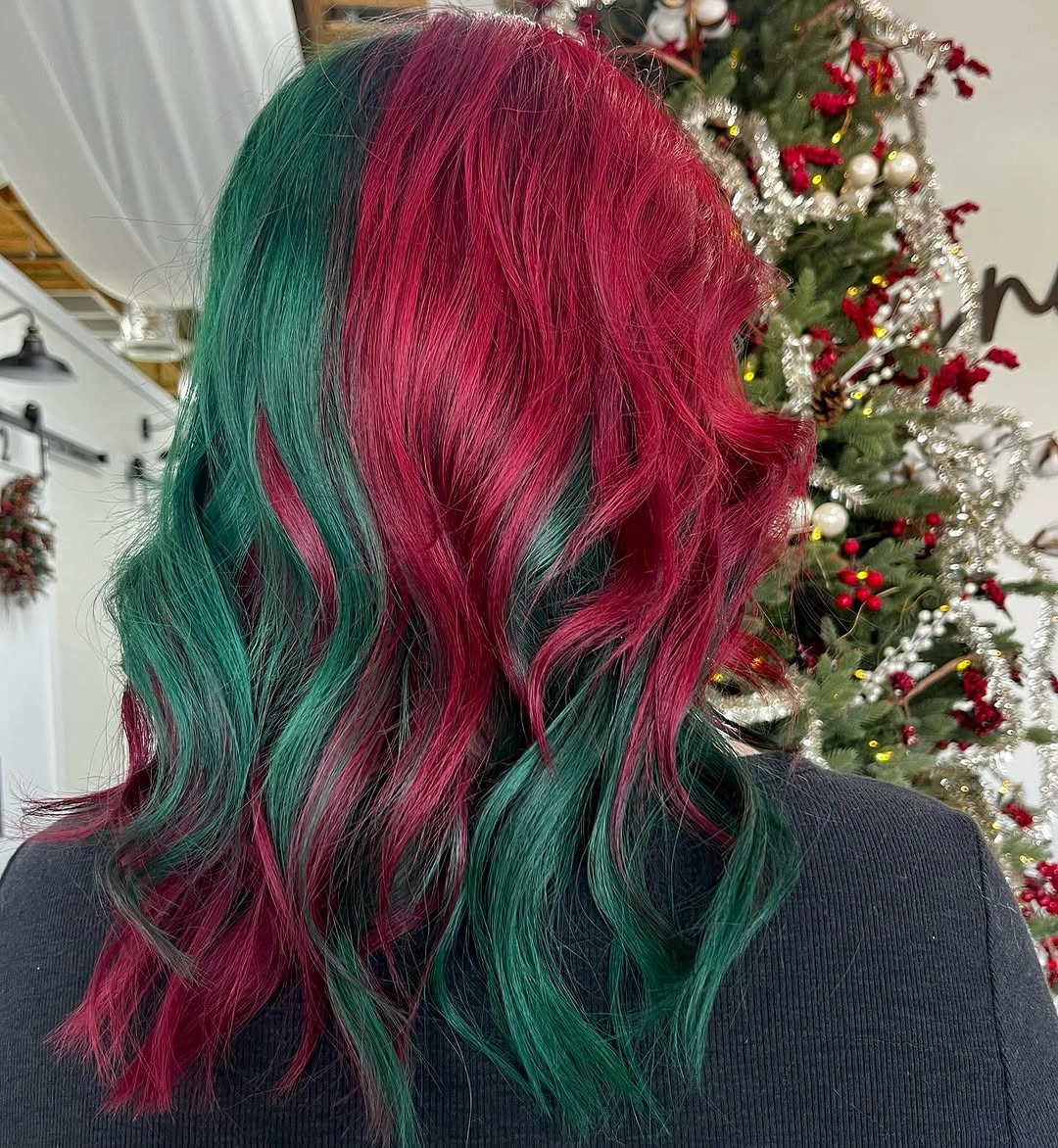
Photo via Instagram
Large waves change that color relationship farther down by bending neighboring sections toward and away from one another. Green curves move across the visual path of red sections, while red waves reappear between areas of green, so the lower silhouette feels more interwoven than the upper color blocks. The movement prevents the arrangement from reading as two rigid, flat zones even though the colors remain clearly separated.
The decorated Christmas tree in the background reinforces the seasonal setting, but the red and green hair already establishes a strong holiday impression on its own. Among bolder Christmas hairstyle ideas, this one depends on visible color placement and wave shape rather than an added hair accessory.
Long Red Waves With Gift Ornaments
Three miniature wrapped-gift decorations create the immediate focal point because they cross the back of the hair on a clear diagonal rather than sitting in one compact cluster. Their metallic red and gold surfaces remain visible against the vivid red background, while the small package shapes give the eye three separate points to follow from one side toward the other. The placement introduces unmistakable Christmas imagery without covering most of the hair.
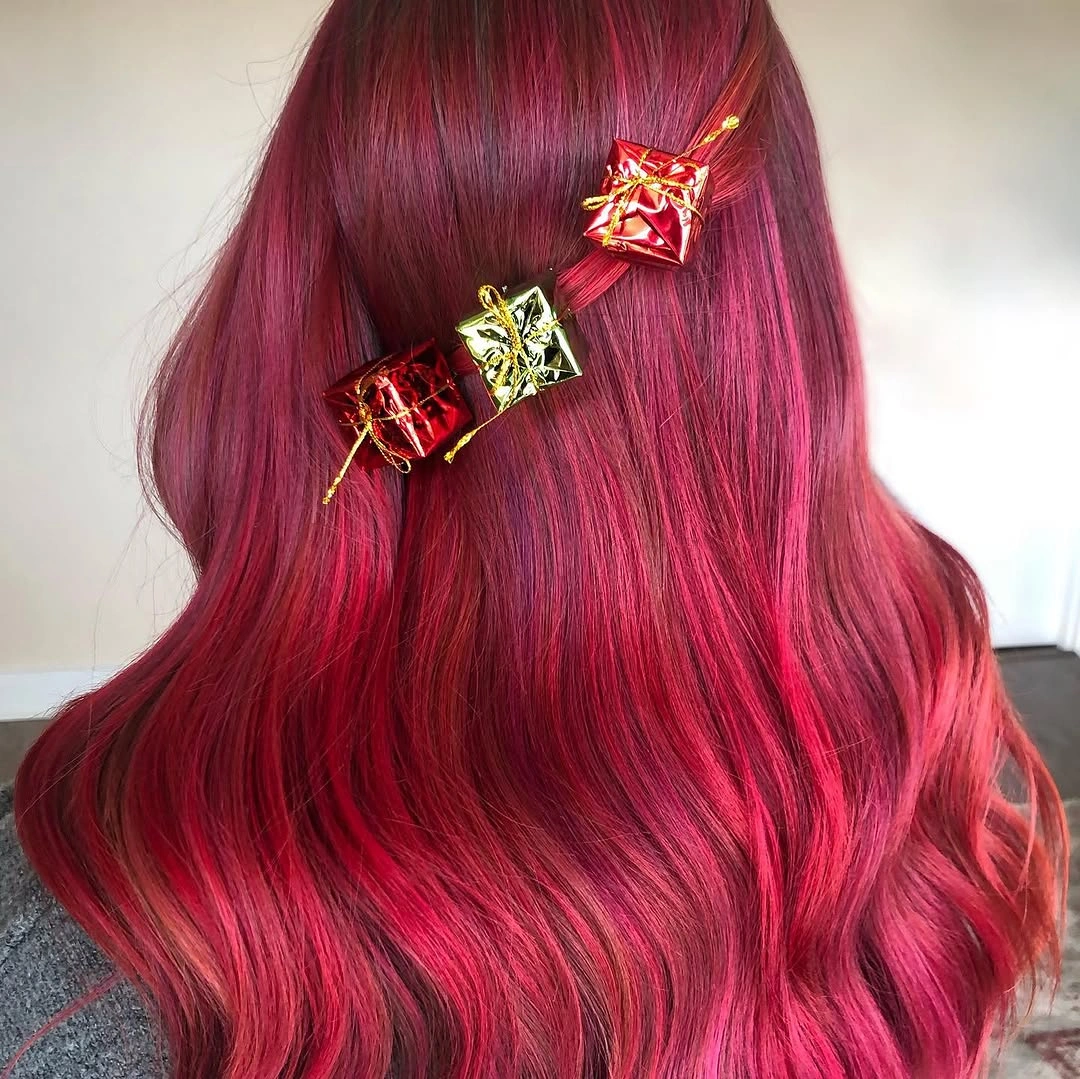
Photo via Instagram
Beneath those decorations, the long hair remains worn down, allowing its broad loose waves to form a continuous background for the ornaments. The wave direction gives the red surface enough variation that the small objects do not appear suspended against a flat field, yet the length remains visually dominant below them. Keeping most of the hair loose also makes the accessory placement feel separate from the underlying arrangement.
The wrapped gifts are actual decorations placed on the hair, not a feature created from the hair itself. Their tiny package bows should therefore stay described as details on the ornaments rather than turning this long hair look into a bow hairstyle or a half-up style.
Cool Blonde Length With Soft Loose Waves
A deeper root area gives the pale lengths a visible starting point, so the color change is most noticeable close to the scalp before the cooler blonde becomes dominant. That contrast keeps the overall light tone from reading as completely uniform and gives the upper portion a clearer boundary against the brighter lengths. Because there is no literal holiday accessory or saturated seasonal color, tone becomes the main surface feature.
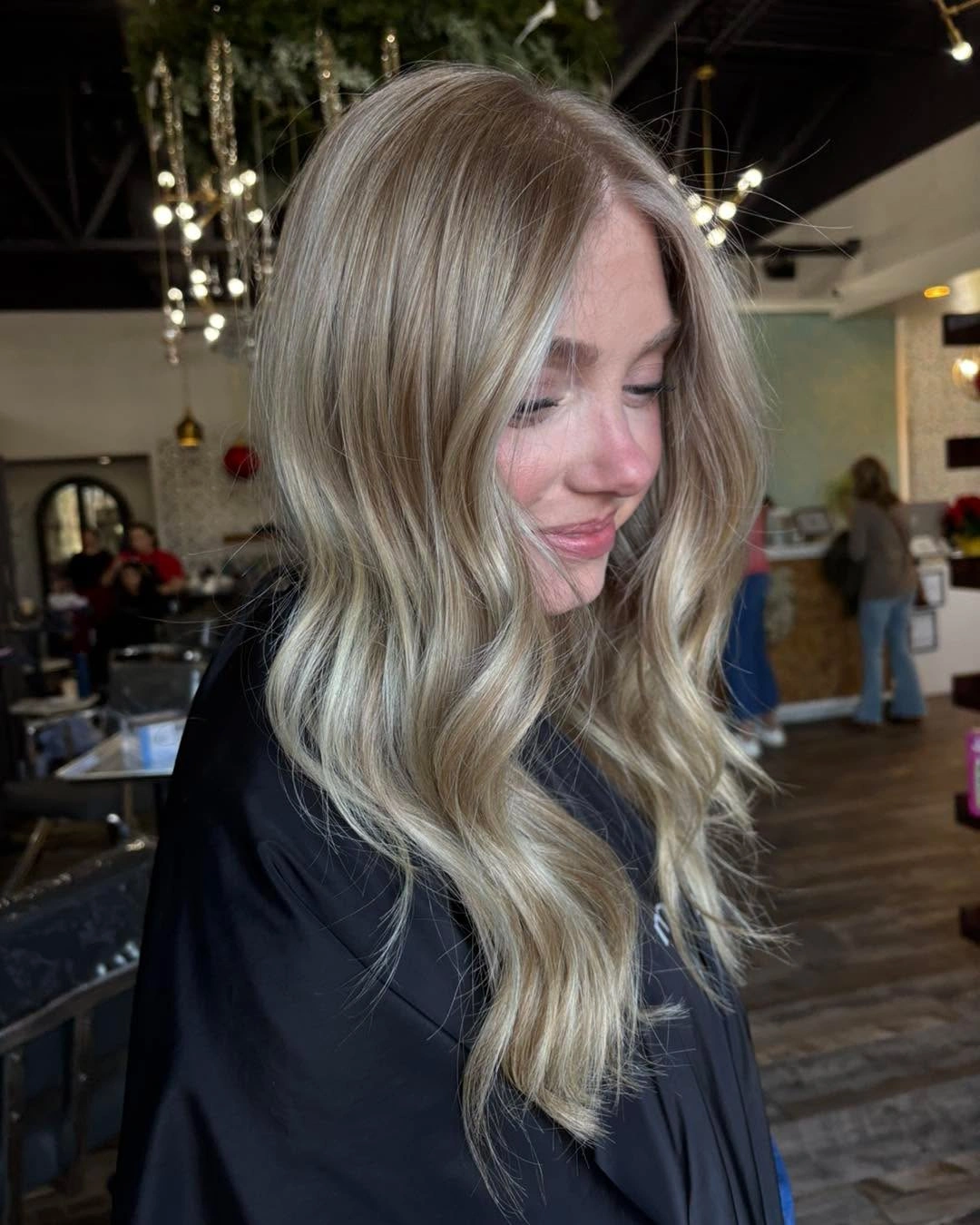
Photo via Instagram
The near-center part divides the front with a fairly even visual weight, while soft waves begin farther down and spread through the long hair in broad, open bends. Those bends are spaced widely enough that much of the length still reads as continuous rather than heavily sculpted. The result is a quieter silhouette in which the eye notices pale color, length, and gentle movement before any single dramatic detail.
This long hair example occupies the understated end of the collection because its visual interest comes from tonal contrast and soft movement rather than Christmas symbols. The pale color should not be used to invent a winter, party, or event context that the photograph does not establish.
Green and Magenta Waves With Split Color
Saturated green dominates one side while magenta-pink occupies the other, creating a strong vertical division that is visible immediately from the upper lengths downward. Each color covers a broad enough area to remain recognizable without depending on narrow streaks or scattered accents. The eye therefore reads two major color zones first, with the contrast itself providing the hairstyle’s strongest visual statement.
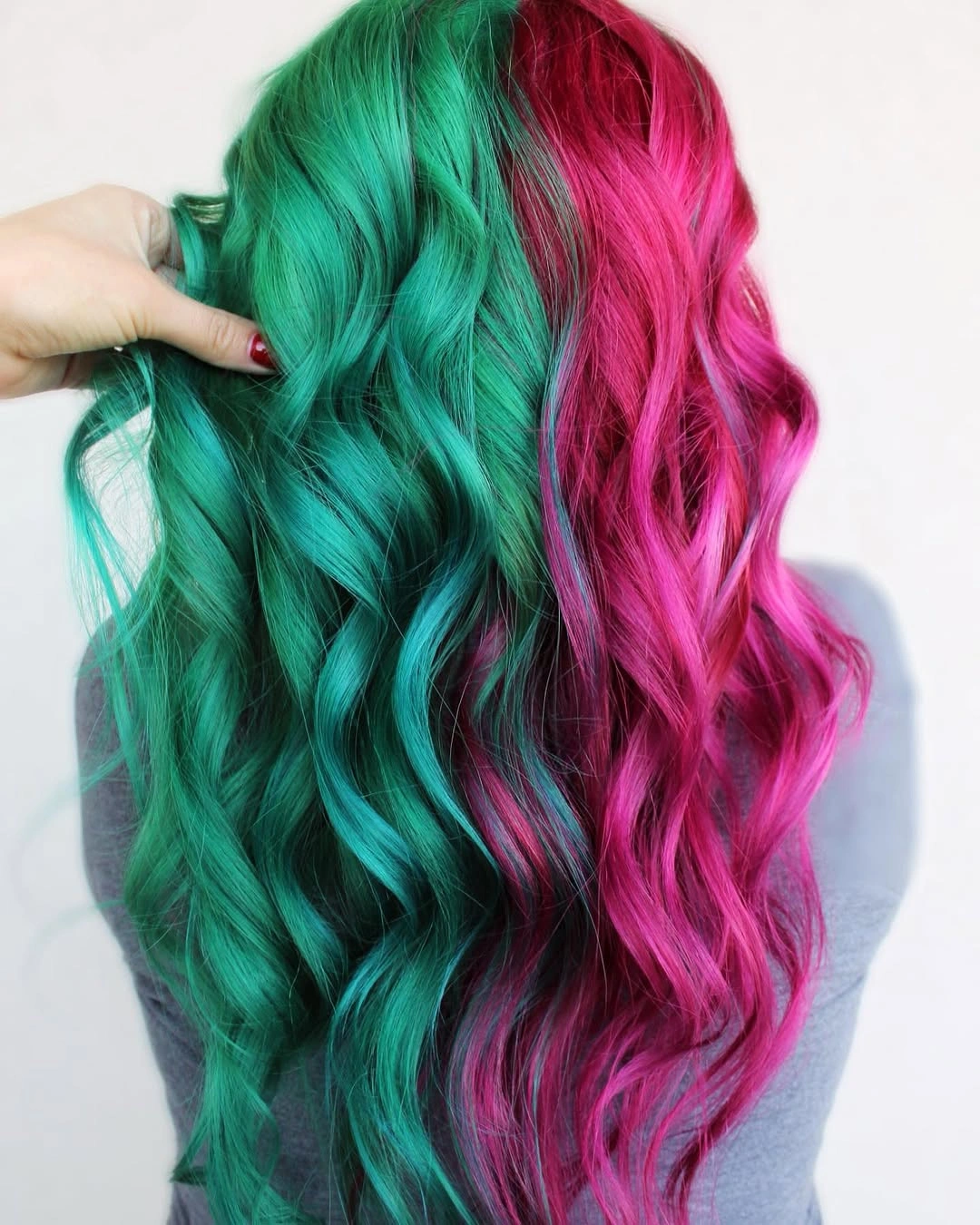
Photo via Instagram
As the long hair moves into large waves, the strict separation becomes less rigid because individual bends bring green and magenta-pink sections closer together through the lower lengths. Curves turn inward, then outward, causing the boundary between the colors to appear more fluid than it does near the top. The waves do not erase the two-color structure, but they keep its lower edge from feeling like a simple straight division.
Green paired with a red-adjacent magenta-pink gives the look a visible seasonal connection without copying a literal red-and-green combination exactly. The strength of this long hair idea comes from saturated color zones and their interaction through movement, not from claims that it is easy, simple, or playful.
Pink-Red Panels Through Medium Wavy Hair
Bright pink-red sections appear around the front and continue through selected areas of the muted brown-blonde base, so the strongest color is concentrated rather than spread evenly across the whole head. That placement makes the vivid sections act as accents within a quieter field, drawing attention first to the brighter front area and then to isolated flashes farther through the length. The base color remains visible enough to keep the contrast clear.
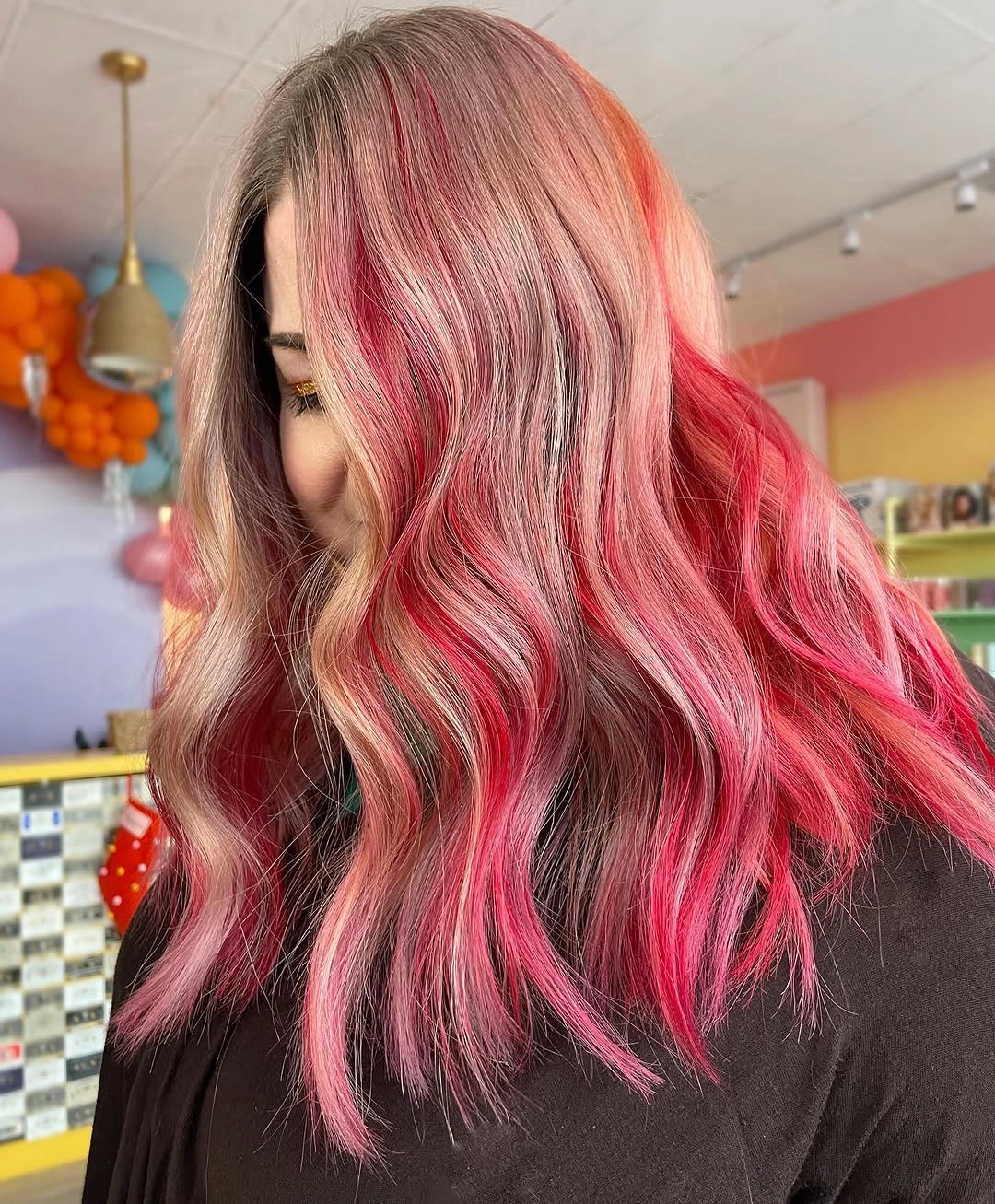
Photo via Instagram
Around shoulder to medium length, broad waves repeatedly expose and partially hide the pink-red sections as the hair bends. A bright panel can look wider on one curve and narrower on the next, so the color changes in visual prominence without actually covering more of the hair. This interaction gives concentrated color a different effect from either a full-head treatment or a clean two-color division.
The main idea here is selective emphasis: vivid color can take control of specific areas while leaving much of the original muted palette visible. The photograph supports describing panels, length, and wave movement, but it does not establish the exact coloring method used to create those sections.
Silver-Gray Half-Up Hair With Festive Color
The half-up structure is the clearest organizing feature here, with side sections curving inward and meeting at the center while the rest of the hair remains loose below. That gathered point narrows the upper silhouette and opens a clear view of the lower lengths, giving the style a distinct top-and-bottom relationship rather than one continuous fall of hair.
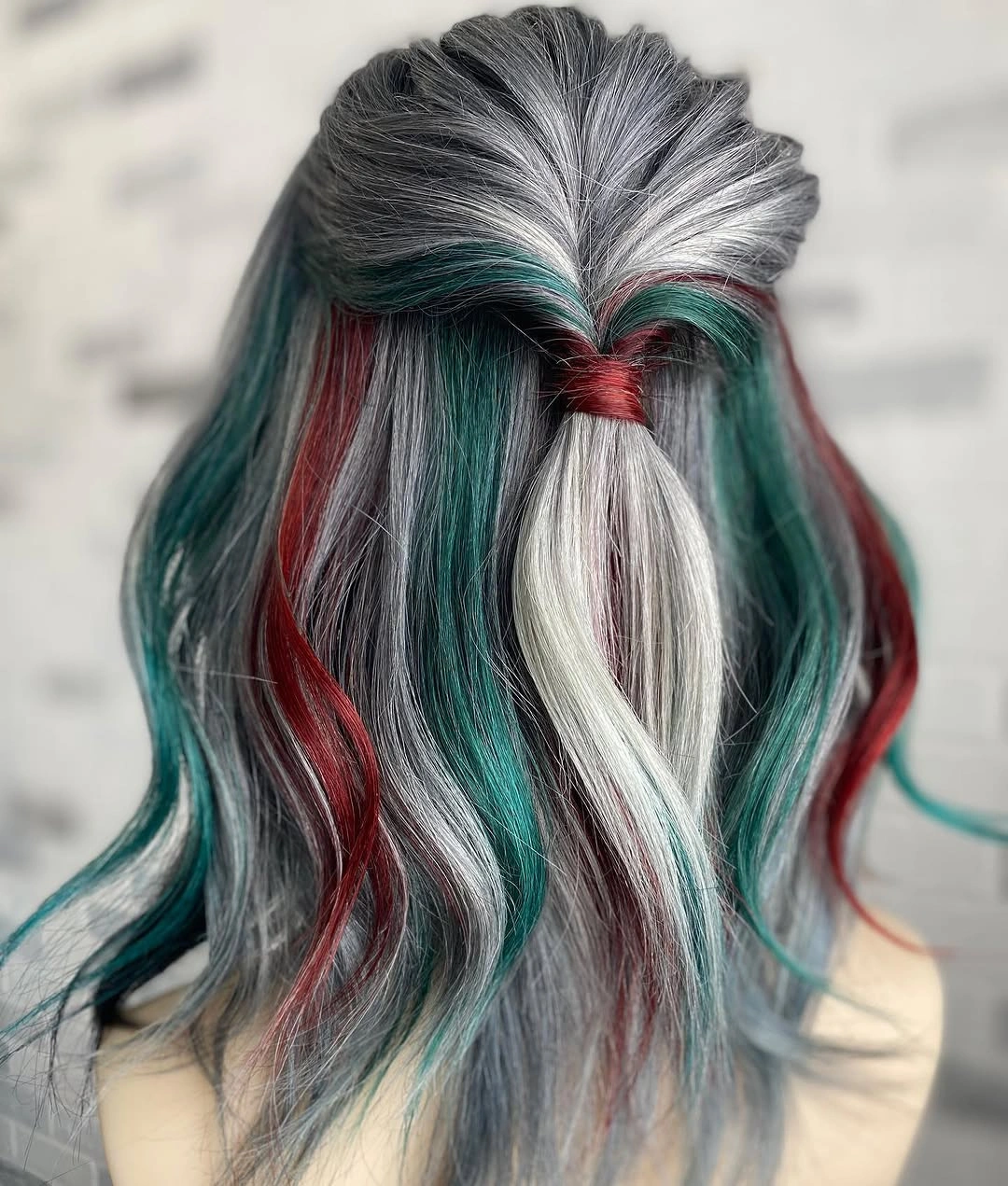
Photo via Instagram
Red and green sections sit against a silver-gray base, and much of that color becomes visible beneath the pulled-back upper portions instead of across the crown alone. The contrast is strongest where the colored strands emerge from under the gathered sections, so the festive palette feels integrated into the arrangement rather than placed as a separate ornament.
The red detail at the center is visible, but its material is uncertain, so it should be described only as a wrap at the joining point rather than as ribbon. The strongest supported description is a half-up half-down hairstyle shaped by gathered sections and visible Christmas colors.
Green Hair With Scattered Snowflake Decorations
A saturated green tone covers the hair as one continuous field, making color the dominant feature before any individual bend or detail is considered. The shoulder-grazing length keeps the outline compact, while the loose curves around the sides and ends prevent the silhouette from becoming rigid. Its scale makes the green feel concentrated rather than stretched through a long shape.
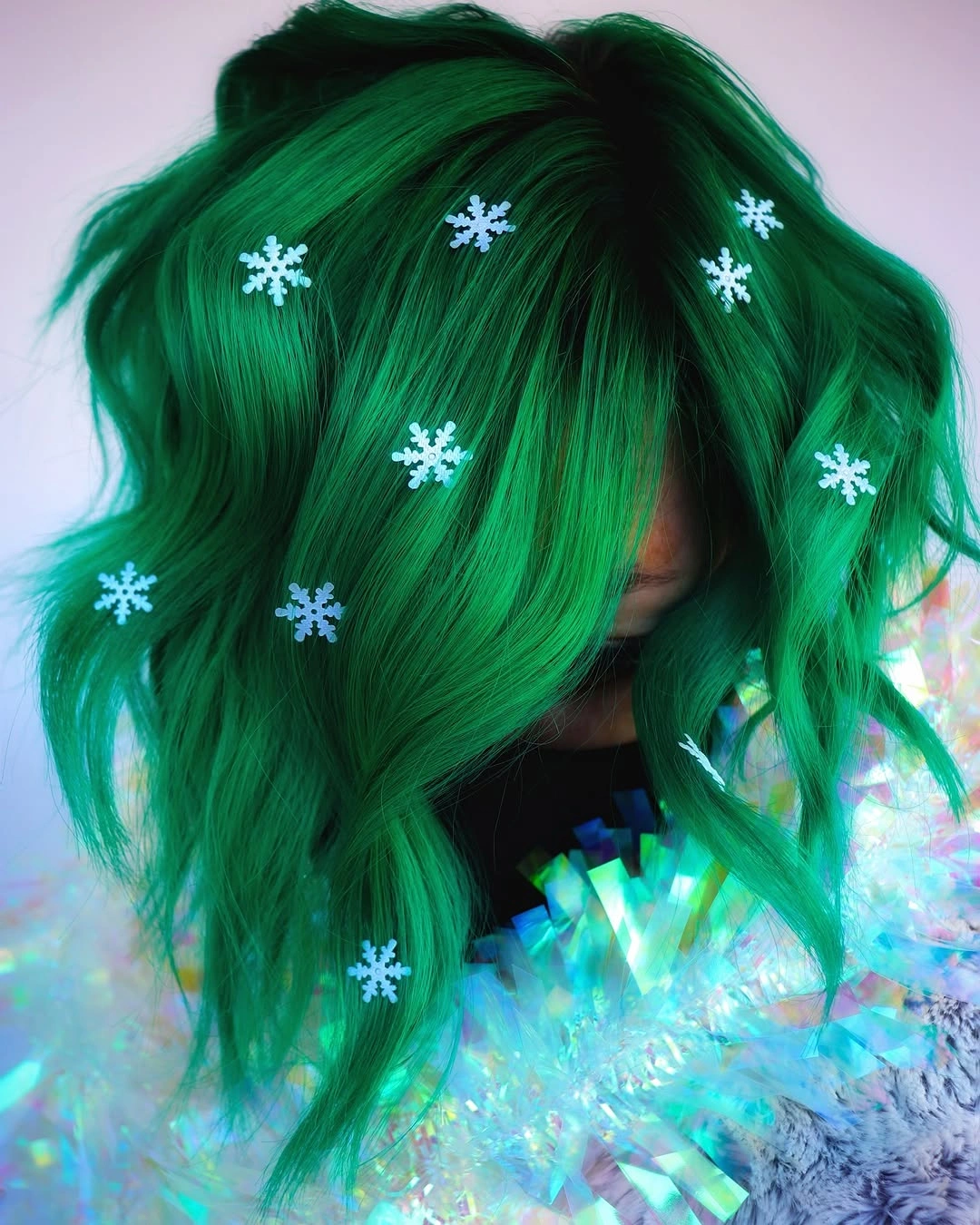
Photo via Instagram
Small white snowflake decorations are placed across several upper and side areas, so the eye moves between multiple bright points instead of settling on one central accessory. Their repeated spacing creates a scattered effect over the green background, adding literal seasonal imagery without obscuring the underlying hair shape. The attachment method is not visible enough to name.
The snowflakes should be treated as decorations placed on the hair, not as a styling technique or as part of the hair itself. This image earns a more explicit Christmas reading because both the green color and the repeated snowflake shapes are clearly visible.
Pale Blonde Length With Red and Green Streaks
Most of the visible hair remains pale blonde, so the narrow red and dark green sections register as small but deliberate interruptions rather than dominant blocks. That difference in proportion matters: the light base occupies the visual majority, while the darker festive colors appear as thin vertical accents. The result is seasonal without allowing the accent colors to overtake the entire look.
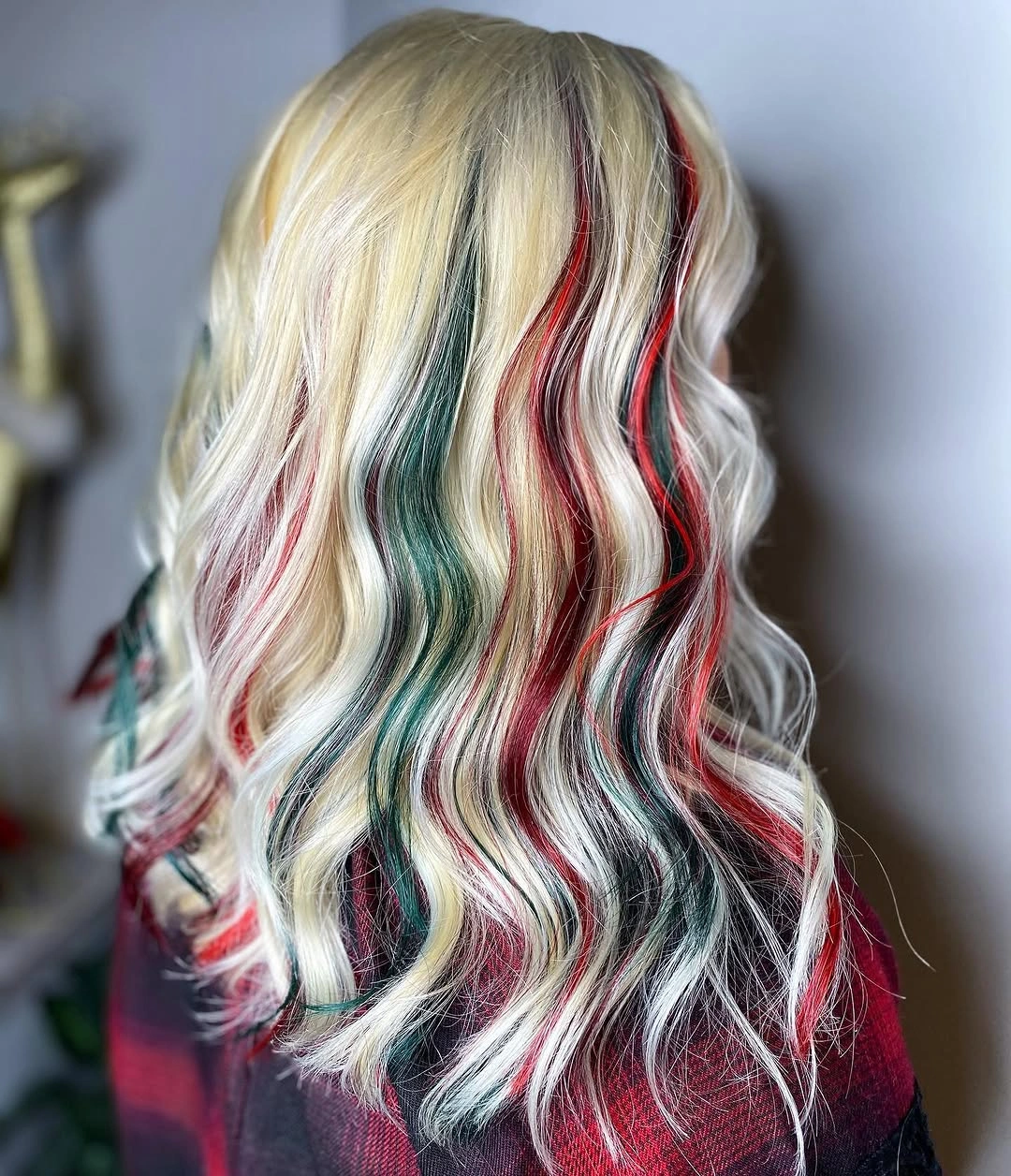
Photo via Instagram
Loose waves repeatedly shift those red and green streaks in and out of view as the long hair curves along its length. Some colored sections become prominent on an outward bend, then recede where another pale strand crosses in front, creating a changing pattern without altering the overall blonde majority. Movement therefore affects visibility more than the actual amount of accent color.
This is a strong example of how a relatively small amount of contrasting color can remain distinct against a very light base. The red and green elements are hair color, so they should be called streaks or colored sections rather than ribbons or accessories.
Half-Up Length With Color and Festive Detail
The visible arrangement begins with side sections drawn back across the upper hair, where they appear rolled or twisted before meeting behind the head. Below that point, the very long lengths remain loose, so the structure combines a defined gathered upper portion with a much broader falling section. That scale difference makes the half-up half-down shape easy to read even before the color details are considered.
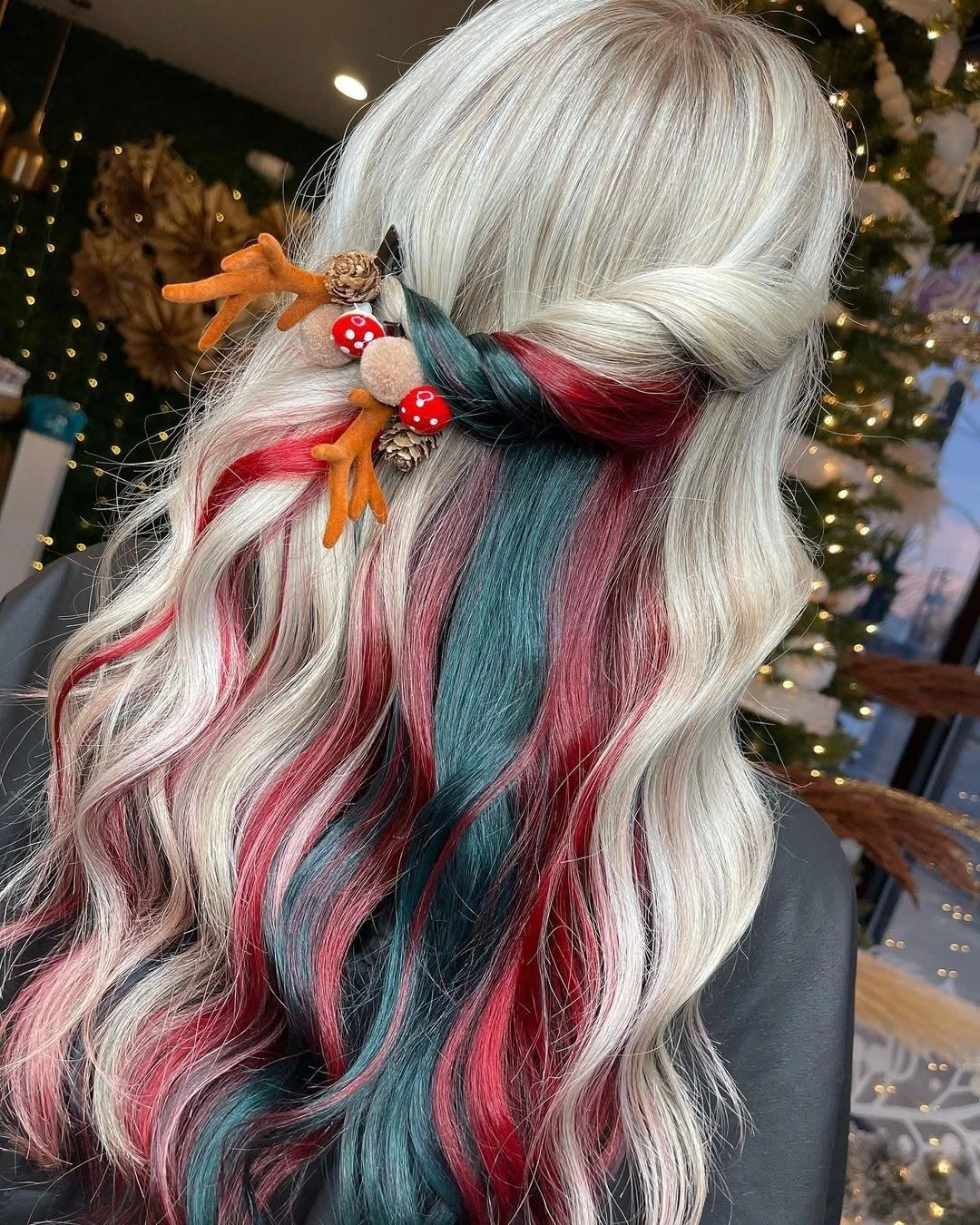
Photo via Instagram
Red and teal-green sections appear beneath and through the pale base, while a small decorative cluster sits near the gathered center and adds a separate layer of contrast. Orange antler-like shapes, textured brown details, and red-and-white accents are visible within that cluster, but the exact motif is uncertain. Keeping the colored hair and the decoration distinct prevents the accessory from being mistaken for part of the styling itself.
The pulled-back sections look rolled or twisted, but the photograph does not clearly support calling them braids. This long hair look combines half-up structure, festive color, and a literal decorative element without requiring a more specific character or accessory label.
Pale Blonde Hair With Sculpted S-Waves
A broad side-swept upper section sets the direction of the silhouette, leading into a controlled curve near the front instead of dividing the hair evenly around the face. That sweep creates a smooth visual transition into the first large bend, so the upper shape feels intentionally sculpted rather than loose. With no accessory competing for attention, the contour itself becomes the main focal point.
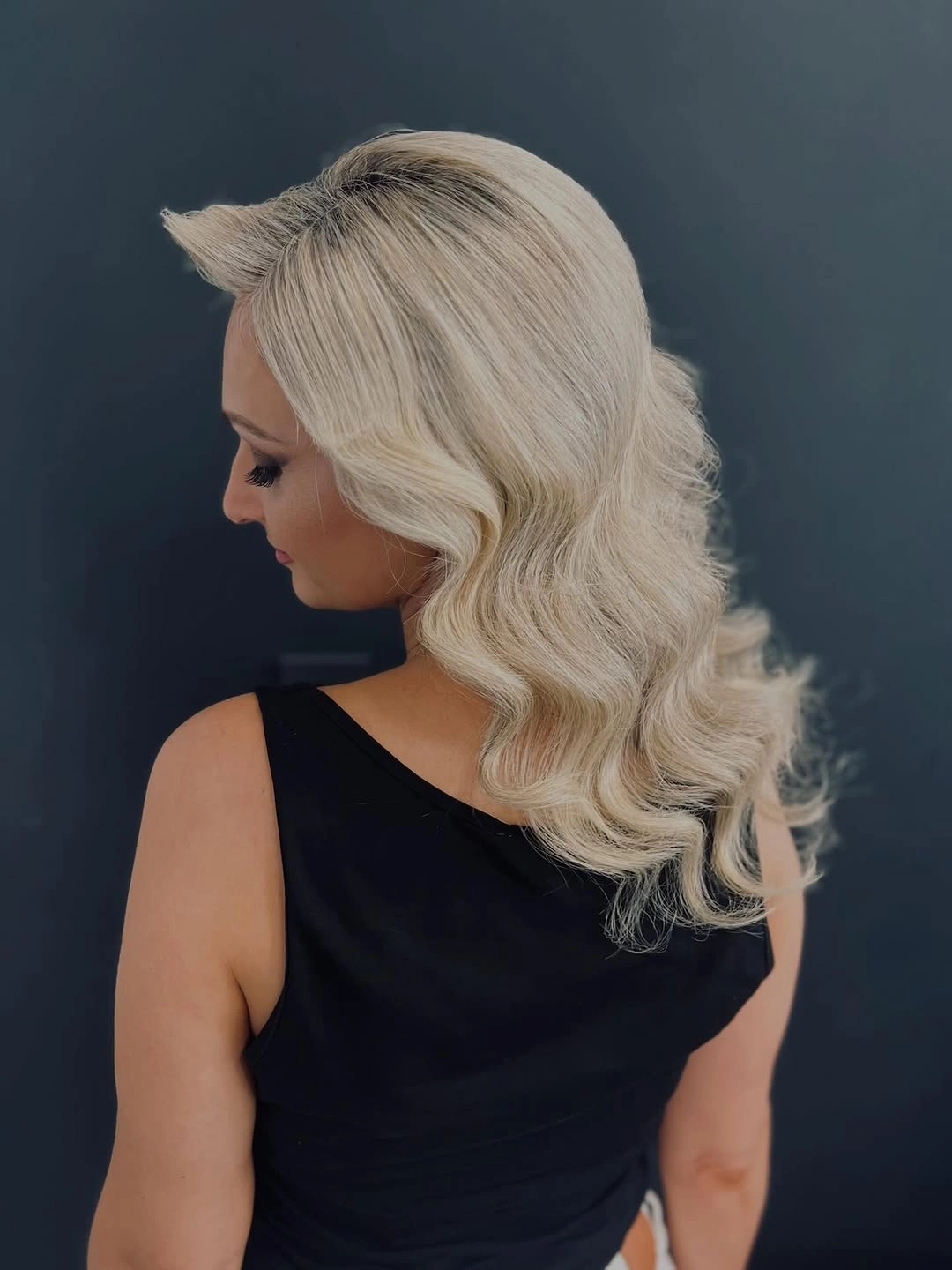
Photo via Instagram
Lower down, the hair forms repeated S-shaped ridges with clear high and low points, giving the visible length a more structured rhythm than a series of casual loose waves. The pale single-color finish makes those curves especially legible because there are few tonal interruptions across the surface. Each bend is therefore read through shape and light rather than through contrasting streaks or added decoration.
A strong silhouette can create a formal visual impression even when the hairstyle has no visible accessory or festive color. The photograph supports describing the side sweep and sculpted wave pattern, but it does not establish a specific era, occasion, or styling method.
Pink Short Hair With Side-Swept Bangs
The silhouette changes sharply from back to front: the back and visible side are cut close, while a much longer section sweeps across the forehead toward one side. That contrast makes the front feel visually expansive even though the overall haircut is unmistakably short. The eye follows the longer line first, then returns to the compact outline around the ear and nape.
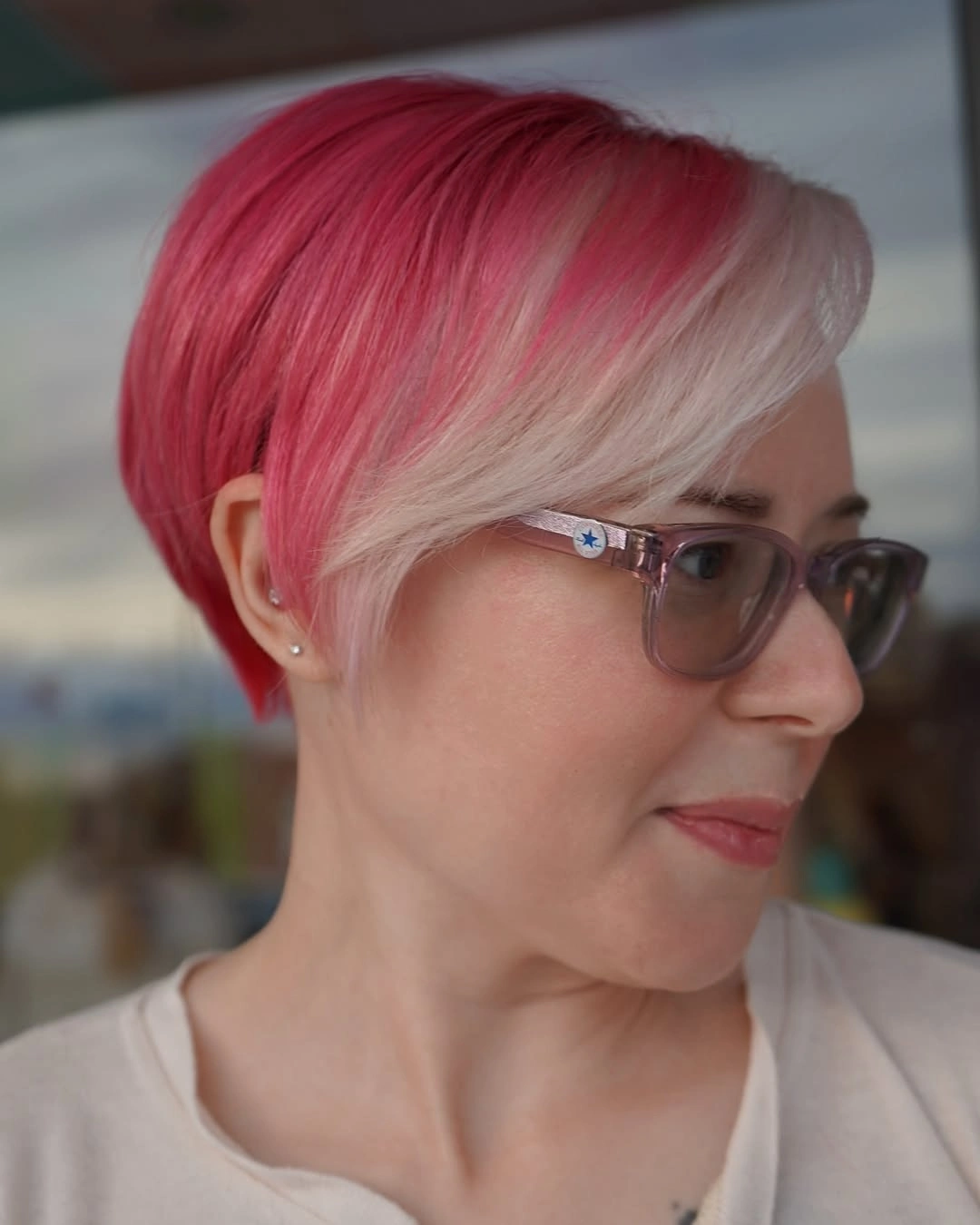
Photo via Instagram
Color creates a second layer of asymmetry. Most of the cropped area is a saturated pink, while the sweeping front becomes much paler, reading as a broad light block against the stronger color behind it. Because the tonal shift follows the change in length, the front section stands out through both shape and color rather than through either feature alone.
Among Christmas hairstyles for short hair, this image offers a clear alternative to the long waves and gathered shapes elsewhere in the collection. Both short hair and side-swept bangs are directly visible here, but the reduced length does not establish anything about ease, upkeep, or practicality.
Chestnut Layers With Full Rounded Movement
A centered part establishes a clear axis at the crown, but the long front layers quickly move away from that line and open outward on both sides of the face. Their different lengths keep the front from forming one heavy curtain, creating visible steps that direct attention from the cheek area toward the longer chestnut-brown sections below.
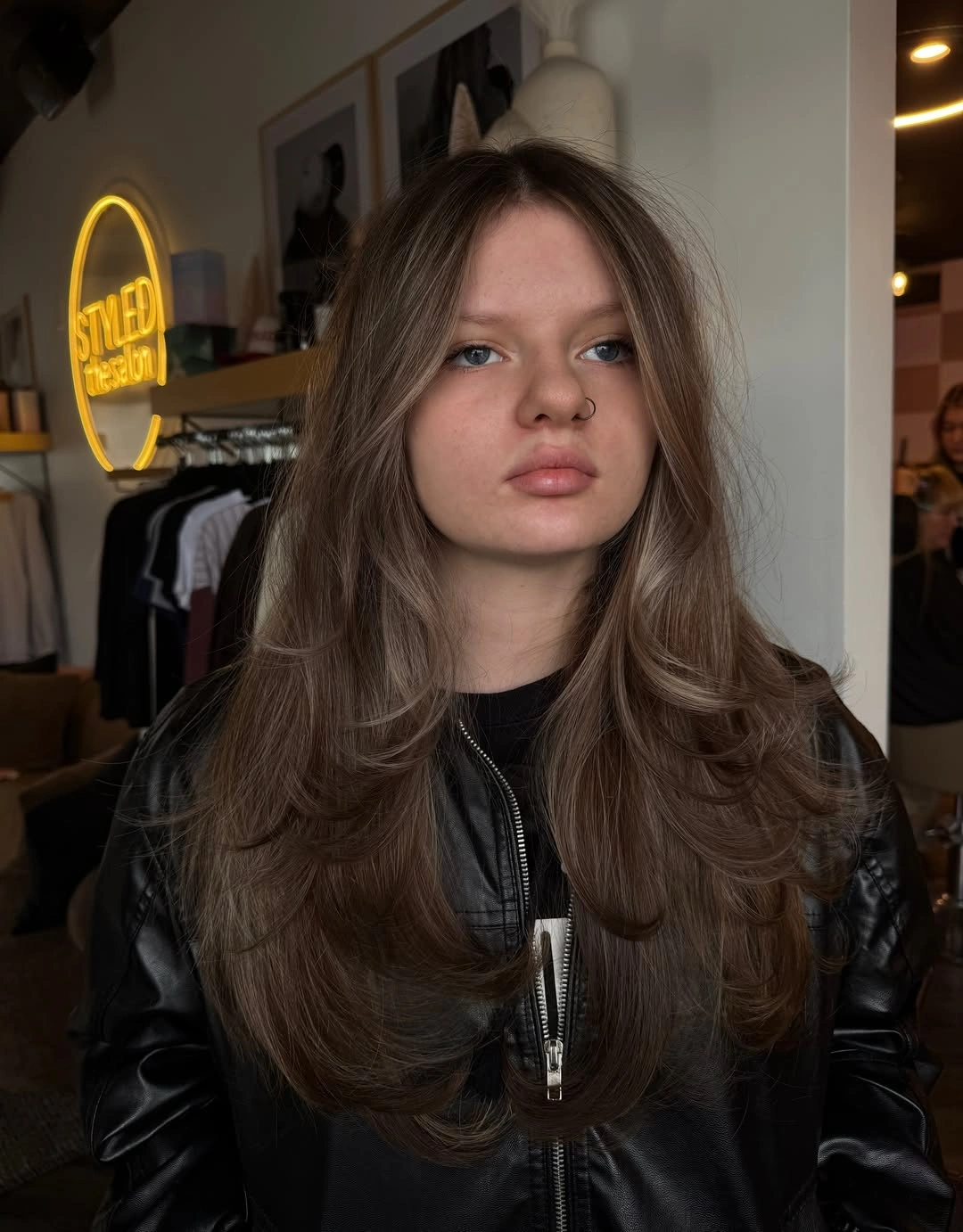
Photo via Instagram
Farther down, several layers turn into broad rounded sections that overlap through the lower half of the hair. The repeated outward and inward curves expand the silhouette without relying on strong streaks or dramatic color changes, so fullness comes mainly from the arrangement of the lengths. The chestnut-brown tone lets those layered contours remain the dominant detail.
This long hair look puts cut-and-shape contrast ahead of color contrast, making the changing lengths especially important to what the eye notices. The visible layers support describing fullness and rounded movement, but not a particular cutting process or blow-dry method.
Near-Platinum Length With Open Soft Waves
Near-platinum color gives this very long hair an unusually light visual field, yet the surface is not completely flat in tone. Slightly warmer and cooler-looking areas appear as the light changes across different sections, creating subtle separation within the pale mass. Those small shifts matter more here because there are no saturated streaks or dark panels competing for attention.
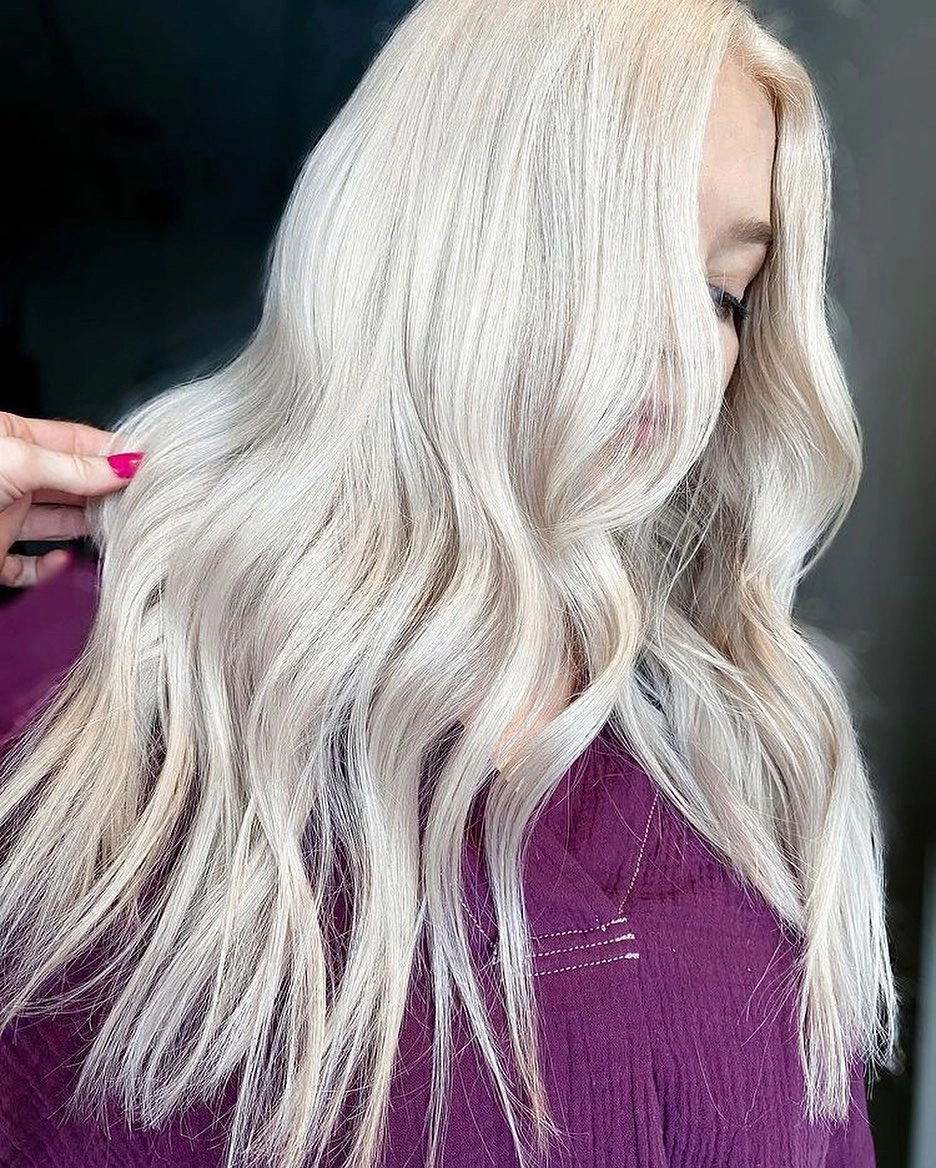
Photo via Instagram
The center part gives the upper section a straightforward division, while the waves below are spaced widely and remain relatively open. Instead of compressing the length into many tight turns, the bends leave long stretches visible between changes in direction. That spacing preserves the sense of uninterrupted length and keeps the silhouette elongated even where it moves.
The appeal of this long hair example comes from visible lightness, scale, and widely spaced movement rather than an accessory or high-contrast accent. Its very pale color can suggest different visual associations, but the photograph itself does not establish a seasonal setting or occasion.
Deep Brown Waves With Balanced Symmetry
A centered part sets up a notably symmetrical front view, with the long deep-brown sections descending at similar angles on both sides before opening into large waves. The first curves begin at comparable heights, so the eye reads a repeated left-right rhythm rather than one dominant side. That balance gives the long hair a composed shape without requiring a strong color contrast.
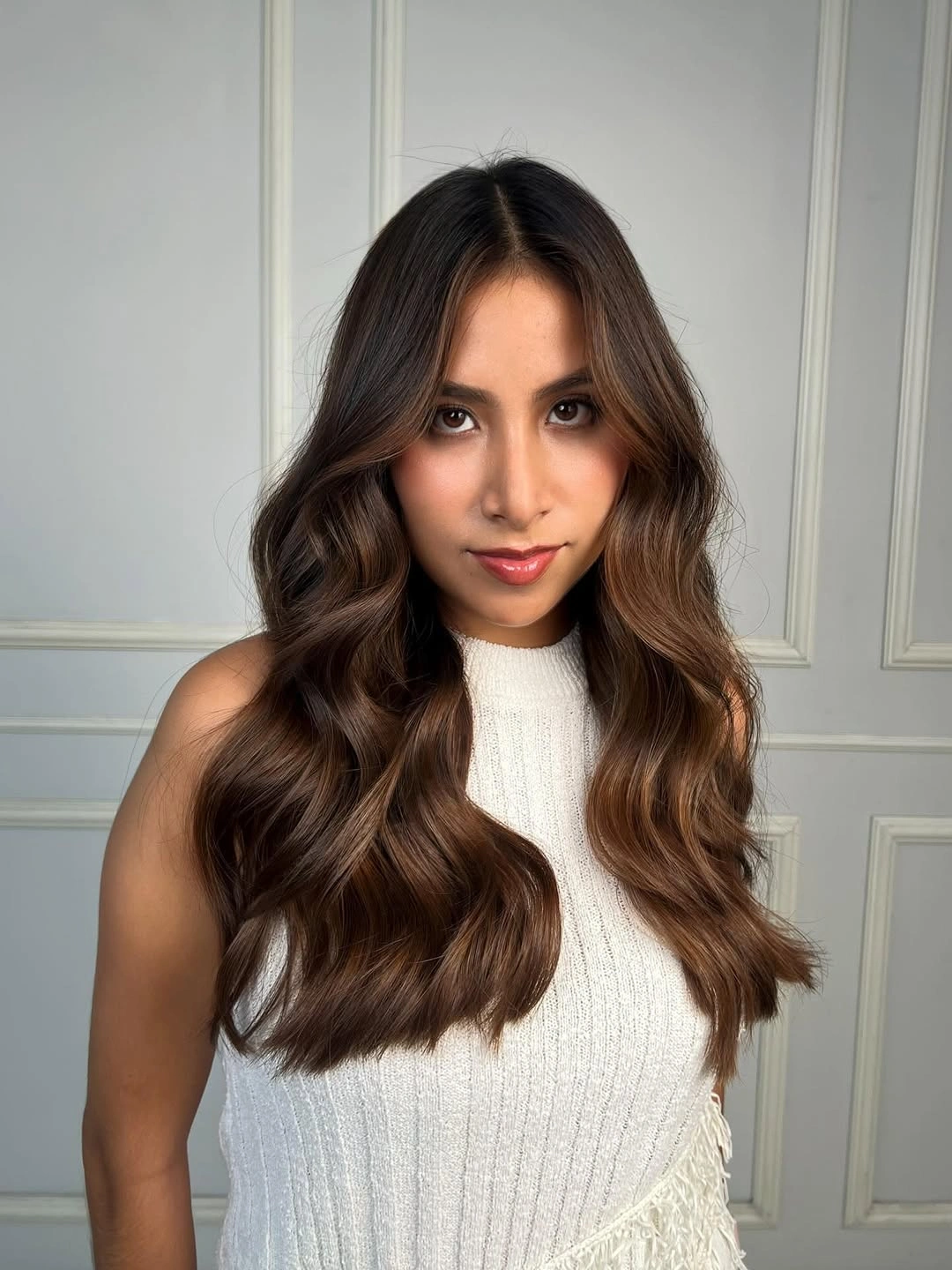
Photo via Instagram
Because the brown tone stays relatively consistent, changes in light become one of the clearest ways to see the wave pattern. Brighter reflections sit along the outward curves while deeper areas collect between them, defining each rise and dip across the surface. The result emphasizes broad, regular movement instead of individual streaks, accessories, or sharply separated layers.
Repetition is what gives this silhouette its polished visual character, with similar curves carrying the eye down both sides of the long hair. Nothing in the photograph establishes a workplace or specific event, so the description can remain centered on symmetry, color, and wave scale.
Shoulder-Length Brown Hair With Loose Movement
The shoulder-area length changes the proportion of the waves compared with the much longer silhouettes elsewhere in the collection. Broad bends push outward at the sides, giving the hair lateral width without sending the shape far down the torso. That makes the outline feel compact but still full, with the movement distributed across a relatively moderate vertical span.
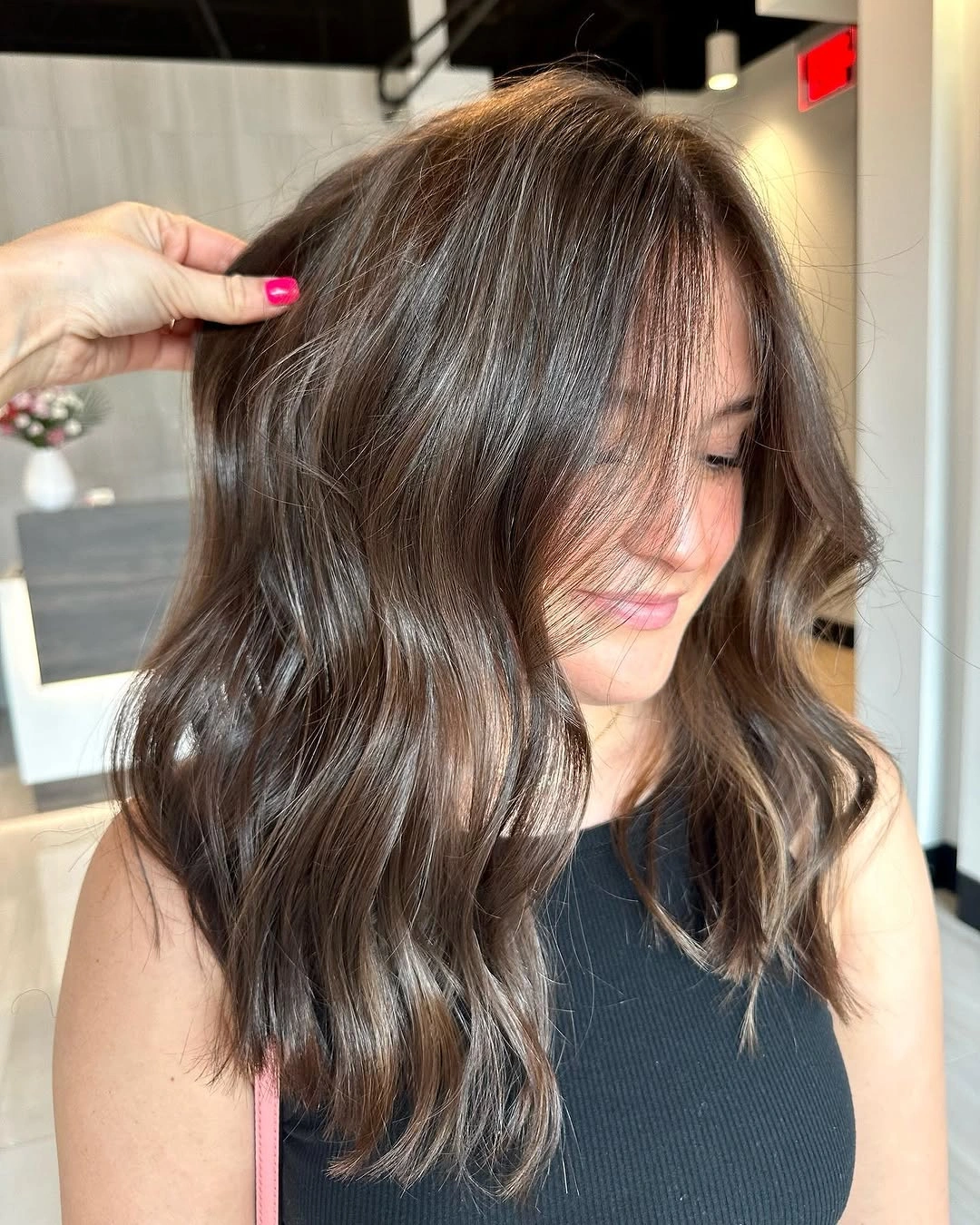
Photo via Instagram
Long face-framing sections fall forward around the cheek and jaw area, while the rest of the chocolate-brown hair breaks into looser curves around the shoulders. Subtle lighter reflections appear where those bends catch the light, adding tonal variation without forming distinct colored streaks. The front pieces remain long enough that they should not be labeled as bangs from this view.
This hairstyle broadens the collection with a medium-length silhouette that relies on proportion and separated movement rather than dramatic color or added decoration. The visible front sections alter the outline around the face, while the shoulder-level waves keep the overall shape from reading like the very long styles around it.
Half-Up Waves With Floral Hair Accent
A half-up half-down structure organizes this hairstyle by drawing the upper side sections back to a centered point while leaving the rest of the hair loose. That gathered area shortens the visual scale of the crown and shifts attention toward the middle back of the head, where a silver-toned floral accessory sits as the clearest focal detail. The accessory does not disappear into the hair because it rests against ash-blonde tones with darker depth around the upper sections.
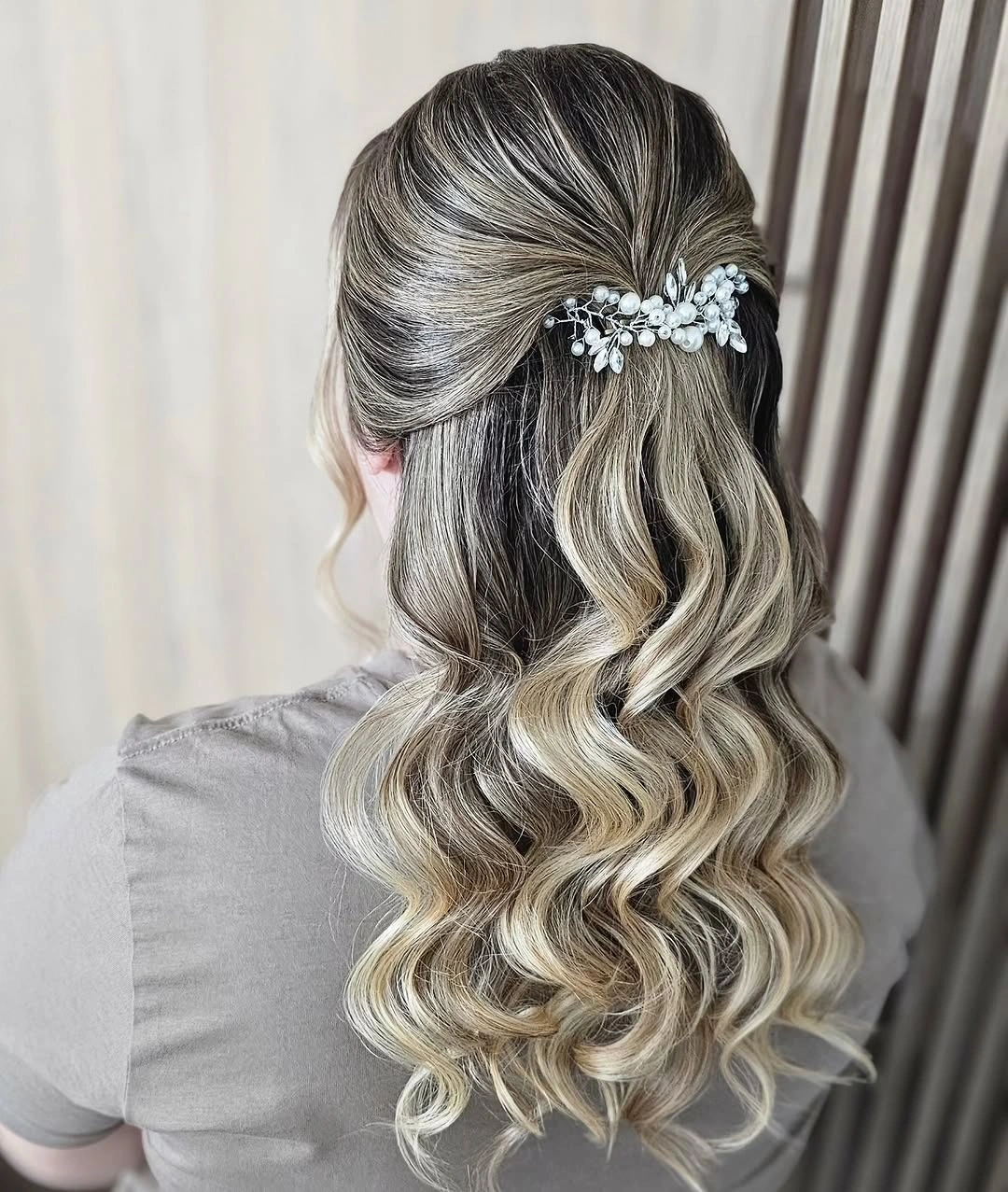
Photo via Instagram
Beneath the gathered top, the long hair falls into more defined waves and curls that create a fuller lower outline than the upper portion. Those lower bends look more compact and repeated than the looser wave patterns seen earlier in the collection, so the hair reads in two distinct zones: controlled and adorned above, more textured and flowing below. The color also contributes to that separation, with lighter lengths making the movement easier to distinguish from the darker depth closer to the crown.
The accessory is an important part of the result, but the hairstyle still depends on the visible relationship between the pulled-back top and the moving lower lengths. This long hair example extends the collection’s half-up half-down range by using a decorative focal point and a more defined lower pattern without needing holiday color.
Sleek Low Bun With Side Sweep
The surface of this updo is notably sleek, with the hair directed into a low bun positioned at the nape rather than spread across the shoulders or back. A side-swept upper section guides the eye across the head before the shape narrows toward the gathered base, creating a strong horizontal flow before it resolves into a compact form. That progression gives the hairstyle a calm, contained silhouette built from smooth direction rather than visible volume.
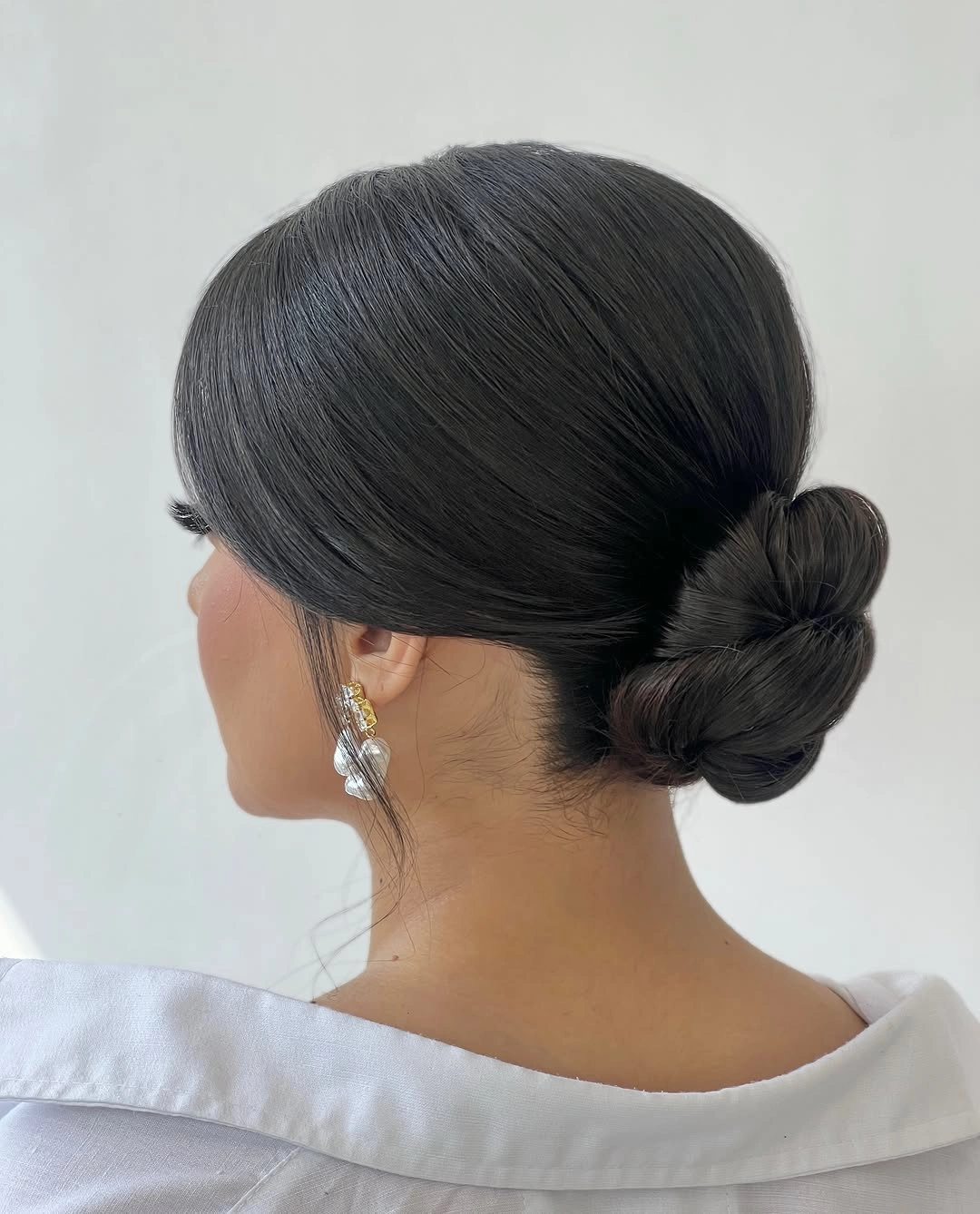
Photo via Instagram
The bun itself appears formed from rounded sections that overlap closely, so the gathered structure looks sculpted without becoming visually bulky. One loose face-framing strand breaks the otherwise contained outline and introduces a softer edge near the front, which keeps the style from reading as completely rigid. Because the dark color remains fairly even throughout, the eye notices the shape of the updo and the placement of each section more than tonal contrast.
This image clearly supports both bun and updo language because the hair is fully gathered into a low, visible structure. Its impact comes from placement, surface smoothness, and controlled construction, not from an accessory or from claims about where the hairstyle might be worn.
High Ponytail With Lifted Crown Curls
Unlike a half-up arrangement, this hairstyle gathers the visible hair into one high ponytail, making elevation the first thing the eye notices. The crown is visibly lifted before the hair is secured, so the top has more height than a flat pulled-back shape would provide. That raised upper section changes the profile of the hairstyle and prepares the eye for the fuller curled length that drops from the ponytail.
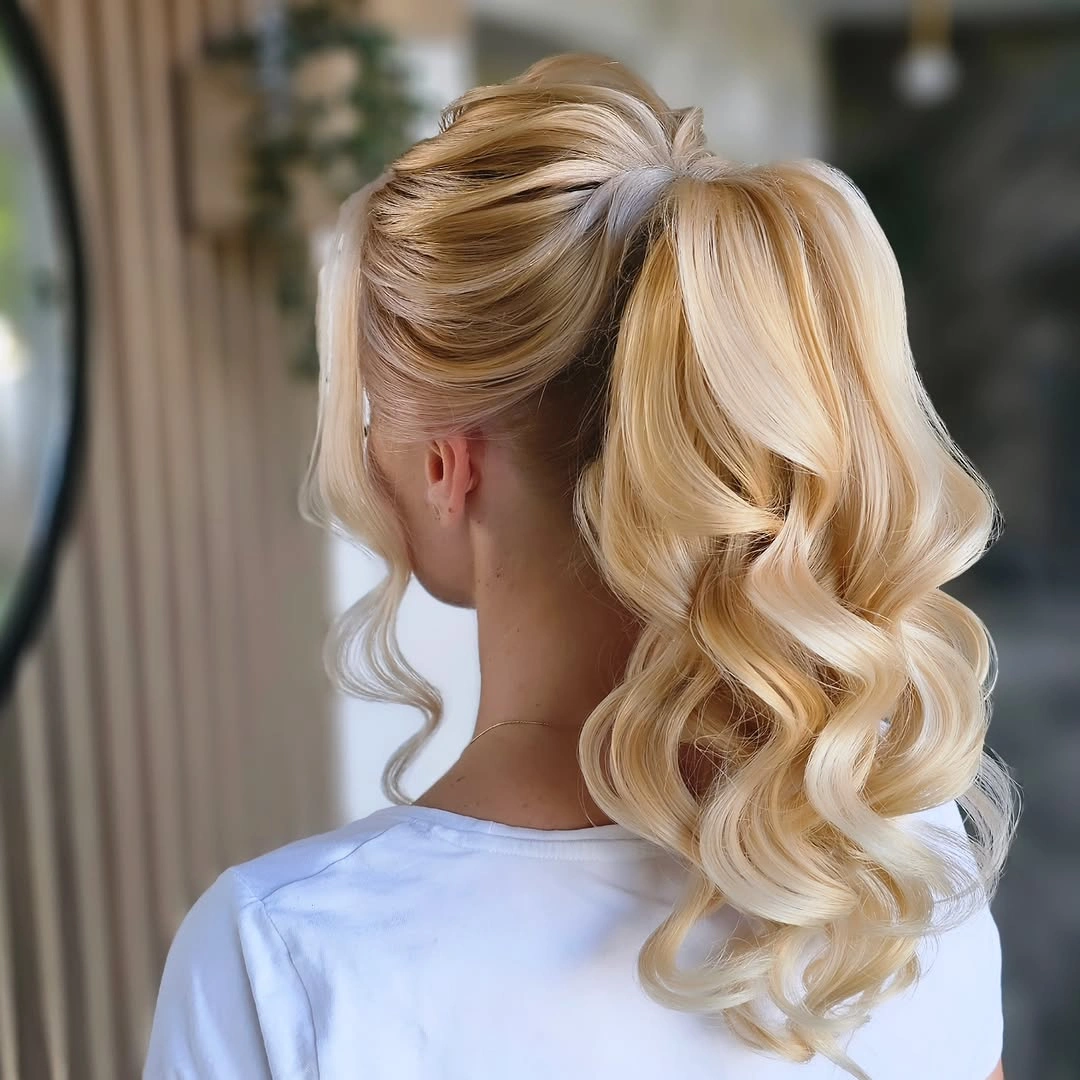
Photo via Instagram
The ponytail itself carries large, smooth curls that give the lower portion generous movement while still keeping all that length anchored at one point. A loose curled strand near the face softens the front edge and echoes the curl pattern behind, linking the front view to the body of the ponytail. Because the blonde color remains consistent across the style, the gathered shape and the contrast between crown height and hanging curls become the main sources of visual interest.
This look should stay identified as a ponytail, not a half-up style, because the visible structure is a single high gathered tail. It closes the collection with a different kind of long hair emphasis, where lift at the crown and concentrated curls in the tail shape the final impression.