Haircut Ideas for Plus-Size Women in 2027 With Shape
Choosing a haircut should not feel like accepting a correction disguised as advice. When you look for haircut ideas for plus-size women in 2027, the most useful starting point is not a rule about what your body needs to balance, hide, or soften; it is a clearer sense of what makes you feel recognizable, comfortable, and ready for the kind of change you actually want.
A good haircut decision leaves room for taste, routine, confidence, and the simple fact that women with the same clothing size may want completely different things from their hair. The goal is not to find one universally flattering answer, but to separate thoughtful guidance from old assumptions, so the choice feels personal rather than prescribed.
Long Brunette Layers With Turned Ends
This long brunette cut keeps the drama of long hair while giving it a readable shape. A side part lifts the top slightly, and the longest lengths fall past the shoulders before turning inward at the ends. The front pieces are long enough to stay connected to the rest of the haircut, so the layers look polished rather than separated into short, obvious steps.
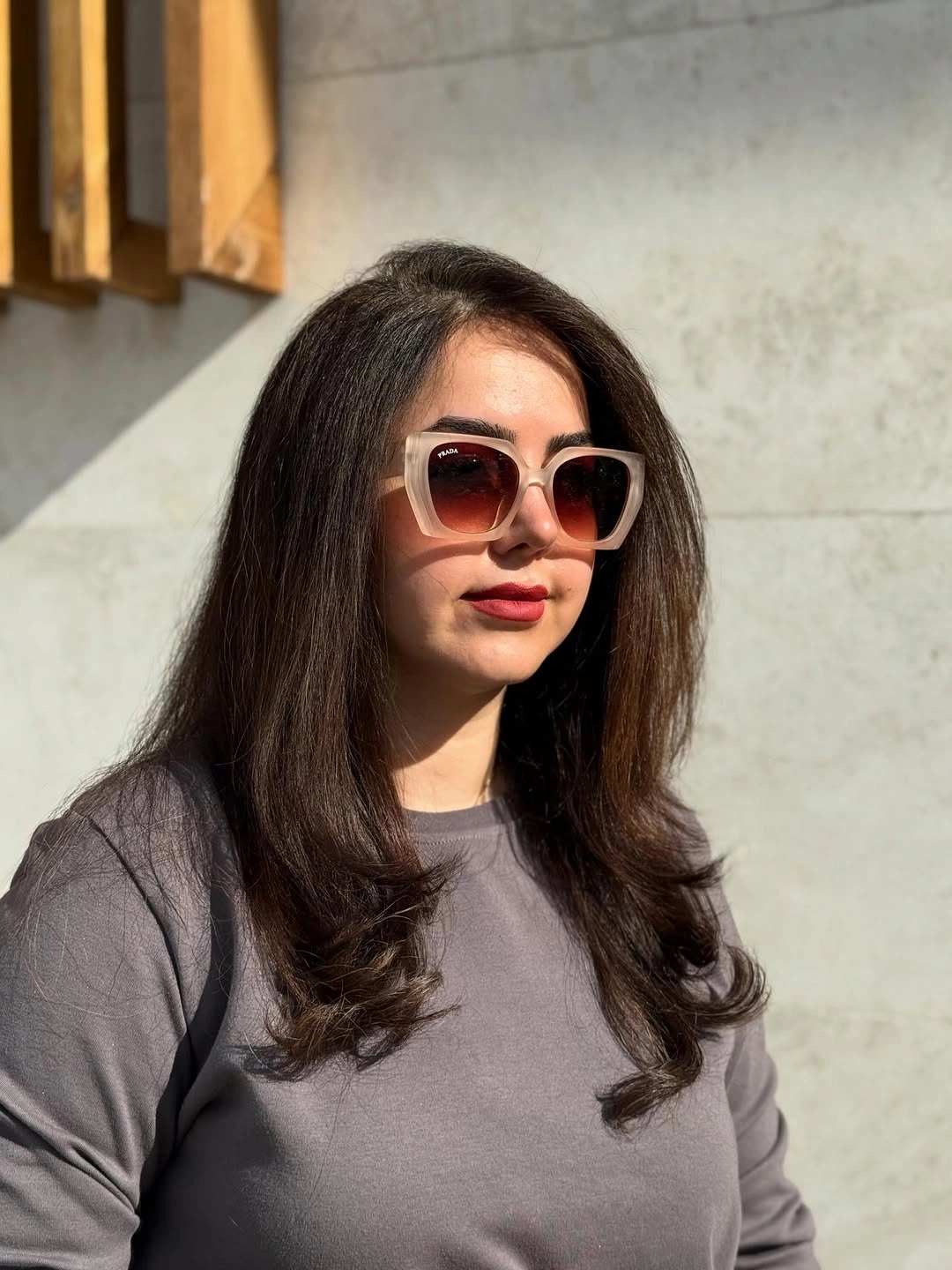
Photo via Instagram
For readers drawn to long hair, this is a useful example because the layering changes the outline without taking away the length. The lower curls collect the ends into soft curves, which keeps the finish from feeling flat even though the overall silhouette remains smooth. Among layered haircut ideas, it is a quieter choice: movement lives mostly around the front and bottom, not all through the crown.
The sunglasses and makeup affect the mood, but the haircut itself is doing the shape work through length and ends. That distinction matters when you want a cut you can recognize even when the styling changes.
Feathered Medium Length With Flipped Ends
This medium length cut sits near the shoulders and uses the perimeter as its main source of movement. From the side and back, the copper-brown hair rounds softly through feathered layers before the ends flip outward. The result is a cut that feels active at the neck and shoulders without needing dramatic height at the crown.
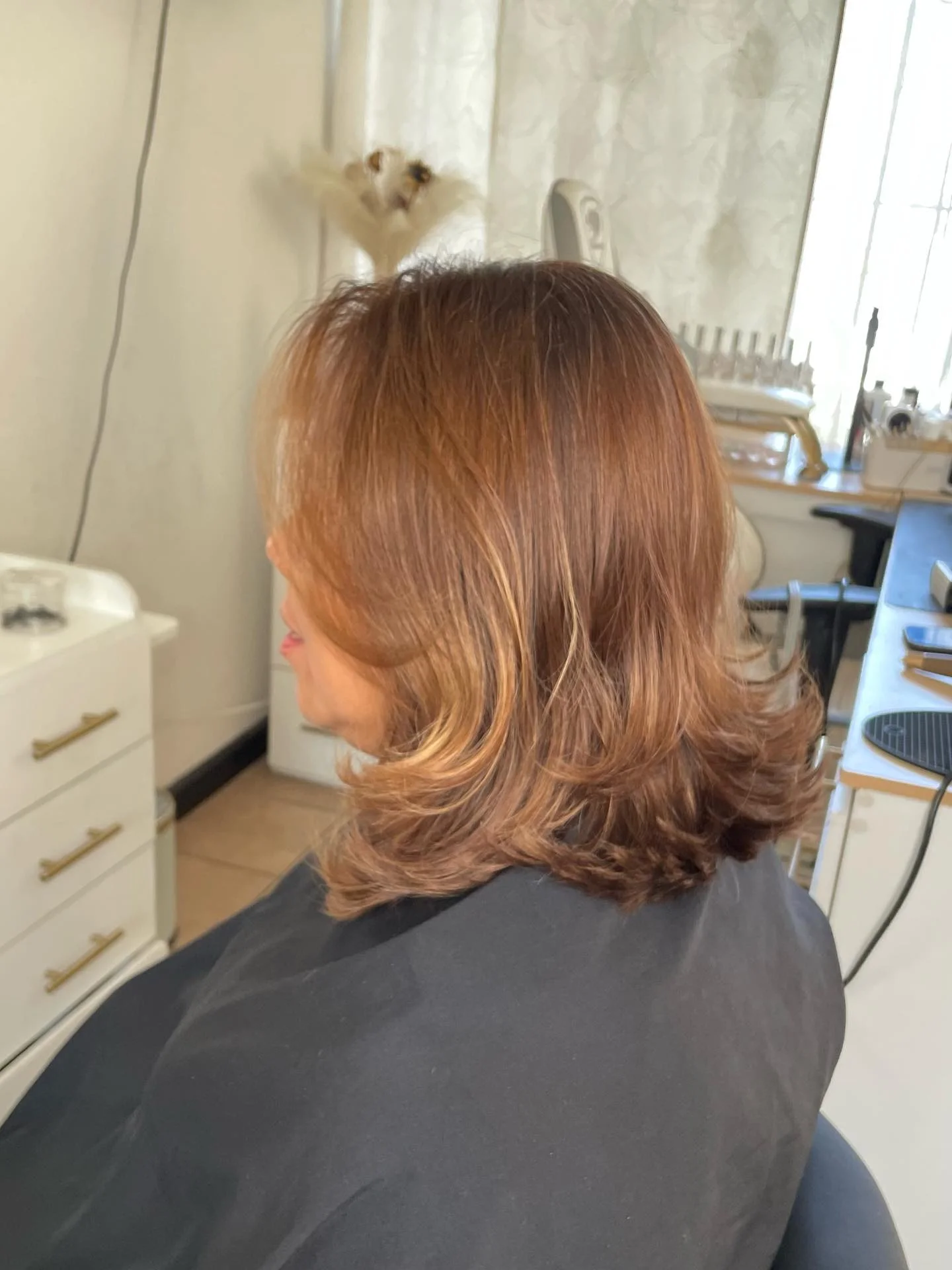
Photo via Instagram
The flipped lower edge is what makes this medium length feel different from a simple shoulder cut. Instead of falling straight down, the ends bend away from the neck and make the outline feel lighter, especially where the layers stack near the lower back of the hair. It is a good reminder that layered hair can be subtle and still change how the whole shape reads.
Because the face is mostly turned away, the haircut stays focused on the back and side silhouette. That makes the shape useful for comparing how much movement you want at the perimeter before thinking about fringe or front pieces.
Smooth Long Hair With Subtle Face Layers
The long light-brown hair here has a smooth, straight finish, but the cut is not just a one-length curtain. Long face-framing layers start near the front and blend into the lower lengths, while the ends curve softly instead of stopping in a hard line. That small amount of shape keeps the hair calm and controlled without erasing movement.
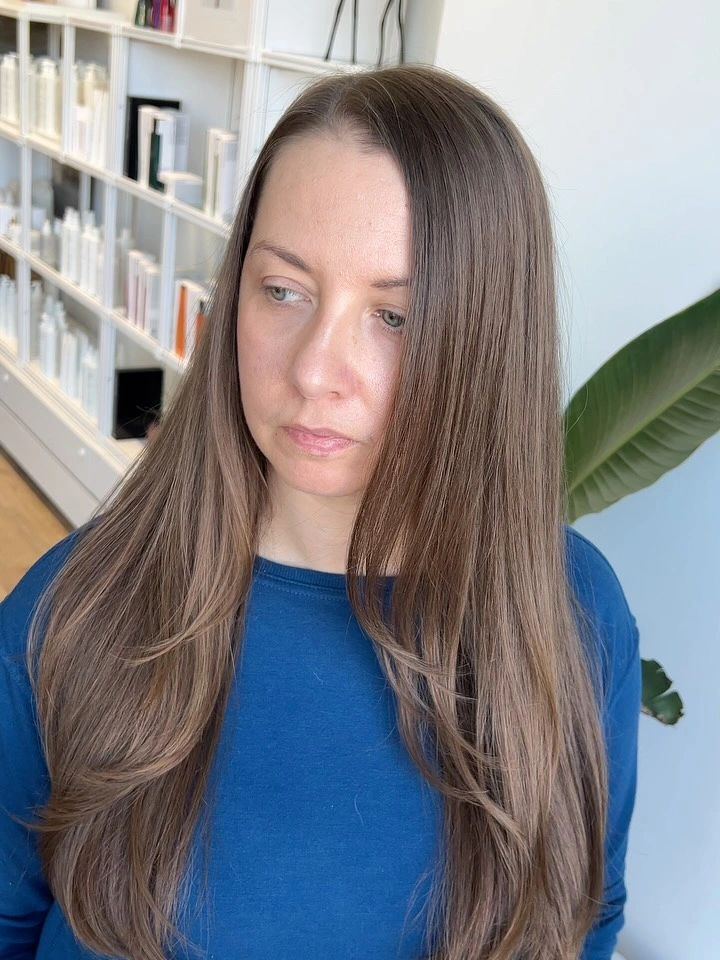
Photo via Instagram
For anyone comparing straight hair options, this cut shows how quiet layering can still matter. The front pieces draw the eye downward in a gentle line, and the long perimeter keeps the overall look simple enough for someone who does not want a heavily feathered style. It is long hair with softness built into the edges rather than volume added everywhere.
The value of this haircut is restraint. It gives the reader a straight, polished option in a group where many cuts rely on curls, flips, or visible waves.
Side-Swept Layers Around Medium Length Hair
The dark medium length cut starts with a side-swept front section that almost works like a soft fringe. Layered pieces curve around the cheek area and continue toward the shoulders, where the ends turn in different directions. Because the movement begins near the front, the haircut has shape before the eye even reaches the perimeter.
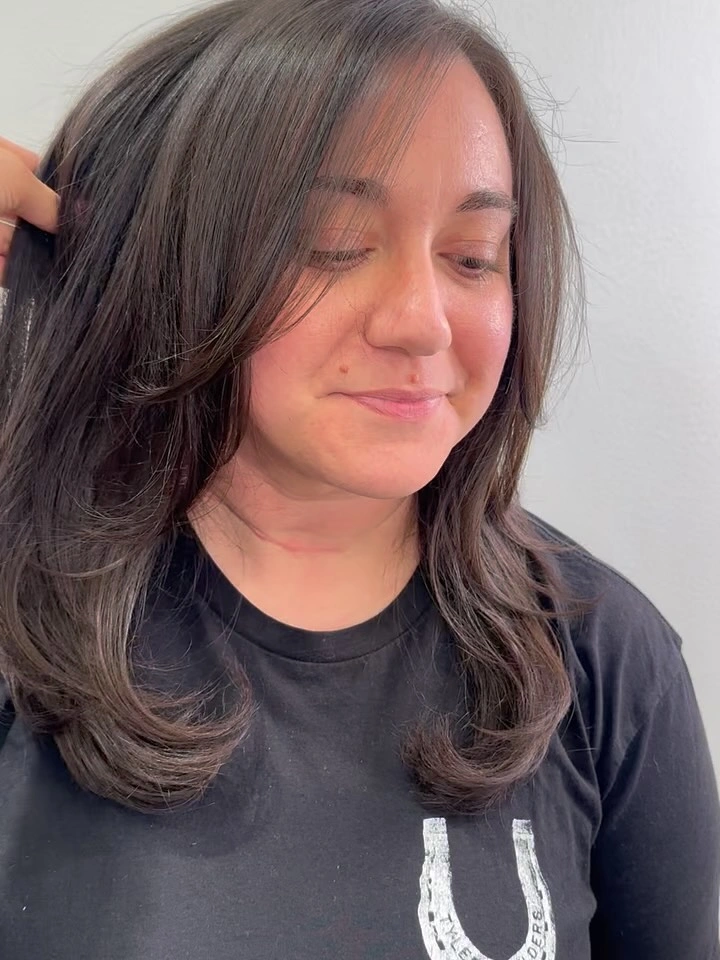
Photo via Instagram
The useful part is the relationship between the front section and the shoulder-length layers. The side-swept piece creates a face-framing effect, while the lower layers keep the cut from feeling heavy at the ends. Nothing here needs to be treated as a rule for a certain face shape; it is simply a way to make medium length hair feel more open and shaped.
This cut has enough softness to feel approachable, but it is still quite structured. The curved ends and front layering make the haircut read as intentional rather than just grown-out length.
Wispy Bangs With Butterfly-Like Shoulder Layers
Full wispy bangs give this shoulder-length brunette cut its clearest first impression. The fringe sits across the forehead with a soft, see-through edge, while the side layers wing away from the face and blend into flipped ends. That combination creates a rounded, butterfly-like shape without pushing the length beyond a practical medium range.
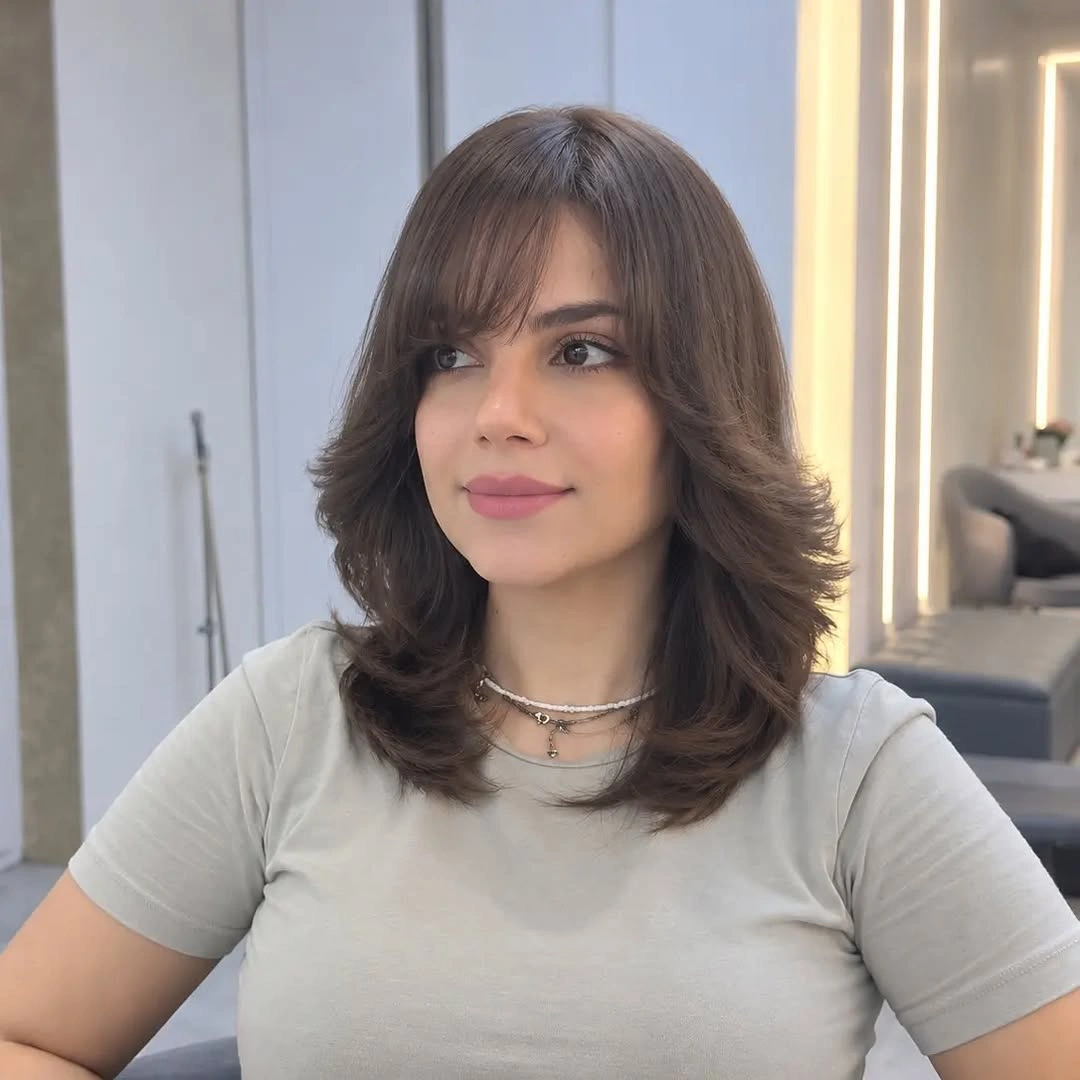
Photo via Instagram
Haircuts with bangs can sometimes be discussed as if the fringe has to solve a problem, but this example works better as a style choice. The bangs bring detail to the top of the cut, and the layered sides keep the medium length from feeling boxed in. The visible flip through the ends adds lift, so the shape feels lively without depending on a drastic chop.
The strongest idea here is balance: fringe, side layers, and perimeter movement all share the work. It is one of the clearest options for someone who wants bangs to feel connected to the whole haircut, not added on afterward.
Rounded Copper Layers With Lifted Ends
The back view makes the perimeter the clearest part of this warm golden-copper cut. The crown stays smooth and close, while the lower length rounds outward near the shoulders before the ends curl under and slightly away. That placement gives the medium layered hair its shape at the bottom, instead of relying on obvious short pieces through the top.
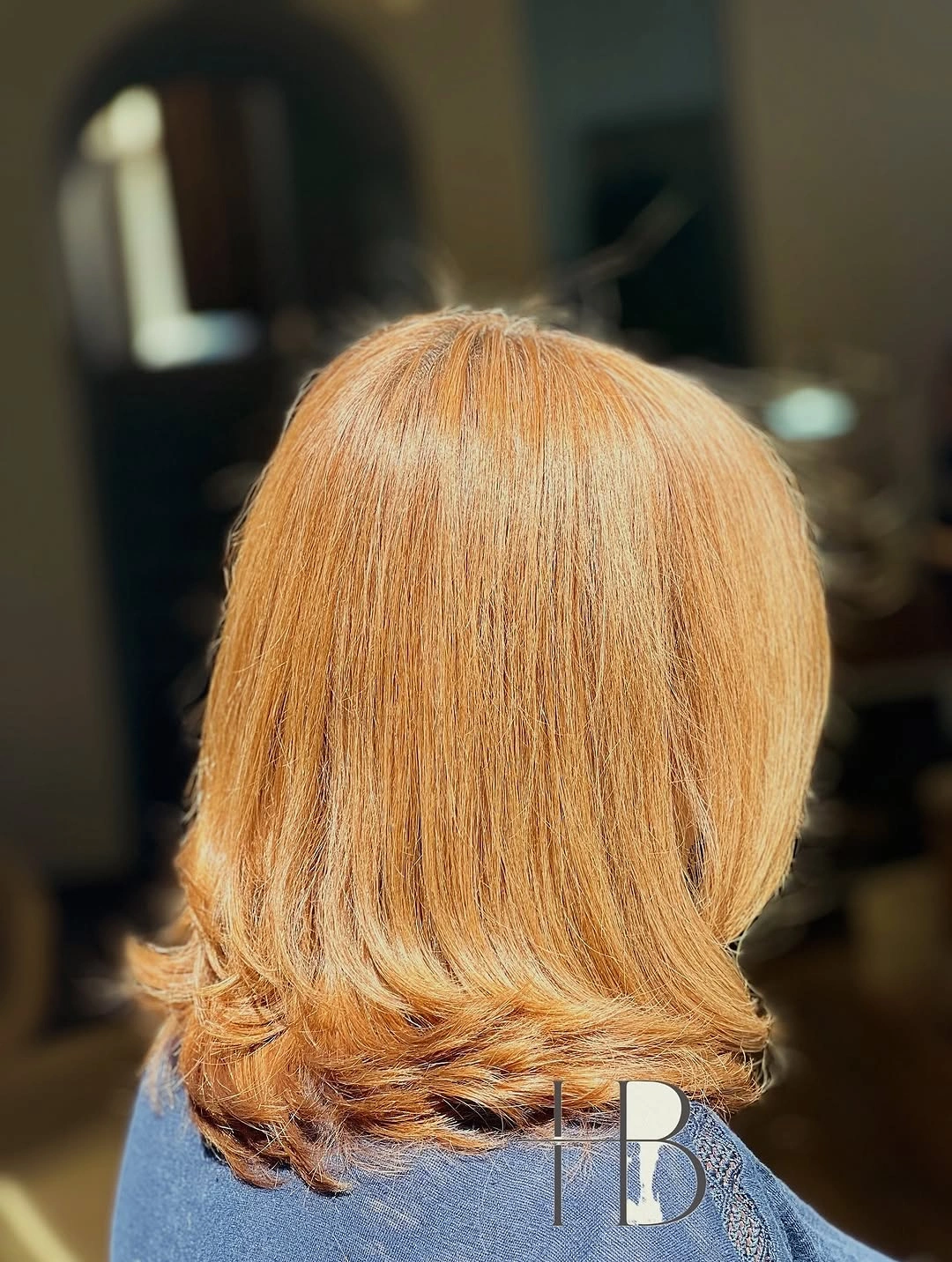
Photo via Instagram
What stands out is how controlled the movement feels. The ends are turned enough to make the outline look finished, but not so much that the cut becomes a dramatic feathered style. For a reader comparing medium cuts, this is a good example of how a soft back shape can add polish while keeping the overall haircut compact and easy to read.
The color catches light, but the cut’s main point is the rounded edge. It is useful for someone who likes a smooth crown and wants most of the visual action to happen near the shoulders.
Long Curly Hair With Rounded Volume
This long curly hair falls past the shoulders with a full, rounded outline that is shaped by the curls themselves. The exact layer map is not completely visible because the curl density covers the perimeter, but the ends vary enough to keep the silhouette from reading as one solid block. The haircut discussion here has to follow the way curls gather, separate, and create volume.
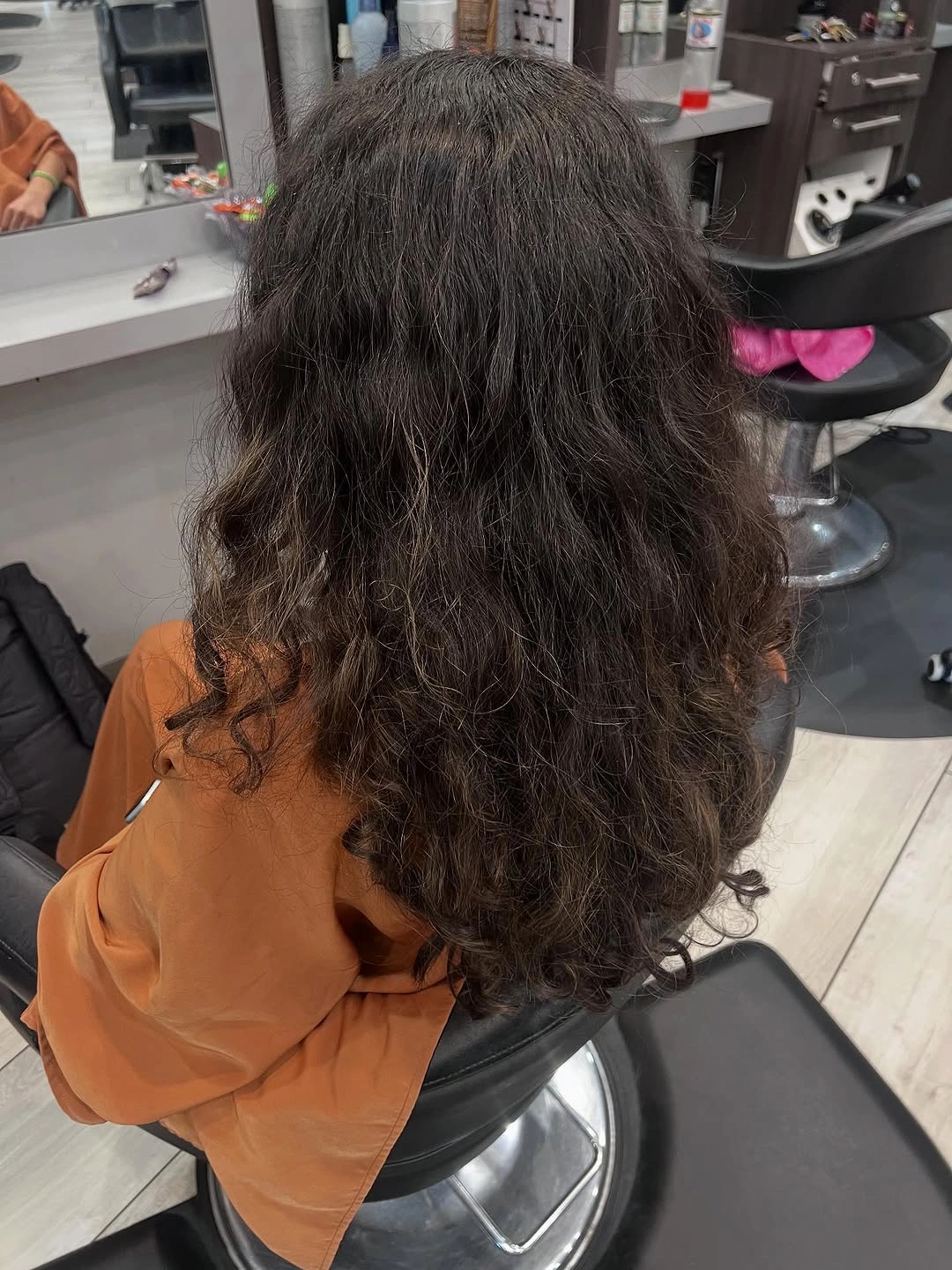
Photo via Instagram
The most practical difference from a straight long cut is that the shape expands outward as well as downward. The curls make their own edge, with some pieces sitting higher and others stretching lower, so the haircut’s balance comes from overall distribution rather than a perfectly even line. That makes this image a strong curly hair reference without forcing it into straight-hair rules.
The visible texture carries much of the personality, so precision should be described carefully. The reader can look at this as a long curly option where fullness and rounded shape matter more than a sharply exposed perimeter.
Short Auburn Bob With A Soft Flip
This short auburn cut is best read as a rounded bob, not a pixie. The crown has a smooth, curved shape, and the perimeter sits around the nape with small pieces flipping out at the lower edge. Because the length is compact, the entire silhouette depends on that rounded back and the way the bottom line lifts away from the neck.
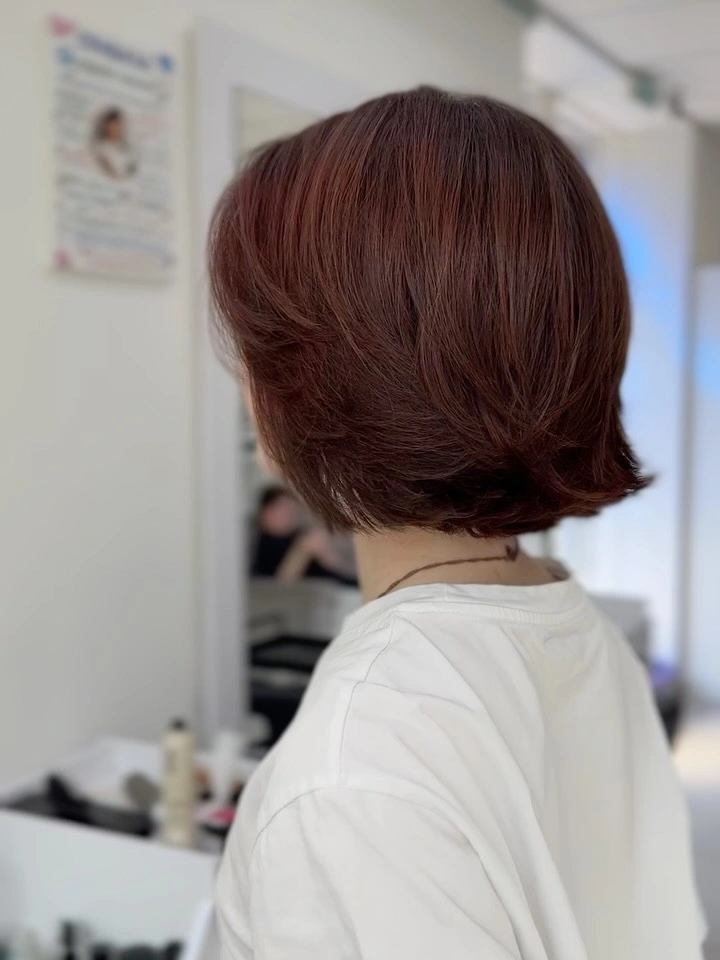
Photo via Instagram
The subtle flip keeps the short hair from looking severe. Instead of ending in a blunt, flat stop, the lower edge turns just enough to make the bob feel light and slightly playful from the side-back view. It is a compact haircut with a clear outline, which makes it useful for readers who want short hair but still want softness in the finish.
The strength of this cut is its contained shape. It shows how a short rounded bob can feel neat without becoming stiff, especially when the edge has a little movement.
Long Wavy Layers With Visible Ribbons
The long brown hair in this panel is shaped by waves that separate through the lower lengths. Lighter ribbons are visible along some of the bends, which helps the eye follow where the curled pieces split and reconnect. The cut reads as long layered hair because the movement does not sit only at the very bottom; it travels through the side and back sections.
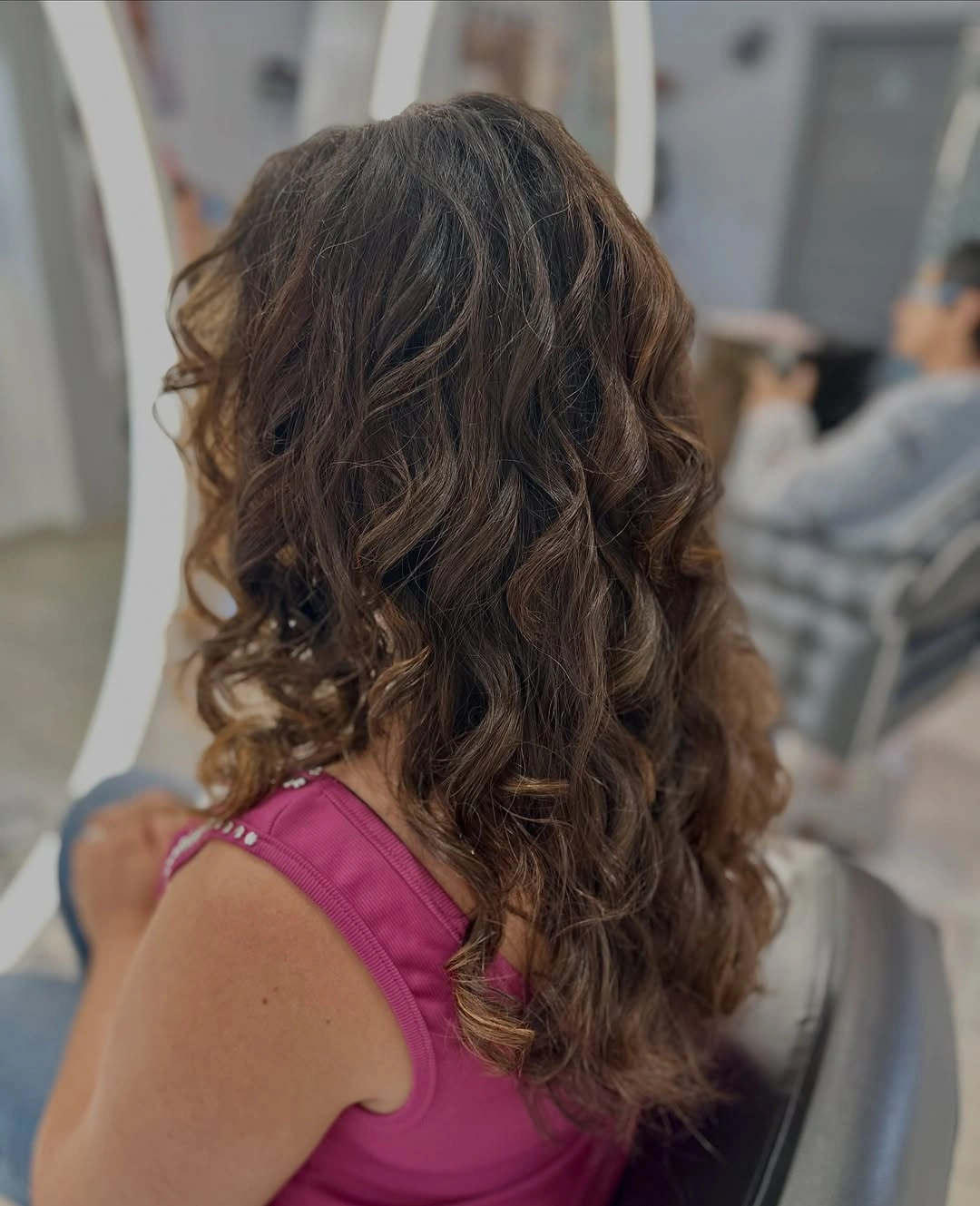
Photo via Instagram
This is a useful wavy layered hair example because the curl pattern reveals how the length has room to move. The ends do not form one flat curtain, and the waves create pockets of shadow and light through the lower half. The lighter pieces should not be treated as proof of a specific color technique, but they do make the layered bends easier to see.
The section’s main value is separation. It shows how long hair can keep its length while looking more dimensional from the side and back.
Full Long Layers With Rounded Ends
This dark long haircut is shown from the back, where the overall shape looks full and rounded. The upper length falls in a smooth curtain, while the lower section breaks into layered curves and curled-under ends. The result is long layered hair that keeps a substantial back view instead of letting every layer pull the outline apart.
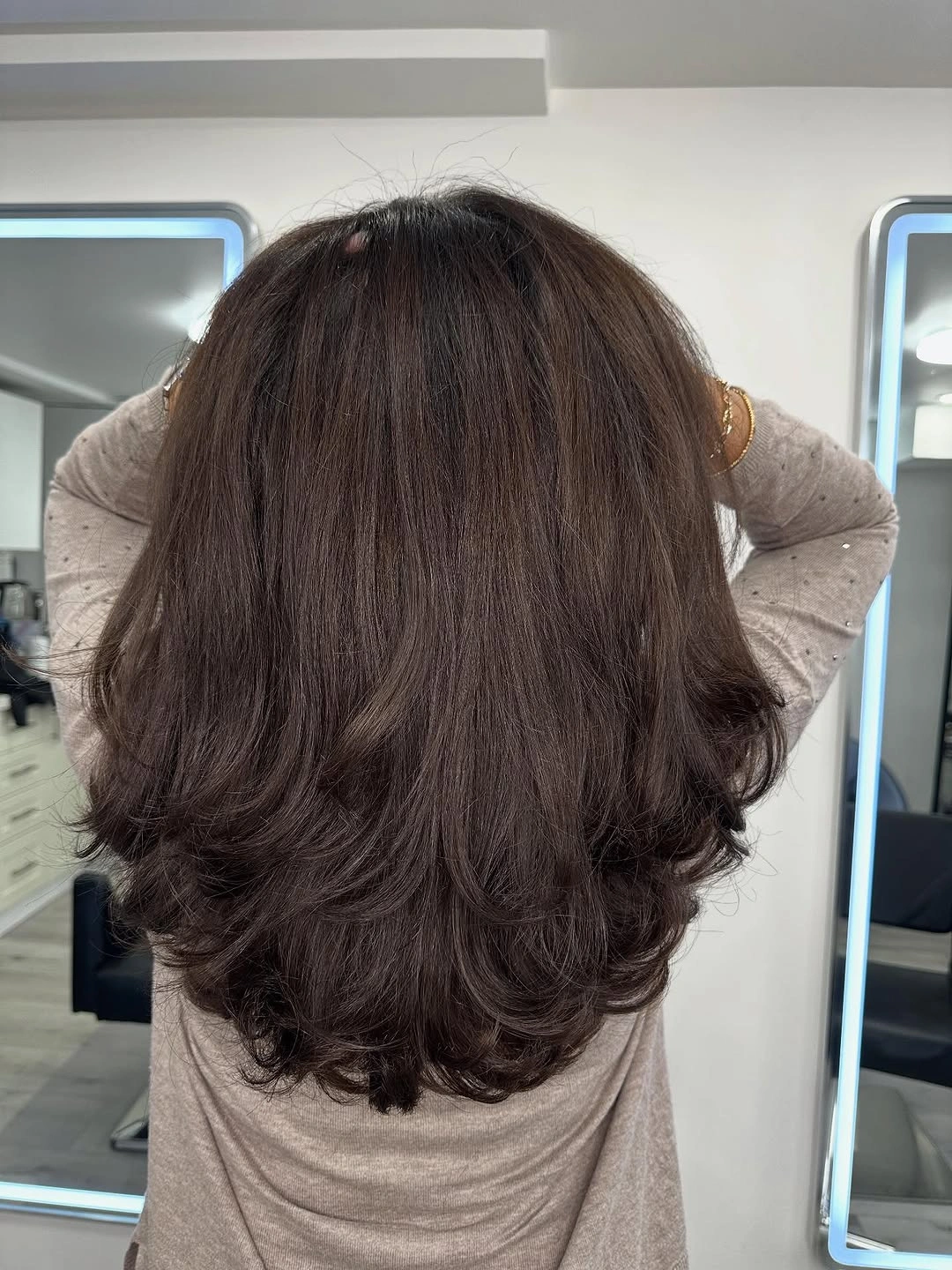
Photo via Instagram
The movement is concentrated near the bottom, which gives the haircut a soft finish without making the crown look busy. Curled-under ends collect the perimeter into a rounded shape, and the interior pieces add motion where the length begins to bend. It is important to describe the visible fullness as a styling and silhouette effect, not as a claim about the person’s actual hair density.
This cut works because the lower layers support the long shape rather than competing with it. It gives the reader a strong back-view reference for long hair with movement placed mostly below the shoulders.
Straight Brown Length With A Clean Edge
This straight brown haircut is quiet in the best way: the back view lets the clean lower edge become the decision. The surface falls smoothly from the crown, and the shoulder-to-upper-back length finishes in a softly curved line rather than a sharply angled shape. With little visible layering, the cut depends on control, evenness, and a perimeter that looks intentional.
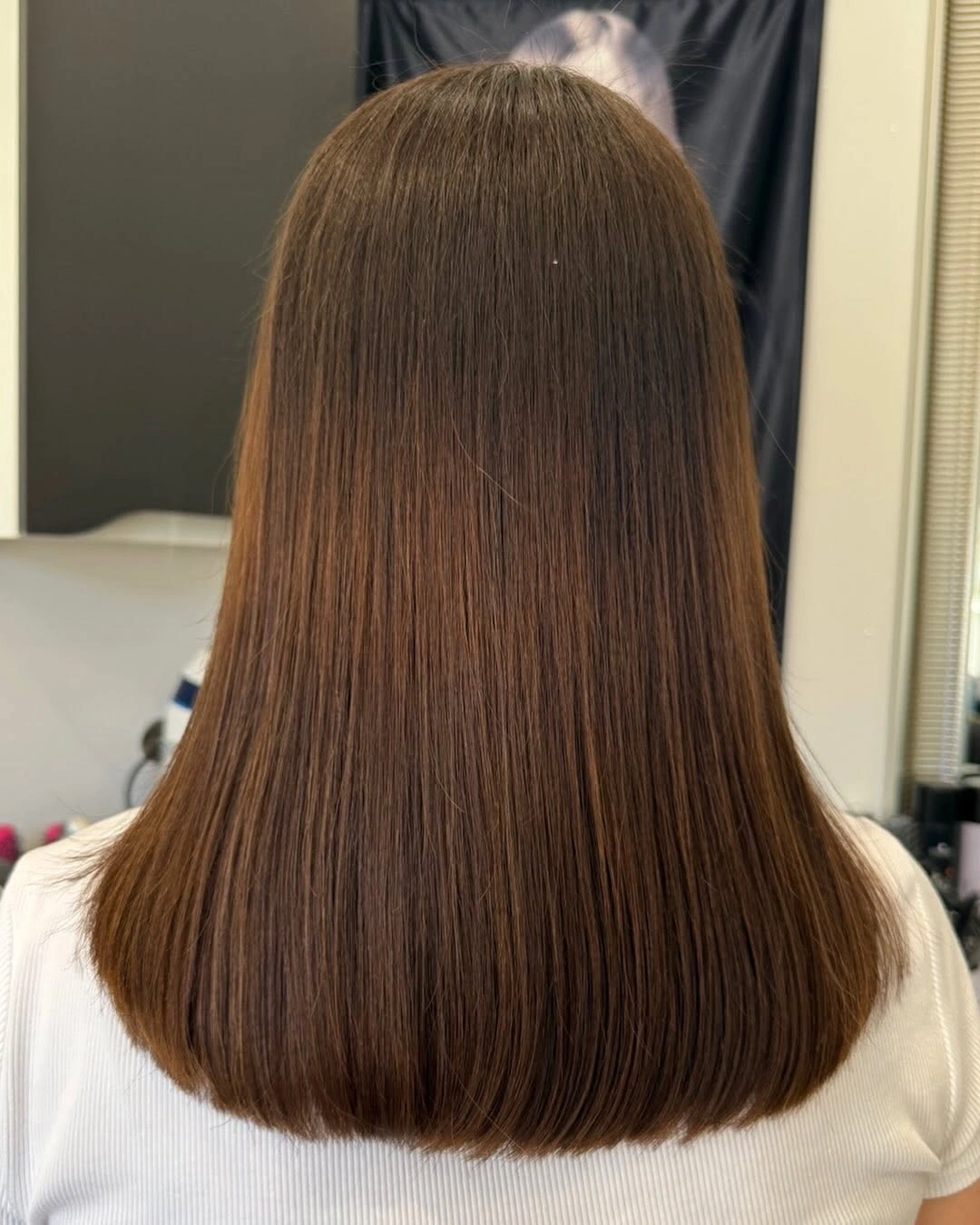
Photo via Instagram
The medium length matters here because it gives the straight hair enough drop to feel elegant without turning the section into another long-layer story. The ends sit close together and curve slightly, so the haircut reads as tidy rather than severe. For a reader who likes movement in other styles but wants one calmer option, this kind of line offers structure without visible feathering.
The point is not that every straight cut has to be blunt. It is that a clean edge can be its own design choice when the finish makes the line easy to see.
Close-Nape Bob With Smooth Rounded Shape
This short dark bob is built around the back of the head and the close nape. The rounded volume sits above a curved lower edge that exposes the neck, giving the cut a sculpted shape from the rear view. Unlike a flipped bob, this one turns inward and stays compact, so the precision comes from the smooth tuck rather than from outward movement.
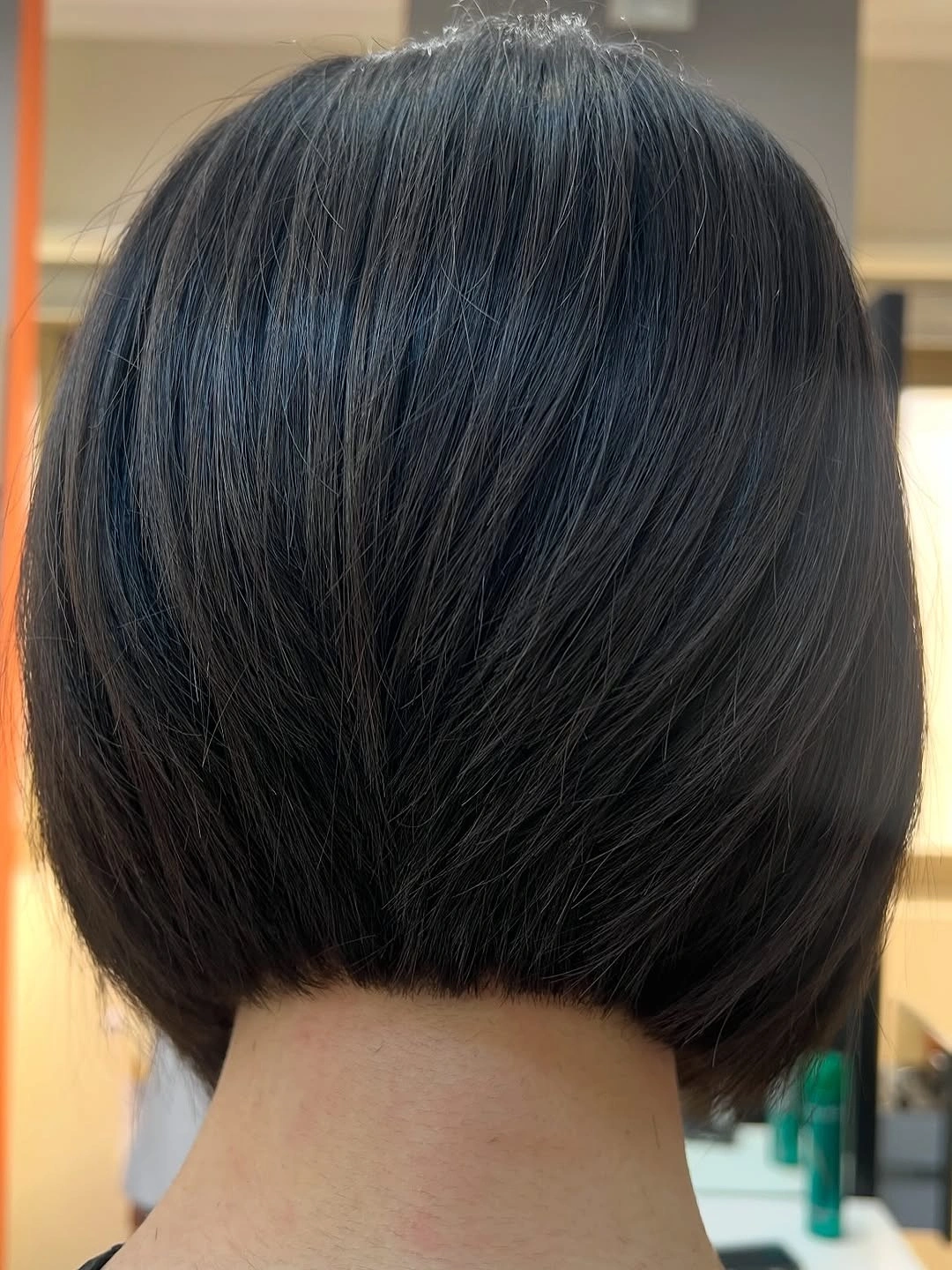
Photo via Instagram
The modern short bob feeling comes from how cleanly the shape is contained. The hair follows a rounded arc, then narrows neatly at the nape, which makes the cut look deliberate even without a visible front view. For readers considering short hair, this panel shows how much personality can come from the back perimeter alone.
It should not be stretched into a pixie label, because the visible shape is clearly bob-like. The close nape is the strongest detail, and it gives the cut its crispest line.
Golden Long Layers With Curtain Movement
The long golden-blonde hair keeps its length, but the front pieces make the shape feel open and sweeping. A center part sends the face-framing sections down in a curtain-like direction, and the larger curled ends gather the lower lengths into soft bends. The result is long hair with visible styling drama, yet the haircut still reads through the placement of the front layers.
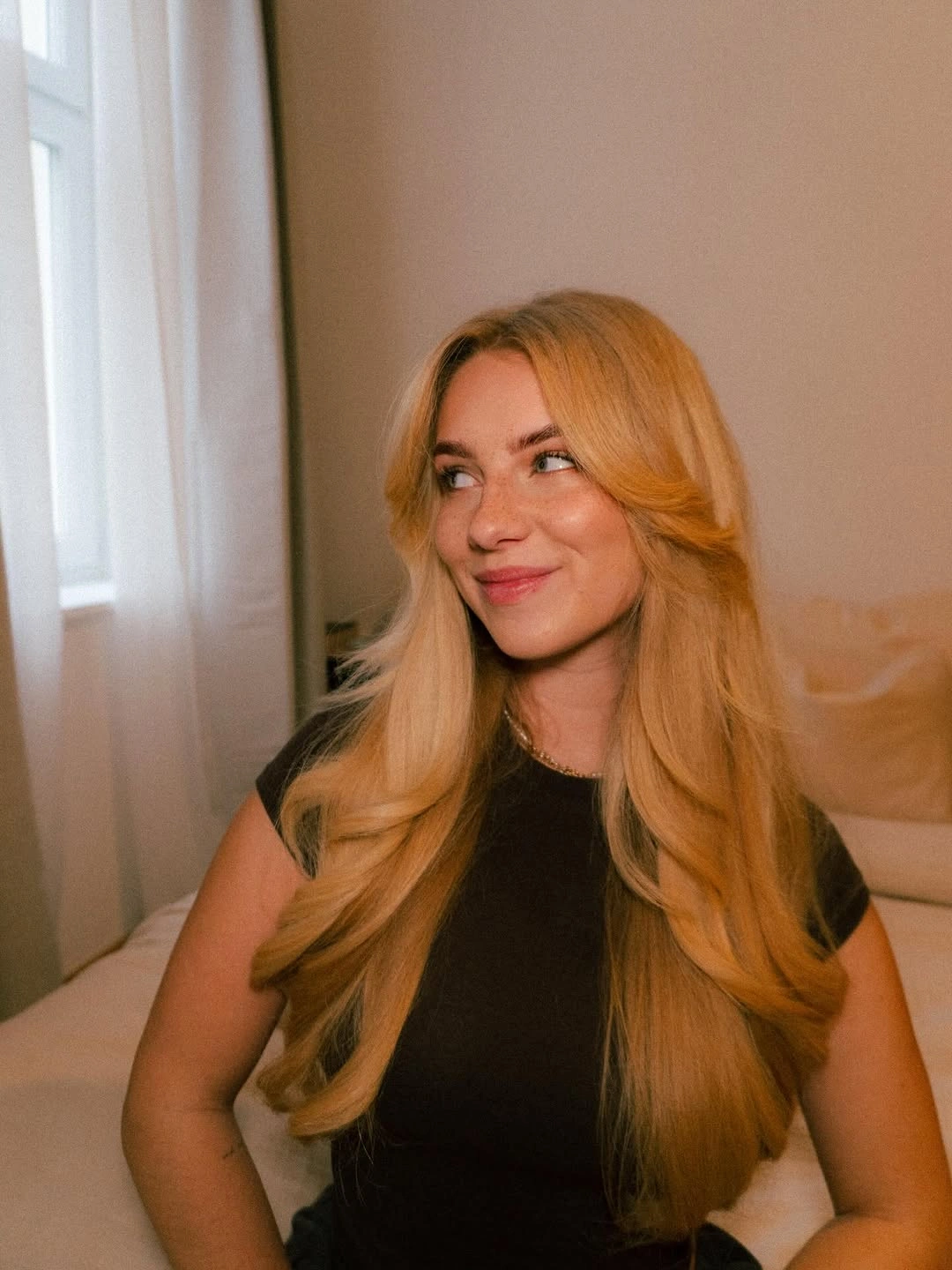
Photo via Instagram
The useful detail is how the front and bottom seem to answer each other. The pieces near the face move away first, then the ends curl into larger curves over the dark top, giving the long layers a finished rhythm. It is fair to call the shape butterfly-style in feeling because of the winged front movement, as long as the wording stays tied to what is visible.
This is a more glamorous long-layer option than the straighter examples. Its softness comes from scale: large face-framing pieces, long length, and curled ends all working in the same direction.
Dark-Rooted Blonde Length With Layered Waves
From the back, this long blonde hair uses loose waves to show where the lower layers begin to move. The darker root area and brighter lengths create visible contrast, but the haircut story is still the wavy shape through the bottom half. The ends separate into soft points and curves, keeping the long perimeter from looking like one solid sheet.
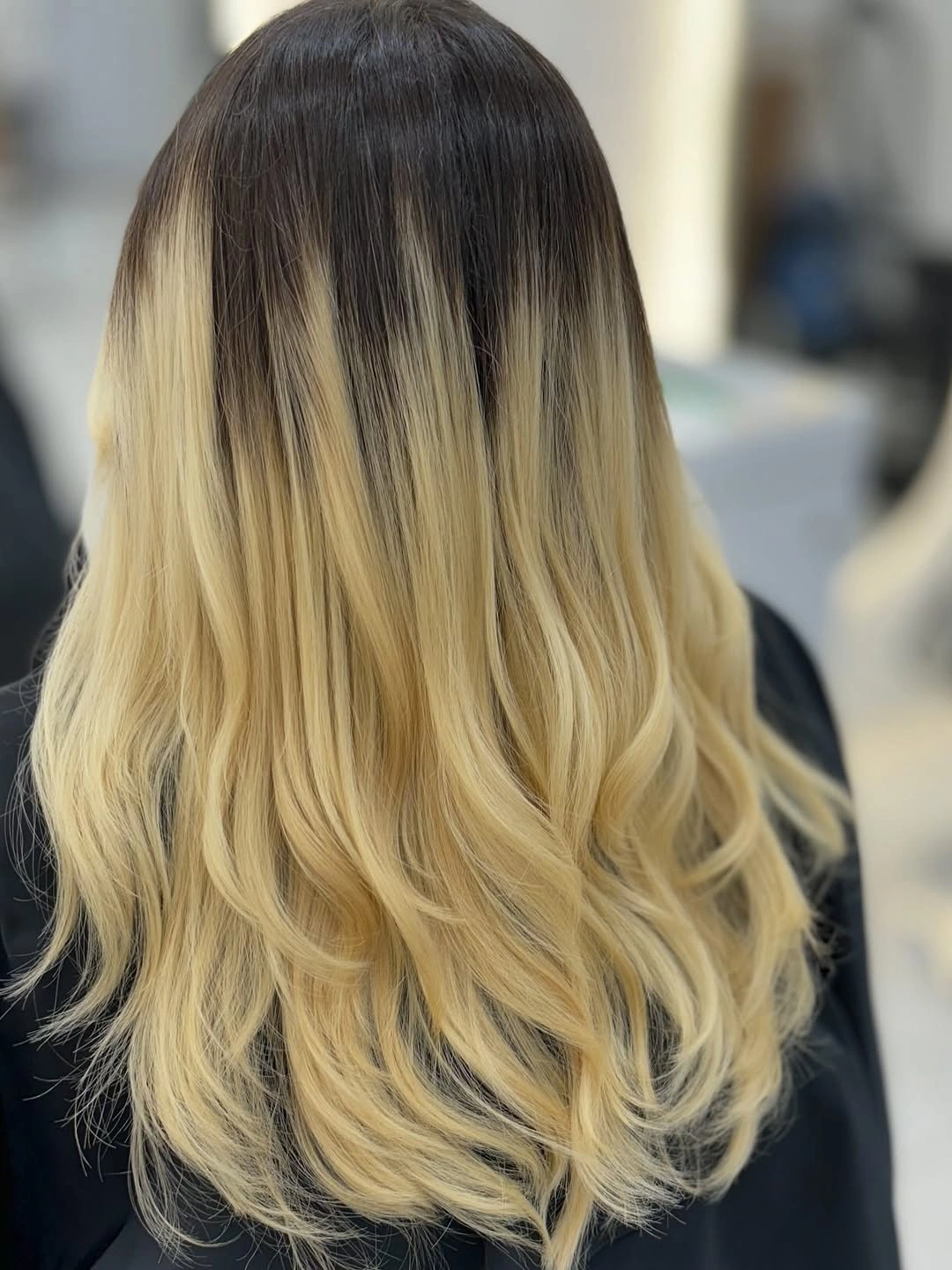
Photo via Instagram
The root-to-blonde contrast helps the eye follow the fall of the hair, especially where the waves bend and overlap. It should not be turned into a claim about a specific coloring process, because the visible result is enough: darker depth above, bright movement below. As a long hair idea, the cut feels lightest through the lower lengths, where the layered waves open up.
This section adds a back-view version of long layered waves without depending on a front frame. The shape is relaxed, but the lower movement keeps it from looking unfinished.
Sleek Black Layers With Curved Ends
This long black haircut has a smooth upper section and a more active lower shape, which gives it a strong contrast within one silhouette. The center part lets long face-framing pieces fall forward without becoming bangs, and the bottom layers curve under near the chest. The straight hair finish keeps the lines readable while the ends add movement.
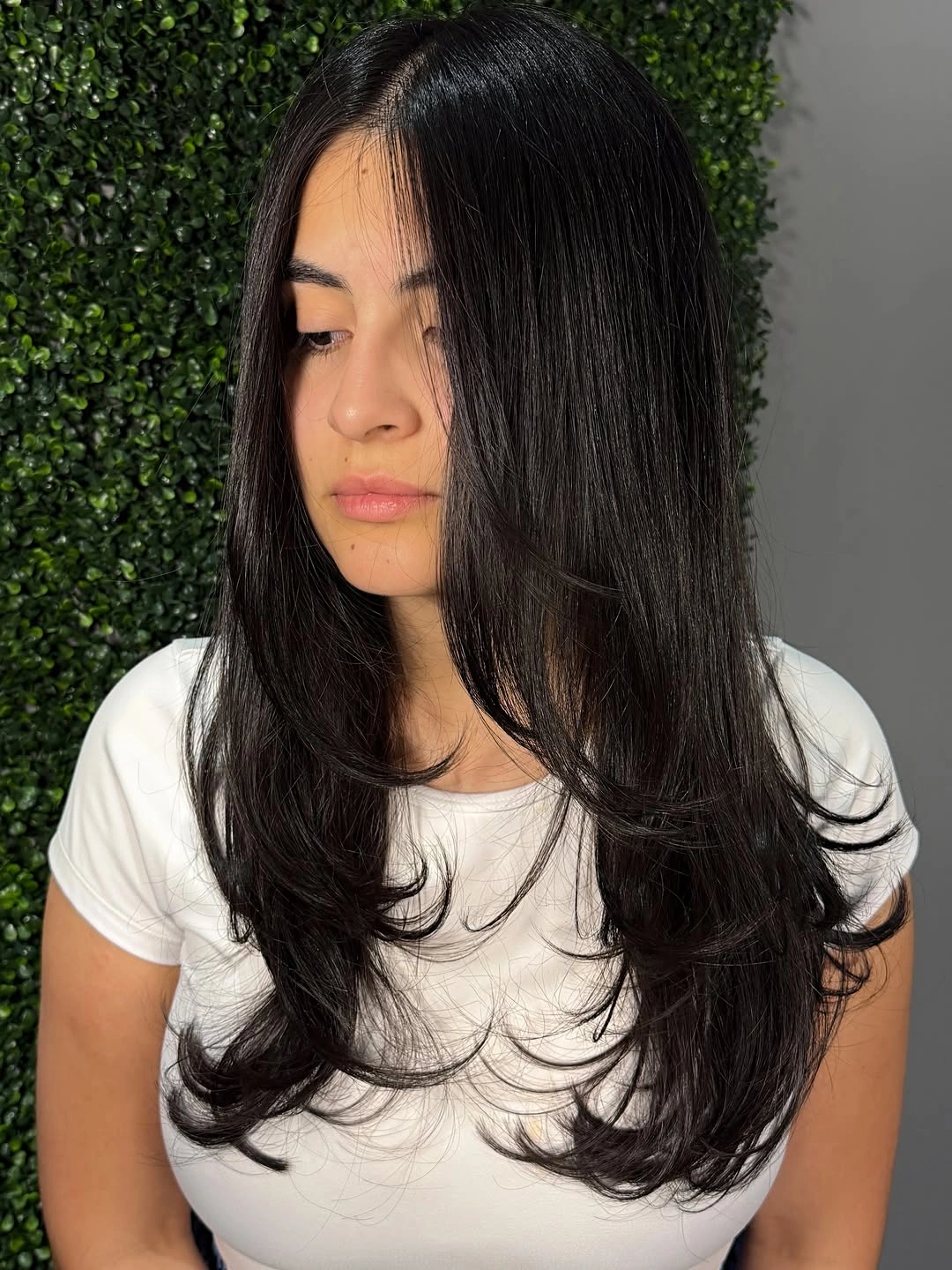
Photo via Instagram
The most interesting part is how the cut stays sleek without becoming flat. The top reads clean and simple, then the lower pieces start to bend, creating a layered shape that feels controlled rather than heavily curled. For readers who like long layered hair but do not want every section to look airy, this is a strong reference for keeping smoothness in the upper length.
The face-framing pieces are long enough to stay connected to the rest of the haircut. That connection gives the cut a graceful flow from part to ends, instead of making the front look separate.
Glossy Dark Layers With Curtain Movement
This long dark haircut has its strongest movement where the front pieces and lower curls meet visually. A center part opens into curtain-like sections that fall away from the face, while the larger curled layers through the ends create a wider, more dramatic shape. The glossy finish makes the dark length read clearly, but the haircut itself is defined by the scale and placement of those sweeping pieces.
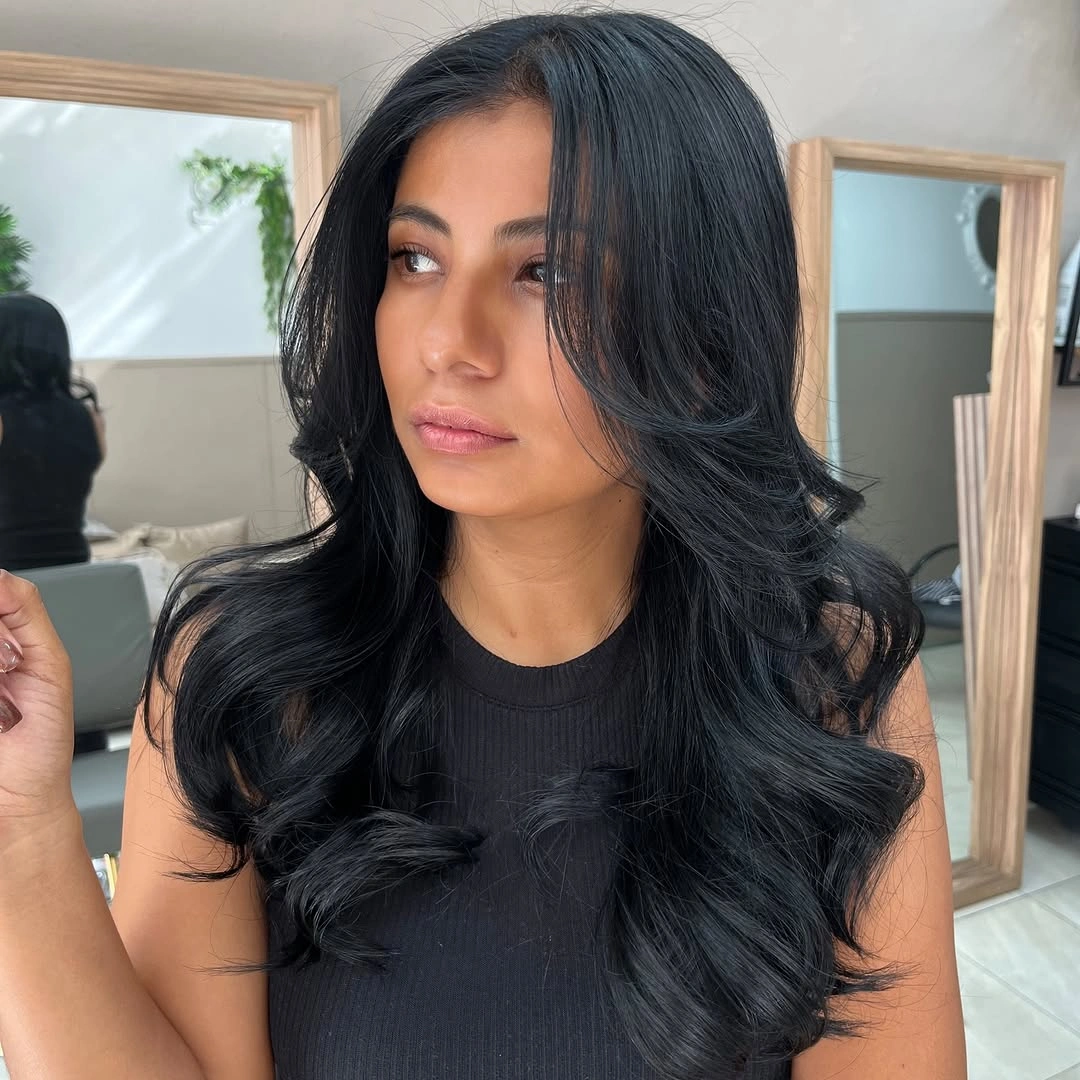
Photo via Instagram
The modern long layers here feel bold because they are not tiny or scattered. The front sections start the curve high enough to affect the whole silhouette, then the lower curls repeat that motion in larger bends near the chest. For someone drawn to cool dark layered hair, the useful idea is the balance between a smooth top and a more sculpted lower half.
The shine adds polish, but it should not be confused with the cut. The structure comes from how the face-framing sections lead into the curled ends, making the length feel designed from front to bottom.
Defined Curly Shape From The Side
This curly hair is shown from the side and back, which makes the profile more important than a perfectly visible perimeter. The curls are defined enough to show a layered-looking curly shape, with rounded volume through the sides and longer pieces falling past the shoulders. Because the exact cut lines are hidden inside the curl pattern, the safer reading is about silhouette, spacing, and how the curls stack.
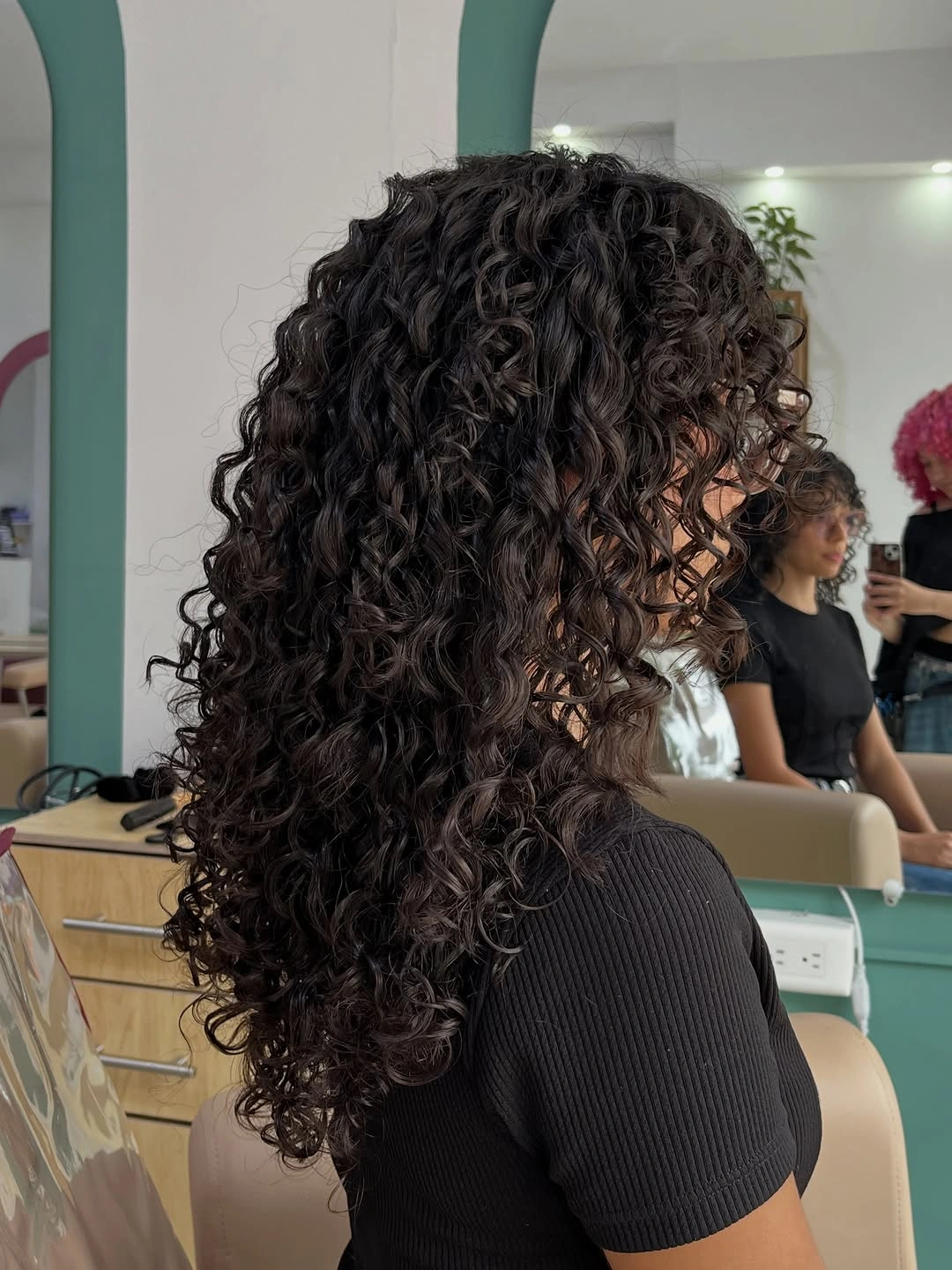
Photo via Instagram
As a medium-to-long curly haircut, this image is useful because it shows shape from the side rather than only from the back. The upper curls create a rounded surface, while the lower curls drop into looser points near the shoulder line, giving the outline a gradual descent. That side view helps a reader think about where curl volume begins and where the length should still remain visible.
The section should stay honest about what the image can show. It supports a defined curly profile with layered-looking volume, not a precise map of every internal layer.
Slick Blunt Lob With Root Contrast
This straight mid length cut is much sharper than the softer layered looks around it. From the back and side, the hair falls in vertical lines and stops at a blunt horizontal edge near the collarbone area. The slick, shiny finish makes the blunt lob look especially graphic, while the dark-rooted blonde contrast draws attention to how straight the panels of hair fall.
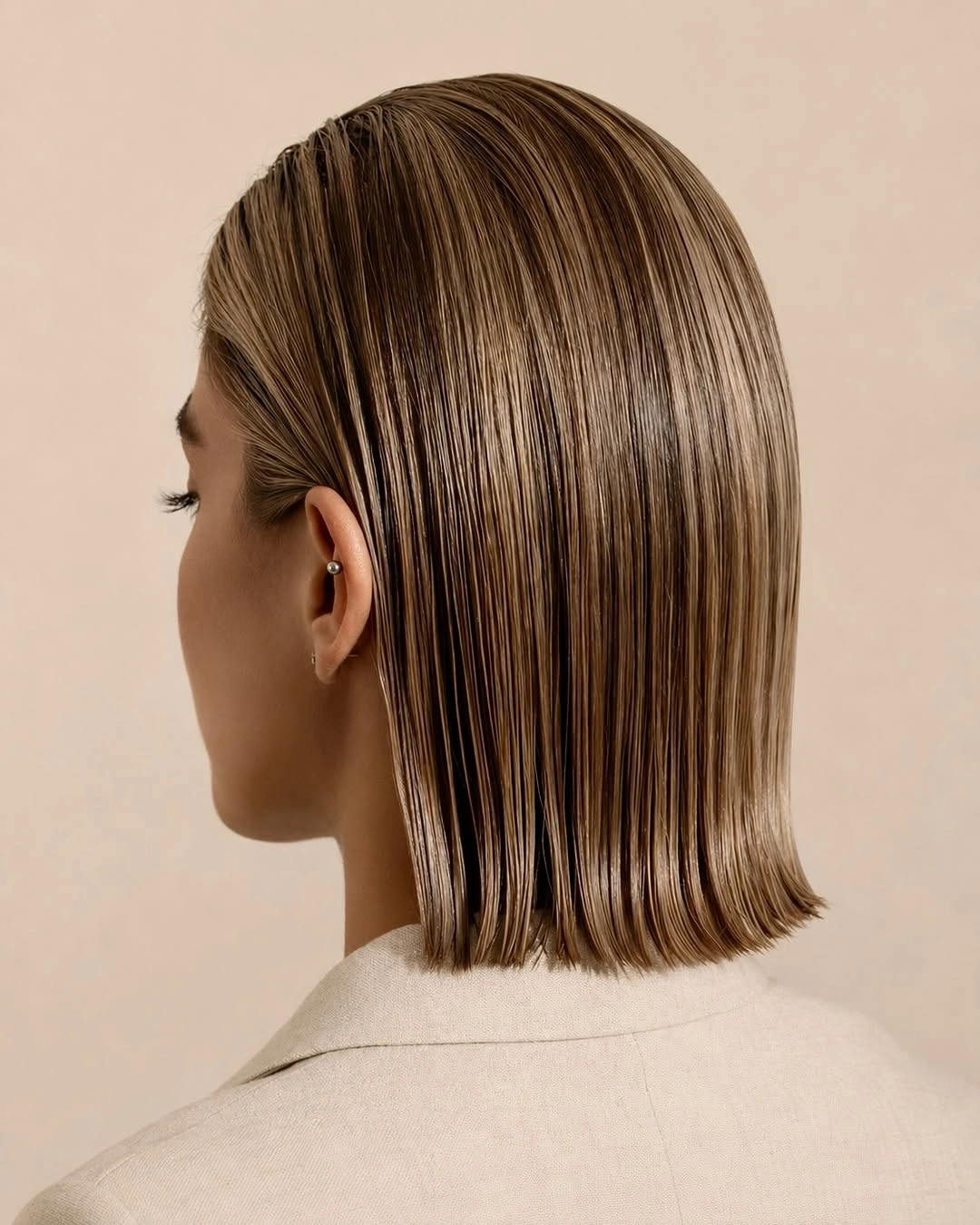
Photo via Instagram
The strongest haircut decision is the edge: it is clean, level, and not softened by curled ends. The lighter vertical pieces make the straightness more visible, but there is no need to name a color process to understand the effect. For a reader comparing straight hair choices, this panel shows how a blunt lob can feel precise because the length and finish both point toward the same clean line.
This is a mid length cut with a deliberately crisp perimeter. The styling finish is sleek, but the blunt edge would still be the main structure even without the high shine.
Soft Front Pieces On Medium Length
The front pieces are the main decision in this medium length blonde-bronde haircut. A center part sends long sections down on both sides, and those pieces curve inward before joining the layered lower ends. The shape is softer than a full bang and less dramatic than a large curl, which gives the haircut an easy, face-framing rhythm without making the front look separate.
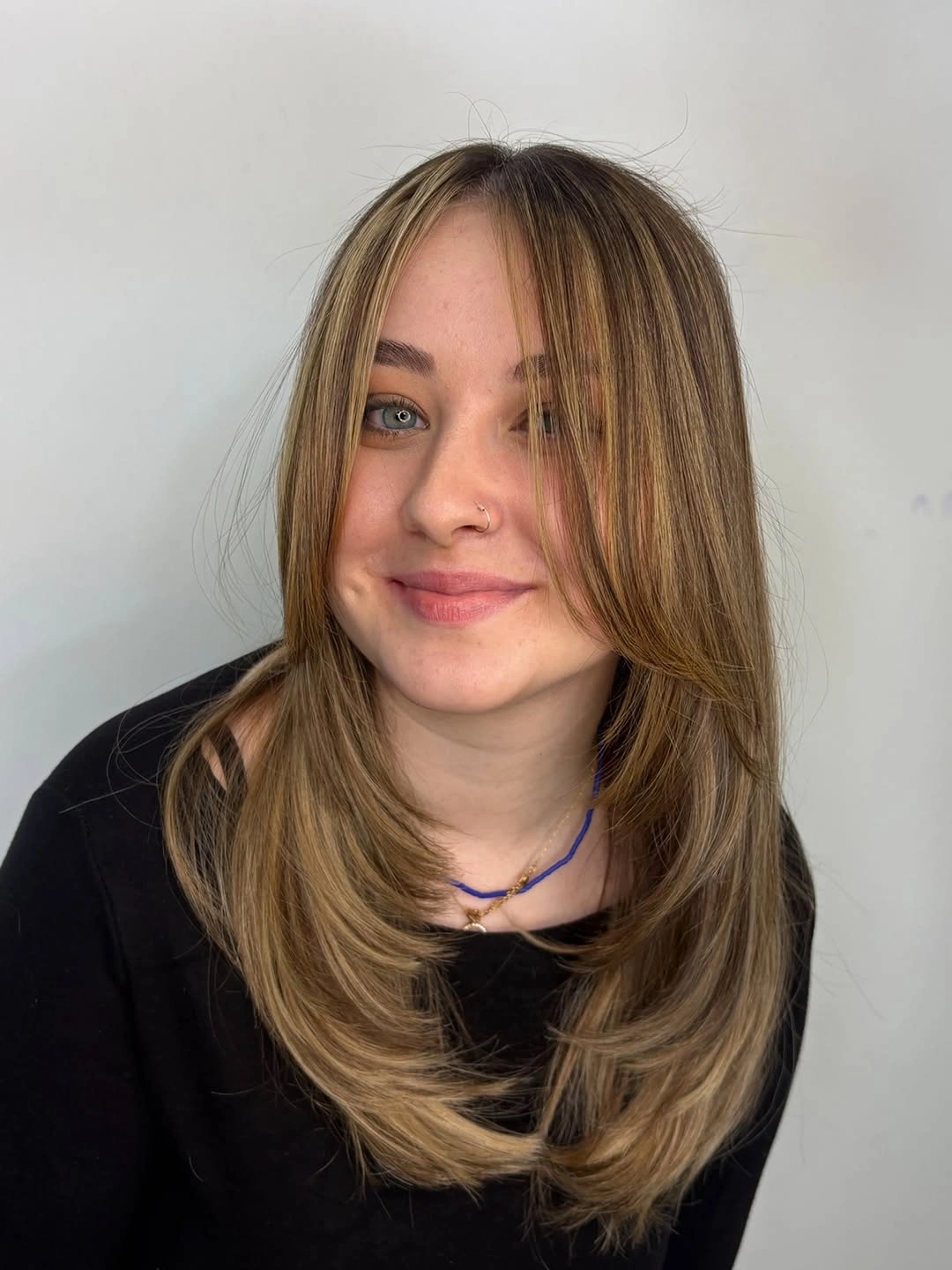
Photo via Instagram
The lower shape matters because it supports the front rather than competing with it. The ends curve inward over the black top, so the layers feel tidy and directed instead of loose or beachy. If butterfly-style wording is used here, it should stay cautious, because the visible point is a gentle curtain effect and inward bend, not an exaggerated winged blowout.
This cut is about direction more than volume. The front pieces guide the eye into the length, and the curved ends keep the medium-long shape from looking unfinished.
Burgundy Length With Loose Layered Ends
This long dark burgundy hair is shown from the back, where the length stays central and the movement gathers through the lower half. The upper section falls more smoothly, then the ends open into loose curled pieces that break up the perimeter. The deep color makes those bends easier to see, but the haircut story is still the way the lower layers move against the long outline.
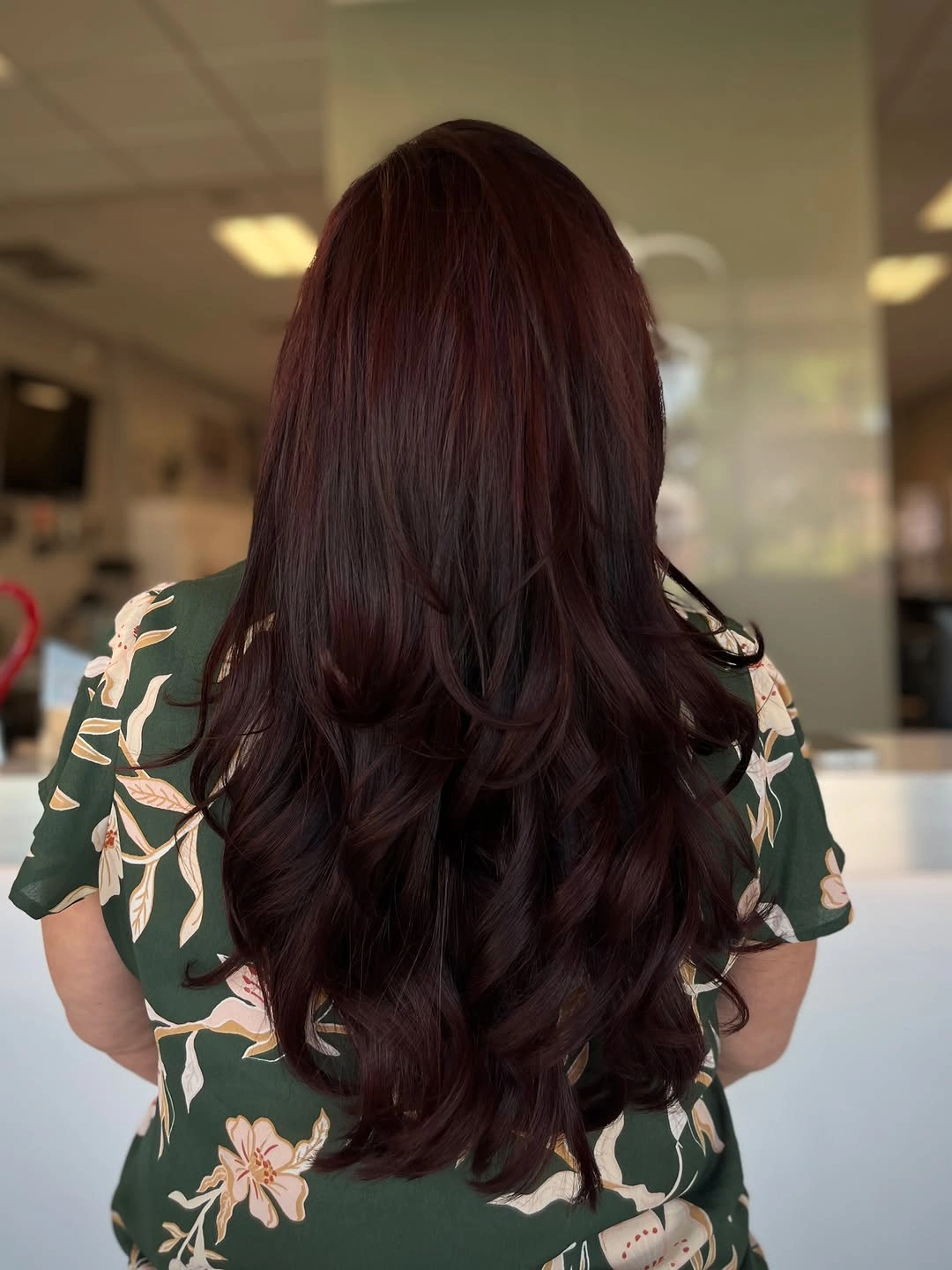
Photo via Instagram
The layered waves here are relaxed rather than highly separated. Some pieces curl outward and others fall into softer bends, creating a lower edge that looks shaped without becoming too uniform. For long hair, that placement matters because the eye can still read the full length while noticing where the cut begins to release into movement.
The burgundy tone adds depth to the back view, especially around the curled ends. The haircut itself finishes through a soft, uneven wave pattern that gives the long perimeter more life without turning it into a short or heavily feathered shape.