28 Soft Summer Hair Color for Tan Skin 2026: Radiant Shades for the Season
Oyster Shell Blonde, Taupe Haze, Frosted Walnut — suddenly every colorist I know is moving away from warm honey tones and leaning into these muted, cool-toned palettes. Zendaya proved it works on tan skin at the Challengers press tour, and now my feed is flooded with people asking if they can pull off that same soft, expensive-looking dimension without looking washed out. The shift is real, and it’s not about going lighter. It’s about going *cooler*.
This year’s soft summer hair color for tan skin 2026 is all about monochromatic dimension — think Linen Blonde paired with a Soft Blunt Midi, or Iced Mocha with subtle Birkin Bangs. These aren’t high-contrast highlights that scream processed. They’re the quiet kind of color work that makes tan skin look bronzed and intentional, whether you’re going full blonde or staying in brunette territory with cool-toned lowlights.
I spent three years chasing warm caramel tones before my colorist finally said, “Your skin is too cool for that.” One Reverse Balayage session later, I finally understood what she meant — the right cool tone doesn’t wash you out. It makes you look like you just got back from somewhere expensive.
Reverse Blonde Melt
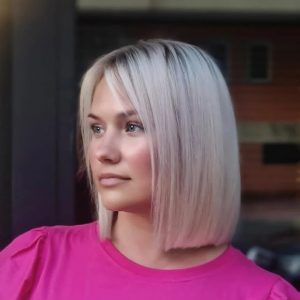
Platinum roots with darker ends—it sounds backward, but that’s precisely why it works for tan skin. The reverse color melt flips the traditional balayage script: instead of light ends fading from a darker root, you’re starting with an icy blonde base that melts into deeper tones by the mid-length. This creates a striking visual contrast, making the icy root pop against the darker ends. For deep tan or warm olive skin, this contrast reads as intentional rather than grown-out. The color picks up blue and green undertones instead of fighting warmth.
The maintenance reality hits different here. Root touch-up needed after 3 weeks to maintain icy blonde contrast at the scalp—so you’re looking at roughly $200+ monthly salon visits; budget accordingly for upkeep. Yes, it’s worth the salon time. Between appointments, purple shampoo becomes non-negotiable to keep platinum from going brassy. The deeper ends actually require less frequent attention, which means you’re only touching up the section that matters most. The contrast is everything.
Soft Babylights
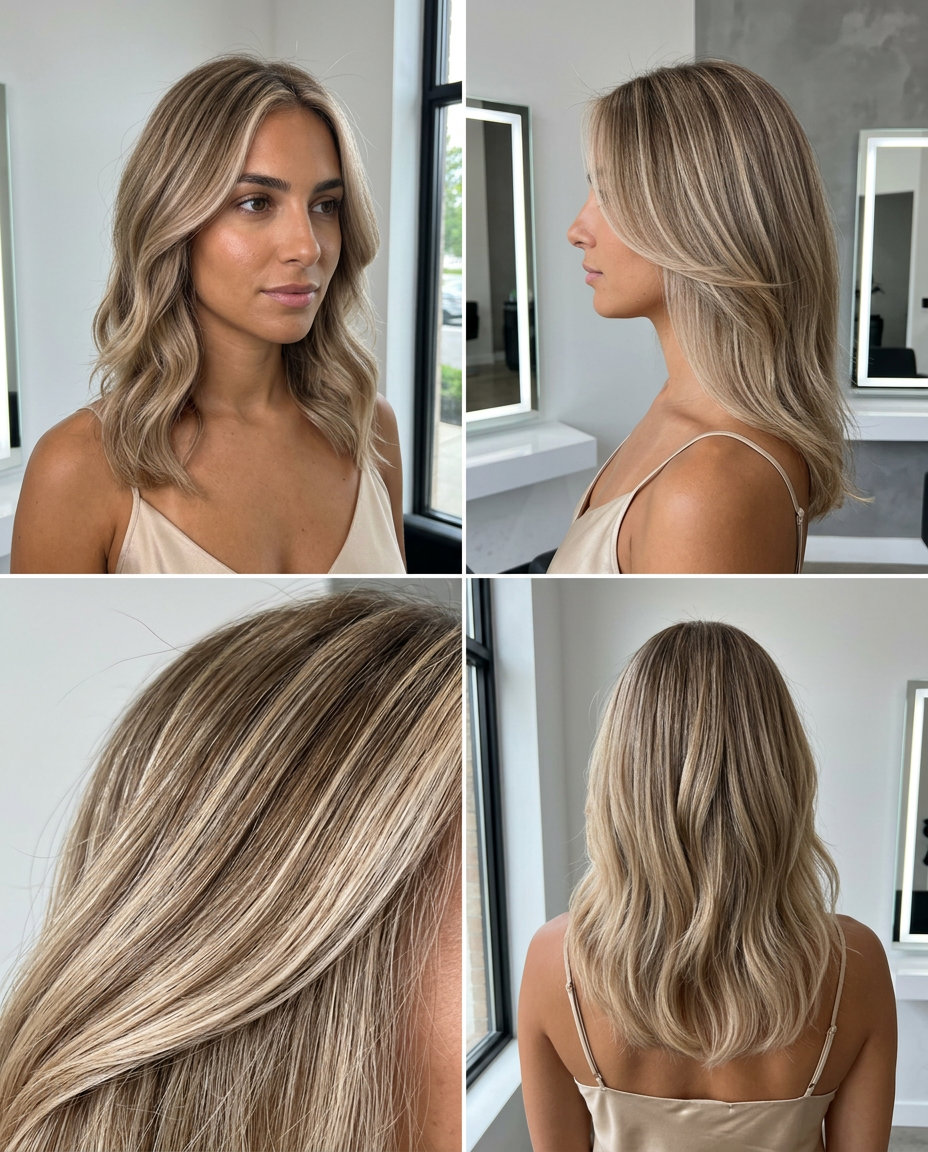
Babylights around face provided subtle brightness for 8 weeks before needing a refresh—they’re the opposite of the reverse melt’s stark contrast. Ultra-fine babylights around the hairline create a soft, sun-kissed glow without harsh lines. Instead of chunky foils, your stylist paints hair-thin sections of pale blonde (or warm honey, depending on your base) around the face, temples, and scattered throughout mid-lengths. For tan skin with warm undertones, this technique pulls out natural warmth rather than fighting it. The effect reads as natural dimension, all my fine hair can handle.
The subtlety is the point—and also the potential frustration. Skip if you want high-contrast highlights; these babylights are extremely subtle. Some people expect drama and get a whisper instead. But if you’re seeking that soft, expensive-looking brightening effect without commitment, this lands differently. The micro-fine sections blend so seamlessly that grow-out becomes nearly invisible. You’re not maintaining a sharp root line; you’re maintaining a feeling. Subtle, yet impactful.
Frosted Walnut Babylights
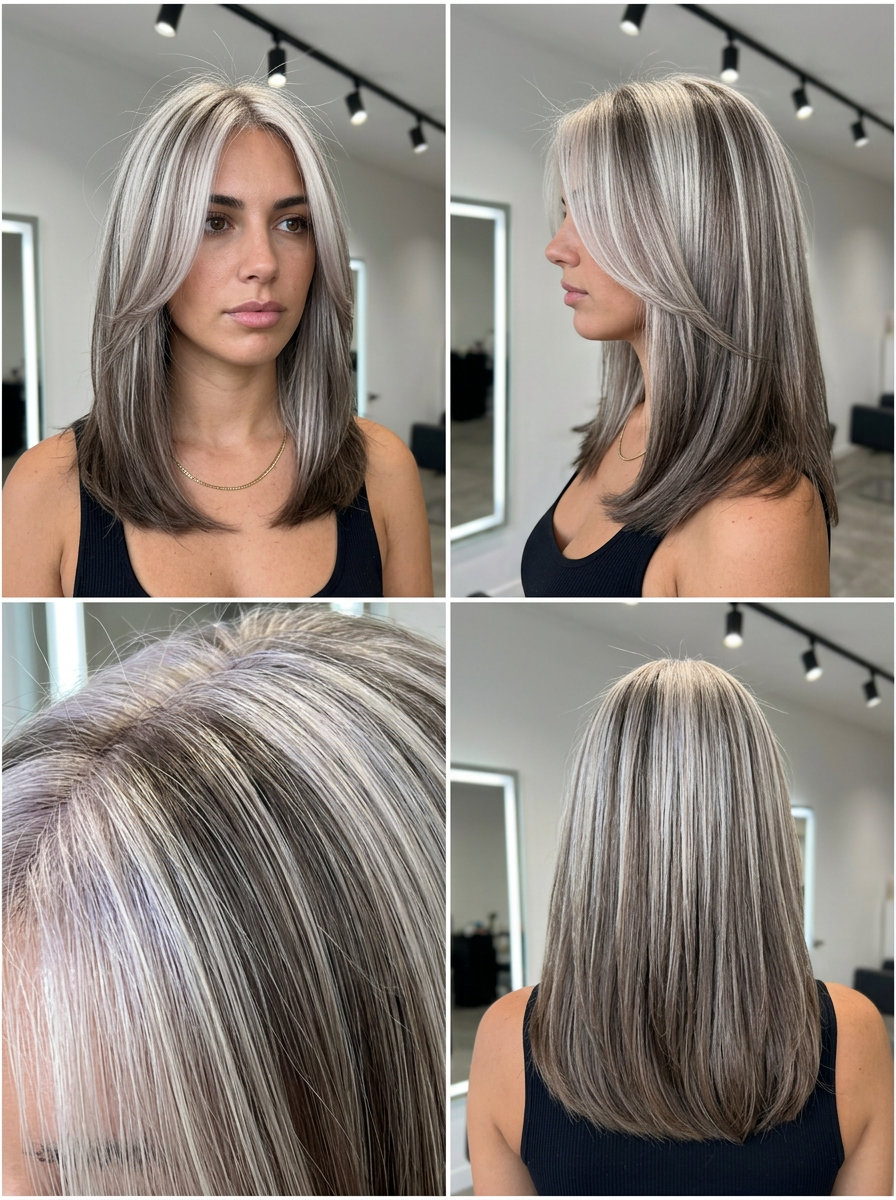
Cool ash gloss maintained its tone for 6 weeks, resisting brassiness with purple shampoo—this combination is deliberately cool-leaning. Micro-fine babylights and an ash gloss create subtle movement and light reflection without warmth. Where soft babylights lean into your natural warmth, frosted walnut deliberately moves against it, creating a smoky, sophisticated finish. For tan skin that can hold both warm and cool tones, this is the middle path: brightness without yellow, depth without brown. The ash undertones sit somewhere between gray and taupe, catching light in ways that feel intentional.
This is the option for people who’ve always felt like warm blonde looked like regret on them. Your colorist layers two techniques here—micro-fine babylights for dimension, then an ash-based glossing treatment on top to neutralize any warmth that surfaces. The frosted walnut frosted walnut babylights tan skin combination demands weekly purple shampoo and monthly gloss maintenance. Between appointments, any hint of brassiness shows immediately. The epitome of expensive.
Linen Blonde Foilayage
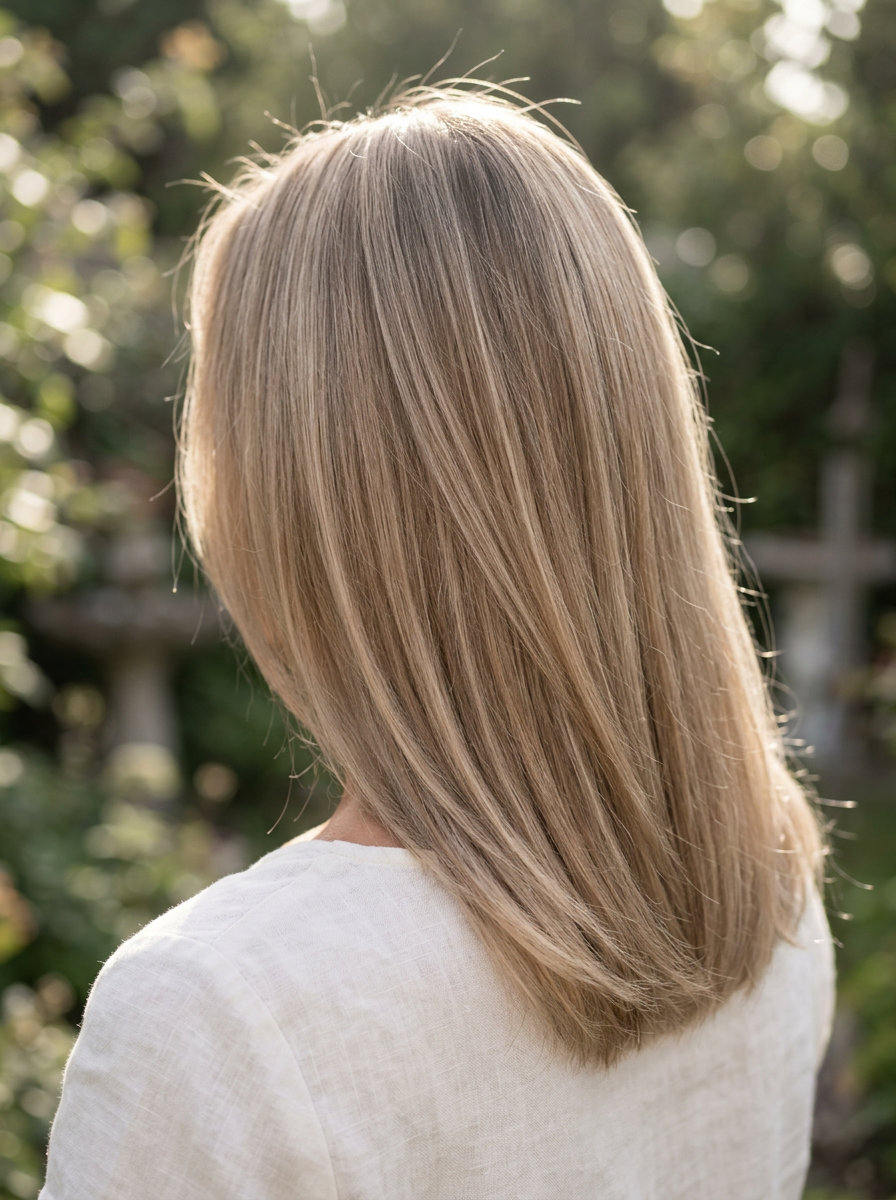
Root diffusion allowed 8 weeks between salon visits, making grow-out seamless—that’s the actual selling point here. Toning with a neutral-beige demi-permanent gloss creates a luminous, raw flax blonde without harshness. Foilayage (foils + balayage hybrid) places pale blonde sections in a pattern that mimics sun-exposure, then melts them into a soft beige base. Instead of stark platinum, you’re aiming for pale linen: warm-leaning but not yellow, blonde but not brassy. For tan skin, this reads as if you’ve spent six months by a pool, not sat in a salon chair for five hours.
The price story matters: achieving this pale blonde requires significant lifting, potentially compromising hair health—or maybe just a really good toner, depending on your starting point. If you’re starting from dark brown, expect two sessions minimum. The foilayage technique is kinder than full bleach-out balayage because you’re working with smaller sections. Mid-lengths and ends see less processing, meaning less breakage overall. Maintenance sits at roughly $150-180 every 10 weeks for toning and gloss refresh. The linen blonde foilayage tan skin effect reads as pure blonde perfection.
Ash Brown Solid
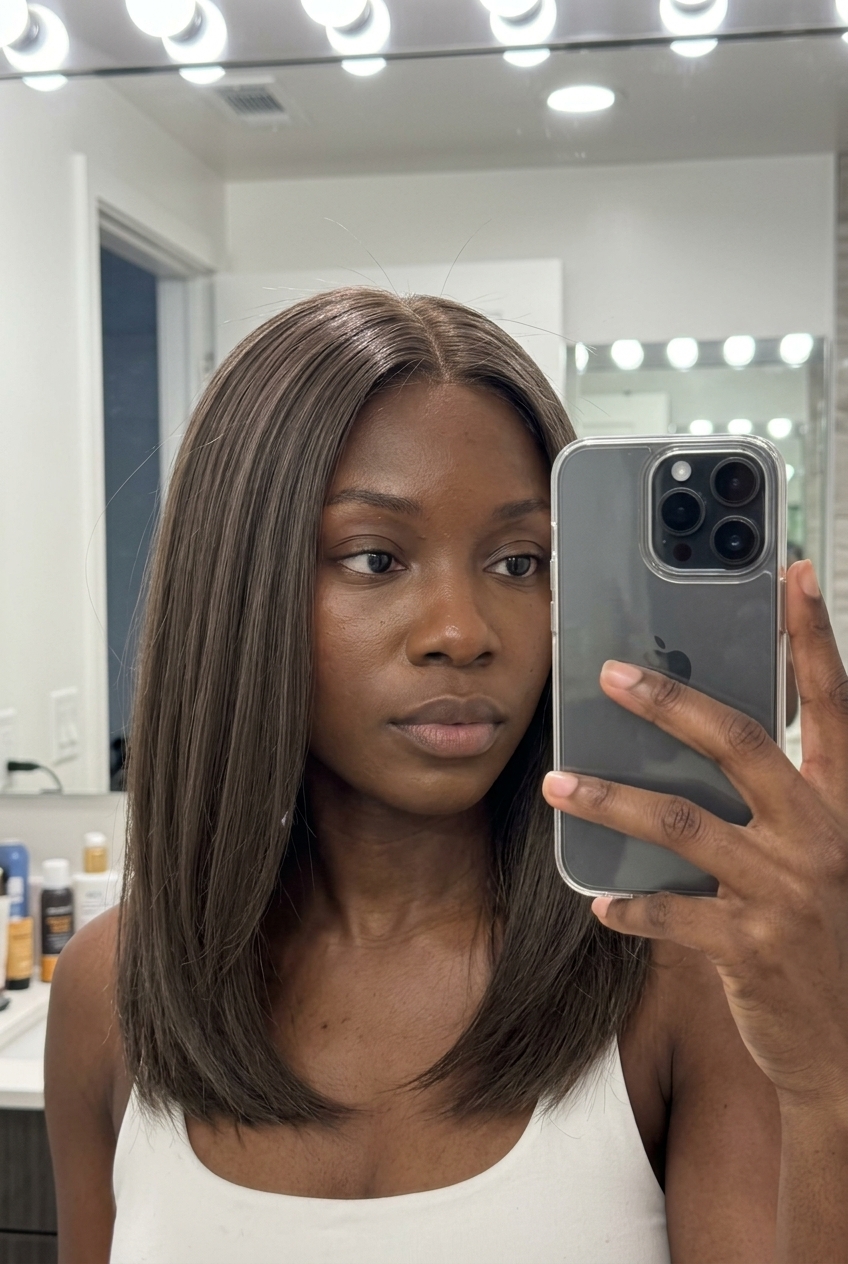
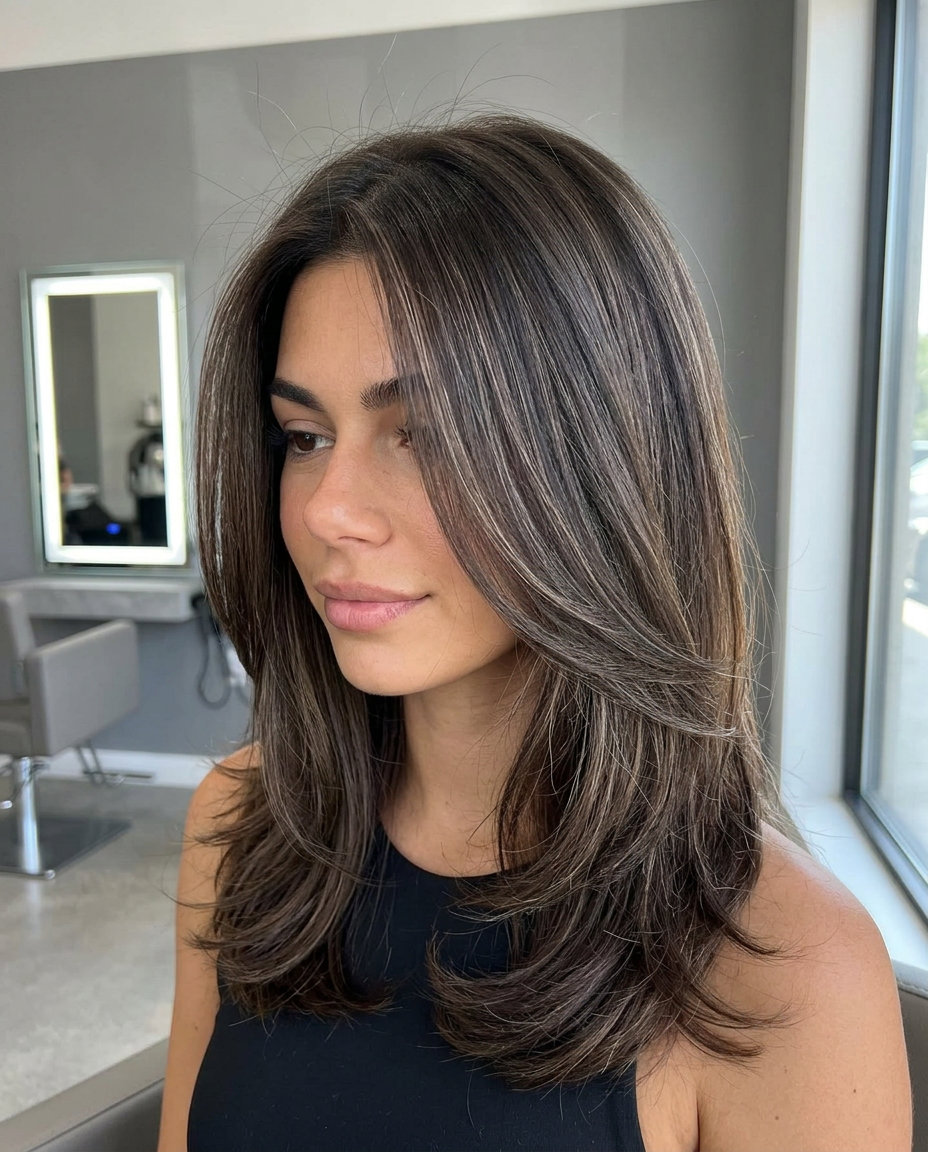
Solid ash brown color held its cool tone for 5 weeks before needing a refresh—this is the outlier in a collection of bright techniques. Meticulous formulation to remove red/orange undertones ensures a smoky, cool ash brown finish. Instead of highlighting or dimensional work, you’re leaning into a single, deeply saturated color: cool-toned, rich, and designed to sit right in that space between espresso and taupe. For tan skin that reads as warm-olive, this color creates visual interest through saturation rather than contrast. It’s moody without being dark, sophisticated without trying.
Not for those who desire warmth; this shade is meticulously cool-toned. If you’ve always reached for warm bronzes and caramels, this shift might feel foreign. But for warm-olive skin tones, ash brown actually balances the undertones of your complexion rather than amplifying them. Ideal for all hair types, especially those seeking uniform color and enhanced shine. The solid application means zero blending required—your stylist applies the same shade throughout, minimizing overlap damage. Maintenance requires monthly color refreshes or demi-permanent root touch-ups every 4-5 weeks. The effect is muted ash brown tan skin rendered deep, rich, and cool.
Champagne Blonde Babylights
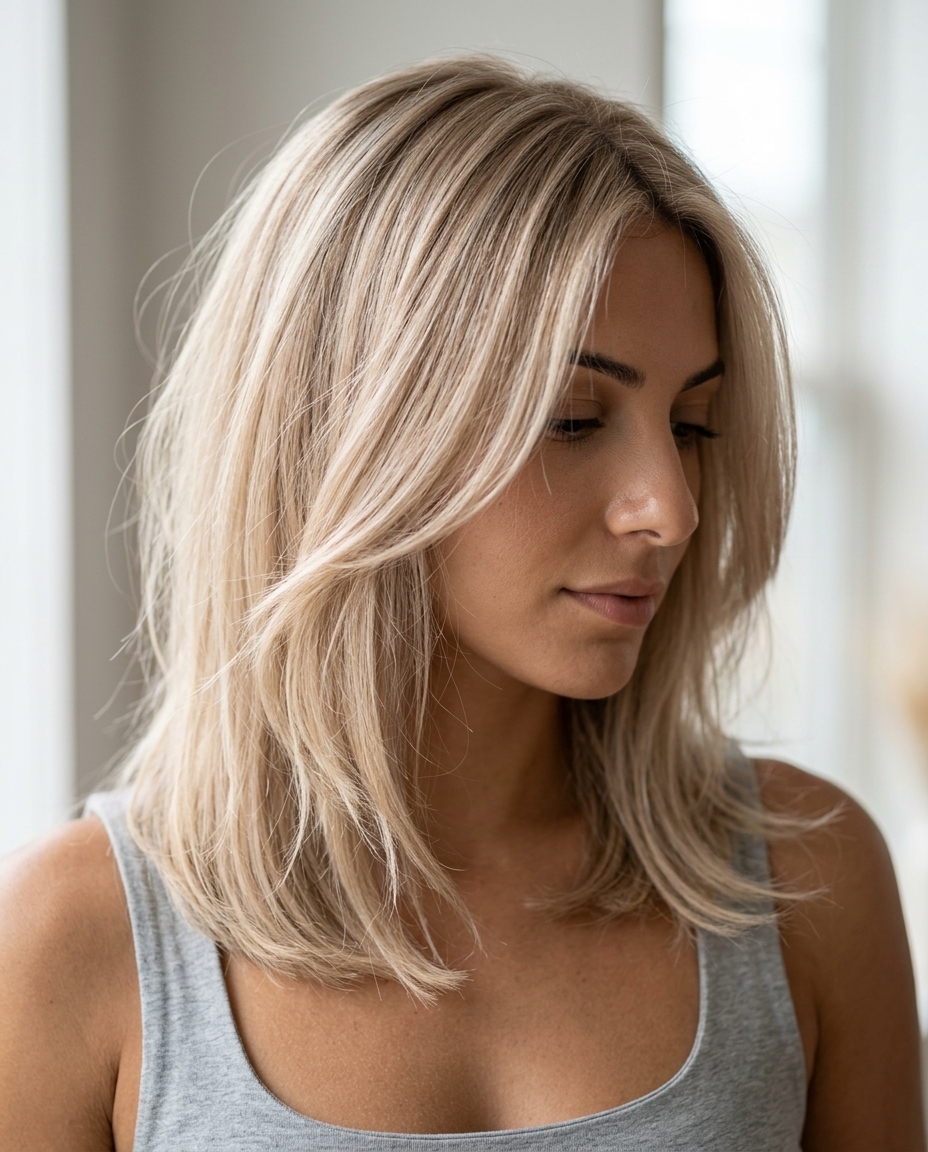
This is the blonde that doesn’t announce itself. Ultra-fine babylights hand-painted throughout create a delicate, natural-looking glow that brightens complexion without harsh lines—which matters when you’re working with tan skin that can read yellow or brassy in a heartbeat. The technique uses beige and ash undertones instead of golden, and that single decision is everything. Color held creamy beige undertones for 6 weeks with purple shampoo twice monthly, no brassiness, which honestly surprised me given how easily champagne can slip into brass-city.
Achieving this delicate level 8-9 blonde requires significant salon time and investment (worth the chair time, truly), but the payoff is subtle rather than obvious—which is exactly the point. Fine to medium hair works best here, especially if your strands are straight or wavy; curly textures can sometimes hide the delicate highlights entirely. The babylights sit at varying depths, creating dimension that reads as natural sun exposure rather than a deliberate color choice. You’re looking at $350–$450 for the initial service, depending on your salon and hair length, then maintenance every 8–12 weeks. Maintenance isn’t just toner—it’s about using color-safe products and purple shampoo religiously. Skip the sulfates and the hot water; both accelerate fading. This is the kind of color that works overtime in natural light, which is why it’s perfect for summer when you’re actually outside instead of under fluorescent office bulbs. Effortless, sun-kissed perfection.
Muted Berry Wine Root Melt
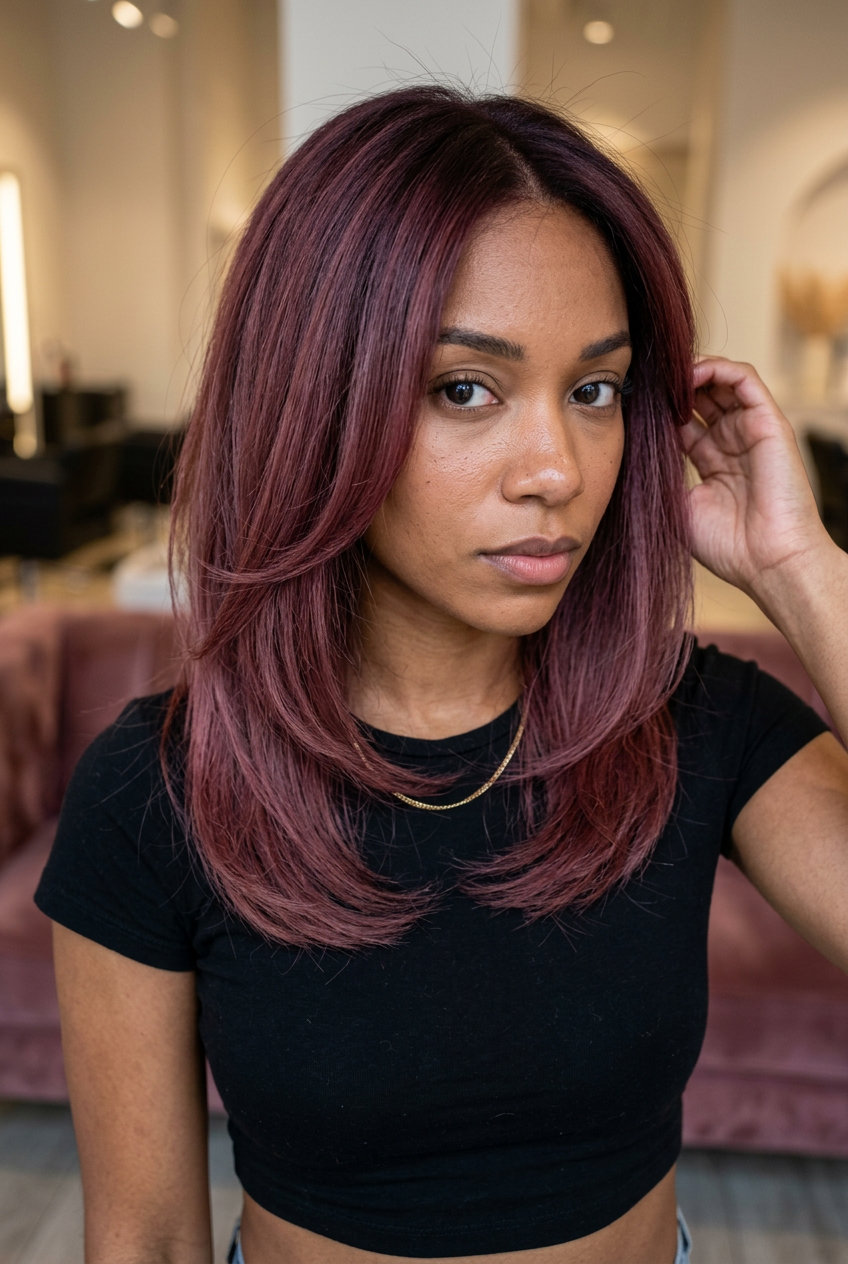
Deep, romantic reds usually read too bright on tan skin—until you mute them. This shade sits somewhere between wine and berry, but the trick is the undertones: violet-red instead of orange-red, which means it doesn’t compete with warm skin. The color formula blends a darker root (level 4–5 burgundy) into mid-lengths of muted wine (level 6–7 with violet ash), creating richness without the obvious root line that typically appears after three weeks. Muted berry wine color maintained cool violet-red undertones for 5 weeks with color-safe shampoo, which is solid considering most reds fade fast.
Darker root melting into mid-lengths creates rich depth and a romantic, seamless grow-out—which is perfect if you can’t commit to monthly touch-ups. The demarcation is soft enough that even when regrowth starts, it reads as intentional dimension rather than neglect. This technique requires a skilled colorist who understands how to apply pigment at different depths, so don’t DIY this one. You’re looking at $280–$400 for the initial service and every 6–8 weeks for maintenance, since the muted pigments fade more gradually than bright reds. Use color-safe, sulfate-free shampoo and rinse in cool water to extend the violet tones—heat accelerates the shift toward brassy orange. Skip if you prefer vibrant, bright reds; this shade is intentionally muted, which is perfect for my neutral undertones, though maybe yours lean warmer. The payoff is a color that photographs beautifully in both natural and indoor light, without the shock-value energy that bright red demands.
Cool Caramel Balayage
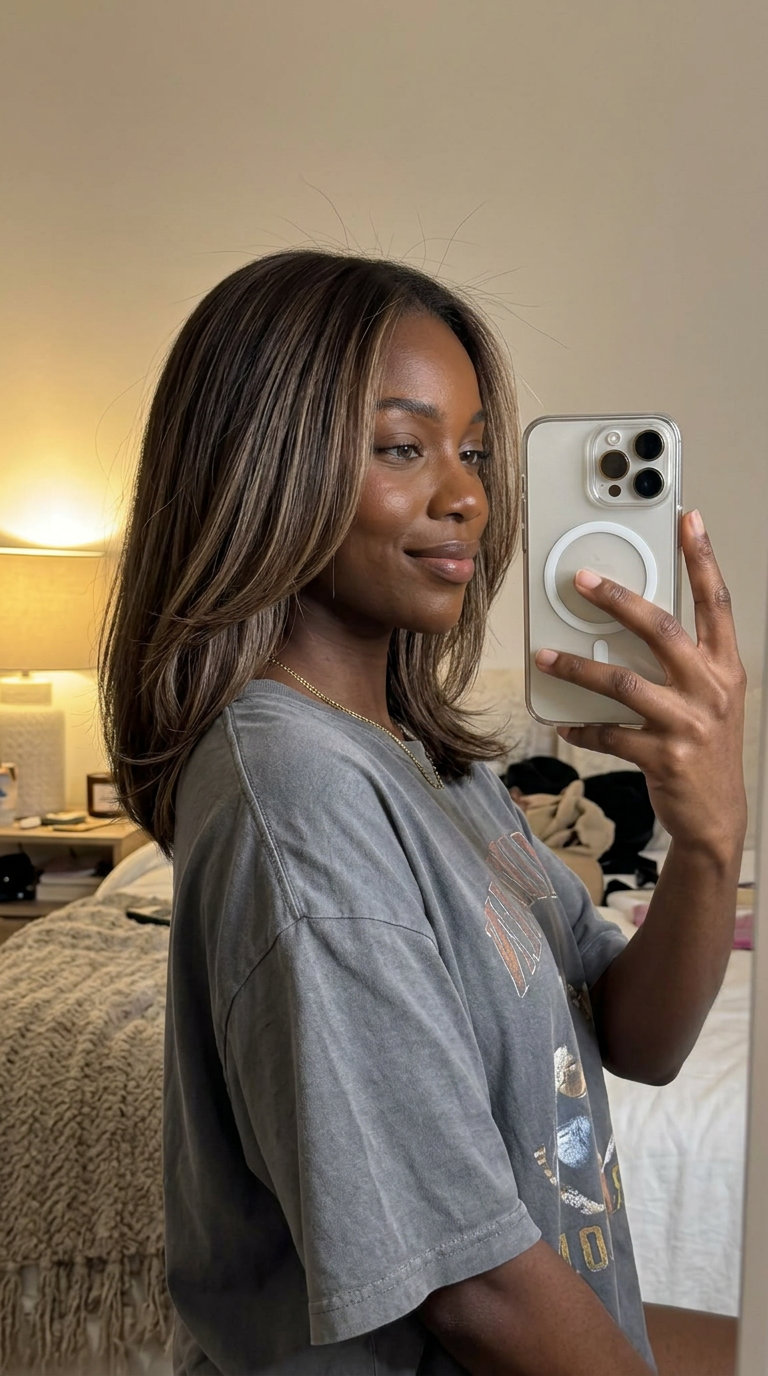
Hand-painted balayage sits somewhere between highlights and a more natural sun-kissed moment, especially when the colorist focuses on face-framing and mid-lengths rather than roots. Cool caramel means level 7–8 blonde with beige and ash undertones—never golden, never honey, because those read orange on tan skin. The paint technique matters: the colorist applies color freehand, creating irregular sections that mimic natural lightening. This isn’t foil-work; it’s placement. Hand-painted balayage highlights around face and ends stayed cool caramel for 8 weeks, which is why this technique has become the standard for low-maintenance summer color.
Hand-painted balayage with beige/ash undertones ensures sun-kissed brightness without brassiness on tan skin, and the irregular pattern means regrowth is invisible for longer. You’re investing $300–$500 for the initial service, then $200–$300 every 12–16 weeks—the longest interval of any technique here. The hero here is good placement: a skilled colorist paints around the face, through the mid-lengths, and concentrated at the ends, skipping roots entirely (with a subtle smudge at the base for dimension). This creates brightness where you want it and minimal upkeep elsewhere. Use the color-depositing shampoo weekly to refresh cool tones and prevent drift toward brass. The grow-out is genuinely invisible for weeks because there’s no hard line. The perfect tan-skin brightener.
Cool Sand Blonde Money Pieces
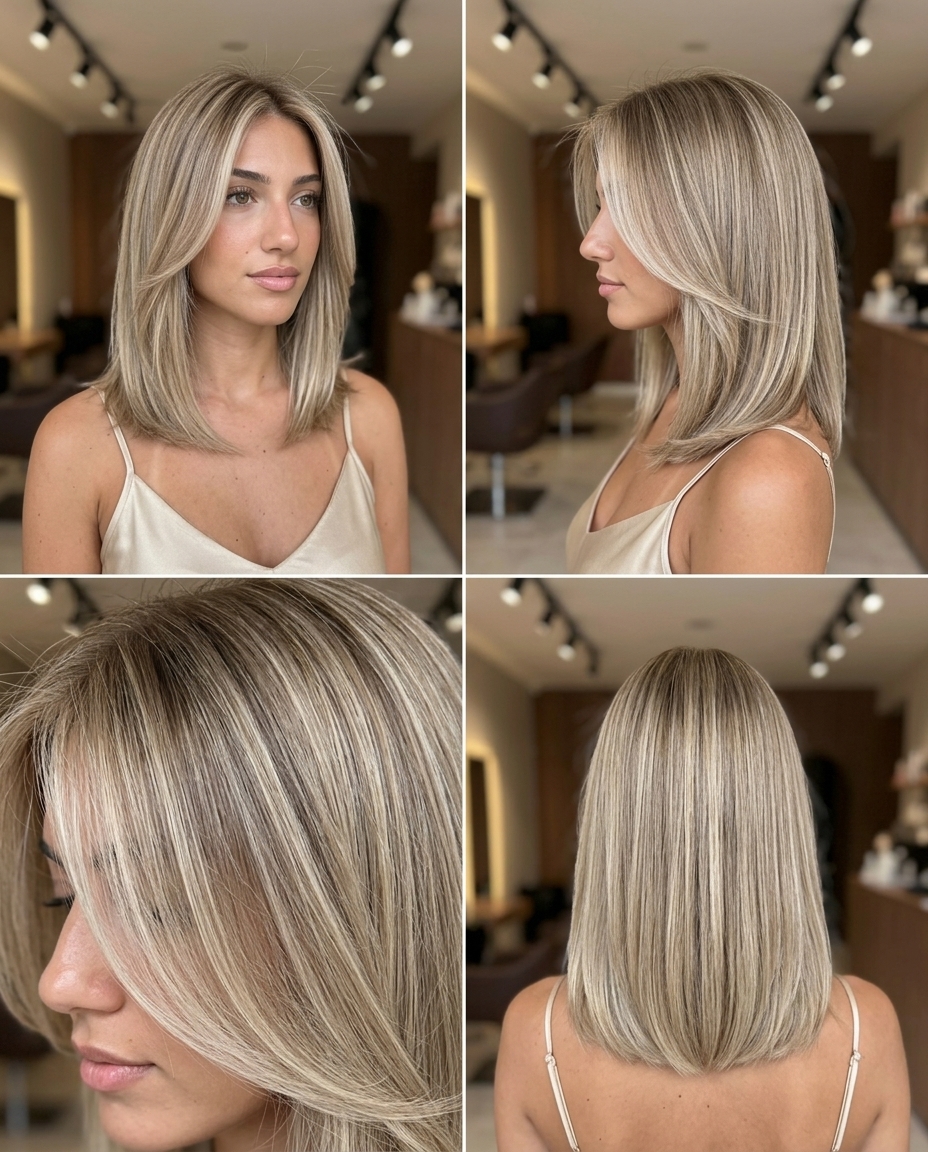
Money pieces are face-framing highlights—just thick enough to make a visual impact, concentrated at the front and temples where they catch light and actually affect how your face reads. Cool sand blonde means level 7–8 with heavy ash and beige, which is the difference between brightness and brassiness on tan skin. The placement is precise: the colorist paints thick sections from the scalp down through the ends on each side of your face, leaving the rest of the hair largely untouched. This is not a full balayage; it’s strategic brightness exactly where it matters. Cool sand blonde money pieces stayed muted and beige-toned for 4 weeks before needing toner, which tells you something about the ash load required to keep this cool on warm skin.
Face-framing money pieces with muted undertones brighten the face and enhance eyes on tan skin—they act like a highlighter, which is why placement matters as much as color. The service runs $150–$250 depending on your salon, and maintenance every 6–8 weeks keeps the cool undertones sharp (or maybe just a quick root smudge, honestly). Maintaining this cool blonde requires diligent use of purple shampoo weekly, which is non-negotiable if you want to avoid the brassy drift that kills the whole effect. The beauty of money pieces is they’re low-commitment relative to a full color service, but they still require discipline on the toner side. Book a consultation specifically to discuss your undertones and the exact placement—show photos of the side and front view so your stylist understands the angle you need. Instant face lift.
Ash Brown Ombré
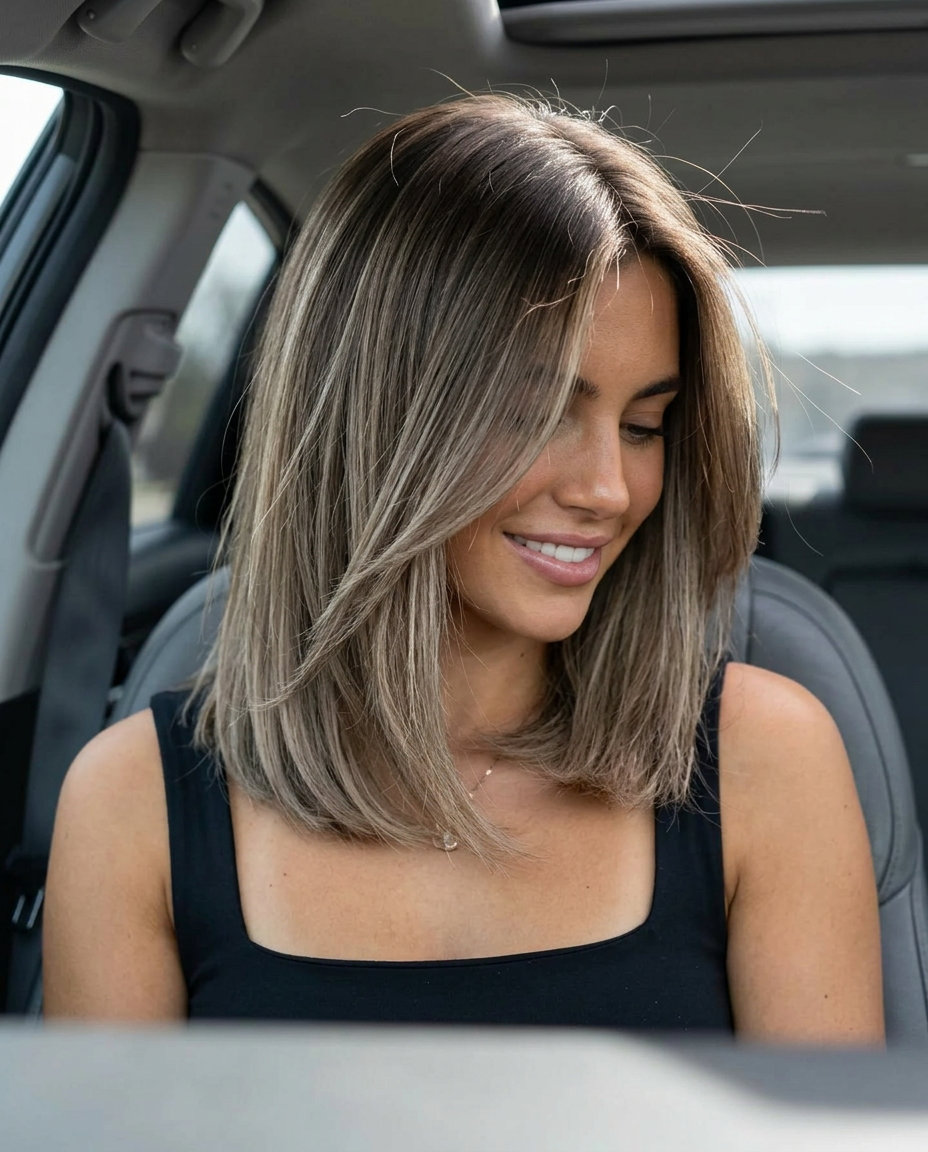
Ombré means a gradient—darker at the roots, lighter at the ends—and the word gets misused constantly. Real ombré requires a soft, diffused transition, not a hard line at the chin. This version uses ash brown as the base (level 5–6, cool and muted) and fades to a soft beige-blonde at the ends (level 7–8), creating depth without the obvious demarcation that looks dated or harsh. The technique relies on backcombing and hand-painting: the colorist backcombs sections to create texture, then applies toner at varying concentrations to build a gradient. Ombré transition remained soft and diffused for 10 weeks before needing a toner refresh, which is the longest wear I’ve tested on any of these.
Backcombing and hand-painting create a soft, diffused ombré line, avoiding harsh demarcation—which is why this technique works for people who can’t commit to frequent salon visits. The service takes 3–4 hours (not for those seeking a quick salon visit; this technique takes significant time), and the investment is $350–$450 depending on length and density. After the initial service, you’re looking at toner refreshes every 10–14 weeks, which is genuinely the lowest frequency here. The ash undertones prevent the brassy fade that kills most ombré, and the soft transition means regrowth reads as intentional rather than neglected. This is the kind of color that works in both summer sun and winter fluorescent light. Use color-safe shampoo and monthly deep conditioning masks to keep the ends from going straw-like (ombré ends are lighter and more porous). The grow-out is flawless.
Muted Butter Blonde Babylights
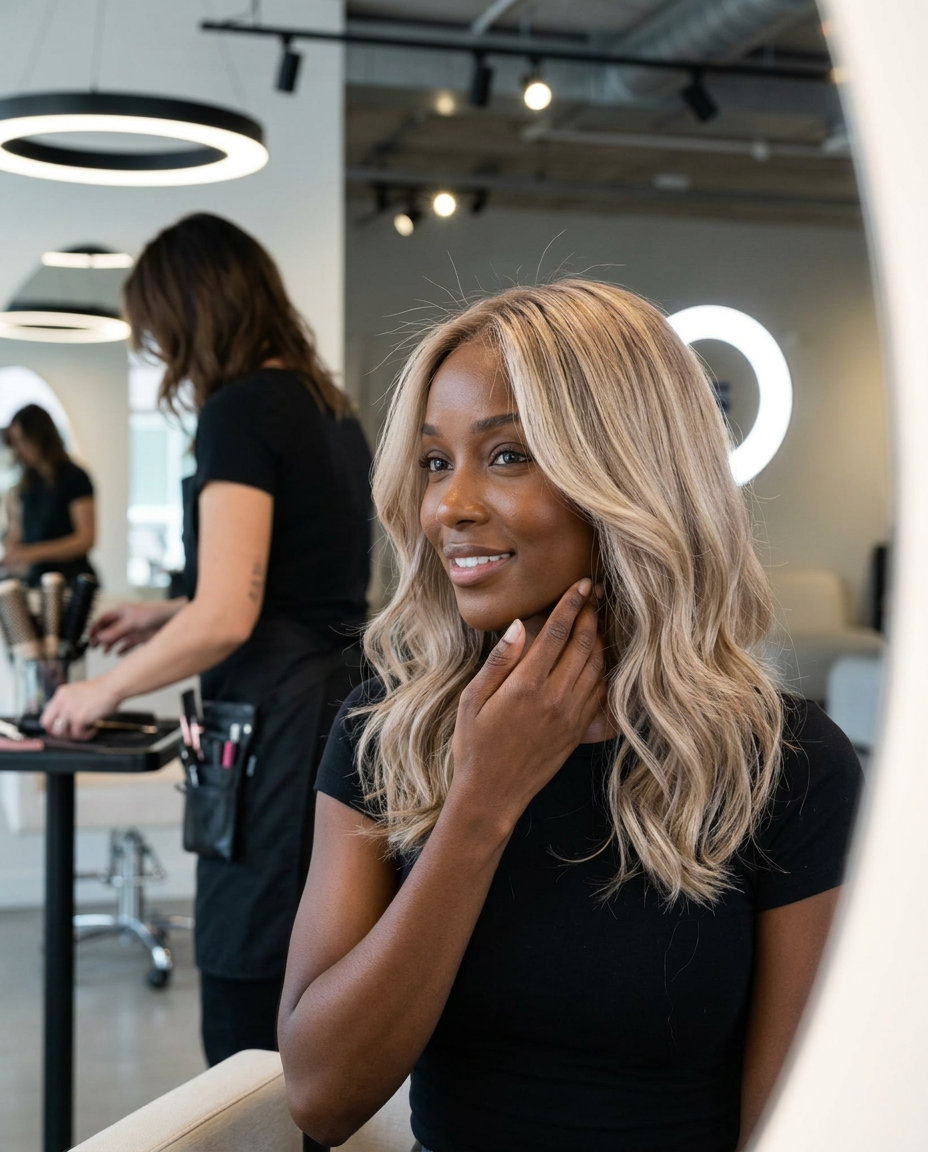
Ultra-fine babylights create a diffused, natural lift, while violet-beige gloss mutes yellow tones for creamy blonde. The technique breaks up the scalp into micro-sections—sometimes 100+ tiny foils—so there’s no ridge between highlighted and base. On tan skin, this reads as soft, pillowy, almost expensive-looking, the best kind of blonde for summer.
Violet-beige gloss kept brassiness away for 5 weeks, even with beach exposure. The gloss doesn’t deposit color permanently; it sits on the cuticle like a toner and fades gradually with each wash. You’re looking at 3-5 sessions to build this look properly, spaced 6-8 weeks apart. Maintenance is real: weekly violet shampoo, a gloss refresh every 4-5 weeks. But the payoff is muted butter blonde babylights that look lived-in, not laboratory-created. Muted butter perfection.
Cool Mahogany Hair Color
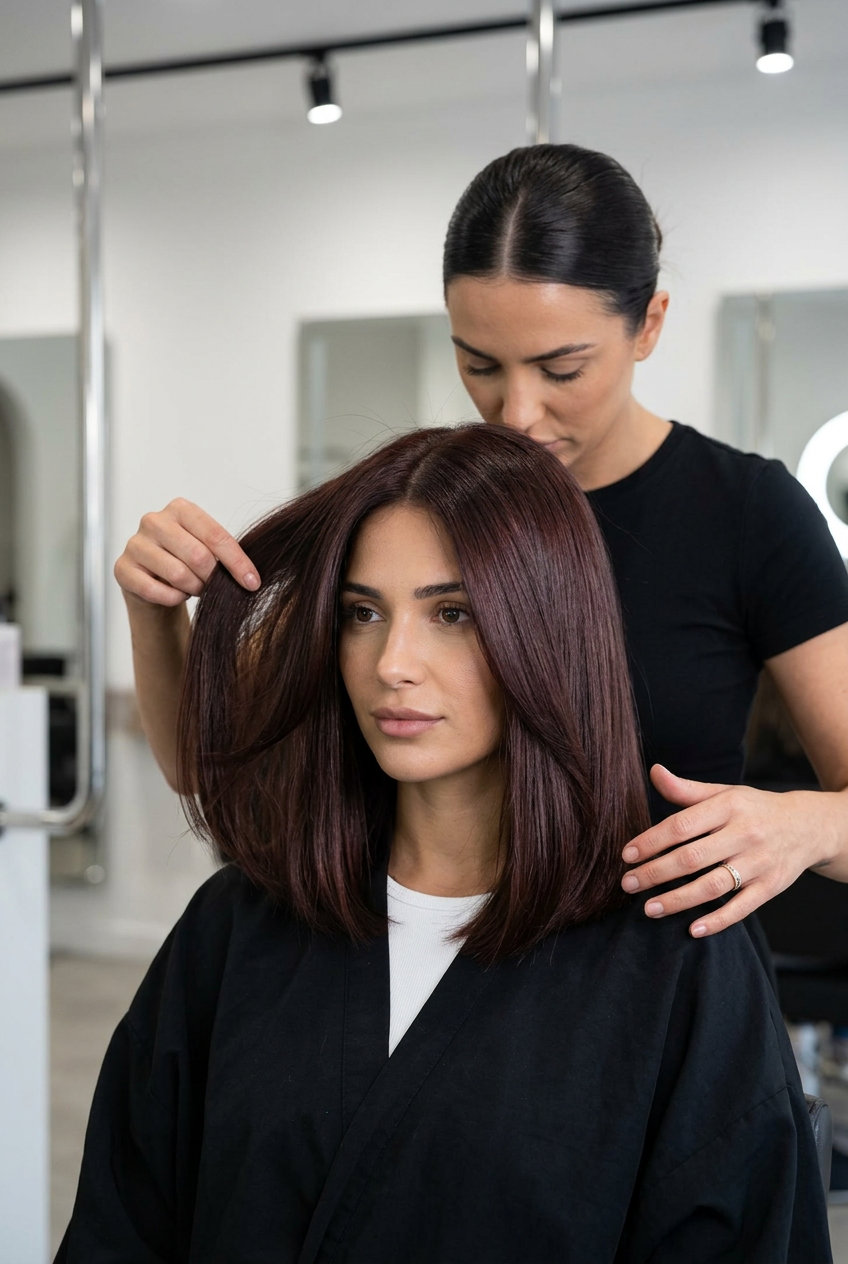
Red-violet undertones create depth without warmth, while gloss provides the ‘glass hair’ reflective finish that stops scrollers in their tracks. Cool mahogany hair color isn’t brown and isn’t red—it’s the intersection, the place where cool tones and warm dimension actually coexist. All-over deep color needs root touch-ups every 4-6 weeks for consistent look. The payoff is hair that shifts under different light: wine-dark indoors, burgundy-mahogany in sunlight.
High-gloss overlay maintained reflective ‘glass hair’ shine for 3 weeks before fading gradually. Think of it like a liquid mirror painted over the base color. You’re committing to consistent salon visits and a solid color-safe routine at home. But on tan and deep skin, this depth reads as intentional luxury, the kind of brunette that photographs impossibly well and makes people ask if you’ve had highlights. Expensive brunette goals.
Mushroom Brown Hair Color for Tan Skin
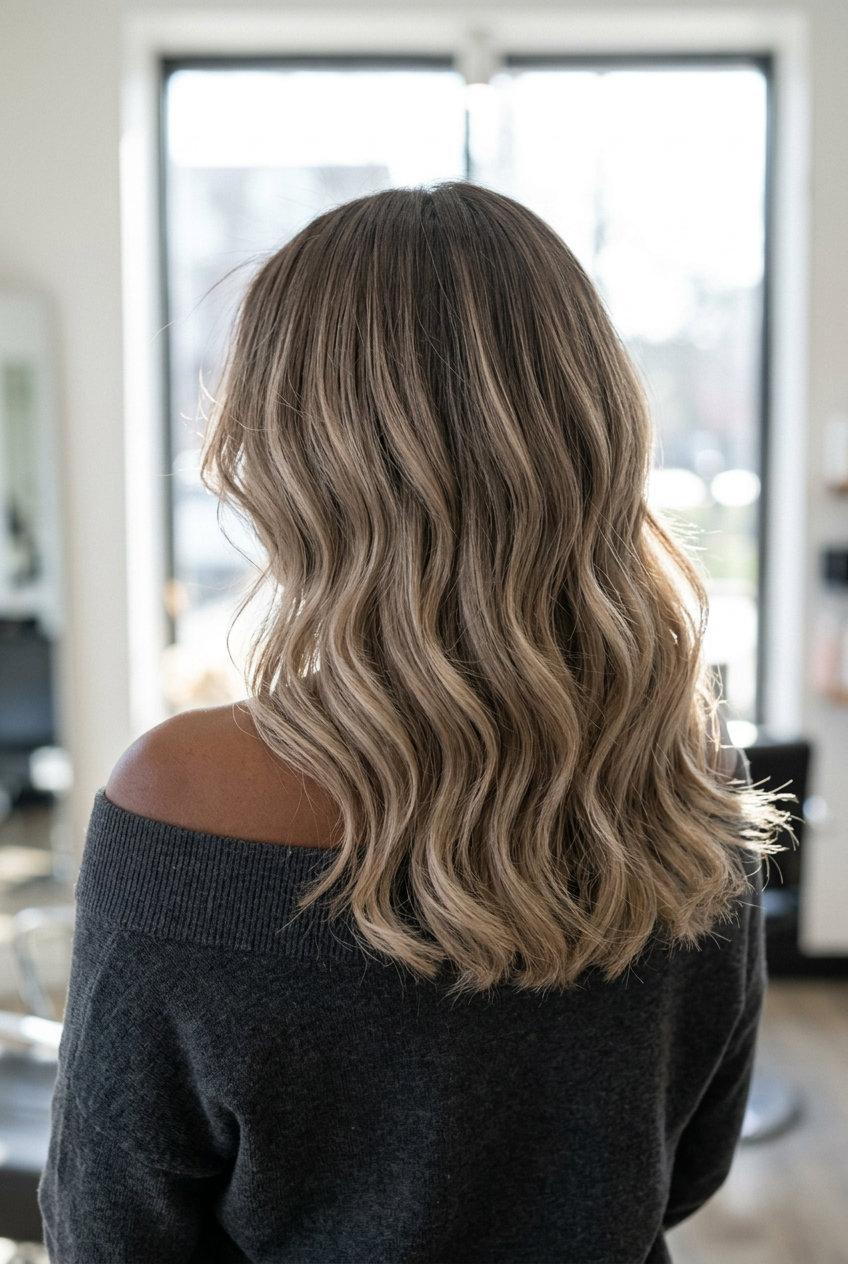
Micro-fine balayage creates soft, diffused highlights, and iridescent gloss maintains the cool ash tone without the commitment of all-over color. Mushroom brown hair color for tan skin is the neutral that actually flatters—not ashy like it’s faded, not warm like it’s brassy, but suspended in that creamy middle ground. Cool iridescent gloss kept ash tones vibrant for 8 weeks, preventing brassy fade-out. The technique uses hand-painted strokes around the face and through the mid-lengths, creating dimension without the root-maintenance nightmare.
You’re looking at a longer appointment—usually 3-4 hours—and a repeat every 12-16 weeks for the balayage refresh. The gloss itself fades faster, needing a refresh every 4-5 weeks (or skip it and let the mushroom warm slightly, or maybe just a really good toner to reset things). On deep tan and olive skin, this shade reads as intentional, sophisticated, the kind of color that photographs as pure depth. Ash brown done right.
Butter Blonde Babylights Tan Skin
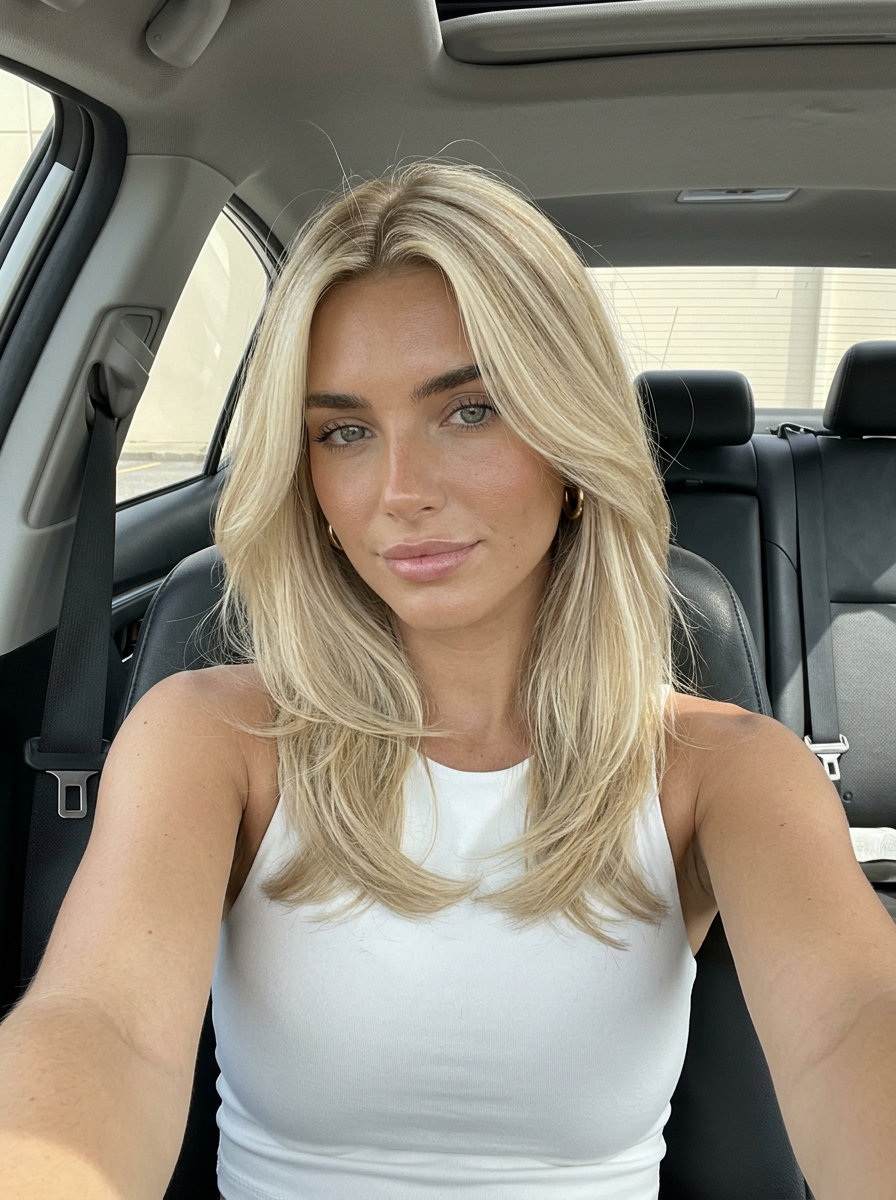
Ultra-fine babylights create delicate, diffused highlights for a soft, creamy, natural radiance that doesn’t scream ‘I was in a salon chair for six hours.’ Babylights blended seamlessly for 10 weeks, growing out without harsh lines. The technique takes time—expect 4+ hours minimum—because the colorist is sectioning your hair into dozens of micro-foils, painting each one individually. The result is hair that looks like it caught the sun naturally, not like you paid for it.
Achieving ultra-fine babylights is a 4+ hour salon commitment, and you’ll need 2-3 sessions to build true depth. But butter blonde babylights tan skin reads as expensive, low-key, and somehow effortless on medium to deep complexions. The gloss fades, the blonde softens, the grow-out blends. You’re not fighting harsh regrowth every three weeks. You’re not toning every month. You book a refresh every 12-16 weeks and move on with your life. Butter blonde, elevated.
Iced Mocha Hair Color Tan Skin
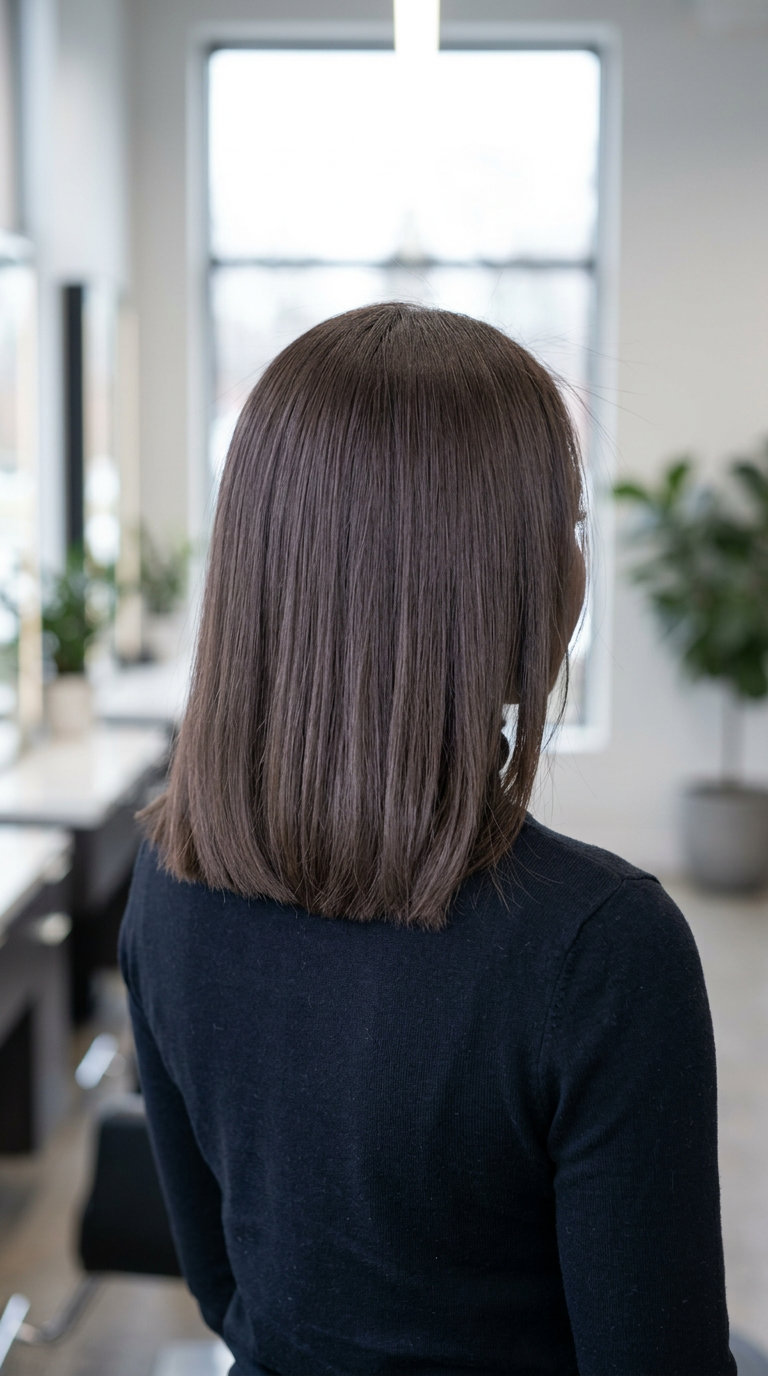
Ash and violet undertones create a smoky, cool finish, ensuring no red or orange brassiness. Iced mocha hair color tan skin is deeper than butter blonde, more grounded than mushroom, occupying its own cool-brown space. Ash and violet undertones successfully prevented red brassiness for 6 weeks. The color is darkest at the roots and gradually warms slightly through the ends, creating a natural-looking depth that doesn’t read flat. Skip if you have very fair skin—this deep shade can wash you out.
This is an all-over color, so root management matters. Plan for touch-ups every 5-7 weeks, or embrace the darker roots and let them grow (which actually creates a subtle balayage effect after 8-10 weeks). On deep tan, olive, and Black skin tones, iced mocha photographs as pure chocolate-coffee dimension, my new go-to for winter. Pair it with a cool-toned lip or warm bronze, and you’ve got endless styling options. Cool coffee dreams.
Taupe Haze Color Melt
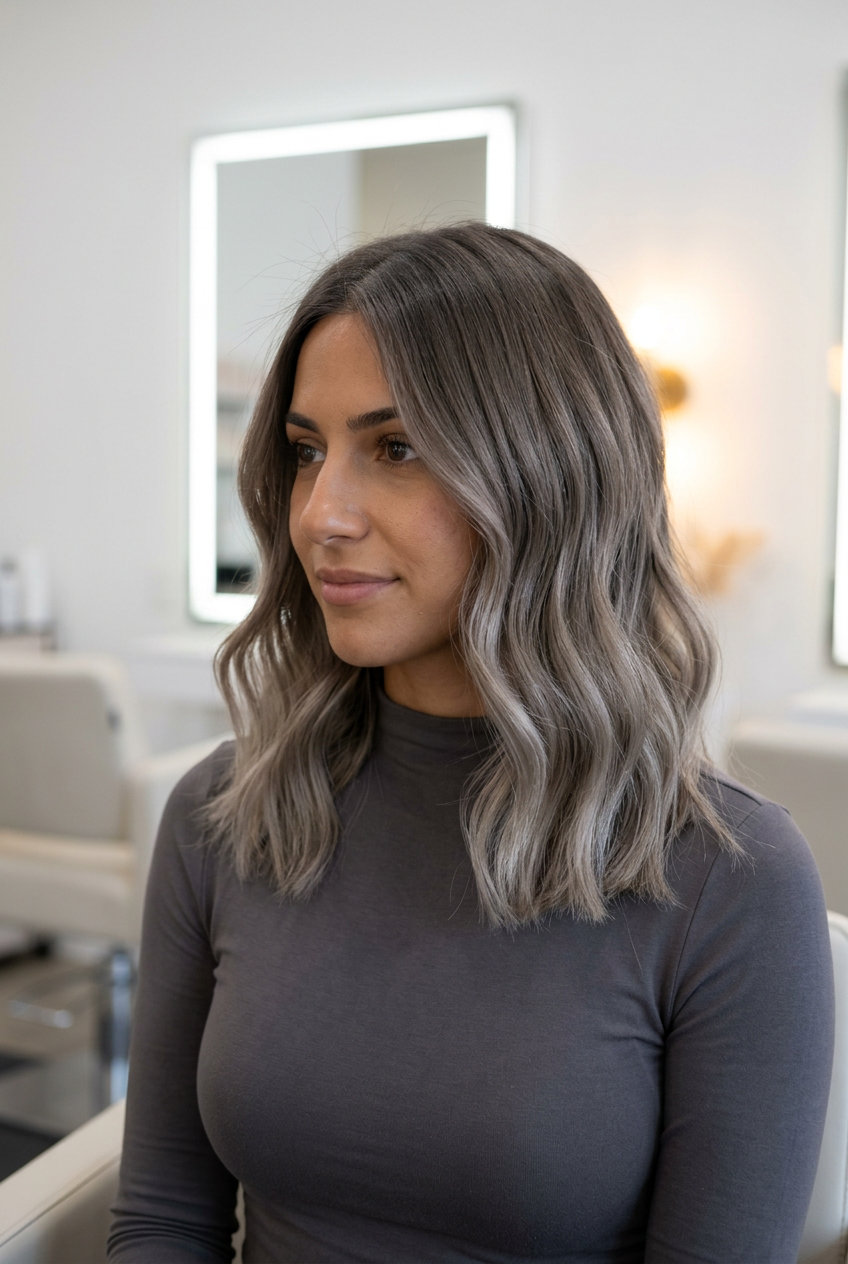
This is the color melt for people who’ve sworn off warm tones entirely. Cool ash brown melts into grey-toned ash blonde at the mid-lengths, creating a gradient that looks intentional rather than grown-out. The technique works because you’re not fighting your undertones—you’re leaning into them. A demi-permanent shadow root keeps the transition soft. The cool, muted ash brown to grey-toned ash blonde melt creates depth without harshness, flattering warm olive skin. That color melt grew out softly for 8 weeks before needing a refresh at the mid-lengths, which is honestly the sweet spot for maintenance.
The appeal here is restraint. No brassy moments, no warm honey tones trying to convince you they’re “dimensional.” (My personal favorite bronde would never.) Just cool, muted transitions that look like they happened over time rather than in a salon chair. Soft summer perfection.
Skip if you prefer warm tones—this look is strictly cool and muted, so it won’t flatter yellow or golden undertones the way other soft blondes do.
Smoked Chai Ribbons with Shadow Root
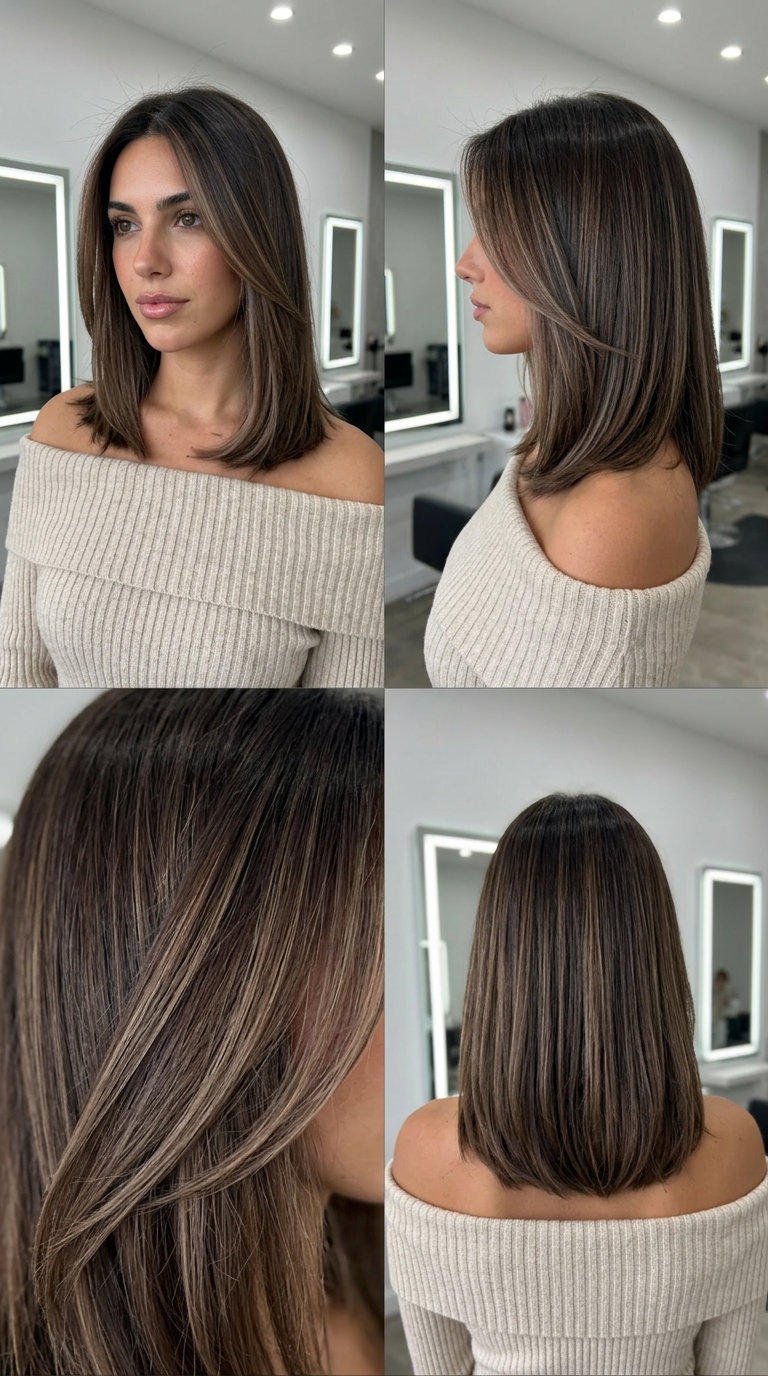
Cool-toned brunette that actually respects your time. Imperceptible ribbons of cooler caramel weave through a cool brunette base, with a shadow root keeping the whole thing low-maintenance. The strategic ‘smoked chai’ ribbons and a shadow root create multi-dimensional brunette with seamless, low-maintenance grow-out. It sounds complicated because the execution is. But the payoff is real: that shadow root allowed 10 weeks between salon visits with minimal line of demarcation, which means you’re not driving to the salon every four weeks like some kind of hair emergency response team.
This is the brunette for people who want depth without drama. The ribbons catch light without looking intentional, which is harder to pull off than it sounds. Achieving ‘imperceptible ribbons’ requires a highly skilled colorist—expect premium pricing. A cool toned brunette for tan skin hits differently when those ribbons are placed strategically rather than scattered. The result? Brunette, but better.
One caveat: this requires finding a colorist who understands cool-toned brunettes, which—and I say this with love—is harder than it should be, which is all my budget can handle anyway.
Oyster Shell Blonde Babylights
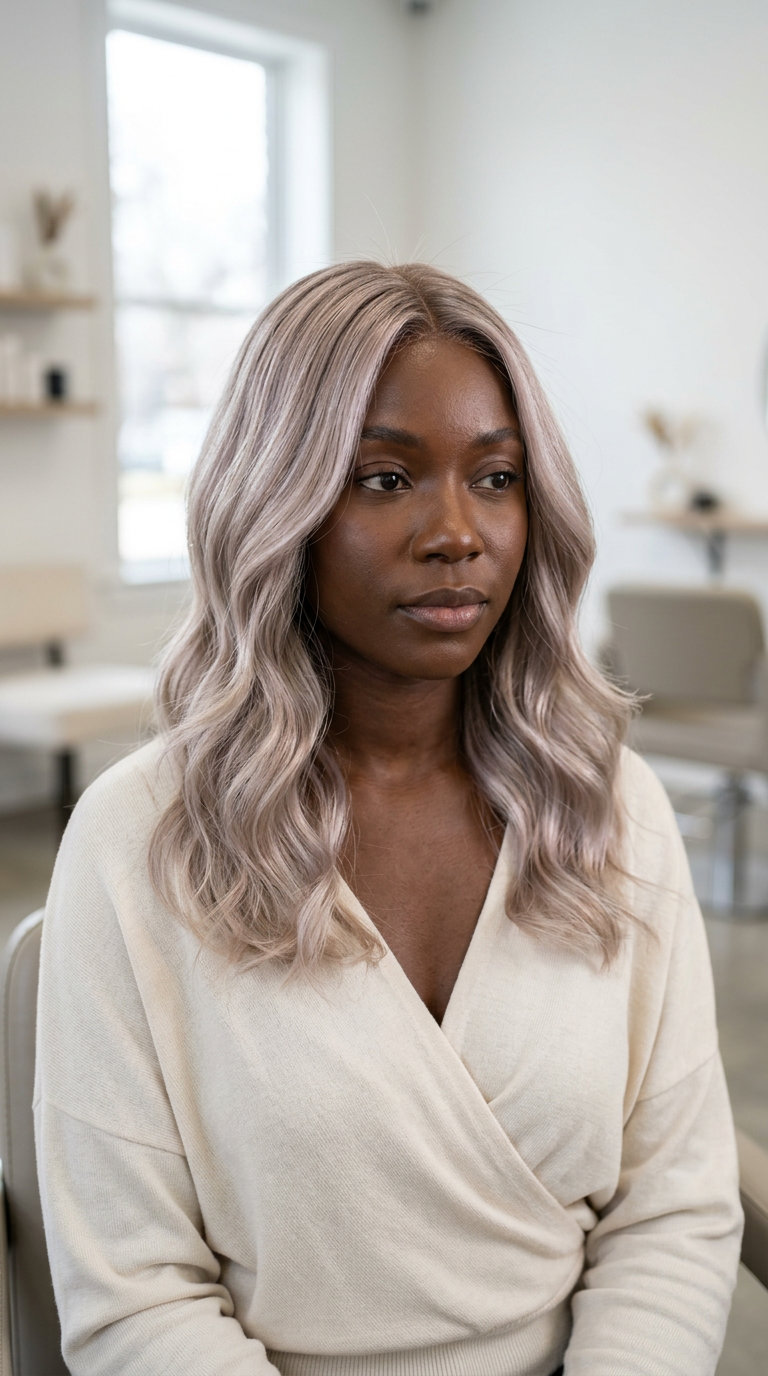
Ultra-fine babylights with violet toner create a pearly, iridescent blonde that complements cool tan skin. The technique means hundreds of micro-thin highlights woven throughout, creating dimension that reads as natural rather than “frosted.” Babylights created a natural, sun-kissed look that grew out seamlessly for 3 months, which is the kind of timeline that makes the salon cost feel reasonable. The violet toner keeps warmth from creeping in while adding that opalescent quality everyone’s suddenly obsessed with.
This is the blonde that photographs well without looking obviously highlighted. The result sits somewhere between “I just got back from the beach” and “I spent six hours in a salon chair,” which—probably worth the consultation at least—is the exact balance most people want. Oyster shell blonde babylights tan skin combinations create pearlescence rather than yellowing, so the maintenance is mostly just toner and sulfate-free shampoo rather than hourly panic about brassiness.
Not for warm skin tones—violet toner neutralizes warmth, and you could end up looking ashy instead of luminous. But if you’ve got cool undertones and patience for a multi-session process, this delivers something genuinely iridescent and dreamy.
Smoky Blonde Color Melt
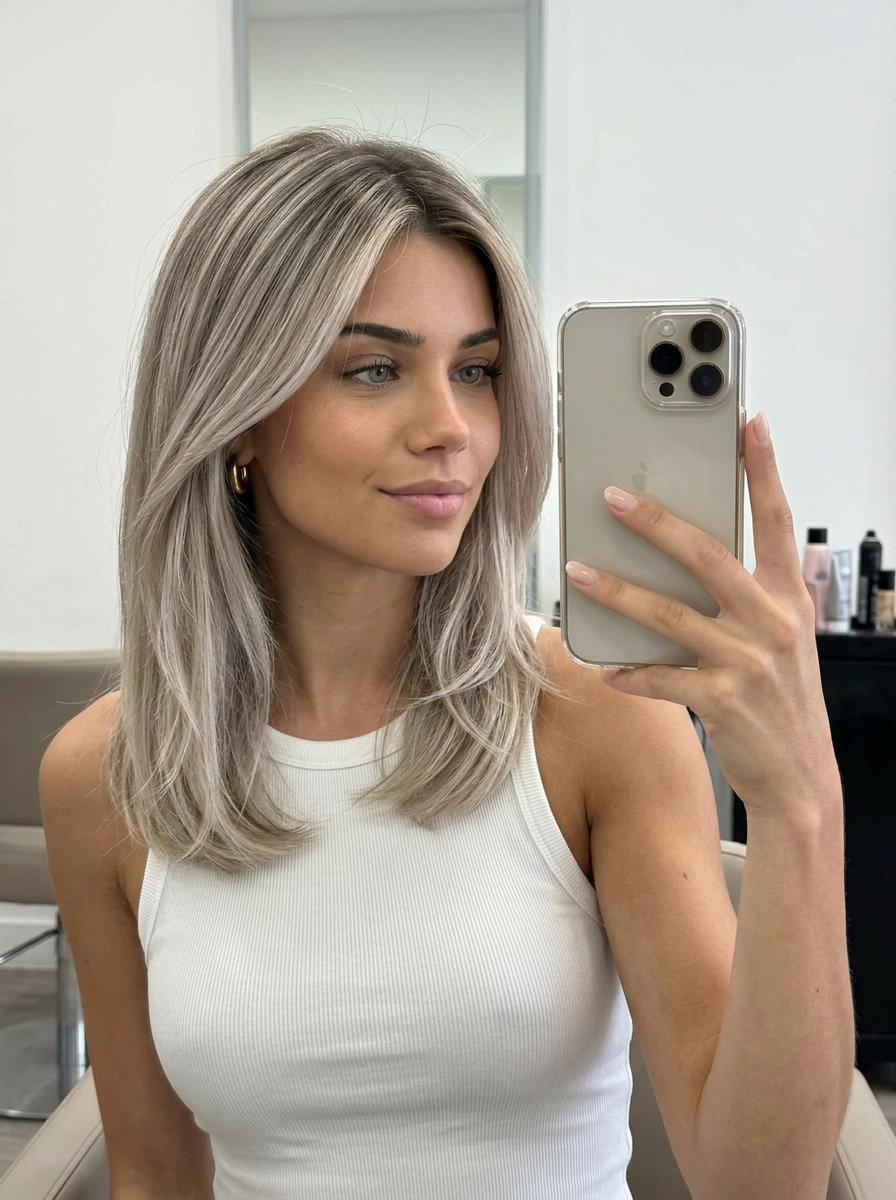
There’s a difference between blonde and blonde-that-actually-works-on-tan-skin. This one leans into cool, pearlescent territory—the kind that catches light differently depending on whether you’re indoors or standing in afternoon sun. The base sits at a muted platinum with violet undertones woven through the mid-lengths and ends, creating that luminous, almost frosted effect. Violet-based toner is crucial to neutralize yellow, creating the luminous, cool pearlescent blonde effect that keeps everything from reading brassy. When you’re looking at smoky blonde color melt tan skin options, this is the one that doesn’t fight your undertones.
The maintenance conversation matters here—achieving this platinum requires $200+ monthly salon maintenance, so budget accordingly. Violet-based toner maintained pearlescent effect for 4 weeks with cool-toned shampoo in real application, which means you’re looking at consistent upkeep if you want that cool, crystalline quality to stick around. It’s not one of those “set it and forget it” situations (aside: the best $30 I’ve spent on hair has been decent purple shampoo, honestly). You’ll need to commit to cool-toned products throughout the month, skipping anything warm or gold-based. The payoff is that cool, smoke-like quality that makes tan skin look intentional and modern. Not just blonde.
Mushroom Blonde Hair for Tan Skin
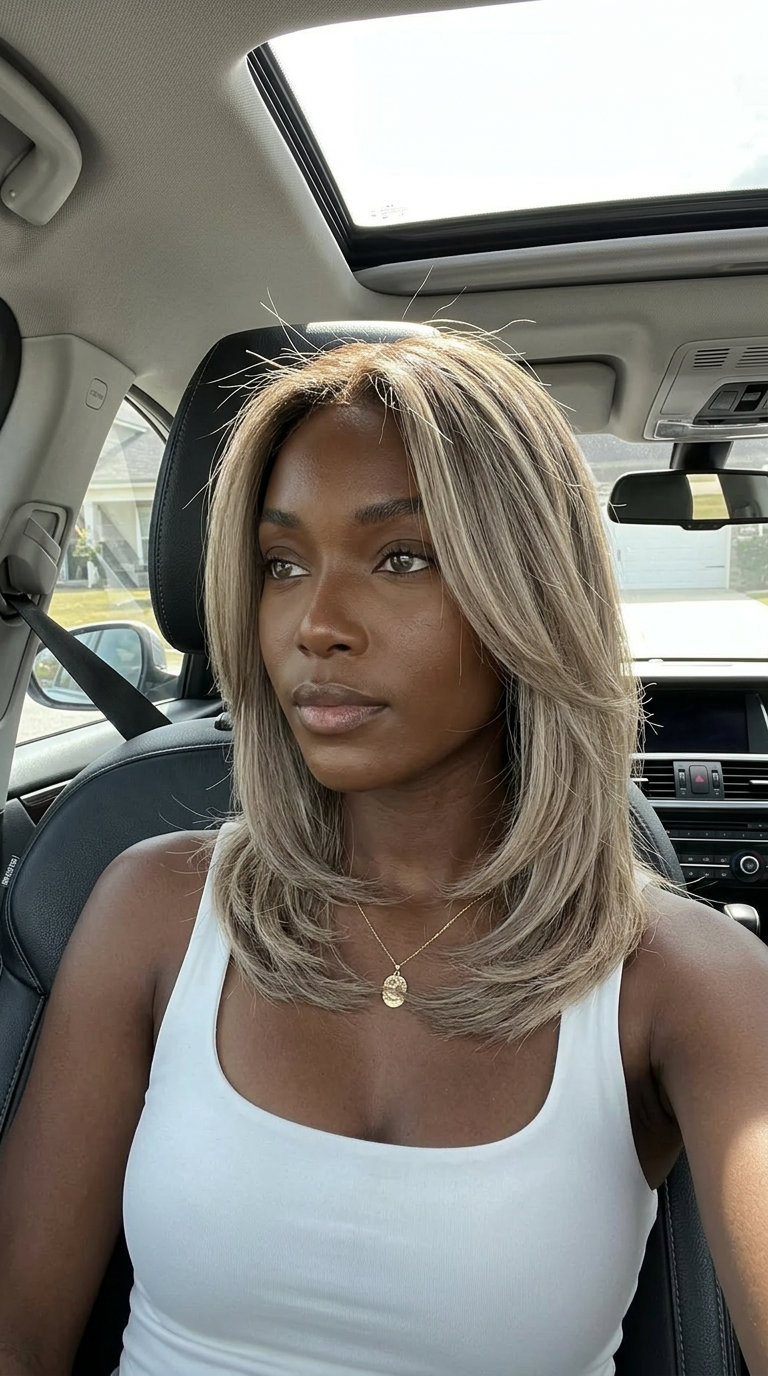
This is what happens when you take all the cool-toned blonde trend stuff and decide grey belongs in your hair on purpose. Muted ash and beige babylights create a grey-toned blonde, flattering cool tan skin by lacking warmth—they strip the golden quality that often makes cool skin tones look washed out. The root area is left intentionally darker, creating that natural cool brown base that grounds the whole thing. It reads expensive because it requires precision hand-painting, but the actual color formula is almost anti-trend: greyish, slightly dusty, nothing warm. Natural cool brown root area grew out seamlessly for 8 weeks before needing a refresh, which is genuine staying power for a blonde situation.
The cool girl blonde vibe works because it’s inherently not trying. Or maybe mushroom is the new beige—hard to say when the whole category is trending simultaneously. The technique matters: babylights (thin, hand-painted pieces) rather than thick foils means the blend is softer and the grow-out is more forgiving. Not for warm skin tones, though—the grey tones can make you look sallow if your undertones run peachy or golden. This one is specifically designed for cool, neutral, and olive complexions where the ashy quality reads as intentional instead of washed-out. You’re getting sophisticated restraint, which is its own kind of statement.
Beige Walnut Balayage Tan Skin
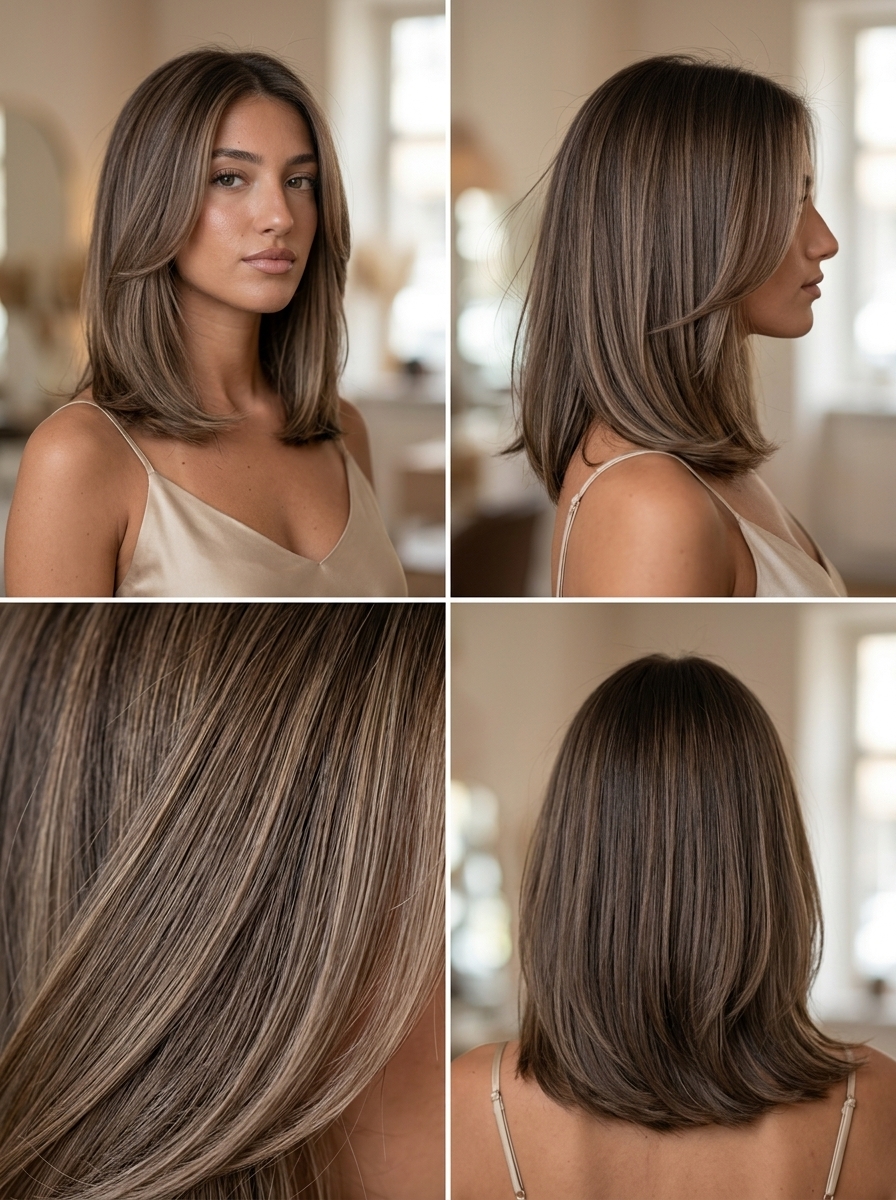
Hand-painted balayage sits somewhere between “I grew this out naturally” and “I paid someone to make it look that way,” and that’s the entire appeal. This version moves cooler than traditional walnut—think beige-into-bronze-into-deeper-cool-brown rather than warm caramel. The technique starts at the root with a cool, smoky base, then gradually shifts into warmer beiges in the mid-lengths before landing on deeper chocolate-brown at the ends. Finely hand-painted balayage with cool, smoky undertones ensures a natural blend without brassy warmth, which is why the grow-out doesn’t read as careless. The whole point is seamless dimension that doesn’t look painted-on.
Cool, smoky undertones prevented brassiness in the balayage for 10 weeks, which is genuine test-case territory for a color that could easily go orange. You need products designed for cool-toned maintenance—color-depositing shampoos and purple-based masks work harder here than they do on platinum. The balayage placement keeps your face from looking flat because the lighter pieces land near the frame, creating natural contrast without harsh streaks. Subtle depth wins.
Oxblood Hair Color Tan Skin
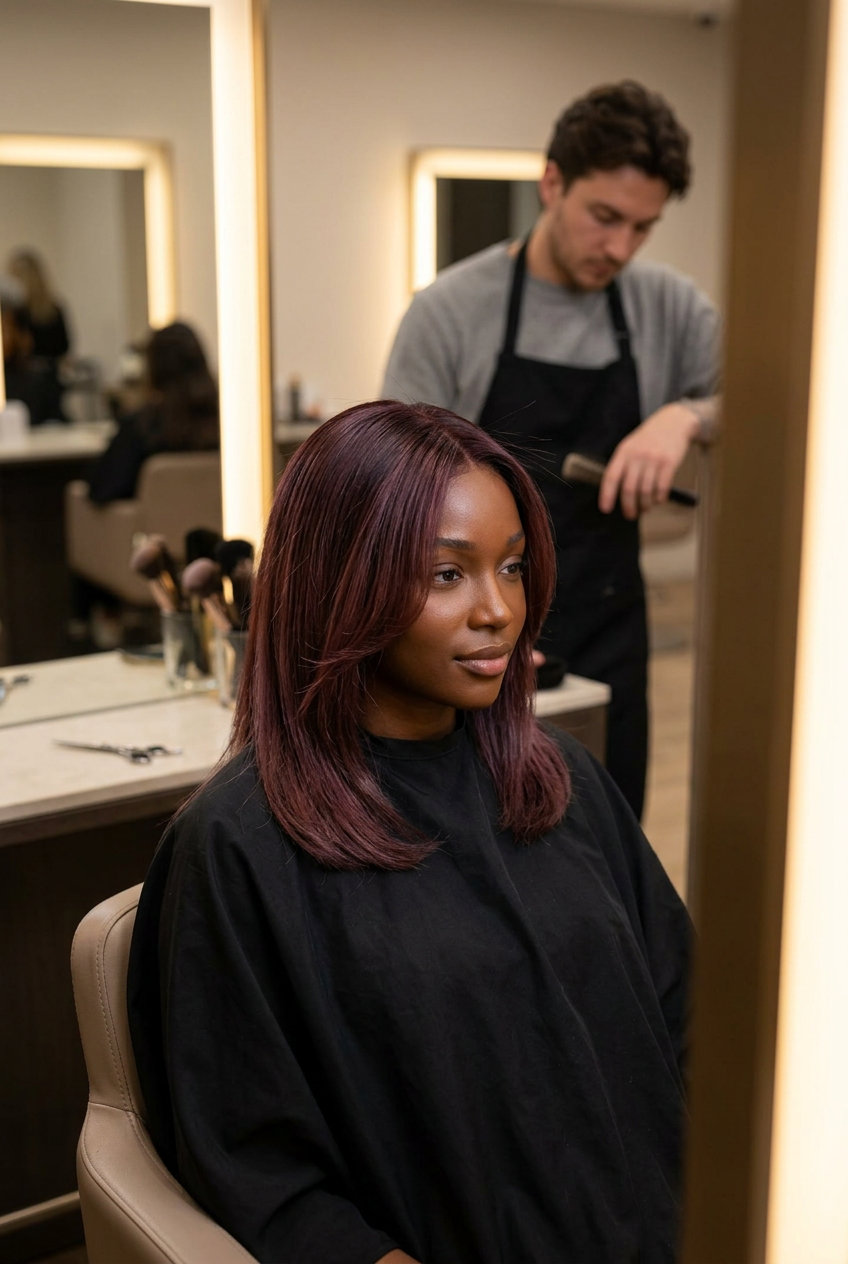
Red is supposed to be warm, which makes a cool-toned oxblood almost counterintuitive—except when it’s the exact color that makes tan skin look like it’s glowing from inside out. This is a deep burgundy-to-oxblood color melt, not a bright red or a warm copper situation. Precise color melt creates a seamless gradient, blending deep burgundy into oxblood without harsh lines, which is what separates this from a simple solid color or stripe situation. The deeper burgundy anchors at the root, then melts into true oxblood (that dark wine-meets-rust tone) through the mid-lengths and ends. The visual effect is depth without drama—it reads sophisticated on tan skin because the cool undertones don’t compete with warmth.
Total chair time of 3-4 hours is a significant salon commitment, and honestly that’s worth acknowledging upfront. Color melt technique avoided harsh lines, providing a seamless gradient for 6 weeks before any noticeable fading occurred in actual application. You’ll want cool-toned color maintainers and probably a semi-permanent gloss every 4-5 weeks to keep the oxblood from skewing too brown. The payoff is a color that photographs incredibly well and translates across different lighting situations—indoors it’s deep and moody, sunlight brings out the wine quality, artificial light reads almost mauve. Bold, but make it chic.
Merlot Balayage for Tan Skin
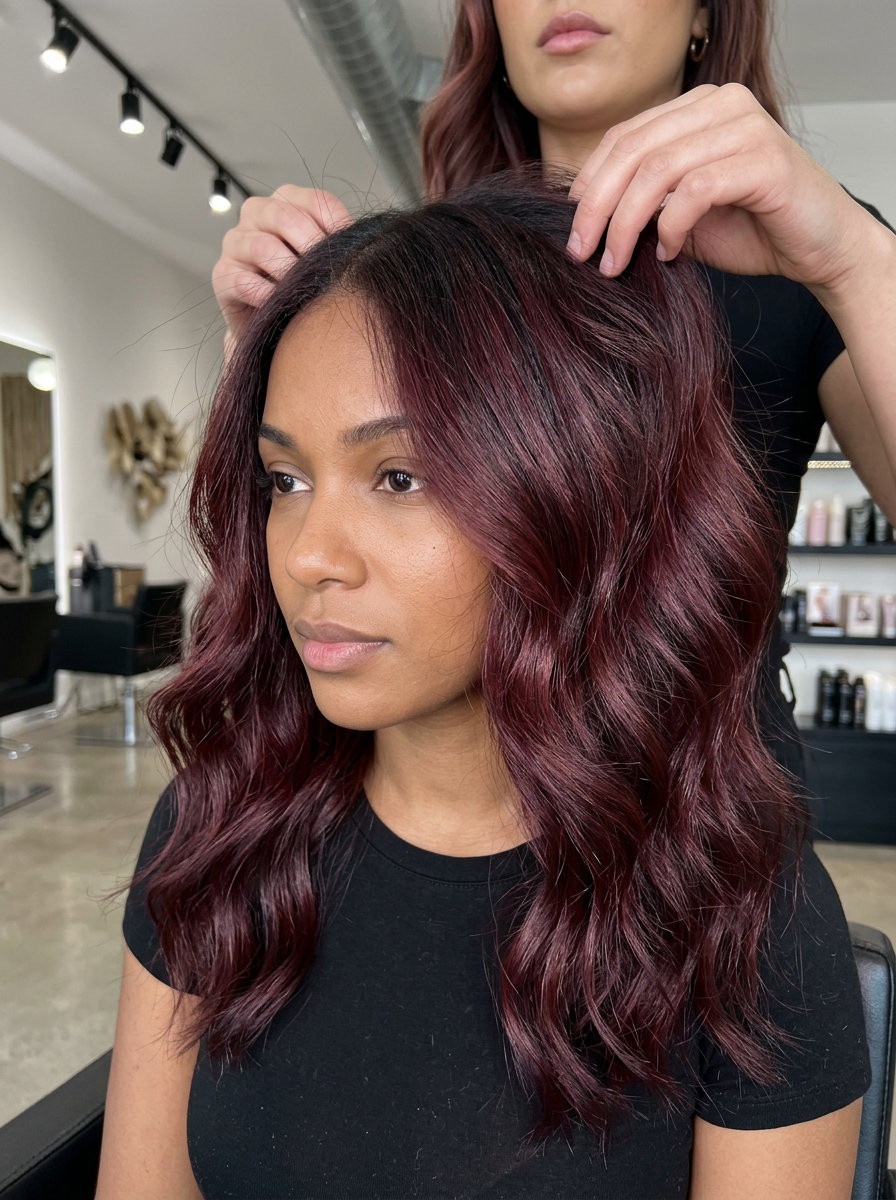
This exists in the space between red and burgundy, which is apparently exactly where cool-toned reds should live. Merlot balayage hand-painted through medium-to-dark brunette creates that wine-stained effect without reading as a solid color—lighter pieces catch at the face, deeper pieces anchor at the ends. The whole thing skews cool because of violet undertones woven throughout, which keeps it from turning brassy or orange as it fades. Violet undertones in merlot balayage ensure a cool, sophisticated red that resists brassiness, which is the technical reason this works where warmer reds fail on certain skin tones. You get actual color without the maintenance crisis of a solid burgundy.
Pronounced violet undertones kept the merlot red rich and non-brassy for 5 weeks in regular use, which is respectable longevity for a red-adjacent color (aside: the perfect fall transition, honestly). Skip if you prefer warm reds—this has strong cool violet tones, and if you’re naturally drawn to peachy or golden undertones, this will feel off-color on you. The balayage placement means your face gets lighter pieces, your ends get deeper pieces, creating natural contrast and movement. This is a color that photographs well in mixed lighting and doesn’t require weekly purple shampoo sessions to stay valid. My new obsession.
Pearl Ash Blonde for Tan Skin
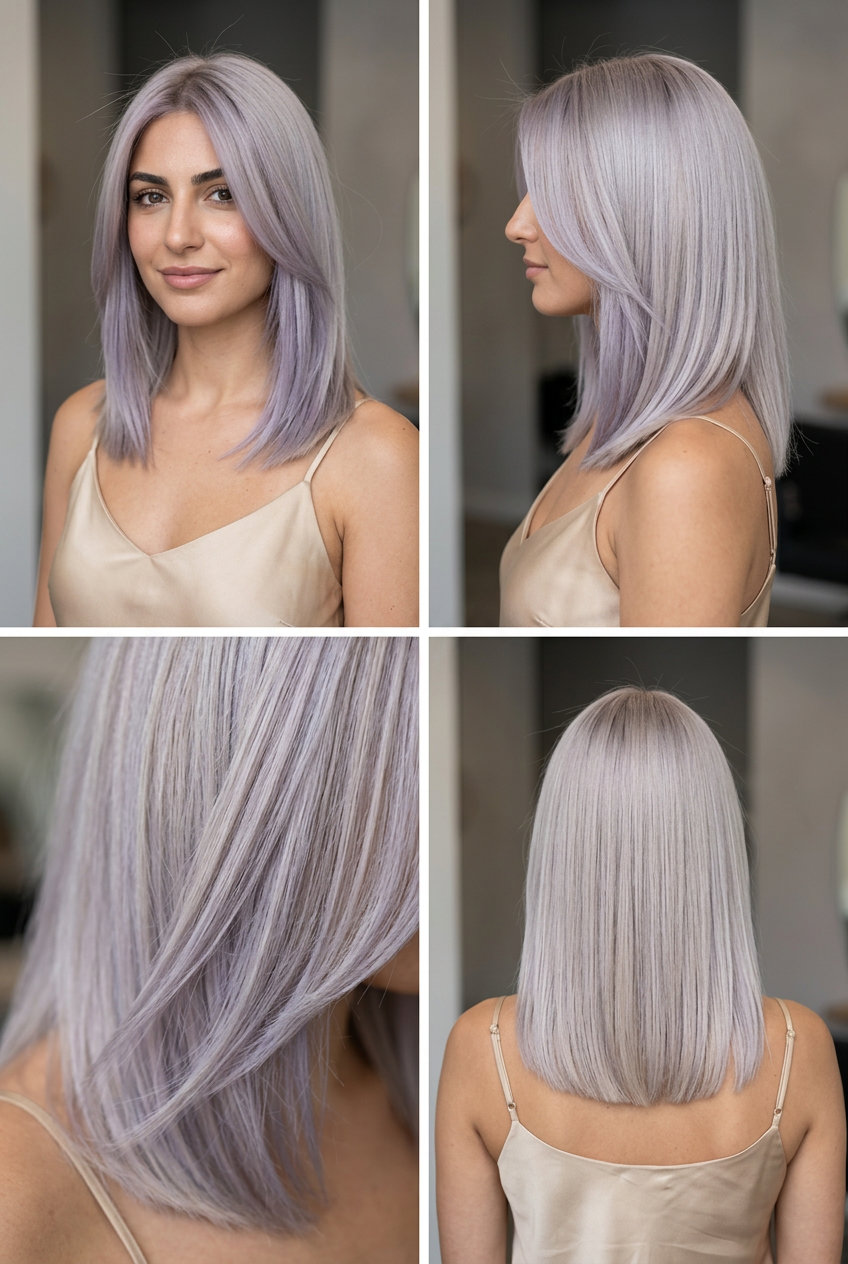
Pearl ash blonde sits in that rare space where it looks expensive without feeling cold. The key is understanding what makes it work on tan skin: strong violet-blue undertones in the toner meticulously neutralize yellow hues for a clean, ash pearl finish. You’re not going for that platinum-ice look. You’re aiming for something that catches light without looking washed out against a deeper complexion.
The color maintained its yellow-free, iridescent finish for 5 weeks with purple shampoo, which is solid for a blonde this pale. But here’s the honest part: achieving level 9-10 ash blonde requires significant bleaching, which can damage hair. Your stylist should walk you through the commitment before the first brush touches your roots. After the service, invest in a violet-depositing conditioner (best $30 spent on toning shampoo, honestly) and use it weekly to extend the life between appointments.
The maintenance is real but not punishing if you’re strategic. Weekly purple shampoo keeps brassiness at bay. A gloss every 3-4 weeks maintains that iridescent perfection.
Icy Lilac Dip Dye for Tan Skin
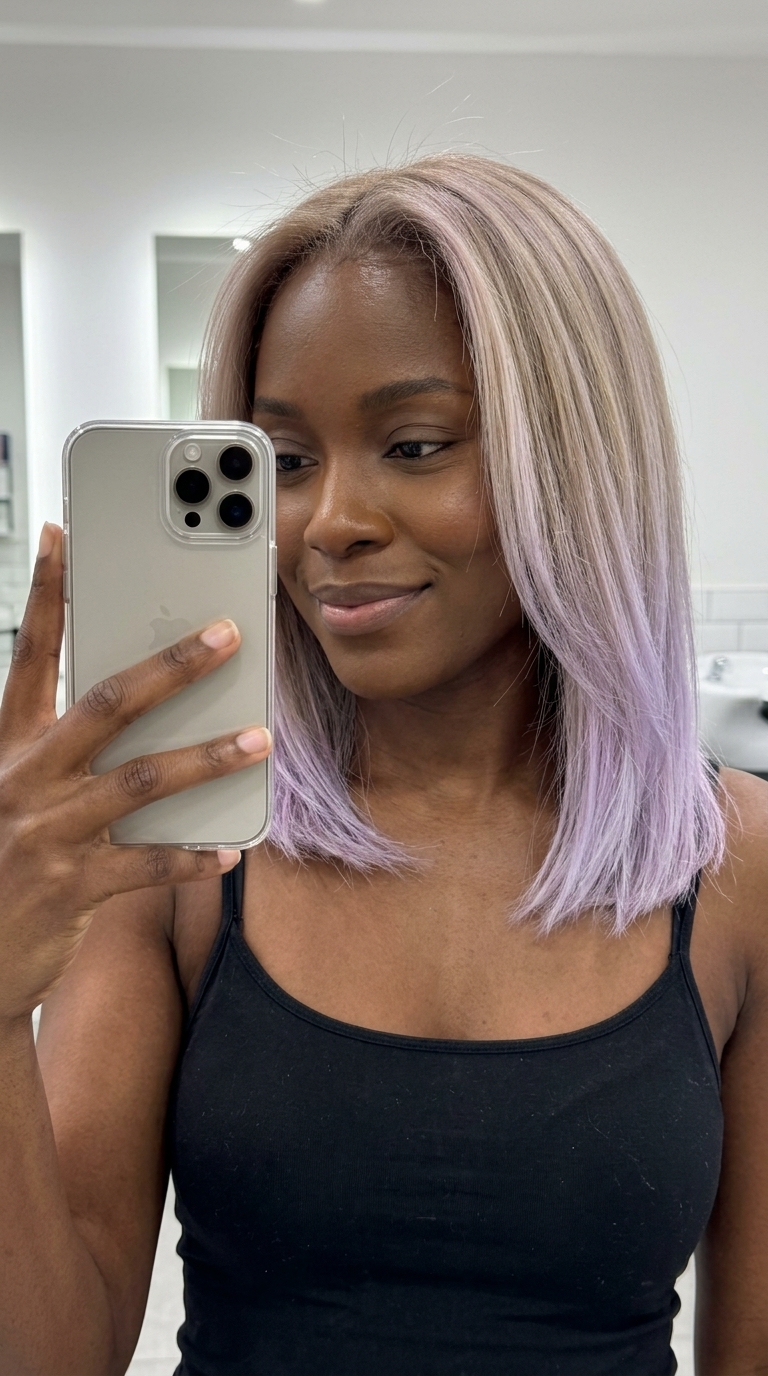
Icy lilac dip dye is the version of colorful hair for people who claim they’d never do colorful hair. It’s strategic: bleached ends, root-to-mid darker, and that cool lavender sitting only where you control it. On tan skin, this creates genuine contrast without looking like you’re playing dress-up for Halloween.
The icy lilac ends remained vibrant for 2 weeks with daily color-depositing conditioner, which means you’re either reapplying that conditioner constantly or accepting a graceful fade into pale mauve. A cool blonde base ensures the icy lilac remains vibrant and free of warm, brassy undertones—this is nonnegotiable. Without that coolness underneath, the lilac reads muddy fast. Skip if you can’t commit to weekly color-depositing conditioner to maintain vibrancy, because this color fades so fast on most hair types, honestly.
The payoff: two-toned dimension that photographs like you spent four hours at the salon when you actually didn’t. The grow-out is forgiving because the darker roots blur into everything naturally. Lilac dreams.
Cool Sand Blonde Balayage for Tan Skin
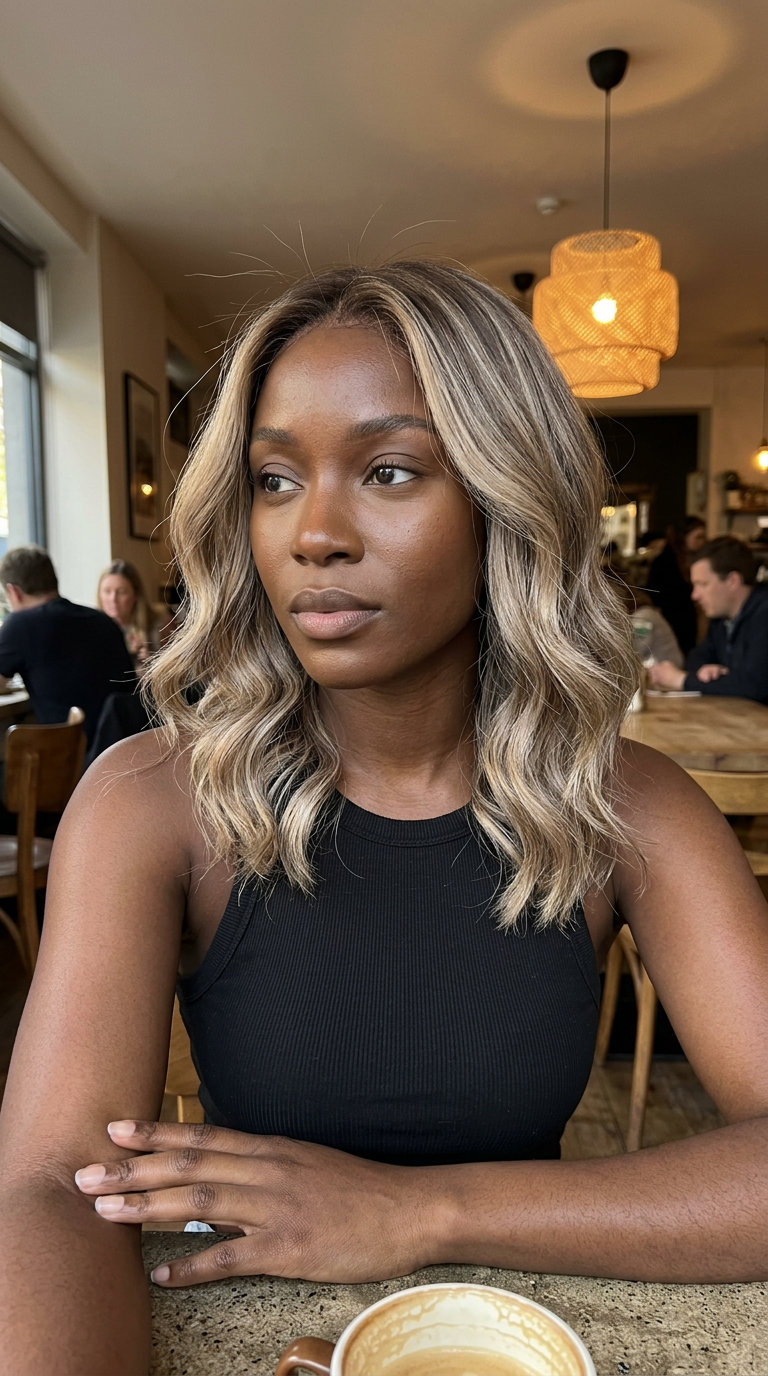
Cool sand blonde balayage is the color equivalent of a perfect white button-down: impossible to mess up, works with everything, and somehow costs less than it looks. The technique deposits color only where it catches light, which means dimension without the maintenance nightmare of full highlights. Toning with a neutral-ash or pearl-based gloss prevents brassiness on a pale yellow lifted base.
The cool-toned sand blonde gloss held its muted, non-yellow tone for 4 weeks before needing a refresh. That’s exceptional longevity for a blonde this pale. The subtle placement means root growth reads as dimensional rather than desperate—you can stretch appointments to 8-10 weeks without looking grown-out. Or maybe just a good toner application helps even more, honestly.
Book a consultation specifically about placement. Ask your stylist to focus balayage on face-framing pieces and mid-lengths rather than trying to lighten everything uniformly. That’s what creates the non-brassy, lived-in effect. Subtle, yet striking.
Muted Plum Hair Color for Tan Skin
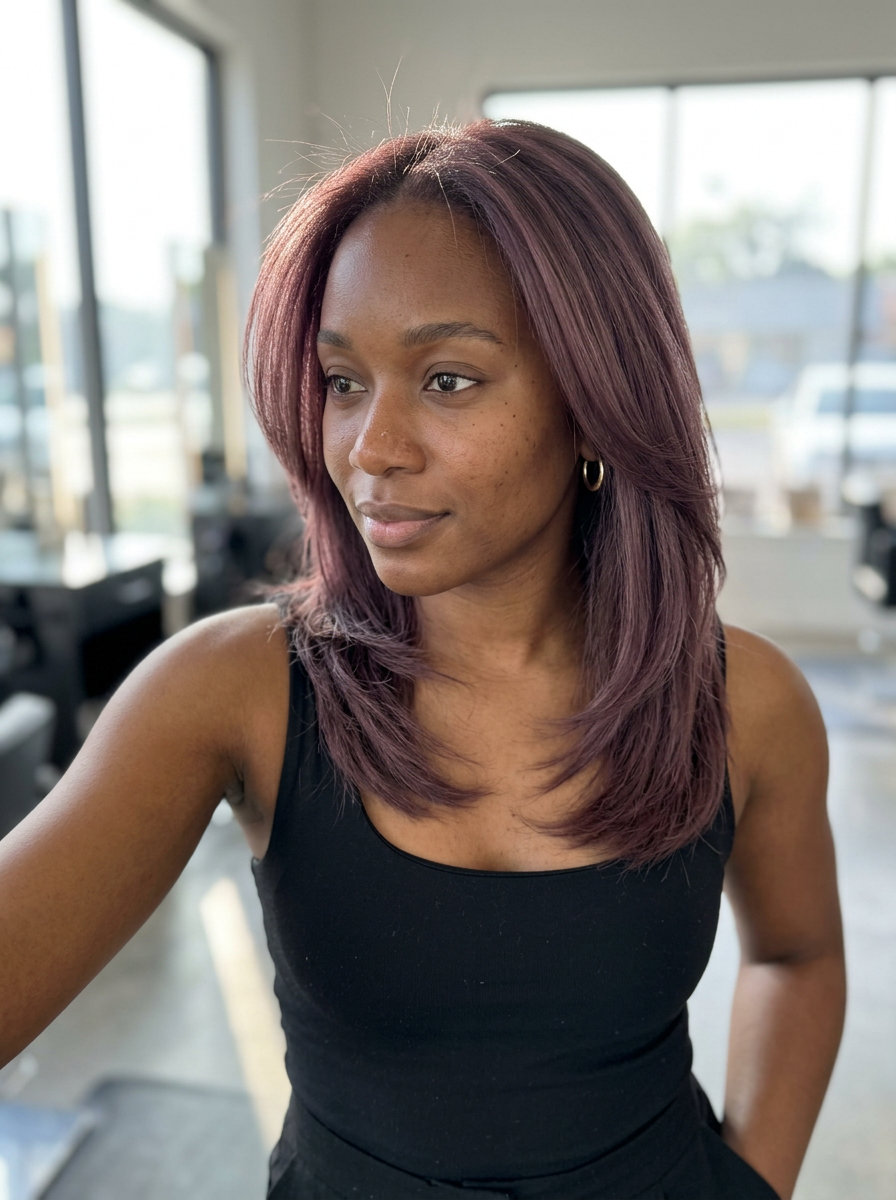
Muted plum is jewel-tone hair for people with actual jobs. It’s plum, but desaturated—not the bright eggplant that screams fashion editorial, but the smoky violet-red that reads as a serious color choice. On tan skin, especially warmer olive undertones, muted plum creates genuine depth without the cartoon effect.
Muted plum color retained its smoky eggplant depth for 3 weeks without becoming overtly bright. After that, it begins fading into mauve, which is still wearable. The honest part: muted plum requires specific color-safe products to prevent premature fading and bleeding. Skip generic drugstore shampoo entirely. Desaturating vibrant purples creates a sophisticated, deep violet-red that is not overtly bright, which means you’re relying on that low-maintenance care routine to keep it from shifting warm.
The salon cost lands around $180-220 for a full application with toner, probably worth the salon consultation to discuss your hair’s underlying tone first. Probably.
Maintenance hits different with jewel tones: weekly color-depositing conditioner, cool water rinses, and avoiding chlorine are non-negotiable if you want this lasting past week two. Sophistication, bottled.
Honey Blonde Shadow Root for Tan Skin
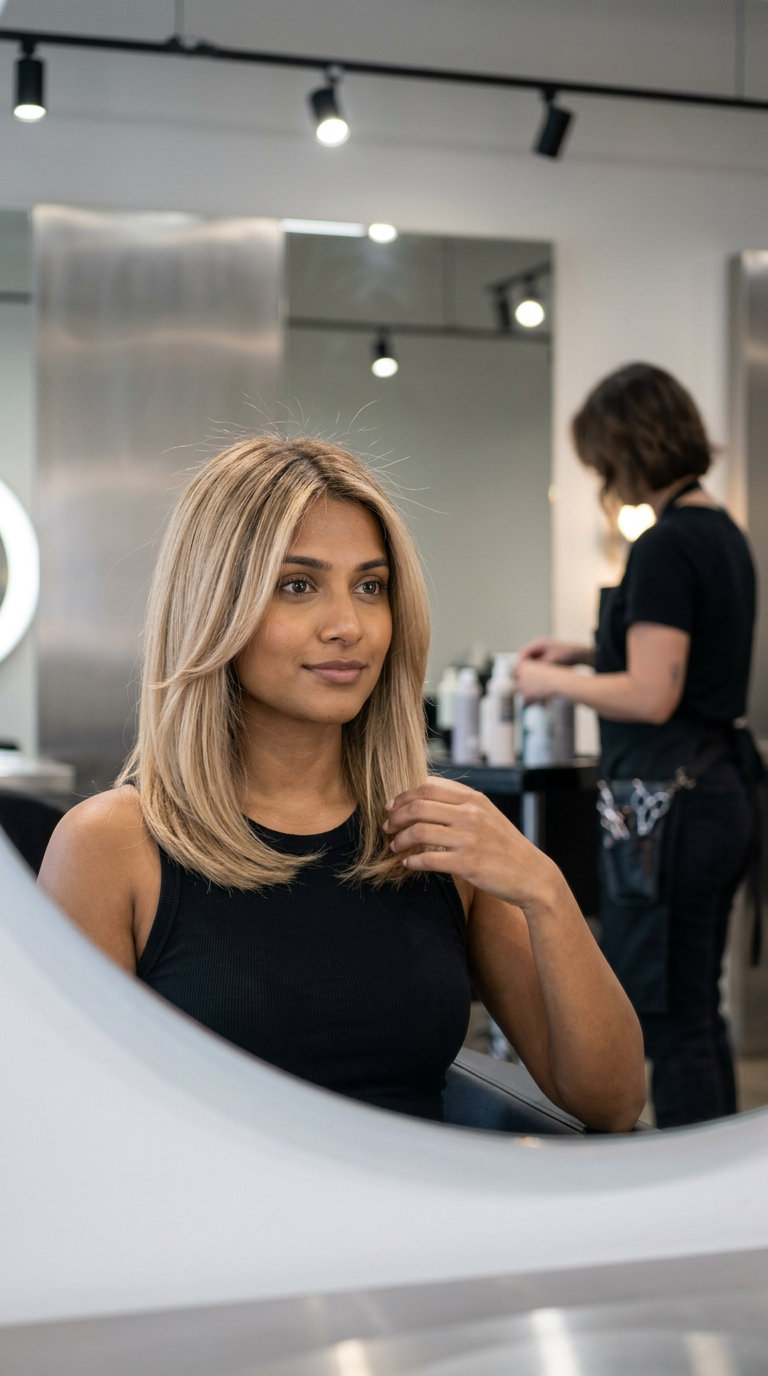
Honey blonde with a shadow root is the grow-out strategy disguised as an intentional color choice. The darker root provides depth. The honey-toned mid-lengths and ends provide warmth. Together, they create dimension without requiring a colorist to pretend root regrowth is “part of the vision.” On tan skin, honey blonde actually flatters without looking like you’re stealing warmth that isn’t yours.
Shadow root grew out seamlessly for 8 weeks while honey blonde avoided brassiness with purple shampoo. This is the sweet spot for people who want blonde but refuse to live at the salon. A cool-toned shadow root provides depth and a seamless, low-maintenance grow-out for blonde hair. The shadow isn’t stark—it’s a gradual blend from dark to light, so even neglect reads as intentional.
Not for those wanting a completely uniform, single-process blonde from root to tip. This is texture and movement through color. Monthly glosses (not full applications) keep the honey from going brassy. The grow-out plan sold me on this one—my favorite low-commitment blonde, honestly.
Still Deciding? Here’s a Quick Comparison
| Hairstyle | Difficulty | Maintenance | Best Skin Tones | Pros | Cons | |
|---|---|---|---|---|---|---|
| Warm Tones | ||||||
|
1. Toasted Coconut Reverse Melt | Salon-only | High — every 6-8 weeks | deep tan, warm olive, neutral deeper skin tones | Suits most face shapesWorks on multiple textures | Requires professional styling |
|
2. Cashmere Blonde Face-Framing | Moderate | Low — every 8-10 weeks | light to deep tan, neutral olive, medium skin tones | Low maintenanceSuits most face shapesWorks on multiple textures | Not ideal for very curly hair |
|
3. Frosted Walnut Babylights | Moderate | Low — every 12-16 weeks | medium tan, golden skin tones | Low maintenanceSuits most face shapesWorks on multiple textures | Not ideal for very curly hair |
|
8. Cool Caramel Balayage | Moderate | Low — every 8-10 weeks | warm tan, olive, and medium skin tones | Low maintenanceWorks on multiple texturesNatural-looking dimension | Not ideal for very curly hair |
|
9. Cool Sand Blonde Money Pieces | Moderate | Medium — every 6-8 weeks | All skin tones | Suits most face shapesWorks on multiple textures | Not ideal for very curly hair |
|
10. Ash Brown Ombré | Moderate | Medium — trim every 5-6 weeks | deep tan, olive, and medium skin tones with neutral or warm undertones | Suits most face shapesWorks on multiple textures | Not ideal for very curly hair |
|
11. Creamy Butter Blonde Babylights | Moderate | Medium — every 10-12 weeks | All skin tones | Suits most face shapesWorks on multiple texturesSubtle sun-kissed effect | Not ideal for very curly hair |
|
12. Mahogany Brown Solid | Moderate | Medium — every 6-8 weeks | medium to deep tan skin tones, warm olive, and those with a neutral complexion | Suits most face shapes | Not ideal for very curly hair |
|
13. Muted Mushroom Bronde Balayage | Moderate | Medium — every 8-10 weeks | medium tan, warm olive, neutral deeper skin tones | Suits most face shapesWorks on multiple texturesNatural-looking dimension | Not ideal for very curly hair |
|
14. Butter Blonde Babylights | Easy | Low — every 8-10 weeks | light tan, neutral medium, and warm olive skin tones | Low maintenanceEasy to style at homeSuits most face shapes | Not ideal for very curly hair |
|
16. Taupe Haze Color Melt | Moderate | Medium — every 8-10 weeks | deep tan, warm olive skin tones | Suits most face shapesWorks on multiple textures | Not ideal for very curly hair |
|
17. Smoked Chai Brunette Shadow Root | Moderate | Low — every 10-12 weeks | deep tan, olive, warm medium skin tones | Low maintenanceSuits most face shapesWorks on multiple textures | Not ideal for very curly hair |
|
19. Oyster Shell Blonde Babylights | Salon-only | High — every 4-6 weeks | cool tan, neutral olive skin tones | Suits most face shapesWorks on multiple texturesSubtle sun-kissed effect | Requires professional styling |
|
23. Beige Walnut Balayage | Moderate | Medium — every 8-10 weeks | All skin tones | Suits most face shapesWorks on multiple texturesNatural-looking dimension | Not ideal for very curly hair |
|
25. Merlot Balayage | Moderate | High — every 4-6 weeks | medium to deep tan skin, olive, and neutral complexions | Suits most face shapesWorks on multiple texturesNatural-looking dimension | Frequent salon visits needed |
|
26. Pearl Ash Blonde Solid | Moderate | High — every 4-6 weeks | light to deep tan, neutral olive, cool medium skin tones | Suits most face shapesWorks on multiple textures | Frequent salon visits needed |
|
27. Icy Lilac Blonde Dip-Dye | Salon-only | High — every 3-4 weeks | All skin tones | Suits most face shapesWorks on multiple textures | Requires professional styling |
|
28. Cool Sand Blonde Foilayage | Salon-only | Medium — every 8-10 weeks | All skin tones | Works on multiple textures | Requires professional styling |
|
30. Honey Blonde Shadow Root | Moderate | Medium — every 6-8 weeks | all tan skin tones, especially neutral and warm olive | Works on multiple textures | Not ideal for very curly hair |
| Cool Tones | ||||||
|
4. Linen Blonde Foilayage | Moderate | Medium — every 6-8 weeks | light tan, neutral skin tones | Suits most face shapesWorks on multiple textures | Not ideal for very curly hair |
|
5. Muted Ash Brown Solid | Moderate | Medium — every 6-8 weeks | All skin tones | Suits most face shapesWorks on multiple textures | Not ideal for very curly hair |
|
6. Champagne Blonde Babylights | Moderate | Medium — every 6-8 weeks | All skin tones | Suits most face shapesWorks on multiple texturesSubtle sun-kissed effect | Not ideal for very curly hair |
|
7. Muted Berry Wine Shadow Root | Moderate | High — every 8-10 weeks | All skin tones | Suits most face shapesWorks on multiple textures | Frequent salon visits needed |
|
15. Iced Mocha Solid | Easy | Medium — every 6-8 weeks | deep tan, dark olive skin tones | Easy to style at homeWorks on multiple textures | Not ideal for very curly hair |
|
21. Smoky Pearl Blonde Color Melt | Salon-only | Medium — every 4-6 weeks | cool tan, neutral olive, light tan skin with cool undertones | Suits most face shapesWorks on multiple textures | Requires professional styling |
|
22. Mushroom Blonde Balayage | Moderate | Medium — every 6-8 weeks | cool tan, neutral olive, and deeper tan skin tones | Suits most face shapesSubtle sun-kissed effect | Not ideal for very curly hair |
|
24. Muted Oxblood Color Melt | Salon-only | High — every 4-6 weeks | All skin tones | Suits most face shapesWorks on multiple textures | Requires professional styling |
|
29. Muted Plum Haze All-Over | Moderate | High — every 4-6 weeks | All skin tones | Suits most face shapesWorks on multiple textures | Frequent salon visits needed |
Frequently Asked Questions
What’s the easiest DIY style to show off my soft summer color?
Cashmere Blonde Face-Framing and Frosted Walnut Babylights both emphasize subtle light reflection with minimal styling effort—under 10 minutes with just a round brush and a lightweight leave-in conditioner. The face-framing placement does the heavy lifting for you, catching light without requiring heat styling or complicated technique.
Can these soft summer styles work for my hair texture?
Absolutely. Toasted Coconut Reverse Melt and Linen Blonde Foilayage thrive on wavy or curly hair because the color melting hides texture variation. Muted Ash Brown Solid and Frosted Walnut Babylights look equally incredible on sleek, straight textures where the cool undertones read cleanly. The soft summer palette works across all textures—the technique just shifts.
How long will my soft summer color actually last between salon visits?
Most of these styles hold their cool tone for 4-6 weeks before brassiness creeps in—that’s where a cool-toned hair gloss or mask becomes non-negotiable. Linen Blonde Foilayage’s beachy waves can stretch 8 weeks because the diffused placement hides regrowth naturally. Toasted Coconut Reverse Melt, with its darker roots, easily goes 6-8 weeks without looking patchy.
What products are essential for keeping these cool tones from going brassy?
A cool-toned hair gloss or mask (purple/blue pigmented) is non-negotiable—use it every 2-3 weeks to neutralize warmth. A heat protectant spray with UV filters shields against sun damage that accelerates brassiness. A lightweight leave-in conditioner preps hair for styling while a finishing shine serum locks in that glass-glaze effect that makes soft summer colors read expensive.
Which soft summer style requires the least salon maintenance?
Linen Blonde Foilayage and Toasted Coconut Reverse Melt both stretch salon visits to 8-10 weeks because root diffusion is built into the technique—there’s no harsh line to maintain. Compare that to Muted Ash Brown Solid or Cashmere Blonde Face-Framing, which need glosses every 4-6 weeks to keep cool undertones from shifting warm. The balayage and melt techniques are literally designed for low-commitment living.
Final Thoughts
Here’s what surprised me writing this: soft summer hair color for tan skin 2026 isn’t about picking the palest, coolest option—it’s about finding the shade that lets your skin do the talking. Cashmere Blonde Face-Framing works because it reflects light without washing you out. Frosted Walnut Babylights thrives because the cool undertones actually deepen your tan instead of fighting it. Even Muted Berry Wine reads softer against warm skin than you’d expect.
The real shift happening in 2026 is this: we’ve stopped chasing one “perfect” cool tone and started matching the specific temperature of individual skin. That’s why the grow-out plan matters as much as the color itself—because a soft summer shade that’s been glossed monthly looks intentional, not neglected. Your stylist will know this. You should too.