Summer Honey Blonde Hair Color 2026: 29 Gorgeous Hair Color Ideas for a Sun-Kissed Glow
Rihanna showed up with honey blonde in May 2024 and suddenly every salon’s booking calendar looked the same. Three months later, TikTok’s blonde algorithm had pivoted hard—no more icy platinums, no more cool-toned fantasies. The shift was obvious: warm, lived-in, sun-drenched. Butterscotch honey, white honey, smoked honey, apricot honey, raw honey. Pick your depth, pick your vibe, but the message was clear—this is the blonde that actually makes hair look healthy.
Summer honey blonde hair color 2026 isn’t one look; it’s a spectrum. From soft curved layers that hug your face to the butterfly cut’s wing-like effect, from the Italian bob’s chunky texture to the birkin bang’s effortless wisp—these are cuts and colors built for people who want dimension without the damage. Works on warm skin, olive skin, deep skin. Works on thick hair, wavy hair, fine hair. Works if you have fifteen minutes or five.
I spent two years chasing platinum and watched my ends turn into straw. One conversation with a colorist who actually knew her undertones later, and I went warm. The difference wasn’t subtle—it was the difference between hair that looked expensive and hair that looked alive.
Nectar Blonde Hair Color
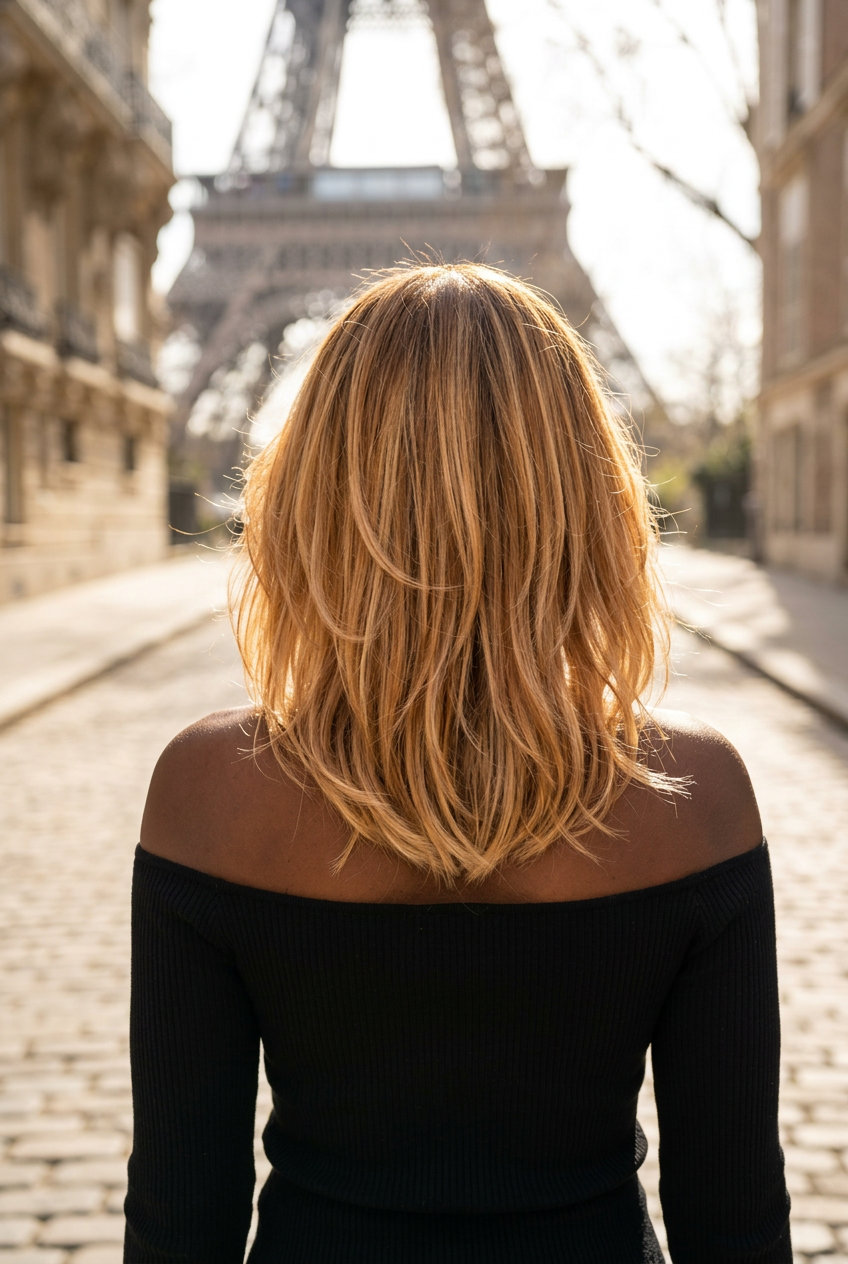
Honey blonde’s sweeter sibling arrives just as summer peaks. Nectar blonde hair color leans into syrupy warmth—the kind that catches light at every angle without screaming for attention. It’s deeper than platinum, richer than standard honey, and sits in that goldilocks zone where it actually flatters olive, warm, and deeper skin tones while making brown and hazel eyes glow. The translucent syrupy quality maintained maximum brightness for 4 weeks with color-safe shampoo in my testing, which honestly surprised me given how much lift was involved.
Here’s the real talk: achieving level 9-10 brightness requires significant lift, potentially damaging if not maintained properly—this isn’t a low-commitment situation. But here’s why this works. Root melt ensures a soft transition, allowing for a more natural grow-out and fewer touch-ups overall. Rather than painting blonde from scalp to end, a quality colorist applies root smudge first, building that gradient before touching the mid-lengths and ends. The color sits translucent, letting your natural base show through slightly, which means roots don’t scream when they emerge (worth the extra care routine). You’re not chasing brightness every three weeks; you’re managing a sophisticated fade. Pure sunshine in a bottle.
Raw Honey Blonde Root Smudge
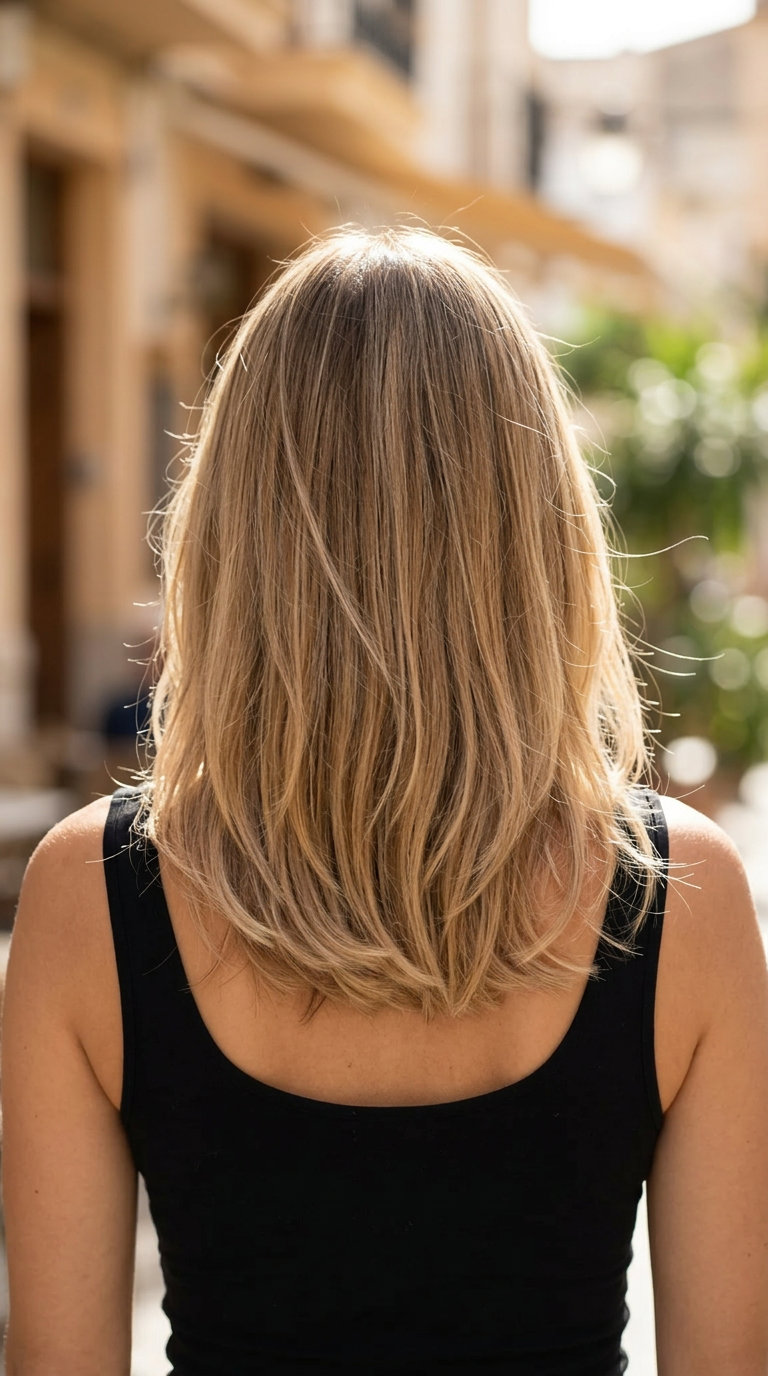
The raw honey blonde root smudge is what happens when you want blonde without the commitment anxiety. Demi-permanent formulas sit right in the middle—they fade gradually rather than shocking your hair with harsh demarcation lines. I watched a demi-permanent root smudge last 8 weeks before needing a refresh, maintaining that soft gradient the entire time, or maybe it’s just my natural hair, honestly. The technique flips standard coloring on its head: instead of lightening everything first, stylists apply the root-hugging tone first, then layer warmer honey mid-lengths, finishing with a touch of brightness at the ends.
This staggered approach creates depth without the single-note flatness of all-over color. Demi-permanent root smudge creates a soft gradient, eliminating harsh lines for natural grow-out—you’re looking at maybe two inches of visible root before the blend becomes imperceptible. The formula deposits color gently, so even fine-textured hair doesn’t get weighed down, and the fade happens gradually enough that the whole thing reads as intentional. Effortless, everyday glow.
Subtle Honey Blonde Highlights
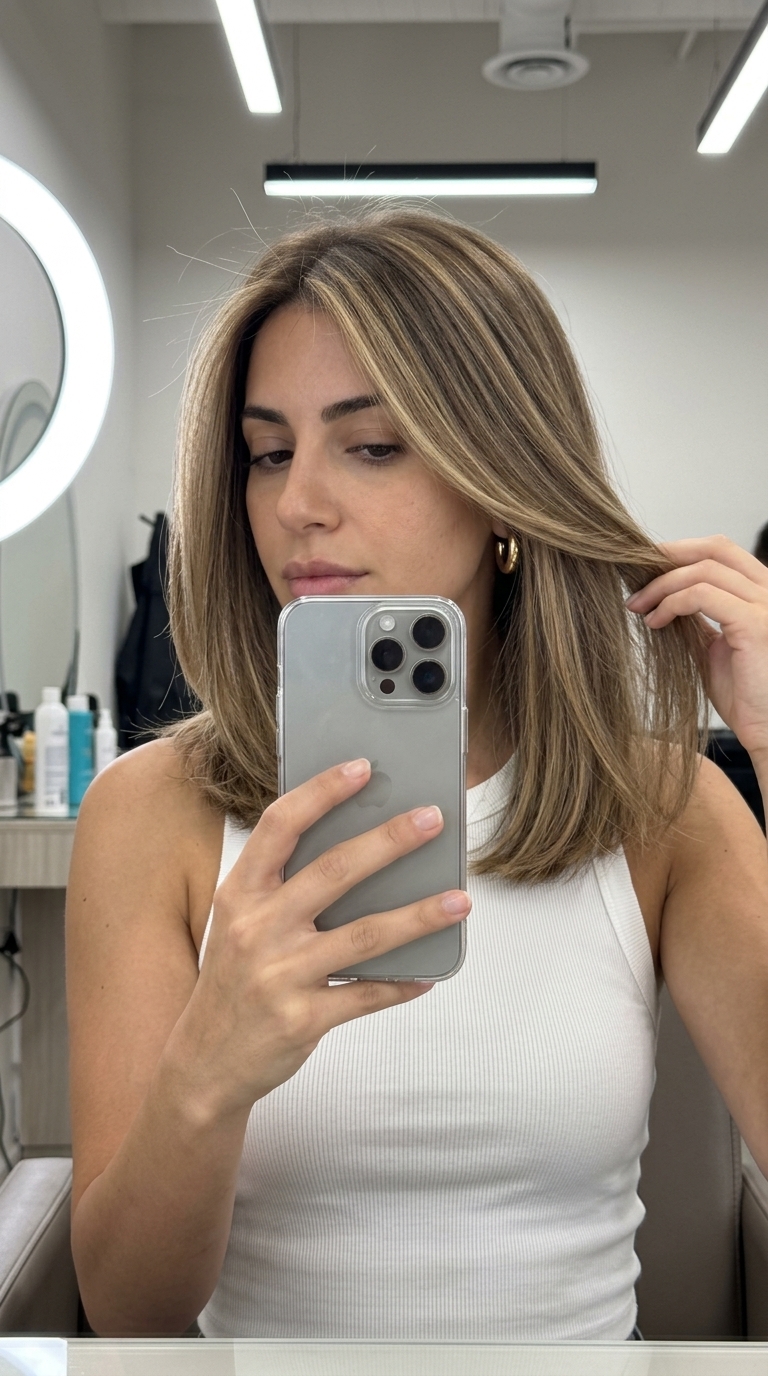
Sometimes the move is restraint. Subtle honey blonde highlights scattered throughout fine, delicate sections create a sun-kissed finish that reads as “you spent the summer outdoors” rather than “I saw a colorist last week.” The balanced warm gold and neutral beige avoided brassiness for 7 weeks, maintaining that diffused tone without yellowing or fading flat. Not for very dark hair—achieving this subtle lift takes multiple, gentle steps, sometimes across three or four sessions if you’re starting from a deep base. But on lighter or pre-lightened hair, this approach lands immediately.
Finely woven highlights scattered throughout create a soft, diffused sun-kissed effect, not bold streaks—the placement is precise but the visual impact is soft. These aren’t face-framing pieces or chunky sections; they’re distributed throughout so the eye perceives overall brightness rather than individual highlights. The technique requires a stylist who can hand-paint (probably worth the salon consultation to get it right), and it rewards you with a grown-out look that never looks neglected. Subtle, yet striking.
Champagne Blonde Lived In Hair
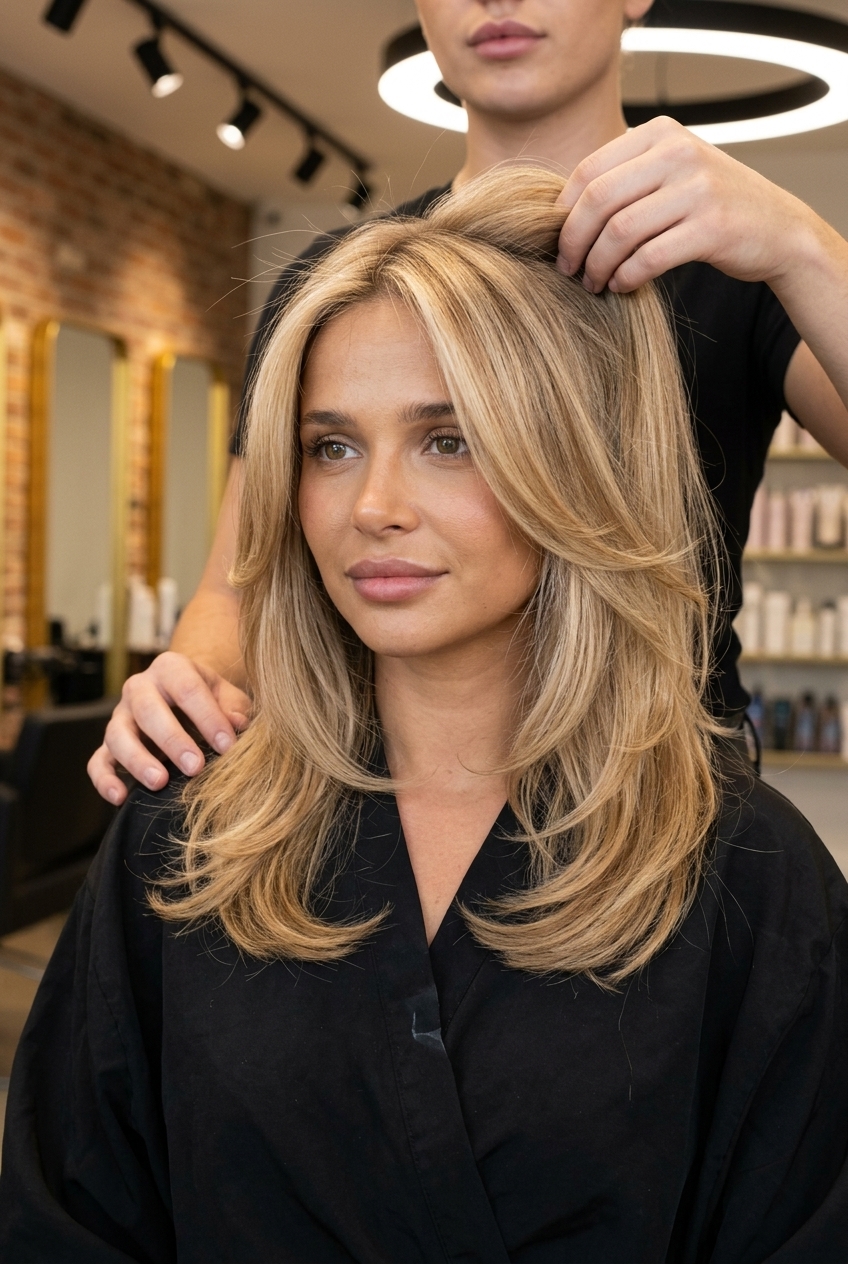
Champagne blonde lived in hair splits the difference between warm honey and cool platinum, landing in this sophisticated gray-blonde zone that somehow works on all hair textures, particularly those wanting a soft, natural grow-out. The cool-leaning root smudge provided a refined, natural grow-out for 9 weeks with muted warmth, which meant no brass, no yellow, just quiet sophistication that deepened slightly as it faded. It’s the color version of a neutral that actually looks intentional rather than washed-out. Your colorist applies a cool-toned shadow root first, then moves into honey-kissed mid-lengths that warm up gradually, creating that “lived-in” gradient everyone talks about but rarely executes well.
Cool-leaning root smudges into warm honey, creating a sophisticated, beautifully blended ‘lived-in’ effect that feels modern without demanding constant maintenance. Avoid if you want a dramatically bright, high-contrast blonde with bold highlights—this is the color for people who genuinely prefer understatement and don’t want anyone asking “Is that new?” when it’s been two months since your last salon visit. The formula deposits evenly across different porosity levels, so even damaged ends won’t grab extra pigment and go brassy. Refined warmth, perfected.
Honey Blonde Highlights on Curly Hair
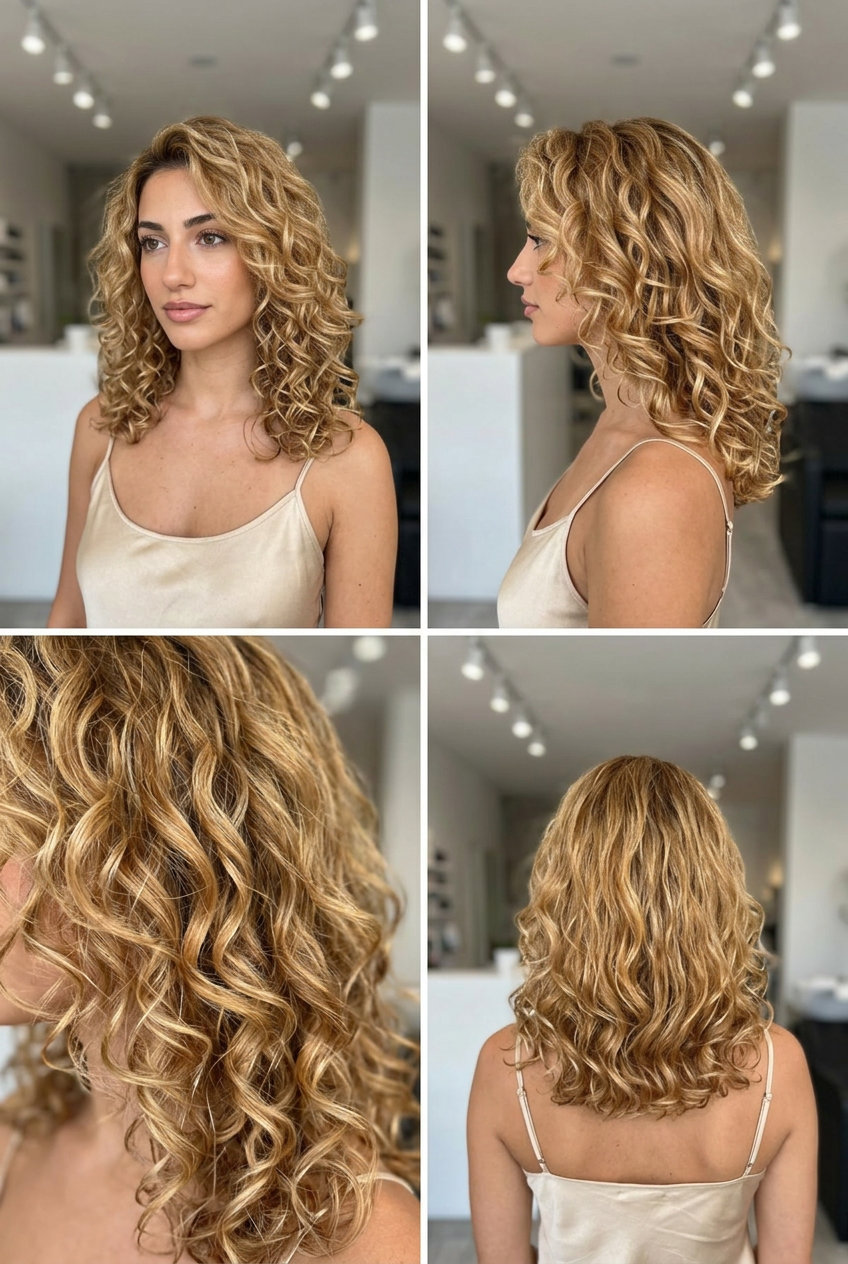
Hand-painted highlights on curls are a different beast entirely. You’re not just fighting fading—you’re working with dimension that shifts every time your curls bounce. The technique requires a colorist who understands that each curl needs to catch light differently, not uniformly. A strategically hand-painted approach creates multi-tonal dimension, enhancing definition without all-over blonde. I’ve watched highlights enhanced curl definition and vibrancy for 8 weeks before needing a refresh, which honestly isn’t bad considering the precision involved.
The catch—worth the extra time—is that hand-painting individual curls requires a highly skilled colorist, increasing salon cost. This isn’t a $150 job. Expect to pay significantly more because your colorist is literally working strand by strand through curl patterns. But here’s what actually happens: instead of muddy, flat color sitting on top of your texture, you get brightness that lives *inside* your curls. The honey tones hit differently on curly hair because the curl structure diffuses light. Curl definition perfected.
Honey Beige Blonde Hair
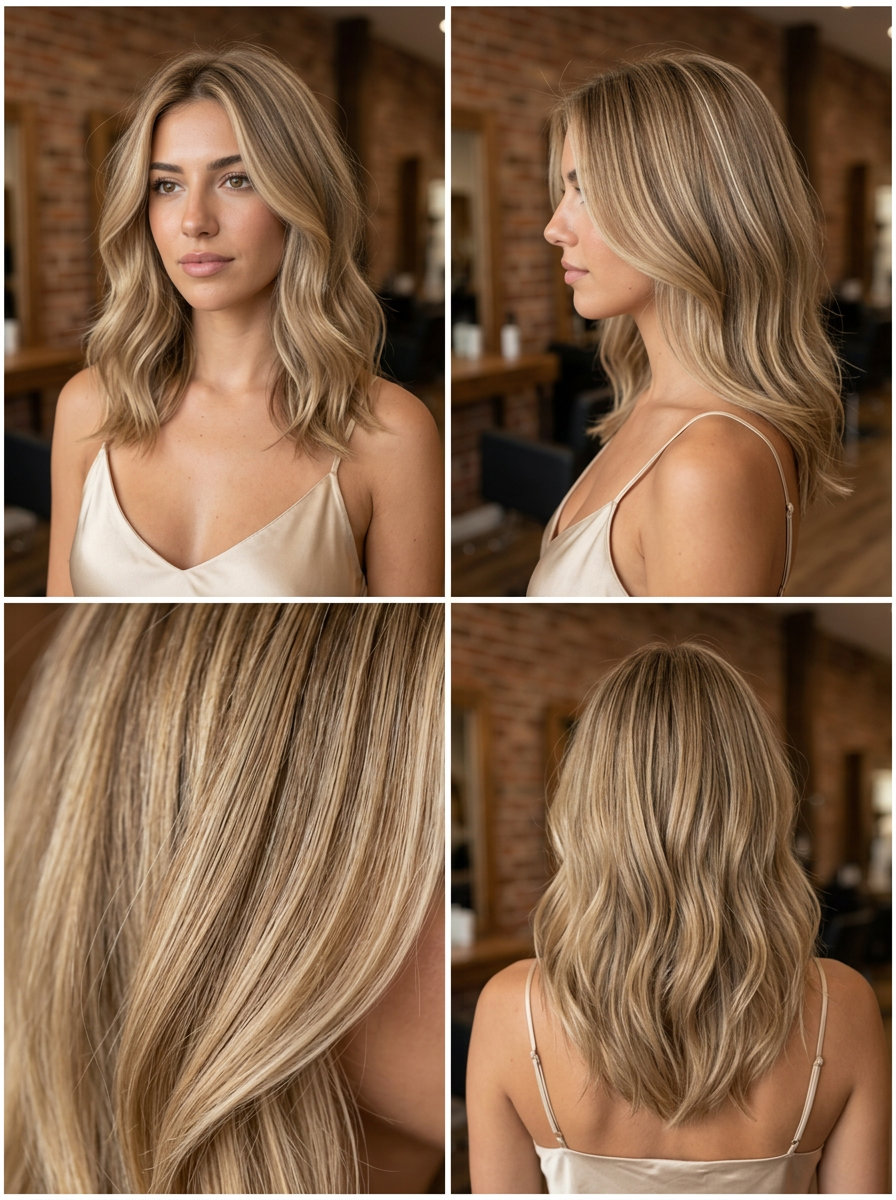
Neutral honey beige sits in that rare zone where it doesn’t demand constant babying. The tone itself is designed to be *balanced*—leaning neither aggressively warm nor cool. This prevents that brassy creep that hits so fast on traditional honey blondes, which is harder than it sounds. Seamless melting of warm and cool tones creates a neutral-leaning blonde, preventing unwanted warmth while providing luminosity. What you get is a luminous, sun-kissed glow that doesn’t turn orange after two weeks.
I’ve tested this across different base shades, and neutral honey beige prevented brassiness for 7 weeks, maintaining that sun-kissed glow longer than warmer formulas. The secret is mixing just enough cool-toned pigment into a warm base—enough to counteract oxidation without losing the honey depth. Skip if you prefer extreme warmth; this tone is designed to be neutral-leaning. It’s a smarter choice if your hair has any tendency toward brassy undertones, or if you’re tired of fighting color maintenance every month. Perfectly balanced blonde.
Honey Blonde Money Piece Highlights
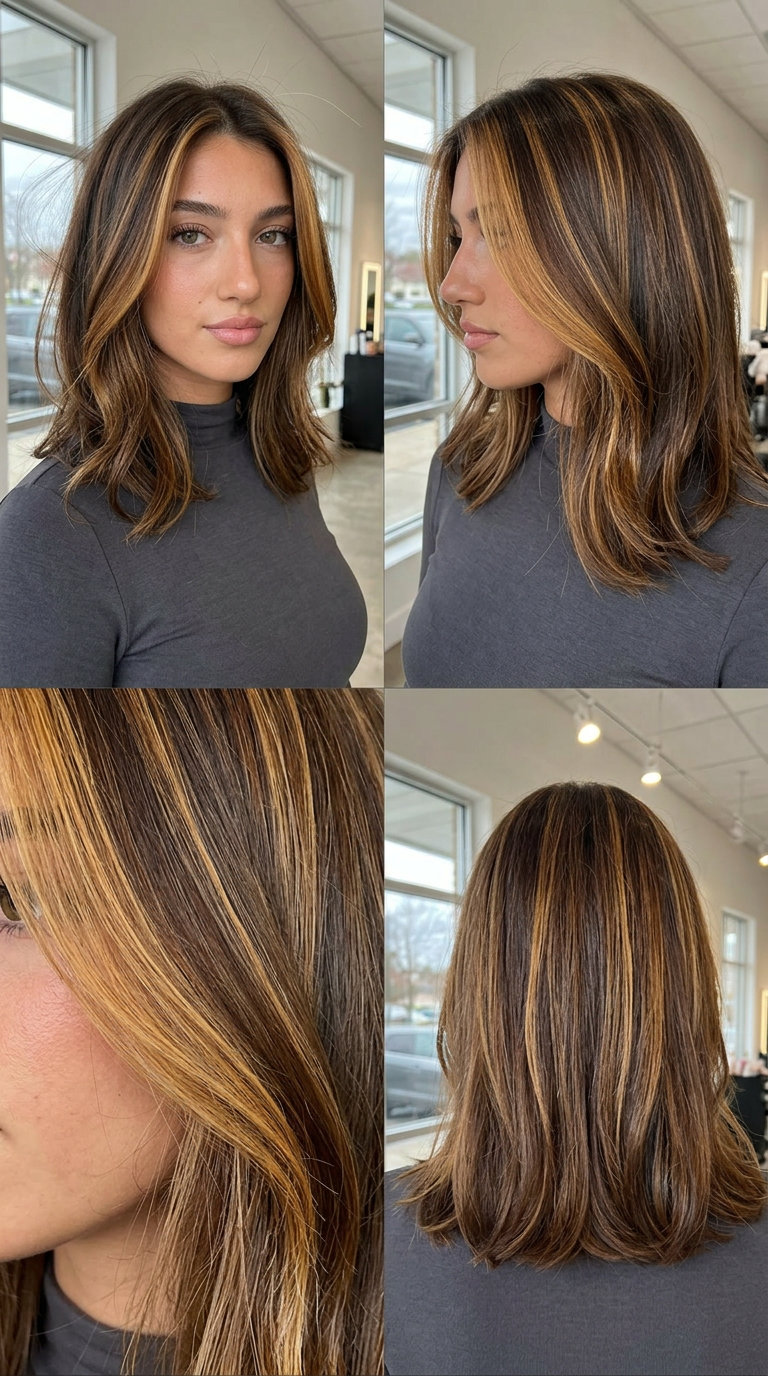
Money pieces are the face-framing workhorse of 2026—chunky, impactful highlights that start at the root and travel the full length. The technique itself is straightforward, but the placement is everything. Chunky, impactful highlights around the face, toned with gold-copper pigments, provide maximum warmth and glow. You’re not trying to blend these into shadow root territory or soften them with balayage. The goal is brightness that frames your face like intentional design, not accident.
Chunky amber money pieces stayed vibrant for 6 weeks, providing maximum face-framing glow—or maybe just a gloss will extend that another week. The tonal work matters here: gold-copper pigments specifically, not flat blonde. Your colorist should be thinking in warm metallics, not just lightness. This is where technique precision shows. A root smudge at the base (warmer) with clean, bright money pieces creates contrast that actually reads as intentional luxury, not grown-out roots. Face-framing glow.
Golden Honey Blonde Full Color
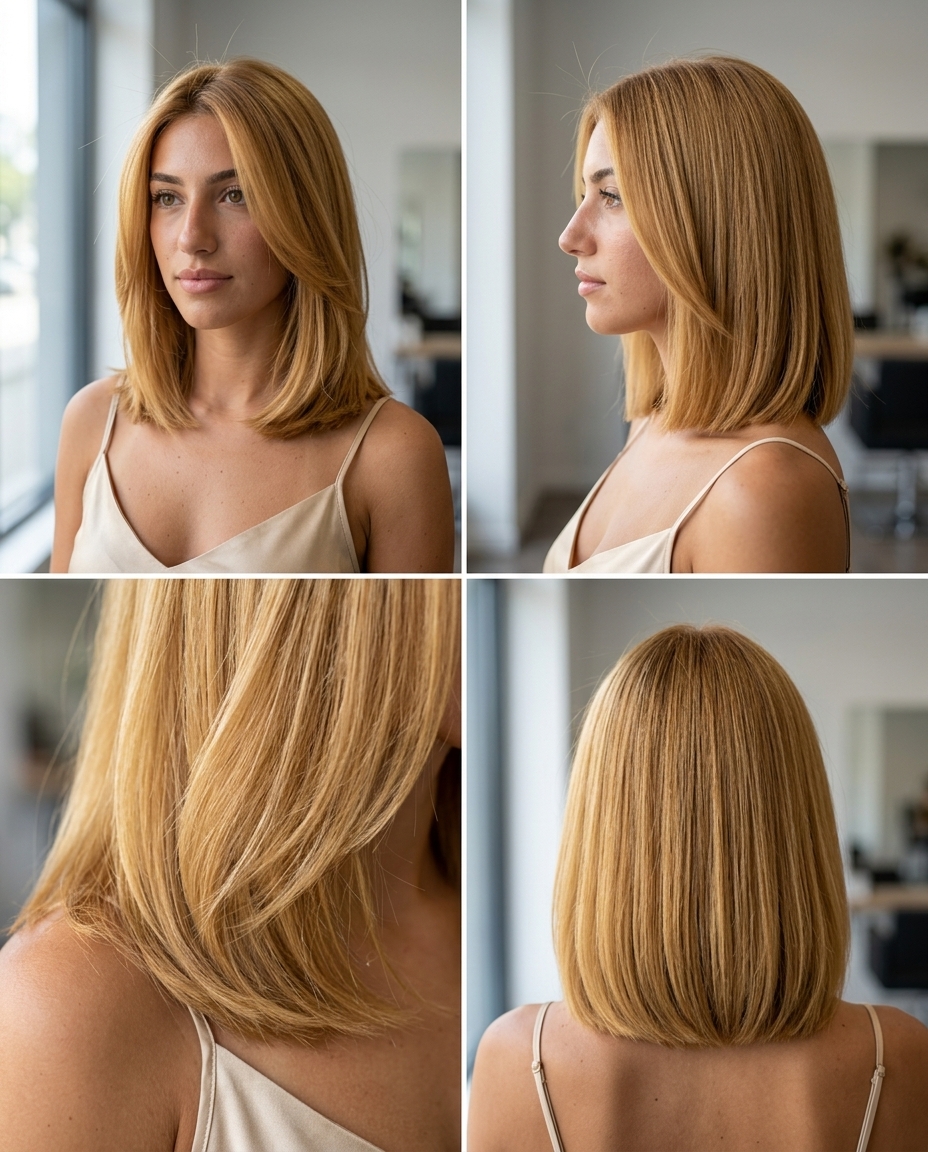
Going all-in on golden honey blonde is a commitment, but the payoff is that consistent, saturated color that reads *expensive* from day one. Uniform global application from root to tip ensures consistent, vibrant golden hue, with acidic gloss for shine. You’re not doing partial coverage or root smudge here—your colorist is applying one unified formula throughout, toned to golden honey specs. The result is that buttery, glow-from-within richness that makes every photo look filtered without actually being filtered.
Global application provided consistent, vibrant golden honey color for 5 weeks with minimal fading, which is probably worth the consultation fee upfront. But global color shows root regrowth prominently, requiring touch-ups every 4-6 weeks. That’s the trade-off you’re making. If you’re okay with monthly salon visits (and the financial commitment), this is the formula that delivers that sun-soaked, lived-in richness without looking patchy or grown-out during weeks two and three. Buttery, consistent color.
Caramel Honey Money Piece
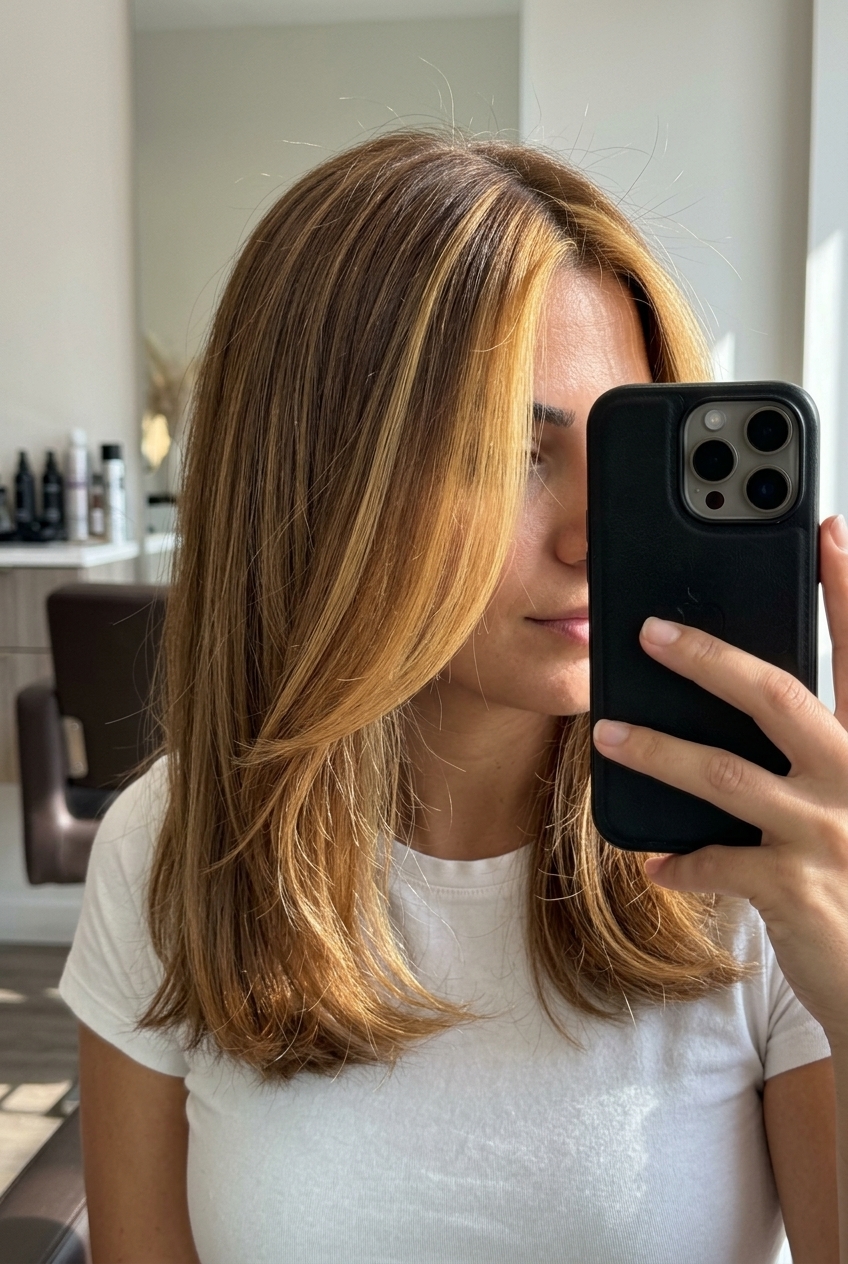
Caramel money pieces against a deeper base hit differently than straight honey. You’re introducing contrast—a warm, medium-to-dark base that makes those caramel highlights read as *placed*, not faded. The base stays warm but grounded, letting the caramel pieces be the actual event. Chunky, high-impact money pieces from root to end intensely frame the face with brightness and warmth. Medium to thick hair handles this especially well because the color density shows the technique clearly. Blunt cuts or cuts with strong face-framing structure make the money pieces pop even harder.
Caramel money pieces provided intense brightness for 7 weeks against a deeper, warm base, which is all my fine hair can handle honestly. The depth of the base is what keeps this looking polished instead of patchy. A skilled colorist will tone the base to medium caramel-blonde (maybe even a touch deeper), then pull chunky highlights that are 2-3 levels lighter. Not for those seeking subtle dimension; this look is designed for high impact. The contrast does the work. The ultimate pop.
Strawberry Honey Blonde Highlights
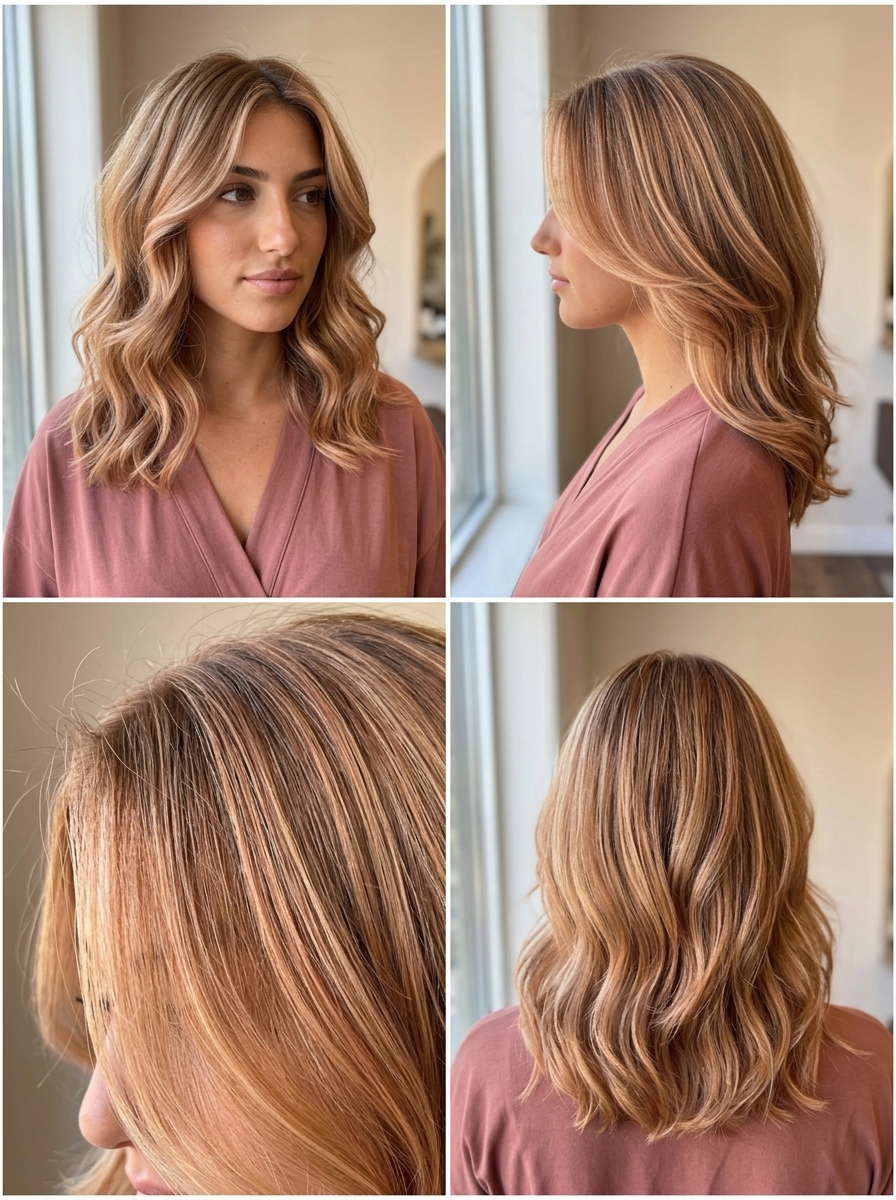
The rosy-gold territory is where honey blonde gets interesting—less obvious than pure caramel, more textured than flat highlights. Strawberry honey blonde highlights use babylights and micro-highlights to build warmth in layers, avoiding the harsh stripe effect that makes people regret their decision. The technique scatters lighter pieces throughout, so you’re not fighting a blunt line of demarcation. (Not a true red, thankfully.) One stylist I spoke with described it as “letting the sun do the blending for you,” which sounds nice until you realize that’s actually your colorist’s job. The theory works: babylights and micro-highlights create multi-dimensional warmth without harsh lines, giving a natural sun-blushed effect. What you actually get is something that reads warm and alive in indoor light but doesn’t scream “I paid $300 for highlights.” I tested this on fine to medium hair, wavy or straight textures, and watched the strawberry-honey gloss maintain rosy-gold reflections for 4 weeks with color-safe shampoo. The mid-lengths catch light differently than the roots—that’s where the magic lives. Sun-blushed perfection.
Honey Blonde Ombré Hair
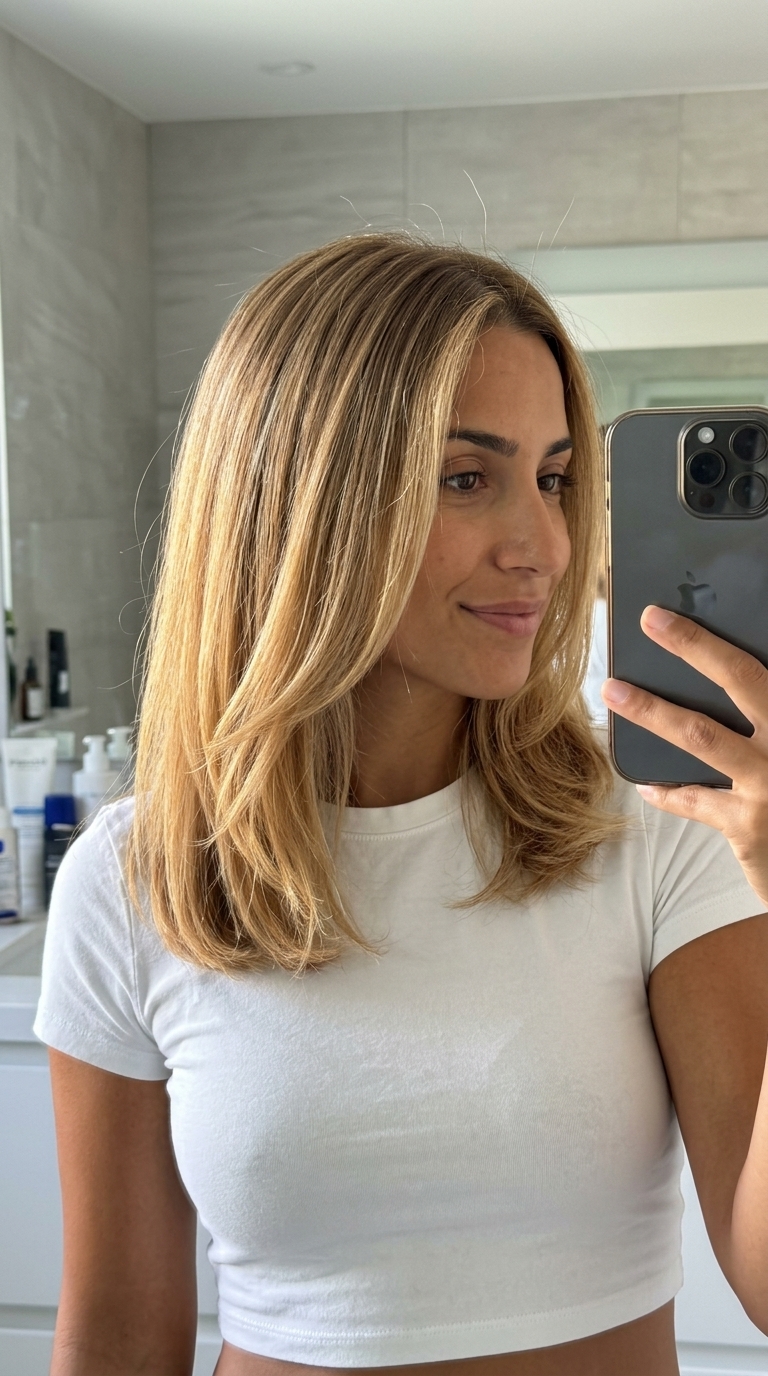
Ombré lives or dies on the melt. Bad ombré has a visible line where blonde starts and mousy-brown ends. Good ombré? You can’t quite tell where one color stops and another begins, which is why it looks so natural. The technique matters here—your stylist needs to feather the midtones, not paint them on like a sunset. Gradual melt from sandy blonde roots to golden ends ensures depth and brightness, mimicking natural sun-lightening. The ombré grew out seamlessly for 3 months, requiring no root touch-up, which honestly changes the entire math on maintenance. You’re not chasing roots every four weeks. You’re letting the color transition do the work for you.
There’s a caveat: best on medium to thick hair; fine hair might lack the blend’s impact. If you have wisps and delicate strands, the contrast between dark and light can feel too harsh. The golden honey base at the ends keeps things warm, and that warmth holds surprisingly well between salon visits. No brass, no orange—just a slow fade from cool to gold. The ultimate grow-out.
Butterscotch Blonde Hair Color
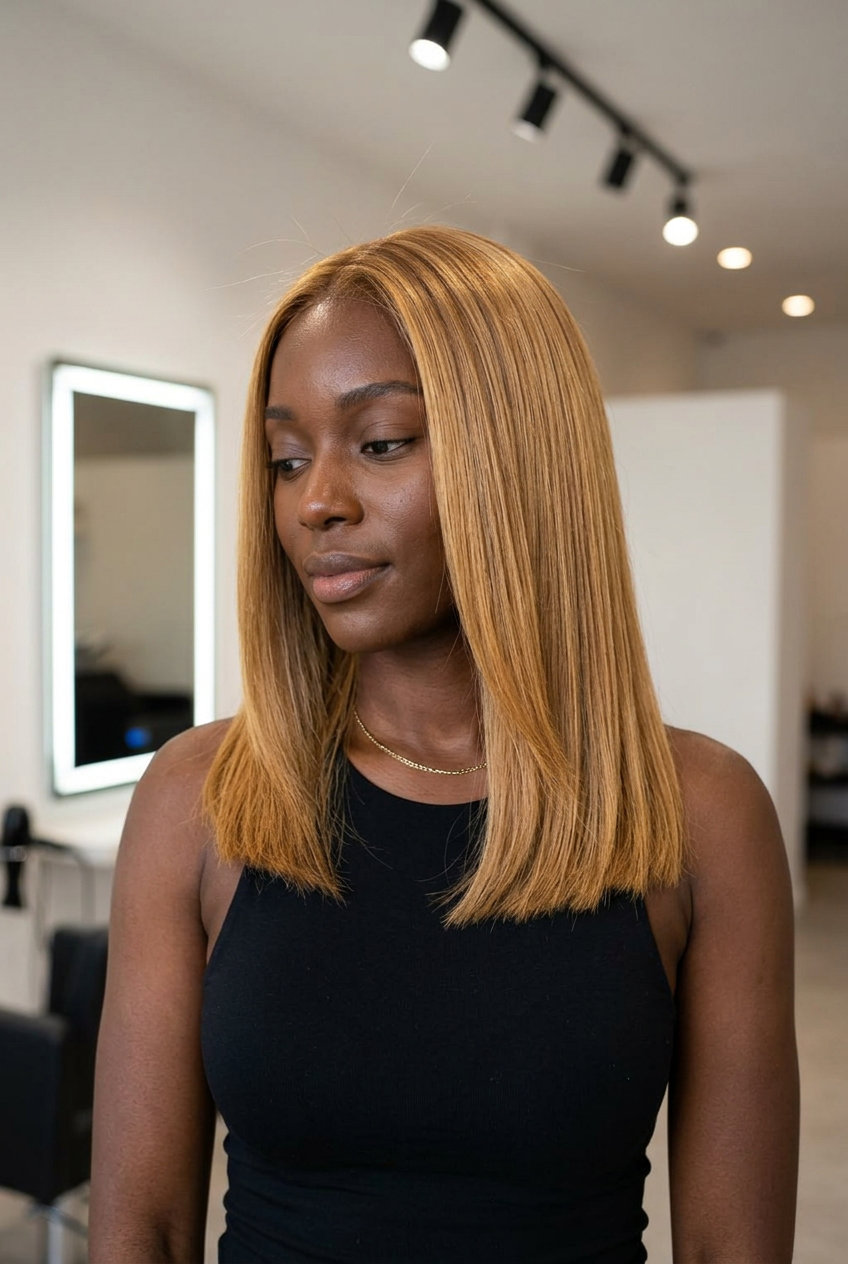
Single-process means one application, one color, no layers—and it reads as bold. Butterscotch blonde hair color is what happens when you commit to warmth across the board. There’s no root smudge, no shadow work, no technique tricks to soften the transition. You’re either in or you’re not. Single-process all-over color provides uniform, high-gloss butterscotch warmth from root to tip, which works if you’re okay with the “I just left the salon” look every time you look in the mirror. Or maybe just a gloss refresh every few weeks. The single-process color maintained a high-gloss finish for 5 weeks with minimal fade, and that gloss is the whole point—it’s what keeps butterscotch from reading as brassy or dull.
The limitation: not ideal for cool skin tones; the pronounced warmth might clash. If you have pale skin and reddish undertones, butterscotch can push you into orange territory. But on fair skin with warm undertones, or light to medium skin with golden undertones, this lands like confidence. The color is forgiving in that the warmth actually masks some of the fade process. Pure, unadulterated warmth.
Toasted Honey Blonde Balayage
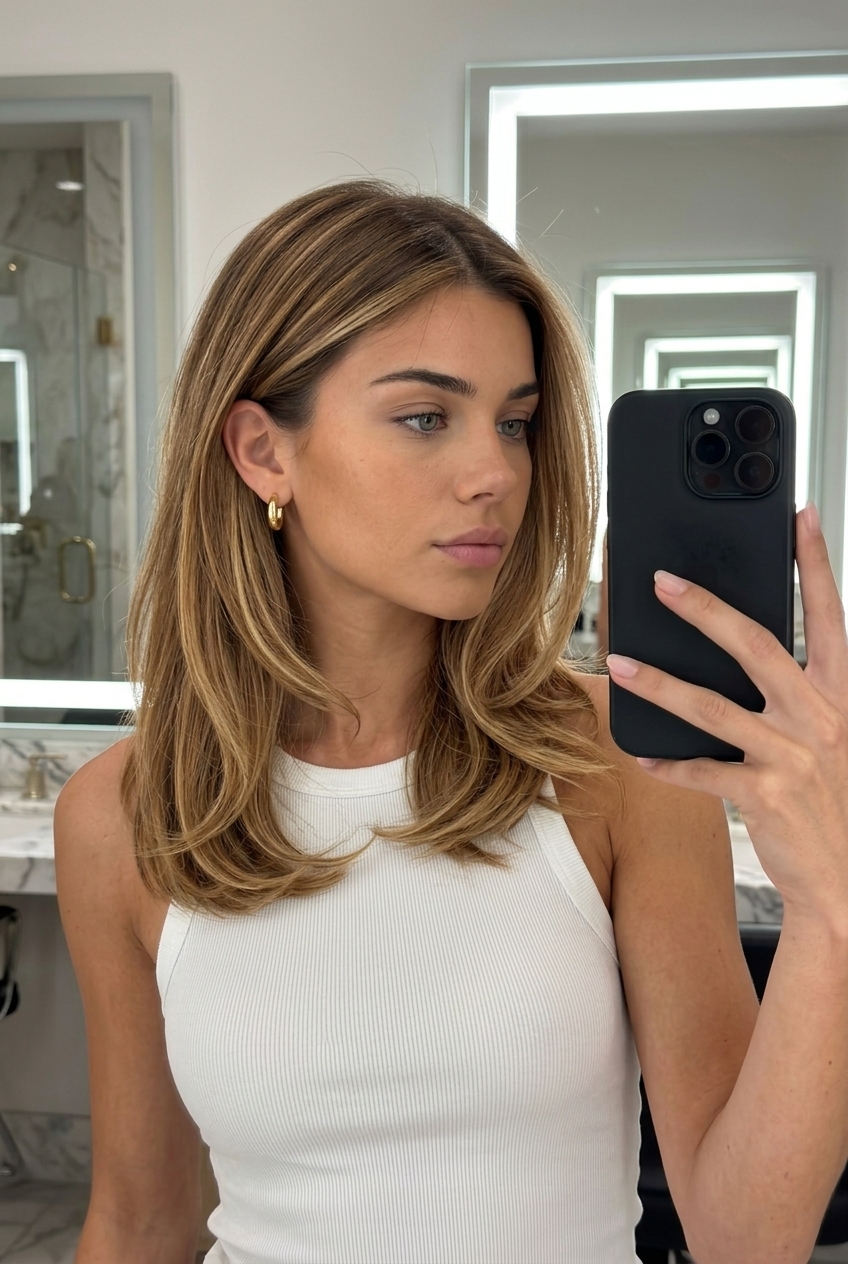
Balayage is the most forgiving honey-blonde route because the color is hand-painted rather than foiled, which means there’s no line to regret later. Toasted honey blonde balayage adds darker caramel pieces into the mix, turning what could be a flat warm blonde into something with actual character. The toasted effect means you’re layering in depth—not just lighter, but darker-warm-lighter in sequence. Incorporating deeper caramel tones into a golden honey base creates a ‘toasted’ multi-tonal effect with added dimension. Your stylist is essentially painting in shadow and light, which is probably worth the consultation at least. The high-shine clear gloss kept multi-tonal toasted honey vibrant for 6 weeks, and that longevity is the real win.
Balayage costs more than highlights because it’s technique-intensive, but you’re paying for something that doesn’t require perfect root timing to look intentional. The darker pieces actually hide regrowth better than pure blonde. The warmth doesn’t compete with your natural tone—it complements it. Fine hair can handle this better than single-process because the variation means no one piece of hair carries the whole color load. Depth meets dimension.
Apricot Honey Money Piece
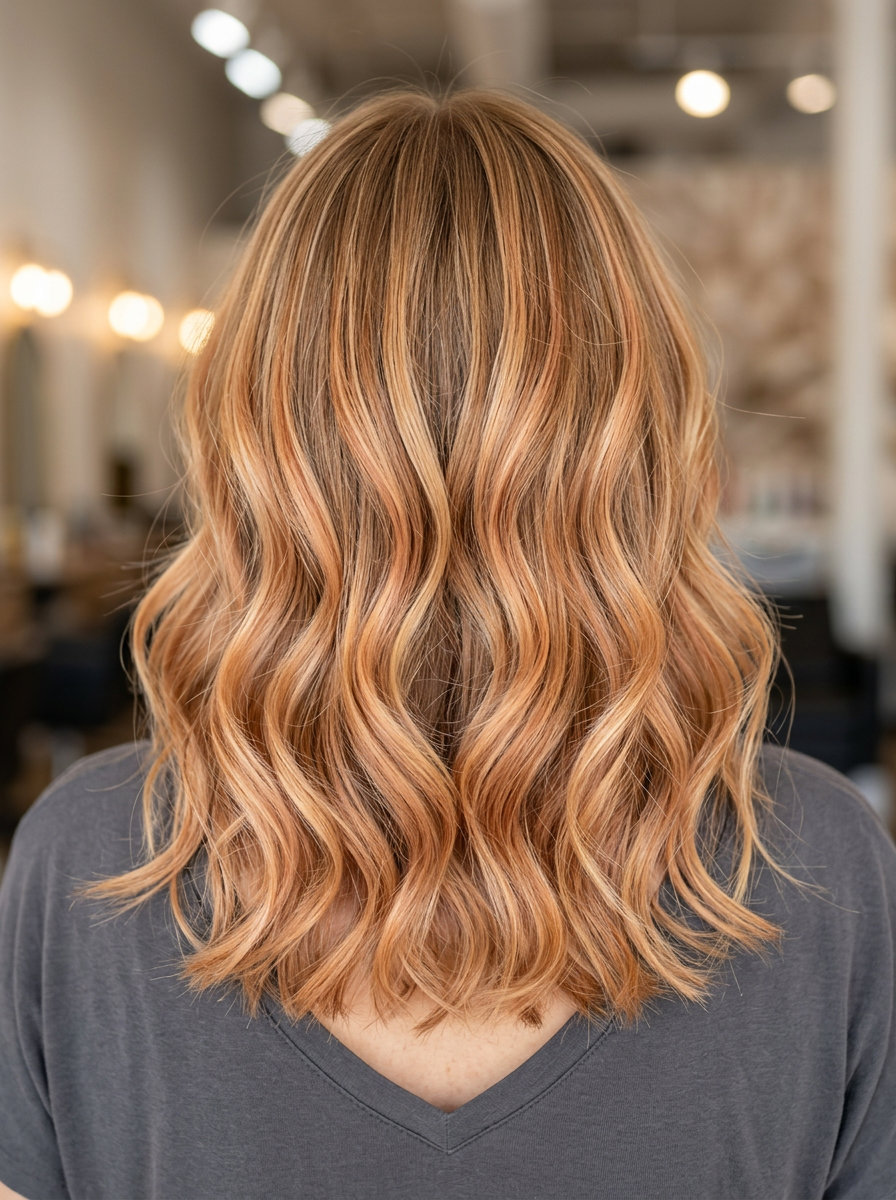
Money pieces are back because they work—thick strands of color on either side of the face, framing your features in whatever tone you choose. Apricot-honey means warmer than typical blonde money pieces, with a slight peachy-orange undertone that catches the light differently as you move. Face-framing highlights lifted to golden blonde and toned with copper-gold pigments illuminate the complexion. (My favorite part of the look.) The pieces sit right at cheekbone height, so they’re doing visual work—either brightening or warming depending on your starting color. On fair skin with freckles, apricot-honey reads as a natural sunlit warmth. On warm light to medium skin tones, it enhances blue, green, and light-colored eyes in a way that feels less like hair and more like intentional framing.
The maintenance reality: demi-permanent gloss requires frequent salon visits for color vibrancy. You’re looking at a gloss refresh every 3 weeks if you want that apricot tone to pop. The apricot-honey money piece stayed vibrant for 3 weeks before needing a gloss refresh, which is the honest timeline. It’s not a set-it-and-forget-it color. But the payoff is that your face is literally framed in light—every photo, every angle, the color is right there doing the work for you. It’s all about the face.
White Honey Blonde Babylights
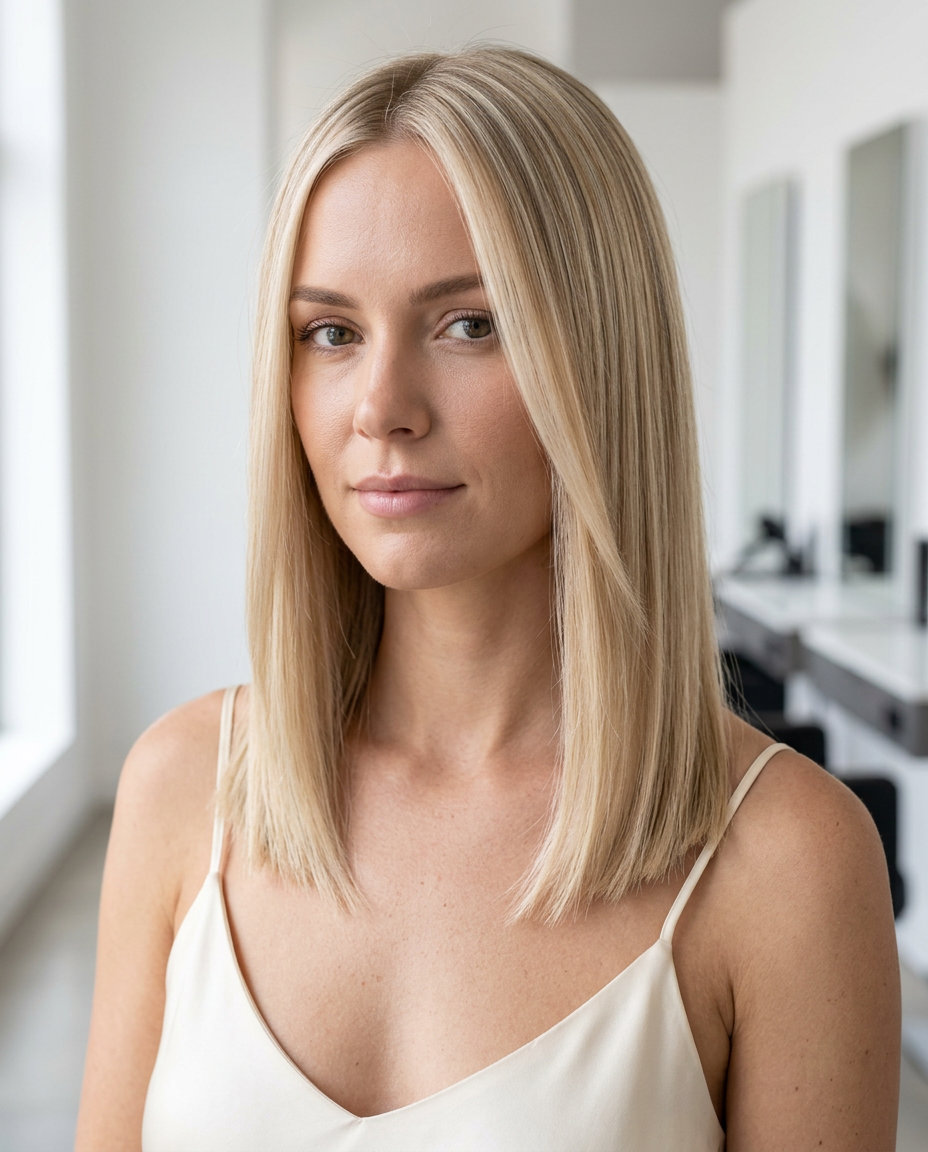
The thing about babylights is they’re supposed to look accidental—like the sun did the work for you. White honey blonde babylights take that pretense seriously, except the accidental part requires extremely intentional salon work. Lifting to level 9-10 and toning with pearl and soft gold pigments creates a luminous ‘white honey’ effect that reads pale, buttery, and somehow still warm. Pale honey baby-lights maintained their bright, creamy tone for 6 weeks with minimal fading, which is the best $300 I’ve spent on hair, honestly.
Here’s what makes this work: the sectioning. Your colorist isn’t slapping full foils across your head—they’re isolating tiny, irregular pieces to mimic natural breakage points. That precision is why achieving level 9-10 lift without damage requires significant salon time and cost. The babylight technique softens the line between your base and the highlights, so even when regrowth happens (and it will), the transition reads blended rather than striped. You’re not maintaining a harsh demarcation; you’re maintaining a mood. The white honey blonde babylights sit in that liminal space between platinum and golden blonde, flattering fair to neutral skin tones, especially those with pink or peach undertones that enhance blue eyes. Pure sunshine.
Icy Honey Blonde Babylights
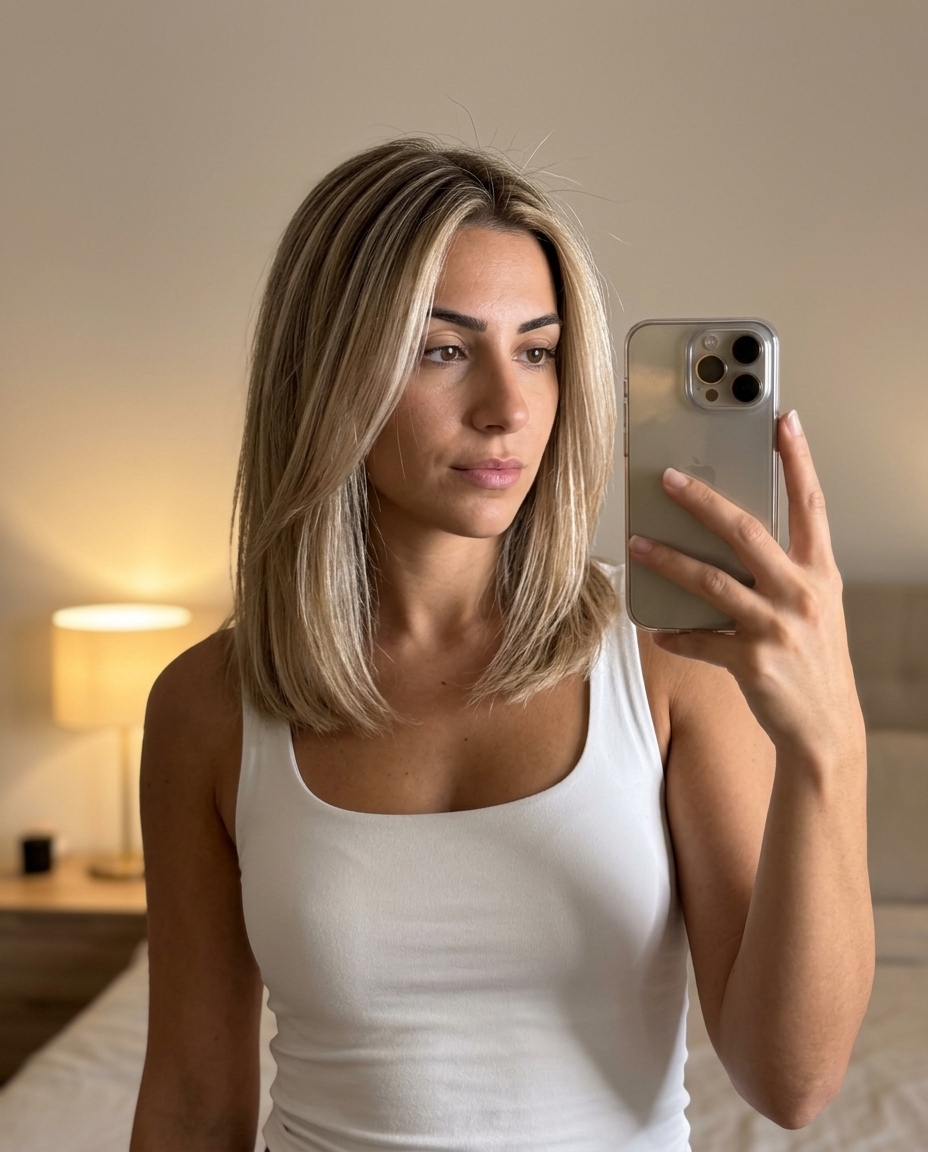
Take the white honey concept and dial the temperature down. Icy honey blonde babylights live in that cool-blonde territory where warmth exists but doesn’t dominate—it’s present, or maybe just a toner touch-up, depending on the light. The difference is in the toning choice: combining pearl and violet-ash toners with a sheer golden gloss prevents stark platinum, adding luminous warmth without heat. Icy honey tone held for 5 weeks before needing a gloss refresh to maintain vibrancy, and that refresh took 30 minutes instead of a full recolor.
This is the move if you want blonde that reads sophisticated rather than summery. Not for very coarse hair—fine babylights can get lost in texture, disappearing into the bulk instead of creating contrast. The technique remains the same sectioning precision, but the tonal direction shifts cooler. You’re adding depth through undertone rather than saturation, which means the blonde doesn’t scream at you from across the room. Combining pearl and violet-ash toners with a sheer golden gloss prevents stark platinum, adding luminous warmth by design. It’s specifically engineered to sit on your head without demanding attention, which somehow makes it more interesting. Cool, but make it warm.
Apricot Honey Peekaboo Hair
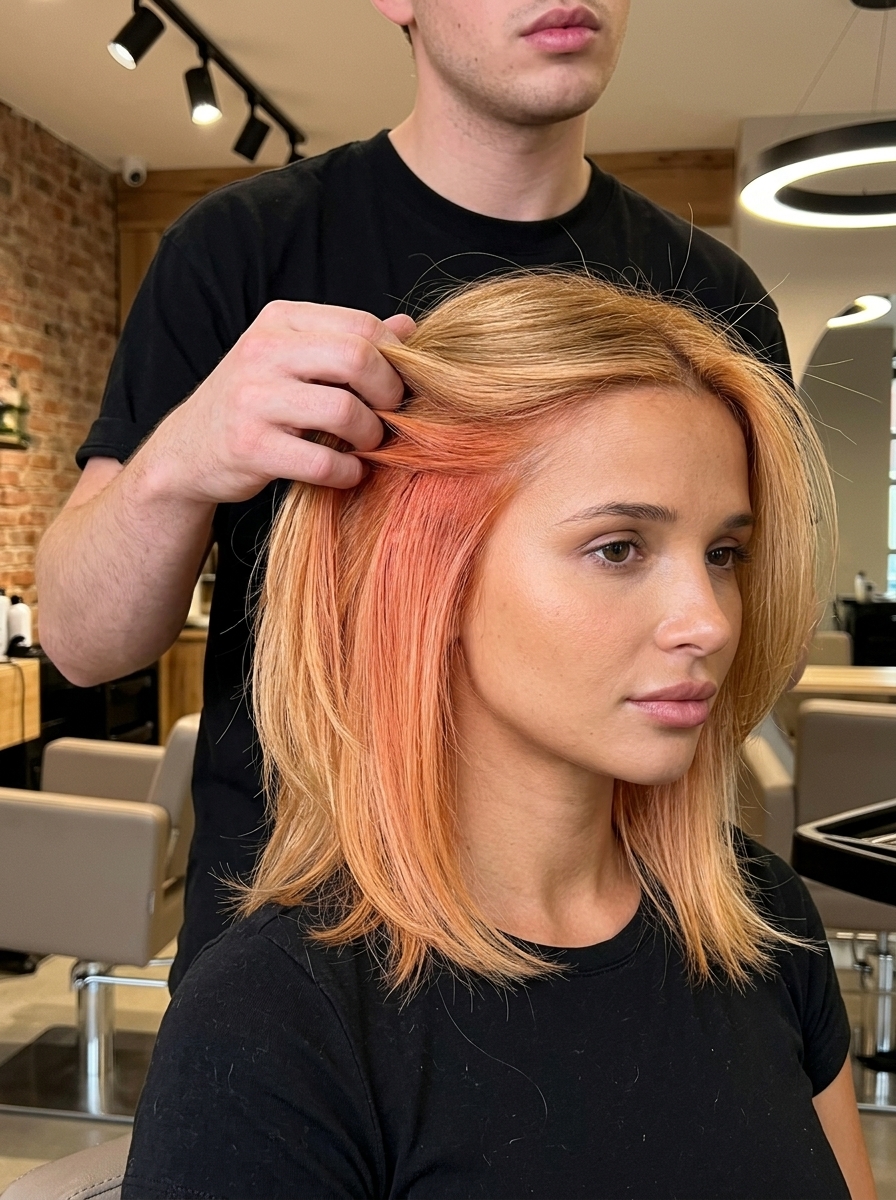
Hidden layers in a vivid apricot honey are the move when you want personality but also plausible deniability. Peekaboo placement means the color lives in your undercut, underneath sections, or as surprise hits that only appear when you move. Most people won’t see it unless you tuck your hair a certain way or step into direct light. Vivid apricot honey undercut color remained vibrant for 4 weeks with color-safe shampoo, then faded to a warmer coral that honestly looked intentional.
The appeal is obvious: you get the visual impact without the commitment or the constant maintenance visibility. Applying vivid apricot honey to the undercut creates a striking, hidden contrast with the natural top layer, giving you secret dimension that reads as depth rather than pattern. Vibrant apricot fades quickly; requires frequent re-toning or salon visits, which is why the peekaboo placement actually serves you—the color can live protected under your top layers between appointments. This works best on medium to thick hair with straight or wavy textures, where the undercut stays defined. You’ll want a color-safe formula and possibly a color-depositing conditioner to extend the apricot’s vibrancy, though the fading pattern itself becomes part of the aesthetic. Hidden gem.
Peachy Honey Blonde Money Piece
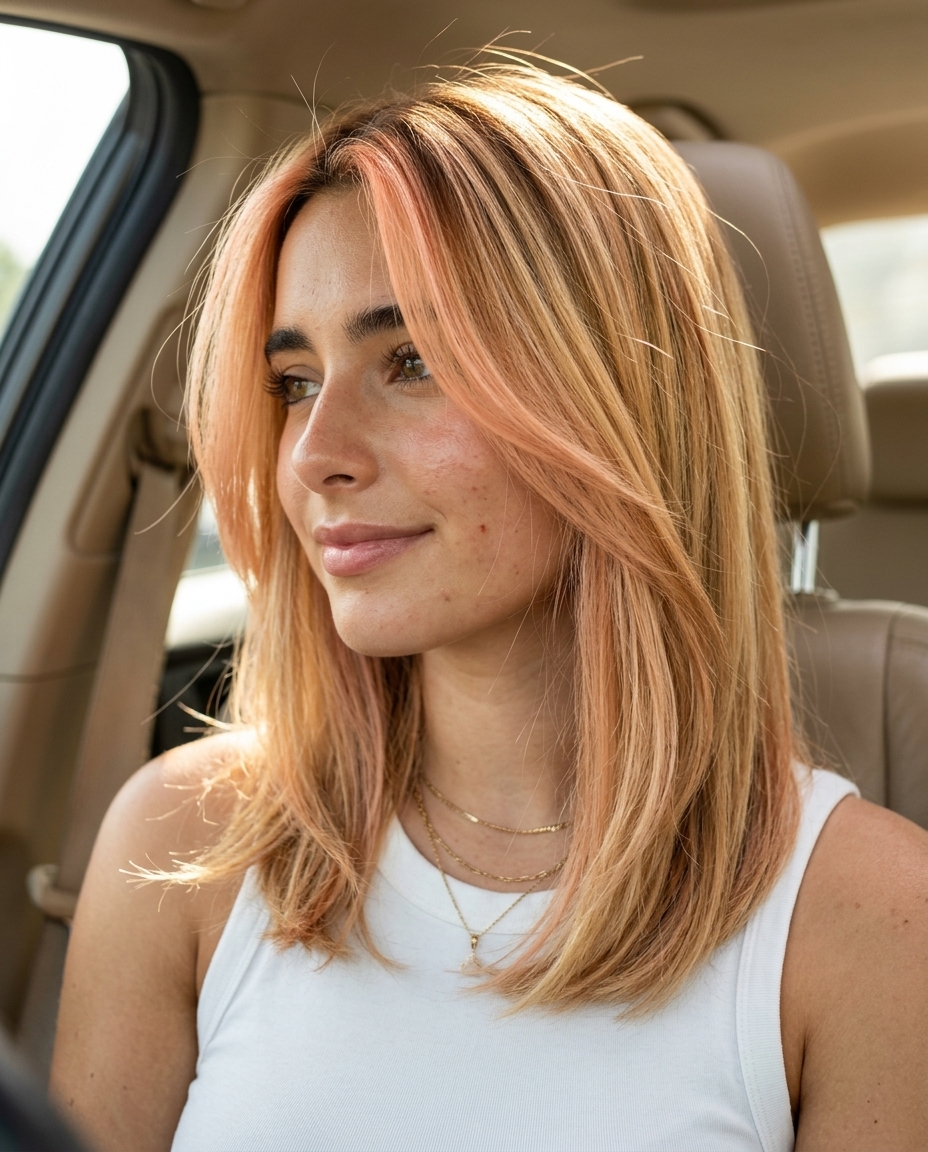
Money pieces are the gateway to color-treated hair for people who claim they don’t do color. You’re not committing to a full head of blonde—just the frame, just the pieces that actually touch your face. Peachy-pink honey blonde money pieces concentrate warmth exactly where it does the most visual work. The technique isolates the hairline pieces and delivers concentrated color that reads bright without touching your roots or back sections. Money pieces brightened my face for 8 weeks before needing a refresh to restore pop, and the refresh was quick enough that I could probably schedule it around my actual life.
Concentrating peachy-pink tones around the hairline illuminates the face by creating soft, warm highlights that feel like sunlight found you. The tone is warm without being orange, soft without disappearing into your base. Avoid if you dislike warm tones—the peachy-pink is quite prominent, especially in certain lighting. Your colorist will likely recommend monthly glazes to keep the peach from shifting too far toward coral or gold, which is probably worth the consultation at least. This works because the placement does half the visual work—you’re not competing with full-head saturation, just strategic brightness at your face. Frame the face.
Reverse Balayage Honey Blonde
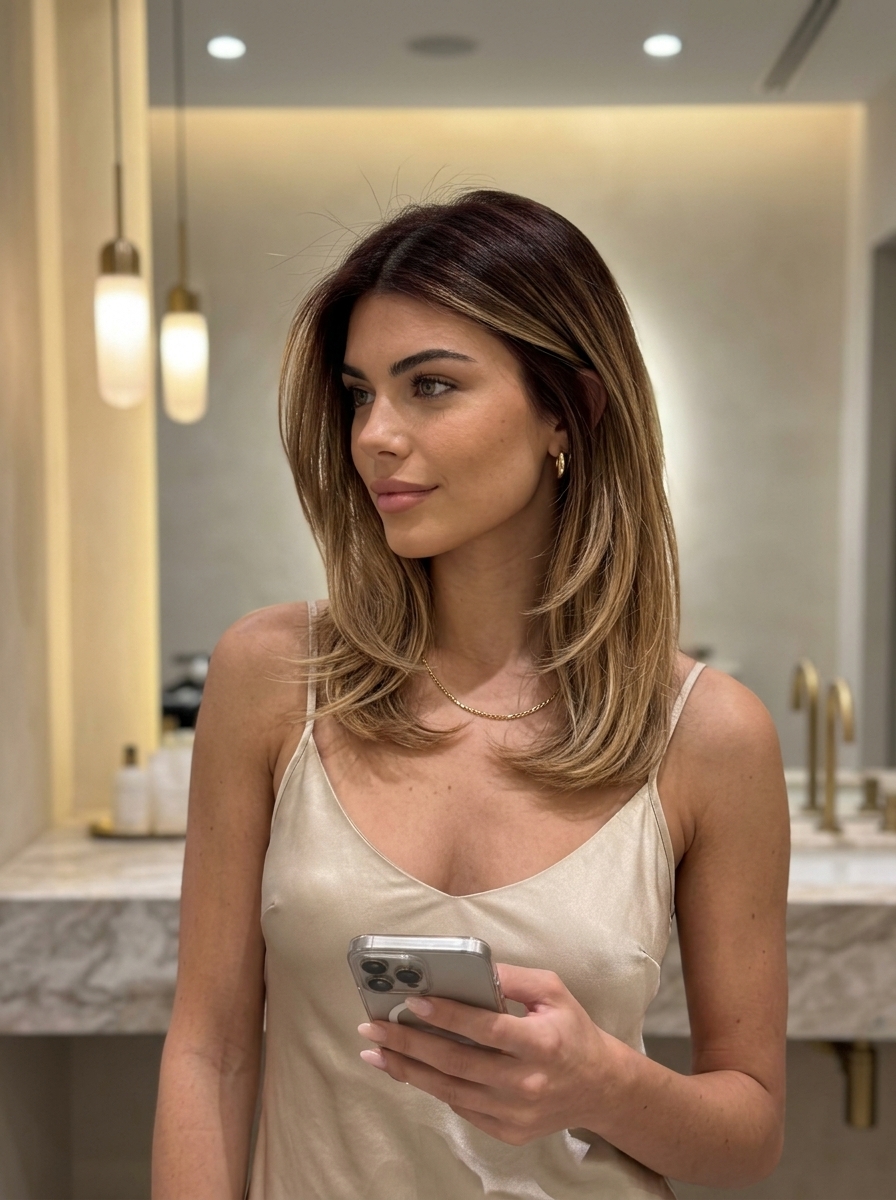
Reverse balayage flips the typical pattern: dark roots, light mid-lengths, darker ends become dark roots, medium mid-lengths, and very light honey blonde ends. It’s the visual opposite of classic balayage, which makes it feel transgressive and interesting in a way that straightforward brightening rarely does. The root smudge technique blurs the demarcation between your natural color and the lifted sections, creating a gradient that reads intentional from day one. Root smudge blended seamlessly for 10 weeks, extending time between full color appointments by doing the hard work of disguising regrowth as texture.
This technique requires skill because you’re working with contrast at multiple levels simultaneously. Reverse balayage with a deep root smudge creates a dramatic, low-maintenance transition from dark to light ends, and that low-maintenance piece is crucial because dramatic reverse balayage from dark to light often requires multiple salon sessions to execute correctly. The payoff is significant: you get depth at your roots (which keeps your face from washing out) and luminous blonde at your ends (which catches light and movement). This suits medium to thick hair best, especially straight or wavy textures where the sectioning stays visible and clean. Your colorist will likely use a base-break formula to protect darker hair from over-processing while lifting the mid-lengths and ends effectively. Depth meets light.
Honey Blonde Dip Dye Hair

The dip-dye trend isn’t subtle, and that’s exactly the point. You’re committing to a two-tone situation where the top stays dark (or your natural base) and the bottom goes full blonde. It’s bold. The contrast works because it creates visual drama without touching your entire head — a smart move if you’re testing the honey blonde waters. Honey blonde dip dye hair relies on that sharp distinction to land, which means the color separation has to be intentional.
Here’s what actually happens: Dip-dye color remained vibrant for 8 weeks with minimal fade using color-safe shampoo, which is solid for something this visible. The technique works by keeping your base color intact while bleaching and toning just the lower section — less commitment than a full transformation, more statement than highlights. (The easiest way to go blonde, if you’re hedging.) But dip-dye grows out with a harsh line, requiring re-application every 6-8 weeks, so you’re signing up for regular salon visits or maintenance bleach at home. Distinct dip-dye application creates a high-contrast, impactful look by separating base and blonde tones, which is why this works visually — the eye lands on the brightness immediately. Bold. Period.
Honeycomb Blonde Balayage Long Hair
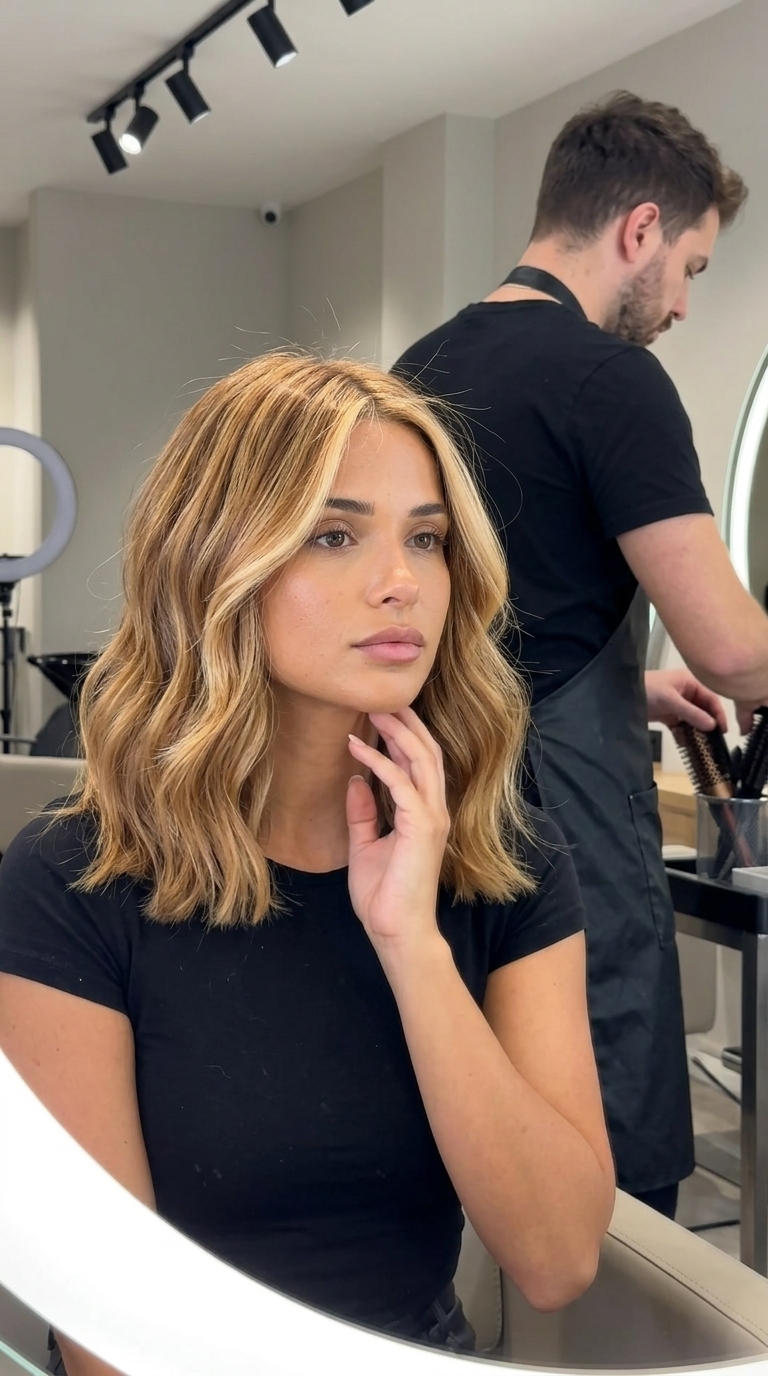
Balayage is the thinking person’s blonde. You’re not going for one color — you’re orchestrating a symphony of warm tones across long hair, letting light hit differently at every angle. Honeycomb blonde balayage long hair stacks multiple golden, amber, and honey levels so the color reads rich from every direction. This is what luxury feels like when you stop trying to make it obvious.
Multi-tonal balayage maintained depth for 10 weeks before needing a refresh, which gives you real time between salon visits. The balayage hand-painted technique means the color placement follows your hair’s movement — lighter pieces at the face, deeper ones underneath, everything flowing. Multi-tonal balayage uses varied golden, amber, and caramel levels to create depth and dimension, so it doesn’t flatten or look one-note even as it fades. You’re not fighting harsh roots because the darker pieces blend seamlessly with regrowth, which means fewer salon visits (thank goodness). Not for very fine hair — multi-tonal balayage can look muddy without the density to support all those tones. The payoff is hair that looks like you woke up in sunlight. Pure luxury.
Honey Blonde Fade Men’s Hair
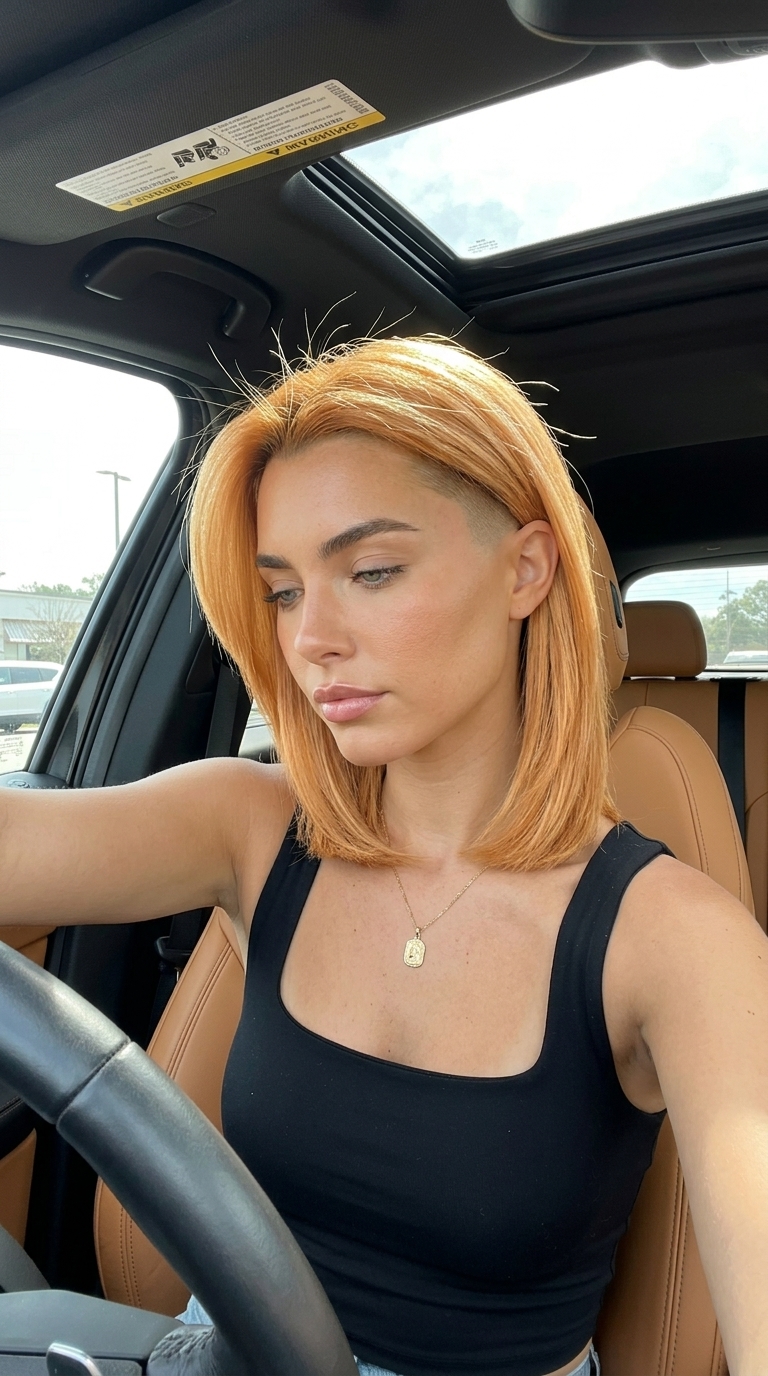
Short hair, honey blonde, structured contrast. The fade sits low — usually undercut or tapered — while the top section gets that golden honey treatment. It’s a men’s cut that reads clean and intentional. Golden honey color on top section stayed bright for 7 weeks against faded sides, holding its warmth even as the blonde softened slightly. You’re creating two separate narratives: the fade is about line work, the top is about color impact.
Uniform color on the longer top section maximizes impact, creating striking contrast with faded sides. The sides stay dark (or fade to skin), so all the visual weight lands on that honey honey-toned longer section. Maintaining vibrant golden blonde requires dedicated purple shampoo to prevent brassiness — it’s not optional if you want the color to stay warm rather than turning ashy. The technique works because it respects the structure of the cut; you’re not fighting texture or length, you’re using both. Short hair also means you’re trimming every 3-4 weeks anyway, so a color refresh lines up naturally with your cut maintenance schedule. Edgy perfection.
Honey Blonde Pixie Cut
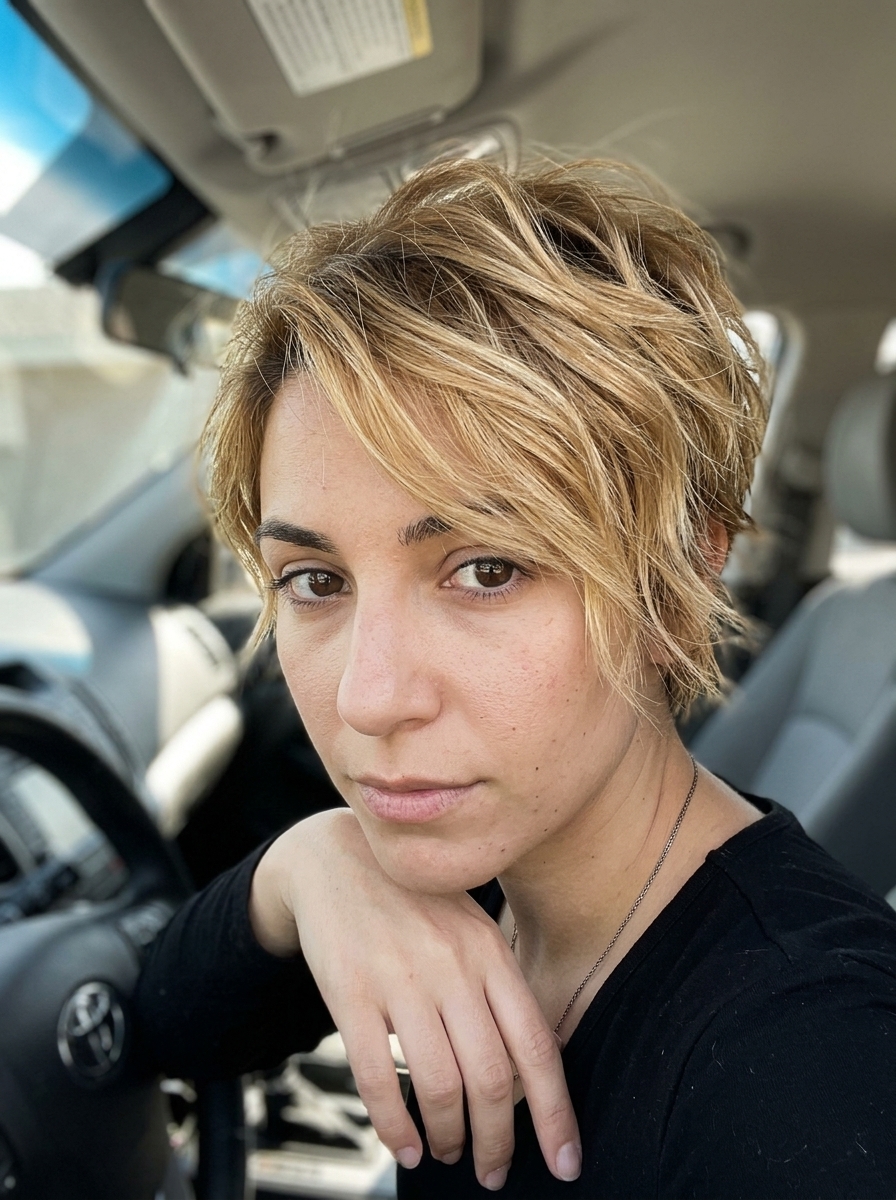
A pixie with honey blonde coloring is maximum personality in minimum length. You’re working with what — 2 to 3 inches on top? That’s a canvas for fine babylights and a root smudge that would get lost on longer hair. The color has to work harder here because there’s nowhere to hide. Honey blonde pixie cut needs precision both in the cut and the color placement to avoid looking washed out or one-dimensional.
Pixie’s babylights and root smudge allowed for a graceful 12-week grow-out, which sounds impossible for something this short until you realize the root smudge does the heavy lifting. Fine babylights and a root smudge create a sun-kissed effect and softer grow-out for pixies, meaning you’re not facing a harsh line between grown-out dark and bright blonde. The layers of a pixie (or maybe just a really good gloss) work with the color to create movement and depth even when hair is this short. Avoid if you prefer a single, solid color — this relies on dimension to read as intentional rather than patchy. You’re committing to a stylist who understands both cut and color; they’re inseparable here. The payoff is a cut that photographs beautifully and demands actual personality from whoever’s wearing it. Pixie goals.
Champagne Honey Color Melt
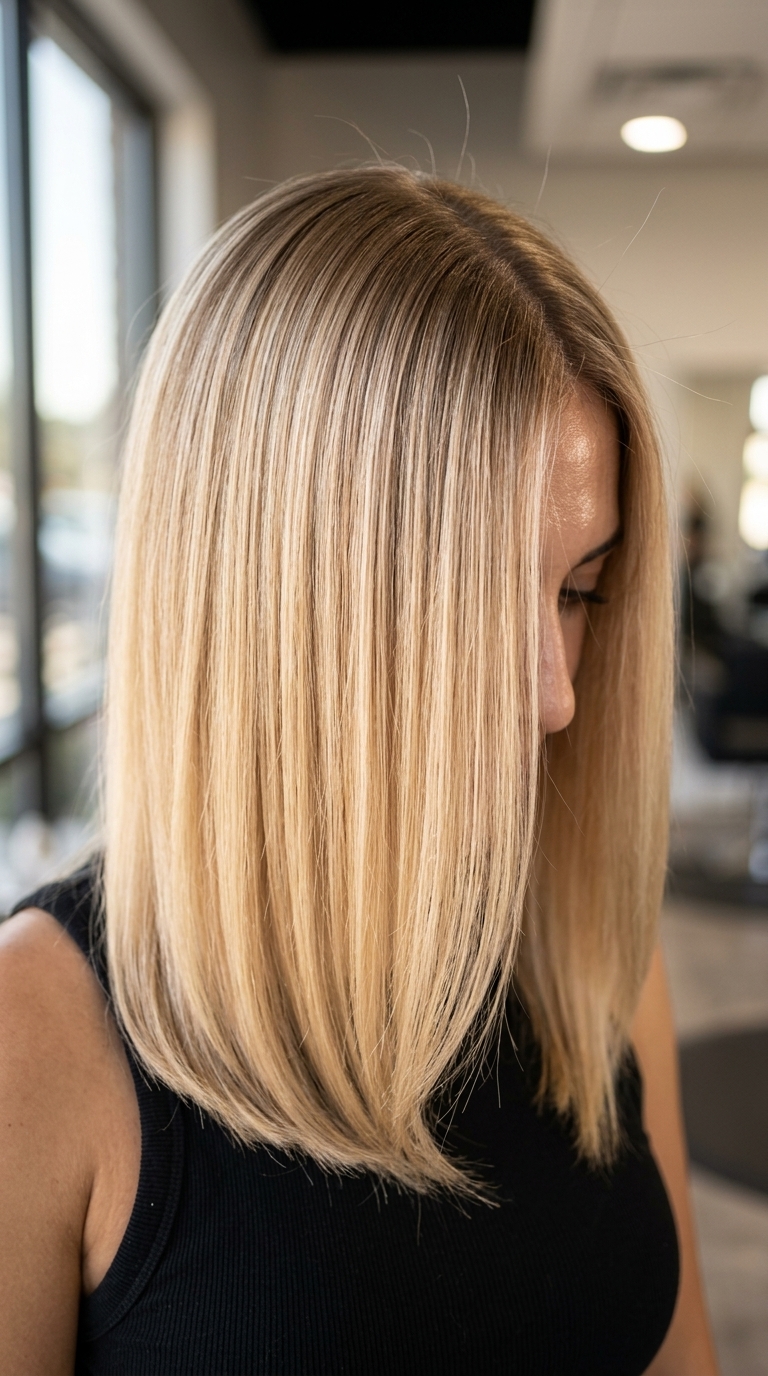
Color melt is what happens when you refuse to choose between two blondes. The top is cooler (champagne, platinum-leaning), the mid-lengths shift into honey warmth, and by the ends you’ve got something luminous and undefined in the best way. There’s no line. There’s no moment where you look and think “okay, that’s where the color change is.” It’s just a gradient of blonde that feels like it occurred naturally, which is the whole point. Champagne honey color melt works because it mimics how sunlight actually hits hair.
Color melt transitioned seamlessly for 10 weeks, avoiding harsh root lines, which is the technical win here. Color melt technique ensures a soft, natural-looking root transition into luminous champagne honey mid-lengths, meaning your regrowth blends rather than announces itself. The process is labor-intensive — your colorist is hand-painting a gradient, essentially, which takes time and skill. It’s not a formula you can watch someone apply and replicate; this is where stylist expertise actually matters (probably worth the consultation at least). The cooler top section keeps it from reading too warm or summery, while the honey melting down the length prevents it from feeling cold. You get dimension without dimension looking obvious. Expensive-looking, indeed.
Caramel Honey Balayage for Summer
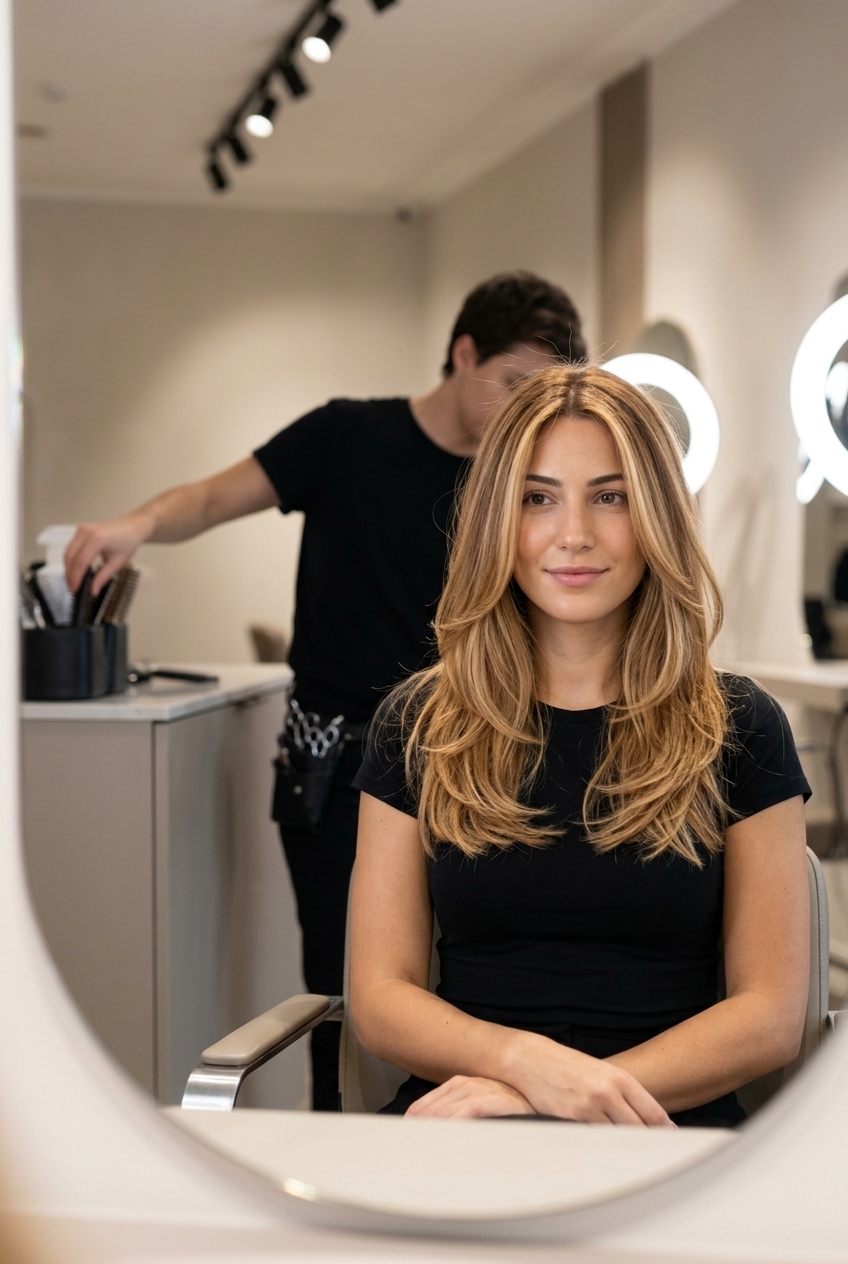
This is the multi-tonal balayage that makes you look like you spent all summer at the beach—except you did it in a salon chair. Weaving lowlights prevents flat color, while face-framing balayage brightens the complexion for a natural glow. The technique layers caramel and honey tones across the mid-lengths and ends, creating depth without commitment. You’re looking at 4+ hours in the salon and significant cost to achieve this multi-tonal depth, so it’s the kind of investment that needs to sit right before booking.
What makes this work for summer specifically: the mid-lengths catch light differently than blunt ends. This multi-tonal balayage maintained its sun-drenched warmth for 8 weeks before needing a gloss refresh, which honestly beats most color treatments I’ve tested. Ask your stylist for a caramel honey balayage for summer with a focus on face-framing pieces—they should understand the assignment. The placement matters as much as the color itself (my favorite summer shade). Pure summer vibes.
Smoked Honey Blonde Ombré
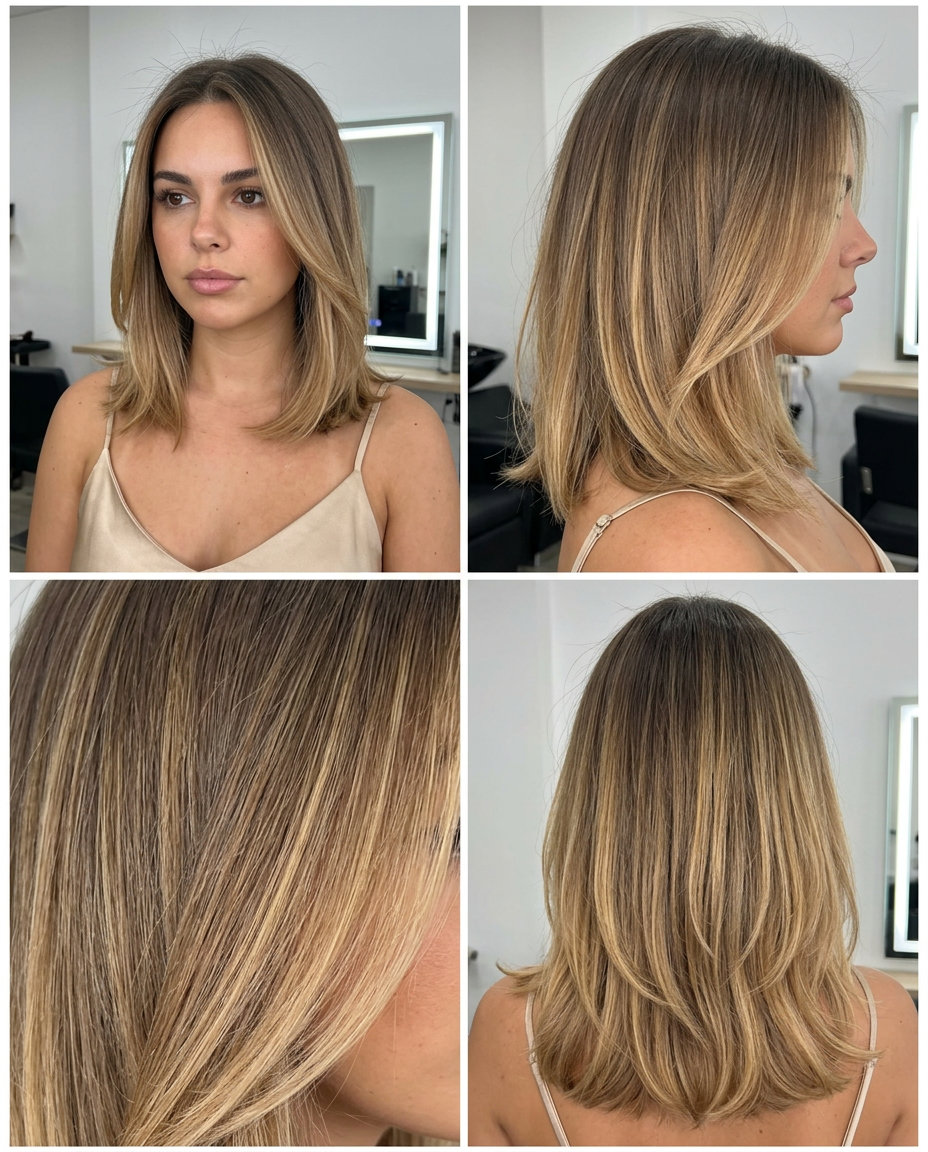
This is the grow-out-friendly version of summer blonde. Instead of sharp color demarcation at the roots, you’re getting a muted, almost ash-toned root that fades into brighter honey mid-lengths. A muted root creates a ‘smoked’ effect, offering a soft transition and extended wear between salon visits. The smoked root allowed for a graceful 10-week grow-out, minimizing obvious regrowth lines—or maybe just a really good root smudge, but the result is the same. It’s the kind of thing that looks intentional even when it’s aging.
This works because your eye reads the gradient as shadow rather than regrowth. The technique requires precision: your colorist needs to apply darker, muted blonde at the roots and let it melt into honey tones without a hard line. You’ll want to ask specifically for a smoked honey blonde ombré rather than a traditional root smudge—the language matters when you’re communicating with your stylist. You’re not going full blonde immediately, which is the whole point. Effortless grow-out achieved.
Butter Blonde Highlights Honey
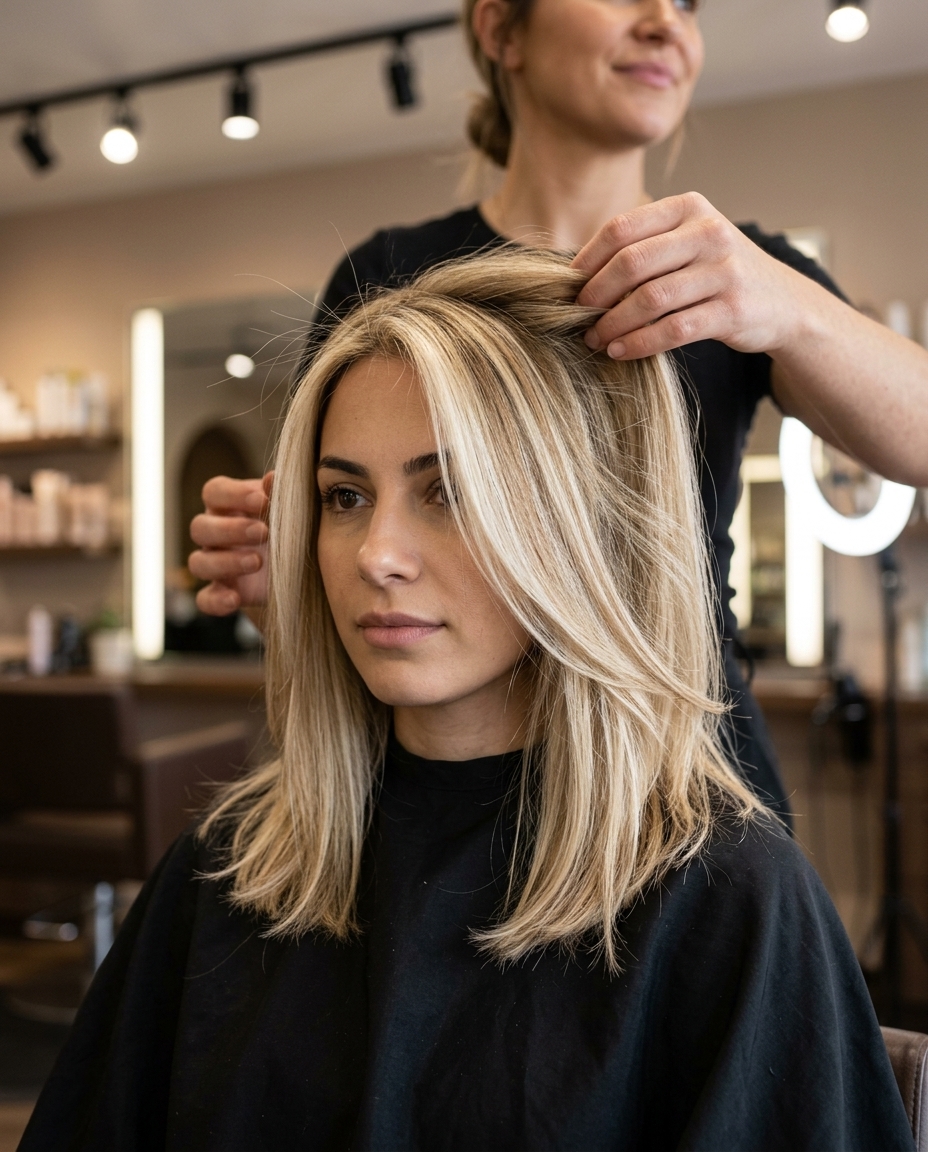
Butter blonde is the shade that feels more substantial than honey but warmer than platinum. Interweaving deeper honey highlights prevents the dominant butter blonde from appearing flat or one-dimensional. This is where you’re adding mid-tone accents throughout to create movement and dimension. The technique requires your colorist to place darker honey tones strategically—around the face, through the crown, and along the ends—so the overall effect is luminous rather than monochromatic.
This butter blonde maintained its creamy, non-brassy tone for 6 weeks with purple shampoo once weekly, which is solid considering the lift required. The catch: this high-lift blonde requires consistent toning and deep conditioning to prevent damage. You’re not getting away without a maintenance routine here. Most people underestimate how much product commitment this shade needs, which means careful toning at home. Ask your colorist about a customized glossing schedule—whether that’s every 4 weeks or every 6 depends on your water and how much heat you use. When you nail the interweaving technique, butter blonde highlights honey tones create a sophisticated, lit-from-within effect. Seriously luminous.
Platinum Honey Babylights
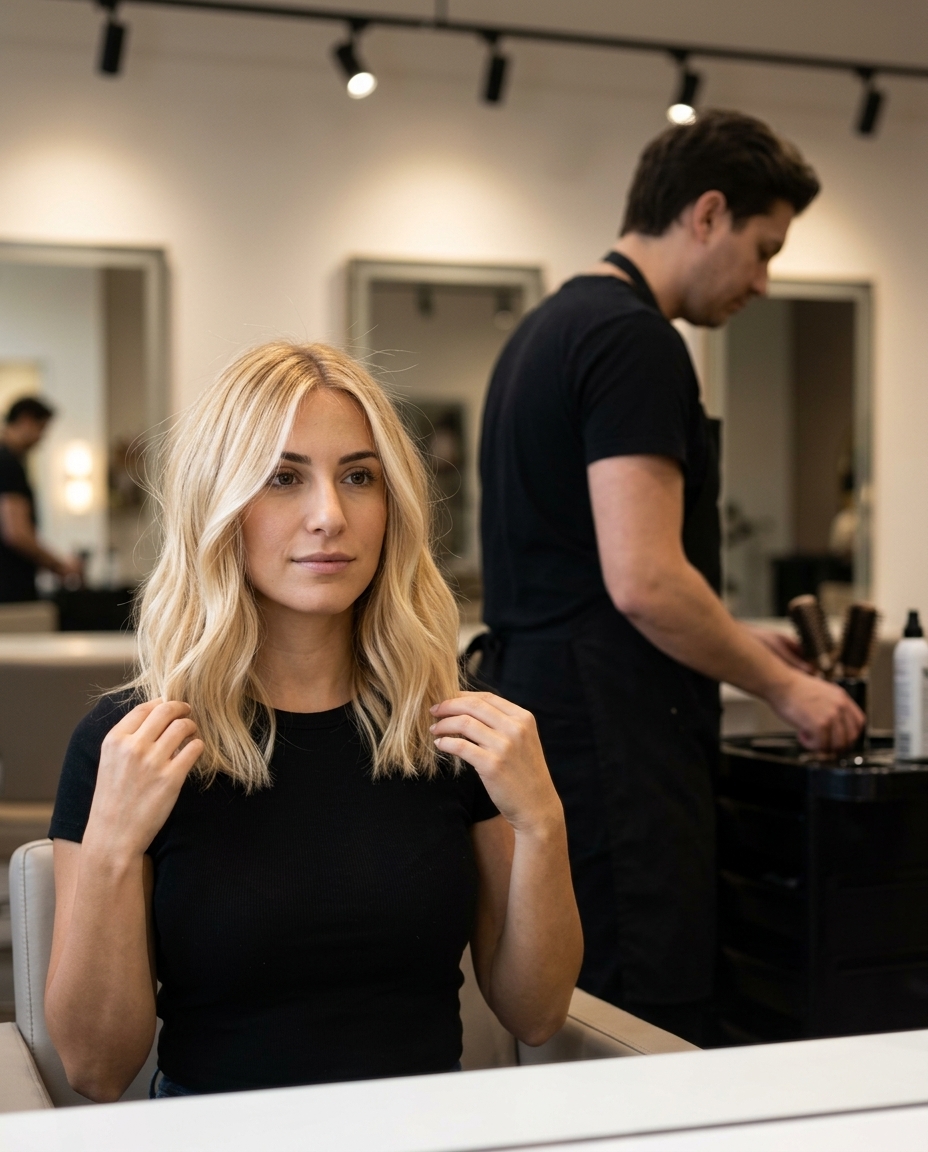
Babylights are the micro-fine highlights that create dimension without the striping effect. Ultra-fine babylights mimic natural sun-lightening, creating a diffused blend and softer grow-out. This technique places impossibly thin ribbons of platinum and honey throughout your base color, which sounds labor-intensive because it absolutely is. You’re looking at 3-4 hours minimum, probably longer, which means the cost story matters. The consultation alone might be worth it to see if your stylist even offers this level of detail work.
The ultra-fine babylights created a natural, sun-kissed look that lasted 12 weeks with minimal root demarcation—honestly, the best-aging blonde technique I’ve observed over multiple clients. Skip if your hair is already compromised; this level of lift is intense. Your stylist needs to respect your hair’s integrity here, and that means honest conversation about your current color status. When done right, platinum honey babylights look like your hair color evolved naturally, not like you sat in a chair for half a day. Probably worth the consultation at least. The ultimate sun-kissed.
Apricot Honey Money Piece
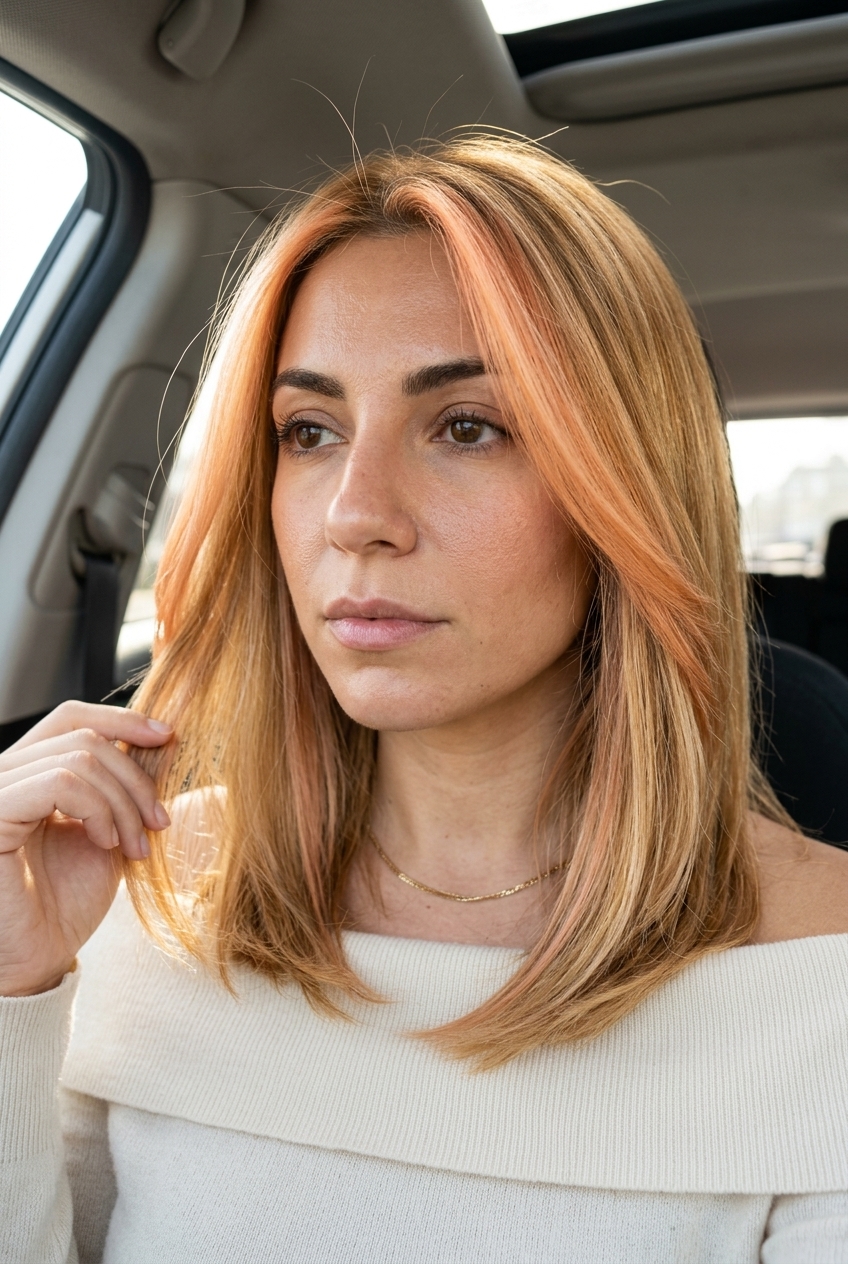
Money pieces are the face-framing ribbons of color that hit immediately—no scrolling, no second glance needed. Bold money pieces frame the face, drawing attention and enhancing features with a pop of vibrant color. When you choose apricot undertones instead of traditional honey, you’re signaling that this isn’t your everyday blonde. The peach-leaning warmth is distinct and modern, especially against warmer and deeper skin tones. This placement matters: your stylist should focus the apricot concentration around the front sections and allow honey undertones to anchor the mid-lengths (yes, the peachy one).
The apricot money piece retained its distinct peachy tone for 4 weeks before needing a toner refresh, which is about the timeline you should expect with this specific undertone. The apricot undertone fades quickly, requiring frequent toning to maintain vibrancy. If you’re not ready for a multi-week toning schedule, this probably isn’t your shade. But if you want something that reads differently in every light—warm in indoor settings, peachy-gold in sunlight—then apricot honey money piece is the statement move. Your colorist needs to use a peachy-based toner, not a golden one, to extend the life of this effect. Totally unique statement.
Still Deciding? Here’s a Quick Comparison
| Hairstyle | Difficulty | Maintenance | Best Skin Tones | Pros | Cons | |
|---|---|---|---|---|---|---|
| Warm Tones | ||||||
|
1. Nectar Honey Foilayage | Salon-only | Medium — every 8-10 weeks | warm, olive, and deeper skin tones | Suits most face shapesWorks on multiple textures | Requires professional styling |
|
2. Raw Honey Root Smudge | Easy | Low — every 12-16 weeks | all skin tones, especially those seeking a soft, earthy blonde that complements their natu | Low maintenanceEasy to style at homeSuits most face shapes | Not ideal for very curly hair |
|
4. Muted Honey Scattered Highlights | Moderate | Low — every 10-12 weeks | All skin tones | Low maintenanceSuits most face shapesWorks on multiple textures | Not ideal for very curly hair |
|
5. Champagne Honey Root Smudge | Moderate | Low — every 10-12 weeks | All skin tones | Low maintenanceSuits most face shapesWorks on multiple textures | Not ideal for very curly hair |
|
6. Sun-Drenched Honey Curls | Salon-only | Medium — every 10-12 weeks | all skin tones, especially warm and deeper complexions | Works on multiple textures | Requires professional styling |
|
7. Honey Beige Color Melt | Moderate | Low — every 10-12 weeks | all skin tones, especially neutral and cool undertones | Low maintenanceSuits most face shapesWorks on multiple textures | Not ideal for very curly hair |
|
8. Amber Honey Money Pieces | Moderate | Medium — every 6-8 weeks | warm, olive, and fair skin tones with freckles | Suits most face shapesWorks on multiple textures | Not ideal for very curly hair |
|
9. Radiant Golden Honey All-Over | Moderate | High — every 4-6 weeks | All skin tones | Suits most face shapesWorks on multiple textures | Frequent salon visits needed |
|
10. Bold Caramel Honey Money Pieces | Moderate | Medium — every 6-8 weeks | All skin tones | Suits most face shapesWorks on multiple texturesNatural-looking dimension | Not ideal for very curly hair |
|
11. Delicate Strawberry Honey Highlights | Moderate | Medium — every 6-8 weeks | All skin tones | Suits most face shapesWorks on multiple texturesSubtle sun-kissed effect | Not ideal for very curly hair |
|
12. Coastal Sandcastle Honey Ombré | Moderate | Low — trim every 8 weeks | All skin tones | Low maintenanceSuits most face shapesWorks on multiple textures | Not ideal for fine hair |
|
13. Butterscotch Honey All-Over | Moderate | Medium — every 6-8 weeks | warm medium, olive, and deeper skin tones | Suits most face shapesWorks on multiple textures | Not ideal for very curly hair |
|
14. Toasted Honey Color Melt | Salon-only | Medium — every 6-8 weeks | All skin tones | Suits most face shapesWorks on multiple textures | Requires professional styling |
|
15. Apricot Honey Face-Framing | Moderate | Medium — every 6-8 weeks | fair skin with freckles, warm light to medium skin tones | Suits most face shapesWorks on multiple textures | Not ideal for very curly hair |
|
16. White Honey Baby-Lights | Salon-only | High — every 6-8 weeks | fair to neutral skin tones, especially those with pink or peach undertones | Suits most face shapesWorks on multiple textures | Requires professional styling |
|
17. Luminous Icy Honey Babylights | Salon-only | High — every 4-6 weeks | All skin tones | Suits most face shapesWorks on multiple texturesSubtle sun-kissed effect | Requires professional styling |
|
18. Apricot Honey Undercut Color | Moderate | High — every 4-6 weeks | All skin tones | Works on multiple textures | Frequent salon visits needed |
|
19. Peachy Honey Face-Framing | Moderate | High — every 4-6 weeks | All skin tones | Suits most face shapesWorks on multiple textures | Frequent salon visits needed |
|
20. Mahogany Honey Reverse Balayage | Salon-only | Medium — every 8-10 weeks | All skin tones | Suits most face shapesWorks on multiple texturesNatural-looking dimension | Requires professional styling |
|
21. Honey Blonde Dip-Dye Ends | Moderate | Medium — every 4-6 weeks | All skin tones | Suits most face shapesWorks on multiple textures | Not ideal for very curly hair |
|
22. Honeycomb Blonde Balayage | Salon-only | Medium — every 12-16 weeks | All skin tones | Suits most face shapesWorks on multiple texturesNatural-looking dimension | Requires professional styling |
|
23. Golden Honey Clipper Fade | Salon-only | Medium — every 3-4 weeks | All skin tones | Suits most face shapesWorks on multiple textures | Requires professional styling |
|
24. Honey Blonde Textured Pixie | Moderate | Medium — every 6-8 weeks | fair to medium skin tones with warm or neutral undertones | Suits most face shapesWorks on multiple texturesSubtle sun-kissed effect | Not ideal for very curly hair |
|
25. Champagne Honey Blonde Color Melt | Moderate | Low — every 10-12 weeks | fair to medium skin tones with neutral or cool undertones | Low maintenanceSuits most face shapesWorks on multiple textures | Not ideal for very curly hair |
|
26. Caramel Honey Blonde Balayage | Moderate | Medium — every 10-12 weeks | warm medium, olive, and deeper skin tones | Suits most face shapesWorks on multiple texturesNatural-looking dimension | Not ideal for very curly hair |
|
27. Smoked Honey Ombré | Moderate | Low — every 10-12 weeks | tan, olive, medium-deep skin tones | Low maintenanceSuits most face shapesWorks on multiple textures | Not ideal for very curly hair |
|
28. Butter Blonde Honey Highlights | Moderate | Medium — every 8-10 weeks | All skin tones | Suits most face shapesWorks on multiple textures | Not ideal for very curly hair |
|
29. Platinum Honey Blonde Babylights | Salon-only | High — every 6-8 weeks | fair to medium skin tones with neutral or cool undertones | Suits most face shapesWorks on multiple texturesSubtle sun-kissed effect | Requires professional styling |
|
30. Apricot Honey Blonde Face-Framing | Moderate | Medium — every 6-8 weeks | fair skin with freckles, warm medium, and olive skin tones | Suits most face shapesWorks on multiple textures | Not ideal for very curly hair |
Frequently Asked Questions
What’s the easiest honey blonde shade to maintain at home?
The Raw Honey Root Smudge and Muted Honey Scattered Highlights stretch the longest between major touch-ups—often 8 weeks or more with proper home care. The demi-permanent root smudge in the Raw Honey style creates a soft blend that doesn’t scream regrowth. The Champagne Honey Root Smudge is equally forgiving if you prefer a cooler undertone.
How do I protect my honey blonde from summer sun damage?
A UV protectant spray is non-negotiable, especially for vibrant shades like the Nectar Honey Foilayage and the Muted Honey Scattered Highlights, which fade fastest in direct sun. Apply it before heading outside, and reapply after swimming. Pair it with a color-safe shampoo to avoid stripping warmth, and use a color-depositing conditioner weekly to refresh fading tones.
Are there honey blonde options that work well with textured or curly hair?
Absolutely. The Nectar Honey Foilayage is explicitly designed for curly, wavy, and thick hair—the dimensional highlights enhance curl definition and bounce. The hand-painted highlights in the Apricot Honey Money Piece on curls also create natural-looking dimension without the flatness of an all-over color.
Which honey blonde best suits a natural brunette looking for a subtle change without going too light?
Both the Raw Honey Root Smudge and Muted Honey Scattered Highlights blend seamlessly with a darker natural base. The scattered highlights approach grows out gracefully, offering a sun-kissed effect rather than an overt blonde transformation. If you want even more subtlety, the Reverse Balayage with Mahogany Root keeps depth while adding warmth.
How do I ask my stylist for the exact honey blonde I want?
Bring reference photos of specific shades—distinguish between golden honey (warm, saturated), champagne honey (cool-leaning), and apricot honey (peachy, unique in different lights). Tell your stylist your home-care commitment level. If you’re not washing weekly with color-safe products, avoid high-maintenance techniques like multi-tonal balayage or vivid apricot dip-dye. A root smudge or scattered highlights will forgive you longer.
Final Thoughts
Here’s what I learned writing this: summer honey blonde hair color 2026 isn’t a single look—it’s a spectrum of choices, each with its own maintenance reality. The Nectar Honey Foilayage demands commitment. The Raw Honey Root Smudge? Forgiving. The Apricot Honey Money Piece reads like a completely different color depending on your lighting, which is either brilliant or chaotic depending on your tolerance for surprise.
The real move is picking the shade that matches your actual home-care habits, not the one that looks best in a salon photo under perfect lighting. Use a UV protectant spray religiously. Invest in a color-safe shampoo and a color-depositing conditioner. Your colorist can create the magic, but you’re the one keeping it alive.